EP2077136A2 - Impulsgeneratorsystem und -verfahren - Google Patents
Impulsgeneratorsystem und -verfahren Download PDFInfo
- Publication number
- EP2077136A2 EP2077136A2 EP09158972A EP09158972A EP2077136A2 EP 2077136 A2 EP2077136 A2 EP 2077136A2 EP 09158972 A EP09158972 A EP 09158972A EP 09158972 A EP09158972 A EP 09158972A EP 2077136 A2 EP2077136 A2 EP 2077136A2
- Authority
- EP
- European Patent Office
- Prior art keywords
- rate
- pacing
- intrinsic
- cardiac
- pulse generator
- Prior art date
- Legal status (The legal status is an assumption and is not a legal conclusion. Google has not performed a legal analysis and makes no representation as to the accuracy of the status listed.)
- Granted
Links
Images



Classifications
-
- A—HUMAN NECESSITIES
- A61—MEDICAL OR VETERINARY SCIENCE; HYGIENE
- A61N—ELECTROTHERAPY; MAGNETOTHERAPY; RADIATION THERAPY; ULTRASOUND THERAPY
- A61N1/00—Electrotherapy; Circuits therefor
- A61N1/18—Applying electric currents by contact electrodes
- A61N1/32—Applying electric currents by contact electrodes alternating or intermittent currents
- A61N1/36—Applying electric currents by contact electrodes alternating or intermittent currents for stimulation
- A61N1/362—Heart stimulators
- A61N1/3621—Heart stimulators for treating or preventing abnormally high heart rate
- A61N1/3622—Heart stimulators for treating or preventing abnormally high heart rate comprising two or more electrodes co-operating with different heart regions
-
- A—HUMAN NECESSITIES
- A61—MEDICAL OR VETERINARY SCIENCE; HYGIENE
- A61N—ELECTROTHERAPY; MAGNETOTHERAPY; RADIATION THERAPY; ULTRASOUND THERAPY
- A61N1/00—Electrotherapy; Circuits therefor
- A61N1/18—Applying electric currents by contact electrodes
- A61N1/32—Applying electric currents by contact electrodes alternating or intermittent currents
- A61N1/38—Applying electric currents by contact electrodes alternating or intermittent currents for producing shock effects
- A61N1/39—Heart defibrillators
- A61N1/3956—Implantable devices for applying electric shocks to the heart, e.g. for cardioversion
- A61N1/3962—Implantable devices for applying electric shocks to the heart, e.g. for cardioversion in combination with another heart therapy
- A61N1/39622—Pacing therapy
Definitions
- This document relates generally to cardiac rhythm management systems.
- cardiac arrhythmia When functioning properly, the human heart maintains its own intrinsic rhythm, and is capable of pumping adequate blood throughout the body's circulatory system. However, some people have irregular cardiac rhythms, referred to as cardiac arrhythmia. Such arrhythmias result in diminished blood circulation.
- One mode of treating cardiac arrhythmias uses drug therapy. Drug therapy is not always effective for treating arrhythmias of certain patients. For such patients, an alternative mode of treatment is needed.
- One such alternative mode of treatment includes the use of a cardiac rhythm management system. Such systems are often implanted in the patient and deliver therapy to the heart.
- Pacers deliver timed sequences of low energy electrical stimuli, called pace pulses, to the heart, such as via a transvenous lead wire or catheter (referred to as a "lead") having one or more electrodes disposed in or about the heart. Heart contractions are initiated in response to such pace pulses (this is referred to as "capturing" the heart). By properly timing the delivery of pace pulses, the heart can be induced to contract in proper rhythm, greatly improving its efficiency as a pump. Pacers are often used to treat patients with bradyarrhythmias, that is, hearts that beat too slowly, or irregularly.
- Cardiac rhythm management systems also include cardioverters or defibrillators that are capable of delivering higher energy electrical stimuli to the heart.
- Defibrillators are often used to treat patients with tachyarrhythmias, that is, hearts that beat too quickly. Such too-fast heart rhythms also cause diminished blood circulation because the heart isn't allowed sufficient time to fill with blood before contracting to expel the blood. Such pumping by the heart is inefficient.
- a defibrillator is capable of delivering an high energy electrical stimulus that is sometimes referred to as a defibrillation shock. The shock interrupts the tachyarrhythmia, allowing the heart to reestablish a normal rhythm for the efficient pumping of blood.
- cardiac rhythm management systems also include, among other things, pacer/defibrillators that combine the functions of pacers and defibrillators, drug delivery devices, and any other systems or devices for diagnosing or treating cardiac arrhythmias.
- Atrial fibrillation is a common cardiac arrhythmia which reduces the pumping efficiency of the heart, though not to as great a degree as in ventricular fibrillation.
- this reduced pumping efficiency requires the ventricle to work harder, which is particularly undesirable in sick patients that cannot tolerate additional stresses.
- atrial fibrillation patients must typically limit their activity and exercise.
- Atrial fibrillation by itself, is usually not life-threatening, prolonged atrial fibrillation may be associated with strokes, which are thought to be caused by blood clots forming in areas of stagnant blood flow. Treating such blood clots requires the use of anticoagulants. Atrial fibrillation may also cause pain, dizziness, and other irritation to the patient. For this reason, atrial fibrillation is typically treated with a low energy defibrillation shock to enable the resumption of normal atrial heart rhythms.
- Atrial fibrillation may induce irregular ventricular heart rhythms by processes that are yet to be fully understood. Such induced ventricular arrhythmias compromise pumping efficiency even more drastically than atrial arrhythmias and, in some instances, may be life-threatening. Moreover, treating atrial fibrillation by a defibrillation shock may also induce dangerous ventricular arrhythmias. For these and other reasons, there is a need for safe and more effective atrial therapy that prevents the occurrence of atrial tachyarrhythmias, such as atrial fibrillation, thereby avoiding inducing ventricular arrhythmia as the result of the atrial tachyarrhythmia or its treatment.
- the present subject matter provides a system and method to address the aforementioned problems.
- the present subject matter provides a post-defibrillation shock therapy or post-cardioversion therapy which may prevent or slow the recurrence of the arrhythmia which necessitated the shock.
- Pacing pulses are delivered at an elevated rate relative to normal intrinsic rates after delivering a defibrillation or cardioversion shock.
- the pacing pulses delivered at this rate initiate and control the contraction of the heart at a rate that is at or just above the heart's own intrinsic rate. By controlling and initiating the cardiac contractions the likelihood of the arrhythmia which necessitated the shock returning is reduced.
- the present system provides for post-defibrillation/cardioversion shock pacing pulses to be delivered to the cardiac region having received the shock.
- the system begins by delivering the pacing pulses at a predetermined time after the defibrillation shock or cardioversion pulse has been delivered.
- pacing pulses of the present subject matter are delivered after treating the heart with antitachycardia pacing.
- the pacing pulses are initially delivered at a pacing rate having an initial value.
- the initial value is set well above the intrinsic cardiac rate of the patient. This ensures that the pacing rate used by the system will control the rate and the refractory period of the heart.
- the pacing rate has an initial value set in the range of 100 to 200 pacing pulses per minute.
- the rate of the pacing pulses is decreased from the initial value down to a point where the intrinsic rate of the heart is detected.
- the decrease in the pacing rate occurs as a function of delivered pacing pulses.
- the pacing rate is decreased by a set amount after a set number of cardiac cycles, where the set number of cardiac cycles is a programmable number.
- the set number of cardiac cycles paced and the decrease in the pacing rate by the set amount is repeated until at least one intrinsic contraction is detected.
- the system senses for the intrinsic cardiac contraction from the paced chamber. Once the intrinsic contraction is sensed, an intrinsic cardiac rate is determined. In one embodiment, the intrinsic cardiac rate is determined between the paced event and the intrinsic event. Alternatively, the intrinsic cardiac rate is determined between two consecutive intrinsic events (e.g., sensed contractions). The pacing rate is then increased to be above the intrinsic rate, where the pacing rate is then maintained just above the intrinsic rate.
- Providing pacing pulses to a cardiac chamber soon after a defibrillation shock or a cardioversion pulse is delivered may prevent or slow the recurrence of the arrhythmia which necessitated the shock. It has been found that delivering pacing pulses at an elevated rate relative to normal intrinsic rates allows for the rhythm of the heart to be better controlled and the likelihood that an arrhythmia will reoccur lessened. For example, after delivering a defibrillation shock a cardiac chamber is paced at an elevated rate for a period of time, after which the pacing rate is gradually reduced (smoothing the pacing rate) down to the point where the pacing is stopped and the heart's intrinsic rhythm is allowed to resume control.
- the refractory periods of the chamber can be regularized. Regularizing the refractory periods of the cardiac chamber is important in maintaining sinus rhythm (i.e., normal rhythm) of the heart. Once the pacing is stopped, and the heart's own intrinsic rhythm takes over, there is an increased opportunity for irregular refractory periods to occur. Irregular refractory periods increase the chances that the arrhythmia, (e.g., fibrillation or tachycardia) will return. Thus, maintaining pacing control over the heart after a defibrillation shock or cardioversion pulse is important in ensuring that the heart maintains sinus rhythm.
- sinus rhythm i.e., normal rhythm
- One difficulty with maintaining pacing control over the cardiac chamber is balancing the heart's own intrinsic rate with what elevated pacing rate to use in maintaining control. Provide a pacing rate that is too much above the intrinsic rate may not be desirable for both the patient and for the longevity of the implantable device. Therefore, a system which would allow for elevated pacing, post-defibrillation shock or cardioversion pulse, which would smooth to a pacing rate at or just above the heart's own intrinsic rate is needed.
- the present system provides for post-defibrillation/cardioversion shock pacing pulses to be delivered to the cardiac region having received the shock.
- the pacing pulses are initially delivered at a pacing rate having an initial value.
- the initial value is set well above the intrinsic cardiac rate of the patient. This ensures that the pacing rate used by the system will control the rate and the refractory period of the heart.
- the system begins by delivering the pacing pulses at a predetermined time after a defibrillation shock or cardioversion pulse has been delivered.
- pacing pulses of the present subject matter are delivered after treating the heart with antitachycardia pacing.
- the rate of the pacing pulses is then decreased from the initial value down to a point where the intrinsic rate of the heart is detected.
- the decrease in the pacing rate occurs as a function of delivered pacing pulses, where the pacing rate is decreased by a set amount after a set number of cardiac cycles, where the set number of cardiac cycles is a programmable number.
- the system senses for an intrinsic cardiac contraction from the paced chamber. Once the intrinsic contraction is sensed, an intrinsic cardiac rate is determined. In one embodiment, the intrinsic cardiac rate is determined between the paced event and the intrinsic event. Alternatively, the intrinsic cardiac rate is determined between two consecutive intrinsic events (e.g., at least two sensed intrinsic contractions, such as intrinsic atrial contractions or intrinsic ventricular contractions). The pacing rate is then increased to be above the intrinsic rate, where the pacing rate is then maintained just above the intrinsic rate, as will be more fully described below.
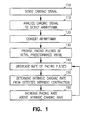
- an cardiac signal is sensed from one or more cardiac chambers of the heart.
- the cardiac signal is either a unipolar signal or a bipolar signal sensed with one or more electrodes implanted within the heart.
- the cardiac signal is analyzed to detect an arrhythmia, such as a fibrillation or a tachycardia episode. If an arrhythmia is not detected, the method continues to sense and analyze the cardiac signal. If, however, an arrhythmia is detected, one or more defibrillation shocks, or cardioversion pulses, are used to capture and convert the heart 120.
- antitachycardia pacing is delivered to convert the arrhythmia (e.g., ventricular tachycardia) by stimulating the heart with a rapid series of electrical pulses.
- pacing pulses having a pacing rate at an initial value are provided to the heart at 130.
- the first pacing pulse of the pacing pulses is provided at a delay after the defibrillation or cardioversion shock.
- the delay is programmable in the range of 0 milliseconds to 1000 milliseconds.
- the delay is programmable in the range of 0 milliseconds to 500 milliseconds.
- the initial value of the pacing rate is set (programmed) at a value equal to or less than the maximum programmable pacing rate value of the implantable pacemaker in which the present subject matter is implemented.
- the initial value of the pacing rate is set in the range of 100 to 200 pacing pulses per minute (interval durations of 600 to 300 milliseconds).
- setting the initial value of the pacing rate includes either fixing the value of the pacing rate or allowing the pacing rate to be a programmable value.
- the initial value of the pacing rate is a programmable value that is set above the intrinsic cardiac rate of the patient, where the intrinsic cardiac rate of the patient is determined by the patient's physician.
- the initial value of the pacing rate is preset and is not adjustable.
- the initial value of the pacing rate is used in pacing the heart for a set number of cardiac cycles.
- the set number of cardiac cycles is a programmable value in the range of two (2) to one-hundred twenty eight (128) cardiac cycles.
- the pacing rate is then decreased at 140.
- the pacing rate is decreased by a set amount for every subsequent set of the number of cardiac cycles until an intrinsic cardiac contraction is detected.
- providing the set number of pacing pulses and then decreasing the pacing rate by the set amount is repeated until an intrinsic cardiac contraction is detected.
- the pacing rate for each of the set number of cardiac cycles becomes slower and slower, until an intrinsic cardiac contraction is detected.
- the pacing rate is then decreased by adding a set value to the interval duration between the pacing pulses.
- the set value is in the range of seven and one-half (7.5) milliseconds to ten (10) milliseconds.
- the set value includes additional values which allow for changes to the pacing rate according to the present subject matter (e.g., set values less than 7.5 milliseconds and set values greater than 10 milliseconds).
- an intrinsic cardiac rate is determined.
- the intrinsic cardiac rate is the rate determined from the time interval between the paced cardiac event and the subsequent intrinsic cardiac event.
- the intrinsic rate is determined from two consecutive sensed intrinsic cardiac contractions.
- the pacing rate is increased at 160 to be greater than the intrinsic cardiac rate.
- the pacing rate is increased by subtracting the value to the interval duration between the pacing pulses.
- the cardiac pacing rate is increased by the margin of the value so the pacing pulses control the contraction of the heart, and not the intrinsic mechanisms of the heart (i.e., the SA-node). The increased pacing rate is then used in delivering the pacing pulse after the intrinsic pulse is detected.
- the system then returns to 140, where the pacing rate is allowed decrease as previously described until the next intrinsic contraction is detected.
- the system then proceeds to 150, where the intrinsic rate is determined as previously described.
- the system then proceed through 160 and back to 140.
- This allows the heart to be paced at, or nearly at, the intrinsic rate, while still being under the control of a pulse generator.
- the pacing rate is maintained at or above the intrinsic cardiac rate. As previously discussed, this allows the refractory period of the cardiac chamber to be controlled so as to reduce the likelihood of recurrence of the arrhythmia or tachyarrhythmia.
- the post-shock therapy of the present subject matter is then discontinued after a predetermined time interval.
- the predetermined time interval is a programmable or a set value of up to 15 minutes.
- the system resumes any previously suspended pacing protocols and returns to sense the cardiac signal from one or more cardiac chambers of the heart at 100.
- the post-shock therapy according to the present subject matter is discontinued and the system returns to 100 after a predetermined number of intrinsic pulses are detected.
- the predetermined number of intrinsic pulses is programmed or set in the range of 0 to 15 sensed intrinsic pulses.
- FIG. 2 there is shown an additional embodiment of a method according to the present subject matter.
- the embodiment of Figure 2 is specific to atrial arrhythmias and where pacing pulses are delivered to the atrium. It will be appreciated that the present subject matter can be applied to other cardiac regions, including, but not limited to, ventricular chambers of the heart (e.g., right and/or left ventricles) and/or atrial chambers of the heart (e.g., right and/or left atria).
- ventricular chambers of the heart e.g., right and/or left ventricles
- atrial chambers of the heart e.g., right and/or left atria
- an atrial signal is sensed from the atrium.
- the atrial signal is either a unipolar signal or a bipolar signal sensed with one or more electrodes implanted within the heart.
- the atrial signal is analyzed to detect an atrial fibrillation or atrial tachycardia.
- the atrial rate is used as a criteria for determining the presence of an atrial fibrillation and/or atrial tachycardia. Other techniques of determining the occurrence of atrial fibrillation and/or atrial tachycardia are possible. If an atrial fibrillation or tachycardia are not detected, the method continues to sense and analyze the atrial signal. If an atrial fibrillation or tachycardia is detected, one or more atrial defibrillation shocks, or atrial cardioversion pulses, are used to capture and convert the atrial chambers at 220.
- pacing pulses having a pacing rate at an initial value are provided to the atrium at 230.
- a first pacing pulse of the pacing pulses is provided at a delay after the defibrillation or cardioversion shock.
- the delay is programmable in the range of 0 milliseconds to 1000 milliseconds.
- the delay is programmable in the range of 0 milliseconds to 500 milliseconds.
- the initial value of the pacing rate is set (programmed) at a value equal to or less than the maximum programmable pacing rate value of the implantable pacemaker in which the present subject matter is implemented.
- the initial value of the pacing rate is set in the range of 100 to 200 pacing pulses per minute (interval durations of 600 to 300 milliseconds).
- setting the initial value of the pacing rate includes either fixing the value of the pacing rate or allowing the pacing rate to be a programmable value.
- the initial value of the pacing rate is a programmable value that is set above the intrinsic cardiac rate of the patient, where the intrinsic cardiac rate of the patient is determined by the patient's physician.
- the initial value of the pacing rate is preset and is not adjustable.
- the initial value of the pacing rate is used in pacing the atrium for a set number of cardiac cycles.
- the number of cardiac cycles is a programmable value in the range of two (2) to one-hundred twenty eight (128) cardiac cycles.
- the pacing rate for each group of the set number of cardiac cycles becomes slower and slower, until an intrinsic atrial contraction is detected.
- the pacing rate is decreased by adding the value to the interval duration between the pacing pulses, where the value is in the range of seven and one-half (7.5) milliseconds to ten (10) milliseconds.
- the set value includes additional values which allow for changes to the pacing rate according to the present subject matter (e.g., set values less than 7.5 milliseconds and set values greater than 10 milliseconds).
- an intrinsic atrial rate is determined.
- the intrinsic atrial rate is the rate determined from the time interval between paced atrial event and the subsequent intrinsic atrial event.
- the intrinsic rate is determined from two consecutive sensed intrinsic atrial contractions.
- the pacing rate is increased at 260 to be greater than the intrinsic atrial rate.
- the pacing rate is increased by subtracting the value to the interval duration between the pacing pulses.
- the atrial pacing rate is increased by the margin of the value so the pacing pulses control the contraction of the atrium, and not the intrinsic mechanisms of the heart (i.e., the SA-node). The increased pacing rate is then used in delivering the pacing pulse after the intrinsic pulse is detected.
- the system then returns to 240, where the pacing rate is allowed decrease as previously described until the next intrinsic contraction is detected.
- the system then proceeds to 250, where the intrinsic rate is determined as previously described.
- the system then proceed through 260 and back to 240.
- This allows the atrium to be paced at, or nearly at, the intrinsic rate of the atrium, while still being under the control of the pulse generator.
- the pacing rate of the atrium is maintained at or above the intrinsic rate of the atrium. As previously discussed, this allows the refractory period of the cardiac chamber to be controlled so as to reduce the likelihood of recurrence of the arrhythmia or tachyarrhythmia.
- the post-shock therapy of the present subject matter is then discontinued after a predetermined time interval.
- the predetermined time interval is a programmable or a set value of up to 15 minutes.
- the system resumes any previously suspended pacing protocols and returns to sense the cardiac signal from one or more cardiac chambers of the heart at 200.
- the post-shock therapy according to the present subject matter is discontinued and the system returns to 200 after a predetermined number of intrinsic pulses are detected.
- the predetermined number of intrinsic pulses is programmed or set in the range of 0 to 15 sensed intrinsic pulses.
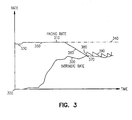
- FIG. 3 shows a plot of an intrinsic cardiac rate 300 and a pacing rate 310 which are plotted on a rate (beats/time) versus time plot.
- a defibrillation or cardioversion shock has been delivered to the heart.
- No intrinsic cardiac rate is present at this time as the heart is in its refractory period following the shock.
- Pacing pulses are delivered to the heart after the delay 330, where the pacing pulses are delivered at the initial value 340.
- the pacing rate is decreased along 360, as previously described.
- the pacing rate is decreased along 360 as previously described until an intrinsic atrial contraction is detected at 370.
- the pacing rate is then increased at 380 and the pacing rate is maintained at or above the intrinsic rate at 390, as previously described.
- the system of the present subject matter can have a programmable time interval over which the system will operate before the heart is allowed to revert to an intrinsic cardiac rhythm.
- the programmable time interval is set in the range of 15 seconds to 1 hour. After this interval, the system would then revert back to any original settings for atrial pacing that might have been programmed into the device.
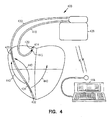
- the cardiac rhythm management system 400 includes a first cardiac lead 410 having a first electrode 414 and a second electrode 416.
- the first electrode 414 is a pace/sense electrode located at or near a distal end 420 of the first cardiac lead 410.
- the second electrode 416 is also a pace/sense electrode located proximal the first electrode 414.
- the second electrode 416 is a ring electrode which partially or completely encircles the first cardiac lead 410.
- the first electrode 414 is used to sense either a unipolar cardiac signal between the first electrode 414 and the housing 428 of the cardiac rhythm management system 400.
- the first electrode 414 and the second electrode 416 are used to sense a bipolar cardiac signal.
- the first cardiac lead 410 is a J-tip lead, where the first electrode 414 is located at the distal tip of the lead 410.
- the cardiac rhythm management system 400 further includes a second cardiac lead 430.
- the second cardiac lead 430 includes a first pace/sense electrode 432, a first defibrillation electrode 434 and a second defibrillation electrode 436.
- the second cardiac lead 430 is implanted with the distal end of the lead implanted in the right ventricle of the heart, with the first defibrillation electrode 434 located in the right ventricular chamber and the second defibrillation electrode 436 located in the right atrium and/or major vein leading to the right atrium (e.g., superior vena cava).
- the second lead 430 With the second lead 430, ventricular cardiac signals can be sensed between the electrodes.
- a rate signal is sensed between either the first pace/sense electrode 432 and the first defibrillation electrode 434, or between the first pace/sense electrode 432 and the housing 428.
- a far field signal can also be sensed between the first and second defibrillation electrodes 434 and 436.
- defibrillation and cardioversion pulses are delivered between the first defibrillation electrode 434, and the second defibrillation electrode 436 and the housing 428, as shown by arrows 440.
- the defibrillation and cardioversion pulses are delivered, in the present example, in response to an atrial arrhythmia as previously described.
- the defibrillation and/or cardioversion pulses could be delivered in response to a ventricular arrhythmia.
- the cardiac rhythm management system 400 includes control circuitry coupled to the first electrode 414 and the second electrode 416 from which a cardiac signal is sensed.
- the first electrode 414 and the second electrode 416 are shown implanted in a supraventricular region (i.e., atrial region) of the heart, from which an atrial cardiac signal can be sensed and to which pacing pulses can be delivered according the present subject matter.
- pacing pulses can be delivered between either the first electrode 414 and the housing 428 or the first electrode 414 and the second electrode 416.
- Atrial defibrillation shocks and/or cardioversion pulses can be delivered by the control circuitry between the first defibrillation electrode 434, and the second defibrillation electrode 436 and the housing 428, as shown by arrows 440.
- Figure 4 also shows a medical device programmer 444.
- the medical device programmer 444 and the cardiac rhythm management system 400 include communication circuitry which allows for cardiac data to be to and from the cardiac rhythm management system 400.
- command signals for controlling the operation of the cardiac rhythm management system 400 can also be sent between the medical device programmer 444 and the cardiac rhythm management system 400.
- communication between the medical device programmer 444 and the cardiac rhythm management system 400 is established over a radio frequency telemetry channel.
- FIG. 5 there is shown an additional embodiment of the system shown in Figure 4 , where in addition to a first and second cardiac lead 410 and 430, there is shown a third cardiac lead 500 having at least one defibrillation electrode 510.
- the third cardiac lead 500 is positioned in a supraventricular location with at least one defibrillation electrode 510 positioned within the coronary sinus and/or great cardiac vein.
- cardioversion and/or defibrillation pulses can be delivered between any number of the defibrillation electrodes.
- cardioversion/defibrillation pulses can be delivered between defibrillation electrode 510 and the second defibrillation electrode 436 and the housing 428.
- Other shocking patterns are also possible and considered within the scope of the present subject matter.
- the system includes an implantable cardiac rhythm management device 600, a first cardiac lead 602 and a second cardiac lead 604 (not to scale).
- the first cardiac lead 602 is shown with a first electrode 606 and a second electrode 607
- the second cardiac lead 604 is shown with a first electrode 608, a first defibrillation electrode 610 and a second defibrillation electrode 612.
- the first electrode 606 and the second electrode 607 are pace/sense electrodes, where the first electrode 606 is a porous tip electrode positioned at a distal end 614 of the first cardiac lead 602 and the second electrode 607 is a ring electrode either partially or completely encircling the first cardiac lead 602 and is positioned proximal to the first electrode 606.
- the first electrode 608 is also a pace/sense electrode positioned at the distal end 616 of the second cardiac lead 604.
- first electrode 606 and the second electrode 607 of the first cardiac lead 602 are implanted within the supraventricular region of the heart as previously described.
- the second cardiac lead 604 is implanted within the heart, where the distal end of the lead 604 is implanted at the apex of the right ventricle to allow the first electrode 608 and the first defibrillation electrode 610 to be within the right ventricular chamber of the heart and the second defibrillation electrode 612 in the supraventricular region of the heart.
- the first electrode 608 and the first defibrillation electrode 610 are used to detect a near field signal (a rate signal) and the first defibrillation electrode 610 and the second defibrillation electrode 612 are used to detect a far field signal (a morphology signal) from the heart.
- a near field signal a rate signal
- a far field signal a morphology signal
- the electrodes are connected to electronic circuitry within the implantable cardiac rhythm management device 600 through lead conductors housed and electrically insulated within the body of the first and second cardiac leads 602 and 604.
- the lead conductors are coupled to lead connectors on the cardiac leads, which allow for the electrodes positioned on the leads to be coupled to the electronic circuitry through input terminals 620, 622, 624, 626 and 628.
- the first and second cardiac leads 602 and 604 have elongated bodies made of one or more materials suitable for implantation in a human body, where such materials are known.
- the electrodes are constructed of electrically conductive materials, such as platinum, platinum-iridium alloys, or other alloys as are known.
- the lead conductors are also constructed of electrically conductive materials such as MP35N, an alloy of nickel, chromium, cobalt, and molybdenum.
- the implantable cardiac rhythm management device 600 includes control circuitry 630, where the control circuitry 630 is coupled to the electrodes 606, 607, 608, 610 and 612, from which at least a first cardiac signal is sensed, electrical energy pulses are generated under predetermined conditions, and providing electrical energy to electrodes positioned on the leads under the predetermined conditions.
- the control circuitry 630 is a programmable microprocessor-based system, with a microprocessor 632 and a memory circuit 634, which contains parameters for various pacing and sensing modes and stores data indicative of cardiac signals received by the control circuitry 630.
- the control circuitry 630 is shown having various modules, which are implemented either in hardware or as one or more sequences of steps carried out on the microprocessor or other microcontroller. It is understood that the various modules of control circuitry 630 need not be separately embodied, but may be combined or otherwise implemented differently, such as in software/firmware.
- the control circuitry 630 includes a pacing pulse generator 640, a pulse rate controller 644, and an intrinsic rate detector 650 which are coupled through bus 654.
- the pacing pulse generator 640 produces pacing pulses to be delivered through at least the first electrode, where the pacing pulse generator 640 is controlled by the pulse rate controller 644 to generate pacing pulses at the pacing rate, as previously described.
- the implantable cardiac rhythm management device 600 further includes a first sensor 656 coupled to input terminals 626 and 628 to allow for a bipolar cardiac signal to be sensed through the first and second electrodes 606 and 607. Alternatively, a unipolar cardiac signal could be sensed between the first electrode 606 and the housing 658 of the implantable cardiac rhythm management device 600.
- the implantable cardiac rhythm management device 600 further includes a second sensor 660 and a third sensor 664.
- first and second defibrillation electrodes 610 and 612 are coupled to second sensor 660 to allow for a bipolar morphology signal to be sensed between the electrodes.
- first electrode 608 and first defibrillation electrode 610 are coupled to the third sensor 664 to allow for a bipolar rate signal to be sensed between the electrodes.
- the pacing pulse generator 640 is coupled to at least the first electrode 606 and produces electrical pulses to be delivered to the first electrode 606, as previously described. Power to the implantable cardiac rhythm management device 600 is supplied by an electrochemical battery 668 that is housed within the device 600.
- the output of each of the sensors 656, 660 and 664 is received by an arrhythmia detector 670.
- the arrhythmia detector 670 analyzes the sensed cardiac signals for the occurrence of sensed cardiac contractions and the presence of arrhythmias.
- the arrhythmia detector 670 analyze the cardiac signal being detected from the atrial region for the occurrence of an atrial arrhythmia. When an atrial arrhythmia is detected, one or more pulses of cardioversion and/or defibrillation energy are generated by the cardioversion/defibrillation pulse generator 672.
- the energy can then be delivered to the atrial region through combinations of the first defibrillation electrode 610, second defibrillation electrode 612 and housing 658 to convert the atrial arrhythmia, as previously described.
- the pacing pulse generator 640 generates antitachycardia pacing for delivery to the atria to convert the atrial arrhythmia, as previously described.
- the pulse rate controller 644 controls the pacing pulse generator 640 to generate pacing pulses at a pacing rate having the initial value, as previously described.
- the pulse rate controller 644 controls the pacing pulse generator 640 to provide the first pacing pulse of the pacing pulses at the delay after the electrical pulse, as previously described.
- the pulse rate controller through the pacing pulse generator 640, provides pacing pulses to generate the set number of cardiac cycles and then decreases the pacing rate by the set amount, as previously discussed, until an intrinsic contraction is detected in the cardiac signal.
- the intrinsic contraction is detected by the intrinsic rate detector 650, where the intrinsic rate detector 650 also determines the intrinsic rate with the detected intrinsic contraction, as previously described. Once the intrinsic rate is determined, the pulse rate controller 644 then increases and maintains the pacing rate of the pacing pulses above the intrinsic rate, as previously described.
- Electronic communication circuitry 680 is additionally coupled to the control circuitry 630 to allow communication with an external controller 688.
- the electronic communication circuitry 680 includes a data receiver and a data transmitter to send and receive and transmit signals and cardiac data to and from an external programmer 688.
- the data receiver and the data transmitter include a wire loop antenna to establish a radio frequency telemetric link, as is known in the art, to receive and transmit signals and data to and from the programmer unit 688.
Landscapes
- Health & Medical Sciences (AREA)
- Cardiology (AREA)
- Heart & Thoracic Surgery (AREA)
- Engineering & Computer Science (AREA)
- Biomedical Technology (AREA)
- Nuclear Medicine, Radiotherapy & Molecular Imaging (AREA)
- Radiology & Medical Imaging (AREA)
- Life Sciences & Earth Sciences (AREA)
- Animal Behavior & Ethology (AREA)
- General Health & Medical Sciences (AREA)
- Public Health (AREA)
- Veterinary Medicine (AREA)
- Electrotherapy Devices (AREA)
- Transition And Organic Metals Composition Catalysts For Addition Polymerization (AREA)
- Amplifiers (AREA)
- Pyrane Compounds (AREA)
Applications Claiming Priority (2)
| Application Number | Priority Date | Filing Date | Title |
|---|---|---|---|
| US09/662,091 US6829504B1 (en) | 2000-09-14 | 2000-09-14 | System and method for preventing recurrence of atrial tachyarrhythmia |
| EP01968846A EP1317307B1 (de) | 2000-09-14 | 2001-09-14 | Impulserzeugersystem |
Related Parent Applications (2)
| Application Number | Title | Priority Date | Filing Date |
|---|---|---|---|
| EP01968846.4 Division | 2001-09-14 | ||
| EP01968846A Division EP1317307B1 (de) | 2000-09-14 | 2001-09-14 | Impulserzeugersystem |
Publications (3)
| Publication Number | Publication Date |
|---|---|
| EP2077136A2 true EP2077136A2 (de) | 2009-07-08 |
| EP2077136A3 EP2077136A3 (de) | 2010-01-20 |
| EP2077136B1 EP2077136B1 (de) | 2011-12-14 |
Family
ID=24656345
Family Applications (2)
| Application Number | Title | Priority Date | Filing Date |
|---|---|---|---|
| EP01968846A Expired - Lifetime EP1317307B1 (de) | 2000-09-14 | 2001-09-14 | Impulserzeugersystem |
| EP09158972A Expired - Lifetime EP2077136B1 (de) | 2000-09-14 | 2001-09-14 | Impulsgeneratorsystem |
Family Applications Before (1)
| Application Number | Title | Priority Date | Filing Date |
|---|---|---|---|
| EP01968846A Expired - Lifetime EP1317307B1 (de) | 2000-09-14 | 2001-09-14 | Impulserzeugersystem |
Country Status (7)
| Country | Link |
|---|---|
| US (3) | US6829504B1 (de) |
| EP (2) | EP1317307B1 (de) |
| AT (2) | ATE429955T1 (de) |
| AU (1) | AU2001289060A1 (de) |
| DE (1) | DE60138555D1 (de) |
| ES (2) | ES2326308T3 (de) |
| WO (1) | WO2002022207A1 (de) |
Cited By (1)
| Publication number | Priority date | Publication date | Assignee | Title |
|---|---|---|---|---|
| EP3733240A1 (de) * | 2019-04-18 | 2020-11-04 | BIOTRONIK SE & Co. KG | Implantierbare anordnung zur stimulation eines menschlichen oder tierischen herzens |
Families Citing this family (25)
| Publication number | Priority date | Publication date | Assignee | Title |
|---|---|---|---|---|
| US6829504B1 (en) * | 2000-09-14 | 2004-12-07 | Cardiac Pacemakers, Inc. | System and method for preventing recurrence of atrial tachyarrhythmia |
| US7236821B2 (en) * | 2002-02-19 | 2007-06-26 | Cardiac Pacemakers, Inc. | Chronically-implanted device for sensing and therapy |
| US7076298B2 (en) * | 2002-06-14 | 2006-07-11 | Medtronic, Inc. | Method and apparatus for prevention of arrhythmia clusters using overdrive pacing |
| US7139608B2 (en) | 2002-07-31 | 2006-11-21 | Uab Research Foundation | Pacing methods and devices using feedback controlled timing |
| US8560063B2 (en) * | 2002-09-10 | 2013-10-15 | Uab Research Foundation | Post-defibrillation pacing methods and devices |
| US7127292B2 (en) * | 2002-10-31 | 2006-10-24 | Medtronic, Inc. | Addressing recurrent atrial fibrillation |
| US7079891B1 (en) | 2003-02-25 | 2006-07-18 | Pacesetter | System and method for providing cardioversion therapy and overdrive pacing using an implantable cardiac stimulation device |
| US7113822B1 (en) | 2003-02-25 | 2006-09-26 | Pacesetter, Inc. | System and method for providing cardioversion therapy and overdrive pacing using an implantable cardiac stimulation device |
| US20040210256A1 (en) * | 2003-04-17 | 2004-10-21 | Medtronic, Inc. | Methods and apparatus for decreasing incidences of early recurrence of atrial fibrillation |
| US7082336B2 (en) * | 2003-06-04 | 2006-07-25 | Synecor, Llc | Implantable intravascular device for defibrillation and/or pacing |
| US8239045B2 (en) | 2003-06-04 | 2012-08-07 | Synecor Llc | Device and method for retaining a medical device within a vessel |
| EP1633434B1 (de) * | 2003-06-04 | 2014-11-19 | Synecor | Intravaskuläres elektrophysiologisches system |
| US7617007B2 (en) | 2003-06-04 | 2009-11-10 | Synecor Llc | Method and apparatus for retaining medical implants within body vessels |
| US7363081B1 (en) | 2003-09-08 | 2008-04-22 | Pacesetter, Inc. | System and method for providing preventive overdrive pacing and antitachycardia pacing using an implantable cardiac stimulation device |
| US7212855B1 (en) | 2003-09-08 | 2007-05-01 | Pacesetter, Inc. | System and method for providing preventive overdrive pacing and antitachycardia pacing using an implantable cardiac stimulation device |
| US7225020B1 (en) | 2003-09-08 | 2007-05-29 | Pacesetter, Inc. | System and method for providing preventive overdrive pacing and antitachycardia pacing using an implantable cardiac stimulation device |
| EP1701766A2 (de) | 2003-12-12 | 2006-09-20 | Synecor, LLC | Implantierbares medizinprodukt mit vorimplantat-exogerüst |
| US7697987B2 (en) * | 2006-04-26 | 2010-04-13 | Medtronic, Inc. | Method and system for detecting cardiac arrhythmias during overdrive pacing |
| US20080183231A1 (en) * | 2007-01-30 | 2008-07-31 | Cardiac Pacemakers, Inc. | Systems, devices and methods to alter autonomic tone |
| US9510764B2 (en) | 2009-04-22 | 2016-12-06 | Cardiac Pacemakers, Inc. | Methods for detecting atrial tachyarrhythmia in implantable devices without dedicated atrial sensing |
| US8239011B2 (en) * | 2009-04-29 | 2012-08-07 | Cardiac Pacemakers, Inc. | Atrial arrhythmia detection and discrimination based on intracardiac impedance |
| US8086307B2 (en) | 2009-07-31 | 2011-12-27 | Medtronic, Inc. | Terminating tachyarrhythmias |
| US8812107B2 (en) * | 2010-06-29 | 2014-08-19 | Medtronic, Inc. | Terminating tachyarrhythmias |
| US9433459B2 (en) | 2010-07-13 | 2016-09-06 | Zoll Medical Corporation | Deposit ablation within and external to circulatory systems |
| EP2903684A4 (de) * | 2012-10-01 | 2016-06-29 | Zoll Medical Corp | Ablagerungsentfernung innerhalb und ausserhalb von kreislaufsystemen |
Family Cites Families (77)
| Publication number | Priority date | Publication date | Assignee | Title |
|---|---|---|---|---|
| US4030510A (en) | 1970-03-10 | 1977-06-21 | General Electric Company | Standby heart pacer |
| US3857399A (en) * | 1970-03-24 | 1974-12-31 | F Zacouto | Heart pacer |
| US4059116A (en) * | 1974-12-09 | 1977-11-22 | Medtronic, Inc. | Synchronous pacemaker with upper rate stabilization and method of use |
| US4163451A (en) | 1977-10-26 | 1979-08-07 | Cordis Corporation | Interactive method and digitally timed apparatus for cardiac pacing arrhythmia treatment |
| US4284082A (en) | 1979-12-12 | 1981-08-18 | Medtronic B.V.Kerkrade | Ventricular synchronized atrial pacemaker and method of operation |
| US4830006B1 (en) | 1986-06-17 | 1997-10-28 | Intermedics Inc | Implantable cardiac stimulator for detection and treatment of ventricular arrhythmias |
| US4819643A (en) | 1986-11-18 | 1989-04-11 | Mieczyslaw Mirowski | Method and apparatus for cardioverter/pacer featuring a blanked pacing channel and a rate detect channel with AGC |
| US4920965A (en) * | 1987-11-25 | 1990-05-01 | Medtronic, Inc. | Dual chamber pacemaker with adaptive atrial escape interval |
| US4945509A (en) | 1988-03-14 | 1990-07-31 | International Business Machines Corporation | Dual look ahead mask generator |
| US4972834A (en) * | 1988-09-30 | 1990-11-27 | Vitatron Medical B.V. | Pacemaker with improved dynamic rate responsiveness |
| US4945909A (en) | 1989-06-06 | 1990-08-07 | Cook Pacemaker Corporation | Pacemaker with activity-dependent rate limiting |
| DE58909830D1 (de) | 1989-10-11 | 1998-03-12 | Siemens Ag | In den Körper eines Lebewesens implantierbares medizinisches Gerät mit Mitteln zur Stimulation von Gewebekontraktionen |
| US4998974A (en) | 1990-01-05 | 1991-03-12 | Telectronics Pacing Systems, Inc. | Apparatus and method for antitachycardia pacing in dual chamber arrhythmia control system |
| US5101824A (en) * | 1990-04-16 | 1992-04-07 | Siemens-Pacesetter, Inc. | Rate-responsive pacemaker with circuitry for processing multiple sensor inputs |
| US5267560A (en) | 1990-09-07 | 1993-12-07 | Cohen Fred M | Methods for control of the ventricular activation sequence |
| US5174289A (en) | 1990-09-07 | 1992-12-29 | Cohen Fred M | Pacing systems and methods for control of the ventricular activation sequence |
| JP2655204B2 (ja) * | 1991-04-05 | 1997-09-17 | メドトロニック インコーポレーテッド | 植え込み型の医療用装置 |
| US5292339A (en) | 1991-06-14 | 1994-03-08 | Telectronics Pacing Systems, Inc. | Implantable pacemaker/cardioverter/defibrillator device and method incorporating multiple bradycardia support pacing rates |
| US5205283A (en) | 1991-07-30 | 1993-04-27 | Medtronic, Inc. | Method and apparatus for tachyarrhythmia detection and treatment |
| US5301669A (en) | 1991-08-05 | 1994-04-12 | Siemens Pacesetter, Inc. | System and method for preventing atrial competition during sensor-driven operation of a dual-chamber pacemaker |
| US5342405A (en) | 1991-08-05 | 1994-08-30 | Siemens Pacesetter, Inc. | System and method for selecting a mode of operation of a dual-chamber pacemaker |
| US5269299A (en) | 1991-08-05 | 1993-12-14 | Siemens Pacesetter, Inc. | System and method for preventing atrial competition during sensor-driven operation of a dual-chamber pacemaker |
| US5284491A (en) | 1992-02-27 | 1994-02-08 | Medtronic, Inc. | Cardiac pacemaker with hysteresis behavior |
| US5417714A (en) * | 1992-03-05 | 1995-05-23 | Pacesetter, Inc. | DDI pacing with PVC-protected hysteresis and automatic AV interval adjustment |
| DE69307509T2 (de) | 1992-06-30 | 1997-07-31 | Medtronic Inc | Vorrichtung zur behandlung von herzfehlern |
| US5446587A (en) * | 1992-09-03 | 1995-08-29 | Samsung Electronics Co., Ltd. | Projection method and projection system and mask therefor |
| SE9202825D0 (sv) | 1992-09-30 | 1992-09-30 | Siemens Elema Ab | Hjaertstimulator |
| US5207219A (en) | 1992-10-23 | 1993-05-04 | Incontrol, Inc. | Atrial defibrillator and method for providing interval timing prior to cardioversion |
| US5265600A (en) | 1992-10-23 | 1993-11-30 | Incontrol, Inc. | Atrial defibrillator and method for providing post-cardioversion pacing |
| US5282836A (en) | 1992-10-23 | 1994-02-01 | Incontrol, Inc. | Atrial defibrillator and method for providing pre-cardioversion pacing |
| US5312452A (en) * | 1992-11-03 | 1994-05-17 | Cardiac Pacemakers, Inc. | Cardiac rhythm management device with automatic optimization of performance related pacing parameters |
| US5814077A (en) | 1992-11-13 | 1998-09-29 | Pacesetter, Inc. | Pacemaker and method of operating same that provides functional atrial cardiac pacing with ventricular support |
| US5334220A (en) | 1992-11-13 | 1994-08-02 | Siemens Pacesetter, Inc. | Dual-chamber implantable pacemaker having an adaptive AV interval that prevents ventricular fusion beats and method of operating same |
| US5383910A (en) * | 1993-02-19 | 1995-01-24 | Medtronic, Inc. | Method and apparatus for tachyarrhythmia detection and treatment |
| US5350409A (en) | 1993-04-19 | 1994-09-27 | Vitatron Medical, B.V. | Rate adaptive pacemaker with adjustment of sensor rate as a function of sensed sinus rate |
| FR2705576B1 (fr) | 1993-05-28 | 1995-07-07 | Ela Medical Sa | Procédé d'analyse de l'activité cardiaque pour déterminer si une tachyarythmie est susceptible d'être interrompue par stimulation. |
| US5411531A (en) | 1993-09-23 | 1995-05-02 | Medtronic, Inc. | Method and apparatus for control of A-V interval |
| US5522859A (en) | 1993-09-29 | 1996-06-04 | Medtronic, Inc. | Sinus preference method and apparatus for cardiac pacemakers |
| US5411524A (en) | 1993-11-02 | 1995-05-02 | Medtronic, Inc. | Method and apparatus for synchronization of atrial defibrillation pulses |
| US5391189A (en) * | 1993-11-04 | 1995-02-21 | Vitatron Medical, B.V. | Rate adaptive dual chamber pacing system and method with automatic adjustment of operating parameters for minimizing sensor-sinus competition |
| US5458623A (en) | 1994-03-04 | 1995-10-17 | Telectronics Pacing Systems, Inc. | Automatic atrial pacing threshold determination utilizing an external programmer and a surface electrogram |
| FR2718035B1 (fr) * | 1994-04-05 | 1996-08-30 | Ela Medical Sa | Procédé de commande d'un stimulateur cardiaque auriculaire double du type triple chambre programmable en mode de repli. |
| US5584864A (en) | 1994-06-14 | 1996-12-17 | Incontrol, Inc. | Cardioversion synchronization system and method for an atrial defibrillator |
| US5487752A (en) * | 1994-11-15 | 1996-01-30 | Cardiac Pacemakers, Inc. | Automated programmable stimulating device to optimize pacing parameters and method |
| US5480413A (en) | 1994-11-30 | 1996-01-02 | Telectronics Pacing Systems, Inc. | Apparatus and method for stabilizing the ventricular rate of a heart during atrial fibrillation |
| US5601613A (en) | 1995-02-07 | 1997-02-11 | Pacesetter, Inc. | Method and apparatus for providing enhanced 2:1 block response with rate-responsive AV delay in a pacemaker |
| US5626620A (en) | 1995-02-21 | 1997-05-06 | Medtronic, Inc. | Dual chamber pacing system and method with continual adjustment of the AV escape interval so as to maintain optimized ventricular pacing for treating cardiomyopathy |
| US5534016A (en) | 1995-02-21 | 1996-07-09 | Vitatron Medical, B.V. | Dual chamber pacing system and method utilizing detection of ventricular fusion for adjustment of the atrial-ventricular delay as therapy for hypertrophic obstructive cardiomyopathy |
| US5725561A (en) | 1995-06-09 | 1998-03-10 | Medtronic, Inc. | Method and apparatus for variable rate cardiac stimulation |
| US5788717A (en) | 1995-07-11 | 1998-08-04 | Pacesetter, Inc. | Atrial rate determination and atrial tachycardia detection in a dual-chamber implantable pacemaker |
| US5759196A (en) | 1995-09-29 | 1998-06-02 | Medtronic, Inc. | Modification of pacemaker tachy response based on FFRW sensing |
| US5713929A (en) | 1996-05-03 | 1998-02-03 | Medtronic, Inc. | Arrhythmia and fibrillation prevention pacemaker using ratchet up and decay modes of operation |
| US5968081A (en) | 1996-05-15 | 1999-10-19 | Pacesetter, Inc. | System and method for providing improved fallback response in a dual-chamber cardiac pacemaker |
| US5645569A (en) * | 1996-06-04 | 1997-07-08 | Incontrol, Inc. | Post atrial cardioversion atrial pacing and method |
| US6058328A (en) | 1996-08-06 | 2000-05-02 | Pacesetter, Inc. | Implantable stimulation device having means for operating in a preemptive pacing mode to prevent tachyarrhythmias and method thereof |
| SE9603000D0 (sv) | 1996-08-16 | 1996-08-16 | Pacesetter Ab | Implantable apparatus |
| US6141586A (en) * | 1996-08-19 | 2000-10-31 | Mower Family Chf Treatment Irrevocable Trust | Method and apparatus to allow cyclic pacing at an average rate just above the intrinsic heart rate so as to maximize inotropic pacing effects at minimal heart rates |
| SE9603635D0 (sv) * | 1996-10-04 | 1996-10-04 | Pacesetter Ab | Implantable stimulator |
| US5792193A (en) | 1996-11-05 | 1998-08-11 | Vitatron Medical, B.V. | Pacemaker system and method with ventricular rate smoothing during high rate atrial arrhythmia |
| US5846263A (en) | 1996-12-13 | 1998-12-08 | Medtronic, Inc. | Apparatus for diagnosis and treatment of arrhythmias |
| US5893882A (en) * | 1996-12-17 | 1999-04-13 | Medtronic, Inc. | Method and apparatus for diagnosis and treatment of arrhythmias |
| US5814085A (en) | 1996-12-19 | 1998-09-29 | Medtronic, Inc. | Rate stabilization pacemaker |
| US5840079A (en) | 1997-03-27 | 1998-11-24 | Medtronic, Inc. | Method and apparatus for treatment of atrial fibrillation |
| US5983138A (en) | 1997-04-04 | 1999-11-09 | Cardiac Pacemakers, Inc. | Device and method for ventricular tracking and pacing |
| US5954752A (en) | 1997-04-30 | 1999-09-21 | Medtronic, Inc. | Cardioversion energy reduction system |
| US5978707A (en) | 1997-04-30 | 1999-11-02 | Cardiac Pacemakers, Inc. | Apparatus and method for treating ventricular tachyarrhythmias |
| US5999850A (en) | 1997-07-21 | 1999-12-07 | Pacesetter, Inc. | Pacemaker with safe R-wave synchronization during countershock conversion of atrial fibrillation |
| US5928271A (en) | 1998-02-25 | 1999-07-27 | Medtronic, Inc. | Atrial anti-arrhythmia pacemaker and method using high rate atrial and backup ventricular pacing |
| US5891180A (en) | 1998-04-29 | 1999-04-06 | Medtronic Inc. | Interrogation of an implantable medical device using audible sound communication |
| US5978709A (en) | 1998-06-16 | 1999-11-02 | Vitatron Medical, B.V. | Pacemaker system with improved techniques for preventing and suppressing atrial arrhythmias |
| US6081746A (en) | 1998-08-07 | 2000-06-27 | Pacesetter, Inc. | Atrial defibrillation methods and apparatus |
| US6047210A (en) | 1998-09-03 | 2000-04-04 | Cardiac Pacemakers, Inc. | Cardioverter and method for cardioverting an atrial tachyarrhythmia while maintaining atrial pacing |
| US6081747A (en) | 1998-11-23 | 2000-06-27 | Pacesetter, Inc. | Dual-chamber implantable pacemaker having negative AV/PV hysteresis and ectopic discrimination |
| US6049735A (en) * | 1999-03-01 | 2000-04-11 | Cardiac Pacemakers Inc. | Cardiac rhythm management device with detection and therapy for sudden syncopal events |
| US6285907B1 (en) | 1999-05-21 | 2001-09-04 | Cardiac Pacemakers, Inc. | System providing ventricular pacing and biventricular coordination |
| US6351669B1 (en) | 1999-05-21 | 2002-02-26 | Cardiac Pacemakers, Inc. | Cardiac rhythm management system promoting atrial pacing |
| US6829504B1 (en) * | 2000-09-14 | 2004-12-07 | Cardiac Pacemakers, Inc. | System and method for preventing recurrence of atrial tachyarrhythmia |
-
2000
- 2000-09-14 US US09/662,091 patent/US6829504B1/en not_active Expired - Lifetime
-
2001
- 2001-09-14 EP EP01968846A patent/EP1317307B1/de not_active Expired - Lifetime
- 2001-09-14 ES ES01968846T patent/ES2326308T3/es not_active Expired - Lifetime
- 2001-09-14 AU AU2001289060A patent/AU2001289060A1/en not_active Abandoned
- 2001-09-14 ES ES09158972T patent/ES2376516T3/es not_active Expired - Lifetime
- 2001-09-14 AT AT01968846T patent/ATE429955T1/de not_active IP Right Cessation
- 2001-09-14 WO PCT/US2001/028596 patent/WO2002022207A1/en not_active Ceased
- 2001-09-14 DE DE60138555T patent/DE60138555D1/de not_active Expired - Lifetime
- 2001-09-14 AT AT09158972T patent/ATE536912T1/de active
- 2001-09-14 EP EP09158972A patent/EP2077136B1/de not_active Expired - Lifetime
-
2004
- 2004-10-28 US US10/975,553 patent/US7421294B2/en not_active Expired - Fee Related
-
2008
- 2008-08-25 US US12/229,563 patent/US8046061B2/en not_active Expired - Fee Related
Cited By (2)
| Publication number | Priority date | Publication date | Assignee | Title |
|---|---|---|---|---|
| EP3733240A1 (de) * | 2019-04-18 | 2020-11-04 | BIOTRONIK SE & Co. KG | Implantierbare anordnung zur stimulation eines menschlichen oder tierischen herzens |
| US11628303B2 (en) | 2019-04-18 | 2023-04-18 | Biotronik Se & Co. Kg | Implantable system for stimulating a human heart or an animal heart |
Also Published As
| Publication number | Publication date |
|---|---|
| US20080319494A1 (en) | 2008-12-25 |
| WO2002022207A1 (en) | 2002-03-21 |
| US8046061B2 (en) | 2011-10-25 |
| US6829504B1 (en) | 2004-12-07 |
| ATE536912T1 (de) | 2011-12-15 |
| DE60138555D1 (de) | 2009-06-10 |
| ES2326308T3 (es) | 2009-10-07 |
| US7421294B2 (en) | 2008-09-02 |
| EP1317307A1 (de) | 2003-06-11 |
| EP2077136A3 (de) | 2010-01-20 |
| ATE429955T1 (de) | 2009-05-15 |
| ES2376516T3 (es) | 2012-03-14 |
| AU2001289060A1 (en) | 2002-03-26 |
| EP2077136B1 (de) | 2011-12-14 |
| US20050060000A1 (en) | 2005-03-17 |
| EP1317307B1 (de) | 2009-04-29 |
Similar Documents
| Publication | Publication Date | Title |
|---|---|---|
| US8046061B2 (en) | System and method for preventing recurrence of atrial tachyarrhythmia | |
| US6430438B1 (en) | Cardiac rhythm management system with atrial shock timing optimization | |
| US6353759B1 (en) | Cardiac rhythm management system promoting a trial pacing | |
| US5562595A (en) | Multiple therapy cardiac assist device having battery voltage safety monitor | |
| EP1150743B1 (de) | Antitachykardiales schrittmachen | |
| US7386342B1 (en) | Subcutaneous cardiac stimulation device providing anti-tachycardia pacing therapy and method | |
| US7062325B1 (en) | Method and apparatus for treating irregular ventricular contractions such as during atrial arrhythmia | |
| US6510342B1 (en) | Methods and apparatus for preventing atrial arrhythmias by overdrive pacing multiple heart tissue sites using an implantable cardiac stimulation device | |
| JPH09103499A (ja) | 心筋刺激器および心臓ペーサ/カーディオバータ/除細動器の組合わせ装置 | |
| EP1109593A1 (de) | Kardioverter und verfahren zur kardiovertierung einer vorhoftachykardie während fortgesetzter stimulierung des atriums | |
| US20090076563A1 (en) | Method and apparatus for treating irregular ventricular contractions such as during atrial arrhythmia | |
| US5697952A (en) | Cardiac assist device having muscle augementation after confirmed arrhythmia and method | |
| US7079891B1 (en) | System and method for providing cardioversion therapy and overdrive pacing using an implantable cardiac stimulation device | |
| US7113822B1 (en) | System and method for providing cardioversion therapy and overdrive pacing using an implantable cardiac stimulation device | |
| US7260433B1 (en) | Subcutaneous cardiac stimulation device providing anti-tachycardia pacing therapy and method | |
| US7596410B1 (en) | Tiered antitachycardia pacing and pre-pulsing therapy | |
| US20020147471A1 (en) | Cardiac rhythm management system synchronizing atrial shock to ventricular depolarization based on sensing refractory | |
| US7076295B1 (en) | Automatic defibrillation shock energy adjuster | |
| US20240359023A1 (en) | Implantable System and Method for Providing Anti-Tachycardia and/or Shock Therapy |
Legal Events
| Date | Code | Title | Description |
|---|---|---|---|
| PUAI | Public reference made under article 153(3) epc to a published international application that has entered the european phase |
Free format text: ORIGINAL CODE: 0009012 |
|
| 17P | Request for examination filed |
Effective date: 20090428 |
|
| AC | Divisional application: reference to earlier application |
Ref document number: 1317307 Country of ref document: EP Kind code of ref document: P |
|
| AK | Designated contracting states |
Kind code of ref document: A2 Designated state(s): AT BE CH CY DE DK ES FI FR GB GR IE IT LI LU MC NL PT SE TR |
|
| RIN1 | Information on inventor provided before grant (corrected) |
Inventor name: CHEN, VICTOR T. Inventor name: SEIM, GARY T. Inventor name: MORRIS, MILTON M. |
|
| PUAL | Search report despatched |
Free format text: ORIGINAL CODE: 0009013 |
|
| AK | Designated contracting states |
Kind code of ref document: A3 Designated state(s): AT BE CH CY DE DK ES FI FR GB GR IE IT LI LU MC NL PT SE TR |
|
| GRAP | Despatch of communication of intention to grant a patent |
Free format text: ORIGINAL CODE: EPIDOSNIGR1 |
|
| RTI1 | Title (correction) |
Free format text: PULSE GENERATOR SYSTEM |
|
| GRAS | Grant fee paid |
Free format text: ORIGINAL CODE: EPIDOSNIGR3 |
|
| GRAA | (expected) grant |
Free format text: ORIGINAL CODE: 0009210 |
|
| AC | Divisional application: reference to earlier application |
Ref document number: 1317307 Country of ref document: EP Kind code of ref document: P |
|
| AK | Designated contracting states |
Kind code of ref document: B1 Designated state(s): AT BE CH CY DE DK ES FI FR GB GR IE IT LI LU MC NL PT SE TR |
|
| REG | Reference to a national code |
Ref country code: GB Ref legal event code: FG4D |
|
| REG | Reference to a national code |
Ref country code: CH Ref legal event code: EP |
|
| REG | Reference to a national code |
Ref country code: CH Ref legal event code: NV Representative=s name: DR. LUSUARDI AG |
|
| REG | Reference to a national code |
Ref country code: IE Ref legal event code: FG4D |
|
| REG | Reference to a national code |
Ref country code: NL Ref legal event code: T3 |
|
| REG | Reference to a national code |
Ref country code: DE Ref legal event code: R096 Ref document number: 60145812 Country of ref document: DE Effective date: 20120308 |
|
| REG | Reference to a national code |
Ref country code: ES Ref legal event code: FG2A Ref document number: 2376516 Country of ref document: ES Kind code of ref document: T3 Effective date: 20120314 |
|
| REG | Reference to a national code |
Ref country code: SE Ref legal event code: TRGR |
|
| PG25 | Lapsed in a contracting state [announced via postgrant information from national office to epo] |
Ref country code: GR Free format text: LAPSE BECAUSE OF FAILURE TO SUBMIT A TRANSLATION OF THE DESCRIPTION OR TO PAY THE FEE WITHIN THE PRESCRIBED TIME-LIMIT Effective date: 20120315 |
|
| PG25 | Lapsed in a contracting state [announced via postgrant information from national office to epo] |
Ref country code: CY Free format text: LAPSE BECAUSE OF FAILURE TO SUBMIT A TRANSLATION OF THE DESCRIPTION OR TO PAY THE FEE WITHIN THE PRESCRIBED TIME-LIMIT Effective date: 20111214 Ref country code: BE Free format text: LAPSE BECAUSE OF FAILURE TO SUBMIT A TRANSLATION OF THE DESCRIPTION OR TO PAY THE FEE WITHIN THE PRESCRIBED TIME-LIMIT Effective date: 20111214 |
|
| PG25 | Lapsed in a contracting state [announced via postgrant information from national office to epo] |
Ref country code: PT Free format text: LAPSE BECAUSE OF FAILURE TO SUBMIT A TRANSLATION OF THE DESCRIPTION OR TO PAY THE FEE WITHIN THE PRESCRIBED TIME-LIMIT Effective date: 20120416 |
|
| REG | Reference to a national code |
Ref country code: AT Ref legal event code: MK05 Ref document number: 536912 Country of ref document: AT Kind code of ref document: T Effective date: 20111214 |
|
| PLBE | No opposition filed within time limit |
Free format text: ORIGINAL CODE: 0009261 |
|
| STAA | Information on the status of an ep patent application or granted ep patent |
Free format text: STATUS: NO OPPOSITION FILED WITHIN TIME LIMIT |
|
| PG25 | Lapsed in a contracting state [announced via postgrant information from national office to epo] |
Ref country code: DK Free format text: LAPSE BECAUSE OF FAILURE TO SUBMIT A TRANSLATION OF THE DESCRIPTION OR TO PAY THE FEE WITHIN THE PRESCRIBED TIME-LIMIT Effective date: 20111214 |
|
| 26N | No opposition filed |
Effective date: 20120917 |
|
| REG | Reference to a national code |
Ref country code: DE Ref legal event code: R097 Ref document number: 60145812 Country of ref document: DE Effective date: 20120917 |
|
| PG25 | Lapsed in a contracting state [announced via postgrant information from national office to epo] |
Ref country code: AT Free format text: LAPSE BECAUSE OF FAILURE TO SUBMIT A TRANSLATION OF THE DESCRIPTION OR TO PAY THE FEE WITHIN THE PRESCRIBED TIME-LIMIT Effective date: 20111214 |
|
| REG | Reference to a national code |
Ref country code: NL Ref legal event code: V1 Effective date: 20130401 |
|
| PG25 | Lapsed in a contracting state [announced via postgrant information from national office to epo] |
Ref country code: MC Free format text: LAPSE BECAUSE OF NON-PAYMENT OF DUE FEES Effective date: 20120930 Ref country code: SE Free format text: LAPSE BECAUSE OF NON-PAYMENT OF DUE FEES Effective date: 20120915 |
|
| REG | Reference to a national code |
Ref country code: SE Ref legal event code: EUG Ref country code: CH Ref legal event code: PL |
|
| GBPC | Gb: european patent ceased through non-payment of renewal fee |
Effective date: 20120914 |
|
| REG | Reference to a national code |
Ref country code: IE Ref legal event code: MM4A |
|
| PG25 | Lapsed in a contracting state [announced via postgrant information from national office to epo] |
Ref country code: FI Free format text: LAPSE BECAUSE OF FAILURE TO SUBMIT A TRANSLATION OF THE DESCRIPTION OR TO PAY THE FEE WITHIN THE PRESCRIBED TIME-LIMIT Effective date: 20111214 |
|
| REG | Reference to a national code |
Ref country code: FR Ref legal event code: ST Effective date: 20130531 |
|
| PG25 | Lapsed in a contracting state [announced via postgrant information from national office to epo] |
Ref country code: IE Free format text: LAPSE BECAUSE OF NON-PAYMENT OF DUE FEES Effective date: 20120914 Ref country code: LI Free format text: LAPSE BECAUSE OF NON-PAYMENT OF DUE FEES Effective date: 20120930 Ref country code: CH Free format text: LAPSE BECAUSE OF NON-PAYMENT OF DUE FEES Effective date: 20120930 Ref country code: GB Free format text: LAPSE BECAUSE OF NON-PAYMENT OF DUE FEES Effective date: 20120914 |
|
| PG25 | Lapsed in a contracting state [announced via postgrant information from national office to epo] |
Ref country code: FR Free format text: LAPSE BECAUSE OF NON-PAYMENT OF DUE FEES Effective date: 20121001 Ref country code: NL Free format text: LAPSE BECAUSE OF NON-PAYMENT OF DUE FEES Effective date: 20130401 |
|
| REG | Reference to a national code |
Ref country code: ES Ref legal event code: FD2A Effective date: 20131022 |
|
| PG25 | Lapsed in a contracting state [announced via postgrant information from national office to epo] |
Ref country code: TR Free format text: LAPSE BECAUSE OF FAILURE TO SUBMIT A TRANSLATION OF THE DESCRIPTION OR TO PAY THE FEE WITHIN THE PRESCRIBED TIME-LIMIT Effective date: 20111214 |
|
| PG25 | Lapsed in a contracting state [announced via postgrant information from national office to epo] |
Ref country code: ES Free format text: LAPSE BECAUSE OF NON-PAYMENT OF DUE FEES Effective date: 20120915 Ref country code: LU Free format text: LAPSE BECAUSE OF NON-PAYMENT OF DUE FEES Effective date: 20120914 |
|
| PGFP | Annual fee paid to national office [announced via postgrant information from national office to epo] |
Ref country code: IT Payment date: 20180919 Year of fee payment: 18 |
|
| PGFP | Annual fee paid to national office [announced via postgrant information from national office to epo] |
Ref country code: DE Payment date: 20190903 Year of fee payment: 19 |
|
| PG25 | Lapsed in a contracting state [announced via postgrant information from national office to epo] |
Ref country code: IT Free format text: LAPSE BECAUSE OF NON-PAYMENT OF DUE FEES Effective date: 20190914 |
|
| REG | Reference to a national code |
Ref country code: DE Ref legal event code: R119 Ref document number: 60145812 Country of ref document: DE |
|
| PG25 | Lapsed in a contracting state [announced via postgrant information from national office to epo] |
Ref country code: DE Free format text: LAPSE BECAUSE OF NON-PAYMENT OF DUE FEES Effective date: 20210401 |