EP2077164A1 - Verfahren zur herstellung eines kornorientierten siliziumstahlblechs mit hoher magnetischer flussdichte - Google Patents
Verfahren zur herstellung eines kornorientierten siliziumstahlblechs mit hoher magnetischer flussdichte Download PDFInfo
- Publication number
- EP2077164A1 EP2077164A1 EP07745437A EP07745437A EP2077164A1 EP 2077164 A1 EP2077164 A1 EP 2077164A1 EP 07745437 A EP07745437 A EP 07745437A EP 07745437 A EP07745437 A EP 07745437A EP 2077164 A1 EP2077164 A1 EP 2077164A1
- Authority
- EP
- European Patent Office
- Prior art keywords
- hot rolling
- seconds
- bar
- temperature
- final
- Prior art date
- Legal status (The legal status is an assumption and is not a legal conclusion. Google has not performed a legal analysis and makes no representation as to the accuracy of the status listed.)
- Withdrawn
Links
Images



Classifications
-
- H—ELECTRICITY
- H01—ELECTRIC ELEMENTS
- H01F—MAGNETS; INDUCTANCES; TRANSFORMERS; SELECTION OF MATERIALS FOR THEIR MAGNETIC PROPERTIES
- H01F1/00—Magnets or magnetic bodies characterised by the magnetic materials therefor; Selection of materials for their magnetic properties
- H01F1/01—Magnets or magnetic bodies characterised by the magnetic materials therefor; Selection of materials for their magnetic properties of inorganic materials
- H01F1/03—Magnets or magnetic bodies characterised by the magnetic materials therefor; Selection of materials for their magnetic properties of inorganic materials characterised by their coercivity
- H01F1/12—Magnets or magnetic bodies characterised by the magnetic materials therefor; Selection of materials for their magnetic properties of inorganic materials characterised by their coercivity of soft-magnetic materials
- H01F1/14—Magnets or magnetic bodies characterised by the magnetic materials therefor; Selection of materials for their magnetic properties of inorganic materials characterised by their coercivity of soft-magnetic materials metals or alloys
- H01F1/147—Alloys characterised by their composition
- H01F1/14766—Fe-Si based alloys
- H01F1/14775—Fe-Si based alloys in the form of sheets
-
- C—CHEMISTRY; METALLURGY
- C21—METALLURGY OF IRON
- C21D—MODIFYING THE PHYSICAL STRUCTURE OF FERROUS METALS; GENERAL DEVICES FOR HEAT TREATMENT OF FERROUS OR NON-FERROUS METALS OR ALLOYS; MAKING METAL MALLEABLE, e.g. BY DECARBURISATION OR TEMPERING
- C21D8/00—Modifying the physical properties of ferrous metals or ferrous alloys by deformation combined with, or followed by, heat treatment
- C21D8/12—Modifying the physical properties of ferrous metals or ferrous alloys by deformation combined with, or followed by, heat treatment during manufacturing of articles with special electromagnetic properties
-
- B—PERFORMING OPERATIONS; TRANSPORTING
- B21—MECHANICAL METAL-WORKING WITHOUT ESSENTIALLY REMOVING MATERIAL; PUNCHING METAL
- B21B—ROLLING OF METAL
- B21B3/00—Rolling materials of special alloys so far as the composition of the alloy requires or permits special rolling methods or sequences ; Rolling of aluminium, copper, zinc or other non-ferrous metals
- B21B3/02—Rolling special iron alloys, e.g. stainless steel
-
- C—CHEMISTRY; METALLURGY
- C21—METALLURGY OF IRON
- C21D—MODIFYING THE PHYSICAL STRUCTURE OF FERROUS METALS; GENERAL DEVICES FOR HEAT TREATMENT OF FERROUS OR NON-FERROUS METALS OR ALLOYS; MAKING METAL MALLEABLE, e.g. BY DECARBURISATION OR TEMPERING
- C21D8/00—Modifying the physical properties of ferrous metals or ferrous alloys by deformation combined with, or followed by, heat treatment
- C21D8/12—Modifying the physical properties of ferrous metals or ferrous alloys by deformation combined with, or followed by, heat treatment during manufacturing of articles with special electromagnetic properties
- C21D8/1205—Modifying the physical properties of ferrous metals or ferrous alloys by deformation combined with, or followed by, heat treatment during manufacturing of articles with special electromagnetic properties involving particular fabrication steps or treatments of ingots or slabs
-
- C—CHEMISTRY; METALLURGY
- C21—METALLURGY OF IRON
- C21D—MODIFYING THE PHYSICAL STRUCTURE OF FERROUS METALS; GENERAL DEVICES FOR HEAT TREATMENT OF FERROUS OR NON-FERROUS METALS OR ALLOYS; MAKING METAL MALLEABLE, e.g. BY DECARBURISATION OR TEMPERING
- C21D8/00—Modifying the physical properties of ferrous metals or ferrous alloys by deformation combined with, or followed by, heat treatment
- C21D8/12—Modifying the physical properties of ferrous metals or ferrous alloys by deformation combined with, or followed by, heat treatment during manufacturing of articles with special electromagnetic properties
- C21D8/1205—Modifying the physical properties of ferrous metals or ferrous alloys by deformation combined with, or followed by, heat treatment during manufacturing of articles with special electromagnetic properties involving particular fabrication steps or treatments of ingots or slabs
- C21D8/1211—Rapid solidification; Thin strip casting
-
- C—CHEMISTRY; METALLURGY
- C21—METALLURGY OF IRON
- C21D—MODIFYING THE PHYSICAL STRUCTURE OF FERROUS METALS; GENERAL DEVICES FOR HEAT TREATMENT OF FERROUS OR NON-FERROUS METALS OR ALLOYS; MAKING METAL MALLEABLE, e.g. BY DECARBURISATION OR TEMPERING
- C21D8/00—Modifying the physical properties of ferrous metals or ferrous alloys by deformation combined with, or followed by, heat treatment
- C21D8/12—Modifying the physical properties of ferrous metals or ferrous alloys by deformation combined with, or followed by, heat treatment during manufacturing of articles with special electromagnetic properties
- C21D8/1216—Modifying the physical properties of ferrous metals or ferrous alloys by deformation combined with, or followed by, heat treatment during manufacturing of articles with special electromagnetic properties characterised by the working steps
- C21D8/1222—Hot rolling
-
- C—CHEMISTRY; METALLURGY
- C21—METALLURGY OF IRON
- C21D—MODIFYING THE PHYSICAL STRUCTURE OF FERROUS METALS; GENERAL DEVICES FOR HEAT TREATMENT OF FERROUS OR NON-FERROUS METALS OR ALLOYS; MAKING METAL MALLEABLE, e.g. BY DECARBURISATION OR TEMPERING
- C21D8/00—Modifying the physical properties of ferrous metals or ferrous alloys by deformation combined with, or followed by, heat treatment
- C21D8/12—Modifying the physical properties of ferrous metals or ferrous alloys by deformation combined with, or followed by, heat treatment during manufacturing of articles with special electromagnetic properties
- C21D8/1216—Modifying the physical properties of ferrous metals or ferrous alloys by deformation combined with, or followed by, heat treatment during manufacturing of articles with special electromagnetic properties characterised by the working steps
- C21D8/1233—Cold rolling
-
- C—CHEMISTRY; METALLURGY
- C21—METALLURGY OF IRON
- C21D—MODIFYING THE PHYSICAL STRUCTURE OF FERROUS METALS; GENERAL DEVICES FOR HEAT TREATMENT OF FERROUS OR NON-FERROUS METALS OR ALLOYS; MAKING METAL MALLEABLE, e.g. BY DECARBURISATION OR TEMPERING
- C21D8/00—Modifying the physical properties of ferrous metals or ferrous alloys by deformation combined with, or followed by, heat treatment
- C21D8/12—Modifying the physical properties of ferrous metals or ferrous alloys by deformation combined with, or followed by, heat treatment during manufacturing of articles with special electromagnetic properties
- C21D8/1244—Modifying the physical properties of ferrous metals or ferrous alloys by deformation combined with, or followed by, heat treatment during manufacturing of articles with special electromagnetic properties characterised by the heat treatment
- C21D8/1255—Modifying the physical properties of ferrous metals or ferrous alloys by deformation combined with, or followed by, heat treatment during manufacturing of articles with special electromagnetic properties characterised by the heat treatment with diffusion of elements, e.g. decarburising, nitriding
-
- C—CHEMISTRY; METALLURGY
- C21—METALLURGY OF IRON
- C21D—MODIFYING THE PHYSICAL STRUCTURE OF FERROUS METALS; GENERAL DEVICES FOR HEAT TREATMENT OF FERROUS OR NON-FERROUS METALS OR ALLOYS; MAKING METAL MALLEABLE, e.g. BY DECARBURISATION OR TEMPERING
- C21D9/00—Heat treatment, e.g. annealing, hardening, quenching or tempering, adapted for particular articles; Furnaces therefor
- C21D9/46—Heat treatment, e.g. annealing, hardening, quenching or tempering, adapted for particular articles; Furnaces therefor for sheet metals
-
- C—CHEMISTRY; METALLURGY
- C21—METALLURGY OF IRON
- C21D—MODIFYING THE PHYSICAL STRUCTURE OF FERROUS METALS; GENERAL DEVICES FOR HEAT TREATMENT OF FERROUS OR NON-FERROUS METALS OR ALLOYS; MAKING METAL MALLEABLE, e.g. BY DECARBURISATION OR TEMPERING
- C21D9/00—Heat treatment, e.g. annealing, hardening, quenching or tempering, adapted for particular articles; Furnaces therefor
- C21D9/52—Heat treatment, e.g. annealing, hardening, quenching or tempering, adapted for particular articles; Furnaces therefor for wires; for strips ; for rods of unlimited length
- C21D9/54—Furnaces for treating strips or wire
- C21D9/56—Continuous furnaces for strip or wire
-
- C—CHEMISTRY; METALLURGY
- C21—METALLURGY OF IRON
- C21D—MODIFYING THE PHYSICAL STRUCTURE OF FERROUS METALS; GENERAL DEVICES FOR HEAT TREATMENT OF FERROUS OR NON-FERROUS METALS OR ALLOYS; MAKING METAL MALLEABLE, e.g. BY DECARBURISATION OR TEMPERING
- C21D9/00—Heat treatment, e.g. annealing, hardening, quenching or tempering, adapted for particular articles; Furnaces therefor
- C21D9/70—Furnaces for ingots, i.e. soaking pits
-
- C—CHEMISTRY; METALLURGY
- C22—METALLURGY; FERROUS OR NON-FERROUS ALLOYS; TREATMENT OF ALLOYS OR NON-FERROUS METALS
- C22C—ALLOYS
- C22C38/00—Ferrous alloys, e.g. steel alloys
-
- C—CHEMISTRY; METALLURGY
- C22—METALLURGY; FERROUS OR NON-FERROUS ALLOYS; TREATMENT OF ALLOYS OR NON-FERROUS METALS
- C22C—ALLOYS
- C22C38/00—Ferrous alloys, e.g. steel alloys
- C22C38/001—Ferrous alloys, e.g. steel alloys containing N
-
- C—CHEMISTRY; METALLURGY
- C22—METALLURGY; FERROUS OR NON-FERROUS ALLOYS; TREATMENT OF ALLOYS OR NON-FERROUS METALS
- C22C—ALLOYS
- C22C38/00—Ferrous alloys, e.g. steel alloys
- C22C38/02—Ferrous alloys, e.g. steel alloys containing silicon
-
- C—CHEMISTRY; METALLURGY
- C22—METALLURGY; FERROUS OR NON-FERROUS ALLOYS; TREATMENT OF ALLOYS OR NON-FERROUS METALS
- C22C—ALLOYS
- C22C38/00—Ferrous alloys, e.g. steel alloys
- C22C38/06—Ferrous alloys, e.g. steel alloys containing aluminium
-
- B—PERFORMING OPERATIONS; TRANSPORTING
- B21—MECHANICAL METAL-WORKING WITHOUT ESSENTIALLY REMOVING MATERIAL; PUNCHING METAL
- B21B—ROLLING OF METAL
- B21B1/00—Metal-rolling methods or mills for making semi-finished products of solid or profiled cross-section; Sequence of operations in milling trains; Layout of rolling-mill plant, e.g. grouping of stands; Succession of passes or of sectional pass alternations
- B21B1/46—Metal-rolling methods or mills for making semi-finished products of solid or profiled cross-section; Sequence of operations in milling trains; Layout of rolling-mill plant, e.g. grouping of stands; Succession of passes or of sectional pass alternations for rolling metal immediately subsequent to continuous casting
-
- C—CHEMISTRY; METALLURGY
- C21—METALLURGY OF IRON
- C21D—MODIFYING THE PHYSICAL STRUCTURE OF FERROUS METALS; GENERAL DEVICES FOR HEAT TREATMENT OF FERROUS OR NON-FERROUS METALS OR ALLOYS; MAKING METAL MALLEABLE, e.g. BY DECARBURISATION OR TEMPERING
- C21D2201/00—Treatment for obtaining particular effects
- C21D2201/05—Grain orientation
-
- H—ELECTRICITY
- H01—ELECTRIC ELEMENTS
- H01F—MAGNETS; INDUCTANCES; TRANSFORMERS; SELECTION OF MATERIALS FOR THEIR MAGNETIC PROPERTIES
- H01F41/00—Apparatus or processes specially adapted for manufacturing or assembling magnets, inductances or transformers; Apparatus or processes specially adapted for manufacturing materials characterised by their magnetic properties
- H01F41/02—Apparatus or processes specially adapted for manufacturing or assembling magnets, inductances or transformers; Apparatus or processes specially adapted for manufacturing materials characterised by their magnetic properties for manufacturing cores, coils, or magnets
- H01F41/0206—Manufacturing of magnetic cores by mechanical means
- H01F41/0233—Manufacturing of magnetic circuits made from sheets
Definitions
- the present invention relates to a method of production of grain-oriented silicon steel sheet superior in magnetic properties, in particular flux density, used for iron core materials for power transformers, iron core materials for rotating equipment, etc.
- the present invention has as its object the provision of a method of production of high flux density grain-oriented silicon steel sheet able to solve the problems in the conventional method of cooling a thick CC slab once, then heating this slab to a high temperature of 1350°C or more, able to greatly improve the work efficiency and energy efficiency, and having a more uniform superior crystal grain orientation and Watt loss than the past by using a continuous casting method to produce a medium thickness slab, holding the slab at a hot rollable temperature of the lowest limit or more, holding the AlN already solid-solute in the state of the melt without causing precipitation until continuous hot rolling, and causing fine precipitation by the rapid cooling effect at the time of continuous hot rolling.
- the present invention is configured as follows:
- C is an element required for causing a certain ⁇ -transformation during hot rolling in accordance with the amount of Si. If less than 0.010%, it is not possible to stably cause secondary recrystallization. Further, if over 0.075%, the decarburization annealing time becomes longer. This is not preferable for production, so the content was made 0.010 to 0.075%.
- Si is less than 2.95%, a high grade high flux density grain-oriented silicon steel sheet with a superior Watt loss value is not obtained. Further, if added over 4%, cracking occurs at the time of cold rolling due to embrittlement, so this is not preferred. The content was therefore made 2.95 to 4.0%.
- Acid soluble Al and N are elements required for producing AlN suitable as an inhibitor.
- the amount sufficient for this purpose was made a range of 0.010 to 0.040% and 0.0010 to 0.0150%.
- S and Se form MnS and MnSe with Mn which act as precipitated dispersed phases for secondary recrystallization.
- these are included alone or together in an amount of 0.005% to 0.015%.
- the thickness of the bar in the present invention is limited to a medium thickness of 20 to 70 mm because if less than 20 mm, a large facility is required for heat retention and, further, if over 70 mm, it is not possible to obtain a hot rolled sheet with just a final rolling mill, that is, a rough rolling mill becomes necessary, and economical production is not achieved.
- FIG. 1 shows a facility continuously casting a medium thickness slab 2 extracted from a casting mold 1, loading the cut slab 3 in a heat retaining furnace 4 to hold it at a certain temperature, then immediately rolling it by a final continuous hot rolling mill 5 to obtain a thin hot rolled strip steel 6 and coiling it up.
- FIG. 2 shows a facility continuous casting a medium thickness slab 2, then coiling it into a coil 7, loading the coil into a coil box 8 to even out the temperature, then rolling by a final continuous hot rolling mill 5 and coiling.
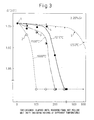
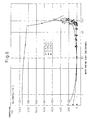
- FIG. 3 and FIG. 4 will be used to explain the processing conditions for a medium thickness bar.
- a silicon steel ingot containing, by mass%, 0.045% C, 3.20% Si, 0.025% Al, and a balance of Fe and unavoidable impurities was rolled to obtain a 40 mm thick bar as a starting material. This was divided into four pieces which were tested as follows. These were held in a bar heating furnace 1300°C for 3 hours to make the AlN completely dissolve in the iron metal, then were allowed to cool.
- the hot rolled sheets were cold rolled, decarburized, and final annealed to obtain final products, then the products were measured for magnetic properties (B10).
- the relationship between these properties and the heat histories is shown in FIG. 3 .
- the holding time is 0, so the magnetic properties become the most superior B10 properties as shown by the black dots 1 of FIG. 3 .
- the magnetic properties when performing the hot rolling after holding the sheet at 1000°C for 20 seconds of FIG. 4(B) as shown by the white dots 2 of FIG. 3 , become considered degraded B10 properties regardless of the holding time being short. If over 100 seconds, the secondary recrystallization itself becomes unstable.
- the magnetic properties when performing the hot rolling after holding the sheet at 1100°C for 50 seconds of FIG. 4(C) are improved somewhat due to the long holding time and the high temperature.
- the magnetic properties when performing the hot rolling after holding the sheet at 1200°C for 120 seconds of FIG. 4(D) are values close to the best values by making the temperature high even if the holding time is long.
- the drop in the bar temperature is critical for the B10 properties, but it is learned that if securing a high temperature over 1200°C, a certain margin can be given to the holding time and superior properties can be obtained.
- FIG. 5 illustrates the relationship between the magnetic properties and the heat history when rolling a silicon steel ingot comprised of 0.046% C, 3.10% Si, 0.029% Al, and a balance of Fe and unavoidable impurities to produce a 40 mm thick bar, immediately rolling it after heating at 1350°C for 30 minutes to finish it to a 3.5 mm thick hot rolled sheet at about 1000°C, water cooling this from the cooling process right after ending the hot rolling to produce five types of hot rolled sheets, and cold rolling, decarburizing, and final annealing the sheets to produce the final products.
- the thick lines show the starting point of cooling (water cooling) after hot rolling
- the thin lines show the magnetic properties (B10).
- FIG. 6 shows the relationship between the hot rolling and cooling cycle and the amount of precipitation of AlN.
- the precipitation curve in the case of a low Si (1.12% Si, 2.17% Si) is simultaneously shown.
- the amount of Si is 3.10%
- AlN starts to precipitate from around 1250°C and proceeds rapidly in precipitation at 1200°C or less.
- AlN does not proceed much in precipitation at all down to 1000°C and first starts to precipitate at 1000°C or less. This is because the ⁇ - ⁇ transformation region of the material changes depending on the amounts of C and Si contained and the precipitation behavior of the AlN is closely related to the amount of this ⁇ -transformation.
- a silicon steel melt comprising, by mass%, 0.045% C, 3.05% Si, and 0.032% Al and having a balance of Fe and unavoidable impurities was cast by a continuous casting machine (hereinafter referred to as a "CC machine") to a 60 mm thick bar. This was immediately hot rolled by final hot rolling to a thickness of 3.0 mm. The final hot rolling inlet temperature at the bar head part was 1210°C and at the tail part was 1205°C. The amount of C of the hot rolled sheet was 0.041% whereby slight decarburization occurred.
- CC machine continuous casting machine
- the sheet was first cold rolled at a reduction rate of 30% to a 2.1 mm thickness, then was annealed at 1100°C for 2 minutes in nitrogen, then cooled by blowing a jet stream over it.
- the cooling rate was 1100°C to 850°C in about 18 seconds and 850°C to 400°C in about 27 seconds.
- the AlN after annealing was analyzed as being 0.0055% (NasAlN).
- the sheet was cooled by a rolling rate of 83.3% to a thickness of 0.35 mm, then decarburized at 800°C for 3 minutes in hydrogen, then annealed at 1200°C for 2.0 hours.
- the B10 property in the rolling direction of the product was 1.93T, and the W17/50 was 1.15W/kg.
- Comparative Example A bar of the same ingredients as Example 1 was allowed to stand in front of the final hot rolling mill inlet for about 40 seconds, then started to be final hot rolled.
- the final rolling start temperature of the bar at that time was 1150°C at bar head part and 1120°C at the tail part.
- the sheet was treated in the same way as Example 1 and the final product was examined for the secondary recrystallized grain formation rate. This was found to be about 50%, that is, a finished product was not formed.
- a silicon steel melt comprising, by mass%, 0.048% C, 3.13% Si, 0.10% Mn, 0.029% Al, and 0.029% S and having a balance of Fe and unavoidable impurities was cast by a CC machine to a 50 mm thick bar. This was immediately hot rolled by final hot rolling to a thickness of 2.8 mm. The final hot rolling inlet temperature at the bar head part was 1210°C and at the tail part was 1200°C. After respectively 10 seconds and 50 seconds, the hot rolling was ended. The temperatures at that time were 1010°C and 1000°C. After about 75 seconds, the coiling was ended. The C after hot rolling was analyzed as being 0.040% and the AlN 0.0040% (NasAlN).
- This hot rolled sheet was pickled, then cold rolled by a rolling rate of 87.5% to a final gauge of 0.35 mm, was decarburized at 850°C for 3 minutes in wet hydrogen, then annealed in hydrogen at 1200°C for 15 hours.
- the B10 property in the rolling direction of the product was 1.92T, and the W17/50 was 1.05W/kg.
- a silicon steel melt containing, by mass%, 0.050% C, 3.18% Si, 0.075% Mn, 0.021% Al, and 0.035% S and having a balance of Fe and unavoidable impurities was cast by a CC machine to a 40 mm thick bar and immediately rolled by final hot rolling to a thickness of 3.0 mm.
- the final hot rolling inlet temperature was 1210°C at the bar head part and 1205°C at the tail part.
- the hot rolling was respectively ended after 12 seconds and after 53 seconds.
- the temperatures at that time were 1020°C and 990°C.
- the coiling was completed after about 80 seconds.
- Comparative Example A bar of the same ingredients as Example 3 was allowed to stand in front of the final hot rolling mill inlet for about 150 seconds, then started to be final hot rolled.
- the final rolling start temperature of the bar at that time was 950°C at the bar head part and 930°C at the tail part.
- the sheet was treated under the same way conditions as Example 3 to obtain the final product, then was examined for the secondary recrystallized grain formation rate. This was found to be about 20%, that is, a finished product was not formed.
- a silicon steel melt containing, by mass%, 0.050%C, 3.12% Si, 0.041% Al, 0.030% S, 0.050% Se, and 0.030% Te and having a balance of Fe and unavoidable impurities was cast by the CC machine to a 60 mm thick bar. This was immediately rolled by final hot rolling to a 3.0 mm thickness. The final hot rolling inlet temperature was 1230°C at the bar head part and 1210°C at the tail part. The hot rolling was ended after 15 seconds and after 60 seconds. The temperatures at this time were respectively 1050°C and 1020°C. The coiling was completed after about 90 seconds.
- the sheet was continuously annealed at 1100°C for 2 minutes in a nitrogen atmosphere, then cold rolled by a rate of 50%, then annealed for 1 minute for primary recrystallization and further rolled by a rolling rate of 84.7% to 0.23 mm.
- the sheet was annealed by decarburization annealing, then by final annealing at 1200°C for 20 hours along with removal of Se, removal of Te, and removal of S.
- the magnetic properties of the product were a B10 of 1.93T and a W17/50 of 1.05W/kg.
- a silicon steel melt containing, by mass%, 0.046% C, 3.20% Si, 0.031% Al, and 0.025% S and having a balance of Fe and unavoidable impurities was cast by the CC machine to a 50 mm thick bar. This was immediately rolled by final hot rolling to a 2.5 mm thickness. The final hot rolling inlet temperature was 1220°C at the bar head part and 1205°C at the tail part. The hot rolling was ended after 12 seconds and after 50 seconds. The temperatures at this time were respectively 1005°C and 990°C. The coiling was completed after about 85 seconds.
- the sheet was continuously annealed at 1130°C for 2 minutes, then pickled and cold rolled to a final sheet thickness of 0.23 mm, then annealed by decarburization annealing at 850°C for 2 minutes in wet hydrogen.
- This steel sheet was coated separately with an annealing separator containing, by ratio of weight with respect to MgO: 100, TiO 2 : 10 and MnO 2 : 5 and furthermore having boric acid added in 0.1 to 3% and with an annealing separator not having boric acid added to it, then was annealed at 1200°C for 20 hours in hydrogen.
- Table 1 Amount of addition of boric acid % Flux density B10 (T) Watt loss value W17/50 (W/kg) Remarks Addition of TiO 2 , MnO 2 Lowest Largest Average Difference Lowest Largest Average Difference 0 1.88 1.92 1.905 0.04 1.15 1.32 1.235 0.17 No 0.1 1.89 1.94 1.915 0.05 0.99 1.12 1.055 0.13 0.5 1.90 1.93 1.915 0.03 0.96 1.08 1.020 0.12 Yes 1.0 1.91 1.93 1.920 0.02 0.94 0.98 0.960 0.04 3.0 1.88 1.91 1.895 0.03 1.02 1.17 1.095 0.15
- a silicon steel melt containing, by mass, 0.04% C, 3.30% Si, and 0.029% Al and having a balance of Fe and unavoidable impurities was cast by the CC machine to a 60 mm thick bar. This was immediately rolled by final hot rolling to a 2.3 mm thickness. The final hot rolling inlet temperature was 1230°C at the bar head part and 1205°C at the tail part. The hot rolling was ended after 12 seconds and after 45 seconds. The temperatures at this time were respectively 1010°C and 995°C. The coiling was completed after about 85 seconds.
- This hot rolled sheet was continuously annealed at 1150°C for 2 minutes, rapidly cooled, pickled, and cold rolled to a final sheet thickness of 0.27 mm and annealed by decarburization annealing at 850°C in hydrogen and by final annealing at 1200°C. It was then cold rolled during and run by the same pass schedule (six passes of 1.6 mm, 1.2 mm, 1.0 mm, 0.8 mm, 0.6 mm, and 0.45 mm) while aging by five different temperatures. That is, the relationship of the conditions and magnetic properties is as shown in Table 2.
- a silicon steel melt containing, by mass, 0.085% C, 3.20% Si, 0.073% Mn, 0.025% S, 0.025% acid soluble Al, 0.0085% N, 0.08% Sn, and 0.07% Cu and having a balance of Fe and unavoidable impurities was cast by the CC machine to a 60 mm thick bar. This was immediately rolled by final hot rolling to a 2.0 mm thickness. The final hot rolling inlet temperature was 1220°C at the bar head part and 1201°C at the tail part. The hot rolling was ended after 15 seconds and after 55 seconds. The temperatures at this time were respectively 990°C and 985°C. The coiling was completed after about 90 seconds.
- This hot rolled sheet was continuously annealed at 1130°C for 2 minutes, then rapidly cooled in hot water of 100°C and treated by precipitation heat treatment, pickled, then aged at 250°C ⁇ 5 minutes between passes and cold rolled to a final sheet thickness of 0.22 mm.
- the sheet was annealed 850°C for 2 minutes in Craced-NH 3 in an atmosphere of a dew point of 62°C by decarburization annealing, was coated by an annealing separator containing a mixture of MgO and TiO 2 , and was annealed at 1200°C by final annealing. It was given a tension coating after the final annealing.
- a silicon steel melt containing, by mass, 00.05% C, 3.05% Si, 0.07% Mn, 0.03% S, and 0.026% acid soluble Al and having a balance of Fe and unavoidable impurities was cast by the CC machine to a 40 mm thick bar. After the casting, the bar was cut. The temperature of the bar at that time was 1255°C. This continued to be held in temperature by a heating apparatus so as not to fall to 1250°C or less, was made to reach an inlet of a final hot rolling mill in about 300 seconds, and immediately started to be hot rolled to a thickness of 30 mm. The final hot rolling inlet temperature was 1220 to 1230°C. The front end and rear end of the hot rolled sheet were finished being hot rolled in 15 seconds and 60 seconds. The temperatures at the time were 1030°C and 1020°C. The sheet finished being coiled after about 70 seconds.
- This hot rolled sheet was continuously annealed at 1130°C for 3 minutes, then force cooled by immersion in a tank filled with boiling water at the outlet of the furnace, pickled, and cold rolled to a 0.3 mm thickness by a 90% reduction rate. This was then annealed by decarburization annealing, then by final annealing at 1200°C for 20 minutes in H 2 .
- Example 8 As a comparative example, a bar of the same ingredients as Example 8 was cast, then conveyed to a final hot rolling mill inlet without holding the temperature by a heating apparatus, whereupon the temperature fell to 1100°C. This was immediately rolled by final hot rolling. The hot rolled sheet was treated under the same conditions as Example 3 to obtain a final product. The final product was examined for the secondary recrystallized grain formation rate. This was found to be about 30%, that is, a finished product was not formed.
- a silicon steel melt containing, by mass, 0.055% C, 3.20% Si, 0.025% S, and 0.30% acid soluble Al and having a balance of Fe and unavoidable impurities was cast by the CC machine to a 30 mm thick bar. After the casting, the bar was cut. The temperature of the bar at that time was 1150°C. This bar was immediately inserted into a heat furnace heated to 1330°C to make the side AlN solid-solute, then was taken out from the furnace, made to reach the inlet of a final hot rolling mill in about 120 seconds, and immediately started to be hot rolled to a thickness of 25 mm. The final hot rolling inlet temperature was 1210 to 1220°C. The front end and rear end of the hot rolled sheet were finished being hot rolled in 16 seconds and 50 seconds. The temperatures at the time were 1010°C and 998°C. The sheet finished being coiled after about 70 seconds.
- This hot rolled sheet was continuously annealed at 1130°C for 2 minutes, then force cooled by a mist spraying system at the outlet of the furnace, pickled, cold rolled to a 0.3 mm thickness, then annealed by decarburization annealing at 835°C for 3 minutes in wet hydrogen.
- This steel sheet was coated with a slurry of MgO containing 800 ppm of B, was wound in a coil, and was annealed at 1200°C for 20 hours in hydrogen.
- Example 8 As a comparative example, a bar of the same ingredients as Example 8 was cast, then immediately conveyed to the inlet of a final hot rolling mill. The temperature further dropped and fell to 1100°C. This was immediately rolled by hot rolling. The hot rolled sheet was treated under the same conditions as Example 3 to obtain a final product. The final product was examined for the secondary recrystallized grain formation rate. Just 20% occurred, that is, a finished product was not formed.
- the AlN obtained by rapid cooling at the final hot rolling mill (tandem mill) from the completely solid-solute state in the medium thickness cast slab produced by continuous casting is dispersed uniformly and finely. This is sufficient for producing primary recrystallization nuclei having a superior crystal orientation. Simultaneously, the inhibitory effect on crystal growth is also sufficient. Further, the crystal structure obtained by casting is destroyed by the hot rolling. Therefore, it is possible to obtain high flux density grain-oriented silicon steel sheet forming uniform, complete secondary recrystallized grains by the final annealing and having superior properties of a flux density B10 ⁇ 1.90T without any detrimental effect of abnormally grown grains of the slab due to conventional high temperature heating.
Landscapes
- Chemical & Material Sciences (AREA)
- Engineering & Computer Science (AREA)
- Physics & Mathematics (AREA)
- Mechanical Engineering (AREA)
- Organic Chemistry (AREA)
- Metallurgy (AREA)
- Materials Engineering (AREA)
- Thermal Sciences (AREA)
- Crystallography & Structural Chemistry (AREA)
- Electromagnetism (AREA)
- Manufacturing & Machinery (AREA)
- Power Engineering (AREA)
- Dispersion Chemistry (AREA)
- Manufacturing Of Steel Electrode Plates (AREA)
- Soft Magnetic Materials (AREA)
Applications Claiming Priority (2)
| Application Number | Priority Date | Filing Date | Title |
|---|---|---|---|
| JP2006247674A JP5001611B2 (ja) | 2006-09-13 | 2006-09-13 | 高磁束密度方向性珪素鋼板の製造方法 |
| PCT/JP2007/062183 WO2008032483A1 (fr) | 2006-09-13 | 2007-06-11 | Procédé de fabrication de feuilles d'acier au silicium à grains orientés de haute densité de flux magnétique |
Publications (1)
| Publication Number | Publication Date |
|---|---|
| EP2077164A1 true EP2077164A1 (de) | 2009-07-08 |
Family
ID=39183552
Family Applications (1)
| Application Number | Title | Priority Date | Filing Date |
|---|---|---|---|
| EP07745437A Withdrawn EP2077164A1 (de) | 2006-09-13 | 2007-06-11 | Verfahren zur herstellung eines kornorientierten siliziumstahlblechs mit hoher magnetischer flussdichte |
Country Status (6)
| Country | Link |
|---|---|
| US (1) | US20090199935A1 (de) |
| EP (1) | EP2077164A1 (de) |
| JP (1) | JP5001611B2 (de) |
| KR (1) | KR20090057010A (de) |
| CN (1) | CN101516537A (de) |
| WO (1) | WO2008032483A1 (de) |
Cited By (4)
| Publication number | Priority date | Publication date | Assignee | Title |
|---|---|---|---|---|
| WO2012089696A1 (en) * | 2011-01-01 | 2012-07-05 | Tata Steel Nederland Technology Bv | Process to manufacture grain-oriented electrical steel strip and grain-oriented electrical steel produced thereby |
| WO2014020406A1 (en) | 2012-07-31 | 2014-02-06 | ArcelorMittal Investigación y Desarrollo, S.L. | Method of production of grain-oriented silicon steel sheet grain oriented electrical steel sheet and use thereof |
| EP3536813A4 (de) * | 2016-11-01 | 2019-09-11 | JFE Steel Corporation | Verfahren zur herstellung eines kornorientierten elektrostahlblechs |
| EP3536814A4 (de) * | 2016-11-01 | 2019-09-11 | JFE Steel Corporation | Verfahren zur herstellung eines kornorientierten elektrischen stahlblechs |
Families Citing this family (7)
| Publication number | Priority date | Publication date | Assignee | Title |
|---|---|---|---|---|
| KR101424905B1 (ko) * | 2010-01-29 | 2014-08-01 | 도시바 미쓰비시덴키 산교시스템 가부시키가이샤 | 압연 라인에서의 물 분사 제어 장치, 물 분사 제어 방법, 물 분사 제어 프로그램 |
| CN103805918B (zh) * | 2012-11-15 | 2016-01-27 | 宝山钢铁股份有限公司 | 一种高磁感取向硅钢及其生产方法 |
| WO2016139818A1 (ja) | 2015-03-05 | 2016-09-09 | Jfeスチール株式会社 | 方向性電磁鋼板およびその製造方法 |
| US11286538B2 (en) | 2017-02-20 | 2022-03-29 | Jfe Steel Corporation | Method for manufacturing grain-oriented electrical steel sheet |
| CN112391512B (zh) * | 2019-08-13 | 2022-03-18 | 宝山钢铁股份有限公司 | 一种高磁感取向硅钢及其制造方法 |
| JP7392849B2 (ja) * | 2021-01-28 | 2023-12-06 | Jfeスチール株式会社 | 方向性電磁鋼板の製造方法および電磁鋼板製造用圧延設備 |
| JP7838658B2 (ja) | 2023-03-29 | 2026-04-01 | Jfeスチール株式会社 | 方向性電磁鋼板の製造方法及び方向性電磁鋼板の製造設備列 |
Family Cites Families (10)
| Publication number | Priority date | Publication date | Assignee | Title |
|---|---|---|---|---|
| US1965559A (en) * | 1933-08-07 | 1934-07-03 | Cold Metal Process Co | Electrical sheet and method and apparatus for its manufacture and test |
| GB873149A (en) | 1956-11-08 | 1961-07-19 | Yawata Iron & Steel Co | Method of producing oriented silicon steel |
| JPS597768B2 (ja) * | 1981-05-30 | 1984-02-21 | 新日本製鐵株式会社 | 磁性の優れた一方向性電磁鋼板の製造法 |
| JPH02121704A (ja) * | 1988-11-01 | 1990-05-09 | Nkk Corp | 電磁鋼板の熱間圧延方法 |
| JPH02258922A (ja) | 1989-03-30 | 1990-10-19 | Nippon Steel Corp | 一方向性高磁束密度電磁鋼板の製造方法 |
| JP2580403B2 (ja) | 1991-05-17 | 1997-02-12 | 新日本製鐵株式会社 | 一方向性電磁鋼板用連続鋳造スラブの熱間圧延方法 |
| WO1997019353A1 (en) | 1995-11-17 | 1997-05-29 | Universal Healthwatch, Inc. | Chemiluminescent assay methods and devices for detecting target analytes |
| IT1290172B1 (it) * | 1996-12-24 | 1998-10-19 | Acciai Speciali Terni Spa | Procedimento per la produzione di lamierino magnetico a grano orientato, con elevate caratteristiche magnetiche. |
| US6309473B1 (en) * | 1998-10-09 | 2001-10-30 | Kawasaki Steel Corporation | Method of making grain-oriented magnetic steel sheet having low iron loss |
| IT1317894B1 (it) * | 2000-08-09 | 2003-07-15 | Acciai Speciali Terni Spa | Procedimento per la regolazione della distribuzione degli inibitorinella produzione di lamierini magnetici a grano orientato. |
-
2006
- 2006-09-13 JP JP2006247674A patent/JP5001611B2/ja active Active
-
2007
- 2007-06-11 EP EP07745437A patent/EP2077164A1/de not_active Withdrawn
- 2007-06-11 CN CNA2007800340603A patent/CN101516537A/zh active Pending
- 2007-06-11 WO PCT/JP2007/062183 patent/WO2008032483A1/ja not_active Ceased
- 2007-06-11 KR KR1020097005090A patent/KR20090057010A/ko not_active Ceased
- 2007-06-11 US US12/310,769 patent/US20090199935A1/en not_active Abandoned
Non-Patent Citations (1)
| Title |
|---|
| See references of WO2008032483A1 * |
Cited By (6)
| Publication number | Priority date | Publication date | Assignee | Title |
|---|---|---|---|---|
| WO2012089696A1 (en) * | 2011-01-01 | 2012-07-05 | Tata Steel Nederland Technology Bv | Process to manufacture grain-oriented electrical steel strip and grain-oriented electrical steel produced thereby |
| WO2014020406A1 (en) | 2012-07-31 | 2014-02-06 | ArcelorMittal Investigación y Desarrollo, S.L. | Method of production of grain-oriented silicon steel sheet grain oriented electrical steel sheet and use thereof |
| WO2014020369A1 (en) | 2012-07-31 | 2014-02-06 | Arcelormittal Investigación Y Desarrollo Sl | Method of production of grain-oriented silicon steel sheet grain oriented electrical steel sheet and use thereof |
| US9831020B2 (en) | 2012-07-31 | 2017-11-28 | Arcelormittal Investigacion Y Desarrollo, S.L. | Method of production of grain-oriented silicon steel sheet grain oriented electrical steel sheet and use thereof |
| EP3536813A4 (de) * | 2016-11-01 | 2019-09-11 | JFE Steel Corporation | Verfahren zur herstellung eines kornorientierten elektrostahlblechs |
| EP3536814A4 (de) * | 2016-11-01 | 2019-09-11 | JFE Steel Corporation | Verfahren zur herstellung eines kornorientierten elektrischen stahlblechs |
Also Published As
| Publication number | Publication date |
|---|---|
| KR20090057010A (ko) | 2009-06-03 |
| WO2008032483A1 (fr) | 2008-03-20 |
| JP5001611B2 (ja) | 2012-08-15 |
| JP2008069391A (ja) | 2008-03-27 |
| US20090199935A1 (en) | 2009-08-13 |
| CN101516537A (zh) | 2009-08-26 |
Similar Documents
| Publication | Publication Date | Title |
|---|---|---|
| EP2077164A1 (de) | Verfahren zur herstellung eines kornorientierten siliziumstahlblechs mit hoher magnetischer flussdichte | |
| EP2880190B1 (de) | Verfahren zur herstellung von kornorientiertem siliciumstahlblech, kornorientiertem elektrostahlblech und verwendung davon | |
| EP3333271B1 (de) | Verfahren zur herstellung eines nichtorientierten elektromagnetischen stahlblechs mit hervorragenden magnetischen eigenschaften | |
| JP7338812B1 (ja) | 方向性電磁鋼板の製造方法 | |
| CN114616353A (zh) | 无方向性电磁钢板 | |
| JP2883226B2 (ja) | 磁気特性の極めて優れた薄方向性けい素鋼板の製造方法 | |
| CN117460851A (zh) | 取向性电磁钢板的制造方法 | |
| JPS5813606B2 (ja) | ジキトクセイノ キワメテ スグレタ イツホウコウセイケイソコウタイバンノ セイゾウホウホウ | |
| JP2005226111A (ja) | 磁気特性に優れた一方向性電磁鋼板の製造方法 | |
| JP3357603B2 (ja) | 極めて鉄損の低い高磁束密度方向性電磁鋼板の製造方法 | |
| JPH0463228A (ja) | 磁性焼鈍前後の磁気特性の優れた無方向性電磁鋼板の製造方法 | |
| JP2607331B2 (ja) | 磁気特性の優れた一方向性電磁鋼板の製造方法 | |
| JP3928275B2 (ja) | 電磁鋼板 | |
| JP2784687B2 (ja) | 磁気特性の優れた一方向性電磁鋼板の製造方法 | |
| CN117203355A (zh) | 取向性电磁钢板的制造方法 | |
| JP7786642B1 (ja) | 無方向性電磁鋼板用熱延鋼板の製造方法および無方向性電磁鋼板の製造方法 | |
| KR100940719B1 (ko) | 응력제거 소둔 후 자속밀도 특성이 우수한 무방향성전기강판의 제조방법 | |
| KR100940714B1 (ko) | 응력제거소둔 후 철손특성이 우수한 무방향성 전기강판의제조방법 | |
| JPH05230534A (ja) | 磁気特性の優れた一方向性電磁鋼板の製造方法 | |
| KR100256343B1 (ko) | 저온 스라브 가열방식에의한 방향성 전기강판의 제조방법 | |
| JPH0699750B2 (ja) | 電磁特性の良好な方向性けい素鋼板の製造方法 | |
| CN120917159A (zh) | 取向性电磁钢板的制造方法、取向性电磁钢板的制造设备线和取向性电磁钢板用热轧板 | |
| KR20000041670A (ko) | 피막특성이 우수한 저온 슬라브가열 방식의 방향성 전기강판제조방법 | |
| KR101908044B1 (ko) | 방향성 전기강판의 제조방법 | |
| JPH04362138A (ja) | 磁気特性の優れた厚い板厚の一方向性電磁鋼板の製造方法 |
Legal Events
| Date | Code | Title | Description |
|---|---|---|---|
| PUAI | Public reference made under article 153(3) epc to a published international application that has entered the european phase |
Free format text: ORIGINAL CODE: 0009012 |
|
| 17P | Request for examination filed |
Effective date: 20090331 |
|
| AK | Designated contracting states |
Kind code of ref document: A1 Designated state(s): AT BE BG CH CY CZ DE DK EE ES FI FR GB GR HU IE IS IT LI LT LU LV MC MT NL PL PT RO SE SI SK TR |
|
| AX | Request for extension of the european patent |
Extension state: AL BA HR MK RS |
|
| RBV | Designated contracting states (corrected) |
Designated state(s): DE FR |
|
| STAA | Information on the status of an ep patent application or granted ep patent |
Free format text: STATUS: THE APPLICATION HAS BEEN WITHDRAWN |
|
| 18W | Application withdrawn |
Effective date: 20110503 |