EP2084913B1 - Codage scalable de qualité - Google Patents
Codage scalable de qualité Download PDFInfo
- Publication number
- EP2084913B1 EP2084913B1 EP06818289.8A EP06818289A EP2084913B1 EP 2084913 B1 EP2084913 B1 EP 2084913B1 EP 06818289 A EP06818289 A EP 06818289A EP 2084913 B1 EP2084913 B1 EP 2084913B1
- Authority
- EP
- European Patent Office
- Prior art keywords
- picture
- prediction
- data stream
- mapping
- depth
- Prior art date
- Legal status (The legal status is an assumption and is not a legal conclusion. Google has not performed a legal analysis and makes no representation as to the accuracy of the status listed.)
- Active
Links
Images


Classifications
-
- H—ELECTRICITY
- H04—ELECTRIC COMMUNICATION TECHNIQUE
- H04N—PICTORIAL COMMUNICATION, e.g. TELEVISION
- H04N19/00—Methods or arrangements for coding, decoding, compressing or decompressing digital video signals
- H04N19/10—Methods or arrangements for coding, decoding, compressing or decompressing digital video signals using adaptive coding
- H04N19/102—Methods or arrangements for coding, decoding, compressing or decompressing digital video signals using adaptive coding characterised by the element, parameter or selection affected or controlled by the adaptive coding
-
- H—ELECTRICITY
- H04—ELECTRIC COMMUNICATION TECHNIQUE
- H04N—PICTORIAL COMMUNICATION, e.g. TELEVISION
- H04N19/00—Methods or arrangements for coding, decoding, compressing or decompressing digital video signals
- H04N19/10—Methods or arrangements for coding, decoding, compressing or decompressing digital video signals using adaptive coding
- H04N19/102—Methods or arrangements for coding, decoding, compressing or decompressing digital video signals using adaptive coding characterised by the element, parameter or selection affected or controlled by the adaptive coding
- H04N19/117—Filters, e.g. for pre-processing or post-processing
-
- H—ELECTRICITY
- H04—ELECTRIC COMMUNICATION TECHNIQUE
- H04N—PICTORIAL COMMUNICATION, e.g. TELEVISION
- H04N19/00—Methods or arrangements for coding, decoding, compressing or decompressing digital video signals
- H04N19/10—Methods or arrangements for coding, decoding, compressing or decompressing digital video signals using adaptive coding
- H04N19/169—Methods or arrangements for coding, decoding, compressing or decompressing digital video signals using adaptive coding characterised by the coding unit, i.e. the structural portion or semantic portion of the video signal being the object or the subject of the adaptive coding
- H04N19/184—Methods or arrangements for coding, decoding, compressing or decompressing digital video signals using adaptive coding characterised by the coding unit, i.e. the structural portion or semantic portion of the video signal being the object or the subject of the adaptive coding the unit being bits, e.g. of the compressed video stream
-
- H—ELECTRICITY
- H04—ELECTRIC COMMUNICATION TECHNIQUE
- H04N—PICTORIAL COMMUNICATION, e.g. TELEVISION
- H04N19/00—Methods or arrangements for coding, decoding, compressing or decompressing digital video signals
- H04N19/10—Methods or arrangements for coding, decoding, compressing or decompressing digital video signals using adaptive coding
- H04N19/169—Methods or arrangements for coding, decoding, compressing or decompressing digital video signals using adaptive coding characterised by the coding unit, i.e. the structural portion or semantic portion of the video signal being the object or the subject of the adaptive coding
- H04N19/186—Methods or arrangements for coding, decoding, compressing or decompressing digital video signals using adaptive coding characterised by the coding unit, i.e. the structural portion or semantic portion of the video signal being the object or the subject of the adaptive coding the unit being a colour or a chrominance component
-
- H—ELECTRICITY
- H04—ELECTRIC COMMUNICATION TECHNIQUE
- H04N—PICTORIAL COMMUNICATION, e.g. TELEVISION
- H04N19/00—Methods or arrangements for coding, decoding, compressing or decompressing digital video signals
- H04N19/10—Methods or arrangements for coding, decoding, compressing or decompressing digital video signals using adaptive coding
- H04N19/169—Methods or arrangements for coding, decoding, compressing or decompressing digital video signals using adaptive coding characterised by the coding unit, i.e. the structural portion or semantic portion of the video signal being the object or the subject of the adaptive coding
- H04N19/187—Methods or arrangements for coding, decoding, compressing or decompressing digital video signals using adaptive coding characterised by the coding unit, i.e. the structural portion or semantic portion of the video signal being the object or the subject of the adaptive coding the unit being a scalable video layer
-
- H—ELECTRICITY
- H04—ELECTRIC COMMUNICATION TECHNIQUE
- H04N—PICTORIAL COMMUNICATION, e.g. TELEVISION
- H04N19/00—Methods or arrangements for coding, decoding, compressing or decompressing digital video signals
- H04N19/30—Methods or arrangements for coding, decoding, compressing or decompressing digital video signals using hierarchical techniques, e.g. scalability
-
- H—ELECTRICITY
- H04—ELECTRIC COMMUNICATION TECHNIQUE
- H04N—PICTORIAL COMMUNICATION, e.g. TELEVISION
- H04N19/00—Methods or arrangements for coding, decoding, compressing or decompressing digital video signals
- H04N19/30—Methods or arrangements for coding, decoding, compressing or decompressing digital video signals using hierarchical techniques, e.g. scalability
- H04N19/36—Scalability techniques involving formatting the layers as a function of picture distortion after decoding, e.g. signal-to-noise [SNR] scalability
-
- H—ELECTRICITY
- H04—ELECTRIC COMMUNICATION TECHNIQUE
- H04N—PICTORIAL COMMUNICATION, e.g. TELEVISION
- H04N19/00—Methods or arrangements for coding, decoding, compressing or decompressing digital video signals
- H04N19/50—Methods or arrangements for coding, decoding, compressing or decompressing digital video signals using predictive coding
-
- H—ELECTRICITY
- H04—ELECTRIC COMMUNICATION TECHNIQUE
- H04N—PICTORIAL COMMUNICATION, e.g. TELEVISION
- H04N19/00—Methods or arrangements for coding, decoding, compressing or decompressing digital video signals
- H04N19/60—Methods or arrangements for coding, decoding, compressing or decompressing digital video signals using transform coding
- H04N19/61—Methods or arrangements for coding, decoding, compressing or decompressing digital video signals using transform coding in combination with predictive coding
Definitions
- the present invention is concerned with picture and/or video coding, and in particular, quality-scalable coding using quality-scalable data streams.
- JVT Joint Video Team
- MPEG Moving Pictures Experts Group
- VCEG ITU-T Video Coding Experts Group
- H.264/MPEG4-AVC as described in ITU-T Rec. & ISO/IEC 14496-10 AVC, "Advanced Video Coding for Generic Audiovisual Services, " version 3, 2005 , specifies a hybrid video codec in which macroblock prediction signals are either generated in the temporal domain by motion-compensated prediction, or in the spatial domain by intra prediction, and both predictions are followed by residual coding.
- H.264/MPEG4-AVC coding without the scalability extension is referred to as single-layer H.264/MPEG4-AVC coding.
- Rate-distortion performance comparable to single-layer H.264/MPEG4-AVC means that the same visual reproduction quality is typically achieved at 10% bit-rate.
- scalability is considered as a functionality for removal of parts of the bit-stream while achieving an R-D performance at any supported spatial, temporal or SNR resolution that is comparable to single-layer H.264/MPEG4-AVC coding at that particular resolution.
- the basic design of the scalable video coding can be classified as a layered video codec.
- the basic concepts of motion-compensated prediction and intra prediction are employed as in H.264/MPEG4-AVC.
- additional inter-layer prediction mechanisms have been integrated in order to exploit the redundancy between several spatial or SNR layers.
- SNR scalability is basically achieved by residual quantization, while for spatial scalability, a combination of motion-compensated prediction and oversampled pyramid decomposition is employed.
- the temporal scalability approach of H.264/MPEG4-AVC is maintained.
- Fig. 3 shows a typical coder structure 900 with two spatial layers 902a, 902b.
- an independent hierarchical motion-compensated prediction structure 904a,b with layer-specific motion parameters 906a, b is employed.
- the redundancy between consecutive layers 902a,b is exploited by inter-layer prediction concepts 908 that include prediction mechanisms for motion parameters 906a,b as well as texture data 910a,b.
- a base representation 912a,b of the input pictures 914a,b of each layer 902a,b is obtained by transform coding 916a,b similar to that of H.264/MPEG4-AVC, the corresponding NAL units (NAL - Network Abstraction Layer) contain motion information and texture data; the NAL units of the base representation of the lowest layer, i.e. 912a, are compatible with single-layer H.264/MPEG4-AVC.
- the reconstruction quality of the base representations can be improved by an additional coding 918a,b of so-called progressive refinement slices; the corresponding NAL units can be arbitrarily truncated in order to support fine granular quality scalability (FGS) or flexible bit-rate adaptation.
- FGS fine granular quality scalability
- the resulting bit-streams output by the base layer coding 916a,b and the progressive SNR refinement texture coding 918a,b of the respective layers 902a,b, respectively, are multiplexed by a multiplexer 920 in order to result in the scalable bit-stream 922.
- This bit-stream 922 is scalable in time, space and SNR quality.
- the temporal scalability is provided by using a hierarchical prediction structure.
- the one of single-layer H.264/MPEG4-AVC standards may be used without any changes.
- additional tools have to be added to the single-layer H.264/MPEG4.AVC. All three scalability types can be combined in order to generate a bit-stream that supports a large degree on combined scalability.
- CGS coarse-grain scalability
- FGS fine-granular scalability
- each NAL unit for a PR slice represents a refinement signal that corresponds to a bisection of a quantization step size (QP decrease of 6).
- QP decrease of 6 the refinement signal represented by a PR NAL unit refines the transformation coefficients of transform blocks into which a current picture of the video has been separated.
- this refinement signal may be used to refine the transformation coefficients within the base layer bit-stream before performing the inverse transform in order to reconstruct the texture of prediction residual used for reconstructing the actual picture by use of a spatial and/or temporal prediction, such as by means of motion compensation.
- the progressive refinement NAL units can be truncated at any arbitrary point, so that the quality of the SNR base layer can be improved in a fine granular way. Therefore, the coding order of transform coefficient levels has been modified. Instead of scanning the transform coefficients macroblock-by-macroblock, as it is done in (normal) slices, the transform coefficient blocks are scanned in separate paths and in each path, only a few coding symbols for a transform coefficient block are coded. With the exception of the modified coding order, the CABAC entropy coding as specified in H.264/MPEG4-AVC is re-used.
- the single-layer H.264/MPEG4-AVC coding standard has been developed for the use of a fixed sampling structure among possible chroma sampling structures, such as, for example, 4:2:0 and 4:2:2, respectively.
- the different chroma sampling capabilities are included in different profiles of the standard.
- the chroma or coloring sampling content indicating the extent to which the color deviates from gray and being defined by two chroma components amounts to, regarding the sampling points, merely one fourth of the number of samples of the luma content representing brightness and being defined by one luma component.
- the number of luma component samples in both the horizontal and vertical dimensions is half the number of luma samples.
- the coding precision used per sample is fixed to be 8 bits or 10 bits, depending on the profile of the standard used. Again, reference is made to the just mentioned article.
- the term luma according to the standard, actually means a weighted sum of non-linear or gamma-corrected RGB contributions.
- luma may be viewed as luminance which refers to the linear relationship of the RGB contributions. According to the present application, both views shall equally apply.
- chroma sampling format refers to the number and position of the chroma samples relative to the number and position of the corresponding luma samples.
- the chroma signal has half the horizontal and half the vertical resolution as compared to the luma signal.
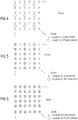
- the format is illustrated in Fig. 4 , where the crosses indicate the locations of the luma samples, whereas the circles represent the locations of the chroma samples, where each chroma sample may consist of two chroma components, such as Cb and Cr.
- Another sampling format is 4:2:2, where the chroma signal has half the horizontal and the same vertical resolution as the luma signal. This is shown in Fig. 5 .
- the chroma signal has the same horizontal and vertical resolution as the luma signal or content, respectively. This is illustrated in Fig. 6 .
- US 2005/0259729 A1 describes a scalable coding scheme according to which an n-bit video is subjected to a color conversion 62, a chroma subsampling 64 as well as a bit-depth down-scaling 14 wherein a base layer data stream is generated from the result. A reconstruction of this base layer data stream is used in order to derive a prediction for the n-bit input signal by means of an up-scaling 22, chroma upsampling 62 and a color conversion 68. The predicted signal is then compared with the n-bit input signal in order to transform, quantize and then entropy-encode the resulting prediction residual.
- the side information within the scaleable data stream may comprise information on the upsampling procedure used during the prediction. See, in particular, the seventh line from the bottom of paragraph [0033].
- the simple replication, a bilinear interpolation and a user-defined filter are cited (compare page 3, paragraph [0034], last five lines).
- US2005/0259729 suggests deciding on the upsampling procedure to be used, on a frame by frame basis.
- SEGALL A; KEROFSKY L; LEI S presents the results of the usage of these mapping functions merely with respect to whole pictures.
- mapping functions within a picture as claimed in the newly-submitted independent claims, is not described in SEGALL A; KEROFSKY L; LEI S. Therefore, SEGALL A; KEROFSKY L; LEI S lacks a hint that would lead a man skilled in the art to the subject matter of the present application. Further, SEGALL A; KEROFSKY L; LEI S suggests applying the mapping functions to the individual color components in the following way: "The specified tone-mapping curve... is applied separately to each RGB component.” (compare second paragraph on page 2).
- the present invention is based on the finding that a more efficient way of addressing different bit-depths or different bit-depths and chroma sampling format requirements may be achieved when using a low bit-depth or low bit-depth and low-chroma resolution representation - in the following shortly called low bit-depth and/or low-chroma resolution representation - for providing a respective base layer data stream representing this low bit-depth and/or low-chroma resolution representation as well as for providing a higher bit-depth and/or higher chroma resolution representation so that a respective prediction residual may be encoded in order to obtain a higher bit-depth and/or higher chroma resolution representation.
- an encoder is en-abled to store a base-quality representation of a picture or a video sequence, which can be decoded by any legacy decoder or video decoder, together with an enhancement signal for higher bit-depth and/or reduced chroma sub-sampling, which may be ignored by legacy decoders or video decoders.
- the base quality representation could contain an 8-bit version of the picture or the video sequence, while the high quality enhancement signal contains a "refinement" to a 10-bit version of the same, and the base quality representation could represent a 4:2:0 version of the picture or the video sequence, while the high quality enhancement signal contains a "refinement" to a 4:2:2 or 4:4:4 version of the same.
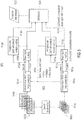
- Fig. 1 shows an encoder 100 comprising a base encoding means 102, a prediction means 104, a residual encoding means 106 and a combining means 108 as well as an input 110 and an output 112.
- the encoder 100 of Fig. 1 is a video encoder receiving a high quality video signal at input 110 and outputting a quality-scalable bit stream at output 112.
- the base encoding means 102 encodes the data at input 110 into a base encoding data stream representing the content of this video signal at input 110 with a reduced picture sample bit-depth or a chroma-sampling format having same luma resolution, but reduced chroma resolution compared to the input signal at input 110.
- the prediction means 104 is adapted to, based on the base encoding data stream output by base encoding means 102, provide a prediction signal with full or increased picture sample bit-depth and/or full or increased chroma resolution for the video signal at input 110.
- a subtractor 114 also comprised by the encoder 100 forms a prediction residual of the prediction signal provided by means 104 relative to the high quality input signal at input 110, the residual signal being encoded by the residual encoding means 106 into a quality enhancement layer data stream.
- the combining means 108 combines the base encoding data stream from the base encoding means 102 and the quality enhancement layer data stream output by residual encoding means 106 to form a quality scalable data stream 112 at the output 112.
- the quality-scalability means that the data stream at the output 112 is composed of a part that is self-contained in that it enables reconstruction of the video signal 110 with the reduced bit-depth and/or the chroma sampling format having the reduced chroma resolution without any further information and with neglecting the remainder of the data stream 112, on the one hand and a further part which enables, in combination with the first part, a reconstruction of the video signal at input 110 in the original bit-depth and original chroma sampling format being higher than the bit depth and/or chroma resolution of the first part.
- the base encoding means 102 comprises a down conversion module 116, a subtractor 118, a transform module 120 and a quantization module 122 serially connected, in the order mentioned, between the input 110, and the combining means 108 and the prediction means 104, respectively.
- the down conversion module 116 is for reducing the bit-depth of the picture samples of and/or the chroma resolution of the pictures of the video signal at input 110, with maintaining the luma resolution of the video signal received from the input 110. In other words, the down conversion module 116 irreversibly down-converts the high quality input video signal at input 110 to a base quality video signal.
- this down-conversion may include reducing the bit-depth of the signal samples, i.e. pixel values, in the video signal at input 110 using any tone-mapping scheme, such as rounding of the sample values, sub-sampling of the chroma components in case the video signal is given in the form of luma plus chroma components, filtering of the input signal at input 110, such as by a RGB to YCbCr conversion, or any combination thereof. More details on possible prediction mechanisms are presented in the following. In particular, it is possible that the down-conversion module 116 uses different down-conversion schemes for each picture of the video signal or picture sequence input at input 110 or uses the same scheme for all pictures.
- any tone-mapping scheme such as rounding of the sample values
- sub-sampling of the chroma components in case the video signal is given in the form of luma plus chroma components
- filtering of the input signal at input 110 such as by a RGB to YCbCr conversion, or any combination thereof.
- the subtractor 118, the transform module 120 and the quantization module 122 co-operate to encode the base quality signal output by down-conversion module 116 by the use of, for example, a non-scalable video coding scheme, such as H.264/MPEG4-AVC. According to the example of Fig.
- the subtractor 118, the transform module 120 and the quantization module 122 co-operate with an optional prediction loop filter 124, a predictor module 126, an inverse transform module 128, and an adder 130 commonly comprised by the base encoding means 102 and the prediction means 104 to form the irrelevance reduction part of a hybrid encoder which encodes the base quality video signal output by down-conversion module 116 by motion-compensation based prediction and following compression of the prediction residual.
- the subtractor 118 subtracts from a current picture or macroblock of the base quality video signal a predicted picture or predicted macroblock portion reconstructed from previously encoded pictures of the base quality video signal by, for example, use of motion compensation.
- the transform module 120 applies a transform on the prediction residual, such as a DCT, FFT or wavelet transform.
- the transformed residual signal may represent a spectral representation and its transform coefficients are irreversibly quantized in the quantization module 122.
- the resulting quantized residual signal represents the residual of the base-encoding data stream output by the base-encoding means 102.
- the prediction means 104 comprises an optional filter for reducing coding artifacts 132 and a prediction module 134.
- the inverse transform module 128, the adder 130, the optional prediction loop filter 124 and the predictor module 126 co-operate to reconstruct the video signal with a reduced bit-depth and/or the chroma sampling format having reduced chroma resolution, as defined by the down-conversion module 116. In other words, they create a low bit-depth and/or low chroma resolution video signal to the optional filter 132 which represents a low quality representation of the source signal at input 110 also being reconstructable at decoder side.
- the inverse transform module 128 and the adder 130 are serially connected between the quantization module 122 and the optional filter 132, whereas the optional prediction loop filter 124 and the prediction module 126 are serially connected, in the order mentioned, between an output of the adder 130 as well as a further input of the adder 130.
- the output of the predictor module 126 is also connected to an inverting input of the subtractor 118.
- the optional filter 132 is connected between the output of adder 130 and the prediction module 134, which, in turn, is connected between the output of optional filter 132 and the inverting input of subtractor 114.
- the inverse transform module 128 inversely transforms the base-encoded residual pictures output by base-encoding means 102 to achieve low bit-depth and/or low chroma resolution residual pictures. Accordingly, inverse transform module 128 performs an inverse transform being an inversion of the transformation and quantization performed by modules 120 and 122. Alternatively, a de-quantization module may be separately provided at the input side of the inverse transform module 128.
- the adder 130 adds a prediction to the reconstructed residual pictures, with the prediction being based on previously reconstructed pictures of the video signal. In particular, the adder 130 outputs a reconstructed video signal with a reduced bit-depth and/or reduced chroma resolution chroma-sampling format.
- These reconstructed pictures are filtered by the loop filer 124 for reducing artifacts, for example, and used thereafter by the predictor module 126 to predict the picture currently to be reconstructed by means of, for example, motion compensation, from previously reconstructed pictures.
- the base quality signal thus obtained at the output of adder 130 is used by the serial connection of the optional filter 132 and prediction module 134 to get a prediction of the high quality input signal at input 110, the latter prediction to be used for forming the high quality enhancement signal at the output of the residual encoding means 106. This is described in more detail below.
- the low quality signal obtained from adder 130 is optionally filtered by optional filter 132 for reducing coding artifacts. Thereafter, the low quality video signal is used by prediction module 134 to form a prediction signal for the high quality video signal received at the non-inverting input of adder 114 being connected to the input 110.
- This process of forming the high quality prediction may include multiplying the decoded base quality signal picture samples by a constant factor, i.e.
- the prediction module 134 may map the samples of the base quality video signal from a first dynamic range to a second dynamic range being higher than the first dynamic range and/or, by use of a special interpolation filter, interpolate the chroma samples of the base quality video signal to increase the chroma resolution to correspond with the chroma resolution of the video signal at the input 110.
- a special interpolation filter interpolate the chroma samples of the base quality video signal to increase the chroma resolution to correspond with the chroma resolution of the video signal at the input 110.
- the subtractor 114 subtracts the high quality prediction received from the prediction module 134 from the high quality video signal received from input 110 to output a prediction residual signal of high quality, i.e. with the original bit-depth and/or chroma sampling format to the residual encoding means 106.
- the difference between the original high quality input signal and the prediction derived from the decoded base quality signal is encoded exemplarily using a compression coding scheme such as, for example, specified in H.264/MPEG4-AVC.
- a compression coding scheme such as, for example, specified in H.264/MPEG4-AVC.
- the transform module 136 transforms the residual signal or the pictures thereof, respectively, into a transformation domain or spectral domain, respectively, where the spectral components are quantized by the quantization module 138 and with the quantized transform values being entropy coded by the entropy-coding module 140.
- the result of the entropy coding represents the high quality enhancement layer data stream output by the residual encoding means 106.
- modules 136 to 140 implement an H.264/MPEG4-AVC coding, which supports transforms with a size of 4x4 or 8x8 samples for coding the luma content
- the transform size for transforming the luma component of the residual signal from the subtractor 114 in the transform module 136 may arbitrarily be chosen for each macroblock and does not necessarily have to be the same as used for coding the base quality signal in the transform module 120.
- the H.264/MPEG4-AVC standard as currently specified, provides no choice.
- the same quantization scheme as in the H.264/MPEG4-AVC may be used, which means that the quantizer step-size may be controlled by a quantization parameter QP, which can take values from -6*(bit depth of high quality video signal component- 8) to 51.
- QP quantization parameter
- the QP used for coding the base quality representation macroblock in the quantization module 122 and the QP used for coding the high quality enhancement macroblock in the quantization module 138 do not have to be the same.
- Combining means 108 comprises an entropy coding module 142 and the multiplexer 144.
- the entropy-coding module 142 is connected between an output of the quantization module 122 and a first input of the multiplexer 144, whereas a second input of the multiplexer 144 is connected to an output of entropy coding module 140.
- the output of the multiplexer 144 represents output 112 of encoder 100.
- the entropy encoding module 142 entropy encodes the quantized transform values output by quantization module 122 to form a base quality layer data stream from the base encoding data stream output by quantization module 122. Therefore, as mentioned above, modules 118, 120, 122, 124, 126, 128, 130 and 142 may be designed to co-operate in accordance with the H.264/MPEG4-AVC, and represent together a hybrid coder with the entropy coder 142 performing a lossless compression of the quantized prediction residual.
- the multiplexer 144 receives both the base quality layer data stream and the high quality layer data stream and puts them together to form the quality-scalable data stream.
- the way, in which the prediction module 134 forms the prediction signal from the decoded base representation, i.e. the prediction scheme, may be known to the decoder. However, it is also possible to signal prediction scheme information indicating the prediction used by the prediction module 134 as side information, i.e. to introduce such side information into the bit stream at output 112. In other words, in order to allow using different schemes for prediction from the decoded base representation, the used prediction scheme may be signaled as side information, e.g., in an extension of the picture parameter set PPS of H.264/MPEG4-AVC. Further, there may be provisions in case there is no explicit prediction rule specified in the quality scalable bit stream.
- the base quality samples at the input of the prediction module 134 are simply multiplied by 2 M-N , where M is the bit-depth of the high quality signal and N is the bit-depth of the base quality signal, which corresponds to a linear mapping.
- M is the bit-depth of the high quality signal
- N is the bit-depth of the base quality signal, which corresponds to a linear mapping.
- this may be viewed as a performance of a scaling and clipping of the base quality sample values at the input of the prediction module 134 according to min(2 M-N x, 2 M -1).
- mapping mechanisms may be used for the prediction process.
- piece-wise linear mapping may be used where an arbitrary number of interpolation points can be specified.
- This linear interpolation can be performed with little computational complexity by using only bit shift instead of division operations if x n+1 - x n is restricted to be a power of two.
- a further possible mapping mechanism represents a look-up table mapping in which, by means of the base quality sample values, a table look-up is performed in a look-up table in which for each possible base quality sample value the corresponding prediction sample value is specified.
- the look-up table may be provided to the decoder side as side information or may be known to the decoder side by default.
- the low quality dynamic range [0;2 N -1] is mapped to the second dynamic range [0;2 M -1] in a manner according to which the mapped values of x are distributed in a centralised manner with respect to the possible dynamic range [0;2 M -1] of y within a extension which is determined by K.
- K could be an integer value or real value, and could be transmitted as side information to the decoder within, for example, the quality-scalable data stream so that at the decoder some predicting means may act the same way as the prediction module 134 as will be described in the following.
- a round operation may be used to get integer valued y values.
- the low quality dynamic range is mapped to the second dynamic range in a manner according to which the mapped values of x are distributed within a portion of the possible dynamic range of y, the extension of which is determined by K, and the offset of which with respect to the lower boundary is determined by D.
- D may be integer or real.
- the result y represents a picture sample value of the high bit-depth prediction signal.
- the values of K and D could be transmitted as side information to the decoder within, for example, the quality-scalable data stream. Again, a round operation may be used to get integer valued y values, the latter being true also for the other examples given in the present application for the bit-depth mappings without explicitly stating it repeatedly.
- the value of K may be specified as side information to the decoder.
- the values of D and K may be specified as side information to the decoder.
- mapping mechanisms for the luma and the chroma components of the base quality signal may be different. It is also possible to specify different mapping mechanisms for different regions of a picture, where a region not necessarily has to be contiguous. Furthermore, it is possible to specify that, after employing one of the above described mapping mechanisms, a pseudo-random noise signal ("dithering signal") is to be added to the high bit depth prediction signal within the prediction process preformed by prediction module at the encoder and at the decoder, respectively.
- a pseudo-random noise signal (“dithering signal" is to be added to the high bit depth prediction signal within the prediction process preformed by prediction module at the encoder and at the decoder, respectively.
- certain parameters as initialization value of the pseudo-random generator, variance and shape (e.g., normal or uniform distribution) of the pseudo-random process may have to be transmitted as side information.
- side information In case no such side information is transmitted in the scalable bit stream, default values, as for example a uniform distribution of pseudo-random values in the range [0, 2 M - N -1] or [0, 2 M - N - K -1] respectively, depending on the selected mapping mechanism, could be used.
- the scheme of interpolation filtering used by the prediction module 134 for generating the upsampled chroma signal can be transmitted as side information, e.g., in the PPS of H.264/MPEG4-AVC.
- the decoder may assume that the upsampled signal is generated by linear interpolation between base quality chroma sample points for conversion from 4:2:0 to 4:2:2 and from 4:2:2 to 4:4:4 chroma subsampling and by bilinear interpolation for conversion from 4:2:0 to 4:4:4 chroma sub-sampling.
- the just-mentioned chroma-sampling format reference is made to the above description with respect to Figs. 4 to 6 .
- the prediction module 134 selects either, for example, an 8-tap half-pel interpolation filter specified by MPEG4 Advanced Simple Profile in ISO/IEC 14496-2:2004, "Information technology - Coding of audio-visual objects - Part 2: Visual ", or the 6-tap half-pel interpolation filter specified by H.264/MPEG4-AVC for generating interpolated chroma sample values.
- the prediction scheme with respect to chroma sampling format scalability is not restricted to the aforementioned filters. It is also possible to specify a generic interpolation filter by transmitting the used filter taps or FIR filter coefficients, respectively, as side information in the quality-scalable bit stream, e.g., in the PPS of H.264/MPEG4-AVC.
- the encoder 100 may support the following variants when considering the chroma sampling formats shown in Figs. 4 to 6 .
- the down-conversion module 116 may down sample from 4:2:2 to 4:2:0, in which case the prediction module 134 upsamples from 4:2:0 to 4:2:2 and the quality-scalable bit stream at the output 112 enables chroma sampling format scalability from 4:2:0 to 4:2:2.
- down-conversion module 116 may downsample from 4:4:4 to 4:2:0 with the prediction module 134 performing the upsampling in the reverse direction.
- the down-conversion module 116 may downsample from 4:4:4 to 4:2:2 and the prediction module 134 may, in turn, perform an upsampling from 4:2:2 to 4:4:4.
- entropy coding module 140 Within the coded high quality enhancement signal output by entropy coding module 140, the following information could be transmitted for each macroblock in case modules 136, 138 and 140 implement an H.264/MPEG4-AVC conforming encoding.
- a coded block pattern (CBP) information could be included indicating as to which of the four 8x8 luma transformation blocks within the macroblock and which of the associated chroma transformation blocks of the macroblock may contain non-zero transform coefficients. If there are no non-zero transform coefficients, no further information is transmitted for the particular macroblock. Further information could relate to the transform size used for coding the luma component, i.e.
- the high quality enhancement layer data stream could include the quantization parameter QP used in the quantization module 138 for controlling the quantizer step-size.
- the quantized transform coefficients i.e. the transform coefficient levels, could be included for each macroblock in the high quality enhancement layer data stream output by entropy coding module 140.
- the decoder of Fig. 2 is indicated by reference sign 200 and comprises a de-multiplexing means 202, a base decoding means 204, a prediction means 206, a residual decoding means 208 and a reconstruction means 210 as well as an input 212, a first output 214 and a second output 216.
- the decoder 200 receives, at its input 212, the quality-scalable data stream, which has, for example, been output by encoder 100 of Fig. 1 .
- the quality scalability may relate to the bit-depth and/or the chroma-sampling format.
- the data stream at the input 212 may have a self-contained part which is isolatedly usable to reconstruct the video signal with a reduced bit-depth and/or reduced chroma resolution and maintained luma resolution, as well as an additional part which, in combination with the first part, enables reconstructing the video signal with a higher bit-depth and/or higher chroma resolution.
- the lower quality reconstruction video signal is output at output 216, whereas the higher quality reconstruction video signal is output at output 214.
- the demultiplexing means 202 divides up the incoming quality-scalable data stream at input 212 into the base encoding data stream and the high quality enhancement layer data stream, both of which have been mentioned with respect to Fig. 1 .
- the base decoding means 204 is for decoding the base encoding data stream into the base quality representation of the video signal, which is directly, as it is the case in the example of Fig. 2 , or indirectly via an artifact reduction filter (not shown), optionally outputable at output 216.
- the prediction means 206 Based on the base quality representation video signal, forms a prediction signal having the increased picture sample bit depth and/or the increased chroma sampling resolution.
- the decoding means 208 decodes the enhancement layer data stream to obtain the prediction residual having the increased bit-depth and/or increased chroma resolution.
- the reconstruction means 210 obtains the high quality video signal from the prediction and the prediction residual and outputs same at output 214 via an optional artifact reducing filter.
- the demultiplexing means 202 comprises a demultiplexer 218 and an entropy decoding module 220.
- An input of the demultiplexer 218 is connected to input 212 and a first output of the demultiplexer 218 is connected to the residual decoding means 208.
- the entropy-decoding module 220 is connected between another output of the demultiplexer 218 and the base decoding means 204.
- the demultiplexer 218 divides the quality-scalable data stream into the base layer data stream and the enhancement layer data stream as having been separately input into the multiplexer 144, as described above.
- the entropy decoding module 220 performs, for example, a Huffman decoding or arithmetic decoding algorithm in order to obtain the transform coefficient levels, motion vectors, transform size information and other syntax elements necessary in order to derive the base representation of the video signal therefrom.
- the base encoding data stream results.
- the base decoding means 204 comprises an inverse transform module 222, an adder 224, an optional loop filter 226 and a predictor module 228.
- the modules 222 to 228 of the base decoding means 204 correspond, with respect to functionality and inter-connection, to the elements 124 to 130 of Fig. 1 .
- the inverse transform module 222 and the adder 224 are connected in series in the order mentioned between the demultiplexing means 202 on the one hand and the prediction means 206 and the base quality output, respectively, on the other hand, and the optional loop filter 226 and the predictor module 228 are connected in series in the order mentioned between the output of the adder 224 and another input of the adder 224.
- the adder 224 outputs the base representation video signal with the reduced bit-depth and/or the reduced chroma resolution which is receivable from the outside at output 216.
- the prediction means 206 comprises an optional artifact reduction filter 230 and a prediction information module 232, both modules functioning in a synchronous manner relative to the elements 132 and 134 of Fig. 1 .
- the optional artifact reduction filter 230 optionally filters the base quality video signal in order to reduce artifacts therein and the prediction information module 232 retrieves predicted pictures with increased bit depths and/or increased chroma resolution in a manner already described above with respect to the prediction module 134. That is, the prediction information module 232 may, by means of side information contained in the quality-scalable data stream or not, map the incoming picture samples to a higher dynamic range and/or apply a spatial interpolation filter to the chroma content of the pictures in order to increase the chroma resolution.
- the residual decoding means 208 comprises an entropy decoding module 234 and an inverse transform module 236, which are serially connected between the demultiplexer 218 and the reconstruction means 210 in the order just mentioned.
- the entropy decoding module 234 and the inverse transform module 236 cooperate to reverse the encoding performed by modules 136, 138, and 140 of Fig. 1 .
- the entropy-decoding module 234 performs, for example, a Huffman decoding or arithmetic decoding algorithms to obtain syntax elements comprising, among others, transform coefficient levels, which are, by the inverse transform module 236, inversely transformed to obtain a prediction residual signal or a sequence of residual pictures.
- the reconstruction means 210 comprises an adder 238 the inputs of which are connected to the output of the prediction information module 232, and the output of the inverse transform module 236, respectively.
- the adder 238 adds the prediction residual and the prediction signal in order to obtain the high quality video signal having the increased bit depth and/or increased chroma resolution which is fed via an optional artifact reducing filter 240 to output 214.
- a base quality decoder may reconstruct a base quality video signal from the quality-scalable data stream at the input 212 and may, in order to do so, not include elements 230, 232, 238, 234, 236, and 240.
- a high quality decoder may not include the output 216.
- the decoding of the base quality representation is straightforward.
- the base quality signal has to be decoded, which is performed by modules 218 to 228.
- the prediction process described above with respect to module 232 and optional module 230 is employed using the decoded base representation.
- the quantized transform coefficients of the high quality enhancement signal are scaled and inversely transformed by the inverse transform module 236, for example, as specified in H.264/MPEG4-AVC in order to obtain the residual or difference signal samples, which are added to the prediction derived from the decoded base representation samples by the prediction module 232.
- a filter can be employed in order to remove or reduce visually disturbing coding artifacts. It is to be noted that the motion-compensated prediction loop involving modules 226 and 228 is fully self-contained using only the base quality representation. Therefore, the decoding complexity is moderate and there is no need for an interpolation filter, which operates on the high bit depth or high chroma resolution image data in the motion-compensated prediction process of predictor module 228.
- the artifact reduction filters 132 and 230 are optional and could be removed.
- the present invention is not restricted to video coding. Rather, the above description is also applicable to still image coding. Accordingly, the motion-compensated prediction loop involving elements 118, 128, 130, 126, and 124 and the elements 224, 228, and 226, respectively, may be removed also. Similarly, the entropy coding mentioned needs not necessarily to be performed.
- the base layer encoding 118-130, 142 was based on motion-compensated prediction based on a reconstruction of already lossy coded pictures.
- the reconstruction of the base encoding process may also be viewed as a part of the high-quality prediction forming process as has been done in the above description.
- a reconstruction would not be necessary and the down-converted signal could be directly forwarded to means 132, 134, respectively.
- the reconstruction for reconstructing the base quality signal at the encoder side would be especially dedicated for the high-quality prediction formation in 104.
- the above association of the elements 116-134 and 142 to means 102, 104 and 108, respectively, could be performed in another way.
- the entropy coding module 142 could be viewed as a part of base encoding means 102, with the prediction means merely comprising modules 132 and 134 and the combining means 108 merely comprising the multiplexer 144.
- This view correlates with the module/means association used in Fig. 2 in that the prediction means 206 does not comprise the motion compensation based prediction.
- demultiplexing means 202 could be viewed as not including entropy module 220 so that base decoding means also comprises entropy decoding module 220.
- the prediction in 104 is performed based on a representation of the source material with the reduced bit-depth and/or the reduced chroma resolution which is losslessly coded into and losslessly derivable from the quality-scalable bit stream and base layer data stream, respectively.
- the prediction 134 is based on a reconstruction of the base encoding data stream, whereas in case of the alternative view, the reconstruction would start from an intermediate encoded version or halfway encoded version of the base quality signal which misses the lossless encoding according to module 142 for being completely coded into the base layer data stream.
- the down-conversion in module 116 does not have to be performed by the encoder 100. Rather, encoder 100 may have two inputs, one for receiving the high-quality signal and the other for receiving the down-converted version, from the outside.
- the quality-scalability did merely relate to the bit depth and/or the chroma resolution.
- the above embodiments may easily be extended to include temporal scalability, spatial scalability, and fine granular quality scalability.
- several of the encoders of Fig. 1 may be provided with inputting a spatially non-decimated and increasingly spatially decimated versions of an input signal into these spatial layer encoders. A redundancy among those layers could be exploited by using a reconstructed representation of a lower spatial resolution layer as a prediction for the next higher spatial resolution layer.
- the fine granular quality scalability could be implemented, for example, in the residual encoding means 106 and the residual decoding means 208, respectively, by accordingly encoding the transform coefficient levels in layers of increasing quantization resolution, or layers corresponding to a decreasing quantization step size so that the transformation coefficient levels are derivable from a summation of the contributions of the individual FGS layers.
- the above embodiments enable an extension of scalable video coding toward scalability in terms of sample bit depth and/or chroma sampling format, thereby enabling an encoder to store a base-quality representation of a video sequence, which can be decoded by any legacy video decoder, together with an enhancement signal for higher bit depth and/or reduced chroma subsampling, which is ignored by legacy video decoders.
- the base quality representation could contain an 8-bit version of the video sequence, while the high quality enhancement signal contains a "refinement" to a 10-bit version of the same sequence.
- the prediction may be performed by scaling and clipping the sample values x of the base-quality layer according to the formula min(2 M-N x,2 M -1), where the sample values x of the base-quality layer are represented with a bit depth of N and the sample values of the high-quality enhancement layer are represented with a bit depth of M with M > N.
- the prediction may be performed by using a piece-wise linear mapping with a given number of interpolation points transmitted as a side information.
- the prediction may be performed by using a value of the base-quality signal sample for indexing a look-up table, which contains the corresponding high-quality sample values and which may also be transmitted as side information.
- the residual coding may be performed along the H.264/MPEG4-AVC.
- the color-space representation of the video signal may be given in the form of one luma and two chroma components with a chroma sampling format of the base-quality layer and high-quality enhancement layer being 4:2:0 and 4:2:2, respectively, and the prediction of the chroma sample values of the high-quality enhancement layer signal may be performed by using a spatial interpolation filter applied to the chroma sample values of the base quality layer.
- the color-space representation of the video signal may be given in the form of one luma and two chroma components with a chroma sampling format of the base-quality layer and high-quality enhancement layer being 4:2:2 and 4:4:4, respectively, and the prediction of the chroma sample values of the high-quality enhancement layer signal may be performed by using a spatial interpolation filter applied to the chroma sample values of the base-quality layer.
- the color-spatial representation of the video signal may be given in the form of one luma and two chroma components with a chroma sampling format of the base-quality layer and high-quality enhancement layer being 4:2:0 and 4:4:4, respectively, and the prediction of the chroma sample values of the high-quality enhancement layer signal may be performed by using a spatial interpolation filter applied to the chroma sample values of the base-quality layer.
- the spatial interpolation filter used may be a linear interpolation filter vertically applied to the chroma sample values of the base-quality layer.
- a linear interpolation filter may horizontally applied to the chroma sample values of the base-quality layer, and, if the base-quality layer and the high-quality enhancement layer are 4:2:0 and 4:4:4, respectively, the spatial interpolation filter may be a bilinear interpolation applied to the chroma sample values of the base-quality layer.
- the spatial interpolation filter may be a 6-tap half-pel interpolation filter as specified by H.264/MPEG4-AVC vertically applied to the chroma sample values of the base-quality layer.
- the spatial interpolation filter may be the 6-tap half-pel interpolation filter specified by H.264/MPEG4-AVC horizontally applied to the chroma sample values of the base-quality layer.
- the spatial interpolation filter may be realized by a 6-tap half-pel interpolation filter specified by H.264/MPEG4-AVC separably applied to the chroma sample values of the base-quality layer.
- an 8-tap half-pel interpolation filter specified by MPEG4-Part2 visual, advanced simple profile may be vertically applied to the chroma sample values of the base-quality layer in the prediction modules 134, and 232, respectively.
- the 8-tap half-pel interpolation filter specified by MPEG4 Part2 visual, Advanced Simple Profile may be horizontally applied to the chroma sample values of the base-quality layer.
- an 8-tap half-pel interpolation filter specified by MPEG4 Part2 visual, advanced simple profile may be separably applied to the chroma sample values of the base-quality layer.
- a FIR interpolation filter as the spatial interpolation filter is also possible.
- a FIR interpolation filter may be vertically applied to the chroma sample values of the base-quality layer, where the filter taps of the FIR filter may be transmitted as side information.
- a FIR interpolation filter may be horizontally applied to the chroma sample values of the base-quality layer, where the filter taps of the FIR filter are transmitted as side information.
- a FIR interpolation filter may be separably applied to the chroma sample values of the base-quality layer, where the filter taps of the FIR filter may be transmitted as side information.
- the color-space representation of the base-quality video signal is given in the form of one luma and two chroma components with a chroma sub-sampling format of 4:2:0 or 4:2:2 and wherein the high-quality video signal has a chroma sampling format of 4:4:4, but a color-space representation that is different from that of the base-quality representation.
- the prediction of the chroma sample values of the high-quality enhancement layer signal within modules 134 and 232, respectively, may be performed by first applying a spatial interpolation filter to the chroma sample values of the base-quality layer as described above, and subsequently color-transforming the resulting upsampled base-quality signal to the color-space of the high-quality enhancement layer.
- the inventive coding scheme can be implemented in hardware or in software. Therefore, the present invention also relates to a computer program, which can be stored on a computer-readable medium such as a CD, a disc or any other data carrier.
- the present invention is, therefore, also a computer program having a program code which, when executed on a computer, performs the inventive method described in connection with the above figures.
- the implementations of the means and modules in Fig. 1 and 2 may comprise sub-routines running on a CPU, circuit parts of an ASIC or the like, for example.
- the mapping means (134) is adapted to linearly map the samples from the first dynamic range to the second dynamic range.
- the mapping means (134) is adapted to map the samples x from the first dynamic range to the second dynamic range by computing 2 M - N - K x + 2 M -1 - 2 M -1- K , where N is the first picture sample bit depth, M is the second picture sample bit depth, and K is a mapping parameter, and wherein the mapping means is adapted to forward the mapping parameter K to the combining means (108) for formation of the quality-scalable data stream also based on the mapping parameter.
- the mapping means (134) is adapted to map the samples x from the first dynamic range to the second dynamic range by computing 2 M - N - K x + D , where N is the first picture sample bit depth, M is the second picture sample bit depth, and K und D are a mapping parameters, and wherein the mapping means is adapted to forward the mapping parameters K und D to the combining means (108) for formation of the quality-scalable data stream also based on the mapping parameter.
- the mapping means (134) is adapted to map the samples x from the first dynamic range, to the second dynamic range by computing floor (2 M - N-K x + 2 M -2 N - K x + D ), where floor (a) rounds a down to the nearest integer, N is the first picture sample bit depth, M is the second picture sample bit depth, and K und D are a mapping parameters, and wherein the mapping means is adapted to forward the mapping parameters K und D to the combining means (108) for formation of the quality-scalable data stream also based on the mapping parameter.
- the mapping means (134) is adapted to piece-wise linearly map the samples from the first dynamic range to the second dynamic range and forward interpolation point information defining the piece-wise linear mapping to the combining means (108) for formation of the quality-scalable data stream also based on the interpolation point information.
- the mapping means (134) is adapted to perform the mapping by using the samples as an index to a look-up table.
- the picture is part of a video signal.
- the base encoding means (102) comprises means (124, 126, 128, 130) for performing a temporal prediction based on pictures reconstructed from the base encoding data stream, the means (124, 126, 128, 130) for performing a temporal prediction concurrently forming means (124, 126, 128, 130) for reconstructing a low bit-depth reconstruction picture based on the base encoding data stream for the prediction means (104), the low bit-depth reconstruction picture having the first picture sample bit depth, wherein the prediction means further comprises mapping means (134) for performing, on the low bit-depth reconstruction picture, a mapping of samples from a first dynamic range corresponding to the first picture sample bit depth to a second dynamic range greater than the first dynamic range and corresponding to the second picture sample bit depth to obtain the prediction of the picture.
- mapping means (134) for performing, on the low bit-depth reconstruction picture, a mapping of samples from a first dynamic range corresponding to the first picture sample bit depth to a second dynamic range greater than the first dynamic range and corresponding to the second picture sample bit
- the representation of the picture has a luma resolution and a first chroma resolution
- the prediction means (104) further comprises means (134) for applying a spatial interpolation filter to obtain the prediction of the picture from the representation of the picture with the luma resolution and the first chroma resolution, the prediction of the picture having the luma resolution and a second chroma resolution being higher than the first chroma resolution.
- the spatial interpolation filter is selected among a group consisting of a linear interpolation filter, a bilinear interpolation filter, and a FIR interpolation filter.
- the base encoding means (102) is adapted such that the base encoding data stream represents the picture in a first color space domain, and wherein the means (134) for applying is adapted to apply the spatial interpolation filter, and then perform a color space transformation from the first color space domain to a second color space domain to obtain the prediction of the picture.
- the means (134) for applying is adapted to forward filter information relating to the spatial interpolation filter to the combining means (108) for formation of the quality-scalable data stream also based on the filter information.
- the base encoding means (102) comprises means (116) for receiving the picture with the luma resolution and the second chroma resolution and reducing the second chroma resolution to the first chroma resolution to obtain a quality-reduced picture; and means (118, 120, 122, 124, 126, 128, 130) for encoding the quality-reduced picture to obtain the base encoding data stream.
- the prediction means is adapted to perform a dithering in order to obtain the prediction of the picture.
- the lower bit-depth reconstructed picture has a luma resolution and a first chroma resolution
- the means (206) for providing is adapted to apply a spatial interpolation filter to obtain the prediction of the picture from the lower bit-depth reconstructed picture, the prediction of the picture having the luma resolution and a second chroma resolution being higher than the first chroma resolution.
- the spatial interpolation filter is selected among the group consisting of a linear interpolation filter, a bilinear interpolation filter, and a FIR interpolation filter.
- the means (206) for providing is adapted to apply the spatial interpolation filter and then perform a color space transformation from a first color space domain to a second color space domain to obtain the prediction of the picture.
- the means (206) for providing is adapted to perform the application based on filter information retrieved from the quality-scalable data stream.
Landscapes
- Engineering & Computer Science (AREA)
- Multimedia (AREA)
- Signal Processing (AREA)
- Compression Or Coding Systems Of Tv Signals (AREA)
- Compression, Expansion, Code Conversion, And Decoders (AREA)
Claims (16)
- Codeur pour coder une image dans un flux de données modulable en qualité, comprenant:un moyen de codage de base (102) destiné à coder l'image dans un flux de données de codage de base représentant une représentation de l'image avec une première profondeur de bits des échantillons d'image;un moyen de prédiction (104) destiné à fournir une prédiction de l'image sur base de la représentation de l'image avec la première profondeur de bits des échantillons d'image, la prédiction de l'image présentant une deuxième profondeur de bits des échantillons d'image qui est supérieure à la première profondeur de bits des échantillons d'image, le moyen de prédiction comprenant un moyen de mappage (134) destiné à effectuer, sur la représentation de l'image avec la première profondeur de bits des échantillons d'image, un mappage des échantillons d'une première plage dynamique correspondant à la première profondeur de bits des échantillons d'image à une deuxième plage dynamique supérieure à la première plage dynamique et correspondant à la deuxième profondeur de bits des échantillons d'image pour obtenir la prédiction de l'image, à l'aide de différents mécanismes de mappage pour les composantes luma et chroma des échantillons et/ou de différents mécanismes de mappage pour différentes régions de l'image; etun moyen de codage résiduel (106) destiné à coder un résidu prédiction de de la prédiction dans un flux de données de couche d'amélioration de profondeur de bits, où le moyen de codage résiduel (106) comprend un module de transformation (136) destiné à transformer le résidu de prédiction à un domaine spectral pour obtenir des composantes spectrales, un module de quantification (138) destiné à quantifier les composantes spectrales pour obtenir des valeurs de transformée quantifiées et un module de codage entropique (140) destiné à coder de manière entropique les valeurs de transformée quantifiées à l'aide du codage de Huffman ou du codage arithmétique; etun moyen de combinaison (108) destiné à former le flux de données modulable en qualité sur base du flux de données de codage de base, du flux de données de couche d'amélioration de profondeur de bits et d'informations de mappage spécifiant le mécanisme de mappage utilisé par le moyen de mappage (134).
- Codeur selon la revendication 1, dans lequel le moyen de prédiction comprend
un moyen (124, 126, 128, 130, 132) destiné à reconstruire une image de reconstruction à faible profondeur de bits comme représentation de l'image avec la première profondeur de bits des échantillons d'image sur base du flux de données de codage de base, l'image de reconstruction à faible profondeur de bits présentant la première profondeur de bits des échantillons d'image. - Codeur selon l'une quelconque des revendications précédentes, dans lequel le moyen de codage de base (102) comprend
un moyen (116) destiné à mapper les échantillons représentant l'image avec la deuxième profondeur de bits des échantillons d'image de la deuxième plage dynamique à la première plage dynamique correspondant à la première profondeur de bits des échantillons d'image pour obtenir une image réduite en qualité; et
un moyen (118, 120, 122, 124, 126, 128, 130) destiné à coder l'image réduite en qualité pour obtenir le flux de données de codage de base. - Décodeur pour décoder un flux de données modulable en qualité dans lequel est codée une image, le flux de données modulable en qualité comprenant un flux de données de couche de base représentant l'image avec une première profondeur de bits des échantillons d'image et un flux de données de couche d'amélioration de profondeur de bits représentant un résidu de prédiction avec une deuxième profondeur de bits des échantillons d'image qui est supérieure à la première profondeur de bits des échantillons d'image, ainsi que des informations de mappage, le décodeur comprenant:un moyen (204) destiné à décoder le flux de données de couche de base dans une image reconstruite à plus faible profondeur de bits;un moyen (208) destiné à décoder le flux de données d'amélioration de profondeur de bits dans le résidu de prédiction, où le moyen (208) destiné à décoder le flux de données d'amélioration de profondeur de bits comprend un module de décodage entropique (234) destiné à effectuer le décodage de Huffman ou le décodage arithmétique pour obtenir des niveaux de coefficients de transformée dans un domaine spectral et un module de transformation inverse (236) destiné à transformer de manière inverse les niveaux de coefficients de transformée;un moyen (206) destiné à fournir une prédiction de l'image sur base de l'image reconstruite à plus faible profondeur de bits, la prédiction de l'image présentant la deuxième profondeur de bits des échantillons d'image, où le moyen (206) destiné à fournir est adapté pour effectuer, sur l'image reconstruite à plus faible profondeur de bits, un mappage des échantillons d'une première plage dynamique correspondant à la première profondeur de bits des échantillons d'image à une deuxième plage dynamique supérieure à la première plage dynamique et correspondant à la deuxième profondeur de bits des échantillons d'image pour obtenir la prédiction de l'image, à l'aide, en fonction des informations de mappage, de différents mécanismes de mappage pour les composantes luma et chroma des échantillons et/ou de différents mécanismes de mappage pour différentes régions de l'image; etun moyen (210) destiné à reconstruire l'image avec la deuxième profondeur de bits des échantillons d'image sur base de la prédiction et du résidu de prédiction.
- Décodeur selon la revendication 4, dans lequel le moyen (206) destiné à fournir est adapté pour mapper de manière linéaire, selon un premier mécanisme de mappage, les échantillons de la première plage dynamique à la deuxième plage dynamique.
- Décodeur selon la revendication 4 ou 5, dans lequel le moyen (206) destiné à fournir est adapté pour mapper, selon un deuxième mécanisme de mappage, les échantillons x de la première plage dynamique à la deuxième plage dynamique 2M-N-Kx + 2M-1 - 2M-1-K, où N est la première profondeur de bits des échantillons d'image, M est la deuxième profondeur de bits des échantillons d'image et K est un paramètre de mappage extrait du flux de données modulable en qualité.
- Décodeur selon l'une quelconque des revendications 4 à 6, dans lequel le moyen de mappage (232) est adapté pour mapper, selon un troisième mécanisme de mappage, les échantillons x de la première plage dynamique à la deuxième plage dynamique 2M-N-Kx + D, où N est la première profondeur de bits des échantillons d'image, M est la deuxième profondeur de bits des échantillons d'image, et K et D sont des paramètres de mappage, et dans lequel le moyen de mappage est adapté pour transmettre les paramètres de mappage K et D extraits du flux de données modulable en qualité.
- Décodeur selon l'une quelconque des revendications 4 à 7, dans lequel le moyen de mappage (232) est adapté pour mapper, selon un quatrième mécanisme de mappage, les échantillons x de la première plage dynamique à la deuxième plage dynamique en calculant le plancher (2M-N-Kx, + 2M-2N-Kx + D), où le plancher (a) arrondit a vers le bas au nombre entier le plus proche, N est la première profondeur de bits des échantillons d'image, M est la deuxième profondeur de bits des échantillons d'image et K et D sont des paramètres de mappage, et dans lequel le moyen de mappage est adapté pour transmettre les paramètres de mappage K et D extraits du flux de données modulable en qualité.
- Décodeur selon l'une quelconque des revendications 4 à 8, dans lequel le moyen (206) destiné à fournir est adapté pour mapper de manière linéaire par pièce, selon un cinquième mécanisme de mappage, les échantillons de la première plage dynamique à la deuxième plage dynamique à l'aide des informations de points d'interpolation extraites du flux de données modulable en qualité.
- Décodeur selon l'une quelconque des revendications 4 à 9, dans lequel le moyen (206) destiné à fournir est adapté pour effectuer le mappage, selon un sixième mécanisme de mappage, à l'aide des échantillons comme indice à un tableau de consultation.
- Décodeur selon l'une quelconque des revendications 4 à 10, dans lequel l'image fait partie d'un signal vidéo.
- Décodeur selon l'une quelconque des revendications 4 à 11, dans lequel le moyen de prédiction est adapté pour effectuer un détramage pour obtenir la prédiction de l'image.
- Procédé de codage d'une image dans un flux de données modulable en qualité, comprenant le fait de:coder l'image dans un flux de données de codage de base représentant une représentation de l'image avec une première profondeur de bits des échantillons d'image;fournir une prédiction de l'image sur base de la représentation de l'image avec la première profondeur de bits des échantillons d'image, la prédiction de l'image présentant une deuxième profondeur de bits des échantillons d'image supérieure à la première profondeur de bits des échantillons d'image, la fourniture consistant à effectuer, sur la représentation de l'image avec la première profondeur de bits des échantillons d'image, un mappage des échantillons d'une première plage dynamique correspondant à la première profondeur de bits des échantillons d'image à une deuxième plage dynamique supérieure à la première plage dynamique et correspondant à la deuxième profondeur de bits des échantillons d'image pour obtenir la prédiction de l'image, à l'aide de différents mécanismes de mappage pour les composantes luma et chroma des échantillons et/ou de différents mécanismes de mappage pour différentes régions de l'image; etcoder un résidu de prédiction de la prédiction dans un flux de données de couche d'amélioration de profondeur de bits, où le codage du résidu de prédiction de la prédiction comprend le fait de transformer le résidu de prédiction à un domaine spectral pour obtenir des composantes spectrales, de quantifier les composantes spectrales pour obtenir des valeurs de transformée quantifiées et de coder de manière entropique les valeurs de transformée quantifiées à l'aide du codage de Huffman ou du codage arithmétique; etformer le flux de données modulable en qualité sur base du flux de données de codage de base, du flux de données de couche d'amélioration de profondeur de bits et des informations de mappage spécifiant le mécanisme de mappage utilisé pour fournir la prédiction.
- Procédé de décodage d'un flux de données modulable en qualité dans lequel est codée une image, le flux de données modulable en qualité comprenant un flux de données de couche de base représentant l'image avec une première profondeur de bits des échantillons d'image et un flux de données de couche d'amélioration de profondeur de bits représentant un résidu de prédiction avec une deuxième profondeur de bits des échantillons d'image supérieure à la première profondeur de bits des échantillons d'image, ainsi que des informations de mappage, le procédé comprenant le fait de:décoder le flux de données de couche de base dans une image reconstruite à plus faible profondeur de bits;décoder le flux de données d'amélioration de profondeur de bits dans le résidu de prédiction, où le décodage du flux de données d'amélioration de profondeur de bits comprend un décodage de Huffman ou un décodage arithmétique pour obtenir des niveaux de coefficients de transformée dans un domaine spectral et de transformer de manière inverse les niveaux de coefficients de transformée;fournir une prédiction de l'image sur base de l'image reconstruite à plus faible profondeur de bits, la prédiction de l'image présentant la deuxième profondeur de bits des échantillons d'image, où la fourniture comprend le fait d'effectuer, sur l'image reconstruite à plus faible profondeur de bits, un mappage des échantillons d'une première plage dynamique correspondant à la première profondeur de bits des échantillons d'image à une deuxième plage dynamique supérieure à la première plage dynamique et correspondant à la deuxième profondeur de bits des échantillons d'image pour obtenir la prédiction de l'image, à l'aide, en fonction des informations de mappage, de différents mécanismes de mappage pour les composantes luma et chroma des échantillons et/ou de différents mécanismes de mappage pour différentes régions de l'image; etreconstruire l'image avec la deuxième profondeur de bits des échantillons d'image sur base de la prédiction et du résidu de prédiction.
- Programme d'ordinateur présentant un code de programme pour réaliser, lorsqu'il est exécuté sur un ordinateur, un procédé selon l'une quelconque des revendications 13 et 14.
- Flux de données modulable en qualité, comprenant:un flux de données de codage de base présentant, y codée, l'image et représentant une représentation de l'image avec une première profondeur de bits des échantillons d'image;un flux de données de couche d'amélioration de profondeur de bits présentant, y codé, un résidu de prédiction d'une prédiction de l'image sur base de la représentation de l'image avec la première profondeur de bits des échantillons d'image, la prédiction de l'image présentant une deuxième profondeur de bits des échantillons d'image supérieure à la première profondeur de bits des échantillons d'image, la prédiction comprenant le fait d'effectuer, sur la représentation de l'image avec la première profondeur de bits des échantillons d'image, un mappage des échantillons d'une première plage dynamique correspondant à la première profondeur de bits des échantillons d'image à une deuxième plage dynamique supérieure à la première plage dynamique et correspondant à la deuxième profondeur de bits des échantillons d'image pour obtenir la prédiction de l'image, à l'aide de différents mécanismes de mappage pour les composantes luma et chroma des échantillons et/ou de différents mécanismes de mappage pour différentes régions de l'image, et dans lequel le flux de données de couche d'amélioration de profondeur de bits présente, y codé, le résidu de prédiction de la prédiction, de transformer le résidu de prédiction à un domaine spectral pour obtenir des composantes spectrales, de quantifier les composantes spectrales pour obtenir des valeurs de transformée quantifiées et de coder de manière entropique les valeurs de transformée quantifiées; etdes informations de mappage spécifiant le mécanisme de mappage utilisé dans la prédiction.
Priority Applications (1)
| Application Number | Priority Date | Filing Date | Title |
|---|---|---|---|
| EP18211119.5A EP3484154B1 (fr) | 2006-10-25 | 2006-10-25 | Codage scalable de qualité |
Applications Claiming Priority (1)
| Application Number | Priority Date | Filing Date | Title |
|---|---|---|---|
| PCT/EP2006/010297 WO2008049446A1 (fr) | 2006-10-25 | 2006-10-25 | Codage scalable de qualité |
Related Child Applications (2)
| Application Number | Title | Priority Date | Filing Date |
|---|---|---|---|
| EP18211119.5A Division EP3484154B1 (fr) | 2006-10-25 | 2006-10-25 | Codage scalable de qualité |
| EP18211119.5A Division-Into EP3484154B1 (fr) | 2006-10-25 | 2006-10-25 | Codage scalable de qualité |
Publications (2)
| Publication Number | Publication Date |
|---|---|
| EP2084913A1 EP2084913A1 (fr) | 2009-08-05 |
| EP2084913B1 true EP2084913B1 (fr) | 2019-02-20 |
Family
ID=38036405
Family Applications (2)
| Application Number | Title | Priority Date | Filing Date |
|---|---|---|---|
| EP06818289.8A Active EP2084913B1 (fr) | 2006-10-25 | 2006-10-25 | Codage scalable de qualité |
| EP18211119.5A Active EP3484154B1 (fr) | 2006-10-25 | 2006-10-25 | Codage scalable de qualité |
Family Applications After (1)
| Application Number | Title | Priority Date | Filing Date |
|---|---|---|---|
| EP18211119.5A Active EP3484154B1 (fr) | 2006-10-25 | 2006-10-25 | Codage scalable de qualité |
Country Status (5)
| Country | Link |
|---|---|
| US (5) | US8774269B2 (fr) |
| EP (2) | EP2084913B1 (fr) |
| JP (1) | JP5039142B2 (fr) |
| CN (1) | CN101589625B (fr) |
| WO (1) | WO2008049446A1 (fr) |
Families Citing this family (111)
| Publication number | Priority date | Publication date | Assignee | Title |
|---|---|---|---|---|
| US8879635B2 (en) * | 2005-09-27 | 2014-11-04 | Qualcomm Incorporated | Methods and device for data alignment with time domain boundary |
| US7956930B2 (en) | 2006-01-06 | 2011-06-07 | Microsoft Corporation | Resampling and picture resizing operations for multi-resolution video coding and decoding |
| WO2007116551A1 (fr) * | 2006-03-30 | 2007-10-18 | Kabushiki Kaisha Toshiba | Appareil et procédé de codage d'image et appareil et procédé de décodage d'image |
| EP1840875A1 (fr) * | 2006-03-31 | 2007-10-03 | Sony Deutschland Gmbh | Codage et décodage de signal avec pré- et post-traitement |
| EP2084913B1 (fr) | 2006-10-25 | 2019-02-20 | GE Video Compression, LLC | Codage scalable de qualité |
| US8233536B2 (en) * | 2007-01-23 | 2012-07-31 | Sharp Laboratories Of America, Inc. | Methods and systems for multiplication-free inter-layer image prediction |
| US8503524B2 (en) | 2007-01-23 | 2013-08-06 | Sharp Laboratories Of America, Inc. | Methods and systems for inter-layer image prediction |
| US8665942B2 (en) | 2007-01-23 | 2014-03-04 | Sharp Laboratories Of America, Inc. | Methods and systems for inter-layer image prediction signaling |
| US8085852B2 (en) * | 2007-06-26 | 2011-12-27 | Mitsubishi Electric Research Laboratories, Inc. | Inverse tone mapping for bit-depth scalable image coding |
| EP2193661A4 (fr) * | 2007-06-27 | 2011-10-19 | Thomson Licensing | Procédé et appareil servant à coder et/ou décoder des données vidéo en utilisant une prédiction résiduelle d'une couche d'amélioration pour une scalabilité d'une profondeur binaire |
| KR101366249B1 (ko) * | 2007-06-28 | 2014-02-21 | 삼성전자주식회사 | 스케일러블 영상 부호화장치 및 방법과 그 영상 복호화장치및 방법 |
| KR101365596B1 (ko) | 2007-09-14 | 2014-03-12 | 삼성전자주식회사 | 영상 부호화장치 및 방법과 그 영상 복호화장치 및 방법 |
| EP2051527A1 (fr) * | 2007-10-15 | 2009-04-22 | Thomson Licensing | Amélioration de prédiction résiduelle de couche pour extensibilité de profondeur de bit utilisant les LUT hiérarchiques |
| KR101509070B1 (ko) * | 2007-10-16 | 2015-04-06 | 톰슨 라이센싱 | 비트 깊이 크기 조정 능력에 관한 아티팩트 제거 방법 및 장치 |
| KR101365597B1 (ko) | 2007-10-24 | 2014-02-20 | 삼성전자주식회사 | 영상 부호화장치 및 방법과 그 영상 복호화장치 및 방법 |
| US8165210B2 (en) * | 2007-12-17 | 2012-04-24 | Vixs Systems, Inc. | Video codec with shared interpolation filter and method for use therewith |
| US8953673B2 (en) * | 2008-02-29 | 2015-02-10 | Microsoft Corporation | Scalable video coding and decoding with sample bit depth and chroma high-pass residual layers |
| US8711948B2 (en) | 2008-03-21 | 2014-04-29 | Microsoft Corporation | Motion-compensated prediction of inter-layer residuals |
| US8542748B2 (en) * | 2008-03-28 | 2013-09-24 | Sharp Laboratories Of America, Inc. | Methods and systems for parallel video encoding and decoding |
| DK2835976T3 (en) | 2008-04-16 | 2016-12-05 | Ge Video Compression Llc | Bit depth scalability |
| BRPI0915061A2 (pt) * | 2008-06-12 | 2015-10-27 | Thomson Licensing | métodos e aparelho para codificação e decodificação de vídeo com modo de atualização de profundidade de bit reduzido e modo de atualização de amostragem de croma reduzido |
| US9571856B2 (en) * | 2008-08-25 | 2017-02-14 | Microsoft Technology Licensing, Llc | Conversion operations in scalable video encoding and decoding |
| IT1394245B1 (it) * | 2008-09-15 | 2012-06-01 | St Microelectronics Pvt Ltd | Convertitore per video da tipo non-scalabile a tipo scalabile |
| US9681142B2 (en) | 2009-02-03 | 2017-06-13 | Thomson Licensing Dtv | Methods and apparatus for motion compensation with smooth reference frame in bit depth scalability |
| EP2404447A1 (fr) * | 2009-03-02 | 2012-01-11 | Thomson Licensing | Procédé et dispositif d'affichage d'une séquence d'images |
| US9197677B2 (en) * | 2009-03-09 | 2015-11-24 | Arris Canada, Inc. | Multi-tiered scalable media streaming systems and methods |
| WO2010105036A1 (fr) | 2009-03-13 | 2010-09-16 | Dolby Laboratories Licensing Corporation | Compression par couches de vidéo à plage dynamique élevée, à plage dynamique visuelle élevée et à gamme de couleurs large |
| CA2711311C (fr) | 2009-08-10 | 2016-08-23 | Seawell Networks Inc. | Methodes et systemes applicables a la memorisation par blocs video extensibles |
| US8589999B1 (en) * | 2009-08-11 | 2013-11-19 | Arris Solutions, Inc. | Methods and systems for splicing between media streams |
| US9406252B2 (en) | 2009-12-31 | 2016-08-02 | Broadcom Corporation | Adaptive multi-standard video coder supporting adaptive standard selection and mid-stream switch-over |
| KR102268821B1 (ko) | 2010-04-09 | 2021-06-23 | 엘지전자 주식회사 | 비디오 데이터 처리 방법 및 장치 |
| WO2011127964A2 (fr) * | 2010-04-13 | 2011-10-20 | Fraunhofer-Gesellschaft zur Förderung der angewandten Forschung e.V. | Appareil d'intra-prédiction d'un bloc, appareil pour reconstituer un bloc d'une image, appareil pour reconstituer un bloc d'une image par intra-prédiction |
| US10334288B2 (en) | 2010-06-15 | 2019-06-25 | Avago Technologies International Sales Pte. Limited | Method and system for zero overhead parallel entropy decoding |
| JP5786023B2 (ja) * | 2010-06-15 | 2015-09-30 | ドルビー ラボラトリーズ ライセンシング コーポレイション | カスタマイズされたビデオコンテンツバージョンを含むビデオデータの符号化、配信及び表示 |
| CN102986214A (zh) * | 2010-07-06 | 2013-03-20 | 皇家飞利浦电子股份有限公司 | 从低动态范围图像生成高动态范围图像 |
| WO2012008130A1 (fr) * | 2010-07-13 | 2012-01-19 | 日本電気株式会社 | Codeur vidéo, décodeur vidéo, procédé de codage vidéo, procédé de décodage vidéo, et programme |
| JP5339300B2 (ja) * | 2010-09-24 | 2013-11-13 | 日本電信電話株式会社 | 画像符号化方法、画像復号方法、画像符号化装置、画像復号装置、及びプログラム |
| JP5388977B2 (ja) * | 2010-09-24 | 2014-01-15 | 日本電信電話株式会社 | 画像符号化方法、画像復号方法、画像符号化装置、画像復号装置、及びプログラム |
| EP2622857A1 (fr) | 2010-10-01 | 2013-08-07 | Dolby Laboratories Licensing Corporation | Sélection optimisée de filtres pour traitement d'images de référence |
| US9313514B2 (en) | 2010-10-01 | 2016-04-12 | Sharp Kabushiki Kaisha | Methods and systems for entropy coder initialization |
| EP2456204A1 (fr) * | 2010-11-18 | 2012-05-23 | Koninklijke Philips Electronics N.V. | Procédé et appareil pour coder un générer une image |
| US8923389B1 (en) * | 2011-01-13 | 2014-12-30 | Zenverge, Inc. | Unified scaling with differential coding for internal bit depth extension and reference frame compression |
| AU2012221588B2 (en) * | 2011-02-22 | 2015-12-17 | Sun Patent Trust | Image coding method, image decoding method, image coding apparatus, image decoding apparatus, and image coding and decoding apparatus |
| KR102030977B1 (ko) | 2011-02-22 | 2019-10-10 | 타지반 투 엘엘씨 | 필터 방법, 동화상 부호화 장치, 동화상 복호 장치 및 동화상 부호화 복호 장치 |
| KR101689997B1 (ko) | 2011-03-09 | 2016-12-26 | 닛본 덴끼 가부시끼가이샤 | 영상 복호 장치, 및 영상 복호 방법 |
| CN108366070A (zh) | 2011-03-16 | 2018-08-03 | 韩国电子通信研究院 | 用于提供媒体内容的方法和客户端 |
| HUE046186T2 (hu) | 2011-04-14 | 2020-02-28 | Dolby Laboratories Licensing Corp | Több színcsatornás több regressziós prediktor |
| US9392246B2 (en) * | 2011-04-28 | 2016-07-12 | Panasonic Intellectual Property Management Co., Ltd. | Recording medium, playback device, recording device, encoding method, and decoding method related to higher image quality |
| GB2492130A (en) * | 2011-06-22 | 2012-12-26 | Canon Kk | Processing Colour Information in an Image Comprising Colour Component Sample Prediction Being Based on Colour Sampling Format |
| KR101826215B1 (ko) * | 2011-06-23 | 2018-03-22 | 후아웨이 테크놀러지 컴퍼니 리미티드 | 오프셋 복호 장치, 오프셋 부호화 장치, 화상 필터 장치 및 데이터 구조 |
| FR2977111A1 (fr) * | 2011-06-24 | 2012-12-28 | France Telecom | Procede de codage et decodage d'images, dispositif de codage et decodage et programmes d'ordinateur correspondants |
| CA2997877C (fr) * | 2011-06-24 | 2020-08-04 | Ntt Docomo, Inc. | Methode et appareil de prediction de la compensation de mouvement au moyen d'interpolations d'echantillons fractionnaires |
| US9055304B2 (en) * | 2011-07-01 | 2015-06-09 | Qualcomm Incorporated | Reduced resolution pixel interpolation |
| LT3661201T (lt) | 2011-07-19 | 2021-04-12 | Tagivan Ii Llc | Filtravimo būdas, vaizdo dekodavimo būdas, vaizdo kodavimo būdas, vaizdo dekodavimo aparatas, vaizdo kodavimo aparatas ir vaizdo kodavimo/dekodavimo aparatas |
| US8948248B2 (en) * | 2011-07-21 | 2015-02-03 | Luca Rossato | Tiered signal decoding and signal reconstruction |
| US9948938B2 (en) | 2011-07-21 | 2018-04-17 | Texas Instruments Incorporated | Methods and systems for chroma residual data prediction |
| TWI575933B (zh) * | 2011-11-04 | 2017-03-21 | 杜比實驗室特許公司 | 階層式視覺動態範圍編碼中之層分解技術 |
| CN102542528B (zh) * | 2011-12-26 | 2013-10-09 | Tcl集团股份有限公司 | 一种图像转换处理方法及系统 |
| TWI556629B (zh) * | 2012-01-03 | 2016-11-01 | 杜比實驗室特許公司 | 規定視覺動態範圍編碼操作及參數 |
| US9756353B2 (en) | 2012-01-09 | 2017-09-05 | Dolby Laboratories Licensing Corporation | Hybrid reference picture reconstruction method for single and multiple layered video coding systems |
| US9973779B2 (en) | 2012-03-12 | 2018-05-15 | Dolby Laboratories Licensing Corporation | 3D visual dynamic range coding |
| US8958474B2 (en) * | 2012-03-15 | 2015-02-17 | Virtualinx, Inc. | System and method for effectively encoding and decoding a wide-area network based remote presentation session |
| KR20130125168A (ko) * | 2012-05-08 | 2013-11-18 | 삼성전자주식회사 | 비디오 인코딩 장치 및 그것의 인코딩 방법 |
| US9584805B2 (en) * | 2012-06-08 | 2017-02-28 | Qualcomm Incorporated | Prediction mode information downsampling in enhanced layer coding |
| JP5873395B2 (ja) * | 2012-06-14 | 2016-03-01 | Kddi株式会社 | 動画像符号化装置、動画像復号装置、動画像符号化方法、動画像復号方法、およびプログラム |
| GB2506345A (en) * | 2012-09-06 | 2014-04-02 | British Broadcasting Corp | Video encoding and decoding with chrominance sub-sampling |
| KR101812615B1 (ko) * | 2012-09-28 | 2017-12-27 | 노키아 테크놀로지스 오와이 | 비디오 코딩 및 디코딩을 위한 장치, 방법 및 컴퓨터 프로그램 |
| CN103716622B (zh) * | 2012-09-29 | 2017-02-08 | 华为技术有限公司 | 用于图像处理的方法和装置 |
| CN103716630B (zh) * | 2012-09-29 | 2017-02-22 | 华为技术有限公司 | 上采样滤波器的生成方法和装置 |
| EP4593395A3 (fr) * | 2012-10-01 | 2025-10-01 | GE Video Compression, LLC | Codage vidéo échelonnable utilisant la contribution de la prédiction inter-couche à la prédiction de couche d'amélioration |
| US9979960B2 (en) | 2012-10-01 | 2018-05-22 | Microsoft Technology Licensing, Llc | Frame packing and unpacking between frames of chroma sampling formats with different chroma resolutions |
| KR20150090025A (ko) * | 2012-11-27 | 2015-08-05 | 엘지전자 주식회사 | 신호 송수신 장치 및 신호 송수신 방법 |
| TWI597968B (zh) | 2012-12-21 | 2017-09-01 | 杜比實驗室特許公司 | 在高位元深度視訊的可適性編碼中,高精度升取樣 |
| US9549207B2 (en) * | 2013-01-02 | 2017-01-17 | Dolby Laboratories Licensing Corporation | Backward-compatible coding for ultra high definition video signals with enhanced dynamic range |
| CN105052143B (zh) * | 2013-03-26 | 2018-04-20 | 杜比实验室特许公司 | 对多层vdr译码中的感知量化的视频内容进行编码 |
| CN104079941B (zh) | 2013-03-27 | 2017-08-25 | 中兴通讯股份有限公司 | 一种深度信息编解码方法、装置及视频处理播放设备 |
| US9521438B2 (en) * | 2013-03-29 | 2016-12-13 | Microsoft Technology Licensing, Llc | Custom data indicating nominal range of samples of media content |
| EP2984837B1 (fr) * | 2013-04-08 | 2018-01-17 | GE Video Compression, LLC | Prédiction inter-composante |
| US9143797B2 (en) | 2013-05-29 | 2015-09-22 | Blackberry Limited | Lossy data compression with conditional reconstruction refinement |
| EP2816805B1 (fr) * | 2013-05-29 | 2020-12-30 | BlackBerry Limited | Compression de données avec perte avec reinfinement de reconstruction conditionnelle |
| EP3011744A4 (fr) * | 2013-07-15 | 2017-03-01 | HFI Innovation Inc. | Procédé de traitement de décalage adaptatif d'échantillon pour le codage vidéo |
| CN110033494A (zh) | 2013-09-20 | 2019-07-19 | Vid拓展公司 | 视频解码器设备和方法 |
| KR102127603B1 (ko) * | 2013-10-07 | 2020-06-26 | 브이아이디 스케일, 인크. | 다계층 비디오 코딩을 위해 조합된 확장성 프로세싱 |
| WO2015052979A1 (fr) * | 2013-10-11 | 2015-04-16 | ソニー株式会社 | Dispositif de traitement d'image et procédé de traitement d'image |
| US9948916B2 (en) * | 2013-10-14 | 2018-04-17 | Qualcomm Incorporated | Three-dimensional lookup table based color gamut scalability in multi-layer video coding |
| US10397607B2 (en) | 2013-11-01 | 2019-08-27 | Qualcomm Incorporated | Color residual prediction for video coding |
| US9912925B2 (en) | 2013-12-13 | 2018-03-06 | Vid Scale, Inc. | Providing 3D look-up table (LUT) estimation for color gamut scalability |
| US9445111B2 (en) * | 2014-01-08 | 2016-09-13 | Sony Corporation | Image processing apparatus and image processing method |
| WO2015123067A1 (fr) * | 2014-02-13 | 2015-08-20 | Dolby International Ab | Prédiction inter-couches par morceaux pour des signaux à plage dynamique améliorée |
| USRE48920E1 (en) | 2014-02-21 | 2022-02-01 | Lattice Semiconductor Corporation | Adaptive processing of video streams with reduced color resolution |
| US9699469B2 (en) | 2014-02-21 | 2017-07-04 | Lattice Semiconductor Corporation | Adaptive processing of video streams with reduced color resolution |
| US20150262404A1 (en) * | 2014-03-13 | 2015-09-17 | Huawei Technologies Co., Ltd. | Screen Content And Mixed Content Coding |
| CA2961681C (fr) * | 2014-09-30 | 2022-08-09 | Hfi Innovation Inc. | Procede de resolution adaptative de vecteur de mouvement pour codage video |
| JP6409516B2 (ja) * | 2014-11-13 | 2018-10-24 | 富士通株式会社 | ピクチャ符号化プログラム、ピクチャ符号化方法及びピクチャ符号化装置 |
| GB2533109B (en) * | 2014-12-09 | 2018-11-28 | Gurulogic Microsystems Oy | Encoder, decoder and method for data |
| US9854201B2 (en) * | 2015-01-16 | 2017-12-26 | Microsoft Technology Licensing, Llc | Dynamically updating quality to higher chroma sampling rate |
| US10283032B2 (en) | 2015-10-07 | 2019-05-07 | Samsung Display Co., Ltd. | Integrated circuit for nonlinear data encoding |
| GB2553556B (en) * | 2016-09-08 | 2022-06-29 | V Nova Int Ltd | Data processing apparatuses, methods, computer programs and computer-readable media |
| JP6769231B2 (ja) * | 2016-10-17 | 2020-10-14 | 富士通株式会社 | 動画像符号化装置、動画像符号化方法、動画像復号装置、動画像復号方法、及び動画像符号化用コンピュータプログラムならびに動画像復号用コンピュータプログラム |
| KR20180042899A (ko) * | 2016-10-19 | 2018-04-27 | 디지털인사이트 주식회사 | 적응적 보간 필터를 사용하는 비디오 코딩 방법 및 장치 |
| US10368080B2 (en) | 2016-10-21 | 2019-07-30 | Microsoft Technology Licensing, Llc | Selective upsampling or refresh of chroma sample values |
| US10791340B2 (en) * | 2016-11-15 | 2020-09-29 | Sony Corporation | Method and system to refine coding of P-phase data |
| CN108574845B (zh) * | 2017-03-12 | 2024-06-18 | 上海天荷电子信息有限公司 | 动态采用多种采样格式的数据压缩方法和装置 |
| US11962782B2 (en) * | 2018-01-29 | 2024-04-16 | Interdigital Vc Holdings, Inc. | Encoding and decoding with refinement of the reconstructed picture |
| US10771797B2 (en) * | 2018-07-30 | 2020-09-08 | Logmein, Inc. | Enhancing a chroma-subsampled video stream |
| CN116668742A (zh) * | 2018-10-09 | 2023-08-29 | V-诺瓦国际有限公司 | 具有多级增强和可调编码格式的视频信号增强解码器 |
| GB201817784D0 (en) * | 2018-10-31 | 2018-12-19 | V Nova Int Ltd | Methods,apparatuses, computer programs and computer-readable media |
| RU2697928C1 (ru) | 2018-12-28 | 2019-08-21 | Самсунг Электроникс Ко., Лтд. | Способ сверхразрешения изображения, имитирующего повышение детализации на основе оптической системы, выполняемый на мобильном устройстве, обладающем ограниченными ресурсами, и мобильное устройство, его реализующее |
| US11843791B2 (en) * | 2019-05-03 | 2023-12-12 | Interdigital Madison Patent Holdings, Sas | Chroma processing for video encoding and decoding |
| US11936916B2 (en) * | 2019-06-25 | 2024-03-19 | Lg Electronics Inc. | Image decoding method using lossless coding in image coding system and apparatus therefor |
| CN119520804B (zh) * | 2023-08-25 | 2026-03-20 | 杭州阿里云飞天信息技术有限公司 | 编解码方法、系统、设备及存储介质 |
Citations (2)
| Publication number | Priority date | Publication date | Assignee | Title |
|---|---|---|---|---|
| EP1827024A1 (fr) * | 2006-02-24 | 2007-08-29 | Sharp Kabushiki Kaisha | Codage d'images à gamme dynamique elevée |
| WO2008043198A1 (fr) * | 2006-09-30 | 2008-04-17 | Thomson Licensing | Procédé et dispositif de codage et décodage de couche d'accentuation des couleurs pour images vidéo |
Family Cites Families (39)
| Publication number | Priority date | Publication date | Assignee | Title |
|---|---|---|---|---|
| US4843466A (en) * | 1988-04-27 | 1989-06-27 | Universal Video Communications Corp. | Method and system for decompressing color video slope encoded data |
| EP1711015A3 (fr) * | 1996-02-05 | 2006-11-08 | Matsushita Electric Industrial Co., Ltd. | Appareil d'enregistrement de signal vidéo, appareil de régénération de signal vidéo, appareil de codage d'image et appareil de décodage d'image |
| JP3130266B2 (ja) * | 1996-03-09 | 2001-01-31 | 三星電子株式会社 | 平均分離ヒストグラム等化を用いる映像改善方法及びその回路 |
| JPH1056639A (ja) * | 1996-06-03 | 1998-02-24 | Matsushita Electric Ind Co Ltd | 画像符号化装置と画像復号化装置 |
| US6829301B1 (en) * | 1998-01-16 | 2004-12-07 | Sarnoff Corporation | Enhanced MPEG information distribution apparatus and method |
| US6636633B2 (en) | 1999-05-03 | 2003-10-21 | Intel Corporation | Rendering of photorealistic computer graphics images |
| US6911975B2 (en) * | 2000-09-11 | 2005-06-28 | Canon Kabushiki Kaisha | Stereo image display apparatus and method, and storage medium |
| US6925120B2 (en) * | 2001-09-24 | 2005-08-02 | Mitsubishi Electric Research Labs, Inc. | Transcoder for scalable multi-layer constant quality video bitstreams |
| ES2788534T3 (es) | 2002-05-28 | 2020-10-21 | Dolby Int Ab | Método y sistemas para la estimación, comunicación y organización de modos de intra-predicción de imágenes |
| AU2003278445A1 (en) * | 2002-11-13 | 2004-06-03 | Koninklijke Philips Electronics N.V. | Transmission system with colour depth scalability |
| US7146059B1 (en) | 2003-03-05 | 2006-12-05 | Massachusetts Institute Of Technology | Method of performing fast bilateral filtering and using the same for the display of high-dynamic-range images |
| CN1846383B (zh) * | 2003-07-02 | 2011-05-04 | 松下电器产业株式会社 | 通信装置及通信方法 |
| US7924921B2 (en) * | 2003-09-07 | 2011-04-12 | Microsoft Corporation | Signaling coding and display options in entry point headers |
| US8014450B2 (en) * | 2003-09-07 | 2011-09-06 | Microsoft Corporation | Flexible range reduction |
| US7400683B2 (en) * | 2003-11-18 | 2008-07-15 | Lsi Corporation | Device with virtual tilized image memory |
| US20050259729A1 (en) * | 2004-05-21 | 2005-11-24 | Shijun Sun | Video coding with quality scalability |
| KR100657268B1 (ko) * | 2004-07-15 | 2006-12-14 | 학교법인 대양학원 | 컬러 영상의 신축적 부호화, 복호화 방법 및 장치 |
| DE102004059978B4 (de) | 2004-10-15 | 2006-09-07 | Fraunhofer-Gesellschaft zur Förderung der angewandten Forschung e.V. | Vorrichtung und Verfahren zum Erzeugen einer codierten Videosequenz und zum Decodieren einer codierten Videosequenz unter Verwendung einer Zwischen-Schicht-Restwerte-Prädiktion sowie ein Computerprogramm und ein computerlesbares Medium |
| US7860168B2 (en) * | 2004-10-27 | 2010-12-28 | Lsi Corporation | Method and apparatus for improved increased bit-depth display from a transform decoder by retaining additional inverse transform bits |
| KR100763178B1 (ko) * | 2005-03-04 | 2007-10-04 | 삼성전자주식회사 | 색 공간 스케일러블 비디오 코딩 및 디코딩 방법, 이를위한 장치 |
| US7404645B2 (en) | 2005-06-20 | 2008-07-29 | Digital Display Innovations, Llc | Image and light source modulation for a digital display system |
| US7956930B2 (en) * | 2006-01-06 | 2011-06-07 | Microsoft Corporation | Resampling and picture resizing operations for multi-resolution video coding and decoding |
| US8315308B2 (en) | 2006-01-11 | 2012-11-20 | Qualcomm Incorporated | Video coding with fine granularity spatial scalability |
| EP1859630B1 (fr) | 2006-03-22 | 2014-10-22 | Fraunhofer-Gesellschaft zur Förderung der angewandten Forschung e.V. | Code permettant un codage hiérarchique précis |
| US7535383B2 (en) | 2006-07-10 | 2009-05-19 | Sharp Laboratories Of America Inc. | Methods and systems for signaling multi-layer bitstream data |
| EP2084913B1 (fr) | 2006-10-25 | 2019-02-20 | GE Video Compression, LLC | Codage scalable de qualité |
| US7756348B2 (en) | 2006-10-30 | 2010-07-13 | Hewlett-Packard Development Company, L.P. | Method for decomposing a video sequence frame |
| EP1933563A1 (fr) * | 2006-12-14 | 2008-06-18 | Thomson Licensing | Procédé et appareil de codage et/ou de décodage de données vidéo extensibles à profondeur de bit à l'aide de la prédiction résiduelle de couches à enrichissement adaptatives |
| US7983496B2 (en) | 2007-06-26 | 2011-07-19 | Mitsubishi Electric Research Laboratories, Inc. | Inverse tone mapping for bit-depth scalable image coding adapted to variable block sizes |
| EP2051527A1 (fr) * | 2007-10-15 | 2009-04-22 | Thomson Licensing | Amélioration de prédiction résiduelle de couche pour extensibilité de profondeur de bit utilisant les LUT hiérarchiques |
| US8432968B2 (en) * | 2007-10-15 | 2013-04-30 | Qualcomm Incorporated | Scalable video coding techniques for scalable bitdepths |
| KR20150126728A (ko) | 2007-10-19 | 2015-11-12 | 톰슨 라이센싱 | 조합된 공간 및 비트 심도 확장성 |
| JP5097523B2 (ja) | 2007-12-07 | 2012-12-12 | 船井電機株式会社 | 音声入力装置 |
| KR20090095316A (ko) | 2008-03-05 | 2009-09-09 | 삼성전자주식회사 | 영상 인트라 예측 방법 및 장치 |
| US8369638B2 (en) * | 2008-05-27 | 2013-02-05 | Microsoft Corporation | Reducing DC leakage in HD photo transform |
| JP5909187B2 (ja) | 2009-10-14 | 2016-04-26 | トムソン ライセンシングThomson Licensing | フィルタ処理およびエッジ符号化 |
| BR122020007923B1 (pt) | 2010-04-13 | 2021-08-03 | Ge Video Compression, Llc | Predição interplano |
| WO2012020092A1 (fr) | 2010-08-11 | 2012-02-16 | Fraunhofer-Gesellschaft zur Förderung der angewandten Forschung e.V. | Codec de signal multivue |
| EP2521357A1 (fr) | 2011-05-06 | 2012-11-07 | Siemens Aktiengesellschaft | Procédé et appareil de filtration de partitions d'image codées |
-
2006
- 2006-10-25 EP EP06818289.8A patent/EP2084913B1/fr active Active
- 2006-10-25 JP JP2009533666A patent/JP5039142B2/ja active Active
- 2006-10-25 CN CN2006800566963A patent/CN101589625B/zh active Active
- 2006-10-25 EP EP18211119.5A patent/EP3484154B1/fr active Active
- 2006-10-25 WO PCT/EP2006/010297 patent/WO2008049446A1/fr not_active Ceased
- 2006-10-25 US US12/447,005 patent/US8774269B2/en active Active
-
2014
- 2014-07-07 US US14/324,425 patent/US9843800B2/en active Active
-
2017
- 2017-11-03 US US15/803,310 patent/US10165269B2/en active Active
-
2018
- 2018-11-14 US US16/190,409 patent/US10659776B2/en active Active
-
2020
- 2020-04-15 US US16/849,271 patent/US11115651B2/en active Active
Patent Citations (2)
| Publication number | Priority date | Publication date | Assignee | Title |
|---|---|---|---|---|
| EP1827024A1 (fr) * | 2006-02-24 | 2007-08-29 | Sharp Kabushiki Kaisha | Codage d'images à gamme dynamique elevée |
| WO2008043198A1 (fr) * | 2006-09-30 | 2008-04-17 | Thomson Licensing | Procédé et dispositif de codage et décodage de couche d'accentuation des couleurs pour images vidéo |
Also Published As
| Publication number | Publication date |
|---|---|
| EP3484154A1 (fr) | 2019-05-15 |
| US20100020866A1 (en) | 2010-01-28 |
| US8774269B2 (en) | 2014-07-08 |
| US20200351491A1 (en) | 2020-11-05 |
| JP5039142B2 (ja) | 2012-10-03 |
| US20140321530A1 (en) | 2014-10-30 |
| US20180063523A1 (en) | 2018-03-01 |
| WO2008049446A1 (fr) | 2008-05-02 |
| US9843800B2 (en) | 2017-12-12 |
| CN101589625A (zh) | 2009-11-25 |
| US11115651B2 (en) | 2021-09-07 |
| JP2010507941A (ja) | 2010-03-11 |
| US20190082174A1 (en) | 2019-03-14 |
| CN101589625B (zh) | 2011-09-21 |
| EP2084913A1 (fr) | 2009-08-05 |
| EP3484154B1 (fr) | 2025-05-14 |
| US10659776B2 (en) | 2020-05-19 |
| US10165269B2 (en) | 2018-12-25 |
Similar Documents
| Publication | Publication Date | Title |
|---|---|---|
| US11115651B2 (en) | Quality scalable coding with mapping different ranges of bit depths | |
| US12457361B2 (en) | Bit-depth scalability | |
| CN102084653B (zh) | 支持像素值细化可缩放性的可缩放视频编码 | |
| WO2008049445A1 (fr) | Codage scalable de qualité | |
| US20260129229A1 (en) | Bit-depth scalability | |
| Yang et al. | Scalable video coding with interlayer signal decorrelation techniques |
Legal Events
| Date | Code | Title | Description |
|---|---|---|---|
| PUAI | Public reference made under article 153(3) epc to a published international application that has entered the european phase |
Free format text: ORIGINAL CODE: 0009012 |
|
| 17P | Request for examination filed |
Effective date: 20090514 |
|
| AK | Designated contracting states |
Kind code of ref document: A1 Designated state(s): AT BE BG CH CY CZ DE DK EE ES FI FR GB GR HU IE IS IT LI LT LU LV MC NL PL PT RO SE SI SK TR |
|
| RIN1 | Information on inventor provided before grant (corrected) |
Inventor name: SCHWARZ, HEIKO Inventor name: MARPE, DETLEV Inventor name: WIEGAND, THOMAS Inventor name: WINKEN, MARTIN |
|
| DAX | Request for extension of the european patent (deleted) | ||
| RAP1 | Party data changed (applicant data changed or rights of an application transferred) |
Owner name: GE VIDEO COMPRESSION, LLC |
|
| 17Q | First examination report despatched |
Effective date: 20160204 |
|
| STAA | Information on the status of an ep patent application or granted ep patent |
Free format text: STATUS: EXAMINATION IS IN PROGRESS |
|
| REG | Reference to a national code |
Ref country code: DE Ref legal event code: R079 Ref document number: 602006057449 Country of ref document: DE Free format text: PREVIOUS MAIN CLASS: H04N0007500000 Ipc: H04N0019300000 |
|
| GRAP | Despatch of communication of intention to grant a patent |
Free format text: ORIGINAL CODE: EPIDOSNIGR1 |
|
| STAA | Information on the status of an ep patent application or granted ep patent |
Free format text: STATUS: GRANT OF PATENT IS INTENDED |
|
| RIC1 | Information provided on ipc code assigned before grant |
Ipc: H04N 19/186 20140101ALI20180621BHEP Ipc: H04N 19/50 20140101ALI20180621BHEP Ipc: H04N 19/184 20140101ALI20180621BHEP Ipc: H04N 19/117 20140101ALI20180621BHEP Ipc: H04N 19/61 20140101ALI20180621BHEP Ipc: H04N 19/36 20140101ALI20180621BHEP Ipc: H04N 19/187 20140101ALI20180621BHEP Ipc: H04N 19/30 20140101AFI20180621BHEP |
|
| INTG | Intention to grant announced |
Effective date: 20180713 |
|
| GRAS | Grant fee paid |
Free format text: ORIGINAL CODE: EPIDOSNIGR3 |
|
| GRAA | (expected) grant |
Free format text: ORIGINAL CODE: 0009210 |
|
| STAA | Information on the status of an ep patent application or granted ep patent |
Free format text: STATUS: THE PATENT HAS BEEN GRANTED |
|
| RIC1 | Information provided on ipc code assigned before grant |
Ipc: H04N 19/187 20140101ALI20180621BHEP Ipc: H04N 19/186 20140101ALI20180621BHEP Ipc: H04N 19/30 20140101AFI20180621BHEP Ipc: H04N 19/61 20140101ALI20180621BHEP Ipc: H04N 19/117 20140101ALI20180621BHEP Ipc: H04N 19/184 20140101ALI20180621BHEP Ipc: H04N 19/50 20140101ALI20180621BHEP Ipc: H04N 19/36 20140101ALI20180621BHEP |
|
| AK | Designated contracting states |
Kind code of ref document: B1 Designated state(s): AT BE BG CH CY CZ DE DK EE ES FI FR GB GR HU IE IS IT LI LT LU LV MC NL PL PT RO SE SI SK TR |
|
| REG | Reference to a national code |
Ref country code: GB Ref legal event code: FG4D |
|
| REG | Reference to a national code |
Ref country code: CH Ref legal event code: EP |
|
| REG | Reference to a national code |
Ref country code: AT Ref legal event code: REF Ref document number: 1099787 Country of ref document: AT Kind code of ref document: T Effective date: 20190315 |
|
| REG | Reference to a national code |
Ref country code: IE Ref legal event code: FG4D |
|
| REG | Reference to a national code |
Ref country code: DE Ref legal event code: R096 Ref document number: 602006057449 Country of ref document: DE |
|
| REG | Reference to a national code |
Ref country code: LT Ref legal event code: MG4D |
|
| REG | Reference to a national code |
Ref country code: NL Ref legal event code: MP Effective date: 20190220 |
|
| PG25 | Lapsed in a contracting state [announced via postgrant information from national office to epo] |
Ref country code: LT Free format text: LAPSE BECAUSE OF FAILURE TO SUBMIT A TRANSLATION OF THE DESCRIPTION OR TO PAY THE FEE WITHIN THE PRESCRIBED TIME-LIMIT Effective date: 20190220 Ref country code: SE Free format text: LAPSE BECAUSE OF FAILURE TO SUBMIT A TRANSLATION OF THE DESCRIPTION OR TO PAY THE FEE WITHIN THE PRESCRIBED TIME-LIMIT Effective date: 20190220 Ref country code: FI Free format text: LAPSE BECAUSE OF FAILURE TO SUBMIT A TRANSLATION OF THE DESCRIPTION OR TO PAY THE FEE WITHIN THE PRESCRIBED TIME-LIMIT Effective date: 20190220 Ref country code: PT Free format text: LAPSE BECAUSE OF FAILURE TO SUBMIT A TRANSLATION OF THE DESCRIPTION OR TO PAY THE FEE WITHIN THE PRESCRIBED TIME-LIMIT Effective date: 20190620 |
|
| PG25 | Lapsed in a contracting state [announced via postgrant information from national office to epo] |
Ref country code: LV Free format text: LAPSE BECAUSE OF FAILURE TO SUBMIT A TRANSLATION OF THE DESCRIPTION OR TO PAY THE FEE WITHIN THE PRESCRIBED TIME-LIMIT Effective date: 20190220 Ref country code: IS Free format text: LAPSE BECAUSE OF FAILURE TO SUBMIT A TRANSLATION OF THE DESCRIPTION OR TO PAY THE FEE WITHIN THE PRESCRIBED TIME-LIMIT Effective date: 20190620 Ref country code: GR Free format text: LAPSE BECAUSE OF FAILURE TO SUBMIT A TRANSLATION OF THE DESCRIPTION OR TO PAY THE FEE WITHIN THE PRESCRIBED TIME-LIMIT Effective date: 20190521 Ref country code: NL Free format text: LAPSE BECAUSE OF FAILURE TO SUBMIT A TRANSLATION OF THE DESCRIPTION OR TO PAY THE FEE WITHIN THE PRESCRIBED TIME-LIMIT Effective date: 20190220 Ref country code: BG Free format text: LAPSE BECAUSE OF FAILURE TO SUBMIT A TRANSLATION OF THE DESCRIPTION OR TO PAY THE FEE WITHIN THE PRESCRIBED TIME-LIMIT Effective date: 20190520 |
|
| REG | Reference to a national code |
Ref country code: AT Ref legal event code: MK05 Ref document number: 1099787 Country of ref document: AT Kind code of ref document: T Effective date: 20190220 |
|
| PG25 | Lapsed in a contracting state [announced via postgrant information from national office to epo] |
Ref country code: ES Free format text: LAPSE BECAUSE OF FAILURE TO SUBMIT A TRANSLATION OF THE DESCRIPTION OR TO PAY THE FEE WITHIN THE PRESCRIBED TIME-LIMIT Effective date: 20190220 Ref country code: RO Free format text: LAPSE BECAUSE OF FAILURE TO SUBMIT A TRANSLATION OF THE DESCRIPTION OR TO PAY THE FEE WITHIN THE PRESCRIBED TIME-LIMIT Effective date: 20190220 Ref country code: CZ Free format text: LAPSE BECAUSE OF FAILURE TO SUBMIT A TRANSLATION OF THE DESCRIPTION OR TO PAY THE FEE WITHIN THE PRESCRIBED TIME-LIMIT Effective date: 20190220 Ref country code: EE Free format text: LAPSE BECAUSE OF FAILURE TO SUBMIT A TRANSLATION OF THE DESCRIPTION OR TO PAY THE FEE WITHIN THE PRESCRIBED TIME-LIMIT Effective date: 20190220 Ref country code: DK Free format text: LAPSE BECAUSE OF FAILURE TO SUBMIT A TRANSLATION OF THE DESCRIPTION OR TO PAY THE FEE WITHIN THE PRESCRIBED TIME-LIMIT Effective date: 20190220 Ref country code: SK Free format text: LAPSE BECAUSE OF FAILURE TO SUBMIT A TRANSLATION OF THE DESCRIPTION OR TO PAY THE FEE WITHIN THE PRESCRIBED TIME-LIMIT Effective date: 20190220 |
|
| REG | Reference to a national code |
Ref country code: DE Ref legal event code: R097 Ref document number: 602006057449 Country of ref document: DE |
|
| PG25 | Lapsed in a contracting state [announced via postgrant information from national office to epo] |
Ref country code: PL Free format text: LAPSE BECAUSE OF FAILURE TO SUBMIT A TRANSLATION OF THE DESCRIPTION OR TO PAY THE FEE WITHIN THE PRESCRIBED TIME-LIMIT Effective date: 20190220 |
|
| PLBE | No opposition filed within time limit |
Free format text: ORIGINAL CODE: 0009261 |
|
| STAA | Information on the status of an ep patent application or granted ep patent |
Free format text: STATUS: NO OPPOSITION FILED WITHIN TIME LIMIT |
|
| PG25 | Lapsed in a contracting state [announced via postgrant information from national office to epo] |
Ref country code: AT Free format text: LAPSE BECAUSE OF FAILURE TO SUBMIT A TRANSLATION OF THE DESCRIPTION OR TO PAY THE FEE WITHIN THE PRESCRIBED TIME-LIMIT Effective date: 20190220 |
|
| 26N | No opposition filed |
Effective date: 20191121 |
|
| PG25 | Lapsed in a contracting state [announced via postgrant information from national office to epo] |
Ref country code: SI Free format text: LAPSE BECAUSE OF FAILURE TO SUBMIT A TRANSLATION OF THE DESCRIPTION OR TO PAY THE FEE WITHIN THE PRESCRIBED TIME-LIMIT Effective date: 20190220 |
|
| PG25 | Lapsed in a contracting state [announced via postgrant information from national office to epo] |
Ref country code: TR Free format text: LAPSE BECAUSE OF FAILURE TO SUBMIT A TRANSLATION OF THE DESCRIPTION OR TO PAY THE FEE WITHIN THE PRESCRIBED TIME-LIMIT Effective date: 20190220 |
|
| PG25 | Lapsed in a contracting state [announced via postgrant information from national office to epo] |
Ref country code: MC Free format text: LAPSE BECAUSE OF FAILURE TO SUBMIT A TRANSLATION OF THE DESCRIPTION OR TO PAY THE FEE WITHIN THE PRESCRIBED TIME-LIMIT Effective date: 20190220 |
|
| REG | Reference to a national code |
Ref country code: CH Ref legal event code: PL |
|
| PG25 | Lapsed in a contracting state [announced via postgrant information from national office to epo] |
Ref country code: LI Free format text: LAPSE BECAUSE OF NON-PAYMENT OF DUE FEES Effective date: 20191031 Ref country code: LU Free format text: LAPSE BECAUSE OF NON-PAYMENT OF DUE FEES Effective date: 20191025 Ref country code: CH Free format text: LAPSE BECAUSE OF NON-PAYMENT OF DUE FEES Effective date: 20191031 |
|
| REG | Reference to a national code |
Ref country code: BE Ref legal event code: MM Effective date: 20191031 |
|
| PG25 | Lapsed in a contracting state [announced via postgrant information from national office to epo] |
Ref country code: BE Free format text: LAPSE BECAUSE OF NON-PAYMENT OF DUE FEES Effective date: 20191031 |
|
| PG25 | Lapsed in a contracting state [announced via postgrant information from national office to epo] |
Ref country code: IE Free format text: LAPSE BECAUSE OF NON-PAYMENT OF DUE FEES Effective date: 20191025 |
|
| REG | Reference to a national code |
Ref country code: DE Ref legal event code: R082 Ref document number: 602006057449 Country of ref document: DE Representative=s name: SCHOPPE, ZIMMERMANN, STOECKELER, ZINKLER, SCHE, DE Ref country code: DE Ref legal event code: R081 Ref document number: 602006057449 Country of ref document: DE Owner name: GE VIDEO COMPRESSION, LLC, NISKAYUNA, US Free format text: FORMER OWNER: GE VIDEO COMPRESSION, LLC, ALBANY, N. Y., US Ref country code: DE Ref legal event code: R081 Ref document number: 602006057449 Country of ref document: DE Owner name: DOLBY VIDEO COMPRESSION, LLC, NISKAYUNA, US Free format text: FORMER OWNER: GE VIDEO COMPRESSION, LLC, ALBANY, N. Y., US |
|
| PG25 | Lapsed in a contracting state [announced via postgrant information from national office to epo] |
Ref country code: CY Free format text: LAPSE BECAUSE OF FAILURE TO SUBMIT A TRANSLATION OF THE DESCRIPTION OR TO PAY THE FEE WITHIN THE PRESCRIBED TIME-LIMIT Effective date: 20190220 |
|
| PG25 | Lapsed in a contracting state [announced via postgrant information from national office to epo] |
Ref country code: HU Free format text: LAPSE BECAUSE OF FAILURE TO SUBMIT A TRANSLATION OF THE DESCRIPTION OR TO PAY THE FEE WITHIN THE PRESCRIBED TIME-LIMIT; INVALID AB INITIO Effective date: 20061025 |
|
| P01 | Opt-out of the competence of the unified patent court (upc) registered |
Effective date: 20230425 |
|
| PGFP | Annual fee paid to national office [announced via postgrant information from national office to epo] |
Ref country code: IT Payment date: 20250923 Year of fee payment: 20 |
|
| PGFP | Annual fee paid to national office [announced via postgrant information from national office to epo] |
Ref country code: GB Payment date: 20250923 Year of fee payment: 20 |
|
| PGFP | Annual fee paid to national office [announced via postgrant information from national office to epo] |
Ref country code: FR Payment date: 20250924 Year of fee payment: 20 |
|
| REG | Reference to a national code |
Ref country code: DE Ref legal event code: R081 Ref document number: 602006057449 Country of ref document: DE Owner name: GE VIDEO COMPRESSION, LLC, NISKAYUNA, US Free format text: FORMER OWNER: GE VIDEO COMPRESSION, LLC, NISKAYUNA, NY, US Ref country code: DE Ref legal event code: R081 Ref document number: 602006057449 Country of ref document: DE Owner name: DOLBY VIDEO COMPRESSION, LLC, NISKAYUNA, US Free format text: FORMER OWNER: GE VIDEO COMPRESSION, LLC, NISKAYUNA, NY, US |
|
| REG | Reference to a national code |
Ref country code: DE Ref legal event code: R081 Ref document number: 602006057449 Country of ref document: DE Owner name: DOLBY VIDEO COMPRESSION, LLC, NISKAYUNA, US Free format text: FORMER OWNER: GE VIDEO COMPRESSION, LLC, NISKAYUNA, NY, US |
|
| PGFP | Annual fee paid to national office [announced via postgrant information from national office to epo] |
Ref country code: DE Payment date: 20250923 Year of fee payment: 20 |