EP2087910A2 - Promédicaments polymères - Google Patents
Promédicaments polymères Download PDFInfo
- Publication number
- EP2087910A2 EP2087910A2 EP09161152A EP09161152A EP2087910A2 EP 2087910 A2 EP2087910 A2 EP 2087910A2 EP 09161152 A EP09161152 A EP 09161152A EP 09161152 A EP09161152 A EP 09161152A EP 2087910 A2 EP2087910 A2 EP 2087910A2
- Authority
- EP
- European Patent Office
- Prior art keywords
- prodrug
- group
- mol
- calculated
- synthesis
- Prior art date
- Legal status (The legal status is an assumption and is not a legal conclusion. Google has not performed a legal analysis and makes no representation as to the accuracy of the status listed.)
- Granted
Links
- 0 CCCC(C)CCN*CCCC(CCCC*=C)C(C)(**(CC)CC)*1CC1 Chemical compound CCCC(C)CCN*CCCC(CCCC*=C)C(C)(**(CC)CC)*1CC1 0.000 description 5
- WGXZKXAJWGZEJX-UHFFFAOYSA-N CC(N(CCCCCCCCN)Cc(cc(CO)cc1)c1OC(N(C)CCN(C)C)=O)=O Chemical compound CC(N(CCCCCCCCN)Cc(cc(CO)cc1)c1OC(N(C)CCN(C)C)=O)=O WGXZKXAJWGZEJX-UHFFFAOYSA-N 0.000 description 1
- MSWHTFBJQMODIF-UHFFFAOYSA-N CCN(CC)CCN(CC)C=O Chemical compound CCN(CC)CCN(CC)C=O MSWHTFBJQMODIF-UHFFFAOYSA-N 0.000 description 1
- SPDJOJMRMREUFP-UHFFFAOYSA-N Cc1cc(C(CCCCCS)OC(NC=[N-])=O)ccc1OC(N(CCCN(C)C)CCCN(C)C)=O Chemical compound Cc1cc(C(CCCCCS)OC(NC=[N-])=O)ccc1OC(N(CCCN(C)C)CCCN(C)C)=O SPDJOJMRMREUFP-UHFFFAOYSA-N 0.000 description 1
Images




Classifications
-
- A—HUMAN NECESSITIES
- A61—MEDICAL OR VETERINARY SCIENCE; HYGIENE
- A61K—PREPARATIONS FOR MEDICAL, DENTAL OR TOILETRY PURPOSES
- A61K47/00—Medicinal preparations characterised by the non-active ingredients used, e.g. carriers or inert additives; Targeting or modifying agents chemically bound to the active ingredient
- A61K47/50—Medicinal preparations characterised by the non-active ingredients used, e.g. carriers or inert additives; Targeting or modifying agents chemically bound to the active ingredient the non-active ingredient being chemically bound to the active ingredient, e.g. polymer-drug conjugates
- A61K47/51—Medicinal preparations characterised by the non-active ingredients used, e.g. carriers or inert additives; Targeting or modifying agents chemically bound to the active ingredient the non-active ingredient being chemically bound to the active ingredient, e.g. polymer-drug conjugates the non-active ingredient being a modifying agent
- A61K47/56—Medicinal preparations characterised by the non-active ingredients used, e.g. carriers or inert additives; Targeting or modifying agents chemically bound to the active ingredient the non-active ingredient being chemically bound to the active ingredient, e.g. polymer-drug conjugates the non-active ingredient being a modifying agent the modifying agent being an organic macromolecular compound, e.g. an oligomeric, polymeric or dendrimeric molecule
- A61K47/58—Medicinal preparations characterised by the non-active ingredients used, e.g. carriers or inert additives; Targeting or modifying agents chemically bound to the active ingredient the non-active ingredient being chemically bound to the active ingredient, e.g. polymer-drug conjugates the non-active ingredient being a modifying agent the modifying agent being an organic macromolecular compound, e.g. an oligomeric, polymeric or dendrimeric molecule obtained by reactions only involving carbon-to-carbon unsaturated bonds, e.g. poly[meth]acrylate, polyacrylamide, polystyrene, polyvinylpyrrolidone, polyvinylalcohol or polystyrene sulfonic acid resin
-
- A—HUMAN NECESSITIES
- A61—MEDICAL OR VETERINARY SCIENCE; HYGIENE
- A61K—PREPARATIONS FOR MEDICAL, DENTAL OR TOILETRY PURPOSES
- A61K47/00—Medicinal preparations characterised by the non-active ingredients used, e.g. carriers or inert additives; Targeting or modifying agents chemically bound to the active ingredient
- A61K47/50—Medicinal preparations characterised by the non-active ingredients used, e.g. carriers or inert additives; Targeting or modifying agents chemically bound to the active ingredient the non-active ingredient being chemically bound to the active ingredient, e.g. polymer-drug conjugates
- A61K47/51—Medicinal preparations characterised by the non-active ingredients used, e.g. carriers or inert additives; Targeting or modifying agents chemically bound to the active ingredient the non-active ingredient being chemically bound to the active ingredient, e.g. polymer-drug conjugates the non-active ingredient being a modifying agent
- A61K47/56—Medicinal preparations characterised by the non-active ingredients used, e.g. carriers or inert additives; Targeting or modifying agents chemically bound to the active ingredient the non-active ingredient being chemically bound to the active ingredient, e.g. polymer-drug conjugates the non-active ingredient being a modifying agent the modifying agent being an organic macromolecular compound, e.g. an oligomeric, polymeric or dendrimeric molecule
- A61K47/59—Medicinal preparations characterised by the non-active ingredients used, e.g. carriers or inert additives; Targeting or modifying agents chemically bound to the active ingredient the non-active ingredient being chemically bound to the active ingredient, e.g. polymer-drug conjugates the non-active ingredient being a modifying agent the modifying agent being an organic macromolecular compound, e.g. an oligomeric, polymeric or dendrimeric molecule obtained otherwise than by reactions only involving carbon-to-carbon unsaturated bonds, e.g. polyureas or polyurethanes
- A61K47/60—Medicinal preparations characterised by the non-active ingredients used, e.g. carriers or inert additives; Targeting or modifying agents chemically bound to the active ingredient the non-active ingredient being chemically bound to the active ingredient, e.g. polymer-drug conjugates the non-active ingredient being a modifying agent the modifying agent being an organic macromolecular compound, e.g. an oligomeric, polymeric or dendrimeric molecule obtained otherwise than by reactions only involving carbon-to-carbon unsaturated bonds, e.g. polyureas or polyurethanes the organic macromolecular compound being a polyoxyalkylene oligomer, polymer or dendrimer, e.g. PEG, PPG, PEO or polyglycerol
-
- A—HUMAN NECESSITIES
- A61—MEDICAL OR VETERINARY SCIENCE; HYGIENE
- A61K—PREPARATIONS FOR MEDICAL, DENTAL OR TOILETRY PURPOSES
- A61K47/00—Medicinal preparations characterised by the non-active ingredients used, e.g. carriers or inert additives; Targeting or modifying agents chemically bound to the active ingredient
- A61K47/50—Medicinal preparations characterised by the non-active ingredients used, e.g. carriers or inert additives; Targeting or modifying agents chemically bound to the active ingredient the non-active ingredient being chemically bound to the active ingredient, e.g. polymer-drug conjugates
- A61K47/51—Medicinal preparations characterised by the non-active ingredients used, e.g. carriers or inert additives; Targeting or modifying agents chemically bound to the active ingredient the non-active ingredient being chemically bound to the active ingredient, e.g. polymer-drug conjugates the non-active ingredient being a modifying agent
- A61K47/56—Medicinal preparations characterised by the non-active ingredients used, e.g. carriers or inert additives; Targeting or modifying agents chemically bound to the active ingredient the non-active ingredient being chemically bound to the active ingredient, e.g. polymer-drug conjugates the non-active ingredient being a modifying agent the modifying agent being an organic macromolecular compound, e.g. an oligomeric, polymeric or dendrimeric molecule
- A61K47/61—Medicinal preparations characterised by the non-active ingredients used, e.g. carriers or inert additives; Targeting or modifying agents chemically bound to the active ingredient the non-active ingredient being chemically bound to the active ingredient, e.g. polymer-drug conjugates the non-active ingredient being a modifying agent the modifying agent being an organic macromolecular compound, e.g. an oligomeric, polymeric or dendrimeric molecule the organic macromolecular compound being a polysaccharide or a derivative thereof
-
- A—HUMAN NECESSITIES
- A61—MEDICAL OR VETERINARY SCIENCE; HYGIENE
- A61K—PREPARATIONS FOR MEDICAL, DENTAL OR TOILETRY PURPOSES
- A61K47/00—Medicinal preparations characterised by the non-active ingredients used, e.g. carriers or inert additives; Targeting or modifying agents chemically bound to the active ingredient
- A61K47/50—Medicinal preparations characterised by the non-active ingredients used, e.g. carriers or inert additives; Targeting or modifying agents chemically bound to the active ingredient the non-active ingredient being chemically bound to the active ingredient, e.g. polymer-drug conjugates
- A61K47/51—Medicinal preparations characterised by the non-active ingredients used, e.g. carriers or inert additives; Targeting or modifying agents chemically bound to the active ingredient the non-active ingredient being chemically bound to the active ingredient, e.g. polymer-drug conjugates the non-active ingredient being a modifying agent
- A61K47/62—Medicinal preparations characterised by the non-active ingredients used, e.g. carriers or inert additives; Targeting or modifying agents chemically bound to the active ingredient the non-active ingredient being chemically bound to the active ingredient, e.g. polymer-drug conjugates the non-active ingredient being a modifying agent the modifying agent being a protein, peptide or polyamino acid
- A61K47/64—Drug-peptide, drug-protein or drug-polyamino acid conjugates, i.e. the modifying agent being a peptide, protein or polyamino acid which is covalently bonded or complexed to a therapeutically active agent
-
- A—HUMAN NECESSITIES
- A61—MEDICAL OR VETERINARY SCIENCE; HYGIENE
- A61K—PREPARATIONS FOR MEDICAL, DENTAL OR TOILETRY PURPOSES
- A61K47/00—Medicinal preparations characterised by the non-active ingredients used, e.g. carriers or inert additives; Targeting or modifying agents chemically bound to the active ingredient
- A61K47/50—Medicinal preparations characterised by the non-active ingredients used, e.g. carriers or inert additives; Targeting or modifying agents chemically bound to the active ingredient the non-active ingredient being chemically bound to the active ingredient, e.g. polymer-drug conjugates
- A61K47/51—Medicinal preparations characterised by the non-active ingredients used, e.g. carriers or inert additives; Targeting or modifying agents chemically bound to the active ingredient the non-active ingredient being chemically bound to the active ingredient, e.g. polymer-drug conjugates the non-active ingredient being a modifying agent
- A61K47/62—Medicinal preparations characterised by the non-active ingredients used, e.g. carriers or inert additives; Targeting or modifying agents chemically bound to the active ingredient the non-active ingredient being chemically bound to the active ingredient, e.g. polymer-drug conjugates the non-active ingredient being a modifying agent the modifying agent being a protein, peptide or polyamino acid
- A61K47/64—Drug-peptide, drug-protein or drug-polyamino acid conjugates, i.e. the modifying agent being a peptide, protein or polyamino acid which is covalently bonded or complexed to a therapeutically active agent
- A61K47/643—Albumins, e.g. HSA, BSA, ovalbumin or a Keyhole Limpet Hemocyanin [KHL]
-
- A—HUMAN NECESSITIES
- A61—MEDICAL OR VETERINARY SCIENCE; HYGIENE
- A61K—PREPARATIONS FOR MEDICAL, DENTAL OR TOILETRY PURPOSES
- A61K47/00—Medicinal preparations characterised by the non-active ingredients used, e.g. carriers or inert additives; Targeting or modifying agents chemically bound to the active ingredient
- A61K47/50—Medicinal preparations characterised by the non-active ingredients used, e.g. carriers or inert additives; Targeting or modifying agents chemically bound to the active ingredient the non-active ingredient being chemically bound to the active ingredient, e.g. polymer-drug conjugates
- A61K47/69—Medicinal preparations characterised by the non-active ingredients used, e.g. carriers or inert additives; Targeting or modifying agents chemically bound to the active ingredient the non-active ingredient being chemically bound to the active ingredient, e.g. polymer-drug conjugates the conjugate being characterised by physical or galenical forms, e.g. emulsion, particle, inclusion complex, stent or kit
- A61K47/6903—Medicinal preparations characterised by the non-active ingredients used, e.g. carriers or inert additives; Targeting or modifying agents chemically bound to the active ingredient the non-active ingredient being chemically bound to the active ingredient, e.g. polymer-drug conjugates the conjugate being characterised by physical or galenical forms, e.g. emulsion, particle, inclusion complex, stent or kit the form being semi-solid, e.g. an ointment, a gel, a hydrogel or a solidifying gel
-
- A—HUMAN NECESSITIES
- A61—MEDICAL OR VETERINARY SCIENCE; HYGIENE
- A61P—SPECIFIC THERAPEUTIC ACTIVITY OF CHEMICAL COMPOUNDS OR MEDICINAL PREPARATIONS
- A61P3/00—Drugs for disorders of the metabolism
- A61P3/08—Drugs for disorders of the metabolism for glucose homeostasis
- A61P3/10—Drugs for disorders of the metabolism for glucose homeostasis for hyperglycaemia, e.g. antidiabetics
-
- A—HUMAN NECESSITIES
- A61—MEDICAL OR VETERINARY SCIENCE; HYGIENE
- A61P—SPECIFIC THERAPEUTIC ACTIVITY OF CHEMICAL COMPOUNDS OR MEDICINAL PREPARATIONS
- A61P43/00—Drugs for specific purposes, not provided for in groups A61P1/00-A61P41/00
-
- C—CHEMISTRY; METALLURGY
- C07—ORGANIC CHEMISTRY
- C07C—ACYCLIC OR CARBOCYCLIC COMPOUNDS
- C07C69/00—Esters of carboxylic acids; Esters of carbonic or haloformic acids
- C07C69/96—Esters of carbonic or haloformic acids
-
- C—CHEMISTRY; METALLURGY
- C07—ORGANIC CHEMISTRY
- C07D—HETEROCYCLIC COMPOUNDS
- C07D207/00—Heterocyclic compounds containing five-membered rings not condensed with other rings, with one nitrogen atom as the only ring hetero atom
- C07D207/46—Heterocyclic compounds containing five-membered rings not condensed with other rings, with one nitrogen atom as the only ring hetero atom with hetero atoms directly attached to the ring nitrogen atom
-
- C—CHEMISTRY; METALLURGY
- C07—ORGANIC CHEMISTRY
- C07D—HETEROCYCLIC COMPOUNDS
- C07D401/00—Heterocyclic compounds containing two or more hetero rings, having nitrogen atoms as the only ring hetero atoms, at least one ring being a six-membered ring with only one nitrogen atom
- C07D401/02—Heterocyclic compounds containing two or more hetero rings, having nitrogen atoms as the only ring hetero atoms, at least one ring being a six-membered ring with only one nitrogen atom containing two hetero rings
- C07D401/12—Heterocyclic compounds containing two or more hetero rings, having nitrogen atoms as the only ring hetero atoms, at least one ring being a six-membered ring with only one nitrogen atom containing two hetero rings linked by a chain containing hetero atoms as chain links
-
- C—CHEMISTRY; METALLURGY
- C07—ORGANIC CHEMISTRY
- C07K—PEPTIDES
- C07K14/00—Peptides having more than 20 amino acids; Gastrins; Somatostatins; Melanotropins; Derivatives thereof
-
- C—CHEMISTRY; METALLURGY
- C07—ORGANIC CHEMISTRY
- C07K—PEPTIDES
- C07K14/00—Peptides having more than 20 amino acids; Gastrins; Somatostatins; Melanotropins; Derivatives thereof
- C07K14/435—Peptides having more than 20 amino acids; Gastrins; Somatostatins; Melanotropins; Derivatives thereof from animals; from humans
- C07K14/575—Hormones
- C07K14/61—Growth hormone [GH], i.e. somatotropin
-
- C—CHEMISTRY; METALLURGY
- C07—ORGANIC CHEMISTRY
- C07K—PEPTIDES
- C07K14/00—Peptides having more than 20 amino acids; Gastrins; Somatostatins; Melanotropins; Derivatives thereof
- C07K14/435—Peptides having more than 20 amino acids; Gastrins; Somatostatins; Melanotropins; Derivatives thereof from animals; from humans
- C07K14/575—Hormones
- C07K14/62—Insulins
Definitions
- the present invention is directed to polymeric prodrugs having temporary linkages to amino groups of biologically active entities such as peptides, proteins, natural products or synthetic chemical compounds.
- polymers are either used in a non-covalent fashion, with the; drug compound physicochemically formulated into a solvent-polymer mixture, or by permanent covalent attachment of a polymer reagent to one of the drug's functional groups.
- Non-covalent drug encapsulation has been applied to depot formulations for long-acting release profiles.
- drug is mixed with polymer material and processed in such fashion, that the drug becomes distributed throughout the bulk polymer material.
- Such polymer-protein aggregates may be shaped as microparticles which are administered as an injectable suspension or they are formulated as gels which are administered in a single bolus injection.
- Drug release occurs when the polymer swells or degradation of the polymer allows for diffusion of the drug to the exterior.
- Such degradation processes may be autohydrolytic or enzyme-catalyzed.
- An example for a marketed drug based on bolus administration of a drug-polymer gel is Lupron Depot.
- An example for a marketed drug based on suspended microparticles is Nutropin Depot.
- a disadvantage of the non-covalent approach is that in order to prevent uncontrolled, burst-type release of the drug, encapsulation has to be highly efficient by creating a sterically highly crowded environment. Restraining the diffusion of an unbound, water soluble drug molecule requires strong van der Waals contacts, frequently mediated through hydrophobic moieties. Many conformationally sensitive therapeutics such as proteins or peptides are rendered dysfunctional during the encapsulation process and/or during subsequent storage. In addition, such amino-containing drug compounds readily undergo side reactions with polymer degradation products ( D.H. Lee et al., J. Contr. Rel., 2003, 92, 291-299 ). Furthermore, dependence of the release mechanism upon biodegradation may cause interpatient variability.
- drugs may be conjugated to polymers through permanent covalent bonds. This approach is applied to various classes of molecules, from so-called small molecules, through natural products up to larger proteins.
- a major challenge in cancer therapy is to selectively target cytotoxic agents to tumor cells.
- a promising method to accumulate small molecule anticancer agents in tumor tissue and decrease undesirable side effects of these agents is the attachment of the cytotoxin to a macromolecular carrier.
- the passive targeting of polymeric drug conjugates to tumors is based on the so-called enhanced permeability and retention effect (EPR) as described by Matsumura, Y. and Maeda, H., in Cancer Res., 1986, vol 6, pp 6387-6392 .
- EPR enhanced permeability and retention effect
- PEGylated proteins Covalent modification of biological molecules with poly(ethylene glycol) has been extensively studied since the late 1970s. So-called PEGylated proteins have shown improved therapeutic efficacy by increasing solubility, reducing immunogenicity, and increasing circulation half-live in vivo due to reduced renal clearance and proteolysis by enzymes (see, for example, Caliceti P.,Veronese F.M., Adv. Drug Deliv. Rev. 2003, 55, 1261-1277 ).
- the biologically active moieties are typically linked to the polymeric carrier moiety by a temporary bond formed between the carrier moiety and a hydroxy, amino or carboxy group of the drug molecule (such as is shown in Fig. 1 ).
- Prodrugs are therapeutic agents that are almost inactive per se but are predictably transformed into active metabolites (see B. Testa, J.M: Mayer in Hydrolysis in Drug and Prodrug Metabolism, Wiley-VCH, 2003, page 4 ).
- the carrier prodrug approach may be applied in such a fashion that the medicinal agent is released in vivo from the polymer in order to regain its biological activity.
- the reduced biological activity of the prodrug as compared to the released drug is of advantage if a slow or controlled release of the drug is desired. In this case, a relatively large amount of prodrug may be administered without concomitant side effects and the risk of overdosing. Release of the drug occurs over time, thereby reducing the necessity of repeated and frequent administration of the drug.
- Prodrug activation may occur by enzymatic or non-enzymatic cleavage of the temporary bond between the carrier and the drug molecule, or a sequential combination of both, i.e. an enzymatic step followed by a non-enzymatic rearrangement.
- a temporary bond such as an ester or amide may undergo hydrolysis, but the corresponding rate of hydrolysis may be much too slow and not therapeutically useful.
- esterases or amidases are typically present and may cause significant catalytic acceleration of the kinetics of hydrolysis from twofold up to several orders of magnitude (see, for example, R.B. Greenwald et al. J.Med.Chem. 1999,42 (18), 3857-3867 ).
- a prodrug is any compound that undergoes biotransformation before exhibiting its pharmacological effects.
- Prodrugs can thus be viewed as drugs containing specialized non-toxic protective groups used in a transient manner to alter or to eliminate undesirable properties in the parent molecule.
- Carrier-linked prodrug Carrier prodrug
- a carrier-linked prodrug is a prodrug that contains a temporary linkage of a given active substance with a transient carrier group that produces improved physicochemical or pharmacokinetic properties and that can be easily removed in vivo, usually by a hydrolytic cleavage. This is shown graphically in Fig. 1 .
- a cascade prodrug is a carrier prodrug for which the cleavage of the carrier group becomes effective only after unmasking an activating group.
- a polymeric cascade prodrug is a carrier prodrug that contains a temporary linkage of a given active substance with a transient polymeric carrier group for which the cleavage of the carrier becomes effective only after unmasking an activating group.
- a bioprecursor prodrug is a prodrug that does not imply the linkage to a carrier group, but results from a molecular modification of the active principle itself. This modification generates a new compound, able to be transformed metabolically or chemically, the resulting compound being the active principle.
- Biotransformation is the chemical conversion of substances by living organisms or enzyme preparations.
- Prodrugs fall in two classes, bioprecursors and carrier-linked prodrugs.
- Bioprecursors do not contain a carrier group and are activated by the metabolic creation of a functional group.
- carrier-linked prodrugs the active substance is linked to a carrier moiety by a temporary linkage.
- This invention is concerned with polymeric carrier-linked or macromolecular prodrugs, where the carrier itself is a macromolecule such as a carrier protein or polysaccharide or polyethylene glycol.
- the invention relates to polymeric carrier-linked prodrugs for which this cleavage between polymer and drug proceeds in two steps according to a cascade mechanism.
- Cleavage of a carrier prodrug generates a molecular entity (drug) of increased bioactivity and at least one side product, the carrier.
- This side product may be biologically inert (for instance PEG) or may have targeting properties (for instance antibodies).
- the bioactive entity will reveal at least one previously conjugated and thereby protected functional group, and the presence of this group typically contributes to the drug's bioactivity.
- At least one certain functional group in the drug molecule is employed for attachment of the carrier polymer.
- Preferred functional groups are hydroxyl or amino groups. Consequently, both the attachment chemistry and hydrolysis conditions vary greatly between these two functionalities.
- the prodrug's temporary linkage is characterized by an intrinsic lability or enzyme dependence.
- the susceptibility of this linkage to hydrolysis in an aqueous environment with our without enzyme catalysis controls the cleavage kinetics between polymeric carrier and drug.
- Numerous macromolecular prodrugs are described in the literature where the temporary linkage is a labile ester bond.
- the functional group provided by the bioactive entity is either a hydroxyl group or a carboxylic acid (e.g. Y.
- the macromolecular carrier may link the macromolecular carrier to amino groups of the bioactive entity (i.e. N-terminus or lysine amino groups of proteins).
- amino groups of the bioactive entity i.e. N-terminus or lysine amino groups of proteins. This will be the case if masking the drug's bioactivity requires conjugation of a certain amino group of the bioactive entity, for instance an amino group located in an active center or a region or epitope involved in receptor binding.
- amino groups may be more chemoselectively addressed and serve as a better handle for conjugating carrier and drug because of their greater nucleophilicity as compared to hydroxylic or phenolic groups. This is particularly true for proteins which may contain a great variety of different reactive functionalities, where non-selective conjugation reactions lead to undesired product mixtures which require extensive characterization or purification and may decrease reaction yield and therapeutic efficiency of the product.
- prodrug linkers may be designed for enzyme-selectivity. Prerequisite for enzymatic dependence is that the linker structure displays a structural motif that is recognized as a substrate by a corresponding endogenous enzyme ( Fig. 2 ).
- Enzyme-catalyzed acceleration of prodrug cleavage is a desirable feature for organ or cellular targeting applications. Targeted release of the bioactive entity is effected, if an enzyme, that selectively cleaves the linkage, is specifically present in the organ or cell-type chosen for treatment.
- a typical property of an enzyme-dependent temporary linkage is its stability with respect to hydrolysis.
- the temporary linkage itself will not undergo autohydrolysis at a rate that would release drug to such an extent that a therapeutic effect could be induced in a normal dosing regime. It is only in the presence of the enzyme, that the attack of the enzyme on the linkage causes a significant acceleration of cleavage and concomitant an enhancement of free drug concentration.
- antitumoral polymeric prodrugs activated by specific enzymes like beta lactamase R. Satchi-Fainaro et al., Bioconjugate Chem. 2003, 14, 797-804
- cysteine proteases like cathepsin B R. Duncan et al. J. Contr. Release 2001, 74, 135-146
- 5-aminosalicylic acid is released in the colon by a bacterial enzyme called azo reductase ( W. R. Wiwattanapatapee, L. Lomlim, K. Saramunee, J. Controlled Release, 2003, 88: 1-9 ).
- A.J. Garman et al. ( A.J. Garman, S.B. Kalindjan, FEBS Lett. 1987, 223 (2), 361-365 1987 ) use PEG5000-maleic anhydride for the reversible modification of amino groups in tissue-type plasminogen activator and urokinase. Regeneration of functional enzyme from PEG-uPA conjugate upon incubation at pH 7.4 buffer by cleavage of the maleamic acid linkeage follows first order kinetics with a half-life of 6.1 h.
- prodrug cleavage was not investigated in the presence of enzymes, and it can be expected - as explained above - that proteases present in the in vivo environment will significantly contribute to the cleavage of the temporary amide linkage.
- a further disadvantage of this linkage is the lack of stability of the conjugate at lower pH values. This limits the applicability of the linker to active agents which are stable at basic pH values, as purification of the active agent polymer conjugate has to be performed under basic conditions to prevent premature prodrug cleavage.
- Cascade cleavage is enabled by linker compounds that are composed of a structural combination of a masking group and an activating group.
- the masking group is attached to the activating group by means of a first temporary linkage such as an ester or a carbamate.
- the activating group is attached to an amino-group of the drug molecule through a second temporary linkage, for instance a carbamate.
- the stability, or susceptibility to hydrolysis of the second temporary linkage is dependent on the presence or absence of the masking group. In the presence of the masking group, the second temporary linkage is highly stable and unlikely to release drug with therapeutically useful kinetics. In the absence of the masking group, this linkage becomes highly labile, causing rapid cleavage and drug release.
- Cleavage of the first temporary linkage is the rate-limiting step in the cascade mechanism.
- This first step may induce a molecular rearrangement of the activating group such as a 1,6-elimination.
- the rearrangement renders the second temporary linkage so much more labile that its cleavage is induced.
- the cleavage rate of the first temporary linkage is identical to the desired release rate for the drug molecule in a given therapeutic scenario.
- it is desirable that cleavage of the second temporary linkage is instantaneous after its lability has been induced by cleavage of the first temporary bond.
- Fig. 3 A variety of examples exist for cascade carrier prodrugs where the masking group functionality is performed by the carrier polymer itself as shown diagrammatically in Fig. 3 .
- the masking group is not only part of the carrier but has also been engineered for enzyme-dependence ( Fig. 4 ). Only in the presence of a corresponding enzyme is the rate of cleavage of the first temporary linkage sufficiently accelerated for therapeutic use.
- the benzyl group serves as the activating group, and the PEG polymer also has the function of the masking group in this cascade cleavage mechanism.
- the amino group of the drug molecule is linked via a second temporary linkage, containing a carbamate group, to the benzyl moiety.
- the release of PEG from the drug molecule is initiated by enzymatic cleavage of the first temporary linkage followed by a rapid 1,4- or 1,6-benzyl elimination, initiating cleavage of the second temporary linkage.
- the same linker system is also used for releasable poly(ethylene glycol) conjugates of proteins ( S. Lee, R.B. Greenwald et al. Bioconj. Chem. 2001, 12 (2), 163-169 ).
- Lysozyme is used as model protein because it loses its activity when PEGylation takes place on the epsilon-amino group of lysine residues.
- Various amounts of PEG linker were conjugated to the protein. Regeneration of native protein from the PEG conjugates occurrs by enzymatic cleavage in rat plasma or in non-physiological high pH buffer.
- WO02083180 discloses a prodrug system with elongated and multiple linkers based on 1,(4+2n) elimination.
- the masking moieties in these examples were specifically designed for enzymatic cleavage. This approach was extended to dendritic prodrug system where one enzymatic activating event triggered the release of more than one drug molecule ( WO04043493A1 ).
- WO04019993A1 discloses a similar prodrug system based on a self-immolative dendrimer releasing many drug moieties upon a single enzymatic activating event. These systems are characterized by the absence of a polymeric carrier. Instead, oligomerization of prodrug linker components provides for a high molecular weight of the prodrug, and prodrug cleavage generates linker residues and free drug, but no polymeric entity is released.
- Cascade prodrugs with masking groups that are part of the carrier polymer are limited in the control of drug release kinetics.
- masking group cleavage is the rate-limiting step in the cascade mechanism, its molecular structure governs the kinetics.
- the carrier polymer is identical to the masking group, the structural flexibility is restricted to the polymers' features.
- the polymer requires structural modification in order to match the requirements for controlled cleavage, synthesis of corresponding structures may become more difficult.
- the incorporation of masking group features into a polymer may change its safety profile.
- the masking group and the carrier are structurally separate. This may be achieved by employing a permanent bond between polymer carrier and activating group. This stable bond does not participate in the cascade cleavage mechanism. If the carrier is not serving as a masking group and the activating group is coupled to the carrier by means of a stable bond, release of potentially toxic side products such as the activating group is avoided. The stable attachment of activating group and polymer also suppresses the release of drug-linker intermediates with undefined pharmacology.
- Antczak et al. describe a reagent which forms the basis for a macromolecular cascade prodrug system for amine-containing drug molecules.
- an antibody serves as carrier, a stable bond connects the antibody to an activating moiety, carrying an enzymatically cleavable masking group.
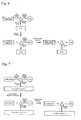
- a second temporary bond cleaves and releases the drug compound, as shown in Fig. 6 .
- D. Shabat et al. describe a polymeric prodrug system based on a mandelic acid activating moiety.
- the masking group is linked to the activating moiety by a carbamate bond.
- the activating moiety is conjugated permanently to a polyacrylamide polymer via an amide bond. After enzymatic activation of the masking group by a catalytic antibody, the masking group is cleaved by cyclization and the drug is released. The activating moiety is still connected to the polyacrylamide polymer after drug release.
- the masking group is specifically designed to be substrate to an enzyme, and masking group cleavage will almost entirely depend upon enzymatic catalysis with the disadvantages of interpatient variability, injection site variability and poor in vitro-in vivo correlation.
- Enzyme levels may differ significantly between individuals resulting in biological variation of prodrug activation by enzymatic cleavage. Enyzme levels may also vary depending on the site of administration, for instance it is known that in the case of subcutaneous injection, certain areas of the body yield more predictable therapeutic effects than others. To reduce this unpredictable effect, non-enzymatic cleavage or intramolecular catalysis is of particular interest (see, for example, B. Testa, J.M: Mayer in Hydrolysis in Drug and Prodrug Metabolism, Wiley-VCH, 2003, page 5 ).
- the present invention addresses the disadvantages described above.
- the invention provides for polymeric cascade prodrugs characterized by a masking group containing a nucleophile and being distinct from the carrier.
- the invention is further characterized by the activating group being connected to the amino group of a drug molecule through a second temporary bond which is cleaved as a consequence of the 1,(4+2p) elimination.
- An additional structural feature is the attachment of a polymeric carrier to the activating group by means of a permanent bond.
- the masking groups according to the present invention contain at least one nucleophile Nu.
- This nucleophile which can be for example a primary, secondary or tertiary amino group can assist the cleavage of the masking group from the activating moiety by intramolecular catalysis or cyclization.
- the invention provides for polymeric cascade prodrugs and corresponding polymeric cascade prodrug linker reagents of Formula Ia or Ib. wherein Y 1 to Y 5 , R1 to R4, T, X, W, Nu and Ar are defined below:
- T is D or A
- A is a leaving group.
- suitable leaving groups A include but are not limited to chloride, bromide, fluoride, nitrophenoxy, imidazolyl, N-hydroxysuccinimidyl, N-hydroxybenzotriazolyl, N-hydroxyazobenzotriazolyl, pentafluorphenoxy, N-hydroxysulfosuccinimidyl, or any other leaving group known by those skilled in the art.
- T is D
- D is a residue of an amine-containing biologically active material including but not limited to small molecule bioactive agents or biopolymers like proteins, polypeptides and oligonucleotides (RNA, DNA), peptide nucleic acids (PNA), Note that in this description reference is often made to prodrugs.
- a true prodrug is found when T is the residue of the amine-containing biologically active material or moiety. If T is a leaving group A then the formula represents a polymeric cascade prodrug linker reagent. For simplicity these will be referred to prodrugs in this description. It will be understood from the context whether a true prodrug or a reagent as a predursor is meant.
- Suitable organic small molecule bioactive moieties include, without limitation, moieties such as central nervous system-active agents, anti-infective, anti-neoplastic, antibacterial, anti-fungal, analgesic, contraceptive, anti-inflammatory, steroidal, vasodilating, vasoconstricting, and cardiovascular agents with at least one primary or secondary amino group.
- Non-exclusive examples of such compounds are daunorubicin, doxorubicin, idarubicin, mitoxantron, aminoglutethimide, amantadine, diaphenylsulfon, ethambutol, sulfadiazin, sulfamerazin, sulfamethoxazol, sulfalen, clinafloxacin, moxifloxacin, ciprofloxaxin, enoxacin, norfloxacin, neomycin B, sprectinomycin, kanamycin A, meropenem, dopamin, dobutamin, lisinopril, serotonin, carbutamid, acivicin, etc.
- Suitable proteins and polypeptides having at least one free amino group include but are not limited to ACTH, adenosine deaminase, agalsidase, albumin, alfa-1 antitrypsin (AAT), alfa-1 proteinase inhibitor (API),reteplase, anistreplase, ancrod serine protease, antibodies (monoclonal or polyclonal, and fragments or fusions), antithrombin III, antitrypsins, aprotinin, asparaginases, biphalin, bone-morphogenic proteins, calcitonin (salmon), collagenase, DNase, endorphins, enfuvirtide, enkephalins, erythropoietins, factor VIIa, factor VIII, factor VIIIa, factor IX, fibrinolysin, fusion proteins, follicle-stimulating hormones, granulocyte colony stimulating factor (G-CSF), galact
- any synthetic polypeptide or any portion of a polypeptide with in vivo bioactivity is included herein.
- proteins prepared by recombinant DNA methodologies including mutant versions of aforementioned proteins, antibody fragments, single chain binding proteins, catalytic antibodies and fusion proteins are included.
- Preferred proteins are antibodies, calcitonin, G-CSF, GM-CSF, erythropoietins, hemoglobins, interleukins, insulins, interferons, SOD, somatropin, TNF, TNF-receptor-IgG Fc, and GLP-1.
- X is a spacer moiety such as R5-Y6 Y 1 , Y 2 can each be either O, S, or NR6, independently of each other.
- Y 3 , Y 5 can each be either O or S, independently of each other.
- Y 4 is O, NR6, or -C(R7)(R8)
- Y 6 is O, S, NR6, succinimide, maleimide, unsaturated carbon-carbon bonds or any heteratom containing a free electron pair, or is not present.
- R2 and R3 are selected independently from hydrogen, substituted or non-substituted linear, branched or cyclical alkyl or heteroalkyl, aryls, substituted aryls, substituted or non-substituted heteroaryls, cyano, nitro, halogen, carboxy, carboxyalkyl, alkylcarbonyl, carboxamidoalkyl, etc.
- heteroalkyl in the context of the present invention denotes (linear, cyclical or branched) alkyl chains where the alkyl chains contain or are substituted with at any position one or more heteroatoms, selected independently from 0, S, N, P, Si, Cl, F, Br, I, etc. or groups, selected independently from carboxamide, carboxylic ester, phosphonate ester, phosphate ester, double or triple bonds, carbamate, urea, thiourea, thiocarbamate, oxime, cyano, carboxyl, carbonyl, etc.
- Each R4 substitution on Ar may be the same or different and is selected independently from hydrogen, substituted or non-substituted linear, branched or cyclical alkyl or heteroalkyl, aryl, substituted aryl, substituted or non-substituted heteroaryl, substituted or non-substituted linear, branched, or cyclical alkoxy, substituted or non-substituted linear, branched, or cyclical heteroalkyloxy, aryloxy, heteroaryloxy, cyano, halogen, etc.
- R4 is selected preferably from small substituents such as hydrogen, methyl, ethyl, ethoxy, methoxy, and other C1 to C6 linear, cyclical or branched alkyls and heteroalkyls.
- n is zero or a positive integer.
- R7 and R8 are selected independently from hydrogen, substituted or non-substituted linear, branched or cyclical alkyl or heteroallcyl, aryls, substituted aryls, substituted or non-substituted heteroaryls, cyano, halogen, etc.
- R5 is selected from substituted or non-substituted linear, branched or cyclical alkyl or heteroalkyl, aryls, substituted aryls, substituted or non-substituted heteroaryls, etc.
- R6 is selected from hydrogen, substituted or non-substituted linear, branched or cyclical alkyl or heteroalkyl, aryls, substituted aryls, substituted or non-substituted heteroaryls, etc.
- R1 is a polymer.
- Non-limiting examples for suitable polymers are polyalkyloxy-based polymers like poly(propylene glycol) or poly(ethylene glycol), dextran, chitosan, hyaluronic acid and derivatives, alginate, xylan, mannan, carrageenan, agarose, cellulose, starch, hydroxyethyl starch (HES) and other carbohydrate-based polmers, poly(vinyl alcohols), poly(oxazolines), poly(anhydrides), poly(ortho esters), poly(carbonates), poly(urethanes), poly(acrylic acids), poly(acrylamides) such as poly(hydroxypropylmethacrylamide) (HMPA), poly(acrylates), poly(methacrylates) like poly(hydroxyethylmethacrylate), poly(organophosphazenes), poly(siloxanes), poly(vinylpyrrolidone), poly(cyanoacrylates), poly(esters) such as poly(lactic acid) or poly(g
- Hydrogels may be defined as three-dimensional, hydrophilic or amphiphilic polymeric networks imbibing large quantities of water.
- the networks are composed of homopolymers or copolymers, are insoluble due to the presence of covalent chemical or physical (ionic, hydrophobic interactions, entanglements) crosslinks.
- the crosslinks provide the network structure and physical integrity.
- Hydrogels exhibit a thermodynamic compatibility with water which allows them to swell in aqueous media.(see.: N.A. Peppas, P. Bures, W. Leobandung, H. Ichikawa, Hydrogels in pharmaceutical formulations, Eur. J. Pharm. Biopharm. 2000, 50, 27-46 ).
- the chains of the network are connected in such a fashion that pores exist and that a substantial fraction of these pores are of dimensions of between 1 and 1000 nm.
- the hydrogel may be obtained in the form of an amorphous gel or as beaded resin.
- Such soft beads may have a diameter of between 1 and 1000 micrometer.
- Hydrogels may be synthesized from the polymers and copolymers listed above and physically cross-linked or chemically cross-linked by radical, anionic or cationic polymerization, by chemical reactions like condensation or addition reactions as described in W.E. Hennink and C.F. van Nostrum, Adv. Drug Del. Rev. 2002, 54, 13-36 .
- branched and hyperbranched polymers examples include dendrimers and other dense star polymers.
- dendrimers examples include dendrimers and other dense star polymers.
- R1 can also be a biopolymer like a protein.
- Non-limiting examples of such polymers include albumin, antibodies, fibrin, casein, and other plasma proteins.
- Each R1 polymer can carry one or more biologically active substances linked to the polymer by conjugation with a second prodrug linker as described herein or any other linker known to the person skilled in the art.
- the polymers may have further substituents and may be functionalized for attachment to the spacer moiety X.
- Non-limiting examples of such functional groups comprise carboxylic acid and activated derivatives, amino, maleimide, thiol, sulfonic acid and derivatives, carbonate and derivatives, carbamate and derivatives, hydroxyl , aldehyde, ketone, hydrazine , isocyanate, isothiocyanate, phosphoric acid and derivatives, phosphonic acid and derivatives, haloacetyl, alkyl halides, acryloyl, arylating agents like aryl fluorides, hydroxylamine, disulfides like pyridyl disulfide, vinyl sulfone, vinyl ketone, diazoalkanes, diazoacetyl compounds, epoxide, oxirane, and aziridine.
- Preferred functional groups for the R1 polymer include but are not limited to thiol, maleimide, amino, carboxylic acid and derivatives, carbonate and derivatives, carbamate and derivatives, aldehyde, and haloacetyl.
- Especially preferred functional groups include thiol, maleimide, amino, carboxylic acid and derivatives, carbamate and derivatives, and carbonate and derivatives thereof.
- Non-limiting examples for suitable bonds or groups formed between X and R1 include disulfide, S-succinimido, amide, amino, carboxylic ester, sulfonamide, carbamate, carbonate, ether, oxime, hydrazone, urea, thiourea, phosphate, phosphonate, etc.
- Preferred bonds or groups formed between X and R1 comprise S-succinimido, amide, carbamate, and urea.
- the R1 polymers are well hydrated, degradable or excretable, nontoxic and non-immunogenic in mammals.
- Preferred R1 polymers include polyalkoxy-based polymers like polyethylene glycol and polyethylene glycol reagents as those described in Nektar Inc. 2003 catalog "Nektar Molecule Engineering - Polyethylene Glycol and Derivatives for Advanced PEGylation " and branched, hyperbranched, cross-linked polymers and hydrogels, and proteins like albumin.
- W is selected from substituted or non-substituted linear, branched or cyclical alkyl, aryls, substituted aryls, substituted or non-substituted linear, branched or cyclical heteroalkyl, substituted or nonsubstituted heteroaryls, etc.
- W is selected preferably from non-toxic substituted or non-substituted linear, branched or cyclical alkyls or heteroalkyls.
- At least one Nu is present in Nu-W.
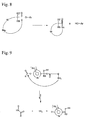
- Nu is a nucleophile that can perform a nucleophilic attack at the carbonyl carbon of and thus catalyse the cleavage of the masking group by intramolecular catalysis or cyclization ( figure 8).
- Figure 8 shows an example according to formula Ia or Ib wherein the cleavage of the masking group is by intramolecular cyclization. In cases where Nu only catalyses the cleavage of the masking group by intramolecular catalysis, no cyclical product of the masking group is formed.
- nucleophiles include primary, secondary and tertiary amino groups, thiol, carboxylic acid, hydroxylamine, hydrazine, and nitrogen containing heteroaryl. Especially preferred nucleophiles include primary, secondary and tertiary amino groups.
- the spacing between the nucleophile Nu and Y 2 is preferably between three and fifteen atoms. More preferably, the spacing betetween Nu and Y 2 is between four and ten atoms.
- the at least one nucleophile Nu may be attached anywhere to W (e.g. at the terminus or in the middle of W) or may be part of W.
- Preferred variations for the masking group are selected independently from or where forms a primary, secondary or tertiary amine nucleophile Nu.
- R9, R10 are selected independently from hydrogen, substituted or non-substituted alkyl or heteroalkyl, substituted or non-substituted aryl or heteroaryl.
- Especially preferred variations for the masking group are selected from
- R9, R10, R11 and R12 are selected independently from hydrogen, substituted or non-substituted alkyl and R7 and/or R8 are not hydrogen.
- R6 may also be and is preferably not hydrogen.
- the masking group can modify irreversibly the amine containing biologically active moiety when the nucleophile Nu is absent in the masking group.
- the bioactive moiety insulin from a polymeric prodrug with a pentanoyl masking group which is not part of the present invention (as it does not contain a nucleophile)
- approximately 30% of the insulin molecule was modified with the masking group by acyl transfer.
- the mechanism of an example of this modification where D contains an additional free amino group that serve as nucleophile for acyl transfer from the masking group is shown in figure 9 .
- Ar of formula Ia or Ib is a multi-substituted aromatic hydrocarbon or a multi-substituted aromatic heterocycle.
- the number of pi electrons must satisfy the Hückel rule (4n+2) and the cycle has to be planar.
- Non-limiting preferred aromatic moieties include: wherein W is O, N, or S, independent from each other.
- the substituents have to be arranged ortho or para .
- Preferred moieties for Ar are mono- and dicyclic aromatic hydrocarbons or aromatic heterocycles.
- Especially preferred moieties are monocyclic five- or six-membered aromatic hydrocarbons or aromatic heterocycles.
- Prodrugs of the present invention can be prepared in various different fashions.
- Figure 10 shows general routes for the synthesis of the polymeric prodrugs of the present invention according to formula Ia.
- intermediate (III) is provided by acylating Y 2 of starting material (II) with the masking group
- X or Nu may have to be protected with a reversible protecting group PG 1 .
- Suitable protecting groups are described in TW Greene, P.G.M. Wuts, Protective groups in organic synthesis, 1999, John Wiley & Sons, 3rd ed ..
- From intermediate (III) two alternative routes can be used to yield (Iaa).
- a first route intermediate (III) is activated by an activating agent such as 4-nitrophenyl chloroformate or disuccinyl carbonate to yield (IV).
- the amine containing drug molecule is attached to (IV) to yield (V) by displacing the leaving group of the activated intermediate (IV).
- intermediate (III) is first attached to the intermediate (III) after deprotection of X (where applicable) to form intermediate (VI).
- intermediate (VII) is formed.
- VII) is reacted with the amine containing drug molecule to form the polymeric prodrug (Iac).
- intermediate (VIII) is provided by activating starting material (II) by an activating agent such as 4-nitrophenyl chlorofomate.
- Y 2 and/or X may have to be protected with a protecting group PG 2 and/or PG 1 .
- Amine containing drug is reacted with intermediate (VIII) to form (IX).
- Y 2 of (IX) is selectively deprotected and acylated to form intermediate (V) which is further processed to (Iaa) as described above.
- X is selectively deprotected and reacted with polymer R1 to form intermediate (X).
- Y 2 of (X) is then deprotected and acylated to form the polymeric prodrug (Iac).
- intermediate (XI) is reacted with polymer R1 to form intermediate (XI).
- intermediate (XI) can be acylated to form intermediate (VI) which processed as described above to form polymeric prodrug (Iaa).
- Y 2 is protected by the protecting group PG 2 , activated and reacted with the amine containing drug molecule to form (X).
- Intermediate (X) is then processed as described above to form the polymeric prodrug (Iac).
- nucleophiles present in Nu-W may have to be protected with suitable protecting groups.
- Polymeric prodrugs according to formula Ib can be prepared by methods described above for prodrugs according to formula Ia using starting material IIb instead of II in figure 10 .
- linker structures according to the outlined invention and carrying protecting groups or leaving groups as described and used in the synthesis of corresponding polymeric prodrugs are considered within the range of the invention.
- cleavage kinetics of the first temporary linkage it is desirable for the cleavage kinetics of the first temporary linkage to proceed under conditions present in the blood circulation of the human body (pH 7.4, 37°C). Most importantly, cleavage of the first temporary linkage should be based on hydrolysis and exhibit none or only very limited dependence upon chemical or biochemical or physicochemical entitities present in the human blood circulation such as enzymes, salts or binding proteins.
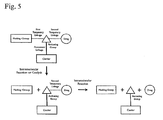
- the rate of cleavage of the first temporary linkage connecting the masking group with the activating group as well as its dependence upon blood components can be controlled by neighbouring group effects mediated by nucleophilic functional groups (such as primary, secondary or tertiary amines) present in the masking group and positioned in a distance to the corresponding temporary bond. If the masking group is structured in this fashion, an intramolecular reaction with contribution of the nucleophile governs the kinetics of the linkage ( Fig. 5 and Fig. 8 ).
- nucleophilic functional groups such as primary, secondary or tertiary amines
- the half-life of the prodrug in suitably buffered human blood plasma of pH 7.4 is at least 50 % of the half-life of the prodrug in enzyme-free buffer pH 7.4.
- This feature allows for better predictability and control of release rates after administration to a living organism and reduces interpatient variability.
- the masking groups according to the present invention contain at least one nucleophile Nu. Structural features of this masking group such as nucleophilicity of the amine group and ring-forming capacity may be systematically optimized in order to precisely adjust the rate of prodrug cleavage. Such intramolecular reactions resulting in unmasking and subsequent rearrangement are highly independent from enzymes due to the fact that intramolecular reactions are generally preferred over intermolecular reactions as shown diagrammatically in Fig. 8 .
- independency of prodrug cleavage from enzyme levels is achieved by providing a prodrug containing a sterically demanding carrier group as is shown in Fig. 7 .
- Such encapsulation or sterical protection by the sterically demanding carrier group may be conferred by a branched, hyperbranched, crosslinked or self-assembled structure of the carrier polymer.
- Such polymers tend to form a densely packed molecular volume, as exemplified for instance in dendrimers, dense star polymers or bead-shaped nano- and microparticles or amorphous gels. If the linkage of the polymer carrier to the drug is located in the interior of the polymer carrier, the linked drug will be efficiently encapsulated and protected from enzymatic attack. In this case, sterical hindrance by the polymer prevents enzymes from accessing and cleaving the temporary linkages.
- enzyme-independent prodrug cleavage is achieved by combining an intramolecular self-eliminating masking group with an encapsulating hyperbranched or crosslinked or self-assembled carrier.
- a further advantage of the present invention is the release of an unmodified biologically active moiety.
- the biologically active moiety contains further reactive functional groups like amino groups of lysine residues in proteins
- an unwanted side reaction between the masking group and the biologically active moiety can occur.
- the reactive functional groups of the biologically active moiety may react with the masking group, forming a stable covalent bond and resulting in the release of a modified biologically active moiety.
- This potential side reaction is shown schematically in Figure 9 .
- the occurrence of such side reactions is shown in the examples section using polymeric prodrugs which are not part of the present invention with simple masking groups like a pentanoyl residue without a nucleophile Nu present in the masking group and as described by Antczak et al. or Lee et al.
- the side reaction in this linker system is suppressed using polymeric prodrugs according to the present invention with intramolecularly activated masking groups that contain nucleophiles Nu (see example section).
- Enzyme-independent release control enables depot formulations without the need for encapsulation.
- many biocompatible materials like hydrogels with large pore sizes could not be used for depot formulations due to their lack of encapsulation properties. From such well-hydrated and mechanically soft biocompatible materials,biologically active moiety would be released too fast for most therapeutic applications.
- the carrier material may be optimized for its biocompatibility properties as the release is solely governed by the linker cleavage kinetics and does not require chemical or enzymatic degradation of the polymer carrier itself.
- Release rates are governed by a substantially non-enzymatic chemical reaction which is in turn dependent on the molecular structure of the linker.
- Systematic or random modifications of the chemical structure for instance by changing substituents in one or more positions, for instance a masking group in a cascade prodrug, allows for the generation of prodrung linkers with differing release rates. It is therefore possible to create a variety of prodrug linkers and select those fast or slow cleaving prodrug linkers according to the demands posed by a given medicinal or therapeutic application.
- Another advantageous feature which is part of this invention is the attachment of the polymer carrier through a stable covalent bond to an activating moiety involved in a double or cascade prodrug release mechanism.
- the activating moiety remains attached to the polymer carrier after drug release and therefore cannot diffuse into the environment. Permanent linkage of th polymer carrier to the activating group greatly reduces the any side-reactivity of the activiating moiety and the probability of unwanted toxic effects.
- the activating moiety is released in addition to the drug. Due to the molecular rearrangement mechanisms used in cascade prodrugs, the activating moiety is released in a highly reactive form and may cause direct damage to surrounding biomolecules, or potentially toxic derivatives of the activating moiety may be formed in vivo.
- Fmoc-amino acids, resins and PyBOP were purchased from Novabiochem and are named according to the catalogue. Fmoc-Ado-OH was obtained from Neosystem. All additional chemicals were purchased from Sigma Aldrich. Recombinant human insulin was from ICN Biomedicals (USA). Maleimide-PEG5k was obtained from Nektar (USA). 5-(and-6)-carboxyfluoresecin succinimidyl ester (mixed isomers) was obtained from Molecular Probes.
- the resin was repeatedly (three times, 4 min each) agitated with 2/2/96 (v/v/v) piperidine/DBU/DMF and repeatedly (six times) washed with DMF. Coupling of finoc-protected amino acids to free amino groups on resin was achieved by agitating the resin with 3 equivalents (eq) of finoc-amino acid, 3 eq PyBOP and 6 eq DIEA in relation to free amino groups in DMF for 60 min. Finally, the resin was repeatedly (five times) washed with DMF.
- the resin was washed with DCM, dried in vacuo and treated two times for 30 minutes with 65/35 (v/v) HFIP/DCM. After combining the eluates the volatile components were evaporated.
- Mass spectrometry was performed on a Waters ZQ 4000 ESI instrument and spectra were, if necessary, interpreted by Waters software MaxEnt. Size exclusion chromatography was performed using an Amersham Bioscience AEKTAbasic system equipped with a Superdex 200 column (Amersham Bioscience). NMR spectra were recorded on a Bruker AC300.
- 6d R1 OMe
- acetic acid (4 eq) the resulting carboxylic ester 6c was purified by RP-HPLC.
- 6d was synthesized as described above using 5b and 3b as starting materials.
- 6b was synthesized as described above using Z-Lys(Boc)-OH and 3b.
- 6e was synthesized as described above using 5b and 3a.
- Alcohol 6a (1 eq), 4-nitrophenyl chloroformate (10 eq), and DIEA (10 eq) were stirred in dry dioxane for 3 h at room temperature under nitrogen atmosphere. After addition of acetic acid (25 eq) the mixtures were diluted with 7/3 (v/v) acetonitrile/H 2 O and the carbonate 7a was purified by RP-HPLC. 7b, 7c, 7d, or 7e were synthesized from 6b, 6c, 6d, or 6e, respectively, as described above.
- Rh-Insulin in 1/1 (v/v) DMSO/DMF was mixed with a solution of 0.9 eq carbonate 7a in DMSO.
- the resulting solution was adjusted to basic pH with DIEA and stirred for 1.5 h at RT.
- RP-HPLC purification gave Mmt-protected intermediate. After lyophilization, the Mmt-protected intermediate was mixed with 95:5 (v/v) TFA/triethylsilane and stirred for 5 min. Volatiles were removed under nitrogen flow and 8a was purified by RP-HPLC and lyophilized. Regioselectivity of insulin modification was verified by DTT reduction and MS analysis.
- 8b or 8c were synthesized from 7c , or 7d, respectively, as described above.
- N ⁇ B29 -fluorescein insulin in 1/1 (v/v) DMF/DMSO was mixed with a solution of 0.9 eq carbonate 7b in DMSO.
- the resulting solution was adjusted to basic pH with DIEA and stirred for 3 h at RT.
- RP-HPLC purification gave Mmt-protected intermediate. After lyophilization, the intermediate was dissolved in 95/5 (v/v) TFA/triethylsilane and stirred for 5 min. Volatiles were removed under nitrogen flow and 8d was purified by RP-HPLC and lyophilized. 8e, 8f, or 8g were syntesized as described above using 7c, 7d , or 7e, respectively.
- R1 OMe
- R1 OMe
- 16c or 16d were synthesized as describe above from 14c (56 mg, 0.1 mmol) or 14b (53 mg, 0.1 mmol), respectively, and diamine 15c .
- 16e or 16f were synthesized as described above from 14c (56 mg, 0.1 mmol) or 14b, respectively, (53 mg, 0.1 mmol) and diamine 15d.
- 16i was synthesized as described above from 14d (350 mg, 0.7 mmol) and 15b (N,N,N'-triethyl-ethylene-1,2-diamine) (180 ⁇ l, 1 mmol).
- R1 OMe
- Insulin derivatives 20a, 20b, 20c, 20d, 20e , or 20f were synthesized from 19a, 19b, 19c, 19d, 19g , or 19h respectively, as described for compound 8a.
- R7 H 21f
- Insulin derivatives 21a, 21b, 21c, 21d, 21e , or 21f were synthesized from compound 20a, 20b, 20c, 20d, 20e , or 20f , respectively, as described for compound 9a.
- 21a through 21f SEC retention time: 19.5 min
- o-Cresol ( 22a ) (1 eq), succinic anhydride (1 eq), and AlCl 3 (3 eq) in nitrobenzene were heated to 100 °C for 1 h.
- the reaction mixture was poured on HCl/ice and extracted with ether.
- the organic layer was extracted with 1 N NaOH and the aqueous layer was acidified with concentrated HCl.
- the aqueous layer was extracted with ether and the ether was evaporated.
- 23a was purified by RP-HPLC.
- 23b was synthesized from 2,6-dimethylphenol (22b) as described above.
- Insulin derivatives 29a or 29b were synthesized from 28a or 28b, respectively, as described for compound 8a.
- Compound 32 was obtained according to the standard solid-phase synthesis protocol.
- the amino acids Fmoc-Cys(Mmt)-OH, Fmoc-Dpr(Fmoc)-OH, Fmoc-Dpr(Fmoc)-OH, Fmoc-Ado-OH, and Fmoc-Dpr(Fmoc)-OH were coupled to NovaSynTG Sieber amide resin. After final fmoc removal the resin was agitated with 3 eq Boc-aminoxyacetic acid, 3 eq DIC, and 3 eq HOBt in relation to amino groups in DMF for 30 min. 32 was cleaved from resin with DCM/TFA/TES 97/1/2 (v/v/v). After addition of 0.8 eq pyridine in relation to TFA the solvent was evaporated and product 32 was purified by RP-HPLC.
- Compound 33 was obtained according to the standard solid-phase synthesis protocol.
- the amino acids Fmoc-Dpr(ivDde)-OH, Fmoc-Dpr(Fmoc)-OH, Fmoc-Dpr(Fmoc)-OH, Fmoc-Lys(Fmoc)-OH, and Fmoc-Ado-OH were coupled to NovaSyn TG Sieber amide resin. After final fmoc removal the resin was agitated with 3 eq 3,6,9-trioxadecanoic acid, 3 eq PyBOP, and 6 eq DIEA in relation to amino groups in DMF for 60 min.
- the lyophilized product (45 mg) was dissolved in 0.5 ml DMF and 10 ⁇ l DIEA were added. 5 mg (30 ⁇ mol) 3-maleimidopropionic acid and 4.7 ⁇ l (30 ⁇ mol) DIC in 150 ⁇ l DMF were added and the reaction mixture was stirred at room temperature for 20 min, the product purified by RP-HPLC and lyophilized.
- the lyophilized product was dissolved in 200 ⁇ l 0.1 M sodium citrate buffer pH 1.5 and 69 mg (20.5 ⁇ mol) 33 in 200 ⁇ l 2/1 (v/v) acetonitrile/sodium citrate buffer pH 1.5 were added. The mixture was stirred at room temperature for 24 h and product 9h was purified by size exclusion chromatography (column: Superdex 200, buffer: 10 mM HEPES pH 7.4, 0.005% Tween-20, 3mM EDTA, flow rate: 0.75 ml/min) SEC elution time: 15 min
- the dried resin was reacted with 107 mg (0.7 mmol) HOBT, 110 ⁇ l (0.7 mmol) DIC, and 55 ⁇ L (0.9 mmol) AcOH in 3 ml DMF for 1h.
- 78 mg (0.39 mmol) p-nitrophenylchloroformate, and 210 ⁇ l (1.2 mmol) DIEA in 1/1 (v/v) THF/DCM were reacted for 30 min at RT.
- the separated resin was suspended in 1/1 (v/v) THF/DCM and 210 ⁇ l (1.2 mmol) N,N,N'-trimethylethylendiamine were added.
- Insulin derivative 43 was synthesized from 42 as described for compound 9a. 43: SEC retention time: 18.0 min
- NH 2 -PEGA hydrogel beads with 0.4 mmol/g loading and 150-300 ⁇ m bead size were purchased from Novabiochem.
- 2.5 g methanol-wet NH 2 -PEGA-hydrogel (0.4 mmol/g NH 2 -loading) was weighed into a syringe equipped with a polypropylene frit.
- Maleimide loading was adjusted by acylation employing a mixture of activated maleimidopropionic acid and acetic acid as described in the following.
- the hydrogel was washed 5 times with DMF and reacted with 13.5 mg (0.08 mmol) 3-maleimidopropionic acid, 115.2 ⁇ l (1.92 mmol) acetic acid and 313 ⁇ l (2 mmol) DIC in 4 ml DMF for 30 min.
- the maleimide derivatized hydrogel 44 was washed 10 times with DMF and DCM and finally with acetonitrile.
- NHS-activated "Sepharose 4 Fast Flow" hydrogel beads (chemically crosslinked agarose, crosslinker epichlorhydrin) were purchased from Amersham. 1.5 g ethanol-wet Sepharose hydrogel (150 mg dry hydrogel) was weighed into a syringe equipped with a polypropylene frit and reacted with 1 M 4,7,10-trioxatridecane-1,13-diamine in DMF for 30 min.
- hydrogel was reacted with 8.5 mg (0.05 mmol) 3-maleimidopropionic acid, 57 ⁇ l (0.95 mmol) acetic acid, 151 mg (1 mmol) HOBt and 158 ⁇ l (1 mmol) DIC in 4 ml DMF for 30 min to give maleimide derivatized hydrogel.
- the hydrogel was washed 10 times with DMF and finally with acetonitrile.
- 1.5 mg 8c was dissolved in 25/75 (v/v) acetonitrile/50 mM phosphate buffer pH 7.4 and reacted with 10.8 mg maleimide derivatized hydrogel for 10 min.
- the rh-insulin loaded hydrogel 46 was washed five times with 50/50 (v/v) acetonitrile/water and three times with acetonitrile and dried under vacuum.
- GLP(7-36) (sequence: HAEGTFTSDVSSYLEGQAAKEFIAWLVKGR-amide) was synthesized on Rink-amide resin employing fmoc-strategy (Specialty Peptide Laboratories, Heidelberg, Germany). N-terminal fmoc-protecting group was removed and the resin was washed with DCM and dried. 118 mg resin (0.11 mmol/g, 13.2 ⁇ mol) was suspended in a solution of 50 mg 19i (53 ⁇ mol) in 750 ⁇ l dry DMSO and 22.4 ⁇ l DIEA. 2.1 ⁇ l pyridine was added and the mixture was shaken for 48 h at RT.
- Lys28 ivDde side chain protected GLP(7-36) (sequence: HAEGTFTSDVSSYLEGQAAKEFIAWLVK(ivDde)GR-amide) was synthesized on Rink-amide resin employing fmoc-strategy (Specialty Peptide Laboratories, Heidelberg, Germany). N-terminal fmoc-protecting group was removed and the resin was washed with DCM and dried. 50 mg resin (0.11 mmol/g, 5.5 ⁇ mol) was suspended in a solution of 25 mg 19i (26 ⁇ mol) in 400 ⁇ l dry DMSO and 11.2 ⁇ l DIEA.
- 56a was prepared from 55a (9 mg, 19 ⁇ mol), p-nitrophenyl-chloroformate and bis(3-dimethylamino-propyl)amine (21 ⁇ l, 94 ⁇ mol) as described for compound 16a.
- 56b was synthesized from 55b (160 mg, 0.34 mmol), p-nitrophenyl-chloroformate and N-ethyl-N,N'dimethyl-1,3-propanediamine (15c) as described for compound 16a.
- Rh-Insulin (44.5 mg, 7.7 ⁇ mol), carbonate 58a (1 eq, 7 mg, 6.4 mmol), DIEA (15 ⁇ l, 88 ⁇ mol) and DMAP (1.5 mg, 12 ⁇ mol) in 0.3 ml DMSO were reacted at RT for 30 min.
- the reaction mixture was neutralized with acetic acid and diluted with 1/1 (v/v) acetonitrile/water.
- RP-HPLC purification gave the appropriate Trt-protected intermediate. After lyophilization, the Trt-protected intermediate was mixed with 95/5 (v/v) TFA/triethylsilane and stirred for 5 min.
- 60 was prepared from 59 (0.17 ⁇ mol) as described for compound 9a. 60: SEC retention time: 19.5 min
- Monoconjugate 63 was separated by SEC (column: Superdex 200, flow rate: 0.75 ml/min) using 10 mM phosphate buffer pH 7.4, 150 mM NaCl, and 0.005% Tween 20 as mobile phase.
- the collected eluate (approximately 1.0 ml) was diluted with 0.5 ml buffer containing 0.05% NaN 3 and directly used for release rate determination.
- FIG. 11 shows the mass spectra of released insulin from compound 9a, 9b, and 30a.
- the mass spectrum of insulin released from compound 9a clearly shows a major side product (indicated by arrows), corresponding to the irreversibly pentanoyl-modified insulin. In this case, removal of the pentanoyl masking goup was not by hydrolysis but by acyl transfer to the insulin.
- the mass spectrum of insulin released from compound 9b and 30a shows no modification.
Landscapes
- Health & Medical Sciences (AREA)
- Chemical & Material Sciences (AREA)
- Life Sciences & Earth Sciences (AREA)
- Organic Chemistry (AREA)
- Bioinformatics & Cheminformatics (AREA)
- Engineering & Computer Science (AREA)
- General Health & Medical Sciences (AREA)
- Medicinal Chemistry (AREA)
- Animal Behavior & Ethology (AREA)
- Public Health (AREA)
- Veterinary Medicine (AREA)
- Pharmacology & Pharmacy (AREA)
- Epidemiology (AREA)
- Proteomics, Peptides & Aminoacids (AREA)
- Molecular Biology (AREA)
- Endocrinology (AREA)
- Diabetes (AREA)
- Biochemistry (AREA)
- Genetics & Genomics (AREA)
- Biophysics (AREA)
- Gastroenterology & Hepatology (AREA)
- Toxicology (AREA)
- Zoology (AREA)
- General Chemical & Material Sciences (AREA)
- Chemical Kinetics & Catalysis (AREA)
- Nuclear Medicine, Radiotherapy & Molecular Imaging (AREA)
- Emergency Medicine (AREA)
- Hematology (AREA)
- Obesity (AREA)
- Medicines That Contain Protein Lipid Enzymes And Other Medicines (AREA)
- Medicinal Preparation (AREA)
- Pharmaceuticals Containing Other Organic And Inorganic Compounds (AREA)
- Acyclic And Carbocyclic Compounds In Medicinal Compositions (AREA)
Applications Claiming Priority (5)
| Application Number | Priority Date | Filing Date | Title |
|---|---|---|---|
| EP04075892A EP1579873A1 (fr) | 2004-03-23 | 2004-03-23 | Prodrogues polymèriques avec un auto immolative lien |
| GB0415043A GB0415043D0 (en) | 2004-07-05 | 2004-07-05 | Prodrug linker |
| EP04019293A EP1625855A1 (fr) | 2004-08-13 | 2004-08-13 | Prodrogues polymèriques avec un auto immolative lien |
| PCT/EP2005/003061 WO2005099768A2 (fr) | 2004-03-23 | 2005-03-22 | Lieur de promedicaments |
| EP05716306.5A EP1732607B1 (fr) | 2004-03-23 | 2005-03-22 | Prodrogues polymériques avec un lien auto-immolatif |
Related Parent Applications (3)
| Application Number | Title | Priority Date | Filing Date |
|---|---|---|---|
| EP05716306.5A Division EP1732607B1 (fr) | 2004-03-23 | 2005-03-22 | Prodrogues polymériques avec un lien auto-immolatif |
| EP05716306.5A Division-Into EP1732607B1 (fr) | 2004-03-23 | 2005-03-22 | Prodrogues polymériques avec un lien auto-immolatif |
| EP05716306.5 Division | 2005-03-22 |
Publications (3)
| Publication Number | Publication Date |
|---|---|
| EP2087910A2 true EP2087910A2 (fr) | 2009-08-12 |
| EP2087910A3 EP2087910A3 (fr) | 2013-05-15 |
| EP2087910B1 EP2087910B1 (fr) | 2022-05-04 |
Family
ID=34961964
Family Applications (2)
| Application Number | Title | Priority Date | Filing Date |
|---|---|---|---|
| EP05716306.5A Expired - Lifetime EP1732607B1 (fr) | 2004-03-23 | 2005-03-22 | Prodrogues polymériques avec un lien auto-immolatif |
| EP09161152.5A Expired - Lifetime EP2087910B1 (fr) | 2004-03-23 | 2005-03-22 | Promédicaments polymères |
Family Applications Before (1)
| Application Number | Title | Priority Date | Filing Date |
|---|---|---|---|
| EP05716306.5A Expired - Lifetime EP1732607B1 (fr) | 2004-03-23 | 2005-03-22 | Prodrogues polymériques avec un lien auto-immolatif |
Country Status (11)
| Country | Link |
|---|---|
| US (4) | US8377917B2 (fr) |
| EP (2) | EP1732607B1 (fr) |
| JP (2) | JP4950022B2 (fr) |
| AU (2) | AU2005232371B2 (fr) |
| BR (2) | BRPI0507875B8 (fr) |
| CA (4) | CA2940803A1 (fr) |
| DK (1) | DK1732607T3 (fr) |
| ES (1) | ES2741524T3 (fr) |
| HU (1) | HUE045882T2 (fr) |
| MX (1) | MXPA06010782A (fr) |
| WO (1) | WO2005099768A2 (fr) |
Families Citing this family (154)
| Publication number | Priority date | Publication date | Assignee | Title |
|---|---|---|---|---|
| US7601691B2 (en) | 1999-05-17 | 2009-10-13 | Conjuchem Biotechnologies Inc. | Anti-obesity agents |
| BR0206919A (pt) | 2001-02-02 | 2004-07-06 | Conjuchem Inc | Derivados de fator de liberação de hormÈnio de crescimento de longa duração |
| CA2940803A1 (fr) * | 2004-03-23 | 2005-10-27 | Ascendis Pharma Gmbh | Lieur promedicament |
| EP2364735A3 (fr) | 2005-12-16 | 2012-04-11 | Nektar Therapeutics | Conjugé de GLP-1 et de PEG ramafié |
| WO2007083984A1 (fr) * | 2006-01-23 | 2007-07-26 | Gwangju Institute Of Science And Technology | Conjugué comprenant un composé pharmaceutiquement actif lié de façon covalente à un polymère mucoadhésif et méthode d'administration transmucosale de composé pharmaceutiquement actif faisant appel audit conjugué |
| WO2008047241A2 (fr) | 2006-10-16 | 2008-04-24 | Conjuchem Biotechnologies Inc. | Peptides du facteur libérateur de corticotrophine modifiés et leurs utilisations |
| US8974776B2 (en) | 2007-05-14 | 2015-03-10 | Covidien Lp | Biodegradable peptide releasing polymers |
| CA2689909C (fr) | 2007-06-08 | 2016-04-05 | Ascendis Pharma As | Conjugues polymeres transitoires longue duree de l'exendine |
| JP2010533202A (ja) * | 2007-07-11 | 2010-10-21 | エンゾン ファーマシューティカルズ,インコーポレーテッド | 多置換芳香族部分を含むポリマー性薬剤送達システム |
| EP2562256A3 (fr) | 2007-09-24 | 2013-06-19 | Noxxon Pharma AG | Acides nucléiques de liaison C5a |
| US8263704B2 (en) | 2008-04-23 | 2012-09-11 | Tyco Healthcare Group Lp | Bioabsorbable surgical composition |
| MX344559B (es) | 2008-04-29 | 2016-12-20 | Ascendis Pharma As | Compuestos de hormona de crecimiento humana recombinante unidos al peg. |
| EP2113256A1 (fr) | 2008-04-29 | 2009-11-04 | Ascendis Pharma AS | Dérivés pégylés du rhGH |
| WO2009156481A1 (fr) * | 2008-06-25 | 2009-12-30 | Ascendis Pharma As | Bnp pégylé |
| ES2672526T3 (es) * | 2008-06-26 | 2018-06-14 | Prolynx Llc | Profármacos y conjugados de fármaco-macromolécula que presentan velocidades de liberación de fármaco controladas |
| WO2010033240A2 (fr) | 2008-09-19 | 2010-03-25 | Nektar Therapeutics | Polymères à base de glucide pour administration de médicaments et leurs conjugués |
| CN102413843A (zh) | 2009-03-05 | 2012-04-11 | 阿森迪斯药物股份有限公司 | 干扰素α载体前药 |
| WO2010108657A2 (fr) | 2009-03-23 | 2010-09-30 | Noxxon Pharma Ag | Acides nucléiques de liaison c5a et utilisation afférente |
| PT2432489T (pt) | 2009-05-20 | 2016-12-07 | Biomarin Pharm Inc | Variantes do péptido natriurético de tipo c |
| NZ597964A (en) | 2009-07-31 | 2014-04-30 | Sanofi Aventis Deutschland | Long acting insulin composition |
| WO2011012722A1 (fr) * | 2009-07-31 | 2011-02-03 | Ascendis Pharma As | Promédicaments contenant une amine aromatique reliée à un lieur par une liaison amido |
| CA2769162C (fr) * | 2009-07-31 | 2017-12-05 | Ascendis Pharma As | Hydrogels insolubles dans l?eau a base de polyethylene glycol biodegradable |
| US9138462B2 (en) | 2009-07-31 | 2015-09-22 | Sanofi-Aventis Deutschland Gmbh | Prodrugs comprising an insulin linker conjugate |
| WO2011042453A1 (fr) | 2009-10-06 | 2011-04-14 | Ascendis Pharma As | Composition sous-cutanée de palipéridone |
| BR112012009847B1 (pt) * | 2009-10-26 | 2021-04-13 | Dendritc Nanotechnologies, Inc. | Formulação compreendendo dendrímeros peham para uso em agricultura, e método para tratamento de plantas ou sementes |
| JP5893566B2 (ja) | 2009-10-29 | 2016-03-23 | アセンディス ファーマ エー/エス | 生分解性ヒドロゲルの滅菌 |
| MX337432B (es) | 2009-12-15 | 2016-03-04 | Ascendis Pharma As | Composicion de la hormona del crecimiento seca enlazada transitoriamente a un portador del polimero. |
| WO2011075185A1 (fr) | 2009-12-18 | 2011-06-23 | Oligasis | Conjugués de polymère de phosphorylcholine à médicament ciblé |
| US9561285B2 (en) | 2010-01-22 | 2017-02-07 | Ascendis Pharma As | Carrier-linked carbamate prodrug linkers |
| US9062094B2 (en) | 2010-01-22 | 2015-06-23 | Ascendis Pharma As | Dipeptide-based prodrug linkers for aliphatic amine-containing drugs |
| WO2011089215A1 (fr) | 2010-01-22 | 2011-07-28 | Ascendis Pharma As | Lieurs de promédicaments à base de dipeptides pour des médicaments à teneur en amine aromatique |
| EP2553019A1 (fr) | 2010-03-26 | 2013-02-06 | Mersana Therapeutics, Inc. | Polymères modifiés pour l'administration de polynucléotides, procédé de fabrication, et procédés d'utilisation de ceux-ci |
| BR112012026118B1 (pt) | 2010-04-15 | 2021-01-05 | Oligasis | polímeros de alto peso molecular contendo zwitterion |
| EP2561079A1 (fr) | 2010-04-21 | 2013-02-27 | Noxxon Pharma AG | Acides nucléiques se liant à un lipide |
| WO2012025251A1 (fr) | 2010-08-27 | 2012-03-01 | Noxxon Pharma Ag | Acides nucléiques destinés au traitement de complications chroniques du diabète |
| AU2011300818B2 (en) | 2010-09-09 | 2015-11-12 | TME Pharma AG | SDF-1 binding nucleic acids and the use thereof in cancer treatment |
| EP2438930A1 (fr) | 2010-09-17 | 2012-04-11 | Sanofi-Aventis Deutschland GmbH | Promédicaments comprenant un conjugué de liaison d'exendine |
| JP2014503187A (ja) | 2010-10-29 | 2014-02-13 | ノクソン ファーマ エージー | 身体からヘプシジンを除去するためのヘプシジン結合核酸の使用 |
| US9976145B2 (en) | 2011-01-10 | 2018-05-22 | Noxxon Pharma Ag | Nucleic acid molecule having binding affinity to a target molecule and a method for generating the same |
| US8440309B2 (en) | 2011-01-31 | 2013-05-14 | Confluent Surgical, Inc. | Crosslinked polymers with the crosslinker as therapeutic for sustained release |
| AU2012296951B2 (en) | 2011-08-12 | 2016-09-15 | Ascendis Pharma A/S | Protein carrier-linked prodrugs |
| CA2843506C (fr) | 2011-08-12 | 2020-05-12 | Ascendis Pharma A/S | Promedicaments relies a des supports comprenant des liaisons ester carboxylique reversibles |
| CA2843875C (fr) | 2011-08-12 | 2020-01-07 | Ascendis Pharma A/S | Promedicaments lies a des excipients hydrosolubles de forte charge |
| EP2741778A1 (fr) | 2011-08-12 | 2014-06-18 | Ascendis Pharma A/S | Promédicaments liés à des excipients polymériques hyperbranchés |
| CA2849192C (fr) | 2011-10-12 | 2019-09-24 | Ascendis Pharma Ophthalmology Division A/S | Prevention et traitement d'etats oculaires |
| JP2014533098A (ja) | 2011-10-21 | 2014-12-11 | ノクソン・ファルマ・アクチエンゲゼルシャフト | グルカゴン結合核酸 |
| ES2624626T3 (es) | 2011-11-03 | 2017-07-17 | Bayer Intellectual Property Gmbh | Ligadores basados en tirosina para la conexión desprendible de péptidos |
| JOP20190001B1 (ar) | 2011-11-03 | 2022-03-15 | Bayer Pharma AG | عقار أولي معتمد على جليكول عديد إثيلين من أدرينومدالين واستخدامه |
| BR112014016939A2 (pt) | 2012-01-10 | 2019-09-24 | Noxxon Pharma Ag | ácidos nucleicos que se ligam especificamente a cgrp |
| KR102034203B1 (ko) | 2012-01-10 | 2019-10-18 | 아프타리온 바이오테크 아게 | 새로운 C5a 결합 핵산 |
| WO2013170963A2 (fr) | 2012-05-16 | 2013-11-21 | Noxxon Pharma Ag | Synthèse enzymatique d'acides l-nucléiques |
| WO2013185113A1 (fr) * | 2012-06-08 | 2013-12-12 | Biogen Idec Ma Inc. | Composés pro-coagulants |
| CA2875247A1 (fr) | 2012-06-08 | 2013-12-12 | Biogen Idec Ma Inc. | Facteurs de coagulation chimeriques |
| WO2014056923A1 (fr) | 2012-10-11 | 2014-04-17 | Ascendis Pharma Ophthalmology Division A/S | Pro-médicaments de neutralisation de vegf pour le traitement d'états oculaires |
| MY186106A (en) | 2012-10-11 | 2021-06-22 | Ascendis Pharma As | Diagnosis, prevention and treatment of diseases of the joint |
| CA2883833C (fr) | 2012-10-11 | 2020-10-27 | Ascendis Pharma A/S | Promedicaments sous forme d'hydrogel |
| CN102924725B (zh) * | 2012-11-29 | 2014-11-26 | 中国科学院长春应用化学研究所 | 一种聚氨基酸/壳聚糖复合材料及其制备方法 |
| US9089614B2 (en) | 2012-12-21 | 2015-07-28 | Bioalliance C.V. | Hydrophilic self-immolative linkers and conjugates thereof |
| EP2786766A1 (fr) * | 2013-04-05 | 2014-10-08 | Ufpeptides S.r.l. | Agrégats supramoléculaires comprenant des noyaux de maléimide |
| AU2014257745B2 (en) | 2013-04-22 | 2018-10-04 | Ascendis Pharma A/S | Hydrogel-linked prodrugs releasing modified drugs |
| EP3054981B1 (fr) | 2013-10-08 | 2020-07-29 | Ascendis Pharma A/S | Groupe protecteur comprenant une étiquette de purification |
| NZ758049A (en) | 2013-10-15 | 2024-03-22 | Seagen Inc | Pegylated drug-linkers for improved ligand-drug conjugate pharmacokinetics |
| EP3065744B1 (fr) | 2013-11-04 | 2021-04-21 | Noxxon Pharma AG | Un antagoniste de ccl2 pour le traitement de la protéinurie |
| EP3068438A1 (fr) | 2013-11-11 | 2016-09-21 | Ascendis Pharma Relaxin Division A/S | Promédicaments à bae de relaxine |
| KR102442906B1 (ko) | 2013-12-19 | 2022-09-14 | 씨젠 인크. | 표적화된-약물 컨쥬게이트와 함께 사용되는 메틸렌 카바메이트 링커 |
| US20170073465A1 (en) * | 2014-02-28 | 2017-03-16 | Michigan Molecular Institute | Sustained release composition using biobased biodegradable hyperbranched polyesters |
| EP3154587B1 (fr) | 2014-06-13 | 2020-01-15 | Tenboron OY | Conjugués comprenant un anticorps anti-egfr1 |
| US9950077B2 (en) | 2014-06-20 | 2018-04-24 | Bioalliance C.V. | Anti-folate receptor alpha (FRA) antibody-drug conjugates and methods of using thereof |
| US11633487B2 (en) | 2014-08-06 | 2023-04-25 | Ascendis Pharma A/S | Prodrugs comprising an aminoalkyl glycine linker |
| CU20170038A7 (es) | 2014-09-26 | 2017-10-05 | Bayer Pharma AG | Derivados de adrenomedulina estabililzados especialmente útiles en el tratamiento y/o prevención de trastornos cardiovasculares, edematosos y/o inflamatorios |
| WO2016065042A1 (fr) | 2014-10-22 | 2016-04-28 | Extend Biosciences, Inc. | Conjugués de vitamine d thérapeutiques |
| SG11201703870UA (en) * | 2014-11-18 | 2017-06-29 | Ascendis Pharma Endocrinology Div As | Novel polymeric hgh prodrugs |
| PT3220892T (pt) | 2014-11-21 | 2021-11-05 | Ascendis Pharma Endocrinology Div A/S | Formas de dosagem de hormona do crescimento de longa ação |
| EP3303365A4 (fr) | 2015-05-29 | 2019-04-24 | Ascendis Pharma Inc. | Promédicaments comprenant un lieur de pyroglutamate |
| AU2016316846B2 (en) | 2015-08-28 | 2021-07-08 | Ventana Medical Systems, Inc. | Protein proximity assay in formalin fixed paffafin embedded tissue using caged haptens |
| EP3400021A1 (fr) | 2016-01-08 | 2018-11-14 | Ascendis Pharma Growth Disorders A/S | Agonistes de cnp à libération contrôlée présentant une faible liaison à npr-c |
| DK3400019T3 (da) | 2016-01-08 | 2022-10-24 | Ascendis Pharma Growth Disorders As | CNP-prodrugs med bærerbinding ved ringenheden |
| IL259827B2 (en) | 2016-01-08 | 2025-07-01 | Ascendis Pharma Growth Disorders As | Controlled-release CNP agonists with low initial NPR-B activity |
| CA3007976C (fr) | 2016-01-08 | 2023-09-26 | Ascendis Pharma Growth Disorders A/S | Promedicaments du cnp possedant de grands fragments a role de transporteur |
| WO2017118700A1 (fr) | 2016-01-08 | 2017-07-13 | Ascendis Pharma Growth Disorders A/S | Agonistes cnp à libération contrôlée présentant une meilleure stabilité à nep |
| ES3064816T3 (en) | 2016-01-08 | 2026-04-29 | Ascendis Pharma Growth Disorders As | Controlled-release cnp agonists with reduced side-effects |
| IL260289B (en) | 2016-01-08 | 2022-08-01 | Bioalliance Cv | Tetravalent anti-psgl-1 antibodies and uses thereof |
| MY208384A (en) | 2016-03-01 | 2025-05-05 | Ascendis Pharma Bone Diseases As | Pth prodrugs |
| CN109843919A (zh) | 2016-03-25 | 2019-06-04 | 西雅图基因公司 | 用于制备聚乙二醇化的药物-接头及其中间体的方法 |
| EP3443095A1 (fr) | 2016-04-15 | 2019-02-20 | Noxxon Pharma AG | Procédé de modulation du nombre et de la répartition des leucocytes infiltrant les tumeurs dans les tumeurs |
| US11896671B2 (en) | 2016-07-13 | 2024-02-13 | Ascendis Pharma A/S | Conjugation method for carrier-linked prodrugs |
| KR102627405B1 (ko) | 2016-09-29 | 2024-01-18 | 아센디스 파마 본 디지즈 에이/에스 | 조절 방출 pth 화합물을 위한 투여 용법 |
| US11564974B2 (en) | 2016-09-29 | 2023-01-31 | Ascendis Pharma Growth Disorders A/S | Combination therapy with controlled-release CNP agonists |
| US12453778B2 (en) | 2016-09-29 | 2025-10-28 | Ascendis Pharma Bone Diseases A/S | Incremental dose finding in controlled-release PTH compounds |
| HRP20230383T1 (hr) | 2016-09-29 | 2023-07-07 | Ascendis Pharma Bone Diseases A/S | Pth spojevi s malim omjerima maksimalne prema minimalnoj koncentraciji |
| KR20190125310A (ko) | 2017-03-10 | 2019-11-06 | 퀴아펙 파마슈티칼스 에이비 | 방출가능한 접합체 |
| AR111190A1 (es) | 2017-03-22 | 2019-06-12 | Genentech Inc | Composiciones en hidrogel de prodrogas entrecruzadas de ácido hialurónico y métodos relacionados |
| KR102648564B1 (ko) | 2017-03-24 | 2024-03-19 | 씨젠 인크. | 글루쿠로니드 약물-링커의 제조 공정 및 그 중간물 |
| JOP20190245A1 (ar) | 2017-04-20 | 2019-10-15 | Novartis Ag | أنظمة توصيل إطلاق مستدام تتضمن روابط بلا أثر لنقطة الربط |
| CN111918665B (zh) * | 2018-03-28 | 2024-11-26 | 阿森迪斯药物肿瘤股份有限公司 | Il-2缀合物 |
| CN112334152A (zh) | 2018-05-18 | 2021-02-05 | 阿森迪斯药物骨疾病股份有限公司 | Pth缀合物的起始剂量 |
| CA3112473A1 (fr) | 2018-09-12 | 2020-03-19 | Quiapeg Pharmaceuticals Ab | Conjugues de glp-1 liberables |
| EP3856256A1 (fr) | 2018-09-26 | 2021-08-04 | Ascendis Pharma A/S | Nouveaux conjugués d'hydrogel |
| WO2020064844A1 (fr) | 2018-09-26 | 2020-04-02 | Ascendis Pharma A/S | Traitement d'infections |
| WO2020064847A1 (fr) | 2018-09-26 | 2020-04-02 | Ascendis Pharma A/S | Hydrogels dégradables d'acide hyaluronique |
| TW202027794A (zh) | 2018-10-03 | 2020-08-01 | 瑞士商諾華公司 | 血管生成素樣3多肽之持續遞送 |
| WO2020123882A1 (fr) * | 2018-12-12 | 2020-06-18 | The General Hospital Corporation | Promédicaments avec un lieur auto-immolable tridentate |
| PH12021551591A1 (en) | 2019-01-04 | 2022-04-18 | Ascendis Pharma Oncology Div A/S | Conjugates of pattern recognition receptor agonists |
| AU2020204785A1 (en) | 2019-01-04 | 2021-06-03 | Ascendis Pharma Oncology Division A/S | Sustained local drug levels for innate immune agonists |
| EP3906065B1 (fr) | 2019-01-04 | 2025-04-30 | Ascendis Pharma Oncology Division A/S | Agoniste de prr et son utilisation dans le traitement du cancer |
| CA3125488A1 (fr) | 2019-01-04 | 2020-07-09 | Ascendis Pharma Oncology Division A/S | Induction d'une inflammation locale soutenue |
| MY209748A (en) | 2019-02-11 | 2025-07-31 | Ascendis Pharma Bone Diseases As | Liquid pharmaceutical formulations of pth conjugates |
| MX2021008708A (es) | 2019-02-11 | 2021-09-21 | Ascendis Pharma Growth Disorders As | Formulaciones farmaceuticas secas de conjugados de peptido natriuretico tipo c (cnp). |
| AU2020233198B2 (en) | 2019-03-04 | 2025-05-15 | Ascendis Pharma Endocrinology Division A/S | Long-acting growth hormone dosage forms with superior efficacy to daily somatropin |
| EP3986918A1 (fr) | 2019-06-18 | 2022-04-27 | Bayer Aktiengesellschaft | Analogues d'adrénomédulline pour stabilisation à long terme et leur utilisation |
| AU2020296297B2 (en) | 2019-06-21 | 2025-06-12 | Ascendis Pharma A/S | Conjugates of heteroaromatic nitrogen-comprising compounds |
| WO2020254603A1 (fr) | 2019-06-21 | 2020-12-24 | Ascendis Pharma A/S | CONJUGUÉS DE COMPOSÉS AZOTÉS HÉTÉROAROMATIQUES DONNEURS DE PAIRES D'ÉLECTRONS π |
| WO2020254612A1 (fr) | 2019-06-21 | 2020-12-24 | Ascendis Pharma Oncology Division A/S | Composés inhibiteurs de tyrosine kinases à libération contrôlée présentant des propriétés pharmacodynamiques localisées |
| WO2020254607A1 (fr) | 2019-06-21 | 2020-12-24 | Ascendis Pharma Oncology Division A/S | Composés anti-ctla4 à propriétés pd localisées |
| US20220304993A1 (en) * | 2019-06-21 | 2022-09-29 | Ascendis Pharma A/S | Conjugates of an electron-donating nitrogen or tertiary amine comprising compounds |
| WO2020254613A1 (fr) | 2019-06-21 | 2020-12-24 | Ascendis Pharma Oncology Division A/S | Composés inhibiteurs de tyrosine kinase à libération contrôlée présentant des propriétés pharmacocinétiques localisées |
| TW202114660A (zh) | 2019-06-21 | 2021-04-16 | 丹麥商阿仙帝斯製藥公司 | 酪胺酸激酶抑制劑結合物 |
| AU2020295725A1 (en) | 2019-06-21 | 2021-12-02 | Ascendis Pharma Oncology Division A/S | Anti-CTLA4 conjugates |
| WO2020254617A1 (fr) | 2019-06-21 | 2020-12-24 | Ascendis Pharma Oncology Division A/S | Composés anti-ctla4 présentant des propriétés pharmacocinétiques localisées |
| CA3157509A1 (fr) | 2019-10-10 | 2021-04-15 | Kodiak Sciences Inc. | Procedes de traitement d'un trouble oculaire |
| US20210170040A1 (en) * | 2019-12-04 | 2021-06-10 | Ashvattha Therapeutics, Inc. | Dendrimer compositions and methods for drug delivery |
| JP7851853B2 (ja) | 2020-01-03 | 2026-04-27 | アセンディス ファーマ エー/エス | 分子内転位を受けるコンジュゲート |
| MX2022007371A (es) | 2020-01-13 | 2022-07-12 | Ascendis Pharma Bone Diseases As | Tratamiento del hipoparatiroidismo. |
| EP4146281A1 (fr) | 2020-05-04 | 2023-03-15 | Ascendis Pharma A/S | Irradiation d'hydrogel |
| KR20230019889A (ko) | 2020-06-03 | 2023-02-09 | 아센디스 파마 온콜로지 디비전 에이/에스 | Il-2 서열 및 이의 용도 |
| WO2022029178A1 (fr) | 2020-08-05 | 2022-02-10 | Ascendis Pharma A/S | Conjugués comprenant des lieurs réversibles et leurs utilisations |
| WO2022064035A1 (fr) | 2020-09-28 | 2022-03-31 | Ascendis Pharma Bone Diseases A/S | Amélioration du bien-être physique et mental de patients atteints d'hypoparathyroïdisme |
| JP2023548310A (ja) | 2020-10-30 | 2023-11-16 | アバクタ・ライフ・サイエンシーズ・リミテッド | Fap活性化血清半減期延長型治療用コンジュゲート |
| US20220211883A1 (en) | 2020-12-17 | 2022-07-07 | Trustees Of Tufts College | Fap-activated radiotheranostics and uses related thereto |
| JP2024514095A (ja) | 2021-04-01 | 2024-03-28 | アセンディス ファーマ エー/エス | 炎症によって誘発される疾患を治療するための長時間作用型成長ホルモンの使用 |
| WO2022234003A1 (fr) | 2021-05-07 | 2022-11-10 | Avacta Life Sciences Limited | Polypeptides se liant à cd33 avec protéine stefin a |
| IL311539A (en) | 2021-09-22 | 2024-05-01 | Ascendis Pharma Bone Diseases As | Long-acting pth compound treatments |
| US20240409638A1 (en) | 2021-10-07 | 2024-12-12 | Avacta Life Sciences Limited | Serum half-life extended pd-l1 binding polypeptides |
| EP4413038A1 (fr) | 2021-10-07 | 2024-08-14 | Avacta Life Sciences Limited | Affimers de liaison à pd-l1 |
| WO2023110758A1 (fr) | 2021-12-13 | 2023-06-22 | Ascendis Pharma Growth Disorders A/S | Doses efficaces de conjugués cnp |
| MX2024006698A (es) | 2021-12-13 | 2024-06-19 | Ascendis Pharma Oncology Div A/S | Tratamientos de cancer con agonistas de los receptores tipo toll 7 y 8 (tlr7/8). |
| CN119213021A (zh) | 2022-02-10 | 2024-12-27 | 艾菲赛尔治疗株式会社 | 与CD40L特异性结合的Stefin A蛋白变体及其用途 |
| WO2023218243A1 (fr) | 2022-05-12 | 2023-11-16 | Avacta Life Sciences Limited | Protéines de fusion de liaison lag-3/pd-l1 |
| EP4529454A1 (fr) | 2022-05-23 | 2025-04-02 | Ascendis Pharma Growth Disorders A/S | Formulations pharmaceutiques liquides de composés cnp |
| EP4306640A1 (fr) | 2022-06-21 | 2024-01-17 | TME Pharma AG | Procédé de traitement d'une tumeur chez un sujet |
| KR20250025627A (ko) | 2022-06-21 | 2025-02-24 | 티엠이 파마 아게 | 대상체의 종양을 치료하는 방법 |
| KR20250075704A (ko) | 2022-09-30 | 2025-05-28 | 익스텐드 바이오사이언시즈, 인크. | 장기-지속형 부갑상선 호르몬 |
| JP2025537527A (ja) | 2022-11-02 | 2025-11-18 | アセンディス ファーマ ボーン ディジージズ エー/エス | 2つのpth化合物を含むpth治療レジメン |
| WO2024104922A1 (fr) | 2022-11-14 | 2024-05-23 | Ascendis Pharma Growth Disorders A/S | Procédé d'amélioration de la fonction musculaire squelettique |
| EP4676535A1 (fr) | 2023-03-06 | 2026-01-14 | Ascendis Pharma A/S | Composés de liaison à plusieurs albumines |
| JP2026509773A (ja) | 2023-03-06 | 2026-03-25 | アセンディス ファーマ エー/エス | アルブミン結合性部分を含む薬物化合物 |
| WO2024184351A1 (fr) | 2023-03-06 | 2024-09-12 | Ascendis Pharma A/S | Composés de médicaments avec une fraction de liaison à l'albumine |
| AU2024240722A1 (en) | 2023-03-20 | 2025-09-18 | Ascendis Pharma Growth Disorders A/S | Method of treatment of a thoracolumbar deformity in a human subject with achondroplasia |
| IL326658A (en) | 2023-09-04 | 2026-04-01 | Ascendis Pharma Bone Diseases As | PTH treatment in chronic kidney disease |
| WO2025196240A1 (fr) | 2024-03-20 | 2025-09-25 | Aptarion Biotech Ag | Méthode de traitement d'un trouble avec un inhibiteur de c5a |
| EP4620474A1 (fr) | 2024-03-20 | 2025-09-24 | APTARION biotech AG | Procédé de traitement d'un trouble avec un inhibiteur de c5a |
| WO2026013138A1 (fr) | 2024-07-10 | 2026-01-15 | Ascendis Pharma A/S | Composés à liaison à l'albumine améliorée |
| WO2026013136A1 (fr) | 2024-07-10 | 2026-01-15 | Ascendis Pharma A/S | Composés de liaison à l'albumine |
| WO2026013135A1 (fr) | 2024-07-10 | 2026-01-15 | Ascendis Pharma A/S | Réactifs de liaison à l'albumine |
Citations (5)
| Publication number | Priority date | Publication date | Assignee | Title |
|---|---|---|---|---|
| WO1999030727A1 (fr) | 1997-12-17 | 1999-06-24 | Enzon, Inc. | Prodrogues polymeriques d'agents bioactifs contenant amine ou hydroxy |
| WO2002083180A1 (fr) | 2001-03-23 | 2002-10-24 | Syntarga B.V. | Espaceurs allonges et multiples de prodrogues activables |
| WO2002089789A1 (fr) | 2001-05-09 | 2002-11-14 | Enzon, Inc. | Promedicaments tetrapartates bases sur un verrouillage trimethyle |
| WO2004019993A1 (fr) | 2002-08-30 | 2004-03-11 | Ramot At Tel Aviv University Ltd. | Dendrimeres auto-immolateurs liberant plusieurs fragments actifs lors d'un seul evenement activateur |
| WO2004043493A1 (fr) | 2002-11-14 | 2004-05-27 | Syntarga B.V. | Promedicaments conçus en tant qu'espaceurs de liberation multiple a elimination automatique |
Family Cites Families (19)
| Publication number | Priority date | Publication date | Assignee | Title |
|---|---|---|---|---|
| US5510418A (en) * | 1988-11-21 | 1996-04-23 | Collagen Corporation | Glycosaminoglycan-synthetic polymer conjugates |
| US5730990A (en) * | 1994-06-24 | 1998-03-24 | Enzon, Inc. | Non-antigenic amine derived polymers and polymer conjugates |
| US5965119A (en) | 1997-12-30 | 1999-10-12 | Enzon, Inc. | Trialkyl-lock-facilitated polymeric prodrugs of amino-containing bioactive agents |
| WO2003026577A2 (fr) * | 2001-09-24 | 2003-04-03 | Seattle Genetics, Inc. | P-aminobenzyl ether dans des agents d'administration de medicaments |
| CN1318093C (zh) * | 2001-09-28 | 2007-05-30 | 参天制药株式会社 | 含与聚乙二醇结合的药物的眼组织注射剂 |
| US20040038892A1 (en) * | 2001-11-20 | 2004-02-26 | Rory Finn | Chemically-modified human growth hormone conjugates |
| AU2003210454A1 (en) | 2002-01-08 | 2003-07-24 | New River Pharmaceuticals, Inc. | Dendritic encapsulation of active agents |
| US7122189B2 (en) * | 2002-08-13 | 2006-10-17 | Enzon, Inc. | Releasable polymeric conjugates based on aliphatic biodegradable linkers |
| US7087229B2 (en) * | 2003-05-30 | 2006-08-08 | Enzon Pharmaceuticals, Inc. | Releasable polymeric conjugates based on aliphatic biodegradable linkers |
| EP1525890A1 (fr) | 2003-10-02 | 2005-04-27 | Complex Biosystems GmbH | Complexes protéine-protéophore |
| CA2556752C (fr) * | 2004-02-23 | 2016-02-02 | Genentech, Inc. | Liants et conjugues heterocycliques auto-immolateurs |
| CA2940803A1 (fr) * | 2004-03-23 | 2005-10-27 | Ascendis Pharma Gmbh | Lieur promedicament |
| US7968085B2 (en) * | 2004-07-05 | 2011-06-28 | Ascendis Pharma A/S | Hydrogel formulations |
| MX344559B (es) * | 2008-04-29 | 2016-12-20 | Ascendis Pharma As | Compuestos de hormona de crecimiento humana recombinante unidos al peg. |
| US9138462B2 (en) * | 2009-07-31 | 2015-09-22 | Sanofi-Aventis Deutschland Gmbh | Prodrugs comprising an insulin linker conjugate |
| WO2011012722A1 (fr) * | 2009-07-31 | 2011-02-03 | Ascendis Pharma As | Promédicaments contenant une amine aromatique reliée à un lieur par une liaison amido |
| NZ597964A (en) * | 2009-07-31 | 2014-04-30 | Sanofi Aventis Deutschland | Long acting insulin composition |
| US9062094B2 (en) * | 2010-01-22 | 2015-06-23 | Ascendis Pharma As | Dipeptide-based prodrug linkers for aliphatic amine-containing drugs |
| EP2438930A1 (fr) * | 2010-09-17 | 2012-04-11 | Sanofi-Aventis Deutschland GmbH | Promédicaments comprenant un conjugué de liaison d'exendine |
-
2005
- 2005-03-22 CA CA2940803A patent/CA2940803A1/fr not_active Abandoned
- 2005-03-22 CA CA2602705A patent/CA2602705C/fr not_active Expired - Lifetime
- 2005-03-22 BR BRPI0507875A patent/BRPI0507875B8/pt not_active IP Right Cessation
- 2005-03-22 EP EP05716306.5A patent/EP1732607B1/fr not_active Expired - Lifetime
- 2005-03-22 ES ES05716306T patent/ES2741524T3/es not_active Expired - Lifetime
- 2005-03-22 JP JP2007504348A patent/JP4950022B2/ja not_active Expired - Lifetime
- 2005-03-22 DK DK05716306.5T patent/DK1732607T3/da active
- 2005-03-22 HU HUE05716306A patent/HUE045882T2/hu unknown
- 2005-03-22 EP EP09161152.5A patent/EP2087910B1/fr not_active Expired - Lifetime
- 2005-03-22 US US10/594,097 patent/US8377917B2/en active Active
- 2005-03-22 CA CA2786794A patent/CA2786794C/fr not_active Expired - Lifetime
- 2005-03-22 WO PCT/EP2005/003061 patent/WO2005099768A2/fr not_active Ceased
- 2005-03-22 MX MXPA06010782A patent/MXPA06010782A/es active IP Right Grant
- 2005-03-22 BR BR122019000248A patent/BR122019000248B8/pt active IP Right Grant
- 2005-03-22 AU AU2005232371A patent/AU2005232371B2/en not_active Expired
- 2005-03-22 CA CA2824093A patent/CA2824093C/fr not_active Expired - Lifetime
-
2010
- 2010-08-13 AU AU2010212335A patent/AU2010212335B2/en not_active Expired
-
2011
- 2011-10-05 JP JP2011220724A patent/JP5436509B2/ja not_active Expired - Lifetime
-
2013
- 2013-02-05 US US13/759,440 patent/US9238686B2/en not_active Expired - Lifetime
-
2015
- 2015-12-10 US US14/964,764 patent/US20160089448A1/en not_active Abandoned
-
2021
- 2021-01-06 US US17/142,698 patent/US20210283264A1/en not_active Abandoned
Patent Citations (5)
| Publication number | Priority date | Publication date | Assignee | Title |
|---|---|---|---|---|
| WO1999030727A1 (fr) | 1997-12-17 | 1999-06-24 | Enzon, Inc. | Prodrogues polymeriques d'agents bioactifs contenant amine ou hydroxy |
| WO2002083180A1 (fr) | 2001-03-23 | 2002-10-24 | Syntarga B.V. | Espaceurs allonges et multiples de prodrogues activables |
| WO2002089789A1 (fr) | 2001-05-09 | 2002-11-14 | Enzon, Inc. | Promedicaments tetrapartates bases sur un verrouillage trimethyle |
| WO2004019993A1 (fr) | 2002-08-30 | 2004-03-11 | Ramot At Tel Aviv University Ltd. | Dendrimeres auto-immolateurs liberant plusieurs fragments actifs lors d'un seul evenement activateur |
| WO2004043493A1 (fr) | 2002-11-14 | 2004-05-27 | Syntarga B.V. | Promedicaments conçus en tant qu'espaceurs de liberation multiple a elimination automatique |
Non-Patent Citations (28)
| Title |
|---|
| A.J. GARMAN; S.B. KALINDJAN, FEBS LETT., vol. 223, no. 2, 1987, pages 361 - 365 |
| ANTCZAK ET AL., BIOORG MED CHEM, vol. 9, 2001, pages 2843 - 48 |
| B. TESTA, J.M: "Mayer in Hydrolysis in Drug and Prodrug Metabolism", 2003, WILEY-VCH, pages: 4 |
| B. TESTA; J.M: MAYER: "Hydrolysis in Drug and Prodrug Metabolism", 2003, WILEY-VCH |
| B. TESTA; J.M: MAYER: "Hydrolysis in Drug and Prodrug Metabolism", 2003, WILEY-VCH, pages: 5 |
| CALICETI P.; VERONESE F.M., ADV. DRUG DELIV. REV., vol. 55, 2003, pages 1261 - 1277 |
| D. SHABAT ET AL., CHEM. EUR. J., vol. 10, 2004, pages 2626 - 2634 |
| D.H. LEE ET AL., J. CONTR. REL., vol. 92, 2003, pages 291 - 299 |
| GREENWALD ET AL., J. MED.CHEM., vol. 47, 2004, pages 726 - 734 |
| J CHENG ET AL.: "Synthesis of Linear, betaCyclodextrin Based Polymers and Their Camptothecin Conjugates", BIOCONJUGATE CHEM., vol. 14, 2003, pages 1007 - 1017 |
| M.-R. LEE ET AL., ANGEW. CHEM., vol. 116, 2004, pages 1707 - 1710 |
| MATSUMURA, Y.; MAEDA, H., CANCER RES., vol. 6, 1986, pages 6387 - 6392 |
| N.A. PEPPAS ET AL.: "Hydrogels in pharmaceutical formulations", EUR. J. PHARM. BIOPHARM., vol. 50, 2000, pages 27 - 46 |
| P.M. HEEGAARD; U. BOAS, CHEM. SOC. REV., vol. 33, no. 1, 2004, pages 43 - 63 |
| R. BHATT ET AL.: "Synthesis and in Vivo Antitumor Activity of Poly(L-glutamic acid) Conjugates of 20(S)-Campthothecin", J. MED. CHEM., vol. 46, 2003, pages 190 - 193 |
| R. DUNCAN ET AL., J. CONTR. RELEASE, vol. 74, 2001, pages 135 - 146 |
| R. ESFAND; D.A. TOMALIA, DRUG DISCOV TODAY, vol. 6, no. 8, 2001, pages 427 - 436 |
| R. SATCHI-FAINARO ET AL., BIOCONJUGATE CHEM., vol. 14, 2003, pages 797 - 804 |
| R.B. GREENWALD ET AL., J. MED. CHEM., vol. 42, 1999, pages 3657 - 3667 |
| R.B. GREENWALD ET AL., J.MED.CHEM., vol. 42, no. 18, 1999, pages 3857 - 3867 |
| R.B. GREENWALD ET AL., J.MED.CHEM., vol. 43, no. 3, 2000, pages 457 - 487 |
| S. LEE; R.B. GREENWALD ET AL., BIOCONJ. CHEM., vol. 12, no. 2, 2001, pages 163 - 169 |
| S.M. GRAYSON; J.M. FRECHET, CHEM. REV., vol. 101, no. 12, 2001, pages 3819 - 3868 |
| T. PELEG-SHULMAN ET AL., J. MED. CHEM., vol. 47, 2004, pages 4897 - 4904 |
| TW GREENE; P.G.M. WUTS: "Protective groups in organic synthesis", 1999, JOHN WILEY & SONS |
| W. R. WIWATTANAPATAPEE; L. LOMLIM; K. SARAMUNEE, J. CONTROLLED RELEASE, vol. 88, 2003, pages 1 - 9 |
| W.E. HENNINK; C.F. VAN NOSTRUM, ADV. DRUG DEL. REV., vol. 54, 2002, pages 13 - 36 |
| Y. LUO; MR ZIEBELL; GD PRESTWICH: "A Hyaluronic Acid - Taxol Antitumor Bioconjugate Targeted to Cancer Cells", BIOMACROMOLECULES, vol. 1, 2000, pages 208 - 218 |
Also Published As
Similar Documents
| Publication | Publication Date | Title |
|---|---|---|
| EP1732607B1 (fr) | Prodrogues polymériques avec un lien auto-immolatif | |
| EP1909845B1 (fr) | N,n-bis(2--hydroxyethyl)glycinamide comme linker dans des prodogues conjugues avec des polymeres | |
| EP1781335B1 (fr) | Conjugués d'hydrogel | |
| EP1579873A1 (fr) | Prodrogues polymèriques avec un auto immolative lien | |
| EP1625855A1 (fr) | Prodrogues polymèriques avec un auto immolative lien | |
| AU2011213827B2 (en) | Polymeric prodrug with a self-immolative linker |
Legal Events
| Date | Code | Title | Description |
|---|---|---|---|
| PUAI | Public reference made under article 153(3) epc to a published international application that has entered the european phase |
Free format text: ORIGINAL CODE: 0009012 |
|
| AC | Divisional application: reference to earlier application |
Ref document number: 1732607 Country of ref document: EP Kind code of ref document: P |
|
| AK | Designated contracting states |
Kind code of ref document: A2 Designated state(s): AT BE BG CH CY CZ DE DK EE ES FI FR GB GR HU IE IS IT LI LT LU MC NL PL PT RO SE SI SK TR |
|
| RIN1 | Information on inventor provided before grant (corrected) |
Inventor name: WEGGE, THOMAS Inventor name: VETTER, DIRK Inventor name: RAU, HARALD Inventor name: SCHNEPF, ROBERT Inventor name: HERSEL, ULRICH |
|
| RIN1 | Information on inventor provided before grant (corrected) |
Inventor name: SCHNEPF, ROBERT Inventor name: WEGGE, THOMAS Inventor name: HERSEL, ULRICH Inventor name: VETTER, DIRK Inventor name: RAU, HARALD |
|
| RIN1 | Information on inventor provided before grant (corrected) |
Inventor name: RAU, HARALD Inventor name: WEGGE, THOMAS Inventor name: SCHNEPF, ROBERT Inventor name: HERSEL, ULRICH Inventor name: VETTER, DIRK |
|
| RIN1 | Information on inventor provided before grant (corrected) |
Inventor name: RAU, HARALD Inventor name: HERSEL, ULRICH Inventor name: WEGGE, THOMAS Inventor name: VETTER, DIRK Inventor name: SCHNEPF, ROBERT |
|
| PUAL | Search report despatched |
Free format text: ORIGINAL CODE: 0009013 |
|
| AK | Designated contracting states |
Kind code of ref document: A3 Designated state(s): AT BE BG CH CY CZ DE DK EE ES FI FR GB GR HU IE IS IT LI LT LU MC NL PL PT RO SE SI SK TR |
|
| AX | Request for extension of the european patent |
Extension state: AL BA HR LV MK YU |
|
| RIC1 | Information provided on ipc code assigned before grant |
Ipc: A61K 47/48 20060101AFI20130408BHEP Ipc: A61K 38/28 20060101ALN20130408BHEP |
|
| 17P | Request for examination filed |
Effective date: 20131025 |
|
| RAX | Requested extension states of the european patent have changed |
Extension state: AL Payment date: 20131025 Extension state: BA Payment date: 20131025 Extension state: LV Payment date: 20131025 Extension state: YU Payment date: 20131025 Extension state: HR Payment date: 20131025 Extension state: MK Payment date: 20131025 |
|
| RBV | Designated contracting states (corrected) |
Designated state(s): AT BE BG CH CY CZ DE DK EE ES FI FR GB GR HU IE IS IT LI LT LU MC NL PL PT RO SE SI SK TR |
|
| STAA | Information on the status of an ep patent application or granted ep patent |
Free format text: STATUS: EXAMINATION IS IN PROGRESS |
|
| 17Q | First examination report despatched |
Effective date: 20171221 |
|
| RIN1 | Information on inventor provided before grant (corrected) |
Inventor name: HERSEL, ULRICH Inventor name: RAU, HARALD Inventor name: WEGGE, THOMAS Inventor name: SCHNEPF, ROBERT Inventor name: VETTER, DIRK |
|
| REG | Reference to a national code |
Ref country code: DE Ref legal event code: R079 Ref document number: 602005057396 Country of ref document: DE Free format text: PREVIOUS MAIN CLASS: A61K0047480000 Ipc: A61K0047600000 |
|
| RAP3 | Party data changed (applicant data changed or rights of an application transferred) |
Owner name: ASCENDIS PHARMA GMBH |
|
| RIC1 | Information provided on ipc code assigned before grant |
Ipc: A61K 38/28 20060101ALN20211101BHEP Ipc: A61P 43/00 20060101ALI20211101BHEP Ipc: A61P 3/10 20060101ALI20211101BHEP Ipc: C07D 207/46 20060101ALI20211101BHEP Ipc: C07D 401/12 20060101ALI20211101BHEP Ipc: A61K 47/54 20170101ALI20211101BHEP Ipc: A61K 47/64 20170101ALI20211101BHEP Ipc: A61K 47/58 20170101ALI20211101BHEP Ipc: A61K 47/69 20170101ALI20211101BHEP Ipc: A61K 47/60 20170101AFI20211101BHEP |
|
| GRAP | Despatch of communication of intention to grant a patent |
Free format text: ORIGINAL CODE: EPIDOSNIGR1 |
|
| STAA | Information on the status of an ep patent application or granted ep patent |
Free format text: STATUS: GRANT OF PATENT IS INTENDED |
|
| RIC1 | Information provided on ipc code assigned before grant |
Ipc: A61K 38/28 20060101ALN20211105BHEP Ipc: A61P 43/00 20060101ALI20211105BHEP Ipc: A61P 3/10 20060101ALI20211105BHEP Ipc: C07D 207/46 20060101ALI20211105BHEP Ipc: C07D 401/12 20060101ALI20211105BHEP Ipc: A61K 47/54 20170101ALI20211105BHEP Ipc: A61K 47/64 20170101ALI20211105BHEP Ipc: A61K 47/58 20170101ALI20211105BHEP Ipc: A61K 47/69 20170101ALI20211105BHEP Ipc: A61K 47/60 20170101AFI20211105BHEP |
|
| INTG | Intention to grant announced |
Effective date: 20211213 |
|
| GRAS | Grant fee paid |
Free format text: ORIGINAL CODE: EPIDOSNIGR3 |
|
| RIN1 | Information on inventor provided before grant (corrected) |
Inventor name: WEGGE, THOMAS Inventor name: VETTER, DIRK Inventor name: SCHNEPF, ROBERT Inventor name: RAU, HARALD Inventor name: HERSEL, ULRICH |
|
| GRAA | (expected) grant |
Free format text: ORIGINAL CODE: 0009210 |
|
| STAA | Information on the status of an ep patent application or granted ep patent |
Free format text: STATUS: THE PATENT HAS BEEN GRANTED |
|
| AC | Divisional application: reference to earlier application |
Ref document number: 1732607 Country of ref document: EP Kind code of ref document: P |
|
| AK | Designated contracting states |
Kind code of ref document: B1 Designated state(s): AT BE BG CH CY CZ DE DK EE ES FI FR GB GR HU IE IS IT LI LT LU MC NL PL PT RO SE SI SK TR |
|
| REG | Reference to a national code |
Ref country code: GB Ref legal event code: FG4D |
|
| REG | Reference to a national code |
Ref country code: CH Ref legal event code: EP |
|
| REG | Reference to a national code |
Ref country code: AT Ref legal event code: REF Ref document number: 1488328 Country of ref document: AT Kind code of ref document: T Effective date: 20220515 |
|
| REG | Reference to a national code |
Ref country code: IE Ref legal event code: FG4D Ref country code: DE Ref legal event code: R096 Ref document number: 602005057396 Country of ref document: DE |
|
| REG | Reference to a national code |
Ref country code: LT Ref legal event code: MG9D |
|
| REG | Reference to a national code |
Ref country code: NL Ref legal event code: MP Effective date: 20220504 |
|
| REG | Reference to a national code |
Ref country code: AT Ref legal event code: MK05 Ref document number: 1488328 Country of ref document: AT Kind code of ref document: T Effective date: 20220504 |
|
| PG25 | Lapsed in a contracting state [announced via postgrant information from national office to epo] |
Ref country code: SE Free format text: LAPSE BECAUSE OF FAILURE TO SUBMIT A TRANSLATION OF THE DESCRIPTION OR TO PAY THE FEE WITHIN THE PRESCRIBED TIME-LIMIT Effective date: 20220504 Ref country code: PT Free format text: LAPSE BECAUSE OF FAILURE TO SUBMIT A TRANSLATION OF THE DESCRIPTION OR TO PAY THE FEE WITHIN THE PRESCRIBED TIME-LIMIT Effective date: 20220905 Ref country code: NL Free format text: LAPSE BECAUSE OF FAILURE TO SUBMIT A TRANSLATION OF THE DESCRIPTION OR TO PAY THE FEE WITHIN THE PRESCRIBED TIME-LIMIT Effective date: 20220504 Ref country code: LT Free format text: LAPSE BECAUSE OF FAILURE TO SUBMIT A TRANSLATION OF THE DESCRIPTION OR TO PAY THE FEE WITHIN THE PRESCRIBED TIME-LIMIT Effective date: 20220504 Ref country code: GR Free format text: LAPSE BECAUSE OF FAILURE TO SUBMIT A TRANSLATION OF THE DESCRIPTION OR TO PAY THE FEE WITHIN THE PRESCRIBED TIME-LIMIT Effective date: 20220805 Ref country code: FI Free format text: LAPSE BECAUSE OF FAILURE TO SUBMIT A TRANSLATION OF THE DESCRIPTION OR TO PAY THE FEE WITHIN THE PRESCRIBED TIME-LIMIT Effective date: 20220504 Ref country code: ES Free format text: LAPSE BECAUSE OF FAILURE TO SUBMIT A TRANSLATION OF THE DESCRIPTION OR TO PAY THE FEE WITHIN THE PRESCRIBED TIME-LIMIT Effective date: 20220504 Ref country code: BG Free format text: LAPSE BECAUSE OF FAILURE TO SUBMIT A TRANSLATION OF THE DESCRIPTION OR TO PAY THE FEE WITHIN THE PRESCRIBED TIME-LIMIT Effective date: 20220804 Ref country code: AT Free format text: LAPSE BECAUSE OF FAILURE TO SUBMIT A TRANSLATION OF THE DESCRIPTION OR TO PAY THE FEE WITHIN THE PRESCRIBED TIME-LIMIT Effective date: 20220504 |
|
| PG25 | Lapsed in a contracting state [announced via postgrant information from national office to epo] |
Ref country code: PL Free format text: LAPSE BECAUSE OF FAILURE TO SUBMIT A TRANSLATION OF THE DESCRIPTION OR TO PAY THE FEE WITHIN THE PRESCRIBED TIME-LIMIT Effective date: 20220504 Ref country code: IS Free format text: LAPSE BECAUSE OF FAILURE TO SUBMIT A TRANSLATION OF THE DESCRIPTION OR TO PAY THE FEE WITHIN THE PRESCRIBED TIME-LIMIT Effective date: 20220904 |
|
| PG25 | Lapsed in a contracting state [announced via postgrant information from national office to epo] |
Ref country code: SK Free format text: LAPSE BECAUSE OF FAILURE TO SUBMIT A TRANSLATION OF THE DESCRIPTION OR TO PAY THE FEE WITHIN THE PRESCRIBED TIME-LIMIT Effective date: 20220504 Ref country code: RO Free format text: LAPSE BECAUSE OF FAILURE TO SUBMIT A TRANSLATION OF THE DESCRIPTION OR TO PAY THE FEE WITHIN THE PRESCRIBED TIME-LIMIT Effective date: 20220504 Ref country code: EE Free format text: LAPSE BECAUSE OF FAILURE TO SUBMIT A TRANSLATION OF THE DESCRIPTION OR TO PAY THE FEE WITHIN THE PRESCRIBED TIME-LIMIT Effective date: 20220504 Ref country code: DK Free format text: LAPSE BECAUSE OF FAILURE TO SUBMIT A TRANSLATION OF THE DESCRIPTION OR TO PAY THE FEE WITHIN THE PRESCRIBED TIME-LIMIT Effective date: 20220504 Ref country code: CZ Free format text: LAPSE BECAUSE OF FAILURE TO SUBMIT A TRANSLATION OF THE DESCRIPTION OR TO PAY THE FEE WITHIN THE PRESCRIBED TIME-LIMIT Effective date: 20220504 |
|
| REG | Reference to a national code |
Ref country code: DE Ref legal event code: R097 Ref document number: 602005057396 Country of ref document: DE |
|
| PLBE | No opposition filed within time limit |
Free format text: ORIGINAL CODE: 0009261 |
|
| STAA | Information on the status of an ep patent application or granted ep patent |
Free format text: STATUS: NO OPPOSITION FILED WITHIN TIME LIMIT |
|
| 26N | No opposition filed |
Effective date: 20230207 |
|
| PG25 | Lapsed in a contracting state [announced via postgrant information from national office to epo] |
Ref country code: SI Free format text: LAPSE BECAUSE OF FAILURE TO SUBMIT A TRANSLATION OF THE DESCRIPTION OR TO PAY THE FEE WITHIN THE PRESCRIBED TIME-LIMIT Effective date: 20220504 |
|
| REG | Reference to a national code |
Ref country code: DE Ref legal event code: R119 Ref document number: 602005057396 Country of ref document: DE |
|
| PG25 | Lapsed in a contracting state [announced via postgrant information from national office to epo] |
Ref country code: MC Free format text: LAPSE BECAUSE OF FAILURE TO SUBMIT A TRANSLATION OF THE DESCRIPTION OR TO PAY THE FEE WITHIN THE PRESCRIBED TIME-LIMIT Effective date: 20220504 |
|
| REG | Reference to a national code |
Ref country code: CH Ref legal event code: PL |
|
| GBPC | Gb: european patent ceased through non-payment of renewal fee |
Effective date: 20230322 |
|
| REG | Reference to a national code |
Ref country code: BE Ref legal event code: MM Effective date: 20230331 |
|
| PG25 | Lapsed in a contracting state [announced via postgrant information from national office to epo] |
Ref country code: LU Free format text: LAPSE BECAUSE OF NON-PAYMENT OF DUE FEES Effective date: 20230322 |
|
| REG | Reference to a national code |
Ref country code: IE Ref legal event code: MM4A |
|
| PG25 | Lapsed in a contracting state [announced via postgrant information from national office to epo] |
Ref country code: GB Free format text: LAPSE BECAUSE OF NON-PAYMENT OF DUE FEES Effective date: 20230322 |
|
| PG25 | Lapsed in a contracting state [announced via postgrant information from national office to epo] |
Ref country code: LI Free format text: LAPSE BECAUSE OF NON-PAYMENT OF DUE FEES Effective date: 20230331 Ref country code: IT Free format text: LAPSE BECAUSE OF FAILURE TO SUBMIT A TRANSLATION OF THE DESCRIPTION OR TO PAY THE FEE WITHIN THE PRESCRIBED TIME-LIMIT Effective date: 20220504 Ref country code: IE Free format text: LAPSE BECAUSE OF NON-PAYMENT OF DUE FEES Effective date: 20230322 Ref country code: GB Free format text: LAPSE BECAUSE OF NON-PAYMENT OF DUE FEES Effective date: 20230322 Ref country code: FR Free format text: LAPSE BECAUSE OF NON-PAYMENT OF DUE FEES Effective date: 20230331 Ref country code: DE Free format text: LAPSE BECAUSE OF NON-PAYMENT OF DUE FEES Effective date: 20231003 Ref country code: CH Free format text: LAPSE BECAUSE OF NON-PAYMENT OF DUE FEES Effective date: 20230331 |
|
| PG25 | Lapsed in a contracting state [announced via postgrant information from national office to epo] |
Ref country code: BE Free format text: LAPSE BECAUSE OF NON-PAYMENT OF DUE FEES Effective date: 20230331 |
|
| PG25 | Lapsed in a contracting state [announced via postgrant information from national office to epo] |
Ref country code: BG Free format text: LAPSE BECAUSE OF FAILURE TO SUBMIT A TRANSLATION OF THE DESCRIPTION OR TO PAY THE FEE WITHIN THE PRESCRIBED TIME-LIMIT Effective date: 20220504 |
|
| PG25 | Lapsed in a contracting state [announced via postgrant information from national office to epo] |
Ref country code: BG Free format text: LAPSE BECAUSE OF FAILURE TO SUBMIT A TRANSLATION OF THE DESCRIPTION OR TO PAY THE FEE WITHIN THE PRESCRIBED TIME-LIMIT Effective date: 20220504 |
|
| PG25 | Lapsed in a contracting state [announced via postgrant information from national office to epo] |
Ref country code: CY Free format text: LAPSE BECAUSE OF FAILURE TO SUBMIT A TRANSLATION OF THE DESCRIPTION OR TO PAY THE FEE WITHIN THE PRESCRIBED TIME-LIMIT; INVALID AB INITIO Effective date: 20050322 |
|
| PG25 | Lapsed in a contracting state [announced via postgrant information from national office to epo] |
Ref country code: HU Free format text: LAPSE BECAUSE OF FAILURE TO SUBMIT A TRANSLATION OF THE DESCRIPTION OR TO PAY THE FEE WITHIN THE PRESCRIBED TIME-LIMIT; INVALID AB INITIO Effective date: 20050322 |
|
| PG25 | Lapsed in a contracting state [announced via postgrant information from national office to epo] |
Ref country code: TR Free format text: LAPSE BECAUSE OF FAILURE TO SUBMIT A TRANSLATION OF THE DESCRIPTION OR TO PAY THE FEE WITHIN THE PRESCRIBED TIME-LIMIT Effective date: 20220504 |