EP2089571B1 - Verfahren zur nutzung der wärmeenergie der schwarzlauge - Google Patents
Verfahren zur nutzung der wärmeenergie der schwarzlauge Download PDFInfo
- Publication number
- EP2089571B1 EP2089571B1 EP07835458.6A EP07835458A EP2089571B1 EP 2089571 B1 EP2089571 B1 EP 2089571B1 EP 07835458 A EP07835458 A EP 07835458A EP 2089571 B1 EP2089571 B1 EP 2089571B1
- Authority
- EP
- European Patent Office
- Prior art keywords
- black liquor
- bleaching
- temperature
- filtrate
- heat
- Prior art date
- Legal status (The legal status is an assumption and is not a legal conclusion. Google has not performed a legal analysis and makes no representation as to the accuracy of the status listed.)
- Not-in-force
Links
- 238000000034 method Methods 0.000 title claims description 37
- 238000004061 bleaching Methods 0.000 claims description 83
- 239000000706 filtrate Substances 0.000 claims description 57
- 239000012530 fluid Substances 0.000 claims description 16
- 238000010438 heat treatment Methods 0.000 claims description 13
- 230000029087 digestion Effects 0.000 claims description 12
- 238000005470 impregnation Methods 0.000 claims description 10
- 229920002678 cellulose Polymers 0.000 claims description 9
- 239000001913 cellulose Substances 0.000 claims description 9
- 238000010411 cooking Methods 0.000 claims description 8
- 238000010790 dilution Methods 0.000 claims description 5
- 239000012895 dilution Substances 0.000 claims description 5
- 238000005406 washing Methods 0.000 claims description 5
- 238000004519 manufacturing process Methods 0.000 claims description 4
- 238000001704 evaporation Methods 0.000 claims description 2
- 230000008020 evaporation Effects 0.000 claims description 2
- MYMOFIZGZYHOMD-UHFFFAOYSA-N Dioxygen Chemical compound O=O MYMOFIZGZYHOMD-UHFFFAOYSA-N 0.000 claims 3
- 229910001882 dioxygen Inorganic materials 0.000 claims 3
- 238000011946 reduction process Methods 0.000 claims 1
- 239000001301 oxygen Substances 0.000 description 12
- 229910052760 oxygen Inorganic materials 0.000 description 12
- XLYOFNOQVPJJNP-UHFFFAOYSA-N water Substances O XLYOFNOQVPJJNP-UHFFFAOYSA-N 0.000 description 10
- QVGXLLKOCUKJST-UHFFFAOYSA-N atomic oxygen Chemical compound [O] QVGXLLKOCUKJST-UHFFFAOYSA-N 0.000 description 8
- 150000002926 oxygen Chemical class 0.000 description 4
- ZAMOUSCENKQFHK-UHFFFAOYSA-N Chlorine atom Chemical compound [Cl] ZAMOUSCENKQFHK-UHFFFAOYSA-N 0.000 description 1
- 239000000460 chlorine Substances 0.000 description 1
- 229910052801 chlorine Inorganic materials 0.000 description 1
- 238000001816 cooling Methods 0.000 description 1
- 239000007788 liquid Substances 0.000 description 1
- 239000000126 substance Substances 0.000 description 1
Images


Classifications
-
- D—TEXTILES; PAPER
- D21—PAPER-MAKING; PRODUCTION OF CELLULOSE
- D21C—PRODUCTION OF CELLULOSE BY REMOVING NON-CELLULOSE SUBSTANCES FROM CELLULOSE-CONTAINING MATERIALS; REGENERATION OF PULPING LIQUORS; APPARATUS THEREFOR
- D21C3/00—Pulping cellulose-containing materials
- D21C3/22—Other features of pulping processes
-
- D—TEXTILES; PAPER
- D21—PAPER-MAKING; PRODUCTION OF CELLULOSE
- D21C—PRODUCTION OF CELLULOSE BY REMOVING NON-CELLULOSE SUBSTANCES FROM CELLULOSE-CONTAINING MATERIALS; REGENERATION OF PULPING LIQUORS; APPARATUS THEREFOR
- D21C3/00—Pulping cellulose-containing materials
- D21C3/22—Other features of pulping processes
- D21C3/24—Continuous processes
-
- D—TEXTILES; PAPER
- D21—PAPER-MAKING; PRODUCTION OF CELLULOSE
- D21C—PRODUCTION OF CELLULOSE BY REMOVING NON-CELLULOSE SUBSTANCES FROM CELLULOSE-CONTAINING MATERIALS; REGENERATION OF PULPING LIQUORS; APPARATUS THEREFOR
- D21C11/00—Regeneration of pulp liquors or effluent waste waters
- D21C11/0014—Combination of various pulping processes with one or several recovery systems (cross-recovery)
-
- D—TEXTILES; PAPER
- D21—PAPER-MAKING; PRODUCTION OF CELLULOSE
- D21C—PRODUCTION OF CELLULOSE BY REMOVING NON-CELLULOSE SUBSTANCES FROM CELLULOSE-CONTAINING MATERIALS; REGENERATION OF PULPING LIQUORS; APPARATUS THEREFOR
- D21C11/00—Regeneration of pulp liquors or effluent waste waters
- D21C11/0021—Introduction of various effluents, e.g. waste waters, into the pulping, recovery and regeneration cycle (closed-cycle)
- D21C11/0028—Effluents derived from the washing or bleaching plants
-
- Y—GENERAL TAGGING OF NEW TECHNOLOGICAL DEVELOPMENTS; GENERAL TAGGING OF CROSS-SECTIONAL TECHNOLOGIES SPANNING OVER SEVERAL SECTIONS OF THE IPC; TECHNICAL SUBJECTS COVERED BY FORMER USPC CROSS-REFERENCE ART COLLECTIONS [XRACs] AND DIGESTS
- Y02—TECHNOLOGIES OR APPLICATIONS FOR MITIGATION OR ADAPTATION AGAINST CLIMATE CHANGE
- Y02P—CLIMATE CHANGE MITIGATION TECHNOLOGIES IN THE PRODUCTION OR PROCESSING OF GOODS
- Y02P70/00—Climate change mitigation technologies in the production process for final industrial or consumer products
- Y02P70/10—Greenhouse gas [GHG] capture, material saving, heat recovery or other energy efficient measures, e.g. motor control, characterised by manufacturing processes, e.g. for rolling metal or metal working
Definitions
- the present invention concerns a method to retrieve heat from black liquor, where the black liquor is withdrawn from a digester in association with the production of cellulose pulp.
- the black liquor when withdrawn from the digester maintains a first withdrawal temperature.
- black liquor has lost its value as a heat-carrier in the digestion plant when its temperature has fallen to 90-125 °C, where the fluids that are to be heated normally have a temperature around 85-90 °C. The difference in temperature is here too small to justify further exchange of heat, etc., with process fluids in the digestion plant. Normally, therefore, the black liquor is cooled to a manageable temperature around 80-85 °C, to be stored in black liquor tanks. Warm water of a relatively low temperature is obtained during the cooling process.
- WO9632531 discloses a method for recovering heat from spent digester cooking liquors, wherein clean steam is produced hour the hot blach liquor.
- US5415734 discloses a process for bleaching pulp without chlorine containing chemicals, wherein the bleating filtrate is heated with steam in a heat exchanger.
- a first aim of the invention is to achieve an energy-efficient method to heat a bleaching filtrate in a bleaching plant.
- a second aim is to use by a method a withdrawal of black liquor from a digester in order to heat a bleaching filtrate from a bleaching plant.
- a third aim of the invention is to use efficiently the heat energy that is present in black liquor for the bleaching plant, where the black liquor has a temperature in the range 90-125 °C.
- a fourth aim is to reduce the need for the supply of steam in the bleaching plant, where the supplied steam is used to heat a bleaching filtrate.
- the invention intends to reveal a method for how heat energy in black liquor, withdrawn from a digester, can be exploited in a new manner.
- the method is based on the indirect exchange of heat between the withdrawn black liquor and a bleaching filtrate from a bleaching plant.
- the black liquor may be led directly to the heat exchanger, or indirectly through its use in a stage in the digester system, which results in the black liquor experiencing a fall in temperature, before it is led to the heat exchange stage with the bleaching filtrate.
- the quantity of heat that is present in the black liquor to heat the bleaching filtrate enables a number of advantages to be obtained, compared with the prior art.
- One such advantage is a reduction in the quantity of steam or other form of heating for the bleaching filtrate. Since the black liquor heats the bleaching filtrate directly, the heating takes place at a higher energy level than would be the case if the black liquor first should heat water and the water subsequently used to heat the bleaching filtrate.
- the method also makes it possible to exploit the heat energy in black liquor in cases in which the temperature of the black liquor is as low as 90-125 °C. Black liquor at such low temperatures would otherwise have been cooled off and stored in black liquor tanks.
- the method allows the consumption of steam used to heat the bleaching filtrate to be reduced, and in the best of cases, to become unnecessary.
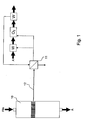
- Figure 1 shows a first preferred embodiment of the method for which a patent is sought, which method is to retrieve heat from black liquor, where the black liquor is withdrawn from a digester 10 in association with the production of cellulose pulp.
- the black liquor when withdrawn from the digester maintains a first withdrawal temperature in the interval 100-180 °C, where the digester maintains a cooking temperature of 130-180 °C.
- At least a part of the withdrawn black liquor is led after the withdrawal along a first line 12 to a first heat exchanger 11.
- An indirect exchange of heat is enabled in the first heat exchanger 11 between the black liquor and a bleaching filtrate that has been obtained from the bleaching plant.
- the bleaching filtrate maintains a temperature in the interval 45-90 °C immediately before it is to undergo heat exchange with the black liquor.
- the indirect heat exchange results in the bleaching filtrate obtaining a raise in temperature of at least 5 °C, after which the heated bleaching filtrate is used in the bleaching plant.
- the temperature of the black liquor before the heat exchange remains essentially at the withdrawal temperature, in the interval 90-180 °C.
- the bleaching filtrate that is heated is filtrate from a washing arrangement arranged after a pre-bleaching stage, preferably an oxygen delignification stage.
- the heated bleaching filtrate is used as dilution fluid before this oxygen delignification stage, whereby the cellulose pulp that is to be delignified in an oxygen stage is not only diluted to a suitable consistency but also experiences heating, and thus a reduction in the requirement of steam or other form of heating.
- FIG. 2 shows a second preferred embodiment of the method for which a patent is sought.
- Black liquor is withdrawn from the digester 10 at a temperature of 125-180°C, where the digester maintains a cooking temperature of 130-180 °C.
- At least a part of the withdrawn black liquor is led after the withdrawal along a first line 21 to a second heat exchanger 20.
- An indirect exchange of heat is enabled in the second heat exchanger 20 between the black liquor and a process fluid in the digestion plant, preferably cooking fluid in the form of white liquor that, after heating by the black liquor in the second heat exchanger, is led to the digester 10 in order there to function as cooking liquid.
- the black liquor after its passage through the second heat exchanger has experienced a reduction in temperature of at least 20 °C in the range of temperatures 90-125 °C.
- the black liquor is subsequently led along a line 22 to the first heat exchanger 11.
- An indirect exchange of heat is enabled in the first heat exchanger 11 between the black liquor and the bleaching filtrate that has been obtained from the bleaching plant.
- the bleaching filtrate maintains a temperature in the interval 45-90 °C immediately before it is to undergo heat exchange with the black liquor.
- the indirect heat exchange results in the bleaching filtrate obtaining a raise in temperature of at least 5 °C, after which the heated bleaching filtrate is used in the bleaching plant.
- the temperature of the black liquor before the heat exchange remains essentially at the withdrawal temperature, in the interval 90-180 °C.
- the bleaching filtrate that is heated is filtrate from a washing arrangement arranged after a pre-bleaching stage, preferably an oxygen delignification stage.
- the heated bleaching filtrate is used as dilution fluid before this oxygen delignification stage, whereby the cellulose pulp that is to be delignified in an oxygen stage is not only diluted to a suitable consistency but also experiences heating, and thus a reduction in the requirement of steam or other form of heating.
- Figure 3 shows a third preferred embodiment of the method for which a patent is sought.
- Black liquor is withdrawn from the digester 10 at a temperature of 125-180 °C, where the digester maintains a cooking temperature of 130-180 °C.
- At least a part of the withdrawn black liquor is led after the withdrawal of black liquor along a line 31 to an expansion vessel 30.
- the pressure of the black liquor is reduced in the expansion vessel, and the black liquor experiences a reduction in temperature of at least 20 °C in the range of temperatures 90-125 °C.
- the black liquor is subsequently led along a line 32 to the first heat exchanger 11.
- the temperature of the black liquor has been reduced by at least 20°C in the range of temperatures 90-125 °C after its passage through the expansion vessel.
- the black liquor is subsequently led along a line 32 to the first heat exchanger 11.
- An indirect exchange of heat is enabled in the first heat exchanger 11 between the black liquor and the bleaching filtrate that has been obtained from the bleaching plant.
- the bleaching filtrate maintains a temperature in the interval 45-90 °C immediately before it is to undergo heat exchange with the black liquor.
- the indirect heat exchange results in the bleaching filtrate obtaining a raise in temperature of at least 5 °C, after which the heated bleaching filtrate is used in the bleaching plant.
- the temperature of the black liquor before the heat exchange remains essentially at the withdrawal temperature, in the interval 90-180°C.
- the bleaching filtrate that is heated is filtrate from a washing arrangement arranged after a pre-bleaching stage, preferably an oxygen delignification stage.
- the heated bleaching filtrate is used as dilution fluid before this oxygen delignification stage, whereby the cellulose pulp that is to be delignified in an oxygen stage is not only diluted to a suitable consistency but also experiences heating, and thus a reduction in the requirement of steam or other form of heating.
- Figure 4 shows a fourth preferred embodiment of the method for which a patent is sought.
- Black liquor is withdrawn from the digester 10 at a temperature of 125-180 °C, where the digester maintains a cooking temperature of 130-180 °C.
- At least a part of the withdrawn black liquor is led after the withdrawal of black liquor along a line 41 to an impregnation vessel 40.
- the black liquor functions in the impregnation vessel as an impregnation fluid in order to impregnate chips that are fed into the impregnation vessel.
- the black liquor after its function as impregnation fluid is fed out from the impregnation vessel, and it has experienced after this a reduction in temperature of at least 20 °C in the range of temperatures 90-125 °C.
- the black liquor is subsequently led along a line 42 to the first heat exchanger 11.
- the black liquor after its passage through the impregnation vessel 40 has experienced a reduction in temperature of at least 20 °C in the range of temperatures 90-125 °C. It is subsequently led along a line to the first heat exchanger 11.
- An indirect exchange of heat is enabled in the first heat exchanger 11 between the black liquor and the bleaching filtrate that has been obtained from the bleaching plant.
- the bleaching filtrate maintains a temperature in the interval 45-90 °C immediately before it is to undergo heat exchange with the black liquor.
- the indirect heat exchange results in the bleaching filtrate obtaining a raise in temperature of at least 5 °C, after which the heated bleaching filtrate is used in the bleaching plant.
- the bleaching filtrate that is heated is filtrate from a washing arrangement arranged after a pre-bleaching stage, preferably an oxygen delignification stage.
- the heated bleaching filtrate is used as dilution fluid before this oxygen delignification stage, whereby the cellulose pulp that is to be delignified in an oxygen stage is not only diluted to a suitable consistency but also experiences heating, and thus a reduction in the requirement of steam or other form of heating.
- One such variant is that in which the first heat exchanger 11 is arranged in association with the digester 10, where the bleaching filtrate is led along lines from the bleaching plant to the first heat exchanger and returns to the bleaching plant.
- the first heat exchanger 11 may also be arranged in association with the bleaching plant, where the black liquor is led along lines from the digester to the first heat exchanger, and subsequently to an evaporation process.
Landscapes
- Paper (AREA)
Claims (10)
- Verfahren zur Rückgewinnung von Wärme aus Schwarzlauge, wobei die Schwarzlauge aus einem Kocher (10) in Assoziation mit der Herstellung von Zellstoff abgezogen wird, wobei die Schwarzlauge beim Abziehen aus dem Kocher (10) eine erste Abzugstemperatur behält und wobei die Kochtemperatur im Kocher bei 130-180°C gehalten wird, dadurch gekennzeichnet, dass mindestens ein Teil der Schwarzlauge einem ersten Wärmetauscher (11) zugeführt wird, in welchem der Austausch von Wärme zwischen der Schwarzlauge und einem aus der Bleicherei erhaltenen Bleichfiltrat stattfindet, wonach das erhitzte Bleichfiltrat in der Bleicherei verwendet wird.
- Verfahren nach Anspruch 1, dadurch gekennzeichnet, dass der Wärmeaustausch dazu führt, dass das Bleichfiltrat eine Temperaturerhöhung von mindestens 5°C erfährt.
- Verfahren nach Anspruch 1 oder 2, dadurch gekennzeichnet, dass die dem ersten Wärmetauscher (11) zugeführte Schwarzlauge eine Temperatur im Bereich von 90-125°C aufweist.
- Verfahren nach Anspruch 3, dadurch gekennzeichnet, dass die abgezogene Schwarzlauge vor der Zuführung zum ersten Wärmetauscher (11) in mindestens einer Stufe des Kochsystems verwendet wird, was dazu führt, dass die Schwarzlauge eine Temperaturerniedrigung von mindestens 20°C erfährt und eine niedrigere Temperatur im Bereich von 90-125°C erhält.
- Verfahren nach Anspruch 4, dadurch gekennzeichnet, dass die Schwarzlauge bei ihrer Abzugstemperatur ihre verringerte Temperatur durch mindestens einen Wärmeaustauschprozess mit einem Prozessfluid in der Kocherei, vorzugsweise mit Kochfluid oder Weißlauge, erhält.
- Verfahren nach Anspruch 4, dadurch gekennzeichnet, dass die Schwarzlauge bei ihrer Abzugstemperatur ihre verringerte Temperatur durch mindestens einen Druckverringerungsprozess, bei dem Wasserdampf von der Schwarzlauge abgedampft wird, erhält.
- Verfahren nach Anspruch 4, dadurch gekennzeichnet, dass die Schwarzlauge bei ihrer Abzugstemperatur ihre verringerte Temperatur durch ihre Verwendung als Tränkfluid bei einer Trennstufe vor dem Kochen im Kocher erhält.
- Verfahren nach einem der Ansprüche 1-7, dadurch gekennzeichnet, dass es sich bei dem Bleichfiltrat, das erhitzt wird, um Filtrat aus einer nach einer Vorbleichstufe, vorzugsweise einer Sauerstoffgas-Delignifizierungsstufe, angeordneten Waschanordnung handelt, wobei das erhitzte Bleichfiltrat vor dieser Sauerstoffgasstufe als Verdünnungsfluid verwendet wird, wodurch der durch Sauerstoffgas zu delignifizierende Zellstoff nicht nur auf eine geeignete Konsistenz verdünnt, sondern auch erhitzt wird, was eine Verringerung des Bedarfs an Wasserdampfzusatz oder einer anderen Form des Erhitzens gewährleistet.
- Verfahren nach einem der Ansprüche 1-8, dadurch gekennzeichnet, dass der erste Wärmetauscher, in dem der Wärmeaustausch zwischen der Schwarzlauge und dem Bleichfiltrat stattfindet, in Assoziation mit dem Kocher (10) angeordnet ist, wobei das Bleichfiltrat über Leitungen von der Bleicherei zum ersten Wärmetauscher (11) geführt und wieder in die Bleicherei zurückgeführt wird
- Verfahren nach einem der Ansprüche 1-8, dadurch gekennzeichnet, dass der erste Wärmetauscher (11), in dem der Wärmeaustausch zwischen der Schwarzlauge und dem Bleichfiltrat stattfindet, in Assoziation mit der Bleicherei angeordnet ist, wobei die Schwarzlauge, die die niedrigere Temperatur behält, über Leitungen vom Kocher zum ersten Wärmetauscher (11) und dann zu einem Verdampfungsprozess geführt wird.
Applications Claiming Priority (2)
| Application Number | Priority Date | Filing Date | Title |
|---|---|---|---|
| SE0602476A SE529475C2 (sv) | 2006-11-22 | 2006-11-22 | Metod för att återvinna värmeenergi från svartlut |
| PCT/SE2007/050875 WO2008063127A1 (en) | 2006-11-22 | 2007-11-20 | A method to use heat energy from black liquor |
Publications (3)
| Publication Number | Publication Date |
|---|---|
| EP2089571A1 EP2089571A1 (de) | 2009-08-19 |
| EP2089571A4 EP2089571A4 (de) | 2012-09-05 |
| EP2089571B1 true EP2089571B1 (de) | 2013-08-21 |
Family
ID=38370545
Family Applications (1)
| Application Number | Title | Priority Date | Filing Date |
|---|---|---|---|
| EP07835458.6A Not-in-force EP2089571B1 (de) | 2006-11-22 | 2007-11-20 | Verfahren zur nutzung der wärmeenergie der schwarzlauge |
Country Status (5)
| Country | Link |
|---|---|
| US (1) | US8545674B2 (de) |
| EP (1) | EP2089571B1 (de) |
| CA (1) | CA2670274C (de) |
| SE (1) | SE529475C2 (de) |
| WO (1) | WO2008063127A1 (de) |
Families Citing this family (1)
| Publication number | Priority date | Publication date | Assignee | Title |
|---|---|---|---|---|
| US20180263495A1 (en) * | 2015-09-28 | 2018-09-20 | Koninklijke Philips N.V. | Secure pulse oximeter, monitor and cloud connection |
Family Cites Families (15)
| Publication number | Priority date | Publication date | Assignee | Title |
|---|---|---|---|---|
| SE420329C (sv) * | 1978-02-16 | 1984-10-15 | Mo Och Domsjoe Ab | Forfarande for framstellning av slipmassa vid overtryck |
| US5788812A (en) * | 1985-11-05 | 1998-08-04 | Agar; Richard C. | Method of recovering furfural from organic pulping liquor |
| US4897157A (en) * | 1986-07-08 | 1990-01-30 | Kamyr, Inc. | Make-up liquor and black liquor evaporating processing during pulp production |
| US6106667A (en) * | 1992-02-21 | 2000-08-22 | Ahlstrom Machinery Inc. | Treatment of recycled bleach plant filtrates |
| US5360514A (en) * | 1992-02-21 | 1994-11-01 | Kamyr, Inc. | Treatment of bleach plant filtrations using a magnesium filter |
| SE9201477L (sv) * | 1992-05-11 | 1993-06-28 | Kamyr Ab | Saett vid blekning av massa utan anvaendning av klorkemikalier |
| TW270159B (de) * | 1994-03-04 | 1996-02-11 | Beloit Technologies Inc | |
| US6306252B1 (en) * | 1995-04-10 | 2001-10-23 | Andritz-Ahlstrom Inc. | Heat recovery from spent digester cooking liquor |
| CA2224685C (en) * | 1995-06-20 | 2003-05-20 | Ahlstrom Machinery Oy | Method and apparatus for treating pulp in an indirect heat exchanger after pulping |
| US5635026A (en) * | 1995-11-13 | 1997-06-03 | Ahlstrom Machinery Inc. | Cooking cellulose material with high alkali concentrations and/or high pH |
| FI972954L (fi) * | 1997-07-11 | 1999-01-12 | Sunds Defibrator Pori Oy | Menetelmä sulfaattimassan valmistuksessa syntyvän jätelipeän käsittelemiseksi |
| US6176971B1 (en) * | 1998-11-18 | 2001-01-23 | Andritz-Ahlstrom Inc. | Heat economy enhancements for the recovery and use of energy obtained from spent cooking liquors |
| US6346166B1 (en) * | 1999-06-14 | 2002-02-12 | Andritz-Ahlstrom Inc. | Flash tank steam economy improvement |
| FI110327B (fi) * | 1999-10-04 | 2002-12-31 | Metso Chemical Pulping Oy | Menetelmä sellumassan valmistamiseksi |
| SE527058C2 (sv) * | 2004-02-09 | 2005-12-13 | Kvaerner Pulping Tech | Kontinuerlig kokprocess med förbättrad värmeekonomi |
-
2006
- 2006-11-22 SE SE0602476A patent/SE529475C2/sv not_active IP Right Cessation
-
2007
- 2007-11-20 EP EP07835458.6A patent/EP2089571B1/de not_active Not-in-force
- 2007-11-20 CA CA2670274A patent/CA2670274C/en not_active Expired - Fee Related
- 2007-11-20 WO PCT/SE2007/050875 patent/WO2008063127A1/en not_active Ceased
- 2007-11-20 US US12/515,039 patent/US8545674B2/en not_active Expired - Fee Related
Also Published As
| Publication number | Publication date |
|---|---|
| EP2089571A4 (de) | 2012-09-05 |
| WO2008063127A1 (en) | 2008-05-29 |
| US20100012283A1 (en) | 2010-01-21 |
| CA2670274C (en) | 2015-02-03 |
| SE0602476L (sv) | 2007-08-21 |
| SE529475C2 (sv) | 2007-08-21 |
| US8545674B2 (en) | 2013-10-01 |
| EP2089571A1 (de) | 2009-08-19 |
| CA2670274A1 (en) | 2008-05-29 |
Similar Documents
| Publication | Publication Date | Title |
|---|---|---|
| FI82079C (fi) | Foerfarande och anordning foer kontinuerlig kokning av cellulosa | |
| US7918967B2 (en) | Apparatus for decreasing scaling in digester systems | |
| US8808498B2 (en) | Heat recovery from spent cooking liquor in a digester plant of a chemical pulp mill | |
| JP2001510510A (ja) | 蒸解カンの使用済み液からの熱回収 | |
| CN102154874B (zh) | 一种置换蒸煮制浆方法 | |
| US6123807A (en) | Method for the continuous cooking of pulp | |
| NZ509564A (en) | Method for precipitating hemicellulose onto fibres for improved yield and beatability | |
| CA2670274C (en) | A method to use heat energy from black liquor | |
| EP2265759B1 (de) | Verfahren zur energieeffizienten herstellung von zellulosepulpe in einem behälter für kontinuierliche fäulnis | |
| US4608121A (en) | Process for continuous digestion of finely-divided material with heat capacity flows of substantially the same magnitude | |
| SE530719C2 (sv) | Kontinuerlig kokning av cellulosahaltigt material med förbehandling med alkaliska vätskor i två steg | |
| EP1818445A2 (de) | Verfahren zum Imprägnieren von Hackschnitzeln in einem System mit kontinuierlichem Aufschluss | |
| CN220266173U (zh) | 化浆蒸煮系统 | |
| US20080093041A1 (en) | Method and Arrangement for Impregnating Chips | |
| EP1561856B1 (de) | Verfahren zum kontinuierlichen Kochen von Zellstoffpulpe | |
| US3441475A (en) | Continuous pulping apparatus | |
| CZ318698A3 (cs) | Způsob kontinuálního vedení kapalin při vyvařování celulózové kaše ve vařáku | |
| FI102398B (fi) | Menetelmä ja laitteisto sulan käsittelyn yhteydessä | |
| CN207933811U (zh) | 一种保留植物纤维原生态蒸煮装置 | |
| Noureldin et al. | Enhanced Waste Energy Recovery Targeting Using Real-time Energy Integartion in Pulp & Paper Plant | |
| WO2017086856A1 (en) | Method for heating cellulosic material to full cooking temperature in digesters |
Legal Events
| Date | Code | Title | Description |
|---|---|---|---|
| PUAI | Public reference made under article 153(3) epc to a published international application that has entered the european phase |
Free format text: ORIGINAL CODE: 0009012 |
|
| 17P | Request for examination filed |
Effective date: 20090520 |
|
| AK | Designated contracting states |
Kind code of ref document: A1 Designated state(s): AT BE BG CH CY CZ DE DK EE ES FI FR GB GR HU IE IS IT LI LT LU LV MC MT NL PL PT RO SE SI SK TR |
|
| DAX | Request for extension of the european patent (deleted) | ||
| RAP1 | Party data changed (applicant data changed or rights of an application transferred) |
Owner name: METSO PAPER SWEDEN AB |
|
| A4 | Supplementary search report drawn up and despatched |
Effective date: 20120808 |
|
| RIC1 | Information provided on ipc code assigned before grant |
Ipc: D21C 3/24 20060101AFI20120802BHEP Ipc: D21C 3/22 20060101ALI20120802BHEP Ipc: D21C 11/00 20060101ALI20120802BHEP |
|
| GRAP | Despatch of communication of intention to grant a patent |
Free format text: ORIGINAL CODE: EPIDOSNIGR1 |
|
| GRAS | Grant fee paid |
Free format text: ORIGINAL CODE: EPIDOSNIGR3 |
|
| GRAA | (expected) grant |
Free format text: ORIGINAL CODE: 0009210 |
|
| AK | Designated contracting states |
Kind code of ref document: B1 Designated state(s): AT BE BG CH CY CZ DE DK EE ES FI FR GB GR HU IE IS IT LI LT LU LV MC MT NL PL PT RO SE SI SK TR |
|
| REG | Reference to a national code |
Ref country code: GB Ref legal event code: FG4D |
|
| REG | Reference to a national code |
Ref country code: CH Ref legal event code: EP |
|
| REG | Reference to a national code |
Ref country code: AT Ref legal event code: REF Ref document number: 628188 Country of ref document: AT Kind code of ref document: T Effective date: 20130915 |
|
| REG | Reference to a national code |
Ref country code: IE Ref legal event code: FG4D |
|
| REG | Reference to a national code |
Ref country code: DE Ref legal event code: R096 Ref document number: 602007032454 Country of ref document: DE Effective date: 20131017 |
|
| REG | Reference to a national code |
Ref country code: NL Ref legal event code: VDEP Effective date: 20130821 Ref country code: AT Ref legal event code: MK05 Ref document number: 628188 Country of ref document: AT Kind code of ref document: T Effective date: 20130821 |
|
| REG | Reference to a national code |
Ref country code: LT Ref legal event code: MG4D |
|
| PG25 | Lapsed in a contracting state [announced via postgrant information from national office to epo] |
Ref country code: CY Free format text: LAPSE BECAUSE OF FAILURE TO SUBMIT A TRANSLATION OF THE DESCRIPTION OR TO PAY THE FEE WITHIN THE PRESCRIBED TIME-LIMIT Effective date: 20130807 Ref country code: LT Free format text: LAPSE BECAUSE OF FAILURE TO SUBMIT A TRANSLATION OF THE DESCRIPTION OR TO PAY THE FEE WITHIN THE PRESCRIBED TIME-LIMIT Effective date: 20130821 Ref country code: PT Free format text: LAPSE BECAUSE OF FAILURE TO SUBMIT A TRANSLATION OF THE DESCRIPTION OR TO PAY THE FEE WITHIN THE PRESCRIBED TIME-LIMIT Effective date: 20131223 Ref country code: AT Free format text: LAPSE BECAUSE OF FAILURE TO SUBMIT A TRANSLATION OF THE DESCRIPTION OR TO PAY THE FEE WITHIN THE PRESCRIBED TIME-LIMIT Effective date: 20130821 Ref country code: IS Free format text: LAPSE BECAUSE OF FAILURE TO SUBMIT A TRANSLATION OF THE DESCRIPTION OR TO PAY THE FEE WITHIN THE PRESCRIBED TIME-LIMIT Effective date: 20131221 Ref country code: SE Free format text: LAPSE BECAUSE OF FAILURE TO SUBMIT A TRANSLATION OF THE DESCRIPTION OR TO PAY THE FEE WITHIN THE PRESCRIBED TIME-LIMIT Effective date: 20130821 |
|
| PG25 | Lapsed in a contracting state [announced via postgrant information from national office to epo] |
Ref country code: SI Free format text: LAPSE BECAUSE OF FAILURE TO SUBMIT A TRANSLATION OF THE DESCRIPTION OR TO PAY THE FEE WITHIN THE PRESCRIBED TIME-LIMIT Effective date: 20130821 Ref country code: GR Free format text: LAPSE BECAUSE OF FAILURE TO SUBMIT A TRANSLATION OF THE DESCRIPTION OR TO PAY THE FEE WITHIN THE PRESCRIBED TIME-LIMIT Effective date: 20131122 Ref country code: PL Free format text: LAPSE BECAUSE OF FAILURE TO SUBMIT A TRANSLATION OF THE DESCRIPTION OR TO PAY THE FEE WITHIN THE PRESCRIBED TIME-LIMIT Effective date: 20130821 Ref country code: LV Free format text: LAPSE BECAUSE OF FAILURE TO SUBMIT A TRANSLATION OF THE DESCRIPTION OR TO PAY THE FEE WITHIN THE PRESCRIBED TIME-LIMIT Effective date: 20130821 Ref country code: BE Free format text: LAPSE BECAUSE OF FAILURE TO SUBMIT A TRANSLATION OF THE DESCRIPTION OR TO PAY THE FEE WITHIN THE PRESCRIBED TIME-LIMIT Effective date: 20130821 |
|
| PG25 | Lapsed in a contracting state [announced via postgrant information from national office to epo] |
Ref country code: CY Free format text: LAPSE BECAUSE OF FAILURE TO SUBMIT A TRANSLATION OF THE DESCRIPTION OR TO PAY THE FEE WITHIN THE PRESCRIBED TIME-LIMIT Effective date: 20130821 |
|
| PG25 | Lapsed in a contracting state [announced via postgrant information from national office to epo] |
Ref country code: CZ Free format text: LAPSE BECAUSE OF FAILURE TO SUBMIT A TRANSLATION OF THE DESCRIPTION OR TO PAY THE FEE WITHIN THE PRESCRIBED TIME-LIMIT Effective date: 20130821 Ref country code: NL Free format text: LAPSE BECAUSE OF FAILURE TO SUBMIT A TRANSLATION OF THE DESCRIPTION OR TO PAY THE FEE WITHIN THE PRESCRIBED TIME-LIMIT Effective date: 20130821 Ref country code: EE Free format text: LAPSE BECAUSE OF FAILURE TO SUBMIT A TRANSLATION OF THE DESCRIPTION OR TO PAY THE FEE WITHIN THE PRESCRIBED TIME-LIMIT Effective date: 20130821 Ref country code: RO Free format text: LAPSE BECAUSE OF FAILURE TO SUBMIT A TRANSLATION OF THE DESCRIPTION OR TO PAY THE FEE WITHIN THE PRESCRIBED TIME-LIMIT Effective date: 20130821 Ref country code: DK Free format text: LAPSE BECAUSE OF FAILURE TO SUBMIT A TRANSLATION OF THE DESCRIPTION OR TO PAY THE FEE WITHIN THE PRESCRIBED TIME-LIMIT Effective date: 20130821 Ref country code: SK Free format text: LAPSE BECAUSE OF FAILURE TO SUBMIT A TRANSLATION OF THE DESCRIPTION OR TO PAY THE FEE WITHIN THE PRESCRIBED TIME-LIMIT Effective date: 20130821 |
|
| PG25 | Lapsed in a contracting state [announced via postgrant information from national office to epo] |
Ref country code: ES Free format text: LAPSE BECAUSE OF FAILURE TO SUBMIT A TRANSLATION OF THE DESCRIPTION OR TO PAY THE FEE WITHIN THE PRESCRIBED TIME-LIMIT Effective date: 20130821 Ref country code: IT Free format text: LAPSE BECAUSE OF FAILURE TO SUBMIT A TRANSLATION OF THE DESCRIPTION OR TO PAY THE FEE WITHIN THE PRESCRIBED TIME-LIMIT Effective date: 20130821 |
|
| RAP2 | Party data changed (patent owner data changed or rights of a patent transferred) |
Owner name: VALMET AKTIEBOLAG |
|
| PLBE | No opposition filed within time limit |
Free format text: ORIGINAL CODE: 0009261 |
|
| STAA | Information on the status of an ep patent application or granted ep patent |
Free format text: STATUS: NO OPPOSITION FILED WITHIN TIME LIMIT |
|
| REG | Reference to a national code |
Ref country code: CH Ref legal event code: PL |
|
| GBPC | Gb: european patent ceased through non-payment of renewal fee |
Effective date: 20131121 |
|
| 26N | No opposition filed |
Effective date: 20140522 |
|
| PG25 | Lapsed in a contracting state [announced via postgrant information from national office to epo] |
Ref country code: MC Free format text: LAPSE BECAUSE OF FAILURE TO SUBMIT A TRANSLATION OF THE DESCRIPTION OR TO PAY THE FEE WITHIN THE PRESCRIBED TIME-LIMIT Effective date: 20130821 Ref country code: CH Free format text: LAPSE BECAUSE OF NON-PAYMENT OF DUE FEES Effective date: 20131130 Ref country code: LI Free format text: LAPSE BECAUSE OF NON-PAYMENT OF DUE FEES Effective date: 20131130 |
|
| REG | Reference to a national code |
Ref country code: FR Ref legal event code: ST Effective date: 20140731 |
|
| REG | Reference to a national code |
Ref country code: IE Ref legal event code: MM4A |
|
| PG25 | Lapsed in a contracting state [announced via postgrant information from national office to epo] |
Ref country code: DE Free format text: LAPSE BECAUSE OF NON-PAYMENT OF DUE FEES Effective date: 20140603 |
|
| REG | Reference to a national code |
Ref country code: DE Ref legal event code: R119 Ref document number: 602007032454 Country of ref document: DE Effective date: 20140603 Ref country code: DE Ref legal event code: R097 Ref document number: 602007032454 Country of ref document: DE Effective date: 20140522 |
|
| PG25 | Lapsed in a contracting state [announced via postgrant information from national office to epo] |
Ref country code: IE Free format text: LAPSE BECAUSE OF NON-PAYMENT OF DUE FEES Effective date: 20131120 |
|
| PG25 | Lapsed in a contracting state [announced via postgrant information from national office to epo] |
Ref country code: FR Free format text: LAPSE BECAUSE OF NON-PAYMENT OF DUE FEES Effective date: 20131202 Ref country code: GB Free format text: LAPSE BECAUSE OF NON-PAYMENT OF DUE FEES Effective date: 20131121 |
|
| PG25 | Lapsed in a contracting state [announced via postgrant information from national office to epo] |
Ref country code: TR Free format text: LAPSE BECAUSE OF FAILURE TO SUBMIT A TRANSLATION OF THE DESCRIPTION OR TO PAY THE FEE WITHIN THE PRESCRIBED TIME-LIMIT Effective date: 20130821 |
|
| PG25 | Lapsed in a contracting state [announced via postgrant information from national office to epo] |
Ref country code: BG Free format text: LAPSE BECAUSE OF FAILURE TO SUBMIT A TRANSLATION OF THE DESCRIPTION OR TO PAY THE FEE WITHIN THE PRESCRIBED TIME-LIMIT Effective date: 20130821 Ref country code: LU Free format text: LAPSE BECAUSE OF NON-PAYMENT OF DUE FEES Effective date: 20131120 Ref country code: HU Free format text: LAPSE BECAUSE OF FAILURE TO SUBMIT A TRANSLATION OF THE DESCRIPTION OR TO PAY THE FEE WITHIN THE PRESCRIBED TIME-LIMIT; INVALID AB INITIO Effective date: 20071120 |
|
| PG25 | Lapsed in a contracting state [announced via postgrant information from national office to epo] |
Ref country code: MT Free format text: LAPSE BECAUSE OF FAILURE TO SUBMIT A TRANSLATION OF THE DESCRIPTION OR TO PAY THE FEE WITHIN THE PRESCRIBED TIME-LIMIT Effective date: 20130821 |
|
| PGFP | Annual fee paid to national office [announced via postgrant information from national office to epo] |
Ref country code: FI Payment date: 20181121 Year of fee payment: 12 |
|
| REG | Reference to a national code |
Ref country code: FI Ref legal event code: MAE |
|
| PG25 | Lapsed in a contracting state [announced via postgrant information from national office to epo] |
Ref country code: FI Free format text: LAPSE BECAUSE OF NON-PAYMENT OF DUE FEES Effective date: 20191120 |