EP2090665A2 - Neue humane MikroRNAs im Zusammenhang mit Krebs - Google Patents
Neue humane MikroRNAs im Zusammenhang mit Krebs Download PDFInfo
- Publication number
- EP2090665A2 EP2090665A2 EP09160653A EP09160653A EP2090665A2 EP 2090665 A2 EP2090665 A2 EP 2090665A2 EP 09160653 A EP09160653 A EP 09160653A EP 09160653 A EP09160653 A EP 09160653A EP 2090665 A2 EP2090665 A2 EP 2090665A2
- Authority
- EP
- European Patent Office
- Prior art keywords
- sequence
- nucleobases
- seq
- nucleic acid
- contiguous
- Prior art date
- Legal status (The legal status is an assumption and is not a legal conclusion. Google has not performed a legal analysis and makes no representation as to the accuracy of the status listed.)
- Withdrawn
Links
- 206010028980 Neoplasm Diseases 0.000 title claims abstract description 251
- 201000011510 cancer Diseases 0.000 title claims abstract description 177
- 108700011259 MicroRNAs Proteins 0.000 title abstract description 347
- 150000007523 nucleic acids Chemical group 0.000 claims description 632
- 102000039446 nucleic acids Human genes 0.000 claims description 604
- 108020004707 nucleic acids Proteins 0.000 claims description 604
- 239000000523 sample Substances 0.000 claims description 473
- 239000002679 microRNA Substances 0.000 claims description 342
- 238000001514 detection method Methods 0.000 claims description 259
- 210000001519 tissue Anatomy 0.000 claims description 129
- 125000003729 nucleotide group Chemical group 0.000 claims description 126
- 238000000034 method Methods 0.000 claims description 117
- 238000009396 hybridization Methods 0.000 claims description 103
- 239000002773 nucleotide Substances 0.000 claims description 82
- 230000000295 complement effect Effects 0.000 claims description 69
- 108091027963 non-coding RNA Proteins 0.000 claims description 60
- 102000042567 non-coding RNA Human genes 0.000 claims description 60
- 208000026310 Breast neoplasm Diseases 0.000 claims description 52
- 206010006187 Breast cancer Diseases 0.000 claims description 51
- 238000012360 testing method Methods 0.000 claims description 47
- 239000013068 control sample Substances 0.000 claims description 45
- 230000014509 gene expression Effects 0.000 claims description 42
- 238000011282 treatment Methods 0.000 claims description 36
- 108091028043 Nucleic acid sequence Proteins 0.000 claims description 31
- 238000001574 biopsy Methods 0.000 claims description 30
- 208000006265 Renal cell carcinoma Diseases 0.000 claims description 25
- 206010009944 Colon cancer Diseases 0.000 claims description 24
- 108090000623 proteins and genes Proteins 0.000 claims description 24
- 208000037265 diseases, disorders, signs and symptoms Diseases 0.000 claims description 23
- 201000010099 disease Diseases 0.000 claims description 22
- 238000012512 characterization method Methods 0.000 claims description 21
- 238000004393 prognosis Methods 0.000 claims description 14
- 206010058467 Lung neoplasm malignant Diseases 0.000 claims description 13
- 206010060862 Prostate cancer Diseases 0.000 claims description 13
- 230000002028 premature Effects 0.000 claims description 13
- 206010033128 Ovarian cancer Diseases 0.000 claims description 12
- 208000029742 colonic neoplasm Diseases 0.000 claims description 12
- 208000020816 lung neoplasm Diseases 0.000 claims description 12
- 108091070501 miRNA Proteins 0.000 claims description 12
- 208000015347 renal cell adenocarcinoma Diseases 0.000 claims description 12
- 206010005003 Bladder cancer Diseases 0.000 claims description 11
- 206010061535 Ovarian neoplasm Diseases 0.000 claims description 11
- 206010017758 gastric cancer Diseases 0.000 claims description 11
- 238000000746 purification Methods 0.000 claims description 11
- 208000000236 Prostatic Neoplasms Diseases 0.000 claims description 10
- 208000007097 Urinary Bladder Neoplasms Diseases 0.000 claims description 10
- 238000003745 diagnosis Methods 0.000 claims description 10
- 239000003814 drug Substances 0.000 claims description 10
- 201000005202 lung cancer Diseases 0.000 claims description 10
- 238000011002 quantification Methods 0.000 claims description 10
- 208000001333 Colorectal Neoplasms Diseases 0.000 claims description 9
- 230000003321 amplification Effects 0.000 claims description 9
- 208000002154 non-small cell lung carcinoma Diseases 0.000 claims description 9
- 238000003199 nucleic acid amplification method Methods 0.000 claims description 9
- 208000008443 pancreatic carcinoma Diseases 0.000 claims description 9
- 208000029729 tumor suppressor gene on chromosome 11 Diseases 0.000 claims description 9
- 206010008342 Cervix carcinoma Diseases 0.000 claims description 8
- 208000005718 Stomach Neoplasms Diseases 0.000 claims description 8
- 208000006105 Uterine Cervical Neoplasms Diseases 0.000 claims description 8
- 230000008901 benefit Effects 0.000 claims description 8
- 201000010881 cervical cancer Diseases 0.000 claims description 8
- 238000002955 isolation Methods 0.000 claims description 8
- 201000011549 stomach cancer Diseases 0.000 claims description 8
- 201000005112 urinary bladder cancer Diseases 0.000 claims description 8
- 208000000461 Esophageal Neoplasms Diseases 0.000 claims description 7
- 229940127073 nucleoside analogue Drugs 0.000 claims description 7
- 206010061902 Pancreatic neoplasm Diseases 0.000 claims description 6
- 208000015486 malignant pancreatic neoplasm Diseases 0.000 claims description 6
- 238000004519 manufacturing process Methods 0.000 claims description 6
- 201000002528 pancreatic cancer Diseases 0.000 claims description 6
- 201000004101 esophageal cancer Diseases 0.000 claims description 5
- 230000005764 inhibitory process Effects 0.000 claims description 4
- 241000124008 Mammalia Species 0.000 claims description 3
- 230000001225 therapeutic effect Effects 0.000 abstract description 3
- 150000001875 compounds Chemical class 0.000 description 317
- 108091032973 (ribonucleotides)n+m Proteins 0.000 description 98
- 239000002243 precursor Substances 0.000 description 96
- 108091034117 Oligonucleotide Proteins 0.000 description 77
- 210000004027 cell Anatomy 0.000 description 56
- 239000000178 monomer Substances 0.000 description 54
- 108020004999 messenger RNA Proteins 0.000 description 48
- 230000000875 corresponding effect Effects 0.000 description 38
- 229910052739 hydrogen Inorganic materials 0.000 description 37
- 239000001257 hydrogen Substances 0.000 description 37
- 108020004459 Small interfering RNA Proteins 0.000 description 34
- 108020005187 Oligonucleotide Probes Proteins 0.000 description 32
- 239000002751 oligonucleotide probe Substances 0.000 description 32
- -1 carboxylic acid halides Chemical class 0.000 description 29
- 230000027455 binding Effects 0.000 description 25
- 238000002844 melting Methods 0.000 description 25
- 230000008018 melting Effects 0.000 description 25
- 108020004414 DNA Proteins 0.000 description 21
- 238000002560 therapeutic procedure Methods 0.000 description 20
- JLCPHMBAVCMARE-UHFFFAOYSA-N [3-[[3-[[3-[[3-[[3-[[3-[[3-[[3-[[3-[[3-[[3-[[5-(2-amino-6-oxo-1H-purin-9-yl)-3-[[3-[[3-[[3-[[3-[[3-[[5-(2-amino-6-oxo-1H-purin-9-yl)-3-[[5-(2-amino-6-oxo-1H-purin-9-yl)-3-hydroxyoxolan-2-yl]methoxy-hydroxyphosphoryl]oxyoxolan-2-yl]methoxy-hydroxyphosphoryl]oxy-5-(5-methyl-2,4-dioxopyrimidin-1-yl)oxolan-2-yl]methoxy-hydroxyphosphoryl]oxy-5-(6-aminopurin-9-yl)oxolan-2-yl]methoxy-hydroxyphosphoryl]oxy-5-(6-aminopurin-9-yl)oxolan-2-yl]methoxy-hydroxyphosphoryl]oxy-5-(6-aminopurin-9-yl)oxolan-2-yl]methoxy-hydroxyphosphoryl]oxy-5-(6-aminopurin-9-yl)oxolan-2-yl]methoxy-hydroxyphosphoryl]oxyoxolan-2-yl]methoxy-hydroxyphosphoryl]oxy-5-(5-methyl-2,4-dioxopyrimidin-1-yl)oxolan-2-yl]methoxy-hydroxyphosphoryl]oxy-5-(4-amino-2-oxopyrimidin-1-yl)oxolan-2-yl]methoxy-hydroxyphosphoryl]oxy-5-(5-methyl-2,4-dioxopyrimidin-1-yl)oxolan-2-yl]methoxy-hydroxyphosphoryl]oxy-5-(5-methyl-2,4-dioxopyrimidin-1-yl)oxolan-2-yl]methoxy-hydroxyphosphoryl]oxy-5-(6-aminopurin-9-yl)oxolan-2-yl]methoxy-hydroxyphosphoryl]oxy-5-(6-aminopurin-9-yl)oxolan-2-yl]methoxy-hydroxyphosphoryl]oxy-5-(4-amino-2-oxopyrimidin-1-yl)oxolan-2-yl]methoxy-hydroxyphosphoryl]oxy-5-(4-amino-2-oxopyrimidin-1-yl)oxolan-2-yl]methoxy-hydroxyphosphoryl]oxy-5-(4-amino-2-oxopyrimidin-1-yl)oxolan-2-yl]methoxy-hydroxyphosphoryl]oxy-5-(6-aminopurin-9-yl)oxolan-2-yl]methoxy-hydroxyphosphoryl]oxy-5-(4-amino-2-oxopyrimidin-1-yl)oxolan-2-yl]methyl [5-(6-aminopurin-9-yl)-2-(hydroxymethyl)oxolan-3-yl] hydrogen phosphate Polymers Cc1cn(C2CC(OP(O)(=O)OCC3OC(CC3OP(O)(=O)OCC3OC(CC3O)n3cnc4c3nc(N)[nH]c4=O)n3cnc4c3nc(N)[nH]c4=O)C(COP(O)(=O)OC3CC(OC3COP(O)(=O)OC3CC(OC3COP(O)(=O)OC3CC(OC3COP(O)(=O)OC3CC(OC3COP(O)(=O)OC3CC(OC3COP(O)(=O)OC3CC(OC3COP(O)(=O)OC3CC(OC3COP(O)(=O)OC3CC(OC3COP(O)(=O)OC3CC(OC3COP(O)(=O)OC3CC(OC3COP(O)(=O)OC3CC(OC3COP(O)(=O)OC3CC(OC3COP(O)(=O)OC3CC(OC3COP(O)(=O)OC3CC(OC3COP(O)(=O)OC3CC(OC3COP(O)(=O)OC3CC(OC3COP(O)(=O)OC3CC(OC3CO)n3cnc4c(N)ncnc34)n3ccc(N)nc3=O)n3cnc4c(N)ncnc34)n3ccc(N)nc3=O)n3ccc(N)nc3=O)n3ccc(N)nc3=O)n3cnc4c(N)ncnc34)n3cnc4c(N)ncnc34)n3cc(C)c(=O)[nH]c3=O)n3cc(C)c(=O)[nH]c3=O)n3ccc(N)nc3=O)n3cc(C)c(=O)[nH]c3=O)n3cnc4c3nc(N)[nH]c4=O)n3cnc4c(N)ncnc34)n3cnc4c(N)ncnc34)n3cnc4c(N)ncnc34)n3cnc4c(N)ncnc34)O2)c(=O)[nH]c1=O JLCPHMBAVCMARE-UHFFFAOYSA-N 0.000 description 19
- 108091007412 Piwi-interacting RNA Proteins 0.000 description 18
- 125000004435 hydrogen atom Chemical group [H]* 0.000 description 16
- 239000003446 ligand Substances 0.000 description 15
- 238000011065 in-situ storage Methods 0.000 description 14
- 238000012986 modification Methods 0.000 description 14
- 230000004048 modification Effects 0.000 description 14
- 239000007787 solid Substances 0.000 description 14
- 102000040650 (ribonucleotides)n+m Human genes 0.000 description 13
- 238000002474 experimental method Methods 0.000 description 13
- 238000002493 microarray Methods 0.000 description 13
- 239000000203 mixture Substances 0.000 description 13
- 239000002157 polynucleotide Substances 0.000 description 13
- 102000040430 polynucleotide Human genes 0.000 description 13
- 108091033319 polynucleotide Proteins 0.000 description 13
- 238000004458 analytical method Methods 0.000 description 12
- 230000015572 biosynthetic process Effects 0.000 description 12
- 239000002924 silencing RNA Substances 0.000 description 12
- 125000001424 substituent group Chemical group 0.000 description 12
- 206010027476 Metastases Diseases 0.000 description 11
- 208000009956 adenocarcinoma Diseases 0.000 description 11
- 239000000499 gel Substances 0.000 description 11
- 238000012545 processing Methods 0.000 description 11
- 201000009030 Carcinoma Diseases 0.000 description 10
- 230000002708 enhancing effect Effects 0.000 description 10
- 108091031925 miR-138-2 stem-loop Proteins 0.000 description 10
- 239000008194 pharmaceutical composition Substances 0.000 description 10
- 238000003752 polymerase chain reaction Methods 0.000 description 10
- 238000003786 synthesis reaction Methods 0.000 description 10
- 108020004635 Complementary DNA Proteins 0.000 description 9
- 102000004190 Enzymes Human genes 0.000 description 9
- 108090000790 Enzymes Proteins 0.000 description 9
- 238000000636 Northern blotting Methods 0.000 description 9
- 239000002299 complementary DNA Substances 0.000 description 9
- 230000002401 inhibitory effect Effects 0.000 description 9
- 238000002372 labelling Methods 0.000 description 9
- 201000001441 melanoma Diseases 0.000 description 9
- 125000006853 reporter group Chemical group 0.000 description 9
- 230000000087 stabilizing effect Effects 0.000 description 9
- YBJHBAHKTGYVGT-ZKWXMUAHSA-N (+)-Biotin Chemical compound N1C(=O)N[C@@H]2[C@H](CCCCC(=O)O)SC[C@@H]21 YBJHBAHKTGYVGT-ZKWXMUAHSA-N 0.000 description 8
- 108091032955 Bacterial small RNA Proteins 0.000 description 8
- 108020003224 Small Nucleolar RNA Proteins 0.000 description 8
- 102000042773 Small Nucleolar RNA Human genes 0.000 description 8
- 230000000692 anti-sense effect Effects 0.000 description 8
- 230000009401 metastasis Effects 0.000 description 8
- 239000004055 small Interfering RNA Substances 0.000 description 8
- 239000000126 substance Substances 0.000 description 8
- 239000000872 buffer Substances 0.000 description 7
- 238000006243 chemical reaction Methods 0.000 description 7
- 238000013461 design Methods 0.000 description 7
- 238000010195 expression analysis Methods 0.000 description 7
- 238000002866 fluorescence resonance energy transfer Methods 0.000 description 7
- 239000012634 fragment Substances 0.000 description 7
- 238000003753 real-time PCR Methods 0.000 description 7
- WSFSSNUMVMOOMR-UHFFFAOYSA-N Formaldehyde Chemical compound O=C WSFSSNUMVMOOMR-UHFFFAOYSA-N 0.000 description 6
- 102000000574 RNA-Induced Silencing Complex Human genes 0.000 description 6
- 108010016790 RNA-Induced Silencing Complex Proteins 0.000 description 6
- 206010039491 Sarcoma Diseases 0.000 description 6
- 239000002253 acid Substances 0.000 description 6
- 125000003118 aryl group Chemical group 0.000 description 6
- 238000003556 assay Methods 0.000 description 6
- 239000011324 bead Substances 0.000 description 6
- 238000002512 chemotherapy Methods 0.000 description 6
- OPTASPLRGRRNAP-UHFFFAOYSA-N cytosine Chemical compound NC=1C=CNC(=O)N=1 OPTASPLRGRRNAP-UHFFFAOYSA-N 0.000 description 6
- UYTPUPDQBNUYGX-UHFFFAOYSA-N guanine Chemical compound O=C1NC(N)=NC2=C1N=CN2 UYTPUPDQBNUYGX-UHFFFAOYSA-N 0.000 description 6
- 125000001072 heteroaryl group Chemical group 0.000 description 6
- 238000007901 in situ hybridization Methods 0.000 description 6
- 108091047498 miR-138-1 stem-loop Proteins 0.000 description 6
- 239000002777 nucleoside Substances 0.000 description 6
- 125000003835 nucleoside group Chemical group 0.000 description 6
- 229920002401 polyacrylamide Polymers 0.000 description 6
- 230000001105 regulatory effect Effects 0.000 description 6
- 238000011160 research Methods 0.000 description 6
- 230000002441 reversible effect Effects 0.000 description 6
- 241000894007 species Species 0.000 description 6
- 229910052717 sulfur Inorganic materials 0.000 description 6
- 238000001356 surgical procedure Methods 0.000 description 6
- 125000004178 (C1-C4) alkyl group Chemical group 0.000 description 5
- 108020005544 Antisense RNA Proteins 0.000 description 5
- 108091093037 Peptide nucleic acid Proteins 0.000 description 5
- 108020004688 Small Nuclear RNA Proteins 0.000 description 5
- 102000039471 Small Nuclear RNA Human genes 0.000 description 5
- 208000024447 adrenal gland neoplasm Diseases 0.000 description 5
- 238000013459 approach Methods 0.000 description 5
- 125000004429 atom Chemical group 0.000 description 5
- 210000000481 breast Anatomy 0.000 description 5
- 238000010804 cDNA synthesis Methods 0.000 description 5
- 239000003153 chemical reaction reagent Substances 0.000 description 5
- 238000011161 development Methods 0.000 description 5
- 230000006870 function Effects 0.000 description 5
- 239000003550 marker Substances 0.000 description 5
- 230000008569 process Effects 0.000 description 5
- 102000004169 proteins and genes Human genes 0.000 description 5
- BBEAQIROQSPTKN-UHFFFAOYSA-N pyrene Chemical compound C1=CC=C2C=CC3=CC=CC4=CC=C1C2=C43 BBEAQIROQSPTKN-UHFFFAOYSA-N 0.000 description 5
- 238000004445 quantitative analysis Methods 0.000 description 5
- 230000000717 retained effect Effects 0.000 description 5
- 150000003839 salts Chemical class 0.000 description 5
- 125000004169 (C1-C6) alkyl group Chemical group 0.000 description 4
- 108091023037 Aptamer Proteins 0.000 description 4
- SHIBSTMRCDJXLN-UHFFFAOYSA-N Digoxigenin Natural products C1CC(C2C(C3(C)CCC(O)CC3CC2)CC2O)(O)C2(C)C1C1=CC(=O)OC1 SHIBSTMRCDJXLN-UHFFFAOYSA-N 0.000 description 4
- UFHFLCQGNIYNRP-UHFFFAOYSA-N Hydrogen Chemical compound [H][H] UFHFLCQGNIYNRP-UHFFFAOYSA-N 0.000 description 4
- 208000008839 Kidney Neoplasms Diseases 0.000 description 4
- 108091034054 MiR-138 Proteins 0.000 description 4
- 229910019142 PO4 Inorganic materials 0.000 description 4
- JUJWROOIHBZHMG-UHFFFAOYSA-N Pyridine Chemical compound C1=CC=NC=C1 JUJWROOIHBZHMG-UHFFFAOYSA-N 0.000 description 4
- 238000002123 RNA extraction Methods 0.000 description 4
- 208000015634 Rectal Neoplasms Diseases 0.000 description 4
- 102000006382 Ribonucleases Human genes 0.000 description 4
- 108010083644 Ribonucleases Proteins 0.000 description 4
- ISAKRJDGNUQOIC-UHFFFAOYSA-N Uracil Chemical compound O=C1C=CNC(=O)N1 ISAKRJDGNUQOIC-UHFFFAOYSA-N 0.000 description 4
- 239000002671 adjuvant Substances 0.000 description 4
- 238000000137 annealing Methods 0.000 description 4
- 230000033228 biological regulation Effects 0.000 description 4
- 229960002685 biotin Drugs 0.000 description 4
- 235000020958 biotin Nutrition 0.000 description 4
- 239000011616 biotin Substances 0.000 description 4
- 210000004369 blood Anatomy 0.000 description 4
- 239000008280 blood Substances 0.000 description 4
- 230000008859 change Effects 0.000 description 4
- 208000032852 chronic lymphocytic leukemia Diseases 0.000 description 4
- 238000010367 cloning Methods 0.000 description 4
- 208000035250 cutaneous malignant susceptibility to 1 melanoma Diseases 0.000 description 4
- 239000005547 deoxyribonucleotide Substances 0.000 description 4
- 125000002637 deoxyribonucleotide group Chemical group 0.000 description 4
- 230000018109 developmental process Effects 0.000 description 4
- QONQRTHLHBTMGP-UHFFFAOYSA-N digitoxigenin Natural products CC12CCC(C3(CCC(O)CC3CC3)C)C3C11OC1CC2C1=CC(=O)OC1 QONQRTHLHBTMGP-UHFFFAOYSA-N 0.000 description 4
- SHIBSTMRCDJXLN-KCZCNTNESA-N digoxigenin Chemical compound C1([C@@H]2[C@@]3([C@@](CC2)(O)[C@H]2[C@@H]([C@@]4(C)CC[C@H](O)C[C@H]4CC2)C[C@H]3O)C)=CC(=O)OC1 SHIBSTMRCDJXLN-KCZCNTNESA-N 0.000 description 4
- 239000005556 hormone Substances 0.000 description 4
- 229940088597 hormone Drugs 0.000 description 4
- 125000004356 hydroxy functional group Chemical group O* 0.000 description 4
- FDGQSTZJBFJUBT-UHFFFAOYSA-N hypoxanthine Chemical compound O=C1NC=NC2=C1NC=N2 FDGQSTZJBFJUBT-UHFFFAOYSA-N 0.000 description 4
- 238000001727 in vivo Methods 0.000 description 4
- 230000001965 increasing effect Effects 0.000 description 4
- 125000005647 linker group Chemical group 0.000 description 4
- 208000014018 liver neoplasm Diseases 0.000 description 4
- 206010061289 metastatic neoplasm Diseases 0.000 description 4
- 108091030496 miR-138 stem-loop Proteins 0.000 description 4
- 150000003833 nucleoside derivatives Chemical class 0.000 description 4
- 239000008188 pellet Substances 0.000 description 4
- 239000012071 phase Substances 0.000 description 4
- 239000010452 phosphate Substances 0.000 description 4
- 229910052698 phosphorus Inorganic materials 0.000 description 4
- 238000002360 preparation method Methods 0.000 description 4
- 210000002307 prostate Anatomy 0.000 description 4
- 238000001959 radiotherapy Methods 0.000 description 4
- 230000004044 response Effects 0.000 description 4
- 238000011895 specific detection Methods 0.000 description 4
- 210000002784 stomach Anatomy 0.000 description 4
- 238000006467 substitution reaction Methods 0.000 description 4
- RWQNBRDOKXIBIV-UHFFFAOYSA-N thymine Chemical compound CC1=CNC(=O)NC1=O RWQNBRDOKXIBIV-UHFFFAOYSA-N 0.000 description 4
- 206010046766 uterine cancer Diseases 0.000 description 4
- 210000004291 uterus Anatomy 0.000 description 4
- XLYOFNOQVPJJNP-UHFFFAOYSA-N water Substances O XLYOFNOQVPJJNP-UHFFFAOYSA-N 0.000 description 4
- NKDFYOWSKOHCCO-YPVLXUMRSA-N 20-hydroxyecdysone Chemical compound C1[C@@H](O)[C@@H](O)C[C@]2(C)[C@@H](CC[C@@]3([C@@H]([C@@](C)(O)[C@H](O)CCC(C)(O)C)CC[C@]33O)C)C3=CC(=O)[C@@H]21 NKDFYOWSKOHCCO-YPVLXUMRSA-N 0.000 description 3
- 206010004146 Basal cell carcinoma Diseases 0.000 description 3
- UHOVQNZJYSORNB-UHFFFAOYSA-N Benzene Chemical compound C1=CC=CC=C1 UHOVQNZJYSORNB-UHFFFAOYSA-N 0.000 description 3
- 206010008263 Cervical dysplasia Diseases 0.000 description 3
- 208000005243 Chondrosarcoma Diseases 0.000 description 3
- 102000053602 DNA Human genes 0.000 description 3
- 239000012625 DNA intercalator Substances 0.000 description 3
- 206010072449 Desmoplastic melanoma Diseases 0.000 description 3
- LFQSCWFLJHTTHZ-UHFFFAOYSA-N Ethanol Chemical compound CCO LFQSCWFLJHTTHZ-UHFFFAOYSA-N 0.000 description 3
- LYCAIKOWRPUZTN-UHFFFAOYSA-N Ethylene glycol Chemical compound OCCO LYCAIKOWRPUZTN-UHFFFAOYSA-N 0.000 description 3
- 208000006168 Ewing Sarcoma Diseases 0.000 description 3
- 201000008808 Fibrosarcoma Diseases 0.000 description 3
- YLQBMQCUIZJEEH-UHFFFAOYSA-N Furan Chemical compound C=1C=COC=1 YLQBMQCUIZJEEH-UHFFFAOYSA-N 0.000 description 3
- 208000032612 Glial tumor Diseases 0.000 description 3
- 206010018338 Glioma Diseases 0.000 description 3
- UGQMRVRMYYASKQ-KQYNXXCUSA-N Inosine Chemical compound O[C@@H]1[C@H](O)[C@@H](CO)O[C@H]1N1C2=NC=NC(O)=C2N=C1 UGQMRVRMYYASKQ-KQYNXXCUSA-N 0.000 description 3
- 229930010555 Inosine Natural products 0.000 description 3
- 208000007766 Kaposi sarcoma Diseases 0.000 description 3
- 206010023849 Laryngeal papilloma Diseases 0.000 description 3
- 206010024218 Lentigo maligna Diseases 0.000 description 3
- 208000006644 Malignant Fibrous Histiocytoma Diseases 0.000 description 3
- 241001465754 Metazoa Species 0.000 description 3
- 108091030146 MiRBase Proteins 0.000 description 3
- 206010029488 Nodular melanoma Diseases 0.000 description 3
- 102000007399 Nuclear hormone receptor Human genes 0.000 description 3
- 108020005497 Nuclear hormone receptor Proteins 0.000 description 3
- KDCGOANMDULRCW-UHFFFAOYSA-N Purine Natural products N1=CNC2=NC=NC2=C1 KDCGOANMDULRCW-UHFFFAOYSA-N 0.000 description 3
- CZPWVGJYEJSRLH-UHFFFAOYSA-N Pyrimidine Chemical compound C1=CN=CN=C1 CZPWVGJYEJSRLH-UHFFFAOYSA-N 0.000 description 3
- KAESVJOAVNADME-UHFFFAOYSA-N Pyrrole Chemical compound C=1C=CNC=1 KAESVJOAVNADME-UHFFFAOYSA-N 0.000 description 3
- 206010042553 Superficial spreading melanoma stage unspecified Diseases 0.000 description 3
- 208000015778 Undifferentiated pleomorphic sarcoma Diseases 0.000 description 3
- 241000251539 Vertebrata <Metazoa> Species 0.000 description 3
- 108020005202 Viral DNA Proteins 0.000 description 3
- 239000000061 acid fraction Substances 0.000 description 3
- 238000009098 adjuvant therapy Methods 0.000 description 3
- 210000004100 adrenal gland Anatomy 0.000 description 3
- 208000006431 amelanotic melanoma Diseases 0.000 description 3
- 238000003491 array Methods 0.000 description 3
- 125000005161 aryl oxy carbonyl group Chemical group 0.000 description 3
- 125000004104 aryloxy group Chemical group 0.000 description 3
- QVGXLLKOCUKJST-UHFFFAOYSA-N atomic oxygen Chemical compound [O] QVGXLLKOCUKJST-UHFFFAOYSA-N 0.000 description 3
- 201000001531 bladder carcinoma Diseases 0.000 description 3
- 201000008275 breast carcinoma Diseases 0.000 description 3
- 208000002458 carcinoid tumor Diseases 0.000 description 3
- 208000019065 cervical carcinoma Diseases 0.000 description 3
- 239000003795 chemical substances by application Substances 0.000 description 3
- 210000001072 colon Anatomy 0.000 description 3
- 201000010989 colorectal carcinoma Diseases 0.000 description 3
- 229940104302 cytosine Drugs 0.000 description 3
- 239000003085 diluting agent Substances 0.000 description 3
- 238000005516 engineering process Methods 0.000 description 3
- 210000003238 esophagus Anatomy 0.000 description 3
- ZMMJGEGLRURXTF-UHFFFAOYSA-N ethidium bromide Chemical compound [Br-].C12=CC(N)=CC=C2C2=CC=C(N)C=C2[N+](CC)=C1C1=CC=CC=C1 ZMMJGEGLRURXTF-UHFFFAOYSA-N 0.000 description 3
- 229960005542 ethidium bromide Drugs 0.000 description 3
- 238000011156 evaluation Methods 0.000 description 3
- 208000021045 exocrine pancreatic carcinoma Diseases 0.000 description 3
- GVEPBJHOBDJJJI-UHFFFAOYSA-N fluoranthrene Natural products C1=CC(C2=CC=CC=C22)=C3C2=CC=CC3=C1 GVEPBJHOBDJJJI-UHFFFAOYSA-N 0.000 description 3
- GNBHRKFJIUUOQI-UHFFFAOYSA-N fluorescein Chemical compound O1C(=O)C2=CC=CC=C2C21C1=CC=C(O)C=C1OC1=CC(O)=CC=C21 GNBHRKFJIUUOQI-UHFFFAOYSA-N 0.000 description 3
- 208000010749 gastric carcinoma Diseases 0.000 description 3
- 150000004676 glycans Chemical class 0.000 description 3
- 150000002431 hydrogen Chemical class 0.000 description 3
- 238000000338 in vitro Methods 0.000 description 3
- 229960003786 inosine Drugs 0.000 description 3
- 210000003734 kidney Anatomy 0.000 description 3
- 208000009000 laryngeal papillomatosis Diseases 0.000 description 3
- 208000011080 lentigo maligna melanoma Diseases 0.000 description 3
- 210000004072 lung Anatomy 0.000 description 3
- 201000005296 lung carcinoma Diseases 0.000 description 3
- 210000004962 mammalian cell Anatomy 0.000 description 3
- 239000011159 matrix material Substances 0.000 description 3
- 230000001404 mediated effect Effects 0.000 description 3
- 125000000325 methylidene group Chemical group [H]C([H])=* 0.000 description 3
- 108091044988 miR-125a stem-loop Proteins 0.000 description 3
- 108091049513 miR-125a-1 stem-loop Proteins 0.000 description 3
- 108091040046 miR-125a-2 stem-loop Proteins 0.000 description 3
- 108091007426 microRNA precursor Proteins 0.000 description 3
- 238000012544 monitoring process Methods 0.000 description 3
- 201000000032 nodular malignant melanoma Diseases 0.000 description 3
- 201000008968 osteosarcoma Diseases 0.000 description 3
- 229910052760 oxygen Inorganic materials 0.000 description 3
- 239000001301 oxygen Substances 0.000 description 3
- 239000012188 paraffin wax Substances 0.000 description 3
- HMFHBZSHGGEWLO-UHFFFAOYSA-N pentofuranose Chemical group OCC1OC(O)C(O)C1O HMFHBZSHGGEWLO-UHFFFAOYSA-N 0.000 description 3
- 125000001997 phenyl group Chemical group [H]C1=C([H])C([H])=C(*)C([H])=C1[H] 0.000 description 3
- 210000002381 plasma Anatomy 0.000 description 3
- 229920000642 polymer Polymers 0.000 description 3
- 238000003908 quality control method Methods 0.000 description 3
- 230000000306 recurrent effect Effects 0.000 description 3
- 230000002829 reductive effect Effects 0.000 description 3
- 208000011571 secondary malignant neoplasm Diseases 0.000 description 3
- 238000000926 separation method Methods 0.000 description 3
- 238000012163 sequencing technique Methods 0.000 description 3
- 210000002966 serum Anatomy 0.000 description 3
- 125000006850 spacer group Chemical group 0.000 description 3
- 201000000498 stomach carcinoma Diseases 0.000 description 3
- 208000030457 superficial spreading melanoma Diseases 0.000 description 3
- 208000014794 superficial urinary bladder carcinoma Diseases 0.000 description 3
- 230000004083 survival effect Effects 0.000 description 3
- 239000001226 triphosphate Substances 0.000 description 3
- 235000011178 triphosphate Nutrition 0.000 description 3
- 208000010570 urinary bladder carcinoma Diseases 0.000 description 3
- 210000002700 urine Anatomy 0.000 description 3
- 125000004642 (C1-C12) alkoxy group Chemical group 0.000 description 2
- 125000004400 (C1-C12) alkyl group Chemical group 0.000 description 2
- 125000006700 (C1-C6) alkylthio group Chemical group 0.000 description 2
- 125000006619 (C1-C6) dialkylamino group Chemical group 0.000 description 2
- AZQWKYJCGOJGHM-UHFFFAOYSA-N 1,4-benzoquinone Chemical compound O=C1C=CC(=O)C=C1 AZQWKYJCGOJGHM-UHFFFAOYSA-N 0.000 description 2
- BNBQQYFXBLBYJK-UHFFFAOYSA-N 2-pyridin-2-yl-1,3-oxazole Chemical class C1=COC(C=2N=CC=CC=2)=N1 BNBQQYFXBLBYJK-UHFFFAOYSA-N 0.000 description 2
- DCXJOVUZENRYSH-UHFFFAOYSA-N 4,4-dimethyloxazolidine-N-oxyl Chemical compound CC1(C)COCN1[O] DCXJOVUZENRYSH-UHFFFAOYSA-N 0.000 description 2
- DGYMBCUDYNBMHT-UHFFFAOYSA-N 4-pyren-1-ylbutane-1,2,3-triol Chemical class C1=C2C(CC(O)C(O)CO)=CC=C(C=C3)C2=C2C3=CC=CC2=C1 DGYMBCUDYNBMHT-UHFFFAOYSA-N 0.000 description 2
- ZLAQATDNGLKIEV-UHFFFAOYSA-N 5-methyl-2-sulfanylidene-1h-pyrimidin-4-one Chemical compound CC1=CNC(=S)NC1=O ZLAQATDNGLKIEV-UHFFFAOYSA-N 0.000 description 2
- OZFPSOBLQZPIAV-UHFFFAOYSA-N 5-nitro-1h-indole Chemical compound [O-][N+](=O)C1=CC=C2NC=CC2=C1 OZFPSOBLQZPIAV-UHFFFAOYSA-N 0.000 description 2
- LOSIULRWFAEMFL-UHFFFAOYSA-N 7-deazaguanine Chemical compound O=C1NC(N)=NC2=C1CC=N2 LOSIULRWFAEMFL-UHFFFAOYSA-N 0.000 description 2
- VKKXEIQIGGPMHT-UHFFFAOYSA-N 7h-purine-2,8-diamine Chemical compound NC1=NC=C2NC(N)=NC2=N1 VKKXEIQIGGPMHT-UHFFFAOYSA-N 0.000 description 2
- MSSXOMSJDRHRMC-UHFFFAOYSA-N 9H-purine-2,6-diamine Chemical compound NC1=NC(N)=C2NC=NC2=N1 MSSXOMSJDRHRMC-UHFFFAOYSA-N 0.000 description 2
- LRFVTYWOQMYALW-UHFFFAOYSA-N 9H-xanthine Chemical compound O=C1NC(=O)NC2=C1NC=N2 LRFVTYWOQMYALW-UHFFFAOYSA-N 0.000 description 2
- GFFGJBXGBJISGV-UHFFFAOYSA-N Adenine Chemical compound NC1=NC=NC2=C1N=CN2 GFFGJBXGBJISGV-UHFFFAOYSA-N 0.000 description 2
- 229930024421 Adenine Natural products 0.000 description 2
- 108091093088 Amplicon Proteins 0.000 description 2
- IJGRMHOSHXDMSA-UHFFFAOYSA-N Atomic nitrogen Chemical compound N#N IJGRMHOSHXDMSA-UHFFFAOYSA-N 0.000 description 2
- 208000017897 Carcinoma of esophagus Diseases 0.000 description 2
- 244000304337 Cuminum cyminum Species 0.000 description 2
- 108010008286 DNA nucleotidylexotransferase Proteins 0.000 description 2
- 102100033215 DNA nucleotidylexotransferase Human genes 0.000 description 2
- 208000006402 Ductal Carcinoma Diseases 0.000 description 2
- 206010061825 Duodenal neoplasm Diseases 0.000 description 2
- 241000196324 Embryophyta Species 0.000 description 2
- 229910052693 Europium Inorganic materials 0.000 description 2
- 206010061968 Gastric neoplasm Diseases 0.000 description 2
- 206010019695 Hepatic neoplasm Diseases 0.000 description 2
- 108091069102 Homo sapiens miR-136 stem-loop Proteins 0.000 description 2
- 108091068992 Homo sapiens miR-143 stem-loop Proteins 0.000 description 2
- 108091069002 Homo sapiens miR-145 stem-loop Proteins 0.000 description 2
- 108091069090 Homo sapiens miR-149 stem-loop Proteins 0.000 description 2
- 108091067482 Homo sapiens miR-205 stem-loop Proteins 0.000 description 2
- 108091070493 Homo sapiens miR-21 stem-loop Proteins 0.000 description 2
- 102100034343 Integrase Human genes 0.000 description 2
- 108091008065 MIR21 Proteins 0.000 description 2
- 206010073059 Malignant neoplasm of unknown primary site Diseases 0.000 description 2
- 108091080995 Mir-9/mir-79 microRNA precursor family Proteins 0.000 description 2
- UFWIBTONFRDIAS-UHFFFAOYSA-N Naphthalene Chemical compound C1=CC=CC2=CC=CC=C21 UFWIBTONFRDIAS-UHFFFAOYSA-N 0.000 description 2
- 239000004952 Polyamide Substances 0.000 description 2
- 239000002202 Polyethylene glycol Substances 0.000 description 2
- 108010021757 Polynucleotide 5'-Hydroxyl-Kinase Proteins 0.000 description 2
- 102000008422 Polynucleotide 5'-hydroxyl-kinase Human genes 0.000 description 2
- 239000004793 Polystyrene Substances 0.000 description 2
- WTKZEGDFNFYCGP-UHFFFAOYSA-N Pyrazole Chemical compound C=1C=NNC=1 WTKZEGDFNFYCGP-UHFFFAOYSA-N 0.000 description 2
- 238000011529 RT qPCR Methods 0.000 description 2
- 108091028664 Ribonucleotide Proteins 0.000 description 2
- KJTLSVCANCCWHF-UHFFFAOYSA-N Ruthenium Chemical compound [Ru] KJTLSVCANCCWHF-UHFFFAOYSA-N 0.000 description 2
- 108020004682 Single-Stranded DNA Proteins 0.000 description 2
- 206010043276 Teratoma Diseases 0.000 description 2
- WYURNTSHIVDZCO-UHFFFAOYSA-N Tetrahydrofuran Chemical compound C1CCOC1 WYURNTSHIVDZCO-UHFFFAOYSA-N 0.000 description 2
- YTPLMLYBLZKORZ-UHFFFAOYSA-N Thiophene Chemical compound C=1C=CSC=1 YTPLMLYBLZKORZ-UHFFFAOYSA-N 0.000 description 2
- 208000002495 Uterine Neoplasms Diseases 0.000 description 2
- 229960000643 adenine Drugs 0.000 description 2
- 201000005188 adrenal gland cancer Diseases 0.000 description 2
- PYMYPHUHKUWMLA-LMVFSUKVSA-N aldehydo-D-ribose Chemical compound OC[C@@H](O)[C@@H](O)[C@@H](O)C=O PYMYPHUHKUWMLA-LMVFSUKVSA-N 0.000 description 2
- 125000003545 alkoxy group Chemical group 0.000 description 2
- 210000004102 animal cell Anatomy 0.000 description 2
- MWPLVEDNUUSJAV-UHFFFAOYSA-N anthracene Chemical compound C1=CC=CC2=CC3=CC=CC=C3C=C21 MWPLVEDNUUSJAV-UHFFFAOYSA-N 0.000 description 2
- 239000003242 anti bacterial agent Substances 0.000 description 2
- 229940088710 antibiotic agent Drugs 0.000 description 2
- 125000005129 aryl carbonyl group Chemical group 0.000 description 2
- 125000002619 bicyclic group Chemical group 0.000 description 2
- 239000011230 binding agent Substances 0.000 description 2
- 239000000090 biomarker Substances 0.000 description 2
- 210000005068 bladder tissue Anatomy 0.000 description 2
- 238000007470 bone biopsy Methods 0.000 description 2
- 210000001185 bone marrow Anatomy 0.000 description 2
- 210000004556 brain Anatomy 0.000 description 2
- 125000003917 carbamoyl group Chemical group [H]N([H])C(*)=O 0.000 description 2
- 229910052799 carbon Inorganic materials 0.000 description 2
- 125000003178 carboxy group Chemical group [H]OC(*)=O 0.000 description 2
- 210000000845 cartilage Anatomy 0.000 description 2
- 230000015556 catabolic process Effects 0.000 description 2
- 230000024245 cell differentiation Effects 0.000 description 2
- 230000010261 cell growth Effects 0.000 description 2
- 108091092328 cellular RNA Proteins 0.000 description 2
- 210000001175 cerebrospinal fluid Anatomy 0.000 description 2
- 210000000349 chromosome Anatomy 0.000 description 2
- 238000003776 cleavage reaction Methods 0.000 description 2
- 238000004590 computer program Methods 0.000 description 2
- 230000008878 coupling Effects 0.000 description 2
- 238000010168 coupling process Methods 0.000 description 2
- 238000005859 coupling reaction Methods 0.000 description 2
- 210000000805 cytoplasm Anatomy 0.000 description 2
- 238000006731 degradation reaction Methods 0.000 description 2
- 230000001419 dependent effect Effects 0.000 description 2
- 210000001198 duodenum Anatomy 0.000 description 2
- 230000000694 effects Effects 0.000 description 2
- OGPBJKLSAFTDLK-UHFFFAOYSA-N europium atom Chemical compound [Eu] OGPBJKLSAFTDLK-UHFFFAOYSA-N 0.000 description 2
- 239000012530 fluid Substances 0.000 description 2
- 239000007850 fluorescent dye Substances 0.000 description 2
- 125000002485 formyl group Chemical group [H]C(*)=O 0.000 description 2
- 125000000524 functional group Chemical group 0.000 description 2
- 210000001035 gastrointestinal tract Anatomy 0.000 description 2
- 230000009368 gene silencing by RNA Effects 0.000 description 2
- 229930182470 glycoside Natural products 0.000 description 2
- 150000002338 glycosides Chemical class 0.000 description 2
- 229910052736 halogen Inorganic materials 0.000 description 2
- 150000002367 halogens Chemical class 0.000 description 2
- 125000005223 heteroarylcarbonyl group Chemical group 0.000 description 2
- 125000005553 heteroaryloxy group Chemical group 0.000 description 2
- 125000005226 heteroaryloxycarbonyl group Chemical group 0.000 description 2
- 125000005842 heteroatom Chemical group 0.000 description 2
- 125000000623 heterocyclic group Chemical group 0.000 description 2
- 238000010191 image analysis Methods 0.000 description 2
- 230000006872 improvement Effects 0.000 description 2
- 238000000126 in silico method Methods 0.000 description 2
- 238000011534 incubation Methods 0.000 description 2
- 238000009830 intercalation Methods 0.000 description 2
- 230000016507 interphase Effects 0.000 description 2
- DRAVOWXCEBXPTN-UHFFFAOYSA-N isoguanine Chemical compound NC1=NC(=O)NC2=C1NC=N2 DRAVOWXCEBXPTN-UHFFFAOYSA-N 0.000 description 2
- 238000011862 kidney biopsy Methods 0.000 description 2
- 238000012317 liver biopsy Methods 0.000 description 2
- 201000007270 liver cancer Diseases 0.000 description 2
- 210000005228 liver tissue Anatomy 0.000 description 2
- 208000037841 lung tumor Diseases 0.000 description 2
- 210000002751 lymph Anatomy 0.000 description 2
- 210000004698 lymphocyte Anatomy 0.000 description 2
- 239000012139 lysis buffer Substances 0.000 description 2
- 238000013507 mapping Methods 0.000 description 2
- 238000005259 measurement Methods 0.000 description 2
- 230000001394 metastastic effect Effects 0.000 description 2
- 208000037819 metastatic cancer Diseases 0.000 description 2
- 208000011575 metastatic malignant neoplasm Diseases 0.000 description 2
- 125000000956 methoxy group Chemical group [H]C([H])([H])O* 0.000 description 2
- 125000002496 methyl group Chemical group [H]C([H])([H])* 0.000 description 2
- 108091026501 miR-122a stem-loop Proteins 0.000 description 2
- 108091071817 miR-128b stem-loop Proteins 0.000 description 2
- 108091043623 miR-1966 stem-loop Proteins 0.000 description 2
- 108091063407 miR-1967 stem-loop Proteins 0.000 description 2
- 108091034301 miR-1968 stem-loop Proteins 0.000 description 2
- 108091059507 miR-1969 stem-loop Proteins 0.000 description 2
- 108091042360 miR-1970 stem-loop Proteins 0.000 description 2
- 108091023673 miR-1971 stem-loop Proteins 0.000 description 2
- 108091057662 miR-1972-1 stem-loop Proteins 0.000 description 2
- 108091063863 miR-1972-2 stem-loop Proteins 0.000 description 2
- 108091045878 miR-1973 stem-loop Proteins 0.000 description 2
- 108091056197 miR-1976 stem-loop Proteins 0.000 description 2
- 108091044253 miR-1981 stem-loop Proteins 0.000 description 2
- 108091064793 miR-1982 stem-loop Proteins 0.000 description 2
- 108091055130 miR-1983 stem-loop Proteins 0.000 description 2
- 108091057212 miR-1984 stem-loop Proteins 0.000 description 2
- 108091092456 miR-1985 stem-loop Proteins 0.000 description 2
- 108091087854 miR-1986 stem-loop Proteins 0.000 description 2
- 108091082431 miR-1987 stem-loop Proteins 0.000 description 2
- 108091047759 miR-1988 stem-loop Proteins 0.000 description 2
- 108091040021 miR-1989 stem-loop Proteins 0.000 description 2
- 108091050106 miR-1990 stem-loop Proteins 0.000 description 2
- 108091056774 miR-1991 stem-loop Proteins 0.000 description 2
- 108091059202 miR-1992 stem-loop Proteins 0.000 description 2
- 108091023832 miR-1993 stem-loop Proteins 0.000 description 2
- 108091086050 miR-1994 stem-loop Proteins 0.000 description 2
- 108091080733 miR-1995 stem-loop Proteins 0.000 description 2
- 108091052545 miR-1997 stem-loop Proteins 0.000 description 2
- 108091029755 miR-1998 stem-loop Proteins 0.000 description 2
- 108091029914 miR-1999 stem-loop Proteins 0.000 description 2
- 108091049986 miR-2000 stem-loop Proteins 0.000 description 2
- 108091053856 miR-2001 stem-loop Proteins 0.000 description 2
- 108091053576 miR-2002 stem-loop Proteins 0.000 description 2
- 108091023659 miR-2003 stem-loop Proteins 0.000 description 2
- 108091086805 miR-2004 stem-loop Proteins 0.000 description 2
- 108091046736 miR-2005 stem-loop Proteins 0.000 description 2
- 108091049995 miR-2006 stem-loop Proteins 0.000 description 2
- 108091040583 miR-2007 stem-loop Proteins 0.000 description 2
- 108091035188 miR-2008 stem-loop Proteins 0.000 description 2
- 108091029663 miR-2009 stem-loop Proteins 0.000 description 2
- 108091063966 miR-2010 stem-loop Proteins 0.000 description 2
- 108091058986 miR-2011 stem-loop Proteins 0.000 description 2
- 108091084842 miR-2012 stem-loop Proteins 0.000 description 2
- 108091073575 miR-2013 stem-loop Proteins 0.000 description 2
- 108091051510 miR-2014 stem-loop Proteins 0.000 description 2
- 108091053143 miR-2015 stem-loop Proteins 0.000 description 2
- 108091025927 miR-2016 stem-loop Proteins 0.000 description 2
- 108091028024 miR-2017 stem-loop Proteins 0.000 description 2
- 108091089911 miR-2018 stem-loop Proteins 0.000 description 2
- 108091049789 miR-2019 stem-loop Proteins 0.000 description 2
- 108091091321 miR-2020 stem-loop Proteins 0.000 description 2
- 108091070780 miR-2021 stem-loop Proteins 0.000 description 2
- 108091041985 miR-2022 stem-loop Proteins 0.000 description 2
- 108091036272 miR-2023 stem-loop Proteins 0.000 description 2
- 108091082435 miR-2025 stem-loop Proteins 0.000 description 2
- 108091087668 miR-2026 stem-loop Proteins 0.000 description 2
- 108091074939 miR-2027 stem-loop Proteins 0.000 description 2
- 108091053141 miR-2028 stem-loop Proteins 0.000 description 2
- 108091042771 miR-2029 stem-loop Proteins 0.000 description 2
- 108091039606 miR-2030 stem-loop Proteins 0.000 description 2
- 108091029848 miR-2031 stem-loop Proteins 0.000 description 2
- 108091091423 miR-2033 stem-loop Proteins 0.000 description 2
- 108091071797 miR-2034 stem-loop Proteins 0.000 description 2
- 108091035736 miR-2036 stem-loop Proteins 0.000 description 2
- 108091023817 miR-2037 stem-loop Proteins 0.000 description 2
- 108091059230 miR-2038 stem-loop Proteins 0.000 description 2
- 108091045669 miR-2039 stem-loop Proteins 0.000 description 2
- 108091047752 miR-2042 stem-loop Proteins 0.000 description 2
- 108091038095 miR-2044 stem-loop Proteins 0.000 description 2
- 108091092470 miR-2045 stem-loop Proteins 0.000 description 2
- 108091046057 miR-2046 stem-loop Proteins 0.000 description 2
- 108091043445 miR-2047 stem-loop Proteins 0.000 description 2
- 108091064798 miR-2048 stem-loop Proteins 0.000 description 2
- 108091055822 miR-2049 stem-loop Proteins 0.000 description 2
- 108091076614 miR-2050 stem-loop Proteins 0.000 description 2
- 108091054932 miR-2051 stem-loop Proteins 0.000 description 2
- 108091023892 miR-2052 stem-loop Proteins 0.000 description 2
- 108091027856 miR-2053 stem-loop Proteins 0.000 description 2
- 108091044346 miR-2054 stem-loop Proteins 0.000 description 2
- 108091047911 miR-2056 stem-loop Proteins 0.000 description 2
- 108091057011 miR-2057 stem-loop Proteins 0.000 description 2
- 108091029209 miR-2058 stem-loop Proteins 0.000 description 2
- 108091023699 miR-2059 stem-loop Proteins 0.000 description 2
- 108091060178 miR-2060 stem-loop Proteins 0.000 description 2
- 108091059835 miR-2061 stem-loop Proteins 0.000 description 2
- 108091085115 miR-2062 stem-loop Proteins 0.000 description 2
- 108091063392 miR-2063 stem-loop Proteins 0.000 description 2
- 108091055473 miR-2064 stem-loop Proteins 0.000 description 2
- 108091058148 miR-2065 stem-loop Proteins 0.000 description 2
- 108091027694 miR-2066 stem-loop Proteins 0.000 description 2
- 108091086665 miR-2067 stem-loop Proteins 0.000 description 2
- 108091083553 miR-2068 stem-loop Proteins 0.000 description 2
- 108091047201 miR-2069 stem-loop Proteins 0.000 description 2
- 108091042990 miR-2070 stem-loop Proteins 0.000 description 2
- 108091056704 miR-2072 stem-loop Proteins 0.000 description 2
- 108091059945 miR-2073 stem-loop Proteins 0.000 description 2
- 108091084474 miR-2075 stem-loop Proteins 0.000 description 2
- 108091073209 miR-2076 stem-loop Proteins 0.000 description 2
- 108091031554 miR-2110 stem-loop Proteins 0.000 description 2
- 108091046612 miR-2113 stem-loop Proteins 0.000 description 2
- 108091091547 miR-2114 stem-loop Proteins 0.000 description 2
- 108091068709 miR-2115 stem-loop Proteins 0.000 description 2
- 108091056747 miR-2116 stem-loop Proteins 0.000 description 2
- 108091056091 miR-2117 stem-loop Proteins 0.000 description 2
- 108091092620 miR-2126 stem-loop Proteins 0.000 description 2
- 108091041346 miR-2127 stem-loop Proteins 0.000 description 2
- 108091069253 miR-2128 stem-loop Proteins 0.000 description 2
- 108091039201 miR-2129 stem-loop Proteins 0.000 description 2
- 108091063360 miR-2130 stem-loop Proteins 0.000 description 2
- 108091056351 miR-2131 stem-loop Proteins 0.000 description 2
- 108091049796 miR-2136 stem-loop Proteins 0.000 description 2
- 108091081129 miR-2137 stem-loop Proteins 0.000 description 2
- 108091028881 miR-2139 stem-loop Proteins 0.000 description 2
- 108091086833 miR-2148 stem-loop Proteins 0.000 description 2
- 108091049808 miR-2149 stem-loop Proteins 0.000 description 2
- 108091092021 miR-2150 stem-loop Proteins 0.000 description 2
- 108091067244 miR-2151 stem-loop Proteins 0.000 description 2
- 108091040574 miR-2152 stem-loop Proteins 0.000 description 2
- 108091036590 miR-2153 stem-loop Proteins 0.000 description 2
- 108091081991 miR-2155 stem-loop Proteins 0.000 description 2
- 108091074941 miR-2157 stem-loop Proteins 0.000 description 2
- 108091054092 miR-2158 stem-loop Proteins 0.000 description 2
- 108091042870 miR-2159 stem-loop Proteins 0.000 description 2
- 108091029823 miR-2161 stem-loop Proteins 0.000 description 2
- 108091029987 miR-2162 stem-loop Proteins 0.000 description 2
- 108091089681 miR-2163 stem-loop Proteins 0.000 description 2
- 108091065724 miR-2164 stem-loop Proteins 0.000 description 2
- 108091076006 miR-2165 stem-loop Proteins 0.000 description 2
- 108091036791 miR-2166 stem-loop Proteins 0.000 description 2
- 108091023559 miR-2167 stem-loop Proteins 0.000 description 2
- 108091059260 miR-2168 stem-loop Proteins 0.000 description 2
- 108091082926 miR-2169 stem-loop Proteins 0.000 description 2
- 108091028154 miR-2170 stem-loop Proteins 0.000 description 2
- 108091087149 miR-2171 stem-loop Proteins 0.000 description 2
- 108091023372 miR-2364 stem-loop Proteins 0.000 description 2
- 108091029503 miR-2365 stem-loop Proteins 0.000 description 2
- 108091082402 miR-2366 stem-loop Proteins 0.000 description 2
- 108091036781 miR-2366-1 stem-loop Proteins 0.000 description 2
- 108091023465 miR-2366-2 stem-loop Proteins 0.000 description 2
- 108091063393 miR-2367 stem-loop Proteins 0.000 description 2
- 108091049816 miR-2368 stem-loop Proteins 0.000 description 2
- 108091058286 miR-2369 stem-loop Proteins 0.000 description 2
- 108091033775 miR-2370 stem-loop Proteins 0.000 description 2
- 108091031551 miR-2371 stem-loop Proteins 0.000 description 2
- 108091062434 miR-2372 stem-loop Proteins 0.000 description 2
- 108091046572 miR-2373 stem-loop Proteins 0.000 description 2
- 108091042964 miR-2374 stem-loop Proteins 0.000 description 2
- 108091067678 miR-2375 stem-loop Proteins 0.000 description 2
- 108091053165 miR-2376 stem-loop Proteins 0.000 description 2
- 108091056664 miR-2377 stem-loop Proteins 0.000 description 2
- 108091064460 miR-2378 stem-loop Proteins 0.000 description 2
- 108091084445 miR-2379 stem-loop Proteins 0.000 description 2
- 108091026192 miR-2380 stem-loop Proteins 0.000 description 2
- 108091041032 miR-2381 stem-loop Proteins 0.000 description 2
- 108091051078 miR-2382 stem-loop Proteins 0.000 description 2
- 108091049290 miR-2383 stem-loop Proteins 0.000 description 2
- 108091058106 miR-2384 stem-loop Proteins 0.000 description 2
- 108091064078 miR-2385 stem-loop Proteins 0.000 description 2
- 108091024134 miR-2386 stem-loop Proteins 0.000 description 2
- 108091044441 miR-2387 stem-loop Proteins 0.000 description 2
- 108091076217 miR-2388 stem-loop Proteins 0.000 description 2
- 108091069333 miR-2389 stem-loop Proteins 0.000 description 2
- 108091063380 miR-2390 stem-loop Proteins 0.000 description 2
- 108091056350 miR-2392 stem-loop Proteins 0.000 description 2
- 108091026493 miR-2393 stem-loop Proteins 0.000 description 2
- 108091091767 miR-2394 stem-loop Proteins 0.000 description 2
- 108091045931 miR-2395 stem-loop Proteins 0.000 description 2
- 108091073705 miR-2396 stem-loop Proteins 0.000 description 2
- 108091041997 miR-2397 stem-loop Proteins 0.000 description 2
- 108091081076 miR-2398 stem-loop Proteins 0.000 description 2
- 108091030543 miR-2399 stem-loop Proteins 0.000 description 2
- 108091051789 miR-2400 stem-loop Proteins 0.000 description 2
- 108091057069 miR-2402 stem-loop Proteins 0.000 description 2
- 108091063724 miR-2403 stem-loop Proteins 0.000 description 2
- 108091090357 miR-2404 stem-loop Proteins 0.000 description 2
- 108091074489 miR-2404-1 stem-loop Proteins 0.000 description 2
- 108091051537 miR-2404-2 stem-loop Proteins 0.000 description 2
- 108091073731 miR-2405 stem-loop Proteins 0.000 description 2
- 108091074293 miR-2406 stem-loop Proteins 0.000 description 2
- 108091053048 miR-2407 stem-loop Proteins 0.000 description 2
- 108091026016 miR-2408 stem-loop Proteins 0.000 description 2
- 108091029605 miR-2409 stem-loop Proteins 0.000 description 2
- 108091028870 miR-2410 stem-loop Proteins 0.000 description 2
- 108091027073 miR-2411 stem-loop Proteins 0.000 description 2
- 108091092073 miR-2412 stem-loop Proteins 0.000 description 2
- 108091076646 miR-2413 stem-loop Proteins 0.000 description 2
- 108091074030 miR-2414 stem-loop Proteins 0.000 description 2
- 108091040537 miR-2415 stem-loop Proteins 0.000 description 2
- 108091063929 miR-2416 stem-loop Proteins 0.000 description 2
- 108091046619 miR-2417 stem-loop Proteins 0.000 description 2
- 108091084856 miR-2418 stem-loop Proteins 0.000 description 2
- 108091051047 miR-2419 stem-loop Proteins 0.000 description 2
- 108091086235 miR-2420 stem-loop Proteins 0.000 description 2
- 108091035175 miR-2422 stem-loop Proteins 0.000 description 2
- 108091038235 miR-2423 stem-loop Proteins 0.000 description 2
- 108091030074 miR-2424 stem-loop Proteins 0.000 description 2
- 108091091463 miR-2425 stem-loop Proteins 0.000 description 2
- 108091091464 miR-2426 stem-loop Proteins 0.000 description 2
- 108091071855 miR-2427 stem-loop Proteins 0.000 description 2
- 108091058498 miR-2428 stem-loop Proteins 0.000 description 2
- 108091063782 miR-2429 stem-loop Proteins 0.000 description 2
- 108091042761 miR-2430 stem-loop Proteins 0.000 description 2
- 108091027223 miR-2431 stem-loop Proteins 0.000 description 2
- 108091032253 miR-2432 stem-loop Proteins 0.000 description 2
- 108091085481 miR-2433 stem-loop Proteins 0.000 description 2
- 108091047729 miR-2435 stem-loop Proteins 0.000 description 2
- 108091056448 miR-2436 stem-loop Proteins 0.000 description 2
- 108091023146 miR-2437 stem-loop Proteins 0.000 description 2
- 108091041580 miR-2438 stem-loop Proteins 0.000 description 2
- 108091091175 miR-2439 stem-loop Proteins 0.000 description 2
- 108091083040 miR-2440 stem-loop Proteins 0.000 description 2
- 108091088669 miR-2441 stem-loop Proteins 0.000 description 2
- 108091050980 miR-2442 stem-loop Proteins 0.000 description 2
- 108091057535 miR-2443 stem-loop Proteins 0.000 description 2
- 108091055159 miR-2444 stem-loop Proteins 0.000 description 2
- 108091085996 miR-2446 stem-loop Proteins 0.000 description 2
- 108091047084 miR-9 stem-loop Proteins 0.000 description 2
- 108091042718 miR2055 stem-loop Proteins 0.000 description 2
- 108091031671 miR2077 stem-loop Proteins 0.000 description 2
- 108091030720 miR2078 stem-loop Proteins 0.000 description 2
- 108091086422 miR2079 stem-loop Proteins 0.000 description 2
- 108091064413 miR2080 stem-loop Proteins 0.000 description 2
- 108091084432 miR2081 stem-loop Proteins 0.000 description 2
- 108091080345 miR2082 stem-loop Proteins 0.000 description 2
- 108091048279 miR2083 stem-loop Proteins 0.000 description 2
- 108091036796 miR2084 stem-loop Proteins 0.000 description 2
- 108091027579 miR2085 stem-loop Proteins 0.000 description 2
- 108091025275 miR2086 stem-loop Proteins 0.000 description 2
- 108091091978 miR2087 stem-loop Proteins 0.000 description 2
- 108091051368 miR2088 stem-loop Proteins 0.000 description 2
- 108091076094 miR2090 stem-loop Proteins 0.000 description 2
- 108091065370 miR2091 stem-loop Proteins 0.000 description 2
- 108091053769 miR2092 stem-loop Proteins 0.000 description 2
- 108091028907 miR2093 stem-loop Proteins 0.000 description 2
- 108091084427 miR2094 stem-loop Proteins 0.000 description 2
- 108091090379 miR2095 stem-loop Proteins 0.000 description 2
- 108091049708 miR2096 stem-loop Proteins 0.000 description 2
- 108091057924 miR2097 stem-loop Proteins 0.000 description 2
- 108091054655 miR2098 stem-loop Proteins 0.000 description 2
- 108091025851 miR2099 stem-loop Proteins 0.000 description 2
- 108091078135 miR2100 stem-loop Proteins 0.000 description 2
- 108091035555 miR2101 stem-loop Proteins 0.000 description 2
- 108091042212 miR2102 stem-loop Proteins 0.000 description 2
- 108091029174 miR2103 stem-loop Proteins 0.000 description 2
- 108091046046 miR2104 stem-loop Proteins 0.000 description 2
- 108091092080 miR2105 stem-loop Proteins 0.000 description 2
- 108091051347 miR2106 stem-loop Proteins 0.000 description 2
- 108091055901 miR2107 stem-loop Proteins 0.000 description 2
- 108091059019 miR2109 stem-loop Proteins 0.000 description 2
- 108091029669 miR2111 stem-loop Proteins 0.000 description 2
- 108091041022 miR2118 stem-loop Proteins 0.000 description 2
- 108091069933 miR2119 stem-loop Proteins 0.000 description 2
- 108091084571 miR2120 stem-loop Proteins 0.000 description 2
- 108091053330 miR2122 stem-loop Proteins 0.000 description 2
- 238000001964 muscle biopsy Methods 0.000 description 2
- 208000025402 neoplasm of esophagus Diseases 0.000 description 2
- 238000011330 nucleic acid test Methods 0.000 description 2
- 210000004940 nucleus Anatomy 0.000 description 2
- 238000002966 oligonucleotide array Methods 0.000 description 2
- 229920001542 oligosaccharide Polymers 0.000 description 2
- 150000002482 oligosaccharides Polymers 0.000 description 2
- 210000000056 organ Anatomy 0.000 description 2
- 230000002611 ovarian Effects 0.000 description 2
- 210000000496 pancreas Anatomy 0.000 description 2
- 208000003154 papilloma Diseases 0.000 description 2
- 230000001575 pathological effect Effects 0.000 description 2
- YNPNZTXNASCQKK-UHFFFAOYSA-N phenanthrene Chemical compound C1=CC=C2C3=CC=CC=C3C=CC2=C1 YNPNZTXNASCQKK-UHFFFAOYSA-N 0.000 description 2
- NBIIXXVUZAFLBC-UHFFFAOYSA-K phosphate Chemical compound [O-]P([O-])([O-])=O NBIIXXVUZAFLBC-UHFFFAOYSA-K 0.000 description 2
- 150000008300 phosphoramidites Chemical class 0.000 description 2
- 229920002647 polyamide Polymers 0.000 description 2
- 239000004417 polycarbonate Substances 0.000 description 2
- 229920000515 polycarbonate Polymers 0.000 description 2
- 229920001223 polyethylene glycol Polymers 0.000 description 2
- 229920001282 polysaccharide Polymers 0.000 description 2
- 239000005017 polysaccharide Substances 0.000 description 2
- 229920002223 polystyrene Polymers 0.000 description 2
- 125000002924 primary amino group Chemical group [H]N([H])* 0.000 description 2
- 108090000765 processed proteins & peptides Proteins 0.000 description 2
- 102000004196 processed proteins & peptides Human genes 0.000 description 2
- 229940002612 prodrug Drugs 0.000 description 2
- 239000000651 prodrug Substances 0.000 description 2
- 208000023958 prostate neoplasm Diseases 0.000 description 2
- 125000006239 protecting group Chemical group 0.000 description 2
- UMJSCPRVCHMLSP-UHFFFAOYSA-N pyridine Natural products COC1=CC=CN=C1 UMJSCPRVCHMLSP-UHFFFAOYSA-N 0.000 description 2
- 238000010791 quenching Methods 0.000 description 2
- 150000003254 radicals Chemical group 0.000 description 2
- 108020003175 receptors Proteins 0.000 description 2
- 102000005962 receptors Human genes 0.000 description 2
- 208000013718 rectal benign neoplasm Diseases 0.000 description 2
- 206010038038 rectal cancer Diseases 0.000 description 2
- 201000001275 rectum cancer Diseases 0.000 description 2
- 230000009467 reduction Effects 0.000 description 2
- 230000004043 responsiveness Effects 0.000 description 2
- 210000001995 reticulocyte Anatomy 0.000 description 2
- PYWVYCXTNDRMGF-UHFFFAOYSA-N rhodamine B Chemical compound [Cl-].C=12C=CC(=[N+](CC)CC)C=C2OC2=CC(N(CC)CC)=CC=C2C=1C1=CC=CC=C1C(O)=O PYWVYCXTNDRMGF-UHFFFAOYSA-N 0.000 description 2
- 239000002336 ribonucleotide Substances 0.000 description 2
- 125000002652 ribonucleotide group Chemical group 0.000 description 2
- 229910052707 ruthenium Inorganic materials 0.000 description 2
- 230000007017 scission Effects 0.000 description 2
- 238000011896 sensitive detection Methods 0.000 description 2
- 230000035945 sensitivity Effects 0.000 description 2
- 238000007390 skin biopsy Methods 0.000 description 2
- 230000009870 specific binding Effects 0.000 description 2
- 238000010561 standard procedure Methods 0.000 description 2
- 239000000758 substrate Substances 0.000 description 2
- 238000009121 systemic therapy Methods 0.000 description 2
- 230000002381 testicular Effects 0.000 description 2
- MPLHNVLQVRSVEE-UHFFFAOYSA-N texas red Chemical compound [O-]S(=O)(=O)C1=CC(S(Cl)(=O)=O)=CC=C1C(C1=CC=2CCCN3CCCC(C=23)=C1O1)=C2C1=C(CCC1)C3=[N+]1CCCC3=C2 MPLHNVLQVRSVEE-UHFFFAOYSA-N 0.000 description 2
- ZEMGGZBWXRYJHK-UHFFFAOYSA-N thiouracil Chemical compound O=C1C=CNC(=S)N1 ZEMGGZBWXRYJHK-UHFFFAOYSA-N 0.000 description 2
- 229940113082 thymine Drugs 0.000 description 2
- 210000001541 thymus gland Anatomy 0.000 description 2
- 230000002103 transcriptional effect Effects 0.000 description 2
- 230000014616 translation Effects 0.000 description 2
- 238000011269 treatment regimen Methods 0.000 description 2
- UNXRWKVEANCORM-UHFFFAOYSA-N triphosphoric acid Chemical compound OP(O)(=O)OP(O)(=O)OP(O)(O)=O UNXRWKVEANCORM-UHFFFAOYSA-N 0.000 description 2
- 125000002221 trityl group Chemical group [H]C1=C([H])C([H])=C([H])C([H])=C1C([*])(C1=C(C(=C(C(=C1[H])[H])[H])[H])[H])C1=C([H])C([H])=C([H])C([H])=C1[H] 0.000 description 2
- 208000018408 tumor of duodenum Diseases 0.000 description 2
- 208000025421 tumor of uterus Diseases 0.000 description 2
- 229940035893 uracil Drugs 0.000 description 2
- 208000024719 uterine cervix neoplasm Diseases 0.000 description 2
- 125000003837 (C1-C20) alkyl group Chemical group 0.000 description 1
- 125000000229 (C1-C4)alkoxy group Chemical group 0.000 description 1
- RYHBNJHYFVUHQT-UHFFFAOYSA-N 1,4-Dioxane Chemical compound C1COCCO1 RYHBNJHYFVUHQT-UHFFFAOYSA-N 0.000 description 1
- MXQACMJEKYMFOM-UHFFFAOYSA-N 1,7-dihydropyrrolo[2,3-d]pyrimidin-2-one Chemical compound N1C(=O)N=C2NC=CC2=C1 MXQACMJEKYMFOM-UHFFFAOYSA-N 0.000 description 1
- HASUWNAFLUMMFI-UHFFFAOYSA-N 1,7-dihydropyrrolo[2,3-d]pyrimidine-2,4-dione Chemical compound O=C1NC(=O)NC2=C1C=CN2 HASUWNAFLUMMFI-UHFFFAOYSA-N 0.000 description 1
- PISWNSOQFZRVJK-XLPZGREQSA-N 1-[(2r,4s,5r)-4-hydroxy-5-(hydroxymethyl)oxolan-2-yl]-5-methyl-2-sulfanylidenepyrimidin-4-one Chemical compound S=C1NC(=O)C(C)=CN1[C@@H]1O[C@H](CO)[C@@H](O)C1 PISWNSOQFZRVJK-XLPZGREQSA-N 0.000 description 1
- FDFVVBKRHGRRFY-UHFFFAOYSA-N 1-hydroxy-2,2,5,5-tetramethylpyrrolidine Chemical compound CC1(C)CCC(C)(C)N1O FDFVVBKRHGRRFY-UHFFFAOYSA-N 0.000 description 1
- HWPZZUQOWRWFDB-UHFFFAOYSA-N 1-methylcytosine Chemical compound CN1C=CC(N)=NC1=O HWPZZUQOWRWFDB-UHFFFAOYSA-N 0.000 description 1
- PRDFBSVERLRRMY-UHFFFAOYSA-N 2'-(4-ethoxyphenyl)-5-(4-methylpiperazin-1-yl)-2,5'-bibenzimidazole Chemical compound C1=CC(OCC)=CC=C1C1=NC2=CC=C(C=3NC4=CC(=CC=C4N=3)N3CCN(C)CC3)C=C2N1 PRDFBSVERLRRMY-UHFFFAOYSA-N 0.000 description 1
- VUZNLSBZRVZGIK-UHFFFAOYSA-N 2,2,6,6-Tetramethyl-1-piperidinol Chemical compound CC1(C)CCCC(C)(C)N1O VUZNLSBZRVZGIK-UHFFFAOYSA-N 0.000 description 1
- 150000003923 2,5-pyrrolediones Chemical class 0.000 description 1
- PENWAFASUFITRC-UHFFFAOYSA-N 2-(4-chlorophenyl)imidazo[2,1-a]isoquinoline Chemical compound C1=CC(Cl)=CC=C1C1=CN(C=CC=2C3=CC=CC=2)C3=N1 PENWAFASUFITRC-UHFFFAOYSA-N 0.000 description 1
- XQCZBXHVTFVIFE-UHFFFAOYSA-N 2-amino-4-hydroxypyrimidine Chemical compound NC1=NC=CC(O)=N1 XQCZBXHVTFVIFE-UHFFFAOYSA-N 0.000 description 1
- ASJSAQIRZKANQN-CRCLSJGQSA-N 2-deoxy-D-ribose Chemical compound OC[C@@H](O)[C@@H](O)CC=O ASJSAQIRZKANQN-CRCLSJGQSA-N 0.000 description 1
- WQHGVTJIKDXENN-UHFFFAOYSA-N 3-(pyren-1-ylmethoxy)propane-1,2-diol Chemical compound C1=C2C(COCC(O)CO)=CC=C(C=C3)C2=C2C3=CC=CC2=C1 WQHGVTJIKDXENN-UHFFFAOYSA-N 0.000 description 1
- LOJNBPNACKZWAI-UHFFFAOYSA-N 3-nitro-1h-pyrrole Chemical group [O-][N+](=O)C=1C=CNC=1 LOJNBPNACKZWAI-UHFFFAOYSA-N 0.000 description 1
- FWBHETKCLVMNFS-UHFFFAOYSA-N 4',6-Diamino-2-phenylindol Chemical compound C1=CC(C(=N)N)=CC=C1C1=CC2=CC=C(C(N)=N)C=C2N1 FWBHETKCLVMNFS-UHFFFAOYSA-N 0.000 description 1
- 125000002103 4,4'-dimethoxytriphenylmethyl group Chemical group [H]C1=C([H])C([H])=C(C([H])=C1[H])C(*)(C1=C([H])C([H])=C(OC([H])([H])[H])C([H])=C1[H])C1=C([H])C([H])=C(OC([H])([H])[H])C([H])=C1[H] 0.000 description 1
- 102100028626 4-hydroxyphenylpyruvate dioxygenase Human genes 0.000 description 1
- LQLQRFGHAALLLE-UHFFFAOYSA-N 5-bromouracil Chemical compound BrC1=CNC(=O)NC1=O LQLQRFGHAALLLE-UHFFFAOYSA-N 0.000 description 1
- LRSASMSXMSNRBT-UHFFFAOYSA-N 5-methylcytosine Chemical compound CC1=CNC(=O)N=C1N LRSASMSXMSNRBT-UHFFFAOYSA-N 0.000 description 1
- PLUDYDNNASPOEE-UHFFFAOYSA-N 6-(aziridin-1-yl)-1h-pyrimidin-2-one Chemical compound C1=CNC(=O)N=C1N1CC1 PLUDYDNNASPOEE-UHFFFAOYSA-N 0.000 description 1
- SXQMWXNOYLLRBY-UHFFFAOYSA-N 6-(methylamino)purin-8-one Chemical compound CNC1=NC=NC2=NC(=O)N=C12 SXQMWXNOYLLRBY-UHFFFAOYSA-N 0.000 description 1
- CJIJXIFQYOPWTF-UHFFFAOYSA-N 7-hydroxycoumarin Natural products O1C(=O)C=CC2=CC(O)=CC=C21 CJIJXIFQYOPWTF-UHFFFAOYSA-N 0.000 description 1
- HBAQYPYDRFILMT-UHFFFAOYSA-N 8-[3-(1-cyclopropylpyrazol-4-yl)-1H-pyrazolo[4,3-d]pyrimidin-5-yl]-3-methyl-3,8-diazabicyclo[3.2.1]octan-2-one Chemical class C1(CC1)N1N=CC(=C1)C1=NNC2=C1N=C(N=C2)N1C2C(N(CC1CC2)C)=O HBAQYPYDRFILMT-UHFFFAOYSA-N 0.000 description 1
- 241000837181 Andina Species 0.000 description 1
- 238000012935 Averaging Methods 0.000 description 1
- 101100314454 Caenorhabditis elegans tra-1 gene Proteins 0.000 description 1
- CURLTUGMZLYLDI-UHFFFAOYSA-N Carbon dioxide Chemical compound O=C=O CURLTUGMZLYLDI-UHFFFAOYSA-N 0.000 description 1
- 206010052012 Congenital teratoma Diseases 0.000 description 1
- 238000000018 DNA microarray Methods 0.000 description 1
- 230000004543 DNA replication Effects 0.000 description 1
- 102000047351 Exportin-5 Human genes 0.000 description 1
- GHASVSINZRGABV-UHFFFAOYSA-N Fluorouracil Chemical compound FC1=CNC(=O)NC1=O GHASVSINZRGABV-UHFFFAOYSA-N 0.000 description 1
- 208000034826 Genetic Predisposition to Disease Diseases 0.000 description 1
- 241000282412 Homo Species 0.000 description 1
- 101000847058 Homo sapiens Exportin-5 Proteins 0.000 description 1
- 101000574648 Homo sapiens Retinoid-inducible serine carboxypeptidase Proteins 0.000 description 1
- UGQMRVRMYYASKQ-UHFFFAOYSA-N Hypoxanthine nucleoside Natural products OC1C(O)C(CO)OC1N1C(NC=NC2=O)=C2N=C1 UGQMRVRMYYASKQ-UHFFFAOYSA-N 0.000 description 1
- 101710203526 Integrase Proteins 0.000 description 1
- 208000000265 Lobular Carcinoma Diseases 0.000 description 1
- 108091027766 Mir-143 Proteins 0.000 description 1
- 108091028684 Mir-145 Proteins 0.000 description 1
- 108020005196 Mitochondrial DNA Proteins 0.000 description 1
- 108091005461 Nucleic proteins Proteins 0.000 description 1
- 229910003849 O-Si Inorganic materials 0.000 description 1
- 229910003872 O—Si Inorganic materials 0.000 description 1
- 238000012408 PCR amplification Methods 0.000 description 1
- 238000010222 PCR analysis Methods 0.000 description 1
- RPDUDBYMNGAHEM-UHFFFAOYSA-N PROXYL Chemical compound CC1(C)CCC(C)(C)N1[O] RPDUDBYMNGAHEM-UHFFFAOYSA-N 0.000 description 1
- ZYFVNVRFVHJEIU-UHFFFAOYSA-N PicoGreen Chemical compound CN(C)CCCN(CCCN(C)C)C1=CC(=CC2=[N+](C3=CC=CC=C3S2)C)C2=CC=CC=C2N1C1=CC=CC=C1 ZYFVNVRFVHJEIU-UHFFFAOYSA-N 0.000 description 1
- 229920003171 Poly (ethylene oxide) Polymers 0.000 description 1
- 101710124239 Poly(A) polymerase Proteins 0.000 description 1
- 239000004698 Polyethylene Substances 0.000 description 1
- 108010039918 Polylysine Proteins 0.000 description 1
- 229920000388 Polyphosphate Polymers 0.000 description 1
- 239000004743 Polypropylene Substances 0.000 description 1
- 108010029485 Protein Isoforms Proteins 0.000 description 1
- 102000001708 Protein Isoforms Human genes 0.000 description 1
- 102100029812 Protein S100-A12 Human genes 0.000 description 1
- 101710110949 Protein S100-A12 Proteins 0.000 description 1
- 108090000944 RNA Helicases Proteins 0.000 description 1
- 102000004409 RNA Helicases Human genes 0.000 description 1
- 238000012228 RNA interference-mediated gene silencing Methods 0.000 description 1
- 239000013614 RNA sample Substances 0.000 description 1
- 108010092799 RNA-directed DNA polymerase Proteins 0.000 description 1
- 102100025483 Retinoid-inducible serine carboxypeptidase Human genes 0.000 description 1
- CGNLCCVKSWNSDG-UHFFFAOYSA-N SYBR Green I Chemical compound CN(C)CCCN(CCC)C1=CC(C=C2N(C3=CC=CC=C3S2)C)=C2C=CC=CC2=[N+]1C1=CC=CC=C1 CGNLCCVKSWNSDG-UHFFFAOYSA-N 0.000 description 1
- 208000025280 Sacrococcygeal teratoma Diseases 0.000 description 1
- 241000607686 Salmonella enterica subsp. enterica serovar Thompson Species 0.000 description 1
- 229910052772 Samarium Inorganic materials 0.000 description 1
- 206010054184 Small intestine carcinoma Diseases 0.000 description 1
- 101710172711 Structural protein Proteins 0.000 description 1
- NINIDFKCEFEMDL-UHFFFAOYSA-N Sulfur Chemical group [S] NINIDFKCEFEMDL-UHFFFAOYSA-N 0.000 description 1
- 108010006785 Taq Polymerase Proteins 0.000 description 1
- RYYWUUFWQRZTIU-UHFFFAOYSA-N Thiophosphoric acid Chemical class OP(O)(S)=O RYYWUUFWQRZTIU-UHFFFAOYSA-N 0.000 description 1
- 238000002441 X-ray diffraction Methods 0.000 description 1
- 230000002159 abnormal effect Effects 0.000 description 1
- 230000009102 absorption Effects 0.000 description 1
- 238000010521 absorption reaction Methods 0.000 description 1
- 125000002777 acetyl group Chemical group [H]C([H])([H])C(*)=O 0.000 description 1
- 150000007513 acids Chemical class 0.000 description 1
- 150000001251 acridines Chemical class 0.000 description 1
- 230000009471 action Effects 0.000 description 1
- 125000002252 acyl group Chemical group 0.000 description 1
- 125000004442 acylamino group Chemical group 0.000 description 1
- 238000011226 adjuvant chemotherapy Methods 0.000 description 1
- 238000001261 affinity purification Methods 0.000 description 1
- 150000001299 aldehydes Chemical class 0.000 description 1
- 150000001447 alkali salts Chemical class 0.000 description 1
- 150000001336 alkenes Chemical class 0.000 description 1
- 150000001345 alkine derivatives Chemical class 0.000 description 1
- 125000004453 alkoxycarbonyl group Chemical group 0.000 description 1
- 125000000217 alkyl group Chemical group 0.000 description 1
- 150000001350 alkyl halides Chemical class 0.000 description 1
- 125000004644 alkyl sulfinyl group Chemical group 0.000 description 1
- 125000004390 alkyl sulfonyl group Chemical group 0.000 description 1
- 125000004414 alkyl thio group Chemical group 0.000 description 1
- 125000002947 alkylene group Chemical group 0.000 description 1
- 230000004075 alteration Effects 0.000 description 1
- 150000001412 amines Chemical class 0.000 description 1
- 229940024606 amino acid Drugs 0.000 description 1
- 150000001413 amino acids Chemical class 0.000 description 1
- 125000003277 amino group Chemical group 0.000 description 1
- 125000004397 aminosulfonyl group Chemical group NS(=O)(=O)* 0.000 description 1
- PYKYMHQGRFAEBM-UHFFFAOYSA-N anthraquinone Natural products CCC(=O)c1c(O)c2C(=O)C3C(C=CC=C3O)C(=O)c2cc1CC(=O)OC PYKYMHQGRFAEBM-UHFFFAOYSA-N 0.000 description 1
- 150000004056 anthraquinones Chemical class 0.000 description 1
- 230000001093 anti-cancer Effects 0.000 description 1
- 230000000259 anti-tumor effect Effects 0.000 description 1
- PYMYPHUHKUWMLA-UHFFFAOYSA-N arabinose Natural products OCC(O)C(O)C(O)C=O PYMYPHUHKUWMLA-UHFFFAOYSA-N 0.000 description 1
- 125000003435 aroyl group Chemical group 0.000 description 1
- 125000005239 aroylamino group Chemical group 0.000 description 1
- 125000003710 aryl alkyl group Chemical group 0.000 description 1
- 125000004659 aryl alkyl thio group Chemical group 0.000 description 1
- 125000005135 aryl sulfinyl group Chemical group 0.000 description 1
- 125000004391 aryl sulfonyl group Chemical group 0.000 description 1
- 125000005110 aryl thio group Chemical group 0.000 description 1
- ZYGHJZDHTFUPRJ-UHFFFAOYSA-N benzo-alpha-pyrone Natural products C1=CC=C2OC(=O)C=CC2=C1 ZYGHJZDHTFUPRJ-UHFFFAOYSA-N 0.000 description 1
- 125000003236 benzoyl group Chemical group [H]C1=C([H])C([H])=C(C([H])=C1[H])C(*)=O 0.000 description 1
- 125000001797 benzyl group Chemical group [H]C1=C([H])C([H])=C(C([H])=C1[H])C([H])([H])* 0.000 description 1
- SRBFZHDQGSBBOR-UHFFFAOYSA-N beta-D-Pyranose-Lyxose Natural products OC1COC(O)C(O)C1O SRBFZHDQGSBBOR-UHFFFAOYSA-N 0.000 description 1
- UCMIRNVEIXFBKS-UHFFFAOYSA-N beta-alanine Chemical compound NCCC(O)=O UCMIRNVEIXFBKS-UHFFFAOYSA-N 0.000 description 1
- 229940000635 beta-alanine Drugs 0.000 description 1
- 230000008436 biogenesis Effects 0.000 description 1
- 239000012620 biological material Substances 0.000 description 1
- 230000000903 blocking effect Effects 0.000 description 1
- 210000000601 blood cell Anatomy 0.000 description 1
- 239000005388 borosilicate glass Substances 0.000 description 1
- 201000003714 breast lobular carcinoma Diseases 0.000 description 1
- 125000001246 bromo group Chemical group Br* 0.000 description 1
- 150000001720 carbohydrates Chemical class 0.000 description 1
- 125000004432 carbon atom Chemical group C* 0.000 description 1
- 235000011089 carbon dioxide Nutrition 0.000 description 1
- 125000002915 carbonyl group Chemical group [*:2]C([*:1])=O 0.000 description 1
- 150000001731 carboxylic acid azides Chemical class 0.000 description 1
- 150000001732 carboxylic acid derivatives Chemical class 0.000 description 1
- 150000001733 carboxylic acid esters Chemical class 0.000 description 1
- 150000001735 carboxylic acids Chemical class 0.000 description 1
- 230000003197 catalytic effect Effects 0.000 description 1
- 239000006143 cell culture medium Substances 0.000 description 1
- 230000011712 cell development Effects 0.000 description 1
- 210000003850 cellular structure Anatomy 0.000 description 1
- 238000005119 centrifugation Methods 0.000 description 1
- 210000003679 cervix uteri Anatomy 0.000 description 1
- 239000012504 chromatography matrix Substances 0.000 description 1
- 230000002759 chromosomal effect Effects 0.000 description 1
- 208000009060 clear cell adenocarcinoma Diseases 0.000 description 1
- 208000035850 clinical syndrome Diseases 0.000 description 1
- 230000000052 comparative effect Effects 0.000 description 1
- 239000003636 conditioned culture medium Substances 0.000 description 1
- 210000002808 connective tissue Anatomy 0.000 description 1
- 239000000470 constituent Substances 0.000 description 1
- 238000010276 construction Methods 0.000 description 1
- 238000001816 cooling Methods 0.000 description 1
- 230000002596 correlated effect Effects 0.000 description 1
- 235000001671 coumarin Nutrition 0.000 description 1
- 150000004775 coumarins Chemical class 0.000 description 1
- DMSZORWOGDLWGN-UHFFFAOYSA-N ctk1a3526 Chemical compound NP(N)(N)=O DMSZORWOGDLWGN-UHFFFAOYSA-N 0.000 description 1
- 230000001186 cumulative effect Effects 0.000 description 1
- 230000009089 cytolysis Effects 0.000 description 1
- 238000012217 deletion Methods 0.000 description 1
- 230000037430 deletion Effects 0.000 description 1
- 201000002893 dermoid cyst of ovary Diseases 0.000 description 1
- 238000012938 design process Methods 0.000 description 1
- 239000005546 dideoxynucleotide Substances 0.000 description 1
- 239000000539 dimer Substances 0.000 description 1
- 238000010494 dissociation reaction Methods 0.000 description 1
- 230000005593 dissociations Effects 0.000 description 1
- 229940079593 drug Drugs 0.000 description 1
- 238000009510 drug design Methods 0.000 description 1
- 239000000975 dye Substances 0.000 description 1
- 238000013399 early diagnosis Methods 0.000 description 1
- 230000005670 electromagnetic radiation Effects 0.000 description 1
- 238000000804 electron spin resonance spectroscopy Methods 0.000 description 1
- 238000001962 electrophoresis Methods 0.000 description 1
- 238000010828 elution Methods 0.000 description 1
- 201000003908 endometrial adenocarcinoma Diseases 0.000 description 1
- 230000002357 endometrial effect Effects 0.000 description 1
- 208000029382 endometrium adenocarcinoma Diseases 0.000 description 1
- 230000002616 endonucleolytic effect Effects 0.000 description 1
- 230000002255 enzymatic effect Effects 0.000 description 1
- 238000006911 enzymatic reaction Methods 0.000 description 1
- 150000002118 epoxides Chemical class 0.000 description 1
- IINNWAYUJNWZRM-UHFFFAOYSA-L erythrosin B Chemical compound [Na+].[Na+].[O-]C(=O)C1=CC=CC=C1C1=C2C=C(I)C(=O)C(I)=C2OC2=C(I)C([O-])=C(I)C=C21 IINNWAYUJNWZRM-UHFFFAOYSA-L 0.000 description 1
- 229940011411 erythrosine Drugs 0.000 description 1
- 235000012732 erythrosine Nutrition 0.000 description 1
- 239000004174 erythrosine Substances 0.000 description 1
- 239000000262 estrogen Substances 0.000 description 1
- 102000015694 estrogen receptors Human genes 0.000 description 1
- 108010038795 estrogen receptors Proteins 0.000 description 1
- 125000001495 ethyl group Chemical group [H]C([H])([H])C([H])([H])* 0.000 description 1
- 238000000605 extraction Methods 0.000 description 1
- 230000002349 favourable effect Effects 0.000 description 1
- 239000000835 fiber Substances 0.000 description 1
- 229960002949 fluorouracil Drugs 0.000 description 1
- 238000009472 formulation Methods 0.000 description 1
- 238000005194 fractionation Methods 0.000 description 1
- 238000010230 functional analysis Methods 0.000 description 1
- 230000004927 fusion Effects 0.000 description 1
- 230000030279 gene silencing Effects 0.000 description 1
- 230000002068 genetic effect Effects 0.000 description 1
- PCHJSUWPFVWCPO-UHFFFAOYSA-N gold Chemical compound [Au] PCHJSUWPFVWCPO-UHFFFAOYSA-N 0.000 description 1
- 239000010931 gold Substances 0.000 description 1
- 229910052737 gold Inorganic materials 0.000 description 1
- 125000005843 halogen group Chemical group 0.000 description 1
- 208000006359 hepatoblastoma Diseases 0.000 description 1
- 229940022353 herceptin Drugs 0.000 description 1
- 125000005150 heteroarylsulfinyl group Chemical group 0.000 description 1
- 125000005143 heteroarylsulfonyl group Chemical group 0.000 description 1
- 125000005368 heteroarylthio group Chemical group 0.000 description 1
- 150000002391 heterocyclic compounds Chemical class 0.000 description 1
- IIRDTKBZINWQAW-UHFFFAOYSA-N hexaethylene glycol Chemical compound OCCOCCOCCOCCOCCOCCO IIRDTKBZINWQAW-UHFFFAOYSA-N 0.000 description 1
- 210000005260 human cell Anatomy 0.000 description 1
- 229940042795 hydrazides for tuberculosis treatment Drugs 0.000 description 1
- 150000002429 hydrazines Chemical class 0.000 description 1
- 229930195733 hydrocarbon Natural products 0.000 description 1
- 150000002430 hydrocarbons Chemical class 0.000 description 1
- 125000002768 hydroxyalkyl group Chemical group 0.000 description 1
- 238000005286 illumination Methods 0.000 description 1
- 125000001841 imino group Chemical group [H]N=* 0.000 description 1
- 230000001771 impaired effect Effects 0.000 description 1
- 238000012606 in vitro cell culture Methods 0.000 description 1
- 238000010348 incorporation Methods 0.000 description 1
- 230000001939 inductive effect Effects 0.000 description 1
- 239000003112 inhibitor Substances 0.000 description 1
- 238000002347 injection Methods 0.000 description 1
- 239000007924 injection Substances 0.000 description 1
- 230000003993 interaction Effects 0.000 description 1
- 239000000543 intermediate Substances 0.000 description 1
- 206010073095 invasive ductal breast carcinoma Diseases 0.000 description 1
- 201000010985 invasive ductal carcinoma Diseases 0.000 description 1
- 206010073096 invasive lobular breast carcinoma Diseases 0.000 description 1
- 230000001788 irregular Effects 0.000 description 1
- 230000000155 isotopic effect Effects 0.000 description 1
- 150000002576 ketones Chemical class 0.000 description 1
- 108091091807 let-7a stem-loop Proteins 0.000 description 1
- 108091057746 let-7a-4 stem-loop Proteins 0.000 description 1
- 108091028376 let-7a-5 stem-loop Proteins 0.000 description 1
- 108091024393 let-7a-6 stem-loop Proteins 0.000 description 1
- 108091091174 let-7a-7 stem-loop Proteins 0.000 description 1
- 208000032839 leukemia Diseases 0.000 description 1
- 239000007788 liquid Substances 0.000 description 1
- 210000004185 liver Anatomy 0.000 description 1
- 125000001921 locked nucleotide group Chemical group 0.000 description 1
- 210000004880 lymph fluid Anatomy 0.000 description 1
- 210000001165 lymph node Anatomy 0.000 description 1
- 230000005389 magnetism Effects 0.000 description 1
- 230000036210 malignancy Effects 0.000 description 1
- 230000003211 malignant effect Effects 0.000 description 1
- 239000000463 material Substances 0.000 description 1
- 230000035800 maturation Effects 0.000 description 1
- 230000007246 mechanism Effects 0.000 description 1
- 239000002609 medium Substances 0.000 description 1
- GDOPTJXRTPNYNR-UHFFFAOYSA-N methyl-cyclopentane Natural products CC1CCCC1 GDOPTJXRTPNYNR-UHFFFAOYSA-N 0.000 description 1
- 108091047467 miR-136 stem-loop Proteins 0.000 description 1
- 108091083768 miR-2035-2 stem-loop Proteins 0.000 description 1
- 108091046716 miR-2043-2 stem-loop Proteins 0.000 description 1
- 108091050738 miR-2071 stem-loop Proteins 0.000 description 1
- 108091060072 miR-2071-2 stem-loop Proteins 0.000 description 1
- 108091062762 miR-21 stem-loop Proteins 0.000 description 1
- 108091041631 miR-21-1 stem-loop Proteins 0.000 description 1
- 108091044442 miR-21-2 stem-loop Proteins 0.000 description 1
- 108091035709 miR-2160-2 stem-loop Proteins 0.000 description 1
- 108091046528 miR-2447 stem-loop Proteins 0.000 description 1
- 108091024082 miR-32 stem-loop Proteins 0.000 description 1
- 230000003278 mimic effect Effects 0.000 description 1
- 125000002950 monocyclic group Chemical group 0.000 description 1
- 230000000877 morphologic effect Effects 0.000 description 1
- 230000035772 mutation Effects 0.000 description 1
- 125000000449 nitro group Chemical group [O-][N+](*)=O 0.000 description 1
- 229910052757 nitrogen Inorganic materials 0.000 description 1
- 125000004433 nitrogen atom Chemical group N* 0.000 description 1
- 210000004882 non-tumor cell Anatomy 0.000 description 1
- 238000007899 nucleic acid hybridization Methods 0.000 description 1
- 229920002842 oligophosphate Polymers 0.000 description 1
- 125000001181 organosilyl group Chemical group [SiH3]* 0.000 description 1
- 208000004971 ovarian teratoma Diseases 0.000 description 1
- 125000004043 oxo group Chemical group O=* 0.000 description 1
- 125000004430 oxygen atom Chemical group O* 0.000 description 1
- 238000004806 packaging method and process Methods 0.000 description 1
- 201000010210 papillary cystadenocarcinoma Diseases 0.000 description 1
- 230000005298 paramagnetic effect Effects 0.000 description 1
- 230000036961 partial effect Effects 0.000 description 1
- 230000008506 pathogenesis Effects 0.000 description 1
- 230000035699 permeability Effects 0.000 description 1
- 150000002989 phenols Chemical class 0.000 description 1
- 125000002467 phosphate group Chemical group [H]OP(=O)(O[H])O[*] 0.000 description 1
- 150000004713 phosphodiesters Chemical class 0.000 description 1
- INAAIJLSXJJHOZ-UHFFFAOYSA-N pibenzimol Chemical compound C1CN(C)CCN1C1=CC=C(N=C(N2)C=3C=C4NC(=NC4=CC=3)C=3C=CC(O)=CC=3)C2=C1 INAAIJLSXJJHOZ-UHFFFAOYSA-N 0.000 description 1
- 231100000614 poison Toxicity 0.000 description 1
- 239000002574 poison Substances 0.000 description 1
- 229920003229 poly(methyl methacrylate) Polymers 0.000 description 1
- 229920000573 polyethylene Polymers 0.000 description 1
- 108010094020 polyglycine Proteins 0.000 description 1
- 229920000232 polyglycine polymer Polymers 0.000 description 1
- 229920000656 polylysine Polymers 0.000 description 1
- 239000004926 polymethyl methacrylate Substances 0.000 description 1
- 239000001205 polyphosphate Substances 0.000 description 1
- 235000011176 polyphosphates Nutrition 0.000 description 1
- 229920001155 polypropylene Polymers 0.000 description 1
- 150000004804 polysaccharides Polymers 0.000 description 1
- 239000011118 polyvinyl acetate Substances 0.000 description 1
- 229920002689 polyvinyl acetate Polymers 0.000 description 1
- 239000004800 polyvinyl chloride Substances 0.000 description 1
- 229920000915 polyvinyl chloride Polymers 0.000 description 1
- 230000001124 posttranscriptional effect Effects 0.000 description 1
- 230000002265 prevention Effects 0.000 description 1
- 150000003138 primary alcohols Chemical class 0.000 description 1
- 150000003141 primary amines Chemical class 0.000 description 1
- 108091007428 primary miRNA Proteins 0.000 description 1
- 210000001938 protoplast Anatomy 0.000 description 1
- IGFXRKMLLMBKSA-UHFFFAOYSA-N purine Chemical compound N1=C[N]C2=NC=NC2=C1 IGFXRKMLLMBKSA-UHFFFAOYSA-N 0.000 description 1
- 150000003212 purines Chemical class 0.000 description 1
- 150000003220 pyrenes Chemical class 0.000 description 1
- 125000001725 pyrenyl group Chemical group 0.000 description 1
- 238000012175 pyrosequencing Methods 0.000 description 1
- 150000003233 pyrroles Chemical class 0.000 description 1
- 230000000171 quenching effect Effects 0.000 description 1
- 230000005855 radiation Effects 0.000 description 1
- 230000002285 radioactive effect Effects 0.000 description 1
- 229910052761 rare earth metal Inorganic materials 0.000 description 1
- 150000002910 rare earth metals Chemical class 0.000 description 1
- 230000009711 regulatory function Effects 0.000 description 1
- 238000010839 reverse transcription Methods 0.000 description 1
- 229920002477 rna polymer Polymers 0.000 description 1
- KZUNJOHGWZRPMI-UHFFFAOYSA-N samarium atom Chemical compound [Sm] KZUNJOHGWZRPMI-UHFFFAOYSA-N 0.000 description 1
- 238000005070 sampling Methods 0.000 description 1
- 238000012216 screening Methods 0.000 description 1
- 150000003333 secondary alcohols Chemical class 0.000 description 1
- 150000003335 secondary amines Chemical class 0.000 description 1
- 150000003349 semicarbazides Chemical class 0.000 description 1
- 210000003491 skin Anatomy 0.000 description 1
- 239000005361 soda-lime glass Substances 0.000 description 1
- 239000007790 solid phase Substances 0.000 description 1
- 125000003003 spiro group Chemical group 0.000 description 1
- 239000003381 stabilizer Substances 0.000 description 1
- 230000000707 stereoselective effect Effects 0.000 description 1
- 150000003431 steroids Chemical class 0.000 description 1
- 238000005728 strengthening Methods 0.000 description 1
- 125000003107 substituted aryl group Chemical group 0.000 description 1
- 150000003459 sulfonic acid esters Chemical class 0.000 description 1
- 150000003460 sulfonic acids Chemical class 0.000 description 1
- 208000011580 syndromic disease Diseases 0.000 description 1
- 210000001179 synovial fluid Anatomy 0.000 description 1
- 230000009897 systematic effect Effects 0.000 description 1
- 229940042055 systemic antimycotics triazole derivative Drugs 0.000 description 1
- 210000001138 tear Anatomy 0.000 description 1
- KKEYFWRCBNTPAC-UHFFFAOYSA-L terephthalate(2-) Chemical compound [O-]C(=O)C1=CC=C(C([O-])=O)C=C1 KKEYFWRCBNTPAC-UHFFFAOYSA-L 0.000 description 1
- 150000003509 tertiary alcohols Chemical class 0.000 description 1
- 150000003512 tertiary amines Chemical class 0.000 description 1
- ABZLKHKQJHEPAX-UHFFFAOYSA-N tetramethylrhodamine Chemical compound C=12C=CC(N(C)C)=CC2=[O+]C2=CC(N(C)C)=CC=C2C=1C1=CC=CC=C1C([O-])=O ABZLKHKQJHEPAX-UHFFFAOYSA-N 0.000 description 1
- ACOJCCLIDPZYJC-UHFFFAOYSA-M thiazole orange Chemical compound CC1=CC=C(S([O-])(=O)=O)C=C1.C1=CC=C2C(C=C3N(C4=CC=CC=C4S3)C)=CC=[N+](C)C2=C1 ACOJCCLIDPZYJC-UHFFFAOYSA-M 0.000 description 1
- 150000003573 thiols Chemical class 0.000 description 1
- ANRHNWWPFJCPAZ-UHFFFAOYSA-M thionine Chemical compound [Cl-].C1=CC(N)=CC2=[S+]C3=CC(N)=CC=C3N=C21 ANRHNWWPFJCPAZ-UHFFFAOYSA-M 0.000 description 1
- 229930192474 thiophene Natural products 0.000 description 1
- 150000003583 thiosemicarbazides Chemical class 0.000 description 1
- 125000000464 thioxo group Chemical group S=* 0.000 description 1
- 239000003053 toxin Substances 0.000 description 1
- 231100000765 toxin Toxicity 0.000 description 1
- 108700012359 toxins Proteins 0.000 description 1
- 238000013519 translation Methods 0.000 description 1
- 150000003852 triazoles Chemical group 0.000 description 1
- 125000002264 triphosphate group Chemical class [H]OP(=O)(O[H])OP(=O)(O[H])OP(=O)(O[H])O* 0.000 description 1
- 239000000107 tumor biomarker Substances 0.000 description 1
- 210000004881 tumor cell Anatomy 0.000 description 1
- 231100000588 tumorigenic Toxicity 0.000 description 1
- 230000000381 tumorigenic effect Effects 0.000 description 1
- ORHBXUUXSCNDEV-UHFFFAOYSA-N umbelliferone Chemical compound C1=CC(=O)OC2=CC(O)=CC=C21 ORHBXUUXSCNDEV-UHFFFAOYSA-N 0.000 description 1
- HFTAFOQKODTIJY-UHFFFAOYSA-N umbelliferone Natural products Cc1cc2C=CC(=O)Oc2cc1OCC=CC(C)(C)O HFTAFOQKODTIJY-UHFFFAOYSA-N 0.000 description 1
- 238000011144 upstream manufacturing Methods 0.000 description 1
- 238000010200 validation analysis Methods 0.000 description 1
- 210000005167 vascular cell Anatomy 0.000 description 1
- 230000009278 visceral effect Effects 0.000 description 1
- 229940075420 xanthine Drugs 0.000 description 1
Images
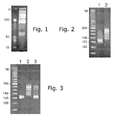

Classifications
-
- C—CHEMISTRY; METALLURGY
- C12—BIOCHEMISTRY; BEER; SPIRITS; WINE; VINEGAR; MICROBIOLOGY; ENZYMOLOGY; MUTATION OR GENETIC ENGINEERING
- C12Q—MEASURING OR TESTING PROCESSES INVOLVING ENZYMES, NUCLEIC ACIDS OR MICROORGANISMS; COMPOSITIONS OR TEST PAPERS THEREFOR; PROCESSES OF PREPARING SUCH COMPOSITIONS; CONDITION-RESPONSIVE CONTROL IN MICROBIOLOGICAL OR ENZYMOLOGICAL PROCESSES
- C12Q1/00—Measuring or testing processes involving enzymes, nucleic acids or microorganisms; Compositions therefor; Processes of preparing such compositions
- C12Q1/68—Measuring or testing processes involving enzymes, nucleic acids or microorganisms; Compositions therefor; Processes of preparing such compositions involving nucleic acids
- C12Q1/6876—Nucleic acid products used in the analysis of nucleic acids, e.g. primers or probes
- C12Q1/6883—Nucleic acid products used in the analysis of nucleic acids, e.g. primers or probes for diseases caused by alterations of genetic material
- C12Q1/6886—Nucleic acid products used in the analysis of nucleic acids, e.g. primers or probes for diseases caused by alterations of genetic material for cancer
-
- C—CHEMISTRY; METALLURGY
- C12—BIOCHEMISTRY; BEER; SPIRITS; WINE; VINEGAR; MICROBIOLOGY; ENZYMOLOGY; MUTATION OR GENETIC ENGINEERING
- C12Q—MEASURING OR TESTING PROCESSES INVOLVING ENZYMES, NUCLEIC ACIDS OR MICROORGANISMS; COMPOSITIONS OR TEST PAPERS THEREFOR; PROCESSES OF PREPARING SUCH COMPOSITIONS; CONDITION-RESPONSIVE CONTROL IN MICROBIOLOGICAL OR ENZYMOLOGICAL PROCESSES
- C12Q2600/00—Oligonucleotides characterized by their use
- C12Q2600/106—Pharmacogenomics, i.e. genetic variability in individual responses to drugs and drug metabolism
-
- C—CHEMISTRY; METALLURGY
- C12—BIOCHEMISTRY; BEER; SPIRITS; WINE; VINEGAR; MICROBIOLOGY; ENZYMOLOGY; MUTATION OR GENETIC ENGINEERING
- C12Q—MEASURING OR TESTING PROCESSES INVOLVING ENZYMES, NUCLEIC ACIDS OR MICROORGANISMS; COMPOSITIONS OR TEST PAPERS THEREFOR; PROCESSES OF PREPARING SUCH COMPOSITIONS; CONDITION-RESPONSIVE CONTROL IN MICROBIOLOGICAL OR ENZYMOLOGICAL PROCESSES
- C12Q2600/00—Oligonucleotides characterized by their use
- C12Q2600/178—Oligonucleotides characterized by their use miRNA, siRNA or ncRNA
Definitions
- the present invention provides compounds which comprise novel nucleobase sequences which correspond to previously unknown miRNA sequences associated with cancer.
- the compounds may be used in therapeutics or diagnostics.
- the invention provides methods for treatment of cancer, and methods for the detection and analysis of non-coding RNAs associated with cancer, such as breast cancer.
- the invention furthermore relates to collections of oligonucleotide probes for detection and analysis of non-coding RNAs associated with cancer, such as breast cancer.
- the present invention relates to the detection and analysis of target nucleotide sequences associated with cancer.
- the invention provides novel microRNAs, oligonucleotide probes which can detect the novel microRNAs, and methods employing the use of oligonucleotide probes that are useful for detecting and analysing target nucleotide sequences associated with cancer.
- MicroRNAs have rapidly emerged as an important class of short endogenous RNAs that act as post-transcriptional regulators of gene expression by base-pairing with their target mRNAs.
- the 19-25 nucleotide (nt) mature miRNAs are processed sequentially from longer hairpin transcripts by the RNAse III ribonucleases Drosha ( Lee, Y., et al., 2003. Nature 425: 415-419 .) and Dicer ( Hutvagner, G., et al., 2001. Science 293: 834-838 , Ketting, R.F., et al., 2001. Genes Dev. 15: 2654-2659 .).
- microRNA'nome is far smaller than the human transcriptome with the total number of microRNAs being approximately limited to between 800 to 1000. Therefore, a microRNA cancer signature can be predicted to include from 5 - 20 microRNAs, suggesting that microRNA based theranostics will be of limited complexity and far more robust than mRNA profiles.
- microRNA constitutes a new class of non-coding RNAs that plays a significant role in determining gene expression
- microRNAs are differentially expressed in human cancers and a series of recent publication show that microRNA classify human cancers; in some cases improvement over mRNA classification is observed.
- microRNA signatures that improve the classification of early diagnosed cancers.
- the microRNA signatures- following from the role of microRNAs in cancer - reveal the true cancerous potential of the tumor, and enable physicians to select the appropriate treatment.
- microRNA based cancer classification may significantly benefit patient care, because recurrence rate may be improved due to adequate treatment of traditionally classified low risk patients, and suitable therapy, such as adjuvant chemotherapy for breast cancer may be deselected for the large group of patients that do not benefit from it.
- microRNAs oligonucleotides which comprise nucleotide analogues, such as locked nucletic acids (LNAs).
- LNAs locked nucletic acids
- WO2005/098029 discloses a method using oligonucleotides for the detection, quantification, monitoring of expression of siRNA and/or miRNA. It is suggested that the method can be used for determining the differences between nucleic acid samples from e.g. a cancer patient.
- the Sanger Institute publishes known miRNA sequences in the miRBase database ( http://microrna.sanger.ac.uk/seguences/index.shtml ). To date there are 533 human siRNAs present in the miRBase database.
- WO2006/015312 discloses sets of genetic markers which can be correlated with a prognosis of breast cancer.
- the invention provides a compound which comprises a contiguous sequence of nucleobases of between 8 and 30 nucleobases in length, wherein the nucleobase sequence of the contiguous sequence corresponds to a contiguous nucleic acid or nucleobase sequence present in a nucleobase sequence selected from the group consisting of: SEQ ID No 1 and/or 2; SEQ ID No 3 and/or 4; SEQ ID No 5 and/or 6; SEQ ID No 7 and/or 8; SEQ ID No 9 and/or 10; SEQ ID No 11 and/or 12; SEQ ID No 13 and/or 14; SEQ ID No 15 and/or 16; SEQ ID No 17 and/or 18; SEQ ID No 19 and/or 20; SEQ ID No 21 and/or 22; SEQ ID No 23 and/or 24; SEQ ID No 25 and/or 26; SEQ ID No 27 and/or 28; SEQ ID No 29 and/or 30; SEQ ID No 31 and/or 32; SEQ ID No 33 and/or 34; SEQ
- target nucleotide(s)' or 'target sequence(s)' herein.
- Preferred groups of target sequences are according to the preferred groups or individual nucleobase sequences referred to herein.
- the invention also provides for new molecular markers for cancer, and the use of such markers in the methods according to the invention, and for use in the collection of probes and/or kits according to the invention.
- the invention also provides detection probes which comprise a continuous sequence of nucleobases according to the compound of the invention.
- the list is prepared to highlight pairs of sequences, the first being an odd number (e.g. SEQ ID NO 1), and the second being an even number (e.g. SEQ ID NO 2) - written as 'SEQ ID NO 1 and/or 2', in the above list.
- the odd number sequence in each pair corresponds to the mature miRNA sequence
- the even number corresponds to the pre-mature pre-miRNA sequence.
- This pairing of SEQ IDs is particularly important when considered the case where the compound of the invention is in the form of a detection probe, where pairs of detection probes (detection probe pairs) may be used to determine the level of a specific miRNA sequence present in the sample, compared to the level of the precursor form of that miRNA. This may provide useful diagnostic information, for example in cancer derived samples.
- the miRNAs and their corresponding pre-miRNAs in addition to related miRNA (and/or related pre-miRNAs) are shown in Table 3. It will be noted that for some miRNAs there are more than one possible pre-miRNA precursor, and in some cases, some pre-miRNAs may result in more than one mature miRNA.
- the detection probe pairs may be selected from one (or more) miRNA and one (or more) of the corresponding pre-miRNAs.
- Ligands means something, which binds.
- Ligands may comprise biotin and functional groups such as: aromatic groups (such as benzene, pyridine, naphtalene, anthracene, and phenanthrene), heteroaromatic groups (such as thiophene, furan, tetrahydrofuran, pyridine, dioxane, and pyrimidine), carboxylic acids, carboxylic acid esters, carboxylic acid halides, carboxylic acid azides, carboxylic acid hydrazides, sulfonic acids, sulfonic acid esters, sulfonic acid halides, semicarbazides, thiosemicarbazides, aldehydes, ketones, primary alcohols, secondary alcohols, tertiary alcohols, phenols, alkyl halides, thiols, disulphides, primary amines, secondary amines, tertiary amines, hydrazines,
- a cell includes a plurality of cells, including mixtures thereof.
- a nucleic acid molecule includes a plurality of nucleic acid molecules.
- Transcriptome refers to the complete collection of transcriptional units of the genome of any species. In addition to protein-coding mRNAs, it also represents non-coding RNAs, such as small nucleolar RNAs, siRNAs, microRNAs and antisense RNAs, which comprise important structural and regulatory roles in the cell.
- a “multi-probe library” or “library of multi-probes” comprises a plurality of multi- probes, such that the sum of the probes in the library are able to recognise a major proportion of a transcriptome, including the most abundant sequences, such that about 60%, about 70%, about 80%, about 85%, more preferably about 90%, and still more preferably 95%, of the target nucleic acids in the transcriptome, are detected by the probes.
- Sample refers to a sample of cells, or tissue or fluid isolated from an organism or organisms, including but not limited to, for example, skin, plasma, serum, spinal fluid, lymph fluid, synovial fluid, urine, tears, blood cells, organs, tumors, and also to samples of in vitro cell culture constituents (including but not limited to conditioned medium resulting from the growth of cells in cell culture medium, recombinant cells and cell components).
- Detection probes or “detection probe” or “detection probe sequence” refer to an oligonucleotide or oligonucleotide analogue, which oligonucleotide or oligonucleotide analogue comprises a recognition sequence complementary to a nucleotide target, such as an RNA (or DNA) target sequence. It is preferable that the detection probe(s) are oligonucleotides, preferably where said recognition sequence is substituted with high-affinity nucleotide analogues, e.g.
- LNA LNA
- oligonucleotides such as DNA oligonucleotides
- short target sequences e.g. mature miRNAs, stem-loop precursor miRNAs, pri-miRNAs, siRNAs or other non-coding RNAs as well as miRNA binding sites in their cognate mRNA targets, mRNAs, mRNA splice variants, RNA-edited mRNAs, antisense RNAs and small nucleolar RNAs (snRNA).
- miRNA refers to about 18-25 nt non-coding RNAs derived from endogenous genes. They are processed from longer (ca 75 nt) hairpin-like precursors termed pre-miRNAs. MicroRNAs assemble in complexes termed miRNPs and recognize their targets by antisense complementarity. If the microRNAs match 100% their target, i.e. the complementarity is complete, the target mRNA is cleaved, and the miRNA acts like a siRNA.
- the match is incomplete, i.e. the complementarity is partial, then the translation of the target mRNA is blocked.
- siRNAs refer to 21-25 nt RNAs derived from processing of linear double-stranded RNA.
- siRNAs assemble in complexes termed RISC (RNA-induced silencing complex) and target homologous RNA sequences for endonucleolytic cleavage.
- RISC RNA-induced silencing complex
- Synthetic siRNAs also recruit RISCs and are capable of cleaving homologous RNA sequences
- RNA interference refers to a phenomenon where double-stranded RNA homologous to a target mRNA leads to degradation of the targeted mRNA. More broadly defined as degradation of target mRNAs by homologous siRNAs.
- microRNA precursor or “miRNA precursor” or “pre-miRNA” or “premature miRNA” refer to polynucleotide sequences (approximately 70 nucleotides in length) that form hairpin-like structures having a loop region and a stem region.
- the stem region includes a duplex cre-ated by the pairing of opposite ends of the pre-miRNA polynucleotide sequence.
- the loop region connects the two halves of the stem region.
- the pre-miRNAs are transcribed as mono- or poly-cistronic, long, primary precursor transcripts (pri-miRNAs) that are then cleaved into individual pre-miRNAs by a nuclear RNAse III-like enzyme. Subsequently pre-miRNA hairpins are exported to the cytoplasm where they are processed by a second RNAse III-like enzyme into miRNAs.
- the target nucleic acid may be present in a premature miRNA sequence.
- the fragments from the opposing arm called the miRNA* (or "miRNA-star") sequences ( Lau et al, Science (2001) 294:858-862 ) are found in libraries of cloned miRNAs but typically at much lower frequency than are the miRNAs. For example, in an effort that identified over 3400 clones representing 80 C. elegans miRNAs, only 38 clones representing 14 miRNAs* were found. This approximately 100-fold difference in cloning frequency indicates that the miRNA:miRNA* duplex is generally short lived compared to the miRNA single strand ( Bartel et al, Cell (2004) 116:281-297 ).
- the target nucleic acid may be present in a miRNA* sequence.
- miRNA precursor loop sequence or "loop sequence of the miRNA precursor” or “loop region” of an miRNA precursor is the portion of an miRNA precursor that is not present in the stem region and that is not retained in the mature miRNA (or its complement) upon cleavage by a RNAse III-like enzyme.
- miRNA precursor stem sequence or “stem sequence of the miRNA precursor” or “stem region” of an miRNA precursor is the portion of an miRNA precursor created by the pairing of opposite ends of the pre-miRNA polynucleotide sequence, and in-cluding the portion of the miRNA precursor that will be retained in the "mature miRNA.”
- Recognition sequence refers to a nucleotide sequence that is complementary to a region within the target nucleotide sequence essential for sequence-specific hybridization between the target nucleotide sequence and the recognition sequence.
- nucleobase sequences which "correspond to” a SEQ ID therefore have between 8 and 30 contiguous nucleobases which form a sequence which is found with i) either the one or more of the SEQ ID(s), or ii) the reverse complement thereof.
- Nucleotide analogues are compared directly to their equivalent or corresponding natural nucleotides. Sequences which form the reverse complement of a SEQ ID are referred to as the complement sequence of the SEQ ID.
- the term complementary refers to fully or perfectly complementary.
- homologues in the context of 'homologues, variants and fragments thereof' in relation to detection probe sequences and specific detection probes, refers to any sequence which has at least 8 consecutive nucleotide residues (or nucleotide analogues), such as at least 10 consecutive residues (or nucleotide analogues), such as at least 14 consecutive nucleotides (or nucleotide analogues), in common with at least one of the sequences, allowing for no more than 1 mismatch per 8 nucleotides (or nucleotide analogues), preferably with no more than 1 mismatch or no mismatch.
- the term 'natural allelic variants' and the term 'allelic variants' encompasses both variants which although have a slightly different sequence (such as a homologue, fragment or variant), originate from the same chromosomal position, or the same position on an allelic chromosome, as the non-coding RNAs, and precursors thereof herein listed.
- the term 'natural allelic variants' and the term 'allelic variants' also encompasses mature non-coding RNAs encompasses, which may be differentially processed by the processing enzymes, as this may lead to variants of the same microRNAs having different lengths e.g. shortened by 1 or 2 nucleotides, despite originating from the same allelic chromosome position.
- label refers to any atom or molecule which can be used to provide a detectable (preferably quantifiable) signal, and which can be attached to a nucleic acid or protein. Labels may provide signals detectable by fluorescence, radioactivity, colorimetric, X-ray diffraction or absorption, magnetism, enzymatic activity, and the like.
- nucleic acid refers to primers, probes, oligomer fragments to be detected, oligomer controls and unlabeled blocking oligomers and shall be generic to polydeoxyribonucleotides (containing 2-deoxy-D-ribose), to polyribonucleotides (containing D-ribose), to any other type of polynucleotide which is an N glycoside of a purine or pyrimidine base, or modified purine or pyrimidine bases, and in one embodiment, nucleobases (a collective term used to describe both nucleotides and nucleotide analogues, such as LNA).
- nucleobases a collective term used to describe both nucleotides and nucleotide analogues, such as LNA
- nucleic acid refers only to the primary structure of the molecule. Thus, these terms include double- and single-stranded DNA, as well as double- and single stranded RNA.
- the oligonucleotide is comprised of a sequence of approximately at least 3 nucleotides, preferably at least about 6 nucleotides, and more preferably at least about 8 - 30 nucleotides corresponding to a region of the designated target nucleotide sequence. "Corresponding" means identical to or complementary to the designated sequence. The oligonucleotide is not necessarily physically derived from any existing or natural sequence but may be generated in any manner, including chemical synthesis, DNA replication, reverse transcription or a combination thereof.
- oligonucleotide or “nucleic acid” intend a polynucleotide of genomic DNA or RNA, cDNA, semi synthetic, or synthetic origin which, by virtue of its origin or manipulation: (1) is not associated with all or a portion of the polynucleotide with which it is associated in nature; and/or (2) is linked to a polynucleotide other than that to which it is linked in nature; and (3) is not found in nature.
- an end of an oligonucleotide is referred to as the "5' end” if its 5' phosphate is not linked to the 3' oxygen of a mononucleotide pentose ring and as the "3' end” if its 3' oxygen is not linked to a 5' phosphate of a subsequent mononucleotide pentose ring.
- a nucleic acid sequence even if internal to a larger oligonucleotide, also may be said to have a 5' and 3' ends.
- the 3' end of one oligonucleotide points toward the 5' end of the other; the former may be called the "upstream” oligonucleotide and the latter the "downstream” oligonucleotide.
- SBC nucleobases Selective Binding Complementary nucleobases, i.e. modified nucleobases that can make stable hydrogen bonds to their complementary nucleobases, but are unable to make stable hydrogen bonds to other SBC nucleobases.
- the SBC nucleobase A' can make a stable hydrogen bonded pair with its complementary unmodified nucleobase, T.
- the SBC nucleobase T' can make a stable hydrogen bonded pair with its complementary unmodified nucleobase, A.
- the SBC nucleobases A' and T' will form an unstable hydrogen bonded pair as compared to the base pairs A'-T and A-T'.
- a SBC nucleobase of C is designated C' and can make a stable hydrogen bonded pair with its complementary unmodified nucleobase G
- a SBC nucleobase of G is designated G' and can make a stable hydrogen bonded pair with its complementary unmodified nucleobase C
- C' and G' will form an unstable hydrogen bonded pair as compared to the base pairs C'-G and C-G'.
- a stable hydrogen bonded pair is obtained when 2 or more hydrogen bonds are formed e.g. the pair between A' and T, A and T', C and G', and C' and G.
- An unstable hydrogen bonded pair is obtained when 1 or no hydrogen bonds is formed e.g. the pair between A' and T', and C' and G'.
- SBC nucleobases are 2,6-diaminopurine (A', also called D) together with 2-thio-uracil (U', also called 2S U)(2-thio-4-oxo-pyrimidine) and 2-thio-thymine (T', also called 3S T)(2-thio-4-oxo-5-methyl-pyrimidine).
- A' 2,6-diaminopurine
- U' 2-thio-uracil
- T' 2-thio-thymine
- Figure 4 in PCT Publication No. WO 2004/024314 illustrates that the pairs A- 2S T and D-T have 2 or more than 2 hydrogen bonds whereas the D- 2S T pair forms a single (unstable) hydrogen bond.
- SBC nucleobases pyrrolo-[2,3-d]pyrimidine-2(3H)-one (C', also called PyrroloPyr) and hypoxanthine (G', also called I)(6-oxo-purine) are shown in Figure 4 in PCT Publication No. WO 2004/024314 where the pairs PyrroloPyr-G and C-I have 2 hydrogen bonds each whereas the PyrroloPyr-I pair forms a single hydrogen bond.
- SBC LNA oligomer refers to a "LNA oligomer” containing at least one LNA monomer where the nucleobase is a "SBC nucleobase”.
- LNA monomer with an SBC nucleobase is meant a “SBC LNA monomer”.
- SBC LNA oligomers include oligomers that besides the SBC LNA monomer(s) contain other modified or naturally occurring nucleotides or nucleosides.
- SBC monomer is meant a non-LNA monomer with a SBC nucleobase.
- isosequential oligonucleotide an oligonucleotide with the same sequence in a Watson-Crick sense as the corresponding modified oligonucleotide e.g. the sequences agTtcATg is equal to agTscD 2S Ug where s is equal to the SBC DNA monomer 2-thio-t or 2-thio-u, D is equal to the SBC LNA monomer LNA-D and 2S U is equal to the SBC LNA monomer LNA 2S U .
- nucleic acid sequence refers to an oligonucleotide which, when aligned with the nucleic acid sequence such that the 5' end of one sequence is paired with the 3' end of the other, is in "antiparallel association.”
- Bases not commonly found in natural nucleic acids may be included in the nucleic acids of the present invention include, for example, inosine and 7-deazaguanine. Complementarity may not be perfect; stable duplexes may contain mismatched base pairs or unmatched bases.
- nucleic acid technology can determine duplex stability empirically considering a number of variables including, for example, the length of the oligonucleotide, percent concentration of cytosine and guanine bases in the oligonucleotide, ionic strength, and incidence of mismatched base pairs.
- T m melting temperature
- nucleobase covers the naturally occurring nucleobases adenine (A), guanine (G), cytosine (C), thymine (T) and uracil (U) as well as non-naturally occurring nucleobases such as xanthine, diaminopurine, 8-oxo-N 6 -methyladenine, 7-deazaxanthine, 7-deazaguanine, N 4 ,N 4 -ethanocytosin, N 6 ,N 6 -ethano-2,6-diaminopurine, 5-methylcytosine, 5-(C 3 -C 6 )-alkynylcytosine, 5-fluorouracil, 5-bromouracil, pseudoisocytosine, 2-hydroxy-5-methyl-4-triazolopyridin, isocytosine, isoguanine, inosine and the "non-naturally occurring" nucleobases described in Benner et al., U
- nucleobase thus includes not only the known purine and pyrimidine heterocycles, but also heterocyclic analogues and tautomers thereof. Further naturally and non naturally occurring nucleobases include those disclosed in U.S. Patent No. 3,687,808 ; in chapter 15 by Sanghvi, in Antisense Research and Application, Ed. S. T. Crooke and B.
- nucleosidic base or “nucleobase analogue” is further intended to include heterocyclic compounds that can serve as like nucleosidic bases including certain "universal bases” that are not nucleosidic bases in the most classical sense but serve as nucleosidic bases.
- a universal base is 3-nitropyrrole or a 5-nitroindole.
- Other preferred compounds include pyrene and pyridyloxazole derivatives, pyrenyl, pyrenylmethylglycerol derivatives and the like.
- Other preferred universal bases include, pyrrole, diazole or triazole derivatives, including those universal bases known in the art.
- oligonucleotide By “oligonucleotide,” “oligomer,” or “oligo” is meant a successive chain of monomers (e.g., glycosides of heterocyclic bases) connected via internucleoside linkages.
- LNA LNA nucleoside or LNA nucleotide
- LNA oligomer e.g., an oligonucleotide or nucleic acid
- a nucleoside or nucleotide analogue that includes at least one LNA monomer.
- LNA monomers as disclosed in PCT Publication WO 99/14226 are in general particularly desirable modified nucleic acids for incorporation into an oligonucleotide of the invention. Additionally, the nucleic acids may be modified at either the 3' and/or 5' end by any type of modification known in the art.
- either or both ends may be capped with a protecting group, attached to a flexible linking group, attached to a reactive group to aid in attachment to the substrate surface, etc.
- Desirable LNA monomers and their method of synthesis also are disclosed in US 6,043,060 , US 6,268,490 , PCT Publications WO 01/07455 , WO 01/00641 , WO 98/39352 , WO 00/56746 , WO 00/56748 and WO 00/66604 as well as in the following papers: Morita et al., Bioorg. Med. Chem. Lett. 12(1):73-76, 2002 ; Hakansson et al., Bioorg. Med. Chem. Lett.
- LNA monomers also referred to as "oxy-LNA” are LNA monomers which include bicyclic compounds as disclosed in PCT Publication WO 03/020739 wherein the bridge between R 4' and R 2' as shown in formula (I) below together designate -CH 2 -O- or -CH 2 -CH 2 -O-.
- LNA modified oligonucleotide or "LNA substituted oligonucleotide” is meant a oligonucleotide comprising at least one LNA monomer of formula (I), described infra, having the below described illustrative examples of modifications: wherein X is selected from -O-, -S-, -N(R N )-, -C(R 6 R 6* )-, -O-C(R 7 R 7* )-, -C(R 6 R 6* )-O-, -S-C(R 7 R 7* )-, -C(R 6 R 6* )-S-, -N(R N* )-C(R 7 R 7* )-, -C(R 6 R 6* )-N(R N* )-, and -C(R 6 R 6* )-C(R 7 R 7* ).
- B is selected from a modified base as discussed above e.g. an optionally substituted carbocyclic aryl such as optionally substituted pyrene or optionally substituted pyrenylmethylglycerol, or an optionally substituted heteroalicylic or optionally substituted heteroaromatic such as optionally substituted pyridyloxazole, optionally substituted pyrrole, optionally substituted diazole or optionally substituted triazole moieties; hydrogen, hydroxy, optionally substituted C 1-4 -alkoxy, optionally substituted C 1-4 -alkyl, optionally substituted C 1-4 -acyloxy, nucleobases, DNA intercalators, photochemically active groups, thermochemically active groups, chelating groups, reporter groups, and ligands.
- an optionally substituted carbocyclic aryl such as optionally substituted pyrene or optionally substituted pyrenylmethylglycerol, or an optionally substituted heteroalicylic or optionally substituted heteroar
- P designates the radical position for an internucleoside linkage to a succeeding monomer, or a 5'-terminal group, such internucleoside linkage or 5'-terminal group optionally including the substituent R 5 .
- One of the substituents R 2 , R 2* , R 3 , and R 3* is a group P* which designates an internucleoside linkage to a preceding monomer, or a 2'/3'-terminal group.
- Each of the substituents R 1* , R 2 , R 2* , R 3 , R 4* , R 5 , R 5* , R 6 and R 6* , R 7 , and R 7* which are present and not involved in P, P * or the biradical(s), is independently selected from hydrogen, optionally substituted C 1-12 -alkyl, optionally substituted C 2-12 -alkenyl, optionally substituted C 2-12 -alkynyl, hydroxy, C 1-12 -alkoxy, C 2-12 -alkenyloxy, carboxy, C 1-12 -alkoxycarbonyl, C 1-12 -alkylcarbonyl, formyl, aryl, aryloxy-carbonyl, aryloxy, arylcarbonyl, heteroaryl, heteroaryloxy-carbonyl, heteroaryloxy, heteroarylcarbonyl, amino, mono- and di-(C 1-6 -alkyl)amino, carbamoyl, mono-
- Exemplary 5', 3', and/or 2' terminal groups include -H, -OH, halo (e.g., chloro, fluoro, iodo, or bromo), optionally substituted aryl, (e.g., phenyl or benzyl), alkyl (e.g., methyl or ethyl), alkoxy (e.g., methoxy), acyl (e.g.
- acetyl or benzoyl aroyl, aralkyl, hydroxy, hydroxyalkyl, alkoxy, aryloxy, aralkoxy, nitro, cyano, carboxy, alkoxycarbonyl, aryloxycarbonyl, aralkoxycarbonyl, acylamino, aroylamino, alkylsulfonyl, arylsulfonyl, heteroarylsulfonyl, alkylsulfinyl, arylsulfinyl, heteroarylsulfinyl, alkylthio, arylthio, heteroarylthio, aralkylthio, heteroaralkylthio, amidino, amino, carbamoyl, sulfamoyl, alkene, alkyne, protecting groups (e.g., silyl, 4,4'-dimethoxytrityl, monomethoxytrityl, or tr
- references herein to a nucleic acid unit, nucleic acid residue, LNA monomer, or similar term are inclusive of both individual nucleoside units and nucleotide units and nucleoside units and nucleotide units within an oligonucleotide.
- a “modified base” or other similar terms refer to a composition (e.g., a non-naturally occurring nucleobase or nucleosidic base), which can pair with a natural base (e.g., adenine, guanine, cytosine, uracil, and/or thymine) and/or can pair with a non-naturally occurring nucleobase or nucleosidic base.
- the modified base provides a T m differential of 15, 12, 10, 8, 6, 4, or 2°C or less as described herein.
- Exemplary modified bases are described in EP 1 072 679 and WO 97/12896 .
- chemical moiety refers to a part of a molecule.
- Modified by a chemical moiety thus refer to a modification of the standard molecular structure by inclusion of an unusual chemical structure. The attachment of said structure can be covalent or non-covalent.
- inclusion of a chemical moiety in an oligonucleotide probe thus refers to attachment of a molecular structure.
- chemical moiety include but are not limited to covalently and/or non-covalently bound minor groove binders (MGB) and/or intercalating nucleic acids (INA) selected from a group consisting of asymmetric cyanine dyes, DAPI, SYBR Green I, SYBR Green II, SYBR Gold, PicoGreen, thiazole orange, Hoechst 33342, Ethidium Bromide, 1-O-(1-pyrenylmethyl)glycerol and Hoechst 33258.
- MGB covalently and/or non-covalently bound minor groove binders
- INA intercalating nucleic acids
- Other chemical moieties include the modified nucleobases, nucleosidic bases or LNA modified oligonucleotides.
- Oligonucleotide analogue refers to a nucleic acid binding molecule capable of recognizing a particular target nucleotide sequence.
- a particular oligonucleotide analogue is peptide nucleic acid (PNA) in which the sugar phosphate backbone of an oligonucleotide is replaced by a protein like backbone.
- PNA peptide nucleic acid
- nucleobases are attached to the uncharged polyamide backbone yielding a chimeric pseudopeptide-nucleic acid structure, which is homomorphous to nucleic acid forms.
- High affinity nucleotide analogue or “affinity-enhancing nucleotide analogue” refers to a non-naturally occurring nucleotide analogue that increases the "binding affinity" of an oligonucleotide probe to its complementary recognition sequence when substituted with at least one such high-affinity nucleotide analogue.
- a probe with an increased "binding affinity" for a recognition sequence compared to a probe which comprises the same sequence but does not comprise a stabilizing nucleotide refers to a probe for which the association constant (K a ) of the probe recognition segment is higher than the association constant of the complementary strands of a double-stranded molecule.
- the association constant of the probe recognition segment is higher than the dissociation constant (K d ) of the complementary strand of the recognition sequence in the target sequence in a double stranded molecule.
- Monomers are referred to as being "complementary” if they contain nucleobases that can form hydrogen bonds according to Watson-Crick base-pairing rules (e.g. G with C, A with T or A with U) or other hydrogen bonding motifs such as for example diaminopurine with T, 5-methyl C with G, 2-thiothymidine with A, inosine with C, pseudoisocytosine with G, etc.
- Watson-Crick base-pairing rules e.g. G with C, A with T or A with U
- other hydrogen bonding motifs such as for example diaminopurine with T, 5-methyl C with G, 2-thiothymidine with A, inosine with C, pseudoisocytosine with G, etc.
- the term "succeeding monomer” relates to the neighbouring monomer in the 5'-terminal direction and the “preceding monomer” relates to the neighbouring monomer in the 3'-terminal direction.
- target nucleic acid or “target ribonucleic acid” refers to any relevant nucleic acid of a single specific sequence, e. g., a biological nucleic acid, e. g., derived from a patient, an animal (a human or non-human animal), a cell, a tissue, an organism, etc..
- the target nucleic acid is derived from a patient, e.g., a human patient.
- the invention optionally further includes selecting a treatment, diagnosing a disease, or diagnosing a genetic predisposition to a disease, based upon detection of the target nucleic acid.
- the target may be a miRNA, such as the miRNA or pre-miRNA sequences disclosed herein, such as in the context of the target of a detection probe
- the target is also used in the context as the target of the miRNA, i.e. the mRNA whose expression is regulated by the miRNA.
- Table 11 includes human genes whose mRNAs are targeted by the miRNAs disclosed herein.
- Target sequence refers to a specific nucleic acid sequence within any target nucleic acid.
- stringent conditions is the “stringency” which occurs within a range from about T m -5° C. (5° C. below the melting temperature (T m ) of the probe) to about 20° C. to 25° C. below T m .
- T m melting temperature
- the stringency of hybridization may be altered in order to identify or detect identical or related polynucleotide sequences.
- Hybridization techniques are generally described in Nucleic Acid Hybridization, A Practical Approach, Ed. Hames, B. D. and Higgins, S. J., IRL Press, 1985 ; Gall and Pardue, Proc. Natl. Acad. Sci., USA 63: 378-383, 1969 ; and John, et al. Nature 223: 582-587, 1969 .
- the term "specifically hybridise” is determined by whether the oligonucleotide or compound of the invention hybridises to the target nucleic acid sequence (e.g. a SEQ selected from SEQ ID NO 1 - 408) under stringent conditions.
- the target nucleic acid sequence e.g. a SEQ selected from SEQ ID NO 1 - 408 under stringent conditions.
- nucleobase sequence and “contiguous nucleobase sequence” are used interchangeably.
- the invention provides 558 new microRNA markers which have not previously been recognised as miRNAs and/or indicated in cancer.
- the 558 miRNAs were identified in cancer tissue and are considered to be useful indicators of cancer.
- the present invention provides a detailed expression analysis of both the pre- and mature forms of the miRNAs in various cancers and corresponding healthy tissues, and as such the present invention provides an extensive collection of miRNA sequences which, when in the form of detection probes, can be used, individually, or in the form of collections for cancer diagnostics, and for determining the origin of secondary cancers.
- the new microRNA markers include mature miRNAs and the premature (pre-processed) miRNAs from which they originate.
- the odd numbered SEQ IDs from 1 to 407 are novel mature miRNAs.
- the even numbers from 2 to 408 are the corresponding pre-mature miRNAs.
- SEQ ID Nos 411 - 558 the miRNAs and their corresponding pre-miRNAs, in addition to related miRNA (and/or related pre-miRNAs) are shown in Table 3.
- the invention provides for a nucleic acid or nucleobase sequence selected from the group consisting of SEQ ID NO 1 - 558 and/or a compound which comprises a contiguous sequence of nucleobases of between 8 and 30 nucleobases in length, wherein the nucleobase sequence of the contiguous sequence corresponds to a contiguous nucleic acid sequence present in said SEQ ID selected from the group consisting of SEQ ID 1 - 558.
- the contiguous nucleobase sequence (which may be a nuclei acid sequence) is complementary to the (corresponding) region of said SEQ ID.
- the seqeunce of nucleobases of the contiguous nucleobase sequence (which may be a nuclei acid sequence) is found within the (corresponding) region of said SEQ ID.
- corresponding to may refer to a complementary sequence (preferably 100% complementary) or that the sequence is found within said sequence (i.e. homologous, preferably 100% homologus).
- the SEQ ID is a mature miRNA sequence, i.e. selected from the odd numbered SEQ IDs present in the group consisting of SEQ IDs No 1 - 407 and/or column 1 of table 3.
- the SEQ ID is a mature miRNA sequence, i.e. selected from the group of miRNAs present in the group consisting of the mature miRNAs listed in Table 5.
- the SEQ ID is a premature miRNA sequence, i.e. selected from the group of pre-miRNAs listed in Table 4.
- the SEQ ID is a pre-mature miRNA sequence, i.e. selected from the even numbered SEQ IDs present in the group consisting of SEQ IDs No 2 - 408 and/or column 2 of table 3.
- the invention provides for a nucleic acid or nucleobase sequence SEQ ID No 1 or 2 and/or a compound which comprises a contiguous sequence of nucleobases of between 8 and 30 nucleobases in length, wherein the nucleobase sequence of the contiguous sequence corresponds to a contiguous nucleic acid or nucleobases sequence present in said SEQ IDs.
- the invention provides for a nucleic acid or nucleobase sequence SEQ ID No 3 or 4 and/or a compound which comprises a contiguous sequence of nucleobases of between 8 and 30 nucleobases in length, wherein the nucleobase sequence of the contiguous sequence corresponds to a contiguous nucleic acid or nucleobases sequence present in said SEQ IDs.
- the invention provides for a nucleic acid or nucleobase sequence SEQ ID No 5 or 6 and/or a compound which comprises a contiguous sequence of nucleobases of between 8 and 30 nucleobases in length, wherein the nucleobase sequence of the contiguous sequence corresponds to a contiguous nucleic acid or nucleobases sequence present in said SEQ IDs.
- the invention provides for a nucleic acid or nucleobase sequence SEQ ID No 7 or 8 and/or a compound which comprises a contiguous sequence of nucleobases of between 8 and 30 nucleobases in length, wherein the nucleobase sequence of the contiguous sequence corresponds to a contiguous nucleic acid or nucleobases sequence present in said SEQ IDs.
- the invention provides for a nucleic acid or nucleobase sequence SEQ ID No 9 or 10 and/or a compound which comprises a contiguous sequence of nucleobases of between 8 and 30 nucleobases in length, wherein the nucleobase sequence of the contiguous sequence corresponds to a contiguous nucleic acid or nucleobases sequence present in said SEQ IDs.
- the invention provides for a nucleic acid or nucleobase sequence SEQ ID No 11 or 12 and/or a compound which comprises a contiguous sequence of nucleobases of between 8 and 30 nucleobases in length, wherein the nucleobase sequence of the contiguous sequence corresponds to a contiguous nucleic acid or nucleobases sequence present in said SEQ IDs.
- the invention provides for a nucleic acid or nucleobase sequence SEQ ID No 13 or 14 and/or a compound which comprises a contiguous sequence of nucleobases of between 8 and 30 nucleobases in length, wherein the nucleobase sequence of the contiguous sequence corresponds to a contiguous nucleic acid or nucleobases sequence present in said SEQ IDs.
- the invention provides for a nucleic acid or nucleobase sequence SEQ ID No 15 or 16 and/or a compound which comprises a contiguous sequence of nucleobases of between 8 and 30 nucleobases in length, wherein the nucleobase sequence of the contiguous sequence corresponds to a contiguous nucleic acid or nucleobases sequence present in said SEQ IDs.
- the invention provides for a nucleic acid or nucleobase sequence SEQ ID No 17 or 18 and/or a compound which comprises a contiguous sequence of nucleobases of between 8 and 30 nucleobases in length, wherein the nucleobase sequence of the contiguous sequence corresponds to a contiguous nucleic acid or nucleobases sequence present in said SEQ IDs.
- the invention provides for a nucleic acid or nucleobase sequence SEQ ID No 19 or 20 and/or a compound which comprises a contiguous sequence of nucleobases of between 8 and 30 nucleobases in length, wherein the nucleobase sequence of the contiguous sequence corresponds to a contiguous nucleic acid or nucleobases sequence present in said SEQ IDs.
- the invention provides for a nucleic acid or nucleobase sequence SEQ ID No 21 or 22 and/or a compound which comprises a contiguous sequence of nucleobases of between 8 and 30 nucleobases in length, wherein the nucleobase sequence of the contiguous sequence corresponds to a contiguous nucleic acid or nucleobases sequence present in said SEQ IDs.
- the invention provides for a nucleic acid or nucleobase sequence SEQ ID No 23 or 24 and/or a compound which comprises a contiguous sequence of nucleobases of between 8 and 30 nucleobases in length, wherein the nucleobase sequence of the contiguous sequence corresponds to a contiguous nucleic acid or nucleobases sequence present in said SEQ IDs.
- the invention provides for a nucleic acid or nucleobase sequence SEQ ID No 25 or 26 and/or a compound which comprises a contiguous sequence of nucleobases of between 8 and 30 nucleobases in length, wherein the nucleobase sequence of the contiguous sequence corresponds to a contiguous nucleic acid or nucleobases sequence present in said SEQ IDs.
- the invention provides for a nucleic acid or nucleobase sequence SEQ ID No 27 or 28 and/or a compound which comprises a contiguous sequence of nucleobases of between 8 and 30 nucleobases in length, wherein the nucleobase sequence of the contiguous sequence corresponds to a contiguous nucleic acid or nucleobases sequence present in said SEQ IDs.
- the invention provides for a nucleic acid or nucleobase sequence SEQ ID No 29 or 30 and/or a compound which comprises a contiguous sequence of nucleobases of between 8 and 30 nucleobases in length, wherein the nucleobase sequence of the contiguous sequence corresponds to a contiguous nucleic acid or nucleobases sequence present in said SEQ IDs.
- the invention provides for a nucleic acid or nucleobase sequence SEQ ID No 31 or 32 and/or a compound which comprises a contiguous sequence of nucleobases of between 8 and 30 nucleobases in length, wherein the nucleobase sequence of the contiguous sequence corresponds to a contiguous nucleic acid or nucleobases sequence present in said SEQ IDs.
- the invention provides for a nucleic acid or nucleobase sequence SEQ ID No 33 or 34 and/or a compound which comprises a contiguous sequence of nucleobases of between 8 and 30 nucleobases in length, wherein the nucleobase sequence of the contiguous sequence corresponds to a contiguous nucleic acid or nucleobases sequence present in said SEQ IDs.
- the invention provides for a nucleic acid or nucleobase sequence SEQ ID No 35 or 36 and/or a compound which comprises a contiguous sequence of nucleobases of between 8 and 30 nucleobases in length, wherein the nucleobase sequence of the contiguous sequence corresponds to a contiguous nucleic acid or nucleobases sequence present in said SEQ IDs.
- the invention provides for a nucleic acid or nucleobase sequence SEQ ID No 37 or 38 and/or a compound which comprises a contiguous sequence of nucleobases of between 8 and 30 nucleobases in length, wherein the nucleobase sequence of the contiguous sequence corresponds to a contiguous nucleic acid or nucleobases sequence present in said SEQ IDs.
- the invention provides for a nucleic acid or nucleobase sequence SEQ ID No 39 or 40 and/or a compound which comprises a contiguous sequence of nucleobases of between 8 and 30 nucleobases in length, wherein the nucleobase sequence of the contiguous sequence corresponds to a contiguous nucleic acid or nucleobases sequence present in said SEQ IDs.
- the invention provides for a nucleic acid or nucleobase sequence SEQ ID No 41 or 42 and/or a compound which comprises a contiguous sequence of nucleobases of between 8 and 30 nucleobases in length, wherein the nucleobase sequence of the contiguous sequence corresponds to a contiguous nucleic acid or nucleobases sequence present in said SEQ IDs.
- the invention provides for a nucleic acid or nucleobase sequence SEQ ID No 43 or 44 and/or a compound which comprises a contiguous sequence of nucleobases of between 8 and 30 nucleobases in length, wherein the nucleobase sequence of the contiguous sequence corresponds to a contiguous nucleic acid or nucleobases sequence present in said SEQ IDs.
- the invention provides for a nucleic acid or nucleobase sequence SEQ ID No 45 or 46 and/or a compound which comprises a contiguous sequence of nucleobases of between 8 and 30 nucleobases in length, wherein the nucleobase sequence of the contiguous sequence corresponds to a contiguous nucleic acid or nucleobases sequence present in said SEQ IDs.
- the invention provides for a nucleic acid or nucleobase sequence SEQ ID No 47 or 48 and/or a compound which comprises a contiguous sequence of nucleobases of between 8 and 30 nucleobases in length, wherein the nucleobase sequence of the contiguous sequence corresponds to a contiguous nucleic acid or nucleobases sequence present in said SEQ IDs.
- the invention provides for a nucleic acid or nucleobase sequence SEQ ID No 49 or 50 and/or a compound which comprises a contiguous sequence of nucleobases of between 8 and 30 nucleobases in length, wherein the nucleobase sequence of the contiguous sequence corresponds to a contiguous nucleic acid or nucleobases sequence present in said SEQ IDs.
- the invention provides for a nucleic acid or nucleobase sequence SEQ ID No 51 or 52 and/or a compound which comprises a contiguous sequence of nucleobases of between 8 and 30 nucleobases in length, wherein the nucleobase sequence of the contiguous sequence corresponds to a contiguous nucleic acid or nucleobases sequence present in said SEQ IDs.
- the invention provides for a nucleic acid or nucleobase sequence SEQ ID No 53 or 54 and/or a compound which comprises a contiguous sequence of nucleobases of between 8 and 30 nucleobases in length, wherein the nucleobase sequence of the contiguous sequence corresponds to a contiguous nucleic acid or nucleobases sequence present in said SEQ IDs.
- the invention provides for a nucleic acid or nucleobase sequence SEQ ID No 55 or 56 and/or a compound which comprises a contiguous sequence of nucleobases of between 8 and 30 nucleobases in length, wherein the nucleobase sequence of the contiguous sequence corresponds to a contiguous nucleic acid or nucleobases sequence present in said SEQ IDs.
- the invention provides for a nucleic acid or nucleobase sequence SEQ ID No 57 or 58 and/or a compound which comprises a contiguous sequence of nucleobases of between 8 and 30 nucleobases in length, wherein the nucleobase sequence of the contiguous sequence corresponds to a contiguous nucleic acid or nucleobases sequence present in said SEQ IDs.
- the invention provides for a nucleic acid or nucleobase sequence SEQ ID No 59 or 60 and/or a compound which comprises a contiguous sequence of nucleobases of between 8 and 30 nucleobases in length, wherein the nucleobase sequence of the contiguous sequence corresponds to a contiguous nucleic acid or nucleobases sequence present in said SEQ IDs.
- the invention provides for a nucleic acid or nucleobase sequence SEQ ID No 61 or 62 and/or a compound which comprises a contiguous sequence of nucleobases of between 8 and 30 nucleobases in length, wherein the nucleobase sequence of the contiguous sequence corresponds to a contiguous nucleic acid or nucleobases sequence present in said SEQ IDs.
- the invention provides for a nucleic acid or nucleobase sequence SEQ ID No 63 or 64 and/or a compound which comprises a contiguous sequence of nucleobases of between 8 and 30 nucleobases in length, wherein the nucleobase sequence of the contiguous sequence corresponds to a contiguous nucleic acid or nucleobases sequence present in said SEQ IDs.
- the invention provides for a nucleic acid or nucleobase sequence SEQ ID No 65 or 66 and/or a compound which comprises a contiguous sequence of nucleobases of between 8 and 30 nucleobases in length, wherein the nucleobase sequence of the contiguous sequence corresponds to a contiguous nucleic acid or nucleobases sequence present in said SEQ IDs.
- the invention provides for a nucleic acid or nucleobase sequence SEQ ID No 67 or 68 and/or a compound which comprises a contiguous sequence of nucleobases of between 8 and 30 nucleobases in length, wherein the nucleobase sequence of the contiguous sequence corresponds to a contiguous nucleic acid or nucleobases sequence present in said SEQ IDs.
- the invention provides for a nucleic acid or nucleobase sequence SEQ ID No 69 or 70 and/or a compound which comprises a contiguous sequence of nucleobases of between 8 and 30 nucleobases in length, wherein the nucleobase sequence of the contiguous sequence corresponds to a contiguous nucleic acid or nucleobases sequence present in said SEQ IDs.
- the invention provides for a nucleic acid or nucleobase sequence SEQ ID No 71 or 72 and/or a compound which comprises a contiguous sequence of nucleobases of between 8 and 30 nucleobases in length, wherein the nucleobase sequence of the contiguous sequence corresponds to a contiguous nucleic acid or nucleobases sequence present in said SEQ IDs.
- the invention provides for a nucleic acid or nucleobase sequence SEQ ID No 73 or 74 and/or a compound which comprises a contiguous sequence of nucleobases of between 8 and 30 nucleobases in length, wherein the nucleobase sequence of the contiguous sequence corresponds to a contiguous nucleic acid or nucleobases sequence present in said SEQ IDs.
- the invention provides for a nucleic acid or nucleobase sequence SEQ ID No 75 or 76 and/or a compound which comprises a contiguous sequence of nucleobases of between 8 and 30 nucleobases in length, wherein the nucleobase sequence of the contiguous sequence corresponds to a contiguous nucleic acid or nucleobases sequence present in said SEQ IDs.
- the invention provides for a nucleic acid or nucleobase sequence SEQ ID No 77 or 78 and/or a compound which comprises a contiguous sequence of nucleobases of between 8 and 30 nucleobases in length, wherein the nucleobase sequence of the contiguous sequence corresponds to a contiguous nucleic acid or nucleobases sequence present in said SEQ IDs.
- the invention provides for a nucleic acid or nucleobase sequence SEQ ID No 79 or 80 and/or a compound which comprises a contiguous sequence of nucleobases of between 8 and 30 nucleobases in length, wherein the nucleobase sequence of the contiguous sequence corresponds to a contiguous nucleic acid or nucleobases sequence present in said SEQ IDs.
- the invention provides for a nucleic acid or nucleobase sequence SEQ ID No 81 or 82 and/or a compound which comprises a contiguous sequence of nucleobases of between 8 and 30 nucleobases in length, wherein the nucleobase sequence of the contiguous sequence corresponds to a contiguous nucleic acid or nucleobases sequence present in said SEQ IDs.
- the invention provides for a nucleic acid or nucleobase sequence SEQ ID No 83 or 84 and/or a compound which comprises a contiguous sequence of nucleobases of between 8 and 30 nucleobases in length, wherein the nucleobase sequence of the contiguous sequence corresponds to a contiguous nucleic acid or nucleobases sequence present in said SEQ IDs.
- the invention provides for a nucleic acid or nucleobase sequence SEQ ID No 85 or 86 and/or a compound which comprises a contiguous sequence of nucleobases of between 8 and 30 nucleobases in length, wherein the nucleobase sequence of the contiguous sequence corresponds to a contiguous nucleic acid or nucleobases sequence present in said SEQ IDs.
- the invention provides for a nucleic acid or nucleobase sequence SEQ ID No 87 or 88 and/or a compound which comprises a contiguous sequence of nucleobases of between 8 and 30 nucleobases in length, wherein the nucleobase sequence of the contiguous sequence corresponds to a contiguous nucleic acid or nucleobases sequence present in said SEQ IDs.
- the invention provides for a nucleic acid or nucleobase sequence SEQ ID No 89 or 90 and/or a compound which comprises a contiguous sequence of nucleobases of between 8 and 30 nucleobases in length, wherein the nucleobase sequence of the contiguous sequence corresponds to a contiguous nucleic acid or nucleobases sequence present in said SEQ IDs.
- the invention provides for a nucleic acid or nucleobase sequence SEQ ID No 91 or 92 and/or a compound which comprises a contiguous sequence of nucleobases of between 8 and 30 nucleobases in length, wherein the nucleobase sequence of the contiguous sequence corresponds to a contiguous nucleic acid or nucleobases sequence present in said SEQ IDs.
- the invention provides for a nucleic acid or nucleobase sequence SEQ ID No 93 or 94 and/or a compound which comprises a contiguous sequence of nucleobases of between 8 and 30 nucleobases in length, wherein the nucleobase sequence of the contiguous sequence corresponds to a contiguous nucleic acid or nucleobases sequence present in said SEQ IDs.
- the invention provides for a nucleic acid or nucleobase sequence SEQ ID No 95 or 96 and/or a compound which comprises a contiguous sequence of nucleobases of between 8 and 30 nucleobases in length, wherein the nucleobase sequence of the contiguous sequence corresponds to a contiguous nucleic acid or nucleobases sequence present in said SEQ IDs.
- the invention provides for a nucleic acid or nucleobase sequence SEQ ID No 97 or 98 and/or a compound which comprises a contiguous sequence of nucleobases of between 8 and 30 nucleobases in length, wherein the nucleobase sequence of the contiguous sequence corresponds to a contiguous nucleic acid or nucleobases sequence present in said SEQ IDs.
- the invention provides for a nucleic acid or nucleobase sequence SEQ ID No 99 or 100 and/or a compound which comprises a contiguous sequence of nucleobases of between 8 and 30 nucleobases in length, wherein the nucleobase sequence of the contiguous sequence corresponds to a contiguous nucleic acid or nucleobases sequence present in said SEQ IDs.
- the invention provides for a nucleic acid or nucleobase sequence SEQ ID No 101 or 102 and/or a compound which comprises a contiguous sequence of nucleobases of between 8 and 30 nucleobases in length, wherein the nucleobase sequence of the contiguous sequence corresponds to a contiguous nucleic acid or nucleobases sequence present in said SEQ IDs.
- the invention provides for a nucleic acid or nucleobase sequence SEQ ID No 103 or 104 and/or a compound which comprises a contiguous sequence of nucleobases of between 8 and 30 nucleobases in length, wherein the nucleobase sequence of the contiguous sequence corresponds to a contiguous nucleic acid or nucleobases sequence present in said SEQ IDs.
- the invention provides for a nucleic acid or nucleobase sequence SEQ ID No 105 or 106 and/or a compound which comprises a contiguous sequence of nucleobases of between 8 and 30 nucleobases in length, wherein the nucleobase sequence of the contiguous sequence corresponds to a contiguous nucleic acid or nucleobases sequence present in said SEQ IDs.
- the invention provides for a nucleic acid or nucleobase sequence SEQ ID No 107 or 108 and/or a compound which comprises a contiguous sequence of nucleobases of between 8 and 30 nucleobases in length, wherein the nucleobase sequence of the contiguous sequence corresponds to a contiguous nucleic acid or nucleobases sequence present in said SEQ IDs.
- the invention provides for a nucleic acid or nucleobase sequence SEQ ID No 109 or 110 and/or a compound which comprises a contiguous sequence of nucleobases of between 8 and 30 nucleobases in length, wherein the nucleobase sequence of the contiguous sequence corresponds to a contiguous nucleic acid or nucleobases sequence present in said SEQ IDs.
- the invention provides for a nucleic acid or nucleobase sequence SEQ ID No 111 or 112 and/or a compound which comprises a contiguous sequence of nucleobases of between 8 and 30 nucleobases in length, wherein the nucleobase sequence of the contiguous sequence corresponds to a contiguous nucleic acid or nucleobases sequence present in said SEQ IDs.
- the invention provides for a nucleic acid or nucleobase sequence SEQ ID No 113 or 114 and/or a compound which comprises a contiguous sequence of nucleobases of between 8 and 30 nucleobases in length, wherein the nucleobase sequence of the contiguous sequence corresponds to a contiguous nucleic acid or nucleobases sequence present in said SEQ IDs.
- the invention provides for a nucleic acid or nucleobase sequence SEQ ID No 115 or 116 and/or a compound which comprises a contiguous sequence of nucleobases of between 8 and 30 nucleobases in length, wherein the nucleobase sequence of the contiguous sequence corresponds to a contiguous nucleic acid or nucleobases sequence present in said SEQ IDs.
- the invention provides for a nucleic acid or nucleobase sequence SEQ ID No 117 or 118 and/or a compound which comprises a contiguous sequence of nucleobases of between 8 and 30 nucleobases in length, wherein the nucleobase sequence of the contiguous sequence corresponds to a contiguous nucleic acid or nucleobases sequence present in said SEQ IDs.
- the invention provides for a nucleic acid or nucleobase sequence SEQ ID No 119 or 120 and/or a compound which comprises a contiguous sequence of nucleobases of between 8 and 30 nucleobases in length, wherein the nucleobase sequence of the contiguous sequence corresponds to a contiguous nucleic acid or nucleobases sequence present in said SEQ IDs.
- the invention provides for a nucleic acid or nucleobase sequence SEQ ID No 121 or 122 and/or a compound which comprises a contiguous sequence of nucleobases of between 8 and 30 nucleobases in length, wherein the nucleobase sequence of the contiguous sequence corresponds to a contiguous nucleic acid or nucleobases sequence present in said SEQ IDs.
- the invention provides for a nucleic acid or nucleobase sequence SEQ ID No 123 or 124 and/or a compound which comprises a contiguous sequence of nucleobases of between 8 and 30 nucleobases in length, wherein the nucleobase sequence of the contiguous sequence corresponds to a contiguous nucleic acid or nucleobases sequence present in said SEQ IDs.
- the invention provides for a nucleic acid or nucleobase sequence SEQ ID No 125 or 126 and/or a compound which comprises a contiguous sequence of nucleobases of between 8 and 30 nucleobases in length, wherein the nucleobase sequence of the contiguous sequence corresponds to a contiguous nucleic acid or nucleobases sequence present in said SEQ IDs.
- the invention provides for a nucleic acid or nucleobase sequence SEQ ID No 127 or 128 and/or a compound which comprises a contiguous sequence of nucleobases of between 8 and 30 nucleobases in length, wherein the nucleobase sequence of the contiguous sequence corresponds to a contiguous nucleic acid or nucleobases sequence present in said SEQ IDs.
- the invention provides for a nucleic acid or nucleobase sequence SEQ ID No 129 or 130 and/or a compound which comprises a contiguous sequence of nucleobases of between 8 and 30 nucleobases in length, wherein the nucleobase sequence of the contiguous sequence corresponds to a contiguous nucleic acid or nucleobases sequence present in said SEQ IDs.
- the invention provides for a nucleic acid or nucleobase sequence SEQ ID No 131 or 132 and/or a compound which comprises a contiguous sequence of nucleobases of between 8 and 30 nucleobases in length, wherein the nucleobase sequence of the contiguous sequence corresponds to a contiguous nucleic acid or nucleobases sequence present in said SEQ IDs.
- the invention provides for a nucleic acid or nucleobase sequence SEQ ID No 133 or 134 and/or a compound which comprises a contiguous sequence of nucleobases of between 8 and 30 nucleobases in length, wherein the nucleobase sequence of the contiguous sequence corresponds to a contiguous nucleic acid or nucleobases sequence present in said SEQ IDs.
- the invention provides for a nucleic acid or nucleobase sequence SEQ ID No 135 or 136 and/or a compound which comprises a contiguous sequence of nucleobases of between 8 and 30 nucleobases in length, wherein the nucleobase sequence of the contiguous sequence corresponds to a contiguous nucleic acid or nucleobases sequence present in said SEQ IDs.
- the invention provides for a nucleic acid or nucleobase sequence SEQ ID No 137 or 138 and/or a compound which comprises a contiguous sequence of nucleobases of between 8 and 30 nucleobases in length, wherein the nucleobase sequence of the contiguous sequence corresponds to a contiguous nucleic acid or nucleobases sequence present in said SEQ IDs.
- the invention provides for a nucleic acid or nucleobase sequence SEQ ID No 139 or 140 and/or a compound which comprises a contiguous sequence of nucleobases of between 8 and 30 nucleobases in length, wherein the nucleobase sequence of the contiguous sequence corresponds to a contiguous nucleic acid or nucleobases sequence present in said SEQ IDs.
- the invention provides for a nucleic acid or nucleobase sequence SEQ ID No 141 or 142 and/or a compound which comprises a contiguous sequence of nucleobases of between 8 and 30 nucleobases in length, wherein the nucleobase sequence of the contiguous sequence corresponds to a contiguous nucleic acid or nucleobases sequence present in said SEQ IDs.
- the invention provides for a nucleic acid or nucleobase sequence SEQ ID No 143 or 144 and/or a compound which comprises a contiguous sequence of nucleobases of between 8 and 30 nucleobases in length, wherein the nucleobase sequence of the contiguous sequence corresponds to a contiguous nucleic acid or nucleobases sequence present in said SEQ IDs.
- the invention provides for a nucleic acid or nucleobase sequence SEQ ID No 145 or 146 and/or a compound which comprises a contiguous sequence of nucleobases of between 8 and 30 nucleobases in length, wherein the nucleobase sequence of the contiguous sequence corresponds to a contiguous nucleic acid or nucleobases sequence present in said SEQ IDs.
- the invention provides for a nucleic acid or nucleobase sequence SEQ ID No 147 or 148 and/or a compound which comprises a contiguous sequence of nucleobases of between 8 and 30 nucleobases in length, wherein the nucleobase sequence of the contiguous sequence corresponds to a contiguous nucleic acid or nucleobases sequence present in said SEQ IDs.
- the invention provides for a nucleic acid or nucleobase sequence SEQ ID No 149 or 150 and/or a compound which comprises a contiguous sequence of nucleobases of between 8 and 30 nucleobases in length, wherein the nucleobase sequence of the contiguous sequence corresponds to a contiguous nucleic acid or nucleobases sequence present in said SEQ IDs.
- the invention provides for a nucleic acid or nucleobase sequence SEQ ID No 151 or 152 and/or a compound which comprises a contiguous sequence of nucleobases of between 8 and 30 nucleobases in length, wherein the nucleobase sequence of the contiguous sequence corresponds to a contiguous nucleic acid or nucleobases sequence present in said SEQ IDs.
- the invention provides for a nucleic acid or nucleobase sequence SEQ ID No 153 or 154 and/or a compound which comprises a contiguous sequence of nucleobases of between 8 and 30 nucleobases in length, wherein the nucleobase sequence of the contiguous sequence corresponds to a contiguous nucleic acid or nucleobases sequence present in said SEQ IDs.
- the invention provides for a nucleic acid or nucleobase sequence SEQ ID No 155 or 156 and/or a compound which comprises a contiguous sequence of nucleobases of between 8 and 30 nucleobases in length, wherein the nucleobase sequence of the contiguous sequence corresponds to a contiguous nucleic acid or nucleobases sequence present in said SEQ IDs.
- the invention provides for a nucleic acid or nucleobase sequence SEQ ID No 157 or 158 and/or a compound which comprises a contiguous sequence of nucleobases of between 8 and 30 nucleobases in length, wherein the nucleobase sequence of the contiguous sequence corresponds to a contiguous nucleic acid or nucleobases sequence present in said SEQ IDs.
- the invention provides for a nucleic acid or nucleobase sequence SEQ ID No 159 or 160 and/or a compound which comprises a contiguous sequence of nucleobases of between 8 and 30 nucleobases in length, wherein the nucleobase sequence of the contiguous sequence corresponds to a contiguous nucleic acid or nucleobases sequence present in said SEQ IDs.
- the invention provides for a nucleic acid or nucleobase sequence SEQ ID No 161 or 162 and/or a compound which comprises a contiguous sequence of nucleobases of between 8 and 30 nucleobases in length, wherein the nucleobase sequence of the contiguous sequence corresponds to a contiguous nucleic acid or nucleobases sequence present in said SEQ IDs.
- the invention provides for a nucleic acid or nucleobase sequence SEQ ID No 163 or 164 and/or a compound which comprises a contiguous sequence of nucleobases of between 8 and 30 nucleobases in length, wherein the nucleobase sequence of the contiguous sequence corresponds to a contiguous nucleic acid or nucleobases sequence present in said SEQ IDs.
- the invention provides for a nucleic acid or nucleobase sequence SEQ ID No 165 or 166 and/or a compound which comprises a contiguous sequence of nucleobases of between 8 and 30 nucleobases in length, wherein the nucleobase sequence of the contiguous sequence corresponds to a contiguous nucleic acid or nucleobases sequence present in said SEQ IDs.
- the invention provides for a nucleic acid or nucleobase sequence SEQ ID No 167 or 168 and/or a compound which comprises a contiguous sequence of nucleobases of between 8 and 30 nucleobases in length, wherein the nucleobase sequence of the contiguous sequence corresponds to a contiguous nucleic acid or nucleobases sequence present in said SEQ IDs.
- the invention provides for a nucleic acid or nucleobase sequence SEQ ID No 169 or 170 and/or a compound which comprises a contiguous sequence of nucleobases of between 8 and 30 nucleobases in length, wherein the nucleobase sequence of the contiguous sequence corresponds to a contiguous nucleic acid or nucleobases sequence present in said SEQ IDs.
- the invention provides for a nucleic acid or nucleobase sequence SEQ ID No 171 or 172 and/or a compound which comprises a contiguous sequence of nucleobases of between 8 and 30 nucleobases in length, wherein the nucleobase sequence of the contiguous sequence corresponds to a contiguous nucleic acid or nucleobases sequence present in said SEQ IDs.
- the invention provides for a nucleic acid or nucleobase sequence SEQ ID No 173 or 174 and/or a compound which comprises a contiguous sequence of nucleobases of between 8 and 30 nucleobases in length, wherein the nucleobase sequence of the contiguous sequence corresponds to a contiguous nucleic acid or nucleobases sequence present in said SEQ IDs.
- the invention provides for a nucleic acid or nucleobase sequence SEQ ID No 175 or 176 and/or a compound which comprises a contiguous sequence of nucleobases of between 8 and 30 nucleobases in length, wherein the nucleobase sequence of the contiguous sequence corresponds to a contiguous nucleic acid or nucleobases sequence present in said SEQ IDs.
- the invention provides for a nucleic acid or nucleobase sequence SEQ ID No 177 or 178 and/or a compound which comprises a contiguous sequence of nucleobases of between 8 and 30 nucleobases in length, wherein the nucleobase sequence of the contiguous sequence corresponds to a contiguous nucleic acid or nucleobases sequence present in said SEQ IDs.
- the invention provides for a nucleic acid or nucleobase sequence SEQ ID No 179 or 180 and/or a compound which comprises a contiguous sequence of nucleobases of between 8 and 30 nucleobases in length, wherein the nucleobase sequence of the contiguous sequence corresponds to a contiguous nucleic acid or nucleobases sequence present in said SEQ IDs.
- the invention provides for a nucleic acid or nucleobase sequence SEQ ID No 181 or 182 and/or a compound which comprises a contiguous sequence of nucleobases of between 8 and 30 nucleobases in length, wherein the nucleobase sequence of the contiguous sequence corresponds to a contiguous nucleic acid or nucleobases sequence present in said SEQ IDs.
- the invention provides for a nucleic acid or nucleobase sequence SEQ ID No 183 or 184 and/or a compound which comprises a contiguous sequence of nucleobases of between 8 and 30 nucleobases in length, wherein the nucleobase sequence of the contiguous sequence corresponds to a contiguous nucleic acid or nucleobases sequence present in said SEQ IDs.
- the invention provides for a nucleic acid or nucleobase sequence SEQ ID No 185 or 186 and/or a compound which comprises a contiguous sequence of nucleobases of between 8 and 30 nucleobases in length, wherein the nucleobase sequence of the contiguous sequence corresponds to a contiguous nucleic acid or nucleobases sequence present in said SEQ IDs.
- the invention provides for a nucleic acid or nucleobase sequence SEQ ID No 187 or 188 and/or a compound which comprises a contiguous sequence of nucleobases of between 8 and 30 nucleobases in length, wherein the nucleobase sequence of the contiguous sequence corresponds to a contiguous nucleic acid or nucleobases sequence present in said SEQ IDs.
- the invention provides for a nucleic acid or nucleobase sequence SEQ ID No 189 or 190 and/or a compound which comprises a contiguous sequence of nucleobases of between 8 and 30 nucleobases in length, wherein the nucleobase sequence of the contiguous sequence corresponds to a contiguous nucleic acid or nucleobases sequence present in said SEQ IDs.
- the invention provides for a nucleic acid or nucleobase sequence SEQ ID No 191 or 192 and/or a compound which comprises a contiguous sequence of nucleobases of between 8 and 30 nucleobases in length, wherein the nucleobase sequence of the contiguous sequence corresponds to a contiguous nucleic acid or nucleobases sequence present in said SEQ IDs.
- the invention provides for a nucleic acid or nucleobase sequence SEQ ID No 193 or 194 and/or a compound which comprises a contiguous sequence of nucleobases of between 8 and 30 nucleobases in length, wherein the nucleobase sequence of the contiguous sequence corresponds to a contiguous nucleic acid or nucleobases sequence present in said SEQ IDs.
- the invention provides for a nucleic acid or nucleobase sequence SEQ ID No 195 or 196 and/or a compound which comprises a contiguous sequence of nucleobases of between 8 and 30 nucleobases in length, wherein the nucleobase sequence of the contiguous sequence corresponds to a contiguous nucleic acid or nucleobases sequence present in said SEQ IDs.
- the invention provides for a nucleic acid or nucleobase sequence SEQ ID No 197 or 198 and/or a compound which comprises a contiguous sequence of nucleobases of between 8 and 30 nucleobases in length, wherein the nucleobase sequence of the contiguous sequence corresponds to a contiguous nucleic acid or nucleobases sequence present in said SEQ IDs.
- the invention provides for a nucleic acid or nucleobase sequence SEQ ID No 199 or 200 and/or a compound which comprises a contiguous sequence of nucleobases of between 8 and 30 nucleobases in length, wherein the nucleobase sequence of the contiguous sequence corresponds to a contiguous nucleic acid or nucleobases sequence present in said SEQ IDs.
- the invention provides for a nucleic acid or nucleobase sequence SEQ ID No 201 or 202 and/or a compound which comprises a contiguous sequence of nucleobases of between 8 and 30 nucleobases in length, wherein the nucleobase sequence of the contiguous sequence corresponds to a contiguous nucleic acid or nucleobases sequence present in said SEQ IDs.
- the invention provides for a nucleic acid or nucleobase sequence SEQ ID No 203 or 204 and/or a compound which comprises a contiguous sequence of nucleobases of between 8 and 30 nucleobases in length, wherein the nucleobase sequence of the contiguous sequence corresponds to a contiguous nucleic acid or nucleobases sequence present in said SEQ IDs.
- the invention provides for a nucleic acid or nucleobase sequence SEQ ID No 205 or 206 and/or a compound which comprises a contiguous sequence of nucleobases of between 8 and 30 nucleobases in length, wherein the nucleobase sequence of the contiguous sequence corresponds to a contiguous nucleic acid or nucleobases sequence present in said SEQ IDs.
- the invention provides for a nucleic acid or nucleobase sequence SEQ ID No 207 or 208 and/or a compound which comprises a contiguous sequence of nucleobases of between 8 and 30 nucleobases in length, wherein the nucleobase sequence of the contiguous sequence corresponds to a contiguous nucleic acid or nucleobases sequence present in said SEQ IDs.
- the invention provides for a nucleic acid or nucleobase sequence SEQ ID No 209 or 210 and/or a compound which comprises a contiguous sequence of nucleobases of between 8 and 30 nucleobases in length, wherein the nucleobase sequence of the contiguous sequence corresponds to a contiguous nucleic acid or nucleobases sequence present in said SEQ IDs.
- the invention provides for a nucleic acid or nucleobase sequence SEQ ID No 211 or 212 and/or a compound which comprises a contiguous sequence of nucleobases of between 8 and 30 nucleobases in length, wherein the nucleobase sequence of the contiguous sequence corresponds to a contiguous nucleic acid or nucleobases sequence present in said SEQ IDs.
- the invention provides for a nucleic acid or nucleobase sequence SEQ ID No 213 or 214 and/or a compound which comprises a contiguous sequence of nucleobases of between 8 and 30 nucleobases in length, wherein the nucleobase sequence of the contiguous sequence corresponds to a contiguous nucleic acid or nucleobases sequence present in said SEQ IDs.
- the invention provides for a nucleic acid or nucleobase sequence SEQ ID No 215 or 216 and/or a compound which comprises a contiguous sequence of nucleobases of between 8 and 30 nucleobases in length, wherein the nucleobase sequence of the contiguous sequence corresponds to a contiguous nucleic acid or nucleobases sequence present in said SEQ IDs.
- the invention provides for a nucleic acid or nucleobase sequence SEQ ID No 217 or 218 and/or a compound which comprises a contiguous sequence of nucleobases of between 8 and 30 nucleobases in length, wherein the nucleobase sequence of the contiguous sequence corresponds to a contiguous nucleic acid or nucleobases sequence present in said SEQ IDs.
- the invention provides for a nucleic acid or nucleobase sequence SEQ ID No 219 or 220 and/or a compound which comprises a contiguous sequence of nucleobases of between 8 and 30 nucleobases in length, wherein the nucleobase sequence of the contiguous sequence corresponds to a contiguous nucleic acid or nucleobases sequence present in said SEQ IDs.
- the invention provides for a nucleic acid or nucleobase sequence SEQ ID No 221 or 222 and/or a compound which comprises a contiguous sequence of nucleobases of between 8 and 30 nucleobases in length, wherein the nucleobase sequence of the contiguous sequence corresponds to a contiguous nucleic acid or nucleobases sequence present in said SEQ IDs.
- the invention provides for a nucleic acid or nucleobase sequence SEQ ID No 223 or 224 and/or a compound which comprises a contiguous sequence of nucleobases of between 8 and 30 nucleobases in length, wherein the nucleobase sequence of the contiguous sequence corresponds to a contiguous nucleic acid or nucleobases sequence present in said SEQ IDs.
- the invention provides for a nucleic acid or nucleobase sequence SEQ ID No 225 or 226 and/or a compound which comprises a contiguous sequence of nucleobases of between 8 and 30 nucleobases in length, wherein the nucleobase sequence of the contiguous sequence corresponds to a contiguous nucleic acid or nucleobases sequence present in said SEQ IDs.
- the invention provides for a nucleic acid or nucleobase sequence SEQ ID No 227 or 228 and/or a compound which comprises a contiguous sequence of nucleobases of between 8 and 30 nucleobases in length, wherein the nucleobase sequence of the contiguous sequence corresponds to a contiguous nucleic acid or nucleobases sequence present in said SEQ IDs.
- the invention provides for a nucleic acid or nucleobase sequence SEQ ID No 229 or 230 and/or a compound which comprises a contiguous sequence of nucleobases of between 8 and 30 nucleobases in length, wherein the nucleobase sequence of the contiguous sequence corresponds to a contiguous nucleic acid or nucleobases sequence present in said SEQ IDs.
- the invention provides for a nucleic acid or nucleobase sequence SEQ ID No 231 or 232 and/or a compound which comprises a contiguous sequence of nucleobases of between 8 and 30 nucleobases in length, wherein the nucleobase sequence of the contiguous sequence corresponds to a contiguous nucleic acid or nucleobases sequence present in said SEQ IDs.
- the invention provides for a nucleic acid or nucleobase sequence SEQ ID No 233 or 234 and/or a compound which comprises a contiguous sequence of nucleobases of between 8 and 30 nucleobases in length, wherein the nucleobase sequence of the contiguous sequence corresponds to a contiguous nucleic acid or nucleobases sequence present in said SEQ IDs.
- the invention provides for a nucleic acid or nucleobase sequence SEQ ID No 235 or 236 and/or a compound which comprises a contiguous sequence of nucleobases of between 8 and 30 nucleobases in length, wherein the nucleobase sequence of the contiguous sequence corresponds to a contiguous nucleic acid or nucleobases sequence present in said SEQ IDs.
- the invention provides for a nucleic acid or nucleobase sequence SEQ ID No 237 or 238 and/or a compound which comprises a contiguous sequence of nucleobases of between 8 and 30 nucleobases in length, wherein the nucleobase sequence of the contiguous sequence corresponds to a contiguous nucleic acid or nucleobases sequence present in said SEQ IDs.
- the invention provides for a nucleic acid or nucleobase sequence SEQ ID No 239 or 240 and/or a compound which comprises a contiguous sequence of nucleobases of between 8 and 30 nucleobases in length, wherein the nucleobase sequence of the contiguous sequence corresponds to a contiguous nucleic acid or nucleobases sequence present in said SEQ IDs.
- the invention provides for a nucleic acid or nucleobase sequence SEQ ID No 241 or 242 and/or a compound which comprises a contiguous sequence of nucleobases of between 8 and 30 nucleobases in length, wherein the nucleobase sequence of the contiguous sequence corresponds to a contiguous nucleic acid or nucleobases sequence present in said SEQ IDs.
- the invention provides for a nucleic acid or nucleobase sequence SEQ ID No 243 or 244 and/or a compound which comprises a contiguous sequence of nucleobases of between 8 and 30 nucleobases in length, wherein the nucleobase sequence of the contiguous sequence corresponds to a contiguous nucleic acid or nucleobases sequence present in said SEQ IDs.
- the invention provides for a nucleic acid or nucleobase sequence SEQ ID No 245 or 246 and/or a compound which comprises a contiguous sequence of nucleobases of between 8 and 30 nucleobases in length, wherein the nucleobase sequence of the contiguous sequence corresponds to a contiguous nucleic acid or nucleobases sequence present in said SEQ IDs.
- the invention provides for a nucleic acid or nucleobase sequence SEQ ID No 247 or 248 and/or a compound which comprises a contiguous sequence of nucleobases of between 8 and 30 nucleobases in length, wherein the nucleobase sequence of the contiguous sequence corresponds to a contiguous nucleic acid or nucleobases sequence present in said SEQ IDs.
- the invention provides for a nucleic acid or nucleobase sequence SEQ ID No 249 or 250 and/or a compound which comprises a contiguous sequence of nucleobases of between 8 and 30 nucleobases in length, wherein the nucleobase sequence of the contiguous sequence corresponds to a contiguous nucleic acid or nucleobases sequence present in said SEQ IDs.
- the invention provides for a nucleic acid or nucleobase sequence SEQ ID No 251 or 252 and/or a compound which comprises a contiguous sequence of nucleobases of between 8 and 30 nucleobases in length, wherein the nucleobase sequence of the contiguous sequence corresponds to a contiguous nucleic acid or nucleobases sequence present in said SEQ IDs.
- the invention provides for a nucleic acid or nucleobase sequence SEQ ID No 253 or 254 and/or a compound which comprises a contiguous sequence of nucleobases of between 8 and 30 nucleobases in length, wherein the nucleobase sequence of the contiguous sequence corresponds to a contiguous nucleic acid or nucleobases sequence present in said SEQ IDs.
- the invention provides for a nucleic acid or nucleobase sequence SEQ ID No 255 or 256 and/or a compound which comprises a contiguous sequence of nucleobases of between 8 and 30 nucleobases in length, wherein the nucleobase sequence of the contiguous sequence corresponds to a contiguous nucleic acid or nucleobases sequence present in said SEQ IDs.
- the invention provides for a nucleic acid or nucleobase sequence SEQ ID No 257 or 258 and/or a compound which comprises a contiguous sequence of nucleobases of between 8 and 30 nucleobases in length, wherein the nucleobase sequence of the contiguous sequence corresponds to a contiguous nucleic acid or nucleobases sequence present in said SEQ IDs.
- the invention provides for a nucleic acid or nucleobase sequence SEQ ID No 259 or 260 and/or a compound which comprises a contiguous sequence of nucleobases of between 8 and 30 nucleobases in length, wherein the nucleobase sequence of the contiguous sequence corresponds to a contiguous nucleic acid or nucleobases sequence present in said SEQ IDs.
- the invention provides for a nucleic acid or nucleobase sequence SEQ ID No 261 or 262 and/or a compound which comprises a contiguous sequence of nucleobases of between 8 and 30 nucleobases in length, wherein the nucleobase sequence of the contiguous sequence corresponds to a contiguous nucleic acid or nucleobases sequence present in said SEQ IDs.
- the invention provides for a nucleic acid or nucleobase sequence SEQ ID No 263 or 264 and/or a compound which comprises a contiguous sequence of nucleobases of between 8 and 30 nucleobases in length, wherein the nucleobase sequence of the contiguous sequence corresponds to a contiguous nucleic acid or nucleobases sequence present in said SEQ IDs.
- the invention provides for a nucleic acid or nucleobase sequence SEQ ID No 265 or 266 and/or a compound which comprises a contiguous sequence of nucleobases of between 8 and 30 nucleobases in length, wherein the nucleobase sequence of the contiguous sequence corresponds to a contiguous nucleic acid or nucleobases sequence present in said SEQ IDs.
- the invention provides for a nucleic acid or nucleobase sequence SEQ ID No 267 or 268 and/or a compound which comprises a contiguous sequence of nucleobases of between 8 and 30 nucleobases in length, wherein the nucleobase sequence of the contiguous sequence corresponds to a contiguous nucleic acid or nucleobases sequence present in said SEQ IDs.
- the invention provides for a nucleic acid or nucleobase sequence SEQ ID No 269 or 270 and/or a compound which comprises a contiguous sequence of nucleobases of between 8 and 30 nucleobases in length, wherein the nucleobase sequence of the contiguous sequence corresponds to a contiguous nucleic acid or nucleobases sequence present in said SEQ IDs.
- the invention provides for a nucleic acid or nucleobase sequence SEQ ID No 271 or 272 and/or a compound which comprises a contiguous sequence of nucleobases of between 8 and 30 nucleobases in length, wherein the nucleobase sequence of the contiguous sequence corresponds to a contiguous nucleic acid or nucleobases sequence present in said SEQ IDs.
- the invention provides for a nucleic acid or nucleobase sequence SEQ ID No 273 or 274 and/or a compound which comprises a contiguous sequence of nucleobases of between 8 and 30 nucleobases in length, wherein the nucleobase sequence of the contiguous sequence corresponds to a contiguous nucleic acid or nucleobases sequence present in said SEQ IDs.
- the invention provides for a nucleic acid or nucleobase sequence SEQ ID No 275 or 276 and/or a compound which comprises a contiguous sequence of nucleobases of between 8 and 30 nucleobases in length, wherein the nucleobase sequence of the contiguous sequence corresponds to a contiguous nucleic acid or nucleobases sequence present in said SEQ IDs.
- the invention provides for a nucleic acid or nucleobase sequence SEQ ID No 277 or 278 and/or a compound which comprises a contiguous sequence of nucleobases of between 8 and 30 nucleobases in length, wherein the nucleobase sequence of the contiguous sequence corresponds to a contiguous nucleic acid or nucleobases sequence present in said SEQ IDs.
- the invention provides for a nucleic acid or nucleobase sequence SEQ ID No 279 or 280 and/or a compound which comprises a contiguous sequence of nucleobases of between 8 and 30 nucleobases in length, wherein the nucleobase sequence of the contiguous sequence corresponds to a contiguous nucleic acid or nucleobases sequence present in said SEQ IDs.
- the invention provides for a nucleic acid or nucleobase sequence SEQ ID No 281 or 282 and/or a compound which comprises a contiguous sequence of nucleobases of between 8 and 30 nucleobases in length, wherein the nucleobase sequence of the contiguous sequence corresponds to a contiguous nucleic acid or nucleobases sequence present in said SEQ IDs.
- the invention provides for a nucleic acid or nucleobase sequence SEQ ID No 283 or 284 and/or a compound which comprises a contiguous sequence of nucleobases of between 8 and 30 nucleobases in length, wherein the nucleobase sequence of the contiguous sequence corresponds to a contiguous nucleic acid or nucleobases sequence present in said SEQ IDs.
- the invention provides for a nucleic acid or nucleobase sequence SEQ ID No 285 or 286 and/or a compound which comprises a contiguous sequence of nucleobases of between 8 and 30 nucleobases in length, wherein the nucleobase sequence of the contiguous sequence corresponds to a contiguous nucleic acid or nucleobases sequence present in said SEQ IDs.
- the invention provides for a nucleic acid or nucleobase sequence SEQ ID No 287 or 288 and/or a compound which comprises a contiguous sequence of nucleobases of between 8 and 30 nucleobases in length, wherein the nucleobase sequence of the contiguous sequence corresponds to a contiguous nucleic acid or nucleobases sequence present in said SEQ IDs.
- the invention provides for a nucleic acid or nucleobase sequence SEQ ID No 289 or 290 and/or a compound which comprises a contiguous sequence of nucleobases of between 8 and 30 nucleobases in length, wherein the nucleobase sequence of the contiguous sequence corresponds to a contiguous nucleic acid or nucleobases sequence present in said SEQ IDs.
- the invention provides for a nucleic acid or nucleobase sequence SEQ ID No 291 or 292 and/or a compound which comprises a contiguous sequence of nucleobases of between 8 and 30 nucleobases in length, wherein the nucleobase sequence of the contiguous sequence corresponds to a contiguous nucleic acid or nucleobases sequence present in said SEQ IDs.
- the invention provides for a nucleic acid or nucleobase sequence SEQ ID No 293 or 294 and/or a compound which comprises a contiguous sequence of nucleobases of between 8 and 30 nucleobases in length, wherein the nucleobase sequence of the contiguous sequence corresponds to a contiguous nucleic acid or nucleobases sequence present in said SEQ IDs.
- the invention provides for a nucleic acid or nucleobase sequence SEQ ID No 295 or 296 and/or a compound which comprises a contiguous sequence of nucleobases of between 8 and 30 nucleobases in length, wherein the nucleobase sequence of the contiguous sequence corresponds to a contiguous nucleic acid or nucleobases sequence present in said SEQ IDs.
- the invention provides for a nucleic acid or nucleobase sequence SEQ ID No 297 or 298 and/or a compound which comprises a contiguous sequence of nucleobases of between 8 and 30 nucleobases in length, wherein the nucleobase sequence of the contiguous sequence corresponds to a contiguous nucleic acid or nucleobases sequence present in said SEQ IDs.
- the invention provides for a nucleic acid or nucleobase sequence SEQ ID No 299 or 300 and/or a compound which comprises a contiguous sequence of nucleobases of between 8 and 30 nucleobases in length, wherein the nucleobase sequence of the contiguous sequence corresponds to a contiguous nucleic acid or nucleobases sequence present in said SEQ IDs.
- the invention provides for a nucleic acid or nucleobase sequence SEQ ID No 301 or 302 and/or a compound which comprises a contiguous sequence of nucleobases of between 8 and 30 nucleobases in length, wherein the nucleobase sequence of the contiguous sequence corresponds to a contiguous nucleic acid or nucleobases sequence present in said SEQ IDs.
- the invention provides for a nucleic acid or nucleobase sequence SEQ ID No 303 or 304 and/or a compound which comprises a contiguous sequence of nucleobases of between 8 and 30 nucleobases in length, wherein the nucleobase sequence of the contiguous sequence corresponds to a contiguous nucleic acid or nucleobases sequence present in said SEQ IDs.
- the invention provides for a nucleic acid or nucleobase sequence SEQ ID No 305 or 306 and/or a compound which comprises a contiguous sequence of nucleobases of between 8 and 30 nucleobases in length, wherein the nucleobase sequence of the contiguous sequence corresponds to a contiguous nucleic acid or nucleobases sequence present in said SEQ IDs.
- the invention provides for a nucleic acid or nucleobase sequence SEQ ID No 307 or 308 and/or a compound which comprises a contiguous sequence of nucleobases of between 8 and 30 nucleobases in length, wherein the nucleobase sequence of the contiguous sequence corresponds to a contiguous nucleic acid or nucleobases sequence present in said SEQ IDs.
- the invention provides for a nucleic acid or nucleobase sequence SEQ ID No 309 or 310 and/or a compound which comprises a contiguous sequence of nucleobases of between 8 and 30 nucleobases in length, wherein the nucleobase sequence of the contiguous sequence corresponds to a contiguous nucleic acid or nucleobases sequence present in said SEQ IDs.
- the invention provides for a nucleic acid or nucleobase sequence SEQ ID No 311 or 312 and/or a compound which comprises a contiguous sequence of nucleobases of between 8 and 30 nucleobases in length, wherein the nucleobase sequence of the contiguous sequence corresponds to a contiguous nucleic acid or nucleobases sequence present in said SEQ IDs.
- the invention provides for a nucleic acid or nucleobase sequence SEQ ID No 313 or 314 and/or a compound which comprises a contiguous sequence of nucleobases of between 8 and 30 nucleobases in length, wherein the nucleobase sequence of the contiguous sequence corresponds to a contiguous nucleic acid or nucleobases sequence present in said SEQ IDs.
- the invention provides for a nucleic acid or nucleobase sequence SEQ ID No 315 or 316 and/or a compound which comprises a contiguous sequence of nucleobases of between 8 and 30 nucleobases in length, wherein the nucleobase sequence of the contiguous sequence corresponds to a contiguous nucleic acid or nucleobases sequence present in said SEQ IDs.
- the invention provides for a nucleic acid or nucleobase sequence SEQ ID No 317 or 318 and/or a compound which comprises a contiguous sequence of nucleobases of between 8 and 30 nucleobases in length, wherein the nucleobase sequence of the contiguous sequence corresponds to a contiguous nucleic acid or nucleobases sequence present in said SEQ IDs.
- the invention provides for a nucleic acid or nucleobase sequence SEQ ID No 319 or 320 and/or a compound which comprises a contiguous sequence of nucleobases of between 8 and 30 nucleobases in length, wherein the nucleobase sequence of the contiguous sequence corresponds to a contiguous nucleic acid or nucleobases sequence present in said SEQ IDs.
- the invention provides for a nucleic acid or nucleobase sequence SEQ ID No 321 or 322 and/or a compound which comprises a contiguous sequence of nucleobases of between 8 and 30 nucleobases in length, wherein the nucleobase sequence of the contiguous sequence corresponds to a contiguous nucleic acid or nucleobases sequence present in said SEQ IDs.
- the invention provides for a nucleic acid or nucleobase sequence SEQ ID No 323 or 324 and/or a compound which comprises a contiguous sequence of nucleobases of between 8 and 30 nucleobases in length, wherein the nucleobase sequence of the contiguous sequence corresponds to a contiguous nucleic acid or nucleobases sequence present in said SEQ IDs.
- the invention provides for a nucleic acid or nucleobase sequence SEQ ID No 325 or 326 and/or a compound which comprises a contiguous sequence of nucleobases of between 8 and 30 nucleobases in length, wherein the nucleobase sequence of the contiguous sequence corresponds to a contiguous nucleic acid or nucleobases sequence present in said SEQ IDs.
- the invention provides for a nucleic acid or nucleobase sequence SEQ ID No 327 or 328 and/or a compound which comprises a contiguous sequence of nucleobases of between 8 and 30 nucleobases in length, wherein the nucleobase sequence of the contiguous sequence corresponds to a contiguous nucleic acid or nucleobases sequence present in said SEQ IDs.
- the invention provides for a nucleic acid or nucleobase sequence SEQ ID No 329 or 330 and/or a compound which comprises a contiguous sequence of nucleobases of between 8 and 30 nucleobases in length, wherein the nucleobase sequence of the contiguous sequence corresponds to a contiguous nucleic acid or nucleobases sequence present in said SEQ IDs.
- the invention provides for a nucleic acid or nucleobase sequence SEQ ID No 331 or 332 and/or a compound which comprises a contiguous sequence of nucleobases of between 8 and 30 nucleobases in length, wherein the nucleobase sequence of the contiguous sequence corresponds to a contiguous nucleic acid or nucleobases sequence present in said SEQ IDs.
- the invention provides for a nucleic acid or nucleobase sequence SEQ ID No 333 or 334 and/or a compound which comprises a contiguous sequence of nucleobases of between 8 and 30 nucleobases in length, wherein the nucleobase sequence of the contiguous sequence corresponds to a contiguous nucleic acid or nucleobases sequence present in said SEQ IDs.
- the invention provides for a nucleic acid or nucleobase sequence SEQ ID No 335 or 336 and/or a compound which comprises a contiguous sequence of nucleobases of between 8 and 30 nucleobases in length, wherein the nucleobase sequence of the contiguous sequence corresponds to a contiguous nucleic acid or nucleobases sequence present in said SEQ IDs.
- the invention provides for a nucleic acid or nucleobase sequence SEQ ID No 337 or 338 and/or a compound which comprises a contiguous sequence of nucleobases of between 8 and 30 nucleobases in length, wherein the nucleobase sequence of the contiguous sequence corresponds to a contiguous nucleic acid or nucleobases sequence present in said SEQ IDs.
- the invention provides for a nucleic acid or nucleobase sequence SEQ ID No 339 or 340 and/or a compound which comprises a contiguous sequence of nucleobases of between 8 and 30 nucleobases in length, wherein the nucleobase sequence of the contiguous sequence corresponds to a contiguous nucleic acid or nucleobases sequence present in said SEQ IDs.
- the invention provides for a nucleic acid or nucleobase sequence SEQ ID No 341 or 342 and/or a compound which comprises a contiguous sequence of nucleobases of between 8 and 30 nucleobases in length, wherein the nucleobase sequence of the contiguous sequence corresponds to a contiguous nucleic acid or nucleobases sequence present in said SEQ IDs.
- the invention provides for a nucleic acid or nucleobase sequence SEQ ID No 343 or 344 and/or a compound which comprises a contiguous sequence of nucleobases of between 8 and 30 nucleobases in length, wherein the nucleobase sequence of the contiguous sequence corresponds to a contiguous nucleic acid or nucleobases sequence present in said SEQ IDs.
- the invention provides for a nucleic acid or nucleobase sequence SEQ ID No 345 or 346 and/or a compound which comprises a contiguous sequence of nucleobases of between 8 and 30 nucleobases in length, wherein the nucleobase sequence of the contiguous sequence corresponds to a contiguous nucleic acid or nucleobases sequence present in said SEQ IDs.
- the invention provides for a nucleic acid or nucleobase sequence SEQ ID No 347 or 348 and/or a compound which comprises a contiguous sequence of nucleobases of between 8 and 30 nucleobases in length, wherein the nucleobase sequence of the contiguous sequence corresponds to a contiguous nucleic acid or nucleobases sequence present in said SEQ IDs.
- the invention provides for a nucleic acid or nucleobase sequence SEQ ID No 349 or 350 and/or a compound which comprises a contiguous sequence of nucleobases of between 8 and 30 nucleobases in length, wherein the nucleobase sequence of the contiguous sequence corresponds to a contiguous nucleic acid or nucleobases sequence present in said SEQ IDs.
- the invention provides for a nucleic acid or nucleobase sequence SEQ ID No 351 or 352 and/or a compound which comprises a contiguous sequence of nucleobases of between 8 and 30 nucleobases in length, wherein the nucleobase sequence of the contiguous sequence corresponds to a contiguous nucleic acid or nucleobases sequence present in said SEQ IDs.
- the invention provides for a nucleic acid or nucleobase sequence SEQ ID No 353 or 354 and/or a compound which comprises a contiguous sequence of nucleobases of between 8 and 30 nucleobases in length, wherein the nucleobase sequence of the contiguous sequence corresponds to a contiguous nucleic acid or nucleobases sequence present in said SEQ IDs.
- the invention provides for a nucleic acid or nucleobase sequence SEQ ID No 355 or 356 and/or a compound which comprises a contiguous sequence of nucleobases of between 8 and 30 nucleobases in length, wherein the nucleobase sequence of the contiguous sequence corresponds to a contiguous nucleic acid or nucleobases sequence present in said SEQ IDs.
- the invention provides for a nucleic acid or nucleobase sequence SEQ ID No 357 or 358 and/or a compound which comprises a contiguous sequence of nucleobases of between 8 and 30 nucleobases in length, wherein the nucleobase sequence of the contiguous sequence corresponds to a contiguous nucleic acid or nucleobases sequence present in said SEQ IDs.
- the invention provides for a nucleic acid or nucleobase sequence SEQ ID No 359 or 360 and/or a compound which comprises a contiguous sequence of nucleobases of between 8 and 30 nucleobases in length, wherein the nucleobase sequence of the contiguous sequence corresponds to a contiguous nucleic acid or nucleobases sequence present in said SEQ IDs.
- the invention provides for a nucleic acid or nucleobase sequence SEQ ID No 361 or 362 and/or a compound which comprises a contiguous sequence of nucleobases of between 8 and 30 nucleobases in length, wherein the nucleobase sequence of the contiguous sequence corresponds to a contiguous nucleic acid or nucleobases sequence present in said SEQ IDs.
- the invention provides for a nucleic acid or nucleobase sequence SEQ ID No 363 or 364 and/or a compound which comprises a contiguous sequence of nucleobases of between 8 and 30 nucleobases in length, wherein the nucleobase sequence of the contiguous sequence corresponds to a contiguous nucleic acid or nucleobases sequence present in said SEQ IDs.
- the invention provides for a nucleic acid or nucleobase sequence SEQ ID No 365 or 366 and/or a compound which comprises a contiguous sequence of nucleobases of between 8 and 30 nucleobases in length, wherein the nucleobase sequence of the contiguous sequence corresponds to a contiguous nucleic acid or nucleobases sequence present in said SEQ IDs.
- the invention provides for a nucleic acid or nucleobase sequence SEQ ID No 367 or 368 and/or a compound which comprises a contiguous sequence of nucleobases of between 8 and 30 nucleobases in length, wherein the nucleobase sequence of the contiguous sequence corresponds to a contiguous nucleic acid or nucleobases sequence present in said SEQ IDs.
- the invention provides for a nucleic acid or nucleobase sequence SEQ ID No 369 or 370 and/or a compound which comprises a contiguous sequence of nucleobases of between 8 and 30 nucleobases in length, wherein the nucleobase sequence of the contiguous sequence corresponds to a contiguous nucleic acid or nucleobases sequence present in said SEQ IDs.
- the invention provides for a nucleic acid or nucleobase sequence SEQ ID No 371 or 372 and/or a compound which comprises a contiguous sequence of nucleobases of between 8 and 30 nucleobases in length, wherein the nucleobase sequence of the contiguous sequence corresponds to a contiguous nucleic acid or nucleobases sequence present in said SEQ IDs.
- the invention provides for a nucleic acid or nucleobase sequence SEQ ID No 373 or 374 and/or a compound which comprises a contiguous sequence of nucleobases of between 8 and 30 nucleobases in length, wherein the nucleobase sequence of the contiguous sequence corresponds to a contiguous nucleic acid or nucleobases sequence present in said SEQ IDs.
- the invention provides for a nucleic acid or nucleobase sequence SEQ ID No 375 or 376 and/or a compound which comprises a contiguous sequence of nucleobases of between 8 and 30 nucleobases in length, wherein the nucleobase sequence of the contiguous sequence corresponds to a contiguous nucleic acid or nucleobases sequence present in said SEQ IDs.
- the invention provides for a nucleic acid or nucleobase sequence SEQ ID No 377 or 378 and/or a compound which comprises a contiguous sequence of nucleobases of between 8 and 30 nucleobases in length, wherein the nucleobase sequence of the contiguous sequence corresponds to a contiguous nucleic acid or nucleobases sequence present in said SEQ IDs.
- the invention provides for a nucleic acid or nucleobase sequence SEQ ID No 379 or 380 and/or a compound which comprises a contiguous sequence of nucleobases of between 8 and 30 nucleobases in length, wherein the nucleobase sequence of the contiguous sequence corresponds to a contiguous nucleic acid or nucleobases sequence present in said SEQ IDs.
- the invention provides for a nucleic acid or nucleobase sequence SEQ ID No 381 or 382 and/or a compound which comprises a contiguous sequence of nucleobases of between 8 and 30 nucleobases in length, wherein the nucleobase sequence of the contiguous sequence corresponds to a contiguous nucleic acid or nucleobases sequence present in said SEQ IDs.
- the invention provides for a nucleic acid or nucleobase sequence SEQ ID No 383 or 384 and/or a compound which comprises a contiguous sequence of nucleobases of between 8 and 30 nucleobases in length, wherein the nucleobase sequence of the contiguous sequence corresponds to a contiguous nucleic acid or nucleobases sequence present in said SEQ IDs.
- the invention provides for a nucleic acid or nucleobase sequence SEQ ID No 385 or 386 and/or a compound which comprises a contiguous sequence of nucleobases of between 8 and 30 nucleobases in length, wherein the nucleobase sequence of the contiguous sequence corresponds to a contiguous nucleic acid or nucleobases sequence present in said SEQ IDs.
- the invention provides for a nucleic acid or nucleobase sequence SEQ ID No 387 or 388 and/or a compound which comprises a contiguous sequence of nucleobases of between 8 and 30 nucleobases in length, wherein the nucleobase sequence of the contiguous sequence corresponds to a contiguous nucleic acid or nucleobases sequence present in said SEQ IDs.
- the invention provides for a nucleic acid or nucleobase sequence SEQ ID No 389 or 390 and/or a compound which comprises a contiguous sequence of nucleobases of between 8 and 30 nucleobases in length, wherein the nucleobase sequence of the contiguous sequence corresponds to a contiguous nucleic acid or nucleobases sequence present in said SEQ IDs.
- the invention provides for a nucleic acid or nucleobase sequence SEQ ID No 391 or 392 and/or a compound which comprises a contiguous sequence of nucleobases of between 8 and 30 nucleobases in length, wherein the nucleobase sequence of the contiguous sequence corresponds to a contiguous nucleic acid or nucleobases sequence present in said SEQ IDs.
- the invention provides for a nucleic acid or nucleobase sequence SEQ ID No 393 or 394 and/or a compound which comprises a contiguous sequence of nucleobases of between 8 and 30 nucleobases in length, wherein the nucleobase sequence of the contiguous sequence corresponds to a contiguous nucleic acid or nucleobases sequence present in said SEQ IDs.
- the invention provides for a nucleic acid or nucleobase sequence SEQ ID No 395 or 396 and/or a compound which comprises a contiguous sequence of nucleobases of between 8 and 30 nucleobases in length, wherein the nucleobase sequence of the contiguous sequence corresponds to a contiguous nucleic acid or nucleobases sequence present in said SEQ IDs.
- the invention provides for a nucleic acid or nucleobase sequence SEQ ID No 397 or 398 and/or a compound which comprises a contiguous sequence of nucleobases of between 8 and 30 nucleobases in length, wherein the nucleobase sequence of the contiguous sequence corresponds to a contiguous nucleic acid or nucleobases sequence present in said SEQ IDs.
- the invention provides for a nucleic acid or nucleobase sequence SEQ ID No 399 or 400 and/or a compound which comprises a contiguous sequence of nucleobases of between 8 and 30 nucleobases in length, wherein the nucleobase sequence of the contiguous sequence corresponds to a contiguous nucleic acid or nucleobases sequence present in said SEQ IDs.
- the invention provides for a nucleic acid or nucleobase sequence SEQ ID No 401 or 402 and/or a compound which comprises a contiguous sequence of nucleobases of between 8 and 30 nucleobases in length, wherein the nucleobase sequence of the contiguous sequence corresponds to a contiguous nucleic acid or nucleobases sequence present in said SEQ IDs.
- the invention provides for a nucleic acid or nucleobase sequence SEQ ID No 403 or 404 and/or a compound which comprises a contiguous sequence of nucleobases of between 8 and 30 nucleobases in length, wherein the nucleobase sequence of the contiguous sequence corresponds to a contiguous nucleic acid or nucleobases sequence present in said SEQ IDs.
- the invention provides for a nucleic acid or nucleobase sequence SEQ ID No 405 or 406 and/or a compound which comprises a contiguous sequence of nucleobases of between 8 and 30 nucleobases in length, wherein the nucleobase sequence of the contiguous sequence corresponds to a contiguous nucleic acid or nucleobases sequence present in said SEQ IDs.
- the invention provides for a nucleic acid or nucleobase sequence SEQ ID No 407 or 408 and/or a compound which comprises a contiguous sequence of nucleobases of between 8 and 30 nucleobases in length, wherein the nucleobase sequence of the contiguous sequence corresponds to a contiguous nucleic acid or nucleobases sequence present in said SEQ IDs.
- the invention provides for a nucleic acid or nucleobase sequence SEQ ID No 411 and/or 412, and/or a compound which comprises a contiguous sequence of nucleobases of between 8 and 30 nucleobases in length, wherein the nucleobase sequence of the contiguous sequence corresponds to a contiguous nucleic acid or nucleobases sequence present in said SEQ IDs.
- the invention provides for a nucleic acid or nucleobase sequence SEQ ID No 413, 414 and/or 415, and/or a compound which comprises a contiguous sequence of nucleobases of between 8 and 30 nucleobases in length, wherein the nucleobase sequence of the contiguous sequence corresponds to a contiguous nucleic acid or nucleobases sequence present in said SEQ IDs.
- the invention provides for a nucleic acid or nucleobase sequence SEQ ID No 416 and/or 417, and/or a compound which comprises a contiguous sequence of nucleobases of between 8 and 30 nucleobases in length, wherein the nucleobase sequence of the contiguous sequence corresponds to a contiguous nucleic acid or nucleobases sequence present in said SEQ IDs.
- the invention provides for a nucleic acid or nucleobase sequence SEQ ID No 418, 420, 421 and/or 419, and/or a compound which comprises a contiguous sequence of nucleobases of between 8 and 30 nucleobases in length, wherein the nucleobase sequence of the contiguous sequence corresponds to a contiguous nucleic acid or nucleobases sequence present in said SEQ IDs.
- the invention provides for a nucleic acid or nucleobase sequence SEQ ID No 422 and/or 423, and/or a compound which comprises a contiguous sequence of nucleobases of between 8 and 30 nucleobases in length, wherein the nucleobase sequence of the contiguous sequence corresponds to a contiguous nucleic acid or nucleobases sequence present in said SEQ IDs.
- the invention provides for a nucleic acid or nucleobase sequence SEQ ID No 424 and/or 425, and/or a compound which comprises a contiguous sequence of nucleobases of between 8 and 30 nucleobases in length, wherein the nucleobase sequence of the contiguous sequence corresponds to a contiguous nucleic acid or nucleobases sequence present in said SEQ IDs.
- the invention provides for a nucleic acid or nucleobase sequence SEQ ID No 426, 428 and/or 427, and/or a compound which comprises a contiguous sequence of nucleobases of between 8 and 30 nucleobases in length, wherein the nucleobase sequence of the contiguous sequence corresponds to a contiguous nucleic acid or nucleobases sequence present in said SEQ IDs.
- the invention provides for a nucleic acid or nucleobase sequence SEQ ID No 429, 430, 431, 432 and/or 433, , and/or a compound which comprises a contiguous sequence of nucleobases of between 8 and 30 nucleobases in length, wherein the nucleobase sequence of the contiguous sequence corresponds to a contiguous nucleic acid or nucleobases sequence present in said SEQ IDs.
- the invention provides for a nucleic acid or nucleobase sequence SEQ ID No 434 and/or 435, and/or a compound which comprises a contiguous sequence of nucleobases of between 8 and 30 nucleobases in length, wherein the nucleobase sequence of the contiguous sequence corresponds to a contiguous nucleic acid or nucleobases sequence present in said SEQ IDs.
- the invention provides for a nucleic acid or nucleobase sequence SEQ ID No 436 and/or 437, and/or a compound which comprises a contiguous sequence of nucleobases of between 8 and 30 nucleobases in length, wherein the nucleobase sequence of the contiguous sequence corresponds to a contiguous nucleic acid or nucleobases sequence present in said SEQ IDs.
- the invention provides for a nucleic acid or nucleobase sequence SEQ ID No 438 and/or 439, and/or a compound which comprises a contiguous sequence of nucleobases of between 8 and 30 nucleobases in length, wherein the nucleobase sequence of the contiguous sequence corresponds to a contiguous nucleic acid or nucleobases sequence present in said SEQ IDs.
- the invention provides for a nucleic acid or nucleobase sequence SEQ ID No 440 and/or 441, and/or a compound which comprises a contiguous sequence of nucleobases of between 8 and 30 nucleobases in length, wherein the nucleobase sequence of the contiguous sequence corresponds to a contiguous nucleic acid or nucleobases sequence present in said SEQ IDs.
- the invention provides for a nucleic acid or nucleobase sequence SEQ ID No 442 and/or 443, and/or a compound which comprises a contiguous sequence of nucleobases of between 8 and 30 nucleobases in length, wherein the nucleobase sequence of the contiguous sequence corresponds to a contiguous nucleic acid or nucleobases sequence present in said SEQ IDs.
- the invention provides for a nucleic acid or nucleobase sequence SEQ ID No 444, 445 and/or 446, and/or a compound which comprises a contiguous sequence of nucleobases of between 8 and 30 nucleobases in length, wherein the nucleobase sequence of the contiguous sequence corresponds to a contiguous nucleic acid or nucleobases sequence present in said SEQ IDs.
- the invention provides for a nucleic acid or nucleobase sequence SEQ ID No 447 and/or 448, and/or a compound which comprises a contiguous sequence of nucleobases of between 8 and 30 nucleobases in length, wherein the nucleobase sequence of the contiguous sequence corresponds to a contiguous nucleic acid or nucleobases sequence present in said SEQ IDs.
- the invention provides for a nucleic acid or nucleobase sequence SEQ ID No 449, 451 and/or 450, and/or a compound which comprises a contiguous sequence of nucleobases of between 8 and 30 nucleobases in length, wherein the nucleobase sequence of the contiguous sequence corresponds to a contiguous nucleic acid or nucleobases sequence present in said SEQ IDs.
- the invention provides for a nucleic acid or nucleobase sequence SEQ ID No 452 and/or 453, and/or a compound which comprises a contiguous sequence of nucleobases of between 8 and 30 nucleobases in length, wherein the nucleobase sequence of the contiguous sequence corresponds to a contiguous nucleic acid or nucleobases sequence present in said SEQ IDs.
- the invention provides for a nucleic acid or nucleobase sequence SEQ ID No 454 and/or 455, and/or a compound which comprises a contiguous sequence of nucleobases of between 8 and 30 nucleobases in length, wherein the nucleobase sequence of the contiguous sequence corresponds to a contiguous nucleic acid or nucleobases sequence present in said SEQ IDs.
- the invention provides for a nucleic acid or nucleobase sequence SEQ ID No 456 and/or 457, and/or a compound which comprises a contiguous sequence of nucleobases of between 8 and 30 nucleobases in length, wherein the nucleobase sequence of the contiguous sequence corresponds to a contiguous nucleic acid or nucleobases sequence present in said SEQ IDs.
- the invention provides for a nucleic acid or nucleobase sequence SEQ ID No 458 and/or 459, and/or a compound which comprises a contiguous sequence of nucleobases of between 8 and 30 nucleobases in length, wherein the nucleobase sequence of the contiguous sequence corresponds to a contiguous nucleic acid or nucleobases sequence present in said SEQ IDs.
- the invention provides for a nucleic acid or nucleobase sequence SEQ ID No 460 and/or 461, and/or a compound which comprises a contiguous sequence of nucleobases of between 8 and 30 nucleobases in length, wherein the nucleobase sequence of the contiguous sequence corresponds to a contiguous nucleic acid or nucleobases sequence present in said SEQ IDs.
- the invention provides for a nucleic acid or nucleobase sequence SEQ ID No 462 and/or 463, and/or a compound which comprises a contiguous sequence of nucleobases of between 8 and 30 nucleobases in length, wherein the nucleobase sequence of the contiguous sequence corresponds to a contiguous nucleic acid or nucleobases sequence present in said SEQ IDs.
- the invention provides for a nucleic acid or nucleobase sequence SEQ ID No 464 and/or 465, and/or a compound which comprises a contiguous sequence of nucleobases of between 8 and 30 nucleobases in length, wherein the nucleobase sequence of the contiguous sequence corresponds to a contiguous nucleic acid or nucleobases sequence present in said SEQ IDs.
- the invention provides for a nucleic acid or nucleobase sequence SEQ ID No 466, 468 and/or 467, and/or a compound which comprises a contiguous sequence of nucleobases of between 8 and 30 nucleobases in length, wherein the nucleobase sequence of the contiguous sequence corresponds to a contiguous nucleic acid or nucleobases sequence present in said SEQ IDs.
- the invention provides for a nucleic acid or nucleobase sequence SEQ ID No 469, 471, 472 and/or 470, and/or a compound which comprises a contiguous sequence of nucleobases of between 8 and 30 nucleobases in length, wherein the nucleobase sequence of the contiguous sequence corresponds to a contiguous nucleic acid or nucleobases sequence present in said SEQ IDs.
- the invention provides for a nucleic acid or nucleobase sequence SEQ ID No 473 and/or 474, and/or a compound which comprises a contiguous sequence of nucleobases of between 8 and 30 nucleobases in length, wherein the nucleobase sequence of the contiguous sequence corresponds to a contiguous nucleic acid or nucleobases sequence present in said SEQ IDs.
- the invention provides for a nucleic acid or nucleobase sequence SEQ ID No 475, 477 and/or 476, and/or a compound which comprises a contiguous sequence of nucleobases of between 8 and 30 nucleobases in length, wherein the nucleobase sequence of the contiguous sequence corresponds to a contiguous nucleic acid or nucleobases sequence present in said SEQ IDs.
- the invention provides for a nucleic acid or nucleobase sequence SEQ ID No 478 and/or 479, and/or a compound which comprises a contiguous sequence of nucleobases of between 8 and 30 nucleobases in length, wherein the nucleobase sequence of the contiguous sequence corresponds to a contiguous nucleic acid or nucleobases sequence present in said SEQ IDs.
- the invention provides for a nucleic acid or nucleobase sequence SEQ ID No 480 and/or 481, and/or a compound which comprises a contiguous sequence of nucleobases of between 8 and 30 nucleobases in length, wherein the nucleobase sequence of the contiguous sequence corresponds to a contiguous nucleic acid or nucleobases sequence present in said SEQ IDs.
- the invention provides for a nucleic acid or nucleobase sequence SEQ ID No 482 and/or 483, and/or a compound which comprises a contiguous sequence of nucleobases of between 8 and 30 nucleobases in length, wherein the nucleobase sequence of the contiguous sequence corresponds to a contiguous nucleic acid or nucleobases sequence present in said SEQ IDs.
- the invention provides for a nucleic acid or nucleobase sequence SEQ ID No 484 and/or 485, and/or a compound which comprises a contiguous sequence of nucleobases of between 8 and 30 nucleobases in length, wherein the nucleobase sequence of the contiguous sequence corresponds to a contiguous nucleic acid or nucleobases sequence present in said SEQ IDs.
- the invention provides for a nucleic acid or nucleobase sequence SEQ ID No 486 and/or 487, and/or a compound which comprises a contiguous sequence of nucleobases of between 8 and 30 nucleobases in length, wherein the nucleobase sequence of the contiguous sequence corresponds to a contiguous nucleic acid or nucleobases sequence present in said SEQ IDs.
- the invention provides for a nucleic acid or nucleobase sequence SEQ ID No 488 and/or 489, and/or a compound which comprises a contiguous sequence of nucleobases of between 8 and 30 nucleobases in length, wherein the nucleobase sequence of the contiguous sequence corresponds to a contiguous nucleic acid or nucleobases sequence present in said SEQ IDs.
- the invention provides for a nucleic acid or nucleobase sequence SEQ ID No 490, 492, 493 494, and/or 491, and/or a compound which comprises a contiguous sequence of nucleobases of between 8 and 30 nucleobases in length, wherein the nucleobase sequence of the contiguous sequence corresponds to a contiguous nucleic acid or nucleobases sequence present in said SEQ IDs.
- the invention provides for a nucleic acid or nucleobase sequence SEQ ID No 495, 497, 498, 499, 501, 496 and/or 500, and/or a compound which comprises a contiguous sequence of nucleobases of between 8 and 30 nucleobases in length, wherein the nucleobase sequence of the contiguous sequence corresponds to a contiguous nucleic acid or nucleobases sequence present in said SEQ IDs.
- the invention provides for a nucleic acid or nucleobase sequence SEQ ID No 502 and/or 503, and/or a compound which comprises a contiguous sequence of nucleobases of between 8 and 30 nucleobases in length, wherein the nucleobase sequence of the contiguous sequence corresponds to a contiguous nucleic acid or nucleobases sequence present in said SEQ IDs.
- the invention provides for a nucleic acid or nucleobase sequence SEQ ID No 504, 505 and/or 506, and/or a compound which comprises a contiguous sequence of nucleobases of between 8 and 30 nucleobases in length, wherein the nucleobase sequence of the contiguous sequence corresponds to a contiguous nucleic acid or nucleobases sequence present in said SEQ IDs.
- the invention provides for a nucleic acid or nucleobase sequence SEQ ID No 507 and/or 508, and/or a compound which comprises a contiguous sequence of nucleobases of between 8 and 30 nucleobases in length, wherein the nucleobase sequence of the contiguous sequence corresponds to a contiguous nucleic acid or nucleobases sequence present in said SEQ IDs.
- the invention provides for a nucleic acid or nucleobase sequence SEQ ID No 509 and/or 510, and/or a compound which comprises a contiguous sequence of nucleobases of between 8 and 30 nucleobases in length, wherein the nucleobase sequence of the contiguous sequence corresponds to a contiguous nucleic acid or nucleobases sequence present in said SEQ IDs.
- the invention provides for a nucleic acid or nucleobase sequence SEQ ID No 511 and/or 512, and/or a compound which comprises a contiguous sequence of nucleobases of between 8 and 30 nucleobases in length, wherein the nucleobase sequence of the contiguous sequence corresponds to a contiguous nucleic acid or nucleobases sequence present in said SEQ IDs.
- the invention provides for a nucleic acid or nucleobase sequence SEQ ID No 513 and/or 514, and/or a compound which comprises a contiguous sequence of nucleobases of between 8 and 30 nucleobases in length, wherein the nucleobase sequence of the contiguous sequence corresponds to a contiguous nucleic acid or nucleobases sequence present in said SEQ IDs.
- the invention provides for a nucleic acid or nucleobase sequence SEQ ID No 515, 517, and/or 516, and/or a compound which comprises a contiguous sequence of nucleobases of between 8 and 30 nucleobases in length, wherein the nucleobase sequence of the contiguous sequence corresponds to a contiguous nucleic acid or nucleobases sequence present in said SEQ IDs.
- the invention provides for a nucleic acid or nucleobase sequence SEQ ID No 518 and/or 519, and/or a compound which comprises a contiguous sequence of nucleobases of between 8 and 30 nucleobases in length, wherein the nucleobase sequence of the contiguous sequence corresponds to a contiguous nucleic acid or nucleobases sequence present in said SEQ IDs.
- the invention provides for a nucleic acid or nucleobase sequence SEQ ID No 520 and/or 521, and/or a compound which comprises a contiguous sequence of nucleobases of between 8 and 30 nucleobases in length, wherein the nucleobase sequence of the contiguous sequence corresponds to a contiguous nucleic acid or nucleobases sequence present in said SEQ IDs.
- the invention provides for a nucleic acid or nucleobase sequence SEQ ID No 522 and/or 523, and/or a compound which comprises a contiguous sequence of nucleobases of between 8 and 30 nucleobases in length, wherein the nucleobase sequence of the contiguous sequence corresponds to a contiguous nucleic acid or nucleobases sequence present in said SEQ IDs.
- the invention provides for a nucleic acid or nucleobase sequence SEQ ID No 524 and/or 525, and/or a compound which comprises a contiguous sequence of nucleobases of between 8 and 30 nucleobases in length, wherein the nucleobase sequence of the contiguous sequence corresponds to a contiguous nucleic acid or nucleobases sequence present in said SEQ IDs.
- the invention provides for a nucleic acid or nucleobase sequence SEQ ID No 526 and/or 527, and/or a compound which comprises a contiguous sequence of nucleobases of between 8 and 30 nucleobases in length, wherein the nucleobase sequence of the contiguous sequence corresponds to a contiguous nucleic acid or nucleobases sequence present in said SEQ IDs.
- the invention provides for a nucleic acid or nucleobase sequence SEQ ID No 528 and/or 529, and/or a compound which comprises a contiguous sequence of nucleobases of between 8 and 30 nucleobases in length, wherein the nucleobase sequence of the contiguous sequence corresponds to a contiguous nucleic acid or nucleobases sequence present in said SEQ IDs.
- the invention provides for a nucleic acid or nucleobase sequence SEQ ID No 530 and/or 531, and/or a compound which comprises a contiguous sequence of nucleobases of between 8 and 30 nucleobases in length, wherein the nucleobase sequence of the contiguous sequence corresponds to a contiguous nucleic acid or nucleobases sequence present in said SEQ IDs.
- the invention provides for a nucleic acid or nucleobase sequence SEQ ID No 532 and/or 533, and/or a compound which comprises a contiguous sequence of nucleobases of between 8 and 30 nucleobases in length, wherein the nucleobase sequence of the contiguous sequence corresponds to a contiguous nucleic acid or nucleobases sequence present in said SEQ IDs.
- the invention provides for a nucleic acid or nucleobase sequence SEQ ID No 534 and/or 535, and/or a compound which comprises a contiguous sequence of nucleobases of between 8 and 30 nucleobases in length, wherein the nucleobase sequence of the contiguous sequence corresponds to a contiguous nucleic acid or nucleobases sequence present in said SEQ IDs.
- the invention provides for a nucleic acid or nucleobase sequence SEQ ID No 536 and/or 537, and/or a compound which comprises a contiguous sequence of nucleobases of between 8 and 30 nucleobases in length, wherein the nucleobase sequence of the contiguous sequence corresponds to a contiguous nucleic acid or nucleobases sequence present in said SEQ IDs.
- the invention provides for a nucleic acid or nucleobase sequence SEQ ID No 538, 540 and/or 539, and/or a compound which comprises a contiguous sequence of nucleobases of between 8 and 30 nucleobases in length, wherein the nucleobase sequence of the contiguous sequence corresponds to a contiguous nucleic acid or nucleobases sequence present in said SEQ IDs.
- the invention provides for a nucleic acid or nucleobase sequence SEQ ID No 541, 543 and/or 542, and/or a compound which comprises a contiguous sequence of nucleobases of between 8 and 30 nucleobases in length, wherein the nucleobase sequence of the contiguous sequence corresponds to a contiguous nucleic acid or nucleobases sequence present in said SEQ IDs.
- the invention provides for a nucleic acid or nucleobase sequence SEQ ID No 544 and/or 545, and/or a compound which comprises a contiguous sequence of nucleobases of between 8 and 30 nucleobases in length, wherein the nucleobase sequence of the contiguous sequence corresponds to a contiguous nucleic acid or nucleobases sequence present in said SEQ IDs.
- the invention provides for a nucleic acid or nucleobase sequence SEQ ID No 546 and/or 547, and/or a compound which comprises a contiguous sequence of nucleobases of between 8 and 30 nucleobases in length, wherein the nucleobase sequence of the contiguous sequence corresponds to a contiguous nucleic acid or nucleobases sequence present in said SEQ IDs.
- the invention provides for a nucleic acid or nucleobase sequence SEQ ID No 548, 551, 552, 553, and/or 554, and/or a compound which comprises a contiguous sequence of nucleobases of between 8 and 30 nucleobases in length, wherein the nucleobase sequence of the contiguous sequence corresponds to a contiguous nucleic acid or nucleobases sequence present in said SEQ IDs.
- the invention provides for a nucleic acid or nucleobase sequence SEQ ID No 549, 552, 553 and/or 554, and/or a compound which comprises a contiguous sequence of nucleobases of between 8 and 30 nucleobases in length, wherein the nucleobase sequence of the contiguous sequence corresponds to a contiguous nucleic acid or nucleobases sequence present in said SEQ IDs.
- the invention provides for a nucleic acid or nucleobase sequence SEQ ID No 550, 553 and/or 554, and/or a compound which comprises a contiguous sequence of nucleobases of between 8 and 30 nucleobases in length, wherein the nucleobase sequence of the contiguous sequence corresponds to a contiguous nucleic acid or nucleobases sequence present in said SEQ IDs.
- the invention provides for a nucleic acid or nucleobase sequence SEQ ID No 555 and/or 556, and/or a compound which comprises a contiguous sequence of nucleobases of between 8 and 30 nucleobases in length, wherein the nucleobase sequence of the contiguous sequence corresponds to a contiguous nucleic acid or nucleobases sequence present in said SEQ IDs.
- the invention provides for a nucleic acid or nucleobase sequence SEQ ID No 557 and/or 558, and/or a compound which comprises a contiguous sequence of nucleobases of between 8 and 30 nucleobases in length, wherein the nucleobase sequence of the contiguous sequence corresponds to a contiguous nucleic acid or nucleobases sequence present in said SEQ IDs.
- the contiguous sequence of nucleobases is in the form of, or comprises an oligonucleotide.
- the oligonucleotide may comprise nucleotide nucleobases and/or nucleotide analogue nucleobases.
- the oligonucleotide (compound) of the invention may, for example be used in antisense therapy or as a research tool or diagnostic for a disease.
- the oligonucleotide (compound) of the invention may comprises at least one nucleotide analogue, such as a LNA.
- the oligonucleotide (compound) of the invention may comprises between 8 to 30 nucleobases, such as 9, 10, 11, 12, 13, 14, 15, 16, 17, 18, 19, 20, 21, 22, 23, 24, 25, 26, 27, 28, or 29 nucleobases, such as between 14 to 24 nucleobases, such as between 16 and 22 nucleobases, such as between 8 to 14 nucleobases, such as between 12 and 20 nucleobases.
- the oligonucleotide (compound) of the invention may comprise other oligonucleotide analogues in combination with or without LNA.
- Such analogues may be selected from the group consisting of phosphorothioates or 2'-O-protected nucleotides or combinations thereof.
- Suitable nucleotide analogues include those selected from the group consisting of Locked Nucleic Acid (LNA) units; 2'-O-alkyl-RNA units, 2'-OMe-RNA units, 2'-amino-DNA units, 2'-fluoro-DNA units, PNA units, HNA units, and INA units.
- LNA Locked Nucleic Acid
- the compound according to the invention comprises a duplex formed between the contiguous sequence of nucleobases and a further nucleobase sequence which is complementary to the contiguous sequence of nucleobases.
- the compound according to the invention is in the form of a siRNA or miRNA.
- the compound of the invention is in the form of a miRNA mimic which can be introduced into a cell to repress the expression of one or more mRNA target(s) present in the cell (such as one or more of the mRNA targets listed in Table 11).
- miRNA mimics are typically fully complementary to the full length miRNA sequence.
- the invention therefore provides a method of inducing or enhancing miRNA mediated repression of a mRNA target in a cell, said method comprising the step of introducing the compound of the invention into said cell, so as to repress the mRNA target.
- miRNA mimics are compounds comprising a contiguous nucleobase sequence which are homologous to a corresponding region of one, or more, of the miRNA sequences provided herein (i.e. sense compounds).
- the compound of the invention is an anti-miR which can be introduced into a cell to deactivate miRNA alleviating the miRNA-induced repression of the mRNA target (i.e de-repression).
- the invention therefore provides a method of reducing or deactivating a miRNA in a cell, said method comprising the step of introducing the compound of the invention into said cell, so as to reduce or deactivate said miRNA in the cell.
- AntimiR compounds comprise a contiguous nucleobase sequence which is complementary to a corresponding region of one, or more, of the miRNA sequences provided herein (i.e. antisense compounds).
- WO2007/112754 which is hereby incorporated by reference, provides suitable designs for antimiR compounds according to the invention.
- the invention also provides for a conjugate comprising the compound according to the invention and at least one non-nucleobase moiety covalently attached thereto.
- Suitable conjugates for use with oligonucleotides/oligonucleobases are known in the art, such as those disclosed in US 2006154888 .
- the invention also provides for a pharmaceutical composition
- a pharmaceutical composition comprising a compound according to the invention, or the conjugate according to the invention, and at least one pharmaceutically acceptable diluent, carrier, salt or adjuvant.
- Suitable pharmaceutically acceptable diluent, carrier, salt or adjuvant are known in the art, such as those disclosed in US 2006154888 .
- the compound may be formulated as a prodrug, which is activated once it enters into the cell (such as the prodrug formulations disclosed in US 2006154888 ).
- the invention also provides for the use of a compound according to the invention or the conjugate according to the invention or the pharmaceutical composition according to the invention as a medicament, such as for the treatment of a disease or medical condition selected from the group consisting of: cancer, such as a form of cancer selected from the group consisting of; breast cancer, adrenal gland cancer, bladder cancer, colon cancer, Cervical cancer, cancer of the duodenum, cancer of the esophagus, cancer of the kidney, liver cancer, lung cancer, ovarian cancer, prostate cancer, rectal cancer, stomach cancer and uterine cancer.
- cancer such as a form of cancer selected from the group consisting of; breast cancer, adrenal gland cancer, bladder cancer, colon cancer, Cervical cancer, cancer of the duodenum, cancer of the esophagus, cancer of the kidney, liver cancer, lung cancer, ovarian cancer, prostate cancer, rectal cancer, stomach cancer and uterine cancer.
- the type of said cancer may be selected from the group consisting of the following: A solid tumor; ovarian cancer, breast cancer, non-small cell lung cancer, renal cell cancer, bladder cancer, esophagus cancer, stomach cancer, prostate cancer, pancreatic cancer, lung cancer, cervical cancer, colon cancer, colorectal cancer, renal cell cancer;
- the type of cancer may be selected from the group consisting of: A carcinoma, such as a carcinoma selected from the group consisting of ovarian carcinoma, breast carcinoma, non-small cell lung cancer, renal cell carcinoma, bladder carcinoma, recurrent superficial bladder cancer, stomach carcinoma, prostatic carcinoma, pancreatic carcinoma, lung carcinoma, cervical carcinoma, cervical dysplasia, laryngeal papillomatosis, colon carcinoma, colorectal carcinoma, carcinoid tumors, renal cell carcinoma, A basal cell carcinoma; A malignant melanoma, such as a malignant melanoma selected from the group consisting of superficial spreading melanoma, nodular melanoma, lentigo maligna melanoma, acral melagnoma, amelanotic melanoma and desmoplastic melanoma; A sarcoma, such as a sarcoma selected from the group consisting of osteosarcoma, Ewing's sarcoma, chondrosarcoma, mal
- the type of cancer is a teratoma.
- the invention also provides for the use of a compound according to the invention or the conjugate according to the invention or the pharmaceutical composition according to the invention, in the manufacture of a medicament for the treatment of a disease or medical condition selected from the group consisting of cancer, such as breast cancer, or one of the above listed forms of cancer.
- the invention also provides for a method of performing therapy comprising administering the compound according to the invention or the conjugate according to the invention or the pharmaceutical composition according to the invention to a patient in need of therapy, such as a patient suffering from, or susceptible to be suffering from cancer, such as breast cancer, or a cancer selected from one of the above listed forms of cancer.
- miRNA Seed Method of identifying genes regulated by miRNAs
- the invention also provides for a method of identifying a target to an miRNA in an organism, comprising acts of: providing a conserved miRNA sequence selected from the group consisting of SEQ ID No 1 - 558 or natural allelic variants thereof; providing a genome of an organism; defining at least 6 nucleotides (such as between 6 and 30 nucleotides, such as at least 10, 12, 14 or at least 16 nucleotides) of the conserved miRNA sequence as an miRNA seed; identifying a conserved UTR of a gene within the genome of the organism; and identifying the gene as a target of the miRNA by determining whether the conserved UTR comprises a segment having perfect complementarity with the miRNA seed.
- Table 11 provides a list of human genes whose mRNA are targeted by the miRNAs of the invention.
- a method according of modulating the expression of a gene associated with a disease or medical condition comprising administering the compound according to the invention or the conjugate according to the invention or the pharmaceutical composition according to the invention to a cell so as to modulate the expression of the gene associated with the disease or medical condition.
- Table 11 provides a list of possible human genes whose mRNA are targeted by the miRNAs of the invention.
- the use of miRNA mimics or antimiRs can be used to (optionally) further repress the mRNA targets, or to silence (down-regulate) the miRNA, thereby inhibiting the function of the endogenous miRNA, causing de-repression and increased expression of the mRNA target.
- an oligonucleotide probe (detection probe) of the invention includes a plurality of nucleotide analogue monomers and hybridizes to a miRNA or miRNA precursor.
- the nucleotide analogue is LNA, such as alpha and/or xylo LNA monomers.
- the oligonucleotide probe hybridizes to the loop sequence of a miRNA precursor, e.g., to 5 nucleotides of the miRNA precursor loop sequence or to the center of the miRNA precursor loop sequence. The oligonucleotide probe may or may not also hybridize to the stem sequence of the miRNA precursor.
- the oligonucleotide probe may have a number of nucleotide analogue monomers corresponding to 20% to 40% of the probe oligonucleotides.
- the probes may also have a spacing between nucleotide analogue monomers such that two of the plurality of nucleotide analogue monomers are disposed 3 or 4 nucleotides apart, or a combination thereof.
- each nucleotide analogue monomer in a probe may be spaced 3 or 4 nucleotides from the closest nucleotide analogue monomer.
- nucleotide analogue monomers are spaced apart, only naturally-occurring nucleotides are disposed between the nucleotide analogue monomers.
- two, three, four, or more nucleotide analogue monomers may be disposed adjacent to one another.
- the adjacent nucleotide analogue monomers may or may not be disposed at the 3' or 5' end of the oligonucleotide probe or so that one of the nucleotide analogue monomers hybridizes to the center of the loop sequence of the miRNA precursor.
- the probe may include none or at most one mismatched base, deletion, or addition. Desirably, the probe hybridizes to the miRNA or precursor thereof under stringent conditions or high stringency conditions.
- the melting point of the duplex formed between the probe and the miRNA precursor is at least 1° C higher, e.g., at least 5°C, than the melting point of the duplex formed between the miRNA precursor and a nucleic acid sequence not having a nucleotide analogue monomer, or any modified backbone.
- the probe may include at least 70% DNA; at least 10% nucleotide analogue monomers; and/or at most 30% nucleotide analogue monomers.
- the probe may further include a 5' or 3' amino group and/or a 5' or 3' label, e.g., a fluorescent (such as fluorescein) label, a radioactive label, or a label that is a complex including an enzyme (such as a complex containing digoxigenin (DIG).
- a fluorescent label such as fluorescein
- a radioactive label such as radioactive label
- a label that is a complex including an enzyme such as a complex containing digoxigenin (DIG).
- DIG digoxigenin
- the probe is for example 8 nucleotides to 30 nucleotides long, e.g., 12 nucleotides long or 15 nucleotides long. Other potential modifications of probes are described herein.
- the probe when hybridized to the miRNA or precursor thereof may or may not provide a substrate for RNase H.
- the probes of the invention exhibit increased binding affinity for the target sequence by at least two-fold, e.g., at least 5-fold or 10-fold, compared to probes of the same sequence without nucleotide analogue monomers, under the same conditions for hybridization, e.g., stringent conditions or high stringency conditions.
- the invention features a computer code for a preferred software program of the invention for the design and selection of the oligonucleotide probes.
- the invention provides a method, system, and computer program embedded in a computer readable medium ("a computer program product") for designing oligonucleotide probes having at least one stabilizing nucleobase, e.g., such as LNA.
- the method includes querying a database of target sequences (listed herein) and designing oligonucleotide probes which: i) have sufficient binding stability to bind their respective target sequence under stringent hybridization conditions, ii) have limited propensity to self-anneal, and iii) are capable of binding to and detecting/quantifying at least about 60%, at least about 70%, at least about 80%, at least about 90% or at least about 95% of their target sequences in the given database of miRNAs, miRNA precursors, or other RNA sequences.
- target sequences listed herein
- the method further entails calculating stability based on the assumption that the oligonucleotide probes have at least one stabilizing nucleotide, such as an LNA monomer.
- the calculated stability is used to eliminate oligonucleotide probe candidates with inadequate stability from the database of possible oligonucleotide probes prior to the query against the database to identify optimal sequences for the oligonucleotide probe.
- oligonucleotide probes were designed as reverse complementary sequences to the loop-region of the pre-miRNA. A stretch of 25 nucleotides were identified centered around the loop-region and a capture probe was designed for this 25-mer sequence using the same design rules as for capture probes for the mature miRNAs. This design process takes into account predictions of Tm of the capture probe, self-hybridization of the capture probe to it-self and intra-molecular secondary structures and the difference between Tm and self-hybridization Tm. Further criteria to the capture probe design, includes that, in one embodiment, LNA-residues are not allowed in the 3'-end to enhance synthesis yield. Inter-probe comparison of capture probes against different miRNAs ensure that capture probes are designed against regions of the miRNAs that differ the most from other miRNAs in order to optimize the discrimination between different miRNAs.
- the compound of the invention may form a detection probe, such as oligonucleotide probes, including detection probe pairs, which are independently capable of detecting one of each of the herein listed (miRNA or pre-miRNA) nucleic acids.
- a detection probe such as oligonucleotide probes, including detection probe pairs, which are independently capable of detecting one of each of the herein listed (miRNA or pre-miRNA) nucleic acids.
- the invention also provides for detection probes.
- Each detection probe comprises a recognition sequence consisting of nucleobases or equivalent molecular entities.
- the recognition sequence typically comprises of the contiguous sequence of nucleobases present in the compound of the invention, although in one embodiment, for use in a detection probe, the recognition sequence may be as short as 6 nucleotides, such as 6 or 7 nucleobases.
- the recognition sequence of the diagnostic probe according to the invention corresponds to the target nucleotide sequence or sequences as referred to herein.
- the detection probe(s) according to the invention comprise a contiguous sequence of nucleobases of at least 6 nucleobases, wherein the contiguous sequence corresponds (i.e. is homolgous to or complementary) to a contiguous nucleotide sequence present in the odd numbered SEQ IDs NO 1 to 407 and/or the SEQ IDs listed in column 1 of table 3, or in Table 5.
- the detection probe(s) according to the invention comprise a contiguous sequence of nucleobases of at least 6 nucleobases, wherein the contiguous sequence corresponds to a contiguous nucleotide sequence present in the even numbered SEQ IDs NO 2 to 408 and/or the SEQ IDs listed in column 2 of table 3, or as shown in table 4.
- the detection probes are capable of specifically hybridizing to a target sequence selected from the group consisting of a nucleic acid sequence selected from the group consisting of SEQ ID No 1 - 558
- the detection probes are capable of specifically hybridizing to a target sequence selected from the group consisting of a nucleic acid sequence selected from the group shown in Table 5.
- the detection probes are capable of specifically hybridizing to a target sequence selected from the group consisting of a nucleic acid sequence selected from the group shown in Table 4.
- detection probes which are capable of specifically hybridizing to a target sequence have a contiguous nucleobase sequence which is complementary to a corresponding region in the target sequence.
- the detection probes are capable of specifically hybridizing to a target sequence selected from the group consisting of a nucleic acid sequence selected from the group consisting of SEQ ID No 1 - 408 (odd and/or even SEQ IDs), and SEQ ID No 411-558 (i.e. the SEQ IDs listed in columns 1 and/or 2 of Table 3), and allelic variants thereof.
- the detection probes are capable of specifically hybridizing to a target sequence selected from the group consisting of a nucleic acid sequence selected from the group consisting of the even numbered SEQ IDs present in the group SEQ ID No 1- 408, and/or the SEQ IDs listed in column 2 of table 3, and allelic variants thereof.
- a target sequence selected from the group consisting of a nucleic acid sequence selected from the group consisting of the even numbered SEQ IDs present in the group SEQ ID No 1- 408, and/or the SEQ IDs listed in column 2 of table 3, and allelic variants thereof.
- These sequences are novel precursor miRNA sequences which are further processed to form mature non-coding RNAs.
- the detection probes are capable of specifically hybridizing to a target sequence selected from the group consisting of a nucleic acid sequence selected from the group consisting of the even numbered SEQ IDs present in the group SEQ ID No 1- 408, and/or the SEQ IDs listed in column 1 of table 3, and allelic variants thereof. These sequences are novel mature miRNA.
- the detection probe or probes are capable of specifically hybridising to the precursor form of the non-coding RNA, but are not capable of specifically hybridising to the mature form of the non-coding RNA.
- Suitable detection probes are routinely designed and made utilising the sequence information available, e.g. by selecting a detection probe which at least partially hybridises to the loop structure which is cleaved during miRNA processing. It should be noted that several mature siRNAs may originate from more than one precursor, hence by designing specific probes for a particular precursor, highly specific detection probes for use in the invention may be used.
- the target sequence are the miRNA or pre-miRNA precursors themselves, in one embodiment, the target sequence may be a further nucleotide or nucleobase sequence which retains the sequence information from the corresponding miRNA/pre-miRNA.
- the detection element of the detection probes according to the invention may be single or double labeled (e.g. by comprising a label at each end of the probe, or an internal position).
- the detection probe comprises two labels capable of interacting with each other to produce a signal or to modify a signal, such that a signal or a change in a signal may be detected when the probe hybridizes to a target sequence.
- the two labels comprise a quencher and a reporter molecule.
- a particular detection aspect of the invention referred to as a "molecular beacon with a stem region" is when the recognition segment is flanked by first and second complementary hairpin-forming sequences which may anneal to form a hairpin.
- a reporter label is attached to the end of one complementary sequence and a quenching moiety is attached to the end of the other complementary sequence.
- the stem formed when the first and second complementary sequences are hybridized i.e., when the probe recognition segment is not hybridized to its target
- keeps these two labels in close proximity to each other causing a signal produced by the reporter to be quenched by fluorescence resonance energy transfer (FRET).
- FRET fluorescence resonance energy transfer
- the proximity of the two labels is reduced when the probe is hybridized to a target sequence and the change in proximity produces a change in the interaction between the labels.
- Hybridization of the probe thus results in a signal (e.g. fluorescence) being produced by the reporter molecule, which can be detected and/or quantified.
- the compound of the invention such as the detection probes of the invention
- the compound of the invention are modified in order to increase the binding affinity of the probes for the target sequence by at least two-fold compared to probes of the same sequence without the modification, under the same conditions for hybridization or stringent hybridization conditions.
- the preferred modifications include, but are not limited to, inclusion of nucleobases, nucleosidic bases or nucleotides that have been modified by a chemical moiety or replaced by an analogue to increase the binding affinity.
- the preferred modifications may also include attachment of duplex-stabilizing agents e.g., such as minor-groove-binders (MGB) or intercalating nucleic acids (INA).
- MGB minor-groove-binders
- INA intercalating nucleic acids
- the preferred modifications may also include addition of non-discriminatory bases e.g., such as 5-nitroindole, which are capable of stabilizing duplex formation regardless of the nucleobase at the opposing position on the target strand.
- multi-probes composed of a non-sugar-phosphate backbone, e.g. such as PNA, that are capable of binding sequence specifically to a target sequence are also considered as a modification.
- the stabilizing modification(s) and the tagging probes and the detection probes will in the following also be referred to as "modified oligonucleotide”. More preferably the binding affinity of the modified oligonucleotide is at least about 3-fold, 4-fold, 5-fold, or 20-fold higher than the binding of a probe of the same sequence but without the stabilizing modification(s).
- the stabilizing modification(s) is inclusion of one or more LNA nucleotide analogs.
- Probes from 8 to 30 nucleotides according to the invention may comprise from 1 to 8 stabilizing nucleotides, such as LNA nucleotides. When at least two LNA nucleotides are included, these may be consecutive or separated by one or more non-LNA nucleotides.
- LNA nucleotides are alpha-L-LNA and/or xylo LNA nucleotides as disclosed in PCT Publications No. WO 2000/66604 and WO 2000/56748 ..
- each detection probe preferably comprises affinity enhancing nucleobase analogues, and wherein the recognition sequences exhibit a combination of high melting temperatures and low self-complementarity scores, said melting temperatures being the melting temperature of the duplex between the recognition sequence and its complementary DNA or RNA sequence.
- This design provides for probes which are highly specific for their target sequences but which at the same time exhibits a very low risk of self-annealing (as evidenced by a low self-complementarity score) - self-annealing is, due to the presence of affinity enhancing nucleobases (such as LNA monomers) a problem which is more serious than when using conventional deoxyribonucleotide probes.
- affinity enhancing nucleobases such as LNA monomers
- the recognition sequences exhibit a melting temperature (or a measure of melting temperature) corresponding to at least 5°C higher than a melting temperature or a measure of melting temperature of the self-complementarity score under condtions where the probe hybridizes specifically to its complementary target sequence (alternatively, one can quantify the "risk of self-annealing" feature by requiring that the melting temperature of the probe-target duplex must be at least 5°C higher than the melting temperature of duplexes between the probes or the probes internally).
- all of the detection probes include recognition sequences which exhibit a melting temperature or a measure of melting temperature corresponding to at least 5°C higher than a melting temperature or a measure of melting temperature of the self-complementarity score under conditions where the probe hybridizes specifically to its complementary target sequence.
- this temperature difference is higher, such as at least 10°C, such as at least 15, at least 20, at least 25, at least 30, at least 35, at least 40, at least 45, and at least 50°C higher than a melting temperature or measure of melting temperature of the self-complementarity score.
- the affinity-enhancing nucleobase analogues are regularly spaced between the nucleobases in said detection probes.
- One reason for this is that the time needed for adding each nucleobase or analogue during synthesis of the probes of the invention is dependent on whether or not a nucleobase analogue is added.
- the "regular spacing strategy" considerable production benefits are achieved. Specifically for LNA nucleobases, the required coupling times for incorporating LNA amidites during synthesis may exceed that required for incorporating DNA amidites.
- the nucleotide analogues such as LNA are spaced evenly in the same pattern as derived from the 3'-end, to allow reduced cumulative coupling times for the synthesis.
- the affinity enhancing nucleobase analogues are conveniently regularly spaced as every 2 nd , every 3 rd , every 4 th or every 5 th nucleobase in the recognition sequence, and preferably as every 3 rd nucleobase.
- the affinity enhancing nucleobase analogues may be spaced at a mixture of, for example every 2 nd , every 3 rd , every 4 th nucleobase.
- the presence of the affinity enhancing nucleobases in the recognition sequence preferably confers an increase in the binding affinity between a probe and its complementary target nucleotide sequence relative to the binding affinity exhibited by a corresponding probe, which only include nucleobases. Since LNA nucleobases/monomers have this ability, it is preferred that the affinity enhancing nucleobase analogues are LNA nucleobases.
- the 3' and 5' nucleobases are not substituted by affinity enhancing nucleobase analogues.
- the probes comprise a recognition sequence is at least a 6-mer, such as at least a 7-mer, at least an 8-mer, at least a 9-mer, at least a 10-mer, at least an 11-mer, at least a 12-mer, at least a 13-mer, at least a 14-mer, at least a 15-mer, at least a 16-mer, at least a 17-mer, at least an 18-mer, at least a 19-mer, at least a 20-mer, at least a 21-mer, at least a 22-mer, at least a 23-mer, and at least a 24-mer.
- the recognition sequence is preferably at most a 25-mer, such as at most a 24-mer, at most a 23-mer, at most a 22-mer, at most a 21-mer, at most a 20-mer, at most a 19-mer, at most an 18-mer, at most a 17-mer, at most a 16-mer, at most a 15-mer, at most a 14-mer, at most a 13-mer, at most a 12-mer, at most an 11-mer, at most a 10-mer, at most a 9-mer, at most an 8-mer, at most a 7-mer, and at most a 6-mer.
- a 25-mer such as at most a 24-mer, at most a 23-mer, at most a 22-mer, at most a 21-mer, at most a 20-mer, at most a 19-mer, at most an 18-mer, at most a 17-mer, at most a 16-mer, at most a 15-mer, at most a 14
- the present invention provides oligonucleotide compositions and probe sequences for the use in detection, isolation, purification, amplification, identification, quantification, or capture of miRNAs, their target mRNAs, precursor RNAs, stem-loop precursor miRNAs, siRNAs, other non-coding RNAs, RNA-edited transcripts or alternative mRNA splice variants or single stranded DNA (e.g. viral DNA) characterized in that the probe sequences contain a number of nucleoside analogues.
- the number of nucleoside analogue corresponds to from 20 to 40% of the oligonucleotide of the invention.
- the nucleoside analogue is LNA.
- the detection probe sequences comprise a photochemically active group, a thermochemically active group, a chelating group, a reporter group, or a ligand that facilitates the direct of indirect detection of the probe or the immobilisation of the oligonucleotide probe onto a solid support.
- the invention features detection probe sequences containing a ligand, which said ligand means something, which binds.
- ligand-containing detection probes of the invention are useful for isolating and/or detecting target RNA molecules from complex nucleic acid mixtures, such as miRNAs, or their cognate target mRNAs, for example as shown in Table 11.
- the invention therefore also provides for detection probes, such as oligonucleotide compositions, which are ligands to the molecular markers according to the invention.
- the invention features detection probes whose sequences have been furthermore modified by Selectively Binding Complementary (SBC) nucleobases, i.e. modified nucleobases that can make stable hydrogen bonds to their complementary nucleobases, but are unable to make stable hydrogen bonds to other SBC nucleobases.
- SBC Selectively Binding Complementary
- the SBC nucleobase A' can make a stable hydrogen bonded pair with its complementary unmodified nucleobase, T.
- the SBC nucleobase T' can make a stable hydrogen bonded pair with its complementary unmodified nucleobase, A.
- the SBC nucleobases A' and T' will form an unstable hydrogen bonded pair as compared to the base pairs A'-T and A-T'.
- a SBC nucleobase of C is designated C' and can make a stable hydrogen bonded pair with its complementary unmodified nucleobase G
- a SBC nucleobase of G is designated G' and can make a stable hydrogen bonded pair with its complementary unmodified nucleobase C
- C' and G' will form an unstable hydrogen bonded pair as compared to the base pairs C'-G and C-G'.
- a stable hydrogen bonded pair is obtained when 2 or more hydrogen bonds are formed e.g. the pair between A' and T, A and T', C and G', and C' and G.
- SBC nucleobases are 2,6-diaminopurine (A', also called D) together with 2-thio-uracil (U', also called 2SU)(2-thio-4-oxo-pyrimidine) and 2-thio-thymine (T', also called 2ST)(2-thio-4-oxo-5-methyl-pyrimidine).
- A' 2,6-diaminopurine
- U' also called 2SU
- T' 2-thio-thymine
- the detection probe sequences of the invention are covalently bonded to a solid support by reaction of a nucleoside phosphoramidite with an activated solid support, and subsequent reaction of a nucleoside phosphoramide with an activated nucleotide or nucleic acid bound to the solid support.
- the solid support or the detection probe sequences bound to the solid support are activated by illumination, a photogenerated acid, or electric current.
- the detection probe sequences contain a spacer, e.g. a randomized nucleotide sequence or a non-base sequence, such as hexaethylene glycol, between the reactive group and the recognition sequence.
- Such covalently bonded detection probe sequence populations are highly useful for large-scale detection and expression profiling of mature miRNAs, stem-loop precursor miRNAs, siRNAs, piRNAs, snRNAs and other non-coding RNAs.
- the present oligonucleotide compositions and detection probe sequences of the invention are highly useful and applicable for detection of individual small RNA molecules in complex mixtures composed of hundreds of thousands of different nucleic acids, such as detecting mature miRNAs, their target mRNAs, piRNAs, snRNAs or siRNAs, by Northern blot analysis or for addressing the spatiotemporal expression patterns of miRNAs, siRNAs or other non-coding RNAs as well as mRNAs by in situ hybridization in whole-mount .
- oligonucleotide compositions and detection probe sequences are especially applicable for accurate, highly sensitive and specific detection and quantitation of microRNAs and other non-coding RNAs, which are useful as biomarkers for diagnostic purposes of human diseases, such as cancer, including breast cancer and other cancers referred to herein, as well as for antisense-based intervention, targeted against tumorigenic miRNAs and other non-coding RNAs.
- the detection probes, detection probe pairs, and oligonucleotide compositions and probe sequences which hybridise to the molecular markers according to the invention are furthermore applicable for sensitive and specific detection and quantitation of microRNAs, which can be used as biomarkers for the identification of the primary site of metastatic tumors of unknown origin.
- the detection probes of the invention may be used in conjunction with other control detection probes against known sequences which are, for example associated with cancer, or the characterisitic of cancer being investigated (+ve control detection probes).
- control detection probes may be a non-coding RNA, such as a miRNA, siRNA, piRNA or snRNA.
- Non coding RNAs may be identified from the literature, for example the following publications disclose non coding RNA sequences associates with the corresponding form of cancer: Breast cancer: Iorio et al Cancer Res 2005; 65: 7065 . Lung cancer: Yanaihara et al Cell Science 2006; 9: 189-198 . Chronic lymphocytic leukaemia (CLL):
- Preferred +ve control detection probes include detection probes which specifically hybridise to a noncoding RNA selected from the group consisting of hsa mIR 21, hsa-Let 7i, hsa miR 101, hsa miR 145, hsa miR 9, hsa miR122a, hsa miR 128b, hsa miR 149, hsa miR 125a, hsa miR 143, hsa miR 136, which may be up-regulated in cancer cells, and hsa-miR 205, which may be down-regulated in breast cancer cells.
- the detection probes may be designed against either the mature miRNA, the pre-miRNA, or both - e.g. may form a control detection probe pair.
- Detection probes prepared against mRNA and DNA markers (target nucleic acids) associated with cancer may also be used as controls, for example markers prepared against the Her-2 gene or mRNA, which is associated with breast cancer.
- the invention provides a method for the characterisation of cancer.
- the data obtained by the method can be used to provide information on one or more features of cancer.
- the type of said cancer is selected from the group consisting of; breast cancer, adrenal gland cancer, bladder cancer, colon cancer, Cervical cancer, cancer of the duodenum, cancer of the esophagus, cancer of the kidney, liver cancer, lung cancer, ovarian cancer, prostate cancer, rectal cancer, stomach cancer and uterine cancer.
- the type of cancer may be selected from the group consisting of: A carcinoma, such as a carcinoma selected from the group consisting of ovarian carcinoma, breast carcinoma, non-small cell lung cancer, renal cell carcinoma, bladder carcinoma, recurrent superficial bladder cancer, stomach carcinoma, prostatic carcinoma, pancreatic carcinoma, lung carcinoma, cervical carcinoma, cervical dysplasia, laryngeal papillomatosis, colon carcinoma, colorectal carcinoma, carcinoid tumors, renal cell carcinoma, A basal cell carcinoma; A malignant melanoma, such as a malignat melanoma selected from the group consisting superficial spreading melanoma, nodular melanoma, lentigo maligna melanoma, acral melagnoma, amelanotic melanoma and desmoplastic melanoma; A sarcoma, such as a sarcoma selected from the group consisting of osteosarcoma, Ewing's sarcoma, chondrosarcoma, mal
- Cancer of unknown primary site is a common clinical entity, accounting for 2% of all cancer diagnoses in the Surviellance, Epidemiology, and End Results (SEER) registries between 1973 and 1987 ( C. Muir. Cancer of unknown primary site Cancer 1995. 75: 353-356 ).
- SEER End Results
- Fine-needle aspiration biopsy provides adequate amounts of tissue for definitive diagnosis of poorly differentiated tumors, and identification of the primary source in about one fourth of cases ( C.V. Reyes, K.S. Thompson, J.D. Jensen, and A.M. Chouelhury. Metastasis of unknown origin: the role of fine needle aspiration cytology Diagn Cytopathol 1998. 18: 319-322 ).
- microRNAs have emerged as important non-coding RNAs, involved in a wide variety of regulatory functions during cell growth, development and differentiation. Some reports clearly indicate that microRNA expression may be indicative of cell differentiation state, which again is an indication of organ or tissue specification. Therefore a catalogue of mir tissue expression profiles may serve as the basis for a diagnostic tool determining the tissue origin of tumors of unknown origin. So, since it is possible to map miRNA in cells vs. the tissue origin of cell, the present invention presents a convenient means for detection of tissue origin of such tumors.
- the present invention in general relates to a method for determining tissue origin of tumors comprising probing cells of the tumor with a collection of probes which is capable of mapping miRNA to a tissue origin.
- miRNA typing can be applied to RNA from a variety of normal tissues and tumor tissues (of known origin) and over time a database is build up, which consists of miRNA expression profiles from normal and tumor tissue.
- a database is build up, which consists of miRNA expression profiles from normal and tumor tissue.
- the resulting miRNA profile can be analysed for its degree of identity with each of the profiles of the database - the closest matching profiles are those having the highest likelyhood of representing a tumor having the same origin (but also other characteristics of clinical significance, such as degree of malignancy, prognosis, optimum treatment regimen and predictition of treatment success).
- the miRNA profile may of course be combined with other tumor origin determination techniques, cf. e.g.
- the invention provides a method of characterising a tumor of unkown origin, such as a metastasis, or putative metastasis, wherein at least one mature miRNA species is detected in a sample of RNA from a tumor, (i.e. a first population of target molecules obtained from at least one test sample) thus providing a miRNA expression profile from the tumor, and subsequently comparing said miRNA expression profile with previously established miRNA expression profiles from normal tissue and/or tumor tissue.
- a tumor of unkown origin such as a metastasis, or putative metastasis
- the tumor may selected from the group consisting of; breast tumor, adrenal gland tumor, bladder tumor, colon tumor, Cervical tumor, tumor of the duodenum, tumor of the esophagus, tumor of the kidney, liver tumor, lung tumor, ovarian tumor, prostate tumor, rectal tumor, stomach tumor and a uterine tumor.
- the tumor may be a breast tumor, or it may be derived from a breast tumor.
- the RNA may be total RNA isolated from the tumor, or a purified fraction thereof.
- the miRNA expression profile from the tumor and the previously established miRNA expression profiles provides for an indication of the origin of the tumor, the patient's prognosis, the optimum treatment regimen of the tumor and/or a prediction of the outcome of a given anti-tumor treatment.
- the therapy outcome prediction such as a prediction of the responsiveness of the cancer to chemotherapy and/or radiotherapy and/or the suitability of said cancer to hormone treatment, and such as the suitability of said cancer for removal by invasive surgery.
- the therapy out come predication may be the prediction of the suitability of the treatment of the cancer to combined adjuvant therapy.
- the therapy may be herceptin, which is frequently used for the treatment of oestrogen receptor positive cancers (such as breast cancer).
- Suitable samples may comprise a wide range of mammalian and human cells, including protoplasts; or other biological materials, which may harbour target nucleic acids.
- the methods are thus applicable to tissue culture mammalian cells, mammalian cells (e.g., blood, serum, plasma, reticulocytes, lymphocytes, urine, bone marrow tissue, cerebrospinal fluid or any product prepared from blood or lymph) or any type of tissue biopsy (e.g.
- a muscle biopsy e.g., a liver biopsy, a kidney biopsy, a bladder biopsy, a bone biopsy, a cartilage biopsy, a skin biopsy, a pancreas biopsy, a biopsy of the intestinal tract, a thymus biopsy, a mammae biopsy, a uterus biopsy, a testicular biopsy, an eye biopsy or a brain biopsy, e.g., homogenized in lysis buffer), and archival tissue nucleic acids.
- test sample is typically obtained from a patient that has or is suspected of having cancer, such as breast cancer, or who is suspected of having a high risk of developing cancer.
- the method can, therefore be undertaken as a precautionary matter in the prevention of, or early diagnosis of cancer.
- the patient is a mammal, preferably a human being.
- the patient may be male or female, although this may depend on the type of tissue/cancer being investigated (e.g. ovarian cancer effects only women).
- test sample is typically obtained from the patient by biopsy or tissue sampling.
- signal obtained from a test (or control) sample it refers to the signal obtained from the hybridisation using the first (or further) population of molecules prepared from the test (or control) sample.
- control sample may be obtained from the same patient at the same time that the test sample is taken.
- control sample may be a sample taken previously, e.g. a sample of the same or a different cancer/tumor, the comparison of which may, for example, provide characterisation of the source of the new tumor, or progression of the development of an existing cancer, such as before, during or after treatment.
- control sample may be taken from healthy tissue, for example tissue taken adjacent to the cancer, such as within 1 or 2 cm diameter from the external edge of said cancer.
- control sample may be taken from an equivalent position in the patients body, for example in the case of breast cancer, tissue may be taken from the breast which is not cancerous.
- control sample may also be obtained from a different patient, e.g. it may be a control sample, or a collection of control samples, representing different types of cancer, for example those listed herein (i.e. cancer reference samples). Comparison of the test sample data with data obtained from such cancer reference samples may for example allow for the characterisation of the test cancer to a specific type and/or stage of cancer.
- At least one control sample is obtained, and a second population of nucleic acids from the at least one control sample is, in addition to the test sample, presented and hybridised against at least one detection probe.
- the detection probe target for the test and control sample may be the same, the ratio of the signal obtained between the control and test sample being indicative of a differential quantification of the target.
- control sample may be obtained from the same patient as the test sample.
- control sample may be obtained from a non tumorous tissue, such as from tissue adjacent to said putative tumor, and/or from an equivalent position elsewhere in the body.
- control sample may be obtained from a non tumorous (or cancerous) tissue selected from the group consisting ; breast tissue, adrenal gland tissue, bladder tissue, colon tissue, Cervical tissue, tissue of the duodenum, tissue of the esophagus, tissue of the kidney, liver tissue, lung tissue, ovarian tissue, prostate tissue, rectal tissue, stomach tissue and uterine tissue.
- a non tumorous (or cancerous) tissue selected from the group consisting ; breast tissue, adrenal gland tissue, bladder tissue, colon tissue, Cervical tissue, tissue of the duodenum, tissue of the esophagus, tissue of the kidney, liver tissue, lung tissue, ovarian tissue, prostate tissue, rectal tissue, stomach tissue and uterine tissue.
- control sample may be obtained from a tumorous (or cancerous) tissue selected from the group consisting ; tumorous (or cancerous) breast tissue, tumorous (or cancerous) adrenal gland tissue, tumorous (or cancerous) bladder tissue, tumorous (or cancerous) colon tissue, tumorous (or cancerous) Cervical tissue, tumorous (or cancerous) tissue of the duodenum, tumorous (or cancerous) tissue of the esophagus, tumorous (or cancerous) tissue of the kidney, tumorous (or cancerous) liver tissue, tumorous (or cancerous) lung tissue, tumorous (or cancerous) ovarian tissue, tumorous (or cancerous) prostate tissue, tumorous (or cancerous) rectal tissue, tumorous (or cancerous) stomach tissue and tumorous (or cancerous) uterine tissue.
- a tumorous (or cancerous) tissue selected from the group consisting ; tumorous (or cancerous) breast tissue, tumorous (or cancerous) adrenal gland tissue, tumorous (or cancerous) bladder tissue, tumorous (or cancerous)
- control sample may be obtained from a tumor tissue.
- control samples e.g. a panel of control samples which represent one or more tumor types.
- control samples which have a defined origin.
- Such control samples, such as a panel of control samples is particularly useful when determining the origin of a cancer (e.g. metastasis) of unknown origin.
- control samples may be selected from one or more of the following: A solid tumor; ovarian cancer, breast cancer, non-small cell lung cancer, renal cell cancer, bladder cancer, esophagus cancer, stomach cancer, prostate cancer, pancreatic cancer, lung cancer, cervical cancer, colon cancer, colorectal cancer, renal cell cancer;
- the type of cancer may be selected from the group consisting of: A carcinoma, such as a carcinoma selected from the group consisting of ovarian carcinoma, breast carcinoma, non-small cell lung cancer, renal cell carcinoma, bladder carcinoma, recurrent superficial bladder cancer, stomach carcinoma, prostatic carcinoma, pancreatic carcinoma, lung carcinoma, cervical carcinoma, cervical dysplasia, laryngeal papillomatosis, colon carcinoma, colorectal carcinoma, carcinoid tumors, renal cell carcinoma, A basal cell carcinoma;
- a malignant melanoma such as a malignat melanoma selected from the group consisting superficial spreading melanoma, nodular melanom
- control samples may be selected from one or more of the following: breast tumor, adrenal gland tumor, bladder tumor, colon tumor, Cervical tumor, tumor of the duodenum, tumor of the esophagus, tumor of the kidney, liver tumor, lung tumor, ovarian tumor, prostate tumor, rectal tumor, stomach tumor and a uterine tumor.
- the hybridisation signal obtained from the test sample is higher than the hybridisation signal obtained from the control sample.
- the hybridisation signal obtained from the test sample is lower than the hybridisation signal obtained from the control sample.
- At least two control samples are obtained, one control sample being obtained from said patient (see above), and at least one further control sample being obtained from a previously obtained sample of a cancer, such as a cancer of the same type as the test sample, or a different cancer such as those herein listed.
- the cancer may originate from the same patient or a different patient.
- the hybridisation signal obtained from the at least one further test sample is equivalent to or greater than the signal obtained from the either the signal obtained from the first control sample and/or the signal obtained from the test sample.
- the hybridisation signal obtained from the at least one further test sample is less than the signal obtained from the either the signal obtained from the first control sample and/or the signal obtained from the test sample.
- test and control samples are hybridised to said at least one detection probe simultaneously, either in parallel hybridisations or in the same hybridisation experiment.
- test and control sample or samples are hybridised to said at least one detection probe sequentially, either in the same hybridisation experiment, or different hybridisation experiments.
- the RNA fraction may remain within the test sample, such as remain in the cells of the biopsy or tissue sample, for example for in situ hybridisation.
- the cells may still be living, or they may be dead.
- the cells may also be prepared for in situ hybridisation using methods known in the art, e.g. they may be treated with an agent to improve permeability of the cells; the cells may also be fixed or partially fixed.
- the RNA fraction may be isolated from the test sample, such as a tissue sample.
- the RNA fraction preferably comprises small RNAs such as those less than 100 bases in length.
- the RNA fraction preferably comprises miRNAs.
- RNA fraction may also comprise other RNA fractions such as mRNA, and/or in siRNAs and/or piRNAs.
- the RNA fraction comprises snRNAs.
- the RNA fraction may also comprise other nucleic acids, for example the RNA fraction may be part of a total nucleic acid fraction which also comprises DNA, such as genomic and/or mitochondrial DNA.
- the RNA fraction may be purified. Care should be taken during RNA extraction to ensure at least a proportion of the non encoding RNAs, such as miRNA and siRNAs are retained during the extraction. Suitably, specific protocols for obtaining RNA fractions comprising or enriched with small RNAs, such as miRNAs may be used.
- the RNA fraction may undergo further purification to obtain an enriched RNA fraction, for example an RNA fraction enriched for non-coding RNAs. This can be achieved, for example, by removing mRNAs by use of affinity purification, e.g.
- RNA fractions enriched in miRNA and siRNA may be obtained using.
- the RNA fraction is not isolated from the test sample, for example when in situ hybridisation is performed, the RNA fraction remains in situ in the test sample, and the detection probes, typically labeled detection probes, are hybridised to a suitable prepared test sample.
- RNA fraction is used directly in the hybridisation with the at least one detection probe.
- the RNA fraction may comprise the target molecule, e.g. the RNA fraction obtained from a test sample, the presence of the target molecule within the RNA fraction may indicate a particular feature of a cancer.
- the RNA fraction may not comprise the target molecule, e.g. the RNA fraction obtained from a test sample, the absence of the target (complementary) molecule within the RNA fraction may indicate a particular feature of a cancer.
- the RNA fraction comprises non coding RNA such as noncoding RNA selection from the group consisting of microRNA (miRNA), siRNA, piRNA and snRNA.
- the RNA fraction may be used as a template to prepare a complement of the RNA present in the fraction, said compliment may be synthesised by template directed assembly of nucleoside, nucleotide and/or nucleotide analogue monomers, to produce, for example an oligonucleotides, such as a DNA oligonucleotide.
- the complement may be further copied and replicated.
- the compliment may represent the entire template RNA molecule, or may represent a population of fragments of template molecules, such as fragments than, preferably in average, retain at least 8 consecutive nucleoside units of said RNA template, such as at least 12 of said units or at least 14 of said units.
- nucleoside units of said complementary target are retained.
- the complementary target is a precursor RNA, or a molecule derived therefore, if is preferred that at least part of the loop structure of the precursor molecule is retained, as this will allow independent detection over the mature form of the non-coding RNA, or molecule derived there from.
- the RNA fraction itself is not used in the hybridisation, but a population of molecules, such as population of oligonucleotides which are derived from said RNA fraction, and retain sequence information contained within said RNA fraction, are used. It is envisaged that the population of molecules derived from said RNA fraction may be further manipulated or purified prior to the hybridisation step - for example they may be labeled, or a sub-fraction may be purified there from.
- the target molecule may therefore be derived from RNA, but may actually comprise an alternative oligo backbone, for example DNA.
- the target molecule may, therefore also be a complement to the original RNA molecule, or part of the original RNA molecule from which it is derived.
- the RNA fraction is analysed and the population of target RNAs and optionally control nucleic acids are determined.
- the RNA fraction, or a nucleic acid fraction derived there from may be undergo quantitative analysis for specific target and control sequences, for example using oligonucleotide based sequencing, such as oligonucleotide micro-array hybridization.
- the data from the quantitative analysis may then be used in a virtual hybridisation with a detection probe sequence.
- Hybridisation refers to the bonding of two complementary single stranded nucleic acid polymers (such as oligonucleotides), such as RNA, DNA or polymers comprising or consisting of nucleotide analogues (such as LNA oligonucleotides).
- Hybridisation is highly specific, and may be controlled by regulation of the concentration of salts and temperature.
- Hybridisation occurs between complementary sequences, but may also occur between sequences which comprise some mismatches.
- the probes used in the methods of the present invention may, therefore be 100% complementary to the target molecule. Alternatively, in one embodiment the detection probes may comprise one or two mismatches.
- mismatches typically a single mismatch will not unduly affect the specificity of binding, however two or more mismatches per 8 nucleotide/nucleotide residues usually prevents specific binding of the detection probe to the target species.
- the position of the mismatch may also be of importance, and as such the use of mismatches may be used to determine the specificity and strength of binding to target RNAs, or to allow binding to more than one allelic variant of mutation of a target species.
- the detection probe consists of no more than 1 mismatch.
- the detection probe consists of no more than 1 mismatch per 8 nucleotide/nucleotide analogue bases.
- hybridisation may also occur between a single stranded target molecule, such as a miRNA and a probe which comprises a complementary surface to the said target molecule, in this respect, it is the ability of the probe to form the specific bonding pattern with the target which is important.
- Suitable methods for hybridisation include RNA in-situ hybridisation, dot blot hybridisation, reverse dot blot hybridisation, northern blot analysis, RNA protection assays, or expression profiling by microarrays. Such methods are standard in the art.
- the detection probe is capable of binding to the target non coding RNA sequence under stringent conditions, or under high stringency conditions.
- Exiqon provide microarrays suitable for use in the methods of the invention (microRNA Expression Profiling with miRCURYTM LNA Array).
- the detection probe such as each member of a collection of detection probes, may be bound (such as conjugated) to a bead.
- Luminex Texas, USA
- Panomics QuantigenePlexTM http://www.panomics.com/pdf/qgplexbrochure.pdf.
- RNAs which are targets for the detection probes Whilst it is recognised that many of the short noncoding RNAs which are targets for the detection probes are too short to be detected by amplification by standard PCR, methods of amplifying such short RNAs are disclosed in WO2005/098029 . Therefore, the hybridisation may occur during PCR, such as RT-PCT or quantitative PCR (q-PCR).
- the hybridisation step does not comprise PCR such as RT-PCR or q-pCR.
- the 'target' 'or complementary target' or 'target nucleic acid' refers to a (typically non-coding) polynucleotide sequence associated with cancer, preferably an RNA sequence such as a miRNA, or precursor sequence thereof, or a sequence derived there from which retains the sequence information present the non-coding RNA sequence.
- the target is a human miRNA or precursor thereof.
- the target may be one or more of the miRNA targets i.e. the mRNA targeted by the miRNA (see table 11).
- the target is labeled with a signal.
- the population of nucleic acids are labeled with a signal which can be detected.
- the hybridisation or the target molecules to the detection probe which may be fixed to a solid surface, and subsequent removal of the remaining nucleic acids from the population, and therefore allows the determination of the level of signal from those labeled target which is bound to the detection probe. This may be appropriate when screening immobilised probes, such as arrays of detection probes.
- the detection probe is labeled with a signal. This may be appropriate, for example, when performing in situ hybridisation and northern blotting, where the population of nucleic acids are immobilised.
- both population of nucleic acids and detection probes are labeled.
- they may be labeled with fluorescent probes, such as pairs of FRET probes (Fluorescence resonance energy transfer), so that when hybridisation occurs, the FRET pair is formed, which causes a shift in the wavelength of fluorescent light emited.
- pairs of detection probes may be used designed to hybridise to adjacent regions of the target molecule, and each detection probe carrying one half of a FRET pair, so that when the probes hybridise to their respective positions on the target, the FRET pair is formed, allowing the shift in fluorescence to be detected.
- probes such as the preferred LNA substituted detection probes are preferably chemically synthesized using commercially available methods and equipment as described in the art ( Tetrahedron 54: 3607-30, 1998 ).
- the solid phase phosphoramidite method can be used to produce short LNA probes ( Caruthers, et al., Cold Spring Harbor Symp. Quant. Biol. 47:411-418, 1982 , Adams, et al., J. Am. Chem. Soc. 105: 661 (1983 ).
- Detection probes such as LNA-containing-probes
- LNA-containing-probes can be labeled during synthesis.
- the flexibility of the phosphoramidite synthesis approach furthermore facilitates the easy production of detection probes carrying all commercially available linkers, fluorophores and labelling-molecules available for this standard chemistry.
- Detection probes, such as LNA-modified probes may also be labeled by enzymatic reactions e.g.
- T4 polynucleotide kinase and gamma- 32 P-ATP by kinasing using T4 polynucleotide kinase and gamma- 32 P-ATP or by using terminal deoxynucleotidyl transferase (TDT) and any given digoxygenin-conjugated nucleotide triphosphate (dNTP) or dideoxynucleotide triphosphate (ddNTP).
- T4 polynucleotide kinase and gamma- 32 P-ATP by using terminal deoxynucleotidyl transferase (TDT) and any given digoxygenin-conjugated nucleotide triphosphate (dNTP) or dideoxynucleotide triphosphate (ddNTP).
- TTT terminal deoxynucleotidyl transferase
- dNTP digoxygenin-conjugated nucleotide
- Detection probes according to the invention can comprise single labels or a plurality of labels.
- the plurality of labels comprise a pair of labels which interact with each other either to produce a signal or to produce a change in a signal when hybridization of the detection probe to a target sequence occurs.
- the detection probe comprises a fluorophore moiety and a quencher moiety, positioned in such a way that the hybridized state of the probe can be distinguished from the unhybridized state of the probe by an increase in the fluorescent signal from the nucleotide.
- the detection probe comprises, in addition to the recognition element, first and second complementary sequences, which specifically hybridize to each other, when the probe is not hybridized to a recognition sequence in a target molecule, bringing the quencher molecule in sufficient proximity to said reporter molecule to quench fluorescence of the reporter molecule. Hybridization of the target molecule distances the quencher from the reporter molecule and results in a signal, which is proportional to the amount of hybridization.
- reporter means a reporter group, which is detectable either by itself or as a part of a detection series.
- functional parts of reporter groups are biotin, digoxigenin, fluorescent groups (groups which are able to absorb electromagnetic radiation, e . g .
- DANSYL (5-dimethylamino)-1-naphthalenesulfonyl), DOXYL (N-oxyl-4,4-dimethyloxazolidine), PROXYL (N-oxyl-2,2,5,5-tetramethylpyrrolidine), TEMPO (N-oxyl-2,2,6,6-tetramethylpiperidine), dinitrophenyl, acridines, coumarins, Cy3 and Cy5 (trademarks for Biological Detection Systems, Inc.), erythrosine, coumaric acid, umbelliferone, Texas red, rhodamine, tetramethyl rhodamine, Rox, 7-nitrobenzo-2-oxa-1-diazole (NBD), pyrene, fluorescein, Europium, Ruthenium, Sama
- control nucleic acid control target
- the control nucleic acid is not the same as the target in question.
- the at least one further detection probe may be derived from or is capable of selectively hybridising with a molecule selected from the group consisting of: a pre-miRNA molecule; a pre-siRNA molecule; and a pre-piRNA molecule.
- the at least one further detection probe may be derived from or is capable of selectively hybridising with a molecule selected from the group consisting of a mature miRNA, a mature siRNA, a mature piRNA and a snRNA.
- a preferred type of detection probe which may be used with as a detection probe control and/or as a detection probe, is one which is capable of hybridising to the loop region of an immature miRNA, siRNA or piRNA.
- an immature miRNA siRNA or piRNA.
- Recent research has shown that the processing of pre-microRNAs to mature microRNAs may be controlled in a cell specific manner (Obernosterer et al). In this respect the ratio between the immature and mature form can give valuable information which may be used to characterise the cancer test sample.
- RNA precursors such as pre-miRNAs, pre-siRNAs and pre-piRNAs, and their targets.
- miRNAs are transcribed as mono- or poly-cistronic, long, primary precursor transcripts (pri-miRNAs) that are cleaved into ⁇ 70-nt precursor hairpins, known as microRNA precursors (pre-miRNAs), by the nuclear RNase III-like enzyme Drosha ( Lee et al., Nature 425:415-419, 2003 ).
- pre-miRNAs form hairpins having a loop region and a stem region containing a duplex of the opposite ends of the RNA strand.
- RNA hairpins are exported to the cytoplasm by Exportin-5 ( Yi et al., Genes & Dev., 17:3011-3016, 2003 ; Bohnsack et al., RNA, 10: 185-191, 2004 ), where they are processed by a second RNase III-like enzyme, termed Dicer, into ⁇ 22- nt duplexes ( Bernstein et al., Nature 409:363-366, 2001 ), followed by the asymmetric assembly of one of the two strands into a functional miRNP or miRISC ( Khvorova et al., Cell 115:209-216, 2003 ). miRNAs can recognize regulatory targets while part of the miRNP complex and inhibit protein translation.
- Dicer RNase III-like enzyme
- the active RISC complex is guided to degrade the specific target mRNAs ( Lipardi et al., Cell 107:297-307, 2001 ; Zhang et al., EMBO J. 21:5875-5885, 2002 ; Ny relienen et al., Cell 107:309-321, 2001 ).
- miRNP RNA-induced silencing complex
- RISC RNA-induced silencing complex
- miRNA biogenesis resulting in different levels of mature miRNAs and their miRNA precursors could illuminate the mechanisms underlying many disease processes.
- the 26 miRNA precursors were equally expressed in non-cancerous and cancerous colorectal tissues from patients, whereas the expression of ma-ture human miR143 and miR145 was greatly reduced in cancer tissues compared with non-cancer tissues, suggesting altered processing for specific miRNAs in human disease ( Michael et al., Mol. Cancer Res. 1:882-891, 2003 ).
- siRNAs and piRNAs are considered to undergo a similar processing from precursor molecules.
- the invention provides oligonucleotide probes for precursors of non-coding RNAs, such as miRNA precursors, siRNA precursors, and piRNA precursors.
- the detection probes for precursors may be a detection probe that hybridizes to a non-coding RNA precursor molecule, wherein at least part of said probe hybridizes to a portion of said precursor not present in the corresponding mature non coding RNA, e.g. the loop region.
- Such oligonucleotide probes include a sequence complementary to the desired RNA sequence and preferably a substitution with nucleotide analogues, preferably high-affinity nucleotide analogues, e.g., LNA, to increase their sensitivity and specificity over conventional oligonucleotides, such as DNA oligonucleotides, for hybridization to the desired RNA sequences.
- nucleotide analogues preferably high-affinity nucleotide analogues, e.g., LNA
- An exemplary oligonucleotide probe includes a plurality of nucleotide analogue monomers and hybridizes to a miRNA precursor.
- the nucleotide analogue is LNA, wherein the LNA may be oxy-LNA, preferably beta-D-oxy-LNA, monomers.
- the oligonucleotide probe will hybridize to part of the loop sequence of a miRNA precursor, e.g., to 5 nucleotides of the miRNA precursor loop sequence or to the center of the miRNA precursor loop sequence. In other embodiments, the oligonucleotide probe will hybridize to part of the stem sequence of a miRNA precursor.
- the invention also features a method of measuring relative amounts of non coding RNAs, such as miRNa, piRNA and siRNA, and their precursors, such as pre-miRNAs, pre-siRNAs and pre-piRNAs.
- non coding RNAs such as miRNa, piRNA and siRNA
- precursors such as pre-miRNAs, pre-siRNAs and pre-piRNAs.
- a detection probe pair which comprises of i) a first detection probe that hybridizes to a non-coding RNA precursor molecule, wherein at least part of said probe hybridizes to a portion of said precursor not present in the corresponding mature non-coding RNA, and ii) a further detection probe that hybridizes to the mature non-coding RNA, but will not hybridise to the precursor non-coding RNA, e.g. by designing the detection probe to hybridise to the sequence which flanks the stem loop splice site of the precursor molecule. The ratio of signal of hybridisation thereby provides data which can provide said characterisation of said breast cancer.
- the invention further provides for a detection probe pair which consist of a detection probe which specifically hybridises to the pre-miRNA sequence and a further detection probe which specifically hybridises to the mature miRNA sequence.
- a detection probe pair which consist of a detection probe which specifically hybridises to the pre-miRNA sequence and a further detection probe which specifically hybridises to the mature miRNA sequence.
- the comparison is made by contacting a first probe that hybridizes to the mature noncoding RNA, such as mature miRNA, with the sample under a first condition that also allows the corresponding non-coding RNA precursor, such as miRNA precursor to hybridize; contacting the first probe or a second probe that hybridizes to mature non-coding RNA with the sample under a second condition that does not allow corresponding miRNA precursor to hybridize; comparing the amounts of the probes hybridized under the two conditions wherein the reduction in amount hybridized under the second condition compared to the first condition is indicative of the amount of the miRNA precursor in the sample.
- the invention features a kit including a probe of the invention (or a detection probe pair according to the invention) and packaging and/or labeling indicative of the non-coding RNA and/or non-coding precursor (e.g.miRNA precursor), to which the probe (or probe pair) hybridizes and conditions under which the hybridization occurs.
- the kit provides for the isolation, purification, amplification, detection, identification, quantification, or capture of natural or synthetic nucleic acids.
- the probes are preferably immobilized onto a solid support, e.g., such as a bead or an array.
- the invention also features a method of treating a disease or condition in a living organism using any combination of the probes and methods of the invention.
- the invention further features a method of comparing relative amounts of miRNA and miRNA precursor in a sample by contacting the sample with a first probe that hybridizes to miRNA precursor and a second probe that hybridizes to miRNA; and detecting the amount of one or more signals indicative of the relative amounts of miRNA and miRNA precursor.
- the invention also features a method of measuring relative amounts of miRNA and miRNA precursor in a sample by contacting a first probe that hybridizes to miRNA with the sample under conditions that also allow miRNA precursor to hybridize; contacting the first probe or a second probe that hybridizes to miRNA with the sample under conditions that do not allow miRNA precursor to hybridize; comparing the amounts of the probes hybridized under the two conditions wherein the reduction in amount hybridized under the second condition compared to the first condition is indicative of the amount of miRNA precursor in the sample.
- the invention also features methods of using the probes of the invention as components of Northern blots, in situ hybridization, arrays, and various forms of PCR analysis including PCR, RT-PCR, and qPCR.
- any probe of the invention may be used in performing any method of the inven-ion.
- any method of the invention may involve probes having labels.
- any method of the invention may also involve contacting a probe with miRNA precursor that is endogenously or exogenously produced. Such contacting may occur in vitro or in vivo, e.g., such as in the body of an animal, or within or without a cell, which may or may not naturally express the miRNA precursor.
- nucleotide analogue containing probes primarily with respect to miRNA precursors, nucleotide analogue containing probes, polynucleotides, and oligonucleotides are broadly applicable to antisense uses.
- the present invention provides a method for detection and functional analysis of non-coding antisense RNAs, as well as a method for detecting the overlapping regions between sense-antisense transcriptional units.
- oligonucleotide probes of invention are also useful for detecting, testing, diagnosing or quantifying miRNA precursors and their targets implicated in or connected to human disease, e.g., analyzing human samples for cancer diagnosis.
- pre-mir-138-2 is ubiquitously expressed, unlike its mature miRNA derivative.
- the presence of an unprocessed miRNA precursor in most tissues of the organism suggests miRNA precursors as possible diagnostic targets.
- miRNA precursor processing could be a more general feature of the regulation of miRNA expression and be used to identify underlying disease processes.
- the unprocessed miRNA precursors might play a different role in the cell, irrespective of the function of the mature miRNA, providing further insights into underlying disease processes.
- Imperfect processing of miRNA precursors to mature miRNA as detected by sample hybridization to oligonucleotide probes may provide diagnostic or prognostic in-formation. Specifically, the ratio between levels of mature and precursor transcripts of a given miRNA may hold prognostic or diagnostic information. Furthermore, specific spatial expression patterns of mature miRNA compared to miRNA precursor may likewise hold prognostic or diagnostic information. In addition, performing in situ hybridization using mature miRNA and/or miRNA precursor specific oligonucleotide probes could also detect abnormal expression levels. LNA-containing probes are particularly well-suited for these purposes.
- the present invention enables discrimination between different polynucleotide transcripts and detects each variant in a nucleic acid sample, such as a sample derived from a patient, e.g., addressing the spatiotemporal expression patterns by RNA in situ hybridization.
- tissue culture animal cells animal cells (e.g., blood, serum, plasma, reticulocytes, lymphocytes, urine, bone marrow tissue, cerebrospinal fluid or any product prepared from blood or lymph) or any type of tissue biopsy (e.g., a muscle biopsy, a liver biopsy, a kidney biopsy, a bladder biopsy, a bone biopsy, a cartilage biopsy, a skin biopsy, a pancreas biopsy, a biopsy of the intestinal tract, a thymus biopsy, a mammae biopsy, a uterus biopsy, a testicular biopsy, an eye biopsy or a brain biopsy, e.g., homogenized in lysis buffer), archival tissue nucleic acids such as formalin fixated paraffin embedded sections of the tissue and the like.
- animal cells e.g., blood, serum, plasma, reticulocytes, lymphocytes, urine, bone marrow tissue, cerebrospinal fluid or any product prepared from blood or lymph
- tissue biopsy e.g., a muscle
- pre-mir-138-1 and pre-mir-138-2 and their shared mature miRNA derivative mir-138 differ in their expression levels across various tissues as detected by oligonucleotide probes.
- pre-mir-138-2 is expressed in all tissues, and mir-138 is expressed in a tissue-specific manner.
- an inhibitory factor is responsible for tissue-specific processing of pre-mir-138-2 into mir-138 and that this inhibitory factor is specific for certain miRNA precursors. This inhibitory factor acting on pre-138-2 may be capable of distinguishing pre-mir-138-1 from pre-mir-138-2 as well.
- pre-mir-138-1 and pre-mir-138-2 have different pre-mir sequences, particularly in the loop region, and thus the inhibitory factor may be capable of recognizing these sequence differences to achieve such specificity. It is hypothesized that recognition by an inhibitory factor is dependent on the differences in the loop sequence, e.g., the size of the loop sequence, between pre-mir-138-1 and pre-mir-138-2. It is therefore possible that an oligonucleotide probe capable of hybridizing specifically to the sequences that are different between pre-mir-138-1 and pre-mir-138-2, e.g. in the loop region, could be utilized to block the inhibitory effect of the inhibitory factor, thereby allowing the pre-mir-138-2 to be processed.
- the signal data obtained from the hybridisation experiment may be a quantitative measurement of the level of signal detected.
- the signal data obtained from the hybridisation experiment may be a qualitative measurement of the level of signal detected.
- the detection of signal i.e. positive signal data or negative signal data may be a direct indication of the feature in question.
- the signal data may be used to obtain a ratio of the signals obtained between the test sample and a control sample, or a matrix between the signal between the control sample and more than one of the controls as herein provided.
- the ratio or matrix being indicative of the feature in question.
- the signal data from numerous hybridisations may provide signals from hybridisations with several different targets, and it is the differential pattern of targets which allows for one or more of the features in question to be determined.
- the determination of previously characterised cancers can provide a dataset which can subsequently be used for comparison with data obtained from samples from a patient, thereby allowing determination of the features.
- the method of the invention comprises the hybridisation of the test sample and one or more control samples to both i) one or more target detection probes, such as a collection of detection probes, which may be in the form as listed above, such as an array such as a micro-array, and ii) one or more control detection probes, such as
- a collection of probes according to the present invention comprises at least 10 detection probes, 15 detection probes, such as at least 20, at least 25, at least 50, at least 75, at least 100, at least 200, at least 500, at least 1000, and at least 2000 members.
- the collection of detection probes may comprise a majority of detection probes to the target as compared to the control probes.
- At least 10 % such as at least 20%, such as at least 30%, such as at least 40%, such as at least 50%, such at least 60%, such as at least 70%, such as at least 80%, such as at least 90 or 95% of the detection probes in the collection of detection probes may be capable of hybridizing to the respective population of target molecules (as opposed to control-targets).
- the collection of detection probes preferably comprises at least one control detection probe, and may comprise a collection of control detection probes.
- the collection of probes according to the present invention consists of no more than 500 detection probes, such as no more than 200 detection probes, such as no more than 100 detection probes, such as no more than 75 detection probes, such as no more than 50 detection probes, such as no more that 50 detection probes, such as no more than 25 detection probes, such as no more than 20 detection probes.
- the collection of probes according to the present invention has between 3 and 100 detection probes, such as between 5 and 50 detection probes, such as between 10 and 25 detection probes.
- the collection of probes of the invention is capable of specifically detecting all or substantially all members of the transcriptome of an organism.
- the collection of probes is capable of specifically detecting all small non-coding RNAs of an organism, such as all miRNAs, piRNAs, snRNAs and/or siRNAs.
- the collection of probes is capable of specifically detecting a subset of non-coding RNAs, preferably a subset which has been selected for their ability to act as markers for at least one type of cancer, and preferably appropriate control probes or collection of control probes.
- the affinity-enhancing nucleobase analogues are regularly spaced between the nucleobases in at least 80% of the members of said collection, such as in at least 90% or at least 95% of said collection (in one embodiment, all members of the collection contains regularly spaced affinity-enhancing nucleobase analogues).
- all members contain affinity enhancing nucleobase analogues with the same regular spacing in the recognition sequences.
- the collection of probes of the invention is one wherein at least 80% of the members comprise recognition sequences of the same length, such as at least 90% or at least 95%.
- the nucleobases in the sequence are selected from ribonucleotides and deoxyribonucleotides, preferably deoxyribonucleotides. It is preferred that the recognition sequence consists of affinity enhancing nucleobase analogues together with either ribonucleotides or deoxyribonucleotides.
- each member of a collection is covalently bonded to a solid support.
- a solid support may be selected from a bead, a microarray, a chip, a strip, a chromatographic matrix, a microtiter plate, a fiber or any other convenient solid support generally accepted in the art.
- the collection may be so constituted that at least 90% (such as at least 95%) of the recognition sequences exhibit a melting temperature or a measure of melting temperature corresponding to at least 5°C higher than a melting temperature or a measure of melting temperature of the self-complementarity score under conditions where the probe hybridizes specifically to its complementary target sequence (or that at least the same percentages of probes exhibit a melting temperature of the probe-target duplex of at least 5°C more than the melting temperature of duplexes between the probes or the probes internally).
- each detection probe in a collection of the invention may include a detection moiety and/or a ligand, optionally placed in the recognition sequence but also placed outside the recognition sequence.
- the detection probe may thus include a photochemically active group, a thermochemically active group, a chelating group, a reporter group, or a ligand that facilitates the direct of indirect detection of the probe or the immobilisation of the oligonucleotide probe onto a solid support.
- Preferred methods/uses include: Specific isolation, purification, amplification, detection, identification, quantification, inhibition or capture of a target nucleotide sequence in a sample, wherein said target nucleotide sequence is associated with cancer, such as breast cancer, by contacting said sample with a member of a collection of probes or a probe defined herein under conditions that facilitate hybridization between said member/probe and said target nucleotide sequence. Since the probes are typically shorter than the complete molecule wherein they form part, the inventive methods/uses include isolation, purification, amplification, detection, identification, quantification, inhibition or capture of a molecule comprising the target nucleotide sequence.
- the molecule which is isolated, purified, amplified, detected, identified, quantified, inhibited or captured is a small, non-coding RNA, e.g. a miRNA such as a mature miRNA.
- a small, non-coding RNA e.g. a miRNA such as a mature miRNA.
- the small, non-coding RNA has a length of at most 30 residues, such as at most 29, 28, 27, 26, 25, 24, 23, 22, 21, 20, 19, or 18 residues.
- the small non-coding RNA typically also has a length of at least 15 residues, such as at least 16, 17, 18, 19, 20, 21, 22, 23, 24, 25, 26, 27, 28, 29 or 30 residues.
- the short, but highly specific probes of the present invention allows hybridization assays to be performed on fixated embedded tissue sections, such as formalin fixated paraffin embedded sections.
- fixated embedded tissue sections such as formalin fixated paraffin embedded sections.
- an embodiment of the uses/methods of the present invention are those where the molecule, which is isolated, purified, amplified, detected, identified, quantified, inhibited or captured, is DNA (single stranded such as viral DNA) or RNA present in a fixated, embedded sample such as a formalin fixated paraffin embedded sample.
- the detection probes herein disclosed may also be used for detection and assessment of expression patterns for naturally occurring single stranded nucleic acids such as miRNAs, their target mRNAs, stem-loop precursor miRNAs, siRNAs, piRNAs, other non-coding RNAs, RNA-edited transcripts or alternative mRNA splice variants by RNA in-situ hybridisation, dot blot hybridisation, reverse dot blot hybridisation, or in Northern blot analysis or expression profiling by microarrays.
- naturally occurring single stranded nucleic acids such as miRNAs, their target mRNAs, stem-loop precursor miRNAs, siRNAs, piRNAs, other non-coding RNAs, RNA-edited transcripts or alternative mRNA splice variants by RNA in-situ hybridisation, dot blot hybridisation, reverse dot blot hybridisation, or in Northern blot analysis or expression profiling by microarrays.
- the hybridisation occurs in in situ hybridisation of a test sample, such as a biopsy, taken from a patient during an operation.
- a test sample such as a biopsy
- the use of in situ hybridisation is preferred when the two dimensional location of the target molecule is to be used in determining the feature of the cancer.
- cancers are often made up of vascular cells, connective tissue etc as well as cancerous cells, the use of in situ hybridisation therefore allows a morphological distinction to be made between hybridisation in non cancer cells and cancer cells within a sample.
- the in situ hybridisation is performed using only a few detection probes, such as between 1 and three detection probes, such as two detection probes. One or two of the detection probes may be control probes.
- the in situ hybridisation may be performed during or subsequent to a method of therapy such as surgery for removal or biopsy of a cancer.
- the detection probes herein disclosed may also be used for antisense-based intervention, targeted against tumorgenic single stranded nucleic acids such as miRNAs, their target mRNAs, stem-loop precursor miRNAs, siRNAs, piRNAs, other non-coding RNAs, RNA-edited transcripts or alternative mRNA splice variants or viral DNA in vivo in plants or animals, such as human, mouse, rat, by inhibiting their mode of action, e.g. the binding of mature miRNAs to their cognate target mRNAs.
- tumorgenic single stranded nucleic acids such as miRNAs, their target mRNAs, stem-loop precursor miRNAs, siRNAs, piRNAs, other non-coding RNAs, RNA-edited transcripts or alternative mRNA splice variants or viral DNA in vivo in plants or animals, such as human, mouse, rat, by inhibiting their mode of action, e.g. the binding of mature miRNAs to their cogn
- Further embodiments includes the use of the detection probe as an aptamer in molecular diagnostics or (b) as an aptamer in RNA mediated catalytic processes or (c) as an aptamer in specific binding of antibiotics, drugs, amino acids, peptides, structural proteins, protein receptors, protein enzymes, saccharides, polysaccharides, biological cofactors, nucleic acids, or triphosphates or (d) as an aptamer in the separation of enantiomers from racemic mixtures by stereospecific binding or (e) for labelling cells or (f) to hybridise to non-protein coding cellular RNAs, miRNA (preferably) such as tRNA, rRNA, snRNA and scRNA, in vivo or in-vitro or (g) to hybridise to non-protein coding cellular RNAs, such as miRNA (preferably) tRNA, rRNA, snRNA and scRNA, in vivo or in-vitro or (h)
- the present invention also provides a kit for the isolation, purification, amplification, detection, identification, quantification, or capture of nucleic acids, wherein said nucleic acids are associated with cancer, such as the cancers herein disclosed, such as breast cancer, where the kit comprises a reaction body and one or more LNAs as defined herein.
- the LNAs are preferably immobilised onto said reactions body (e.g. by using the immobilising techniques described above).
- the reaction body is preferably a solid support material, e . g . selected from borosilicate glass, soda-lime glass, polystyrene, polycarbonate, polypropylene, polyethylene, polyethyleneglycol terephthalate, polyvinylacetate, polyvinylpyrrolidinone, polymethylmethacrylate and polyvinylchloride, preferably polystyrene and polycarbonate.
- a solid support material e . g . selected from borosilicate glass, soda-lime glass, polystyrene, polycarbonate, polypropylene, polyethylene, polyethyleneglycol terephthalate, polyvinylacetate, polyvinylpyrrolidinone, polymethylmethacrylate and polyvinylchloride, preferably polystyrene and polycarbonate.
- the reaction body may be in the form of a specimen tube, a vial, a slide, a sheet, a film, a bead, a pellet, a disc, a plate, a ring, a rod, a net, a filter, a tray, a microtitre plate, a stick, or a multi-bladed stick.
- a written instruction sheet stating the optimal conditions for use of the kit typically accompanies the kits.
- kits for the characterisation of cancer such as the cancers listed herein.
- Such kits may allow the detection or quantification of target non-coding RNAs, such as miRNA (preferably), siRNAs, snRNAs, piRNAs, non-coding antisense transcripts or alternative splice variants.
- target non-coding RNAs such as miRNA (preferably), siRNAs, snRNAs, piRNAs, non-coding antisense transcripts or alternative splice variants.
- the kit may comprise libraries of detection probes, which comprise one or more detection probes and optionally one or more control probes.
- the kit may also comprise detection probes for mRNAs (i.e. coding RNAs), and DNA, the presence or absence or level of which may also contribute to characterising the cancer. It is preferable that the kit comprises an array comprising a collection of detection probes, such as an oligonucleotide arrays or microarray.
- kit therefore allows detection of non-coding RNAs which are associated with cancer, and whose level or presence or absence, may, either alone, or in conjunction with the level or presence or absence of other non-coding RNAs, and optionally coding RNAs, provide signal data which can be used to characterise said cancer.
- the kit comprises in silico protocols for their use.
- the detection probes contained within these kits may have any or all of the characteristics described above.
- a plurality of probes comprises at least one stabilizing nucleotide, such as an LNA nucleotide.
- the plurality of probes comprises a nucleotide coupled to or stably associated with at least one chemical moiety for increasing the stability of binding of the probe.
- the invention therefore also provides for an array, such as a microarray which comprises one or more detection probe according to the invention, such as the collection of detection probes and optionally one or more control probe, preferably a collection of control probes.
- an array such as a microarray which comprises one or more detection probe according to the invention, such as the collection of detection probes and optionally one or more control probe, preferably a collection of control probes.
- the array or microarray is particularly preferred for use in the method of the invention.
- LNA-substituted probes may be prepared according to Example 1 of PCT/DK2005/000838 .
- Example 1 Identification of novel miRNAs by 454 pyrosequencing
- Tissue Five different human breast cancer tissue samples (about 200 mg in total) were shipped in RNAlater on dry ice to Vertis Biotechnologie AG for RNA purification and fractionation.
- RNA species smaller than 200 nt were enriched with the mirVana miRNA isolation kit (Ambion, Austin, Texas, USA). The small RNAs were then separated on a denaturing 12,5% polyacrylamide (PAA) gel. As molecular mass standard a mixture of oligonucleotides was used that range in size between 15 and 100 bases (see Figure 1 ). The population of miRNAs with a length of 15 - 30 or 30 - 100 bases was obtained by passive elution of the RNAs from the gel. The miRNAs were then precipitated with ethanol and dissolved in water.
- PAA polyacrylamide
- cDNA synthesis For cDNA synthesis the miRNAs were first poly(A)-tailed using poly(A) polymerase followed by ligation of a RNA adapter to the 5 '-phosphate of the miRNAs. First-strand cDNA synthesis was then performed using an oligo(dT)-linker primer and M-MLV-RNase H- reverse transcriptase. The resulting cDNAs were then PCR-amplified to about 20 ng/ ⁇ l in cycle numbers indicated in Table 1 using Taq polymerase. Table 1: Number of PCR cycles used for cDNA amplification, barcode sequences and size fraction of miRNA used for cDNA synthesis. Number PCR cycles 5'-TAG sequence RNA size cDNA size 1 20 ATCG 15-30 nt 119 - 134 bp 2 18 CAGC 30-100 nt 135 - 205 bp
- the fusion primers used for PCR amplification were designed for amplicon sequencing according to the instructions of 454 Live Sciences. Barcode sequences for each cDNA species, which are attached to the 5'-ends of the cDNAs, are included in Table 1. The following adapter sequences flank the cDNA inserts:
- flanking sequences The combined length of the flanking sequences is 104 bases. Therefore, PCR-products containing miRNA cDNAs of 15-30 nt and 30-100 nt must have a total length of 119 - 134 bp and 135 - 205 bp. PAGE analysis of the 2 cDNAs revealed that the cDNAs were of the expected size ( Figure 2 ).
- Pool formation The correct size ranges of 119 - 134 bp and 135 -205 bp of both cDNAs were obtained by separate purification on 6% PAA-gels.
- the purified cDNAs shown in lane 1 (15 - 30 bp inserts) and 2 (30 - 100 bp inserts) of Figure 3 were mixed in a molar ratio of 3 +1.
- the concentration of the cDNA pool is 11 ng/ ⁇ l dissolved in 25 ⁇ l water.
- 3 ⁇ l of the gel purified pool was analyzed on a 6% PAA gel ( Fig. 3 , lane 3).
- Example 2 Molecular classification of breast cancer by microRNA signatures
- Biopsies from primary tumors and from the proximal tissue (1 cm from the border zone of tumor) were collected from female patients (age 55-69) undergoing surgery for invasive ductal carcinoma.
- Total-RNA was extracted following the "Fast RNA GREEN" protocol from Bio101.
- Assessment of miRNA levels was carried out on miRCURYTM microarrays according to the manufacturers recommended protocol (Exiqon, Denmark).
- the results from the miRNA analysis revealed numerous differentially expressed miRNAs, including those reported earlier to be associated with breast cancer, such as let-7a/d/f, miR-125a/b, miR-21, miR-32, and miR-136 [1]. In addition, we have identified several miRNAs that have not previously been connected with breast cancer.
- RNAlater® Cat#7020, Ambion
- the tubes were placed in the FastPrep FP120 cell disruptor (Bio101) and run for 40 seconds at speed 6. This procedure was repeated twice, before cooling on ice for 5 min.
- the tubes were centrifuged at 4 °C and at maximum speed in an Eppendorf microcentrifuge for 10 min to enable separation into organic and water phases.
- the upper phase from each vial was transferred to new Eppendorf 1,5 mL tubes while avoiding the interphase.
- 500 ⁇ l CIA was added, vortexed for 10 seconds, and spun at max speed for 2 min to separate the phases. Again, the top phase was transferred to new Eppendorf tubes, while the interphase was untouched.
- 500 ⁇ L DIPS was added, vortexed, and incubated at room temperature for 2 min.
- RNA concentrations were measured in a NanoDrop ND-1000 spectrophotometer. The PT was only 71 ng/ ⁇ L, so it was concentrated in a speedvac for 15 min to 342 ng/ ⁇ L. The 1C was 230 ng/ ⁇ L, and was used as is.
- the 12-chamber TECAN HS4800Pro hybridization station was used. 25 ⁇ L 2x hybridization buffer was added to each sample, vortexed and spun. Incubation at 95 °C for 3 min was followed by centrifugation for 2 min. The hybridization chambers were primed with 1x Hyb buffer. 50 ⁇ l of the target preparation was injected into the Hyb station and incubated at 60 °C for 16 hours (overnight). The slides were washed at 60 °C for 1 min with Buffer A twice, at 23 °C for 1 min with Buffer B twice, at 23 °C for 1 min with Buffer C twice, at 23 °C for 30 sec with Buffer C once. The slides were dried for 5 min. Scanning was performed in a ScanArray 4000XL (Packard Bioscience).
- the M-A plot ( Figure. 4 ) shows the Log2 fold ratio of tumor / normal (M) as a function of the Log2
- Example 3 LNA-substituted detection probes for detection of microRNAs associated with breast cancer in humans.
- LNA nucleotides are depicted by capital letters, DNA nucleotides by lowercase letters, mC denotes LNA methyl-cytosine.
- the detection probes can be used to detect and analyze conserved vertebrate miRNAs, such as human miRNAs by RNA in situ hybridization, Northern blot analysis and by silencing using the probes as miRNA inhibitors.
- the LNA-modified probes can be conjugated with a variety of haptens or fluorochromes for miRNA in situ hybridization using standard methods. 5'-end labeling using T4 polynucleotide kinase and gamma-32P-ATP can be carried out by standard methods for Northern blot analysis.
- the LNA-modified probe sequences can be used as capture sequences for expression profiling by LNA oligonucleotide microarrays.
- Covalent attachment to the solid surfaces of the capture probes can be accomplished by incorporating a NH 2 -C 6 - or a NH 2 -C 6 -hexaethylene glycol monomer or dimer group at the 5'-end or at the 3'-end of the probes during synthesis.As disclosed in PCT/DK2005/000838 ,
- the present invention presents a convenient means for detection of tissue origin of tumors.
- the present invention in general relates to a method for determining tissue origin of breast tumors comprising probing cells of the tumor with a collection of probes which is capable of mapping miRNA to a tissue origin.
- Example 4 Identification of further novel miRNAs
- microRNAs and pre-miRNAs were identified using similar experimental techniques as Examples 1 - 3. These are microRNAs and pre-miRNAs are shown in columns 1 and 2 of table 3, and in some cases they were found to be related to the mircoRNAs (and pre-miRNAs) identified from the previous examples (as shown in columns 3 and 4 of table 3).
- the pre-miRNA sequences and their corresponding SEQ ID number, pre-miR ID number, are provided in table 4.
- the corresponding miRNA sequences and their corresponding SEQ ID number are provided in table 5.
- the array contains LNA spiked capture probes for detection of the microRNAs listed herein
- RNAlater ICE Cat#7030, Ambion
- RNA/ ater ® ICE were disrupted and homogenized using the TissueRuptor (Qiagen) in Trizol reagent (Invitrogen). Total RNA was extracted from the samples using the protocol provided with the Trizol reagent.
- RNA concentrations were measured in a NanoDrop ND-1000 spectrophotometer.
- the 12-chamber TECAN HS4800Pro hybridization station was used for hybridization. 25 ⁇ L 2x hybridization buffer was added to each sample, vortexed and spun.
- the slides were washed at 60 °C for 1 min with Buffer A twice, at 23 °C for 1 min with Buffer B twice, at 23 °C for 1 min with Buffer C twice, at 23 °C for 30 sec with Buffer C once.
- the slides were dried for 5 min.
- Image analysis and spot identification was done using Imagene 7.0.0 software (Biodiscovery). Tumor and normal adjacent tissue were paired and normalized with Lowess smooth fitting using Genesight 4.1.6 Lite edition software (Biodiscovery).
- Ratios of tumor/normal were calculated and log2 transformed from the Lowess normalized data sets.
- Raw values Lowess normalized values
- median scaled for comparison between samples.
- an index was calculated as a ratio between the median scaled signal and an average of signal across tissues. This ratio was log2 transformed and stated as the tissue specificity index.
- E.g. seq ID 113 are downregulated in tumor samples compared to normal adjacent tissue by 2 ⁇ (-1.61) ⁇ 3 fold. This could indicate a function of this microRNA in the regulation of normal tissue, which is impaired in the tumor cells. This observation could lead to the development of a cancer biomarker useful for identification of special phenotypes important for treatment of for instance adrenal cancers.
- Table 6 table ratios_454miRs: Contains ratio data generated on tumor versus normal adjacent tissues from a variety of tissues.
- ratios_454premiRs Contains ratio data generated on tumor versus normal adjacent tissues from a variety of tissues.
- Tissue specific expression of a microRNA can be identified with Table 8 (tissuespecificity_index_454miRs) and Table 9 (tissuespecificity_index_454premiRs).
- Table 8 and table 9 are disclosed as corresponding tables in International Patent application with publication number WO 2008/046911 with publication date of 24 april 2008 , which tables are hereby incorporated by reference.
- a positive tissue specificity index value indicates a higher prevalence of this microRNA in a sample compared to the average, whereas a negative value indicates lower levels of the specific microRNA.
- E.g. Seq ID 113 gives negative values for e.g. uterus, stomach, prostate and colon indicating lower or no expression of this microRNA in these tissues. This indicates that the expression of this microRNA is limited to a number of tissues.
- Tissue Specificity Index - 454miRs Contains a tissue specificity index calculated as the log2 ratio between the lowess normalized expression value for a sample and the average
- Tissue Specificity Index - 454premiRs of all samples for the corresponding microRNA Contains a tissue specificity index calculated as the log2 ratio between the lowess normalized expression value for a sample and the average of all samples for the corresponding pre-microRNA.
- This table 12 is disclosed as the corresponding table in International Patent application with publication number WO 2008/046911 with publication date of 24 april 2008 , which table is hereby incorporated by reference.
- the table represents the microRNA cloning frequency from four separate samples - methodology as described above:
Landscapes
- Chemical & Material Sciences (AREA)
- Life Sciences & Earth Sciences (AREA)
- Health & Medical Sciences (AREA)
- Organic Chemistry (AREA)
- Proteomics, Peptides & Aminoacids (AREA)
- Engineering & Computer Science (AREA)
- Immunology (AREA)
- Pathology (AREA)
- Analytical Chemistry (AREA)
- Zoology (AREA)
- Genetics & Genomics (AREA)
- Wood Science & Technology (AREA)
- Physics & Mathematics (AREA)
- Biotechnology (AREA)
- Microbiology (AREA)
- Molecular Biology (AREA)
- Hospice & Palliative Care (AREA)
- Biophysics (AREA)
- Oncology (AREA)
- Biochemistry (AREA)
- Bioinformatics & Cheminformatics (AREA)
- General Engineering & Computer Science (AREA)
- General Health & Medical Sciences (AREA)
- Measuring Or Testing Involving Enzymes Or Micro-Organisms (AREA)
- Medicines That Contain Protein Lipid Enzymes And Other Medicines (AREA)
Applications Claiming Priority (5)
| Application Number | Priority Date | Filing Date | Title |
|---|---|---|---|
| US85341006P | 2006-10-20 | 2006-10-20 | |
| DKPA200601360 | 2006-10-20 | ||
| US90008107P | 2007-02-07 | 2007-02-07 | |
| DKPA200700211 | 2007-02-07 | ||
| EP07821574 | 2007-10-19 |
Related Parent Applications (1)
| Application Number | Title | Priority Date | Filing Date |
|---|---|---|---|
| EP07821574 Division | 2006-10-20 | 2007-10-19 |
Publications (1)
| Publication Number | Publication Date |
|---|---|
| EP2090665A2 true EP2090665A2 (de) | 2009-08-19 |
Family
ID=38973123
Family Applications (1)
| Application Number | Title | Priority Date | Filing Date |
|---|---|---|---|
| EP09160653A Withdrawn EP2090665A2 (de) | 2006-10-20 | 2007-10-19 | Neue humane MikroRNAs im Zusammenhang mit Krebs |
Country Status (2)
| Country | Link |
|---|---|
| EP (1) | EP2090665A2 (de) |
| WO (1) | WO2008046911A2 (de) |
Cited By (3)
| Publication number | Priority date | Publication date | Assignee | Title |
|---|---|---|---|---|
| CN102269766A (zh) * | 2010-06-01 | 2011-12-07 | 北京大学 | 人类基因fam96a及其蛋白质的应用 |
| US11584932B2 (en) | 2016-11-01 | 2023-02-21 | The Research Foundation For The State University Of New York | 5-halouracil-modified microRNAs and their use in the treatment of cancer |
| US12319913B2 (en) | 2018-10-31 | 2025-06-03 | The Research Foundation For The State University Of New York | 5-halouracil-modified microRNAs and their use in the treatment of cancer |
Families Citing this family (50)
| Publication number | Priority date | Publication date | Assignee | Title |
|---|---|---|---|---|
| EP2007888A2 (de) | 2006-04-03 | 2008-12-31 | Santaris Pharma A/S | Pharmazeutische zusammensetzung mit anti-mirna-antisense-oligonukleotiden |
| SG10201406016SA (en) | 2006-04-03 | 2014-11-27 | Stella Aps | Pharmaceutical composition comprising anti-mirna antisense oligonucleotides |
| EP2090665A2 (de) | 2006-10-20 | 2009-08-19 | Exiqon A/S | Neue humane MikroRNAs im Zusammenhang mit Krebs |
| WO2008058018A2 (en) | 2006-11-02 | 2008-05-15 | Mayo Foundation For Medical Education And Research | Predicting cancer outcome |
| JPWO2008084319A1 (ja) * | 2006-12-18 | 2010-04-30 | 協和発酵キリン株式会社 | 新規核酸 |
| EP2623599B1 (de) | 2007-10-04 | 2019-01-02 | Roche Innovation Center Copenhagen A/S | Mikromir-Moleküle |
| CA2717792A1 (en) | 2008-03-07 | 2009-09-11 | Santaris Pharma A/S | Pharmaceutical compositions for treatment of microrna related diseases |
| AU2009253675A1 (en) | 2008-05-28 | 2009-12-03 | Genomedx Biosciences, Inc. | Systems and methods for expression-based discrimination of distinct clinical disease states in prostate cancer |
| US10407731B2 (en) | 2008-05-30 | 2019-09-10 | Mayo Foundation For Medical Education And Research | Biomarker panels for predicting prostate cancer outcomes |
| WO2010012667A1 (en) | 2008-08-01 | 2010-02-04 | Santaris Pharma A/S | Micro-rna mediated modulation of colony stimulating factors |
| US10359425B2 (en) | 2008-09-09 | 2019-07-23 | Somalogic, Inc. | Lung cancer biomarkers and uses thereof |
| US20100240049A1 (en) | 2009-01-16 | 2010-09-23 | Cepheid | Methods of Detecting Cervical Cancer |
| US9493832B2 (en) | 2009-02-02 | 2016-11-15 | Cepheid | Methods of detecting sepsis |
| ES2599979T3 (es) | 2009-04-24 | 2017-02-06 | Roche Innovation Center Copenhagen A/S | Composiciones farmacéuticas para el tratamiento de pacientes de VHC que no responden al interferón |
| US20110190372A1 (en) | 2009-08-07 | 2011-08-04 | New York University | Compositions and methods for treating inflammatory disorders |
| EP2490699A1 (de) | 2009-10-20 | 2012-08-29 | Santaris Pharma A/S | Orale freisetzung von therapeutisch wirksamen lna-oligonukleotiden |
| EP2542696B1 (de) | 2010-03-01 | 2016-09-28 | Caris Life Sciences Switzerland Holdings GmbH | Theranostik-biomarker |
| JP2013526852A (ja) | 2010-04-06 | 2013-06-27 | カリス ライフ サイエンシズ ルクセンブルク ホールディングス | 疾患に対する循環バイオマーカー |
| SG186953A1 (en) | 2010-07-09 | 2013-02-28 | Somalogic Inc | Lung cancer biomarkers and uses thereof |
| CN103415624B (zh) | 2010-08-13 | 2017-03-01 | 私募蛋白质体公司 | 胰腺癌生物标记及其用途 |
| CA2808889A1 (en) | 2010-08-27 | 2012-03-01 | New York University | Mir-33 inhibitors and uses thereof |
| US20130267443A1 (en) | 2010-11-19 | 2013-10-10 | The Regents Of The University Of Michigan | ncRNA AND USES THEREOF |
| CA2825522A1 (en) | 2011-01-26 | 2012-08-02 | Cepheid | Methods of detecting lung cancer |
| US9241950B2 (en) | 2011-04-28 | 2016-01-26 | New York University | MiR-33 inhibitors and uses thereof to decrease inflammation |
| WO2012154935A1 (en) * | 2011-05-12 | 2012-11-15 | Eisai R&D Management Co., Ltd. | Biomarkers that are predictive of responsiveness or non-responsiveness to treatment with lenvatinib or a pharmaceutically acceptable salt thereof |
| US10233502B2 (en) | 2011-06-22 | 2019-03-19 | Indiana University Research And Technology Corporation | Compositions for and methods of detecting, diagnosing, and prognosing thymic cancer |
| WO2012175733A1 (en) | 2011-06-23 | 2012-12-27 | Santaris Pharma A/S | Hcv combination therapy |
| JP2014520772A (ja) | 2011-06-30 | 2014-08-25 | ステラ・アンパルトセルスカブ | Hcv併用療法 |
| WO2013000856A1 (en) | 2011-06-30 | 2013-01-03 | Santaris Pharma A/S | Hcv combination therapy |
| NZ621733A (en) * | 2011-10-24 | 2015-05-29 | Somalogic Inc | Lung cancer biomarkers and uses thereof |
| AU2012334214A1 (en) | 2011-11-07 | 2014-05-22 | Roche Innovation Center Copenhagen A/S | Prognostic method for checking efficacy of micro RNA-122 inhibitors in HCV+ patients |
| US10513737B2 (en) | 2011-12-13 | 2019-12-24 | Decipher Biosciences, Inc. | Cancer diagnostics using non-coding transcripts |
| EP2885640B1 (de) | 2012-08-16 | 2018-07-18 | Genomedx Biosciences, Inc. | Prostatakrebsprognostik mittels biomarkern |
| PL405648A1 (pl) | 2013-10-15 | 2015-04-27 | Warszawski Uniwersytet Medyczny | Sposób diagnozowania raka watrobowokomórkowego, zastosowanie markera mikroRNA do diagnozowania zmiany chorobowej w obrębie wątroby, oceny stopnia zaawansowania choroby oraz oceny podatności pacjenta i/lub choroby na zaproponowane leczenie oraz zawierający takie markery zestaw diagnostyczny |
| PL406033A1 (pl) | 2013-11-14 | 2015-05-25 | Warszawski Uniwersytet Medyczny | Sposób diagnozowania raka brodawkowatego tarczycy, zastosowanie markera mikroRNA do diagnozowania nowotworu tarczycy, oceny stopnia zaawansowania choroby oraz oceny podatności pacjenta i/lub choroby na zaproponowane leczenie oraz zawierający takie markery zestaw diagnostyczny |
| US10335500B2 (en) | 2014-05-12 | 2019-07-02 | The Johns Hopkins University | Highly stable biodegradable gene vector platforms for overcoming biological barriers |
| JP6763780B2 (ja) | 2014-05-12 | 2020-09-30 | ザ・ジョンズ・ホプキンス・ユニバーシティー | 合成脳浸透遺伝子ベクターの操作 |
| EP3230453B1 (de) | 2014-09-21 | 2020-05-20 | Yissum Research and Development Company of the Hebrew University of Jerusalem Ltd. | Herunterregulierung von mir-132 zur behandlung von erkrankungen im zusammenhang mit lipiden |
| ES2965461T3 (es) | 2015-08-03 | 2024-04-15 | Biokine Therapeutics Ltd | Inhibidor de CXCR4 para el tratamiento del cáncer |
| EP3504348B1 (de) | 2016-08-24 | 2022-12-14 | Decipher Biosciences, Inc. | Verwendung von genomischen signaturen zur vorhersage des ansprechens von patienten mit prostatakrebs auf postoperative strahlentherapie |
| KR20190096414A (ko) | 2016-12-22 | 2019-08-19 | 오하이오 스테이트 이노베이션 파운데이션 | 체세포를 유도된 혈관형성 세포로 재프로그래밍하기 위한 조성물 및 방법 |
| WO2018132916A1 (en) | 2017-01-20 | 2018-07-26 | Genomedx Biosciences, Inc. | Molecular subtyping, prognosis, and treatment of bladder cancer |
| CA3055925A1 (en) | 2017-03-09 | 2018-09-13 | Decipher Biosciences, Inc. | Subtyping prostate cancer to predict response to hormone therapy |
| AU2018266733A1 (en) | 2017-05-12 | 2020-01-16 | Veracyte, Inc. | Genetic signatures to predict prostate cancer metastasis and identify tumor aggressiveness |
| CN107177594B (zh) * | 2017-06-07 | 2020-03-03 | 浙江大学 | 特异性抑制CA7基因表达的siRNA及其重组载体和应用 |
| WO2019028285A2 (en) | 2017-08-04 | 2019-02-07 | Genomedx, Inc. | USE OF SPECIFIC GENE EXPRESSION OF IMMUNE CELLS FOR THE PROGNOSIS OF PROSTATE CANCER AND THE PREDICTION OF SENSITIVITY TO RADIOTHERAPY |
| CN108872438B (zh) * | 2018-08-06 | 2021-01-15 | 杭州迪相实业有限公司 | 一种外泌体中肺癌标志物gk5快速检测试剂盒 |
| WO2020261227A1 (en) | 2019-06-26 | 2020-12-30 | Biorchestra Co., Ltd. | Micellar nanoparticles and uses thereof |
| CN113151260B (zh) * | 2021-01-12 | 2022-07-29 | 浙江艾尔西科技有限公司 | 抑制肿瘤转移的tRF022252及应用 |
| EP4442826A1 (de) * | 2023-04-06 | 2024-10-09 | Universität Hamburg | Synthetisches dna-konstrukt, das für transfer-rna kodiert |
Citations (19)
| Publication number | Priority date | Publication date | Assignee | Title |
|---|---|---|---|---|
| US3687808A (en) | 1969-08-14 | 1972-08-29 | Univ Leland Stanford Junior | Synthetic polynucleotides |
| US5432272A (en) | 1990-10-09 | 1995-07-11 | Benner; Steven A. | Method for incorporating into a DNA or RNA oligonucleotide using nucleotides bearing heterocyclic bases |
| WO1997012896A1 (en) | 1995-10-04 | 1997-04-10 | Epoch Pharmaceuticals, Inc. | Selective binding complementary oligonucleotides |
| WO1998039352A1 (en) | 1997-03-07 | 1998-09-11 | Takeshi Imanishi | Novel bicyclonucleoside and oligonucleotide analogues |
| WO1999014226A2 (en) | 1997-09-12 | 1999-03-25 | Exiqon A/S | Bi- and tri-cyclic nucleoside, nucleotide and oligonucleotide analogues |
| US6043060A (en) | 1996-11-18 | 2000-03-28 | Imanishi; Takeshi | Nucleotide analogues |
| WO2000056746A2 (en) | 1999-03-24 | 2000-09-28 | Exiqon A/S | Improved synthesis of [2.2.1]bicyclo nucleosides |
| WO2000056748A1 (en) | 1999-03-18 | 2000-09-28 | Exiqon A/S | Xylo-lna analogues |
| WO2000066604A2 (en) | 1999-05-04 | 2000-11-09 | Exiqon A/S | L-ribo-lna analogues |
| WO2001000641A1 (fr) | 1999-06-25 | 2001-01-04 | Sankyo Company, Limited | Nouveaux dérivés de bicyclonucléoside |
| EP1072679A2 (de) | 1999-07-20 | 2001-01-31 | Agilent Technologies Inc. | Methode zur Herstelung von Nucleinsäuremolekülen mit einer reduzierten Sekundärstruktur |
| WO2001007455A1 (en) | 1999-07-22 | 2001-02-01 | Sankyo Company, Limited | Novel bicyclonucleoside analogues |
| WO2003020739A2 (en) | 2001-09-04 | 2003-03-13 | Exiqon A/S | Novel lna compositions and uses thereof |
| WO2004024314A2 (en) | 2002-09-11 | 2004-03-25 | Exiqon A/S | A population of nucleic acids including a subpopulation of lna oligomers |
| WO2005098029A2 (en) | 2004-04-07 | 2005-10-20 | Exiqon A/S | Methods for quantification of micrornas and small interfering rnas |
| WO2006015312A2 (en) | 2004-07-30 | 2006-02-09 | Rosetta Inpharmatics Llc | Prognosis of breast cancer patients |
| US20060154888A1 (en) | 2004-11-09 | 2006-07-13 | Santaris Pharma A/S | LNA oligonucleotides and the treatment of cancer |
| WO2007112754A2 (en) | 2006-04-03 | 2007-10-11 | Santaris Pharma A/S | Pharmaceutical compositions comprising anti-mirna antisense oligonucleotides |
| WO2008046911A2 (en) | 2006-10-20 | 2008-04-24 | Exiqon A/S | Novel human micrornas associated with cancer |
Family Cites Families (4)
| Publication number | Priority date | Publication date | Assignee | Title |
|---|---|---|---|---|
| WO1999065928A2 (en) * | 1998-06-19 | 1999-12-23 | Genzyme Corporation | Polynucleotide population isolated from non-metastatic and metastatic breast tumor tissues |
| EP1268856A2 (de) * | 2000-04-07 | 2003-01-02 | Epigenomics AG | Detektion von snp's und cytosin-methylierungen |
| AU2006242154B2 (en) * | 2005-05-02 | 2011-11-03 | Cold Spring Harbor Laboratory | Composition and methods for cancer diagnosis utilizing the mir 17-92 cluster |
| WO2007073737A1 (en) * | 2005-12-29 | 2007-07-05 | Exiqon A/S | Detection of tissue origin of cancer |
-
2007
- 2007-10-19 EP EP09160653A patent/EP2090665A2/de not_active Withdrawn
- 2007-10-19 WO PCT/EP2007/061210 patent/WO2008046911A2/en not_active Ceased
Patent Citations (20)
| Publication number | Priority date | Publication date | Assignee | Title |
|---|---|---|---|---|
| US3687808A (en) | 1969-08-14 | 1972-08-29 | Univ Leland Stanford Junior | Synthetic polynucleotides |
| US5432272A (en) | 1990-10-09 | 1995-07-11 | Benner; Steven A. | Method for incorporating into a DNA or RNA oligonucleotide using nucleotides bearing heterocyclic bases |
| WO1997012896A1 (en) | 1995-10-04 | 1997-04-10 | Epoch Pharmaceuticals, Inc. | Selective binding complementary oligonucleotides |
| US6043060A (en) | 1996-11-18 | 2000-03-28 | Imanishi; Takeshi | Nucleotide analogues |
| US6268490B1 (en) | 1997-03-07 | 2001-07-31 | Takeshi Imanishi | Bicyclonucleoside and oligonucleotide analogues |
| WO1998039352A1 (en) | 1997-03-07 | 1998-09-11 | Takeshi Imanishi | Novel bicyclonucleoside and oligonucleotide analogues |
| WO1999014226A2 (en) | 1997-09-12 | 1999-03-25 | Exiqon A/S | Bi- and tri-cyclic nucleoside, nucleotide and oligonucleotide analogues |
| WO2000056748A1 (en) | 1999-03-18 | 2000-09-28 | Exiqon A/S | Xylo-lna analogues |
| WO2000056746A2 (en) | 1999-03-24 | 2000-09-28 | Exiqon A/S | Improved synthesis of [2.2.1]bicyclo nucleosides |
| WO2000066604A2 (en) | 1999-05-04 | 2000-11-09 | Exiqon A/S | L-ribo-lna analogues |
| WO2001000641A1 (fr) | 1999-06-25 | 2001-01-04 | Sankyo Company, Limited | Nouveaux dérivés de bicyclonucléoside |
| EP1072679A2 (de) | 1999-07-20 | 2001-01-31 | Agilent Technologies Inc. | Methode zur Herstelung von Nucleinsäuremolekülen mit einer reduzierten Sekundärstruktur |
| WO2001007455A1 (en) | 1999-07-22 | 2001-02-01 | Sankyo Company, Limited | Novel bicyclonucleoside analogues |
| WO2003020739A2 (en) | 2001-09-04 | 2003-03-13 | Exiqon A/S | Novel lna compositions and uses thereof |
| WO2004024314A2 (en) | 2002-09-11 | 2004-03-25 | Exiqon A/S | A population of nucleic acids including a subpopulation of lna oligomers |
| WO2005098029A2 (en) | 2004-04-07 | 2005-10-20 | Exiqon A/S | Methods for quantification of micrornas and small interfering rnas |
| WO2006015312A2 (en) | 2004-07-30 | 2006-02-09 | Rosetta Inpharmatics Llc | Prognosis of breast cancer patients |
| US20060154888A1 (en) | 2004-11-09 | 2006-07-13 | Santaris Pharma A/S | LNA oligonucleotides and the treatment of cancer |
| WO2007112754A2 (en) | 2006-04-03 | 2007-10-11 | Santaris Pharma A/S | Pharmaceutical compositions comprising anti-mirna antisense oligonucleotides |
| WO2008046911A2 (en) | 2006-10-20 | 2008-04-24 | Exiqon A/S | Novel human micrornas associated with cancer |
Non-Patent Citations (57)
| Title |
|---|
| "Nucleic Acid Hybridization, A Practical Approach", 1985, IRL PRESS |
| ADAMS ET AL., J. AM. CHEM. SOC., vol. 105, 1983, pages 661 |
| BARTEL ET AL., CELL, vol. 116, 2004, pages 281 - 297 |
| BENTWICH, I. ET AL., NAT. GENET., vol. 37, 2005, pages 766 - 770 |
| BEREZIKOV, E. ET AL., CELL, vol. 120, 2005, pages 21 - 24 |
| BERNSTEIN ET AL., NATURE, vol. 409, 2001, pages 363 - 366 |
| BOHNSACK ET AL., RNA, vol. 10, 2004, pages 185 - 191 |
| C. MUIR: "Cancer of unknown primary site", CANCER, vol. 75, 1995, pages 353 - 356 |
| C.V. REYES ET AL.: "Metastasis of unknown origin: the role of fine needle aspiration cytology", DIAGN CYTOPATHOL, vol. 18, 1998, pages 319 - 322 |
| CARUTHERS ET AL., COLD SPRING HARBOR SYMP. QUANT. BIOL., vol. 47, 1982, pages 411 - 418 |
| COOK, ANTI-CANCER DRUGDESIGN, vol. 6, 1991, pages 585 - 607 |
| CUMMINS ET AL.: "Colon cancer", PNAS, vol. 103, no. 10, 2006, pages 3687 - 3692 |
| ENGLISCH ET AL., ANGEWANDTE CHEMIE, INTERNATIONAL EDITION, vol. 30, 1991, pages 613 - 722 |
| GALIN ET AL., PNAS, vol. 101, no. 32, 2004, pages 11755 - 11760 |
| GALIN ET AL.: "Chronic lymphocytic leukaemia (CLL)", PNAS, vol. 101, no. 32, 2004, pages 11755 - 11760 |
| GALL; PARDUE, PROC. NATL. ACAD. SCI., vol. 63, 1969, pages 378 - 383 |
| GRIFFITHS-JONES, S., NAR, vol. 32, 2004 |
| GUIMARAES-STERNBERG ET AL., LEUKEMIA RESEARCH, vol. 30, no. 5, 2006, pages 583 - 595 |
| HAKANSSON ET AL., BIOORG. MED. CHEM. LETT., vol. 11, no. 7, 2001, pages 935 - 938 |
| HAKANSSON ET AL., J. ORG. CHEM., vol. 65, no. 17, 2000, pages 5161 - 5166 |
| HUTVAGNER, G. ET AL., SCIENCE, vol. 293, 2001, pages 834 - 838 |
| IORIO ET AL., CANCER RES, vol. 65, 2005, pages 7065 |
| IORIO ET AL., CANCER RES, vol. 65, no. 16, 2005, pages 7065 - 7070 |
| IORIO ET AL.: "Breast cancer", CANCER RES, vol. 65, 2005, pages 7065 |
| J. I. KROSCHWITZ: "Concise Encyclopedia of Polymer Science and Engineering", 1990, JOHN WILEY & SONS, pages: 858 - 859 |
| JOHN ET AL., NATURE, vol. 223, 1969, pages 582 - 587 |
| KE ET AL., CURR. OPIN. CHEM. BIOL., vol. 7, 2003, pages 516 - 523 |
| KETTING, R.F. ET AL., GENES DEV., vol. 15, 2001, pages 2654 - 2659 |
| KHVOROVA ET AL., CELL, vol. 115, 2003, pages 209 - 216 |
| KOSHKIN ET AL., J. ORG. CHEM., vol. 66, no. 25, 2001, pages 8504 - 8512 |
| KUMAR ET AL., BIOORG. MED. CHEM. LETT., vol. 8, no. 16, 1998, pages 2219 - 2222 |
| KVAERNO ET AL., J. ORG. CHEM., vol. 65, no. 17, 2000, pages 5167 - 5176 |
| KVAERNO ET AL., J. ORG. CHEM., vol. 66, no. 16, 2001, pages 5498 - 5503 |
| LAGOS-QUINTANA, M. ET AL., SCIENCE, vol. 294, 2001, pages 853 - 858 |
| LANDMARK PAPER LU ET AL., NATURE, vol. 435, 2005, pages 834 - 838 |
| LAU ET AL., SCIENCE, vol. 294, 2001, pages 858 - 862 |
| LEE ET AL., NATURE, vol. 425, 2003, pages 415 - 419 |
| LEE, Y. ET AL., NATURE, vol. 425, 2003, pages 415 - 419 |
| LIPARDI ET AL., CELL, vol. 107, 2001, pages 297 - 307 |
| LU ET AL.: "Cancer", NATURE, vol. 435, 2005, pages 834 - 838 |
| MESMAEKER, CURRENT OPINION IN STRUCTURAL BIOLOGY, vol. 5, 1995, pages 343 - 355 |
| MICHAEL ET AL., MOL. CANCER RES., vol. 1, 2003, pages 882 - 891 |
| MORITA ET AL., BIOORG. MED. CHEM. LETT., vol. 12, no. 1, 2002, pages 73 - 76 |
| NELSON ET AL., TIBS, vol. 28, 2003, pages 534 - 540 |
| NYKANEN ET AL., CELL, vol. 107, 2001, pages 309 - 321 |
| PFUNDHELLER ET AL., NUCLEOTIDES, vol. 18, no. 9, 1999, pages 2017 - 2030 |
| REINHART, B.J. ET AL., GENES DEV, vol. 16, 2002, pages 1616 - 1626 |
| SANGHVI: "Antisense Research and Application", 1993, CRC PRESS |
| SUSAN M. FREIER; KARL-HEINZ ALTMANN, NUCLEIC ACID RESEARCH, vol. 25, 1997, pages 4429 - 4443 |
| SUSAN M. FREIER; KARL-HEINZ ALTMANN, NUCLEIC ACIDS RESEARCH, vol. 25, 1997, pages 4429 - 4443 |
| TETRAHEDRON, vol. 54, 1998, pages 3607 - 30 |
| VOLINIA ET AL.: "Prostate cancer", PNAS, vol. 103, 2006, pages 2257 |
| XIAO-JUN MA ET AL., ARCH PATHOL LAB MED, vol. 130, pages 465 - 473 |
| XIE, X.; LU, J. ET AL., NATURE, vol. 434, 2005, pages 338 - 345 |
| YANAIHARA ET AL.: "Lung cancer", CELL SCIENCE, vol. 9, 2006, pages 189 - 198 |
| YI ET AL., GENES & DEV., vol. 17, 2003, pages 3011 - 3016 |
| ZHANG ET AL., EMBO J., vol. 21, 2002, pages 5875 - 5885 |
Cited By (5)
| Publication number | Priority date | Publication date | Assignee | Title |
|---|---|---|---|---|
| CN102269766A (zh) * | 2010-06-01 | 2011-12-07 | 北京大学 | 人类基因fam96a及其蛋白质的应用 |
| CN102269766B (zh) * | 2010-06-01 | 2015-08-26 | 北京大学 | 人类基因fam96a及其蛋白质的应用 |
| US11584932B2 (en) | 2016-11-01 | 2023-02-21 | The Research Foundation For The State University Of New York | 5-halouracil-modified microRNAs and their use in the treatment of cancer |
| US12371693B2 (en) | 2016-11-01 | 2025-07-29 | The Research Foundation For The State University Of New York | 5-halouracil-modified micrornas and their use in the treatment of cancer |
| US12319913B2 (en) | 2018-10-31 | 2025-06-03 | The Research Foundation For The State University Of New York | 5-halouracil-modified microRNAs and their use in the treatment of cancer |
Also Published As
| Publication number | Publication date |
|---|---|
| WO2008046911A2 (en) | 2008-04-24 |
| WO2008046911A3 (en) | 2008-07-03 |
Similar Documents
| Publication | Publication Date | Title |
|---|---|---|
| EP2090665A2 (de) | Neue humane MikroRNAs im Zusammenhang mit Krebs | |
| US8188255B2 (en) | Human microRNAs associated with cancer | |
| US20080076674A1 (en) | Novel oligonucleotide compositions and probe sequences useful for detection and analysis of non coding RNAs associated with cancer | |
| CN1961081B (zh) | 用于定量微rna和小干扰rna的新方法 | |
| WO2009080437A9 (en) | Micro-rna based drug resistance analysis method | |
| WO2006069584A2 (en) | NOVEL OLIGONUCLEOTIDE COMPOSITIONS AND PROBE SEQUENCES USEFUL FOR DETECTION AND ANALYSIS OF microRNAs AND THEIR TARGET mRNAs | |
| Guo et al. | Distinctive microRNA profiles relating to patient survival in esophageal squamous cell carcinoma | |
| US8383344B2 (en) | Methods for quantification of microRNAs and small interfering RNAs | |
| WO2008151631A2 (en) | Use of short oligonucleotides for reagent redundancy experiments in rna functional analysis | |
| US20090053718A1 (en) | NOVEL OLIGONUCLEOTIDE COMPOSITIONS AND PROBE SEQUENCES USEFUL FOR DETECTION AND ANALYSIS OF microRNAs AND THEIR TARGET mRNAs | |
| US20100286044A1 (en) | Detection of tissue origin of cancer | |
| CN107519193B (zh) | 食管鳞癌早期分子诊断标志物及其应用 | |
| CN108220446B (zh) | Linc01356作为分子标志物在胃癌中的应用 | |
| CN111471772B (zh) | 一种用于癌症诊断的分子标志物 | |
| EP3775277B1 (de) | Verfahren zur diagnose von krankheiten mittels multiplexfluoreszenz und sequenzierung | |
| US20080220423A1 (en) | Oligonucleotide probes useful for detection and analysis of microRNA precursors | |
| CN111500738B (zh) | 生物标志物在癌症诊断中的应用 | |
| CN110205385A (zh) | 用于肺腺癌诊断的分子标志物及其应用 | |
| CN111254197B (zh) | 胃腺癌分子标志物及其应用 | |
| Jäck et al. | MicroRNAs and Biomarker Discovery | |
| CN121774998A (zh) | 3’tRF-mtAsnGTT抑制剂在制备治疗奥希替尼耐药非小细胞肺癌药物中的应用 | |
| US20090023221A1 (en) | Oligonucleotide probes useful for detection and analysis of microrna precursors | |
| CN112961918A (zh) | lncRNA在口腔癌诊断和治疗中的应用 | |
| Vigano et al. | FEATURE ARTICLE & REVIEW | |
| Mattie et al. | Breast and Prostate Biopsies: Use of Optimized High-Throughput MicroRNA Expression for Diagnosis (Methodology) |
Legal Events
| Date | Code | Title | Description |
|---|---|---|---|
| PUAI | Public reference made under article 153(3) epc to a published international application that has entered the european phase |
Free format text: ORIGINAL CODE: 0009012 |
|
| 17P | Request for examination filed |
Effective date: 20090617 |
|
| AK | Designated contracting states |
Kind code of ref document: A2 Designated state(s): AT BE BG CH CY CZ DE DK EE ES FI FR GB GR HU IE IS IT LI LT LU LV MC MT NL PL PT RO SE SI SK TR |
|
| APBK | Appeal reference recorded |
Free format text: ORIGINAL CODE: EPIDOSNREFNE |
|
| APAF | Appeal reference modified |
Free format text: ORIGINAL CODE: EPIDOSCREFNE |
|
| STAA | Information on the status of an ep patent application or granted ep patent |
Free format text: STATUS: THE APPLICATION IS DEEMED TO BE WITHDRAWN |
|
| 18D | Application deemed to be withdrawn |
Effective date: 20090519 |