EP2091290B1 - Mobiles Kommunikationsverfahren, mobiles Kommunikationssystem und Funkbasisstation - Google Patents
Mobiles Kommunikationsverfahren, mobiles Kommunikationssystem und Funkbasisstation Download PDFInfo
- Publication number
- EP2091290B1 EP2091290B1 EP09152658.2A EP09152658A EP2091290B1 EP 2091290 B1 EP2091290 B1 EP 2091290B1 EP 09152658 A EP09152658 A EP 09152658A EP 2091290 B1 EP2091290 B1 EP 2091290B1
- Authority
- EP
- European Patent Office
- Prior art keywords
- mobile station
- data amount
- radio base
- base station
- nodeb
- Prior art date
- Legal status (The legal status is an assumption and is not a legal conclusion. Google has not performed a legal analysis and makes no representation as to the accuracy of the status listed.)
- Expired - Fee Related
Links
Images


Classifications
-
- H—ELECTRICITY
- H04—ELECTRIC COMMUNICATION TECHNIQUE
- H04L—TRANSMISSION OF DIGITAL INFORMATION, e.g. TELEGRAPHIC COMMUNICATION
- H04L1/00—Arrangements for detecting or preventing errors in the information received
- H04L1/12—Arrangements for detecting or preventing errors in the information received by using return channel
- H04L1/16—Arrangements for detecting or preventing errors in the information received by using return channel in which the return channel carries supervisory signals, e.g. repetition request signals
- H04L1/18—Automatic repetition systems, e.g. Van Duuren systems
-
- H—ELECTRICITY
- H04—ELECTRIC COMMUNICATION TECHNIQUE
- H04W—WIRELESS COMMUNICATION NETWORKS
- H04W28/00—Network traffic management; Network resource management
- H04W28/16—Central resource management; Negotiation of resources or communication parameters, e.g. negotiating bandwidth or QoS [Quality of Service]
- H04W28/26—Resource reservation
-
- H—ELECTRICITY
- H04—ELECTRIC COMMUNICATION TECHNIQUE
- H04W—WIRELESS COMMUNICATION NETWORKS
- H04W72/00—Local resource management
- H04W72/04—Wireless resource allocation
-
- H—ELECTRICITY
- H04—ELECTRIC COMMUNICATION TECHNIQUE
- H04W—WIRELESS COMMUNICATION NETWORKS
- H04W72/00—Local resource management
- H04W72/20—Control channels or signalling for resource management
- H04W72/23—Control channels or signalling for resource management in the downlink direction of a wireless link, i.e. towards a terminal
-
- H—ELECTRICITY
- H04—ELECTRIC COMMUNICATION TECHNIQUE
- H04W—WIRELESS COMMUNICATION NETWORKS
- H04W88/00—Devices specially adapted for wireless communication networks, e.g. terminals, base stations or access point devices
- H04W88/08—Access point devices
Definitions
- the present invention relates to a mobile communication method, a mobile communication system and a radio base station which comply with a scheme of previously securing hardware resources inside a radio base station, the hardware resources intended to be used for decoding uplink signals transmitted from a mobile station.
- a radio base station (hereinafter, referred to as NodeB as appropriate) is configured to determine which UE to be allowed to transmit uplink user data and to allocate radio resources for the uplink user data transmission to the mobile station at each transmission time interval (TTI).
- TTI transmission time interval
- the NodeB is configured to determine a transmission rate allowed for the uplink user data transmission from the UE (hereinafter, referred to as UE as appropriate).
- the NodeB transmits a scheduling grant (hereinafter, referred to as SG) corresponding to the hardware resources allocated to the UE, to the UE via an E-DCH absolute grant channel (E-AGCH) or an E-DCH relative grant channel (E-RGCH).
- SG scheduling grant
- E-AGCH E-DCH absolute grant channel
- E-RGCH E-DCH relative grant channel
- WO 2005/018496 A2 discloses a method and corresponding equipment for enabling Node B based control during soft handover of the maximum allowed uplink data rate used by a UE device, based on the UE device identifying a scheduling cell in an uplink, and the Node Bs receiving the uplink each determining whether it is in control of the scheduling cell and providing commands to affect the maximum allowed uplink data rate only if it is in control.
- a synchronization process is carried out so as to set to a same value a pointer used by the new scheduler Node B (10') to indicate the maximum allowed uplink data rate and a corresponding pointer used by the UE device.
- the NodeB is likely to fail to receive the uplink user data correctly if a difference exists on recognized hardware resources for transmission of the uplink user data, specifically a recognized uplink user data transmittable rate between the NodeB and the UE.
- An object of the present invention is to provide a mobile communication method, a mobile communication system, and a radio base station which are capable of detecting and eliminating a difference between the radio base station and the mobile station in recognizing hardware resources usable for uplink user data transmission, specifically in recognizing an uplink user data transmittable rate.
- the present invention provides a mobile communication method according to appended Claim 1, a mobile communication method according to Claim 2, a radio base station according to Claim 3, a radio base station according to Claim 4, and a mobile communication system according to Claim 6.
- a mobile communication method in accordance with a scheme of previously securing a hardware resource inside a radio base station before the radio base station notifies a mobile station of a value as a scheduling grant, the hardware resource intended to be used in decoding of uplink signals transmitted from the mobile station, the value used by the mobile station to obtain a power allowed for the mobile station to use for uplink user data transmission.
- the mobile communication method includes a step A of causing the radio base station to calculate a data amount of uplink user data transmittable in a unit of time by the mobile station on a basis of an amount of the hardware resource secured by the radio base station for the mobile station, a step B of causing the radio base station to calculate the scheduling grant on a basis of the data amount calculated in the step A, a step C of causing the radio base station to notify the mobile station of the scheduling grant calculated in the step B, via a predetermined notification channel, a step D of causing the radio base station to make a comparison between transmission format identification information received from the mobile station and transmission format identification information based on the data amount calculated in the step A, and a step E of causing the radio base station to retransmit the scheduling grant calculated in the step B, if the radio base station determines, based on a comparison result in the step D, that a data amount indicated by the transmission format identification information received from the mobile station is larger than the data amount calculated in the step A.
- a mobile communication system in accordance with a scheme of previously securing a hardware resource inside a radio base station before the radio base station notifies a mobile station of a value as a scheduling grant, the hardware resource intended to be used in decoding of uplink signals transmitted from the mobile station, the value used by the mobile station to obtain a power allowed for the mobile station to use for uplink user data transmission.
- the mobile communication system includes a data amount calculator configured to calculate a data amount of the uplink user data transmittable in a unit time by the mobile station, on a basis of an amount of a hardware resource secured for the mobile station, an SG calculator configured to calculate the scheduling grant on a basis of the data amount calculated by the data amount calculator, a notification unit configured to notify the mobile station of the scheduling grant calculated by the SG calculator, via a predetermined notification channel; and a determination unit configured to make a comparison between transmission format identification information received from the mobile station and transmission format identification information based on the data amount calculated by the data amount calculator. If the determination unit determines that a data amount indicated by the transmission format identification information received from the mobile station is larger than the data amount calculated by the SG calculator, the determination unit causes the notification unit to retransmit the scheduling grant calculated by the data amount calculator.
- a radio base station in accordance with a scheme of previously securing a hardware resource inside a radio base station before the radio base station notifies a mobile station of a value as a scheduling grant, the hardware resource intended to be used in decoding of uplink signals transmitted from the mobile station, the value used by the mobile station to obtain a power allowed for the mobile station to use for uplink user data transmission.
- the radio base station includes a data amount calculator configured to calculate a data amount of the uplink user data transmittable in a unit time by the mobile station, on a basis of an amount of a hardware resource secured for the mobile station, an SG calculator configured to calculate the scheduling grant on a basis of the data amount calculated by the data amount calculator, a notification unit configured to notify the mobile station of the scheduling grant calculated by the SG calculator, via a predetermined notification channel, and a determination unit configured to make a comparison between a transmission format identification information received from the mobile station and a transmission format identification information based on the data amount calculated by the data amount calculator. If the determination unit determines that a data amount indicated by the transmission format identification information received from the mobile station is larger than the data amount calculated by the SG calculator, the determination unit causes the notification unit to retransmit the scheduling grant calculated by the data amount calculator.
- a mobile communication method, a mobile communication system, and a radio base station are provided which are capable of detecting and eliminating a difference between the radio base station and the mobile station in recognizing hardware resources usable for uplink user data transmission, specifically in recognizing an uplink user data transmittable rate.
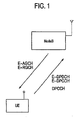
- an EUL scheme is employed.
- Retransmission control complying with a hybrid ARQ (HARQ) is used in uplink data communication between a radio base station NodeB and a mobile station UE.
- HARQ hybrid ARQ
- the following channels are established as downlink channels between the NodeB and the UE: an E-AGCH which is a transmission rate control channel used for notification of a transmission rate itself at which uplink user data can be transmitted; an E-RGCH which is a transmission rate control channel used for notification of an increase or a decrease of an uplink user data transmittable rate; and the like.
- E-AGCH which is a transmission rate control channel used for notification of a transmission rate itself at which uplink user data can be transmitted
- E-RGCH which is a transmission rate control channel used for notification of an increase or a decrease of an uplink user data transmittable rate
- E-DPCCH E-DCH dedicated physical control channel
- E-DPDCH E-DCH dedicated physical data channel
- E-DPCCH dedicated physical control channel
- this mobile communication system complies with a scheme of previously securing hardware resources inside the base station NodeB which are used for decoding of uplink signals transmitted from the UE before the NodeB notifies the UE of a power permitted to be used by the UE for transmission of uplink user data, as a scheduling grant (hereinafter referred to as SG as appropriate).
- SG scheduling grant
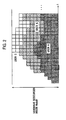
- Fig. 2 is a diagram explaining a concept of a hardware resource determination method used in the mobile communication system of the present example. As shown in Fig. 2 , in this mobile communication system, the NodeB allocates hardware resources inside the NodeB to connected users A to C (UE).
- UE user A to C
- the NodeB calculates E-DCH transport format combination indicator (E-TFCI) based on hardware resources allocated to each of the users, and calculates SG based on the E-TFCI, respectively. Furthermore, the NodeB notifies the mobile stations UE of the corresponding calculated SG via the E-AGCH.
- E-TFCI E-DCH transport format combination indicator
- each of the mobile stations UE transmits uplink user data at the SG received via the E-AGCH or the E-RGCH; specifically, at a transmission rate specified by the NodeB.
- the hardware resources at least include radio resources such as various data channels and control channels, and a processing capacity of the NodeB. Additionally, the hardware resources may include other resources affecting processing performed by the NodeB with respect to uplink user data.
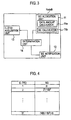
- the NodeB includes an SG allocation unit 11, an SG notification unit 12, an E-TFCI acquisition unit 13, and a determination unit 14.
- the SG allocation unit 11 selects a UE to be allowed to transmit uplink user data at each TTI (subframe), from among mobile stations (serving mobile stations) UE assigned the cell as a serving cell. Subsequently, the SG allocation unit 11 allocates hardware resources such as radio resources for the uplink user data transmission to the UE. In other words, the SG allocation unit 11 determines an uplink user data transmittable rate for the UE.
- the SG allocation unit 11 is formed by a data amount calculator 11a and an SG calculator 11b.
- the data amount calculator 11a calculates a data amount (specifically, a transport block (TB) size) of uplink user data, the data amount being allowed to be transmitted by the UE per unit of time.
- a data amount specifically, a transport block (TB) size
- the SG calculator 11b calculates an SG (a transmission rate).
- the SG does not necessarily represent a transmission rate directly, as long as the SG is a value based on which the UE can obtain a power allowed to be used for transmission of uplink user data. For example, a ratio between powers of the E-DPDCH and the E-DPCCH may be used as the SG.
- the SG allocation unit 11 Based on a result of the calculation performed by the SG calculator 11b, the SG allocation unit 11 outputs the SG corresponding to the radio resource (transmission rate) allocated to the UE.
- the SG notification unit 12 Via a predetermined notification channel, the SG notification unit 12 notifies the UE of the SG calculated by the SG calculator 11b.
- the SG notification unit 12 constitutes a notification unit.
- the SG notification unit 12 transmits an absolute grant (AG) or a relative grant (RG) to the UE via the E-AGCH or the E-RGCH. That is, the SG notification unit 12 notifies the UE of the uplink user data transmittable rate.
- AG absolute grant
- RG relative grant
- the E-TFCI acquisition unit 13 acquires an E-TFCI which is a transmission format used for transmission of uplink user data received from the UE.
- the E-TFCI constitutes transmission format identification information.
- the E-TFCI acquisition unit 13 acquires the E-TFCI.
- the determination unit 14 makes a comparison between the E-TFCI received from the UE and an E-TFCI determined based on the data amount calculated by the data amount calculator 11a. Specifically, the determination unit 14 determines whether or not the SG (corresponding to uplink user data transmittable rate notified to the UE) notified by the SG notification unit 12 matches an SG (corresponding to the uplink user data transmission rate received from the UE) corresponding to the E-TFCI acquired by the E-TFCI acquisition unit 13.
- the determination unit 14 searches for the SG corresponding to the E-TFCI acquired by the E-TFCI acquisition unit 13.
- the determination unit 14 determines that a data amount indicated by the E-TFCI received by the UE is larger than the data amount calculated by the data amount calculator 11a, the determination unit 14 causes the SG notification unit 12 to retransmit the SG calculated by the SG calculator 11b to the UE.
- the SG notification unit 12 again transmits the SG corresponding to the radio resource (transmission rate) allocated to the UE, to the UE.
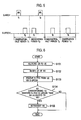
- the determination unit 14 determines that a data amount indicated by an E-TFCI received by the UE a predetermined period after the SG notification to the UE is larger than the data amount calculated by the data amount calculator 11a, the determination unit 14 can also cause the SG notification unit 12 to retransmit the SG calculated by the SG calculator 11b.
- an SG #A is allocated to the UE corresponding to an uplink user data transmittable rate and is notified by the SG notification unit 12 to the mobile station via an E-AGCH at t1. If a transmission rate of uplink user data received at t3 in an observation period T2 is larger than the SG #A after the notification of the SG #A via the E-AGCH at t1, the SG notification unit 12 can again notify the UE of an SG #B corresponding to an uplink user data transmittable rate based on the hardware resource reserved for the UE.
- the SG notification unit 12 may determine that the SG#A has not been reflected yet in the UE, and may not notify any more the mobile station of the SG# B corresponding to the uplink user data transmittable rate. In other words, during an observation-halt period, the NodeB does not find a value of an E-TFCI received from the UE, and therefore does not execute the above described operation of reducing the SG.
- a NodeB allocates an SG corresponding to an uplink user data transmittable rate, to a scheduling target UE in each TTI on the basis of the amount of a hardware resource secured for the UE.
- step S102 the NodeB notifies the UE of the allocated SG via an E-AGCH or an E-RGCH.
- step S103 the NodeB receives an E-TFCI transmitted from the UE via an E-DPCCH.
- step S104 the NodeB determines whether or not a transmission rate (a transmission rate specified by an SG corresponding to the E-TFCI) of uplink user data received during an observation period is larger than a transmission rate corresponding to the latest SG notified to the UE.
- a transmission rate a transmission rate specified by an SG corresponding to the E-TFCI
- the NodeB retransmits the SG allocated in step S102 to the UE via the E-AGCH or the E-RGCH, in step S105.
- the Node may discard the uplink user data transmitted via an E-DPDCH corresponding to the E-DPCCH.
- a connected user transmits uplink user data by using an E-TFCI lower than or equal to an E-TFCI assumed based on an SG notified to the connected user by a NodeB
- the NodeB can perform processing such as decoding of uplink signals by only utilizing hardware resources allocated to the connected user. Therefore NodeB can receive the uplink user data.
- the NodeB cannot perform processing such as decoding of uplink signals by utilizing hardware resources secured for the connected user, and therefore has no other choice but to discard the uplink user data received from the UE.
- the mobile communication system can eliminate a difference between the NodeB and the UE in recognizing an uplink user data transmittable rate.
- the NodeB can avoid the above described re-notification of an SG if a predetermined period has not yet passed since notification by the NodeB of the uplink user data transmittable rate (within an observation-halt period). Accordingly, wasting of radio resources, which is the above described re-notification of the SG, can be avoided when the NodeB receives uplink user data transmitted at a transmission rate to which the latest SG has not yet been reflected.
- steps S201 to S204 are the same as those in steps S101 to S104 shown in Fig. 6 .
- the radio based station NodeB determines that a transmission rate of uplink user data received during an observation period (a transmission rate specified by an SG corresponding to an E-TFCI acquired based on an E-DPCCH via which the uplink user data is transmitted) is larger than a transmission rate corresponding to the latest SG notified to the UE (YES in step S204), the NodeB lowers the transmission rate at which the above uplink user data can be transmitted, to a predetermined value, and then notifies again the UE of the SG corresponding to this transmission rate, via the E-AGCH or the E-RGCH, in step S205.
- the determination unit 14 determines that a data amount indicated by an E-TFCI received from the UE is larger than a data amount calculated by the data amount calculator 11a, the determination unit 14 lowers the SG to the predetermined value, and then causes the SG notification unit 12 to transmit the SG thus lowered to the predetermined value.
- steps S301 to S304 are the same as those in steps S101 to S104 shown in Fig. 6 .
- the NodeB determines that a transmission rate of uplink user data received during an observation period (a transmission rate specified by an SG corresponding to an E-TFCI acquired based on an E-DPCCH via which the uplink user data is transmitted) is larger than a transmission rate corresponding to the latest SG notified to the UE (Yes in step S304), the NodeB lowers the uplink user data transmittable rate only by a predetermined value (by a predetermined step value), and then notifies the UE again of an SG corresponding to this transmission rate, via the E-AGCH or the E-RGCH, in step S305.
- the determination unit 14 determines that a data amount indicated by an E-TFCI received from the UE is larger than a data amount calculated by the data amount calculator 11a, the determination unit 14 lowers the SG not to the predetermined value but by the predetermined value, and then causes the SG notification unit 12 to transmit the SG having been thus lowered by the predetermined value.
- the above described operations of the NodeB and the UE may be implemented by hardware, may be implemented by software modules executed by a processor, or may be implemented by a combination of the hardware and the software modules.
- the software modules are provided inside a storage medium of any form, such as a random access memory (RAM), a flash memory, a read only memory (ROM), an erasable programmable ROM (EPROM), an electronically erasable and programmable ROM (EEPROM), a register, a hard disk, a removable disk or a CD-ROM.
- RAM random access memory
- flash memory a flash memory
- ROM read only memory
- EPROM erasable programmable ROM
- EEPROM electronically erasable and programmable ROM
- register a hard disk, a removable disk or a CD-ROM.
- the storage medium is connected to the processor.
- the storage medium may be integrated in the processor.
- the storage medium and the processor may be provided inside an ASIC.
- the ASIC may be provided inside the UE, the radio base station Node B or a radio network controller (RNC).
- RNC radio network controller
- the storage medium and the processor may be provided as discrete components inside the UE and the NodeB.
Landscapes
- Engineering & Computer Science (AREA)
- Computer Networks & Wireless Communication (AREA)
- Signal Processing (AREA)
- Mobile Radio Communication Systems (AREA)
Claims (6)
- Mobiles Kommunikationsverfahren in Übereinstimmung mit einem Schema zur vorherigen Absicherung einer Hardware-Ressource innerhalb einer Funkbasisstation (NodeB), bevor die Funkbasisstation eine Mobilstation (UE) von einem Wert als einer Ablaufplanungsbewilligung in Kenntnis setzt, wobei die Hardware-Ressource vorgesehen ist, bei der Decodierung von Uplink-Signalen, die von der Mobilstation (UE) übertragen werden, verwendet zu werden, wobei der Wert von der Mobilstation verwendet wird, um eine Leistung zu erhalten, die für die Mobilstation zugelassen ist, für die Uplink-Nutzerdatenübertragung verwendet zu werden,
wobei das mobile Kommunikationsverfahren umfasst:einen Schritt A, um die Funkbasisstation (NodeB) zu veranlassen, auf Basis eines Umfangs der Hardware-Ressource, die durch die Funkbasisstation für die Mobilstation abgesichert ist, einen Datenumfang der Uplink-Nutzerdaten zu berechnen, die in einer Zeiteinheit durch die Mobilstation (UE) übertragen werden können;einen Schritt B, um die Funkbasisstation (NodeB) zu veranlassen, auf einer Basis des Datenumfangs, der im Schritt A berechnet wurde, die Ablaufplanungsbewilligung zu berechnen;einen Schritt C (S202), um die Funkbasisstation (NodeB) zu veranlassen, die Mobilstation (UE) über einen vorgegebenen Benachrichtigungskanal von der Ablaufplanungsbewilligung in Kenntnis zu setzen, die im Schritt B berechnet wurde,einen Schritt D (S204), um die Funkbasisstation (NodeB) zu veranlassen, einen Vergleich zwischen Übertragungsformat-Identifikationsinformationen, die von der Mobilstation (UE) empfangen wurden, und Übertragungsformat-Identifikationsinformationen auszuführen, die auf dem Datenumfang basieren, der im Schritt A berechnet wurde; undeinen Schritt E, um die Ablaufplanungsbewilligung auf einen vorgegebenen Wert zu vermindern und dann die Funkbasisstation (NodeB) zu veranlassen (S205), die Ablaufplanungsbewilligung, die auf den vorgegebenen Wert vermindert wurde, erneut zu übertragen, wenn die Funkbasisstation auf Basis eines Vergleichsergebnisses im Schritt D (204) feststellt, dass ein Datenumfang, der durch die Übertragungsformat-Identifikationsinformationen angezeigt wird, die von der Mobilstation (UE) empfangen wurden, größer als der Datenumfang ist, der im Schritt A berechnet wurde. - Mobiles Kommunikationsverfahren in Übereinstimmung mit einem Schema zur vorherigen Absicherung einer Hardware-Ressource innerhalb einer Funkbasisstation (NodeB), bevor die Funkbasisstation eine Mobilstation (UE) von einem Wert als einer Ablaufplanungsbewilligung in Kenntnis setzt, wobei die Hardware-Ressource vorgesehen ist, bei der Decodierung von Uplink-Signalen, die von der Mobilstation (UE) übertragen werden, verwendet zu werden, wobei der Wert von der Mobilstation verwendet wird, um eine Leistung zu erhalten, die für die Mobilstation zugelassen ist, für die Uplink-Nutzerdatenübertragung verwendet zu werden,
wobei das mobile Kommunikationsverfahren umfasst:einen Schritt A, um die Funkbasisstation (NodeB) zu veranlassen, auf Basis eines Umfangs der Hardware-Ressource, die durch die Funkbasisstation für die Mobilstation abgesichert ist, einen Datenumfang der Uplink-Nutzerdaten zu berechnen, die in einer Zeiteinheit durch die Mobilstation (UE) übertragen werden können;einen Schritt B, um die Funkbasisstation (NodeB) zu veranlassen, auf einer Basis des Datenumfangs, der im Schritt A berechnet wurde, die Ablaufplanungsbewilligung zu berechnen;einen Schritt C (S302), um die Funkbasisstation (NodeB) zu veranlassen, die Mobilstation (UE) über einen vorgegebenen Benachrichtigungskanal von der Ablaufplanungsbewilligung in Kenntnis zu setzen, die im Schritt B berechnet wurde,einen Schritt D (S304), um die Funkbasisstation (NodeB) zu veranlassen, einen Vergleich zwischen Übertragungsformat-Identifikationsinformationen, die von der Mobilstation (UE) empfangen wurden, und Übertragungsformat-Identifikationsinformationen auszuführen, die auf dem Datenumfang basieren, der im Schritt A berechnet wurde; undeinen Schritt E, um die Ablaufplanungsbewilligung um einen vorgegebenen Wert zu vermindern und dann die Funkbasisstation (NodeB) zu veranlassen (S305), die Ablaufplanungsbewilligung, die um den vorgegebenen Wert vermindert wurde, erneut zu übertragen, wenn die Funkbasisstation auf Basis eines Vergleichsergebnisses im Schritt D (S304) feststellt, dass ein Datenumfang, der durch die Übertragungsformat-Identifikationsinformationen angezeigt wird, die von der Mobilstation (UE) empfangen wurden, größer als der Datenumfang ist, der im Schritt A berechnet wurde. - Funkbasisstation (NodeB) in Übereinstimmung mit einem Schema zur vorherigen Absicherung einer Hardware-Ressource innerhalb einer Funkbasisstation, bevor die Funkbasisstation eine Mobilstation (UE) von einem Wert als einer Ablaufplanungsbewilligung in Kenntnis setzt, wobei die Hardware-Ressource vorgesehen ist, bei der Decodierung von Uplink-Signalen, die von der Mobilstation (UE) übertragen werden, verwendet zu werden, wobei der Wert von der Mobilstation verwendet wird, um eine Leistung zu erhalten, die für die Mobilstation zugelassen ist, für die Uplink-Nutzerdatenübertragung verwendet zu werden,
wobei die Funkbasisstation (NodeB) umfasst:einen Datenumfangskalkulator (11a), der eingerichtet ist, auf Basis eines Umfangs einer Hardware-Ressource, die für die Mobilstation abgesichert ist, einen Datenumfang der Uplink-Nutzerdaten zu berechnen, die in einer Zeiteinheit durch die Mobilstation (UE) übertragen werden können;einen SG-Kalkulator (11b), der eingerichtet ist, auf einer Basis des Datenumfangs, der vom Datenumfangskalkulator (11a) berechnet wurde, die Ablaufplanungsbewilligung zu berechnen;eine Benachrichtigungseinheit (12), die eingerichtet ist, die Mobilstation (UE) über einen vorgegebenen Benachrichtigungskanal von der Ablaufplanungsbewilligung in Kenntnis zu setzen, die durch den SG-Kalkulator (11b) berechnet wurde,eine Bestimmungseinheit (14), die eingerichtet ist,einen Vergleich zwischen Übertragungsformat-Identifikationsinformationen, die von der Mobilstation (UE) empfangen wurden, und Übertragungsformat-Identifikationsinformationen auszuführen, die auf dem Datenumfang basieren, der durch den Datenumfangskalkulator (lla) berechnet wurde, undwobei die Bestimmungseinheit (14) eingerichtet ist, zu bestimmen, ob ein Datenumfang, der durch die Übertragungsformat-Identifikationsinformationen angezeigt wird, die von der Mobilstation (UE) empfangen wurden, größer ist als der Datenumfang, der durch den SG-Kalkulator (11b) berechnet wurde, die Ablaufplanungsbewilligung auf einen vorgegebenen Wert zu vermindern, wenn der Datenumfang, der durch die Übertragungsformat-Identifikationsinformationen angezeigt wird, die von der Mobilstation (UE) empfangen wurden, größer als der Datenumfang ist, der durch den SG-Kalkulator (11b) berechnet wurde, und dann die Benachrichtigungseinheit (12) zu veranlassen, die Ablaufplanungsbewilligung, die auf den vorgegebenen Wert vermindert wurde, erneut zu übertragen. - Funkbasisstation (NodeB) in Übereinstimmung mit einem Schema zur vorherigen Absicherung einer Hardware-Ressource innerhalb einer Funkbasisstation, bevor die Funkbasisstation eine Mobilstation (UE) von einem Wert als einer Ablaufplanungsbewilligung in Kenntnis setzt, wobei die Hardware-Ressource vorgesehen ist, bei der Decodierung von Uplink-Signalen, die von der Mobilstation (UE) übertragen werden, verwendet zu werden, wobei der Wert von der Mobilstation verwendet wird, um eine Leistung zu erhalten, die für die Mobilstation zugelassen ist, für die Uplink-Nutzerdatenübertragung verwendet zu werden,
wobei die Funkbasisstation (NodeB) umfasst:einen Datenumfangskalkulator (lla), der eingerichtet ist, auf Basis eines Umfangs einer Hardware-Ressource, die für die Mobilstation abgesichert ist, einen Datenumfang der Uplink-Nutzerdaten zu berechnen, die in einer Zeiteinheit durch die Mobilstation (UE) übertragen werden können;einen SG-Kalkulator (11b), der eingerichtet ist, auf einer Basis des Datenumfangs, der vom Datenumfangskalkulator (11a) berechnet wurde, die Ablaufplanungsbewilligung zu berechnen;eine Benachrichtigungseinheit (12), die eingerichtet ist, die Mobilstation (UE) über einen vorgegebenen Benachrichtigungskanal von der Ablaufplanungsbewilligung in Kenntnis zu setzen, die durch den SG-Kalkulator (11b) berechnet wurde,eine Bestimmungseinheit (14), die eingerichtet ist, einen Vergleich zwischen Übertragungsformat-Identifikationsinformationen, die von der Mobilstation (UE) empfangen wurden, und Übertragungsformat-Identifikationsinformationen auszuführen, die auf dem Datenumfang basieren, der durch den Datenumfangskalkulator (11a) berechnet wurde, undwobei die Bestimmungseinheit (14) eingerichtet ist, zu bestimmen, ob ein Datenumfang, der durch die Übertragungsformat-Identifikationsinformationen angezeigt wird, die von der Mobilstation (UE) empfangen wurden, größer ist als der Datenumfang, der durch den SG-Kalkulator (11b) berechnet wurde, die Ablaufplanungsbewilligung um einen vorgegebenen Wert zu vermindern, wenn der Datenumfang, der durch die Übertragungsformat-Identifikationsinformationen angezeigt wird, die von der Mobilstation (UE) empfangen wurden, größer als der Datenumfang ist, der durch den SG-Kalkulator (11b) berechnet wurde, und dann die Benachrichtigungseinheit (12) zu veranlassen, die Ablaufplanungsbewilligung, die um den vorgegebenen Wert vermindert wurde, erneut zu übertragen. - Funkbasisstation nach Anspruch 3 oder Anspruch 4, wobei die Bestimmungseinheit (14) eingerichtet ist:zu bestimmen, ob der Datenumfang, der durch die Übertragungsformat-Identifikationsinformationen angezeigt wird, die von der Mobilstation (UE) eine vorgegebene Zeitspanne nach der Benachrichtigung über die Ablaufplanungsbewilligung empfangen wurden, größer ist als der Datenumfang, der durch den Datenumfangskalkulator (11a) berechnet wurde, unddie Benachrichtigungseinheit (12) zu veranlassen, die Ablaufplanungsbewilligung, die durch den SG-Kalkulator (11b) berechnet wurde, erneut zu übertragen, wenn die Bestimmungseinheit (14) bestimmt, dass der Datenumfang, der durch die Übertragungsformat-Identifikationsinformationen angezeigt wird, die von der Mobilstation (UE) eine vorgegebene Zeitspanne nach der Benachrichtigung über die Ablaufplanungsbewilligung empfangen wurden, größer ist als der Datenumfang, der durch den Datenumfangskalkulator (lla) berechnet wurde.
- Mobiles Kommunikationssystem mit:einer Funkbasisstation (NodeB) nach einem der Ansprüche 3, 4 und 5 undeiner Mobilstation (UE).
Applications Claiming Priority (2)
| Application Number | Priority Date | Filing Date | Title |
|---|---|---|---|
| JP2008032180 | 2008-02-13 | ||
| JP2009021699A JP5091170B2 (ja) | 2008-02-13 | 2009-02-02 | 移動通信方法、移動通信システム及び無線基地局 |
Publications (3)
| Publication Number | Publication Date |
|---|---|
| EP2091290A2 EP2091290A2 (de) | 2009-08-19 |
| EP2091290A3 EP2091290A3 (de) | 2011-05-25 |
| EP2091290B1 true EP2091290B1 (de) | 2013-09-11 |
Family
ID=40600101
Family Applications (1)
| Application Number | Title | Priority Date | Filing Date |
|---|---|---|---|
| EP09152658.2A Expired - Fee Related EP2091290B1 (de) | 2008-02-13 | 2009-02-12 | Mobiles Kommunikationsverfahren, mobiles Kommunikationssystem und Funkbasisstation |
Country Status (4)
| Country | Link |
|---|---|
| US (1) | US8144656B2 (de) |
| EP (1) | EP2091290B1 (de) |
| JP (1) | JP5091170B2 (de) |
| CN (1) | CN101511129B (de) |
Families Citing this family (5)
| Publication number | Priority date | Publication date | Assignee | Title |
|---|---|---|---|---|
| US7693537B2 (en) * | 2005-03-22 | 2010-04-06 | Ntt Docomo, Inc. | Transmission rate control method, transmission rate control system, and mobile station |
| BRPI0602597A (pt) * | 2005-03-29 | 2007-04-03 | Ntt Docomo Inc | método de controle de velocidade de transmissão, estação móvel e estação rádio base |
| CN102014508B (zh) * | 2009-09-04 | 2013-08-07 | 中兴通讯股份有限公司 | 一种半静态调度重激活的方法及基站 |
| CN102625436B (zh) * | 2011-01-26 | 2014-06-25 | 鼎桥通信技术有限公司 | 授权功率获取方法、装置及基站 |
| AU2013409321B2 (en) * | 2013-12-24 | 2017-07-27 | Huawei Technologies Co., Ltd. | Uplink scheduling method, user equipment, and base station |
Family Cites Families (16)
| Publication number | Priority date | Publication date | Assignee | Title |
|---|---|---|---|---|
| US20040190485A1 (en) * | 2003-03-24 | 2004-09-30 | Khan Farooq Ullah | Method of scheduling grant transmission in a wireless communication system |
| GB2402021A (en) | 2003-05-19 | 2004-11-24 | Nec Corp | Rate control method and apparatus for data packet transmission from a mobile phone to a base station |
| US20050048975A1 (en) | 2003-08-25 | 2005-03-03 | Ranta-Aho Karri | Method and apparatus for node B controlled scheduling in soft handover |
| US7561550B2 (en) * | 2004-07-26 | 2009-07-14 | Samsung Electronics Co., Ltd. | Method and apparatus for scheduling user equipment in a soft handover region for uplink packet transmission |
| EP1838125B1 (de) | 2004-08-31 | 2009-06-03 | Panasonic Corporation | Effiziente Rise-over-Thermal-Steuerung während eines sanften Handovers |
| CN1798420A (zh) * | 2004-12-22 | 2006-07-05 | 上海贝尔阿尔卡特股份有限公司 | 用于在基站中进行快速资源调度的方法与基站 |
| KR100905588B1 (ko) * | 2005-01-10 | 2009-07-02 | 삼성전자주식회사 | 향상된 상향링크 전용채널을 지원하는 이동통신시스템에서자율전송을 지원하는 단말의 향상된 상향링크 전용채널전송전력 결정 방법 |
| EP1917763B1 (de) * | 2005-08-22 | 2010-07-21 | Telefonaktiebolaget LM Ericsson (publ) | Kommunikationssystem und verfahren zum übertragen von daten zwischen einem endgerät und netzbetriebsmitteln |
| JP4761890B2 (ja) * | 2005-08-23 | 2011-08-31 | 株式会社エヌ・ティ・ティ・ドコモ | 伝送速度制御方法、無線基地局及び無線回線制御局 |
| ES2414630T3 (es) | 2006-05-17 | 2013-07-22 | Telefonaktiebolaget Lm Ericsson (Publ) | Asignación de tasa de transmisión repetida en una red de telecomunicaciones radio |
| WO2007148927A1 (en) * | 2006-06-22 | 2007-12-27 | Samsung Electronics Co., Ltd. | Method of transmitting scheduling request in mobile communication system and terminal apparatus for the same |
| CN100484305C (zh) * | 2006-06-27 | 2009-04-29 | 华为技术有限公司 | 终端调度授权处理、小区资源调度的方法及终端和基站 |
| JP2008032180A (ja) | 2006-07-31 | 2008-02-14 | Nsk Ltd | 直動案内装置 |
| US20080051098A1 (en) * | 2006-08-22 | 2008-02-28 | Rao Anil M | Method for transmitting fast scheduling request messages in scheduled packet data systems |
| CN100486375C (zh) * | 2007-03-13 | 2009-05-06 | 中兴通讯股份有限公司 | 一种ue调度授权请求分配及提高hsupa调度性能的方法 |
| JP2009021699A (ja) | 2007-07-10 | 2009-01-29 | Toshiba Corp | 電子機器および制御方法 |
-
2009
- 2009-02-02 JP JP2009021699A patent/JP5091170B2/ja not_active Expired - Fee Related
- 2009-02-10 US US12/368,336 patent/US8144656B2/en not_active Expired - Fee Related
- 2009-02-12 EP EP09152658.2A patent/EP2091290B1/de not_active Expired - Fee Related
- 2009-02-13 CN CN2009100074269A patent/CN101511129B/zh not_active Expired - Fee Related
Also Published As
| Publication number | Publication date |
|---|---|
| JP2009219108A (ja) | 2009-09-24 |
| US8144656B2 (en) | 2012-03-27 |
| JP5091170B2 (ja) | 2012-12-05 |
| CN101511129A (zh) | 2009-08-19 |
| US20090225713A1 (en) | 2009-09-10 |
| CN101511129B (zh) | 2013-06-26 |
| EP2091290A3 (de) | 2011-05-25 |
| EP2091290A2 (de) | 2009-08-19 |
Similar Documents
| Publication | Publication Date | Title |
|---|---|---|
| US12207359B2 (en) | Terminal, base station, system, and feedback method | |
| CN113348718B (zh) | 通信装置、基础设施设备以及方法 | |
| EP2606703B1 (de) | Verfahren und vorrichtung wann ein konfliktbasierter zugang zur datenübertragung in einem drahtlosen netzwerk benutzt werden soll | |
| EP2606698B1 (de) | Verfahren und vorrichtung zur verwendung von konfliktbasierten ressourcenzonen zur datenübertragung in einem drahtlosen netzwerk | |
| JP5108450B2 (ja) | 無線通信システム、無線通信方法、基地局及び無線端末 | |
| US20220225400A1 (en) | Communications device, infrastructure equipment and methods | |
| EP3101982A1 (de) | Basisstation, übertragungsverfahren, mobilstation und rückübertragungssteuerungsverfahren | |
| EP3499981B1 (de) | Endgerät und kommunikationsverfahren | |
| EP3925338B1 (de) | Kommunikationsvorrichtung, infrastrukturausrüstung und verfahren | |
| JP2018514151A (ja) | 複数キャリアについてのpusch上のharqの実装 | |
| EP4189884B1 (de) | Kommunikationsvorrichtungen, netzwerkinfrastrukturausrüstung, drahtloskommunikationsnetzwerke und verfahren | |
| EP2091290B1 (de) | Mobiles Kommunikationsverfahren, mobiles Kommunikationssystem und Funkbasisstation | |
| US8792442B2 (en) | Mobile communication method and radio base station | |
| JP5118071B2 (ja) | 基地局、無線通信システム及び無線通信方法 | |
| US8009621B2 (en) | Radio communication system, method and base station with controlled transmission rate | |
| WO2014091527A1 (ja) | 無線通信装置、無線通信システムおよび無線通信方法 | |
| AU2012244062B2 (en) | Radio resource selecting method, mobile station and radio base station | |
| KR100914166B1 (ko) | 무선 통신 시스템에서 핸드쉐이킹을 수행하는 방법 및시스템 | |
| JP2010035234A (ja) | 無線リソース選択方法、移動局及び無線基地局 |
Legal Events
| Date | Code | Title | Description |
|---|---|---|---|
| PUAI | Public reference made under article 153(3) epc to a published international application that has entered the european phase |
Free format text: ORIGINAL CODE: 0009012 |
|
| 17P | Request for examination filed |
Effective date: 20090212 |
|
| AK | Designated contracting states |
Kind code of ref document: A2 Designated state(s): AT BE BG CH CY CZ DE DK EE ES FI FR GB GR HR HU IE IS IT LI LT LU LV MC MK MT NL NO PL PT RO SE SI SK TR |
|
| AX | Request for extension of the european patent |
Extension state: AL BA RS |
|
| PUAL | Search report despatched |
Free format text: ORIGINAL CODE: 0009013 |
|
| AK | Designated contracting states |
Kind code of ref document: A3 Designated state(s): AT BE BG CH CY CZ DE DK EE ES FI FR GB GR HR HU IE IS IT LI LT LU LV MC MK MT NL NO PL PT RO SE SI SK TR |
|
| AX | Request for extension of the european patent |
Extension state: AL BA RS |
|
| AKX | Designation fees paid |
Designated state(s): DE GB |
|
| GRAP | Despatch of communication of intention to grant a patent |
Free format text: ORIGINAL CODE: EPIDOSNIGR1 |
|
| INTG | Intention to grant announced |
Effective date: 20130403 |
|
| GRAS | Grant fee paid |
Free format text: ORIGINAL CODE: EPIDOSNIGR3 |
|
| GRAA | (expected) grant |
Free format text: ORIGINAL CODE: 0009210 |
|
| RIN1 | Information on inventor provided before grant (corrected) |
Inventor name: HAYASHI, TAKAHIRO Inventor name: GOTO, YOSHIKAZU Inventor name: KAWAMOTO, JUNICHIRO Inventor name: TAKAGI, YUKIKO Inventor name: HANAKI, AKIHITO |
|
| AK | Designated contracting states |
Kind code of ref document: B1 Designated state(s): DE GB |
|
| REG | Reference to a national code |
Ref country code: GB Ref legal event code: FG4D |
|
| REG | Reference to a national code |
Ref country code: DE Ref legal event code: R096 Ref document number: 602009018667 Country of ref document: DE Effective date: 20131107 |
|
| REG | Reference to a national code |
Ref country code: DE Ref legal event code: R097 Ref document number: 602009018667 Country of ref document: DE |
|
| PLBE | No opposition filed within time limit |
Free format text: ORIGINAL CODE: 0009261 |
|
| STAA | Information on the status of an ep patent application or granted ep patent |
Free format text: STATUS: NO OPPOSITION FILED WITHIN TIME LIMIT |
|
| 26N | No opposition filed |
Effective date: 20140612 |
|
| REG | Reference to a national code |
Ref country code: DE Ref legal event code: R119 Ref document number: 602009018667 Country of ref document: DE |
|
| REG | Reference to a national code |
Ref country code: DE Ref legal event code: R097 Ref document number: 602009018667 Country of ref document: DE Effective date: 20140612 |
|
| REG | Reference to a national code |
Ref country code: DE Ref legal event code: R119 Ref document number: 602009018667 Country of ref document: DE Effective date: 20140902 |
|
| PG25 | Lapsed in a contracting state [announced via postgrant information from national office to epo] |
Ref country code: DE Free format text: LAPSE BECAUSE OF NON-PAYMENT OF DUE FEES Effective date: 20140902 |
|
| PGFP | Annual fee paid to national office [announced via postgrant information from national office to epo] |
Ref country code: GB Payment date: 20150211 Year of fee payment: 7 |
|
| GBPC | Gb: european patent ceased through non-payment of renewal fee |
Effective date: 20160212 |
|
| PG25 | Lapsed in a contracting state [announced via postgrant information from national office to epo] |
Ref country code: GB Free format text: LAPSE BECAUSE OF NON-PAYMENT OF DUE FEES Effective date: 20160212 |