EP2093245A2 - Dispositif biocompatible à base de polymère - Google Patents
Dispositif biocompatible à base de polymère Download PDFInfo
- Publication number
- EP2093245A2 EP2093245A2 EP09004765A EP09004765A EP2093245A2 EP 2093245 A2 EP2093245 A2 EP 2093245A2 EP 09004765 A EP09004765 A EP 09004765A EP 09004765 A EP09004765 A EP 09004765A EP 2093245 A2 EP2093245 A2 EP 2093245A2
- Authority
- EP
- European Patent Office
- Prior art keywords
- collagen
- peg
- coh102
- polymer
- tissue
- Prior art date
- Legal status (The legal status is an assumption and is not a legal conclusion. Google has not performed a legal analysis and makes no representation as to the accuracy of the status listed.)
- Granted
Links
- 0 *C(C1)C1N(C1)[N+]1[O-] Chemical compound *C(C1)C1N(C1)[N+]1[O-] 0.000 description 1
Images












Classifications
-
- A—HUMAN NECESSITIES
- A61—MEDICAL OR VETERINARY SCIENCE; HYGIENE
- A61L—METHODS OR APPARATUS FOR STERILISING MATERIALS OR OBJECTS IN GENERAL; DISINFECTION, STERILISATION OR DEODORISATION OF AIR; CHEMICAL ASPECTS OF BANDAGES, DRESSINGS, ABSORBENT PADS OR SURGICAL ARTICLES; MATERIALS FOR BANDAGES, DRESSINGS, ABSORBENT PADS OR SURGICAL ARTICLES
- A61L24/00—Surgical adhesives or cements; Adhesives for colostomy devices
- A61L24/001—Use of materials characterised by their function or physical properties
- A61L24/0031—Hydrogels or hydrocolloids
-
- A—HUMAN NECESSITIES
- A61—MEDICAL OR VETERINARY SCIENCE; HYGIENE
- A61L—METHODS OR APPARATUS FOR STERILISING MATERIALS OR OBJECTS IN GENERAL; DISINFECTION, STERILISATION OR DEODORISATION OF AIR; CHEMICAL ASPECTS OF BANDAGES, DRESSINGS, ABSORBENT PADS OR SURGICAL ARTICLES; MATERIALS FOR BANDAGES, DRESSINGS, ABSORBENT PADS OR SURGICAL ARTICLES
- A61L24/00—Surgical adhesives or cements; Adhesives for colostomy devices
- A61L24/001—Use of materials characterised by their function or physical properties
- A61L24/0015—Medicaments; Biocides
-
- A—HUMAN NECESSITIES
- A61—MEDICAL OR VETERINARY SCIENCE; HYGIENE
- A61L—METHODS OR APPARATUS FOR STERILISING MATERIALS OR OBJECTS IN GENERAL; DISINFECTION, STERILISATION OR DEODORISATION OF AIR; CHEMICAL ASPECTS OF BANDAGES, DRESSINGS, ABSORBENT PADS OR SURGICAL ARTICLES; MATERIALS FOR BANDAGES, DRESSINGS, ABSORBENT PADS OR SURGICAL ARTICLES
- A61L24/00—Surgical adhesives or cements; Adhesives for colostomy devices
- A61L24/001—Use of materials characterised by their function or physical properties
- A61L24/0026—Sprayable compositions
-
- A—HUMAN NECESSITIES
- A61—MEDICAL OR VETERINARY SCIENCE; HYGIENE
- A61L—METHODS OR APPARATUS FOR STERILISING MATERIALS OR OBJECTS IN GENERAL; DISINFECTION, STERILISATION OR DEODORISATION OF AIR; CHEMICAL ASPECTS OF BANDAGES, DRESSINGS, ABSORBENT PADS OR SURGICAL ARTICLES; MATERIALS FOR BANDAGES, DRESSINGS, ABSORBENT PADS OR SURGICAL ARTICLES
- A61L24/00—Surgical adhesives or cements; Adhesives for colostomy devices
- A61L24/04—Surgical adhesives or cements; Adhesives for colostomy devices containing macromolecular materials
- A61L24/046—Surgical adhesives or cements; Adhesives for colostomy devices containing macromolecular materials obtained otherwise than by reactions only involving carbon-to-carbon unsaturated bonds
-
- C—CHEMISTRY; METALLURGY
- C08—ORGANIC MACROMOLECULAR COMPOUNDS; THEIR PREPARATION OR CHEMICAL WORKING-UP; COMPOSITIONS BASED THEREON
- C08G—MACROMOLECULAR COMPOUNDS OBTAINED OTHERWISE THAN BY REACTIONS ONLY INVOLVING UNSATURATED CARBON-TO-CARBON BONDS
- C08G65/00—Macromolecular compounds obtained by reactions forming an ether link in the main chain of the macromolecule
- C08G65/02—Macromolecular compounds obtained by reactions forming an ether link in the main chain of the macromolecule from cyclic ethers by opening of the heterocyclic ring
- C08G65/32—Polymers modified by chemical after-treatment
- C08G65/329—Polymers modified by chemical after-treatment with organic compounds
-
- C—CHEMISTRY; METALLURGY
- C08—ORGANIC MACROMOLECULAR COMPOUNDS; THEIR PREPARATION OR CHEMICAL WORKING-UP; COMPOSITIONS BASED THEREON
- C08G—MACROMOLECULAR COMPOUNDS OBTAINED OTHERWISE THAN BY REACTIONS ONLY INVOLVING UNSATURATED CARBON-TO-CARBON BONDS
- C08G75/00—Macromolecular compounds obtained by reactions forming a linkage containing sulfur with or without nitrogen, oxygen, or carbon in the main chain of the macromolecule
- C08G75/02—Polythioethers
- C08G75/04—Polythioethers from mercapto compounds or metallic derivatives thereof
- C08G75/045—Polythioethers from mercapto compounds or metallic derivatives thereof from mercapto compounds and unsaturated compounds
-
- C—CHEMISTRY; METALLURGY
- C08—ORGANIC MACROMOLECULAR COMPOUNDS; THEIR PREPARATION OR CHEMICAL WORKING-UP; COMPOSITIONS BASED THEREON
- C08G—MACROMOLECULAR COMPOUNDS OBTAINED OTHERWISE THAN BY REACTIONS ONLY INVOLVING UNSATURATED CARBON-TO-CARBON BONDS
- C08G75/00—Macromolecular compounds obtained by reactions forming a linkage containing sulfur with or without nitrogen, oxygen, or carbon in the main chain of the macromolecule
- C08G75/26—Polythioesters
-
- C—CHEMISTRY; METALLURGY
- C08—ORGANIC MACROMOLECULAR COMPOUNDS; THEIR PREPARATION OR CHEMICAL WORKING-UP; COMPOSITIONS BASED THEREON
- C08L—COMPOSITIONS OF MACROMOLECULAR COMPOUNDS
- C08L71/00—Compositions of polyethers obtained by reactions forming an ether link in the main chain; Compositions of derivatives of such polymers
- C08L71/02—Polyalkylene oxides
-
- C—CHEMISTRY; METALLURGY
- C08—ORGANIC MACROMOLECULAR COMPOUNDS; THEIR PREPARATION OR CHEMICAL WORKING-UP; COMPOSITIONS BASED THEREON
- C08L—COMPOSITIONS OF MACROMOLECULAR COMPOUNDS
- C08L81/00—Compositions of macromolecular compounds obtained by reactions forming in the main chain of the macromolecule a linkage containing sulfur with or without nitrogen, oxygen or carbon only; Compositions of polysulfones; Compositions of derivatives of such polymers
- C08L81/02—Polythioethers; Polythioether-ethers
-
- A—HUMAN NECESSITIES
- A61—MEDICAL OR VETERINARY SCIENCE; HYGIENE
- A61L—METHODS OR APPARATUS FOR STERILISING MATERIALS OR OBJECTS IN GENERAL; DISINFECTION, STERILISATION OR DEODORISATION OF AIR; CHEMICAL ASPECTS OF BANDAGES, DRESSINGS, ABSORBENT PADS OR SURGICAL ARTICLES; MATERIALS FOR BANDAGES, DRESSINGS, ABSORBENT PADS OR SURGICAL ARTICLES
- A61L2300/00—Biologically active materials used in bandages, wound dressings, absorbent pads or medical devices
- A61L2300/40—Biologically active materials used in bandages, wound dressings, absorbent pads or medical devices characterised by a specific therapeutic activity or mode of action
- A61L2300/404—Biocides, antimicrobial agents, antiseptic agents
- A61L2300/406—Antibiotics
-
- A—HUMAN NECESSITIES
- A61—MEDICAL OR VETERINARY SCIENCE; HYGIENE
- A61L—METHODS OR APPARATUS FOR STERILISING MATERIALS OR OBJECTS IN GENERAL; DISINFECTION, STERILISATION OR DEODORISATION OF AIR; CHEMICAL ASPECTS OF BANDAGES, DRESSINGS, ABSORBENT PADS OR SURGICAL ARTICLES; MATERIALS FOR BANDAGES, DRESSINGS, ABSORBENT PADS OR SURGICAL ARTICLES
- A61L2300/00—Biologically active materials used in bandages, wound dressings, absorbent pads or medical devices
- A61L2300/40—Biologically active materials used in bandages, wound dressings, absorbent pads or medical devices characterised by a specific therapeutic activity or mode of action
- A61L2300/412—Tissue-regenerating or healing or proliferative agents
- A61L2300/414—Growth factors
-
- A—HUMAN NECESSITIES
- A61—MEDICAL OR VETERINARY SCIENCE; HYGIENE
- A61L—METHODS OR APPARATUS FOR STERILISING MATERIALS OR OBJECTS IN GENERAL; DISINFECTION, STERILISATION OR DEODORISATION OF AIR; CHEMICAL ASPECTS OF BANDAGES, DRESSINGS, ABSORBENT PADS OR SURGICAL ARTICLES; MATERIALS FOR BANDAGES, DRESSINGS, ABSORBENT PADS OR SURGICAL ARTICLES
- A61L2300/00—Biologically active materials used in bandages, wound dressings, absorbent pads or medical devices
- A61L2300/40—Biologically active materials used in bandages, wound dressings, absorbent pads or medical devices characterised by a specific therapeutic activity or mode of action
- A61L2300/418—Agents promoting blood coagulation, blood-clotting agents, embolising agents
-
- Y—GENERAL TAGGING OF NEW TECHNOLOGICAL DEVELOPMENTS; GENERAL TAGGING OF CROSS-SECTIONAL TECHNOLOGIES SPANNING OVER SEVERAL SECTIONS OF THE IPC; TECHNICAL SUBJECTS COVERED BY FORMER USPC CROSS-REFERENCE ART COLLECTIONS [XRACs] AND DIGESTS
- Y10—TECHNICAL SUBJECTS COVERED BY FORMER USPC
- Y10S—TECHNICAL SUBJECTS COVERED BY FORMER USPC CROSS-REFERENCE ART COLLECTIONS [XRACs] AND DIGESTS
- Y10S977/00—Nanotechnology
- Y10S977/902—Specified use of nanostructure
- Y10S977/904—Specified use of nanostructure for medical, immunological, body treatment, or diagnosis
- Y10S977/914—Protein engineering
Definitions
- This invention relates generally to synthetic polymer compositions that form interpenetrating polymer networks when administered to tissues.
- Such compositions are particularly well suited for use in a variety of medical applications when the physical strength of the administered material is important.
- the compositions of the present invention that are designed to be used to attach tissues together are strong enough to provide an effective substitute for other surgical means of attachment, such as sutures and medical staples.
- polymer compositions in tissue engineering are now widely recognized, particularly those consisting of synthetic polymers.
- synthetic polymer compositions can be formulated to exhibit predetermined physical characteristics such as gel strength, as well as biological characteristics such as degradability.
- compositions that can be administered as liquids, but subsequently form hydrogels at the site of administration.
- Such in situ hydrogel forming compositions are more convenient to use since they can be administered as liquids from a variety of different devices, and are more adaptable for administration to any site, since they are not preformed.
- Many different mechanisms have been described that can be used to promote hydrogel formation in situ. For example, photoactivatable mixtures of water-soluble co-polyester prepolymers and polyethylene glycol have been described to create hydrogel barriers, as well as drug release matrices.
- block copolymers of Pluronic and Poloxamer have been designed that are soluble in cold water, but form insoluble hydrogels that adhere to tissues at body temperature ( Leach, et al., Am. J. Obstet. Gynecol. 162:1317-1319 (1990 )). Polymerizable cyanoacrylates have also been described for use as tissue adhesives ( Ellis, et al., J. Otolaryngol. 19:68-72 (1990 )).
- compositions In other tissue engineering applications, it is not necessary or desired for the compositions to be in liquid form when administered. In fact, it may be advantageous in some circumstances to apply compositions that are gelatinous, paste-like, or even preformed solid implants, since these forms tend to stay in place after administration more readily than liquid formulations.
- compositions For many tissue engineering applications, it is important that the compositions be capable of forming a matrix after administration that is strong enough to withstand the biological and physical forces to which it will be subjected for a long enough period of time to fulfill its intended purpose. Strength is particularly important when the compositions are used as a partial or total replacement for sutures. In addition, for applications in which adherence to tissues is important, it is necessary for the formulations to have adequate adhesive strength. Cyanoacrylate is a highly effective adhesive that forms a strong matrix, but is too toxic to be used internally and is thus not approved for such uses. Accordingly, it is an object of the present invention to provide compositions that form high strength medical sealants that are not toxic.
- the present invention relates to multifunctional polymer-containing compositions that are specifically designed to exhibit superior strength for one embodiment.
- the compositions comprise a first multifunctional synthetic polymer having m functional groups, X; a multifunctional crosslinking agent having n functional groups, Y; and a tensile strength enhancer, such that when all three components are mixed together, X and Y react to form a covalently bonded three-dimensional interpenetrating polymer network.
- the tensile strength enhancer may become covalently bonded in the network, or it may become physically entrapped therein.
- the multifunctional crosslinking agent is a second multifunctional synthetic polymer.
- An aspect of the present invention is inclusion of the tensile strength enhancer, which can be comprised of a variety of compounds capable of forming a structure with the appropriate characteristics as described elsewhere herein.
- Such compounds include, inter alia , Vicryl, glass wool, plastics, resins, and fibers.
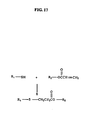
- the functional groups, X and Y can be any pair of reactive moieties that form a covalent bond, Z, under the appropriate conditions, such as sulfhydryl, succinimidyl, acrilate and amino, which form, in no particular order, ether, ester or disulfide.
- the synthetic polymer core may additional comprise a chain extender.
- a chain extender For example, alpha-hydroxy acid, poly(lactone), poly(orthocarbonate) and poly(phosphoester) moieties may serve to enhance biodegradability.
- the chain extender may be an enzyme substrate.
- the composition further comprises optional components, such as proteins, antibiotics, growth factors and hemostatic agents.
- the optional component is present in the form of a rigid nanofiber, such as that formed by methylated collagen.
- X and Y are each 4 or greater to provide for more efficient crosslinking.
- the composition of the present invention comprises a pair of reactive polyalkylene oxides, a rigid nanofiber, such as methylated collagen, and a tensile strength enhancer.
- the present invention relates to synthetic polymer compositions that according to one embodiment, form an interpenetrating polymer network when administered to a tissue site.
- the composition forms a network which develops with high cohesive ("tensile") strength, which contemplates that the matrix has a tensile strength of at least 10% and more preferably 20% of that of cyanoacrylate.
- tensile high cohesive
- such networks exhibit a tensile strength of greater than 60 N/cm 2 .
- the preferred compositions are designed to become anchored in place by mechanical and/or chemical means to seal tissues together that have become separated as a result of various disease states or surgical procedures. Accordingly, compositions that form networks with adhesive strengths >50 mm Hg (i. e. The burst pressure required to detach the adhesive and create a leak) are preferred for applications when strong tissue adhesion is desired.
- the present invention relates to preformed matrices in the form of dried sheets that can be applied more quickly than a sprayed liquid (for open surgery).
- the attainment of very high burst strengths at short times (30 sec) may also permit use of active sheets in sites that must be challenged soon after application (30 sec. versus 3 min.).
- the present invention comprises activated collagen sponges and sheets as further described in Examples 4 and 5 below.
- gel refers to the state of matter between liquid and solid.
- a “gel” has some of the properties of a liquid (i.e., the shape is resilient and deformable) and some of the properties of a solid (i.e., the shape is discrete enough to maintain three dimensions on a two dimensional surface.)
- gelation time also referred to herein as “gel time” refers to the time it takes for a composition to become non-flowable under modest stress. This is generally exhibited as achieving a gel strength, expressed as elastic modulus, G', of greater than or equal to 10 2 dynes/cm 2 in less than 1 minute.
- Cohesive strength refers to the ability of the compositions of the present invention to remain intact, i.e., not rupture, tear or crack, when subjected to physical stresses or environmental conditions. Cohesive strength is measured herein as a function of "tensile strength”.
- adheresive strength refers to the ability of the compositions of the present invention to be able to remain attached to the tissues at the site of administration when subjected to physical stresses or environmental conditions.
- polymer refers to a molecule consisting of individual chemical moieties, which may be the same or different, but are preferably the same, that are joined together.
- polymer refers to individual chemical moieties that are joined end-to-end to form a linear molecule, as well as individual chemical moieties joined together in the form of a branched (e.g., a "multi-arm” or "star-shaped") structure.
- biocompatible refers to the ability of the compositions of the present invention to be applied to tissues without eliciting significant inflammation and fibrosis or other adverse tissue responses.
- synthetic polymer refers to polymers that are not naturally occurring and that are produced by chemical or recombinant synthesis. As such, naturally occurring proteins such as collagen and naturally occurring polysaccharides such as hyaluronic acid are specifically excluded. Proteins such as synthetic collagen, and carbohydrates such as synthetic hyaluronic acid, and their derivatives, are included.
- activated synthetic polymers refers to synthetic polymers that have or have been chemically modified to have at least one functional group (e.g., a sulfhydryl group) that is capable of reacting with a corresponding reaction partner (e.g., a sulfhydryl-reactive group) to form a covalent bond.
- a sulfhydryl group e.g., a sulfhydryl group
- multifunctionally activated or “multifunctional” refers to synthetic polymers having two or more functional (usually nucleophilic or electrophilic) groups. Types of multifunctionally activated synthetic polymers include di-functionally activated, tri-functionally activated, tetra-functionally activated, and star-shaped activated polymers (that have four or more functional groups).
- medical sealant refers to compositions that become anchored in place by mechanical and/or chemical means to seal tissues together that have become separated as the result of various disease states or surgical procedures.
- medical sealants can be used to fill voids in hard tissues, to join vascular and other soft tissues together, to provide a mechanical barrier to promote hemostasis, and to prevent tissue adhesions by keeping one tissue surface from coming in contact with and becoming adhered to another tissue surface.
- IPN interpenetrating polymer network
- PEG reactive polymer or polymers
- monomers that are polymerized which exhibits an infinite molecular weight and includes a co-reactant of a different type, such as a high tensile strength fiber, that interpenetrates within the PEG polymer network to form two continuous networks throughout the network.
- filler is used to refer to bulking agents, small organic compounds, polymers, fibers, resins, and the like, that are added to chemical compositions for a variety of reasons, the most pertinent to the present invention being to enhance tensile strength.
- composition Components
- compositions of the present invention comprise at least one multi-functional synthetic polymer that, along with a tensile strength enhancer and other optional composition constituents, can form a high strength matrix at the site of administration.
- the polymeric component provides for a "continuous gel phase" via interconnecting of the flexible polymer when the polymer is crosslinked to other polymers and/or other composition components.
- compositions comprise a single multi-functional synthetic polymer
- they are designed such that the polymer remains in the unreactive state until administered.
- the compositions comprise two or more multi-functional synthetic polymers
- they are generally designed as two-part compositions that react with one another when mixed at the site of administration.
- such two-component compositions can also be prepared in an unreactive state and later activated prior to, during or after administration.
- two-part compositions comprising a single synthetic polymer species and a small (i.e. less than half the size of the polymer) crosslinking agent can be utilized.
- compositions are two-part compositions, each of which comprises a different multi-functionally activated synthetic polymer, such that the polymers will react with one another at the site of administration to form an IPN. As such, they can easily be administered separately.
- compositions can be generally represented by Formula I as follows: Compound 1 - X m + Compound 2 - Y n ⁇ Compound 1 - Z - Compound 2
- Compound 1 has multiple (m ⁇ 2) functional groups (X) that react with Compound 2 , which has multiple (n ⁇ 2) functional groups (Y), such that when functional groups X and Y come in contact under appropriate conditions, covalent bond Z is formed.
- functional groups X and Y can also be referred to as "reaction partners" of one another and can collectively be referred to as a "reaction pair".
- reaction partners of one another and can collectively be referred to as a "reaction pair”.
- the two compounds form multiple attachments to one another resulting in a three-dimensional polymer matrix.
- both compounds contain four or more functional groups, since such multifunctionality results in a gel matrix with greater overall cohesive strength.
- each of the compounds is tetrafunctionally activated.
- the compounds each have 12 functional groups.
- Such compounds are formed from reacting a first tetrafunctionally activated polymer with a second tetrafunctionally activated polymer, wherein the functional groups of each of the two compounds are a reaction pair, and react together to form "12-arm" functionally activated polymers.
- An example of such a "12-arm” compound is dodeca-sulfhydryl-PEG, 50,000 mol. wt., which is constructed from a core tetra-functional succinimide ester PEG coupled to four (exterior) tetra-functional sulfhydryl-PEG molecules.
- Such polymers range in size from over 10,000 mol. wt. to greater than 100,000 mol. wt. depending on the molecular weight of the tetra-functionally activated polymer starting materials.
- activated polymers that are suitable for use in the present invention may have a variety of geometric shapes and configurations.
- each of the compounds has multiple functional groups, X and Y.
- the non-reactive remainder of the compound is considered to be its "core".
- At least one of the two compounds should have a polymer core in order to form a strong gel matrix.
- the other compound can be a small organic molecule with multiple functional groups.
- the polymer core may be a synthetic polyamino acid, a polysaccharide, or a synthetic polymer.
- the preferred polymer core material is a synthetic hydrophilic polymer.
- Suitable synthetic hydrophilic polymers include, inter alia, polyalkylene oxide, such as polyethylene oxide ((CH 2 CH 2 O) n ), polypropylene oxide ((CH(CH 3 )CH 2 O) n ) or a polyethylene/polypropylene oxide mixture ((CH 2 CH 2 O) n -(CH(CH 3 )CH 2 O) n ).
- a particularly preferred synthetic hydrophilic polymer for certain applications is a polyethylene glycol (PEG) having a molecular weight within the range of about 100 to about 100,000 mol.
- the polymer core is polyethylene glycol, it generally has a molecular weight within the range of about 7,500 to about 20,000 mol. wt.. Most preferably, the polyethylene glycol has a molecular weight of approximately 10,000 mol. wt..
- Multifunctionally activated polyalkylene oxides such as polyethylene glycol
- polyethylene glycol are commercially available, and are also easily prepared using known methods. For example, see Chapter 22 of Poly(ethylene Glycol) Chemistry: Biotechnical and Biomedical Applications, J. Milton Harris, ed., Plenum Press, NY (1992 ); and Shearwater Polymers, Inc. Catalog, Polyethylene Glycol Derivatives, Huntsville, Alabama (1997-1998 ).
- the exemplary combination of activated polymers is as follows: tetrafunctional PEG, pentaerythritol poly(ethylene glycol) ether tetra-succinimidyl glutarate (10,000 mol.
- tetrafunctional PEG pentaerythritol poly(ethylene glycol) ether tetra-sulfhydryl (10,000 mol. wt.).
- these "four-arm" PEGs are formed by ethoxylation of pentaerythritol, where each of the four chains is approximately 2,500 mol. wt., and then derivatized to introduce the functional groups onto each of the four arms.
- analogous poly(ethylene glycol)-like compounds polymerized from di-glycerol instead of pentaerythritol.
- the other compound is a multifunctionally active small organic molecule.
- Such compounds include the di-functional di-succinimidyl esters and di-maleimidyl compounds, as well as other well known commercially available compounds (Pierce Chemical Co., Rockford, Illinois).
- Figure 9a is a penta-erythritol coupled to four glutarates, with each arm capped with N-hydroxy-succinimidyl esters (NHS).
- Analogous compounds can be synthesized from inositol (radiating 6 arm), lactitol (9 arm) or sorbitol (linear 6-arm).
- the end-capped reactive group can just as easily be sulfhydryl, maleimidyl, vinyl-sulfone, etc., instead of NHS.
- the polymer or the small molecule can carry either reactive end group as long as there are reactive pairs in the composition such as NHS and SH, maleimidyl and SH, etc.
- polyalkylene oxides e.g. polymethylene, polyethylene and polypropylene
- other polymers are also useful as core materials in the practice of the present invention.
- polyesters, polymethacrylates, polycaprolactones, polyalkenes (such as polybutadiene) are also considered useful.
- polycaprolactans are elements of Nylon-6; polypropylene is a constituent of medical implants; polymethacrylate is found in polymethyl-methacrylates and poly-hydroxy-methyl-methacrylates, which are constituents of medical implants; and polybutadiene is present in commercial rubber.
- An exemplary non-polyalkylene oxide based composition is comprised of two different components, each comprising a different penta-erythritol based compound, such that the two compounds react with one another when mixed together to form a strong matrix.
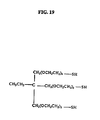
- the first compound is penta-erythritol tetrakis (3-mercapto-proprionate) (“PESH-P")
- the second compound is penta-erythritol tetra-acrylate (“PETA”).
- PESH-P penta-erythritol tetrakis (3-mercapto-proprionate)
- PETA penta-erythritol tetra-acrylate
- a large variety of similar molecular structures (4-armed and radially symmetrical) can be synthesized based on penta-erythritol.
- the length of the molecular chains can be extended, preferably using non-alkyoxyl segments, such as polyester, polymethylene,
- radially branching molecules such as glycerol or lactitol
- the desired structures may be water-immiscible and low molecular weight (350 to about 12,000 mol. wt.) so as to remain liquid. Higher molecular weight gel-forming structures are also contemplated. It is preferred that such compositions are water miscible or water dispersible to be compatible with the use of water as the liquid medium for delivery.
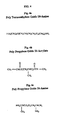
- compositions of the present invention can be formed from linear molecules as depicted in Figure 4 .
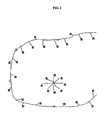
- Such linear molecules can have molecular weights as high as 100,000 mol. wt., so long as they have biodegradable elements ("O") and sufficient functional groups (“R”) as depicted in Figure 1 .
- tensile strength enhancer In order to enhance matrix strength, it is generally desirable to add a "tensile strength enhancer" to the composition.
- Such tensile strength enhancers preferably comprise micron-size, preferably 5 to 40 microns in diameter and 20 to 5000 microns in length, high tensile strength fibers, usually with glass transition temperatures well above 37°C.
- Suitable tensile strength enhancers for use in the present invention include, inter alia , collagen fibers, polyglycolide and polylactide fibers, as well as other organic tensile strength enhancers and inorganic tensile strength enhancers.
- a particularly useful tensile strength enhancer is Vicryl (polyglycolide:polylactide, 90:10)
- the use of tensile strength enhancers, which are part of the broader category of "fillers”, are well known. For example, "silicone gums", when cross-linked with peroxides, are weak and cheesy, with tensile strengths on the order of only 34 N/cm 2 .
- Suitable tensile strength enhancers are those that have inherent high tensile strength and also can interact by covalent or non-covalent bonds with the polymerized gel network.
- the tensile strength enhancer should bond to the gel, either mechanically or covalently, in order to provide tensile support.
- Tensile strengths of polyglycolide resorbable sutures are approximately 89,000 N/cm 2 ; that of collagen fibers is 5000-10,000 N/cm 2 ( Hayashi, T., in Biomedical Applic. of Polym. Mater., Tsuruta, T. et al., Eds., CRC Press, Boca Raton, Fla., 1993 ).
- the linkage, Z comprises a covalent bond that is formed when the functional groups, X and Y, are reacted together.
- the functional groups can be sulfhydryl, succinimidyl, acrylate, amino, etc. Accordingly, the linkage may be an ester, an ether, a disulfide, or the like.
- Other functional groups, their reactivity and the bonds formed therefrom are well known in the scientific literature.
- pairs of functional groups include, inter alia, sulfhydryl/acrylate, sulfhydryl/succinimidyl, amino/succinimidyl and amino/acrylate.
- sulfhydryl reactive compounds that form thioester linkages
- various other compounds can be utilized that form other types of linkages.
- compounds that contain methyl imidate derivatives form imido-thioester linkages with sulfhydryl groups.
- sulfhydryl reactive groups can be employed that form disulfide bonds with sulfhydryl groups, such as ortho pyridyl disulfide, 3-nitro-2-pyridenesulfenyl, 2-nitro-5-thiocyanobenzoic acid, 5,5'-dithio-bis(2-nitrobenzoic acid), derivatives of methane-thiosulfate, and 2,4-dinitrophenyl cysteinyl disulfides.
- auxiliary reagents such as the hydrogen peroxide or di-tert-butyl ester of azodicarboxylic acid, can be used to facilitate disulfide bond formation.
- sulfhydryl reactive groups form thioether bonds with sulfhydryl groups.
- groups include, inter alia, iodoacetamide, N-ethylmaleimide and other maleimides, including dextran maleimides, mono-bromo-bimane and related compounds, vinylsulfones, epoxides, derivatives of O-methyl-isourea, ethyleneimines, aziridines, and 4-(aminosulfonyl-)7-fluoro-2,1,3-benzoxadiazole.
- Chain extenders may be directly attached to the compound core, or they may be indirectly attached through a chain extender.
- chain extenders are well known in the art. See, for example, PCT WO 97/22371 , which describes "linking groups" that would be suitable for use as chain extenders in the compositions of the present invention. Chain extenders are useful to avoid stearic hindrance problems that are sometimes associated with the formation of direct linkages between molecules. Alternatively, chain extenders may be used to link several multifunctionally activated compounds together to make larger molecules. In a particularly preferred embodiment, the chain extender can also be used to alter the degradative properties of the compositions after administration and resultant gel formation.
- chain extenders can be incorporated into one or both of the multifunctionally activated polymers to promote hydrolysis, to discourage hydrolysis, or to provide a site for enzymatic degradation.
- Chain extenders can also activate or suppress activity of sulfhydryl and sulfhydryl-reactive groups. For example, electron-withdrawing groups within one or two carbons of the sulfhydryl group would be expected to diminish its effectiveness in coupling, due to a lowering of nucleophilicity. Double-bond carbon and carbonyl carbon would be anticipated to have this effect. Bulky nearby groups for either partner are anticipated to diminish coupling rates, due to steric hindrance. Electron-withdrawing groups adjacent to the reactive carbonyl of glutaryl-N-hydroxysuccinimidyl would be anticipated to make this carbonyl carbon even more reactive with the sulfhydryl partner.
- Chain extenders may provide sites for degradation, i.e., hydrolysable sites.
- hydrolysable chain extenders include, inter alia, alpha-hydroxy acids such as lactic acid and glycolic acid; poly(lactones) such as caprolactone, valerolactone, gamma butyl lactone and p-dioxanone; poly(amino acids); poly(anhydrides) such as glutarate and succinate; poly(orthoesters); poly(orthocarbonates) such as trimethylene carbonate; and poly(phosphoesters).
- non-degradable chain extenders include, inter alia, succinimide, propionic acid and carboxymethylate. See, for example, PCT WO 99/07417 .
- Examples of enzymatically degradable chain extenders include Leu-Gly-Pro-Ala, which is degraded by collagenase; and Gly-Pro-Lys, which is degraded by plasmin.
- compositions of the present invention are as follows: If higher molecular weight structures are to be used, they preferably have biodegradable linkages as described above, so that fragments larger than 20,000 mol. wt. are not generated during resorption in the body. In addition, to promote water miscibility and/or solubility, it may be desired to add sufficient electric charge or hydrophilicity. Such hydrophilic groups can be easily introduced using known chemical synthesis, so long as they do not give rise to gels that swell more than 3-5 fold or that have low tensile strength. In particular, polyalkoxy segments may weaken gel strength.
- compositions of the present invention may also contain other compounds, which may be included in one or both of the components of the two-component compositions, or may be separately administered.
- these compounds may become covalently incorporated into the IPN itself by becoming crosslinked to one or both of the functionally activated compounds after they are mixed together.
- the compound may be administered in such a way that it becomes physically or ionically associated with the matrix-forming compounds after mixing, and thus become part of the matrix itself.
- glycosaminoglycans and proteins are glycosaminoglycans and proteins.
- Suitable glycosaminoglycans include, inter alia, hyaluronic acid, chitin, chondroitin sulfate A, B, or C, keratin sulfate, keratosulfate and heparin, and derivatives thereof.
- proteins can be added for a variety of purposes.
- collagen may improve biocompatibility of the matrix, including the potential colonization by cells, promotion of would healing, etc.
- Collagen and any amino group-containing proteins would also contribute to the structural integrity of the matrix by becoming crosslinked thereto along with the other matrix components.
- PEG-succinimidyl esters are used, the amide bonds formed with collagen will be more stable to hydrolytic degradation than the bonds formed by the reaction of succinimidyl esters and sulfhydryls.
- Suitable proteins include, inter alia, collagen, fibronectin, gelatin and albumin, as well as peptide fragments thereof. Particularly preferred is collagen, which may be in the form of afibrillar, microfibrillar or fibrillar collagen. Types I and III collagen isolated from bovine corium or human placenta, or prepared by recombinant DNA methods, are suitable. See PCT WO 90/05755 for a description of suitable collagens and collagen derivatives. It should be understood that when adding collagen to the composition, it is important to adjust the concentration of the other composition components to avoid precipitation.
- Additional constituents which may be added to the composition include antibiotics, growth factors, hemostatic proteins (such as thrombin, fibrin, fibrinogen, the blood factors, etc.), cells, genes, DNA, etc.
- composition components can be added to the IPNs of the present invention in a variety of forms which are well know to those of the skill of the art.
- DNA can be added in the form of genomic DNA, oligonucleotides, polynucleotides, dinucleotides and so on.
- proteinaceous constituents can be added as polypeptides, native proteins, synthetic proteins, protein fragments, etc.
- a particularly preferred structure for addition to the IPNs of the present invention is a nanofiber.
- Many of the aforementioned optional components, and especially methylated collagen, can be easily formed into such a structure.
- the term "nanofiber” intends a fiber that is usually less than a micron in length. In some instances, these fibers are so small that collagen in this form is considered to be essentially "non-fibrillar".
- a rigid nanofiber with a relatively high (above 25°C) glass transition temperature imparts additional strength.
- collagen is a good example of a rigid nanofiber, because it is formed from three polypeptide chains in a triple helix held together by hydrogen bonds, other polymers may be suitable as well.
- derivatives of other biopolymers which are rod-like, such as tubulin and keratin may be manufactured in rigid nanofiber forms. So long as the structure is a nanometer scale rod-like polymer which is water compatible and preferably has polar and more preferably amino groups on its surface, the rigid nanofiber can be made of a variety of different materials. See, for example, Liu, G., et al., "Diblock Copolymer Nanofibers", Macromolecules 29: 5508-5510 (1996).
- compositions of the present invention comprise two separate parts, or "components", which may be in liquid or solid form.
- both components are liquids, such that each can be easily applied separately to the site of administration.
- one of the components may be in the form of a dry powder that becomes mixed with the second component, which is in liquid form, when each are sprayed separately onto the tissue, or by mixing at the tissue site. It is also possible to have both components delivered to the site as powders, to be mixed with buffer at the site of administration.
- both components can be mixed together in a single aqueous medium in which they are both unreactive, i.e. such as in a low pH buffer. Thereafter, they can be sprayed onto the tissue site along with a high pH buffer, after which they will rapidly react and form a gel.
- the concentration of the reactive compounds in each of the composition components necessarily depends on a number of factors.
- the composition components are each 4-arm PEGs (i.e. PEG-PEG compositions)
- a concentration of 20-25% by weight in each of the two components before mixing results in a gel after mixing with an elastic modulus, G', of approximately 10 5 -10 6 dynes/cm 2 , which is adequate for use as a surgical sealant.
- G' elastic modulus
- concentrations of 2-4% and 0.2-0.4% concentrations of 2-4% and 0.2-0.4%, respectively, result in gels with cohesive strengths that are comparable to PEG-PEG gels at 10-15%.
- albumin as one of the components, concentrations of 30% or more achieve a similar cohesive strength.
- the synthetic polymer is generally present at a concentration of 2 to 50% (w/v), and more preferably 10-25%.
- concentrations such as 50% to 70%, more preferably 60%.
- the liquid components of the compositions of the present invention are each separately prepared by adding the activated synthetic polymer (in dry form or as a concentrated solution) to a liquid medium.
- suitable liquid media include aqueous buffer solutions, such as monobasic sodium phosphate/dibasic sodium phosphate, sodium carbonate/sodium bicarbonate, glutamate or acetate, at a concentration of 0.5 to 300 mM.
- the sulfhydryl-reactive PEG is prepared in water or a dilute buffer, with a pH of between around 5 to 6.
- Buffers with pKs between about 8 to 10.5 for preparing the sulfhydryl-PEG component are useful to achieve fast gelation time of compositions containing mixtures of sulfhydryl-PEG/SG-PEG.
- These include carbonate, borate and AMPSO (3-[(1,1-dimethyl-2-hydroxyethyl)amino]2-hydroxy-propane-sulfonic acid).
- AMPSO 3-[(1,1-dimethyl-2-hydroxyethyl)amino]2-hydroxy-propane-sulfonic acid.
- a pH of around 5 to 9 is preferred for the liquid medium used to prepare the sulfhydryl PEG.
- a particularly preferred composition for hemostatic applications to actively bleeding tissue sites comprises a mixture of maleimidyl and succinimidyl PEG as the first component, and sulfhydryl PEG as the second component.
- Such compositions produce gels with enhanced biodegradability and superior gel times when compared to compositions having only maleimidyl PEG or succinimicyl PEG alone.
- the pH of the aqueous buffer solution that is used for each of the two (or more) composition components should be adjusted using routine optimization to achieve a final pH that is conducive to rapid gelation, without causing instantaneous gelation which interferes with the delivery process.
- both amino PEG and sulfhydryl PEG need a basic pH to enhance nucleophilicity.
- the effects of pH on gel time are discussed below in the Examples.
- compositions of the present invention are formulated to exhibit superior cohesive strength. This generally means that they exhibit at least 10% and preferably 20% of the burst strength of Cyanoacrylate, "Superglue”.
- Exemplary Formulation made from COH102/206/methylated collagen plus glass wool or Vicryl.
- methylated collagen greatly toughens the gel and allows it to resist swelling in saline buffer or water. Because the gel does not swell, it continues to have sufficient inherent tensile strength to remain bonded to fibrous fillers, such as glass wool, Vicryl threads, or silk suture threads.
- methylated collagen creates a gel which is robust enough to support the fibrous fillers. If the gel is not strong enough to hold the fibrous filler, it pulls out under tensile loads, and high tensile strength is not achieved. Table 12 below shows that when other polymeric or particulate molecules are substituted for methylated collagen, the bond performance declines. Hence, the methylated collagen, being a relatively rigid molecule, can impart enhanced strength to the relatively dilute PEG hydrogel.
- Flexible polymers such as hyaluronic acid, polylysine, and chitosan, although they are relatively high in molecular weight and create relatively viscous solutions, apparently do not have the same rigidity and are therefore less able to absorb tensile stresses and pass these stresses off to the fibrous filler.
- the PEG is a flexible polymer chain which has a low glass transition temperature (temperature at which the polymer is flexible, instead of rubbery and hard); methylated collagen has a higher glass transition temperature (i.e., methylated collagen loses its rigidity, becomes flexible, at about 33-35 deg. C, at which temperature it "melts" to form gelatin, a flexible chain molecule). Because one forms an interpenetrating polymer network (IPN) between a low glass transition temperature polymer (PEG) and a high glass transition polymer (methylated collagen), the result is reinforcement of the former by the latter.
- IPN interpenetrating polymer network
- the enhanced bonding strength of the final formulation is apparently dependent on several factors: 1) the PEG reagents COH102 and COH206 covalently bond to form a hydrogel; that gel also exhibits excellent bonding to tissue, apparently because of the succinimidyl ester of COH102, which can bond to amino groups on the tissue (See Table 14); 2) the methylated collagen forms an interpenetrating polymer network with the PEG gel network, reinforcing it; and 3) passes off tensile loads to fibrous fillers such as polylactide/glycolide fibers or glass fibers. Thus, addition of the fibrous fillers is critical to achieving the final desired level of gel tensile strength.
- compositions of the present invention are generally delivered to the site of administration in such a way that the two (or more) individual components of the composition come into contact with one another for the first time at the site of administration, or immediately preceding administration.
- the compositions of the present invention are preferably delivered to the site of administration using an apparatus that allows the two components to be delivered separately.
- Such delivery systems usually involve two-compartment single exit or dual exit spray devices.
- the two components can be delivered separately using any type of controllable extrusion system, or they can be delivered manually in the form of separate pastes, liquids or dry powders, and mixed together manually at the site of administration.
- Many devices that are adapted for delivery of two-component tissue sealants/hemostatic agents are well known in the art and can also be used in the practice of the present invention.
- compositions of the present invention are prepared in inactive form as either a liquid or powder.
- Such compositions can then be activated after application to the tissue site, or immediately beforehand, by applying an activator.
- the activator is a buffer solution having a pH that will activate the composition once mixed therewith. See Example 7 for a description of a sulfhydryl-containing PEG composition that is maintained at a low pH until administration, then mixed with a high pH buffer at the application site to initiate gelation.
- compositions are prepared preformed sheets, and apply the sheets as such to the site of administration (see Examples).
- compositions of the present invention can be used in a variety of different pharmaceutical applications.
- the compositions described herein can be adapted for use in any tissue engineering application where synthetic gel matrices are currently being utilized.
- the compositions of the present invention are useful as tissue sealants, in tissue augmentation, in tissue repair, as hemostatic agents, in preventing tissue adhesions, in providing surface modifications, and in drug/cell/gene delivery applications.
- tissue sealants in tissue augmentation, in tissue repair, as hemostatic agents, in preventing tissue adhesions, in providing surface modifications, and in drug/cell/gene delivery applications.
- One of skill in the art could easily determine the appropriate administration protocol to use with any composition having a known gel strength and gelation time based on the principles described herein and well known scientific principles. A more detailed description of several specific applications is given below:
- compositions described herein can be used for medical conditions that require a coating or sealing layer to prevent the leakage of gases, liquid or solids.
- the method entails applying both components to the damaged tissue or organ to seal 1) vascular and or other tissues or organs to stop or minimize the flow of blood; 2) thoracic tissue to stop or minimize the leakage of air; 3) gastrointestinal tract or pancreatic tissue to stop or minimize the leakage of fecal or tissue contents; 4) bladder or ureters to stop or minimize the leakage of urine; 5) dura to stop or minimize the leakage of CSF; and 6) skin or serosal tissue to stop the leakage of serosal fluid.
- compositions may also be used to adhere tissues together such as small vessels, nerves or dermal tissue.
- the material can be used 1) by applying it to the surface of one tissue and then a second tissue may be rapidly pressed against the first tissue or 2) by bringing the tissues in close juxtaposition and then applying the material.
- the compositions can be used to fill spaces in soft and hard tissues that are created by disease or surgery.
- a preferred application is a method of reducing the formation of adhesions after a surgical procedure in a patient.
- the method entails applying the material onto the damaged tissue or organ either by spraying both components together or by applying previously admixed components or a preformed solid implant The components will react together to form a strong matrix on the tissue surface.
- the medical procedures include gynecological, abdominal, neurosurgical, cardiac, and orthopedic indications.
- a preferred application is a method of locally applying a biologically active substance to patients.
- the active substance can be delivered in conjunction with the two components such that the material can form in situ, or it can be part of a preformed implant.
- the active substance can be either released through diffusion controlled processes or may be covalently bound to the components such that it will be released as the resulting hydrogel degrades.
- the biologically active substances can be any of a variety of organic and inorganic materials, including proteins, carbohydrates, and nucleic acids. Specific examples include enzymes, antibiotics, antineoplastic agents, cytokines, local anesthetics, hormones, antiangiogenic agents, antibodies, neurotransmitters, psychoactive drugs, drugs affecting reproductive organs, and therapeutic oligonucleotides.
- a preferred application is a method of applying coatings to implants to affect the surface properties of implants or to help adhere implants to tissue surfaces.
- a coat of components may be applied to 1) vascular grafts, stents to minimize or stop the leakage of blood or serosal fluid from these devices; 2) catheters or breast implants to reduce or stop excessive fibrosis; 3) artificial patches or meshes to minimize excessive fibrosis and to help adhere the implants to tissue surfaces.
- compositions are to encapsulate and thereby deliver cells or genes, which includes material from natural sources or synthetic DNA, RNA and their respective antisense forms, to a desired site.
- the cells can include mesenchymal stem cells, epithelial cells and neuroectodermal cells.
- the cells may either be allogeneic or xenogenic in origin.
- T403 poly-oxypropylene triamine
- Gelatin 70-100 Bloom, was purchased from Sigma (Saint Louis, Missouri.) Sulfo-ethylene glycol bis succinimidyl succinate (“S-EGS”), dimethyl suberimidate (“DMS”), and dissuccinimidyl glutarate (“DSG”) were purchased from Pierce Chemical Company, Rockford, Illinois.
- S-EGS Sulfo-ethylene glycol bis succinimidyl succinate
- DMS dimethyl suberimidate
- DSG dissuccinimidyl glutarate
- Polyethylene glycol 200 mol. wt. di-acrylate
- PEG-di-methacrylate PEG, 1,000 mol. wt. di-methacrylate
- HEMA 2-hydroxy-ethyl methacrylate
- PPO-di-acrylate di-acrylate
- PPO 230 mol. wt. bis-2-aminopropyl ether
- PPO 2,000 mol. wt. bis-2-aminopropyl ether
- PTMO polytetrahydrofuran bis (3-aminopropyl)
- PTMO 350 mol. wt.
- PTMO 1,100 1,100 mol. wt.
- PESH-P 489 mol. wt.
- PETA 352 mol.
- PTMO also called polytetramethylene oxide di-amine
- PPO di-acrylate and PPO di-amine are shown in Fig.s 4a, 4b and 4c , respectively.
- Gels based on penta-erythritol derivatives exhibited high cohesive, but poor adhesive strength.
- Gels based on a 3-armed succinimidyl glycerol-PEG exhibited low cohesive strength, but good adhesive strength.
- High strength medical adhesives are of interest as suture-replacements in closure of surgical incisions.
- gels formed from PETA and PESH-P were shown to have tensile strengths about 10X greater than those formed from 20% (w/v) solutions of COH102 and COH206.
- PETA-PESH-P gels were supplemented with fibrous or particulate polymers, gels with even higher tensile strengths were observed.
- This experiment describes the adhesive properties of PETA/PESH-P and related gels, as well as both adhesive and tensile properties of a formulation of COH102 and COH206 at 60% (w/v), to which collagen and other polymers are added. Also described are properties of gels formed from a 3-arm glycerol succinimide (NOF Corp., Japan) and the above reagents.
- PETA, PESH-P, and penta-erythritol tetrakis (3 mercaptoacetate) (PESH-A), polyethylene, surface activated 180 ⁇ particle size, and polybutadiene, epoxy functionalized, epoxy E.W. 260, were purchased from Aldrich Chemical Co., Milwaukee, Wisconsin.
- GLYC-20HS poly-oxyethylene glyceryl ether) succinimidyl succinate 2600 mw
- DEPA10H poly-oxyethylene bis-amine 1040 mw
- COH102 and COH206 were reagent grade from Shearwater Polymers, Huntsville, Alabama.
- PE-AC-S Polyethylene-co-acrylate-succinimidate
- Coarse fibered collagen sheets were cut from the same coarse fibered bovine corium collagen as that used for the burst test as described in Prior, J.J., Wallace, D.G., Hamer, A., and Powers, N., "A sprayable hemostat containing fibrillar collagen, bovine thrombin, and autologous plasma", Ann. Thor. Surg. 68, 479-485 (1999 ). These collagen sheets served as a tissue model for further studies. Smaller fiber collagen was prepared from re-precipitated pepsin-digested bovine corium collagen manufactured by Collagen Aesthetics, Inc., Palo Alto, California. Glass wool was purchased from VWR Corporation. Poly-glycolide sutures, non-coated (“Dexon S”) were from Davis and Geck.
- Kensey-Nash and smaller fiber size collagen was added at 28 mg/ml of final gel; glass wool was added at 25 mg/ml; and polyglycolide sutures, at 40 mg/ml.
- succinimidyl-derivatized polyethylene (PE-AC-S) to act as an effective tensile strength enhancer for PETA-PESH-P gels and for COH102/206 gels was also assessed (Table 3). This material did not increase the tensile strength of these gels, perhaps because it was not an extended filament, i.e. its aspect ratio was not high enough.
- Table 4 also summarizes results with COH102 and COH206 plus Kensey-Nash fibrillar collagen, which exhibited an enhanced tensile strength over 20% and 60% (w/v) gels of COH102/206 alone. Furthermore, the COH102/COH206/collagen formulation possessed good adhesive bonding to the collagen sheets. Other additives, such as hide grindate and Prolene 7-0 sutures also enhanced the gel strength over controls. Some fillers, such as small fiber collagen, polyethylene, and polybutadiene, did not exhibit tensile strength enhancing properties.
- the P-HEMA hydrogel is described in Santin, M., et al., "Synthesis and characterization of a new interpenetrated poly (2-hydroxyethylmethacrylate)-gelatin composite polymer", Biomaterials 17, 1459-1467 ; and the gelatin-PEG-di-acrylate is described in Nakayama, Y., and Matsuda, T., "Photocurable surgical tissue adhesive glues composed of photoreactive gelatin and poly(ethylene glycol) diacrylate", J. Biomed. Biomat. Res. (Appl. Biomater.) 48, 511-521 (1999 ).
- Fig. 5 depicts the tensile test of COH102/206 (60%) plus 28 mg/ml Collagen Matrix collagen plus 40 mg/ml cut pieces of Dexon S uncoated polyglycolide sutures (4-0).
- the measured tensile strength was higher than 700 N/cm 2 , and the measurement was interrupted when the sample began slipping out of the testing device (downward slope.)
- COH102 and COH206 can be dissolved together in ethanol without reaction.
- the ethanol solution can be evaporated to dryness, leaving a reactive PEG powder.
- the powder When placed in PC buffer, pH 9.6, the powder gels instantly. This finding was then used to develop an adhesive sheet Collagen sponges and coarse fibered collagen sheets coated with sponges were impregnated with ethanol solutions of COH102 and COH206. After drying, such reactive PEG sheets were able to bond to a coarse fibered collagen sheet. Burst strengths of about 300 mm Hg were observed after 10 min at pH 7.
- Adhesive sheets were also prepared that consisted of a course fibered collagen backing (prepared as described in Example 3) to which was bonded a collagen sponge.
- the sponge layer was impregnated with the reactive PEG powder.
- a strong bond was formed in as little as 30 seconds. Bonding of the adhesive sheet to the second collagen sheet was measured by the burst test. Burst strengths up to 500 mm Hg were observed.
- Coarse fibered collagen sheets were prepared as described elsewhere herein.
- Collagen sponges were attached to the collagen sheet by extruding a slurry of reconstituted fibrillar collagen on top.
- the reconstituted collagen slurry was prepared by diluting outdated Zyderm II collagen (65 mg/ml protein. Collagen Aesthetics, Inc., Palo Alto, California) with water to achieve a 20 mg/ml dispersion. Approximately 7 cm 2 of sheet were covered per ml of slurry. Once the collagen slurry was extruded onto the coarse fibered collagen sheets, the composite was frozen and then freeze dried. After freeze-drying, a porous collagen sponge remained adherent to the collagen sheet.
- an alcohol solution of COH102 and COH206 was prepared by adding 200 mg of COH102 and 200 mg COH206 each to 1.8 ml of absolute ethanol (dried over molecular sieves). Dissolution of both PEG compounds in ethanol was achieved by gentle warming and stirring (up to about 40°C). The two solutions were then mixed. One ml of ethanol solution was used to cover about 10 cm 2 of sheet.
- the sponge-collagen sheets, wetted with the PEG solution in ethanol were then dried briefly in a vacuum chamber. When bulk solvent was gone, the sheets were transferred to a lyophilizer for several hours to remove solvent residues. The dry sheets were stored at -20°C under dry argon.
- a burst test was performed.
- the test sheet of collagen was wetted with PC buffer, pH 9.6 and secured into the sample cell. Additional buffer (0.1 to 0.2 ml) was applied to the sheet.
- the active PEG sponge sheet prepared as above; 1.2 x 1.2 cm was placed, sponge side down on the test collagen sheet (size of defect: 2 mm).
- the two sheets were manually held in place for 2-3 seconds to assure good contact and hydration of the active PEG sheet.
- the two sheets were left to incubate at room temperature until water pressure was applied from below. The pressure required to rupture the seal was recorded.
- Table 5 shows that very high bonding strengths can be achieved at pH 9.6, compared to control sheets with no active ingredients. High bond strengths are observed even at short times.
- the long-term stability of the bond was examined qualitatively: a bonded pair of sheets was removed from the burst test apparatus and placed in 100 ml of water at 33° C. The bond was still intact and apparently strong, even 30 hours later.
- Table 6 shows the effect of lowering the pH of the hydrating buffer.
- the strength of the bond was pH dependent, and much weaker bonding was observed at pH 7.5.
- bond strengths at lower pHs were improved by allowing longer (3 to 10 minutes) for bond formation, which may be acceptable for certain applications.
- test sheet became dislodged from the test clamp without damaging the bond. These results were not reported. If the test sheet remained securely clamped, it appeared that failure was between active sheet and test sheet. In some cases, the active sheet was lifted and water spurted from the hole. In other cases, water appeared at the margins of the test cell, but its source was not clear.
- Adhesive sheets were prepared from COH102/COH206, Zyderm collagen, and Kensey-Nash (Semen F) collagen. Such sheets showed good burst strengths when bonded to coarse fibered collagen sheets.
- a shear failure bonding test was developed. In this test, the bond strength of active PEG adhesive sheets were comparable to cyanoacrylate (SUPERGLUE). This experiment describes the preparation of adhesive sheets from biocompatible materials, including implantable grade Kensey-Nash collagen. Also reported herein are comparative results of various formulations in a shear failure test.
- Active sheets were prepared from coarse fibered collagen sheets, reconstituted collagen, and COH102 and COH206, as described in Example 4.
- Active sheets from Kensey Nash collagen were prepared as follows: collagen (4g) was added to 200 ml of de-ionized water adjusted to pH 2 with HCl. Stirring with an overhead impeller was maintained for 6 days. The fibers became swollen and dispersed, creating an almost coherent mass. The slurry was poured into 9 cm diameter square polystyrene weighing boats (about 15 ml per boat to cover the bottom). The poured slurry was left in an incubator at 33 to 37°C to dry. Sheets formed on the surface of the weigh boats. In some cases such sheets were coated with Zyderm collagen (slurry in water at 20 mg/ml), frozen, and freeze-dried.
- Such dried sheets, coated with a thin sponge-like layer of Zyderm collagen were then activated with an ethanol solution of COH102 and COH206 (each component at 10% w/v concentration). These were referred to as "acidic KN sheets”.
- An alternative procedure utilized dried Semed F sheets (dried from acidic slurry), coated once with Zyderm collagen sheets, and incubated for 3 hours in water adjusted to pH 9-10. Additional sodium hydroxide was added as necessary to keep the solution plus sheets at pH 9-10. The sheets were recovered from the solution and dried overnight at 37°C. The sheets were then re-coated with Zyderm collagen at 12 mg/ml, frozen, freeze-dried, and finally impregnated with active PEG in ethanol to yield the dried, active samples, termed "basic KN sheets”.
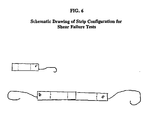
- a shear failure test for active sheets was developed using the devices depicted in Fig. 6 .
- Coarse fibered collagen sheets either activated with PEG or as normally prepared for the burst test were cut to 1 x 3 cm sizes (termed "strips").
- Plastic tabs or adhesive tape was secured over one end, covering a 1 cm square area of the strip.
- the plastic tabs were secured to the hide grindate strip with cyanoacrylate glue.
- a hole approximately 2 mm in diameter was pierced in the plastic tab or in the tape.
- Over a 1 cm square area of a collagen sheet was placed approximately 300 ⁇ l of pH 9.6 PC buffer.
- An active PEG/collagen sheet was then placed on the buffer wetted hide grindate and held with light pressure for 30 sec.
- the bonded surface was 1 cm square. Hooks were then placed through the holes at the end of each strip, and the bonded strips were suspended to a suitable support. To the lower hook were added metal washers (average weight per washer: 1.63 g) to incrementally increase the shearing force on the bonded surface. The weight required to pull the bonded surface apart was recorded. Variations in the nature of the bonding surfaces and bonding formulations were studied, including using control strips containing collagen sponge on the surface but no active PEG and also bonding of hide grindate strips with cyanoacrylate.
- test strip For bonding of strips with cyanoacrylate, the test strip was first moistened with PC buffer (200 ⁇ l for a 1 cm square area). Then a second strip coated with cyanoacrylate was pressed on top of the first. As with active PEG sheets, only moderate pressure was used to maintain apposition during the 30 sec bonding time.
- Acidic KN sheets and basic KN sheets were subjected to burst testing; 1 cm square pieces were placed over the test hide grindate sheet already wetted with PC buffer. Acidic KN sheets exhibited very low burst strengths (2 and 4 mm Hg). Basic KN sheets gave values similar to previous results with coated collagen sheets (324, 286, and 311 mm Hg).
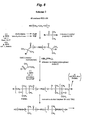
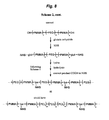
- This example describes the synthesis of a copolymer of polyethylene glycol (PEG) and poly-caprolactone (PCL) containing pendant N-hydroxy-succinimidyl groups.
- Di-functional PEG of variable mol. wt. is chosen and coupled to PCL by a controlled ring-opening polymerization to add PCL of fixed and chosen mol wt.
- the terminal -OH groups on the PCL are converted to glutaryl-succinimidyl (Abuchowski et al, Cancer Biochem 1984, 7, 175-180).
- Lysine ethyl ester is added to give a linear polymer with repeating PEG, PCL, and lysine segments.
- the lysine segment has a pendant carboxyl ester.
- the ester is hydrolized to give a free carboxyl group ( Nathan et al. Macromolecules 1992, 25, 4476-4484 ). Then, the carboxyl group is converted to glutaryl-succinimidyl (Abuchowski).
- PMMA polymethylmethacrylate
- the terminal contains a Br group which can be converted by standard organic chemical methods to an -OH group and further derivatized to glutaryl-NHS, reacted with lysine ethyl ester as in Scheme 1, and finally, the pendant carboxyl ethyl ester is hydrolyzed to free carboxylate and derivatized to glutaryl NHS, again to give an analogous copolymer with different physical properties (e.g., PMMA is known to have high tensile strength). Sufficient PEG functionality can be provided for water solubility. It may be necessary to build PEG-PCL-PMMA-lys repeating units, so that PCL will provide the necessary biodegradable linkages. Construction of such segments has been described in Hedrick.
- a diblock polymethacrylate is synthesized that contains a water-soluble block, such as hydroxyethylmethacrylate (HEMA) plus some amino and carboxyl containing monomers, such as amino-ethyl methacrylate (AEM) and mono-2-(acryloxy)ethylsuccinate (ARS), PLUS a water-insoluble block, such as poly-MMA-co-CEM.
- HEMA hydroxyethylmethacrylate
- AEM amino-ethyl methacrylate
- ARS mono-2-(acryloxy)ethylsuccinate
- the MMA-CEM block When this polymer is in water or a polar medium, the MMA-CEM block will avoid water and associate into separate domains. As outlined by Lie, et al ., it is possible to alter the ratio of water-soluble and water-insoluble blocks in the polymer to obtain different domain structures.
- the associated, water-avoiding domains may take up micellar (sphere-shaped), rod-like, or plate-like shapes as one includes more and more of the water-insoluble block in the polymer chain.
- micellar sphere-shaped
- rod-like, or plate-like shapes as one includes more and more of the water-insoluble block in the polymer chain.
- nanometer-scale rods bearing reactive amino groups bearing reactive amino groups.
- the dimensions of such rods are expected to be 1-30 nm in diameter and hundreds to thousands of nanometers long.
- Such rods should also function to reinforce polymer gel networks, just as methylated collagen is thought to reinforce the PEG network described elsewhere in this application.
- Methylated collagen was prepared by a modification of the procedure of Miyata et al, US Pat No 4,164,559 .
- a dispersion (3% w/v) of bovine pepsinized reconstituted collagen in 0.02M sodium phosphate, 0.13M NaCl, pH 7.2 (prepared by the method of McPherson et al., Collagen Rel. Res. 5, 119-135, 1985 ) was extruded onto a glass surface in a thin layer and dried at room temperature.
- Methanolic HCl was prepared by adding 104 g of anhydrous sodium sulfate and 10.7 ml of conc. HCl to 1300 ml of anhydrous methanol and allowed to stand tightly capped for 2 days.
- the dried collagen was cut into 1 x 5 cm strips and added to the methanolic HCl (200 ml methanolic HCl: 1 g dry collagen) in a sealed vessel and gently shaken at 20 deg. C. for 3 days.
- the methanolic HCl was carefully decanted off and the collagen was filtered on a sintered glass funnel to remove traces of methanol. Complete methanol removal was completed under vacuum overnight.
- the methylated collagen was re-solubilized in distilled water, and the pH was adjusted to 4 to 6. The amount of water was calculated to achieve a final protein concentration of about 31 mg/ml. Samples of solubilized methylated collagen at lower protein concentrations were re-concentrated by brief lyophilization to remove water.
- Solubilized methylated collagen was a completely transparent material, free of fibers or opalescence, having a viscous, gel-like consistency. Preparations which still contained hazy or insoluble components (due to incomplete methylation of the - collagen) performed poorly in adhesive formulations, producing gels that swelled too much and exhibited poor bond strength.
- a buffer either 134 mM sodium phosphate, 166 mM sodium carbonate, pH 8.9; or PC buffer, pH 9.6 was added to the surface.
- the buffer did not dilute the gel, but slowly soaked in. In 3-5 min, the surface of the gel was noticeably hardened.
- the gel plus substrate was allowed to cure for 20 min on the bench, then immersed in 50 mM sodium phosphate, 130 mM sodium chloride, pH 6.7, at 37 deg. C. for 2 hours or longer. Testing of bond strength was performed on a tensile apparatus.
- Vicryl is a copolymer of glycolic acid and lactic acid (90:10) sold as an implantable mesh by Ethicon Corporation (Polyglactin 910; Sommerville, New Jersey).
- fillers and their respective amounts added to 0.5 ml of adhesive were: glass wool, 9 mg; fibrous collagen (Semed F collagen, Kensey-Nash Corporation) 8 mg; Dexon S (poly glycolide lactide sutures, "4-0"), 10 pieces 1 cm long; elastin fibers (bovine neck ligament, 0.25 to 10 mm, Elastin Products Co., Inc, Owensville, MO), 40 mg; stainless steel fibers (Bekaert Fibre Technologies, Marietta, GA), 14-28 mg (Fibers were washed with water or 1N HCl to remove a polyvinylalcohol coating); polylactide/glycolide micro-particles, prepare from polylactide/glycolide (65:35,40-75,000 mol.
- hyaluronic acid rooster comb, Sigma Chemical Co., St. Louis, Missouri
- chitosan Sigma
- polylysine Sigma
- hyaluronic acid the formula was: COH102,50 mg, COH206, 50 mg, Vicryl, 14 mg, and 400 ⁇ l of hyaluronic acid, 2% (w/v) in water, pH adjusted to 4
- chitosan the same formula, with 400 ⁇ l of 1% chitosan (w/v) in water, pH 4-5.
- polylysine For polylysine, COH102, 40 mg, COH206, 30 mg, dissolved together in 50 ⁇ l water; polylysine hydrobromide, 330K, 40 mg dissolved in 60 ⁇ l water; the two solutions were mixed together, and 7 mg Vicryl fibrils were added.
- polylactide/glycolide particles prepared as above, were tested as a replacement for methylated collagen; 16.5 mg of particles were suspended in 300 ⁇ l of water and mixed with 50 mg COH102,50 mg COH206, and 14 mg Vicryl. All gels were cured with pH 9.6 buffer overlay, as described above.
- COH102 was dissolved in water at 20% (w/v); COH206 was dissolved at 20% in pH 8.9 buffer. The two solutions were rapidly mixed and extruded onto the site. Gelation occurred in - 40 sec.
- Bond strength of the adhesive formulations were applied to three types of tissue or tissue surrogates depicted in Fig. 10 .
- Collagen membranes Fig. 10a ; sausage casings; The SausageMaker, Inc., Buffalo, New York
- Bonding of membranes with a 1-3 mm overlap and a 1 cm width was performed by spreading the adhesive over the top of the sheets.
- Adhesive was allowed to cure 20 min on the bench and then immersed for 30 min to 2 hours at 37°C before pulling apart in an Instron model 4202 test apparatus (Canton, Massachusetts), using a 100N load cell.
- Table 10 below presents data on the addition of a different filler, Vicryl threads, to the COH102/206/ methylated collagen.
- substrates such as cowhide or carotid artery, the substrate did not tear, and the bond strength values were representative for the strength of the adhesive bond itself. Typically these bonds failed adhesively, that is, the tensile strength of the adhesive gel itself remained intact and was not the limiting factor.
- the bond strengths observed in Saline at 37°C again were comparable to those seen with cyanoacrylate for bonding the same set of tissue substrates (Table 9).
- Table 11 presents results of various filler materials. Testing was performed on cowhide strips, immersed for 2 hours in saline at 37°C. It appeared that filamentous materials were more effective than spheroidal particles. Bonding of the filler to the gel is very important for improvement of strength. Collagen-polyethylene glycol filaments were waxy and did not adhere to the gel; thus, despite their high aspect ratios, they were not effective fillers.
- Table 12 shows that none of the tested materials gave bond strengths comparable to the formula containing methylated collagen Table 12 Replacement of Methylated Collagen by Other Molecules Material Bond Strength (N force) hyaluronic acid 1.2, 1.3 chitosan 2.1, 1.7 polylysine 2.0 polylactide/glycolide particles, 2-4 ⁇ 0.6, 1.1
- Material 1 was formed from COH206 and hydrogen peroxide, which oxidizes adjacent sulfhydryl groups to a disulfide bond.
- a gel forms rapidly, and the gel can be supplemented with methylated collagen and Vicryl; however, after several hours in saline buffer, the gel becomes very weak; the Vicryl fibers are easily pulled out.
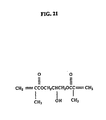
- Material 2 utilized the reaction of sulfhydryl groups from COH206 with the double bond of a 4-arm vinyl sulfone derivative of PEG (10K, Shearwater Polymers; Fig. 11 ).
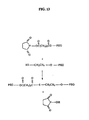
- Table 14 shows that the adhesives formed from COH102, COH206, and also COH204 form bonds using cowhide that persist for long times immersed in saline buffer at 37 deg. C. Such stringent hydrated conditions simulate the in vivo environment. Bond weakening was observed after more than 100 hours of hydration. The weakening of bond strength was thought to be due to hydrolysis of carboxyl-ester and thio-ester ( Fig. 13 ) network linkages.
- COH102 is a glutaryl-succinimidyl ester; even after reaction with the terminal carboxyl of the succinimidyl ester, there remains a carboxyl ester linking the glutaryl moiety to the main PEG chain; this bond, as well as the thio-ester bond, could hydrolyze.
- Table 15 presents bond strengths on cowhide strips of lower molecular weight PEG derivatives as adhesives, again supplemented with methylated collagen and Vicryl.
- GLYC-20HS is a tri-functional succinimidyl-succinate of a 3-armed PEG built from a glycerol core, 2600 mol. wt., NOF Corporation, Japan.
- COH201 is a tetra-amino, 4-armed PEG, 2000 mol. wt., Shearwater Polymers. The polymers were Vicryl filling appeared to have a small effect on bond strength.
- Methylated Collagen 500 ⁇ l (22 mg/ml in water 2707-30B); GLYC-20HS, 48 mg; COH201, 60 ⁇ l of 60% solution in water, titrated to pH 1-2 with 6M HCl; Vicryl threads, 26 mg.
- Table 15 Low Molecular Weight Analogues to COH102 and COH206 Materials Incubation Time (Hrs.) Bond strength (N force) GLYC-20HS/ COH201/Methyated Collagen 2 2.3, 0.64 GLYC-20HS/ COH201/Methylated Collagen/Vicryl threads 5 2.3, 3.3
- collagen mat was mounted on a brass platform and secured with a second brass ring threaded to the first.
- the lower brass platform was perforated and connected to a line filled with water. Water was driven by a syringe pump at 5 ml/min. A shunt line led to a pressure gauge.
- the test collagen mat was also perforated (2 mm diameter hole).
- the adhesive preparation (approx. 0.5 ml) was applied to the mat, covering the perforation. The adhesive was allowed to cure 3 min (or longer, if necessary to effect cure to a firm rubber), then water pressure was applied. The pressure necessary to rupture the seal was recorded.
- cyanoacrylate a small (4 x 4 mm) piece of collagen mat was glued to the lower perforated mat.
- the pressurized carotid artery model is illustrated in Fig. 16 .
- a porcine artery (Pel Freeze Biologicals, Rogers, Arkansas) was connected to a water line. Water was driven by a peristaltic pump. The end of the line had a flow restricter placed on it so that pressures up to 10 psi and more could be imposed on the line by increasing the pump speed.
- First the intact artery was placed in the system and subjected to water pressure, to assure that it would sustain desired pressures without leaking. Sections of artery devoid of side branches were preferred; leaking branches sometimes were clamped off to stop leaks. Slits approximately 2 mm long were cut transversely in the artery at four sites on a circumference ( Fig. 16 ).
- the cut artery then simulated an anastomosis to which stay sutures had been applied.
- the cut sites were then glued all around in an attempt to seal them.
- Buffer 134 mM sodium acid phospate and 166 mM sodium carbonate, pH 8.9 was applied to the artery tissue just before the glue was applied.
- the glue mass was further irrigated with a few drops of this buffer to cure the gel.
- the glued joint was subjected to water pressure. Pressure was increased at 1 psi increments and held at each pressure for 1 minute before increasing further. A leak was scored as positive if it was dripping faster than 1 drop every 10 seconds.
- Table 16 shows the burst strengths of COH102/206/methylated collagen/Vicryl on holes of varying diameters (on collagen membranes at 8 min cure time; cured with pH 8.9 buffer; 0.5 ml sample spread over hole with spatula).
- a hole with a diameter of 5 mm is the largest defect one might contemplate in a surgical application, since stay sutures would be used to close the largest defects, and the largest interval between such sutures was estimated to be 5 mm. Even with such large holes, the adhesive was able to sustain pressures near or above the maximum expected in hypertensive patients, i.e., 4 psi.
- the third data entry emphasizes the need to have good gel curing at the interface of gel and collagen disk.
- Table 17 presents data on closing large slit defects in carotid arteries (4 x 2 mm slits cut on 4-6 mm diameter artery).
- the COH102/206/methylated collagen/Vicryl formula was comparable to cyanoacrylate in performance. It should be noted that poorer results are seen on thinner arteries that stretch more under pressure.
- This class of adhesives was prepared from neat liquid reagents (no aqueous buffer added).
- the coupling reaction involved the addition of thiol groups into the activated double bond of acrylate is shown in Fig. 17 .
- Table 19 presents bond strength data on the reactive pair TPETA (tri-methylol propane ethoxylate tri-acrylate, mol. wt. 912, Aldrich Chemical Co.; Fig. 18 ) and TMPE-SH (tri-methylol-propane ethoxylate tri-thiol, mol. wt. 1140 ( Fig. 19 ), synthesized from trimethylol propane ethoxylate, mol. wt.
- TPETA/TMPE-SH/T403/Vicryl Amounts Mmoles reactive groups 160 mg TPETA 0.53 200 mg TMPE-SH 0.53 10 ⁇ l T403 0.03 15 mg Vicryl threads, 1-2 cm length
- TMPE-SH and T403 were mixed together, followed by addition of Vicryl threads, and finally the TPETA was added and mixed with the other components.
- the mixture was spread on wet test substrates with a spatula, as described above. The mixture became tacky in about 3 min, and was a firm gel in 5 min. Thereafter, the test mixture was immersed in saline as described above after 20 min. Gel time was freely controllable by the amount of T403 added.
- Table 20 shows that TPETA/TMPESH formulations, although they exhibited only modest bonding to cowhide strips during long immersion in physiological saline at 37°C, nevertheless exhibit persistent bonds after immersion in saline. This is thought to be due to the relative stability of the thio-ether bond, relative to bonds present in the COH102/206 gels.
- the material mol. ratios used were 0.59:0.52:0.031, 15mg for TPETA:TMPE-SH:T403:Vicryl, mg/0.39 ml.
- the adhesive formulations described here usually fail adhesively - their cohesive strength appears not to be the limiting factor.
- the data below compare the tensile strengths of the adhesive itself to other adhesives and hydrogels.
- the adhesive was formed into a roughly cylindrical shape and allowed to cure on a polystyrene weighing boat for approximately 20 min at room temperature. Then the sample was immersed in water for 2-21/2 hours at 37°C. The sample was removed from the water, blotted, and tape was affixed to either end with cyanoacrylate glue. The sample was then mounted in an Instron tensile tester, gripped at either end by the tape, and extended to failure. The ultimate tensile strength in N/cm 2 was noted, relative to the cross-sectional area of the sample at the break point.
- ⁇ L L-L o
- L the sample length at time t
- L o the original sample length.
- the data shown in Table 21 show that the adhesives containing a tensile strength enhancer exhibit higher tensile strength than hydrogels without such an enhancer.
- the acrylate-thiol class of adhesives such as TPT-SH: trimethylol propane tris (3-mercaptopropionate), Fig. 20 ) containing Vicryl had higher tensile strengths than cyanoacrylate alone.
- Formulations without a tensile strength enhancer had tensile strengths of approximately 8 to 20 N/cm 2 .
- COH 102/206 (20%) is a simple hydrogel - it had a much lower tensile strength than the corresponding formulation containing methylated collagen and Vicryl. Measurements were taken after 2 hr immersion in saline at 37°C.
- pHEMA poly hydroxymethacrylate
- Santin, M., Huang, S.J., Iannace, S., Ambrosio, L., Nicolais, L., and Peluso, G. "Synthesis and characterization of a new interpenetrated poly (2-hydroxy ethylmethacrylate)-gelatin composite polymer", Biomaterials 17, 1459-1467 .
- All the polymers prepared were of the poly-acrylate/methacrylate family. Following a procedure outlined in Sun, Y-M, et al, "Composite poly(2-hydroxyethyl methacrylate) membranes as rate-controlling barriers for transdermal applications", Biomaterials 18, 527-533,1997 , linear polymers were prepared.
- the monomers included in the polymerization were HEMA (hydroxy-ethyl-methacrylate), MMA(methyl methacrylate), ARS (mono-2(acryloxy)ethyl succinate), and AEM (2-amino-ethyl-methacrylate) ( Figure 14 ).
- Polymerization to form Poly-HEMA with carboxyl and amino side chains was carried out for 4 hrs at 75°C with the following ingredients: HEMA, 1260 ⁇ l; ARS, 240 ⁇ l; AEM, 348 mg; azobis-isobutyro-nitrile, 54 mg; and dry ethanol, 34 ml. Precipitation was carried out with dry petrolium ether.
- the polymerization was initiated with azobis-isobutyro-nitrile in dry ethanol, with vigorous stirring.
- AEM which is poorly soluble in ethanol, was first dissolved in water (50% w/v), the solution adjusted to pH 2-4 with HCl, and added to the solution of the other constituents in ethanol. The entire reaction was flushed with nitrogen and conducted in a screw-cap bottle in a water bath. Free-radical inhibitors in HEMA and MMA were removed by passing these reagents through a column of aluminum oxide 90 (Active neutral, activity 1, 70-230 mesh, EM Science, Gibbstown, New Jersey) just before addition to the reaction mixture.
- the solution was cooled, filtered to remove insoluble AEM and other particulates, and the polymer was precipitated by adding 10 ml of petroleum ether.
- the polymer coagulated on the surface of the glass beaker, and the spent ethanol solution was decanted off.
- the polymer was dried under vacuum for several days.
- Table 22 shows that polymers apparently were obtained, and for the first two samples in the table, gels were rapidly formed with COH102, suggesting the presence of AEM moieties in the polymer chain.
- the relative amount of amino and carboxyl functionality on the polymer was estimated from a titration curve. Approximately 1 AEM subunit and 2 ARS subunits were present for each 20 HEMA units along the chain. See Fig. 23.
Landscapes
- Health & Medical Sciences (AREA)
- Chemical & Material Sciences (AREA)
- Chemical Kinetics & Catalysis (AREA)
- Organic Chemistry (AREA)
- Polymers & Plastics (AREA)
- Medicinal Chemistry (AREA)
- Epidemiology (AREA)
- Surgery (AREA)
- General Health & Medical Sciences (AREA)
- Public Health (AREA)
- Veterinary Medicine (AREA)
- Animal Behavior & Ethology (AREA)
- Life Sciences & Earth Sciences (AREA)
- Materials Engineering (AREA)
- Engineering & Computer Science (AREA)
- Dispersion Chemistry (AREA)
- General Chemical & Material Sciences (AREA)
- Materials For Medical Uses (AREA)
- Compositions Of Macromolecular Compounds (AREA)
- Polymers With Sulfur, Phosphorus Or Metals In The Main Chain (AREA)
- Polymerisation Methods In General (AREA)
- Transition And Organic Metals Composition Catalysts For Addition Polymerization (AREA)
Applications Claiming Priority (2)
| Application Number | Priority Date | Filing Date | Title |
|---|---|---|---|
| US15127399P | 1999-08-27 | 1999-08-27 | |
| EP00959535A EP1218437B1 (fr) | 1999-08-27 | 2000-08-28 | Compositions formant des reseaux de polymeres interpenetrants, a utiliser en tant produits de scellement medicaux a haute resistance |
Related Parent Applications (2)
| Application Number | Title | Priority Date | Filing Date |
|---|---|---|---|
| EP00959535.6 Division | 2000-08-28 | ||
| EP00959535A Division EP1218437B1 (fr) | 1999-08-27 | 2000-08-28 | Compositions formant des reseaux de polymeres interpenetrants, a utiliser en tant produits de scellement medicaux a haute resistance |
Publications (3)
| Publication Number | Publication Date |
|---|---|
| EP2093245A2 true EP2093245A2 (fr) | 2009-08-26 |
| EP2093245A3 EP2093245A3 (fr) | 2009-09-09 |
| EP2093245B1 EP2093245B1 (fr) | 2012-02-22 |
Family
ID=22538029
Family Applications (2)
| Application Number | Title | Priority Date | Filing Date |
|---|---|---|---|
| EP00959535A Expired - Lifetime EP1218437B1 (fr) | 1999-08-27 | 2000-08-28 | Compositions formant des reseaux de polymeres interpenetrants, a utiliser en tant produits de scellement medicaux a haute resistance |
| EP09004765A Expired - Lifetime EP2093245B1 (fr) | 1999-08-27 | 2000-08-28 | Dispositif biocompatible à base de polymère |
Family Applications Before (1)
| Application Number | Title | Priority Date | Filing Date |
|---|---|---|---|
| EP00959535A Expired - Lifetime EP1218437B1 (fr) | 1999-08-27 | 2000-08-28 | Compositions formant des reseaux de polymeres interpenetrants, a utiliser en tant produits de scellement medicaux a haute resistance |
Country Status (10)
| Country | Link |
|---|---|
| US (1) | US6495127B1 (fr) |
| EP (2) | EP1218437B1 (fr) |
| JP (3) | JP2003508564A (fr) |
| AT (2) | ATE434010T1 (fr) |
| AU (1) | AU7084300A (fr) |
| DE (1) | DE60042414D1 (fr) |
| DK (2) | DK2093245T3 (fr) |
| ES (1) | ES2383122T3 (fr) |
| PT (1) | PT2093245E (fr) |
| WO (1) | WO2001016210A1 (fr) |
Cited By (5)
| Publication number | Priority date | Publication date | Assignee | Title |
|---|---|---|---|---|
| EP2821436A1 (fr) * | 2013-07-01 | 2015-01-07 | Allnex Belgium, S.A. | Composition composite transparente |
| US11739166B2 (en) | 2020-07-02 | 2023-08-29 | Davol Inc. | Reactive polysaccharide-based hemostatic agent |
| US12151045B2 (en) | 2020-12-28 | 2024-11-26 | Davol Inc. | Reactive dry powdered hemostatic materials comprising a protein and a multifunctionalized modified polyethylene glycol based crosslinking agent |
| US12161777B2 (en) | 2020-07-02 | 2024-12-10 | Davol Inc. | Flowable hemostatic suspension |
| US12629445B2 (en) | 2022-09-12 | 2026-05-19 | Bard Peripheral Vascular, Inc. | Reactive hydrogel forming formulations and related methods, including methods of preparation |
Families Citing this family (229)
| Publication number | Priority date | Publication date | Assignee | Title |
|---|---|---|---|---|
| US8795332B2 (en) | 2002-09-30 | 2014-08-05 | Ethicon, Inc. | Barbed sutures |
| US6241747B1 (en) | 1993-05-03 | 2001-06-05 | Quill Medical, Inc. | Barbed Bodily tissue connector |
| US6833408B2 (en) * | 1995-12-18 | 2004-12-21 | Cohesion Technologies, Inc. | Methods for tissue repair using adhesive materials |
| PT876165E (pt) * | 1995-12-18 | 2006-10-31 | Angiotech Biomaterials Corp | Composicoes de polimeros reticulados e processos para a sua utilizacao |
| US6458889B1 (en) * | 1995-12-18 | 2002-10-01 | Cohesion Technologies, Inc. | Compositions and systems for forming crosslinked biomaterials and associated methods of preparation and use |
| US7883693B2 (en) | 1995-12-18 | 2011-02-08 | Angiodevice International Gmbh | Compositions and systems for forming crosslinked biomaterials and methods of preparation of use |
| US6566406B1 (en) | 1998-12-04 | 2003-05-20 | Incept, Llc | Biocompatible crosslinked polymers |
| US8003705B2 (en) | 1996-09-23 | 2011-08-23 | Incept Llc | Biocompatible hydrogels made with small molecule precursors |
| US5931855A (en) | 1997-05-21 | 1999-08-03 | Frank Hoffman | Surgical methods using one-way suture |
| US6830756B2 (en) * | 1998-11-06 | 2004-12-14 | Neomend, Inc. | Systems, methods, and compositions for achieving closure of vascular puncture sites |
| US6899889B1 (en) * | 1998-11-06 | 2005-05-31 | Neomend, Inc. | Biocompatible material composition adaptable to diverse therapeutic indications |
| US6652883B2 (en) | 2000-03-13 | 2003-11-25 | Biocure, Inc. | Tissue bulking and coating compositions |
| DE60130544T2 (de) | 2000-03-13 | 2008-06-26 | Biocure, Inc. | Embolische zusammensetzungen |
| US20050165428A1 (en) * | 2000-09-25 | 2005-07-28 | Franco Kenneth L. | Absorable surgical structure |
| CA2423061A1 (fr) * | 2000-09-25 | 2002-03-28 | Cohesion Technologies, Inc. | Stents et obturateurs anastomotiques resorbables et leur utilisation chez des patients |
| AU9576501A (en) * | 2000-10-23 | 2002-05-06 | Tissuemed Ltd | Self-adhesive hydratable matrix for topical therapeutic use |
| EP2522304B1 (fr) * | 2001-03-23 | 2014-01-08 | Histogenics Corporation | Composition et procédés pour la production de tissus biologiques et de constructions tissulaires |
| US7056331B2 (en) | 2001-06-29 | 2006-06-06 | Quill Medical, Inc. | Suture method |
| EP2462939A3 (fr) * | 2001-07-31 | 2012-08-15 | Tyco Healthcare Group LP | Composés et compositions adhésives bioabsorbables |
| US6848152B2 (en) | 2001-08-31 | 2005-02-01 | Quill Medical, Inc. | Method of forming barbs on a suture and apparatus for performing same |
| US6863678B2 (en) | 2001-09-19 | 2005-03-08 | Advanced Cardiovascular Systems, Inc. | Catheter with a multilayered shaft section having a polyimide layer |
| US6875427B1 (en) * | 2001-10-09 | 2005-04-05 | Tissue Adhesive Technologies, Inc. | Light energized tissue adhesive |
| US6773699B1 (en) * | 2001-10-09 | 2004-08-10 | Tissue Adhesive Technologies, Inc. | Light energized tissue adhesive conformal patch |
| US6939364B1 (en) * | 2001-10-09 | 2005-09-06 | Tissue Adhesive Technologies, Inc. | Composite tissue adhesive |
| US6780840B1 (en) * | 2001-10-09 | 2004-08-24 | Tissue Adhesive Technologies, Inc. | Method for making a light energized tissue adhesive |
| EP1446453A1 (fr) * | 2001-11-07 | 2004-08-18 | Universität Zürich | Matrice synthetique de croissance cellulaire interne et de regeneration tissulaire controlees |
| US7037291B2 (en) * | 2001-12-04 | 2006-05-02 | Advanced Cardiovascular Systems, Inc. | Catheter shaft junction having a polymeric reinforcing member with a high glass transition temperature |
| US7923431B2 (en) | 2001-12-21 | 2011-04-12 | Ferrosan Medical Devices A/S | Haemostatic kit, a method of preparing a haemostatic agent and a method of promoting haemostatis |
| EP1469893A1 (fr) * | 2002-02-01 | 2004-10-27 | Sustech GmbH & Co. KG | Prepolymeres en etoile pour la production de revetements ultraminces formant des hydrogels |
| US8282912B2 (en) | 2002-03-22 | 2012-10-09 | Kuros Biosurgery, AG | Compositions for tissue augmentation |
| US6773450B2 (en) | 2002-08-09 | 2004-08-10 | Quill Medical, Inc. | Suture anchor and method |
| US7846141B2 (en) | 2002-09-03 | 2010-12-07 | Bluesky Medical Group Incorporated | Reduced pressure treatment system |
| US20040088003A1 (en) | 2002-09-30 | 2004-05-06 | Leung Jeffrey C. | Barbed suture in combination with surgical needle |
| US8100940B2 (en) | 2002-09-30 | 2012-01-24 | Quill Medical, Inc. | Barb configurations for barbed sutures |
| JP4809605B2 (ja) * | 2002-10-28 | 2011-11-09 | タイコ ヘルスケア グループ エルピー | 生体吸収性接着剤化合物 |
| GB0224986D0 (en) | 2002-10-28 | 2002-12-04 | Smith & Nephew | Apparatus |
| BR0317237A (pt) | 2002-12-11 | 2005-11-01 | Ferrosan As | Dispositivo para amostragem ou coleta, kit, usos de um dispositivo e de um kit, e, métodos para diminuir a quantidade de um marcador em uma área de amostra, para amostrar de modo qualitativo ou quantitativo uma área quanto ao teor de um marcador e para cultivar microorganismos ou células de mamìferos coletados |
| JP4585743B2 (ja) * | 2003-02-13 | 2010-11-24 | 独立行政法人物質・材料研究機構 | 生体内分解吸収性粘着性医用材料 |
| ATE455563T1 (de) | 2003-04-04 | 2010-02-15 | Tissuemed Ltd | Zusammensetzungen für die gewebeadhäsion |
| US7624487B2 (en) | 2003-05-13 | 2009-12-01 | Quill Medical, Inc. | Apparatus and method for forming barbs on a suture |
| US20050090804A1 (en) * | 2003-10-22 | 2005-04-28 | Trivascular, Inc. | Endoluminal prosthesis endoleak management |
| WO2005065079A2 (fr) * | 2003-11-10 | 2005-07-21 | Angiotech International Ag | Implants medicaux et agents inducteurs de fibrose |
| US20050100712A1 (en) * | 2003-11-12 | 2005-05-12 | Simmons Blake A. | Polymerization welding and application to microfluidics |
| US20050125033A1 (en) * | 2003-12-04 | 2005-06-09 | Mcnally-Heintzelman Karen M. | Wound closure apparatus |
| US7384984B2 (en) * | 2003-12-10 | 2008-06-10 | 3M Innovative Properties Company | Reactive hydrophilic oligomers |
| JP4912565B2 (ja) * | 2003-12-15 | 2012-04-11 | 独立行政法人物質・材料研究機構 | 生体内分解吸収性粘着性医用材料 |
| ATE475434T1 (de) | 2004-01-30 | 2010-08-15 | Ferrosan As | Hämostatische sprays und zusammensetzungen |
| US7909805B2 (en) | 2004-04-05 | 2011-03-22 | Bluesky Medical Group Incorporated | Flexible reduced pressure treatment appliance |
| US10058642B2 (en) | 2004-04-05 | 2018-08-28 | Bluesky Medical Group Incorporated | Reduced pressure treatment system |
| US8062272B2 (en) | 2004-05-21 | 2011-11-22 | Bluesky Medical Group Incorporated | Flexible reduced pressure treatment appliance |
| GB0409446D0 (en) | 2004-04-28 | 2004-06-02 | Smith & Nephew | Apparatus |
| WO2006083260A2 (fr) | 2004-04-28 | 2006-08-10 | Angiotech Biomaterials Corporation | Compositions et systemes pour la formation de biomateriaux reticules et procedes associes de preparation et d'utilisation |
| CN101431947A (zh) | 2004-05-14 | 2009-05-13 | 奎尔医疗公司 | 缝合方法和器械 |
| WO2005115489A2 (fr) * | 2004-05-24 | 2005-12-08 | Genzyme Corporation | Compositions polymeres adherentes |
| US7282584B2 (en) | 2004-06-16 | 2007-10-16 | Straumann Holding Ag | Methylene blue |
| ATE385423T1 (de) | 2004-06-16 | 2008-02-15 | Straumann Holding Ag | Abdeckmembran |
| AU2005260646A1 (en) | 2004-06-29 | 2006-01-12 | Bruktawit T. Asfaw | Biomaterial |
| RU2369408C2 (ru) | 2004-07-09 | 2009-10-10 | Ферросан А/С | Гемостатическая композиция, включающая гиалуроновую кислоту |
| CA2575943A1 (fr) * | 2004-08-03 | 2006-02-09 | Tissuemed Limited | Materiaux adhesifs tissulaires |
| US8303973B2 (en) | 2004-09-17 | 2012-11-06 | Angiotech Pharmaceuticals (Us), Inc. | Multifunctional compounds for forming crosslinked biomaterials and methods of preparation and use |
| EP1796746B1 (fr) * | 2004-10-07 | 2011-05-04 | E.I. Du Pont De Nemours And Company | Adhesif tissulaire polymere a base de polysaccharide destine a un usage medical |
| US8790632B2 (en) | 2004-10-07 | 2014-07-29 | Actamax Surgical Materials, Llc | Polymer-based tissue-adhesive form medical use |
| US20060159650A1 (en) * | 2005-01-14 | 2006-07-20 | Bacterin, Inc. | Composition and method for covalently coupling an antithrombotic substance and a hydrophilic polymer |
| JP2008530305A (ja) | 2005-02-09 | 2008-08-07 | タイコ ヘルスケア グループ エルピー | 合成封止剤 |
| US20060222596A1 (en) | 2005-04-01 | 2006-10-05 | Trivascular, Inc. | Non-degradable, low swelling, water soluble radiopaque hydrogel polymer |
| US20060247789A1 (en) * | 2005-04-29 | 2006-11-02 | Sdgi Holdings, Inc. | Method and device for stabilization of prosthetic devices |
| US20090177226A1 (en) * | 2005-05-05 | 2009-07-09 | Jon Reinprecht | Bioabsorbable Surgical Compositions |
| US8044234B2 (en) | 2005-05-05 | 2011-10-25 | Tyco Healthcare Group Lp | Bioabsorbable surgical composition |
| US20100100124A1 (en) * | 2005-05-05 | 2010-04-22 | Tyco Healthcare Group Lp | Bioabsorbable surgical composition |
| US8679536B2 (en) | 2005-08-24 | 2014-03-25 | Actamax Surgical Materials, Llc | Aldol-crosslinked polymeric hydrogel adhesives |
| US8679537B2 (en) | 2005-08-24 | 2014-03-25 | Actamaz Surgical Materials, LLC | Methods for sealing an orifice in tissue using an aldol-crosslinked polymeric hydrogel adhesive |
| WO2007026362A2 (fr) * | 2005-09-02 | 2007-03-08 | Colbar Lifescience Ltd. | Matrices de polysaccharides et de proteines reticulees et leurs procedes de preparation |
| WO2007067623A2 (fr) | 2005-12-06 | 2007-06-14 | Tyco Healthcare Group Lp | Adhesifs et agents de scellement tissulaires biocompatibles |
| EP1957089A4 (fr) | 2005-12-06 | 2012-06-20 | Tyco Healthcare | Reticulation par carbodiimide de polyethyleneglycols fonctionnalises |
| WO2007067621A2 (fr) * | 2005-12-06 | 2007-06-14 | Tyco Healthcare Group Lp | Compositions chirurgicales biocompatibles |
| WO2007067625A2 (fr) | 2005-12-06 | 2007-06-14 | Tyco Healthcare Group Lp | Composition chirurgicale bioabsorbable |
| EP1960469B1 (fr) * | 2005-12-06 | 2016-07-13 | Covidien LP | Composes bioabsorbables et compositions les contenant |
| US8449714B2 (en) | 2005-12-08 | 2013-05-28 | Covidien Lp | Biocompatible surgical compositions |
| US8690957B2 (en) | 2005-12-21 | 2014-04-08 | Warsaw Orthopedic, Inc. | Bone graft composition, method and implant |
| CA2635374C (fr) | 2006-01-11 | 2015-12-08 | Hyperbranch Medical Technology, Inc. | Gels reticules comprenant des polyalkylene-imines et utilisation de ceux-ci en tant que dispositifs medicaux |
| EP1985283A4 (fr) * | 2006-01-18 | 2011-08-03 | Next21 Kk | Composition formant gel a usage medical, dispositifs d'application de la composition et vehicule reglant la liberation de medicament |
| CA2573472A1 (fr) * | 2006-01-23 | 2007-07-23 | Tyco Healthcare Group Lp | Compositions hemostatiques biodegradables |
| KR20080102152A (ko) | 2006-02-03 | 2008-11-24 | 티슈메드 리미티드 | 조직-접착 물질 |
| AU2007215382B2 (en) | 2006-02-14 | 2013-11-14 | Commonwealth Scientific And Industrial Research Organisation | Joining and/or sealing tissues through photo-activated cross-linking of matrix proteins |
| WO2007098066A2 (fr) * | 2006-02-16 | 2007-08-30 | Stanford University | Contention cardiaque en polymère |
| AU2007221315B2 (en) * | 2006-02-22 | 2013-03-14 | Covidien Lp | Biodegradable phosphoester polyamines |
| US20090018575A1 (en) * | 2006-03-01 | 2009-01-15 | Tissuemed Limited | Tissue-adhesive formulations |
| US8795709B2 (en) | 2006-03-29 | 2014-08-05 | Incept Llc | Superabsorbent, freeze dried hydrogels for medical applications |
| AU2007243483B2 (en) | 2006-04-24 | 2012-07-26 | Incept, Llc | Protein crosslinkers, crosslinking methods and applications thereof |
| US7872068B2 (en) | 2006-05-30 | 2011-01-18 | Incept Llc | Materials formable in situ within a medical device |
| US8382738B2 (en) | 2006-06-30 | 2013-02-26 | Abbott Cardiovascular Systems, Inc. | Balloon catheter tapered shaft having high strength and flexibility and method of making same |
| US7906066B2 (en) | 2006-06-30 | 2011-03-15 | Abbott Cardiovascular Systems, Inc. | Method of making a balloon catheter shaft having high strength and flexibility |
| US8685421B2 (en) | 2006-07-07 | 2014-04-01 | Surmodics, Inc. | Beaded wound spacer device |
| US7732190B2 (en) * | 2006-07-31 | 2010-06-08 | Advanced Cardiovascular Systems, Inc. | Modified two-component gelation systems, methods of use and methods of manufacture |
| TWI436793B (zh) * | 2006-08-02 | 2014-05-11 | 巴克斯特國際公司 | 快速作用之乾密封膠及其使用和製造方法 |
| US9005672B2 (en) | 2006-11-17 | 2015-04-14 | Abbott Cardiovascular Systems Inc. | Methods of modifying myocardial infarction expansion |
| US20080255612A1 (en) | 2007-04-13 | 2008-10-16 | Angiotech Pharmaceuticals, Inc. | Self-retaining systems for surgical procedures |
| EP2136850B1 (fr) | 2007-04-13 | 2012-02-01 | Kuros Biosurgery AG | Agent de scellement tissulaire polymère |
| US20080293910A1 (en) * | 2007-05-24 | 2008-11-27 | Tyco Healthcare Group Lp | Adhesive formulatiions |
| US20110123476A1 (en) * | 2007-05-24 | 2011-05-26 | Mbiya Kapiamba | Adhesive Formulations |
| US7858835B2 (en) * | 2007-06-27 | 2010-12-28 | Tyco Healthcare Group Lp | Foam control for synthetic adhesive/sealant |
| US9125807B2 (en) | 2007-07-09 | 2015-09-08 | Incept Llc | Adhesive hydrogels for ophthalmic drug delivery |
| EP2550978B1 (fr) | 2007-09-27 | 2014-04-30 | Ethicon, LLC | Appareil pour de formation de barbes sur une suture |
| US8500947B2 (en) | 2007-11-15 | 2013-08-06 | Covidien Lp | Speeding cure rate of bioadhesives |
| WO2009067711A2 (fr) | 2007-11-21 | 2009-05-28 | T.J. Smith & Nephew, Limited | Dispositif d'aspiration et habillage |
| CN104382691B (zh) | 2007-11-21 | 2018-08-31 | 史密夫及内修公开有限公司 | 伤口包敷物 |
| GB0722820D0 (en) | 2007-11-21 | 2008-01-02 | Smith & Nephew | Vacuum assisted wound dressing |
| GB0723875D0 (en) | 2007-12-06 | 2008-01-16 | Smith & Nephew | Wound management |
| US20130096518A1 (en) | 2007-12-06 | 2013-04-18 | Smith & Nephew Plc | Wound filling apparatuses and methods |
| US11253399B2 (en) | 2007-12-06 | 2022-02-22 | Smith & Nephew Plc | Wound filling apparatuses and methods |
| US8403885B2 (en) | 2007-12-17 | 2013-03-26 | Abbott Cardiovascular Systems Inc. | Catheter having transitioning shaft segments |
| US8299316B2 (en) | 2007-12-18 | 2012-10-30 | Ethicon, Inc. | Hemostatic device |
| US8629314B2 (en) * | 2007-12-18 | 2014-01-14 | Ethicon, Inc. | Surgical barriers having adhesion inhibiting properties |
| US8916077B1 (en) | 2007-12-19 | 2014-12-23 | Ethicon, Inc. | Self-retaining sutures with retainers formed from molten material |
| BRPI0820129B8 (pt) | 2007-12-19 | 2021-06-22 | Angiotech Pharm Inc | processo de formação de uma sutura autorretentora e sutura autorretentora |
| US8118834B1 (en) | 2007-12-20 | 2012-02-21 | Angiotech Pharmaceuticals, Inc. | Composite self-retaining sutures and method |
| WO2009097556A2 (fr) | 2008-01-30 | 2009-08-06 | Angiotech Pharmaceuticals, Inc. | Appareil et procédé de formation de sutures auto-statiques |
| US8615856B1 (en) | 2008-01-30 | 2013-12-31 | Ethicon, Inc. | Apparatus and method for forming self-retaining sutures |
| JP5644036B2 (ja) * | 2008-02-08 | 2014-12-24 | 三菱レイヨン株式会社 | ハイドロゲルおよびその製造方法 |
| WO2009105663A2 (fr) | 2008-02-21 | 2009-08-27 | Angiotech Pharmaceuticals, Inc. | Procédé et appareil permettant de relever des éléments de rétention sur des sutures autorétentives |
| US8216273B1 (en) | 2008-02-25 | 2012-07-10 | Ethicon, Inc. | Self-retainers with supporting structures on a suture |
| US8641732B1 (en) | 2008-02-26 | 2014-02-04 | Ethicon, Inc. | Self-retaining suture with variable dimension filament and method |
| GB0803564D0 (en) | 2008-02-27 | 2008-04-02 | Smith & Nephew | Fluid collection |
| WO2009109194A2 (fr) | 2008-02-29 | 2009-09-11 | Ferrosan A/S | Dispositif pour la promotion de l’homéostasie et/ou la cicatrisation des plaies |
| US8128983B2 (en) | 2008-04-11 | 2012-03-06 | Abbott Cardiovascular Systems Inc. | Coating comprising poly(ethylene glycol)-poly(lactide-glycolide-caprolactone) interpenetrating network |
| WO2009129251A2 (fr) | 2008-04-15 | 2009-10-22 | Angiotech Pharmaceuticals, Inc. | Sutures a auto-retenue pourvues d’elements de retenue bidirectionnels ou unidirectionnels |
| AU2009240662B2 (en) * | 2008-04-22 | 2015-07-02 | Angiotech Pharmaceuticals, Inc. | Biocompatible crosslinked hydrogels, drug-loaded hydrogels and methods of using the same |
| US8263704B2 (en) | 2008-04-23 | 2012-09-11 | Tyco Healthcare Group Lp | Bioabsorbable surgical composition |
| WO2009136824A1 (fr) | 2008-05-06 | 2009-11-12 | Calignum Technologies Ab | Imprégnation du bois à l'aide de mélanges de polymérisation thiol-ène |
| MX339174B (es) | 2008-11-03 | 2016-05-12 | Ethicon Llc | Longitud de sutura autorretenible y metodo y dispositivo para su uso. |
| CN105833337B (zh) | 2008-11-19 | 2020-01-21 | 阿克塔马克斯手术器材有限责任公司 | 纤维组织封合剂及其使用方法 |
| US8052638B2 (en) | 2008-11-26 | 2011-11-08 | Abbott Cardiovascular Systems, Inc. | Robust multi-layer balloon |
| US8444608B2 (en) | 2008-11-26 | 2013-05-21 | Abbott Cardivascular Systems, Inc. | Robust catheter tubing |
| US20120122949A1 (en) * | 2008-12-19 | 2012-05-17 | The University Of Tokyo | Ultra-high strength injectable hydrogel and process for producing the same |
| JP5890182B2 (ja) | 2009-02-12 | 2016-03-22 | インセプト エルエルシー | ヒドロゲルプラグによる薬物送達 |
| GB0902816D0 (en) | 2009-02-19 | 2009-04-08 | Smith & Nephew | Fluid communication path |
| US8349987B2 (en) * | 2009-02-19 | 2013-01-08 | Covidien Lp | Adhesive formulations |
| US20100226959A1 (en) * | 2009-03-04 | 2010-09-09 | Warsaw Orthopedic, Inc. | Matrix that prolongs growth factor release |
| US9463004B2 (en) | 2009-05-04 | 2016-10-11 | Incept, Llc. | Biomaterials for track and puncture closure |
| US9463260B2 (en) * | 2009-06-29 | 2016-10-11 | Covidien Lp | Self-sealing compositions |
| BR112012014773A2 (pt) * | 2009-12-16 | 2015-11-03 | Baxter Healthcare Sa | esponja de compósito hemostática, método para fabricar uma esponja de compósito hemostática, e, uso da referida esponja |
| WO2011090628A2 (fr) | 2009-12-29 | 2011-07-28 | Angiotech Pharmaceuticals, Inc. | Sutures bidirectionnelles d'auto-retenue ayant des indices marqués au laser et/ou non marqués au laser et procédés associés |
| SA111320355B1 (ar) | 2010-04-07 | 2015-01-08 | Baxter Heathcare S A | إسفنجة لايقاف النزف |
| EP2380920A1 (fr) | 2010-04-22 | 2011-10-26 | QGel SA | Formulation de précurseur d'hydrogel et son procédé de fabrication |
| US9061095B2 (en) | 2010-04-27 | 2015-06-23 | Smith & Nephew Plc | Wound dressing and method of use |
| KR101883143B1 (ko) | 2010-05-04 | 2018-07-31 | 에티컨, 엘엘씨 | 자가-유지형 봉합재를 생성하기 위한 레이저 커팅 시스템 및 방법 |
| US8858577B2 (en) | 2010-05-19 | 2014-10-14 | University Of Utah Research Foundation | Tissue stabilization system |
| US8945156B2 (en) | 2010-05-19 | 2015-02-03 | University Of Utah Research Foundation | Tissue fixation |
| CA2801118C (fr) | 2010-06-01 | 2016-01-05 | Baxter International Inc. | Procede de fabrication de compositions hemostatiques sous forme seche et stable |
| AU2011265232B2 (en) | 2010-06-11 | 2015-01-22 | Ethicon Llc | Suture delivery tools for endoscopic and robot-assisted surgery and methods |
| US9232805B2 (en) | 2010-06-29 | 2016-01-12 | Biocure, Inc. | In-situ forming hydrogel wound dressings containing antimicrobial agents |
| GB201011173D0 (en) | 2010-07-02 | 2010-08-18 | Smith & Nephew | Provision of wound filler |
| US8961501B2 (en) | 2010-09-17 | 2015-02-24 | Incept, Llc | Method for applying flowable hydrogels to a cornea |
| CA2816326C (fr) | 2010-11-03 | 2020-12-15 | Ethicon, Llc | Sutures a retenue automatique et elution de medicament et procedes associes |
| MX342984B (es) | 2010-11-09 | 2016-10-19 | Ethicon Llc | Suturas de autorretencion de emergencia y envasado de estas. |
| GB201020005D0 (en) | 2010-11-25 | 2011-01-12 | Smith & Nephew | Composition 1-1 |
| CN107033596A (zh) | 2010-11-25 | 2017-08-11 | 史密夫及内修公开有限公司 | 组合物i – ii及其产品和用途 |
| US8852214B2 (en) | 2011-02-04 | 2014-10-07 | University Of Utah Research Foundation | System for tissue fixation to bone |
| WO2012129534A2 (fr) | 2011-03-23 | 2012-09-27 | Angiotech Pharmaceuticals, Inc. | Sutures à boucle variable autostatique |
| WO2012162661A1 (fr) | 2011-05-26 | 2012-11-29 | Abbott Cardiovascular Systems Inc. | Bout traversant pour un cathéter |
| US20130172931A1 (en) | 2011-06-06 | 2013-07-04 | Jeffrey M. Gross | Methods and devices for soft palate tissue elevation procedures |
| US8998059B2 (en) | 2011-08-01 | 2015-04-07 | Ethicon Endo-Surgery, Inc. | Adjunct therapy device having driver with cavity for hemostatic agent |
| US9492170B2 (en) | 2011-08-10 | 2016-11-15 | Ethicon Endo-Surgery, Inc. | Device for applying adjunct in endoscopic procedure |
| US8998060B2 (en) | 2011-09-13 | 2015-04-07 | Ethicon Endo-Surgery, Inc. | Resistive heated surgical staple cartridge with phase change sealant |
| US9101359B2 (en) | 2011-09-13 | 2015-08-11 | Ethicon Endo-Surgery, Inc. | Surgical staple cartridge with self-dispensing staple buttress |
| US9999408B2 (en) | 2011-09-14 | 2018-06-19 | Ethicon Endo-Surgery, Inc. | Surgical instrument with fluid fillable buttress |
| US9254180B2 (en) | 2011-09-15 | 2016-02-09 | Ethicon Endo-Surgery, Inc. | Surgical instrument with staple reinforcement clip |
| US9125649B2 (en) | 2011-09-15 | 2015-09-08 | Ethicon Endo-Surgery, Inc. | Surgical instrument with filled staple |
| US8814025B2 (en) | 2011-09-15 | 2014-08-26 | Ethicon Endo-Surgery, Inc. | Fibrin pad matrix with suspended heat activated beads of adhesive |
| US10226417B2 (en) | 2011-09-16 | 2019-03-12 | Peter Jarrett | Drug delivery systems and applications |
| US9198644B2 (en) | 2011-09-22 | 2015-12-01 | Ethicon Endo-Surgery, Inc. | Anvil cartridge for surgical fastening device |
| US9393018B2 (en) | 2011-09-22 | 2016-07-19 | Ethicon Endo-Surgery, Inc. | Surgical staple assembly with hemostatic feature |
| US8985429B2 (en) | 2011-09-23 | 2015-03-24 | Ethicon Endo-Surgery, Inc. | Surgical stapling device with adjunct material application feature |
| US8899464B2 (en) | 2011-10-03 | 2014-12-02 | Ethicon Endo-Surgery, Inc. | Attachment of surgical staple buttress to cartridge |
| US9089326B2 (en) | 2011-10-07 | 2015-07-28 | Ethicon Endo-Surgery, Inc. | Dual staple cartridge for surgical stapler |
| CA2851321C (fr) | 2011-10-11 | 2020-07-07 | Baxter International Inc. | Compositions hemostatiques |
| MX355924B (es) * | 2011-10-11 | 2018-05-04 | Baxter Int | Composicion hemostatica. |
| HK1201212A1 (en) | 2011-10-11 | 2015-08-28 | Baxter International Inc | Hemostatic compositions |
| ES2553702T3 (es) | 2011-10-27 | 2015-12-11 | Baxter International Inc | Composiciones hemostáticas |
| US20150159066A1 (en) | 2011-11-25 | 2015-06-11 | Smith & Nephew Plc | Composition, apparatus, kit and method and uses thereof |
| JP6241624B2 (ja) | 2012-03-06 | 2017-12-06 | フェロサン メディカル デバイシーズ エイ/エス | 止血ペーストを収容する加圧容器 |
| US9122968B2 (en) | 2012-04-03 | 2015-09-01 | X-Card Holdings, Llc | Information carrying card comprising a cross-linked polymer composition, and method of making the same |
| US9594999B2 (en) | 2012-04-03 | 2017-03-14 | X-Card Holdings, Llc | Information carrying card comprising crosslinked polymer composition, and method of making the same |
| CN104349797B (zh) | 2012-06-12 | 2017-10-27 | 弗罗桑医疗设备公司 | 干止血组合物 |
| US8684963B2 (en) | 2012-07-05 | 2014-04-01 | Abbott Cardiovascular Systems Inc. | Catheter with a dual lumen monolithic shaft |
| US10219804B2 (en) | 2012-07-30 | 2019-03-05 | Conextions, Inc. | Devices, systems, and methods for repairing soft tissue and attaching soft tissue to bone |
| US10390935B2 (en) | 2012-07-30 | 2019-08-27 | Conextions, Inc. | Soft tissue to bone repair devices, systems, and methods |
| US9427309B2 (en) | 2012-07-30 | 2016-08-30 | Conextions, Inc. | Soft tissue repair devices, systems, and methods |
| US11944531B2 (en) | 2012-07-30 | 2024-04-02 | Conextions, Inc. | Devices, systems, and methods for repairing soft tissue and attaching soft tissue to bone |
| US11957334B2 (en) | 2012-07-30 | 2024-04-16 | Conextions, Inc. | Devices, systems, and methods for repairing soft tissue and attaching soft tissue to bone |
| US11253252B2 (en) | 2012-07-30 | 2022-02-22 | Conextions, Inc. | Devices, systems, and methods for repairing soft tissue and attaching soft tissue to bone |
| US10835241B2 (en) | 2012-07-30 | 2020-11-17 | Conextions, Inc. | Devices, systems, and methods for repairing soft tissue and attaching soft tissue to bone |
| JP6298468B2 (ja) | 2012-10-16 | 2018-03-20 | サーモディクス,インコーポレイテッド | 創傷充填デバイスおよび方法 |
| US9040093B2 (en) | 2013-03-13 | 2015-05-26 | Orthovita, Inc. | Bone graft materials containing calcium phosphate and chitosan |
| US9364199B2 (en) | 2013-03-14 | 2016-06-14 | Covidien Lp | Medical devices |
| US20160120706A1 (en) | 2013-03-15 | 2016-05-05 | Smith & Nephew Plc | Wound dressing sealant and use thereof |
| EP2968647B1 (fr) | 2013-03-15 | 2022-06-29 | Smith & Nephew plc | Scellement de pansement et son utilisation |
| EP2973236B1 (fr) | 2013-03-15 | 2019-01-09 | X-Card Holdings, LLC | Méthode de fabrication d'une couche centrale pour une carte contenant des informations, et produits résultants |
| WO2014174509A1 (fr) * | 2013-04-22 | 2014-10-30 | Sealantium Medical Ltd | Patchs adhésifs tissulaires à base de fibrinogène |
| US11071805B2 (en) | 2013-04-22 | 2021-07-27 | Sealantium Medical Ltd. | Fibrinogen-based tissue adhesive patches |
| EP3010419B1 (fr) | 2013-06-21 | 2020-05-20 | Ferrosan Medical Devices A/S | Composition sèche dilatée sous vide, et seringue pour la retenir |
| EP3079731B1 (fr) | 2013-12-11 | 2018-08-08 | Ferrosan Medical Devices A/S | Composition sèche comprenant un améliorateur d'extrusion |
| JP6325821B2 (ja) * | 2014-01-08 | 2018-05-16 | 株式会社日本触媒 | 硫黄原子含有多分岐ポリアルキレングリコール系ブロック共重合体 |
| US12508019B2 (en) | 2014-03-12 | 2025-12-30 | Conextions, Inc. | Devices, systems, and methods for repairing soft tissue and attaching soft tissue to bone |
| WO2015138760A1 (fr) | 2014-03-12 | 2015-09-17 | Conextions, Inc. | Dispositifs, systèmes et méthodes de réparation des tissus mous |
| US11583384B2 (en) | 2014-03-12 | 2023-02-21 | Conextions, Inc. | Devices, systems, and methods for repairing soft tissue and attaching soft tissue to bone |
| BR112017000813B1 (pt) | 2014-07-17 | 2021-03-16 | The Regents Of The University Of California | sistemas de gel microporoso, usos de uma pluralidade de partículas de microgel em uma solução aquosa e um agente de recozimento, de camadas de sequestrantes covalentemente estabilizados de partículas de microgel, e de um sequestrante covalentemente estabilizado de partículas de microgel com espaços intersticiais, bem como método para a preparação de partículas de microgel |
| US10201457B2 (en) | 2014-08-01 | 2019-02-12 | Surmodics, Inc. | Wound packing device with nanotextured surface |
| KR101982554B1 (ko) * | 2014-09-30 | 2019-05-27 | 후지필름 가부시키가이샤 | 싸이올 화합물, 싸이올 화합물의 제조 방법, 폴리머, 조성물, 경화성 조성물, 착색 조성물, 경화막 및 컬러 필터 |
| JP6726852B2 (ja) | 2014-10-13 | 2020-07-22 | フェッローサン メディカル ディバイス エー/エス | 止血および創傷治癒に使用するための乾燥組成物 |
| RU2705905C2 (ru) | 2014-12-24 | 2019-11-12 | Ферросан Медикал Дивайсиз А/С | Шприц для удерживания и смешивания первого и второго веществ |
| CN104610512A (zh) * | 2015-01-19 | 2015-05-13 | 东华大学 | 一种超柔软互穿网络涂料印花粘合剂的制备方法 |
| AU2016290433B2 (en) | 2015-07-03 | 2018-05-24 | Ferrosan Medical Devices A/S | Syringe for mixing two components and for retaining a vacuum in a storage condition |
| US11931480B2 (en) | 2016-02-16 | 2024-03-19 | The Regents Of The University Of California | Microporous annealed particle gels and methods of use |
| WO2017159552A1 (fr) * | 2016-03-17 | 2017-09-21 | 富士フイルム株式会社 | Procédé de production d'un composé thiol polyfonctionnel, composé thiol polyfonctionnel, composition durcissable, et procédé de production d'une composition durcissable |
| EP3504251B1 (fr) * | 2016-08-23 | 2026-03-25 | The Regents of the University of Colorado, a Body Corporate | Polymères réticulés et procédés de préparation et d'utilisation de ceux-ci |
| US11696822B2 (en) | 2016-09-28 | 2023-07-11 | Conextions, Inc. | Devices, systems, and methods for repairing soft tissue and attaching soft tissue to bone |
| AU2017394923B2 (en) | 2016-12-29 | 2022-07-14 | Tempo Therapeutics, Inc. | Methods and systems for treating a site of a medical implant |
| BR112019018010A2 (pt) * | 2017-03-09 | 2020-04-28 | Baxter Healthcare Sa | sistema e métodos de deposição de solventes |
| US11547397B2 (en) | 2017-12-20 | 2023-01-10 | Conextions, Inc. | Devices, systems, and methods for repairing soft tissue and attaching soft tissue to bone |
| US12102317B2 (en) | 2017-12-20 | 2024-10-01 | Conextions, Inc. | Devices, systems, and methods for repairing soft tissue and attaching soft tissue to bone |
| JP7781523B2 (ja) | 2018-02-20 | 2025-12-08 | コネクションズ,インク. | 軟質組織を修復し、軟質組織を骨に取り付けるための装置、システム、および方法 |
| WO2019173455A1 (fr) | 2018-03-07 | 2019-09-12 | X-Card Holdings, Llc | Carte métallique |
| CN112368028A (zh) | 2018-05-09 | 2021-02-12 | 弗罗桑医疗设备公司 | 用于制备止血组合物的方法 |
| WO2020172154A1 (fr) | 2019-02-18 | 2020-08-27 | The Regents Of The University Of Colorado, A Body Corporate | Polymères de réseau et leurs procédés de fabrication et d'utilisation |
| JP7799600B2 (ja) * | 2019-07-22 | 2026-01-15 | ヌラミ メディカル リミテッド | 組織接着性マトリックスおよびその使用 |
| US20210213157A1 (en) * | 2020-01-09 | 2021-07-15 | Ethicon, Inc. | Flexible Gelatin Sealant Dressing with Reactive Components |
| US12220897B2 (en) | 2022-10-20 | 2025-02-11 | X-Card Holdings, Llc | Core layer for information carrying card, resulting information carrying card, and methods of making the same |
| US12528279B2 (en) | 2022-10-20 | 2026-01-20 | X-Card Holdings, Llc | Core layer for information carrying card, resulting information carrying card, and methods of making the same |
Citations (6)
| Publication number | Priority date | Publication date | Assignee | Title |
|---|---|---|---|---|
| US4164559A (en) | 1977-09-21 | 1979-08-14 | Cornell Research Foundation, Inc. | Collagen drug delivery device |
| WO1990005755A1 (fr) | 1988-11-21 | 1990-05-31 | Collagen Corporation | Conjugues de collagene-polymere |
| US5583114A (en) | 1994-07-27 | 1996-12-10 | Minnesota Mining And Manufacturing Company | Adhesive sealant composition |
| WO1997022371A1 (fr) | 1995-12-18 | 1997-06-26 | Collagen Corporation | Composition a base de polymeres reticules et leur procede d'utilisation |
| WO1999007417A1 (fr) | 1997-08-06 | 1999-02-18 | Focal, Inc. | Substances antifuites s'appliquant aux tissus |
| WO1999017417A1 (fr) | 1997-09-26 | 1999-04-08 | Wellpine Communications Co., Ltd. | Systeme d'alimentation electrique |
Family Cites Families (4)
| Publication number | Priority date | Publication date | Assignee | Title |
|---|---|---|---|---|
| US4695602A (en) * | 1985-02-28 | 1987-09-22 | Lnp Corporation | Fiber reinforced thermoplastics containing silicone interpenetrating polymer networks |
| US5643575A (en) * | 1993-10-27 | 1997-07-01 | Enzon, Inc. | Non-antigenic branched polymer conjugates |
| EP0877761B1 (fr) * | 1996-01-29 | 2001-05-23 | Charles Doillon | Collagene et produits derives exempts de prions, et implants pour applications biomedicales multiples; leurs procedes de fabrication |
| US5681904A (en) | 1996-04-01 | 1997-10-28 | Minnesota Mining And Manufacturing Company | Azido polymers having improved burn rate |
-
2000
- 2000-08-28 AT AT00959535T patent/ATE434010T1/de not_active IP Right Cessation
- 2000-08-28 JP JP2001520763A patent/JP2003508564A/ja not_active Withdrawn
- 2000-08-28 DK DK09004765.5T patent/DK2093245T3/da active
- 2000-08-28 EP EP00959535A patent/EP1218437B1/fr not_active Expired - Lifetime
- 2000-08-28 EP EP09004765A patent/EP2093245B1/fr not_active Expired - Lifetime
- 2000-08-28 AU AU70843/00A patent/AU7084300A/en not_active Abandoned
- 2000-08-28 DK DK00959535T patent/DK1218437T3/da active
- 2000-08-28 PT PT09004765T patent/PT2093245E/pt unknown
- 2000-08-28 US US09/649,337 patent/US6495127B1/en not_active Expired - Lifetime
- 2000-08-28 ES ES09004765T patent/ES2383122T3/es not_active Expired - Lifetime
- 2000-08-28 WO PCT/US2000/023657 patent/WO2001016210A1/fr not_active Ceased
- 2000-08-28 AT AT09004765T patent/ATE546481T1/de active
- 2000-08-28 DE DE60042414T patent/DE60042414D1/de not_active Expired - Lifetime
-
2005
- 2005-08-05 JP JP2005228917A patent/JP4368339B2/ja not_active Expired - Lifetime
-
2009
- 2009-07-14 JP JP2009166079A patent/JP5079749B2/ja not_active Expired - Fee Related
Patent Citations (6)
| Publication number | Priority date | Publication date | Assignee | Title |
|---|---|---|---|---|
| US4164559A (en) | 1977-09-21 | 1979-08-14 | Cornell Research Foundation, Inc. | Collagen drug delivery device |
| WO1990005755A1 (fr) | 1988-11-21 | 1990-05-31 | Collagen Corporation | Conjugues de collagene-polymere |
| US5583114A (en) | 1994-07-27 | 1996-12-10 | Minnesota Mining And Manufacturing Company | Adhesive sealant composition |
| WO1997022371A1 (fr) | 1995-12-18 | 1997-06-26 | Collagen Corporation | Composition a base de polymeres reticules et leur procede d'utilisation |
| WO1999007417A1 (fr) | 1997-08-06 | 1999-02-18 | Focal, Inc. | Substances antifuites s'appliquant aux tissus |
| WO1999017417A1 (fr) | 1997-09-26 | 1999-04-08 | Wellpine Communications Co., Ltd. | Systeme d'alimentation electrique |
Non-Patent Citations (1)
| Title |
|---|
| SUN, Y-M ET AL.: "Composite poly(2-hydroxyethyl methacrylate) membranes as rate-controlling barriers for transdermal applications", BIOMATERIALS, vol. 18, 1997, pages 527 - 533 |
Cited By (6)
| Publication number | Priority date | Publication date | Assignee | Title |
|---|---|---|---|---|
| EP2821436A1 (fr) * | 2013-07-01 | 2015-01-07 | Allnex Belgium, S.A. | Composition composite transparente |
| WO2015000761A1 (fr) * | 2013-07-01 | 2015-01-08 | Allnex Belgium S.A. | Composition de composite transparent |
| US11739166B2 (en) | 2020-07-02 | 2023-08-29 | Davol Inc. | Reactive polysaccharide-based hemostatic agent |
| US12161777B2 (en) | 2020-07-02 | 2024-12-10 | Davol Inc. | Flowable hemostatic suspension |
| US12151045B2 (en) | 2020-12-28 | 2024-11-26 | Davol Inc. | Reactive dry powdered hemostatic materials comprising a protein and a multifunctionalized modified polyethylene glycol based crosslinking agent |
| US12629445B2 (en) | 2022-09-12 | 2026-05-19 | Bard Peripheral Vascular, Inc. | Reactive hydrogel forming formulations and related methods, including methods of preparation |
Also Published As
| Publication number | Publication date |
|---|---|
| EP1218437A1 (fr) | 2002-07-03 |
| DK1218437T3 (da) | 2009-10-19 |
| PT2093245E (pt) | 2012-05-29 |
| ATE434010T1 (de) | 2009-07-15 |
| ES2383122T3 (es) | 2012-06-18 |
| AU7084300A (en) | 2001-03-26 |
| ATE546481T1 (de) | 2012-03-15 |
| WO2001016210A1 (fr) | 2001-03-08 |
| US6495127B1 (en) | 2002-12-17 |
| EP2093245A3 (fr) | 2009-09-09 |
| JP2009240803A (ja) | 2009-10-22 |
| EP2093245B1 (fr) | 2012-02-22 |
| JP2005329264A (ja) | 2005-12-02 |
| DK2093245T3 (da) | 2012-06-04 |
| EP1218437B1 (fr) | 2009-06-17 |
| DE60042414D1 (de) | 2009-07-30 |
| JP2003508564A (ja) | 2003-03-04 |
| JP4368339B2 (ja) | 2009-11-18 |
| JP5079749B2 (ja) | 2012-11-21 |
Similar Documents
| Publication | Publication Date | Title |
|---|---|---|
| EP1218437B1 (fr) | Compositions formant des reseaux de polymeres interpenetrants, a utiliser en tant produits de scellement medicaux a haute resistance | |
| US6624245B2 (en) | Rapid-gelling biocompatible polymer composition and associated methods of preparation and use | |
| AU2008243174B2 (en) | Compositions and systems for forming crosslinked biomaterials and associated methods of preparation and use | |
| TWI436793B (zh) | 快速作用之乾密封膠及其使用和製造方法 | |
| EP1793873B1 (fr) | Materiaux adhesifs tissulaires | |
| US8617584B2 (en) | Adhesive tissue repair patch and collagen sheets | |
| AU2002315188A1 (en) | Compositions and systems for forming crosslinked biomaterials and associated methods of preparation and use | |
| CA2521966A1 (fr) | Compositions et procedes d'utilisation d'un colorant transitoire | |
| WO1997029715A1 (fr) | Compositions et procedes permettant de fermer les tissus et de prevenir les adherences postoperatoires | |
| US9289449B2 (en) | Hydrogel compositions | |
| US20090028957A1 (en) | Implantable Tissue-Reactive Biomaterial Compositions and Systems, and Methods of Us Thereof | |
| HK1134101A (en) | Biocompatible polymer device | |
| AU1950299A (en) | Tissue reactive adhesive compositions |
Legal Events
| Date | Code | Title | Description |
|---|---|---|---|
| PUAI | Public reference made under article 153(3) epc to a published international application that has entered the european phase |
Free format text: ORIGINAL CODE: 0009012 |
|
| PUAL | Search report despatched |
Free format text: ORIGINAL CODE: 0009013 |
|
| AC | Divisional application: reference to earlier application |
Ref document number: 1218437 Country of ref document: EP Kind code of ref document: P |
|
| AK | Designated contracting states |
Kind code of ref document: A2 Designated state(s): AT BE CH CY DE DK ES FI FR GB GR IE IT LI LU MC NL PT SE |
|
| AK | Designated contracting states |
Kind code of ref document: A3 Designated state(s): AT BE CH CY DE DK ES FI FR GB GR IE IT LI LU MC NL PT SE |
|
| 17P | Request for examination filed |
Effective date: 20100215 |
|
| 17Q | First examination report despatched |
Effective date: 20100315 |
|
| REG | Reference to a national code |
Ref country code: HK Ref legal event code: DE Ref document number: 1134101 Country of ref document: HK |
|
| AKX | Designation fees paid |
Designated state(s): AT BE CH CY DE DK ES FI FR GB GR IE IT LI LU MC NL PT SE |
|
| RIC1 | Information provided on ipc code assigned before grant |
Ipc: A61L 24/04 20060101ALI20110705BHEP Ipc: C08G 65/329 20060101AFI20110705BHEP Ipc: C08L 71/02 20060101ALI20110705BHEP |
|
| GRAP | Despatch of communication of intention to grant a patent |
Free format text: ORIGINAL CODE: EPIDOSNIGR1 |
|
| GRAS | Grant fee paid |
Free format text: ORIGINAL CODE: EPIDOSNIGR3 |
|
| GRAA | (expected) grant |
Free format text: ORIGINAL CODE: 0009210 |
|
| AC | Divisional application: reference to earlier application |
Ref document number: 1218437 Country of ref document: EP Kind code of ref document: P |
|
| AK | Designated contracting states |
Kind code of ref document: B1 Designated state(s): AT BE CH CY DE DK ES FI FR GB GR IE IT LI LU MC NL PT SE |
|
| REG | Reference to a national code |
Ref country code: GB Ref legal event code: FG4D |
|
| REG | Reference to a national code |
Ref country code: CH Ref legal event code: EP |
|
| REG | Reference to a national code |
Ref country code: AT Ref legal event code: REF Ref document number: 546481 Country of ref document: AT Kind code of ref document: T Effective date: 20120315 |
|
| REG | Reference to a national code |
Ref country code: IE Ref legal event code: FG4D |
|
| REG | Reference to a national code |
Ref country code: DE Ref legal event code: R096 Ref document number: 60046955 Country of ref document: DE Effective date: 20120419 |
|
| REG | Reference to a national code |
Ref country code: CH Ref legal event code: NV Representative=s name: ING. MARCO ZARDI C/O M. ZARDI & CO. S.A. |
|
| REG | Reference to a national code |
Ref country code: PT Ref legal event code: SC4A Free format text: AVAILABILITY OF NATIONAL TRANSLATION Effective date: 20120522 Ref country code: SE Ref legal event code: TRGR |
|
| REG | Reference to a national code |
Ref country code: DK Ref legal event code: T3 |
|
| REG | Reference to a national code |
Ref country code: NL Ref legal event code: T3 |
|
| REG | Reference to a national code |
Ref country code: ES Ref legal event code: FG2A Ref document number: 2383122 Country of ref document: ES Kind code of ref document: T3 Effective date: 20120618 |
|
| PG25 | Lapsed in a contracting state [announced via postgrant information from national office to epo] |
Ref country code: FI Free format text: LAPSE BECAUSE OF FAILURE TO SUBMIT A TRANSLATION OF THE DESCRIPTION OR TO PAY THE FEE WITHIN THE PRESCRIBED TIME-LIMIT Effective date: 20120222 Ref country code: GR Free format text: LAPSE BECAUSE OF FAILURE TO SUBMIT A TRANSLATION OF THE DESCRIPTION OR TO PAY THE FEE WITHIN THE PRESCRIBED TIME-LIMIT Effective date: 20120523 |
|
| PG25 | Lapsed in a contracting state [announced via postgrant information from national office to epo] |
Ref country code: CY Free format text: LAPSE BECAUSE OF FAILURE TO SUBMIT A TRANSLATION OF THE DESCRIPTION OR TO PAY THE FEE WITHIN THE PRESCRIBED TIME-LIMIT Effective date: 20120222 |
|
| PLBE | No opposition filed within time limit |
Free format text: ORIGINAL CODE: 0009261 |
|
| STAA | Information on the status of an ep patent application or granted ep patent |
Free format text: STATUS: NO OPPOSITION FILED WITHIN TIME LIMIT |
|
| 26N | No opposition filed |
Effective date: 20121123 |
|
| REG | Reference to a national code |
Ref country code: DE Ref legal event code: R097 Ref document number: 60046955 Country of ref document: DE Effective date: 20121123 |
|
| PG25 | Lapsed in a contracting state [announced via postgrant information from national office to epo] |
Ref country code: MC Free format text: LAPSE BECAUSE OF NON-PAYMENT OF DUE FEES Effective date: 20120831 |
|
| PG25 | Lapsed in a contracting state [announced via postgrant information from national office to epo] |
Ref country code: LU Free format text: LAPSE BECAUSE OF NON-PAYMENT OF DUE FEES Effective date: 20120828 |
|
| REG | Reference to a national code |
Ref country code: FR Ref legal event code: PLFP Year of fee payment: 16 |
|
| PGFP | Annual fee paid to national office [announced via postgrant information from national office to epo] |
Ref country code: NL Payment date: 20150826 Year of fee payment: 16 |
|
| PGFP | Annual fee paid to national office [announced via postgrant information from national office to epo] |
Ref country code: DK Payment date: 20150825 Year of fee payment: 16 Ref country code: PT Payment date: 20150804 Year of fee payment: 16 Ref country code: IE Payment date: 20150828 Year of fee payment: 16 Ref country code: CH Payment date: 20150827 Year of fee payment: 16 |
|
| PGFP | Annual fee paid to national office [announced via postgrant information from national office to epo] |
Ref country code: BE Payment date: 20150827 Year of fee payment: 16 Ref country code: SE Payment date: 20150827 Year of fee payment: 16 |
|
| REG | Reference to a national code |
Ref country code: HK Ref legal event code: WD Ref document number: 1134101 Country of ref document: HK |
|
| REG | Reference to a national code |
Ref country code: FR Ref legal event code: PLFP Year of fee payment: 17 |
|
| PG25 | Lapsed in a contracting state [announced via postgrant information from national office to epo] |
Ref country code: BE Free format text: LAPSE BECAUSE OF NON-PAYMENT OF DUE FEES Effective date: 20160831 |
|
| REG | Reference to a national code |
Ref country code: DK Ref legal event code: EBP Effective date: 20160831 |
|
| REG | Reference to a national code |
Ref country code: SE Ref legal event code: EUG |
|
| REG | Reference to a national code |
Ref country code: CH Ref legal event code: PL |
|
| REG | Reference to a national code |
Ref country code: NL Ref legal event code: MM Effective date: 20160901 |
|
| PG25 | Lapsed in a contracting state [announced via postgrant information from national office to epo] |
Ref country code: LI Free format text: LAPSE BECAUSE OF NON-PAYMENT OF DUE FEES Effective date: 20160831 Ref country code: SE Free format text: LAPSE BECAUSE OF NON-PAYMENT OF DUE FEES Effective date: 20160829 Ref country code: CH Free format text: LAPSE BECAUSE OF NON-PAYMENT OF DUE FEES Effective date: 20160831 |
|
| PG25 | Lapsed in a contracting state [announced via postgrant information from national office to epo] |
Ref country code: PT Free format text: LAPSE BECAUSE OF NON-PAYMENT OF DUE FEES Effective date: 20170228 |
|
| REG | Reference to a national code |
Ref country code: IE Ref legal event code: MM4A |
|
| PG25 | Lapsed in a contracting state [announced via postgrant information from national office to epo] |
Ref country code: NL Free format text: LAPSE BECAUSE OF NON-PAYMENT OF DUE FEES Effective date: 20160901 |
|
| PG25 | Lapsed in a contracting state [announced via postgrant information from national office to epo] |
Ref country code: IE Free format text: LAPSE BECAUSE OF NON-PAYMENT OF DUE FEES Effective date: 20160828 Ref country code: DK Free format text: LAPSE BECAUSE OF NON-PAYMENT OF DUE FEES Effective date: 20160831 |
|
| REG | Reference to a national code |
Ref country code: FR Ref legal event code: PLFP Year of fee payment: 18 |
|
| REG | Reference to a national code |
Ref country code: FR Ref legal event code: PLFP Year of fee payment: 19 |
|
| PGFP | Annual fee paid to national office [announced via postgrant information from national office to epo] |
Ref country code: ES Payment date: 20190902 Year of fee payment: 20 Ref country code: FR Payment date: 20190826 Year of fee payment: 20 Ref country code: IT Payment date: 20190826 Year of fee payment: 20 Ref country code: DE Payment date: 20190828 Year of fee payment: 20 |
|
| PGFP | Annual fee paid to national office [announced via postgrant information from national office to epo] |
Ref country code: AT Payment date: 20190801 Year of fee payment: 20 Ref country code: GB Payment date: 20190827 Year of fee payment: 20 |
|
| REG | Reference to a national code |
Ref country code: DE Ref legal event code: R071 Ref document number: 60046955 Country of ref document: DE |
|
| REG | Reference to a national code |
Ref country code: GB Ref legal event code: PE20 Expiry date: 20200827 |
|
| REG | Reference to a national code |
Ref country code: AT Ref legal event code: MK07 Ref document number: 546481 Country of ref document: AT Kind code of ref document: T Effective date: 20200828 |
|
| PG25 | Lapsed in a contracting state [announced via postgrant information from national office to epo] |
Ref country code: GB Free format text: LAPSE BECAUSE OF EXPIRATION OF PROTECTION Effective date: 20200827 |
|
| REG | Reference to a national code |
Ref country code: ES Ref legal event code: FD2A Effective date: 20201204 |
|
| PG25 | Lapsed in a contracting state [announced via postgrant information from national office to epo] |
Ref country code: ES Free format text: LAPSE BECAUSE OF EXPIRATION OF PROTECTION Effective date: 20200829 |