WO2017159552A1 - Procédé de production d'un composé thiol polyfonctionnel, composé thiol polyfonctionnel, composition durcissable, et procédé de production d'une composition durcissable - Google Patents
Procédé de production d'un composé thiol polyfonctionnel, composé thiol polyfonctionnel, composition durcissable, et procédé de production d'une composition durcissable Download PDFInfo
- Publication number
- WO2017159552A1 WO2017159552A1 PCT/JP2017/009631 JP2017009631W WO2017159552A1 WO 2017159552 A1 WO2017159552 A1 WO 2017159552A1 JP 2017009631 W JP2017009631 W JP 2017009631W WO 2017159552 A1 WO2017159552 A1 WO 2017159552A1
- Authority
- WO
- WIPO (PCT)
- Prior art keywords
- polyfunctional thiol
- group
- thiol compound
- compound
- general formula
- Prior art date
- Legal status (The legal status is an assumption and is not a legal conclusion. Google has not performed a legal analysis and makes no representation as to the accuracy of the status listed.)
- Ceased
Links
Images

Classifications
-
- C—CHEMISTRY; METALLURGY
- C07—ORGANIC CHEMISTRY
- C07C—ACYCLIC OR CARBOCYCLIC COMPOUNDS
- C07C319/00—Preparation of thiols, sulfides, hydropolysulfides or polysulfides
- C07C319/02—Preparation of thiols, sulfides, hydropolysulfides or polysulfides of thiols
-
- C—CHEMISTRY; METALLURGY
- C07—ORGANIC CHEMISTRY
- C07C—ACYCLIC OR CARBOCYCLIC COMPOUNDS
- C07C323/00—Thiols, sulfides, hydropolysulfides or polysulfides substituted by halogen, oxygen or nitrogen atoms, or by sulfur atoms not being part of thio groups
- C07C323/10—Thiols, sulfides, hydropolysulfides or polysulfides substituted by halogen, oxygen or nitrogen atoms, or by sulfur atoms not being part of thio groups containing thio groups and singly-bound oxygen atoms bound to the same carbon skeleton
- C07C323/11—Thiols, sulfides, hydropolysulfides or polysulfides substituted by halogen, oxygen or nitrogen atoms, or by sulfur atoms not being part of thio groups containing thio groups and singly-bound oxygen atoms bound to the same carbon skeleton having the sulfur atoms of the thio groups bound to acyclic carbon atoms of the carbon skeleton
- C07C323/12—Thiols, sulfides, hydropolysulfides or polysulfides substituted by halogen, oxygen or nitrogen atoms, or by sulfur atoms not being part of thio groups containing thio groups and singly-bound oxygen atoms bound to the same carbon skeleton having the sulfur atoms of the thio groups bound to acyclic carbon atoms of the carbon skeleton the carbon skeleton being acyclic and saturated
-
- C—CHEMISTRY; METALLURGY
- C07—ORGANIC CHEMISTRY
- C07C—ACYCLIC OR CARBOCYCLIC COMPOUNDS
- C07C323/00—Thiols, sulfides, hydropolysulfides or polysulfides substituted by halogen, oxygen or nitrogen atoms, or by sulfur atoms not being part of thio groups
- C07C323/23—Thiols, sulfides, hydropolysulfides or polysulfides substituted by halogen, oxygen or nitrogen atoms, or by sulfur atoms not being part of thio groups containing thio groups and nitrogen atoms, not being part of nitro or nitroso groups, bound to the same carbon skeleton
- C07C323/39—Thiols, sulfides, hydropolysulfides or polysulfides substituted by halogen, oxygen or nitrogen atoms, or by sulfur atoms not being part of thio groups containing thio groups and nitrogen atoms, not being part of nitro or nitroso groups, bound to the same carbon skeleton at least one of the nitrogen atoms being part of any of the groups, X being a hetero atom, Y being any atom
- C07C323/43—Y being a hetero atom
-
- C—CHEMISTRY; METALLURGY
- C07—ORGANIC CHEMISTRY
- C07C—ACYCLIC OR CARBOCYCLIC COMPOUNDS
- C07C323/00—Thiols, sulfides, hydropolysulfides or polysulfides substituted by halogen, oxygen or nitrogen atoms, or by sulfur atoms not being part of thio groups
- C07C323/50—Thiols, sulfides, hydropolysulfides or polysulfides substituted by halogen, oxygen or nitrogen atoms, or by sulfur atoms not being part of thio groups containing thio groups and carboxyl groups bound to the same carbon skeleton
- C07C323/51—Thiols, sulfides, hydropolysulfides or polysulfides substituted by halogen, oxygen or nitrogen atoms, or by sulfur atoms not being part of thio groups containing thio groups and carboxyl groups bound to the same carbon skeleton having the sulfur atoms of the thio groups bound to acyclic carbon atoms of the carbon skeleton
- C07C323/52—Thiols, sulfides, hydropolysulfides or polysulfides substituted by halogen, oxygen or nitrogen atoms, or by sulfur atoms not being part of thio groups containing thio groups and carboxyl groups bound to the same carbon skeleton having the sulfur atoms of the thio groups bound to acyclic carbon atoms of the carbon skeleton the carbon skeleton being acyclic and saturated
-
- C—CHEMISTRY; METALLURGY
- C07—ORGANIC CHEMISTRY
- C07D—HETEROCYCLIC COMPOUNDS
- C07D251/00—Heterocyclic compounds containing 1,3,5-triazine rings
- C07D251/02—Heterocyclic compounds containing 1,3,5-triazine rings not condensed with other rings
- C07D251/12—Heterocyclic compounds containing 1,3,5-triazine rings not condensed with other rings having three double bonds between ring members or between ring members and non-ring members
- C07D251/26—Heterocyclic compounds containing 1,3,5-triazine rings not condensed with other rings having three double bonds between ring members or between ring members and non-ring members with only hetero atoms directly attached to ring carbon atoms
- C07D251/40—Nitrogen atoms
- C07D251/54—Three nitrogen atoms
- C07D251/70—Other substituted melamines
Definitions
- the present invention relates to a method for producing a polyfunctional thiol compound, a polyfunctional thiol compound, a curable composition, and a method for producing a curable composition.
- Patent Document 1 discloses that a polyhydric alcohol and a “thiol having a group capable of condensing with an alcohol (for example, a carboxylic acid) (hereinafter, a condensed group-containing thiol)”. A process for producing by condensation is described.
- Patent Document 2 discloses a stepwise synthesis scheme in which a protective group is introduced and deprotected.
- an intermediate compound in which a terminal halogen atom is protected with a thiourea protecting group after a group having a terminal halogen atom is introduced via an ester bond to a divalent or higher alcohol is synthesized. Describes a method of deprotecting an intermediate compound having a thiourea protecting group by performing basic hydrolysis.
- the obtained polyfunctional thiol compound is inadequate in deprotection, and also there are many ratios of the compound which has a hydroxyl group, It was found that the content (that is, purity) of the polyfunctional thiol compound that does not contain is low. Furthermore, it was found that it is not practical to obtain a highly pure polyfunctional thiol by purification because the properties of hydroxyl group and mercapto group are close.
- the problem to be solved by the present invention is to provide a method for producing a polyfunctional thiol compound capable of obtaining a polyfunctional thiol compound having a high purity. Moreover, it is providing the manufacturing method of the polyfunctional thiol compound with high purity, the curable composition containing this polyfunctional thiol compound, and a curable composition.
- the present inventors have found that a polyfunctional thiol compound having high purity can be obtained by a deprotection step using an intermediate compound having a specific protecting group, and completing the present invention. It came to.
- a compound represented by the following general formula (11) and a compound represented by the following general formula (12) are reacted to synthesize a polyfunctional thiol compound represented by the following general formula (13).
- R 1 represents a divalent linking group having 1 or more carbon atoms
- Y represents a halogen atom, an alkylsulfonyloxy group or an arylsulfonyloxy group.
- [3] The method for producing a polyfunctional thiol compound according to [1] or [2], including a hydroxyl group conversion step of synthesizing the compound represented by the general formula (14) using a raw material containing a divalent or higher alcohol.
- [4] The method for producing a polyfunctional thiol compound according to any one of [1] to [3], wherein a combination of a strong acid and a weak acid or a weak acid is used in the polyfunctional thiol compound synthesis step.
- [5] The method for producing a polyfunctional thiol compound according to any one of [1] to [4], wherein the polyfunctional thiol compound synthesis step is performed in the presence of an aprotic highly polar solvent.
- a polyfunctional thiol compound represented by the following general formula (1) The content of the polyfunctional thiol compound which does not have a hydroxyl group among polyfunctional thiol compounds is 90% or more;
- L 1 represents an m + n-valent linking group, m represents an integer of 2 or more, n represents an integer of 0 or more;
- R 1 represents a divalent linking group having 1 or more carbon atoms
- L 2 represents a single bond or a divalent linking group
- R 1 , L 1 and L 2 have no hydroxyl group.
- M 1 represents —O—C ( ⁇ O) —.
- R 43 and R 44 each independently represent a hydrogen atom or an alkyl group having 1 to 6 carbon atoms
- s represents an integer of 0 to 9
- * represents a bonding site with M 1 .
- a method for producing a polyfunctional thiol compound capable of obtaining a polyfunctional thiol compound having high purity can be provided.
- the manufacturing method of a polyfunctional thiol compound, a curable composition, and a curable composition can be provided.
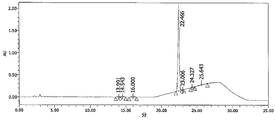
- FIG. 1 is a graph showing the results of HPLC (high performance liquid chromatography) of the polyfunctional thiol compound S-71 obtained in Example 1.
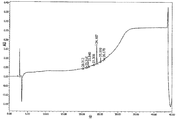
- FIG. FIG. 2 is a graph of the HPLC results of the polyfunctional thiol compound T-1 obtained in Comparative Example 1.
- FIG. 3 is a graph of the HPLC results of the polyfunctional thiol compound T-2 obtained in Comparative Example 2.
- the description which does not describe substitution and unsubstituted includes the thing which has a substituent with the thing which does not have a substituent.
- the “alkyl group” includes not only an alkyl group having no substituent (unsubstituted alkyl group) but also an alkyl group having a substituent (substituted alkyl group).
- exposure includes not only exposure using light but also drawing using particle beams such as an electron beam and an ion beam.
- light in exposure means actinic rays or radiation.
- Actinic light or “radiation” means, for example, a bright line spectrum of a mercury lamp and far ultraviolet rays, extreme ultraviolet rays (EUV light) typified by an excimer laser, X-rays, and electron beams.
- a numerical range expressed using “to” means a range including numerical values described before and after “to” as a lower limit value and an upper limit value.
- the total solid content means the total mass of the components obtained by removing the solvent or the solvent from all the components of the coloring composition.
- (meth) acrylate represents both and / or acrylate and methacrylate
- (meth) acryl represents both and / or acryl
- (meth) acryloyl "Represents both acryloyl and / or methacryloyl.
- the monomer in this specification is distinguished from an oligomer and a polymer, and refers to a compound having a weight average molecular weight of 2,000 or less.
- the polymerizable compound means a compound having a polymerizable functional group, and may be a monomer or a polymer.
- the polymerizable functional group refers to a group that participates in a polymerization reaction.
- Me in the chemical formula represents a methyl group
- Et represents an ethyl group
- Pr represents a propyl group
- Bu represents a butyl group
- Ph and PH represent a phenyl group.
- NMR nuclear magnetic resonance analysis
- DMSO means dimethyl sulfoxide
- MALDI Matrix Assisted Laser Desorption / Ionization
- MS means mass spectrum
- PGMEA propylene.
- Glycol monomethyl ether acetate is meant.
- process is not limited to an independent process, and is included in the term if the intended action of the process is achieved even when it cannot be clearly distinguished from other processes. .
- the weight average molecular weight and the number average molecular weight are defined as polystyrene conversion values measured by GPC (gel permeation chromatography).
- the weight average molecular weight (Mw) and the number average molecular weight (Mn) are, for example, HLC-8220 (manufactured by Tosoh Corporation) and TSKgel Super AWM-H (manufactured by Tosoh Corporation, 6.0 mm (inner diameter)) ⁇ 15.0 cm) can be determined by using a 10 mmol / L lithium bromide NMP (N-methylpyrrolidinone) solution as the eluent.
- the method for producing a polyfunctional thiol compound of the present invention is represented by the following general formula (13) by reacting a compound represented by the following general formula (11) with a compound represented by the following general formula (12).
- L 1 represents an m + n-valent organic linking group, m represents an integer of 2 or more, and n represents an integer of 0 or more; M 1 represents a single bond or ⁇ O—C ( ⁇ O) —, —O—C ( ⁇ O) —O—, —O—C ( ⁇ O) —NH—, —O—S ( ⁇ O) —, —O—S ( ⁇ O ) —O—, —O—S ( ⁇ O) 2 —, —O—S ( ⁇ O) 2 —O—, —O—, —S—, —N (R 2 ) —, —C ( ⁇ O ) — And —CH ⁇ N—, R 1 represents a divalent linking group having 1 or more carbon atoms, and L 2 represents a single bond or a divalent linking group; R 1 , L 1 and L 2 have no hydroxyl group; R 11 represents a monovalent group having 1 or more carbon atom
- the manufacturing method of the polyfunctional thiol compound of this invention can provide a polyfunctional thiol compound with high purity.
- a polyfunctional thiol compound having a high purity can be obtained is that the thiocarboxylic acid protecting group that allows easy deprotection of the compound represented by the general formula (11) is a compound represented by the general formula (12) having a low basicity. It is presumed that the selectivity to a mercapto group can be made very high by deprotection.
- “the purity of the polyfunctional thiol compound is high” means that the polyfunctional thiol compound represented by the general formula (1) or the general formula (13) contains a polyfunctional thiol compound not containing a hydroxyl group.
- the purity of the polyfunctional thiol compound is calculated from the area ratio at an appropriate detection wavelength in the purity measurement using HPLC (the unit is “%”. For convenience, it is also referred to as “area%”).
- Multifunctional thiol compound synthesis step In the polyfunctional thiol compound synthesis step, the compound represented by the general formula (11) and the compound represented by the general formula (12) are reacted to obtain the polyfunctional thiol compound represented by the general formula (13). Synthesize.
- L 1 represents an m + n-valent organic linking group, m represents an integer of 2 or more, and n represents an integer of 0 or more; M 1 represents a single bond or —O—C ( ⁇ O) —, —O—C ( ⁇ O) —O—, —O—C ( ⁇ O) —NH—, —O—S ( ⁇ O) —, —O—S ( ⁇ O) —O—.
- R 1 represents a group selected from CH ⁇ N—, R 1 represents a divalent linking group having 1 or more carbon atoms, L 2 represents a single bond or a divalent linking group; R 1 , L 1 and L 2 Does not have a hydroxyl group.
- L 1 represents an m + n-valent organic linking group, and L 1 does not have a hydroxyl group.
- the organic linking group represented by L 1 is 1 to 100 carbon atoms, 0 to 10 nitrogen atoms, 0 to 50 oxygen atoms, 1 to 200 hydrogen atoms, and A group consisting of 0 to 20 sulfur atoms is preferred, and it may be unsubstituted or may have a substituent.
- L 1 include a group (which may form a cyclic structure) formed by combining two or more of the following structural units or the following structural units.
- L 1 is 1 to 60 carbon atoms, 0 to 10 nitrogen atoms, 0 to 40 oxygen atoms, 1 to 120 hydrogen atoms, and 0 to 10 It is more preferably a group consisting of up to sulfur atoms.
- L 1 is 1 to 50 carbon atoms, 0 to 10 nitrogen atoms, 0 to 30 oxygen atoms, 1 to 100 hydrogen atoms, and 0 to 7 Particularly preferred is a group consisting of up to sulfur atoms.
- L 1 is 1 to 40 carbon atoms, 0 to 8 nitrogen atoms, 0 to 20 oxygen atoms, 1 to 80 hydrogen atoms, and 0 to 5 atoms
- a group consisting of up to sulfur atoms is particularly preferred.
- L 1 is an embodiment composed of a carbon atom and a hydrogen atom, an embodiment composed of a carbon atom, a hydrogen atom and an oxygen atom, or in these embodiments, at least one of —NH— and —S— is carbon It is preferable that one or more is included between the atom and the carbon atom.
- L 1 is more preferably an embodiment consisting of a carbon atom and a hydrogen atom, or an embodiment consisting of a carbon atom, a hydrogen atom and an oxygen atom within the above preferred range.
- L 1 may have a substituent.
- substituents which L 1 may have include, for example, an alkyl group having 1 to 20 carbon atoms such as a methyl group and an ethyl group; an aryl group having 6 to 16 carbon atoms such as a phenyl group and a naphthyl group; an amino group Carboxy group; sulfonamide group; N-sulfonylamide group; acyloxy group having 1 to 6 carbon atoms such as acetoxy group; alkoxy group having 1 to 6 carbon atoms such as methoxy group and ethoxy group; halogen atom such as chlorine and bromine; An alkoxycarbonyl group having 2 to 7 carbon atoms such as a methoxycarbonyl group, an ethoxycarbonyl group or a cyclohexyloxycarbonyl group; a cyano group; a carbonate group such as t-butyl carbonate; L 1 preferably has no substituent
- L 1 is derived from, for example, a polyhydric alcohol.
- the valence of the polyhydric alcohol is preferably 2 to 15, more preferably 3 to 15.
- L 1 is preferably selected from structures represented by the following (L-1) to (L-18).
- r represents an integer of 0 to 10
- R 31 to R 41 each independently represents an alkyl group
- R 42 represents a hydrogen atom or an alkyl group.
- it represents an alkoxy group
- R 43 and R 44 each independently represent a hydrogen atom or an alkyl group having 1 to 6 carbon atoms
- s represents an integer of 0 to 9
- * represents a bonding site with M 1 .
- r is an integer of 0 to 10, more preferably an integer of 1 to 10, and particularly preferably an integer of 1 to 5. It is preferably 1 or 2, and more preferably.
- R 31 to R 41 each independently represents an alkyl group, and is preferably a branched alkyl group having 3 to 10 carbon atoms. More preferably, it is a group. R 31 to R 41 may be the same group or different groups, but are preferably the same group.
- R 42 represents a hydrogen atom, an alkyl group or an alkoxy group, and is preferably a hydrogen atom, a methyl group, an ethyl group or a methoxy group, More preferably, it is an ethyl group.
- R 43 and R 44 each independently represents a hydrogen atom or an alkyl group having 1 to 6 carbon atoms, and an alkyl group having 1 to 3 carbon atoms. Is more preferable, and an ethyl group is particularly preferable.
- s represents an integer of 0 to 9, preferably an integer of 1 to 5, more preferably an integer of 1 to 3, and even more preferably 1.
- the lower limit of the number of bonding sites * with M 1 is preferably 3 or more, more preferably 4 or more, particularly preferably 4 or more from the viewpoint of improving exposure sensitivity when contained in the curable composition. The above is more particularly preferable.
- the upper limit of the number of binding sites * with M 1 is more preferably 10 or less, and particularly preferably 8 or less.
- m represents an integer of 2 or more, and preferably represents an integer of 2 to 15.
- the lower limit value of m is preferably 3 or more, more preferably 4 or more, and particularly preferably 5 or more, from the viewpoint of improving exposure sensitivity when contained in the curable composition.
- the upper limit value of m is more preferably 10 or less, and particularly preferably 8 or less.
- n represents an integer of 0 or more, preferably an integer of 0 to 2, more preferably 0 or 1, and particularly preferably 0.
- M 1 is a single bond, or —O—C ( ⁇ O) —, —O—C ( ⁇ O) —O—, —O—C ( ⁇ O) —NH—, —O—S. It represents a group selected from ( ⁇ O) —, —O—S ( ⁇ O) —O—, —O—S ( ⁇ O) 2 — and —O—S ( ⁇ O) 2 —O—. From the viewpoint of being hardly hydrolyzed and having a high purity.
- M 1 represents a group selected from —C ( ⁇ O) —O—, —O—C ( ⁇ O) —O— and —O—C ( ⁇ O) —NH—, It is particularly preferable to represent O—C ( ⁇ O) —.
- m pieces of M 1 may be the same or different. The m pieces of M 1 are preferably the same.
- R 1 represents a divalent linking group having 1 or more carbon atoms, and R 1 has no hydroxyl group.
- R 1 preferably represents an alkylene group or a group composed of a combination of an alkylene group and an oxygen atom (however, two oxygen atoms are not continuous).
- the alkylene group or the alkylene group and ether It is more preferable from the viewpoint of the selectivity (purity) of the reaction during production to represent a group comprising a combination of reactive oxygen atoms.
- the etheric oxygen atom means an embodiment in which an oxygen atom is contained between the alkylene group and the alkylene group, and means that two oxygen atoms are not continuous.
- the alkylene group represented by R 1 may be any of a linear, branched, or cyclic alkylene group, and is preferably a linear or branched alkylene group, with a linear alkylene group or a methyl group as a branched group.
- the branched alkylene group is more preferable.
- the group composed of a combination of an alkylene group and an oxygen atom may be any of a group composed of a linear, branched or cyclic alkylene group and an oxygen atom, or a combination of a linear or branched alkylene group and an oxygen atom.
- Alkylene group represented by R 1 may have a substituent, it is preferable that no substituent.
- R 1 is a linear alkylene group, the lower limit of the carbon number is preferably 2 or more, more preferably 5 or more, and may be 6 or more.
- R 1 is a linear alkylene group
- the upper limit of the carbon number is preferably 50 or less, more preferably 40 or less, still more preferably 30 or less, particularly preferably 20 or less, and may be 12 or less. It may be 8 or less.
- the lower limit of the number of carbon atoms can be 6 or more, 7 or more, or 8 or more.
- the upper limit of the carbon number is preferably 50 or less, more preferably 40 or less, further preferably 30 or less, particularly preferably 20 or less, or 12 or less, or may be 10 or less.
- R 1 is a branched alkylene group
- the carbon atom linked to SH in R 1 has an alkyl group as a branched group (also referred to as a branched chain or a side chain) to produce a secondary thiol and a tertiary thiol. It is preferable from the viewpoint.
- the carbon atom linked to SH has an alkyl group as a branched group
- the lower limit of the number of carbon atoms of the alkyl group that the branched group has is preferably 1 or more.
- R 1 when the carbon atom linked to SH has an alkyl group as a branched group, the upper limit of the carbon number of the alkyl group that the branched group has is preferably 10 or less, and more preferably 6 or less. 4 or less is particularly preferable.
- R 1 is a cyclic alkylene group, it is usually a group composed of a combination of the linear or branched alkylene group and the cyclic alkylene group.
- the number of carbon atoms constituting the ring of the cyclic alkylene group is preferably 3 to 8, and more preferably 6.
- R 1 is a group comprising a combination of a linear alkylene group and an oxygen atom
- the lower limit of the carbon number can be 3 or more, preferably 4 or more, and more preferably 5 or more.
- the upper limit is preferably 50 or less, more preferably 40 or less, even more preferably 27 or less, particularly preferably 20 or less, can be 10 or less, can be 8 or less, or can be 6 or less.
- R 1 is a combination of straight-chain alkylene group and an oxygen atom, contains an ethyleneoxy group, group of atoms 5-20 separating the SH and M 1 is illustrated, the ethyleneoxy group It is preferable to repeat 2 to 5 times.
- R 1 is a group consisting of a combination of a branched alkylene group and an oxygen atom
- the lower limit of the number of carbons can be 4 or more, 5 or more, or 6 or more.
- the upper limit is preferably 50 or less, more preferably 40 or less, still more preferably 28 or less, particularly preferably 20 or less, and may be 10 or less, or may be 8 or less.
- R 1 is a group composed of a combination of a branched alkylene group and an oxygen atom
- a group having 5 to 20 atoms including an isopropyleneoxy chain and separating SH and M 1 is exemplified.
- An embodiment including a structure in which 2 to 5 are repeated is exemplified.
- R 1 is a group composed of a combination of a branched alkylene group and an oxygen atom
- the carbon atom linked to SH in R 1 has an alkyl group as a branched group from the viewpoint of producing secondary thiol and tertiary thiol. preferable.
- R 1 is a group consisting of a combination of a cyclic alkylene group and an oxygen atom
- it is usually a group consisting of a combination of the above linear or branched alkylene group and an oxygen atom and a cyclic alkylene group.
- R 1 in the present invention is a linear alkylene group having 2 to 20 carbon atoms, an alkylene group having 5 to 20 carbon atoms including an ethyleneoxy group, or isopropylene, particularly when the polyfunctional thiol compound is a primary thiol. It preferably represents an alkylene group having 5 to 20 carbon atoms including an oxy chain, more preferably a linear alkylene group having 2 to 20 carbon atoms or an alkylene group having 5 to 20 carbon atoms including an ethyleneoxy group, Twenty linear alkylene groups are particularly preferred.
- R 1 in the present invention is a branched alkylene group having 2 to 20 carbon atoms, a branched alkylene group having 5 to 20 carbon atoms including an ethyleneoxy group, particularly when the polyfunctional thiol compound is a secondary thiol or a tertiary thiol, Alternatively, a branched alkylene group having 5 to 20 carbon atoms including an isopropyleneoxy chain is preferable, and a branched alkylene group having 2 to 20 carbon atoms or a branched alkylene group having 5 to 20 carbon atoms including an ethyleneoxy group is more preferable. A branched alkylene group having 2 to 20 carbon atoms is particularly preferred.
- SH and M 1 is that separated atom number of 5 or more by R 1 is preferable from the viewpoint of heat resistance.
- the fact that SH and M 1 are separated by R 1 from 5 or more atoms means the number of atoms connecting SH and M 1 with the shortest distance. These atoms consist of carbon atoms or carbon atoms and oxygen atoms, and the total number is 5 atoms or more.
- m R 1 s may be the same or different. m number of R 1 is preferably the same both.
- L 2 represents a single bond or a divalent linking group, and L 2 has no hydroxyl group.
- L 2 is preferably a single bond.
- L 2 is not particularly limited as the divalent linking group represented. Examples of the divalent linking group represented by L 2 include a group represented by -M 1 -R 1- .
- n pieces of L 2 may be the same or different. It is preferable that all of the n pieces of L 2 are the same.
- the polyfunctional thiol compound represented by the general formula (13) is preferably a polyfunctional thiol compound represented by the general formula (1) described later.
- the content of the polyfunctional thiol compound having no hydroxyl group is preferably 90% or more, more preferably 92% or more, and 94% or more. It is particularly preferable that it is 95% or more.
- the content of the polyfunctional thiol compound having no hydroxyl group among the polyfunctional thiol compounds obtained in the polyfunctional thiol synthesis step can be 90% or more. % Can be more preferable, and 94% or more can be particularly preferable.
- the upper limit of the content of the polyfunctional thiol compound having no hydroxyl group among the polyfunctional thiol compounds represented by the general formula (13) is preferably 100%, but 99% or less is sufficiently practical and 98% or less. It may be.
- the polyfunctional thiol compound obtained is preferably a primary thiol.
- the polyfunctional thiol compound obtained is preferably a secondary thiol or a tertiary thiol.
- L 1 represents an m + n-valent organic linking group, m represents an integer of 2 or more, and n represents an integer of 0 or more; M 1 represents a single bond or —O—C ( ⁇ O) —, —O—C ( ⁇ O) —O—, —O—C ( ⁇ O) —NH—, —O—S ( ⁇ O) —, —O—S ( ⁇ O) —O—.
- the compound represented by the general formula (11) is a novel compound.
- the compound represented by the general formula (11) is preferably an intermediate of the polyfunctional thiol compound represented by the general formula (13), and the intermediate of the polyfunctional thiol compound represented by the general formula (1). It is more preferable that
- L 1 of, M 1, the preferred range of R 1, m and n are the same as the preferred ranges of L 1, M 1, R 1 , m and n in the general formula (13).
- the monovalent group having 1 or more carbon atoms represented by R 11 is preferably a group introduced by thiocarboxylic acid or thiocarboxylate, and introduced by thiocarboxylate. More preferably, it is a group.
- the group introduced by thiocarboxylic acid or thiocarboxylate means a group introduced by R 11B when the thiocarboxylic acid or thiocarboxylate is represented by the following general formula (15).
- R 11A represents a monovalent group capable of forming a hydrogen atom or a thiocarboxylate
- R 11B represents a substituted or unsubstituted alkyl group.
- R 11 is a group introduced by thioacetic acid
- R 11 is a methyl group.
- R 11 is preferably a substituted or unsubstituted alkyl group, and more preferably an unsubstituted alkyl group.
- the carbon number is preferably 1 to 10, more preferably 1 to 5, and particularly preferably 1.
- Examples of the compound represented by the general formula (11) include the following compounds.
- Z 12 represents —OR 14 or —N (R 15 ) (R 16 )
- R 13 to R 16 each independently represents a hydrogen atom or a monovalent group.
- Z 12 preferably represents —N (R 15 ) (R 16 ) from the viewpoint of obtaining a polyfunctional thiol compound having high purity.
- R 13 to R 16 each independently represents a hydrogen atom or a monovalent group, and is preferably a hydrogen atom.
- the monovalent group represented by R 13 to R 16 is preferably an alkyl group having 1 to 5 carbon atoms, more preferably an alkyl group having 1 to 3 carbon atoms.
- the compound represented by the general formula (12) is preferably a hydroxyamine derivative when Z 12 represents —OR 14 .
- the compound represented by the general formula (12) is preferably a hydrazine derivative when Z 12 represents —N (R 15 ) (R 16 ).
- the compound represented by the general formula (12) may be used in the reaction system in the state of forming a salt with any acid in the polyfunctional thiol compound synthesis step.
- the compound represented by the general formula (12) may be used in the reaction system without forming a salt in the polyfunctional thiol compound synthesis step.
- the compound represented by the general formula (12) is preferably hydrazine or a hydrazine derivative, more preferably a hydrazine derivative, and particularly preferably hydrazine hydrochloride.
- the pKa of the conjugate acid of the compound represented by the general formula (12) (Ka is an acid dissociation constant) is 5.0 to 9.0, which suppresses a side reaction in the polyfunctional thiol compound synthesis step. From the viewpoint of easily obtaining a polyfunctional thiol compound having high purity.
- the pKa of the conjugate acid of the compound represented by the general formula (12) is a literature value or a value calculated by pKa analysis software (ACD / pKa DB ver. 8.0) manufactured by Fujitsu Limited. Can be used.
- the compound represented by General formula (12) used for a polyfunctional thiol compound synthesis process may be used individually by 1 type, and may be used in combination of 2 or more types.
- the compound represented by the general formula (12) used in the polyfunctional thiol compound synthesis step is preferably used in an amount of 35 to 100% by mass, and 35 to 80% by mass based on the compound represented by the general formula (11). It is more preferable to use 35 to 60% by mass.
- ⁇ acid ⁇ acid
- a combination of a strong acid and a weak acid salt or a weak acid is used, the polyfunctional thiol compound synthesizing step is facilitated under a weakly acidic condition close to neutrality, and side reactions in the polyfunctional thiol compound synthesizing step are suppressed, and the purity is high. It is easy to obtain a polyfunctional thiol compound.
- the strong acid used in the combination of the strong acid salt and the weak acid salt include hydrochloric acid, sulfonic acid and sulfuric acid, and hydrochloric acid is preferred.
- Acetic acid and benzoic acid can be mentioned as a combination of a salt of a strong acid and a weak acid, or a weak acid used as a weak acid, and acetic acid is preferred.
- the acid used for a polyfunctional thiol compound synthesis process may be used individually by 1 type, and may be used in combination of 2 or more types.
- the compound represented by the general formula (12) is hydrazine, it is possible to use a combination of hydrochloric acid and sodium acetate in the polyfunctional thiol compound synthesis step. It is preferable from the viewpoint of performing the thiol compound synthesis step.
- the polyfunctional thiol compound synthesis step is preferably performed under conditions where the pH of the reaction solution is 3 to 6, more preferably 4 to 6, and more preferably 5 to 6. Particularly preferred.
- ⁇ solvent ⁇ solvent
- performing the polyfunctional thiol compound synthesis step in the presence of an aprotic highly polar solvent is represented by the viewpoint of promoting the reaction, the viewpoint of enhancing selectivity, and the general formula (12). From the viewpoint of easily dissolving the compound, thiocarboxylic acid or thiocarboxylate, it is preferable. There is no restriction
- aprotic highly polar solvents examples include amide solvents such as dimethylformamide, N, N-dimethylacetamide, N-methylpiperidone, 1,3-dimethyl-2-imidazolidinone; dimethyl sulfoxide (DMSO); sulfolane; Examples thereof include ⁇ -butyllactone and hexamethylphosphoric triamide.
- Amide solvents are preferred from the viewpoint of solubility, and dimethylacetamide is particularly preferred.
- the solvent used in the polyfunctional thiol compound synthesis step may be used alone or in combination of two or more.
- reaction temperature in the polyfunctional thiol compound synthesis step is preferably 3 to 40 ° C. from the viewpoint of easily obtaining a polyfunctional thiol compound having a high purity, more preferably 5 to 30 ° C., and more preferably 15 to A temperature of 20 ° C. is particularly preferable.
- the reaction temperature in the polyfunctional thiol compound synthesis step is equal to or higher than the lower limit of the preferred range, the reaction in the polyfunctional thiol compound synthesis step easily proceeds at a sufficient rate. If the reaction temperature in the polyfunctional thiol compound synthesis step is not more than the upper limit of the preferred range, it is easy to obtain a polyfunctional thiol compound with high purity.
- reaction time of the polyfunctional thiol compound synthesis step is preferably 3 to 24 hours, more preferably 3 to 18 hours, and particularly preferably 3 to 12 hours.
- the polyfunctional thiol compound synthesis step is preferably performed in a nitrogen atmosphere from the viewpoint of suppressing the thiol oxidation reaction.
- the polyfunctional thiol compound synthesis step is preferably performed while stirring from the viewpoint of temperature control.
- After completion of the reaction in the polyfunctional thiol compound synthesis step it is preferable to perform a liquid separation operation to separate the organic layer from the reaction liquid.
- the separated organic layer is preferably washed and dehydrated and then filtered off.
- the filtered filtrate is preferably concentrated, and more preferably concentrated under reduced pressure.
- the method for producing a polyfunctional thiol compound of the present invention comprises reacting a compound represented by the following general formula (14) with at least one of a thiocarboxylic acid and a thiocarboxylic acid salt, and a compound represented by the general formula (11).
- a compound represented by the general formula (14) is reacting with at least one of a thiocarboxylic acid and a thiocarboxylic acid salt, and a compound represented by the general formula (11).
- an intermediate synthesis step for synthesizing is included.
- L 1 represents an m + n-valent organic linking group, m represents an integer of 2 or more, and n represents an integer of 0 or more; M 1 represents a single bond or —O—C ( ⁇ O) —, —O—C ( ⁇ O) —O—, —O—C ( ⁇ O) —NH—, —O—S ( ⁇ O) —, —O—S ( ⁇ O) —O—.
- R 1 represents a divalent linking group having 1 or more carbon atoms
- Y represents a halogen atom, an alkylsulfonyloxy group or an arylsulfonyloxy group.
- the intermediate synthesis step is preferably performed as a pre-step of the polyfunctional thiol compound synthesis step.
- Examples of the alkylsulfonyloxy group represented by Y include a methanesulfonyloxy group and a trifluoromethanesulfonyloxy group.
- Examples of the arylsulfonyloxy group represented by Y include a paratoluenesulfonyloxy group and a benzenesulfonyloxy group.
- Examples of the compound represented by the general formula (14) include intermediate 21 described in [0365] to [0366] of WO2015 / 151988.
- Examples of the compound represented by the general formula (14) include the following compounds.
- a preferred embodiment of the thiocarboxylic acid and thiocarboxylate used in the intermediate synthesis step is a thiocarboxylic acid or thiocarboxylic acid used for introducing a monovalent group having 1 or more carbon atoms represented by R 11 in the polyfunctional thiol compound synthesis step. This is the same as the preferred embodiment of the acid salt.
- the thiocarboxylic acid and thiocarboxylate used in the intermediate synthesis step are preferably represented by the following general formula (15).
- R 11A represents a monovalent group capable of forming a hydrogen atom or a thiocarboxylate, and R 11B represents a substituted or unsubstituted alkyl group.
- R 11A is preferably a hydrogen atom or an alkali metal, more preferably an alkali metal, particularly preferably sodium or potassium, and particularly preferably potassium.
- the preferred range of R 11B is the same as the preferred range of R 11 .
- thiocarboxylic acid or thiocarboxylate include thioacetic acid, sodium thioacetate, potassium thioacetate, thiopropionic acid, sodium thiopropionate, potassium thiopropionate, thiobutyric acid, sodium thiobutyrate, potassium thiobutyrate, thioyoshichi Mention may be made of valeric acid, sodium thiovalerate and potassium thiovalerate.
- the thiocarboxylic acid and thiocarboxylate used in the intermediate synthesis step may be used singly or in combination of two or more.
- the thiocarboxylic acid and thiocarboxylate used in the intermediate synthesis step are preferably used in an amount of 30 to 100% by mass, more preferably 30 to 80% by mass, based on the compound represented by the general formula (14). It is particularly preferable to use ⁇ 70% by mass.
- ⁇ solvent It is preferable to perform the intermediate synthesis step in the presence of an aprotic highly polar solvent from the viewpoint of promoting the reaction, increasing the selectivity, and easily dissolving the thiocarboxylic acid or thiocarboxylate.
- Preferred examples of the solvent used in the intermediate synthesis step are the same as the preferred examples of the solvent used in the polyfunctional thiol compound synthesis step.
- the solvent used in the intermediate synthesis step may be used alone or in combination of two or more.
- the reaction temperature in the intermediate synthesis step is preferably 20 to 70 ° C. from the viewpoint of reaction rate, more preferably 30 to 70 ° C., and particularly preferably 40 to 60 ° C.
- the reaction time in the intermediate synthesis step is preferably 3 to 12 hours, more preferably 3 to 10 hours, and particularly preferably 3 to 8 hours.
- the manufacturing method of the polyfunctional thiol compound of this invention includes the hydroxyl group conversion process which synthesize
- the hydroxyl group conversion step can be performed by a known method. Examples of the hydroxyl group conversion step include a step of obtaining intermediate 21 described in [0365] to [0366] of WO2015 / 151988.
- the divalent or higher valent alcohol used in the hydroxyl group conversion step preferably has L 1 which is an m + n valent organic linking group, and preferred ranges of L 1 , m and n are L 1 , m and in General Formula (13). The same as the preferable range of n.
- the polyhydric alcohol include polyhydric alcohols in which an OH group is bonded to the portion * in the structure represented by the above (L-1) to (L-18). The preferred range is also the same as the description of the structures represented by the above (L-1) to (L-18).
- dipentaerythritol can be mentioned.
- Commercially available products may be used as the dihydric or higher alcohol. Examples of commercially available products include dipentaerythritol (DPE, manufactured by Perstorp).
- a reagent capable of forming a group represented by M 1 and R 1 in the general formula (14) by further reacting with a divalent or higher alcohol is more preferably a compound represented by the general formula (16).
- R 1 represents a divalent linking group having 1 or more carbon atoms
- Y represents a halogen atom, an alkylsulfonyloxy group, or an arylsulfonyloxy group
- M 2 represents 1 of a divalent or higher valent alcohol. It represents a group capable of forming a M 1 reacts with pieces of hydroxyl groups.
- the preferred range of R 1 are the same as the preferred ranges of R 1 in the general formula (13).
- the preferable range of Y is the same as the preferable range of Y in general formula (14).
- M 2 is not particularly limited.
- Examples of the compound represented by the general formula (16) include 6-bromohexanoic acid chloride.
- Reagents that can form a group represented by M 1 and R 1 in the general formula (14) by reacting the dihydric or higher alcohol may be used singly, it is used in combination of two or more Good.
- the reagent capable of forming a group represented by M 1 and R 1 in the general formula (14) by reacting with a divalent or higher alcohol is preferably used in an amount of 200 to 2000% by mass based on the divalent or higher alcohol. It is more preferable to use 200 to 1800% by mass, and it is particularly preferable to use 200 to 1500% by mass.
- the reaction temperature in the hydroxyl group conversion step is preferably ⁇ 20 to 40 ° C. from the viewpoint of the stability of general formula (16) and the conversion efficiency, more preferably ⁇ 5 to 40 ° C., and more preferably 0 to 40 ° C. It is particularly preferred.
- the hydroxyl group conversion step is preferably performed in a nitrogen atmosphere from the viewpoint of suppressing the decomposition reaction caused by M 2 and Y water.
- the hydroxyl group conversion step is preferably performed with stirring from the viewpoint of temperature control.
- the reaction time in the hydroxyl group conversion step is preferably 1 to 24 hours, more preferably 1 to 18 hours, and particularly preferably 1 to 12 hours.
- the separated organic layer is preferably washed and dehydrated and then filtered off.
- the filtered filtrate is preferably concentrated, and more preferably concentrated under reduced pressure.
- the polyfunctional thiol compound of the present invention is a polyfunctional thiol compound represented by the following general formula (1), Content of the polyfunctional thiol compound which does not have a hydroxyl group among polyfunctional thiol compounds is 90 mass% or more.
- R 1 represents a divalent linking group having 1 or more carbon atoms
- L 2 represents a single bond or a divalent linking group
- R 1 , L 1 and L 2 have no hydroxyl group.
- the preferable aspect of the polyfunctional thiol compound of this invention is the same as the preferable aspect of the polyfunctional thiol compound represented by General formula (13).
- the content of the polyfunctional thiol compound having no hydroxyl group is 90% or more, preferably 92% or more, and preferably 94% or more. More preferably, it is particularly preferably 95% or more.
- the upper limit of the content of the polyfunctional thiol compound having no hydroxyl group among the polyfunctional thiol compounds represented by the general formula (1) is preferably 100%, but 99% or less is sufficiently practical, and 98% or less. It may be.
- the polyfunctional thiol compound is preferably a primary thiol.
- the polyfunctional thiol compound is preferably a secondary thiol or a tertiary thiol. Since secondary thiol and tertiary thiol have a larger steric factor than primary thiol, thermal reactivity with the monomer is lowered, and thermal stability (stability of resist solution over time) is excellent. In addition, although details are unknown, it is compatible with photocurability (less decrease in photocurability compared to thermal reaction).
- the molecular weight of the polyfunctional thiol compound of the present invention is preferably 300 to 3000, more preferably 500 to 2500.
- a preferred specific example of the polyfunctional thiol compound of the present invention is a compound represented by the following general formula (1-A).
- the present invention is not limited to the compound represented by the following general formula (1-A).
- L 1 , M 1 and R 1 are linking groups shown in the following table, m represents an integer of 2 or more, n represents an integer of 0 or more, and L 2 represents a single bond Or a bivalent coupling group is represented.
- the primary thiols are preferably (S-37) to (S-111), and (S-70) to (S-111) are preferred. More preferably, (S-70) to (S-90) and (S-94) to (S-111) are particularly preferable, (S-70), (S-71), (S-75), (S -78), (S-79), (S-82), (S-85), (S-88) and (S-95) are more particularly preferred, and (S-71) is even more particularly preferred.
- the secondary thiol and tertiary thiol include (S-112) to (S-117), (S-129) to (S-134). ), (S-139) to (S-142), (S-151) to (S-164), (S-174), (S-182), (S-187) and (S-201) to (S-206) is preferred, (S-112), (S-117), (S-139), (S-141), (S-151), (S-154), (S-156), (S-159), (S-161), (S-163), (S-174), (S-182), (S-201) and (S-204) are more preferred, and (S-151) , (S-154), (S-156), (S-159), (S-161), (S-163), (S-1 4), (S-182), (S-201) and (S-204) is particularly preferred.
- polyfunctional thiol compounds There is no restriction
- Uses of the polyfunctional thiol compound include use as a curable composition described later, raw materials for star polymers, and inkjet use.
- the polyfunctional thiol compound of the present invention can be preferably used as a raw material for the synthesis of a star polymer (polymer dendrimer or hyperbranched polymer) having a polyfunctional thiol as a core skeleton.
- a star polymer has a very low viscosity as compared with a conventional linear polymer, and therefore can be preferably used for a paint, a coating agent, and the like.
- it can use preferably also for various uses, such as a resist composition and a lens.
- the development of a star polymer imparted with water solubility for medical use has been studied.
- a highly functional polyfunctional thiol compound can be obtained.
- the polyfunctional thiol compound of the present invention it is easy to control the molecular weight, viscosity, etc., and desired physical properties (for example, high strength) are obtained. It is easy to produce a resin or a resin film.
- the star polymer is a compound having an ethylenically unsaturated bond in the presence of the polyfunctional thiol compound of the present invention (90% by mass or more is preferably monofunctional, and more preferably monofunctional only). It can be produced by polymerization.
- Compounds having an ethylenically unsaturated bond include (meth) acrylic acid esters, crotonic acid esters, vinyl esters, maleic acid diesters, fumaric acid diesters, itaconic acid diesters, (meth) acrylamides, styrene , Vinyl ethers, vinyl ketones, olefins, maleimides, (meth) acrylonitrile and vinyl compounds having an acidic group. These compounds can be used alone or in combination of two or more.
- the vinyl compound having an acid group include a vinyl compound having a carboxy group, a vinyl compound having a sulfo group, and a vinyl compound having a phosphate group.
- a dye multimer can be produced.
- the production conditions of the star polymer are not particularly limited, but the polyfunctional thiol compound and the compound having an ethylenically unsaturated bond are dissolved in a suitable solvent, and a polymerization initiator is added thereto to add about 50 ° C. to 220 ° C.
- the solvent used for the production of the star polymer can be arbitrarily selected according to the solubility of the raw material compound used and / or the solubility of the polymer to be produced.
- solvents may be used as a mixture of two or more.
- polymerization initiator examples include 2,2′-azobis (isobutyronitrile) (AIBN), 2,2′-azobis (2,4′-dimethylvaleronitrile), and dimethyl 2,2′-azobisisobutyrate. Azo compounds; peroxides such as benzoyl peroxide; persulfates such as potassium persulfate and ammonium persulfate.
- the polyfunctional thiol compound can be preferably used as a raw material for synthesizing the polyfunctional compound used in the ink jet ink composition.
- a polyfunctional compound of each material can be obtained by linking a polymerization initiator, a coloring material, a sensitizing dye, an ultraviolet absorber and the like to the polyfunctional thiol compound of the present invention.
- Ink jet ink compositions are required to reduce the amount of migration (migration) of contained components to the outside.
- the polyfunctional thiol compound of the present invention has a high purity and uses a polyfunctional thiol compound obtained by a conventional method with a small amount of thiol compound having a small number of functional groups and a by-product of a thiol compound having an unnecessary functional group. Compared with the case where it had, the generation amount of the low molecular weight component which causes a migration can be suppressed.
- the polyfunctional thiol compound can be used as a stabilizer for a resin, a rubber vulcanizing agent, a raw material for an adhesive, and a functional agent for a metal surface such as a sensor.
- the curable composition of the present invention contains the polyfunctional thiol compound of the present invention and a curable compound.
- the content of the polyfunctional thiol compound is preferably 0.05 to 50% by mass, and more preferably 0.5 to 25% by mass with respect to the curable compound.
- the curable composition can be a radically polymerizable composition that cures mainly by a radical polymerization reaction.
- the radically polymerizable composition includes a polyfunctional thiol compound of the present invention and a radically polymerizable compound as a curable compound, and preferably further includes a polymerization initiator (for example, a photopolymerization initiator and a thermal polymerization initiator).
- a polyfunctional thiol compound can be used as a chain transfer agent in a radical polymerization reaction.
- the polyfunctional thiol compound of the present invention has a small content of a thiol compound having a small number of functional groups and a thiol compound having an unnecessary functional group such as a hydroxyl group, good curability can be obtained in a small amount.
- the radical polymerizable compound is not particularly limited as long as it is a compound that can be polymerized by the action of heat, light, and radicals.
- the radical polymerizable compound is preferably a compound having one or more radical polymerizable groups such as a group having an ethylenically unsaturated bond, more preferably a compound having two or more radical polymerizable groups, and three radical polymerizable groups. It is more preferable to have the above.
- the upper limit of the number of radical polymerizable groups is preferably 15 or less, and more preferably 6 or less.
- Examples of the group having an ethylenically unsaturated bond include a vinyl group, a styryl group, a (meth) allyl group, and a (meth) acryloyl group, and a (meth) acryloyl group is preferable.
- the radical polymerizable compound may be in the form of either a monomer or a polymer, but is preferably a monomer.
- the molecular weight of the monomer type radical polymerizable compound is preferably 100 to 3,000.
- the upper limit is more preferably 2000 or less, and even more preferably 1500 or less.
- the lower limit is more preferably 150 or more, and further preferably 250 or more.
- the radically polymerizable compound is preferably a 3 to 15 functional (meth) acrylate compound, and more preferably a 3 to 6 functional (meth) acrylate compound.
- Specific examples of these compounds include paragraph numbers 0095 to 0108 in JP2009-288705, paragraph 0227 in JP2013-29760, and paragraphs 0254 to 0257 in JP2008-292970. Reference can be made to the compounds described, the contents of which are incorporated herein.
- Radical polymerizable compounds are dipentaerythritol triacrylate (KAYARAD D-330 as a commercial product; manufactured by Nippon Kayaku Co., Ltd.), dipentaerythritol tetraacrylate (as a commercial product, KAYARAD D-320; Nippon Kayaku Co., Ltd.) ), Dipentaerythritol penta (meth) acrylate (as a commercial product, KAYARAD D-310; manufactured by Nippon Kayaku Co., Ltd.), dipentaerythritol hexa (meth) acrylate (as a commercial product, KAYARAD DPHA; Nippon Kayaku) A-DPH-12E, manufactured by Shin-Nakamura Chemical Co., Ltd., preferably dipentaerythritol hexaacrylate), and these (meth) acryloyl groups are bonded via ethylene glycol and propylene glycol residues.
- oligomer Structure for example, Available from Toma Inc., SR454, SR499.
- These oligomer types can also be used.
- KAYARAD RP-1040 and DPCA-20 (manufactured by Nippon Kayaku Co., Ltd.) can also be used.
- Aronix M-305, Aronix M-306, Aronix M-309, Aronix M-450, Aronix M-402, Aronix TO-1382, and Aronix TO-2349 can also be used.
- Pentaerythritol tetraacrylate (as a commercially available product, NK ester A-TMMT (manufactured by Shin-Nakamura Chemical Co., Ltd.)) can also be used.
- the radical polymerizable compound may have an acid group such as a carboxy group, a sulfonic acid group, and a phosphoric acid group.
- an acid group such as a carboxy group, a sulfonic acid group, and a phosphoric acid group.
- Commercially available products include, for example, Aronix M-305, Aronix M-306, Aronix M-309, Aronix M-450, Aronix M-402, Aronix TO-, as polybasic acid-modified acrylic oligomers manufactured by Toagosei Co., Ltd. 1382, Aronix TO-2349, etc.
- the acid value of the radically polymerizable compound having an acid group is preferably 0.1 to 40 mgKOH / g, more preferably 5 to 30 mgKOH / g.
- the acid value of the radically polymerizable compound is 0.1 mgKOH / g or more, the development and dissolution characteristics are good, and when it is 40 mgKOH / g or less, it is advantageous in production and handling. Furthermore, the photopolymerizability is good and the curability is excellent.
- the radically polymerizable compound is preferably a compound having a caprolactone structure.
- Radical polymerizable compounds having a caprolactone structure are commercially available from Nippon Kayaku Co., Ltd. as the KAYARAD DPCA series, and examples thereof include DPCA-20, DPCA-30, DPCA-60 and DPCA-120.
- radical polymerizable compound a radical polymerizable compound having an alkyleneoxy group can also be used.
- the radical polymerizable compound having an alkyleneoxy group is preferably a radical polymerizable compound having at least one selected from an ethyleneoxy group and a propyleneoxy group, more preferably a radical polymerizable compound having an ethyleneoxy group, and an ethyleneoxy group.
- a tri- to hexa-functional (meth) acrylate compound having 4 to 20 is more preferable.
- radical polymerizable compounds having an alkyleneoxy group examples include SR-494, a tetrafunctional acrylate having four ethyleneoxy groups manufactured by Sartomer, and 6 pentyleneoxy groups manufactured by Nippon Kayaku Co., Ltd. DPCA-60, which is a hexafunctional acrylate having three, and TPA-330, which is a trifunctional acrylate having three isobutyleneoxy groups.
- radical polymerizable compound examples include urethane acrylates described in JP-B-48-41708, JP-A-51-37193, JP-B-2-32293, JP-B-2-16765, and the like.
- the urethane compounds having an ethylene oxide skeleton described in JP-B-58-49860, JP-B-56-17654, JP-B-62-39417 and JP-B-62-39418 are also suitable.
- radical addition polymerizable compounds having an amino structure or a sulfide structure in the molecule described in JP-A-63-277653, JP-A-63-260909 and JP-A-1-105238 are used. It is also preferable.
- urethane oligomer UAS-10 UAB-140 (manufactured by Sanyo Kokusaku Pulp Co., Ltd.), UA-7200 (manufactured by Shin-Nakamura Chemical Co., Ltd.), DPHA-40H (manufactured by Nippon Kayaku Co., Ltd.) UA-306H, UA-306T, UA-306I, AH-600, T-600 and AI-600 (manufactured by Kyoeisha Chemical Co., Ltd.).
- the content of the radical polymerizable compound is preferably 1 to 80% by mass and more preferably 10 to 50% by mass with respect to the total solid content of the curable composition.
- the curable composition may contain only one type of radically polymerizable compound or two or more types. When two or more types are included, the total amount thereof is preferably within the above range.
- the curable composition of this invention can contain the compound which has an epoxy group further.
- the compound mentioned above is mentioned as a compound which has an epoxy group.
- the curable composition may contain only one type of compound having an epoxy group, or may contain two or more types.
- numerator may be included.
- the radically polymerizable composition preferably further contains a polymerization initiator.
- the polymerization initiator is not particularly limited as long as it has the ability to initiate polymerization of a radically polymerizable compound, and can be appropriately selected from known polymerization initiators.
- Examples of the polymerization initiator include a photopolymerization initiator and a thermal polymerization initiator, but it is preferable to use a photopolymerization initiator particularly in applications where pattern formation is required.
- the photopolymerization initiator for example, those having photosensitivity to light in the ultraviolet region to the visible region are preferable. Further, it may be an activator that generates some active radicals by generating some action with the photoexcited sensitizer.
- the photopolymerization initiator preferably contains at least one compound having a molar extinction coefficient of at least about 50 within the range of about 300 nm to 800 nm (more preferably 330 nm to 500 nm).
- the photopolymerization initiator examples include halogenated hydrocarbon derivatives (for example, compounds having a triazine skeleton and compounds having an oxadiazole skeleton), acylphosphine compounds such as acylphosphine oxide, hexaarylbiimidazoles, oxime derivatives, and the like. Oxime compounds, organic peroxides, thio compounds, ketone compounds, aromatic onium salts, ketoxime ethers, aminoacetophenone compounds, hydroxyacetophenones, and the like.
- halogenated hydrocarbon derivatives for example, compounds having a triazine skeleton and compounds having an oxadiazole skeleton
- acylphosphine compounds such as acylphosphine oxide, hexaarylbiimidazoles, oxime derivatives, and the like.
- trihalomethyltriazine compounds trihalomethyltriazine compounds, benzyldimethylketal compounds, ⁇ -hydroxyketone compounds, ⁇ -aminoketone compounds, acylphosphine compounds, phosphine oxide compounds, metallocene compounds, oxime compounds, triarylimidazole dimers, oniums
- a compound selected from the group consisting of a compound, a benzothiazole compound, a benzophenone compound, an acetophenone compound and a derivative thereof, a cyclopentadiene-benzene-iron complex and a salt thereof, a halomethyloxadiazole compound, and a 3-aryl-substituted coumarin compound preferable.
- a hydroxyacetophenone compound, an aminoacetophenone compound, and an acylphosphine compound can also be suitably used. More specifically, for example, aminoacetophenone initiators described in JP-A-10-291969 and acylphosphine oxide initiators described in Japanese Patent No. 4225898 can also be used.
- a hydroxyacetophenone-based initiator IRGACURE 184, DAROCUR 1173, IRGACURE 500, IRGACURE 2959, IRGACURE 127 (trade names: all manufactured by BASF Corporation) can be used.
- aminoacetophenone-based initiator commercially available products IRGACURE 907, IRGACURE 369, and IRGACURE 379 (trade names: all manufactured by BASF Corporation) can be used.
- aminoacetophenone-based initiator compounds described in JP-A-2009-191179 in which the absorption maximum wavelength is matched with a wavelength light source of 365 nm or 405 nm can also be used.
- acylphosphine-based initiator commercially available products IRGACURE 819 and IRGACURE TPO (trade names: both manufactured by BASF Corporation) can be used.
- paragraph numbers 0265 to 0268 of JP 2013-29760 A can be referred to, and the contents thereof are incorporated in the present specification.
- More preferred examples of the photopolymerization initiator include oxime compounds.
- Specific examples of the oxime compound include compounds described in JP-A No. 2001-233842, compounds described in JP-A No. 2000-80068, compounds described in JP-A No. 2006-342166, and JP-A No. 2012-173327.
- the compounds described in paragraphs 0132 to 0169 of the gazette and the compounds described in JP-A-2016-21012 can be used.
- oxime compounds having a fluorine atom compounds described in JP 2010-262028 A, compounds 24 and 36 to 40 described in JP-A No. 2014-500852 and compounds described in JP 2013-164471 A (C-3) or the like can be used.
- oxime compound examples include, for example, 3-benzoyloxyiminobutan-2-one, 3-acetoxyiminobutan-2-one, 3-propionyloxyiminobutan-2-one, 2-acetoxyiminopentane-3- ON, 2-acetoxyimino-1-phenylpropan-1-one, 2-benzoyloxyimino-1-phenylpropan-1-one, 3- (4-toluenesulfonyloxy) iminobutan-2-one, and 2-ethoxy And carbonyloxyimino-1-phenylpropan-1-one.
- IRGACURE OXE01, IRGACURE OXE02, IRGACURE OXE03, IRGACURE OXE04 (above, manufactured by BASF Corporation), Adeka Arcles NCI-831, NCI-930 and Adekaoptomer N-1919 (Japanese Patent Laid-Open No. 2012-14052) Photopolymerization initiator 2) (manufactured by ADEKA, Inc.) is also preferably used.
- oxime compounds that are preferably used in the present invention are shown below, but the present invention is not limited thereto.
- the oxime compound is preferably a compound having an absorption maximum wavelength in a wavelength region of 350 nm to 500 nm, more preferably a compound having an absorption maximum wavelength in a wavelength region of 360 nm to 480 nm, and particularly preferably a compound having high absorbance at 365 nm and 405 nm.
- the oxime compound preferably has a molar extinction coefficient at 365 nm or 405 nm of 1,000 to 300,000, more preferably 2,000 to 300,000, more preferably 5,000 to 200, from the viewpoint of sensitivity. Is particularly preferred.
- a known method can be used for measuring the molar extinction coefficient of the compound. Specifically, for example, an ethyl acetate solvent is used in an ultraviolet-visible spectrophotometer (Cary-5 spectrophotometer manufactured by Varian Inc.). It is preferable to measure at a concentration of 0.01 g / L.
- the content of the photopolymerization initiator is preferably 0.1 to 50% by mass, more preferably 0, based on the total solid content of the curable composition. 0.5 to 30% by mass, and more preferably 1 to 20% by mass. Within this range, better sensitivity and pattern formability can be obtained.
- the curable composition of the present invention may contain only one type of photopolymerization initiator, or may contain two or more types. When two or more types are included, the total amount thereof is preferably within the above range.
- thermal polymerization initiators include 2,2′-azobis (isobutyronitrile) (AIBN), 2,2′-azobis (2,4′-dimethylvaleronitrile), and 2,2′-azobisisobutyric acid.
- Azo compounds such as dimethyl; peroxides such as benzoyl peroxide; and persulfates such as potassium persulfate and ammonium persulfate.
- a curable composition cured by crosslinking reaction can also be a curable composition hardened
- the curable composition cured by the crosslinking reaction includes the polyfunctional thiol compound of the present invention and an electrophilic curing agent as the curable compound, and the multifunctional thiol compound promotes curing of the electrophilic curing agent.
- the electrophilic curing agent include a compound having a cyclic ether group (epoxy group or oxetane group) and a compound having an isocyanate group.
- the compound having an epoxy group is a compound having one or more epoxy groups in one molecule, and a compound having two or more epoxy groups in one molecule is preferable.
- a compound having 1 to 100 epoxy groups in one molecule is more preferable.
- the upper limit of the epoxy group contained in one molecule can be 10 or less, for example, or 5 or less.
- the lower limit of the epoxy group in one molecule is particularly preferably 2 or more.
- Examples of the compound having an epoxy group include paragraph numbers 0034 to 0036 of JP2013-011869A, paragraphs 0147 to 0156 of JP2014043556A, paragraphs 0085 to 0092 of JP2014089408A, and The compounds described in paragraph numbers 0043 to 0069 of JP-A No. 2015-151467 can also be used. These contents are incorporated herein. Examples thereof include bisphenol A type epoxy resin, bisphenol F type epoxy resin, phenol novolac type epoxy resin, cresol novolac type epoxy resin, and aliphatic epoxy resin.
- the polyfunctional thiol compound of the present invention When used together with a compound having an epoxy group, the polyfunctional thiol compound is blended so that the thiol group of the polyfunctional thiol compound is 20 to 300 mol per 100 mol of the epoxy group of the compound having an epoxy group. It is preferable to add 70 to 120 mol.
- the compound having an isocyanate group a compound having two or more isocyanate groups in one molecule is preferable.
- the compound having an isocyanate group may be either an aromatic compound or an aliphatic compound.
- Specific examples of the compound having an isocyanate group include, for example, 2,4-tolylene diisocyanate, dimer of 2,4-tolylene diisocyanate, 2,6-tolylene diisocyanate, paraxylylene diisocyanate, and metaxylylene diisocyanate.
- Aromatic diisocyanate compounds such as 4,4′-diphenylmethane diisocyanate, 1,5-naphthylene diisocyanate and 3,3′-dimethylbiphenyl-4,4′-diisocyanate; hexamethylene diisocyanate, trimethylhexamethylene diisocyanate, lysine diisocyanate and Aliphatic diisocyanate compounds such as dimer acid diisocyanate; isophorone diisocyanate, 4,4′-methylenebis (cyclohexyl isocyanate), methylcyclohexane An alicyclic diisocyanate compound such as 2,4 (or 2,6) diisocyanate and 1,3- (isocyanatomethyl) cyclohexane; a diol such as an adduct of 1 mol of 1,3-butylene glycol and 2 mol of tolylene diisocyanate; A diisocyanate compound that is a reaction product with di
- the polyfunctional thiol compound of the present invention When used together with a compound having an isocyanate group, the polyfunctional thiol compound is blended so that the thiol group of the polyfunctional thiol compound is 20 to 500 mol with respect to 100 mol of the isocyanate group of the compound having an isocyanate group. It is preferable to add 50 to 300 mol.
- the curable composition of the present invention may contain a resin.
- the resin is blended, for example, for the purpose of dispersing particles such as pigments in the curable composition or the use of a binder.
- a resin that is mainly used for dispersing particles such as pigment is also referred to as a dispersant.
- a dispersant such use of the resin is an example, and the resin can be used for purposes other than such use.
- a resin having an acid group as the resin.
- the acid group include a carboxy group, a phosphoric acid group, a sulfonic acid group, and a phenolic hydroxyl group, and a carboxy group is preferable.
- the resin having an acid group can be used, for example, as an alkali-soluble resin and a dispersant described later.
- a resin using the polyfunctional thiol compound of the present invention as a raw material can also be used.
- the weight average molecular weight (Mw) of the resin is preferably 2,000 to 2,000,000. The upper limit is more preferably 1,000,000 or less, and particularly preferably 500,000 or less.
- the lower limit is more preferably 3,000 or more, and particularly preferably 5,000 or more.
- the weight average molecular weight (Mw) of the epoxy resin is preferably 100 or more, and more preferably 200 to 2,000,000.
- the upper limit is more preferably 1,000,000 or less, and particularly preferably 500,000 or less.
- the lower limit is preferably 100 or more, and more preferably 200 or more.
- the resin content is preferably 1 to 80% by mass with respect to the total solid content of the curable composition.
- the lower limit is more preferably 5% by mass or more, and particularly preferably 10% by mass or more.
- the upper limit is more preferably 60% by mass or less, and particularly preferably 50% by mass or less.
- the curable composition of the present invention may contain only one type of resin, or may contain two or more types. When two or more types are included, the total amount thereof is preferably within the above range.
- Alkali-soluble resin When forming a pattern using the curable composition of this invention, it is preferable to contain alkali-soluble resin as resin. When the curable composition of the present invention contains an alkali-soluble resin, developability and pattern formability are improved.
- the alkali-soluble resin is preferably a polymer having a carboxy group in the side chain.
- alkali-soluble phenol resins such as methacrylic acid copolymer, acrylic acid copolymer, itaconic acid copolymer, crotonic acid copolymer, maleic acid copolymer, partially esterified maleic acid copolymer, and novolac resin And the like.
- a copolymer of (meth) acrylic acid and another monomer copolymerizable therewith is suitable as the alkali-soluble resin.
- alkali-soluble resin examples include paragraph numbers 0558 to 0571 in JP-A Nos. 7-140654, 2013-29760, 2012-208494, and paragraphs 0029 in JP-2012-32767. 0063, paragraph numbers 0088 to 0098 of JP2012-208474A, paragraph numbers 0022 to 0032 of JP20121377531A, paragraph numbers 0132 to 0143 of JP2013-024934A, JP2011-242752A. Examples thereof include compounds described in paragraph Nos. 0092 to 0098 of JP-A No. 1993 and paragraph numbers 0030 to 0072 of JP-A No. 2012-032770. These contents are incorporated herein.
- the acid value of the alkali-soluble resin is preferably 30 to 500 mgKOH / g.
- the lower limit is more preferably 50 mgKOH / g or more, and still more preferably 70 mgKOH / g or more.
- the upper limit is more preferably 400 mgKOH / g or less, particularly preferably 200 mgKOH / g or less, more particularly preferably 150 mgKOH / g or less, and even more particularly preferably 120 mgKOH / g or less.
- the curable composition of this invention can contain a dispersing agent as resin.
- a dispersant examples include an acidic dispersant (acidic resin) and a basic dispersant (basic resin).
- the dispersant preferably includes at least an acidic dispersant, and more preferably only an acidic dispersant.
- the dispersant contains an acidic dispersant, the dispersibility of the pigment tends to be improved.
- the content of the acidic dispersant in the total mass of the dispersant is preferably 99% by mass or more, and may be 99.9% by mass or more. it can.
- the acidic dispersant represents a resin in which the amount of acid groups is larger than the amount of basic groups.
- the acidic dispersant (acidic resin) is preferably a resin in which the amount of acid groups occupies 70 mol% or more when the total amount of acid groups and basic groups is 100 mol%. A resin consisting only of groups is more preferred.
- the acid group possessed by the acidic dispersant (acidic resin) is preferably a carboxy group.
- the basic dispersant (basic resin) represents a resin in which the amount of basic groups is larger than the amount of acid groups.
- the basic dispersant (basic resin) is preferably a resin in which the amount of basic groups accounts for 50 mol% or more when the total amount of acid groups and basic groups is 100 mol%.
- the basic group possessed by the basic dispersant is preferably an amine.
- the acid value of the acidic dispersant (acidic resin) is preferably 40 to 105 mgKOH / g, more preferably 50 to 105 mgKOH / g, and still more preferably 60 to 105 mgKOH / g.
- the resin used as the dispersant is preferably a resin having a polycaprolactone structure.
- the dispersibility of the pigment can be further improved.
- the resin having a polycaprolactone structure include resins having at least one structure selected from the structure represented by the formula (a) and the structure represented by the formula (b) in the molecule.
- m and n each independently represents an integer of 2 to 8
- p and q each independently represents an integer of 1 to 100.
- the resin having a polycaprolactone structure is preferably a resin containing a repeating unit represented by either formula (I) or formula (II).
- R 21 to R 26 each independently represents a hydrogen atom or a monovalent organic group
- X 21 and X 22 each independently represent —CO—, — C ( ⁇ O) O—, —CONH—, —OC ( ⁇ O) —, or a phenylene group
- L 21 and L 22 each independently represent a single bond or a divalent organic linking group
- a 21 and A 22 each independently represent a monovalent organic group
- ma and na each independently represent an integer of 2 to 8
- p and q each independently represents an integer of 1 to 100 Represents.
- R 21 to R 26 each independently represents a hydrogen atom or a monovalent organic group.
- a substituted or unsubstituted alkyl group is preferable.
- the alkyl group an alkyl group having 1 to 12 carbon atoms is preferable, an alkyl group having 1 to 8 carbon atoms is more preferable, and an alkyl group having 1 to 4 carbon atoms is more preferable.
- examples of the substituent include a hydroxyl group and an alkoxy group (preferably an alkoxy group having 1 to 5 carbon atoms, more preferably an alkoxy group having 1 to 3 carbon atoms).
- R 21 , R 22 , R 24 and R 25 are preferably hydrogen atoms, and R 23 and R 26 are preferably hydrogen atoms or methyl groups.
- X 21 and X 22 each independently represent —CO—, —C ( ⁇ O) O—, —CONH—, —OC ( ⁇ O) —, or a phenylene group.
- —C ( ⁇ O) O—, —CONH—, and a phenylene group are preferable from the viewpoint of adsorptivity to the pigment, and —C ( ⁇ O) O— is most preferable.
- L 21 and L 22 each independently represent a single bond or a divalent organic linking group.
- the divalent organic linking group is preferably a substituted or unsubstituted alkylene group or a divalent organic linking group comprising an alkylene group and a hetero atom or a partial structure containing a hetero atom.
- an alkylene group having 1 to 12 carbon atoms is preferable, an alkylene group having 1 to 8 carbon atoms is more preferable, and an alkylene group having 1 to 4 carbon atoms is particularly preferable.
- hetero atom in the partial structure containing a hetero atom an oxygen atom, a nitrogen atom, and a sulfur atom are mentioned, for example, An oxygen atom and a nitrogen atom are preferable.
- preferable alkylene groups include a methylene group, an ethylene group, a propylene group, a trimethylene group, and a tetramethylene group.
- examples of the substituent include a hydroxyl group.
- the divalent organic linking group includes a hetero atom or a hetero atom selected from —C ( ⁇ O) —, —OC ( ⁇ O) —, and —NHC ( ⁇ O) — at the end of the above alkylene group.
- the adjacent oxygen atom means an oxygen atom that is bonded to L 21 in the formula (I) and L 22 in the formula (II) on the side chain end side.
- a 21 and A 22 are each a linear alkyl group having 1 to 20 carbon atoms, a branched alkyl group having 3 to 20 carbon atoms, or a carbon atom number having 5 to 20 carbon atoms from the viewpoint of dispersion stability and developability.
- a cyclic alkyl group having 4 to 15 carbon atoms, a branched alkyl group having 4 to 15 carbon atoms, and a cyclic alkyl group having 6 to 10 carbon atoms are more preferable. Further, a straight-chain alkyl group having 6 to 10 carbon atoms and a branched alkyl group having 6 to 12 carbon atoms are more preferable.
- Ma and na each independently represents an integer of 2 to 8. From the viewpoint of dispersion stability and developability, 4 to 6 is preferable, and 5 is particularly preferable.
- P and q each independently represents an integer of 1 to 100. Two or more compounds with different p or different compounds with q may be mixed. p and q are preferably 5 to 80 from the viewpoint of dispersion stability and developability.
- an oligoimine resin containing a nitrogen atom in at least one of the main chain and the side chain can be used as the dispersant.
- the oligoimine-based resin has a repeating unit having a partial structure X having a functional group of pKa14 or less and a side chain containing a side chain Y having 40 to 10,000 atoms, and at least one of a main chain and a side chain A resin having a basic nitrogen atom is preferred.
- the basic nitrogen atom is not particularly limited as long as it is a basic nitrogen atom.
- the description of paragraph numbers 0102 to 0174 in JP 2012-255128 A can be referred to, and the above contents are incorporated in this specification.
- resins described in paragraph numbers 0168 to 0174 of JP 2012-255128 A can be used as specific examples of the oligoimine resin.
- the dispersant is also available as a commercial product, and specific examples thereof include those in paragraph 0080 of JP-A-2015-151467. This content is incorporated herein.
- the resin described as the dispersant can be used for purposes other than the dispersant.
- it can be used as a binder.
- the curable composition of the present invention can contain a chromatic colorant.
- the chromatic colorant is preferably a chromatic colorant having absorption in a wavelength range of 400 nm or more and less than 650 nm.
- the chromatic colorant may be a pigment or a dye.
- the pigment is preferably an organic pigment, and examples thereof include the following. However, the present invention is not limited to these.
- Color Index Color Index Generic Name; CI
- a zinc halide phthalocyanine pigment having an average number of halogen atoms in the molecule of 10 to 14, bromine atoms on average 8 to 12, and chlorine atoms on average 2 to 5 should be used. Is also possible. Specific examples include the compounds described in WO2015 / 118720. Further, as yellow pigments, quinophthalone pigments described in paragraphs 0011 to 0034 of JP2013-54339A, quinophthalone pigments described in paragraphs 0013 to 0058 of JP2014-26228A, and the like can also be used. These organic pigments can be used alone or in combination of two or more in order to increase color purity.
- Examples of the dye include JP-A 64-90403, JP-A 64-91102, JP-A-1-94301, JP-A-6-11614, JP 2592207, US Pat. No. 4,808,501, The dyes disclosed in US Pat. No. 5,667,920, JP-A-5-333207, JP-A-6-35183, JP-A-6-51115, JP-A-6-194828, and the like can be used.
- pyrazole azo compounds When classified as chemical structures, pyrazole azo compounds, pyromethene compounds, anilinoazo compounds, triphenylmethane compounds, anthraquinone compounds, benzylidene compounds, oxonol compounds, pyrazolotriazole azo compounds, pyridone azo compounds, cyanine compounds, phenothiazine compounds and pyrrolopyrazole azomethine compounds, etc. Can be used. For example, the following compounds are mentioned. In the following structural formulas, Me represents a methyl group, Pr represents a propyl group, and Bu represents a butyl group.
- a dye multimer may be used as the dye.
- the dye multimer include compounds described in JP2011-213925A, JP2013-041097A, JP2015-028144A, JP2015-030742A, and the like.
- the content of the chromatic colorant is preferably 10 to 70% by mass with respect to the total solid content of the curable composition.
- the upper limit is more preferably 60% by mass or less, and still more preferably 50% by mass or less.
- the lower limit is more preferably 20% by mass or more, and further preferably 25% by mass or more.
- the chromatic colorant may be only one type or two or more types. In the case of two or more types, the total amount is preferably in the above range.
- the curable composition of this invention can also be set as the aspect which does not contain a chromatic color agent substantially, for example, when containing only a black pigment.
- 0.05 mass% or less is more preferable, and not containing Is particularly preferred.
- the curable composition of the present invention can contain a black pigment.
- the black pigment is not particularly limited, and known ones can be used. Examples thereof include carbon black, titanium black (such as titanium oxynitride), graphite, and vanadium oxynitride. Carbon black, titanium black, and vanadium oxynitride are preferable, and titanium black is particularly preferable.
- Titanium black is black particles containing titanium atoms. Preferred are low-order titanium oxide and titanium oxynitride.
- the surface of titanium black particles can be modified as necessary for the purpose of improving dispersibility and suppressing aggregation. It can be coated with silicon oxide, titanium oxide, germanium oxide, aluminum oxide, magnesium oxide, or zirconium oxide, and treatment with a water-repellent substance as disclosed in JP-A-2007-302836 is also possible. Is possible.
- Titanium black is typically titanium black particles, and the primary particle size and average primary particle size of each particle are preferably small. Specifically, the average primary particle size is preferably in the range of 10 nm to 45 nm.
- the particle diameter that is, the particle diameter is a diameter of a circle having an area equal to the projected area of the outer surface of the particle. The projected area of the particles can be obtained by measuring the area obtained by photographing with an electron micrograph and correcting the photographing magnification.
- the specific surface area of titanium black is not particularly limited, but the value measured by the BET (Brunauer, Emmett, Teller) method is used in order that the water repellency after the surface treatment of titanium black with a water repellent becomes a predetermined performance. It is preferably 5 m 2 / g or more and 150 m 2 / g or less, and more preferably 20 m 2 / g or more and 120 m 2 / g or less.
- Examples of commercially available titanium black include titanium black 10S, 12S, 13R, 13M, 13M-C, 13R, 13R-N, 13M-T (trade names: manufactured by Mitsubishi Materials Corporation) and Tilac. D (trade name: manufactured by Ako Kasei Co., Ltd.) and the like.
- Titanium black can also be used as a dispersion.
- a dispersion containing titanium black particles and silica particles, in which the content ratio of Si atoms and Ti atoms in the dispersion is adjusted to a range of 0.20 to 0.50, and the like can be mentioned.
- the description in paragraphs 0020 to 0105 of JP2012-169556A can be referred to, and the contents thereof are incorporated in the present specification.
- the content of the black pigment is preferably 1 to 70% by mass with respect to the total solid content of the curable composition.
- the upper limit is more preferably 60% by mass or less, and still more preferably 50% by mass or less.
- the lower limit is more preferably 5% by mass or more, and still more preferably 10% by mass or more. Only one type of black pigment may be used, or two or more types may be used. In the case of two or more types, the total amount is preferably in the above range.
- the curable composition of this invention can also be set as the aspect which does not contain a black pigment substantially, for example, when only including a chromatic colorant.
- substantially not containing a black pigment for example, 0.1% by mass or less is preferable with respect to the total solid content of the curable composition, 0.05% by mass or less is more preferable, and it is particularly not included. preferable.
- the curable composition may contain other inorganic particles other than the chromatic colorant and the black pigment.
- examples of other inorganic particles include white pigments.
- the white pigment is not particularly limited, and known pigments can be used.
- the white pigment is preferably particles having a titanium atom, and more preferably titanium oxide.
- the titanium oxide preferably has a purity of titanium dioxide (TiO 2 ) of 70% by mass or more, more preferably 80% by mass or more, and still more preferably 85% by mass or more.
- the content of low-order titanium oxide and titanium oxynitride represented by Ti n O 2n-1 (n represents a number of 2 to 4) in titanium oxide is preferably 30% by mass or less, The content is more preferably no more than mass%, and even more preferably no more than 15 mass%.
- Titanium oxide has a lower specific gravity than other white pigments, a large refractive index, and is chemically and physically stable, so it has a high hiding power and coloring power; and it is resistant to acids, alkalis and other environments. Excellent durability. Therefore, it is preferable to use titanium oxide as the white pigment. Of course, other white pigments (may be other than the listed white pigments) may be used as necessary.
- Titanium oxide is not particularly limited, and can be appropriately selected from known titanium oxides used as white pigments. Both rutile titanium oxide and anatase titanium oxide can be used, but rutile titanium oxide is preferably used because of its low catalytic activity and excellent stability over time. Titanium oxide is commercially available.
- Tipaque CR60-2 Tipaque A-220 (both manufactured by Ishihara Sangyo Co., Ltd.), KRONOS 1001, 1014, 1071, 1074, 1075, 1077, 1078, 1080, 1171, 2044, 2047, 2056, 2063, 2080, 2081, 2084, 2087, 2160, 2190, 2211, 2202, 2222, 2225, 2230, 2233, 2257, 2300, 2310, 2450, 2500, 3000, 3025 (all of which are KRONOS For example).
- the white pigment may be surface-treated as necessary. Specifically, for example, silica, alumina, zinc, zirconia, or organic matter treatment is performed, and weather resistance and lipophilicity differ depending on the treatment method. In the present invention, those treated with alumina, zinc, zirconia, or basic organic substances are preferred.
- the hollow particles include hollow polymer particles. Examples of the hollow polymer particles include resin particles in which the inside of the particles is hollow, and examples thereof include those described in JP2009-35672A. Moreover, the hollow particle is marketed, for example, SX866 (A) (made by JSR Corporation) etc. can be illustrated.
- inorganic particles other than black pigments and white pigments.
- examples thereof include aluminum oxide (Al 2 O 3 ), zirconium oxide (ZrO 2 ), silicon oxide (SiO 2 ), and tin oxide (SnO 2 ).
- ITO indium tin oxide
- ITO is an inorganic compound of indium oxide (In 2 O 3 ) and tin oxide (SnO 2 ), as the inorganic particles.
- the inorganic particles include antimony tin oxide (ATO), zinc oxide (ZnO), Al-doped zinc oxide (Al-doped ZnO), fluorine-doped tin dioxide (F-doped SnO 2 ), niobium-doped titanium dioxide (Nb-doped TiO 2 ) and It is also preferable to use cesium tungsten oxide or the like. Further, silver (Ag) particles, gold (Au) particles, copper (Cu) particles, and nickel (Ni) particles can be used as the inorganic particles. As for cesium tungsten oxide, the description in paragraphs 0025 to 0029 of International Publication No. 2014/142259 can be referred to, the contents of which are incorporated herein.
- the content of other inorganic particles is preferably 1 to 70% by mass with respect to the total solid content of the curable composition.
- the upper limit is more preferably 60% by mass or less, and still more preferably 50% by mass or less.
- the lower limit is more preferably 5% by mass or more, and still more preferably 10% by mass or more.
- the curable composition can also be made into the aspect which does not contain other inorganic particles substantially. Note that “substantially free of other inorganic particles” means, for example, preferably 0.1% by mass or less, more preferably 0.05% by mass or less, and not to the total solid content of the curable composition. It is particularly preferred.
- the curable composition of the present invention preferably contains a solvent.
- the solvent is preferably an organic solvent.
- the organic solvent is not particularly limited as long as the solubility of each component and the applicability of the curable composition are satisfied.
- organic solvents include the following.
- the esters include ethyl acetate, n-butyl acetate, isobutyl acetate, butyl butyrate, methyl lactate, ethyl lactate, methyl methoxyacetate, ethyl methoxyacetate, methyl 3-methoxypropionate, ethyl 3-methoxypropionate, 3 Methyl ethoxypropionate and ethyl acetoacetate.
- ethers include diethylene glycol dimethyl ether, tetrahydrofuran, ethylene glycol monomethyl ether, ethylene glycol monoethyl ether, methyl cellosolve acetate, ethyl cellosolve acetate, diethylene glycol monomethyl ether, diethylene glycol monoethyl ether, diethylene glycol monobutyl ether, propylene glycol monomethyl ether, propylene glycol Monomethyl ether acetate (1-methoxy-2-propyl acetate), propylene glycol monoethyl ether acetate, propylene glycol monopropyl ether acetate, 2-methoxy-1-propyl acetate and the like.
- ketones include methyl ethyl ketone, cyclohexanone, cyclopentanone, 2-heptanone, and 3-heptanone.
- aromatic hydrocarbons include toluene and xylene.
- Organic solvents may be used alone or in combination of two or more.
- the content of the solvent is preferably such that the total solid content of the curable composition is 5 to 80% by mass.
- the lower limit is more preferably 10% by mass or more.
- the upper limit is more preferably 60% by mass or less, particularly preferably 50% by mass or less, and particularly preferably 40% by mass or less.
- the curable composition of the present invention may contain various types of surfactants from the viewpoint of further improving applicability.
- various types of surfactants such as a fluorine-based surfactant, a nonionic surfactant, a cationic surfactant, an anionic surfactant, and a silicone-based surfactant can be used.
- the liquid properties (particularly fluidity) when prepared as a coating liquid are further improved, and the uniformity of coating thickness and liquid-saving properties are further improved.
- Can be improved That is, when a film is formed using a coating liquid to which a curable composition containing a fluorosurfactant is applied, the interfacial tension between the surface to be coated and the coating liquid is reduced, and the surface to be coated is wetted. The coating property is improved and the coating property to the coated surface is improved. For this reason, it is possible to more suitably form a film having a uniform thickness with small thickness unevenness.
- the fluorine content in the fluorosurfactant is preferably 3 to 40% by mass, more preferably 5 to 30% by mass, and particularly preferably 7 to 25% by mass.
- a fluorine-based surfactant having a fluorine content within this range is effective in terms of uniformity of coating film thickness and liquid-saving properties, and has good solubility in the composition.
- fluorosurfactant examples include MegaFuck F171, F172, F173, F176, F177, F141, F142, F143, F144, R30, F437, F475, F479, F482, F554, F780, RS-72-K (above DIC Corporation), Florard FC430, FC431, FC171 (above, Sumitomo 3M Limited), Surflon S-382, SC -101, SC-103, SC-104, SC-105, SC-1068, SC-381, SC-383, S393, K393, KH-40 (above, manufactured by Asahi Glass Co., Ltd.), PF636, PF656, PF6320, PF6520, and PF7002 (above, OMNOVA Co., Ltd.
- the fluorine-based surfactant has a repeating unit derived from a (meth) acrylate compound having a fluorine atom and 2 or more (preferably 5 or more) alkyleneoxy groups (preferably ethyleneoxy group or propyleneoxy group) (meta).
- a fluorine-containing polymer compound containing a repeating unit derived from an acrylate compound can also be preferably used.
- the following compounds are also exemplified as the fluorosurfactant used in the present invention.
- the weight average molecular weight of the above compound is preferably 3,000 to 50,000, for example, 14,000.
- a fluoropolymer having a group having an ethylenically unsaturated bond in the side chain can also be used as the fluorosurfactant. Specific examples thereof include compounds described in paragraph Nos. 0050 to 0090 and paragraph Nos. 0289 to 0295 of JP2010-164965A, for example, Megafac RS-101, RS-102, RS-718K manufactured by DIC Corporation. And F-475 and the like.
- Nonionic surfactants include glycerol, trimethylolpropane, trimethylolethane and their ethoxylates and propoxylates (eg, glycerol propoxylate, glycerol ethoxylate, etc.), polyoxyethylene lauryl ether, polyoxyethylene stearyl ether, Polyoxyethylene oleyl ether, polyoxyethylene octyl phenyl ether, polyoxyethylene nonyl phenyl ether, polyethylene glycol dilaurate, polyethylene glycol distearate, sorbitan fatty acid ester, Pluronic L10, L31, L61, L62, 10R5, 17R2, 25R2 (BASF (Made by Co., Ltd.), Tetronic 304, 701, 704, 901, 904, 150R1 (B SF Co., Ltd.), Solsperse 20000 (Nihon Lubrizol Co., Ltd.), NCW-101, NCW-1001, NCW-1002 (
- organosiloxane polymer KP341 manufactured by Shin-Etsu Chemical Co., Ltd.
- (meth) acrylic acid (co) polymer polyflow No. 75, no. 90, no. 95 manufactured by Kyoeisha Chemical Co., Ltd.
- W001 manufactured by Yusho Co., Ltd.
- anionic surfactants include W004, W005, W017 (manufactured by Yusho Co., Ltd.) and Sandet BL (manufactured by Sanyo Chemical Co., Ltd.).
- silicone-based surfactants include Torre Silicone DC3PA, Torre Silicone SH7PA, Torre Silicone DC11PA, Torresilicone SH21PA, Torree Silicone SH28PA, Torree Silicone SH29PA, Torree Silicone SH30PA, Torree Silicone SH8400 (above, Toray Dow Corning Co., Ltd.) ), TSF-4440, TSF-4300, TSF-4445, TSF-4460, TSF-4442 (above, manufactured by Momentive Performance Materials Co., Ltd.), KP341, KF6001, KF6002 (above, Shin-Etsu Silicone Co., Ltd.) )), BYK307, BYK323, and BYK330 (above, manufactured by Big Chemie).
- the content of the surfactant is preferably 0.001 to 2.0 mass%, more preferably 0.005 to 1.0 mass%, based on the total solid content of the curable composition.
- the curable composition of the present invention preferably contains a polymerization inhibitor.
- Polymerization inhibitors include hydroquinone, paramethoxyphenol, di-tert-butyl-paracresol, pyrogallol, tert-butylcatechol, benzoquinone, 4,4′-thiobis (3-methyl-6-tert-butylphenol), 2, Examples thereof include 2′-methylenebis (4-methyl-6-tert-butylphenol) and N-nitrosophenylhydroxylamine salts (ammonium salt, primary cerium salt, etc.).
- the content of the polymerization inhibitor is preferably 0.01 to 5% by mass relative to the total solid content of the curable composition.
- the curable composition of the present invention may contain only one type of polymerization inhibitor, or may contain two or more types. When two or more types are included, the total amount thereof is preferably within the above range.
- additives for example, fillers, adhesion promoters, antioxidants, ultraviolet absorbers, aggregation inhibitors, and the like can be blended as necessary.
- these additives include the additives described in paragraph numbers 0155 to 0156 of JP-A No. 2004-295116, the contents of which are incorporated herein.
- antioxidant for example, phenol compounds, phosphorus compounds (for example, compounds described in paragraph No. 0042 of JP2011-90147A), thioether compounds, and the like can be used.
- Examples of commercially available products include ADEKA Corporation's ADK STAB series (AO-20, AO-30, AO-40, AO-50, AO-50F, AO-60, AO-60G, AO-80, AO- 330). Two or more kinds of antioxidants may be mixed and used.
- As the ultraviolet absorber aminodiene-based, salicylate-based, benzophenone-based, benzotriazole-based, acrylonitrile-based, triazine-based ultraviolet absorbers, and the like can be used. Can be mentioned.
- As the benzotriazole series MYUA series (Chemical Industry Daily, February 1, 2016) manufactured by Miyoshi Oil and Fat may be used.
- the curable composition of the present invention contains a sensitizer and a light stabilizer described in paragraph No. 0078 of JP-A No. 2004-295116, and a thermal polymerization inhibitor described in paragraph No. 0081 of the publication. Can do.
- metal elements may be contained in the curable composition.
- the content of Group 2 elements (calcium, magnesium, etc.) in the curable composition is preferably 50 ppm by mass (parts per million) or less, and 0.01 to 10 ppm by mass. More preferably, it is controlled. Further, the total amount of the inorganic metal salt in the curable composition is preferably 100 ppm by mass or less, and more preferably controlled to 0.5 to 50 ppm by mass.
- the curable composition can be suitably used for pixel formation. Moreover, since the cured film excellent in sclerosis
- the curable composition of the present invention is a colored pattern such as a color filter used in a solid-state imaging device such as a charge coupled device (CCD) and a complementary metal oxide semiconductor (CMOS), and an image display device such as a liquid crystal display device. It can be suitably used for forming.
- the color filter manufacturing method is not particularly defined, and a photolithography method and a dry etching method are preferably used.
- a photolithography method and a dry etching method are preferably used.
- the curable composition of the present invention can also be suitably used as an ink composition for inkjet.
- inkjet is a method of forming an image by spraying an ink composition pressurized by a pump or a piezoelectric element or the like from a nozzle hole onto a substrate object.
- a cured film may be produced using the curable composition of the present invention.
- the manufacturing method of a cured film is demonstrated.
- the method for producing a cured film includes a step of forming a curable composition layer on a substrate using the curable composition of the present invention described above, a step of exposing the curable composition layer in a pattern, and an unexposed state. And a step of developing and removing the portion to form a pattern. Details of each step will be described below.
- Step of forming curable composition In the step of forming the curable composition layer, it is preferable to form the curable composition layer on the substrate using the curable composition of the present invention.
- the base material examples include base materials made of materials such as glass, silicon, polycarbonate, polyester, aromatic polyamide, polyamideimide, and polyimide. These base materials may have an organic photoelectric conversion film.
- an organic photoelectric conversion film a stack of an electromagnetic wave absorbing site, a photoelectric conversion site, an electron transport site, a hole transport site, an electron blocking site, a hole blocking site, an anti-crystallization site, an electrode and an interlayer contact improvement site, or the like
- An organic layer formed as a result of mixing may be mentioned.
- the organic layer preferably contains an organic p-type compound or an organic n-type compound.
- paragraphs 0018 to 0030 of JP-A-2015-38979 can be referred to, the contents of which are incorporated herein.
- an organic photoelectric conversion film can also be used as a base material.
- a method for applying the curable composition to the substrate various kinds of methods such as slit coating, inkjet method, spin coating, cast coating, roll coating, and screen printing can be used.
- the step of forming a pattern using the curable composition of the present invention can appropriately include a film forming step using pre-baking, an exposure step, a developing step, a rinsing step, a post-baking step, and the like. Specific examples of such a process include the processes described in paragraphs 0482 to 0489 of JP 2013-28764 A, for example.
- the method for producing a curable composition of the present invention comprises a step of producing a polyfunctional thiol compound by the method for producing a polyfunctional thiol compound of the present invention, A step of mixing the polyfunctional thiol compound and the curable compound is included.
- the manufacturing method of the curable composition of this invention includes the process of mixing the polyfunctional thiol compound obtained by the manufacturing process of the polyfunctional thiol compound of this invention mentioned above, and the above-mentioned manufacturing process, and a curable compound. It is preferable. Moreover, it is also preferable to mix the components of the curable composition described above in addition to the curable compound.
- the respective components may be mixed at once, or may be sequentially mixed after each component is dissolved or dispersed in a solvent.
- the composition may be prepared by dissolving or dispersing all the components in a solvent at the same time, and if necessary, each component is suitably used as two or more solutions or dispersions at the time of use (at the time of application). ) May be prepared by mixing them.
- ⁇ Hydroxyl conversion step> Using dipentaerythritol as a raw material containing a dihydric or higher alcohol, intermediate S-71-1, which is a compound represented by the general formula (14), was synthesized by the following procedure. 5 parts of dipentaerythritol (DPE, manufactured by Perstorp) and 80 parts of N, N-dimethylacetamide (DMAc) were added to a three-necked flask and stirred in a 20 ° C. water bath under a nitrogen atmosphere.
- DPE dipentaerythritol
- DMAc N, N-dimethylacetamide
- Intermediate S-71-1 which is a compound represented by general formula (14), is reacted with potassium thioacetate, which is a thiocarboxylate, to produce intermediate S, which is a compound represented by general formula (11).
- -71-2 was synthesized by the following procedure. 4.3 parts of intermediate S-71-1, 43 parts of DMAc and 2.2 parts of tetrabutylammonium bromide were added to a three-necked flask and stirred in a water bath in an air atmosphere. To this, 2.63 parts of potassium thioacetate was added in four portions and reacted at 50 ° C. for 4 hours.
- hydrochloric acid which is a strong acid derived from hydrazine hydrochloride
- sodium acetate which is a salt of a weak acid.
- 2.2 parts of Intermediate S-71-2 and 22 parts of DMAc were added to a three-necked flask and stirred at 15 ° C. under a nitrogen atmosphere. To this, 0.85 part of hydrazine hydrochloride and 2.0 parts of sodium acetate were added and reacted at a reaction temperature of 15 ° C. for 4 hours.
- Mobile phase B 0.1% by mass phosphoric acid + 0.1% by mass triethylamine aqueous solution.
- Examples 2 to 26 In the method for producing the polyfunctional thiol compound of Example 1, the polyfunctional thiol compounds S-2, S-38, S-70, S-75, S and S were prepared according to the same synthesis scheme as in Example 1 except that the materials were changed. -78, S-79, S-82, S-85, S-88, S-91, S-95, S-112, S-117, S-139, S-141, S-151, S-154 S-156, S-159, S-161, S-163, S-174, S-182, S-201, and S-204 were synthesized. The purity of each polyfunctional thiol compound obtained was measured in the same manner as in Example 1.
- DPE dipentaerythritol
- 3-mercaptopropionic acid manufactured by Wako Pure Chemical Industries, Ltd.
- toluene 75 parts and paratoluenesulfonic acid monohydrate Japanese 0.29 parts (manufactured by Kojun Pharmaceutical Co., Ltd.) was added to the flask, and heated to reflux in a nitrogen atmosphere. After 8 hours, the outflow of water had stopped.
- a graph of the HPLC results of the polyfunctional thiol compound T-1 obtained in Comparative Example 1 is shown in FIG. From FIG. 2, among the polyfunctional thiol compounds represented by the general formula (1) contained in the obtained polyfunctional thiol compound T-1, the content of the polyfunctional thiol compound having no hydroxyl group is 58% ( Purity 58%). The results obtained are listed in the table below. The retention time of each peak is shown in FIG. A peak of S-70 (area%: 58%) having a molecular weight of 783.05 was observed at a retention time of 24.1 minutes. The obtained polyfunctional thiol compound T-1 was confirmed to contain at least the following compounds as various by-products other than S-70.
- intermediate S-71-1 was obtained. 20 parts of Intermediate S-71-1, 9.5 parts of thiourea, 200 parts of ethanol, and 17.6 parts of potassium iodide were added to a three-necked flask, and reacted for 18 hours under heating and reflux in a nitrogen atmosphere. Thereafter, 81 parts of a 20 mass% potassium carbonate aqueous solution was added to the reaction solution, and the mixture was reacted at 70 ° C. for 3 hours, and then cooled. Next, 150 parts of 1 mol / L hydrochloric acid and 300 parts of chloroform were added to the reaction solution, and a liquid separation operation was performed.
- polyfunctional thiol compound T-2 Yield 93 mass%).
- the purity of the obtained polyfunctional thiol compound T-2 is determined using the mobile phase A: methanol; Mobile phase B: 0.1 mass% ammonium acetate aqueous solution; Conditions: Gradient concentration gradient changing to 30% by mass of mobile phase A and 70% by mass of mobile phase B at 0 minutes, and changing to 100% by mass of mobile phase A at 30 minutes from the start of separation; The measurement was performed in the same manner as in Example 1.
- a graph of the HPLC results of the polyfunctional thiol compound T-2 obtained in Comparative Example 2 is shown in FIG. From FIG. 3, among the polyfunctional thiol compounds represented by the general formula (1) contained in the obtained polyfunctional thiol compound T-2, the content of the polyfunctional thiol compound having no hydroxyl group is 24.4. % (Purity 24.4%). The results obtained are listed in the table below. The retention time of each peak is shown in FIG. A peak of S-71 (area%: 24.4%) having a molecular weight of 1034.41 was observed at a retention time of 31.4 minutes. The obtained polyfunctional thiol compound T-2 was confirmed to contain at least the following compounds as various by-products other than S-71.
- Example 13 to 15 In the manufacturing method of the polyfunctional thiol compound of Example 1, it is the same as Example 1 except having changed the compound represented by General formula (12), the salt of weak acid, reaction temperature, and reaction time in a polyfunctional thiol compound synthesis process. Thus, the production method of the polyfunctional thiol compound of Examples 13 to 15 was performed. The results obtained are listed in the table below. Na acetate in the following table represents sodium acetate.
- Example 1 From the comparison of Examples 1 and 13 in the above table, it was found that when a weak acid salt was added to the reaction system, the reactivity increased and the purity also increased. From the comparison between Examples 1 and 14, it was found that the reactivity is remarkably increased when the reaction temperature is equal to or higher than the lower limit of the preferred range. From the comparison between Examples 1 and 15, it was found that when the reaction temperature was not more than the upper limit of the preferred range, the selectivity was increased and the purity was also increased. In Example 1, it is presumed that hydrochloride and sodium acetate are neutralized in the reaction system to generate hydrazine and acetic acid, and hydrazine, acetic acid and excess sodium acetate are present in the reaction system.
- the exposure sensitivity is improved when it is contained in the curable composition. It can also be seen that the sensitivity is good when the number of functional groups (thiol groups) of the polyfunctional thiol compound is 3 or more, and the sensitivity tends to be better when the number is 5 or more.
- the polyfunctional thiol compound of the comparative example whose purity is low and the content of the polyfunctional thiol compound having no hydroxyl group out of the scope of the present invention is exposed when the curable composition contains the polyfunctional thiol compound. It turns out that sensitivity is inferior.
- the dye solution 1 was prepared by mixing and dissolving the following components.
- Organic solvent cyclohexanone
- dye A-1 having the following structure
- Pigment dispersion P1 was prepared by the following procedure.
- C. I. Pigment Blue 15: 6 (blue pigment; hereinafter also referred to as “PB15: 6”) 19.4 parts by mass (average primary particle size 55 nm), pigment dispersant BY-161 (manufactured by BYK) 2.95 parts by mass, alkali Soluble resin 1 (benzyl methacrylate / methacrylic acid (47/53 [mass ratio]), 30% by mass propylene glycol monomethyl ether solution, Mw 11,000) 2.95 parts by mass (solution 9.93) And a mixed solution consisting of 165.3 parts by mass of propylene glycol monomethyl ether and mixed for 3 hours by a beads mill (zirconia beads 0.3 mm diameter) and dispersed.
- the dispersion treatment was further performed at a flow rate of 500 g / min under a pressure of 2000 kg / cm 3 using a high-pressure disperser NANO-3000-10 (manufactured by Nippon BEE Co., Ltd.) equipped with a decompression mechanism.
- This dispersion treatment was repeated 10 times to obtain C.I. I. Pigment Blue 15: 6 dispersion was obtained.
- the average primary particle diameter of the pigment was measured by a dynamic light scattering method (Microtrac Nanotrac UPA-EX150 (manufactured by Nikkiso Co., Ltd.))), and was found to be 24 nm. .
- Exposure sensitivity evaluated the minimum exposure amount from which the pattern line width after the development of the area
- Adhesion The adhesion between the glass substrate and the pattern was evaluated based on the following criteria by observing whether or not a pattern defect occurred in the pattern obtained by the evaluation of fresh exposure sensitivity. -Evaluation criteria- A: No pattern defect was observed. B: 1 to 3 pattern defects per 1.0 ⁇ m square pattern. C: The number of pattern defects is more than 3 and less than 10 per 1.0 ⁇ m square pattern. D: The number of pattern defects exceeds 10 per 1.0 ⁇ m pattern.
- Composition d-1 Titanium black (average primary particle size 75nm, manufactured by Mitsubishi Materials Corporation 13M- C) 35 parts by mass PGMEA 65 parts by mass
- a mixed solution having the following composition d-2 was added and stirred for 3 hours using a homogenizer under the condition of 3000 rpm.
- the obtained mixed liquid was subjected to fine dispersion treatment for 4 hours with a disperser (trade name: Dispermat, manufactured by GETZMANN) using 0.3 mm-diameter zirconia beads to obtain a titanium black dispersion A.
- Composition d-2 >> Specific resin 1 (the following structure: x: 50 mol%, y: 50 mol%, Mw: 30,0 00) 30 parts by mass PGMEA 70 parts by mass
- curable compositions of the following composition d-3 were prepared. Specifically, a mixed solution of the following composition d-3 was mixed with a stirrer to prepare a curable composition.
- Evaluation of exposure sensitivity evaluated the minimum exposure amount from which the pattern line width after the development of the area
- Adhesion The adhesion between the glass substrate and the pattern was evaluated based on the following criteria by observing whether or not a pattern defect occurred in the pattern obtained by the evaluation of fresh exposure sensitivity. -Evaluation criteria- A: No pattern defect was observed. B: 1 to 3 pattern defects per 1.0 ⁇ m square pattern. C: The number of pattern defects is more than 3 and less than 10 per 1.0 ⁇ m square pattern. D: The number of pattern defects exceeds 10 per 1.0 ⁇ m pattern.
- the polyfunctional thiol compound of the present invention obtained a curable composition having good exposure sensitivity when contained in the curable composition.
- the sensitivity is good when the number of functional groups (thiol groups) of the polyfunctional thiol compound is 3 or more, and the sensitivity tends to be better when the number is 5 or more.
- the polyfunctional thiol compound of the present invention forms a pattern using a curable composition containing the polyfunctional thiol compound, the adhesion between the glass substrate and the pattern may be good. It can be seen that curing proceeded without problems even at the bottom where the light transmittance was particularly low.
- the polyfunctional thiol compound of the comparative example whose purity is low and the content of the polyfunctional thiol compound having no hydroxyl group out of the scope of the present invention is exposed when the curable composition contains the polyfunctional thiol compound. It turns out that sensitivity is inferior. Moreover, when the polyfunctional thiol compound of the comparative example forms a pattern using the curable composition containing the polyfunctional thiol compound, the adhesion between the glass substrate and the pattern is poor, and the reason is This is presumably because the curing rate of the curable composition at the bottom where the light transmittance is particularly low is low.
- the molecular weight is a weight average molecular weight (Mw) except for those specifically defined.
- Mw weight average molecular weight
- BLEMMER PME-100 methoxydiethylene glycol monomethacrylate, manufactured by NOF Corporation: 52.90 g, methyl methacrylate: 35.17 g, methacrylic acid: 6.05 g, S-71: 0.917 g, V -601 (2,2′-azobis (isobutyric acid) dimethyl, manufactured by Wako Pure Chemical Industries, Ltd.): 0.809 g and 1-methoxy-2-propanol: 70.10 g mixed solution over 2 hours and 30 minutes And dripped. After completion of the dropwise addition, the reaction was continued for another 2 hours.
- star polymer P-1 had a weight average molecular weight of 63,000 in terms of polystyrene measured by GPC.
- the degree of dispersion Mw / Mn determined from the number average molecular weight Mn and the weight average molecular weight Mw was 1.8.
- Star polymer P-2 was synthesized by the same method except that S-71 was changed to T-1 in the synthesis of star polymer P-1 of Example 401.
- the thus obtained star polymer P-2 had a polystyrene equivalent weight average molecular weight of 65,000 as measured by GPC.
- the degree of dispersion Mw / Mn determined from the number average molecular weight Mn and the weight average molecular weight Mw was 2.0.
Landscapes
- Chemical & Material Sciences (AREA)
- Organic Chemistry (AREA)
- Organic Low-Molecular-Weight Compounds And Preparation Thereof (AREA)
- Compositions Of Macromolecular Compounds (AREA)
- Polymers With Sulfur, Phosphorus Or Metals In The Main Chain (AREA)
Abstract
La présente invention concerne un composé thiol polyfonctionnel de pureté élevée obtenu grâce à un procédé de production d'un composé thiol polyfonctionnel, le procédé comprenant une étape de réaction d'un composé représenté par la formule générale (11) et d'un composé représenté par HN(R13)-Z12 afin de synthétiser un composé thiol polyfonctionnel représenté par la formule générale (13) (L1 est un groupe organique de liaison; m est supérieur ou égal à 2; n est supérieur ou égal à 0; M1 est une liaison simple ou un groupe divalent; R1 est un groupe divalent; L2 est une liaison simple ou un groupe divalent; R1, L1, et L2 ne possèdent pas de groupe hydroxyle; R11 est un groupe monovalent; Z12 est -OR14 ou -N(R15)(R16); R13 à R16 sont des atomes d'hydrogène ou des groupes monovalents); et un composé thiol polyfonctionnel, une composition durcissable, et un procédé de production d'une composition durcissable sont également fournis par l'invention.
Priority Applications (1)
| Application Number | Priority Date | Filing Date | Title |
|---|---|---|---|
| JP2018505886A JP6764467B2 (ja) | 2016-03-17 | 2017-03-10 | 多官能チオール化合物の製造方法、多官能チオール化合物、硬化性組成物および硬化性組成物の製造方法 |
Applications Claiming Priority (4)
| Application Number | Priority Date | Filing Date | Title |
|---|---|---|---|
| JP2016-053880 | 2016-03-17 | ||
| JP2016053880 | 2016-03-17 | ||
| JP2016168877 | 2016-08-31 | ||
| JP2016-168877 | 2016-08-31 |
Publications (1)
| Publication Number | Publication Date |
|---|---|
| WO2017159552A1 true WO2017159552A1 (fr) | 2017-09-21 |
Family
ID=59850337
Family Applications (1)
| Application Number | Title | Priority Date | Filing Date |
|---|---|---|---|
| PCT/JP2017/009631 Ceased WO2017159552A1 (fr) | 2016-03-17 | 2017-03-10 | Procédé de production d'un composé thiol polyfonctionnel, composé thiol polyfonctionnel, composition durcissable, et procédé de production d'une composition durcissable |
Country Status (3)
| Country | Link |
|---|---|
| JP (1) | JP6764467B2 (fr) |
| TW (1) | TW201800389A (fr) |
| WO (1) | WO2017159552A1 (fr) |
Cited By (4)
| Publication number | Priority date | Publication date | Assignee | Title |
|---|---|---|---|---|
| CN110790691A (zh) * | 2019-11-08 | 2020-02-14 | 深圳斯多福新材料科技有限公司 | 一种超支化二级硫醇化合物及其制备方法与包含该超支化二级硫醇化合物的环氧树脂组合物 |
| CN114394990A (zh) * | 2022-03-14 | 2022-04-26 | 内蒙古扬帆新材料有限公司 | 一种同时含有α-氨基酮和有机硅的不对称大分子光引发剂及其制备方法和应用 |
| CN114591452A (zh) * | 2022-03-14 | 2022-06-07 | 内蒙古扬帆新材料有限公司 | 一种含有α-氨基酮多官能化大分子光引发剂及其制造方法和应用 |
| WO2025192728A1 (fr) * | 2024-03-15 | 2025-09-18 | 国立大学法人福井大学 | Procédé de production d'éther vinylique contenant un groupe thiol |
Families Citing this family (2)
| Publication number | Priority date | Publication date | Assignee | Title |
|---|---|---|---|---|
| CN112534312A (zh) * | 2018-09-20 | 2021-03-19 | 富士胶片株式会社 | 遮光性组合物、固化膜、滤色器、遮光膜、光学元件、固体摄像元件、前照灯单元 |
| CN111847983A (zh) * | 2019-12-13 | 2020-10-30 | 中国铁道科学研究院集团有限公司铁道建筑研究所 | 一种用于轨枕螺旋道钉的锚固材料 |
Citations (10)
| Publication number | Priority date | Publication date | Assignee | Title |
|---|---|---|---|---|
| US2411954A (en) * | 1944-01-25 | 1946-12-03 | Du Pont | Treatment of polyunsaturated esters with polythiols and products produced thereby |
| US4594193A (en) * | 1984-09-26 | 1986-06-10 | Research Corporation | Thiol based lipids and membranes made therefrom |
| JPH01158007A (ja) * | 1987-09-24 | 1989-06-21 | Idemitsu Petrochem Co Ltd | スチレン系重合体及びその製造方法 |
| JPH02178205A (ja) * | 1988-11-04 | 1990-07-11 | Thera G Fur Patentverwelt Mbh | 可視光硬化性歯科用組成物 |
| JP2003508564A (ja) * | 1999-08-27 | 2003-03-04 | コヒージョン テクノロジーズ, インコーポレイテッド | 高強度の医療用シーラントとして使用するための相互侵入ポリマー網目構造を形成する組成物 |
| JP2004093764A (ja) * | 2002-08-30 | 2004-03-25 | Konica Minolta Holdings Inc | トナー及び画像形成方法 |
| WO2009084808A1 (fr) * | 2007-12-28 | 2009-07-09 | Cheil Industries Inc. | Composition de résine plastique résistant aux actions chimiques et aux chocs, à extrudabilité améliorée |
| WO2009129221A1 (fr) * | 2008-04-15 | 2009-10-22 | Indiana University Research And Technology Corporation | Composés polyfonctionnels et compositions et procédés de ciment de verre ionomère destinés à être utilisés comme matériaux d'implants |
| WO2015151988A1 (fr) * | 2014-03-31 | 2015-10-08 | 富士フイルム株式会社 | Composition colorante, film durci, filtre de couleur, procédé de fabrication de filtre de couleur, élément d'imagerie à l'état solide, dispositif d'affichage d'image, élément électroluminescent organique, colorant et procédé de fabrication du colorant |
| WO2016052069A1 (fr) * | 2014-09-30 | 2016-04-07 | 富士フイルム株式会社 | Composé thiol, procédé de production de composé thiol, polymère, composition, composition durcissable, composition colorée, film durci et filtre coloré |
Family Cites Families (2)
| Publication number | Priority date | Publication date | Assignee | Title |
|---|---|---|---|---|
| CN102603583A (zh) * | 2012-02-28 | 2012-07-25 | 湘潭大学 | 一种多巯基羧酸酯的制备方法 |
| CN105121513B (zh) * | 2013-06-17 | 2017-05-10 | 昭和电工株式会社 | 烯硫醇系固化性组合物及其固化物 |
-
2017
- 2017-03-10 WO PCT/JP2017/009631 patent/WO2017159552A1/fr not_active Ceased
- 2017-03-10 JP JP2018505886A patent/JP6764467B2/ja active Active
- 2017-03-13 TW TW106108086A patent/TW201800389A/zh unknown
Patent Citations (10)
| Publication number | Priority date | Publication date | Assignee | Title |
|---|---|---|---|---|
| US2411954A (en) * | 1944-01-25 | 1946-12-03 | Du Pont | Treatment of polyunsaturated esters with polythiols and products produced thereby |
| US4594193A (en) * | 1984-09-26 | 1986-06-10 | Research Corporation | Thiol based lipids and membranes made therefrom |
| JPH01158007A (ja) * | 1987-09-24 | 1989-06-21 | Idemitsu Petrochem Co Ltd | スチレン系重合体及びその製造方法 |
| JPH02178205A (ja) * | 1988-11-04 | 1990-07-11 | Thera G Fur Patentverwelt Mbh | 可視光硬化性歯科用組成物 |
| JP2003508564A (ja) * | 1999-08-27 | 2003-03-04 | コヒージョン テクノロジーズ, インコーポレイテッド | 高強度の医療用シーラントとして使用するための相互侵入ポリマー網目構造を形成する組成物 |
| JP2004093764A (ja) * | 2002-08-30 | 2004-03-25 | Konica Minolta Holdings Inc | トナー及び画像形成方法 |
| WO2009084808A1 (fr) * | 2007-12-28 | 2009-07-09 | Cheil Industries Inc. | Composition de résine plastique résistant aux actions chimiques et aux chocs, à extrudabilité améliorée |
| WO2009129221A1 (fr) * | 2008-04-15 | 2009-10-22 | Indiana University Research And Technology Corporation | Composés polyfonctionnels et compositions et procédés de ciment de verre ionomère destinés à être utilisés comme matériaux d'implants |
| WO2015151988A1 (fr) * | 2014-03-31 | 2015-10-08 | 富士フイルム株式会社 | Composition colorante, film durci, filtre de couleur, procédé de fabrication de filtre de couleur, élément d'imagerie à l'état solide, dispositif d'affichage d'image, élément électroluminescent organique, colorant et procédé de fabrication du colorant |
| WO2016052069A1 (fr) * | 2014-09-30 | 2016-04-07 | 富士フイルム株式会社 | Composé thiol, procédé de production de composé thiol, polymère, composition, composition durcissable, composition colorée, film durci et filtre coloré |
Non-Patent Citations (4)
| Title |
|---|
| AMER, HASSAN ET AL.: "Synthesis and crystal structures of ring A modified glycyrrhetinic acid derivatives derived from 2,3-oxitane and 2,3-thiirane intermediates", TETRAHEDRON, vol. 66, no. 24, 2010, pages 4390 - 4402, XP027050809 * |
| BARTELS, JEREMY W. ET AL.: "Antibiofouling Hybrid Dendritic Boltorn/Star PEG Thiol-ene Cross-Linked Networks", ACS APPLIED MATERIALS & INTERFACES, vol. 3, no. 6, 6 June 2011 (2011-06-06), pages 2118 - 2129, XP055422150 * |
| LEE, HAN JU ET AL.: "Boc-Protected w-Amino Alkanedithiols Provide Chemically and Thermally Stable Amine-Termibnated Monolayers on Gold", LANGMUIR, vol. 31, no. 7, 2015, pages 2136 - 2146, XP055422153 * |
| ZHENG, HAIYAN ET AL.: "Magic Sulfur Ring", CHEMISTRY-A EUROPEAN JOURNAL, vol. 17, 2011, pages 2160 - 2167 * |
Cited By (6)
| Publication number | Priority date | Publication date | Assignee | Title |
|---|---|---|---|---|
| CN110790691A (zh) * | 2019-11-08 | 2020-02-14 | 深圳斯多福新材料科技有限公司 | 一种超支化二级硫醇化合物及其制备方法与包含该超支化二级硫醇化合物的环氧树脂组合物 |
| CN114394990A (zh) * | 2022-03-14 | 2022-04-26 | 内蒙古扬帆新材料有限公司 | 一种同时含有α-氨基酮和有机硅的不对称大分子光引发剂及其制备方法和应用 |
| CN114591452A (zh) * | 2022-03-14 | 2022-06-07 | 内蒙古扬帆新材料有限公司 | 一种含有α-氨基酮多官能化大分子光引发剂及其制造方法和应用 |
| CN114591452B (zh) * | 2022-03-14 | 2023-10-17 | 内蒙古扬帆新材料有限公司 | 一种含有α-氨基酮多官能化大分子光引发剂及其制造方法和应用 |
| CN114394990B (zh) * | 2022-03-14 | 2024-02-13 | 内蒙古扬帆新材料有限公司 | 一种同时含有α-氨基酮和有机硅的不对称大分子光引发剂及其制备方法和应用 |
| WO2025192728A1 (fr) * | 2024-03-15 | 2025-09-18 | 国立大学法人福井大学 | Procédé de production d'éther vinylique contenant un groupe thiol |
Also Published As
| Publication number | Publication date |
|---|---|
| JPWO2017159552A1 (ja) | 2018-12-20 |
| JP6764467B2 (ja) | 2020-09-30 |
| TW201800389A (zh) | 2018-01-01 |
Similar Documents
| Publication | Publication Date | Title |
|---|---|---|
| JP6833728B2 (ja) | 組成物、膜、近赤外線カットフィルタ、積層体、パターン形成方法、固体撮像素子、画像表示装置、赤外線センサおよびカラーフィルタ | |
| JP7041625B2 (ja) | 組成物、膜、近赤外線カットフィルタ、パターン形成方法、積層体、固体撮像素子、画像表示装置、カメラモジュールおよび赤外線センサ | |
| JP6764467B2 (ja) | 多官能チオール化合物の製造方法、多官能チオール化合物、硬化性組成物および硬化性組成物の製造方法 | |
| JP6689864B2 (ja) | 近赤外線吸収性硬化性組成物、硬化膜、固体撮像素子、赤外線吸収剤および化合物 | |
| JP6374014B2 (ja) | チオール化合物、チオール化合物の製造方法、ポリマー、組成物、硬化性組成物、着色組成物、硬化膜およびカラーフィルタ | |
| KR20170134667A (ko) | 적외선 흡수 조성물, 적외선 차단 필터, 적층체, 패턴 형성 방법, 및 고체 촬상 소자 | |
| TW201635026A (zh) | 著色感光性組成物、硬化膜、圖案形成方法、帶遮光膜的紅外線截止濾光片、固體攝像元件、圖像顯示裝置及紅外感測器 | |
| JP6760805B2 (ja) | 赤外線吸収剤、組成物、膜、光学フィルタ、積層体、固体撮像素子、画像表示装置および赤外線センサ | |
| JP2016102191A (ja) | 着色組成物、硬化膜、カラーフィルタ、カラーフィルタの製造方法、固体撮像素子、画像表示装置、有機エレクトロルミネッセンス素子、色素および色素の製造方法 | |
| WO2019044505A1 (fr) | Composition de résine, film, filtre de coupure proche infrarouge, filtre de transmission infrarouge, élément d'imagerie solide, dispositif d'affichage d'image, capteur infrarouge et module de caméra | |
| TWI795360B (zh) | 硬化膜形成用組成物、硬化膜、彩色濾光片、遮光膜、固體攝像裝置及圖像顯示裝置 | |
| JP6936856B2 (ja) | 硬化性組成物、硬化膜、光学フィルタ、固体撮像素子、画像表示装置、赤外線センサ、分散助剤、分散液および分散液の製造方法 | |
| JP6892927B2 (ja) | 着色組成物、硬化膜、パターン形成方法、カラーフィルタ、固体撮像素子及び画像表示装置 | |
| JP6630448B2 (ja) | 顔料分散液、硬化性組成物、膜、近赤外線カットフィルタ、固体撮像素子、画像表示装置、および、赤外線センサ | |
| WO2018020861A1 (fr) | Composition, film, filtre optique, produit stratifié, élément d'imagerie solide, dispositif d'affichage d'image, capteur infrarouge et composé | |
| CN110352221A (zh) | 组合物、膜、红外线截止滤光片、固体摄像元件、红外线传感器、相机模块及新型化合物 | |
| US20210102010A1 (en) | Curable composition, film, near-infrared cut filter, solid-state imaging element, image display device, infrared sensor, and camera module | |
| WO2017086288A1 (fr) | Composition durcissable, filtre optique, filtre coloré, procédé de formation de motif, élément d'imagerie à semi-conducteurs, et dispositif d'affichage d'image | |
| TW201728656A (zh) | 分散組成物、硬化性組成物、遮光膜、濾色器、固體攝像裝置 | |
| WO2019130807A1 (fr) | Composition, film, filtre couleur, élément d'imagerie à semi-conducteurs, dispositif d'affichage d'image et procédé de production d'un composé | |
| TWI799630B (zh) | 遮光性組成物、硬化膜、濾色器、遮光膜、固體攝像元件、圖像顯示裝置 | |
| JP7296960B2 (ja) | 組成物、膜、レンズ、固体撮像素子、化合物 | |
| JPWO2018034082A1 (ja) | 組成物、硬化膜、赤外線透過フィルタ、固体撮像素子および赤外線センサ | |
| WO2019058888A1 (fr) | Composition, film, lentille, élément d'imagerie à semi-conducteur et composé | |
| WO2019049635A1 (fr) | Pigment organique absorbant les rayons infrarouges proches, composition de résine, procédé de production de pigment organique absorbant les rayons infrarouges proches, procédé de réglage du spectre d'un pigment organique absorbant les rayons infrarouges proches, film, stratifié, filtre bloquant les rayons infrarouges proches, filtre à transmission de rayons infrarouges proches, élément d'imagerie à semi-conducteur, dispositif d'affichage d'images et capteur de rayons infrarouges |
Legal Events
| Date | Code | Title | Description |
|---|---|---|---|
| WWE | Wipo information: entry into national phase |
Ref document number: 2018505886 Country of ref document: JP |
|
| NENP | Non-entry into the national phase |
Ref country code: DE |
|
| 121 | Ep: the epo has been informed by wipo that ep was designated in this application |
Ref document number: 17766552 Country of ref document: EP Kind code of ref document: A1 |
|
| 122 | Ep: pct application non-entry in european phase |
Ref document number: 17766552 Country of ref document: EP Kind code of ref document: A1 |