EP2094247B1 - Formulations stables de polypeptide - Google Patents
Formulations stables de polypeptide Download PDFInfo
- Publication number
- EP2094247B1 EP2094247B1 EP07839333.7A EP07839333A EP2094247B1 EP 2094247 B1 EP2094247 B1 EP 2094247B1 EP 07839333 A EP07839333 A EP 07839333A EP 2094247 B1 EP2094247 B1 EP 2094247B1
- Authority
- EP
- European Patent Office
- Prior art keywords
- formulation
- panitumumab
- antibody
- polypeptide
- acid
- Prior art date
- Legal status (The legal status is an assumption and is not a legal conclusion. Google has not performed a legal analysis and makes no representation as to the accuracy of the status listed.)
- Active
Links
Images




Classifications
-
- A—HUMAN NECESSITIES
- A61—MEDICAL OR VETERINARY SCIENCE; HYGIENE
- A61K—PREPARATIONS FOR MEDICAL, DENTAL OR TOILETRY PURPOSES
- A61K47/00—Medicinal preparations characterised by the non-active ingredients used, e.g. carriers or inert additives; Targeting or modifying agents chemically bound to the active ingredient
- A61K47/06—Organic compounds, e.g. natural or synthetic hydrocarbons, polyolefins, mineral oil, petrolatum or ozokerite
- A61K47/26—Carbohydrates, e.g. sugar alcohols, amino sugars, nucleic acids, mono-, di- or oligo-saccharides; Derivatives thereof, e.g. polysorbates, sorbitan fatty acid esters or glycyrrhizin
-
- A—HUMAN NECESSITIES
- A61—MEDICAL OR VETERINARY SCIENCE; HYGIENE
- A61K—PREPARATIONS FOR MEDICAL, DENTAL OR TOILETRY PURPOSES
- A61K39/00—Medicinal preparations containing antigens or antibodies
- A61K39/395—Antibodies; Immunoglobulins; Immune serum, e.g. antilymphocytic serum
- A61K39/39591—Stabilisation, fragmentation
-
- A—HUMAN NECESSITIES
- A61—MEDICAL OR VETERINARY SCIENCE; HYGIENE
- A61K—PREPARATIONS FOR MEDICAL, DENTAL OR TOILETRY PURPOSES
- A61K47/00—Medicinal preparations characterised by the non-active ingredients used, e.g. carriers or inert additives; Targeting or modifying agents chemically bound to the active ingredient
- A61K47/02—Inorganic compounds
-
- A—HUMAN NECESSITIES
- A61—MEDICAL OR VETERINARY SCIENCE; HYGIENE
- A61K—PREPARATIONS FOR MEDICAL, DENTAL OR TOILETRY PURPOSES
- A61K9/00—Medicinal preparations characterised by special physical form
- A61K9/0012—Galenical forms characterised by the site of application
- A61K9/0019—Injectable compositions; Intramuscular, intravenous, arterial, subcutaneous administration; Compositions to be administered through the skin in an invasive manner
-
- A—HUMAN NECESSITIES
- A61—MEDICAL OR VETERINARY SCIENCE; HYGIENE
- A61K—PREPARATIONS FOR MEDICAL, DENTAL OR TOILETRY PURPOSES
- A61K9/00—Medicinal preparations characterised by special physical form
- A61K9/14—Particulate form, e.g. powders, Processes for size reducing of pure drugs or the resulting products, Pure drug nanoparticles
- A61K9/19—Particulate form, e.g. powders, Processes for size reducing of pure drugs or the resulting products, Pure drug nanoparticles lyophilised, i.e. freeze-dried, solutions or dispersions
-
- A—HUMAN NECESSITIES
- A61—MEDICAL OR VETERINARY SCIENCE; HYGIENE
- A61P—SPECIFIC THERAPEUTIC ACTIVITY OF CHEMICAL COMPOUNDS OR MEDICINAL PREPARATIONS
- A61P35/00—Antineoplastic agents
-
- A—HUMAN NECESSITIES
- A61—MEDICAL OR VETERINARY SCIENCE; HYGIENE
- A61P—SPECIFIC THERAPEUTIC ACTIVITY OF CHEMICAL COMPOUNDS OR MEDICINAL PREPARATIONS
- A61P37/00—Drugs for immunological or allergic disorders
-
- C—CHEMISTRY; METALLURGY
- C07—ORGANIC CHEMISTRY
- C07K—PEPTIDES
- C07K16/00—Immunoglobulins [IG], e.g. monoclonal or polyclonal antibodies
- C07K16/18—Immunoglobulins [IG], e.g. monoclonal or polyclonal antibodies against material from animals or humans
- C07K16/28—Immunoglobulins [IG], e.g. monoclonal or polyclonal antibodies against material from animals or humans against receptors, cell surface antigens or cell surface determinants
- C07K16/2863—Immunoglobulins [IG], e.g. monoclonal or polyclonal antibodies against material from animals or humans against receptors, cell surface antigens or cell surface determinants against receptors for growth factors, growth regulators
-
- C—CHEMISTRY; METALLURGY
- C07—ORGANIC CHEMISTRY
- C07K—PEPTIDES
- C07K2317/00—Immunoglobulins specific features
- C07K2317/20—Immunoglobulins specific features characterized by taxonomic origin
- C07K2317/21—Immunoglobulins specific features characterized by taxonomic origin from primates, e.g. man
-
- C—CHEMISTRY; METALLURGY
- C07—ORGANIC CHEMISTRY
- C07K—PEPTIDES
- C07K2317/00—Immunoglobulins specific features
- C07K2317/50—Immunoglobulins specific features characterized by immunoglobulin fragments
- C07K2317/56—Immunoglobulins specific features characterized by immunoglobulin fragments variable (Fv) region, i.e. VH and/or VL
- C07K2317/565—Complementarity determining region [CDR]
Definitions
- protein-based therapeutics have become continually and increasingly commonplace in the repertoire of drugs available to medical practitioners for the treatment of a wide range of diseases from cancer to autoimmune diseases.
- Another reason for the success of protein therapeutics is their high specificity towards targets and their ability to exhibit superior safety profiles when compared to small molecule therapeutics.
- the ability to employ biological molecules as pharmaceuticals in the treatment of diseases has significantly advanced medical care and quality of life over the past quarter of a century.
- Proteins are complex molecules with defined primary, secondary, tertiary and in some cases quaternary structures, all of which play a role in imparting specific biological function. Structural complexity of biological pharmaceuticals such as proteins make them susceptible to various processes that result in structural and functional instability as well as loss of safety. With respect to these instability processes or degradation pathways, a protein can undergo a variety of covalent and non-covalent reactions or modifications in solution. For example, protein degradation pathways can be generally classified into two main categories: (i) physical degradation or non-covalent pathways, and (ii) chemical or covalent degradation pathways.
- Protein drugs are susceptible to the physical degradation process of irreversible aggregation. Protein aggregation is of particular interest in polypeptide production because it often results in diminished bioactivity that affects drug potency, and also can elicit serious immunological or antigenic reactions in patients. Chemical degradation of a protein therapeutic, including degradation of the chemical structure by, for example, chemical modification, also has been implicated in increasing its immunogenic potential. Thus, stable protein formulations require that both physical and chemical degradation pathways of the drug be minimized.
- Proteins can degrade, for example, via physical processes such as interfacial adsorption and aggregation. Adsorption can significantly impact a protein drug's potency and stability. It can cause an appreciable loss in potency of low concentration dosage forms. A second consequence is that unfolding mediated adsorption at interfaces can often be an initiating step for irreversible aggregation in solution. In this respect, proteins tend to adsorb at liquid-solid, liquid-air, and liquid-liquid interfaces. Sufficient exposure of a protein's core at a hydrophobic surface can result in adsorption as a consequence of agitation, temperature or pH induced stresses.
- proteins also are sensitive to, for example, pH, ionic strength, thermal stress, shear and interfacial stresses, all of which can lead to aggregation and result in instability.
- Another consequence of aggregation is particle formation an important consideration in liquid and lyophilized protein pharmaceuticals.
- Proteins also are subject to a variety of chemical modification and/or degradation reactions such as deamidation, isomerization, hydrolysis, disulfide scrambling, beta-elimination, oxidation and adduct formation.
- the principal hydrolytic mechanisms of degradation include peptide bond hydrolysis, deamidation of asparagine and glutamine, isomerization of aspartic acid and cyclization of glutamic acid leading to pyro-glutamic acid.
- a common feature of the hydrolytic degradation pathways is that one significant formulation variable, with respect to the rates of the reactions, is the solution pH.
- the hydrolysis of peptide bonds can be acid or base catalyzed.
- Asparagine and glutamine deamidation also are acid catalyzed below a pH of about 4.
- Asparagine deamidation at neutral pH occurs through a succinimidyl intermediate that is base catalyzed.
- the isomerization and racemization of aspartic acid residues can be rapid in slightly acidic to neutral pH (pH 4 - 8).
- buffer salts and other excipients can affect the rates of the hydrolytic reactions.
- exemplary degradation pathways include beta-elimination reactions, which can occur under alkaline pH conditions and lead to racemization or loss of part of the side-chain for certain amino acids.
- Oxidations of methionine, cysteine, histidine, tyrosine and tryptophan residues are exemplary covalent degradation pathways for proteins.
- compositions in a formulation can significantly affect the extent of protein degradation and, consequently, the safety and efficacy of the therapeutic.
- the formulation of a polypeptide also can affect the ease and frequency of administration and pain upon injection.
- immunogenic reactions have not only been attributed to protein aggregates but also to mixed aggregates of the therapeutic protein with an inactive component contained in the formulation ( Schellekens, H., Nat. Rev. Drug Discov. 1:457-62(2002 ); Hesmeling, et al., Pharm. Res. 22:1997-2006 (2005 )).
- WO 2004/039826 A1 relates to anti-IL-6-antibody preparations including auxiliaries such as buffers and preservatives.
- US 2004/191243 A1 is directed to stabilized antibody formulations containing histidine and methods of stabilizing liquid antibody formulations using histidine.
- WO 03/039485 A2 teaches stabilized liquid pharmaceutical formulations comprising an antibody, such as daclizumab, a succinate or histidine buffer, polysorbate and a tonicity modifier.
- WO 2006/107854 A2 relates to anti-EGFR binding agent formulations comprising buffers and polyols.
- WO 2007/145862 A2 teaches pertuzumab formulations.
- a formulation that retains long-term stability under a variety of conditions would provide an effective means of delivering an efficacious and safe amount of the polypeptide. Retention of long-term stability in a formulation also would lower the production and treatment costs. Numerous recombinant or natural proteins could benefit from such consistently stable formulations and thereby provide more effective clinical results.
- the invention is directed to a formulation comprising a buffer having a pH from about 4.0 to less than 6.0, a divalent cation selected from calcium chloride, zinc chloride, manganese chloride or magnesium chloride between about 5-150 mM, an excipient comprising a sugar or polyol, and an effective amount of panitumumab, wherein panitumumab retains at least about 80% EGFR-binding activity for up to two months in solution.
- the invention is directed to a method of stabilizing panitumumab, comprising contacting panitumumab with a concentration of divalent cation selected from calcium chloride, zinc chloride, manganese chloride or magnesium chloride between about 5-150 mM in a buffer having a pH from about 4.0 to less than 6.0 and an excipient comprising a sugar or polyol, wherein panitumumab retains at least about 80% EGFR-binding activity for up to two months in solution.
- a concentration of divalent cation selected from calcium chloride, zinc chloride, manganese chloride or magnesium chloride between about 5-150 mM in a buffer having a pH from about 4.0 to less than 6.0 and an excipient comprising a sugar or polyol
- the present disclosure is directed to a formulation that can stabilize aqueous and other liquid polypeptide solutions as well as lyophilized formulations.
- the formulation is useful with polypeptides susceptible to aspartic acid (Asp or D) or asparagine (Asn or N) isomerization because it prevents or reduces the rate or extend of isoaspartic acid formation.
- Susceptible polypeptides include those having solvent-exposed Asp or Asn because they tend to form succinimide intermediates via hydrolysis or deamination reactions promoted by solvent and form destabilizing isoaspartyl residues. Reduction in the rate or extent of isoaspartic acid formation is accomplished by inclusion of one or more divalent cations, or a salt form thereof, together with the polypeptide and/or other formulation components.
- the polypeptides stabilized by a formulation of the invention are antibodies that contain solvent-exposed aspartic acid or asparagine.
- the hydrolysis or deamination reaction kinetics can be slowed down with the addition of between about 10-150mM CaCl 2 .
- Such antibodies include those having Asp or Asn residues in one or more CDR's (complementary determining region) of their heavy or light chain variable regions.
- the divalent cation stabilizing formulations are particularly useful with such types of antibodies because isoaspartyl formation in a CDR region can affect the antibody binding activity and/or potency.
- Therapeutic polypeptides solubilized or included in a formulation of the disclosure exhibit stability for long periods of time, allowing administration of a safe and effective amounts of a therapeutic polypeptide such as an antibody or other polypeptide.
- the formulation can include a therapeutic polypeptide, such as an antibody, at concentration ranging from about 1-150mg/mL, a buffer such as 5mM-50mM sodium acetate at a pH above 4.0 and less than 6.0, about 1-3% glycerol or other excipient, about 0.004-0.1% polysorbate 80 or other surfactant, and about 10-150mM CaCl 2 to improve stability of the therapeutic polypeptide by reducing isomerization.
- a particularly useful buffer pH is lower than the pI of the therapeutic polypeptide to reduce or prevent polypeptide precipitation that can be caused by metal ions or salts when the buffer pH approaches the polypeptide pI value.
- divalent cations can be included in other polypeptide formulations that exhibit optimal stabilizing capacity of polypeptides.
- Such other formulations that can be used in conjunction with the divalent cations or the divalent cation-containing formulations of the present disclosure include, for example, formulations containing acetate, glutamate, succinate or propionate buffer systems having pH values between about 4.0-7.5 or such buffer systems having a pH less than 6.0.
- a biopharmaceutical refers to a macromolecule or biopolymer such as a polypeptide, nucleic acid, carbohydrate or lipid, or building block thereof, that is intended for use as a pharmaceutical.
- a biopharmaceutical formulation refers to a pharmaceutically acceptable medium that is compatible with a biopharmaceutical and is safe and non-toxic when administered to humans.
- the term "antibody” is intended to mean a polypeptide product of B cells within the immunoglobulin class of polypeptides which is composed of heavy and light chains and able to bind with a specific molecular target or antigen.
- the term “monoclonal antibody” refers to an antibody that is the product of a single cell clone or hybridoma. The term also is intended to refer to an antibody produced recombinant methods from heavy and light chain encoding immunoglobulin genes to produce a single molecular immunoglobulin species. Amino acid sequences for antibodies within a monoclonal antibody preparation are substantially homogeneous and the binding activity of antibodies within such a preparation exhibit substantially the same antigen binding activity. As described further below, antibody and monoclonal antibody characteristics are well known in the art.
- Monoclonal antibodies can be prepared using a wide variety of methods known in the art including the use of hybridoma, recombinant, phage display and combinatorial antibody library methodologies, or a combination thereof.
- monoclonal antibodies can be produced using hybridoma techniques including those known in the art and taught, for example, in Harlow and Lane., Antibodies: A Laboratory Manual, Cold Spring Harbor Laboratory Press (1989 ); Hammerling, et al., in: Monoclonal Antibodies and T-Cell Hybridomas 563-681, Elsevier, N.Y. (1981 ); Harlow et al., Using Antibodies: A Laboratory Manual, Cold Spring Harbor Laboratory Press (1999 ), and Antibody Engineering: A Practical Guide, C.A.K.
- monoclonal antibody refers to an antibody that is derived from a single clone, including any eukaryotic, prokaryotic, or phage clone, and not the method by which it is produced.
- the term "functional fragment" when used in reference to an antibody is intended to mean a portion of an antibody which still retains some or all of its specific antigen binding activity.
- Such functional fragments can include, for example, antibody functional fragments such as Fd, Fv, Fab, F(ab'), F(ab) 2 , F(ab') 2 , single chain Fv (scFv), chimeric antibodies, diabodies, triabodies, tetrabodies and minibody.
- Other functional fragments can include, for example, heavy (H) or light (L) chain polypeptides, variable heavy (V H ) and variable light (V L ) chain region polypeptides, complementarity determining region (CDR) polypeptides, single domain antibodies, and polypeptides that contain at least a portion of an immunoglobulin that is sufficient to retain its specific binding activity.
- antibody binding fragments can be found described in, for example, Harlow and Lane, supra ; Molec. Biology and Biotechnology: A Comprehensive Desk Reference (Myers, R.A. (ed.), New York: VCH Publisher, Inc. ); Huston et al., Cell Biophysics, 22:189-224 (1993 ); Plückthun and Skerra, Meth. Enzymol., 178:497-515 (1989 ) and in Day, E.D., Advanced Immunochemistry, Second Ed., Wiley-Liss, Inc., New York, NY (1990 ).
- the monoclonal antibodies of the invention can include any of such various monoclonal antibody forms, alterations and modifications. Examples of such various forms and terms as they are known in the art are set forth below.
- a Fab fragment refers to a monovalent fragment consisting of the V L , V H , C L and C H 1 domains; a F(ab') 2 fragment is a bivalent fragment comprising two Fab fragments linked by a disulfide bridge at the hinge region; a Fd fragment consists of the V H and C H 1 domains; an Fv fragment consists of the V L and V H domains of a single arm of an antibody; and a dAb fragment ( Ward et al., Nature 341:544-546, (1989 )) consists of a V H domain.
- An antibody can have one or more binding sites. If there is more than one binding site, the binding sites may be identical to one another or may be different. For example, a naturally occurring immunoglobulin has two identical binding sites, a single-chain antibody or Fab fragment has one binding site, while a "bispecific" or "bifunctional” antibody has two different binding sites.
- a single-chain antibody refers to an antibody in which a V L and a V H region are joined via a linker (e.g ., a synthetic sequence of amino acid residues) to form a continuous polypeptide chain wherein the linker is long enough to allow the protein chain to fold back on itself and form a monovalent antigen binding site (see, e.g ., Bird et al., Science 242:423-26 (1988 ) and Huston et al., Proc. Natl. Acad. Sci. USA 85:5879-83 (1988 )).
- a linker e.g ., a synthetic sequence of amino acid residues
- Diabodies refer to bivalent antibodies comprising two polypeptide chains, wherein each polypeptide chain comprises V H and V L domains joined by a linker that is too short to allow for pairing between two domains on the same chain, thus allowing each domain to pair with a complementary domain on another polypeptide chain (see, e.g ., Holliger et al., Proc. Natl. Acad. Sci. USA 90:6444-48 (1993 ), and Poljak et al., Structure 2:1121-23 (1994 )). If the two polypeptide chains of a diabody are identical, then a diabody resulting from their pairing will have two identical antigen binding sites.
- Polypeptide chains having different sequences can be used to make a diabody with two different antigen binding sites.
- tribodies and tetrabodies are antibodies comprising three and four polypeptide chains, respectively, and forming three and four antigen binding sites, respectively, which can be the same or different.
- a CDR refers to a region containing one of three hypervariable loops (HI, H2 or H3) within the non-framework region of the immunoglobulin (Ig or antibody) V H ⁇ -sheet framework, or a region containing one of three hypervariable loops (LI, L2 or L3) within the non-framework region of the antibody V L ⁇ -sheet framework.
- CDRs are variable region sequences interspersed within the framework region sequences.
- CDR regions are well known to those skilled in the art and have been defined by, for example, Kabat as the regions of most hypervariability within the antibody variable (V) domains ( Kabat et al., J. Biol. Chem. 252:6609-6616 (1977 ); Kabat, Adv.
- stability of panitumumab within a divalent cation-containing formulation of the invention includes inhibition of isoaspartic acid formation in the presence of divalent cation greater than 99.5%, at least about 99%, 98%, 97%, 96%, 95%, 94%, 93%, 92%, 91%, 90%, 89%, 88%, 87%, 86%, 85%, 84%, 83%, 82%, 81% or 80% compared to in the absence of divalent cation.
- the extent of inhibition can be determined by a variety of methods well known in the art and described further below. Specific examples of such measurements are exemplified in Example II.
- Useful pH ranges of a formulation of the invention include acidic pH values.
- Formulations having acidic pH values confer useful characteristics onto the formulation such as increased stability of the included polypeptide and reduction in polypeptide precipitation in the presence of divalent cations as described and exemplified above and below.
- Exemplary acidic pH values include formulations having a pH less than 6.0.
- excipients including, for example, salts, amino acids, other tonicity agents, surfactants, stabilizers, bulking agents, cryoprotectants, lyoprotectants, anti-oxidants, metal ions, chelating agents and/or preservatives.
- Excipients can be included in a formulation of the invention at concentration ranges generally between about 1-40% (w/v), between about 5-35% (w/v), between about 10-30% (w/v), between about 15-25% (w/v) or about 20% (w/v). Concentrations as high as about 45% (w/v), 50% (w/v) or more than 50% (w/v) in certain instances also can be employed in the formulations of the invention. For example, in some instances, it can be desirable to include concentrations up to 60% (w/v) or 75% (w/v) to produce a hypertonic formulation of the invention. Such hypertonic solutions can be diluted to produce an isotonic formulation prior to use if desired.
- a buffer component of a formulation of the invention also can include one or more surfactants as an excipient.
- one role of surfactants in a formulation of the invention is to prevent or minimize aggregation and/or adsorption such as surface-induced degradation.
- a surface layer of surfactant molecules serve to prevent protein molecules from adsorbing at the interface. Thereby, surface-induced degradation is minimized.
- surfactant their use, formulation and characteristics for formulations are well known in the art and can be found described in, for example, Randolph and Jones, supra, (2002).
- a formulation can contain a concentration of one or more surfactants greater than about 0.10% (w/v). Accordingly, a formulation of the invention can be produced that contains essentially any desired concentration or amount of one or more surfactants including, for example, 0.001, 0.002, 0.003, 0.004, 0.005, 0.006, 0.007, 0.008, 0.009, 0.010, 0.02, 0.03, 0.04, 0.05, 0.06, 0.07, 0.08, 0.09 or 0.10% (w/v) or more.
- the formulation of the disclosure also can include one or more divalent cations at a concentration between 5-200 mM and/or a pH less than 6.0.
- the formulation of the invention also can include about 10 mM of acetic acid, glutamic acid or succinic acid having a pH of about 5.0, about 2.6% glycerol and about 0.004% polysorbate 80.
- Various other formulation components, combinations of components and concentrations thereof also can be included in a formulation of the invention.
- the formulation can include one or more divalent cations at a concentration between 5-200 mM and/or a pH less than 6.0.
- the therapeutic polypeptide includes an antibody, a functional fragment of an antibody, a peptibody, a hormone, a growth factor or a cell signaling molecule.
- the antibody is a human antibody.
- the antibody is specific for EGFR.
- the antibody is panitumumab.
- the formulations of the present disclosure are applicable to, and facilitate retention in stability for, polypeptides, glycopolypeptides, peptidoglycans, DNA such as genomic DNA, cDNA and the like, RNA such as mRNA, RNAi, SNRPS, and the like, carbohydrates contemplated as an active pharmaceutical ingredient which can include monosaccharides, polysaccharides, N-linked sugars, O-linked sugars, leptins and the like, lipids such as phospholipids, glycolipids, fatty acids, polyamines, isoprenoids, amino acids, nucleotides, neurotransmitters and co-factors, as well as many other macromolecules, biopolymers and building blocks thereof, endogenous to mammalian physiological systems, including human.
- biopharmaceuticals are well known to those skilled in the art and can be included in a formulation of the present disclosure for use in the diagnosis, treatment or prevention of a pathological condition or as a component of a medication.
- formulations of the present disclosure are exemplified further below with reference to polypeptide therapeutics.
- range of applicability, chemical and physical properties, considerations and methodology applied to polypeptide therapeutics are similarly applicable to therapeutic molecules other than polypeptide therapeutics.
- Target-specific monoclonal antibodies for use as a polypeptide of the present disclosure or functional fragments thereof can be produced in any of the various antibody forms and/or can be altered or modified in any of the various ways as described previously while still maintaining their specific target binding activity. Any of such antibody forms, alterations or modifications, including combinations thereof, of a target-specific monoclonal antibody, or functional fragment thereof, is included within the present disclosure as a polypeptide. Any of such various antibody forms, alterations or modifications of a target-specific monoclonal antibody for use as a polypeptide of the present disclosure or a functional fragment thereof, can similarly be used in present disclosure the methods, compositions and/or articles of manufacture of the as they are present disclosure, described herein.
- mice can be immunized with a target molecule such as a polypeptide and once an immune response is detected, e.g., antibodies specific for the target molecule are detected in the mouse serum, the mouse spleen is harvested and splenocytes isolated. The splenocytes are then fused by well known methods to any suitable myeloma cells, for example, cells from cell line SP20 available from the ATCC. Hybridomas are selected and cloned by limited dilution.
- a target molecule such as a polypeptide
- an immune response e.g., antibodies specific for the target molecule are detected in the mouse serum
- the mouse spleen is harvested and splenocytes isolated.
- the splenocytes are then fused by well known methods to any suitable myeloma cells, for example, cells from cell line SP20 available from the ATCC.
- Hybridomas are selected and cloned by limited dilution.
- hybridoma clones are then assayed by methods known in the art for cells that secrete antibodies capable of binding a target molecule.
- Ascites fluid which generally contains high levels of antibodies, can be generated by immunizing mice with positive hybridoma clones.
- recombinant expression in prokaryotic or eukaryotic hosts can be used to generate target-specific monoclonal antibodies.
- Recombinant expression can be utilized to produce single target-specific monoclonal antibody species, or functional fragments thereof.
- Cloning of encoding nucleic acids can be accomplished using methods well known to those skilled in the art. Similarly, cloning of heavy and/or light chain repertoires of encoding nucleic acid, including V H and/or V L encoding nucleic acids also can be accomplished by methods well known to those skilled in the art. Such methods include, for example, expression cloning, hybridization screening with a complementary probe, polymerase chain reaction (PCR) using a complementary pair of primers or ligase chain reaction (LCR) using a complementary primer, reverse transcriptase PCR (RT-PCR) and the like.
- PCR polymerase chain reaction
- LCR ligase chain reaction
- RT-PCR reverse transcriptase PCR
- Encoding nucleic acids also can be obtained from any of various public databases including whole genome databases such as those operated by The National Center for Biotechnology Information (NCBI) of the National Institutes of Health (NIH).
- NCBI National Center for Biotechnology Information
- NASH National Institutes of Health
- a repertoire of encoding nucleic acids can be cloned using a plurality of degenerate primers to such regions together with PCR.
- Such methods are well known in the art and can be found described in, for example, Huse et al., supra, and Antibody Engineering: A Practical Guide, C.A.K. Borrebaeck, Ed., supra. Any of the above methods as well as others known in the art, including combinations thereof, can be used to generate a target-specific monoclonal antibody for use as a polypeptide of the invention.
- the present disclosure provides a formulation having an antibody, a functional fragment of an antibody as a therapeutic polypeptide.
- the formulation can include one or more divalent cations at a concentration between 5-200 mM and/or a pH less than 6.0.
- the therapeutic polypeptide can include a monoclonal antibody, Fd, Fv, Fab, F(ab'), F(ab) 2 , F(ab') 2 , single chain Fv (scFv), chimeric antibodies, diabodies, triabodies, tetrabodies, minibody or peptibody.
- panitumumab to be included in a formulation of the invention will vary, for example, depending on the activity of panitumumab, the indication to be treated, mode of administration, the treatment regime and whether the formulation is intended for long term storage in either liquid or lyophilized form.
- concentrations to use given these well known considerations and the state of the art in the pharmaceutical sciences.
- polypeptides approved for therapeutic use in the United States for a wide range of medical indications, modes of administration and treatment regimes. These approved polypeptides are exemplary of the range of polypeptide concentrations that can be used in a formulation of the present disclosure.
- a formulation of the invention will be included in a formulation of the invention at a concentration from between about 1-200 mg/ml, about 10-200 mg/ml, about 20-180 mg/ml, particularly between about 30-160 mg/ml, more particularly between about 40-120 mg/ml, even more particularly between about 50-100 Panitumumab mg/ml or about 60-80 mg/ml.
- Panitumumab concentrations and/or amounts less than, greater than or in between these ranges also can be used in a formulation of the invention.
- one or more polypeptides can be included in a formulation which constitute less than about 1.0 mg/ml.
- a formulation can contain a concentration of one or more polypeptides greater than about 200 mg/ml, particularly when formulated for storage.
- a formulation of the invention can be produced that contains essentially any desired concentration or amount of panitumumab including, for example, 1, 2, 3, 4, 5, 6, 7, 8, 9, 10, 11, 12, 13, 14, 15, 16, 17, 18, 19, 20, 25, 30, 35, 40, 45, 50, 55, 60, 65, 70, 75, 80, 85, 90, 95, 100, 110, 120, 130, 140, 150, 160, 170, 180, 190 or 200 mg./ml or more.
- Exemplified in the Example below is a formulation for a therapeutic polypeptide having a concentration of about 10 mg/ml.
- a formulation of the present disclosure also can include combinations of polypeptides in the formulation.
- a formulation of the present disclosure can include a single polypeptide for present disclosure treatment of one or more conditions.
- a formulation of the also can include two or more different polypeptides.
- Use of multiple polypeptides in a formulation of the present disclosure can be directed to, for example, the same or different indications.
- multiple present disclosure polypeptides can be used in a formulation of the present disclosure to treat, for example, both a pathological condition and one or more side effects caused by the primary treatment.
- Multiple polypeptides also can be included in a formulation of the present disclosure to accomplish different medical purposes including, for example, simultaneous treatment and monitoring of the progression of the pathological condition.
- a formulation of present disclosure the also can be used with small molecule pharmaceuticals and combinations of one or more polypeptides together with one or more small molecule pharmaceuticals. Therefore, present disclosure the provides for a formulation of the invention containing 1, 2, 3, 4, 5 or 6 or more different polypeptides as well as for one or more polypeptides combined with one or more small molecule pharmaceuticals.
- a formulation of the invention also can include one or more preservatives and/or additives well known in the art.
- a formulation of the invention can further be formulated into any of various know delivery formulations.
- a formulation of the invention can include lubricating agents, emulsifying agents, suspending agents, preserving agents such as methyl- and propylhydroxy-benzoates, sweetening agents and flavoring agents.
- lubricating agents such as methyl- and propylhydroxy-benzoates
- sweetening agents and flavoring agents such as methyl- and propylhydroxy-benzoates
- Such optional components, their chemical and functional characteristics are well known in the art.
- formulations that facilitate rapid, sustained or delayed release of the polypeptide after administration are well known in the art.
- a formulation of the invention can be produced to include these or other formulation components well known in the art.
- a formulation of the invention also can be produced, for example, in states other than an present disclosure aqueous liquid.
- the formulations of the including, for example, formulations containing one or more divalent cations at a concentration between 5-200 mM and/or a pH less than 6.0 can be prepared, for example, as a lyophilized formulation.
- a lyophilized formulation will generally contain, for example, a bulking or caking agent and an amorphous stabilizer.
- Administration and dosage regimens can be adjusted to provide an effective amount for an optimum therapeutic response. For example, a single bolus can be administered, several divided doses can be administered over time or the dose can be proportionally reduced or increased as indicated by the exigencies of the therapeutic situation. It can be particularly useful to formulate a formulation of the invention for intravenous, parenteral or subcutaneous injection in a unit dosage form for ease of administration and uniformity of dosage in administering an effective amount of panitumumab.
- Unit dosing refers to a physically discrete amount of pharmaceutical suited as unitary dosages for the subjects to be panitumumab treated; each unit contains a predetermined quantity of active polypeptide calculated to produce a desired therapeutic effect.
- panitumumab can be administered, for example, more than once, at scheduled intervals over a period of time.
- panitumumab is administered over a period of at least a month or more including, for example, one, two, or three months or longer.
- long-term, sustained treatment is generally most effective. Shorter periods of administration can be sufficient when treating acute conditions including, for example, from one to six weeks.
- panitumumab is administered until the patient manifests a medically relevant degree of improvement over baseline for the chosen indicator or indicators.
- a therapeutically effective amount is sufficient to cause a reduction in at least one symptom of the targeted pathological condition by at least about 5%, 10%, 15%, 20%, 25%, 30%, 35%, 40%, 45%, 50%, 55% or 60% or more, relative to untreated subjects.
- the ability of a formulation to reduce or inhibit a symptom can be evaluated, for example, in an animal model system predictive of efficacy for the targeted condition in human.
- the ability of a formulation to reduce or inhibit a symptom can be evaluated, for example, by examining an in vitro function or activity of the formulation indicative of in vivo therapeutic activity.
- panitumumab in a formulation of the invention can be varied so as to obtain an amount of the active panitumumab which is effective to achieve the desired therapeutic response for a particular patient, formulation, and mode of administration, without being toxic to the patient.
- One skilled in the art would be able to determine administered amounts based on factors such as the subject's size, the severity of the subject's symptoms, and the selected polypeptide and/or route of administration.
- panitumumab in a formulation of the invention at a dosage of from about 1 ng of antibody per kg of subject's weight per day (1 ng/kg/day) to about 10 mg/kg/day, more particularly from about 500 ng/kg/day to about 5 mg/kg/day, and even more particularly from about 5 ⁇ g/kg/day to about 2 mg/kg/day, to a subject.
- a physician or veterinarian having skill in the art can readily determine and prescribe the effective amount of the required pharmaceutical formulation.
- the physician or veterinarian can initiate doses of a formulation of the invention at levels lower than that required in order to achieve the desired therapeutic effect and gradually increase the dosage until the desired effect is achieved.
- a suitable daily dose of a formulation of the invention will be that amount of the polypeptide which is the lowest dose effective to produce a therapeutic effect. Such an effective amount will generally depend upon the factors described previously. It is particularly useful that administration be intravenous, intramuscular, intraperitoneal, or subcutaneous.
- the effective daily dose to achieve an effective amount of a formulation can be administered as two, three, four, five, six or more sub-doses administered separately at appropriate intervals throughout the day, optionally, in unit dosing amounts.
- panitumumab for use in a formulation of the invention can additionally be formulated to facilitate selective distribution in vivo.
- the blood-brain barrier excludes many highly hydrophilic compounds.
- a formulation can additionally include, for example, liposomes for encapsulation of one or more polypeptides.
- liposomes for methods of manufacturing liposomes, see, for example, U.S. Pat. Nos. 4,522,811 ; 5,374,548 ; and 5,399,331 .
- the liposomes can further contain one or more moieties which are selectively transported into specific cells or organs, thus enhancing targeted delivery of a selected polypeptide (see, e.g., V.
- targeting moieties include folate or biotin (see, e.g., U.S. Pat. No. 5,416,016 to Low et al. ); mannosides ( Umezawa et al., (1988) Biochem. Biophys. Res. Commun. 153:1038 ); antibodies ( P. G. Bloeman et al. (1995) FEBS Lett. 357:140 ; M. Owais et al. (1995) Antimicrob. Agents Chemother. 39:180 ) or surfactant protein A receptor ( Briscoe et al. (1995) Am. J. Physiol. 1233:134 ).
- the buffer component can include acetic acid, glutamic acid, succinic acid or priopionic acid, or salt thereof.
- One or more of the formulation components described herein can be combined with one or more effective amounts of panitumumab to produce a wide range of formulations of the invention.
- the present disclosure further provides a method of stabilizing a polypeptide.
- the method includes contacting a therapeutic polypeptide with a concentration of divalent cation between about 5-150 150 mM in a buffer having a pH less than 6.0 and an excipient comprising a sugar or polyol.
- One or more divalent cations, or a salt form thereof can added to a polypeptide containing Asp or Asn to maintain or enhance stability of that polypeptide by reducing the rate or extent of isomerization and isoaspartic acid formation.
- the one or more divalent cations, or salt form thereof, useful for stabilizing an Asp- or Asn-containing polypeptide include any of those previously exemplified as well as other divalent cations known in the art.
- combinations of divalent cations also can be included to reduce the rate or extent of Asp or Asn isomerization.
- one or more divalent cations can be employed in the method of stabilizing a polypeptide by contacting a polypeptide in a formulation containing any combination of the constituents, components or pH values described previously or exemplified herein with one or more divalent cations between about 5-200 mM.
- a container containing a formulation including an aqueous solution having between about 1-10 mM acetic acid, glutamic acid, succinic acid or other buffer with a pH from about 4.0 to about 7.0, glycerol or sorbitol between about 1-10%, polysorbate 80 between about 0.001-0.010% and an effective amount of a therapeutic antibody, including, for example, an EGFR specific antibody or panitumumab.
- the container also can include a formulation containing the above components and one or more divalent cations at a concentration between 5-200 mM and/or be formulated a pH less than 6.0.
- compositions, kits and/or medicaments the combined effective amounts of panitumumab within a formulation of the invention can be included within a single container or container means, or included within distinct containers or container means.
- Imaging components can optionally be included and the packaging also can include written or web-accessible instructions for using the formulation.
- a container or container means includes, for example, a vial, bottle, syringe or any of a variety of formats well known in the art for multi-dispenser packaging.
- This Example describes the characterization of various formulations on the stability of panitumumab. Also described is the characterization of various formulations on the long term stability of panitumumab bulk preparations.
- formulation conditions that stabilize monoclonal IgG2 antibody panitumumab are described below. These formulation conditions include those applicable for administration of the therapeutic polypeptide as well as for the storage, maintenance and/or lot preparation of the therapeutic polypeptide.
- the formulation conditions of the invention exemplified below confer particularly useful panitumumab stability against aggregation, chemical degradation and particle formation. These conditions were shown to be particularly effective in preventing particle formation which allows elimination of any need for in-line filter for intravenous administration.
- panitumumab was found to be stable at a pH ranging from about 5.0 to 7.0. Optimal stability was observed at a pH of 5.0 with respect to aggregation and particle formation. Formulations with a pH of 5.0 also were the clearest (ie, most transparent) liquid solution, indicating less aggregation. Particularly useful buffer systems included acetic acid, L-glutamic acid and succinic acid. All three of these buffer systems worked well near a pH of about 5.0 (e.g., from about 4.8 to about 5.2). Among these buffer systems, L-glutamic acid was observed to be equally effective or better than acetic acid for panitumumab stability.
- panitumumab included glycerol, sucrose, trehalose and sorbitol. All showed effective stabilizing properties with respect to aggregation and/or particle formation.
- Optimal excipients included glycerol and sucrose.
- panitumumab The results set forth below show a variety of formulations that maintain, augment or optimize panitumumab stability.
- particularly useful liquid formulations for panitumumab included 10 mM acetic acid, 2.6% glycerol, 0.004% polysorbate 80 at pH 5.0 and 10 mM L-glutamic acid, 2.6% glycerol, 0.004% polysorbate 80 at pH 5.0.
- panitumumab in various acetic acid buffer formulations. Briefly, the seven formulations listed below were assessed at different pH values.
- panitumumab formulated at the above pH values ranging from 5.0 to 7.5 was assessed. The results indicated that the protein solution was clearer and more transparent at lower pH values. In comparison, formulations became more turbid at higher pH values.
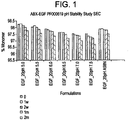
- Accelerated stability studies were performed to characterize the stability of panitumumab under different pH conditions. Briefly, accelerated stability studies performed at a particular pH and at, for example, 37 C in glass vials. Samples were dialyzed into the respective formulations to be tested and sterile filtered into sterile containers. Approximately 2-mL quantities of each formulated sample were placed in sterile 3-mL glass vials in a sterile hood and stoppered. Samples designated for freezing were placed in sterile polypropylene eppindorf tubes. All vials were labeled and crimped followed by placement into boxes specified for storage at -80 C, 2-8 C, and 37 C conditions. Samples were removed and analyzed at designated timepoints.
- SEC Size exclusion chromatography
- Changes in charge variance of the above seven protein solutions also were determined by cation exchange chromatography (CEX) for the samples stored above for up to 2 months. Briefly, panitumumab was evaluated using cation exchange procedures known in the art. This method separated predominant C-terminal lysine isoforms based on protein surface charge differences using a linear salt gradient at pH 6.2 and a Dionex weak-cation exchange column (WCX-10; Sunnyvale, CA) and also acidic modification of some amino acids represented by deamidation.
- CX cation exchange chromatography
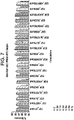
- CEX data for the above-described seven formulations having different pH conditions and being stored for up to 2 months at 37C are presented in Figure 2 (e.g., EGF _20pH 5.0-7.5 and A58N).
- the result shows that the percentage of acid variants (represented by peak 0, which indicates deamidation products) is minimal at acidic pH (5.0 and 5.5).
- a polypeptide particle refers to, for example, a fragment or aggregate of the polypeptide and can be soluble and/or insoluble. Additionally, particles can be made up of matter that is foreign (i.e., shards of glass, lint, small pieces of rubber stopper) and not necessarily composed of the polypeptide. Soluble aggregtes/particles can be evaluated using methods such as SEC, for example. Particles that are insoluble can be evaluated using such methods as liquid particle counting or light obscuration approach such as HIAC, for example. Coarse particles are generally classified as particles having sizes greater than 1.0 ⁇ m and those considered fine particles are smaller in size. Using the LD-400 laser system with the HIAC instrument (Geneva, Switzerland), particle sizes between 2 and 400 ⁇ m can be measured.
- Figure 8 shows particle count measurements for the above ten formulations having different excipients for particle sizes >10 ⁇ m using the HIAC method as described previously.
- the formulations and key for Figure 8 are are the same as those shown above for Figure 7 , but where GLY5 and 2.6GLY5, and GLY5T and 2.6GLY5T80, denote the same buffers between figures 7 and 8 , respectively.
- the results indicate that panitumumab is stable in a variety of formulations containing sorbitol, glycerol, sucrose and salt either in the presence or absence of polysorbate when stored for 1 year at 4C.
- Figure 9 shows the monomer percentage of panitumumab analyzed by SE-HPLC in various formulations at a pH ranging from 5.0 to 7.0. Different excipients were included as set forth below for each formulation. The panitumumab samples were stored for up to 3 months at -30C. These formulations were studied in relation to developing a frozen formulation or frozen drug substance or a bulk substance solution.
- Figure 10 shows the percent monomer of panitumumab analyzed by SE-HPLC as a funtion of pH (5 to 6) and a variety of stabilizers in either acetate or phosphate buffer. The result indicate that when panitumumab is stored at -30C for up to one year the monomer content does not change significantly.
- the following formulations were characterized:
- FIG 11 shows the monomer percent of panitumumab analyzed by SE-HPLC.
- panitumumab was included at 40 mg/mL and stored at -30C for up to one year in the various formulations listed shown below.
- This Example describes the use of the divalent cation calcium chloride (CaCl 2 ) to increase stability of panitumumab in a liquid formulation.
- the aspartic acid residue in CDR3 of the anti-EGFR antibody panitumumab is in a flexible, solvent exposed beta-turn and was used as an exemplary polypeptide to demonstrate divalent cation inhibition of aspartic acid isomerization.
- This aspartyl residue also does not appear to be in network with other secondary structures and is available to interact with solvent and divalent metal ions.
- inclusion of a divalent metal such as CaCl 2 in a polypeptide formulation slowed the succinimide intermediate kinetics and stabilized the polypeptide structure.
- the base formulation used to assess any effects of divalent cations on polypeptide stability was 10mM sodium acetate, 2.6%glycerol, 0.004% polysorbate 80, pH5.0 at 20mg/mL polypeptide and varying amounts of divalent cation as indicated below (eg, 0, 25, 50, 75, 100, 150mM).
- the anti-EGFR antibody panitumumab was aged in different concentrations of CaCl 2 .
- Degradation of isoaspartyl 92 of the light chain was quantified by reverse phase (RP) HPLC/UV of the reduced and alkylated antibody.
- Panitumumab an anti-EGFR IgG2 kappa monoclonal antibody, was produced and purified according to standard procedures well known in the art. The antibody was aged in buffers at pH 5.0 containing from 0-150mM concentrations of CaCl 2 at both 29°C and 37°C for up to 3 months.
- Polypeptide solution was then cooled to room temperature and a 13 ⁇ L aliquot of a 0.5 M iodoacetamide (IAM, catalog No. 111149, Sigma) stock solution was added to reach 13 mM IAM.
- the alkylation was performed at room temperature for 40 minutes while being protected from light.
- the 0.5 mL of buffer of the reduced and alkylated protein was exchanged with a 1 mL of 10 mM sodium acetate (catalog No. 9526-03, J.T. Baker, Philipsburg, NJ USA) solution at pH 5.0 to a final concentration of 1 mg/mL of protein. Buffer exchange was performed using a NAP-5 gel filtration column packed with Sephadex G 26 medium (Amersham Pharmacia Biotech, Orsay, France) following the manufacturer recommendations.
- Correlation between the percentage of isomerized light chain of isoaspartyl in position 92 also was assessed as a function of incubation time in solutions with different concentrations of CaCl 2 at a pH 5.0 at 37°C. Different concentrations of CaCl 2 were introduced in the aging solution to inhibit the isomerization of aspartyl 92 in the CDR3 region of panitumumab's light chain. Formation of isoLC was assessed as described above.
- Figure 16A-C is a further degradation time course assessing the correlation between the percentage of isoLC formation as a function of incubation time in solutions with different concentrations of CaCl 2 at pH 5.0 following incubation at different temperatures.
- different concentrations of CaCl 2 were introduced in the aging solution to inhibit the isomerization of aspartyl 92 and the samples were incubated at either 4°C, 29°C or 37°C for up to 3 months.
- the results indicate that at the higher temperatures addition of the amount of CaCl 2 added to the samples directly correlated with loss of isoLC formation and enhanced polypeptide stability.
- Figures 18 A and B show the SE-HPLC profiles of antibody following incubation under the above conditions.
- the results following incubation after 4 months at 4°C showed no detectable increase in polypeptide aggregation or dimer formation with increasing concentrations of CaCl 2 .
- the aggregates remained at 0.05% ( Figure 18A ).
- the aggregation slightly increased to 0.33% in 75 mM CaCl 2 solution and to 1% in 150 mM CaCl 2 solution ( Figure 18B ).
- the combined data with respect to isomerization of the aspartic acid D92 and aggregation indicate that 75 mM CaCl 2 is a particularly useful divalent cation concentration for preventing or reducing isomerization and preserving polypeptide bioactivity because only minor levels of polypeptide aggregation resulted at 29°C.
- isoaspartic acid the above results demonstrate that a wide range of CaCl 2 concentrations, including within the range of 25-150 mM, significantly slowed aspartic acid isomerization.
- surfactants such as polysorbate 20 or 80 can be additionally included.
Landscapes
- Health & Medical Sciences (AREA)
- Chemical & Material Sciences (AREA)
- Life Sciences & Earth Sciences (AREA)
- Medicinal Chemistry (AREA)
- General Health & Medical Sciences (AREA)
- Public Health (AREA)
- Pharmacology & Pharmacy (AREA)
- Animal Behavior & Ethology (AREA)
- Veterinary Medicine (AREA)
- Epidemiology (AREA)
- Immunology (AREA)
- Engineering & Computer Science (AREA)
- Organic Chemistry (AREA)
- Bioinformatics & Cheminformatics (AREA)
- General Chemical & Material Sciences (AREA)
- Chemical Kinetics & Catalysis (AREA)
- Biochemistry (AREA)
- Molecular Biology (AREA)
- Oil, Petroleum & Natural Gas (AREA)
- Nuclear Medicine, Radiotherapy & Molecular Imaging (AREA)
- Inorganic Chemistry (AREA)
- Biophysics (AREA)
- Genetics & Genomics (AREA)
- Proteomics, Peptides & Aminoacids (AREA)
- Dermatology (AREA)
- Microbiology (AREA)
- Mycology (AREA)
- Medicines Containing Antibodies Or Antigens For Use As Internal Diagnostic Agents (AREA)
- Medicinal Preparation (AREA)
- Medicines That Contain Protein Lipid Enzymes And Other Medicines (AREA)
Claims (15)
- Formulation comprenant un tampon ayant un pH d'environ 4,0 à moins de 6,0, un cation divalent sélectionné parmi le chlorure de calcium, le chlorure de zinc, le chlorure de manganèse ou le chlorure de magnésium entre environ 5 à 150 mM, un excipient comprenant un sucre ou un polyol, et une quantité efficace de panitumumab, le panitumumab conservant au moins environ 80 % d'activité de liaison à l'EGFR jusqu'à deux mois en solution.
- Procédé de stabilisation de panitumumab, comprenant la mise en contact du panitumumab avec une concentration de cation divalent sélectionné parmi le chlorure de calcium, le chlorure de zinc, le chlorure de manganèse ou le chlorure de magnésium entre environ 5 à 150 mM dans un tampon ayant un pH d'environ 4,0 à moins de 6,0 et un excipient comprenant un sucre ou un polyol, le panitumumab conservant au moins environ 80 % d'activité de liaison à l'EGFR jusqu'à deux mois en solution.
- Formulation selon la revendication 1 ou procédé selon la revendication 2, la concentration dudit cation divalent étant d'environ 25 mM, 50 mM, 75 mM, 100 mM ou 125 mM.
- Formulation ou procédé selon la revendication 3, la concentration dudit cation divalent étant de 75 mM.
- Formulation selon la revendication 1 ou procédé selon la revendication 2, ledit pH étant compris entre 4,8 à 5,2.
- Formulation selon la revendication 1 ou procédé selon la revendication 2, ledit tampon étant l'acide acétique, l'acide glutamique ou l'acide succinique, ou un sel de celui-ci.
- Formulation ou procédé selon la revendication 6, la concentration dudit acide acétique, acide glutamique ou acide succinique, ou un sel de celui-ci étant d'environ 1 à 50 mM.
- Formulation selon la revendication 1 ou procédé selon la revendication 2, ledit sucre ou polyol étant le glycérol, le saccharose, le tréhalose, ou le sorbitol.
- Formulation ou procédé selon la revendication 8, ledit glycérol, saccharose, tréhalose, ou sorbitol se trouvant sous une concentration d'environ 1 à 20 %.
- Formulation ou procédé selon la revendication 8, ledit glycérol se trouvant sous une concentration comprise entre environ 1 à 3 %.
- Formulation selon la revendication 1 ou procédé selon la revendication 2, comprenant en outre un tensioactif.
- Formulation ou procédé selon la revendication 11, ledit tensioactif comprenant un polysorbate.
- Formulation ou procédé selon la revendication 11, ledit tensioactif se trouvant sous une concentration d'environ 0,001 à 0,10 % (en pds/vol).
- Formulation ou procédé selon l'une quelconque des revendications 1 à 13, ledit cation divalent étant le chlorure de calcium.
- Formulation selon la revendication 1 ou procédé selon la revendication 2, le panitumumab se trouvant sous une concentration sélectionnée entre environ 10 à 200 mg/ml.
Applications Claiming Priority (2)
| Application Number | Priority Date | Filing Date | Title |
|---|---|---|---|
| US85318106P | 2006-10-20 | 2006-10-20 | |
| PCT/US2007/021475 WO2008051363A2 (fr) | 2006-10-20 | 2007-10-05 | Formulations stables de polypeptide |
Publications (2)
| Publication Number | Publication Date |
|---|---|
| EP2094247A2 EP2094247A2 (fr) | 2009-09-02 |
| EP2094247B1 true EP2094247B1 (fr) | 2022-06-29 |
Family
ID=39325098
Family Applications (1)
| Application Number | Title | Priority Date | Filing Date |
|---|---|---|---|
| EP07839333.7A Active EP2094247B1 (fr) | 2006-10-20 | 2007-10-05 | Formulations stables de polypeptide |
Country Status (12)
| Country | Link |
|---|---|
| US (2) | US7705132B2 (fr) |
| EP (1) | EP2094247B1 (fr) |
| JP (1) | JP5623743B2 (fr) |
| AR (1) | AR063149A1 (fr) |
| AU (1) | AU2007309616B2 (fr) |
| CA (1) | CA2666492C (fr) |
| CL (1) | CL2007002881A1 (fr) |
| ES (1) | ES2925992T3 (fr) |
| MX (1) | MX2009003982A (fr) |
| PE (1) | PE20080857A1 (fr) |
| TW (1) | TW200833357A (fr) |
| WO (1) | WO2008051363A2 (fr) |
Families Citing this family (39)
| Publication number | Priority date | Publication date | Assignee | Title |
|---|---|---|---|---|
| JP2009502972A (ja) * | 2005-07-29 | 2009-01-29 | アムジエン・インコーポレーテツド | タンパク質凝集を抑制する製剤 |
| US8883146B2 (en) | 2007-11-30 | 2014-11-11 | Abbvie Inc. | Protein formulations and methods of making same |
| MX2011005672A (es) * | 2008-11-28 | 2011-06-20 | Abbott Lab | Composiciones de anticuerpo estables y metodos para estabilizar a las mismas. |
| NZ595694A (en) * | 2009-05-04 | 2013-09-27 | Abbvie Biotechnology Ltd | Stable high protein concentration formulations of human anti-tnf-alpha-antibodies |
| US8221753B2 (en) | 2009-09-30 | 2012-07-17 | Tracon Pharmaceuticals, Inc. | Endoglin antibodies |
| CN102686241A (zh) * | 2009-12-29 | 2012-09-19 | 霍夫曼-拉罗奇有限公司 | 抗体配制剂 |
| BR112012022223B1 (pt) * | 2010-03-01 | 2022-08-09 | Cytodyn Inc | Formulação de proteína concentrada, uso e método de preparação da mesma |
| HRP20192207T1 (hr) | 2010-08-11 | 2020-02-21 | Ironwood Pharmaceuticals, Inc. | Stabilne formulacije linaklotida |
| EA032336B1 (ru) * | 2010-09-17 | 2019-05-31 | Баксалта Инкорпорейтид | Стабильная водная иммуноглобулиновая композиция и способ стабилизации иммуноглобулиновой композиции |
| CN103458926B (zh) | 2010-11-11 | 2016-10-26 | 艾伯维生物技术有限公司 | 改进的高浓度抗TNF α 抗体液体制剂 |
| WO2012144579A1 (fr) * | 2011-04-21 | 2012-10-26 | 第一三共株式会社 | Préparation d'anticorps ayant la forme d'une solution |
| UA116189C2 (uk) | 2011-05-02 | 2018-02-26 | Мілленніум Фармасьютікалз, Інк. | КОМПОЗИЦІЯ АНТИ-α4β7 АНТИТІЛА |
| MX421100B (es) | 2011-07-01 | 2025-02-10 | Biogen Ma Inc | Composiciones del polipeptido de fusion tnfr: fc exentas de arginina y metodos de uso |
| US10493151B2 (en) | 2011-10-18 | 2019-12-03 | Coherus Biosciences, Inc. | Etanercept formulations stabilized with sodium chloride |
| SG11201401562RA (en) | 2011-10-18 | 2014-09-26 | Coherus Biosciences Inc | Etanercept formulations stabilized with sodium chloride |
| CA2853112C (fr) | 2011-10-25 | 2018-08-21 | Onclave Therapeutics Limited | Formulations d'anticorps et procedes correspondants |
| JP6271536B2 (ja) | 2012-07-09 | 2018-01-31 | コヒラス・バイオサイエンシズ・インコーポレイテッド | 肉眼不可視粒子の著しい低減を示すエタネルセプト製剤 |
| FR2994390B1 (fr) | 2012-08-10 | 2014-08-15 | Adocia | Procede d'abaissement de la viscosite de solutions de proteines a concentration elevee |
| UA115789C2 (uk) | 2012-09-05 | 2017-12-26 | Трейкон Фармасутікалз, Інк. | Композиція антитіла до cd105 та її застосування |
| MX2015003007A (es) | 2012-09-07 | 2015-06-05 | Coherus Biosciences Inc | Formulaciones acuosas estables de adalimumab. |
| AU2013315750B9 (en) | 2012-09-11 | 2018-11-15 | Coherus Biosciences, Inc. | Correctly folded etanercept in high purity and excellent yield |
| UA117466C2 (uk) | 2012-12-13 | 2018-08-10 | Мерк Шарп Енд Доме Корп. | СТАБІЛЬНИЙ СКЛАД У ВИГЛЯДІ РОЗЧИНУ АНТИТІЛА ДО IL-23p19 |
| CN110118871A (zh) * | 2012-12-28 | 2019-08-13 | 塞尔雷斯蒂斯有限公司 | 细胞介导的免疫应答试验 |
| AR095398A1 (es) * | 2013-03-13 | 2015-10-14 | Genentech Inc | Formulaciones con oxidación reducida |
| CA2952609A1 (fr) * | 2014-06-26 | 2015-12-30 | Amgen Inc. | Formulations de proteines solides comprenant un stabilisateur, un alcool de sucre, du sucre et un agent de surface |
| AU2015338717B2 (en) * | 2014-10-31 | 2018-12-20 | Glaxosmithkline Intellectual Property Development Limited | Powder formulation |
| AR103173A1 (es) | 2014-12-22 | 2017-04-19 | Novarits Ag | Productos farmacéuticos y composiciones líquidas estables de anticuerpos il-17 |
| US11229702B1 (en) | 2015-10-28 | 2022-01-25 | Coherus Biosciences, Inc. | High concentration formulations of adalimumab |
| WO2017184880A1 (fr) | 2016-04-20 | 2017-10-26 | Coherus Biosciences, Inc. | Procédé de remplissage d'un récipient sans espace libre |
| US11608357B2 (en) | 2018-08-28 | 2023-03-21 | Arecor Limited | Stabilized antibody protein solutions |
| GB201703062D0 (en) * | 2017-02-24 | 2017-04-12 | Arecor Ltd | Stabilized antibody protein solutions |
| EP3372242A1 (fr) | 2017-03-06 | 2018-09-12 | Ares Trading S.A. | Composition pharmaceutique liquide |
| EP3372241A1 (fr) | 2017-03-06 | 2018-09-12 | Ares Trading S.A. | Composition pharmaceutique liquide |
| JOP20190260A1 (ar) | 2017-05-02 | 2019-10-31 | Merck Sharp & Dohme | صيغ ثابتة لأجسام مضادة لمستقبل الموت المبرمج 1 (pd-1) وطرق استخدامها |
| RU2019138507A (ru) | 2017-05-02 | 2021-06-02 | Мерк Шарп И Доум Корп. | Составы антител против lag3 и совместные составы антител против lag3 и антител против pd-1 |
| CN113056482A (zh) | 2018-10-18 | 2021-06-29 | 默沙东公司 | 抗rsv抗体的制剂及其使用方法 |
| CN120842406A (zh) | 2018-10-31 | 2025-10-28 | 默沙东有限责任公司 | 抗人pd-1抗体晶体及其使用方法 |
| KR20210089215A (ko) | 2018-11-07 | 2021-07-15 | 머크 샤프 앤드 돔 코포레이션 | 항-lag3 항체 및 항-pd-1 항체의 공동-제제 |
| SG11202108627SA (en) | 2019-02-18 | 2021-09-29 | Lilly Co Eli | Therapeutic antibody formulation |
Citations (1)
| Publication number | Priority date | Publication date | Assignee | Title |
|---|---|---|---|---|
| WO2002096457A2 (fr) * | 2001-05-31 | 2002-12-05 | Novartis Ag | Formulations liquides stable s |
Family Cites Families (67)
| Publication number | Priority date | Publication date | Assignee | Title |
|---|---|---|---|---|
| US4475196A (en) * | 1981-03-06 | 1984-10-02 | Zor Clair G | Instrument for locating faults in aircraft passenger reading light and attendant call control system |
| US4447233A (en) * | 1981-04-10 | 1984-05-08 | Parker-Hannifin Corporation | Medication infusion pump |
| US4475916A (en) * | 1982-03-18 | 1984-10-09 | Merck & Co., Inc. | Osmotic drug delivery system |
| US4439196A (en) * | 1982-03-18 | 1984-03-27 | Merck & Co., Inc. | Osmotic drug delivery system |
| US4522811A (en) * | 1982-07-08 | 1985-06-11 | Syntex (U.S.A.) Inc. | Serial injection of muramyldipeptides and liposomes enhances the anti-infective activity of muramyldipeptides |
| US4447224A (en) * | 1982-09-20 | 1984-05-08 | Infusaid Corporation | Variable flow implantable infusion apparatus |
| US4487603A (en) * | 1982-11-26 | 1984-12-11 | Cordis Corporation | Implantable microinfusion pump system |
| US4486194A (en) * | 1983-06-08 | 1984-12-04 | James Ferrara | Therapeutic device for administering medicaments through the skin |
| US4597966A (en) * | 1985-01-09 | 1986-07-01 | Ortho Diagnostic Systems, Inc. | Histidine stabilized immunoglobulin and method of preparation |
| US4596556A (en) * | 1985-03-25 | 1986-06-24 | Bioject, Inc. | Hypodermic injection apparatus |
| US5374548A (en) * | 1986-05-02 | 1994-12-20 | Genentech, Inc. | Methods and compositions for the attachment of proteins to liposomes using a glycophospholipid anchor |
| MX9203291A (es) * | 1985-06-26 | 1992-08-01 | Liposome Co Inc | Metodo para acoplamiento de liposomas. |
| US5237054A (en) * | 1987-02-20 | 1993-08-17 | Akzo Pharma | Stabilized aqueous composition containing antibodies |
| US4941880A (en) * | 1987-06-19 | 1990-07-17 | Bioject, Inc. | Pre-filled ampule and non-invasive hypodermic injection device assembly |
| US4790824A (en) * | 1987-06-19 | 1988-12-13 | Bioject, Inc. | Non-invasive hypodermic injection device |
| US5108921A (en) * | 1989-04-03 | 1992-04-28 | Purdue Research Foundation | Method for enhanced transmembrane transport of exogenous molecules |
| IL93986A0 (en) | 1989-04-04 | 1991-01-31 | Lilly Co Eli | Improvements in and relating to pharmaceutical formulations |
| US5064413A (en) * | 1989-11-09 | 1991-11-12 | Bioject, Inc. | Needleless hypodermic injection device |
| US5312335A (en) * | 1989-11-09 | 1994-05-17 | Bioject Inc. | Needleless hypodermic injection device |
| US5427908A (en) * | 1990-05-01 | 1995-06-27 | Affymax Technologies N.V. | Recombinant library screening methods |
| GB9014932D0 (en) * | 1990-07-05 | 1990-08-22 | Celltech Ltd | Recombinant dna product and method |
| JPH0565233A (ja) * | 1991-03-08 | 1993-03-19 | Mitsui Toatsu Chem Inc | モノクローナル抗体含有凍結乾燥製剤 |
| WO1994004679A1 (fr) * | 1991-06-14 | 1994-03-03 | Genentech, Inc. | Procede pour fabriquer des anticorps humanises |
| GB9122820D0 (en) * | 1991-10-28 | 1991-12-11 | Wellcome Found | Stabilised antibodies |
| JPH05244982A (ja) * | 1991-12-06 | 1993-09-24 | Sumitomo Chem Co Ltd | 擬人化b−b10 |
| US5714350A (en) * | 1992-03-09 | 1998-02-03 | Protein Design Labs, Inc. | Increasing antibody affinity by altering glycosylation in the immunoglobulin variable region |
| US5383851A (en) * | 1992-07-24 | 1995-01-24 | Bioject Inc. | Needleless hypodermic injection device |
| US5955448A (en) * | 1994-08-19 | 1999-09-21 | Quadrant Holdings Cambridge Limited | Method for stabilization of biological substances during drying and subsequent storage and compositions thereof |
| GB2288732B (en) * | 1994-04-13 | 1998-04-29 | Quadrant Holdings Cambridge | Pharmaceutical compositions |
| US5580856A (en) | 1994-07-15 | 1996-12-03 | Prestrelski; Steven J. | Formulation of a reconstituted protein, and method and kit for the production thereof |
| US7060808B1 (en) * | 1995-06-07 | 2006-06-13 | Imclone Systems Incorporated | Humanized anti-EGF receptor monoclonal antibody |
| US6267958B1 (en) * | 1995-07-27 | 2001-07-31 | Genentech, Inc. | Protein formulation |
| GB9705810D0 (en) | 1997-03-20 | 1997-05-07 | Common Services Agency | Intravenous immune globulin |
| US6235883B1 (en) * | 1997-05-05 | 2001-05-22 | Abgenix, Inc. | Human monoclonal antibodies to epidermal growth factor receptor |
| US6171586B1 (en) * | 1997-06-13 | 2001-01-09 | Genentech, Inc. | Antibody formulation |
| DE19937219A1 (de) * | 1999-08-06 | 2001-02-08 | Aventis Behring Gmbh | Verfahren zur Reindarstellung der den Blutgerinnungsfaktor VII aktivierenden Protease, ihres Proenzyms oder eines Gemisches beider Proteine mittels Ionenaustauscherchromatographie |
| ATE260674T1 (de) | 1998-08-17 | 2004-03-15 | Pfizer Prod Inc | Stabilisierte proteinzusammensetzung |
| JP2002542183A (ja) | 1999-04-16 | 2002-12-10 | ノボ ノルディスク アクティーゼルスカブ | 成形可能な乾燥した医薬製剤 |
| JP4516711B2 (ja) | 1999-12-28 | 2010-08-04 | 中外製薬株式会社 | 安定な抗体組成物及び注射製剤 |
| JP5490972B2 (ja) * | 2000-08-04 | 2014-05-14 | 中外製薬株式会社 | タンパク質注射製剤 |
| JP4340062B2 (ja) | 2000-10-12 | 2009-10-07 | ジェネンテック・インコーポレーテッド | 粘度の減少した濃縮タンパク質製剤 |
| HU228583B1 (en) | 2000-11-07 | 2013-04-29 | Novartis Vaccines & Diagnostic | Stabilized interferon compositions |
| ES2370235T3 (es) | 2001-02-23 | 2011-12-13 | Immunex Corporation | Recuperación eficaz de proteínas replegadas correctamente. |
| EP1391209A4 (fr) | 2001-05-30 | 2009-12-16 | Chugai Pharmaceutical Co Ltd | Formulations de proteines |
| WO2002100348A2 (fr) * | 2001-06-13 | 2002-12-19 | Genmab A/S | Anticorps monoclonaux humains diriges contre le recepteur de facteur de croissance epidermique (egfr) |
| US7595378B2 (en) * | 2001-06-13 | 2009-09-29 | Genmab A/S | Human monoclonal antibodies to epidermal growth factor receptor (EGFR) |
| DE10133394A1 (de) * | 2001-07-13 | 2003-01-30 | Merck Patent Gmbh | Flüssige Formulierung enthaltend Cetuximab |
| AU2002324556A1 (en) * | 2001-07-25 | 2003-02-17 | Protein Design Labs, Inc. | Stable lyophilized pharmaceutical formulation of igg antibodies |
| ES2392073T3 (es) * | 2001-11-08 | 2012-12-04 | Abbott Biotherapeutics Corp. | Formulación farmacéutica líquida estable de anticuerpos IGG |
| RU2318829C2 (ru) * | 2001-11-14 | 2008-03-10 | Сентокор, Инк. | Антитела против il-6, композиции, способы и применение |
| DE10163459A1 (de) * | 2001-12-21 | 2003-07-03 | Merck Patent Gmbh | Lyophilisierte Zubereitung enthaltend Antikörper gegen EGF-Rezeptor |
| US20030170230A1 (en) | 2002-02-05 | 2003-09-11 | Caterer Nigel Robert | Compositions and methods for assembly and stabilization of antibody Fv fragments via antiparallel heterogeneous coiled-coil peptide regions and uses thereof |
| US20040009168A1 (en) * | 2002-04-05 | 2004-01-15 | Elizabet Kaisheva | Multidose antibody formulation |
| US7425618B2 (en) | 2002-06-14 | 2008-09-16 | Medimmune, Inc. | Stabilized anti-respiratory syncytial virus (RSV) antibody formulations |
| NZ537610A (en) | 2002-07-02 | 2006-07-28 | Smithkline Beecham Corp | Stable formulations of the C242 antibody |
| US20040033228A1 (en) * | 2002-08-16 | 2004-02-19 | Hans-Juergen Krause | Formulation of human antibodies for treating TNF-alpha associated disorders |
| WO2004039337A2 (fr) | 2002-10-31 | 2004-05-13 | Protein Design Labs, Inc. | Formulations pharmaceutiques liquides stables d'anticorps ayant tendance a l'isomerisation |
| US20040191243A1 (en) * | 2002-12-13 | 2004-09-30 | Bei Chen | System and method for stabilizing antibodies with histidine |
| EP1589996A4 (fr) | 2003-01-30 | 2009-01-21 | Medimmune Inc | Preparation d'anticorps anti-integrine alpha beta 3 et utilisations associees |
| AU2004210679A1 (en) | 2003-02-10 | 2004-08-26 | Elan Pharmaceuticals, Inc. | Immunoglobulin formulation and method of preparation thereof |
| DE10355251A1 (de) * | 2003-11-26 | 2005-06-23 | Merck Patent Gmbh | Pharmazeutische Zubereitung enthaltend einen Antikörper gegen den EGF-Rezeptor |
| FI117336B (fi) * | 2004-07-27 | 2006-09-15 | Kone Corp | Hissin koneistoalusta |
| SG156672A1 (en) * | 2004-10-22 | 2009-11-26 | Amgen Inc | Methods for refolding of recombinant antibodies |
| LT2620450T (lt) * | 2005-03-08 | 2019-02-11 | Pfizer Products Inc. | Anti-ctla-4 antikūnų kompozicijos |
| KR20080014745A (ko) * | 2005-04-01 | 2008-02-14 | 암젠 인코포레이티드 | 상피세포 성장인자 수용체 유전자 복제 수 |
| MX2008015581A (es) * | 2006-06-05 | 2008-12-17 | Genentech Inc | Prolongacion de la supervivencia de pacientes con cancer con niveles elevados de egf o tgf-alfa. |
| AU2007260769A1 (en) * | 2006-06-14 | 2007-12-21 | Imclone Llc | Lyophilized formulations of anti-EGFR antibodies |
-
2007
- 2007-10-05 JP JP2009533310A patent/JP5623743B2/ja active Active
- 2007-10-05 WO PCT/US2007/021475 patent/WO2008051363A2/fr not_active Ceased
- 2007-10-05 TW TW096137621A patent/TW200833357A/zh unknown
- 2007-10-05 PE PE2007001356A patent/PE20080857A1/es not_active Application Discontinuation
- 2007-10-05 MX MX2009003982A patent/MX2009003982A/es active IP Right Grant
- 2007-10-05 CA CA2666492A patent/CA2666492C/fr active Active
- 2007-10-05 CL CL200702881A patent/CL2007002881A1/es unknown
- 2007-10-05 ES ES07839333T patent/ES2925992T3/es active Active
- 2007-10-05 EP EP07839333.7A patent/EP2094247B1/fr active Active
- 2007-10-05 AU AU2007309616A patent/AU2007309616B2/en active Active
- 2007-10-05 US US11/973,051 patent/US7705132B2/en active Active
- 2007-10-09 AR ARP070104421A patent/AR063149A1/es not_active Application Discontinuation
-
2010
- 2010-03-05 US US12/718,898 patent/US8241632B2/en not_active Expired - Fee Related
Patent Citations (1)
| Publication number | Priority date | Publication date | Assignee | Title |
|---|---|---|---|---|
| WO2002096457A2 (fr) * | 2001-05-31 | 2002-12-05 | Novartis Ag | Formulations liquides stable s |
Non-Patent Citations (1)
| Title |
|---|
| WANG WEI ED - BARRATT GILLIAN ET AL: "Instability, stabilization, and formulation of liquid protein pharmaceuticals", INTERNATIONAL JOURNAL OF PHARMACEUTICS, ELSEVIER BV, NL, vol. 185, no. 2, 20 August 1999 (1999-08-20), pages 129 - 188, XP002323952, ISSN: 0378-5173, DOI: 10.1016/S0378-5173(99)00152-0 * |
Also Published As
| Publication number | Publication date |
|---|---|
| WO2008051363A3 (fr) | 2008-09-12 |
| EP2094247A2 (fr) | 2009-09-02 |
| JP2010506911A (ja) | 2010-03-04 |
| AR063149A1 (es) | 2008-12-30 |
| US20080124326A1 (en) | 2008-05-29 |
| CA2666492A1 (fr) | 2008-05-02 |
| CA2666492C (fr) | 2012-07-17 |
| AU2007309616B2 (en) | 2011-10-06 |
| PE20080857A1 (es) | 2008-08-19 |
| US7705132B2 (en) | 2010-04-27 |
| WO2008051363A2 (fr) | 2008-05-02 |
| AU2007309616A1 (en) | 2008-05-02 |
| CL2007002881A1 (es) | 2008-05-09 |
| ES2925992T3 (es) | 2022-10-20 |
| TW200833357A (en) | 2008-08-16 |
| MX2009003982A (es) | 2009-04-27 |
| US8241632B2 (en) | 2012-08-14 |
| US20100158908A1 (en) | 2010-06-24 |
| JP5623743B2 (ja) | 2014-11-12 |
Similar Documents
| Publication | Publication Date | Title |
|---|---|---|
| US7705132B2 (en) | Stable polypeptide formulations | |
| EP2081553B1 (fr) | Formulations stables comprenant des anticorps | |
| AU2007240732B2 (en) | Buffering agents for biopharmaceutical formulations | |
| CA2790018C (fr) | Formulations | |
| CN116850282A (zh) | 用于临床使用抗血树突细胞抗原2抗体的药物组合物和给药方案 | |
| AU2012200284B2 (en) | Stable Antibody Formulations | |
| AU2014201388B2 (en) | Stable Buffered Formulations Containing Polypeptides | |
| AU2016213875A1 (en) | Stable Buffered Formulations Containing Polypeptides |
Legal Events
| Date | Code | Title | Description |
|---|---|---|---|
| PUAI | Public reference made under article 153(3) epc to a published international application that has entered the european phase |
Free format text: ORIGINAL CODE: 0009012 |
|
| 17P | Request for examination filed |
Effective date: 20090518 |
|
| AK | Designated contracting states |
Kind code of ref document: A2 Designated state(s): AT BE BG CH CY CZ DE DK EE ES FI FR GB GR HU IE IS IT LI LT LU LV MC MT NL PL PT RO SE SI SK TR |
|
| AX | Request for extension of the european patent |
Extension state: AL BA HR MK RS |
|
| RIN1 | Information on inventor provided before grant (corrected) |
Inventor name: MATSUMURA, MASAZUMI Inventor name: MCAULEY, ARNOLD Inventor name: CHELIUS, DIRK Inventor name: BONDARENKO, PAVEL Inventor name: REHDER, DOUGLAS |
|
| 17Q | First examination report despatched |
Effective date: 20140410 |
|
| STAA | Information on the status of an ep patent application or granted ep patent |
Free format text: STATUS: EXAMINATION IS IN PROGRESS |
|
| GRAP | Despatch of communication of intention to grant a patent |
Free format text: ORIGINAL CODE: EPIDOSNIGR1 |
|
| STAA | Information on the status of an ep patent application or granted ep patent |
Free format text: STATUS: GRANT OF PATENT IS INTENDED |
|
| INTG | Intention to grant announced |
Effective date: 20220203 |
|
| RAP3 | Party data changed (applicant data changed or rights of an application transferred) |
Owner name: AMGEN INC. |
|
| GRAS | Grant fee paid |
Free format text: ORIGINAL CODE: EPIDOSNIGR3 |
|
| GRAA | (expected) grant |
Free format text: ORIGINAL CODE: 0009210 |
|
| STAA | Information on the status of an ep patent application or granted ep patent |
Free format text: STATUS: THE PATENT HAS BEEN GRANTED |
|
| AK | Designated contracting states |
Kind code of ref document: B1 Designated state(s): AT BE BG CH CY CZ DE DK EE ES FI FR GB GR HU IE IS IT LI LT LU LV MC MT NL PL PT RO SE SI SK TR |
|
| REG | Reference to a national code |
Ref country code: GB Ref legal event code: FG4D |
|
| REG | Reference to a national code |
Ref country code: CH Ref legal event code: EP |
|
| REG | Reference to a national code |
Ref country code: AT Ref legal event code: REF Ref document number: 1500831 Country of ref document: AT Kind code of ref document: T Effective date: 20220715 |
|
| REG | Reference to a national code |
Ref country code: IE Ref legal event code: FG4D |
|
| REG | Reference to a national code |
Ref country code: DE Ref legal event code: R096 Ref document number: 602007061534 Country of ref document: DE |
|
| REG | Reference to a national code |
Ref country code: LT Ref legal event code: MG9D |
|
| REG | Reference to a national code |
Ref country code: ES Ref legal event code: FG2A Ref document number: 2925992 Country of ref document: ES Kind code of ref document: T3 Effective date: 20221020 |
|
| PG25 | Lapsed in a contracting state [announced via postgrant information from national office to epo] |
Ref country code: SE Free format text: LAPSE BECAUSE OF FAILURE TO SUBMIT A TRANSLATION OF THE DESCRIPTION OR TO PAY THE FEE WITHIN THE PRESCRIBED TIME-LIMIT Effective date: 20220629 Ref country code: LT Free format text: LAPSE BECAUSE OF FAILURE TO SUBMIT A TRANSLATION OF THE DESCRIPTION OR TO PAY THE FEE WITHIN THE PRESCRIBED TIME-LIMIT Effective date: 20220629 Ref country code: GR Free format text: LAPSE BECAUSE OF FAILURE TO SUBMIT A TRANSLATION OF THE DESCRIPTION OR TO PAY THE FEE WITHIN THE PRESCRIBED TIME-LIMIT Effective date: 20220930 Ref country code: FI Free format text: LAPSE BECAUSE OF FAILURE TO SUBMIT A TRANSLATION OF THE DESCRIPTION OR TO PAY THE FEE WITHIN THE PRESCRIBED TIME-LIMIT Effective date: 20220629 Ref country code: BG Free format text: LAPSE BECAUSE OF FAILURE TO SUBMIT A TRANSLATION OF THE DESCRIPTION OR TO PAY THE FEE WITHIN THE PRESCRIBED TIME-LIMIT Effective date: 20220929 |
|
| REG | Reference to a national code |
Ref country code: NL Ref legal event code: MP Effective date: 20220629 |
|
| REG | Reference to a national code |
Ref country code: AT Ref legal event code: MK05 Ref document number: 1500831 Country of ref document: AT Kind code of ref document: T Effective date: 20220629 |
|
| PG25 | Lapsed in a contracting state [announced via postgrant information from national office to epo] |
Ref country code: LV Free format text: LAPSE BECAUSE OF FAILURE TO SUBMIT A TRANSLATION OF THE DESCRIPTION OR TO PAY THE FEE WITHIN THE PRESCRIBED TIME-LIMIT Effective date: 20220629 |
|
| PG25 | Lapsed in a contracting state [announced via postgrant information from national office to epo] |
Ref country code: NL Free format text: LAPSE BECAUSE OF FAILURE TO SUBMIT A TRANSLATION OF THE DESCRIPTION OR TO PAY THE FEE WITHIN THE PRESCRIBED TIME-LIMIT Effective date: 20220629 |
|
| PG25 | Lapsed in a contracting state [announced via postgrant information from national office to epo] |
Ref country code: SK Free format text: LAPSE BECAUSE OF FAILURE TO SUBMIT A TRANSLATION OF THE DESCRIPTION OR TO PAY THE FEE WITHIN THE PRESCRIBED TIME-LIMIT Effective date: 20220629 Ref country code: RO Free format text: LAPSE BECAUSE OF FAILURE TO SUBMIT A TRANSLATION OF THE DESCRIPTION OR TO PAY THE FEE WITHIN THE PRESCRIBED TIME-LIMIT Effective date: 20220629 Ref country code: PT Free format text: LAPSE BECAUSE OF FAILURE TO SUBMIT A TRANSLATION OF THE DESCRIPTION OR TO PAY THE FEE WITHIN THE PRESCRIBED TIME-LIMIT Effective date: 20221031 Ref country code: EE Free format text: LAPSE BECAUSE OF FAILURE TO SUBMIT A TRANSLATION OF THE DESCRIPTION OR TO PAY THE FEE WITHIN THE PRESCRIBED TIME-LIMIT Effective date: 20220629 Ref country code: AT Free format text: LAPSE BECAUSE OF FAILURE TO SUBMIT A TRANSLATION OF THE DESCRIPTION OR TO PAY THE FEE WITHIN THE PRESCRIBED TIME-LIMIT Effective date: 20220629 |
|
| PG25 | Lapsed in a contracting state [announced via postgrant information from national office to epo] |
Ref country code: PL Free format text: LAPSE BECAUSE OF FAILURE TO SUBMIT A TRANSLATION OF THE DESCRIPTION OR TO PAY THE FEE WITHIN THE PRESCRIBED TIME-LIMIT Effective date: 20220629 Ref country code: IS Free format text: LAPSE BECAUSE OF FAILURE TO SUBMIT A TRANSLATION OF THE DESCRIPTION OR TO PAY THE FEE WITHIN THE PRESCRIBED TIME-LIMIT Effective date: 20221029 |
|
| REG | Reference to a national code |
Ref country code: DE Ref legal event code: R097 Ref document number: 602007061534 Country of ref document: DE |
|
| PG25 | Lapsed in a contracting state [announced via postgrant information from national office to epo] |
Ref country code: DK Free format text: LAPSE BECAUSE OF FAILURE TO SUBMIT A TRANSLATION OF THE DESCRIPTION OR TO PAY THE FEE WITHIN THE PRESCRIBED TIME-LIMIT Effective date: 20220629 Ref country code: CZ Free format text: LAPSE BECAUSE OF FAILURE TO SUBMIT A TRANSLATION OF THE DESCRIPTION OR TO PAY THE FEE WITHIN THE PRESCRIBED TIME-LIMIT Effective date: 20220629 |
|
| PLBE | No opposition filed within time limit |
Free format text: ORIGINAL CODE: 0009261 |
|
| STAA | Information on the status of an ep patent application or granted ep patent |
Free format text: STATUS: NO OPPOSITION FILED WITHIN TIME LIMIT |
|
| PG25 | Lapsed in a contracting state [announced via postgrant information from national office to epo] |
Ref country code: MC Free format text: LAPSE BECAUSE OF FAILURE TO SUBMIT A TRANSLATION OF THE DESCRIPTION OR TO PAY THE FEE WITHIN THE PRESCRIBED TIME-LIMIT Effective date: 20220629 |
|
| 26N | No opposition filed |
Effective date: 20230330 |
|
| REG | Reference to a national code |
Ref country code: BE Ref legal event code: MM Effective date: 20221031 |
|
| P01 | Opt-out of the competence of the unified patent court (upc) registered |
Effective date: 20230523 |
|
| PG25 | Lapsed in a contracting state [announced via postgrant information from national office to epo] |
Ref country code: LU Free format text: LAPSE BECAUSE OF NON-PAYMENT OF DUE FEES Effective date: 20221005 |
|
| PG25 | Lapsed in a contracting state [announced via postgrant information from national office to epo] |
Ref country code: SI Free format text: LAPSE BECAUSE OF FAILURE TO SUBMIT A TRANSLATION OF THE DESCRIPTION OR TO PAY THE FEE WITHIN THE PRESCRIBED TIME-LIMIT Effective date: 20220629 |
|
| PG25 | Lapsed in a contracting state [announced via postgrant information from national office to epo] |
Ref country code: BE Free format text: LAPSE BECAUSE OF NON-PAYMENT OF DUE FEES Effective date: 20221031 |
|
| PG25 | Lapsed in a contracting state [announced via postgrant information from national office to epo] |
Ref country code: IE Free format text: LAPSE BECAUSE OF NON-PAYMENT OF DUE FEES Effective date: 20221005 |
|
| PG25 | Lapsed in a contracting state [announced via postgrant information from national office to epo] |
Ref country code: HU Free format text: LAPSE BECAUSE OF FAILURE TO SUBMIT A TRANSLATION OF THE DESCRIPTION OR TO PAY THE FEE WITHIN THE PRESCRIBED TIME-LIMIT; INVALID AB INITIO Effective date: 20071005 |
|
| PG25 | Lapsed in a contracting state [announced via postgrant information from national office to epo] |
Ref country code: CY Free format text: LAPSE BECAUSE OF FAILURE TO SUBMIT A TRANSLATION OF THE DESCRIPTION OR TO PAY THE FEE WITHIN THE PRESCRIBED TIME-LIMIT Effective date: 20220629 |
|
| PG25 | Lapsed in a contracting state [announced via postgrant information from national office to epo] |
Ref country code: MT Free format text: LAPSE BECAUSE OF FAILURE TO SUBMIT A TRANSLATION OF THE DESCRIPTION OR TO PAY THE FEE WITHIN THE PRESCRIBED TIME-LIMIT Effective date: 20220629 |
|
| PG25 | Lapsed in a contracting state [announced via postgrant information from national office to epo] |
Ref country code: BG Free format text: LAPSE BECAUSE OF FAILURE TO SUBMIT A TRANSLATION OF THE DESCRIPTION OR TO PAY THE FEE WITHIN THE PRESCRIBED TIME-LIMIT Effective date: 20220629 |
|
| PG25 | Lapsed in a contracting state [announced via postgrant information from national office to epo] |
Ref country code: BG Free format text: LAPSE BECAUSE OF FAILURE TO SUBMIT A TRANSLATION OF THE DESCRIPTION OR TO PAY THE FEE WITHIN THE PRESCRIBED TIME-LIMIT Effective date: 20220629 |
|
| PGFP | Annual fee paid to national office [announced via postgrant information from national office to epo] |
Ref country code: IT Payment date: 20250923 Year of fee payment: 19 |
|
| PGFP | Annual fee paid to national office [announced via postgrant information from national office to epo] |
Ref country code: GB Payment date: 20250923 Year of fee payment: 19 |
|
| PGFP | Annual fee paid to national office [announced via postgrant information from national office to epo] |
Ref country code: FR Payment date: 20250924 Year of fee payment: 19 |
|
| REG | Reference to a national code |
Ref country code: CH Ref legal event code: U11 Free format text: ST27 STATUS EVENT CODE: U-0-0-U10-U11 (AS PROVIDED BY THE NATIONAL OFFICE) Effective date: 20251101 |
|
| PG25 | Lapsed in a contracting state [announced via postgrant information from national office to epo] |
Ref country code: TR Free format text: LAPSE BECAUSE OF FAILURE TO SUBMIT A TRANSLATION OF THE DESCRIPTION OR TO PAY THE FEE WITHIN THE PRESCRIBED TIME-LIMIT Effective date: 20220629 |
|
| PGFP | Annual fee paid to national office [announced via postgrant information from national office to epo] |
Ref country code: DE Payment date: 20250923 Year of fee payment: 19 |
|
| PGFP | Annual fee paid to national office [announced via postgrant information from national office to epo] |
Ref country code: CH Payment date: 20251101 Year of fee payment: 19 |
|
| PGFP | Annual fee paid to national office [announced via postgrant information from national office to epo] |
Ref country code: ES Payment date: 20251103 Year of fee payment: 19 |