EP2095722A1 - Aliment comprenant du krill décortiqué comme matière de base et procédé pour empêcher une baisse de la vitesse de croissance des poissons au moyen de cet aliment - Google Patents
Aliment comprenant du krill décortiqué comme matière de base et procédé pour empêcher une baisse de la vitesse de croissance des poissons au moyen de cet aliment Download PDFInfo
- Publication number
- EP2095722A1 EP2095722A1 EP07859747A EP07859747A EP2095722A1 EP 2095722 A1 EP2095722 A1 EP 2095722A1 EP 07859747 A EP07859747 A EP 07859747A EP 07859747 A EP07859747 A EP 07859747A EP 2095722 A1 EP2095722 A1 EP 2095722A1
- Authority
- EP
- European Patent Office
- Prior art keywords
- krill
- feed
- shell
- lfk
- fish
- Prior art date
- Legal status (The legal status is an assumption and is not a legal conclusion. Google has not performed a legal analysis and makes no representation as to the accuracy of the status listed.)
- Withdrawn
Links
Images



Classifications
-
- A—HUMAN NECESSITIES
- A23—FOODS OR FOODSTUFFS; TREATMENT THEREOF, NOT COVERED BY OTHER CLASSES
- A23K—FODDER
- A23K50/00—Feeding-stuffs specially adapted for particular animals
- A23K50/80—Feeding-stuffs specially adapted for particular animals for aquatic animals, e.g. fish, crustaceans or molluscs
-
- A—HUMAN NECESSITIES
- A23—FOODS OR FOODSTUFFS; TREATMENT THEREOF, NOT COVERED BY OTHER CLASSES
- A23K—FODDER
- A23K20/00—Accessory food factors for animal feeding-stuffs
- A23K20/10—Organic substances
- A23K20/168—Steroids
-
- A—HUMAN NECESSITIES
- A23—FOODS OR FOODSTUFFS; TREATMENT THEREOF, NOT COVERED BY OTHER CLASSES
- A23K—FODDER
- A23K10/00—Animal feeding-stuffs
- A23K10/20—Animal feeding-stuffs from material of animal origin
-
- A—HUMAN NECESSITIES
- A23—FOODS OR FOODSTUFFS; TREATMENT THEREOF, NOT COVERED BY OTHER CLASSES
- A23K—FODDER
- A23K10/00—Animal feeding-stuffs
- A23K10/20—Animal feeding-stuffs from material of animal origin
- A23K10/22—Animal feeding-stuffs from material of animal origin from fish
-
- A—HUMAN NECESSITIES
- A23—FOODS OR FOODSTUFFS; TREATMENT THEREOF, NOT COVERED BY OTHER CLASSES
- A23K—FODDER
- A23K20/00—Accessory food factors for animal feeding-stuffs
- A23K20/20—Inorganic substances, e.g. oligoelements
-
- A—HUMAN NECESSITIES
- A23—FOODS OR FOODSTUFFS; TREATMENT THEREOF, NOT COVERED BY OTHER CLASSES
- A23K—FODDER
- A23K40/00—Shaping or working-up of animal feeding-stuffs
- A23K40/25—Shaping or working-up of animal feeding-stuffs by extrusion
Definitions
- the present invention relates to a substitute for fish meal as protein raw material of a feed.
- the catches from December 2004 to November 2005 were about 127,000 tons.
- the catch restrictions for Euphausia superba set by the Convention on the Conservation of Antarctic Marine Living Resources are estimated from the biomass by sonic survey.
- the catch restrictions in the South Atlantic Ocean are four million tons in 2000 which are about 40 times of the actual catches.
- Non-patent Reference 4 A test in which part or all of fish meal as raw material of feed for salmon family fishes was replaced by krill meal was reported (Non-patent Reference 3). In many cases, growth rate and feed efficiency are reduced when all of the fish meal in feed is replaced by krill and equivalent or superior results are obtained when part of fish meal is replaced by krill (Non-patent Reference 5). Substitution of entire amount of fish meal in feed with krill is not carried out.
- Non-patent Reference 7 It is known that fluorine of krill is present in their shells at a high concentration.
- the present invention aims at providing a substitute for fish meal which is the protein source of a feed for fish culture and whose shortage in the future is expected. It also aims at enabling practical use of krill as raw material of a feed, whose use as raw material of a feed has been limited.
- the feed of the present invention can be used as a protein source of feed without exerting a bad influence by fluorine.
- it can be used in the same manner as a feed for fish culture which uses fish meal as the raw material, without exerting a bad influence upon the growth of fishes.
- the krill which were able to be used conventionally only as a partial substitute for fish meal can be used at a high ratio or as a whole substitute.
- the feeds according to the invention are feeds for fish culture, livestock farming, poultry farming, pets and the like, which mainly use fish meal.
- these feeds are made into products such as pellets, granules and powders by adding cereals, chaff and bran, plant oil cakes, plant proteins, vitamins, minerals, and further pigments and the like to raw material of animal feed such as fish meal.
- the present invention is particularly suited for the feeds of fish culture for cultured fish and crustaceans, which use fish meal in a large amount.
- Examples of the cultured fish and crustaceans include fishes of Sparidae family such as a red sea bream, fishes of salmonidae family such as a rainbow trout, a salmon and a trout, fishes to be cultured such as a yellowtail, a yellow jack, a flounder, an eel and a shrimp.
- krill to be used in the present invention although Euphausia superba which is rich in resources is preferable, other krills can also be used in the same manner.
- the shell-removed krill are krill from which their antenna, maxilliped, leg, head shell, body shell and tail shell parts are removed. Although 100% removal is the best, those from which about 75% or more of them are removed can be substantially used.
- fluorine content those in which the fluorine content is reduced to 250 mg/kg or less by the removal of shells are preferable. Even in the general fish meal, fluorine is contained at a fluorine content of about 100 to 200 mg/kg.
- krill are dried to have a moisture content of 15% or less after their heating by boiling, steaming, dielectric heating, microwave or the like method, or directly without carrying out heating.
- the drying method include hot air drying and freeze-dry lyophilization, any method can be used.
- the thus obtained dry krill are cut into pieces of about 5 mm and applied to an air classifier to classify them into a light weight fraction consisting of shells and the like and a heavy weight fraction mainly consisting of krill muscles and the like.
- a shell-removed krill fraction can be obtained with removing shell in the heavy weight fraction.
- shells of krill can also be removed by a roller type stripper and the like ( JP-B-57-1207 , JP-B-7-40868 and the like).
- krill as all or part of the protein source means that all or part of the total weight of animal proteins such as fish meal or plant proteins such as soybean cake, which are generally used as raw material of feed, is substituted with krill.
- Production of shell-removed krill meal (to be referred also to as low fluorine krill meal or LFK hereinafter)
- Frozen raw Euphausia superba (mfd. by NIPPON SUISAN KAISHA, LTD.) were defrosted at room temperature and boiled at 95°C for 10 minutes, followed by drying at 120°C (hot air temperature) using a continuous belt type drier (DC-200, Samson Co., Ltd., Kagawa, Japan) until moisture content of the krill became 10% or less.
- the whole dried krill were pulverized using a hammer mill (D-3, Dalton Co., Ltd., Tokyo, Japan) and a 5 mm sieve.
- the pulverized krill were applied to an air classifier (VS10, Hattori Seisakusho Co., Ltd., Kyoto, Japan) and separated into low fluorine krill meal (LFK) and shells.
- compositions of the whole dried krill, LFK and shells are shown in Table 1.
- Crude protein of the whole dried krill was 66.04%, while that of LFK was increased to 76.76%. Namely, about 10% increased by the removal of shells.
- Crude protein of the removed shells was 56.74%.
- Crude fat, ash content and astaxanthin of LFK were lower than those of the whole dried krill and removed shells. This is because the astaxanthin-containing fat tissues of krill were firmly adhered to the shells.
- the fluorine content of LFK was 210 mg/kg which is about 1/4 when it is compared with the 870 mg/kg of the whole dried krill. In the removed shells, 1,800 mg/kg portion of fluorine was contained. Fatty acid compositions of the whole dried krill, LFK and removed shells were almost the same. Among the lipid components, triacylglycerol was 20.6% in LFK and 26.2% in the whole dried krill. Namely it is lower in LFK. Phospholipid was 77.3% in LFK, while 72.0% in the whole dried krill. Namely, it is higher in LFK.
- Test feeds were produced based on the mixture shown in Table 2. Compositions of respective feeds are shown in Table 2. Using a twin screw extruder ( ⁇ -50, Suehiro EPM Corporation, Mie, Japan), five types of feeds in which certain amounts of fish meal were substituted with LFK and a feed in which 100% fish meal was used as a control were produced. Brown fish meal was used as the main protein source of the feed, and the mixture was arranged by substituting 7.69% (LFK 7), 15.39% (LFK 15), 30.77% (LFK 30), 46.16% (LFK 46) or 100.00% (LFK 100) of the fish meal with LFK.
- Fatty acid composition of each feed and lipid classification are shown in Table 4.
- the n-3 highly unsaturated fatty acids were from 26.13% to 30.45% among total fatty acids.
- EPA eicosapentaenoic acid
- DHA docosahexaenoic acid
- a feeding test was carried out for 95 days at a fresh water test facility of Faculty of Agriculture, Kochi University.
- As the test fish a rainbow trout obtained from Fujioka Trout Farm, Ehime, was used.
- the fishes were fed with a commercially available feed (initial stage feed D-2, mfd. by NIPPON SUISAN KAISHA LTD.) and divided at random into 6 groups of 2 ⁇ 100 fishes per group.
- the fish of each group was about 4.1 g. All groups were kept in an indoor 200 liter capacity circular polycarbonate water tanks, and well water was poured into each water tank at a rate of 100 L/h.
- Mean water temperature during the test period was 18.4 ⁇ 0.3°C, and all of the tanks were aerated.
- the duration of sunshine during the test period (October, 2005 to January, 2006) was as the natural condition at the spot (33° 34' N, 133° 39' E).
- Example 1 The 6 kinds of feeds produced in Example 1 were used as the test feeds.
- the test feeds were satiation-fed by a hand twice a day (9 o'clock and 15 o'clock), and the feed consumption was recorded every day.
- Body weight of all fishes of each group was measured under phenoxyethanol anesthesia at the time of the commencement of the test and on the 36th, 64th and 95th days after commencement of the feeding. The fishes were subjected to fasting for 24 hours before the sampling. At the time of the completion of the test, 15 fishes were sampled at random from each water tank. Their body weights and weights of the extracted livers were measured to calculate Hepatosomatic index (HSI), and paraffin sections of the livers were prepared. Using the muscles of skin-removed dorsal region and vertebral bones, analyses of their chemical compositions and fluorine were carried out.
- HAI Hepatosomatic index
- the vertebral bones were boiled at 95°C for 60 minutes and then stirred overnight at room temperature in 0.1% in concentration of an alkalase 2.4L FG (Novozymes A/S, Bagsvaerd, Denmark). The bones were washed with distilled water and dried at 85°C for 3 hours. Until subjecting to the analysis, all samples were preserved at -25°C.
- the analyses were carried out at Japan Food Analysis Center or the food analysis center of NIPPON SUISAN KAISHA LTD.
- the moisture content was calculated from the decrease in weight after 2 hours of drying at 105°C.
- the crude protein content was measured by the Kjeldahl method (nitrogen coefficient 6.25).
- the crude fat content was measured by a weight measuring method after extraction with diethyl ether.
- the ash content was measured after burning at 550°C.
- the soluble non-nitrogen substance was calculated by the following formula: total wet weight - (moisture content + crude protein content + crude fat content + crude fiber + ash content). Fluorine was color-developed with Alizarin Complexon-lanthanum reagent and the absorbance was measured at a wavelength of 620 nm.
- the amino acid composition was measured by the ninhydrin reaction as the general method which uses a high performance liquid chromatography and an amino acid analyzer (L-8500, Hitachi High-Technologies Corporation). Tryptophan was not measured.
- the total lipid was extracted by the Bligh and Dyer's modified method (Bligh and Dyer, 1959).
- the fatty acid composition was measured using a gas chromatography equipped with DB-WAX fused silica capillary column (HP-6800, Hewlett-Packard, Yokogawa Electric, Tokyo, Japan).
- Composition of the total lipid was analyzed using a thin layer chromatography and a hydrogen ionization detector (Iatroscan TH-10 TLC-FLD Analyzer, Iatron Laboratories Inc., Tokyo, Japan).
- Fluorine concentration in the dorsal muscle and vertebral bone on the 95th day was analyzed (Table 6). Fluorine concentration in the dorsal muscle of the test groups excluding the LFK 100 group was detection limit (1 mg/kg) or less, and fluorine concentration in the vertebral bone of the test groups excluding the LFK 100 group was from 340 mg/kg to 420 mg/kg. Fluorine concentrations in the dorsal muscle and vertebral bone of the LFK 100 group were 1 mg/kg and 1,800 mg/kg, respectively, and it was 220 mg/kg in the vertebral bone in the control group was 220 mg/kg which was lower than the other groups.
- FIG. 1 A correlation line of the total fluorine intake and fluorine concentration in vertebral bone is shown in Fig. 1 .
- the intake and concentration showed positive correlation.
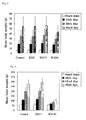
- a test was carried out by substituting fish meal of a feed consisting of fish meal as main raw material with 0%, 7%, 15% or 30% krill meal (conventional product containing shells) and feeding rainbow trouts in fresh water with the prepared feed for 92 hours. Fluorine concentrations in the feeds were 105, 184, 238 and 444 mg/kg, respectively. At the time of the completion of the test, fluorine concentration of the dorsal muscle of each test group was detection limit (1 mg/kg) or less, while in the case of vertebral bones, it increased from 490 mg/kg to 2,400 mg/kg according to increase of the added amount of the krill meal and the growth rate ( Fig. 3 ) was reduced.
- a test was carried out by substituting fish meal of a feed consisting of fish meal as main raw material with 0%, 15% or 100% krill meal (conventional product containing shells) and feeding yellowtails in sea water with the prepared feed for 95 hours.
- yellowtail influence upon its growth rate was not found by the 15% substitution, but sharp reduction in the growth rate was observed with the 100%-substituted feed ( Fig. 4 ).
- a new animal protein source which can be used as a substituent protein source of fish meal without limitation can be provided.
- reduction in the growth rate of fishes was conventionally observed when krill meal was added to feed at a certain ratio or more, a method which does not reduce growth rate even when krill were added can be provided by the present invention.
Landscapes
- Life Sciences & Earth Sciences (AREA)
- Chemical & Material Sciences (AREA)
- Polymers & Plastics (AREA)
- Engineering & Computer Science (AREA)
- Zoology (AREA)
- Food Science & Technology (AREA)
- Animal Husbandry (AREA)
- Health & Medical Sciences (AREA)
- Inorganic Chemistry (AREA)
- Biomedical Technology (AREA)
- Biotechnology (AREA)
- Molecular Biology (AREA)
- Physiology (AREA)
- Marine Sciences & Fisheries (AREA)
- Insects & Arthropods (AREA)
- Birds (AREA)
- Fodder In General (AREA)
- Feed For Specific Animals (AREA)
Applications Claiming Priority (2)
| Application Number | Priority Date | Filing Date | Title |
|---|---|---|---|
| JP2006333329 | 2006-12-11 | ||
| PCT/JP2007/073669 WO2008072563A1 (fr) | 2006-12-11 | 2007-12-07 | Aliment comprenant du krill décortiqué comme matière de base et procédé pour empêcher une baisse de la vitesse de croissance des poissons au moyen de cet aliment |
Publications (2)
| Publication Number | Publication Date |
|---|---|
| EP2095722A1 true EP2095722A1 (fr) | 2009-09-02 |
| EP2095722A4 EP2095722A4 (fr) | 2013-02-20 |
Family
ID=39511583
Family Applications (1)
| Application Number | Title | Priority Date | Filing Date |
|---|---|---|---|
| EP07859747A Withdrawn EP2095722A4 (fr) | 2006-12-11 | 2007-12-07 | Aliment comprenant du krill décortiqué comme matière de base et procédé pour empêcher une baisse de la vitesse de croissance des poissons au moyen de cet aliment |
Country Status (4)
| Country | Link |
|---|---|
| EP (1) | EP2095722A4 (fr) |
| JP (1) | JPWO2008072563A1 (fr) |
| CL (1) | CL2007003584A1 (fr) |
| WO (1) | WO2008072563A1 (fr) |
Cited By (1)
| Publication number | Priority date | Publication date | Assignee | Title |
|---|---|---|---|---|
| CN103583931A (zh) * | 2013-11-11 | 2014-02-19 | 山东师范大学 | 一种南极磷虾整虾的超声脱氟方法 |
Families Citing this family (12)
| Publication number | Priority date | Publication date | Assignee | Title |
|---|---|---|---|---|
| HRP20130551T1 (xx) | 2007-03-28 | 2013-07-31 | Aker Biomarine As | Biouäśinkovite smjese kril ulja |
| US8697138B2 (en) | 2007-03-28 | 2014-04-15 | Aker Biomarine As | Methods of using krill oil to treat risk factors for cardiovascular, metabolic, and inflammatory disorders |
| US9814256B2 (en) | 2009-09-14 | 2017-11-14 | Rimfrost Technologies As | Method for processing crustaceans to produce low fluoride/low trimethyl amine products thereof |
| US8557297B2 (en) | 2008-09-12 | 2013-10-15 | Olympic Seafood, As | Method for processing crustaceans and products thereof |
| BRPI0918538A2 (pt) | 2008-09-12 | 2015-10-06 | Emerald Fisheries As | processo para remover flúor a partir de uma captura de crustáceos, fração de hidrolisado concentrado, e, farinha complexa de fosdolipídios/peptídeo |
| AU2014203179C1 (en) | 2013-06-14 | 2017-05-04 | Aker Biomarine Antarctic As | Lipid extraction processes |
| GB201400431D0 (en) | 2014-01-10 | 2014-02-26 | Aker Biomarine As | Phospholipid compositions and their preparation |
| PL3256003T5 (pl) | 2015-02-11 | 2025-11-17 | Aker Biomarine Human Ingredients As | Sposoby ekstrakcji lipidów |
| WO2016128838A2 (fr) | 2015-02-11 | 2016-08-18 | Aker Biomarine Antarctic As | Compositions lipidiques |
| JP7057911B2 (ja) | 2016-08-03 | 2022-04-21 | 国立大学法人高知大学 | ブリの養殖方法 |
| US20190231744A1 (en) * | 2018-01-30 | 2019-08-01 | Aker Biomarine Antarctic As | Protein hydrolysates |
| CN110452946A (zh) * | 2019-08-06 | 2019-11-15 | 大连工业大学 | 一种低氟低过敏性的南极磷虾抗氧化肽粉的制备方法 |
Family Cites Families (9)
| Publication number | Priority date | Publication date | Assignee | Title |
|---|---|---|---|---|
| JPS5449900A (en) | 1977-09-22 | 1979-04-19 | Nippon Suisan Kaisha Ltd | Method and apparatus for removing shell of *okiami* |
| SU921494A1 (ru) * | 1978-05-15 | 1982-04-23 | Всесоюзный Научно-Исследовательский И Экспериментально-Конструкторский Институт Продовольственного Машиностроения | Способ извлечени м са из мелких ракообразных |
| SE431502B (sv) * | 1979-10-11 | 1984-02-13 | Alfa Laval Ab | Forfarande for framstellning av livsmedel eller foder ur krill |
| NL8220478A (nl) * | 1981-12-17 | 1983-11-01 | Hansen Otto D | Werkwijze en stelsel voor het pellen van schaaldieren. |
| JPS61274653A (ja) * | 1985-05-29 | 1986-12-04 | Nippon Nousan Kogyo Kk | 養魚用初期飼料 |
| JPH0740868B2 (ja) | 1989-04-26 | 1995-05-10 | 日本水産株式会社 | オキアミの脱殻装置 |
| KR920001478B1 (ko) * | 1990-02-13 | 1992-02-15 | 한국식품 개발연구원 | 전기 농축 방법을 이용한 남극새우의 불소 감량 방법 |
| ES2088750B1 (es) * | 1995-01-24 | 1997-03-01 | Cruz Bartolome A Grillo | Procedimiento para la preparacion y conservacion de un suplemento alimenticio natural a base del crustaceo euphasia superba del antartico aplicable para el consumo humano. |
| JPH08322474A (ja) * | 1995-05-25 | 1996-12-10 | Mitsuyoshi Tokumoto | 雑魚混じり小海老を原料とした飼料又は食品の製造方法 |
-
2007
- 2007-12-07 WO PCT/JP2007/073669 patent/WO2008072563A1/fr not_active Ceased
- 2007-12-07 JP JP2008549279A patent/JPWO2008072563A1/ja active Pending
- 2007-12-07 EP EP07859747A patent/EP2095722A4/fr not_active Withdrawn
- 2007-12-11 CL CL200703584A patent/CL2007003584A1/es unknown
Cited By (1)
| Publication number | Priority date | Publication date | Assignee | Title |
|---|---|---|---|---|
| CN103583931A (zh) * | 2013-11-11 | 2014-02-19 | 山东师范大学 | 一种南极磷虾整虾的超声脱氟方法 |
Also Published As
| Publication number | Publication date |
|---|---|
| CL2007003584A1 (es) | 2008-07-04 |
| JPWO2008072563A1 (ja) | 2010-03-25 |
| EP2095722A4 (fr) | 2013-02-20 |
| WO2008072563A1 (fr) | 2008-06-19 |
Similar Documents
| Publication | Publication Date | Title |
|---|---|---|
| EP2095722A1 (fr) | Aliment comprenant du krill décortiqué comme matière de base et procédé pour empêcher une baisse de la vitesse de croissance des poissons au moyen de cet aliment | |
| Yoshitomi et al. | Evaluation of krill (Euphausia superba) meal as a partial replacement for fish meal in rainbow trout (Oncorhynchus mykiss) diets | |
| Sharawy et al. | Partial or total replacement of fish meal by solid state fermented soybean meal with Saccharomyces cerevisiae in diets for Indian prawn shrimp, Fenneropenaeus indicus, Postlarvae | |
| Torstensen et al. | Tailoring of Atlantic salmon (Salmo salar L.) flesh lipid composition and sensory quality by replacing fish oil with a vegetable oil blend | |
| Hernández et al. | Partial replacement of fish meal by porcine meat meal in practical diets for Pacific white shrimp (Litopenaeus vannamei) | |
| Leal et al. | Use of shrimp protein hydrolysate in Nile tilapia (Oreochromis niloticus, L.) feeds | |
| Yoshitomi et al. | Effect of total replacement of dietary fish meal by low fluoride krill (Euphausia superba) meal on growth performance of rainbow trout (Oncorhynchus mykiss) in fresh water | |
| Novriadi et al. | Effects of soybean meal replacement with fermented soybean meal on growth, serum biochemistry and morphological condition of liver and distal intestine of Florida pompano Trachinotus carolinus | |
| Hilton | Potential of freeze-dried worm meal as a replacement for fish meal in trout diet formulaions | |
| Storebakken | Krill as a potential feed source for salmonids | |
| Alam et al. | Evaluation of genetically-improved (glandless) and genetically-modified low-gossypol cottonseed meal as alternative protein sources in the diet of juvenile southern flounder Paralichthys lethostigma reared in a recirculating aquaculture system | |
| Hernández et al. | The potential of pet‐grade poultry by‐product meal to replace fish meal in the diet of the juvenile spotted rose snapper L utjanus guttatus (S teindachner, 1869) | |
| Mamauag et al. | Fish performance, nutrient digestibilities, and hepatic and intestinal morphologies in grouper Epinephelus fuscoguttatus fed fermented copra meal | |
| Li et al. | An evaluation of replacing fishmeal with Chlorella Sorokiniana in the diet of Pacific White Shrimp (Litopenaeus Vannamei): Growth, body color, and flesh quality | |
| Smith et al. | Digestibility of lupin kernel meals in feeds for the black tiger shrimp, Penaeus monodon | |
| Gallardo et al. | Nutritive value of diets containing fish silage for juvenile Litopenaeus vannamei (Bonne, 1931) | |
| Yuan et al. | Effects of supplementation of crystalline or coated lysine and/or methionine on growth performance and feed utilization of the Chinese sucker, Myxocyprinus asiaticus | |
| Takakuwa et al. | Availability of potato protein concentrate as an alternative protein source to fish meal in greater amberjack (Seriola dumerili) diets | |
| Tacer-Tanas et al. | Can dietary hazelnut oil inclusion alleviate the negative effects of oxidized fish oil in rainbow trout (Oncorhynchus mykiss) juveniles? | |
| Parvez et al. | Zootechnical performance, protease activity and proximate composition of Nile tilapia fed diets containing fish silage produced from fish waste | |
| Steffens et al. | Effect of two lipid levels on growth, feed utilization, body composition and some biochemical parameters of rainbow trout, Oncorhynchus mykiss (Walbaum 1792). | |
| Nagel et al. | Blue mussel protein concentrate versus prime fish meal protein as a dietary attractant for turbot (Psetta maxima L.) given rapeseed protein-based diets | |
| Karalazos | Sustainable alternatives to fish meal and fish oil in fish nutrition: effects on growth, tissue fatty acid composition and lipid metabolism | |
| Kim et al. | Long term feeding effects of dietary dehulled soybean meal as a fish meal replacer in growing olive flounder Paralichthys olivaceus | |
| Pascual et al. | Diet supplemented with Grifola gargal mushroom enhances growth, lipid content, and nutrient retention of juvenile rainbow trout (Oncorhynchus mykiss) |
Legal Events
| Date | Code | Title | Description |
|---|---|---|---|
| PUAI | Public reference made under article 153(3) epc to a published international application that has entered the european phase |
Free format text: ORIGINAL CODE: 0009012 |
|
| 17P | Request for examination filed |
Effective date: 20090610 |
|
| AK | Designated contracting states |
Kind code of ref document: A1 Designated state(s): AT BE BG CH CY CZ DE DK EE ES FI FR GB GR HU IE IS IT LI LT LU LV MC MT NL PL PT RO SE SI SK TR |
|
| DAX | Request for extension of the european patent (deleted) | ||
| A4 | Supplementary search report drawn up and despatched |
Effective date: 20130123 |
|
| RIC1 | Information provided on ipc code assigned before grant |
Ipc: A23K 1/18 20060101ALI20130117BHEP Ipc: A23K 1/10 20060101AFI20130117BHEP |
|
| STAA | Information on the status of an ep patent application or granted ep patent |
Free format text: STATUS: THE APPLICATION HAS BEEN WITHDRAWN |
|
| 18W | Application withdrawn |
Effective date: 20130225 |