EP2095980B2 - Dispositif d'introduction de matières odorantes - Google Patents
Dispositif d'introduction de matières odorantes Download PDFInfo
- Publication number
- EP2095980B2 EP2095980B2 EP09002431.6A EP09002431A EP2095980B2 EP 2095980 B2 EP2095980 B2 EP 2095980B2 EP 09002431 A EP09002431 A EP 09002431A EP 2095980 B2 EP2095980 B2 EP 2095980B2
- Authority
- EP
- European Patent Office
- Prior art keywords
- air
- odorous substance
- temperature
- air duct
- passenger compartment
- Prior art date
- Legal status (The legal status is an assumption and is not a legal conclusion. Google has not performed a legal analysis and makes no representation as to the accuracy of the status listed.)
- Ceased
Links
Images

Classifications
-
- B—PERFORMING OPERATIONS; TRANSPORTING
- B60—VEHICLES IN GENERAL
- B60H—ARRANGEMENTS OF HEATING, COOLING, VENTILATING OR OTHER AIR-TREATING DEVICES SPECIALLY ADAPTED FOR PASSENGER OR GOODS SPACES OF VEHICLES
- B60H3/00—Other air-treating devices
- B60H3/0007—Adding substances other than water to the air, e.g. perfume, oxygen
-
- A—HUMAN NECESSITIES
- A61—MEDICAL OR VETERINARY SCIENCE; HYGIENE
- A61L—METHODS OR APPARATUS FOR STERILISING MATERIALS OR OBJECTS IN GENERAL; DISINFECTION, STERILISATION OR DEODORISATION OF AIR; CHEMICAL ASPECTS OF BANDAGES, DRESSINGS, ABSORBENT PADS OR SURGICAL ARTICLES; MATERIALS FOR BANDAGES, DRESSINGS, ABSORBENT PADS OR SURGICAL ARTICLES
- A61L9/00—Disinfection, sterilisation or deodorisation of air
- A61L9/015—Disinfection, sterilisation or deodorisation of air using gaseous or vaporous substances, e.g. ozone
- A61L9/04—Disinfection, sterilisation or deodorisation of air using gaseous or vaporous substances, e.g. ozone using substances evaporated in the air without heating
- A61L9/12—Apparatus, e.g. holders, therefor
- A61L9/122—Apparatus, e.g. holders, therefor comprising a fan
-
- B—PERFORMING OPERATIONS; TRANSPORTING
- B60—VEHICLES IN GENERAL
- B60H—ARRANGEMENTS OF HEATING, COOLING, VENTILATING OR OTHER AIR-TREATING DEVICES SPECIALLY ADAPTED FOR PASSENGER OR GOODS SPACES OF VEHICLES
- B60H3/00—Other air-treating devices
- B60H3/0007—Adding substances other than water to the air, e.g. perfume, oxygen
- B60H3/0035—Adding substances other than water to the air, e.g. perfume, oxygen characterised by the control methods for adding the substance
-
- B—PERFORMING OPERATIONS; TRANSPORTING
- B60—VEHICLES IN GENERAL
- B60H—ARRANGEMENTS OF HEATING, COOLING, VENTILATING OR OTHER AIR-TREATING DEVICES SPECIALLY ADAPTED FOR PASSENGER OR GOODS SPACES OF VEHICLES
- B60H3/00—Other air-treating devices
- B60H3/0007—Adding substances other than water to the air, e.g. perfume, oxygen
- B60H2003/0064—Adding substances other than water to the air, e.g. perfume, oxygen adding more than one substance
Definitions
- the invention relates to a device for feeding at least one odorous substance into the interior of a motor vehicle, comprising an odorous substance carrier with at least one odorous substance, an air duct for supplying air to be enriched to the odorous substance carrier and / or for returning enriched air from the odorous substance carrier into the interior of the motor vehicle, wherein the at least one odorous substance can be supplied to the air duct, a fan for circulating the air in the air duct and a closure device for controlling and / or regulating the amount of the at least one odorous substance which can be supplied by the odorous substance as a function of time.
- the invention further relates to a method for supplying at least one odorous substance into the interior of a motor vehicle with the steps of passing air through an air duct, supplying at least one odorous substance into the air passed through the air duct, controlling and / or regulating the amount of the supplied at least one odorous substance as a function of the time and introduction of the air enriched with the at least one odorous substance into the interior of the motor vehicle.
- odorous substances into the air can cause various reactions in humans, e.g. B. have a positive or negative effect on his mood or affect his subjective temperature.
- devices for feeding at least one odorous substance into the interior are also used in motor vehicles.
- an air conditioning system with a scenting device and a temperature adjustment facility is known, an adjusting device for the scenting device being provided for setting a scent note.
- the DE 102 49 510 A1 shows a generic device for feeding at least one odorous substance into the interior of a motor vehicle.
- the supply of odorous substances into the interior can be adjusted by means of a control unit in such a way that a current value of an odorous substance concentration in the interior is in the range between a perception threshold and a detection threshold, with the mass transfer from the odorous substance to an air flow for the interior through evaporation.
- air is sucked in from the interior by means of a fan, passed through an air duct and then returned to the interior again.
- the odorous substances get into the air channel from scent chambers as scent carriers, so that the interior space is enriched with the odorous substances.
- the fragrance chamber can be opened and closed, ie clocked, by means of a closure device, so that the amount of odorous substance released can be controlled as a function of time.
- the timing is carried out by the control unit depending on the current temperature in the vehicle interior and the target temperature set on the air conditioning system.
- the US 2002/0090318 A1 shows a device according to the preamble of claim 1.
- the temperature of the air sucked into the air duct can deviate from the interior temperature, because locally considerably different temperatures can occur in the interior of the motor vehicle.
- the different temperatures of the surrounding components such. B. caused by solar radiation or by the waste heat of built-in devices, such as screen, radio or CD player
- the temperature at the suction point for the device for supplying an odorous substance differ from the measured interior temperature.
- the sensors for measuring the interior temperature are generally arranged at different locations than the intake point for the air duct. The control of the timing as a function of the interior temperature thus does not take into account the actual temperature of the air to be enriched in the air duct, so that the control of the timing is faulty.
- the object of the present invention is therefore to provide a device and a method for supplying at least one odorous substance into the interior of a motor vehicle, in which the amount of odorous substance released as a function of time as a function of the actual temperature of the odorous substance bypassed air is controlled.
- the temperature of the air conducted past the odorous carrier can be measured and the closure device can be controlled and / or regulated by means of the temperature signals.
- errors can be avoided which result from a temperature difference between the interior temperature measured by a sensor and the temperature of the air conducted through the air duct.
- the device can be integrated into the duct of an air conditioning system, ie the odor carrier is acted upon by air passed through a heat exchanger and the fan of the air conditioning system is also used for the device.
- the fan of the air conditioning system can be used for the device, but by means of a bypass duct the air supplied to the device can be guided past the heat exchanger, so that outside air that is not cooled or heated is passed to the device.
- the device comprises a control unit and by means of curves or algorithms stored in the control unit, the closure device can be controlled as a function of the temperature such that a constant or variable amount of the at least one odorous substance is supplied as a function of time.
- the concentration of the at least one odorous substance can be added in cycles, so that the user does not get used to it.
- the device comprises a sensor, in particular an oxidation sensor, for measuring the concentration of the at least one odorous substance in the enriched air and, based on the temperature measured by the temperature sensor and the concentration measured by the sensor, is essentially constant by means of the closure device as a function of time or variable amount of the at least one odorous substance that can be supplied can be regulated.
- a sensor in particular an oxidation sensor
- the air passed through the air duct for. B. -20 ° C, and / or above an upper temperature of the air passed through the air duct, z. B. + 60 ° C, the fan switched off and / or the closure device prevents the supply of the at least one odorous substance.
- the use of the temperature measured by the temperature sensor for a temperature-dependent operating strategy serves to prevent damage to the device at extreme temperatures.
- the fan can suck in the air from the interior of the motor vehicle.
- the temperature of the air fed to the odor carrier is much more constant than when air is taken from the air conditioning system, i.e. H. an essentially constant odor impression is created.
- the air from the air conditioning system is strongly cooled in summer and heated in winter, so that there would be a very strong odor impression in winter and a very weak odor in summer.
- the odor carrier and the closure device are arranged in the air duct.
- the closure device is expediently a slide or a flap which alternately completely opens or closes an opening to the odorous substance carrier or a slide or a flap which variably at least partially opens or closes the opening to the odorous substance carrier.
- the complete opening or closing leads to a timed addition of the at least one odorous substance, so that the user does not get used to it due to a constantly constant concentration of the at least one odorous substance.
- a method according to the invention is specified by claim 4.
- the concentration of the at least one odorous substance in the enriched air in the air duct is measured and the amount of the supplied at least one odorous substance is regulated as a function of the temperature of the air passed through the air duct and the concentration as a function of time.
- an upper temperature of the air passed through the air duct e.g. B. + 60 ° C, or below a lower temperature of the air passed through the air duct, z. B. -20 ° C, no air passed through the air duct and / or the supply of the at least one odorous substance is prevented in the air passed through the air duct.
- a first upper interior temperature e.g. B. + 45 ° C
- a first lower interior temperature e.g. B. 0 ° C
- no air is passed through the air duct and the supply of the at least one odorous substance in the air is prevented, the first upper interior temperature being greater than the first lower interior temperature.
- the device is completely switched off so that no odorous substances are added at temperatures that are unpleasant for the user.
- the use of the interior temperature for the operating strategy of the device serves to increase the functionality of the device and the comfort for the user.
- the interior temperature is measured by sensors in the interior.
- the second upper interior temperature is greater than the second lower interior temperature.
- the odor carrier can be pre-tempered.
- the first upper interior temperature is expediently greater than the second upper interior temperature and / or the first lower interior temperature is lower than the second lower interior temperature.
- the device is completely switched on when the interior temperature is pleasant.
- the air is preferably passed through the air duct by means of a fan and / or the temperature of the air passed through the air duct is measured by means of a temperature sensor and / or the concentration of the at least one odor substance by means of a sensor, in particular an oxidation sensor, to measure the concentration of the at least one odorous substance measured in the air enriched with the at least one odorous substance in the air duct.
- the air is sucked from the interior of the motor vehicle into the air duct.
- the invention further comprises a computer program with program code means which are stored on a computer-readable data carrier in order to carry out a method described above when the computer program is carried out on a computer or a corresponding processing unit.
- a component of the invention is also a computer program product with program code means which are stored on a computer-readable data carrier in order to carry out a method described above when the computer program is carried out on a computer or a corresponding processing unit.
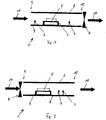
- Fig. 1 shows schematically a device 1 for supplying at least one odorous substance into the interior of a motor vehicle (not shown). As a result, a pleasant smell can be generated for the people in the interior.
- the device 1 has an air duct 8.
- the air duct 8 has a first end 9 and a second end 10, which each open into the interior of the motor vehicle.
- a fan 4 is arranged in the air duct 8 in the region of the second end 10 of the air duct 8. By means of the fan 4, air is sucked in from the interior space at the first end 9 of the air duct 9, passed through the air duct 9 and then returned to the interior space at the second end 10 of the air duct 8.
- the air flow 11 is shown by arrows.
- An odor carrier 2 is positioned in the air duct 8. The odorous substance carrier 2 emits odorous substances to the air flowing through the air duct 8, so that air charged or enriched with odorous substances is returned to the interior.
- a temperature sensor 3 is arranged in the air duct 8 between the first end 9 of the air duct 8 and the odor carrier 2.
- the temperature sensor 3 measures the temperature of the air flowing through the air duct 8 to be enriched.
- an optional sensor 7 for measuring the concentration of the odorous substances in the air flowing through the air duct 8 is arranged in the air duct 8 between the odorous substance carrier 2 and the second end 10 of the air duct 8.
- the measured values supplied by the temperature sensor 3 are evaluated in a control unit (not shown), which can also be part of the motor vehicle electronics, and depending on the measured values, the amount of the odorous substance carrier 2 released into the air is dependent on the time Controlled odorous substances.
- the odor carrier 2 comprises an odor chamber which is connected to an exchangeable and refillable cartridge (not shown). The cartridge releases the odorous substances into the odorous substance chamber in that the liquid odorous substances evaporate in the cartridge. An outlet opening into the air duct from the odorous substance chamber can be variably closed with a closure device 5, so that the amount of odorous substances released can be controlled.
- Corresponding functions or curves are stored in the control unit which indicate the position of the closure device 5 as a function of the temperature. In this way, for example, a constant amount of odorous substances emitted can be achieved - independently of the temperature of the air flowing through the air duct 9.
- the user also has the option of controlling the amount of odorous substances released, i. H. he can increase, decrease or switch it off completely according to his wishes.
- the sensor 7 designed as an oxidation sensor is used to measure the concentration of the odorous substances in the enriched air and enables the concentration to be regulated.
- the measured values of the sensor 7 are transmitted to the control unit, so that the concentration of the odorous substances in the enriched air in the air duct 9 can be measured and thus regulated.
- the temperature sensor 3 also enables a temperature-dependent operating strategy of the device 1.
- This operating strategy can be refined by e.g. B. at high temperatures in the device 1, the fan 4 is switched on so that hot ram air is blown out of the air duct 8 and during which the discharge of the odorous substances is prevented.
- the fan 4 can be switched on in an analogous manner in order to also heat the device 1 when the interior air is already heated.
- the control unit can compare the interior temperature with that with the temperature of the air in the air duct 8.
- the fan 4 must be switched off and the discharge of odorous substances blocked.
- the blower 4 can be switched on in order to pre-temper the device 1, the release of the odorous substances being prevented.
- the odorous substances are only released into the air duct 9 from an internal temperature range between 15 ° C. and 35 ° C. suitable for the release of the odorous substances for the air in the air duct 9.
- the interior temperature is measured with sensors in the interior (not shown).
- Fig. 2 a second embodiment of the device 1 is shown. Deviating from the first embodiment according to Fig. 1 the fan 4 is positioned at the first end 9 of the air duct 8. Otherwise the second embodiment corresponds to the first embodiment
- Fig. 3 shows a third embodiment of the device 1.
- the device 1 is built into an instrument panel 6 of the motor vehicle.
- the fan 4 is an external fan 4 of an air conditioning system of the motor vehicle.
- the temperature sensor 3 is arranged in the flow direction of the air in the air duct 8 either before or after the odor carrier 2, wherein in Fig. 3 both variants are shown.
- the optional sensor 7 is not shown. Otherwise the third embodiment corresponds to the first embodiment.
- a fourth embodiment of the device 1 is disclosed.
- the device 1 is installed in an instrument panel 6 of the motor vehicle.
- the fan 4 is integrated into the device 1 and is not shown.
- the temperature sensor 3 is arranged in the flow direction of the air in the air duct 8 either before or after the odor carrier 2, wherein in Fig. 4 both variants are shown.
- the optional sensor 7 is not shown. Otherwise, the fourth embodiment corresponds to the first embodiment.
- the device 1 for feeding odorous substances into the interior of the motor vehicle can achieve considerable advantages.
- the temperature of the air flowing through the device 1 is measured by means of a temperature sensor 3 arranged in the air duct 8 to control and / or regulate the addition of the odorous substances.
- This temperature is the relevant temperature.
- the interior temperature is measured by sensors which are generally arranged at a different location within the interior than the air that is sucked into the air duct 9.
- the temperature measured by the sensors for the interior temperature often deviates from the temperature of the air sucked in by the device 1.
- the errors resulting from the difference between the temperature measured by the sensors for the interior temperature and the temperature of the air sucked in by the device 1 can thereby be made particularly advantageous and easier Way to be avoided.
Landscapes
- Engineering & Computer Science (AREA)
- Mechanical Engineering (AREA)
- Health & Medical Sciences (AREA)
- Epidemiology (AREA)
- Life Sciences & Earth Sciences (AREA)
- Animal Behavior & Ethology (AREA)
- General Health & Medical Sciences (AREA)
- Public Health (AREA)
- Veterinary Medicine (AREA)
- Air-Conditioning For Vehicles (AREA)
- Disinfection, Sterilisation Or Deodorisation Of Air (AREA)
Claims (10)
- Dispositif (1) servant à l'introduction d'au moins une substance parfumée, dans l'habitacle d'un véhicule automobile, ledit dispositif comprenant :- un diffuseur de substances parfumées (2) comportant au moins une substance parfumée,- un conduit d'air (8) servant à l'introduction d'air à enrichir jusqu'au diffuseur de substances parfumées (2) et/ou servant au recyclage, dans l'habitacle du véhicule automobile, d'air enrichi provenant du diffuseur de substances parfumées (2), où la substance parfumée au moins au nombre de un peut être introduite dans le conduit d'air (8),- un pulseur (4) servant à faire circuler l'air dans le conduit d'air (8) et- un dispositif de fermeture (5) servant à la commande ou à la régulation de la quantité de la substance parfumée au moins au nombre de un pouvant être introduite par le diffuseur de substances parfumés (2) en fonction du facteur temps,où la température de l'air à enrichir et/ou enrichi par la substance parfumée au moins au nombre de un, ledit air se trouvant dans le conduit d'air (8), peut être mesurée au moyen au moins d'un capteur de température (3), et le dispositif de fermeture (5) peut être commandé ou régulé en fonction de la température mesurée, caractérisé en ce que le diffuseur de substances parfumées (2) est disposé dans le conduit d'air (8), et le capteur de température (3) au moins au nombre de un est disposé dans et/ou sur le conduit d'air (8), où le dispositif (1) comprend une unité de commande, et le dispositif de fermeture (5), au moyen de courbes ou d'algorithmes mémorisés dans l'unité de commande, peut être commandé en fonction de la température, par le fait qu'une quantité - constante ou variable - de la substance parfumée au moins au nombre de un est introduite en fonction du facteur temps.
- Dispositif selon la revendication 1, caractérisé en ce qu'au-dessous d'une température inférieure de l'air dirigé à travers le conduit d'air (8), par exemple -20°C, et/ou au-dessus d'une température supérieure de l'air dirigé à travers le conduit d'air, par exemple +60°C, le pulseur (4) est coupé et/ou le dispositif de fermeture (5) empêche l'introduction de la substance parfumée au moins au nombre de un.
- Dispositif selon la revendication 1 ou 2, caractérisé en ce que le dispositif de fermeture (5) est une tirette ou un volet qui, alternativement, ouvre ou ferme complètement une ouverture placée sur le diffuseur de substances parfumées (2), ou bien est une tirette ou un volet qui ouvre ou ferme au moins partiellement, de façon variable, l'ouverture placée sur le diffuseur de substances parfumées (2).
- Procédé permettant l'introduction d'au moins une substance parfumée, dans l'habitacle d'un véhicule automobile, ledit procédé comprenant les étapes consistant :- à diriger de l'air à travers un conduit d'air (8),- à introduire au moins une substance parfumée, dans l'air dirigé à travers le conduit d'air (8),- à commander ou à réguler, en fonction du facteur temps, la quantité de la substance parfumée au moins au nombre de un ayant été introduite, et- à introduire, dans l'habitacle du véhicule automobile, l'air enrichi par la substance parfumée au moins au nombre de un,où la quantité de la substance parfumée au moins au nombre de un ayant été introduite est commandée ou régulée en fonction de la température de l'air dirigé à travers le conduit d'air (8), caractérisé en ce que le diffuseur de substances parfumées (2) est disposé dans le conduit d'air (8), et le capteur de température (3) au moins au nombre de un est disposé dans et/ou sur le conduit d'air (8) où, en fonction du facteur temps, la quantité - de préférence variable - de la substance parfumée au moins au nombre de un ayant été introduite peut, en fonction de la température, être commandée au moyen de courbes ou d'algorithmes mémorisés dans une unité de commande, par le fait qu'une quantité - constante ou variable - de la substance parfumée au moins au nombre de un est introduite en fonction du facteur temps.
- Procédé selon la revendication 4, caractérisé en ce qu'au-dessus d'une température supérieure de l'air dirigé à travers le conduit d'air (8), par exemple +60°C, ou bien au-dessous d'une température inférieure de l'air dirigé à travers le conduit d'air (8), par exemple -20°C, aucune quantité d'air n'est dirigée à travers le conduit d'air (8) et/ou l'introduction de la substance parfumée au moins au nombre de un, dans l'air dirigé à travers le conduit d'air (8), est arrêtée.
- Procédé selon la revendication 4 ou 5, caractérisé en ce qu'au-dessus d'une première température supérieure de l'habitacle, par exemple +45°C, ou bien au-dessous d'une première température inférieure de l'habitacle, par exemple 0°C, aucune quantité d'air n'est dirigée à travers le conduit d'air (8), et l'introduction, dans l'air, de la substance parfumée au moins au nombre de un est arrêtée, où la première température supérieure de l'habitacle est supérieure à la première température inférieure de l'habitacle.
- Procédé selon la revendication 6, caractérisé en ce qu'au-dessus d'une deuxième température supérieure de l'habitacle, par exemple +35°C, ou bien au-dessous d'une deuxième température inférieure de l'habitacle, par exemple 10°C, de l'air est dirigé à travers le conduit d'air (8), et l'introduction, dans l'air, de la substance parfumée au moins au nombre de un est arrêtée, où la deuxième température supérieure de l'habitacle est supérieure à la deuxième température inférieure de l'habitacle.
- Procédé selon la revendication 7, caractérisé en ce que la première température supérieure de l'habitacle est supérieure à la deuxième température supérieure de l'habitacle et/ou la première température inférieure de l'habitacle est inférieure à la deuxième température inférieure de l'habitacle.
- Procédé selon la revendication 7 ou 8, caractérisé en ce que, dans une plage partielle de la température de l'habitacle comprise entre la deuxième température supérieure de l'habitacle et la deuxième température inférieure de l'habitacle, par exemple entre 15°C et 35°C, de l'air est dirigé à travers le conduit d'air (8), et au moins une substance parfumée est introduite dans l'air dirigé à travers le conduit d'air (8).
- Produit de programme informatique comportant des moyens de programmation qui sont mémorisés sur un support de données pouvant être lu par l'ordinateur, pour mettre en œuvre un procédé selon l'une quelconque ou plusieurs des revendications 4 à 9, quand le programme informatique est mis en œuvre sur un ordinateur ou sur une unité de calcul correspondante.
Applications Claiming Priority (1)
| Application Number | Priority Date | Filing Date | Title |
|---|---|---|---|
| DE102008011360A DE102008011360A1 (de) | 2008-02-27 | 2008-02-27 | Vorrichtung zur Zuführung von Geruchsstoffen |
Publications (4)
| Publication Number | Publication Date |
|---|---|
| EP2095980A2 EP2095980A2 (fr) | 2009-09-02 |
| EP2095980A3 EP2095980A3 (fr) | 2009-12-23 |
| EP2095980B1 EP2095980B1 (fr) | 2013-11-06 |
| EP2095980B2 true EP2095980B2 (fr) | 2021-02-17 |
Family
ID=40651352
Family Applications (1)
| Application Number | Title | Priority Date | Filing Date |
|---|---|---|---|
| EP09002431.6A Ceased EP2095980B2 (fr) | 2008-02-27 | 2009-02-20 | Dispositif d'introduction de matières odorantes |
Country Status (2)
| Country | Link |
|---|---|
| EP (1) | EP2095980B2 (fr) |
| DE (1) | DE102008011360A1 (fr) |
Families Citing this family (12)
| Publication number | Priority date | Publication date | Assignee | Title |
|---|---|---|---|---|
| FR2995787B1 (fr) * | 2012-09-24 | 2017-01-20 | Peugeot Citroen Automobiles Sa | Procede de pilotage d’un diffuseur de fragrance dans l’habitacle d’un vehicule automobile. |
| DE102014202561A1 (de) | 2014-02-12 | 2015-08-13 | Mahle International Gmbh | Beduftungsvorrichtung |
| DE102014203195A1 (de) | 2014-02-21 | 2015-08-27 | Mahle International Gmbh | Beduftungsvorrichtung |
| DE102014113622A1 (de) * | 2014-09-22 | 2016-03-24 | Denso Automotive Deutschland Gmbh | Vorrichtung zum Beeinflussen der Klimawahrnehmung |
| CN104827861B (zh) * | 2014-12-19 | 2017-07-11 | 北汽福田汽车股份有限公司 | 一种通风装置及车辆 |
| FR3047900B1 (fr) * | 2016-02-24 | 2019-07-12 | Peugeot Citroen Automobiles Sa | Dispositif diffuseur de fragrance dans l’habitacle d’un vehicule automobile a performance amelioree |
| DE102016010008A1 (de) | 2016-08-13 | 2018-02-15 | Audi Ag | Verfahren zum Abgeben eines Duftstoffes in einen Fahrzeuginnenraum mittels einer dessen Konzentration in Abhängigkeit der Temperatur angebenden Zuordnungsvorschrift und Verfahren zur Erstellung dieser Zuordnungsvorschrift |
| DE102017204422A1 (de) * | 2017-03-16 | 2018-09-20 | Mahle International Gmbh | Verfahren zur automatischen Einstellung der Duftintensität mit einem Autobedufter und Autobedufter |
| US10690104B1 (en) | 2019-01-09 | 2020-06-23 | Ford Global Technologies, Llc | Method and system for engine start/stop control |
| CN212098347U (zh) | 2020-02-20 | 2020-12-08 | 上海延锋金桥汽车饰件系统有限公司 | 用于车辆内部的香味分配装置 |
| CN111806203B (zh) * | 2019-04-12 | 2022-06-17 | 长城汽车股份有限公司 | 自动喷香控制系统及其控制方法与车辆 |
| CN113492654A (zh) * | 2020-03-20 | 2021-10-12 | 广州汽车集团股份有限公司 | 车辆香氛控制方法及其系统、空调控制设备、车辆 |
Citations (2)
| Publication number | Priority date | Publication date | Assignee | Title |
|---|---|---|---|---|
| JPH04288164A (ja) † | 1991-03-18 | 1992-10-13 | Zexel Corp | 室内空気の脱臭芳香装置 |
| JPH0584284A (ja) † | 1991-09-30 | 1993-04-06 | Sharp Corp | 香発生装置 |
Family Cites Families (4)
| Publication number | Priority date | Publication date | Assignee | Title |
|---|---|---|---|---|
| EP1075842A1 (fr) * | 1999-08-09 | 2001-02-14 | René Challand | Procédé et dispositif pour désodoriser et désinfecter l'air |
| DE10249510A1 (de) | 2002-10-23 | 2004-05-06 | Behr Gmbh & Co. | Vorrichtung zur Zuführung von Geruchsstoffen |
| DE10328747A1 (de) | 2003-06-25 | 2005-01-13 | Behr Gmbh & Co. Kg | Klimaanlage mit einer Beduftungs-Vorrichtung, insbesondere für ein Kraftfahrzeug, sowie Verfahren zum Betreiben einer solchen |
| ATE425033T1 (de) * | 2004-06-07 | 2009-03-15 | Johnson & Son Inc S C | Lufterfrischungssystem für kraftfahrzeuge |
-
2008
- 2008-02-27 DE DE102008011360A patent/DE102008011360A1/de not_active Withdrawn
-
2009
- 2009-02-20 EP EP09002431.6A patent/EP2095980B2/fr not_active Ceased
Patent Citations (2)
| Publication number | Priority date | Publication date | Assignee | Title |
|---|---|---|---|---|
| JPH04288164A (ja) † | 1991-03-18 | 1992-10-13 | Zexel Corp | 室内空気の脱臭芳香装置 |
| JPH0584284A (ja) † | 1991-09-30 | 1993-04-06 | Sharp Corp | 香発生装置 |
Also Published As
| Publication number | Publication date |
|---|---|
| EP2095980A3 (fr) | 2009-12-23 |
| EP2095980B1 (fr) | 2013-11-06 |
| DE102008011360A1 (de) | 2009-09-03 |
| EP2095980A2 (fr) | 2009-09-02 |
Similar Documents
| Publication | Publication Date | Title |
|---|---|---|
| EP2095980B1 (fr) | Dispositif d'introduction de matières odorantes | |
| DE19540566C2 (de) | Verfahren und Vorrichtung zur Steuerung des Heizungs-, Belüftungs- und Klimatisierungssystems eines Kraftfahrzeugs | |
| DE19632059C2 (de) | Verfahren und Anordnung zur Mischluftregelung einer Heiz-/Klimaanlage eines Kraftfahrzeuges | |
| EP2576252B1 (fr) | Dispositif de climatisation et procédé de production d'un flux d'air climatisé | |
| DE69411921T2 (de) | Verfahren und vorrichtung zur steuerung eines luftkonditionierungssystem fur kraftfahrzeuge | |
| EP2145788B1 (fr) | Procédé de commande de l'intensité odorante d'un dispositif d'embaumement | |
| EP0501127A2 (fr) | Dispositif de contrôle de la ventilation de l'habitacle en particulier pour les voitures automobiles | |
| DE4425697C2 (de) | Klimagerät | |
| DE102013219132A1 (de) | Automatische Rückführungssteuerung für Fahrzeug-HVAC-System | |
| DE102017202872B4 (de) | Verfahren und Vorrichtung zur Bestimmung der Ausblastemperaturen einer automatischen Klimaanlage eines Fahrzeugs | |
| DE10249510A1 (de) | Vorrichtung zur Zuführung von Geruchsstoffen | |
| DE102008051975A1 (de) | Positionsabhängige Steuerung einer Klimaanlage in einem Fahrzeug | |
| DE102016123560B4 (de) | Verfahren zur Steuerung eines Klimaanlagensteuerungssystem für ein Fahrzeug | |
| EP1920954B1 (fr) | Procédé de régulation d'une installation de climatisation de véhicule automobile dotée d'au moins deux évaporateurs | |
| DE19608015C1 (de) | Verfahren und Anordnung zur Mischluftregelung in einer Klimaanlage eines Kraftfahrzeuges | |
| DE102008031695B4 (de) | Verfahren zur Klimatisierung eines Fahrzeugs | |
| DE102014005955A1 (de) | Verfahren zum Betreiben einer Klimaanlage eines Kraftwagens | |
| EP0239842B1 (fr) | Procédé de réglage de la température intérieure d'un habitacle, notamment d'un véhicule automobile | |
| DE102015225781A1 (de) | System zur Bestimmung einer Pollenbelastung und/oder einer Schadstoffbelastung in einem Fahrzeug | |
| DE102009023671A1 (de) | Vorrichtung und Verfahren zum Kühlen mindestens einer Batterie | |
| EP0857593A2 (fr) | Dispositif de climatisation pour l'habitacle d'un véhicule | |
| DE102009050994A1 (de) | Verfahren und Vorrichtung zur Klimatisierung mindestens eines Fahrzeuginnenraums und einer Batterieeinheit | |
| DE102016015261B4 (de) | Verfahren zum Betreiben einer Fahrzeug-Klimaanlage mit einem Klimagerät | |
| DE102006038711B4 (de) | Sensoranordnung, insbesondere für eine Klimaanlage, Fahrzeug-Klimaanlage mit einer derartigen Sensoranordnung und Verfahren zum Regeln einer derartigen Klimaanlage | |
| DE102008005758A1 (de) | Verfahren zur vernetzten Steuerung von einer ein Innenraumklima eines Kraftfahrzeuges beeinflussenden Klimaanlage |
Legal Events
| Date | Code | Title | Description |
|---|---|---|---|
| PUAI | Public reference made under article 153(3) epc to a published international application that has entered the european phase |
Free format text: ORIGINAL CODE: 0009012 |
|
| AK | Designated contracting states |
Kind code of ref document: A2 Designated state(s): AT BE BG CH CY CZ DE DK EE ES FI FR GB GR HR HU IE IS IT LI LT LU LV MC MK MT NL NO PL PT RO SE SI SK TR |
|
| AX | Request for extension of the european patent |
Extension state: AL BA RS |
|
| PUAL | Search report despatched |
Free format text: ORIGINAL CODE: 0009013 |
|
| AK | Designated contracting states |
Kind code of ref document: A3 Designated state(s): AT BE BG CH CY CZ DE DK EE ES FI FR GB GR HR HU IE IS IT LI LT LU LV MC MK MT NL NO PL PT RO SE SI SK TR |
|
| AX | Request for extension of the european patent |
Extension state: AL BA RS |
|
| 17P | Request for examination filed |
Effective date: 20100623 |
|
| 17Q | First examination report despatched |
Effective date: 20100716 |
|
| AKX | Designation fees paid |
Designated state(s): DE FR GB |
|
| GRAP | Despatch of communication of intention to grant a patent |
Free format text: ORIGINAL CODE: EPIDOSNIGR1 |
|
| RIC1 | Information provided on ipc code assigned before grant |
Ipc: B60H 3/00 20060101AFI20130423BHEP Ipc: A61L 9/12 20060101ALI20130423BHEP |
|
| INTG | Intention to grant announced |
Effective date: 20130523 |
|
| GRAS | Grant fee paid |
Free format text: ORIGINAL CODE: EPIDOSNIGR3 |
|
| GRAA | (expected) grant |
Free format text: ORIGINAL CODE: 0009210 |
|
| AK | Designated contracting states |
Kind code of ref document: B1 Designated state(s): DE FR GB |
|
| REG | Reference to a national code |
Ref country code: GB Ref legal event code: FG4D Free format text: NOT ENGLISH |
|
| REG | Reference to a national code |
Ref country code: DE Ref legal event code: R096 Ref document number: 502009008262 Country of ref document: DE Effective date: 20140102 |
|
| REG | Reference to a national code |
Ref country code: DE Ref legal event code: R026 Ref document number: 502009008262 Country of ref document: DE |
|
| PLBI | Opposition filed |
Free format text: ORIGINAL CODE: 0009260 |
|
| PLAX | Notice of opposition and request to file observation + time limit sent |
Free format text: ORIGINAL CODE: EPIDOSNOBS2 |
|
| 26 | Opposition filed |
Opponent name: VALEO SYSTEMES THERMIQUES S.A.S. Effective date: 20140806 |
|
| REG | Reference to a national code |
Ref country code: DE Ref legal event code: R026 Ref document number: 502009008262 Country of ref document: DE Effective date: 20140806 |
|
| GBPC | Gb: european patent ceased through non-payment of renewal fee |
Effective date: 20140220 |
|
| PLAF | Information modified related to communication of a notice of opposition and request to file observations + time limit |
Free format text: ORIGINAL CODE: EPIDOSCOBS2 |
|
| PG25 | Lapsed in a contracting state [announced via postgrant information from national office to epo] |
Ref country code: GB Free format text: LAPSE BECAUSE OF NON-PAYMENT OF DUE FEES Effective date: 20140220 |
|
| REG | Reference to a national code |
Ref country code: DE Ref legal event code: R082 Ref document number: 502009008262 Country of ref document: DE Representative=s name: GRAUEL, ANDREAS, DIPL.-PHYS. DR. RER. NAT., DE |
|
| RAP2 | Party data changed (patent owner data changed or rights of a patent transferred) |
Owner name: MAHLE BEHR GMBH & CO. KG |
|
| PLBB | Reply of patent proprietor to notice(s) of opposition received |
Free format text: ORIGINAL CODE: EPIDOSNOBS3 |
|
| REG | Reference to a national code |
Ref country code: DE Ref legal event code: R081 Ref document number: 502009008262 Country of ref document: DE Owner name: MAHLE INTERNATIONAL GMBH, DE Free format text: FORMER OWNER: BEHR GMBH & CO. KG, 70469 STUTTGART, DE Effective date: 20150323 Ref country code: DE Ref legal event code: R082 Ref document number: 502009008262 Country of ref document: DE Representative=s name: GRAUEL, ANDREAS, DIPL.-PHYS. DR. RER. NAT., DE Effective date: 20150323 |
|
| REG | Reference to a national code |
Ref country code: FR Ref legal event code: PLFP Year of fee payment: 8 |
|
| PLAB | Opposition data, opponent's data or that of the opponent's representative modified |
Free format text: ORIGINAL CODE: 0009299OPPO |
|
| R26 | Opposition filed (corrected) |
Opponent name: VALEO SYSTEMES THERMIQUES S.A.S. Effective date: 20140806 |
|
| APBM | Appeal reference recorded |
Free format text: ORIGINAL CODE: EPIDOSNREFNO |
|
| APBP | Date of receipt of notice of appeal recorded |
Free format text: ORIGINAL CODE: EPIDOSNNOA2O |
|
| APAH | Appeal reference modified |
Free format text: ORIGINAL CODE: EPIDOSCREFNO |
|
| REG | Reference to a national code |
Ref country code: FR Ref legal event code: PLFP Year of fee payment: 9 |
|
| APBM | Appeal reference recorded |
Free format text: ORIGINAL CODE: EPIDOSNREFNO |
|
| APBP | Date of receipt of notice of appeal recorded |
Free format text: ORIGINAL CODE: EPIDOSNNOA2O |
|
| APBQ | Date of receipt of statement of grounds of appeal recorded |
Free format text: ORIGINAL CODE: EPIDOSNNOA3O |
|
| APBQ | Date of receipt of statement of grounds of appeal recorded |
Free format text: ORIGINAL CODE: EPIDOSNNOA3O |
|
| REG | Reference to a national code |
Ref country code: FR Ref legal event code: PLFP Year of fee payment: 10 |
|
| APBU | Appeal procedure closed |
Free format text: ORIGINAL CODE: EPIDOSNNOA9O |
|
| PUAH | Patent maintained in amended form |
Free format text: ORIGINAL CODE: 0009272 |
|
| STAA | Information on the status of an ep patent application or granted ep patent |
Free format text: STATUS: PATENT MAINTAINED AS AMENDED |
|
| 27A | Patent maintained in amended form |
Effective date: 20210217 |
|
| AK | Designated contracting states |
Kind code of ref document: B2 Designated state(s): DE FR GB |
|
| REG | Reference to a national code |
Ref country code: DE Ref legal event code: R102 Ref document number: 502009008262 Country of ref document: DE |
|
| PGFP | Annual fee paid to national office [announced via postgrant information from national office to epo] |
Ref country code: DE Payment date: 20240219 Year of fee payment: 16 |
|
| PGFP | Annual fee paid to national office [announced via postgrant information from national office to epo] |
Ref country code: FR Payment date: 20240221 Year of fee payment: 16 |
|
| P01 | Opt-out of the competence of the unified patent court (upc) registered |
Effective date: 20240521 |
|
| REG | Reference to a national code |
Ref country code: DE Ref legal event code: R119 Ref document number: 502009008262 Country of ref document: DE |
|
| PG25 | Lapsed in a contracting state [announced via postgrant information from national office to epo] |
Ref country code: DE Free format text: LAPSE BECAUSE OF NON-PAYMENT OF DUE FEES Effective date: 20250902 |
|
| PG25 | Lapsed in a contracting state [announced via postgrant information from national office to epo] |
Ref country code: FR Free format text: LAPSE BECAUSE OF NON-PAYMENT OF DUE FEES Effective date: 20250228 |