EP2097533B1 - Viraler vektor und seine verwendungen - Google Patents
Viraler vektor und seine verwendungen Download PDFInfo
- Publication number
- EP2097533B1 EP2097533B1 EP07858264A EP07858264A EP2097533B1 EP 2097533 B1 EP2097533 B1 EP 2097533B1 EP 07858264 A EP07858264 A EP 07858264A EP 07858264 A EP07858264 A EP 07858264A EP 2097533 B1 EP2097533 B1 EP 2097533B1
- Authority
- EP
- European Patent Office
- Prior art keywords
- sfv
- cells
- polynucleotide
- interest
- viral vector
- Prior art date
- Legal status (The legal status is an assumption and is not a legal conclusion. Google has not performed a legal analysis and makes no representation as to the accuracy of the status listed.)
- Active
Links
Images





Classifications
-
- C—CHEMISTRY; METALLURGY
- C12—BIOCHEMISTRY; BEER; SPIRITS; WINE; VINEGAR; MICROBIOLOGY; ENZYMOLOGY; MUTATION OR GENETIC ENGINEERING
- C12N—MICROORGANISMS OR ENZYMES; COMPOSITIONS THEREOF; PROPAGATING, PRESERVING, OR MAINTAINING MICROORGANISMS; MUTATION OR GENETIC ENGINEERING; CULTURE MEDIA
- C12N15/00—Mutation or genetic engineering; DNA or RNA concerning genetic engineering, vectors, e.g. plasmids, or their isolation, preparation or purification; Use of hosts therefor
- C12N15/09—Recombinant DNA-technology
- C12N15/63—Introduction of foreign genetic material using vectors; Vectors; Use of hosts therefor; Regulation of expression
- C12N15/79—Vectors or expression systems specially adapted for eukaryotic hosts
- C12N15/85—Vectors or expression systems specially adapted for eukaryotic hosts for animal cells
- C12N15/86—Viral vectors
-
- C—CHEMISTRY; METALLURGY
- C12—BIOCHEMISTRY; BEER; SPIRITS; WINE; VINEGAR; MICROBIOLOGY; ENZYMOLOGY; MUTATION OR GENETIC ENGINEERING
- C12N—MICROORGANISMS OR ENZYMES; COMPOSITIONS THEREOF; PROPAGATING, PRESERVING, OR MAINTAINING MICROORGANISMS; MUTATION OR GENETIC ENGINEERING; CULTURE MEDIA
- C12N2770/00—MICROORGANISMS OR ENZYMES; COMPOSITIONS THEREOF; PROPAGATING, PRESERVING, OR MAINTAINING MICROORGANISMS; MUTATION OR GENETIC ENGINEERING; CULTURE MEDIA ssRNA viruses positive-sense
- C12N2770/00011—Details
- C12N2770/36011—Togaviridae
- C12N2770/36111—Alphavirus, e.g. Sindbis virus, VEE, EEE, WEE, Semliki
- C12N2770/36141—Use of virus, viral particle or viral elements as a vector
- C12N2770/36143—Use of virus, viral particle or viral elements as a vector viral genome or elements thereof as genetic vector
Definitions
- the present invention is comprised within the genetic engineering field.
- the invention specifically relates to mutated viral vectors and their applications, particularly in in vitro stable cell line generation and protein production in a constitutive manner.
- Alphavirus expression vectors have been developed from different viruses, including the Sindbis virus (SIN) (34), the Semliki Forest virus (SFV) (18) and the Venezuelan equine encephalitis virus (VEE) (25).
- Sindbis virus SIN
- SFV Semliki Forest virus
- VEE Venezuelan equine encephalitis virus
- Alphavirus vectors are normally based on RNA replicons in which the structural genes have been substituted with a heterologous gene.
- the alphavirus replicon contains an ORF encoding the viral replicase (Rep) at its 5' end, which is translated when the RNA is transfected into eukaryotic cells.
- the Rep is expressed as a polyprotein which is subsequently processed in four subunits (nsps 1 to 4) (30).
- the unprocessed Rep can copy the RNA vector in a negative RNA strand, a process which only takes place during the first 3 to 4 hours after transfection or infection. Once processed, the Rep will use the negative strand RNA as a mold for synthesizing more replicon molecules.
- the processed Rep can also recognize an internal sequence in the negative strand RNA, or subgenomic promoter, from which it will synthesize a subgenomic positive strand RNA corresponding to the 3' end of the replicon. This subgenomic RNA will be translated to produce the heterologous protein in large amounts.
- the replicon RNA can also be packaged into viral particles by means of the co-transfection of cells with one or more auxiliary RNAs which can provide the viral structural proteins in trans (2, 4, 8, 25, 29) or by using stable packaging cell lines (24).
- Alphavirus vector replication is cytopathic in most mammalian cells due to mechanisms which are still not completely understood (3, 9, 13).
- the cytopathic effect induced by these vectors is mediated by p53-independent apoptosis and normally occurs between 48-72 hours after transfection or infection (14). It is suspected that nsp2, one of the 4 components of the viral replicase, could have an important role in apoptosis induction (11, 12).
- Cytopathic alphavirus vectors have been used in a series of applications including in vitro protein production and characterization (33), as well as in studies about vaccination and in cancer gene therapy (19, 26).
- an important drawback of such wild type viral vectors lies in the fact that they cannot be used in applications in which a long-lasting transgene expression is desired.
- a noncytopathic mutant isolated in SIN which contained a single amino acid change (P for L) in position 726 in nsp2 (P726L SIN vector in nsp2), showed Rep hyperprocessing (7).
- This mutant was able to effectively establish continuous replication in BHK cells.
- the introduction of different amino acid changes in the same position of this mutant showed that there is a strong positive correlation between the RNA replication level and the cytopathogenicity of the vector.
- This noncytopathic SIN vector has widely used in vitro, because it can provide a long-lasting transgene expression with good stability levels and expression levels which were approximately 4% of those obtained with the [wild type (wt)] original SIN vector (1).
- a noncytopathic SFV vector comprising the mutations P718T and R649H (R649H/P718T) in subunit nsp2, expressing the puromycin-resistance pac gene, has furthermore been described although its capacity to generate high-expression stable cell lines has not been described (Smerdou, C. et al. 2004. Seventh International Symposium on Positive Strand RNA Viruses, S. Francisco, USA).
- Alphavirus vectors can express high recombinant protein levels in different types of cells. However, this expression is transient due to the cytopathic nature of viral replication.
- noncytopathic mutants of the Sindbis virus (SIN), of the Semliki Forest virus (SFV) and of the Venezuelan equine encephalitis virus (VEE) have been isolated. Most of these mutants contain changes in nsp2, a subunit of the viral replicase.
- the puromycin N-acetyltransferase (pac) gene [selection gene] was introduced in mutant SFV-P718T and the BHK cell clones that were puromycin-resistant were selected.
- This double mutant identified as SFV-S2-9 in this description, containing the mutations R649H and P718T in nsp2, replicated at levels that were 60 times less than those of the wild type SFV vector, which fact was correlated to the absence of cytopathogenicity in cells transfected with the SFV vector containing the double mutation R649H/P718T in nsp2.
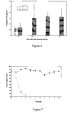
- a similar ⁇ -gal expression level was observed in cells transfected with SFV-S2-9-LacZ and SFV-LacZ 24 hours after transfection, which was in the range of approximately 15 pg/cell ( Figure 6 ).
- noncytopathic viral vectors based on said double SFV mutant (SFV-S2-9) containing the double mutation R649H/P718T in nsp2 were able to generate stable cell lines which can express ⁇ -gal for at least 10 passages in culture (the percentage of cells expressing ⁇ -gal, determined in each passage by means of the X-gal staining, varied between 70% and 90% according to the passage, but was above 85% in passage 10, which indicated a great stability of the transgene expression in the presence of selection, as can be seen in Figure 7 ), further being the constitutive expression because it increased over time in cells transfected with SFV-S2-9-LacZ, reaching a stabilization at approximately 30 pg of ⁇ -gal/cell 48 hours after transfection.
- Said noncytopathic double mutant SFV vector (R649H/P718T) was also able to generate stable cell lines which can constitutively express heterologous proteins of interest, such as rat cardiotrophin-1 (rCT) and the human insulin-like growth factor (IGF-I), at levels similar to those obtained when the wild type SFV vector was used.
- heterologous proteins of interest such as rat cardiotrophin-1 (rCT) and the human insulin-like growth factor (IGF-I)
- said double mutant SFV vector (R649H/P718T) was able to generate stable cell lines which can constitutively express rCT at levels similar to those obtained with the wild type SFV vector, which were approximately 4.3 pg/cell (Example 9).
- a high stability of the vector was observed in the cell lines analyzed, in the lines expressing rCT and pac from 2 independent subgenomic promoters, a lower stability was observed than with the LacZ gene, the rCT expression starting to decrease from passage 6 to virtually disappear at passage 11 ( Figure 16 ).
- said double mutant SFV vector (R649H/P718T) was also able to generate stable cell lines which can express IGF-I at levels that can be compared to those obtained with the wild type SFV vector ( Figure 19 ), which were approximately 50 pg/cell (Example 10).
- the lines expressing IGF-I and pac from 2 independent subgenomic promoters showed IGF-I expression levels that were somewhat lower than the wild type SFV vector (about 2 times less in passage 1) and further showed a lower stability than with the LacZ gene, the expression starting to decrease from passage 5 and decreasing about 80 times between passages 1 and 10 ( Figure 20 ).
- the present invention breaks apart a prejudice established in the state of the art as it demonstrates that mutated SFV vectors present in the state of the art and defined as noncytopathic maintain the cytopathogenicity characteristics.
- stable cell line relates to cell lines in which the percentage of cells expressing a heterologous product (e.g., a peptide or a heterologous protein, etc.) in passage 10 is greater than 85%, said percentage being able to be maintained or exceeded in successive or subsequent passages.
- a heterologous product e.g., a peptide or a heterologous protein, etc.
- stable expression relates to the additional capacity which, surprisingly enough, the aforementioned stable cell lines have to express the heterologous product at a quantitatively high level (greater than 50% with respect to that achieved 24 hours after translation when the cells are translated with the wild type vector).
- RNA replicon is a nucleotide sequence replicating unitarily using a complementary RNA as an intermediate which is useful as a mold for producing more molecules of the original RNA. To that end, specific sequences at the RNA ends are generally necessary.
- the replicon contained in the viral vectors provided by the present invention comprise the 5' end necessary for SFV replication, the sequence encoding the SFV replicase enzyme with mutations P718T and R649H in the nsp2 region, at least one viral SFV subgenomic promoter, a polynucleotide comprising a selection gene, a polynucleotide comprising a nucleotide sequence encoding a heterologous product of interest, and the 3' end necessary for SFV replication containing a terminal sequence of polyadenines (Poly A).
- said polynucleotide comprising the selection gene, as well as said polynucleotide comprising a nucleotide sequence encoding a heterologous product of interest are placed downstream of 2 independent subgenomic promoters and operatively linked to said promoters (i.e., one of said polynucleotides is placed downstream of, and operatively linked to a subgenomic promoter and the other polynucleotide is placed downstream of, and operatively linked to the other subgenomic promoter).
- said polynucleotide comprising the selection gene and said polynucleotide comprising a nucleotide sequence encoding a heterologous product of interest are fused to one another, advantageously through a polynucleotide comprising a nucleotide sequence encoding a post-translational proteolytic cleavage site, advantageously a post-translational autoproteolytic cleavage site, and are placed downstream of and operatively linked to a single subgenomic promoter.
- the invention relates to a viral vector (viral vector of the invention) comprising a replicon of the Semliki Forest virus (SFV), wherein said replicon comprises (i) the nucleotide sequence encoding the SFV replicase enzyme with mutations P718T and R649H in the nsp2subunit, (ii) a polynucleotide comprising a selection gene, and (iii) a polynucleotide comprising a nucleotide sequence encoding a heterologous product of interest.
- SFV Semliki Forest virus
- the invention relates to the use of a viral vector of the invention for generating in vitro stable cell lines which can constitutively express heterologous products of interest.
- the invention in another aspect, relates to a stable cell line which can constitutively express heterologous products of interest, characterized in that it is a cell line transfected with a viral vector of the invention.
- the invention relates to a method for generating in vitro said stable cell line which can constitutively express heterologous products of interest.
- the invention relates to the use of said stable cell line for producing in vitro heterologous products of interest.
- the invention in another aspect, relates to a method for producing in vitro a heterologous product of interest which comprises culturing said stable cell line in conditions which allow the expression of the heterologous product of interest contained in the viral vector used to generate said stable cell line.
- Alphavirus vectors have several advantages, such as high transgene expression levels, wide tropism and easy handling.
- the cytopathogenicity caused by these vectors in most vertebrate cells can be advantageous in some applications, such as vaccination and cancer gene therapy, in which the apoptosis of transduced cells can lead to the release of antigens which can be uptaken by immune cells, which would favor an immune response against the expressed recombinant antigen or against tumor antigens, respectively (19).
- the use of these vectors in applications in which a long-lasting transgene expression is needed is hindered by its cytopathic nature.
- noncytopathic variants of SIN, SFV, VEE and EEE 7, 20-23.
- the noncytopathic mutations have been isolated by using vectors carrying a heterologous gene encoding a protein conferring resistance to an antibiotic, such as puromycin or G418.
- an antibiotic such as puromycin or G418.
- mutant S2-9 mutant S2-9 by the inventors and appears indistinctly in this description as mutant SFV-S2-9 or simply S2-9.
- Mutation R649H affects the SFV nuclear localization signal 648 RRR which has been described as being responsible for the partial transport of nsp2 to the cell nucleus (27).
- the change of Arg for Hys in position 649 constitutes a very conservative change, which could explain the fact that no evident effect is observed on the transport of nsp2 to the nucleus, neither in double mutant S2-9 (P718T/R649H) nor in simple mutant R649H.
- the latter mutant (R469H) did not show any reduction in the cytopathogenicity when it was compared with the wild type SFV vector, which indicated that both mutations in positions 649 and 718 were necessary to eliminate the cytopathic effect. Fazakerley et al.
- Mutant S2-9 containing double mutation P718T/R649H, was able to replicate at levels that were approximately 60 times lower than those observed for the wild type SFV vector, which could explain the absence of cytopathogenicity of said mutant S2-9.
- the level of subgenomic RNA in mutant S2-9 was only 30 times lower than that of the wild type SFV vector, which indicated that the subgenomic/genomic RNA ratio had increased approximately two-fold in noncytopathic mutant S2-9. This ratio was even greater a short time after transfection, which suggests that the synthesis of genomic RNA in the noncytopathic vector could be delayed in relation to that of subgenomic RNA.
- mutant S2-9 The lower RNA replication level in mutant S2-9 was not due to an effect in cis of the mutations present in the RNA sequence, because a wild type replicase provided in trans by the wild type SFV vector allowed recovering the genomic and subgenomic RNA levels of mutant S2-9 to values close to those of the wild type SFV vector.
- Several studies conducted with the alphavirus mutants have demonstrated that noncytopathic mutations in nsp2 can alter the proteolytic activity of this protein, which leads either to a replicase hyperprocessing (7), or to a slower processing of this polyprotein (22). In the present invention, clear differences in the replicase processing between mutant S2-9 and the wild type SFV vector were not observed, neither by means of in vitro translation, nor by means of immunoblot analysis.
- mutant S2-9 In spite of the low replication levels of mutant S2-9, the amount of ⁇ -galactosidase ( ⁇ -gal) produced by vector SFV-S2-9-LacZ (a viral vector based on SFV mutant S2-9) 24 hours after transfection was very similar to that obtained with a wild type SFV vector expressing the same transgene.
- the expression level of vector S2-9 increased approximately two-fold at later times after transfection, which is correlated with the increase observed in the RNA levels.
- noncytopathic vectors The recombinant protein expression level in other described noncytopathic vectors has shown great variability, ranging from only 4% of the wild type expression in the case of the SIN mutant P726L (1) to 1.000% in the case of double mutant SFV-PD developed by Lundström et al (21).
- the noncytopathic nature of this vector was placed in doubt when the same authors showed that ⁇ -gal or GFP expression in BHK cells infected with an SFV-PD vector carrying LacZ or GFP as a marker gene reaches a maximum after 48 hours to later decrease drastically in the following 3-4 days (20).
- Example 8 of this description breaks apart a prejudice in the state of the art as it demonstrates that the SFV-PD vector developed by Lundström et al (21) is cytopathic. Some additional mutants described by this group containing heat-sensitive mutations were also able to express high recombinant protein levels, but only at the permissive temperature (20, 21). The reason for which mutant S2-9 could express larger amounts of the recombinant protein than the wild type SFV vector having much lower RNA levels could be related to the strong protein synthesis inhibition induced by the latter vector.
- the packaging efficiency of the viral vector derived from SFV mutant S2-9 was approximately 6 logarithmic units lower than that of the wild type SFV vector carrying the same transgene. This could be due to either the low RNA replication levels or to a deficiency in the packaging of the double SFV mutant (S2-9).
- the packaging experiments in which the RNA of said viral vector derived from the double SFV mutant S2-9 replicated at almost normal levels by means of contransfecting cells with a wild type SFV vector were only able to increase 15-fold the titer of the S2-9 viral particles, which indicated that the low RNA levels were only partially responsible for the low packaging efficiency of this vector.
- the SFV vector containing mutation R649H only was packaged at levels similar to those of the wild type SFV vector, whereas the SFV vector containing mutation P718T (SFV-S2) only was packaged deficiently. Although the fact that vector SFV-S2 was not able to replicate in most of the transfected cells could be the factor responsible for this low packaging efficiency, everything indicates that this mutation alone or in combination with mutation R649H affects the SFV RNA encapsidation in viral particles.
- the SFV packaging signals have been mapped in a genome region comprising nucleotides 2767 to 2824 (32), and which does not overlap any of the mutations present in mutant S2-9, located in positions 3643 (R649H) and 3849-51 (P718T). However, it cannot be discarded that these mutations can affect the secondary structure of genomic RNA, altering the accessibility of the packaging signals. More mutagenesis studies are needed to determine the precise function of the sequences in SFV packaging.
- viral vectors derived from mutant S2-9 can be efficiently used to generate stable cell lines of BHK cells constitutively expressing recombinant proteins, without needing to isolate clones.
- the vector in addition to mutations P718T and R649H, the vector must contain the desired transgene and a selection gene (e.g., a gene encoding a protein conferring resistance to an antibiotic, etc.) useful for selecting cells that have been efficiently transduced.
- a selection gene e.g., a gene encoding a protein conferring resistance to an antibiotic, etc.
- the viral vector derived from mutant S2-9 was able to generate stable cell lines constitutively expressing rat cardiotrophin-1 (rCT).
- rCT rat cardiotrophin-1
- rCT and pac expression from a vector containing 2 subgenomic promoters gave rise to the generation of cell lines in which the expression remained stable for the first 5 passages, gradually being lost from passage 5 onwards ( Figure 16 ).
- vector SFV-S2-9-pac2A-rCT in which the pac gene and the gene encoding rCT are fused in phase using the nucleotide sequence encoding FMDV autoprotease 2A as a linker gave rise to the generation of very stable cell line which maintained a high rCT expression similar to that obtained with a wild type SFV vector, for at least 10 passages in culture ( Figure 17 ).
- the viral vector derived from mutant S2-9 was also able to generate stable cell lines expressing insulin-like growth factor I (IGF-I).
- IGF-I and pac expression from a vector containing 2 subgenomic promoters gave rise to the generation of cell lines in which the expression remained stable for the first 4-5 passages, gradually being lost from passage 5 onwards and decreasing 80-fold until reaching passage 10 ( Figure 20 ).
- vector SFV-S2-9-pac2A-IGF in which the pac gene and the gene encoding IGF-I are fused in phase using the nucleotide sequence encoding FMDV autoprotease 2A as a linker gave rise to the generation of cell lines with higher stability which maintained a high IGF-I expression similar to that obtained with a wild type SFV vector, with only an approximate 4-fold decrease in 10 passages in culture ( Figure 20 ).
- the latter vector (SFV-S2-9-pac2A-IGF) further showed IGF-I expression levels in early passages which were approximately 2 times greater than those observed with vector SFV-S2-9-IGF-pac.
- Vector SFV-S2-9-pac can therefore be used to quickly generate stable mammalian cell lines which can produce heterologous products of interest, e.g., recombinant proteins, in large amounts.
- the present invention relates to a viral vector based on the Semliki Forest virus (SFV), hereinafter viral vector of the invention, comprising a replicon of the Semliki Forest virus (SFV), wherein said replicon comprises (i) the nucleotide sequence encoding the SFV replicase enzyme with mutations P718T and R649H in subunit nsp2, (ii) a polynucleotide comprising a selection gene, and (iii) a polynucleotide comprising a nucleotide sequence encoding a heterologous product of interest.
- SFV Semliki Forest virus
- the viral vector of the invention contains an SFV replicon comprising the nucleotide sequence encoding the SFV replicase comprising mutations P718T and R649H in subunit nsp2. Each of these mutations affects a nucleotide triplet, both of them being located in the sequence encoding the subunit or nonstructural protein nsp2 of the viral replicase.
- Mutation P718T indicates that proline (P), located in position 718 of the amino acid sequence of protein nsp2 encoded by the wild type SFV, is substituted with a threonine (T) in protein nsp2 encoded by the mutated vector (viral vector of the invention).
- mutation R649H indicates that arginine (R) located in position 649 of the amino acid sequence of subunit nsp2 encoded by the wild type SFV, is substituted with a histidine (H) in subunit nsp2 encoded by the mutated vector (viral vector of the invention). Both positions 718 and 649 relate to the position of the substituted amino acid in the already cleaved and processed sequence of subunit nsp2.
- the SFV replicon present in the viral vector of the invention comprises SEQ ID NO: 1 and SEQ ID NO: 2:
- the expression of the polynucleotide comprising the selection gene and the expression of the polynucleotide comprising the nucleotide sequence encoding the heterologous product of interest can be controlled by two independent SFV subgenomic promoters or by a single subgenomic promoter controlling the expression of the polynucleotide comprising the selection gene and the expression of the polynucleotide comprising the nucleotide sequence encoding the heterologous product of interest in the form of a fusion protein.
- the viral vector of the invention comprises:
- Said first and second SFV subgenomic promoter can be identical or different.
- the expression of the selection gene and the expression of the heterologous product of interest are controlled by two identical or different independent SFV subgenomic promoters.
- the polynucleotide comprising the nucleotide sequence encoding a heterologous product of interest and the polynucleotide comprising a selection gene are located inside the SFV replicon, between the subgenomic promoter overlapped in the replicase and the 3' end necessary for SFV replication.
- the polynucleotide comprising the nucleotide sequence encoding a heterologous product of interest is located downstream of the subgenomic promoter (SG1) overlapped in the replicase and its expression is controlled by said promoter SG1.
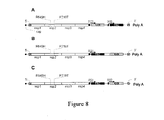
- Another subgenomic promoter SG2 controlling the expression of the polynucleotide comprising the selection gene, which is located downstream of SG2 is then incorporated and its expression is controlled by said promoter SG2 ( Figure 8A ).
- subgenomic promoters SG1 and SG2 can be identical or different.
- the viral vector of the invention is also constructed with the same 2 subgenomic promoters(SG1 and SG2), but exchanging the positions of the polynucleotide comprising the nucleotide sequence encoding the heterologous product of interest (GOI) and the polynucleotide comprising the selection gene, such that SG1 controls the expression of the polynucleotide comprising the selection gene and SG2 controls the expression of the polynucleotide comprising the nucleotide sequence encoding the heterologous product of interest (GOI) ( Figure 8C ).
- subgenomic promoters SG1 and SG2 can be identical or different.
- the viral vector of the invention comprises, downstream of a subgenomic promoter (e.g., SG1), a construct comprising the polynucleotide comprising the selection gene and the polynucleotide comprising the nucleotide sequence encoding the heterologous product of interest, fused in phase by means of a polynucleotide linker; said linker is advantageously a polynucleotide comprising the nucleotide sequence encoding a post-translational (auto)proteolytic cleavage site.
- a subgenomic promoter e.g., SG1
- nucleotide sequence encoding a post-translational (auto)proteolytic cleavage site, and consequently the (auto)protease or the amino acid or peptide sequence encoded by said nucleotide sequence, can be used in the context of the present invention.
- said linker is a polynucleotide comprising the nucleotide sequence encoding an (auto)protease acting in cis between the proteins resulting from the translation of the selection gene and of the nucleotide sequence encoding the heterologous product of interest; i.e., in a particular embodiment, said linker is a polynucleotide comprising a nucleotide sequence which, when it is translated, provides a cleavage site whereby the expressed fusion protein or polyprotein is post-translationally processed in the proteins forming said fusion protein or polyprotein.
- nucleotide sequence encoding a protease is occasionally used in this description as a synonym of the expression “nucleotide sequence encoding a post-translational (auto)proteolytic cleavage site”.
- said nucleotide sequence encoding an (auto)protease acting in cis between the proteins resulting from the translation of the selection gene and of the nucleotide sequence encoding the heterologous product of interest comes from a virus, for example, a picornavirus, an alphavirus, etc.
- said linker comprises the nucleotide sequence encoding region 2A of the foot and mouth disease virus (FMDV) polyprotein or FMDV autoprotease 2A.
- said linker comprises the nucleotide sequence encoding the carboxy terminal domain of the SFV capsid with proteolytic activity.
- Figure 8B A schematic representation of this alternative particular embodiment is shown in Figure 8B , in which it is shown that a subgenomic promoter (e.g., SG1) controls the expression of said construct comprising the polynucleotide comprising the selection gene and the polynucleotide comprising the nucleotide sequence encoding the heterologous product of interest (GOI), fused in phase by means of said linker.
- a subgenomic promoter e.g., SG1
- said linker is a polynucleotide comprising the nucleotide sequence encoding a cleavage site for a protease acting in trans; in this case, said protease could be expressed by the cell transfected with the viral vector of the invention, either natively or recombinantly, or alternatively, said protease could be exogenously added to release the heterologous product of interest of the fusion protein comprising the selection protein and the heterologous product of interest.
- Virtually any nucleotide sequence encoding a cleavage site for a protease acting in trans, and consequently the amino acid sequence encoded by said sequence can be used in the context of the present invention.
- said nucleotide sequence encoding a cleavage site of a protease acting in trans can be a nucleotide sequence encoding an amino acid sequence which can be cleaved by an endopeptidase, etc.
- said nucleotide sequence encoding a cleavage site for a protease acting in trans is a nucleotide sequence encoding a cleavage site for a virus protease, a potyvirus for example, such as the Etch Tobacco Virus (ETV), etc. and said protease can be expressed by the cell transfected with the viral vector of the invention (either natively or because it has been suitable transformed), etc.
- ETV Etch Tobacco Virus
- said linker is a polynucleotide comprising the nucleotide sequence encoding a cleavage site which can be recognized by a chemical reagent, e.g. cyanogen bromide, cleaving in the methionine residues, etc.
- the 3' end of the polynucleotide comprising the selection gene can be fused in phase by means of said linker to the 5' end of the polynucleotide comprising the nucleotide sequence encoding the heterologous product of interest (GOI).
- the 3' end of the polynucleotide comprising the nucleotide sequence encoding the heterologous product of interest (GOI) can be fused in phase by means of said linker to the 5' end of the polynucleotide comprising the selection gene.
- the selection gene present in the viral vector of the invention allows selecting the cells carrying the viral vector of the invention from those cells which have not been transfected or which have lost it.
- Virtually any selection gene which allows selecting the cells carrying the viral vector of the invention can be used to implement the present invention.
- said selection gene can be a gene the expression of which confers resistance to an antibiotic, a gene which allows synthesizing an essential nutrient which is omitted in the culture medium, a gene offering a selective advantage to the transfected cells, etc.
- said selection gene is a gene the expression of which confers resistance to an antibiotic, a toxic antibiotic for mammalian cells for example, such as the gene conferring hygromycin resistance (hph), the gene conferring neomycin resistance (neoR), the gene encoding the puromycin N-acetyltransferase enzyme (pac), the expression of which confers to the cells carrying the viral vector of the invention resistance to the puromycin antibiotic, etc.
- pac puromycin N-acetyltransferase enzyme
- the use of the pac gene allows selecting the cells carrying the viral vector of the invention from those which have been transfected or which have lost it, adding puromycin to the medium.
- heterologous product of interest can be virtually any protein or peptide of interest, e.g., a reporter protein or peptide ( ⁇ -gal, etc.); or a peptide, a protein, or an antibody (or a functional fragment thereof) with therapeutic or diagnostic applications; or any recombinant protein or peptide or interest.
- a reporter protein or peptide ⁇ -gal, etc.
- a peptide, a protein, or an antibody (or a functional fragment thereof) with therapeutic or diagnostic applications or any recombinant protein or peptide or interest.
- heterologous further includes “recombinant", i.e., it does not appear naturally.
- heterologous products of interest include peptides and proteins with therapeutic applications, e.g., insulin-like growth factor I (IGF-I), cardiotrophin-1 (CT1), oncostatin M (OSM), interferon alpha (e.g., IFNa5), amphiregulin (AR), glial cell-derived neurotrophic factor (GDNF), endothelial cell protein C/activated protein C receptor (EPCR), antibodies (or functional fragments thereof) of interest or of therapeutic or diagnostic application, etc.
- IGF-I insulin-like growth factor I
- C1 cardiotrophin-1
- OSM oncostatin M
- interferon alpha e.g., IFNa5
- AR amphiregulin
- GDNF glial cell-derived neurotrophic factor
- EPCR endothelial cell protein C/activated protein C receptor
- mutated SFV replicase gene - GOI - selection gene assembly or, alternatively, the "mutated SFV replicase gene - selection gene - GOI” assembly, flanked by the 5' and 3' sequences necessary for replication, forms an RNA replicon which can be self-amplified inside the cell.
- the viral vector of the invention can be used in RNA form or also in DNA form.
- the viral vector of the invention When it is used in RNA form, the viral vector of the invention is completed with the addition of a cap structure at its 5' end.
- the complete vector When it is used in DNA form, the complete vector would include a functional promoter in eukaryotes, a cytomegalovirus (CMV) promoter, for example, the SFV replicon sequence in any of the previously defined embodiments, and a transcription termination signal sequence, a signal sequence derived from SV40 for example.
- CMV cytomegalovirus
- the vector is thus transcribed to RNA inside the transfected cells where it will be self-amplified.
- the viral vector of the invention can contain a gene transcription or translation enhancer, i.e. a nucleic acid which can bind to an activator, e.g., a transcription factor, to increase the gene transcription or translation level; as is known, said enhancer can be adjacent to or far from the gene on which it acts.
- a gene transcription or translation enhancer i.e. a nucleic acid which can bind to an activator, e.g., a transcription factor, to increase the gene transcription or translation level; as is known, said enhancer can be adjacent to or far from the gene on which it acts.
- the term “enhancer” includes both gene transcription enhancers and gene translation enhancers, including the regions known as IRES (Internal Ribosome Entry Site) which, as is known, are regions favoring translation initiation.
- said enhancer can be formed in a cassette together with a (previously defined) polynucleotide linker comprising the nucleotide sequence encoding a post-translational (auto)proteolytic cleavage site.
- a (previously defined) polynucleotide linker comprising the nucleotide sequence encoding a post-translational (auto)proteolytic cleavage site.
- Virtually any suitable gene transcription or translation enhancer can be used in the context of the present invention.
- said enhancer can be the minimum SFV translation enhancer "b1" comprising the nucleotide sequence encoding the first 34 amino acids of the SFV capsid.
- the viral vector of the invention comprises the polynucleotide comprising the nucleotide sequence encoding the heterologous product of interest fused at its 5' end to an enhancer, or, alternatively, to a cassette comprising said enhancer and a polynucleotide linker comprising the nucleotide sequence encoding a (previously defined) post-translational (auto)proteolytic cleavage site.
- the viral vector of the invention comprises the human IGF-I precursor sequence (IGF-IB) fused at its 5' end with a cassette comprising the minimum translation enhancer ("b1") of the SFV capsid followed by the nucleotide sequence encoding the FMDV autoprotease 2A (pSFVb12A-IGF-IB, Example 10).
- IGF-IB human IGF-I precursor sequence fused at its 5' end with a cassette comprising the minimum translation enhancer ("b1") of the SFV capsid followed by the nucleotide sequence encoding the FMDV autoprotease 2A (pSFVb12A-IGF-IB, Example 10).
- RNA or DNA constructs for preparing the viral vector of the invention can be obtained by means of conventional molecular biology methods included in general laboratory manuals, for example in " Molecular cloning: a laboratory manual” (Joseph Sambrook, David W. Russel Eds. 2001, 3a ed. Cold Spring Harbor, New York ) or in " Current protocols in molecular biology” (F. M. Ausubel, R. Brent, R. E. Scientific, D. D. Moore, J. A. Smith, J. G. Seidman and K. Struhl Eds, vol. 2. Greene Publishing Associates and Wiley Interscience, New York, N. Y.. Updated to September 2006 .
- the viral vector of the invention derived from the noncytopathic double mutant isolated in SFV S2-9 (P718T/R649H) shows expression levels very similar to those of the wild type SFV vector.
- the viral vector of the invention can be used for the in vitro generation of stable cell lines which can constitutively express heterologous products of interest.
- the use of said viral vector of the invention for the in vitro generation of stable cell lines which can constitutively express heterologous products of interest forms an additional aspect of the present invention.
- the viral vector of the invention can be used for the in vitro generation of stable cell lines which can constitutively express heterologous products of interest.
- the invention relates to a stable cell line which can constitutively express heterologous products of interest, hereinafter stable cell line of the invention, characterized in that it is a cell line transfected with a viral vector of the invention, comprising an SFV replicon, wherein said replicon comprises (i) the nucleotide sequence encoding the SFV replicase enzyme with mutations P718T and R649H in subunit nsp2, (ii) a polynucleotide comprising a selection gene, and (iii) a polynucleotide comprising a nucleotide sequence encoding a heterologous product of interest.
- a cell line is “stable” when the percentage of cells expressing the heterologous product of interest in passage 10 is greater than 85%, said percentage being able to be maintained or exceeded in successive or subsequent passages.
- an expression is “constitutive” when the aforementioned stable cell lines can furthermore express the heterologous product at a quantitatively high level (greater than 50% with respect to that achieved 24 hours after transduction when the cells are transduced with the wild type vector).
- the stable cell line of the invention is a stable cell line transfected with a viral vector of the invention the SFV replicon of which comprises sequences SEQ ID NO: 1 and SEQ ID NO: 2.
- the stable cell line of the invention is a stable cell line transfected with a viral vector of the invention comprising:
- Said first and second SFV subgenomic promoter can be identical or different.
- the stable cell line of the invention is a stable cell line transfected with a viral vector of the invention in which the polynucleotide comprising the nucleotide sequence encoding a heterologous product of interest is located downstream of a first subgenomic promoter (SG1) overlapped in the replicase and its expression is controlled by said promoter SG1, and the polynucleotide comprising the selection gene is located downstream of a second subgenomic promoter (SG2) controlling the expression of said polynucleotide comprising the selection gene.
- Said subgenomic promoters SG1 and SG2 can be identical or different.
- the relative position between both polynucleotides can vary according to that mentioned above in relation to the viral vector of the invention.
- the stable cell line of the invention is a stable cell line transfected with a viral vector of the invention comprising, downstream of a subgenomic promoter (e.g., SG1), a construct comprising the polynucleotide comprising the selection gene and the polynucleotide comprising the nucleotide sequence encoding the heterologous product of interest, fused in phase by means of a polynucleotide linker; said linker is advantageously a polynucleotide comprising the nucleotide sequence encoding a post-translational (auto)proteolytic cleavage site.
- a subgenomic promoter e.g., SG1
- a construct comprising the polynucleotide comprising the selection gene and the polynucleotide comprising the nucleotide sequence encoding the heterologous product of interest, fused in phase by means of a polynucleotide linker
- said linker is advantageously
- said linker comprises the nucleotide sequence encoding an (auto)protease acting in cis between the proteins resulting from the translation of the selection gene and of the nucleotide sequence encoding the heterologous product of interest, such as the nucleotide sequence encoding region 2A of the foot and mouth disease virus (FMDV) polyprotein or FMDV autoprotease 2A, or the nucleotide sequence encoding the carboxy terminal domain of the SFV capsid, etc.
- an (auto)protease acting in cis between the proteins resulting from the translation of the selection gene and of the nucleotide sequence encoding the heterologous product of interest, such as the nucleotide sequence encoding region 2A of the foot and mouth disease virus (FMDV) polyprotein or FMDV autoprotease 2A, or the nucleotide sequence encoding the carboxy terminal domain of the SFV capsid, etc.
- FMDV foot and mouth disease virus
- said linker is a polynucleotide comprising the nucleotide sequence encoding a cleavage site for a protease acting in trans, such as the nucleotide sequence encoding a cleavage site for a viral protease, for example, the ETV protease, etc., in this case, said protease could be expressed by the cell line of the invention or, alternatively, said protease could be exogenously added.
- said linker is a polynucleotide comprising the nucleotide sequence encoding a cleavage site which can be recognized by a chemical reagent, e.g., cyanogen bromide, cleaving in the methionine residues, etc., as mentioned above.
- a chemical reagent e.g., cyanogen bromide, cleaving in the methionine residues, etc., as mentioned above.
- the stable cell line of the invention in which a viral vector of the invention is used comprising, downstream of a subgenomic promoter, a construct comprising the polynucleotide comprising the selection gene and the polynucleotide comprising the nucleotide sequence encoding the heterologous product of interest, fused in phase by means of a polynucleotide linker
- the subgenomic promoter e.g., SG1
- the relative position between both polynucleotides inside the aforementioned construct can vary according to that mentioned above in relation to the viral vector of the invention, i.e., in said construct, the 3' end of the polynucleotide comprising the selection gene can be fused in phase by means of said linker to the 5' end of the polynucleotide comprising the nucleotide sequence encoding the heterologous product of interest or vice versa, the 3' end of the polynucleotide comprising the nucleotide sequence encoding the heterologous product of interest can be fused in phase by means of said linker to the 5' end of the polynucleotide comprising the selection gene.
- this type of viral vectors of the invention comprising, downstream of a subgenomic promoter, a construct comprising the polynucleotide comprising the selection gene and the polynucleotide comprising the nucleotide sequence encoding the heterologous product of interest, fused in phase by means of a linker comprising a DNA sequence, generate very stable cell lines maintaining a high expression of the heterologous product of interest similar to that obtained with a wild type SFV vector.
- the selection gene present in the viral vector of the invention used to generate the stable cell line of the invention is a gene the expression of which confers resistance to an antibiotic, a gene which allows synthesizing an essential nutrient which is omitted in the culture medium, a gene offering a selective advantage to the transfected cells, etc., for example, the gene conferring hygromycin resistance (hph), the gene conferring neomycin resistance (neoR), the gene encoding the N-acetyltransferase puromycin enzyme (pac), the expression of which confers to the cells carrying the viral vector of the invention resistance to the puromycin antibiotic, etc.
- hph hygromycin resistance
- neoR neomycin resistance
- pac N-acetyltransferase puromycin enzyme
- the heterologous product of interest expressed by the stable cell line of the invention is a reporter protein ( ⁇ -gal, etc.); or a protein, peptide or antibody (or fragment thereof) with therapeutic or diagnostic applications; or any another recombinant protein or peptide of interest; illustrative non-limiting examples of said heterologous products of interest include peptides and proteins with therapeutic applications, e.g., IGF-I, CT1, OSM, IFN, AR, GDNF, EPCR, antibodies of interest or with therapeutic or diagnostic application, etc.
- the stable cell line of the invention is a stable cell line constitutively expressing rat cardiotrophin-1 (rCT).
- rCT rat cardiotrophin-1
- Two types of cell lines were generated by means of using two different viral vectors of the invention.
- the rCT and pac expression from a viral vector of the invention containing 2 subgenomic promoters (SFV-S2-9-rCT-pac) gave rise to the generation of cells lines in which the expression remained stable for the first 5 passages, gradually being lost from passage 5 onwards ( Figure 16 ).
- the viral vector of the invention identified as SFV-S2-9-pac2A-rCT was used, in which the pac gene and the gene encoding rCT are fused in phase using the nucleotide sequence encoding the FMDV autoprotease 2A as a linker, very stable cell lines were obtained which maintained a high rCT expression similar to that obtained with a wild type SFV vector, for at least 10 passages in culture ( Figure 17 ).
- the stable cell line of the invention is a stable cell line expressing insulin-like growth factor I (IGF-I).
- IGF-I insulin-like growth factor I
- Two types of cell lines were generated by means of using two different viral vectors of the invention.
- the IGF-I and pac expression from a viral vector of the invention containing 2 subgenomic promoters (SFV-S2-9-IGF-pac) gave rise to the generation of cell lines in which the expression remained stable for the first 4-5 passages, gradually being lost from passage 5 onwards and decreasing 80-fold reaching passage 10 ( Figure 20 ).
- the viral vector of the invention identified as SFV-S2-9-pac2A-IGF
- the viral vector of the invention identified as SFV-S2-9-pac2A-IGF
- the pac gene and the gene encoding IGF-I are fused in phase using the nucleotide sequence encoding FMDV autoprotease 2A as a linker
- cell lines with a higher stability were generated which maintained a high IGF-I expression similar to that obtained with a wild type SFV vector, with only an approximate 4-fold decrease in 10 passages in culture ( Figure 20 ).
- the latter vector (SFV-S2-9-pac2A-IGF) further showed IGF-I expression levels in early passages which were approximately 2 times greater than those observed with vector SFV-S2-9-IGF-pac.
- the stable cell lines of the invention can be obtained by means of conventional molecular biology methods, for example, by means of transfecting suitable cells or cell lines with the viral vector of the invention, etc., included in general laboratory manuals, for example, in " Molecular cloning: a laboratory manual” (Joseph Sambrook, David W. Russel Eds. 2001, 3rd ed. Cold Spring Harbor, New York ) or in " current protocols in molecular biology” (F. M. Ausubel, R. Brent, R. E. Scientific, D. D. Moore, J. A. Smith, J. G. Seidman and K. Struhl Eds, vol. 2. Greene Publishing Associates and Wiley Interscience, New York, N. Y. Updated to September 2006 .
- the cell to be transfected can be virtually any eukaryotic cell or cell line allowing the replication of the viral vector of the invention.
- Said cell or cell line can be a line from a mammal.
- said cell or cell line to be transfected is a cell line derived from hamster kidney fibroblasts, the BHK-21 cell line, for example.
- the transfection of the cells is carried out by means of any conventional physical or chemical process which allows introducing the viral vector of the invention into the cells, by electroporation or by conjugation of the genetic material with cationic lipids, for example. These processes will be useful for trasfecting the viral vector of the invention either as RNA or as DNA. In a particular embodiment, the transfection is carried out by electroporation ("Current protocols in molecular biology"; Ausubel FM et al.; citado supra).
- the invention relates to a method for generating in vitro of a stable cell line of the invention, with the capacity to constitutively express heterologous products of interest, hereinafter method for generating stable cell lines of the invention, which comprises:
- the cell to be transfected can be virtually any eukaryotic cell or cell line allowing the replication of the viral vector of the invention.
- said cell or cell line to be transfected can be a line from a mammal.
- said cell or cell line to be transfected is a cell line derived from hamster kidney fibroblasts, the BHK-21 cell line, for example.
- the viral vector of the invention can be used in RNA form or, alternatively, in DNA form.
- the viral vector of the invention is completed with the addition of a cap structure at its 5' end.
- the complete vector includes a functional promoter in eukaryotic cells, a cytomegalovirus (CMV) promoter, for example, the SFV replicon sequence in any of the embodiments defined previously in relation to the viral vector of the invention, and a transcription termination signal sequence, a signal sequence derived from SV40, for example.
- CMV cytomegalovirus
- the cells can be transfected by any conventional physical or chemical process which allows introducing the viral vector of the invention into the cells, by electroporation or by conjugation of the genetic material with cationic lipids, for example. These processes will be useful for transfecting the viral vector of the invention either as RNA or as DNA. In a particular embodiment, the transfection is carried out by electroporation ("Current protocols in molecular biology"; Ausubel FM et al.; mentioned above).
- Stable cells will be selected in a different manner according to the selection gene incorporated in the viral vector of the invention whereby the cells are transfected.
- the expression of the selection gene confers to the transfected cells an advantage allowing their selection. It will be enough to subject the cells to selective conditions for the transfected cells.
- the pac gene is used as the selection gene, its expression transfected in the cells makes them puromycin-resistant. In this case, it will be enough to add puromycin to the culture medium to eliminate the non-transfected cells or the cells which have lost the viral vector of the invention.
- the stable cells are grown an maintained in conventional culture mediums and conditions, according to the transfected cell type, and maintaining them under the selective stimukus for transfected cells (in the presence of puromycin, for example).
- the cells are BHK-21, they are grown in already described conditions ("Current protocols in molecular biology"; Ausubel FM et al.; mentioned above).
- the stable cell line of the invention can be used for producing in vitro heterologous products of interest.
- the use of said stable cell line of the invention for the in vitro production of heterologous products of interest forms and additional aspect of the present invention.
- the invention relates to a method for producing in vitro heterologous products of interest which comprises culturing a stable cell line of the invention under conditions which allow the expression of the heterologous product of interest contained in the viral vector of the invention used to generate said stable cell line of the invention.
- the method for producing in vitro heterologous products of interest comprises:
- Steps I, II and III actually correspond to the generation of the stable cell line of the invention constitutively expressing the heterologous product of interest.
- the cell will be transfected with a viral vector of the invention including a polynucleotide comprising the nucleotide sequence encoding the heterologous product of interest which is to be produced.
- said polynucleotide comprising the nucleotide sequence encoding the heterologous product of interest is inserted in the viral vector of the invention in a position such that its expression is controlled by an SFV subgenomic promoter.
- the heterologous product of interest can be any protein or peptide of interest, e.g., a reporter protein ( ⁇ -gal, etc.); or a protein, peptide or antibody (or fragment thereof) with therapeutic or diagnostic applications; or any another recombinant protein or peptide of interest.
- heterologous products of interest include peptides and proteins with therapeutic applications, e.g., insulin-like growth factor I (IGF-I), cardiotrophin-1 (CT1), oncostatin M (OSM), interferon alpha (e.g, IFNa5), amphiregulin (AR), glial cell-derived neurotrophic factor (GDNF), endothelial cell protein C/activated protein C receptor (EPCR), antibodies of interest or with therapeutic or diagnostic application, etc.
- IGF-I insulin-like growth factor I
- C1 cardiotrophin-1
- OSM oncostatin M
- interferon alpha e.g, IFNa5
- AR amphiregulin
- GDNF glial cell-derived neurotrophic factor
- EPCR endothelial cell protein C/activated protein C receptor
- the steps for generating the stable cell line of the invention will be carried out as described previously in the method for generating stable cell lines of the invention.
- the heterologous product of interest can occasionally be used as it is in the culture medium, i.e., without being isolated or purified; however, it can occasionally be advantageous to extract (isolate) and optionally purify the heterologous product of interest.
- the extraction of the heterologous product of interest can be carried out from a cell lysate when the heterologous product of interest is intracellular (it cannot be secreted to the medium), or from the supernatant of the stable cells when the heterologous products of interest can be secreted to the surrounding medium.
- Illustrative non-limiting examples of such processes include processes based on the separation by size and/or electric charge (precipitation in ammonium sulfate, gel filtration, ultracentrifugation, electrophoresis, electrofocusing, etc.), by immunopurification (affinity column, immunoprecipitation, etc.), separation by binding to a specific ligand, etc.
- Plasmids pSFV-1 and pSFV3-LacZ kindly provided by Dr. P. Liljeström (Karolinska Institute, Sweden) (18) have previously been described.
- plasmids pSFV-S2 and pSFV-S3 a 3.5 kb fragment containing the area of nsp2 to be mutagenized was extracted from pSFV-1 with SacI/XhoI and was sub-cloned into plasmid pBluescript SK (Stratagene, La Jolla, USA) digested with the same enzymes, which generated plasmid Blu-nsp2.
- Mutations P718T and P718F were introduced in nsp2 in this plasmid by means of crossover PCR.
- External primers SF3669-VS (SEQ ID NO: 3) and SF4096-RS (SEQ ID NO: 4) were sequentially combined with the oligonucleotide pairs designed to introduce the respective mutations.
- the internal oligonucleotide pair used was mutS2-VS (SEQ ID NO: 5) and mutS2-RS (SEQ ID NO: 6) which overlap in 25 nucleotides and in which the codon CCC encoding Pro 718 in nsp2 has been mutated to ACG encoding Thr (underlined).
- the internal oligonucleotides used were mutS3-RS (SEQ ID NO: 7) and mutS3-RS (SEQ ID NO: 8), which overlap in 25 nucleotides and in which the codon CCC encoding Pro 718 of nsp2 has been mutated to TTT encoding Phe (underlined).
- Crossover PCR was carried out with Pfu and produced 430 bp DNA fragments which were digested with EagI/NarI and cloned into Blu-nsp2 after partial digestion with EagI and complete digestion with NarI, which generated plasmids Blu-nsp2-S2 or Blu-nsp2-S3, respectively.
- plasmid pSFV-pac In order to generate plasmid pSFV-pac, a 0.95 kb DNA fragment containing the puromycin N-acetyltransferase (pac) gene was extracted from plasmid pBSpac (5) (kindly provided by Dr. J. Ortin, CNB, Madrid, Spain) by means of digestion with NotI and HpaI. After blunting the NotI end with Klenow, this fragment was cloned into pSFV-1 digested with SmaI, which generated pSFV-pac.
- pac puromycin N-acetyltransferase
- Plasmid pSFV-S2-pac was generated upon substituting the 3.5 kb SacI/XhoI fragment containing most of nsp2 in pSFV-pac with the same fragment obtained from Blu-nsp2-S2, containing mutation S2.
- Plasmid pSFV-S2-9-LacZ was generated upon substituting the 3.2 kb RsrII/XhoI fragment in pSFV3-LacZ with the same fragment obtained from pSFV-S2-9-pac covering the area of the replicase containing mutations P718T and R649H of nsp2.
- a 1.9 kb cassette containing the SFV subgenomic promoter followed by the pac gene was extracted from pSFV-pac with MscI/SpeI, and was cloned into pSFV-S2-9-LacZ digested with SmaI/SpeI.
- first mutation R649H of nsp2 was introduced in Blu-nsp2 by PCR. Briefly, a 1.67 kb PCR fragment was obtained with the oligonucleotides SF1947-VS (SEQ ID NO: 9) and SF3623-S29-RS (SEQ ID NO: 10) with Pfu using pSFV-1 as a mold. In the latter oligonucleotide codon CGC has been substituted with CAC, which leads to mutation R649H in nsp2 (underlined; observe that the primer contains the reverse sequence).
- This oligonucleotide comprises the NarI site of nsp2 next to mutation R649H (indicated in italics).
- the PCR fragment was digested with BstEII/NarI, which gave rise to a 1.36 kb DNA fragment which was cloned into Blu-nsp2 digested with the same enzymes, which thus generated Blu-nsp2-RHR.
- a 3.5 kb SacI/XhoI fragment containing mutated nsp2 was extracted from Blu-nsp2-RHR and was subcloned into pSFV-pac digested with the same enzymes, which generated plasmid pSFV-RHR-pac.
- the purified plasmid DNA were made linear by means of digestion with SpeI and were transcribed in the presence of a cap analogue (New England Biolabs, USA) using SP6 polymerase (Amersham-Pharmacia).
- the RNAs synthesized in vitro were transfected in BHK-21 cells by means of electroporation as previously described (17).
- the packaging of the SFV recombinant RNA in viral particles was carried out by means of the coelectroporation of BHK-21 cells with the recombinant RNA and with both auxiliary SFV helper-S2 and helper-C-S219A RNAs as is described (29).
- the SFV particles carrying LacZ as an indicator gene were titrated by X-gal staining of the infected BHK-21 cells with serial dilutions of the virus.
- titration was carried out by means of indirect immunofluorescence of the BHK-21 cells infected with a polyclonal rabbit anti-serum specific against SFV nsp2 as a primary antibody (E. Casales, results not yet published).
- the medium used to grow the cells was BHK-21 Glasgow MEM (Invitrogene, USA) supplemented with 5% bovine fetal serum, 10% phosphate tryptose medium (Invitrogene, USA), 2 mM glutamine, 20 mM HEPES, streptomycin at 100 ⁇ g/ml and penicillin at 100 IU/ml (complete BHK medium).
- RNA of the puromycin-resistant cells obtained after transfection with the SFV-S2-pac RNA was isolated with the RNeasy kit (Qiagen, Germany). 5 ⁇ g of RNA of each clone were used to synthesize cDNA with M-MLV reverse transcriptase (Promega, Madison, USA) using a minus-sense oligonucleotide complementary to SFV nucleotides 4977 to 5010 (SEQ ID NO: 11) as a primer.
- the cDNAs were amplified by means of 30 cycles of PCR with Taq Plus Long (Stratagene, La Jolla, USA), with the same minus-sense primer and a plus-sense oligonucleotide complementary to SFV nucleotides 1040 to 1074 (SEQ ID NO: 12).
- the resulting 3971 bp fragment was digested with BcII (1106) and Bsu36I (4916) and was cloned into the corresponding pSFV-pac sites.
- the plasmid DNA derived from each individual clone was made linear and was used as a mold to synthesize RNA in vitro, which was subsequently transfected into BHK-21 cells in order to determine their capacity to confer resistance to puromycin.
- the subregion comprised between positions 1106 to 4916 was able to allow cell survival and division in the presence of puromycin, as was the case with clone S2-9, it was completely sequenced from two independent plasmid clones.
- the SFV RNAs were first transcribed in vitro as previously described, were purified with the RNeasy kit (Qiagen, Germany), mixed with rabbit reticulocyte lysates treated with nuclease (Promega) in the presence of a mixture of [ 35 S]-methionine and [ 35 S]-cysteine (Amersham, USA) and were incubated for 90 minutes at 30°C according to the manufacturer's instructions. Each translation reaction contained 2.3 ⁇ g of purified transcribed RNA. The translation reactions ended upon adding the Laemmli loading buffer and were analyzed by SDS-PAGE in 8% polyacrylamide gels followed by autoradiography.
- Lysates were obtained for the immunoblot analysis experiments from the BHK-21 cells transfected with the SFV vectors by means of incubation in a buffer containing 1% Igepal (Sigma, USA), 50 mM Tris HCl, pH 7.6, 150 mM NaCl, 2 mM EDTA and PMSF at 1 ⁇ g/ml (Sigma, St. Louis, USA), were clarified by centrifugation for 6 minutes at 6000 rpm in a refrigerated microcentrifuge and were quantified by means of Bradford analysis.
- the lysates were analyzed by means of SDS-PAGE in 8% polyacrylamide gels, were transferred to a nitrocellulose membrane and incubated with polyclonal rabbit anti-serums specific against SFV nsp3 and nsp2 (E. Casales, results not yet published) or actin (Sigma, St. Louis, USA) as primary antibodies, respectively.
- a sheep antiserum specific for rabbit immunoglobulins conjugated with HRP was used as a secondary antibody.
- the proteins were viewed using Western Lightning Chemiluminiscence Reagent Plus (Perkin Elmer Life Sciences, USA), according to the manufacturer's instructions.
- the transfected cells were lysated as described above and total activity of the ⁇ -gal present in the lysate was measured as described (17), or they were stained at the indicated times with X-gal.
- the amount of the protein produced by each cell was obtained by dividing the mean amount of ⁇ -gal detected per plate by the mean amount of the transfected cells in each plate.
- a possible approach for generating new noncytopathic alphavirus vectors is to introduce the previously described mutations into other alphaviruses, taking advantage of the sequence homology shared by the different viruses of this genus.
- this approach the effect of the noncytopathic mutations described in the SIN virus in an expression vector derived from SFV was evaluated. It had previously been demonstrated that the mutations that affected residue 726 of subunit nsp2 of the SIN Rep considerably reduce the cytopathogenicity of this virus, a fact which was correlated with a lower RNA replication level in the mutants (7, 22).
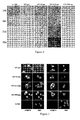
- RNA was synthesized in vitro for each of these plasmids and was electroporated in BHK-21 cells, which were cultured and in which ⁇ -gal expression was analyzed by means of X-gal staining at different times after transfection ( Figure 1 ).
- Figure 1 Unlike the cells electroporated with the control SFV-LacZ RNA in which, 24 hours after transfection, more than 95% of the cells expressed ⁇ -gal and showed a cytopathic phenotype, only a small percentage of the cells transfected with the SFV-S2-LacZ or SFV-S3-LacZ RNAs expressed ⁇ -gal 24 hours after transfection, without showing a cytopathic morphology.
- the LacZ reporter gene was substituted in plasmid pSFV-S2-LacZ with the gene encoding the puromycin N-acetyltransferase (pac) dominant selection marker conferring resistance to puromycin, which generated plasmid pSFV-S2-pac.
- pac puromycin N-acetyltransferase
- RNA was synthesized in vitro and electroporated in BHK-21 cells. Puromycin at 5 ⁇ g/ml was added 24 hours after electroporation, which led to the selection of colonies resistant to the drug which subsequently were expanded.
- the nsp2 region of the replicase was amplified because most of the noncytopathic mutations described in the alphavirus had been mapped in this region.
- the cDNA fragment rescued from each clone was subcloned into the original plasmid pSFV-pac substituting the wild type nsp2 sequence.
- One of the clones, the SFV-S2-9-pac showed a clear noncytopathic phenotype, since it conferred puromycin resistance to most of the transfected cells ( Figure 2 ).
- this mutation was introduced in plasmid pSFV-pac, thus generating plasmid pSFV-RHR-pac.
- the RNA of this plasmid was transcribed and electroporated in BHK-21 cells, which were left to recover for 24 hours. Puromycin at 5 ⁇ g/ml was then added and the growth of the cells was analyzed at different times by staining the cells with methyl violet as described above ( Figure 2 , right column).
- SFV-RHR-pac showed a very similar pattern to the one observed for the original vector SFV-pac, inducing a strong and early cytopathic effect that led to the death of most of the cells before day 4.
- BHK-21 cells were transfected with the RNA of the vectors that contained this mutation (SFV-S2-9-pac and SFV-RHR-pac) or with vectors that did not contain them (SFV-pac and SFV-S2-pac) and were analyzed by means of immunofluorescence with monoclonal antibodies specific for the nuclear form or for the cytoplasmic form of SFV nsp2, respectively ( Figure 3 ).
- nsp2 was detected both in the nucleus and in the cytoplasm of the transfected cells, which suggest that mutation RHR did not affect transport to the nucleus of this protein.
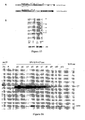
- RNA replication level of the double noncytopathic SFV mutant BHK-21 cells were electroporated with SFV-S2-9-pac RNA, total RNA was extracted 24, 48 and 72 hours after electroporation and was analyzed by means of Northern blot with a 32 P-labelled oligonucleotide specific for the sequence of the SFV subgenomic promoter, which is present both in the genomic RNA and in subgenomic RNA ( Figure 4 , lanes 2 to 4).
- the genomic and subgenomic SFV-S2-9-pac RNAs increased over time and seemed to reach a peak 48 hours after electroporation. Similar RNA levels were observed in a puromycin-resistant BHK cell line obtained with vector SFV-S2-9-pac ( Figure 4 , lane 1).
- the SFV-S2-9 RNAs were produced in a much lower amount than that obtained in cells transfected with the original SFV-pac RNA (note that lane 5 was exposed 72 times more than lanes 1 to 4).
- the subgenomic/genomic RNA ratios observed in the cells transfected with SFV-S2-9-pac and selected with puromycin was approximately 1.5 times greater than that observed in cells transfected with SFV-pac ( Figure 4 , numbers in the lower part).
- the BHK-21 cells were electroporated simultaneously with the SFV-S2-9-pac and of SFV-LacZ RNAs (wild vector). After 24 hours, the total RNA was extracted from the coelectroporated cells and was analyzed by means of Northern blot ( Figure 4 , lane 7). The RNAs of the cells electroporated with the original SFV-pac ( Figure 4 , lane 5) and SFV-LacZ ( Figure 4 , lane 6) were analyzed in the same gel and were used as molecular size markers for each of the genomic and subgenomic RNAs.
- genomic and subgenomic SFV-LacZ and SFV-S2-9-pac RNAs were readily detected in the cells coelectroporated after exposing the gel for 1 hour, which indicated that the wild type replicase was able to at least partially recover the replication of the double mutant.
- the genomic SFV-LacZ RNA was produced at levels approximately 2-3 times greater than that of mutant SFV-S2-9-pac.
- RNA detected in the cells transfected with the SFV-S2-9-pac replicon could be due to an alteration in replicase processing.
- the SFV replicase is synthesized as polyprotein nsp1234 which is subsequently cleaved into its mature monomeric components by means of the protease activity present in the domain of the carboxyl end of nsp2 (30), in which mutations P718T and R649H have been mapped.
- the SFV-S2-9-pac, SFV-RHR-pac and SFV-S2-pac RNAs synthesized in vitro were translated by means of incubation with rabbit reticulocyte lysates in the presence of [ 35 S]-methionine and [ 35 S]-cysteine.
- the replicase processing pattern in these mutants was compared with that obtained for the original SFV-pac RNA by means of SDS-PAGE followed by autoradiography ( Figure 5A ). No difference was observed in the replicase processing between the three analyzed mutants and the wild type replicase, which gave rise to a similar accumulation of the nsp monomers in all cases.
- the lysates of a puromycin-resistant BHK-21 cell line carrying vector SFV-S2-9-pac or of BHK-21 cells transfected with original SFV-pac RNA or with SFV-RHR-pac RNA obtained 24 hours after electroporation were analyzed by means of immunoblotting with a rabbit antiserum specific against nsp2 ( Figure 5B , upper panel) or against nsp3 ( Figure 5B , central panel) as primary antibodies, respectively.
- the samples derived from SFV-pac and from SFV-RHR-pac showed a very similar pattern as they expressed comparable amounts of the nsp2 and nsp3 monomers.
- nsp2 and nsp3 in the puromycin-resistant BHK-SFV-S2-9-pac cell line was approximately 1.5 times lower, which could be due to the lower replication of this vector. Even though only insignificant amounts of high molecular weight products were detected in the analyzed samples, differential bands could be observed between SFV-S2-9 and the two other vectors with the antiserum against nsp2, which could indicate a small alteration of the in vivo S2-9 replicase processing.
- the supernatants of the cells were collected 24 hours after electroporation and were titrated on monolayers of BHK-21 cells by means of X-gal staining.
- the SFV-S2-9-LacZ RNA was rather inefficiently packaged, which provided titers of 7 x 10 3 pv/ml, which were much lower than those obtained the original SFV-LacZ (5 x 10 9 pv/ml).
- the BHK-21 cells with the RNAs of SFV-S2-9-LacZ, SFV-pac and both SFV auxiliary RNAs were coelectroporated.
- the packaging of the original SFV-pac RNA decreased approximately 5-fold in the cells in which this vector was coelectroporated with SFV-S2-9-LacZ (2.6 x 10 8 pv/ml), in comparison with the titers obtained when the SFV-pac was packaged alone (1.2 x 10 9 pv/ml), which was determined by means of indirect immunofluorescence of the infected cells using a polyclonal rabbit antiserum specific against SFV nsp2 as a primary antibody.
- the BHK-21 cells with both auxiliary SFV RNAs and with the SFV-RHR-pac or SFV-S2-pac RNAs were coelectroporated, and the viral particles were titrated as described above for SFV-pac.
- SFV-RHR-pac was packaged with high titers (6.5 x 10 9 pv/ml) whereas SFV-S2-pac showed a very low packaging efficiency (2 x 10 4 pv/ml).
- vector SFV-S2-9-pac can be used to select the cells which can maintain the replicon in the presence of puromycin.
- the LacZ reporter gene was introduced into pSFV-S2-9-pac, which generated plasmid pSFV-S2-9-LacZ-pac in which the pac and LacZ genes are located downstream of independent subgenomic promoters.
- the RNA of this plasmid was synthesized in vitro and was electroporated in the BHK-21 cells.
- plasmid pSFV-PD containing the SFV vector sequence with mutations S259P and R650D in nsp2 was kindly provided by Dr. K. Lundström (21).
- Plasmids pSFV-SF2A, pSFV-SF2C and pSFV-PD were thus generated (or obtained), into which the LacZ gene was cloned under the control of the viral subgenomic promoter, plasmids: pSFV-SF2A-LacZ, pSFV-SF2C-LacZ and pSFV-PD-LacZ, respectively, being obtained.
- RNA in vitro was electroporated in BHK-21 cells. After the electroporation, the cells were distributed in different plates which were fixed and stained with X-gal at different times after transfection. The X-gal staining causes a blue color in the cells which are expressing ⁇ -gal from the LacZ gene, which allows detecting the number of cells carrying the vector and which have survived at different times as well as analyzing the morphology thereof, which is a cytopathogenicity indicator.
- cells electroporated with SFV-LacZ RNA which is cytopathic for BHK cells, were used as a negative control.
- SFV-S2-LacZ RNA carrying mutation P718T in nsp2 and giving rise to a noncytopathic phenotype in a certain percentage of the cells, was used as a positive control.
- mutants SFV-SF2A and SFV-PD shows a phenotype that was very similar to that of the wild SFV vector, inducing a strong cytopathic effect in the transfected cells, which was translated into the appearance of a number of apoptotic bodies from day 3 onwards and an almost total absence of expression after long times (7 days).
- the data relating to the cytopathic nature of the SFV-PD vector are further supported by results published subsequently by K.
- Vector SFV-S2 is the only vector that does not give rise to the appearance of apoptotic bodies and which allows maintaining the expression for at least 7 days, giving rise to the appearance of colonies.
- Vector SFV-S2-9 carrying mutations P718T and R649H was selected from one of the colonies obtained with SFV-S2 when the LacZ gene was substituted with the pac gene in said vector.
- Figure 14 includes photos of cells transfected with vector SFV-S2-9-LacZ RNA and stained at different times with X-gal. Vector S2-9 did not produce a cytopathic effect in the transfected cells, which were able to divide.
- Plasmids were generated by introducing the rat cardiotrophin (rCT) gene in pSFV-S2-9-pac in two different environments and were used to generate cell lines expressing rCT. Both the rCT expression and the stability of the rCT expression were then analyzed for the purpose of identifying stable cell lines expressing rCT.
- rCT rat cardiotrophin
- plasmids based on SFV-S2-9-pac were generated by introducing the rat cardiotrophin (rCT) gene, according to two different embodiments:
- the cloning vector pSFV-S2-9-mcs-pac containing the SFV-S2-9 replicase, a first subgenomic promoter followed by a multiple cloning site and second subgenomic promoter followed by the pac gene were generated previously.
- oligonucleotides SEQ ID NO: 15 and SEQ ID NO: 16 were hybridized, generating a synthetic DNA fragment with BamHI-compatible protuberant 5' ends, and the sequence of which contains a multiple cloning site with targets for enzymes AvrII, ApaI, NruI and BstBI, three translation termination codons in the three possible reading stages and the SFV subgenomic promoter sequence.
- This fragment was cloned into the BamH I site of pSFV-S2-9-pac, plasmid pSFV-S2-9-mcs-pac being generated.
- a 645 bp PCR fragment containing the rat cardiotrophin gene was synthesized from plasmid pRSET-rCT (36), using oligonucleotides SEQ ID NO: 17 and SEQ ID NO: 18 hybridizing with the start and end of the rCT gene respectively and containing BamH I sites at the ends to make the cloning easier.
- the PCR fragment was digested with BamH I and was cloned into the BamH I site of pSFV-S2-9-mcs-pac, plasmid pSFV-S2-9-rCT-pac being obtained.
- the same PCR fragment was cloned into pSFV-1 digested with BamH I, plasmid pSFV-rCT being generated.
- the cloning vector pSFV-S2-9-pac2A containing the sequence of vector SFV-S2-9-pac in which the pac gene is fused in phase at its 3' end with the nucleotide sequence encoding the FMDV autoprotease 2A (35), containing at the end of this sequence the cloning site SmaI/XmaI, was generated previously.
- a crossover PCR was carried out with the external oligonucleotides: SEQ ID NO: 19 and SEQ ID NO: 20, and internal oligonucleotides: SEQ ID NO: 21 and SEQ ID NO: 22, generating a 842 bp DNA fragment which was digested with BamH I and Xma I and was cloned into pSFV-S2-9-pac digested with the same enzymes, thus obtaining plasmid pSFV-S2-9-pac2A.
- the crossover PCR was carried out for the dual purpose of introducing sequence 2A-XmaI at the 3' end of the pac gene and simultaneously eliminating a XmaI site present inside that gene.
- PCR fragment containing the rat cardiotrophin gene from plasmid pRSET-rCT (36), using oligonucleotides: SEQ ID NO: 23 and SEQ ID NO: 24 hybridizing with the start and the end of the rCT gene respectively and containing Xma I sites at the ends for making the cloning easier.
- the PCR fragment was digested with Xma I and was cloned into the Xma I site of pSFV-S2-9-pac2A, obtaining plasmid pSFV-S2-9- pac2A-rCT.
- RNA of each plasmid synthesized in vitro (section 9.1) was electroporated in BHK-21 cells. 24 hours after the electroporation, puromycin at 5 ⁇ g/ml was added and, when the selected cells reached confluence, the cardiotrophin expression was analyzed in the cell lysates by means of immunoblotting with an antibody specific for cardiotrophin ( Figure 15B ).
- lysates of the BHK-21 cells transfected with the SFV vectors of SFV were obtained by means of incubating in a buffer containing 1% Igepal (Sigma, USA), 50 mM Tris HCl, pH 7.6, 150 mM NaCl, 2 mM EDTA and 1 ⁇ g/ml PMSF (Sigma, St. Louis, USA), they were clarified by centrifugation for 6 minutes at 6000 rpm in a refrigerated microcentrifuge and were quantified by means of a Bradford analysis.
- the lysates were analyzed by means of SDS-PAGE in 12% polyacrylamide gels, they were transferred to a nitrocellulose membrane and were incubated with a polyclonal antiserum against murine cardiotrophin CT-1 (R&D Systems) or actin (Sigma, St. Louis, USA) as primary antibodies, respectively.
- a polyclonal antiserum against murine cardiotrophin CT-1 R&D Systems
- actin Sigma, St. Louis, USA
- the cardiotrophin expression levels in the lines generated with each of the vectors were similar to those obtained in cells electroporated with vector RNA with the wild replicase SFV-rCT ( Figure 15B ).
- the rCT expression in the selected lines was approximately 4.3 pg/cell.
- Plasmids were generated by introducing the human insulin-like growth (IGF-I) gene into pSFV-S2-9-pac in two different environments and they were used to generate cell lines expressing IGF-I. Both the IGF-I expression and the stability of the IGF-I expression were then analyzed for the purpose of identifying stable cell lines expressing IGF-I.
- IGF-I human insulin-like growth
- plasmids based on SFV-S2-9-pac were generated by introducing IGF-I gene, according to two different embodiments
- Plasmid pSFV-S2-9-IGF-pac plasmid pSFVb12A-IGF-IB (38) was digested with BglII+Klenow and SpeI, obtaining 2.3 kb fragment which was ligated with the 11.1 kb fragment obtained from pSFV-S2-9-pac digested with BsmI+T4pol and SpeI.
- Plasmid pSFVb12A-IGF-IB contains the human IGF-I precursor sequence (IGF-IB) fused at its 5' end with a cassette comprising the sequence encoding the first 34 amino acids of the SFV capsid (minimum translation enhancer or "b1") followed by the nucleotide sequence encoding FMDV autoprotease 2A.
- Precursor IGF-IB encodes a 195 amino acid preprotein including domains II, B, C, A, D, D, E, Ea Eb and 6 of the IGF-I gene. This preprotein is processed to the mature form of IGF-I which is secreted, losing the aminoterminal II domains and the carboxyterminal domains E, Ea, Eb and 6 (39).
- Plasmid pSFV-S2-9-pac2A-IGF plasmid pSFVb12A-IGF-I (38) was digested with XmaI, obtaining a 0.59 kb fragment containing IGF-IB sequence which was ligated with pSFV-S2-9-pac2A (the characteristics of which and the way of obtaining it are described in Example 9.1, in relation to the construction of plasmid pSFV-S2-9-pac2A-rCT) digested previously with XmaI. Clones were then selected in which the 0.59 kb fragment had been introduced in the correct orientation.
- RNA of each plasmid synthesized in vitro was electroporated in BHK-21 cells. 24 hours after the electroporation, puromycin at 5 ⁇ g/ml was added and, when the selected cells reached confluence, the IGF-I expression was analyzed in the cellular supernatants collected at different times by means of ELISA specific for human IGF-I ( Figure 19 ).
- the IGF-I expression was analyzed in cellular supernatants using an ELISA kit specific for measuring free human IGF-I (Free IGF-I, ref DSL-10-9400, Diagnostic Systems laboratories, Webster, Texas, USA). For each of the analyzed passages, 5x10 5 cells per well were seeded, there was a wait of 4 hours so that the cells were adhered and the medium was changed by adding 1 ml of Glasgow-MEM medium with 5% fetal bovine serum (37) and puromycin at 5 ⁇ g/ml.
- the supernatant was collected after 24, 48 or 72 hours, it was centrifuged at 6,000 rpm for 5 minutes in a refrigerated microfuge to eliminate cellular residues and it was frozen at -80°C until it was analyzed,
- BHK cells were collected from the same wells in which supernatants had been collected and they were lysated by means of incubating in a buffer containing 1% Igepal (Sigma, USA), 50 mM Tris HCl, pH 7.6, 150 mM NaCl, 2 mM EDTA and 1 ⁇ g/ml PMSF (Sigma, St.
Landscapes
- Life Sciences & Earth Sciences (AREA)
- Health & Medical Sciences (AREA)
- Genetics & Genomics (AREA)
- Engineering & Computer Science (AREA)
- Bioinformatics & Cheminformatics (AREA)
- Wood Science & Technology (AREA)
- Biomedical Technology (AREA)
- Organic Chemistry (AREA)
- Biotechnology (AREA)
- General Engineering & Computer Science (AREA)
- Chemical & Material Sciences (AREA)
- Zoology (AREA)
- Molecular Biology (AREA)
- Microbiology (AREA)
- Virology (AREA)
- Plant Pathology (AREA)
- Physics & Mathematics (AREA)
- Biochemistry (AREA)
- General Health & Medical Sciences (AREA)
- Biophysics (AREA)
- Micro-Organisms Or Cultivation Processes Thereof (AREA)
- Medicines Containing Material From Animals Or Micro-Organisms (AREA)
- Enzymes And Modification Thereof (AREA)
- Medicines That Contain Protein Lipid Enzymes And Other Medicines (AREA)
- Preparation Of Compounds By Using Micro-Organisms (AREA)
Claims (15)
- Viraler Vektor, umfassend ein Replikon des Semliki-Forest-Virus (SFV), wobei das Replikon (i) die Nukleotidsequenz, die für das SFV-Replikase-Enzym mit den Mutationen P718T und R649H in der Untereinheit nsp2 codiert, (ii) ein Polynukleotid, das ein Selektionsgen umfasst, und (iii) ein Polynukleotid, das eine Nukleotidsequenz umfasst, die für ein heterologes Produkt von Interesse codiert, umfasst.
- Viraler Vektor gemäss Anspruch 1, umfassend SEQ ID NO: 1 und SEQ ID NO: 2.
- Viraler Vektor gemäss Anspruch 1, umfassend:(a) ein Polynukleotid, umfassend die Nukleotidsequenz, die für ein heterologes Produkt von Interesse codiert, dessen Expression durch einen ersten subgenomischen Promotor (SG1) von SFV kontrolliert wird;(b) ein Polynukleotid, umfassend ein Selektionsgen, dessen Expression durch einen zweiten subgenomischen Promotor (SG2) von SFV kontrolliert wird.
- Viraler Vektor gemäss Anspruch 3, wobei der erste und zweite subgenomische Promotor von SFV identisch sind.
- Viraler Vektor gemäss Anspruch 3, wobei der erste und zweite subgenomische Promotor von SFV verschieden sind.
- Viraler Vektor gemäss Anspruch 1, umfassend, stromabwärts eines subgenomischen Promotors, ein Konstrukt, das das Polynukleotid, das das Selektionsgen umfasst, und das Polynukleotid, das die Nukleotidsequenz umfasst, die für das heterologe Produkt von Interesse codiert, in Phase fusioniert umfasst.
- Viraler Vektor gemäss Anspruch 6, wobei das Polynukleotid, das das Selektionsgen umfasst, mit dem Polynukleotid, das die Nukleotidsequenz umfasst, die für das heterologe Produkt von Interesse codiert, durch einen Polynukleotidlinker in Phase fusioniert ist.
- Viraler Vektor gemäss Anspruch 7, wobei der Linker ein Polynukleotid ist, das die Nukleotidsequenz umfasst, die für eine post-translationelle (auto)proteolytische Spaltstelle codiert.
- Viraler Vektor gemäss Anspruch 8, wobei der Linker ein Polynukleotid ist, das die Nukleotidsequenz umfasst, die für eine (Auto)protease codiert, die zwischen den Proteinen, die aus der Translation des Selektionsgens und der Nukleotidsequenz, die für das heterologe Produkt von Interesse codiert, hervorgehen, in cis wirkt.
- Viraler Vektor gemäss Anspruch 9, wobei die (Auto)protease die Autoprotease 2A des Maul- und Klauenseuche-Virus (FMDV) ist.
- Viraler Vektor gemäss Anspruch 6, wobei das 3'-Ende des Polynukleotids, das das Selektionsgen umfasst, in Phase an das 5'-Ende des Polynukleotids, das die Nukleotidsequenz umfasst, die für das heterologe Produkt von Interesse codiert, fusioniert ist.
- Viraler Vektor gemäss Anspruch 6, wobei das 3'-Ende des Polynukleotids, das die Nukleotidsequenz umfasst, die für das heterologe Produkt von Interesse codiert, in Phase an das 5'-Ende des Polynukleotids, das das Selektionsgen umfasst, fusioniert ist.
- Stabile Zellinie, die heterologe Produkte von Interesse konstitutiv exprimieren kann, dadurch gekennzeichnet, dass es eine Zellinie ist, die mit einem viralen Vektor gemäss einem der Ansprüche 1 bis 12 transfiziert ist.
- Verfahren zur in-vitro-Erzeugung einer stabilen Zellinie gemäss Anspruch 13, die heterologe Produkte von Interesse konstitutiv exprimieren kann, das folgendes umfasst:I. Transfizieren von Zellen mit einem viralen Vektor gemäss einem der Ansprüche 1 bis 12;II. Selektieren der in Schritt I. erzeugten stabilen Zellen; undIII. Kultivieren und Beibehalten der stabilen Zellen.
- Verfahren zur in-vitro-Herstellung eines heterologen Produkts von Interesse, das das Kultivieren einer stabilen Zellinie gemäss Anspruch 21 unter Bedingungen, die die Expression des heterologen Produkts von Interesse, das in dem viralen Vektor enthalten ist, der zur Erzeugung der stabilen Zellinie verwendet wird, ermöglichen, umfasst.
Priority Applications (3)
| Application Number | Priority Date | Filing Date | Title |
|---|---|---|---|
| PL07858264T PL2097533T3 (pl) | 2006-11-28 | 2007-11-28 | Wektor wirusowy oraz jego zastosowania |
| SI200730369T SI2097533T1 (sl) | 2006-11-28 | 2007-11-28 | Virusni vektor in njegova raba |
| CY20101101063T CY1111187T1 (el) | 2006-11-28 | 2010-11-25 | Ιικος φορεας και χρησεις αυτου |
Applications Claiming Priority (3)
| Application Number | Priority Date | Filing Date | Title |
|---|---|---|---|
| ES200603036 | 2006-11-28 | ||
| ES200700882A ES2304880B1 (es) | 2007-04-03 | 2007-04-03 | Uso de un vector viral mutado para la generacion in vitro de lineas celulares estables. |
| PCT/ES2007/000688 WO2008065225A2 (es) | 2006-11-28 | 2007-11-28 | Vector viral y sus aplicaciones |
Publications (3)
| Publication Number | Publication Date |
|---|---|
| EP2097533A2 EP2097533A2 (de) | 2009-09-09 |
| EP2097533B1 true EP2097533B1 (de) | 2010-08-25 |
| EP2097533B9 EP2097533B9 (de) | 2010-12-22 |
Family
ID=39468303
Family Applications (1)
| Application Number | Title | Priority Date | Filing Date |
|---|---|---|---|
| EP07858264A Active EP2097533B9 (de) | 2006-11-28 | 2007-11-28 | Viraler vektor und seine verwendungen |
Country Status (18)
| Country | Link |
|---|---|
| US (1) | US20100055736A1 (de) |
| EP (1) | EP2097533B9 (de) |
| JP (1) | JP2010510790A (de) |
| AT (1) | ATE478959T1 (de) |
| AU (1) | AU2007327452B2 (de) |
| BR (1) | BRPI0719572A2 (de) |
| CA (1) | CA2670163A1 (de) |
| CY (1) | CY1111187T1 (de) |
| DE (1) | DE602007008761D1 (de) |
| DK (1) | DK2097533T3 (de) |
| HR (1) | HRP20100638T2 (de) |
| MX (1) | MX2009005572A (de) |
| PL (1) | PL2097533T3 (de) |
| PT (1) | PT2097533E (de) |
| RS (1) | RS51484B (de) |
| RU (1) | RU2009124471A (de) |
| SI (1) | SI2097533T1 (de) |
| WO (1) | WO2008065225A2 (de) |
Cited By (1)
| Publication number | Priority date | Publication date | Assignee | Title |
|---|---|---|---|---|
| CN102286627A (zh) * | 2011-09-08 | 2011-12-21 | 北京利德曼生化股份有限公司 | 一种牛分枝杆菌和人结核分枝杆菌的同时鉴定方法及其试剂盒 |
Families Citing this family (7)
| Publication number | Priority date | Publication date | Assignee | Title |
|---|---|---|---|---|
| BRPI0913045A2 (pt) * | 2008-05-23 | 2017-05-23 | Fit Biotech Oy | vetor de expressão codificador de alfa-vírus replicase e uso do mesmo como adjuvante imunológico |
| WO2011064437A2 (es) | 2009-11-26 | 2011-06-03 | Proyecto De Biomedicina Cima, S.L. | Vectores virales y procedimientos útiles en la preparación de gdnf |
| ES2523016B1 (es) | 2013-05-20 | 2015-09-09 | 3P Biopharmaceuticals | Vectores alfavirales y líneas celulares para la producción de proteínas recombinantes |
| EP2878674A1 (de) | 2013-11-28 | 2015-06-03 | Fundación Centro Nacional de Investigaciones Cardiovasculares Carlos III (CNIC) | Stabile Episomen auf Basis von nichtintegrativen lentiviralen Vektoren |
| JP6569124B2 (ja) * | 2015-11-12 | 2019-09-04 | 住友電装株式会社 | 導電部材製造方法、導電部材及び金型 |
| US12134790B2 (en) | 2017-09-27 | 2024-11-05 | Inozyme Pharma, Inc. | Methods of improving cardiovascular function and treating cardiovascular disease using a recombinant ectonucleotide pyrophosphatase phosphodiesterase (NPP1) |
| WO2021252549A1 (en) | 2020-06-09 | 2021-12-16 | Inozyme Pharma, Inc. | Soluble enpp1 or enpp3 proteins and uses thereof |
Family Cites Families (4)
| Publication number | Priority date | Publication date | Assignee | Title |
|---|---|---|---|---|
| GB9326271D0 (en) | 1993-12-23 | 1994-02-23 | Zeneca Ltd | Expression of self-processing polyprotein in transgenic plants |
| US6458560B1 (en) * | 1996-04-05 | 2002-10-01 | Chiron Corporation | Recombinant alphavirus-based vectors with reduced inhibition of cellular macromolecular synthesis |
| WO2004046340A2 (en) * | 2002-11-14 | 2004-06-03 | Genentech, Inc. | Intron fusion construct and method of using for selecting high-expressing production cell lines |
| ES2292271B1 (es) * | 2004-05-20 | 2009-02-16 | Proyecto De Biomedicina Cima, S.L. | Un vector hibrido adenovirus-alfavirus para la administracion eficaz y expresion de genes terapeuticos en celulas tumorales. |
-
2007
- 2007-11-28 HR HR20100638T patent/HRP20100638T2/hr unknown
- 2007-11-28 RS RSP-2010/0475A patent/RS51484B/sr unknown
- 2007-11-28 EP EP07858264A patent/EP2097533B9/de active Active
- 2007-11-28 CA CA002670163A patent/CA2670163A1/en not_active Abandoned
- 2007-11-28 RU RU2009124471/10A patent/RU2009124471A/ru not_active Application Discontinuation
- 2007-11-28 WO PCT/ES2007/000688 patent/WO2008065225A2/es not_active Ceased
- 2007-11-28 JP JP2009538733A patent/JP2010510790A/ja active Pending
- 2007-11-28 SI SI200730369T patent/SI2097533T1/sl unknown
- 2007-11-28 BR BRPI0719572-9A patent/BRPI0719572A2/pt not_active IP Right Cessation
- 2007-11-28 DE DE602007008761T patent/DE602007008761D1/de active Active
- 2007-11-28 DK DK07858264.0T patent/DK2097533T3/da active
- 2007-11-28 US US12/516,220 patent/US20100055736A1/en not_active Abandoned
- 2007-11-28 PL PL07858264T patent/PL2097533T3/pl unknown
- 2007-11-28 PT PT07858264T patent/PT2097533E/pt unknown
- 2007-11-28 MX MX2009005572A patent/MX2009005572A/es active IP Right Grant
- 2007-11-28 AU AU2007327452A patent/AU2007327452B2/en not_active Expired - Fee Related
- 2007-11-28 AT AT07858264T patent/ATE478959T1/de active
-
2010
- 2010-11-25 CY CY20101101063T patent/CY1111187T1/el unknown
Cited By (1)
| Publication number | Priority date | Publication date | Assignee | Title |
|---|---|---|---|---|
| CN102286627A (zh) * | 2011-09-08 | 2011-12-21 | 北京利德曼生化股份有限公司 | 一种牛分枝杆菌和人结核分枝杆菌的同时鉴定方法及其试剂盒 |
Also Published As
| Publication number | Publication date |
|---|---|
| RS51484B (sr) | 2011-04-30 |
| US20100055736A1 (en) | 2010-03-04 |
| PT2097533E (pt) | 2010-11-29 |
| SI2097533T1 (sl) | 2010-11-30 |
| AU2007327452B2 (en) | 2012-08-30 |
| WO2008065225A2 (es) | 2008-06-05 |
| ATE478959T1 (de) | 2010-09-15 |
| DE602007008761D1 (de) | 2010-10-07 |
| BRPI0719572A2 (pt) | 2013-12-10 |
| CA2670163A1 (en) | 2008-06-05 |
| HRP20100638T1 (en) | 2010-12-31 |
| RU2009124471A (ru) | 2011-01-10 |
| EP2097533B9 (de) | 2010-12-22 |
| DK2097533T3 (da) | 2010-11-01 |
| WO2008065225A3 (es) | 2008-08-14 |
| EP2097533A2 (de) | 2009-09-09 |
| MX2009005572A (es) | 2009-07-30 |
| CY1111187T1 (el) | 2015-06-11 |
| PL2097533T3 (pl) | 2011-02-28 |
| JP2010510790A (ja) | 2010-04-08 |
| HRP20100638T2 (hr) | 2011-03-31 |
| AU2007327452A1 (en) | 2008-06-05 |
Similar Documents
| Publication | Publication Date | Title |
|---|---|---|
| EP2097533B9 (de) | Viraler vektor und seine verwendungen | |
| US6329201B1 (en) | Compositions and methods for packaging of alphavirus vectors | |
| EP1141361B1 (de) | Zusammensetzungen und verfahren zur verpackung von alpavirus-vektoren | |
| AU2008338803B2 (en) | Methods of generating alphavirus particles | |
| JP5268196B2 (ja) | キメラアルファウイルスレプリコン粒子 | |
| Schlesinger | Alphavirus vectors: development and potential therapeutic applications | |
| AU698976B2 (en) | Alphavirus expression vector | |
| WO2008119827A1 (en) | Transreplicase constructs | |
| JP2001519165A (ja) | 細胞巨大分子合成の阻害が低減された組換えアルファウイルスベースのベクター | |
| JP2005515755A5 (de) | ||
| JP2008200051A (ja) | 細胞巨大分子合成の阻害が減少したアルファウイルスベクター | |
| Casales et al. | Development of a new noncytopathic Semliki Forest virus vector providing high expression levels and stability | |
| ES2351532T3 (es) | Vector viral y sus aplicaciones. | |
| US20030170871A1 (en) | Alphavirus-based vectors for persistent infection | |
| ES2304880B1 (es) | Uso de un vector viral mutado para la generacion in vitro de lineas celulares estables. | |
| Aranda et al. | Recent patents on alphavirus protein expression and vector production | |
| US20080096274A1 (en) | Recombinant alphavirus vectors and methods of using same | |
| CA2719413A1 (en) | Compositions and methods for packaging of alphavirus vectors |
Legal Events
| Date | Code | Title | Description |
|---|---|---|---|
| PUAI | Public reference made under article 153(3) epc to a published international application that has entered the european phase |
Free format text: ORIGINAL CODE: 0009012 |
|
| 17P | Request for examination filed |
Effective date: 20090626 |
|
| AK | Designated contracting states |
Kind code of ref document: A2 Designated state(s): AT BE BG CH CY CZ DE DK EE ES FI FR GB GR HU IE IS IT LI LT LU LV MC MT NL PL PT RO SE SI SK TR |
|
| AX | Request for extension of the european patent |
Extension state: AL BA HR MK RS |
|
| RIN1 | Information on inventor provided before grant (corrected) |
Inventor name: RUIZ GUILLEN, MARTA Inventor name: RAZQUIN ERRO, NEREA Inventor name: CASALES ZOCO, ERKUDEN Inventor name: RODRIGUEZ MADOZ, JUAN ROBERTO Inventor name: SMERDOU PICAZO, CRISTIAN Inventor name: PRIETO VALTUENA, JESUS Inventor name: CUEVAS LABRADOR, YOLANDA |
|
| GRAP | Despatch of communication of intention to grant a patent |
Free format text: ORIGINAL CODE: EPIDOSNIGR1 |
|
| GRAS | Grant fee paid |
Free format text: ORIGINAL CODE: EPIDOSNIGR3 |
|
| GRAA | (expected) grant |
Free format text: ORIGINAL CODE: 0009210 |
|
| AK | Designated contracting states |
Kind code of ref document: B1 Designated state(s): AT BE BG CH CY CZ DE DK EE ES FI FR GB GR HU IE IS IT LI LT LU LV MC MT NL PL PT RO SE SI SK TR |
|
| AX | Request for extension of the european patent |
Extension state: AL BA HR MK RS |
|
| REG | Reference to a national code |
Ref country code: GB Ref legal event code: FG4D |
|
| REG | Reference to a national code |
Ref country code: CH Ref legal event code: EP |
|
| REG | Reference to a national code |
Ref country code: IE Ref legal event code: FG4D |
|
| REF | Corresponds to: |
Ref document number: 602007008761 Country of ref document: DE Date of ref document: 20101007 Kind code of ref document: P |
|
| REG | Reference to a national code |
Ref country code: CH Ref legal event code: NV Representative=s name: ING. MARCO ZARDI C/O M. ZARDI & CO. S.A. |
|
| REG | Reference to a national code |
Ref country code: DK Ref legal event code: T3 |
|
| REG | Reference to a national code |
Ref country code: HR Ref legal event code: TUEP Ref document number: P20100638 Country of ref document: HR |
|
| REG | Reference to a national code |
Ref country code: RO Ref legal event code: EPE |
|
| REG | Reference to a national code |
Ref country code: PT Ref legal event code: SC4A Free format text: AVAILABILITY OF NATIONAL TRANSLATION Effective date: 20101122 |
|
| REG | Reference to a national code |
Ref country code: NL Ref legal event code: T3 |
|
| REG | Reference to a national code |
Ref country code: SE Ref legal event code: TRGR |
|
| REG | Reference to a national code |
Ref country code: GR Ref legal event code: EP Ref document number: 20100402740 Country of ref document: GR |
|
| REG | Reference to a national code |
Ref country code: HR Ref legal event code: T1PR Ref document number: P20100638 Country of ref document: HR |
|
| REG | Reference to a national code |
Ref country code: ES Ref legal event code: FG2A Effective date: 20110126 |
|
| PGFP | Annual fee paid to national office [announced via postgrant information from national office to epo] |
Ref country code: DE Payment date: 20101126 Year of fee payment: 4 Ref country code: RO Payment date: 20101125 Year of fee payment: 4 Ref country code: SI Payment date: 20101007 Year of fee payment: 4 |
|
| REG | Reference to a national code |
Ref country code: PL Ref legal event code: T3 |
|
| REG | Reference to a national code |
Ref country code: SK Ref legal event code: T3 Ref document number: E 8325 Country of ref document: SK |
|
| PGFP | Annual fee paid to national office [announced via postgrant information from national office to epo] |
Ref country code: LV Payment date: 20101102 Year of fee payment: 4 Ref country code: GR Payment date: 20101124 Year of fee payment: 4 |
|
| REG | Reference to a national code |
Ref country code: HR Ref legal event code: T2IS Ref document number: P20100638 Country of ref document: HR |
|
| REG | Reference to a national code |
Ref country code: HU Ref legal event code: AG4A Ref document number: E009348 Country of ref document: HU |
|
| PGFP | Annual fee paid to national office [announced via postgrant information from national office to epo] |
Ref country code: PL Payment date: 20101124 Year of fee payment: 4 Ref country code: SK Payment date: 20110310 Year of fee payment: 5 |
|
| PLBE | No opposition filed within time limit |
Free format text: ORIGINAL CODE: 0009261 |
|
| STAA | Information on the status of an ep patent application or granted ep patent |
Free format text: STATUS: NO OPPOSITION FILED WITHIN TIME LIMIT |
|
| 26N | No opposition filed |
Effective date: 20110526 |
|
| REG | Reference to a national code |
Ref country code: DE Ref legal event code: R097 Ref document number: 602007008761 Country of ref document: DE Effective date: 20110526 |
|
| REG | Reference to a national code |
Ref country code: HR Ref legal event code: ODRP Ref document number: P20100638 Country of ref document: HR Payment date: 20111110 Year of fee payment: 5 |
|
| PG25 | Lapsed in a contracting state [announced via postgrant information from national office to epo] |
Ref country code: IT Free format text: LAPSE BECAUSE OF NON-PAYMENT OF DUE FEES Effective date: 20101128 |
|
| PGFP | Annual fee paid to national office [announced via postgrant information from national office to epo] |
Ref country code: IT Payment date: 20101130 Year of fee payment: 4 |
|
| PGFP | Annual fee paid to national office [announced via postgrant information from national office to epo] |
Ref country code: EE Payment date: 20111108 Year of fee payment: 5 Ref country code: HU Payment date: 20111108 Year of fee payment: 5 Ref country code: FR Payment date: 20111128 Year of fee payment: 5 Ref country code: DK Payment date: 20111123 Year of fee payment: 5 Ref country code: IE Payment date: 20111123 Year of fee payment: 5 Ref country code: IS Payment date: 20111104 Year of fee payment: 5 Ref country code: LT Payment date: 20111102 Year of fee payment: 5 Ref country code: LU Payment date: 20111205 Year of fee payment: 5 Ref country code: MC Payment date: 20111102 Year of fee payment: 5 Ref country code: FI Payment date: 20111125 Year of fee payment: 5 Ref country code: ES Payment date: 20111021 Year of fee payment: 5 Ref country code: CZ Payment date: 20111115 Year of fee payment: 5 Ref country code: BG Payment date: 20111129 Year of fee payment: 5 Ref country code: CH Payment date: 20111123 Year of fee payment: 5 Ref country code: NL Payment date: 20111129 Year of fee payment: 5 Ref country code: PT Payment date: 20111103 Year of fee payment: 5 Ref country code: SE Payment date: 20111125 Year of fee payment: 5 |
|
| PGFP | Annual fee paid to national office [announced via postgrant information from national office to epo] |
Ref country code: BE Payment date: 20111124 Year of fee payment: 5 |
|
| PGFP | Annual fee paid to national office [announced via postgrant information from national office to epo] |
Ref country code: CY Payment date: 20111114 Year of fee payment: 5 |
|
| PGFP | Annual fee paid to national office [announced via postgrant information from national office to epo] |
Ref country code: TR Payment date: 20101128 Year of fee payment: 4 |
|
| PG25 | Lapsed in a contracting state [announced via postgrant information from national office to epo] |
Ref country code: MT Free format text: LAPSE BECAUSE OF FAILURE TO SUBMIT A TRANSLATION OF THE DESCRIPTION OR TO PAY THE FEE WITHIN THE PRESCRIBED TIME-LIMIT Effective date: 20100825 |
|
| REG | Reference to a national code |
Ref country code: HR Ref legal event code: PBON Ref document number: P20100638 Country of ref document: HR Effective date: 20121129 |
|
| BERE | Be: lapsed |
Owner name: PROYECTO DE BIOMEDICINA CIMA, S.L. Effective date: 20121130 |
|
| REG | Reference to a national code |
Ref country code: PT Ref legal event code: MM4A Free format text: LAPSE DUE TO NON-PAYMENT OF FEES Effective date: 20130528 |
|
| REG | Reference to a national code |
Ref country code: NL Ref legal event code: V1 Effective date: 20130601 |
|
| REG | Reference to a national code |
Ref country code: CH Ref legal event code: PL |
|
| REG | Reference to a national code |
Ref country code: DK Ref legal event code: EBP |
|
| GBPC | Gb: european patent ceased through non-payment of renewal fee |
Effective date: 20121128 |
|
| REG | Reference to a national code |
Ref country code: LT Ref legal event code: MM4D Effective date: 20121128 |
|
| PG25 | Lapsed in a contracting state [announced via postgrant information from national office to epo] |
Ref country code: SE Free format text: LAPSE BECAUSE OF NON-PAYMENT OF DUE FEES Effective date: 20121129 Ref country code: CY Free format text: LAPSE BECAUSE OF NON-PAYMENT OF DUE FEES Effective date: 20121128 Ref country code: CH Free format text: LAPSE BECAUSE OF NON-PAYMENT OF DUE FEES Effective date: 20121130 Ref country code: CZ Free format text: LAPSE BECAUSE OF NON-PAYMENT OF DUE FEES Effective date: 20121128 Ref country code: SK Free format text: LAPSE BECAUSE OF NON-PAYMENT OF DUE FEES Effective date: 20121128 Ref country code: LI Free format text: LAPSE BECAUSE OF NON-PAYMENT OF DUE FEES Effective date: 20121130 Ref country code: IS Free format text: LAPSE BECAUSE OF FAILURE TO SUBMIT A TRANSLATION OF THE DESCRIPTION OR TO PAY THE FEE WITHIN THE PRESCRIBED TIME-LIMIT Effective date: 20130531 Ref country code: LT Free format text: LAPSE BECAUSE OF NON-PAYMENT OF DUE FEES Effective date: 20121128 Ref country code: EE Free format text: LAPSE BECAUSE OF NON-PAYMENT OF DUE FEES Effective date: 20121130 |
|
| REG | Reference to a national code |
Ref country code: SK Ref legal event code: MM4A Ref document number: E 8325 Country of ref document: SK Effective date: 20121128 |
|
| REG | Reference to a national code |
Ref country code: EE Ref legal event code: MM4A Ref document number: E004944 Country of ref document: EE Effective date: 20121130 |
|
| REG | Reference to a national code |
Ref country code: FR Ref legal event code: ST Effective date: 20130731 |
|
| REG | Reference to a national code |
Ref country code: IE Ref legal event code: MM4A |
|
| PG25 | Lapsed in a contracting state [announced via postgrant information from national office to epo] |
Ref country code: FI Free format text: LAPSE BECAUSE OF NON-PAYMENT OF DUE FEES Effective date: 20121128 Ref country code: PT Free format text: LAPSE BECAUSE OF NON-PAYMENT OF DUE FEES Effective date: 20130528 Ref country code: IT Free format text: LAPSE BECAUSE OF NON-PAYMENT OF DUE FEES Effective date: 20121128 Ref country code: NL Free format text: LAPSE BECAUSE OF NON-PAYMENT OF DUE FEES Effective date: 20130601 Ref country code: GR Free format text: LAPSE BECAUSE OF NON-PAYMENT OF DUE FEES Effective date: 20130604 Ref country code: HU Free format text: LAPSE BECAUSE OF NON-PAYMENT OF DUE FEES Effective date: 20121129 Ref country code: LV Free format text: LAPSE BECAUSE OF NON-PAYMENT OF DUE FEES Effective date: 20121128 Ref country code: SI Free format text: LAPSE BECAUSE OF NON-PAYMENT OF DUE FEES Effective date: 20121129 Ref country code: BE Free format text: LAPSE BECAUSE OF NON-PAYMENT OF DUE FEES Effective date: 20121130 |
|
| REG | Reference to a national code |
Ref country code: GR Ref legal event code: ML Ref document number: 20100402740 Country of ref document: GR Effective date: 20130604 Ref country code: SI Ref legal event code: KO00 Effective date: 20130708 |
|
| REG | Reference to a national code |
Ref country code: DE Ref legal event code: R119 Ref document number: 602007008761 Country of ref document: DE Effective date: 20130601 |
|
| PG25 | Lapsed in a contracting state [announced via postgrant information from national office to epo] |
Ref country code: DE Free format text: LAPSE BECAUSE OF NON-PAYMENT OF DUE FEES Effective date: 20130601 Ref country code: RO Free format text: LAPSE BECAUSE OF NON-PAYMENT OF DUE FEES Effective date: 20121128 Ref country code: IE Free format text: LAPSE BECAUSE OF NON-PAYMENT OF DUE FEES Effective date: 20121128 Ref country code: DK Free format text: LAPSE BECAUSE OF NON-PAYMENT OF DUE FEES Effective date: 20121130 |
|
| PG25 | Lapsed in a contracting state [announced via postgrant information from national office to epo] |
Ref country code: FR Free format text: LAPSE BECAUSE OF NON-PAYMENT OF DUE FEES Effective date: 20121130 Ref country code: GB Free format text: LAPSE BECAUSE OF NON-PAYMENT OF DUE FEES Effective date: 20121128 |
|
| REG | Reference to a national code |
Ref country code: AT Ref legal event code: MM01 Ref document number: 478959 Country of ref document: AT Kind code of ref document: T Effective date: 20121130 |
|
| PG25 | Lapsed in a contracting state [announced via postgrant information from national office to epo] |
Ref country code: AT Free format text: LAPSE BECAUSE OF NON-PAYMENT OF DUE FEES Effective date: 20121130 |
|
| PG25 | Lapsed in a contracting state [announced via postgrant information from national office to epo] |
Ref country code: PL Free format text: LAPSE BECAUSE OF NON-PAYMENT OF DUE FEES Effective date: 20121128 |
|
| PGFP | Annual fee paid to national office [announced via postgrant information from national office to epo] |
Ref country code: MT Payment date: 20111125 Year of fee payment: 5 |
|
| PG25 | Lapsed in a contracting state [announced via postgrant information from national office to epo] |
Ref country code: MC Free format text: LAPSE BECAUSE OF NON-PAYMENT OF DUE FEES Effective date: 20121130 |
|
| PG25 | Lapsed in a contracting state [announced via postgrant information from national office to epo] |
Ref country code: LU Free format text: LAPSE BECAUSE OF NON-PAYMENT OF DUE FEES Effective date: 20121128 Ref country code: TR Free format text: LAPSE BECAUSE OF NON-PAYMENT OF DUE FEES Effective date: 20121128 |
|
| REG | Reference to a national code |
Ref country code: ES Ref legal event code: FD2A Effective date: 20140602 |
|
| PG25 | Lapsed in a contracting state [announced via postgrant information from national office to epo] |
Ref country code: ES Free format text: LAPSE BECAUSE OF NON-PAYMENT OF DUE FEES Effective date: 20121129 |
|
| PG25 | Lapsed in a contracting state [announced via postgrant information from national office to epo] |
Ref country code: BG Free format text: LAPSE BECAUSE OF NON-PAYMENT OF DUE FEES Effective date: 20121130 |
|
| PG25 | Lapsed in a contracting state [announced via postgrant information from national office to epo] |
Ref country code: MT Free format text: LAPSE BECAUSE OF NON-PAYMENT OF DUE FEES Effective date: 20121130 |
|
| PG25 | Lapsed in a contracting state [announced via postgrant information from national office to epo] |
Ref country code: MT Free format text: LAPSE BECAUSE OF NON-PAYMENT OF DUE FEES Effective date: 20121128 |