EP2098227A1 - Nicht-kariöses material und einen seltenen zucker enthaltendes anti-karies-mittel - Google Patents
Nicht-kariöses material und einen seltenen zucker enthaltendes anti-karies-mittel Download PDFInfo
- Publication number
- EP2098227A1 EP2098227A1 EP07739887A EP07739887A EP2098227A1 EP 2098227 A1 EP2098227 A1 EP 2098227A1 EP 07739887 A EP07739887 A EP 07739887A EP 07739887 A EP07739887 A EP 07739887A EP 2098227 A1 EP2098227 A1 EP 2098227A1
- Authority
- EP
- European Patent Office
- Prior art keywords
- composition
- cariostatic
- psicose
- pharmaceutical product
- caries
- Prior art date
- Legal status (The legal status is an assumption and is not a legal conclusion. Google has not performed a legal analysis and makes no representation as to the accuracy of the status listed.)
- Granted
Links
Images




Classifications
-
- A—HUMAN NECESSITIES
- A61—MEDICAL OR VETERINARY SCIENCE; HYGIENE
- A61K—PREPARATIONS FOR MEDICAL, DENTAL OR TOILETRY PURPOSES
- A61K8/00—Cosmetics or similar toiletry preparations
- A61K8/18—Cosmetics or similar toiletry preparations characterised by the composition
- A61K8/30—Cosmetics or similar toiletry preparations characterised by the composition containing organic compounds
- A61K8/60—Sugars; Derivatives thereof
-
- A—HUMAN NECESSITIES
- A61—MEDICAL OR VETERINARY SCIENCE; HYGIENE
- A61K—PREPARATIONS FOR MEDICAL, DENTAL OR TOILETRY PURPOSES
- A61K31/00—Medicinal preparations containing organic active ingredients
- A61K31/045—Hydroxy compounds, e.g. alcohols; Salts thereof, e.g. alcoholates
- A61K31/047—Hydroxy compounds, e.g. alcohols; Salts thereof, e.g. alcoholates having two or more hydroxy groups, e.g. sorbitol
-
- A—HUMAN NECESSITIES
- A61—MEDICAL OR VETERINARY SCIENCE; HYGIENE
- A61K—PREPARATIONS FOR MEDICAL, DENTAL OR TOILETRY PURPOSES
- A61K31/00—Medicinal preparations containing organic active ingredients
- A61K31/70—Carbohydrates; Sugars; Derivatives thereof
- A61K31/7004—Monosaccharides having only carbon, hydrogen and oxygen atoms
-
- A—HUMAN NECESSITIES
- A61—MEDICAL OR VETERINARY SCIENCE; HYGIENE
- A61P—SPECIFIC THERAPEUTIC ACTIVITY OF CHEMICAL COMPOUNDS OR MEDICINAL PREPARATIONS
- A61P1/00—Drugs for disorders of the alimentary tract or the digestive system
- A61P1/02—Stomatological preparations, e.g. drugs for caries, aphtae, periodontitis
-
- A—HUMAN NECESSITIES
- A61—MEDICAL OR VETERINARY SCIENCE; HYGIENE
- A61Q—SPECIFIC USE OF COSMETICS OR SIMILAR TOILETRY PREPARATIONS
- A61Q11/00—Preparations for care of the teeth, of the oral cavity or of dentures; Dentifrices, e.g. toothpastes; Mouth rinses
-
- C—CHEMISTRY; METALLURGY
- C07—ORGANIC CHEMISTRY
- C07H—SUGARS; DERIVATIVES THEREOF; NUCLEOSIDES; NUCLEOTIDES; NUCLEIC ACIDS
- C07H3/00—Compounds containing only hydrogen atoms and saccharide radicals having only carbon, hydrogen, and oxygen atoms
- C07H3/02—Monosaccharides
Definitions
- the present invention relates to a non-cariogenic material and a cariostatic agent, which contain rare sugars. More specifically, the invention relates to a composition comprising the non-cariogenic material in blend and a cariostatic composition comprising the cariostatic agent in blend.
- Dental caries (terms "caries tooth, dental caries, and tooth caries, decayed teeth, etc.” mean the same disease; thus, these terms are abbreviated as “caries” hereinafter) is a disease caused by oral bacteria generating acids using sugars, particularly sucrose as a nutritious source to cause decalcification of teeth with the acids (the solubilization of inorganic components phosphoric acid and calcium from dental enamel and dentine with acids) and then decay teeth.
- insoluble glucan insoluble, adhesive polysaccharide
- Streptococcus mutans sometimes abbreviated as "S. mutans” hereinafter
- insoluble glucan is generated from sucrose by bacteria such as Streptococcus mutans; the insoluble glucan deposits on dental surface to form dental plaque by oral bacteria and with food residues.
- Various microorganisms mainly including Streptococcus mutans can concurrently exist and proliferate in the dental plaque. Through the metabolism of these microorganisms, acids are generated; with the action of the acids, the pH is reduced to cause dental decalcification, leading to tooth decay and additionally to cause the occurrence and progress of caries.
- sucrose is abundantly contained in the natural kingdom and agricultural products such as fruits and vegetables and is an indispensable item in seasonings and foods for our daily dietary life, it is very hard to achieve no sucrose intake.
- dental plaque not only causes decayed teeth but also causes periodontal diseases such as gingivitis and periodontitis (gumboil). Therefore, it is an important issue to suppress or kill etiologic bacteria causing caries or periodontal diseases, such as Streptococcus mutans, so as to prevent such various diseases. Accordingly, oral compositions with such effects have been desired strongly.
- the alternative sugars disadvantageously have problematic safety profiles when used in the oral compositions; the alternative sugars are hardly blended in stable manners in such oral compositions; the alternative sugars disadvantageously affect flavor; the alternative sugars have insufficient effects; and the cost for blending the alternative sugars therein is problematic.
- Xylitol is a sugar alcohol belonging to rare sugars and has conventionally been added to favorite foods and foods, for use. It has been known commonly that Xylitol has a high effect on the prophylaxis of caries. It is surely understood that sugar alcohols such as Xylitol, Palatinit and erythritol hardly function as substrates for the glucan synthase generated by Streptococcus mutans and never serve as raw materials for water-soluble and water-insoluble glucan.
- Xylitol has such non-cariogenicity that Xylitol is never utilized by the group Streptococcus mutans and additionally that Xylitol exerts an action to promote the sterilization action against the group Streptococcus mutans and also exerts a recalcification-promoting action.
- the group Streptococcus mutans cannot utilize Xylitol as energy, the proliferation and activity of Streptococcus mutans is reduced.
- the replacement of a part of sucrose in a sweetener with Xylitol leads to the reduction of the sucrose amount. In such manner, an effect of preventing caries can be obtained.
- a novel cariostatic rare sugar was found, which had a property substantially suppressing acidification via the metabolism with caries-causing bacteria, when existed concurrently with a cariogenic sweetness ingredients to be metabolized with Streptococcus mutans as a caries-causing bacterium.
- a cariostatic agent comprising the cariostatic rare sugar as well as a cariostatic composition prepared by blending the cariostatic agent.
- a composition for preventing periodontal diseases prolactic agent of periodontal diseases
- the composition having excellent cariostatic properties, being safe and stable for a long period of use, and having less effects on flavor.
- the inventor made investigations so as to solve the problems. Consequently, the inventor found that a rare sugar in the D form as selected from the group consisting of D-psicose, D-sorbose and D-tagatose as rare sugars, a rare sugar in the L form as selected from the group consisting of L-fructose, L-psicose and L-tagatose or allitol as a rare sugar derivative cannot be assimilated by Streptococcus mutans, so that such rare sugar or rare sugar derivative suppresses the proliferation of Streptococcus mutans, never leading to pH reduction. Thus, the invention relating to a non-cariogenic material has been achieved.
- D-psicose never causes pH reduction (i.e., D-psicose has a cariostatic property) even in the presence of sucrose as an assimilable sugar.
- the inventor additionally found that the cariostatic property could be enhanced with a combination with catechin.
- the invention relating to the cariostatic agent has been achieved.
- the gist of the invention resides in the non-cariogenic material described below in (1).
- the gist of the invention resides in the composition described below in (2) through (7).
- the gist of the invention resides in a cariostatic agent described below in (9) or (10).
- the gist of the invention resides in a cariostatic oral composition described below in (11) or (12).
- the gist of the invention resides in a cariostatic food composition described below in (13) or (14).
- the gist of the invention resides in a cariostatic pharmaceutical product or quasi-pharmaceutical product or a cosmetic composition described below in (15) or (16).
- a non-cariogenic material which is prepared by blending a rare sugar in the D form as selected from the group consisting of D-psicose, D-sorbose and D-tagatose as rare sugars, a rare sugar in the L form as selected from the group consisting of L-fructose, L-psicose and L-tagatose or allitol as a rare sugar derivative, singly or in combination, which is never metabolized with Streptococcus mutans and which never substantially causes the acidification of dental surface via acid generation.
- compositions containing the non-cariogenic material such as food compositions, oral compositions, pharmaceutical products or quasi-pharmaceutical products, and cosmetics products
- the non-cariogenic material of the invention can be blended in various compositions including foods, drinks, feeds, pharmaceutical products, quasi-pharmaceutical products and cosmetic products, as an alternative sweetener of conventional sweetness ingredients comprising sugars such as glucose, fructose, lactose and sucrose and various reduced sugar types, or as a replacement of at least a part of the conventional sweetness ingredients or in addition to the conventional sweetness ingredients.
- the non-cariogenic material of the invention is contained in for example compositions such as foods or drinks
- the risk of affliction with caries is reduced even if the foods or drinks are ingested.
- all the sweetness ingredients in entirety are substantially composed of the non-cariogenic material of the invention, no possibility of caries affliction exists even through the intake, so that the compositions can be prepared as non-cariogenic food compositions or drinks.
- an oral composition in blend with the rare sugars with a safety profile for humans and great stability can be provided, so that it can be expected that the oral composition of the invention exerts the effect of preventing periodontal diseases, via the blending of the rare sugars.
- a cariostatic agent comprising cariostatic rare sugars with properties of substantially suppressing the acidification of dental surface through the metabolism of the bacterium causing caries, namely D-psicose, D-sorbose, D-tagatose, L-fructose, L-psicose and L-tagatose, and allitol or comprising the cariostatic rare sugars in combination with catechins can be provided.
- cariostatic oral compositions, cariostatic food compositions, or cariostatic pharmaceutical products, quasi-pharmaceutical products or cosmetic compositions comprising the cariostatic agent in blend
- the cariostatic agent of the invention is added to products containing assimilable sugars such as glucose, fructose, lactose and sucrose and polyphenols such as catechin, to provide various cariostatic compositions such as oral compositions, food compositions, pharmaceutical products, quasi-pharmaceutical products or cosmetic products.
- the cariostatic agent of the invention is blended in for example a food composition, it is understood that the risk of affliction with caries is at a level as low as possible even if the food composition is ingested. Even in case of the co-existence of a cariogenic sweetness ingredient with the sweetness ingredients, the possibility of affliction with caries is reduced even after the ingestion, so that the composition can be defined as a cariostatic food composition.
- non-cariogenicity means a phenomenon or state substantially never causing the acidification of dental surface with acid generation since the non-cariogenic material per se is never metabolized with the bacterium causing caries, namely Streptococcus mutans. Therefore, the term “non-cariogenicity” means the property that the non-cariogenic material per se is never metabolized with the bacterium causing caries so the non-cariogenic material never substantially causes the acidification of dental surface via acid generation.
- the property means a profile that as the consequence of culturing in a culture medium supplemented with 1 to 10 % by weight of the rare sugars for 20 to 48 hours, the bacterial growth through the metabolism thereof is at a level identical to the bacterial growth level in case of no sugar addition (control) or at the given level or less; or the culture medium pH is at a level identical to the pH level in case of no sugar addition (control) or at the given level or less.
- non-cariogenicity means such property.
- the term “cariostatic” means a phenomenon or state substantially suppressing the acidification of dental surface via the metabolism with the bacterium causing caries, due to the co-existence of the cariostatic material with a cariogenic sweetness ingredient to be metabolized with the bacterium.
- the term “cariostatic property” means a property that via the co-existence with a cariogenic sweetness ingredient to be metabolized with the bacterium, the acidification of dental surface via the metabolism with the bacterium causing caries can be suppressed substantially.
- Streptococcus mutans was cultured in a culture medium supplemented with 1 to 10 % by weight of the rare sugars in the co-existence of assimilable sugars.
- the bacterial growth through the metabolism thereof is at the given level or less, compared with the bacterial growth level with no rare sugar addition (control); or the culture medium pH is at the given level or more, compared with no rare sugar addition (control).
- control the bacterial growth level with no rare sugar addition
- control the culture medium pH
- caries suppression or “caries suppressing property” is used to mean both “non-cariogenicity” and “cariostaticity” in combination or “non-cariogenic property” and “cariostatic property” in combination, without any discrimination of these terms.
- the "rare sugar” for use in accordance with the invention means a monosaccharide existing at a trace amount in the natural kingdom, while monosaccharides existing abundantly in the natural kingdom are defined as "natural monosaccharides".
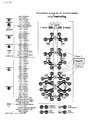
- One of the inventors, Ken Izumori publicly describes the Izumoring linking chart in the patent reference 1. Via the production processes and molecular structures (D- and L-forms) shown in Fig.4 , a linking chart where all monosaccharides with 4 to 6 carbon atoms (C) are linked together is the whole view of Izumoring. Those understandable in Fig. 4 are that all C4, C5 and C6 monosaccharides are linked together.
- the whole view shows the linking in Izumoring C6, the linking in Izumoring C5 and the linking in Izumoring C4, and the linking among all of C4, C5 and C6.
- This concept is very important. So as to reduce the number of carbon atoms, mainly, a fermentation method is used. Izumoring has a characteristic profile that all monosaccharides with different numbers of carbon atoms can be linked together in such a large linking chart.
- monosaccharides with 6 carbon atoms are in total of 34 types, where aldose includes 16 types; ketose includes 8 types and sugar alcohol includes 10 types.
- Rare sugars can be defined as monosaccharides rarely existing in the natural kingdom (aldose, ketose and sugar alcohol). Because the definition is not a definition based on the structure or properties of a sugar, the definition is quite ambiguous. In other words, no quantitative definition about the amount of a rare sugar at the given level or less is made.
- aldose abundantly existing in the natural kingdom includes for example D-glucose, D-galactose, D-mannose, D-ribose, D-xylose, and L-arabinose in total of 6 types; other aldoses are defined as rare sugars.
- Ketose abundantly existing is D-fructose; other ketoses are defined as rare sugars.
- Other ketoses include D-tagatose, D-sorbose, D-psicose, L-fructose, L-psicose, L-tagatose and L-sorbose.
- sugar alcohols are prepared by reducing monosaccharides.
- DTE D-tagatose 3-epimerase
- DTE was an enzyme epimerizing all ketoses at position 3 and was a unique enzyme with wide varieties of substrate specificities interactive with D-fructose and D-psicose, L-sorbose and L-tagatose, D-tagatose and D-sorbose, and L-psicose and L-fructose.
- DTE was an enzyme epimerizing all ketoses at position 3 and was a unique enzyme with wide varieties of substrate specificities interactive with D-fructose and D-psicose, L-sorbose and L-tagatose, D-tagatose and D-sorbose, and L-psicose and L-fructose.
- all monosaccharides could be linked together in a ring shape, to complete the structural knowledge about monosaccharides. Then the ring was designated Izumoring. When thoroughly examined, Figs.
- L forms are on the left side; D forms are on the right side; and DL forms are in the middle, where L forms and D forms are arranged in point symmetry, along the ring center (asterisk).
- D-glucose and L-glucose are arranged in point symmetry on the central point as the basis.
- Izumoring is valuable in that Izumoring is a design chart for producing all monosaccharides. When intending the production of L-glucose from D-glucose as the starting material, Izumoring shows that D-glucose is isomerized, epimerized, reduced, oxidized, epimerized and isomerized to prepare L-glucose.
- D-Psicose can be produced using the technique therefor.
- the significance of Izumoring about monosaccharides with 6 carbon atoms (hexoses) is now summarized.
- all monosaccharides can be structurally arranged (formation of structural knowledge), so that the whole image of monosaccharides can be grasped; and efficient and effective approaches for the research works can be selected; the optimal production route can be designed; and deficient parts can be projected.
- a rare sugar with the non-cariogenic property which can be a non-cariogenic material, is a rare sugar in the D form as selected from the group consisting of D-psicose, D-sorbose and D-tagatose as rare sugars, a rare sugar in the L form as selected from the group consisting of L-fructose, L-psicose and L-tagatose or allitol as a rare sugar derivative.
- rare sugars with cariostatic properties which can be cariostatic agents, are D-psicose, D-sorbose, D-tagatose, L-fructose, L-psicose and/or L-tagatose.
- Catechins for use in accordance with the invention are polyphenols contained in tea, and representatively include catechin and epicatechin with two hydroxyl groups in the ring B, epigallocatechin with three hydroxyl groups in the ring B, and epigallocatechin gallate with galloyl group. These catechins are described as active ingredients in compositions against periodontal diseases (Patent No. 2903210 ).
- the effective catechin concentration against caries in the test system is 500 ⁇ g/ml, while the concentration of gallocatechin with the highest effectiveness is 125 ⁇ g/ml. Additionally, these catechins when polymerized together generate tannin, where the galloyl moiety has almost the same structure as that of gallic acid and pyrogallol.
- the non-cariogenic material or the cariostatic agent in accordance with the invention has a non-cariogenic function (action) of a rare sugar contained therein or a cariostatic function (action) of a rare sugar as the cariostatic agent and additionally has various functions (actions) and uses, for example hypoglycemic action and sweetness-giving action (sweetener).
- action non-cariogenic function
- action of a rare sugar contained therein
- action a cariostatic function of a rare sugar as the cariostatic agent
- various functions actions
- uses for example hypoglycemic action and sweetness-giving action (sweetener).
- D-psicose is at a sweetness level at about 70 % of the sweetness level of sucrose and is substantially zero kilocalories ( Matsuo et al., J. Nutr. Sci. Vitaminol. 48 pp. 77-80 (2002 )), and is therefore useful as a low-calorie sweetener.
- the invention relates to various compositions containing the caries-suppressing material (non-cariogenic material or cariostatic agent).
- the non-cariogenic material or cariostatic agent of the invention can be blended in various compositions, preferably at a concentration about 20-fold the concentration of assimilable sugars, so that the resulting compositions can exert the non-cariogenic function (action) or the cariostatic function (action).
- compositions By allowing the various compositions to contain polyphenols such as catechin (at about 0.002% or more), the cariostatic function (action) can be enhanced. In other words, the inventive material can be blended less (about 10-fold the amount of assimilable sugars).
- examples of the use of such compositions include foods (including drinks and feeds for animals), cosmetic products, pharmaceutical compositions and oral compositions.
- Pharmaceutical products and foods and drinks, for humans and animals include for example modified milk powder, enteral nutritious agents, health foods and drinks, additives for feeds, and confectionaries.
- the pharmaceutical products and the foods and drinks should finally be in orally administrable forms, with no specific limitation.
- Oral compositions for humans and animals include those with conventionally known, appropriate uses, types and forms in the field.
- the caries-suppressing material of the invention may be used as it is or may be blended with other foods or food ingredients according to routine methods for use.
- processed product means a processed food containing the food and widely includes apparent foods (foods in the narrow sense) to tablets. For processing, general processing methods for foods may be applicable with no problem, owing to the high thermostability and the high acid stability.
- composition of the invention may be in any form of powders, granules, pastes, liquids, and suspensions, with no specific limitation.
- the composition may be formulated into for example, health drinks and compositions in confectionary tablet forms, where sweeteners, sour agents, vitamins and other various ingredients for routine use in producing drinks are used.
- the food composition includes for example appropriate known ones conventionally in the technical field, particularly food compositions with sweetness ingredients, for example drinks, chewing gum, chocolate and candy. Additionally, the food composition can get an enhanced cariostatic function (action) when the food composition contains phenolic compounds such as catechin.
- the caries-suppressing foods in accordance with the invention are preferably in any one of for example cake, cookies, chocolate, gum, sponge cake (pao de Castella) , bread, ice cream, pudding, jelly, bavarois, cream, caramel, jam, bean jam, candies, bar of sweet jellied adzuki-bean paste, bean-jam-filled wafers and confectionaries. Additionally, the caries-suppressing drinks and foods in accordance with the invention are preferably in any of for example carbonate drinks, sour milk beverages, fruit juice drinks, and juice.
- raw material components including the caries-suppressing material of the invention are mixed together under agitation with a kneader, to produce such confectionaries.
- sugar sweeteners such as various maltose and reduced glutinous starch syrup, Siraitia grosenorii extracts and sweeteners at high sweetness levels such as aspartame and stevioside, may also be used concurrently.
- the content of the rare sugar is not specifically limited but is generally 0.1 to 99 % in the composition so as to achieve the effect.
- the composition of the invention may additionally contain one or two or more of Xylitol, maltitol, Palatinit, mannitol, sorbitol, palatinose, panose oligosaccharide, lactitol, erythritol, coupling sugar and isomalto-oligo, which are considered to have caries induction-suppressing actions.
- the caries-suppressing material of the invention is contained in for example a composition as a food or a drink
- the risk of caries affliction may be reduced by the intake of the material.
- the sweetness ingredients in the composition of a food or a drink substantially totally comprise the caries-suppressing material of the invention, the possibility of affliction with caries is substantially zero even when the composition is ingested.
- the composition can be said as a caries-suppressing food composition or drink.
- the caries-suppressing material of the invention can be added to various pharmaceutical preparations.
- the pharmaceutical preparations include for example oral administration preparations such as tablets, capsules, granules, powders and syrups.
- base materials are used as a part thereof.
- these various pharmaceutical preparations can be prepared by using known auxiliary agents in the principal drug according to routine methods, which are for general use in the pharmaceutical preparation field, such as excipients, binders, disintegrators, lubricants, flavor, auxiliary dissolution agents, suspending agents, and coating agents.
- the caries-suppressing material of the invention is used as an oral composition (including an oral composition as a composition for preventing periodontal diseases)
- the caries-suppressing material of the invention is used as the essential component.
- various known ingredients may be blended.
- Known ingredients possibly in blend therein include for example moistening agents, thickeners, agents for reinforcing teeth, sterilizers, pH adjusters, surfactants, enzymes, anti-inflammatory agents, blood circulation-promoting agents, sweeteners, preservatives, colorants, dyes and flavor, which may appropriately be used.
- the oral composition may be prepared by blending the caries-suppressing material of the invention according to routine methods and may be prepared into toothpaste, dental cream, tooth powder, dental liquid, oral pasta, mouthwash, tablets for gargling, tablets for washing artificial teeth, massage cream for gingiva, chewing gum, troche, and candies. Most appropriately, the oral composition is in the forms of dental liquids at low viscosity, mouthwash, mouthwash, tablets for gargling and washing agents of artificial teeth for use in dissolution in water.
- the oral composition means a composition to be masticated or to be used for gargling and includes for example foods such as chewing gum, candies, confectionary tablets, and confectionary films; and quasi-pharmaceutical products such as toothpaste, dental liquid and mouthwash.
- cariogenic sugar means a sugar as a nutritious source for bacteria causing caries to generate non-water-soluble glucan and organic acids, and includes sugars for example sucrose, fructose and glucose.
- the oral composition never contains these cariogenic sugars but may contain non-cariogenic sugars for example sugar alcohols such as Xylitol, maltitol, erythritol, sorbitol, lactitol, reduced palatinose, and mannitol; reduced glutinous starch syrup or sweeteners at high sweetness levels, for example saccharin, sucralose, andAcesulfameK. Nonetheless, the caries-suppressing material of the invention may be used in combination with cariogenic sugars.
- ingredients generally blended in oral compositions may appropriately be blended within a range with no deterioration of the invention, depending on the dosage form, other than the ingredients described above.
- polishing agents, moistening agents, thickeners, surfactants, flavor, sweeteners, colorants, preservatives, pH adjusters and various pharmaceutically active components may be blended within a range without any deterioration of the advantages of the invention.
- Polishing agents include for example aluminium oxide, aluminum hydroxide, aluminium silicate, zirconium silicate, silicic anhydride, precipitating silica, silica gel, calcium carbonate, calcium pyrophosphate, calcium hydrogen phosphate, calcium phosphate, tricalcium phosphate, hydroxyapatite, fluoroapatite, halogenated apatite, magnesium carbonate, magnesium phosphate, insoluble sodium metaphosphate, titanium oxide, zeolite and synthetic resin-series polishing agents.
- Moistening agents include sugar alcohols such as sorbitol, maltitol, Xylitol and lactitol, and polyhydric alcohols such as glycerin, 1,3-butylene glycol, 1,2-pentanediol, polyethylene glycol, polypropylene glycol and dipropylene glycol.
- sugar alcohols such as sorbitol, maltitol, Xylitol and lactitol
- polyhydric alcohols such as glycerin, 1,3-butylene glycol, 1,2-pentanediol, polyethylene glycol, polypropylene glycol and dipropylene glycol.
- Thickeners include carboxyvinyl polymer, carboxymethylcellulose sodium, methylcellulose, hydroxyethylcellulose, carrageenan, alkali metal salts of aliginic acid such as sodium alginate, gums such as gellan gum, xanthan gum, guar gum, tragacanth gum, karaya gum, veegum, and gum Arabic, and polyvinyl alcohol, polyvinyl pyrrolidone, silica gel and aluminium silica gel.
- Surfactants include anionic surfactants, cationic surfactants, amphoteric surfactants, and nonionic surfactants and specifically include alkyl sulfate salts, alkylbenzene sulfonate salts, sucrose fatty acid ester, lactose fatty acid ester, lauroylsarcosine salts, N-acylglutamate salts, ⁇ -olefinsulfonate salts, 2-alkyl-N-carboxy-N-hydroxyethylimidazolium betaine, N-acyl taurine salts, alkylol amide, polyoxyethylene sorbitan fatty acid ester, polyoxyethylene hardened castor oil or fatty acid esters thereof, polyglycerin fatty acid ester, sorbitan fatty acid ester, fatty acid ester, polyethylene glycol fatty acid ester, and propylene glycol fatty acid ester.
- Flavor includes menthol, peppermint oil, spearmint oil, orange oil, lemon oil, eucalyptus oil, mint oil, acacia oil, anise oil, bitter almond oil, calamus oil, camphor oil, cinnamon oil, cinnamon bark oil, cinnamon leaf oil, rose oil, sandalwood oil, clove oil, herb oil, banana oil, apple oil, methyl salicylate, carbon, anethole, terpenes such as limonene and compound perfume.
- Sweeteners include saccharin, sodium saccharin, Xylitol, stevioside, stevia extract, rebaudioside, p-methoxycinnamic aldehyde, neohesperidine dihydroxychalcone, perillartine, thaumatine, glycyrrhizin, glycyrrhizin monoglucoside, hernandulcin, trehalose, aspartame and sorbit.
- Colorants include authorized dyes such as Blue No.1 and Yellow No. 4, titanium dioxide and caramel.
- Preservatives include p-oxybenzoate esters, benzoate salts, alkyldiaminoethyl glycine hydrochloride, and phenoxyethanol.
- pH adjusters include organic acids such as citric acid, malic acid, and acetic acid and salts thereof; sodium carbonate, sodium hydrogen carbonate, potassium carbonate, potassium hydrogen carbonate, calcium carbonate, calcium hydrogen carbonate, ammonium carbonate, ammonium hydrogen carbonate, sodium potassium carbonate, lithium carbonate, urea, amino acid oligomers, sodium chloride, inorganic calcium such as calcium chloride, calcium nitrate, calcium sulfate, calcium glycerophosphate, and calcium hydroxide, and organic acid calcium salts such as calcium lactate, calcium acetate, calcium malonate, calcium citrate, calcium glycolate, calcium glycerate, calcium tartrate, and calcium phytinate.
- organic acids such as citric acid, malic acid, and acetic acid and salts thereof
- Pharmaceutically active Components include allantoin, tocopherol acetate, isopropylmethyl phenol, glycyrrhizinates, glycyrrhezinates, dextrase, chlorophyll, sodium copper chlorophyll, flavonoid, tranexamic acid, mutanase, lysozyme, amylase, protease, lytic enzymes, superoxide dismutase, ⁇ -aminocaproic acid, aluminium allantoin, aluminium chlorohydroxyallantoin, dihydrocholestanol, bisabolol, glycerophosphate, water-soluble inorganic phosphate compounds, fluorides such as sodium fluoride, sodium monofluorophosphate, tin fluoride, potassium fluoride, sodium fluorosilicate, aluminium fluoride, silver fluoride, hexylamine hydrofluorate, decanolamine hydrofluorate, and oct
- ethanol water, silicone substances, sugar alcohols and natural extracts can appropriately be blended.
- ethanol is preferably blended at an amount corresponding to 5 to 10 % by weight.
- the oral composition of the invention is blended together with the ingredients described above by routine methods, to be formulated into various dosage forms.
- the type and ratio of the caries-suppressing material of the invention contained in the composition can appropriately be selected by persons skilled in the art, depending on the types and uses of the composition, the caries-suppressing material and other sweetness ingredients. Additionally, the caries-suppressing food composition in accordance with the invention may contain individual appropriate ingredients conventionally known in the technical art, and such caries-suppressing food composition may be prepared and produced by persons skilled in the art according to conventionally known methods.
- the content of the rare sugar is not specifically limited but is generally contained at 0.1 to 99 % in the composition to achieve the intended effect.
- the composition of the invention may additionally contain one or two or more of Xylitol, maltitol, Palatinit, mannitol, sorbitol, palatinose, panose oligosaccharide, lactitol, erythritol, coupling sugar and isomalto-oligo, which are all considered to have non-cariogenicity.
- the composition may also contain catechins and tea extracts, in addition to coffee, tea and black tea containing phenolic compounds.
- the composition is used as a pharmaceutical composition
- the composition is used at an amount variable depending on the symptoms, the age, the body weight, the designing method and the dosage form.
- the composition is used as a raw material to give sweetness to sugar-coated tablets, gargle and toothpaste.
- the invention is now described in detail in the following Examples. But the technical scope of the invention is never limited by these Examples.
- the bacterial strain for use in experiments was two strains JCM5075 and JCM5175 of Streptococcus mutans ( S. mutans).
- S. mutans strains characteristically form insoluble glucan on addition of sucrose, to reduce the pH of the culture medium, which is considered to cause decalcification of dental surface to form decayed teeth (the reason why the strains are designated bacteria causing decayed teeth).
- the S. mutans strain JCM5075 was plated in a Brain Heart Infusion (BHI) broth, for culturing under anaerobic conditions, to visually determine the bacterial growth (potency for forming insoluble glucan: optical density) with naked eyes.
- BHI Brain Heart Infusion
- S. mutans strains characteristically form insoluble glucan on addition of sucrose, to generate acids and reduce the pH of the culture medium, which is considered to cause decalcification of teeth on dental surface to form decayed teeth (the reason why the strains are designated bacteria causing decayed teeth).
- JCM 5075 of S. mutans strains and the Brain Heart Infusion (BHI) broth were used to assay the optical density (the increase of the number of the bacterial cells) and the pH change in individual rare sugar solutions with or without sucrose added.
- rare sugars there were used D-fructose, L-fructose, D-sorbose, L-sorbose, D-psicose, L-psicose, D-tagatose and L-tagatose.
- the rare sugars used were supplied from the Rare Sugar Research Center, the National University Corporation Kagawa University.
- the strain JCM5075 thawed from -80 °C stock was cultured for 48 hours, and was adjusted to OD 0.3. 100 ⁇ l of the resulting culture was added to each 2-ml portion of the BHI broths under individual conditions, to assay the optical density and the pH 24 hours later (observation with naked eyes and absorbance: OD 600 ) . After culturing for a given period of time, the culture was observed with naked eyes; and the optical density of a part of the liquid culture was measured with an absorptiometer (OD 600 ) . The results are shown in Table 1 and Fig. 2 . After collecting a part of the liquid culture and centrifuging the culture, the pH of the resulting supernatant was measured with a pH meter. The results are shown in Table 2 (0, 6, 8, 12 and 24 hours after the addition of the bacteria to the BHI broth) and Fig. 3 .
- Test substance Optical density (OD) 12 hours later No addition 0.186 1 % sucrose 0.060 10 % Xylitol 0.046 10 % D-fructose 0.114 10 % L-fructose 0.037 10 % D-sorbose 0.102 10 % L-sorbose 0.463 10 % D-psicose 0.158 10 % L-psicose 0.067 10 % D-tagatose 0.132 10 % L-tagatose 0.026
- Fig.2 shows the change of the optical density 24 hours later.
- those with addition of 1 % sucrose and with addition of 10 % D-fructose caused the precipitation of bacterial masses (insoluble glucan) under observation with naked eyes. Therefore, the reduction of the optical density was observed.
- no addition the BHI broth
- no formation of any precipitate insoluble glucan was observed under naked eyes, so it was considered that comparison based on OD could be done.
- Fig. 3 shows the pH change 24 hours later.
- the pH was highly inclined to acidity with 1 % sucrose, or 10 % Xylitol + 1 % sucrose, or 10 % fructose + 1 % sucrose, which may indicate that acids were generated.
- other sugars exerting the suppression of the growth in Fig.2 virtually involved the suppression of the pH reduction.
- D-psicose most highly suppressed the pH reduction, the effect thereof on the suppression of the bacterial growth was not so high. Possibly, D-psicose may have a different effect.
- the pH reduction was suppressed with D-sorbose, D-tagatose, L-fructose, L-psicose and L-tagatose.
- D-Psicose and L-psicose were used to assay the actions thereof against S. mutans.
- D-Psicose and L-psicose were supplied from the Rare Sugar Research Center, the National University Corporation Kagawa University.
- the S. mutans strain MT 8148 (JCM5175) was plated in a Brain Heart Infusion broth supplemented with agar for culturing at 37°C for 48 hours. The liquid culture was inoculated in a fresh Brain Heart Infusion broth, for culturing at 37°C for 24 hours.
- the liquid culture was inoculated in a phenol red broth (PRB broth) containing a test substance at 1 %, for culturing at 37°C; the bacterial growth (absorbance at 660 nm: OD) and the pH were assayed 48 hours later.
- PRB broth phenol red broth
- OD bacterial growth
- glucose, fructose, sucrose and Xylitol were used as a control.
- the results are shown in Table 3. After culturing for a given period of time, additionally, the optical density of a part of the liquid culture was measured with an absorptiometer (OD 660 nm).
- Allitol and D-sorbose were used to assay the actions thereof against S. mutans . Allitol and D-sorbose were supplied from the Rare Sugar Research Center, the National University Corporation Kagawa University.
- the S. mutans strain JCM5075 was plated in a Brain Heart Infusion broth containing a 10 % test substance, to measure the pH of the liquid culture after 48-hour culturing. As a control, 1 % sucrose and 10 % Xylitol were used. The results are shown in Table 4.
- D-Psicose was supplied from the Rare Sugar Research Center, the National University Corporation Kagawa University.
- catechin Polyphenon 70A of Mitsui Norin Co., Ltd. was used.
- the S. mutans strain MT 8148 (JCM5175) was plated in a Brain Heart Infusion broth supplemented with agar, for culturing at 37°C for 48 hours. Further, the resulting liquid culture was inoculated in a fresh Brain Heart Infusion broth, for culturing at 37°C for 24 hours.
- the liquid preculture was inoculated in a phenol red broth (PRB broth) containing sugars and catechins at the following concentrations for culturing at 37°C; 20 hours later, the pH was measured.
- sucrose was used as a control. The results are shown in Table 5.
- Test substance pH No addition 6.1 0.25 % Sucrose 4.5 0.25 % Sucrose + 3.3 % D-psicose 4.4 0.25 % Sucrose + 5.0 % D-psicose 5.5 3.3 % catechin 6.1 0.25 % Sucrose + 3.3 % catechin 4.4 0.25 % Sucrose + 1.7 % catechin + 2.5 % D-psicose 5.4
- Toothpaste Ingredient Ratio (%) Calcium carbonate 30.0 Sodium fluoride 0.2 Carboxymethyl cellulose Na 1.5 Citric acid 2.0 Lauryl sulfate Na 1.5 Menthol 0.6 D-Psicose 20.0 Glycerin 30.0 Green tea extract 1.0 pH adjuster Appropriate amount Water Appropriate amount
- a mouthwash composition using a rare sugar with the cariostatic action in accordance with the invention was prepared on the basis of the composition table in Table 7 (mouthwash).
- a chewing gum using a rare sugar with the cariostatic action in accordance with the invention was prepared on the basis of the composition table in Table 8 (chewing gum).
- the resulting toothpaste, mouthwash and chewing gum with refreshing sweetness without inducing caries could be prepared.
- existing pharmaceutical ingredients such as cetylpyridinium chloride, triclosan, cineole, thymol, zinc chloride, methyl salicylate and vitamin E can be added to the toothpaste and the mouthwash composition.
- sugar alcohols with a cariostatic action such as Xylitol can be added to the chewing gum.
- D-psicose itself with a bacterium causing caries, namely S. mutans is low or is hardly observed (non-cariogenicity).
- D-psicose in combination with existing sweeteners, D-psicose exerts an action substantially suppressing bacterial growth and pH reduction with the cariogenic sweetness ingredients therein (cariostatic property) and therefore, D-psicose is widely applicable to for example foods, quasi-pharmaceutical products and pharmaceutical products.
- Xylitol as a sugar alcohol belonging to one group of rare sugars is added to favorite foods and foods for use in daily life, and it is generally known widely that Xylitol exerts a high effect on the prevention of caries.
- the other rare sugars in accordance with the invention may have an effect as an anticarious sweetener, so these rare sugars would possibly be new "anticarious sweeteners developed in Japan" in place of Xylitol.
Landscapes
- Health & Medical Sciences (AREA)
- Life Sciences & Earth Sciences (AREA)
- General Health & Medical Sciences (AREA)
- Veterinary Medicine (AREA)
- Public Health (AREA)
- Animal Behavior & Ethology (AREA)
- Chemical & Material Sciences (AREA)
- Epidemiology (AREA)
- Medicinal Chemistry (AREA)
- Pharmacology & Pharmacy (AREA)
- Organic Chemistry (AREA)
- Molecular Biology (AREA)
- Birds (AREA)
- Oral & Maxillofacial Surgery (AREA)
- Engineering & Computer Science (AREA)
- Genetics & Genomics (AREA)
- Biochemistry (AREA)
- Biotechnology (AREA)
- Bioinformatics & Cheminformatics (AREA)
- Chemical Kinetics & Catalysis (AREA)
- General Chemical & Material Sciences (AREA)
- Nuclear Medicine, Radiotherapy & Molecular Imaging (AREA)
- Cosmetics (AREA)
- Pharmaceuticals Containing Other Organic And Inorganic Compounds (AREA)
- Acyclic And Carbocyclic Compounds In Medicinal Compositions (AREA)
- Confectionery (AREA)
- Coloring Foods And Improving Nutritive Qualities (AREA)
Priority Applications (1)
| Application Number | Priority Date | Filing Date | Title |
|---|---|---|---|
| EP12195695.7A EP2567694B1 (de) | 2006-11-10 | 2007-03-27 | Nichtkariogenes Material und karieshemmendes Mittel mit D-Sorbose |
Applications Claiming Priority (2)
| Application Number | Priority Date | Filing Date | Title |
|---|---|---|---|
| JP2006305817 | 2006-11-10 | ||
| PCT/JP2007/056449 WO2008056453A1 (en) | 2006-11-10 | 2007-03-27 | Noncarious material and anticarious agent containing rare sugar |
Related Child Applications (2)
| Application Number | Title | Priority Date | Filing Date |
|---|---|---|---|
| EP12195695.7A Division EP2567694B1 (de) | 2006-11-10 | 2007-03-27 | Nichtkariogenes Material und karieshemmendes Mittel mit D-Sorbose |
| EP12195695.7 Division-Into | 2012-12-05 |
Publications (3)
| Publication Number | Publication Date |
|---|---|
| EP2098227A1 true EP2098227A1 (de) | 2009-09-09 |
| EP2098227A4 EP2098227A4 (de) | 2012-03-07 |
| EP2098227B1 EP2098227B1 (de) | 2013-07-24 |
Family
ID=39364280
Family Applications (2)
| Application Number | Title | Priority Date | Filing Date |
|---|---|---|---|
| EP12195695.7A Active EP2567694B1 (de) | 2006-11-10 | 2007-03-27 | Nichtkariogenes Material und karieshemmendes Mittel mit D-Sorbose |
| EP07739887.3A Active EP2098227B1 (de) | 2006-11-10 | 2007-03-27 | Nicht-kariöses Material und einen seltenen Zucker enthaltendes anti-Karies-Mittel |
Family Applications Before (1)
| Application Number | Title | Priority Date | Filing Date |
|---|---|---|---|
| EP12195695.7A Active EP2567694B1 (de) | 2006-11-10 | 2007-03-27 | Nichtkariogenes Material und karieshemmendes Mittel mit D-Sorbose |
Country Status (6)
| Country | Link |
|---|---|
| US (2) | US8496915B2 (de) |
| EP (2) | EP2567694B1 (de) |
| JP (1) | JP5283173B2 (de) |
| KR (1) | KR101290608B1 (de) |
| ES (2) | ES2604700T3 (de) |
| WO (1) | WO2008056453A1 (de) |
Cited By (8)
| Publication number | Priority date | Publication date | Assignee | Title |
|---|---|---|---|---|
| EP2156751A1 (de) | 2007-05-18 | 2010-02-24 | Matsutani Chemical Industry Co., Ltd. | Neuer süssstoff mit zuckerartigem geschmack, verfahren zu seiner herstellung und seine verwendung |
| WO2014151567A1 (en) * | 2013-03-15 | 2014-09-25 | Colgate-Palmolive Company | Oral care compositions containing deoxy sugar antimetabolites |
| US9259022B2 (en) | 2013-03-15 | 2016-02-16 | Tate & Lyle Ingredients Americas Llc | Sweetener |
| WO2016156117A1 (en) * | 2015-03-31 | 2016-10-06 | Roquette Freres | Chewing gum composition comprising crystalline allulose particles |
| US9491960B2 (en) | 2013-03-15 | 2016-11-15 | Tate & Lyle Ingredients Americas Llc | Sweetener |
| WO2017059363A1 (en) * | 2015-10-02 | 2017-04-06 | Wm. Wrigley Jr. Company | Chewing gums containing allulose |
| US9854827B2 (en) | 2013-03-15 | 2018-01-02 | Tate & Lyle Ingredients Americas Llc | Sweetener |
| EP3925453A4 (de) * | 2019-03-29 | 2022-05-04 | CJ Cheiljedang Corporation | Gemischte saccharidzusammensetzung |
Families Citing this family (24)
| Publication number | Priority date | Publication date | Assignee | Title |
|---|---|---|---|---|
| JP4942001B2 (ja) | 2006-11-10 | 2012-05-30 | 松谷化学工業株式会社 | D−プシコース含有甘味料およびそれを使用して得られた飲食品など |
| CN102238954A (zh) | 2008-11-04 | 2011-11-09 | 肯塔基大学研究基金会 | 基于d-塔格糖的组合物以及用于预防和治疗动脉粥样硬化、代谢综合征及其症状的方法 |
| JP5876205B2 (ja) * | 2009-02-06 | 2016-03-02 | 松谷化学工業株式会社 | D−ソルボースからなる甘味料におけるd−ソルボースの甘味の不足や、甘味の持続を改良する方法 |
| TW201043265A (en) * | 2009-06-05 | 2010-12-16 | Otsuka Pharma Co Ltd | A composition for oral use comprising an organic acid |
| EP2382870A1 (de) * | 2010-04-30 | 2011-11-02 | Tiense Suikerraffinaderij N.V. | Wasser-/Eiszusammensetzung |
| JP5731784B2 (ja) * | 2010-09-29 | 2015-06-10 | 松谷化学工業株式会社 | 食感食味の優れたベーカリー製品及びその製造法 |
| EP2674712B1 (de) * | 2011-02-08 | 2020-08-19 | Kyowa Vacuum Engineering, Ltd. | Berechnungsverfahren und berechnungsvorrichtung der temperatur an sublimationsfront, einer unterteiltemperatur und der sublimationsrate eines in einer gefriertrocknungsvorrichtung zu trocknenden stoffes |
| JP6099870B2 (ja) * | 2012-01-06 | 2017-03-22 | 松谷化学工業株式会社 | スクロースとd−プシコースを含む新規甘味料 |
| JP6292743B2 (ja) * | 2012-07-20 | 2018-03-14 | 松谷化学工業株式会社 | 飲食物の風味増強方法及びその方法により得られる飲食物 |
| JP5943516B2 (ja) * | 2012-08-27 | 2016-07-05 | 松谷化学工業株式会社 | D−ソルボースを有効成分とする生体機能改善用甘味料 |
| US20140342044A1 (en) * | 2013-05-14 | 2014-11-20 | Pepsico, Inc. | Compositions and Comestibles |
| PL3466403T3 (pl) | 2017-10-04 | 2025-02-10 | PRISMAN GmbH | Zastosowanie monosacharydu do poddziąsłowego i/lub naddziąsłowego czyszczenia zębów |
| CN109528554A (zh) * | 2018-12-10 | 2019-03-29 | 珀莱雅化妆品股份有限公司 | 一种抗皱组合物及其巴布剂的制备方法 |
| JP7676099B2 (ja) * | 2018-12-27 | 2025-05-14 | サンスター スイス エスエー | 口腔用組成物 |
| JP7676103B2 (ja) * | 2019-06-28 | 2025-05-14 | サンスター スイス エスエー | 口腔用組成物 |
| JP7676104B2 (ja) * | 2019-06-28 | 2025-05-14 | サンスター スイス エスエー | 口腔用組成物 |
| JP2021008418A (ja) * | 2019-06-28 | 2021-01-28 | サンスター スイス エスエー | 口腔用組成物 |
| EP3904282A4 (de) | 2018-12-27 | 2022-10-26 | Sunstar Suisse SA | Zusammensetzung für die mundhöhle |
| JP7676105B2 (ja) * | 2019-06-28 | 2025-05-14 | サンスター スイス エスエー | 口腔用組成物 |
| CN113631175A (zh) * | 2019-03-26 | 2021-11-09 | 国立大学法人香川大学 | 以阿洛糖醇为有效成分的抗肥胖活性剂和肥胖抑制方法 |
| US20220232849A1 (en) * | 2019-04-22 | 2022-07-28 | The Hershey Company | Reduced sugar chocolate and method of making the same |
| JP2022101521A (ja) * | 2020-12-24 | 2022-07-06 | サントリーホールディングス株式会社 | 希少糖を含む組成物およびその製造方法 |
| CN114432202A (zh) * | 2022-02-21 | 2022-05-06 | 新拓洋生物工程有限公司 | 包含阿洛酮糖的牙膏及其制备方法 |
| JP2025089779A (ja) * | 2023-12-04 | 2025-06-16 | 小林製薬株式会社 | 錠剤用の口腔内装着器具洗浄剤 |
Family Cites Families (34)
| Publication number | Priority date | Publication date | Assignee | Title |
|---|---|---|---|---|
| DE2703396A1 (de) * | 1976-01-30 | 1977-08-04 | Indiana University Foundation | Nicht-kariogene lebensmittel und verfahren zu deren herstellung |
| US4262032A (en) * | 1976-05-04 | 1981-04-14 | Biospherics Incorporated | Sweetened edible formulations |
| US4134999A (en) * | 1977-04-15 | 1979-01-16 | Indiana University Foundation | Noncariogenic comestible |
| JPS57129671A (en) * | 1981-02-05 | 1982-08-11 | Biospherics Inc | Sweetened edible compound |
| JPS6185164A (ja) * | 1984-10-03 | 1986-04-30 | Asahi Chem Ind Co Ltd | ステビア甘味料組成物 |
| JPH01187054A (ja) * | 1988-01-20 | 1989-07-26 | Asahi Chem Ind Co Ltd | 羊かん |
| US4906480A (en) * | 1988-04-07 | 1990-03-06 | Forsyth Dental Infirmary For Children | Sweetness and flavor enhanced compositions and method of preparing such compositions |
| JP2732121B2 (ja) * | 1989-05-29 | 1998-03-25 | 旭化成工業株式会社 | 保形性の良いマシュマロ |
| JP2975380B2 (ja) * | 1989-08-30 | 1999-11-10 | 三井農林株式会社 | プラーク形成阻害剤 |
| US5204089A (en) * | 1989-08-30 | 1993-04-20 | Mitsui Norin Co., Ltd. | Method of preventing the formation or aggrevation of dental plaque and method for reducing cariogenesis |
| JP3333969B2 (ja) * | 1992-10-08 | 2002-10-15 | 株式会社林原生物化学研究所 | D−ケトヘキソース・3−エピメラーゼとその製造方法並びに用途 |
| JPH08154696A (ja) * | 1994-10-05 | 1996-06-18 | Hayashibara Biochem Lab Inc | L−ケトヘキソースの製造方法 |
| AU3890295A (en) * | 1994-12-02 | 1996-06-19 | Warner-Lambert Company | Reduced alcohol mouthwash |
| WO1997022263A1 (en) * | 1995-12-20 | 1997-06-26 | Wm. Wrigley Jr. Company | Chewing gum containing d-tagatose |
| JP2903210B2 (ja) * | 1996-07-23 | 1999-06-07 | 太陽化学株式会社 | 歯周病誘発抑制剤組成物 |
| JP3689802B2 (ja) | 1998-08-06 | 2005-08-31 | 株式会社ロッテ | 歯牙エナメル質の再石灰化促進剤及び口腔用組成物並びに飲食物 |
| JP3843619B2 (ja) | 1998-08-24 | 2006-11-08 | 日本ビクター株式会社 | デジタル情報の伝送方法、エンコード装置、記録媒体及びデコード装置 |
| JP3689803B2 (ja) | 1998-10-20 | 2005-08-31 | 株式会社ロッテ | 歯牙エナメル質の再石灰化促進剤及び口腔用組成物並びに飲食物 |
| JP2000281550A (ja) | 1999-03-31 | 2000-10-10 | Sunstar Inc | 口腔用組成物 |
| WO2001049307A1 (en) * | 1999-12-30 | 2001-07-12 | Proteotech, Inc. | Catechins and green tea extract for the treatment of amyloidosis in alzheimer's disease and other amyloidoses |
| JP4919198B2 (ja) | 2000-05-22 | 2012-04-18 | 株式会社林原生物化学研究所 | α−イソマルトシル転移酵素とその製造方法並びに用途 |
| TW572878B (en) * | 2001-05-11 | 2004-01-21 | Fushimi Pharmaceutical Co Ltd | Method for production of sugar alcohol |
| WO2002091848A1 (en) * | 2001-05-15 | 2002-11-21 | The Procter & Gamble Company | Confectionery compositions |
| DE10124475A1 (de) * | 2001-05-19 | 2002-11-21 | Beiersdorf Ag | Kosmetische oder dermatologische Zubereitungen mit einem Gehalt an einer oder mehreren Kethohexosen |
| DE10136232A1 (de) * | 2001-07-25 | 2003-02-06 | Zahnradfabrik Friedrichshafen | Stellvorrichtung für ein automatisiertes Stufengetriebe eines Kraftfahrzeuges |
| US20030099602A1 (en) * | 2001-10-25 | 2003-05-29 | Levin Gilbert V. | D-tagatose as an anti-biofilm agent |
| US7189351B2 (en) * | 2001-10-25 | 2007-03-13 | Spherix Incorporated | D-tagatose as an anti-biofilm agent |
| EP3115052B1 (de) * | 2002-05-22 | 2019-08-21 | Matsutani Chemical Industry Co., Ltd. | D-psicose zur behandlung von arteriosklerose |
| JP5421512B2 (ja) * | 2004-01-30 | 2014-02-19 | 帝國製薬株式会社 | D−プシコースの血糖上昇抑制効果の利用 |
| JP4761424B2 (ja) * | 2004-03-17 | 2011-08-31 | 株式会社希少糖生産技術研究所 | L−プシコース結晶、その製造方法および、糖試薬キット |
| US20060210697A1 (en) * | 2005-03-18 | 2006-09-21 | Mower Thomas E | Infant formula composition |
| WO2006101118A1 (ja) * | 2005-03-23 | 2006-09-28 | National University Corporation Kagawa University | D-プシコースの血糖値日内異常上昇抑制の用途 |
| KR100744479B1 (ko) * | 2005-06-01 | 2007-08-01 | 씨제이 주식회사 | 사이코스 에피머화 효소에 의한 사이코스의 생산 방법 |
| US20070116831A1 (en) * | 2005-11-23 | 2007-05-24 | The Coca-Cola Company | Dental Composition with High-Potency Sweetener |
-
2007
- 2007-03-27 WO PCT/JP2007/056449 patent/WO2008056453A1/ja not_active Ceased
- 2007-03-27 ES ES12195695.7T patent/ES2604700T3/es active Active
- 2007-03-27 JP JP2008542995A patent/JP5283173B2/ja active Active
- 2007-03-27 US US12/514,182 patent/US8496915B2/en not_active Expired - Fee Related
- 2007-03-27 EP EP12195695.7A patent/EP2567694B1/de active Active
- 2007-03-27 KR KR1020097010080A patent/KR101290608B1/ko active Active
- 2007-03-27 EP EP07739887.3A patent/EP2098227B1/de active Active
- 2007-03-27 ES ES07739887T patent/ES2431565T3/es active Active
-
2012
- 2012-02-09 US US13/369,780 patent/US9668958B2/en active Active
Cited By (20)
| Publication number | Priority date | Publication date | Assignee | Title |
|---|---|---|---|---|
| EP2156751A1 (de) | 2007-05-18 | 2010-02-24 | Matsutani Chemical Industry Co., Ltd. | Neuer süssstoff mit zuckerartigem geschmack, verfahren zu seiner herstellung und seine verwendung |
| EP2156751A4 (de) * | 2007-05-18 | 2014-03-12 | Matsutani Kagaku Kogyo Kk | Neuer süssstoff mit zuckerartigem geschmack, verfahren zu seiner herstellung und seine verwendung |
| EP2156751B1 (de) | 2007-05-18 | 2018-10-03 | Matsutani Chemical Industry Co., Ltd. | Neuer süssstoff mit zuckerartigem geschmack, verfahren zu seiner herstellung und seine verwendung |
| US9854827B2 (en) | 2013-03-15 | 2018-01-02 | Tate & Lyle Ingredients Americas Llc | Sweetener |
| WO2014151567A1 (en) * | 2013-03-15 | 2014-09-25 | Colgate-Palmolive Company | Oral care compositions containing deoxy sugar antimetabolites |
| AU2014233917B2 (en) * | 2013-03-15 | 2016-09-15 | Colgate-Palmolive Company | Oral care compositions containing deoxy sugar antimetabolites |
| US11471394B2 (en) | 2013-03-15 | 2022-10-18 | Colgate-Palmolive Company | Oral care compositions containing deoxy sugar antimetabolites |
| US9491960B2 (en) | 2013-03-15 | 2016-11-15 | Tate & Lyle Ingredients Americas Llc | Sweetener |
| CN105377865A (zh) * | 2013-03-15 | 2016-03-02 | 高露洁-棕榄公司 | 含有脱氧糖抗代谢物的口腔护理组合物 |
| US9635879B2 (en) | 2013-03-15 | 2017-05-02 | Tate & Lyle Ingredients Americas Llc | Sweetener |
| US9259022B2 (en) | 2013-03-15 | 2016-02-16 | Tate & Lyle Ingredients Americas Llc | Sweetener |
| EP4052584A1 (de) * | 2015-03-31 | 2022-09-07 | Roquette Freres | Kaugummizusammensetzung mit kristallinen allulosepartikeln |
| US20180271113A1 (en) * | 2015-03-31 | 2018-09-27 | Roquette Freres | Chewing gum composition comprising crystalline allulose particles |
| WO2016156117A1 (en) * | 2015-03-31 | 2016-10-06 | Roquette Freres | Chewing gum composition comprising crystalline allulose particles |
| KR20220164066A (ko) * | 2015-03-31 | 2022-12-12 | 로께뜨프레르 | 결정형 알룰로스 입자를 포함하는 츄잉 검 조성물 |
| RU2721237C1 (ru) * | 2015-10-02 | 2020-05-18 | Вм. Ригли Джр. Компани | Жевательная резинка, содержащая аллюлозу |
| AU2016331961B2 (en) * | 2015-10-02 | 2021-03-25 | Wm. Wrigley Jr. Company | Chewing gums containing allulose |
| WO2017059363A1 (en) * | 2015-10-02 | 2017-04-06 | Wm. Wrigley Jr. Company | Chewing gums containing allulose |
| EP3925453A4 (de) * | 2019-03-29 | 2022-05-04 | CJ Cheiljedang Corporation | Gemischte saccharidzusammensetzung |
| US12325885B2 (en) | 2019-03-29 | 2025-06-10 | Cj Cheiljedang Corporation | Mixed sugar composition and food composition containing same |
Also Published As
| Publication number | Publication date |
|---|---|
| EP2567694A3 (de) | 2013-06-12 |
| US20130344008A1 (en) | 2013-12-26 |
| KR20090080088A (ko) | 2009-07-23 |
| EP2567694A2 (de) | 2013-03-13 |
| EP2098227B1 (de) | 2013-07-24 |
| ES2604700T3 (es) | 2017-03-08 |
| WO2008056453A1 (en) | 2008-05-15 |
| EP2567694B1 (de) | 2016-10-26 |
| US9668958B2 (en) | 2017-06-06 |
| ES2431565T3 (es) | 2013-11-27 |
| US8496915B2 (en) | 2013-07-30 |
| EP2098227A4 (de) | 2012-03-07 |
| US20100166678A1 (en) | 2010-07-01 |
| KR101290608B1 (ko) | 2013-07-30 |
| JP5283173B2 (ja) | 2013-09-04 |
| JPWO2008056453A1 (ja) | 2010-02-25 |
Similar Documents
| Publication | Publication Date | Title |
|---|---|---|
| EP2098227B1 (de) | Nicht-kariöses Material und einen seltenen Zucker enthaltendes anti-Karies-Mittel | |
| JP5654731B2 (ja) | 藍草抽出物粉末とその製造方法及びその藍草抽出物粉末の用途 | |
| EP2145615A1 (de) | Hautbleichendes mittel mit einer equol-verbindung als wirkstoff | |
| EP1679071A1 (de) | Kollagen-produktionsverstärker und herstellungsverfahren und verwendung | |
| JPWO2003094878A1 (ja) | ガロカテキンガレート含有組成物 | |
| KR101960503B1 (ko) | 항충치 활성을 갖는 아가로바이오스 또는 아가로올리고당의 용도 | |
| CN100586297C (zh) | 抗牙周病菌组合物 | |
| KR100993963B1 (ko) | 우식억제제 | |
| KR20130123861A (ko) | 푸코이단을 유효성분으로 포함하는 구강 세정용 조성물 | |
| JPH08175946A (ja) | 口腔用組成物 | |
| JPH08175945A (ja) | 口腔用組成物 | |
| EP2990035B1 (de) | 1,5-anhydrid-d-glucitol-haltiger beschleuniger der kollagenproduktion | |
| Sakanaka | Green tea polyphenols for prevention of dental | |
| JPH0763294B2 (ja) | 抗う蝕性食品 | |
| KR101280868B1 (ko) | 야콘 추출물을 유효성분으로 함유하는 충치와 치주질환 예방 또는 치료용 약학조성물 및 식품 조성물 | |
| JPH07242555A (ja) | グルコシルトランスフェラーゼ阻害剤およびこれを有効成分として含有する抗う蝕剤並びに抗う蝕性食品 | |
| JP3082058B2 (ja) | 6−O−α−D−ガラクトピラノシル−L−アスコルビン酸またはその塩およびその製造法並びにその用途 | |
| JPH06263790A (ja) | 2−O−β−D−ガラクトピラノシル−L−アスコルビン酸またはその塩およびその製造法並びにその用途 | |
| JP2022062913A (ja) | サツマイモ由来のイモ蜜又はイモ蜜の上清を含有する口腔ケア組成物 | |
| JP2004284985A (ja) | う蝕誘発抑制作用組成物 | |
| JP7433125B2 (ja) | 口腔用抗菌剤 | |
| JP2014214110A (ja) | D−タガトースとキシリトールを含む非う蝕性素材および抗う蝕性素材 | |
| KR101544939B1 (ko) | 진교의 추출물을 포함하는 치아우식증의 예방 또는 치료용 조성물 | |
| KR20170139978A (ko) | 프로토파낙사디올을 포함하는 구강질환 예방 또는 치료용 조성물 | |
| KR20180135328A (ko) | 후발효차 유래의 신규한 캄페롤계 화합물을 포함하는 미백용 조성물 |
Legal Events
| Date | Code | Title | Description |
|---|---|---|---|
| PUAI | Public reference made under article 153(3) epc to a published international application that has entered the european phase |
Free format text: ORIGINAL CODE: 0009012 |
|
| 17P | Request for examination filed |
Effective date: 20090515 |
|
| AK | Designated contracting states |
Kind code of ref document: A1 Designated state(s): AT BE BG CH CY CZ DE DK EE ES FI FR GB GR HU IE IS IT LI LT LU LV MC MT NL PL PT RO SE SI SK TR |
|
| DAX | Request for extension of the european patent (deleted) | ||
| A4 | Supplementary search report drawn up and despatched |
Effective date: 20120207 |
|
| RIC1 | Information provided on ipc code assigned before grant |
Ipc: A61P 1/02 20060101ALI20120201BHEP Ipc: A61K 31/7004 20060101ALI20120201BHEP Ipc: C07H 3/02 20060101ALI20120201BHEP Ipc: A61K 31/047 20060101AFI20120201BHEP Ipc: A61Q 11/00 20060101ALI20120201BHEP Ipc: A61K 8/60 20060101ALI20120201BHEP |
|
| GRAP | Despatch of communication of intention to grant a patent |
Free format text: ORIGINAL CODE: EPIDOSNIGR1 |
|
| RAP1 | Party data changed (applicant data changed or rights of an application transferred) |
Owner name: MATSUTANI CHEMICAL INDUSTRY CO., LTD. Owner name: NATIONAL UNIVERSITY CORPORATION KAGAWA UNIVERSITY |
|
| RIN1 | Information on inventor provided before grant (corrected) |
Inventor name: OGAWA, TAKAAKI Inventor name: TOKUDA, MASAAKI Inventor name: ICHIHARA, TAKASHI Inventor name: IZUMORI, KEN Inventor name: IIDA, TETSUO |
|
| GRAS | Grant fee paid |
Free format text: ORIGINAL CODE: EPIDOSNIGR3 |
|
| GRAA | (expected) grant |
Free format text: ORIGINAL CODE: 0009210 |
|
| AK | Designated contracting states |
Kind code of ref document: B1 Designated state(s): AT BE BG CH CY CZ DE DK EE ES FI FR GB GR HU IE IS IT LI LT LU LV MC MT NL PL PT RO SE SI SK TR |
|
| REG | Reference to a national code |
Ref country code: GB Ref legal event code: FG4D |
|
| REG | Reference to a national code |
Ref country code: CH Ref legal event code: EP Ref country code: CH Ref legal event code: NV Representative=s name: NOVAGRAAF INTERNATIONAL SA, CH |
|
| REG | Reference to a national code |
Ref country code: AT Ref legal event code: REF Ref document number: 622978 Country of ref document: AT Kind code of ref document: T Effective date: 20130815 |
|
| REG | Reference to a national code |
Ref country code: DE Ref legal event code: R082 Ref document number: 602007031847 Country of ref document: DE Representative=s name: TBK, DE |
|
| REG | Reference to a national code |
Ref country code: IE Ref legal event code: FG4D |
|
| REG | Reference to a national code |
Ref country code: DE Ref legal event code: R096 Ref document number: 602007031847 Country of ref document: DE Effective date: 20130919 |
|
| REG | Reference to a national code |
Ref country code: NL Ref legal event code: T3 |
|
| REG | Reference to a national code |
Ref country code: ES Ref legal event code: FG2A Ref document number: 2431565 Country of ref document: ES Kind code of ref document: T3 Effective date: 20131127 |
|
| REG | Reference to a national code |
Ref country code: AT Ref legal event code: MK05 Ref document number: 622978 Country of ref document: AT Kind code of ref document: T Effective date: 20130724 |
|
| REG | Reference to a national code |
Ref country code: LT Ref legal event code: MG4D |
|
| PG25 | Lapsed in a contracting state [announced via postgrant information from national office to epo] |
Ref country code: CY Free format text: LAPSE BECAUSE OF FAILURE TO SUBMIT A TRANSLATION OF THE DESCRIPTION OR TO PAY THE FEE WITHIN THE PRESCRIBED TIME-LIMIT Effective date: 20130807 Ref country code: PT Free format text: LAPSE BECAUSE OF FAILURE TO SUBMIT A TRANSLATION OF THE DESCRIPTION OR TO PAY THE FEE WITHIN THE PRESCRIBED TIME-LIMIT Effective date: 20131125 Ref country code: LT Free format text: LAPSE BECAUSE OF FAILURE TO SUBMIT A TRANSLATION OF THE DESCRIPTION OR TO PAY THE FEE WITHIN THE PRESCRIBED TIME-LIMIT Effective date: 20130724 Ref country code: IS Free format text: LAPSE BECAUSE OF FAILURE TO SUBMIT A TRANSLATION OF THE DESCRIPTION OR TO PAY THE FEE WITHIN THE PRESCRIBED TIME-LIMIT Effective date: 20131124 Ref country code: AT Free format text: LAPSE BECAUSE OF FAILURE TO SUBMIT A TRANSLATION OF THE DESCRIPTION OR TO PAY THE FEE WITHIN THE PRESCRIBED TIME-LIMIT Effective date: 20130724 Ref country code: SE Free format text: LAPSE BECAUSE OF FAILURE TO SUBMIT A TRANSLATION OF THE DESCRIPTION OR TO PAY THE FEE WITHIN THE PRESCRIBED TIME-LIMIT Effective date: 20130724 |
|
| PG25 | Lapsed in a contracting state [announced via postgrant information from national office to epo] |
Ref country code: FI Free format text: LAPSE BECAUSE OF FAILURE TO SUBMIT A TRANSLATION OF THE DESCRIPTION OR TO PAY THE FEE WITHIN THE PRESCRIBED TIME-LIMIT Effective date: 20130724 Ref country code: PL Free format text: LAPSE BECAUSE OF FAILURE TO SUBMIT A TRANSLATION OF THE DESCRIPTION OR TO PAY THE FEE WITHIN THE PRESCRIBED TIME-LIMIT Effective date: 20130724 Ref country code: GR Free format text: LAPSE BECAUSE OF FAILURE TO SUBMIT A TRANSLATION OF THE DESCRIPTION OR TO PAY THE FEE WITHIN THE PRESCRIBED TIME-LIMIT Effective date: 20131025 Ref country code: LV Free format text: LAPSE BECAUSE OF FAILURE TO SUBMIT A TRANSLATION OF THE DESCRIPTION OR TO PAY THE FEE WITHIN THE PRESCRIBED TIME-LIMIT Effective date: 20130724 Ref country code: SI Free format text: LAPSE BECAUSE OF FAILURE TO SUBMIT A TRANSLATION OF THE DESCRIPTION OR TO PAY THE FEE WITHIN THE PRESCRIBED TIME-LIMIT Effective date: 20130724 |
|
| PG25 | Lapsed in a contracting state [announced via postgrant information from national office to epo] |
Ref country code: CY Free format text: LAPSE BECAUSE OF FAILURE TO SUBMIT A TRANSLATION OF THE DESCRIPTION OR TO PAY THE FEE WITHIN THE PRESCRIBED TIME-LIMIT Effective date: 20130724 |
|
| PG25 | Lapsed in a contracting state [announced via postgrant information from national office to epo] |
Ref country code: EE Free format text: LAPSE BECAUSE OF FAILURE TO SUBMIT A TRANSLATION OF THE DESCRIPTION OR TO PAY THE FEE WITHIN THE PRESCRIBED TIME-LIMIT Effective date: 20130724 Ref country code: DK Free format text: LAPSE BECAUSE OF FAILURE TO SUBMIT A TRANSLATION OF THE DESCRIPTION OR TO PAY THE FEE WITHIN THE PRESCRIBED TIME-LIMIT Effective date: 20130724 Ref country code: SK Free format text: LAPSE BECAUSE OF FAILURE TO SUBMIT A TRANSLATION OF THE DESCRIPTION OR TO PAY THE FEE WITHIN THE PRESCRIBED TIME-LIMIT Effective date: 20130724 Ref country code: CZ Free format text: LAPSE BECAUSE OF FAILURE TO SUBMIT A TRANSLATION OF THE DESCRIPTION OR TO PAY THE FEE WITHIN THE PRESCRIBED TIME-LIMIT Effective date: 20130724 Ref country code: RO Free format text: LAPSE BECAUSE OF FAILURE TO SUBMIT A TRANSLATION OF THE DESCRIPTION OR TO PAY THE FEE WITHIN THE PRESCRIBED TIME-LIMIT Effective date: 20130724 |
|
| PLBE | No opposition filed within time limit |
Free format text: ORIGINAL CODE: 0009261 |
|
| STAA | Information on the status of an ep patent application or granted ep patent |
Free format text: STATUS: NO OPPOSITION FILED WITHIN TIME LIMIT |
|
| 26N | No opposition filed |
Effective date: 20140425 |
|
| REG | Reference to a national code |
Ref country code: DE Ref legal event code: R097 Ref document number: 602007031847 Country of ref document: DE Effective date: 20140425 |
|
| PG25 | Lapsed in a contracting state [announced via postgrant information from national office to epo] |
Ref country code: LU Free format text: LAPSE BECAUSE OF FAILURE TO SUBMIT A TRANSLATION OF THE DESCRIPTION OR TO PAY THE FEE WITHIN THE PRESCRIBED TIME-LIMIT Effective date: 20140327 |
|
| REG | Reference to a national code |
Ref country code: IE Ref legal event code: MM4A |
|
| PG25 | Lapsed in a contracting state [announced via postgrant information from national office to epo] |
Ref country code: IE Free format text: LAPSE BECAUSE OF NON-PAYMENT OF DUE FEES Effective date: 20140327 |
|
| PG25 | Lapsed in a contracting state [announced via postgrant information from national office to epo] |
Ref country code: MT Free format text: LAPSE BECAUSE OF FAILURE TO SUBMIT A TRANSLATION OF THE DESCRIPTION OR TO PAY THE FEE WITHIN THE PRESCRIBED TIME-LIMIT Effective date: 20130724 |
|
| REG | Reference to a national code |
Ref country code: FR Ref legal event code: PLFP Year of fee payment: 10 |
|
| PG25 | Lapsed in a contracting state [announced via postgrant information from national office to epo] |
Ref country code: BG Free format text: LAPSE BECAUSE OF FAILURE TO SUBMIT A TRANSLATION OF THE DESCRIPTION OR TO PAY THE FEE WITHIN THE PRESCRIBED TIME-LIMIT Effective date: 20130724 Ref country code: MC Free format text: LAPSE BECAUSE OF FAILURE TO SUBMIT A TRANSLATION OF THE DESCRIPTION OR TO PAY THE FEE WITHIN THE PRESCRIBED TIME-LIMIT Effective date: 20130724 |
|
| PG25 | Lapsed in a contracting state [announced via postgrant information from national office to epo] |
Ref country code: HU Free format text: LAPSE BECAUSE OF FAILURE TO SUBMIT A TRANSLATION OF THE DESCRIPTION OR TO PAY THE FEE WITHIN THE PRESCRIBED TIME-LIMIT; INVALID AB INITIO Effective date: 20070327 Ref country code: TR Free format text: LAPSE BECAUSE OF FAILURE TO SUBMIT A TRANSLATION OF THE DESCRIPTION OR TO PAY THE FEE WITHIN THE PRESCRIBED TIME-LIMIT Effective date: 20130724 |
|
| REG | Reference to a national code |
Ref country code: FR Ref legal event code: PLFP Year of fee payment: 11 |
|
| REG | Reference to a national code |
Ref country code: FR Ref legal event code: PLFP Year of fee payment: 12 |
|
| PGFP | Annual fee paid to national office [announced via postgrant information from national office to epo] |
Ref country code: NL Payment date: 20240320 Year of fee payment: 18 |
|
| PGFP | Annual fee paid to national office [announced via postgrant information from national office to epo] |
Ref country code: DE Payment date: 20240320 Year of fee payment: 18 Ref country code: GB Payment date: 20240320 Year of fee payment: 18 |
|
| PGFP | Annual fee paid to national office [announced via postgrant information from national office to epo] |
Ref country code: IT Payment date: 20240329 Year of fee payment: 18 Ref country code: FR Payment date: 20240322 Year of fee payment: 18 Ref country code: BE Payment date: 20240320 Year of fee payment: 18 |
|
| PGFP | Annual fee paid to national office [announced via postgrant information from national office to epo] |
Ref country code: CH Payment date: 20240401 Year of fee payment: 18 |
|
| PGFP | Annual fee paid to national office [announced via postgrant information from national office to epo] |
Ref country code: ES Payment date: 20240426 Year of fee payment: 18 |
|
| REG | Reference to a national code |
Ref country code: DE Ref legal event code: R119 Ref document number: 602007031847 Country of ref document: DE |
|
| REG | Reference to a national code |
Ref country code: CH Ref legal event code: H13 Free format text: ST27 STATUS EVENT CODE: U-0-0-H10-H13 (AS PROVIDED BY THE NATIONAL OFFICE) Effective date: 20251024 |
|
| REG | Reference to a national code |
Ref country code: NL Ref legal event code: MM Effective date: 20250401 |
|
| GBPC | Gb: european patent ceased through non-payment of renewal fee |
Effective date: 20250327 |
|
| REG | Reference to a national code |
Ref country code: BE Ref legal event code: MM Effective date: 20250331 |
|
| PG25 | Lapsed in a contracting state [announced via postgrant information from national office to epo] |
Ref country code: NL Free format text: LAPSE BECAUSE OF NON-PAYMENT OF DUE FEES Effective date: 20250401 |
|
| PG25 | Lapsed in a contracting state [announced via postgrant information from national office to epo] |
Ref country code: DE Free format text: LAPSE BECAUSE OF NON-PAYMENT OF DUE FEES Effective date: 20251001 |
|
| PG25 | Lapsed in a contracting state [announced via postgrant information from national office to epo] |
Ref country code: GB Free format text: LAPSE BECAUSE OF NON-PAYMENT OF DUE FEES Effective date: 20250327 |
|
| PG25 | Lapsed in a contracting state [announced via postgrant information from national office to epo] |
Ref country code: FR Free format text: LAPSE BECAUSE OF NON-PAYMENT OF DUE FEES Effective date: 20250331 Ref country code: IT Free format text: LAPSE BECAUSE OF NON-PAYMENT OF DUE FEES Effective date: 20250327 |
|
| PG25 | Lapsed in a contracting state [announced via postgrant information from national office to epo] |
Ref country code: BE Free format text: LAPSE BECAUSE OF NON-PAYMENT OF DUE FEES Effective date: 20250331 |
|
| PG25 | Lapsed in a contracting state [announced via postgrant information from national office to epo] |
Ref country code: CH Free format text: LAPSE BECAUSE OF NON-PAYMENT OF DUE FEES Effective date: 20250331 |