EP2098592A2 - Polymérase ARN dépendant des ARN, procédé et kits d'amplification et/ou de marquage des ARN - Google Patents
Polymérase ARN dépendant des ARN, procédé et kits d'amplification et/ou de marquage des ARN Download PDFInfo
- Publication number
- EP2098592A2 EP2098592A2 EP09155984A EP09155984A EP2098592A2 EP 2098592 A2 EP2098592 A2 EP 2098592A2 EP 09155984 A EP09155984 A EP 09155984A EP 09155984 A EP09155984 A EP 09155984A EP 2098592 A2 EP2098592 A2 EP 2098592A2
- Authority
- EP
- European Patent Office
- Prior art keywords
- rna
- pol
- norovirus
- dependent
- primer
- Prior art date
- Legal status (The legal status is an assumption and is not a legal conclusion. Google has not performed a legal analysis and makes no representation as to the accuracy of the status listed.)
- Withdrawn
Links
Images








Classifications
-
- C—CHEMISTRY; METALLURGY
- C12—BIOCHEMISTRY; BEER; SPIRITS; WINE; VINEGAR; MICROBIOLOGY; ENZYMOLOGY; MUTATION OR GENETIC ENGINEERING
- C12Q—MEASURING OR TESTING PROCESSES INVOLVING ENZYMES, NUCLEIC ACIDS OR MICROORGANISMS; COMPOSITIONS OR TEST PAPERS THEREFOR; PROCESSES OF PREPARING SUCH COMPOSITIONS; CONDITION-RESPONSIVE CONTROL IN MICROBIOLOGICAL OR ENZYMOLOGICAL PROCESSES
- C12Q1/00—Measuring or testing processes involving enzymes, nucleic acids or microorganisms; Compositions therefor; Processes of preparing such compositions
- C12Q1/68—Measuring or testing processes involving enzymes, nucleic acids or microorganisms; Compositions therefor; Processes of preparing such compositions involving nucleic acids
- C12Q1/6844—Nucleic acid amplification reactions
- C12Q1/686—Polymerase chain reaction [PCR]
-
- C—CHEMISTRY; METALLURGY
- C12—BIOCHEMISTRY; BEER; SPIRITS; WINE; VINEGAR; MICROBIOLOGY; ENZYMOLOGY; MUTATION OR GENETIC ENGINEERING
- C12N—MICROORGANISMS OR ENZYMES; COMPOSITIONS THEREOF; PROPAGATING, PRESERVING, OR MAINTAINING MICROORGANISMS; MUTATION OR GENETIC ENGINEERING; CULTURE MEDIA
- C12N9/00—Enzymes; Proenzymes; Compositions thereof; Processes for preparing, activating, inhibiting, separating or purifying enzymes
- C12N9/10—Transferases (2.)
- C12N9/12—Transferases (2.) transferring phosphorus containing groups, e.g. kinases (2.7)
- C12N9/1241—Nucleotidyltransferases (2.7.7)
- C12N9/127—RNA-directed RNA polymerase (2.7.7.48), i.e. RNA replicase
Definitions
- the invention relates to an RNA-dependent RNA polymerase as well as methods and kits for labeling and / or for primer-dependent and independent amplification of ribonucleic acid (RNA), in particular of viral, eukaryotic and prokaryotic and double-stranded ribonucleic acid (RNA) for use in biotechnology and the medicine.
- RNA ribonucleic acid
- the amplification method according to the invention is particularly suitable for microarray technology, for the production of siRNA and for the diagnosis of viral infections by the detection of viral RNA in patient material.
- the labeling method according to the invention is particularly suitable for the purification of RNA by affinity binding, as well as for the labeling of RNA for use in molecular biological methods that are used in the characterization of the function and / or structure of viral, eukaryotic and prokaryotic and double-stranded ribonucleic acid (RNA). be used.
- RNA ribonucleic acid
- RNA is an important component of the eukaryotic and prokaryotic cells. It is involved in several vital functions: transcription, i. the description of the information of the genetic material (deoxyribonucleic acid, DNA), the transmission of this information from the nucleus to the cytoplasm (mRNA), and the translation, i. the translation of the rewritten information into amino acids or proteins.
- the RNA also forms the so-called transfer RNA, an important building block for translation.
- RNA is also an important component of ribosomes. These are structural units of the cytoplasm, at which the translation of the information into protein takes place.
- RNA Ribonucleic acid
- miRNA miRNA
- siRNA small interfering RNA
- siPNA in vitro has hitherto been carried out by chemical synthesis or by DNA-dependent RNA polymerases such as T7 RNA polymerase.
- DNA-dependent RNA polymerases such as T7 RNA polymerase.
- two complementary DNA strands are synthesized by PCR using a primer that also contains the sequence for a T7 promoter.
- the resulting complementary RNA strands are hybridized and digested by RNAse 1.
- RNA amplification plays an important role in the detection of viral infections in patient material.
- RNA viruses ie viral pathogens with an RNA-derived genetic material.
- Important pathogens from this group of viruses include the human immunodeficiency virus (HIV), the hepatitis C virus (HCV), the hepatitis A virus, the flu virus (influenza A, B and C) but also the Avian influenza virus, the recently re-identified SARS virus, the polio virus (poliovirus), the measles virus, the mumps virus, the rubella virus and the diarrhea viruses (rotavirus, sapovirus and norovirus).
- RNA for example for the expression detection or for the production of siRNA, the transcription of the PCR product into RNA by DNA-dependent RNA polymerases, such as T7 polymerase, additionally takes place.
- DNA-dependent RNA polymerases such as T7 polymerase
- the implementation of these steps usually takes 18 to 24 hours. Also required is a certain "know-how", which is not accessible to all research institutions.
- RNA-dependent RNA polymerases e.g. the bacteriophage Q ⁇ RNA polymerase (also called Q ⁇ replicase), poliovirus or hepatitis C virus RNA polymerase.
- the genome of bacteriophage Q ⁇ consists of a single-stranded (+) RNA that is replicated by the RNA-dependent RNA polymerase.
- the Q ⁇ replicase produces a (-) strand RNA copy of the (+) strand, which as well as (+) strands can function as a template. In this way an exponential duplication can be achieved.
- the Q ⁇ system is already used to detect analytes, such as nucleic acids ( Chu et al. (1986), Nucleic Acids Research 14, 5591-5603 ; Lizardi et al (1988), Biotechnology 6, 1197-1202 ).
- RNA-dependent RNA polymerases require specific RNA sequences for the initiation of RNA replication. In addition, they are also dependent on certain auxiliary proteins for the amplification of RNA. Therefore, these RNA-dependent RNA polymerases are unable to amplify heterologous RNA.
- RNA at the 3'-terminus is possible in the prior art only with ATP by the use of E. coli poly (A) - transferase. Methods for labeling RNA with CTP, UTP and GTP are not known.
- RNA-dependent RNA polymerase and methods and kits for labeling and / or amplifying viral, eukaryotic and prokaryotic single and double-stranded ribonucleic acid (RNA) that are more efficient and faster.
- a so-called "right-hand conformation” is understood to mean that the tertiary structure (conformation) of the protein has a folding according to a right hand with finger (finger), palm (palm) and thumb (thumb).
- the sequence section "XXDYS” is the so-called A motif.
- the A motif is responsible for the discrimination between ribonucleosides and deoxyribonucleosides.
- the sequence section GXPSG is the so-called B motif, and the B motif is conserved in all members of the family Caliciviridae .
- the sequence section "YGDD” is the so-called C motif.
- the C motif represents the active site of the enzyme. This motif plays an important role in the coordination of metal ions.
- the sequence section "XXYGL” is the so-called D motif.
- the D motif is a feature of the template-dependent polymerases.
- the sequence section "XXXXFLXRXX” is the so-called E-motif.
- the E motif is a feature of RNA-dependent RNA polymerases, and does not occur in DNA-dependent RNA polymerases.
- the primer-dependent amplification of the RNA takes place only in the presence of a sequence-specific primer.
- the amplification is sequence-dependent and occurs by incorporation of AMP, GMP, CMP or UMP.
- the primer-independent amplification of the RNA takes place in the absence of a sequence-specific primer.
- the amplification is sequence-dependent and takes place by incorporation of AMP, GMP, CMP or UMP.
- RNA strand e.g., ATP or UTP or CTP or GTP
- RNA strand e.g., ATP or UTP or CTP or GTP
- the RNA-dependent RNA polymerase according to the invention is able to use in vitro heterologous viral, eukaryotic and prokaryotic RNA as a template for the amplification reaction. Both positive-stranded and negative-stranded single-stranded and double-stranded RNA can be used as a template for amplification.
- the RNA-dependent RNA polymerase according to the invention is preferably an RNA-dependent RNA polymerase of a virus of the family Caliciviridae.
- the genome of Caliciviridae consists of a polyadenylated (+) - stranded RNA single strand.
- the RNA-dependent RNA polymerase of calicivirus in viral replication writes the genomic calicivirus RNA into a (-) - stranded antisense RNA (aRNA) to. This results in an RNA aRNA hybrid.
- the (-) - stranded aRNA then serves as a template for the synthesis of new (+) - stranded genomic virus RNA.
- the RNA-dependent RNA polymerase is an RNA-dependent RNA polymerase of a human and / or non-human pathogenic calicivirus. Most preferably, it is an RNA-dependent RNA polymerase of a norovirus, sapovirus, vesivirus or a lagovirus, e.g. the RNA-dependent RNA polymerase of the norovirus strain HuCV / NL / Dresden174 / 1997 / GE or the sapovirus strain pJG-Sap01 or the virus strain Vesivirus FCV / Dresden / 2006 / GE.
- RNA-dependent RNA polymerases of the Norovirus, the sapovirus and the Vesivivirus can be produced recombinantly by cloning the Norovirus, Sapovirus or Vesivirus-RdRP-encoding nucleic acid into a suitable expression vector, for example pET-28 (Novagen).
- a suitable expression vector for example pET-28 (Novagen).
- the expression vector with the gene sequence coding for the virus RdRP is introduced into a suitable host organism for expression.
- the host organism is preferably selected from the prokaryotic, preferably Escherichia coli, or eukaryotic host organisms, preferably Sacharomyces cerevisae or insect cells (preferably Sf9 cells) which have been infected with recombinant baculoviruses, which is usually used for protein expression.
- This host organism contains at least one expression vector with one Gene sequence coding for the virus RdRP,
- the norovirus, sapovirus, or vesivirus calicivirus RdRP is fused at the N- or C-terminus to a protein sequence that facilitates purification of the RdRP fusion protein upon expression in a host organism.
- this sequence is a so-called histidine marker consisting of a sequence of at least 6 consecutive histidines (His or H).
- Histidine marker allows in a known manner the purification of the protein by affinity chromatography on a nickel or cobalt column.
- RNA-dependent RNA polymerase for the amplification and / or labeling of RNA.
- the RNA template is preferably used in amounts of from 1 ⁇ g to 4 ⁇ g per 50 ⁇ l reaction mixture.
- concentration of the ribonucleotides ATP, CTP, GTP and UTP (NTPs) used is preferably between 0.1 ⁇ mol / l and 1 ⁇ mol / l, particularly preferably 0.4 ⁇ mol / l.
- NTP analogues can also be used in the RNA amplification method according to the invention, for example fluorescently labeled NTPs, biotin-labeled NTPs or radioactively-labeled NTPs such as [P 32 ] -labeled NTPs.
- concentration of the RdRP according to the invention is preferably between 1 ⁇ mol / l and 3 ⁇ mol / l.
- the process is preferably carried out at a pH between 6.5 and 8.5 and at a temperature between 20 ° C and 40 ° C.
- a preferred embodiment of the method for RNA amplification is carried out at 30 ° C with norovirus RdRP or at 37 ° C with sapovirus RdRP under the following buffer conditions: 50 mmol / l HEPES, pH 8.0, 3 mmol / l magnesium acetate or manganese chloride, 4 mmol / l DTT.
- the RNA / antisense RNA duplex is separated into individual RNA strands by heat denaturation, by chemical denaturation and / or enzymatically, eg, by an enzyme capable of resolving double-stranded RNA into single-stranded RNA, such as a helicase ,
- Part of the invention is a corresponding kit for the amplification of RNA, which in addition to the kit according to the invention an enzyme with the ability to separate double-stranded RNA into single-stranded RNA, such as. a helicase containing.
- One embodiment of the invention is a method for primer-dependent amplification of RNA, wherein at least one primer which hybridizes with a section of the RNA template is used, and after the attachment of the RNA-dependent RNA polymerase according to the invention the primer by the RNA-dependent RNA Polymerase is extended according to the sequence of the RNA template.
- an RNA primer or a DNA primer e.g. with a length of 20 to 25 bases, preferably used in a concentration of 0.1 to 1 ⁇ mol / l.
- an RNA template e.g. viral, prokaryotic and eukaryotic RNA can be used.
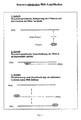
- FIG. 2 The course of primer-dependent RNA amplification of a single-stranded RNA template using an RNA primer is in FIG. 2 shown schematically.
- polyadenylated RNA, polyuridylated RNA, polyguanylated RNA or polycytidylylated RNA are used as primers, a poly-U-RNA, poly-A-RNA, poly-C-RNA or poly-G-RNA primer.
- a poly-U-RNA primer With the help of the poly-U-RNA primer, a specific amplification of the entire cellular mRNA is possible.
- a poly-U primer of 20 to 24 bases in length is used for this purpose.
- the amplified cellular mRNA can be examined casually with the help of the so-called microarray method.
- the method according to the invention for sequence-specific RNA amplification is also advantageously used for detecting viral RNA in patient material.
- RNA primer that specifically hybridizes to a particular portion of viral RNA
- CSF CSF
- blood plasma or body fluids are used as patient material.
- plasma CSF
- body fluids are used as patient material.
- RNA viruses having a poly A tail at the 3 'end of the genome are also suitable. Also suitable is the method of detecting RNA viruses having a poly A tail at the 3 'end of the genome, DNA viruses and viral mRNA transcripts.
- the attachment of the RNA-dependent RNA polymerase to the RNA template is primer-independent.
- the sequence of sequence-independent RNA amplification of a single-stranded RNA template without the use of an RNA primer is in FIG. 1 shown schematically.
- a further embodiment of the invention is a method for the primer-independent amplification of poly (C) -RNA, characterized in that no primer which hybridizes with a section of the RNA template is used, which uses GTP, preferably 50 ⁇ M, as sole nucleotide is extended by the RNA-dependent RNA polymerase according to the sequence of the RNA template.
- GTP preferably 50 ⁇ M
- RNA-primer-independent amplification of the RNA The possible applications of the method according to the invention for the amplification of RNA are manifold.
- the direct detection of viral genome in patient material is possible.
- the entire cellular RNA is recovered and amplified using an RNA primer specific RNA sequence.
- the detection of the viral nucleic acid is then carried out by hybridization to specific probes.
- Another application concerns the non-specific (RNA-primer-independent) amplification of the RNA, which can make it possible to identify previously unidentified viruses or new viral variants.
- Another application concerns microarray technology. This has the differential detection of cellular expression as the goal. This is done by detecting the so-called cellular transcripts, i. the mRNA.
- the invention makes it possible to specifically amplify the mRNA by the use of a poly (U) -oligonucleotide in order subsequently to detect microarrays by hybridization.
- the invention enables the direct, efficient and simple production of double-stranded RNA in 1.5 hours and starting from an RNA sequence, without the need for a PCR step, in vitro transcription and hybridization of the RNA (which may be sub-optimal can).
- the procedure of labeling the 3 'end of the RNA template is schematically in FIG. 3 shown.
- the norovirus RdRP cDNA was obtained by PCR from the norovirus clone pUS-NorII (Genbank accession number: AY741811). It was cloned into the pET-28b (+) vector (Novagen), the expression vector was sequenced and transformed into E. coli CL21 (DE3) plysS. The cells were at 37 ° C in Luria-Bertani medium with kanamycin (50 mg / L). At an optical density of 0.6 (OD600), protein expression was induced by the addition of isopropyl- ⁇ -D-thiogalactopyranoside (IPTG) at a final concentration of 1 mM. The cultures were then incubated at 25 ° C overnight.
- IPTG isopropyl- ⁇ -D-thiogalactopyranoside
- the cell pellets obtained from 250 ml of culture were washed once in 4 ml of phosphate buffered saline (PBS) and 1% Triton X 100 (Sigma).
- the cells were treated with DNase (10 U / ml) at 37 ° C for 15 minutes, sonicated on ice and resuspended in 40 ml of binding buffer (20 mM Tris / HCl, pH 7.9, 500 mM NaCl, 5 mM imidazole). After centrifugation at 4300 rpm at 4 ° C for 40 minutes, the clarified lysate was obtained.
- His6-tagged norovirus RdRP was bound to a Ni-nitrilotriacetacetic acid (NTA) -sepharose matrix (Novagen) preequilibrated with the binding buffer.
- NTA Ni-nitrilotriacetacetic acid
- the bound protein was washed with the binding buffer containing 60 mM imidazole and eluted with binding buffer containing 1 M imidazole.
- the eluted protein was dialyzed against buffer A (25 mM Tris-HCl, pH 8.0, 1 mM ⁇ -mercaptoethanol, 100 mM NaCl, 5 mM MgCl 2, 10% glycerol, 0.1% Triton X).
- the protein concentration was determined with the BCA protein assay kit (Pierce) based on the biuret reaction.
- the enzyme was resuspended in a final volume of 50% glycerol and stored at -20 ° C.
- the reaction mixture (50 ⁇ l) consists of 0.5 to 1 ⁇ g RNA template, 10 ⁇ l of the reaction buffer (250 mM HEPES, pH 8.0, 15 mM magnesium acetate, 20 mM DTT), 50 U RNase inhibitor (RNAsin, Promega), 0.4 each mM of ATP, CTP, GTP, UTP, 3 ⁇ M of norovirus RdRP prepared according to Example 1.
- the reaction is carried out at 30 ° C for 2 hours.
- the reaction is stopped by the addition of 50 ⁇ l of stop solution (4 M ammonium acetate, 100 mM EDTA). Purification is by phenol-chloroform extraction or by MEGAclear kit (Ambion) according to the manufacturer's instructions.
- the transcription products are visualized after ethidium bromide staining by UV transillumination on TBE-buffered agarose gels. Formamide agarose gels can also be used.
- the reaction mixture (50 ⁇ l) consists of 0.5 to 1 ⁇ g RNA template, 10 ⁇ l of the reaction buffer (250 mM HEPES, pH 8.0, 15 mM magnesium acetate, 20 mM DTT), 50 U RNase inhibitor (RNAsin, Promega), 0.4 each mM of ATP, CTP, GTP, UTP, 0.1 to 1 ⁇ M gene-specific RNA primer, 3 ⁇ M of norovirus RdRP prepared according to Example 1.
- the reaction is carried out at 30 ° C for 2 hours.
- the reaction is stopped by the addition of 50 ⁇ l of the stop solution (4 M ammonium acetate, 100 mM EDTA).
- the reaction mixture (50 ⁇ l) consists of 0.5 to 1 ⁇ g RNA template, 10 ⁇ l of the reaction buffer (250 mM HEPES, pH 8.0, 15 mM magnesium acetate, 20 mM DTT), 50 U RNase inhibitor (RNAsin, Promega), 0.4 each mM of ATP, CTP, GTP UTP, 0.1 to 1 ⁇ M poly (U) 20 primer, 3 ⁇ M of Norovirus RdRP prepared according to Example 1.
- the reaction is carried out at 30 ° C for 2 hours.
- the reaction is stopped by the addition of 50 ⁇ l of stop solution (4 M ammonium acetate, 100 mM EDTA).
- the reaction mixture (50 ⁇ l) consists of 0.5 to 1 ⁇ g RNA template, 10 ⁇ l of the reaction buffer (250 mM HEPES, pH 8.0, 15 mM magnesium acetate, 20 mM DTT), 50 U RNase inhibitor (RNAsin, Promega), 0.4 each mM of ATP, CTP, GTP, UTP, 3 ⁇ M of norovirus RdRP prepared according to Example 1.
- the reaction is carried out at 30 ° C for 2 hours.
- the reaction is stopped by the addition of 50 ⁇ l of stop solution (4 M ammonium acetate, 100 mM EDTA). Purification is by phenol-chloroform extraction or by MEGAclear kit (Ambion) according to the manufacturer's instructions.
- the transcription products are visualized after ethidium bromide staining by UV transillumination on TBE-buffered 10% polyacrylamide gels. Formamide agarose gels can also be used. Alternatively, armored RNA can be used.
- the reaction mixture (50 ⁇ l) consists of 0.5 to 1 ⁇ g RNA template, 10 ⁇ l of the reaction buffer (250 mM HEPES, pH 8.0, 15 mM magnesium acetate, 20 mM DTT), 50 U RNase inhibitor (RNAsin, Promega), 0.4 each mM of ATP, or CTP, or GTP, or UTP, 3 ⁇ M of the according to embodiment 1 Norovirus RdRP.
- the reaction is carried out at 30 ° C for 2 hours.
- the reaction is stopped by the addition of 50 ⁇ l of stop solution (4 M ammonium acetate, 100 mM EDTA). Purification is by phenol-chloroform extraction or by MEGAclear kit (Ambion) according to the manufacturer's instructions.
- the transcription products are visualized after ethidium bromide staining by UV transillumination on TBE-puffed 10% polyacrylamide gels. Formamide agarose gels can also be used. Alternatively, armored RNA can
- the reaction mixture (50 ⁇ l) consists of 0.5 to 1 ⁇ g poly (C) RNA template, or an RNA with poly (C) RNA at the 3 'end, 10 ⁇ l of the reaction buffer (250 mM HEPES, pH 8.0, 15 mM magnesium acetate, 20 mM DTT), 50 U RNase inhibitor (RNAsin, Promega), 50 ⁇ M of GTP, and 3 ⁇ M of Norovirus RdRP prepared according to Example 1.
- the reaction is carried out at 30 ° C for 2 hours.
- the reaction is stopped by the addition of 50 ⁇ l of stop solution (4 M ammonium acetate, 100 mM EDTA).
- the present invention comprises an RNA-dependent RNA polymerase for amplification and / or labeling of RNA, the RNA-dependent RNA polymerase having a "right-hand conformation" and the amino acid sequence of the RNA-dependent RNA polymerase having the following Sequence sections comprises: a. XXDYS, b. GXPSG, c. YGDD, d. XXYGL, e. XXXXFLXRXX meaning: D: aspartate, Y: tyrosine, S: serine, G: glycine, P: proline, L: leucine, F: phenylalanine, R: arginine, X: any amino acid.
- RNA-dependent RNA polymerase is an RNA-dependent RNA polymerase of a virus of the family Caliciviridae.
- the RNA-dependent RNA polymerase is an RNA-dependent RNA polymerase of a human and / or non-human pathogenic virus of the family Caliciviridae.
- the RNA-dependent RNA polymerase is an RNA-dependent RNA polymerase of a norovirus, sapovirus, vesivirus or a lagovirus.
- the RNA-dependent RNA polymerase is the RNA-dependent RNA polymerase of a Norovirus strain such as the norovirus strain HuCV / NL / Dresden174 / 1997 / GE or one of a sapovirus strain such as the sapovirus strain pJG-SapO1, or a Vesivirus strain such as the Vesivirus strain FCV / Dresden / 2006 / GE.
- a Norovirus strain such as the norovirus strain HuCV / NL / Dresden174 / 1997 / GE or one of a sapovirus strain such as the sapovirus strain pJG-SapO1, or a Vesivirus strain such as the Vesivirus strain FCV / Dresden / 2006 / GE.
- the RNA-dependent RNA polymerase is a protein according to SEQ ID NO 1, SEQ ID NO 2, SEQ ID NO 3, SEQ ID NO 4, SEQ ID NO 5 or SEQ ID NO 6.
- the present invention further comprises a method for amplifying RNA by means of an RNA-dependent RNA polymerase with the steps a. Attachment of the RNA-dependent RNA polymerase to the RNA template in the presence or absence of an oligonucleotide primer, b. Rewriting of the RNA template into antisense RNA by the RNA-dependent RNA polymerase c. Separation of the RNA / antisense RNA duplex into individual RNA strands.
- the RNA / antisense RNA duplex is separated into individual RNA strands by heat denaturation, by chemical denaturation and / or enzymatically.
- the enzymatic separation of the RNA / antisense RNA duplex into individual RNA strands is performed by an enzyme having the ability to separate double-stranded RNA into single-stranded RNA.
- the present invention encompasses a method for primer-dependent amplification of RNA in which at least one primer which hybridizes with a section of the RNA template is used and after the attachment of the RNA-dependent RNA polymerase the primer is replaced by the RNA-dependent RNA Polymerase is extended according to the sequence of the RNA template.
- RNA primer or DNA primer is used as the primer.
- the primer employed is a poly-U-RNA, poly-A-RNA, poly-C-RNA or poly-G-RNA primer or any random oligo-RNA primer.
- RNA-dependent RNA polymerase In another embodiment of the method for primer-independent amplification of poly (C) RNA, no primer that hybridizes to a portion of the RNA template is used, GTP is used as a single nucleotide, and by the RNA-dependent RNA polymerase corresponding to the sequence of RNA template lengthened.
- the present invention further includes a method for labeling RNA using an RNA-dependent RNA polymerase, comprising the steps of: a. Attachment of the RNA-dependent RNA polymerase to the RNA to be labeled, b. Attaching at least one nucleotide to the 3 'end of the RNA to be labeled.
- the present invention also relates to the use of an RNA-dependent RNA polymerase for the amplification and / or labeling of RNA.
- the present invention comprises a kit for the amplification of RNA, at least consisting of: a. an RNA-dependent RNA polymerase according to any one of claims 1 to 6, b. a suitable reaction buffer, c. NTPs, d. optionally RNase inhibitor, e. if necessary stop solution.
- Another object of the invention is a kit for the amplification of RNA, at least consisting of a. an RNA-dependent RNA polymerase according to any one of claims 1 to 6, b. a suitable reaction buffer, c. NTPs, d. optionally RNase inhibitor, e. if necessary stop solution, f. a helicase.
- Another object of the invention is a kit for primer-dependent amplification of RNA, at least consisting of: a. an RNA-dependent RNA polymerase according to any one of claims 1 to 6, b. a suitable reaction buffer, c. NTPs, d. optionally RNase inhibitor, e. if necessary stop solution, f. Primers.
- the present invention also includes a kit for primer-independent amplification of RNA, at least consisting of: a. an RNA-dependent RNA polymerase according to any one of claims 1 to 6, b. a suitable reaction buffer, c. NTPs, d. optionally RNase inhibitor, e. if necessary stop solution.
- the present invention comprises a kit for labeling RNA, at least consisting of a. an RNA-dependent RNA polymerase according to any one of claims 1 to 6, b. a suitable reaction buffer, c. CTP or UTP or ATP or GTP or any nucleotide, d. optionally RNase inhibitor, e. if necessary stop solution.
Landscapes
- Chemical & Material Sciences (AREA)
- Life Sciences & Earth Sciences (AREA)
- Health & Medical Sciences (AREA)
- Organic Chemistry (AREA)
- Wood Science & Technology (AREA)
- Engineering & Computer Science (AREA)
- Zoology (AREA)
- Molecular Biology (AREA)
- Bioinformatics & Cheminformatics (AREA)
- Genetics & Genomics (AREA)
- Proteomics, Peptides & Aminoacids (AREA)
- Chemical Kinetics & Catalysis (AREA)
- Biotechnology (AREA)
- Biochemistry (AREA)
- General Engineering & Computer Science (AREA)
- General Health & Medical Sciences (AREA)
- Microbiology (AREA)
- Analytical Chemistry (AREA)
- Physics & Mathematics (AREA)
- Biomedical Technology (AREA)
- Biophysics (AREA)
- Medicinal Chemistry (AREA)
- Immunology (AREA)
- Measuring Or Testing Involving Enzymes Or Micro-Organisms (AREA)
- Preparation Of Compounds By Using Micro-Organisms (AREA)
- Enzymes And Modification Thereof (AREA)
- Saccharide Compounds (AREA)
- Heterocyclic Carbon Compounds Containing A Hetero Ring Having Oxygen Or Sulfur (AREA)
Applications Claiming Priority (3)
| Application Number | Priority Date | Filing Date | Title |
|---|---|---|---|
| DE102005036085 | 2005-07-25 | ||
| DE102006008219 | 2006-02-13 | ||
| EP06761834A EP1910528A2 (fr) | 2005-07-25 | 2006-07-25 | Arn polymerase dependant de l'arn, procedes et kits pour marquer et/ou amplifier l'arn |
Related Parent Applications (1)
| Application Number | Title | Priority Date | Filing Date |
|---|---|---|---|
| EP06761834A Division EP1910528A2 (fr) | 2005-07-25 | 2006-07-25 | Arn polymerase dependant de l'arn, procedes et kits pour marquer et/ou amplifier l'arn |
Publications (2)
| Publication Number | Publication Date |
|---|---|
| EP2098592A2 true EP2098592A2 (fr) | 2009-09-09 |
| EP2098592A3 EP2098592A3 (fr) | 2009-09-30 |
Family
ID=37682762
Family Applications (4)
| Application Number | Title | Priority Date | Filing Date |
|---|---|---|---|
| EP09155984A Withdrawn EP2098592A3 (fr) | 2005-07-25 | 2006-07-25 | Polymérase ARN dépendant des ARN, procédé et kits d'amplification et/ou de marquage des ARN |
| EP10158113A Not-in-force EP2204445B1 (fr) | 2005-07-25 | 2006-07-25 | Procede et kit pour l'amplification primer-dependent de ARN heterologue viral, eucaryoteque et procaryotique. |
| EP09155974A Not-in-force EP2077322B1 (fr) | 2005-07-25 | 2006-07-25 | Procédé et kit d'amplification de ARN hétéropolymérique ou poly(C) |
| EP06761834A Withdrawn EP1910528A2 (fr) | 2005-07-25 | 2006-07-25 | Arn polymerase dependant de l'arn, procedes et kits pour marquer et/ou amplifier l'arn |
Family Applications After (3)
| Application Number | Title | Priority Date | Filing Date |
|---|---|---|---|
| EP10158113A Not-in-force EP2204445B1 (fr) | 2005-07-25 | 2006-07-25 | Procede et kit pour l'amplification primer-dependent de ARN heterologue viral, eucaryoteque et procaryotique. |
| EP09155974A Not-in-force EP2077322B1 (fr) | 2005-07-25 | 2006-07-25 | Procédé et kit d'amplification de ARN hétéropolymérique ou poly(C) |
| EP06761834A Withdrawn EP1910528A2 (fr) | 2005-07-25 | 2006-07-25 | Arn polymerase dependant de l'arn, procedes et kits pour marquer et/ou amplifier l'arn |
Country Status (7)
| Country | Link |
|---|---|
| US (1) | US20080176293A1 (fr) |
| EP (4) | EP2098592A3 (fr) |
| JP (1) | JP5383189B2 (fr) |
| CN (1) | CN101228268A (fr) |
| AT (1) | ATE478946T1 (fr) |
| DE (2) | DE502006007749D1 (fr) |
| WO (1) | WO2007012329A2 (fr) |
Families Citing this family (24)
| Publication number | Priority date | Publication date | Assignee | Title |
|---|---|---|---|---|
| AU2003279624A1 (en) | 2002-11-08 | 2004-06-07 | Pantarhei Bioscience B.V. | Synthesis of estetrol via estrone derived steroids |
| WO2009150156A1 (fr) * | 2008-06-13 | 2009-12-17 | Riboxx Gmbh | Procédé permettant la synthèse enzymatique de l'arn modifié chimiquement |
| CN102216472A (zh) | 2008-11-13 | 2011-10-12 | 里博克斯艾克斯有限公司 | Rna检测方法 |
| US8409805B2 (en) * | 2009-02-13 | 2013-04-02 | Asuragen, Inc. | Method of amplification of GC-rich DNA templates |
| CN102333869A (zh) * | 2009-02-24 | 2012-01-25 | 里博克斯艾克斯有限公司 | 小干扰rna的改进设计 |
| US20120208242A1 (en) * | 2009-10-21 | 2012-08-16 | Riboxx Gmbh | Method and RNA Reactor for Exponential Amplification of RNA |
| JP2013507942A (ja) * | 2009-10-21 | 2013-03-07 | リボックス・ゲーエムベーハー | 熱安定性rna依存性rnaポリメラーゼを用いる、rnaの指数関数的増幅のための方法 |
| EP2619307A1 (fr) | 2010-09-21 | 2013-07-31 | RiboxX GmbH | Procédé pour synthétiser de l'arn en utilisant une matrice d'adn |
| JP2013539969A (ja) * | 2010-09-21 | 2013-10-31 | リボックス・ゲーエムベーハー | カリシウイルスのrnaポリメラーゼによる、マイクロ波によって駆動されるrna重合 |
| WO2012107538A1 (fr) | 2011-02-09 | 2012-08-16 | Riboxx Gmbh | Procédé pour marquer de l'adn bicaténaire ou des hybrides adn/arn |
| WO2012107537A1 (fr) | 2011-02-09 | 2012-08-16 | Riboxx Gmbh | Procédé pour la détection de séquences polynucléotidiques |
| BR112013030833B1 (pt) | 2011-06-01 | 2019-09-03 | Estetra S A | processo para a preparação de um composto de fórmula (i) e processo para a preparação de estetrol |
| WO2012164096A1 (fr) | 2011-06-01 | 2012-12-06 | Estetra S.A. | Procédé pour la production d'intermédiaires d'estétrol |
| EP2383279A1 (fr) | 2011-07-19 | 2011-11-02 | Pantarhei Bioscience B.V. | Procédé de préparation d'estetrol |
| US20140286998A1 (en) | 2011-10-31 | 2014-09-25 | Riboxx Gmbh | Double-Stranded RNA For Immunostimulation |
| WO2013097965A1 (fr) | 2011-12-30 | 2013-07-04 | Riboxx Gmbh | Arn bicaténaire contenant un triphosphate pour l'immunostimulation |
| EP2888688B1 (fr) | 2012-07-20 | 2019-09-04 | Asuragen, INC. | Genotypage complet du fmr1 |
| WO2015144736A1 (fr) * | 2014-03-24 | 2015-10-01 | Riboxx Gmbh | Arns double brin conjugués et leur utilisation |
| WO2016112963A1 (fr) | 2015-01-13 | 2016-07-21 | Riboxx Gmbh | Administration de biomolécules dans des cellules |
| WO2017121494A1 (fr) | 2016-01-15 | 2017-07-20 | Riboxx Gmbh | Nucléotides, oligonucléotides et polynucléotides immunostimuleurs courts 5'-triphosphatés |
| EP3564375A4 (fr) * | 2016-12-27 | 2020-12-16 | The University Of Tokyo | Procédé de fonctionnalisation de l'arnm |
| US10870891B2 (en) * | 2017-01-05 | 2020-12-22 | Biodesix, Inc. | Diagnostic test system for specific, sensitive and reproducible detection of circulating nucleic acids in whole blood |
| CN108893467B (zh) * | 2018-06-21 | 2022-02-15 | 广东省微生物研究所(广东省微生物分析检测中心) | 一种gi.1型札幌病毒基因组扩增引物和扩增方法 |
| WO2021231891A1 (fr) * | 2020-05-15 | 2021-11-18 | Quidel Corporation | Procédé d'amplification directe et de détection d'arn |
Family Cites Families (3)
| Publication number | Priority date | Publication date | Assignee | Title |
|---|---|---|---|---|
| KR100872437B1 (ko) * | 2000-12-01 | 2008-12-05 | 막스-플랑크-게젤샤프트 츄어 푀르더룽 데어 비쎈샤프텐 에.파우. | Rna 간섭을 매개하는 작은 rna 분자 |
| AU2002314782A1 (en) * | 2001-05-14 | 2002-11-25 | Henry H. Ji | Replicase cycling reaction amplification |
| JP2005110517A (ja) * | 2003-10-03 | 2005-04-28 | Bml Inc | Rna依存性rnaポリメラーゼ蛋白質の製造 |
-
2006
- 2006-07-25 AT AT09155974T patent/ATE478946T1/de active
- 2006-07-25 EP EP09155984A patent/EP2098592A3/fr not_active Withdrawn
- 2006-07-25 EP EP10158113A patent/EP2204445B1/fr not_active Not-in-force
- 2006-07-25 CN CNA2006800270288A patent/CN101228268A/zh active Pending
- 2006-07-25 WO PCT/DE2006/001326 patent/WO2007012329A2/fr not_active Ceased
- 2006-07-25 DE DE502006007749T patent/DE502006007749D1/de active Active
- 2006-07-25 EP EP09155974A patent/EP2077322B1/fr not_active Not-in-force
- 2006-07-25 DE DE112006002611T patent/DE112006002611A5/de not_active Withdrawn
- 2006-07-25 JP JP2008523122A patent/JP5383189B2/ja not_active Expired - Fee Related
- 2006-07-25 EP EP06761834A patent/EP1910528A2/fr not_active Withdrawn
-
2008
- 2008-01-24 US US12/019,206 patent/US20080176293A1/en not_active Abandoned
Also Published As
| Publication number | Publication date |
|---|---|
| EP2098592A3 (fr) | 2009-09-30 |
| DE502006007749D1 (de) | 2010-10-07 |
| EP2204445A1 (fr) | 2010-07-07 |
| CN101228268A (zh) | 2008-07-23 |
| WO2007012329A2 (fr) | 2007-02-01 |
| WO2007012329A3 (fr) | 2007-08-23 |
| JP5383189B2 (ja) | 2014-01-08 |
| ATE478946T1 (de) | 2010-09-15 |
| EP2077322A3 (fr) | 2009-09-30 |
| JP2009502145A (ja) | 2009-01-29 |
| EP2077322B1 (fr) | 2010-08-25 |
| DE112006002611A5 (de) | 2008-07-03 |
| EP2204445B1 (fr) | 2013-01-02 |
| EP2077322A2 (fr) | 2009-07-08 |
| EP1910528A2 (fr) | 2008-04-16 |
| US20080176293A1 (en) | 2008-07-24 |
Similar Documents
| Publication | Publication Date | Title |
|---|---|---|
| EP2077322B1 (fr) | Procédé et kit d'amplification de ARN hétéropolymérique ou poly(C) | |
| DE69730926T2 (de) | Modifizierte thermostabile DNA Polymerase | |
| US20210139884A1 (en) | Reverse transcriptase for nucleic acid sequencing | |
| US7662594B2 (en) | Helicase-dependent amplification of RNA | |
| JP6587544B2 (ja) | 熱安定なTthPrimPolを用いた増幅及び配列決定方法 | |
| US12241095B2 (en) | Modified heat-resistant DNA polymerase | |
| DE69133204T2 (de) | Gereinigtes thermostabiles nukleinsäure-polymeraseenzym aus thermotoga maritima | |
| DE69030386T2 (de) | Bei hoher temperatur aktive reverse transkriptasen | |
| DE60112746T2 (de) | Kälteempfindliche dna-polymerasemutanten | |
| EP2697372B1 (fr) | Adn polymérases avec une activité améliorée | |
| US20150210989A1 (en) | Novel reverse transcriptases for use in high temperature nucleic acid synthesis | |
| KR20230013167A (ko) | 핵산 샘플을 프로세싱하는 방법 | |
| CN113801917B (zh) | 基于crispr技术进行多重核酸检测的方法 | |
| JP2003519488A (ja) | 活性部位に1又は複数の変異を有するdnaポリメラーゼ変異体 | |
| KR20220038668A (ko) | 유형 III CRISPR/Cas 기반 진단 | |
| JP2003500070A (ja) | 核酸分子を標識するための組成物および方法 | |
| ES2553400T3 (es) | ADN polimerasas con actividad mejorada | |
| CA2802000C (fr) | Adn polymerases presentant une discrimination accrue des mesappariements a l'extremite 3' | |
| US5516633A (en) | DNA sequencing with a T7-type gene 6 exonuclease | |
| ES2285766T3 (es) | Arn-polimerasa dependiente de arn que funciona preferentemente sobre molde de arn y procedimiento de transcripcion de arn bajo la dependencia de un promotor con dicha arn polimerasa dependiente de arn. | |
| CN114592043A (zh) | 一种等温核酸检测酶组合物、试剂盒及其用途和检测方法 | |
| JP2003517837A (ja) | バクテリオファージファイ6〜ファイ14由来のrnaポリメラーゼ類およびその使用 | |
| JP7160142B2 (ja) | 核酸増幅用試薬及び核酸増幅法 | |
| EP1100923A2 (fr) | Complexe in vitro thermostable a activite de polymerase | |
| JP4453115B2 (ja) | 標識されたdnaの調製方法 |
Legal Events
| Date | Code | Title | Description |
|---|---|---|---|
| PUAI | Public reference made under article 153(3) epc to a published international application that has entered the european phase |
Free format text: ORIGINAL CODE: 0009012 |
|
| PUAL | Search report despatched |
Free format text: ORIGINAL CODE: 0009013 |
|
| AC | Divisional application: reference to earlier application |
Ref document number: 1910528 Country of ref document: EP Kind code of ref document: P |
|
| AK | Designated contracting states |
Kind code of ref document: A2 Designated state(s): AT BE BG CH CY CZ DE DK EE ES FI FR GB GR HU IE IS IT LI LT LU LV MC NL PL PT RO SE SI SK TR |
|
| AX | Request for extension of the european patent |
Extension state: AL BA HR MK RS |
|
| AK | Designated contracting states |
Kind code of ref document: A3 Designated state(s): AT BE BG CH CY CZ DE DK EE ES FI FR GB GR HU IE IS IT LI LT LU LV MC NL PL PT RO SE SI SK TR |
|
| AX | Request for extension of the european patent |
Extension state: AL BA HR MK RS |
|
| RAP1 | Party data changed (applicant data changed or rights of an application transferred) |
Owner name: RIBOXX GMBH |
|
| AKX | Designation fees paid | ||
| STAA | Information on the status of an ep patent application or granted ep patent |
Free format text: STATUS: THE APPLICATION IS DEEMED TO BE WITHDRAWN |
|
| 18D | Application deemed to be withdrawn |
Effective date: 20100401 |
|
| REG | Reference to a national code |
Ref country code: DE Ref legal event code: 8566 |