EP2100903A2 - Anti-idiotypische Antikörper, die die Hemmungsaktivität eines hemmenden Antikörpers neutralisieren, der auf die C1-Domäne des Faktors VIII ausgerichtet ist - Google Patents
Anti-idiotypische Antikörper, die die Hemmungsaktivität eines hemmenden Antikörpers neutralisieren, der auf die C1-Domäne des Faktors VIII ausgerichtet ist Download PDFInfo
- Publication number
- EP2100903A2 EP2100903A2 EP09002329A EP09002329A EP2100903A2 EP 2100903 A2 EP2100903 A2 EP 2100903A2 EP 09002329 A EP09002329 A EP 09002329A EP 09002329 A EP09002329 A EP 09002329A EP 2100903 A2 EP2100903 A2 EP 2100903A2
- Authority
- EP
- European Patent Office
- Prior art keywords
- antibody
- seq
- factor viii
- antibody according
- sequence
- Prior art date
- Legal status (The legal status is an assumption and is not a legal conclusion. Google has not performed a legal analysis and makes no representation as to the accuracy of the status listed.)
- Withdrawn
Links
Images


Classifications
-
- C—CHEMISTRY; METALLURGY
- C07—ORGANIC CHEMISTRY
- C07K—PEPTIDES
- C07K16/00—Immunoglobulins [IG], e.g. monoclonal or polyclonal antibodies
- C07K16/42—Immunoglobulins [IG], e.g. monoclonal or polyclonal antibodies against immunoglobulins
-
- C—CHEMISTRY; METALLURGY
- C07—ORGANIC CHEMISTRY
- C07K—PEPTIDES
- C07K16/00—Immunoglobulins [IG], e.g. monoclonal or polyclonal antibodies
- C07K16/42—Immunoglobulins [IG], e.g. monoclonal or polyclonal antibodies against immunoglobulins
- C07K16/4208—Immunoglobulins [IG], e.g. monoclonal or polyclonal antibodies against immunoglobulins against an idiotypic determinant on Ig
- C07K16/4241—Immunoglobulins [IG], e.g. monoclonal or polyclonal antibodies against immunoglobulins against an idiotypic determinant on Ig against anti-human or anti-animal Ig
-
- A—HUMAN NECESSITIES
- A61—MEDICAL OR VETERINARY SCIENCE; HYGIENE
- A61K—PREPARATIONS FOR MEDICAL, DENTAL OR TOILETRY PURPOSES
- A61K39/00—Medicinal preparations containing antigens or antibodies
- A61K39/395—Antibodies; Immunoglobulins; Immune serum, e.g. antilymphocytic serum
-
- A—HUMAN NECESSITIES
- A61—MEDICAL OR VETERINARY SCIENCE; HYGIENE
- A61P—SPECIFIC THERAPEUTIC ACTIVITY OF CHEMICAL COMPOUNDS OR MEDICINAL PREPARATIONS
- A61P7/00—Drugs for disorders of the blood or the extracellular fluid
-
- A—HUMAN NECESSITIES
- A61—MEDICAL OR VETERINARY SCIENCE; HYGIENE
- A61P—SPECIFIC THERAPEUTIC ACTIVITY OF CHEMICAL COMPOUNDS OR MEDICINAL PREPARATIONS
- A61P7/00—Drugs for disorders of the blood or the extracellular fluid
- A61P7/04—Antihaemorrhagics; Procoagulants; Haemostatic agents; Antifibrinolytic agents
-
- C—CHEMISTRY; METALLURGY
- C12—BIOCHEMISTRY; BEER; SPIRITS; WINE; VINEGAR; MICROBIOLOGY; ENZYMOLOGY; MUTATION OR GENETIC ENGINEERING
- C12N—MICROORGANISMS OR ENZYMES; COMPOSITIONS THEREOF; PROPAGATING, PRESERVING, OR MAINTAINING MICROORGANISMS; MUTATION OR GENETIC ENGINEERING; CULTURE MEDIA
- C12N5/00—Undifferentiated human, animal or plant cells, e.g. cell lines; Tissues; Cultivation or maintenance thereof; Culture media therefor
- C12N5/10—Cells modified by introduction of foreign genetic material
- C12N5/12—Fused cells, e.g. hybridomas
-
- A—HUMAN NECESSITIES
- A61—MEDICAL OR VETERINARY SCIENCE; HYGIENE
- A61K—PREPARATIONS FOR MEDICAL, DENTAL OR TOILETRY PURPOSES
- A61K39/00—Medicinal preparations containing antigens or antibodies
- A61K2039/505—Medicinal preparations containing antigens or antibodies comprising antibodies
Definitions
- the present invention relates to an anti-idiotypic monoclonal antibody directed against a factor VIII inhibitory antibody binding to the C1 domain of factor VIII, as well as to a cell line producing this anti-idiotypic monoclonal antibody, to the use of this anti-idiotypic monoclonal antibody.
- anti-idiotypic monoclonal antibody as a medicament, and more particularly to its use for the manufacture of a medicament for the treatment of hemophilia A.
- Hemophilia A is a hereditary condition associated with an abnormality of the X chromosome, which results in an inability to coagulate in people with the disease. This disease is the result of mutations on the gene of a protein involved in coagulation, factor VIII (FVIII), which determine either a complete absence of factor VIII in the blood, or a partial deficit. Hemophilia A is the most common defect affecting blood coagulation: it affects 1 in 5000 men in France, which represents 80% of patients with hemophilia. The other type of hemophilia, hemophilia B, affects 20% of patients with hemophilia; it is caused by a deficiency in another factor of coagulation, factor IX.
- hemophilia type A or B
- factor VIII for the treatment of hemophiliacs is available as blood-derived drugs provided by the French Fractionation and Biotechnology Laboratory (LFB) or international pharmaceutical laboratories, as well as in the form of recombinant medicinal products derived from genetic engineering.
- the DNA coding for factor VIII has been isolated and expressed in mammalian cells ( Wood et al., Nature (1984) 312 330-337 ), and its amino acid sequence deduced from the cDNA.
- the secreted factor VIII (FVIII) is a glycoprotein with a molecular weight of 300 Kda (2332 amino acids) playing a key role in the activation of the intrinsic pathway of coagulation.
- Inactive FVIII consists of six domains: A1 (residues 1-372), A2 (residues 373-740), B (residues 741-1648), A3 (residues 1649-2019), C1 (residues 2020-2172), and C2 (residues 2173-2332), from the N-terminus to the C-terminus.
- vWF von Willebrand factor
- FVIII dissociates from vWF after cleavage by thrombin. This cleavage results in the elimination of the B domain and the formation of a heterodimer. It is in this form that FVIII circulates in the plasma.
- This heterodimer consists of a heavy chain (A1, A2) and a light chain (A3, C1, C2).
- factor VIII binds to von Willebrand factor in the patient's bloodstream.
- Activated factor VIII acts as an activated factor IX cofactor, accelerating the conversion of factor X to activated factor X.
- Activated Factor X converts prothrombin to thrombin.
- Thrombinates convert fibrinogen to fibrin and a clot appears.
- the major problem in administering factor VIII is the appearance in the patient of antibodies to factor VIII, called inhibitors ". These antibodies neutralize the procoagulant activity of factor VIII, which is rendered inactive as soon as it is perfused. Thus, the coagulation factor administered is destroyed before it can stop the bleeding, which is a serious complication of hemophilia, the treatment becoming ineffective.
- some patients who are not genetically hemophiliacs may develop inhibitors against endogenous factor VIII: this is an acquired hemophilia. Studies have shown that the anti-factor VIII immune response is of polyclonal IgG type predominantly belonging to the IgG4 and IgG1 subclass and more rarely IgG2.
- IgG3 are never represented.
- the light chain is often of the Kappa type.
- the overrepresentation of IgG4 is more pronounced in hemophiliacs who have a long-established inhibitor.
- the C2 and A2 domains of the FVIII molecule are the preferred targets of the immune response, although in some cases antibodies directed against the A3 domain are detected.
- By passing the plasma of hemophiliac patients through an immunoadsorption column on which FVIII is immobilized it is possible to purify the total anti-FVIII antibodies.
- the quantities harvested often exceed 100 ⁇ g per 10 mg of total IgG ( Gilles JG et al. (1993) Blood; 82: 2452-2461 ).
- This antibody is directed against the C1 domain of factor VIII and inhibits the factor VIII cofactor activity and its binding to factor Von Willebrand ( Jacquemin et al. (2000) Blood 95: 156-163 ).
- a human monoclonal antibody against the C2 domain of factor VIII named BO2C11 (IgG4kappa), produced from a repertoire of memory B cells of a patient with hemophilia A with inhibitors, was isolated ( Jacquemin et al. Blood 1998 Jul 15; 92 (2): 496-506 ).
- BO2C11 recognizes the C2 domain of factor VIII and inhibits its binding to von Willebrand factor and phospholipids. It completely inhibits the procoagulant activity of native and activated factor VIII.
- Another example of a monoclonal antibody is the BOIIB2 antibody, directed against the A2 domain of factor VIII.
- the BOIIB2 antibody inhibits factor VIII activity by 99%. By binding to domain A2, it can interfere with and inhibit the binding of FIXa which has a low affinity binding in this region of FVIII and therefore inhibit the enzymatic activity of FIXa.
- the second possible mode of action is its interference in the equilibrium between the hetero-dimer form (A2: A1 and A3: C1: C2) of FVIII and the hetero-trimer form (A2 and A1 and A3: C1: C2) FVIII by accelerating the dissociation of the A2 domain of these complexes, rendering them non-functional.
- the A2 domain is a 43 kD domain whose function remains little known, but it has been shown that inhibitory antibodies directed against the factor VIII domain A2 inhibit the function of factor VIIIa by inhibiting the conversion of the FXase / FX complex to the state of transition ( Lollar et al. J Clin Invest. 1994 Jun; 93 (6): 2497-504 , Fay et al. J Biol Chem. 1996; 271 (11): 6027-6032 ).
- the immune response against factor VIII is polyclonal, and therefore involves inhibitory antibodies directed against other domains. than the A2 and C2 domains.
- a first subject of the invention thus relates to an anti-idiotypic monoclonal antibody directed against a factor VIII inhibitory human antibody, the inhibitory antibody being directed against the C1 domain of factor VIII, this anti-idiotypic antibody having at least one CDR region (Complementarity Determining Region) of each of its light chains whose peptide sequence has at least 70% identity with a sequence selected from the sequences SEQ ID NO: 12, SEQ ID NO: 13, SEQ ID NO: 14 and at least one CDR region from each of its heavy chains whose peptide sequence has at least 70% identity with a sequence chosen from the sequences SEQ ID NO: 9, SEQ ID NO: 10, SEQ ID NO: 11.
- the CDR regions concerned are the CDR1 and / or CDR2 and / or CDR3.
- sequences SEQ ID NO: 9, SEQ ID NO: 10, SEQ ID NO: 11, SEQ ID NO: 12, SEQ ID NO: 13 and SEQ ID NO: 14 are defined according to Kabat [ Kabat et al., "Sequences of Proteins of Immunological Interest," NIH Publication, 91-3242 (1991). )].
- identity with each of the sequences mentioned above is at least 80%, preferably at least 90%, 95%, 99% and even more preferably 100%. identity.
- the percent identity is calculated by aligning the 2 sequences to be compared and counting the number of positions having an identical amino acid, which number is divided by the total number of amino acids in the sequence.
- inhibitory antibodies or “inhibitors” of factor VIII is meant antibodies which inhibit all or part of the procoagulant activity of factor VIII, in particular by attaching thereto, and particularly an anti-factor VIII antibody whose epitope is located on factor VIII.
- the antibody according to the invention has the capacity to neutralize at least 20%, advantageously at least 30%, advantageously at least 40%, advantageously at least 50%, advantageously at least 60%, and even more advantageously at least 70%, 80%, 90%, 99% or 100% of the inhibitory activity of the coagulation of inhibitory antibodies directed against the C1 domain of factor VIII, targets of anti-idiotypic monoclonal antibodies according to the invention.
- anti-idiotypic antibody refers to an antibody directed against the variable region of the target inhibitory antibodies.
- the anti-idiotypic antibody according to the invention is directed against inhibitory antibodies whose variable domain of the heavy chain is similar to the germ line DP-10.
- inhibitory antibodies can be obtained from humans (for example, serum from patients with inhibitory antibodies) or other animal species such as the mouse, the horse, the goat, nonhuman primates, this list does not being not limiting, by immunization with factor VIII or fragments derived from factor VIII, and more particularly with a fragment comprising all or part of the C1 domain.
- the target inhibitory antibody of the anti-idiotypic antibody according to the invention recognizes the C1 domain in its native configuration.
- the target inhibitory antibody of the anti-idiotypic antibody according to the invention does not recognize the same domain with a R2150H mutation.
- the anti-idiotypic monoclonal antibody according to the invention may be of human or animal origin. Moreover, it can be obtained in different ways. For example, cells producing anti-idiotypic antibodies can be obtained from Peripheral blood lymphocytes of patients with inhibitory anti-factor VIII antibodies or from healthy individuals. These cells can be immortalized by techniques well known to those skilled in the art and selected with respect to the ability of the anti-idiotypic antibodies produced to neutralize the inhibitory antibodies directed against factor VIII.
- Another way of producing the monoclonal anti-idiotypic antibody according to the invention is the immunization of animals, advantageously mice, by injection of factor VIII inhibitory antibodies directed against the C1 domain of factor VIII, then the fusion of spleen lymphocytes with a myeloma cell line, preferably mouse myeloma, followed by identification and cloning of cell cultures producing anti-idiotypic antibodies to factor VIII inhibitory antibodies.
- each CDR region of each of the light chains of the anti-idiotypic antibody of the invention has a peptide sequence having at least 70% identity with the sequences SEQ ID NO: 12 , SEQ ID NO: 13 and SEQ ID NO: 14 respectively, and each CDR region of each of its heavy chains has a peptide sequence having at least 70% identity with the sequences SEQ ID NO: 9, SEQ ID NO: 10 and SEQ ID NO: 11 respectively.
- the CDR1 region of each of the light chains of the antibody according to the invention has a peptide sequence having at least 70% identity with the sequence SEQ ID NO: 12
- the CDR2 region of each of the light chains of the antibody according to the invention has a peptide sequence having at least 70% identity with the sequence SEQ ID NO: 13
- the CDR3 region of each of the light chains of the antibody according to the invention has a peptide sequence having at least 70% identity with the sequence SEQ ID NO: 14
- the CDR1 region of each of the heavy chains of the antibody according to the invention has a peptide sequence having at least 70% identity with the sequence SEQ ID NO: 9
- the CDR2 region of each of the heavy chains of the antibody according to the invention has a peptide sequence having at least 70% identity with the sequence SEQ ID NO: 10
- the CDR3 region of each of the heavy chains of the antibody according to the invention has a peptide sequence having at least 70% identity with the sequence SEQ ID NO: 11.
- variable region of each of the light chains of the anti-idiotypic monoclonal antibody of the invention is encoded by a nucleic acid sequence having at least 70% identity with the nucleic acid sequence SEQ ID NO: 16
- variable region of each of the heavy chains of the anti-idiotypic monoclonal antibody is encoded by a nucleic acid sequence having at least 70% identity with the nucleic acid sequence SEQ ID NO: 15.
- a signal peptide can be added to the sequences SEQ ID NO: 15 and SEQ ID NO: 16 to give, for example, the sequences SEQ ID NO: 1 and SEQ ID NO: 2, such a peptide. signal affecting neither the activity nor the specificity of the antibody according to the invention.
- the sequence identity is at least 80%, and preferably at least 95-99% identity.
- the percent identity is calculated by aligning two sequences to be compared and counting the number of positions possessing an identical nucleotide, this number being divided by the total number of nucleotides of the sequence.
- the degeneracy of the genetic code may be at the origin of the fact that the same amino acid can be encoded by several triplets of different nucleotides. In any case, these sequence differences do not affect the affinity of the monoclonal antibody for its target or its ability to neutralize the inhibitory activity of the target inhibitory antibodies.
- variable region of each of the light chains of the anti-idiotypic monoclonal antibody is encoded by the nucleic acid sequence SEQ ID NO: 16
- variable region of each of the heavy chains of the anti-idiotypic monoclonal antibody is encoded by the nucleic acid sequence SEQ ID NO: 15.
- the peptide sequence of each of the variable regions of the light chains of the antibody according to the invention is a sequence having at least 70% identity, and advantageously at least 80% or 90%, and still more advantageous at least 99% identity with the sequence SEQ ID NO: 18.
- a signal peptide can be added to the sequences SEQ ID NO: 17 and SEQ ID NO: 18 to give, for example, the sequences SEQ ID NO: 3 and SEQ ID NO: 4, such a peptide. signal affecting neither the activity nor the specificity of the antibody according to the invention.
- the peptide sequence of each of the heavy chain variable regions of the antibody according to the invention is a sequence having at least 70% identity, and advantageously at least 80% or 90%, and still more advantageous at least 99% identity with the sequence SEQ ID NO: 3.
- the peptide sequence of each of the light chains of the antibody according to the invention is a sequence having at least 70% identity, and advantageously at least 80% or 90%, and even more at least 99% identity with the sequence SEQ ID NO: 4
- the peptide sequence of each of the heavy chains of the antibody according to the invention is a sequence having at least 70% identity, and advantageously at least 80% or 90%, and even more advantageously at least 99% identity with the sequence SEQ ID NO: 3.
- the peptide sequence of each of the light chains of the antibody according to the invention is the sequence SEQ ID NO: 4.
- the peptide sequence of each of the light chains of the antibody according to the invention is the sequence SEQ ID NO: 3.
- the peptide sequence deduced from the sequence SEQ ID NO: 16 is the sequence SEQ ID NO: 18 and the peptide sequence deduced from the sequence SEQ ID NO: 15 is the sequence SEQ ID NO: 17.
- variable region of each of the light chains of the anti-idiotypic monoclonal antibody according to the invention has the peptide sequence SEQ ID NO: 18 and the variable region of each of the heavy chains of the anti-idiotypic monoclonal antibody according to the invention has the peptide sequence SEQ ID NO: 17.
- the target inhibitory antibody of the anti-idiotypic antibody according to the invention is RHD5 antibody, deposited at the Belgian Co-ordinated Collections of Microorganisms / Plasmid Collection (BCCM / LMBP), Laboratorium for Molecular Biology, University of Ghent, TECHpark 297, B-9052 Zwijnaarede, Belgium in August 2004, by Collen Research Foundation, accession number LMBP 6165CB.
- the RHD5 antibody is a human IgG1 monoclonal antibody directed against the C1 domain of factor VIII produced from lymphocytes of a patient with hemophilia A, including acquired hemophilia A, severe with a high inhibitor level.
- This antibody belongs to the IgG1 subclass) and is derived from the DP-10 germ line.
- the epitope that it recognizes on factor VIII is the C1 domain in its native configuration, but not the same domain with a R2150H mutation.
- RHD5 antibody can inhibit factor VIII activity by up to 98%.
- the antibody according to the invention also includes any modified antibody corresponding to the characteristics of the invention, in which one or more amino acids have been substituted (s) or deleted (s). Such a substitution or deletion may be located at any position in the molecule. In the case where several amino acids have been substituted or deleted, any combination of substitution or deletion can be considered. Such alterations of the sequence of the variable regions of the antibody according to the invention may be carried out in order to increase the number of residues likely to come into contact between the anti-idiotypic antibody according to the invention and the target inhibitory antibody. In one embodiment of the invention, the anti-idiotypic antibody is a murine antibody.
- this murine anti-idiotypic monoclonal antibody is an IgGlkappa.
- the monoclonal antibody according to the invention is a chimeric antibody.
- chimeric antibody is meant an antibody whose variable regions of the light and heavy chains belong to a different species from the constant regions of the light and heavy chains.
- the antibody according to the invention also has constant regions of its light and heavy chains belonging to a non-murine species.
- all families and species of non-murine mammals are likely to be used, and in particular humans, monkeys, murids (except the mouse), suids, cattle, equines, felids , canids, for example, and birds.
- the chimeric antibodies according to the invention can be constructed using standard techniques of recombinant DNA, which are well known to those skilled in the art, and more particularly by using the "chimeric" antibody construction techniques described for example in Morrison et al., Proc. Natl. Acad. Sci. USA, 81, pp. 6851-55 (1984) ), where the recombinant DNA technology is used to replace the constant region of a heavy chain and / or the constant region of a light chain of an antibody from a non-human mammal with the corresponding regions of a human immunoglobulin.
- the antibody according to the invention is a human hybrid antibody, that is to say a chimeric antibody whose constant part is human. This embodiment of the invention makes it possible to reduce the immunogenicity of the antibody in humans and thereby improve its efficacy during its therapeutic administration in humans.
- the antibody according to the invention is a humanized antibody.
- Such an antibody can be obtained by combining one or more CDR (Complementarity Determining Region) regions of a monoclonal antibody of a non-human species with framework regions (highly conserved regions of variable regions, also called " framework), such a method of obtaining being well taught in the state of the art ( Jones et al., Nature (1986) 321: 522 ; Riechmann et al., Nature (1988) 332: 323 ).
- CDR Complementarity Determining Region
- Such a humanized antibody, directed against the variable domain of inhibitory antibodies recognizing the C1 domain of FVIII may comprise human framework regions and one or more of the CDR regions of SEQ ID NO: 9, SEQ ID NO: 10, SEQ ID NO: 11, SEQ ID NO: 12, SEQ ID NO: 13, SEQ ID NO: 14.
- a particular humanized antibody of the invention is a humanized antibody, directed against the variable domain of inhibitory antibodies recognizing the C1 domain of FVIII , whose CDR regions are the regions of sequence SEQ ID NO: 9, SEQ ID NO: 10, SEQ ID NO: 11, SEQ ID NO: 12, SEQ ID NO: 13, SEQ ID NO: 14.
- the anti-idiotypic monoclonal antibody according to the invention is the 18B6 antibody produced by the hybridoma 18B6 deposited under the registration number CNCM I-3559, on January 24, 2006 at the National Collection of Cultures of Microorganisms. (CNCM, 25 rue du Dondel Roux, 75724 Paris Cedex 15).
- the variable region of each of the light chains of the anti-idiotypic monoclonal antibody 18B6 is encoded by the nucleic acid sequence SEQ ID NO: 16, and the variable region of each of the heavy chains of the 18B6 anti-idiotypic monoclonal antibody. is encoded by the nucleic acid sequence SEQ ID NO: 15.
- the anti-idiotypic monoclonal antibody according to the invention also includes any antibody comprising fragments of the 18B6 antibody, and more particularly any antibody comprising the variable region of the light chain and / or the variable region of the heavy chain. 18B6 antibody, or any fragment of the light chain variable region and / or the variable region of the 18B6 antibody heavy chain.
- fragments is intended to denote an F (ab ') 2 fragment or an Fab' fragment or an Fab fragment or a CDR region or any modified version of any one of these fragments or region.
- the anti-idiotypic monoclonal antibody according to the invention is an F (ab ') 2 fragment or an Fab' fragment or an Fab fragment or a CDR region or any modified version of the invention. any of these fragments or region.
- the enzymatic digestion of immunoglobulins by papain generates 2 identical fragments, called “Fragment Antigen Binding", and a fragment Fc (crystallizable fraction).
- the Fc fragment is the support of the effector functions of immunoglobulins.
- pepsin an F (ab ') 2 fragment is generated, where the two Fab fragments remain linked by two disulfide bridges, and the Fc fragment is split into several peptides.
- the F (ab ') 2 fragment is formed of two Fab' fragments (an Fab 'fragment consisting of an Fab and a hinge region), linked by interchain disulfide bridges to form an F (ab') 2.
- Such fragments which contain the binding site of the antibody, may have lost a number of properties of the whole antibody from which they are derived, such as the ability to activate complement or to bind Fcgamma receptors. However, these fragments do not have lost the ability of the whole antibody to neutralize the inhibitory antibody.
- the invention also includes F (ab ') 2, Fab', Fab fragments of the CDR region, or any modified version of any of these fragments or regions, of the 18B6 antibody.
- the stable cell line according to the invention may be of human or animal origin.
- the stable cell line according to the invention can come from immortalized human cells.
- this line may come from cells of animal origin, for example from immortalized mice.
- a preferred example of a line resulting from this embodiment of the invention is line 18B6, deposited at the CNCM under number I-3559.
- the stable cell line according to the invention is a line which has integrated a genetic construct allowing the expression of the antibody according to the invention at the desired place of the genome. The step of obtaining such a cell is a stable transfection.
- This step can be applied to any type of cell provided that they can be maintained in vitro culture.
- Stable transfection requires integration of the genetic construct, which can be done by homologous recombination or can be done randomly. It is the presence of a positive selection cassette in the genetic construct comprising the gene of interest which confers on the cell the resistance to an antibiotic, for example, which attests to the insertion of the transgene into the cellular genome.
- a long-term producer cell line of the antibody of the invention for example 18B6, which can be maintained in culture in vitro.
- the stable cell line expressing an antibody according to the invention may be selected from the group consisting of a human cell line, a rodent line, for example a murine line, SP2 / 0, YB2 / 0, IR983F, a human myeloma such as Namalwa or any other cell of human origin such as PERC6, the CHO lines, in particular CHO-K-1, CHO-Lec10, CHO-Lec1, CHO-Lec13, CHO Pro-5, CHO dhfr- (CHO DX B11, CHO DG44) or other lines selected from Wil-2, Jurkat, Vero, Molt-4, COS-7, 293-HEK, BHK, K6H6, NS0, SP2 / O-Ag 14 and P3X63Ag8.653.
- a human cell line for example a murine line, SP2 / 0, YB2 / 0, IR983F, a human myeloma such as Namalwa or
- Another particular object of the invention is the hybridoma 18B6 deposited under the registration number CNCM I-3559 to the National Collection of Cultures of Microorganisms (CNCM).
- the variable region of each of the light chains of the anti-idiotypic monoclonal antibody produced by the hybridoma 18B6 is encoded by the nucleic acid sequence SEQ ID NO: 16, and the variable region of each of the heavy chains of the antibody
- An anti-idiotypic monoclonal product produced by hybridoma 18B6 is encoded by the nucleic acid sequence SEQ ID NO: 15.
- the antibody produced by the hybridoma 18B6 is the 18B6 antibody, and a method for obtaining the 18B6 hybridoma is described in the "Examples" section of this document.
- Another subject of the invention is a DNA fragment of sequence SEQ ID NO: 15 coding for the variable region of the heavy chain of the antibody according to the invention as described above.
- This DNA fragment may be inserted into a vector allowing the expression of a polypeptide, preferably an antibody, whose variable region of the heavy chain is encoded by the SED ID NO: 15 nucleic acid sequence, of which the deduced peptide sequence is the sequence SEQ ID NO: 17, in order to introduce it and maintain it in a host cell.
- This vector allows the expression of this foreign nucleic acid fragment in the host cell because it has essential sequences (promoter, polyadenylation sequence, selection gene) to this expression.
- Such vectors are well known to those skilled in the art, and may be an adenovirus, a retrovirus, a plasmid or a bacteriophage, this list not being limiting.
- any mammalian cell can be used as a host cell, that is to say as a cell expressing the polypeptide or the antibody according to the invention, for example SP2 / 0, YB2 / 0, IR983F, a human myeloma as Namalwa or any other cell of human origin such as PERC6, the CHO lines, in particular CHO-K-1, CHO-Lec10, CHO-Lec1, CHO-Lec13, CHO Pro-5, CHO dhfr- (CHO DX B11, CHO DG44), or other lines selected from Wil-2, Jurkat, Vero, Molt-4, COS-7, 293-HEK, BHK, K6H6, NS0, SP2 / O-Ag 14 and P3X63Ag8.653.
- the CHO lines in particular CHO-K-1, CHO-Lec10, CHO-Lec1, CHO-Lec13, CHO Pro-5, CHO dhfr- (CHO DX B
- Another subject of the invention is a DNA fragment of sequence SEQ ID NO: 16 coding for the variable region of the light chain of an antibody according to the invention as described above.
- This DNA fragment may be inserted into a vector allowing the expression of a polypeptide, preferably an antibody, whose variable region of the light chain is encoded by the SED ID NO: 16 nucleic acid sequence, of which the deduced peptide sequence is the sequence SEQ ID NO: 18, in order to introduce and maintain it in a host cell.
- This vector allows the expression of this foreign nucleic acid fragment in the host cell because it has essential sequences (promoter, polyadenylation sequence, selection gene) to this expression.
- any mammalian cell can be used as a host cell, that is to say as a cell expressing the polypeptide or the antibody according to the invention, for example SP2 / 0, YB2 / 0, IR983F, a human myeloma such as Namalwa or any other cell of human origin as PERC6, the CHO lines, in particular CHO-K-1, CHO-Lec10, CHO-Lec1, CHO-Lec13, CHO Pro-5, CHO dhfr- (CHO DX B11, CHO DG44), or other lines chosen from Wil-2, Jurkat, Vero, Molt-4, COS-7, 293-HEK, BHK, K6H6, NS0, SP2 / O-Ag14 and P3X63Ag8.653.
- any mammalian cell can be used as a host cell, that is to say as a cell expressing the polypeptide or the antibody according to the invention, for example SP2 / 0, YB2 /
- Another subject of the invention is a pharmaceutical composition
- a pharmaceutical composition comprising an antibody according to the invention and at least one excipient and / or at least one pharmaceutically acceptable vehicle.
- the anti-idiotypic monoclonal antibody contained in the pharmaceutical composition according to the invention is the 18B6 antibody, a fragment or region derived from 18B6, or a chimeric or humanized antibody comprising the variable regions or CDRs of 18B6. and as previously described herein.
- the pharmaceutical composition according to the invention can be formulated in any excipient that a patient to be treated can tolerate. Examples of such excipients include water, saline solutions, Ringer's solution, dextrose solutions, and any other suitable physiological aqueous solution.
- the excipient may also contain small amounts of additives such as substances that increase the isotonicity and stability of the composition.
- excipients include phosphate buffer, bicarbonate buffer, and Tris buffer.
- Standard formulations can be in the form of injectable liquids or solid formulations that can be resuspended in a suitable liquid prior to administration.
- Vehicles that can be used for the preparation of the pharmaceutical composition according to the invention advantageously have the function of increasing the half-life of the therapeutic composition in the animal or the patient, or to allow the controlled release of the active ingredient.
- the pharmaceutical composition according to the invention further comprises at least one anti-idiotypic antibody directed against an inhibitory antibody binding to a domain other than the C1 domain of factor VIII.
- This other antibody may be an anti-idiotypic antibody directed against an inhibitory antibody binding to the A1, or A3, or B, A2 or C2 domain of Factor VIII.
- a patient with hemophilia A who has developed inhibitory antibodies usually has several types of inhibitory antibodies.
- the amounts and nature of different types of inhibitory antibodies are not fixed but may change over the life of the patient.
- the pharmaceutical composition comprises an anti-idiotypic monoclonal antibody directed against an inhibitory antibody binding to the factor VIII domain C2 and / or an inhibitory antibody binding to the factor VIII domain A2 and the monoclonal antibody according to the invention.
- domains A2 and C2 represent the main targets of the reaction immune factor VIII.
- a pharmaceutical composition comprising a mixture of anti-idiotypic antibodies directed against inhibitory antibodies binding to the C1 domain of factor VIII and of anti-idiotypic antibodies directed against inhibitory antibodies binding to the C2 domain allows the neutralization of less than 70%, and advantageously at least 80% or 90% of all the inhibitory antibodies present in a patient.
- the pharmaceutical composition according to the invention comprises the antibody 14C12 (deposited under the number LMBP 5878CB at the Belgian Coordinated Collections of Microorganisms) and / or the antibody 30D1 (deposited at the CNCM under number I-3450).
- the pharmaceutical composition comprises the chimeric 14C12 antibody deposited at the CNCM under the number I-3510 and / or a chimeric or humanized antibody derived from the 30D1 antibody, that is, that is, an antibody comprising the variable regions of the 30D1 antibody.
- Another object of the invention is the use of the antibody according to the invention for its use as a medicament.
- Another object of the invention is the use of the antibody according to the invention for the manufacture of a medicament.
- such a medicament is used to reduce and / or prevent and / or treat bleeding in a patient with hemophilia comprising inhibitory antibodies directed against the C1 domain of factor VIII.
- Another subject of the invention is the use of the antibody according to the invention for the manufacture of a medicament intended for the treatment of type A hemophilia.
- type A hemophilia thus treated is a hemophilia with inhibitors.
- This type of hemophilia treated with the antibody according to the invention may be innate or acquired.
- the antibody according to the invention by neutralizing the inhibitory antibodies, renders its efficacy to the treatment by injection of factor VIII to the patient, the factor VIII activity being no longer inhibited by the inhibitory antibodies.
- Another object of the invention is the use of the antibody according to the invention for neutralizing in vitro or in vivo the inhibitory activity of an inhibitory antibody directed against the C1 domain of factor VIII. This method can be implemented to deplete the blood of a patient of its inhibitory antibodies directed against the C1 domain of factor VIII, the blood then being reinjected to said patient.
- Another subject of the invention relates to a medicament comprising an antibody according to the invention, preferentially the 18B6 antibody.
- Another object of the invention is the use of the antibody to adsorb inhibitory antibodies, by way of example in order to purify factor VIII inhibitory antibodies.
- another subject of the invention is the use of the antibody according to the invention for the detection and / or purification of factor VIII inhibitory antibodies. Methods of carrying out such methods of detection and purification are well known to those skilled in the art. An example of this is the use for this purpose of an immuno-purification column containing beads on the surface of which the antibody according to the invention is grafted. Only the molecules recognized by the antibody will bind to the beads. The others will cross the column. To recover the molecule, it is sufficient to increase the ionic strength of the solvent.
- the human lymphoblastoid cell line RHD5 described below was obtained by immortalization of B lymphocytes from a patient with acquired hemophilia A having developed an immune response against factor VIII, according to the procedure described in document Jacquemin et al. (1998), Blood 92, 496-506 and in the document WO 2005/016455 .
- the cell line producing the anti-C1 RHD5 monoclonal antibody has been deposited at the Belgian Co-ordinated Collections of Microorganisms / Plasmid Collection (BCCM / LMBP), Laboratorium for Molecular Biology, University of Ghent, Technologiepark 297, B-9052 Zwijnaarede, Belgium in August 2004, by the Collen Research Foundation, accession number LMBP 6165CB.
- the nucleotide sequence of the variable region of the heavy chain of the RHD5 antibody is the sequence SEQ ID NO: 5
- the nucleotide sequence of the light chain variable region of the RHD5 antibody is the sequence SEQ ID NO: 6
- the peptide sequence corresponding to the sequence SEQ ID NO: 5 is the sequence SEQ ID NO: 7
- the peptide sequence corresponding to the sequence SEQ ID NO: 6 is the sequence SEQ ID NO: 8.
- antibodies having the required characteristics can be produced by immunizing animals.
- human factor VIII is injected into mice with an adjuvant.
- the anti-human monoclonal antibodies are then obtained by fusion of spleen lymphocytes with a mouse myeloma cell line.
- Cell supernatants producing anti-factor VIII antibodies are identified and cloned by limiting dilution.
- a general description of such methods can be found in " Current Protocols in Immunology, Chapter 2, John Wiley & Sons, Inc., 1994 ".
- Other inhibitor selections having the desired characteristics are described below.
- a direct binding ELISA is performed.
- either the RHD5 antibody or an IgG1 control at 3 ⁇ g / ml, 50 ⁇ l / well, in Buffer Glycine was insolubilized overnight (at night) at 4 ° C.
- Buffer Glycine Glycine 0 , 1M, 0.17M NaCl, pH 9.2
- PBS 140.0 mM NaCl, 2.6 mM KCl, 1.4 mM KH 2 PO 4 , Na 2 HPO 4 .2H 2 O 8.1 nM, pH 7.4
- HRP labeled mice (horseradish peroxidase) (Bio-Rad) at 1 ⁇ g / ml for 2 hours at room temperature (50 ⁇ l / well) (dilution in the Magic Buffer). The system is then washed 3 times with PBS / Tween, followed by a revelation with a chromogen (ortho-phenyl diamine) and a reading of the intensity of the coloration obtained by a reader with the filters corresponding to the wavelengths. 490/650 nm (Emax Molecular Devices reader, Sunnyvale, CA).
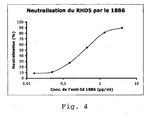
- an inhibition test was performed with the culture supernatants. This test is carried out in order to select among the clones the anti-idiotypic antibodies which specifically recognize an epitopic determinant localized at the paratope of the Ac RHD5. We thus tested the anti-idiotypic antibodies in an ELISA test for inhibition of binding of RHD5 to insolubilized FVIII.
- Recombinant factor VIII (recFVIII) (Baxter) at 2 ⁇ g / ml in glycine buffer, 50 ⁇ l / well, was insolubilized and left for 2 hours at room temperature.
- the RHD5 antibody (or a non-relevant IgG1) at 0.6 ⁇ g / ml was preincubated for 2 hours with the culture supernatants at 1/1, 1/2 and 1/4 dilution in the Magic Buffer. . Washing of the wells 3 times is carried out with PBS / Tween buffer, then saturation with 100 ⁇ l / well of Magic Buffer (30 min at room temperature) is performed.
- RHD5 or non-relevant IgG1 culture supernatant (2 hours at room temperature, Magic Buffer)
- HRP Southern Biotechnology
- 11 clones are capable of specifically inhibiting the binding of RHD5 antibody to insolubilized recFVIII.
- NB A negative value indicates either the possibility of fixation on an external region of the paratope or is a reflection of an insufficient concentration of Ac in the culture supernatant, however, given the number of positives, negative wells were eliminated from the rest of the trials).
- the RHD5 antibody is incubated at a concentration of 1 ⁇ g / ml with the supernatants of the various clones selected during the inhibition test (dilutions 3 times, 6 times, 12 times and 24 times) in Magic Buffer at 37 ° C. After 30 min, FVIII Kogenate (Bayer) at 0.5 U / ml final is added and a further incubation of 30 min at 37 ° C is performed. The samples are diluted 30X in the Magic Buffer, then the reagents of the Chromogenic Test DADE (chromogenic Factor VIII, Dade Behring Gmbh, Marburg, Germany) are added according to the manufacturer's instructions.
- Chromogenic Test DADE chromogenic Factor VIII, Dade Behring Gmbh, Marburg, Germany
- Anti-idiotypic antibody 18B6 was produced in DMEM culture medium. This production was followed by purification on a Protein G affinity column (which makes it possible to purify and then concentrate the antibodies and thus to ensure further the specificity of the anti-idiotypic antibody obtained). Purification 18B6: production of 8 ml to 8.48 mg / ml
- ELISA assay direct attachment of anti-idiotypic antibody 18B6 to insolubilized RHD5 antibody
- FIG. figure 2 Direct attachment of the anti-idiotypic antibody 18B6 to the insolubilized RHD5 antibody is shown in FIG. figure 2 .
- the curve shows that the binding of the 18B6 antibody to the RHD5 is dose dependent.
- the protocol is identical to that described in point V with a final RHD5 concentration of 0.4 ⁇ g / ml and a purified anti-idiotypic curve ranging from 4 to 0.002 ⁇ g / ml final.
- the binding kinetics of the anti-idiotypic antibody 18B6 on the inhibitory antibody RHD5 was evaluated by the "Surface plasmon resonance Biacore" method using the Pharmacia Biosensor BIAcore (Pharmacia Biosensor AB, Uppsala, Sweden).
- RHD5 antibodies were immobilized on an activated surface of a CM5 probe.
- Anti-idiotypic antibodies 18B6 were infused with several concentrations of RHD5 immobilized on the surface of the probe.
- the 18B6 antibody is IgG1, Kappa.
- hybridoma mRNA producing anti-idiotypic antibody 18B6 was isolated using the Quick Prep Micro mRNA Purification Kit (Amersham Pharmacia Biotech, Uppsala, Sweden).
- the cDNA was synthesized using the First-strand cDNA Synthesis Kit (Amersham Pharmacia Biotech).
- the cDNA coding for the heavy chain (VH) and for the light chain (VL) was amplified by PCR (Polymerase Chain Reaction) using specific primers corresponding to the different families of genes potentially encountered in the mouse.
- PCR products were isolated from a 1.5% agarose gel using the QIA Fast Gel Extraction Kit (Qiagen, Hilden, Germany) and cloned using the pGEM-T Easy Vector system (Promega, Madison, WI). Plasmid DNA from the positive colonies was isolated using High Pure Plasmid Isolation Kit (Roche Diagnostics, Mannheim, Germany) and sequenced in both directions with Seqenase (US Biochemical, Cleveland, OH).
- the 18B6 antibody completely inhibits the binding of the RHD5 antibody to its antigen, Factor VIII.
- the RHD5 antibody carries an idiotype complementary to that of 18B6.
- the binding of an antibody to the antigen concerns a mutual recognition interface of 6 to 12 angstroms 2 , corresponding to a large number of amino acids associating with each other by means of hydrogen bonds, hydrophobic or polar attraction and VanderWals bridges.
- On a functional level when an antibody completely inhibits the binding of an antibody to the antigen, this implies that the inhibitory antibody carries an "internal image" of the antigen, namely a three-dimensional structure mimicking the 3-D structure of the antigen.
- the primary structure (amino acid sequence) of 18B6 offers a low homology with that of the factor VIII domain C1
- the alignment of the secondary structures of the 18B6 antibody with that of the C1 domain of FVIII, the antigenic target of the RHD5 antibodies, as well as the three-dimensional modeling of 18B6 indicate, by superposition with the 3-D structure of the C1 domain, that the variable part of the light chain (VL) of 18B6 represents an internal image of the C1 domain.
- VL variable part of the light chain
Landscapes
- Health & Medical Sciences (AREA)
- Chemical & Material Sciences (AREA)
- Life Sciences & Earth Sciences (AREA)
- Organic Chemistry (AREA)
- Medicinal Chemistry (AREA)
- Immunology (AREA)
- General Health & Medical Sciences (AREA)
- Genetics & Genomics (AREA)
- Engineering & Computer Science (AREA)
- Bioinformatics & Cheminformatics (AREA)
- Biochemistry (AREA)
- Pharmacology & Pharmacy (AREA)
- Proteomics, Peptides & Aminoacids (AREA)
- Animal Behavior & Ethology (AREA)
- Molecular Biology (AREA)
- Public Health (AREA)
- Veterinary Medicine (AREA)
- Biophysics (AREA)
- Nuclear Medicine, Radiotherapy & Molecular Imaging (AREA)
- Biotechnology (AREA)
- Chemical Kinetics & Catalysis (AREA)
- Hematology (AREA)
- Diabetes (AREA)
- Microbiology (AREA)
- Zoology (AREA)
- Wood Science & Technology (AREA)
- Biomedical Technology (AREA)
- General Chemical & Material Sciences (AREA)
- Cell Biology (AREA)
- Epidemiology (AREA)
- Mycology (AREA)
- General Engineering & Computer Science (AREA)
- Peptides Or Proteins (AREA)
- Preparation Of Compounds By Using Micro-Organisms (AREA)
- Medicines Containing Antibodies Or Antigens For Use As Internal Diagnostic Agents (AREA)
- Medicines That Contain Protein Lipid Enzymes And Other Medicines (AREA)
Applications Claiming Priority (2)
| Application Number | Priority Date | Filing Date | Title |
|---|---|---|---|
| FR0601633A FR2897868B1 (fr) | 2006-02-24 | 2006-02-24 | Anticorps anti-idiotypiques neutralisant l'activite inhibitrice d'un anticorps inhibiteur dirige contre le domaine c1 du facteur viii. |
| EP07731046A EP1996626B1 (de) | 2006-02-24 | 2007-02-26 | Antiidiotypischer antikörper, der die inhibierende wirkung eines gegen die c1-domäne von faktor viii gerichteten inhibierenden antikörpers neutralisiert |
Related Parent Applications (1)
| Application Number | Title | Priority Date | Filing Date |
|---|---|---|---|
| EP07731046A Division EP1996626B1 (de) | 2006-02-24 | 2007-02-26 | Antiidiotypischer antikörper, der die inhibierende wirkung eines gegen die c1-domäne von faktor viii gerichteten inhibierenden antikörpers neutralisiert |
Publications (2)
| Publication Number | Publication Date |
|---|---|
| EP2100903A2 true EP2100903A2 (de) | 2009-09-16 |
| EP2100903A3 EP2100903A3 (de) | 2010-01-20 |
Family
ID=37106244
Family Applications (3)
| Application Number | Title | Priority Date | Filing Date |
|---|---|---|---|
| EP11186600A Withdrawn EP2447284A1 (de) | 2006-02-24 | 2007-02-26 | Anti-Idiotypische Antikörper, die die Hemmungsaktivität eines hemmenden Antikörpers neutralisieren, der auf die C1-Domäne des Faktors VIII ausgerichtet ist |
| EP07731046A Not-in-force EP1996626B1 (de) | 2006-02-24 | 2007-02-26 | Antiidiotypischer antikörper, der die inhibierende wirkung eines gegen die c1-domäne von faktor viii gerichteten inhibierenden antikörpers neutralisiert |
| EP09002329A Withdrawn EP2100903A3 (de) | 2006-02-24 | 2007-02-26 | Anti-idiotypische Antikörper, die die Hemmungsaktivität eines hemmenden Antikörpers neutralisieren, der auf die C1-Domäne des Faktors VIII ausgerichtet ist |
Family Applications Before (2)
| Application Number | Title | Priority Date | Filing Date |
|---|---|---|---|
| EP11186600A Withdrawn EP2447284A1 (de) | 2006-02-24 | 2007-02-26 | Anti-Idiotypische Antikörper, die die Hemmungsaktivität eines hemmenden Antikörpers neutralisieren, der auf die C1-Domäne des Faktors VIII ausgerichtet ist |
| EP07731046A Not-in-force EP1996626B1 (de) | 2006-02-24 | 2007-02-26 | Antiidiotypischer antikörper, der die inhibierende wirkung eines gegen die c1-domäne von faktor viii gerichteten inhibierenden antikörpers neutralisiert |
Country Status (15)
| Country | Link |
|---|---|
| US (2) | US20080160015A1 (de) |
| EP (3) | EP2447284A1 (de) |
| JP (1) | JP2009528285A (de) |
| KR (1) | KR20080106289A (de) |
| CN (1) | CN101522718A (de) |
| AT (1) | ATE530579T1 (de) |
| AU (1) | AU2007217218A1 (de) |
| BR (1) | BRPI0707031A2 (de) |
| CA (1) | CA2643565A1 (de) |
| DK (1) | DK1996626T3 (de) |
| ES (1) | ES2376489T3 (de) |
| FR (1) | FR2897868B1 (de) |
| IL (1) | IL193212A0 (de) |
| PL (1) | PL1996626T3 (de) |
| WO (1) | WO2007096536A1 (de) |
Families Citing this family (15)
| Publication number | Priority date | Publication date | Assignee | Title |
|---|---|---|---|---|
| FR2889534B1 (fr) * | 2005-08-04 | 2012-11-02 | Lab Francais Du Fractionnement | Anticorps anti-idiotypique neutralisant l'activite inhibitrice d'un anticorps inhibiteur du facteur viii |
| JP2010536363A (ja) * | 2007-08-23 | 2010-12-02 | エルエフビー バイオテクノロジース | ファクターviiiのc1ドメインに対する阻害抗体の阻害活性を中性化する抗イデオタイプ抗体 |
| FR2933496B1 (fr) * | 2008-07-02 | 2012-10-05 | Lfb Biotechnologies | Procede de mesure du taux de facteur vii active dans un echantillon |
| CA2771999A1 (en) | 2009-08-24 | 2011-03-10 | Amunix Operating Inc. | Coagulation factor vii compositions and methods of making and using same |
| FR2969761A1 (fr) * | 2010-12-22 | 2012-06-29 | Lfb Biotechnologies | Procede de dosage d'anticorps diriges contre le facteur viii |
| JP6256882B2 (ja) | 2012-02-15 | 2018-01-10 | アムニクス オペレーティング インコーポレイテッド | 第viii因子組成物、ならびに組成物の作製方法および用途 |
| EP2822577B1 (de) | 2012-02-15 | 2019-02-06 | Bioverativ Therapeutics Inc. | Rekombinante faktor-viii-proteine |
| EP3722320A3 (de) | 2012-10-25 | 2020-12-30 | Bioverativ USA Inc. | Anti-komplement-c1s-antikörper und verwendungen davon |
| DK2914291T3 (da) | 2012-11-02 | 2022-05-16 | Bioverativ Usa Inc | Anti-komplement-c1s-antistoffer og anvendelser deraf |
| TW202003554A (zh) | 2013-08-14 | 2020-01-16 | 美商百歐維拉提夫治療公司 | 因子viii-xten融合物及其用途 |
| CA2981321A1 (en) | 2015-04-06 | 2016-10-13 | True North Therapeutics, Inc. | Humanized anti-c1s antibodies and methods of use thereof |
| EA201890423A1 (ru) | 2015-08-03 | 2018-07-31 | Биовератив Терапьютикс Инк. | Слитые белки фактора ix, способы их получения и применения |
| CN110300520B (zh) * | 2016-10-12 | 2022-10-04 | 美国比奥维拉迪维股份有限公司 | 抗C1s抗体及其使用方法 |
| MX2019006444A (es) | 2016-12-02 | 2019-10-30 | Bioverativ Therapeutics Inc | Métodos de tratamiento de artropatía hemofílica utilizando factores de coagulación quiméricos. |
| PL3793588T3 (pl) | 2018-05-18 | 2025-09-01 | Bioverativ Therapeutics Inc. | Sposoby leczenia hemofilii a |
Citations (3)
| Publication number | Priority date | Publication date | Assignee | Title |
|---|---|---|---|---|
| WO2004014955A1 (en) | 2002-07-31 | 2004-02-19 | D. Collen Research Foundation Vzw | Anti-idiotypic antibodies against factor viii inhibitor and uses thereof |
| WO2005016455A2 (en) | 2003-08-14 | 2005-02-24 | D. Collen Research Foundation Vzw | Antibodies against factor viii with modified glycosylation in the variable region |
| FR2889534A1 (fr) | 2005-08-04 | 2007-02-09 | Lab Francais Du Fractionnement | Anticorps anti-idiotypique neutralisant l'activite inhibitrice d'un anticorps inhibiteur du facteur viii |
Family Cites Families (2)
| Publication number | Priority date | Publication date | Assignee | Title |
|---|---|---|---|---|
| FR508320A (fr) | 1920-01-12 | 1920-10-07 | Deynoux Freres | Fermoir pour sacs et objets analogues |
| WO2001004269A1 (en) * | 1999-07-14 | 2001-01-18 | D. Collen Research Foundation Vzw | Ligands for use in therapeutic compositions for the treatment of hemostasis disorders |
-
2006
- 2006-02-24 FR FR0601633A patent/FR2897868B1/fr not_active Expired - Fee Related
-
2007
- 2007-02-26 CA CA002643565A patent/CA2643565A1/en not_active Abandoned
- 2007-02-26 AT AT07731046T patent/ATE530579T1/de active
- 2007-02-26 ES ES07731046T patent/ES2376489T3/es active Active
- 2007-02-26 US US11/817,018 patent/US20080160015A1/en not_active Abandoned
- 2007-02-26 KR KR1020087023279A patent/KR20080106289A/ko not_active Ceased
- 2007-02-26 BR BRPI0707031-4A patent/BRPI0707031A2/pt not_active Application Discontinuation
- 2007-02-26 CN CNA2007800136052A patent/CN101522718A/zh active Pending
- 2007-02-26 EP EP11186600A patent/EP2447284A1/de not_active Withdrawn
- 2007-02-26 EP EP07731046A patent/EP1996626B1/de not_active Not-in-force
- 2007-02-26 DK DK07731046.4T patent/DK1996626T3/da active
- 2007-02-26 WO PCT/FR2007/000342 patent/WO2007096536A1/fr not_active Ceased
- 2007-02-26 JP JP2008555845A patent/JP2009528285A/ja active Pending
- 2007-02-26 PL PL07731046T patent/PL1996626T3/pl unknown
- 2007-02-26 AU AU2007217218A patent/AU2007217218A1/en not_active Abandoned
- 2007-02-26 EP EP09002329A patent/EP2100903A3/de not_active Withdrawn
- 2007-08-23 US US11/844,331 patent/US8110190B2/en not_active Expired - Fee Related
-
2008
- 2008-08-03 IL IL193212A patent/IL193212A0/en unknown
Patent Citations (3)
| Publication number | Priority date | Publication date | Assignee | Title |
|---|---|---|---|---|
| WO2004014955A1 (en) | 2002-07-31 | 2004-02-19 | D. Collen Research Foundation Vzw | Anti-idiotypic antibodies against factor viii inhibitor and uses thereof |
| WO2005016455A2 (en) | 2003-08-14 | 2005-02-24 | D. Collen Research Foundation Vzw | Antibodies against factor viii with modified glycosylation in the variable region |
| FR2889534A1 (fr) | 2005-08-04 | 2007-02-09 | Lab Francais Du Fractionnement | Anticorps anti-idiotypique neutralisant l'activite inhibitrice d'un anticorps inhibiteur du facteur viii |
Non-Patent Citations (18)
| Title |
|---|
| "Current Protocols in Immunology", 1994, JOHN WILEY & SONS, INC |
| ANANYEVA NM ET AL., BLOOD COAGUL FIBRINOLYSIS. MAR, vol. 15, no. 2, 2004, pages 109 - 24 |
| FAY ET AL., J BIOL CHEM., vol. 271, no. 11, 1996, pages 6027 - 6032 |
| GILLES JG ET AL., BLOOD, vol. 82, 1993, pages 2452 - 2461 |
| J.G. GILLES ET AL., BLOOD, vol. 103, 2004, pages 2617 - 23 |
| JACQUEMIN ET AL., BLOOD, vol. 92, 1998, pages 494 - 506 |
| JACQUEMIN ET AL., BLOOD, vol. 92, 1998, pages 496 - 506 |
| JACQUEMIN ET AL., BLOOD, vol. 92, no. 2, 15 July 1998 (1998-07-15), pages 496 - 506 |
| JACQUEMIN ET AL., BLOOD, vol. 95, 2000, pages 156 - 163 |
| JARVIS ET AL., THROMB HAEMOST., vol. 75, no. 2, February 1996 (1996-02-01), pages 318 - 25 |
| JONES ET AL., NATURE, vol. 321, 1986, pages 522 |
| KABAT ET AL.: "Sequences of Proteins of Immunological Interestb", vol. 91, 1991, NIH PUBLICATION, pages: 3242 |
| LOLLAR ET AL., J CLIN INVEST., vol. 93, no. 6, June 1994 (1994-06-01), pages 2497 - 504 |
| MORRISON ET AL., PROC. NATL. ACÀD. SCI. U-.S.A., vol. 81, 1984, pages 6851 - 55 |
| P. COMELIS: "Les anticorps monoclonaux", REVUE IRE, vol. 7, no. 4, 1983 |
| RIECHMANN ET AL., NATURE, vol. 332, 1988, pages 323 |
| SAINT-RÉMY JM ET AL., VOX SANG, vol. 77, no. 1, 1999, pages 21 - 24 |
| WOOD ET AL., NATURE, vol. 312, 1984, pages 330 - 337 |
Also Published As
| Publication number | Publication date |
|---|---|
| KR20080106289A (ko) | 2008-12-04 |
| JP2009528285A (ja) | 2009-08-06 |
| EP1996626B1 (de) | 2011-10-26 |
| ES2376489T3 (es) | 2012-03-14 |
| PL1996626T3 (pl) | 2012-04-30 |
| CN101522718A (zh) | 2009-09-02 |
| US8110190B2 (en) | 2012-02-07 |
| EP2100903A3 (de) | 2010-01-20 |
| US20080160015A1 (en) | 2008-07-03 |
| FR2897868A1 (fr) | 2007-08-31 |
| AU2007217218A1 (en) | 2007-08-30 |
| BRPI0707031A2 (pt) | 2011-04-12 |
| DK1996626T3 (da) | 2012-02-13 |
| FR2897868B1 (fr) | 2012-08-31 |
| EP2447284A1 (de) | 2012-05-02 |
| CA2643565A1 (en) | 2007-08-30 |
| IL193212A0 (en) | 2009-02-11 |
| US20090263380A1 (en) | 2009-10-22 |
| ATE530579T1 (de) | 2011-11-15 |
| WO2007096536A1 (fr) | 2007-08-30 |
| EP1996626A1 (de) | 2008-12-03 |
Similar Documents
| Publication | Publication Date | Title |
|---|---|---|
| EP1996626B1 (de) | Antiidiotypischer antikörper, der die inhibierende wirkung eines gegen die c1-domäne von faktor viii gerichteten inhibierenden antikörpers neutralisiert | |
| EP2190881A1 (de) | Antiidiotypische antikörper, die die inhibitorische aktivität eines gegen die c1-domäne von faktor viii gerichteten inhibierenden antikörpers neutralisieren | |
| EP1749537B1 (de) | Antiidiotypische Antikörper mit neutralisierender Wirkung gegen Faktor VIII-inhibierende Antikörper | |
| EP0804484A1 (de) | Antigene polypeptidsequenz von faktor viii, fragmenten und/oder epitope davon | |
| EP1581560B1 (de) | Anti-idiotypische antikörper gegen faktor-viii-hemmer und deren verwendungen | |
| US20110274684A1 (en) | Cytotoxic antibodies directed against antibodies inhibiting factor viii |
Legal Events
| Date | Code | Title | Description |
|---|---|---|---|
| PUAI | Public reference made under article 153(3) epc to a published international application that has entered the european phase |
Free format text: ORIGINAL CODE: 0009012 |
|
| 17P | Request for examination filed |
Effective date: 20090423 |
|
| AC | Divisional application: reference to earlier application |
Ref document number: 1996626 Country of ref document: EP Kind code of ref document: P |
|
| AK | Designated contracting states |
Kind code of ref document: A2 Designated state(s): AT BE BG CH CY CZ DE DK EE ES FI FR GB GR HU IE IS IT LI LT LU LV MC NL PL PT RO SE SI SK TR |
|
| PUAL | Search report despatched |
Free format text: ORIGINAL CODE: 0009013 |
|
| AK | Designated contracting states |
Kind code of ref document: A3 Designated state(s): AT BE BG CH CY CZ DE DK EE ES FI FR GB GR HU IE IS IT LI LT LU LV MC NL PL PT RO SE SI SK TR |
|
| AKX | Designation fees paid |
Designated state(s): AT BE BG CH CY CZ DE DK EE ES FI FR GB GR HU IE IS IT LI LT LU LV MC NL PL PT RO SE SI SK TR |
|
| 17Q | First examination report despatched |
Effective date: 20130823 |
|
| STAA | Information on the status of an ep patent application or granted ep patent |
Free format text: STATUS: THE APPLICATION IS DEEMED TO BE WITHDRAWN |
|
| 18D | Application deemed to be withdrawn |
Effective date: 20130903 |