EP2100967A1 - Procédé de production de lacto-n-biose i ou de galacto-n-biose - Google Patents
Procédé de production de lacto-n-biose i ou de galacto-n-biose Download PDFInfo
- Publication number
- EP2100967A1 EP2100967A1 EP07859851A EP07859851A EP2100967A1 EP 2100967 A1 EP2100967 A1 EP 2100967A1 EP 07859851 A EP07859851 A EP 07859851A EP 07859851 A EP07859851 A EP 07859851A EP 2100967 A1 EP2100967 A1 EP 2100967A1
- Authority
- EP
- European Patent Office
- Prior art keywords
- glucose
- udp
- combination
- galactose
- phosphate
- Prior art date
- Legal status (The legal status is an assumption and is not a legal conclusion. Google has not performed a legal analysis and makes no representation as to the accuracy of the status listed.)
- Granted
Links
Images

Classifications
-
- C—CHEMISTRY; METALLURGY
- C12—BIOCHEMISTRY; BEER; SPIRITS; WINE; VINEGAR; MICROBIOLOGY; ENZYMOLOGY; MUTATION OR GENETIC ENGINEERING
- C12N—MICROORGANISMS OR ENZYMES; COMPOSITIONS THEREOF; PROPAGATING, PRESERVING, OR MAINTAINING MICROORGANISMS; MUTATION OR GENETIC ENGINEERING; CULTURE MEDIA
- C12N15/00—Mutation or genetic engineering; DNA or RNA concerning genetic engineering, vectors, e.g. plasmids, or their isolation, preparation or purification; Use of hosts therefor
- C12N15/09—Recombinant DNA-technology
-
- C—CHEMISTRY; METALLURGY
- C12—BIOCHEMISTRY; BEER; SPIRITS; WINE; VINEGAR; MICROBIOLOGY; ENZYMOLOGY; MUTATION OR GENETIC ENGINEERING
- C12P—FERMENTATION OR ENZYME-USING PROCESSES TO SYNTHESISE A DESIRED CHEMICAL COMPOUND OR COMPOSITION OR TO SEPARATE OPTICAL ISOMERS FROM A RACEMIC MIXTURE
- C12P19/00—Preparation of compounds containing saccharide radicals
- C12P19/26—Preparation of nitrogen-containing carbohydrates
-
- C—CHEMISTRY; METALLURGY
- C12—BIOCHEMISTRY; BEER; SPIRITS; WINE; VINEGAR; MICROBIOLOGY; ENZYMOLOGY; MUTATION OR GENETIC ENGINEERING
- C12N—MICROORGANISMS OR ENZYMES; COMPOSITIONS THEREOF; PROPAGATING, PRESERVING, OR MAINTAINING MICROORGANISMS; MUTATION OR GENETIC ENGINEERING; CULTURE MEDIA
- C12N11/00—Carrier-bound or immobilised enzymes; Carrier-bound or immobilised microbial cells; Preparation thereof
-
- Y—GENERAL TAGGING OF NEW TECHNOLOGICAL DEVELOPMENTS; GENERAL TAGGING OF CROSS-SECTIONAL TECHNOLOGIES SPANNING OVER SEVERAL SECTIONS OF THE IPC; TECHNICAL SUBJECTS COVERED BY FORMER USPC CROSS-REFERENCE ART COLLECTIONS [XRACs] AND DIGESTS
- Y02—TECHNOLOGIES OR APPLICATIONS FOR MITIGATION OR ADAPTATION AGAINST CLIMATE CHANGE
- Y02A—TECHNOLOGIES FOR ADAPTATION TO CLIMATE CHANGE
- Y02A50/00—TECHNOLOGIES FOR ADAPTATION TO CLIMATE CHANGE in human health protection, e.g. against extreme weather
- Y02A50/30—Against vector-borne diseases, e.g. mosquito-borne, fly-borne, tick-borne or waterborne diseases whose impact is exacerbated by climate change
Definitions
- the present invention relates to a method for producing lacto-N-biose I and galacto-N-biose using an enzyme method.
- Lacto-N-biose I (Gal ⁇ 1-3GlcNAc) and galacto-N-biose (Gal ⁇ 1-3GalNAc), which are ⁇ 1,3-galactosides, have structures often seen in physiologically active sugar chains. They can be applied as functional sugar and the like in food industries and can also be used as pharmaceutical preparations or reagents, such as substrates or inhibitors of enzymes or lectins, and constituent sugars of living bodies.
- Examples of a conventionally known method for producing these compounds include a method for producing lacto-N-biose I ( JP Patent Publication (Kokai) No. H06-253878 A (1994 )), which is characterized by sequentially reacting a substrate containing lactose and N-acetylglucosamine as a starting material with ⁇ -galactosidase derived from porcine testis and ⁇ -galactosidase produced by Bacillus circulans, and a method for producing complex carbohydrates ( JP Patent Publication (Kokai) No. 2003-189891 A ) using microorganisms, animal cells, or insect cells capable of producing complex carbohydrates from sugar nucleotides and complex carbohydrate precursors.
- the former method exerts low reaction efficiency and the latter method is a method for producing such sugar using a fermentation method.
- both methods lack practicality in that production of the compounds always creates rising costs.
- JP Patent Publication (Kokai) No. 2005-341883 A suggests that a lacto-N-biose derivative can be synthesized using the reverse reaction catalytic activity of lacto-N-biose phosphorylase, and galactose-1-phosphate as a raw material.
- galactose-1-phosphate is expensive, and thus the method lacks practical value.
- the present invention encompasses the following (1) to (8).
- the present invention relates to a method for producing lacto-N-biose I or galacto-N-biose using an enzyme method.
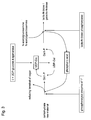
- Fig. 3 schematically shows the reaction pathway of the enzyme method of the present invention.
- the enzyme method of the present invention mainly comprises the following three enzyme reactions: (1) a phosphorolytic reaction of a carbohydrate raw material; (2) a reaction for conversion of glucose-1-phosphate to galactose-1-phosphate; and (3) a reaction for synthesis of lacto-N-biose I or galacto-N-biose from N-acetylglucosamine or N-acetylgalactosamine.
- the reaction of (1) produces a glucose-1-phosphate and a reducing terminal of sugar via the reaction of a combination of a carbohydrate raw material and an enzyme (G1P synthase) that catalyzes phosphorolysis of the carbohydrate raw material to give ⁇ -glucose-1-phosphate contained as the above factor (i), in the presence of phosphoric acid.
- G1P synthase an enzyme that catalyzes phosphorolysis of the carbohydrate raw material to give ⁇ -glucose-1-phosphate contained as the above factor (i), in the presence of phosphoric acid.
- Examples of the combination of the carbohydrate raw material and the enzyme used as the above factor (i) include, but are not limited to, any one of: a combination of sucrose with sucrose phosphorylase; a combination of starch or dextrin with phosphorylase; a combination of cellobiose with cellobiose phosphorylase; a combination of cellodextrin(s) with cellodextrin phosphorylase and cellobiose phosphorylase; a combination of laminarioligosaccharide(s) with laminaribiose phosphorylase; and a combination of trehalose with trehalose phosphorylase; or a combination thereof.
- Examples of a more preferable combination include any one of: a combination of sucrose with sucrose phosphorylase; a combination of cellobiose with cellobiose phosphorylase; a combination of cellodextrin(s) with cellodextrin phosphorylase and cellobiose phosphorylase; and a combination of starch or dextrin with phosphorylase; or a combination thereof.
- the most preferable combination is a combination of sucrose with sucrose phosphorylase.
- the concentration of a carbohydrate raw material to be used herein is not limited, but preferably ranges from approximately 1 to approximately 1000 g/L, and more preferably ranges from approximately 10 to approximately 1000 g/L.
- G1P synthase to be used herein is not particularly limited. Various forms of the G1P synthase can be used, such as cell extracts, purified enzymes, and immobilized enzymes.
- the amount of the G1P synthase to be used herein is also not particularly limited. For example, approximately 0.1 units to approximately 100 units of the G1P synthase can be used per gram of a carbohydrate raw material.
- phosphoric acid involved in the above reaction may be of any origin.
- concentration of phosphoric acid to be added to the reaction system is not particularly limited, but preferably ranges from approximately 0.1 mM to approximately 1000 mM, and more preferably ranges from approximately 1 mM to approximately 100 mM.
- the reaction of the above (2) coverts, in the presence of UDP-glucose-4-epimerase and with the use of a combination(s) of an enzyme(s) and cofactor(s) contained as the above factor (ii), glucose-1-phosphate produced by the reaction of the above (1) to UDP-Glc and converts UDP-Gal to galactose-1-phosphate.
- Examples of an enzyme(s) to be used as the factor (ii) include any one of: a combination of an enzyme that converts ⁇ -glucose-1-phosphate to UDP-glucose and an enzyme that converts UDP galactose to galactose-1-phosphate; and an enzyme (UDP-Gly synthase) that converts ⁇ -glucose-1-phosphate and UDP-galactose to UDP-glucose and ⁇ -galactose-1-phosphate, respectively; or a combination thereof.
- the enzyme(s) or enzyme combination contained as the factor (ii) proceeds the conversion reaction of the above (2) that converts ⁇ -glucose-1-phosphate to ⁇ -galactose-1-phosphate in the presence of a cofactor(s) for proceeding the reaction by the enzyme(s) or enzyme combination, and UDP-glucose-4-epimerase.
- examples of the combination of the above factor (ii) intended in the present invention include the following combinations: a combination of UDP-glucose-hexose-1-phosphate uridylyltransferase (EC 2.7.7.12) with UDP-glucose, UDP-galactose, or a mixture thereof; a combination of glucose-1-phosphate uridylyltransferase (EC 2.7.7.9) and galactose-1-phosphate uridylyltransferase (EC 2.7.7.10) with UTP; a combination of glucose-1-phosphate uridylyltransferase (EC 2.7.7.9) and galactose-1-phosphate uridylyltransferase (EC 2.7.7.10) with UDP-glucose and/or UDP-galactose and pyrophosphate; a combination of glucose-1-phosphate uridylyltransferase (EC 2.7.
- the combination of the above factor (ii) is: a combination of UDP-glucose-hexose-1-phosphate uridylyltransferase (EC 2.7.7.12) with UDP-glucose or UDP-galactose or both of them; a combination of an enzyme having both activity of glucose-1-phosphate uridylyltransferase and activity of galactose-1-phosphate uridylyltransferase with UTP; a combination of an enzyme having both activity of glucose-1-phosphate uridylyltransferase and activity of galactose-1-phosphate uridylyltransferase with UDP-glucose and/or UDP-galactose and pyrophosphate; or a combination of an enzyme having both activity of glucose-1-phosphate uridylyltransferase and activity of galactose-1-phosphate uridylyltransferase
- enzymes are not particularly limited and enzymes of any origin can be used herein.
- the forms of such enzymes to be used herein are not particularly limited and various forms thereof can be used, such as cell extracts, purified enzymes, and immobilized enzymes.
- the amounts of such enzymes to be used herein are also not particularly limited. For example, approximately 1 unit to approximately 1000 units of such enzymes can be used per gram of a carbohydrate raw material.
- the concentration of a cofactor to be used herein is not particularly limited, but preferably ranges from approximately 0.01 mM to approximately 100 mM and more preferably ranges from approximately 0.02 mM to approximately 10 mM.
- UDP-glucose-4-epimerase is not particularly limited and the enzyme of any origin can be used herein.
- the form of UDP-glucose-4-epimerase to be used herein is not particularly limited.
- Various forms of the enzyme can be used herein, such as cell extracts, purified enzymes, and immobilized enzymes.
- the amount of the enzyme to be used herein is also not particularly limited. For example, approximately 0.1 units to approximately 100 units of the enzyme can be used per gram of a carbohydrate raw material.
- the reaction of the above (3) synthesizes, in the presence of lacto-N-biose phosphorylase and with the use of N-acetylglucosamine or N-acetylgalactosamine as a starting material, lacto-N-biose I or galacto-N-biose from galactose-1-phosphate produced by the above reaction (2).
- concentration of N-acetylglucosamine or N-acetylgalactosamine used as a starting material is not particularly limited, but preferably ranges from approximately 10 mM to approximately 2 M and more preferably ranges from approximately 100 mM to approximately 1 M. Lacto-N-biose phosphorylase of any origin can be used herein.
- the enzyme from the bacteria of the genus Bifidobacterium (e.g., JP Patent Publication (Kokai) No. 2005-341883 A ) is used.
- the form of lacto-N-biose phosphorylase to be used herein is not particularly limited and various forms thereof can be used, such as cell extracts, purified enzymes, and immobilized enzymes.
- the amount of lacto-N-biose phosphorylase to be used herein is also not particularly limited. For example, approximately 0.1 units to approximately 100 units of lacto-N-biose phosphorylase can be used per gram of a carbohydrate raw material.
- 1 unit of lacto-N-biose phosphorylase is the enzyme level at which 1 micromole of phosphoric acid is liberated per minute in a reaction solution comprising 0.1 M MOPS buffer (pH 7.5), 10 mM galactose-1-phosphate, and 1 M N-acetylglucosamine
- 1 unit of UDP-glucose-hexose-1-phosphate uridylyltransferase is the enzyme level at which 1 micromole of glucose-1-phosphate is generated per minute in a reaction solution comprising 0.1 M MOPS buffer (pH 7.5), 10 mM galactose-1-phosphate, 10 mM UDP-glucose, and 10 mM magnesium chloride
- 1 unit of UDP-glucose-4-epimerase is the enzyme level at which 1 micromole of UDP-glucose is generated per minute in a reaction solution comprising 0.1 M MOPS buffer
- the above-mentioned enzymes of the present invention may be of any origin.
- they may be any enzymes from prokaryotes such as bacteria or from eukaryotes such as yeast, fungus, and animal. They may also be recombinant enzymes. Commercially available enzymes can be used as such enzymes. Alternatively, such enzymes may be purified from the nature by methods known to persons skilled in the art or may be obtained by use of gene recombination methods, for example.
- an enzyme of the present invention is generated by carrying out PCR using primers designed based on the nucleotide sequence of the enzyme gene that is described in a document or registered in a known nucleic acid or protein sequence database, so as to amplify cDNA prepared from mRNA corresponding to the enzyme gene in an appropriate library, incorporating the cDNA into a commercially available gene expression vector, transforming a bacterial cell such as Escherichia coli with the expression vector, and allowing the enzyme to be generated within the cell.
- the generated enzyme can be purified by a protein purification method known to persons skilled in the art, such as crude fractionation (e.g., ammonium sulfate fractionation) or various types of column chromatography, for example. Also, the purification can be facilitated by expressing an enzyme in the form of fusion protein with GST or His-tag.
- a protein purification method known to persons skilled in the art, such as crude fractionation (e.g., ammonium sulfate fractionation) or various types of column chromatography, for example.
- the purification can be facilitated by expressing an enzyme in the form of fusion protein with GST or His-tag.
- sequences included in GenBank, UniGene, EMBL, or the like can be used.
- Examples of a program that can be used as a sequence search program include BLAST and FASTA.
- a primer is generally 17 to 30 bases in length and is preferably 19 to 25 bases in length.
- PCR reaction can be conducted by use of a target enzyme gene or the corresponding cDNA as a template and a sense primer and antisense primer having the above length (containing the 5' end or the 3' end of said gene or cDNA, respectively) synthesized with an automatic DNA synthesizer.
- PCR is generally conducted such that in the presence of a target template DNA, primers, 4 types of bases (dNTPs), and heat stable DNA polymerase, 20 to 40 cycles each consisting of denaturation, annealing, and elongation are carried out.
- Denaturation is a process for dissociating double-stranded DNA into single strands, which is generally carried out at 94°C for 15 seconds to 5 minutes.
- Annealing is a process for annealing a single-stranded template DNA and primers complementary thereto, which is generally carried out at 55°C to 60°C for 30 seconds to 2 minutes.
- Elongation is a reaction for elongation of primers along the template DNA, which is generally carried out at 72°C for 30 seconds to 10 minutes.
- Transformation can be carried out using techniques as described in Sambrook et al., Molecular Cloning, A Laboratory Manual (1989). Cold Spring Harbor Laboratory Press , for example.
- the enzymes of the present invention can also be directly purified from the above prokaryotic cells or eukaryotic cells.
- a target enzyme can be purified by preparing a cell disrupted solution and then carrying out an appropriate combination of general techniques for enzyme purification, such as centrifugation, ammonium sulfate fractionation, dialysis, various types of chromatography (e.g., gel filtration chromatography, ion exchange chromatography, hydrophobic interaction chromatography, and affinity chromatography), electrophoresis, ultrafiltration, and crystallization.
- the forms of enzymes that can be used in the present invention may be purified enzymes, or crude enzymes (e.g., cell extracts and freeze-dried products). When a crude enzyme is used, factors that interfere with the above reactions of the present invention should not be contained.
- the above enzymes can be immobilized on carriers and then used.
- a method for preparing an immobilized enzyme include methods known to persons skilled in the art, such as a carrier binding method (e.g., a physical adsorption method, an ion binding method, a covalent binding method, and a biochemically specific binding method), a crosslinking method, and entrapment.
- the carrier binding method is a method for binding an enzyme to a water-insoluble carrier.
- a derivative of polysaccharide such as cellulose, dextran, and agarose, a synthetic polymer such as polyacrylamide gel, a polystyrene resin, and an ion exchange resin, and an inorganic material such as a porous glass and metal oxide can be used as a carrier, for example.
- the crosslinking method is a method for immobilizing enzymes, which involves reacting a reagent having 2 or more functional groups with enzymes and then crosslinking between the enzymes.
- glutaraldehyde an isocyanate derivative, N,N-ethylene-bis-maleimide, bis-diazo-benzidine, N,N-polymethylene-bis-iodoacetamide, or the like can be used.
- entrapment include lattice entrapment in which an enzyme is entrapped within gel matrix of natural polymers or synthetic polymers.
- a macromolecular compound used in such method include polyacrylamide gel, polyvinyl alcohol, a light curing resin, starch, konjac flour, gelatin, alginic acid, and carrageenan.
- the present method can be carried out using a bioreactor column on which all enzymes involved in the above reactions have been immobilized, as an enzyme-immobilized reactor.
- lacto-N-biose I and galacto-N-biose can be produced by continuously running an aqueous solution containing a raw material(s) and a cofactor(s) through the column at a certain flow rate (ex. residence time ranging from 0.01 hours to 300 hours).
- the mode of the reactions is not particularly limited, but the reactions are generally carried out in an aqueous solution or a buffer.
- the pH of a reaction solution preferably ranges from 5 to 9.
- the reaction temperature is not particularly limited, but preferably ranges from 5°C to 80°C and more preferably ranges from 20°C to 60°C.
- the time for reaction is not particularly limited, but preferably ranges from 0.1 to 3000 hours.
- An advantage of the present invention is that the above all enzyme reactions can be carried out conveniently and easily in one container or with the use of a bioreactor. Moreover, the above reactions (1) to (3) can be reversible based on the properties of enzymes involved in the reactions. Hence, overall reactions can be simple equilibration reactions, so that phosphoric acid resulting from the above reaction (3) and UDP-glucose and/or UDP-galactose resulting from the above reaction (2) can be recycled. Therefore, the presence of only catalytic amounts of these substances is required, leading to high cost effectiveness.
- Lacto-N-biose I and galacto-N-biose obtained according to the present invention can be purified by any methods.
- lacto-N-biose I and galacto-N-biose obtained according to the present invention can be isolated by column chromatography or crystallization.
- column chromatography include, but are not limited to, size exclusion chromatography, silica gel column chromatography, ion exchange chromatography, ultrafilter separation, and reverse osmosis membrane separation.
- Examples of a crystallization method include, but are not limited to, condensation, reduction in temperature, and addition of a solvent (e.g., ethanol, methanol, and acetone).
- a solvent e.g., ethanol, methanol, and acetone
- lacto-N-biose I For the synthesis of lacto-N-biose I using sucrose as a carbohydrate raw material, to obtain lacto-N-biose phosphorylase, sucrose phosphorylase, UDP-glucose-4-epimerase, UDP-glucose-hexose-1-phosphate uridylyltransferase, and an enzyme having both activity of glucose-1-phosphate uridylyltransferase and activity of galactose-1-phosphate uridylyltransferase, the enzyme genes were isolated from the genomic DNA of Bifidobacterium longum JCM1217 strain.
- the lacto-N-biose phosphorylase gene was obtained by a method described in JP Patent Publication (Kokai) No. 2005-341883 A .
- sucrose phosphorylase (BL0536; SEQ ID NO: 1), UDP-glucose-4-epimerase (BL1644; SEQ ID NO: 2), UDP-glucose-hexose-1-phosphate uridylyltransferase (BL1211; SEQ ID NO: 3), and the enzyme (BL0739; SEQ ID NO: 4) having both activity of glucose-1-phosphate uridylyltransferase and activity of galactose-1-phosphate uridylyltransferase, primers were designed based on the nucleotide sequence of the enzyme gene registered in the genome database of the Bifidobacterium longum NCC2705 strain(SEQ ID NOS: 5 to 20; see Table 1).
- PCR Polymerase chain reaction
- ORFs open reading frames
- the DNA nucleotide sequences were translated into amino acids, so that 1251-bp, 1023-bp, 1627-bp, and 1530-bp open reading frames (ORFs) each having high homology with the Bifidobacterium longum NCC2705 strain-derived gene were confirmed.
- ORFs open reading frames
- the full-length ORFs were amplified by PCR using primers (see Table 1) corresponding to the 5' and the 3' ends of the ORFs, and then they were ligated to a commercial pET30 plasmid for gene expression using the introduced restriction enzyme sites.
- Escherichia coli was transformed with the plasmid by a conventional method, thereby obtaining a transformant.
- the obtained transformant was cultured at 30°C and then recombinant enzymes were purified from the cell after induction of gene expression. Purification was carried out using a histidine tag sequence added to the C terminus of each enzyme and a nickel column. The amounts of enzymes each purified from 1 L of a culture solution are as listed in Table 1. Since each of the produced recombinant enzymes had enzyme activity, it was confirmed that each of the cloned genes was the enzyme gene of interest. The activity of each enzyme was as defined below. Incidentally, the reaction temperature employed herein was 30°C in all cases.
- lacto-N-biose phosphorylase was determined to be the enzyme level at which 1 micromole of phosphoric acid was liberated per minute in a reaction solution comprising 0.1 M MOPS buffer (pH 7.5), 10 mM galactose-1-phosphate, and 1 M N-acetylglucosamine.
- UDP-glucose-hexose-1-phosphate uridylyltransferase was determined to be the enzyme level at which 1 micromole of glucose-1-phosphate was generated per minute in a reaction solution comprising 0.1 M MOPS buffer (pH 7.5), 10 mM galactose-1-phosphate, 10 mM UDP-glucose, and 10 mM magnesium chloride.
- One (1) unit of UDP-glucose-4-epimerase was determined to be the enzyme level at which 1 micromole of UDP-glucose was generated per minute in a reaction solution comprising 0.1 M MOPS buffer (pH 7.5) and 5 mM UDP-galactose.
- sucrose phosphorylase was determined to be the enzyme level at which 1 micromole of glucose-1-phosphate was generated per minute in a reaction solution comprising 0.1 M MOPS buffer (pH 7.5), 10 mM sucrose, and 10 mM sodium hydrogenphosphate.
- One (1) unit of an enzyme having both activity of glucose-1-phosphate uridylyltransferase and activity of galactose-1-phosphate uridylyltransferase was determined to be the enzyme level at which 1 micromole of glucose-1-phosphate was generated per minute in a reaction solution comprising 0.1 M MOPS buffer (pH 7.5), 10 mM pyrophosphate, 10 mM UDP-glucose, and 10 mM magnesium chloride.
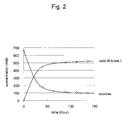
- Conversion reaction from sucrose as a carbohydrate raw material to lacto-N-biose I was carried out.
- the amount of the reaction solution was 1 milliliter.
- a substrate solution comprising 0.24 M sucrose, 0.24 M N-acetylglucosamine, 10 mM magnesium chloride, 30 mM phosphate-sodium buffer (pH 7.0), and 1 mM UDP-glucose at final concentrations was prepared.
- Conversion reaction from cellobiose as a carbohydrate raw material to lacto-N-biose I was carried out.
- the amount of the reaction solution was 1 milliliter.
- a substrate solution comprising 0.24 M cellobiose, 0.24 M N-acetylglucosamine, 10 mM magnesium chloride, 30 mM phosphate-sodium buffer (pH7.0), and 1 mM UDP-glucose at final concentrations was prepared.
- Conversion reaction from laminaribiose as a carbohydrate raw material to lacto-N-biose I was carried out.
- the amount of the reaction solution was 1 milliliter.
- a substrate solution comprising 0.24 M laminaribiose, 0.24 M N-acetylglucosamine, 10 mM magnesium chloride, 30 mM phosphate-sodium buffer (pH7.0), and 1 mM UDP-glucose at final concentrations was prepared.
- Conversion reaction from maltoheptaose as a carbohydrate raw material to lacto-N-biose I was carried out.
- the amount of the reaction solution was 1 milliliter.
- a substrate solution comprising 0.24 M maltoheptaose, 0.24 M N-acetylglucosamine, 10 mM magnesium chloride, 30 mM phosphate-sodium buffer (pH7.0), and 1 mM UDP-glucose at final concentrations was prepared.
- Lacto-N-biose I was synthesized as follows. The amount of the reaction solution was 10 milliliters. A substrate solution comprising 0.66 M sucrose, 0.60 M N-acetylglucosamine, 10 mM magnesium chloride, 30 mM phosphate-sodium buffer (pH 7.0), and 1 mM UDP-glucose at final concentrations was prepared.
- lacto-N-biose phosphorylase 0.25 U of lacto-N-biose phosphorylase, 0.08 U of sucrose phosphorylase, 2.50 U of UDP-glucose-4-epimerase, and 0.33 U of UDP-glucose-hexose-1-phosphate uridylyltransferase, were added per milliliter of the solution, followed by 500 hours of reaction at 30°C.
- the concentration of lacto-N-biose I in the reaction solution was approximately 0.52 M and approximately 80% of the carbohydrate raw material was converted to lacto-N-biose I.
- the pH of the reaction solution was adjusted to 4.5 with hydrochloric acid.
- Galacto-N-biose was synthesized as follows. The amount of the reaction solution was 10 milliliters. A substrate solution comprising 0.66 M sucrose, 0.60 M N-acetylgalactosamine, 10 mM magnesium chloride, 30 mM phosphate-sodium buffer (pH7.0), and 1 mM UDP-glucose at final concentrations was prepared.
- a bioreactor column ( ⁇ 2.6 cm ⁇ 30 cm) was prepared by filling a glass column (with a diameter of 2.6 cm) with DEAE-TOYOPEARL 650 M (160 mL) prepared in Example 8, to which the enzymes had been adsorbed.
- a substrate solution (500 ml, containing 0.66 M sucrose, 0.60 M N-acetylglucosamine, 10 mM magnesium chloride, 30 mM phosphate-sodium buffer (pH 7.0), and 1 mM UDP-glucose at final concentrations) was subjected to the column under conditions of 30°C and a flow rate of 0.1 ml per minute (residence time: 27 hours) for circulation.
- the concentration of lacto-N-biose I in the substrate solution was approximately 0.3 M
- after the 2 nd column circulation the same was 0.4 M
- after the 3 rd column circulation the same was 0.5 M.
- Example 10 Preparation of lacto-N-biose I using enzyme having both activity of glucose-1-phosphate uridylyltransferase (EC 2.7.7.9) and activity of galactose-1-phosphate uridylyltransferase (EC 2.7.7.10)
- Lacto-N-biose I was synthesized as follows. The amount of the reaction solution was 1 milliliter. A substrate solution comprising 0.66 M sucrose, 0.60 M N-acetylglucosamine, 10 mM magnesium chloride, 30 mM phosphoric acid buffer (pH 7.0), and 1 mM UTP at final concentrations was prepared.
- lacto-N-biose phosphorylase 0.25 U of lacto-N-biose phosphorylase, 0.08 U of sucrose phosphorylase, 2.5 U of UDP-glucose-4-epimerase, and 5.0U of an enzyme having both activity of glucose-1-phosphate uridylyltransferase (EC 2.7.7.9) and activity of galactose-1-phosphate uridylyltransferase (EC 2.7.7.10), were added per milliliter of the solution, followed by 60 hours of reaction at 30°C. After 60 hours, the concentration of lacto-N-biose I in the reaction solution was 50 mM.
- Example 11 Preparation of lacto-N-biose I using enzyme having both activity of glucose-1-phosphate uridylyltransferase (EC 2.7.7.9) and activity of galactose-1-phosphate uridylyltransferase (EC 2.7.7.10)
- Lacto-N-biose I was synthesized as follows. The amount of the reaction solution was 1 milliliter. A substrate solution comprising 0.66 M sucrose, 0.60 M N-acetylglucosamine, 10 mM magnesium chloride, 30 mM phosphate buffer (pH 7.0), 1 mM UDP-glucose, and 1 mM sodium pyrophosphate at final concentrations was prepared.
- lacto-N-biose phosphorylase 0.25 U of lacto-N-biose phosphorylase, 0.08 U of sucrose phosphorylase, 2.5 U of UDP-glucose-4-epimerase, and 5.0U of an enzyme having both activity of glucose-1-phosphate uridylyltransferase (EC 2.7.7.9) and activity of galactose-1-phosphate uridylyltransferase (EC 2.7.7.10), were added per milliliter of the solution, followed by 60 hours of reaction at 30°C. After 60 hours, the concentration of lacto-N-biose I in the reaction solution was 50 mM in all cases.
- lacto-N-biose I and galacto-N-biose that can be produced by the present invention is expected in relation to food additives, functional foods, or bulk or raw material ingredients for pharmaceutical preparations.
Landscapes
- Life Sciences & Earth Sciences (AREA)
- Organic Chemistry (AREA)
- Chemical & Material Sciences (AREA)
- Engineering & Computer Science (AREA)
- Health & Medical Sciences (AREA)
- Zoology (AREA)
- Wood Science & Technology (AREA)
- Genetics & Genomics (AREA)
- Bioinformatics & Cheminformatics (AREA)
- Biotechnology (AREA)
- General Engineering & Computer Science (AREA)
- General Health & Medical Sciences (AREA)
- Biochemistry (AREA)
- Microbiology (AREA)
- Molecular Biology (AREA)
- Chemical Kinetics & Catalysis (AREA)
- General Chemical & Material Sciences (AREA)
- Biomedical Technology (AREA)
- Physics & Mathematics (AREA)
- Biophysics (AREA)
- Plant Pathology (AREA)
- Preparation Of Compounds By Using Micro-Organisms (AREA)
- Enzymes And Modification Thereof (AREA)
Applications Claiming Priority (2)
| Application Number | Priority Date | Filing Date | Title |
|---|---|---|---|
| JP2006346470A JP4915917B2 (ja) | 2006-12-22 | 2006-12-22 | ラクト−n−ビオースi及びガラクト−n−ビオースの製造方法 |
| PCT/JP2007/074362 WO2008078614A1 (fr) | 2006-12-22 | 2007-12-12 | Procédé de production de lacto-n-biose i ou de galacto-n-biose |
Publications (3)
| Publication Number | Publication Date |
|---|---|
| EP2100967A1 true EP2100967A1 (fr) | 2009-09-16 |
| EP2100967A4 EP2100967A4 (fr) | 2012-05-02 |
| EP2100967B1 EP2100967B1 (fr) | 2017-11-08 |
Family
ID=39562407
Family Applications (1)
| Application Number | Title | Priority Date | Filing Date |
|---|---|---|---|
| EP07859851.3A Not-in-force EP2100967B1 (fr) | 2006-12-22 | 2007-12-12 | Procédé de production de lacto-n-biose i ou de galacto-n-biose |
Country Status (5)
| Country | Link |
|---|---|
| US (1) | US8173399B2 (fr) |
| EP (1) | EP2100967B1 (fr) |
| JP (1) | JP4915917B2 (fr) |
| KR (1) | KR101185788B1 (fr) |
| WO (1) | WO2008078614A1 (fr) |
Cited By (2)
| Publication number | Priority date | Publication date | Assignee | Title |
|---|---|---|---|---|
| CN106589012A (zh) * | 2016-11-28 | 2017-04-26 | 沈阳农业大学 | 专一性增殖肠道双歧杆菌的益生元 |
| CN109234299A (zh) * | 2018-11-09 | 2019-01-18 | 沈阳农业大学 | 一种高效表达制备乳二糖磷酸化酶的方法 |
Families Citing this family (21)
| Publication number | Priority date | Publication date | Assignee | Title |
|---|---|---|---|---|
| MX2012009008A (es) | 2010-02-05 | 2012-11-23 | Morinaga Milk Industry Co Ltd | Metodo para el tratamiento de solucion que contiene lacto-n-biosa. |
| CN105671108A (zh) | 2010-06-02 | 2016-06-15 | 沃维公司 | 甜菊糖苷的重组生产 |
| EP2742142B2 (fr) * | 2011-08-08 | 2020-03-25 | Evolva SA | Production par recombinaison de glycosides de stéviol |
| JP5800741B2 (ja) * | 2012-03-27 | 2015-10-28 | 森永乳業株式会社 | ラクト−n−ビオースiの製造方法 |
| CA2899276C (fr) | 2013-02-06 | 2022-11-01 | Evolva Sa | Procedes pour la production amelioree de rebaudioside d et de rebaudioside m |
| US10017804B2 (en) | 2013-02-11 | 2018-07-10 | Evolva Sa | Efficient production of steviol glycosides in recombinant hosts |
| JP6222647B2 (ja) * | 2013-03-26 | 2017-11-01 | 国立研究開発法人農業・食品産業技術総合研究機構 | 1,3−βガラクトシル−N−アセチルヘキソサミンホスホリラーゼの製造方法 |
| JP6171598B2 (ja) * | 2013-06-11 | 2017-08-02 | 国立大学法人 新潟大学 | β−マンノシドの製造方法 |
| MX2017001859A (es) | 2014-08-11 | 2017-04-11 | Evolva Sa | Produccion de glicosidos de esteviol en hospederos recombinantes. |
| JP2017528134A (ja) | 2014-09-09 | 2017-09-28 | エヴォルヴァ エスアー.Evolva Sa. | 組み換え宿主におけるステビオールグリコシドの生産 |
| BR112017016338A2 (en) | 2015-01-30 | 2018-03-27 | Evolva Sa | production of steviol glycosides in recombinant hosts |
| CA3255837A1 (en) | 2015-03-16 | 2025-10-30 | Dsm Ip Assets B.V. | Udp-glycosyltransferases |
| JP2018522569A (ja) | 2015-08-07 | 2018-08-16 | エヴォルヴァ エスアー.Evolva Sa. | 組換え宿主内でのステビオールグリコシドの産生 |
| MY198001A (en) | 2016-04-13 | 2023-07-25 | Evolva SA | Production of steviol glycoside in recombinant hosts |
| WO2017198682A1 (fr) | 2016-05-16 | 2017-11-23 | Evolva Sa | Production de glycosides de stéviol dans des hôtes de recombinaison |
| US11396669B2 (en) | 2016-11-07 | 2022-07-26 | Evolva Sa | Production of steviol glycosides in recombinant hosts |
| EP3670662A1 (fr) | 2018-12-20 | 2020-06-24 | Basf Se | Hexosaminidation enzymatique de lactose |
| US12077788B2 (en) | 2020-08-10 | 2024-09-03 | Inbiose N.V. | Production of a mixture of neutral non-fucosylated oligosaccharides by a cell |
| WO2024165525A1 (fr) | 2023-02-06 | 2024-08-15 | Inbiose N.V. | Production d'un saccharide, d'acide lactobionique et/ou de formes glycosylées d'acide lactobionique |
| WO2024165524A1 (fr) | 2023-02-06 | 2024-08-15 | Inbiose N.V. | Production d'un saccharide par une cellule avec synthèse réduite d'acide lactobionique |
| CN120641559A (zh) | 2023-02-07 | 2025-09-12 | 因比奥斯公司 | 由具有降低的UDP-GlcNAc合成的细胞来产生二糖和/或乳寡糖 |
Family Cites Families (5)
| Publication number | Priority date | Publication date | Assignee | Title |
|---|---|---|---|---|
| JPH06253878A (ja) | 1993-03-03 | 1994-09-13 | Yaizu Suisan Kagaku Kogyo Kk | ラクト−N−ビオースI及び2−アセトアミド−2−デオキシ−3−O−β−D−ガラクトピラノシル−D−ガラクトピラノースの製造法 |
| US5623928A (en) | 1994-08-05 | 1997-04-29 | Acuson Corporation | Method and apparatus for coherent image formation |
| JP3739352B2 (ja) | 1996-09-17 | 2006-01-25 | 協和醗酵工業株式会社 | 糖ヌクレオチド類および複合糖質の製造法 |
| US20020132320A1 (en) * | 2001-01-10 | 2002-09-19 | Wang Peng George | Glycoconjugate synthesis using a pathway-engineered organism |
| JP4264742B2 (ja) | 2004-06-03 | 2009-05-20 | 独立行政法人農業・食品産業技術総合研究機構 | ラクトnビオースホスホリラーゼ遺伝子、該遺伝子を含む組換えベクター及び該ベクターを含む形質転換体 |
-
2006
- 2006-12-22 JP JP2006346470A patent/JP4915917B2/ja active Active
-
2007
- 2007-12-12 EP EP07859851.3A patent/EP2100967B1/fr not_active Not-in-force
- 2007-12-12 US US12/520,668 patent/US8173399B2/en not_active Expired - Fee Related
- 2007-12-12 WO PCT/JP2007/074362 patent/WO2008078614A1/fr not_active Ceased
- 2007-12-12 KR KR1020097013460A patent/KR101185788B1/ko not_active Expired - Fee Related
Cited By (2)
| Publication number | Priority date | Publication date | Assignee | Title |
|---|---|---|---|---|
| CN106589012A (zh) * | 2016-11-28 | 2017-04-26 | 沈阳农业大学 | 专一性增殖肠道双歧杆菌的益生元 |
| CN109234299A (zh) * | 2018-11-09 | 2019-01-18 | 沈阳农业大学 | 一种高效表达制备乳二糖磷酸化酶的方法 |
Also Published As
| Publication number | Publication date |
|---|---|
| EP2100967B1 (fr) | 2017-11-08 |
| WO2008078614A1 (fr) | 2008-07-03 |
| KR20090087935A (ko) | 2009-08-18 |
| KR101185788B1 (ko) | 2012-10-02 |
| JP2008154495A (ja) | 2008-07-10 |
| US8173399B2 (en) | 2012-05-08 |
| US20100120096A1 (en) | 2010-05-13 |
| JP4915917B2 (ja) | 2012-04-11 |
| EP2100967A4 (fr) | 2012-05-02 |
Similar Documents
| Publication | Publication Date | Title |
|---|---|---|
| EP2100967B1 (fr) | Procédé de production de lacto-n-biose i ou de galacto-n-biose | |
| US10683525B2 (en) | Method for producing 2-O-glyceryl-alpha-D-glucopyranoside | |
| Schiraldi et al. | Trehalose production: exploiting novel approaches | |
| JP6165872B2 (ja) | 単糖類の製造方法 | |
| CN113366112B (zh) | 塔格糖的酶法生产 | |
| TWI471418B (zh) | 纖維二糖2-表異構酶與其製造方法及用途 | |
| JP3557289B2 (ja) | 非還元性糖質からトレハロースを遊離する組換え型耐熱性酵素 | |
| JP7569565B2 (ja) | マンノースの酵素的生産 | |
| EP3859003A1 (fr) | Préparation enzymatique de glucosamine | |
| KR20230012047A (ko) | 알룰로스의 효소적 생산 | |
| KR100395445B1 (ko) | 환원성 전분당으로부터 비환원성 당질을 생성하는 재조합 열안정성 효소 | |
| EP4190903A1 (fr) | Agent enzymatique destiné à être utilisé dans un catalyseur de réaction d'épimérisation pour sucre, procédé de production d'un produit de réaction d'épimérisation et produit de réaction d'épimérisation | |
| CN116240251B (zh) | 一种酶催化合成核苷酸糖的方法 | |
| EP1816206B1 (fr) | Procede de production d'uridine 5'-diphospho-n-acetylgalactosamine | |
| WO2019035482A1 (fr) | Protéine présentant une activité d'épimérisation | |
| Wang et al. | Expression and characterization of an α-glucosidase from Thermoanaerobacter ethanolicus JW200 with potential for industrial application | |
| JP6171598B2 (ja) | β−マンノシドの製造方法 | |
| JP6678483B2 (ja) | オリゴ糖の製造方法 | |
| CN114174507A (zh) | 酶法生产果糖 | |
| KR101214572B1 (ko) | 환상 아밀로오스의 제조방법 | |
| WO2005105991A1 (fr) | Amp desaminase provenant de streptomyces et utilisation de celle-ci | |
| JP6033632B2 (ja) | セロビオン酸ホスホリラーゼを用いた酸性βグルコシル二糖の製造方法 | |
| JP4272377B2 (ja) | ウリジン二リン酸グルコース4−エピメラーゼの新用途 | |
| RU2820606C2 (ru) | Ферментативное получение тагатозы | |
| CN106191017A (zh) | 一种来源于虎眼万年青的尿苷-5’-二磷酸芹菜糖/木糖合成酶,其核苷酸序列及应用 |
Legal Events
| Date | Code | Title | Description |
|---|---|---|---|
| PUAI | Public reference made under article 153(3) epc to a published international application that has entered the european phase |
Free format text: ORIGINAL CODE: 0009012 |
|
| 17P | Request for examination filed |
Effective date: 20090701 |
|
| AK | Designated contracting states |
Kind code of ref document: A1 Designated state(s): AT BE BG CH CY CZ DE DK EE ES FI FR GB GR HU IE IS IT LI LT LU LV MC MT NL PL PT RO SE SI SK TR |
|
| DAX | Request for extension of the european patent (deleted) | ||
| A4 | Supplementary search report drawn up and despatched |
Effective date: 20120404 |
|
| RIC1 | Information provided on ipc code assigned before grant |
Ipc: C12N 15/09 20060101ALI20120329BHEP Ipc: C12P 19/26 20060101AFI20120329BHEP |
|
| 17Q | First examination report despatched |
Effective date: 20150317 |
|
| GRAP | Despatch of communication of intention to grant a patent |
Free format text: ORIGINAL CODE: EPIDOSNIGR1 |
|
| STAA | Information on the status of an ep patent application or granted ep patent |
Free format text: STATUS: GRANT OF PATENT IS INTENDED |
|
| INTG | Intention to grant announced |
Effective date: 20170518 |
|
| GRAS | Grant fee paid |
Free format text: ORIGINAL CODE: EPIDOSNIGR3 |
|
| RAP1 | Party data changed (applicant data changed or rights of an application transferred) |
Owner name: NATIONAL AGRICULTURE AND FOOD RESEARCH ORGANIZATIO |
|
| GRAA | (expected) grant |
Free format text: ORIGINAL CODE: 0009210 |
|
| STAA | Information on the status of an ep patent application or granted ep patent |
Free format text: STATUS: THE PATENT HAS BEEN GRANTED |
|
| RAP1 | Party data changed (applicant data changed or rights of an application transferred) |
Owner name: NATIONAL AGRICULTURE AND FOOD RESEARCH ORGANIZATIO |
|
| RIN1 | Information on inventor provided before grant (corrected) |
Inventor name: NISHIMOTO, MAMORU C/O FOOD RESEARCH INSTITUTE Inventor name: KITAOKA, MOTOMITSU C/O FOOD RESEARCH INSTITUTE |
|
| RIN1 | Information on inventor provided before grant (corrected) |
Inventor name: NISHIMOTO, MAMORU C/O FOOD RESEARCH INSTITUTE Inventor name: KITAOKA, MOTOMITSU C/O FOOD RESEARCH INSTITUTE |
|
| AK | Designated contracting states |
Kind code of ref document: B1 Designated state(s): AT BE BG CH CY CZ DE DK EE ES FI FR GB GR HU IE IS IT LI LT LU LV MC MT NL PL PT RO SE SI SK TR |
|
| REG | Reference to a national code |
Ref country code: GB Ref legal event code: FG4D |
|
| REG | Reference to a national code |
Ref country code: AT Ref legal event code: REF Ref document number: 944189 Country of ref document: AT Kind code of ref document: T Effective date: 20171115 Ref country code: CH Ref legal event code: EP |
|
| REG | Reference to a national code |
Ref country code: IE Ref legal event code: FG4D |
|
| REG | Reference to a national code |
Ref country code: DE Ref legal event code: R096 Ref document number: 602007053002 Country of ref document: DE Ref country code: FR Ref legal event code: PLFP Year of fee payment: 11 |
|
| REG | Reference to a national code |
Ref country code: NL Ref legal event code: MP Effective date: 20171108 |
|
| REG | Reference to a national code |
Ref country code: LT Ref legal event code: MG4D |
|
| REG | Reference to a national code |
Ref country code: AT Ref legal event code: MK05 Ref document number: 944189 Country of ref document: AT Kind code of ref document: T Effective date: 20171108 |
|
| PG25 | Lapsed in a contracting state [announced via postgrant information from national office to epo] |
Ref country code: ES Free format text: LAPSE BECAUSE OF FAILURE TO SUBMIT A TRANSLATION OF THE DESCRIPTION OR TO PAY THE FEE WITHIN THE PRESCRIBED TIME-LIMIT Effective date: 20171108 Ref country code: FI Free format text: LAPSE BECAUSE OF FAILURE TO SUBMIT A TRANSLATION OF THE DESCRIPTION OR TO PAY THE FEE WITHIN THE PRESCRIBED TIME-LIMIT Effective date: 20171108 Ref country code: LT Free format text: LAPSE BECAUSE OF FAILURE TO SUBMIT A TRANSLATION OF THE DESCRIPTION OR TO PAY THE FEE WITHIN THE PRESCRIBED TIME-LIMIT Effective date: 20171108 Ref country code: SE Free format text: LAPSE BECAUSE OF FAILURE TO SUBMIT A TRANSLATION OF THE DESCRIPTION OR TO PAY THE FEE WITHIN THE PRESCRIBED TIME-LIMIT Effective date: 20171108 Ref country code: NL Free format text: LAPSE BECAUSE OF FAILURE TO SUBMIT A TRANSLATION OF THE DESCRIPTION OR TO PAY THE FEE WITHIN THE PRESCRIBED TIME-LIMIT Effective date: 20171108 |
|
| PG25 | Lapsed in a contracting state [announced via postgrant information from national office to epo] |
Ref country code: BG Free format text: LAPSE BECAUSE OF FAILURE TO SUBMIT A TRANSLATION OF THE DESCRIPTION OR TO PAY THE FEE WITHIN THE PRESCRIBED TIME-LIMIT Effective date: 20180208 Ref country code: LV Free format text: LAPSE BECAUSE OF FAILURE TO SUBMIT A TRANSLATION OF THE DESCRIPTION OR TO PAY THE FEE WITHIN THE PRESCRIBED TIME-LIMIT Effective date: 20171108 Ref country code: IS Free format text: LAPSE BECAUSE OF FAILURE TO SUBMIT A TRANSLATION OF THE DESCRIPTION OR TO PAY THE FEE WITHIN THE PRESCRIBED TIME-LIMIT Effective date: 20180308 Ref country code: AT Free format text: LAPSE BECAUSE OF FAILURE TO SUBMIT A TRANSLATION OF THE DESCRIPTION OR TO PAY THE FEE WITHIN THE PRESCRIBED TIME-LIMIT Effective date: 20171108 Ref country code: GR Free format text: LAPSE BECAUSE OF FAILURE TO SUBMIT A TRANSLATION OF THE DESCRIPTION OR TO PAY THE FEE WITHIN THE PRESCRIBED TIME-LIMIT Effective date: 20180209 |
|
| PG25 | Lapsed in a contracting state [announced via postgrant information from national office to epo] |
Ref country code: CZ Free format text: LAPSE BECAUSE OF FAILURE TO SUBMIT A TRANSLATION OF THE DESCRIPTION OR TO PAY THE FEE WITHIN THE PRESCRIBED TIME-LIMIT Effective date: 20171108 Ref country code: CY Free format text: LAPSE BECAUSE OF FAILURE TO SUBMIT A TRANSLATION OF THE DESCRIPTION OR TO PAY THE FEE WITHIN THE PRESCRIBED TIME-LIMIT Effective date: 20171108 Ref country code: SK Free format text: LAPSE BECAUSE OF FAILURE TO SUBMIT A TRANSLATION OF THE DESCRIPTION OR TO PAY THE FEE WITHIN THE PRESCRIBED TIME-LIMIT Effective date: 20171108 Ref country code: EE Free format text: LAPSE BECAUSE OF FAILURE TO SUBMIT A TRANSLATION OF THE DESCRIPTION OR TO PAY THE FEE WITHIN THE PRESCRIBED TIME-LIMIT Effective date: 20171108 Ref country code: DK Free format text: LAPSE BECAUSE OF FAILURE TO SUBMIT A TRANSLATION OF THE DESCRIPTION OR TO PAY THE FEE WITHIN THE PRESCRIBED TIME-LIMIT Effective date: 20171108 |
|
| REG | Reference to a national code |
Ref country code: CH Ref legal event code: PL |
|
| REG | Reference to a national code |
Ref country code: DE Ref legal event code: R097 Ref document number: 602007053002 Country of ref document: DE |
|
| PG25 | Lapsed in a contracting state [announced via postgrant information from national office to epo] |
Ref country code: PL Free format text: LAPSE BECAUSE OF FAILURE TO SUBMIT A TRANSLATION OF THE DESCRIPTION OR TO PAY THE FEE WITHIN THE PRESCRIBED TIME-LIMIT Effective date: 20171108 Ref country code: IT Free format text: LAPSE BECAUSE OF FAILURE TO SUBMIT A TRANSLATION OF THE DESCRIPTION OR TO PAY THE FEE WITHIN THE PRESCRIBED TIME-LIMIT Effective date: 20171108 Ref country code: RO Free format text: LAPSE BECAUSE OF FAILURE TO SUBMIT A TRANSLATION OF THE DESCRIPTION OR TO PAY THE FEE WITHIN THE PRESCRIBED TIME-LIMIT Effective date: 20171108 |
|
| PLBE | No opposition filed within time limit |
Free format text: ORIGINAL CODE: 0009261 |
|
| STAA | Information on the status of an ep patent application or granted ep patent |
Free format text: STATUS: NO OPPOSITION FILED WITHIN TIME LIMIT |
|
| REG | Reference to a national code |
Ref country code: IE Ref legal event code: MM4A |
|
| PG25 | Lapsed in a contracting state [announced via postgrant information from national office to epo] |
Ref country code: MT Free format text: LAPSE BECAUSE OF NON-PAYMENT OF DUE FEES Effective date: 20171212 Ref country code: LU Free format text: LAPSE BECAUSE OF NON-PAYMENT OF DUE FEES Effective date: 20171212 |
|
| 26N | No opposition filed |
Effective date: 20180809 |
|
| REG | Reference to a national code |
Ref country code: BE Ref legal event code: MM Effective date: 20171231 |
|
| PG25 | Lapsed in a contracting state [announced via postgrant information from national office to epo] |
Ref country code: IE Free format text: LAPSE BECAUSE OF NON-PAYMENT OF DUE FEES Effective date: 20171212 |
|
| PG25 | Lapsed in a contracting state [announced via postgrant information from national office to epo] |
Ref country code: SI Free format text: LAPSE BECAUSE OF FAILURE TO SUBMIT A TRANSLATION OF THE DESCRIPTION OR TO PAY THE FEE WITHIN THE PRESCRIBED TIME-LIMIT Effective date: 20171108 Ref country code: CH Free format text: LAPSE BECAUSE OF NON-PAYMENT OF DUE FEES Effective date: 20171231 Ref country code: BE Free format text: LAPSE BECAUSE OF NON-PAYMENT OF DUE FEES Effective date: 20171231 Ref country code: LI Free format text: LAPSE BECAUSE OF NON-PAYMENT OF DUE FEES Effective date: 20171231 |
|
| PG25 | Lapsed in a contracting state [announced via postgrant information from national office to epo] |
Ref country code: HU Free format text: LAPSE BECAUSE OF FAILURE TO SUBMIT A TRANSLATION OF THE DESCRIPTION OR TO PAY THE FEE WITHIN THE PRESCRIBED TIME-LIMIT; INVALID AB INITIO Effective date: 20071212 Ref country code: MC Free format text: LAPSE BECAUSE OF FAILURE TO SUBMIT A TRANSLATION OF THE DESCRIPTION OR TO PAY THE FEE WITHIN THE PRESCRIBED TIME-LIMIT Effective date: 20171108 |
|
| PG25 | Lapsed in a contracting state [announced via postgrant information from national office to epo] |
Ref country code: TR Free format text: LAPSE BECAUSE OF FAILURE TO SUBMIT A TRANSLATION OF THE DESCRIPTION OR TO PAY THE FEE WITHIN THE PRESCRIBED TIME-LIMIT Effective date: 20171108 |
|
| PG25 | Lapsed in a contracting state [announced via postgrant information from national office to epo] |
Ref country code: PT Free format text: LAPSE BECAUSE OF FAILURE TO SUBMIT A TRANSLATION OF THE DESCRIPTION OR TO PAY THE FEE WITHIN THE PRESCRIBED TIME-LIMIT Effective date: 20171108 |
|
| PGFP | Annual fee paid to national office [announced via postgrant information from national office to epo] |
Ref country code: FR Payment date: 20201223 Year of fee payment: 14 Ref country code: DE Payment date: 20201211 Year of fee payment: 14 Ref country code: GB Payment date: 20201223 Year of fee payment: 14 |
|
| REG | Reference to a national code |
Ref country code: DE Ref legal event code: R119 Ref document number: 602007053002 Country of ref document: DE |
|
| GBPC | Gb: european patent ceased through non-payment of renewal fee |
Effective date: 20211212 |
|
| PG25 | Lapsed in a contracting state [announced via postgrant information from national office to epo] |
Ref country code: GB Free format text: LAPSE BECAUSE OF NON-PAYMENT OF DUE FEES Effective date: 20211212 Ref country code: DE Free format text: LAPSE BECAUSE OF NON-PAYMENT OF DUE FEES Effective date: 20220701 |
|
| PG25 | Lapsed in a contracting state [announced via postgrant information from national office to epo] |
Ref country code: FR Free format text: LAPSE BECAUSE OF NON-PAYMENT OF DUE FEES Effective date: 20211231 |