EP2101319B1 - Einrichtung zur adaptiven schallquellen-vektorquantisierung und verfahren dafür - Google Patents
Einrichtung zur adaptiven schallquellen-vektorquantisierung und verfahren dafür Download PDFInfo
- Publication number
- EP2101319B1 EP2101319B1 EP07850640.9A EP07850640A EP2101319B1 EP 2101319 B1 EP2101319 B1 EP 2101319B1 EP 07850640 A EP07850640 A EP 07850640A EP 2101319 B1 EP2101319 B1 EP 2101319B1
- Authority
- EP
- European Patent Office
- Prior art keywords
- adaptive excitation
- length
- linear prediction
- pitch period
- excitation vector
- Prior art date
- Legal status (The legal status is an assumption and is not a legal conclusion. Google has not performed a legal analysis and makes no representation as to the accuracy of the status listed.)
- Not-in-force
Links
- 239000013598 vector Substances 0.000 title claims description 167
- 230000003044 adaptive effect Effects 0.000 title claims description 137
- 238000013139 quantization Methods 0.000 title claims description 57
- 238000000034 method Methods 0.000 title claims description 17
- 230000005284 excitation Effects 0.000 claims description 147
- 230000004044 response Effects 0.000 claims description 53
- 238000011156 evaluation Methods 0.000 claims description 49
- 239000011159 matrix material Substances 0.000 claims description 45
- 230000015572 biosynthetic process Effects 0.000 claims description 13
- 238000003786 synthesis reaction Methods 0.000 claims description 13
- 238000004458 analytical method Methods 0.000 claims description 12
- 238000005520 cutting process Methods 0.000 claims description 4
- 238000012545 processing Methods 0.000 description 10
- 238000004891 communication Methods 0.000 description 7
- 238000004364 calculation method Methods 0.000 description 6
- 238000003860 storage Methods 0.000 description 6
- 238000010586 diagram Methods 0.000 description 4
- 238000005516 engineering process Methods 0.000 description 4
- 230000006870 function Effects 0.000 description 3
- 230000010354 integration Effects 0.000 description 3
- 101100446506 Mus musculus Fgf3 gene Proteins 0.000 description 2
- 230000000694 effects Effects 0.000 description 2
- 238000010295 mobile communication Methods 0.000 description 2
- 230000000737 periodic effect Effects 0.000 description 2
- 230000003595 spectral effect Effects 0.000 description 2
- 238000013459 approach Methods 0.000 description 1
- 230000010365 information processing Effects 0.000 description 1
- 238000004519 manufacturing process Methods 0.000 description 1
- 230000008569 process Effects 0.000 description 1
- 239000004065 semiconductor Substances 0.000 description 1
- 230000007704 transition Effects 0.000 description 1
Images

Classifications
-
- G—PHYSICS
- G10—MUSICAL INSTRUMENTS; ACOUSTICS
- G10L—SPEECH ANALYSIS TECHNIQUES OR SPEECH SYNTHESIS; SPEECH RECOGNITION; SPEECH OR VOICE PROCESSING TECHNIQUES; SPEECH OR AUDIO CODING OR DECODING
- G10L19/00—Speech or audio signals analysis-synthesis techniques for redundancy reduction, e.g. in vocoders; Coding or decoding of speech or audio signals, using source filter models or psychoacoustic analysis
- G10L19/04—Speech or audio signals analysis-synthesis techniques for redundancy reduction, e.g. in vocoders; Coding or decoding of speech or audio signals, using source filter models or psychoacoustic analysis using predictive techniques
- G10L19/08—Determination or coding of the excitation function; Determination or coding of the long-term prediction parameters
- G10L19/12—Determination or coding of the excitation function; Determination or coding of the long-term prediction parameters the excitation function being a code excitation, e.g. in code excited linear prediction [CELP] vocoders
-
- G—PHYSICS
- G10—MUSICAL INSTRUMENTS; ACOUSTICS
- G10L—SPEECH ANALYSIS TECHNIQUES OR SPEECH SYNTHESIS; SPEECH RECOGNITION; SPEECH OR VOICE PROCESSING TECHNIQUES; SPEECH OR AUDIO CODING OR DECODING
- G10L19/00—Speech or audio signals analysis-synthesis techniques for redundancy reduction, e.g. in vocoders; Coding or decoding of speech or audio signals, using source filter models or psychoacoustic analysis
- G10L19/02—Speech or audio signals analysis-synthesis techniques for redundancy reduction, e.g. in vocoders; Coding or decoding of speech or audio signals, using source filter models or psychoacoustic analysis using spectral analysis, e.g. transform vocoders or subband vocoders
- G10L19/032—Quantisation or dequantisation of spectral components
- G10L19/038—Vector quantisation, e.g. TwinVQ audio
Definitions
- the present invention relates to an adaptive excitation vector quantization apparatus and quantization methods for vector quantization of adaptive excitations in CELP (Code Excited Linear Prediction) speech coding.
- CELP Code Excited Linear Prediction
- the present invention relates to an adaptive excitation vector quantization apparatus and quantization methods for vector quantization of adaptive excitations used in a speech encoding apparatus that transmits speech signals, in fields such as a packet communication system represented by Internet communication and a mobile communication system.
- speech signal encoding and decoding techniques are essential for effective use of channel capacity and storage media for radio waves.
- a CELP speech encoding and decoding technique is a mainstream technique (for example, see non-patent document 1).
- a CELP speech encoding apparatus encodes input speech based on speech models stored in advance.
- the CELP speech encoding apparatus divides a digital speech signal into frames of regular time intervals, for example, frames of approximately 10 to 20 ms, performs a linear prediction analysis of a speech signal on a per frame basis to find the linear prediction coefficients ("LPC's") and linear prediction residual vector, and encodes the linear prediction coefficients and linear prediction residual vector individually.
- a CELP speech encoding or decoding apparatus encodes or decodes a linear prediction residual vector using an adaptive excitation codebook storing excitation signals generated in the past and a fixed codebook storing a specific number of fixed-shape vectors (i.e. fixed code vectors).
- the adaptive excitation codebook is used to represent the periodic components of a linear prediction residual vector
- the fixed codebook is used to represent the non-periodic components of the linear prediction residual vector that cannot be represented by the adaptive excitation codebook.
- encoding or decoding processing of a linear prediction residual vector is generally performed in units of subframes dividing a frame into shorter time units (approximately 5 ms to 10 ms).
- an adaptive excitation is vector-quantized by dividing a frame into two subframes and by searching for the pitch periods of these subframes using an adaptive excitation codebook.
- Such a method of adaptive excitation vector quantization in subframe units makes it possible to reduce the amount of calculations compared to the method of adaptive excitation vector quantization in frame units.
- WO 95/16260 A1 relates to improvements in the field of adaptive coding of speech or voice signals wherein code excited linear prediction (CELP) techniques are utilized.
- CELP code excited linear prediction
- codevectors are determined in response to a speech signal including an adaptive-stochastic codebook search combination.
- Each stochastic codebook search is made up of BPC and SHC search components.
- the speech signal is used as the input to each of the two possible codebook searches, LTP-CB1 and CB0-CB1.
- the codebook target vector is computed.
- a first synthesized speech signal can be determined from the first and second codevectors and a second synthesized speech can be determined from the first and second codewords.
- the error between the synthesized and the input speech signals is computed, concurrently the SHC/BPC search for codebook is performed.
- the amount of information involved in the pitch period search processing in subframe units in an apparatus that performs the above-noted adaptive excitation vector quantization in subframe units, for example, when one frame is divided into two subframes, the amount of information involved in adaptive excitation vector quantization per subframe is half the overall amount of information. Consequently, when the overall amount of information involved in adaptive excitation vector quantization is reduced, there is a problem that the amount of information to use for each subframe is further reduced, the range of pitch period search per subframe is limited, and the accuracy of adaptive excitation vector quantization degrades. For example, when the amount of information that is assigned to an adaptive excitation codebook is 8 bits, there are 256 patterns of pitch period candidates to search for.
- the adaptive excitation vector quantization apparatus of the present invention that is used in code excited linear prediction speech encoding to generate linear prediction residual vectors of a length m and linear prediction coefficients by dividing a frame of a speech signal of a length n into a plurality of subframes of the length m and performing a linear prediction analysis on the subframes (where n and m are integers, and n is an integral multiple of m), employs a configuration having: an adaptive excitation vector generating section that cuts out an adaptive excitation vector of the length n from an adaptive excitation codebook; a target vector forming section that forms a target vector of the length n by adding the linear prediction residual vectors of the length m of the plurality of subframes; a synthesis filter that generates m ⁇ m impulse response matrixes using the linear prediction coefficients of the plurality of subframes; an impulse response matrix forming section that forms a nxn impulse response matrix using the m ⁇ m impulse response matrixes; an evaluation measure calculating section that calculates
- the adaptive excitation vector quantization method of the present invention that is used in code excited linear prediction speech encoding to generate linear prediction residual vectors of a length m and linear prediction coefficients by dividing a frame of a speech signal of a length n into a plurality of subframes of the length m and performing a linear prediction analysis on the subframes (where n and m are integers, and n is an integral multiple of m), employs a configuration having the steps of: cutting out an adaptive excitation vector of the length n from an adaptive excitation codebook; forming a target vector of the length n by adding the linear prediction residual vectors of the length m of the plurality of subframes; generating m ⁇ m impulse response matrixes using the linear prediction coefficients of the plurality of subframes; forming a nxn impulse response matrix using the m ⁇ m impulse response matrixes; calculating an evaluation measure of adaptive excitation vector quantization per pitch period candidate, using the adaptive excitation vector of the length n, the target vector of the length
- linear prediction coefficients and linear prediction residual vectors that are generated in subframe units in CELP speech encoding that performs linear prediction encoding in subframe units, forming a target vector, an adaptive excitation vector and an impulse response matrix in frame units, and performing adaptive excitation vector quantization in frame units, it is possible to suppress an increase of the amount of calculations, expand the range of pitch period search, improve the accuracy of adaptive excitation vector quantization and, furthermore, improve the quality of CELP speech coding.
- a CELP speech encoding apparatus including an adaptive excitation vector quantization apparatus divides each frame forming a speech signal of 16 kHz into two subframes, performs a linear prediction analysis of each subframe, and calculates a linear prediction coefficient and linear prediction residual vector per subframe.
- the adaptive excitation vector quantization apparatus groups two subframes into one frame and performs a pitch period search using 8 bits of information.
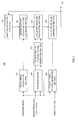
- FIG.1 is a block diagram showing main components of adaptive excitation vector quantization apparatus according to an embodiment of the present invention.
- adaptive excitation vector quantization apparatus 100 is provided with pitch period designation section 101, adaptive excitation codebook 102, search adaptive excitation vector generating section 103, synthesis filter 104, search impulse response matrix generating section 105, search target vector generating section 106, evaluation measure calculating section 107 and evaluation measure comparison section 108, and receives as input a subframe index, linear prediction coefficient and target vector per subframe.
- the subframe index refers to the order of each subframe, which is acquired in the CELP speech encoding apparatus including adaptive excitation vector quantization apparatus 100 according to the present embodiment, in its frame.
- the linear prediction coefficient and target vector refer to the linear prediction coefficient and linear prediction residual (excitation signal) vector of each subframe acquired by performing a linear prediction analysis of each subframe in the CELP speech encoding apparatus.
- LPC parameters or LSF (Line Spectral Frequency) parameters which are frequency domain parameters and which are interchangeable with the LPC parameters in one-to-one correspondence
- LSP Line Spectral Pairs
- Pitch period designation section 101 sequentially designates pitch periods in a predetermined range of pitch period search, to search adaptive excitation vector generating section 103, based on subframe indices that are received as input on a per subframe basis.
- Adaptive excitation codebook 102 has a built-in buffer storing excitations, and updates the excitations using a pitch period index IDX fed back from evaluation measure comparison section 108 every time a pitch period search is finished on a per frame basis.
- Search adaptive excitation vector generating section 103 cuts out, from adaptive excitation codebook 102, a frame length n of an adaptive excitation vector having the pitch period designated by pitch period designation section 101, and outputs the result to evaluation measure calculating section 107 as an adaptive excitation vector for pitch period search (hereinafter abbreviated to "search adaptive excitation vector").
- Synthesis filter 104 forms synthesis filters using the linear prediction coefficients that are received as input on a per subframe basis, generates impulse response matrixes of the synthesis filters based on the subframe indices that are received as input on a per subframe basis, and outputs the result to search impulse response matrix generating section 105.
- search impulse response matrix generating section 105 uses the impulse response matrix per subframe received as input from synthesis filter 104 to generate an impulse response matrix per frame, based on the subframe indices that are received as input on a per subframe basis, and outputs the result to evaluation measure calculating section 107 as a search impulse response matrix.
- Search target vector generating section 106 generates a target vector per frame using the target vectors that are received as input on a per subframe basis, and outputs the result to evaluation measure calculating section 107 as a search target vector.
- evaluation measure calculating section 107 calculates the evaluation measure for pitch period search based on the subframe indices that are received as input on a per subframe basis, and outputs the result to evaluation measure comparison section 108.
- Evaluation measure comparison section 108 calculates the pitch period where the evaluation measure received as input from evaluation measure calculating section 107 is the maximum, outputs an index IDX indicating the calculated pitch period to the outside, and feeds back the index IDX to adaptive excitation codebook 102.
- the sections of adaptive excitation vector quantization apparatus 100 will perform the following operations.
- pitch period designation section 101 sequentially designates the pitch period T_int in a predetermined pitch period search range, to search adaptive excitation vector generating section 103.
- "32" to "287” indicate the indices indicating pitch periods.
- Adaptive excitation codebook 102 has a built-in buffer storing excitations, and, using an adaptive excitation vector having the pitch period indicated by the index IDX fed back from evaluation measure comparison section 108, updates the excitations every time the pitch period search per frame is finished.
- Search adaptive excitation vector generating section 103 cuts out, from adaptive excitation codebook 102, a frame length n of the adaptive excitation vector having the pitch period T_int designated by pitch period designation section 101 and outputs the result to evaluation measure calculating section 107 as the search adaptive excitation vector P(T_int).
- the adaptive excitation vector P(T_int) generated in search adaptive excitation vector generating section 103 can be represented by following equation 1.
- P T_ int P ⁇ exc ⁇ t - T_ int exc ⁇ e - T_ int + 1 ⁇ exc ⁇ e - T_ int + m - 1 exc ⁇ e - T_ int + m ⁇ exc ⁇ e - T_ int + n - 1
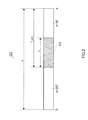
- FIG.2 illustrates an excitation provided by adaptive excitation codebook 102.
- e represents the length of excitation 121
- n represents the length of the search adaptive excitation vector P(T_int)
- T_int represents the pitch period designated by pitch period designation section 101.
- search adaptive excitation vector generating section 103 cuts out part 122 of a frame length n in the direction of the tail end e from the start point, and generates search adaptive excitation vector P(T_int).
- search adaptive excitation vector generating section 103 may duplicate the cut-out period until its length reaches the frame length. Further, search adaptive excitation vector generating section 103 repeats the cutting processing shown in the above equation 1, for 256 patterns of T_int from "32" to "287" designated by pitch period designation section 101.
- Synthesis filter 104 forms a synthesis filter using input linear prediction coefficients that are received as input on a per subframe basis.
- synthesis filter 104 generates the impulse response matrix represented by following equation 2 if a subframe index that is received as input on a per subframe basis indicates the first subframe, while generating the impulse response matrix represented by following equation 3 and outputting it to search impulse response matrix generating section 105 if a subframe index indicates the second subframe.
- the impulse response matrix H of a frame length n is calculated.
- the impulse response matrix H_ahead of a subframe length m is calculated.
- search impulse response matrix generating section 105 Taking into account that synthesis filter 104 varies between the first subframe and the second subframe, search impulse response matrix generating section 105 generates the search impulse response matrix H_new represented by following equation 4 by cutting out components of the impulse response matrixes H and H_ahead received as input from synthesis filter 104, and outputs it to evaluation measure calculating section 107.
- X x 0 x 1 ⁇ x ⁇ m - 1 x m ⁇ x ⁇ n - 1
- evaluation measure calculating section 107 calculates the evaluation measure Dist(T_int) for pitch period search according to following equation 6, and outputs the result to evaluation measure comparison section 108.
- Evaluation measure comparison section 108 performs comparison between, for example, 256 patterns of evaluation measure Dist(T_int) received as input from evaluation measure calculating section 107, and finds the pitch period T_int' associated with the maximum evaluation measure Dist(T_int). Evaluation measure comparison section 108 outputs the index IDX indicating the found pitch period T_int' to the outside and adaptive excitation codebook 102.
- the CELP speech encoding apparatus including adaptive excitation vector quantization apparatus 100 transmits speech encoded information including the pitch period index IDX generated in evaluation measure comparison section 108, to the CELP decoding apparatus including the adaptive excitation vector dequantization apparatus according to the present example.
- the CELP decoding apparatus acquires the pitch period index IDX by decoding the received speech encoded information and then inputs the pitch period index IDX in the adaptive excitation vector dequantization apparatus according to the present example. Further, like the speech encoding processing in the CELP speech encoding apparatus, speech decoding processing in the CELP decoding apparatus is also performed in subframe units, and the CELP decoding apparatus inputs subframe indices in the adaptive excitation vector dequantization apparatus according to the present example.
- FIG.3 is a block diagram showing main components of adaptive excitation vector dequantization apparatus 200 according to the present example.
- adaptive excitation vector dequantization apparatus 200 is provided with pitch period deciding section 201, pitch period storage section 202, adaptive excitation codebook 203 and adaptive excitation vector generating section 204, and receives as input the subframe indices and pitch period index IDX generated in the CELP speech decoding apparatus.
- pitch period deciding section 201 If a subframe index indicates the first subframe, pitch period deciding section 201 outputs the pitch period T_int' associated with the pitch period index IDX received as input, to pitch period storage section 202, adaptive excitation codebook 203 and adaptive excitation vector generating section 204. If a subframe index indicates the second subframe, pitch period deciding section 201 reads the pitch period T_int' stored in pitch period storage section 202 and outputs it to adaptive excitation codebook 203 and adaptive excitation vector generating section 204.
- Pitch period storage section 202 stores the pitch period T_int' of the first subframe, which is received as input from pitch period deciding section 201, and pitch period deciding section 201 reads the pitch period T_int' in processing of the second subframe.
- Adaptive excitation codebook 203 has a built-in buffer storing the same excitations as the excitations provided in adaptive excitation codebook 102 of adaptive excitation vector quantization apparatus 100, and updates the excitations using the adaptive excitation vector having the pitch period T_int' received as input from pitch period deciding section 201 every time adaptive excitation decoding processing is finished on a per subframe basis.
- Adaptive excitation vector generating section 204 cuts out, from adaptive excitation codebook 203, a subframe length m of the adaptive excitation vector P'(T_int') having the pitch period T_int' received as input from pitch period deciding section 201, and outputs the result as the adaptive excitation vector per subframe.
- the adaptive excitation vector P'(T_int') generated in adaptive excitation vector generating section 204 is represented by following equation 7.
- P ⁇ T_ int ⁇ P ⁇ ⁇ exc ⁇ t - T_ int ⁇ exc ⁇ e - T_ int ⁇ + 1 ⁇ exc ⁇ e - T_ int ⁇ + m - 1
- the adaptive excitation vector quantization apparatus forms a target vector, an adaptive excitation vector and an impulse response matrix in frame units using the linear prediction coefficient and linear prediction residual vector in subframe units, and performs adaptive excitation vector quantization on a per frame basis.
- search impulse response matrix generating section 105 calculates the search impulse response matrix represented by above-described equation 4
- the present invention is not limited to this, and it is equally possible to calculate the search impulse response matrix represented by following equation 8.
- the amount of calculations increases.
- H_new h 0 0 ⁇ 0 0 ⁇ 0 0 h 1 h 0 ⁇ 0 0 ⁇ 0 0 h 2 h 1 ⁇ 0 0 0 ⁇ 0 ⁇ 0 ⁇ 0 ⁇ ⁇ ⁇ ⁇ ⁇ h ⁇ m - 1 h ⁇ m - 2 ⁇ h 0 0 ⁇ 0 0 h_a ⁇ m - 1 ⁇ h_a 1 h_a 0 0 ⁇ 0 0 0 0 h m ⁇ h_a 2 h_a 1 h_a 0 ⁇ 0 0 0 ⁇ ⁇ ⁇ ⁇ ⁇ ⁇ 0 0 ⁇ h_a ⁇ m - 1 h_a ⁇ m - 2 h_a ⁇ 0 0 ⁇ ⁇ ⁇ ⁇ ⁇ ⁇ ⁇ 0 0 ⁇ h_a ⁇ m -
- evaluation measure calculating section 107 calculates the evaluation measure Dist(T_int) according to above-described equation 6 using the search target vector X of the frame length n, the search adaptive excitation vector P(T_int) and the search impulse response matrix H_new of the n ⁇ n matrix, the present invention is not limited to this.
- evaluation measure calculating section 107 it is equally possible to set in advance constant r, where m ⁇ r ⁇ n, newly form the search target vector X of the length of constant r, the search adaptive excitation vector P(T_int) of the length of constant r and the search impulse response matrix H_new, which is a r ⁇ r matrix of the length of constant r, by extracting elements up to the r-th order of search target vector X, elements up to the r-th order of search adaptive excitation vector P(T_int) and elements up to the r ⁇ r search impulse response matrix H_new, and then calculate the evaluation measure Dist(T_int).
- the present invention is not limited to this, and it is equally possible to receive as input a speech signal as is and directly search for the pitch period of the speech signal.
- a CELP speech encoding apparatus including adaptive excitation vector quantization apparatus 100 divides one frame into two subframes and performs a linear prediction analysis of each subframe
- the present invention is not limited to this, and it is equally possible to assume that a CELP speech encoding apparatus divides one frame into three subframes or more and perform a linear prediction analysis of each subframe. Further, in an assumption where each subframe is further divided into two sub-subframes and a linear prediction analysis of each sub-subframe is performed, it is equally possible to apply the present invention.
- a CELP speech encoding apparatus calculates a linear prediction coefficient and linear prediction residual by dividing one frame into two subframes, further dividing each subframe into two sub-subframes and performing a linear prediction analysis of each sub-subframe, adaptive excitation vector quantization apparatus 100 needs to form two subframes with four sub-subframes, form one frame with two subframes and perform a pitch period search of the resulting frame.
- the adaptive excitation vector quantization apparatus can be mounted on a communication terminal apparatus in a mobile communication system that transmits speech, so that it is possible to provide a communication terminal apparatus having the same operational effect as above.
- the present invention can be implemented with software.
- the adaptive excitation vector quantization method according to the present invention in a programming language, storing this program in a memory and making the information processing section execute this program, it is possible to implement the same function as the adaptive excitation vector quantization apparatus according to the present invention.
- each function block employed in the description of each of the aforementioned embodiments may typically be implemented as an LSI constituted by an integrated circuit. These may be individual chips or partially or totally contained on a single chip.
- LSI is adopted here but this may also be referred to as “IC,” “system LSI,” “super LSI,” or “ultra LSI” depending on differing extents of integration.
- circuit integration is not limited to LSI's, and implementation using dedicated circuitry or general purpose processors is also possible.
- FPGA Field Programmable Gate Array
- reconfigurable processor where connections and settings of circuit cells in an LSI can be reconfigured is also possible.
- the adaptive excitation vector quantization apparatus and adaptive excitation vector quantization methods according to the present invention are applicable to speech coding and so on.
Landscapes
- Engineering & Computer Science (AREA)
- Physics & Mathematics (AREA)
- Computational Linguistics (AREA)
- Signal Processing (AREA)
- Health & Medical Sciences (AREA)
- Audiology, Speech & Language Pathology (AREA)
- Human Computer Interaction (AREA)
- Acoustics & Sound (AREA)
- Multimedia (AREA)
- Spectroscopy & Molecular Physics (AREA)
- Compression, Expansion, Code Conversion, And Decoders (AREA)
Claims (3)
- Adaptive Anregungsvektor-Quantisierungsvorrichtung, die bei linearer Prädiktions-Sprachcodierung mit Codeanregung eingesetzt wird, um lineare Prädiktions-Restvektoren einer Länge m und lineare Prädiktionskoeffizienten durch Teilen eines Frame eines Sprachsignals einer Länge n in eine Vielzahl von Subframes der Länge m und Durchführen einer linearen Prädiktionsanalyse an den Subframes zu erzeugen, wobei n und m ganze Zahlen sind und n ein ganzzahliges Vielfaches von m ist, und wobei die Vorrichtung umfasst:einen Abschnitt zum Erzeugen eines adaptiven Anregungsvektors, der so eingerichtet ist, dass er einen adaptiven Anregungsvektor der Länge n aus einem adaptiven Anregungs-Codebuch ausschneidet;einen Abschnitt zum Ausbilden eines Ziel-Vektors, der so eingerichtet ist, dass er einen Ziel-Vektor der Länge n ausbildet, indem er die linearen Prädiktions-Restvektoren der Länge m der Vielzahl von Subframes addiert;ein Synthesefilter, das so eingerichtet ist, dass es m x m-Impulsantwort-Matrizen unter Verwendung der linearen Prädiktionskoeffizienten der Vielzahl von Subframes erzeugt;einen Abschnitt zum Ausbilden einer Impulsantwort-Matrix, der so eingerichtet ist, dass er eine n x n-Impulsantwort-Matrix unter Verwendung der m x m-Impulsantwort-Matrizen ausbildet;einen Abschnitt zum Berechnen eines Bewertungs-Maßes, der so eingerichtet ist, dass er ein Bewertungsmaß adaptiver Anregungsvektor-Quantifizierung pro Pitch-Perioden-Kandidat unter Verwendung des adaptiven Anregungsvektors der Länge n, des Ziel-Vektors der Länge n sowie der n x n-Impulsantwort-Matrix berechnet; undeinen Abschnitt zum Vergleichen von Bewertungs-Maßen, der so eingerichtet ist, dass er die Bewertungs-Maße in Bezug auf die Pitch-Perioden-Kandidaten vergleicht und eine Pitch-Periode eines höchsten Bewertungs-Maßes als ein Quantisierungsergebnis berechnet.
- Vorrichtung für lineare Prädiktions-Sprachcodierung mit Codeanregung, die die adaptive Anregungsvektor-Quantisierungsvorrichtung nach Anspruch 1 umfasst.
- Adaptives Anregungsvektor-Quantisierungsverfahren, das bei linearer Prädiktions-Sprachcodierung mit Codeanregung eingesetzt wird, um lineare Prädiktions-Restvektoren einer Länge m und lineare Prädiktionskoeffizienten durch Teilen eines Frame eines Sprachsignals einer Länge n in eine Vielzahl von Subframes der Länge m und Durchführen einer linearen Prädiktionsanalyse an den Subframes zu erzeugen, wobei n und m ganze Zahlen sind und n ein ganzzahliges Vielfaches von m ist, und wobei das Verfahren die folgenden Schritte umfasst:Ausschneiden eines adaptiven Anregungsvektors der Länge n aus einem adaptiven Anregungscodebuch;Ausbilden eines Ziel-Vektors der Länge n durch Addieren der linearen Prädiktions-Restvektoren der Länge m der Vielzahl von Subframes;Erzeugen von m x m-Impulsantwort-Matrizen unter Verwendung der linearen Prädiktionskoeffizienten der Vielzahl von Subframes;Ausbilden einer n x n-Impulsantwort-Matrix unter Verwendung der m x m-Impulsantwort-Matrizen;Berechnen eines Bewertungs-Maßes adaptiver Anregungsvektor-Quantisierung pro Pitch-Perioden-Kandidat unter Verwendung des adaptiven Anregungsvektors der Länge n, des Ziel-Vektors der Länge n und der n x n-Impulsantwort-Matrix; sowieVergleichen der Bewertungs-Maße in Bezug auf die Pitch-Perioden-Kandidaten und Berechnen einer Pitch-Periode eines höchsten Bewertungs-Maßes als ein Quantisierungsergebnis.
Applications Claiming Priority (2)
| Application Number | Priority Date | Filing Date | Title |
|---|---|---|---|
| JP2006338342 | 2006-12-15 | ||
| PCT/JP2007/074136 WO2008072735A1 (ja) | 2006-12-15 | 2007-12-14 | 適応音源ベクトル量子化装置、適応音源ベクトル逆量子化装置、およびこれらの方法 |
Publications (3)
| Publication Number | Publication Date |
|---|---|
| EP2101319A1 EP2101319A1 (de) | 2009-09-16 |
| EP2101319A4 EP2101319A4 (de) | 2011-09-07 |
| EP2101319B1 true EP2101319B1 (de) | 2015-09-16 |
Family
ID=39511748
Family Applications (1)
| Application Number | Title | Priority Date | Filing Date |
|---|---|---|---|
| EP07850640.9A Not-in-force EP2101319B1 (de) | 2006-12-15 | 2007-12-14 | Einrichtung zur adaptiven schallquellen-vektorquantisierung und verfahren dafür |
Country Status (4)
| Country | Link |
|---|---|
| US (1) | US8200483B2 (de) |
| EP (1) | EP2101319B1 (de) |
| JP (1) | JP5241509B2 (de) |
| WO (1) | WO2008072735A1 (de) |
Families Citing this family (6)
| Publication number | Priority date | Publication date | Assignee | Title |
|---|---|---|---|---|
| CN101548317B (zh) * | 2006-12-15 | 2012-01-18 | 松下电器产业株式会社 | 自适应激励矢量量化装置和自适应激励矢量量化方法 |
| JP5511372B2 (ja) * | 2007-03-02 | 2014-06-04 | パナソニック株式会社 | 適応音源ベクトル量子化装置および適応音源ベクトル量子化方法 |
| US20110026581A1 (en) * | 2007-10-16 | 2011-02-03 | Nokia Corporation | Scalable Coding with Partial Eror Protection |
| ES2639572T3 (es) * | 2008-01-16 | 2017-10-27 | Iii Holdings 12, Llc | Cuantificador vectorial, cuantificador inverso vectorial y procedimientos para los mismos |
| US20100324913A1 (en) * | 2009-06-18 | 2010-12-23 | Jacek Piotr Stachurski | Method and System for Block Adaptive Fractional-Bit Per Sample Encoding |
| US8924203B2 (en) | 2011-10-28 | 2014-12-30 | Electronics And Telecommunications Research Institute | Apparatus and method for coding signal in a communication system |
Citations (3)
| Publication number | Priority date | Publication date | Assignee | Title |
|---|---|---|---|---|
| US5396576A (en) * | 1991-05-22 | 1995-03-07 | Nippon Telegraph And Telephone Corporation | Speech coding and decoding methods using adaptive and random code books |
| WO1995016260A1 (en) * | 1993-12-07 | 1995-06-15 | Pacific Communication Sciences, Inc. | Adaptive speech coder having code excited linear prediction with multiple codebook searches |
| US6810381B1 (en) * | 1999-05-11 | 2004-10-26 | Nippon Telegraph And Telephone Corporation | Audio coding and decoding methods and apparatuses and recording medium having recorded thereon programs for implementing them |
Family Cites Families (16)
| Publication number | Priority date | Publication date | Assignee | Title |
|---|---|---|---|---|
| JP2746039B2 (ja) * | 1993-01-22 | 1998-04-28 | 日本電気株式会社 | 音声符号化方式 |
| CA2154911C (en) * | 1994-08-02 | 2001-01-02 | Kazunori Ozawa | Speech coding device |
| JP3233184B2 (ja) | 1995-03-13 | 2001-11-26 | 日本電信電話株式会社 | 音声符号化方法 |
| KR100339168B1 (ko) * | 1996-11-07 | 2002-06-03 | 모리시타 요이찌 | 음원 벡터 생성 장치, 음성 부호화 장치 및 음성 복호화장치 |
| JP3095133B2 (ja) * | 1997-02-25 | 2000-10-03 | 日本電信電話株式会社 | 音響信号符号化方法 |
| US5995927A (en) * | 1997-03-14 | 1999-11-30 | Lucent Technologies Inc. | Method for performing stochastic matching for use in speaker verification |
| US6330531B1 (en) * | 1998-08-24 | 2001-12-11 | Conexant Systems, Inc. | Comb codebook structure |
| US6691084B2 (en) * | 1998-12-21 | 2004-02-10 | Qualcomm Incorporated | Multiple mode variable rate speech coding |
| JP3583945B2 (ja) | 1999-04-15 | 2004-11-04 | 日本電信電話株式会社 | 音声符号化方法 |
| US6988065B1 (en) * | 1999-08-23 | 2006-01-17 | Matsushita Electric Industrial Co., Ltd. | Voice encoder and voice encoding method |
| US6584437B2 (en) * | 2001-06-11 | 2003-06-24 | Nokia Mobile Phones Ltd. | Method and apparatus for coding successive pitch periods in speech signal |
| JP4414705B2 (ja) | 2003-09-17 | 2010-02-10 | パナソニック株式会社 | 音源信号符号化装置、及び音源信号符号化方法 |
| FI118704B (fi) * | 2003-10-07 | 2008-02-15 | Nokia Corp | Menetelmä ja laite lähdekoodauksen tekemiseksi |
| JP4463526B2 (ja) * | 2003-10-24 | 2010-05-19 | 株式会社ユニバーサルエンターテインメント | 声紋認証システム |
| JP2006338342A (ja) * | 2005-06-02 | 2006-12-14 | Nippon Telegr & Teleph Corp <Ntt> | 単語ベクトル生成装置、単語ベクトル生成方法およびプログラム |
| CN101548317B (zh) | 2006-12-15 | 2012-01-18 | 松下电器产业株式会社 | 自适应激励矢量量化装置和自适应激励矢量量化方法 |
-
2007
- 2007-12-14 EP EP07850640.9A patent/EP2101319B1/de not_active Not-in-force
- 2007-12-14 US US12/518,944 patent/US8200483B2/en active Active
- 2007-12-14 WO PCT/JP2007/074136 patent/WO2008072735A1/ja not_active Ceased
- 2007-12-14 JP JP2008549377A patent/JP5241509B2/ja not_active Expired - Fee Related
Patent Citations (3)
| Publication number | Priority date | Publication date | Assignee | Title |
|---|---|---|---|---|
| US5396576A (en) * | 1991-05-22 | 1995-03-07 | Nippon Telegraph And Telephone Corporation | Speech coding and decoding methods using adaptive and random code books |
| WO1995016260A1 (en) * | 1993-12-07 | 1995-06-15 | Pacific Communication Sciences, Inc. | Adaptive speech coder having code excited linear prediction with multiple codebook searches |
| US6810381B1 (en) * | 1999-05-11 | 2004-10-26 | Nippon Telegraph And Telephone Corporation | Audio coding and decoding methods and apparatuses and recording medium having recorded thereon programs for implementing them |
Also Published As
| Publication number | Publication date |
|---|---|
| EP2101319A4 (de) | 2011-09-07 |
| JPWO2008072735A1 (ja) | 2010-04-02 |
| JP5241509B2 (ja) | 2013-07-17 |
| EP2101319A1 (de) | 2009-09-16 |
| WO2008072735A1 (ja) | 2008-06-19 |
| US8200483B2 (en) | 2012-06-12 |
| US20100082337A1 (en) | 2010-04-01 |
Similar Documents
| Publication | Publication Date | Title |
|---|---|---|
| EP2101320B1 (de) | Vorrichtung für die adaptive Quantisierung von Anregungsvektoren und Verfahren für die adaptive Quantisierung von Anregungsvektoren | |
| US8521519B2 (en) | Adaptive audio signal source vector quantization device and adaptive audio signal source vector quantization method that search for pitch period based on variable resolution | |
| JP5596341B2 (ja) | 音声符号化装置および音声符号化方法 | |
| US8452590B2 (en) | Fixed codebook searching apparatus and fixed codebook searching method | |
| EP2128858B1 (de) | Kodiervorrichtung und kodierverfahren | |
| EP2101319B1 (de) | Einrichtung zur adaptiven schallquellen-vektorquantisierung und verfahren dafür | |
| EP2202727A1 (de) | Vektorquantisierer, inverser vektorquantisierer und verfahren | |
| US20100185442A1 (en) | Adaptive sound source vector quantizing device and adaptive sound source vector quantizing method | |
| JP6122961B2 (ja) | 自己相関ドメインにおけるacelpを用いたスピーチ信号の符号化装置 | |
| US8493244B2 (en) | Vector quantization device, vector inverse-quantization device, and methods of same | |
| KR20050072811A (ko) | 음성 코딩 시스템에서 이득 정보를 코딩하기 위한 방법 및장치 | |
| EP2618331B1 (de) | Quantisierungsvorrichtung und quantisierungsverfahren | |
| EP2665060B1 (de) | Gerät zur kodierung eines sprach-/tonsignal |
Legal Events
| Date | Code | Title | Description |
|---|---|---|---|
| PUAI | Public reference made under article 153(3) epc to a published international application that has entered the european phase |
Free format text: ORIGINAL CODE: 0009012 |
|
| 17P | Request for examination filed |
Effective date: 20090612 |
|
| AK | Designated contracting states |
Kind code of ref document: A1 Designated state(s): AT BE BG CH CY CZ DE DK EE ES FI FR GB GR HU IE IS IT LI LT LU LV MC MT NL PL PT RO SE SI SK TR |
|
| DAX | Request for extension of the european patent (deleted) | ||
| A4 | Supplementary search report drawn up and despatched |
Effective date: 20110805 |
|
| RIC1 | Information provided on ipc code assigned before grant |
Ipc: G10L 19/08 20060101AFI20110801BHEP |
|
| 17Q | First examination report despatched |
Effective date: 20130226 |
|
| RAP1 | Party data changed (applicant data changed or rights of an application transferred) |
Owner name: PANASONIC INTELLECTUAL PROPERTY CORPORATION OF AME |
|
| RIC1 | Information provided on ipc code assigned before grant |
Ipc: G10L 19/038 20130101ALI20150204BHEP Ipc: G10L 19/08 20130101AFI20150204BHEP Ipc: G10L 19/12 20130101ALI20150204BHEP |
|
| GRAP | Despatch of communication of intention to grant a patent |
Free format text: ORIGINAL CODE: EPIDOSNIGR1 |
|
| INTG | Intention to grant announced |
Effective date: 20150410 |
|
| GRAS | Grant fee paid |
Free format text: ORIGINAL CODE: EPIDOSNIGR3 |
|
| GRAA | (expected) grant |
Free format text: ORIGINAL CODE: 0009210 |
|
| AK | Designated contracting states |
Kind code of ref document: B1 Designated state(s): AT BE BG CH CY CZ DE DK EE ES FI FR GB GR HU IE IS IT LI LT LU LV MC MT NL PL PT RO SE SI SK TR |
|
| REG | Reference to a national code |
Ref country code: GB Ref legal event code: FG4D |
|
| REG | Reference to a national code |
Ref country code: CH Ref legal event code: EP |
|
| REG | Reference to a national code |
Ref country code: IE Ref legal event code: FG4D |
|
| REG | Reference to a national code |
Ref country code: AT Ref legal event code: REF Ref document number: 750346 Country of ref document: AT Kind code of ref document: T Effective date: 20151015 |
|
| REG | Reference to a national code |
Ref country code: DE Ref legal event code: R096 Ref document number: 602007043189 Country of ref document: DE |
|
| REG | Reference to a national code |
Ref country code: NL Ref legal event code: MP Effective date: 20150916 |
|
| PG25 | Lapsed in a contracting state [announced via postgrant information from national office to epo] |
Ref country code: LV Free format text: LAPSE BECAUSE OF FAILURE TO SUBMIT A TRANSLATION OF THE DESCRIPTION OR TO PAY THE FEE WITHIN THE PRESCRIBED TIME-LIMIT Effective date: 20150916 Ref country code: GR Free format text: LAPSE BECAUSE OF FAILURE TO SUBMIT A TRANSLATION OF THE DESCRIPTION OR TO PAY THE FEE WITHIN THE PRESCRIBED TIME-LIMIT Effective date: 20151217 Ref country code: FI Free format text: LAPSE BECAUSE OF FAILURE TO SUBMIT A TRANSLATION OF THE DESCRIPTION OR TO PAY THE FEE WITHIN THE PRESCRIBED TIME-LIMIT Effective date: 20150916 Ref country code: LT Free format text: LAPSE BECAUSE OF FAILURE TO SUBMIT A TRANSLATION OF THE DESCRIPTION OR TO PAY THE FEE WITHIN THE PRESCRIBED TIME-LIMIT Effective date: 20150916 |
|
| REG | Reference to a national code |
Ref country code: LT Ref legal event code: MG4D |
|
| REG | Reference to a national code |
Ref country code: AT Ref legal event code: MK05 Ref document number: 750346 Country of ref document: AT Kind code of ref document: T Effective date: 20150916 |
|
| PG25 | Lapsed in a contracting state [announced via postgrant information from national office to epo] |
Ref country code: SE Free format text: LAPSE BECAUSE OF FAILURE TO SUBMIT A TRANSLATION OF THE DESCRIPTION OR TO PAY THE FEE WITHIN THE PRESCRIBED TIME-LIMIT Effective date: 20150916 |
|
| PG25 | Lapsed in a contracting state [announced via postgrant information from national office to epo] |
Ref country code: NL Free format text: LAPSE BECAUSE OF FAILURE TO SUBMIT A TRANSLATION OF THE DESCRIPTION OR TO PAY THE FEE WITHIN THE PRESCRIBED TIME-LIMIT Effective date: 20150916 |
|
| PG25 | Lapsed in a contracting state [announced via postgrant information from national office to epo] |
Ref country code: EE Free format text: LAPSE BECAUSE OF FAILURE TO SUBMIT A TRANSLATION OF THE DESCRIPTION OR TO PAY THE FEE WITHIN THE PRESCRIBED TIME-LIMIT Effective date: 20150916 Ref country code: IS Free format text: LAPSE BECAUSE OF FAILURE TO SUBMIT A TRANSLATION OF THE DESCRIPTION OR TO PAY THE FEE WITHIN THE PRESCRIBED TIME-LIMIT Effective date: 20160116 Ref country code: SK Free format text: LAPSE BECAUSE OF FAILURE TO SUBMIT A TRANSLATION OF THE DESCRIPTION OR TO PAY THE FEE WITHIN THE PRESCRIBED TIME-LIMIT Effective date: 20150916 Ref country code: IT Free format text: LAPSE BECAUSE OF FAILURE TO SUBMIT A TRANSLATION OF THE DESCRIPTION OR TO PAY THE FEE WITHIN THE PRESCRIBED TIME-LIMIT Effective date: 20150916 Ref country code: ES Free format text: LAPSE BECAUSE OF FAILURE TO SUBMIT A TRANSLATION OF THE DESCRIPTION OR TO PAY THE FEE WITHIN THE PRESCRIBED TIME-LIMIT Effective date: 20150916 Ref country code: CZ Free format text: LAPSE BECAUSE OF FAILURE TO SUBMIT A TRANSLATION OF THE DESCRIPTION OR TO PAY THE FEE WITHIN THE PRESCRIBED TIME-LIMIT Effective date: 20150916 |
|
| PG25 | Lapsed in a contracting state [announced via postgrant information from national office to epo] |
Ref country code: RO Free format text: LAPSE BECAUSE OF FAILURE TO SUBMIT A TRANSLATION OF THE DESCRIPTION OR TO PAY THE FEE WITHIN THE PRESCRIBED TIME-LIMIT Effective date: 20150916 Ref country code: BE Free format text: LAPSE BECAUSE OF NON-PAYMENT OF DUE FEES Effective date: 20151231 Ref country code: PT Free format text: LAPSE BECAUSE OF FAILURE TO SUBMIT A TRANSLATION OF THE DESCRIPTION OR TO PAY THE FEE WITHIN THE PRESCRIBED TIME-LIMIT Effective date: 20160118 Ref country code: PL Free format text: LAPSE BECAUSE OF FAILURE TO SUBMIT A TRANSLATION OF THE DESCRIPTION OR TO PAY THE FEE WITHIN THE PRESCRIBED TIME-LIMIT Effective date: 20150916 Ref country code: AT Free format text: LAPSE BECAUSE OF FAILURE TO SUBMIT A TRANSLATION OF THE DESCRIPTION OR TO PAY THE FEE WITHIN THE PRESCRIBED TIME-LIMIT Effective date: 20150916 |
|
| REG | Reference to a national code |
Ref country code: DE Ref legal event code: R097 Ref document number: 602007043189 Country of ref document: DE |
|
| PLBE | No opposition filed within time limit |
Free format text: ORIGINAL CODE: 0009261 |
|
| STAA | Information on the status of an ep patent application or granted ep patent |
Free format text: STATUS: NO OPPOSITION FILED WITHIN TIME LIMIT |
|
| PG25 | Lapsed in a contracting state [announced via postgrant information from national office to epo] |
Ref country code: MC Free format text: LAPSE BECAUSE OF FAILURE TO SUBMIT A TRANSLATION OF THE DESCRIPTION OR TO PAY THE FEE WITHIN THE PRESCRIBED TIME-LIMIT Effective date: 20150916 Ref country code: LU Free format text: LAPSE BECAUSE OF FAILURE TO SUBMIT A TRANSLATION OF THE DESCRIPTION OR TO PAY THE FEE WITHIN THE PRESCRIBED TIME-LIMIT Effective date: 20151214 |
|
| REG | Reference to a national code |
Ref country code: CH Ref legal event code: PL |
|
| 26N | No opposition filed |
Effective date: 20160617 |
|
| GBPC | Gb: european patent ceased through non-payment of renewal fee |
Effective date: 20151216 |
|
| PG25 | Lapsed in a contracting state [announced via postgrant information from national office to epo] |
Ref country code: DK Free format text: LAPSE BECAUSE OF FAILURE TO SUBMIT A TRANSLATION OF THE DESCRIPTION OR TO PAY THE FEE WITHIN THE PRESCRIBED TIME-LIMIT Effective date: 20150916 |
|
| REG | Reference to a national code |
Ref country code: IE Ref legal event code: MM4A |
|
| REG | Reference to a national code |
Ref country code: FR Ref legal event code: ST Effective date: 20160831 |
|
| PG25 | Lapsed in a contracting state [announced via postgrant information from national office to epo] |
Ref country code: LI Free format text: LAPSE BECAUSE OF NON-PAYMENT OF DUE FEES Effective date: 20151231 Ref country code: IE Free format text: LAPSE BECAUSE OF NON-PAYMENT OF DUE FEES Effective date: 20151214 Ref country code: CH Free format text: LAPSE BECAUSE OF NON-PAYMENT OF DUE FEES Effective date: 20151231 Ref country code: GB Free format text: LAPSE BECAUSE OF NON-PAYMENT OF DUE FEES Effective date: 20151216 |
|
| PG25 | Lapsed in a contracting state [announced via postgrant information from national office to epo] |
Ref country code: SI Free format text: LAPSE BECAUSE OF FAILURE TO SUBMIT A TRANSLATION OF THE DESCRIPTION OR TO PAY THE FEE WITHIN THE PRESCRIBED TIME-LIMIT Effective date: 20150916 Ref country code: FR Free format text: LAPSE BECAUSE OF NON-PAYMENT OF DUE FEES Effective date: 20151231 |
|
| PG25 | Lapsed in a contracting state [announced via postgrant information from national office to epo] |
Ref country code: BE Free format text: LAPSE BECAUSE OF FAILURE TO SUBMIT A TRANSLATION OF THE DESCRIPTION OR TO PAY THE FEE WITHIN THE PRESCRIBED TIME-LIMIT Effective date: 20150916 |
|
| PG25 | Lapsed in a contracting state [announced via postgrant information from national office to epo] |
Ref country code: HU Free format text: LAPSE BECAUSE OF FAILURE TO SUBMIT A TRANSLATION OF THE DESCRIPTION OR TO PAY THE FEE WITHIN THE PRESCRIBED TIME-LIMIT; INVALID AB INITIO Effective date: 20071214 Ref country code: BG Free format text: LAPSE BECAUSE OF FAILURE TO SUBMIT A TRANSLATION OF THE DESCRIPTION OR TO PAY THE FEE WITHIN THE PRESCRIBED TIME-LIMIT Effective date: 20150916 |
|
| REG | Reference to a national code |
Ref country code: DE Ref legal event code: R081 Ref document number: 602007043189 Country of ref document: DE Owner name: III HOLDINGS 12, LLC, WILMINGTON, US Free format text: FORMER OWNER: PANASONIC INTELLECTUAL PROPERTY CORPORATION OF AMERICA, TORRANCE, CALIF., US |
|
| PG25 | Lapsed in a contracting state [announced via postgrant information from national office to epo] |
Ref country code: CY Free format text: LAPSE BECAUSE OF FAILURE TO SUBMIT A TRANSLATION OF THE DESCRIPTION OR TO PAY THE FEE WITHIN THE PRESCRIBED TIME-LIMIT Effective date: 20150916 |
|
| PG25 | Lapsed in a contracting state [announced via postgrant information from national office to epo] |
Ref country code: MT Free format text: LAPSE BECAUSE OF FAILURE TO SUBMIT A TRANSLATION OF THE DESCRIPTION OR TO PAY THE FEE WITHIN THE PRESCRIBED TIME-LIMIT Effective date: 20150916 Ref country code: TR Free format text: LAPSE BECAUSE OF FAILURE TO SUBMIT A TRANSLATION OF THE DESCRIPTION OR TO PAY THE FEE WITHIN THE PRESCRIBED TIME-LIMIT Effective date: 20150916 |
|
| PGFP | Annual fee paid to national office [announced via postgrant information from national office to epo] |
Ref country code: DE Payment date: 20211228 Year of fee payment: 15 |
|
| REG | Reference to a national code |
Ref country code: DE Ref legal event code: R119 Ref document number: 602007043189 Country of ref document: DE |
|
| PG25 | Lapsed in a contracting state [announced via postgrant information from national office to epo] |
Ref country code: DE Free format text: LAPSE BECAUSE OF NON-PAYMENT OF DUE FEES Effective date: 20230701 |