EP2112239B1 - Verfahren zur herstellung von hochfeste aluminiumlegierungen mit l12-ausscheidungeng - Google Patents
Verfahren zur herstellung von hochfeste aluminiumlegierungen mit l12-ausscheidungeng Download PDFInfo
- Publication number
- EP2112239B1 EP2112239B1 EP09250983.5A EP09250983A EP2112239B1 EP 2112239 B1 EP2112239 B1 EP 2112239B1 EP 09250983 A EP09250983 A EP 09250983A EP 2112239 B1 EP2112239 B1 EP 2112239B1
- Authority
- EP
- European Patent Office
- Prior art keywords
- weight percent
- aluminum
- alloys
- dispersoids
- melt
- Prior art date
- Legal status (The legal status is an assumption and is not a legal conclusion. Google has not performed a legal analysis and makes no representation as to the accuracy of the status listed.)
- Ceased
Links
- 238000000034 method Methods 0.000 title claims description 26
- 229910000838 Al alloy Inorganic materials 0.000 title claims description 21
- 239000002244 precipitate Substances 0.000 title description 14
- 229910045601 alloy Inorganic materials 0.000 claims description 60
- 239000000956 alloy Substances 0.000 claims description 60
- 229910052782 aluminium Inorganic materials 0.000 claims description 41
- XAGFODPZIPBFFR-UHFFFAOYSA-N aluminium Chemical compound [Al] XAGFODPZIPBFFR-UHFFFAOYSA-N 0.000 claims description 41
- 239000010955 niobium Substances 0.000 claims description 31
- 239000010936 titanium Substances 0.000 claims description 29
- 239000011159 matrix material Substances 0.000 claims description 28
- 239000006104 solid solution Substances 0.000 claims description 23
- 239000011777 magnesium Substances 0.000 claims description 15
- SIXSYDAISGFNSX-UHFFFAOYSA-N scandium atom Chemical compound [Sc] SIXSYDAISGFNSX-UHFFFAOYSA-N 0.000 claims description 15
- 229910052735 hafnium Inorganic materials 0.000 claims description 14
- VBJZVLUMGGDVMO-UHFFFAOYSA-N hafnium atom Chemical compound [Hf] VBJZVLUMGGDVMO-UHFFFAOYSA-N 0.000 claims description 14
- GUCVJGMIXFAOAE-UHFFFAOYSA-N niobium atom Chemical compound [Nb] GUCVJGMIXFAOAE-UHFFFAOYSA-N 0.000 claims description 14
- 229910052727 yttrium Inorganic materials 0.000 claims description 14
- VWQVUPCCIRVNHF-UHFFFAOYSA-N yttrium atom Chemical compound [Y] VWQVUPCCIRVNHF-UHFFFAOYSA-N 0.000 claims description 14
- FYYHWMGAXLPEAU-UHFFFAOYSA-N Magnesium Chemical compound [Mg] FYYHWMGAXLPEAU-UHFFFAOYSA-N 0.000 claims description 13
- QCWXUUIWCKQGHC-UHFFFAOYSA-N Zirconium Chemical compound [Zr] QCWXUUIWCKQGHC-UHFFFAOYSA-N 0.000 claims description 13
- 229910052749 magnesium Inorganic materials 0.000 claims description 13
- 229910052758 niobium Inorganic materials 0.000 claims description 13
- 238000007712 rapid solidification Methods 0.000 claims description 13
- 229910052706 scandium Inorganic materials 0.000 claims description 13
- 229910052726 zirconium Inorganic materials 0.000 claims description 13
- RTAQQCXQSZGOHL-UHFFFAOYSA-N Titanium Chemical compound [Ti] RTAQQCXQSZGOHL-UHFFFAOYSA-N 0.000 claims description 12
- 229910052769 Ytterbium Inorganic materials 0.000 claims description 12
- 238000001816 cooling Methods 0.000 claims description 12
- UYAHIZSMUZPPFV-UHFFFAOYSA-N erbium Chemical compound [Er] UYAHIZSMUZPPFV-UHFFFAOYSA-N 0.000 claims description 12
- UIWYJDYFSGRHKR-UHFFFAOYSA-N gadolinium atom Chemical compound [Gd] UIWYJDYFSGRHKR-UHFFFAOYSA-N 0.000 claims description 12
- 239000000155 melt Substances 0.000 claims description 12
- 229910052719 titanium Inorganic materials 0.000 claims description 12
- 229910052691 Erbium Inorganic materials 0.000 claims description 11
- 229910052688 Gadolinium Inorganic materials 0.000 claims description 11
- 229910052775 Thulium Inorganic materials 0.000 claims description 11
- NAWDYIZEMPQZHO-UHFFFAOYSA-N ytterbium Chemical compound [Yb] NAWDYIZEMPQZHO-UHFFFAOYSA-N 0.000 claims description 11
- 238000012545 processing Methods 0.000 claims description 10
- 229910052710 silicon Inorganic materials 0.000 claims description 9
- 239000011701 zinc Substances 0.000 claims description 9
- RYGMFSIKBFXOCR-UHFFFAOYSA-N Copper Chemical compound [Cu] RYGMFSIKBFXOCR-UHFFFAOYSA-N 0.000 claims description 8
- HCHKCACWOHOZIP-UHFFFAOYSA-N Zinc Chemical compound [Zn] HCHKCACWOHOZIP-UHFFFAOYSA-N 0.000 claims description 8
- 239000010949 copper Substances 0.000 claims description 8
- 229910052802 copper Inorganic materials 0.000 claims description 8
- 239000010703 silicon Substances 0.000 claims description 8
- 229910052725 zinc Inorganic materials 0.000 claims description 8
- 229910052765 Lutetium Inorganic materials 0.000 claims description 7
- 230000032683 aging Effects 0.000 claims description 7
- SNAAJJQQZSMGQD-UHFFFAOYSA-N aluminum magnesium Chemical compound [Mg].[Al] SNAAJJQQZSMGQD-UHFFFAOYSA-N 0.000 claims description 7
- OHSVLFRHMCKCQY-UHFFFAOYSA-N lutetium atom Chemical compound [Lu] OHSVLFRHMCKCQY-UHFFFAOYSA-N 0.000 claims description 7
- 239000000243 solution Substances 0.000 claims description 7
- XEEYBQQBJWHFJM-UHFFFAOYSA-N Iron Chemical compound [Fe] XEEYBQQBJWHFJM-UHFFFAOYSA-N 0.000 claims description 6
- WHXSMMKQMYFTQS-UHFFFAOYSA-N Lithium Chemical compound [Li] WHXSMMKQMYFTQS-UHFFFAOYSA-N 0.000 claims description 6
- PXHVJJICTQNCMI-UHFFFAOYSA-N Nickel Chemical compound [Ni] PXHVJJICTQNCMI-UHFFFAOYSA-N 0.000 claims description 6
- 229910052744 lithium Inorganic materials 0.000 claims description 6
- 239000007787 solid Substances 0.000 claims description 6
- 239000007921 spray Substances 0.000 claims description 6
- 238000000889 atomisation Methods 0.000 claims description 5
- 238000010791 quenching Methods 0.000 claims description 5
- 230000000171 quenching effect Effects 0.000 claims description 5
- VYZAMTAEIAYCRO-UHFFFAOYSA-N Chromium Chemical compound [Cr] VYZAMTAEIAYCRO-UHFFFAOYSA-N 0.000 claims description 3
- 229910052804 chromium Inorganic materials 0.000 claims description 3
- 239000011651 chromium Substances 0.000 claims description 3
- 239000010941 cobalt Substances 0.000 claims description 3
- 229910017052 cobalt Inorganic materials 0.000 claims description 3
- GUTLYIVDDKVIGB-UHFFFAOYSA-N cobalt atom Chemical compound [Co] GUTLYIVDDKVIGB-UHFFFAOYSA-N 0.000 claims description 3
- 238000010438 heat treatment Methods 0.000 claims description 3
- 229910052742 iron Inorganic materials 0.000 claims description 3
- 239000007788 liquid Substances 0.000 claims description 3
- WPBNNNQJVZRUHP-UHFFFAOYSA-L manganese(2+);methyl n-[[2-(methoxycarbonylcarbamothioylamino)phenyl]carbamothioyl]carbamate;n-[2-(sulfidocarbothioylamino)ethyl]carbamodithioate Chemical compound [Mn+2].[S-]C(=S)NCCNC([S-])=S.COC(=O)NC(=S)NC1=CC=CC=C1NC(=S)NC(=O)OC WPBNNNQJVZRUHP-UHFFFAOYSA-L 0.000 claims description 3
- 238000002074 melt spinning Methods 0.000 claims description 3
- 230000008018 melting Effects 0.000 claims description 3
- 238000002844 melting Methods 0.000 claims description 3
- 229910052759 nickel Inorganic materials 0.000 claims description 3
- 238000007783 splat quenching Methods 0.000 claims description 3
- 238000009718 spray deposition Methods 0.000 claims description 3
- 229910052720 vanadium Inorganic materials 0.000 claims description 3
- 238000004512 die casting Methods 0.000 claims description 2
- 238000001125 extrusion Methods 0.000 claims description 2
- 239000012535 impurity Substances 0.000 claims description 2
- 238000010120 permanent mold casting Methods 0.000 claims description 2
- 238000007528 sand casting Methods 0.000 claims description 2
- 238000009716 squeeze casting Methods 0.000 claims description 2
- 230000008021 deposition Effects 0.000 claims 1
- 238000005242 forging Methods 0.000 claims 1
- 238000007670 refining Methods 0.000 claims 1
- 238000005096 rolling process Methods 0.000 claims 1
- LEONUFNNVUYDNQ-UHFFFAOYSA-N vanadium atom Chemical compound [V] LEONUFNNVUYDNQ-UHFFFAOYSA-N 0.000 claims 1
- 230000005496 eutectics Effects 0.000 description 13
- 238000010587 phase diagram Methods 0.000 description 12
- 238000005275 alloying Methods 0.000 description 11
- 230000001427 coherent effect Effects 0.000 description 9
- 239000002245 particle Substances 0.000 description 9
- 239000000843 powder Substances 0.000 description 9
- 238000005728 strengthening Methods 0.000 description 9
- XUIMIQQOPSSXEZ-UHFFFAOYSA-N Silicon Chemical compound [Si] XUIMIQQOPSSXEZ-UHFFFAOYSA-N 0.000 description 7
- 238000007792 addition Methods 0.000 description 7
- 239000000203 mixture Substances 0.000 description 7
- 238000006243 chemical reaction Methods 0.000 description 6
- 230000007423 decrease Effects 0.000 description 6
- 238000009792 diffusion process Methods 0.000 description 5
- -1 aluminum erbium Chemical compound 0.000 description 4
- 238000005056 compaction Methods 0.000 description 4
- 238000009646 cryomilling Methods 0.000 description 4
- 239000006185 dispersion Substances 0.000 description 4
- 229910000861 Mg alloy Inorganic materials 0.000 description 3
- FRNOGLGSGLTDKL-UHFFFAOYSA-N thulium atom Chemical group [Tm] FRNOGLGSGLTDKL-UHFFFAOYSA-N 0.000 description 3
- IJGRMHOSHXDMSA-UHFFFAOYSA-N Atomic nitrogen Chemical compound N#N IJGRMHOSHXDMSA-UHFFFAOYSA-N 0.000 description 2
- 238000005266 casting Methods 0.000 description 2
- 238000011161 development Methods 0.000 description 2
- 230000018109 developmental process Effects 0.000 description 2
- 239000001307 helium Substances 0.000 description 2
- 229910052734 helium Inorganic materials 0.000 description 2
- SWQJXJOGLNCZEY-UHFFFAOYSA-N helium atom Chemical compound [He] SWQJXJOGLNCZEY-UHFFFAOYSA-N 0.000 description 2
- 238000001513 hot isostatic pressing Methods 0.000 description 2
- 238000007731 hot pressing Methods 0.000 description 2
- 238000005551 mechanical alloying Methods 0.000 description 2
- GPPXJZIENCGNKB-UHFFFAOYSA-N vanadium Chemical compound [V]#[V] GPPXJZIENCGNKB-UHFFFAOYSA-N 0.000 description 2
- 229910018134 Al-Mg Inorganic materials 0.000 description 1
- 229910016343 Al2Cu Inorganic materials 0.000 description 1
- 229910018467 Al—Mg Inorganic materials 0.000 description 1
- 229910018575 Al—Ti Inorganic materials 0.000 description 1
- 229910052684 Cerium Inorganic materials 0.000 description 1
- 229910015243 LiMg Inorganic materials 0.000 description 1
- 229910019752 Mg2Si Inorganic materials 0.000 description 1
- 229910052770 Uranium Inorganic materials 0.000 description 1
- AZDRQVAHHNSJOQ-UHFFFAOYSA-N alumane Chemical group [AlH3] AZDRQVAHHNSJOQ-UHFFFAOYSA-N 0.000 description 1
- QQHSIRTYSFLSRM-UHFFFAOYSA-N alumanylidynechromium Chemical compound [Al].[Cr] QQHSIRTYSFLSRM-UHFFFAOYSA-N 0.000 description 1
- CYUOWZRAOZFACA-UHFFFAOYSA-N aluminum iron Chemical compound [Al].[Fe] CYUOWZRAOZFACA-UHFFFAOYSA-N 0.000 description 1
- LUKDNTKUBVKBMZ-UHFFFAOYSA-N aluminum scandium Chemical compound [Al].[Sc] LUKDNTKUBVKBMZ-UHFFFAOYSA-N 0.000 description 1
- QVGXLLKOCUKJST-UHFFFAOYSA-N atomic oxygen Chemical compound [O] QVGXLLKOCUKJST-UHFFFAOYSA-N 0.000 description 1
- 229910002056 binary alloy Inorganic materials 0.000 description 1
- 239000000919 ceramic Substances 0.000 description 1
- 238000007596 consolidation process Methods 0.000 description 1
- 239000013078 crystal Substances 0.000 description 1
- 239000006023 eutectic alloy Substances 0.000 description 1
- 239000010419 fine particle Substances 0.000 description 1
- 239000007789 gas Substances 0.000 description 1
- 238000009689 gas atomisation Methods 0.000 description 1
- 238000000713 high-energy ball milling Methods 0.000 description 1
- 229910000765 intermetallic Inorganic materials 0.000 description 1
- 230000016507 interphase Effects 0.000 description 1
- 239000011572 manganese Substances 0.000 description 1
- 150000004767 nitrides Chemical class 0.000 description 1
- 229910052757 nitrogen Inorganic materials 0.000 description 1
- 239000001301 oxygen Substances 0.000 description 1
- 229910052760 oxygen Inorganic materials 0.000 description 1
- 230000003389 potentiating effect Effects 0.000 description 1
- 238000001556 precipitation Methods 0.000 description 1
- 238000004881 precipitation hardening Methods 0.000 description 1
- 239000000047 product Substances 0.000 description 1
- 230000035882 stress Effects 0.000 description 1
- 238000006467 substitution reaction Methods 0.000 description 1
- 238000012546 transfer Methods 0.000 description 1
- 229910052721 tungsten Inorganic materials 0.000 description 1
- 238000009849 vacuum degassing Methods 0.000 description 1
Images



Classifications
-
- C—CHEMISTRY; METALLURGY
- C22—METALLURGY; FERROUS OR NON-FERROUS ALLOYS; TREATMENT OF ALLOYS OR NON-FERROUS METALS
- C22C—ALLOYS
- C22C21/00—Alloys based on aluminium
-
- C—CHEMISTRY; METALLURGY
- C22—METALLURGY; FERROUS OR NON-FERROUS ALLOYS; TREATMENT OF ALLOYS OR NON-FERROUS METALS
- C22C—ALLOYS
- C22C21/00—Alloys based on aluminium
- C22C21/06—Alloys based on aluminium with magnesium as the next major constituent
-
- C—CHEMISTRY; METALLURGY
- C22—METALLURGY; FERROUS OR NON-FERROUS ALLOYS; TREATMENT OF ALLOYS OR NON-FERROUS METALS
- C22C—ALLOYS
- C22C21/00—Alloys based on aluminium
- C22C21/06—Alloys based on aluminium with magnesium as the next major constituent
- C22C21/08—Alloys based on aluminium with magnesium as the next major constituent with silicon
-
- C—CHEMISTRY; METALLURGY
- C22—METALLURGY; FERROUS OR NON-FERROUS ALLOYS; TREATMENT OF ALLOYS OR NON-FERROUS METALS
- C22F—CHANGING THE PHYSICAL STRUCTURE OF NON-FERROUS METALS AND NON-FERROUS ALLOYS
- C22F1/00—Changing the physical structure of non-ferrous metals or alloys by heat treatment or by hot or cold working
- C22F1/04—Changing the physical structure of non-ferrous metals or alloys by heat treatment or by hot or cold working of aluminium or alloys based thereon
-
- C—CHEMISTRY; METALLURGY
- C22—METALLURGY; FERROUS OR NON-FERROUS ALLOYS; TREATMENT OF ALLOYS OR NON-FERROUS METALS
- C22F—CHANGING THE PHYSICAL STRUCTURE OF NON-FERROUS METALS AND NON-FERROUS ALLOYS
- C22F1/00—Changing the physical structure of non-ferrous metals or alloys by heat treatment or by hot or cold working
- C22F1/04—Changing the physical structure of non-ferrous metals or alloys by heat treatment or by hot or cold working of aluminium or alloys based thereon
- C22F1/047—Changing the physical structure of non-ferrous metals or alloys by heat treatment or by hot or cold working of aluminium or alloys based thereon of alloys with magnesium as the next major constituent
Definitions
- the present invention relates generally to aluminum alloys and more specifically to heat treatable aluminum alloys strengthened by L1 2 phase dispersions that are useful at temperatures from about -420°F (-251°C) up to about 650°F (343°C).
- aluminum alloys with improved elevated temperature mechanical properties is a continuing process.
- Some attempts have included aluminum-iron and aluminum-chromium based alloys such as Al-Fe-Ce, Al-Fe-V-Si, Al-Fe-Ce-W, and Al-Cr-Zr-Mn that contain incoherent dispersoids. These alloys, however, also lose strength at elevated temperatures due to particle coarsening. In addition, these alloys exhibit ductility and fracture toughness values lower than other commercially available aluminum alloys.
- US-A-6,248,453 discloses aluminum alloys strengthened by dispersed Al 3 X L1 2 intermetallic phases where X is selected from the group consisting of Sc, Er, Lu, Yb, Tm, and U.
- the Al 3 X particles are coherent with the aluminum alloy matrix and are resistant to coarsening at elevated temperatures.
- the improved mechanical properties of the disclosed dispersion strengthened L1 2 aluminum alloys are stable up to 572°F (300°C).
- US-A-2006/0093512 by the current inventor discloses an aluminum magnesium alloy strengthened with a dispersion of Al 3 X dispersoids with the L1 2 structure where X comprises Sc, Gd, and Zr.
- the alloy provides excellent mechanical properties in the temperature range of about -420°F (-250°C) up to about 573 °F (300°C).
- WO 95/32074 discloses aluminium alloys which include scandium in combination with other alloying elements, such as zirconium, copper, magnesium and silicon.
- An aluminum magnesium alloy strengthened by L1 2 precipitates with excellent mechanical properties in the temperature range of about -420°F (-250°C) to about 650°F (343°C) would be useful.
- the present invention is an aluminum magnesium alloy that is strengthened with L1 2 dispersoids.
- the alloys have mechanical properties suitable for application at temperature ranges from about -420°F (-251°C) to about 650°F (343°C).
- the present invention provides a method of forming an aluminum alloy, the method comprising:
- the alloys comprise magnesium, coherent Al 3 Sc L1 2 dispersoids, and coherent Al 3 X L1 2 dispersoids where X is at least one element selected from scandium, erbium, thulium, ytterbium, and lutetium, and at least one element selected from gadolinium, yttrium, zirconium, titanium, hafnium, and niobium.
- the balance is substantially aluminum.
- the alloys can be formed by any rapid solidification technique that includes atomization, melt spinning, splat quenching, spray deposition, cold spray, plasma spray, and laser melting.
- the alloys with smaller amounts of alloying elements can also be formed by casting and deformation processing.
- the alloys of this invention are based on the aluminum magnesium system.
- the amount of magnesium in these alloys ranges from about 1 to about 8 weight percent, more preferably about 3 to about 7.5 weight percent, and even more preferably about 4 to about 6.5 weight percent.
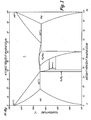
- the aluminum magnesium phase diagram is shown in FIG. 1 .
- the binary system is a eutectic alloy system with a eutectic reaction at 36 weight percent magnesium and 842°F (450°C).
- Magnesium has its maximum solid solubility of 16 weight percent in aluminum at 842°F (450°C) which can be extended further by rapid solidification processing. Magnesium provides substantial solid solution of strengthening in aluminum.
- the alloys contains at least one element selected from zinc, copper, lithium and silicon to produce additional strengthening.
- the amount of zinc in these alloys ranges from about 3 to about 12 weight percent, more preferably about 4 to about 10 weight percent, and even more preferably about 5 to about 9 weight percent.
- the amount of copper in these alloys ranges from about 0.2 to about 3 weight percent, more preferably about 0.5 to about 2.5 weight percent, and even more preferably about 1 to about 2.5 weight percent.
- the amount of lithium in these alloys ranges from about 0.5 to about 3 weight percent, more preferably about 1 to about 2.5 weight percent, and even more preferably about 1 to about 2 weight percent.
- the amount of silicon in these alloys ranges from about 4 to about 25 weight percent silicon, more preferably about 4 to about 18 weight percent, and even more preferably about 5 to about 11 weight percent.
- Exemplary aluminum alloys include, but are not limited to (in weight percent):
- scandium is a potent strengthener that has low diffusivity and low solubility in aluminum.
- Scandium forms equilibrium Al 3 SC intermetallic dispersoids that have an L1 2 structure that is an ordered face centered cubic structure with Sc atoms located at the corners and aluminum atoms located on the cube faces of the unit cell.
- Al 3 Sc dispersoids forms Al 3 Sc dispersoids that are fine and coherent with the aluminum matrix.
- Lattice parameters of aluminum and Al 3 Sc are very close (0.405 nm and 0.410 nm respectively), indicating that there is minimal or no driving force for causing growth of the Al 3 Sc dispersoids.
- This low interfacial energy makes the Al 3 Sc dispersoids thermally stable and resistant to coarsening up to temperatures as high as about 842°F (450°C).
- Addition of magnesium in solid solution in aluminum increases the lattice parameter of the aluminum matrix, and decreases the lattice parameter mismatch further increasing the resistance of the Al 3 Sc to coarsening.
- these Al 3 Sc dispersoids are made stronger and more resistant to coarsening at elevated temperatures by adding suitable alloying elements such as gadolinium, yttrium, zirconium, titanium, hafnium, niobium, or combinations thereof, that enter Al 3 Sc in solution.
- suitable alloying elements such as gadolinium, yttrium, zirconium, titanium, hafnium, niobium, or combinations thereof, that enter Al 3 Sc in solution.
- Erbium forms Al 3 Er dispersoids in the aluminum matrix that are fine and coherent with the aluminum matrix.
- the lattice parameters of aluminum and Al 3 Er are close (0.405 nm and 0.417 nm respectively), indicating there is minimal driving force for causing growth of the Al 3 Er dispersoids.
- This low interfacial energy makes the Al 3 Er dispersoids thermally stable and resistant to coarsening up to temperatures as high as about 842°F (450°C).
- Additions of magnesium in solid solution in aluminum increase the lattice parameter of the aluminum matrix, and decrease the lattice parameter mismatch further increasing the resistance of the Al 3 Er to coarsening.
- these Al 3 Er dispersoids are made stronger and more resistant to coarsening at elevated temperatures by adding suitable alloying elements such as gadolinium, yttrium, zirconium, titanium, hafnium, niobium, or combinations thereof that enter Al 3 Er in solution.
- suitable alloying elements such as gadolinium, yttrium, zirconium, titanium, hafnium, niobium, or combinations thereof that enter Al 3 Er in solution.
- Thulium forms metastable Al 3 Tm dispersoids in the aluminum matrix that are fine and coherent with the aluminum matrix.
- the lattice parameters of aluminum and Al 3 Tm are close (0.405 nm and 0.420 nm respectively), indicating there is minimal driving force for causing growth of the Al 3 Tm dispersoids.
- This low interfacial energy makes the Al 3 Tm dispersoids thermally stable and resistant to coarsening up to temperatures as high as about 842°F (450°C).
- Additions of magnesium in solid solution in aluminum increase the lattice parameter of the aluminum matrix, and decrease the lattice parameter mismatch further increasing the resistance of the Al 3 Tm to coarsening.
- these Al 3 Tm dispersoids are made stronger and more resistant to coarsening at elevated temperatures by adding suitable alloying elements such as gadolinium, yttrium, zirconium, titanium, hafnium, niobium, or combinations thereof that enter Al 3 Tm in solution.
- suitable alloying elements such as gadolinium, yttrium, zirconium, titanium, hafnium, niobium, or combinations thereof that enter Al 3 Tm in solution.
- Ytterbium forms Al 3 Yb dispersoids in the aluminum matrix that are fine and coherent with the aluminum matrix.
- the lattice parameters of Al and Al 3 Yb are close (0.405 nm and 0.420 nm respectively), indicating there is minimal driving force for causing growth of the Al 3 Yb dispersoids.
- This low interfacial energy makes the Al 3 Yb dispersoids thermally stable and resistant to coarsening up to temperatures as high as about 842°F (450°C).
- Additions of magnesium in solid solution in aluminum increase the lattice parameter of the aluminum matrix, and decrease the lattice parameter mismatch further increasing the resistance of the Al 3 Yb to coarsening.
- these Al 3 Yb dispersoids are made stronger and more resistant to coarsening at elevated temperatures by adding suitable alloying elements such as gadolinium, yttrium, zirconium, titanium, hafnium, niobium, or combinations thereof that enter Al 3 Yb in solution.
- suitable alloying elements such as gadolinium, yttrium, zirconium, titanium, hafnium, niobium, or combinations thereof that enter Al 3 Yb in solution.
- Al 3 Lu dispersoids forms Al 3 Lu dispersoids in the aluminum matrix that are fine and coherent with the aluminum matrix.
- the lattice parameters of Al and Al 3 Lu are close (0.405 nm and 0.419 nm respectively), indicating there is minimal driving force for causing growth of the Al 3 Lu dispersoids.
- This low interfacial energy makes the Al 3 Lu dispersoids thermally stable and resistant to coarsening up to temperatures as high as about 842°F (450°C).
- Additions of magnesium in solid solution in aluminum increase the lattice parameter of the aluminum matrix, and decrease the lattice parameter mismatch further increasing the resistance of the Al 3 Lu to coarsening.
- these Al 3 Lu dispersoids are made stronger and more resistant to coarsening at elevated temperatures by adding suitable alloying elements such as gadolinium, yttrium, zirconium, titanium, hafnium, niobium, or mixtures thereof that enter Al 3 Lu in solution.
- suitable alloying elements such as gadolinium, yttrium, zirconium, titanium, hafnium, niobium, or mixtures thereof that enter Al 3 Lu in solution.
- Gadolinium forms metastable Al 3 Gd dispersoids in the aluminum matrix that have an L1 2 structure in the metastable condition and a D0 19 structure in the equilibrium condition.
- the Al 3 Gd dispersoids are stable up to temperatures as high as about 842°F (450°C) due to their low diffusivity in aluminum.
- gadolinium has fairly high solubility in the Al 3 Sc intermetallic dispersoid.
- Gadolinium can substitute for the X atoms in Al 3 X intermetallic, thereby forming an ordered L1 2 phase which results in improved thermal and structural stability.
- Yttrium forms metastable Al 3 Y dispersoids in the aluminum matrix that have an L1 2 structure in the metastable condition and a D0 19 structure in the equilibrium condition.
- the metastable Al 3 Y dispersoids have a low diffusion coefficient which makes them thermally stable and highly resistant to coarsening.
- Yttrium has a high solubility in the Al 3 X intermetallic dispersoids allowing large amounts of yttrium to substitute for X in the Al 3 X L1 2 dispersoids which results in improved thermal and structural stability.
- Zirconium forms Al 3 Zr dispersoids in the aluminum matrix that have an L1 2 structure in the metastable condition and D0 23 structure in the equilibrium condition.
- the metastable Al 3 Zr dispersoids have a low diffusion coefficient which makes them thermally stable and highly resistant to coarsening.
- Zirconium has a high solubility in the Al 3 X dispersoids allowing large amounts of zirconium to substitute for X in the Al 3 X dispersoids, which results in improved thermal and structural stability.
- Titanium forms Al 3 Ti dispersoids in the aluminum matrix that have an L1 2 structure in the metastable condition and D0 22 structure in the equilibrium condition.
- the metastable Al 3 Ti dispersoids have a low diffusion coefficient which makes them thermally stable and highly resistant to coarsening.
- Titanium has a high solubility in the Al 3 X dispersoids allowing large amounts of titanium to substitute for X in the Al 3 X dispersoids, which results in improved thermal and structural stability.
- Hafnium forms metastable Al 3 Hf dispersoids in the aluminum matrix that have an L1 2 structure in the metastable condition and a D0 23 structure in the equilibrium condition.
- the Al 3 Hf dispersoids have a low diffusion coefficient, which makes them thermally stable and highly resistant to coarsening.
- Hafnium has a high solubility in the Al 3 X dispersoids allowing large amounts of hafnium to substitute for scandium, erbium, thulium, ytterbium, and lutetium in the above mentioned Al 3 X dispersoids, which results in stronger and more thermally stable dispersoids.
- Niobium forms metastable Al 3 Nb dispersoids in the aluminum matrix that have an L1 2 structure in the metastable condition and a D0 22 structure in the equilibrium condition.
- Niobium has a lower solubility in the Al 3 X dispersoids than hafnium or yttrium, allowing relatively lower amounts of niobium than hafnium or yttrium to substitute for X in the Al 3 X dispersoids. Nonetheless, niobium can be very effective in slowing down the coarsening kinetics of the Al 3 X dispersoids because the Al 3 Nb dispersoids are thermally stable. The substitution of niobium for X in the above mentioned Al 3 X dispersoids results in stronger and more thermally stable dispersoids.
- Additions of zinc, copper, lithium and silicon increase the strength of these alloys through additional solid solution hardening and precipitation hardening of Zn 2 Mg ( ⁇ '), Al 2 Cu ( ⁇ '), Al 2 CuMg (S'), Al 3 Li ( ⁇ '), Al 2 LiMg, Mg 2 Si and Si phases, respectively. These phases precipitate as coherent fine particles which can provide considerable strengthening in the alloys. Precipitation of these phases can be controlled during heat treatment.
- Al 3 X L1 2 precipitates improve elevated temperature mechanical properties in aluminum alloys for two reasons.
- the precipitates are ordered intermetallic compounds. As a result, when the particles are sheared by glide dislocations during deformation, the dislocations separate into two partial dislocations separated by an anti-phase boundary on the glide plane. The energy to create the anti-phase boundary is the origin of the strengthening.
- the cubic L1 2 crystal structure and lattice parameter of the precipitates are closely matched to the aluminum solid solution matrix. This results in a lattice coherency at the precipitate/matrix boundary that resists coarsening. The lack of an interphase boundary results in a low driving force for particle growth and resulting elevated temperature stability. Alloying elements in solid solution in the dispersed strengthening particles and in the aluminum matrix that tend to decrease the lattice mismatch between the matrix and particles will tend to increase the strengthening and elevated temperature stability of the alloy.
- the amount of scandium present in the alloys of this invention may vary from about 0.1 to about 4 weight percent, more preferably from about 0.1 to about 3 weight percent, and even more preferably from about 0.2 to about 2.5 weight percent.
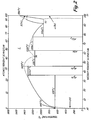
- the Al-Sc phase diagram shown in FIG. 2 indicates a eutectic reaction at about 0.5 weight percent scandium at about 1219°F (659°C) resulting in a solid solution of scandium and aluminum and Al 3 Sc dispersoids.
- Aluminum alloys with less than 0.5 weight percent scandium can be quenched from the melt to retain scandium in solid solution that may precipitate as dispersed L1 2 intermetallic Al 3 Sc following an aging treatment. Alloys with scandium in excess of the eutectic composition (hypereutectic alloys) can only retain scandium in solid solution by rapid solidification processing (RSP) where cooling rates are in excess of about 10 3 °C/second.
- RSP rapid solidification processing
- the amount of erbium present in the alloys of this invention may vary from about 0.1 to about 20 weight percent, more preferably from about 0.3 to about 15 weight percent, and even more preferably from about 0.5 to about 10 weight percent.
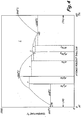
- the Al-Er phase diagram shown in FIG. 3 indicates a eutectic reaction at about 6 weight percent erbium at about 1211°F (655°C).
- Aluminum alloys with less than about 6 weight percent erbium can be quenched from the melt to retain erbium in solid solutions that may precipitate as dispersed L1 2 intermetallic Al 3 Er following an aging treatment.
- Alloys with erbium in excess of the eutectic composition can only retain erbium in solid solution by rapid solidification processing (RSP) where cooling rates are in excess of about 10 3 °C/second. Alloys with erbium in excess of the eutectic composition (hypereutectic alloys) cooled normally will have a microstructure consisting of relatively large Al 3 Er dispersoids in a finely divided aluminum-Al 3 Er eutectic phase matrix.
- the amount of thulium present in the alloys of this invention may vary from about 0.1 to about 15.0 weight percent, more preferably from about 0.2 to about 10 weight percent, and even more preferably from about 0.4 to about 6 weight percent.
- the Al-Tm phase diagram shown in FIG. 4 indicates a eutectic reaction at about 10 weight percent thulium at about 1193°F (645°C).
- Thulium forms metastable Al 3 Tm dispersoids in the aluminum matrix that have an L1 2 structure in the equilibrium condition.
- the Al 3 Tm dispersoids have a low diffusion coefficient which makes them thermally stable and highly resistant to coarsening.
- Aluminum alloys with less than 10 weight percent thulium can be quenched from the melt to retain thulium in solid solution that may precipitate as dispersed metastable L1 2 intermetallic Al 3 Tm following an aging treatment. Alloys with thulium in excess of the eutectic composition can only retain Tm in solid solution by rapid solidification processing (RSP) where cooling rates are in excess of about 10 3 °C/second.
- RSP rapid solidification processing
- the amount of ytterbium present in the alloys of this invention may vary from about 0.1 to about 25 weight percent, more preferably from about 0.3 to about 20 weight percent, and even more preferably from about 0.4 to about 10 weight percent.
- the Al-Yb phase diagram shown in FIG. 5 indicates a eutectic reaction at about 21 weight percent ytterbium at about 1157°F (625°C).
- Aluminum alloys with less than about 21 weight percent ytterbium can be quenched from the melt to retain ytterbium in solid solution that may precipitate as dispersed L1 2 intermetallic Al 3 Yb following an aging treatment. Alloys with ytterbium in excess of the eutectic composition can only retain ytterbium in solid solution by rapid solidification processing (RSP) where cooling rates are in excess of about 10 3 °C/second.
- RSP rapid solidification processing
- the amount of lutetium present in the alloys of this invention may vary from about 0.1 to about 25 weight percent, more preferably from about 0.3 to about 20 weight percent, and even more preferably from about 0.4 to about 10 weight percent.
- the Al-Lu phase diagram shown in FIG. 6 indicates a eutectic reaction at about 11.7 weight percent Lu at about 1202°F (650°C).
- Aluminum alloys with less than about 11.7 weight percent lutetium can be quenched from the melt to retain Lu in solid solution that may precipitate as dispersed L1 2 intermetallic Al 3 Lu following an aging treatment. Alloys with Lu in excess of the eutectic composition can only retain Lu in solid solution by rapid solidification processing (RSP) where cooling rates are in excess of about 10 3 °C/second.
- RSP rapid solidification processing
- the amount of gadolinium present in the alloys of this invention may vary from about 0.1 to about 20 weight percent, more preferably from about 0.3 to about 15 weight percent, and even more preferably from about 0.5 to about 10 weight percent.
- the amount of yttrium present in the alloys of this invention may vary from about 0.1 to about 20 weight percent, more preferably from about 0.3 to about 15 weight percent, and even more preferably from about 0.5 to about 10 weight percent.
- the amount of zirconium present in the alloys of this invention may vary from about 0.05 to about 4 weight percent, more preferably from about 0.1 to about 3 weight percent, and even more preferably from about 0.3 to about 2 weight percent.
- the amount of titanium present in the alloys of this invention may vary from about 0.05 to about 10 weight percent, more preferably from about 0.2 to about 8 weight percent, and even more preferably from about 0.4 to about 4 weight percent.
- the amount of hafnium present in the alloys of this invention may vary from about 0.05 to about 10 weight percent, more preferably from about 0.2 to about 8 weight percent, and even more preferably from about 0.4 to about 5 weight percent.
- the amount of niobium present in the alloys of this invention may vary from about 0.05 to about 5 weight percent, more preferably from about 0.1 to about 3 weight percent, and even more preferably from about 0.2 to about 2 weight percent.
- the alloy of the present invention can be processed by any rapid solidification technique utilizing cooling rates in excess of 10 3 °C/second.
- the rapid solidification process includes melt spinning, splat quenching, atomization, spray deposition, cold spray, vacuum plasma spray, and laser melting.
- the particular processing technique is not important. The most important aspect is the cooling rate of the process. A higher cooling rate is required for the alloys with larger amount of solute additions. These processes produce different forms of the product such as ribbon, flake or powder.
- Atomization is the most commonly used rapid solidification technique to produce a large volume of powder. Cooling rate experienced during atomization depends on the powder size and usually varies from about 10 3 to 10 5 °C/second.
- Finer size (-325 mesh) of powder is preferred to have maximum supersaturation of alloying elements that can precipitate out during extrusion of powder.
- helium gas atomization is preferred. Helium gas provides higher heat transfer coefficient leading to higher cooling rate in the powder.
- the ribbon or powder of alloy can be compacted using vacuum hot pressing, hot isostatic pressing or blind die compaction after suitable vacuum degassing. Compaction takes place by shear deformation in vacuum hot pressing and blind die compaction, whereas diffusional creep is key for compaction in hot isostatic pressing.
- the alloy powder can also be produced using mechanical alloying or cryomilling where powder is milled using high energy ball milling at room temperature or at cryogenic temperature in liquid nitrogen environment. While both mechanical alloying and cryomilling processes can provide supersaturation of alloying elements, cryomilling is preferred because it has less oxygen content. Cryomilling introduces oxynitride particles in the grains that can provide additional strengthening to the alloy at high temperature by increasing threshold stress for dislocation climb. In addition, the nitride particles when located on grain boundaries can reduce the grain boundary sliding in the alloy by pinning the dislocation resulting in reduced dislocation mobility in the grain boundaries.
- the alloy may also be produced using casting processes such as squeeze casting, die casting, sand casting and permanent mold casting provided the alloy contains small amounts of Sc, Er, Tm, Yb, Lu, Gd, Y, Ti, Hf, or Nb.
- the alloys can be heat treated at a temperature of from about 800°F (426°C) to about 1100°F (593°C) for about thirty minutes to four hours followed by quenching in liquid and thereafter aged at a temperature from about 200°F (93°C) to about 600°F (316°C) for about two to forty-eight hours.
- More preferred exemplary aluminum alloys include, but are not limited to (in weight percent):
- alloys with about 4 to about 6.5 weight percent Mg are alloys with about 4 to about 6.5 weight percent Mg.
Landscapes
- Chemical & Material Sciences (AREA)
- Engineering & Computer Science (AREA)
- Materials Engineering (AREA)
- Mechanical Engineering (AREA)
- Metallurgy (AREA)
- Organic Chemistry (AREA)
- Physics & Mathematics (AREA)
- Thermal Sciences (AREA)
- Crystallography & Structural Chemistry (AREA)
- Powder Metallurgy (AREA)
- Manufacture Of Metal Powder And Suspensions Thereof (AREA)
Claims (10)
- Verfahren zur Herstellung einer Aluminiumlegierung, wobei das Verfahren Folgendes umfasst:(a) Herstellen einer Schmelze, die aus Folgendem besteht:1 bis 8 Gewichtsprozent Magnesium;zumindest einem ersten Element, das aus der Gruppe ausgewählt ist, die 0,1 bis 4 Gewichtsprozent Skandium, 0,1 bis 20 Gewichtsprozent Erbium, 0,1 bis 15 Gewichtsprozent Thulium, 0,1 bis 25 Gewichtsprozent Ytterbium und 0,1 bis 25 Gewichtsprozent Lutetium umfasst;zumindest einem zweiten Element, das aus der Gruppe ausgewählt ist, die 0,1 bis 20 Gewichtsprozent Gadolinium, 0,1 bis 20 Gewichtsprozent Yttrium, 0,05 bis 4 Gewichtsprozent Zirkonium, 0,05 bis 10 Gewichtsprozent Titan, 0,05 bis 10 Gewichtsprozent Hafnium und 0,05 bis 5 Gewichtsprozent Niob umfasst;zumindest einem von:3 bis 12 Gewichtsprozent Zink;0,2 bis 3 Gewichtsprozent Kupfer;0,5 bis 3 Gewichtsprozent Lithium; und4 bis 25 Gewichtsprozent Silizium;nicht mehr als 0,1 Gewichtsprozent Eisen, 0,1 Gewichtsprozent Chrom, 0,1 Gewichtsprozent Mangan, 0,1 Gewichtsprozent Vanadium, 0,1 Gewichtsprozent Kobalt und 0,1 Gewichtsprozent Nickel;nicht mehr als insgesamt 1 Gewichtsprozent andere Elemente, darunter Unreinheiten;wobei der Rest Aluminium ist;(b) Verfestigen der Schmelze, um durch einen Schnellverfestigungsprozess, bei dem die Kühlrate größer als 103 °C/Sekunde ist, einen Festkörper herzustellen;(c) Wärmebehandeln des Festkörpers;
wobei das Wärmebehandeln Folgendes umfasst:Lösungswärmebehandlung bei 800 °F (426 °C) bis 1100 °F (593 °C) über dreißig Minuten bis vier Stunden;Abschrecken; undAltern bei 200 °F (93 °C) bis 600 °F (316 °C) über zwei bis achtundvierzig Stunden. - Verfahren nach Anspruch 1, ferner umfassend:
Verfeinern der Struktur des Festkörpers durch Verformungsverarbeitung, beinhaltend zumindest eines von: Extrusion, Schmieden und Wälzen. - Verfahren nach Anspruch 1 oder 2, wobei das Verfestigen zumindest eines von Pressgießen, Druckgießen, Sandgießen und Dauerformgießen umfasst.
- Verfahren nach Anspruch 1 oder 2, wobei der Schnellverfestigungsprozess zumindest eines des Folgenden beinhaltet: Atomisieren, Schmelzspinnen, Abschrecken aus dem Flüssigen, Sprühbeschichten, Kaltsprühen, Plasmasprühen und Laserschmelzen und -beschichten.
- Verfahren nach Anspruch 1, wobei das Abschrecken in einer Flüssigkeit ist und die Legierung nach dem Abschrecken gealtert wird.
- Verfahren nach einem vorhergehenden Anspruch, wobei die Legierung eine Aluminiumfestlösungsmatrix umfasst, die eine Vielzahl von dispergierten zweiten Al3Sc-Phasen, die L12-Strukturen aufweisen, und zweiten Al3X-Phasen, die L12-Strukturen aufweisen, enthält, wobei X zumindest ein erstes Element beinhaltet.
- Verfahren nach Anspruch 6, wobei die Festlösung eine Aluminiummagnesiumfestlösung umfasst.
- Verfahren nach einem vorhergehenden Anspruch, wobei die Schmelze 4 bis 10 Gewichtsprozent Zink enthält.
- Verfahren nach Anspruch 8, wobei die Schmelze 5 bis 9 Gewichtsprozent Zink enthält.
- Verfahren nach einem vorhergehenden Anspruch, wobei die Schmelze 0,5 bis 2,5 Gewichtsprozent Kupfer enthält.
Applications Claiming Priority (1)
| Application Number | Priority Date | Filing Date | Title |
|---|---|---|---|
| US12/148,426 US7879162B2 (en) | 2008-04-18 | 2008-04-18 | High strength aluminum alloys with L12 precipitates |
Publications (3)
| Publication Number | Publication Date |
|---|---|
| EP2112239A2 EP2112239A2 (de) | 2009-10-28 |
| EP2112239A3 EP2112239A3 (de) | 2010-03-17 |
| EP2112239B1 true EP2112239B1 (de) | 2019-05-01 |
Family
ID=40887193
Family Applications (1)
| Application Number | Title | Priority Date | Filing Date |
|---|---|---|---|
| EP09250983.5A Ceased EP2112239B1 (de) | 2008-04-18 | 2009-03-31 | Verfahren zur herstellung von hochfeste aluminiumlegierungen mit l12-ausscheidungeng |
Country Status (2)
| Country | Link |
|---|---|
| US (1) | US7879162B2 (de) |
| EP (1) | EP2112239B1 (de) |
Cited By (1)
| Publication number | Priority date | Publication date | Assignee | Title |
|---|---|---|---|---|
| US11802325B2 (en) | 2018-05-21 | 2023-10-31 | Obshchestvo S Ogranichennoy Otvetstvennost'yu Obedinennaya Kompaniya Rusal “Inzherno-Tekhnologicheskiy Tsentr” | Aluminum alloy for additive technologies |
Families Citing this family (22)
| Publication number | Priority date | Publication date | Assignee | Title |
|---|---|---|---|---|
| WO2005052203A1 (ja) * | 2003-11-26 | 2005-06-09 | Yoshihito Kawamura | 高強度高靭性マグネシウム合金及びその製造方法 |
| US8778098B2 (en) * | 2008-12-09 | 2014-07-15 | United Technologies Corporation | Method for producing high strength aluminum alloy powder containing L12 intermetallic dispersoids |
| RU2468106C1 (ru) * | 2011-05-31 | 2012-11-27 | Федеральное государственное автономное образовательное учреждение высшего профессионального образования "Белгородский государственный национальный исследовательский университет" | Сплав на основе алюминия |
| DE102013200847B4 (de) | 2013-01-21 | 2014-08-07 | Federal-Mogul Nürnberg GmbH | Aluminium-Gusslegierung, Kolben aus einer Aluminiumgusslegierung und Verfahren zur Herstellung einer Aluminium-Gusslegierung |
| US10689740B2 (en) | 2014-04-18 | 2020-06-23 | Terves, LLCq | Galvanically-active in situ formed particles for controlled rate dissolving tools |
| US10150713B2 (en) | 2014-02-21 | 2018-12-11 | Terves, Inc. | Fluid activated disintegrating metal system |
| US20170268088A1 (en) | 2014-02-21 | 2017-09-21 | Terves Inc. | High Conductivity Magnesium Alloy |
| US11167343B2 (en) | 2014-02-21 | 2021-11-09 | Terves, Llc | Galvanically-active in situ formed particles for controlled rate dissolving tools |
| CA2936816A1 (en) | 2014-02-21 | 2015-08-27 | Terves, Inc. | Manufacture of controlled rate dissolving materials |
| CN110004339B (zh) | 2014-04-18 | 2021-11-26 | 特维斯股份有限公司 | 用于受控速率溶解工具的电化活性的原位形成的颗粒 |
| CN104195393A (zh) * | 2014-06-06 | 2014-12-10 | 马鞍山市恒毅机械制造有限公司 | 一种含高硼高铬低碳耐磨汽车轮毂轴承单元的制备方法 |
| KR101606525B1 (ko) | 2014-10-29 | 2016-03-25 | 주식회사 케이엠더블유 | 내식성이 개선된 다이캐스팅용 알루미늄 합금 |
| CN105256192A (zh) * | 2015-11-13 | 2016-01-20 | 无锡清杨机械制造有限公司 | 一种铝合金板材及其制备方法 |
| US11603583B2 (en) | 2016-07-05 | 2023-03-14 | NanoAL LLC | Ribbons and powders from high strength corrosion resistant aluminum alloys |
| CA3012511A1 (en) | 2017-07-27 | 2019-01-27 | Terves Inc. | Degradable metal matrix composite |
| CN112601830A (zh) | 2018-06-20 | 2021-04-02 | 纳诺尔有限责任公司 | 用于焊接和增材制造的高性能Al-Zn-Mg-Zr基铝合金 |
| CN111363961A (zh) * | 2020-04-29 | 2020-07-03 | 贵州航天新力铸锻有限责任公司 | 一种含Er高Li的轻质低成本高强韧铝锂合金 |
| US12545976B2 (en) * | 2020-06-05 | 2026-02-10 | Materion Corporation | Aluminum-scandium composite, aluminum-scandium composite sputtering target and methods of making |
| CN115189087B (zh) * | 2022-07-08 | 2025-01-21 | 苏州星波动力科技有限公司 | 电池壳及其制造方法和电池包 |
| CN117551921B (zh) * | 2023-12-12 | 2026-04-03 | 北京工业大学 | 一种Er、Sc、Si微合金化的Al-Cu-Mn系耐热铝合金 |
| CN117802365B (zh) * | 2023-12-15 | 2025-08-05 | 聚塔时代(江苏)材料科技有限公司 | 一种增材制造用铝铒合金粉末及其制备方法 |
| CN117867333A (zh) * | 2023-12-22 | 2024-04-12 | 中稀广西稀土有限公司 | 一种用于高压铸造的高强韧免热处理铝合金及其制备方法 |
Family Cites Families (112)
| Publication number | Priority date | Publication date | Assignee | Title |
|---|---|---|---|---|
| US3619181A (en) * | 1968-10-29 | 1971-11-09 | Aluminum Co Of America | Aluminum scandium alloy |
| US4041123A (en) * | 1971-04-20 | 1977-08-09 | Westinghouse Electric Corporation | Method of compacting shaped powdered objects |
| US3816080A (en) * | 1971-07-06 | 1974-06-11 | Int Nickel Co | Mechanically-alloyed aluminum-aluminum oxide |
| US4259112A (en) * | 1979-04-05 | 1981-03-31 | Dwa Composite Specialties, Inc. | Process for manufacture of reinforced composites |
| US4647321A (en) * | 1980-11-24 | 1987-03-03 | United Technologies Corporation | Dispersion strengthened aluminum alloys |
| US4463058A (en) * | 1981-06-16 | 1984-07-31 | Atlantic Richfield Company | Silicon carbide whisker composites |
| FR2529909B1 (fr) * | 1982-07-06 | 1986-12-12 | Centre Nat Rech Scient | Alliages amorphes ou microcristallins a base d'aluminium |
| US4499048A (en) * | 1983-02-23 | 1985-02-12 | Metal Alloys, Inc. | Method of consolidating a metallic body |
| US4469537A (en) * | 1983-06-27 | 1984-09-04 | Reynolds Metals Company | Aluminum armor plate system |
| US4661172A (en) * | 1984-02-29 | 1987-04-28 | Allied Corporation | Low density aluminum alloys and method |
| US4713216A (en) * | 1985-04-27 | 1987-12-15 | Showa Aluminum Kabushiki Kaisha | Aluminum alloys having high strength and resistance to stress and corrosion |
| US4626294A (en) * | 1985-05-28 | 1986-12-02 | Aluminum Company Of America | Lightweight armor plate and method |
| US4597792A (en) * | 1985-06-10 | 1986-07-01 | Kaiser Aluminum & Chemical Corporation | Aluminum-based composite product of high strength and toughness |
| FR2584095A1 (fr) | 1985-06-28 | 1987-01-02 | Cegedur | Alliages d'al a hautes teneurs en li et si et un procede de fabrication |
| US5226983A (en) * | 1985-07-08 | 1993-07-13 | Allied-Signal Inc. | High strength, ductile, low density aluminum alloys and process for making same |
| US4667497A (en) * | 1985-10-08 | 1987-05-26 | Metals, Ltd. | Forming of workpiece using flowable particulate |
| US5055257A (en) * | 1986-03-20 | 1991-10-08 | Aluminum Company Of America | Superplastic aluminum products and alloys |
| US4874440A (en) * | 1986-03-20 | 1989-10-17 | Aluminum Company Of America | Superplastic aluminum products and alloys |
| US4689090A (en) * | 1986-03-20 | 1987-08-25 | Aluminum Company Of America | Superplastic aluminum alloys containing scandium |
| US4755221A (en) * | 1986-03-24 | 1988-07-05 | Gte Products Corporation | Aluminum based composite powders and process for producing same |
| US4865806A (en) * | 1986-05-01 | 1989-09-12 | Dural Aluminum Composites Corp. | Process for preparation of composite materials containing nonmetallic particles in a metallic matrix |
| JPS6447831A (en) * | 1987-08-12 | 1989-02-22 | Takeshi Masumoto | High strength and heat resistant aluminum-based alloy and its production |
| US5066342A (en) * | 1988-01-28 | 1991-11-19 | Aluminum Company Of America | Aluminum-lithium alloys and method of making the same |
| US5462712A (en) * | 1988-08-18 | 1995-10-31 | Martin Marietta Corporation | High strength Al-Cu-Li-Zn-Mg alloys |
| US4923532A (en) | 1988-09-12 | 1990-05-08 | Allied-Signal Inc. | Heat treatment for aluminum-lithium based metal matrix composites |
| US4946517A (en) * | 1988-10-12 | 1990-08-07 | Aluminum Company Of America | Unrecrystallized aluminum plate product by ramp annealing |
| US4927470A (en) * | 1988-10-12 | 1990-05-22 | Aluminum Company Of America | Thin gauge aluminum plate product by isothermal treatment and ramp anneal |
| AU620155B2 (en) * | 1988-10-15 | 1992-02-13 | Koji Hashimoto | Amorphous aluminum alloys |
| US4933140A (en) * | 1988-11-17 | 1990-06-12 | Ceracon, Inc. | Electrical heating of graphite grain employed in consolidation of objects |
| US4853178A (en) * | 1988-11-17 | 1989-08-01 | Ceracon, Inc. | Electrical heating of graphite grain employed in consolidation of objects |
| US5059390A (en) * | 1989-06-14 | 1991-10-22 | Aluminum Company Of America | Dual-phase, magnesium-based alloy having improved properties |
| US4964927A (en) * | 1989-03-31 | 1990-10-23 | University Of Virginia Alumini Patents | Aluminum-based metallic glass alloys |
| US4915605A (en) * | 1989-05-11 | 1990-04-10 | Ceracon, Inc. | Method of consolidation of powder aluminum and aluminum alloys |
| US4988464A (en) * | 1989-06-01 | 1991-01-29 | Union Carbide Corporation | Method for producing powder by gas atomization |
| US5076340A (en) * | 1989-08-07 | 1991-12-31 | Dural Aluminum Composites Corp. | Cast composite material having a matrix containing a stable oxide-forming element |
| US5130209A (en) * | 1989-11-09 | 1992-07-14 | Allied-Signal Inc. | Arc sprayed continuously reinforced aluminum base composites and method |
| JP2724762B2 (ja) * | 1989-12-29 | 1998-03-09 | 本田技研工業株式会社 | 高強度アルミニウム基非晶質合金 |
| US5030517A (en) | 1990-01-18 | 1991-07-09 | Allied-Signal, Inc. | Plasma spraying of rapidly solidified aluminum base alloys |
| US5211910A (en) * | 1990-01-26 | 1993-05-18 | Martin Marietta Corporation | Ultra high strength aluminum-base alloys |
| JP2619118B2 (ja) * | 1990-06-08 | 1997-06-11 | 健 増本 | 粒子分散型高強度非晶質アルミニウム合金 |
| US5133931A (en) * | 1990-08-28 | 1992-07-28 | Reynolds Metals Company | Lithium aluminum alloy system |
| US5032352A (en) * | 1990-09-21 | 1991-07-16 | Ceracon, Inc. | Composite body formation of consolidated powder metal part |
| JP2864287B2 (ja) * | 1990-10-16 | 1999-03-03 | 本田技研工業株式会社 | 高強度高靭性アルミニウム合金の製造方法および合金素材 |
| JPH04218637A (ja) * | 1990-12-18 | 1992-08-10 | Honda Motor Co Ltd | 高強度高靱性アルミニウム合金の製造方法 |
| US5198045A (en) * | 1991-05-14 | 1993-03-30 | Reynolds Metals Company | Low density high strength al-li alloy |
| RU2001144C1 (ru) | 1991-12-24 | 1993-10-15 | Московский институт стали и сплавов | Литейный сплав на основе алюмини |
| JP2911673B2 (ja) * | 1992-03-18 | 1999-06-23 | 健 増本 | 高強度アルミニウム合金 |
| JPH0673479A (ja) * | 1992-05-06 | 1994-03-15 | Honda Motor Co Ltd | 高強度高靱性Al合金 |
| EP0584596A3 (en) | 1992-08-05 | 1994-08-10 | Yamaha Corp | High strength and anti-corrosive aluminum-based alloy |
| CA2107421A1 (en) * | 1992-10-16 | 1994-04-17 | Steven Alfred Miller | Atomization with low atomizing gas pressure |
| US5597529A (en) * | 1994-05-25 | 1997-01-28 | Ashurst Technology Corporation (Ireland Limited) | Aluminum-scandium alloys |
| EP0760727A1 (de) | 1994-05-25 | 1997-03-12 | Ashurst Coporation | Aluminium-scandium legierungen und verwendungen |
| WO1996010099A1 (en) * | 1994-09-26 | 1996-04-04 | Ashurst Technology Corporation (Ireland) Limited | High strength aluminum casting alloys for structural applications |
| US5858131A (en) * | 1994-11-02 | 1999-01-12 | Tsuyoshi Masumoto | High strength and high rigidity aluminum-based alloy and production method therefor |
| US5624632A (en) * | 1995-01-31 | 1997-04-29 | Aluminum Company Of America | Aluminum magnesium alloy product containing dispersoids |
| US6702982B1 (en) * | 1995-02-28 | 2004-03-09 | The United States Of America As Represented By The Secretary Of The Army | Aluminum-lithium alloy |
| JP3594272B2 (ja) | 1995-06-14 | 2004-11-24 | 古河スカイ株式会社 | 耐応力腐食割れ性に優れた溶接用高力アルミニウム合金 |
| JPH09104940A (ja) | 1995-10-09 | 1997-04-22 | Furukawa Electric Co Ltd:The | 溶接性に優れた高力AlーCu系合金 |
| JP4080013B2 (ja) * | 1996-09-09 | 2008-04-23 | 住友電気工業株式会社 | 高強度高靱性アルミニウム合金およびその製造方法 |
| ATE250675T1 (de) | 1997-01-31 | 2003-10-15 | Pechiney Rolled Products Llc | Verfahren zur erhöhung der bruchzähigkeit in aluminium-lithium-legierungen |
| US5882449A (en) * | 1997-07-11 | 1999-03-16 | Mcdonnell Douglas Corporation | Process for preparing aluminum/lithium/scandium rolled sheet products |
| US6312643B1 (en) * | 1997-10-24 | 2001-11-06 | The United States Of America As Represented By The Secretary Of The Air Force | Synthesis of nanoscale aluminum alloy powders and devices therefrom |
| JP3592052B2 (ja) | 1997-12-01 | 2004-11-24 | 株式会社神戸製鋼所 | アルミニウム合金溶接用溶加材及びそれを使用したアルミニウム合金材の溶接方法 |
| US6071324A (en) * | 1998-05-28 | 2000-06-06 | Sulzer Metco (Us) Inc. | Powder of chromium carbide and nickel chromium |
| AT407404B (de) * | 1998-07-29 | 2001-03-26 | Miba Gleitlager Ag | Zwischenschicht, insbesondere bindungsschicht, aus einer legierung auf aluminiumbasis |
| AT407532B (de) * | 1998-07-29 | 2001-04-25 | Miba Gleitlager Ag | Verbundwerkstoff aus zumindest zwei schichten |
| DE19838015C2 (de) * | 1998-08-21 | 2002-10-17 | Eads Deutschland Gmbh | Gewalztes, stranggepreßtes, geschweißtes oder geschmiedetes Bauteil aus einer schweißbaren, korrosionsbeständigen hochmagnesiumhaltigen Aluminium-Magnesium-Legierung |
| DE19838017C2 (de) * | 1998-08-21 | 2003-06-18 | Eads Deutschland Gmbh | Schweißbare, korrosionsbeständige AIMg-Legierungen, insbesondere für die Verkehrstechnik |
| US6531004B1 (en) * | 1998-08-21 | 2003-03-11 | Eads Deutschland Gmbh | Weldable anti-corrosive aluminium-magnesium alloy containing a high amount of magnesium, especially for use in aviation |
| JP3997009B2 (ja) | 1998-10-07 | 2007-10-24 | 株式会社神戸製鋼所 | 高速動部品用アルミニウム合金鍛造材 |
| AU1983200A (en) | 1998-12-18 | 2000-07-12 | Corus Aluminium Walzprodukte Gmbh | Method for the manufacturing of an aluminium-magnesium-lithium alloy product |
| US6309594B1 (en) * | 1999-06-24 | 2001-10-30 | Ceracon, Inc. | Metal consolidation process employing microwave heated pressure transmitting particulate |
| JP4080111B2 (ja) | 1999-07-26 | 2008-04-23 | ヤマハ発動機株式会社 | 鍛造用アルミニウム合金製ビレットの製造方法 |
| US6139653A (en) * | 1999-08-12 | 2000-10-31 | Kaiser Aluminum & Chemical Corporation | Aluminum-magnesium-scandium alloys with zinc and copper |
| US6368427B1 (en) * | 1999-09-10 | 2002-04-09 | Geoffrey K. Sigworth | Method for grain refinement of high strength aluminum casting alloys |
| US6355209B1 (en) * | 1999-11-16 | 2002-03-12 | Ceracon, Inc. | Metal consolidation process applicable to functionally gradient material (FGM) compositons of tungsten, nickel, iron, and cobalt |
| EP1111079A1 (de) | 1999-12-20 | 2001-06-27 | Alcoa Inc. | Übersättigte Aluminium-Legierung |
| US6248453B1 (en) * | 1999-12-22 | 2001-06-19 | United Technologies Corporation | High strength aluminum alloy |
| AU2001264646A1 (en) * | 2000-05-18 | 2001-11-26 | Smith And Wesson Corp. | Scandium containing aluminum alloy firearm |
| US6562154B1 (en) | 2000-06-12 | 2003-05-13 | Aloca Inc. | Aluminum sheet products having improved fatigue crack growth resistance and methods of making same |
| US6630008B1 (en) * | 2000-09-18 | 2003-10-07 | Ceracon, Inc. | Nanocrystalline aluminum metal matrix composites, and production methods |
| EP1249303A1 (de) | 2001-03-15 | 2002-10-16 | McCook Metals L.L.C. | Hoch-Titan und -Zirkonium enthaltender Zusatzdraht zum Schweissen von Aluminiumlegierungen |
| US6524410B1 (en) * | 2001-08-10 | 2003-02-25 | Tri-Kor Alloys, Llc | Method for producing high strength aluminum alloy welded structures |
| WO2003052154A1 (de) | 2001-12-14 | 2003-06-26 | Eads Deutschland Gmbh | VERFAHREN ZUM HERSTELLEN EINES SCANDIUM (Sc)- UND/ODER ZIRKON (Zr)-LEGIERTEN ALUMINIUMBLECHMATERIALS MIT HOHER RISSZÄHIGKEIT |
| FR2838136B1 (fr) | 2002-04-05 | 2005-01-28 | Pechiney Rhenalu | PRODUITS EN ALLIAGE A1-Zn-Mg-Cu A COMPROMIS CARACTERISTIQUES STATISTIQUES/TOLERANCE AUX DOMMAGES AMELIORE |
| FR2838135B1 (fr) | 2002-04-05 | 2005-01-28 | Pechiney Rhenalu | PRODUITS CORROYES EN ALLIAGES A1-Zn-Mg-Cu A TRES HAUTES CARACTERISTIQUES MECANIQUES, ET ELEMENTS DE STRUCTURE D'AERONEF |
| US6918970B2 (en) * | 2002-04-10 | 2005-07-19 | The United States Of America As Represented By The Administrator Of The National Aeronautics And Space Administration | High strength aluminum alloy for high temperature applications |
| EP1499753A2 (de) * | 2002-04-24 | 2005-01-26 | Questek Innovations LLC | Aluminium-legierungen verfestigt durch nanophaseauscheidungen und hergestellt aus dem amorphen zustand |
| EP1523583B1 (de) | 2002-07-09 | 2017-03-15 | Constellium Issoire | Al-cu-mg-legierungen verwendbar für die luftfahrt |
| US7604704B2 (en) | 2002-08-20 | 2009-10-20 | Aleris Aluminum Koblenz Gmbh | Balanced Al-Cu-Mg-Si alloy product |
| US6880871B2 (en) * | 2002-09-05 | 2005-04-19 | Newfrey Llc | Drive-in latch with rotational adjustment |
| US20040099352A1 (en) | 2002-09-21 | 2004-05-27 | Iulian Gheorghe | Aluminum-zinc-magnesium-copper alloy extrusion |
| US6902699B2 (en) * | 2002-10-02 | 2005-06-07 | The Boeing Company | Method for preparing cryomilled aluminum alloys and components extruded and forged therefrom |
| US7048815B2 (en) * | 2002-11-08 | 2006-05-23 | Ues, Inc. | Method of making a high strength aluminum alloy composition |
| US7648593B2 (en) * | 2003-01-15 | 2010-01-19 | United Technologies Corporation | Aluminum based alloy |
| ATE474070T1 (de) | 2003-01-15 | 2010-07-15 | United Technologies Corp | Legierung auf aluminium-basis |
| US6974510B2 (en) | 2003-02-28 | 2005-12-13 | United Technologies Corporation | Aluminum base alloys |
| US7344675B2 (en) * | 2003-03-12 | 2008-03-18 | The Boeing Company | Method for preparing nanostructured metal alloys having increased nitride content |
| CN1203200C (zh) | 2003-03-14 | 2005-05-25 | 北京工业大学 | Al-Zn-Mg-Er稀土铝合金 |
| US20040191111A1 (en) * | 2003-03-14 | 2004-09-30 | Beijing University Of Technology | Er strengthening aluminum alloy |
| AT413035B (de) | 2003-11-10 | 2005-10-15 | Arc Leichtmetallkompetenzzentrum Ranshofen Gmbh | Aluminiumlegierung |
| DE10352932B4 (de) | 2003-11-11 | 2007-05-24 | Eads Deutschland Gmbh | Aluminium-Gusslegierung |
| US7241328B2 (en) * | 2003-11-25 | 2007-07-10 | The Boeing Company | Method for preparing ultra-fine, submicron grain titanium and titanium-alloy articles and articles prepared thereby |
| US20050147520A1 (en) * | 2003-12-31 | 2005-07-07 | Guido Canzona | Method for improving the ductility of high-strength nanophase alloys |
| US7547366B2 (en) * | 2004-07-15 | 2009-06-16 | Alcoa Inc. | 2000 Series alloys with enhanced damage tolerance performance for aerospace applications |
| US7393559B2 (en) * | 2005-02-01 | 2008-07-01 | The Regents Of The University Of California | Methods for production of FGM net shaped body for various applications |
| US7875132B2 (en) * | 2005-05-31 | 2011-01-25 | United Technologies Corporation | High temperature aluminum alloys |
| JP5079225B2 (ja) * | 2005-08-25 | 2012-11-21 | 富士重工業株式会社 | マグネシウムシリサイド粒を分散した状態で含むマグネシウム系金属粒子からなる金属粉末を製造する方法 |
| US7584778B2 (en) * | 2005-09-21 | 2009-09-08 | United Technologies Corporation | Method of producing a castable high temperature aluminum alloy by controlled solidification |
| JP2007188878A (ja) | 2005-12-16 | 2007-07-26 | Matsushita Electric Ind Co Ltd | リチウムイオン二次電池 |
| US20080066833A1 (en) * | 2006-09-19 | 2008-03-20 | Lin Jen C | HIGH STRENGTH, HIGH STRESS CORROSION CRACKING RESISTANT AND CASTABLE Al-Zn-Mg-Cu-Zr ALLOY FOR SHAPE CAST PRODUCTS |
| CN100557053C (zh) | 2006-12-19 | 2009-11-04 | 中南大学 | 高强高韧耐蚀Al-Zn-Mg-(Cu)合金 |
-
2008
- 2008-04-18 US US12/148,426 patent/US7879162B2/en not_active Expired - Fee Related
-
2009
- 2009-03-31 EP EP09250983.5A patent/EP2112239B1/de not_active Ceased
Non-Patent Citations (1)
| Title |
|---|
| None * |
Cited By (1)
| Publication number | Priority date | Publication date | Assignee | Title |
|---|---|---|---|---|
| US11802325B2 (en) | 2018-05-21 | 2023-10-31 | Obshchestvo S Ogranichennoy Otvetstvennost'yu Obedinennaya Kompaniya Rusal “Inzherno-Tekhnologicheskiy Tsentr” | Aluminum alloy for additive technologies |
Also Published As
| Publication number | Publication date |
|---|---|
| US20090263276A1 (en) | 2009-10-22 |
| EP2112239A2 (de) | 2009-10-28 |
| US7879162B2 (en) | 2011-02-01 |
| EP2112239A3 (de) | 2010-03-17 |
Similar Documents
| Publication | Publication Date | Title |
|---|---|---|
| US7879162B2 (en) | High strength aluminum alloys with L12 precipitates | |
| US7811395B2 (en) | High strength L12 aluminum alloys | |
| EP2241644B1 (de) | Hitzebehandelbare L12-Aluminiumlegierungen | |
| EP2112243B1 (de) | L12-Aluminium-Legierungen mit hoher Festigkeit | |
| EP2112242A1 (de) | Wärmebehandlungsfähige L12 Aluminium-Legierungen | |
| EP2112240B1 (de) | Verfahren zur herstellung von dispersionsverstärkte l12-aluminiumlegierungen | |
| EP2110450B1 (de) | Verfahren zur herstellung von hochfesten l12-aluminiumlegierungen | |
| EP2112244A1 (de) | L12-Aluminium-Legierungen mit hoher Festigkeit | |
| EP2110453B1 (de) | L12-Aluminium-Legierungen | |
| EP2112241B1 (de) | L12-verstärkte amorphe Aluminiumlegierungen | |
| EP2110451B1 (de) | L12-Aluminiumlegierungen mit bimodaler und trimodaler Verteilung | |
| US7648593B2 (en) | Aluminum based alloy | |
| JP3929978B2 (ja) | アルミニウム基合金 | |
| EP2333123B1 (de) | Verfahren zur Herstellung von heiß- und kaltgewalzte hochfeste L12-Aluminiumlegierungen | |
| WO1993017138A1 (en) | Rapidly solidified aluminum lithium alloys having zirconium for aircraft landing wheel applications |
Legal Events
| Date | Code | Title | Description |
|---|---|---|---|
| PUAI | Public reference made under article 153(3) epc to a published international application that has entered the european phase |
Free format text: ORIGINAL CODE: 0009012 |
|
| AK | Designated contracting states |
Kind code of ref document: A2 Designated state(s): AT BE BG CH CY CZ DE DK EE ES FI FR GB GR HR HU IE IS IT LI LT LU LV MC MK MT NL NO PL PT RO SE SI SK TR |
|
| AX | Request for extension of the european patent |
Extension state: AL BA RS |
|
| PUAL | Search report despatched |
Free format text: ORIGINAL CODE: 0009013 |
|
| AK | Designated contracting states |
Kind code of ref document: A3 Designated state(s): AT BE BG CH CY CZ DE DK EE ES FI FR GB GR HR HU IE IS IT LI LT LU LV MC MK MT NL NO PL PT RO SE SI SK TR |
|
| AX | Request for extension of the european patent |
Extension state: AL BA RS |
|
| 17P | Request for examination filed |
Effective date: 20100622 |
|
| 17Q | First examination report despatched |
Effective date: 20100720 |
|
| AKX | Designation fees paid |
Designated state(s): DE GB |
|
| RAP1 | Party data changed (applicant data changed or rights of an application transferred) |
Owner name: UNITED TECHNOLOGIES CORPORATION |
|
| STAA | Information on the status of an ep patent application or granted ep patent |
Free format text: STATUS: EXAMINATION IS IN PROGRESS |
|
| GRAP | Despatch of communication of intention to grant a patent |
Free format text: ORIGINAL CODE: EPIDOSNIGR1 |
|
| STAA | Information on the status of an ep patent application or granted ep patent |
Free format text: STATUS: GRANT OF PATENT IS INTENDED |
|
| INTG | Intention to grant announced |
Effective date: 20181114 |
|
| GRAS | Grant fee paid |
Free format text: ORIGINAL CODE: EPIDOSNIGR3 |
|
| GRAA | (expected) grant |
Free format text: ORIGINAL CODE: 0009210 |
|
| STAA | Information on the status of an ep patent application or granted ep patent |
Free format text: STATUS: THE PATENT HAS BEEN GRANTED |
|
| AK | Designated contracting states |
Kind code of ref document: B1 Designated state(s): DE GB |
|
| REG | Reference to a national code |
Ref country code: GB Ref legal event code: FG4D |
|
| REG | Reference to a national code |
Ref country code: DE Ref legal event code: R096 Ref document number: 602009058097 Country of ref document: DE |
|
| REG | Reference to a national code |
Ref country code: DE Ref legal event code: R097 Ref document number: 602009058097 Country of ref document: DE |
|
| PLBE | No opposition filed within time limit |
Free format text: ORIGINAL CODE: 0009261 |
|
| STAA | Information on the status of an ep patent application or granted ep patent |
Free format text: STATUS: NO OPPOSITION FILED WITHIN TIME LIMIT |
|
| 26N | No opposition filed |
Effective date: 20200204 |
|
| PGFP | Annual fee paid to national office [announced via postgrant information from national office to epo] |
Ref country code: DE Payment date: 20210217 Year of fee payment: 13 Ref country code: GB Payment date: 20210219 Year of fee payment: 13 |
|
| REG | Reference to a national code |
Ref country code: DE Ref legal event code: R081 Ref document number: 602009058097 Country of ref document: DE Owner name: RAYTHEON TECHNOLOGIES CORPORATION (N.D.GES.D.S, US Free format text: FORMER OWNER: UNITED TECHNOLOGIES CORPORATION, FARMINGTON, CONN., US |
|
| REG | Reference to a national code |
Ref country code: DE Ref legal event code: R119 Ref document number: 602009058097 Country of ref document: DE |
|
| GBPC | Gb: european patent ceased through non-payment of renewal fee |
Effective date: 20220331 |
|
| PG25 | Lapsed in a contracting state [announced via postgrant information from national office to epo] |
Ref country code: GB Free format text: LAPSE BECAUSE OF NON-PAYMENT OF DUE FEES Effective date: 20220331 Ref country code: DE Free format text: LAPSE BECAUSE OF NON-PAYMENT OF DUE FEES Effective date: 20221001 |