EP2116552A2 - Peptides, dérivés associés, leurs procédés de production, souche les produisant, et agent antiviral les comportant en tant qu'ingrédient actif - Google Patents
Peptides, dérivés associés, leurs procédés de production, souche les produisant, et agent antiviral les comportant en tant qu'ingrédient actif Download PDFInfo
- Publication number
- EP2116552A2 EP2116552A2 EP09009205A EP09009205A EP2116552A2 EP 2116552 A2 EP2116552 A2 EP 2116552A2 EP 09009205 A EP09009205 A EP 09009205A EP 09009205 A EP09009205 A EP 09009205A EP 2116552 A2 EP2116552 A2 EP 2116552A2
- Authority
- EP
- European Patent Office
- Prior art keywords
- residue
- residues
- peptides
- leucine
- strain
- Prior art date
- Legal status (The legal status is an assumption and is not a legal conclusion. Google has not performed a legal analysis and makes no representation as to the accuracy of the status listed.)
- Withdrawn
Links
- 0 CCCCCCCC(CC(NC(CC(C)C)C(NC(CCC(O)=O)C(NC(CCC(N)=O)C(NC(C(C)C)C(NC(CC(C)C)C(NC(CCC(N)=O)C(NC(COC(C(CC(C)C)NC(C(CCC(*)=O)NC(C(CC(C)C)NC(C(CCC(N)=O)NC(C(CC(C)C)*C(C(C(C)C)NC(C(C(C)C)N1)=O)=O)=O)=O)=O)=O)=O)C1=O)=O)=O)=O)=O)=O)=O)=O)O Chemical compound CCCCCCCC(CC(NC(CC(C)C)C(NC(CCC(O)=O)C(NC(CCC(N)=O)C(NC(C(C)C)C(NC(CC(C)C)C(NC(CCC(N)=O)C(NC(COC(C(CC(C)C)NC(C(CCC(*)=O)NC(C(CC(C)C)NC(C(CCC(N)=O)NC(C(CC(C)C)*C(C(C(C)C)NC(C(C(C)C)N1)=O)=O)=O)=O)=O)=O)=O)C1=O)=O)=O)=O)=O)=O)=O)=O)O 0.000 description 2
Images
















Classifications
-
- C—CHEMISTRY; METALLURGY
- C07—ORGANIC CHEMISTRY
- C07K—PEPTIDES
- C07K7/00—Peptides having 5 to 20 amino acids in a fully defined sequence; Derivatives thereof
- C07K7/04—Linear peptides containing only normal peptide links
- C07K7/08—Linear peptides containing only normal peptide links having 12 to 20 amino acids
-
- A—HUMAN NECESSITIES
- A61—MEDICAL OR VETERINARY SCIENCE; HYGIENE
- A61P—SPECIFIC THERAPEUTIC ACTIVITY OF CHEMICAL COMPOUNDS OR MEDICINAL PREPARATIONS
- A61P31/00—Antiinfectives, i.e. antibiotics, antiseptics, chemotherapeutics
- A61P31/12—Antivirals
-
- C—CHEMISTRY; METALLURGY
- C07—ORGANIC CHEMISTRY
- C07K—PEPTIDES
- C07K11/00—Depsipeptides having up to 20 amino acids in a fully defined sequence; Derivatives thereof
-
- C—CHEMISTRY; METALLURGY
- C07—ORGANIC CHEMISTRY
- C07K—PEPTIDES
- C07K14/00—Peptides having more than 20 amino acids; Gastrins; Somatostatins; Melanotropins; Derivatives thereof
- C07K14/195—Peptides having more than 20 amino acids; Gastrins; Somatostatins; Melanotropins; Derivatives thereof from bacteria
- C07K14/21—Peptides having more than 20 amino acids; Gastrins; Somatostatins; Melanotropins; Derivatives thereof from bacteria from Pseudomonadaceae (F)
-
- C—CHEMISTRY; METALLURGY
- C12—BIOCHEMISTRY; BEER; SPIRITS; WINE; VINEGAR; MICROBIOLOGY; ENZYMOLOGY; MUTATION OR GENETIC ENGINEERING
- C12N—MICROORGANISMS OR ENZYMES; COMPOSITIONS THEREOF; PROPAGATING, PRESERVING, OR MAINTAINING MICROORGANISMS; MUTATION OR GENETIC ENGINEERING; CULTURE MEDIA
- C12N1/00—Microorganisms; Compositions thereof; Processes of propagating, maintaining or preserving microorganisms or compositions thereof; Processes of preparing or isolating a composition containing a microorganism; Culture media therefor
- C12N1/20—Bacteria; Culture media therefor
- C12N1/205—Bacterial isolates
-
- A—HUMAN NECESSITIES
- A61—MEDICAL OR VETERINARY SCIENCE; HYGIENE
- A61K—PREPARATIONS FOR MEDICAL, DENTAL OR TOILETRY PURPOSES
- A61K38/00—Medicinal preparations containing peptides
-
- C—CHEMISTRY; METALLURGY
- C12—BIOCHEMISTRY; BEER; SPIRITS; WINE; VINEGAR; MICROBIOLOGY; ENZYMOLOGY; MUTATION OR GENETIC ENGINEERING
- C12R—INDEXING SCHEME ASSOCIATED WITH SUBCLASSES C12C - C12Q, RELATING TO MICROORGANISMS
- C12R2001/00—Microorganisms ; Processes using microorganisms
- C12R2001/01—Bacteria or Actinomycetales ; using bacteria or Actinomycetales
- C12R2001/38—Pseudomonas
Definitions
- the present invention relates to novel peptides, derivatives thereof.
- the present invention also relates to salts of the novel peptides and derivatives thereof.
- the present invention relates to a strain belonging to a novel species capable of producing the novel peptides.
- the present invention relates to a process for producing the novel peptides.
- the present invention relates to an antiviral agent comprising, as an active ingredient, at least one member selected from the group consisting of (a) the novel peptides, derivatives thereof and pharmaceutically acceptable salts thereof and (b) the strain belonging to a novel species.
- Microorganisms e.g., viruses and bacteria
- Microorganisms are known to be causing agents of various infectious disease. Research and development of antibiotics, etc., against bacterial-causing infectious disease are advancing, and many pharmaceuticals preparations are in actual use. On the other hand, pharmaceutical preparations against infectious disease caused by viruses are not as advanced as the antibacterial agents, under the present circumstances, although causative viruses themselves have been identified with the development in virology in recent years.
- the substance (46NW-04A) having an antiviral activity described in the above publication is referred to as white powder with the molecular formula C 54 H 95 N 9 O 16 , having, as constitutive amino acids, 1 threonine residue, 2 serine residues, 1 valine residue, 1 glutamic acid residue, 1 isoleucine residue and 3 leucine residues, and having a 3-hydroxydecanoyl group that is bonded to the N-terminal leucine thereof. It is described therein that the above substance (46NW-04A) has a structure very similar to that of the viscosin reported by Hiramoto et al. (Tetrahedron Letters, vol. 13, pp. 1087-1090, 1970 ). It is also reported that the microorganism of the genus Pseudomonas producing this substance (46NW-04A) was identified as Pseudomonas fluorescens biovar I.
- This invention has been made in view of the circumstances described above, and an object of this invention is to provide a novel antiviral agent.
- the present inventors found three groups of substances each of which, in enterobacteria derived from fish, can serve as an active ingredient in an antiviral agent, to complete the present invention.
- the novel substances belonging to a first group found by the present inventors are peptides having, as constitutive amino acids, 4 glutamine-derived amino acid residues, 1 glutamic acid residue, 1 serine residue, 2 valine residues, 1 isoleucine residue and 5 leucine residues, and having a 3-hydroxydecanoyl group that is bonded, via an amide linkage, to the N-terminal leucine residue thereof.
- the present invention provides these novel substances and salts thereof, as well as an antiviral agent comprising, as an active ingredient, at least one member selected from the group consisting of these novel substances and pharmaceutically acceptable salts thereof.
- the active ingredients belonging to the peptides of the first group in the antiviral agent found by the present inventors includes the following peptide:
- 3 peptide derivatives of the present peptide MA026 can also be used as the active ingredient in the antiviral agent. These 3 peptide derivatives are also novel substances.
- the present invention provides these novel derivatives and salts thereof, as well as an antiviral agent comprising, as an active ingredient, at least one member selected from the group consisting of these derivatives and pharmaceutically acceptable salts thereof.
- the first derivatives are lower-alkylated derivatives (referred to hereinafter as "the present peptides AL-MA026") of the depsipeptide having a cyclic structure therein and having, as constitutive amino acids, 4 glutamine residues, 1 glutamic acid residue, 1 serine residue, 2 valine residues, 1 isoleucine residue and 5 leucine residues, and having a 3-hydroxydecanoyl group that is bonded, via an amide linkage, to the N-terminal leucine residue thereof.
- the present peptides AL-MA026 lower-alkylated derivatives
- the second derivative is a depsipeptide derivative having a cyclic structure therein and having, as constitutive amino acids, 4 ⁇ , ⁇ -diaminobutyric acid residues, 1 glutamic acid residue, 1 serine residue, 2 valine residues, 1 isoleucine residue and 5 leucine residues, and having a 3-hydroxydecanoyl group that is bonded, via an amide linkage, to the N-terminal leucine residue thereof, the depsipeptide derivative having the following formula (II) (referred to hereinafter as. "the present peptide BTI-MA026”):
- the third derivative is a linear peptide, having, as constitutive amino acids, 4 ⁇ , ⁇ -diaminobutyric acid residues, 1 glutamic acid residue, 1 serine residue, 2 valine residues, 1 isoleucine residue and 5 leucine residues, and having a 3-hydroxydecanoyl group that is bonded, via an amide linkage, to the N-terminal leucine residue thereof, the peptide derivative having the following formula (III) (referred to hereinafter as "the present peptide BTI-base MA026”):
- the present inventors found peptides of second and third groups which are usable as the active ingredient in the antiviral agent.
- the second and third peptides are also novel substances.
- the present invention also provides the second and third peptides as well as salts thereof.
- the present invention also provides an antiviral agent comprising, as an active ingredient, at least one member selected from the group consisting of the second and third peptides and pharmaceutically acceptable salts thereof.
- the peptides belonging the second group provided by the present invention are those having, as constitutive amino acids, 4 glutamine-derived amino acid residues, 1 glutamic acid residues, 1 serine residue, 3 valine residues, and 5 leucine residues, and having a 3-hydroxydecanoly group that is bonded, via an amide linkage, to the N-terminal leucine residue thereof.
- the peptides belonging to the second group includes a peptide having a cyclic structure therein and having, as constitutive amino acids, 4 glutamine residues, 1 glutamic acid residue, 1 serine residue, 3 valine residues, and 5 leucine residues, and having a 3-hydroxydecanoyl group that is bonded, via an amide linkage, to the N-terminal leucine residue thereof, and the peptide having the following formula (IV) (also referred to hereinafter as "the present peptide R1MA026”):
- the peptides belonging to the third group are those having, as constitutive amino acids, 4 glutamine-derived amino acid residues, 1 glutamic acid residue, 1 serine residue, 2 valine residues, 1 isoleucine residue and 5 leucine residues, and having a 3-hydroxydodec-5-enoyl group that is bonded, via an amide linkage, to the N-terminal leucine residue thereof.
- the peptides belonging to the third group includes a peptide having a cyclic structure therein and having, as constitutive amino acids, 4 glutamine residues, 1 glutamic acid residue, 1 serine residue, 2 valine residues, 1 isoleucine residue and 5 leucine residues, and having a 3-hydroxydodec-5-enoyl group that is bonded, via an amide linkage, to the N-terminal leucine residue thereof, and the peptide having the following formula (V) (also referred to hereinafter as "the present peptide R2MA026”):
- the present peptides MA026, R1MA026 and R2MA026 described above can be purified from a culture of a new strain of the genus Pseudomonas.
- the present invention also provides this strain of the genus Psendomonas (also referred to hereinafter as "the present RtIB026 strain") and a process for producing at least one of the present peptides MA026, R1MA026 and R2MA026 from a culture of this strain.
- the present RtIB026 strain is a strain deposited on January 29, 2001 under FERM BP-7436 with the National Institute of Bioscience and Human-Technology, the name of which, from April, 2001, is changed to the National Institute of Advanced Industrial Science and Technology (AIST), International Patent Organism Depositary (IPOD).
- the present peptide MA026 has a structure of the above formula (I), wherein, as constitutive amino acids, 4 glutamine residues, 1 glutamic acid residue, 1 serine residue, 2 valine residues, 1 isoleucine residue and 5 leucine residues, are contained.
- the N-terminal amino acid residue of the present peptide MA026 is leucine, and a 3-hydroxydecanoyl group is bonded, via an amide linkage, to the amino group of this leucine.
- the present peptide MA026 has a cyclic structure therein. This cyclic structure is formed by an ester linkage between the hydroxy group of serine and the carboxy group of isoleucine among the amino acid residues constituting the peptide.
- Salts of the present peptide MA026 include, but are not limited to, alkaline metal salts (e.g., sodium salts, potassium salts), alkaline earth metal salts (e.g., calcium salts, magnesium salts), hydrochlorides, acetates and trifluoroacetates.
- alkaline metal salts e.g., sodium salts, potassium salts
- alkaline earth metal salts e.g., calcium salts, magnesium salts
- hydrochlorides e.g., sodium salts, potassium salts
- alkaline earth metal salts e.g., calcium salts, magnesium salts
- hydrochlorides e.g., sodium salts, potassium salts
- alkaline earth metal salts e.g., calcium salts, magnesium salts
- hydrochlorides e.g., sodium salts, potassium salts
- alkaline earth metal salts e.g., calcium salts, magnesium salts
- hydrochlorides e.g
- the present peptide MA026 can be recovered from a culture of a strain of the genus Pseudomonas separated from digestive tracts in fish. Specifically, the peptide can be separated and purified by filtration, concentration, desalting and separation with silica gel column and high performance liquid chromatographies from a culture of the strain (the present RtIB026 strain) of the novel species of genus Pseudomonas found by the present inventors.
- Example 1 One example of the method in which the strain producing the present peptide MA026 is separated from digestive tracts in fish is shown in Example 1 below.
- the present RtIB026 strain is a strain deposited on January 29, 2001 under FERM BP-7436 with the National Institute of Advanced Industrial Science and Technology (AIST), formerly known as the National Institute of Bioscience and Human-Technology.
- this strain is considered as belonging to the genus Pseudomonas because of its characteristics of being Gram-negative, rod-shaped, motile with flagella, and oxidative in the O-F test.
- the strain most similar in characteristics to the present strain was P. fluorescens biovar V.
- the present strain is different from P. fluorescens biovar V because both the strains are different in the G+C content of DNA by 4 % or more.
- the 16S rDNA sequence in the present RtIB026 strain was determined, and on the basis of the resulting sequence, the phylogenetic analysis was performed in an usual manner.
- the present strain has 98 % or more similarity with the type strains Pseudomonas fulva , P. putida (biovar A), P. plecoglossicida and P. oryzihabitans , thus revealing that the present strain is a strain belonging to the same cluster in the phylogenetic tree.
- the four strains ( Pseudomonas fulva, P. putida (biovar A), P. plecoglossicida and P. oryzihabitans ) having 98% or more similarity with the present RtIB026 strain in the comparison of 16S rDNA sequence described above were examined in a DNA-DNA hybridization. As a result, all the four tested strains had 70 % or less homology with the present strain.
- Table 2 shows their homology (%). The results of 16Sr DNA described above are also shown in Table 2.
- Table 2 DNA-DNA homology and similarity of 16S rDNA between the closely related type strains and the RtIB026 strain (%) Objective strains 16S rDNA DNA-DNA homology Pseudomonas putida bv.A (IAM1236) 98.3 33 Pseudomonas fulva (IAM1529) 98.3 54 Pseudomonas plecoglossicida (FPC951) 99 44 Pseudomonas oryzihabitans (JCM2952) 98.5 34
- the present inventors determined that the present RtIB026 strain is a strain belonging to a novel species.
- the strains belonging to a novel species of the invention include the present RtIB026 strain, as well as its offspring, and mutants thereof and strains recognized, regarding bacteriological characteristics, to be the same species as the present RtIB026 strain, which are strains capable of producing at least one of the present peptides MA026, R1MA026 and R2MA026.
- the present invention also includes strains capable of producing at least one of the present peptides MA026, R1MA026 and R2MA026, as long as they belong to genus Pseudomonas.
- the present peptides MA026, R1MA026 and R2MA026 can be purified by subjecting a culture of the present RtIB026 strain to column chromatography etc.
- the present peptides can be purified by subjecting a culture of the present RtIB026 strain to silica gel chromatography and high performance liquid chromatography.
- silica gel chromatography and high performance liquid chromatography One example of the method of purifying the present peptides MA026, R1MA026 and R2MA026 from a culture of the present RtIB026 strain is shown in Example 2 below.
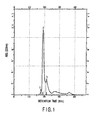
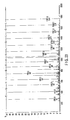
- FIG. 1 is one example of a chromatogram in high performance liquid chromatography conducted according to the method described in Example 2. Out of the 3 peaks shown in FIG. 1 , a fraction eluted at a retention time of 17.7 minutes (peak No. 1) contains the present peptide R1MA026. A fraction eluted at a retention time of 19.0 minutes (peak No. 2) contains the present peptide MA026. A fraction eluted at a retention time of 21.4 minutes (peak No. 3) contains the present peptide R2MA026.
- the present peptide R1MA026 is a peptide having, as constitutive amino acid residues, 4 glutamine residues, 1 glutamic acid residue, 1 serine residue, 3 valine residues and 5 leucine residues, and having the chemical structure of formula (IV) set forth above.
- the N-terminal amino acid residue of the present peptide R1MA026 is leucine residue.
- a 3-hydroxydecanoyl group is bonded to this leucine residue via an amide linkage.
- the present R1MA026 has a cyclic structure in its chemical structure. The cyclic structure is formed with an ester linkage between the hydroxy group of the serine residue and the carboxy group of the C-terminal leucine residue among the amino acid residues constituting the peptide.
- Salts of the present peptide R1MA026 include, but are not limited to, those described for the present peptide MA026 described above.
- the present peptide R2MA026 is a peptide having, as constitutive amino acids, 4 glutamine residues, 1 glutamic acid residue, 1 serine residue, 2 valine residues, 1 isoleucine residue and 5 leucine residues, and having the chemical structure of formula (V) set forth above.
- the N-terminal amino acid residue of the present peptide R2MA026 is leucine residue.
- a 3-hydroxydodec-5-enoyl group is bonded to this leucine residue via an amide linkage.
- the present R2MA026 has a cyclic structure in its chemical structure. The cyclic structure is formed with an ester linkage between the hydroxy group of the serine residue and the carboxy group of the C-terminal isoleucine residue among the amino acid residues constituting the peptide.
- Salts of the present peptide R2MA026 include, but are not limited to, those described for the present peptide MA026 described above.
- the first derivatives include derivatives obtained by lower-alkylation of the present peptide MA026 described above. That is, the present peptides AL-MA026 include lower-alkylation derivatives of the depsipeptide having a cyclic structure and has, as constitutive amino acids, 4 glutamine residues, 1 glutamic acid residue, 1 serine residue, 2 valine residues, 1 isoleucine residue and 5 leucine residues.
- the cyclic structure of the peptides AL-MA026, as in the same manner in the Peptide MA026, is formed with an ester linkage between the hydroxy group of the serine residue and the carboxy group of the isoleucine residue among the amino acid residues constituting the peptide.
- the N-terminal residue of the present peptides AL-MA026 is leucine residue.
- a 3-hydroxydecanoyl group is bonded, via an amide linkage to the amino group of this N-terminal leucine residue.
- the position of the lower-alkylation of the peptides AL-MA026 is on at least one functional group of the above-mentioned constitutive amino acids.
- the lower alkyl group includes a linear, branched or cyclic lower alkyl group.
- the number of carbon atoms in the lower alkyl group is not particularly limited insofar as the lower-alkylated derivative has an antiviral activity, but in consideration of easiness of the production, production costs etc., the number of carbon atoms may be about 1 to 4.
- the lower-alkylated functional group in the present peptides AL-MA026 is not particularly limited insofar as the lower-alkylated derivatives have an antiviral activity.
- a free amino or carboxy group of the amino acid residues constituting the peptide is included therein.
- the lower alkylation includes, but is not limited to, N-alkylation of the above amino group and esterification of the carboxy group.
- lower-alkylated derivatives include lower-alkylated derivatives derived from the present peptide MA026 by lower-alkylating a free carboxy group of a glutamic acid residue thereof, and said derivatives having the following formula (VI): wherein R represents a lower alkyl group.
- the method of producing such lower-alkylated derivatives includes, but is not limited to, a method of using an alkylating agent to introduce an alkyl group into the present peptide MA026.
- the usable alkylating agent includes, but is not limited to, diazomethane, methyl iodide, trimethylsilyldiazomethane, isobutylene, ethyl iodide, etc.
- Salts of the present peptide AL-MA026 include, but are not limited to, those described for the present peptide MA026 described above.
- the second derivative (the present peptide BTI-MA026) is the same as the present peptide MA026 except that each of the 4 lutamine residues in the present peptide MA026 have been replaced by ⁇ , ⁇ -diaminobutyric acids. That is, the present peptide BTI-MA026 has, as constitutive amino acids, 4 ⁇ , ⁇ -diaminobutyric acid residues, 1 glutamic acid residue, 1 serine residue, 2 valine residues, 1 isoleucine residue and 5 leucine residues, and having the formula (II) set forth above. As is apparent from the above formula (II), the N-terminal amino acid residue of the present peptide BTI-MA026 is leucine residue.
- the present BTI-MA026 has a cyclic structure in its chemical structure.
- the cyclic structure is formed with an ester linkage between the hydroxy group of the serine residue and the carboxy group of the isoleucine residue among the amino acid residues constituting the peptide.
- the present peptide BTI-MA026 can be produced by Hofmann rearrangement in converting the primary carboxylic acid amide of glutamine in the present peptide MA026 into a primary amine.
- Hofmann rearrangement [I,I-bis(trifluoroacetoxy)iodo] benzene (also referred to hereinafter as "BTI") can be suitably used.
- Salts of the present peptide BTI-MA026 include, but are not limited to, those described for the present peptide MA026 described above.
- the third derivative (the present peptide BTI-base MA026) is the same as BTI-MA026 except that the ester linkage between the serine residue and the isoleucine residue forming the cyclic structure of the present peptide BTI-MA026 described above has been hydrolyzed to form a linear peptide, and has the structural formula (III) above.
- the present peptide BTI-base MA026 has, as constitutive amino acids, 4 ⁇ , ⁇ -diaminobutyric acid residues, 1 glutamic acid residue, 1 serine residue, 2 valine residues, 1 isoleucine residue and 5 leucine residues.
- the N-terminal of the present peptide BTI-baseMA026 is leucine residue.
- a 3-hydroxydecanoyl group is bonded, via an amide linkage, to this N-terminal leucine residue.
- the present peptide BTI-baseMA026 has no cyclic structure, and thus is a linear peptide derivative.
- the hydrolysis reaction of the ester linkage between serine and isoleucine residues can be conducted by e.g. alkali hydrolysis.
- the usable base include dimethyl amine, diethyl amine, sodium hydroxide, ammonia, sodium methoxide etc.
- Salts of the present peptide BTI-base MA026 include, but are not limited to, those described for the present peptide MA026 described above.
- the strain of this invention belonging to novel species of genus Pseudomonas, the present RtIB026 strain, the present peptides (MA026, R1MA026 and R2MA026) and the present peptide MA026 derivatives (AL-MA026, BTI-MA026 and BTI-base MA026) as well as salts thereof can be used singly or in combination thereof as the active ingredient in the antiviral agent.
- the salt includes but, insofar as it is a pharmaceutically acceptable salt, is not limited to those referred to as salts of the present peptide MA026.
- the antiviral agent encompasses those antiviral agents having the function of preventing infection of intended animals (including humans) with a virus or treating animals infected with a virus.
- the animals for which the antiviral agent of this invention is effective include, but are not limited to, mammals (including humans), birds, fish and crustaceans.
- viruses to which the antiviral agent of this invention can be applied include the following viruses.
- Such viruses include, but are not limited to, Rhabdovirus, Herpesvirus, Baculovirus, Iridovirus, Retrovirus, Orthomyxovirus, Flavivirus, Hepadnavirus and Filovirus.
- Hosts for these viruses having the lipid membrane include, but are not limited to, mammals (for example, humans, cattle, dogs, cats, pigs), birds (for example, chickens), fish (for example, rainbow trout, salmons, eels, sea eels, red sea bream, yellowtail), crustaceans (for example, shrimp) etc.
- viruses having the lipid membrane whose hosts are mammals include, but are not limited to, human immunodeficiency virus (HIV), feline immunodeficiency virus (FIV), influenza virus, Japanese encephalitis virus, hepatitis C virus, dengue fever virus, hepatitis B virus, Ebola virus, herpes virus (for example, herpes simplex virus, herpes virus derived from domestic animals), Epstein Barr virus, etc.
- the viruses having the lipid membrane whose hosts are fish and crustaceans include, but are not limited to, infectious hematopoietic necrosis virus (IHNV) in salmonid, rhabdovirus (EVA) in American eels, rhabdovirus (EVEX) in European eels, yellow head disease virus (YHDV) in shrimp, herpes virus (OMV) in salmonid, herpes virus of eel (EHV), white spot syndrome virus (WSSV) in shrimp, peneas rod-shaped DNA virus (PRDV) in shrimp, red sea bream Iridovirus (RSIV).
- IHNV infectious hematopoietic necrosis virus
- EVA rhabdovirus
- EVEX rhabdovirus
- YHDV yellow head disease virus
- EHV herpes virus
- EHV herpes virus of eel
- WSSV white spot syndrome virus
- PRDV peneas rod-shaped DNA virus
- viruses include, but are not limited to, rhabdovirus (for example, rabies virus, IHNV), retrovirus (for example, HIV, FIV), orthomyxovirus (for example, influenza virus), flavivirus (for example, hepatitis C virus, Japanese encephalitis virus, hepatitis C virus) and Filovirus (for example, Ebola virus), Picorna virus (for example, Taura syndrome virus).
- rhabdovirus for example, rabies virus, IHNV
- retrovirus for example, HIV, FIV
- orthomyxovirus for example, influenza virus
- flavivirus for example, hepatitis C virus, Japanese encephalitis virus, hepatitis C virus
- Filovirus for example, Ebola virus
- Picorna virus for example, Taura syndrome virus.
- the hosts for these viruses having a single-stranded RNA as the genome include mammals, birds, fish, crustacean etc., and specific animals as hosts for these viruses and specific viruses whose hosts are these
- viruses include, but are not limited to, herpes virus, Baculovirus (for example, WSSV, PRDV), Iridovirus (for example, RSIV), and hepadona virus (for example, hepatitis B virus).
- Hosts for these viruses having a double-stranded DNA as the genome include mammals, birds, fish, crustaceans etc., and specific animals as hosts for these viruses and specific viruses whose hosts are these animals include, but are not limited to, those described above.
- the classification mentioned above based mainly on shape of virus and virus genome.
- the scope of the viruses capable of applying the antiviral agent of the present invention is not necessarily restricted to this classification.
- the application method and application form of the antiviral agent of the present invention are not particularly limited insofar as the active ingredient can demonstrate the antiviral activity in the object of administration.
- the present RtIB026 strain can be orally administered.
- the present strain can be mixed with feed or administered forcibly through a cannula.
- the RtIB026 strain can be added to any feed for raising fish.
- a lyophilized powder of the RtIB026 strain is dispersed in e.g. liver oil and then added to feed.
- the dose can be suitably established by those skilled in the art depending on the type of the intended animal, the living environment of the animal, the type of the intended virus, the severity of disease, etc.
- the onset of the diseases can be prevented and the yield can be improved by adding 10 4 to 10 8 CFU of RtIB026 strain to 1g of feed.
- the present RtIB026 strain can be administered by immersion.
- an application method besides the administration includes allowing the RtIB026 strain of the present invention to grow in raising water.
- the present RtIB026 strain may be allowed to grow in a filter material with which the viruses in raising water is inactivated, whereby the effect can be demonstrated.
- the present RtIB026 strain is administered preferably in a living state to the animals.
- the method or mode of administering the present peptides (MA026, R1MA026 and R2MA026) and the derivatives (AL-MA026, BTI-MA026 and BTI-base MA026) of the present peptide MA026, as well as salts thereof, is not particularly limited insofar as the antiviral activity can be demonstrated, and these can be administered orally, by injection, or by spray, etc.
- the preparation can be formulated in the form of tablets, capsules, powder, granules, solution, suspension etc. without any limitation to the form.
- the method of manufacturing such preparations is not particularly limited either, and can be conducted by any method known in the art.
- the present peptide and/or derivative thereof can be formed into tablets by mixing it with binders such as crystalline cellulose, tablet disintegrators such as corn starch, lubricants such as talc, and if necessary with a diluent, a buffering agent etc.
- the present peptide and/or derivative thereof can be dissolved, suspended or emulsified in aqueous or non-aqueous solvents such as vegetable oils, synthetic glyceride etc., if necessary with additives such as a solubilizer etc. to prepare the intended preparation. Further, the peptides of the present invention can be administered by spray directly on focus.
- the peptides When the present peptides are applied to a domestic animal, the peptides can also be sprayed in the breeding environment of the animal, besides directly administering the peptides to the animal.
- the present peptide and/or derivative thereof for oral administration into fish and crustaceans, can be mixed with feed or administered forcibly through a cannula. It can also be administered through immersion or by directly adding the present RtIB026 to raising water.
- the present peptide and/or its derivative can be administered by dissolving it in a solvent such as physiological saline used ordinarily in pharmaceutical preparations.
- the dose can be suitably established by those skilled in the art depending on the type and weight of the intended animal, the raising environment in the case of fish, the type of intended virus, the severity of disease, etc.
- the RtIB026 strain obtained in Example 1 above was cultured in a culture broth with the composition shown in Table 3 below.
- Table 3 Medium Composition Solution of preservative salts EDTA(2Na) 2.5g ZnSO 4 ⁇ 7H 2 O 10.95g FeSO 4 ⁇ 7H 2 O 5.0g MnSO 4 ⁇ H 2 O 1.54g CuSO 4 ⁇ 5H 2 O 0.392g Co(NO 3 ) 2 ⁇ 6H 2 O 0.248g Na 2 B 4 O 7 ⁇ 10H 2 O 0.177g Distilled water 1000mL Mineral solution Nitrilotriacetic acid 10g MgSO 4 14.45g CaCl 2 ⁇ 2H 2 O 3.34g (NH 4 ) 6 Mo 7 O 24 ⁇ 4H 2 O 0.009g FeSO 4 ⁇ 7H 2 O 0.1g Solution of preservative salts 50mL Distilled water 950mL Adjusted to pH 6.8 (KOH) Standard mineral base 0.5M Na 2 HPO 4 + KH 2 PO 4 buffer
- the microorganism previously subjected to slant culture was inoculated via a platinum loop onto the same medium and cultured overnight at 25°C and 5 ml of the culture was added to 2.5 L of the same medium and cultured at 25°C for 5 days.
- the culture was centrifuged, and the supernatant was filtered through a 0.45 ⁇ m membrane filter to remove the microorganism.
- the culture filtrate prepared in 1 was passed through a Diaion HP-20SS (62.5 x 120 mm) column and washed in succession with 5 L deionized water and 80 % aqueous methanol (3 L). Then, a fraction containing the desired substance was eluted with 95 % aqueous methanol. Further, this fraction was concentrated under reduced pressure, suspended in water and passed again through Diaion HP-20SS (95 x 45 mm). The column was washed with 1 L deionized water and 1 L of 80 % aqueous methanol in the same manner as above, and then a fraction containing the desired substance was eluted with methanol.
- the fraction obtained in 2 was evaporated into dryness under reduced pressure and dissolved in a small amount of a solvent having the following composition.
- a fraction containing the desired substance obtained in (1) above was concentrated under reduced pressure, then dissolved in 92 % aqueous methanol and purified by high performance liquid chromatography (HPLC) equipped with an ODS column (YMC-Pack R&D ODS, 20 x 250 mm). Separation was conducted under the conditions where the flow rate was 5.0 mL/min., the detection wavelength was 220 nm, and the elution solvent was 92 % aqueous methanol. A chromatogram of this HPLC is shown in FIG. 1 .
- the present peptides MA026, R1MA026 and R2MA026 were obtained in amounts of 50 mg, 1 mg and 5 mg, respectively.
- the proportion of the present peptides MA026, R1MA026 and R2MA026 is not limited to that set forth in this example.
- a proportion of a desired peptide may be increased by properly adjusting the culture conditions (temperature, pH, medium composition, oxygen concentration, bacterial state, etc.).
- the unreacted BTI was removed with diethyl ether, and the reaction product was purified by gel filtration (Sephadex LH-20 column, 10 x 180 mm, methanol solution) to give the present peptide BTI- MA026.
- the present peptide BTI-MA026 was allowed to react in 50% dimethylamine solution at room temperature for 3 hours, then purified with high performance liquid chromatography to obtain the present peptide BTI-base MA026.
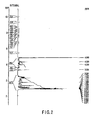
- a proton NMR chart of the present peptide MA026 purified in Example 2 is shown in FIG. 2 .
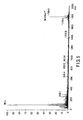
- a carbon-13 NMR chart of the present peptide MA026 purified in Example 2 is shown in FIG. 3 .
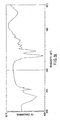
- Example 2 An infrared absorption spectrum of the present peptide MA026 purified in Example 2 is shown in FIG. 4 .
- FIG. 5 A positive FAB-MS spectrogram of the present peptide MA026 purified in Example 2 is shown in FIG. 5 .
- FIG. 6 A negative FAB-MS spectrogram of the present peptide MA026 purified in Example 2 is shown in FIG. 6 .
- the decomposition point of the present peptide MA026 (amorphous state) purified in Example 2 was determined to be 174°C.
- the present peptide MA026 was hydrolyzed with 6 N hydrochloric acid at 110°C for 24 hours and analyzed by an amino acid analyzer. Every acid hydrolysis in the following Measurement Examples was conducted under the same acid hydrolysis conditions as in Measurement Example 110.
- the product (the present peptide BTI-MA026) of a Hofmann rearrangement of the present peptide MA026 obtained in Example 3 was analyzed in the following manner.
- the present peptide BTI-MA026 (1.8 mg) was hydrolyzed with the acid and analyzed by an amino acid analyzer.
- the glutamine residues in the present peptide MA026 are converted into ⁇ , ⁇ -diaminobutyric acid residues in the Hofmann rearrangement, thereby a number of glutamine residues can be estimated through the amino acid analysis.
- the molecular ratio of the number of glutamine residues and glutamic acid residues in the present peptide MA026 was estimated to be 4 : 1. Therefore, the constitutive amino acid residues in the present peptide MA026 were estimated to be 4 glutamine residues, 1 glutamic acid residue, 1 serine residue, 2 valine residues, 1 isoleucine residue and 5 leucine residues.
- the present peptide MA026 was reacted for 20 hours with lithium borohydride (LiBH 4 ) in a methanol solution at room temperature.
- LiBH 4 lithium borohydride
- reaction product was neutralized with 0.1 N hydrochloric acid, and an excess of water was added, and the product was extracted with butanol.
- reaction extract A part (2.0 mg) of the reaction extract was hydrolyzed with the acid and analyzed by an amino acid analyzer.
- the ester linkage contained in the present peptide MA026 is cleaved by the reduction reaction with LiBH 4 , thereby the carboxy group in the linkage is converted into a hydroxy group.
- the amino acid at the carboxy side of the amino acids participating in the ester linkage can be estimated from the reaction.
- the present peptide MA026 was reacted with a solution of 100 mg CrO 3 and 0.1 mL pyridine in 3 mL acetic acid at room temperature for 20 hours.
- reaction extract A part (4.5 mg) of the reaction extract was hydrolyzed with the acid and analyzed by an amino acid analyzer.
- reaction product was dried under reduced pressure and subjected to oxidation reaction with CrO 3 in the same manner as in (1) above to give a reaction product.
- reaction product A part (6.8 mg) of the reaction product was hydrolyzed with the acid and analyzed by an amino acid analyzer.
- the oxidation reaction with CrO 3 oxidatively converts the hydroxy group of the present peptide MA026 into ketone, thereby an amino acid having a free hydroxy group does not exist any more.
- the ester linkage is cleaved through alkali hydrolysis reaction in the reaction of (2).
- the amino acid at the hydroxy side of the amino acids participating in the ester linkage can be estimated by the amino acid analysis of the above oxidation product and the reaction product.
- the present peptide MA026 was dissolved in methanol and mixed with an equal volume of diethyl ether.
- Diazomethane captured in ether was added in excess, and the mixture was allowed to react for 1 hour in a sealed vessel at room temperature.
- the reaction product was dried under reduced pressure and separated and purified by high performance liquid chromatography. Separation was conducted under the conditions where the flow rate was 5.0 mL/min., the detection wavelength was 220 nm and the elution solvent was 92 % aqueous methanol.
- the purified product was subjected to a reduction reaction with lithium borohydride in the same manner as in Measurement Example 112 above.
- reaction product A part (0.1 mg) of the reaction product was hydrolyzed with the acid and analyzed for its amino acids.
- the present peptide MA026 was subjected to acid hydrolysis with 6 N-HC1 at 94°C for 14 hours, and the resultant acid hydrolyzates were extracted with diethyl ether.
- the extract was methylated with diazomethane in the same manner as in Measurement Example 114.
- N-terminal amino acid residue of the present peptide MA026 is leucine, and a 3-hydroxydecanoyl group is bonded, via an amide linkage, to this leucine.
- FIG. 8 A positive ESI MS/MS spectrum of the present peptide MA026 is shown in FIG. 8 .
- the present peptide BTI-MA026 obtained in Example 3 was subjected to proton and carbon-13 NMR in methanol- d 4 , and ESI-MS spectrometric analysis.
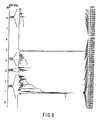
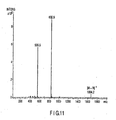
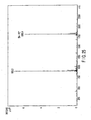
- FIGS. 9 and 10 show the proton and carbon-13 NMR spectra respectively, and the result of the ESI-MS spectrometric analysis is shown in FIG. 11 .
- FIG. 12 An infrared absorption spectrum of the present peptide BTI-MA026 is shown in FIG. 12 .
- the decomposition point of the present peptide BTI-MA026 (amorphous state) was determined to be 165°C.
- the present peptide BTI-base MA026 obtained in Example 4 was subjected to proton and carbon-13 NMR in methanol- d 4 , and ESI-MS spectrometric analysis.
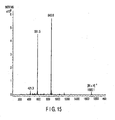
- FIGS. 13 and 14 show the proton and carbon-13 NMR spectra respectively, and the result of the ESI-MS spectrometric analysis is shown in FIG. 15 .
- FIG. 16 An infrared absorption spectrum of the present peptide BTI-baseMA026 is shown in FIG. 16 .
- the decomposition point of the present peptide BTI-baseMA026 (amorphous state) was determined to be 164°C.
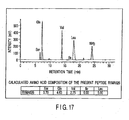
- the present peptide R1MA026 obtained by purifying the fraction of peak No. 1 in Example 2 was analyzed for its amino acids in the same manner as in Measurement Example 110 above, and the results shown in FIG. 17 were obtained.
- FIG. 21 An infrared absorption spectrum of the present peptide R1MA026 is shown in FIG. 21 .
- the decomposition point of the present peptide R1MA026 (amorphous state) was determined to be 171°C.
- the present peptide R1MA026 was subjected to a Hofmann rearrangement in the same manner as in Example 3, and the resultant product was purified by high performance liquid chromatography under the following conditions.
- Separation was conducted by high performance liquid chromatography (HPLC) equipped with an ODS column, YMC-Pack R&D ODS (20 x 250 mm). This separation was conducted under the conditions where the flow rate was 5.0 mL/min., the detection wavelength was 220 nm, and the elution solvent was a linear gradient of from 30 % aqueous acetonitrile plus 0.1 % trifluoroacetic acid (TFA) to 100 % acetonitrile plus 0.1 % TFA, to complete purification.
- HPLC high performance liquid chromatography
- the ratio of glutamine/glutamic acid contained in the constitutive amino acids in the present peptide R1MA026 is 4 : 1. Accordingly, it was estimated that the constitutive amino acids in R1MA026 consist of 4 glutamine residues, 1 glutamic acid, 1 serine residue, 3 valine residues and 5 leucine residues.
- the present peptide R1MA026 was subjected to acid hydrolysis with 6 N HCl at 91°C for 18 in accordance with the method of Measurement Examples 115 and 116, and the resultant acid hydrolyzates were extracted with diethyl ether.
- the extract was methylated with diazomethane in the same manner as in Measurement Example 114.
- the desired fraction was obtained by purification with silica gel chromatography.
- Proton and carbon-13 NMR spectra of this collected sample were taken to give the similar results as those obtained in Measurement Example 115.
- N-terminal amino acid residue of the present peptide R1MA026 is leucine, and a 3-hydroxydecanoyl group is bonded, via an amide linkage, to this leucine.
- the present peptide R1MA026 was subjected to a reaction with CrO 3 in the same manner as in Measurement Example 113, (1), and the amino acid of the thus obtained product was analyzed. Separately, the present peptide R1MA026 was reacted with dimethylamine, then with CrO 3 in the same manner as Measurement Example 113, (2), to analyze amino acids.
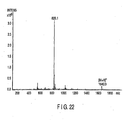
- FIG. 23 An ESI-MS/MS spectrum of the present peptide R1MA026 is shown in FIG. 23 .
- the present peptide R2MA026 obtained by purifying the fraction of peak No. 3 in Example 2 was subjected to amino acid analysis in the same manner as in Measurement Example 110 above, and the result shown in FIG. 24 was obtained.
- FIG. 28 An infrared absorption spectrum of the present peptide R2MA026 is shown in FIG. 28 .
- the decomposition point of the present peptide R2MA026 (amorphous state) was determined to be 166°C.
- the present peptide R2MA026 was subjected to Hofmann rearrangement and purified by high performance liquid chromatography in the same manner as in Measurement Example 209, and the resulting BTI-R2MA026 was subjected to amino acid analysis and the result shown in Table 11 was obtained.
- Table 11 Ser Glx Val Ile Leu Before reaction 0.80 4.66 1.95 0.92 5.00 After reaction 0.84 1.08 1.93 0.95 5.00
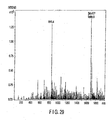
- the present peptide BTI-R2MA026 was subjected to ESI-MS spectrometric analysis, and the result shown in FIG. 29 was obtained.
- the ratio of glutamine/glutamic acid contained in the constitutive amino acids in the present peptide R2MA026 is 4 : 1. Accordingly, it was estimated that the constitutive amino acids in R2MA026 consist of 4 glutamine residues, 1 glutamic acid residue, 1 serine residue, 2 valine residues, 1 isoleucine residue and 5 leucine residues.
- the present peptide R2MA026 was subjected to acid hydrolysis with 6 N HCl at 90°C for 14 hours in accordance with the method of Measurement Examples 115 and 116, and the resultant acid hydrolyzates were extracted with diethyl ether.
- the extract was methylated with diazomethane in the same manner as in Measurement Example 114.
- the desired fraction was obtained by purification with silica gel chromatography.
- Proton NMR spectra of this collected sample were taken to give the following results.
- N-terminal amino acid residue of the present peptide R2MA026 is leucine, and a 3-hydroxydodec-5-enoyl group is bonded, via an amide linkage, to this leucine.
- the present peptide R2MA026 and lithium borohydride (LiBH 4 ) were reacted in the same manner as in Measurement Example 112, and analyzed by an amino acid analyzer.
- the present peptide R2MA026 was subjected to a reaction with CrO 3 in the same manner as in Measurement Example 113, (1), and the amino acid of the thus obtained product was analyzed. Separately, the present peptide R2MA026 was reacted with dimethylamine, then with CrO 3 in the same manner as Measurement Example 113, (2), to analyze amino acids.
- FIG. 30 An ESI-MS/MS spectrum of the present peptide R2MA026 is shown in FIG. 30 .
- Example 5 the present peptide AL-MA0266
- a proton NMR spectrum was taken, and its FAB-MS spectrometric analysis was conducted.
- FIG. 31 shows the proton NMR chart
- FIG. 32 shows the positive FAB-MS chart
- FIG. 33 shows the negative FAB-MS chart.
- the present RtIB026 strain obtained in Example 1 was mixed with rainbow trout feed and orally administered, whereby the resistance to infectious hematopoietic necrosis virus (IHNV) of salmonid was evaluated and the effect of the present strain on prevention of infection of farmed fish with the pathogenic virus was examined.
- the test was conducted in a plastic water tank (10 L) in a room.
- the present RtIB026 strain obtained in Example 1 above was inactivated by treatment with formalin, collected by centrifugation, washed with physiological saline, and added to feed. Then, the administration test of the inactivated RtIB026 strain was conducted in the same manner as in Administration Test 1 in Example 6.
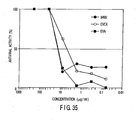
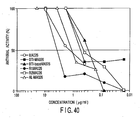
- the antiviral activities of the present peptide MA026 against infectious hematopoietic necrosis virus (IHNV) in salmonid, rhabdovirus (EVA) in American eels and rhabdovirus (EVEX) in European eels were measured according to the method described in Example 1.
- the present peptide MA026 has a high antiviral activity against IHNV, EVA and EVEX.
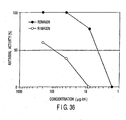
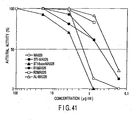
- the antiviral activities of the present peptides R1MA026 and R2MA026 against IHNV were measured in the same manner as in Example 7, and their antiviral activities were confirmed.
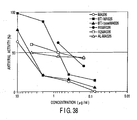
- the antiviral activities of the present peptides AL-MA026, BTI-MA026 and BTI-base MA026 against IHNV were measured, and their antiviral activities were confirmed.
- the method of evaluating the antiviral activity against influenza virus is shown below.
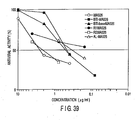
- the viral strains used in this test were domestic-animal hygiene strains supplied from the Japanese Association of Vetrinary Biologics. Viral strain VS0505 (A/New Jersey/8/76 strain) was used as the swine influenza virus, and VA0902 (A/turkey/Ontario/6118/68 strain) was used as the avian virus. It is expected that the present peptides having an antiviral activity against these influenza viruses derived from domestic animals have also an antiviral activity against human influenza virus.
- the evaluation of the antiviral activity against herpes virus derived from domestic animals was conducted in the manner described below, by partially modifying the method for the influenza virus set forth in Example 10.
- the viral strain used in this test was domestic-animal hygiene strains supplied from the Japanese Association of Vetrinary Biologics.
- Viral strain VS1001 (Yamagata S-81) was used as the swine herpes virus (Aujeszkey's disease virus).
- the swine herpes virus is reported, for example, in Vox Sanguinis, 67 Suppl. 3, 191-196, 1994 , as an alternative virus for evaluating antiviral activity against the human herpes virus.
- the evaluation of the antiviral activity against Japanese encephalitis virus derived from domestic animals was conducted by TCID50 method using 96-well plate in the manner described below. Note that the viral strain used in this test was domestic-animal hygiene strains supplied from the Japanese Association of Vetrinary Biologics. Viral strain VS0306 (Taniyama S-2) was used as the swine Japanese encephalitis virus.
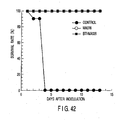
- Penaeus monodon black tiger shrimp weighing about 20 g were divided at random into groups each consisting of 10 shrimps and raised separately.
- a viral culture fluid prepared by diluting the white spot syndrome virus (WSSV LD 50 value; 10 -3.6 ) 2000-fold with Hank's solution was mixed with an equal volume of a diluted solution (100 ⁇ g/mL) of the present peptides MA026 and BTI-MA026. After the mixture was incubated at 25°C for 1 hour, the solution was intramuscularly injected at a dose of 0.1 mL into each shrimp, for viral inoculation.
- HCV hepatitis C virus
- the strain belonging to a novel species, and novel peptides of the present invention are useful as antiviral agents against viruses causing infections in mammals such as humans and domestic animals and against viruses causing infections in fishery resources such as fish and crustaceans.
- Microorganisms e.g., viruses and bacteria
- Microorganisms are known to be factors causing various infections. Research and development of antibiotics, etc., against infections caused by bacteria are advancing, and many pharmaceutical preparations are in actual use.
- pharmaceutical preparations against infections caused by viruses are not as advanced as the antibacterial agents, under the present circumstances, although causative viruses themselves have been identified with the development in virology in recent years. Under these circumstances, the strain belonging to a novel species of the present invention and novel peptides of the present invention are expected to play an extremely important role in the pharmaceutical filed of organisms.
- the first aspect of the present invention provides a peptide or a salt thereof, said peptide having, as constitutive amino acids, 4 glutamine-derived amino acid residues, 1 glutamic acid residue, 1 serine residue, 2 valine residues, 1 isoleucine residue and 5 leucine residues, and having a 3-hydroxydecanoyl group that is bonded, via an amide linkage, to the N-terminal leucine residue thereof.
- each of the 4 glutamine-derived amino acid residues is glutamine
- the peptide is a depsipeptide having a cyclic structure therein.
- said peptide comprises the peptide of formula (I) or a salt thereof.
- each of the 4 glutamine-derived amino acid residues is ⁇ , ⁇ -diaminobutyric acid
- the peptide is a depsipeptide having a cyclic structure therein.
- said peptide comprises the peptide of formula (II) or a salt thereof.
- each of the 4 glutamine-derived amino acid residues is ⁇ , ⁇ -diaminobutyric acid
- the peptide is a linear peptide.
- said peptide comprises the peptide of formula (III) or a salt thereof.
- the first aspect of the present invention also comprises lower-alkylated derivatives of the peptide of formula (I) or a salt thereof.
- a derivative or salt preferably comprises the peptide of formula (VI), wherein R represents a lower alkyl group.
- R is a methyl group or a salt thereof.
- the second aspect of the present invention provides a peptide or a salt thereof, said peptide having, as constitutive amino acids, 4 glutamine-derived amino acid residues, 1 glutamic acid residue, 1 serine residue, 2 valine residues, 1 isoleucine residue and 5 leucine residues, and having a 3-hydroxydecanoyl group that is bonded, via an amide linkage, to the N-terminal leucine residue thereof, wherein the peptide is isolated and purified from a culture of Pseudomonas sp.
- each of the 4 glutamine-derived amino acid residues is glutamine, and the peptide is a depsipeptide having a cyclic structure therein.
- said peptide comprises the peptide of formula (I) or a salt thereof.
- the present invention also comprises lower-alkylated derivatives of said peptide of formula (I) or salt thereof.
- said lower-alkylated derivative comprises formula (VI), wherein R represents a lower alkyl group.
- R is a methyl group of a salt thereof.
- the present invention also comprises a peptide derivative or salt thereof derived from the depsipeptide according to the second aspect of the present invention, wherein each of the 4 glutamine-derived amino acid residues of the peptide according to claim 1 is ⁇ , ⁇ -diaminobutyric acid, and the peptide derivative is a depsipeptide having a cyclic structure therein.
- said peptide comprises the peptide of formula (II) or a salt thereof.
- the present invention also comprises a peptide derivative or salt thereof derived from the depsipeptide according to the second aspect of the present invention, wherein each of the 4 glutamine-derived amino acid residues of the peptide according to claim 1 is ⁇ , ⁇ -diaminobutyric acid, and the peptide is a linear peptide.
- said peptide comprises the peptide of formula (III) or a salt thereof.
- the third aspect of the present invention provides a peptide or a salt thereof, wherein said peptide having, as constitutive amino acids, 4 glutamine-derived amino acid residues, 1 glutamic acid residue, 1 serine residue, 3 valine residues, and 5 leucine residues, and having a 3-hydroxydecanoyl group that is bonded, via an amide linkage, to the N-terminal leucine residue thereof.
- each of the 4 glutamine-derived amino acid residues is glutamine
- the peptide is a depsipeptide having a cyclic structure therein.
- said peptide comprises the peptide of formula (IV) or a salt thereof.
- said peptide is isolated and purified from a culture of Pseudomonas sp. RtIB026, which was deposited under the accession number of FERM BP-7436, each of the 4 glutamine-derived amino acid residues is glutamine, and the peptide is a depsipeptide having a cyclic structure therein.
- said peptide comprises the peptide of formula (IV) or a salt thereof.
- the fourth aspect of the present invention provides a peptide or a salt thereof, said peptide having, as constitutive amino acids, 4 glutamine-derived amino acid residues, I glutamic acid residue, 1 serine residue, 2 valine residues, 1 isoleucine residue, and 5 leucine residues, and having a 3-hydroxydodec-5-enoyl group that is bonded, via an amide linkage, to the N-terminal leucine residue thereof.
- each of the 4 glutamine-derived amino acid residues is glutamine
- the peptide is a depsipeptide having a cyclic structure therein.
- said peptide comprises the peptide of formula (V) or a salt thereof.
- said peptide is isolated and purified from a culture of Pseudomonas sp . RtE3026, which was deposited under the accession number of FERM BP-7436, each of the 4 glutamine-derived amino acid residues is glutamine, and the peptide is a depsipeptide having a cyclic structure therein.
- said peptide comprises the peptide of formula (V) or a salt thereof.
Landscapes
- Chemical & Material Sciences (AREA)
- Health & Medical Sciences (AREA)
- Organic Chemistry (AREA)
- Life Sciences & Earth Sciences (AREA)
- Genetics & Genomics (AREA)
- Medicinal Chemistry (AREA)
- General Health & Medical Sciences (AREA)
- Biochemistry (AREA)
- Proteomics, Peptides & Aminoacids (AREA)
- Engineering & Computer Science (AREA)
- Biophysics (AREA)
- Molecular Biology (AREA)
- Biotechnology (AREA)
- Bioinformatics & Cheminformatics (AREA)
- Wood Science & Technology (AREA)
- Zoology (AREA)
- Virology (AREA)
- Microbiology (AREA)
- General Engineering & Computer Science (AREA)
- Biomedical Technology (AREA)
- Tropical Medicine & Parasitology (AREA)
- Gastroenterology & Hepatology (AREA)
- Oncology (AREA)
- Medicines That Contain Protein Lipid Enzymes And Other Medicines (AREA)
- Animal Behavior & Ethology (AREA)
- General Chemical & Material Sciences (AREA)
- Public Health (AREA)
- Chemical Kinetics & Catalysis (AREA)
- Veterinary Medicine (AREA)
- Communicable Diseases (AREA)
- Nuclear Medicine, Radiotherapy & Molecular Imaging (AREA)
- Peptides Or Proteins (AREA)
- Pharmacology & Pharmacy (AREA)
- Micro-Organisms Or Cultivation Processes Thereof (AREA)
- Medicines Containing Material From Animals Or Micro-Organisms (AREA)
- Preparation Of Compounds By Using Micro-Organisms (AREA)
Applications Claiming Priority (2)
| Application Number | Priority Date | Filing Date | Title |
|---|---|---|---|
| JP2001032729 | 2001-02-08 | ||
| EP02711381A EP1369426B1 (fr) | 2001-02-08 | 2002-02-07 | Peptides, derives de ceux-ci, procede de production de ceux-ci, souche produisant ceux-ci, et agent antiviraux comprenant ceux-ci en tant qu'ingredient actif |
Related Parent Applications (2)
| Application Number | Title | Priority Date | Filing Date |
|---|---|---|---|
| EP02711381A Division EP1369426B1 (fr) | 2001-02-08 | 2002-02-07 | Peptides, derives de ceux-ci, procede de production de ceux-ci, souche produisant ceux-ci, et agent antiviraux comprenant ceux-ci en tant qu'ingredient actif |
| EP02711381.0 Division | 2002-02-07 |
Publications (2)
| Publication Number | Publication Date |
|---|---|
| EP2116552A2 true EP2116552A2 (fr) | 2009-11-11 |
| EP2116552A3 EP2116552A3 (fr) | 2010-04-28 |
Family
ID=18896612
Family Applications (2)
| Application Number | Title | Priority Date | Filing Date |
|---|---|---|---|
| EP02711381A Expired - Lifetime EP1369426B1 (fr) | 2001-02-08 | 2002-02-07 | Peptides, derives de ceux-ci, procede de production de ceux-ci, souche produisant ceux-ci, et agent antiviraux comprenant ceux-ci en tant qu'ingredient actif |
| EP09009205A Withdrawn EP2116552A3 (fr) | 2001-02-08 | 2002-02-07 | Peptides, dérivés associés, leurs procédés de production, souche les produisant, et agent antiviral les comportant en tant qu'ingrédient actif |
Family Applications Before (1)
| Application Number | Title | Priority Date | Filing Date |
|---|---|---|---|
| EP02711381A Expired - Lifetime EP1369426B1 (fr) | 2001-02-08 | 2002-02-07 | Peptides, derives de ceux-ci, procede de production de ceux-ci, souche produisant ceux-ci, et agent antiviraux comprenant ceux-ci en tant qu'ingredient actif |
Country Status (5)
| Country | Link |
|---|---|
| US (1) | US7268209B2 (fr) |
| EP (2) | EP1369426B1 (fr) |
| JP (1) | JP3990284B2 (fr) |
| AT (1) | ATE521622T1 (fr) |
| WO (1) | WO2002062831A1 (fr) |
Families Citing this family (3)
| Publication number | Priority date | Publication date | Assignee | Title |
|---|---|---|---|---|
| CN102026645B (zh) | 2006-09-15 | 2016-01-27 | 渥太华医院研究机构 | 溶瘤弹状病毒 |
| CN105541963A (zh) * | 2015-08-31 | 2016-05-04 | 深圳出入境检验检疫局食品检验检疫技术中心 | 一种在蛋白质上修饰烯酰基团的方法 |
| WO2020196315A1 (fr) * | 2019-03-25 | 2020-10-01 | 国立大学法人筑波大学 | Promoteur du transfert par perméation vers l'intérieur d'une couche cellulaire, composition pour faciliter l'absorption d'agents médicamenteux, et composition pharmaceutique |
Citations (1)
| Publication number | Priority date | Publication date | Assignee | Title |
|---|---|---|---|---|
| JPH0195792A (ja) | 1987-10-07 | 1989-04-13 | Sapporo Breweries Ltd | 新規46nw−04a物質,その製造法およびそれを有効成分とする抗ウィルス製剤 |
Family Cites Families (5)
| Publication number | Priority date | Publication date | Assignee | Title |
|---|---|---|---|---|
| US5965524A (en) * | 1989-07-07 | 1999-10-12 | Peptide Technologies Corporation | Analogs of viscosin and uses thereof |
| US5258493A (en) * | 1989-07-07 | 1993-11-02 | Bio-Mega/Boehringer Ingelheim Research Inc. | Cyclic peptides for treating herpes infections |
| DK223690D0 (da) * | 1990-09-17 | 1990-09-17 | Novo Nordisk As | Hidtil ukendte forbindelser |
| US6319898B1 (en) * | 1997-10-17 | 2001-11-20 | Terragen Diversity, Inc. | Method for inhibiting eukaryotic protein kinases |
| HUP0200897A2 (en) * | 1999-04-15 | 2002-08-28 | Lilly Co Eli | Antifungal agents isolated from pseudomonas syringae |
-
2002
- 2002-02-07 WO PCT/JP2002/001039 patent/WO2002062831A1/fr not_active Ceased
- 2002-02-07 AT AT02711381T patent/ATE521622T1/de not_active IP Right Cessation
- 2002-02-07 EP EP02711381A patent/EP1369426B1/fr not_active Expired - Lifetime
- 2002-02-07 JP JP2002563183A patent/JP3990284B2/ja not_active Expired - Fee Related
- 2002-02-07 EP EP09009205A patent/EP2116552A3/fr not_active Withdrawn
-
2003
- 2003-07-31 US US10/632,949 patent/US7268209B2/en not_active Expired - Fee Related
Patent Citations (1)
| Publication number | Priority date | Publication date | Assignee | Title |
|---|---|---|---|---|
| JPH0195792A (ja) | 1987-10-07 | 1989-04-13 | Sapporo Breweries Ltd | 新規46nw−04a物質,その製造法およびそれを有効成分とする抗ウィルス製剤 |
Non-Patent Citations (8)
| Title |
|---|
| "Kaiyo Biseibutu no Seibutsukassei Busshitsu", 15 April 1990, OSEISHA KOSEIKAKU CO., LTD. |
| BERGEY'S: "Manual of Systematic Bacteriology", vol. 1, 1984 |
| BURKE ET AL., APPLN. ENV. MICROBIOL., vol. 29, 1980, pages 872 - 876 |
| HIRAMOTO ET AL., TETRAHEDRON LETTERS, vol. 13, 1970, pages 1087 - 1090 |
| INT. J. SYST. BACTERIOL., vol. 37, no. 4, 1987, pages 463 - 464 |
| MIZUTANI ET AL., BIOCHEM. BIOPHYS. RES. COMMUN., vol. 227, 1996, pages 822 - 826 |
| STANIER ET AL., J. GEN. MICROBIOL., vol. 43, 1966, pages 159 - 271 |
| VOX SANGUINIS, vol. 67, no. 3, 1994, pages 191 - 196 |
Also Published As
| Publication number | Publication date |
|---|---|
| EP1369426A4 (fr) | 2005-11-30 |
| ATE521622T1 (de) | 2011-09-15 |
| WO2002062831A1 (fr) | 2002-08-15 |
| US20040102605A1 (en) | 2004-05-27 |
| JPWO2002062831A1 (ja) | 2004-06-10 |
| EP1369426A1 (fr) | 2003-12-10 |
| EP2116552A3 (fr) | 2010-04-28 |
| US7268209B2 (en) | 2007-09-11 |
| JP3990284B2 (ja) | 2007-10-10 |
| EP1369426B1 (fr) | 2011-08-24 |
Similar Documents
| Publication | Publication Date | Title |
|---|---|---|
| FI90091C (fi) | Foerfarande foer producering av icke-naturliga demetylavermektiner | |
| EP0055069B1 (fr) | Dérivés d'actaplanin | |
| US8754040B2 (en) | Cyclic peptide compound, method for producing same, anti-infective agent, antibiotic-containing fraction, antibiotic, method for producing antibiotic, antibiotic-producing microorganism, and antibiotic produced by same | |
| SK68594A3 (en) | Lipopeptides made by actinoplanes bacteries, method of their preparing and using | |
| JP5204779B2 (ja) | アクチノマデュラ・ナミビエンシス由来の抗菌性・抗ウイルス性ペプチド | |
| JP5878302B2 (ja) | 新規環状ペプチド化合物とその製造方法及び感染症治療薬 | |
| EP1369426B1 (fr) | Peptides, derives de ceux-ci, procede de production de ceux-ci, souche produisant ceux-ci, et agent antiviraux comprenant ceux-ci en tant qu'ingredient actif | |
| JPH02142800A (ja) | 新規な抗生物質メルサシジンおよびその製法 | |
| KR101558632B1 (ko) | 환형 화합물 및 그 염 | |
| CN105473704A (zh) | 来自假交替单胞菌属的分离细菌的应用、环脂肽及其应用 | |
| KR100896826B1 (ko) | 항생제 107891, 그의 팩터 a1 및 a2, 제약학상허용되는 염 및 조성물, 및 그의 용도 | |
| US4869901A (en) | Method and compositions for helmintic, arthropod ectoparasitic and acaridal infections with novel agents | |
| KR101040468B1 (ko) | 새로운 노카르디아 속 균주 및 그의 발효 배양물의 용도 | |
| KR101671325B1 (ko) | 신규한 고리형 뎁시펩타이드계 화합물, 이의 제조방법 및 이를 유효성분으로 함유하는 항균용 약학적 조성물 | |
| CN1347421A (zh) | 分离自丁香假单胞菌的抗真菌剂 | |
| US7211417B2 (en) | Antibiotic P175-A and semisynthetic derivatives thereof | |
| EP2752416B1 (fr) | Nouveau composé de mangromicine et son procédé de production | |
| KR860001281B1 (ko) | 글리코펩타이드 바이오컨버전 생성물의 제조방법 | |
| KR101268170B1 (ko) | 항균 활성을 갖는 신규한 환형 펩타이드계 화합물 및 이의 용도 | |
| PT88952B (pt) | Processo para a preparacao de avermectinas etiladas | |
| US7319028B2 (en) | Process for producing sporangia of Bacillus popilliae, control agent, and controlling method | |
| WO2026089014A1 (fr) | Agent préventif ou thérapeutique contre une maladie infectieuse du bétail provoquée par un virus de la fièvre aphteuse | |
| JPH0428278B2 (fr) | ||
| EP0711785A1 (fr) | Nouveaux composés utiles tant qu' agents antitumoraux et antibiotiques: hayumicins et leurs analogues | |
| JPS643878B2 (fr) |
Legal Events
| Date | Code | Title | Description |
|---|---|---|---|
| PUAI | Public reference made under article 153(3) epc to a published international application that has entered the european phase |
Free format text: ORIGINAL CODE: 0009012 |
|
| 17P | Request for examination filed |
Effective date: 20090720 |
|
| AC | Divisional application: reference to earlier application |
Ref document number: 1369426 Country of ref document: EP Kind code of ref document: P |
|
| AK | Designated contracting states |
Kind code of ref document: A2 Designated state(s): AT BE CH CY DE DK ES FI FR GB GR IE IT LI LU MC NL PT SE TR |
|
| PUAL | Search report despatched |
Free format text: ORIGINAL CODE: 0009013 |
|
| AK | Designated contracting states |
Kind code of ref document: A3 Designated state(s): AT BE CH CY DE DK ES FI FR GB GR IE IT LI LU MC NL PT SE TR |
|
| RIC1 | Information provided on ipc code assigned before grant |
Ipc: C07K 11/00 20060101ALI20100324BHEP Ipc: C12P 21/02 20060101ALI20100324BHEP Ipc: C07K 14/21 20060101ALI20100324BHEP Ipc: C07K 7/08 20060101AFI20100324BHEP Ipc: C12R 1/38 20060101ALI20100324BHEP Ipc: C12N 1/20 20060101ALI20100324BHEP Ipc: A61P 31/12 20060101ALI20100324BHEP Ipc: A61K 38/10 20060101ALI20100324BHEP |
|
| RIN1 | Information on inventor provided before grant (corrected) |
Inventor name: YAMAZAKI, TAKAYUKI Inventor name: MASAKI, KAZUYOSHI Inventor name: SHIMOJOE, MANABU Inventor name: HATTA, KIYOSHIGE Inventor name: SUGAWARA, FUMIO Inventor name: YOSHIDA, TSUTOMU Inventor name: ISHIMA, MASAHIRO |
|
| 17Q | First examination report despatched |
Effective date: 20110519 |
|
| GRAP | Despatch of communication of intention to grant a patent |
Free format text: ORIGINAL CODE: EPIDOSNIGR1 |
|
| INTG | Intention to grant announced |
Effective date: 20130327 |
|
| STAA | Information on the status of an ep patent application or granted ep patent |
Free format text: STATUS: THE APPLICATION IS DEEMED TO BE WITHDRAWN |
|
| 18D | Application deemed to be withdrawn |
Effective date: 20130807 |