EP2118344B1 - Generation d'une bibliotheque de polypeptides aleatoires solubles lies a l'arnm - Google Patents
Generation d'une bibliotheque de polypeptides aleatoires solubles lies a l'arnm Download PDFInfo
- Publication number
- EP2118344B1 EP2118344B1 EP08729681.0A EP08729681A EP2118344B1 EP 2118344 B1 EP2118344 B1 EP 2118344B1 EP 08729681 A EP08729681 A EP 08729681A EP 2118344 B1 EP2118344 B1 EP 2118344B1
- Authority
- EP
- European Patent Office
- Prior art keywords
- amino acids
- polypeptide
- library
- polypeptides
- hydrophilic
- Prior art date
- Legal status (The legal status is an assumption and is not a legal conclusion. Google has not performed a legal analysis and makes no representation as to the accuracy of the status listed.)
- Active
Links
Images

Classifications
-
- C—CHEMISTRY; METALLURGY
- C40—COMBINATORIAL TECHNOLOGY
- C40B—COMBINATORIAL CHEMISTRY; LIBRARIES, e.g. CHEMICAL LIBRARIES
- C40B40/00—Libraries per se, e.g. arrays, mixtures
- C40B40/02—Libraries contained in or displayed by microorganisms, e.g. bacteria or animal cells; Libraries contained in or displayed by vectors, e.g. plasmids; Libraries containing only microorganisms or vectors
-
- C—CHEMISTRY; METALLURGY
- C07—ORGANIC CHEMISTRY
- C07K—PEPTIDES
- C07K14/00—Peptides having more than 20 amino acids; Gastrins; Somatostatins; Melanotropins; Derivatives thereof
- C07K14/001—Peptides having more than 20 amino acids; Gastrins; Somatostatins; Melanotropins; Derivatives thereof by chemical synthesis
- C07K14/003—Peptide-nucleic acids (PNAs)
-
- C—CHEMISTRY; METALLURGY
- C12—BIOCHEMISTRY; BEER; SPIRITS; WINE; VINEGAR; MICROBIOLOGY; ENZYMOLOGY; MUTATION OR GENETIC ENGINEERING
- C12N—MICROORGANISMS OR ENZYMES; COMPOSITIONS THEREOF; PROPAGATING, PRESERVING, OR MAINTAINING MICROORGANISMS; MUTATION OR GENETIC ENGINEERING; CULTURE MEDIA
- C12N15/00—Mutation or genetic engineering; DNA or RNA concerning genetic engineering, vectors, e.g. plasmids, or their isolation, preparation or purification; Use of hosts therefor
- C12N15/09—Recombinant DNA-technology
- C12N15/10—Processes for the isolation, preparation or purification of DNA or RNA
- C12N15/1034—Isolating an individual clone by screening libraries
- C12N15/1037—Screening libraries presented on the surface of microorganisms, e.g. phage display, E. coli display
-
- C—CHEMISTRY; METALLURGY
- C12—BIOCHEMISTRY; BEER; SPIRITS; WINE; VINEGAR; MICROBIOLOGY; ENZYMOLOGY; MUTATION OR GENETIC ENGINEERING
- C12N—MICROORGANISMS OR ENZYMES; COMPOSITIONS THEREOF; PROPAGATING, PRESERVING, OR MAINTAINING MICROORGANISMS; MUTATION OR GENETIC ENGINEERING; CULTURE MEDIA
- C12N15/00—Mutation or genetic engineering; DNA or RNA concerning genetic engineering, vectors, e.g. plasmids, or their isolation, preparation or purification; Use of hosts therefor
- C12N15/09—Recombinant DNA-technology
- C12N15/10—Processes for the isolation, preparation or purification of DNA or RNA
- C12N15/1034—Isolating an individual clone by screening libraries
- C12N15/1062—Isolating an individual clone by screening libraries mRNA-Display, e.g. polypeptide and encoding template are connected covalently
-
- C—CHEMISTRY; METALLURGY
- C12—BIOCHEMISTRY; BEER; SPIRITS; WINE; VINEGAR; MICROBIOLOGY; ENZYMOLOGY; MUTATION OR GENETIC ENGINEERING
- C12N—MICROORGANISMS OR ENZYMES; COMPOSITIONS THEREOF; PROPAGATING, PRESERVING, OR MAINTAINING MICROORGANISMS; MUTATION OR GENETIC ENGINEERING; CULTURE MEDIA
- C12N15/00—Mutation or genetic engineering; DNA or RNA concerning genetic engineering, vectors, e.g. plasmids, or their isolation, preparation or purification; Use of hosts therefor
- C12N15/09—Recombinant DNA-technology
- C12N15/10—Processes for the isolation, preparation or purification of DNA or RNA
- C12N15/1034—Isolating an individual clone by screening libraries
- C12N15/1075—Isolating an individual clone by screening libraries by coupling phenotype to genotype, not provided for in other groups of this subclass
-
- C—CHEMISTRY; METALLURGY
- C40—COMBINATORIAL TECHNOLOGY
- C40B—COMBINATORIAL CHEMISTRY; LIBRARIES, e.g. CHEMICAL LIBRARIES
- C40B10/00—Directed molecular evolution of macromolecules, e.g. RNA, DNA or proteins
-
- C—CHEMISTRY; METALLURGY
- C40—COMBINATORIAL TECHNOLOGY
- C40B—COMBINATORIAL CHEMISTRY; LIBRARIES, e.g. CHEMICAL LIBRARIES
- C40B40/00—Libraries per se, e.g. arrays, mixtures
- C40B40/04—Libraries containing only organic compounds
- C40B40/06—Libraries containing nucleotides or polynucleotides, or derivatives thereof
- C40B40/08—Libraries containing RNA or DNA which encodes proteins, e.g. gene libraries
-
- C—CHEMISTRY; METALLURGY
- C40—COMBINATORIAL TECHNOLOGY
- C40B—COMBINATORIAL CHEMISTRY; LIBRARIES, e.g. CHEMICAL LIBRARIES
- C40B50/00—Methods of creating libraries, e.g. combinatorial synthesis
- C40B50/06—Biochemical methods, e.g. using enzymes or whole viable microorganisms
Definitions
- the present invention relates to compositions and methods for producing libraries of soluble random polypeptides.
- proteins having improved properties can be selected for their binding properties to targets such as receptors.
- the proteins may be linked to their encoding polynucleotides as in RNA display, ribosome display, phage display etc., and after recovery of a subset of proteins having a desirable property, the polynucleotides encoding those proteins may be subjected to mutation in order to obtain a population of proteins for use in a further round of selection. In this way, proteins having better properties may be quickly obtained by evolution.
- Systems for accomplishing such in vitro evolution of proteins are disclosed, for example, in United States Patent publication 2007/0015181 .
- Cho et al. TRENDS in Biochemical Sciences, Vol.28, No.3, March 2003 .
- the method described by Cho et al. employed a 109 amino acid construct, of which 80 amino acids were random. Cho, G., Keefe, A.D., Liu, R., Wilson, D.S., and Szostak, J.W. (2000) J. Mol. Biol. 297, 309-319 .
- the Cho et al. method did not involve biasing the codons.
- the 29 amino acids at the construct ends were not identified, but unless they were markedly biased one could not expect this population to be soluble, on average.
- WO 2005/047502 describes a protein library consisting of proteins containing Gly, Ala, Val, Glu, or Asp amino acid residues, and methods of screening the library to select proteins having a desired structure or function.
- EP 1 548 111 (D2) describes methods for producing ligand-binding proteins in a cell-free synthesis system and screening the proteins for interactions with desired ligands.
- Doi et al (2005) Protein Engineering Design & Selection 18(6): 279-284 (D3) describe generation of a protein library consisting of proteins containing only Gly, Ala, Val, Glu, and Asp amino acid residues.
- Fukuda et al (2006) Nucleic Acids Research 34(19): E127 (D4) disclose mRNA display methods for the in vitro evolution of single-chain Fv antibody fragments.
- Keefe & Szostak (2001) Nature 410: 715-718 (D5) disclose methods of in vitro selection of mRNA displayed proteins from a library of random sequences.
- a method of producing a library of soluble polypeptides linked to polynucleotides encoding the polypeptides comprises:
- the polypeptides can be approximately 100 amino acid residues in length.
- the polynucleotides can be synthesized using uncapped trimer phosphoramidites. In a further embodiment, the polynucleotides do not contain stop codons.
- the hydrophilic or surface compatible amino acid residues can be selected from the group consisting of Asp, Arg, Ser, Gln, Asn, Lys, Glu, Gly, Pro, and combinations thereof. In a further embodiment, the hydrophilic or surface compatible amino acid residues can be selected from the group consisting of Arg, Lys, Asn, His, Pro and Asp and combinations thereof. In a further embodiment, at least one proline or glycine residue can be included each polypeptide.
- a library of soluble polypeptides linked to polynucleotides encoding the polypeptides comprises: a library of soluble polypeptides linked to polynucleotides encoding the polypeptides produced by a method that comprises: synthesizing a plurality of polynucleotides; producing encoded polypeptides from the polynucleotides; and linking each polypeptide to the polynucleotide that encodes it; wherein a proportion of hydrophilic or surface compatible amino acid residues in each polypeptide is selected so that the polypeptide will be soluble.
- the library can be a phage library. In a further embodiment, the library of claim can reside within a eukaryotic cell. In a further embodiment, the library can be a ribosome display library. In a further embodiment, the library can be an RNA display library. In a further embodiment, the library can be a plasmid display library. In a further embodiment, the polynucleotides do not contain stop codons.
- the present disclosure relates to compositions and methods to generate libraries of random polypeptides which are intrinsically soluble.
- methods for preparing libraries of soluble proteins are provided.
- the libraries disclosed herein can be in a variety of different formats, including RNA display, ribosome display, phage display etc.
- Some embodiments described herein relate to preparation of soluble polypeptides the by controlling the ratio of hydrophilic to hydrophobic amino acids present in the polypeptides.
- Some embodiments described herein relate to preparation of soluble polypeptides the by controlling the content of surface compatible amino acids in the polypeptides.
- methods are provided for the selection of a soluble product of in vitro evolution.
- Various embodiments described herein relate to preparation of soluble polypeptides linked to polynucleotides encoding the polypeptides.
- the ability to make soluble polypeptides can have great benefit in a wide variety of applications, including, for example, increasing accessibility to selection systems.
- the methods disclosed herein, and libraries generated by such methods are useful, for example, in in vitro evolution processes to develop polypeptides that have desirable properties. Such properties include, for example, enhanced binding to a target protein, such as a receptor, or the development of polypeptides for use in vaccines.
- protein protein
- peptide and “polypeptide” are defined herein to mean a polymeric molecule of two or more units comprised of amino acids in any form (e.g., D- or L- amino acids, synthetic or modified amino acids capable of polymerizing via peptide bonds, etc.), and these terms may be used interchangeably herein.
- linked means associated.
- linked entities as described herein can be, but need not be, directly physically connected to each other.
- linked entities are directly physically attached to each other.
- One example of a direct physical linkage is a polypeptide-mRNA fusion.
- Another example of a direct physical linkage is a ribosome linking an mRNA to the polypeptide synthesized from the mRNA.
- entities can be indirectly linked by association with the same phage, ribosome, or cell, but are not necessarily directly physically attached to each other.
- indirect linkages include, without limitation: a phage containing a polynucleotide and expressing the polypeptide encoded by the polynucleotide, and a cell containing a polynucleotide and expressing the polypeptide encoded by the polynucleotide.
- surface compatible means capable of existing on a surface of a polypeptide without substantially contributing to insolubility of the polypeptide.
- the amino acids Asp, Arg, Ser, Gln, Asn, Lys, Glu, Gly and Pro are considered “surface compatible.”
- Nucleotide refers to a phosphate ester of a nucleoside, as a monomer unit or within a nucleic acid.
- Nucleotide 5'-triphosphate refers to a nucleotide with a triphosphate ester group at the 5' position, and are sometimes denoted as “NTP", or “dNTP” and “ddNTP” to particularly point out the structural features of the ribose sugar.
- the triphosphate ester group can include sulfur substitutions for the various oxygens, e.g. .alpha.-thio-nucleotide 5'-triphosphates.
- nucleic acid refers to natural nucleic acids, artificial nucleic acids, analogs thereof, or combinations thereof.
- polynucleotide and “oligonucleotide” are used interchangeably and mean single-stranded and double-stranded polymers of nucleotide monomers (nucleic acids), including, but not limited to, 2'-deoxyribonucleotides (nucleic acid) and ribonucleotides (RNA) linked by internucleotide phosphodiester bond linkages, e.g. 3'-5' and 2'-5', inverted linkages, e.g. 3'-3' and 5'-5', branched structures, or analog nucleic acids.
- nucleotide monomers nucleic acids
- nucleic acids including, but not limited to, 2'-deoxyribonucleotides (nucleic acid) and ribonucleotides (RNA) linked by internucleotide phosphodiester bond linkages, e.g. 3'-5' and 2'-5', inverted linkages, e.g. 3'-3'
- Polynucleotides have associated counter ions, such as H + , NH 4 + , trialkylammonium, Mg 2+ , Na + and the like.
- a polynucleotide can be composed entirely of deoxyribonucleotides, entirely of ribonucleotides, or chimeric mixtures thereof.
- Polynucleotides can be comprised of nucleobase and sugar analogs. Polynucleotides typically range in size from a few monomeric units, e.g. 5-40 when they are more commonly frequently referred to in the art as oligonucleotides, to several thousands of monomeric nucleotide units.
- tRNA molecule shall be given its ordinary meaning and shall also mean a stable aminoacyl tRNA analog (SATA), a Linking tRNA Analog, and a Nonsense Suppressor Analog, all of which are described herein.
- a tRNA molecule includes native tRNA, synthetic tRNA, a combination of native and synthetic tRNA, and any modifications thereof.
- the tRNA is connected to the nascent peptide by the ribosomal peptidyl transferase and to the mRNA through an ultraviolet induced crosslink between the anticodon of the tRNA molecule and the codon of the RNA message.
- the linker is a psoralen crosslink made from a psoralen monoadduct, a non-psoralen crosslinker, or analogs or modifications thereof, pre-placed on either the mRNA's last translatable codon or preferably on the tRNA anticodon of choice.
- a tRNA stop anticodon is selected.
- a stop codon/anticodon pair selects for full length transcripts.
- mRNA not having a stop codon may also be used and, further, that any codon or nucleic acid triplet may be used in accordance with several embodiments of the current invention.
- a tRNA having an anticodon which is not naturally occurring can be synthesized according to methods known in the art.
- the anticodon of the tRNA is capable of forming a crosslink to the mRNA, where the cross-link is selected from the group consisting of one or more of the following: 2-thiocytosine, 2-thiouridine, 4-thiouridine 5-iodocytosine, 5-iodouridine, 5-bromouridine and 2-chloroadenosine, aryl azides, and modifications or analogues thereof.
- crosslinkers are available commercially from Ambion, Inc. (Austin, TX), Dharmacon, Inc. (Lafayette, CO), and other well-known manufacturers of scientific materials.
- pseudo stop codon is defined herein to mean a codon which, while not naturally a nonsense codon, prevents a message from being further translated.
- a pseudo stop codon may be created by using a "stable aminoacyl tRNA analog" or SATA, as described below. In this manner, a pseudo stop codon is a codon which is recognized by and binds to a SATA.
- Another method by which to create a pseudo stop codon is to create an artificial system in which the necessary tRNA having an anticodon complementary to the pseudocodon is substantially depleted. Accordingly, translation will stop when the absent tRNA is required, e.g., at the pseudo stop codon.
- polypeptides require aqueous solubility. Using the methods disclosed herein, one can construct libraries that are biased to produce soluble polypeptides.
- Solubility of a polypeptide is dependent on, among other protein characteristics, the proportion of hydrophobic residues therein and the length of the polypeptide.
- the polypeptide preferably has an adequate number of hydrophilic amino acids available to coat the hydrophobic core, regardless of any folding constraints. Since the surface to volume ratio of a molecule increases with decreasing size, this ratio will differ for different sizes or lengths of sequences.
- polypeptide solubility One of the primary factors affecting polypeptide solubility is the exposure of hydrophobic amino acids to water solvent. For increased solubility, it is generally desirable for polypeptides to have their hydrophobic amino acids situated away from the water solvent. This is, in a way, a constraint of surface to volume ratio. The smaller the polypeptide, the greater the surface to volume ratio will be. Because surface to volume ratio changes with protein length, the proportion of hydrophilic to hydrophobic amino acids can be adjusted according to the number of total amino acids in the polypeptide to bias the ratio towards solubility.
- hydrophilic amino acid residues For a completely hydrophilic amino acid polypeptide population, there will be no structure because the molecules will be able to completely unfold. When this is compared to a population with a very low but nonzero hydrophobic amino acid fraction, the hydrophilic amino acid residues have fewer ways to distribute themselves and still shield the hydrophobic amino acid residues from the solvent. As the hydrophobic amino acid fraction of the polypeptide increases, the constraints on the positioning of hydrophilic amino acid residues increase, thus leading to a greater tendency towards structure. This tendency progresses next to "random coils” then to "intrinsically disordered polypeptides” then to "molten globules" and rigid, highly structured globules and finally to insoluble aggregates.
- the structure of the polypeptide changes as follows: no structure ⁇ random coils ⁇ intrinsically disordered polypeptides ⁇ molten globules ⁇ rigid, highly structured globules ⁇ insoluble aggregates.
- hydrophilic to hydrophobic ratio that is optimal for intrinsically disordered polypeptides, a lower hydrophilic to hydrophobic ratio for ratio for molten globules yet a lower one, and an even lower hydrophilic to hydrophobic ratio for rigid globules below which there is little chance of solubility.
- the distribution of hydrophobic and hydrophilic or surface compatible amino acid residues in the polypeptides can be selected to bias content towards solubility by selecting the proportion of amino acids that are hydrophilic or surface compatible so that the polypeptides will be soluble.
- N the number of amino acids in the polypeptide
- c fraction of amino acids that are hydrophilic or surface compatible.
- N 100
- the proportion of the surface compatible amino acids would be 58% and the interior 42%.
- amino acids Asp, Arg, Ser, Gln, Asn, Lys, Glu, Gly and Pro are considered "surface compatible."
- sharp turns in the backbone for amino acids will also help with solubility, especially as the polypeptide gets smaller.
- the addition of glycine and proline can also be included in the bias.
- a loose polypeptide configuration with high solubility can often be adequate.
- fewer mutation steps are required.
- requiring a tighter, more rigid polypeptide structure it can be useful to go more toward the limit of solubility.
- each mutation step changes the proportion of hydrophilic and hydrophobic amino acids in a polypeptide toward the mean of the random codon triplets about 1.5% if the sequences are selected from a population of 50% hydrophilic and 50% hydrophobic amino acids, which is roughly the ratio of the 61 sense codons. This assumes a mutation rate of one mutation for each sequence on average. Different rates would give different changes in the proportion.
- the polypeptide population When the combined fraction of the surface compatible amino acids is much greater than c , the polypeptide population will be less rigid on average and have fewer constraints on its configuration. As combined fraction of the hydrophilic or surface compatible amino acids approaches c , the polypeptide will become more rigid and have fewer ways to fold.
- FIG. 2 illustrates one embodiment for preparing libraries of soluble polypeptides.
- a plurality of random polypeptides approximately N residues in length can be used as a starting point ( FIG. 2 at 100).
- N can be any number of amino acid residues, such as, for example without limitation, any number from about 2 to about 10,000 amino acids.
- N can be about from about 10 to about 1000 amino acids.
- N can be about from about 50 to about 500 amino acids.
- N can be about from about 80 to about 150 amino acids.
- N can be about 50, 51, 52, 53, 54, 55, 56, 57, 58, 59, 60, 61, 62, 63, 64, 65, 66, 67, 68, 69, 70, 71, 72, 73, 74, 75, 76, 77, 78, 79, 80, 81, 82, 83, 84, 85, 86, 87, 88, 89, 90, 91, 92, 93, 94, 95, 96, 97, 98, 99, 100, 101, 102, 103, 104, 105, 106, 107, 108, 109, 110, 111, 112, 113, 114, 115, 116, 117, 118, 119 or 120.
- the new proportion of hydrophilic or surface compatible amino acids for each polypeptide is chosen to be c as calculated above for each polypeptide.
- the amino acid content of each polypeptide is adjusted so that the proportion of hydrophilic or surface compatible amino acids in each polypeptide is c as calculated above in (110), thereby providing a library of soluble polypeptides ( FIG. 2 at 120).
- soluble polypeptides can be designed by selecting the fraction of amino acids that are hydrophilic or surface compatible. Once the amino acid content of the polypeptides is selected, polynucleotides encoding the polypeptides can be synthesized using a variety of methods known in the art. Preferred embodiments for preparation of polynucleotides are described in the next section. Other exemplary methods suitable for preparing the soluble polypeptides designed as described herein are provided in, without limitation, Doi, N. et al., Protein Engineering, Design & Selection vol. 18 no. 6 pp. 279-284, 2005 ; Keefe, A.D. and Szostak, J.W.
- polynucleotides encoding soluble polypeptides can then be used, for example, to prepare libraries of soluble polypeptide linked to polynucleotides.
- polynucleotides encoding soluble polypeptides are prepared using nucleotide triplets that correspond to the codons for the amino acids desired. Synthesis of the polynucleotides can be carried out using a variety of methods known in the art. For example, polynucleotides can be prepared using methods employing phosphoramidites, other chemical methods for constructing 3' to 5' polynucleotides, or enzymatically using trinucleotides and a suitable ligase, such as, for example, T4 DNA or RNA ligase. In some embodiments, phosphoramidite methods can be used to construct short sequences which can be enzymatically ligated to the desired length.
- phosphoramidite technology can be used to make full length polynucleotides.
- it can be useful to use a CPG support that has a pore size greater than, for example, about 1000 ⁇ which accommodates synthesis of oligos longer than about 150 nucleotides.
- CPG supports are commercially available (for example, Millipore and 3-Prime for 3000 ⁇ , Glen Research for 2000 ⁇ ). There are various ways known in the art to add the trinucleotides together.
- polynucleotides can be prepared using modified phosphoramidite systems.
- polynucleotides can be prepared using modified phosphoramidites such as codon phosphoramidites, or nucleotide trimers that are fully protected for use in DNA synthesizers (commercially available at, for example, Biolytics).
- modified phosphoramidites such as codon phosphoramidites
- nucleotide trimers that are fully protected for use in DNA synthesizers (commercially available at, for example, Biolytics).
- the coupling efficiency of the trimer phosphoramidites is generally only 80-90%, compared to the >99% for most phosphoramidite reagents.
- Capping with acetic anhydride can be used to prevent reading frame changes. However, if each sequence that fails to accept an addition is capped with acetic anhydride to remove it from further reactions, attrition can severely limit the length of many reagents. Thus, trimers used with conventional synthesis protocols tend to be very short. However, omitting the capping step without changing the reading frame can provide longer reagents. By replacing the capping step with a step that leaves the 5' ends open to further addition, further additions can be possible without any attrition.
- Deletion of the capping step can result in a distribution of uncapped additional lengths, instead of a single length. Since this will also follow a binomial with the added vs. non-added with a probability (assuming 80% coupling efficiency) of 0.8 and 0.2 respectively one would need to run 125 addition cycles to have an average of 100 random additions.
- a "mock" capping step with methylimidizole and an aqueous step but no acetic anhydride capping reagent can be used to construct a library of random nucleotides ( Pon, R.T., Usman, N., Damha, M., and Ogilvie, K.K. (1986) Nuc. Acids Res. 14, 6453-6470 ; J. Scott Eadie and D. Scott Davidson, Nucleic Acids Research 15:8333-8349 1987 )
- An aqueous step is used because the added phosphoramidite can attach to the 06 of guanine bases which later can lead to strand scission.
- the "mock" capping step or an aqueous step removes the modification from the guanine and prevents the scission.
- the polynucleotides do not include stop codons in the intended reading frame.
- the polynucleotides encoding soluble polypeptides can be used in to prepare libraries of soluble polypeptide linked to polynucleotides.
- the soluble polypeptides can be linked to the polynucleotides encoding them by, for example without limitation, RNA display, ribosome display, phage display, etc.
- a variety of library formats can be used to for the soluble peptide libraries.
- the libraries of the present invention can be prepared in a number of formats, including those described below.
- polynucleotides encoding the soluble polypeptides can be used can be used in preparing the soluble polypeptide libraries.
- the polynucleotides can be synthesized as described in the previous section, or by a variety of methods known in the art.
- libraries of soluble random polypeptides lacking stop codons that are linked to the mRNAs encoding those polypeptides are provided.
- selection can be carried out on these polypeptide-mRNA fusions after dissociation of the ribosome.
- the methods disclosed in, for example, U.S. Patent publication No. 2007/0015181 can be employed to produce polypeptide-mRNA fusions.
- a Linking tRNA Analog can be used to connect the mRNA to its cognate peptide.
- the Linking tRNA Analog can be, for example, a native or a synthetic tRNA (or a combination of native-synthetic hybrid) that has a crosslinker positioned on the anticodon loop.
- the crosslinker is bound to the anticodon loop through covalent bonding.
- the Linking tRNA Analog accepts the nascent peptide onto its 3' aminoacyl moiety through the action of ribosomal peptidyl transferase.
- the 3' aminoacyl moiety can be native to the tRNA or can be synthetically introduced.
- the ester bond between the peptide and the tRNA is protected from ribosomal peptidyl transferase because the message is untranslatable beyond the codon bound by the tRNA (the linking codon).
- the ribosomal peptidyl transferase will be unable to release the peptide from the tRNA. Therefore, in several embodiments of the present invention, the ester bond between the tRNA and a peptide chain is rugged enough to obviate the need for puromycin.
- Linking tRNA Analog when linked through an ester bond, is protected from dissolution by ribosomal peptidyl transferase by making the translated message "untranslatable" beyond the linking codon.
- the message then will be stably attached to its peptide for further identification, selection and evolution.
- synthetic or modified tRNAs need not be used in some embodiments employing the Linking tRNA Analog.
- the tRNA is unmodified in the sense that it is unmodified on the 3' end, and may or may not have minor modifications on the anticodon loop.
- unmodified native tRNA particularly unmodified on the 3' end
- the presence of puromycin (or similar linkers) can result, in some cases, in low yield because puromycin obstructs the interaction of the elongation factor with tRNA thus affecting yield.
- the elongation factor when unobstructed by puromycin (or similar linkers) is able to accomplish dynamic proof-reading, thereby reducing error rates.
- RNA display library format In addition to the RNA display library format described above, a number of cell-based library methods are available for the soluble polypeptide libraries, such as on the surfaces of phages ( Smith, G. P. (1985) Science 228 1315-1317 ), bacteria ( Georgiou, G., et. al. (1993) TIBTECH 11 6-10 .) and animal viruses ( Kasahara, N et al. (1994) Science 266,1373-1376 ). In phage display, proteins or peptides are expressed individually on the surface of phage as fusions to a coat protein, while the same phage particle carries the DNA encoding the protein or peptide. Selection of the phage is achieved through a specific binding reaction involving recognition of the protein or peptide, enabling the particular phage to be isolated and cloned and the DNA for the protein or peptide to be recovered and propagated or expressed.
- ribosome display Another suitable library format for the soluble protein libraries disclosed herein is ribosome display.
- This format involves the display of polypeptides in nascent form on the surface of ribosomes, such that a stable complex with the encoding mRNA is also formed; the complexes are selected with a ligand for the protein or peptide and the genetic information obtained by reverse transcription of the isolated mRNA.
- This is known as ribosome or polysome display.
- a description of such a method can be found in two U. S. patents, granted to G. Kawasaki/Optein Inc. ( Kawasaki, G., U. S. Pat. Nos. 5,643, 768 Cell free synthesis and isolation of novel genes and polypeptides (Jul. 1,1997) and 5,658, 754 (Aug. 19,1997 ).
Landscapes
- Chemical & Material Sciences (AREA)
- Life Sciences & Earth Sciences (AREA)
- Health & Medical Sciences (AREA)
- Organic Chemistry (AREA)
- Genetics & Genomics (AREA)
- Molecular Biology (AREA)
- Biochemistry (AREA)
- Engineering & Computer Science (AREA)
- Wood Science & Technology (AREA)
- Zoology (AREA)
- Biomedical Technology (AREA)
- Bioinformatics & Cheminformatics (AREA)
- General Engineering & Computer Science (AREA)
- Biotechnology (AREA)
- General Health & Medical Sciences (AREA)
- Microbiology (AREA)
- Medicinal Chemistry (AREA)
- General Chemical & Material Sciences (AREA)
- Chemical Kinetics & Catalysis (AREA)
- Biophysics (AREA)
- Physics & Mathematics (AREA)
- Crystallography & Structural Chemistry (AREA)
- Plant Pathology (AREA)
- Bioinformatics & Computational Biology (AREA)
- Virology (AREA)
- Gastroenterology & Hepatology (AREA)
- Proteomics, Peptides & Aminoacids (AREA)
- Peptides Or Proteins (AREA)
- Preparation Of Compounds By Using Micro-Organisms (AREA)
Claims (15)
- Une procédé de génération d'une bibliothèque de polypeptides solubles liés à des polynucléotides codant les polypeptides, comprenant :synthétiser une pluralité de polynucléotides, encodant la séquence de chacun des polynucléotides un polypeptide, dans un cadre de lecture prévu dans lequel il n'y a aucun codon-stop, incluant ledit cadre de lecture des codons choisis dans l'un quelconque des 61 codons sense, ayant chacun des polypeptides codés une proportion d'acides aminés hydrophiles ou avec des propriétés de compatibilité de surface telle que :
 où N = le nombre d'acides aminés dans chaque polypeptide, où N ≥17, et c = la fraction d'acides aminés qui sont choisis dans le groupe constitué de Asp, Arg, Ser, Gin, Asn, Lys, Glu, Gly, Pro, et des combinaisons de ceux-ci ;générer les polypeptides codés à partir des polynucléotides ; etlier chaque polypeptide au polynucléotide qui le code, produisant ainsi ladite bibliothèque de polypeptides solubles.
 - Le procédé de la revendication 1, dans lequel les polypeptides ont une longueur d'environ 100 résidus d'acides aminés.
- Le procédé de la revendication 1, dans lequel lesdits polynucléotides sont synthétisés en utilisant des trimères de phosphoramidite.
- Le procédé de la revendications 1, dans lequel les polynucléotides ne contiennent pas des codons-stop.
- Une bibliothèque de polypeptides solubles liés avec des polynucléotides codant les polypeptides, dans laquelle chacun des polypeptides a une proportion d'acides aminés hydrophiles ou avec des propriétés de compatibilité de surface telle que :
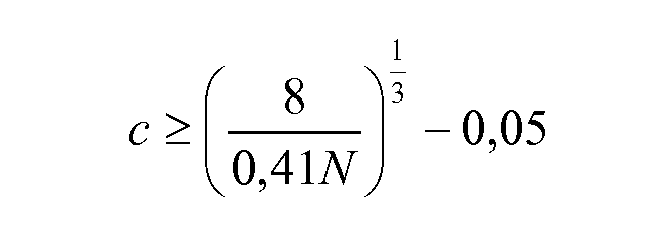 où N = le nombre d'acides aminés dans chaque polypeptide, où N ≥ 17, et c = la fraction d'acides aminés qui sont hydrophiles ou ont des propriétés de compatibilité de surface dans le polypeptide,et c = la fraction d'acides aminés qui sont choisis dans le groupe des Asp, Arg, Ser, Gin, Asn, Lys, Glu, Gly, Pro, et des combinaisons de ceux-ci ;dans laquelle la séquence de chacun des polynucléotides code un polypeptide comprenant l'un quelconque des acides aminés codés par les 61 codons sense.
 - La bibliothèque de la revendication 5 qui est une bibliothèque de phages.
- La bibliothèque de la revendication 5 qui réside dans une cellule eucaryote.
- La bibliothèque de la revendication 5 qui est une bibliothèque de ribosome display.
- La bibliothèque de la revendication 5 qui est une bibliothèque de RNA display o qui est une bibliothèque de plasmid display.
- Le procédé de la revendication 1, dans laquelle lesdits polypeptides ont une proportion de restes d'acides aminés hydrophiles ou ayant des propriétés de compatibilité de surface telle que :

où N = le nombre d'acides aminés dans chaque polypeptide, où N ≥ 17, et c = la fraction d'acides aminés qui sont hydrophiles ou ont des propriétés de compatibilité de surface. - Le procédé de la revendication 1, dans lequel lesdits polypeptides ont une proportion de résidus d'acides aminés hydrophiles ou avec des propriétés de compatibilité de surface telle que :

où N = le nombre d'acides aminés dans chaque polypeptide, où N ≥ 17, et c = la fraction d'acides aminés qui sont hydrophiles ou ont des propriétés de compatibilité de surface. - Le procédé de l'une quelconque des revendications 1-4 ou 10-11, dans lequel les résidus d'acides aminés hydrophiles ou ayant des propriétés de compatibilité de surface sont choisis dans le groupe constitué de Arg, Lys, Asn, His, Pro et Asp et des combinaisons de ceux-ci.
- Le procédé de l'une quelconque des revendications 1-4 ou 10-11, dans lequel au moins un résidu proline ou glycine est inclus dans chaque polypeptide.
- Le procédé de l'une quelconque des revendications 1-4 ou 10-13, ou la bibliothèque de l'une quelconque des revendications 5-9, étant N ≥ 50.
- Le procédé de l'une quelconque des revendications 1-4 ou 10-13, ou la bibliothèque de l'une quelconque des revendications 5-9, étant N ≥ 50 et N ≤ 10.000.
Applications Claiming Priority (2)
| Application Number | Priority Date | Filing Date | Title |
|---|---|---|---|
| US90086907P | 2007-02-12 | 2007-02-12 | |
| PCT/US2008/053757 WO2008100961A2 (fr) | 2007-02-12 | 2008-02-12 | Génération d'une bibliothèque de polypeptides aléatoires solubles liés à l'arnm |
Publications (3)
| Publication Number | Publication Date |
|---|---|
| EP2118344A2 EP2118344A2 (fr) | 2009-11-18 |
| EP2118344A4 EP2118344A4 (fr) | 2011-08-03 |
| EP2118344B1 true EP2118344B1 (fr) | 2014-07-23 |
Family
ID=39690769
Family Applications (1)
| Application Number | Title | Priority Date | Filing Date |
|---|---|---|---|
| EP08729681.0A Active EP2118344B1 (fr) | 2007-02-12 | 2008-02-12 | Generation d'une bibliotheque de polypeptides aleatoires solubles lies a l'arnm |
Country Status (7)
| Country | Link |
|---|---|
| US (3) | US9080256B2 (fr) |
| EP (1) | EP2118344B1 (fr) |
| JP (1) | JP2010517583A (fr) |
| AU (1) | AU2008216303A1 (fr) |
| CA (1) | CA2677804C (fr) |
| IL (1) | IL200358A0 (fr) |
| WO (1) | WO2008100961A2 (fr) |
Families Citing this family (11)
| Publication number | Priority date | Publication date | Assignee | Title |
|---|---|---|---|---|
| US9085798B2 (en) | 2009-04-30 | 2015-07-21 | Prognosys Biosciences, Inc. | Nucleic acid constructs and methods of use |
| US10787701B2 (en) | 2010-04-05 | 2020-09-29 | Prognosys Biosciences, Inc. | Spatially encoded biological assays |
| US20190300945A1 (en) | 2010-04-05 | 2019-10-03 | Prognosys Biosciences, Inc. | Spatially Encoded Biological Assays |
| WO2011127099A1 (fr) | 2010-04-05 | 2011-10-13 | Prognosys Biosciences, Inc. | Tests biologiques à codage spatial |
| EP2694709B1 (fr) * | 2011-04-08 | 2016-09-14 | Prognosys Biosciences, Inc. | Constructions peptidiques et systèmes d'essai |
| GB201106254D0 (en) | 2011-04-13 | 2011-05-25 | Frisen Jonas | Method and product |
| EP4592400A3 (fr) | 2012-10-17 | 2025-10-29 | 10x Genomics Sweden AB | Procédés et produits pour optimiser la detection localisée ou spatiale de l'expression génique dans un échantillon de tissu |
| EP3736573A1 (fr) | 2013-03-15 | 2020-11-11 | Prognosys Biosciences, Inc. | Procédés de détection de liaison peptide/mhc/tcr |
| CA2916662C (fr) | 2013-06-25 | 2022-03-08 | Prognosys Biosciences, Inc. | Procedes et systemes pour determiner des motifs spatiales de cibles biologiques dans un echantillon |
| US10288608B2 (en) | 2013-11-08 | 2019-05-14 | Prognosys Biosciences, Inc. | Polynucleotide conjugates and methods for analyte detection |
| EP3901282B1 (fr) | 2015-04-10 | 2023-06-28 | Spatial Transcriptomics AB | Analyse de plusieurs acides nucléiques spatialement différenciés de spécimens biologiques |
Citations (1)
| Publication number | Priority date | Publication date | Assignee | Title |
|---|---|---|---|---|
| US20070015181A1 (en) * | 2000-05-19 | 2007-01-18 | Williams Richard B | System and methods for nucleic acid and polypeptide selection |
Family Cites Families (21)
| Publication number | Priority date | Publication date | Assignee | Title |
|---|---|---|---|---|
| US127893A (en) * | 1872-06-11 | Improvement in apparatus for generating carbonic acid | ||
| US215400A (en) * | 1879-05-13 | Improvement in piano-stools | ||
| US4599303A (en) * | 1983-12-12 | 1986-07-08 | Hri Associates, Inc. | Nucleic acid hybridization assay employing probes crosslinkable to target sequences |
| US5658734A (en) * | 1995-10-17 | 1997-08-19 | International Business Machines Corporation | Process for synthesizing chemical compounds |
| ATE332368T1 (de) | 1997-01-21 | 2006-07-15 | Gen Hospital Corp | Selektion von proteinen mittels rns-protein fusionen |
| US6306393B1 (en) * | 1997-03-24 | 2001-10-23 | Immunomedics, Inc. | Immunotherapy of B-cell malignancies using anti-CD22 antibodies |
| US6440695B1 (en) * | 1998-04-17 | 2002-08-27 | Whitehead Institute For Biomedical Research | Method for producing diverse libraries of encoded polypeptides |
| US7138103B2 (en) * | 1998-06-22 | 2006-11-21 | Immunomedics, Inc. | Use of bi-specific antibodies for pre-targeting diagnosis and therapy |
| DK1196637T3 (da) | 1999-07-27 | 2007-07-30 | Adnexus Therapeutics Inc | Peptidacceptor-ligeringsmetoder |
| US6800455B2 (en) * | 2000-03-31 | 2004-10-05 | Scios Inc. | Secreted factors |
| WO2005072087A2 (fr) | 2003-12-12 | 2005-08-11 | Proteonova, Inc. | Systemes et procedes pour la selection d'acide nucleique et de polypeptide |
| WO2003044194A1 (fr) | 2001-11-16 | 2003-05-30 | Proteonova, Inc. | Selection et evolution d'acides nucleiques et de polypeptides |
| ATE369442T1 (de) | 2000-05-19 | 2007-08-15 | Richard B Williams | In vitro evolution von nukleinsäuren und kodierten polypeptiden |
| EP1406931A2 (fr) * | 2001-07-19 | 2004-04-14 | Universität Zürich | Modification de domaines humains variables |
| JP2004105070A (ja) | 2002-09-18 | 2004-04-08 | Inst Of Physical & Chemical Res | 無細胞タンパク質合成系を用いたリガンド結合タンパク質の製造方法及びその使用 |
| AU2003304539A1 (en) * | 2002-11-22 | 2004-06-06 | Keio University | Protein library and screening method using the same |
| GB0227644D0 (en) | 2002-11-27 | 2003-01-08 | Cancer Rec Tech Ltd | Specific binding members and uses thereof |
| CA2512974A1 (fr) * | 2003-01-13 | 2004-07-29 | Macrogenics, Inc. | Proteines de fusion fc.gamma.r solubles et leurs procedes d'utilisation |
| WO2004065363A2 (fr) | 2003-01-21 | 2004-08-05 | The Trustees Of The University Of Pennsylvania | Conception par voie computationnelle d'un analogue soluble dans l'eau d'une proteine, tel qu'un canal de phospholambane et de potassium kcsa |
| US20080199499A1 (en) | 2005-01-12 | 2008-08-21 | Proteonova, Inc. | Method for Making Targeted Therapeutic Agents |
| WO2010051215A1 (fr) | 2008-10-31 | 2010-05-06 | Proteonova, Inc. | Procédés pour fabriquer des vaccins contre le vih et compositions apparentées |
-
2008
- 2008-02-12 EP EP08729681.0A patent/EP2118344B1/fr active Active
- 2008-02-12 CA CA2677804A patent/CA2677804C/fr active Active
- 2008-02-12 JP JP2009549303A patent/JP2010517583A/ja active Pending
- 2008-02-12 WO PCT/US2008/053757 patent/WO2008100961A2/fr not_active Ceased
- 2008-02-12 US US12/525,437 patent/US9080256B2/en active Active
- 2008-02-12 AU AU2008216303A patent/AU2008216303A1/en not_active Abandoned
-
2009
- 2009-08-12 IL IL200358A patent/IL200358A0/en unknown
-
2015
- 2015-06-16 US US14/741,265 patent/US9920453B2/en not_active Expired - Fee Related
-
2018
- 2018-03-15 US US15/922,759 patent/US20180334760A1/en not_active Abandoned
Patent Citations (1)
| Publication number | Priority date | Publication date | Assignee | Title |
|---|---|---|---|---|
| US20070015181A1 (en) * | 2000-05-19 | 2007-01-18 | Williams Richard B | System and methods for nucleic acid and polypeptide selection |
Non-Patent Citations (3)
| Title |
|---|
| CHAPUT J C ET AL: "Evolutionary Optimization of a Nonbiological ATP Binding Protein for Improved Folding Stability", CHEMISTRY AND BIOLOGY, CURRENT BIOLOGY, LONDON, GB, vol. 11, no. 6, 1 June 2004 (2004-06-01), pages 865 - 874, XP025940208, ISSN: 1074-5521, [retrieved on 20040625], DOI: 10.1016/J.CHEMBIOL.2004.04.006 * |
| CHO G ET AL: "Constructing high complexity synthetic libraries of long ORFs using In Vitro selection", JOURNAL OF MOLECULAR BIOLOGY, ACADEMIC PRESS, UNITED KINGDOM, vol. 297, no. 2, 24 March 2000 (2000-03-24), pages 309 - 319, XP004461609, ISSN: 0022-2836, DOI: 10.1006/JMBI.2000.3571 * |
| PRIJAMBADA I D ET AL: "Solubility of artificial proteins with random sequences", FEBS LETTERS, ELSEVIER, AMSTERDAM, NL, vol. 382, no. 1-2, 11 March 1996 (1996-03-11), pages 21 - 25, XP026034527, ISSN: 0014-5793, [retrieved on 19960311], DOI: 10.1016/0014-5793(96)00123-8 * |
Also Published As
| Publication number | Publication date |
|---|---|
| US9080256B2 (en) | 2015-07-14 |
| EP2118344A2 (fr) | 2009-11-18 |
| JP2010517583A (ja) | 2010-05-27 |
| CA2677804A1 (fr) | 2008-08-21 |
| US20180334760A1 (en) | 2018-11-22 |
| AU2008216303A1 (en) | 2008-08-21 |
| US9920453B2 (en) | 2018-03-20 |
| WO2008100961A3 (fr) | 2008-12-11 |
| IL200358A0 (en) | 2010-04-29 |
| US20150353924A1 (en) | 2015-12-10 |
| EP2118344A4 (fr) | 2011-08-03 |
| CA2677804C (fr) | 2017-03-14 |
| US20100113302A1 (en) | 2010-05-06 |
| WO2008100961A2 (fr) | 2008-08-21 |
Similar Documents
| Publication | Publication Date | Title |
|---|---|---|
| EP2118344B1 (fr) | Generation d'une bibliotheque de polypeptides aleatoires solubles lies a l'arnm | |
| JP5837478B2 (ja) | ペプチド翻訳合成におけるrapidディスプレイ法 | |
| CA2544153C (fr) | Methode de synthese d'un complexe bifonctionnel | |
| Dower et al. | In vitro selection as a powerful tool for the applied evolution of proteins and peptides | |
| JP2020176121A (ja) | Dnaコードライブラリーをタグ付けするための方法 | |
| WO2004110964A2 (fr) | Molecules codees par traduction genetique (emt) | |
| JP2003505108A (ja) | 転写フリーselex | |
| US8278427B2 (en) | Molecule for assigning genotype to phenotype and components thereof as well as method for constructing assigning molecule and method for utilizing assigning molecule | |
| EP2657334B1 (fr) | Procédé efficace pour afficher un multimère de protéine | |
| JP4441623B2 (ja) | 対応付け分子およびその構成要素のライブラリーの製造方法および利用方法 | |
| JP7777904B2 (ja) | リンカー | |
| Barendt et al. | Cell-free display systems for protein engineering | |
| WO2025180432A1 (fr) | Enzyme pour coiffage d'arn et son système de réaction | |
| EP4504958A1 (fr) | Procédés de synthèse d'arn à fidélité supérieure | |
| WO2024121360A1 (fr) | Synthèse enzymatique in vitro d'arn | |
| JP2003088387A (ja) | タンパク質からの逆翻訳によるポリヌクレオチド合成方法と、この方法に用いるオリゴヌクレオチド | |
| JP2003325174A (ja) | 無細胞タンパク質合成系におけるタンパク質またはペプチドの製造方法、およびこれを用いて製造したタンパク質またはペプチド | |
| HK1245322A1 (en) | Enzymatic encoding | |
| HK1209162B (en) | Barcoding nucleic acids | |
| HK1209162A1 (zh) | 条形编码核酸 | |
| HK1110895B (en) | Method for carrying out the selective evolution of proteins in vitro |
Legal Events
| Date | Code | Title | Description |
|---|---|---|---|
| PUAI | Public reference made under article 153(3) epc to a published international application that has entered the european phase |
Free format text: ORIGINAL CODE: 0009012 |
|
| 17P | Request for examination filed |
Effective date: 20090910 |
|
| AK | Designated contracting states |
Kind code of ref document: A2 Designated state(s): AT BE BG CH CY CZ DE DK EE ES FI FR GB GR HR HU IE IS IT LI LT LU LV MC MT NL NO PL PT RO SE SI SK TR |
|
| REG | Reference to a national code |
Ref country code: DE Ref legal event code: R079 Ref document number: 602008033438 Country of ref document: DE Free format text: PREVIOUS MAIN CLASS: C40B0050000000 Ipc: C12N0015100000 |
|
| RIC1 | Information provided on ipc code assigned before grant |
Ipc: C40B 50/00 20060101ALI20110531BHEP Ipc: C40B 40/08 20060101ALI20110531BHEP Ipc: C40B 50/06 20060101ALI20110531BHEP Ipc: C40B 20/00 20060101ALI20110531BHEP Ipc: C12N 15/10 20060101AFI20110531BHEP Ipc: C40B 40/02 20060101ALI20110531BHEP Ipc: C40B 30/00 20060101ALI20110531BHEP |
|
| A4 | Supplementary search report drawn up and despatched |
Effective date: 20110630 |
|
| DAX | Request for extension of the european patent (deleted) | ||
| 17Q | First examination report despatched |
Effective date: 20121025 |
|
| GRAP | Despatch of communication of intention to grant a patent |
Free format text: ORIGINAL CODE: EPIDOSNIGR1 |
|
| RIC1 | Information provided on ipc code assigned before grant |
Ipc: C07K 14/00 20060101ALI20140123BHEP Ipc: C40B 40/02 20060101ALI20140123BHEP Ipc: C12N 15/10 20060101AFI20140123BHEP Ipc: C40B 50/06 20060101ALI20140123BHEP Ipc: C40B 40/08 20060101ALI20140123BHEP Ipc: C40B 20/00 20060101ALI20140123BHEP |
|
| INTG | Intention to grant announced |
Effective date: 20140207 |
|
| GRAS | Grant fee paid |
Free format text: ORIGINAL CODE: EPIDOSNIGR3 |
|
| GRAA | (expected) grant |
Free format text: ORIGINAL CODE: 0009210 |
|
| AK | Designated contracting states |
Kind code of ref document: B1 Designated state(s): AT BE BG CH CY CZ DE DK EE ES FI FR GB GR HR HU IE IS IT LI LT LU LV MC MT NL NO PL PT RO SE SI SK TR |
|
| REG | Reference to a national code |
Ref country code: GB Ref legal event code: FG4D |
|
| REG | Reference to a national code |
Ref country code: CH Ref legal event code: EP |
|
| REG | Reference to a national code |
Ref country code: IE Ref legal event code: FG4D |
|
| REG | Reference to a national code |
Ref country code: AT Ref legal event code: REF Ref document number: 678915 Country of ref document: AT Kind code of ref document: T Effective date: 20140815 |
|
| REG | Reference to a national code |
Ref country code: DE Ref legal event code: R096 Ref document number: 602008033438 Country of ref document: DE Effective date: 20140904 |
|
| REG | Reference to a national code |
Ref country code: AT Ref legal event code: MK05 Ref document number: 678915 Country of ref document: AT Kind code of ref document: T Effective date: 20140723 |
|
| REG | Reference to a national code |
Ref country code: NL Ref legal event code: VDEP Effective date: 20140723 |
|
| REG | Reference to a national code |
Ref country code: LT Ref legal event code: MG4D |
|
| PG25 | Lapsed in a contracting state [announced via postgrant information from national office to epo] |
Ref country code: PT Free format text: LAPSE BECAUSE OF FAILURE TO SUBMIT A TRANSLATION OF THE DESCRIPTION OR TO PAY THE FEE WITHIN THE PRESCRIBED TIME-LIMIT Effective date: 20141124 Ref country code: NO Free format text: LAPSE BECAUSE OF FAILURE TO SUBMIT A TRANSLATION OF THE DESCRIPTION OR TO PAY THE FEE WITHIN THE PRESCRIBED TIME-LIMIT Effective date: 20141023 Ref country code: ES Free format text: LAPSE BECAUSE OF FAILURE TO SUBMIT A TRANSLATION OF THE DESCRIPTION OR TO PAY THE FEE WITHIN THE PRESCRIBED TIME-LIMIT Effective date: 20140723 Ref country code: SE Free format text: LAPSE BECAUSE OF FAILURE TO SUBMIT A TRANSLATION OF THE DESCRIPTION OR TO PAY THE FEE WITHIN THE PRESCRIBED TIME-LIMIT Effective date: 20140723 Ref country code: LT Free format text: LAPSE BECAUSE OF FAILURE TO SUBMIT A TRANSLATION OF THE DESCRIPTION OR TO PAY THE FEE WITHIN THE PRESCRIBED TIME-LIMIT Effective date: 20140723 Ref country code: BG Free format text: LAPSE BECAUSE OF FAILURE TO SUBMIT A TRANSLATION OF THE DESCRIPTION OR TO PAY THE FEE WITHIN THE PRESCRIBED TIME-LIMIT Effective date: 20141023 Ref country code: GR Free format text: LAPSE BECAUSE OF FAILURE TO SUBMIT A TRANSLATION OF THE DESCRIPTION OR TO PAY THE FEE WITHIN THE PRESCRIBED TIME-LIMIT Effective date: 20141024 Ref country code: FI Free format text: LAPSE BECAUSE OF FAILURE TO SUBMIT A TRANSLATION OF THE DESCRIPTION OR TO PAY THE FEE WITHIN THE PRESCRIBED TIME-LIMIT Effective date: 20140723 |
|
| PG25 | Lapsed in a contracting state [announced via postgrant information from national office to epo] |
Ref country code: IS Free format text: LAPSE BECAUSE OF FAILURE TO SUBMIT A TRANSLATION OF THE DESCRIPTION OR TO PAY THE FEE WITHIN THE PRESCRIBED TIME-LIMIT Effective date: 20141123 Ref country code: PL Free format text: LAPSE BECAUSE OF FAILURE TO SUBMIT A TRANSLATION OF THE DESCRIPTION OR TO PAY THE FEE WITHIN THE PRESCRIBED TIME-LIMIT Effective date: 20140723 Ref country code: AT Free format text: LAPSE BECAUSE OF FAILURE TO SUBMIT A TRANSLATION OF THE DESCRIPTION OR TO PAY THE FEE WITHIN THE PRESCRIBED TIME-LIMIT Effective date: 20140723 Ref country code: NL Free format text: LAPSE BECAUSE OF FAILURE TO SUBMIT A TRANSLATION OF THE DESCRIPTION OR TO PAY THE FEE WITHIN THE PRESCRIBED TIME-LIMIT Effective date: 20140723 Ref country code: CY Free format text: LAPSE BECAUSE OF FAILURE TO SUBMIT A TRANSLATION OF THE DESCRIPTION OR TO PAY THE FEE WITHIN THE PRESCRIBED TIME-LIMIT Effective date: 20140723 Ref country code: LV Free format text: LAPSE BECAUSE OF FAILURE TO SUBMIT A TRANSLATION OF THE DESCRIPTION OR TO PAY THE FEE WITHIN THE PRESCRIBED TIME-LIMIT Effective date: 20140723 Ref country code: HR Free format text: LAPSE BECAUSE OF FAILURE TO SUBMIT A TRANSLATION OF THE DESCRIPTION OR TO PAY THE FEE WITHIN THE PRESCRIBED TIME-LIMIT Effective date: 20140723 |
|
| REG | Reference to a national code |
Ref country code: DE Ref legal event code: R097 Ref document number: 602008033438 Country of ref document: DE |
|
| PG25 | Lapsed in a contracting state [announced via postgrant information from national office to epo] |
Ref country code: IT Free format text: LAPSE BECAUSE OF FAILURE TO SUBMIT A TRANSLATION OF THE DESCRIPTION OR TO PAY THE FEE WITHIN THE PRESCRIBED TIME-LIMIT Effective date: 20140723 Ref country code: CZ Free format text: LAPSE BECAUSE OF FAILURE TO SUBMIT A TRANSLATION OF THE DESCRIPTION OR TO PAY THE FEE WITHIN THE PRESCRIBED TIME-LIMIT Effective date: 20140723 Ref country code: EE Free format text: LAPSE BECAUSE OF FAILURE TO SUBMIT A TRANSLATION OF THE DESCRIPTION OR TO PAY THE FEE WITHIN THE PRESCRIBED TIME-LIMIT Effective date: 20140723 Ref country code: DK Free format text: LAPSE BECAUSE OF FAILURE TO SUBMIT A TRANSLATION OF THE DESCRIPTION OR TO PAY THE FEE WITHIN THE PRESCRIBED TIME-LIMIT Effective date: 20140723 Ref country code: RO Free format text: LAPSE BECAUSE OF FAILURE TO SUBMIT A TRANSLATION OF THE DESCRIPTION OR TO PAY THE FEE WITHIN THE PRESCRIBED TIME-LIMIT Effective date: 20140723 Ref country code: SK Free format text: LAPSE BECAUSE OF FAILURE TO SUBMIT A TRANSLATION OF THE DESCRIPTION OR TO PAY THE FEE WITHIN THE PRESCRIBED TIME-LIMIT Effective date: 20140723 |
|
| PLBE | No opposition filed within time limit |
Free format text: ORIGINAL CODE: 0009261 |
|
| STAA | Information on the status of an ep patent application or granted ep patent |
Free format text: STATUS: NO OPPOSITION FILED WITHIN TIME LIMIT |
|
| PG25 | Lapsed in a contracting state [announced via postgrant information from national office to epo] |
Ref country code: BE Free format text: LAPSE BECAUSE OF NON-PAYMENT OF DUE FEES Effective date: 20150228 |
|
| 26N | No opposition filed |
Effective date: 20150424 |
|
| PG25 | Lapsed in a contracting state [announced via postgrant information from national office to epo] |
Ref country code: LU Free format text: LAPSE BECAUSE OF FAILURE TO SUBMIT A TRANSLATION OF THE DESCRIPTION OR TO PAY THE FEE WITHIN THE PRESCRIBED TIME-LIMIT Effective date: 20150212 |
|
| REG | Reference to a national code |
Ref country code: CH Ref legal event code: PL |
|
| PG25 | Lapsed in a contracting state [announced via postgrant information from national office to epo] |
Ref country code: LI Free format text: LAPSE BECAUSE OF NON-PAYMENT OF DUE FEES Effective date: 20150228 Ref country code: CH Free format text: LAPSE BECAUSE OF NON-PAYMENT OF DUE FEES Effective date: 20150228 Ref country code: MC Free format text: LAPSE BECAUSE OF FAILURE TO SUBMIT A TRANSLATION OF THE DESCRIPTION OR TO PAY THE FEE WITHIN THE PRESCRIBED TIME-LIMIT Effective date: 20140723 |
|
| PG25 | Lapsed in a contracting state [announced via postgrant information from national office to epo] |
Ref country code: SI Free format text: LAPSE BECAUSE OF FAILURE TO SUBMIT A TRANSLATION OF THE DESCRIPTION OR TO PAY THE FEE WITHIN THE PRESCRIBED TIME-LIMIT Effective date: 20140723 |
|
| REG | Reference to a national code |
Ref country code: FR Ref legal event code: PLFP Year of fee payment: 9 |
|
| PG25 | Lapsed in a contracting state [announced via postgrant information from national office to epo] |
Ref country code: BE Free format text: LAPSE BECAUSE OF FAILURE TO SUBMIT A TRANSLATION OF THE DESCRIPTION OR TO PAY THE FEE WITHIN THE PRESCRIBED TIME-LIMIT Effective date: 20140723 |
|
| PG25 | Lapsed in a contracting state [announced via postgrant information from national office to epo] |
Ref country code: MT Free format text: LAPSE BECAUSE OF FAILURE TO SUBMIT A TRANSLATION OF THE DESCRIPTION OR TO PAY THE FEE WITHIN THE PRESCRIBED TIME-LIMIT Effective date: 20140723 |
|
| REG | Reference to a national code |
Ref country code: FR Ref legal event code: PLFP Year of fee payment: 10 |
|
| PG25 | Lapsed in a contracting state [announced via postgrant information from national office to epo] |
Ref country code: HU Free format text: LAPSE BECAUSE OF FAILURE TO SUBMIT A TRANSLATION OF THE DESCRIPTION OR TO PAY THE FEE WITHIN THE PRESCRIBED TIME-LIMIT; INVALID AB INITIO Effective date: 20080212 |
|
| PG25 | Lapsed in a contracting state [announced via postgrant information from national office to epo] |
Ref country code: TR Free format text: LAPSE BECAUSE OF FAILURE TO SUBMIT A TRANSLATION OF THE DESCRIPTION OR TO PAY THE FEE WITHIN THE PRESCRIBED TIME-LIMIT Effective date: 20140723 |
|
| REG | Reference to a national code |
Ref country code: FR Ref legal event code: PLFP Year of fee payment: 11 |
|
| PGFP | Annual fee paid to national office [announced via postgrant information from national office to epo] |
Ref country code: IT Payment date: 20181220 Year of fee payment: 10 |
|
| PG25 | Lapsed in a contracting state [announced via postgrant information from national office to epo] |
Ref country code: IE Free format text: LAPSE BECAUSE OF NON-PAYMENT OF DUE FEES Effective date: 20200212 |
|
| PGFP | Annual fee paid to national office [announced via postgrant information from national office to epo] |
Ref country code: DE Payment date: 20250227 Year of fee payment: 18 |
|
| PGFP | Annual fee paid to national office [announced via postgrant information from national office to epo] |
Ref country code: FR Payment date: 20250225 Year of fee payment: 18 |
|
| PGFP | Annual fee paid to national office [announced via postgrant information from national office to epo] |
Ref country code: GB Payment date: 20250227 Year of fee payment: 18 |