EP2119781B1 - Glyceroglycolipid lipase - Google Patents
Glyceroglycolipid lipase Download PDFInfo
- Publication number
- EP2119781B1 EP2119781B1 EP08704153A EP08704153A EP2119781B1 EP 2119781 B1 EP2119781 B1 EP 2119781B1 EP 08704153 A EP08704153 A EP 08704153A EP 08704153 A EP08704153 A EP 08704153A EP 2119781 B1 EP2119781 B1 EP 2119781B1
- Authority
- EP
- European Patent Office
- Prior art keywords
- glyceroglycolipid
- activity
- lipase
- dna
- degradation activity
- Prior art date
- Legal status (The legal status is an assumption and is not a legal conclusion. Google has not performed a legal analysis and makes no representation as to the accuracy of the status listed.)
- Active
Links
Images




Classifications
-
- C—CHEMISTRY; METALLURGY
- C12—BIOCHEMISTRY; BEER; SPIRITS; WINE; VINEGAR; MICROBIOLOGY; ENZYMOLOGY; MUTATION OR GENETIC ENGINEERING
- C12N—MICROORGANISMS OR ENZYMES; COMPOSITIONS THEREOF; PROPAGATING, PRESERVING, OR MAINTAINING MICROORGANISMS; MUTATION OR GENETIC ENGINEERING; CULTURE MEDIA
- C12N9/00—Enzymes; Proenzymes; Compositions thereof; Processes for preparing, activating, inhibiting, separating or purifying enzymes
- C12N9/14—Hydrolases (3)
- C12N9/16—Hydrolases (3) acting on ester bonds (3.1)
- C12N9/18—Carboxylic ester hydrolases (3.1.1)
- C12N9/20—Triglyceride splitting, e.g. by means of lipase
-
- A—HUMAN NECESSITIES
- A21—BAKING; EDIBLE DOUGHS
- A21D—TREATMENT OF FLOUR OR DOUGH FOR BAKING, e.g. BY ADDITION OF MATERIALS; BAKING; BAKERY PRODUCTS
- A21D8/00—Methods for preparing or baking dough
- A21D8/02—Methods for preparing dough; Treating dough prior to baking
- A21D8/04—Methods for preparing dough; Treating dough prior to baking treating dough with microorganisms or enzymes
- A21D8/042—Methods for preparing dough; Treating dough prior to baking treating dough with microorganisms or enzymes with enzymes
-
- C—CHEMISTRY; METALLURGY
- C12—BIOCHEMISTRY; BEER; SPIRITS; WINE; VINEGAR; MICROBIOLOGY; ENZYMOLOGY; MUTATION OR GENETIC ENGINEERING
- C12N—MICROORGANISMS OR ENZYMES; COMPOSITIONS THEREOF; PROPAGATING, PRESERVING, OR MAINTAINING MICROORGANISMS; MUTATION OR GENETIC ENGINEERING; CULTURE MEDIA
- C12N1/00—Microorganisms; Compositions thereof; Processes of propagating, maintaining or preserving microorganisms or compositions thereof; Processes of preparing or isolating a composition containing a microorganism; Culture media therefor
- C12N1/14—Fungi; Culture media therefor
- C12N1/145—Fungi isolates
-
- C—CHEMISTRY; METALLURGY
- C12—BIOCHEMISTRY; BEER; SPIRITS; WINE; VINEGAR; MICROBIOLOGY; ENZYMOLOGY; MUTATION OR GENETIC ENGINEERING
- C12R—INDEXING SCHEME ASSOCIATED WITH SUBCLASSES C12C - C12Q, RELATING TO MICROORGANISMS
- C12R2001/00—Microorganisms ; Processes using microorganisms
- C12R2001/645—Fungi ; Processes using fungi
- C12R2001/66—Aspergillus
Definitions
- the present invention relates to a glyceroglycolipid lipase, a filamentous fungus producing the lipase, a method for separating and purifying the lipase from a cultured product of a filamentous fungus, DNA encoding the lipase, a method for producing the lipase, and the like.
- the present invention relates to the lipase which is particularly suitable for use in the food industry and the pharmaceutical industry, particularly a glyceroglycolipid lipase derived from a filamentous fungus Aspergillus japonicus, a filamentous fungus producing the lipase, a method for separating and purifying the lipase from a cultured product of a filamentous fungus, DNA encoding the lipase, a method for producing the lipase, a method for baking using the lipase, and the like.
- a glyceroglycolipid lipase refers to an enzyme that has an activity of hydrolyzing glyceroglycolipid into lysoglyceroglycolipid and fatty acid (hereinafter referred to as “glyceroglycolipid degradation activity").
- glyceroglycolipid degradation activity A digalactosyldiacylglycerol degradation activity (hereinafter referred to as "DGDG degradation activity”) is a concept included in the glyceroglycolipid degradation activity.
- “relative degradation activity” is defined to be a relative value of a DGDG degradation activity or a lecithin degradation activity under given pH or temperature conditions defining, as 100%, the DGDG degradation activity or the lecithin degradation activity under specific pH or temperature conditions that result in the highest activity.
- “relative residual degradation activity” is defined to be a relative value of a DGDG degradation activity or a lecithin degradation activity under given pH or temperature conditions after treatment under the given pH or temperature conditions defining, as 100%, the DGDG degradation activity or the lecithin degradation activity under specific pH or temperature conditions that result in the highest activity after treatment under the specific pH or temperature conditions.
- lipases derived from bacteria that hydrolyze glyceroglycolipids for example, lipases derived from Cornebacterium efficiens, Thermobifida fusca, and the like are known (Patent Document 1).
- lipases derived from actinomyces that hydrolyze glyceroglycolipids for example, lipases derived from Streptomyces sp. are known (Patent Document 1).
- lipases derived from molds that hydrolyze glyceroglycolipids for example, lipases derived from Fusarium venenatum, Fusarium sulfureum, Fusarium culmorum, Fusarium solani, Fusarium oxysporum, Acremonium berkeleyanum, Aspergillus fumigatus, Aspergillus nidulans, Aspergillus niger, and the like are known (Patent Documents 2-4).
- Glyceroglycolipids are distributed mainly among Gram-positive bacteria and chloroplasts of higher plants.
- Glyceroglycolipid is a compound having a sugar chain covalently bonding to the 3-position of 1,2-diacylglycerol.
- Galactose or the like is included as the sugar chain, and the composition ratios differ depending on the sources.
- monogalactosyldiacylglycerol hereinafter referred to as "MGDG”
- DGDG digalactosyldiacylglycerol
- Glycerophospholipids are widely distributed among animals, plants and fungi.
- Glycerophospholipid is a compound having a phosphoryl base covalently bonding to the 3-position of 1,2-diacylglycerol. Choline, ethanolamine, serine, inositol, glycerol or the like is included as the base, and the composition ratios differ depending on the sources. For example, lecithin and the like are include in glycerophospholipids.
- Neutral fats are also widely distributed among animals, plants and fungi.
- Neutral fat is a generic term for monoacylglycerol, diacylglycerol and triacylglycerol.
- Lecithin or glyceroglycolipid has two hydrophobic fatty acid moieties in the molecule, and is known as a lipophilic surfactant. Hydrolysis of one of them with a lipase increases the hydrophilicity, resulting in a substance having properties different from those of the lecithin or the glyceroglycolipid. Actually, since lysolecithin generated as a result of action by a phospholipase on lecithin is water soluble, and the physical properties of a food obtained using the lysolecithin as a food additive differ from those of the lecithin, its application in the food industry is examined.
- lysoglyceroglycolipid it is possible to produce lysoglyceroglycolipid by partially hydrolyzing it with a glyceroglycolipid lipase.
- Lysoglyceroglycolipid is also a substance with increased hydrophilicity.
- lysoglyceroglycolipids include digalactosylmonoglyceride (hereinafter referred to as "DGMG”) and the like.
- glyceroglycolipid lipase By using a glyceroglycolipid lipase, it is possible to produce lysoglyceroglycolipid from glyceroglycolipid in the presence of water as shown below : wherein each of R 1 and R 2 represents an alkyl group, and Gal represents galactose.
- lysolecithin which is lysoglycerophospholipid, from lecithin: wherein each of R 1 and R 2 represents an alkyl group, and R 3 represents a base such as choline, ethanolamine, glycerol, inositol or the like.
- an enzyme preparation has a high activity in this pH range.
- a chemically synthesized surfactant is used in many cases for increasing the volume, improving the texture, or the like.
- baking without adding a synthetic surfactant is desirable since nature-oriented trend is growing recently.
- oils and fats, egg yolks, and the like are added to bread for improving the texture.
- baking without adding such an additive is also desirable since health-oriented trend is growing or the issue of allergy is serious.
- Non-patent Document 1 It is known that flours used for baking contain neutral fats, glyceroglycolipids, glycerophospholipids, and the like (Non-patent Document 1). Among these, glyceroglycolipids and glycerophospholipids are expected to serve as surfactants, although their performance is disappointing because of their lipophilicity. Then, it would be possible to sufficiently bring out the performance by partially hydrolyzing these lipids into lysoglyceroglycolipids and lysoglycerophospholipids, which are hydrophilic surfactants. If surfactants could be supplied by components of flour itself, the use of synthetic surfactants would be unnecessary or the amount to be used could be reduced.
- Non-patent Document 1 it is desired in the field of baking to produce lysoglyceroglycolipids by hydrolyzing glyceroglycolipids more efficiently as compared with glycerophospholipids to increase the surface-active ability. Furthermore, it is desirable that the enzymatic activities on the produced lysoglyceroglycolipids and lysolecithins are low. In other words, it is desirable that the enzymatic activity on lysophosphatidylcholines (hereinafter referred to as "LPCs”) is low.
- LPCs lysophosphatidylcholines
- Patent Document 5 It has been shown that an enzyme that also hydrolyzes neutral fat in addition to glyceroglycolipid and glycerophospholipid is effective for baking (Patent Document 5). On the other hand, there is also an instance where an enzyme that hardly hydrolyzes neutral fat is more effective for baking (Patent Document 6).
- glyceroglycolipid lipase in baking, raw materials are mixed at around pH 6 and incubated at 30-42°C for fermentation in many cases.
- the glyceroglycolipid lipase to be used has an activity and is stable under these conditions.
- Lipases derived from plants have problems with their universal use. There has been no detailed description on lipases derived from bacteria. Glyceroglycolipid lipases derived from actinomyces additionally have a lecithin degradation activity. Furthermore, many of lipases derived from filamentous fungi are derived from pathogens, thus causing some problems concerning the safety. Furthermore, the properties of the enzymes have not been described in detail. For example, it is presumed that a lipase derived from Fusarium oxysporum, which is a plant pathogen, is effective also for actual baking.
- the optimum pH of the lipase is around 9, whereas the enzymatic activity at pH 6, which is essential for baking, is only 35% or less of the enzymatic activity at the optimum pH.
- the enzymatic activity at pH 4.5 or 5 has been described, the activity at around pH 6, which is considered to be essential for baking, has not been shown and the effectiveness thereof is unknown
- glyceroglycolipid lipases have problems that: it is highly possible that they only bring insufficient effects; they have problems concerning the safety; the enzymatic reactions are inefficient; or the like. Desirable properties of glyceroglycolipid lipases include being derived from a microorganism without a problem concerning safety, having the ability to efficiently hydrolyze glyceroglycolipid and glycerophospholipid at around pH 6, being thermostable to some extent, and not hydrolyzing lysolecithin.
- glyceroglycolipid lipases desirable properties include being derived from a microorganism without a problem concerning safety, having the ability to efficiently hydrolyze glyceroglycolipid at around pH 6, and being thermostable to some extent.
- glyceroglycolipid lipases desirably have properties of hydrolyzing lecithin and not hydrolyzing lysolecithin.
- the present invention relates to:
- the present invention relates to a glyceroglycolipid lipase derived from Aspergillus japonicus, which is a filamentous fungus useful for degrading glyceroglycolipid.
- the glyceroglycolipid lipases of the present invention include a protein having an activity of degrading glyceroglycolipid in a culture of a microorganism producing a glyceroglycolipid lipase.
- examples of such glyceroglycolipid lipases include a glyceroglycolipid lipase derived from Aspergillus japonicus.
- a glyceroglycolipid lipase derived from Aspergillus japonicus strain SANK 11298 is more preferable.
- Another example of the glyceroglycolipid lipases of the present invention is a protein consisting of the amino acid sequence of SEQ ID NO: 2 of the sequence listing.
- a protein consisting of the amino acid sequence of SEQ ID NO: 2 of the sequence listing in which one or several amino acid residues are substituted, deleted, inserted, and/or added at one or several sites is also included in the present invention as long as it has a glyceroglycolipid degradation activity.
- proteins having a substituted amino acid sequence and having an activity equivalent to that of a naturally-occurring protein for example, it is known that a protein obtained by converting a nucleotide sequence corresponding to cysteine into a nucleotide sequence corresponding to serine in an interleukin 2 (IL-2) gene retains an IL-2 activity ( Wang, A. et al. (1984) Science 224, 1431-1433 ).
- a protein having a nucleotide sequence homology of 70% or more, more preferably 80% or more, even more preferably 90% or more, particularly preferably 95% or more with a protein consisting of the amino acid sequence of SEQ ID NO: 2 of the sequence listing is also included in the present invention as long as it has a glyceroglycolipid degradation activity.
- the DNA of the present invention refers to DNA encoding the glyceroglycolipid lipase of the present invention.
- the DNA may assume any form known up to now such as cDNA, genomic DNA, artificially modified DNA, or chemically synthesized DNA.
- DNA of the present invention examples include DNA of the nucleotide sequence from nucleotide number 110 to nucleotide number 991 of SEQ ID NO:1 of the sequence listing that encodes a protein having a glyceroglycolipid degradation activity.
- DNA of the present invention is DNA having a nucleotide sequence homology of 70% or more, more preferably 80% or more, even more preferably 90% or more, particularly preferably 95% or more with the nucleotide sequence from nucleotide number 110 to nucleotide number 991 of SEQ ID NO: 1 of the sequence listing and encoding a protein having a glyceroglycolipid degradation activity.
- DNA includes a mutant DNA found in nature, an artificially modified mutant DNA, and a homologous DNA derived from an organism of different species.
- DNA of the present invention is DNA hybridizing to the nucleotide sequence from nucleotide number 110 to nucleotide number 991 of SEQ ID NO: 1 of the sequence listing under stringent conditions and encoding a protein having a glyceroglycolipid degradation activity.
- stringent conditions include, for example, the conditions as described in Sambrook et al. (eds.) "Molecular Cloning: A Laboratory Manual 2nd Ed., Cold Spring Harbor Laboratory Press (1989 ), or the like.
- exemplary conditions include the steps of: (i) incubating with a probe at 42°C overnight in a solution containing 6 x SSC (composition of 1 x SSC: 0.15M NaCl, 0.015M sodium citrate, pH 7.0), 0.5% SDS, 5 x Denhardt's, 100 ⁇ g/mL denatured fragmented salmon sperm DNA and 50% formamide; (ii) removing the nonspecifically hybridized probe by washing, wherein, in view of increased accuracy, the washing may be conducted under conditions of lower ionic strength, for example in 2 x SSC, more stringently in 0.1 x SSC, and/or under conditions of higher temperature, for example at a temperature 40°C or less lower, more stringently 30°C or less
- nucleotides of the present invention is DNA encoding a protein consisting of the amino acid sequence of SEQ ID NO: 2 of the sequence listing.
- a codon corresponding to an amino acid of interest may arbitrarily be selected. It can be determined according to a conventional method, for example, taking the codon usage of the host to be utilized into consideration ( Grantham, R. et al. (1981) Nucleic Acids Res. 9, 143-174 ).
- codons of a nucleotide sequence can be partially modified according to a conventional method, such as the site-directed mutagenesis method utilizing primers consisting of synthetic oligonucleotides encoding the desired modification(s) ( Mark, D. F. et al. (1984) Proc. Natl. Acad. Sci. USA 81, 5662-5666 ).
- DNA of the present invention is DNA consisting of the nucleotide sequence from nucleotide number 110 to nucleotide number 991 of SEQ ID NO: 1 of the sequence listing.
- DNA that comprises DNA consisting of the nucleotide sequence from nucleotide number 110 to nucleotide number 991 of SEQ ID NO: 1 of the sequence listing is also included in the present invention as long as it contains a region encoding a protein having a glyceroglycolipid degradation activity.
- the glyceroglycolipid lipases of the present invention include a protein consisting of an amino acid sequence encoded by the DNA of the present invention.
- a mutant in which one or two or more arbitrary amino acid(s) is(are) deleted in the glyceroglycolipid lipase of the present invention can be produced according to a method in which DNA is deleted from the terminus using an exonuclease Bal31, or the like ( Toshimitsu Kishimoto et al., "Zoku-Seikagaku Jikken Koza 1, Idenshi Kenkyuho II (Sequel to Biochemical Experiment Lecture 1, Genetic Research Method II)" 335-354 ), a cassette mutagenesis method ( Toshimitsu Kishimoto, "Shin-Seikagaku Jikken Koza 2, Kakusan III Kumikae DNA Gijutsu (New Biochemical Experiment Lecture 2, Nucleic Acid III - Recombinant DNA Technique)" 242-251 ), or the like.
- a protein obtained using genetic engineering techniques on the basis of the DNA of the present invention is included in the present invention as long as it has a glyceroglycolipid degradation activity.
- a glyceroglycolipid lipase does not necessarily need to have the whole amino acid sequence of SEQ ID NO: 2 of the sequence listing.
- a protein consisting of a partial sequence thereof is included in the glyceroglycolipid lipases of the present invention as long as the protein has a glyceroglycolipid degradation activity.
- DNA encoding such a glyceroglycolipid lipase is also included in the present invention.
- the glyceroglycolipid lipase used in the present invention may be one purified or partially purified from a culture of a glyceroglycolipid lipase-producing microorganism, a homogenate of cells, or a cell culture supernatant used as it is. It is preferable to culture a glyceroglycolipid lipase-producing microorganism in a medium with the addition of a surfactant in addition to carbon sources and nitrogen sources. Alternatively, it is preferable to culture the microorganism in a medium made from natural materials such as soybean powder, ground sesame, cottonseed meal, or rice bran.
- the surfactants include Triton, Tween, sucrose fatty acid ester, sodium cholate, sodium deoxycholate, saponin, and the like.
- a glyceroglycolipid lipase-producing microorganism can be cultured using a conventional culture apparatus and a conventional medium.
- a method of liquid culture, solid culture or the like can be suitably selected for culture.
- the culture can be carried out in a flask or using a fermenter.
- a batch culture method without adding further culture medium after the initiation of culture or a fedbatch culture method with adding culture medium as needed during culture can be employed.
- Carbon and nitrogen sources are added to the medium, and vitamins, trace metal elements, or the like can be added as needed.
- the carbon sources include monosaccharides such as glucose, mannose, galactose and fructose, disaccharides such as maltose, cellobiose, isomaltose, lactose and sucrose, polysaccharides such as starch, and malt extract, although the carbon source is not limited to the above as long as the glyceroglycolipid lipase-producing microorganism grows therewith.
- Inorganic nitrogens such as ammonia, ammonium sulfate or ammonium nitrate, or organic nitrogens such as yeast extract, malt extract, corn steep liquor or peptone are used as nitrogen sources, although the nitrogen sources are not limited to the above as long as the glyceroglycolipid lipase-producing microorganism grows therewith.
- surfactants such as Triton, Tween, sucrose fatty acid ester, sodium cholate, sodium deoxycholate, lecithin or saponin can be added to the medium in order to increase the yield of a glyceroglycolipid lipase from a glyceroglycolipid lipase-producing microorganism.
- the amounts of compositions in such a medium can suitably be selected. Culture temperature, pH, and amount of aeration/agitation can suitably be selected so that they are suitable for the production of glyceroglycolipid lipase.
- a culture supernatant which is obtained by removing cells after completing the culture of a glyceroglycolipid lipase-producing microorganism, can be used as it is as a crude enzyme solution.
- a protein precipitating agent salt precipitation method
- centrifugation osmotic shock method
- freeze-thaw method osmotic shock method
- ultrafiltration gel filtration
- various liquid chromatographies such as adsorption chromatography, ion exchange chromatography, affinity chromatography or high performance liquid chromatography (HPLC), dialysis method, or a combination thereof can also be employed.
- a filamentous fungus may be readily mutated in nature or by an artificial procedure (e.g., ultraviolet irradiation, radiation, treatment with a chemical agent).
- an artificial procedure e.g., ultraviolet irradiation, radiation, treatment with a chemical agent.
- Aspergillus japonicus according to the present invention includes all the mutants thereof.
- the mutants also include those obtained by a genetic method such as recombination, transduction or transformation. That is, all of Aspergillus japonicus producing a glyceroglycolipid lipase, mutants thereof, and strains that are not clearly distinguished therefrom are included in Aspergillus japonicus.
- the glyceroglycolipid lipase of the present invention can be obtained from a culture product of a host cell transformed with a recombinant plasmid having the DNA of the present invention inserted in a vector.
- a recombinant plasmid having the DNA of the present invention inserted in a suitable vector as described above is also included in the present invention.
- Various commonly known vectors can be used as a vector to be used for such a purpose.
- Preferable vectors include, but are not limited to, vectors for prokaryotic cells, vectors for eukaryotic cells and vectors for mammal-derived cells.
- a host cell from other prokaryotes or other eukaryotes can be transformed with such a recombinant plasmid. Furthermore, it is possible to express a gene in each host by using a vector having a suitable promoter sequence and/or a sequence related to phenotypic expression, or by introducing such a sequence to prepare an expression vector. Such an expression vector is a preferable aspect of the recombinant plasmid according to the present invention.
- a host cell can be obtained by introducing the recombinant plasmid according to the present invention into one of various cells.
- the cell may be a prokaryotic cell or a eukaryotic cell as long as a plasmid can be introduced into the cell.
- Prokaryotic host cells include, for example, Escherichia coli and Bacillus subtilis.
- the host cell is transformed with a plasmid vector containing a regulatory sequence and a replicon, i.e., an origin of replication, derived from a species compatible with the host.
- a vector having a sequence that can confer selectivity by a phenotypic character (phenotype) to the transformed cell is preferable as a vector.
- strain K12 or the like is often used as Escherichia coli
- pBR322 or a pUC-series plasmid is generally used as a vector, although they are not limited to the above, and any one of various known strains and vectors can also be used.
- Promoters for Escherichia coli include tryptophan (trp) promoter, lactose (lac) promoter, tryptophan-lactose (tac) promoter, lipoprotein (lpp) promoter, and polypeptide chain elongation factor Tu (tufB) promoter. Any one of the promoters can be used for the production of the glyceroglycolipid lipase of the present invention.
- strain 207-25 is preferable as Bacillus subtilis, and pTUB228 ( Ohmura, K. et al. (1984) J. Biochem. 95, 87-93 ) or the like is used as a vector, although they are not limited to the above.
- Extracellular secretory expression is also enabled by linking, as a promoter, a DNA sequence encoding a signal peptide sequence of ⁇ -amylase from Bacillus subtilis.
- Eukaryotic host cells include those from vertebrates, insects, yeasts, and the like.
- a vertebrate cell a cell derived from a mammal such as COS cell which is a monkey cell ( Gluzman, Y. (1981) Cell 23, 175-182 , ATCC CRL-1650), a dihydrofolate reductase-deficient strain ( Urlaub, G. and Chasin, L. A. (1980) Proc. Natl. Acad. Sci. USA 77, 4126-4220 ) of Chinese hamster ovary cell (CHO cell, ATCC CCL-61) or the like is often used, although it is not limited to the above.
- COS cell which is a monkey cell ( Gluzman, Y. (1981) Cell 23, 175-182 , ATCC CRL-1650), a dihydrofolate reductase-deficient strain ( Urlaub, G. and Chasin, L. A. (1980) Proc. Natl. Acad. Sci. USA
- a promoter normally located upstream of a gene to be expressed one having an RNA splice site, a polyadenylation site, a transcription termination sequence, or the like can be used as an expression promoter for a vertebrate cell. It may further have an origin of replication as needed.
- the expression vectors include, but are not limited to, pSV2dhfr which has an SV40 early promoter ( Subramani, S. et al. (1981) Mol. Cell. Biol. 1, 854-864 ).
- an expression vector that has the SV40 origin of replication, is capable of autonomously replicating in COS cell, and further is equipped with a transcription promoter, a transcription termination signal, and an RNA splice site can be used as an expression vector.
- the expression vector can be incorporated into COS cell by the diethylaminoethyl (DEAE)-dextran method ( Luthman, H. and Magnusson, G. (1983) Nucleic Acids Res, 11, 1295-1308 ), the calcium phosphate-DNA co-precipitation method ( Graham, F. L. and van der Eb, A. J.
- a transformed cell that stably produces the glyceroglycolipid lipase of the present invention can be obtained by co-transfecting a vector capable of expressing a neo gene which functions as an antibiotic G418 resistance marker such as pRSVneo ( Sambrook, J. et al. (1989): “Molecular Cloning A Laboratory Manual” Cold Spring Harbor Laboratory, NY ), pSV2-neo ( Southern, P. J. and Berg, P. (1982) J. Mol. Appl. Genet. 1, 327-341 ) or the like along with an expression vector, and selecting G418 resistant colonies.
- pRSVneo Sambrook, J. et al. (1989): "Molecular Cloning A Laboratory Manual” Cold Spring Harbor Laboratory, NY
- pSV2-neo Southern, P. J. and Berg, P. (1982) J. Mol. Appl. Genet. 1, 327-341
- an established cell line (Sf-9 or Sf-21) derived from an ovarian cell of Spodoptera frugiperda belonging to the family Noctuidae, the order Lepidoptera, High Five cell derived from an ovum of Trichoplusia ni ( Wickham, T. J. et al, (1992) Biotechnol. Prog. I: 391-396 ), or the like is often used as a host cell.
- pVL1392/1393 which utilizes a promoter for polyhedrin protein of Autographa nuclear polyhedrosis virus (AcNPV) is often used as a baculovirus transfer vector ( Kidd, I. M. and V.C.
- Emery (1993) The use of baculoviruses as expression vectors. Applied Biochemistry and Biotechnology 42, 137-159 ).
- a vector that utilizes a promoter for P10 or basic protein of baculovirus can also be used.
- yeasts are generally well known as expression systems for eukaryotic microorganisms as host cells.
- yeasts of the genus Saccharomyces such as a baker's yeast Saccharomyces cerevisiae, and a petroleum yeast Pichia pastoris are preferable.
- a promoter for alcohol dehydrogenase gene Bennetzen, J. L. and Hall, B. D. (1982) J. Biol. Chem. 257, 3018-3025
- a promoter for acid phosphatase gene Miyanohara, A. et al. (1983) Proc. Natl. Acad. Sci.
- USA 80, 1-5 ), or the like can preferably be utilized as an expression vector for a eukaryotic microorganism such as yeast.
- a secretory protein it can be expressed as a recombinant having, at the N terminus, a secretion signal sequence and a cleavage site for an endogenous protease contained in a host cell or a known protease.
- the transformant obtained as described above can be cultured according to a conventional method, and the glyceroglycolipid lipase of the present invention is produced as a result of the culture intracellularly or extracellularly.
- various media can be selected suitably as a medium used for the culture depending on the host cell employed.
- a medium such as RPMI1640 medium or Dulbecco's modified Eagle's medium (hereinafter referred to as "DMEM") to which serum components (e.g., fetal calf serum) are added as needed
- DMEM Dulbecco's modified Eagle's medium
- serum components e.g., fetal calf serum
- CO 2 concentration may range from 0 to 50%, and the concentration is preferably 1 to 10%, more preferably 5%.
- Culture temperature may range from 0 to 99°C, and the temperature is preferably 20 to 50°C, more preferably 35 to 40°C.
- the glyceroglycolipid lipase of the present invention produced as a recombinant protein inside or outside the transformed cell as a result of the above-mentioned culture can be separated and purified from the culture product by various separation procedures utilizing the physicochemical properties, the chemical properties, the biochemical properties (e.g., enzymatic activity) or the like of the protein (see “ Seikagaku Data Book II (Biochemistry Data Book II),” p1175-1259, 1st edition 1st printing, June 23, 1980, Tokyo Kagaku Dojin ; Biochemistry, vol.25, No.25, p8274-8277 (1986 ); Eur. J. Biochem., 163, p313-321 (1987 ), etc.).
- the methods are exemplified by conventional reconstitution treatment, treatment with a protein precipitating agent (salt precipitation method), centrifugation, osmotic shock method, freeze-thaw method, sonication, ultrafiltration, gel filtration, various liquid chromatographies such as adsorption chromatography, ion exchange chromatography, affinity chromatography, and high performance liquid chromatography (HPLC), dialysis method, or a combination thereof.
- a recombinant protein of interest can be produced on an industrial scale with high yield as a result of the above-mentioned procedures. Linking of 6 histidine residues to a recombinant protein to be expressed enables efficient purification using a nickel affinity column.
- the glyceroglycolipid lipase produced by the method as described above can also be mentioned as a preferable example of the present invention.
- Glyceroglycolipid lipase-producing microorganisms refer to microorganisms that essentially inherently have the ability to produce glyceroglycolipid lipases.
- Glyceroglycolipid lipase-producing microorganisms include microorganisms that accumulate glyceroglycolipid lipases in the cells, microorganisms that secret glyceroglycolipid lipases outside the cells, and the like. When culture supernatants of glyceroglycolipid lipase-producing microorganisms or glyceroglycolipid lipases purified from culture supernatants are to be used, microorganisms that secrete the glyceroglycolipid lipases outside the cells can be used.
- a glyceroglycolipid lipase from Aspergillus japonicus can be used as the glyceroglycolipid lipase used in the present invention. More preferably, a glyceroglycolipid lipase derived from Aspergillus japonicus strain SANK 11298 can be used. The glyceroglycolipid lipase may be derived from Aspergillus japonicus itself or a mutant or a modification thereof.
- it may be a recombinant protein produced from a transformant obtained by introducing a gene encoding a glyceroglycolipid lipase of such a glyceroglycolipid lipase-producing microorganism into a host.
- Microorganisms that produce a glyceroglycolipid lipase include, but are not limited to, filamentous fungi of the genus Aspergillus, preferably Aspergillus japonicus, more preferably Aspergillus japonicus strain SANK 11298 (hereinafter referred to as "strain SANK 11298"). Strain SANK 11298 was separated from soil collected in Gunma Prefecture.
- Strain SANK 11298 was inoculated onto three kinds of media (CYA medium, MEA medium, and CY20S medium) to observe mycological properties according to the literature by Klich ( Klich, M. A. (2002) Identification of common Aspergillus species. The Centraalbureau voor Schimmelcultures, Utrecht, The Netherlands ).
- the compositions of the three kinds of media are as follows.
- CYA medium Czapek Yeast Extract Agar medium
- KH 2 PO 4 1g Czapek concentrated solution 10ml NaNO 3 30g, KCl 5g, MgSO 4 ⁇ 7H 2 O 5g, FeSO 4 ⁇ 7H 2 O 0.1g, CuSO 4 ⁇ 5H 2 O 0.05g, distilled water 100ml
- the diameter of colony on CYA medium is 62-64 mm after culturing at 25°C for 7 days.
- the colony has radial grooves.
- the conidiating part is velvety and presents a yellowish brown color (5F4).
- the mycelium presents a white color. Sclerotium, soluble pigment or exudation is not observed.
- the back side of the plate presents a pale orange color (5A3).
- the diameter of colony on MEA medium is 62-65 mm after culturing at 25°C for 7 days.
- the conidium is not formed densely.
- the mycelium presents a white color. Exudation is not observed. There is no color change on the back side of the plate.
- the diameter of colony on CY20S medium is 58-61 mm after culturing at 25°C for 7 days.
- the colony is thick, and the mycelium presents a white color. Conidium or exudate is not observed.
- the back side of the plate presents a yellowish white color (4A2).
- the diameter of colony on CYA medium is 13-17 mm after culturing at 37°C for 7 days.
- the colony has radial grooves. Soluble pigment is observed, and a pale brown color is presented with a pale red color in the central part.
- the back side of the plate presents a brown color (7F4) or a grayish brown color (7E3).
- the colors are indicated according to Kornerup A. & Wanscher J. H. 1978. Methuen handbook of colour (3rd. edition). Erye Metuen, Lond on.
- the conidial heads are radial.
- the conidiophore is (100-)300-800(-1200)x3.5-9 ⁇ m, smooth, colorless or presents a pale brown color at the tip.
- the vesicle is (11-)20-39 ⁇ m in width and spherical.
- the aspergilla are monostichous.
- the phialides are 6-8x3-3.5 ⁇ m, and are formed on three quarters or more of the vesicles.
- the conidium is 3.5-5x3-4 ⁇ m in diameter, and spherical or subspherical or often elliptical with acicular surface.
- strain SANK 11298 is identified as Aspergillus japonicus because its properties are consistent with those of Aspergillus japonicus as described in the literature by Klich (supra) except for the properties on CY20S medium.
- Strain SANK 11298 has been deposited as of December 27, 2006 under Accession No. FERM BP-10753 with International Patent Organism Depositary, National Institute of Advanced Industrial Science and Technology.
- glyceroglycolipid lipase obtained from a glyceroglycolipid lipase-producing microorganism Specific properties of a glyceroglycolipid lipase obtained from a glyceroglycolipid lipase-producing microorganism are shown below. However, the properties of the glyceroglycolipid lipase of the present invention are not limited thereto.
- the glyceroglycolipid lipase produced by and purified from strain SANK 11298 has the following properties:
- DGDG degradation activity Fatty acid-liberating activities for glyceroglycolipid DGDG (hereinafter referred to as “DGDG degradation activity”) and fatty acid-liberating activities for soybean lecithin (hereinafter referred to as “lecithin degradation activity”) were measured at various pH values. Comparison of the relative lecithin degradation activities observed using the enzyme of the present invention with those observed using Lipopan F TM (Novozymes Japan Ltd.), a lipase widely used in the baking industry, is shown below defining, as 100%, the DGDG degradation activities at the respective pH values.
- the soybean-derived lecithin was purchased from Tsuji Oil Mill Co., Ltd. Hereinafter, lecithin refers to soybean-derived lecithin.
- Enzyme of the invention (Glyceroglycolipid lipase G-2) pH DGDG degradation activity Lecithin degradation activity 3.6 100 2.6 4.1 100 4.6 4.9 100 5.9 5.9 100 6.1 6.7 100 5.3 7.7 100 4.6 8.1 100 6.8 8.9 100 8.5
- Lipopan F purified enzyme pH DGDG degradation activity Lecithin degradation activity 3.4 100 41.4 4.1 100 142 5.1 100 220 5.9 100 186 6.9 100 171 7.7 100 118 8.5 100 118 9.2 100 110 9.9 100 106
- the enzyme of the present invention has a glyceroglycolipid degradation activity at least 10-fold higher than a lecithin degradation activity at pH ranging from 3.6 to 8.9.
- a commercially available lipase Lipopan F has a glyceroglycolipid degradation activity at most 3-fold higher than a lecithin degradation activity at pH ranging from 3.4 to 9.9, and the glyceroglycolipid degradation activity is equivalent to or lower than the lecithin degradation activity at pH ranging from pH 4.1 to pH 9.9.
- the glyceroglycolipid lipase produced by and purified from strain SANK 11298 has the partial amino acid sequence of SEQ ID NO: 3. The sequence is shown from the N terminus.
- the properties of the glyceroglycolipid lipase of the present invention include, but are not limited to, the following:
- a method of producing the glyceroglycolipid lipase of the present invention is also included in the present invention.
- a glyceroglycolipid lipase can be produced by culturing a glyceroglycolipid lipase-producing microorganism including strain SANK 11298 in a medium.
- shaking culture is conducted at 100-250 rpm for 1-15 days at 16-45°C in a medium containing 0.1-5.0% glucose (Wako Pure Chemical Industries, Ltd.), 0.1-5.0% yeast extract (Difco Laboratories), 0.1-5.0% Casamino Acids (Difco Laboratories), 0.1-5.0% Tween 80 (Sigma-Aldrich Japan Co., Ltd.), 0.01-1.0% dipotassium hydrogenphosphate, 0.005-1.0% magnesium sulfate, and 0.05-5.0% ground sesame.
- Example 1 Purification of glyceroglycolipid lipase from strain SANK 11298
- Cells of strain SANK 11298 were inoculated into 100 ml of a sterilized medium of the following composition contained in a 500-ml Erlenmeyer flask, and cultured with shaking at 170 rpm at 26°C for 4 days.
- Medium composition Glucose 20g Yeast extract 10g Casamino Acids 10g Ground sesame 20g Tween 80 10g Dipotassium hydrogenphosphate 0.1g Magnesium sulfate 0.05g It was adjusted to 1,000 ml with pure water. After completing the culture, centrifugation was carried out at 10,000xG and at 4°C for 10 minutes. The resulting supernatant was used as a crude enzyme solution.
- the hydrolytic activity of the glyceroglycolipid lipase was measured as follows:
- DGDG Nisshin Flour weak wheat flour (Nisshin Flour Milling Inc.), which gives a single spot on TLC and results similar to those for SIGMA D4651-10MG digalactosyl diglyceride in mass spectrometry, was used as DGDG below.
- 200 mg of DGDG was dissolved in 10 ml of 4% Triton X-100 to obtain a 2% DGDG solution.
- 30 ⁇ l of the enzyme solution was added to a mixture of 210 ⁇ l of 2% DGDG solution and 30 ⁇ l of 400 mM MOPS buffer (pH 6) which had been incubated at 37°C for 5 minutes. The mixture was adequately stirred and then incubated at 37°C for 10 minutes. The enzymatic reaction was stopped by adding 30 ⁇ l of 1N hydrochloric acid.
- the enzyme solution was diluted with 1% Triton X-100 before use.
- lecithin degradation activity Using lecithin or LPC as substrate (lecithin degradation activity)
- lecithin SLP-White, Tsuji Oil Mill Co., Ltd.
- Triton X-100 200 mg
- 150 ⁇ l of the enzyme solution was added to a mixture of 500 ⁇ l of 2% lecithin solution and 250 ⁇ l of 200 mM MOPS buffer (pH 6) which had been incubated at 37°C for 5 minutes. The mixture was adequately stirred and then incubated at 37°C for 10 minutes. The enzymatic reaction was stopped by adding 100 ⁇ l of 1N hydrochloric acid.
- the enzyme solution was diluted with 1% Triton X-100 before use. Conditions similar to the above were also used when LPC was used as a substrate.
- the liberated free fatty acid resulting from the enzymatic reaction was quantified using NEFA (Kyowa Medex Co., Ltd.). 3 ml of NEFA solution was added to 30 ⁇ l of the reaction mixture obtained in 1, 2, or 3 above under shaded conditions, and the mixture was reacted at 37°C for 10 minutes. The absorbance of this mixture was measured at 660 nm.
- One unit of DGDG degradation activity was defined as the amount of enzyme that liberates 1 ⁇ mol of free fatty acid from DGDG in 1 minute.
- One unit of lecithin degradation activity was defined as the amount of enzyme that liberates 1 ⁇ mol of free fatty acid from lecithin in 1 minute.
- One unit of neutral fat degradation activity was defined as the amount of enzyme that liberates 1 ⁇ mol of free fatty acid from olive oil in 1 minute.
- Ammonium sulfate (Wako Pure Chemical Industries, Ltd.) was added to 500 ml of the crude enzyme solution obtained in 1), and the final concentration was adjusted to 1M. This mixture was applied and adsorbed to a Toyopearl Butyl 650M (Tosoh Corporation) column (2.2 cm in diameter x 20 cm in length) which had been equilibrated with 1M ammonium sulfate. The column was washed extensively with 1M ammonium sulfate. Then, 600 ml of a linear gradient from 1 M ammonium sulfate to 0 M ammonium sulfate with 0.1% Tween 80 was prepared to elute the components adsorbed to the column. The lecithin degradation activity was eluted in a fraction (120 ml) at 0 M-0.2 M ammonium sulfate concentration. This fraction was used as a partially purified enzyme fraction.
- the molecular weights of the purified enzymes were determined by SDS-PAGE using a 12.5% polyacrylamide gel (see Laemmli, U.K., Nature, 227, 680 (1970 )).
- the following proteins were used as standard proteins: a. phosphorylase, MW 97,000: b. albumin, MW 66,000: c. ovalbumin, MW 45,000: d. carbonic anhydrase, MW 30,000: e. trypsin inhibitor, MW 20,100: f. ⁇ -lactalbumin, MW 14,400.
- Both the glyceroglycolipid lipase G-1 and the glyceroglycolipid lipase G-2 exhibited single bands of molecular weights of approximately 29,000.
- PhastGel IEF 3-9 (Amersham Biosciences Corp.).
- the glyceroglycolipid lipase G-2 exhibited pI of around 4.5.
- the following proteins were used as standard proteins: a. amylglucosidase, pI 3.50: b. trypsin inhibitor, pI 4.55: c. ⁇ -lactoglobulin A, pI 5.20: d. carbonic anhydrase B (bovine), pI 5.85: e. carbonic anhydrase B (human), pI 6.55: f. myoglobin, acidic band, pI 6.85: g.
- the purified enzyme was applied to SDS-PAGE by the method as shown in Example 1. 4) and then blotted onto a PVDF membrane.
- the amino acid sequence was analyzed using an amino acid sequence analyzer (Procise cLC, Applied Biosystems Inc.). The resulting partial amino acid sequence is indicated from the amino terminal side (SEQ ID NO: 3).
- Strain SANK 11298 was precultured at 26°C for 2 days in 20 ml of a liquid medium (2% polypeptone (Wako Pure Chemical Industries, Ltd.), 0.5% yeast extract, 0.02% dipotassium hydrogenphosphate, 0.05% magnesium sulfate). The preculture was then inoculated at a ratio of 1% into a liquid medium (2% glucose, 1% yeast extract, 1% Casamino Acids, 2% ground sesame, 1% Tween 80, 0.1% dipotassium hydrogenphosphate, 0.02% magnesium sulfate) and cultured at 26°C for 4 days. The cultured cells were collected by aspiration and transferred to a mortar (autoclaved) which had been cooled at -80°C.
- a liquid medium 2% polypeptone (Wako Pure Chemical Industries, Ltd.), 0.5% yeast extract, 0.02% dipotassium hydrogenphosphate, 0.05% magnesium sulfate.
- the preculture was then inoculated at a ratio of
- the gene sequence was analyzed by the 5' RACE method and the 3' RACE method. Specifically, PCR was conducted using 5' RACE System and 3' RACE System (both from Invitrogen Corp.) and EX Taq TM (Takara Bio Inc.) as a polymerase. The PCR primers of SEQ ID NOS: 4 and 5 for 5' gene sequence amplification and of SEQ ID NOS: 6 and 7 for 3' gene sequence amplification were used. Amplification was conducted using PCR cycles as follows: 94°C for 5 minutes, (94°C for 30 seconds, 55°C for 30 seconds, 72°C for 2 minutes and 30 seconds) x 30, 72°C for 10 minutes, 4°C. DNA of approximately 1,000 bp in length was amplified for the 5' gene sequence, and DNA of approximately 1,200 bp in length was amplified for the 3' gene sequence.
- Each PCR product was subjected to agarose gel electrophoresis, and then purified using Qiaquick Gel Extraction Kit (Qiagen GmbH).
- the purified product was ligated to a vector using TOPO TM TA cloning kit (Invitrogen Corp.), and was used for transformation.
- TOPO TM TA cloning kit Invitrogen Corp.
- Plasmids were purified from the grown Escherichia coli cells using Qiaprep Spin Miniprep Kit (Qiagen GmbH) and subjected to DNA sequence analysis. The results of the DNA sequence analysis are shown in SEQ ID NO: 1. The amino acid sequence deduced from the DNA sequence is shown in SEQ ID NO: 2.
- Test Example 1 Various properties of purified enzyme solution of glyceroglycolipid lipase derived from strain SANK 11298
- Example 2 2% solutions were prepared for respective substrates, and measurements were conducted according to the method of Example 1. 2) using the glyceroglycolipid lipase G-2 as shown in Example 1. 3) or the Lipopan F purified enzyme as shown in Example 2 as an enzyme. Relative activities are shown defining the DGDG degradation activity as 100%. Lecithin represents SLP-White. LPC was derived from soybean, and purchased from Sigma-Aldrich Japan Co., Ltd. Substrate G-2 Lipopan F unpurified enzyme Lipopan F purified enzyme DGDG 100 100 100 Lecithin 6.1 229 186 LPC 0.5 9.9 0.7 Olive oil 28.3 27.4 ND
- the pH at which a relative activity of 80% or more is retained is defined as the optimum pH.
- the optimum pH of the glyceroglycolipid lipase G-2 of the present invention is pH 4.1-7.7.
- the optimum pH of the Lipopan F purified enzyme is pH 7.7-9.9.
- the pH values at which a relative activity of 90% or more is retained are 4.9-7.7 for the glyceroglycolipid lipase G-2 and 8.5-9.9 for the Lipopan F purified enzyme.
- Example 1 Activity measurements were carried out according to the method as shown in Example 1. 2) 2.
- the relative degradation activities of both enzymes at the respective pH values are described below.
- the results obtained using the glyceroglycolipid lipase G-1 are shown in Figure 3
- the results for the glyceroglycolipid lipase G-2 are shown in Figure 4 .
- pH/activity ( Figures 3 and 4) pH Relative activity (%) G-1 G-2 3.4 37.9 40.1 4.1 62.9 67.6 5.1 79.3 94.2 6.0 100 100 7.1 88.3 93.9 8.0 72.9 71.8 9.0 55.0 60.3
- the pH at which a relative activity of 80% or more is retained is defined as the optimum pH.
- the optimum pH of the glyceroglycolipid lipase G-1 of the present invention using lecithin as a substrate is pH 6.0-7.1.
- the optimum pH of the glyceroglycolipid lipase G-2 is pH 5.1-7.1.
- Example 1 A mixture of 10 ⁇ l of the glyceroglycolipid lipase G-2 as shown in Example 1. 3) or the Lipopan F purified enzyme as shown in Example 2 as an enzyme, and 190 ⁇ l of 20 mM buffer/1% Triton X-100 solution was incubated at 37°C for 30 minutes and then immediately cooled on ice.
- Acetate buffer (pH 3-6), MOPS buffer (pH 6-8), or Atkins-Pantin buffer (pH 8-11) was used as a buffer. Relative residual degradation activity was measured according to the method of Example 1. 2) 1 immediately after each warmed enzyme solution was diluted 10-fold with water.
- Relative residual degradation activities of the enzymes at respective pH values are described below as relative values defining, as 100%, the residual degradation activity under pH conditions that resulted in the highest activity.
- the results obtained using the glyceroglycolipid lipase G-2 are shown in Figure 5
- the results for the Lipopan F purified enzyme are shown in Figure 6 .
- the pH at which a relative residual degradation activity of 80% or more is retained is defined as the stable pH.
- the stable pH of the glyceroglycolipid lipase G-2 of the present invention is pH 5.1-10.7.
- the stable pH of the Lipopan F purified enzyme is pH 4.1-9.8.
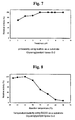
- Example 1 50 ⁇ l of one of 200 mM buffers at pH values as described below was added to 50 ⁇ l of the glyceroglycolipid lipase G-2 as shown in Example 1.3, and the mixture was incubated at 37°C for 30 minutes.
- the following buffers were used: acetic acid/sodium acetate buffer (pH 3.0-pH 6.0); MOPS buffer (pH 5.9-pH 7.9); Tris-HCl buffer (pH 7.6-pH 9.0).
- Relative residual degradation activity was measured according to the method of Example 1. 2) 1. immediately after each warmed enzyme solution was diluted 10-fold with water. Relative residual degradation activities of the enzymes at respective pH values are described below as relative values defining, as 100%, the residual degradation activity under pH conditions that resulted in the highest activity. The results are also shown in Figure 7 .
- the pH at which a relative residual degradation activity of 80% or more is retained is defined as the stable pH.
- the stable pH of the glyceroglycolipid lipase G-2 of the present invention using lecithin as a substrate is pH 4.0-9.0.
- a temperature/activity in MOPS buffer (pH 6) was measured.
- the glyceroglycolipid lipase G-2 as shown in Example 1. 3) or the Lipopan F purified enzyme as shown in Example 2 was used as an enzyme.
- the measurement method was in accordance with the method as shown in Example 1. 2) 1.
- the relative degradation activities of both enzymes at respective temperatures are described below.
- the results obtained using the glyceroglycolipid lipase G-2 are shown in Figure 8
- the results for the Lipopan F purified enzyme are shown in Figure 9 .
- the temperature at which a relative activity of 80% or more is retained is defined as the optimal temperature.
- the optimum temperature of the glyceroglycolipid lipase G-2 of the present invention using DGDG as a substrate is 37-50°C. This is also applicable to the Lipopan F purified enzyme.
- a temperature/activity in MOPS buffer (pH 6) was measured.
- the glyceroglycolipid lipase G-1 or the glyceroglycolipid lipase G-2 as shown in Example 1. 3) was used as an enzyme.
- the measurement method was in accordance with the method as shown in Example 1. 2) 2.
- the relative degradation activities of both enzymes at respective temperatures are described below.
- the results obtained using the glyceroglycolipid lipase G-1 are shown in Figure 10
- the results for the glyceroglycolipid lipase G-2 are shown in Figure 11 .
- the temperature at which a relative activity of 80% or more is retained is defined as the optimal temperature.
- the optimal temperature of the glyceroglycolipid lipase G-1 using lecithin as a substrate is 30-50°C.
- the optimal temperature of the glyceroglycolipid lipase G-2 is 30-45°C.
- Temperature/activity ( Figures 14) Temperature (°C) Relative residual activity (%) 4 100 30 100 35 100 40 100 45 100 50 100 55 100 60 86.2 65 22.5 70 0.0
- the temperature at which a relative residual activity of 80% or more is retained is defined as the stable temperature.
- the stable temperature of the glyceroglycolipid lipase G-2 of the present invention using lecithin as a substrate is 4-60°C.
- the molecular weight was determined by the LC/MS method.
- DGDG or DGMG separated in 1) was separated by LC, and the molecular weight was determined for the maximum peak part using MS. Peaks were observed at m/z 974 for DGDG and at m/z 701 for DGMG.
- 280 g of strong flour, 11g of butter, 2 tablespoonfuls of sugar, 1 tablespoonful of skim milk, 1 teaspoonful of salt, 200 ml of water, 1 teaspoonful of dry yeast, and 72.5 units (DGDG degradation activity) of the glyceroglycolipid lipase G-2 or the Lipopan F purified enzyme were mixed together, and the mixture was baked using a home bakery (Panasonic Corporation, SD-BT50). After baking, the bread was cooled to around room temperature, put in a vinyl bag. The bag was sealed, and then stored for one day in a thermostat bath at 20°C in which a vat containing water was placed. Subsequently, specific volume bulk and the like were measured.
- N.D. represents not detected.
- octanoic acid gives a goat-cheese-like smell which is unsuitable for bread.
- the use of the enzyme of the present invention resulted in production of smaller quantities of the above compound.
- the glyceroglycolipid lipase of the present invention is an enzyme that is derived from Aspergillus japonicus strain SANK 11298, is excellently safe, has the ability to hydrolyze neutral fat, glycerophospholipid, and glyceroglycolipid, has the highest activity at around weakly acidic pH, is thermostable to some extent, does not substantially hydrolyze lysoglyceroglycolipid or lysoglycerophospholipid, and has excellent effects in the fields of both the food industry and the baking industry.
Landscapes
- Life Sciences & Earth Sciences (AREA)
- Engineering & Computer Science (AREA)
- Chemical & Material Sciences (AREA)
- Health & Medical Sciences (AREA)
- Zoology (AREA)
- Wood Science & Technology (AREA)
- Bioinformatics & Cheminformatics (AREA)
- Organic Chemistry (AREA)
- Genetics & Genomics (AREA)
- Microbiology (AREA)
- Biotechnology (AREA)
- General Health & Medical Sciences (AREA)
- Medicinal Chemistry (AREA)
- Biochemistry (AREA)
- General Engineering & Computer Science (AREA)
- Biomedical Technology (AREA)
- Molecular Biology (AREA)
- Food Science & Technology (AREA)
- Botany (AREA)
- Mycology (AREA)
- Tropical Medicine & Parasitology (AREA)
- Virology (AREA)
- Enzymes And Modification Thereof (AREA)
- Micro-Organisms Or Cultivation Processes Thereof (AREA)
- Bakery Products And Manufacturing Methods Therefor (AREA)
- Edible Oils And Fats (AREA)
Applications Claiming Priority (2)
| Application Number | Priority Date | Filing Date | Title |
|---|---|---|---|
| JP2007018731 | 2007-01-30 | ||
| PCT/JP2008/051386 WO2008093720A1 (ja) | 2007-01-30 | 2008-01-30 | グリセロ糖脂質リパーゼ |
Publications (3)
| Publication Number | Publication Date |
|---|---|
| EP2119781A1 EP2119781A1 (en) | 2009-11-18 |
| EP2119781A4 EP2119781A4 (en) | 2010-03-24 |
| EP2119781B1 true EP2119781B1 (en) | 2012-08-22 |
Family
ID=39674028
Family Applications (1)
| Application Number | Title | Priority Date | Filing Date |
|---|---|---|---|
| EP08704153A Active EP2119781B1 (en) | 2007-01-30 | 2008-01-30 | Glyceroglycolipid lipase |
Country Status (6)
| Country | Link |
|---|---|
| US (2) | US8338133B2 (da) |
| EP (1) | EP2119781B1 (da) |
| JP (1) | JP5179208B2 (da) |
| CN (1) | CN101589142B (da) |
| DK (1) | DK2119781T3 (da) |
| WO (1) | WO2008093720A1 (da) |
Families Citing this family (14)
| Publication number | Priority date | Publication date | Assignee | Title |
|---|---|---|---|---|
| US7312062B2 (en) | 1998-11-27 | 2007-12-25 | Novozymes A/S | Lipolytic enzyme variants |
| JP6002381B2 (ja) * | 2010-12-07 | 2016-10-05 | 三菱化学フーズ株式会社 | グリセロ糖脂質リパーゼを含有する小麦粉製品の製造方法 |
| JP2012152128A (ja) * | 2011-01-25 | 2012-08-16 | Mitsubishi-Kagaku Foods Corp | 小麦粉製品の製造方法 |
| JP5921078B2 (ja) * | 2011-04-04 | 2016-05-24 | 三菱化学フーズ株式会社 | 油脂組成物および小麦粉製品 |
| JP6216495B2 (ja) * | 2011-04-19 | 2017-10-18 | 三菱ケミカルフーズ株式会社 | 小麦粉膨化食品の製造方法 |
| JP5863316B2 (ja) * | 2011-08-02 | 2016-02-16 | 三菱化学フーズ株式会社 | 低水分油脂改質剤および低水分油脂の改質方法 |
| DK2825051T3 (da) * | 2012-03-14 | 2016-05-30 | Novozymes As | Fremgangsmåde til bagning |
| JP5978676B2 (ja) * | 2012-03-16 | 2016-08-24 | 三菱化学フーズ株式会社 | 油脂中における糖脂質分解酵素の分散方法、油脂組成物および小麦粉製品の製造方法 |
| US20160376576A1 (en) * | 2013-12-05 | 2016-12-29 | Nagase Chemtex Corporation | Flavor-improving enzyme composition, method for suppressing occurrence of unpleasant odor, and method for manufacturing food with reduced unpleasant odor |
| CN104862235B (zh) * | 2015-01-30 | 2018-06-05 | 广西大学 | 一株日本曲霉菌株及其应用 |
| BR112019017271A2 (pt) * | 2017-02-20 | 2020-04-14 | Novozymes As | enzima lipolítica para uso em panificação |
| CN111684065B (zh) * | 2018-02-09 | 2025-08-19 | 天野酶制品株式会社 | 随机酯交换脂肪酶 |
| CN112639091B (zh) * | 2019-08-01 | 2024-12-13 | 天野酶制品株式会社 | 新型脂肪酶和其用途 |
| CN110564786B (zh) * | 2019-08-02 | 2022-06-03 | 大渔华创(广州)海洋生物科技有限公司 | 一种epa/dha型溶血磷脂组合物及其制备方法 |
Family Cites Families (19)
| Publication number | Priority date | Publication date | Assignee | Title |
|---|---|---|---|---|
| JPS62171691A (ja) | 1986-01-21 | 1987-07-28 | Amano Pharmaceut Co Ltd | 高度不飽和脂肪酸を含む油脂の分解法 |
| ES2180541T5 (es) | 1992-06-16 | 2008-12-01 | Sankyo Lifetech Company Limited | Nueva fosfolipasa a1, procedimiento para su preparacion y uso de la misma. |
| CA2178007A1 (en) * | 1993-12-01 | 1995-06-08 | Randy M. Berka | Aspergillus expression system |
| GB0112226D0 (en) | 2001-05-18 | 2001-07-11 | Danisco | Method of improving dough and bread quality |
| US20050287250A1 (en) | 1995-06-07 | 2005-12-29 | Danisco A/S | Method |
| NZ309735A (en) | 1995-06-07 | 1998-08-26 | Danisco | Use of hexose oxidase for oxidizing maltose to improve the properties of flour dough |
| US6936289B2 (en) | 1995-06-07 | 2005-08-30 | Danisco A/S | Method of improving the properties of a flour dough, a flour dough improving composition and improved food products |
| JP3824174B2 (ja) | 1996-12-09 | 2006-09-20 | ノボザイムス アクティーゼルスカブ | ホスホリパーゼの使用による高い量の非水和性リンを含む食用油中のリン含有成分の減少、ホスホリパーゼaおよび/またはb活性を有する糸状菌からのホスホリパーゼ |
| DE19701348A1 (de) * | 1997-01-16 | 1998-07-23 | Roehm Gmbh | Protein mit Phospholipaseaktivität |
| ES2168236T3 (es) * | 1997-04-09 | 2005-04-16 | Danisco A/S | Utilizacion de lipasa para mejorar las pastas de pan y los productos de panaderia. |
| EP1383881A2 (en) | 2000-06-26 | 2004-01-28 | Novozymes A/S | Lipolytic enzymes from strains of fusarium and acremonium |
| BR0209154A (pt) | 2001-05-18 | 2004-07-20 | Danisco | Processo de preparação de uma massa com uma enzima |
| DE60333629D1 (de) | 2002-05-21 | 2010-09-16 | Dsm Ip Assets Bv | Neue phospholipasen und deren verwendungen |
| CN1675355A (zh) | 2002-08-19 | 2005-09-28 | 帝斯曼知识产权资产管理有限公司 | 新颖的脂肪酶及其用途 |
| JP4559362B2 (ja) * | 2003-10-02 | 2010-10-06 | 花王株式会社 | グリセリンカーボネート配糖体 |
| GB0405637D0 (en) | 2004-03-12 | 2004-04-21 | Danisco | Protein |
| CN101052702B (zh) | 2004-07-16 | 2013-01-09 | 杜邦营养生物科学有限公司 | 脂肪分解酶及其在食品工业中的应用 |
| EP2298872A3 (en) | 2004-09-30 | 2011-08-10 | Novozymes A/S | Polypeptides having lipase activity and polynucleotides encoding same |
| CN100368519C (zh) * | 2005-06-02 | 2008-02-13 | 深圳市绿微康生物工程有限公司 | 黑曲霉脂肪酶及其用途 |
-
2008
- 2008-01-30 EP EP08704153A patent/EP2119781B1/en active Active
- 2008-01-30 WO PCT/JP2008/051386 patent/WO2008093720A1/ja not_active Ceased
- 2008-01-30 CN CN2008800028457A patent/CN101589142B/zh active Active
- 2008-01-30 JP JP2008019067A patent/JP5179208B2/ja active Active
- 2008-01-30 US US12/524,742 patent/US8338133B2/en active Active
- 2008-01-30 DK DK08704153.9T patent/DK2119781T3/da active
-
2012
- 2012-11-21 US US13/683,242 patent/US20130122144A1/en not_active Abandoned
Also Published As
| Publication number | Publication date |
|---|---|
| US20110236531A1 (en) | 2011-09-29 |
| US8338133B2 (en) | 2012-12-25 |
| WO2008093720A1 (ja) | 2008-08-07 |
| EP2119781A1 (en) | 2009-11-18 |
| CN101589142B (zh) | 2012-06-06 |
| JP5179208B2 (ja) | 2013-04-10 |
| EP2119781A4 (en) | 2010-03-24 |
| DK2119781T3 (da) | 2012-11-26 |
| CN101589142A (zh) | 2009-11-25 |
| JP2008206515A (ja) | 2008-09-11 |
| US20130122144A1 (en) | 2013-05-16 |
Similar Documents
| Publication | Publication Date | Title |
|---|---|---|
| EP2119781B1 (en) | Glyceroglycolipid lipase | |
| EP0977869B2 (en) | Lipase and use of same for improving doughs and baked products | |
| Rizzello et al. | Antifungal activity of sourdough fermented wheat germ used as an ingredient for bread making | |
| EP0869167B2 (en) | Reduction of phosphorus containing components in edible oils comprising a high amount of non-hydratable phosphorus by use of a phospholipase, a phospholipase from a filamentous fungus having phospholipase A and/or B activity | |
| US20110293786A1 (en) | Phospholipase C enzyme | |
| US11142748B2 (en) | Saccharide oxidase, and production method for same and use of same | |
| EP3728573B1 (en) | Improved enzymatic modification of phospholipids in food | |
| US6828137B2 (en) | Methods for producing polypeptides in aspergillus mutant cells | |
| JP4679923B2 (ja) | 新規ホスホリパーゼc | |
| AU4029999A (en) | Methods for using xyloglucan endotransglycosylase in baking | |
| JP5330334B2 (ja) | 食品用酵素剤 | |
| CN102174488A (zh) | 磷脂酶c及含其的食品用酶剂、以及食品原料的处理法 | |
| Difo et al. | Isolation of Aspergillus niger from three varieties of Bambara nuts for simultaneous production of phytase and tannase | |
| KR20140059425A (ko) | 혈전용해효소를 생산하는 싸카로마이세스속 afy-1 균주 및 상기 균주를 포함하는 장류 | |
| JPWO2012104988A1 (ja) | 酵素及びその製造方法 |
Legal Events
| Date | Code | Title | Description |
|---|---|---|---|
| PUAI | Public reference made under article 153(3) epc to a published international application that has entered the european phase |
Free format text: ORIGINAL CODE: 0009012 |
|
| 17P | Request for examination filed |
Effective date: 20090730 |
|
| AK | Designated contracting states |
Kind code of ref document: A1 Designated state(s): AT BE BG CH CY CZ DE DK EE ES FI FR GB GR HR HU IE IS IT LI LT LU LV MC MT NL NO PL PT RO SE SI SK TR |
|
| A4 | Supplementary search report drawn up and despatched |
Effective date: 20100219 |
|
| DAX | Request for extension of the european patent (deleted) | ||
| 17Q | First examination report despatched |
Effective date: 20100802 |
|
| GRAP | Despatch of communication of intention to grant a patent |
Free format text: ORIGINAL CODE: EPIDOSNIGR1 |
|
| GRAS | Grant fee paid |
Free format text: ORIGINAL CODE: EPIDOSNIGR3 |
|
| GRAA | (expected) grant |
Free format text: ORIGINAL CODE: 0009210 |
|
| RIN1 | Information on inventor provided before grant (corrected) |
Inventor name: TSUKAZAKI, KAORU Inventor name: FUKAZAWA, TETSUYA Inventor name: TANAKA, ISSHIN |
|
| AK | Designated contracting states |
Kind code of ref document: B1 Designated state(s): AT BE BG CH CY CZ DE DK EE ES FI FR GB GR HR HU IE IS IT LI LT LU LV MC MT NL NO PL PT RO SE SI SK TR |
|
| REG | Reference to a national code |
Ref country code: GB Ref legal event code: FG4D |
|
| REG | Reference to a national code |
Ref country code: CH Ref legal event code: EP |
|
| REG | Reference to a national code |
Ref country code: IE Ref legal event code: FG4D |
|
| REG | Reference to a national code |
Ref country code: AT Ref legal event code: REF Ref document number: 572038 Country of ref document: AT Kind code of ref document: T Effective date: 20120915 |
|
| REG | Reference to a national code |
Ref country code: DE Ref legal event code: R096 Ref document number: 602008018186 Country of ref document: DE Effective date: 20121018 |
|
| REG | Reference to a national code |
Ref country code: DK Ref legal event code: T3 |
|
| REG | Reference to a national code |
Ref country code: NL Ref legal event code: T3 |
|
| REG | Reference to a national code |
Ref country code: AT Ref legal event code: MK05 Ref document number: 572038 Country of ref document: AT Kind code of ref document: T Effective date: 20120822 |
|
| REG | Reference to a national code |
Ref country code: LT Ref legal event code: MG4D Effective date: 20120822 |
|
| PG25 | Lapsed in a contracting state [announced via postgrant information from national office to epo] |
Ref country code: IS Free format text: LAPSE BECAUSE OF FAILURE TO SUBMIT A TRANSLATION OF THE DESCRIPTION OR TO PAY THE FEE WITHIN THE PRESCRIBED TIME-LIMIT Effective date: 20121222 Ref country code: CY Free format text: LAPSE BECAUSE OF FAILURE TO SUBMIT A TRANSLATION OF THE DESCRIPTION OR TO PAY THE FEE WITHIN THE PRESCRIBED TIME-LIMIT Effective date: 20120822 Ref country code: AT Free format text: LAPSE BECAUSE OF FAILURE TO SUBMIT A TRANSLATION OF THE DESCRIPTION OR TO PAY THE FEE WITHIN THE PRESCRIBED TIME-LIMIT Effective date: 20120822 Ref country code: NO Free format text: LAPSE BECAUSE OF FAILURE TO SUBMIT A TRANSLATION OF THE DESCRIPTION OR TO PAY THE FEE WITHIN THE PRESCRIBED TIME-LIMIT Effective date: 20121122 Ref country code: LT Free format text: LAPSE BECAUSE OF FAILURE TO SUBMIT A TRANSLATION OF THE DESCRIPTION OR TO PAY THE FEE WITHIN THE PRESCRIBED TIME-LIMIT Effective date: 20120822 Ref country code: HR Free format text: LAPSE BECAUSE OF FAILURE TO SUBMIT A TRANSLATION OF THE DESCRIPTION OR TO PAY THE FEE WITHIN THE PRESCRIBED TIME-LIMIT Effective date: 20120822 Ref country code: FI Free format text: LAPSE BECAUSE OF FAILURE TO SUBMIT A TRANSLATION OF THE DESCRIPTION OR TO PAY THE FEE WITHIN THE PRESCRIBED TIME-LIMIT Effective date: 20120822 |
|
| PG25 | Lapsed in a contracting state [announced via postgrant information from national office to epo] |
Ref country code: SI Free format text: LAPSE BECAUSE OF FAILURE TO SUBMIT A TRANSLATION OF THE DESCRIPTION OR TO PAY THE FEE WITHIN THE PRESCRIBED TIME-LIMIT Effective date: 20120822 Ref country code: LV Free format text: LAPSE BECAUSE OF FAILURE TO SUBMIT A TRANSLATION OF THE DESCRIPTION OR TO PAY THE FEE WITHIN THE PRESCRIBED TIME-LIMIT Effective date: 20120822 Ref country code: SE Free format text: LAPSE BECAUSE OF FAILURE TO SUBMIT A TRANSLATION OF THE DESCRIPTION OR TO PAY THE FEE WITHIN THE PRESCRIBED TIME-LIMIT Effective date: 20120822 Ref country code: PT Free format text: LAPSE BECAUSE OF FAILURE TO SUBMIT A TRANSLATION OF THE DESCRIPTION OR TO PAY THE FEE WITHIN THE PRESCRIBED TIME-LIMIT Effective date: 20121224 Ref country code: GR Free format text: LAPSE BECAUSE OF FAILURE TO SUBMIT A TRANSLATION OF THE DESCRIPTION OR TO PAY THE FEE WITHIN THE PRESCRIBED TIME-LIMIT Effective date: 20121123 Ref country code: BE Free format text: LAPSE BECAUSE OF FAILURE TO SUBMIT A TRANSLATION OF THE DESCRIPTION OR TO PAY THE FEE WITHIN THE PRESCRIBED TIME-LIMIT Effective date: 20120822 |
|
| PG25 | Lapsed in a contracting state [announced via postgrant information from national office to epo] |
Ref country code: ES Free format text: LAPSE BECAUSE OF FAILURE TO SUBMIT A TRANSLATION OF THE DESCRIPTION OR TO PAY THE FEE WITHIN THE PRESCRIBED TIME-LIMIT Effective date: 20121203 Ref country code: CZ Free format text: LAPSE BECAUSE OF FAILURE TO SUBMIT A TRANSLATION OF THE DESCRIPTION OR TO PAY THE FEE WITHIN THE PRESCRIBED TIME-LIMIT Effective date: 20120822 Ref country code: RO Free format text: LAPSE BECAUSE OF FAILURE TO SUBMIT A TRANSLATION OF THE DESCRIPTION OR TO PAY THE FEE WITHIN THE PRESCRIBED TIME-LIMIT Effective date: 20120822 Ref country code: EE Free format text: LAPSE BECAUSE OF FAILURE TO SUBMIT A TRANSLATION OF THE DESCRIPTION OR TO PAY THE FEE WITHIN THE PRESCRIBED TIME-LIMIT Effective date: 20120822 |
|
| PG25 | Lapsed in a contracting state [announced via postgrant information from national office to epo] |
Ref country code: PL Free format text: LAPSE BECAUSE OF FAILURE TO SUBMIT A TRANSLATION OF THE DESCRIPTION OR TO PAY THE FEE WITHIN THE PRESCRIBED TIME-LIMIT Effective date: 20120822 Ref country code: SK Free format text: LAPSE BECAUSE OF FAILURE TO SUBMIT A TRANSLATION OF THE DESCRIPTION OR TO PAY THE FEE WITHIN THE PRESCRIBED TIME-LIMIT Effective date: 20120822 |
|
| PLBE | No opposition filed within time limit |
Free format text: ORIGINAL CODE: 0009261 |
|
| STAA | Information on the status of an ep patent application or granted ep patent |
Free format text: STATUS: NO OPPOSITION FILED WITHIN TIME LIMIT |
|
| 26N | No opposition filed |
Effective date: 20130523 |
|
| PG25 | Lapsed in a contracting state [announced via postgrant information from national office to epo] |
Ref country code: BG Free format text: LAPSE BECAUSE OF FAILURE TO SUBMIT A TRANSLATION OF THE DESCRIPTION OR TO PAY THE FEE WITHIN THE PRESCRIBED TIME-LIMIT Effective date: 20121122 |
|
| PG25 | Lapsed in a contracting state [announced via postgrant information from national office to epo] |
Ref country code: MC Free format text: LAPSE BECAUSE OF NON-PAYMENT OF DUE FEES Effective date: 20130131 |
|
| REG | Reference to a national code |
Ref country code: CH Ref legal event code: PL |
|
| REG | Reference to a national code |
Ref country code: DE Ref legal event code: R097 Ref document number: 602008018186 Country of ref document: DE Effective date: 20130523 |
|
| REG | Reference to a national code |
Ref country code: IE Ref legal event code: MM4A |
|
| PG25 | Lapsed in a contracting state [announced via postgrant information from national office to epo] |
Ref country code: LI Free format text: LAPSE BECAUSE OF NON-PAYMENT OF DUE FEES Effective date: 20130131 Ref country code: CH Free format text: LAPSE BECAUSE OF NON-PAYMENT OF DUE FEES Effective date: 20130131 |
|
| PG25 | Lapsed in a contracting state [announced via postgrant information from national office to epo] |
Ref country code: IE Free format text: LAPSE BECAUSE OF NON-PAYMENT OF DUE FEES Effective date: 20130130 |
|
| PG25 | Lapsed in a contracting state [announced via postgrant information from national office to epo] |
Ref country code: MT Free format text: LAPSE BECAUSE OF FAILURE TO SUBMIT A TRANSLATION OF THE DESCRIPTION OR TO PAY THE FEE WITHIN THE PRESCRIBED TIME-LIMIT Effective date: 20120822 |
|
| PG25 | Lapsed in a contracting state [announced via postgrant information from national office to epo] |
Ref country code: TR Free format text: LAPSE BECAUSE OF FAILURE TO SUBMIT A TRANSLATION OF THE DESCRIPTION OR TO PAY THE FEE WITHIN THE PRESCRIBED TIME-LIMIT Effective date: 20120822 |
|
| PG25 | Lapsed in a contracting state [announced via postgrant information from national office to epo] |
Ref country code: HU Free format text: LAPSE BECAUSE OF FAILURE TO SUBMIT A TRANSLATION OF THE DESCRIPTION OR TO PAY THE FEE WITHIN THE PRESCRIBED TIME-LIMIT; INVALID AB INITIO Effective date: 20080130 Ref country code: LU Free format text: LAPSE BECAUSE OF NON-PAYMENT OF DUE FEES Effective date: 20130130 |
|
| REG | Reference to a national code |
Ref country code: FR Ref legal event code: PLFP Year of fee payment: 9 |
|
| REG | Reference to a national code |
Ref country code: FR Ref legal event code: PLFP Year of fee payment: 10 |
|
| REG | Reference to a national code |
Ref country code: FR Ref legal event code: PLFP Year of fee payment: 11 |
|
| REG | Reference to a national code |
Ref country code: DE Ref legal event code: R082 Ref document number: 602008018186 Country of ref document: DE Representative=s name: HOFFMANN - EITLE PATENT- UND RECHTSANWAELTE PA, DE Ref country code: DE Ref legal event code: R081 Ref document number: 602008018186 Country of ref document: DE Owner name: MITSUBISHI CHEMICAL CORPORATION, JP Free format text: FORMER OWNER: MITSUBISHI-KAGAKU FOODS CORP., TOKIO/TOKYO, JP |
|
| REG | Reference to a national code |
Ref country code: NL Ref legal event code: HC Owner name: MITSUBISHI-CHEMICAL FOODS CORPORATIO; JP Free format text: DETAILS ASSIGNMENT: CHANGE OF OWNER(S), CHANGE OF OWNER(S) NAME; FORMER OWNER NAME: MITSUBISHI-KAGAKU FOODS CORPORATION Effective date: 20210518 Ref country code: NL Ref legal event code: PD Owner name: MITSUBISHI CHEMICAL CORPORATION; JP Free format text: DETAILS ASSIGNMENT: CHANGE OF OWNER(S), MERGE; FORMER OWNER NAME: MITSUBISHI-CHEMICAL FOODS CORPORATIO Effective date: 20210518 |
|
| REG | Reference to a national code |
Ref country code: GB Ref legal event code: 732E Free format text: REGISTERED BETWEEN 20210916 AND 20210922 |
|
| P01 | Opt-out of the competence of the unified patent court (upc) registered |
Effective date: 20230522 |
|
| PGFP | Annual fee paid to national office [announced via postgrant information from national office to epo] |
Ref country code: DK Payment date: 20240111 Year of fee payment: 17 |
|
| PGFP | Annual fee paid to national office [announced via postgrant information from national office to epo] |
Ref country code: NL Payment date: 20241213 Year of fee payment: 18 |
|
| PGFP | Annual fee paid to national office [announced via postgrant information from national office to epo] |
Ref country code: GB Payment date: 20241212 Year of fee payment: 18 |
|
| PGFP | Annual fee paid to national office [announced via postgrant information from national office to epo] |
Ref country code: FR Payment date: 20241209 Year of fee payment: 18 |
|
| PGFP | Annual fee paid to national office [announced via postgrant information from national office to epo] |
Ref country code: DE Payment date: 20241203 Year of fee payment: 18 |
|
| PGFP | Annual fee paid to national office [announced via postgrant information from national office to epo] |
Ref country code: IT Payment date: 20241210 Year of fee payment: 18 |
|
| REG | Reference to a national code |
Ref country code: DK Ref legal event code: EBP Effective date: 20250131 |
|
| PG25 | Lapsed in a contracting state [announced via postgrant information from national office to epo] |
Ref country code: DK Free format text: LAPSE BECAUSE OF NON-PAYMENT OF DUE FEES Effective date: 20250131 |