EP2120227A1 - Dispositif de génération de cryptogramme, système de communication de cryptogramme et dispositif de génération de paramètre de groupe - Google Patents
Dispositif de génération de cryptogramme, système de communication de cryptogramme et dispositif de génération de paramètre de groupe Download PDFInfo
- Publication number
- EP2120227A1 EP2120227A1 EP07713653A EP07713653A EP2120227A1 EP 2120227 A1 EP2120227 A1 EP 2120227A1 EP 07713653 A EP07713653 A EP 07713653A EP 07713653 A EP07713653 A EP 07713653A EP 2120227 A1 EP2120227 A1 EP 2120227A1
- Authority
- EP
- European Patent Office
- Prior art keywords
- ciphertext
- unit
- processing device
- integer
- generating unit
- Prior art date
- Legal status (The legal status is an assumption and is not a legal conclusion. Google has not performed a legal analysis and makes no representation as to the accuracy of the status listed.)
- Granted
Links
Images










Classifications
-
- H—ELECTRICITY
- H04—ELECTRIC COMMUNICATION TECHNIQUE
- H04L—TRANSMISSION OF DIGITAL INFORMATION, e.g. TELEGRAPHIC COMMUNICATION
- H04L9/00—Cryptographic mechanisms or cryptographic arrangements for secret or secure communications; Network security protocols
- H04L9/30—Public key, i.e. encryption algorithm being computationally infeasible to invert or user's encryption keys not requiring secrecy
- H04L9/3066—Public key, i.e. encryption algorithm being computationally infeasible to invert or user's encryption keys not requiring secrecy involving algebraic varieties, e.g. elliptic or hyper-elliptic curves
- H04L9/3073—Public key, i.e. encryption algorithm being computationally infeasible to invert or user's encryption keys not requiring secrecy involving algebraic varieties, e.g. elliptic or hyper-elliptic curves involving pairings, e.g. identity based encryption [IBE], bilinear mappings or bilinear pairings, e.g. Weil or Tate pairing
Definitions
- the present invention relates to a cryptographic communication system employing an ID-based cryptographic communication system.
- the public key cryptosystem realizes cryptographic communication decryptable only by a transmission party by transmitting data encrypted with a transmission party's public key so that it can be decrypted by the transmission party with a secret key paired with the public key.
- a public key belongs to a transmission party
- verification is performed on a public key certificate issued by a public key certification authority.
- the ID-based cryptographic communication system using an identification name (ID), such as a transmission party's name, a name, and an equipment number, as the public key.
- ID identification name
- the cipher if it is possible to break the cipher, it means it is possible to solve the mathematical problem. Contrapositively, if it is difficult to solve the mathematical problem, to break the cipher is as difficult as the solving.
- the reduction rate is bad, that is, when the resources required for solving the mathematical problem are very large in comparison with the resources required for breaking the cipher, even if it is difficult to solve the mathematical problem, to break the cipher is not necessarily as difficult as the solving.
- the goodness or badness of the model indicates whether the model being a premise of the proving is practical or not. For example, a model without using a random oracle is better than a model assuming a random oracle.
- ciphertexts generated by encrypting the same plaintext are transmitted to multiple different recipients. Since it takes time to perform encryption processing in the public key cryptosystem, usually, a session key is encrypted and transmitted to a recipient, and data to be transmitted is encrypted with the transmitted session key, based on the common key cryptosystem that can quickly perform encryption processing.
- a plurality of ciphertexts are generated by encrypting a plaintext (session key) with a public key of each recipient, and the generated plurality of ciphertexts are united in one to be transmitted by e-mail, data broadcasting, etc.
- the ciphertext generating apparatus further comprises a random number generating unit, wherein the random number generating unit randomly generates n integer s i (i being an integer greater than or equal to 1 and less than or equal to n) corresponding to the n recipient, by using the processing device, the ciphertext body generating unit includes a first ciphertext generating unit, a second ciphertext generating unit, and a third ciphertext generating unit, the first ciphertext generating unit generates n first ciphertext C1 i (i being an integer greater than or equal to 1 and less than or equal to n) corresponding to the n recipient, based on the public encryption parameter stored by the encryption parameter storage unit, the plaintext M input by the plaintext input unit, and the n integer s i generated by the random number generating unit, by using the processing device, the second ciphertext generating unit generates n second ciphertext C2 i (i being an integer greater than or equal to 1 and less
- the cryptographic communication system according to the present invention further has the following features:
- the cryptographic communication system according to the present invention further has the following features:
- the group parameter generating apparatus further has the following features:
- the ciphertext receiving apparatuses 301 and 303 are notified of the notification data 720, for example, through an e-mail communication, data broadcasting, etc. Therefore, the notification data 720 is the same data for all the recipients. Although it is not intended to publish the notification data 720, the channel used by the ciphertext generating apparatus 200 for notifying the notification data 720 is in the environment, such as the Internet and data broadcasting, where the third party can easily eavesdrop the notification data 720. Thus, the notification data 720 includes encrypted data 722 generated by encrypting the plaintext data 710. Since the plaintext data 710 may be huge data, such as moving image data, it is encrypted by using a common session key K, regardless of the notified party.
- Data and signal values are recorded on recording media, such as a memory of the RAM 914, a flexible disk of the FDD 904, a compact disk of the CDD 905, a magnetic disk of the magnetic disk drive 920, an optical disk, a mini disk, and a DVD (Digital Versatile Disk).
- recording media such as a memory of the RAM 914, a flexible disk of the FDD 904, a compact disk of the CDD 905, a magnetic disk of the magnetic disk drive 920, an optical disk, a mini disk, and a DVD (Digital Versatile Disk).
- data and signals are transmitted on line by the bus 912, a signal line, a cable, or other transmission medium.
- the group parameter storage unit 111 stores a group parameter by using a storage device, such as the magnetic disk drive 920.
- the content indicated by a public encryption parameter differs depending upon the type of a cryptographic system adopted as the ID-based cryptosystem.
- the public encryption parameter is information indicating an element of a multiplicative group indicated by a group parameter, for example.
- Secret information is skillfully incorporated into public encryption parameters, so that it is possible for the ciphertext generating apparatus 200 and the ciphertext receiving apparatuses 301 to 303 to indirectly utilize the secret information by using the public encryption parameter, but it is impossible to inversely calculate the secret information from the public encryption parameter.
- the secret information indicates an integer ⁇ and the public encryption parameter includes information of an element g of the multiplicative group G and an element g ⁇ of the multiplicative group G indicated by the group parameters.
- ⁇ denotes an exponential operation
- g ⁇ denotes ⁇ -th power of g, namely, multiplying ⁇ number of g each other.
- the public parameter publishing unit 114 publishes a public encryption parameter by posting it on a homepage.
- the homepage is falsified by a third party's attack, such falsification can be discovered by the public encryption parameter generating unit 100's checking the homepage.
- the secret key notification unit 133 inputs the secret key output by the secret key generating unit 132, by using a processing device, such as the CPU 911.
- the secret key notification unit 133 secretly notifies the ciphertext receiving apparatus belonging to the corresponding recipient of the input secret key, by using a processing device, such as the CPU 911.
- the secret key notification unit 133 notifies the ciphertext receiving apparatus 301 corresponding to the recipient identified by the recipient identification information 531 of the secret key 601 which the secret key generating unit 132 generated based on the recipient identification information 531.
- the session key generating unit 221 randomly generates a session key K, by using a processing device, such as the CPU 911.
- the session key K is a key for encrypting the plaintext data 710, and, for example, is a bit sequence of predetermined length.
- the cryptographic system for encrypting the plaintext data 710 is a common key cryptosystem, such as AES (Advanced Encryption Standard) and MISTY (registered trademark).
- the session key generating unit 221 outputs the generated session key K, by using a processing device, such as the CPU 911.
- the number n of recipients is not fixed beforehand (namely, not fixed when generating a public encryption parameter), and it is fixed when actually transmitting data.
- the ciphertext generating apparatus 200 gets to know the number n of the recipients, for example, when the recipient identification input unit 232 inputs recipient identification information.
- the ciphertext generating apparatus 200 generates one key ciphertext C (and encrypted data) for any n greater than or equal to 1.
- the recipient identification input unit 232 discriminates whether or not there is any overlapping in the plurality of recipient identification information that has been input, and collects overlapping recipient identification information into one, to exclude the overlapping.
- the ciphertext body generating unit 240 inputs the public encryption parameter stored by the encryption parameter storage unit 210, the plaintext M output by the plaintext input unit 231, the n recipient identification information output by the recipient identification input unit 232, and the information indicating the n random numbers output by the random number generating unit 222, by using a processing device, such as the CPU 911.
- the ciphertext body generating unit 240 generates n ciphertext bodies CB i (i being an integer greater than or equal to 1 and less than or equal to n) respectively corresponding to the n recipients, based on the input information, by using a processing device, such as the CPU 911.
- the ciphertext body generating unit 240 outputs the generated n ciphertext bodies CB i , by using a processing device, such as the CPU 911.
- the ciphertext body CB i may be made by combining the first ciphertext C1 i , the second ciphertext C2 i , and the third ciphertext C3 i , and alternatively it may be made of a group of the first ciphertext C1 i , the second ciphertext C2 i , and the third ciphertext C3 i .
- the ciphertext body CB i is composed of the three ciphertexts in this case, however this is just an example and may have other compositions.
- the ciphertext body CB i may include recipient identification information ID i in addition to the three ciphertexts.
- the "including" as used herein means to include as a form in which the identification information ID i of the recipient corresponding to the ciphertext body CB i can be easily discriminated, and can be verified when necessary, such as the case of the ciphertext body CB i made by combining the recipient identification information ID i , the first ciphertext C1 i , the second ciphertext C2 i , and the third ciphertext C3 i , for example.
- the first ciphertext generating unit 241 inputs the plaintext M output by the plaintext input unit 231, the public encryption parameter stored by the encryption parameter storage unit 210, and the information indicating the n random numbers output by the random number generating unit 222, by using a processing device, such as the CPU 911.
- the first ciphertext generating unit 241 generates n first ciphertexts C1 i (i being an integer greater than or equal to 1 and less than or equal to n) respectively corresponding to n recipients, based on the input information, by using a processing device, such as the CPU 911.
- the first ciphertext generating unit 241 outputs the generated n first ciphertexts C1 i , by using a processing device, such as the CPU 911.
- the hash value calculation unit 244 inputs the public encryption parameter stored by the encryption parameter storage unit 210 and the n ciphertext bodies CB i (that is, the n first ciphertexts C1 i generated by the first ciphertext generating unit 241, the n second ciphertexts C2 i generated by the second ciphertext generating unit 242, and the n third ciphertexts C3 i generated by the third ciphertext generating unit 243) generated by the ciphertext body generating unit 240, by using a processing device, such as the CPU 911.
- a processing device such as the CPU 911.
- the hash value calculation unit 244 calculates one hash value H, based on all the n ciphertext bodies CB i . For example, the hash value calculation unit 244 generates one combined ciphertext by combining all of the n ciphertext bodies CB i , and calculates a hash value H of the generated one combined ciphertext.
- the ciphertext verification text generating unit 245 inputs the hash value H output by the hash value calculation unit 244, the public encryption parameter stored by the encryption parameter storage unit 210, and the information indicating the n random numbers output by the random number generating unit 222, by using a processing device, such as the CPU 911.
- the ciphertext verification text generating unit 245 generates n ciphertext verification texts CC i (i being an integer greater than or equal to 1 and less than or equal to n) respectively corresponding to n recipients, based on the input information, by using a processing device, such as the CPU 911.
- the ciphertext verification text generating unit 245 outputs the generated ciphertext verification text CC i , by using a processing device, such as the CPU 911.
- the data input unit 251 inputs the plaintext data 710, by using a processing device, such as the CPU 911.
- the data input unit 251 outputs the input plaintext data 710, by using a processing device, such as the CPU 911.
- the data encryption unit 252 inputs the plaintext data 710 output by the data input unit 251, and the session key K output by the session key generating unit 221, by using a processing device, such as the CPU 911.
- the data encryption unit 252 encrypts the input plaintext data 710 with the input session key K to generate encrypted data, by using a processing device, such as the CPU 911.
- the data encryption unit 252 outputs the generated encrypted data, by using a processing device, such as the CPU 911.
- the ciphertext notification unit 261 inputs the one key ciphertext C output by the ciphertext combining unit 246, and the encrypted data output by the data encryption unit 252, by using a processing device, such as the CPU 911.
- the ciphertext notification unit 261 generates the notification data 720 including the input key ciphertext C and encrypted data 722, by using a processing device, such as the CPU 911.
- the ciphertext notification unit 261 notifies a plurality of ciphertext receiving apparatuses, which are notified parties, of the generated notification data 720, by using a processing device, such as the CPU 911.
- the plurality of ciphertext receiving apparatuses are notified of the notification data 720 by way of e-mail communication specifying the plurality of recipients to be transmitted, for example.
- the notification data 720 is not different for each recipient, and is common to all the recipients.
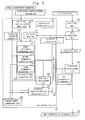
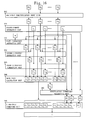
- Fig. 6 is a block diagram showing an example of the functional block configuration of the ciphertext receiving apparatus 301 according to the present Embodiment.
- the ciphertext receiving apparatus 301 includes a ciphertext receiving unit 351, a key decryption unit 390, and a data decryption unit 352.
- the block configuration of the ciphertext receiving apparatuses 302 and 303 is the same as that of the ciphertext receiving apparatus 301.
- the ciphertext receiving unit 351 receives the notification data 720 notified by the ciphertext generating apparatus 200, by using a processing device, such as the CPU 911.
- the ciphertext receiving unit 351 acquires the one key ciphertext C and encrypted data included in the received notification data 720, by using a processing device, such as the CPU 911.
- the ciphertext receiving unit 351 outputs the acquired one key ciphertext C and encrypted data, by using a processing device, such as the CPU 911.
- the public parameter storage unit 310 stores the public encryption parameter published by the encryption parameter generating apparatus 100, by using a storage device, such as the magnetic disk drive 920.
- the second ciphertext corresponding to the recipient corresponding to the ciphertext receiving apparatus 301 is called a corresponding ciphertext body CB ID .
- the same can be applied to the first ciphertext, the second ciphertext, the third ciphertext, and the ciphertext verification text.
- the ciphertext decomposition unit 346 acquires the corresponding ciphertext body CB ID (that is, a corresponding first ciphertext C1 ID , a corresponding second ciphertext C2 ID and a corresponding third ciphertext C3 ID ) from the n ciphertext bodies CB i , by using a processing device, such as the CPU 911. Similarly, the ciphertext decomposition unit 346 acquires a corresponding ciphertext verification text CC ID , by using a processing device, such as the CPU 911. When the ciphertext verification text is one ciphertext verification text common regardless of the recipient, the corresponding ciphertext verification text CC ID acquired by the ciphertext decomposition unit 346 is the ciphertext verification text itself.
- the ciphertext decomposition unit 346 outputs the acquired n ciphertext bodies CB i , corresponding ciphertext body CB ID , and corresponding ciphertext verification text CC ID , by using a processing device, such as the CPU 911.
- a processing device such as the CPU 911.
- the ciphertext decomposition unit 346 may not acquire the corresponding ciphertext body CB ID .
- the verification hash value calculation unit 344 inputs the n ciphertext bodies CB i output by the ciphertext decomposition unit 346, and the public encryption parameter stored by the public parameter storage unit 310, by using a processing device, such as the CPU 911.
- the verification hash value calculation unit 344 calculates a verification hash value H' by the same method as calculating a hash value H by the hash value calculation unit 244 of the ciphertext generating apparatus 200, by using a processing device, such as the CPU 911.
- the verification hash value calculation unit 344 outputs the calculated verification hash value H' , by using a processing device, such as the CPU 911.
- the ciphertext verification unit 345 judges whether the one key ciphertext C received by the ciphertext receiving unit 351 has consistency or not, based on the generated verification information and the input corresponding ciphertext verification text CC ID , by using a processing device, such as the CPU 911. For example, when the generated verification information accords with the input corresponding ciphertext verification text CC ID , the ciphertext decomposition unit 346 judges that the one key ciphertext C received by the ciphertext receiving unit 351 has consistency.
- the ciphertext verification unit 345 generates another verification information, based on the input corresponding ciphertext verification text CC ID (and the public encryption parameter and the secret key), and when the two generated verification information accord with each other, judges that the one key ciphertext C received by the ciphertext receiving unit 351 has consistency.
- the ciphertext verification unit 345 outputs the information indicating the judgment result, by using a processing device, such as the CPU 911.
- the ciphertext decryption unit 341 inputs the information indicating the judgment result output by the ciphertext decomposition unit 346, the corresponding ciphertext body CB ID output by the ciphertext decomposition unit 346, the public encryption parameter stored by the public parameter storage unit 310, and the secret key stored by the secret key storage unit 323, by using a processing device, such as the CPU 911.
- a processing device such as the CPU 911.
- the ciphertext verification unit 345 judges that the one key ciphertext C received by the ciphertext receiving unit 351 has consistency, based on the input information, the ciphertext decryption unit 341 restores the plaintext M, by using a processing device, such as the CPU 911.
- the ciphertext decryption unit 341 outputs the restored plaintext M, by using a processing device, such as the CPU 911.
- the data decryption unit 352 inputs the plaintext M output by the ciphertext decryption unit 341 and the encrypted data output by the ciphertext receiving unit 351, and treats the input plaintext M as a session key K', by using a processing device, such as the CPU 911.
- the data decryption unit 352 decrypts the input encrypted data with the input session key K', to treat it as decrypted data, by using a processing device, such as the CPU 911.
- the data decryption unit 352 outputs the decrypted data, by using a processing device, such as the CPU 911.
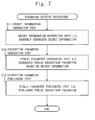
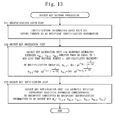
- Fig. 7 is a flowchart showing an example of the flow of parameter setting processing in which the encryption parameter generating apparatus 100 according to the present Embodiment sets public encryption parameters.
- the public parameter generating unit 113 inputs the group parameter stored by the group parameter storage unit 111, by using a processing device, such as the CPU 911.
- the public parameter generating unit 113 inputs the secret information output by the secret information generating unit 112 at the secret information generation step S11, by using a processing device, such as the CPU 911.
- the public parameter generating unit 113 generates a public encryption parameter, based on the input group parameter and the input secret information, by using a processing device, such as the CPU 911.
- the public parameter generating unit 113 outputs the generated public encryption parameter, by using a processing device, such as the CPU 911.
- the parameter storage unit 122 inputs the public encryption parameter output by the public parameter generating unit 113, by using a processing device, such as the CPU 911.
- the parameter storage unit 122 stores the input public encryption parameter, by using a storage device, such as the magnetic disk drive 920.
- the public parameter publishing unit 114 inputs the public encryption parameter output by the public parameter generating unit 113 at the encryption parameter generation step S12, by using a processing device, such as the CPU 911.
- the public parameter publishing unit 114 publishes the input public encryption parameter, by using a processing device, such as the CPU 911.
- the public encryption parameter published by the public parameter publishing unit 114 is acquired by the ciphertext generating apparatus 200 and the ciphertext receiving apparatuses 301 to 303, and stored by the encryption parameter storage unit 210 and the public parameter storage unit 310, by using a storage device, such as the magnetic disk drive 920.
- the parameter setting processing may be executed only once before starting the operation of the ID-based cryptographic communication system 800. However, in order to maintain the security of the cryptographic communication, it is also preferable to perform the parameter setting processing periodically, so as to change the public encryption parameter, and in order to enhance the cryptographic strength, it is also preferable to execute the parameter setting processing with changing the multiplicative group to be used.
- the secret key generating unit 132 inputs the recipient identification information ID output by the identification information input unit 131 at S21, by using a processing device, such as the CPU 911.
- the secret key generating unit 132 inputs the secret information stored by the secret information storage unit 121, by using a processing device, such as the CPU 911.
- the secret key generating unit 132 inputs the public encryption parameter stored by the parameter storage unit 122, by using a processing device, such as the CPU 911.
- the secret key generating unit 132 generates a secret key d ID , based on the input secret information, the input public encryption parameter, and the input recipient identification information ID, by using a processing device, such as the CPU 911.
- the secret key generating unit 132 outputs the generated secret key d ID , by using a processing device, such as the CPU 911.
- the secret key notification unit 133 inputs the recipient identification information ID output by the identification information input unit 131 at S21, by using a processing device, such as the CPU 911.
- the secret key notification unit 133 inputs the secret key d ID output by the secret key generating unit 132 at S22, by using a processing device, such as the CPU 911.
- the secret key notification unit 133 secretly notifies the ciphertext receiving apparatus corresponding to the recipient identified by the input recipient identification information ID of the input secret key d ID , by using a processing device, such as the CPU 911.
- the secret key d ID notified by the secret key notification unit 133 is acquired by the notified ciphertext receiving apparatus, and stored by the secret key storage unit 323 by using a storage device, such as the magnetic disk drive 920.
- the secret key setting processing indicates to set a secret key corresponding to each ciphertext receiving apparatus in the ID-based cryptographic communication system 800.
- the encryption parameter generating apparatus 100 may generate a secret key beforehand, and notify all the ciphertext receiving apparatuses 301 to 303 in the ID-based cryptographic communication system 800 of the secret key, or may perform execution when required from the ciphertext receiving apparatuses 301 to 303.
- the secret key setting processing may be executed after notifying the notification data 720 by the ciphertext generating apparatus 200.
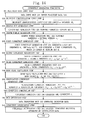
- the data input unit 251 inputs the plaintext data which is to be notified to n ciphertext receiving apparatuses, by using a processing device, such as the CPU 911.
- the data input unit 251 outputs the input plaintext data, by using a processing device, such as the CPU 911.
- the recipient identification input unit 232 inputs n recipient identification information ID i (i being an integer greater than or equal to 1 and less than or equal to n) which respectively identify each of the n recipients corresponding to the n ciphertext receiving apparatuses that should be notified of the plaintext data input by the data input unit 251 at the plaintext data input step S31, by using a processing device, such as the CPU 911.
- the recipient identification input unit 232 outputs the input n recipient identification information ID i , by using a processing device, such as the CPU 911.
- the session key generating unit 221 randomly generates a session key K, by using a processing device, such as the CPU 911.
- the session key generating unit 221 outputs the generated session key K, by using a processing device, such as the CPU 911.
- the plaintext input unit 231 inputs the session key K output by the session key generating unit 221, by using a processing device, such as the CPU 911.
- the plaintext input unit 231 outputs the input session key K, as a plaintext M, by using a processing device, such as the CPU 911.
- the random number generating unit 222 randomly generates n random numbers respectively corresponding to the n recipients, by using a processing device, such as the CPU 911.
- the random number generating unit 222 outputs the information indicating the generated n random numbers, by using a processing device, such as the CPU 911.
- the first ciphertext generating unit 241 inputs the public encryption parameter stored by the encryption parameter storage unit 210, by using a processing device, such as the CPU 911.
- the first ciphertext generating unit 241 inputs the plaintext M output by the plaintext input unit 231 at the session key generation step S33, by using a processing device, such as the CPU 911.
- the first ciphertext generating unit 241 inputs the information indicating the n random numbers output by the random number generating unit 222 at the random number generation step S34, by using a processing device, such as the CPU 911.
- the first ciphertext generating unit 241 generates n first ciphertexts C1 i (i being an integer greater than or equal to 1 and less than or equal to n) corresponding to the n recipients, based on the input information, by using a processing device, such as the CPU 911.
- the first ciphertext generating unit 241 outputs the generated n first ciphertexts C1 i , by using a processing device, such as the CPU 911.
- the second ciphertext generating unit 242 inputs the public encryption parameter stored by the encryption parameter storage unit 210, by using a processing device, such as the CPU 911.
- the second ciphertext generating unit 242 inputs the n recipient identification information ID i output by the recipient identification input unit 232 at the recipient identification input step S32, by using a processing device, such as the CPU 911.
- the second ciphertext generating unit 242 inputs the information indicating the n random numbers output by the random number generating unit 222 at the random number generation step S34, by using a processing device, such as the CPU 911.
- the second ciphertext generating unit 242 generates n second ciphertexts C2 i (i being an integer greater than or equal to 1 and less than or equal to n) respectively corresponding to the n recipients, based on the input information, by using a processing device, such as the CPU 911.
- the second ciphertext generating unit 242 outputs the generated n second ciphertexts C2 i , by using a processing device, such as the CPU 911.
- the third ciphertext generating unit 243 inputs the public encryption parameter stored by the encryption parameter storage unit 210, by using a processing device, such as the CPU 911.
- the third ciphertext generating unit 243 inputs the information indicating the n random numbers output by the random number generating unit 222 at the random number generation step S34, by using a processing device, such as the CPU 911.
- the third ciphertext generating unit 243 generates n third ciphertexts C3 i (i being an integer greater than or equal to 1 and less than or equal to n) respectively corresponding to the n recipients, based on the input information, by using a processing device, such as the CPU 911.
- the third ciphertext generating unit 243 outputs the generated n third ciphertexts C3 i , by using a processing device, such as the CPU 911.
- the hash value calculation unit 244 inputs the public encryption parameter stored by the encryption parameter storage unit 210, by using a processing device, such as the CPU 911.
- the hash value calculation unit 244 inputs the n first ciphertexts C1 i output by the first ciphertext generating unit 241 at the first ciphertext generation step S35, by using a processing device, such as the CPU 911.
- the hash value calculation unit 244 inputs the n second ciphertexts C2 i output by the second ciphertext generating unit 242 at the second ciphertext generation step S36, by using a processing device, such as the CPU 911.
- the hash value calculation unit 244 inputs the n third ciphertexts C3 i output by the third ciphertext generating unit 243 at the third ciphertext generation step S37, by using a processing device, such as the CPU 911.
- the hash value calculation unit 244 calculates a hash value H, based on the input information, by using a processing device, such as the CPU 911.
- the hash value calculation unit 244 outputs the calculated hash value H, by using a processing device, such as the CPU 911.
- the ciphertext verification text generating unit 245 inputs the public encryption parameter stored by the encryption parameter storage unit 210, by using a processing device, such as the CPU 911.
- the ciphertext verification text generating unit 245 inputs the information indicating the n random numbers output by the random number generating unit 222 at the random number generation step S34, by using a processing device, such as the CPU 911.
- the ciphertext verification text generating unit 245 inputs the hash value H output by the hash value calculation unit 244 at the hash value calculation step S38, by using a processing device, such as the CPU 911.
- the ciphertext verification text generating unit 245 generates n ciphertext verification texts CC i (i being an integer greater than or equal to 1 and less than or equal to n) corresponding to the n recipients, based on the input information, by using a processing device, such as the CPU 911.
- the ciphertext verification text generating unit 245 outputs the generated n ciphertext verification texts CC i , by using a processing device, such as the CPU 911.
- the ciphertext combining unit 246 inputs the n first ciphertexts C1 i output by the first ciphertext generating unit 241 at the first ciphertext generation step S35, by using a processing device, such as the CPU 911.
- the ciphertext combining unit 246 inputs the n second ciphertexts C2 i output by the second ciphertext generating unit 242 at the second ciphertext generation step S36, by using a processing device, such as the CPU 911.
- the ciphertext combining unit 246 inputs the n third ciphertexts C3 i output by the third ciphertext generating unit 243 at the third ciphertext generation step S37, by using a processing device, such as the CPU 911.
- the ciphertext combining unit 246 inputs the n ciphertext verification texts CC i output by the ciphertext verification text generating unit 245 at the ciphertext verification text generation step S39, by using a processing device, such as the CPU 911.
- the ciphertext combining unit 246 makes one key ciphertext C by combining the input n first ciphertexts C1 i , the input n second ciphertexts C2 i , the input n third ciphertexts C3 i , and the input n ciphertext verification texts CC i , by using a processing device, such as the CPU 911.
- the ciphertext combining unit 246 outputs the combined one key ciphertext C, by using a processing device, such as the CPU 911.
- the data encryption unit 252 inputs the plaintext data output by the data input unit 251 at the plaintext data input step S31, by using a processing device, such as the CPU 911.
- the data encryption unit 252 inputs the session key K output by the session key generating unit 221 at the session key generation step S33, by using a processing device, such as the CPU 911.
- the data encryption unit 252 generates encrypted data by encrypting the input plaintext data with the input session key K, by using a processing device, such as the CPU 911.
- the data encryption unit 252 outputs the encrypted data, by using a processing device, such as the CPU 911.
- the ciphertext notification unit 261 inputs the n recipient identification information ID i output by the recipient identification input unit 232 at the recipient identification input step S32, by using a processing device, such as the CPU 911.
- the ciphertext notification unit 261 inputs the one key ciphertext C output by the ciphertext combining unit 246 at the ciphertext combination step S40, by using a processing device, such as the CPU 911.
- the ciphertext notification unit 261 inputs the encrypted data output by the data encryption unit 252 at the data encryption step S41, by using a processing device, such as the CPU 911.
- the ciphertext notification unit 261 generates data including the input one key ciphertext C and the input encrypted data, to be treated as notification data, by using a processing device, such as the CPU 911.
- the ciphertext notification unit 261 notifies the ciphertext receiving apparatuses corresponding to the recipients identified by the input n recipient identification information ID i of the generated notification data, by using a processing device, such as the CPU 911.
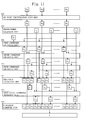
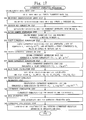
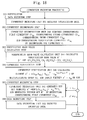
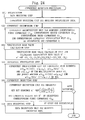
- Fig. 10 is a flowchart showing an example of the flow of ciphertext reception processing in which the ciphertext receiving apparatuses 301 to 303 according to the present Embodiment receive ciphertexts.
- the ciphertext receiving unit 351 receives the notification data notified by the ciphertext generating apparatus 200, by using a processing device, such as the CPU 911.
- the ciphertext receiving unit 351 acquires the one key ciphertext C and the encrypted data included in the received notification data, by using a processing device, such as the CPU 911.
- the ciphertext receiving unit 351 outputs the acquired one key ciphertext C and encrypted data, by using a processing device, such as the CPU 911.
- the ciphertext decomposition unit 346 inputs the one key ciphertext C output by the ciphertext receiving unit 351 at the notification data receiving step S51, by using a processing device, such as the CPU 911.
- the ciphertext decomposition unit 346 acquires n first ciphertexts C1 i , n second ciphertexts C2 i , n third ciphertexts C3 i , and n ciphertext verification texts CC i , based on the input one key ciphertext C, by using a processing device, such as the CPU 911.
- the ciphertext decomposition unit 346 outputs the acquired n first ciphertexts C1 i , n second ciphertexts C2 i , n third ciphertexts C3 i , and n ciphertext verification texts CC i , by using a processing device, such as the CPU 911.
- the ciphertext decomposition unit 346 acquires a corresponding first ciphertext C1 ID , a corresponding second ciphertext C2 ID , a corresponding third ciphertext C3 ID , and a corresponding ciphertext verification text CC ID , by using a processing device, such as the CPU 911.
- the ciphertext decomposition unit 346 outputs the acquired corresponding first ciphertext C1 ID , corresponding second ciphertext C2 ID , corresponding third ciphertext C3 ID , and corresponding ciphertext verification text CC ID , by using a processing device, such as the CPU 911.
- the verification hash value calculation unit 344 inputs the public encryption parameter stored by the public parameter storage unit 310, by using a processing device, such as the CPU 911.
- the verification hash value calculation unit 344 inputs the n first ciphertexts C1 i , the n second ciphertexts C2 i , and the n third ciphertexts C3 i output by the ciphertext decomposition unit 346 at the ciphertext decomposing step S52, by using a processing device, such as the CPU 911.
- the verification hash value calculation unit 344 calculates a verification hash value H', based on the input information, by using a processing device, such as the CPU 911.
- the verification hash value calculation unit 344 outputs the calculated verification hash value H', by using a processing device, such as the CPU 911.
- the ciphertext verification unit 345 inputs the public encryption parameter stored by the public parameter storage unit 310, by using a processing device, such as the CPU 911.
- the ciphertext verification unit 345 inputs the secret key stored by the secret key storage unit 323, by using a processing device, such as the CPU 911.
- the ciphertext verification unit 345 inputs the corresponding second ciphertext C2 ID , the corresponding third ciphertext C3 ID , and the corresponding ciphertext verification text CC ID output by the ciphertext decomposition unit 346 at the ciphertext decomposing step S52, by using a processing device, such as the CPU 911.
- the ciphertext verification unit 345 inputs the verification hash value H' output by the verification hash value calculation unit 344 at the verification hash value calculation step S53, by using a processing device, such as the CPU 911.
- the ciphertext verification unit 345 generates verification information, based on the input information, by using a processing device, such as the CPU 911.
- the ciphertext verification unit 345 judges whether the one key ciphertext C received by the ciphertext receiving unit 351 has consistency or not, based on the generated verification information and the input corresponding ciphertext verification text CC ID , by using a processing device, such as the CPU 911. When judged there is consistency, it goes to the ciphertext decrypting step S55. When judged there is no consistency, the ciphertext reception processing is ended.
- the ciphertext decryption unit 341 inputs the public encryption parameter stored by the public parameter storage unit 310, by using a processing device, such as the CPU 911.
- the ciphertext decryption unit 341 inputs the secret key stored by the secret key storage unit 323, by using a processing device, such as the CPU 911.
- the ciphertext decryption unit 341 inputs the corresponding first ciphertext C1 ID , the corresponding second ciphertext C2 ID , and the corresponding third ciphertext C3 ID output by the ciphertext decomposition unit 346 at the ciphertext decomposing step S52, by using a processing device, such as the CPU 911.
- the ciphertext decryption unit 341 restores the plaintext M, based on the input information, by using a processing device, such as the CPU 911.
- the ciphertext decryption unit 341 outputs the restored plaintext M, by using a processing device, such as the CPU 911.
- the data decryption unit 352 inputs the encrypted data output by the ciphertext receiving unit 351 at the notification data receiving step S51, by using a processing device, such as the CPU 911.
- the data decryption unit 352 inputs the plaintext M output by the ciphertext decryption unit 341 at the ciphertext decrypting step S55, as a session key K', by using a processing device, such as the CPU 911.
- the data decryption unit 352 decrypts the input encrypted data with the input session key K', to be treated as decrypted data, by using a processing device, such as the CPU 911.
- the data decryption unit 352 outputs the decrypted data, by using a processing device, such as the CPU 911.
- the recipient to whom the plaintext data should be notified can restore the session key K, and then can decrypt the encrypted data.
- MU-IND-ID-CCA2 security is defined as follows: "MU-IND-ID-CCA2 security" as used herein means the security against an attacker capable of adaptively selecting a target ID in the multiple user (Multi-User) case.
- the cryptographic system ⁇ is an ID-based cryptographic communication system that includes a key generation capability S for PKG (Private Key Generator), a secret key derivation capability X, an encryption capability C, and a decryption capability D.
- the key generation capability S for PKG inputs initial information ⁇ , and generates a master key msk for PKG, and a common parameter params.
- the key generation capability S for PKG is equivalent to the function of the parameter setting unit 110 of the public encryption parameter generating apparatus 100 in the ID-based cryptographic communication system 800.
- the initial information ⁇ is equivalent to a group parameter.
- the master key msk for PKG is equivalent to secret information.
- the common parameter params is equivalent to a public encryption parameter.
- the secret key derivation capability X inputs a user' s identification information ID and a master key msk for PKG, and outputs a secret key d ID .
- the secret key derivation capability X is equivalent to the function of the secret key setting unit 130 of the encryption parameter generating apparatus 100 in the ID-based cryptographic communication system 800.
- the user's identification information ID is equivalent to recipient identification information.
- the encryption capability E generates a ciphertext C, based on a user's identification information ID, a common parameter params, and a message M.
- the ciphertext C is equivalent to a key ciphertext C.
- the encryption capability E is equivalent to the function of the ciphertext generating apparatus 200 of the ID-based cryptographic communication system 800.
- the decryption capability D inputs a secret key d ID , a common parameter params, and a ciphertext C, and decrypts a message.
- the decryption capability D returns a decrypted message. When failing in decryption, not a message but a "rejection" is returned.
- the decryption capability D is equivalent to the function of the ciphertext receiving apparatuses 301 to 303 of the ID-based cryptographic communication system 800.
- the attacker A can use an encryption oracle O E .
- the encryption oracle O E previously selects either 0 or 1 at random to be treated as b.
- the encryption oracle O E inputs the user's identification information ID * and two messages M0 * and M1 * .
- the encryption oracle O E selects either one of the message M0 * and the message M1 * , based on b selected beforehand, generates a ciphertext C * , based on the input user' s identification information ID * and common parameter params, and the selected message, by the encryption capability E, and replies it.
- the attacker A can call the encryption oracle O E with respect to a different user's identification information ID * .
- the number of user's identification information ID * which the attacker A can input into the encryption oracle O E when calling the encryption oracle O E shall be less than or equal to n.
- the attacker A can input different messages M0 * and M1 * for the same user' s identification information ID * when calling the encryption oracle O E .
- the attacker A calls the encryption oracle O E a plurality of times.
- the encryption oracle O E always selects the same one (if selecting the former, the former is always selected, and if selecting the latter, the latter is always selected) of the input two messages.
- the attacker A can use a key derivation oracle O X .
- the key derivation oracle O X inputs a user's identification information ID.
- the key derivation oracle O X generates a secret key d ID , based on the master key msk for PKG which is not known to the attacker A and the input the user's identification information ID, by the key derivation capability X, and replies it.
- the attacker A can use a decryption oracle O D .
- the decryption oracle O D inputs a user's identification information ID and a ciphertext C.
- the decryption oracle O D generates a secret key d ID , based on the master key msk for PKG which is not known to the attacker A, and the input user's identification information ID, by the key derivation capability X.
- the decryption oracle O D decrypts a message, based on the generated secret key d ID , the common parameter params, and the input ciphertext C, by the decryption capability E.
- the decryption oracle O D replies the decrypted message (or "rejection").
- the attacker A tries the game of guessing b to be 0 or 1, by using these oracles.
- the attacker A cannot input the user's identification information ID which has been input into the key derivation oracle O X , into the encryption oracle O E .
- the attacker A knows the secret key d ID , since he can decrypt the ciphertext C * output by the encryption oracle, it is easy for him to guess which message has been encrypted, which means no cryptography has been broken.
- the attacker A cannot even input, inversely to the above, the user's identification information ID * which has been input into the encryption oracle O E , into the key derivation oracle O X .
- the attacker A cannot even input a combination of the user' s identification information ID * which has been input into the encryption oracle O E , and the ciphertext C which has been output by the encryption oracle O E in responsive to the user's identification information ID * , into the decryption oracle O D . Also, in the case of decrypting the ciphertext C * output by the encryption oracle, by using the decryption oracle O D , since it is easy to guess which message has been encrypted, which means no cryptography has been broken.
- the attacker A calls the oracles freely and guesses b to be 0 or 1.
- the attacker A outputs the guess result b'.
- the number of times of the attacker A's calling the encryption oracle O E per user's identification information ID is made to be q e . That is, there is a possibility of the encryption oracle O E being called n ⁇ q e times at the maximum.
- the number of times of the attacker A's calling the decryption oracle O D is made to be q d and calling the key derivation oracle O X is made to be q x .
- Pr[...] as used herein indicates probability of generation of the event.
- Adv mu n, ⁇ , ⁇ (A) denotes the absolute value of the difference between the probability of succeeding in guessing and the probability of failing in guessing.
- Adv mu n, ⁇ , ⁇ (A) is 0.
- Adv mu n, ⁇ , ⁇ (A) is 1.
- Adv mu n, ⁇ , ⁇ (A) is a value between 0 and 1.
- SMMR-IND-ID-CCA2 security is defined as follows: "SMMR-IND-ID-CCA2 security" as used herein means the security against an attacker capable of adaptively selecting a target ID, in the case of transmitting a single message to multiple recipients (Multi-Recipient).
- the cryptographic system ⁇ ' is a multiple recipient ID-based cryptographic system in which a single message is multicasted.
- the cryptographic system ⁇ ' includes a key generation capability S' for PKG, a secret key derivation capability X', an encryption capability E', a ciphertext separation capability T' and a decryption capability D'.
- the ciphertext separation capability T' inputs the ciphertext C, and separates it for each ID, to generate a ciphertext C ID .
- the ciphertext separation capability T' is equivalent to the function of the ciphertext decomposition unit 346 of the ciphertext receiving apparatus of the ID-based cryptographic communication system 800.
- the decryption capability D' inputs the secret key d ID , the common parameter params, and the (separated) ciphertext C ID for the ID, and returns the decrypted message (or "rejection").
- An attacker against the cryptographic system ⁇ ' configured as mentioned above is defined as A.
- the attacker A can use an encryption oracle O E' .
- the encryption oracle O E randomly selects either 0 or 1 to be treated as b.
- the encryption oracle O E' selects either one of the input two messages M0 * and M1 * , based on the selected b, and generates a ciphertext C * , based on the input each identification information ID * of n users, and common parameter params, and the selected message, by the encryption capability E, and replies it.
- the attacker A can use a key derivation oracle O X' .
- the key derivation oracle O X' inputs (one) user's identification information ID.
- the key derivation oracle O X' generates a secret key d ID , based on the master key msk for PKG which is not known to the attacker A, and the input user's identification information ID, by the key derivation capability X', and replies it.
- the attacker A can use a decryption oracle O D' .
- the decryption oracle O D' inputs a user's identification information ID and a (separated) ciphertext C ID for the ID.
- the decryption oracle O D' generates a secret key d ID , based on the master key msk for PKG which is not known to the attacker A, and the input user's identification information ID, by the key derivation capability X'.
- the decryption oracle O D decrypts the message, based on the generated secret key d ID , the common parameter params, and the input ciphertext C ID , by the decryption capability D'.
- the decryption oracle O D replies the decrypted message (or "rejection").
- the attacker A tries the game of guessing b to be 0 or 1, by calling the encryption oracle O E' once.
- the attacker A can call the key derivation oracle O X' and the decryption oracle O D' a plurality of times at both before and after calling the encryption oracle O E' .
- the attacker A cannot input the user's identification information included in each identification information ID * of n users, which has been input or is to be input into the encryption oracle O E' , into the key derivation oracle O X' .
- the attacker A cannot even input a combination of user's identification information included in each identification information ID * of n users, which has been input into the encryption oracle O E' , and the ciphertext C ID corresponding to the identification information among the ciphertexts C which the encryption oracle O E , has output in responsive to the user's identification information, into the decryption oracle O D' , either.
- the attacker A freely calls the key derivation oracle O X' and the decryption oracle O D' , and guesses b to be 0 or 1. The attacker A outputs the guess result b'.
- the advantage Adv of the attacker is defined as follows similarly to the case of the MU-IND-ID-CCA2 security.
- the hash value calculation unit 244 calculates one hash value H, based on n ciphertext bodies CB i corresponding to n recipients. This method is called a "common hash value method.” On the other hand, there may be a method in which the hash value calculation unit 244 calculates a hash value, based on each of n ciphertext bodies CB i corresponding to n recipients, and calculates n hash values corresponding to the n recipients. This method will be called a "conjunctive method.” First, security of the conjunctive method is now described.
- the encryption oracle O E in the definition of the MU-IND-ID-CCA2 security inputs an identification information ID * of (one) user, to perform encryption processing. Therefore, performing encryption processing for each user's identification information by calling the encryption oracle O E in the definition of the MU-IND-ID-CCA2 security n times is equivalent to the encryption oracle O E' in the definition of the SMMR-IND-ID-CCA2 security.
- the key derivation oracle O X and the decryption oracle O D in the definition of the MU-IND-ID-CCA2 security are equivalent to the key derivation oracle O X' and the decryption oracle O D' in the definition of the SMMR-IND-ID-CCA2 security.
- the MU security for the general public key cryptosystem ⁇ can be proved to be Adv mu n, ⁇ , ⁇ (t,q e ,q d ,q x ) ⁇ q e ⁇ n ⁇ Adv mu 1 , ⁇ , ⁇ (t',1,q d ,q x ). This can also be applicable to the case of the ID-based cryptosystem.
- the SMMR security based on the conjunctive method can be directly led from the MU security of the original (single recipient) ID-based cryptosystem, but the SMMR security of the common hash value method needs to be concretely proved.
- the amount of processing of calculating a hash value by the hash value calculation unit 244 can be reduced compared with the conjunctive method in which n hash values corresponding to n recipients are calculated.
- the amount of processing of generating a ciphertext verification text CC by the ciphertext verification text generating unit 245 can also be reduced compared with the conjunctive method in which most of calculations need to be repeated n times.
- the ciphertext generating apparatus 200 includes a storage device for storing information, such as the magnetic disk drive 920, a processing device for processing information, such as the CPU 911, the encryption parameter storage unit 210, the recipient identification input unit 232, the plaintext input unit 231, the ciphertext body generating unit 240, the hash value calculation unit 244, the ciphertext verification text generating unit 245, and the ciphertext combining unit 246.
- the encryption parameter storage unit 210 stores a public encryption parameter by using a storage device, such as the magnetic disk drive 920.
- the recipient identification input unit 232 inputs n recipient identification information ID i (i being an integer greater than or equal to 1 and less than or equal to n) for identifying the n recipients respectively, by using a processing device, such as the CPU 911.
- the plaintext input unit 231 inputs the plaintext M by using a processing device, such as the CPU 911.
- the ciphertext body generating unit 240 generates n ciphertext bodies CB i (i being an integer greater than or equal to 1 and less than or equal to n) corresponding to the n recipients, based on the public encryption parameter stored by the encryption parameter storage unit 210, the n recipient identification information ID i input by the recipient identification input unit 232, and the plaintext M input by the plaintext input unit 231, by using a processing device, such as the CPU 911.
- the hash value calculation unit 244 generates a combined ciphertext by combining the n ciphertext bodies CB i generated by the ciphertext body generating unit 240, by using a processing device, such as the CPU 911, and calculates a hash value H based on the combined ciphertext generated, by using a processing device, such as the CPU 911.
- the ciphertext verification text generating unit 245 generates a ciphertext verification text CC, based on the public encryption parameter stored by the encryption parameter storage unit 210 and the hash value H calculated by the hash value calculation unit 244, by using a processing device, such as the CPU 911.
- the ciphertext combining unit 246 makes one ciphertext C by combining the n ciphertext bodies CB i generated by the ciphertext body generating unit 240 and the ciphertext verification text CC generated by the ciphertext verification text generating unit 245, by using a processing device, such as the CPU 911.
- the ciphertext generating apparatus 200 has the following effect: In the ID-based cryptographic communication system, since only once processing of calculating a hash value and only once processing based on the calculated hash value, which are parts of processing for generating one ciphertext C to notify a plurality of recipients of the same plaintext M, are required, the processing efficiency is increased, thereby enabling high speed encryption processing.
- the ciphertext generating apparatus 200 has the following features:
- the ciphertext generating apparatus 200 further includes the random number generating unit 222.
- the random number generating unit 222 randomly generates n integers s i (i being an integer greater than or equal to 1 and less than or equal to n) corresponding to n recipients, by using a processing device, such as the CPU 911.
- the ciphertext body generating unit 240 includes the first ciphertext generating unit 241, the second ciphertext generating unit 242, and the third ciphertext generating unit 243.
- the first ciphertext generating unit 241 generates n first ciphertexts C1 i (i being an integer greater than or equal to 1 and less than or equal to n) corresponding to the n recipients, based on the public encryption parameter stored by the encryption parameter storage unit 210, the plaintext M input by the plaintext input unit 231, and the n integers s i generated by the random number generating unit 222, by using a processing device, such as the CPU 911.
- the second ciphertext generating unit 242 generates n second ciphertexts C2 i (i being an integer greater than or equal to 1 and less than or equal to n) corresponding to the n recipients, based on the public encryption parameter stored by the encryption parameter storage unit 210, the n recipient identification information ID i input by the recipient identification input unit 232, and the n integers s i generated by the random number generating unit 222, by using a processing device, such as the CPU 911.
- the third ciphertext generating unit 243 generates n third ciphertexts C3 i (i being an integer greater than or equal to 1 and less than or equal to n) corresponding to the n recipients, based on the public encryption parameter stored by the encryption parameter storage unit 210 and the n integers s i generated by the random number generating unit 222, by using a processing device, such as the CPU 911.
- the hash value calculation unit 244 makes one combined ciphertext by combining the n first ciphertexts C1 i generated by the first ciphertext generating unit 241, the n second ciphertexts C2 i generated by the second ciphertext generating unit 242, and the n third ciphertexts C3 i generated by the third ciphertext generating unit 243, by using a processing device, such as the CPU 911, and calculates one hash value H 0 based on the one combined ciphertext by using a processing device, such as the CPU 911.
- the ciphertext verification text generating unit 245 generates n ciphertext verification texts CC i (i being an integer greater than or equal to 1 and less than or equal to n) corresponding to the n recipients, based on the public encryption parameter stored by the encryption parameter storage unit 210, the n integers s i generated by the random number generating unit 222, and the one hash value H 0 calculated by the hash value calculation unit 244, by using a processing device, such as the CPU 911.
- the ciphertext combining unit 246 makes one ciphertext C (key ciphertext C) by combining the n first ciphertexts C1 i generated by the first ciphertext generating unit 241, the n second ciphertexts C2 i generated by the second ciphertext generating unit 242, the n third ciphertexts C3 i generated by the third ciphertext generating unit 243, and the n ciphertext verification texts CC i generated by the ciphertext verification text generating unit 245, by using a processing device, such as the CPU 911.
- a processing device such as the CPU 911.
- the ciphertext generating apparatus 200 has the following effects:
- the hash value calculation unit 244 calculates one hash value H 0 being common regardless of the recipient, thereby reducing the processing amount of the ciphertext generation processing in the ciphertext generating apparatus 200.
- the ID-based cryptographic communication system whose recipient has been extended to multiple recipients from the ID-based cryptographic communication system whose security has been proved with respect to a single recipient, it is possible to prove the security similar to that of the single recipient case.
- the ciphertext generating apparatus 200 has the following features:
- the ciphertext body generating unit 240 generates n ciphertext bodies CB i including n recipient identification information ID i input by the recipient identification input unit 232, by using a processing device, such as the CPU 911.
- the ciphertext generating apparatus 200 has the following effect: Since n ciphertext bodies CB i used as the basis of the hash value calculated by the hash value calculation unit 244 include n recipient identification information, the security of the ID-based cryptographic communication system is increased.
- the ciphertext generating apparatus 200 has the following features:
- the ciphertext generating apparatus 200 further includes the ciphertext notification unit 261.
- the ciphertext notification unit 261 notifies the n recipients identified by the n recipient identification information ID i input by the recipient identification input unit 232, of the one ciphertext C combined by the ciphertext combining unit 246, by using a processing device, such as the CPU 911.
- the ciphertext generating apparatus 200 has the following effect: Since the ciphertext notification unit 261 notifies n recipients of the same ciphertext C, the load applied to the traffic of the communication path for notifying the ciphertext is small.
- the ciphertext generating apparatus 200 has the following features:
- the ciphertext generating apparatus 200 further includes the session key generating unit 221.
- the session key generating unit 221 randomly generates a bit sequence of predetermined length, as a session key K, by using a processing device, such as the CPU 911.
- the plaintext input unit 231 inputs the session key K generated by the session key generating unit, as the plaintext M, by using a processing device, such as the CPU 911.
- the ciphertext generating apparatus 200 has the following effect: Since the session key generating unit 221 generates a session key K, and then generates a ciphertext C for notifying a notified party of the generated session key, the security is higher compared with the case of inputting the session key K from the outside.
- the ciphertext generating apparatus 200 has the following features:
- the ciphertext generating apparatus 200 further includes the data input unit 251, the data encryption unit 252, and the ciphertext notification unit 261.
- the data input unit 251 inputs one plaintext data to be transmitted to n recipients, by using a processing device, such as the CPU 911.
- the data encryption unit 252 generates one encrypted data by encrypting one plaintext data input by the data input unit 251, with the session key K generated by the session key generating unit 221, by using a processing device, such as the CPU 911.
- the ciphertext notification unit 261 notifies the n recipients identified by the n recipient identification information ID i input by the recipient identification input unit 232 of one ciphertext C (key ciphertext C) combined by the ciphertext combining unit 246 and one encrypted data encrypted by the data encryption unit 252, by using a processing device, such as the CPU 911.
- the ciphertext generating apparatus 200 has the following effect: Since the data encryption unit 252 encrypts plaintext data with one session key K being common regardless of the recipient, and the ciphertext notification unit 261 notifies the recipient of one ciphertext C being common regardless of the recipient and one encrypted data, the load applied to the traffic of the communication path is small.
- the ID-based cryptographic communication system 800 (cryptographic communication system) according to the present Embodiment that notifies n recipients (n being an integer greater than or equal to 1), each having a corresponding ciphertext receiving apparatus, of a plaintext M (session key K) through one ciphertext C (key ciphertext C) has the following features:
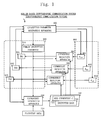
- the ID-based cryptographic communication system 800 includes the encryption parameter generating apparatus 100, the ciphertext generating apparatus 200, and a plurality of ciphertext receiving apparatuses 301 to 303.
- the encryption parameter generating apparatus 100 includes a storage device for storing information, such as the magnetic disk drive 920, a processing device for processing information, such as the CPU 911, the secret information generating unit 112, the secret information storage unit 121, the public parameter generating unit 113, the public parameter publishing unit 114, the identification information input unit 131, the secret key generating unit 132, and the secret key notification unit 133.
- the secret information generating unit 112 randomly generates secret information by using a processing device, such as the CPU 911.
- the secret information storage unit 121 stores the secret information generated by the secret information generating unit 112, by using a storage device, such as the magnetic disk drive 920.
- the public parameter generating unit 113 generates a public encryption parameter, based on the secret information generated by the secret information generating unit 112, by using a processing device, such as the CPU 911.
- the public parameter publishing unit 114 publishes the public encryption parameter generated by the public parameter generating unit 113, by using a processing device, such as the CPU 911.
- the identification information input unit 131 inputs recipient identification information ID for identifying one recipient corresponding to one ciphertext receiving apparatus among a plurality of ciphertext receiving apparatuses 301 to 303, by using a processing device, such as the CPU 911.
- the secret key generating unit 132 generates a secret key d ID corresponding to the one recipient, based on the secret information stored by the secret information storage unit 121, the public encryption parameter generated by the public parameter generating unit 113, and the recipient identification information ID input by the identification information input unit 131, by using a processing device, such as the CPU 911.
- the secret key notification unit 133 secretly notifies one ciphertext receiving apparatus corresponding to the one recipient of the secret key d ID generated by the secret key generating unit 132, by using a processing device, such as the CPU 911.
- the ciphertext generating apparatus 200 includes a storage device for storing information, such as the magnetic disk drive 920, a processing device for processing information, such as the CPU 911, the encryption parameter storage unit 210, the recipient identification input unit 232, the plaintext input unit 231, the random number generating unit 222 the ciphertext body generating unit 240, the hash value calculation unit 244, the ciphertext verification text generating unit 245, the ciphertext combining unit 246, and the ciphertext notification unit 261.
- the encryption parameter storage unit 210 stores the public encryption parameter published by the encryption parameter generating apparatus 100, by using a storage device, such as the magnetic disk drive 920.
- the recipient identification input unit 232 inputs n recipient identification information ID i (i being an integer greater than or equal to 1 and less than or equal to n) for respectively identifying n recipients, by using a processing device, such as the CPU 911.
- the plaintext input unit 231 inputs the plaintext M by using a processing device, such as the CPU 911.
- the second ciphertext generating unit 242 generates n ciphertext bodies CB i (i being an integer greater than or equal to 1 and less than or equal to n) corresponding to the n recipients, based on the public encryption parameter stored by the encryption parameter storage unit 210, the n recipient identification information ID i input by the recipient identification input unit 232, and the plaintext M input by the plaintext input unit 231, by using a processing device, such as the CPU 911.
- the hash value calculation unit 244 generates a combined ciphertext by combining the n ciphertext bodies CB i generated by the ciphertext body generating unit 240, by using a processing device, such as the CPU 911, and calculates a hash value H based on the combined ciphertext generated, by using a processing device, such as the CPU 911.
- the ciphertext verification text generating unit 245 generates a ciphertext verification text CC, based on the public encryption parameter stored by the encryption parameter storage unit 210 and the hash value H calculated by the hash value calculation unit 244, by using a processing device, such as the CPU 911.
- the ciphertext combining unit 246 makes one ciphertext C (key ciphertext C) by combining the n ciphertext bodies CB i generated by the ciphertext body generating unit 240 and the ciphertext verification text CC generated by the ciphertext verification text generating unit 245, by using a processing device, such as the CPU 911.
- the ciphertext notification unit 261 notifies n ciphertext receiving apparatuses corresponding to the n recipients of the one ciphertext C combined by the ciphertext combining unit 246, by using a processing device, such as the CPU 911.
- Each of a plurality of ciphertext receiving apparatuses 301 to 303 includes a storage device for storing information, such as the magnetic disk drive 920, a processing device for processing information, such as the CPU 911, the public parameter storage unit 310, the secret key storage unit 323, the ciphertext receiving unit 351, the ciphertext decomposition unit 346, the verification hash value calculation unit 344, the ciphertext verification unit 345, and the ciphertext decryption unit 341.
- the public parameter storage unit 310 stores the public encryption parameter published by the encryption parameter generating apparatus 100, by using a storage device, such as the magnetic disk drive 920.
- the secret key storage unit 323 stores the secret key d ID notified by the encryption parameter generating apparatus 100, by using a storage device, such as the magnetic disk drive 920.
- the ciphertext receiving unit 351 receives the one ciphertext C (key ciphertext C) notified by the ciphertext generating apparatus 200, by using a processing device, such as the CPU 911.
- the ciphertext decomposition unit 346 acquires the n ciphertext bodies C2 i and the ciphertext verification text CC, based on the one ciphertext C received by the ciphertext receiving unit 351, by using a processing device, such as the CPU 911, and acquires one corresponding ciphertext body CB ID , which is corresponding to the recipient corresponding to the ciphertext receiving apparatus, among the acquired n ciphertext bodies CB i , by using a processing device, such as the CPU 911.
- the verification hash value calculation unit 344 calculates a verification hash value H', based on a combined verification ciphertext made by combining the n ciphertext bodies CB i acquired by the ciphertext decomposition unit 346, by using a processing device, such as the CPU 911.
- the ciphertext verification unit 345 judges whether the one ciphertext C received by the ciphertext receiving unit 351 has consistency or not, based on the public encryption parameter stored by the public parameter storage unit 310, the one corresponding ciphertext body CB ID and the ciphertext verification text CC acquired by the ciphertext decomposition unit 346, and the verification hash value H' calculated by the verification hash value calculation unit 344, by using a processing device, such as the CPU 911.
- the ciphertext decryption unit 341 restores the plaintext M, based on the public encryption parameter stored by the public parameter storage unit 310, the secret key d ID stored by the secret key storage unit 323, and the one corresponding ciphertext body CB ID acquired by the ciphertext decomposition unit 346, by using a processing device, such as the CPU 911.
- the ID-based cryptographic communication system 800 has the following effect: In the ID-based cryptographic communication system, a plurality of recipients are notified of the same plaintext M through one ciphertext C and other recipients cannot decipher the ciphertext C.
- the ID-based cryptographic communication system 800 (cryptographic communication system) according to the present Embodiment has the following features:
- the ciphertext generating apparatus 200 further includes the random number generating unit 222.
- the random number generating unit 222 randomly generates n integers s i (i being an integer greater than or equal to 1 and less than or equal to n) corresponding to n recipients, by using a processing device, such as the CPU 911.
- the ciphertext body generating unit 240 includes the first ciphertext generating unit 241, the second ciphertext generating unit 242, and the third ciphertext generating unit 243.
- the first ciphertext generating unit 241 generates n first ciphertexts C1 i (i being an integer greater than or equal to 1 and less than or equal to n) corresponding to the n recipients, based on the public encryption parameter stored by the encryption parameter storage unit 210, the plaintext M input by the plaintext input unit 231, and the n integers s i generated by the random number generating unit 222, by using a processing device, such as the CPU 911.
- the second ciphertext generating unit 242 generates n second ciphertexts C2 i (i being an integer greater than or equal to 1 and less than or equal to n) corresponding to the n recipients, based on the public encryption parameter stored by the encryption parameter storage unit 210, the n recipient identification information ID i input by the recipient identification input unit 232, and the n integers s i generated by the random number generating unit 222, by using a processing device, such as the CPU 911.
- the third ciphertext generating unit 243 generates n third ciphertexts C3 i (i being an integer greater than or equal to 1 and less than or equal to n) corresponding to the n recipients, based on the public encryption parameter stored by the encryption parameter storage unit 210, and the n integers s i generated by the random number generating unit 222, by using a processing device, such as the CPU 911.
- the hash value calculation unit 244 makes one combined ciphertext by combining the n first ciphertexts C1 i generated by the first ciphertext generating unit 241, the n second ciphertexts C2 i generated by the second ciphertext generating unit 242, and the n third ciphertexts C3 i generated by the third ciphertext generating unit 243, by using a processing device, such as the CPU 911, and calculates one hash value H 0 , based on the one combined ciphertext, by using a processing device, such as the CPU 911.
- the ciphertext verification text generating unit 245 generates n ciphertext verification texts CC i (i being an integer greater than or equal to 1 and less than or equal to n) corresponding to the n recipients, based on the public encryption parameter stored by the encryption parameter storage unit 210, the n integers s i generated by the random number generating unit 222, and the one hash value H 0 calculated by the hash value calculation unit 244, by using a processing device, such as the CPU 911.
- the ciphertext combining unit 246 makes one ciphertext C (key ciphertext C) by combining the n first ciphertexts C1 i generated by the first ciphertext generating unit 241, the n second ciphertexts C2 i generated by the second ciphertext generating unit 242, the n third ciphertexts C3 i generated by the third ciphertext generating unit 243, and the n ciphertext verification texts CC i generated by the ciphertext verification text generating unit 245, by using a processing device, such as the CPU 911.
- a processing device such as the CPU 911.
- the ciphertext decomposition unit 346 acquires the n first ciphertexts C1 i , the n second ciphertexts C2 i , the n third ciphertexts C3 i , and the n ciphertext verification texts CC i , based on the one ciphertext C received by the ciphertext receiving unit 351, by using a processing device, such as the CPU 911, and acquires one corresponding first ciphertext C1 ID , one corresponding second ciphertext C2 ID , one corresponding third ciphertext C3 ID , and one corresponding ciphertext verification text CC ID , which are corresponding to the recipient corresponding to the ciphertext receiving apparatus, from the acquired n first ciphertexts C1 i , n second ciphertexts C2 i , n third ciphertexts C3 i , and n ciphertext verification texts CC i , by using a processing device, such as the CPU
- the verification hash value calculation unit 344 calculates a verification hash value H', based on the combined verification ciphertext made by combining the n first ciphertexts C1 i , the n second ciphertexts C2 i , and the n third ciphertexts C3 i acquired by the ciphertext decomposition unit 346, by using a processing device, such as the CPU 911.
- the ciphertext verification unit 345 judges whether the one ciphertext C received by the ciphertext receiving unit 351 has consistency or not, based on the public encryption parameter stored by the public parameter storage unit 310, at least either one of the one corresponding second ciphertext C2 ID and the one corresponding third ciphertext C3 ID , and the one corresponding ciphertext verification text acquired by the ciphertext decomposition unit 346, and the verification hash value H' calculated by the verification hash value calculation unit 344, by using a processing device, such as the CPU 911.
- the ciphertext decryption unit 341 restores the plaintext M, based on the public encryption parameter stored by the public parameter storage unit 310, the secret key d ID stored by the secret key storage unit 323, and the one corresponding first ciphertext C1 ID , the one corresponding second ciphertext C2 ID , and the one corresponding third ciphertext C3 ID acquired by the ciphertext decomposition unit 346, by using a processing device, such as the CPU 911.
- the ID-based cryptographic communication system 800 has the following effect: Since the hash value calculation unit 244 calculates one hash value H 0 being common regardless of the recipient, the processing amount of the ciphertext generation processing in the ciphertext generating apparatus 200 can be reduced. Moreover, in the ID-based cryptographic communication system whose recipient has been extended to multiple recipients from the ID-based cryptographic communication system whose security has been proved with respect to a single recipient, it is possible to prove the security similar to that of the single recipient case.
- the ID-based cryptographic communication system 800 (cryptographic communication system) according to the present Embodiment has the following features:
- the ciphertext body generating unit 240 generates n ciphertext bodies CB i including the n recipient identification information ID i input by the recipient identification input unit 232, by using a processing device, such as the CPU 911.
- the ID-based cryptographic communication system 800 has the following effect:
- the n ciphertext bodies CB i used as the basis of the hash value calculated by the hash value calculation unit 244 includes n recipient identification information, thereby increasing the security of the ID-based cryptographic communication system.
- the ID-based cryptographic communication system 800 (cryptographic communication system) according to the present Embodiment has the following features:
- the ciphertext generating apparatus 200 further includes the session key generating unit 221, the data input unit 251, the data encryption unit 252, and the ciphertext notification unit 261.
- the session key generating unit 221 randomly generates a bit sequence of predetermined length, as a session key K, by using a processing device, such as the CPU 911.
- the plaintext input unit 231 inputs the session key K generated by the session key generating unit 221, as the plaintext M, by using a processing device, such as the CPU 911.
- the data input unit 251 inputs one plaintext data to be transmitted to the n recipients, by using a processing device, such as the CPU 911.
- the data encryption unit 252 generates one encrypted data by encrypting the one plaintext data input by the data input unit 251, with the session key K generated by the session key generating unit 221, by using a processing device, such as the CPU 911.
- the ciphertext notification unit 261 notifies the n recipients identified by the n recipient identification information input by the recipient identification input unit 232 of the one ciphertext C (key ciphertext C) combined by the ciphertext combining unit 246 and the one encrypted data encrypted by the data encryption unit 252, by using a processing device, such as the CPU 911.
- Each of the plurality of ciphertext receiving apparatuses 301 to 303 further includes the data decryption unit 352.
- the ciphertext receiving unit 351 receives the one ciphertext C and the one encrypted data notified by the ciphertext generating apparatus 200, by using a processing device, such as the CPU 911.
- the data decryption unit 352 treats the plaintext M decrypted by the ciphertext decryption unit 341, as a session key K', and decrypts the one encrypted data received by the ciphertext receiving unit 351 with the session key K', by using a processing device, such as the CPU 911.
- the ID-based cryptographic communication system 800 has the following effect: Since the data encryption unit 252 encrypts the plaintext data with one session key K being common regardless of the recipient, and the ciphertext notification unit 261 notifies the recipient of one ciphertext C being common regardless of the recipient and one encrypted data, the load applied to the traffic of the communication path is small.
- the number n of recipients is not fixed beforehand (namely, not fixed when generating a public encryption parameter), and is fixed when actually transmitting data in the present Embodiment
- it may be fixed as n 10.
- n may be variable within the range of 1 ⁇ n ⁇ 100. That is, the ID-based cryptographic communication system 800 may be a cryptographic communication system in which the number of recipients is fixed beforehand, or in which the number of recipients can be varied when transmitting data.
- the encryption parameter generating apparatus 100 will be described. Since the block configuration of the encryption parameter generating apparatus 100 is the same as that described in Embodiment 1, a portion different from Embodiment 1 will be explained with reference to Fig. 4 .
- the group parameter storage unit 111 stores information indicating a natural number r, a multiplicative group G1, a multiplicative group G2, a multiplicative group GT and a pairing e, as group parameters, by using a storage device, such as the magnetic disk drive 920.
- the natural number r is a large prime number in which solving DH problem is difficult.
- the multiplicative group G1, the multiplicative group G2, and multiplicative group GT are multiplicative groups whose order is the natural number r.
- the multiplicative group G1 and the multiplicative group G2 may be the same multiplicative groups or different multiplicative groups. When the multiplicative group G1 and the multiplicative group G2 are the same multiplicative groups, the group parameter storage unit 111 does not need to store the information indicating the multiplicative group G2.
- Pairing e is a mapping which calculates an element of the multiplicative group GT, from the element of the multiplicative group G1 and the element of the multiplicative group G2.
- the element of the multiplicative group GT calculated from an element p of the multiplicative group G1 and an element q of the multiplicative group G2 will be hereafter described as a pairing value e(p,q).
- the pairing e shall be a bilinear pairing.
- Tate Pairing, Weil Pairing, etc. are known as a bilinear pairing that can be calculated within a practical time by using a processing device, such as the CPU 911 of a computer.
- the pairing e is not limited to be a specific pairing but may any pairing as long as being a bilinear pairing, and shall be calculated within a practical time by using a processing device, such as the CPU 911 of a computer.
- the secret information generating unit 112 inputs a group parameter stored by the group parameter storage unit 111, by using a processing device, such as the CPU 911.
- the secret information generating unit 112 randomly generates an integer ⁇ being greater than or equal to 1 and less than the natural number r, based on the natural number r indicated by the input group parameter, by using a processing device, such as the CPU 911.
- the secret information generating unit 112 outputs information (secret information) indicating the generated integer ⁇ , by using a processing device, such as the CPU 911.
- the public parameter generating unit 113 inputs the group parameter stored by the group parameter storage unit 111, and the information indicating the integer ⁇ output by the secret information generating unit 112, by using a processing device, such as the CPU 911.
- the public parameter generating unit 113 determines a key generation function KDF, based on the multiplicative group GT indicated by the input group parameter, by using a processing device, such as the CPU 911.
- the key generation function KDF is a function for calculating a bit sequence of predetermined length from an element of the multiplicative group GT.
- the public parameter generating unit 113 determines a hash function HF, based on the natural number r indicated by the input group parameter, by using a processing device, such as the CPU 911.
- the hash function HF is a function for calculating a natural number less than the natural number r from a bit sequence of arbitrary length.
- the hash function HF shall have a very low probability of calculating the same natural numbers from different bit sequences.
- the public parameter generating unit 113 randomly selects an element g of the multiplicative group G1, based on the multiplicative group G1 indicated by the input group parameter, by using a processing device, such as the CPU 911.
- the public parameter generating unit 113 randomly selects four elements g2, h1, h2, and h3 of the multiplicative group G2, based on the multiplicative group G2 indicated by the input group parameter, by using a processing device, such as the CPU 911.
- the elements g2, h1, h2, and h3 of the multiplicative group G2 shall be selected as different elements each other.
- the element g of the multiplicative group G1 and the element g2 of the multiplicative group G2 are selected so that the element e(g,g2) of the multiplicative group GT, which is a pairing value of the element g of the multiplicative group G1 and the element g2 of the multiplicative group G2, may not be an identity of the multiplicative group GT.
- the multiplicative group G1 and the multiplicative group G2 are the same multiplicative groups
- the element g of the multiplicative group G1 and the element g2 of the multiplicative group G2 may be the same elements.
- the public parameter generating unit 113 outputs information indicating the input group parameter, the determined key generation function KDF, the determined hash function HF, the selected element g of the multiplicative group G1, the calculated element g1 of the multiplicative group G1, and the selected four elements g2, h1, h2, and h3 of the multiplicative group G2, as public encryption parameters, by using a processing device, such as the CPU 911.
- the identification information input unit 131 inputs a recipient identification information ID, by using a processing device, such as the CPU 911.
- a processing device such as the CPU 911.
- the recipient identification information ID will be treated as an integer, by the encryption parameter generating apparatus 100.
- the encryption parameter generating apparatus 100 treats recipient identification information as an integer by treating a bit sequence of arbitrary length, such as an e-mail address, as a bit sequence indicating an integral value.
- the encryption parameter generating apparatus 100 may input a bit sequence of arbitrary length, such as an e-mail address, into a hash function (that may be the same hash function as the hash function HF determined by the public parameter generating unit 113, or may be a different hash function) and obtain an integer calculated by the hash function, to treat it as recipient identification information.
- a hash function that may be the same hash function as the hash function HF determined by the public parameter generating unit 113, or may be a different hash function
- the identification information input unit 131 inputs an integer ID, as recipient identification information, by using a processing device, such as the CPU 911.
- the identification information input unit 131 outputs the input integer ID by using a processing device, such as the CPU 911.
- the secret key generating unit 132 inputs the information indicating the integer ⁇ stored by the secret information storage unit 121, the public encryption parameter stored by the parameter storage unit 122, and the integer ID output by the identification information input unit 131, by using a processing device, such as the CPU 911.
- the secret key generating unit 132 randomly generates three integers r ID,1 , r ID,2 , and r ID,3 , based on the natural number r indicated by the input public encryption parameter, by using a processing device, such as the CPU 911.
- a processing device such as the CPU 911.
- Each of the three integers r ID,1 , r ID,2 , and r ID,3 has been generated to be greater than or equal to 1 and less than the natural number r and to be different from each other.
- the secret key generating unit 132 calculates an inverse number 1/( ⁇ -ID), which is an inverse of the difference ( ⁇ -ID) between ⁇ and ID, based on the integer ⁇ indicated by the input information and the input integer ID, by using a processing device, such as the CPU 911.
- the inverse number as used herein is an inverse number in the finite field Z/rZ. That is, the inverse number of ( ⁇ -ID) means an integer x (let the inverse number of ( ⁇ -ID) be x) greater than or equal to 1 and less than r, where the remainder obtained by dividing the product ( ⁇ -ID) ⁇ x by the natural number r is 1.
- the product ( ⁇ -ID) ⁇ x indicates ( ⁇ -ID) multiplied by the inverse number x.)
- the inverse number of ( ⁇ -ID) is described as 1/( ⁇ -ID). Since the natural number r is a prime number, unless ⁇ -ID is 0 (or in multiples of the natural number r) , there exists one inverse number of ( ⁇ -ID), which can be calculated within a practical time by using a processing device, such as the CPU 911 of a computer. Since the natural number r is a very large natural number, the probability that ⁇ -ID is 0 (or in multiples of the natural number r) is extremely low and may be ignored.
- the secret key generating unit 132 calculates an element g2 ⁇ (-r ID,1 ) of the multiplicative group G2, which is the (-r ID,1 )th power of the element g2 of the multiplicative group G2, by using a processing device, such as the CPU 911.
- the secret key generating unit 132 calculates an element h1 ⁇ g2 ⁇ (-r ID,1 ) of the multiplicative group G2, which is a product of the element h1 of the multiplicative group G2 and the element g2 ⁇ (-r ID,1 ) of the multiplicative group G2, by using a processing device, such as the CPU 911.
- the secret key generating unit 132 outputs information indicating the calculated three integers r ID,1 , r ID,2 and r ID,3 , and the calculated three elements h ID,1 , h ID,2 , and h ID,3 of the multiplicative group G2, as a secret key d ID , by using a processing device, such as the CPU 911.
- the ciphertext generating apparatus 200 treats a recipient identification information ID, as an integer, similarly to the encryption parameter generating apparatus 100.
- the recipient identification input unit 232 inputs n integers ID i (n being an integer greater than or equal to 1, i being an integer greater than or equal to 1 and less than or equal to n), as n recipient identification information which respectively identifies n recipients, by using a processing device, such as the CPU 911.
- the recipient identification input unit 232 outputs the input n integers ID i , by using a processing device, such as the CPU 911.
- the random number generating unit 222 inputs the public encryption parameter stored by the encryption parameter storage unit 210, by using a processing device, such as the CPU 911.
- the random number generating unit 222 randomly generates n integers s i greater than or equal to 1 and less than the natural number r (i being an integer greater than or equal to 1 and less than or equal to n) which respectively correspond to n recipients, based on the natural number r indicated by the input public encryption parameter, by using a processing device, such as the CPU 911.
- the random number generating unit 222 outputs information indicating the generated n integers s i , by using a processing device, such as the CPU 911.
- the first ciphertext generating unit 241 inputs the public encryption parameter stored by the encryption parameter storage unit 210, the information indicating the n integers s i output by the random number generating unit 222, and the plaintext M output by the plaintext input unit 231, by using a processing device, such as the CPU 911.
- the first ciphertext generating unit 241 calculates an element e(g,h1) of the multiplicative group GT, which is a pairing value of the element g of the multiplicative group G1 and the element h1 of the multiplicative group G2, based on the pairing e, the element g of the multiplicative group G1, and the element h1 of the multiplicative group G2 indicated by the input public encryption parameter, by using a processing device, such as the CPU 911. Since the element e(g,h1) of the multiplicative group GT is constant regardless of the integer s i and the plaintext M, it may be calculated beforehand and stored by using a storage device, such as the magnetic disk drive 920.
- the first ciphertext generating unit 241 calculates n elements e(g,h1) ⁇ s i (i being an integer greater than or equal to 1 and less than or equal to n) of the multiplicative group GT, which is the s i -th power of the element e(g,h1) of the multiplicative group GT, by using a processing device, such as the CPU 911.
- the first ciphertext generating unit 241 Based on the input plaintext M and the calculated n key bit sequences k i , the first ciphertext generating unit 241 generates n bit sequences by encrypting the plaintext M respectively with the n key bit sequences k i , to be treated as n first ciphertexts C1 i (i being an integer greater than or equal to 1 and less than or equal to n), by using a processing device, such as the CPU 911.
- the first ciphertext generating unit 241 calculates an exclusive OR for each bit between the plaintext M and the key bit sequence k i , to be treated as a first ciphertext C1 i , for example.
- the method for encrypting the plaintext M is not limited to the method using the exclusive OR operation, and it may be other cryptographic system as long as the cryptographic system can restore the plaintext M from the first ciphertext C1 i when there is the same bit sequence as the key bit sequence k i .
- the first ciphertext generating unit 241 outputs the generated n first ciphertexts C1 i , by using a processing device, such as the CPU 911.
- the second ciphertext generating unit 242 inputs the public encryption parameter stored by the encryption parameter storage unit 210, the information indicating the n integers s i output by the random number generating unit 222, and the n integers ID i output by the recipient identification input unit 232, by using a processing device, such as the CPU 911.
- the second ciphertext generating unit 242 calculates n elements g ⁇ (-ID i ) (i being an integer greater than or equal to 1 and less than or equal to n) of the multiplicative group G1, which is the (-ID i )th power of the element g of the multiplicative group G1, based on the multiplicative group G1 indicated by the input public encryption parameter, the element g of the multiplicative group G1, and the input n integers ID i , by using a processing device, such as the CPU 911.
- the second ciphertext generating unit 242 calculates elements g1 ⁇ g ⁇ (-ID i ) (i being an integer greater than or equal to 1 and less than or equal to n) of the multiplicative group G1, which is a product of the element g1 of the multiplicative group G1 and the element g ⁇ (-ID i ) of the multiplicative group G1, by using a processing device, such as the CPU 911.
- the second ciphertext generating unit 242 outputs bit sequences respectively indicating the calculated n elements u i of the multiplicative group G1, as n second ciphertexts C2 i (i being an integer greater than or equal to 1 and less than or equal to n), by using a processing device, such as the CPU 911.
- the third ciphertext generating unit 243 inputs the public encryption parameter stored by the encryption parameter storage unit 210, and the information indicating the n integers s i output by the random number generating unit 222, by using a processing device, such as the CPU 911.
- the third ciphertext generating unit 243 calculates an element e(g,g2) of the multiplicative group GT, which is a pairing value of the element g of the multiplicative group G1 and the element g2 of the multiplicative group G2, by using a processing device, such as the CPU 911. Since the element e(g,g2) of the multiplicative group GT is constant regardless of the integer s i , it may be calculated beforehand and stored by using a storage device, such as the magnetic disk drive 920.
- the third ciphertext generating unit 243 calculates n elements e(g,g2) ⁇ s i (i being an integer greater than or equal to 1 and less than or equal to n) of the multiplicative group GT, which is the s i -th power of the element e(g,g2) of the multiplicative group GT, by using a processing device, such as the CPU 911.
- the third ciphertext generating unit 243 outputs bit sequences respectively indicating the calculated n elements e (g, g2) ⁇ s i of the multiplicative group GT, as n third ciphertexts C3 i (i being an integer greater than or equal to 1 and less than or equal to n), by using a processing device, such as the CPU 911.
- the hash value calculation unit 244 inputs the public encryption parameter stored by the encryption parameter storage unit 210, the n first ciphertexts C1 i output by the first ciphertext generating unit 241, the n second ciphertexts C2 i output by the second ciphertext generating unit 242, and the n third ciphertexts C3 i output by the third ciphertext generating unit 243, by using a processing device, such as the CPU 911.
- the hash value calculation unit 244 calculates n natural numbers ⁇ i by converting the n combined ciphertexts respectively by the hash function HF, as n hash values H i , by using a processing device, such as the CPU 911.
- the hash value calculation unit 244 outputs information indicating the calculated n natural numbers ⁇ i and the generated n combined ciphertexts, by using a processing device, such as the CPU 911.
- the ciphertext verification text generating unit 245 inputs the public encryption parameter stored by the encryption parameter storage unit 210, the information indicating the n integers s i output by the random number generating unit 222, and the information indicating the n natural numbers ⁇ i output by the hash value calculation unit 244, by using a processing device, such as the CPU 911.
- the ciphertext verification text generating unit 245 calculates an element e(g,h2) of the multiplicative group GT, which is a pairing value of the element g of the multiplicative group G1 and the element h2 of the multiplicative group G2, by using a processing device, such as the CPU 911.
- the ciphertext verification text generating unit 245 calculates an element e (g, h3) of the multiplicative group GT, which is a pairing value of the element g of the multiplicative group G1 and the element h3 of the multiplicative group G2, by using a processing device, such as the CPU 911. Since the elements e(g,h2) and e(g,h3) of the multiplicative group GT are constant regardless of the integer s i , they may be calculated beforehand and stored by using a storage device, such as the magnetic disk drive 920.
- the ciphertext verification text generating unit 245 calculates n elements e(g, h2) ⁇ s i of the multiplicative group GT (i being an integer greater than or equal to 1 and less than or equal to n), which is the s i -th power of the element e(g,h2) of the multiplicative group GT, by using a processing device, such as the CPU 911.
- the ciphertext verification text generating unit 245 calculates n integers (s i ⁇ i ) respectively (i being an integer greater than or equal to 1 and less than or equal to n), which is a product of the integer s i and the natural number ⁇ i , by using a processing device, such as the CPU 911.
- the ciphertext verification text generating unit 245 calculates n elements e (g,h3) ⁇ (s i ⁇ i ) (i being an integer greater than or equal to 1 and less than or equal to n) of the multiplicative group GT, which is the (s i ⁇ i )th power of the element e(g,h3) of the multiplicative group GT, by using a processing device, such as the CPU 911.
- a processing device such as the CPU 911.
- the ciphertext verification text generating unit 245 outputs bit sequences respectively indicating the calculated n elements y i of the multiplicative group GT, as n ciphertext verification texts CC i (i being an integer greater than or equal to 1 and less than or equal to n), by using a processing device, such as the CPU 911.
- the ciphertext combining unit 246 inputs the n combined ciphertexts output by the hash value calculation unit 244 and the n ciphertext verification texts CC i output by the ciphertext verification text generating unit 245, by using a processing device, such as the CPU 911.
- the ciphertext combining unit 246 generates one key ciphertext C by combining all the input n combined ciphertexts and the input n ciphertext verification texts, by using a processing device, such as the CPU 911.
- the ciphertext combining unit 246 outputs the generated one key ciphertext C, by using a processing device, such as the CPU 911.
- the ciphertext combining unit 246 inputs the n combined ciphertexts output by the hash value calculation unit 244, since the combined ciphertext is made by combining the first ciphertext C1 i , the second ciphertext C2 i , and the third ciphertext C3 i , consequently it means the ciphertext combining unit 246 inputs the n first ciphertexts C1 i , the n second ciphertexts C2 i , and the n third ciphertexts C3 i .
- Fig. 11 shows an example of the flow of information exchanged in the ciphertext generating apparatus 200 which is a comparative example of the present Embodiment.
- the recipient identification input unit 232 inputs n recipient identification information ID 1 , ID 2 , ..., ID n .
- the random number generating unit 222 generates n integers s 1 , s 2 , ..., s n whose number is the same as that of the recipient identification information ID 1 , ID 2 , ..., ID n input by the recipient identification input unit 232.
- the first ciphertext generating unit 241 generates a first ciphertext C1 1 based on the plaintext M and the integer s 1 , a first ciphertext C1 2 based on the plaintext M and the integer s 2 , ..., and a first ciphertext C1 n based on the plaintext M and the integer s n .
- the second ciphertext generating unit 242 generates a second ciphertext C2 1 based on the recipient identification information ID 1 and the integer s 1 , a second ciphertext C2 2 based on the recipient identification information ID 2 and the integer s 2 , ..., and a second ciphertext C2 n based on the recipient identification information ID n and the integer s n .
- the third ciphertext generating unit 243 generates a third ciphertext C3 1 based on the integer s 1 , a third ciphertext C3 2 based on the integer s 2 , ..., and a third ciphertext C3 n based on the integer s n .
- the hash value calculation unit 244 generates a combined ciphertext (C1 1
- C3 1 ) indicates a bit sequence made by combining a bit sequence C2 1 to the end of a bit sequence C1 1 , and further combining a bit sequence C3 1 to the end of that. Combining order different from this may be used.
- the hash value calculation unit 244 calculates a hash value H 1 based on the generated combined ciphertext (C1 1
- the ciphertext verification text generating unit 245 generates a ciphertext verification text CC 1 based on the integer s 1 and the hash value H 1 , a ciphertext verification text CC 2 based on the integer s 2 and the hash value H 2 , ..., and a ciphertext verification text CC n based on the integer s n and the hash value H n .
- the key ciphertext C is generated by combining the ciphertexts in the order of collecting texts from the first ciphertext to the ciphertext verification text corresponding to one recipient in one
- combining order different from this may be used.
- the combining order of collecting the texts from the first ciphertext corresponding to the ciphertext verification text corresponding to one recipient in one, like the example above, is more preferable because the key ciphertext C is generated by combining the combined ciphertexts combined by the hash value calculation unit 244, as they are. Moreover, there is also an advantage that the ciphertext receiving apparatus can easily find a ciphertext corresponding to the recipient corresponding to the apparatus.
- the ciphertext decomposition unit 346 inputs one key ciphertext C output by the ciphertext receiving unit 351, by using a processing device, such as the CPU 911.
- the ciphertext decomposition unit 346 acquires the corresponding first ciphertext C1 ID , the corresponding second ciphertext C2 ID , the corresponding third ciphertext C3 ID , and the corresponding ciphertext verification text CC ID which are corresponding to the recipient concerned, from the input one key ciphertext C, by using a processing device, such as the CPU 911.
- the ciphertext decomposition unit 346 outputs the acquired corresponding first ciphertext C1 ID , corresponding second ciphertext C2 ID , corresponding third ciphertext C3 ID , and corresponding ciphertext verification text CC ID , by using a processing device, such as the CPU 911.
- one key ciphertext C is made by combining ciphertexts in the order of (C1 1
- the ciphertext decomposition unit 346 separates one key ciphertext C into several ones, for example, by sum of bit lengths of from the first ciphertext to the ciphertext verification text to be (C1 1
- the ciphertext decomposition unit 346 judges at what position the corresponding ciphertext concerned exists, based on other portions of the notification data 720 received by the ciphertext receiving unit 351, and acquires the corresponding ciphertext depending upon the judgment result.
- the ciphertext decomposition unit 346 separates the acquired corresponding ciphertext (C1 ID
- the ciphertext decomposition unit 346 separates the acquired combined verification ciphertext (C1 ID
- the ciphertext decomposition unit 346 outputs the acquired corresponding first ciphertext C1 ID , corresponding second ciphertext C2 ID , corresponding third ciphertext C3 ID , and corresponding ciphertext verification text CC ID .
- the ciphertext decomposition unit 346 in order to save the time and effort of the verification hash value calculation unit 344's generating a combined verification ciphertext (C1 ID
- the verification hash value calculation unit 344 inputs the corresponding first ciphertext C1 ID , the corresponding second ciphertext C2 ID , and the corresponding third ciphertext C3 ID output by the ciphertext decomposition unit 346, by using a processing device, such as the CPU 911.
- the verification hash value calculation unit 344 generates a combined verification ciphertext (C1 ID
- the order of combining may be different from this as long as it is the same as that used when the hash value calculation unit 244 of the ciphertext generating apparatus 200 generates a combined ciphertext.
- the verification hash value calculation unit 344 may input the combined verification ciphertext (C1 ID
- the verification hash value calculation unit 344 inputs a public encryption parameter stored by the public parameter storage unit 310, by using a processing device, such as the CPU 911. Based on the hash function HF indicated by the input public encryption parameter and the generated or input combined verification ciphertext (C1 ID
- the ciphertext verification unit 345 inputs the public encryption parameter stored by the public parameter storage unit 310, the secret key d ID stored by the secret key storage unit 323, the corresponding second ciphertext C2 ID , the corresponding third ciphertext C3 ID and the corresponding ciphertext verification text CC ID output by the ciphertext decomposition unit 346, and the information indicating the natural number ⁇ ' output by the verification hash value calculation unit 344, by using a processing device, such as the CPU 911.
- the ciphertext verification unit 345 calculates an element h ID,3 ⁇ ' of the multiplicative group G2, which is the ⁇ '-th power of the element h ID,3 of the multiplicative group G2, by using a processing device, such as the CPU 911.
- the ciphertext verification unit 345 calculates the element h ID,2 ⁇ h ID,3 ⁇ ' of the multiplicative group G2, which is a product of the element h ID,2 of the multiplicative group G2 and the element h ID,3 ⁇ ' of the multiplicative group G2, by using a processing device, such as the CPU 911.
- the ciphertext verification unit 345 calculates an element e(u ID ,h ID,2 ⁇ h ID,3 ⁇ ') of the multiplicative group GT, which is a pairing value of the element u ID of the multiplicative group G1 and the element h ID,2 ⁇ h ID,3 ⁇ ' of the multiplicative group G2, by using a processing device, such as the CPU 911.
- the ciphertext verification unit 345 calculates an integer r ID,2 +r ID,3 ⁇ ', which is a sum obtained by adding the product of the integer r ID,3 and the natural number ⁇ ' to the integer r ID,2 , by using a processing device, such as the CPU 911.
- the ciphertext verification unit 345 calculates an element v ID ⁇ (r ID,2 +r ID,3 ⁇ ') of multiplicative group GT, which is the (r ID,2 +r ID,3 ⁇ ')th power of the element v ID of multiplicative group GT, by using a processing device, such as the CPU 911.
- a processing device such as the CPU 911.
- the ciphertext verification unit 345 compares the element y ID of the multiplicative group GT indicated by the input corresponding ciphertext verification text CC ID and the calculated element y' of the multiplicative group GT, and when the element y ID of the multiplicative group GT accords with the calculated element y' of the multiplicative group GT, judges that the one key ciphertext C input by the ciphertext receiving unit 351 has consistency, and when they do not accord with each other, judges that the one key ciphertext C input by the ciphertext receiving unit 351 has no consistency, by using a processing device, such as the CPU 911.
- a processing device such as the CPU 911.
- y' e(u ID ,h ID,2 ) ⁇ e(u ID ,h ID,3 ) ⁇ ' ⁇ v ID ⁇ (r ID,2 +r ID,3 ⁇ ').
- the ciphertext decryption unit 341 performs the following processing in order to restore the plaintext M.
- the ciphertext decryption unit 341 inputs the public encryption parameter stored by the public parameter storage unit 310, the secret key d ID stored by the secret key storage unit 323, and the corresponding first ciphertext C1 ID , the corresponding second ciphertext C2 ID , and the corresponding third ciphertext C3 ID output by the ciphertext decomposition unit 346, by using a processing device, such as the CPU 911.
- the ciphertext decryption unit 341 calculates an element e(u ID ,h ID,1 ) of the multiplicative group GT, which is a pairing value of the element u ID of the multiplicative group G1 and the element h ID,1 of the multiplicative group G2, by using a processing device, such as the CPU 911.
- the ciphertext decryption unit 341 calculates an element v ID ⁇ r ID,1 of multiplicative group GT, which is the r ID,1 -th power of the element v ID of multiplicative group GT, by using a processing device, such as the CPU 911.
- the ciphertext decryption unit 341 calculates an element e(u ID ,h ID,1 ) ⁇ v ID ⁇ r ID,1 of the multiplicative group GT, which is a product of the element e(u ID ,h ID,1 ) of the multiplicative group GT and the element v ID ⁇ r ID,1 of multiplicative group GT, by using a processing device, such as the CPU 911.
- the ciphertext decryption unit 341 Based on the input corresponding first ciphertext C1 ID and the calculated key bit sequence k' , the ciphertext decryption unit 341 generates a bit sequence by decrypting the corresponding first ciphertext C1 ID with the key bit sequence k' , by using a processing device, such as the CPU 911.
- the ciphertext decryption unit 341 decrypts the corresponding first ciphertext C1 ID by using the same key bit sequence k' as that used for encrypting the plaintext M by the first ciphertext generating unit 241 of the ciphertext generating apparatus 200, thereby enabling to restore the plaintext M.
- Fig. 12 is a flowchart showing an example of the flow of parameter setting processing in which the encryption parameter generating apparatus 100 being a comparative example according to the present Embodiment sets a public encryption parameter.
- the same reference numbers are attached to the steps common to the steps of the parameter setting processing explained in Embodiment 1.
- the secret information generating unit 112 randomly generates an integer ⁇ being greater than or equal to 1 and less than a natural number r, based on the natural number r indicated by the group parameter stored by the group parameter storage unit 111, by using a processing device, such as the CPU 911.
- the secret information storage unit 121 stores information indicating the integer ⁇ generated by the secret information generating unit 112, by using a storage device, such as the magnetic disk drive 920.
- the public parameter generating unit 113 determines a key generation function KDF and a hash function HF, based on the multiplicative group GT and the natural number r indicated by the group parameter stored by the group parameter storage unit 111, by using a processing device, such as the CPU 911.
- the public parameter generating unit 113 randomly selects an element g of the legitimate group G1 and four elements g2, h1, h2, and h3 of the multiplicative group G2, based on the multiplicative groups G1 and G2 indicated by the group parameter stored by the group parameter storage unit 111, by using a processing device, such as the CPU 911.
- the parameter storage unit 122 stores information indicating the group parameter stored by the group parameter storage unit 111, the determined key generation function KDF, the determined hash function HF, the selected element g of the multiplicative group G1, the calculated element g1 of the multiplicative group G1, and the selected four elements g2, h1, h2, and h3 of the multiplicative group G2, as public encryption parameters, by using a storage device, such as the magnetic disk drive 920.
- the public parameter publishing unit 114 publishes information indicating the group parameter stored by the group parameter storage unit 111, the key generation function KDF and the hash function HF determined by the public parameter generating unit 113, the element g of the multiplicative group G1 and the four elements g2, h1, h2 and h3 of the multiplicative group G2 selected by the public parameter generating unit 113, and the element g1 of the multiplicative group G1 calculated by the public parameter generating unit 113, as public encryption parameters, by using a processing device, such as the CPU 911.
- a processing device such as the CPU 911.
- the public encryption parameters published by the public parameter publishing unit 114 are acquired by the ciphertext generating apparatus 200 and the ciphertext receiving apparatuses 301 to 303, and stored by the encryption parameter storage unit 210 and the public parameter storage unit 310, by using a storage device, such as the magnetic disk drive 920.
- Fig. 13 is a flowchart showing an example of the flow of secret key setting processing in which the encryption parameter generating apparatus 100 being a comparative example according to the present Embodiment sets a secret key.
- the same reference numbers are attached to the steps common to the steps of the secret key setting processing explained in Embodiment 1.
- the identification information input unit 131 inputs an integer ID as recipient identification information, by using a processing device, such as the CPU 911.
- the secret key generating unit 132 randomly generates three integers r ID,1 , r ID,2 , and r ID,3 , being greater than or equal to 1 and less than the natural number r, based on the natural number r indicated by the public encryption parameter stored by the encryption parameter storage unit 210, by using a processing device, such as the CPU 911.
- the secret key notification unit 133 secretly notifies the corresponding ciphertext receiving apparatus of the information indicating the three integers r ID,1 , r ID,2 and r ID,3 generated by the secret key generating unit 132 at the secret key generation step S22, and the three elements h ID,1 , h ID,2 , and h ID,3 of the multiplicative group G2 calculated by the secret key generating unit 132 at the secret key generation step S22, as a secret key d ID , by using a processing device, such as the CPU 911.
- the secret key d ID notified by the secret key notification unit 133 is acquired by the corresponding ciphertext receiving apparatus, and stored by the secret key storage unit 323 by using a storage device, such as the magnetic disk drive 920.
- Fig. 14 is a flowchart showing an example of the flow of ciphertext generation processing in which the ciphertext generating apparatus 200 being a comparative example according to the present Embodiment generates a ciphertext.
- the same reference numbers are attached to the steps common to the steps of the ciphertext generation processing explained in Embodiment 1.
- the recipient identification input unit 232 inputs n integers ID i respectively corresponding to n recipients, as n recipient identification information for respectively identifying the n recipients, by using a processing device, such as the CPU 911.
- the random number generating unit 222 randomly generates n integers s i , greater than or equal to 1 and less than the natural number r, respectively corresponding to the n recipients, based on the natural number r indicated by the public encryption parameter stored by the encryption parameter storage unit 210, by using a processing device, such as the CPU 911.
- a processing device such as the CPU 911
- a processing device such as the CPU 911.
- the second ciphertext generating unit 242 treats bit sequences respectively indicating the calculated n elements u i of the multiplicative group G1 respectively corresponding to the n recipients, as n second ciphertexts C2 i respectively corresponding to the n recipients, by using a processing device, such as the CPU 911.
- the third ciphertext generating unit 243 treats bit sequences respectively indicating the calculated n elements v i of the multiplicative group GT respectively corresponding to the n recipients, as n third ciphertexts C3 i respectively corresponding to the n recipients, by using a processing device, such as the CPU 911.
- the hash value calculation unit 244 Based on the n first ciphertexts C1 i respectively corresponding to the n recipients generated by the first ciphertext generating unit 241 at the first ciphertext generation step S35, the n second ciphertexts C2 i respectively corresponding to the n recipients generated by the second ciphertext generating unit 242 at the second ciphertext generation step S36, and the n third ciphertexts C3 i respectively corresponding to the n recipients generated by the third ciphertext generating unit 243 at the third ciphertext generation step S37, the hash value calculation unit 244 generates n combined ciphertexts (C1 i
- a processing device such as the CPU 911.
- the ciphertext verification text generating unit 245 treats bit sequences respectively indicating the calculated n elements y i of the multiplicative group GT respectively corresponding to the n recipients, as n ciphertext verification texts CC i respectively corresponding to the n recipients, by using a processing device, such as the CPU 911.
- Fig. 15 is a flowchart showing an example of the flow of ciphertext reception processing in which the ciphertext receiving apparatuses 301 to 303 being comparative examples according to the present Embodiment receive ciphertexts.
- the same reference numbers are attached to the steps common to the steps of the ciphertext reception processing explained in Embodiment 1.
- the ciphertext decomposition unit 346 acquires one corresponding first ciphertext C1 ID , one corresponding second ciphertext C2 ID , one corresponding third ciphertext C3 ID , and one corresponding ciphertext verification text CC ID corresponding to the recipient corresponding to the ciphertext receiving apparatus, based on the one key ciphertext C output by the ciphertext receiving unit 351 at the notification data receiving step, by using a processing device, such as the CPU 911.
- the verification hash value calculation unit 344 calculates one integer ⁇ ' by converting the one corresponding combined ciphertext (C1 ID
- the ciphertext verification unit 345 compares the one element y ID of the multiplicative group GT indicated by the one corresponding ciphertext verification text CC ID acquired by the ciphertext decomposition unit 346 at the ciphertext decomposing step S52 with the calculated one element y' of the multiplicative group GT, by using a processing device, such as the CPU 911.
- a processing device such as the CPU 911.
- the ciphertext verification unit 345 judges that the one key ciphertext C received by the ciphertext receiving unit 351 has consistency, and it goes to the ciphertext decrypting step S55.
- the ciphertext verification unit 345 judges that the one key ciphertext C received by the ciphertext receiving unit 351 has no consistency, and the ciphertext reception processing is ended.
- the session key K' generated by the ciphertext decryption unit 341 has the same bit sequence as that of the session key K generated by the session key generating unit 221 of the ciphertext generating apparatus 200.
- the multiplicative group G1 and the multiplicative group G2 shall be the same multiplicative group G.
- q-D-tABDHE problem q Decisional Trancated Augmented Bilinear Diffie-Hellman Exponent Problem
- a solver B is given q+3 elements g' , g' q+2 , g, g 1 , ..., g q , of the multiplicative group G and one element Z of the multiplicative group GT. Moreover, there is an integer ⁇ greater than or equal to 1 and less than the order of the multiplicative group G, as secret information from the solver B.
- the elements g and g' of the multiplicative group G are randomly selected elements of the multiplicative group G.
- the element g i (i being an integer greater than or equal to 1 and less than or equal to q) of the multiplicative group G is an element g ⁇ ( ⁇ i) of the multiplicative group G, which is the ⁇ i-th power of the element g of the multiplicative group G.
- the MU-IND-ID-CCA2 security of the ID-based cryptosystem ⁇ of single recipient which is a basis of the ID-based cryptosystem ⁇ ' of multiple recipients being a comparative example according to the present Embodiment, will be proved.
- n, ⁇ , ⁇ (A)
- G 0 a game
- Pr[T 0 ] indicates probability that the event To occurs.
- q q x +n+1.
- the game G 1 differs from the game G 0 in that the object which the attacker A attacks is not the cryptographic system ⁇ but the encryption oracle O E , the key derivation oracle O X , and the decryption oracle O D which have been simulated by the solver B.
- the solver B simulates the key generation capability S for PKG as follows:
- the solver B randomly generates an integer ⁇ greater than or equal to 1 and less than the order r of the multiplicative group G.
- the solver B generates three q-th order polynomials f j (x)(j being an integer greater than or equal to 1 and less than or equal to 3) with a random integer coefficient greater than or equal to 0 and less than r.
- the solver B randomly generates a key generation function KDF and a hash function HF with collision resistance.
- the solver B randomly selects the element g of the multiplicative group G.
- the solver B randomly generates an integer s0 greater than or equal to 1 and less than r.
- the solver B simulates the key derivation oracle O X as follows: When the input identification information ID (treated as an integer) of the user is equal to the integer ⁇ , the solver B rejects it. This is also performed in the practical cryptographic system ⁇ .
- the solver B simulates the decryption oracle O D as follows:
- the solver B simulates the key derivation oracle O X by the procedure mentioned above, and generates a secret key d ID .
- the solver B decrypts a ciphertext C by the same procedure as that of the practical cryptographic system ⁇ .
- the solver B simulates the encryption oracle O E as follows: When the input user's identification information ID * is equal to the integer ⁇ , the solver B generates a ciphertext C by the same procedure as that of the practical cryptographic system ⁇ .
- the ⁇ -th order coefficient ( ⁇ being an integer greater than or equal to 0 and less than or equal to q) of the calculated (q+1)th order polynomial ⁇ ID * (x) is defined to be ⁇ ID * , ⁇ .
- the solver B randomly generates an integer s' * greater than or equal to 1 and less than r.
- the solver B encrypts the selected message with the key bit sequence k * .
- the solver B combines the bit sequence (first ciphertext C1) indicating the encrypted message, the bit sequence (second ciphertext C2) indicating the element u * of the multiplicative group G, and the bit sequence (third ciphertext C3) indicating the element v * of the multiplicative group G, and calculates a hash value ⁇ * by the hash function HF.
- the solver B generates a ciphertext C, and outputs it.
- y * e(g,h2) ⁇ s * ⁇ e(g,h3) ⁇ (s * ⁇ ).
- a game G 2 is made by changing the game G 1 as follows:
- the solver B randomly generates an integer z greater than or equal to 1 and less than the order r of the multiplicative group G. However, it shall be z ⁇ (q+1).
- solver B simulates an oracle by utilizing a given parameter in the given q-D-tABHE problem.
- the solver B since the solver B knows q+3 elements g', g' q+2 , g, g 1 , ..., g q , though not knowing the secret integer ⁇ which is unknown to the solver B, he can perform simulation by utilizing them. That is, the solver B treats the element g of the multiplicative group G which was given in the q-D-tABDHE problem, as the element g of the multiplicative group G which is selected in simulation of the key generation capability S for PKG.
- the ⁇ -th order coefficient of the q-th order polynomial f j (x) is defined to be f j, ⁇ ( ⁇ being an integer greater than or equal to 0 and less than or equal to q)
- the solver B does not know ⁇
- h2 and h3 can be calculated. Therefore, even if the solver B does not know ⁇ , he can simulate the key generation capability S for PKG.
- the solve B can simulate the key derivation oracle O X and the decryption oracle O D .
- the solver B can also simulate the encryption oracle O E except for the calculation of the element Z of the multiplicative group GT.
- a game G 3 is made by changing the game G 2 as follows:
- the solver B does not calculate elements h1, h2, and h3 of the multiplicative group G by using the q-th order polynomial f j (x) randomly generated, but randomly selects the elements h1, h2, and h3 of the multiplicative group G.
- h ID,2 , and h ID,3 are calculated.
- the solver B simulates the encryption oracle O E according to the following procedure:
- the solver B randomly generates an integer s * greater than or equal to 1 and less than the order r of the multiplicative group G.
- Respects other than the above are the same as those of the game G 2 .
- a game G 4 is made by changing the game G 3 as follows:
- the solver B uses the integer ⁇ , not the secret key d ID , for judging the consistency of the ciphertext and generating the key bit sequence k'.
- a game G 5 is made by changing the game G 4 as follows:
- the solver B randomly generates an integer r * greater than or equal to 1 and less than the order r of the multiplicative group G.
- the solver B treats the calculated key bit sequence k * as it is, as an encrypted message, regardless of the messages M 0 * and M 1 * input by the encryption oracle OE.
- the solver B does not use the integer r ID,1 in simulation of the decryption oracle O D .
- the first time (and only once) of the r ID * ,1 being used is at the time of ID * being input into the encryption oracle O E . Therefore, when (g,h1,z' * ,s * ,M * ) is fixed, with respect to (r * ,r ID * ,1 ), to first randomly generate r ID * ,1 and then calculate r * to be consistent with the generated r ID * ,1 gives the same distribution as that of to first randomly generate r * and then calculate r ID * ,1 to be consistent with the generated r * .
- the game G 4 and the game G 5 look the same.
- r ID * ,1 is not referred to except for in the simulation of the encryption oracle OE, it is not necessary to calculate it based on r * .
- R 5 indicates an event that a ciphertext which is not rejected in the practical cryptographic system ⁇ is rejected in game G 5 .
- a game G 6 is made by changing the game G 5 as follows:
- the solver B performs the following judgment before judging the consistency of the ciphertext.
- the solver B judges whether there is his * i where ID * i is equal to the input ID and ⁇ * i is equal to ⁇ calculated from the input ciphertext C, in the held list Clist or not. When there is his * i with equality, the solver B compares the portion corresponding to the ciphertext body CB * i (excluding the ciphertext verification text CC * i ) in the ciphertext C * i included in the his * i with the portion corresponding to the ciphertext body CB (excluding the ciphertext verification text CC) in the input ciphertext C, and when they are not equal, returns "rejection".
- C 6 The event of rejecting the ciphertext by this judgment is defined as C 6 .
- C 6 The event that the ciphertext which is not rejected in the practical cryptographic system ⁇ nor rejected by this judgment is rejected by the judgment method changed in the game G 4 is defined to be R 6 , and thus
- the ID-based cryptosystem ⁇ ' being a comparative example according to the present Embodiment is what is extended from the cryptographic system ⁇ of a single recipient explained above to multiple recipients by the conjunctive method.
- the SMMR security of the cryptographic system extended to multiple recipients by the conjunctive method is Adv smmr n, ⁇ , ⁇ (t,q d ,q x ) ⁇ Adv mu n, ⁇ , ⁇ (t,1,q d ,q x ).
- the SMMR security of the ID-based cryptosystem being a comparative example according to the present Embodiment is Adv smmr n, ⁇ , ⁇ (t,q d ,q x ) ⁇ AdV q-d-tabdhe k,G,GT (t 1 )+Adv cr H (t 2 ) + (q d +3)/r.
- the SMMR security in the case of extending a general single recipient cryptographic system to multiple recipients by the conjunctive method is Adv smmr n, ⁇ , ⁇ (t,q d ,q x ) ⁇ n ⁇ Adv mu 1, ⁇ , ⁇ (t',1,q d ,q x )
- the recipient number n appears in the inequality showing the relation with respect to the advantage of the mathematical problem. That is, compared with the general case, the SMMR security of the ID-based cryptosystem being a comparative example according to the present Embodiment tightly reduces to the mathematical problem (high reduction rate). Thus, the ID-based cryptosystem which is a comparative example according to the present Embodiment can prove better security.
- the ID-based cryptographic communication system 800 according to the present Embodiment will be explained. Since the whole configuration of the ID-based cryptographic communication system 800 and the block configuration of the encryption parameter generating apparatus 100 according to the present Embodiment are the same as those described in the comparative example, their explanation is herein omitted.
- the ID-based cryptographic communication system 800 according to the present Embodiment is made by increasing the efficiency of the multiple recipient ID-based cryptosystem explained in the comparative example by making the hash value common.
- the ciphertext generating apparatus 200 will be explained. Since the block configuration of the ciphertext generating apparatus 200 is the same as that described in the comparative example, respects different from the comparative example will be explained with reference to Fig. 4 .
- the hash value calculation unit 244 inputs a public encryption parameter stored by the encryption parameter storage unit 210, by using a processing device, such as the CPU 911.
- the hash value calculation unit 244 inputs n first ciphertexts C1 i output by the first ciphertext generating unit 241, n second ciphertexts C2 i output by the second ciphertext generating unit 242, and n third ciphertexts C3 i output by the third ciphertext generating unit 243, as n ciphertext bodies CB i output by the ciphertext body generating unit 240, by using a processing device, such as the CPU 911.
- the hash value calculation unit 244 generates one combined ciphertext by combining all the input n first ciphertexts C1 i , n second ciphertexts C2 i , and n third ciphertexts C3 i , by using a processing device, such as the CPU 911.
- the hash value calculation unit 244 may further input n recipient identification information ID i output by the recipient identification input unit 232, as (a part of) the n ciphertext bodies CB i , and may generate one combined ciphertext by combining all the input n recipient identification information ID i , n first ciphertexts C1 i , n second ciphertexts C2 i , and n third ciphertexts C3i.
- the hash value calculation unit 244 calculates one natural number ⁇ 0 by converting the one combined ciphertext by the hash function HF, to be treated as one hash value H 0 , by using a processing device, such as the CPU 911.
- the hash value calculation unit 244 outputs information indicating the calculated one natural number ⁇ 0 , and the generated one combined ciphertext, by using a processing device, such as the CPU 911.
- the ciphertext verification text generating unit 245 inputs the public encryption parameter stored by the encryption parameter storage unit 210, the information indicating the n integers s i output by the random number generating unit 222, and the information indicating one natural number ⁇ 0 output by the hash value calculation unit 244, by using a processing device, such as the CPU 911.
- the ciphertext verification text generating unit 245 calculates an element e(g,h2) of the multiplicative group GT, which is a pairing value of the element g of the multiplicative group G1 and the element h2 of the multiplicative group G2, by using a processing device, such as the CPU 911.
- the ciphertext verification text generating unit 245 calculates an element e (g, h3) of the multiplicative group GT, which is a pairing value of the element g of the multiplicative group G1 and the element h3 of the multiplicative group G2, by using a processing device, such as the CPU 911. Since the elements e(g,h2) and e(g,h3) of the multiplicative group GT are constant regardless of the integer s i , they may be calculated beforehand and stored by using a storage device, such as the magnetic disk drive 920.
- the ciphertext verification text generating unit 245 calculates one element e(g,h3) ⁇ 0 of the multiplicative group GT, which is the ⁇ 0 -th power of the element e (g, h3) of the multiplicative group GT, by using a processing device, such as the CPU 911.
- the ciphertext verification text generating unit 245 calculates one element e(g,h2) ⁇ e(g,h3) ⁇ 0 of the multiplicative group GT, which is a product of the element e(g,h2) of the multiplicative group GT and the element e(g,h3) ⁇ 0 of the multiplicative group GT, by using a processing device, such as the CPU 911.
- the ciphertext verification text generating unit 245 outputs n bit sequences respectively indicating the calculated n elements y i of the multiplicative group GT, as n ciphertext verification texts CC i (i being an integer greater than or equal to 1 and less than or equal to n), by using a processing device, such as the CPU 911.
- the ciphertext combining unit 246 inputs the one combined ciphertext output by the hash value calculation unit 244, and the n ciphertext verification texts CC i output by the ciphertext verification text generating unit 245, by using a processing device, such as the CPU 911.
- the ciphertext combining unit 246 generates one key ciphertext C by combining all the input one combined ciphertext and the input n ciphertext verification texts, by using a processing device, such as the CPU 911.
- the ciphertext combining unit 246 outputs the generated one key ciphertext C, by using a processing device, such as the CPU 911.
- Fig. 16 shows an example of the flow of information exchanged in the ciphertext generating apparatus 200 according to the present Embodiment.
- the recipient identification input unit 232 inputs n recipient identification information ID 1 , ID 2 , ..., ID n .
- the random number generating unit 222 generates n integers s 1 , s 2 , ..., s n whose number is the same as that of recipient identification information ID 1 , ID 2 , ..., ID n input by the recipient identification input unit 232.
- the first ciphertext generating unit 241 generates a first ciphertext C1 1 based on the plaintext M and the integer s 1 , a first ciphertext C1 2 based on the plaintext M and the integer s 2 , ..., and a first ciphertext C1 n based on the plaintext M and the integer s n .
- the second ciphertext generating unit 242 generates a second ciphertext C2 1 based on the recipient identification information ID 1 and the integer s 1 , a second ciphertext C2 2 based on the recipient identification information ID 2 and the integer s 2 , ..., and a second ciphertext C2 n based on the recipient identification information ID n and the integer s n .
- the third ciphertext generating unit 243 generates a third ciphertext C3 1 based on the integer s 1 , a third ciphertext C3 2 based on the integer s 2 , ..., and a third ciphertext C3 n based on the integer s n .
- the flow up to this point is the same as that of the comparative example.
- the hash value calculation unit 244 generates one combined ciphertext (C1 1
- the order of combining may be different from this.
- the hash value calculation unit 244 generates one hash value H 0 , based on the generated one combined ciphertext (C1 1
- the ciphertext verification text generating unit 245 generates a ciphertext verification text CC 1 based on the integer s 1 and the hash value H 0 , a ciphertext verification text CC 2 based on the integer s 2 and the hash value H 0 , ..., and a ciphertext verification text CC n based on the integer s n and the hash value H 0 .
- the combining order of the ciphertext differs from that of the comparative example, and, however, it is not limited to this order.
- the combining order of the ciphertext may be the same as the one explained in the comparative example, or may be other order.
- the ciphertext decomposition unit 346 inputs one key ciphertext C output by the ciphertext receiving unit 351, by using a processing device, such as the CPU 911.
- the ciphertext decomposition unit 346 acquires a corresponding first ciphertext C1 ID , a corresponding second ciphertext C2 ID , a corresponding third ciphertext C3 ID , and a corresponding ciphertext verification text CC ID which are corresponding to the recipient concerned, from the input one key ciphertext C, by using a processing device, such as the CPU 911.
- the ciphertext decomposition unit 346 outputs the acquired corresponding first ciphertext C1 ID , corresponding second ciphertext C2 ID , corresponding third ciphertext C3 ID , and corresponding ciphertext verification text CC ID , by using a processing device, such as the CPU 911.
- one key ciphertext C is made by combining ciphertexts in the order of (C1 1
- the ciphertext decomposition unit 346 separates one key ciphertext C into, for example, n times of the sum of the bit lengths of from the first ciphertext to the third ciphertext, and n times of the bit length of the ciphertext verification text, and acquires a combined verification ciphertext (C1 1
- the ciphertext decomposition unit 346 further separates the combined verification ciphertext (C1 1
- the ciphertext decomposition unit 346 separates the acquired corresponding ciphertext (C1 ID
- the ciphertext decomposition unit 346 outputs the acquired corresponding first ciphertext C1 ID , corresponding second ciphertext C2 ID , corresponding third ciphertext C3 ID , and corresponding ciphertext verification text CC ID .
- the ciphertext decomposition unit 346 in order to save the time and effort of the verification hash value calculation unit 344's generating a combined verification ciphertext (C1 1
- a processing device such as the CPU 911.
- the verification hash value calculation unit 344 inputs the combined verification ciphertext (C1 1
- the verification hash value calculation unit 344 may combine the ciphertexts and generate a combined verification ciphertext (C1 1
- the verification hash value calculation unit 344 inputs public encryption parameters stored by the public parameter storage unit 310, by using a processing device, such as the CPU 911. Based on the hash function HF indicated by the input public encryption parameter, and the generated or input combined verification ciphertext (C1 1
- the verification hash value calculation unit 344 outputs information indicating the calculated natural number ⁇ ', by using a processing device, such as the CPU 911.
- Fig. 17 is a flowchart showing an example of the flow of ciphertext generation processing in which the ciphertext generating apparatus 200 according to the present Embodiment generates a ciphertext.
- the same reference numbers are attached to the steps common to the steps of ciphertext generation processing explained in the comparative example.
- the hash value calculation unit 244 In the hash value calculation step S38, based on the n first ciphertexts C1 i respectively corresponding to the n recipients generated by the first ciphertext generating unit 241 at the first ciphertext generation step S35, the n second ciphertexts C2 i respectively corresponding to the n recipients generated by the second ciphertext generating unit 242 at the second ciphertext generation step S36, and the n third ciphertexts C3 i respectively corresponding to the n recipients generated by the third ciphertext generating unit 243 at the third ciphertext generation step S37, the hash value calculation unit 244 generates one combined ciphertext (C1 1
- a processing device such as the CPU 911.
- the ciphertext verification text generating unit 245 treats bit sequences respectively indicating the calculated n elements y i of the multiplicative group GT respectively corresponding to the n recipients, as n ciphertext verification texts CC i respectively corresponding to the n recipients, by using a processing device, such as the CPU 911.
- Fig. 18 is a flowchart showing an example of the flow of ciphertext reception processing in which the ciphertext receiving apparatuses 301 to 303 according to the present Embodiment receive a ciphertext.
- the same reference numbers are attached to the steps common to the steps of ciphertext reception processing explained in the comparative example.
- the ID-based cryptographic communication system 800 of the present Embodiment compared with the ID-based cryptographic communication system 800 explained in the comparative example, although the length of one key ciphertext C is the same, the amount of calculation required for ciphertext generation processing decreases, thereby reducing the cost of the cryptographic communication.
- the hash value calculation step S38 only one time of hash value calculation is required in the present method, whereas n times of hash value calculation is required in the method explained in the comparative example.
- the ciphertext body CB i shall include recipient identification information ID i for identifying the corresponding recipient.
- the SMMR security of the ID-based cryptosystem according to the present Embodiment can be proved by discussing in parallel to the proof of the MU security of the ID-based cryptosystem of single recipient that is the basis of the ID cryptographic system explained in the comparative example. Explanation for respects common in the proof is omitted, and different respects will be described.
- the decryption oracle O D' inputs a user's identification information ID and a (separated) ciphertext C ID corresponding to the ID.
- This (separated) ciphertext C ID is composed of n ciphertext bodies CB i , information indicating which of the n ciphertext bodies CB i is a corresponding ciphertext body CB ID corresponding to the ID, and a corresponding ciphertext verification text CC ID .
- the decryption oracle O D' combines the input n ciphertext bodies CB i , to generate a combined verification ciphertext, and calculates a hash value ⁇ '.
- the decryption oracle O D verifies the ciphertext, based on the corresponding ciphertext body CB ID indicated by the input information, the input corresponding ciphertext verification text CC ID , the calculated hash value ⁇ ', and the secret key d ID generated by key derivation capability X'.
- the decryption oracle O D' returns "rejection".
- the decryption oracle O D' performs decryption processing, and returns the decrypted message.
- a game G 6 is made by changing the game G 5 as follows:
- the solver B judges whether the holding ⁇ * 0 is equal to the hash value ⁇ ' calculated based on the input n ciphertext bodies CB i or not. When they are equal, the solver B judges whether there is an ID * i equal to the input ID among the holding ID * . When there is an ID * i equal to the input ID, the solver B compares the ciphertext body CB * i corresponding to the ID * i with the corresponding ciphertext body CB ID indicated by the input information, among the holding n ciphertext bodies CB * . When they are not equal, "rejection" is returned.
- the SMMR security of the ID-based cryptosystem is Adv smmr n , ⁇ ′ , ⁇ t q d q x ⁇ Adv q - d - tabdhe k , G , GT t 1 + Adv cr H t 2 + q d + 3 / r .
- the ID-based cryptographic communication system 800 Since it is possible to prove the SMMR-IND-ID-CCA2 security by the proof tightly reducing to a mathematical problem, by the ID-based cryptographic communication system 800 according to the present Embodiment, there is an effect that secure cryptographic communication can be realized by using the ID-based cryptographic communication system 800.
- the ciphertext generating apparatus 200 has the following features:
- the encryption parameter storage unit 210 stores information, as public encryption parameters, indicating a natural number r, a multiplicative group G1 whose order is the natural number r, a multiplicative group G2 whose order is the natural number r, a multiplicative group GT whose order is the natural number r, a pairing e for calculating an element of the multiplicative group GT from an element of the multiplicative group G1 and an element of the multiplicative group G2, a key generation function KDF for calculating a bit sequence of predetermined length from the element of the multiplicative group GT, a hash function HF for calculating a natural number being less than the natural number r from a bit sequence of arbitrary length, an element g of the multiplicative group G1, an element g1 of the multiplicative group G1, an element g2 of the multiplicative group G2, an element h1 of the multiplicative group G2, an element h2
- the recipient identification input unit 232 inputs n integers ID i as n recipient identification information, by using a processing device, such as the CPU 911.
- the random number generating unit 222 randomly generates the n integers s i , being greater than or equal to 1 and less than the natural number r, (i being an integer greater than or equal to 1 and less than or equal to n) corresponding to the n recipients, based on the natural number r indicated by the public encryption parameter stored by the encryption parameter storage unit 210, by using a processing device, such as the CPU 911.
- a processing device such as the CPU 911.
- a processing device such as the CPU 911.
- the hash value calculation unit 244 calculates one natural number ⁇ 0 to be treated as the hash value H 0 , based on the hash function HF indicated by the public encryption parameter stored by the encryption parameter storage unit 210, by using a processing device, such as the CPU 911.
- the ciphertext generating apparatus 200 has the following effects: It is possible to perform encryption processing with a small amount of resources, and to realize the cryptographic communication utilizing the ID-based cryptosystem where the SMMR-IND-ID-CCA2 security can be mathematically proved.
- the ID-based cryptographic communication system 800 (cryptographic communication system) according to the present Embodiment has the following features:
- the encryption parameter generating apparatus 100 further includes a group parameter storage unit 111.
- the group parameter storage unit 111 stores information, as group parameters, indicating a natural number r, a multiplicative group G1 whose order is the natural number r, a multiplicative group G2 whose order is the natural number r, a multiplicative group GT whose order is the natural number r, and a pairing e for calculating an element of the multiplicative group GT from an element of the multiplicative group G1 and an element of the multiplicative group G2, by using a storage device, such as the magnetic disk drive 920.
- the secret information generating unit 112 randomly generates an integer ⁇ being greater than or equal to 1 and less than the natural number r, based on the natural number r indicated by the group parameter stored by the group parameter storage unit, by using a processing device, such as the CPU 911.
- the secret information storage unit 121 stores information indicating the integer ⁇ generated by the secret information generating unit 112, as secret information, by using a storage device, such as the magnetic disk drive 920.
- the identification information input unit 131 inputs an integer ID, as recipient identification information, by using a processing device, such as the CPU 911.
- the recipient identification input unit 232 inputs n integers ID i , as n recipient identification information, by using a processing device, such as the CPU 911.
- the random number generating unit 222 randomly generates n integers s i , being greater than or equal to 1 and less than the natural number r, (i being an integer greater than or equal to 1 and less than or equal to n) corresponding to the n recipients, based on the natural number r indicated by the public encryption parameter stored by the encryption parameter storage unit 210, by using a processing device, such as the CPU 911.
- a processing device such as the CPU 911.
- a processing device such as the CPU 911.
- the hash value calculation unit 244 calculates one natural number ⁇ 0 to be treated as the hash value H 0 , based on the hash function HF indicated by the public encryption parameter stored by the encryption parameter storage unit 210, by using a processing device, such as the CPU 911.
- the verification hash value calculation unit 344 calculates a natural number ⁇ ' to be treated as the verification hash value H' , based on the hash function HF indicated by the public encryption parameter stored by the public parameter storage unit 310, by using a processing device, such as the CPU 911.
- the ID-based cryptographic communication system 800 has the following effect: It is possible to perform encryption processing with a small amount of resources, and to realize the cryptographic communication utilizing the ID-based cryptosystem where the SMMR-IND-ID-CCA2 security can be mathematically proved.
- the encryption parameter generating apparatus 100 will be described. Since the block configuration of the encryption parameter generating apparatus 100 is the same as that described in Embodiment 1, points different from Embodiment 1 will be explained with reference to Fig. 4 .
- the group parameter storage unit 111 stores information indicating a natural number r, a multiplicative group G1, a multiplicative group G2, a multiplicative group GT and a pairing e, as group parameters, by using a storage device, such as the magnetic disk drive 920.
- the natural number r is a large prime number based on which it is difficult to solve the DH problem.
- the multiplicative group G1, the multiplicative group G2, and multiplicative group GT are multiplicative groups whose order is the natural number r.
- the multiplicative group G1 and the multiplicative group G2 may be the same multiplicative groups or different multiplicative groups. When the multiplicative group G1 and the multiplicative group G2 are the same multiplicative groups, the group parameter storage unit 111 does not need to store the information indicating the multiplicative group G2.
- Pairing e is a mapping which calculates an element of the multiplicative group GT, from the element of the multiplicative group G1 and the element of the multiplicative group G2. Pairing e shall be bilinear pairing and shall be calculated within a practical time by using a processing device, such as the CPU 911 of a computer.
- the secret information generating unit 112 inputs a group parameter stored by the group parameter storage unit 111, by using a processing device, such as the CPU 911.
- the secret information generating unit 112 randomly generates an integer ⁇ being greater than or equal to 1 and less than the natural number r, based on the natural number r indicated by the input group parameter, by using a processing device, such as the CPU 911.
- the secret information generating unit 112 outputs information indicating the generated integer ⁇ , by using a processing device, such as the CPU 911.
- the public parameter generating unit 113 inputs the group parameter stored by the group parameter storage unit 111, and the integer ⁇ output by the secret information generating unit 112, by using a processing device, such as the CPU 911.
- the public parameter generating unit 113 determines a key generation function KDF, based on the multiplicative group GT indicated by the input group parameter, by using a processing device, such as the CPU 911.
- the key generation function KDF is a function for calculating a bit sequence of predetermined length from an element of the multiplicative group GT.
- the public parameter generating unit 113 determines a hash function HF by using a processing device, such as the CPU 911.
- the hash function HF is a function for calculating a bit sequence of predetermined length from a bit sequence of arbitrary length.
- the hash function HF shall have a very low probability of calculating the same bit sequence from different bit sequences.
- the length of the bit sequence output by the hash function HF shall be m bits.
- the public parameter generating unit 113 determines two functions V1 and V2, based on the multiplicative group G2 indicated by the input group parameter, by using a processing device, such as the CPU 911.
- the functions V1 and V2 are for calculating an element of the multiplicative group G2 from the bit sequence of predetermined length.
- the length of the bit sequence input by the functions V1 and V2 is equal to the length of the bit sequence output by the hash function HF, that is m bits.
- the public parameter generating unit 113 randomly selects (m1+2) elements h 1 , h 2 , ..., h m1 , h 1 ', h 2 ' of the multiplicative group G2, based on the multiplicative group G2 indicated by the input group parameter, by using a processing device, such as the CPU 911.
- the function V1 shall be defined as follows: an element V1(ID) of the multiplicative group G2 output by the function V1 is an element h 1 ' ⁇ (h ⁇ ⁇ ⁇ ) ( ⁇ being an integer greater than or equal to 1 and less than or equal to m1) of the multiplicative group G2, which is a total product of the ⁇ 1 -th power of the element h 1 of the multiplicative group G2, the ⁇ 2 -th power of the element h 2 of the multiplicative group G2, ...
- an element V2 (ID) of the multiplicative group G2 output by the function V2 is an element h2' ⁇ (h ⁇ ⁇ ⁇ )( ⁇ being an integer greater than or equal to 1 and less than or equal to m1) of the multiplicative group G2, which is a total product of the ⁇ 1 -th power of the element h 1 of the multiplicative group G2, the ⁇ 2 -th power of the element h 2 of the multiplicative group G2, ..., the ⁇ m1 -th power of the element h m1 of the multiplicative group G2, and the element h 2 ' of the multiplicative group G2, based on the (m1+1) elements h 1 , h 2 , ..., h m1 , h 2 ' of the multiplicative group G2 selected by the public parameter generating unit 113.
- the public parameter generating unit 113 determines the functions V1 and V2 by selecting (m1+2) elements h 1 , h 2 , ..., h m1 , h 1 ', and h 2 ' of the multiplicative group G2 which are necessary for calculating the functions V1 and V2.
- the functions V1 and V2 may be ones other than those defined in the description above. Moreover, the function V1 and the function V2 may be the same functions.
- the public parameter generating unit 113 randomly selects an element g of the multiplicative group G1, based on the multiplicative group G1 indicated by the input group parameter, by using a processing device, such as the CPU 911.
- the public parameter generating unit 113 randomly selects an element g2 of the multiplicative group G2, based on the multiplicative group G2 indicated by the input group parameter, by using a processing device, such as the CPU 911.
- the element g of the multiplicative group G1 and the element g2 of the multiplicative group G2 are selected so that the element e(g,g2) of the multiplicative group GT, which is a pairing value of the element g of the multiplicative group G1 and the element g2 of the multiplicative group G2, may not be an identity of the multiplicative group GT.
- the multiplicative group G1 and the multiplicative group G2 are the same multiplicative groups, different elements should be selected as the element g of the multiplicative group G1 and the element g2 of the multiplicative group G2.
- the public parameter generating unit 113 outputs information indicating the input group parameter, the determined key generation function KDF, the determined hash function HF, the determined two functions V1 and V2, the selected element g of the multiplicative group G1, the calculated element g1 of the multiplicative group G1, and the selected element g2 of the multiplicative group G2, as public encryption parameters, by using a processing device, such as the CPU 911.
- the public encryption parameter includes information indicating the (m1+2) elements h 1 , h 2 , ..., h m1 , h 1 ', h 2 ' of the multiplicative group G2, as information indicating the functions V1 and V2.
- the secret information generating unit 112 inputs the public encryption parameter output by the public parameter generating unit 113, by using a processing device, such as the CPU 911. Based on the multiplicative group G2 and the element g2 of the multiplicative group G2 indicated by the input public encryption parameters, and the generated integer ⁇ , the secret information generating unit 112 calculates an element g2 ⁇ of the multiplicative group G2, which is the ⁇ -th power of the element g2 of the multiplicative group G2, by using a processing device, such as the CPU 911. The secret information generating unit 112 outputs information indicating the calculated element g2 ⁇ of the multiplicative group G2, by using a processing device, such as the CPU 911.
- the secret information storage unit 121 inputs the information indicating the element g2 ⁇ of the multiplicative group G2 output by the secret information generating unit 112, as secret information, by using a processing device, such as the CPU 911.
- the secret information storage unit 121 may store information indicating the integer ⁇ generated by the secret information generating unit 112, instead of the information indicating the element msk of the multiplicative group G2 calculated by the secret information generating unit 112.
- the identification information input unit 131 inputs a recipient identification information ID, by using a processing device, such as the CPU 911.
- a processing device such as the CPU 911.
- the encryption parameter generating apparatus 100 will treat the recipient identification information ID, as a bit sequence of m bits.
- the encryption parameter generating apparatus 100 generates a bit sequence of m bits by appending a padding bit sequence to a bit sequence of arbitrary length, such as an e-mail address, to be treated as recipient identification information.
- the encryption parameter generating apparatus 100 may input a bit sequence of arbitrary length, such as an e-mail address, into a hash function (that may be the same hash function as the hash function HF determined by the public parameter generating unit 113, or may be a different hash function) and obtain a bit sequence of m bits, which is calculated by the hash function, to be treated as recipient identification information.
- a hash function that may be the same hash function as the hash function HF determined by the public parameter generating unit 113, or may be a different hash function
- the identification information input unit 131 inputs a bit sequence ID of m bits, as recipient identification information, by using a processing device, such as the CPU 911.
- the identification information input unit 131 outputs the input bit sequence ID of m bits, by using a processing device, such as the CPU 911.
- the secret key generating unit 132 inputs the information indicating the element msk of the multiplicative group G2 stored by the secret information storage unit 121, the public encryption parameter stored by the parameter storage unit 122, and the bit sequence ID of m bits output by the identification information input unit 131, by using a processing device, such as the CPU 911.
- the secret key generating unit 132 randomly generates an integer r ID , based on the natural number r indicated by the input public encryption parameter, by using a processing device, such as the CPU 911.
- the integer r ID is an integer greater than or equal to 1 and less than r.
- the secret key generating unit 132 calculates an element V1(ID) of the multiplicative group G2 by converting the bit sequence ID of m bits by the function V1, by using a processing device, such as the CPU 911. Based on the multiplicative group G2 indicated by the input public encryption parameter, the calculated element V1(ID) of the multiplicative group G2, and the generated integer r ID , the secret key generating unit 132 calculates an element V1(ID) ⁇ r ID of the multiplicative group G2, which is the r ID -th power of the element V1(ID) of the multiplicative group G2, by using a processing device, such as the CPU 911.
- the secret key generating unit 132 outputs information indicating the calculated element d0 ID of the multiplicative group G2, and the calculated element d1 ID of the multiplicative group G1, as a secret key d ID , by using a processing device, such as the CPU 911.
- the ciphertext generating apparatus 200 treats a recipient identification information ID, as a bit sequence of m bits, similarly to the encryption parameter generating apparatus 100.
- the recipient identification input unit 232 inputs n bit sequence ID i of m bits (i being greater than or equal to 1 and less than or equal to n), as n recipient identification information which respectively identifies n recipients (n being an integer greater than or equal to 1), by using a processing device, such as the CPU 911.
- the recipient identification input unit 232 outputs the input n bit sequence ID i of m bits, by using a processing device, such as the CPU 911.
- the random number generating unit 222 inputs the public encryption parameter stored by the encryption parameter storage unit 210, by using a processing device, such as the CPU 911. Based on the natural number r indicated by the input public encryption parameter, the random number generating unit 222 randomly generates n integers s i greater than or equal to 1 and less than the natural number r (i being an integer greater than or equal to 1 and less than or equal to n) which respectively correspond to n recipients, by using a processing device, such as the CPU 911. The random number generating unit 222 outputs information indicating the generated n integers s i , by using a processing device, such as the CPU 911.
- the first ciphertext generating unit 241 inputs the public encryption parameter stored by the encryption parameter storage unit 210, the information indicating the n integers s i output by the random number generating unit 222, and the plaintext M output by the plaintext input unit 231, by using a processing device, such as the CPU 911.
- the first ciphertext generating unit 241 calculates an element e (g1, g2) of the multiplicative group GT, which is a pairing value of the element g1 of the multiplicative group G1 and the element g2 of the multiplicative group G2, by using a processing device, such as the CPU 911. Since the element e(g1,g2) of the multiplicative group GT is constant regardless of the integer s i and the plaintext M, it may be calculated beforehand and stored by using a storage device, such as the magnetic disk drive 920.
- the first ciphertext generating unit 241 calculates n elements e(g1,g2) ⁇ s i of the multiplicative group GT (i being an integer greater than or equal to 1 and less than or equal to n), which is the s i -th power of the element e(g1,g2) of the multiplicative group GT, by using a processing device, such as the CPU 911.
- the first ciphertext generating unit 241 Based on the input plaintext M and the calculated n key bit sequences k i , the first ciphertext generating unit 241 generates n bit sequences obtained by respectively encrypting the plaintext M with the n key bit sequences k i , to be treated as n first ciphertexts C1 i (i being an integer greater than or equal to 1 and less than or equal to n), by using a processing device, such as the CPU 911.
- the first ciphertext generating unit 241 outputs the generated n first ciphertexts C1 i , by using a processing device, such as the CPU 911.
- the second ciphertext generating unit 242 inputs the public encryption parameter stored by the encryption parameter storage unit 210, the information indicating the n integers s i output by the random number generating unit 222, and the n bit sequence ID i of m bits output by the recipient identification input unit 232, by using a processing device, such as the CPU 911.
- the second ciphertext generating unit 242 calculates n elements V1(ID i ) of the multiplicative group G2 (i being an integer greater than or equal to 1 and less than or equal to n) by converting the bit sequence ID i of m bits by the function V1, by using a processing device, such as the CPU 911.
- the calculation of the function V1 is based on the following steps, for example.
- the step of calculating a value V1(ID i ) of the function V1 will be described with respect to one bit sequence ID i of m bits.
- the second ciphertext generating unit 242 treats the decomposed bit sequence ⁇ i ⁇ of m2 bits, as an integer greater than or equal to 0 and less than the m2-th power of 2. For example, it treats a bit sequence ⁇ i ⁇ composed of all "0" bits, as an integer 0, and a bit sequence ⁇ i ⁇ composed of all "1" bits, as an integer 2 m2 -1. It is acceptable to treat any bit sequence as any integer, however, in order to save the time of conversion, it is preferable to treat them based on the correspondence relation defined according to the integer expression form used in a processing device, such as the CPU 911. "Integer ⁇ i ⁇ " as used in the following description means the integer in the case of treating a bit sequence ⁇ i ⁇ of m2 bits as an integer.
- the second ciphertext generating unit 242 calculates m1 elements h ⁇ ⁇ i ⁇ of the m1 multiplicative group G2, which is the ⁇ i ⁇ -th power of the element h ⁇ of the multiplicative group G2, by using a processing device, such as the CPU 911.
- the second ciphertext generating unit 242 calculates one element h1' ⁇ (h ⁇ ⁇ i ⁇ ) ( ⁇ being an integer greater than or equal to 1 and less than or equal to m1) of the multiplicative group G2, which is a result of multiplying all the element h1' of the multiplicative group G2 and m1 elements h ⁇ ⁇ i ⁇ of the multiplicative group G2, by using a processing device, such as the CPU 911.
- the second ciphertext generating unit 242 treats the calculated one element h1' ⁇ (h ⁇ ⁇ i ⁇ ) of the multiplicative group G2, as a value V1(ID i ) of the function V1.
- the second ciphertext generating unit 242 outputs n bit sequences respectively indicating the calculated n elements u i of the multiplicative group G2, as n second ciphertexts C2 i (i being an integer greater than or equal to 1 and less than or equal to n), by using a processing device, such as the CPU 911.
- the third ciphertext generating unit 243 inputs the public encryption parameter stored by the encryption parameter storage unit 210, and the information indicating the n integers s i output by the random number generating unit 222, by using a processing device, such as the CPU 911.
- the third ciphertext generating unit 243 outputs n bit sequences respectively indicating the calculated n elements v i of the multiplicative group G1, as n third ciphertexts C3 i (i being an integer greater than or equal to 1 and less than or equal to n), by using a processing device, such as the CPU 911.
- the hash value calculation unit 244 inputs the public encryption parameters stored by the encryption parameter storage unit 210, by using a processing device, such as the CPU 911.
- the hash value calculation unit 244 inputs the n first ciphertexts C1 i output by the first ciphertext generating unit 241, the n second ciphertexts C2 i output by the second ciphertext generating unit 242, and the n third ciphertexts C3 i output by the third ciphertext generating unit 243, as n ciphertext bodies CB i output by the ciphertext body generating unit 240, by using a processing device, such as the CPU 911.
- the hash value calculation unit 244 generates n combined ciphertexts by respectively combining the input n first ciphertexts C1 i , n second ciphertexts C2 i , and n third ciphertexts C3 i , by using a processing device, such as the CPU 911.
- the hash value calculation unit 244 may further input the n recipient identification information ID i output by the recipient identification input unit 232, as (a part of) n ciphertext bodies CB i , and generate one combined ciphertext by combining all the input n recipient identification information ID i , n first ciphertexts C1 i , n second ciphertexts C2 i , and n third ciphertexts C3 i .
- the hash value calculation unit 244 calculates n bit sequences w i of m bits by respectively converting the n combined ciphertexts by the hash function HF, as n hash values H i , by using a processing device, such as the CPU 911.
- the hash value calculation unit 244 outputs information indicating the calculated n bit sequences w i of m bits and the generated n combined ciphertexts, by using a processing device, such as the CPU 911.
- the ciphertext verification text generating unit 245 inputs the public encryption parameter stored by the encryption parameter storage unit 210, the information indicating the n integers s i output by the random number generating unit 222, and the information indicating the n bit sequences w i of m bits output by the hash value calculation unit 244, by using a processing device, such as the CPU 911.
- the ciphertext verification text generating unit 245 calculates n elements V2 (w i ) of the multiplicative group G2 (i being an integer greater than or equal to 1 and less than or equal to n) by respectively converting the bit sequences w i of m bits by the function V2, by using a processing device, such as the CPU 911.
- the calculation of the function V2 is based on the following steps, for example.
- the step of calculating a value V2 (w i ) of the function V2 will be described with respect to one bit sequence w i of m bits.
- the ciphertext verification text generating unit 245 treats the decomposed bit sequence ⁇ i ⁇ of m2 bits, as an integer greater than or equal to 0 and less than the m2-th power of 2. Based on the multiplicative group G2 and the m1 elements h ⁇ ( ⁇ being an integer greater than or equal to 1 and less than or equal to m1) of the multiplicative group G2 indicated by the input public encryption parameter, and m1 integers ⁇ i ⁇ , the ciphertext verification text generating unit 245 calculates m1 elements h ⁇ ⁇ i ⁇ of the m1 multiplicative group G2, which is the ⁇ i ⁇ -th power of the element h ⁇ of the multiplicative group G2, by using a processing device, such as the CPU 911.
- a processing device such as the CPU 911.
- the ciphertext verification text generating unit 245 calculates one element h2' ⁇ (h ⁇ ⁇ i ⁇ ) of the multiplicative group G2, which is a result of multiplying all the element h2' of the multiplicative group G2 and m1 elements h ⁇ ⁇ i ⁇ of the multiplicative group G2, by using a processing device, such as the CPU 911.
- the ciphertext verification text generating unit 245 treats the calculated one element h2' ⁇ (h ⁇ ⁇ i ⁇ ) of the multiplicative group G2, as a value V2(ID i ) of the function V2.
- the ciphertext verification text generating unit 245 outputs n bit sequences respectively indicating the calculated n elements y i of the multiplicative group G2, as n ciphertext verification texts CC i (i being an integer greater than or equal to 1 and less than or equal to n), by using a processing device, such as the CPU 911.
- the ciphertext combining unit 246 inputs the n combined ciphertexts output by the hash value calculation unit 244, and the n ciphertext verification texts CC i output by the ciphertext verification text generating unit 245, by using a processing device, such as the CPU 911.
- the ciphertext combining unit 246 generates one key ciphertext C by combining all the input n combined ciphertexts and the input n ciphertext verification texts, by using a processing device, such as the CPU 911.
- the ciphertext combining unit 246 outputs the generated one key ciphertext C, by using a processing device, such as the CPU 911.
- the ciphertext combining unit 246 inputs the n combined ciphertexts output by the hash value calculation unit 244, since the combined ciphertext is made by combining the first ciphertext C1 i , the second ciphertext C2 i , and the third ciphertext C3 i , consequently it means the ciphertext combining unit 246 inputs n first ciphertexts C1 i , n second ciphertexts C2 i , and n third ciphertexts C3 i .
- the flow of information exchanged in the ciphertext generating apparatus 200 which is a comparative example according to the present Embodiment is the same as that explained in Embodiment 2 referring to Fig. 11 .
- the ciphertext decomposition unit 346 inputs one key ciphertext C output by the ciphertext receiving unit 351, by using a processing device, such as the CPU 911.
- the ciphertext decomposition unit 346 acquires, from the input one key ciphertext C, the corresponding first ciphertext C1 ID , corresponding second ciphertext C2 ID , corresponding third ciphertext C3 ID , and corresponding ciphertext verification text CC ID which correspond to the recipient concerned, by using a processing device, such as the CPU 911.
- the ciphertext decomposition unit 346 outputs the acquired corresponding first ciphertext C1 ID , corresponding second ciphertext C2 ID , corresponding third ciphertext C3 ID , and corresponding ciphertext verification text CC ID , by using a processing device, such as the CPU 911. Moreover, the ciphertext decomposition unit 346 may acquire a combined verification ciphertext (C1 ID
- the verification hash value calculation unit 344 inputs the corresponding first ciphertext C1 ID , the corresponding second ciphertext C2 ID , and the corresponding third ciphertext C3 ID output by the ciphertext decomposition unit 346, by using a processing device, such as the CPU 911.
- the verification hash value calculation unit 344 generates a combined verification ciphertext (C1 ID
- the verification hash value calculation unit 344 may input the combined verification ciphertext (C1 ID
- the verification hash value calculation unit 344 inputs a public encryption parameter stored by the public parameter storage unit 310, by using a processing device, such as the CPU 911. Based on the hash function HF indicated by the input public encryption parameter, and the generated or input combined verification ciphertext (C1 ID
- the ciphertext verification unit 345 inputs the public encryption parameter stored by the public parameter storage unit 310, the corresponding second ciphertext C2 ID and the corresponding third ciphertext C3 ID output by the ciphertext decomposition unit 346, a bit sequence ID of m bits for identifying the recipient concerned, and the bit sequence w' of m bits output by the verification hash value calculation unit 344, by using a processing device, such as the CPU 911.
- the ciphertext verification unit 345 calculates an element V1(ID) of the multiplicative group G2 by converting the bit sequence ID of m bits by the function V1, by using a processing device, such as the CPU 911. Since the steps of calculating the function V1 by the ciphertext verification unit 345 are the same as those of, for example, calculating the function V1 by the second ciphertext generating unit 242 of the ciphertext generating apparatus 200 as described above, their explanation is omitted herein.
- the ciphertext verification unit 345 calculates an element e(v ID ,V1(ID)) of the multiplicative group GT, which is a pairing value of the element v ID of the multiplicative group G1 and the element V1(ID) of the multiplicative group G2, by using a processing device, such as the CPU 911.
- the ciphertext verification unit 345 calculates an element e(g,u ID ) of the multiplicative group GT, which is a pairing value of the element g of the multiplicative group G1 and the element u ID of the multiplicative group G2, by using a processing device, such as the CPU 911.
- the ciphertext verification unit 345 compares the calculated element e(v ID ,V1(ID)) of the multiplicative group GT and the calculated element e(g,u ID ) of the multiplicative group GT, and when they do not accord with each other, judges that one key ciphertext C input by the ciphertext receiving unit 351 has no consistency, by using a processing device, such as the CPU 911.
- the ciphertext verification unit 345 calculates an element V2(w') of the multiplicative group G2 by converting the bit sequence w' of m bits by the function V2, by using a processing device, such as the CPU 911.
- the ciphertext verification unit 345 calculates an element e(v ID ,V2(w')) of the multiplicative group GT, which is a pairing value of the element v ID of the multiplicative group G1 and the element V2(w') of the multiplicative group G2, by using a processing device, such as the CPU 911.
- the ciphertext verification unit 345 inputs the corresponding ciphertext verification text CC ID output by the ciphertext decomposition unit 346, by using a processing device, such as the CPU 911. Based on the pairing e and the element g of the multiplicative group G1 indicated by the input public encryption parameters, and the element y ID of the multiplicative group G2 indicated by the input corresponding ciphertext verification text CC ID , the ciphertext verification unit 345 calculates an element e(g,y ID ) of the multiplicative group GT, which is a pairing value of the element g of the multiplicative group G1 and the element y ID of the multiplicative group G2, by using a processing device, such as the CPU 911.
- a processing device such as the CPU 911.
- the ciphertext verification unit 345 compares the calculated element e(v ID ,V2(w')) of the multiplicative group GT with the calculated element e(g,y ID ) of the multiplicative group GT, by using a processing device, such as the CPU 911. When they accord with each other, the ciphertext verification unit 345 judges that one key ciphertext C input by the ciphertext receiving unit 351 has consistency, by using a processing devices, such as the CPU 911. When they do not accord with each other, the ciphertext verification unit 345 judges that one key ciphertext C input by the ciphertext receiving unit 351 has no consistency, by using a processing devices, such as the CPU 911.
- the ciphertext decryption unit 341 performs the following processing in order to restore the plaintext M.
- the ciphertext decryption unit 341 inputs the public encryption parameter stored by the public parameter storage unit 310, the secret key d ID stored by the secret key storage unit 323, and the corresponding first ciphertext C1 ID , corresponding second ciphertext C2 ID , and corresponding third ciphertext C3 ID output by the ciphertext decomposition unit 346, by using a processing device, such as the CPU 911.
- the ciphertext decryption unit 341 calculates an element e(v ID, d0 ID ) of the multiplicative group GT, which is a pairing value of the element v ID of the multiplicative group G1 and the element d0 ID of the multiplicative group G2, by using a processing device, such as the CPU 911.
- the ciphertext decryption unit 341 calculates an element e (d1 ID , u ID ) of the multiplicative group GT, which is a pairing value of the element d1 ID of the multiplicative group G1 and the element u ID of the multiplicative group G2, by using a processing device, such as the CPU 911.
- the ciphertext decryption unit 341 calculates an elements e(v ID ,d0 ID )/e(d1 ID ,u ID ) of the multiplicative group GT, which is a product of the element e(v ID ,d0 ID ) of the multiplicative group GT and the inverse of the element e(d1 ID ,u ID ) of the multiplicative group GT, by using a processing device, such as the CPU 911.
- the inverse of the element e(d1 ID ,u ID ) of the multiplicative group GT as used herein means the inverse in the multiplicative group GT. That is, the inverse of the element e(d ID,2 ,u ID ) of the multiplicative group GT is an element of the multiplicative group GT whose product with the element e (d1 ID ,u ID ) of the multiplicative group GT is an identity of the multiplicative group GT.
- the ciphertext decryption unit 341 Based on the input corresponding first ciphertext C1 ID and the calculated key bit sequence k', the ciphertext decryption unit 341 generates a bit sequence by decrypting the corresponding first ciphertext C1 ID with the key bit sequence k' , by using a processing device, such as the CPU 911.
- the ciphertext decryption unit 341 decrypts the corresponding first ciphertext C1 ID by using the key bit sequence k' which is the same key bit sequence as that used for encrypting the plaintext M by the first ciphertext generating unit 241 of the ciphertext generating apparatus 200, thereby enabling to restore the plaintext M.
- Fig. 19 is a flowchart showing an example of the flow of parameter setting processing in which the encryption parameter generating apparatus 100 being a comparative example according to the present Embodiment sets a public encryption parameter.
- the same reference numbers are attached to the steps common to the steps of the parameter setting processing explained in Embodiment 1.
- the secret information generating unit 112 randomly generates an integer ⁇ being greater than or equal to 1 and less than the natural number r, by using a processing device, such as the CPU 911.
- the public parameter generating unit 113 determines a key generation function KDF and a hash function HF, based on the multiplicative group GT and the natural number r indicated by the group parameters stored by the group parameter storage unit 111, by using a processing device, such as the CPU 911.
- the public parameter generating unit 113 determines a function V1 and a function V2, based on the multiplicative group G2 indicated by the group parameter stored by the group parameter storage unit 111, by using a processing device, such as the CPU 911.
- the public parameter generating unit 113 randomly selects an element g of the legitimate group G1 and an element g2 of the multiplicative group G2, based on the multiplicative groups G1 and G2 indicated by the group parameters stored by the group parameter storage unit 111, by using a processing device, such as the CPU 911.
- the parameter storage unit 122 stores information indicating the group parameter stored by the group parameter storage unit 111, the determined key generation function KDF, the determined hash function HF, the determined function V1, the determined function V2, the selected element g of the multiplicative group G1, the calculated element g1 of the multiplicative group G1, and the selected element g2 of the multiplicative group G2, as public encryption parameters, by using a storage device, such as the magnetic disk drive 920.
- the secret information storage unit 121 stores information indicating the element msk of the multiplicative group G2 calculated by the secret information generating unit 112, by using a storage device, such as the magnetic disk drive 920.
- the public parameter publishing unit 114 publishes information indicating the group parameter stored by the group parameter storage unit 111, the key generation function KDF, the hash function HF and the functions V1, and V2 determined by the public parameter generating unit 113, the element g of the multiplicative group G1 and the element g2 of the multiplicative group G2 selected by the public parameter generating unit 113, and the element g1 of the multiplicative group G1 calculated by the public parameter generating unit 113, as public encryption parameters, by using a processing device, such as the CPU 911.
- a processing device such as the CPU 911.
- the public encryption parameters published by the public parameter publishing unit 114 are acquired by the ciphertext generating apparatus 200 and the ciphertext receiving apparatuses 301 to 303, and stored by the encryption parameter storage unit 210 and the public parameter storage unit 310 by using a storage device, such as the magnetic disk drive 920.
- Fig. 20 is a flowchart showing an example of the flow of secret key setting processing in which the encryption parameter generating apparatus 100 being a comparative example according to the present Embodiment sets a secret key.
- the same reference numbers are attached to the steps common to the steps of the secret key setting processing explained in Embodiment 1.
- the identification information input unit 131 inputs a bit sequence ID of m bits, as recipient identification information, by using a processing device, such as the CPU 911.
- the secret key generating unit 132 randomly generates an integer r ID greater than or equal to 1 and less than the natural number r, by using a processing device, such as the CPU 911.
- the secret key notification unit 133 secretly notifies the corresponding ciphertext receiving apparatus of information indicating the element d0 ID of the multiplicative group G2 and the element d1 ID of the multiplicative group G1 calculated by the secret key generating unit 132 at the secret key generation step S22, as a secret key d ID , by using a processing device, such as the CPU 911.
- the secret key d ID notified by the secret key notification unit 133 is acquired by the corresponding ciphertext receiving apparatus, and stored by the secret key storage unit 323 by using a storage device, such as the magnetic disk drive 920.
- Fig. 21 is a flowchart showing an example of the flow of ciphertext generation processing in which the ciphertext generating apparatus 200 being a comparative example according to the present Embodiment generates a ciphertext.
- the same reference numbers are attached to the steps common to the steps of the ciphertext generation processing explained in Embodiment 1.
- the recipient identification input unit 232 inputs n bit sequence ID i of m bits respectively corresponding to n recipients, as n recipient identification information for respectively identifying the n recipients, by using a processing device, such as the CPU 911.
- the random number generating unit 222 randomly generates n integers s i , greater than or equal to 1 and less than the natural number r, respectively corresponding to the n recipients, based on the natural number r indicated by the public encryption parameter stored by the encryption parameter storage unit 210, by using a processing device, such as the CPU 911.
- a processing device such as the CPU 911.
- the second ciphertext generating unit 242 treats bit sequences respectively indicating the calculated n elements u i of the multiplicative group G2 respectively corresponding to the n recipients, as n second ciphertexts C2 i respectively corresponding to the n recipients, by using a processing device, such as the CPU 911.
- the third ciphertext generating unit 243 treats bit sequences respectively indicating the calculated n elements v i of the multiplicative group G1 respectively corresponding to the n recipients, as n third ciphertexts C3 i respectively corresponding to the n recipients, by using a processing device, such as the CPU 911.
- the hash value calculation unit 244 Based on the n first ciphertexts C1 i respectively corresponding to the n recipients generated by the first ciphertext generating unit 241 at the first ciphertext generation step S35, the n second ciphertexts C2 i respectively corresponding to the n recipients generated by the second ciphertext generating unit 242 at the second ciphertext generation step S36, and the n third ciphertexts C3 i respectively corresponding to the n recipients generated by the third ciphertext generating unit 243 at the third ciphertext generation step S37, the hash value calculation unit 244 generates n combined ciphertexts (C1 i
- a processing device such as the CPU 911.
- the ciphertext verification text generating unit 245 treats bit sequences respectively indicating the calculated n elements y i of the multiplicative group G2 respectively corresponding to the n recipients, as n ciphertext verification texts CC i respectively corresponding to the n recipients, by using a processing device, such as the CPU 911.
- Fig. 22 is a flowchart showing an example of the flow of ciphertext reception processing in which the ciphertext receiving apparatuses 301 to 303 being comparative examples according to the present Embodiment receive ciphertexts.
- the same reference numbers are attached to the steps common to the steps of the ciphertext reception processing explained in Embodiment 1.
- the ciphertext decomposition unit 346 acquires one corresponding first ciphertext C1 ID , one corresponding second ciphertext C2 ID , one corresponding third ciphertext C3 ID , and one corresponding ciphertext verification text CC ID which correspond to the recipient to whom the ciphertext receiving apparatus corresponds, based on the one key ciphertext C output by the ciphertext receiving unit 351 at the notification data receiving step, by using a processing device, such as the CPU 911.
- the verification hash value calculation unit 344 calculates one bit sequence w' of m bits by converting the one corresponding combined ciphertext (C1 ID
- the ciphertext verification unit 345 calculates one element e(v ID ,V1(ID)) of the multiplicative group GT, based on the pairing e and the function V1 indicated by the public encryption parameters stored by the public parameter storage unit 310, the one element v ID of the multiplicative group G1 indicated by one corresponding third ciphertext C3 ID acquired by the ciphertext decomposition unit 346 at the ciphertext decomposing step S52, and the bit sequence ID of m bits for identifying the recipient concerned, by using a processing device, such as the CPU 911.
- a processing device such as the CPU 911.
- the ciphertext verification unit 345 calculates one element e(g,u ID ) of the multiplicative group GT, based on the pairing e and the element g of the multiplicative group G1 indicated by the public encryption parameters stored by the public parameter storage unit 310, and one element u ID of one multiplicative group G2 indicated by one corresponding second ciphertext C2 ID acquired by the ciphertext decomposition unit 346 at the ciphertext decomposing step S52, by using a processing device, such as the CPU 911.
- the ciphertext verification unit 345 calculates one element e(v ID ,V2(w')) of the multiplicative group GT, based on the pairing e and the function V2 indicated by the public encryption parameters stored by the public parameter storage unit 310, one element v ID of the multiplicative group G1 indicated by one corresponding third ciphertext C3 ID acquired by the ciphertext decomposition unit 346 at the ciphertext decomposing step S52, and the bit sequence w' of m bits calculated by the verification hash value calculation unit 344 at the verification hash value calculation step S53, by using a processing device, such as the CPU 911.
- a processing device such as the CPU 911.
- the ciphertext verification unit 345 calculates one element e(g,y ID ) of the multiplicative group GT, based on the pairing e and the element g of the multiplicative group G1 indicated by the public encryption parameters stored by the public parameter storage unit 310, and one element y ID of the multiplicative group G2 indicated by one corresponding ciphertext verification text CC ID acquired by the ciphertext decomposition unit 346 at the ciphertext decomposing step S52, by using a processing device, such as the CPU 911.
- the ciphertext verification unit 345 judges that the one key ciphertext C received by the ciphertext receiving unit 351 has consistency, and it goes to the ciphertext decrypting step S55.
- the ciphertext verification unit 345 judges that the one key ciphertext C received by the ciphertext receiving unit 351 has no consistency, and the ciphertext reception processing is ended.
- a processing device such as the CPU 911.
- the session key K' generated by the ciphertext decryption unit 341 has the same bit sequence as that of the session key K generated by the session key generating unit 221 of the ciphertext generating apparatus 200.
- the SMMR security is Adv smmr n, ⁇ ', ⁇ (t,q d ,q x ) ⁇ n ⁇ Adv mu 1,n, ⁇ (t',1,q d ,q x ).
- Adv mu 1, ⁇ , ⁇ (t',1,q d ,q x ) indicates the security, in the conventional meaning, of the ID-based cryptographic system of a single recipient used as the basis of the ID-based cryptosystem of multiple recipients being a comparative example according to the present Embodiment.
- the security Adv mu 1, ⁇ , ⁇ (t',1,q d ,q x ), in the conventional meaning, of the ID-based cryptographic system of a single recipient used as the basis of the ID-based cryptographic system of multiple recipient being a comparative example according to the present Embodiment reduces to the D-BDH problem (Decisional Bilinear Diffie-Hellman Problem).
- the D-BDH problem is a mathematical problem defined below.
- the solver B is given four elements g, g1, g2, and g3 of the multiplicative group G and one element Z of the multiplicative group GT. Moreover, there are three integers a, b, and c, being greater than or equal to 1 and less than the order of the multiplicative group G, as secret information from the solver B.
- the element g of the multiplicative group G is a randomly selected element of the multiplicative group G.
- the element g1 of the multiplicative group G is an element g ⁇ a of the multiplicative group G, which is the a-th power of the element g of the multiplicative group G.
- the element g2 of the multiplicative group G is an element g ⁇ b of the multiplicative group G, which is the b-th power of the element g of the multiplicative group G.
- the element g3 of the multiplicative group G is an element g ⁇ c of the multiplicative group G, which is the c-th power of the element g of the multiplicative group G.
- the solver B replies to a problem of judging whether an element e(g,g) ⁇ (a ⁇ b ⁇ c) of the multiplicative group GT is equal to the given element Z of the multiplicative group GT or not, where the element e(g,g) ⁇ (a ⁇ b ⁇ c) is obtained by exponentiating the element e(g,g) of the multiplicative group GT, which is the pairing value of the elements g of the multiplicative group G, by the product(a ⁇ b ⁇ c), which is the product of integers a, b, and c.
- the SMMR security of the ID-based cryptosystem being a comparative example according to the present Embodiment reduces to the D-BDH problem.
- the ID-based cryptographic communication system 800 according to the present Embodiment will be explained. Since the whole configuration of the ID-based cryptographic communication system 800 and the block configuration of the encryption parameter generating apparatus 100 according to the present Embodiment are the same as those described in the comparative example, their description is omitted herein.
- the ciphertext generating apparatus 200 will be explained. Since the block configuration of the ciphertext generating apparatus 200 is the same as that described in the comparative example, points different from the comparative example will be explained with reference to Fig. 4 .
- the hash value calculation unit 244 inputs public encryption parameters stored by the encryption parameter storage unit 210, n first ciphertexts C1 i output by the first ciphertext generating unit 241, n second ciphertexts C2 i output by the second ciphertext generating unit 242, and n third ciphertexts C3 i output by the third ciphertext generating unit 243, by using a processing device, such as the CPU 911.
- the hash value calculation unit 244 generates one combined ciphertext by combining all the input n first ciphertexts C1 i , n second ciphertexts C2 i , and n third ciphertexts C3 i , by using a processing device, such as the CPU 911.
- the hash value calculation unit 244 calculates one bit sequence w 0 of m bits by converting the one combined ciphertext by the hash function HF, to be treated as one hash value H 0 , by using a processing device, such as the CPU 911.
- the hash value calculation unit 244 outputs information indicating the calculated one bit sequence w 0 of m bits, and the generated one combined ciphertext, by using a processing device, such as the CPU 911.
- the ciphertext verification text generating unit 245 inputs the public encryption parameter stored by the encryption parameter storage unit 210, the information indicating the n integers s i output by the random number generating unit 222, and the information indicating one bit sequence w 0 of m bits output by the hash value calculation unit 244, by using a processing device, such as the CPU 911. Based on the function V2 indicated by the input public encryption parameter, and the one bit sequence w 0 of m bits indicated by the input information, the ciphertext verification text generating unit 245 calculates one element V2(w 0 ) of the multiplicative group G2 by converting the bit sequence w 0 of m bits by the function V2, by using a processing device, such as the CPU 911.
- the ciphertext verification text generating unit 245 outputs n bit sequences respectively indicating the calculated n elements y i of the multiplicative group G2, as n ciphertext verification texts CC i (i being an integer greater than or equal to 1 and less than or equal to n), by using a processing device, such as the CPU 911.
- the ciphertext combining unit 246 inputs the one combined ciphertext output by the hash value calculation unit 244, and the n ciphertext verification texts CC i output by the ciphertext verification text generating unit 245, by using a processing device, such as the CPU 911.
- the ciphertext combining unit 246 generates one key ciphertext C by combining all the input one combined ciphertext and the input n ciphertext verification texts, by using a processing device, such as the CPU 911.
- the ciphertext combining unit 246 outputs the generated one key ciphertext C, by using a processing device, such as the CPU 911.
- the ciphertext decomposition unit 346 inputs one key ciphertext C output by the ciphertext receiving unit 351, by using a processing device, such as the CPU 911.
- the ciphertext decomposition unit 346 acquires, from the input one key ciphertext C, the corresponding first ciphertext C1 ID , the corresponding second ciphertext C2 ID , the corresponding third ciphertext C3 ID , and the corresponding ciphertext verification text CC ID which correspond to the recipient concerned, by using a processing device, such as the CPU 911.
- the ciphertext decomposition unit 346 outputs the acquired corresponding first ciphertext C1 ID , corresponding second ciphertext C2 ID , corresponding third ciphertext C3 ID , and corresponding ciphertext verification text CC ID , by using a processing device, such as the CPU 911.
- the ciphertext decomposition unit 346 also acquires a combined verification ciphertext (C1 1
- the verification hash value calculation unit 344 inputs the combined verification ciphertext
- the verification hash value calculation unit 344 may combine ciphertexts and generate a combined verification ciphertext (C1 1
- the verification hash value calculation unit 344 inputs public encryption parameters stored by the public parameter storage unit 310, by using a processing device, such as the CPU 911. Based on the hash function HF indicated by the input public encryption parameter, and the input or generated combined verification ciphertext (C1 1
- the verification hash value calculation unit 344 outputs information indicating the calculated bit sequence w' of m bits, by using a processing device, such as the CPU 911.
- Fig. 23 is a flowchart showing an example of the flow of ciphertext generation processing in which the ciphertext generating apparatus 200 according to the present Embodiment generates a ciphertext.
- the same reference numbers are attached to the steps common to the steps of ciphertext generation processing explained in the comparative example.
- the hash value calculation unit 244 In the hash value calculation step S38, based on the n first ciphertexts C1 i respectively corresponding to the n recipients generated by the first ciphertext generating unit 241 at the first ciphertext generation step S35, the n second ciphertexts C2 i respectively corresponding to the n recipients generated by the second ciphertext generating unit 242 at the second ciphertext generation step S36, and the n third ciphertexts C3 i respectively corresponding to the n recipients generated by the third ciphertext generating unit 243 at the third ciphertext generation step S37, the hash value calculation unit 244 generates one combined ciphertext (C1 1
- the ciphertext verification text generating unit 245 treats bit sequences respectively indicating the calculated n elements y i of the multiplicative group G2 respectively corresponding to the n recipients, as n ciphertext verification texts CC i respectively corresponding to the n recipients, by using a processing device, such as the CPU 911.
- Fig. 24 is a flowchart showing an example of the flow of ciphertext reception processing in which the ciphertext receiving apparatuses 301 to 303 according to the present Embodiment receive a ciphertext.
- the same reference numbers are attached to the steps common to the steps of ciphertext reception processing explained in the comparative example.
- the ID-based cryptographic communication system 800 of the present Embodiment compared with the ID-based cryptographic communication system 800 explained in the comparative example, although the length of one key ciphertext C is the same, the amount of calculation required for ciphertext generation processing decreases, thereby reducing the cost of the cryptographic communication.
- the hash value calculation step S38 only one time of hash value calculation is required in the present method, whereas n times of hash value calculation is required in the method explained in the comparative example.
- the ciphertext verification text generation step S39 calculation of the function V2 is needed.
- the ciphertext body CB i shall include recipient identification information ID i for identifying the corresponding recipient.
- the SMMR security of the ID-based cryptosystem used by the ID-based cryptographic communication system 800 according to the present Embodiment can be proved by combining the proof described in the Non-patent Literature 18 and that in the Non-patent Literature 6.
- the solver B randomly generates an integer j greater than or equal to 1 and less than or equal to m2, and judges whether ID * j is a simulatable ID or not.
- ID * j is a simulatable ID
- the solver B selects M * 0 with respect to i satisfying 1 ⁇ i ⁇ j, to generate a ciphertext body CB i , and selects M * 1 with respect to i satisfying j ⁇ i ⁇ n, to generate a ciphertext body CB i .
- the solver generates a ciphertext body CB i by simulating using the given parameter of the D-BDH problem.
- ID * j is a simulatable ID
- the solver B can correctly reply to the D-BDH problem.
- ID * j is not a simulatable ID
- output distribution of the encryption oracle simulated by the solver B is independent of b. Therefore, the SMMR security of the ID-based cryptosystem according to the present Embodiment can be proved.
- the ID-based cryptographic communication system 800 has the following effect: Since the MR-IND-ID-CCA security can be proved mathematically, secure cryptographic communication can be realized by using the ID-based cryptographic communication system 800.
- the ciphertext generating apparatus 200 has the following features:
- the encryption parameter storage unit 210 stores information indicating, as public encryption parameters, a natural number r, a multiplicative group G1 whose order is the natural number r, a multiplicative group G2 whose order is the natural number r, a multiplicative group GT whose order is the natural number r, a pairing e for calculating an element of the multiplicative group GT from an element of the multiplicative group G1 and an element of the multiplicative group G2, a key generation function KDF for calculating a bit sequence of predetermined length from an element of the multiplicative group GT, two functions V1 and V2 for calculating an element of the multiplicative group GT from a bit sequence of predetermined length, a hash function HF for calculating a bit sequence of predetermined length from a bit sequence of arbitrary length, an element g of the multiplicative group G1, an element g1 of the multiplicative group G1, and an element g2
- the recipient identification input unit 232 inputs n bit sequence ID i of predetermined length, as n recipient identification information, by using a processing device, such as the CPU 911.
- the random number generating unit 222 randomly generates n integers s i , being greater than or equal to 1 and less than the natural number r, (i being an integer greater than or equal to 1 and less than or equal to n) corresponding to the n recipients, based on the natural number r indicated by the public encryption parameter stored by the encryption parameter storage unit 210, by using a processing device, such as the CPU 911.
- a processing device such as the CPU 911.
- a processing device such as the CPU 911.
- the hash value calculation unit 244 calculates one bit sequence w 0 of predetermined length to be treated as the hash value H, based on the hash function HF indicated by the public encryption parameter stored by the encryption parameter storage unit 210, by using a processing device, such as the CPU 911.
- the ciphertext generating apparatus 200 has the following effects: It is possible to perform encryption processing with a small amount of resources, and to realize the cryptographic communication utilizing the ID-based cryptosystem where the SMMR-IND-ID-CCA2 security can be mathematically proved.
- the ciphertext generating apparatus 200 has the following features:
- the encryption parameter storage unit 210 stores information indicating m1 elements h ⁇ ( ⁇ being an integer greater than or equal to 1 and less than or equal to m1) of the multiplicative group G2 and two elements h1' and h2' of the multiplicative group G2, as information indicating two functions V1 and V2, by using a storage device, such as the magnetic disk drive 920.
- the ciphertext generating apparatus 200 has the following effects: It is possible to perform encryption processing with a small amount of resources, and to realize the cryptographic communication utilizing the ID-based cryptosystem where the SMMR-IND-ID-CCA2 security can be mathematically proved.
- the ID-based cryptographic communication system 800 has the following features:
- the encryption parameter generating apparatus 100 further includes a group parameter storage unit 111.
- the group parameter storage unit 111 stores information indicating, as group parameters, a natural number r, a multiplicative group G1 whose order is the natural number r, a multiplicative group G2 whose order is the natural number r, a multiplicative group GT whose order is the natural number r, and a pairing e for calculating an element of the multiplicative group GT from an element of the multiplicative group G1 and an element of the multiplicative group G2, by using a storage device, such as the magnetic disk drive 920.
- the secret information generating unit 112 randomly generates an integer ⁇ being greater than or equal to 1 and less than the natural number r, based on the natural number r indicated by the group parameter stored by the group parameter storage unit 111, by using a processing device, such as the CPU 911.
- the secret information storage unit 121 stores information indicating the element msk of the multiplicative group G2 calculated by the secret information generating unit 112, as secret information, by using a storage device, such as the magnetic disk drive 920.
- the identification information input unit 131 inputs a bit sequence ID of predetermined length, as recipient identification information, by using a processing device, such as the CPU 911.
- the recipient identification input unit 232 inputs n bit sequences ID i of predetermined length, as n recipient identification information, by using a processing device, such as the CPU 911.
- the random number generating unit 222 randomly generates the n integers s i , greater than or equal to 1 and less than the natural number r (i being an integer greater than or equal to 1 and less than or equal to n), corresponding to the n recipients, based on the natural number r indicated by the public encryption parameter stored by the encryption parameter storage unit 210, by using a processing device, such as the CPU 911.
- a processing device such as the CPU 911
- a processing device such as the CPU 911
- the hash value calculation unit 244 calculates one bit sequence w 0 of predetermined length to be treated as the hash value H, based on the hash function HF indicated by the public encryption parameter stored by the encryption parameter storage unit 210, by using a processing device, such as the CPU 911.
- a processing device such as the CPU 911
- the verification hash value calculation unit 344 calculates a bit sequence w' of predetermined length to be treated as the verification hash value H' , based on the hash function HF indicated by the public encryption parameter stored by the public parameter storage unit 310, by using a processing device, such as the CPU 911.
- the ciphertext verification unit 345 calculates an element e(v ID ,V2(w')) of the multiplicative group GT, based on the pairing e and the function V2 indicated by the public encryption parameters stored by the public parameter storage unit 310, the element v ID of the multiplicative group G1 indicated by the corresponding third ciphertext C3 ID acquired by the ciphertext decomposition unit 346, and the bit sequence w' of predetermined length calculated by the verification hash value calculation unit 344, by using a processing device, such as the CPU 911, calculates an element e(g,y ID ) of the multiplicative group GT, based on the element g of the multiplicative group G1 and the pairing e indicated by the public encryption parameters stored by the public parameter storage unit 310, and the element y ID of the multiplicative group G2 indicated by the corresponding ciphertext verification text CC ID acquired by the ciphertext decomposition unit 346, by using a processing device, such as the CPU 911, and compares
- the ID-based cryptographic communication system 800 has the following effects: It is possible to perform encryption processing with a small amount of resources, and to realize the cryptographic communication utilizing the ID-based cryptosystem where the SMMR-IND-ID-CCA2 security can be mathematically proved.
- Fig. 25 shows a system configuration illustrating an example of the whole configuration of the ID-based cryptographic communication system 800 according to the present Embodiment.
- the ID-based cryptographic communication system 800 includes the encryption parameter generating apparatus 100, the ciphertext generating apparatus 200, the ciphertext receiving apparatuses 301 to 303, and a group parameter generating apparatus 400.
- the group parameter generating apparatus 400 generates a group parameter.
- the group parameter generated by the group parameter apparatus 400 is input by the encryption parameter generating apparatus 100 and stored by the group parameter storage unit 111.
- the group parameter generating apparatus 400 may be inside the encryption parameter generating apparatus 100.
- Fig. 26 is a block diagram showing an example of the functional block configuration of the group parameter generating apparatus 400 according to the present Embodiment.
- the group parameter generating apparatus 400 includes a parameter generation condition storage unit 410, a group order candidate generating unit 420, a group order security judging unit 430, and a parameter generating unit 440.
- the parameter generation condition storage unit 410 stores parameter generation condition information by using a storage device, such as the magnetic disk drive 920.
- the parameter generation condition information indicates a condition relating to group parameters generated by the group parameter generating apparatus 400.
- the condition relating to group parameters generated by the group parameter generating apparatus 400 has been specified beforehand from the viewpoint of the security, etc. of the ID-based cryptographic communication system 800 that uses the group parameters.
- the parameter generation condition storage unit 410 stores information indicating an integer k, an integer D, an integer B1, and an integer B2, as parameter generation condition information.
- the integer k indicates an embedding degree.
- the integer D indicates a discriminant.
- the integer B1 indicates the first threshold.
- the integer B2 indicates the second threshold.
- the group order candidate generating unit 420 generates a natural number to be a candidate for the natural number r (the order of the multiplicative groups G1, G2, and GT) in the group parameters.
- the group order candidate generating unit 420 inputs the parameter generation condition information stored by the parameter generation condition storage unit 410, by using a processing device, such as the CPU 911. Based on the integers k and D indicated by the input parameter generation condition information, the group order candidate generating unit 420 generates the natural number r that satisfies the following three conditions, by using a processing device, such as the CPU 911.
- the first condition is that the natural number r should be a sufficiently large prime number. "Sufficiently large” as used herein indicates that it is difficult to solve the DH problem in the multiplicative group whose order is the natural number r.
- the second condition is that the natural number r should be (a multiple of the integer k)+1.
- the third condition is that the integer D should be a quadratic residue modulo the natural number r.
- the group order candidate generating unit 420 generates the natural number r that satisfies the above three conditions, and outputs information indicating the generated natural number r, by using a processing device, such as the CPU 911.
- the group order security judging unit 430 judges whether the natural number r generated by the group order candidate generating unit 420 is suitable or not from the viewpoint of the security of the ID-based cryptographic communication system 800.
- the group order security judging unit 430 includes a remainder calculation unit 431, a judgment value calculation unit 432, and a prime factor judging unit 433.
- the remainder calculation unit 431 inputs the information indicating the natural number r output by the group order candidate generating unit 420, by using a processing device, such as the CPU 911.
- the remainder calculation unit 431 calculates a remainder by dividing the natural number r indicated by the input information by 4, by using a processing device, such as the CPU 911.
- the remainder calculation unit 431 outputs information indicating the calculated remainder, by using a processing device, such as the CPU 911.
- the conditions to be satisfied by the natural number r are different depending upon whether the remainder obtained by dividing the natural number r by 4 is 1 or 3.
- the judgment value calculation unit 432 inputs the parameter generation condition information stored by the parameter generation condition storage unit 410, the information indicating the natural number r output by the group order candidate generating unit 420, and the information indicating the remainder output by the remainder calculation unit 431, by using a processing device, such as the CPU 911. Based on the remainder indicated by the input information, the judgment value calculation unit 432 judges whether a remainder obtained by dividing the natural number r by 4 is 1 or 3, by using a processing device, such as the CPU 911.
- the natural number r is selected under the condition that the quotient obtained by dividing (r-1) by the least common multiple of the integer k and 4 has no prime factor less than the integer B1, and the quotient obtained by dividing (r+1) by 2 has no prime factor less than the integer B2.
- the judgment value calculation unit 432 calculates a quotient (r-1)/CM(k,4) by dividing the difference (r-1) between the natural number r and 1 by the least common multiple LCM(k,4) of the integer k and 4, to be treated as the integer r1, based on the integer k indicated by the input parameter generation condition information and the natural number r indicated by the input information, by using a processing device, such as the CPU 911.
- the judgment value calculation unit 432 calculates a quotient (r+1)/2 by dividing the sum (r+1) of the natural number r and 1 by 2, to be treated as an integer r2, by using a processing device, such as the CPU 911.
- the natural number r is selected under the condition that the quotient obtained by dividing (r-1) by the least common multiple of the integer k and 2 has no prime factor less than the integer B1, and the quotient obtained by dividing (r+1) by 4 has no prime factor less than the integer B2.
- the judgment value calculation unit 432 calculates a quotient (r-1)/LCM(k,2) by dividing the difference (r-1) between the natural number r and 1 by the least common multiple LCM(k,2) of the integer k and 2, to be treated as the integer r1, based on the integer k indicated by the input parameter generation condition information and the natural number r indicated by the input information, by using a processing device, such as the CPU 911.
- the judgment value calculation unit 432 calculates a quotient (r+1)/4 by dividing the sum (r+1) of the natural number r and 1 by 4, to be treated as the integer r2, by using a processing device, such as the CPU 911.
- the judgment value calculation unit 432 outputs information indicating the calculated integers r1 and r2, by using a processing device, such as the CPU 911.
- the prime factor judging unit 433 inputs the parameter generation condition information stored by the parameter generation condition storage unit 410 and the information indicating the integers r1 and r2 output by the judgment value calculation unit 432, by using a processing device, such as the CPU 911. Based on the integer B1 indicated by the input parameter generation condition information, and the integer r1 indicated by the input information, the prime factor judging unit 433 judges whether the integer r1 has a prime factor less than the integer B1 or not, by using a processing device, such as the CPU 911. When it is judged that the integer r1 has a prime factor less than the integer B1, the prime factor judging unit 433 judges that the natural number r is not suitable, by using a processing device, such as the CPU 911.
- the prime factor judging unit 433 judges whether the integer r2 has a prime factor less the integer B2 or not, by using a processing device, such as the CPU 911. When it is judged that the integer r2 has a prime factor less than the integer B2, the prime factor judging unit 433 judges that the natural number r is not suitable, by using a processing device, such as the CPU 911.
- the prime factor judging unit 433 judges that the natural number r is suitable, by using a processing device, such as the CPU 911.
- the parameter generating unit 440 When the group order security judging unit 430 judges that the natural number r is suitable, the parameter generating unit 440 generates a group parameter, based on the natural number r.
- the parameter generating unit 440 inputs the parameter generation condition information stored by the parameter generation condition storage unit 410, and the information indicating the natural number r output by the group order candidate generating unit 420, by using a processing device, such as the CPU 911.
- the parameter generating unit 440 determines the multiplicative groups G1 and G2, based on the integers k and D indicated by the input parameter generation condition information and the natural number r indicated by the input information, by using a processing device, such as the CPU 911.
- the parameter generating unit 440 determines a pairing e between the element of the multiplicative group G1 and the element of the multiplicative group G2, and the multiplicative group GT whose elements are the values taken by the pairing e, by using a processing device, such as the CPU 911.
- the parameter generating unit 440 outputs information indicating the determined multiplicative groups G1, G2 and GT, and the pairing e, as group parameters, by using a processing device, such as the CPU 911.
- the pairing e is a Weil pairing or a Tate pairing, for example.
- the multiplicative group GT is a subgroup of the multiplicative group in the finite field GF(q k ) whose order is q k (q being a prime number and k being an integer greater than or equal to 2), for example.
- the Cocks-Pinch method As an algorithm for calculating parameters of the elliptic curve E, where the natural number r is the order of the group formed by points on the elliptic curve E, the integer D is a discriminant, and the integer k is an embedding degree of the finite field GF(q k ), there is known the Cocks-Pinch method, for example.
- the parameter generating unit 440 calculates an order p of the finite field GF(p), and an integer t which lets p+1-t or p+1+t be a prime number, by the Cocks-Pinch method for example, by using a processing device, such as the CPU 911.
- the parameter generating unit 440 calculates the Hilbert class polynomial H D (x) for the discriminant D, by using a processing device, such as the CPU 911.
- the parameter generating unit 440 calculates an element j of the finite field GF(p), which is a root of a reduced polynomial modulo p of the calculated Hilbert class polynomial H D (x), by using a processing device, such as the CPU 911.
- the parameter generating unit 440 determines the multiplicative groups G1, G2, and GT, and the pairing e, for example.
- the group parameters output by the parameter generating unit 440 are input by the group parameter storage unit 111 of the encryption parameter generating apparatus 100 by using a processing device, such as the CPU 911, and stored by it by using a storage device, such as the magnetic disk drive 920.
- Fig. 27 is a flowchart showing an example of the flow of group parameter generation processing in which the group parameter generating apparatus 400 according to the present Embodiment generates a group parameter.
- the group order candidate generating unit 420 generates a natural number r by using a processing device, such as the CPU 911.
- the group order candidate generating unit 420 judges whether the natural number r is a prime number or not, by using a processing device, such as the CPU 911. When judged that the natural number r is a prime number, it goes to the multiple judging step S63. When judged that the natural number r is not a prime number, it returns to the natural number generation step S61, and generates a different natural number r.
- the group order candidate generating unit 420 judges whether the natural number r is (a multiple of the integer k)+1 or not, by using a processing device, such as the CPU 911. When judged that the natural number r is (a multiple of the integer k)+1, it goes to the quadratic residue judging step S64. When judged that the natural number r is not (a multiple of the integer k)+1, it returns to the natural number generation step S61, and generates a different natural number r.
- the group order candidate generating unit 420 judges whether the integer D is a quadratic residue modulo r or not, by using a processing device, such as the CPU 911. When judged that the integer D is a quadratic residue modulo r, it goes to the first remainder calculation step S65. When judged that the integer D is not a quadratic residue modulo r, it returns to the natural number generation step S61, and generates a different natural number r.
- the remainder calculation unit 431 calculates a remainder by dividing the natural number r by 4, by using a processing device, such as the CPU 911.
- a processing device such as the CPU 911.
- the remainder obtained by dividing the natural number r by 4 is 3, it goes to the first judgment value calculation step S66.
- the remainder obtained by dividing the natural number r by 4 is 1, it goes to the third judgment value calculation step S68.
- the judgment value calculation unit 432 calculates a quotient (r+1)/4 by dividing the sum (r+1) of the natural number r and 1 by 4, to be treated as the integer r2, by using a processing device, such as the CPU 911.
- the judgment value calculation unit 432 calculates a least common multiple LCM(k,2) of the integer k and 2, by using a processing device, such as the CPU 911. Based on the natural number r generated at the natural number generation step S61 and the calculated least common multiple LCM(k,2), the judgment value calculation unit 432 calculates a quotient (r-1)/LCM(k,2) by dividing the difference (r-1) between the natural number r and 1 by the least common multiple LCM(k,2), to be treated as the integer r1, by using a processing device, such as the CPU 911. Then, it goes to the first prime factor judging step S70.
- the judgment value calculation unit 432 calculates a quotient (r+1)/2 by dividing the sum (r+1) of the natural number r and 1 by 2, to be treated as the integer r2, by using a processing device, such as the CPU 911.
- the judgment value calculation unit 432 calculates a least common multiple LCM(k,4) of the integer k and 4, by using a processing device, such as the CPU 911. Based on the natural number r generated at the natural number generation step S61 and the calculated least common multiple LCM(k,4), the judgment value calculation unit 432 calculates a quotient (r-1)/LCM(k,4) by dividing the difference (r-1) between the natural number r and 1 by the least common multiple LCM(k,4), to be treated as the integer r1, by using a processing device, such as the CPU 911.
- the group order security judging unit 430 judges whether the integer r1 has a prime factor less than the integer B1 or not, by using a processing device, such as the CPU 911. When judged that the integer r1 has a prime factor less than the integer B1, it returns to the natural number generation step S61, and generates a different natural number r. When judged that the integer r1 has no prime factor less than the integer B1, it goes to the second prime factor judging step S71.
- the group order security judging unit 430 judges whether the integer r2 has a prime factor less than the integer B2 or not, by using a processing device, such as the CPU 911. When judged that the integer r2 has a prime factor less than the integer B2, it returns to the natural number generation step S61, and generates a different natural number r. When judged that the integer r2 has no prime factor less than the integer B2, it goes to the group parameter generation step S85.
- the group order security judging unit 430 selects the natural number r which is secure as the order of the multiplicative group.
- the parameter generating unit 440 calculates a multiplicative group whose group order is the natural number r, by using a processing device, such as the CPU 911.
- the parameter generating unit 440 generates a group parameter including information indicating the calculated multiplicative group, by using a processing device, such as the CPU 911.
- the ID-based cryptographic communication system 800 using a secure group order is realized.
- Fig. 28 is a flowchart showing another example of the flow of group parameter generation processing in which the group parameter generating apparatus 400 according to the present Embodiment generates a group parameter.
- the same reference numbers are attached to the steps common to the steps of the group parameter generation processing explained referring to Fig. 27 , and their explanation is omitted.
- the group order candidate generating unit 420 generates a natural number n by using a processing device, such as the CPU 911.
- the group order candidate generating unit 420 judges whether the integer k is an even number or an odd number, by using a processing device, such as the CPU 911. When judged that the integer k is even, it goes to the first natural number calculation step S83. When judged that the integer k is odd, it goes to the second natural number calculation step S84.
- the condition that the natural number r should be (a multiple of the integer k)+1 is satisfied.
- the natural number r since the natural number r is always odd, it may be a prime number.
- the group order security judging unit 430 calculates a quotient (r+1)/4 by dividing the sum (r+1) of the natural number r and 1 by 4, to be treated as the integer r2, by using a processing device, such as the CPU 911.
- the group order security judging unit 430 treats the natural number n generated at the natural number generation step S81, as the integer r1, by using a processing device, such as the CPU 911.
- a processing device such as the CPU 911.
- the integer r1 is the quotient obtained by dividing (r-1) by the least common multiple of k and 2, (where the least common multiple is equal to 2k because the integer k is odd).
- the integer r1 is the quotient obtained by dividing (r-1) by the least common multiple of k and 2, (where the least common multiple is equal to k because the integer k is even). Moreover, when k is a multiple of 4, the integer r1 is also the quotient obtained by adjusting (r-1) by the least common multiple of k and 4. Then, it goes to the first prime factor judging step S70.
- the group order security judging unit 430 calculates a quotient (r+1)/2 by dividing the sum (r+1) of the natural number r and 1 by 2, to be treated as the integer r2, by using a processing device, such as the CPU 911.
- the group order security judging unit 430 calculates a remainder by dividing the integer k by 4, by using a processing device, such as the CPU 911.
- a processing device such as the CPU 911.
- the calculated remainder is 0, it goes to the second judgment value calculation step S86.
- the calculated remainder is other than 0, it goes to the fourth judgment value calculation affirmation S89.
- the group order security judging unit 430 calculates a quotient n/2 by dividing the natural number n by 2, to be treated as the integer r1, by using a processing device, such as the CPU 911.
- a processing device such as the CPU 911.
- the natural number r1 is the quotient obtained by dividing (r-1) by the least common multiple of k and 4.
- the natural number r satisfying all the conditions that should be fulfilled by the natural number r as the order of a multiplicative group is selected.
- the procedure of selecting the natural number r is not limited to the flow of two procedures described above, and the natural number r may be selected by other procedure. What is necessary is just to select the natural number r satisfying all the conditions that should be fulfilled by the natural number r as mentioned above, and thus, the procedure of judging and detailed steps may be different ones.
- the ID-based cryptographic communication system 800 (cryptographic communication system) according to the present Embodiment has the following features:
- the ID-based cryptographic communication system 800 further comprises a group parameter generating apparatus 400.
- the group parameter generating apparatus 400 includes a processing device for processing information, such as the CPU 911, the group order candidate generating unit 420, the group order security judging unit 430, and the parameter generating unit 440.
- the group order candidate generating unit 420 generates a prime number r (natural number r) as a group order candidate by using a processing device, such as the CPU 911.
- the group order security judging unit 430 calculates a factor of a difference (r-1) between the prime number r and 1, and a factor of a sum (r+1) of the prime number r and 1, based on the prime number r generated by the group order candidate generating unit 420, by using a processing device, such as the CPU 911, and judges whether the prime number r generated by the group order candidate generating unit 420 is a secure group order or not, based on the calculated factor of (r-1) and factor of (r+1), by using a processing device, such as the CPU 911.
- the parameter generating unit 440 calculates a multiplicative group whose group order is the prime number r, based on the prime number r generated by the group order candidate generating unit 420, by using a processing device, such as the CPU 911, and generates a group parameter including information indicating the multiplicative group calculated, by using a processing device, such as the CPU 911.
- the group parameter storage unit 111 stores the group parameter generated by the group parameter generating apparatus 400, by using a storage device, such as the magnetic disk drive 920.
- the ID-based cryptographic communication system 800 has the following effect: The ID-based cryptographic communication can be performed based on the multiplicative group which has a secure group order.
- the ID-based cryptographic communication system 800 (cryptographic communication system) according to the present Embodiment also has the following features:
- the group order candidate generating unit 420 generates a prime number r (natural number r), as a group order candidate, by adding 1 to a multiple of the predetermined integer k, by using a processing device, such as the CPU 911.
- the group order security judging unit 430 includes the remainder calculation unit 431, the judgment value calculation unit 432, and the prime factor judging unit 433. Based on the prime number r generated by the group order candidate generating unit 420, the remainder calculation unit 431 calculates a remainder by dividing the prime number r by 4, by using a processing device, such as the CPU 911.
- the prime factor judging unit 433 judges whether the integer r1 has a prime factor less than a predetermined integer B1 or not, based on the integer r1 calculated by the judgment value calculation unit 432, by using a processing device, such as the CPU 911, and judges whether the integer r2 has a prime factor less than a predetermined integer B2 or not, based on the integer r2 calculated by the judgment value calculation unit 432, by using a processing device, such as the CPU 911, and when it is judged that the integer r1 has a prime factor less than the predetermined integer B1 and when it is judged that the integer r2 has a prime factor less than the predetermined integer B2, the prime factor judging unit 433 judges that the prime number r generated by the group order candidate generating unit 420 is not a secure group order.
- the ID-based cryptographic communication system 800 has the following effect: Since it is possible to avoid a group order the attack method concerning which has been revealed, the ID-based cryptographic communication can be performed based on a multiplicative group that has a secure group order.
- the group parameter generating apparatus 400 has the following features:
- the group parameter generating apparatus 400 for generating a parameter of a multiplicative group used for encryption processing in a cryptographic communication system (ID-based cryptographic communication system 800) that notifies n recipients (n being an integer greater than or equal to 1), respectively having corresponding ciphertext receiving apparatuses 301 to 303, of a plaintext M (session key K) through one ciphertext C (key ciphertext C), comprises a processing device for processing data, such as the CPU 911, the group order candidate generating unit 420, the group order security judging unit 430, and the parameter generating unit 440.
- the group order candidate generating unit 420 generates a prime number r as a group order candidate, by using a processing device, such as the CPU 911.
- the group order security judging unit 430 calculates a factor of the difference (r-1) between the prime number r and 1, and a factor of the sum (r+1) of the prime number r and 1, by using a processing device, such as the CPU 911, and based on the calculated factor of (r-1) and factor of (r+1), judges whether the prime number r generated by the group order candidate generating unit 420 is a secure group order or not, by using a processing device, such as the CPU 911.
- the parameter generating unit 440 calculates a multiplicative group whose group order is the prime number r, based on the prime number r generated by the group order candidate generating unit 420, by using a processing device, such as the CPU 911, and generates a group parameter including information indicating the calculated multiplicative group, by using a processing device, such as the CPU 911.
- the group parameter generating apparatus 400 has the following effect: Since the group parameter used for the encryption processing in the ID-based cryptographic communication system 800 can be generated based on the multiplicative group that has a secure group order, the security of cryptographic communication in the ID-based cryptographic communication system 800 is ensured.
- the group parameter generating apparatus 400 also has the following features:
- the group order candidate generating unit 420 generates a prime number r, as a group order candidate, by adding 1 to a multiple of the predetermined integer k, by using a processing device, such as the CPU 911.
- the group order security judging unit 430 includes the remainder calculation unit 431, the judgment value calculation unit 432, and the prime factor judging unit 433. Based on the prime number r generated by the group order candidate generating unit 420, the remainder calculation unit 431 calculates a remainder by dividing the prime number r by 4, by using a processing device, such as the CPU 911.
- the prime factor judging unit 433 judges whether the integer r1 has a prime factor less than the predetermined integer B1 or not, by using a processing device, such as the CPU 911, and based on the integer r2 calculated by the judgment value calculation unit 432, judges whether the integer r2 has a prime factor less than the predetermined integer B2 or not, by using a processing device, such as the CPU 911, and when it is judged that the integer r1 has a prime factor less than the predetermined integer B1, and when it is judged that the integer r2 has a prime factor less than the predetermined integer B2, the prime factor judging unit 433 judges that the prime number r generated by the group order candidate generating unit 420 is not a secure group order.
- the group parameter generating apparatus 400 has the following effect: Since it is possible to avoid a group order the attack method concerning which has been revealed, a group parameter used for the encryption processing in the ID-based cryptographic communication system 800 can be generated based on a multiplicative group that has a secure group order, thereby ensuring the security of cryptographic communication in the ID-based cryptographic communication system 800.
- Embodiment 5 will now be described. Since the whole configuration of the ID-based cryptographic communication system 800, and the block configuration of the encryption parameter generating apparatus 100, the ciphertext generating apparatus 200, and the ciphertext receiving apparatuses 301 to 303 according to the present Embodiment are the same as those described in Embodiment 4, their explanation is omitted herein.
- the group parameter generating apparatus 400 will be described. Since the block configuration of the group parameter generating apparatus 400 according to the present Embodiment is the same as that described in Embodiment 4, different points will be described with reference to Fig. 26 .
- the parameter generation condition storage unit 410 stores information indicating an integer k and an integer D, as parameter generation condition information.
- the prime factor judging unit 433 inputs information indicating the integer r1 and the integer r2 output by the judgment value calculation unit 432, by using a processing device, such as the CPU 911. Based on the integer r1 indicated by the input information, the prime factor judging unit 433 judges whether the integer r1 is a prime number or not, by using a processing device, such as the CPU 911. When it is judged that the integer r1 is not a prime number, the prime factor judging unit 433 judges that the natural number r generated by the group order candidate generating unit 420 is not a secure group order and not suitable as a group order, by using a processing device, such as the CPU 911.
- the prime factor judging unit 433 judges whether the integer r2 is a prime number or not, by using a processing device, such as the CPU 911. When it is judged that the integer r2 is not a prime number, the prime factor judging unit 433 judges that the natural number r generated by the group order candidate generating unit 420 is not a secure group order and not suitable as a group order, by using a processing device, such as the CPU 911.
- the prime factor judging units 433 judges that the natural number r generated by the group order candidate generating unit 420 is a secure group order, and suitable as a group order.
- Fig. 29 is a flowchart showing an example of the flow of group parameter generation processing in which the group parameter generating apparatus 400 according to the present Embodiment generates a group parameter.
- the same reference numbers are attached to the steps common to the steps of group parameter generation processing explained in Embodiment 4.
- the group order security judging unit 430 judges whether the integer r1 is a prime number or not, by using a processing device, such as the CPU 911. When judged that the integer r1 is not a prime number, it returns to the natural number generation step S61, and generates a different natural number r. When judged that the integer r1 is a prime number, it goes to the second prime factor judging step S71.
- the group order security judging unit 430 judges whether the integer r2 is a prime number or not, by using a processing device, such as the CPU 911. When judged that the integer r2 is not a prime number, it returns to the natural number generation step S61, and generates a different natural number r. When judged that the integer r2 is a prime number, it goes to the group parameter generation step S85.
- Embodiment 4 it is regarded to be safe when the integers r1 and r2 do not have prime numbers less than a certain extent, whereas in this Embodiment, whether the natural number r is a secure group order or not is determined by judging if the integer r1 and the integer r2 are prime numbers or not, thereby enhancing the security.
- the ID-based cryptographic communication system 800 (cryptographic communication system) according to the present Embodiment has the following features:
- the group order candidate generating unit 420 generates a prime number r, as a group order candidate, by adding 1 to a multiple of the predetermined integer k, by using a processing device, such as the CPU 911.
- the group order security judging unit 430 includes the remainder calculation unit 431, the judgment value calculation unit 432, and the prime factor judging unit 433. Based on the prime number r generated by the group order candidate generating unit 420, the remainder calculation unit 431 calculates a remainder by dividing the prime number r by 4, by using a processing device, such as the CPU 911.
- the prime factor judging unit 433 judges whether the integer r1 is a prime number or not, by using a processing device, such as the CPU 911, and based on the integer r2 calculated by the judgment value calculation unit 432, judges whether the integer r2 is a prime number or not, by using a processing device, such as the CPU 911, and when it is judged that the integer r1 is not a prime number and when it is judged that the integer r2 is not a prime number, the prime factor judging unit 433 judges that the prime number r generated by the group order candidate generating unit 420 is not a secure group order.
- the ID-based cryptographic communication system 800 has the following effect: Since it is possible to certainly avoid a group order the attack method concerning which has been revealed, a group parameter used for the encryption processing in the ID-based cryptographic communication system 800 can be generated based on a multiplicative group that has a secure group order, thereby ensuring the security of cryptographic communication in the ID-based cryptographic communication system 800.
- the group parameter generating apparatus 400 has the following features:
- the group order candidate generating unit 420 generates the prime number r, as the group order candidate, by adding 1 to a multiple of the predetermined integer k, by using a processing device, such as the CPU 911.
- the group order security judging unit 430 includes the remainder calculation unit 431, the judgment value calculation unit 432, and the prime factor judging unit 433. Based on the prime number r generated by the group order candidate generating unit 420, the remainder calculation unit 431 calculates a remainder by dividing the prime number r by 4, by using a processing device, such as the CPU 911.
- the prime factor judging unit 433 judges whether the integer r1 is a prime number or not, by using a processing device, such as the CPU 911, and based on the integer r2 calculated by the judgment value calculation unit 432, judges whether the integer r2 is a prime number or not, by using a processing device, such as the CPU 911, and when it is judged that the integer r1 is not a prime number and when it is judged that the integer r2 is not a prime number, the prime factor judging unit 433 judges that the prime number r generated by the group order candidate generating unit 420 is not a secure group order.
- the group parameter generating apparatus 400 has the following effect: Since it is possible to certainly avoid a group order the attack method concerning which has been revealed, a group parameter used for the encryption processing in the ID-based cryptographic communication system 800 can be generated based on a multiplicative group that has a secure group order, thereby ensuring the security of cryptographic communication in the ID-based cryptographic communication system 800.
- Ciphertext generating apparatus 110 Parameter setting unit, 111 Group parameter storage unit, 112 Secret information generating unit, 113 Public parameter generating unit, 114 Public parameter publishing unit, 121 Secret information storage unit, 122 Parameter storage unit, 130 Secret key setting unit, 131 Identification information input unit, 132 Secret key generating unit, 133 Secret key notification unit, 200 Ciphertext generating apparatus, 210 Encryption parameter storage unit, 221 Session key generating unit, 222 Random number generating unit, 231 Plaintext input unit, 232 Recipient identification input unit, 240 Ciphertext body generating unit, 241 First ciphertext generating unit, 242 Second ciphertext generating unit, 243 Third ciphertext generating unit, 244 Hash value calculation unit, 245 Ciphertext verification text generating unit, 246 Ciphertext combining unit, 251 Data input unit, 252 Data encryption unit, 261 Ciphertext notification unit, 290 Key encryption unit, 301 to 303 Ciphertext receiving apparatus,
Landscapes
- Engineering & Computer Science (AREA)
- Theoretical Computer Science (AREA)
- Mathematical Physics (AREA)
- General Physics & Mathematics (AREA)
- Mathematical Analysis (AREA)
- Mathematical Optimization (AREA)
- Physics & Mathematics (AREA)
- Pure & Applied Mathematics (AREA)
- Algebra (AREA)
- Computing Systems (AREA)
- Computer Security & Cryptography (AREA)
- Computer Networks & Wireless Communication (AREA)
- Signal Processing (AREA)
- Storage Device Security (AREA)
- Computer And Data Communications (AREA)
Applications Claiming Priority (1)
| Application Number | Priority Date | Filing Date | Title |
|---|---|---|---|
| PCT/JP2007/050766 WO2008087734A1 (fr) | 2007-01-19 | 2007-01-19 | Dispositif de génération de cryptogramme, système de communication de cryptogramme et dispositif de génération de paramètre de groupe |
Publications (3)
| Publication Number | Publication Date |
|---|---|
| EP2120227A1 true EP2120227A1 (fr) | 2009-11-18 |
| EP2120227A4 EP2120227A4 (fr) | 2012-05-30 |
| EP2120227B1 EP2120227B1 (fr) | 2015-04-15 |
Family
ID=39635743
Family Applications (1)
| Application Number | Title | Priority Date | Filing Date |
|---|---|---|---|
| EP07713653.9A Not-in-force EP2120227B1 (fr) | 2007-01-19 | 2007-01-19 | Dispositif de génération de cryptogramme, système de communication de cryptogramme et dispositif de génération de paramètre de groupe |
Country Status (5)
| Country | Link |
|---|---|
| US (1) | US8290146B2 (fr) |
| EP (1) | EP2120227B1 (fr) |
| JP (1) | JP4859933B2 (fr) |
| CN (1) | CN101617351B (fr) |
| WO (1) | WO2008087734A1 (fr) |
Cited By (4)
| Publication number | Priority date | Publication date | Assignee | Title |
|---|---|---|---|---|
| EP2330772A1 (fr) * | 2009-12-01 | 2011-06-08 | Gemalto SA | Procédé de chiffrement à clef publique sans certificat |
| EP2565862A4 (fr) * | 2010-04-27 | 2017-07-19 | Mitsubishi Electric Corporation | Système de traitement pour cryptage, dispositif de génération de clés, dispositif de cryptage, dispositif de décryptage, système de traitement de signatures, dispositif de signature et dispositif d'authentification |
| WO2018082008A1 (fr) * | 2016-11-04 | 2018-05-11 | Nokia Technologies Oy | Traitement de données distribué sécurisé |
| US10404718B2 (en) * | 2015-12-17 | 2019-09-03 | Robert Bosch Gmbh | Method and device for transmitting software |
Families Citing this family (43)
| Publication number | Priority date | Publication date | Assignee | Title |
|---|---|---|---|---|
| US8625784B2 (en) * | 2006-12-22 | 2014-01-07 | Samsung Electronics Co., Ltd. | Broadcast encryption method and broadcast decryption method thereof |
| US8448719B2 (en) * | 2007-08-09 | 2013-05-28 | Nec Corporation | Key exchange device |
| JP5079024B2 (ja) * | 2008-02-20 | 2012-11-21 | 三菱電機株式会社 | 検証装置及び暗号文復号装置及び署名検証装置及び認証装置及び暗号システム及びコンピュータプログラム |
| CN102484586B (zh) * | 2009-08-03 | 2014-12-03 | 日本电信电话株式会社 | 函数密码应用系统及方法 |
| US8386800B2 (en) * | 2009-12-04 | 2013-02-26 | Cryptography Research, Inc. | Verifiable, leak-resistant encryption and decryption |
| US8650311B2 (en) * | 2010-04-22 | 2014-02-11 | Cisco Technology, Inc. | Client device configured to connect with a home network |
| CN101938481A (zh) * | 2010-09-06 | 2011-01-05 | 华南理工大学 | 基于数字证书的文件加密和分发方法 |
| JP2012084071A (ja) | 2010-10-14 | 2012-04-26 | Toshiba Corp | デジタルコンテンツの保護方法、復号方法、再生装置、記憶媒体、暗号装置 |
| WO2012111117A1 (fr) * | 2011-02-16 | 2012-08-23 | 三菱電機株式会社 | Automate programmable industriel, et procédé permettant de mémoriser un mot de passe destiné à un automate programmable industriel |
| KR101233254B1 (ko) * | 2011-04-26 | 2013-02-14 | 숭실대학교산학협력단 | 가변길이 인증코드를 사용하는 무선 통신 단말간 세션키 공유 방법 |
| US9219714B2 (en) * | 2011-05-31 | 2015-12-22 | Samsung Sds Co., Ltd. | ID-based encryption and signature method and terminal |
| JP5214782B2 (ja) | 2011-08-31 | 2013-06-19 | 株式会社東芝 | メモリ装置、ストレージメディア、ホスト装置、及びシステム |
| US8984114B2 (en) * | 2011-10-06 | 2015-03-17 | Varmour Networks, Inc. | Dynamic session migration between network security gateways |
| JP5275432B2 (ja) | 2011-11-11 | 2013-08-28 | 株式会社東芝 | ストレージメディア、ホスト装置、メモリ装置、及びシステム |
| JP5112555B1 (ja) | 2011-12-02 | 2013-01-09 | 株式会社東芝 | メモリカード、ストレージメディア、及びコントローラ |
| JP5100884B1 (ja) | 2011-12-02 | 2012-12-19 | 株式会社東芝 | メモリ装置 |
| JP5204291B1 (ja) | 2011-12-02 | 2013-06-05 | 株式会社東芝 | ホスト装置、装置、システム |
| JP5204290B1 (ja) | 2011-12-02 | 2013-06-05 | 株式会社東芝 | ホスト装置、システム、及び装置 |
| US8774410B1 (en) * | 2011-12-23 | 2014-07-08 | Emc Corporation | Secret sharing in cryptographic devices via controlled release of plaintext information |
| JP5275482B2 (ja) | 2012-01-16 | 2013-08-28 | 株式会社東芝 | ストレージメディア、ホスト装置、メモリ装置、及びシステム |
| KR101493212B1 (ko) * | 2012-10-31 | 2015-02-23 | 삼성에스디에스 주식회사 | 아이디 기반 암호화, 복호화 방법 및 이를 수행하기 위한 장치 |
| CN104871477B (zh) * | 2013-01-16 | 2018-07-10 | 三菱电机株式会社 | 加密系统、重加密密钥生成装置、重加密装置、加密方法 |
| US9201811B2 (en) | 2013-02-14 | 2015-12-01 | Kabushiki Kaisha Toshiba | Device and authentication method therefor |
| US8984294B2 (en) | 2013-02-15 | 2015-03-17 | Kabushiki Kaisha Toshiba | System of authenticating an individual memory device via reading data including prohibited data and readable data |
| JP6238774B2 (ja) * | 2013-02-21 | 2017-11-29 | キヤノン株式会社 | ハッシュ値生成装置 |
| US20140245024A1 (en) * | 2013-02-28 | 2014-08-28 | Kabushiki Kaisha Toshiba | Device and authentication method therefor |
| JP6113091B2 (ja) | 2013-03-07 | 2017-04-12 | キヤノン株式会社 | ハッシュ値生成装置 |
| WO2015014189A1 (fr) | 2013-08-02 | 2015-02-05 | 优视科技有限公司 | Procédé et dispositif d'accès à un site web |
| EP2860905A1 (fr) * | 2013-10-09 | 2015-04-15 | Thomson Licensing | Méthode pour chiffrer un message au moyen d'une fonction de chiffrage avec clé, et appareil électronique et produit programme d'ordinateur correspondants |
| WO2015107620A1 (fr) * | 2014-01-14 | 2015-07-23 | 三菱電機株式会社 | Système cryptographique, appareil de génération de clé de recryptage, appareil de recryptage et programme cryptographique |
| US9973472B2 (en) | 2015-04-02 | 2018-05-15 | Varmour Networks, Inc. | Methods and systems for orchestrating physical and virtual switches to enforce security boundaries |
| JP6199335B2 (ja) * | 2014-06-05 | 2017-09-20 | Kddi株式会社 | 通信ネットワークシステム及びメッセージ検査方法 |
| US9525697B2 (en) | 2015-04-02 | 2016-12-20 | Varmour Networks, Inc. | Delivering security functions to distributed networks |
| US9483317B1 (en) | 2015-08-17 | 2016-11-01 | Varmour Networks, Inc. | Using multiple central processing unit cores for packet forwarding in virtualized networks |
| CN106911466A (zh) * | 2015-12-22 | 2017-06-30 | 武汉奇致激光技术股份有限公司 | 一种软硬件结合的加密方法 |
| US10129026B2 (en) | 2016-05-03 | 2018-11-13 | Certicom Corp. | Method and system for cheon resistant static diffie-hellman security |
| DE102016008267A1 (de) * | 2016-07-07 | 2018-01-11 | Giesecke+Devrient Mobile Security Gmbh | Einrichtung eines sicheren Kommunikationskanals |
| JP6777816B2 (ja) * | 2017-05-25 | 2020-10-28 | 日本電信電話株式会社 | 秘密改ざん検知システム、秘密改ざん検知装置、秘密改ざん検知方法、およびプログラム |
| CN109241490B (zh) * | 2018-07-26 | 2023-05-09 | 南京思利华信息科技有限公司 | 一种面向区块链的x11动态哈希方法及装置 |
| US11005663B2 (en) * | 2018-08-13 | 2021-05-11 | Seagate Technology Llc | Secure audit scheme in a distributed data storage system |
| GB202005237D0 (en) * | 2020-04-08 | 2020-05-20 | Pqshield Ltd | Methods and systems for compressed encryption |
| CN115766047A (zh) * | 2021-09-03 | 2023-03-07 | 华为技术有限公司 | 一种数据传输方法、设备、可读存储介质和芯片系统 |
| CN118278055B (zh) * | 2024-06-04 | 2024-09-10 | 浙江大学计算机创新技术研究院 | 一种单输入安全多方计算协议的构造方法 |
Family Cites Families (20)
| Publication number | Priority date | Publication date | Assignee | Title |
|---|---|---|---|---|
| JPH10207363A (ja) * | 1997-01-28 | 1998-08-07 | Mitsubishi Electric Corp | 素数生成装置及び方法 |
| JP3835896B2 (ja) * | 1997-07-30 | 2006-10-18 | 富士通株式会社 | 素数生成装置,B−smooth性判定装置及び記録媒体 |
| JP3990793B2 (ja) * | 1998-01-28 | 2007-10-17 | 富士通株式会社 | 楕円曲線パラメータの安全性高速判定装置および記録媒体 |
| US6285761B1 (en) * | 1998-03-04 | 2001-09-04 | Lucent Technologies, Inc. | Method for generating pseudo-random numbers |
| JP3518672B2 (ja) * | 1998-11-27 | 2004-04-12 | 村田機械株式会社 | 素数生成装置及び暗号システム |
| US20020041684A1 (en) * | 1999-01-29 | 2002-04-11 | Mototsugu Nishioka | Public-key encryption and key-sharing methods |
| US6912634B2 (en) * | 2000-12-28 | 2005-06-28 | Intel Corporation | Verifying the integrity of a media key block by storing validation data in a validation area of media |
| US7111175B2 (en) * | 2000-12-28 | 2006-09-19 | Intel Corporation | Method and apparatus for verifying the integrity of a media key block |
| US7113594B2 (en) * | 2001-08-13 | 2006-09-26 | The Board Of Trustees Of The Leland Stanford University | Systems and methods for identity-based encryption and related cryptographic techniques |
| HUP0401720A2 (hu) * | 2001-09-27 | 2005-07-28 | Matsushita Electric Industrial Co., Ltd. | Kódoló, dekódoló, és titkos kulcsot képző eszközé és eljárás, valamint eszközkészlet szerzői jog védelmére és távközlési eszköz titkosított összeköttetés létesítésére |
| US7353395B2 (en) * | 2002-03-21 | 2008-04-01 | Ntt Docomo Inc. | Authenticated ID-based cryptosystem with no key escrow |
| ES2195787B1 (es) * | 2002-05-20 | 2005-06-01 | Diverdrugs, S.L. | Compuestos capaces de bloquear la respuesta a sustancias quimicas o estimulos termicos o mediadores de la inflamacion de los nociceptores, un metodo para su obtencion y composiciones que los continen. |
| US7657748B2 (en) * | 2002-08-28 | 2010-02-02 | Ntt Docomo, Inc. | Certificate-based encryption and public key infrastructure |
| US7724898B2 (en) * | 2002-10-17 | 2010-05-25 | Telefonaktiebolaget L M Ericsson (Publ) | Cryptography using finite fields of odd characteristic on binary hardware |
| DE602004007160D1 (de) | 2003-10-29 | 2007-08-02 | Argelcom Ltd | Sicheres kryptographisches kommunikationssystem mit kem-dem |
| JP2007510380A (ja) * | 2003-10-31 | 2007-04-19 | 株式会社エヌ・ティ・ティ・ドコモ | メッセージ写像を用いてメッセージサイズを縮小する暗号化方式及び署名方式 |
| CN100544249C (zh) * | 2004-10-29 | 2009-09-23 | 大唐移动通信设备有限公司 | 移动通信用户认证与密钥协商方法 |
| JP4546231B2 (ja) * | 2004-12-09 | 2010-09-15 | 株式会社日立製作所 | Idベース署名及び暗号化システムおよび方法 |
| WO2007080633A1 (fr) * | 2006-01-11 | 2007-07-19 | Mitsubishi Denki Kabushiki Kaisha | Dispositif de generation du parametre de cryptage d’une courbe elliptique, dispositif de calcul du cryptage d’une courbe elliptique, programme de generation du parametre de cryptage d’une courbe elliptique et programme de calcul du cryptage d’une courbe elliptique |
| CN1805334A (zh) * | 2006-01-12 | 2006-07-19 | 燕山大学 | 高效的不可展的公钥加密系统 |
-
2007
- 2007-01-19 CN CN200780051866.3A patent/CN101617351B/zh not_active Expired - Fee Related
- 2007-01-19 EP EP07713653.9A patent/EP2120227B1/fr not_active Not-in-force
- 2007-01-19 WO PCT/JP2007/050766 patent/WO2008087734A1/fr not_active Ceased
- 2007-01-19 JP JP2008553935A patent/JP4859933B2/ja active Active
- 2007-01-19 US US12/523,827 patent/US8290146B2/en not_active Expired - Fee Related
Cited By (5)
| Publication number | Priority date | Publication date | Assignee | Title |
|---|---|---|---|---|
| EP2330772A1 (fr) * | 2009-12-01 | 2011-06-08 | Gemalto SA | Procédé de chiffrement à clef publique sans certificat |
| WO2011067217A1 (fr) * | 2009-12-01 | 2011-06-09 | Gemalto Sa | Procede de chiffrement a clef publique sans certificat |
| EP2565862A4 (fr) * | 2010-04-27 | 2017-07-19 | Mitsubishi Electric Corporation | Système de traitement pour cryptage, dispositif de génération de clés, dispositif de cryptage, dispositif de décryptage, système de traitement de signatures, dispositif de signature et dispositif d'authentification |
| US10404718B2 (en) * | 2015-12-17 | 2019-09-03 | Robert Bosch Gmbh | Method and device for transmitting software |
| WO2018082008A1 (fr) * | 2016-11-04 | 2018-05-11 | Nokia Technologies Oy | Traitement de données distribué sécurisé |
Also Published As
| Publication number | Publication date |
|---|---|
| CN101617351A (zh) | 2009-12-30 |
| JPWO2008087734A1 (ja) | 2010-05-06 |
| US20100104094A1 (en) | 2010-04-29 |
| CN101617351B (zh) | 2011-06-22 |
| WO2008087734A1 (fr) | 2008-07-24 |
| EP2120227B1 (fr) | 2015-04-15 |
| JP4859933B2 (ja) | 2012-01-25 |
| US8290146B2 (en) | 2012-10-16 |
| EP2120227A4 (fr) | 2012-05-30 |
Similar Documents
| Publication | Publication Date | Title |
|---|---|---|
| EP2120227B1 (fr) | Dispositif de génération de cryptogramme, système de communication de cryptogramme et dispositif de génération de paramètre de groupe | |
| US8429408B2 (en) | Masking the output of random number generators in key generation protocols | |
| US8959355B2 (en) | Authentication device, authentication method, program, and signature generation device | |
| Hwang et al. | Authenticated Encryption Schemes: Current Status and Key Issues. | |
| Raghunandan et al. | Key generation using generalized Pell’s equation in public key cryptography based on the prime fake modulus principle to image encryption and its security analysis | |
| Karati et al. | Provably secure and authenticated data sharing protocol for IoT‐based crowdsensing network | |
| Padhye et al. | Introduction to cryptography | |
| Mu et al. | m out of n Oblivious Transfer | |
| JP4563037B2 (ja) | 暗号化装置および復号化装置、並びにこれらを備えた暗号システム、暗号化方法および復号化方法 | |
| JP4869824B2 (ja) | 受信者装置及び送信者装置及び暗号通信システム及びプログラム | |
| CA2742530C (fr) | Masquage de la sortie des generateurs de nombres aleatoires dans les protocoles de generation de cles cryptographiques | |
| Wang | A study of the use of euler totient function in RSA cryptosystem and the future of RSA cryptosystem | |
| JP4485122B2 (ja) | 公開鍵暗号システム,署名システム,暗号通信システム,秘密鍵生成器,公開鍵生成器及びコンピュータプログラム | |
| Karati et al. | Efficient and provably secure random oracle‐free adaptive identity‐based encryption with short‐signature scheme | |
| JP5097137B2 (ja) | 暗号通信システム、端末装置、秘密鍵生成方法及びプログラム | |
| Singh et al. | Lattice based mix network for location privacy in mobile system | |
| Asbullah et al. | A proposed CCA-secure encryption on an ElGamal variant | |
| KR101727691B1 (ko) | Id 기반 수신자 제한 암호 서버 및 시스템 | |
| Sujatha et al. | Renowned information security algorithms: a comparative study | |
| Bashir et al. | Cryptanalysis and improvement of an encryption scheme that uses elliptic curves over finite fields | |
| Rastaghi | Cryptanalysis and Improvement of Akleylek et al.'s cryptosystem | |
| Joye | A key-private cryptosystem from the quadratic residuosity | |
| Gupta et al. | Enhanced ECC-driven Text Encryption Scheme using Chaotic Maps and Rhotrices. | |
| Zia et al. | Cryptanalysis and improvement of an encryption scheme that uses elliptic curves over finite fields | |
| Reddy et al. | The probabilistic encryption algorithm using linear transformation |
Legal Events
| Date | Code | Title | Description |
|---|---|---|---|
| PUAI | Public reference made under article 153(3) epc to a published international application that has entered the european phase |
Free format text: ORIGINAL CODE: 0009012 |
|
| 17P | Request for examination filed |
Effective date: 20090717 |
|
| AK | Designated contracting states |
Kind code of ref document: A1 Designated state(s): AT BE BG CH CY CZ DE DK EE ES FI FR GB GR HU IE IS IT LI LT LU LV MC NL PL PT RO SE SI SK TR |
|
| DAX | Request for extension of the european patent (deleted) | ||
| REG | Reference to a national code |
Ref country code: DE Ref legal event code: R079 Ref document number: 602007041052 Country of ref document: DE Free format text: PREVIOUS MAIN CLASS: G09C0001000000 Ipc: H04L0009300000 |
|
| RIC1 | Information provided on ipc code assigned before grant |
Ipc: H04L 9/30 20060101AFI20120405BHEP Ipc: G09C 1/00 20060101ALI20120405BHEP Ipc: H04L 9/08 20060101ALI20120405BHEP |
|
| RIC1 | Information provided on ipc code assigned before grant |
Ipc: H04L 9/30 20060101AFI20120418BHEP Ipc: H04L 9/08 20060101ALI20120418BHEP Ipc: G09C 1/00 20060101ALI20120418BHEP |
|
| A4 | Supplementary search report drawn up and despatched |
Effective date: 20120502 |
|
| GRAP | Despatch of communication of intention to grant a patent |
Free format text: ORIGINAL CODE: EPIDOSNIGR1 |
|
| INTG | Intention to grant announced |
Effective date: 20141028 |
|
| GRAS | Grant fee paid |
Free format text: ORIGINAL CODE: EPIDOSNIGR3 |
|
| GRAA | (expected) grant |
Free format text: ORIGINAL CODE: 0009210 |
|
| AK | Designated contracting states |
Kind code of ref document: B1 Designated state(s): AT BE BG CH CY CZ DE DK EE ES FI FR GB GR HU IE IS IT LI LT LU LV MC NL PL PT RO SE SI SK TR |
|
| REG | Reference to a national code |
Ref country code: GB Ref legal event code: FG4D Ref country code: CH Ref legal event code: EP |
|
| REG | Reference to a national code |
Ref country code: IE Ref legal event code: FG4D |
|
| REG | Reference to a national code |
Ref country code: AT Ref legal event code: REF Ref document number: 722492 Country of ref document: AT Kind code of ref document: T Effective date: 20150515 |
|
| REG | Reference to a national code |
Ref country code: DE Ref legal event code: R096 Ref document number: 602007041052 Country of ref document: DE Effective date: 20150528 |
|
| REG | Reference to a national code |
Ref country code: NL Ref legal event code: VDEP Effective date: 20150415 |
|
| REG | Reference to a national code |
Ref country code: AT Ref legal event code: MK05 Ref document number: 722492 Country of ref document: AT Kind code of ref document: T Effective date: 20150415 |
|
| REG | Reference to a national code |
Ref country code: LT Ref legal event code: MG4D |
|
| PG25 | Lapsed in a contracting state [announced via postgrant information from national office to epo] |
Ref country code: NL Free format text: LAPSE BECAUSE OF FAILURE TO SUBMIT A TRANSLATION OF THE DESCRIPTION OR TO PAY THE FEE WITHIN THE PRESCRIBED TIME-LIMIT Effective date: 20150415 |
|
| PG25 | Lapsed in a contracting state [announced via postgrant information from national office to epo] |
Ref country code: FI Free format text: LAPSE BECAUSE OF FAILURE TO SUBMIT A TRANSLATION OF THE DESCRIPTION OR TO PAY THE FEE WITHIN THE PRESCRIBED TIME-LIMIT Effective date: 20150415 Ref country code: PT Free format text: LAPSE BECAUSE OF FAILURE TO SUBMIT A TRANSLATION OF THE DESCRIPTION OR TO PAY THE FEE WITHIN THE PRESCRIBED TIME-LIMIT Effective date: 20150817 Ref country code: ES Free format text: LAPSE BECAUSE OF FAILURE TO SUBMIT A TRANSLATION OF THE DESCRIPTION OR TO PAY THE FEE WITHIN THE PRESCRIBED TIME-LIMIT Effective date: 20150415 Ref country code: LT Free format text: LAPSE BECAUSE OF FAILURE TO SUBMIT A TRANSLATION OF THE DESCRIPTION OR TO PAY THE FEE WITHIN THE PRESCRIBED TIME-LIMIT Effective date: 20150415 |
|
| PG25 | Lapsed in a contracting state [announced via postgrant information from national office to epo] |
Ref country code: AT Free format text: LAPSE BECAUSE OF FAILURE TO SUBMIT A TRANSLATION OF THE DESCRIPTION OR TO PAY THE FEE WITHIN THE PRESCRIBED TIME-LIMIT Effective date: 20150415 Ref country code: IS Free format text: LAPSE BECAUSE OF FAILURE TO SUBMIT A TRANSLATION OF THE DESCRIPTION OR TO PAY THE FEE WITHIN THE PRESCRIBED TIME-LIMIT Effective date: 20150815 Ref country code: GR Free format text: LAPSE BECAUSE OF FAILURE TO SUBMIT A TRANSLATION OF THE DESCRIPTION OR TO PAY THE FEE WITHIN THE PRESCRIBED TIME-LIMIT Effective date: 20150716 Ref country code: LV Free format text: LAPSE BECAUSE OF FAILURE TO SUBMIT A TRANSLATION OF THE DESCRIPTION OR TO PAY THE FEE WITHIN THE PRESCRIBED TIME-LIMIT Effective date: 20150415 |
|
| REG | Reference to a national code |
Ref country code: FR Ref legal event code: PLFP Year of fee payment: 10 |
|
| REG | Reference to a national code |
Ref country code: DE Ref legal event code: R097 Ref document number: 602007041052 Country of ref document: DE |
|
| PG25 | Lapsed in a contracting state [announced via postgrant information from national office to epo] |
Ref country code: DK Free format text: LAPSE BECAUSE OF FAILURE TO SUBMIT A TRANSLATION OF THE DESCRIPTION OR TO PAY THE FEE WITHIN THE PRESCRIBED TIME-LIMIT Effective date: 20150415 Ref country code: EE Free format text: LAPSE BECAUSE OF FAILURE TO SUBMIT A TRANSLATION OF THE DESCRIPTION OR TO PAY THE FEE WITHIN THE PRESCRIBED TIME-LIMIT Effective date: 20150415 |
|
| PLBE | No opposition filed within time limit |
Free format text: ORIGINAL CODE: 0009261 |
|
| STAA | Information on the status of an ep patent application or granted ep patent |
Free format text: STATUS: NO OPPOSITION FILED WITHIN TIME LIMIT |
|
| PG25 | Lapsed in a contracting state [announced via postgrant information from national office to epo] |
Ref country code: PL Free format text: LAPSE BECAUSE OF FAILURE TO SUBMIT A TRANSLATION OF THE DESCRIPTION OR TO PAY THE FEE WITHIN THE PRESCRIBED TIME-LIMIT Effective date: 20150415 Ref country code: SK Free format text: LAPSE BECAUSE OF FAILURE TO SUBMIT A TRANSLATION OF THE DESCRIPTION OR TO PAY THE FEE WITHIN THE PRESCRIBED TIME-LIMIT Effective date: 20150415 Ref country code: RO Free format text: LAPSE BECAUSE OF NON-PAYMENT OF DUE FEES Effective date: 20150415 Ref country code: CZ Free format text: LAPSE BECAUSE OF FAILURE TO SUBMIT A TRANSLATION OF THE DESCRIPTION OR TO PAY THE FEE WITHIN THE PRESCRIBED TIME-LIMIT Effective date: 20150415 |
|
| 26N | No opposition filed |
Effective date: 20160118 |
|
| PG25 | Lapsed in a contracting state [announced via postgrant information from national office to epo] |
Ref country code: IT Free format text: LAPSE BECAUSE OF FAILURE TO SUBMIT A TRANSLATION OF THE DESCRIPTION OR TO PAY THE FEE WITHIN THE PRESCRIBED TIME-LIMIT Effective date: 20150415 |
|
| PG25 | Lapsed in a contracting state [announced via postgrant information from national office to epo] |
Ref country code: BE Free format text: LAPSE BECAUSE OF NON-PAYMENT OF DUE FEES Effective date: 20160131 Ref country code: SI Free format text: LAPSE BECAUSE OF FAILURE TO SUBMIT A TRANSLATION OF THE DESCRIPTION OR TO PAY THE FEE WITHIN THE PRESCRIBED TIME-LIMIT Effective date: 20150415 |
|
| PG25 | Lapsed in a contracting state [announced via postgrant information from national office to epo] |
Ref country code: BE Free format text: LAPSE BECAUSE OF FAILURE TO SUBMIT A TRANSLATION OF THE DESCRIPTION OR TO PAY THE FEE WITHIN THE PRESCRIBED TIME-LIMIT Effective date: 20150415 Ref country code: LU Free format text: LAPSE BECAUSE OF FAILURE TO SUBMIT A TRANSLATION OF THE DESCRIPTION OR TO PAY THE FEE WITHIN THE PRESCRIBED TIME-LIMIT Effective date: 20160119 |
|
| REG | Reference to a national code |
Ref country code: CH Ref legal event code: PL |
|
| PG25 | Lapsed in a contracting state [announced via postgrant information from national office to epo] |
Ref country code: MC Free format text: LAPSE BECAUSE OF FAILURE TO SUBMIT A TRANSLATION OF THE DESCRIPTION OR TO PAY THE FEE WITHIN THE PRESCRIBED TIME-LIMIT Effective date: 20150415 |
|
| PG25 | Lapsed in a contracting state [announced via postgrant information from national office to epo] |
Ref country code: CH Free format text: LAPSE BECAUSE OF NON-PAYMENT OF DUE FEES Effective date: 20160131 Ref country code: LI Free format text: LAPSE BECAUSE OF NON-PAYMENT OF DUE FEES Effective date: 20160131 |
|
| REG | Reference to a national code |
Ref country code: IE Ref legal event code: MM4A |
|
| REG | Reference to a national code |
Ref country code: FR Ref legal event code: PLFP Year of fee payment: 11 |
|
| PG25 | Lapsed in a contracting state [announced via postgrant information from national office to epo] |
Ref country code: IE Free format text: LAPSE BECAUSE OF NON-PAYMENT OF DUE FEES Effective date: 20160119 |
|
| REG | Reference to a national code |
Ref country code: DE Ref legal event code: R084 Ref document number: 602007041052 Country of ref document: DE |
|
| REG | Reference to a national code |
Ref country code: GB Ref legal event code: 746 Effective date: 20170425 |
|
| PG25 | Lapsed in a contracting state [announced via postgrant information from national office to epo] |
Ref country code: SE Free format text: LAPSE BECAUSE OF FAILURE TO SUBMIT A TRANSLATION OF THE DESCRIPTION OR TO PAY THE FEE WITHIN THE PRESCRIBED TIME-LIMIT Effective date: 20150415 |
|
| REG | Reference to a national code |
Ref country code: FR Ref legal event code: PLFP Year of fee payment: 12 |
|
| PG25 | Lapsed in a contracting state [announced via postgrant information from national office to epo] |
Ref country code: CY Free format text: LAPSE BECAUSE OF FAILURE TO SUBMIT A TRANSLATION OF THE DESCRIPTION OR TO PAY THE FEE WITHIN THE PRESCRIBED TIME-LIMIT Effective date: 20150415 Ref country code: HU Free format text: LAPSE BECAUSE OF FAILURE TO SUBMIT A TRANSLATION OF THE DESCRIPTION OR TO PAY THE FEE WITHIN THE PRESCRIBED TIME-LIMIT; INVALID AB INITIO Effective date: 20070119 |
|
| PG25 | Lapsed in a contracting state [announced via postgrant information from national office to epo] |
Ref country code: TR Free format text: LAPSE BECAUSE OF FAILURE TO SUBMIT A TRANSLATION OF THE DESCRIPTION OR TO PAY THE FEE WITHIN THE PRESCRIBED TIME-LIMIT Effective date: 20150415 |
|
| PG25 | Lapsed in a contracting state [announced via postgrant information from national office to epo] |
Ref country code: BG Free format text: LAPSE BECAUSE OF FAILURE TO SUBMIT A TRANSLATION OF THE DESCRIPTION OR TO PAY THE FEE WITHIN THE PRESCRIBED TIME-LIMIT Effective date: 20150415 |
|
| PGFP | Annual fee paid to national office [announced via postgrant information from national office to epo] |
Ref country code: FR Payment date: 20181212 Year of fee payment: 13 |
|
| PGFP | Annual fee paid to national office [announced via postgrant information from national office to epo] |
Ref country code: DE Payment date: 20190108 Year of fee payment: 13 Ref country code: GB Payment date: 20190116 Year of fee payment: 13 |
|
| REG | Reference to a national code |
Ref country code: DE Ref legal event code: R119 Ref document number: 602007041052 Country of ref document: DE |
|
| GBPC | Gb: european patent ceased through non-payment of renewal fee |
Effective date: 20200119 |
|
| PG25 | Lapsed in a contracting state [announced via postgrant information from national office to epo] |
Ref country code: GB Free format text: LAPSE BECAUSE OF NON-PAYMENT OF DUE FEES Effective date: 20200119 Ref country code: DE Free format text: LAPSE BECAUSE OF NON-PAYMENT OF DUE FEES Effective date: 20200801 Ref country code: FR Free format text: LAPSE BECAUSE OF NON-PAYMENT OF DUE FEES Effective date: 20200131 |