EP2128287B1 - Verfahren zur Herstellung eines Verbunddiamantkörpers - Google Patents
Verfahren zur Herstellung eines Verbunddiamantkörpers Download PDFInfo
- Publication number
- EP2128287B1 EP2128287B1 EP09160347A EP09160347A EP2128287B1 EP 2128287 B1 EP2128287 B1 EP 2128287B1 EP 09160347 A EP09160347 A EP 09160347A EP 09160347 A EP09160347 A EP 09160347A EP 2128287 B1 EP2128287 B1 EP 2128287B1
- Authority
- EP
- European Patent Office
- Prior art keywords
- cobalt
- powder
- fcc
- composite diamond
- binder phase
- Prior art date
- Legal status (The legal status is an assumption and is not a legal conclusion. Google has not performed a legal analysis and makes no representation as to the accuracy of the status listed.)
- Not-in-force
Links
- 229910003460 diamond Inorganic materials 0.000 title claims abstract description 73
- 239000010432 diamond Substances 0.000 title claims abstract description 73
- 239000002131 composite material Substances 0.000 title claims abstract description 47
- 238000004519 manufacturing process Methods 0.000 title description 11
- GUTLYIVDDKVIGB-UHFFFAOYSA-N cobalt atom Chemical compound [Co] GUTLYIVDDKVIGB-UHFFFAOYSA-N 0.000 claims abstract description 51
- 239000000843 powder Substances 0.000 claims abstract description 43
- 239000002245 particle Substances 0.000 claims abstract description 27
- 239000011230 binding agent Substances 0.000 claims abstract description 25
- 238000005245 sintering Methods 0.000 claims abstract description 24
- 238000000034 method Methods 0.000 claims abstract description 19
- 238000003825 pressing Methods 0.000 claims abstract description 14
- 229910017052 cobalt Inorganic materials 0.000 claims description 34
- 239000010941 cobalt Substances 0.000 claims description 34
- 238000002441 X-ray diffraction Methods 0.000 claims description 5
- 230000005855 radiation Effects 0.000 claims description 4
- 229910052751 metal Inorganic materials 0.000 description 9
- 239000002184 metal Substances 0.000 description 9
- 239000000203 mixture Substances 0.000 description 8
- 239000000758 substrate Substances 0.000 description 7
- 239000000463 material Substances 0.000 description 6
- 238000007731 hot pressing Methods 0.000 description 5
- 239000011777 magnesium Substances 0.000 description 5
- 150000002739 metals Chemical class 0.000 description 4
- OKTJSMMVPCPJKN-UHFFFAOYSA-N Carbon Chemical compound [C] OKTJSMMVPCPJKN-UHFFFAOYSA-N 0.000 description 3
- XEEYBQQBJWHFJM-UHFFFAOYSA-N Iron Chemical compound [Fe] XEEYBQQBJWHFJM-UHFFFAOYSA-N 0.000 description 3
- 238000005520 cutting process Methods 0.000 description 3
- 238000005553 drilling Methods 0.000 description 3
- 238000003754 machining Methods 0.000 description 3
- 239000011435 rock Substances 0.000 description 3
- FYYHWMGAXLPEAU-UHFFFAOYSA-N Magnesium Chemical compound [Mg] FYYHWMGAXLPEAU-UHFFFAOYSA-N 0.000 description 2
- KDLHZDBZIXYQEI-UHFFFAOYSA-N Palladium Chemical compound [Pd] KDLHZDBZIXYQEI-UHFFFAOYSA-N 0.000 description 2
- 229910045601 alloy Inorganic materials 0.000 description 2
- 239000000956 alloy Substances 0.000 description 2
- 150000001875 compounds Chemical class 0.000 description 2
- 230000007423 decrease Effects 0.000 description 2
- 230000000694 effects Effects 0.000 description 2
- 239000010439 graphite Substances 0.000 description 2
- 229910002804 graphite Inorganic materials 0.000 description 2
- 229910052742 iron Inorganic materials 0.000 description 2
- 229910052749 magnesium Inorganic materials 0.000 description 2
- 238000005259 measurement Methods 0.000 description 2
- 239000012188 paraffin wax Substances 0.000 description 2
- 239000011148 porous material Substances 0.000 description 2
- -1 sandstone Substances 0.000 description 2
- 239000004575 stone Substances 0.000 description 2
- 229910052715 tantalum Inorganic materials 0.000 description 2
- 229910052721 tungsten Inorganic materials 0.000 description 2
- 229910052582 BN Inorganic materials 0.000 description 1
- PZNSFCLAULLKQX-UHFFFAOYSA-N Boron nitride Chemical compound N#B PZNSFCLAULLKQX-UHFFFAOYSA-N 0.000 description 1
- 101100172879 Caenorhabditis elegans sec-5 gene Proteins 0.000 description 1
- 101100172886 Caenorhabditis elegans sec-6 gene Proteins 0.000 description 1
- VYZAMTAEIAYCRO-UHFFFAOYSA-N Chromium Chemical compound [Cr] VYZAMTAEIAYCRO-UHFFFAOYSA-N 0.000 description 1
- 235000019738 Limestone Nutrition 0.000 description 1
- 239000005662 Paraffin oil Substances 0.000 description 1
- KJTLSVCANCCWHF-UHFFFAOYSA-N Ruthenium Chemical compound [Ru] KJTLSVCANCCWHF-UHFFFAOYSA-N 0.000 description 1
- VYPSYNLAJGMNEJ-UHFFFAOYSA-N Silicium dioxide Chemical compound O=[Si]=O VYPSYNLAJGMNEJ-UHFFFAOYSA-N 0.000 description 1
- RTAQQCXQSZGOHL-UHFFFAOYSA-N Titanium Chemical compound [Ti] RTAQQCXQSZGOHL-UHFFFAOYSA-N 0.000 description 1
- 229910001315 Tool steel Inorganic materials 0.000 description 1
- 239000003082 abrasive agent Substances 0.000 description 1
- 239000000654 additive Substances 0.000 description 1
- 229910052782 aluminium Inorganic materials 0.000 description 1
- XAGFODPZIPBFFR-UHFFFAOYSA-N aluminium Chemical compound [Al] XAGFODPZIPBFFR-UHFFFAOYSA-N 0.000 description 1
- 230000009286 beneficial effect Effects 0.000 description 1
- 229910052799 carbon Inorganic materials 0.000 description 1
- 239000000919 ceramic Substances 0.000 description 1
- 239000003795 chemical substances by application Substances 0.000 description 1
- 229910052804 chromium Inorganic materials 0.000 description 1
- 239000011651 chromium Substances 0.000 description 1
- 238000005056 compaction Methods 0.000 description 1
- 239000004567 concrete Substances 0.000 description 1
- 238000007796 conventional method Methods 0.000 description 1
- 229910052802 copper Inorganic materials 0.000 description 1
- 238000002447 crystallographic data Methods 0.000 description 1
- 239000010438 granite Substances 0.000 description 1
- 238000007542 hardness measurement Methods 0.000 description 1
- 239000012535 impurity Substances 0.000 description 1
- 238000005304 joining Methods 0.000 description 1
- 239000006028 limestone Substances 0.000 description 1
- 239000000314 lubricant Substances 0.000 description 1
- WPBNNNQJVZRUHP-UHFFFAOYSA-L manganese(2+);methyl n-[[2-(methoxycarbonylcarbamothioylamino)phenyl]carbamothioyl]carbamate;n-[2-(sulfidocarbothioylamino)ethyl]carbamodithioate Chemical compound [Mn+2].[S-]C(=S)NCCNC([S-])=S.COC(=O)NC(=S)NC1=CC=CC=C1NC(=S)NC(=O)OC WPBNNNQJVZRUHP-UHFFFAOYSA-L 0.000 description 1
- 239000004579 marble Substances 0.000 description 1
- 150000001247 metal acetylides Chemical class 0.000 description 1
- 239000004570 mortar (masonry) Substances 0.000 description 1
- 229910052759 nickel Inorganic materials 0.000 description 1
- 229910052763 palladium Inorganic materials 0.000 description 1
- 238000012545 processing Methods 0.000 description 1
- 229910052703 rhodium Inorganic materials 0.000 description 1
- 239000010948 rhodium Substances 0.000 description 1
- MHOVAHRLVXNVSD-UHFFFAOYSA-N rhodium atom Chemical compound [Rh] MHOVAHRLVXNVSD-UHFFFAOYSA-N 0.000 description 1
- 229910052707 ruthenium Inorganic materials 0.000 description 1
- 229910052709 silver Inorganic materials 0.000 description 1
- 239000004332 silver Substances 0.000 description 1
- 239000007787 solid Substances 0.000 description 1
- GUVRBAGPIYLISA-UHFFFAOYSA-N tantalum atom Chemical compound [Ta] GUVRBAGPIYLISA-UHFFFAOYSA-N 0.000 description 1
- 229910052718 tin Inorganic materials 0.000 description 1
- 229910052719 titanium Inorganic materials 0.000 description 1
- 239000010936 titanium Substances 0.000 description 1
- 230000009466 transformation Effects 0.000 description 1
- WFKWXMTUELFFGS-UHFFFAOYSA-N tungsten Chemical compound [W] WFKWXMTUELFFGS-UHFFFAOYSA-N 0.000 description 1
- 239000010937 tungsten Substances 0.000 description 1
- UONOETXJSWQNOL-UHFFFAOYSA-N tungsten carbide Chemical compound [W+]#[C-] UONOETXJSWQNOL-UHFFFAOYSA-N 0.000 description 1
Images

Classifications
-
- C—CHEMISTRY; METALLURGY
- C22—METALLURGY; FERROUS OR NON-FERROUS ALLOYS; TREATMENT OF ALLOYS OR NON-FERROUS METALS
- C22C—ALLOYS
- C22C26/00—Alloys containing diamond or cubic or wurtzitic boron nitride, fullerenes or carbon nanotubes
-
- C—CHEMISTRY; METALLURGY
- C04—CEMENTS; CONCRETE; ARTIFICIAL STONE; CERAMICS; REFRACTORIES
- C04B—LIME, MAGNESIA; SLAG; CEMENTS; COMPOSITIONS THEREOF, e.g. MORTARS, CONCRETE OR LIKE BUILDING MATERIALS; ARTIFICIAL STONE; CERAMICS; REFRACTORIES; TREATMENT OF NATURAL STONE
- C04B35/00—Shaped ceramic products characterised by their composition; Ceramics compositions; Processing powders of inorganic compounds preparatory to the manufacturing of ceramic products
- C04B35/515—Shaped ceramic products characterised by their composition; Ceramics compositions; Processing powders of inorganic compounds preparatory to the manufacturing of ceramic products based on non-oxide ceramics
- C04B35/52—Shaped ceramic products characterised by their composition; Ceramics compositions; Processing powders of inorganic compounds preparatory to the manufacturing of ceramic products based on non-oxide ceramics based on carbon, e.g. graphite
-
- C—CHEMISTRY; METALLURGY
- C01—INORGANIC CHEMISTRY
- C01B—NON-METALLIC ELEMENTS; COMPOUNDS THEREOF; METALLOIDS OR COMPOUNDS THEREOF NOT COVERED BY SUBCLASS C01C
- C01B32/00—Carbon; Compounds thereof
- C01B32/25—Diamond
-
- B—PERFORMING OPERATIONS; TRANSPORTING
- B22—CASTING; POWDER METALLURGY
- B22F—WORKING METALLIC POWDER; MANUFACTURE OF ARTICLES FROM METALLIC POWDER; MAKING METALLIC POWDER; APPARATUS OR DEVICES SPECIALLY ADAPTED FOR METALLIC POWDER
- B22F5/00—Manufacture of workpieces or articles from metallic powder characterised by the special shape of the product
- B22F2005/001—Cutting tools, earth boring or grinding tool other than table ware
-
- B—PERFORMING OPERATIONS; TRANSPORTING
- B22—CASTING; POWDER METALLURGY
- B22F—WORKING METALLIC POWDER; MANUFACTURE OF ARTICLES FROM METALLIC POWDER; MAKING METALLIC POWDER; APPARATUS OR DEVICES SPECIALLY ADAPTED FOR METALLIC POWDER
- B22F2998/00—Supplementary information concerning processes or compositions relating to powder metallurgy
Definitions
- the present invention relates to a method of producing a composite diamond body comprising the addition of diamond particles, and powder(s) forming the binder phase comprising cobalt, wherein the cobalt powder has mainly a face centered cubic (fcc) structure.
- the present invention also relates to a composite diamond body made according to the method of the invention.
- a wide range of diamond materials can be used in many applications, for instance in rock drilling, metal cutting tools and in wear parts.
- materials to be machined are concrete, metals, and natural stone such as granite, marble, sandstone, limestone, etc.
- composite diamond bodies are preferably placed onto a substrate with a higher toughness, for example cemented carbide or metal, often during the manufacturing of the composite diamond body.
- Cobalt is allotropic, that is, at temperatures less than about 417°C, pure cobalt atoms are arranged in a hexagonal close packed (hcp) structure and at temperatures above about 417°C, pure cobalt atoms are arranged in a face centered cubic (fcc) structure.
- hcp hexagonal close packed
- fcc face centered cubic
- the cobalt powder conventionally used when manufacturing composite diamond bodies mainly has an hcp-structure.
- the cobalt binder phase has an fcc-structure which is obtained during the sintering operation or the hot pressing operation.
- One of the important properties for composite diamond tool making is good pressing properties, i.e., the ability of achieve high density in the pressed body. Powders which are able to be pressed into bodies having high density will have less pores which is an advantage since pores can cause problems during machining.
- a common phenomenon when making composite diamond bodies is that the hardness decreases when high sintering temperatures are used.
- a high sintering temperature is for example, beneficial when tungsten carbide is added to improve the hardness and the wear properties.
- cobalt powders mainly having a fcc-structure can be used when manufacturing composite diamond bodies and that the use of such fcc-cobalt instead of cobalt mainly having an hcp-structure gives several advantages, both during the production of such composite diamond bodies as well as for the composite diamond body.
- the method according to the present invention comprises the steps of:
- the cobalt used in the process of the present invention has mainly a fcc-structure.
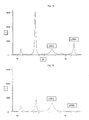
- the amount of cobalt having mainly fcc-structure is characterized by XRD and the identification is given from the structural information taken from the public PDF-database (Powder Diffraction File by the International Centre for Diffraction Data, ICDD) and represents the chemical compounds of interest i.e., fcc-cobalt (PDF 15-806) and hcp-cobalt (5-727). Additionally the Miller index of each metallic phase is given above each peak.
- the peak height ratio between the Co-fcc(200)/Co-hcp(101) being ⁇ 1/2 preferably ⁇ 2/3, more preferably ⁇ 1 and most preferably ⁇ 2, as measured between the baseline and maximum peak height for each peak.
- the maximum amount of fcc-cobalt is 100% for which the above mentioned peak height ratio ⁇ .
- the cobalt powder described above which is used in the method according to the present invention will hereinafter be referred to as "fcc-cobalt".
- the cobalt powder used in the method according to the present invention preferably comprises iron in an amount of less than 1.5 wt%, preferably less than 0.8 wt% and most preferably less than 0.4 wt%.
- the cobalt powder further preferably contains at least 100 ppm Mg, more preferably at least 150 ppm Mg and most preferably 200 to 500 ppm Mg. The ppm values are based on weight.
- the cobalt powder can also contain other elements but in amounts corresponding to technical impurities, preferably below 800 ppm, more preferably below 700 ppm and most preferably below 600 ppm.
- the grain size of the cobalt powder measured as FSSS (Fischer grain size), is preferably from 0.2 to 2.9 ⁇ m, more preferably from 0.3 to 2.0 ⁇ m and most preferably from 0.4 to 1.5 ⁇ m.
- the mean particle size (d50) of the cobalt powder is preferably from about 0.8 to about 5.9 ⁇ m, more preferably from 0.8 to 4.0 ⁇ m and most preferably from 0.8 to 3.0 ⁇ m.
- the binder phase content in a composite diamond body greatly affects the properties of the composite body. Depending on which properties that are important for the specific application the amount of binder phase also varies. However, the amount of powder(s) forming a binder phase used in the method according to the present invention is preferably within the range of 70 to above 99 wt% of the composite diamond body.
- the powder(s) forming binder phase can, in addition to the fcc-cobalt powder, comprise other binder metals such as Ni, Fe, Cu, W and Sn or alloys thereof. Also other metals such as ruthenium, rhodium, palladium, chromium, manganese, tantalum, titanium, tungsten, tantalum carbides, other ceramic carbides and alloys and mixtures thereof also may be employed.
- the powder(s) forming binder phase comprises at least 20 wt% Co.
- the method according to the present invention can be applied to any conventional method of making composite diamond bodies.
- the powder(s) forming binder phase can be provided in various ways, for example by mixing the powder(s) forming binder phase with the powders of diamond particles, or as a separate layer of either powders or as a pre-pressed compact of binder phase material either below or on top of the powders of diamond particles.
- Binder phase can also be provided by a cemented carbide support from which the binder phase is allowed to penetrate the diamond powder during the pressing and sintering operation.
- the powders of diamond particles and binder phase powder(s) are placed onto a substrate surface and then subjected to a pressing and sintering operation, either as two separate steps or as a hot pressing operation.
- the substrate can be of different materials depending on the application. Examples are cemented carbide and tool steel.
- the temperatures and pressures used during the method of making composite diamond tools vary within a wide range depending on the tool to be produced. For example, making composite diamond tools comprising fine grained diamond particles requires higher temperatures and pressures whereas composite diamond tools comprising more coarse grained diamond particles required lower temperatures and pressures.
- composite diamond bodies are manufactured using diamond particles having a small grain sizes, for example 1 ⁇ m or less.
- Such tools can for example be used for machining metals like aluminum.
- the composite diamond bodies are preferably manufactured with a combined pressing and sintering operation which involves placing an unsintered mass of abrasive, crystalline diamond particles within a protectively shielded metal enclosure which is disposed within the reaction cell of a high temperature/high pressure (HT/HP) apparatus. Additionally placed in the enclosure with the abrasive diamond particles are powder(s) forming binder phase, as well as a pre-formed mass of a cemented metal carbide or any other suitable support material, for supporting the abrasive particles and to thereby form a supported compact.
- HT/HP high temperature/high pressure
- the contents of the cell then are subjected to processing conditions selected as sufficient to effect intercrystalline bonding between adjacent grains of the abrasive diamond particles and, optionally, the joining of the sintered particles to the cemented metal carbide support.
- the temperature and pressure for such a process step varies depending on the composition of the powders, the apparatus used, etc.
- the rates of the temperature and pressure increase/decrease can also be varied. Determining these parameters for each specific case are within the purview of the skilled artisan. However, preferably a temperature of at least 1300°C and a pressure of at least 20 kbar is applied.
- composite diamond bodies from diamond particles having a larger grain size are made.
- Such tools can for example be used for machining stone etc.
- the specific grain size of the diamond particles depends on the application of the composite diamond tool, however typical grain sizes are in the range of 45-1000 ⁇ m.
- composite diamond bodies from diamond particles having a larger grain size are made by preferably mixing the diamond particles and the powder(s) forming binder phase with a pressing agent, preferably paraffin oil.
- a pressing agent preferably paraffin oil.
- the mixture is then placed onto the surface of the substrate in a mold and preferably subjected to a cold pressing operation to form green segments.
- the green segments are then placed into a mold, preferably of graphite, in order to be hot pressed.
- the hot pressing operation is performed in several steps, preferably by stepwise increasing the temperature and pressure.
- the parameters for this operation depend on the material chosen and the equipment used and is preferably chosen by a person skilled in the art. However, a typical temperature range for the maximum temperature is from 850 to 950°C.
- the sintering temperature is above 900°C.
- the temperature increase can vary between different steps in the hot pressing operation.
- the holding time at the temperature specific for each step in the pressing operation can vary from zero seconds up to several hundred seconds.
- the pressing pressure is also increased during the hot pressing operation together with the temperature and the maximum pressure that is reached during the final step is preferably between 200 to 500 kg/cm 2 .
- the amount of diamond particles in the composite diamond body made according to the present invention depends on the application of the tool.
- the diamond content in the composite diamond body is preferably at least 70% by volume.
- additives are secondary abrasives like WC, SiC, and fine grained diamond powder or solid lubricants like silver, graphite and hexagonal boron nitride.
- the composite diamond body preferably together with the supporting substrate, is then cut into pieces of different shapes depending on the application of the composite diamond body.
- the composite diamond bodies are brazed to a substrate or holder which can be used as round tools, cutting tool inserts, wear parts, rollers, rock drilling tools, saw blades, etc.
- the present invention also relates to a composite diamond body made according to the method disclosed herein.
- the composite diamond body comprises diamond particles and a binder phase comprising cobalt which prior to compaction and sintering mainly has an fcc-structure characterized by XRD as described above.
- the binder phase content in the composite diamond body varies significantly depending on the application but is preferably from 70 to above 99 wt% of the composite diamond body.
- the composite bodies according to the present invention can be used in many applications. Usually the composite diamond bodies are brazed to a substrate or holder which can be used as round tools, cutting tool inserts, wear parts, rollers, rock drilling tools, saw blades etc.
- One way to evaluate the effect of sintering temperature on hardness of composite diamond bodies is to measure the hardness of sintered bodies of pure cobalt at different sintering temperatures.
- Fcc-cobalt powder according to the present invention with an FSSS grain size of 0.95 ⁇ m, a magnesium content of 0.02 wt% and with a peak height ratio between the Co-fcc(200)/Co-hcp(101) of 3/2.
- the peak height ratio was measured between the baseline and maximum peak height, measured by XRD with a 2 ⁇ / ⁇ focusing geometry and Cu-K ⁇ radiation.
- the cobalt powder was placed in a mold.
- the powder was then pressed using a pressure of 4500 Kgf/cm 2 .
- the pressed powder was then placed in a carbon mold and was then sintered at a sintering pressure of 350 Kgf/cm 2 .
- the sintering temperature was varied according to Table 1. The sintering was, for all runs, starting at 540°C for 2 minutes. After that, the temperature was increased until the desired temperature was reached. That temperature was then kept for a specific holding time. The sintering temperatures and the holding time at the final sintering temperature are shown in Table 1.
- sintered cobalt bodies were prepared according to the above but by using commercial cobalt grades, intended for the same use, all having mainly an hcp-structure.
- Table 1 Sintering temperature 750°C 800°C 850°C 900°C 950°C Sintering time 4 min, 20 sec 4 min, 50 sec 5 min, 20 sec 6 min 6 min, 30 sec
- cobalt bodies according to the present invention shows no drop in hardness at higher sintering pressures compared to cobalt bodies made with commercial cobalt grades.
- Sintered cobalt-bodies were also prepared using free sintering at a sintering temperature of 900°C.
- Bodies according to the present invention was prepared from fcc-cobalt powder with an FSSS grain size of 0.95 ⁇ m, a magnesium content of 0.02 wt% and with a peak height ratio between the Co-fcc(200)/Co-hcp(101) of 3/2. The peak height ratio was measured between the baseline and maximum peak height, measured by XRD with a 2 ⁇ / ⁇ focusing geometry and Cu-K ⁇ radiation.
- sintered cobalt bodies were also prepared in the same way as described above but by using four different commercial cobalt grades, all having mainly an hcp-structure.
- the hardness was measured in the same way as in Example 3.
- Table 3 Cobalt quality fcc-cobalt Commercial 1 Commercial 2 Commercial 3 Commercial 4 HRB 101.9 91.0 96.7 92.0 89.7
- sintered cobalt bodies according to the present invention shows a higher hardness at 900°C compared to the sintered cobalt bodies made with commercial cobalt grades.
- the pressing properties and the strength of the pressed body were investigated for powder mixtures of diamond particles and cobalt.
- the powder density was analyzed for the powder mixtures, then the powder mixtures were pressed into green bodies to maximum pressure, Pmax, of first 50 MPa and the to a Pmax of 100 MPa.
- the diameter of the die was 9.525 mm.
- the density was determined based on the dies position, i.e., the height of the green body, after reaching each maximum pressure. The results can be seen in Table 5.
- Table 5 Powder No. Powder density, (g/cm 3 ) Density green body at Pmax 50 MPa, (g/cm 3 ) Density green body at Pmax 100 MPa, (g/cm 3 ) 1 1.19 4.12 4.54 2 1.30 3.91 4.24
Landscapes
- Chemical & Material Sciences (AREA)
- Engineering & Computer Science (AREA)
- Materials Engineering (AREA)
- Organic Chemistry (AREA)
- Metallurgy (AREA)
- Ceramic Engineering (AREA)
- Mechanical Engineering (AREA)
- Structural Engineering (AREA)
- Life Sciences & Earth Sciences (AREA)
- General Life Sciences & Earth Sciences (AREA)
- Geology (AREA)
- Inorganic Chemistry (AREA)
- Manufacturing & Machinery (AREA)
- Powder Metallurgy (AREA)
- Carbon And Carbon Compounds (AREA)
- Polishing Bodies And Polishing Tools (AREA)
Claims (5)
- Verfahren zum Herstellen eines Diamant-Komposltkörpers, welches die Schritte aufweist:- Bereitstellen von Pulvern aus Diamantteilchen,- Bereitstellen von Pulver(n), die eine Binderphase bilden und die Kobaltpulver aufweisen,- Durchführen eines Press- und Sintervorganges mit den Pulvern aus Diamantteilchen und Pulver(n), welche eine Binderphase bilden, die Kobaltpulver aufweist,- dadurch gekennzeichnet, dass das Kobaltpulver eine Komgröße FSSS von 0,2 bis 2,9 µm hat und hauptsächlich Kobalt aufweist, das eine fcc-Struktur hat, mit einem Peakhöhenverhältnis Co-fcc(200)/Cohcp(101) ≥ 1/2, wobei die Peakhöhe zwischen einer Basislinie und einem Peakhöhenmaximum in einem XRD-Muster bzw. -Spektrum für das Kobaltpulver gemessen wird, welches bestimmt wird durch XRD unter Verwendung einer 2θ/ θ Fokussiergeometrie und einer Cu-Kα-Strahlung.
- Verfahren nach Anspruch 1, dadurch gekennzeichnet, dass das Peakhöhenverhältnis zwischen Co-fcc (200)/Co-hcp(101) ≥ 2/3 ist.
- Verfahren nach einem der vorstehenden Ansprüche, dadurch gekennzeichnet, dass das Peakhöhenverhältnis zwischen Co-fcc(200)/Co-hcp(101) ≥ 1 ist.
- Verfahren nach einem der vorstehenden Ansprüche, dadurch gekennzeichnet, dass die Menge hinzugefügten Pulvers, welches die Binderphase bildet, zwischen 70 und über 99 Gew.-% liegt.
- Verfahren nach einem der vorstehenden Ansprüche, dadurch gekennzeichnet, dass das Kobaltpulver zumindest 100 ppm Mg enthält.
Applications Claiming Priority (1)
| Application Number | Priority Date | Filing Date | Title |
|---|---|---|---|
| SE0801175 | 2008-05-21 |
Publications (2)
| Publication Number | Publication Date |
|---|---|
| EP2128287A1 EP2128287A1 (de) | 2009-12-02 |
| EP2128287B1 true EP2128287B1 (de) | 2011-01-19 |
Family
ID=40888038
Family Applications (1)
| Application Number | Title | Priority Date | Filing Date |
|---|---|---|---|
| EP09160347A Not-in-force EP2128287B1 (de) | 2008-05-21 | 2009-05-15 | Verfahren zur Herstellung eines Verbunddiamantkörpers |
Country Status (7)
| Country | Link |
|---|---|
| US (1) | US8172915B2 (de) |
| EP (1) | EP2128287B1 (de) |
| JP (1) | JP5087776B2 (de) |
| KR (1) | KR101606595B1 (de) |
| CN (1) | CN101585086B (de) |
| AT (1) | ATE496148T1 (de) |
| DE (1) | DE602009000603D1 (de) |
Families Citing this family (3)
| Publication number | Priority date | Publication date | Assignee | Title |
|---|---|---|---|---|
| RU2437752C1 (ru) * | 2010-06-16 | 2011-12-27 | Федеральное государственное автономное образовательное учреждение высшего профессионального образования "Национальный исследовательский технологический университет "МИСиС" | Алмазный инструмент на гальванической связке |
| CN105345011A (zh) * | 2015-11-15 | 2016-02-24 | 丹阳市德源精密工具有限公司 | 一种高耐磨金刚石锯片的制备方法 |
| CN106799488B (zh) * | 2016-12-23 | 2019-03-12 | 南安市铭基金刚石工具有限公司 | 金刚石锯片刀头和金刚石锯片及其制作方法 |
Family Cites Families (12)
| Publication number | Priority date | Publication date | Assignee | Title |
|---|---|---|---|---|
| US4063909A (en) * | 1974-09-18 | 1977-12-20 | Robert Dennis Mitchell | Abrasive compact brazed to a backing |
| JPS5654278U (de) | 1979-09-29 | 1981-05-12 | ||
| US4403015A (en) * | 1979-10-06 | 1983-09-06 | Sumitomo Electric Industries, Ltd. | Compound sintered compact for use in a tool and the method for producing the same |
| JPS5654278A (en) * | 1979-10-09 | 1981-05-14 | Sumitomo Electric Industries | Compound sintered body for tool and its manufacture |
| JPS5839764A (ja) * | 1981-09-02 | 1983-03-08 | Hitachi Metals Ltd | 超硬合金 |
| JP2788370B2 (ja) | 1991-12-19 | 1998-08-20 | シャープ株式会社 | 濃度計 |
| JP3309897B2 (ja) | 1995-11-15 | 2002-07-29 | 住友電気工業株式会社 | 超硬質複合部材およびその製造方法 |
| DE19822663A1 (de) * | 1998-05-20 | 1999-12-02 | Starck H C Gmbh Co Kg | Sinteraktive Metall- und Legierungspulver für pulvermetallurgische Anwendungen und Verfahren zu deren Herstellung und deren Verwendung |
| ZA200000781B (en) | 1999-03-01 | 2000-09-13 | Gen Electric | Polycrystalline abrasive compacts of enhanced corrosion resistance. |
| CN1330784C (zh) * | 2002-03-29 | 2007-08-08 | 优米科尔公司 | 预合金化粘结粉末 |
| JP5031182B2 (ja) * | 2004-05-27 | 2012-09-19 | 京セラ株式会社 | 超硬合金 |
| US8231698B2 (en) * | 2006-10-31 | 2012-07-31 | De Leeuw-Morrison Barbara Marielle | Polycrystalline diamond abrasive compacts |
-
2009
- 2009-05-15 EP EP09160347A patent/EP2128287B1/de not_active Not-in-force
- 2009-05-15 AT AT09160347T patent/ATE496148T1/de active
- 2009-05-15 DE DE602009000603T patent/DE602009000603D1/de active Active
- 2009-05-18 US US12/467,576 patent/US8172915B2/en not_active Expired - Fee Related
- 2009-05-20 KR KR1020090044086A patent/KR101606595B1/ko not_active Expired - Fee Related
- 2009-05-21 CN CN200910138943XA patent/CN101585086B/zh not_active Expired - Fee Related
- 2009-05-21 JP JP2009123329A patent/JP5087776B2/ja not_active Expired - Fee Related
Also Published As
| Publication number | Publication date |
|---|---|
| ATE496148T1 (de) | 2011-02-15 |
| US20090288348A1 (en) | 2009-11-26 |
| EP2128287A1 (de) | 2009-12-02 |
| DE602009000603D1 (de) | 2011-03-03 |
| KR101606595B1 (ko) | 2016-03-25 |
| JP5087776B2 (ja) | 2012-12-05 |
| CN101585086A (zh) | 2009-11-25 |
| CN101585086B (zh) | 2012-08-29 |
| KR20090121247A (ko) | 2009-11-25 |
| JP2009280491A (ja) | 2009-12-03 |
| US8172915B2 (en) | 2012-05-08 |
Similar Documents
| Publication | Publication Date | Title |
|---|---|---|
| JP6806792B2 (ja) | 靭性を増大させる構造を有する焼結炭化物 | |
| EP1716086B1 (de) | Sinterkörper | |
| US9403137B2 (en) | Polycrystalline diamond material with extremely fine microstructures | |
| US20070056778A1 (en) | Sintered polycrystalline diamond material with extremely fine microstructures | |
| EP1925383B1 (de) | Verfahren zur Herstellung eines gesinterten Körpers, Pulvermischung und gesinterter Körper | |
| KR20220143772A (ko) | 소결된 다결정성 입방정 질화붕소 물질 | |
| WO2004031425A1 (en) | Method for producing a sintered, supported polycrystalline diamond compact | |
| US7976596B2 (en) | High density abrasive compacts | |
| EP2128287B1 (de) | Verfahren zur Herstellung eines Verbunddiamantkörpers | |
| EP1518938B1 (de) | Schneidewerkzeug | |
| US20050226691A1 (en) | Sintered body with high hardness for cutting cast iron and the method for producing same | |
| KR101363968B1 (ko) | 다금속 분말 및 그로부터 생산된 소결 컴포넌트 | |
| US20240287655A1 (en) | Cemented carbide material, a polycrystalline diamond construction including cemented carbide material and method of making same | |
| US20040025631A1 (en) | Abrasive and wear resistant material | |
| JP5008789B2 (ja) | 超硬質焼結体 | |
| JPH10324943A (ja) | 微粒超硬合金及びその製造方法 | |
| JP7425872B2 (ja) | 鉄含有バインダーを含む多結晶ダイヤモンド | |
| RU2329947C1 (ru) | Способ получения сверхтвердого поликристаллического материала | |
| KR102124566B1 (ko) | 고경도 cBN 소결체의 제조방법 | |
| JP2005194556A (ja) | 希土類含有焼結合金 | |
| CN121732053A (zh) | 聚晶金刚石压砧及其制备方法和应用 | |
| JPH0154302B2 (de) |
Legal Events
| Date | Code | Title | Description |
|---|---|---|---|
| PUAI | Public reference made under article 153(3) epc to a published international application that has entered the european phase |
Free format text: ORIGINAL CODE: 0009012 |
|
| 17P | Request for examination filed |
Effective date: 20090515 |
|
| AK | Designated contracting states |
Kind code of ref document: A1 Designated state(s): AT BE BG CH CY CZ DE DK EE ES FI FR GB GR HR HU IE IS IT LI LT LU LV MC MK MT NL NO PL PT RO SE SI SK TR |
|
| 17Q | First examination report despatched |
Effective date: 20091120 |
|
| GRAP | Despatch of communication of intention to grant a patent |
Free format text: ORIGINAL CODE: EPIDOSNIGR1 |
|
| GRAS | Grant fee paid |
Free format text: ORIGINAL CODE: EPIDOSNIGR3 |
|
| GRAA | (expected) grant |
Free format text: ORIGINAL CODE: 0009210 |
|
| AK | Designated contracting states |
Kind code of ref document: B1 Designated state(s): AT BE BG CH CY CZ DE DK EE ES FI FR GB GR HR HU IE IS IT LI LT LU LV MC MK MT NL NO PL PT RO SE SI SK TR |
|
| REG | Reference to a national code |
Ref country code: GB Ref legal event code: FG4D |
|
| REG | Reference to a national code |
Ref country code: CH Ref legal event code: EP |
|
| REG | Reference to a national code |
Ref country code: CH Ref legal event code: NV Representative=s name: BOVARD AG |
|
| REG | Reference to a national code |
Ref country code: IE Ref legal event code: FG4D |
|
| REF | Corresponds to: |
Ref document number: 602009000603 Country of ref document: DE Date of ref document: 20110303 Kind code of ref document: P |
|
| REG | Reference to a national code |
Ref country code: DE Ref legal event code: R096 Ref document number: 602009000603 Country of ref document: DE Effective date: 20110303 |
|
| REG | Reference to a national code |
Ref country code: SE Ref legal event code: TRGR |
|
| REG | Reference to a national code |
Ref country code: NL Ref legal event code: T3 |
|
| LTIE | Lt: invalidation of european patent or patent extension |
Effective date: 20110119 |
|
| PG25 | Lapsed in a contracting state [announced via postgrant information from national office to epo] |
Ref country code: HR Free format text: LAPSE BECAUSE OF FAILURE TO SUBMIT A TRANSLATION OF THE DESCRIPTION OR TO PAY THE FEE WITHIN THE PRESCRIBED TIME-LIMIT Effective date: 20110119 Ref country code: ES Free format text: LAPSE BECAUSE OF FAILURE TO SUBMIT A TRANSLATION OF THE DESCRIPTION OR TO PAY THE FEE WITHIN THE PRESCRIBED TIME-LIMIT Effective date: 20110430 Ref country code: GR Free format text: LAPSE BECAUSE OF FAILURE TO SUBMIT A TRANSLATION OF THE DESCRIPTION OR TO PAY THE FEE WITHIN THE PRESCRIBED TIME-LIMIT Effective date: 20110420 Ref country code: LT Free format text: LAPSE BECAUSE OF FAILURE TO SUBMIT A TRANSLATION OF THE DESCRIPTION OR TO PAY THE FEE WITHIN THE PRESCRIBED TIME-LIMIT Effective date: 20110119 Ref country code: PT Free format text: LAPSE BECAUSE OF FAILURE TO SUBMIT A TRANSLATION OF THE DESCRIPTION OR TO PAY THE FEE WITHIN THE PRESCRIBED TIME-LIMIT Effective date: 20110519 Ref country code: LV Free format text: LAPSE BECAUSE OF FAILURE TO SUBMIT A TRANSLATION OF THE DESCRIPTION OR TO PAY THE FEE WITHIN THE PRESCRIBED TIME-LIMIT Effective date: 20110119 Ref country code: NO Free format text: LAPSE BECAUSE OF FAILURE TO SUBMIT A TRANSLATION OF THE DESCRIPTION OR TO PAY THE FEE WITHIN THE PRESCRIBED TIME-LIMIT Effective date: 20110419 Ref country code: IS Free format text: LAPSE BECAUSE OF FAILURE TO SUBMIT A TRANSLATION OF THE DESCRIPTION OR TO PAY THE FEE WITHIN THE PRESCRIBED TIME-LIMIT Effective date: 20110519 |
|
| PG25 | Lapsed in a contracting state [announced via postgrant information from national office to epo] |
Ref country code: BE Free format text: LAPSE BECAUSE OF FAILURE TO SUBMIT A TRANSLATION OF THE DESCRIPTION OR TO PAY THE FEE WITHIN THE PRESCRIBED TIME-LIMIT Effective date: 20110119 Ref country code: FI Free format text: LAPSE BECAUSE OF FAILURE TO SUBMIT A TRANSLATION OF THE DESCRIPTION OR TO PAY THE FEE WITHIN THE PRESCRIBED TIME-LIMIT Effective date: 20110119 Ref country code: CY Free format text: LAPSE BECAUSE OF FAILURE TO SUBMIT A TRANSLATION OF THE DESCRIPTION OR TO PAY THE FEE WITHIN THE PRESCRIBED TIME-LIMIT Effective date: 20110119 Ref country code: BG Free format text: LAPSE BECAUSE OF FAILURE TO SUBMIT A TRANSLATION OF THE DESCRIPTION OR TO PAY THE FEE WITHIN THE PRESCRIBED TIME-LIMIT Effective date: 20110419 Ref country code: PL Free format text: LAPSE BECAUSE OF FAILURE TO SUBMIT A TRANSLATION OF THE DESCRIPTION OR TO PAY THE FEE WITHIN THE PRESCRIBED TIME-LIMIT Effective date: 20110119 Ref country code: SI Free format text: LAPSE BECAUSE OF FAILURE TO SUBMIT A TRANSLATION OF THE DESCRIPTION OR TO PAY THE FEE WITHIN THE PRESCRIBED TIME-LIMIT Effective date: 20110119 |
|
| PG25 | Lapsed in a contracting state [announced via postgrant information from national office to epo] |
Ref country code: EE Free format text: LAPSE BECAUSE OF FAILURE TO SUBMIT A TRANSLATION OF THE DESCRIPTION OR TO PAY THE FEE WITHIN THE PRESCRIBED TIME-LIMIT Effective date: 20110119 Ref country code: DK Free format text: LAPSE BECAUSE OF FAILURE TO SUBMIT A TRANSLATION OF THE DESCRIPTION OR TO PAY THE FEE WITHIN THE PRESCRIBED TIME-LIMIT Effective date: 20110119 |
|
| PLBE | No opposition filed within time limit |
Free format text: ORIGINAL CODE: 0009261 |
|
| STAA | Information on the status of an ep patent application or granted ep patent |
Free format text: STATUS: NO OPPOSITION FILED WITHIN TIME LIMIT |
|
| PG25 | Lapsed in a contracting state [announced via postgrant information from national office to epo] |
Ref country code: SK Free format text: LAPSE BECAUSE OF FAILURE TO SUBMIT A TRANSLATION OF THE DESCRIPTION OR TO PAY THE FEE WITHIN THE PRESCRIBED TIME-LIMIT Effective date: 20110119 Ref country code: CZ Free format text: LAPSE BECAUSE OF FAILURE TO SUBMIT A TRANSLATION OF THE DESCRIPTION OR TO PAY THE FEE WITHIN THE PRESCRIBED TIME-LIMIT Effective date: 20110119 Ref country code: RO Free format text: LAPSE BECAUSE OF FAILURE TO SUBMIT A TRANSLATION OF THE DESCRIPTION OR TO PAY THE FEE WITHIN THE PRESCRIBED TIME-LIMIT Effective date: 20110119 |
|
| 26N | No opposition filed |
Effective date: 20111020 |
|
| PG25 | Lapsed in a contracting state [announced via postgrant information from national office to epo] |
Ref country code: MC Free format text: LAPSE BECAUSE OF NON-PAYMENT OF DUE FEES Effective date: 20110531 Ref country code: MT Free format text: LAPSE BECAUSE OF FAILURE TO SUBMIT A TRANSLATION OF THE DESCRIPTION OR TO PAY THE FEE WITHIN THE PRESCRIBED TIME-LIMIT Effective date: 20110119 |
|
| REG | Reference to a national code |
Ref country code: DE Ref legal event code: R097 Ref document number: 602009000603 Country of ref document: DE Effective date: 20111020 |
|
| PG25 | Lapsed in a contracting state [announced via postgrant information from national office to epo] |
Ref country code: MK Free format text: LAPSE BECAUSE OF FAILURE TO SUBMIT A TRANSLATION OF THE DESCRIPTION OR TO PAY THE FEE WITHIN THE PRESCRIBED TIME-LIMIT Effective date: 20110119 |
|
| PG25 | Lapsed in a contracting state [announced via postgrant information from national office to epo] |
Ref country code: LU Free format text: LAPSE BECAUSE OF NON-PAYMENT OF DUE FEES Effective date: 20110515 |
|
| PG25 | Lapsed in a contracting state [announced via postgrant information from national office to epo] |
Ref country code: TR Free format text: LAPSE BECAUSE OF FAILURE TO SUBMIT A TRANSLATION OF THE DESCRIPTION OR TO PAY THE FEE WITHIN THE PRESCRIBED TIME-LIMIT Effective date: 20110119 |
|
| PG25 | Lapsed in a contracting state [announced via postgrant information from national office to epo] |
Ref country code: HU Free format text: LAPSE BECAUSE OF FAILURE TO SUBMIT A TRANSLATION OF THE DESCRIPTION OR TO PAY THE FEE WITHIN THE PRESCRIBED TIME-LIMIT Effective date: 20110119 |
|
| PGFP | Annual fee paid to national office [announced via postgrant information from national office to epo] |
Ref country code: IE Payment date: 20140512 Year of fee payment: 6 |
|
| PGFP | Annual fee paid to national office [announced via postgrant information from national office to epo] |
Ref country code: AT Payment date: 20140428 Year of fee payment: 6 Ref country code: NL Payment date: 20140510 Year of fee payment: 6 Ref country code: CH Payment date: 20140513 Year of fee payment: 6 |
|
| PGFP | Annual fee paid to national office [announced via postgrant information from national office to epo] |
Ref country code: SE Payment date: 20150512 Year of fee payment: 7 |
|
| REG | Reference to a national code |
Ref country code: CH Ref legal event code: PL |
|
| REG | Reference to a national code |
Ref country code: AT Ref legal event code: MM01 Ref document number: 496148 Country of ref document: AT Kind code of ref document: T Effective date: 20150515 |
|
| PG25 | Lapsed in a contracting state [announced via postgrant information from national office to epo] |
Ref country code: LI Free format text: LAPSE BECAUSE OF NON-PAYMENT OF DUE FEES Effective date: 20150531 Ref country code: CH Free format text: LAPSE BECAUSE OF NON-PAYMENT OF DUE FEES Effective date: 20150531 |
|
| REG | Reference to a national code |
Ref country code: NL Ref legal event code: MM Effective date: 20150601 |
|
| REG | Reference to a national code |
Ref country code: IE Ref legal event code: MM4A |
|
| PG25 | Lapsed in a contracting state [announced via postgrant information from national office to epo] |
Ref country code: AT Free format text: LAPSE BECAUSE OF NON-PAYMENT OF DUE FEES Effective date: 20150515 |
|
| REG | Reference to a national code |
Ref country code: FR Ref legal event code: PLFP Year of fee payment: 8 |
|
| PG25 | Lapsed in a contracting state [announced via postgrant information from national office to epo] |
Ref country code: NL Free format text: LAPSE BECAUSE OF NON-PAYMENT OF DUE FEES Effective date: 20150601 Ref country code: IE Free format text: LAPSE BECAUSE OF NON-PAYMENT OF DUE FEES Effective date: 20150515 |
|
| PGFP | Annual fee paid to national office [announced via postgrant information from national office to epo] |
Ref country code: DE Payment date: 20160510 Year of fee payment: 8 Ref country code: GB Payment date: 20160511 Year of fee payment: 8 |
|
| PGFP | Annual fee paid to national office [announced via postgrant information from national office to epo] |
Ref country code: IT Payment date: 20160524 Year of fee payment: 8 Ref country code: FR Payment date: 20160412 Year of fee payment: 8 |
|
| PG25 | Lapsed in a contracting state [announced via postgrant information from national office to epo] |
Ref country code: SE Free format text: LAPSE BECAUSE OF NON-PAYMENT OF DUE FEES Effective date: 20160516 |
|
| REG | Reference to a national code |
Ref country code: DE Ref legal event code: R119 Ref document number: 602009000603 Country of ref document: DE |
|
| GBPC | Gb: european patent ceased through non-payment of renewal fee |
Effective date: 20170515 |
|
| REG | Reference to a national code |
Ref country code: FR Ref legal event code: ST Effective date: 20180131 |
|
| PG25 | Lapsed in a contracting state [announced via postgrant information from national office to epo] |
Ref country code: DE Free format text: LAPSE BECAUSE OF NON-PAYMENT OF DUE FEES Effective date: 20171201 Ref country code: GB Free format text: LAPSE BECAUSE OF NON-PAYMENT OF DUE FEES Effective date: 20170515 |
|
| PG25 | Lapsed in a contracting state [announced via postgrant information from national office to epo] |
Ref country code: IT Free format text: LAPSE BECAUSE OF NON-PAYMENT OF DUE FEES Effective date: 20170515 Ref country code: FR Free format text: LAPSE BECAUSE OF NON-PAYMENT OF DUE FEES Effective date: 20170531 |