EP2130823A1 - Composé inhibiteur double des enzymes pde7 et/ou pde4, compositionspharmaceutiques et leurs applications - Google Patents
Composé inhibiteur double des enzymes pde7 et/ou pde4, compositionspharmaceutiques et leurs applications Download PDFInfo
- Publication number
- EP2130823A1 EP2130823A1 EP08736738A EP08736738A EP2130823A1 EP 2130823 A1 EP2130823 A1 EP 2130823A1 EP 08736738 A EP08736738 A EP 08736738A EP 08736738 A EP08736738 A EP 08736738A EP 2130823 A1 EP2130823 A1 EP 2130823A1
- Authority
- EP
- European Patent Office
- Prior art keywords
- oxo
- dihydroquinazoline
- methylthio
- thioxo
- tetrahydroquinazoline
- Prior art date
- Legal status (The legal status is an assumption and is not a legal conclusion. Google has not performed a legal analysis and makes no representation as to the accuracy of the status listed.)
- Withdrawn
Links
Images

Classifications
-
- C—CHEMISTRY; METALLURGY
- C07—ORGANIC CHEMISTRY
- C07D—HETEROCYCLIC COMPOUNDS
- C07D239/00—Heterocyclic compounds containing 1,3-diazine or hydrogenated 1,3-diazine rings
- C07D239/70—Heterocyclic compounds containing 1,3-diazine or hydrogenated 1,3-diazine rings condensed with carbocyclic rings or ring systems
- C07D239/72—Quinazolines; Hydrogenated quinazolines
- C07D239/95—Quinazolines; Hydrogenated quinazolines with hetero atoms directly attached in positions 2 and 4
-
- A—HUMAN NECESSITIES
- A61—MEDICAL OR VETERINARY SCIENCE; HYGIENE
- A61K—PREPARATIONS FOR MEDICAL, DENTAL OR TOILETRY PURPOSES
- A61K31/00—Medicinal preparations containing organic active ingredients
- A61K31/33—Heterocyclic compounds
- A61K31/395—Heterocyclic compounds having nitrogen as a ring hetero atom, e.g. guanethidine or rifamycins
- A61K31/495—Heterocyclic compounds having nitrogen as a ring hetero atom, e.g. guanethidine or rifamycins having six-membered rings with two or more nitrogen atoms as the only ring heteroatoms, e.g. piperazine or tetrazines
- A61K31/505—Pyrimidines; Hydrogenated pyrimidines, e.g. trimethoprim
- A61K31/517—Pyrimidines; Hydrogenated pyrimidines, e.g. trimethoprim ortho- or peri-condensed with carbocyclic ring systems, e.g. quinazoline, perimidine
-
- A—HUMAN NECESSITIES
- A61—MEDICAL OR VETERINARY SCIENCE; HYGIENE
- A61K—PREPARATIONS FOR MEDICAL, DENTAL OR TOILETRY PURPOSES
- A61K31/00—Medicinal preparations containing organic active ingredients
- A61K31/33—Heterocyclic compounds
- A61K31/395—Heterocyclic compounds having nitrogen as a ring hetero atom, e.g. guanethidine or rifamycins
- A61K31/495—Heterocyclic compounds having nitrogen as a ring hetero atom, e.g. guanethidine or rifamycins having six-membered rings with two or more nitrogen atoms as the only ring heteroatoms, e.g. piperazine or tetrazines
- A61K31/505—Pyrimidines; Hydrogenated pyrimidines, e.g. trimethoprim
- A61K31/519—Pyrimidines; Hydrogenated pyrimidines, e.g. trimethoprim ortho- or peri-condensed with heterocyclic rings
-
- A—HUMAN NECESSITIES
- A61—MEDICAL OR VETERINARY SCIENCE; HYGIENE
- A61P—SPECIFIC THERAPEUTIC ACTIVITY OF CHEMICAL COMPOUNDS OR MEDICINAL PREPARATIONS
- A61P1/00—Drugs for disorders of the alimentary tract or the digestive system
-
- A—HUMAN NECESSITIES
- A61—MEDICAL OR VETERINARY SCIENCE; HYGIENE
- A61P—SPECIFIC THERAPEUTIC ACTIVITY OF CHEMICAL COMPOUNDS OR MEDICINAL PREPARATIONS
- A61P17/00—Drugs for dermatological disorders
- A61P17/04—Antipruritics
-
- A—HUMAN NECESSITIES
- A61—MEDICAL OR VETERINARY SCIENCE; HYGIENE
- A61P—SPECIFIC THERAPEUTIC ACTIVITY OF CHEMICAL COMPOUNDS OR MEDICINAL PREPARATIONS
- A61P19/00—Drugs for skeletal disorders
- A61P19/02—Drugs for skeletal disorders for joint disorders, e.g. arthritis, arthrosis
-
- A—HUMAN NECESSITIES
- A61—MEDICAL OR VETERINARY SCIENCE; HYGIENE
- A61P—SPECIFIC THERAPEUTIC ACTIVITY OF CHEMICAL COMPOUNDS OR MEDICINAL PREPARATIONS
- A61P29/00—Non-central analgesic, antipyretic or antiinflammatory agents, e.g. antirheumatic agents; Non-steroidal antiinflammatory drugs [NSAID]
-
- A—HUMAN NECESSITIES
- A61—MEDICAL OR VETERINARY SCIENCE; HYGIENE
- A61P—SPECIFIC THERAPEUTIC ACTIVITY OF CHEMICAL COMPOUNDS OR MEDICINAL PREPARATIONS
- A61P37/00—Drugs for immunological or allergic disorders
-
- A—HUMAN NECESSITIES
- A61—MEDICAL OR VETERINARY SCIENCE; HYGIENE
- A61P—SPECIFIC THERAPEUTIC ACTIVITY OF CHEMICAL COMPOUNDS OR MEDICINAL PREPARATIONS
- A61P37/00—Drugs for immunological or allergic disorders
- A61P37/02—Immunomodulators
-
- A—HUMAN NECESSITIES
- A61—MEDICAL OR VETERINARY SCIENCE; HYGIENE
- A61P—SPECIFIC THERAPEUTIC ACTIVITY OF CHEMICAL COMPOUNDS OR MEDICINAL PREPARATIONS
- A61P37/00—Drugs for immunological or allergic disorders
- A61P37/02—Immunomodulators
- A61P37/06—Immunosuppressants, e.g. drugs for graft rejection
-
- A—HUMAN NECESSITIES
- A61—MEDICAL OR VETERINARY SCIENCE; HYGIENE
- A61P—SPECIFIC THERAPEUTIC ACTIVITY OF CHEMICAL COMPOUNDS OR MEDICINAL PREPARATIONS
- A61P37/00—Drugs for immunological or allergic disorders
- A61P37/08—Antiallergic agents
-
- A—HUMAN NECESSITIES
- A61—MEDICAL OR VETERINARY SCIENCE; HYGIENE
- A61P—SPECIFIC THERAPEUTIC ACTIVITY OF CHEMICAL COMPOUNDS OR MEDICINAL PREPARATIONS
- A61P43/00—Drugs for specific purposes, not provided for in groups A61P1/00-A61P41/00
-
- C—CHEMISTRY; METALLURGY
- C07—ORGANIC CHEMISTRY
- C07D—HETEROCYCLIC COMPOUNDS
- C07D239/00—Heterocyclic compounds containing 1,3-diazine or hydrogenated 1,3-diazine rings
- C07D239/70—Heterocyclic compounds containing 1,3-diazine or hydrogenated 1,3-diazine rings condensed with carbocyclic rings or ring systems
- C07D239/72—Quinazolines; Hydrogenated quinazolines
- C07D239/95—Quinazolines; Hydrogenated quinazolines with hetero atoms directly attached in positions 2 and 4
- C07D239/96—Two oxygen atoms
-
- C—CHEMISTRY; METALLURGY
- C07—ORGANIC CHEMISTRY
- C07D—HETEROCYCLIC COMPOUNDS
- C07D495/00—Heterocyclic compounds containing in the condensed system at least one hetero ring having sulfur atoms as the only ring hetero atoms
- C07D495/02—Heterocyclic compounds containing in the condensed system at least one hetero ring having sulfur atoms as the only ring hetero atoms in which the condensed system contains two hetero rings
- C07D495/04—Ortho-condensed systems
Definitions
- the invention is aimed at the field of medical chemistry, more specifically at dual inhibitors of enzymes PDE7 and PDE4 and their potential use in the preparation of pharmaceutical compositions for the treatment of inflammatory or autoimmune processes; and therefore, it relates to the pharmaceutical sector.
- PDE Phosphodiesterases
- cAMP and cGMP degrading cyclic nucleotides
- hydrolytic breakage of the 3'-phosphodiester bond giving rise to the corresponding inactive form of 5'-monophosphate ( Conti, M.; Jin, S. L., The molecular biology of cyclic nucleotide phosphodiesterases. Prog. Nucleic Acid Res. Mol. Biol. 1999, 63, 1-38 ).
- cAMP and cGMP are generated through the action of adenylate cyclase and guanylate cyclase respectively, acting as secondary messengers in the transduction of intracellular signs.
- T-lymphocytes those expressed in T-lymphocytes are mainly 3B, 4A, 4B, 4D and 7A1 ( Ekholm, D.; Hemmer, B.; Gao, G.; Vergelli, M.; Martin, R.; Manganiello, V., Differential expression of cyclic nucleotide phosphodiesterase 3 and 4 activities in human T cell clones specific for myelin basic protein. J. Immunol. 1997, 159, 1520-1529 ; Amsterdam, S.; Houslay, M.
- PDE7 Another alternative is the development of inhibitors against other cAMP-selective PDEs that are expressed in immune cells.
- the inhibition of PDE7 could be an approach for the treatment of diseases dependent on T-cell activation, since the potential for inhibiting the activity of Th1 cells by blocking the activity of this enzyme has been demonstrated ( Li, L.; Yee, C.; Beavo, J. A., CD3- and CD28-dependent induction of PDE7 required for T cell activation. Science 1999, 283, 848-851 ; Nakata, A.; Ogawa, K.; Sasaki, T.; Koyama, N.; Wada, K.; Kotera, J.; Kikkawa, H.; Omori, K.; Kaminuma, O.
- Phosphodiesterase 7A-deficient mice have functional T cells. J Immunol. 2003, 171, 6414-20 ). Therefore, the use of PDE7-selective inhibitors is fundamental for elucidating the real potential of PDE7A as a pharmacological target for the treatment of immune response alterations ( Castro, A.; Jerez, M. J.; Gil, C.; Mart ⁇ nez, A. Cyclic nucleotide phosphodiesterases and their role in immunomodulatory responses: Advances in the development of specific phosphodiesterase inhibitors Med. Res. Rev. 2005, 25, 229-244 ).
- derivatives of benzo- and benzothienothiadiazine developed by the inventors of the present patent were the first described heterocyclic inhibitors of PDE7 ( Mart ⁇ nez, A.; Castro, A.; Gil, C.; Miralpeix, M.; Segarra, V.; Doménech, T.; Beleta, J.; Palacios, J.; Ryder, H.; Miró, X.; Bonet, C.; Casacuberta, J.; Azor ⁇ n, F.; Pi ⁇ a, B.; Puigdoménech, P.
- Benzyl derivatives of 2,1,3-benzo- and benzothieno [3,2-a] thiadiazine 2,2-dioxides First phosphodiesterase 7 inhibitors. J. Med. Chem., 2000, 43, 683-689 ; Castro, A.; Abasolo, M. I.; Gil, C.; Segarra, V.; Mart ⁇ nez, A. CoMFA of benzyl derivatives of 2,1,3-benzo and benzothieno [3,2-a] thiadiazine 2,2-dioxides: clues for the design of phosphodiesterase 7 inhibitors. Eur. J. Med. Chem. 2001, 36, 333-338 ).
- PDE7-selective inhibitors have made it possible to study the function of PDE7A in different cells and tissues.
- the inhibition of PDE7A does not reduce the proliferation of T-cells per se, it does considerably increase the effect that PDE4 inhibitors have on increasing the levels of cAMP ( Smith, S. J.; Cieslinski, L. B.; Newton, R.; Donnelly, L. E.; Fenwick, P. S.; Nicholson, A. G.; Barnes, P. J.; Barnette, M. S.; Giembycz, M. A.
- BRL 50481 [3-(N,N-dimethylsulfonamide)-4-methyl-nitrobenzene], a selective inhibitor of phosphodiesterase 7: in vitro studies in human monocytes, lung macrophages, and CD8+ T-Iymphocytes. Mol. Pharmacol. 2004, 66, 1679-89 ).
- One object of this invention is a compound (understood as meaning a family of compounds) with a dual inhibitory activity on enzymes PDE7 and/or PDE4, hereinafter the compound of the present invention, which presents the formula (I): wherein:
- Another additional object of the present invention is constituted by a pharmaceutical composition useful in the treatment of inflammatory and autoimmune diseases, hereinafter the pharmaceutical composition of the invention, which comprises a compound, in a therapeutically effective quantity, of formula (I), or mixtures thereof, a pharmaceutically acceptable salt, derivative, prodrug, solvate or stereoisomer thereof together with a pharmaceutically acceptable carrier, adjuvant or vehicle, for administration to a patient.
- the pharmaceutical composition of the invention which comprises a compound, in a therapeutically effective quantity, of formula (I), or mixtures thereof, a pharmaceutically acceptable salt, derivative, prodrug, solvate or stereoisomer thereof together with a pharmaceutically acceptable carrier, adjuvant or vehicle, for administration to a patient.
- Another additional object of the present invention is constituted by the use of a compound of the invention of formula (I), or its mixtures for the preparation of a medicine, hereinafter use of a compound of the invention, directed at treating inflammatory and/or autoimmune pathologies or diseases, including, but not limited to, intestinal inflammatory disease, inflammatory joint pathologies, atopic dermatitis and other inflammatory skin pathologies, neuritis, encephalitis, encephalomyelitis and inflammatory pathologies that affect the central nervous system (multiple sclerosis) or peripheral nervous system, myositis, vasculitis, systemic lupus erythematosus, infectious diseases with inflammation symptoms, host rejection of grafts, conjunctivitis, and inflammatory pathologies of the eye, ear, and mucous membranes.
- inflammatory and/or autoimmune pathologies or diseases including, but not limited to, intestinal inflammatory disease, inflammatory joint pathologies, atopic dermatitis and other inflammatory skin pathologies
- the present invention is based on the fact that the inventors have demonstrated that compounds of formula (I) are dual inhibitors of enzymes PDE7 and/or PDE4, more specifically, of enzymes PDE7A1 and/or PDE4D2 (Example 5), meaning that they can be used in the preparation of pharmaceutical compounds for the treatment of inflammatory or autoimmune processes.
- one object of the present invention is a compound (understood to mean a family of compounds) with a dual inhibitor activity of the enzymes PDE7 and/or PDE4, hereinafter the compound of the present invention, which presents the formula (I): wherein:
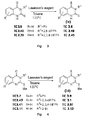
- a particular object of the invention is constituted by a compound of the invention with the formula 4-oxo-2-thioxo-1,2,3,4-tetrahydroquinazoline (Compound la, Figure 1 ), and more preferably, belonging, by way of illustration and without limiting the scope of the invention, to the following group:
- Another particular object of the invention is constituted by a compound of the invention with the formula 2-methylthio-4-oxo-3,4-dihydroquinazoline (Compound Ib, Figure 2 ), and more preferably, belonging, by way of illustration and without limiting the scope of the invention, to the following group:
- Another particular object of the invention is constituted by a compound of the invention with the formula 2,4-dithioxo-1,2,3,4-tetrahydroquinazoline (Compound Ic, Figure 3 ), and more preferably, belonging, by way of illustration and without limiting the scope of the invention, to the following group:
- Another particular object of the invention is constituted by a compound of the invention with the formula 2-methylthio-4-thioxo-3,4-dihydroquinazoline (Compound Id, Figure 4 ), and more preferably, belonging, by way of illustration and without limiting the scope of the invention, to the following group:
- the compounds of the present invention represented by the formula (I), and more specifically, the compounds of formula Ia, Ib, Ic and Id, and the specific compounds belonging to these sub-families as described above may include isomers, depending on the presence of multiple bonds (for example, Z, E), including optical or enantiomeric isomers, depending on the presence of chiral centres.
- the isomers, enantiomers, or individual diastereoisomers and mixtures thereof fall within the scope of the present invention.
- the enantiomers or individual diastereoisomers, as well as the mixtures thereof, may be separated using conventional techniques.
- derivative includes pharmaceutically acceptable compounds, in other words, derivatives of the compounds of the formula (I) which may be used in the preparation of a medicine, as well as pharmaceutically unacceptable derivatives since these may be useful in the preparation of pharmaceutically acceptable derivatives.
- the nature of the pharmaceutically acceptable derivative is not critical as long as it is pharmaceutically acceptable.
- the scope of the present invention includes the prodrugs of the compounds of formula (I).
- prodrug as referred to herein includes any compound derived from a compound of formula (I), for example, esters, including the esters of carboxylic acids, the esters of amino acids, phosphate esters, sulphonate esters of metal salts, etc., carbamates, amides, etc., which, when administered to an individual is capable of providing, directly or indirectly, said compound of formula (I) in said individual.
- such derivative is a compound that increases the bioavailability of the compound of formula (I) when administered to an individual or liberates the compound of formula (I) in a biological compartment.
- the nature of such derivative is not critical as long as it can be administered to an individual and provides the compound of formula (I) in a biological compartment of an individual.
- the preparation of such prodrug can be effected through conventional methods known to experts in the field.
- the compounds of the invention may be in crystalline form as free compounds or as solvates and the intention is for both forms to be within the scope of the present invention.
- the term "solvate”, as used herein, includes both pharmaceutically acceptable solvates, in other words, solvates of the compound of formula (I) that may be used in the preparation of a medicine, as well as pharmaceutically unacceptable solvates, which may be useful in the preparation of pharmaceutically acceptable solvates or salts.
- the nature of the pharmaceutically acceptable solvate is not critical as long as it is pharmaceutically acceptable.
- the solvate is a hydrate.
- the solvates may be obtained through conventional solvation methods well known to technicians in the field.
- the compounds of formula (I), their isomers, salts, prodrugs or solvates will be, preferably, in a pharmaceutically acceptable or substantially pure form, in other words, will have a pharmaceutically acceptable level of purity excluding standard pharmaceutical additives such as solvents and carriers, and not including material considered toxic at normal dosage levels.
- the purity levels for the active principle are preferably more than 50%, more preferably more than 70%, more preferably more than 90%. In a preferred embodiment, they are more than 95% of the compound of formula (I), or of its salts, solvates or prodrugs.
- the compounds of the invention also include compounds that differ only in the presence of one or more isotopically enriched atoms.
- compounds with said structure excluding the substitution of one hydrogen by one deuterium or by tritium, or the substitution of one carbon for one carbon enriched in 13 C or 14 C or one nitrogen enriched in 15 N, are within the scope of this invention.
- the compounds described in the present invention, their pharmaceutically acceptable salts, prodrugs and/or solvates as well as the pharmaceutical compositions containing them may be used in conjunction with other additional drugs in order to offer combination therapy.
- Said additional drugs may form part of the same pharmaceutical composition, or, alternatively, may be provided in the form of a separate composition for simultaneous or non-simultaneous administration with the pharmaceutical composition comprising a compound of formula (I), or prodrug, solvate, derivative or pharmaceutically acceptable salt thereof.
- the compounds of the present invention of formula (I) may be obtained or produced via chemical synthesis or obtained from a natural matter of different origin.
- a synthetic route is described for the compounds of the invention of formula (I) and their families (see Figure 1 to 4 , and Examples 1 to 4), which may be carried out in practice using the data described in the present invention by an expert technician in the field.
- the synthesis procedures for the compounds of the invention Ia, Ib, Ic and Id, as described in the invention, constitute another object of the present invention.
- composition of the invention which comprises a compound, in a therapeutically effective quantity, of formula (I), or mixtures thereof, a pharmaceutically acceptable salt, derivative, prodrug, solvate or stereoisomer thereof, together with a pharmaceutically acceptable carrier, adjuvant or vehicle, for administration to a patient.
- Another particular object of the invention is constituted by the pharmaceutical composition of the invention wherein the compound of formula (I) belongs to one, or to several, of the following families of compounds:
- compositions are the adjuvants and vehicles known to technicians in the field and commonly used in the preparation of therapeutic compositions.
- therapeutically effective quantity refers to the quantity of the agent or compound capable of developing inhibition of the enzymes PDE7 and PDE4, calculated to produce the required effect and, in general, will be determined, among other causes, by the inherent characteristics of the compounds, as well as age, state of the patient, severity of the alteration or disorder, including route and frequency of administration.
- said therapeutic composition is prepared in solid form or in aqueous suspension, in a pharmaceutically acceptable solvent.
- the therapeutic composition provided by this invention may be administered via any appropriate route of administration, and to this effect said composition will be formulated in the suitable pharmaceutical format for the selected administration route.
- the therapeutic composition provided by this invention will be administered by oral, topical, rectal or parenteral route (including subcutaneous, intraperitoneal, intradermic, intramuscular, intravenous, etc.).
- Another additional object of the present invention is constituted by the use of a compound of the invention of formula (I), or mixtures thereof for the preparation of a medicine, hereinafter use of a compound of the invention, aimed at treating inflammatory and/or autoimmune diseases or pathologies, including, but not limited to, intestinal inflammatory disease, inflammatory joint pathologies, atopic dermatitis and other inflammatory skin pathologies, neuritis, encephalitis, encephalomyelitis and inflammatory pathologies affecting the central nervous system (multiple sclerosis) or peripheral nervous system, myositis, vasculitis, systemic lupus erythematosus, infectious diseases with inflammation systems, reactions of host rejection of grafts, conjunctivitis and inflammatory pathologies of the eye, ear, and mucous membranes.
- inflammatory and/or autoimmune diseases or pathologies including, but not limited to, intestinal inflammatory disease, inflammatory joint pathologies, atopic dermatitis and other inflammatory skin path
- Example 1 General procedure for obtaining the derivatives of 4-oxo-2-thioxo-1,2,3,4-tetrahydroquinazoline (Compounds la, Figure 1)
- Example 2 General procedure for obtaining the derivatives of 2-methylthio-4-oxo-3,4-dihydroquinazoline (Compounds Ib, Figure 2).
- the catalytic domain of PDE7A1 (aá. 130-482) and the complete enzyme of PDE4D2 (aa. 1-507) were subcloned in pET vectors, overexpressed in E.coli strain BL21, and purified to homogeneity as described in the bibliography ( Wang, H., Liu, Y., Chen, Y., Robinson, H., and Ke, H. Multiple elements jointly determine inhibitor selectivity of cyclic nucleotide phosphodiesterases 4 and 7. J. Biol. Chem. 2005, 280, 30949-30955 ).
- the enzymatic activities of PDE7A1 and PDE4D2 were tested through incubation of the enzymes with 100 ⁇ l of a reaction mixture that contained 50 mM Tris•HCl (pH 8.5), 50 mM MgCl 2 , 5 mM DTT, and 3 H-cAMP (20000 cpm per test, Sigma-Aldrich) at room temperature during 10 minutes.
- the reactions were concluded by adding 200 ⁇ l 0.2 M ZnSO 4 when 20-50% of the cAMP was hydrolysed.
- the product of the reaction, 3 H-AMP was precipitated by adding 200 ⁇ l 0.25 M Ba(OH) 2 (Sigma-Aldrich), while the unreacted 3 H-AMPc remained in the supernatant. Radioactivity of the supernatant was measured with a mixture of scintillation liquid (ScintiSafe PlusTM 50%, Fisher Scientific) using the counter LKB RackBeta 1214.
- TC3.14 1.70 ⁇ 0.10 ⁇ M 34.00 ⁇ 5.00 ⁇ M TC3.47A >1 ⁇ M N.D. TC3.36 0.24 ⁇ 0.03 ⁇ M 4.50 ⁇ 0.10 ⁇ M TC3.32 2.10 ⁇ 0.10 ⁇ M? N.D. TC3.35 1.86 ⁇ 0.18 ⁇ M N.D. TC3.15b ⁇ 1 ⁇ M N.D. TC3.23 0.13 ⁇ 0.02 ⁇ M 1.40 ⁇ 0.20 ⁇ M TC3.24 >1 ⁇ M N.D. TC3.22 0.27 ⁇ 0.02 ⁇ M 1.10 ⁇ 0.20 ⁇ M TC2.43 0.51 ⁇ 0.02 ⁇ M 3.50 ⁇ 0.30 ⁇ M TC2.41 ⁇ 10 ⁇ M N.D.
- TC3.6 1.04 ⁇ 0.08 ⁇ M 5.70 ⁇ 0.03 ⁇ M TC2.49 ⁇ 1 ⁇ M N.D. TC2.45 >1 ⁇ M N.D. TC3.9 0.84 ⁇ 0.01 ⁇ M 8.00 ⁇ 1.20 ⁇ M TC3.1 0.1-1 ⁇ M N.D. TC2.51 >1 ⁇ M N.D. TC3.13 0.1-1 ⁇ M N.D.
- Cell toxicity tests were carried out on a clone of Th2 lymphocytes (D10.G4.1) through flow cytometry using Propidium lodide in order to determine cell death. This technique is based on quantifying the cells in which Propidium lodide can penetrate because their membrane is damaged, while whole or intact cells do not allow this fluorochrome which intersperses in the nucleic acids to pass.
- the cell concentration used was 1x10 6 cells/ml, in a final volume of 200 ⁇ l, in the presence of different concentrations of the inhibitors during 48h. After this time, the cells were washed and incubated with 5 ⁇ g/ml of Propidium lodide during 1 min. The samples treated in this way were analysed by cytometry using BD FACSCantoTM equipment. These experiments were carried out in parallel with two commercial inhibitors: Rolipram (inhibitor of PDE4) and BRL 50481 (inhibitor of PDE7).
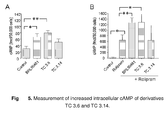
- PDE inhibition has the direct effect of increasing cAMP, since their degradation is prevented.
- two compounds of formula (I) of the invention were chosen, specifically: TC 3.6 and TC 3.14 and cAMP concentration was measured using the cAMP Biotrak Enzymeimmunoassay System of Amersham Biosciences kit.
- TC 3.6 and TC 3.14 two compounds of formula (I) of the invention were chosen, specifically: TC 3.6 and TC 3.14 and cAMP concentration was measured using the cAMP Biotrak Enzymeimmunoassay System of Amersham Biosciences kit.
- the amount of intracellular cAMP increased in a statistically significant manner with the inhibitors of PDE7 in relation to the control, although a greater increase is observed with the combination of Rolipram and the PDE7 inhibitors, with a synergy effect occurring that considerably increased the levels of detected intracellular cAMP through inhibition of PDE4.
Landscapes
- Health & Medical Sciences (AREA)
- Chemical & Material Sciences (AREA)
- Organic Chemistry (AREA)
- Veterinary Medicine (AREA)
- Public Health (AREA)
- General Health & Medical Sciences (AREA)
- Animal Behavior & Ethology (AREA)
- Life Sciences & Earth Sciences (AREA)
- Medicinal Chemistry (AREA)
- Pharmacology & Pharmacy (AREA)
- Chemical Kinetics & Catalysis (AREA)
- General Chemical & Material Sciences (AREA)
- Bioinformatics & Cheminformatics (AREA)
- Engineering & Computer Science (AREA)
- Nuclear Medicine, Radiotherapy & Molecular Imaging (AREA)
- Immunology (AREA)
- Epidemiology (AREA)
- Rheumatology (AREA)
- Pulmonology (AREA)
- Pain & Pain Management (AREA)
- Dermatology (AREA)
- Orthopedic Medicine & Surgery (AREA)
- Physical Education & Sports Medicine (AREA)
- Transplantation (AREA)
- Pharmaceuticals Containing Other Organic And Inorganic Compounds (AREA)
Applications Claiming Priority (2)
| Application Number | Priority Date | Filing Date | Title |
|---|---|---|---|
| ES200700762A ES2308916B1 (es) | 2007-03-22 | 2007-03-22 | Compuesto inhibidor dual de las enzimas pde7 y/o pde4, composiciones farmaceuticas y sus aplicaciones. |
| PCT/ES2008/070051 WO2008113881A1 (fr) | 2007-03-22 | 2008-03-14 | Composé inhibiteur double des enzymes pde7 et/ou pde4, compositionspharmaceutiques et leurs applications |
Publications (2)
| Publication Number | Publication Date |
|---|---|
| EP2130823A1 true EP2130823A1 (fr) | 2009-12-09 |
| EP2130823A4 EP2130823A4 (fr) | 2011-06-15 |
Family
ID=39765419
Family Applications (1)
| Application Number | Title | Priority Date | Filing Date |
|---|---|---|---|
| EP08736738A Withdrawn EP2130823A4 (fr) | 2007-03-22 | 2008-03-14 | Composé inhibiteur double des enzymes pde7 et/ou pde4, compositionspharmaceutiques et leurs applications |
Country Status (8)
| Country | Link |
|---|---|
| US (1) | US20100152213A1 (fr) |
| EP (1) | EP2130823A4 (fr) |
| JP (1) | JP2010522226A (fr) |
| CN (1) | CN101679314A (fr) |
| AU (1) | AU2008228203A1 (fr) |
| CA (1) | CA2682259A1 (fr) |
| ES (1) | ES2308916B1 (fr) |
| WO (1) | WO2008113881A1 (fr) |
Cited By (1)
| Publication number | Priority date | Publication date | Assignee | Title |
|---|---|---|---|---|
| EP3095446A1 (fr) * | 2015-05-22 | 2016-11-23 | Consejo Superior de Investigaciones Cientificas (CSIC) | Quinazolines s-stabilisés et leurs applications thérapeutiques pour le traitement de maladies à médiation par pde7 |
Families Citing this family (8)
| Publication number | Priority date | Publication date | Assignee | Title |
|---|---|---|---|---|
| PT2118074E (pt) | 2007-02-01 | 2014-03-20 | Resverlogix Corp | Compostos para a prevenção e tratamento de doenças cardiovasculares |
| US8637528B2 (en) | 2007-03-27 | 2014-01-28 | Omeros Corporation | Use of PDE7 inhibitors for the treatment of movement disorders |
| KR101913109B1 (ko) | 2009-03-18 | 2018-10-31 | 리스버로직스 코퍼레이션 | 신규한 소염제 |
| ES2353093B1 (es) * | 2009-05-20 | 2012-01-03 | Consejo Superior De Investigaciones Científicas (Csic) | Uso de derivados de quinazolinas y sus composiciones farmacéuticas en enfermedades neurodegenerativas. |
| CN106038567A (zh) | 2010-11-08 | 2016-10-26 | 奥默罗斯公司 | 使用pde7抑制剂治疗成瘾和冲动控制障碍 |
| US9220715B2 (en) | 2010-11-08 | 2015-12-29 | Omeros Corporation | Treatment of addiction and impulse-control disorders using PDE7 inhibitors |
| US10111885B2 (en) | 2015-03-13 | 2018-10-30 | Resverlogix Corp. | Compositions and therapeutic methods for the treatment of complement-associated diseases |
| US20260048059A1 (en) | 2022-08-18 | 2026-02-19 | Klaus Wirth | Use of substituted benzoxazole and benzofuran compounds for the treatment and prevention of diseases associated with chronic fatigue, exhaustion and/or exertional intoleranc |
Family Cites Families (11)
| Publication number | Priority date | Publication date | Assignee | Title |
|---|---|---|---|---|
| US1059271A (en) * | 1912-05-04 | 1913-04-15 | Davis Bournonville Co | Pantograph apparatus. |
| JPS515394B2 (fr) * | 1971-10-07 | 1976-02-19 | ||
| DE2652144A1 (de) * | 1976-11-16 | 1978-05-18 | Merck Patent Gmbh | Neue chinazolindione |
| DD210452A1 (de) * | 1981-11-16 | 1984-06-13 | Adw Ddr | Verfahren zur herstellung von2,3-diamino-3,4-dihydrochinazolin-4-onen |
| JPH0749423B2 (ja) * | 1987-01-30 | 1995-05-31 | 日清製粉株式会社 | 2−アルキルスルフイニル−4(3h)−キナゾリノン誘導体、その製造方法およびそれを有効成分とする抗潰瘍薬 |
| JPH10259176A (ja) * | 1997-03-17 | 1998-09-29 | Japan Tobacco Inc | 血管新生阻害作用を有する新規アミド誘導体及びその用途 |
| EP1385848A2 (fr) | 2001-04-25 | 2004-02-04 | ALTANA Pharma AG | Phtalazinones |
| WO2002088079A2 (fr) | 2001-05-01 | 2002-11-07 | Bristol-Myers Squibb Company | Inhibiteurs doubles de pde 7 et pde 4 |
| PE20030008A1 (es) * | 2001-06-19 | 2003-01-22 | Bristol Myers Squibb Co | Inhibidores duales de pde 7 y pde 4 |
| DE10230381A1 (de) * | 2002-07-05 | 2004-01-22 | Institut für Medizintechnologie Magdeburg GmbH, IMTM | Verwendung von Inhibitoren der Alanyl-Aminopeptidasen und diese umfassende pharmazeutischen Zubereitungen |
| US20050038051A1 (en) * | 2003-06-09 | 2005-02-17 | Jodi Nunnari | Novel molecules for regulating cell death |
-
2007
- 2007-03-22 ES ES200700762A patent/ES2308916B1/es not_active Expired - Fee Related
-
2008
- 2008-03-14 JP JP2010500305A patent/JP2010522226A/ja active Pending
- 2008-03-14 CA CA002682259A patent/CA2682259A1/fr not_active Abandoned
- 2008-03-14 AU AU2008228203A patent/AU2008228203A1/en not_active Abandoned
- 2008-03-14 US US12/532,104 patent/US20100152213A1/en not_active Abandoned
- 2008-03-14 WO PCT/ES2008/070051 patent/WO2008113881A1/fr not_active Ceased
- 2008-03-14 EP EP08736738A patent/EP2130823A4/fr not_active Withdrawn
- 2008-03-14 CN CN200880013379A patent/CN101679314A/zh active Pending
Cited By (2)
| Publication number | Priority date | Publication date | Assignee | Title |
|---|---|---|---|---|
| EP3095446A1 (fr) * | 2015-05-22 | 2016-11-23 | Consejo Superior de Investigaciones Cientificas (CSIC) | Quinazolines s-stabilisés et leurs applications thérapeutiques pour le traitement de maladies à médiation par pde7 |
| US9796687B2 (en) | 2015-05-22 | 2017-10-24 | Consejo Superior De Investigaciones Cientificas | S-substituted quinazolines and their therapeutic applications for the treatment of diseases mediated by PDE7 |
Also Published As
| Publication number | Publication date |
|---|---|
| JP2010522226A (ja) | 2010-07-01 |
| WO2008113881A1 (fr) | 2008-09-25 |
| ES2308916A1 (es) | 2008-12-01 |
| WO2008113881B1 (fr) | 2008-11-06 |
| EP2130823A4 (fr) | 2011-06-15 |
| CN101679314A (zh) | 2010-03-24 |
| US20100152213A1 (en) | 2010-06-17 |
| AU2008228203A1 (en) | 2008-09-25 |
| CA2682259A1 (fr) | 2008-09-25 |
| ES2308916B1 (es) | 2009-10-29 |
Similar Documents
| Publication | Publication Date | Title |
|---|---|---|
| EP2130823A1 (fr) | Composé inhibiteur double des enzymes pde7 et/ou pde4, compositionspharmaceutiques et leurs applications | |
| CA2914168C (fr) | Derives de pyrido[1,2-a]pyrimidin-4-one et leur utilisation pour le traitement de troubles sexuels | |
| JP5235887B2 (ja) | Rhoキナーゼ阻害剤 | |
| US5021432A (en) | Benzopyran compound and its pharmaceutical use | |
| US7709489B2 (en) | Imidazoquinoline derivatives as adenosine A3 receptor ligands | |
| KR20100103661A (ko) | TNF-α 합성의 조절자 및 PDE4 억제제로서 3고리 화합물 | |
| CA2574685A1 (fr) | Derives quinazolin-4-yl- piperidine et cinnolin-4-yl-piperidine utilises en tant qu'inhibiteurs de pde10 pour le traitement de troubles du snc | |
| CA2909310A1 (fr) | Quinazolines et azaquinazolines en tant que doubles inhibiteurs des voies ras/raf/mek/erk et pi3k/akt/pten/mtor | |
| EP2205593A1 (fr) | Dérivés de quinazolinedione, leur préparation et leurs applications thérapeutiques | |
| EP3266774A1 (fr) | Composés pyrimidine substitués en tant qu'inhibiteurs de la phosphatidylinositol 3-kinase delta et utilisation de ces derniers | |
| AU2002229541A1 (en) | (dihydro)isoquinoline derivatives as phosphodiesterase inhibitors | |
| EP3504208B1 (fr) | Dérivé de triazolopyrazinone en tant qu' inhibiteur du pde1 humain | |
| US9902710B2 (en) | Substituted 6, 7-dialkoxy-3-isoquinoline derivatives as inhibitors of phosphodiesterase 10 (PDE 10A) | |
| MX2008016388A (es) | [d]piridazin-7-onas fusionadas. | |
| CA2493854A1 (fr) | Inhibiteur de phosphodiesterase | |
| EP1807431B1 (fr) | Pyrrolo [1,2-d] [1,2-4] triazine en tant qu'inhibiteurs des c-jun n-terminal kinases et des kinases p-38 | |
| Gil et al. | Compound that is a dual inhibitor of enzymes PDE7 and/or PDE4, pharmaceutical compositions and uses thereof | |
| Deng et al. | Discovery of 5-trifluoromethyl-2-aminopyrimidine derivatives as potent dual inhibitors of FLT3 and CHK1 | |
| EP2057148A1 (fr) | Derives amidine de 2-heteroaryl-quinazolines et de quinolines utilises comme puissants analgesiques et agents anti-inflammatoires | |
| HK1077819B (en) | Imidazoquinoline derivatives as adenosine a3 receptor ligands | |
| JPWO2001062293A1 (ja) | キマーゼ阻害剤を有効成分とする好酸球増加が関与する種々の疾患の予防または治療薬 |
Legal Events
| Date | Code | Title | Description |
|---|---|---|---|
| PUAI | Public reference made under article 153(3) epc to a published international application that has entered the european phase |
Free format text: ORIGINAL CODE: 0009012 |
|
| 17P | Request for examination filed |
Effective date: 20090930 |
|
| AK | Designated contracting states |
Kind code of ref document: A1 Designated state(s): AT BE BG CH CY CZ DE DK EE ES FI FR GB GR HR HU IE IS IT LI LT LU LV MC MT NL NO PL PT RO SE SI SK TR |
|
| DAX | Request for extension of the european patent (deleted) | ||
| A4 | Supplementary search report drawn up and despatched |
Effective date: 20110518 |
|
| 17Q | First examination report despatched |
Effective date: 20120531 |
|
| 17Q | First examination report despatched |
Effective date: 20120618 |
|
| 17Q | First examination report despatched |
Effective date: 20120628 |
|
| 17Q | First examination report despatched |
Effective date: 20120710 |
|
| STAA | Information on the status of an ep patent application or granted ep patent |
Free format text: STATUS: THE APPLICATION IS DEEMED TO BE WITHDRAWN |
|
| 18D | Application deemed to be withdrawn |
Effective date: 20141001 |