EP2130834A1 - Neuartiges sulfoniertes zuckerderivat und seine verwendung für medizinische wirkstoffe - Google Patents
Neuartiges sulfoniertes zuckerderivat und seine verwendung für medizinische wirkstoffe Download PDFInfo
- Publication number
- EP2130834A1 EP2130834A1 EP08778289A EP08778289A EP2130834A1 EP 2130834 A1 EP2130834 A1 EP 2130834A1 EP 08778289 A EP08778289 A EP 08778289A EP 08778289 A EP08778289 A EP 08778289A EP 2130834 A1 EP2130834 A1 EP 2130834A1
- Authority
- EP
- European Patent Office
- Prior art keywords
- arch
- administered
- hours
- compound
- group
- Prior art date
- Legal status (The legal status is an assumption and is not a legal conclusion. Google has not performed a legal analysis and makes no representation as to the accuracy of the status listed.)
- Withdrawn
Links
- 0 *C[C@@]([C@]([C@@]([C@]1O)O)O*OCCCO[C@]([C@@]([C@@]2OCc3ccccc3)OCc3ccccc3)O[C@](C*)[C@@]2OCc2ccccc2)O[C@@]1OCCCO Chemical compound *C[C@@]([C@]([C@@]([C@]1O)O)O*OCCCO[C@]([C@@]([C@@]2OCc3ccccc3)OCc3ccccc3)O[C@](C*)[C@@]2OCc2ccccc2)O[C@@]1OCCCO 0.000 description 2
Images


Classifications
-
- C—CHEMISTRY; METALLURGY
- C07—ORGANIC CHEMISTRY
- C07D—HETEROCYCLIC COMPOUNDS
- C07D309/00—Heterocyclic compounds containing six-membered rings having one oxygen atom as the only ring hetero atom, not condensed with other rings
- C07D309/02—Heterocyclic compounds containing six-membered rings having one oxygen atom as the only ring hetero atom, not condensed with other rings having no double bonds between ring members or between ring members and non-ring members
- C07D309/08—Heterocyclic compounds containing six-membered rings having one oxygen atom as the only ring hetero atom, not condensed with other rings having no double bonds between ring members or between ring members and non-ring members with hetero atoms or with carbon atoms having three bonds to hetero atoms with at the most one bond to halogen, e.g. ester or nitrile radicals, directly attached to ring carbon atoms
- C07D309/10—Oxygen atoms
-
- C—CHEMISTRY; METALLURGY
- C07—ORGANIC CHEMISTRY
- C07H—SUGARS; DERIVATIVES THEREOF; NUCLEOSIDES; NUCLEOTIDES; NUCLEIC ACIDS
- C07H15/00—Compounds containing hydrocarbon or substituted hydrocarbon radicals directly attached to hetero atoms of saccharide radicals
- C07H15/02—Acyclic radicals, not substituted by cyclic structures
- C07H15/04—Acyclic radicals, not substituted by cyclic structures attached to an oxygen atom of the saccharide radical
- C07H15/06—Acyclic radicals, not substituted by cyclic structures attached to an oxygen atom of the saccharide radical being a hydroxyalkyl group esterified by a fatty acid
-
- A—HUMAN NECESSITIES
- A61—MEDICAL OR VETERINARY SCIENCE; HYGIENE
- A61K—PREPARATIONS FOR MEDICAL, DENTAL OR TOILETRY PURPOSES
- A61K31/00—Medicinal preparations containing organic active ingredients
- A61K31/70—Carbohydrates; Sugars; Derivatives thereof
- A61K31/7028—Compounds having saccharide radicals attached to non-saccharide compounds by glycosidic linkages
-
- A—HUMAN NECESSITIES
- A61—MEDICAL OR VETERINARY SCIENCE; HYGIENE
- A61K—PREPARATIONS FOR MEDICAL, DENTAL OR TOILETRY PURPOSES
- A61K41/00—Medicinal preparations obtained by treating materials with wave energy or particle radiation ; Therapies using these preparations
- A61K41/0038—Radiosensitizing, i.e. administration of pharmaceutical agents that enhance the effect of radiotherapy
-
- A—HUMAN NECESSITIES
- A61—MEDICAL OR VETERINARY SCIENCE; HYGIENE
- A61P—SPECIFIC THERAPEUTIC ACTIVITY OF CHEMICAL COMPOUNDS OR MEDICINAL PREPARATIONS
- A61P35/00—Antineoplastic agents
-
- A—HUMAN NECESSITIES
- A61—MEDICAL OR VETERINARY SCIENCE; HYGIENE
- A61P—SPECIFIC THERAPEUTIC ACTIVITY OF CHEMICAL COMPOUNDS OR MEDICINAL PREPARATIONS
- A61P35/00—Antineoplastic agents
- A61P35/02—Antineoplastic agents specific for leukemia
-
- A—HUMAN NECESSITIES
- A61—MEDICAL OR VETERINARY SCIENCE; HYGIENE
- A61P—SPECIFIC THERAPEUTIC ACTIVITY OF CHEMICAL COMPOUNDS OR MEDICINAL PREPARATIONS
- A61P43/00—Drugs for specific purposes, not provided for in groups A61P1/00-A61P41/00
-
- C—CHEMISTRY; METALLURGY
- C07—ORGANIC CHEMISTRY
- C07D—HETEROCYCLIC COMPOUNDS
- C07D309/00—Heterocyclic compounds containing six-membered rings having one oxygen atom as the only ring hetero atom, not condensed with other rings
- C07D309/02—Heterocyclic compounds containing six-membered rings having one oxygen atom as the only ring hetero atom, not condensed with other rings having no double bonds between ring members or between ring members and non-ring members
- C07D309/04—Heterocyclic compounds containing six-membered rings having one oxygen atom as the only ring hetero atom, not condensed with other rings having no double bonds between ring members or between ring members and non-ring members with only hydrogen atoms, hydrocarbon or substituted hydrocarbon radicals, directly attached to ring carbon atoms
- C07D309/06—Radicals substituted by oxygen atoms
-
- C—CHEMISTRY; METALLURGY
- C07—ORGANIC CHEMISTRY
- C07H—SUGARS; DERIVATIVES THEREOF; NUCLEOSIDES; NUCLEOTIDES; NUCLEIC ACIDS
- C07H15/00—Compounds containing hydrocarbon or substituted hydrocarbon radicals directly attached to hetero atoms of saccharide radicals
- C07H15/02—Acyclic radicals, not substituted by cyclic structures
- C07H15/04—Acyclic radicals, not substituted by cyclic structures attached to an oxygen atom of the saccharide radical
- C07H15/10—Acyclic radicals, not substituted by cyclic structures attached to an oxygen atom of the saccharide radical containing unsaturated carbon-to-carbon bonds
Definitions
- the present invention relates to a novel sulfonated sugar compound and a drug containing the same.
- malignant tumor At present, in Japan, malignant tumor, cardiac disease, and cerebrovascular disease are responsible for about 60 percent of cause of death. Among them, malignant tumors have the top ranking of cause of death, and tends to increase. Surgical therapy, chemotherapy, and radiation therapy are known as three major therapies for treating malignant tumors.
- halogenated pyrimidine and hypoxic cell sensitizers are known as chemical or pharmaceutical substances administered simultaneously with radiation thereby enhancing its therapeutic effect, more specifically, as clinically applicable radiosensitizers (for example, see Radiobiology for the Radiologist (Fourth Edition), Eric J. Hall et al, J. B. Lippincott Company (" Houshasennkainotameno Hoshasenseibutsugaku", translated by Muneyasu Urano, Shinoharashinsha. Inc. ).
- Examples of known halogenated pyrimidines include 5-iododeoxyuridine.
- hypoxic cell sensitizers include misonidazole.
- these known radiosensitizers are scarcely in actual use, because they produce side effects such as gastrointestinal disorders, peripheral neurotoxicity, and involve other outstanding problems.
- radiosensitizers composed of sulfopyranosylacylglycerol or salts thereof are applied for a patent (Jpn. Pat. Appln. KOKAI Publication No. 2004-374445 ).
- the 2-position carbon atom in the glycerol moiety is an asymmetric carbon, so that the stereostructure cannot be controlled by a relatively inexpensive and simple synthesis process as described in Jpn. Pat. Appln. KOKAI Publication No.
- a sulfopyranosylacylglycerol compound generates an R/S diastereomer at the 2-position of the glycerol moiety, as well as several percents of a structural isomer (2-acyl isomer) wherein the acyl group at the 1-position of glycerol has been transferred to the 2-position between and/or within the molecules.
- 2-acyl isomers are generated during synthesis and storage in a solution. Therefore, even if the respective diastereomers are independently prepared, it is very difficult to provide a high purity sulfopyranosylacylglycerol compound.
- An object of the present invention is to provide a practicable novel sulfonated sugar compound and a drug including the same, and specifically to provide a practicable novel sulfonated sugar compound obtainable at high purity by a simple synthesis method, and a drug including the same.
- the present invention provides a practicable novel sulfonated sugar compound and a drug including the same. Specifically, the present invention provides a novel sulfonated sugar compound obtainable at high purity by a simple synthesis method, and a drug including the same.
- the sulfoquinovosylacyl propanediol compound expressed by the formula (I) and pharmaceutically acceptable salts thereof are provided; wherein R 1 is an acyl residue of a fatty acid, and M represents a hydrogen ion or a metal ion.
- the number of carbons contained therein is 26 or less and 1 or more, and preferably 22 or less.
- the fatty acid for providing the acyl residue of a fatty acid according to the present invention may be a linear or branched, saturated or unsaturated fatty acid.
- the quinovose ring contained in the sulfoquinovosylacyl propanediol compound according to the present invention may exist in a boat form, a chair form, or a mixed form, but typically exists in a chair form because it is usually stable.
- the steric configuration of the propanediol site in the quinovose ring may be an ⁇ anomer, a ⁇ anomer, or a mixture thereof.
- the sulfoquinovosylacyl propanediol compound according to the present invention may be hereinafter referred to as "SQAP” or “SQAP compound”.
- SQLAP Cm:n ⁇ anomer
- Cm:n represents that the number of carbon atoms contained in the R 1 group of SQAP is "m”
- the number of double bond(s) is "n" wherein "m” is an integer of 1 or more, and "n” is an integer of 0 or more.
- ⁇ SQAP C18:0 represents an ⁇ anomer of sulfoquinovosylacyl propanediol wherein the number of carbon atoms contained in the acyl residue of the fatty acid is 18, and the number of double bond is 0.
- the method for preparing the sulfoquinovosylacyl propanediol compound according to the present invention may be, but not limited to, the following method. Since the sulfoquinovosylacyl propanediol compound according to the present invention will not generate new asymmetric carbon during the synthesis process, the compound can be prepared easily, simply, and at high purity. In addition, the compound can be stored in a structurally stable state, because there is no hydroxy group, which readily causes transfer, present near the R 1 group.
- Ph represents a phenyl group
- Bn represents a benzyl group
- Ts represents a tosyl group
- SAc represents an acetylthio group
- M represents a hydrogen ion or a metal ion.
- the method for preparing the sulfoquinovosylacyl propanediol compound according to the present invention is not limited to the above-given specific example and the following additional method may be used.
- Ac represents an acetyl group
- MP represents a p-methoxyphenyl group
- PMB represents a p-methoxybenzyl group
- Ts represents a tosyl group
- SAc represents an acetylthio group
- M represents a hydrogen ion or a metal ion.
- any procedures known to those skilled in the art may be combined thereby preparing the sulfoquinovosylacyl propanediol compound and pharmaceutically acceptable salts thereof according to an aspect of the present invention. These preparation methods are also included in the scope of the present invention.
- Examples of the sulfoquinovosylacyl propanediol compound expressed by the general formula (I) and pharmaceutically acceptable salts thereof according to the present invention include, but are not limited to, salts of monovalent cations such as sodium and potassium, and salts of divalent cations such as calcium and magnesium.
- the salts according to the present invention may be prepared by the above-described synthesis method, or a modification of the synthesis method. Alternatively, the product synthesized by the above-described method may be subjected to a known ion exchange treatment to obtain the desired salt. These methods for synthesizing the salts according to the present invention are also included within the scope of the present invention.
- the sulfoquinovosylacyl propanediol compound and pharmaceutically acceptable salts thereof according to the present invention have notable pharmacological effects such as radiation sensitizing effect and antineoplastic effect.
- the sulfoquinovosylacyl propanediol compound and pharmaceutically acceptable salts thereof may be provided as drugs utilizing their pharmacological effects.
- the sulfoquinovosylacyl propanediol compound and pharmaceutically acceptable salts thereof have sensitizing effect as the first pharmacological effect. Accordingly, the sulfoquinovosylacyl propanediol compound and pharmaceutically acceptable salts thereof may be provided as radiosensitizers.
- the radiosensitizer according to the present invention may be used for treating malignant neoplasm.
- malignant neoplasm include, but are not limited to: neurogenic tumor such as cerebral tumor; squamous cell carcinoma and adenocarcinoma such as head and neck cancer, skin cancer, esophagus cancer, thyroid cancer, stomach cancer, lung cancer, gellbladder cancer, biliary tract cancer, pancreas cancer, liver cancer, prostate cancer, uterus cancer, ovarian cancer, breast cancer, kidney cancer, bladder cancer, and colon cancer; and melanoma, osteoma, soft tissue tumor, and lymphoma, leukemia, and myeloma.
- treatment used herein refers to the reduction, destruction, and/or inhibition of enhancement growth of the above-described malignant neoplasm.
- the radiosensitizer according to the present invention may contain, as an active ingredient, an effective dose of at least one compound selected from the group consisting of the sulfoquinovosylacyl propanediol compound expressed by the general formula (I) and pharmaceutically acceptable salts thereof.
- the radiosensitizer may contain more than one kind of compounds having different substituents R 1 in the general formula (I).
- the radiosensitizer may be combined with other radiosensitizer(s), an antitumor agent(s), or other substance(s) having pharmacological activity and/or pharmaceutical activity without affecting its activity.
- the compounds consisting of the sulfoquinovosylacyl propanediol compound represented by the general formula (I) and pharmaceutically acceptable salts thereof according to the present invention may be referred to as "radiosensitizing substance of the present invention”.
- the radiosensitizing substance of the present invention may be given by, for example, oral administration or parenteral administration. According to these administration routes, the radiosensitizing substance of the present invention may be combined with an appropriate pharmaceutically acceptable drug additive such as an excipient or diluent thereby making a pharmaceutical preparation.
- the radiosensitizer according to the present invention shall contain an effective dose of the radiosensitizing substance of the present invention, and may be provided as a pharmaceutical preparation as described above.
- dosage forms suitable for oral administration include solid, semi-solid, liquid, and gas forms, and specific examples of thereof include, but not limited to, tablets, capsules, powders, granules, solutions, suspending agents, syrups, elixirs, and aerosols.
- the radiosensitizing substance of the present invention When the radiosensitizing substance of the present invention is parenterally administered, it may be given by, for example, injection, transdermal administration, rectal administration, or ocular administration.
- Administration by injection may be conducted through, for example, hypodermic, intradermal, intravenous, or intramuscular injection.
- the conditions for administering the radiosensitizing substance of the present invention may be appropriately established and adjusted according to the dosage form, administration route, disease to be treated, for example, state of malignant neoplasm (for example, type, location, and stage), conditions such as the drug to be combined (for example, presence or absence of combined drug, type, dose, frequency, and timing of administration of combined drug, and sequence of administration of the combined drug and the radiosensitizing substance of the present invention), the manner of combination with radiation (for example, the timing of combination and the order of the administration of the radiosensitizing substance of the present invention), and the conditions of the subject to be treated (for example, body weight, sex, and age).
- the drug to be combined for example, presence or absence of combined drug, type, dose, frequency, and timing of administration of combined drug, and sequence of administration of the combined drug and the radiosensitizing substance of the present invention
- the manner of combination with radiation for example, the timing of combination and the order of the administration of the radiosensitizing substance
- the dose of the radiosensitizing substance may be, but is not limited to, from 0.001 to 100 mg/kg body weight per day via oral administration, 0.001 to 50 mg/kg body weight per day via injection, from 0.001 to 100 mg/kg body weight per day via transdermal administration, 0.001 to 50 mg/kg body weight per day via rectal administration, or instillation of an about 0.001 to wt.3% solution several times a day via ocular administration.
- the type, dose, and frequency of radiation may follow the conditions for conventional radiotherapy treatment.
- conventional radiotherapy treatment for human is conducted through, for example, exposure to medical radiation such as an X ray, ⁇ ray, electron ray, ⁇ ray, or other particle beams such as n-meson, neutron, or heavy particle beams with an irradiation dose of about 0.1 to 100 Gy per time over a period of one week to 6 months to give a total irradiation dose of about 10 to 500 Gy.
- Typical example of human radiotherapy is conducted by, not limited to, X ray irradiation with a dose of 2 Gy per time for five times thereby giving a total dose of 60 Gy over a period of about 6 weeks.
- the dose and frequency of irradiation may be reduced.
- the radiotherapy method include conformation radiotherapy, stereotactic irradiation wherein the focus of malignant neoplasm is shot with pinpoint precision, or intensity modulated radiotherapy.
- irradiation with encapsulated sealed radioactive source, ⁇ -ray teletherapy, or irradiation with particle beams also may be used.
- the irradiation dose per time may be increased, and the irradiation period may be reduced through internal irradiation.
- Radiosensitizer of the present invention Radiation therapy and administration of the radiosensitizer of the present invention may be conducted concurrently or sequentially.
- the radiosensitizer of the present invention is expected to serve as an antineoplastic agent to be combined with radiation therapy.
- the novel sulfoquinovosylacyl propanediol compound or pharmaceutically acceptable salts thereof according to the present invention may be provided as an antineoplastic agent to be combined with radiation therapy.
- the conditions of radiation therapy and administration of the radiosensitizer of the present invention may be appropriately selected by health professionals or other specialist depending on, for example: the type of radiation source, irradiation method, site and period of irradiation; type of sensitizer, route and timing of administration; type and seriousness of the disease to be treated; and age, body weight, health condition, and medical history of the subject to be exposed to radiation.
- a therapy for treating a disease against which radiation therapy is effective including administration of an effective dose of the radiosensitizing substance to the subject in need of the substance.
- a disease against which radiation therapy is effective refers to a disease which is effectively treated by, for example, radiation therapy on the above-described malignant neoplasm. Details about the radiosensitizing substance and method and conditions of its administration may be as described above.
- the therapy according to the present invention may include administration of an effective dose of the radiosensitizing substance to the subject in need of the substance, concurrently with radiation therapy, or before or after the radiation therapy.
- the sulfoquinovosylacyl propanediol compound and pharmaceutically acceptable salts thereof have antineoplastic effect as a second pharmacological effect. More specifically, they synergistically accelerate the radiation effect, and can suppress malignant neoplasm when used alone. Accordingly, the sulfoquinovosylacyl propanediol compound and pharmaceutically acceptable salts thereof may be provided as an antineoplastic agent.
- the sulfoquinovosylacyl propanediol compound and pharmaceutically acceptable salts thereof are used as an antineoplastic agent, for example, they may be used in the same manner as the above-described radiosensitizer, except that they are not combined with radiation therapy.
- the conditions for administering the sulfoquinovosylacyl propanediol compound may be appropriately established and adjusted according to the dosage form, administration route, disease to be treated, for example, state of malignant neoplasm (for example, type, location, and stage), conditions such as the drug to be combined (for example, presence or absence of combined drug, type, dose, frequency, and timing of administration of combined drug, and sequence of administration of the combined drug and the radiosensitizing substance of the present invention), and the conditions of the subject to be treated (for example, body weight, sex, and age).
- the compound (1) (100 g, 555 mmol) as the starting substance was suspended in allyl alcohol (500 ml), to which trifluoromethanesulfonic acid (1.00 ml) was added at 0°C, and the reaction liquid was vigorously stirred at 80°C for 48 hours. After the sufficient progress of the reaction was confirmed, triethylamine (3 ml) was added to stop the reaction, and the reaction liquid was concentrated under reduced pressure. Subsequently, the residue was suspended in anhydrous acetonitrile (500 ml), to which benzaldehyde dimethyl acetal (127 g, 1.5 equivalent) and p-toluenesulfonic acid monohydrate (5.28 g, 0.05 equivalent) were added.
- the reaction liquid was stirred at 40°C for 4 hours, to which triethylamine (10 ml) was added to stop the reaction, and the reaction liquid was concentrated under reduced pressure.
- the residue was poured to hexane (2000 ml) and water (500 ml), and the mixed liquid was vigorously stirred.
- the generated precipitate was collected by filtration, and rinsed with water and hexane.
- the precipitate was crystallized from heated ethanol twice to obtain the title compound (2) in the form of colorless needle crystals ⁇ 34.5 g (112 mmol), 20.2% ⁇ .
- Step B 1-O-allyl-2,3-di-O-benzyl-4,6-O-benzylidene- ⁇ -D-glucopyranoside (3)
- Aluminum lithium hydride (2.02 g, 1.3 equivalents) is suspended in a mixed solution of anhydrous dichloromethane (100 ml) and anhydrous diethyl ether (100 ml), to which the compound 4 (20.0 g, 40.9 mmol) was added. Subsequently, to the reaction liquid, added was 200 ml of an aluminum chloride (7.09 g, 1.3 equivalents) solution in anhydrous diethyl ether, and the mixture was stirred for 4 hours under heating and reflux. After the sufficient progress of the reaction was confirmed, water (10 ml) was slowly added dropwise, the precipitate was collected by filtration after a standing overnight, and then the precipitate was rinsed with diethyl ether.
- Step D 1-O-allyl-2,3,4-tri-O-benzyl-6-O-tosyl- ⁇ -D-glucopyranoside (5)
- Step E 1-O-(2,3,4-tri-O-benzyl-6-O-tosyl- ⁇ -D-glucopyranosyl)-propane-1,3-diol (6)
- the reaction liquid was returned to room temperature, and stirred for 12 hours. After the sufficient progress of the reaction was confirmed, the solution was extracted with ethyl acetate (3 ⁇ 100 ml), the organic layers were combined and washed with saturated saline (2 ⁇ 100 ml), dried with sodium sulfate, filtered, and concentrated under reduced pressure. The obtained residue was purified with silica gel chromatography (hexane-ethyl acetate, 3:2 ⁇ 1:1 ⁇ 2:3) to obtain the title compound (6) in the form of a colorless oily substance ⁇ 28.2 g (42.5 mmol), 94.4% ⁇ .
- Step F 1-O-(2,3,4-tri-O-benzyl-6-thioacetyl- ⁇ -D-quinovopyranosyl)-propane-1,3-diol (7)
- Step G 3-O-(2,3,4-tri-O-benzyl-6-thioacetyl- ⁇ -D-quinovopyranosyl)-1-O-stearoyl-propane-1,3-diol (8)
- Step H 3-O-(2,3,4-tri-O-benzyl-6-sulfo- ⁇ -D-quinovopyranosyl)-1-O-stearoyl-propane-1,3-diol sodium salt (9)
- Step I 3-O-(6-sulfo- ⁇ -D-quinovopyranosyl)-1-O-stearoyl-propane-1,3-diol sodium salt (10)
- a magnesium or potassium salt can be obtained through substitution with a magnesium chloride or potassium chloride solution.
- ⁇ -sulfoquinovosylacyl propanediol compound described below are ⁇ anomer compounds having 22, 14, 10, 6, 2 and 1 carbon atoms within the acyl residue of the fatty acid.
- a sodium salt was synthesized in the same manner as Example I, except that hexanoyl chloride was used as the fatty acid derivative in the step G.
- the sodium salt was further subjected to ion exchange treatment to obtain the title compound.
- a sodium salt was synthesized in the same manner as Example I, except that acetyl chloride was used as the fatty acid derivative in the step G.
- the sodium salt was further subjected to ion exchange treatment to obtain the title compound.
- the concentrated residue was purified with silica gel chromatography (chloroform-methanol, 10:1 ⁇ 8:1 ⁇ 6:1 ⁇ 4:1 ⁇ 2:1 ⁇ 1:1) to obtain the title compound 8" in the form of a colorless waxy substance [401 mg (675 mmol), 70.7%].
- Step K 3-O-(6-sulfo- ⁇ -D-quinovopyranosyl)-propane-1,3-diol sodium salt (9")
- Step L 3-O-(6-sulfo- ⁇ -D-quinovopyranosyl)-1-O-formyloxy-propane-1,3-diol sodium salt (10)
- Example IV-1 Analysis with high performance liquid chromatography and mass spectrometry
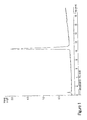
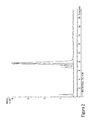
- 3-O-(6-sulfo- ⁇ -D-quinovopyranosyl)-1-O-stearoyl-propane-1,3-diol sodium salt and 3-O-(6-sulfo- ⁇ -D-quinovopyranosyl)-1-O-stearoyl-glycerol sodium salt were separated and detected by high performance liquid chromatography and electrospray mass spectrometry.
- test substance was dissolved in 5% acetonitrile in 5 mmol/l ammonium acetate aqueous solution, diluted with the solvent to an intended concentration, and then analyzed by high performance liquid chromatography equipped with CapCellPak C18MG (column size; 2.0 ⁇ 50 mm, manufactured by Shiseido Co., Ltd.).
- the separation conditions were as follows: the column temperature was 40°C, the flow rate was 0.2 ml per minute, and elution was conducted over a period of 20 minutes with a linear concentration gradient of 50% to 70% of acetonitrile with reference to the above-described solvent.
- Figures 1 and 2 show the chromatograms of the test substance.
- SQAP series according to the present invention other than the salts of 3-O-(6-sulfo- ⁇ -D-quinovopyranosyl)-1-O-stearoyl-propane-1,3-diol also have high solubility.
- Such high solubility facilitates dissolution of a necessary amount of the substance in a small amount of a solvent.
- an injection to be administered to a subject can be readily prepared.
- such high water solubility is advantageous in preparation of injections, as well as other various formulations such as oral agents.
- the radiosensitizing effect was examined through tumor-bearing mouse experiment.
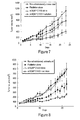
- mice Human esophageal squamous cell carcinoma cells TE-8 were transplanted into the right femoral region of KSN nude mice in a ratio of 1 ⁇ 10 6 cells per individual. Subsequently, the mice were bred for about 14 days to form a tumor mass of about 150 mm 3 in each individual. Thereafter, four mice were assigned to each of the following groups (1) to (4):
- the drug was administered from Day 1 to Day 5, 2 mg/kg once a day.
- the subjects were exposed to radiation emitted from an X-ray generator (HS-225, manufactured by Shimadzu Co., Ltd.) at a dose of 2 Gy on Day 1 and Day 4.
- the tumor volume was calculated according to the calculation formula: (minor axis ⁇ major axis ⁇ 0.5. The results are shown in Figure 3 .
- the tumor volume steadily increased from the start to end of the test.
- the increment of the tumor volume in the groups (2) to (4) fell below that in the (1) non-administered, un-irradiated group.
- suppression of the increase of the tumor volume in the (2) non-administered, radiotherapy-treated group and (3) ⁇ SQAP C18:0-administered, un-irradiated group was at the same level.
- the increase of the tumor volume was most suppressed in the (4) ⁇ SQMG C18:0-administered, radiotherapy-treated group in comparison with other groups.
- Example V-2 Human esophageal squamous cell carcinoma (No. 2)
- Example V-1 Experiment was conducted in the same manner as Example V-1, except that the drug dose administered from Day 1 to Day 5 was 1 mg/kg once a day, and the radiation dose was 4 Gy, and the tumor volume was measured. The results are shown in Figure 4 .
- the increment in the tumor volume in the groups (2) to (4) was smaller than that in the (1) non-administered, un-irradiated group.
- the increase of the tumor volume was most strongly suppressed in the (4) ⁇ SQAP C18:0-administered, radiotherapy-treated group in comparison with other groups.
- Example V-3 Human colonic adenocarcinoma
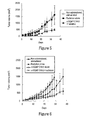
- human colonic adenocarcinoma cells SW480 were transplanted into the right femoral region of KSN nude mice in a ratio of 1 ⁇ 10 6 cells per individual. Subsequently, the mice were bred for about 14 days to form a tumor mass of about 150 mm 3 in each individual.
- mice were assigned to each of the three groups (1) to (3):
- the drug was administered from Day 1 to Day 5, 2 mg/kg once a day.
- the subjects were exposed to radiation emitted from an X-ray generator (HS-225, manufactured by Shimadzu Co., Ltd.) at a dose of 2 Gy on Day 1 and Day 4.
- the tumor volume was calculated according to the calculation formula: (minor axis ⁇ major axis ⁇ 0.5. The results are shown in Figure 5 .
- the tumor volume increased with the lapse of time.
- the increase of the tumor volume in the (1) non-administered, un-irradiated group and (2) non-administered, radiotherapy-treated group was alike, but the increase of the tumor volume in the (3) ⁇ SQAP C18:0-administered, radiotherapy-treated group was suppressed from the initial stage of the experiment, and the increase of the tumor volume was markedly suppressed in general.
- Examples V-4, 5, 6, and Examples VI to VIII used an SQAP compound which had been calcium salt-substituted through ion exchange treatment.
- Example V-4 Human colonic adenocarcinoma
- the drug was administered from the tail vein from Day 1 to Day 5, 1 mg/kg once a day.
- the subjects were exposed to radiation emitted from an X-ray generator (HS-225, manufactured by Shimadzu Co., Ltd.) at a dose of 2 Gy on Day 1 and Day 4.
- HS-225 manufactured by Shimadzu Co., Ltd.
- Example V-5 Human esophageal squamous cell carcinoma
- Human esophageal squamous cell carcinoma cells TE-8 were transplanted into the right femoral region of KSN nude mice in a ratio of 1 ⁇ 10 6 cells per individual. After a tumor mass of about 50 mm 3 was formed in each individual, four mice were assigned to each of the four groups (1) to (4):
- the drug was administered intraperitoneally from Day 1 to Day 5, 1 mg/kg once a day.
- the subjects were exposed to radiation emitted from an X-ray generator (HS-225, manufactured by Shimadzu Co., Ltd.) at a dose of 4 Gy on Day 1 and Day 4.
- X-ray generator HS-225, manufactured by Shimadzu Co., Ltd.
- Example V-6 Human esophageal squamous cell carcinoma
- Human esophageal squamous cell carcinoma cells TE-8 were transplanted into the right femoral region of KSN nude mice in a ratio of 1 ⁇ 10 6 cells per individual. After a tumor mass of about 50 mm 3 was formed in each individual, four mice were assigned to each of the four groups (1) to (4):
- the drug was administered intraperitoneally from Day 1 to Day 5, 1 mg/kg once a day.
- the subjects were exposed to radiation emitted from an X-ray generator (HS-225, manufactured by Shimadzu Co., Ltd.) at a dose of 4 Gy on Day 1 and Day 4.
- X-ray generator HS-225, manufactured by Shimadzu Co., Ltd.
- the drug was administered intraperitoneally from Day 1 to Day 14, 20 mg/kg once a day.
- angiogenesis kit manufactured by Kurabo Industries Ltd., which is a cocultivation system for human vascular endothelial cells and human fibrocytes
- KZ-1000 angiogenesis kit manufactured by Kurabo Industries Ltd.
- the effects of ⁇ SQAP C10:0, ⁇ SQAP C14:0, ⁇ SQAP C18:0, ⁇ SQAP C22:0, ⁇ SQAP C18:0, and ⁇ SQAP C18:1 on tube formation were examined. Cultivation for tube formation using the kit was conducted according to the manufacturer's instruction manual.
- the respective SQAP compounds were prepared to have intended concentrations.
- special media each containing SQAP compounds at the respective concentrations and DMSO negative control
- the systems were cultivated for 30 minutes, and irradiated with 2 Gy of cobalt 60.
- the media were replaced with newly prepared special media containing SQAP or DMSO.
- the media were removed on Day 11 of the cultivation, fixed with 70% ethanol, and the formed tubes were stained with anti-human CD31 antibody. The stained figures were photographed under an optical microscope, and the quantity of tube formation was calculated by the image analysis.
- the angiogenesis index was calculated according to the manufacturer's instruction manual.
- a reverse mutation assay (Ames test) was conducted using ⁇ SQAP C18:0.
- strains composed of two strains of Salmonella typhimurium, which are base pair substitution mutants, and one strain of Escherichia coli, and two strains of Salmonella typhimurium, which are frameshift mutants were used as indicator bacterial strains. These strains were precultivated in the presence of ⁇ SQAP C18:0, and transferred to agar plates and cultivated thereon for 48 hours, and then the number of revertant colonies on the plate was counted. The amounts of ⁇ SQAP C18:0 added to the respective plates were 2 ⁇ g, 7 ⁇ g, 21 ⁇ g, 62 ⁇ g, 185 ⁇ g, 556 ⁇ g, 1667 ⁇ g, and 5000 ⁇ g.
- S9 mix is a solution prepared by adding cofactor-1 to a supernatant fraction of a liver homogenate prepared from the liver of a male rat pretreated with phenobarbital and 5,6-benzoflavone
- the number of revertant colonies did not increase. From the fact, mutagenicity of the substance was evaluated as negative.
- Micronucleus test was conducted by rat intravenous administration using the ⁇ SQAP C18:0 calcium salt.
- test solutions for (1) to (5) contained a normal saline solution containing 10% CREMOPHOR EL as the solvents, and the above-described doses were administered to the rats twice in total for two consecutive days. To the positive control group, the above-described dose was administered once.
- bone marrow smears were prepared. Two thousands of immature erythrocytes were counted for each individual, and the incidence of immature erythrocytes having a micronucleus was calculated. As the index of marrow proliferation suppression, the proportion of immature erythrocytes contained in 1000 erythrocytes was calculated. The result indicates that no significant increase was found in the incidence of micronuclei in the test substance-administered group in comparison with the non-administered group. In addition, no influence was found on the marrow proliferation suppression in the test substance-administered group. From these facts, the substance was evaluated as inducing no chromosomal aberration in bone marrow cells.
- the test solution for (1) and (4) to (7) contained a normal saline solution containing 10% CREMOPHOR EL, (2) contained a normal saline solution containing 2.5% CREMOPHOR EL, and (3) contained a normal saline solution containing 5% CREMOPHOR EL as the solvents.
- test solutions were administered via the rat tail vein, and the clinical signs were observed for two days including the date of administration. No individual died during the test period, and the lethal dose was estimated to be higher than 800 mg/kg.
- the compound of the present invention is a novel substance, and, as described above, has remarkable radiosensitizing effect and antineoplastic effect.
- the compound of the present invention is obtainable at high purity by a simple synthesis method.
- the compound of the present invention is structurally stable, and highly soluble in water. Accordingly, the compound is advantageous in its manufacture and formulation when used as a drug, and is also advantageous in the use after storage as a compound and a drug.
- the compound features low toxicity. Accordingly, the compound is very advantageous as a drug to be administered to human and other animals over a short or long period.
- the present invention is funded by Special Coordination Funds for Promoting Science and Technology provided by the Ministry of Education, Culture, Sports, Science and Technology.
Landscapes
- Chemical & Material Sciences (AREA)
- Health & Medical Sciences (AREA)
- Organic Chemistry (AREA)
- Life Sciences & Earth Sciences (AREA)
- General Health & Medical Sciences (AREA)
- Animal Behavior & Ethology (AREA)
- Public Health (AREA)
- Veterinary Medicine (AREA)
- Pharmacology & Pharmacy (AREA)
- Medicinal Chemistry (AREA)
- Molecular Biology (AREA)
- Epidemiology (AREA)
- Engineering & Computer Science (AREA)
- Biochemistry (AREA)
- Biotechnology (AREA)
- Crystallography & Structural Chemistry (AREA)
- Genetics & Genomics (AREA)
- General Chemical & Material Sciences (AREA)
- Nuclear Medicine, Radiotherapy & Molecular Imaging (AREA)
- Chemical Kinetics & Catalysis (AREA)
- Hematology (AREA)
- Oncology (AREA)
- Bioinformatics & Cheminformatics (AREA)
- Pharmaceuticals Containing Other Organic And Inorganic Compounds (AREA)
- Acyclic And Carbocyclic Compounds In Medicinal Compositions (AREA)
- Medicines That Contain Protein Lipid Enzymes And Other Medicines (AREA)
- Saccharide Compounds (AREA)
Applications Claiming Priority (2)
| Application Number | Priority Date | Filing Date | Title |
|---|---|---|---|
| JP2007190120 | 2007-07-20 | ||
| PCT/JP2008/063056 WO2009014101A1 (ja) | 2007-07-20 | 2008-07-18 | 新規なスルホン酸化糖誘導体およびその医薬としての使用 |
Publications (2)
| Publication Number | Publication Date |
|---|---|
| EP2130834A1 true EP2130834A1 (de) | 2009-12-09 |
| EP2130834A4 EP2130834A4 (de) | 2012-09-05 |
Family
ID=40281352
Family Applications (1)
| Application Number | Title | Priority Date | Filing Date |
|---|---|---|---|
| EP08778289A Withdrawn EP2130834A4 (de) | 2007-07-20 | 2008-07-18 | Neuartiges sulfoniertes zuckerderivat und seine verwendung für medizinische wirkstoffe |
Country Status (10)
| Country | Link |
|---|---|
| US (2) | US7973145B2 (de) |
| EP (1) | EP2130834A4 (de) |
| JP (1) | JP4435861B2 (de) |
| KR (1) | KR101136601B1 (de) |
| CN (1) | CN101641365B (de) |
| AU (1) | AU2008278337B2 (de) |
| BR (1) | BRPI0809936A2 (de) |
| CA (1) | CA2679915C (de) |
| EA (1) | EA016931B1 (de) |
| WO (1) | WO2009014101A1 (de) |
Cited By (3)
| Publication number | Priority date | Publication date | Assignee | Title |
|---|---|---|---|---|
| EP3974437A1 (de) * | 2020-09-25 | 2022-03-30 | M.T.3, Inc. | D-glucopyranoside und salze davon |
| EP3925611A4 (de) * | 2019-03-05 | 2022-04-06 | M.T.3, Inc. | Radiosensibilisator |
| EP4353224A1 (de) * | 2022-10-11 | 2024-04-17 | M.T.3, Inc. | Pharmazeutische zusammensetzung mit einem sulfochinovosylacylpropandiolderivat zur behandlung von krebs |
Families Citing this family (2)
| Publication number | Priority date | Publication date | Assignee | Title |
|---|---|---|---|---|
| US9950194B2 (en) | 2014-09-09 | 2018-04-24 | Mevion Medical Systems, Inc. | Patient positioning system |
| CN106380400B (zh) * | 2016-02-04 | 2018-12-11 | 浙江省中医药研究院 | 一种萜品烯醇类化合物及其制备方法和应用 |
Family Cites Families (10)
| Publication number | Priority date | Publication date | Assignee | Title |
|---|---|---|---|---|
| AU635057B2 (en) | 1989-08-15 | 1993-03-11 | United States of America, as represented by the Secretary, U.S. Department of Commerce, The | Antiviral compositions containing sulfoquinovosyl glycerol derivatives and analogs thereof and methods for using the same |
| JP4454051B2 (ja) * | 1997-01-24 | 2010-04-21 | 東洋水産株式会社 | 新規な糖脂質、その製造方法及びその用途 |
| JP4224429B2 (ja) * | 1998-09-04 | 2009-02-12 | 東洋水産株式会社 | スルホキノボシルアシルグリセロール |
| JP3851461B2 (ja) * | 1998-09-04 | 2006-11-29 | 東洋水産株式会社 | ピラノシドおよびその製造方法 |
| EA003094B1 (ru) | 1999-02-26 | 2002-12-26 | Тойо Суйсан Кайся, Лтд. | Лекарственное средство, содержащее производное сульфопиранозилацилглицерина |
| US6518410B2 (en) * | 1999-02-26 | 2003-02-11 | Toyo Suisan Kaisha, Ltd. | Sulfoquinovosylacylglycerol derivative, and use thereof as medicaments |
| CN1155391C (zh) * | 1999-03-11 | 2004-06-30 | 东洋水产株式会社 | 新颖的免疫抑制剂 |
| JP4913289B2 (ja) * | 2001-05-23 | 2012-04-11 | 備前化成株式会社 | カスパーゼ阻害剤 |
| JP4281377B2 (ja) | 2003-02-26 | 2009-06-17 | 東レ株式会社 | 液晶性ポリエステルおよびその組成物 |
| DE602005023288D1 (de) * | 2004-06-24 | 2010-10-14 | Toyo Suisan Kaisha | Sulfopyranosylacylglycerol-Derivate zur Anwendung in Kombination mit Bestrahlung in einer Tumor-Radiotherapie |
-
2008
- 2008-07-18 BR BRPI0809936-7A2A patent/BRPI0809936A2/pt not_active IP Right Cessation
- 2008-07-18 KR KR1020097019551A patent/KR101136601B1/ko not_active Expired - Fee Related
- 2008-07-18 CN CN200880009161XA patent/CN101641365B/zh not_active Expired - Fee Related
- 2008-07-18 CA CA2679915A patent/CA2679915C/en not_active Expired - Fee Related
- 2008-07-18 WO PCT/JP2008/063056 patent/WO2009014101A1/ja not_active Ceased
- 2008-07-18 AU AU2008278337A patent/AU2008278337B2/en not_active Ceased
- 2008-07-18 EP EP08778289A patent/EP2130834A4/de not_active Withdrawn
- 2008-07-18 EA EA200970779A patent/EA016931B1/ru not_active IP Right Cessation
- 2008-07-18 JP JP2009524477A patent/JP4435861B2/ja not_active Expired - Fee Related
-
2009
- 2009-01-29 US US12/322,151 patent/US7973145B2/en not_active Expired - Fee Related
-
2010
- 2010-07-30 US US12/804,808 patent/US20100298246A1/en not_active Abandoned
Cited By (4)
| Publication number | Priority date | Publication date | Assignee | Title |
|---|---|---|---|---|
| EP3925611A4 (de) * | 2019-03-05 | 2022-04-06 | M.T.3, Inc. | Radiosensibilisator |
| US12440505B2 (en) | 2019-03-05 | 2025-10-14 | M.T.3, Inc. | Method of treating cancer |
| EP3974437A1 (de) * | 2020-09-25 | 2022-03-30 | M.T.3, Inc. | D-glucopyranoside und salze davon |
| EP4353224A1 (de) * | 2022-10-11 | 2024-04-17 | M.T.3, Inc. | Pharmazeutische zusammensetzung mit einem sulfochinovosylacylpropandiolderivat zur behandlung von krebs |
Also Published As
| Publication number | Publication date |
|---|---|
| BRPI0809936A2 (pt) | 2014-10-07 |
| CA2679915A1 (en) | 2009-01-29 |
| US20090209475A1 (en) | 2009-08-20 |
| CN101641365A (zh) | 2010-02-03 |
| KR20090122451A (ko) | 2009-11-30 |
| AU2008278337B2 (en) | 2011-09-29 |
| AU2008278337A1 (en) | 2009-01-29 |
| JPWO2009014101A1 (ja) | 2010-10-07 |
| EA016931B1 (ru) | 2012-08-30 |
| EA200970779A1 (ru) | 2010-04-30 |
| CN101641365B (zh) | 2013-01-16 |
| CA2679915C (en) | 2012-10-30 |
| KR101136601B1 (ko) | 2012-04-23 |
| JP4435861B2 (ja) | 2010-03-24 |
| US7973145B2 (en) | 2011-07-05 |
| US20100298246A1 (en) | 2010-11-25 |
| EP2130834A4 (de) | 2012-09-05 |
| WO2009014101A1 (ja) | 2009-01-29 |
Similar Documents
| Publication | Publication Date | Title |
|---|---|---|
| CN106083943B (zh) | 一种吡喃葡萄糖基衍生物及其制备方法和用途 | |
| AU2008278337B2 (en) | Novel sulfonated sugar compound and use thereof as medicine | |
| EP4458823A1 (de) | Meninhemmer und verwendung davon | |
| HU208148B (en) | Process for poroducing morpholinyl derivatives of doxorubicin and pharmaceutical compositions comprising same | |
| US12257265B2 (en) | Cyclic dinucleotide prodrug molecule, preparation method therefor and application thereof | |
| JP6442615B2 (ja) | インドール酢酸コア構造を含む化合物とその応用 | |
| WO2020103392A1 (zh) | 一种以7-脱氮腺嘌呤碱基为母核的18f-pet/ct示踪剂及其制备方法 | |
| EP3974437B1 (de) | D-glucopyranoside und salze davon | |
| JP3577079B2 (ja) | 光学活性2−ニトロイミダゾール誘導体 | |
| KR20240127980A (ko) | 광역학 요법 및 진단 | |
| JP2021527116A (ja) | 選択的a2a受容体アンタゴニスト | |
| GB2494595A (en) | Phenylbutyryl curcumin derivatives and uses for preparing anti-tumor drugs thereof | |
| WO2022186273A1 (ja) | 放射性化合物 | |
| US20230233589A1 (en) | Methods for treating cancer using a modified monosaccharide compound | |
| RU2800042C1 (ru) | Спиросоединения в качестве ингибиторов ERK и их применение | |
| JP4841560B2 (ja) | 乾癬の処置のためのアミグダリン類似体の使用 | |
| JP3755019B2 (ja) | リボフラノース誘導体を含む放射線障害防護剤 | |
| KR20250113443A (ko) | 광역학 요법(pdt)에 사용하기에 적합한 필로클로린 유사체 | |
| JP4328323B2 (ja) | リボフラノース誘導体 | |
| CN118679164A (zh) | 光动力疗法和诊断 | |
| JPH02275863A (ja) | 新規含フッ素2―ニトロイミダゾールおよびそれを含む放射線増感剤 |
Legal Events
| Date | Code | Title | Description |
|---|---|---|---|
| PUAI | Public reference made under article 153(3) epc to a published international application that has entered the european phase |
Free format text: ORIGINAL CODE: 0009012 |
|
| 17P | Request for examination filed |
Effective date: 20090820 |
|
| AK | Designated contracting states |
Kind code of ref document: A1 Designated state(s): AT BE BG CH CY CZ DE DK EE ES FI FR GB GR HR HU IE IS IT LI LT LU LV MC MT NL NO PL PT RO SE SI SK TR |
|
| DAX | Request for extension of the european patent (deleted) | ||
| A4 | Supplementary search report drawn up and despatched |
Effective date: 20120807 |
|
| RIC1 | Information provided on ipc code assigned before grant |
Ipc: C07H 15/10 20060101ALI20120801BHEP Ipc: A61K 31/7032 20060101ALI20120801BHEP Ipc: A61P 35/00 20060101ALI20120801BHEP Ipc: C07H 15/06 20060101AFI20120801BHEP Ipc: A61K 41/00 20060101ALI20120801BHEP |
|
| STAA | Information on the status of an ep patent application or granted ep patent |
Free format text: STATUS: THE APPLICATION HAS BEEN WITHDRAWN |
|
| RIC1 | Information provided on ipc code assigned before grant |
Ipc: A61P 35/00 20060101ALI20130429BHEP Ipc: C07H 15/10 20060101ALI20130429BHEP Ipc: A61K 31/7028 20060101ALI20130429BHEP Ipc: A61K 41/00 20060101ALI20130429BHEP Ipc: C07H 15/06 20060101AFI20130429BHEP |
|
| 18W | Application withdrawn |
Effective date: 20130520 |