EP2132256B1 - Particules d'hydrogel intelligentes pour une recolte de biomarqueurs - Google Patents
Particules d'hydrogel intelligentes pour une recolte de biomarqueurs Download PDFInfo
- Publication number
- EP2132256B1 EP2132256B1 EP08799593A EP08799593A EP2132256B1 EP 2132256 B1 EP2132256 B1 EP 2132256B1 EP 08799593 A EP08799593 A EP 08799593A EP 08799593 A EP08799593 A EP 08799593A EP 2132256 B1 EP2132256 B1 EP 2132256B1
- Authority
- EP
- European Patent Office
- Prior art keywords
- particles
- capture
- nipam
- affinity
- polymeric matrix
- Prior art date
- Legal status (The legal status is an assumption and is not a legal conclusion. Google has not performed a legal analysis and makes no representation as to the accuracy of the status listed.)
- Active
Links
Images



Classifications
-
- B—PERFORMING OPERATIONS; TRANSPORTING
- B01—PHYSICAL OR CHEMICAL PROCESSES OR APPARATUS IN GENERAL
- B01J—CHEMICAL OR PHYSICAL PROCESSES, e.g. CATALYSIS OR COLLOID CHEMISTRY; THEIR RELEVANT APPARATUS
- B01J20/00—Solid sorbent compositions or filter aid compositions; Sorbents for chromatography; Processes for preparing, regenerating or reactivating thereof
- B01J20/22—Solid sorbent compositions or filter aid compositions; Sorbents for chromatography; Processes for preparing, regenerating or reactivating thereof comprising organic material
- B01J20/26—Synthetic macromolecular compounds
-
- B—PERFORMING OPERATIONS; TRANSPORTING
- B01—PHYSICAL OR CHEMICAL PROCESSES OR APPARATUS IN GENERAL
- B01D—SEPARATION
- B01D15/00—Separating processes involving the treatment of liquids with solid sorbents; Apparatus therefor
- B01D15/08—Selective adsorption, e.g. chromatography
- B01D15/26—Selective adsorption, e.g. chromatography characterised by the separation mechanism
- B01D15/34—Size-selective separation, e.g. size-exclusion chromatography; Gel filtration; Permeation
-
- B—PERFORMING OPERATIONS; TRANSPORTING
- B01—PHYSICAL OR CHEMICAL PROCESSES OR APPARATUS IN GENERAL
- B01J—CHEMICAL OR PHYSICAL PROCESSES, e.g. CATALYSIS OR COLLOID CHEMISTRY; THEIR RELEVANT APPARATUS
- B01J20/00—Solid sorbent compositions or filter aid compositions; Sorbents for chromatography; Processes for preparing, regenerating or reactivating thereof
- B01J20/22—Solid sorbent compositions or filter aid compositions; Sorbents for chromatography; Processes for preparing, regenerating or reactivating thereof comprising organic material
- B01J20/26—Synthetic macromolecular compounds
- B01J20/265—Synthetic macromolecular compounds modified or post-treated polymers
-
- B—PERFORMING OPERATIONS; TRANSPORTING
- B01—PHYSICAL OR CHEMICAL PROCESSES OR APPARATUS IN GENERAL
- B01J—CHEMICAL OR PHYSICAL PROCESSES, e.g. CATALYSIS OR COLLOID CHEMISTRY; THEIR RELEVANT APPARATUS
- B01J20/00—Solid sorbent compositions or filter aid compositions; Sorbents for chromatography; Processes for preparing, regenerating or reactivating thereof
- B01J20/28—Solid sorbent compositions or filter aid compositions; Sorbents for chromatography; Processes for preparing, regenerating or reactivating thereof characterised by their form or physical properties
- B01J20/28054—Solid sorbent compositions or filter aid compositions; Sorbents for chromatography; Processes for preparing, regenerating or reactivating thereof characterised by their form or physical properties characterised by their surface properties or porosity
- B01J20/28078—Pore diameter
-
- B—PERFORMING OPERATIONS; TRANSPORTING
- B01—PHYSICAL OR CHEMICAL PROCESSES OR APPARATUS IN GENERAL
- B01J—CHEMICAL OR PHYSICAL PROCESSES, e.g. CATALYSIS OR COLLOID CHEMISTRY; THEIR RELEVANT APPARATUS
- B01J20/00—Solid sorbent compositions or filter aid compositions; Sorbents for chromatography; Processes for preparing, regenerating or reactivating thereof
- B01J20/28—Solid sorbent compositions or filter aid compositions; Sorbents for chromatography; Processes for preparing, regenerating or reactivating thereof characterised by their form or physical properties
- B01J20/28054—Solid sorbent compositions or filter aid compositions; Sorbents for chromatography; Processes for preparing, regenerating or reactivating thereof characterised by their form or physical properties characterised by their surface properties or porosity
- B01J20/28095—Shape or type of pores, voids, channels, ducts
-
- C—CHEMISTRY; METALLURGY
- C12—BIOCHEMISTRY; BEER; SPIRITS; WINE; VINEGAR; MICROBIOLOGY; ENZYMOLOGY; MUTATION OR GENETIC ENGINEERING
- C12Q—MEASURING OR TESTING PROCESSES INVOLVING ENZYMES, NUCLEIC ACIDS OR MICROORGANISMS; COMPOSITIONS OR TEST PAPERS THEREFOR; PROCESSES OF PREPARING SUCH COMPOSITIONS; CONDITION-RESPONSIVE CONTROL IN MICROBIOLOGICAL OR ENZYMOLOGICAL PROCESSES
- C12Q1/00—Measuring or testing processes involving enzymes, nucleic acids or microorganisms; Compositions therefor; Processes of preparing such compositions
- C12Q1/68—Measuring or testing processes involving enzymes, nucleic acids or microorganisms; Compositions therefor; Processes of preparing such compositions involving nucleic acids
- C12Q1/6813—Hybridisation assays
- C12Q1/6816—Hybridisation assays characterised by the detection means
-
- G—PHYSICS
- G01—MEASURING; TESTING
- G01N—INVESTIGATING OR ANALYSING MATERIALS BY DETERMINING THEIR CHEMICAL OR PHYSICAL PROPERTIES
- G01N33/00—Investigating or analysing materials by specific methods not covered by groups G01N1/00 - G01N31/00
- G01N33/48—Biological material, e.g. blood, urine; Haemocytometers
- G01N33/50—Chemical analysis of biological material, e.g. blood, urine; Testing involving biospecific ligand binding methods; Immunological testing
- G01N33/53—Immunoassay; Biospecific binding assay; Materials therefor
- G01N33/543—Immunoassay; Biospecific binding assay; Materials therefor with an insoluble carrier for immobilising immunochemicals
- G01N33/54313—Immunoassay; Biospecific binding assay; Materials therefor with an insoluble carrier for immobilising immunochemicals the carrier being characterised by its particulate form
-
- G—PHYSICS
- G01—MEASURING; TESTING
- G01N—INVESTIGATING OR ANALYSING MATERIALS BY DETERMINING THEIR CHEMICAL OR PHYSICAL PROPERTIES
- G01N33/00—Investigating or analysing materials by specific methods not covered by groups G01N1/00 - G01N31/00
- G01N33/48—Biological material, e.g. blood, urine; Haemocytometers
- G01N33/50—Chemical analysis of biological material, e.g. blood, urine; Testing involving biospecific ligand binding methods; Immunological testing
- G01N33/53—Immunoassay; Biospecific binding assay; Materials therefor
- G01N33/543—Immunoassay; Biospecific binding assay; Materials therefor with an insoluble carrier for immobilising immunochemicals
- G01N33/54353—Immunoassay; Biospecific binding assay; Materials therefor with an insoluble carrier for immobilising immunochemicals with ligand attached to the carrier via a chemical coupling agent
-
- G—PHYSICS
- G01—MEASURING; TESTING
- G01N—INVESTIGATING OR ANALYSING MATERIALS BY DETERMINING THEIR CHEMICAL OR PHYSICAL PROPERTIES
- G01N33/00—Investigating or analysing materials by specific methods not covered by groups G01N1/00 - G01N31/00
- G01N33/48—Biological material, e.g. blood, urine; Haemocytometers
- G01N33/50—Chemical analysis of biological material, e.g. blood, urine; Testing involving biospecific ligand binding methods; Immunological testing
- G01N33/53—Immunoassay; Biospecific binding assay; Materials therefor
- G01N33/543—Immunoassay; Biospecific binding assay; Materials therefor with an insoluble carrier for immobilising immunochemicals
- G01N33/5436—Immunoassay; Biospecific binding assay; Materials therefor with an insoluble carrier for immobilising immunochemicals with ligand physically entrapped within the solid phase
-
- B—PERFORMING OPERATIONS; TRANSPORTING
- B01—PHYSICAL OR CHEMICAL PROCESSES OR APPARATUS IN GENERAL
- B01J—CHEMICAL OR PHYSICAL PROCESSES, e.g. CATALYSIS OR COLLOID CHEMISTRY; THEIR RELEVANT APPARATUS
- B01J2220/00—Aspects relating to sorbent materials
- B01J2220/50—Aspects relating to the use of sorbent or filter aid materials
- B01J2220/54—Sorbents specially adapted for analytical or investigative chromatography
-
- Y—GENERAL TAGGING OF NEW TECHNOLOGICAL DEVELOPMENTS; GENERAL TAGGING OF CROSS-SECTIONAL TECHNOLOGIES SPANNING OVER SEVERAL SECTIONS OF THE IPC; TECHNICAL SUBJECTS COVERED BY FORMER USPC CROSS-REFERENCE ART COLLECTIONS [XRACs] AND DIGESTS
- Y10—TECHNICAL SUBJECTS COVERED BY FORMER USPC
- Y10S—TECHNICAL SUBJECTS COVERED BY FORMER USPC CROSS-REFERENCE ART COLLECTIONS [XRACs] AND DIGESTS
- Y10S435/00—Chemistry: molecular biology and microbiology
- Y10S435/81—Packaged device or kit
-
- Y—GENERAL TAGGING OF NEW TECHNOLOGICAL DEVELOPMENTS; GENERAL TAGGING OF CROSS-SECTIONAL TECHNOLOGIES SPANNING OVER SEVERAL SECTIONS OF THE IPC; TECHNICAL SUBJECTS COVERED BY FORMER USPC CROSS-REFERENCE ART COLLECTIONS [XRACs] AND DIGESTS
- Y10—TECHNICAL SUBJECTS COVERED BY FORMER USPC
- Y10S—TECHNICAL SUBJECTS COVERED BY FORMER USPC CROSS-REFERENCE ART COLLECTIONS [XRACs] AND DIGESTS
- Y10S436/00—Chemistry: analytical and immunological testing
- Y10S436/807—Apparatus included in process claim, e.g. physical support structures
- Y10S436/808—Automated or kit
-
- Y—GENERAL TAGGING OF NEW TECHNOLOGICAL DEVELOPMENTS; GENERAL TAGGING OF CROSS-SECTIONAL TECHNOLOGIES SPANNING OVER SEVERAL SECTIONS OF THE IPC; TECHNICAL SUBJECTS COVERED BY FORMER USPC CROSS-REFERENCE ART COLLECTIONS [XRACs] AND DIGESTS
- Y10—TECHNICAL SUBJECTS COVERED BY FORMER USPC
- Y10T—TECHNICAL SUBJECTS COVERED BY FORMER US CLASSIFICATION
- Y10T436/00—Chemistry: analytical and immunological testing
- Y10T436/25—Chemistry: analytical and immunological testing including sample preparation
- Y10T436/25375—Liberation or purification of sample or separation of material from a sample [e.g., filtering, centrifuging, etc.]
- Y10T436/255—Liberation or purification of sample or separation of material from a sample [e.g., filtering, centrifuging, etc.] including use of a solid sorbent, semipermeable membrane, or liquid extraction
Definitions
- the present invention relates to methods for the harvesting of biomarkers from a mixture as using the particles. More specifically, the present invention relates to methods using particles capable of sequestering a biomarker from a mixture, allowing for the separation of the biomarker from the mixture, as well as methods for sequestering biomarkers.
- Biomarkers can provide for early stage detection of a wide variety of diseases. As such, there is an urgent need to discover novel biomarkers that provide sensitive and specific disease detection ( Aebersold et al., Proteome Res 2005, 4, (4), 1104-9 ; Srinivas et al., Clin Chem 2002, 48, (8), 1160-9 ). Biomarkers provide a way to diagnose a disease before clinical pathologies appear, allowing for early stage treatment of the disease, which typically provides better results.
- cancer is rapidly becoming the leading cause of death for many population groups in the United States, largely due to the fact that various types of the disease are usually diagnosed after the cancer has metastasized. At this later stage of the disease, treatment is typically invasive and ineffective. It is widely believed that early detection of cancer prior to metastasis will lead to a dramatic improvement in treatment outcome.
- Biomarkers are also continually being discovered that are indicative of various other disease states and conditions as varied as Alzheimer's disease and diabetes. For many of these diseases, the early diagnosis of the disease allows for treatment options that have a greater chance of success than late stage treatment. Further, in some cases, early diagnosis of a disease or predisposition to a disease may even allow the person diagnosed to make lifestyle changes that may help to prevent and reverse the course of the disease without the need for more involved medical treatment.
- Biomarkers are nucleic acids, proteins, protein fragments or metabolites indicative of a specific biological state, that arc associated with the risk of contraction or presence of disease ( Frank and Hargreaves; Nature reviews 2003, 2, (7), 566-80 ). Biomarker research has revealed that low-abundance circulating proteins and peptides present a rich source of information regarding the state of the organism as a whole ( Espina et al. Proteomics 2003, 3, (11), 2091-100 ).
- the concentration of proteins and peptides comprising the complex circulatory proteome ranges from 10 -12 mg/mL to 10 -3 mg/mL, spanning ten orders of magnitude, with a few high molecular weight proteins such as albumin and immunoglobulins accounting for 90% of total protein content ( Anderson and Anderson, Mol Cell Proteomics 2002, 1, (11), 845-67 ).
- high molecular weight proteins such as albumin and immunoglobulins accounting for 90% of total protein content
- MS mass spectrometry
- the present invention provides a method of Inhibiting or preventing degradation of protein analytes In a sample also containing a protease, comprising contacting the sample with capture particles for the analytes, wherein the capture particles comprise a polymeric matrix which has a pore size that under certain conditions allows the analytes and protease to enter the polymeric matrix whilst excluding other compounds from entering the polymeric matrix, allowing the sample and capture particles to remain in contact for a period of time for the capture particles to sequester the analytes and protease and thereby inhibit or prevent degradation of the sequestered analytes.
- the protein analyte may be selected from the group consisting of: proteins, glycoproteins, proteolipids, hormones, cytokines, growth factors, biomarkers, drug compounds, volatile odorants, toxicants and pollutants.
- the polymeric matrix is expandable and contractible; optionally wherein when the polymeric matrix expands or contracts, the pore size of the gel matrix expands or contracts, respectively.
- the polymeric matrix is expandable and contractible in response to an applied stimulus; preferably wherein the applied stimulus is a thermal, electrical, magnetic, ultrasound, pressure, radiant, laser, osmotic, or pH change.
- the polymeric matrix may be expandable or contractible upon treatment with an enzyme.
- the polymeric matrix may further comprise an attractant; optionally
- the attractant is an affinity ligand; optionally wherein the affinity ligand comprises an antibody or protein, an aptamer, nucleic acid, a drug, a chemical, a metabolite, a lipid, a glycolipid, a phospholipid, a polypeptide, an affinity group, or a metal group.
- the affinity ligand comprises an antibody or protein, an aptamer, nucleic acid, a drug, a chemical, a metabolite, a lipid, a glycolipid, a phospholipid, a polypeptide, an affinity group, or a metal group.
- the polymeric matrix may be a co-polymeric matrix comprising a structural monomer and an affinity monomer.
- the structural monomer may be selected from the group consisting of: acrylamide and derivatives thereof, N-alkyl substituted acrylamides; N,N-methylenebisacrylamide, N,N-cystaminebisacrylamide, N-vinylalkylamides, acrylic acid, methacrylic acid, allylamine, styrene, benzyl glutamate, 2-ethylacrylic acid, 4-vinylpyridine, silicone, hydroxyethyl methacrylate, ethylene oxide, butylenes terephthalate, 2-acrylamido-2-methyl-1-propanesulfonic acid, vinylpyrrolidone, ethylene- vinyl acetate, lactide, glycolide, caprolactone, hydroxyalkanoate, chitosan, hyaluronic acid, starch, cellulose and agarose; more preferably wherein the structural mono
- the affinity monomer may comprise a positively charged moiety; preferably wherein the positively charged moiety is selected from the group consisting of: amine groups and amide groups.
- the affinity monomer may comprise a negatively charged moiety; preferably wherein the negatively charged moiety is selected from the group consisting of: carboxylic acid groups, hydroxyl groups, thiol groups and phosphate groups.
- the affinity monomer may be selected from the group consisting of: affinity dyes, boronic acid groups, nucleic acids, glycopeptides, glycoproteins, cyclodextrins, calixarenes, porphyrin groups, and aliphatic group.
- the affinity monomer may be acrylic acid.
- the capture particle has a core comprising co-polymeric matrix comprising a structural monomer and an affinity monomer; and a shell comprising a polymeric matrix comprising a shell monomer; wherein the co-polymeric matrix and the polymeric matrix each have a pore size that under certain conditions allows for the analyte to enter the matrices while excluding other compounds from the sample from entering the matrices.
- the capture particle has a molecular weight cutoff size of 5 to 100 kDa; more preferably 20 to 50 kDa.
- Methods of the invention may further comprise isolating the capture particles from the sample; and releasing the analyte from the capture particle; preferably wherein the isolating of the capture particles is done by physically moving the particles.
- the particles may be physically moved by exposure to a magnetic field, an electric field, a pH gradient, an solvent gradient, a fluid flow, a microfluidic flow or a physical force.
- the particles may be physically moved by binding the particles to a substrate; preferably wherein the substrate is a bead or a surface.
- the polymeric matrix has a pore size that under a first condition allows for the analyte to pass through the pore, and that has a pore size under a second condition that does not allow the analyte to pass through the pore; and wherein the contacted sample and capture particles are exposed to the first condition for the period of time sufficient for the capture particles to sequester the analyte; followed by exposing the capture particles to the second condition; isolating the capture particles from the mixture; and re-exposing the capture particles to the first condition to release the analyte from the capture particle.
- Figure 1 Chemical composition of particles. Structure of (A) N-isopropylacrylamide (NIPAm) and its polymer, (B) methylenebisacrylamide and (C) NIPAm and acrylic acid and their polymers.
- NIPAm N-isopropylacrylamide
- B methylenebisacrylamide
- C NIPAm and acrylic acid and their polymers.
- Figure 2 Particle characterization.
- A Light scattering measurement of NIPAM particle size as a function of temperature (diameter decreases as temperature increases).
- B Plots of correlation of the size of NIPAm/AAc particles with temperature (diameter decreases as temperature increases) and pH (diameter decreases as pH decreases).
- Figure 3 Schematic drawing of molecular sieving of particles in solution. Low molecular weight proteins are harvested; high molecular weight proteins are excluded.
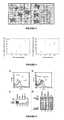
- FIG. 4 Flow cytometry analyses of FITC-incubated particles.
- A Uptake is dose dependent.
- B Uptake rapidly reaches saturation with a FITC concentration of 20 ⁇ M.
- NIPAm particles were also incubated with FITC-labeled bovine serum albumin (BSA), MW 66,000 Da, with a dye:molecule ratio of 1:1 (FITC-BSA, Sigma), FITC labeled insulin MW 3,500 Da, with a dye:molecule ratio of 1:7 (Invitrogen), or FITC labeled myoglobin MW 17,000 Da, with a dye:molecule ratio of 1.36.
- BSA bovine serum albumin
- NIPAm particles incubated with FITC and FITC-labeled proteins Flow cytometry measurements of (A) BSA and insulin, (B) myoglobin and free FITC.
- C SDS-PAGE of particles incubated with insulin: Lane 1) insulin solution (Control), 2) NIPAm supernatant (Out, substance excluded from the particles), 3) wash 1, 4) wash 2, 5) NIPAm particles (In, substance captured by the particles).
- D SDS-PAGE of NIPAm particles incubated with BSA and myoglobin: 1) BSA and myoglobin (Control), 2) NIPAm supernatant (Out), 3) wash 2, 4) NIPAm particles (In). BSA is totally excluded.
- FIG. 6 Schematic depiction of affinity-based sequestering.
- FIG. 7 Protein sequestering by NIPAm/AAc particles (+ bait) versus NIPAm particles (- bait), SDS-PAGE analysis of (A) Myoglobin (aqueous solution, pH 5.5) sequestration by particles + and - bait.
- BSA and myoglobin sequestration by particles+bait (N IPAm/AAc) at two pH values.
- FIG. 8 (A) SDS-PAGE analysis of particles- and +bait incubated with BSA and lysozyme: Lane 1) BSA and lysozyme solution prior to particle introduction, 2) NIPAm (- bait) supernatant (Out), 3) wash 3, 4) NIPAm (- bait) particles (In), 5) wash 2, 6) wash 1, 7) NIPAm/AAc (+ bait) supernatant (Out), 8) wash 3, and 9) NIPAm/AAc (+ bait) particles (In).
- FIG. 9 SDS PAGE analysis of particles + bait incubated with PDGF B and BSA. Lane 1) BSA and PDGF B, 2) NIPAm/AAc supernatant (Out), 3) NIPAm/AAc particles (In).
- FIG. 10 Flow cytometry analysis of (A) NIPAm and (B) NIPAm/AAc particles incubated with FITC-labeled insulin aqueous solution and FITC-labeled insulin spiked in serum, respectively.
- Figure 11 Flow cytometry time course studies of (A) NIPAm and (B) NIPAm/AAc particles incubated with FITC-labeled insulin.
- Figure 12 Uptake time course study
- A Mean values of the percentage, relative to the initial amount, of lysozyme in solution incubated with two quantities of NIPAm/AAc particles as measured by RPPAs (three replicate analyses and standard deviation shown).
- B SDS-PAGE analysis of a lysozyme and BSA solution incubated with NIPAm/AAc particles. Lane 1) BSA and lysozyme solution. 2-11) alternating supernatant (Out) and particles (In) for each of 5, 10, 20, 30, and 60 minutes incubation times. Lysozyme uptake is rapid and complete, while BSA exclusion is total.
- Figure 13 Schematic drawing illustrating the ability of particles to protect proteins from enzymatic degradation.
- NIPAm/AAc particles (+ bait) protect bound proteins from degradation by enzymes that may be present.
- A NIPAm/AAc particles incubated with a solution containing lysozyme and trypsin for I hr: Lane 1) lysozyme, 2) lysozyme incubated with trypsin, 3) NIPAm/AAc supernatant (Out), 4) NIPAm/AAc particles (In), 5) BSA and lysozyme, 6) BSA and lysozyme + protease, 7) NIPAm/AAc particles supernatant (Out), and 8) NIPAm/AAc particles (In).
- NIPAm/AAc particles incubated overnight with BSA, lysozyme, and trypsin Lane 1) lysozyme, 2) trypsin, 3) lysozyme + trypsin, 4) NIPAm/AAc supernatant (Out), 5) NIPAm/AAC particles (In), 6) lysozyme and BSA, 7) BSA and lysozyme + protease, 8) NIPAm/AAc supernatant (Out), and 9) NIPAm/AAc particles (In).
- FIG. 15 SDS PAGE analysis of reduced and alkylated lysozyme exposed to tryptic digestion and incubated with particles + bait and - bait.
- NIPAm particles lane 1) NIPAm particles supernatant (Out), 2) NIPAm particles (In), 3) + trypsin NIPAm supernatant (Out), 4) + trypsin NIPAm particles (In), 5) + trypsin, 6) BSA +reduced and alkylated protein solution incubated with NIPAm particles, supernatant (Out), 7) NIPAm particles (In).
- Core shell particles have the same molecular weight sieving as NIPAm/AAc particles.
- Control protein solution was incubated with NIPAm/AAc and core shell particles.
- FIG 17 Core shell particles protect lysozyme form chymotrypsin proteolysis.
- Described herein are methods of harvesting biomarkers. using capture particles capable selectively selecting specific biomarkers from a mixture, after which the capture particles are removed from the mixture and the biomarkers are released from the capture particles.
- the capture particles may have one or more of the following characteristics: a) an ability to select the size and/or mass of the molecule to be captured, b) an ability to select the affinity properties of the molecule to be captured, and/or c) an ability to capture and/or release the desired molecule in response to a physical or chemical treatment.
- the particles used in the method of the present invention may accomplish this task in microvolumes, eliminating the need for the conventional multi-step procedures requiring, e.g., affinity columns, reverse phase columns and molecular sieve steps.
- the characteristics of the capture particles depend on the materials used to construct the capture particles.
- biomarkers or other analytes will be described.
- the methods of the present invention defined herein may be adapted to harvest any type of molecule or compound of interest, both biomarkers produced by a living source or other analytes which is a protein which may be selected from a glycoprotein, proteolipid, hormone, cytokine, growth factor, biomarker, drug compound, volatile odorant, toxicant or pollutant.
- the capture particles used in methods of the present invention may be comprised of a molecular sieve material.
- a molecular sieve material By this, it is meant that the material is porous, lattice-like, honeycombed, or has other properties that permit analytes of a defined molecular mass or weight to enter.
- the size of the sieve pore is a determinant of whether the analyte can penetrate the capture particle.
- the particle itself, can be of any suitable size, e.g., 1 nm or less; from about 1 nm -100 ⁇ m; from about 5 nm - 50 ⁇ m; from about 10 nm - 20 ⁇ m; from about 10 nm - 10 ⁇ m; including any and all values in between.
- the particles used in methods of the present invention may have any suitable shape, including, but not limited to, spheres, tubes, branched structures, polyhedrons and micro-fluidic valves.
- the sieve materials used in constructing the capture particles used in methods of the present invention may be designed so as to allow only analytes of a certain size to enter the capture particles.
- the size cutoff of the capture particles will be dependent on the manner in which the particles are to be used.
- the cutoff size is meant to describe the approximate size of an analyte which is able to enter the capture particle.
- MW cutoff size of 50 kDa means that molecules of approximately 50 kDa or less in size will be able to enter the capture particles, while molecules of approximately more than 50 KDa will be excluded from the particles.
- the particles may have a MW cutoff size of from about 5 kDa to about 100 kDa, although particles having other MW cutoff sizes outside of this range are also contemplated.
- the capture particles used in methods of the present invention may be made of "smart" materials capable of changing size in response to stimuli.
- the MW cutoff size of the particle may change as the size of the particles changes, e.g. a particle may have a specific MW cutoff size under certain conditions and a different MW cutoff size under other conditions.
- a feature of the capture particles used in methods of the present invention is their ability to "trap” or sequester an analyte once it has entered the particle. Trapping is achieved by using sieve materials which are capable of contracting and/or expanding in response to a physical or chemical treatment for making the particles. For example, materials can be utilized which, when subjected to a chemical or physical treatment, contract or shrink, thereby trapping the analyte inside. Such materials may be referred to as “smart materials” which have the ability to change shape or size by subject to a physical or chemical treatment.
- any material having these properties can be utilized without restriction to make the capture particles used in methods of the present invention.
- These materials may be polymers made of: acrylamide and derivatives thereof, N-isopropylacrylamide (e.g., Jones and Lyon, Macromolecules, 36:1988-1993, 2003 ; Jones and Lyon, Macromolecules, 33:8310-8306, 2000 ) and other N-alkyl substituted acrylamides; N,N-methylenebisacrylamide, N,N-cystaminebisacrylamide, N-vinylalkylamides, acrylic acid, methacrylic acid, allylamine, styrene, benzyl glutamate, 2-ethylacrylic acid, 4-vinylpyridine, silicone, hydroxyethyl methacrylate, ethylene oxide, butylenes terephthalate, 2-acrytamido-2-methyl-1-propanesulfonic acid, vinylpyrrolidone, and ethylene-vinyl acetate
- the capture particles may be made of biodegradable polymers made up of lactide, glycolide, caprolactone, and hydroxyalkanoate.
- the polymers may be made up of chitosan, hyaluronic acid, starch, cellulose and agarose.
- the polymers used to make the capture particles may or may not be made up of crosslinkable units. In the case of crosslinkable polymers, the crosslinks may be formed either permanently or reversibly.
- the polymers may be polymers having a single repeating unit or may be co-polymers having two or more monomer units which are included in the polymer.
- materials used may be ferroelectric liquid crystalline elastomers; piezoelectric polymers; "smart" hydrogels, gels, ceramics, alloys, and polymers, etc.
- suitable materials may be found in Galaev et al., Pages 835-849; Zentel; Pages 850-860; Harrison and Ounaies, Pages 860-873; in Encyclopedia of Small Materials, Volumes 1-2, Edited by, Schwartz, Mel ⁇ 2002 John Wiley & Sons .
- Examples of other materials suitable as sieving materials are woven or cross-linked nanowires, carbon nanotubes, metal colloids, clatherins, collagen, modified polysaccharides, silicon, silica, linked peptides comprised of amino acids, polymers composed of nucleic acids (see, e.g. Chittimalla et al., J Am. Chem. Soc., 2005, 127 (32), 11436-41 ), amino acid polymers, lipids (see, e.g. Advanced Drug Delivery Reviews, Lipid Nanoparticles: Recent Advances, 2007, 59 (6), 375 - 530 ), self-assembled viruses, and self-assembled proteins.
- the capture particles can be prepared routinely by methods known in the art or as described in any of the above-mentioned references.
- Physical and/or chemical treatments that may be utilized to contract and/or expand the sieve material include thermal, electrical, magnetic, ultrasound, pressure, radiant, laser, osmotic, pH, salt, enzymatic, oxidation/reduction, dehydration/rehydration, ultraviolet, radiation, high intensity red light, and similar treatments as are known in the art.
- the sieve material can reversibly or non-reversibly contract or shrink.
- the capture particles can be placed in a mixture where the analytes are permitted to penetrate, and then non-reversibly shrunk to capture the analyte. This could be useful where the objective is to remove a contaminant from a solution, and it is not necessary to analyze or further evaluate the nature of the captured analyte, thus not requiring it to be expanded.
- non-reversible capture particles can be broken apart by sonication or other disruptive forces which destroy the integrity of the particle.
- the capture particles can further comprise an attractant capable of attracting and interacting with a biomarker.
- the attractants may be any substance which is capable of specifically interacting with an analyte of interest.
- the attractant may be an affinity ligand and may be: antibodies and derivatives thereof (e.g., Fab fragments and single-chain antibodies); binding proteins and peptides (e.g., receptors or fragments thereof for specific ligands and polyhistidine peptides), including modified proteins; binding pairs (such as streptavidin/biotin); substrates; metals; chelating agents; nucleic acids; aptamers; enzyme-binding pockets; lectins; calixarenes for the uptake of small molecules; metals or metal salts (e.g.
- the capture particles may also be formed using molecular imprinting techniques, as are well known in the art.
- the capture particles may be imprinted to bind specific molecules or families of molecules
- the attractant may be a chemical moiety capable of interacting chemically or electrostatically with the analyte.
- Such attractants may include a carboxyl group, amine group, lipid, phosphate group, amide group, hydroxyl group, ester group, acrylic group, thiol group, acrylic acid, hydrophobic surface, hydrophilic surface or any other moiety capable of interacting chemically or electrostatically with the analyte.
- the attractants can be associated with the capture particle in any suitable way.
- they can be used as a nucleus or core around which the sieve material is overlayed or deposited/nucleated in order to form the capture particle; they can be directly incorporated into the sieve material prior to forming the particle (i.e.. where the attractant is a component of the sieve material); they can be conventionally coupled (covalently or noncovalently) to the pore surfaces of the sieve material; etc.
- the attractants can also be loaded into the capture particle by expanding the sieve material through appropriate physical or chemical treatment to reach a porosity that is large enough to admit the ligand, and then contacting the sieve material with the attractant under conditions effective for it to enter the particle.
- the particle Once the particle is loaded with the attractant, it can be shrunk by appropriate physical or chemical treatment, thereby reducing the sieve material's porosity, such that target analytes are still able to penetrate the particle, but larger analytes are excluded.
- the sieve porosity can be reduced after the attractant loading step to pore size which is small enough to block the affinity ligand from diffusing out, making it unnecessary to link the attractant to the sieve material.
- coupling processes can be used to link the attractant to the sieve material.
- Capture particles baited with affinity ligands provide an analyte selection step, in addition to selection for analyte size or mass.
- a capture particle can be expanded to allow analytes to penetrate into it, and then the analytes can be further selected by their ability to specifically bind to an affinity ligand associated with the capture particle.
- the binding step is achieved (e.g., after equilibrium is reached), the particles can be separated and subjected to washing steps to remove unbound non-target analytes, and then optionally shrunk by a chemical or physical treatment.
- the attractant may optionally be a component of a sieve material.
- the sieve material may be a co-polymer having monomeric units that have an electrostatic charge.
- the co-polymer may be made up of uncharged structural monomer units and affinity monomer units, so that the sieve material itself is capable of attracting an analyte to be captured.
- the affinity monomer units may be positively or negatively charged so that the sieve material has an overall electrostatic charge.
- the charged monomeric units may be such so that their charge can be changed by changing the environment of the sieve material, e.g. changing the pH or temperature of the media surrounding the capture particles.
- the capture particles may permit both size and affinity selection of analytes.
- the charged monomeric units may have moieties that allow them to be charged under certain conditions.
- negatively charged monomers may have carboxylic acid groups, hydroxyl groups, thiol groups, phosphate groups or other groups capable of carrying a negative charge.
- the negatively charged monomer is may optionally be acrylic acid or another monomer with a carboxylic acid group.
- Positively charged monomers may have amine, amide groups or other groups capable of carrying a positive charge.
- the positively charged monomers may optionally be allylamine or chitosan.
- affinity monomer units may be integrated into the sieve material that allow for attraction of various type of analytes.
- co-polymers may be integrated with monomers having: affinity dyes having affinity for proteins and peptides; boronic acid groups having affinity for carbohydrates, nucleic acids and glycopeptides or glycoproteins; cyclodextrins having affinity for small molecules; calixarenes having affinity for small molecules; porphyrin groups having affinity for metal ions; and aliphatic groups having affinity for lipids.
- the sieve material may be an N-isoproylacrylamide (NIPAm), acrylic acid (AAc) copolymer whose pendant carboxylic acid (CO 2 H) groups are functionalized with a wide range of amino or alcohol terminated molecules. These molecules can include alkanes, other greasy moieties to capture the lipid content of the solution, or dyes.
- NIPAm N-isoproylacrylamide
- the particles may optionally have a core made of a NIPAm AAc co-polymer that is surrounded by a shell polymer layer made up of only NIPAm.
- the capture particles may also further comprise detectable labels.
- Detectable labels may be any moiety or substance that can be detected by any means. These include quantum dots, fluorescent labels, enzymes, magnetic particles, etc.
- the detectable label can be associated with any region of the capture particle, including its pores and exterior surface.
- Detectable labels are useful in a number of ways, including for sorting different classes of capture particles.
- different classes of capture particles can be produced, where each class possesses a different characteristic (e.g., a different pore size and/or a different attractant), and each carries a different detectable label associated with each class of particles; This enables the property of the particle class (e.g., able to bind to a specific attractant) to be identified by determining which detectable label it bears.
- a particle with a single chain antibody for PSA can be labeled with FITC
- a particle containing an antibody for a-Methylacyl-CoA racemase (AMACR) can be labeled with TRITC.
- AMACR a-Methylacyl-CoA racemase
- the particles can be sorted by flow cytometry using fluorescent-activated cell sorting, separating the PSA-containing particles from the AMACR-containing particles.
- the capture particles can be functionalized with lipophilic carbocyanine dyes and then their lipid content can be separated using thin layer chromatogaphy.
- Capture particles can be moved in solution or other media by the application of electrical fields, magnetic fields, through the use of laser tweezers, or by their affinity with solvent. If the capture particles have an overall electric charge, they may be moved by application of an electric field. This may be especially applicable when the sieve material has been modified so as to have an electrostatic charge. For example, an electric field can be applied across a medium containing negatively charged capture particles, and the capture particles would move towards the positive electrode of the device applying the electrical field.
- the capture particles may also be modified to have magnetic moieties that are attracted to a magnet. This may be done by forming the sieve material around a magnetic core, such as a Fe 3 O 4 core. Alternatively the surface of the capture particles may be fully or partially coated with magnetic nanoparticles (see, e.g. Wong et al., J. Magnetism and Magnetic Materials, 2007, 311 (1), 219-23 ). It is further contemplated that co-polymers may be formed having magnetic elements directly incorporated into the polymers.
- the capture particles may be modified to have surface markers that can be easily bound by specific targets, e.g. the particles may have biotin, glutathione-S-transferase or 6-histidine tags that can be bound by streptavidin, glutathione, and nickel substrates respectively.
- the particles can also be formed using reversible crosslinkers such as those formed from disulfide bonds that can be reversed by DTT.
- a solution containing capture particles may be mixed with beads having a suitable substrate, for example, biotin labeled particles may be mixed with streptavidin labeled beads. After being allowed to bind to one another, the beads could be removed from the solution using centrifugation or other techniques known in the art, bringing the capture particles with them.
- Certain embodiments of the invention relate to solution-phase capture particles and methods of using them to isolate analytes from a sample having one or more of the following steps, e.g., contacting a sample comprising analytes with solution-phase capture particles under conditions effective for the capture particles to reversibly and selectively trap analytes of a defined molecular mass or particle size, where the capture particles are made with a molecular sieve material which is capable of reversibly trapping and releasing an analyte of a defined particle size or molecular mass.
- the capture particles used in the methods of the invention allow for the protection of analytes from degradation by proteases and other factors.
- the capture particles may prevent proteases from degrading analytes because the analytes and proteases are so tightly bound as to prevent the steric alignment necessary for the protease to cleave the analyte. In these cases, even though the protease is capable of entering the capture particle, the analyte remains intact.
- the capture particles used in methods of the present invention may concentrate low abundance analytes from a fluid. If an analyte is present in a fluid at a low concentration, the capture particles may be used to harvest the analyte from the original fluid. After the analyte is harvested, it may then be released into a second fluid having a smaller volume. In this way, analytes having concentrations below the limits of detection of various analytical methods in their original fluids may be concentrated so that they have a concentration that can easily be detected and analyzed.
- the capture particles described may be part of kits which may be used for isolating and/or identifying an analyte.
- the kits may have any type of collection device for collecting the solution or other type of mixture containing the analyte.
- the collection device may be is a container, such as a vacu-tainer, tube, cartridge or microfluidic device. It is contemplated that the capture particles may be present in the container, or, alternatively, a layer of capture particles may be formed on the container.
- the collecting devices may be sheets of fabric or polymeric material capable of containing a layer of capture particles.
- the capture particle may be formed into a type of patch, which may be applied to a surface from which an analyte of interest is to be isolated or over which an analyte of interest passes.
- the patch may be a patch that can be applied to the skin, allowing analytes to be isolated from the surface of the skin.
- the system is fully self-contained and automated so that a sample is introduced into the system and a result is obtained without requiring any other user manipulation.
- a system may be contained in a microfluidic system or may be a larger, bench-top type system.
- a sample is added to a chamber containing capture particles and the analyte of interest is sequestered.
- the environmental conditions of the chamber may then be changed so that the capture particles are reduced in size as described herein, trapping the analytes inside.
- the capture particles can then be moved to a new chamber using the methods described herein, separating the analytes from the remainder of the sample.
- Analysis can then be done using methods known in the art, including mass spectrometry, nuclear magnetic resonance, infrared spectroscopy, solid phase immunoassay (e.g. ELISA and the like) immunoprecipitation, colorometric assay, radiometric assay, fluorescent assay, flow bead / flow cytometry, western blotting, protein sequencing and any chemistry analytic method for analysis of metabolites, drugs, small molecules or proteins.
- mass spectrometry nuclear magnetic resonance, infrared spectroscopy, solid phase immunoassay (e.g. ELISA and the like) immunoprecipitation, colorometric assay, radiometric assay, fluorescent assay, flow bead / flow cytometry, western blotting, protein sequencing and any chemistry analytic method for analysis of metabolites, drugs, small molecules or proteins.
- solid phase immunoassay e.g. ELISA and the like
- the particles can also be used to coat support surfaces, to impregnate layers and to fill slabs.
- Other examples include coating a patch with particles held by a mesh, and applying the patch to a patient's skin to capture analytes present on and in the skin.
- Any sample can be utilized without restriction, including biological fluids, such as blood, blood components, cerebral spinal fluid, lymph, cell lysates, tissue lysates, stool, urine, lymph, ascites, semen, etc.; environment samples, such as soil samples or extracts, ocean, pond, or river waters; water tower and drinking water samples; samples from chemical synthetic reactions; food samples; etc.
- biological fluids such as blood, blood components, cerebral spinal fluid, lymph, cell lysates, tissue lysates, stool, urine, lymph, ascites, semen, etc.
- environment samples such as soil samples or extracts, ocean, pond, or river waters
- water tower and drinking water samples samples from chemical synthetic reactions
- food samples etc.
- Any molecule of interest may be harvested using the present invention, including, organic molecules, inorganic molecules, polypeptides, carbohydrates, nucleic acids, lipids, drugs, antibodies, ligands, lipoproteins, glycoproteins, fatty acids, glycans, derivatives thereof, and combinations thereof.
- Analytes include biomolecules which are shed from cell surfaces, released from cells (e.g., by exocytosis, lysis, etc.), metabolites, degradation products, protease digestion products, and the like, without limitation.
- the methods can be utilized to entrap molecules in a biological fluid of a low molecular weight, especially those that would be excluded from the body by normal glomerular (kidney) filtration (e.g., molecules less that 30,000 Daltons) which are soluble and free-floating in the fluid or which are associated with carrier proteins.
- the present invention can be used to capture any analyte of interest whose detection is desired.
- the particles can be used in solution during any chemical reaction to selectively capture reaction products and therefore lower products concentration in solution. This can enable the chemical reaction to go to completion or to drive the chemical reaction to completion by sequestering one or more reaction species as they accumulate over time.
- the capture particles of the present invention can also be used to detect exogenous molecules, i.e., is a molecule that was introduced into the body of the subject from whom the sample was obtained. Exogenous molecules can be actively or passively introduced into the subject. Examples of exogenous molecules include molecules present in, or in the form of, drugs, foods, tobacco, environmental products and contaminants (e.g., pesticides, carbon monoxide, etc), and essentially any molecule that enters the subject body through any route.
- Exogenous molecules also include their metabolites, by-products, and degradation products as processed or transformed in the body.
- the particles can also be used as a tool to clear toxins from the blood.
- the particles can be applied for dialysis of blood by clearing urea or to eliminate cholesterol in excess to prevent heart attacks.
- different populations of capture particles can be used at the same time, each having different characteristics with respect to the molecule species they are able to capture.
- the different populations can be univocally tagged, e.g. with fluorescent dyes, and can afterwards be separated, e.g. with flow cytometry. This strategy enables a total extraction and separation of multiple species to be performed in a single step.
- nanoparticles may be used to harvest (accumulate) selected classes of proteins in solution when added to complex mixtures of proteins such as plasma.
- the deliverable technology will be novel porous harvesting particles that have a unique structure capable of sorting molecules in solution based on both size and/or affinity.
- the porosity of the particles may be thermally modifiable such that captured analyte (e.g. proteins) can later be released for analysis.
- the proteins or chemical entities captured within the particles may be protected from degradation by enzymes or microbial growth.
- This proposed technology can address the need for a means to enrich, isolate, and preserve low-abundance proteins and peptides in blood, urine and tissues.
- Such low-abundance molecules are expected to contain the most specific information about the state of a small disease lesion.
- Smart nanoparticles that may be pre-dispensed into a collection tube. Once the nanoparticles are suspended within the body fluid, or tissue lysate for example, the particles automatically (in one step) perform affinity chromatography and/or size exclusion chromatography in solution.
- the proteins and other metabolites (candidate biomarkers) captured within the smart particles can be therefore bonded and/or sequestered and protected from substantial degradation.
- biomarkers By tuning the pore size and affinity properties of the smart particle populations, highly specific subsets of biomarkers can be captured and enriched from the entire volume of the procured fluid. This will enable roomtemperature preservation and enrichment of low-molecular weight proteomic biomarkers.
- the nanoparticles can be easily isolated, so that the bound/sequestered biomarker cargo can be released for characterization using any analytical technique.
- the biomarkers may be accessed via destructive treatment of the nanoparticles.
- This technology can be of low cost and applicable in the routine clinical setting for seamless collection and immediate preservation of blood biomarkers. This transcends the large research hospital environment and extends most acutely to the private practice, where most patients receive therapy.
- the fabrication of large quantities of uniform "smart" one-micron-sized nanoparticles is certainly feasible, while other sizes larger or smaller are also possible and equally applicable.
- the particles can capture, accumulate, and purify labeled subsets of molecules from complex mixtures of molecules, such as serum.
- Thermoresponsive polymer gels are commonly referred to as 'smart gels' and display a controllable, nonlinear response to changes in local solution temperature, pH or external energy application ( Saunders, et al., 1999 Advances in Colloid and Interface Science 80, 1 ; Pelton, 2000, Advances in Colloid and Interface Science 85, 1 ).
- Such polymers are comprised of crosslinked chains that undergo a thermodynamically favored phase separation leading to a change in gel volume ( Tanaka, et al., 1979, Phys. Rev. Lett. 42, 1556 ; Tanaka, et al., 1978, Phys. Rev. Lett. 40, 820 ).
- the gels can be synthesized in bulk to take on the shape of the container or may be synthesized into particles ranging in diameter from 4 nm - 100 ⁇ m ( Tanaka, et al., 1980, Phys. Rev. Lett. 45, 1636 ; Tanaka, et al., 1985, Phys. Rev. Lett. 55, 2455 ).
- the internal structure of the material is composed of flexible chains creating a soft, porous structure that can reversibly expand or contract according to the local conditions of the solution.
- a "smart" polymer is poly(N-isopropylacrylamide) (pNIPAm), which has a lower critical solution temperature (LCST) of 31 °C in water ( Jones, 2003, School of Chemistry and Biochemistry, Georgia Institute of Technology, Atlanta, GA, p. 193 ). Below this temperature, the polymer matrix is swollen with solvent molecules, where hydrogen bonding occurs between the water and amide groups along the polymer backbone ( Jones, 2003, School of Chemistry and Biochemistry, Georgia Institute of Technology, Atlanta, GA, p. 193 ). As the temperature is increased above the LCST, hydrogen bonds are broken and water is excluded from the internal matrix, while hydrophobic interactions begin to dominate between the isopropyl groups, leading to a decrease in overall volume. This technology can be applied to separating biomarkers for identification.
- LCST critical solution temperature
- One aspect of the present invention describes a molecular sieve portion of the capture-particles while another aspect pertains to an analyte binding (bait capture) portion. It is feasible to combine bait capture with molecular sieving into a single particle.
- a common means of fractionating complex mixtures of proteins is to use two classes of sequential chromatographic steps based on affinity and molecular sizing ( Adkins, et al., 2002, Mol Cell Proteomics 1, 947 ). Analysis of a complex and highly concentrated mixture such as plasma usually starts with dilution of the sample and removal of high-abundance proteins such as albumin prior to chromatography and gel electrophoresis.
- the smart particle technology disclosed herein accomplishes both steps of the separation without the use of chromatography or dilution. More specifically, added selectivity is enabled through the addition of bait molecules into the particle that bind/sequester a restricted population of biomarkers.
- Acrylic acid (AAc) for example, can be integrated into the particle and function as a tunable affinity resin. For example, at low pH (3.5), the AAc within the particle will be predominately protonated, bearing a positive charge at that pH. At higher pH conditions, the AAc moieties will be either partially or predominately deprotonated, which will create an intrinsic, charge based affinity element for positively charged proteins.
- AAc Acrylic acid
- both the charge properties and the pore size of the particles provide a means to doubly fractionate proteins from complex mixtures like serum.
- analytes e.g candidate biomarkers
- preservation by sequestration/binding of analytes allowins one to stabilize analytes (e.g candidate biomarkers) in solution at room temperature. This can accomplished by their sequestration within the porous nanoparticles. It is hypothesized that proteins or molecules sequestered within the nanoparticles will not be available for access by solution phase degradative enzymes. Such enzymes may not be able to penetrate the pores of the particle because of their larger size.
- affinity capture and immobilization of the candidate biomarker molecule will hinder the 3-D availability of the biomarker molecule such that the enzyme substrate complex can not functionally form within the particle.
- This concept is somewhat analogous to the stabilization of proteins by precipitation or precipitation fixation.
- capillary electrophoresis and mass spectrometry sequencing we can study the degradation induced by exogenous serine or metalloproteinases, and compare the rate of fragmentation of proteins sequestered in particles versus those free in solution. Starting with defined mixtures of known and pre-characterized, or pre labeled proteins, we can progress to protein capture and stabilization within human serum and plasma reference samples.
- the methods of the present invention separate and capture molecular species from samples.
- smart particles which have the ability to specifically capture molecular species having a defined molecular size, mass, and/or affinity characteristic are used to isolate molecules of interest from a sample typically containing a plurality of different molecular species with varying sizes. The particles can be added to the sample and then utilized to capture the molecular species of interest.
- the particles can have one or more of the following functionalities: a) an ability to select the size, mass, and/or affinity property of the molecule to be captured, and/or b) an ability to capture and/or release the desired molecule in response to a physical or chemical treatment.
- the particles can accomplish this task in microvolumes, eliminating the need for the conventional multi-step procedures that utilize affinity columns, reverse phase columns, and other standard purification reagents and devices.
- different classes of capture-particles can be used, each having different characteristics with respect to the molecule species they are able to capture, thus enabling a total extraction profile of multiple species to be performed in a single step.
- Methods of the invention defined herein uses solution-phase capture-particles and uses them in isolating analytes from a sample, said method comprising one or more of the following steps including contacting a sample comprising analytes with solution-phase capture-particles under conditions effective for said capture-particles to selectively and optionally reversibly, trap analytes of a defined molecular mass or particle size, wherein said capture-particles comprise a molecular sieve material which is capable of trapping and optionally releasing an analyte of a defined particle size or molecular mass.
- Other aspects of the present invention as described in more detail below, also employ specific capture-particles which non-reversibly trap analytes.
- any sample can be utilized without restriction, including biological fluids, such as blood, blood components, cerebral spinal fluid, lymph, cell lysates, tissue lysates, stool, urine, lymph, ascites, semen, ocular vitreous, etc.; environment samples, such as soil samples or extracts, ocean, pond, or river waters; water tower and drinking water samples; samples from chemical synthetic reactions; food samples; food processing samples (eg., from poultry processing plants), etc.
- the methods can be used to detect contaminants in food, drinking water, and environment samples.
- analyte refers to any molecule of interest, including, organic molecules, inorganic molecules, polypeptides, carbohydrates, nucleic acids, lipids, derivatives thereof, and combinations thereof.
- Analytes include biomolecules which are shed from cell surfaces, released from cells (e.g., by exocytosis, lysis, etc.), metabolites, degradation products, protease digestion products, etc., without limitation.
- Methods of the invention may be utilized to entrap molecules in a biological fluid of a low molecular weight, especially those that would be excluded from the body by normal glomerular (kidney) filtration (e.g., molecules less that 30,000 Daltons) which are soluble and free-floating in the fluid or which are associated with carrier proteins.
- the present invention can be used to capture any analyte of interest whose detection is desired including but not limited to sizes less than about 60,000 Da, less than about 50,000 Da, less than about 40,000 Da, less than about 30,000 Da, less than about 20,000 Da, less than about 10,000 Da, less than about 8,000 Da, less than about 6,000 Da, less than about 4,000 Da, less than about 2,000 Da, less than about 1,000 Da, including all individual values within each stated range.
- the capture-particles can also be used to detect exogenous molecules, i.e., a molecule that was introduced into the body of the subject from whom the sample was obtained.
- Exogenous molecules can be actively or passively introduced into the subject. Examples of exogenous molecules include molecules present in, or in the form of, drugs, foods, tobacco, environmental products and contaminants (e.g., pesticides, carbon monoxide, etc), and essentially any molecule that enters the subject body through any route. Exogenous molecules also include their metabolites, by-products, and degradation products as processed or transformed in the body.
- the capture particles can be utilized in any environment, including in vivo, ex vivo, and in vitro.
- the particles can also be used as a tool to clear toxins from the blood in an in vivo or ex vivo context.
- the particles can be utilized to remove toxic wastes from the blood, such as creatinine and urea, replacing the need for conventional dialysis.
- the capture-particles used in methods of the present invention may be comprised of a molecular sieve material (or molecular sieve portion).
- a molecular sieve material or molecular sieve portion.
- the material is porous, lattice-like, honeycombed, or has other properties that permit passage of analytes of a defined molecular mass or weight while excluding others.
- the size of the sieve pore is a determinant of whether the analyte can penetrate the capture-particle.
- the particle itself, can be of any suitable size, e.g., less than about 10 ⁇ m, between about 10 ⁇ m and about 1 pm, between about 1 ⁇ m and about 100 nm, between about 1 nm and 100 nm, between about 5 nm and about 50 nm; between about 10 nm and about 20 nm; between about 10 nm and 1 nm; including all individual values within each recited range.
- Pores in the sieve material can be designed based on the provided methods to diameters necessary for exclusion of unwanted molecules. Average pore sizes of between about 2 to about 20 nm, 1 nm to 1 ⁇ m, 1 nm to 10 nm, 1 nm to 50 nm, 10 nm to 50 nm, 50 nm to 100 nm, 10 nm to 200 nm, 50 nm to 500 nm, 1 nm to 10 nm, 1 nm to 5 nm, and other ranges are envisioned.
- An optional feature of capture-particles is its ability to "trap" an analyte once it has entered the sieve material.
- the trapping may be achieved by using sieve materials which are capable of contracting and/or expanding in response to a physical or chemical treatment.
- materials can be utilized which, when subjected to a chemical or physical treatment, contract or shrink, thereby trapping the analyte inside.
- Such materials can also be referred to as "smart materials” which have the ability to change shape or size by subject to a physical or chemical treatment.
- any material having this property can be utilized without restriction, including, but not limited to, e.g., polyacrylamide and derivatives thereof; poly(N-isopropylacrylamide (e.g., Jones and Lyon, Macromolecules, 36:1988-1993, 2003 ; Jones and Lyon, Macromolecules. 33:8310-8306, 2000 ) and other N-alkyl substituted acrylamides; poly(N-vinylalkylamides); poly(methacrylic acid); poly(benzyl glutamate); poly(2-ethylacrylic acid); poly(4-vinylpyridine); ferroelectric liquid crystalline elastomers; piezoelectric polymers; "smart" gels, ceramics, alloys, and polymers, etc.
- polyacrylamide and derivatives thereof poly(N-isopropylacrylamide (e.g., Jones and Lyon, Macromolecules, 36:1988-1993, 2003 ; Jones and Lyon, Macromolecules. 33:8310-8306,
- the capture-particles may not contain any poly(N-isopropylacrylamide) constituent. Furthermore, such capture particles may also exclude poly(N-isoproplyacrylamide-co-acrylic acid.)
- Physical and/or chemical treatments that can be utilized to contract and/or expand the sieve material can comprise thermal electrical, magnetic, ultrasound, pressure, radiant, laser, osmotic, pH, salt, enzymatic, oxidation/reduction, dehydration/rehydration, ultraviolet, radiation, high intensity red light, treatments.
- the sieve material can reversibly or non-reversibly contract or shrink.
- the capture-particles can be placed in a solution where the analytes are permitted to penetrate, and then non-reversibly shrunk to capture the analyte. This could be useful where the objective is to remove a contaminant from a solution, and it is not necessary to analyze or further evaluate the nature of the captured analyte, thus not requiring it to be expanded.
- non-reversible capture-particle can be broken apart by sonication or other disruptive forces which destroy the integrity of the particle.
- the capture-particle may be one capable of expanding and contracting to allow for capture and/or sequestration of an analyte.
- the capture-particle may alternatively be on which does not expand or contract to any significant degree to enable increased or reduced uptake of an analyte. That is the volume of the particle is substantially fixed.
- capture particles include particles comprising viral proteins, Clatherin, carbon nanotubes or species which do not permit the expansion/contraction described previously.
- An example illustrating preparation of a polygonal structure from Clatherin is described in Jaarsveld, et al., Biochemistry 1981,20,4129-4135 .
- the capture particles can comprise surface protein properties for selective analyte binding and/or can be modified by the attachment of moieties that confer such binding properties.
- the capture-particles can further comprise an analyte binding, affinity ligand or "bait.”
- analyte binding, affinity ligand or "bait” can refer to substances which are capable of specifically attaching to an analyte of interest.
- Typical examples include, but are not limited to antibodies and derivatives thereof (e.g., Fab fragments and single-chain antibodies); binding proteins (e.g., receptors or fragments thereof for specific ligands); binding pairs (such as streptavidin/biotin); substrates; metals; chelating agents; nucleic acids; aptamers; enzyme-binding pockets; lectins; and/or an affinity group that is specific for an analyte of interest.
- the term "specific” has a functional meaning that the affinity ligand can be use to selectively bind to an analyte of interest in a sample and distinguish it from non-target analytes. It is specific in the sense that it can be used to detect analytes above background noise ("non-specific binding").
- the affinity ligand can be selected such that it has a higher affinity for the analyte of interest than other components in the sample, allowing to out-compete any native binding proteins for the analyte.
- the affinity ligands can be associated with the capture-particle in any suitable way.
- they can be used as a nucleus around which the sieve material is overlayed or deposited/nucleated in order to form the capture-particle; they can be directly incorporated into the sieve material prior to forming the particle (i.e., where the ligand is a component of the sieve material); they can be conventionally coupled (covalently or noncovalently) to the pore surfaces of the sieve material; etc.
- the affinity ligands can also be loaded into the capture particle by expanding the sieve material through appropriate physical or chemical treatment to reach a porosity that is large enough to admit the ligand, and then contacting the sieve material with the ligand under conditions effective for it to enter the particle.
- the particle Once the particle is loaded with the affinity ligand, it can be shrunk by appropriate physical or chemical treatment, thereby reducing the sieve material's porosity, such that target analytes are still able to penetrate the particle, but larger analytes are excluded.
- the sieve porosity can be reduced after the affinity ligand loading step to pore size which is small enough to block the affinity ligand from diffusing out, making it unnecessary to link the affinity ligand to the sieve material.
- coupling processes can be used to link it to the sieve material.
- Capture-particles baited with affinity ligands provide an analyte selection step, in addition to selection for analyte size or mass.
- a capture-particle can be expanded to allow analytes to penetrate into it, and then the analytes can be further selected by their ability to specifically bind to an affinity ligand associated with the capture-particle.
- the particles can be separated and subjected to washing steps to remove unbound non-target analytes, and then optionally shrunk by a chemical or physical treatment.
- the capture-particles can also further comprise antibodies as an affinity portion.
- Other candidate affinity portions include, but are not limited to, soluble receptors, polyamine analogs, antisense oligonucleotides, RNAi polynucleotides, ribozymes, and the like.
- Antibodies and soluble receptors are of particular interest as affinity portions where they target analytes of interest.
- Affinity portions include antibodies and functional equivalents thereof that specifically bind to analytes.
- Immunoglobulin and antibody are used interchangeably and in their broadest sense herein. Thus, they encompass intact monoclonal antibodies, polyclonal antibodies, multispecific antibodies (e.g ., bispecific antibodies) formed from at least two intact antibodies, and antibody fragments, so long as they exhibit the desired biological activity.
- variable domains of the heavy and light chain of an antibody recognize or bind to a particular epitope of a cognate antigen.
- epitope is used to refer to the specific binding sites or antigenic determinant on an antigen that the variable end of the immunoglobulin binds.
- Epitopes can be linear, i.e., be composed of a sequence of amino acid residues, conformational, such that an immunoglobulin recognizes a 3-D structure, or a combination thereof.
- Immunoglobulins of the invention may be polyclonal or monoclonal, and may be produced by any of the well known methods in this art.
- Polyclonal antibodies are preferably raised in animals by multiple subcutaneous (sc), intraperitoneal (ip) or intramuscular (im) injections of the relevant antigen and an adjuvant. It may be useful to conjugate the relevant antigen to a protein that is immunogenic in the species to be immunized, In addition, aggregating agents such as alum are suitably used to enhance the immune response.
- monoclonal antibody refers to an antibody obtained from a population of substantially homogeneous antibodies. Monoclonal antibodies are highly specific, being directed against a single antigenic site. Furthermore, in contrast to polyclonal antibody preparations that typically include different antibodies directed against different determinants, each monoclonal antibody is directed against a single determinant on the antigen.
- monoclonal antibodies are advantageous in that they may be synthesized while uncontaminated by other immunoglobulins.
- monoclonal antibodies may be produced by the hybridoma method or by recombinant DNA methods.
- Monoclonal antibodies also may be isolated from phage antibody libraries.
- Antibody fragments comprise a portion of an intact antibody, preferably the antigen-binding or variable region thereof.
- antibody fragments include Fab, Fab', F(ab') 2 , Fv fragments, diabodies, linear antibodies, single-chain antibody molecules, and multispecific antibodies formed from antibody fragments.
- antibody fragments Traditionally, these fragments were derived via proteolytic digestion of intact antibodies. Two digestion methodologies that are well known in the art include papain digestion and pepsin treatment. Antibody fragments may now additionally be produced directly by recombinant host cells.
- Bispecific antibodies of the invention are small antibody fragments with two antigen-binding sites. Each fragment comprises a heavy-chain variable domain connected to a light-chain variable domain in the same polypeptide chain. By using a linker that is too short to allow pairing between the two domains on the same chain, the domains are forced to pair with the complementary domains of another chain and create two antigen binding sites.
- bispecific antibodies are well known in the art. Traditional production of full length bispecific antibodies is based on the coexpression of two immunoglobulin heavy chain-light chain pairs, where the two chains have different specificities. Bispecific antibodies, however, may also be produced using leucine zippers.
- the capture-particles can also further comprise detectable labels.
- detectable label it is meant any moiety or substance that can be detected by any means. These include, quantum dots, fluorescent labels, enzymes, magnetic particles, etc.
- the detectable label can be associated with any region of the capture-particle, including its pores and exterior surface. Detectable labels are useful in a number of ways, including for sorting different classes of capture-particles. For example, different classes of capture-particles can be produced, where each class possesses a different characteristic (e.g., a different pore size and/or a different affinity-ligand), and each carries a different detectable label associated with each class of particles.
- a particle with a single chain antibody for PSA can be labeled with FITC
- a particle containing an antibody for ⁇ alpha ⁇ -Methylacyl-CoA racemase (AMACR) can be labeled with TRITC.
- the particles can be sorted by flow cytometry using fluorescent-activated cell sorting, separating the HA-containing particles from the AMACR-containing particles.
- the capture particles of the current invention may be used in purification protocols to isolate analytes of interest from samples.
- the capture particles allow for purification of analytes based on size and affinity and this invention allows for quick isolation of analytes of interest from samples in order to preserve and study the analytes of interest. These analytes are preserved in the capture particles in order to prevent degradation from enzyme or other molecules in the sample.
- the current invention also include a method of diagnosing a disease by contacting a sample comprising analytes with solution-phase capture-particles under conditions effective for the capture-particles to selectively bind analytes of a defined molecular mass, particle size, or defined affinity and then identifying the analytes selectively bound to the capture particles.
- the presence of analytes in the sample at identified concentrations would be characteristic of a disease state.
- Detecting the pressence of an anlyte could be done using methods well known to one of skill in the art such as enzyme-linked immunosorbant assay (ELISA), mass spectrometry, radioimmunoassay (RIA), microarray methods, immunoflourescence, northern blots, polymerase chain reaction (PCR), and in situ hybridization.
- ELISA enzyme-linked immunosorbant assay
- RIA radioimmunoassay
- microarray methods immunoflourescence, northern blots, polymerase chain reaction (PCR), and in situ hybridization.
- kits the capture particles may be provided in a form suitable for use in purification or diagnostic methods.
- Kits generally provide the capture particles as well as reagents, instructions, and the necessary products for performing the purification or diagnostic method. These kits are envisioned for use by doctors in a medical setting to store samples or by others to begin purification and isolation of serum analytes.
- the capture-particles may comprise a molecular sieve portion and an analyte binding portion wherein the molecular sieve portion, analyte binding portion or both further comprise a cross-linked region having modified porosity.
- the capture particles may comprise a molecular sieve portion and an analyte binding portion wherein the molecular sieve portion, analyte binding portion or both comprise pore dimensions sufficient to exclude molecules larger than about 60kDa.
- the analyte binding portion may comprise at least one type of moiety capable of chemically or electrostatically binding or sequestering a analyte. Accordingly, the analyte is effectively retained in a region within the capture-particle. Forces between the analyte and the analyte binding region may be that of, covalent bonding, van der waals forces, hydrophobic-hydrophobic, hydrogen bonding, hydrophyllic attraction, ionic attraction, or any combination thereof.
- the capture particles may comprise pore sizes of between about 2 and about 20 nanometers with all individual values in between.
- the capture particle may comprise pore sizes of less than about 100nm including all individual values within this range.
- the capture particle may comprise pore sizes dimensioned to exclude molecules having sizes greater than about 60kDa.
- the capture particle may comprise pore sizes dimensioned to exclude albumin.
- the capture particle may comprise pore sized sufficiently large to permit passage of molecules of 1404Da size while excluding albumin, molecules having sizes greater than about 60kDa or both.
- Example 1 Capture particles incorporating N-Isopropylacrylamide (NIPAm)
- NIPAm N-Isopropylacrylamide
- BIS N,N-methylenebisacrylamide
- AAc acrylic acid
- APS persulfate
- AAc acrylic acid
- the total monomer concentration (NIPAm and BIS) was 0.3 M. Particles were made using varying amounts of crosslinker during polymerization, including 2% and 5% total concentration of crosslinking agent in order to vary the pore sizes of the particles.
- the monomers were fully dissolved in 190 mL of water inside of a round bottom 250 mL 3-neck flask fitted with a condenser and thermometer at a medium stir rate (magnetic stirrer). The solution was heated to 70 °C over the period of 1 hour under a stream of nitrogen. When a stable maximum stir rate was achieved, the polymerization was initiated with a 1.0 mL solution of 6 mM APS. The reaction was allowed to proceed for 3 hours under nitrogen.
- microgel solution After cooling to room temperature overnight, 0.5 mL aliquots of the microgel solution was placed into individual 1.5 mL capacity centrifuge tubes and diluted with 1.0 mL of water. The samples were then centhfuged for 20 minutes at 23 °C and 16,100 rcf with an Eppendorf 541 SR centrifuge. The supernatant was decanted and
- microgels redispersed in water, again to a volume of 1.5 mL. This process was repeated for a total of five concentration/redispersion steps. Uniformity and size range was assessed using photon correlation spectroscopy (PCS submicron particles analyzer, Beckman Coulter), Atomic Force Microscopy (AFM), light microscopy as well as uptake of fluorescent dyes with fluorescence microscopy visualization. Flow cytometry also enabled relative size to be assigned through the use of commercially available fluorescently labeled sizing particles as standards.
- particles fabricated using 2% crosslinker concentration were incubated with five molecular species: FITC (MW 389), fluorescein linked to a small peptide angiotensin II (MW1404), FITC linked to insulin (MW 3500), to streptavidin (MW 53000), and to albumin (MW 66000).
- FITC MW 389
- FITC linked to a small peptide angiotensin II MW1404
- FITC linked to insulin MW 3500
- streptavidin MW 53000
- albumin MW 66000
- FITC labeled insulin was investigated both as an aqueous solution and spiked in human serum. Particles incubated with serum had a shift in the fluorescent signal that demonstrated insulin harvesting from a complex biological solution. Particles incubated with aqueous solution of FITC labeled insulin yielded a more intense fluorescent shift when compared to the serum.
- Serum incubated particles with 2 % crosslinker were loaded in a sample tube of centrilutor micro-electroeluter (Millipore) where a 5 mm long 30 % acrylamide/bis gel slice was previously polymerized. When an electric field was created, particles migrated towards the positive electrode through the gel slice without losing their protein content.
- Hydrogels are three-dimensional cross-linked polymeric networks that can imbibe large amounts of water ( Pelton, R. Adv Colloid Interface Sci 2000, 85, (1), 1-33 ). They are usually formed through monomer polymerization in the presence of a cross-linking agent, which is typically a monomer with at least two polymerizable functional moieties.
- Gels can be categorized as non-responsive (simple polymeric networks dramatically swell upon exposure to water) or responsive gels (have added functionality and display changes in solvation in response to certain stimuli such as temperature ( Li and Tanaka, The Journal of Chemical Physics 1990, 92, (2), 1365-1371 ) pH, ( Jones and Lyon, Macromolecules 2000, 33, (22), 8301-8306 ; Moselhy et al., Journal of Biomaterials Science, Polymer Edition 2000, 11, (2), 123-147 ) ionic strength ( Duracher et al., Colloid & Polymer Science 1998, 276, (3), 219-231 ; Duracher et al., Colloid & Polymer Science 1998, 276, (10), 920-929 ) light ( Sershen et al., Temperature-sensitive polymer-nanoshell composites for photothermally modulated drug delivery, In 2000; Vol. 51, pp 293-298 ; Suzuki and Tanaka, Nature 1990, 346, (6282),
- NIPAm poly(N-isopropylacrylamide)
- NIPAm particles have been investigated for drug delivery slow release and targeted release, for solute desorption ( Kawaguchi et al., Colloid & Polymer Science 1992, 270, (1), 53-57 ; Achiha et al., Polym. Adv. Technol, 1995, 6, (7), 534-540 ; Delair et al., Colloids and Surfaces A: Physicochemical and Engineering Aspects 1999, 153, (1-3), 341-353 ; Mattiasson et al., Nat.
- hydrogel particles containing an affinity bait and a defined porosity were developed and demonstrated to a) rapidly and in one step sequester the low molecular weight fraction of serum proteins, peptides and metabolites, b) remove and concentrate the target molecules from solution, and c) protect captured proteins from enzymatic degradation.
- NIPAm based particles have been chosen because their high water content, broad range of tunable porosities, consistency and uniformity following synthesis, functional reconstitution following freeze-drying, and potential biocompatibility. By changing the percentage of cross linking agent and temperature, it is possible to control the particles size and the effective porosity.
- a significant advantage for the application studied here is the ability of these particles to rapidly uptake molecules because of their open structure, high water content, dual hydrophobic and hydrophilic chemical moieties that can be substituted in the polymer, and large surface area. This is a critical requirement for the goal of rapid harvesting of labile small proteins in solution and protecting the proteins from degradation.
- the small size, uniformity of particle dimension, and reproducibility from batch to batch, of NIPAm provide special advantages for applications in flow cytometry.
- NIPAm N-isopropylacrylamide
- NIPAm N-isopropylacrylamide
- BIS BIS
- SDS 0.057 g
- the solution was placed in a round bottom 250 ml 3-neck flask fitted with a condenser and thermometer at a medium stir rate (Coning magnetic stirrer). The solution was heated to 70 °C for 1 hour under a nitrogen atmosphere.
- NIPAm/acrylic acid (AAc) particles were fabricated using the same reaction condition as NIPAm particles above.
- the initial monomer solution was obtained by dissolving NIPAm (1.3 g), BIS (0.10 g), and AAc (0.072 g) in 150 ml water. All particles were purified via dialysis (Spectra/Por 7 dialysis membranes, MWCO 10,000, VWR) against frequent changes of stirring water for 2 weeks at 4 °C.
- PCS Photon Correlation Spectroscopy
- Average values were calculated for 3 measurements using a 200 second integration time, and the solutions were allowed to thermally equilibrate for 10 minutes before each set of measurements. Measured values were then converted to particle sizes via the Stokes-Einstein relationship ( Pecora, Dynamic Light Scattering: Applications of Photo Correlation Spectroscopy. Springer: 1985; p 436 ).
- NIPAm particle size decreased with increasing temperature ( Figure 2A ), which is a distinctive characteristic of thermo responsive hydrogels ( Sparnacci et al., J Biomater Sci Polym Ed 2005, 16, (12), 1557-74 ; Haruyuki Hiratani, Macromolecular Bioscience 2005, 5, (8), 728-733 ; Nahar et al., Crit Rev Ther Drug Carrier Syst 2006, 23, (4), 259-318 ; Wu et al., Journal of Controlled Release 2005, 102, (2), 361-372 ; Zhang et al., Biomaterials 2005, 26, (16), 3299-309 ; Woo et al., Pharm Res 2001, 18, (11), 1600-6 ).
- NIPAm/AAc particles showed a similar temperature dependence with respect to particle size, however they also demonstrated a pH dependent behavior ( Figure 2B ).
- AAc groups are protonated and NIPAm/AAc particle size dependence on temperature is similar to underivatized particles.
- AAc groups are partially deprotonated and the average particle size increases, likely due to Coulombic interaction between polymeric chain and osmotic pressure resulting from counter ion ingress in particles ( Fernandez-Nieves et al., Macromolecules 2000, 33, 21 4-2118 ; Ito et al., Langmuir 1999, 15, (12), 4289-4294 ).
- Particles were further characterized by atomic force microscopy (AFM) using an NSCRIPTORTM DPN® System (NanoInk). Images were acquired under AC mode using a silicon tip with a typical resonance frequency of 300 kHz and a radius smaller than 10 nm. Aliquots of 1% w/v particles (50 ⁇ L) were deposited on freshly cleaved mica; samples were incubated for ten minutes in humid atmosphere at room temperature to allow deposition, and then dried under nitrogen flow. AFM images of these particles ( Figure 2C and 2D ) show them to be homogeneous in size, and with particle diameters consistent with those measured with light scattering.
- AFM atomic force microscopy
- NIPAm particles were tested for their molecular sieve performance in solution as schematically presented in Figure 3 ; the goal being to create particles that could capture proteins and small molecules with molecular weights less than 20,000 Da since the peptidome is thought to contain a rich source of biomarkers ( Tirumalai et al., Molecular & cellular proteomics 2003, 2, (10), 1096-103 ; Merrell et al., Journal of biomolecular techniques 2004, 15, (4), 238-48 ; Orvisky et al., Proteomics 2006, 6, (9), 2895-902 ).
- This size range contains informative proteins, peptides and metabolites that are difficult, if not impossible, to separate from complex protein mixtures (such as serum or plasma) with adequate yield using 2-D gel electrophoresis or column chromatography.
- the degree of cross-linking within the particle enabled exclusion of albumin and other high abundance large molecules while capturing molecules with sizes smaller than the cut-off pore size of the particles. Particles with varied degrees of cross-linking were investigated until one was identified that demonstrated an effective 20,000 Da exclusive pore size. These particles were further studied in order to evaluate their sieving efficiency and nonspecific binding of excluded molecules to the particle surface. Because serum albumin is present in large excess (106-109 fold) relative to the proteins and peptides of interest, it was necessary to examine the efficiency and completeness of albumin exclusion.
- Fluorescein isothiocyanate (FITC, MW 389 Da) was used as a model to study small molecule uptake and the dependence of uptake on incubation time and concentration. Particles incubated with various concentrations of FITC (5 ⁇ M, 20 ⁇ M, and 100 ⁇ M) showed a dose dependent uptake rate (Figure 4A) toward saturation. Time course studies demonstrated that FITC uptake could occur rapidly (5 minutes, Figure 4B) at 10 % v/v particles concentration.
- a negatively-charged moiety was selected as a bait for proteins and molecules that have a positive net charge. Incorporation of a negatively-charged bait within the particles would allow the particles to preferentially sequester and concentrate positively-charged proteins, peptides and other biomolecules. Therefore, particles were prepared based on a NIPAm/AAc copolymer, which carries a large net negative charge at pH values greater than 3.5. As shown schematically in Figure 6 , the presence of charged bait, in principle, should enhance substantially the Keq and thereby achieve a significantly higher concentration of the target protein inside the particle compared to the solution outside the particle.
- NIPAm/AAc particles concentrated analytes from solution with substantially greater efficiency relative to underivatized NIPAm particles.
- Suspensions of NIPAm and NIPAm/AAc particles (10 mg/mL) were incubated for 1 hour with myoglobin (MW 17,000 Da, 20 ⁇ M in water).
- myoglobin MW 17,000 Da, 20 ⁇ M in water.
- significant levels of myoglobin remained in the bulk solution with some protein being bound by the particles, which lack the anionic affinity bait ( Figure 7A ).
- NIPAm/AAc particles, which contain the anionic affinity bait all of the myoglobin had been captured by the NIPAm/AAc particles, with no detectable myoglobin remaining in bulk solution.
- NIPAm/AAc affinity baited particles The efficiency of NIPAm/AAc affinity baited particles to bind and concentrate proteins and peptides with MW less than ca. 20,000 Da is illustrated in Figure 8A .
- NIPAm/AAc and NIPAm particles were each incubated for 1 hour with lysozyme (20 ⁇ M) and BSA (20 ⁇ M) in Tris (pH 7, 50 mM). The particles then were washed with three I mL volumes of water, and the captured proteins were electro-eluted onto an SDS polyacrylamide gel.
- NIPAm/AAc particles appeared to have captured all of the lysozyme present in the solution, there was no indication that BSA had been bound non-specifically by the particles. As was observed with myoglobin, NIPAm particles, lacking the affinity bait, did not appear to significantly concentrate lysozyme.
- MWCO molecular weight cut off
- the solution consisted of 0.5 mg/mL of each of the following proteins: aprotinin (MW 6,500 Da, Sigma-Aldrich), lysozyme (MW 14,400 Da, Sigma-Aldrich), trypsin inhibitor (MW 21,500 Da, Invitrogen), carbonic anhydrase (MW 31,000 Da, Sigma-Aldrich), ovalbumin (MW 45,000 Da, Sigma-Aldrich), and BSA (MW 66,000 Da, Fisher Scientific) dissolved in Tris (pH 7, 50 mM).
- aprotinin MW 6,500 Da, Sigma-Aldrich
- lysozyme MW 14,400 Da, Sigma-Aldrich
- trypsin inhibitor MW 21,500 Da, Invitrogen
- carbonic anhydrase MW 31,000 Da, Sigma-Aldrich
- ovalbumin MW 45,000 Da, Sigma-Aldrich
- BSA MW 66,000 Da, Fisher Scientific
- NIPAm/AAc baited particles incubated with the protein solution, effectively captured and concentrated all protein molecules with MW less than ca. 21,500 Da, and did not bind any proteins with MW greater than 21,500 Da.
- the MWCO resolution achieved with NIPAm/AAc and NIPAm particles compares favorably, or exceeds, that associated with standard molecular sieving chromatography41.
- NIPAm/AAc particles were incubated with platelet derived growth factor B (0.003 mg/mL, 14,500 Da, Cell Signaling) and BSA (0.067 mg/mL) in Tris (100 mM pH 7) for one hour. Washing procedure was the same as described before. SDS PAGE in Figure 9 shows complete PDGF uptake and BSA exclusion.
- PDGF is a representative model for low abundance low molecular weight protein present in the blood and PDGF-B concentration in blood is 3.3 ng/mL ( Eppley et al., Plastic and reconstructive surgery 2004, 114, (6), 1502-842 ).
- Example 9 Rapid time course of target protein uptake by bait containing particles.
- RPPA Reverse Phase Protein Arrays
- the kinetics of protein uptake by NIPAm/AAc particles was further investigated by incubating particles with BSA (20 ⁇ M) and lysozyme (20 ⁇ M) in Tris (pH 7, 50 mM) at room temperature and using SDS-PAGE to monitor lysozyme uptake at time points of 1, 10, 20, 30, and 60 minutes ( Figure 12B ).
- BSA was excluded by the particles, and none of the BSA was taken-up by the NIPAm/AAc throughout the duration of the experiment (60 minutes).
- NIPAM and NIPAm/AAc particles were evaluated by incubating the particles with a 1:10 v/v dilution of serum in water for I hour.
- the trapped proteins were electrophoretically eluted from the particles under denaturing conditions and then trypsin digested.
- the particles were heated in SDS sample buffer for 5 minutes at 100 °C and loaded on a 4-20 % Tris Glicine gel (Invitrogen). Bands below 30 kDa were cut and in-gel trypsin digestion was performed ( Camerini et al., Proteomics Clin. Appl. 2007, 1, 176-184 ).
- LC/ESI MS liquid chromatography/electrospray ionization tandem mass spectrometry
- LTQ-Orbitrap mass spectrometer Thermo Fisher.
- Reverse phase column was slurry-packed in-house with 5 ⁇ m, 20 ⁇ pore size C18 resin (Michrom BioResources, CA) in 100 mm i.d. ⁇ 10 cm long fused silica capillary (Polymicro Technologies, Phoenix, AZ) with a laser-pulled tip.
- the column was washed for 5 minutes with mobile phase A (0.1 % formic acid) and peptides were eluted using a linear gradient of 0% mobile phase B (0.1 % formic acid, 80% acetonitrile) to 50% mobile phase B in 50 minutes at 200 nl/min, then to 100% B in an additional 5 minutes.
- the LTQ mass spectrometer was operated in a data-dependent mode in which each full MS scan was followed by five MS/MS scans were the five most abundant molecular ions were dynamically selected and fragmented by collision-induced dissociation (CID) using a normalized collision energy of 35%.
- CID collision-induced dissociation
- MS/MS data were matched against the NCBI (National Center for Biotechnology Information) human protein database with the program SEQUEST (Bioworks software, Thermo) using full tryptic cleavage constraints.
- the list of identified proteins in Table I and Table 2 demonstrated that albumin and other high abundance serum proteins were not present in the particles.
- the list of identified proteins indicates that the particles sequestered rare and small-sized serum proteins and peptides.
- Endogenous clotting cascade enzymes enzymes released from damaged cells, or exogenous enzymes (from contaminating bacteria) can contribute to the degradation of diagnostically important proteins, as schematically shown in Figure 13 .
- NIPAm/AAc particles were incubated at 37°C in a pH 7 NH4HCO3 (100 mM) solution containing lysozyme (0.5 mg/mL) and trypsin (0.05 mg/mL, Promega). Trypsin was selected for these studies based on its small size and the fact that the tryptic digestion of lysozyme would produce very characteristic cleavage products. The conditions used in this experiment would allow both lysozyme and trypsin to enter the particle.
- NIPAm/AAc particles were incubated at 37°C with a combination of BSA (0.5 mg/mL), lysozyme (0.5 mg/mL) and trypsin (0.05 mg/mL) in 100 mM NH 4 HCO 3 (pH7).
- BSA 0.5 mg/mL
- lysozyme 0.5 mg/mL
- trypsin 0.05 mg/mL
- the reaction was analyzed using SDS-PAGE after incubating 1 hr and overnight.
- the majority of BSA had been digested after 1 hr and the band corresponding to full-length BSA had disappeared after incubating overnight ( Figure 14B ).
- the NIPAm/AAC particles efficiently sequestered both lysozyme and trypsin, and protected lysozyme from proteolysis by trypsin.
- the particles did not bind BSA, and the presence of low molecular weight bands in the supernatant after 1 hour and overnight incubation accompanied by the decrease in intensity of the band corresponding to full-length BSA indicates that BSA was not protected from degradation by trypsin.
- Suppression of proteolytic activity by enzymes small enough to enter the particles, such as trypsin, may occur because immobilization of the enzymes by the charge-bait particle prevents them from binding substrate proteins or may be the result of steric hindrance associated with trapping of the substrate by the affinity-bait groups in the particle thus preventing enzymes from productively binding target proteins inside the particle.
- the functional state of the proteins sequestered by the charge-bait may be similar to that of proteins arrested using a precipitating fixative treatment.
- Iodoacetamide was added to the solution to a final concentration of 50 mM and let react in the dark for 30 minutes. Buffer was exchanged and protein washed with MilliQ water by means of Centricon centrifugal filter units (Millipore) with MWCO of 3,000 Da. Lysozyme was resuspended in NH 4 HCO 3 (pH 8, 100 mM) to an estimated final concentration of 0.5 mg/mL; trypsin (0.05 mg/mL) and NIPAm/AAc particles were added and the solution was incubated for 1 hour at 37°C. Particles were washed as previously described and loaded on SDS PAGE. In Figure 15A it is shown that particles are able to protect lysozyme from degradation even in its reduced and alkylated form.
- hydrogel bait-containing particles as a new tool for harvesting and concentrating small molecule analytes and biomarker candidates from biological fluids has been described, allowing high throughput analysis of low-abundance and low molecular weight components.
- These nanoparticles present a rapid and straightforward workflow for direct utility in raw body fluids, while the work herein described the particles with a negative charge that preferentially bind cationic species, positively charged particles such as a NIPAm/allylamine copolymer could be used to selectively harvest and concentrate anionic species from biological fluids.
- hydrophobic metabolites could be captured for comprehensive metabolomic studies by using more hydrophobic particles such as NIPAm/styrene copolymers.
- Analyte-specific chemical or protein or nucleic acid affinity baits can be incorporated.
- boronate-containing particles which are known to bind saccharides, would be utilized to sequester glycoproteins from solution ( Ivanov et al., Journal of molecular recognition 2006, 19, (4), 322-31 ). Consequently, NIPAm-allylamine copolymers are currently being synthesized that contain a bait for anionic proteins.
- p-vinylphenylboronic acid (VPBA) is under consideration as a copolymer for harvesting of sugars and nucleic acids.
- affinity baits such as triazinil-based reactive dyes (that have affinity towards proteins), hexadecylamine (for lipids uptake) and cyclodextrins (able to associate small molecules) are being noncovalently or covalently immobilized within the particles.
- the bait chemistry described above has been used to harvest the following small metabolites L-Dopa, homogentisic acid, Dopamine, Dopac and 5-hydroxyindoleacetic acid. This extends the utility of the technology to the realm of metabolomics.
- a core containing affinity bait moieties
- a NIPAm shell is surrounded by a NIPAm shell.
- the sieving capability of the NIPAm shell will shield the core and its affinity bait groups from larger molecules that may be present and could compete with the intended low-abundance low molecular weight molecular targets for binding to the affinity bait in the core.
- a shell solution was prepared by dissolving NIPAm, 0.02 molar equivalents each of BIS and SDS in H 2 O and filtering the solution through a membrane filter. The solution was degassed under vacuum for several minutes and then purged with nitrogen for 2 h at room temperature with stirring.
- the core solution was prepared by dissolving NIPAm, 0.08 molar equivalents of AAc and 0.02 molar equivalents of BIS in H 2 O and then the solution was filtered. The core solution was then degassed and purged with nitrogen at 70°C as described for the preparation of the NIPAm particles. Once the solution had equilibrated at 70°C and stirred under nitrogen for 1 hour, APS (0.005 molar equivalents) was added to the core solution. After the NIPAm/AAc core reaction had been allowed to incubate for 3 h at 70°C under nitrogen, the shell solution was added to the reaction flask followed by and additional aliquot of APS. The reaction was then allowed to stir at 70°C under nitrogen for an additional 3 h. At which point, the reaction was removed from heat and allowed to stir overnight under nitrogen at room temperature. The particles were then collected and washed in the same fashion as described for the NIPAm particles.
- Example 13 - Core shell particles have the same molecular sieving cut off as NIPAm/AAc.
- the solution consisted of 0.5 mg/mL of each of the following proteins: aprotinin (MW 6,500 Da, Sigma-Aldrich), lysozyme (MW 14,400 Da, Sigma-Aldrich), trypsin inhibitor (MW 21,500 Da, Invitrogen), carbonic anhydrase (MW 31,000 Da, Sigma-Aldrich), ovalbumin (MW 45,000 Da, Sigma-Aldrich), and BSA (MW 66,000 Da, Fisher Scientific) dissolved in Tris (pH 7, 50 mM). Incubation time was 1 hour and particles were washed as described in the manuscript. SDS PAGE analysis reported in Figure 16 shows a substantial agreement in MWCO values for the two types of particles.
- Example 14 Core shell particles protect lysozyme from chymotrypsin enzymatic degradation.
- ⁇ -chymotrypsin was used at a ratio of 1:10 (w/w) for ⁇ -chymotrypsin:lysozyme. Lysozyme digestion was performed in 100 mM Tris HCl containing 10 mM CaCl2, pH 7.8, at 30°C for 3 hours. Core shell particles were incubated with lysozyme and trypsin in the digestion conditions described above. Also in this case, particles protected lysozyme from chymotrypsin degradation ( Figure 17 , lane 5). Lysozyme degradation is also evident in the incubation without particles ( Figure 17 , lane 3).
Landscapes
- Chemical & Material Sciences (AREA)
- Health & Medical Sciences (AREA)
- Life Sciences & Earth Sciences (AREA)
- Immunology (AREA)
- Engineering & Computer Science (AREA)
- Analytical Chemistry (AREA)
- Organic Chemistry (AREA)
- Molecular Biology (AREA)
- Biomedical Technology (AREA)
- Hematology (AREA)
- Urology & Nephrology (AREA)
- Chemical Kinetics & Catalysis (AREA)
- Biochemistry (AREA)
- Physics & Mathematics (AREA)
- Microbiology (AREA)
- General Health & Medical Sciences (AREA)
- Biotechnology (AREA)
- Medicinal Chemistry (AREA)
- Food Science & Technology (AREA)
- General Physics & Mathematics (AREA)
- Pathology (AREA)
- Cell Biology (AREA)
- Proteomics, Peptides & Aminoacids (AREA)
- Wood Science & Technology (AREA)
- Zoology (AREA)
- Biophysics (AREA)
- Bioinformatics & Cheminformatics (AREA)
- General Engineering & Computer Science (AREA)
- Genetics & Genomics (AREA)
- Solid-Sorbent Or Filter-Aiding Compositions (AREA)
- Investigating Or Analysing Biological Materials (AREA)
- Apparatus Associated With Microorganisms And Enzymes (AREA)
- Treatment Of Liquids With Adsorbents In General (AREA)
- Water Treatment By Sorption (AREA)
- Addition Polymer Or Copolymer, Post-Treatments, Or Chemical Modifications (AREA)
Claims (13)
- Procédé d'inhibition ou de prévention de la dégradation de substances à analyser protéiques dans un échantillon contenant aussi une protéase, comprenant les étapes consistant à mettre en contact l'échantillon avec des particules de capture pour les substances à analyser, dans lequel les particules de capture comprennent une matrice de polymères qui a une taille de pores qui sous certaines conditions permet aux substances à analyser et à la protéase d'entrer dans la matrice de polymères tout en empêchant d'autres composés d'entrer dans la matrice de polymères, à permettre à l'échantillon et aux particules de capture de rester en contact pendant une période de temps nécessaire aux particules de capture pour séquestrer les substances à analyser et la protéase et ainsi inhiber ou empêcher la dégradation des substances à analyser séquestrées.
- Procédé selon la revendication 1, dans lequel la substance à analyser protéique est choisie dans le groupe constitué de : protéines, glycoprotéines, protéolipides,hormones, cytokines, facteurs de croissance, marqueurs biologiques, composés pharmaceutiques, substances odorantes volatiles, substances toxiques et polluants.
- Procédé selon la revendication 1 ou 2, dans lequel la matrice de polymères est extensible et contractile ; en option dans lequel, lorsque la matrice de polymères se dilate ou se contracte, la taille des pores de la matrice de gel se dilate ou se contracte, respectivement.
- Procédé selon l'une quelconque des revendications 1 à 3, dans lequel(a) la matrice de polymères est extensible et contractile en réponse à un stimulus appliqué ; de préférence dans lequel le stimulus appliqué est un changement thermique, électrique, magnétique, par ultrason, de pression, par rayonnement, par laser, osmotique ou de pH ; ou(b) la matrice de polymères est extensible ou contractile lors d'un traitement avec une enzyme.
- Procédé selon l'une quelconque des revendications précédentes, dans lequel la matrice de polymères comprend en outre un attractif ; en option(a) dans lequel l'attractif est séquestré avec la particule de capture ; ou(b) dans lequel l'attractif est lié par covalence à la particule de capture ; ou(c) dans lequel l'attractif est intégré dans la matrice de polymères.
- Procédé selon la revendication 5, dans lequel l'attractif est un ligand d'affinité ; en option dans lequel le ligand d'affinité comprend un anticorps ou une protéine, un aptamère, un acide nucléique, un médicament, un produit chimique,un métabolite, un lipide, un glycolipide, un phospholipide, un polypeptide, un groupe d'affinité, ou un groupe de métaux.
- Procédé selon l'une quelconque des revendications 1 à 4, dans lequel la matrice de polymères est une matrice de copolymères comprenant un monomère de structure et d'un monomère d'affinité.
- Procédé selon la revendication 7, dans lequel le monomère de structure est choisi dans le groupe constitué de : acrylamide et ses dérivés, acrylamides substitués par N-alkyl ; N,N-méthylènebisacrylamide, N,N-cystaminebisacrylamide, N-vinylalkylamides,acide acrylique , acide méthacrylique, allylamine, styrène, glutamate de benzyle, acide 2-éthylacrylique, 4-vinylpyridine, silicone, méthacrylate d'hydroxyéthyle, oxyde d'éthylène, téréphtalate de butylène, acide 2-acrylamido-2-méthyl-1-propane sulfonique, vinylpyrrolidone, éthylène-acétate de vinyle, lactide, glycolide, caprolactone, hydroxyalcanoate, chitosane, acide hyaluronique, amidon, cellulose et l'agarose ; de manière davantage préférée dans lequel le monomère de structure est un acide N-isopropylacrylique.
- Procédé selon la revendication 7 ou 8, dans lequel le monomère d'affinité(a) comprend un fragment chargé positivement ; de préférence dans lequel le fragment chargépositivement est choisi dans le groupe constitué de : groupes amine et groupes amide ; ou(b) comprend un fragment chargénégativement, de préférence dans lequel le fragment chargénégativement est choisi dans le groupe constitué de : groupes acide carboxylique, groupes hydroxyle, groupes thiol et groupes phosphate ; ou(c) est choisi dans le groupe constitué de : colorants d'affinité, groupes acide boronique, acides nucléiques, glycopeptides, glycoprotéines, cyclodextrines, calixarènes, groupes porphyrine, et groupes aliphatiques ; ou(d) dans lequel le monomère d'affinité est l'acide acrylique.
- Procédé selon l'une quelconque des revendications précédentes, dans lequel la particule de capture a
un noyau comprenant une matrice de copolymères comprenant un monomère de structure et un monomère d'affinité ; et
une enveloppe comprenant une matrice de polymères comprenant un monomère d'enveloppe ;
dans lequel la matrice de copolymères et la matrice de polymères ont chacune une taille de pores qui permet sous certaines conditions à la substance à analyser d'entrer dans les matrices tout en empêchant d'autres composés de l'échantillon d'entrer dans les matrices. - Procédé selon l'une quelconque des revendications précédentes, dans lequel la particule de capture a un seuil de coupure de poids moléculaire de 5 à 100 kDa ; de préférence de 20 à 50 kDa.
- Procédé selon l'une quelconque des revendications précédentes, comprenant en outre les étapes consistant à isoler les particules de capture de l'échantillon ; et à libérer la substance à analyser de la particule de capture ; de préférence dans lequel l'isolation des particules de capture est effectuée en déplaçant physiquement les particules ; en option(a) dans lequel les particules sont physiquement déplacées par exposition à un champ magnétique, un champ électrique, un gradient de pH, un gradient de solvant, un flux de fluide, un flux microfluidique ou une force physique ; ou(b) dans lequel les particules sont physiquement déplacées en liant les particules à un substrat ; de préférence dans lequel le substrat est une bille ou une surface.
- Procédé selon l'une quelconque des revendications précédentes, dans lequel la matrice de polymères a une taille de pores qui, dans une première condition, permet à la substance à analyser de passer à travers le pore, et qui a une taille de pores qui, dans une seconde condition, ne permet pas à la substance à analyser de passer à travers le pore ; et dans lequel l'échantillon et les particules de capture en contact sont exposés à la première condition pendant la période de temps suffisante pour que les particules de capture séquestrent la substance à analyser ; suivie par l'exposition des particules de capture à la seconde condition ;
comprenant l'étape consistant à isoler les particules de capture du mélange ; et l'étape consistant à exposer à nouveau les particules de capture à la première condition pour libérer la substance à analyser de la particule de capture.
Applications Claiming Priority (4)
| Application Number | Priority Date | Filing Date | Title |
|---|---|---|---|
| US89567407P | 2007-03-19 | 2007-03-19 | |
| US98680307P | 2007-11-09 | 2007-11-09 | |
| US12/033,701 US7935518B2 (en) | 2006-09-27 | 2008-02-19 | Smart hydrogel particles for biomarker harvesting |
| PCT/US2008/054568 WO2008115653A2 (fr) | 2007-03-19 | 2008-02-21 | Particules d'hydrogel intelligentes pour une récolte de biomarqueurs |
Related Child Applications (2)
| Application Number | Title | Priority Date | Filing Date |
|---|---|---|---|
| EP12173286.1 Division-Into | 2012-06-22 | ||
| EP12173286 Division-Into | 2012-06-22 |
Publications (4)
| Publication Number | Publication Date |
|---|---|
| EP2132256A2 EP2132256A2 (fr) | 2009-12-16 |
| EP2132256A4 EP2132256A4 (fr) | 2010-03-17 |
| EP2132256B1 true EP2132256B1 (fr) | 2012-08-29 |
| EP2132256B8 EP2132256B8 (fr) | 2012-10-10 |
Family
ID=39766696
Family Applications (1)
| Application Number | Title | Priority Date | Filing Date |
|---|---|---|---|
| EP08799593A Active EP2132256B8 (fr) | 2007-03-19 | 2008-02-21 | Particules d'hydrogel intelligentes pour une recolte de biomarqueurs |
Country Status (6)
| Country | Link |
|---|---|
| US (1) | US7935518B2 (fr) |
| EP (1) | EP2132256B8 (fr) |
| JP (1) | JP5843085B2 (fr) |
| CA (1) | CA2681377C (fr) |
| ES (1) | ES2394171T3 (fr) |
| WO (1) | WO2008115653A2 (fr) |
Families Citing this family (128)
| Publication number | Priority date | Publication date | Assignee | Title |
|---|---|---|---|---|
| US7479222B2 (en) | 2004-02-05 | 2009-01-20 | Millipore Corporation | Porous adsorptive or chromatographic media |
| FR2902799B1 (fr) | 2006-06-27 | 2012-10-26 | Millipore Corp | Procede et unite de preparation d'un echantillon pour l'analyse microbiologique d'un liquide |
| US8569464B2 (en) | 2006-12-21 | 2013-10-29 | Emd Millipore Corporation | Purification of proteins |
| US8362217B2 (en) | 2006-12-21 | 2013-01-29 | Emd Millipore Corporation | Purification of proteins |
| US8163886B2 (en) | 2006-12-21 | 2012-04-24 | Emd Millipore Corporation | Purification of proteins |
| US9433922B2 (en) | 2007-08-14 | 2016-09-06 | Emd Millipore Corporation | Media for membrane ion exchange chromatography based on polymeric primary amines, sorption device containing that media, and chromatography scheme and purification method using the same |
| WO2009145722A1 (fr) * | 2008-05-30 | 2009-12-03 | Ge Healthcare Bio-Sciences Ab | Procédé de séparation utilisant des ligands de polyallylamine |
| WO2009151514A1 (fr) | 2008-06-11 | 2009-12-17 | Millipore Corporation | Bioréacteur à cuve agitée |
| WO2010025190A1 (fr) * | 2008-08-26 | 2010-03-04 | Liotta Lance A | Dosage immunologique de base à nanoparticules d’hydrogel |
| WO2010065765A2 (fr) * | 2008-12-04 | 2010-06-10 | Aethlon Medical, Inc. | Capture par affinité de biomarqueurs circulants |
| DK2370561T3 (da) | 2008-12-16 | 2019-10-21 | Emd Millipore Corp | Omrøringstankreaktor og fremgangsmåde |
| WO2010102162A1 (fr) * | 2009-03-05 | 2010-09-10 | George Mason University | Quantification de protéines sériques de voie de signalisation cellulaire |
| US20100261292A1 (en) * | 2009-04-10 | 2010-10-14 | Meso Scale Technologies, Llc | Methods for Conducting Assays |
| CA2765867A1 (fr) * | 2009-06-19 | 2010-12-23 | Lance Liotta | Compositions chimiques d'appats dans des particules d'hydrogel pour une analyse de biomarqueurs seriques |
| WO2011082433A1 (fr) * | 2010-01-04 | 2011-07-07 | Lineagen, Inc. | Biomarqueurs de la fonction pulmonaire basés sur la métabolomique |
| WO2011120691A1 (fr) | 2010-04-01 | 2011-10-06 | Roche Diagnostics Gmbh | Procédé pour l'isolement d'un analyte à partir d'un fluide échantillon à l'aide d'un hydrogel repoussant les protéines |
| CN102892791B (zh) | 2010-05-17 | 2017-05-17 | Emd密理博公司 | 用于纯化生物分子的刺激响应性聚合物 |
| US9746458B2 (en) | 2011-04-27 | 2017-08-29 | Loma Linda University Medical Center | Dynactin subunit p62 biomarker for neurological conditions |
| EP2776150A4 (fr) * | 2011-11-10 | 2015-04-22 | Ceres Nanosciences Inc | Substrats absorbants de collecte de biofluide séché |
| US20150177115A1 (en) | 2012-04-06 | 2015-06-25 | Slingshot Biosciences | Hydrogel particles with tunable optical properties |
| US9701998B2 (en) | 2012-12-14 | 2017-07-11 | 10X Genomics, Inc. | Methods and systems for processing polynucleotides |
| US11591637B2 (en) | 2012-08-14 | 2023-02-28 | 10X Genomics, Inc. | Compositions and methods for sample processing |
| US9951386B2 (en) | 2014-06-26 | 2018-04-24 | 10X Genomics, Inc. | Methods and systems for processing polynucleotides |
| US10221442B2 (en) | 2012-08-14 | 2019-03-05 | 10X Genomics, Inc. | Compositions and methods for sample processing |
| CN114891871A (zh) | 2012-08-14 | 2022-08-12 | 10X基因组学有限公司 | 微胶囊组合物及方法 |
| US10752949B2 (en) | 2012-08-14 | 2020-08-25 | 10X Genomics, Inc. | Methods and systems for processing polynucleotides |
| US10584381B2 (en) | 2012-08-14 | 2020-03-10 | 10X Genomics, Inc. | Methods and systems for processing polynucleotides |
| US10273541B2 (en) | 2012-08-14 | 2019-04-30 | 10X Genomics, Inc. | Methods and systems for processing polynucleotides |
| US10323279B2 (en) | 2012-08-14 | 2019-06-18 | 10X Genomics, Inc. | Methods and systems for processing polynucleotides |
| EP3567116A1 (fr) | 2012-12-14 | 2019-11-13 | 10X Genomics, Inc. | Procédés et systèmes de traitement de polynucléotides |
| US10533221B2 (en) | 2012-12-14 | 2020-01-14 | 10X Genomics, Inc. | Methods and systems for processing polynucleotides |
| FR3000074B1 (fr) * | 2012-12-26 | 2015-01-16 | Oreal | Polymeres a empreinte moleculaire et leur utilisation comme agent antipelliculaire |
| FR2999918B1 (fr) | 2012-12-26 | 2015-06-19 | Oreal | Polymere de type sol-gel a empreinte moleculaire pour pieger selectivement les molecules odorantes |
| FR2999917B1 (fr) * | 2012-12-26 | 2017-06-23 | Oreal | Polymere a empreinte moleculaire pour pieger selectivement les molecules odorantes |
| KR20230003659A (ko) | 2013-02-08 | 2023-01-06 | 10엑스 제노믹스, 인크. | 폴리뉴클레오티드 바코드 생성 |
| US10395758B2 (en) | 2013-08-30 | 2019-08-27 | 10X Genomics, Inc. | Sequencing methods |
| US9824068B2 (en) | 2013-12-16 | 2017-11-21 | 10X Genomics, Inc. | Methods and apparatus for sorting data |
| US9694361B2 (en) | 2014-04-10 | 2017-07-04 | 10X Genomics, Inc. | Fluidic devices, systems, and methods for encapsulating and partitioning reagents, and applications of same |
| US12312640B2 (en) | 2014-06-26 | 2025-05-27 | 10X Genomics, Inc. | Analysis of nucleic acid sequences |
| KR20170026383A (ko) | 2014-06-26 | 2017-03-08 | 10엑스 제노믹스, 인크. | 핵산 서열의 분석 |
| EP4574974A3 (fr) | 2014-06-26 | 2025-10-08 | 10x Genomics, Inc. | Procédés d'analyse d'acides nucléiques à partir de cellules individuelles ou de populations cellulaires |
| JP2017532042A (ja) | 2014-10-29 | 2017-11-02 | 10エックス ゲノミクス,インコーポレイテッド | 標的化核酸配列決定のための方法及び組成物 |
| US9975122B2 (en) | 2014-11-05 | 2018-05-22 | 10X Genomics, Inc. | Instrument systems for integrated sample processing |
| AU2016207023B2 (en) | 2015-01-12 | 2019-12-05 | 10X Genomics, Inc. | Processes and systems for preparing nucleic acid sequencing libraries and libraries prepared using same |
| US11280782B2 (en) * | 2015-02-06 | 2022-03-22 | University Of Rochester | Polymer microparticle-based method for probe deposition in label-free biosensors |
| DK3256850T3 (da) | 2015-02-09 | 2025-08-18 | Slingshot Biosciences Inc | Hydrogelpartikler med justerbare optiske egenskaber og fremgangsmåder til anvendelse deraf |
| EP4286516A3 (fr) | 2015-02-24 | 2024-03-06 | 10X Genomics, Inc. | Procédés et systèmes de traitement de cloisonnement |
| AU2016222719B2 (en) | 2015-02-24 | 2022-03-31 | 10X Genomics, Inc. | Methods for targeted nucleic acid sequence coverage |
| KR20180008493A (ko) * | 2015-05-18 | 2018-01-24 | 10엑스 제노믹스, 인크. | 생화학 반응 및 분석에 사용하기 위한 이동성 고체상 조성물 |
| US11371094B2 (en) | 2015-11-19 | 2022-06-28 | 10X Genomics, Inc. | Systems and methods for nucleic acid processing using degenerate nucleotides |
| KR102723865B1 (ko) | 2015-12-04 | 2024-10-29 | 10엑스 제노믹스, 인크. | 핵산 분석을 위한 방법 및 조성물 |
| JP6735348B2 (ja) | 2016-02-11 | 2020-08-05 | 10エックス ジェノミクス, インコーポレイテッド | 全ゲノム配列データのデノボアセンブリのためのシステム、方法及び媒体 |
| CN105642245B (zh) * | 2016-03-14 | 2017-11-24 | 武汉轻工大学 | 一种磁性蛋清/丝瓜络吸附材料的制备方法 |
| WO2017197343A2 (fr) | 2016-05-12 | 2017-11-16 | 10X Genomics, Inc. | Filtres microfluidiques sur puce |
| WO2017197338A1 (fr) | 2016-05-13 | 2017-11-16 | 10X Genomics, Inc. | Systèmes microfluidiques et procédés d'utilisation |
| JP6896271B2 (ja) * | 2016-09-15 | 2021-06-30 | 国立大学法人信州大学 | ゲル微粒子の製造方法 |
| US10550429B2 (en) | 2016-12-22 | 2020-02-04 | 10X Genomics, Inc. | Methods and systems for processing polynucleotides |
| US10815525B2 (en) | 2016-12-22 | 2020-10-27 | 10X Genomics, Inc. | Methods and systems for processing polynucleotides |
| US10011872B1 (en) | 2016-12-22 | 2018-07-03 | 10X Genomics, Inc. | Methods and systems for processing polynucleotides |
| US12264411B2 (en) | 2017-01-30 | 2025-04-01 | 10X Genomics, Inc. | Methods and systems for analysis |
| EP4310183B1 (fr) | 2017-01-30 | 2025-07-09 | 10X Genomics, Inc. | Procédés et systèmes de codage à barres de cellules uniques à base de gouttelettes |
| WO2018145041A1 (fr) | 2017-02-06 | 2018-08-09 | 10X Genomics, Inc. | Systèmes et procédés de préparation d'acides nucléiques |
| US10844372B2 (en) | 2017-05-26 | 2020-11-24 | 10X Genomics, Inc. | Single cell analysis of transposase accessible chromatin |
| CN116064732A (zh) | 2017-05-26 | 2023-05-05 | 10X基因组学有限公司 | 转座酶可接近性染色质的单细胞分析 |
| US20210132049A1 (en) * | 2017-05-26 | 2021-05-06 | George Mason University | Simultaneous Parallel Signal Amplification and Analyte-Ligand Capture Functions |
| US10837047B2 (en) | 2017-10-04 | 2020-11-17 | 10X Genomics, Inc. | Compositions, methods, and systems for bead formation using improved polymers |
| WO2019084043A1 (fr) | 2017-10-26 | 2019-05-02 | 10X Genomics, Inc. | Méthodes et systèmes de préparation d'acide nucléique et d'analyse de chromatine |
| CN111479631B (zh) | 2017-10-27 | 2022-02-22 | 10X基因组学有限公司 | 用于样品制备和分析的方法和系统 |
| EP3625361A1 (fr) | 2017-11-15 | 2020-03-25 | 10X Genomics, Inc. | Perles de gel fonctionnalisées |
| WO2019099908A1 (fr) | 2017-11-17 | 2019-05-23 | 10X Genomics, Inc. | Procédés et systèmes pour associer des propriétés physiques et génétiques de particules biologiques |
| WO2019108851A1 (fr) | 2017-11-30 | 2019-06-06 | 10X Genomics, Inc. | Systèmes et procédés de préparation et d'analyse d'acides nucléiques |
| CN118818037A (zh) | 2017-12-12 | 2024-10-22 | 10X基因组学有限公司 | 用于单细胞处理的系统和方法 |
| WO2019126789A1 (fr) | 2017-12-22 | 2019-06-27 | 10X Genomics, Inc. | Systèmes et procédés de traitement de molécules d'acide nucléique provenant d'une ou de plusieurs cellules |
| EP3505934A1 (fr) * | 2017-12-29 | 2019-07-03 | Blink AG | Corps de capteur pour lier et/ou enrichir et/ou détecter un analyte dans un échantillon |
| EP3752832A1 (fr) | 2018-02-12 | 2020-12-23 | 10X Genomics, Inc. | Procédés de caractérisation d'analytes multiples à partir de cellules individuelles ou de populations cellulaires |
| US11639928B2 (en) | 2018-02-22 | 2023-05-02 | 10X Genomics, Inc. | Methods and systems for characterizing analytes from individual cells or cell populations |
| WO2019169028A1 (fr) | 2018-02-28 | 2019-09-06 | 10X Genomics, Inc. | Séquençage de transcriptomes par ligation aléatoire |
| KR102078266B1 (ko) * | 2018-03-26 | 2020-04-07 | 국민대학교산학협력단 | 가스센서용 다공성 하이드로겔 구조체, 이를 포함하는 가스센서, 및 상기 가스센서용 다공성 하이드로겔 구조체의 제조방법 |
| EP3775271B1 (fr) | 2018-04-06 | 2025-03-12 | 10X Genomics, Inc. | Systèmes et procédés de contrôle de qualité dans un traitement de cellules uniques |
| WO2019217758A1 (fr) | 2018-05-10 | 2019-11-14 | 10X Genomics, Inc. | Procédés et systèmes de génération de banque moléculaire |
| US20210199547A1 (en) * | 2018-06-07 | 2021-07-01 | University Of Cincinnati | Methods and devices for hydrogel- and aerogel-based sample pretreatment |
| US11932899B2 (en) | 2018-06-07 | 2024-03-19 | 10X Genomics, Inc. | Methods and systems for characterizing nucleic acid molecules |
| US11703427B2 (en) | 2018-06-25 | 2023-07-18 | 10X Genomics, Inc. | Methods and systems for cell and bead processing |
| US12188014B1 (en) | 2018-07-25 | 2025-01-07 | 10X Genomics, Inc. | Compositions and methods for nucleic acid processing using blocking agents |
| US20200032335A1 (en) | 2018-07-27 | 2020-01-30 | 10X Genomics, Inc. | Systems and methods for metabolome analysis |
| EP3829759A4 (fr) * | 2018-07-27 | 2022-08-10 | Veravas, Inc. | Procédé de détection de biomarqueurs |
| US12163179B2 (en) | 2018-08-03 | 2024-12-10 | 10X Gemomics, Inc. | Methods and systems to minimize barcode exchange |
| CN112867475B (zh) * | 2018-08-17 | 2024-03-22 | 加利福尼亚大学董事会 | 具有单分散流体体积的含颗粒液滴系统 |
| WO2020041148A1 (fr) | 2018-08-20 | 2020-02-27 | 10X Genomics, Inc. | Procédés et systèmes pour la détection d'interactions protéine-adn à l'aide d'une ligature de proximité |
| US12065688B2 (en) | 2018-08-20 | 2024-08-20 | 10X Genomics, Inc. | Compositions and methods for cellular processing |
| WO2020080833A1 (fr) * | 2018-10-17 | 2020-04-23 | 주식회사 이지다이아텍 | Microparticule de détection de biomatériau et procédé de détection de biomatériau l'utilisant |
| CN109580812B (zh) * | 2018-12-03 | 2022-04-12 | 深圳市领先医疗服务有限公司 | 聚酯材料中的单体残留的检测方法 |
| US11459607B1 (en) | 2018-12-10 | 2022-10-04 | 10X Genomics, Inc. | Systems and methods for processing-nucleic acid molecules from a single cell using sequential co-partitioning and composite barcodes |
| US12169198B2 (en) | 2019-01-08 | 2024-12-17 | 10X Genomics, Inc. | Systems and methods for sample analysis |
| US11845983B1 (en) | 2019-01-09 | 2023-12-19 | 10X Genomics, Inc. | Methods and systems for multiplexing of droplet based assays |
| US11467153B2 (en) | 2019-02-12 | 2022-10-11 | 10X Genomics, Inc. | Methods for processing nucleic acid molecules |
| US11851683B1 (en) | 2019-02-12 | 2023-12-26 | 10X Genomics, Inc. | Methods and systems for selective analysis of cellular samples |
| WO2020167862A1 (fr) | 2019-02-12 | 2020-08-20 | 10X Genomics, Inc. | Systèmes et procédés pour le transfert de réactifs entre des gouttelettes |
| US12305239B2 (en) | 2019-02-12 | 2025-05-20 | 10X Genomics, Inc. | Analysis of nucleic acid sequences |
| US12275993B2 (en) | 2019-02-12 | 2025-04-15 | 10X Genomics, Inc. | Analysis of nucleic acid sequences |
| WO2020167866A1 (fr) | 2019-02-12 | 2020-08-20 | 10X Genomics, Inc. | Systèmes et procédés pour le chargement de transposons |
| WO2020168013A1 (fr) | 2019-02-12 | 2020-08-20 | 10X Genomics, Inc. | Procédés de traitement de molécules d'acides nucléiques |
| US11655499B1 (en) | 2019-02-25 | 2023-05-23 | 10X Genomics, Inc. | Detection of sequence elements in nucleic acid molecules |
| SG11202111242PA (en) | 2019-03-11 | 2021-11-29 | 10X Genomics Inc | Systems and methods for processing optically tagged beads |
| EP3947722A1 (fr) | 2019-03-27 | 2022-02-09 | 10X Genomics, Inc. | Systèmes et procédés pour le traitement d'arn à partir de cellules |
| SE543406C2 (en) * | 2019-05-15 | 2021-01-05 | Nanosized Sweden Ab | Water impurity measurements with dynamic light scattering |
| CN110101918B (zh) * | 2019-05-24 | 2021-09-21 | 上海市同济医院 | 一种动员内源性神经干细胞修复脊髓损伤的多级孔功能支架材料及其制备方法和应用 |
| US12235262B1 (en) | 2019-09-09 | 2025-02-25 | 10X Genomics, Inc. | Methods and systems for single cell protein analysis |
| US11912740B2 (en) | 2019-12-31 | 2024-02-27 | George Mason Research Foundation, Inc. | Honey proteomics for honeybee disease and environmental biomonitoring |
| JP2023511279A (ja) | 2020-01-13 | 2023-03-17 | フルーエント バイオサイエンシーズ インコーポレイテッド | 単一細胞シーケンシング |
| TW202141019A (zh) | 2020-01-24 | 2021-11-01 | 美商史林夏特生化公司 | 類細胞校正粒子之組合物與方法 |
| US12449419B1 (en) | 2020-02-12 | 2025-10-21 | 10X Genomics, Inc. | Methods for detecting binding of peptide-MHC monomers to T cells |
| CA3177834A1 (fr) | 2020-05-04 | 2021-11-11 | Jeffrey Kim | Compositions et methodes de codage optique passif de dosages multiplexes |
| US11851700B1 (en) | 2020-05-13 | 2023-12-26 | 10X Genomics, Inc. | Methods, kits, and compositions for processing extracellular molecules |
| US12655450B1 (en) | 2020-10-27 | 2026-06-16 | 10X Genomics, Inc. | Methods, systems, and kits for detection of nucleic acid molecules |
| US12480158B1 (en) | 2020-11-05 | 2025-11-25 | 10X Genomics, Inc. | Methods and systems for processing polynucleotides |
| US12084715B1 (en) | 2020-11-05 | 2024-09-10 | 10X Genomics, Inc. | Methods and systems for reducing artifactual antisense products |
| US12398262B1 (en) | 2021-01-22 | 2025-08-26 | 10X Genomics, Inc. | Triblock copolymer-based cell stabilization and fixation system and methods of use thereof |
| AU2022227563A1 (en) | 2021-02-23 | 2023-08-24 | 10X Genomics, Inc. | Probe-based analysis of nucleic acids and proteins |
| JP2024539956A (ja) | 2021-10-29 | 2024-10-31 | スリングショット バイオサイエンシーズ, インコーポレイテッド | フィーダー細胞としておよび合成抗原提示細胞としてのヒドロゲル粒子 |
| AU2023265684A1 (en) | 2022-05-05 | 2024-11-21 | Slingshot Biosciences, Inc. | Engineered particles as red blood cell mimics and compositions containing same for hematology |
| CA3257621A1 (fr) | 2022-06-02 | 2023-12-07 | Slingshot Biosciences, Inc. | Mimétique de cellule apoptotique |
| US20240091742A1 (en) * | 2022-08-03 | 2024-03-21 | Pierce Biotechnology Inc. | Components for separating molecules and methods of making and using the same |
| US12534721B2 (en) | 2022-10-06 | 2026-01-27 | Illumina, Inc. | Quantitative detection and analysis of moleculesip |
| WO2024092161A2 (fr) | 2022-10-26 | 2024-05-02 | Slingshot Biosciences, Inc. | Particules synthétiques réglables en taille ayant des propriétés optiques réglables et leurs procédés d'utilisation pour l'activation de cellules immunitaires |
| US12461007B2 (en) | 2023-08-29 | 2025-11-04 | Slingshot Biosciences, Inc. | CD34 stem cell mimics |
| AU2024363859A1 (en) | 2023-10-18 | 2026-04-09 | Amgen Inc. | Evaluation of mrna transcript levels using ddpcr for early pool and single-cell clone assessment in cell line development |
| WO2026059710A1 (fr) * | 2024-09-16 | 2026-03-19 | The Penn State Research Foundation | Adaptation d'hydrogels intelligents par manipulation de sous-domaines hétérogènes induits par une contrainte |
Family Cites Families (14)
| Publication number | Priority date | Publication date | Assignee | Title |
|---|---|---|---|---|
| US4138474A (en) * | 1973-05-01 | 1979-02-06 | Wisconsin Alumni Research Foundation | Method and device for immunoassay |
| JPH0610675B2 (ja) * | 1986-05-02 | 1994-02-09 | 積水化学工業株式会社 | 非蛋白物質分離用充填剤 |
| JPH07289633A (ja) * | 1994-04-22 | 1995-11-07 | Asahi Medical Co Ltd | 除去器及び除去装置 |
| JP3441530B2 (ja) * | 1994-10-03 | 2003-09-02 | 株式会社セルシード | 温度応答型分離材料及びその製造方法 |
| JPH09299478A (ja) * | 1996-05-15 | 1997-11-25 | Kanegafuchi Chem Ind Co Ltd | 抗カルジオリピンβ2グリコプロテインI複合体抗体の除去方法 |
| WO1999036576A1 (fr) * | 1998-01-20 | 1999-07-22 | Packard Bioscience Company | Ensemble de matrices de gel et systeme de fabrication de tels ensembles |
| EP1525053A1 (fr) * | 2002-07-26 | 2005-04-27 | Applera Corporation | Dispositif et procede de purification d'acides nucleiques |
| CA2504443A1 (fr) * | 2002-10-30 | 2004-05-13 | Pointilliste, Inc. | Procedes de production de groupes marques par polypeptides et systemes de capture contenant ces polypeptides marques |
| JP2004301528A (ja) * | 2003-03-28 | 2004-10-28 | Hiroaki Suzuki | センサ |
| JP2005120044A (ja) * | 2003-10-17 | 2005-05-12 | Tosoh Corp | ウイルス除去に適した多孔性二重構造充填剤 |
| US8105849B2 (en) * | 2004-02-27 | 2012-01-31 | Board Of Regents, The University Of Texas System | Integration of fluids and reagents into self-contained cartridges containing sensor elements |
| JPWO2006088192A1 (ja) * | 2005-02-21 | 2008-07-03 | 国立大学法人 東京大学 | 分析用担体及びそれを用いる測定方法 |
| JP4945959B2 (ja) * | 2005-08-23 | 2012-06-06 | Jnc株式会社 | 熱応答性磁性微粒子、その製造方法及び該微粒子を用いた吸着材 |
| JP2006320729A (ja) * | 2006-06-29 | 2006-11-30 | Kaneka Corp | トキシックショックシンドロームトキシン−1の吸着剤、該吸着剤の使用および該吸着剤を充填してなる吸着器 |
-
2008
- 2008-02-19 US US12/033,701 patent/US7935518B2/en active Active
- 2008-02-21 WO PCT/US2008/054568 patent/WO2008115653A2/fr not_active Ceased
- 2008-02-21 ES ES08799593T patent/ES2394171T3/es active Active
- 2008-02-21 JP JP2009554614A patent/JP5843085B2/ja active Active
- 2008-02-21 CA CA2681377A patent/CA2681377C/fr active Active
- 2008-02-21 EP EP08799593A patent/EP2132256B8/fr active Active
Also Published As
| Publication number | Publication date |
|---|---|
| CA2681377C (fr) | 2016-12-20 |
| ES2394171T3 (es) | 2013-01-23 |
| JP2010522069A (ja) | 2010-07-01 |
| WO2008115653A3 (fr) | 2008-12-11 |
| EP2132256A4 (fr) | 2010-03-17 |
| US20090148961A1 (en) | 2009-06-11 |
| EP2132256A2 (fr) | 2009-12-16 |
| CA2681377A1 (fr) | 2008-09-25 |
| EP2132256B8 (fr) | 2012-10-10 |
| US7935518B2 (en) | 2011-05-03 |
| WO2008115653A2 (fr) | 2008-09-25 |
| JP5843085B2 (ja) | 2016-01-13 |
Similar Documents
| Publication | Publication Date | Title |
|---|---|---|
| CA2681377C (fr) | Particules d'hydrogel intelligentes pour une recolte de biomarqueurs | |
| US9383299B2 (en) | Method for harvesting nanoparticles and sequestering biomarkers | |
| US8497137B2 (en) | Smart hydrogel particles for biomarker harvesting | |
| US9005996B2 (en) | Method of isolating analytes from a sample | |
| Kan et al. | Preparation and recognition properties of bovine hemoglobin magnetic molecularly imprinted polymers | |
| Dietl et al. | Epitope-imprinted polymers for biomacromolecules: Recent strategies, future challenges and selected applications | |
| Boysen | Advances in the development of molecularly imprinted polymers for the separation and analysis of proteins with liquid chromatography | |
| JP5896119B2 (ja) | ヒドロゲルナノ粒子に基づく免疫測定 | |
| Reddy et al. | Protein crystallization and biosensor applications of hydrogel-based molecularly imprinted polymers | |
| EP4244382A1 (fr) | Réactifs d'affinité ayant des caractéristiques de liaison et de détection améliorées | |
| AU2011218847B2 (en) | Methods for the detection of biologically relevant molecules and their interaction characteristics | |
| JP6537605B2 (ja) | モノクローナル抗体の定量方法 | |
| Chou et al. | Nanoprobe-based affinity mass spectrometry for selected protein profiling in human plasma | |
| JP2013514524A (ja) | タンパク質及びペプチドを結合するための特定の溶媒、及び、それを用いた分離方法 | |
| JP6515995B2 (ja) | モノクローナル抗体の検出のためのサンプル調製用キット | |
| Raja et al. | An introduction to molecularly imprinted polymers: the plastic antibodies | |
| Magni et al. | Application of hydrogel nanoparticles for the capture, concentration, and preservation of low-abundance biomarkers | |
| WO2009064389A2 (fr) | Particules d'hydrogel intelligentes ; récolte de biomarqueurs ; purification d'affinité en une étape, exclusion diffusion et protection contre la dégradation | |
| Liu et al. | Advances in high abundance protein molecular imprinting techniques in human serum | |
| AU2015200773A1 (en) | Methods for the detection of biologically relevant molecules and their interaction characteristics |
Legal Events
| Date | Code | Title | Description |
|---|---|---|---|
| PUAI | Public reference made under article 153(3) epc to a published international application that has entered the european phase |
Free format text: ORIGINAL CODE: 0009012 |
|
| 17P | Request for examination filed |
Effective date: 20091019 |
|
| AK | Designated contracting states |
Kind code of ref document: A2 Designated state(s): AT BE BG CH CY CZ DE DK EE ES FI FR GB GR HR HU IE IS IT LI LT LU LV MC MT NL NO PL PT RO SE SI SK TR |
|
| A4 | Supplementary search report drawn up and despatched |
Effective date: 20100217 |
|
| 17Q | First examination report despatched |
Effective date: 20100624 |
|
| RIN1 | Information on inventor provided before grant (corrected) |
Inventor name: LUCHINI, ALESSANDRA Inventor name: LIOTTA, LANCE Inventor name: GEHO, DAVID Inventor name: PETRICOIN, EMANUEL |
|
| GRAP | Despatch of communication of intention to grant a patent |
Free format text: ORIGINAL CODE: EPIDOSNIGR1 |
|
| DAX | Request for extension of the european patent (deleted) | ||
| GRAS | Grant fee paid |
Free format text: ORIGINAL CODE: EPIDOSNIGR3 |
|
| GRAA | (expected) grant |
Free format text: ORIGINAL CODE: 0009210 |
|
| AK | Designated contracting states |
Kind code of ref document: B1 Designated state(s): AT BE BG CH CY CZ DE DK EE ES FI FR GB GR HR HU IE IS IT LI LT LU LV MC MT NL NO PL PT RO SE SI SK TR |
|
| REG | Reference to a national code |
Ref country code: GB Ref legal event code: FG4D |
|
| REG | Reference to a national code |
Ref country code: CH Ref legal event code: EP |
|
| REG | Reference to a national code |
Ref country code: AT Ref legal event code: REF Ref document number: 573069 Country of ref document: AT Kind code of ref document: T Effective date: 20120915 |
|
| RAP2 | Party data changed (patent owner data changed or rights of a patent transferred) |
Owner name: ISTITUTO SUPERIORE DI SANITA Owner name: GEORGE MASON INTELLECTUAL PROPERTIES, INC. |
|
| REG | Reference to a national code |
Ref country code: IE Ref legal event code: FG4D |
|
| REG | Reference to a national code |
Ref country code: DE Ref legal event code: R096 Ref document number: 602008018437 Country of ref document: DE Effective date: 20121025 |
|
| REG | Reference to a national code |
Ref country code: CH Ref legal event code: NV Representative=s name: MEYER AND KOLLEGEN, CH Ref country code: AT Ref legal event code: MK05 Ref document number: 573069 Country of ref document: AT Kind code of ref document: T Effective date: 20120829 |
|
| REG | Reference to a national code |
Ref country code: NL Ref legal event code: VDEP Effective date: 20120829 |
|
| REG | Reference to a national code |
Ref country code: ES Ref legal event code: FG2A Ref document number: 2394171 Country of ref document: ES Kind code of ref document: T3 Effective date: 20130123 |
|
| REG | Reference to a national code |
Ref country code: DE Ref legal event code: R082 Ref document number: 602008018437 Country of ref document: DE Representative=s name: PATENTANWALTSKANZLEI MEYER, DE |
|
| REG | Reference to a national code |
Ref country code: LT Ref legal event code: MG4D Effective date: 20120829 |
|
| PG25 | Lapsed in a contracting state [announced via postgrant information from national office to epo] |
Ref country code: FI Free format text: LAPSE BECAUSE OF FAILURE TO SUBMIT A TRANSLATION OF THE DESCRIPTION OR TO PAY THE FEE WITHIN THE PRESCRIBED TIME-LIMIT Effective date: 20120829 Ref country code: IS Free format text: LAPSE BECAUSE OF FAILURE TO SUBMIT A TRANSLATION OF THE DESCRIPTION OR TO PAY THE FEE WITHIN THE PRESCRIBED TIME-LIMIT Effective date: 20121229 Ref country code: HR Free format text: LAPSE BECAUSE OF FAILURE TO SUBMIT A TRANSLATION OF THE DESCRIPTION OR TO PAY THE FEE WITHIN THE PRESCRIBED TIME-LIMIT Effective date: 20120829 Ref country code: NO Free format text: LAPSE BECAUSE OF FAILURE TO SUBMIT A TRANSLATION OF THE DESCRIPTION OR TO PAY THE FEE WITHIN THE PRESCRIBED TIME-LIMIT Effective date: 20121129 Ref country code: CY Free format text: LAPSE BECAUSE OF FAILURE TO SUBMIT A TRANSLATION OF THE DESCRIPTION OR TO PAY THE FEE WITHIN THE PRESCRIBED TIME-LIMIT Effective date: 20120829 Ref country code: LT Free format text: LAPSE BECAUSE OF FAILURE TO SUBMIT A TRANSLATION OF THE DESCRIPTION OR TO PAY THE FEE WITHIN THE PRESCRIBED TIME-LIMIT Effective date: 20120829 Ref country code: AT Free format text: LAPSE BECAUSE OF FAILURE TO SUBMIT A TRANSLATION OF THE DESCRIPTION OR TO PAY THE FEE WITHIN THE PRESCRIBED TIME-LIMIT Effective date: 20120829 |
|
| PG25 | Lapsed in a contracting state [announced via postgrant information from national office to epo] |
Ref country code: SI Free format text: LAPSE BECAUSE OF FAILURE TO SUBMIT A TRANSLATION OF THE DESCRIPTION OR TO PAY THE FEE WITHIN THE PRESCRIBED TIME-LIMIT Effective date: 20120829 Ref country code: PT Free format text: LAPSE BECAUSE OF FAILURE TO SUBMIT A TRANSLATION OF THE DESCRIPTION OR TO PAY THE FEE WITHIN THE PRESCRIBED TIME-LIMIT Effective date: 20121231 Ref country code: SE Free format text: LAPSE BECAUSE OF FAILURE TO SUBMIT A TRANSLATION OF THE DESCRIPTION OR TO PAY THE FEE WITHIN THE PRESCRIBED TIME-LIMIT Effective date: 20120829 Ref country code: BE Free format text: LAPSE BECAUSE OF FAILURE TO SUBMIT A TRANSLATION OF THE DESCRIPTION OR TO PAY THE FEE WITHIN THE PRESCRIBED TIME-LIMIT Effective date: 20120829 Ref country code: LV Free format text: LAPSE BECAUSE OF FAILURE TO SUBMIT A TRANSLATION OF THE DESCRIPTION OR TO PAY THE FEE WITHIN THE PRESCRIBED TIME-LIMIT Effective date: 20120829 Ref country code: GR Free format text: LAPSE BECAUSE OF FAILURE TO SUBMIT A TRANSLATION OF THE DESCRIPTION OR TO PAY THE FEE WITHIN THE PRESCRIBED TIME-LIMIT Effective date: 20121130 |
|
| PG25 | Lapsed in a contracting state [announced via postgrant information from national office to epo] |
Ref country code: DK Free format text: LAPSE BECAUSE OF FAILURE TO SUBMIT A TRANSLATION OF THE DESCRIPTION OR TO PAY THE FEE WITHIN THE PRESCRIBED TIME-LIMIT Effective date: 20120829 Ref country code: EE Free format text: LAPSE BECAUSE OF FAILURE TO SUBMIT A TRANSLATION OF THE DESCRIPTION OR TO PAY THE FEE WITHIN THE PRESCRIBED TIME-LIMIT Effective date: 20120829 Ref country code: CZ Free format text: LAPSE BECAUSE OF FAILURE TO SUBMIT A TRANSLATION OF THE DESCRIPTION OR TO PAY THE FEE WITHIN THE PRESCRIBED TIME-LIMIT Effective date: 20120829 Ref country code: NL Free format text: LAPSE BECAUSE OF FAILURE TO SUBMIT A TRANSLATION OF THE DESCRIPTION OR TO PAY THE FEE WITHIN THE PRESCRIBED TIME-LIMIT Effective date: 20120829 Ref country code: RO Free format text: LAPSE BECAUSE OF FAILURE TO SUBMIT A TRANSLATION OF THE DESCRIPTION OR TO PAY THE FEE WITHIN THE PRESCRIBED TIME-LIMIT Effective date: 20120829 |
|
| PG25 | Lapsed in a contracting state [announced via postgrant information from national office to epo] |
Ref country code: SK Free format text: LAPSE BECAUSE OF FAILURE TO SUBMIT A TRANSLATION OF THE DESCRIPTION OR TO PAY THE FEE WITHIN THE PRESCRIBED TIME-LIMIT Effective date: 20120829 Ref country code: PL Free format text: LAPSE BECAUSE OF FAILURE TO SUBMIT A TRANSLATION OF THE DESCRIPTION OR TO PAY THE FEE WITHIN THE PRESCRIBED TIME-LIMIT Effective date: 20120829 |
|
| PLBE | No opposition filed within time limit |
Free format text: ORIGINAL CODE: 0009261 |
|
| STAA | Information on the status of an ep patent application or granted ep patent |
Free format text: STATUS: NO OPPOSITION FILED WITHIN TIME LIMIT |
|
| PG25 | Lapsed in a contracting state [announced via postgrant information from national office to epo] |
Ref country code: BG Free format text: LAPSE BECAUSE OF FAILURE TO SUBMIT A TRANSLATION OF THE DESCRIPTION OR TO PAY THE FEE WITHIN THE PRESCRIBED TIME-LIMIT Effective date: 20121129 |
|
| 26N | No opposition filed |
Effective date: 20130530 |
|
| REG | Reference to a national code |
Ref country code: DE Ref legal event code: R097 Ref document number: 602008018437 Country of ref document: DE Effective date: 20130530 |
|
| PG25 | Lapsed in a contracting state [announced via postgrant information from national office to epo] |
Ref country code: MC Free format text: LAPSE BECAUSE OF NON-PAYMENT OF DUE FEES Effective date: 20130228 |
|
| REG | Reference to a national code |
Ref country code: IE Ref legal event code: MM4A |
|
| PG25 | Lapsed in a contracting state [announced via postgrant information from national office to epo] |
Ref country code: IE Free format text: LAPSE BECAUSE OF NON-PAYMENT OF DUE FEES Effective date: 20130221 |
|
| PG25 | Lapsed in a contracting state [announced via postgrant information from national office to epo] |
Ref country code: MT Free format text: LAPSE BECAUSE OF FAILURE TO SUBMIT A TRANSLATION OF THE DESCRIPTION OR TO PAY THE FEE WITHIN THE PRESCRIBED TIME-LIMIT Effective date: 20120829 |
|
| REG | Reference to a national code |
Ref country code: DE Ref legal event code: R082 Ref document number: 602008018437 Country of ref document: DE Representative=s name: PATENTANWALTSKANZLEI MEYER, DE |
|
| REG | Reference to a national code |
Ref country code: DE Ref legal event code: R081 Ref document number: 602008018437 Country of ref document: DE Owner name: ISTITUTO SUPERIORE DI SANITA, IT Free format text: FORMER OWNER: CENTER FOR APPLIED PROTEOMICS AND MOLECULAR MEDICINE, MANASSAS, VA., US Effective date: 20130124 Ref country code: DE Ref legal event code: R082 Ref document number: 602008018437 Country of ref document: DE Representative=s name: PATENTANWALTSKANZLEI MEYER, DE Effective date: 20140825 Ref country code: DE Ref legal event code: R081 Ref document number: 602008018437 Country of ref document: DE Owner name: ISTITUTO SUPERIORE DI SANITA, IT Free format text: FORMER OWNER: GEORGE MASON INTELLECTUAL PROPE, ISTITUTO SUPERIORE DI SANITA, , IT Effective date: 20140825 Ref country code: DE Ref legal event code: R081 Ref document number: 602008018437 Country of ref document: DE Owner name: GEORGE MASON RESEARCH FOUNDATION, INC., FAIRFA, US Free format text: FORMER OWNER: GEORGE MASON INTELLECTUAL PROPE, ISTITUTO SUPERIORE DI SANITA, , IT Effective date: 20140825 Ref country code: DE Ref legal event code: R081 Ref document number: 602008018437 Country of ref document: DE Owner name: GEORGE MASON RESEARCH FOUNDATION, INC., FAIRFA, US Free format text: FORMER OWNERS: GEORGE MASON INTELLECTUAL PROPERTIES, INC., FAIRFAX, VA., US; ISTITUTO SUPERIORE DI SANITA, ROMA, IT Effective date: 20140825 Ref country code: DE Ref legal event code: R081 Ref document number: 602008018437 Country of ref document: DE Owner name: ISTITUTO SUPERIORE DI SANITA, IT Free format text: FORMER OWNERS: GEORGE MASON INTELLECTUAL PROPERTIES, INC., FAIRFAX, VA., US; ISTITUTO SUPERIORE DI SANITA, ROMA, IT Effective date: 20140825 Ref country code: DE Ref legal event code: R082 Ref document number: 602008018437 Country of ref document: DE Representative=s name: PATENTANWALTSKANZLEI MEYER, DE Effective date: 20130124 Ref country code: DE Ref legal event code: R081 Ref document number: 602008018437 Country of ref document: DE Owner name: GEORGE MASON RESEARCH FOUNDATION, INC., FAIRFA, US Free format text: FORMER OWNER: CENTER FOR APPLIED PROTEOMICS AND MOLECULAR MEDICINE, MANASSAS, VA., US Effective date: 20130124 |
|
| REG | Reference to a national code |
Ref country code: FR Ref legal event code: CD Owner name: ISTITUTO SUPERIORE DI SANITA, IT Effective date: 20140902 Ref country code: FR Ref legal event code: CD Owner name: GEORGE MASON RESEARCH FOUNDATION, INC., US Effective date: 20140902 |
|
| REG | Reference to a national code |
Ref country code: CH Ref legal event code: PFA Owner name: ISTITUTO SUPERIORE DI SANITA', US Free format text: FORMER OWNER: ISTITUTO SUPERIORE DI SANITA', US |
|
| REG | Reference to a national code |
Ref country code: ES Ref legal event code: PC2A Owner name: GEORGE MASON RESEARCH FOUNDATION, INC. Effective date: 20141212 |
|
| PG25 | Lapsed in a contracting state [announced via postgrant information from national office to epo] |
Ref country code: TR Free format text: LAPSE BECAUSE OF FAILURE TO SUBMIT A TRANSLATION OF THE DESCRIPTION OR TO PAY THE FEE WITHIN THE PRESCRIBED TIME-LIMIT Effective date: 20120829 |
|
| PG25 | Lapsed in a contracting state [announced via postgrant information from national office to epo] |
Ref country code: LU Free format text: LAPSE BECAUSE OF NON-PAYMENT OF DUE FEES Effective date: 20130221 Ref country code: HU Free format text: LAPSE BECAUSE OF FAILURE TO SUBMIT A TRANSLATION OF THE DESCRIPTION OR TO PAY THE FEE WITHIN THE PRESCRIBED TIME-LIMIT; INVALID AB INITIO Effective date: 20080221 |
|
| REG | Reference to a national code |
Ref country code: FR Ref legal event code: PLFP Year of fee payment: 9 |
|
| REG | Reference to a national code |
Ref country code: FR Ref legal event code: PLFP Year of fee payment: 10 |
|
| REG | Reference to a national code |
Ref country code: FR Ref legal event code: PLFP Year of fee payment: 11 |
|
| PGFP | Annual fee paid to national office [announced via postgrant information from national office to epo] |
Ref country code: DE Payment date: 20250128 Year of fee payment: 18 |
|
| PGFP | Annual fee paid to national office [announced via postgrant information from national office to epo] |
Ref country code: ES Payment date: 20250306 Year of fee payment: 18 |
|
| PGFP | Annual fee paid to national office [announced via postgrant information from national office to epo] |
Ref country code: CH Payment date: 20250301 Year of fee payment: 18 |
|
| PGFP | Annual fee paid to national office [announced via postgrant information from national office to epo] |
Ref country code: FR Payment date: 20250210 Year of fee payment: 18 |
|
| PGFP | Annual fee paid to national office [announced via postgrant information from national office to epo] |
Ref country code: IT Payment date: 20250129 Year of fee payment: 18 Ref country code: GB Payment date: 20250120 Year of fee payment: 18 |