EP2134645B1 - Procédé de production d'hydrocarbures à chaîne moyenne à longue - Google Patents
Procédé de production d'hydrocarbures à chaîne moyenne à longue Download PDFInfo
- Publication number
- EP2134645B1 EP2134645B1 EP08707864.8A EP08707864A EP2134645B1 EP 2134645 B1 EP2134645 B1 EP 2134645B1 EP 08707864 A EP08707864 A EP 08707864A EP 2134645 B1 EP2134645 B1 EP 2134645B1
- Authority
- EP
- European Patent Office
- Prior art keywords
- gas
- synthesis
- reaction
- long
- reactor
- Prior art date
- Legal status (The legal status is an assumption and is not a legal conclusion. Google has not performed a legal analysis and makes no representation as to the accuracy of the status listed.)
- Active
Links
Images


Classifications
-
- H—ELECTRICITY
- H01—ELECTRIC ELEMENTS
- H01M—PROCESSES OR MEANS, e.g. BATTERIES, FOR THE DIRECT CONVERSION OF CHEMICAL ENERGY INTO ELECTRICAL ENERGY
- H01M8/00—Fuel cells; Manufacture thereof
- H01M8/06—Combination of fuel cells with means for production of reactants or for treatment of residues
- H01M8/0606—Combination of fuel cells with means for production of reactants or for treatment of residues with means for production of gaseous reactants
-
- C—CHEMISTRY; METALLURGY
- C01—INORGANIC CHEMISTRY
- C01B—NON-METALLIC ELEMENTS; COMPOUNDS THEREOF; METALLOIDS OR COMPOUNDS THEREOF NOT COVERED BY SUBCLASS C01C
- C01B3/00—Hydrogen; Gaseous mixtures containing hydrogen; Separation of hydrogen from mixtures containing it; Purification of hydrogen; Reversible storage of hydrogen
- C01B3/02—Production of hydrogen; Production of gaseous mixtures containing hydrogen
- C01B3/32—Production of hydrogen; Production of gaseous mixtures containing hydrogen by reaction of gaseous or liquid organic compounds with gasifying agents, e.g. water, carbon dioxide or air
- C01B3/34—Production of hydrogen; Production of gaseous mixtures containing hydrogen by reaction of gaseous or liquid organic compounds with gasifying agents, e.g. water, carbon dioxide or air by reaction of hydrocarbons with gasifying agents
-
- C—CHEMISTRY; METALLURGY
- C01—INORGANIC CHEMISTRY
- C01B—NON-METALLIC ELEMENTS; COMPOUNDS THEREOF; METALLOIDS OR COMPOUNDS THEREOF NOT COVERED BY SUBCLASS C01C
- C01B3/00—Hydrogen; Gaseous mixtures containing hydrogen; Separation of hydrogen from mixtures containing it; Purification of hydrogen; Reversible storage of hydrogen
- C01B3/02—Production of hydrogen; Production of gaseous mixtures containing hydrogen
- C01B3/32—Production of hydrogen; Production of gaseous mixtures containing hydrogen by reaction of gaseous or liquid organic compounds with gasifying agents, e.g. water, carbon dioxide or air
- C01B3/34—Production of hydrogen; Production of gaseous mixtures containing hydrogen by reaction of gaseous or liquid organic compounds with gasifying agents, e.g. water, carbon dioxide or air by reaction of hydrocarbons with gasifying agents
- C01B3/36—Production of hydrogen; Production of gaseous mixtures containing hydrogen by reaction of gaseous or liquid organic compounds with gasifying agents, e.g. water, carbon dioxide or air by reaction of hydrocarbons with gasifying agents using oxygen; using mixtures containing oxygen as gasifying agents
-
- C—CHEMISTRY; METALLURGY
- C10—PETROLEUM, GAS OR COKE INDUSTRIES; TECHNICAL GASES CONTAINING CARBON MONOXIDE; FUELS; LUBRICANTS; PEAT
- C10G—CRACKING HYDROCARBON OILS; PRODUCTION OF LIQUID HYDROCARBON MIXTURES, e.g. BY DESTRUCTIVE HYDROGENATION, OLIGOMERISATION, POLYMERISATION; RECOVERY OF HYDROCARBON OILS FROM OIL-SHALE, OIL-SAND, OR GASES; REFINING MIXTURES MAINLY CONSISTING OF HYDROCARBONS; REFORMING OF NAPHTHA; MINERAL WAXES
- C10G2/00—Production of liquid hydrocarbon mixtures of undefined composition from oxides of carbon
- C10G2/30—Production of liquid hydrocarbon mixtures of undefined composition from oxides of carbon from carbon monoxide with hydrogen
- C10G2/32—Production of liquid hydrocarbon mixtures of undefined composition from oxides of carbon from carbon monoxide with hydrogen with the use of catalysts
-
- C—CHEMISTRY; METALLURGY
- C01—INORGANIC CHEMISTRY
- C01B—NON-METALLIC ELEMENTS; COMPOUNDS THEREOF; METALLOIDS OR COMPOUNDS THEREOF NOT COVERED BY SUBCLASS C01C
- C01B2203/00—Integrated processes for the production of hydrogen or synthesis gas
- C01B2203/02—Processes for making hydrogen or synthesis gas
- C01B2203/0205—Processes for making hydrogen or synthesis gas containing a reforming step
-
- C—CHEMISTRY; METALLURGY
- C01—INORGANIC CHEMISTRY
- C01B—NON-METALLIC ELEMENTS; COMPOUNDS THEREOF; METALLOIDS OR COMPOUNDS THEREOF NOT COVERED BY SUBCLASS C01C
- C01B2203/00—Integrated processes for the production of hydrogen or synthesis gas
- C01B2203/02—Processes for making hydrogen or synthesis gas
- C01B2203/025—Processes for making hydrogen or synthesis gas containing a partial oxidation step
-
- C—CHEMISTRY; METALLURGY
- C01—INORGANIC CHEMISTRY
- C01B—NON-METALLIC ELEMENTS; COMPOUNDS THEREOF; METALLOIDS OR COMPOUNDS THEREOF NOT COVERED BY SUBCLASS C01C
- C01B2203/00—Integrated processes for the production of hydrogen or synthesis gas
- C01B2203/02—Processes for making hydrogen or synthesis gas
- C01B2203/0283—Processes for making hydrogen or synthesis gas containing a CO-shift step, i.e. a water gas shift step
-
- C—CHEMISTRY; METALLURGY
- C01—INORGANIC CHEMISTRY
- C01B—NON-METALLIC ELEMENTS; COMPOUNDS THEREOF; METALLOIDS OR COMPOUNDS THEREOF NOT COVERED BY SUBCLASS C01C
- C01B2203/00—Integrated processes for the production of hydrogen or synthesis gas
- C01B2203/04—Integrated processes for the production of hydrogen or synthesis gas containing a purification step for the hydrogen or the synthesis gas
- C01B2203/0465—Composition of the impurity
- C01B2203/0475—Composition of the impurity the impurity being carbon dioxide
-
- C—CHEMISTRY; METALLURGY
- C01—INORGANIC CHEMISTRY
- C01B—NON-METALLIC ELEMENTS; COMPOUNDS THEREOF; METALLOIDS OR COMPOUNDS THEREOF NOT COVERED BY SUBCLASS C01C
- C01B2203/00—Integrated processes for the production of hydrogen or synthesis gas
- C01B2203/04—Integrated processes for the production of hydrogen or synthesis gas containing a purification step for the hydrogen or the synthesis gas
- C01B2203/0465—Composition of the impurity
- C01B2203/0485—Composition of the impurity the impurity being a sulfur compound
-
- C—CHEMISTRY; METALLURGY
- C01—INORGANIC CHEMISTRY
- C01B—NON-METALLIC ELEMENTS; COMPOUNDS THEREOF; METALLOIDS OR COMPOUNDS THEREOF NOT COVERED BY SUBCLASS C01C
- C01B2203/00—Integrated processes for the production of hydrogen or synthesis gas
- C01B2203/04—Integrated processes for the production of hydrogen or synthesis gas containing a purification step for the hydrogen or the synthesis gas
- C01B2203/0465—Composition of the impurity
- C01B2203/049—Composition of the impurity the impurity being carbon
-
- C—CHEMISTRY; METALLURGY
- C01—INORGANIC CHEMISTRY
- C01B—NON-METALLIC ELEMENTS; COMPOUNDS THEREOF; METALLOIDS OR COMPOUNDS THEREOF NOT COVERED BY SUBCLASS C01C
- C01B2203/00—Integrated processes for the production of hydrogen or synthesis gas
- C01B2203/04—Integrated processes for the production of hydrogen or synthesis gas containing a purification step for the hydrogen or the synthesis gas
- C01B2203/0465—Composition of the impurity
- C01B2203/0495—Composition of the impurity the impurity being water
-
- C—CHEMISTRY; METALLURGY
- C01—INORGANIC CHEMISTRY
- C01B—NON-METALLIC ELEMENTS; COMPOUNDS THEREOF; METALLOIDS OR COMPOUNDS THEREOF NOT COVERED BY SUBCLASS C01C
- C01B2203/00—Integrated processes for the production of hydrogen or synthesis gas
- C01B2203/06—Integration with other chemical processes
- C01B2203/062—Hydrocarbon production, e.g. Fischer-Tropsch process
-
- C—CHEMISTRY; METALLURGY
- C01—INORGANIC CHEMISTRY
- C01B—NON-METALLIC ELEMENTS; COMPOUNDS THEREOF; METALLOIDS OR COMPOUNDS THEREOF NOT COVERED BY SUBCLASS C01C
- C01B2203/00—Integrated processes for the production of hydrogen or synthesis gas
- C01B2203/12—Feeding the process for making hydrogen or synthesis gas
- C01B2203/1205—Composition of the feed
- C01B2203/1211—Organic compounds or organic mixtures used in the process for making hydrogen or synthesis gas
- C01B2203/1235—Hydrocarbons
- C01B2203/1241—Natural gas or methane
-
- Y—GENERAL TAGGING OF NEW TECHNOLOGICAL DEVELOPMENTS; GENERAL TAGGING OF CROSS-SECTIONAL TECHNOLOGIES SPANNING OVER SEVERAL SECTIONS OF THE IPC; TECHNICAL SUBJECTS COVERED BY FORMER USPC CROSS-REFERENCE ART COLLECTIONS [XRACs] AND DIGESTS
- Y02—TECHNOLOGIES OR APPLICATIONS FOR MITIGATION OR ADAPTATION AGAINST CLIMATE CHANGE
- Y02E—REDUCTION OF GREENHOUSE GAS [GHG] EMISSIONS, RELATED TO ENERGY GENERATION, TRANSMISSION OR DISTRIBUTION
- Y02E60/00—Enabling technologies; Technologies with a potential or indirect contribution to GHG emissions mitigation
- Y02E60/30—Hydrogen technology
- Y02E60/50—Fuel cells
Definitions
- the present invention relates to a process for the production of medium to long-chain hydrocarbons from gaseous alkanes and / or alkane hydrates by the parallel, simultaneous flow of an energy-giving and an energy-consuming reaction.
- biomass-to-liquid BtL
- gas-to-liquid GtL
- coal liquefaction All of these methods have in common that a synthesis gas is produced from a carbonaceous precursor (i.e., biomass, methane gas, or coal), which is then converted to liquid hydrocarbons.
- a carbonaceous precursor i.e., biomass, methane gas, or coal
- Corresponding processes and products are known under the brands SynFuel, Eco-Par, Carbo-V® process, Biotrol, SunFuel, SunDiesel.
- methanol is readily transportable as a liquid hydrocarbon and suitable for use in internal combustion engines, this process has some disadvantages.
- the conversion of methane to methanol by controlled oxidation which reduces the usable energy content of the resulting fuel.
- methanol is volatile and, moreover, highly toxic.
- WO-A-03/035590 discloses a method and apparatus for producing medium to long chain hydrocarbons. Methane is converted in a first reactor to synthesis gas and further converted to hydrocarbons. The exhaust gas of the tail gas synthesis can be used for power generation in a gas turbine.
- the object of the present invention is therefore to provide such a process for the production of medium to long-chain hydrocarbons, in particular alkanes, from gaseous alkanes.
- a method for producing medium to long chain is Hydrocarbons, in particular alkanes, from gaseous alkanes or alkane hydrates, provided, in a first part of a process, a gaseous alkane is converted via a one- or multi-stage reaction in medium to long-chain hydrocarbons (synthesis product) with the release of molecular hydrogen, and in a parallel for this purpose, the second partial process of the molecular hydrogen released in the first partial process is used for energy generation.
- a fuel cell is used.
- the activation energy for the synthesis of medium to long-chain hydrocarbons from the gaseous alkanes is provided with the simultaneous release of energy.
- alkane gases in particular methane
- biogas, earth, synthesis, mine, sewage and landfill gases or from alkane hydride deposits can be obtained by the structural design and the process engineering handling Deposits found methane hydrate) is used and pure CO 2 remains as residual gas.
- the end products are CO 2 -neutral sources of energy or CO 2 -neutral raw materials.
- the emissions of greenhouse gases (CO 2 , CH 4 , N 2 O) are reduced as they become highly pure natural gas that is otherwise uselessly flared during crude oil production or oil refining in the context of a fuel switch alternative fuel synthesized) substitute conventional fossil fuel and thus additionally prevent the expected greenhouse gas emissions during its use.
- they burn cleaner than fossil fuels, as the gaseous starting alkanes contain, among other things, no mineral impurities.
- gaseous alkane is understood to mean, in particular, the alkanes methane, ethane, propane, n-butane and isobutane. Methane is particularly preferably used.
- long-chain hydrocarbons here are understood to mean predominantly linear alkanes with chain lengths between 10 and 22 carbon atoms and a boiling range between 170 ° C and 390 ° C.
- synthetic diesel For alkanes of this size range, the term “synthetic diesel” has become common.
- reaction products by adapting the process parameters and adding additional substances, gases, solutions, emulsions, suspensions or dispersions, it is also possible to produce further hydrocarbon compounds or completely new compounds with new effects and properties in a chemical-physical or biological sense (eg Werk and active substances such as pharmaceuticals or phytotherapeutics or herbicides).
- the process can also be carried out decentrally at the site of the gaseous alkane seizure, e.g. in close proximity to an agricultural biogas plant, to a methane hydrate deposit or to a crude oil production plant or oil refinery where flaring gas is flared off.
- the process can be run both in batch and in continuous operation.
- the reaction (s) of the first part process may be e.g. be started with the help of an electric arc.
- Other possibilities include direct or indirect heat input, e.g. also by means of radiative energy supply, the application of an electromagnetic field, the supply of sound energy, the supply of electromagnetic waves such as radio waves, microwaves, UV light, visible light and IR light, the action of induction and the like.
- reaction of the first partial process is also initiated and / or maintained with energy otherwise released.
- energy released in the second partial process can also be used elsewhere.
- methane gas can be used directly, e.g. Provide heat and / or electrical energy that can be used for the initiation and / or maintenance of the reaction of the first part of the process.
- the molecular hydrogen in a fuel cell is used to generate electricity.
- a fuel cell consists of two electrodes separated by a membrane or electrolyte (ion conductor).
- the anode is flushed with the fuel, usually hydrogen. But it can also serve as a fuel for this methane.
- the cathode is flushed with the oxidant, usually oxygen, which is reduced there.
- the electrode plates / bipolar plates are usually made of metal or Nanocarbon tubes. For better catalysis they are coated with a catalyst, for example platinum or palladium.
- the electrolytes used may be, for example, dissolved alkalis or acids, alkali metal carbonate melts, ceramics or membranes.
- the molecular hydrogen is oxidized, ie it releases electrons and reacts in the aqueous medium of the cell to Hydroniumionen (H 3 O + ), which pass through the membrane and react at the cathode with superoxide anions to water. It flows a current that can be used eg for drive or heating purposes or to form an arc.
- the delivered voltage is theoretically at 1.23 volts for a hydrogen-oxygen cell at a temperature of 25 ° C.
- bio-fuel cell instead of a conventional fuel cell, a so-called bio-fuel cell is used, which generates electricity using bacteria from hydrogen or methane.
- the gases used may be any types of gaseous alkanes or alkane hydrates, in particular also. Pyrolysis gases.
- methane gas it is particularly preferred, however, for methane gas to be converted into synthesis gas in a first reaction step in the first partial process.
- methane is converted by the supply of oxygen and water vapor or oxygen in synthesis gas, which consists of a mixture of carbon monoxide and hydrogen gas.
- synthesis gas which consists of a mixture of carbon monoxide and hydrogen gas.
- the reaction proceeds, for example, according to the following scheme: CH 4 + H 2 O ⁇ - CO + 3 H 2 [4]
- the methane gas can also be converted to synthesis gas by partial oxidation.
- This reaction proceeds according to the following scheme: CH 4 + 0.5 O 2 ⁇ CO + 2 H 2 [5]
- the synthesis gas is converted in a second reaction step in medium to long-chain hydrocarbons.
- This second reaction step in the first partial process particularly preferably represents a reaction according to the Fischer-Tropsch synthesis method.
- the Fischer-Tropsch synthesis was first described in 1925.
- the synthesis gas mixture is converted into liquid hydrocarbons. This is a build-up reaction of CO / H 2 mixtures of iron or cobalt catalysts to long-chain alkanes.
- the reaction proceeds according to the following scheme in several steps: nCO + (2n + 1) H 2 ⁇ C n H 2n + 2 + nH 2 O [6]
- the second reaction step of the first partial process takes place at a pressure between 1 and 30 bar and at a temperature between 160 ° C and 350 ° C.
- iron and cobalt are used as catalysts. These may also be present in alloys containing as additives alkali metals, copper, ammonia, manganese, vanadium, titanium and the like.
- support materials for these catalysts for example, hard-reducible metal oxides, activated carbon, polymers and zeolites can be used.
- n-decane C 10 H 22
- 10 methane molecules and 10 water molecules are used.
- 10 CO molecules and 30 H 2 molecules are obtained, of which 10 CO molecules and 21 H 2 molecules are used in the second step.
- 9 H 2 molecules which can be supplied to a fuel cell, for example.
- n-dodecane C 12 H 26
- 12 methane molecules and 12 water molecules must be used.
- 12 CO molecules and 36 H 2 molecules are obtained, of which, in turn, 12 CO molecules and 25 H 2 molecules must be used in the second step. This leaves 11 H 2 molecules.
- n-hexadecane (cetane", C 16 H 34 ) 16 methane molecules and 16 water molecules have to be used.
- 16 CO molecules and 48 H 2 molecules are obtained, of which 16 CO molecules and 33 H 2 molecules must be used in the second step. What remains are 15 H 2 molecules.
- the input substrates used i.
- the alkane gases or synthesis gases used can also be introduced into the reactors in various preparation forms, in particular as aerosols, i. mixed with a powdery substrate, e.g. serve as a reaction surface and / or can have a catalytic effect.
- the alkane composition can be determined quite accurately by selecting the reaction conditions during the synthesis, purification of the synthesis product by fractional distillation may nevertheless be necessary in order to remove short- or long-chain alkanes from the mixture which would otherwise impair the quality of the product Fuel would affect.
- the latter can be converted by known hydrocracking process into shorter-chain alkanes and thus supplied to the product.
- the thermal energy required for the distillation originates from the utilization of the hydrogen produced in the production of synthesis gas.
- the heat energy can come from the actual synthesis reaction, if this is exothermic.
- a vapor compression column known from the prior art or a heat integrated distillation column (HIDiC) can be used for the distillation. Both columns have compared to conventional rectification columns a significantly lower energy consumption.
- the compressor present in both columns required drive energy (especially electric power) from the recovery of the resulting in the syngas production hydrogen in the generation of hydrogen in a fuel cell can originate.
- methane gas used be from biogas production.
- the methane gas used is preferably from the biogas, natural gas, synthesis, mine, sewage, and / or landfill gas production or from methane hydrate. It may also be a by-product of oil production or refinement.
- Biogas contains 45 - 75 vol .-% methane gas, the remainder carbon dioxide, water vapor, nitrogen and small amounts of hydrogen, ammonia and hydrogen sulfide. Biogas is a so-called renewable energy source. Biogas is produced by the anaerobic fermentation of organic matter by microorganisms; The organic material comes either from agricultural production or from the municipal or industrial sector (biowaste, biological residues and valuable substances).
- Biogas can now be produced very economically from renewable raw materials.
- preparatory work by the applicants on this subject has substantially increased the profitability of biogas plants.
- a major problem of the biogas plants is that the biogas or methane gas produced can be stored for a short period of time, however, so far there is no infrastructure available for the usually located in rural areas, with which the generated gas can be removed .
- efforts are recognizable for the construction of micro gas nets and for the feed-in of bio natural gas into the public gas net, which are probably strengthened by a new orientation of the EEG (law for the use of renewable energies in the draft) probably still clearly in the future.
- biogas is usually nowadays converted locally in so-called combined heat and power plants.
- the inventive method now provides the ability to convert the biogas produced in an economical manner and with high efficiency in an unlimited storage and transportable and above all extremely transportable liquid fuel that can be burned eg in diesel engines, oil heating or in aircraft.
- Methane hydrate from marine sources can also be used as input substrate, which can be made available in large quantities in certain deep-sea areas. This can contribute to a significant expansion of the basis of global energy provision.
- the two mentioned sub-processes take place spatially and / or temporally connected to each other (parallel processes).
- a device for producing medium to long-chain hydrocarbons, in particular alkanes, from gaseous alkanes or alkane hydrates (eg methane hydrate from the seabed).
- the device is defined in claim 8.
- Both reactors and said device can preferably also be constructed and operated as parts of a common reactor
- the first and the second reactor and in particular the means for generating synthesis gas, the means for carrying out a polymerization reaction of synthesis gas to medium to long-chain alkanes and the fuel cell for generating energy from the liberated in the first reactor molecular Hydrogen, in a common device spatially close to each other.
- the common device is preferably very compact and designed especially transportable, with the aim of their decentralized use. However, major central plants are also possible.
- Fuel cells which can be operated at high temperatures (> 200 ° C.), for example, are particularly suitable for such a device.
- SOFC Solid Oxide Fuel Cells
- MCFC Methyl Carbonate Fuel Cells
- PAFC Phosphoric Acid Fuel Cells Due to the fact that the fuel cell is filled with liquid and liquids are not compressible, such fuel cells can also be used at the pressures as e.g. are required for the Fischer-Tropsch reaction.
- the material composition of the synthesis products can be controlled very precisely by setting suitable process parameters.
- the average chain length of the alkanes produced can be precisely adjusted.
- the sulfur content is just as low as the proportion of cyclic alkanes.
- the produced products thus represent a very high-quality and materially precisely characterized fuel compared with petrochemical diesel oil, which can be used, for example, as a synthetic diesel.
- the medium to long-chain alkanes prepared according to the invention can also serve as high-purity organic starting materials for the synthesis of complex organic compounds.
- Fig. 1 shows a plant 10 for the production of biogas with a biogas fermenter 11 and a connected sump 12 for the biogas produced.
- Biogas fermenters of the type shown are the subject of the already filed patent applications of the inventors with the application numbers DE102005054323 and DE 102007024378 ,
- an optional desulphurisation plant for the biogas as well as a plant for the purification of the methane gas contained in the biogas or a plant for the use of the methane hydrate.
- Fig. 2 symbolically shows a unit 20 for the production of synthesis gas.
- a synthesis gas mixture containing carbon monoxide and molecular hydrogen is produced in a reactor 21 from methane gas and water vapor.
- the synthesis gas mixture passes through a soot separator 22 and a gas purification stage 23.
- the process may proceed in the absence of oxygen and is then endothermic, i. it requires an energy supply (not shown).
- the process may take place in the presence of oxygen and is then exothermic; however, in this case the hydrogen yield is lower (see text).
- part of the synthesis gas mixture is fed to the further synthesis process, while molecular hydrogen is discharged from the process and used according to the invention for energy production.
- Fig. 3 symbolically shows a unit 30 for the production of medium to long-chain hydrocarbons from the synthesis gas.
- the synthetic route shown here by way of example is the Fischer-Tropsch synthetic route.
- a reactor 31 is used which contains, for example, a cobalt catalyst.
- a cobalt catalyst for example, hard-reducible metal oxides, activated carbon, polymers and zeolites are used as the reaction bed 32.
- a heat exchanger 33 is provided, with which the reactor can be cooled or heated.
- the energy required for this purpose comes in particular from the utilization of the excess hydrogen released in synthesis gas production.
- Fig. 4 symbolically shows a fuel cell 40 in which the molecular hydrogen released during synthesis gas production can be used to generate energy. It is already pointed out at this point that the hydrogen can also be used in other ways for energy production.
- the fuel cell will generates an electric current that can be used, for example, to generate arcs with which the aforementioned reactions may be ignited, the reactors can be heated or cooled, the supplementaryierkolonne can be heated, or possibly Existing compressors can be driven, the released molecular hydrogen can be used for example in an internal combustion engine to generate heat and electricity.
- the liberated molecular hydrogen can be used exclusively for the production of heat.
- the fuel cell has an anode 41, a cathode 42 and a membrane 43 permeable to protons or H 3 O + ions.
- the anode is flushed with hydrogen while the cathode is bathed with oxygen.
- the molecular hydrogen is oxidized, ie it releases electrons and reacts in the aqueous medium of the cell to Hydroniumionen (H 3 O + ), which pass through the membrane and at the cathode with superoxide anions, which are formed by reduction from oxygen react to water.
- a current flows, which can be used according to the invention.
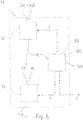
- Fig. 5 symbolically shows the one combination device 50 containing the aforementioned devices for carrying out the method according to the invention.
- a synthesis gas reactor 51, a reactor 52 for the production of medium to long-chain hydrocarbons from the synthesis gas and a fuel cell 53 for the generation of electric current I from the excess molecular hydrogen released in synthesis gas production are provided.
- the electric current may be used in particular for the operation of the reactions in the synthesis gas reactor 51 and / or the reactor 52. Any excess electrical power can also be used elsewhere, eg fed into a grid.
Landscapes
- Chemical & Material Sciences (AREA)
- Chemical Kinetics & Catalysis (AREA)
- Organic Chemistry (AREA)
- Engineering & Computer Science (AREA)
- General Chemical & Material Sciences (AREA)
- Health & Medical Sciences (AREA)
- General Health & Medical Sciences (AREA)
- Combustion & Propulsion (AREA)
- Inorganic Chemistry (AREA)
- Oil, Petroleum & Natural Gas (AREA)
- Life Sciences & Earth Sciences (AREA)
- Sustainable Energy (AREA)
- Electrochemistry (AREA)
- Sustainable Development (AREA)
- Manufacturing & Machinery (AREA)
- Organic Low-Molecular-Weight Compounds And Preparation Thereof (AREA)
- Production Of Liquid Hydrocarbon Mixture For Refining Petroleum (AREA)
Claims (9)
- Procédé, destiné à générer des hydrocarbures de chaîne moyenne à longue, notamment des alcanes, à partir d'alcanes ou d'hydrates d'alcane gazeux,a) dans un premier procédé partiel, un premier alcane gazeux étant transformé par une réaction en une étape ou en plusieurs étapes en des hydrocarbures de chaîne moyenne à longue (produit de synthèse), en libérant de l'hydrogène moléculaire, etb) dans un deuxième procédé partiel parallèle, l'hydrogène moléculaire libéré au cours du premier procédé partiel étant utilisé pour générer de l'énergie,par ailleurs, l'énergie libérée au cours du deuxième procédé partiel étant utilisée pour activer et/ou pour commander la réaction du premier procédé partiel,
et par ailleurs, au cours du deuxième procédé partiel, l'hydrogène moléculaire étant utilisé dans une pile à combustible, pour générer du courant électrique. - Procédé selon la revendication 1, caractérisé en ce que lors du premier procédé partiel, du gaz méthane est transformé dans une première étape de réaction en un gaz de synthèse.
- Procédé selon l'une quelconque des revendications précédentes, caractérisé en ce que lors du premier procédé partiel, le gaz de synthèse est transformé lors d'une deuxième étape de réaction en des hydrocarbures de chaîne moyenne à longue.
- Procédé selon la revendication 3, caractérisé en ce que la deuxième étape de réaction au cours du premier procédé partiel correspond à une réaction selon le procédé de synthèse de Fischer-Tropsch.
- Procédé selon l'une quelconque des revendications précédentes, caractérisé en ce que le procédé comporte des étapes supplémentaires, du groupe comprenant :a) la distillation fractionnée (rectification) du produit de synthèse,b) l'hydrocraquage d'une ou de plusieurs fractions du produit de synthèse,c) le décalaminage du gaz de synthèse
- Procédé selon l'une quelconque des revendications précédentes caractérisé en ce que le gaz méthane utilisé provient de la production de gaz bio, de gaz naturel, de gaz de synthèse, de grisou, de gaz de digestion et/ou de gaz de décharge, d'hydrate de méthane et/ou est un produit dérivé de la production pétrolière ou du raffinage pétrolier.
- Procédé selon l'une quelconque des revendications précédentes, caractérisé en ce que les deux procédés partiels se déroulent en concomitance spatiale et/ou temporelle.
- Dispositif, destiné à générer des hydrocarbures de chaîne moyenne à longue, notamment des alcanes, à partir d'alcanes ou d'hydrates d'alcane gazeux, caractérisé en ce qu'il comporte :a) un premier réacteur, destiné à transformer un alcane gazeux ou un hydrate d'alcane gazeux, par une réaction en une étape ou en plusieurs étapes en des hydrocarbures de chaîne moyenne à longue (produit de synthèse), en libérant de l'hydrogène moléculaire,b) un deuxième réacteur, destiné à générer de l'énergie à partir de l'hydrogène moléculaire, libéré dans le premier réacteur, le deuxième réacteur comportant une pile à combustible, etc) un système, destiné à exploiter l'énergie générée dans le deuxième réacteur, pour commander la réaction en une étape ou en plusieurs étapes réalisée dans le premier réacteur.
- Dispositif selon la revendication 8, caractérisé en ce que celui-ci présente de surcroît des caractéristiques supplémentaires qui sont choisies dans le groupe comprenant :a) le premier réacteur comporte un système, destiné à générer du gaz de synthèse, ainsi qu'un système destiné à réaliser une réaction de polymérisation de gaz de synthèse en des alcanes de chaîne moyenne à longue ;b) le premier réacteur comporte des systèmes destinés à la distillation fractionnée (rectification) du produit de synthèse, pour l'hydrocraquage d'une ou de plusieurs fractions du produit de synthèse et/ou pour le décalaminage du gaz de synthèse ; et/oud) le dispositif est associé à une centrale de biogaz, à une centrale de récupération de gaz de digestion, de gaz de décharge ou de grisou d'une station d'épuration à étape de traitement anaérobie, d'un dispositif collecteur d'alcanes gazeux dans une station de production pétrolière ou d'une raffinerie pétrolière et/ou d'une décharge de récupération d'alcanes gazeux.
Applications Claiming Priority (2)
| Application Number | Priority Date | Filing Date | Title |
|---|---|---|---|
| DE102007002476 | 2007-01-14 | ||
| PCT/EP2008/050298 WO2008084101A1 (fr) | 2007-01-14 | 2008-01-11 | Procédé de production d'hydrocarbures à chaîne moyenne à longue |
Publications (3)
| Publication Number | Publication Date |
|---|---|
| EP2134645A1 EP2134645A1 (fr) | 2009-12-23 |
| EP2134645B1 true EP2134645B1 (fr) | 2019-11-13 |
| EP2134645B8 EP2134645B8 (fr) | 2019-12-18 |
Family
ID=39310895
Family Applications (1)
| Application Number | Title | Priority Date | Filing Date |
|---|---|---|---|
| EP08707864.8A Active EP2134645B8 (fr) | 2007-01-14 | 2008-01-11 | Procédé de production d'hydrocarbures à chaîne moyenne à longue |
Country Status (2)
| Country | Link |
|---|---|
| EP (1) | EP2134645B8 (fr) |
| WO (1) | WO2008084101A1 (fr) |
Family Cites Families (3)
| Publication number | Priority date | Publication date | Assignee | Title |
|---|---|---|---|---|
| US5621155A (en) * | 1986-05-08 | 1997-04-15 | Rentech, Inc. | Process for the production of hydrocarbons |
| US20030083390A1 (en) * | 2001-10-23 | 2003-05-01 | Shah Lalit S. | Fischer-tropsch tail-gas utilization |
| US7435760B2 (en) * | 2004-05-14 | 2008-10-14 | Battelle Memorial Institute | Method of generating hydrocarbon reagents from diesel, natural gas and other logistical fuels |
-
2008
- 2008-01-11 WO PCT/EP2008/050298 patent/WO2008084101A1/fr not_active Ceased
- 2008-01-11 EP EP08707864.8A patent/EP2134645B8/fr active Active
Non-Patent Citations (1)
| Title |
|---|
| None * |
Also Published As
| Publication number | Publication date |
|---|---|
| WO2008084101A1 (fr) | 2008-07-17 |
| EP2134645B8 (fr) | 2019-12-18 |
| EP2134645A1 (fr) | 2009-12-23 |
Similar Documents
| Publication | Publication Date | Title |
|---|---|---|
| DE69935101T2 (de) | Synthesegasherstellung mittels leitender Mischmembranen mit integrierter Konvertierung zu flüssigen Produkten | |
| EP3390693B1 (fr) | Procédé de production de supports d'énergie secondaire à base de carbone ou de produits chimiques de base | |
| EP2818227B1 (fr) | Procédé d'opération d'un four droit produisant de la chaux vive, de la dolomite, de la magnésie ou du ciment et installation de four droit destinée à la production de chaux vive, de dolomite, de magnésie ou de ciment | |
| WO2011018124A1 (fr) | Procédé et installation de production d'une ressource énergétique à base d'hydrocarbure en utilisant une fraction de méthanol produit par régénération et une fraction de méthanol qui est produit par oxydation directe ou par oxydation partielle ou par reformage | |
| DE102015214592A1 (de) | Herstellungsverfahren für ein Brenngas und Anlage zur Herstellung eines Brenngases mit einem Elektrolysesystem zur elektrochemischen Kohlenstoffdioxid-Verwertung | |
| EP1489157B1 (fr) | Procédé pour convertir de déchets et matières premières contenant de l'huile ou de la graisse en un mélange contenant des hydrocarbures | |
| WO2022223458A1 (fr) | Système et procédé de production de combustibles synthétiques sans émission de dioxyde de carbone | |
| EP3526335A1 (fr) | Procédé et dispositif permettant la production de composés organiques à partir de biogaz | |
| EP2057252A1 (fr) | Procédé de production de combustibles à partir de déchets | |
| EP3967654A1 (fr) | Procédé et installation de production d'hydrogène par reformage à la vapeur et par électrolyse à haute température | |
| EP3526315B1 (fr) | Procédé pour la production de méthane | |
| EP2650257B1 (fr) | Dispositif de synthèse de méthanol régénératif à partir de gaz méthane contenant du co2 | |
| EP2803655A1 (fr) | Système et procédé de production d'alcools aliphatiques | |
| WO2014079921A1 (fr) | Production microbiologique de biométhane avec de l'hydrogène obtenu par gazéification de substances de départ carbonées | |
| DE102012013000A1 (de) | Prozess zur kombinierten Herstellung von Wasserstoff und Ethylen | |
| EP2134645B1 (fr) | Procédé de production d'hydrocarbures à chaîne moyenne à longue | |
| EP2360231A1 (fr) | Procédé et dispositif d'évaluation d'émissions d'une installation industrielle | |
| EP3426764B1 (fr) | Synthèse renouvelable de réservoirs d'énergie chimiques et de produits de chimie fine | |
| DE102018222463A1 (de) | Verfahren und Vorrichtung zur Herstellung von Wasserstoff, Kohlenmonoxid und einem kohlenstoffhaltigen Produkt | |
| EP2438980A1 (fr) | Procédé et dispositif de préparation et d'installation de méthanol à base d'hydrogène à des fins de dénitrification | |
| DE102011015824A1 (de) | Luftfahrzeug-Brennstoffzellensystem, Luftfahrzeug und Verwendung eines synthetischen Brennstoffs | |
| LU103225B1 (de) | Grüner Wasserstoff, Synthesegas und Rauchgas mit vermindertem Stickstoffgehalt zur Synthese von Ammoniak und Harnstoff | |
| EP2918549A1 (fr) | Séparateur de sel et procédé de génération d'un mélange gazeux contenant du méthane à partir de biomasse en utilisant un séparateur de sel | |
| DE102024203434A1 (de) | Verfahren zum Herstellen von regenerativen Kohlenwasserstoffen über die Methanol-Route und entsprechende Syntheseanlage | |
| WO2025242614A1 (fr) | Installation et procédé comprenant un reformeur autothermique pour la production de carburants synthétiques sans émission de dioxyde de carbone |
Legal Events
| Date | Code | Title | Description |
|---|---|---|---|
| PUAI | Public reference made under article 153(3) epc to a published international application that has entered the european phase |
Free format text: ORIGINAL CODE: 0009012 |
|
| 17P | Request for examination filed |
Effective date: 20090814 |
|
| AK | Designated contracting states |
Kind code of ref document: A1 Designated state(s): AT BE BG CH CY CZ DE DK EE ES FI FR GB GR HR HU IE IS IT LI LT LU LV MC MT NL NO PL PT RO SE SI SK TR |
|
| DAX | Request for extension of the european patent (deleted) | ||
| 17Q | First examination report despatched |
Effective date: 20100325 |
|
| STAA | Information on the status of an ep patent application or granted ep patent |
Free format text: STATUS: EXAMINATION IS IN PROGRESS |
|
| GRAP | Despatch of communication of intention to grant a patent |
Free format text: ORIGINAL CODE: EPIDOSNIGR1 |
|
| STAA | Information on the status of an ep patent application or granted ep patent |
Free format text: STATUS: GRANT OF PATENT IS INTENDED |
|
| INTG | Intention to grant announced |
Effective date: 20190527 |
|
| RIN1 | Information on inventor provided before grant (corrected) |
Inventor name: GANTEFORT, WILHELM |
|
| GRAS | Grant fee paid |
Free format text: ORIGINAL CODE: EPIDOSNIGR3 |
|
| GRAA | (expected) grant |
Free format text: ORIGINAL CODE: 0009210 |
|
| STAA | Information on the status of an ep patent application or granted ep patent |
Free format text: STATUS: THE PATENT HAS BEEN GRANTED |
|
| AK | Designated contracting states |
Kind code of ref document: B1 Designated state(s): AT BE BG CH CY CZ DE DK EE ES FI FR GB GR HR HU IE IS IT LI LT LU LV MC MT NL NO PL PT RO SE SI SK TR |
|
| REG | Reference to a national code |
Ref country code: GB Ref legal event code: FG4D Free format text: NOT ENGLISH |
|
| REG | Reference to a national code |
Ref country code: CH Ref legal event code: EP Ref country code: AT Ref legal event code: REF Ref document number: 1201463 Country of ref document: AT Kind code of ref document: T Effective date: 20191115 |
|
| REG | Reference to a national code |
Ref country code: DE Ref legal event code: R096 Ref document number: 502008016946 Country of ref document: DE |
|
| REG | Reference to a national code |
Ref country code: CH Ref legal event code: PK Free format text: BERICHTIGUNG B8 |
|
| RAP2 | Party data changed (patent owner data changed or rights of a patent transferred) |
Owner name: BECK, JUERGEN |
|
| REG | Reference to a national code |
Ref country code: IE Ref legal event code: FG4D Free format text: LANGUAGE OF EP DOCUMENT: GERMAN |
|
| REG | Reference to a national code |
Ref country code: DE Ref legal event code: R081 Ref document number: 502008016946 Country of ref document: DE Owner name: BECK, JUERGEN, DE Free format text: FORMER OWNER: BECK, JUERGEN, DR., 72108 ROTTENBURG, DE |
|
| REG | Reference to a national code |
Ref country code: NO Ref legal event code: T2 Effective date: 20191113 |
|
| REG | Reference to a national code |
Ref country code: NL Ref legal event code: FP |
|
| REG | Reference to a national code |
Ref country code: LT Ref legal event code: MG4D |
|
| PG25 | Lapsed in a contracting state [announced via postgrant information from national office to epo] |
Ref country code: FI Free format text: LAPSE BECAUSE OF FAILURE TO SUBMIT A TRANSLATION OF THE DESCRIPTION OR TO PAY THE FEE WITHIN THE PRESCRIBED TIME-LIMIT Effective date: 20191113 Ref country code: BG Free format text: LAPSE BECAUSE OF FAILURE TO SUBMIT A TRANSLATION OF THE DESCRIPTION OR TO PAY THE FEE WITHIN THE PRESCRIBED TIME-LIMIT Effective date: 20200213 Ref country code: GR Free format text: LAPSE BECAUSE OF FAILURE TO SUBMIT A TRANSLATION OF THE DESCRIPTION OR TO PAY THE FEE WITHIN THE PRESCRIBED TIME-LIMIT Effective date: 20200214 Ref country code: PL Free format text: LAPSE BECAUSE OF FAILURE TO SUBMIT A TRANSLATION OF THE DESCRIPTION OR TO PAY THE FEE WITHIN THE PRESCRIBED TIME-LIMIT Effective date: 20191113 Ref country code: SE Free format text: LAPSE BECAUSE OF FAILURE TO SUBMIT A TRANSLATION OF THE DESCRIPTION OR TO PAY THE FEE WITHIN THE PRESCRIBED TIME-LIMIT Effective date: 20191113 Ref country code: PT Free format text: LAPSE BECAUSE OF FAILURE TO SUBMIT A TRANSLATION OF THE DESCRIPTION OR TO PAY THE FEE WITHIN THE PRESCRIBED TIME-LIMIT Effective date: 20200313 Ref country code: LV Free format text: LAPSE BECAUSE OF FAILURE TO SUBMIT A TRANSLATION OF THE DESCRIPTION OR TO PAY THE FEE WITHIN THE PRESCRIBED TIME-LIMIT Effective date: 20191113 Ref country code: ES Free format text: LAPSE BECAUSE OF FAILURE TO SUBMIT A TRANSLATION OF THE DESCRIPTION OR TO PAY THE FEE WITHIN THE PRESCRIBED TIME-LIMIT Effective date: 20191113 Ref country code: LT Free format text: LAPSE BECAUSE OF FAILURE TO SUBMIT A TRANSLATION OF THE DESCRIPTION OR TO PAY THE FEE WITHIN THE PRESCRIBED TIME-LIMIT Effective date: 20191113 |
|
| PG25 | Lapsed in a contracting state [announced via postgrant information from national office to epo] |
Ref country code: IS Free format text: LAPSE BECAUSE OF FAILURE TO SUBMIT A TRANSLATION OF THE DESCRIPTION OR TO PAY THE FEE WITHIN THE PRESCRIBED TIME-LIMIT Effective date: 20200313 Ref country code: HR Free format text: LAPSE BECAUSE OF FAILURE TO SUBMIT A TRANSLATION OF THE DESCRIPTION OR TO PAY THE FEE WITHIN THE PRESCRIBED TIME-LIMIT Effective date: 20191113 |
|
| PG25 | Lapsed in a contracting state [announced via postgrant information from national office to epo] |
Ref country code: DK Free format text: LAPSE BECAUSE OF FAILURE TO SUBMIT A TRANSLATION OF THE DESCRIPTION OR TO PAY THE FEE WITHIN THE PRESCRIBED TIME-LIMIT Effective date: 20191113 Ref country code: EE Free format text: LAPSE BECAUSE OF FAILURE TO SUBMIT A TRANSLATION OF THE DESCRIPTION OR TO PAY THE FEE WITHIN THE PRESCRIBED TIME-LIMIT Effective date: 20191113 Ref country code: RO Free format text: LAPSE BECAUSE OF FAILURE TO SUBMIT A TRANSLATION OF THE DESCRIPTION OR TO PAY THE FEE WITHIN THE PRESCRIBED TIME-LIMIT Effective date: 20191113 Ref country code: CZ Free format text: LAPSE BECAUSE OF FAILURE TO SUBMIT A TRANSLATION OF THE DESCRIPTION OR TO PAY THE FEE WITHIN THE PRESCRIBED TIME-LIMIT Effective date: 20191113 |
|
| REG | Reference to a national code |
Ref country code: DE Ref legal event code: R097 Ref document number: 502008016946 Country of ref document: DE |
|
| PG25 | Lapsed in a contracting state [announced via postgrant information from national office to epo] |
Ref country code: MC Free format text: LAPSE BECAUSE OF FAILURE TO SUBMIT A TRANSLATION OF THE DESCRIPTION OR TO PAY THE FEE WITHIN THE PRESCRIBED TIME-LIMIT Effective date: 20191113 Ref country code: SK Free format text: LAPSE BECAUSE OF FAILURE TO SUBMIT A TRANSLATION OF THE DESCRIPTION OR TO PAY THE FEE WITHIN THE PRESCRIBED TIME-LIMIT Effective date: 20191113 |
|
| REG | Reference to a national code |
Ref country code: CH Ref legal event code: PL |
|
| PLBE | No opposition filed within time limit |
Free format text: ORIGINAL CODE: 0009261 |
|
| STAA | Information on the status of an ep patent application or granted ep patent |
Free format text: STATUS: NO OPPOSITION FILED WITHIN TIME LIMIT |
|
| 26N | No opposition filed |
Effective date: 20200814 |
|
| PG25 | Lapsed in a contracting state [announced via postgrant information from national office to epo] |
Ref country code: LU Free format text: LAPSE BECAUSE OF NON-PAYMENT OF DUE FEES Effective date: 20200111 |
|
| PG25 | Lapsed in a contracting state [announced via postgrant information from national office to epo] |
Ref country code: LI Free format text: LAPSE BECAUSE OF NON-PAYMENT OF DUE FEES Effective date: 20200131 Ref country code: CH Free format text: LAPSE BECAUSE OF NON-PAYMENT OF DUE FEES Effective date: 20200131 Ref country code: SI Free format text: LAPSE BECAUSE OF FAILURE TO SUBMIT A TRANSLATION OF THE DESCRIPTION OR TO PAY THE FEE WITHIN THE PRESCRIBED TIME-LIMIT Effective date: 20191113 |
|
| PG25 | Lapsed in a contracting state [announced via postgrant information from national office to epo] |
Ref country code: IT Free format text: LAPSE BECAUSE OF FAILURE TO SUBMIT A TRANSLATION OF THE DESCRIPTION OR TO PAY THE FEE WITHIN THE PRESCRIBED TIME-LIMIT Effective date: 20191113 Ref country code: IE Free format text: LAPSE BECAUSE OF NON-PAYMENT OF DUE FEES Effective date: 20200111 |
|
| REG | Reference to a national code |
Ref country code: AT Ref legal event code: MM01 Ref document number: 1201463 Country of ref document: AT Kind code of ref document: T Effective date: 20200111 |
|
| PG25 | Lapsed in a contracting state [announced via postgrant information from national office to epo] |
Ref country code: AT Free format text: LAPSE BECAUSE OF NON-PAYMENT OF DUE FEES Effective date: 20200111 |
|
| PG25 | Lapsed in a contracting state [announced via postgrant information from national office to epo] |
Ref country code: TR Free format text: LAPSE BECAUSE OF FAILURE TO SUBMIT A TRANSLATION OF THE DESCRIPTION OR TO PAY THE FEE WITHIN THE PRESCRIBED TIME-LIMIT Effective date: 20191113 Ref country code: MT Free format text: LAPSE BECAUSE OF FAILURE TO SUBMIT A TRANSLATION OF THE DESCRIPTION OR TO PAY THE FEE WITHIN THE PRESCRIBED TIME-LIMIT Effective date: 20191113 Ref country code: CY Free format text: LAPSE BECAUSE OF FAILURE TO SUBMIT A TRANSLATION OF THE DESCRIPTION OR TO PAY THE FEE WITHIN THE PRESCRIBED TIME-LIMIT Effective date: 20191113 |
|
| PGFP | Annual fee paid to national office [announced via postgrant information from national office to epo] |
Ref country code: NL Payment date: 20240119 Year of fee payment: 17 |
|
| PGFP | Annual fee paid to national office [announced via postgrant information from national office to epo] |
Ref country code: DE Payment date: 20240131 Year of fee payment: 17 Ref country code: GB Payment date: 20240123 Year of fee payment: 17 |
|
| PGFP | Annual fee paid to national office [announced via postgrant information from national office to epo] |
Ref country code: NO Payment date: 20240123 Year of fee payment: 17 Ref country code: FR Payment date: 20240124 Year of fee payment: 17 Ref country code: BE Payment date: 20240119 Year of fee payment: 17 |
|
| REG | Reference to a national code |
Ref country code: DE Ref legal event code: R119 Ref document number: 502008016946 Country of ref document: DE |
|
| REG | Reference to a national code |
Ref country code: NL Ref legal event code: MM Effective date: 20250201 |
|
| GBPC | Gb: european patent ceased through non-payment of renewal fee |
Effective date: 20250111 |
|
| PG25 | Lapsed in a contracting state [announced via postgrant information from national office to epo] |
Ref country code: DE Free format text: LAPSE BECAUSE OF NON-PAYMENT OF DUE FEES Effective date: 20250801 |
|
| PG25 | Lapsed in a contracting state [announced via postgrant information from national office to epo] |
Ref country code: NO Free format text: LAPSE BECAUSE OF NON-PAYMENT OF DUE FEES Effective date: 20250131 |
|
| PG25 | Lapsed in a contracting state [announced via postgrant information from national office to epo] |
Ref country code: NL Free format text: LAPSE BECAUSE OF NON-PAYMENT OF DUE FEES Effective date: 20250201 |
|
| PG25 | Lapsed in a contracting state [announced via postgrant information from national office to epo] |
Ref country code: GB Free format text: LAPSE BECAUSE OF NON-PAYMENT OF DUE FEES Effective date: 20250111 Ref country code: BE Free format text: LAPSE BECAUSE OF NON-PAYMENT OF DUE FEES Effective date: 20250131 |
|
| PG25 | Lapsed in a contracting state [announced via postgrant information from national office to epo] |
Ref country code: FR Free format text: LAPSE BECAUSE OF NON-PAYMENT OF DUE FEES Effective date: 20250131 |
|
| REG | Reference to a national code |
Ref country code: BE Ref legal event code: MM Effective date: 20250131 |