EP2136592A1 - Verfahren zur Durchführung von Direktzugriffsprozeduren und dazugehöriges Endgerät - Google Patents
Verfahren zur Durchführung von Direktzugriffsprozeduren und dazugehöriges Endgerät Download PDFInfo
- Publication number
- EP2136592A1 EP2136592A1 EP20090007920 EP09007920A EP2136592A1 EP 2136592 A1 EP2136592 A1 EP 2136592A1 EP 20090007920 EP20090007920 EP 20090007920 EP 09007920 A EP09007920 A EP 09007920A EP 2136592 A1 EP2136592 A1 EP 2136592A1
- Authority
- EP
- European Patent Office
- Prior art keywords
- network
- rach
- mobile terminal
- random access
- preamble
- Prior art date
- Legal status (The legal status is an assumption and is not a legal conclusion. Google has not performed a legal analysis and makes no representation as to the accuracy of the status listed.)
- Ceased
Links
Images





Classifications
-
- H—ELECTRICITY
- H04—ELECTRIC COMMUNICATION TECHNIQUE
- H04W—WIRELESS COMMUNICATION NETWORKS
- H04W52/00—Power management, e.g. Transmission Power Control [TPC] or power classes
- H04W52/02—Power saving arrangements
- H04W52/0209—Power saving arrangements in terminal devices
- H04W52/0212—Power saving arrangements in terminal devices managed by the network, e.g. network or access point is leader and terminal is follower
- H04W52/0216—Power saving arrangements in terminal devices managed by the network, e.g. network or access point is leader and terminal is follower using a pre-established activity schedule, e.g. traffic indication frame
-
- H—ELECTRICITY
- H04—ELECTRIC COMMUNICATION TECHNIQUE
- H04W—WIRELESS COMMUNICATION NETWORKS
- H04W24/00—Supervisory, monitoring or testing arrangements
- H04W24/08—Testing, supervising or monitoring using real traffic
-
- H—ELECTRICITY
- H04—ELECTRIC COMMUNICATION TECHNIQUE
- H04W—WIRELESS COMMUNICATION NETWORKS
- H04W72/00—Local resource management
- H04W72/20—Control channels or signalling for resource management
- H04W72/23—Control channels or signalling for resource management in the downlink direction of a wireless link, i.e. towards a terminal
-
- H—ELECTRICITY
- H04—ELECTRIC COMMUNICATION TECHNIQUE
- H04W—WIRELESS COMMUNICATION NETWORKS
- H04W74/00—Wireless channel access
- H04W74/002—Transmission of channel access control information
-
- H—ELECTRICITY
- H04—ELECTRIC COMMUNICATION TECHNIQUE
- H04W—WIRELESS COMMUNICATION NETWORKS
- H04W74/00—Wireless channel access
- H04W74/08—Non-scheduled access, e.g. ALOHA
- H04W74/0833—Random access procedures, e.g. with 4-step access
-
- H—ELECTRICITY
- H04—ELECTRIC COMMUNICATION TECHNIQUE
- H04W—WIRELESS COMMUNICATION NETWORKS
- H04W24/00—Supervisory, monitoring or testing arrangements
-
- H—ELECTRICITY
- H04—ELECTRIC COMMUNICATION TECHNIQUE
- H04W—WIRELESS COMMUNICATION NETWORKS
- H04W74/00—Wireless channel access
- H04W74/002—Transmission of channel access control information
- H04W74/006—Transmission of channel access control information in the downlink, i.e. towards the terminal
-
- H—ELECTRICITY
- H04—ELECTRIC COMMUNICATION TECHNIQUE
- H04W—WIRELESS COMMUNICATION NETWORKS
- H04W74/00—Wireless channel access
- H04W74/08—Non-scheduled access, e.g. ALOHA
- H04W74/0808—Non-scheduled access, e.g. ALOHA using carrier sensing, e.g. carrier sense multiple access [CSMA]
-
- H—ELECTRICITY
- H04—ELECTRIC COMMUNICATION TECHNIQUE
- H04W—WIRELESS COMMUNICATION NETWORKS
- H04W74/00—Wireless channel access
- H04W74/08—Non-scheduled access, e.g. ALOHA
- H04W74/0833—Random access procedures, e.g. with 4-step access
- H04W74/0838—Random access procedures, e.g. with 4-step access using contention-free random access [CFRA]
-
- Y—GENERAL TAGGING OF NEW TECHNOLOGICAL DEVELOPMENTS; GENERAL TAGGING OF CROSS-SECTIONAL TECHNOLOGIES SPANNING OVER SEVERAL SECTIONS OF THE IPC; TECHNICAL SUBJECTS COVERED BY FORMER USPC CROSS-REFERENCE ART COLLECTIONS [XRACs] AND DIGESTS
- Y02—TECHNOLOGIES OR APPLICATIONS FOR MITIGATION OR ADAPTATION AGAINST CLIMATE CHANGE
- Y02D—CLIMATE CHANGE MITIGATION TECHNOLOGIES IN INFORMATION AND COMMUNICATION TECHNOLOGIES [ICT], I.E. INFORMATION AND COMMUNICATION TECHNOLOGIES AIMING AT THE REDUCTION OF THEIR OWN ENERGY USE
- Y02D30/00—Reducing energy consumption in communication networks
- Y02D30/70—Reducing energy consumption in communication networks in wireless communication networks
Definitions
- the present invention relates to an apparatus and method for performing random access procedures.
- random access procedures were not performed efficiently.
- the related art technologies do not sufficiently address such issues, and thus do not offer appropriate solutions.
- the present inventors recognized at least the above-identified drawbacks of the related art. Based upon such recognition, the various features described hereafter have been conceived such that a random access procedure between a mobile terminal and a network is performed based upon the characteristics of a random access channel (RACH) preamble. As a result, more efficient monitoring of downlink channels can be performed, which results in reduced power consumption.
- RACH random access channel
- LTE Long Term evolution
- 4G communication systems which is an enhancement to current 3GPP technologies.
- such details are not meant to limit the various features described herein, which are applicable to other types of mobile and/or wireless communication systems and methods.
- mobile terminal will be used to refer to various types of user devices, such as mobile communication terminals, user equipment (UE), mobile equipment (ME), and other devices that support various types of wireless communication technologies.
- UE user equipment
- ME mobile equipment
- Embodiments of the present invention relate to sending and receiving data between a base station (e.g. Node B, eNB, access point, etc.) and a mobile station (e.g. mobile terminal, UE, user device, etc.) in a Long Term Evolution (LTE) system.
- Power consumption of the mobile terminal can be reduced to a minimum and a downlink channel can be more effectively monitored because a reception time for the downlink channel is determined according to the characteristics of a preamble for a mobile terminal that performs random access.
- Second generation (2G) mobile communications relate to transmitting and receiving voice signals in a digital manner, and include technologies such as CDMA, GSM, and the like.
- GPRS was developed to provide packet switched data services based upon GSM.
- Third generation (3G) mobile communications relate to transmitting and receiving not only voice signals, but also video and data.
- the 3GPP (Third Generation Partnership Project) developed the IMT-2000 mobile communication system and selected WCDMA as its radio access technology (RAT).
- the combination of IMT-2000 and WCDMA can be referred to as UMTS (Universal Mobile Telecommunications System), which comprises a UMTS Terrestrial Radio Access Network (UTRAN).
- UMTS Universal Mobile Telecommunications System
- UTRAN Universal Mobile Telecommunications System
- LTE Long-Term Evolution
- E-UMTS Evolved-UMTS
- E-UTRAN Evolved-UTRAN
- OFDMA Orthogonal Frequency Division Multiple Access
- FIG 1 shows the exemplary network architecture for an E-UMTS (Evolved Universal Mobile Telecommunications System) 100, which is a type of mobile communications system.
- E-UMTS Evolved Universal Mobile Telecommunications System
- the E-UMTS system is a system that has evolved from the UMTS system and its basic standardization tasks are now being performed by the 3GPP organization.
- the E-UMTS system can be said to be a Long Term Evolution (LTE) system, which is a type of so-called 4G or next generation system that has evolved from the current 3G mobile communication systems.
- LTE Long Term Evolution
- the E-UMTS network 100 can be generally distinguished into the E-UTRAN (Evolved Universal Terrestrial Radio Access Network) 110 and the CN (core network).
- the E-UTRAN is comprised of a mobile terminal 112 (e.g. user equipment (UE), mobile station, handset, mobile phone, etc.), a base station 114, 116, 118 (e.g., an eNode B, access point (AP), network node, etc.) a serving gateway (S-GW) 122, 124 located at an end of the network for connection with an external network, and a mobility management entity (MME) 122, 124 that manages various mobility aspects of the mobile terminal.
- UE user equipment
- AP access point
- MME mobility management entity
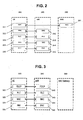
- FIGS 2 and 3 show the radio interface protocol between the mobile terminal and base station based on the 3GPP radio access network standard.
- This radio interface protocol is divided horizontally into a physical layer, a data link layer, and a network layer, and is divided vertically into a user plane for transmitting data information and a control plane for transferring control signals (signaling).
- These protocol layers can be divided into L1 (Layer 1), L2 (Layer 2), and L3 (Layer 3), which are the lower three layers of the OSI (Open System Interconnection) standard model, which is well known in communication systems.
- OSI Open System Interconnection
- the physical layer 225-245, 325-345 uses one or more physical channels to provide an information transfer service.
- the physical layer is connected to the MAC (Medium Access Control) layer 224-244, 324-344 located above via one or more transport channels, and data is transferred between the MAC layer and the physical layer through these transport channels.
- MAC Medium Access Control
- data is transferred via one or more physical channels.
- the physical channels that exist for the physical layer in the transmitting side and in the receiving side include: SCH (Synchronization Channel), PCCPCH (Primary Common Control Physical Channel), SCCPCH (Secondary Common Control Physical Channel), DPCH (Dedicated Physical Channel), PICH (Paging Indicator Channel), PRACH (Physical Random Access Channel), PDCCH (Physical Downlink Control Channel) and PDSCH (Physical Downlink Shared Channel) and the like.
- the MAC layer provides service to a RLC (Radio Link Control) layer 223-243, 323-343, which is an upper layer, via one or more logical channels.
- RLC Radio Link Control
- the logical channels can be divided into control channels that are used to transmit control plane data, and traffic channels that are used to transmit user plane data.
- the RLC layer supports the transmission of data with reliability.
- Each radio bearer (RB) is responsible to the guarantee of QoS (Quality of Service) and transmits data accordingly.
- QoS Quality of Service
- one or two independent RLC entities are provided for each RB, and three types of RLC modes (TM: Transparent Mode, UM: Unacknowledged Mode; and AM: Acknowledged Mode) are provided to support various QoS.
- the PDCP (Packet Data Convergence Protocol) layer 322-342 in Layer 2 performs a header compression function to reduce the header size for Internet Protocol (IP) packets that contain relatively large and unnecessary control information such that IP packets (such as for IPv4, IPv6, etc.) may be effectively transmitted over the radio interface having relatively small bandwidth.
- IP Internet Protocol
- the PDCP layer is used for performing coding of control plane (C-plane) data, such as RRC messages.
- C-plane control plane
- the PDCP layer can also perform coding of user plane (U-plane) data.
- the RRC (Radio Resource Control) layer 222-242 is only defined in the control plane and is responsible for the control of logical channels, transport channels and physical channels with relation to the configuration, re-configuration and release of radio bearers (RBs).
- a radio bearer is a service provided by Layer 2 for transferring data between the mobile terminal and E-UTRAN.
- the RB refers to a service provided by Layer 2 to transfer data between the UE and the E-UTRAN.
- the RACH procedure is used for transmitting relatively short length data via the uplink.
- the RACH procedure is used when there is a signaling message or user data to be transmitted via the uplink by a mobile terminal that did not receive allocation of dedicated radio resources, or may also be used when the base station should instruct the mobile terminal to perform a RACH procedure.
- the random access procedure provided in the LTE system can be classified as a contention based random access procedure and a non-contention based procedure. Such classification is based upon whether the random access preamble is selected by the mobile terminal itself (i.e. preamble selected by the MAC in the mobile terminal) or selected by the base station (i.e. receiving information about the preamble to be used through explicit signaling).
- the mobile terminal uses the preamble that was directly allocated to it from the base station.
- the base station had allocated a particular random access preamble to the mobile terminal, such random access preamble is only used by that mobile terminal, while other mobile terminals do not use such random access preamble.
- there is a one-to-one (1:1) relationship between the random access preamble and the mobile terminal that uses such random access preamble there are no contentions (or conflicts) between multiple mobile terminals.
- the base station upon receipt of such random access preamble, the base station can immediately know which mobile terminal transmitted such random access preamble, and thus it can be said that more efficient operation is possible.
- the mobile terminal performs a random access procedure for at least the following exemplary situations:
- the mobile terminal selects (e.g. at random) one random access preamble among a set of random access preambles indicated via system information or a hanover command, then selects PRACH resources that can be used to transmit such random access preamble, and then performs transmission.
- a RACH MSG 1 When the mobile terminal itself (“randomly") selects the preamble (i.e. the preamble selected by the MAC itself), such is called a contention-based RACH procedure, and the preamble is called a contention-based preamble.
- the mobile terminal receives allocation of the preamble directly from the network through the RRC or PDCCH (i.e. an explicitly signaled preamble), this is called a non-contention based RACH procedure, and such preamble is called a dedicated preamble.
- the mobile terminal After transmitting the random access preamble as selected above, the mobile terminal attempts to receive its random access response within a random access response reception window indicated from the base station via system information or handover command.
- the random access response information (typically called a RACH MSG 2) is transmitted in the form of a MAC PDU, which is delivered via the PDSCH, and the information related to the radio resources for the PDSCH is delivered through the PDCCH via the RA-RNTI.
- the random access response includes values comprising a random access preamble identifier (ID), a UL Grant (for uplink radio resources), a Temporary C-RNTI (a temporary cell identifier), and a Time Alignment Command (a value for time synchronization adjustment).
- ID random access preamble identifier
- UL Grant for uplink radio resources
- Temporary C-RNTI a temporary cell identifier
- Time Alignment Command a value for time synchronization adjustment
- the mobile terminal uses the information related to the uplink radio resources and performs the following step 3). If a dedicated preamble is used in step 1), and if the random access preamble identifier (ID) included in RACH MSG 2 and the random access preamble transmitted by the mobile terminal in step 1) are the same (i.e. matches), the RACH procedure is considered to be ended or terminated.
- the mobile terminal receives a random access response (RAR) that is meant for itself (i.e. the RAR is a valid response for that mobile terminal), the information within such random access response is processed, respectively. Namely, the mobile terminal applies the Time Alignment Command and stores the Temporary C-RNTI. Also, the UL Grant is used to transmit the data stored in its buffer or to transmit newly generated data to the base station.
- the data transmitted by using the UL Grant i.e., the MAC PDU
- RACH MSG 3 the data transmitted by using the UL Grant
- the mobile terminal identifier (ID) must be included. This is because in a contention based random access procedure, the base station cannot determine which mobile terminal performed such random access procedure, and in order to prevent or resolve any future contentions or conflicts, information that can be used to identify the mobile terminal would be required.
- the mobile terminal In the above procedure, there are two ways to include the identifier for the mobile terminal. For the first way, if the mobile terminal already has a valid cell identifier (C-RNTI) allocated from the base station (eNB) of the corresponding cell before the random access procedure is performed, the mobile terminal transmits such cell identifier via the UL Grant. For the second way, if the mobile terminal did not receive allocation of a unique cell identifier from the eNB, the mobile terminal includes its core network identifier (e.g., S-TMSI, Random ID, etc.) and performs transmission. After transmitting data using the UL Grant, the mobile terminal starts a contention resolution timer in order to solve any contention (conflict) problems.
- C-RNTI valid cell identifier allocated from the base station (eNB) of the corresponding cell before the random access procedure is performed
- the mobile terminal transmits such cell identifier via the UL Grant.
- the mobile terminal includes its core network identifier (e.g., S-TMSI,
- the mobile terminal After transmitting data (that includes its identifier) using the UL Grant included in the random access response, the mobile terminal waits for commands from the base station for resolving contentions. Namely, reception of the PDCCH is attempted in order to receive a particular message.
- reception of the PDCCH is attempted in order to receive a particular message.
- C-RNTI cell identifier
- the PDCCH (referred to a RACH MSG 4 hereafter) is received (by using its cell identifier) before expiration of the contention resolution timer, then it is considered that the mobile terminal performed the ransom access procedure in a normal manner and the random access procedure is ended (terminated).
- the PDCCH referred to a RACH MSG 4 hereafter
- the data (referred to as RACH MSG 4 hereafter), which is delivered by the PDSCH that is indicated by the PDCCH, is checked.
- RACH MSG 4 The message or MAC PDU received in this step 4) is commonly called RACH MSG 4.
- the mobile terminal In case the contention resolution timer has expired (i.e., a Temporary C-RNTI or a cell identifier for the mobile terminal is not received before expiration of the contention resolution timer), the mobile terminal considers the RACH procedure to be a failure. As a result, an appropriate back-off timer is operated (started) and the RACH procedure beginning from step 1) above is started again after expiration of such back-off timer.
- a Temporary C-RNTI or a cell identifier for the mobile terminal is not received before expiration of the contention resolution timer
- the PDCCH is not directly related to transmitting user data, but used in transmitting control information needed for implementing (or using) physical channels. In more basic terms, it can be said that the PDCCH is used in controlling other physical channels. In particular, the PDCCH is used in transmitting information necessary for the mobile terminal to receive the PDSCH. With respect to data that is transmitted at a particular point in time using a particular frequency bandwidth, information about what mobile terminal such data is intended for, the size of such data being transmitted, and the like is transmitted via the PDCCH.
- each mobile terminal receives the PDCCH at a particular time (e.g., TTI: transmission time interval) and checks whether any data (that should be received) was transmitted. If there is an indication that data (which should be received) was indeed transmitted, the PDSCH is additionally received by using the information (such as the appropriate frequency, etc.) indicated by the PDCCH. It can be said that information indicating as to what mobile terminal (i.e. a single UE or multiple UEs) the data of the PDSCH is being transmitted to, information indicating how the mobile terminal(s) should receive and decode the PDSCH data, and the like are transmitted via a physical channel, i.e. the PDCCH (Physical Downlink Control CHannel).
- PDCCH Physical Downlink Control CHannel
- radio resource information A e.g. frequency location
- transmission format information B e.g. transmission block size, modulation and coding information, etc.
- RNTI Radio Network Temporary Identity
- CRC Cyclic Redundancy Check
- One or more mobile terminals in a corresponding cell use the RNTI information that it has in order to monitor the PDCCH, and referring to the above assumption, for a mobile terminal having RNTI information C, when the PDCCH is decoded, CRC errors do not occur. Accordingly, such mobile terminal uses the transmission format information B and radio resource information A to decode the PDSCH in order to receive data.
- CRC errors occur when the PDCCH is decoded, and thus such mobile terminal does not receive the PDSCH.
- a RNTI Radio Network Temporary Identifier
- a dedicated RNTI is allocated to a single mobile terminal and is used for transmitting and receiving data corresponding to that mobile terminal.
- Such dedicated RNTI is only allocated to those mobile terminals having their information registered in the base station (eNB).
- a common RNTI is used by those mobile terminals that do not have their information registered in the base station (eNB) and cannot be allocated a dedicated RNTI, in order to send and receive data with the base station or used for transmitting information (such as system information) that is commonly applied to a plurality of mobile terminals.
- the radio resources for a single cell are comprised of uplink radio resources and downlink radio resources.
- the base station is responsible for the allocation and control of uplink radio resources and downlink radio resources of a cell. Namely, the base station determines what radio resources are to be used by what mobile terminals at certain moments in time. For example, the base station can determine that 3.2 seconds from now, the frequency from 100 Mhz to 101 Mhz will be allocated to user 1 for a duration of 0.2 seconds to allow downlink data transmissions. Also, after the base station makes such determination, these matters can be informed to the corresponding mobile terminal such that this mobile terminal receives downlink data. Likewise, the base station can determine when a certain mobile terminal should use what amount of which radio resources for data transmission via the uplink, and the base station informs the mobile terminal about its determination, to thus allow the mobile terminal to transmit data during the determined time period using the determined radio resources.
- the base station manages radio resources in a dynamic manner, efficient use of radio resources would be possible.
- a single mobile terminal continuously uses a single radio resource during a call connection. This is not preferable considering that most recent services are IP packet-based. The reason is that most packet services do not continuously generate packets during the duration of a call connection, and there are many time periods in which nothing is transmitted during the call. Despite this, continued allocation of a radio resource to a single mobile terminal is inefficient.
- the mobile terminal of a E-UTRAN system uses a method in which radio resources are allocated to the mobile terminal only while service data exists.
- DRX refers to discontinuous reception and signifies the operations about when (i.e. at when point in time) the base station should send information related to radio resource allocation to the mobile station during the process of communication between the base station and the mobile terminal.
- a mobile terminal having to always monitor the downlink channel, in particular the PDCCH would result in undesirable power consumption for the mobile terminal.
- the mobile terminal and the base station operate according to pre-established consistent rules, such that the base station sends radio resource allocation information via the PDCCH to the mobile terminal only at specific times.
- the mobile terminal only needs to monitor the PDCCH at certain specified times, which reduces power consumption thereof.
- Some types of DRX operations are performed in the following manner.
- an active time is defined. This active time denotes the time at which that the mobile terminal should wake up (from its idle state) to monitor a downlink channel, namely the PDCCH. After such active time, the mobile terminal need not monitor the PDCCH.
- the active time may include the following types of time periods:
- the DRX is performed also for the RACH procedure.
- the active time explained above can be considered in view of the RACH procedure.
- Figures 6 and 7 shows RACH procedures performed by a mobile terminal for (a) Contention based and (b) Non-contention based situations.
- Contention based RACH the active time denotes the time during which the mobile terminal should monitor the downlink channel.
- Non-contention based RACH unlike in contention based RACH, there is no RACH MSG 3 transmission being performed. Also, a Temporary C-RNTI is not used.
- DRX discontinuous receptions
- the mobile terminal selects a preamble and this selected preamble is transmitted to the base station (network) (see S1 and S2). If the mobile terminal receives a random access response (RAR: RACH response, i.e. RACH MSG 2) from the base station, the information included in such random access response are individually processed (S3). Also, as a procedure for receiving a C-RNTI or a Temporary C-RNTI from the base station that informs about radio resource allocation, the mobile terminal sends data (i.e. a MAC PDU referred to as RACH MSG 3) via an uplink (UL) grant (S4).
- RAR random access response
- RACH MSG 3 the information included in such random access response
- the mobile terminal sends data (i.e. a MAC PDU referred to as RACH MSG 3) via an uplink (UL) grant (S4).
- the downlink channel (via which the C-RNTI or the Temporary C-RNTI will be transmitted) is monitored from the time when the preamble was selected until the C-RNTI or the Temporary C-RNTI is actually received (S5).
- a DRX timer is operated (or started) and active from after receiving the RACH MSG 2 until the C-RNTI or the Temporary C-RNTI is received.
- a contention based resolution timer is operated (or started) after the RACH MSG 3 is transmitted until the C-RNTI or the Temporary C-RNTI is received.
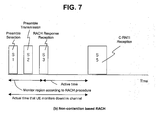
- Figure 7 shows a conceptual diagram to explain a non-contention based random access procedure performed by the mobile terminal according to an exemplary embodiment.
- the mobile terminal does not perform the step of transmitting the RACH MSG 3 to the base station (i.e. S4 of Fig. 6 is not performed) in the non-contention based situation.
- the Temporary C-RNTI is not employed in the non-contention based situation.
- the downlink channel monitoring period or duration of the RACH procedure is equivalent to that in Fig. 6 .
- the Contention based RACH shows the situation when the mobile terminal successfully performs the RACH procedure. However, if the mobile terminal actually fails in performing the RACH procedure, namely, if the C-RNTI or the Temporary C-RNTI is not received, then such failure situation in shown in Fig. 8 .
- active time 1 refers to the time duration as defined according to the active time condition 4 described above
- active time 2 refers to the time duration as defined according to the active time condition 1 described above.
- the downlink channel must be monitored even during the back-off time.
- the actual back-off time is not a time period during which a contention resolution timer is being operated, and thus the network does not allocate radio resources to the mobile terminal by using the C-RNTI or the Temporary C-RNTI. Accordingly, because the mobile terminal need not actually perform monitoring, power consumption in unnecessarily wasted during this time period.
- the mobile terminal when performing a RACH procedure and monitoring a downlink channel in order to receive scheduling information, the mobile terminal should receive the downlink channel is a more efficient manner.
- the mobile terminal should determine whether or not downlink channel monitoring should be performed at a particular point in time (or during a specific time period) based upon information regarding the type of on-going procedure that is being performed.
- the mobile terminal may determine that it should monitor the downlink channel based upon whether or not the on-going procedure is a random access (RACH) procedure.
- RACH random access
- the mobile terminal will determine whether downlink channel monitoring should be performed or not by considering whether a contention based RACH procedure is being used or a non-contention based RACH procedure is being used.
- a contention based RACH procedure means that the mobile terminal selects (at random or by some other criteria) a RACH preamble to be used in the RACH procedure. Namely, in this case, it is assumed that the MAC entity (in the mobile terminal) begins the RACH procedure. Thus, such MAC entity would select the preamble to be used.
- a non-contention based RACH procedures means that the RACH procedure is performed by the mobile terminal using a directly (explicitly) indicated specific RACH preamble.
- Determining whether to receive the downlink channel according to the type of RACH procedure is used refers to the following. After the mobile terminal begins the RACH procedure, it is checked whether the RACH procedure is a contention based RACH procedure or a non-contention based RACH procedure.
- the downlink channel is monitored during the period from when the RACH MSG 2 (i.e. random access response) was received up until a C-RNTI (that indicates allocation of radio resources for a new transmission) is received via the PDCCH.
- the time period from after reception of the RACH MSG 2 (random access response) until reception of the C-RNTI (that indicates radio resource allocation for a new transmission) via the PDCCH, is included in the active time.
- the downlink channel does not need to be monitored during the period from when the RACH MSG 2 (i.e. random access response) was received up until a C-RNTI (that indicates allocation of radio resources for a new transmission) is received via the PDCCH.
- the time period, from after reception of the RACH MSG 2 (random access response) until reception of the C-RNTI (that indicates radio resource allocation for a new transmission) via the PDCCH, is not included in the active time.
- time period (or duration) that begins from when the RACH MSG 2 (i.e. random access response) was received and ends when a C-RNTI (that indicates allocation of radio resources for a new transmission) is received via the PDCCH
- time period is not included in the active time for contention based RACH procedures, while such time period is included in the active time for non-contention based RACH procedures.
- condition 4 the active time definition according to condition 4 (mentioned previously) is applied for instances where the RACH procedure is non-contention based (i.e., the RACH preamble is directly allocated from an external source to the MAC entity), while such condition 4 is not applied for other situations.
- the RACH procedure being used is checked to see if it is contention based or non-contention based, and depending on such checking, the time period from reception of the RACH MSG 2 up to the reception of information via the PDCCH in the form of a C-RNTI that indicates radio resource allocation for a new transmission, is included in the active time such that downlink channel reception can be determined.
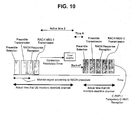
- Figure 9 shows a flow chart of a random access procedure performed by the mobile terminal according to an exemplary embodiment
- Figure 10 is a conceptual diagram to explain the random access procedure of Fig. 9 .
- the MAC entity of the mobile terminal selects the RACH preamble, which is transmitted to the network (S10, S11). If the UE receives a random access response (RAR: RACH MSG 2) from the network, the information included in such RAR is processed (S12). Namely, by using the information in the RAR, it is determined whether the RACH preamble was selected by the MAC of the UE or explicitly signaled (or selected) by the network 9S13).
- RAR random access response
- the UE monitors the downlink channel (PDCCH) until a new transmission is indicated by the radio resource allocation information (or scheduling information, such as C-RNTI) received from the network (S14).
- the radio resource allocation information or scheduling information, such as C-RNTI
- the contention resolution timer is started (S15).
- the operation in Fig. 9 can also be understood from Fig. 10 .
- RAR random access response
- the contention resolution timer is operated and the downlink channel (PDCCH) is monitored.
- the UE performs the random access procedure again after a back-off time is applied.
- the downlink channel is not monitored upon expiration of the contention resolution timer.
- the downlink channel is monitored when the random access procedure is performed again after the back-off time. As shown in Figs. 9 and 10 , as the UE does not monitor the downlink channel during the back-off time, power consumption due to unnecessary DRX operations can be avoided.
- the mobile terminal may include a communication module (which may consist of hardware, software, or a combination thereof) that is configured to implement the operations described with respect to Figs. 6 through 10 .
- the mobile terminal according to the present invention includes various types of hardware, such as an input/output means (e.g. display screen, keypad, speakers, etc.) and a microprocessor (or other control means) that provide control operations, as well as software used to implement various operations.
- Figure 10 illustrates how the concepts in the embodiments of the inventive features described herein can be implemented.
- the situation where the mobile terminal failed in performing the RACH procedure, namely, when the C-RNTI or Temporary C-RNTI is not received, is shown.
- the active time defined according to condition 4 is not applicable because a contention based RACH procedure is being used.
- the mobile terminal need not monitor the downlink channel. As a result, undesired power consumption can be reduced.
- the specific monitoring period (of the downlink channel, e.g. PDCCH) can be set in a more improved manner such that battery power efficiency (i.e. power source control) is enhanced.
- the DRX Command MAC CE may be used to put a UE directly into either short or long DRX Cycle. But when a DRX Command MAC CE is received while the DRX Short Cycle Timer is running, the timer should not be affected. If the timer is started again (i.e. re-started), the UE is further put in wake-up state, causing more battery consumption. This situation can occur when HARQ Re-transmission Grant for a MAC PDU which includes the DRX Command MAC CE is received while the Short DRX Cycle Timer is running.
- start and “re-start” may be distinguished such that “start” is used when the timer is not running, while “re-start” is used when the timer is running. Thus, when the Short DRX Cycle Timer is running, it cannot be started, but it can be restarted.
- the Active Time may include "a PDCCH indicating a new transmission addressed to the C-RNTI or Temporary C-RNTI of the UE has not been received after successful reception of a Random Access Response (RAR).” This would cover the period between the time of RAR reception and the time of starting the contention resolution timer. Otherwise, the UE would monitor the DL channels longer than needed. For example, even after the contention resolution timer expires due to reception of no temporary C-RNTI, the UE would still monitor the DL channels.
- RAR Random Access Response
- the situations for a contention-based preamble can be clarified as above. If UE has to wake up until the reception of C-RNTI regardless of other problems, the features described herein can be applied to situations for a dedicated preamble.
- the UE may have a configurable Time Alignment Timer.
- the Time Alignment Timer is valid only in the cell for which it was configured and started. If the Time Alignment Timer has been configured, the UE shall:
- the UE may be configured by the RRC with a DRX functionality that allows it to not continuously monitor the PDCCH.
- the DRX functionality consists of a Long DRX cycle, a DRX Inactivity Timer, a DRX Retransmission Timer, and optionally a Short DRX Cycle and a DRX Short Cycle Timer.
- the Active Time includes the time:
- the Active Time can also be defined as:
- the UE When a DRX cycle is configured, the UE shall perform the following procedures for each sub-frame:
- the UE Regardless of whether the UE is monitoring PDCCH or not the UE receives and transmits HARQ feedback when such is expected.
- the RACH preamble being contention based and non-contention based was not distinguished when performing a RACH procedure.
- This drawback can be overcome by defining the active time and certain conditions thereof accordingly.
- the PDCCH needs to be continuously monitored during the time between MSG2 and MSG 4. After receiving the MSG 2, it is determined whether the RACH preamble is contention based or non-contention based, and conditions are applied for situations that are contention based or non-contention based.
- contention based and non-contention based RACH preambles could be described in other terms and expressions.
- a PDCCH indicating a new transmission addressed to the C-RNTI of the UE has not been received after successful reception of a Random Access Response for the explicitly signaled preamble.
- the phrase 'explicitly signaled' typically refers to dedicated signaling, but there may be some situations where 'explicitly signaled' refers to nondedicated signaling.
- This disclosure provides a method of performing discontinuous receptions (DRX), comprising: transmitting a RACH preamble to the network; receiving RAR (MSG 2) from the network; determining whether the transmitted preamble was explicitly signaled by the network; if explicitly signaled, monitoring a downlink channel (PDCCH) until a new transmission is indicated by a C-RNTI received from the network; and if not explicitly signaled, starting a contention resolution timer.
- DRX discontinuous receptions
- this disclosure provides a method of performing discontinuous receptions (DRX), comprising: transmitting a RACH preamble to the network; receiving RAR (MSG 2) from the network; if the transmitted RACH preamble was determined to be explicitly signaled by the network, monitoring a downlink channel (PDCCH) until a new transmission is indicated by a C-RNTI received from the network; or if the transmitted RACH preamble was determined to be not explicitly signaled by the network, starting a contention resolution timer.
- DRX discontinuous receptions
- a method of performing a random access procedure in a mobile communications system having a network and a mobile terminal comprising: transmitting a random access channel (RACH) preamble to the network; receiving a RACH response from the network that received the RACH preamble; monitoring a downlink channel using information included in the RACH response according to whether the RACH preamble is contention based or non-contention based; checking whether the random access preamble is contention based or non-contention based; and performing a discontinuous reception procedure according to whether the random access preamble is contention based or non-contention based.
- RACH random access channel
- the information included in the RACH response can be used to determine whether the random access preamble is contention based or non-contention based.
- the monitoring can be performed until a new transmission is indicated by a C-RNTI received from the network.
- a method of performing discontinuous receptions (DRX) in mobile communications employing a network and a mobile terminal comprising: transmitting a RACH preamble to the network; receiving random access response (MSG 2) from the network; monitoring a downlink channel (PDCCH) until a new transmission is indicated by a C-RNTI received from the network, wherein the monitoring is performed if the transmitted RACH preamble was determined to be explicitly signaled by the network; or starting a contention resolution timer, wherein the starting is performed if the transmitted RACH preamble was determined to be not explicitly signaled by the network.
- MSG 2 random access response
- PDCCH downlink channel
- the RACH preamble explicitly signaled by the network is a preamble that is not selected by UE MAC.
- the RACH preamble explicitly signaled by the network is information included in a PDCCH order.
- DRX discontinuous reception
- the discontinuous reception procedure is performed by either monitoring a downlink channel (PDCCH) if the random access preamble is non-contention based or starting a contention resolution timer if the random access preamble is contention based.
- the mobile terminal performs the random access procedure if at least one of the following conditions are met: upon performing an initial access when there is no radio resource control (RRC) connection with the base station; upon initial access to a target cell while the mobile terminal is in handover; upon request by a command of the base station; upon generation of data for the uplink, when uplink time synchronization is not correct or when designated radio resources to be used in appropriate requesting radio resources have not yet been allocated; and during a correction, decoding or reconstruction procedure when there is a radio link failure or handover failure.
- RRC radio resource control
- a method of performing a random access procedure between a mobile terminal and a network comprising: transmitting a RACH (Random Access CHannel) preamble to the network; and monitoring a downlink channel by using information included in a RACH response received from the network.
- RACH Random Access CHannel
- the monitoring step comprises determining whether the RACH preamble was selected by a MAC entity of the mobile terminal by using the information included in the RACH response.
- the downlink channel is further monitored_until a new transmission is indicated by a C-RNTI received from the network, if it is determined that the RACH preamble was explicitly signaled by the network.
- the method further comprising: starting a contention resolution timer, if it is determined that the RACH preamble was selected by the MAC entity of the mobile terminal.
- the downlink channel is a PDCCH (Physical Downlink Control CHannel).
- a method of performing a random access procedure between a mobile terminal and a network comprising: transmitting a RACH (Random Access CHannel) preamble to the network; receiving a RACH response from the network; monitoring a downlink channel until a new transmission is indicated according to radio resource allocation information received from the network, if the RACH preamble was explicitly signaled by the network; and starting a contention resolution timer, if the RACH preamble was selected by a MAC entity of the mobile terminal.
- RACH Random Access CHannel
- the downlink channel is a PDCCH (Physical Downlink Control CHannel).
- the method further comprising: using the information included in the RACH response to determine whether the RACH preamble was either explicitly signaled by the network or selected by the MAC entity of the mobile terminal.
- the radio resource allocation information is a C-RNTI (Radio Network Temporary Identifier).
- a method of performing a random access procedure between a mobile terminal and a network comprising: transmitting a RACH (Random Access CHannel) preamble to the network; receiving a RACH response from the network; determining whether the RACH preamble was explicitly signaled by the network; if the RACH preamble was explicitly signaled by the network, monitoring a downlink channel until a new transmission is indicated according to radio resource allocation information received from the network; and if the RACH preamble was not explicitly signaled by the network, starting a contention resolution timer.
- RACH Random Access CHannel
- the radio resource allocation information is a C-RNTI (Radio Network Temporary Identifier.
- the downlink channel is a PDCCH (Physical Downlink Control CHannel). If the contention resolution timer expires, the downlink channel is no longer monitored.
- a mobile terminal comprising: a communications module configured to transmit a RACH (Random Access CHannel) preamble to the network, receive a RACH response from the network, determine whether the RACH preamble was explicitly signaled by the network, monitor a downlink channel until a new transmission is indicated according to radio resource allocation information received from the network if the RACH preamble was explicitly signaled by the network, and start a contention resolution timer if the RACH preamble was selected by a MAC entity of the mobile terminal.
- RACH Random Access CHannel
- a computer program (that is executed in a computer, a terminal or a network device) for a method and system for performing a random access procedure between a mobile terminal and a network is performed based upon the characteristics of a RACH preamble may comprise one or more program code sections for performing various tasks.
- a software tool (that is executed in a computer, a terminal or a network device) for a method and system for performing a random access procedure between a mobile terminal and a network is performed based upon the characteristics of a RACH preamble may comprise program code portions for performing various tasks.
- BSRs buffer status reports
- the features and concepts herein are applicable to and can be implemented in various types of user devices (e.g., mobile terminals, handsets, wireless communication devices, etc.) and/or network entities that can be configured for performing a random access procedure in a mobile communications system having a network and a mobile terminal.
- user devices e.g., mobile terminals, handsets, wireless communication devices, etc.
- network entities that can be configured for performing a random access procedure in a mobile communications system having a network and a mobile terminal.
Landscapes
- Engineering & Computer Science (AREA)
- Computer Networks & Wireless Communication (AREA)
- Signal Processing (AREA)
- Mobile Radio Communication Systems (AREA)
Applications Claiming Priority (3)
| Application Number | Priority Date | Filing Date | Title |
|---|---|---|---|
| US7374308P | 2008-06-18 | 2008-06-18 | |
| US7499808P | 2008-06-23 | 2008-06-23 | |
| KR1020090048775A KR100968020B1 (ko) | 2008-06-18 | 2009-06-02 | 랜덤 액세스 절차를 수행하는 방법 및 그 단말 |
Publications (1)
| Publication Number | Publication Date |
|---|---|
| EP2136592A1 true EP2136592A1 (de) | 2009-12-23 |
Family
ID=40940940
Family Applications (1)
| Application Number | Title | Priority Date | Filing Date |
|---|---|---|---|
| EP20090007920 Ceased EP2136592A1 (de) | 2008-06-18 | 2009-06-17 | Verfahren zur Durchführung von Direktzugriffsprozeduren und dazugehöriges Endgerät |
Country Status (4)
| Country | Link |
|---|---|
| US (6) | US7933243B2 (de) |
| EP (1) | EP2136592A1 (de) |
| GB (1) | GB2461158B (de) |
| WO (1) | WO2009154412A2 (de) |
Cited By (7)
| Publication number | Priority date | Publication date | Assignee | Title |
|---|---|---|---|---|
| CN102300203A (zh) * | 2011-04-29 | 2011-12-28 | 电信科学技术研究院 | 随机接入的触发及发起方法、系统和装置 |
| WO2012011077A1 (en) * | 2010-07-21 | 2012-01-26 | Nokia Corporation | Apparatus and method for acquisition of a common enhanced dedicated channel resource |
| CN102595633A (zh) * | 2011-01-17 | 2012-07-18 | 华为技术有限公司 | 随机接入方法、用户设备及网络设备 |
| US20140185558A1 (en) * | 2009-09-04 | 2014-07-03 | Lg Electronics Inc. | Method of controlling a monitoring operation of physical downlink channel in wireless communication system |
| CN107509199A (zh) * | 2012-05-10 | 2017-12-22 | 三星电子株式会社 | 在无线蜂窝网络中通过用户设备进行数据消息传输的方法 |
| EP3316652A4 (de) * | 2015-07-31 | 2018-06-27 | Huawei Technologies Co., Ltd. | Datenübertragungsverfahren, -vorrichtung und -system |
| US12510342B2 (en) | 2013-02-07 | 2025-12-30 | Dyno Nobel Inc. | Systems for delivering explosives and methods related thereto |
Families Citing this family (103)
| Publication number | Priority date | Publication date | Assignee | Title |
|---|---|---|---|---|
| EP2248270B1 (de) * | 2008-02-01 | 2015-03-11 | BlackBerry Limited | System und verfahren für aufwärts-zeitsynchronisation in verbindung mit diskontinuierlichem empfangsbetrieb |
| JP5129863B2 (ja) * | 2008-02-25 | 2013-01-30 | エルジー エレクトロニクス インコーポレイティド | 無線通信システムにおけるランダムアクセス実行方法 |
| WO2009111233A1 (en) | 2008-03-04 | 2009-09-11 | Interdigital Patent Holdings, Inc. | Method and apparatus for accessing a random access channel by selectively using dedicated or contention-based preambles during handover |
| US8488521B2 (en) | 2008-03-14 | 2013-07-16 | Interdigital Patent Holdings, Inc. | Behavior for wireless transmit/receive unit and MAC control elements for LTE DRX operations |
| KR101235397B1 (ko) * | 2008-04-25 | 2013-02-20 | 리서치 인 모션 리미티드 | 무선 네트워크에서의 불연속 수신의 제어를 위한 방법 및 장치 |
| GB2461158B (en) | 2008-06-18 | 2011-03-02 | Lg Electronics Inc | Method for performing random access procedures and terminal therof |
| KR100968020B1 (ko) | 2008-06-18 | 2010-07-08 | 엘지전자 주식회사 | 랜덤 액세스 절차를 수행하는 방법 및 그 단말 |
| US11272449B2 (en) * | 2008-06-18 | 2022-03-08 | Optis Cellular Technology, Llc | Method and mobile terminal for performing random access |
| ES2372443T3 (es) * | 2008-06-19 | 2012-01-19 | Telefonaktiebolaget L M Ericsson (Publ) | Métodos y aparatos para llevar a cabo el acceso aleatorio en un sistema de telecomunicaciones. |
| US8031668B2 (en) * | 2008-06-23 | 2011-10-04 | Sunplus Mmobile Inc. | Method for optimizing discontinuous reception in random access and scheduling request |
| KR100939722B1 (ko) | 2008-08-11 | 2010-02-01 | 엘지전자 주식회사 | 데이터 전송 방법 및 이를 위한 사용자 기기 |
| WO2010027072A1 (ja) * | 2008-09-08 | 2010-03-11 | 株式会社エヌ・ティ・ティ・ドコモ | 基地局装置、移動通信システム及び通信制御方法 |
| CN102217404B (zh) * | 2008-09-19 | 2015-06-10 | 黑莓有限公司 | 半持久性调度激活/重配置信令的检测时间 |
| US8750218B2 (en) * | 2008-09-29 | 2014-06-10 | Blackberry Limited | Message processing in communication systems |
| JP5323940B2 (ja) | 2008-09-29 | 2013-10-23 | ブラックベリー リミテッド | 通信システムにおける使用のためのアップリング再同調 |
| US20110255407A1 (en) * | 2008-10-30 | 2011-10-20 | Ntt Docomo, Inc. | Radio base station and mobile communication method |
| KR101289107B1 (ko) * | 2008-12-15 | 2013-08-07 | 리서치 인 모션 리미티드 | 반영구적 스케쥴링과 불연속적 정렬 |
| KR101156164B1 (ko) * | 2008-12-22 | 2012-06-18 | 한국전자통신연구원 | 주파수 집합 통신 환경에서의 단말 및 기지국, 이를 이용한호 접속 처리 방법 |
| KR101122095B1 (ko) * | 2009-01-05 | 2012-03-19 | 엘지전자 주식회사 | 불필요한 재전송 방지를 위한 임의접속 기법 및 이를 위한 단말 |
| US8576780B2 (en) * | 2009-03-22 | 2013-11-05 | Lg Electronics Inc. | Random access response processing |
| WO2010124440A1 (zh) * | 2009-04-27 | 2010-11-04 | 华为技术有限公司 | 一种随机接入竞争解决的判断方法、装置和系统 |
| KR101582196B1 (ko) * | 2009-04-29 | 2016-01-04 | 삼성전자 주식회사 | 이동통신 시스템에서 네트워크의 랜덤 액세스 프리엠블 및 자원 최적화 장치 및 방법 |
| EP2615878A1 (de) | 2009-06-18 | 2013-07-17 | Interdigital Patent Holdings, Inc. | Betrieb in einem unterbrochenen Empfangsmodus mit Trägeraggregation |
| CN101932117A (zh) * | 2009-06-20 | 2010-12-29 | 中兴通讯股份有限公司 | 中继节点的随机接入方法 |
| JP5322832B2 (ja) * | 2009-08-06 | 2013-10-23 | シャープ株式会社 | 移動局装置、基地局装置、無線通信システムおよびランダムアクセス方法 |
| JP4975070B2 (ja) * | 2009-08-17 | 2012-07-11 | 株式会社エヌ・ティ・ティ・ドコモ | 移動通信方法、無線基地局及び移動局 |
| KR20110052418A (ko) * | 2009-11-11 | 2011-05-18 | 삼성전자주식회사 | 이동통신 시스템에서 불연속 수신을 수행하는 방법 및 장치 |
| WO2011074904A2 (ko) | 2009-12-18 | 2011-06-23 | 한국전자통신연구원 | 여러 단말과 동시에 통신하는 무선 패킷 통신 시스템에서 데이터 송/수신 방법 |
| JP4728434B1 (ja) * | 2010-02-15 | 2011-07-20 | 株式会社エヌ・ティ・ティ・ドコモ | 移動局及び無線基地局 |
| EP3179809B1 (de) | 2010-03-03 | 2019-07-10 | BlackBerry Limited | Verfahren und vorrichtung zu signalverwendungsspezifischen fähigkeiten von mobilen stationen zur errichtung von datentransfersitzungen |
| EP2365717A1 (de) * | 2010-03-12 | 2011-09-14 | Research In Motion Limited | Kommunikationsstation und Verfahren zur Übertragung auf einem RACH-Kanal |
| EP2367394B1 (de) * | 2010-03-12 | 2015-11-25 | BlackBerry Limited | Kommunikationsstation und Verfahren zur Übertragung zusätzlicher Informationen auf einem erweiterten Direktzugriffskanal |
| EP2367393B8 (de) * | 2010-03-12 | 2015-12-30 | BlackBerry Limited | Kommunikationsstation und Verfahren zur Übertragung zusätzlicher Informationen auf einem erweiterten Direktzugriffskanal |
| EP4539565A3 (de) | 2010-03-12 | 2025-06-18 | Malikie Innovations Limited | Zeitvorlaufverbesserungen für zellulare kommunikation |
| JP5450333B2 (ja) | 2010-09-28 | 2014-03-26 | Kddi株式会社 | 初期アクセス設定情報生成装置、初期アクセス設定情報生成方法、初期アクセス設定情報生成プログラム、および基地局装置 |
| JP5678202B2 (ja) * | 2010-11-15 | 2015-02-25 | インターデイジタル パテント ホールディングス インコーポレイテッド | 日和見的帯域(opportunisticband)におけるスペクトル検知のための方法および装置 |
| KR102073027B1 (ko) | 2011-04-05 | 2020-02-04 | 삼성전자 주식회사 | 반송파 집적 기술을 사용하는 무선통신시스템에서 복수 개의 타임 정렬 타이머 운용 방법 및 장치 |
| US9615338B2 (en) | 2011-02-15 | 2017-04-04 | Samsung Electronics Co., Ltd. | Power headroom report method and apparatus of UE |
| EP2676475B1 (de) | 2011-02-15 | 2022-04-06 | Samsung Electronics Co., Ltd. | Leistungsreservebericht |
| KR101995293B1 (ko) | 2011-02-21 | 2019-07-02 | 삼성전자 주식회사 | 반송파 집적 기술을 사용하는 시분할 무선통신시스템에서 부차반송파의 활성화 또는 비활성화 방법 및 장치 |
| US8958840B2 (en) | 2011-02-21 | 2015-02-17 | Samsung Electronics Co., Ltd. | Method of efficiently reporting user equipment transmission power and apparatus thereof |
| KR101862410B1 (ko) * | 2011-03-29 | 2018-05-29 | 엘지전자 주식회사 | 상향링크 시간 동기 관리 방법 및 장치 |
| ES2754035T3 (es) | 2011-04-05 | 2020-04-15 | Samsung Electronics Co Ltd | Activación eficiente de portadoras en sistemas de comunicación inalámbrica basados en agregación de portadoras |
| WO2012141483A2 (ko) | 2011-04-11 | 2012-10-18 | 삼성전자 주식회사 | 단말 획득 정보를 효율적으로 기지국에 전달하는 방법 및 장치 |
| WO2012145905A1 (zh) * | 2011-04-28 | 2012-11-01 | 富士通株式会社 | 工作状态的控制方法及终端设备 |
| US8942151B2 (en) | 2011-04-29 | 2015-01-27 | Blackberry Limited | Receiving messages in connection with LTE wakeup |
| KR102066425B1 (ko) | 2011-05-10 | 2020-01-15 | 삼성전자 주식회사 | 반송파 집적 기술을 사용하는 무선통신시스템에서 타임 정렬 타이머를 적용하는 방법 및 장치 |
| US9369980B2 (en) * | 2011-07-19 | 2016-06-14 | Industrial Technology Research Institute | Method of handling random access response |
| KR101990134B1 (ko) | 2011-08-10 | 2019-06-17 | 삼성전자주식회사 | 듀얼 모드 단말의 성능 정보 보고 방법 및 장치 |
| KR101967721B1 (ko) | 2011-08-10 | 2019-04-10 | 삼성전자 주식회사 | 무선 통신 시스템에서 확장 접속 차단 적용 방법 및 장치 |
| EP3429307B1 (de) * | 2011-08-10 | 2022-06-15 | Samsung Electronics Co., Ltd. | Verfahren und vorrichtung zur übertragung von daten mit einem mehrträger in einem mobilen kommunikationssystem |
| WO2013027015A1 (en) * | 2011-08-19 | 2013-02-28 | Sca Ipla Holdings Inc. | Wireless communications system and method |
| KR102092579B1 (ko) | 2011-08-22 | 2020-03-24 | 삼성전자 주식회사 | 이동통신 시스템에서 복수 개의 주파수 밴드 지원 방법 및 장치 |
| EP3169119B1 (de) * | 2011-09-25 | 2018-02-14 | LG Electronics Inc. | Verfahren und vorrichtung zur steuerung einer uplink-übertragungsleistung |
| US8862188B2 (en) * | 2011-09-29 | 2014-10-14 | Nokia Corporation | Flexible discontinuous reception scheme based on likelihood of scheduling |
| CN103139920B (zh) * | 2011-11-24 | 2016-06-29 | 华为技术有限公司 | 一种用于非连续接收配置的方法和用户设备 |
| JP6324319B2 (ja) | 2012-01-09 | 2018-05-16 | サムスン エレクトロニクス カンパニー リミテッド | ロギング方法及び装置 |
| US20130182680A1 (en) * | 2012-01-18 | 2013-07-18 | Electronics And Telecommunications Research Institute | Method for machine type communication user equipment to connect to evolved node-b and apparatus employing the same |
| US9414409B2 (en) | 2012-02-06 | 2016-08-09 | Samsung Electronics Co., Ltd. | Method and apparatus for transmitting/receiving data on multiple carriers in mobile communication system |
| EP2826316B1 (de) * | 2012-03-16 | 2017-07-19 | Nokia Technologies Oy | Aktualisierung von zeitvorlauf ohne starten eines diskontinuierlichen empfangsaktivitätszeitgebers |
| US9503982B2 (en) | 2012-04-20 | 2016-11-22 | Telefonaktiebolaget Lm Ericsson (Publ) | Methods and apparatuses for communication between a mobile terminal and a base station during a random access procedure |
| US9088976B2 (en) * | 2012-04-29 | 2015-07-21 | Blackberry Limited | Provisioning radio resources in a radio access network |
| WO2014010901A1 (en) * | 2012-07-11 | 2014-01-16 | Lg Electronics Inc. | Method and apparatus for changing discontinuous reception cycle in wireless communication system |
| WO2014035074A1 (en) * | 2012-08-27 | 2014-03-06 | Lg Electronics Inc. | Method and apparatus for configuring a discontinuous reception (drx) operation in a wireless communication system |
| EP2947947A4 (de) * | 2013-01-17 | 2017-01-25 | Fujitsu Limited | Direktzugriffsverfahren, -vorrichtung und -system |
| WO2014171683A1 (en) * | 2013-04-14 | 2014-10-23 | Lg Electronics Inc. | Method and apparatus for controlling monitoring timing in wireless communication system |
| US20150189574A1 (en) * | 2013-12-26 | 2015-07-02 | Samsung Electronics Co., Ltd. | Methods for dormant cell signaling for advanced cellular network |
| WO2015130005A1 (ko) * | 2014-02-26 | 2015-09-03 | 엘지전자 주식회사 | Fdd 반이중 통신에서 pdcch 모니터링 방법 및 그 단말 |
| WO2015139254A1 (zh) * | 2014-03-20 | 2015-09-24 | 华为技术有限公司 | 一种数据传输方法及站点 |
| US10764922B2 (en) * | 2015-01-08 | 2020-09-01 | Sharp Kabushiki Kaisha | Terminal device, base station device, radio communication method, and integrated circuit |
| US10355828B2 (en) * | 2015-03-02 | 2019-07-16 | Qualcomm Incorporated | Fast radio link control error recovery with low latency transmissions |
| US10512105B2 (en) | 2015-03-09 | 2019-12-17 | Lg Electronics Inc. | Method for operating a fast random access procedure in a wireless communication system and a device therefor |
| US10735982B2 (en) * | 2015-05-15 | 2020-08-04 | Kyocera Corporation | Radio terminal and base station for monitoring a physical downlink control channel during a discontinuous reception operation |
| JP6642842B2 (ja) * | 2015-08-14 | 2020-02-12 | ホアウェイ・テクノロジーズ・カンパニー・リミテッド | 情報伝送方法、基地局、およびユーザ機器 |
| ES2880776T3 (es) * | 2015-08-21 | 2021-11-25 | Ntt Docomo Inc | Terminal de usuario y método de comunicación inalámbrica |
| US20170265230A1 (en) * | 2016-03-14 | 2017-09-14 | Futurewei Technologies, Inc. | System and Method for Random Access Backoffs |
| EP3494753B1 (de) * | 2016-09-12 | 2021-06-02 | LG Electronics Inc. | Übertragung mehrerer zufallszugriffspräambeln für ein einziges direktzugriffsverfahren |
| US10863484B2 (en) * | 2017-01-09 | 2020-12-08 | Qualcomm Incorporated | Indication of random-access channel MSG3 resource duration via random-access channel MSG2 |
| CN109964413B (zh) * | 2017-03-16 | 2021-07-27 | 上海朗帛通信技术有限公司 | 一种被用于多天线传输的用户设备、基站中的方法和装置 |
| US10568007B2 (en) * | 2017-03-22 | 2020-02-18 | Comcast Cable Communications, Llc | Handover random access |
| US11647543B2 (en) | 2017-03-23 | 2023-05-09 | Comcast Cable Communications, Llc | Power control for random access |
| US11432125B2 (en) * | 2017-05-03 | 2022-08-30 | Nokia Solutions And Networks Oy | Random access procedures for MTC devices |
| CN110495243B (zh) * | 2017-05-05 | 2023-10-27 | 摩托罗拉移动有限责任公司 | 在完成rach之前发送sr |
| WO2018217021A1 (en) * | 2017-05-26 | 2018-11-29 | Lg Electronics Inc. | Method and user equipment for performing random access procedure |
| WO2019022572A1 (en) | 2017-07-27 | 2019-01-31 | Samsung Electronics Co., Ltd. | METHOD AND APPARATUS FOR EXECUTING A RANDOM ACCESS PROCEDURE |
| CN110999404A (zh) * | 2017-08-10 | 2020-04-10 | 京瓷株式会社 | 通信控制方法 |
| US11039499B2 (en) | 2017-08-11 | 2021-06-15 | Qualcomm Incorporated | Discontinuous reception wake up procedures |
| FR3071935B1 (fr) * | 2017-10-04 | 2020-01-17 | Delta Dore | Procede de gestion de l'energie consommee par un module radio |
| US20190200395A1 (en) | 2017-12-21 | 2019-06-27 | Samsung Electronics Co., Ltd. | System and method of handling bandwidth part inactivity timer |
| EP3586469B1 (de) | 2018-01-09 | 2020-12-02 | Ofinno, LLC | Physical- und mac-schicht-verfahren in einer drahtlosen vorrichtung |
| GB2572620C (en) | 2018-04-05 | 2021-10-20 | Imagination Tech Ltd | Accessing Primitive Data |
| WO2019203187A1 (ja) * | 2018-04-18 | 2019-10-24 | 株式会社Nttドコモ | ユーザ端末及び無線通信方法 |
| US10993270B2 (en) | 2018-06-19 | 2021-04-27 | Samsung Electronics Co., Ltd. | Method and apparatus for performing random access backoff in wireless communication system |
| US10798745B2 (en) * | 2018-09-28 | 2020-10-06 | Verizon Patent And Licensing Inc. | Determining device locations based on random access channel signaling |
| US10820344B2 (en) * | 2019-01-18 | 2020-10-27 | T-Mobile Usa, Inc. | Preamble signature selection for contention based random access in mobile communication |
| CN111866945B (zh) * | 2019-04-30 | 2023-03-10 | 华为技术有限公司 | 取消待处理sr的方法及装置 |
| CN116170893A (zh) * | 2019-05-30 | 2023-05-26 | 大唐移动通信设备有限公司 | 一种非竞争随机接入的方法和设备 |
| EP3970282B1 (de) * | 2019-10-03 | 2022-09-14 | Ofinno, LLC | Diskontinuierlicher empfang für ein direktzugriffsverfahren in zwei schritten |
| US11140694B1 (en) * | 2020-03-31 | 2021-10-05 | Asustek Computer Inc. | Method and apparatus for prioritization between uplink data and scheduling request in a wireless communication system |
| KR20210142463A (ko) * | 2020-05-18 | 2021-11-25 | 삼성전자주식회사 | 무선 통신 시스템에서 랜덤엑세스를 수행하는 방법 및 장치 |
| US11832227B2 (en) * | 2020-08-11 | 2023-11-28 | Qualcomm Incorporated | Interrupted time domain resources for a half-duplex user equipment with a large timing advance |
| EP4221421B1 (de) * | 2020-10-08 | 2025-03-19 | LG Electronics Inc. | Verfahren und vorrichtung zum senden und empfangen eines signals in einem drahtloskommunikationssystem |
| US12004233B2 (en) * | 2020-10-16 | 2024-06-04 | Samsung Electronics Co., Ltd. | Method and apparatus for random access in NTN |
Family Cites Families (90)
| Publication number | Priority date | Publication date | Assignee | Title |
|---|---|---|---|---|
| CN1192561A (zh) | 1997-03-05 | 1998-09-09 | 于旭宏 | 标志系统及其用途 |
| US6785249B2 (en) | 1998-10-05 | 2004-08-31 | Qualcomm, Incorporated | Method and apparatus for detecting forward and reverse link imbalance in digital cellular communication systems |
| US6721281B1 (en) | 1999-06-18 | 2004-04-13 | Interdigital Technology Corporation | Random access channel access and backoff mechanism |
| GB9914926D0 (en) | 1999-06-26 | 1999-08-25 | Koninkl Philips Electronics Nv | Radio communication system |
| CN101364837B (zh) | 2000-01-14 | 2016-02-03 | 交互数字技术公司 | 用于码分多址通信的设备和方法 |
| JP3413833B2 (ja) | 2000-05-18 | 2003-06-09 | 日本電気株式会社 | アクセス制御方法と基地局装置 |
| EP1170919A1 (de) | 2000-07-04 | 2002-01-09 | TELEFONAKTIEBOLAGET LM ERICSSON (publ) | Verfahren und System zur Verbesserung der Funktion eines Kommunikationssystems mit Schichtprotokollstapel |
| US6996063B2 (en) | 2001-11-16 | 2006-02-07 | Asustek Computer Inc. | Applicable PDU range test and calculation for window-based polling |
| US20040147276A1 (en) * | 2002-12-17 | 2004-07-29 | Ralph Gholmieh | Reduced signaling power headroom feedback |
| CN1729630B (zh) | 2002-12-20 | 2010-11-10 | 美商内数位科技公司 | 移动网络中以媒体存取控制层调度数据传输 |
| KR100918759B1 (ko) | 2003-10-14 | 2009-09-24 | 삼성전자주식회사 | 패킷 데이터 서비스를 제공하는 이동통신 시스템에서 패킷데이터 제어 채널의 제어 메시지 송신 장치 및 방법 |
| WO2005039209A1 (ja) | 2003-10-17 | 2005-04-28 | Nec Corporation | シグナリング方法、システム、基地局並びに移動局 |
| US9473269B2 (en) | 2003-12-01 | 2016-10-18 | Qualcomm Incorporated | Method and apparatus for providing an efficient control channel structure in a wireless communication system |
| KR100567211B1 (ko) | 2003-12-11 | 2006-04-03 | 한국전자통신연구원 | 직교주파수분할 다중접속에서의 임의 접속용 데이터 전송시스템 및 그 방법 |
| US7983173B2 (en) * | 2004-05-10 | 2011-07-19 | Cisco Technology, Inc. | System and method for detecting link failures |
| US7885245B2 (en) | 2004-07-19 | 2011-02-08 | Interdigital Technology Corporation | Method and apparatus for enhanced uplink multiplexing |
| US20060013182A1 (en) * | 2004-07-19 | 2006-01-19 | Telefonaktiebolaget Lm Ericsson | Selective multicarrier CDMA network |
| KR101084135B1 (ko) | 2005-05-04 | 2011-11-17 | 엘지전자 주식회사 | 무선 통신 시스템의 송수신 단에서의 상태 pdu송수신방법 |
| US20060280145A1 (en) | 2005-06-10 | 2006-12-14 | Revel Agnes M | Event trigger for scheduling information in wireless communication networks |
| US8204007B2 (en) | 2005-08-01 | 2012-06-19 | Interdigital Technology Corporation | Method and apparatus for control of enhanced dedicated channel transmissions |
| ES2377652T3 (es) | 2005-08-16 | 2012-03-29 | Panasonic Corporation | Método y aparato para configurar nuevamente un número de secuencias de transmisión (NST) |
| KR20070108300A (ko) | 2005-09-29 | 2007-11-09 | 삼성전자주식회사 | 이동 통신 시스템에서의 복합 자동 재전송 방법 및 장치 |
| KR20070080552A (ko) | 2006-02-07 | 2007-08-10 | 엘지전자 주식회사 | 이동 통신 시스템에서의 응답 정보 전송 방법 |
| EP1976170B1 (de) | 2006-01-18 | 2011-07-06 | ZTE Corporation | Direktzugriffsverfahren für benutzergeräte in einem zeitmultiplex-synchronisationscodemultiplex-mehrfachzugriffskommunikationssystem |
| EP1982476B1 (de) * | 2006-01-20 | 2018-09-05 | Nokia Technologies Oy | Direktzugriffsprozedur mit verbesserter abdeckung |
| JP2007266733A (ja) | 2006-03-27 | 2007-10-11 | Nec Corp | ランダムアクセス方法と無線端末並びに無線通信システム |
| CN101064728B (zh) | 2006-04-30 | 2010-06-23 | 中兴通讯股份有限公司 | 一种基于td-scdma系统的随机接入控制方法 |
| JP4732948B2 (ja) * | 2006-05-01 | 2011-07-27 | 株式会社エヌ・ティ・ティ・ドコモ | 送信装置および受信装置並びにランダムアクセス制御方法 |
| CA2651229C (en) | 2006-05-01 | 2013-03-19 | Nokia Corporation | Apparatus, method and computer program product providing uplink synchronization through use of dedicated uplink resource assignment |
| WO2007126301A1 (en) | 2006-05-03 | 2007-11-08 | Electronics And Telecommunications Research Institute | A method for random access in cellular system |
| CN102882589A (zh) * | 2006-05-05 | 2013-01-16 | 北京新岸线移动通信技术有限公司 | 长期演进上行链路和下行链路中的无线电链路故障检测方法及其装置 |
| KR20070109313A (ko) | 2006-05-10 | 2007-11-15 | 삼성전자주식회사 | 고속 데이터 처리를 위한 효율적인 재전송 요청 장치 및방법 |
| CN101083614A (zh) | 2006-06-02 | 2007-12-05 | 华为技术有限公司 | 增强的专用信道中调度信息报告的触发方法及用户设备 |
| KR20080065880A (ko) | 2007-01-10 | 2008-07-15 | 엘지전자 주식회사 | 무선 통신 시스템에서의 arq/harq 지원 방법 |
| KR100938102B1 (ko) | 2006-08-18 | 2010-01-21 | 삼성전자주식회사 | Rach 신호 송수신 방법 및 장치 |
| US20080045255A1 (en) | 2006-08-21 | 2008-02-21 | Motorola, Inc. | Method of transmitting scheduling information by a wireless communication device and a wireless communication device |
| BRPI0720514B1 (pt) | 2006-10-03 | 2019-12-03 | Qualcomm Inc | transmissão de sinalização de acesso aleatório para acesso de sistema em comunicação sem fio |
| US20080098234A1 (en) * | 2006-10-20 | 2008-04-24 | Honeywell International Inc. | Fault-containment and/or failure detection using encryption |
| MY154476A (en) * | 2006-10-23 | 2015-06-30 | Interdigital Tech Corp | Method and apparatus for sending and receiving channel quality indicators (cqis) |
| AU2007309945B2 (en) | 2006-10-24 | 2010-07-01 | Lg Electronics Inc. | Procedure for non synchronized radio access (NSRA) resource assignment |
| EP2084928B1 (de) * | 2006-10-30 | 2017-08-23 | LG Electronics Inc. | Verfahren zum durchführen von direktzugriff in einem drahtlosen kommunikationssystem |
| KR100902897B1 (ko) | 2006-10-30 | 2009-06-15 | 엘지전자 주식회사 | 임의접속 수행 방법 |
| KR101443618B1 (ko) | 2006-10-30 | 2014-09-23 | 엘지전자 주식회사 | 랜덤 접속 채널 메시지 응답 방법, 랜덤 접속 채널 메시지전송 방법 및 이를 지원하는 이동통신 단말 |
| AU2007313625A1 (en) * | 2006-10-31 | 2008-05-08 | Qualcomm Incorporated | Apparatus and method of random access for wireless communication |
| CN101188852A (zh) | 2006-11-15 | 2008-05-28 | 中兴通讯股份有限公司 | 移动终端切换接入网络方法 |
| KR20080049596A (ko) | 2006-11-30 | 2008-06-04 | 한국전자통신연구원 | 랜덤액세스 방법 및 랜덤액세스 응답 방법 |
| US8897276B2 (en) | 2007-01-25 | 2014-11-25 | Nokia Corporation | Collision detection for random access procedure |
| US20080188247A1 (en) * | 2007-02-02 | 2008-08-07 | Ipwireless, Inc. | Hierarchical organization of paging groups |
| US8169957B2 (en) * | 2007-02-05 | 2012-05-01 | Qualcomm Incorporated | Flexible DTX and DRX in a wireless communication system |
| KR101260079B1 (ko) * | 2007-02-06 | 2013-05-02 | 엘지전자 주식회사 | 무선 통신 시스템의 랜덤 액세스 방법 |
| WO2008097030A1 (en) * | 2007-02-07 | 2008-08-14 | Lg Electronics Inc. | Optimized random access channel (rach) access |
| US7986959B2 (en) * | 2007-02-14 | 2011-07-26 | Qualcomm Incorporated | Preamble based uplink power control for LTE |
| USRE49693E1 (en) * | 2007-03-15 | 2023-10-10 | Electronics And Telecommunications Research Institute | Preamble allocation method and random access method in mobile communication system |
| JP2008263600A (ja) * | 2007-03-21 | 2008-10-30 | Asustek Computer Inc | 無線通信システムにおいてランダムアクセスプロセスを処理する方法及び装置 |
| KR20080086415A (ko) | 2007-03-21 | 2008-09-25 | 이노베이티브 소닉 리미티드 | 무선 통신 시스템에서 랜덤 액세스 프로시져를 처리하는방법 및 장치 |
| ES2618079T3 (es) | 2007-04-23 | 2017-06-20 | Interdigital Technology Corporation | Gestión de fallo de traspaso |
| KR20080112649A (ko) | 2007-06-21 | 2008-12-26 | 이경열 | 이동통신 시스템에서의 랜덤 엑세스 절차 수행 방법 |
| EP2141955A3 (de) * | 2007-06-12 | 2011-06-01 | Sharp Kabushiki Kaisha | Basisstation, Mobilstation, Programm, Verfahren zur Anforderung von Uplink-Synchronisation und Verfahren zur Übertragung von Synchronisationsverschiebungsmesssignalen |
| WO2009013648A2 (en) | 2007-06-18 | 2009-01-29 | Nokia Corporation | Method and apparatus for providing system information |
| EP2627146B1 (de) * | 2007-06-18 | 2017-09-20 | LG Electronics Inc. | Verfahren und Benutzergerät zur Durchführung von Aufwärtsstreckensynchronisation in einem drahtlosen Kommunikationssystem |
| US9357564B2 (en) | 2007-06-19 | 2016-05-31 | Texas Instruments Incorporated | Signaling of random access preamble parameters in wireless networks |
| EP2171871B1 (de) | 2007-06-20 | 2019-04-17 | Cellular Communications Equipment Llc | Leistungsreserven-meldeverfahren |
| US9167540B2 (en) | 2007-07-04 | 2015-10-20 | Telefonaktiebolaget L M Ericsson (Publ) | User terminal power shortage indication |
| KR101488525B1 (ko) | 2007-08-07 | 2015-02-04 | 삼성전자주식회사 | 이동 통신 시스템에서 랜덤 액세스 절차 수행 방법 및 장치 |
| KR101514841B1 (ko) | 2007-08-10 | 2015-04-23 | 엘지전자 주식회사 | 효율적인 랜덤 액세스 재시도를 수행하는 방법 |
| US20090046641A1 (en) | 2007-08-13 | 2009-02-19 | Interdigital Patent Holdings, Inc. | Long term evolution medium access control procedures |
| US8358136B2 (en) | 2007-09-20 | 2013-01-22 | Utc Power Corporation | State of charge calculator for multi-cell energy storage system having cell balancing |
| US20090088195A1 (en) * | 2007-09-28 | 2009-04-02 | Nokia Corporation | Method and apparatus for signaling of scheduling information |
| KR101487557B1 (ko) | 2007-10-23 | 2015-01-29 | 엘지전자 주식회사 | 공통제어채널의 데이터를 전송하는 방법 |
| US8665857B2 (en) * | 2007-12-18 | 2014-03-04 | Qualcomm Incorporated | Method and apparatus for sending and receiving random access response in a wireless communication system |
| US9215731B2 (en) | 2007-12-19 | 2015-12-15 | Qualcomm Incorporated | Method and apparatus for transfer of a message on a common control channel for random access in a wireless communication network |
| TWM355510U (en) | 2008-01-04 | 2009-04-21 | Interdigital Patent Holdings | Apparatus for performing an enhanced random access channel procedure in a CELL_FACH state |
| US20090175187A1 (en) | 2008-01-07 | 2009-07-09 | Kristina Jersenius | Method and Arrangement for Triggering Power Headroom Report Transmissions in a Telecommunications System |
| JP5217459B2 (ja) * | 2008-01-29 | 2013-06-19 | 富士通株式会社 | 基地局装置、及び移動通信システム |
| KR101594359B1 (ko) | 2008-01-31 | 2016-02-16 | 엘지전자 주식회사 | 랜덤 접속에서 백오프 정보를 시그널링하는 방법 |
| US8027356B2 (en) * | 2008-01-31 | 2011-09-27 | Lg Electronics Inc. | Method for signaling back-off information in random access |
| ES2436651T3 (es) | 2008-02-01 | 2014-01-03 | Interdigital Patent Holdings, Inc. | Método y aparato para priorizar canales lógicos |
| EP3592091B1 (de) | 2008-02-01 | 2021-06-02 | Optis Wireless Technology, LLC | Kommunikationsendgerät |
| US8059765B2 (en) | 2008-02-21 | 2011-11-15 | Nokia Siemens Networks Oy | Method and apparatus to detect random access channel preamble |
| US20090215459A1 (en) | 2008-02-25 | 2009-08-27 | Richard Lee-Chee Kuo | Method and Apparatus for Improving Random Access Procedure for Handover |
| KR101085516B1 (ko) | 2008-03-14 | 2011-11-23 | 이노베이티브 소닉 리미티드 | 경합 기반 랜덤 액세스 절차 처리를 위한 방법 및 장치 |
| US20090305665A1 (en) | 2008-06-04 | 2009-12-10 | Irwin Oliver Kennedy | Method of identifying a transmitting device |
| US8223708B2 (en) | 2008-06-10 | 2012-07-17 | Innovative Sonic Limited | Method and apparatus for handling scheduling information report |
| US7957298B2 (en) | 2008-06-18 | 2011-06-07 | Lg Electronics Inc. | Method for detecting failures of random access procedures |
| GB2461158B (en) | 2008-06-18 | 2011-03-02 | Lg Electronics Inc | Method for performing random access procedures and terminal therof |
| US8031668B2 (en) * | 2008-06-23 | 2011-10-04 | Sunplus Mmobile Inc. | Method for optimizing discontinuous reception in random access and scheduling request |
| US8199730B2 (en) | 2008-08-07 | 2012-06-12 | Innovative Sonic Limited | Method and apparatus for handling uplink grant |
| KR100949972B1 (ko) * | 2009-01-02 | 2010-03-29 | 엘지전자 주식회사 | 단말의 임의접속 수행 기법 |
| US20100281486A1 (en) | 2009-05-04 | 2010-11-04 | HT mMobile Inc. | Enhanced scheduling, priority handling and multiplexing method and system |
| US8428015B2 (en) * | 2009-06-29 | 2013-04-23 | Intel Mobile Communications GmbH | Permanent dedicated random access preambles for femtocell |
-
2009
- 2009-06-16 GB GB0910415A patent/GB2461158B/en active Active
- 2009-06-17 EP EP20090007920 patent/EP2136592A1/de not_active Ceased
- 2009-06-17 US US12/457,653 patent/US7933243B2/en active Active
- 2009-06-18 WO PCT/KR2009/003274 patent/WO2009154412A2/en not_active Ceased
-
2011
- 2011-03-24 US US13/071,280 patent/US8467343B2/en active Active
-
2013
- 2013-05-15 US US13/894,948 patent/US8934391B2/en active Active
-
2015
- 2015-01-07 US US14/591,399 patent/US9432937B2/en active Active
-
2016
- 2016-08-09 US US15/231,861 patent/US9807688B2/en active Active
-
2017
- 2017-10-04 US US15/724,287 patent/US10349348B2/en active Active
Non-Patent Citations (7)
| Title |
|---|
| "Evolved Universal Terrestrial Radio Access (E-UTRA) and Evolved Universal Terrestrial Radio Access (E-UTRAN); Overall description; Stage 2 (3GPP TS 36.300 version 8.4.0 Release 8); ETSI TS 136 300", ETSI STANDARDS, LIS, SOPHIA ANTIPOLIS CEDEX, FRANCE, vol. 3-R2, no. V8.4.0, 1 April 2008 (2008-04-01), XP014041816, ISSN: 0000-0001 * |
| 3GPP DRAFT; R2-074787_DL_GRANT_MSG2_R0, 3RD GENERATION PARTNERSHIP PROJECT (3GPP), MOBILE COMPETENCE CENTRE ; 650, ROUTE DES LUCIOLES ; F-06921 SOPHIA-ANTIPOLIS CEDEX ; FRANCE, vol. RAN WG2, no. Jeju; 20071105, 30 October 2007 (2007-10-30), pages 1 - 3, XP050137299 * |
| 3GPP DRAFT; R2-082509 RESTRICTION TO PDCCH FOR CONTENTION RESOLUTION_R0, 3RD GENERATION PARTNERSHIP PROJECT (3GPP), MOBILE COMPETENCE CENTRE ; 650, ROUTE DES LUCIOLES ; F-06921 SOPHIA-ANTIPOLIS CEDEX ; FRANCE, vol. RAN WG2, no. Kansas City, USA; 20080505, 29 April 2008 (2008-04-29), pages 1 - 2, XP050140190 * |
| LG ELECTRONICS INC: "Correction to DRX", 3GPP DRAFT; R2-083274 PROPOSED CR TO 36.321 [REL-8] CORRECTION TO DRX, 3RD GENERATION PARTNERSHIP PROJECT (3GPP), MOBILE COMPETENCE CENTRE ; 650, ROUTE DES LUCIOLES ; F-06921 SOPHIA-ANTIPOLIS CEDEX ; FRANCE, vol. RAN WG2, no. Warsaw, Poland; 20080630, 23 June 2008 (2008-06-23), XP050140694 * |
| MAC RAPPORTEURS (QUALCOMM EUROPE ET AL: "E-UTRA MAC protocol specification update", 3GPP DRAFT; R2-081389 CR0001 TO 36321-800, 3RD GENERATION PARTNERSHIP PROJECT (3GPP), MOBILE COMPETENCE CENTRE ; 650, ROUTE DES LUCIOLES ; F-06921 SOPHIA-ANTIPOLIS CEDEX ; FRANCE, vol. RAN WG2, no. Sorrento, Italy; 20080211, 23 February 2008 (2008-02-23), XP050139110 * |
| PANASONIC: "Clarification on  Active Time definition", 3GPP DRAFT; R2-082225, 3RD GENERATION PARTNERSHIP PROJECT (3GPP), MOBILE COMPETENCE CENTRE ; 650, ROUTE DES LUCIOLES ; F-06921 SOPHIA-ANTIPOLIS CEDEX ; FRANCE, vol. RAN WG2, no. Kansas City, USA; 20080505, 29 April 2008 (2008-04-29), pages 1 - 2, XP050139994 * |
| SUNPLUS MMOBILE INC: "Align the DRX Active Time with RA procedure", 3GPP DRAFT; R2-083428, 3RD GENERATION PARTNERSHIP PROJECT (3GPP), MOBILE COMPETENCE CENTRE ; 650, ROUTE DES LUCIOLES ; F-06921 SOPHIA-ANTIPOLIS CEDEX ; FRANCE, vol. RAN WG2, no. Warsaw, Poland; 20080630, 23 June 2008 (2008-06-23), XP050140819 * |
Cited By (19)
| Publication number | Priority date | Publication date | Assignee | Title |
|---|---|---|---|---|
| US20140185558A1 (en) * | 2009-09-04 | 2014-07-03 | Lg Electronics Inc. | Method of controlling a monitoring operation of physical downlink channel in wireless communication system |
| US10348470B2 (en) * | 2009-09-04 | 2019-07-09 | Lg Electronics Inc. | Method of controlling a monitoring operation of physical downlink channel in wireless communication system |
| US9014121B2 (en) | 2010-07-21 | 2015-04-21 | Nokia Corporation | Apparatus and method for acquisition of a common enhanced dedicated channel resource |
| WO2012011077A1 (en) * | 2010-07-21 | 2012-01-26 | Nokia Corporation | Apparatus and method for acquisition of a common enhanced dedicated channel resource |
| CN102595633B (zh) * | 2011-01-17 | 2014-10-08 | 华为技术有限公司 | 随机接入方法、用户设备及网络设备 |
| US9301322B2 (en) | 2011-01-17 | 2016-03-29 | Huawei Technologies Co., Ltd. | Random access method, user equipment and network equipment |
| CN102595633A (zh) * | 2011-01-17 | 2012-07-18 | 华为技术有限公司 | 随机接入方法、用户设备及网络设备 |
| EP2661141A4 (de) * | 2011-01-17 | 2013-11-27 | Huawei Tech Co Ltd | Direktzugriffsverfahren, benutzervorrichtung und netzwerkvorrichtung |
| CN102348197A (zh) * | 2011-04-29 | 2012-02-08 | 电信科学技术研究院 | 随机接入的触发及发起方法、系统和装置 |
| CN102300203B (zh) * | 2011-04-29 | 2015-03-25 | 电信科学技术研究院 | 随机接入的触发及发起方法、系统和装置 |
| CN102300203A (zh) * | 2011-04-29 | 2011-12-28 | 电信科学技术研究院 | 随机接入的触发及发起方法、系统和装置 |
| US11051277B2 (en) | 2012-05-10 | 2021-06-29 | Samsung Electronics Co., Ltd | Method and system for connectionless transmission during uplink and downlink of data packets |
| CN107509199A (zh) * | 2012-05-10 | 2017-12-22 | 三星电子株式会社 | 在无线蜂窝网络中通过用户设备进行数据消息传输的方法 |
| US10652862B2 (en) | 2012-05-10 | 2020-05-12 | Samsung Electronics Co., Ltd | Method and system for connectionless transmission during uplink and downlink of data packets |
| CN107509199B (zh) * | 2012-05-10 | 2020-10-20 | 三星电子株式会社 | 在无线蜂窝网络中通过用户设备进行数据消息传输的方法 |
| US12510342B2 (en) | 2013-02-07 | 2025-12-30 | Dyno Nobel Inc. | Systems for delivering explosives and methods related thereto |
| EP3316652A4 (de) * | 2015-07-31 | 2018-06-27 | Huawei Technologies Co., Ltd. | Datenübertragungsverfahren, -vorrichtung und -system |
| US11516850B2 (en) | 2015-07-31 | 2022-11-29 | Huawei Technologies Co., Ltd. | Method for a mobile device to transmit data in a dormant state |
| EP3761747A1 (de) * | 2015-07-31 | 2021-01-06 | Huawei Technologies Co., Ltd. | Verfahren und vorrichtung für aufwärtsübertragung von kleinen datenpaketen |
Also Published As
| Publication number | Publication date |
|---|---|
| GB0910415D0 (en) | 2009-07-29 |
| US20110176513A1 (en) | 2011-07-21 |
| US20180049124A1 (en) | 2018-02-15 |
| US20160353376A1 (en) | 2016-12-01 |
| WO2009154412A3 (en) | 2010-04-15 |
| US10349348B2 (en) | 2019-07-09 |
| US9807688B2 (en) | 2017-10-31 |
| US20090316638A1 (en) | 2009-12-24 |
| US7933243B2 (en) | 2011-04-26 |
| US8934391B2 (en) | 2015-01-13 |
| WO2009154412A2 (en) | 2009-12-23 |
| US8467343B2 (en) | 2013-06-18 |
| GB2461158A (en) | 2009-12-30 |
| US20130294310A1 (en) | 2013-11-07 |
| GB2461158B (en) | 2011-03-02 |
| US20150124679A1 (en) | 2015-05-07 |
| US9432937B2 (en) | 2016-08-30 |
Similar Documents
| Publication | Publication Date | Title |
|---|---|---|
| US10757650B2 (en) | Method and mobile terminal for performing random access | |
| US10349348B2 (en) | Method and mobile terminal for performing random access | |
| US9900916B2 (en) | Method for detecting failures of random access procedures | |
| US7957298B2 (en) | Method for detecting failures of random access procedures | |
| US8687577B2 (en) | Method for transmitting MAC PDUs | |
| US11272449B2 (en) | Method and mobile terminal for performing random access | |
| AU2009261045B2 (en) | Method for detecting failures of random access procedures | |
| HK1222969B (zh) | 执行随机接入过程的方法及终端 |
Legal Events
| Date | Code | Title | Description |
|---|---|---|---|
| PUAI | Public reference made under article 153(3) epc to a published international application that has entered the european phase |
Free format text: ORIGINAL CODE: 0009012 |
|
| 17P | Request for examination filed |
Effective date: 20090617 |
|
| AK | Designated contracting states |
Kind code of ref document: A1 Designated state(s): AT BE BG CH CY CZ DE DK EE ES FI FR GB GR HR HU IE IS IT LI LT LU LV MC MK MT NL NO PL PT RO SE SI SK TR |
|
| RIN1 | Information on inventor provided before grant (corrected) |
Inventor name: PARK, SUNG-JUN Inventor name: CHUN, SUNG-DUCK Inventor name: LEE, YOUNG-DAE Inventor name: YI, SEUNG-JUNE |
|
| RBV | Designated contracting states (corrected) |
Designated state(s): AT BE BG CH CY CZ DE DK EE ES FI FR GR HR HU IE IS IT LI LT LU LV MC MK MT NL NO PL PT RO SE SI SK TR |
|
| RAP1 | Party data changed (applicant data changed or rights of an application transferred) |
Owner name: OPTIS CELLULAR TECHNOLGY, LLC |
|
| 17Q | First examination report despatched |
Effective date: 20140729 |
|
| STAA | Information on the status of an ep patent application or granted ep patent |
Free format text: STATUS: EXAMINATION IS IN PROGRESS |
|
| APBK | Appeal reference recorded |
Free format text: ORIGINAL CODE: EPIDOSNREFNE |
|
| APBN | Date of receipt of notice of appeal recorded |
Free format text: ORIGINAL CODE: EPIDOSNNOA2E |
|
| APBR | Date of receipt of statement of grounds of appeal recorded |
Free format text: ORIGINAL CODE: EPIDOSNNOA3E |
|
| APAF | Appeal reference modified |
Free format text: ORIGINAL CODE: EPIDOSCREFNE |
|
| APBT | Appeal procedure closed |
Free format text: ORIGINAL CODE: EPIDOSNNOA9E |
|
| STAA | Information on the status of an ep patent application or granted ep patent |
Free format text: STATUS: THE APPLICATION HAS BEEN REFUSED |
|
| 18R | Application refused |
Effective date: 20220324 |