EP2138582B1 - DNA und spezifische Eiweiße oder Peptide der Bakterien vom Typ Neisseria Meningitidis, ihr Gewinnungsverfahren und ihre biologischen Anwendungen - Google Patents
DNA und spezifische Eiweiße oder Peptide der Bakterien vom Typ Neisseria Meningitidis, ihr Gewinnungsverfahren und ihre biologischen Anwendungen Download PDFInfo
- Publication number
- EP2138582B1 EP2138582B1 EP09163902.1A EP09163902A EP2138582B1 EP 2138582 B1 EP2138582 B1 EP 2138582B1 EP 09163902 A EP09163902 A EP 09163902A EP 2138582 B1 EP2138582 B1 EP 2138582B1
- Authority
- EP
- European Patent Office
- Prior art keywords
- seq
- sequence
- dna
- type
- brins
- Prior art date
- Legal status (The legal status is an assumption and is not a legal conclusion. Google has not performed a legal analysis and makes no representation as to the accuracy of the status listed.)
- Expired - Lifetime
Links
Images




Classifications
-
- C—CHEMISTRY; METALLURGY
- C12—BIOCHEMISTRY; BEER; SPIRITS; WINE; VINEGAR; MICROBIOLOGY; ENZYMOLOGY; MUTATION OR GENETIC ENGINEERING
- C12Q—MEASURING OR TESTING PROCESSES INVOLVING ENZYMES, NUCLEIC ACIDS OR MICROORGANISMS; COMPOSITIONS OR TEST PAPERS THEREFOR; PROCESSES OF PREPARING SUCH COMPOSITIONS; CONDITION-RESPONSIVE CONTROL IN MICROBIOLOGICAL OR ENZYMOLOGICAL PROCESSES
- C12Q1/00—Measuring or testing processes involving enzymes, nucleic acids or microorganisms; Compositions therefor; Processes of preparing such compositions
- C12Q1/68—Measuring or testing processes involving enzymes, nucleic acids or microorganisms; Compositions therefor; Processes of preparing such compositions involving nucleic acids
- C12Q1/6876—Nucleic acid products used in the analysis of nucleic acids, e.g. primers or probes
- C12Q1/6888—Nucleic acid products used in the analysis of nucleic acids, e.g. primers or probes for detection or identification of organisms
- C12Q1/689—Nucleic acid products used in the analysis of nucleic acids, e.g. primers or probes for detection or identification of organisms for bacteria
-
- A—HUMAN NECESSITIES
- A61—MEDICAL OR VETERINARY SCIENCE; HYGIENE
- A61P—SPECIFIC THERAPEUTIC ACTIVITY OF CHEMICAL COMPOUNDS OR MEDICINAL PREPARATIONS
- A61P31/00—Antiinfectives, i.e. antibiotics, antiseptics, chemotherapeutics
- A61P31/04—Antibacterial agents
-
- C—CHEMISTRY; METALLURGY
- C07—ORGANIC CHEMISTRY
- C07K—PEPTIDES
- C07K14/00—Peptides having more than 20 amino acids; Gastrins; Somatostatins; Melanotropins; Derivatives thereof
- C07K14/195—Peptides having more than 20 amino acids; Gastrins; Somatostatins; Melanotropins; Derivatives thereof from bacteria
- C07K14/22—Peptides having more than 20 amino acids; Gastrins; Somatostatins; Melanotropins; Derivatives thereof from bacteria from Neisseriaceae (F)
-
- A—HUMAN NECESSITIES
- A61—MEDICAL OR VETERINARY SCIENCE; HYGIENE
- A61K—PREPARATIONS FOR MEDICAL, DENTAL OR TOILETRY PURPOSES
- A61K39/00—Medicinal preparations containing antigens or antibodies
-
- Y—GENERAL TAGGING OF NEW TECHNOLOGICAL DEVELOPMENTS; GENERAL TAGGING OF CROSS-SECTIONAL TECHNOLOGIES SPANNING OVER SEVERAL SECTIONS OF THE IPC; TECHNICAL SUBJECTS COVERED BY FORMER USPC CROSS-REFERENCE ART COLLECTIONS [XRACs] AND DIGESTS
- Y02—TECHNOLOGIES OR APPLICATIONS FOR MITIGATION OR ADAPTATION AGAINST CLIMATE CHANGE
- Y02A—TECHNOLOGIES FOR ADAPTATION TO CLIMATE CHANGE
- Y02A50/00—TECHNOLOGIES FOR ADAPTATION TO CLIMATE CHANGE in human health protection, e.g. against extreme weather
- Y02A50/30—Against vector-borne diseases, e.g. mosquito-borne, fly-borne, tick-borne or waterborne diseases whose impact is exacerbated by climate change
-
- Y—GENERAL TAGGING OF NEW TECHNOLOGICAL DEVELOPMENTS; GENERAL TAGGING OF CROSS-SECTIONAL TECHNOLOGIES SPANNING OVER SEVERAL SECTIONS OF THE IPC; TECHNICAL SUBJECTS COVERED BY FORMER USPC CROSS-REFERENCE ART COLLECTIONS [XRACs] AND DIGESTS
- Y10—TECHNICAL SUBJECTS COVERED BY FORMER USPC
- Y10T—TECHNICAL SUBJECTS COVERED BY FORMER US CLASSIFICATION
- Y10T436/00—Chemistry: analytical and immunological testing
- Y10T436/14—Heterocyclic carbon compound [i.e., O, S, N, Se, Te, as only ring hetero atom]
- Y10T436/142222—Hetero-O [e.g., ascorbic acid, etc.]
- Y10T436/143333—Saccharide [e.g., DNA, etc.]
Definitions
- the invention relates to DNAs, and proteins and peptides, specific for bacteria of the Neisseria meningitidis species (hereinafter abbreviated Nm), to their method of production and to their biological applications, in particular for the prevention and the detection of meningococcal infections and meningitis.
- Nm Neisseria meningitidis species
- Nm is known to be one of the main agents of cerebrospinal meningitis.
- Nm strain asymptomatic carriers of Nm strain (s).
- the transmission factors of Nm are poorly known.
- Nm penetrates the blood stream, where it can cause meningococcemia and / or progress in the cerebrospinal flow to cause meningitis. Without rapid antibiotic treatment, the infection can develop explosively and become fatal.
- Nm Compared to other pathogens, Nm has the characteristic of being able to cross the blood-brain barrier in order to colonize the meninges. The study of the pathogenicity of Nm is therefore not only important in the context of meningitis, but also in the context of any disease affecting the brain.
- Nm is genetically very close to Neisseria gonorrhoeae (hereinafter abbreviated as Ng) and Neisseria lactamica (hereinafter abbreviated N1). However, their pathogenicity is very different.
- Nm colonizes the nasopharynx, then passes through the pharyngeal epithelium to invade the submucosal space, being then responsible for sepsis and meningitis.
- Ng is mainly responsible for localized infections of the genitourinary tract. It colonizes the genital mucosa, then passes through the epithelium, then invades the subepithelium where it multiplies and is responsible for a strong inflammatory reaction. Disseminated gonococcal infections are possible but remain rare and are caused by only certain strains. N1 is considered a non-pathogenic strain, since it is not responsible for localized or generalized invasion.
- Dempsey et al. J Bacteriol 1995 Nov; 177 (22): 6390-6400 disclose the physical mapping of the chromosome of the Neisseria menigitidis strain Z2491, as well as the re-development compared to the chromosome of Neisseria gonorrhoeae MS11.
- this document does not describe DNAs present in region 4 of Neisseria meningitidis (Nm), which are common with the Neisseria gorrorrhoeae (Ng) DNAs, but absent from Neisseria lactamica (NI).
- Nm has DNA sequences that are specific to Ng and that must be involved in the expression of its specific pathogenicity.
- the Nm species is subdivided into serogroups based on the nature of capsular polysaccharides.
- At least 13 serogroups have been defined, among which serogroups A, B and C account for about 90% of meningitis cases. Groups A and C are observed in the epidemic forms of the disease. Group B is the most commonly isolated serogroup in Europe and the United States.
- the capsule present at Nm and absent at Ng, served as a basis for the development of meningococcal meningitis vaccines.
- Nm capsule polysaccharides have been used in the development of a vaccine that has been shown to be effective in preventing meningitis caused by meningococci of serogroups A, C, W135 and Y in adults.
- Nm group C polysaccharide has been shown to be poorly immunogenic in children younger than two years, whereas the Nm group B polysaccharide is non-immunogenic in humans and shares epitopes with adhesion glycoproteins present in human neuronal cells.
- Nm virulence factors so far identified in Nm have a counterpart in Ng, ie pilin, PilC proteins, opacity proteins and receptors for lactoferrin and transferrin.
- the specific attributes of the meningococci characterized in the prior art are the capsule, the RTX toxin-like proteins Frp, the outer-limb proteins Opc, the glutathione peroxidase, PorA porin and the rotamase gene.
- the inventors have developed a new approach based on the subtractive isolation of Nm-specific genes, these genes to be linked to the specific pathogenesis of Nm, and more particularly to crossing the blood-brain barrier.
- Nm and Ng A second consideration on the pathogenicity of Nm and Ng leads to take into account their common ability to colonize and penetrate the mucosa and then to invade the subepithelial space of the latter. It is very likely that this process involves virulence factors common to both pathogens.
- virulence factors have already been identified in Nm and in Ng, such as pili proteins, PilC proteins, opacity proteins, IgA proteases, binding proteins, and the like. transferrin and lactoferrin, and lipooligosaccharides.
- the object of the invention is therefore to provide specific Nm DNAs for its pathogenic power and means for obtaining them, in particular by elaborating libraries formed exclusively of these Nm-specific DNAs.
- the invention also discloses the use of the specific and exhaustive nature of these banks to develop tools used in particular in diagnosis, therapy and prevention.
- the DNAs are characterized by all or part of genes, with their reading phase, present in Neisseria meningitidis, but absent either in Neisseria gonorrhoeae or Neisseria lactamica, with the exception of the genes involved in the biosynthesis of the polysaccharide capsule, frpA, frpC, opc, por A, rotamase, sequence IS1106, IgA proteases, pillin, pilC, proteins that bind transferrin and opacity proteins.
- DNAs encompass the variants since they express a function specific to the Nm species, more particularly a phenotype found only in Nm or in common exclusively with Ng.
- these DNAs are specific for the pathogenicity of Neisseria meningitidis , despite the genetic variability of this species.
- meningococcal and gonococcal strains appear grouped into distinct regions, which would correspond to islands of pathogenicity as previously described for E. coli . coli and Y. pestis .
- DNAs are also characterized in that they comprise one or more sequence (s), such as present on the chromosome of Neisseria meningitidis Z2491 between tuff A and pil T, or chromosome region 1, and / or or the sequence (s) capable of hybridizing with the sequence (s) above, subject to specificity (s) of Neisseria meningitidis.
- sequence (s) such as present on the chromosome of Neisseria meningitidis Z2491 between tuff A and pil T, or chromosome region 1, and / or or the sequence (s) capable of hybridizing with the sequence (s) above, subject to specificity (s) of Neisseria meningitidis.
- all or part of a peptide, or a fragment of a peptide or an antibody means a product having the biological properties respectively of the native peptide or the antibody formed against the peptide.
- genes from the Neisseria meningitidis capsule are grouped together .
- DNAs of this type have a sequence corresponding, in whole or in part, to SEQ ID No. 9, 13, 22 or 30, and / or to any sequence lying within plus or minus 20 kb of these SEQ IDs on chromosome d 'a strain of Nm, and / or have a sequence capable of hybridizing with at least one fragment of any one of these sequences.
- DNAs are also characterized in that they consist of one or more sequences, such as present on the chromosome of Neisseria meningitidis Z2491 between pil Q and ⁇ 740, or region 2 of the chromosome, and or the sequence (s) capable of hybridizing with the sequence (s) above, subject to being specific (s) of Neisseria meningitidis.
- DNAs according to this arrangement have a sequence corresponding, in whole or in part, to SEQ ID No. 1, 2, 4, 6, 7, 10, 15, 31 or 34, and / or to any sequence lying more or less 20 kb of these SEQ IDs on the chromosome of a strain of Nm, and / or have a sequence capable of hybridizing with at least one fragment of any one of these sequences.
- the invention especially discloses all or part of the 15620 bp SEQ ID No. 36 DNA sequence, and the sequences corresponding to the open reading frames SEQ ID NO: 37, SEQ ID NO: 38, SEQ ID NO: 39 , SEQ ID NO: 40, SEQ ID NO: 41, SEQ ID NO: 42, SEQ ID NO: 43, SEQ ID NO: 44 and SEQ ID NO: 45.
- DNAs are also characterized in that they consist of one or more sequences, such as present on the chromosome of Neisseria meningitidis Z2491 between arg F and opa B, or region 3 of the chromosome, and / or the sequence (s) capable of hybridizing with the sequence (s) above, provided that they are specific for Neisseria meningitidis.
- DNAs according to this arrangement are characterized in that they have a sequence corresponding in whole or in part to SEQ ID No. 8, 21, 23, 25, 26, 28, 29, 32 or 35, and / or any sequence within plus or minus 20 kb of these SEQ IDs on the chromosome of a strain of Nm, and / or have a sequence capable of hybridizing with at least one fragment of any one of of these sequences.
- Regions 1, 2, 3, identified above, have a high proportion of specific Neisseria meningitidis sequences, and are also within the scope of the invention.
- DNAs representative of the specificity for Neisseria meningitidis have one or more sequences as found on the chromosome of Neisseria meningitidis Z2491, but are not part of the regions 1, 2, 3 defined above.
- Such DNAs comprise one or more sequences corresponding in whole or in part to SEQ ID No. 3, 5, 11, 12, 14, 16, 18, 19, 20, 24, 27 or 33, and / or to any sequence lying more or less 20 kb of these SEQ IDs on the chromosome of a strain of Nm, and / or have a sequence capable of hybridizing with such sequences.
- the invention relates more specifically to the above DNAs involved in the pathogenesis of the bacterial organism.
- DNAs responding to at least one of the characterizations given above, and encoding a protein exported beyond the cytoplasmic membrane and / or all or part of their sequence corresponds to the conserved region said DNAs.
- the DNAs are common with those of Ng, but are absent from Nl.
- region 4 arg J to reg F
- region 5 marker lambda 375 to pen A
- the DNAs of regions 4 and 5, and those capable of hybridizing with these DNAs, subject to expressing the functions proper to Nm, have the advantage of intervening in a major way in the virulence of Nm, by being involved in the initial stage of colonization and penetration and in septicemic dissemination.
- the invention relates to the transfer and expression vectors, such as plasmids, cosmids or bacteriophages, comprising at least one DNA as defined above.
- Other host cells of the invention comprise genes or fragments of Nm-specific genes and are characterized in that their chromosome is deleted from at least one DNA according to the invention, in particular from a DNA responsible for the pathogenicity. It is more particularly bacterial cells, especially Nm.
- the invention discloses RNAs whose sequence corresponds for all or part to the transcription of at least one sequence or fragment of DNA sequence as defined above.
- the antisense nucleic acids of the DNAs as defined above, or fragments of these DNAs are disclosed.
- antisense nucleic acids carry, where appropriate, at least one substituent such as a methyl group and / or a glycosyl group.
- polypeptides are characterized in that they have a sequence of amino acids corresponding to all or part of a sequence as encoded by the nucleic acids defined in the foregoing, or as deduced from the sequences of these nucleic acids.
- polypeptides corresponding to all or part of polypeptides exported beyond the cytoplasmic membrane are advantageously advantageously polypeptides corresponding to all or part of those as encoded by a conserved region.
- polypeptides may be modified from those corresponding to the nucleic acid sequences, so as to be particularly suitable for a given application, particularly a vaccine application.
- Modification is understood to mean any alteration, deletion or chemical substitution, since it does not affect the biochemical properties of the corresponding native polypeptides, more particularly functional proteins as exported to the periplasm and the outer membrane.
- the invention thus discloses polyclonal antibodies, as well as monoclonal antibodies, characterized in that they recognize at least one epitope of a polypeptide as mentioned above.
- the anti-antibodies capable of recognizing the antibodies defined above, or their fragments, according to a antigen-antibody type reactions are disclosed.
- the two DNA populations respectively come from a strain of Neisseria meningitidis, said reference strain, for which the specific library must be constituted, and from a strain of Neisseria, said subtraction strain, presenting DNA sequence homology greater than about 70% with the Neisseria meningitidis strain , the DNA sequences of the subtraction and reference strains being as obtained by random shear, respectively, and by restriction endonuclease cleavage able to produce fragments smaller than about 1kb.
- the primers used are oligodeoxynucleotide primers adapted to the restriction endonuclease used and allowing insertion into a cloning site, such as the EcoRI site of the plasmid pBluescript.
- primers will be chosen from the oligodeoxynucleotides referenced in the sequence listing under SEQ ID Nos. 36 to 45.
- the libraries thus obtained are made of DNA specific for meningococci and absent in gonococci.
- the libraries obtained according to the process of the invention are devoid of the genes having a significant homology with Neisseria species other than Neisseria meningitidis, for example the genes, ppk or pilC 1 , and this generally, in only 2 or 3 iterations.
- a second library independent of the first, is made with a restriction enzyme of a specificity different from that used in the first library, for example MboI.
- the invention also discloses the use of the subtractive technique described above to obtain DNA libraries common between Nm and Ng, but specific to Nl.
- the method of the invention is applicable for obtaining DNA libraries specific for a given cell species or for a given variant of the same species, provided that it There is another species or variant that is genomically close and expresses different pathogenic powers.
- the invention discloses the means of having specific virulence factors of a given species or variant.
- Such libraries therefore constitute tools of major interest for having attributes responsible for the specificity of a pathogen, this application being more particularly illustrated in accordance with the invention by obtaining libraries containing the attributes responsible for the specificity of the pathogen. meningococcal pathogenesis.
- nucleic acids The study of the products of the invention, nucleic acids, polypeptides and antibodies, made it possible to demonstrate an absolute specificity with respect to Neisseria meningitidis, whatever the strain and its variability.
- the reagent When the reagent is prepared from a nucleic acid, it may be in the form of a nucleotide probe in which the nucleic acid, or a fragment thereof, is labeled to allow its disclosure. Suitable labels include radioactive, fluorescent, enzymatic or luminescent labels.
- the nucleic acid is included in a host cell used as a reagent.
- the nucleic acid is used as it is or in the form of a composition with inert vehicles.
- the reagent When the reagent is made from an antibody, or an antibody fragment, it can be labeled for revelation. Most commonly, a fluorescent, enzymatic, radioactive or luminescent label is used.
- the antibody, or the antibody fragment used, if appropriate, labeled can be used as such or in the form of a composition with inert carriers.
- the sample used in the contacting step is a biological sample, derived from a mammal, such as cerebrospinal fluid, urine, blood, saliva.
- the revealing step is carried out under conditions making it possible to demonstrate the reaction product when it has formed.
- Conventional means use fluorescence, luminescence, stained, radioactive reactions or else autoradiography techniques. It is also possible to quantify the product.
- the labeled products, nucleic acids and antibodies are also part of the novel products of the invention.
- the method defined above can be applied to the diagnosis of a specific immune reaction of a meningococcal infection.
- a polypeptide according to the invention as encoded by said nucleic acid sequences, corresponding to the native product, or a modified polypeptide, but having the corresponding native polypeptide biological and immunological activity, is then used as reagent.
- a polypeptide as exported beyond the cytoplasmic membrane of Neisseria meningitidis more particularly the portion of such a polypeptide corresponding to the conserved region of the DNA.
- Nm Neisseria lactamica
- Nc Neisseria cinerea
- Nm Z2491 serogroup A Nm Z2491 serogroup A, Nm 8013 serogroup C (XN collection), Nm 1121 non serogroup (XN collection), Nm 1912 serogroup A (XN collection), Nm7972 serogroup A (XN collection) and Nm 8216 serogroup B (XN collection).
- Ng MS11 Purposteur Institute, Paris
- Ng 403 Institut Pasteur, Paris
- Ng 6934 Institut Pasteur, Paris
- Ng WI isolated from a disseminated gonococcal infection
- Ng 4C1 Ng 6493 and Ng FA 1090.
- the N1 strains are Nl 8064 and Nl 9764 (XN collection) and that of Nc, Nc 32165 (XN collection).
- Membrane transfers were performed by capillary transfer onto positively charged nylon membranes (Boehringer Mannheim). Hybridizations were performed at 65 ° C in a solution comprising 0.5M NaPi pH7.2 / 1mM EDTA / 7% SDS / 1% BSA. The membrane washes were performed in a solution comprising 40 mM NaPi pH 7.2 / 1 mM EDTA / 1% SDS. The final wash was carried out at 65 ° C for 5 min.
- the frp probe obtained with oligonucleotides based on the frp A sequence, corresponds to 2.4 kb of the 5 'end of the Z2491 strain gene.
- Opc and rotamase probes corresponding to the whole genes are produced from strain Z2491 using oligonucleotides made on the basis of published sequences.
- the pilC1 and ppk (polyphosphate kinase) probes correspond to the inserts of plasmids pJL1 and pBluePPK6001, respectively.
- Embodiment - The DNA of Nm Z2491 was cleaved with endonuclease Mbo I and subjected to two iterations of a method, hereinafter referred to as CDA (Comprehensive Difference Analysis).
- CDA Computer Visual Difference Analysis
- This method comprises a subtractive hybridization in the presence of an excess of sheared DNA of Ng MS11 and a PCR amplification of those of the meningococcal sequences which, being absent from or not having a significant homology with the DNA of Ng MS11, could re-anneal.
- the chromosomal DNA of the strain Ng MS11 is sheared randomly by repeated passages through a hypodermic syringe to fragments ranging in size from 3 to 10 kb. These DNA fragments are purified by phenolic extraction.
- the chromosomal DNA of strain Nm Z2491 is, in turn, cleaved by the restriction endonuclease MboI. These DNA fragments (20 ⁇ g) are ligated to 10 nmol of annealed oligonucleotides RBam12 and RBam24. The excess primers are removed by electrophoresis on a 2% low melting agarose gel. The portion of the gel containing amplified fragments larger than 200 bp is excised and digested with ⁇ -agarase. These fragments are purified by phenolic extraction.
- 0.2 ⁇ g of Nm DNA, ligated to the RBam oligonucleotides, is mixed with 40 ⁇ g of Ng DNA in a total volume of 8 ml of a 3 ⁇ EE buffer (a buffer EE 1X is composed of 10 mM N- (2-hydroxyethyl) piperazine-N '- (sulphonic acid propane 3) and 1 mM EDTA, its pH is 8.0).
- a buffer EE 1X is composed of 10 mM N- (2-hydroxyethyl) piperazine-N '- (sulphonic acid propane 3) and 1 mM EDTA, its pH is 8.0).
- This solution is covered with mineral oil and the DNA is denatured by heating at 100 ° C for 2 min.
- 2 ⁇ l of 5M NaCl are added and the mixture is allowed to hybridize at 55 ° C. for 48 hours.
- the reaction mixture is diluted 1/10 in a preheated solution composed of NaCl and EE buffer
- the hydridations are amplified by PCR (30 cycles of 1 min at 94 ° C., 1 min at 70 ° C. and 3 min at 72 ° C followed by 1 min at 94 ° C and 10 min at 72 ° C; Perkin-Elmer GeneAmp 9600).
- the amplified meningococcal fragments are separated on gel from primers and gonococcal DNAs of high molecular weight. They are digested with MboI and new oligonucleotides JBam12 and JBam24 are ligated to them. These ligated DNAs are again gel purified and phenol extracted.
- a second subtractive hybridization iteration is carried out on 40 ⁇ g of randomly sheared Ng DNA and 25 ng of DNA ligated to JBam oligonucleotides as obtained at the end of the first hybridization iteration. subtractive. During this second iteration, the amplification of the self-annealed Nm DNA is carried out using the oligonucleotide Jbam24.
- the amplified sequences after the second iteration of the CDA method are labeled and used as a probe for Cla I digested DNA from a panel of six strains of Neisseria meningitidis, four of Neisseria gonorrhoeae, one of Neisseria lactamica and one of Neisseria cinerea.
- the Southern blots carried out show that the amplified sequences at the end of the second iteration of the CDA method show a high reactivity with numerous bands corresponding to meningococci and show no reactivity with the bands corresponding to the Ng, Nl, Nc strains.
- the bank "MboI" therefore appears as Nm-specific. Completeness - In order to test the completeness of the library, all the products from the first and second iterations of the CDA method as well as the initial chromosomal materials of Nm Z2481 and Ng MS11 are subjected to gel electrophoresis. agarose, transferred to membrane and contacted with probes comprising genes known to be meningococcus-specific, namely frp, opc, rotamase (Southern blot).
- the Nm-specific gene frp is represented in the Mbo I library by a fragment of 600 bp, but no activity is observed for the rotamase and opc genes .
- fragments from the second iteration of the CDA method for the Mbo I library can nevertheless be cloned on the Bam HI site of the plasmid pBluescript.
- a sequence corresponding to any of the Nm-specific genes can be included in the subtractive library only if it is carried by a restriction fragment of appropriate size. This condition is a function of two factors. First, the probability that the largest fragments are entirely Nm-specific is low. Secondly, even if such fragments existed, they would be underrepresented in the library due to limitations of the PCR technique whose amplification efficiency decreases with increasing fragment size. Fragments larger than about 600 bp are not included in the bank. Due to the absence of appropriately sized Mbo fragments in the Nm Z2491 chromosome, the rotamase and opc genes can not be included in the library. Any enzyme alone can not produce a small fragment corresponding to any Nm-specific gene. A second library was therefore performed using another restriction enzyme with a different specificity: Tsp 509.
- the enzyme Tsp 5091 has the advantage of producing fragments of smaller size (less than about 1 kb) than the enzyme MboI .
- Tsp 509I recognizes the AATT sequence and leaves, projecting in 5 ', a sequence of 4 bases compatible with Eco RI.
- the oligonucleotides used are Reco, Jeco and NEco.
- a third subtractive hybridization iteration is carried out using 40 ⁇ g of sheared Ng DNA and 0.2 ng of Nm fragments resulting from a Tsp 509I digestion. and a re-ligation to the NEco adapters of the fragments obtained at the end of the second iteration.
- the product from the second iteration of the CDA method is labeled and used as a probe for a panel of Neisseria strains .
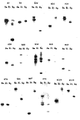
- the Figure 1A illustrates the Southern blot hybridization of the products of the second iteration of the CDA method with the ClaI digested DNA of: Nm in lane a, of Ng MS11 in lane b, of Nm 8013 in lane c, of Ng 403 in lane d , from Nm 1121 on track e, from Ng 6934 on track f, from Nm 1912 on track g, from Ng WI (DGI strain) on track h, from Nm 7972 on lane I, from Nl 8064 on lane j, from Nc 32165 in track k, of Nm 8216 in lane 1.
- Nm in lane a of Ng MS11 in lane b, of Nm 8013 in lane c, of Ng 403 in lane d , from Nm 1121 on track e, from Ng 6934 on track f, from Nm 1912 on track g, from Ng WI (DGI strain) on track h, from
- the specificity of the library was further investigated by reacting Southern blots of products from each of the three iterations of the CDA method with probes corresponding to pil C1 and ppk. These two genes are common to Nm and Ng.
- the Figure 1B represents an agarose gel after electrophoresis of chromosomes of Nm Z2491 and Ng Ms11, digested with Tsp 509 and products from each of the iterations of the CDA method.
- Figures 1C and 1D represent gels made as described in Figure 1B after transfer on membrane (Southern blots) and hybridization with pil C1 ( figure 1C ) and ppk ( figure 1D ).
- the sequences corresponding to the pil C1 and ppk genes are completely excluded from the library.
- Nm-specific probes react with the amplification products resulting from the first and second subtractive hybridization iteration.
- FIGS. 1E, 1F and 1G represent gels made as described in Figure 1B after membrane transfer (Southern blots) and hybridization with frp A ( figure 1E ), rotamase ( figure 1F ) and opc ( figure 1G ).
- a third subtractive hybridization iteration leads to the loss of Nm-specific sequences because the fragments reacting with the rotamase and opc genes are absent from this third iteration.
- the library produced by Tsp 509I is more exhautive than the library produced by Mbo I, as the theoretical considerations based on the enzymatic production of smaller restriction fragments supposed it.
- the Tsp 509I library is less redundant than the Mbo I library, that is to say that it comprises less clone duplication. 86% of Tsp 509I library clones correspond to distinct sequences whereas only 43% of the clones correspond to distinct sequences in the MboI library (data not shown).
- the bank produced by Tsp 509I therefore constitutes a source of Nm-specific clones.
- the DNAs of the subtractive libraries are cloned at the Bam HI ( Mbo I library) or Eco RI (Tsp 509I library) site of the plasmid pBluescript, and then transformed into DH5 ⁇ of E. coli.
- the inserts are amplified by PCR carried out on the transformed colonies using primers M13-50 and M13-40, the latter primer being biotinylated at its 5 'end.
- Sequencing was performed on each PCR product after separation of the biotinylated and non-biotinylated strands using the Dynabeads M-280 streptavidin system (Dynal, Oslo). The sequences are screened according to their homologies with previously published sequences using Blastn and Blastx computer programs (NCBI, USA and Fasta).
- PCR products from the transformed bacterial colonies after using primers M13-40 and M13-50 as described above, were labeled by random priming incorporation of ⁇ - 32 P-dCTP and were used as probe for Membrane transfer of Cla I-digested chromosomal DNA from strains Nm Z2491 and Ng MS11 as described above to verify their specificity.
- the positions of the DNA sequences corresponding to the cloned Nm-specific products were determined with respect to the published map of the Nm Z2491 chromosome ( Dempsey et al. 1995, J. Bacteriol. 177, 6390-6400 ) and using Southern blots of pulsed-field gel electrophoresis (PFGE) agarose gels.
- PFGE pulsed-field gel electrophoresis
- Nm-specific clones are used as probes for membrane hybridization (Southern blots) of Nm Z2491 DNA digested with enzymes at rare cleavage sites, namely Pac I, Pme I, Sgf I , Bgl II , Spe I Nhe. I that Sgf I.
- the gels (20 x 20 cm) were 1% agarose gels in 0.5 X TBE buffer and electrophoresed at 6 V / cm for 36 hours at linearly varying pulse periods between 5 and 5 hours. 35 seconds.
- Nm-specific sequences belong to three distinct groups. One of these groups (region 1) corresponds to the position of genes relating to the capsule previously described.
- mapping of the Nm-specific sequences on the chromosome leads to an unexpected result compared with the prior art.
- Region 1 groups genes related to the meningococci capsule.
- Clone B208 has high homology (48% identity, 91% homology for 33 amino acids) with a clone of conserved regions (domain III) in the class of proteins that bind to TonB-dependent iron siderophores.
- Clone B339 corresponds to the Nm-specific insertion sequence IS1106 .
- regions containing the Nm-specific clones may correspond to islands of pathogenicity as previously described for E. coli and Y. pestis is of particular interest.
- the clones isolated in this invention will allow to better understand the relevance of Nm-specific regions by allowing the cloning and sequencing of larger chromosomal fragments and directly by their use for loci mutations.
- meningococcus-specific genes possibly involved in the pathogenicity of the body, makes it possible to target appropriate antigens that can be used in an anti-meningococcal vaccine.
- the efficiency and speed of the method according to the invention allow its use in a large number of situations for which the genetic differences responsible for a particular phenotype to one of 2 nearby pathogens are sought.
- PCR products corresponding to the inserts of each of the clones were pooled and used as membrane hybridization probes (Southern blots) for a panel of Nm, Ng, Nl and Nc strains.
- Regions 1 and 2 produce a limited number of bands for each of the meningococci. This suggests that these regions are both Nm-specific and common to all meningococci.
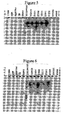
- the figure 3 illustrates the reactivity of the clones of regions 1, 2 and 3 towards a panel of neisserial strains.
- Clones of regions 1 ( figure 3A ), 2 ( figure 3B ) and 3 ( figure 3C ) taken together were used as probes for a panel of meningococci, gonococci and a strain of Nl and Nc.
- the tracks are as follows: ADN of Nm Z2491 on track a, of Ng MS11 on track b, of Nm 8013, on track c, of Ng 403 on track d, of Nm 1121 on track e, of Ng 6934 on track f, from Nm 1912 on track g, from Ng WI (DGI strain) on track h, from Nm 7972 on lane I, from Nl 8064 on lane nc 32165 on lane k, from Nm 8216 on lane 1.
- ADN of Nm Z2491 on track a of Ng MS11 on track b, of Nm 8013, on track c, of Ng 403 on track d, of Nm 1121 on track e, of Ng 6934 on track f, from Nm 1912 on track g, from Ng WI (DGI strain) on track h, from Nm 7972 on lane I, from Nl 8064 on lane nc 32165 on lane k,
- region 3 shows reactivity only with meningococci of serogroup A. This region 3 is therefore specific for a subgroup of Nm.
- Table 1 which follows gives the positions of the specific clones on the chromosomal map and the homologies with known sequences.
- region 1 all correspond to the genes involved in the biosynthesis of the capsule. These genes have been previously studied among the Nm serogroup B ( Frosch et al. 1989, Proc. Natl. Acad. Sci. USA 86, 1669-1673 and Frosch and Muller 1993, Mol. Microbiol. 8,483-493 ).
- Two of the clones of region 3 have interesting homologies with proteins that bind to DNA, particularly regulatory proteins and bacteriophage transposase proteins.
- Clone B208 exhibits strong homology with one of the conserved regions in a class of receptors (TonB-dependent ferric siderophore).
- Clones B134 and B339 hybridize with many regions of the chromosome (at least 5 and at least 8, respectively).
- sequence data show that clone B339 corresponds to the Nm-specific S1106 insertion sequence .
- clone B143 has limited homology with the transposase of an Aeromonas ( SAS2 ) insertion sequence ( Gustafson et al. 1994, J. Mol. Biol. 237, 452-463 ). We have been able to demonstrate by membrane transfer (Southern blots) that this clone is an Nm-specific entity present in multiple copies in the chromosomes of each meningococcus of the tested panel.
- SAS2 Aeromonas
- PCR amplification was performed with chromosomal DNA of serogroup A strain Z2491, subgroup IV-1, using oligonucleotide primers constructed from each of the region 2 clone sequences, according to many different combinations.
- the overlapping PCR products are sequenced from both strands using the chain termination technique and automated sequencing (ABI 373 or 377).
- Phages containing the inserts straddling region 2 are identified by hybridization with probes of clones of this region.
- the inserted DNA is sequenced from the tips of the inserts and these sequences are used to develop new primers that will directly amplify the chromosomal DNA and not the phage DNA.
- Amplification of the chromosomal DNA is obtained using these new primers and those of the previously available sequence.
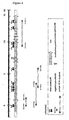
- COL-4 begins with the GTG codon and overlaps a slightly smaller COL (SEQ ID NO: 41) in the same reading frame (9620-12118, frame 2) and begins with the ATG codon.
- COL-4 encodes a protein that exhibits structural homologies with a family of polypeptides including pyocins (Pseudomonas aeruginosa), collins and inverins (Escherichia coli) that are bactericidal toxins (pyocins, collins) or surface proteins involved in adhesion of bacteria to eukaryotic proteins.
- COL-7 encodes a protein whose sequence contains a potentially transmembrane region, and which has structural homologies with periplasmic proteins or inserted into the outer membrane of the bacteria. The structural homologies of COL-4 and COL-7 have been identified using the PropSearch program.
- Southern blots were performed using DNA probes obtained by PCR amplification of different parts of region 2 using oligonucleotide primers constructed from region 2 clone sequences.
- oligonucleotides named R2001 (SEQ ID No. 46) and R2002 (SEQ ID No. 47) in one half of COL-1 + the major part of COL-2, oligonucleotides b332a (SEQ ID NO: 48), e139a (SEQ ID NO: 49), b132a (SEQ ID NO: 50) and b233b (SEQ ID NO: 51), and in 1/3 COL-4 + COL- 5-7, oligonucleotides e145a (SEQ ID NO: 52) and b101a (SEQ ID NO: 53).
- the Figures 5, 6 and 7 represent respectively the Southern blots obtained with each of the parts of COL mentioned above.
- the procedure is carried out according to the technique described in Example 1, but the chromosomal DNA of a strain of Nm (Z2491) and 2 strains of N1 (XN collection) are used and the DNAs are mixed in equal parts.
- the set of primers used is given in Table 2 below.
- Subtractive libraries are monitored by Southern blotting on a panel of 12 strains of Neisseria ( ClaI- cut chromosomal DNA ). The hybridization conditions are identical to those given in Example 1.
- Example 5 Demonstration of the presence of one or more strains of Neisseria meningitidis in a biological sample.
- a biological sample of the cerebrospinal fluid type, urine, blood, saliva is taken.
- the DNAs present in this sample are subjected to gel electrophoresis and transferred to the membrane by Southern blotting.
- a nucleotide probe constituted by the 32 P labeling of SEQ ID No. 5 is incubated with this transfer membrane.
Landscapes
- Chemical & Material Sciences (AREA)
- Organic Chemistry (AREA)
- Health & Medical Sciences (AREA)
- Life Sciences & Earth Sciences (AREA)
- Proteomics, Peptides & Aminoacids (AREA)
- Analytical Chemistry (AREA)
- General Health & Medical Sciences (AREA)
- Molecular Biology (AREA)
- Wood Science & Technology (AREA)
- Zoology (AREA)
- Engineering & Computer Science (AREA)
- Biochemistry (AREA)
- Biophysics (AREA)
- Genetics & Genomics (AREA)
- Medicinal Chemistry (AREA)
- Bioinformatics & Cheminformatics (AREA)
- Microbiology (AREA)
- Physics & Mathematics (AREA)
- Gastroenterology & Hepatology (AREA)
- General Engineering & Computer Science (AREA)
- Biotechnology (AREA)
- Immunology (AREA)
- Chemical Kinetics & Catalysis (AREA)
- Communicable Diseases (AREA)
- Nuclear Medicine, Radiotherapy & Molecular Imaging (AREA)
- General Chemical & Material Sciences (AREA)
- Veterinary Medicine (AREA)
- Oncology (AREA)
- Animal Behavior & Ethology (AREA)
- Pharmacology & Pharmacy (AREA)
- Public Health (AREA)
- Measuring Or Testing Involving Enzymes Or Micro-Organisms (AREA)
- Peptides Or Proteins (AREA)
- Medicines Containing Antibodies Or Antigens For Use As Internal Diagnostic Agents (AREA)
- Micro-Organisms Or Cultivation Processes Thereof (AREA)
- Medicines That Contain Protein Lipid Enzymes And Other Medicines (AREA)
- Preparation Of Compounds By Using Micro-Organisms (AREA)
- Saccharide Compounds (AREA)
Claims (3)
- Verwendung von isolierten DNAs bei einem Diagnoseverfahren einer Meningokokken-Infektion in einer biologischen Probe, dadurch gekennzeichnet, dass es sich um Sequenzen von DNA handelt, die in der 4-Region auf dem Chromosom des Stammes von Neisseria meningitidis Nm Z2491 vorhanden sind, wobei diese Region durch die Marker arg J und reg F begrenzt ist, wobei die DNAs mit den DNAs von Neisseria gonorrhoeae gemein sind, aber bei den nicht-pathogenen Stämmen von Neisseria lactamica fehlen.
- Verwendung nach Anspruch 1, dadurch gekennzeichnet, dass die DNAs den DNA-Sequenzen entsprechen, die zu den in der 4-Region vorhandenen DNAs nach Anspruch 1 komplementär sind.
- Verwendung nach Anspruch 1 oder 2, 3, dadurch gekennzeichnet, dass die DNA-Sequenzen in einen Transfer- oder Expressionsvektor, wie Cosmid, Plasmid oder Bakteriophage, eingesetzt werden.
Applications Claiming Priority (2)
| Application Number | Priority Date | Filing Date | Title |
|---|---|---|---|
| FR9608768A FR2751000B1 (fr) | 1996-07-12 | 1996-07-12 | Adn specifiques des bacteries de l'espece neisseria meningitidis, leurs procedes d'obtention et leurs applications biologiques |
| EP97933727A EP0951552B1 (de) | 1996-07-12 | 1997-07-11 | Dna und spezifische proteine oder peptide der bakterienspezies neisseria meningitidis, verfahren zu deren herstellung und biologische anwendungen |
Related Parent Applications (2)
| Application Number | Title | Priority Date | Filing Date |
|---|---|---|---|
| EP97933727A Division EP0951552B1 (de) | 1996-07-12 | 1997-07-11 | Dna und spezifische proteine oder peptide der bakterienspezies neisseria meningitidis, verfahren zu deren herstellung und biologische anwendungen |
| EP97933727.6 Division | 1998-01-22 |
Publications (3)
| Publication Number | Publication Date |
|---|---|
| EP2138582A2 EP2138582A2 (de) | 2009-12-30 |
| EP2138582A3 EP2138582A3 (de) | 2010-05-05 |
| EP2138582B1 true EP2138582B1 (de) | 2015-04-08 |
Family
ID=9494012
Family Applications (2)
| Application Number | Title | Priority Date | Filing Date |
|---|---|---|---|
| EP97933727A Expired - Lifetime EP0951552B1 (de) | 1996-07-12 | 1997-07-11 | Dna und spezifische proteine oder peptide der bakterienspezies neisseria meningitidis, verfahren zu deren herstellung und biologische anwendungen |
| EP09163902.1A Expired - Lifetime EP2138582B1 (de) | 1996-07-12 | 1997-07-11 | DNA und spezifische Eiweiße oder Peptide der Bakterien vom Typ Neisseria Meningitidis, ihr Gewinnungsverfahren und ihre biologischen Anwendungen |
Family Applications Before (1)
| Application Number | Title | Priority Date | Filing Date |
|---|---|---|---|
| EP97933727A Expired - Lifetime EP0951552B1 (de) | 1996-07-12 | 1997-07-11 | Dna und spezifische proteine oder peptide der bakterienspezies neisseria meningitidis, verfahren zu deren herstellung und biologische anwendungen |
Country Status (11)
| Country | Link |
|---|---|
| US (6) | US7029845B2 (de) |
| EP (2) | EP0951552B1 (de) |
| JP (3) | JP2001504684A (de) |
| AT (1) | ATE497005T1 (de) |
| AU (1) | AU730423B2 (de) |
| CA (1) | CA2260079C (de) |
| DE (1) | DE69740110D1 (de) |
| ES (1) | ES2365110T3 (de) |
| FR (1) | FR2751000B1 (de) |
| PT (1) | PT951552E (de) |
| WO (1) | WO1998002547A2 (de) |
Families Citing this family (34)
| Publication number | Priority date | Publication date | Assignee | Title |
|---|---|---|---|---|
| FR2751000B1 (fr) * | 1996-07-12 | 1998-10-30 | Inst Nat Sante Rech Med | Adn specifiques des bacteries de l'espece neisseria meningitidis, leurs procedes d'obtention et leurs applications biologiques |
| ATE446368T1 (de) | 1998-01-14 | 2009-11-15 | Novartis Vaccines & Diagnostic | Antigene aus neisseria meningitidis |
| GB9808734D0 (en) | 1998-04-23 | 1998-06-24 | Smithkline Beecham Biolog | Novel compounds |
| MX343752B (es) * | 1998-05-01 | 2016-11-22 | Novartis Vaccines & Diagnostics Inc | Antigenos de neisseria meningitidis y composiciones que los contienen. |
| GB9811260D0 (en) * | 1998-05-26 | 1998-07-22 | Smithkline Beecham Biolog | Novel compounds |
| GB9820003D0 (en) * | 1998-09-14 | 1998-11-04 | Smithkline Beecham Biolog | Novel compounds |
| FR2785293B1 (fr) * | 1998-10-30 | 2002-07-05 | Pasteur Merieux Serums Vacc | Acides nucleiques et polypeptides specifiques des souches pathogenes du genre neisseria |
| WO2000042191A2 (en) * | 1999-01-15 | 2000-07-20 | Smithkline Beecham Biologicals S.A. | Neisseria meningitidis antigenic polypeptides, corresponding polynucleotides and protective antibodies |
| WO2000042193A1 (en) * | 1999-01-15 | 2000-07-20 | Smithkline Beecham Biologicals S.A. | Neisseria meningitidis antigen |
| JP2004537954A (ja) * | 1999-01-15 | 2004-12-24 | グラクソスミスクライン バイオロジカルズ ソシエテ アノニム | ナイセリア・メニンギティディス・ポリペプチドbasb052 |
| WO2000043517A1 (en) * | 1999-01-22 | 2000-07-27 | Smithkline Beecham Biologicals S.A. | Basb055 polynucleotide and polypeptide from neisseria meningitidis. uses thereof |
| WO2000043518A1 (en) * | 1999-01-22 | 2000-07-27 | Smithkline Beecham Biologicals S.A. | Neisseria meningitidis antigenic polypeptides, corresponding polynucleotides and protective antibodies |
| AU2109700A (en) * | 1999-01-22 | 2000-08-07 | Smithkline Beecham Biologicals (Sa) | Novel compounds |
| GB9902070D0 (en) * | 1999-01-29 | 1999-03-24 | Smithkline Beecham Biolog | Novel compounds |
| US7666988B1 (en) * | 1999-03-12 | 2010-02-23 | Glaxosmithkline Biologicals S.A. | BASB082 Polypeptides |
| GB9916529D0 (en) * | 1999-07-14 | 1999-09-15 | Chiron Spa | Antigenic peptides |
| GB9918319D0 (en) | 1999-08-03 | 1999-10-06 | Smithkline Beecham Biolog | Vaccine composition |
| PT2275551E (pt) * | 1999-10-29 | 2015-06-29 | Novartis Vaccines & Diagnostic | Péptidos antigénicos de neisseria |
| GB0011108D0 (en) * | 2000-05-08 | 2000-06-28 | Microscience Ltd | Virulence gene and protein and their use |
| MXPA03000822A (es) | 2000-07-27 | 2004-11-01 | Childrens Hosp & Res Ct Oak | Vacunas para proteccion de espectro amplio contra enfermedades causadas por neisseria meningitidis. |
| US7250172B2 (en) | 2001-01-31 | 2007-07-31 | University Of Iowa Research Foundation | Vaccine and compositions for the prevention and treatment of neisserial infections |
| US7261901B2 (en) | 2001-01-31 | 2007-08-28 | University Of Iowa Research Foundation | Vaccine and compositions for the prevention and treatment of neisserial infections |
| GB0103171D0 (en) | 2001-02-08 | 2001-03-28 | Smithkline Beecham Biolog | Vaccine composition |
| GB0103424D0 (en) | 2001-02-12 | 2001-03-28 | Chiron Spa | Gonococcus proteins |
| CN1674933B (zh) | 2002-08-02 | 2012-09-26 | 葛兰素史密丝克莱恩生物有限公司 | 疫苗组合物 |
| EP2351579B1 (de) | 2002-10-11 | 2016-09-21 | Novartis Vaccines and Diagnostics S.r.l. | Poylpeptidimpfstoffe zum breiten Schutz gegen hypervirulente Meningo-kokken-Linien |
| CA2503871C (en) | 2002-11-01 | 2012-12-11 | Glaxosmithkline Biologicals S.A. | An immunogenic composition for generating an immune response against polio virus |
| AU2004277342B2 (en) | 2003-10-02 | 2010-12-16 | Glaxosmithkline Biologicals S.A. | Pertussis antigens and use thereof in vaccination |
| CN101107007B (zh) | 2005-01-27 | 2011-08-17 | 奥克兰儿童医院及研究中心 | 对脑膜炎奈瑟球菌所致疾病具有广谱保护作用的gna1870囊泡疫苗 |
| GB0505996D0 (en) | 2005-03-23 | 2005-04-27 | Glaxosmithkline Biolog Sa | Fermentation process |
| ES2337309T5 (es) | 2006-06-12 | 2013-07-30 | Glaxosmithkline Biologicals S.A. | Vacuna |
| EP2544714A1 (de) | 2010-03-10 | 2013-01-16 | GlaxoSmithKline Biologicals S.A. | Impfstoffzusammensetzung |
| WO2012059592A1 (en) * | 2010-11-05 | 2012-05-10 | Institut National De La Sante Et De La Recherche Medicale (Inserm) | Compounds for delivering a therapeutic or imaging agent to the brain |
| CN104736563A (zh) | 2012-07-27 | 2015-06-24 | 国家健康与医学研究院 | Cd147作为受体用于脑膜炎球菌至血管内皮的菌毛介导的粘附 |
Family Cites Families (22)
| Publication number | Priority date | Publication date | Assignee | Title |
|---|---|---|---|---|
| IS1106A7 (is) | 1959-06-29 | 1959-07-08 | C. Van Der Lely N.V. | Tæki til að flytja til hliðar uppskeru, sem liggur á jörðinni |
| FI883482A0 (fi) * | 1986-11-24 | 1988-07-22 | Gen Probe Inc | Nukleinsyrasonder foer detektering och/eller kvantitativ bestaemning av organismer av organismer av icke-viralt ursprung. |
| JPH01125328A (ja) * | 1987-07-30 | 1989-05-17 | Centro Natl De Biopreparados | 髄膜炎菌ワクチン |
| EP0337896B1 (de) * | 1988-04-15 | 1993-07-28 | N.V. Innogenetics S.A. | Hybridisationssonden zum Nachweis von Neisseria-Stämme |
| AU5851390A (en) * | 1989-06-19 | 1991-01-08 | Statens Serum Institut | A malaria vaccine |
| EP0452596A1 (de) * | 1990-04-18 | 1991-10-23 | N.V. Innogenetics S.A. | Hibridizierungssonden aus dem Abstandsbereich zwischen den 16S- und 23S-rRNA-Genen und Nachweis von nichtviralen Mikroorganismen |
| US6086896A (en) * | 1990-07-16 | 2000-07-11 | Imclone Systems Incorporated | Antigenic iron repressible protein from N. meningitidis related to the hemolysin family of toxins |
| DK0610396T3 (da) | 1991-10-23 | 2001-01-29 | Baylor College Medicine | Fingeraftryksidentifikation af bakteriestammer med anvendelse af repetitiv DNA-sekvensamplifikation |
| ATE157703T1 (de) | 1991-12-16 | 1997-09-15 | Ciba Geigy Ag | Endoplasmatisches retikulum-ständige rekombinante dibasische endoprotease und deren verwendungen |
| WO1994005703A1 (en) * | 1992-08-31 | 1994-03-17 | Global Tek, Inc. | Monoclonal antibody to cell surface protein of the bacterium neisseria meningitidis |
| US5445933A (en) * | 1992-09-15 | 1995-08-29 | Boehringer Mannheim Corporation | Strand displacement assay and complex useful therefor |
| EP0684759A4 (de) | 1992-09-30 | 1996-05-08 | Cornell Res Foundation Inc | Transgenischem apfelartigem obst mit feuerbrandresistenz. |
| US5436142A (en) * | 1992-11-12 | 1995-07-25 | Cold Spring Harbor Laboratory | Methods for producing probes capable of distingushing variant genomic sequences |
| US6401267B1 (en) * | 1993-09-27 | 2002-06-11 | Radoje Drmanac | Methods and compositions for efficient nucleic acid sequencing |
| US6121037A (en) * | 1994-10-18 | 2000-09-19 | Stojiljkovic; Igor | Bacterial hemoglobin receptor genes |
| US5698438A (en) * | 1994-10-18 | 1997-12-16 | Oregon Health Sciences University | Bacterial hemoglobin receptor gene |
| EP0832294A1 (de) * | 1995-06-07 | 1998-04-01 | Pioneer Hi-Bred International, Inc. | Auf pcr bsierendes substraktives cdns klonierungsverfahren |
| US5747252A (en) * | 1995-06-07 | 1998-05-05 | Gen-Probe Incorporated | Nucleic acid probes and amplification oligonucleotides for Neisseria species |
| US6277382B1 (en) * | 1995-10-17 | 2001-08-21 | Oregon Health Sciences University | Hemoglobin receptors from neisseriae |
| FR2751000B1 (fr) | 1996-07-12 | 1998-10-30 | Inst Nat Sante Rech Med | Adn specifiques des bacteries de l'espece neisseria meningitidis, leurs procedes d'obtention et leurs applications biologiques |
| ATE446368T1 (de) * | 1998-01-14 | 2009-11-15 | Novartis Vaccines & Diagnostic | Antigene aus neisseria meningitidis |
| FR2785293B1 (fr) * | 1998-10-30 | 2002-07-05 | Pasteur Merieux Serums Vacc | Acides nucleiques et polypeptides specifiques des souches pathogenes du genre neisseria |
-
1996
- 1996-07-12 FR FR9608768A patent/FR2751000B1/fr not_active Expired - Lifetime
-
1997
- 1997-07-11 PT PT97933727T patent/PT951552E/pt unknown
- 1997-07-11 CA CA2260079A patent/CA2260079C/fr not_active Expired - Lifetime
- 1997-07-11 DE DE69740110T patent/DE69740110D1/de not_active Expired - Lifetime
- 1997-07-11 ES ES97933727T patent/ES2365110T3/es not_active Expired - Lifetime
- 1997-07-11 AT AT97933727T patent/ATE497005T1/de active
- 1997-07-11 WO PCT/FR1997/001295 patent/WO1998002547A2/fr not_active Ceased
- 1997-07-11 EP EP97933727A patent/EP0951552B1/de not_active Expired - Lifetime
- 1997-07-11 EP EP09163902.1A patent/EP2138582B1/de not_active Expired - Lifetime
- 1997-07-11 AU AU36977/97A patent/AU730423B2/en not_active Expired
- 1997-07-11 JP JP50568598A patent/JP2001504684A/ja active Pending
-
2001
- 2001-08-14 US US09/928,457 patent/US7029845B2/en not_active Expired - Fee Related
-
2005
- 2005-01-31 US US11/045,208 patent/US20060063167A1/en not_active Abandoned
-
2006
- 2006-12-14 US US11/638,574 patent/US7368556B2/en not_active Expired - Fee Related
- 2006-12-14 US US11/638,579 patent/US20070082361A1/en not_active Abandoned
-
2008
- 2008-09-17 JP JP2008238499A patent/JP2009022296A/ja active Pending
-
2009
- 2009-02-20 US US12/389,992 patent/US20090305275A1/en not_active Abandoned
- 2009-09-24 JP JP2009219509A patent/JP2009291218A/ja active Pending
-
2011
- 2011-01-20 US US13/010,139 patent/US8357791B2/en not_active Expired - Fee Related
Also Published As
| Publication number | Publication date |
|---|---|
| DE69740110D1 (de) | 2011-03-10 |
| WO1998002547A2 (fr) | 1998-01-22 |
| PT951552E (pt) | 2011-05-24 |
| JP2009022296A (ja) | 2009-02-05 |
| EP2138582A3 (de) | 2010-05-05 |
| WO1998002547A3 (fr) | 1998-04-09 |
| EP0951552A2 (de) | 1999-10-27 |
| HK1024927A1 (en) | 2000-10-27 |
| FR2751000B1 (fr) | 1998-10-30 |
| AU730423B2 (en) | 2001-03-08 |
| CA2260079C (fr) | 2013-05-14 |
| JP2001504684A (ja) | 2001-04-10 |
| EP2138582A2 (de) | 2009-12-30 |
| US20110313026A1 (en) | 2011-12-22 |
| US20020164603A1 (en) | 2002-11-07 |
| FR2751000A1 (fr) | 1998-01-16 |
| ATE497005T1 (de) | 2011-02-15 |
| US7029845B2 (en) | 2006-04-18 |
| US7368556B2 (en) | 2008-05-06 |
| JP2009291218A (ja) | 2009-12-17 |
| US8357791B2 (en) | 2013-01-22 |
| US20090305275A1 (en) | 2009-12-10 |
| AU3697797A (en) | 1998-02-09 |
| CA2260079A1 (fr) | 1998-01-22 |
| EP0951552B1 (de) | 2011-01-26 |
| US20070082361A1 (en) | 2007-04-12 |
| US20060063167A1 (en) | 2006-03-23 |
| US20070105225A1 (en) | 2007-05-10 |
| ES2365110T3 (es) | 2011-09-22 |
Similar Documents
| Publication | Publication Date | Title |
|---|---|---|
| EP0951552B1 (de) | Dna und spezifische proteine oder peptide der bakterienspezies neisseria meningitidis, verfahren zu deren herstellung und biologische anwendungen | |
| EP0367644B1 (de) | Nukleotidesequenzen, die ein Protein mit Ureareaktivität kodieren | |
| EP0610322B1 (de) | Für die regulation und reifung von urease notwendige helicobakter pylori-gene und ihre nutzung | |
| EP1790660A2 (de) | Heterologe Expression von Neisseria Proteinen | |
| EP0490951B1 (de) | Nukleinsäurefragmente von einem genom eines geeigneten mykobakteriums, ihre verwendung zur diagnose von mykobakterieninfektionen sowie diese fragmente enthaltende plasmide | |
| EP1161562B9 (de) | Deletierte sequenzen in m. bovis bcg / m. bovis oder m. tuberculosis, verfahren zur erkennung von mycobakterien mit diesen sequenzen und vakzine | |
| FR2651505A1 (fr) | Fragments d'acides nucleiques derives d'un genome de mycobacterie appropriee, leurs applications dans le diagnostic des infections a mycobacteries et plasmides contenant lesdits fragments. | |
| CA2031195A1 (fr) | Sequences nucleotidiques d'actinomycetales, leurs applications pour la synthese ou la detection des acides nucleiques, les produits d'expression de ces sequences et leur application comme compositions immunogene | |
| EP0918854B1 (de) | Nukleinsäure-fragmente, die spezifische für die mitglieder des m. tuberculosis komplexes sind, deren anwendung zur detektion und differentiale diagnose der mitglieder des m. tuberculosis komplexes | |
| HK1024927B (en) | Dna and specific proteins or peptides of the neisseria meningitidis species bacteria, method for obtaining them and their biological applications | |
| FR2806096A1 (fr) | Produits a propriete b2+ a-isoles a partir de e.coli, et leurs applications biologiques | |
| Rickard | Coaggregation between aquatic biofilm bacteria | |
| FR2616804A1 (fr) | Sonde d'adn destinee a la detection de listeria monocytogenes, kit analytique et methode permettant d'effectuer cette detection |
Legal Events
| Date | Code | Title | Description |
|---|---|---|---|
| PUAI | Public reference made under article 153(3) epc to a published international application that has entered the european phase |
Free format text: ORIGINAL CODE: 0009012 |
|
| 17P | Request for examination filed |
Effective date: 20090626 |
|
| AC | Divisional application: reference to earlier application |
Ref document number: 0951552 Country of ref document: EP Kind code of ref document: P |
|
| AK | Designated contracting states |
Kind code of ref document: A2 Designated state(s): AT BE CH DE DK ES FI FR GB GR IE IT LI LU MC NL PT SE |
|
| RIN1 | Information on inventor provided before grant (corrected) |
Inventor name: VINALS, CARLA Inventor name: NASSIF, XAVIER Inventor name: RUELLE, JEAN-LOUIS Inventor name: ACHTMAN, MARK Inventor name: TINSLEY, COLIN Inventor name: MERKER, PETRA |
|
| PUAL | Search report despatched |
Free format text: ORIGINAL CODE: 0009013 |
|
| AK | Designated contracting states |
Kind code of ref document: A3 Designated state(s): AT BE CH DE DK ES FI FR GB GR IE IT LI LU MC NL PT SE |
|
| 17Q | First examination report despatched |
Effective date: 20100621 |
|
| GRAP | Despatch of communication of intention to grant a patent |
Free format text: ORIGINAL CODE: EPIDOSNIGR1 |
|
| INTG | Intention to grant announced |
Effective date: 20141119 |
|
| GRAS | Grant fee paid |
Free format text: ORIGINAL CODE: EPIDOSNIGR3 |
|
| GRAA | (expected) grant |
Free format text: ORIGINAL CODE: 0009210 |
|
| AC | Divisional application: reference to earlier application |
Ref document number: 0951552 Country of ref document: EP Kind code of ref document: P |
|
| AK | Designated contracting states |
Kind code of ref document: B1 Designated state(s): AT BE CH DE ES FI FR GB GR IE IT LI LU MC NL PT SE |
|
| RBV | Designated contracting states (corrected) |
Designated state(s): AT BE CH DE ES FI FR GB GR IE IT LI LU MC NL PT SE |
|
| REG | Reference to a national code |
Ref country code: GB Ref legal event code: FG4D Free format text: NOT ENGLISH |
|
| REG | Reference to a national code |
Ref country code: CH Ref legal event code: EP |
|
| REG | Reference to a national code |
Ref country code: IE Ref legal event code: FG4D Free format text: LANGUAGE OF EP DOCUMENT: FRENCH |
|
| REG | Reference to a national code |
Ref country code: AT Ref legal event code: REF Ref document number: 720615 Country of ref document: AT Kind code of ref document: T Effective date: 20150515 |
|
| REG | Reference to a national code |
Ref country code: DE Ref legal event code: R096 Ref document number: 69740780 Country of ref document: DE Effective date: 20150521 |
|
| REG | Reference to a national code |
Ref country code: FR Ref legal event code: PLFP Year of fee payment: 19 |
|
| REG | Reference to a national code |
Ref country code: AT Ref legal event code: MK05 Ref document number: 720615 Country of ref document: AT Kind code of ref document: T Effective date: 20150408 |
|
| REG | Reference to a national code |
Ref country code: NL Ref legal event code: VDEP Effective date: 20150408 |
|
| PG25 | Lapsed in a contracting state [announced via postgrant information from national office to epo] |
Ref country code: NL Free format text: LAPSE BECAUSE OF FAILURE TO SUBMIT A TRANSLATION OF THE DESCRIPTION OR TO PAY THE FEE WITHIN THE PRESCRIBED TIME-LIMIT Effective date: 20150408 |
|
| PG25 | Lapsed in a contracting state [announced via postgrant information from national office to epo] |
Ref country code: ES Free format text: LAPSE BECAUSE OF FAILURE TO SUBMIT A TRANSLATION OF THE DESCRIPTION OR TO PAY THE FEE WITHIN THE PRESCRIBED TIME-LIMIT Effective date: 20150408 Ref country code: PT Free format text: LAPSE BECAUSE OF FAILURE TO SUBMIT A TRANSLATION OF THE DESCRIPTION OR TO PAY THE FEE WITHIN THE PRESCRIBED TIME-LIMIT Effective date: 20150810 Ref country code: FI Free format text: LAPSE BECAUSE OF FAILURE TO SUBMIT A TRANSLATION OF THE DESCRIPTION OR TO PAY THE FEE WITHIN THE PRESCRIBED TIME-LIMIT Effective date: 20150408 |
|
| PG25 | Lapsed in a contracting state [announced via postgrant information from national office to epo] |
Ref country code: GR Free format text: LAPSE BECAUSE OF FAILURE TO SUBMIT A TRANSLATION OF THE DESCRIPTION OR TO PAY THE FEE WITHIN THE PRESCRIBED TIME-LIMIT Effective date: 20150709 Ref country code: AT Free format text: LAPSE BECAUSE OF FAILURE TO SUBMIT A TRANSLATION OF THE DESCRIPTION OR TO PAY THE FEE WITHIN THE PRESCRIBED TIME-LIMIT Effective date: 20150408 |
|
| REG | Reference to a national code |
Ref country code: DE Ref legal event code: R097 Ref document number: 69740780 Country of ref document: DE |
|
| PLBE | No opposition filed within time limit |
Free format text: ORIGINAL CODE: 0009261 |
|
| STAA | Information on the status of an ep patent application or granted ep patent |
Free format text: STATUS: NO OPPOSITION FILED WITHIN TIME LIMIT |
|
| PG25 | Lapsed in a contracting state [announced via postgrant information from national office to epo] |
Ref country code: MC Free format text: LAPSE BECAUSE OF FAILURE TO SUBMIT A TRANSLATION OF THE DESCRIPTION OR TO PAY THE FEE WITHIN THE PRESCRIBED TIME-LIMIT Effective date: 20150408 |
|
| REG | Reference to a national code |
Ref country code: CH Ref legal event code: PL |
|
| 26N | No opposition filed |
Effective date: 20160111 |
|
| PG25 | Lapsed in a contracting state [announced via postgrant information from national office to epo] |
Ref country code: LU Free format text: LAPSE BECAUSE OF FAILURE TO SUBMIT A TRANSLATION OF THE DESCRIPTION OR TO PAY THE FEE WITHIN THE PRESCRIBED TIME-LIMIT Effective date: 20150711 |
|
| REG | Reference to a national code |
Ref country code: IE Ref legal event code: MM4A |
|
| PG25 | Lapsed in a contracting state [announced via postgrant information from national office to epo] |
Ref country code: CH Free format text: LAPSE BECAUSE OF NON-PAYMENT OF DUE FEES Effective date: 20150731 Ref country code: LI Free format text: LAPSE BECAUSE OF NON-PAYMENT OF DUE FEES Effective date: 20150731 |
|
| REG | Reference to a national code |
Ref country code: FR Ref legal event code: PLFP Year of fee payment: 20 |
|
| PG25 | Lapsed in a contracting state [announced via postgrant information from national office to epo] |
Ref country code: IE Free format text: LAPSE BECAUSE OF NON-PAYMENT OF DUE FEES Effective date: 20150711 |
|
| PGFP | Annual fee paid to national office [announced via postgrant information from national office to epo] |
Ref country code: GB Payment date: 20160624 Year of fee payment: 20 |
|
| PGFP | Annual fee paid to national office [announced via postgrant information from national office to epo] |
Ref country code: IT Payment date: 20160615 Year of fee payment: 20 Ref country code: BE Payment date: 20160614 Year of fee payment: 20 Ref country code: FR Payment date: 20160621 Year of fee payment: 20 |
|
| PGFP | Annual fee paid to national office [announced via postgrant information from national office to epo] |
Ref country code: DE Payment date: 20160629 Year of fee payment: 20 |
|
| PG25 | Lapsed in a contracting state [announced via postgrant information from national office to epo] |
Ref country code: SE Free format text: LAPSE BECAUSE OF FAILURE TO SUBMIT A TRANSLATION OF THE DESCRIPTION OR TO PAY THE FEE WITHIN THE PRESCRIBED TIME-LIMIT Effective date: 20150408 |
|
| REG | Reference to a national code |
Ref country code: DE Ref legal event code: R071 Ref document number: 69740780 Country of ref document: DE |
|
| REG | Reference to a national code |
Ref country code: GB Ref legal event code: PE20 Expiry date: 20170710 |
|
| PG25 | Lapsed in a contracting state [announced via postgrant information from national office to epo] |
Ref country code: GB Free format text: LAPSE BECAUSE OF EXPIRATION OF PROTECTION Effective date: 20170710 |