EP2143251B1 - Bereitstellung von inhalten - Google Patents
Bereitstellung von inhalten Download PDFInfo
- Publication number
- EP2143251B1 EP2143251B1 EP08709530.3A EP08709530A EP2143251B1 EP 2143251 B1 EP2143251 B1 EP 2143251B1 EP 08709530 A EP08709530 A EP 08709530A EP 2143251 B1 EP2143251 B1 EP 2143251B1
- Authority
- EP
- European Patent Office
- Prior art keywords
- wireless router
- wireless
- content
- router
- data store
- Prior art date
- Legal status (The legal status is an assumption and is not a legal conclusion. Google has not performed a legal analysis and makes no representation as to the accuracy of the status listed.)
- Active
Links
Images




Classifications
-
- H—ELECTRICITY
- H04—ELECTRIC COMMUNICATION TECHNIQUE
- H04N—PICTORIAL COMMUNICATION, e.g. TELEVISION
- H04N7/00—Television systems
- H04N7/16—Analogue secrecy systems; Analogue subscription systems
- H04N7/173—Analogue secrecy systems; Analogue subscription systems with two-way working, e.g. subscriber sending a programme selection signal
- H04N7/17309—Transmission or handling of upstream communications
- H04N7/17318—Direct or substantially direct transmission and handling of requests
-
- H—ELECTRICITY
- H04—ELECTRIC COMMUNICATION TECHNIQUE
- H04L—TRANSMISSION OF DIGITAL INFORMATION, e.g. TELEGRAPHIC COMMUNICATION
- H04L67/00—Network arrangements or protocols for supporting network services or applications
- H04L67/50—Network services
- H04L67/56—Provisioning of proxy services
- H04L67/568—Storing data temporarily at an intermediate stage, e.g. caching
-
- H—ELECTRICITY
- H04—ELECTRIC COMMUNICATION TECHNIQUE
- H04N—PICTORIAL COMMUNICATION, e.g. TELEVISION
- H04N21/00—Selective content distribution, e.g. interactive television or video on demand [VOD]
- H04N21/40—Client devices specifically adapted for the reception of or interaction with content, e.g. set-top-box [STB]; Operations thereof
- H04N21/43—Processing of content or additional data, e.g. demultiplexing additional data from a digital video stream; Elementary client operations, e.g. monitoring of home network or synchronising decoder's clock; Client middleware
- H04N21/433—Content storage operation, e.g. storage operation in response to a pause request, caching operations
- H04N21/4331—Caching operations, e.g. of an advertisement for later insertion during playback
-
- H—ELECTRICITY
- H04—ELECTRIC COMMUNICATION TECHNIQUE
- H04N—PICTORIAL COMMUNICATION, e.g. TELEVISION
- H04N21/00—Selective content distribution, e.g. interactive television or video on demand [VOD]
- H04N21/40—Client devices specifically adapted for the reception of or interaction with content, e.g. set-top-box [STB]; Operations thereof
- H04N21/43—Processing of content or additional data, e.g. demultiplexing additional data from a digital video stream; Elementary client operations, e.g. monitoring of home network or synchronising decoder's clock; Client middleware
- H04N21/436—Interfacing a local distribution network, e.g. communicating with another STB or one or more peripheral devices inside the home
- H04N21/43615—Interfacing a Home Network, e.g. for connecting the client to a plurality of peripherals
-
- H—ELECTRICITY
- H04—ELECTRIC COMMUNICATION TECHNIQUE
- H04N—PICTORIAL COMMUNICATION, e.g. TELEVISION
- H04N21/00—Selective content distribution, e.g. interactive television or video on demand [VOD]
- H04N21/40—Client devices specifically adapted for the reception of or interaction with content, e.g. set-top-box [STB]; Operations thereof
- H04N21/47—End-user applications
- H04N21/472—End-user interface for requesting content, additional data or services; End-user interface for interacting with content, e.g. for content reservation or setting reminders, for requesting event notification, for manipulating displayed content
- H04N21/47202—End-user interface for requesting content, additional data or services; End-user interface for interacting with content, e.g. for content reservation or setting reminders, for requesting event notification, for manipulating displayed content for requesting content on demand, e.g. video on demand
-
- H—ELECTRICITY
- H04—ELECTRIC COMMUNICATION TECHNIQUE
- H04N—PICTORIAL COMMUNICATION, e.g. TELEVISION
- H04N21/00—Selective content distribution, e.g. interactive television or video on demand [VOD]
- H04N21/60—Network structure or processes for video distribution between server and client or between remote clients; Control signalling between clients, server and network components; Transmission of management data between server and client, e.g. sending from server to client commands for recording incoming content stream; Communication details between server and client
- H04N21/61—Network physical structure; Signal processing
- H04N21/6106—Network physical structure; Signal processing specially adapted to the downstream path of the transmission network
- H04N21/6125—Network physical structure; Signal processing specially adapted to the downstream path of the transmission network involving transmission via Internet
-
- H—ELECTRICITY
- H04—ELECTRIC COMMUNICATION TECHNIQUE
- H04N—PICTORIAL COMMUNICATION, e.g. TELEVISION
- H04N21/00—Selective content distribution, e.g. interactive television or video on demand [VOD]
- H04N21/60—Network structure or processes for video distribution between server and client or between remote clients; Control signalling between clients, server and network components; Transmission of management data between server and client, e.g. sending from server to client commands for recording incoming content stream; Communication details between server and client
- H04N21/63—Control signaling related to video distribution between client, server and network components; Network processes for video distribution between server and clients or between remote clients, e.g. transmitting basic layer and enhancement layers over different transmission paths, setting up a peer-to-peer communication via Internet between remote STB's; Communication protocols; Addressing
- H04N21/632—Control signaling related to video distribution between client, server and network components; Network processes for video distribution between server and clients or between remote clients, e.g. transmitting basic layer and enhancement layers over different transmission paths, setting up a peer-to-peer communication via Internet between remote STB's; Communication protocols; Addressing using a connection between clients on a wide area network, e.g. setting up a peer-to-peer communication via Internet for retrieving video segments from the hard-disk of other client devices
Definitions
- the present invention relates to data transfer and in particular to the delivery of data such as video-on-demand content from a content provider to a plurality of users.
- “Broadband” Internet connections currently provide users with download speeds of several Megabits per second.
- Asymmetric Digital Subscriber Line (ADSL) connections can provide end users with download speeds ranging from 2Mb/s to 8Mb/s and in some areas, ADSL-2 provides users with download speeds of up to 24Mb/s.
- ADSL Digital Subscriber Line
- ISPs Internet Service Providers
- the present invention addresses these problems.
- US2006/0062192 describes a wireless access system having a subscriber subsystem gateway and a wireless router in communication with the gateway via a two-way radio channel according to a communication protocol.
- the communication protocol has a medium access control (MAC) layer capable of supporting several different network layer frame types and includes a MAC layer header having a frame type indicator, so that multiple frames of differing frame types are communicated contiguously over the radio channel separated by MAC layer headers.
- MAC medium access control
- Wi-Fi Community Area Networks Enable a Connected Community describes a Community Area Network (CAN) which is an all-wireless network connecting a community or a metropolitan area. This is a multi-hop network consisting of resident homes and/or mobile users. Users in the covered area are able to communicate with each other through the Wi-Fi network while connecting the Internet. This provides an independent community network that connects every household to local government and organisations.
- CAN Community Area Network
- routers In addressing the above problems, the applicant has recognised that broadband users often use routers to link several home computers using Ethernet protocols into local area networks (LANs) all sharing a single ADSL connection. Furthermore, to accommodate mobility requirements, these routers also include wireless capabilities such as those provided by the 802.11a/b/g protocols to form Wireless Local Area Networks (WLANs) and will be referred to as wireless routers.
- WLANs Wireless Local Area Networks
- the 802.11 standards are based on radio transmissions and therefore the area serviced by a WLAN is an approximate sphere having a range of several metres around the location of a wireless router depending on the power of the transmission and nature of physical objects surrounding the wireless router. In many areas, such as a street or apartment block, many WLANs will intersect each other.
- the present invention provides a method of operating a wireless router to deliver content data as set out in claim 1.
- the present invention provides a wireless router for delivering an item of content as set out in claim 6.
- wireless router can exchange data with neighbouring wireless routers so that video-on-demand content requested by a user is preferentially obtained from either the wireless router's own cache or a neighbouring wireless router's cache instead of obtaining the content via the wireless router's ADSL connection.
- Each wireless router contains processing logic to handle the cache so that functioning of the cache is transparent to the user. By obtaining content via a neighbouring WLAN, the user obtains content without affecting their download limit and the ISPs core network benefits from a reduction in traffic usage.
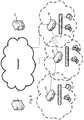
- FIG 1 shows an overview of the main parts of a system according the first embodiment.
- three wireless routers 1, 3, 5, are each connected via a respective ADSL link to the Internet 7.
- a content provider 9 of video-on-demand services and content is also connected to the Internet 7.
- each wireless router is physically located in a different user's house. For example, a first wireless router 1 is located at 81 Newgate Street, a second wireless router 3 is located at 79 Newgate Street and a third wireless router 5 is located at 83 Newgate Street.
- each wireless router 1, 3, and 5 provides a user's client machines within each respective house with access to each other and to services provided via the Internet 7.
- the first wireless router 1 maintains a LAN having two desktop computers 11, 13
- the second wireless router 3 maintains a LAN having a desktop computer 15 and a notebook computer 17and the third wireless router 5 also serves a desktop computer 15 and a notebook computer 17.
- Each wireless router also provides wireless communication capabilities although for ease of explanation no wireless client machines are connected to any of the wireless routers shown in Figure 1 .
- Each wireless router provides an 802.11g WLAN having a maximum bandwidth of 54Mbs.
- the WLAN of the first wireless router 1 is shown as a first cloud 25
- the WLAN of the second wireless router 3 is shown as a second cloud 27
- the WLAN of the third wireless router 27 is shown as a third cloud 29.
- each wireless router 1, 3, 5 extend for several metres in all directions the WLAN 23 of the first wireless router 1 intersects both the WLAN 25 of the second wireless router 3 and the WLAN 27 of the third wireless router.
- the second wireless router 3 is far away enough from the third hub 5 so their respective wireless networks 25 and 27 do not overlap.
- the wireless routers can communicate because one of the wireless routers disables its own WLAN, performs wireless discovery to determine if there are any neighbouring WLANs of other wireless routers and becomes a client of the discovered wireless routers.
- the first wireless router 1 can communicate directly with both the second wireless router 3 and the third wireless router 5, although not at the same time.
- the second wireless router 3 can communicate with the first wireless router 1 but not the third wireless router 5 because their WLANs do not intersect, and the third wireless router 5 can communicate with the first wireless router 1 but not the second wireless router 3.
- the functionality of the first wireless router 1 will now be described with reference to Figure 2 .
- the second and third wireless routers 3 and 5 are functionally identical to the first wireless router 1.
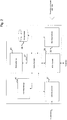
- FIG 2 schematically shows the functional components of the first wireless router 1 illustrated in Figure 1 .
- the first wireless router has an Ethernet controller 31 for bi-directional communication with computers 11 and 13 on the LAN and an 802.11b/g wireless controller 33 for wireless bi-direction communication with the second and third wireless routers 3 and 5.
- the first wireless router 1 has an ADSL controller 35 for bi-direction communication with remote computers on the Internet such as content provider 9 shown in Figure 1 .
- a central controller 37 is responsible for the overall operation of the wireless router including control and coordination between the Ethernet controller 31, the wireless controller 33 and the ADSL controller 35.
- the first wireless router 1 additionally includes a cache storage device 39 functioning as a cache for storing video-on-demand content such as high definition movies.
- the storage device 39 is a 2.5" hard drive having a capacity of 20GB.
- a local policy manager 41 controls the content of storage device 39 using information stored in the working memory 43.
- the local policy manager 41 also services any requests from its clients for video-on-demand content. If the requested content is already stored on the storage device 41, the local policy manager 41 causes the requested content to be transferred from the storage device 39 instead of allowing the request to be sent via the ADSL controller to the Internet.
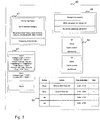
- FIG. 3 schematically shows the structure of the working memory 43 accessed by the Local Policy Manager 41.
- the local policy manager 41 uses this information stored in the working memory 43 to control the contents of the storage device 39.
- the working memory contains:
- the user information store 47 contains information relating to the preferences and download history for users connected to the LAN.
- the first wireless router 1 contains information relating to the users of the two desktop computers 11 and 13.
- the user information store 47 contains the family age group, movie interests, previous content download history and the frequency of video-on-demand downloads.
- the router information store 49 contains information regarding the amount of unallocated space in the storage device 39, the maximum link speed of the WLAN (in this embodiment a maximum of 54Mb/s), and the maximum link speed of the wireless router's ADSL connection to the Internet.
- the router information store 49 also contains information regarding the predefined idle periods of each link.
- the cache directory 51 stores a list of the files currently stored on the storage device 39. In addition, for each file in the cache, the cache directory also stores information regarding the category type, a unique ID number, the genre, age rating, title, format and size of the file.
- Each file stored in the storage device 39 has a separate entry in the cache directory 41.
- file 1 in the storage device 39 has a category type of "video-on-demand” (VOD); a content ID of "001A”; a genre of "comedy”; a "U” age rating; a movie title of "Movie 1"; a format of "HD (High Definition) 720p and a size of 1GB.
- VOD video-on-demand
- the neighbour network store 53 contains a list of the WLANs which intersect with the WLAN of the first wireless router 1 and are therefore accessible to the first wireless router 1.
- the neighbour network store 53 also stores each neighbouring networks' cache directory and predicted idle periods.
- the local policy manager 41 uses the information in the user information store 47, the cache directory 51 and the router information store 49 to determine whether to store new content in the storage device 39 and if so, when to transfer the content.
- the determined results of the local policy manager are stored in the schedule 55.
- the schedule contains entries of scheduled actions, for example a first entry relates to a file download scheduled to occur between 0100 and 0130 from the second wireless router 3 and a second entry relates to a file transfer scheduled to occur between 0130 and 0200 from the first wireless router 1 to the third wireless router 5.
- the scheduler also includes a list of free unscheduled slots.
- the first wireless router 1 In order to exchange content with other wireless routers, the first wireless router 1 must perform a discovery process to determine the identity of its neighbours.
- Figure 4 is a flow chart showing the processing of the local policy manager 41 during the wireless discovery process.
- the first wireless router 1 turns off its access point thereby disabling its WLAN and in step s3 enters wireless client mode.
- the first wireless router listens for WLANs and creates a list of any detected neighbouring WLANs, this list is stored in the neighbour network store 53 of working memory 43. For example, WLANs 25 and 27 associated with the second wireless router 3 and third wireless router 5 would be detected by the first wireless router 1.
- the first wireless router 1 After the first wireless router 1 has detected and stored a list of neighbouring networks, at step s7 the first wireless router ranks the detected WLANs according to RSSI signal strength and selects the strongest WLAN, for example WLAN 25 associated with the second wireless router 3. At step s9 the first wireless router 1 then sends a request to register with the selected WLAN using public key authentication so that first wireless router 1 becomes a client of the neighbouring WLAN. Once authenticated, the first wireless router exchanges cache information messages at step s11.
- Figure 5 shows the format of a cache content message 61 which includes the wireless router ID 63, cache content information 65 and a list of the wireless router's idle periods 67.
- the local policy manager 41 takes information from the cache directory 51 and the router information store 51 to populate the fields of the cache content message 61.
- the wireless router 1 Having exchanged cache content messages 61, the wireless router 1 updates the information in the neighbour network store 53.
- step s15 if there are more detected neighbouring WLANs the wireless router terminates the connection to the strongest network at step s17 and then repeats steps s7 to s13 for the next strongest detected neighbouring WLAN.
- the first wireless router 1 terminates the connection to the current WLAN at step s19 and having received information for all detected neighbouring WLANs restarts its own access point and WLAN 23.
- the wireless discovery routine is performed at start up, whenever new content is added to the cache, and also once a day to update the neighbour network store 53 as will be described below.
- the local policy manager of the first wireless router 1 has several modes of operation to populate the cache storage device 39.
- the local policy manager 41 monitors the network traffic of its client machines 11, 13 to selectively cache content into the cache storage device 39.
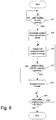
- Figure 6 is a flowchart of this first mode of populating the cache.
- the local policy manager 41 detects at step s31 when a client machine 11, 13 has requested video-on-demand content such as a movie and at step s33 caches the requested content into the cache storage device 39 as it is being downloaded by the user.
- the local policy manager 41 composes a content message 61 describing the cache contents, including the new content, and a list of free time slots for cache transfer.
- the local policy manager 41 sends the message to neighbouring wireless routers listed in the neighbour network store 53.
- the local policy manager 41 then connects to the wireless routers of neighbouring WLANs in the same manner described above during the wireless discovery process.
- the first wireless router 1 disables its own WLAN by switching off its access point and connects as a client to the second wireless router 3 in order to send the new content message 61.
- the local policy manager 41 waits at step s37 for a response from the second wireless router 3 and if the second wireless router 3 responds with a request for the new content, at step s39 the local policy manager schedules a time for transfer of the content having regard to the free time slot information of both wireless routers.
- the local policy manager determines whether there are any more WLANs listed in the neighbour network store 53, for example the third wireless router 5 and repeats steps s35 to s41. The process is repeated until the new content message 61 has been delivered to all of the neighbouring WLANs and times have been scheduled for delivery of the content if required.
- the local policy manager 41 of the second wireless router 3 extracts the cache content and compares the extracted cache content with the stored user information to determine whether any its users would be interested in the new content. If so, the second wireless router 3 responds with a list of free time slots which are available for receiving the content. Otherwise it sends a message indicating that it is not interested in the new cache content. For example, if the user information store indicates that users have previously downloaded horror movies, and a new cache content message 61 is received including information describing a new horror movie, the second wireless router 3 will respond with a list of free times. On the other hand, if the user information store indicates that the users have downloaded children's films, then the second wireless router 3 will respond with a message indicating that it does not want the new content.
- the local policy manager schedules content transfer between wireless routers by identifying common idle time periods between each wireless router.
- the local policy manager estimates the period of time required to transfer the content using the file size information associated with the content and the maximum bandwidth of the WLAN. For example, theoretically an 8GB file will take approximately 20 minutes to be transferred over a WLAN having a maximum bandwidth of 54Mbs. However, since this maximum bandwidth is rarely achieved, the local policy manager will estimate that the transfer will require an hour. Using this estimated transfer time, the local policy manager identifies the earliest common idle time period which provides sufficient time for the content transfer to complete. The local policy manager updates the schedule stored in the working memory and sends a message to the other wireless router so that its schedule is also updated.
- the wireless router which is to receive the content disables its WLAN and becomes a client of the wireless router having the content and the sending wireless router transmits the content to the cache storage device of the receiving wireless router.
- the local policy manager of each wireless router removes the entry from the schedule.
- the local policy managers can re-schedule the transfer by determining the next common idle time slot which provides sufficient time for the content transfer to complete.
- the local policy manager pre-fetches content for its users based on the users' preference information and download history.
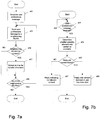
- Figures 7a and 7b show flowcharts of the second mode of populating the cache.
- the local policy manager of the first wireless router 1 periodically composes a user preferences message based on the preference data and download history information contained in the user information store 47.
- the first wireless router 1 disables its WLAN and connects to a neighbouring network listed in the neighbour network store 53, for example the second wireless router 3, in the manner described above with reference to the wireless discovery process.
- the local policy manager sends the composed message to the second wireless router 3 and waits for a response at step s55. If the second wireless router 3 responds with an indication that it has relevant content for pre-fetching, at step s57 the local policy manager schedules a time for transfer of the content and updates the schedule in the same manner as set out above.
- the local policy manager 41 determines from the neighbour network store 53 whether there are any further reachable WLANs, for example the WLAN of the third wireless router 5, and if so, repeats steps s53 to 59. If there are no further WLANs, the process ends.
- Figure 7b shows a flowchart of the processing of the second wireless router 3 when the first wireless router sends a user preferences message. If at step s61 a user preferences message is received from the first wireless router 1, then at step s63 the local policy manager of the second wireless router 3 determines whether its cache storage device 39 contains any relevant content by comparing the received user preferences message with the cache description information stored in the cache directory 51. If it is determined at step s65 that the cache contains no relevant content then at step s67 the local policy manager of the second wireless router sends a message to the first wireless router indicating that it does not have relevant content and the process terminates. If however the cache storage device 51 does contain relevant material, then at step s69 the local policy manager of the second wireless router 3 sends a message to the first wireless router containing a description of the content and free time slots for transferring the content.
- the local policy manager 41 of the first wireless router then schedules a time for transfer in the same manner as described in the first mode.
- the content is transferred directly from the cache storage device and the request to the content provider is dropped.
- the local policy manager 41 of the first wireless router 1 checks its cache storage device 39 for the requested content and if the requested content is available, transfers the data to the requesting user.
- the first wireless router communicates with each of its neighbouring wireless routers to determine whether the requested content is available via one of the neighbouring wireless routers and if so schedules transfer of the content to cache before forwarding the content to the user.
- the wireless router initiates transfer of the requested content from the content server via its ADSL connection to the Internet for storage in its own cache storage device, forwards the content to the requesting user and also broadcasts the presence of new cache content to its neighbouring hubs.
- the local policy manager 41 creates a content download message from the information in the user's request and sends the message to a neighbouring wireless router which is idle, for example the second wireless router 3.
- the second wireless router 3 downloads the content using its own ADSL connection and once complete schedules transfer of the new content to the first wireless router 1.
- the local policy manager splits the content into several parts and downloads only a part of the content.
- the local policy manager also requests its neighbouring wireless routers to download different parts of the content. For example in the system of Figure 1 , the first, second and third wireless routers would each download three different parts of the requested content using their ADSL connections such that the complete content can be reassembled by the first wireless router.
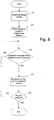
- Figure 8 shows a flowchart of the third mode of operation where a user of the first wireless router 1 has requested new content.
- the local policy manager 41 determines how to split the content download having regard to the maximum download speed and predicted idle time of the ADSL connections of each neighbouring wireless router.
- the local policy manager will split the content such that the first and third wireless routers have a greater proportion of the content to download that the second wireless router. In other cases, where the wireless routers all have similar maximum download speeds, the content would be split equally.
- the first wireless router 1 disables its WLAN and connects as a client to each of its neighbour WLANs in order to send a respective message indicating the part of the content desired.
- the local policy manager of the first wireless router 1 waits for a completion message to be received from the second or third wireless router. Once a completion message is received, at step s77 the local policy manager schedules a free time slot for transfer of the content and updates the schedule in working memory 43.
- the local policy manager repeats steps s75 to s77 until all parts have been received and the first wireless router has cached the requested content.
- the second and third wireless routers are downloading content on behalf of the first wireless router and therefore an appropriate charging system must be implemented to ensure that costs associated with the downloads are redirected to the wireless router which issued the content request.
- this charging system is beyond the scope of this application and will not be described.
- High Definition content transferred between the wireless routers will typically be encrypted to comply with Digital Rights Management issues. Therefore users wishing to view content received from a neighbouring WLAN will need to obtain suitable licensing/decryption keys. However, the size of such keys is very small in comparison with the size of the cached content.
- a system in which wireless routers providing users with a shared ADSL connection have local storage for caching video-on-demand content. Furthermore, where the wireless routers have intersecting WLANs, content can be exchanged between each wireless router. This is advantageous to users because content can be delivered via the wireless network more quickly than via an ADSL connection. Also, downloading content from another hub does not saturate the wireless router's ADSL connection meaning that the user can continue other tasks.
- the system described in the first embodiment also reduces the volume of data transferred over the wireless router's ADSL connection. This is particularly advantageous where the user has a "capped service", i.e. a broadband internet service which places limits on the total amount of data a user can download/upload every month.
- video-on-demand content is transferred over the wireless network and does not contribute to the user's data transfer allowance.
- the wireless routers can exchange video-on-demand content via their wireless networks so that users can obtain such content without downloading data over their ADSL connections.
- the wireless routers exchange messages between one another to discover neighbours, broadcast the presence of new cache content and or user preferences.
- FIG. 9 shows a system according to a second embodiment.
- the wireless routers 101, 103, 105 still disable their WLANs to transfer content into cache during idle periods, but instead of exchanging messages with each other, they send and receive messages over their ADSL connections to a central server 107.
- the central server 107 manages and coordinates the transfers of cache content between wireless routers and therefore reduces the processing load on each wireless router, in particular each wireless routers local policy manager, and also reduces the time that each wireless router must disable its WLAN.
- Each wireless router now only needs to send neighbourhood information, cache content information and user preference information. Scheduling of content transfer is managed by the central server.
- each wireless router periodically performs wireless discovery in the same manner as in the first embodiment to discover neighbouring networks.
- the results of the wireless discovery process are also sent to the central server 107 via each wireless router's ADSL connection.
- the central server 107 analyses the wireless discovery messages received from the wireless routers to build a map of the wireless router topology and in particular the intersections between WLANs of each wireless router.
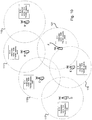
- FIG 10 schematically shows a number of wireless routers A, B, C, D, E and F having respective WLANs 111, 113, 115, 117, 119, 121 that intersect.
- the WLAN 111 of wireless router A intersects with the WLANs 113, 115, 121 of wireless routers B, C and F.
- the WLAN 113 of wireless router B intersects with the WLAN 111 of wireless routers A.
- the WLAN 115 of wireless router C intersects with the WLANs 111, 117, 119, 121 of wireless routers A, D, E and F.
- the WLAN 117 of wireless router D intersects with the WLANs 115, 119 of wireless routers C and E.
- the WLAN 119 of wireless router E intersects with the WLANs 115, 117, 121 of wireless routers C, D and F.
- the WLAN 121 of wireless router F intersects with the WLANs 111, 115, 119 of wireless routers A, C and E.
- a topology table 131 created by the central server is shown in Figure 11 .
- the table 131 has a router ID column 133 listing each wireless router and a direct neighbour column 135 listing each wireless router's neighbours.
- Each wireless router sends their wireless discovery information to the central server 107.
- the central server 107 uses the received wireless discovery information to determine not only direct links between wireless routers, but also indirect links. For the wireless routers shown in Figure 10 , for each wireless router the central server 107 determines the other wireless routers that are reachable using one of the direct links as an intermediary hop. For example, the central server determines that wireless router A can exchange content with wireless router D via wireless router C and that wireless router A can also exchange content with wireless router E via either wireless routers C or F.
- Wireless router B can exchange content with wireless routers C or F via wireless router A.
- Wireless router C can exchange content with wireless router B via wireless router A.
- Wireless router D can exchange content with wireless router A via wireless router C and also wireless router F via wireless router E.
- Wireless router E can exchange content with wireless router A via either wireless router C or F.
- Wireless router F can exchange content with wireless router B via wireless router A and also wireless router D via wireless routers C or E.
- the topology table 131 stores
- the advantage of this approach compared to the first embodiment is that the volume of available cache content is increased which as a consequence increases the likelihood that requested content can be provided to a user from cache instead of via the ADSL connection to the Internet.
- the centralised server also stores information about the status of each wireless router, for example, the amount of free space unallocated in the cache of each wireless router, the maximum link speed of the wireless connection of each wireless router and the idle time of each wireless router. Using the link speed and idle time, the central server can determine the capacity of each wireless router for transferring data to other wireless routers. This information is used by the central server to determine preferred paths for transferring cache content.
- Figure 10 also shows the status of each wireless router.
- Wireless router A has 10GB available for storing new cache content and has a transfer capacity of 50GB.
- Wireless router B has 15GB available for storing new cache content and has a transfer capacity of 5GB.
- Wireless router C has 18GB available for storing new cache content and has a transfer capacity of 5GB.
- Wireless router D has 7GB available for storing new cache content and has a transfer capacity of 4GB.
- Wireless router E has 10GB available for storing new cache content and has a transfer capacity of 35GB.
- Wireless router F has 10GB available for storing new cache content and has a transfer capacity of 35GB.
- more than one path may exist between two indirectly linked routers. For example, if a user of wireless router A requests content which is not available in the caches of its direct neighbouring wireless routers B, C or F, but is stored in the cache of wireless router E, then the content can be transferred from wireless router E to wireless router A via wireless routers C or F.
- the central server 107 determines that wireless router F has a greater transfer capacity that that of wireless router E and therefore decides to transfer the content from wireless router E to wireless router A via wireless router F.
- the central server 107 schedules delivery of the content from wireless router E to wireless router A via wireless router F using information idle time information provided by each router and the sends a scheduling message to each wireless router in the path.
- the scheduled time for transferring content from wireless router E to wireless router F is sufficiently earlier than the scheduled time for transferring the content from wireless router F to wireless router A. If the transfer from wireless router E to wireless router F has not completed before the scheduled time for transferring content from wireless router F to wireless router A, then the later transferred is rescheduled.
- wireless routers exchange messages with a central server.
- the central server determines direct and indirect links between the wireless routers to increase the volume of cache content and the likelihood of requested content being available via cache.
- the users of each wireless router are connected to the wireless router using wired links while the wireless link of the wireless router is reserved for content transfer.
- some or all of the users are wirelessly connected to the wireless router.
- this arrangement has the disadvantage that users will lose connectivity when the wireless router needs to turn off its access point in order to exchange messages or content with other wireless routers. Users will also experience reduced bandwidth when a neighbouring wireless router has become a client of the wireless router and is sending data.
- each wireless router has a second wireless access point function operating on a different frequency.
- the first wireless controller is a 802.11g controller
- the further wireless controller is a 802.11a controller or vice versa.
- one of the wireless controllers provides an access point for the client machines of users, whilst the other wireless controller is exclusively used for communication with other wireless controllers.
- each wireless router only stores information regarding its immediate neighbours. Therefore each wireless router can only exchange content with these directly identified neighbours.
- the central server of the second embodiment stores a complete topology of the wireless routers network and can coordinate exchange of content between wireless routers which are not directly connected.
- each wireless router periodically exchanges neighbour network information with other wireless routers to determine indirect paths to other wireless routers.
- any requests or message broadcasts are forwarded only forwarded to the direct neighbours, and each message can be regarded as having a time-to-live of "one".
- each message has a higher value TTL so that requests and broadcasts can propagate for several hops.
- the operation of the local policy manager and the cache storage device is transparent to the user.
- the user is aware of the caching ability of the wireless router and can request scheduled downloads and indicate the relative priority of requests for content.
- the local policy manager in the pre-fetch mode of the local policy manager, content is pre-fetched but to maintain the transparent operation of the wireless router, the user is not notified of the pre-fetched content.
- the local policy manager provides users with a list of newly available content in the cache and the user has the option to view the new content if desired.
- the wireless routers have ADSL controllers to connect to the Internet.
- the wireless routers have cable/Ethernet controllers to connect to the Internet.
Landscapes
- Engineering & Computer Science (AREA)
- Signal Processing (AREA)
- Multimedia (AREA)
- Databases & Information Systems (AREA)
- Human Computer Interaction (AREA)
- Computer Networks & Wireless Communication (AREA)
- Mobile Radio Communication Systems (AREA)
Claims (11)
- Verfahren zum Betreiben eines ersten drahtlosen Routers (1), um ein Inhaltsdatenelement, das von einem externen Inhaltsanbieter (9) zur Verfügung gestellt wird, zu einem verbundenen Kundengerät (11, 13) zu transportieren, wobei dieser erste drahtlose Router (1) mit dem externen Inhaltsanbieter (9) über eine Weitverkehrsnetz (WAN) Datenverbindung (25) verbunden wird und eine drahtlose Schnittstelle (33) zum Erzeugen eines ersten drahtlosen Netzwerks (23) aufweist, wobei dieses erste drahtlose Netzwerk (23) des ersten drahtlosen Routers (1) einen von einem zweiten drahtlosen Router (3) erzeugten Kreuzungspunkt aufweist, wobei dieser zweite drahtlose Router (3) einen Datenspeicher aufweist, der das Inhaltsdatenelement enthält, wobei das Verfahren die folgenden Schritte umfasst:Auffangen einer Anfrage für das Inhaltsdatenelement, die von dem verbundenen Kundengerät (11,13) herausgegeben wurde,wobei bestimmt wird, ob das angeforderte Inhaltsdatenelement im Datenspeicher (39) des ersten drahtlosen Routers (1) verfügbar ist,wenn das besagte Inhaltsdatenelement im Datenspeicher (39) des ersten drahtlosen Routers (1) nicht verfügbar ist, wobei es mit dem zweiten drahtlosen Netzwerk (25) des zweiten drahtlosen Routers (3) als ein Kundengerät über die drahtlose Schnittstelle (33) verbunden wird;Bestimmen, ob das angeforderte Inhaltsdatenelement im Datenspeicher des zweiten drahtlosen Routers (3) verfügbar ist; undwenn festgestellt wird, dass das angeforderte Inhaltsdatenelement verfügbar ist, Übertragen des angeforderten Inhaltsdatenelements, das in dem Datenspeicher des zweiten drahtlosen Routers (3) gespeichert ist über das zweite drahtlose Netzwerk (25) des zweiten drahtlosen Routers (3) an den Datenspeicher (39) des ersten drahtlosen Routers (1); undÜbertragen des angeforderten Inhaltsdatenelements von dem Datenspeicher (39) des ersten drahtlosen Routers (1) zu dem verbundenen Kundengerät (11, 13).
- Verfahren nach Anspruch 1, das weiterhin das Vorsehen des Übertragens des angeforderten Datenübertragungselements in Übereinstimmung mit vorhergesagten Leerlaufzeiten des ersten und zweiten drahtlosen Routers (1, 3) umfasst.
- Verfahren nach Anspruch 1, wobei weitere Inhaltsdaten an den Datenspeicher (39) des ersten drahtlosen Routers (1) als Reaktion auf eine Übereinstimmung zwischen den vom Anwender bevorzugten Informationen die auf dem ersten drahtlosen Router (1) gespeichert sind und eine Cache-Inhalt-Nachricht, die von dem zweiten drahtlosen Router (3) gesendet wurde, übertragen werden.
- Verfahren nach einem der vorhergehenden Ansprüche, das weiterhin das Ausführen eines drahtlosen Entdeckungsprozesses umfasst, um die Anwesenheit des zweiten drahtlosen Netzwerks festzustellen.
- Verfahren nach einem der vorhergehenden Ansprüche, wobei das drahtlose Netzwerk (23) des ersten drahtlosen Routers (1) sich ebenfalls mit dem drahtlosen Netzwerk eines dritten drahtlosen Routers kreuzt, das dritte drahtlose Netzwerk auch einen Datenspeicher aufweist, der das angeforderte Inhaltselement umfasst und dieses angeforderte Inhaltselement auch von dem dritten drahtlosen Router empfangen wird.
- Drahtloser Router zum Transportieren eines Inhaltsdatenelements, der von einem externen Inhaltsanbieter zur Verfügung gestellt wird, zu einem verbundenen Kundengerät (11,13), wobei der drahtlose Router folgendes umfasst:eine Steuerung eines Weitverkehrsnetzes (WAN), die fähig ist, mit diesem externen Inhaltsanbieter verbunden zu werden, eine drahtlose Schnittstelle (33) zum Erzeugen eines ersten drahtlosen Netzwerks, das, wenn es verwendet wird, das erste drahtlose Netzwerk des drahtlosen Routers sich mit einem zweiten drahtlosen Netzwerk, das von einem zweiten drahtlosen Router erzeugt wurde, kreuzt, der zweite drahtlose Router einen Datenspeicher aufweist, der dieses Inhaltsdatenelement umfasst,ein lokaler Datenspeicher;ein Prozessor, der dafür ausgelegt ist:eine Anforderung für dieses Inhaltsdatenelement, das durch dieses verbundene Kundengerät (11,13) ausgegeben wurde, aufzufangen;Bestimmen, ob das angeforderte Inhaltsdatenelement im Datenspeicher (39) des drahtlosen Routers (1) verfügbar ist;wenn das angeforderte Inhaltsdatenelement im Datenspeicher (39) des drahtlosen Routers (1) nicht verfügbar ist, sich mit dem zweiten drahtlosen Netzwerk (25) des zweiten drahtlosen Routers (3) als ein Kundengerät über die drahtlose Schnittstelle (33) zu verbinden;Bestimmen, ob das angeforderte Inhaltsdatenelement im Datenspeicher dieses zweiten drahtlosen Routers (3) verfügbar ist; undwenn festgestellt wird, dass das angeforderte Inhaltsdatenelement verfügbar ist, Abrufen des angeforderten Inhaltsdatenelements, das in dem Datenspeicher des zweiten drahtlosen Routers (3) gespeichert ist, über das zweite drahtlose Netzwerk (25) des zweiten drahtlosen Routers (3) an den Datenspeicher (39) undÜbertragen des angeforderten Inhaltsdatenelements von dem Datenspeicher (39) an das verbundene Kundengerät (11, 13).
- Drahtloser Router nach Anspruch 6, der weiterhin das Vorsehen des Übertragens des angeforderten Inhaltsdatenelements in Übereinstimmung mit örtlichen vorhergesagten Leerlaufzeiten und vorhergesagten Leerlaufzeiten des zweiten drahtlosen Routers (1, 3) umfasst.
- Drahtloser Router nach Anspruch 6, wobei weitere Inhaltsdaten an den örtlichen Datenspeicher (39) als Reaktion auf eine Übereinstimmung zwischen den vom Anwender bevorzugten Informationen, die in dem örtlichen Datenspeicher gespeichert sind, und eine Cache-Inhaltsnachricht, die von dem zweiten drahtlosen Router (3) empfangen wurde, übertragen werden.
- Drahtloser Router nach einem der Ansprüche 6 bis 8, wobei der Prozessor weiterhin in der Lage ist, einen drahtlosen Entdeckungsprozess auszuführen, um die Anwesenheit des zweiten drahtlosen Netzwerks festzustellen.
- Drahtloser Router nach einem der Ansprüche 6 bis 9, wobei das drahtlose Netzwerk (23) des ersten drahtlosen Routers (1) sich ebenfalls mit einem dritten drahtlosen Netzwerk eines dritten drahtlosen Routers kreuzt, der dritte drahtlose Router auch einen Datenspeicher aufweist, der das angeforderte Inhaltselement umfasst und
dieses angeforderte Inhaltselement auch von dem dritten drahtlosen Router empfangen wird. - Computerprogrammprodukt, das programmierbare Prozessoranweisungen umfasst, um einen Prozessor zu veranlassen, das Verfahren nach einem der Ansprüche 1 bis 5 durchzuführen.
Priority Applications (1)
| Application Number | Priority Date | Filing Date | Title |
|---|---|---|---|
| EP08709530.3A EP2143251B1 (de) | 2007-04-02 | 2008-02-27 | Bereitstellung von inhalten |
Applications Claiming Priority (3)
| Application Number | Priority Date | Filing Date | Title |
|---|---|---|---|
| EP07251471A EP1978704A1 (de) | 2007-04-02 | 2007-04-02 | Bereitstellung von Inhalten |
| PCT/GB2008/000650 WO2008119925A1 (en) | 2007-04-02 | 2008-02-27 | Content delivery |
| EP08709530.3A EP2143251B1 (de) | 2007-04-02 | 2008-02-27 | Bereitstellung von inhalten |
Publications (2)
| Publication Number | Publication Date |
|---|---|
| EP2143251A1 EP2143251A1 (de) | 2010-01-13 |
| EP2143251B1 true EP2143251B1 (de) | 2018-06-27 |
Family
ID=38566995
Family Applications (2)
| Application Number | Title | Priority Date | Filing Date |
|---|---|---|---|
| EP07251471A Ceased EP1978704A1 (de) | 2007-04-02 | 2007-04-02 | Bereitstellung von Inhalten |
| EP08709530.3A Active EP2143251B1 (de) | 2007-04-02 | 2008-02-27 | Bereitstellung von inhalten |
Family Applications Before (1)
| Application Number | Title | Priority Date | Filing Date |
|---|---|---|---|
| EP07251471A Ceased EP1978704A1 (de) | 2007-04-02 | 2007-04-02 | Bereitstellung von Inhalten |
Country Status (4)
| Country | Link |
|---|---|
| US (1) | US9215424B2 (de) |
| EP (2) | EP1978704A1 (de) |
| CN (1) | CN101658012B (de) |
| WO (1) | WO2008119925A1 (de) |
Families Citing this family (132)
| Publication number | Priority date | Publication date | Assignee | Title |
|---|---|---|---|---|
| US8028090B2 (en) | 2008-11-17 | 2011-09-27 | Amazon Technologies, Inc. | Request routing utilizing client location information |
| US7991910B2 (en) | 2008-11-17 | 2011-08-02 | Amazon Technologies, Inc. | Updating routing information based on client location |
| US8606996B2 (en) | 2008-03-31 | 2013-12-10 | Amazon Technologies, Inc. | Cache optimization |
| US7970820B1 (en) | 2008-03-31 | 2011-06-28 | Amazon Technologies, Inc. | Locality based content distribution |
| US8156243B2 (en) | 2008-03-31 | 2012-04-10 | Amazon Technologies, Inc. | Request routing |
| US8533293B1 (en) | 2008-03-31 | 2013-09-10 | Amazon Technologies, Inc. | Client side cache management |
| US8447831B1 (en) | 2008-03-31 | 2013-05-21 | Amazon Technologies, Inc. | Incentive driven content delivery |
| US7962597B2 (en) | 2008-03-31 | 2011-06-14 | Amazon Technologies, Inc. | Request routing based on class |
| US8601090B1 (en) | 2008-03-31 | 2013-12-03 | Amazon Technologies, Inc. | Network resource identification |
| US8321568B2 (en) * | 2008-03-31 | 2012-11-27 | Amazon Technologies, Inc. | Content management |
| US7925782B2 (en) * | 2008-06-30 | 2011-04-12 | Amazon Technologies, Inc. | Request routing using network computing components |
| US9912740B2 (en) | 2008-06-30 | 2018-03-06 | Amazon Technologies, Inc. | Latency measurement in resource requests |
| US9407681B1 (en) | 2010-09-28 | 2016-08-02 | Amazon Technologies, Inc. | Latency measurement in resource requests |
| US8122098B1 (en) | 2008-11-17 | 2012-02-21 | Amazon Technologies, Inc. | Managing content delivery network service providers by a content broker |
| US8065417B1 (en) | 2008-11-17 | 2011-11-22 | Amazon Technologies, Inc. | Service provider registration by a content broker |
| US8060616B1 (en) | 2008-11-17 | 2011-11-15 | Amazon Technologies, Inc. | Managing CDN registration by a storage provider |
| US8073940B1 (en) | 2008-11-17 | 2011-12-06 | Amazon Technologies, Inc. | Managing content delivery network service providers |
| US8521880B1 (en) | 2008-11-17 | 2013-08-27 | Amazon Technologies, Inc. | Managing content delivery network service providers |
| US8732309B1 (en) | 2008-11-17 | 2014-05-20 | Amazon Technologies, Inc. | Request routing utilizing cost information |
| US8756341B1 (en) | 2009-03-27 | 2014-06-17 | Amazon Technologies, Inc. | Request routing utilizing popularity information |
| US8412823B1 (en) | 2009-03-27 | 2013-04-02 | Amazon Technologies, Inc. | Managing tracking information entries in resource cache components |
| US8521851B1 (en) | 2009-03-27 | 2013-08-27 | Amazon Technologies, Inc. | DNS query processing using resource identifiers specifying an application broker |
| US8688837B1 (en) | 2009-03-27 | 2014-04-01 | Amazon Technologies, Inc. | Dynamically translating resource identifiers for request routing using popularity information |
| US8782236B1 (en) | 2009-06-16 | 2014-07-15 | Amazon Technologies, Inc. | Managing resources using resource expiration data |
| EP2271058A1 (de) * | 2009-07-03 | 2011-01-05 | Siemens Aktiengesellschaft | Einrichtung und Verfahren zur Verteilung und Weiterleitung von Anforderungen zu einer Mehrzahl von Web-Servern in einer industriellen Automatisierungsanordnung |
| US8397073B1 (en) | 2009-09-04 | 2013-03-12 | Amazon Technologies, Inc. | Managing secure content in a content delivery network |
| US8433771B1 (en) | 2009-10-02 | 2013-04-30 | Amazon Technologies, Inc. | Distribution network with forward resource propagation |
| US11416214B2 (en) | 2009-12-23 | 2022-08-16 | Google Llc | Multi-modal input on an electronic device |
| EP3091535B1 (de) | 2009-12-23 | 2023-10-11 | Google LLC | Multimodale eingabe in eine elektronische vorrichtung |
| US9495338B1 (en) | 2010-01-28 | 2016-11-15 | Amazon Technologies, Inc. | Content distribution network |
| US9148332B2 (en) | 2010-05-19 | 2015-09-29 | Google Inc. | Content delivery network |
| US8756272B1 (en) | 2010-08-26 | 2014-06-17 | Amazon Technologies, Inc. | Processing encoded content |
| US8930513B1 (en) | 2010-09-28 | 2015-01-06 | Amazon Technologies, Inc. | Latency measurement in resource requests |
| US9712484B1 (en) | 2010-09-28 | 2017-07-18 | Amazon Technologies, Inc. | Managing request routing information utilizing client identifiers |
| US10958501B1 (en) | 2010-09-28 | 2021-03-23 | Amazon Technologies, Inc. | Request routing information based on client IP groupings |
| US8468247B1 (en) | 2010-09-28 | 2013-06-18 | Amazon Technologies, Inc. | Point of presence management in request routing |
| US8938526B1 (en) | 2010-09-28 | 2015-01-20 | Amazon Technologies, Inc. | Request routing management based on network components |
| US9003035B1 (en) | 2010-09-28 | 2015-04-07 | Amazon Technologies, Inc. | Point of presence management in request routing |
| US10097398B1 (en) | 2010-09-28 | 2018-10-09 | Amazon Technologies, Inc. | Point of presence management in request routing |
| US8819283B2 (en) | 2010-09-28 | 2014-08-26 | Amazon Technologies, Inc. | Request routing in a networked environment |
| US8577992B1 (en) | 2010-09-28 | 2013-11-05 | Amazon Technologies, Inc. | Request routing management based on network components |
| US8924528B1 (en) | 2010-09-28 | 2014-12-30 | Amazon Technologies, Inc. | Latency measurement in resource requests |
| US8452874B2 (en) | 2010-11-22 | 2013-05-28 | Amazon Technologies, Inc. | Request routing processing |
| US8626950B1 (en) | 2010-12-03 | 2014-01-07 | Amazon Technologies, Inc. | Request routing processing |
| US9391949B1 (en) | 2010-12-03 | 2016-07-12 | Amazon Technologies, Inc. | Request routing processing |
| US9251173B2 (en) | 2010-12-08 | 2016-02-02 | Microsoft Technology Licensing, Llc | Place-based image organization |
| US9021537B2 (en) | 2010-12-09 | 2015-04-28 | Netflix, Inc. | Pre-buffering audio streams |
| US8904431B2 (en) * | 2010-12-20 | 2014-12-02 | Microsoft Corporation | Current device location advertisement distribution |
| US8850491B2 (en) | 2010-12-20 | 2014-09-30 | Microsoft Corporation | Wireless distribution system proxy caches |
| US10467042B1 (en) | 2011-04-27 | 2019-11-05 | Amazon Technologies, Inc. | Optimized deployment based upon customer locality |
| US8812621B2 (en) * | 2011-05-03 | 2014-08-19 | Cisco Technology, Inc. | Reducing fetching load on cache servers in adaptive streaming |
| US10075505B2 (en) | 2011-05-30 | 2018-09-11 | International Business Machines Corporation | Transmitting data including pieces of data |
| EP2552082B1 (de) | 2011-07-29 | 2018-10-31 | Deutsche Telekom AG | Verfahren zur Beschleunigung von Favoritenwebseiten und System |
| US8904009B1 (en) | 2012-02-10 | 2014-12-02 | Amazon Technologies, Inc. | Dynamic content delivery |
| US10021179B1 (en) | 2012-02-21 | 2018-07-10 | Amazon Technologies, Inc. | Local resource delivery network |
| US9172674B1 (en) | 2012-03-21 | 2015-10-27 | Amazon Technologies, Inc. | Managing request routing information utilizing performance information |
| US10623408B1 (en) | 2012-04-02 | 2020-04-14 | Amazon Technologies, Inc. | Context sensitive object management |
| US9154551B1 (en) | 2012-06-11 | 2015-10-06 | Amazon Technologies, Inc. | Processing DNS queries to identify pre-processing information |
| CN111614980B (zh) * | 2012-08-14 | 2022-04-12 | 俄亥俄州立创新基金会 | 用于通过移动设备来优化网络带宽的使用的系统和方法 |
| US9525659B1 (en) | 2012-09-04 | 2016-12-20 | Amazon Technologies, Inc. | Request routing utilizing point of presence load information |
| US9135048B2 (en) | 2012-09-20 | 2015-09-15 | Amazon Technologies, Inc. | Automated profiling of resource usage |
| US9323577B2 (en) | 2012-09-20 | 2016-04-26 | Amazon Technologies, Inc. | Automated profiling of resource usage |
| US9001697B2 (en) * | 2012-12-14 | 2015-04-07 | Western Digital Technologies, Inc. | Methods and devices for replacing and configuring a router in a network |
| US10205698B1 (en) | 2012-12-19 | 2019-02-12 | Amazon Technologies, Inc. | Source-dependent address resolution |
| US9294391B1 (en) | 2013-06-04 | 2016-03-22 | Amazon Technologies, Inc. | Managing network computing components utilizing request routing |
| CN103731487A (zh) * | 2013-12-26 | 2014-04-16 | 星云融创(北京)信息技术有限公司 | 一种资源文件的下载方法、装置、系统及路由器 |
| US10503357B2 (en) | 2014-04-03 | 2019-12-10 | Oath Inc. | Systems and methods for delivering task-oriented content using a desktop widget |
| USD775183S1 (en) | 2014-01-03 | 2016-12-27 | Yahoo! Inc. | Display screen with transitional graphical user interface for a content digest |
| US9940099B2 (en) | 2014-01-03 | 2018-04-10 | Oath Inc. | Systems and methods for content processing |
| US9558180B2 (en) | 2014-01-03 | 2017-01-31 | Yahoo! Inc. | Systems and methods for quote extraction |
| US9742836B2 (en) * | 2014-01-03 | 2017-08-22 | Yahoo Holdings, Inc. | Systems and methods for content delivery |
| US9971756B2 (en) | 2014-01-03 | 2018-05-15 | Oath Inc. | Systems and methods for delivering task-oriented content |
| USD760791S1 (en) | 2014-01-03 | 2016-07-05 | Yahoo! Inc. | Animated graphical user interface for a display screen or portion thereof |
| USD760792S1 (en) | 2014-01-03 | 2016-07-05 | Yahoo! Inc. | Animated graphical user interface for a display screen or portion thereof |
| CN103781055A (zh) * | 2014-01-26 | 2014-05-07 | 深圳市同洲电子股份有限公司 | 一种数据下载方法及相关设备 |
| EP3132594A1 (de) * | 2014-04-15 | 2017-02-22 | Interdigital Patent Holdings, Inc. | Verfahren, vorrichtung und system für verteilte zwischenspeicherberichterstattung durch probabilistische abstimmung |
| US9614724B2 (en) | 2014-04-21 | 2017-04-04 | Microsoft Technology Licensing, Llc | Session-based device configuration |
| US9430667B2 (en) | 2014-05-12 | 2016-08-30 | Microsoft Technology Licensing, Llc | Managed wireless distribution network |
| US9384335B2 (en) * | 2014-05-12 | 2016-07-05 | Microsoft Technology Licensing, Llc | Content delivery prioritization in managed wireless distribution networks |
| US9384334B2 (en) | 2014-05-12 | 2016-07-05 | Microsoft Technology Licensing, Llc | Content discovery in managed wireless distribution networks |
| US10111099B2 (en) | 2014-05-12 | 2018-10-23 | Microsoft Technology Licensing, Llc | Distributing content in managed wireless distribution networks |
| US9874914B2 (en) | 2014-05-19 | 2018-01-23 | Microsoft Technology Licensing, Llc | Power management contracts for accessory devices |
| US10037202B2 (en) | 2014-06-03 | 2018-07-31 | Microsoft Technology Licensing, Llc | Techniques to isolating a portion of an online computing service |
| US9367490B2 (en) | 2014-06-13 | 2016-06-14 | Microsoft Technology Licensing, Llc | Reversible connector for accessory devices |
| USD761833S1 (en) | 2014-09-11 | 2016-07-19 | Yahoo! Inc. | Display screen with graphical user interface of a menu for a news digest |
| CN105490966A (zh) * | 2014-09-17 | 2016-04-13 | 联想(北京)有限公司 | 动态共享网络带宽的方法和电子设备 |
| CN105490953A (zh) * | 2014-09-17 | 2016-04-13 | 联想(北京)有限公司 | 一种信息处理方法及电子设备 |
| CN105490968B (zh) * | 2014-09-17 | 2019-09-24 | 联想(北京)有限公司 | 一种信息处理方法及电子设备 |
| US10171532B2 (en) * | 2014-09-30 | 2019-01-01 | Citrix Systems, Inc. | Methods and systems for detection and classification of multimedia content in secured transactions |
| US10097448B1 (en) | 2014-12-18 | 2018-10-09 | Amazon Technologies, Inc. | Routing mode and point-of-presence selection service |
| US10033627B1 (en) | 2014-12-18 | 2018-07-24 | Amazon Technologies, Inc. | Routing mode and point-of-presence selection service |
| US10091096B1 (en) | 2014-12-18 | 2018-10-02 | Amazon Technologies, Inc. | Routing mode and point-of-presence selection service |
| US9756106B2 (en) | 2015-02-13 | 2017-09-05 | Citrix Systems, Inc. | Methods and systems for estimating quality of experience (QoE) parameters of secured transactions |
| US10021221B2 (en) | 2015-02-24 | 2018-07-10 | Citrix Systems, Inc. | Methods and systems for detection and classification of multimedia content in secured transactions using pattern matching |
| US10225326B1 (en) | 2015-03-23 | 2019-03-05 | Amazon Technologies, Inc. | Point of presence based data uploading |
| US9819567B1 (en) | 2015-03-30 | 2017-11-14 | Amazon Technologies, Inc. | Traffic surge management for points of presence |
| US9887932B1 (en) | 2015-03-30 | 2018-02-06 | Amazon Technologies, Inc. | Traffic surge management for points of presence |
| US9887931B1 (en) | 2015-03-30 | 2018-02-06 | Amazon Technologies, Inc. | Traffic surge management for points of presence |
| US9832141B1 (en) | 2015-05-13 | 2017-11-28 | Amazon Technologies, Inc. | Routing based request correlation |
| US10616179B1 (en) | 2015-06-25 | 2020-04-07 | Amazon Technologies, Inc. | Selective routing of domain name system (DNS) requests |
| US10097566B1 (en) | 2015-07-31 | 2018-10-09 | Amazon Technologies, Inc. | Identifying targets of network attacks |
| US9774619B1 (en) | 2015-09-24 | 2017-09-26 | Amazon Technologies, Inc. | Mitigating network attacks |
| US9742795B1 (en) | 2015-09-24 | 2017-08-22 | Amazon Technologies, Inc. | Mitigating network attacks |
| US9794281B1 (en) | 2015-09-24 | 2017-10-17 | Amazon Technologies, Inc. | Identifying sources of network attacks |
| US10270878B1 (en) | 2015-11-10 | 2019-04-23 | Amazon Technologies, Inc. | Routing for origin-facing points of presence |
| US10257307B1 (en) | 2015-12-11 | 2019-04-09 | Amazon Technologies, Inc. | Reserved cache space in content delivery networks |
| US10049051B1 (en) | 2015-12-11 | 2018-08-14 | Amazon Technologies, Inc. | Reserved cache space in content delivery networks |
| US10348639B2 (en) | 2015-12-18 | 2019-07-09 | Amazon Technologies, Inc. | Use of virtual endpoints to improve data transmission rates |
| US10075551B1 (en) | 2016-06-06 | 2018-09-11 | Amazon Technologies, Inc. | Request management for hierarchical cache |
| US10110694B1 (en) | 2016-06-29 | 2018-10-23 | Amazon Technologies, Inc. | Adaptive transfer rate for retrieving content from a server |
| US9992086B1 (en) | 2016-08-23 | 2018-06-05 | Amazon Technologies, Inc. | External health checking of virtual private cloud network environments |
| US10033691B1 (en) | 2016-08-24 | 2018-07-24 | Amazon Technologies, Inc. | Adaptive resolution of domain name requests in virtual private cloud network environments |
| US10469513B2 (en) | 2016-10-05 | 2019-11-05 | Amazon Technologies, Inc. | Encrypted network addresses |
| CN108076350A (zh) * | 2016-11-14 | 2018-05-25 | 中国科学院声学研究所 | 一种基于路由器协同缓存的视频服务系统及方法 |
| US10831549B1 (en) | 2016-12-27 | 2020-11-10 | Amazon Technologies, Inc. | Multi-region request-driven code execution system |
| US10372499B1 (en) | 2016-12-27 | 2019-08-06 | Amazon Technologies, Inc. | Efficient region selection system for executing request-driven code |
| US10938884B1 (en) | 2017-01-30 | 2021-03-02 | Amazon Technologies, Inc. | Origin server cloaking using virtual private cloud network environments |
| US20180227220A1 (en) * | 2017-02-07 | 2018-08-09 | Microsoft Technology Licensing, Llc | Router Cooperation |
| US10503613B1 (en) | 2017-04-21 | 2019-12-10 | Amazon Technologies, Inc. | Efficient serving of resources during server unavailability |
| US11075987B1 (en) | 2017-06-12 | 2021-07-27 | Amazon Technologies, Inc. | Load estimating content delivery network |
| US10447648B2 (en) | 2017-06-19 | 2019-10-15 | Amazon Technologies, Inc. | Assignment of a POP to a DNS resolver based on volume of communications over a link between client devices and the POP |
| US10742593B1 (en) | 2017-09-25 | 2020-08-11 | Amazon Technologies, Inc. | Hybrid content request routing system |
| GB2569651A (en) * | 2017-12-22 | 2019-06-26 | Veea Systems Ltd | Edge computing system |
| CN108200478A (zh) * | 2018-01-03 | 2018-06-22 | 深圳市云帆加速科技有限公司 | 一种实现p2p分享的视频点播方法及系统 |
| US10592578B1 (en) | 2018-03-07 | 2020-03-17 | Amazon Technologies, Inc. | Predictive content push-enabled content delivery network |
| CN111527730A (zh) * | 2018-03-31 | 2020-08-11 | 英特尔公司 | 用于具有多路访问边缘计算的内容传递网络的技术 |
| US11178530B2 (en) * | 2018-07-13 | 2021-11-16 | Itron, Inc. | Power-efficient discovery process for nodes within a wireless mesh network |
| US10862852B1 (en) | 2018-11-16 | 2020-12-08 | Amazon Technologies, Inc. | Resolution of domain name requests in heterogeneous network environments |
| US11025747B1 (en) | 2018-12-12 | 2021-06-01 | Amazon Technologies, Inc. | Content request pattern-based routing system |
| US11468175B2 (en) * | 2019-07-31 | 2022-10-11 | Salesforce, Inc. | Caching for high-performance web applications |
| US11418977B2 (en) * | 2020-01-31 | 2022-08-16 | Trakpoint Solutions, Inc. | Optimization and failure detection of a wireless base station network |
| US12326494B2 (en) | 2020-01-31 | 2025-06-10 | Trakpoint Solutions, Inc. | Energy-efficient localization of wireless devices in contained environments |
Family Cites Families (11)
| Publication number | Priority date | Publication date | Assignee | Title |
|---|---|---|---|---|
| US6205481B1 (en) * | 1998-03-17 | 2001-03-20 | Infolibria, Inc. | Protocol for distributing fresh content among networked cache servers |
| US20060062250A1 (en) * | 1998-06-26 | 2006-03-23 | Payne William A Iii | Method for wireless access system supporting multiple frame types |
| JP4299911B2 (ja) * | 1999-03-24 | 2009-07-22 | 株式会社東芝 | 情報転送システム |
| US20020049717A1 (en) * | 2000-05-10 | 2002-04-25 | Routtenberg Michael D. | Digital content distribution system and method |
| US20030033357A1 (en) * | 2001-08-13 | 2003-02-13 | Luu Tran | Client aware content selection and retrieval in a wireless portal system |
| IL161389A0 (en) * | 2001-10-15 | 2004-09-27 | Semandex Networks Inc | Dynamic content based multicast routing in mobile networks |
| US7085576B2 (en) * | 2002-12-30 | 2006-08-01 | Motorola, Inc. | Method and apparatus for providing streaming information to a wireless mobile wireless device |
| US20050128995A1 (en) * | 2003-09-29 | 2005-06-16 | Ott Maximilian A. | Method and apparatus for using wireless hotspots and semantic routing to provide broadband mobile serveices |
| CN1879081B (zh) * | 2003-11-04 | 2011-07-13 | 汤姆森许可贸易公司 | 用于下载服务的热点处的高速缓存服务器 |
| US20050122946A1 (en) * | 2003-11-18 | 2005-06-09 | Won Chan Y. | DHCP pool sharing mechanism in mobile environment |
| US7801530B2 (en) * | 2005-04-27 | 2010-09-21 | Cisco Technology, Inc. | Caching content at a cell site |
-
2007
- 2007-04-02 EP EP07251471A patent/EP1978704A1/de not_active Ceased
-
2008
- 2008-02-27 CN CN200880011344.5A patent/CN101658012B/zh active Active
- 2008-02-27 US US12/594,282 patent/US9215424B2/en active Active
- 2008-02-27 EP EP08709530.3A patent/EP2143251B1/de active Active
- 2008-02-27 WO PCT/GB2008/000650 patent/WO2008119925A1/en not_active Ceased
Non-Patent Citations (1)
| Title |
|---|
| None * |
Also Published As
| Publication number | Publication date |
|---|---|
| CN101658012B (zh) | 2016-07-06 |
| CN101658012A (zh) | 2010-02-24 |
| WO2008119925A1 (en) | 2008-10-09 |
| US9215424B2 (en) | 2015-12-15 |
| US20100111059A1 (en) | 2010-05-06 |
| EP2143251A1 (de) | 2010-01-13 |
| EP1978704A1 (de) | 2008-10-08 |
Similar Documents
| Publication | Publication Date | Title |
|---|---|---|
| EP2143251B1 (de) | Bereitstellung von inhalten | |
| JP4920863B2 (ja) | 分散格納のためのp2pネットワークアーキテクチャ | |
| US7818402B1 (en) | Method and system for expediting peer-to-peer content delivery with improved network utilization | |
| US8189543B2 (en) | Media exchange network supporting remote peripheral access | |
| EP3331219B1 (de) | Verfahren zur mehrpfadkommunikation | |
| EP2346250B1 (de) | Verfahren und System zum Download von Internet-TV-Media-Inhalten mit Hilfe eines Peer-to-Peer-Austauschbereichs auf der Server-Seite und eines Peer-to-Peer-Austauschbereichs an der Anschlussseite | |
| EP2183888B1 (de) | Paketniveaupriorisierung in Verbindungsnetzwerken | |
| KR101922607B1 (ko) | 네트워크 환경에서의 캐싱을 위한 방법 및 장치 | |
| US9497035B2 (en) | Method, device, and system for playing media based on P2P | |
| US20030158958A1 (en) | Distributed storage network architecture using user devices | |
| US20120083256A1 (en) | System and Method for Managing Data Sharing Over a Hotspot Network | |
| EP2393236A2 (de) | Verfahren und System unter Verwendung eines Breitband-Gateways zur Bereitstellung energieeffizienter Verwaltung in einem Heimnetzwerk | |
| US9438935B2 (en) | Hybrid video selection, delivery, and caching | |
| EP2393235B1 (de) | Verfahren und System zur energieeffizienten Dienstoptimierung durch einen Breitband-Gateway | |
| Janardhan et al. | Peer assisted VoD for set-top box based IP network | |
| CN101800731B (zh) | 网络传输管理服务器、网络传输管理方法及网络传输系统 | |
| CN103634692A (zh) | 基于cdn和p2p的混合流媒体视频点播系统 | |
| JP2010027053A (ja) | データ配信システム及び方法 | |
| CN101605242A (zh) | 用于实现视频点播服务的方法、装置和系统 | |
| EP3373614A1 (de) | Netzwerkgesteuerte zwischenspeicherung durch ein benutzergerät | |
| EP3833038B1 (de) | Verfahren zur abgabe von audio- und/oder videoinhalten an einen abspieler | |
| US8788706B2 (en) | Method and system for managing data transmission between devices behind network address translators (NATs) | |
| CN103108004B (zh) | 用于p2p系统的调度方法及相应的系统、终端和服务器 | |
| KR101358689B1 (ko) | Cdn 솔루션을 제공하기 위한 iptv 셋톱박스 장치와 서버, 그를 이용한 cdn 솔루션 제공 방법 및 시스템 | |
| GB2362003A (en) | Distributing information objects in a networked computer environment |
Legal Events
| Date | Code | Title | Description |
|---|---|---|---|
| PUAI | Public reference made under article 153(3) epc to a published international application that has entered the european phase |
Free format text: ORIGINAL CODE: 0009012 |
|
| 17P | Request for examination filed |
Effective date: 20091030 |
|
| AK | Designated contracting states |
Kind code of ref document: A1 Designated state(s): AT BE BG CH CY CZ DE DK EE ES FI FR GB GR HR HU IE IS IT LI LT LU LV MC MT NL NO PL PT RO SE SI SK TR |
|
| DAX | Request for extension of the european patent (deleted) | ||
| 17Q | First examination report despatched |
Effective date: 20160128 |
|
| RAP1 | Party data changed (applicant data changed or rights of an application transferred) |
Owner name: BRITISH TELECOMMUNICATIONS PUBLIC LIMITED COMPANY |
|
| GRAP | Despatch of communication of intention to grant a patent |
Free format text: ORIGINAL CODE: EPIDOSNIGR1 |
|
| STAA | Information on the status of an ep patent application or granted ep patent |
Free format text: STATUS: GRANT OF PATENT IS INTENDED |
|
| RIC1 | Information provided on ipc code assigned before grant |
Ipc: H04L 29/06 20060101AFI20180129BHEP Ipc: H04N 21/472 20110101ALI20180129BHEP Ipc: H04N 21/61 20110101ALI20180129BHEP Ipc: H04N 7/173 20110101ALI20180129BHEP Ipc: H04N 21/436 20110101ALI20180129BHEP Ipc: H04N 21/63 20110101ALI20180129BHEP Ipc: H04L 29/08 20060101ALI20180129BHEP Ipc: H04N 21/433 20110101ALI20180129BHEP |
|
| INTG | Intention to grant announced |
Effective date: 20180213 |
|
| GRAS | Grant fee paid |
Free format text: ORIGINAL CODE: EPIDOSNIGR3 |
|
| GRAA | (expected) grant |
Free format text: ORIGINAL CODE: 0009210 |
|
| STAA | Information on the status of an ep patent application or granted ep patent |
Free format text: STATUS: THE PATENT HAS BEEN GRANTED |
|
| AK | Designated contracting states |
Kind code of ref document: B1 Designated state(s): AT BE BG CH CY CZ DE DK EE ES FI FR GB GR HR HU IE IS IT LI LT LU LV MC MT NL NO PL PT RO SE SI SK TR |
|
| REG | Reference to a national code |
Ref country code: GB Ref legal event code: FG4D |
|
| REG | Reference to a national code |
Ref country code: AT Ref legal event code: REF Ref document number: 1013300 Country of ref document: AT Kind code of ref document: T Effective date: 20180715 |
|
| REG | Reference to a national code |
Ref country code: IE Ref legal event code: FG4D |
|
| REG | Reference to a national code |
Ref country code: DE Ref legal event code: R096 Ref document number: 602008055745 Country of ref document: DE |
|
| PG25 | Lapsed in a contracting state [announced via postgrant information from national office to epo] |
Ref country code: LT Free format text: LAPSE BECAUSE OF FAILURE TO SUBMIT A TRANSLATION OF THE DESCRIPTION OR TO PAY THE FEE WITHIN THE PRESCRIBED TIME-LIMIT Effective date: 20180627 Ref country code: SE Free format text: LAPSE BECAUSE OF FAILURE TO SUBMIT A TRANSLATION OF THE DESCRIPTION OR TO PAY THE FEE WITHIN THE PRESCRIBED TIME-LIMIT Effective date: 20180627 Ref country code: NO Free format text: LAPSE BECAUSE OF FAILURE TO SUBMIT A TRANSLATION OF THE DESCRIPTION OR TO PAY THE FEE WITHIN THE PRESCRIBED TIME-LIMIT Effective date: 20180927 Ref country code: BG Free format text: LAPSE BECAUSE OF FAILURE TO SUBMIT A TRANSLATION OF THE DESCRIPTION OR TO PAY THE FEE WITHIN THE PRESCRIBED TIME-LIMIT Effective date: 20180927 Ref country code: FI Free format text: LAPSE BECAUSE OF FAILURE TO SUBMIT A TRANSLATION OF THE DESCRIPTION OR TO PAY THE FEE WITHIN THE PRESCRIBED TIME-LIMIT Effective date: 20180627 |
|
| REG | Reference to a national code |
Ref country code: NL Ref legal event code: MP Effective date: 20180627 |
|
| REG | Reference to a national code |
Ref country code: LT Ref legal event code: MG4D |
|
| PG25 | Lapsed in a contracting state [announced via postgrant information from national office to epo] |
Ref country code: HR Free format text: LAPSE BECAUSE OF FAILURE TO SUBMIT A TRANSLATION OF THE DESCRIPTION OR TO PAY THE FEE WITHIN THE PRESCRIBED TIME-LIMIT Effective date: 20180627 Ref country code: GR Free format text: LAPSE BECAUSE OF FAILURE TO SUBMIT A TRANSLATION OF THE DESCRIPTION OR TO PAY THE FEE WITHIN THE PRESCRIBED TIME-LIMIT Effective date: 20180928 Ref country code: LV Free format text: LAPSE BECAUSE OF FAILURE TO SUBMIT A TRANSLATION OF THE DESCRIPTION OR TO PAY THE FEE WITHIN THE PRESCRIBED TIME-LIMIT Effective date: 20180627 |
|
| REG | Reference to a national code |
Ref country code: AT Ref legal event code: MK05 Ref document number: 1013300 Country of ref document: AT Kind code of ref document: T Effective date: 20180627 |
|
| PG25 | Lapsed in a contracting state [announced via postgrant information from national office to epo] |
Ref country code: NL Free format text: LAPSE BECAUSE OF FAILURE TO SUBMIT A TRANSLATION OF THE DESCRIPTION OR TO PAY THE FEE WITHIN THE PRESCRIBED TIME-LIMIT Effective date: 20180627 |
|
| PG25 | Lapsed in a contracting state [announced via postgrant information from national office to epo] |
Ref country code: SK Free format text: LAPSE BECAUSE OF FAILURE TO SUBMIT A TRANSLATION OF THE DESCRIPTION OR TO PAY THE FEE WITHIN THE PRESCRIBED TIME-LIMIT Effective date: 20180627 Ref country code: PL Free format text: LAPSE BECAUSE OF FAILURE TO SUBMIT A TRANSLATION OF THE DESCRIPTION OR TO PAY THE FEE WITHIN THE PRESCRIBED TIME-LIMIT Effective date: 20180627 Ref country code: AT Free format text: LAPSE BECAUSE OF FAILURE TO SUBMIT A TRANSLATION OF THE DESCRIPTION OR TO PAY THE FEE WITHIN THE PRESCRIBED TIME-LIMIT Effective date: 20180627 Ref country code: IS Free format text: LAPSE BECAUSE OF FAILURE TO SUBMIT A TRANSLATION OF THE DESCRIPTION OR TO PAY THE FEE WITHIN THE PRESCRIBED TIME-LIMIT Effective date: 20181027 Ref country code: EE Free format text: LAPSE BECAUSE OF FAILURE TO SUBMIT A TRANSLATION OF THE DESCRIPTION OR TO PAY THE FEE WITHIN THE PRESCRIBED TIME-LIMIT Effective date: 20180627 Ref country code: CZ Free format text: LAPSE BECAUSE OF FAILURE TO SUBMIT A TRANSLATION OF THE DESCRIPTION OR TO PAY THE FEE WITHIN THE PRESCRIBED TIME-LIMIT Effective date: 20180627 Ref country code: RO Free format text: LAPSE BECAUSE OF FAILURE TO SUBMIT A TRANSLATION OF THE DESCRIPTION OR TO PAY THE FEE WITHIN THE PRESCRIBED TIME-LIMIT Effective date: 20180627 |
|
| REG | Reference to a national code |
Ref country code: CH Ref legal event code: PK Free format text: BERICHTIGUNGEN |
|
| RIC2 | Information provided on ipc code assigned after grant |
Ipc: H04N 21/433 20110101ALI20180129BHEP Ipc: H04L 29/06 20060101AFI20180129BHEP Ipc: H04N 7/173 20110101ALI20180129BHEP Ipc: H04N 21/61 20110101ALI20180129BHEP Ipc: H04N 21/472 20110101ALI20180129BHEP Ipc: H04L 29/08 20060101ALI20180129BHEP Ipc: H04N 21/436 20110101ALI20180129BHEP Ipc: H04N 21/63 20110101ALI20180129BHEP |
|
| PG25 | Lapsed in a contracting state [announced via postgrant information from national office to epo] |
Ref country code: ES Free format text: LAPSE BECAUSE OF FAILURE TO SUBMIT A TRANSLATION OF THE DESCRIPTION OR TO PAY THE FEE WITHIN THE PRESCRIBED TIME-LIMIT Effective date: 20180627 Ref country code: IT Free format text: LAPSE BECAUSE OF FAILURE TO SUBMIT A TRANSLATION OF THE DESCRIPTION OR TO PAY THE FEE WITHIN THE PRESCRIBED TIME-LIMIT Effective date: 20180627 |
|
| REG | Reference to a national code |
Ref country code: DE Ref legal event code: R097 Ref document number: 602008055745 Country of ref document: DE |
|
| PLBE | No opposition filed within time limit |
Free format text: ORIGINAL CODE: 0009261 |
|
| STAA | Information on the status of an ep patent application or granted ep patent |
Free format text: STATUS: NO OPPOSITION FILED WITHIN TIME LIMIT |
|
| PG25 | Lapsed in a contracting state [announced via postgrant information from national office to epo] |
Ref country code: DK Free format text: LAPSE BECAUSE OF FAILURE TO SUBMIT A TRANSLATION OF THE DESCRIPTION OR TO PAY THE FEE WITHIN THE PRESCRIBED TIME-LIMIT Effective date: 20180627 |
|
| 26N | No opposition filed |
Effective date: 20190328 |
|
| PG25 | Lapsed in a contracting state [announced via postgrant information from national office to epo] |
Ref country code: SI Free format text: LAPSE BECAUSE OF FAILURE TO SUBMIT A TRANSLATION OF THE DESCRIPTION OR TO PAY THE FEE WITHIN THE PRESCRIBED TIME-LIMIT Effective date: 20180627 |
|
| REG | Reference to a national code |
Ref country code: CH Ref legal event code: PL |
|
| PG25 | Lapsed in a contracting state [announced via postgrant information from national office to epo] |
Ref country code: LU Free format text: LAPSE BECAUSE OF NON-PAYMENT OF DUE FEES Effective date: 20190227 Ref country code: MC Free format text: LAPSE BECAUSE OF FAILURE TO SUBMIT A TRANSLATION OF THE DESCRIPTION OR TO PAY THE FEE WITHIN THE PRESCRIBED TIME-LIMIT Effective date: 20180627 |
|
| REG | Reference to a national code |
Ref country code: BE Ref legal event code: MM Effective date: 20190228 |
|
| REG | Reference to a national code |
Ref country code: IE Ref legal event code: MM4A |
|
| PG25 | Lapsed in a contracting state [announced via postgrant information from national office to epo] |
Ref country code: LI Free format text: LAPSE BECAUSE OF NON-PAYMENT OF DUE FEES Effective date: 20190228 Ref country code: CH Free format text: LAPSE BECAUSE OF NON-PAYMENT OF DUE FEES Effective date: 20190228 |
|
| PG25 | Lapsed in a contracting state [announced via postgrant information from national office to epo] |
Ref country code: IE Free format text: LAPSE BECAUSE OF NON-PAYMENT OF DUE FEES Effective date: 20190227 |
|
| PG25 | Lapsed in a contracting state [announced via postgrant information from national office to epo] |
Ref country code: BE Free format text: LAPSE BECAUSE OF NON-PAYMENT OF DUE FEES Effective date: 20190228 |
|
| PG25 | Lapsed in a contracting state [announced via postgrant information from national office to epo] |
Ref country code: TR Free format text: LAPSE BECAUSE OF FAILURE TO SUBMIT A TRANSLATION OF THE DESCRIPTION OR TO PAY THE FEE WITHIN THE PRESCRIBED TIME-LIMIT Effective date: 20180627 |
|
| PG25 | Lapsed in a contracting state [announced via postgrant information from national office to epo] |
Ref country code: PT Free format text: LAPSE BECAUSE OF FAILURE TO SUBMIT A TRANSLATION OF THE DESCRIPTION OR TO PAY THE FEE WITHIN THE PRESCRIBED TIME-LIMIT Effective date: 20181029 Ref country code: MT Free format text: LAPSE BECAUSE OF NON-PAYMENT OF DUE FEES Effective date: 20190227 |
|
| PG25 | Lapsed in a contracting state [announced via postgrant information from national office to epo] |
Ref country code: CY Free format text: LAPSE BECAUSE OF FAILURE TO SUBMIT A TRANSLATION OF THE DESCRIPTION OR TO PAY THE FEE WITHIN THE PRESCRIBED TIME-LIMIT Effective date: 20180627 |
|
| PG25 | Lapsed in a contracting state [announced via postgrant information from national office to epo] |
Ref country code: HU Free format text: LAPSE BECAUSE OF FAILURE TO SUBMIT A TRANSLATION OF THE DESCRIPTION OR TO PAY THE FEE WITHIN THE PRESCRIBED TIME-LIMIT; INVALID AB INITIO Effective date: 20080227 |
|
| REG | Reference to a national code |
Ref country code: DE Ref legal event code: R079 Ref document number: 602008055745 Country of ref document: DE Free format text: PREVIOUS MAIN CLASS: H04L0029060000 Ipc: H04L0065000000 |
|
| P01 | Opt-out of the competence of the unified patent court (upc) registered |
Effective date: 20230623 |
|
| PGFP | Annual fee paid to national office [announced via postgrant information from national office to epo] |
Ref country code: GB Payment date: 20260121 Year of fee payment: 19 |
|
| PGFP | Annual fee paid to national office [announced via postgrant information from national office to epo] |
Ref country code: DE Payment date: 20260121 Year of fee payment: 19 |
|
| PGFP | Annual fee paid to national office [announced via postgrant information from national office to epo] |
Ref country code: FR Payment date: 20260121 Year of fee payment: 19 |