EP2145452B1 - Procédé et système pour étendre les capacités de dispositifs embarqués à travers des clients de réseau - Google Patents
Procédé et système pour étendre les capacités de dispositifs embarqués à travers des clients de réseau Download PDFInfo
- Publication number
- EP2145452B1 EP2145452B1 EP08767554A EP08767554A EP2145452B1 EP 2145452 B1 EP2145452 B1 EP 2145452B1 EP 08767554 A EP08767554 A EP 08767554A EP 08767554 A EP08767554 A EP 08767554A EP 2145452 B1 EP2145452 B1 EP 2145452B1
- Authority
- EP
- European Patent Office
- Prior art keywords
- client
- embedded device
- file
- files
- host computer
- Prior art date
- Legal status (The legal status is an assumption and is not a legal conclusion. Google has not performed a legal analysis and makes no representation as to the accuracy of the status listed.)
- Active
Links
Images








Classifications
-
- G—PHYSICS
- G06—COMPUTING OR CALCULATING; COUNTING
- G06F—ELECTRIC DIGITAL DATA PROCESSING
- G06F16/00—Information retrieval; Database structures therefor; File system structures therefor
- G06F16/90—Details of database functions independent of the retrieved data types
- G06F16/95—Retrieval from the web
- G06F16/957—Browsing optimisation, e.g. caching or content distillation
- G06F16/9577—Optimising the visualization of content, e.g. distillation of HTML documents
-
- H—ELECTRICITY
- H04—ELECTRIC COMMUNICATION TECHNIQUE
- H04L—TRANSMISSION OF DIGITAL INFORMATION, e.g. TELEGRAPHIC COMMUNICATION
- H04L67/00—Network arrangements or protocols for supporting network services or applications
- H04L67/50—Network services
- H04L67/56—Provisioning of proxy services
- H04L67/59—Providing operational support to end devices by off-loading in the network or by emulation, e.g. when they are unavailable
-
- G—PHYSICS
- G06—COMPUTING OR CALCULATING; COUNTING
- G06F—ELECTRIC DIGITAL DATA PROCESSING
- G06F16/00—Information retrieval; Database structures therefor; File system structures therefor
- G06F16/90—Details of database functions independent of the retrieved data types
- G06F16/95—Retrieval from the web
- G06F16/958—Organisation or management of web site content, e.g. publishing, maintaining pages or automatic linking
- G06F16/986—Document structures and storage, e.g. HTML extensions
-
- G—PHYSICS
- G06—COMPUTING OR CALCULATING; COUNTING
- G06F—ELECTRIC DIGITAL DATA PROCESSING
- G06F40/00—Handling natural language data
- G06F40/10—Text processing
- G06F40/103—Formatting, i.e. changing of presentation of documents
- G06F40/106—Display of layout of documents; Previewing
-
- H—ELECTRICITY
- H04—ELECTRIC COMMUNICATION TECHNIQUE
- H04L—TRANSMISSION OF DIGITAL INFORMATION, e.g. TELEGRAPHIC COMMUNICATION
- H04L67/00—Network arrangements or protocols for supporting network services or applications
- H04L67/01—Protocols
- H04L67/04—Protocols specially adapted for terminals or networks with limited capabilities; specially adapted for terminal portability
-
- H—ELECTRICITY
- H04—ELECTRIC COMMUNICATION TECHNIQUE
- H04L—TRANSMISSION OF DIGITAL INFORMATION, e.g. TELEGRAPHIC COMMUNICATION
- H04L67/00—Network arrangements or protocols for supporting network services or applications
- H04L67/01—Protocols
- H04L67/12—Protocols specially adapted for proprietary or special-purpose networking environments, e.g. medical networks, sensor networks, networks in vehicles or remote metering networks
-
- G—PHYSICS
- G06—COMPUTING OR CALCULATING; COUNTING
- G06F—ELECTRIC DIGITAL DATA PROCESSING
- G06F11/00—Error detection; Error correction; Monitoring
- G06F11/07—Responding to the occurrence of a fault, e.g. fault tolerance
- G06F11/0703—Error or fault processing not based on redundancy, i.e. by taking additional measures to deal with the error or fault not making use of redundancy in operation, in hardware, or in data representation
- G06F11/0706—Error or fault processing not based on redundancy, i.e. by taking additional measures to deal with the error or fault not making use of redundancy in operation, in hardware, or in data representation the processing taking place on a specific hardware platform or in a specific software environment
- G06F11/0736—Error or fault processing not based on redundancy, i.e. by taking additional measures to deal with the error or fault not making use of redundancy in operation, in hardware, or in data representation the processing taking place on a specific hardware platform or in a specific software environment in functional embedded systems, i.e. in a data processing system designed as a combination of hardware and software dedicated to performing a certain function
- G06F11/0742—Error or fault processing not based on redundancy, i.e. by taking additional measures to deal with the error or fault not making use of redundancy in operation, in hardware, or in data representation the processing taking place on a specific hardware platform or in a specific software environment in functional embedded systems, i.e. in a data processing system designed as a combination of hardware and software dedicated to performing a certain function in a data processing system embedded in a mobile device, e.g. mobile phones, handheld devices
-
- G—PHYSICS
- G06—COMPUTING OR CALCULATING; COUNTING
- G06F—ELECTRIC DIGITAL DATA PROCESSING
- G06F11/00—Error detection; Error correction; Monitoring
- G06F11/30—Monitoring
- G06F11/3003—Monitoring arrangements specially adapted to the computing system or computing system component being monitored
- G06F11/3013—Monitoring arrangements specially adapted to the computing system or computing system component being monitored where the computing system is an embedded system, i.e. a combination of hardware and software dedicated to perform a certain function in mobile devices, printers, automotive or aircraft systems
-
- G—PHYSICS
- G06—COMPUTING OR CALCULATING; COUNTING
- G06F—ELECTRIC DIGITAL DATA PROCESSING
- G06F13/00—Interconnection of, or transfer of information or other signals between, memories, input/output devices or central processing units
- G06F13/38—Information transfer, e.g. on bus
- G06F13/42—Bus transfer protocol, e.g. handshake; Synchronisation
- G06F13/4282—Bus transfer protocol, e.g. handshake; Synchronisation on a serial bus, e.g. I2C bus, SPI bus
- G06F13/4295—Bus transfer protocol, e.g. handshake; Synchronisation on a serial bus, e.g. I2C bus, SPI bus using an embedded synchronisation
-
- G—PHYSICS
- G06—COMPUTING OR CALCULATING; COUNTING
- G06F—ELECTRIC DIGITAL DATA PROCESSING
- G06F3/00—Input arrangements for transferring data to be processed into a form capable of being handled by the computer; Output arrangements for transferring data from processing unit to output unit, e.g. interface arrangements
- G06F3/01—Input arrangements or combined input and output arrangements for interaction between user and computer
- G06F3/048—Interaction techniques based on graphical user interfaces [GUI]
- G06F3/0481—Interaction techniques based on graphical user interfaces [GUI] based on specific properties of the displayed interaction object or a metaphor-based environment, e.g. interaction with desktop elements like windows or icons, or assisted by a cursor's changing behaviour or appearance
-
- H—ELECTRICITY
- H04—ELECTRIC COMMUNICATION TECHNIQUE
- H04L—TRANSMISSION OF DIGITAL INFORMATION, e.g. TELEGRAPHIC COMMUNICATION
- H04L67/00—Network arrangements or protocols for supporting network services or applications
- H04L67/01—Protocols
- H04L67/02—Protocols based on web technology, e.g. hypertext transfer protocol [HTTP]
-
- H—ELECTRICITY
- H04—ELECTRIC COMMUNICATION TECHNIQUE
- H04L—TRANSMISSION OF DIGITAL INFORMATION, e.g. TELEGRAPHIC COMMUNICATION
- H04L67/00—Network arrangements or protocols for supporting network services or applications
- H04L67/01—Protocols
- H04L67/02—Protocols based on web technology, e.g. hypertext transfer protocol [HTTP]
- H04L67/025—Protocols based on web technology, e.g. hypertext transfer protocol [HTTP] for remote control or remote monitoring of applications
-
- H—ELECTRICITY
- H04—ELECTRIC COMMUNICATION TECHNIQUE
- H04L—TRANSMISSION OF DIGITAL INFORMATION, e.g. TELEGRAPHIC COMMUNICATION
- H04L67/00—Network arrangements or protocols for supporting network services or applications
- H04L67/01—Protocols
- H04L67/06—Protocols specially adapted for file transfer, e.g. file transfer protocol [FTP]
-
- H—ELECTRICITY
- H04—ELECTRIC COMMUNICATION TECHNIQUE
- H04L—TRANSMISSION OF DIGITAL INFORMATION, e.g. TELEGRAPHIC COMMUNICATION
- H04L67/00—Network arrangements or protocols for supporting network services or applications
- H04L67/34—Network arrangements or protocols for supporting network services or applications involving the movement of software or configuration parameters
-
- H—ELECTRICITY
- H04—ELECTRIC COMMUNICATION TECHNIQUE
- H04L—TRANSMISSION OF DIGITAL INFORMATION, e.g. TELEGRAPHIC COMMUNICATION
- H04L67/00—Network arrangements or protocols for supporting network services or applications
- H04L67/50—Network services
- H04L67/56—Provisioning of proxy services
Definitions
- This invention relates to embedded devices connected to networks that have clients such as web browsers running on one or more host computers.
- Embedded devices i.e., devices which combine electronic hardware and software and possibly mechanical parts or other components, and which are specifically designed to perform a dedicated function or task; e.g., vending machines, appliances, motor controllers, printers
- host computers to provide features such as enhanced user interfaces (using the host computer display), remote access (via a network to which both the host computer and embedded device are connected), and firmware upgrades (loading a new firmware version into the embedded device from the host computer).
- the embedded device is able to overcome internal resource constraints that are inherent due to cost and/or size limitations of the embedded device. These constraints often manifest themselves as limitations in the amount of memory (e.g., bytes of random access memory) and/or processing power (e.g., processor speed, data bus size, instruction set, and onboard peripherals) of the embedded device.
- RAM random access memory
- Single-chip microcontrollers which are often used in embedded devices, typically have limited RAM and rely on other types of memory (e.g., flash memory) to store programs and other constant data.
- a currently popular microprocessor platform for embedded devices is the ARM7.
- the Atmel AT91SAM7X family provides four times the amount of flash memory than RAM memory (e.g., the top-of-the-line AT91SAM7XC512 includes 512 KB flash and 128 KB RAM).
- the disparity is even more pronounced in the NXP LPC2368, which includes 512 KB flash and only 58 KB RAM. Since RAM is frequently a very limited resource in embedded devices, it is especially desirable to reduce RAM usage in embedded devices.
- Two common techniques for leveraging the capabilities and resources of host computers are: i) installing custom software on each host computer that will interact with the embedded device, or ii) incorporating an HTTP server in the embedded device that generates content suitable for an HTTP client (i.e., web browser) on the host computer.
- Each method has its strengths and weaknesses.
- a strength of custom software is that it enables resource-constrained embedded devices to thoroughly leverage the capabilities and resources of the host computer, due to the ability of custom software to access and control many aspects of the host computer.
- custom software typically needs to be installed and maintained on each host computer that will access the embedded device. In practice, this is often cumbersome, time consuming, and expensive, especially in business environments where typically only IT departments are allowed to install software.
- Each new version of the custom software requires updates or new installations, and compatibility issues frequently arise due to interactions between the custom software and different versions of computer operating systems, different combinations of other custom software applications installed on the host computer, and/or mismatches between versions of the custom software and versions of the embedded devices.
- a strength of incorporating an HTTP server in the embedded device is that it provides for a "zero footprint" client, meaning that a standard HTTP client (e.g., web browser) of a host computer can be used to access the embedded device from any host computer that has the client installed. Since the great majority of personal computers have web browsers pre-installed, this is a major improvement over custom software.
- a standard HTTP client e.g., web browser
- a weakness of incorporating an HTTP server in the embedded device is that resource constraints of the embedded device, such as the earlier mentioned memory and processing power limitations, can severely impact the user experience in terms of i) quality, such as the usability of a user interface or the sophistication of a report that can be generated, ii) quantity, such as the size of a report that can be generated or the size of a file that can be read, iii) responsiveness, such as how quickly the embedded device can generate requested content, and/or iv) scalability, such as the number of clients that can be simultaneously serviced.
- quality such as the usability of a user interface or the sophistication of a report that can be generated
- quantity such as the size of a report that can be generated or the size of a file that can be read
- responsiveness such as how quickly the embedded device can generate requested content
- scalability such as the number of clients that can be simultaneously serviced.
- the network connected, resource-constrained embedded device acts as a simple file and data server to clients, and these clients take on the responsibility of content generation and other computational tasks. Since clients running on host computers generally have access to orders of magnitude more memory and processing power than typical embedded devices, they are generally capable of generating far richer content and performing far more sophisticated computational tasks than embedded devices on their own.
- multiple clients can concurrently process and manipulate files and data served from a single embedded device.
- the end result is a highly scalable system that maximizes the number of clients that can be concurrently supported by one embedded device, and that significantly enhances the quality (and quantity) of content that can be generated and the sophistication of computational tasks that can be performed.
- Various embodiments of the invention also include a method and system for reading and writing arbitrarily large files from and to the host computer and/or file systems accessible to the host computer (referred to as "file bouncing") while overcoming memory and processing limitations of the embedded device, as well as overcoming limitations imposed by client security restrictions.
- the system comprises four primary elements: a client processing engine, static template files, dynamic data sets, and managed communication channels. These elements are described in more detail below.
- the client processing engine is responsible for coordinating work performed at the client on behalf of the embedded device. From the perspective of the embedded device, the client processing engine is simply a static resource (or a collection of static resources) stored on the embedded device and transmitted to the client on demand.
- the client processing engine is loaded onto the client it is an executable program (e.g., a JavaScript program) responsible for performing client-side processing.
- the client processing engine interprets static template files and carries out the instructions specified therein.
- the client processing engine is explicitly intended and designed to minimize resources and processing required within the embedded device and to transfer work from the embedded device to the client.
- the client processing engine in essence, becomes an "operating system” that runs within the client, and elevates the client from being a content delivery medium to being a processing "node” in a distributed computing system.
- Static template files are responsible for providing information necessary to perform specific processing tasks (e.g., generate a report, render a web page, etc.). From the perspective of the embedded device, a static template file is simply a static resource transmitted to the client on demand. From the perspective of the client, a static template file contains a set of processing instructions for the client processing engine. In essence, the embedded device delegates processing tasks encompassed by static template files to the client, in order to minimize resources and processing required within the embedded device and to transfer work from the embedded device to the client.
- Dynamic data sets are collections of data that are exchanged between the embedded device and the client. Unlike static template files, which are static resources, each dynamic data set is generated dynamically by the embedded device (or alternately by the client).
- JavaScript Object Notation (JSON) described by RFC 4627, is particularly useful as a dynamic data set format as it is very simple to parse and generate, and was specifically designed to provide a compact data representation.
- Dynamic data sets in essence, encapsulate the "dynamic" aspect of content with a compact data representation, and, in concert with a variety of techniques that minimize the resources and processing required within the embedded device, further transfer work from the embedded device to the client.
- Managed communication channels are bidirectional communication links between the client processing engine and an embedded device.
- the term “managed” refers to the fact that the communication channels are controlled by the client processing engine, not directly by the client as is traditionally the case.
- the client processing engine may use managed communication channels to maintain ongoing communication with one or more embedded devices in a seamless fashion that is invisible to the user.
- Managed communication channels may be implemented with a variety of techniques, such as XHR (XMLHttpRequest) and document manipulation.
- XHR XMLHttpRequest
- the client processing engine alters existing content (e.g., HTML, XHTML, etc.), which causes the client to make a communication request to the embedded device.
- Document manipulation is accomplished via techniques such as JavaScript's document. write () method, modifications to the Document Object Model, and modifications to the document's innerHTML property.
- the client processing engine parses each static template file and communicates with the embedded device using one or more managed communication channels to request, receive, and/or submit dynamic data sets, which the client processing engine uses in concert with static template files to generate, process, transform, manipulate, and/or aggregate content as well as perform other computational tasks.
- File bouncing may be achieved by using, for example, the HTTP protocol, to send files to the embedded device in a series of one or more packets that the embedded device simply "bounces" back to the client.
- the embedded device only holds onto a given packet for as long as it takes to bounce that packet to the client, after which the packet may be discarded.
- Packets can be of arbitrary size, and the embedded device need only reserve memory resources sufficient to buffer a single packet at once (i.e., the embedded device does not need to store the entire file or even a significant portion thereof).
- Files that are read from the host computer and/or from file systems accessible to the host computer (e.g., using HTML form-based file upload) using file bouncing are entirely available to the client processing engine, which may manipulate, transform, and/or selectively access their content as a proxy for the embedded device.
- Files that are written to the host computer and/or to file systems accessible to the host computer are typically generated by the client processing engine from static template files and/or dynamic data sets. Dynamic data sets may be streamed from the embedded device to the client as the underlying data is produced, making it transitory from the perspective of the embedded device. While generating files the client processing engine may manipulate and/or transform content on behalf of the embedded device.
- File bouncing can dramatically reduce the resources required by an embedded device to read, access, generate, and write arbitrarily large files from and to the host computer.
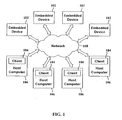
- FIG. 1 is a block diagram showing a top-level view of network-connected embedded devices and host computers with clients.
- FIG. 2 is a block diagram showing relationships between primary elements of the system.
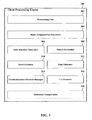
- FIG. 3 is a block diagram showing subcomponents of the client processing engine.
- FIG. 4 is an example of a dynamic data set containing real-time data generated by an embedded device.
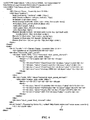
- FIG. 5 is an example of an abstract static template file.
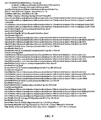
- FIG. 6 is an example of content generated by the client processing engine from the abstract static template file of FIG. 5 and the dynamic data set of FIG. 4 .
- FIG. 7 shows the content of FIG. 6 as rendered by a web browser.
- FIG. 8 is an example of a literal static template file for generating a Rich Text Format document.
- FIG. 9 is the content generated by the client processing engine from the literal static template file of FIG. 8 and the dynamic data set of FIG. 4 .
- FIG. 10 shows the content of FIG. 9 as rendered by a word processor.
- FIG. 11 is a sequence diagram showing steps for generating content with both static and dynamic elements.
- FIG. 12 is a sequence diagram showing steps for using file bouncing to store content generated at the client to the host computer.
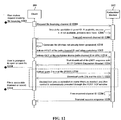
- FIG. 13 is a sequence diagram showing steps for using file bouncing to load a file accessible to the host computer (but not directly accessible to the client) into the client.
- FIG. 1 shows a plurality of embedded devices 102, and a plurality of clients 104 on host computers 106, connected to a shared (i.e., a common) communication network 108.
- the embedded device takes on the role of a simple file and data server delivering two basic types of information, as can be seen in FIG. 2 :
- a static resource need not be stored in a traditional file system.
- a static resource could be stored as an object of some type (e.g., a sequence of bytes) in flash memory.
- the embedded device 102 simply transmits these files to the client 104 whenever they are requested. It does no significant processing on the files beyond transmission.
- the static resource files may be stored in flash memory of the embedded device, and may be transmitted as a sequence of small "packets" to the client thus minimizing the use of RAM resources.
- the embedded device 102 transmits data in a simple and compact format such as the JSON format shown in FIG. 4 .
- processing of dynamic data sets 204 by the embedded device 102 may be minimized by representing each data item in a form that closely parallels its native internal representation in the embedded device.
- the data item date/time 404 has a value of 202809600, which represents the number of seconds since the turn of the century (seconds since 1/1/2000 12:00 AM), which in this example is also the internal date/time representation of the embedded device.
- the client processing engine may be capable of formatting this data item in many different ways, such as 6/5/2006, 2006-06-05T08:00:00, or June 5, 2006 8:00 AM.
- the client processing engine formats date/time 404 as 6/5/2006 8:00 AM within subtitle 704 ( FIG. 7 ) and subtitle 1002 ( FIG. 10 ).
- the embedded device 102 focuses on serving files and raw data rather than focusing on generating final content (e.g., XHTML web pages, Rich Text Format reports, etc.).
- the client processing engine 206 is responsible for transforming the static template files 208 and the dynamic data sets 204 that it receives from the embedded device to produce the generated content 212. This division of responsibilities takes advantage of the fact that host computers 106, and the clients 104 running on them, typically have far greater memory and processing resources than embedded devices, often times by orders of magnitude.
- the embedded device can service many clients with few resources. Additionally, multiple clients can concurrently process and manipulate files and data served from a single embedded device.
- the end result is a highly scalable system that maximizes the number of clients that can be concurrently supported by one embedded device, and that significantly improves the quality of content that can be generated.
- the embedded device 102 is not responsible for content generation. It does not generate user interfaces, diagnostic interfaces, informational screens, reports, configuration files, etc. That responsibility is delegated to the client 104 through the client processing engine 206.
- the files and data served by the embedded device are processed, transformed, manipulated, and combined by the client processing engine to generate various forms of content 212.
- the client processing engine 206 may be cached by the client 104, so it need only be loaded from the embedded device one time per client.
- static template files 208 dynamic data sets 204
- client processing engine 206 client processing engine 206
- managed communication channels 210 managed communication channels
- the first element is the static template file 208.
- Each static template file is stored in the embedded device 102 (e.g., in flash memory) and transferred to the client 104 as needed. Since each static template file is a static resource file, the embedded device simply reads it from its memory and transmits it to the client. No significant additional processing is needed at the embedded device. Typically, there will be a plurality of static template files stored in the embedded device.
- a static template file 208 provides a set of processing instructions.
- a static template file may contain instructions that can be used to generate a web page, or a report, or it may contain general computational instructions.
- Static template files are generally written in a simple and compact way that can be parsed easily to generate content or perform other processing.
- XML is a logical format for static template files, as XML documents can be as simple or complex as needed for a particular application, and XML is easily parsed by clients such as web browsers.
- FIG. 5 shows an example of a static template file that could be used for generating a web page
- FIG. 6 shows corresponding XHTML content generated by the client processing engine
- FIG. 7 shows the generated web page as it appears in a web browser
- FIG. 8 shows an example of a static template file used specifically for generating a Rich Text Format report
- FIG. 9 shows corresponding Rich Text Format content generated by the client processing engine
- FIG. 10 shows the generated report as it appears in a word processor.
- the source of dynamic data is the dynamic data set of FIG. 4 .
- Static template files can provide processing instructions that are abstract (i.e., describing the desired end result without providing explicit instructions on how to achieve it) and/or literal (i.e., describing explicitly how to achieve the desired end result).
- the static template file shown in FIG. 5 contains abstract instructions that may be used to generate the web page shown in FIG. 7 .
- Some of the key elements and attributes are as follows:
- the static template file shown in FIG. 8 uses literal instructions to describe the Rich Text Format (RTF) report shown in FIG. 10 .
- the example static template file of FIG. 8 supports a report format that consists of header element 802 content that is placed at the beginning of the report, record_body element 808 content that is repeated for each "data record”, record_separator element 806 content that is placed between each data record, and footer element 804 content that is placed at the very end of the report.
- the example static template file of FIG. 8 could be used to generate a one page report or a 1,000 page report.
- FIG. 9 and FIG. 10 represent a one page report generated from the single data record shown in the dynamic data set of FIG. 4 .
- Most of the example static template file of FIG. 8 is literal RTF content to be copied to the report.
- a static template file might include references to other static template files (or even to itself), thus enabling a "modular" approach to building sets of processing instructions for the client processing engine.
- static template files can be stored in the embedded device in compressed form (e.g., GNU zip format, also referred to as gzip format), which reduces the memory footprint in the embedded device. They can also be transferred to the client in compressed form (e.g., gzip format) to reduce the transfer time and conserve resources.
- the memory footprint in the embedded device may be reduced even further by loading static template files from one or more sources other than the embedded device (e.g., from an external host).
- Static template files may also be created and/or modified at the client.
- the client processing engine may contain logic to generate them (typically in concert with information gathered through a user interface).
- Static template files created and/or modified in such a manner may be stored within the embedded device and/or interpreted immediately by the client processing engine (e.g., for "one-time” execution or to provide a preview feature).
- Static template files created and/or modified in such a manner, which are then stored within the embedded device are still "static" from the perspective of both the embedded device (which need not do significant processing on them) and the client (which may cache them).
- FIG. 5 shows abstract static template file instructions that are used to generate XHTML
- FIG. 8 shows literal static template file instructions for generating RTF
- this is simply for illustrative purposes.
- None about XHTML requires abstract static template file instructions, and nothing about RTF requires literal static template file instructions.
- XHTML, RTF, and other types of content can be generated using abstract and/or literal static template file instructions.
- the abstract static template file instructions shown in FIG. 5 are not limited to generating XHTML.
- the same static template file could be used to generate an RTF report similar to that shown in FIG. 10 , simply by instructing the client processing engine to generate RTF instead of XHTML.
- a given static template file and associated dynamic data set could be used to generate many different types of content (e.g., reports, documents, spreadsheets, web pages, etc.), as long as the client processing engine supports the target content types.
- a static template file may contain instructions to retrieve a dynamic data set, transform it, and then submit it back to the embedded device.
- FIG. 5 and FIG. 8 are provided for illustrative purposes, and are not intended to set limits or boundaries to the scope of static template file processing instructions.
- static template file processing instructions could be used to implement an event system for responding to user actions or to implement a system for user input that validates numbers (e.g., specifying minimum, maximum, and special allowed values) and/or text strings (e.g., specifying allowed text patterns).
- numbers e.g., specifying minimum, maximum, and special allowed values
- text strings e.g., specifying allowed text patterns.
- static template files are intended and designed to function as "cookie cutter" templates that provide instructions for generating content and/or computational processing instructions to the client processing engine, in order to minimize resources required within the embedded device and in order to transfer work from the embedded device to the client.
- each dynamic data set contains one set (i.e., one "collection” or "package") of data that is exchanged between the embedded device 102 and the client 104.
- each dynamic data set is generated dynamically by the embedded device (or client).
- Example formats for dynamic data sets are JSON and XML. JSON is simple to parse and generate, can represent data objects of arbitrary complexity, and was specifically designed to provide a compact data representation.
- FIG. 4 is an example of a simple JSON format dynamic data set with ten data items (each separated by a comma), which is used for generating the web page of FIG. 7 and the report of FIG. 10 . As can be seen in FIG. 4 , the example JSON dynamic data set is nearly entirely composed of pure data.
- a report that shows manufacturing performance results by shift for the past year may contain data for 1,000 shifts, where each shift is represented by one portion (e.g., one data record) of a large (e.g., multiple data record) dynamic data set.
- a web page showing current manufacturing results may be updated multiple times per second, thus generating many thousands of dynamic data set transactions in one hour.
- the memory footprint of a dynamic data set may be further reduced by compressing it before transferring it to the client (e.g., using gzip compression).
- a compact data representation conserves RAM and other resources within the embedded device. Resource usage within the embedded device can be further reduced by generating the response to a client dynamic data set request in multiple parts, such that only one part of the response is stored in the memory of the embedded device at any time. For example, a dynamic data set that contains ten data records can be generated in ten parts, one for each record, such that only one of the ten data records of the response is stored in the RAM of the embedded device at any time.
- the information needed to build a dynamic data set request may be implicitly associated with a static template file or explicitly included within a static template file.
- the static template file examples of FIG. 5 and FIG. 8 both rely on an implicit association with the static template file resource (nothing in the static template file explicitly identifies the dynamic data set request).
- the static template file can explicitly reference one or more pieces of data within the embedded device.
- the index attribute 502 FIG. 5
- the specification and generation of dynamic data sets can be simplified by logically organizing data within the embedded device into tables (as in a database). Data can then be queried using standard SQL SELECT statements even if the underlying data management in the embedded device is not a database as long as the embedded device includes a suitable "interpreter” for SQL. This is consistent with viewing the embedded device as a data server. Furthermore, using tabular organization, any piece of data in the embedded device can be referenced with a simple identifier composed of a table ID, row ID, and column ID.
- a single dynamic data set can contain an arbitrary amount of data, which can be organized linearly (e.g., as tabular data) or hierarchically (e.g., as an "object" of arbitrary complexity).
- Dynamic data sets may be generated by the embedded device and transmitted to the client, or alternately may be generated by the client and transmitted to the embedded device. For example, data entered at the client by the user may be "posted" to the embedded device as a dynamic data set.
- Dynamic data sets can also be encrypted to provide data security, which makes this system suitable for use in high-security applications.
- Dynamic data sets can be processed by the client processing engine to generate new information from existing data items (e.g., calculating sums and averages) without requiring additional work from the embedded device.
- the client processing engine can perform many different types of data manipulation and transformation, such as filtering, sorting, grouping and summarizing. This technique can be especially useful when the client aggregates data from multiple embedded devices as described later.
- dynamic data sets are intended and designed to encapsulate the "dynamic" aspect of content with a compact representation, in order to minimize resources required within the embedded device and in order to transfer work from the embedded device to the client.
- the third element is the client processing engine 206, which is a static resource file, or plurality of static resource files, stored in the embedded device 102 (e.g., in flash memory) and transmitted to the client 104 as required.
- the client processing engine is a static resource file, which means the embedded device simply reads the file from its memory and transmits it to the client. No significant further processing is needed at the embedded device.
- the client processing engine 206 is an executable program, such as a JavaScript program, which interprets static template files and carries out the instructions specified therein. Carrying out those instructions generally requires the client processing engine to have additional capabilities.
- the client processing engine may comprise a processing core 302 (which directs and controls the other sub-components of the client processing engine), a static template file processor 304, a user interface generator 306, a report generator 308, a data formatter 310, a data validator 312, a communication channel manager 314, a file bouncer 316 (which saves and loads files to and from the host computer and/or file systems accessible to the host computer), and possibly additional components 318.
- FIG. 3 is provided for illustrative purposes, and is not intended to set limits or boundaries to the scope of the client processing engine.
- writing the client processing engine in the JavaScript language and writing static template files in XML can provide significant benefits, as it enables the client processing engine to take advantage of capabilities that are native to clients, such as the availability of extensive functionality for parsing, manipulating, and otherwise working with XML documents, which can dramatically reduce the complexity of the client processing engine.
- the client processing engine can be as simple or complex as a particular application (i.e., type of embedded device) requires.
- a meaningful (albeit limited) client processing engine can be built with 5 KB or less of JavaScript, while one that is feature rich might include 50 KB or more of JavaScript.
- the client processing engine can also be designed as a series of modules (i.e., smaller files) that are dynamically loaded (transmitted to the client on demand). This reduces the initial loading time for a new client.
- the file(s) comprising the client processing engine can also be stored in a compressed form (e.g., gzip format), which reduces both the memory footprint in the embedded device and the initial loading time.
- the memory footprint in the embedded device may be reduced even further by loading the client processing engine or modules thereof from one or more sources other than the embedded device (e.g., from an external host as referenced by other resources loaded from the embedded device).
- the client processing engine plays a central role in improving the scalability of the system, as it can run concurrently on any number of clients. Furthermore, the client processing engine performs both presentation tasks and business logic tasks (examples of the latter include managing communication, performing data validation and data manipulation, and generating complex reports), which elevates the client from being a content delivery medium to being a processing "node" in a distributed computing system.
- Managed communication channels are used by the client 104, specifically the client processing engine 206, to communicate with one or more embedded devices.
- the term “managed” refers to the fact that the communication channel is controlled by the client processing engine, not directly by the client as is traditionally the case.
- Managed communication channels enable the client processing engine to maintain ongoing communication with one or more embedded devices, transferring information between the client and embedded device in a seamless fashion that is invisible to the user, thus providing a superior user experience.
- the client processing engine can use a managed communication channel to retrieve information that is used to dynamically update a web page that shows manufacturing performance data in real-time (e.g., updating ten times per second) with no flicker, page reloads or other visual artifacts.
- a managed communication channel to retrieve information that is used to dynamically update a web page that shows manufacturing performance data in real-time (e.g., updating ten times per second) with no flicker, page reloads or other visual artifacts.
- Managed communication channels 210 can also be used by the client to retrieve executable code (such as JavaScript) from the embedded device 102 "on demand" (i.e., only when it is actually needed), such as when the client processing engine 206 is designed as a series of dynamically loaded modules (as previously discussed).
- executable code such as JavaScript
- XMLHttpRequest also referred to as XHR
- document manipulation
- XHR is a de facto standard for HTTP client-server communication and is available in various forms for current versions of popular clients such as the Internet Explorer® 6 and Internet Explorer® 7 web browsers from Microsoft Corporation, the Firefox® 1.5 and Firefox® 2 web browsers from Mozilla Corporation, the SafariTM 2 web browser from Apple Inc., and the OperaTM 9 web browser from Opera Software ASA.
- XHR can be used to request data from the embedded device (using GET) or to send data to the embedded device (using POST).
- XHR requests can be designated as either synchronous or asynchronous as needed.
- XHR is generally restricted to accessing resources in the local domain.
- XHR can also be used indirectly to load executable code on demand by retrieving that code as a text string.
- XHR can also be used indirectly to load executable code on demand by retrieving that code as a text string.
- the following illustrates a known cross-platform JavaScript technique that makes code in a text string part of the global scope (where it is accessible to the client processing engine):
- Document manipulation is particularly useful if non-local (i.e., cross) domain access is required.
- Document manipulation is a lesser known but very useful technique for managed communication, in which a resource is downloaded by dynamically adding a new tag to an existing web page, where said tag references the desired resource.
- the W3C DOM World Wide Web Consortium Document Object Model
- JavaScript's document.write() method JavaScript's document.write() method
- the innerHTML property can all be used to perform document manipulation.
- an important use of document manipulation in this embodiment is to request dynamic data sets from multiple embedded devices 102 (i.e., from multiple domains and/or IP addresses).
- This enables any single client 104 with a client processing engine 206 ( FIG. 2 ) to request, manipulate, transform, aggregate, and present data from a plurality of embedded devices.
- the embedded device can serve a dynamic data set as a dynamically generated JavaScript file by formatting the data as JSON and assigning that formatted data to a JavaScript variable (thereby making the data part of a complete JavaScript statement).
- Managed communication channels are only loosely coupled to the communication methods described above. They can easily be adapted to use other methods as Internet standards (de facto or otherwise) evolve, such as the proposed W3C standard "Document Object Model (DOM) Level 3 Load and Save Specification”.
- DOM Document Object Model
- Asynchronous communication is recommended as it generally provides a superior user experience. Note that this is a preference, not a requirement. In many cases the client processing engine will still function effectively if managed communication channels use synchronous communication instead of asynchronous communication.
- managed communication channels serve as bidirectional communication links between the client processing engine running on a client and one or more embedded devices. They are used to exchange information that supports the objectives of minimizing resources required within the embedded device and transferring work from the embedded device to the client.
- purely static content is generated as follows:
- static resource files such as the static template files 208, the client processing engine 206, and others as mentioned above should be cached by the client 104 whenever possible.
- the client does this by storing copies of the static template files, the client processing engine, and other files at the host computer 106. Since the resource is static and therefore is unchanging, the client can satisfy additional requests for the same resource by using this stored copy, saving time and resources within the embedded device 102 (which need not retransmit the same file).
- Client caching can significantly reduce the workload of the embedded device, as well as improve responsiveness of the client, so it is important that the embedded device provide support for client caching (e.g. using appropriate HTTP headers).
- the client processing engine transmitted by the embedded device in step 1110, and the static template file transmitted by the embedded device in step 1116 are cached by the client (as should typically be the case), they will not need to be transmitted again by the embedded device. Also note that with client caching, the client processing engine is received once and is then available to each and every bootstrap page loaded from the embedded device.
- the embedded device 102 does not have to do any significant processing related to its stored static template file 208 and client processing engine 206 files. It simply transmits them to the client 104.
- each dynamic data set 204 requires minimal processing from the embedded device.
- the dynamic data sets are (nearly) pure data with minimal formatting; and the client processing engine may read instructions from the static template file and transform the data accordingly.
- the embedded device acts as a file and data server, and the client processing engine is responsible for transforming static template files and dynamic data sets into useful content. This division of labor offloads a great deal of processing work from the embedded device to the network clients, greatly improving the scalability of the overall solution.
- Another feature of various embodiments of the present invention is the ability to read arbitrarily large files from the host computer (including reading such files from any file systems accessible to the host computer) and write arbitrarily large files to the host computer (including writing or storing such files to any file systems accessible to the host computer and opening such files at the host computer).
- the user may want to store a report generated by the client (e.g., a report generated by the client processing engine) to the host computer for later access or for archiving.
- an embedded device may need access to a file that is stored on the host computer to perform certain tasks, yet have resource limitations that prevent it from storing the file within its memory.
- Implementing this feature can be problematic because clients (e.g., web browsers) may tightly control access to host computer file systems for security reasons.
- the primary purpose of this control is typically to prevent potentially malicious programs (e.g., malicious JavaScript) from accessing the file system.
- These restrictions also make it difficult if not impossible for the client processing engine to read and write files from and to the host computer on its own, even with the user's explicit permission.
- Web browser clients typically do allow the user to grant permission to upload files accessible to the host computer to an HTTP server and download files from an HTTP server to the host computer (it should be noted that embedded devices that include HTTP servers could participate in such operations).
- the embedded device may not have the resources necessary to store an entire file, or even a significant portion of a file, in memory, even for a short time. This is particularly true if it is desirable for the embedded device to be able to handle multiple files in this manner simultaneously. Furthermore, as mentioned earlier, a mechanism is needed for content (e.g., reports, documents, spreadsheets, etc.) generated by the client processing engine to be able to be stored or opened by the host computer.
- content e.g., reports, documents, spreadsheets, etc.
- the client sends the file (i.e., the contents of the file) to the embedded device in a series of one or more packets, which the embedded device simply "bounces" back to the client (hence the name "file bouncing”).
- the embedded device only holds onto a given packet for as long as it takes to bounce that packet back to the client, after which the packet is discarded.
- the embedded device does not need to store the entire file, and it does minimal processing on the packets.
- the packets can be of arbitrary size, and the embedded device need only reserve memory resources sufficient to buffer a single packet at once (although throughput can be improved by buffering multiple packets simultaneously).
- each file is said to use a different file bouncing "channel”.
- File bouncing could be performed by having the client send a packet (i.e., a portion of the file) to the embedded device, the embedded device sending the packet back to the client and waiting for the client to send the next packet, and the process repeating until there are no more packets to send (i.e., the entire file has been "bounced").
- a communication protocol as specified or as implemented such as HTTP
- the server i.e., embedded device
- a more generalized solution is to use two cooperating connections to achieve a similar result: packets received from the client through the first connection are returned to the client through the second connection, as described below and as illustrated in FIG. 12 and FIG. 13 .
- the steps to store i.e., write
- a file generated by the client to the host computer are shown in FIG. 12 , and are outlined in more detail below. It will be apparent to one skilled in the art that various modifications may be made to the steps described herein without departing from the spirit and scope of this embodiment.
- the steps to load i.e., read
- a file from the host computer to the client web browser
- FIG. 13 the steps to load (i.e., read) a file from the host computer to the client (web browser) are shown in FIG. 13 , and are outlined in more detail below. It will be apparent to one skilled in the art that various modifications may be made to the steps described herein without departing from the spirit and scope of this embodiment.
- File bouncing may use the TCP window (which controls the number of bytes of data that can be transmitted over a given connection without an acknowledgement from the receiver) to provide automatic flow control and a degree of synchronization between two cooperating connections used to implement a file bouncing channel.
- TCP window which controls the number of bytes of data that can be transmitted over a given connection without an acknowledgement from the receiver
- the POST connection TCP window of the embedded device is filled, and as data is downloaded to the client via the GET connection the POST connection TCP window of the embedded device is emptied.
- the POST connection TCP window may be used to "pace" the file bounce. This enables loose coupling between the two HTTP connections associated with a file bouncing channel in the embedded device.
- the client will only transmit data to the embedded device (via the POST connection) if the embedded device has buffer space within its POST connection TCP window, and the embedded device will simply transmit data to the client (via the GET connection) as fast as it can (as permitted by the client's analogous TCP window).
- HTTP servers normally handle each connection independently; whereas file bouncing utilizes a degree of coordination and cooperation between the two HTTP connections participating in a given file bouncing channel (they are in essence "paired"). Note that because the two HTTP connections used in file bouncing operate simultaneously, the managed communication channels described in this section use asynchronous communication.
- file bouncing Another unusual aspect of file bouncing is how it deals with content (the files). Normally files are stored in their entirety within the HTTP server. Even dynamically-generated files can generally be considered to have a continuous existence, in the sense that the server can generate a copy of the file as needed. With file bouncing, however, the bounced files are completely transitory from the server's (i.e., embedded device's) perspective. Once a given packet is transmitted from the embedded device (and acknowledged by the client) it disappears from the embedded device's perspective (it is no longer needed).
- the client Internet Explorer® 6 web browser from Microsoft Corporation retrieved a bootstrap page, client processing engine, static template file (for generating a Rich Text Format report) and dynamic data set from the embedded device, using managed communication channels as appropriate, in approximately 4 seconds, after which the client generated a 1,000 page report (3.6 MB) in approximately 35 seconds, followed by the client and embedded device participating in a file bouncing session to save the report to the host computer file system in approximately 8 seconds.
- static resources and dynamic resources also provides other benefits. For example, it cleanly separates presentation and style information (found within the static template file) from data (found within the dynamic data set). This allows the two to vary independently - data from several dynamic data sets can be presented in the same style, and a single dynamic data set can be presented in several different styles. An example of the latter can be seen in a comparison between FIG. 6 and FIG. 9 , which illustrates how the same dynamic data set (shown in FIG. 4 ), in combination with two different static template files ( FIG. 5 and FIG. 8 ), may be used to generate markedly different output (the web page of FIG. 7 and the RTF report of FIG. 10 ); or alternately how the same dynamic data set ( FIG. 4 ) and static template file ( FIG. 5 ), may be used to generate markedly different output (the web page of FIG. 7 and the RTF report of FIG. 10 ) merely by directing the client processing engine to generate a different type of content.
- the described system also keeps the RAM requirements of the embedded device very low.
- static resource files such as the client processing engine and the static template files can be stored in flash memory or other low-cost storage, with RAM usage limited to a small number of outstanding "packets" as a file is being transmitted to a client.
- the separation of static resources and dynamic resources minimizes the amount of RAM required to build and store a dynamic data set while it is being transmitted to a client, since dynamic data sets are entirely dynamic data instead of a mixture of static and dynamic content.
- the use of file bouncing minimizes the memory (typically RAM) required by the embedded device to read and write files from and to the host computer.
- the described embodiments are not dependent on specific third-party companies, products, or development tools; and do not require any custom software, including any special browser plug-ins, to be installed at the host computer. They are "generic" in their requirements - all of the required files (e.g., client processing engine and static template file) can be created with a simple text editor (such as the Notepad text editor from Microsoft Corporation) and no "special" requirements are placed upon the host computer.
- the primary elements of the described embodiments have been successfully tested across a range of popular HTTP clients, including the Internet Explorer® 6 and Internet Explorer® 7 web browsers from Microsoft Corporation, the Firefox® 1.5 and Firefox® 2 web browsers from Mozilla Corporation, the SafariTM 2 web browser from Apple Inc., and the OperaTM 9 web browser from Opera Software ASA.
Landscapes
- Engineering & Computer Science (AREA)
- Theoretical Computer Science (AREA)
- Databases & Information Systems (AREA)
- Signal Processing (AREA)
- Computer Networks & Wireless Communication (AREA)
- Physics & Mathematics (AREA)
- General Engineering & Computer Science (AREA)
- General Physics & Mathematics (AREA)
- Data Mining & Analysis (AREA)
- General Health & Medical Sciences (AREA)
- Health & Medical Sciences (AREA)
- Computing Systems (AREA)
- Medical Informatics (AREA)
- Computational Linguistics (AREA)
- Audiology, Speech & Language Pathology (AREA)
- Artificial Intelligence (AREA)
- Information Transfer Between Computers (AREA)
- Multi Processors (AREA)
- Information Retrieval, Db Structures And Fs Structures Therefor (AREA)
- Computer And Data Communications (AREA)
- Data Exchanges In Wide-Area Networks (AREA)
- Communication Control (AREA)
Claims (15)
- Procédé destiné à permettre à un dispositif intégré (102) de travailler de concert avec un client (104) sur un ordinateur hôte (106), pour accéder à un contenu d'un fichier accessible à l'ordinateur hôte (106), mais non directement accessible au client (104), comprenant les étapes consistant à :sélectionner un fichier au niveau du client (104) ;établir un lien de communication entre le client (104) et le dispositif intégré (106) :envoyer, du client vers le dispositif intégré, une partie du fichier dont la taille correspond aux limitations de ressource du dispositif intégré, qui renvoie ensuite la partie au client ;ajouter la partie renvoyée à de quelconques parties précédentes reçues au niveau du client (104) ; etrépéter les étapes d'envoi et d'ajout précédentes jusqu'à ce que le fichier ait été complètement reconstruit au niveau du client (104) ;dans lequel le client (104) accède au fichier reconstruit sous la forme d'un proxy pour le dispositif intégré.
- Procédé selon la revendication 1, dans lequel les protocoles de lien de communication sont sélectionnés parmi le groupe constitué de HTTP, FTP et une quelconque combinaison de ceux-ci.
- Procédé selon la revendication 1, dans lequel le fichier reconstruit comprend un contenu qui est au moins un parmi un contenu traité, transformé, manipulé et agrégé au niveau du client.
- Procédé selon la revendication 1, comprenant en outre l'étape consistant à utiliser une pluralité de liens de communication pour accéder simultanément au contenu de plusieurs fichiers.
- Procédé selon la revendication 1, dans lequel le lien de communication comprend une première connexion qui envoie la partie du fichier et une seconde connexion qui renvoie la partie.
- Procédé selon la revendication 5, comprenant en outre l'étape consistant à utiliser une fenêtre TCP pour fournir un contrôle de flux automatique entre la première connexion et la seconde connexion.
- Procédé selon la revendication 1, dans lequel le procédé est utilisé pour produire des applications de gestion de la performance.
- Procédé destiné à permettre à un dispositif intégré (102) de travailler de concert avec un client (104) sur un ordinateur hôte (106), dans lequel le client détient un accès limité à des systèmes de fichier accessibles à l'ordinateur hôte, pour générer au niveau du client (104) un fichier devant être stocké ou ouvert par l'intermédiaire de l'ordinateur hôte (106), comprenant les étapes consistant à :générer un contenu d'un fichier dans une mémoire du client (104) ;établir un lien de communication entre le client (104) et le dispositif intégré (102) ;déterminer un élément parmi ce qui suit au niveau du client (104) : l'endroit où le fichier doit-être stocké dans le système de fichier accessible à l'ordinateur hôte et l'ouverture ou non du fichier ;envoyer, du client vers le dispositif intégré, une partie du fichier dont la taille correspond aux limitations de ressource du dispositif intégré (102), qui renvoie la partie au client (104),ajouter la partie renvoyée à de quelconques parties précédentes reçues au niveau de l'ordinateur hôte, et répéter les étapes d'envoi et d'ajout précédentes jusqu'à ce que le fichier entier ait été complètement envoyé et renvoyé ; et, stocker ou ouvrir le fichier entier en cohérence avec l'étape de détermination.
- Procédé selon la revendication 8, dans lequel les protocoles de lien de communication sont sélectionnés parmi le groupe constitué de HTTP, FTP et une quelconque combinaison de ceux-ci.
- Procédé selon la revendication 8, dans lequel l'étape consistant à générer un contenu comprend la génération d'un contenu en temps réel à partir de données à mesure que ces données sont fournies par le dispositif intégré (102).
- Procédé selon la revendication 8, dans lequel l'étape consistant à générer un contenu comprend un traitement d'informations reçues par le client (104) depuis le dispositif intégré (102) de l'une des manières suivantes :transformation, manipulation, agrégation et une quelconque combinaison de celles-ci.
- Procédé selon la revendication 8, comprenant en outre l'étape consistant à utiliser une pluralité de liens de communication pour envoyer et renvoyer simultanément plusieurs fichiers.
- Procédé selon la revendication 8, dans lequel le lien de communication comprend une première connexion qui envoie la partie du fichier et une seconde connexion qui renvoie la partie.
- Procédé selon la revendication 13, comprenant en outre l'étape consistant à utiliser une fenêtre TCP pour fournir un contrôle de flux automatique entre la première connexion et la seconde connexion.
- Procédé selon la revendication 8, dans lequel le procédé est utilisé pour produire des applications de gestion de la performance.
Priority Applications (2)
| Application Number | Priority Date | Filing Date | Title |
|---|---|---|---|
| PL11174944T PL2381649T3 (pl) | 2007-05-07 | 2008-05-05 | Sposób i system do rozszerzania możliwości urządzeń wbudowanych z wykorzystaniem klientów sieciowych |
| EP11174944.6A EP2381649B1 (fr) | 2007-05-07 | 2008-05-05 | Procédé et système pour étendre les capacités de dispositifs intégrés au moyen de clients de réseau |
Applications Claiming Priority (2)
| Application Number | Priority Date | Filing Date | Title |
|---|---|---|---|
| US92797807P | 2007-05-07 | 2007-05-07 | |
| PCT/US2008/005747 WO2008137117A2 (fr) | 2007-05-07 | 2008-05-05 | Procédé et système pour étendre les capacités de dispositifs embarqués à travers des clients de réseau |
Related Child Applications (1)
| Application Number | Title | Priority Date | Filing Date |
|---|---|---|---|
| EP11174944.6A Division EP2381649B1 (fr) | 2007-05-07 | 2008-05-05 | Procédé et système pour étendre les capacités de dispositifs intégrés au moyen de clients de réseau |
Publications (2)
| Publication Number | Publication Date |
|---|---|
| EP2145452A2 EP2145452A2 (fr) | 2010-01-20 |
| EP2145452B1 true EP2145452B1 (fr) | 2011-08-03 |
Family
ID=39944171
Family Applications (2)
| Application Number | Title | Priority Date | Filing Date |
|---|---|---|---|
| EP11174944.6A Active EP2381649B1 (fr) | 2007-05-07 | 2008-05-05 | Procédé et système pour étendre les capacités de dispositifs intégrés au moyen de clients de réseau |
| EP08767554A Active EP2145452B1 (fr) | 2007-05-07 | 2008-05-05 | Procédé et système pour étendre les capacités de dispositifs embarqués à travers des clients de réseau |
Family Applications Before (1)
| Application Number | Title | Priority Date | Filing Date |
|---|---|---|---|
| EP11174944.6A Active EP2381649B1 (fr) | 2007-05-07 | 2008-05-05 | Procédé et système pour étendre les capacités de dispositifs intégrés au moyen de clients de réseau |
Country Status (7)
| Country | Link |
|---|---|
| US (2) | US9100248B2 (fr) |
| EP (2) | EP2381649B1 (fr) |
| AT (1) | ATE519320T1 (fr) |
| CA (2) | CA2786004C (fr) |
| ES (2) | ES2368366T3 (fr) |
| PL (1) | PL2381649T3 (fr) |
| WO (1) | WO2008137117A2 (fr) |
Families Citing this family (64)
| Publication number | Priority date | Publication date | Assignee | Title |
|---|---|---|---|---|
| US8307180B2 (en) | 2008-02-28 | 2012-11-06 | Nokia Corporation | Extended utilization area for a memory device |
| CN101662460B (zh) | 2008-08-25 | 2015-07-15 | 阿里巴巴集团控股有限公司 | 一种跨域通讯的方法、系统和装置 |
| US8516361B2 (en) * | 2008-12-14 | 2013-08-20 | International Business Machines Corporation | Offloading filling of template parameters to client from server |
| US8219598B1 (en) * | 2009-05-11 | 2012-07-10 | Google Inc. | Cross-domain communicating using data files |
| US8656344B2 (en) * | 2009-05-18 | 2014-02-18 | National Instruments Corporation | Executing a graphical data flow program in a browser |
| US8874824B2 (en) | 2009-06-04 | 2014-10-28 | Memory Technologies, LLC | Apparatus and method to share host system RAM with mass storage memory RAM |
| WO2011054024A1 (fr) * | 2009-11-06 | 2011-05-12 | Toby Biddle | Outil d'essai de l'aptitude a l'emploi |
| US10721269B1 (en) | 2009-11-06 | 2020-07-21 | F5 Networks, Inc. | Methods and system for returning requests with javascript for clients before passing a request to a server |
| KR101083311B1 (ko) * | 2010-03-29 | 2011-11-15 | 한국전자통신연구원 | 악성 스크립트 분석 시스템 및 그를 이용한 악성 스크립트 분석 방법 |
| US9503375B1 (en) | 2010-06-30 | 2016-11-22 | F5 Networks, Inc. | Methods for managing traffic in a multi-service environment and devices thereof |
| US9420049B1 (en) | 2010-06-30 | 2016-08-16 | F5 Networks, Inc. | Client side human user indicator |
| US8516364B2 (en) * | 2010-08-30 | 2013-08-20 | Sap Ag | View model aspects of component objects |
| US20120151321A1 (en) * | 2010-12-09 | 2012-06-14 | Schneider Electric USA, Inc. | System for Generating Websites for Products with an Embedded Processor |
| US9037963B1 (en) * | 2011-04-22 | 2015-05-19 | Amazon Technologies, Inc. | Secure cross-domain web browser communications |
| EP2710784B1 (fr) | 2011-05-16 | 2017-12-06 | F5 Networks, Inc | Procédé d'équilibrage de charge de traitement de demandes de serveurs diameter |
| US8595752B1 (en) * | 2011-06-13 | 2013-11-26 | Google Inc. | Hybrid application message passing |
| US8954492B1 (en) * | 2011-11-30 | 2015-02-10 | F5 Networks, Inc. | Methods for inlining content externally referenced in a web page prior to providing the web page to a requestor and devices thereof |
| US9386114B2 (en) * | 2011-12-28 | 2016-07-05 | Google Inc. | Systems and methods for accessing an update server |
| US8977704B2 (en) * | 2011-12-29 | 2015-03-10 | Nokia Corporation | Method and apparatus for flexible caching of delivered media |
| US9417998B2 (en) | 2012-01-26 | 2016-08-16 | Memory Technologies Llc | Apparatus and method to provide cache move with non-volatile mass memory system |
| US10230566B1 (en) | 2012-02-17 | 2019-03-12 | F5 Networks, Inc. | Methods for dynamically constructing a service principal name and devices thereof |
| US9020912B1 (en) | 2012-02-20 | 2015-04-28 | F5 Networks, Inc. | Methods for accessing data in a compressed file system and devices thereof |
| US9311226B2 (en) | 2012-04-20 | 2016-04-12 | Memory Technologies Llc | Managing operational state data of a memory module using host memory in association with state change |
| EP2853074B1 (fr) | 2012-04-27 | 2021-03-24 | F5 Networks, Inc | Procédés destinés à optimiser un service de demandes de contenu, et dispositifs associés |
| US9164804B2 (en) | 2012-06-20 | 2015-10-20 | Memory Technologies Llc | Virtual memory module |
| US9116820B2 (en) | 2012-08-28 | 2015-08-25 | Memory Technologies Llc | Dynamic central cache memory |
| US10033837B1 (en) | 2012-09-29 | 2018-07-24 | F5 Networks, Inc. | System and method for utilizing a data reducing module for dictionary compression of encoded data |
| US9578090B1 (en) | 2012-11-07 | 2017-02-21 | F5 Networks, Inc. | Methods for provisioning application delivery service and devices thereof |
| US9053085B2 (en) * | 2012-12-10 | 2015-06-09 | International Business Machines Corporation | Electronic document source ingestion for natural language processing systems |
| US9497614B1 (en) | 2013-02-28 | 2016-11-15 | F5 Networks, Inc. | National traffic steering device for a better control of a specific wireless/LTE network |
| US9699243B2 (en) * | 2013-06-24 | 2017-07-04 | Empire Technology Development Llc | User interface delegation to a delegated device |
| WO2015057211A1 (fr) | 2013-10-16 | 2015-04-23 | Empire Technology Development, Llc | Redistribution de commande entre de multiples dispositifs |
| US10187317B1 (en) | 2013-11-15 | 2019-01-22 | F5 Networks, Inc. | Methods for traffic rate control and devices thereof |
| US9756147B1 (en) * | 2013-12-20 | 2017-09-05 | Open Text Corporation | Dynamic discovery and management of page fragments |
| US9170786B1 (en) | 2013-12-20 | 2015-10-27 | Emc Corporation | Composable context menus |
| US10466872B1 (en) | 2013-12-20 | 2019-11-05 | Open Text Corporation | Composable events for dynamic user interface composition |
| US9529572B1 (en) | 2013-12-20 | 2016-12-27 | Emc Corporation | Composable application session parameters |
| US9851951B1 (en) | 2013-12-20 | 2017-12-26 | Emc Corporation | Composable action flows |
| US9407697B2 (en) * | 2014-06-11 | 2016-08-02 | Wipro Limited | System and method for automating identification and download of web assets or web artifacts |
| US11838851B1 (en) | 2014-07-15 | 2023-12-05 | F5, Inc. | Methods for managing L7 traffic classification and devices thereof |
| US10182013B1 (en) | 2014-12-01 | 2019-01-15 | F5 Networks, Inc. | Methods for managing progressive image delivery and devices thereof |
| US11895138B1 (en) | 2015-02-02 | 2024-02-06 | F5, Inc. | Methods for improving web scanner accuracy and devices thereof |
| US10834065B1 (en) | 2015-03-31 | 2020-11-10 | F5 Networks, Inc. | Methods for SSL protected NTLM re-authentication and devices thereof |
| US11350254B1 (en) | 2015-05-05 | 2022-05-31 | F5, Inc. | Methods for enforcing compliance policies and devices thereof |
| US10505818B1 (en) | 2015-05-05 | 2019-12-10 | F5 Networks. Inc. | Methods for analyzing and load balancing based on server health and devices thereof |
| US10313468B2 (en) | 2015-06-16 | 2019-06-04 | Comcast Cable Communications, Llc | Caching of metadata objects |
| US11757946B1 (en) | 2015-12-22 | 2023-09-12 | F5, Inc. | Methods for analyzing network traffic and enforcing network policies and devices thereof |
| US10404698B1 (en) | 2016-01-15 | 2019-09-03 | F5 Networks, Inc. | Methods for adaptive organization of web application access points in webtops and devices thereof |
| US12464021B1 (en) | 2016-01-20 | 2025-11-04 | F5, Inc. | Methods for providing secure access using preemptive measures and devices thereof |
| US11178150B1 (en) | 2016-01-20 | 2021-11-16 | F5 Networks, Inc. | Methods for enforcing access control list based on managed application and devices thereof |
| US10635160B2 (en) * | 2016-05-16 | 2020-04-28 | Tibco Software Inc. | Stepback mechanism to develop and diagnose process applications |
| US11063758B1 (en) | 2016-11-01 | 2021-07-13 | F5 Networks, Inc. | Methods for facilitating cipher selection and devices thereof |
| US10505792B1 (en) | 2016-11-02 | 2019-12-10 | F5 Networks, Inc. | Methods for facilitating network traffic analytics and devices thereof |
| GB2558876A (en) * | 2016-12-02 | 2018-07-25 | Eseye Ltd | Provision and retrieval of device status information |
| US11157690B2 (en) * | 2017-02-22 | 2021-10-26 | Microsoft Technology Licensing, Llc | Techniques for asynchronous execution of computationally expensive local spreadsheet tasks |
| US10725799B2 (en) * | 2017-02-22 | 2020-07-28 | Microsoft Technology Licensing, Llc | Big data pipeline management within spreadsheet applications |
| US10812266B1 (en) | 2017-03-17 | 2020-10-20 | F5 Networks, Inc. | Methods for managing security tokens based on security violations and devices thereof |
| US11343237B1 (en) | 2017-05-12 | 2022-05-24 | F5, Inc. | Methods for managing a federated identity environment using security and access control data and devices thereof |
| US11122042B1 (en) | 2017-05-12 | 2021-09-14 | F5 Networks, Inc. | Methods for dynamically managing user access control and devices thereof |
| LT3767494T (lt) * | 2017-08-28 | 2023-03-10 | Bright Data Ltd. | Būdas pagerinti turinio parsisiuntimą, pasirenkant tunelinius įrenginius |
| US11720541B2 (en) * | 2021-01-05 | 2023-08-08 | Morgan Stanley Services Group Inc. | Document content extraction and regression testing |
| US12314426B2 (en) * | 2021-12-15 | 2025-05-27 | Bank Of America Corporation | Transmission of sensitive data in a communication network |
| CN114385957A (zh) * | 2022-03-24 | 2022-04-22 | 北京搜狐新媒体信息技术有限公司 | 一种落地页的创建方法及建站平台 |
| CN115221453B (zh) * | 2022-09-20 | 2023-03-10 | 太平金融科技服务(上海)有限公司深圳分公司 | 媒体资源管理方法、装置、服务器、介质 |
Family Cites Families (50)
| Publication number | Priority date | Publication date | Assignee | Title |
|---|---|---|---|---|
| US6363164B1 (en) * | 1996-05-13 | 2002-03-26 | Cummins-Allison Corp. | Automated document processing system using full image scanning |
| US20030093522A1 (en) * | 1995-06-05 | 2003-05-15 | Tetsuro Motoyama | Method and system for diagnosis or control of machines |
| US6092018A (en) * | 1996-02-05 | 2000-07-18 | Ford Global Technologies, Inc. | Trained neural network engine idle speed control system |
| US5796633A (en) * | 1996-07-12 | 1998-08-18 | Electronic Data Systems Corporation | Method and system for performance monitoring in computer networks |
| JP4046804B2 (ja) | 1997-06-26 | 2008-02-13 | 富士通株式会社 | サーバの情報提供装置、サーバの情報提供プログラムを記録したコンピュータ読み取り可能な記録媒体およびサーバの情報提供方法 |
| US20030009563A1 (en) * | 1997-07-31 | 2003-01-09 | At&T Corp. | Method for client-side inclusion of data elements |
| US6067558A (en) | 1997-09-18 | 2000-05-23 | Wendt; James Gordon | Method and apparatus for providing increased content from a resource constrained device |
| US6370141B1 (en) | 1998-04-29 | 2002-04-09 | Cisco Technology, Inc. | Method and apparatus for configuring an internet appliance |
| US6363422B1 (en) | 1998-06-24 | 2002-03-26 | Robert R. Hunter | Multi-capability facilities monitoring and control intranet for facilities management system |
| JP2000020122A (ja) | 1998-07-06 | 2000-01-21 | Toshiba Corp | プラント監視制御装置および計算機が読み取り可能な記憶媒体 |
| US6292801B1 (en) | 1998-10-02 | 2001-09-18 | Rene L. Campbell | System and method for managing computer and phone network resources |
| US6446192B1 (en) * | 1999-06-04 | 2002-09-03 | Embrace Networks, Inc. | Remote monitoring and control of equipment over computer networks using a single web interfacing chip |
| US6453259B1 (en) * | 1999-06-18 | 2002-09-17 | Rockwell Collins, Inc. | Vehicle entertainment system having built-in test environment server |
| US6606665B2 (en) * | 1999-09-27 | 2003-08-12 | Rockwell Automation Technologies, Inc. | Multiple connection architecture for communication with a computer numerical control resident in a workstation and other networked computer numerical controls |
| US6871112B1 (en) | 2000-01-07 | 2005-03-22 | Advanced Micro Devices, Inc. | Method for requesting trace data reports from FDC semiconductor fabrication processes |
| EP1259335B1 (fr) * | 2000-02-29 | 2007-10-17 | PCC Specialty Products, Inc. | Systeme intelligent de machine outil |
| US7065574B1 (en) * | 2000-05-09 | 2006-06-20 | Sun Microsystems, Inc. | Messaging system using pairs of message gates in a distributed computing environment |
| US6918084B1 (en) * | 2000-05-09 | 2005-07-12 | Sun Microsystems, Inc. | Spawning new repository spaces using information provided in advertisement schema messages |
| US7210099B2 (en) * | 2000-06-12 | 2007-04-24 | Softview Llc | Resolution independent vector display of internet content |
| US20020099829A1 (en) * | 2000-11-27 | 2002-07-25 | Richards Kenneth W. | Filter proxy system and method |
| US7139814B2 (en) * | 2000-12-01 | 2006-11-21 | Intel Corporation | Dynamic content delivery to static page in non-application capable environment |
| US20020083172A1 (en) * | 2000-12-21 | 2002-06-27 | Knowles Gregory T. | Systems, methods and computer program products for responding to client requests directed to networked embedded devices via proxy services |
| MY138476A (en) * | 2001-02-01 | 2009-06-30 | Honda Motor Co Ltd | Apparatus for and method of controlling plant |
| US20020169871A1 (en) * | 2001-05-11 | 2002-11-14 | Cravo De Almeida Marcio | Remote monitoring |
| DE10152765B4 (de) * | 2001-07-13 | 2015-11-12 | Siemens Aktiengesellschaft | Verfahren zur elektronischen Bereitstellung von Diensten für Maschinen über eine Datenkommunikationsverbindung |
| EP1308810B1 (fr) * | 2001-09-05 | 2005-11-16 | Mikron Comp-Tec AG | Méthode et système d'assistance d'un opérateur lors du réglage des paramètres d'usinage |
| US7054847B2 (en) | 2001-09-05 | 2006-05-30 | Pavilion Technologies, Inc. | System and method for on-line training of a support vector machine |
| JP3839295B2 (ja) * | 2001-10-09 | 2006-11-01 | 株式会社ジェイテクト | 設備モニタ装置 |
| US7219140B2 (en) | 2001-12-05 | 2007-05-15 | Dennis Craig Marl | Configuration and management systems for mobile and embedded devices |
| US7089549B2 (en) * | 2002-04-01 | 2006-08-08 | International Business Machines Corp. | Updating flash memory |
| US8074201B2 (en) * | 2002-07-10 | 2011-12-06 | National Instruments Corporation | Deployment and execution of a program on an embedded device |
| US7092771B2 (en) * | 2002-11-14 | 2006-08-15 | Rockwell Automation Technologies, Inc. | Industrial control and monitoring method and system |
| JP4007452B2 (ja) * | 2003-10-10 | 2007-11-14 | 株式会社Access | ブラウザを利用して機器情報を表示するシステム、およびプログラム |
| CA2445790C (fr) | 2003-11-05 | 2004-11-23 | Shoplogix Inc. | Methode et systeme autonome pour la surveillance a distance de machines |
| US7110918B2 (en) * | 2003-11-05 | 2006-09-19 | Shoplogix Inc. | Self-contained system and method for remotely monitoring machines |
| EP1695272A4 (fr) | 2003-11-05 | 2009-05-06 | Shoplogix Inc | Systeme autonome et procede de telesurveillance de machines |
| US8291309B2 (en) * | 2003-11-14 | 2012-10-16 | Rockwell Automation Technologies, Inc. | Systems and methods that utilize scalable vector graphics to provide web-based visualization of a device |
| US7590726B2 (en) * | 2003-11-25 | 2009-09-15 | Microsoft Corporation | Systems and methods for unifying and/or utilizing state information for managing networked systems |
| WO2005072405A2 (fr) * | 2004-01-27 | 2005-08-11 | Transpose, Llc | Etablissement de recommandations et de communaute par recherche massivement distribuee des plus proches voisins |
| US7860582B2 (en) * | 2004-06-23 | 2010-12-28 | National Instruments Corporation | Compact modular embedded device |
| JP4355639B2 (ja) * | 2004-09-15 | 2009-11-04 | キヤノン株式会社 | 画像処理装置およびその制御方法 |
| US20070028227A1 (en) * | 2005-07-26 | 2007-02-01 | Lebowitz Kenneth J | Code development system and method |
| TWI263901B (en) * | 2005-07-28 | 2006-10-11 | Lite On Technology Corp | Program initiation methods and embedded systems utilizing the same |
| JP4661574B2 (ja) * | 2005-12-14 | 2011-03-30 | セイコーエプソン株式会社 | 組込機器、電子機器、組込機器の制御方法、制御プログラムおよび記録媒体 |
| US8281386B2 (en) * | 2005-12-21 | 2012-10-02 | Panasonic Corporation | Systems and methods for automatic secret generation and distribution for secure systems |
| US20070300150A1 (en) * | 2006-06-22 | 2007-12-27 | Lantronix, Inc. | Building rich web site applications with an embedded device |
| US20080002760A1 (en) * | 2006-06-28 | 2008-01-03 | John Wallace Nasielski | Method and apparatus for automatic distribution of device drivers |
| US20080104699A1 (en) * | 2006-09-28 | 2008-05-01 | Microsoft Corporation | Secure service computation |
| US8014308B2 (en) * | 2006-09-28 | 2011-09-06 | Microsoft Corporation | Hardware architecture for cloud services |
| US7853669B2 (en) * | 2007-05-04 | 2010-12-14 | Microsoft Corporation | Mesh-managing data across a distributed set of devices |
-
2008
- 2008-05-05 ES ES08767554T patent/ES2368366T3/es active Active
- 2008-05-05 EP EP11174944.6A patent/EP2381649B1/fr active Active
- 2008-05-05 WO PCT/US2008/005747 patent/WO2008137117A2/fr not_active Ceased
- 2008-05-05 EP EP08767554A patent/EP2145452B1/fr active Active
- 2008-05-05 CA CA2786004A patent/CA2786004C/fr active Active
- 2008-05-05 US US12/151,229 patent/US9100248B2/en active Active
- 2008-05-05 AT AT08767554T patent/ATE519320T1/de not_active IP Right Cessation
- 2008-05-05 ES ES11174944.6T patent/ES2524311T3/es active Active
- 2008-05-05 CA CA2686313A patent/CA2686313C/fr active Active
- 2008-05-05 PL PL11174944T patent/PL2381649T3/pl unknown
-
2015
- 2015-03-27 US US14/670,627 patent/US9633135B2/en active Active
Also Published As
| Publication number | Publication date |
|---|---|
| EP2381649B1 (fr) | 2014-08-20 |
| CA2686313A1 (fr) | 2008-11-13 |
| US20150269273A1 (en) | 2015-09-24 |
| CA2686313C (fr) | 2012-10-02 |
| US20080281944A1 (en) | 2008-11-13 |
| ES2368366T3 (es) | 2011-11-16 |
| EP2145452A2 (fr) | 2010-01-20 |
| EP2381649A1 (fr) | 2011-10-26 |
| US9633135B2 (en) | 2017-04-25 |
| CA2786004A1 (fr) | 2008-11-13 |
| WO2008137117A3 (fr) | 2009-07-09 |
| ATE519320T1 (de) | 2011-08-15 |
| PL2381649T3 (pl) | 2015-02-27 |
| US9100248B2 (en) | 2015-08-04 |
| CA2786004C (fr) | 2015-06-30 |
| WO2008137117A2 (fr) | 2008-11-13 |
| ES2524311T3 (es) | 2014-12-05 |
Similar Documents
| Publication | Publication Date | Title |
|---|---|---|
| EP2145452B1 (fr) | Procédé et système pour étendre les capacités de dispositifs embarqués à travers des clients de réseau | |
| US10237371B2 (en) | Content management and transformation system for digital content | |
| US7089560B1 (en) | Architecture for building web applications | |
| US11170157B2 (en) | Systems and methods for co-browsing | |
| US7958232B1 (en) | Dashboard for on-the-fly AJAX monitoring | |
| US7966367B2 (en) | Web application execution method | |
| US7870482B2 (en) | Web browser extension for simplified utilization of web services | |
| CN100534071C (zh) | 为改进客户机服务器通信使用分组压缩缓冲器的方法 | |
| US8639743B1 (en) | System and method for on-the-fly rewriting of JavaScript | |
| CN101662484B (zh) | 一种基于rfc1867规范的http协议的文件上传方法 | |
| US20040258089A1 (en) | System and method for reducing bandwidth requirements for remote applications by utilizing client processing power | |
| US8819539B1 (en) | On-the-fly rewriting of uniform resource locators in a web-page | |
| US9143378B2 (en) | Rendering components within different browser environments | |
| CN108848108A (zh) | 基于移动互联网+的创新项目pdca过程管理平台 | |
| US20040210433A1 (en) | System, method and apparatus for emulating a web server | |
| JP2004246747A (ja) | 既存サービスのラッピング方法および装置 | |
| Bressoud et al. | The hypertext transfer protocol | |
| Makkonen | Performance and usage comparison between REST and SOAP web service | |
| US7240126B1 (en) | Method and system for parsing for use in a server and web browser | |
| Mukhamadiev | Transitioning from server-side to client-side rendering of the web-based user interface: a performance perspective | |
| De Luca et al. | GRB_WAPI, a RESTful framework for grid portals | |
| Wong et al. | A multimedia presentation toolkit for the World Wide Web | |
| US7587719B2 (en) | Method and apparatus for combining extended markup language and key/value pairs into the format of an interprocess message payload | |
| Martindell | DCDN: Distributed content delivery for the modern web | |
| Ng | Challenges to data transport in supporting heterogeneous Web Services protocol stacks |
Legal Events
| Date | Code | Title | Description |
|---|---|---|---|
| PUAI | Public reference made under article 153(3) epc to a published international application that has entered the european phase |
Free format text: ORIGINAL CODE: 0009012 |
|
| 17P | Request for examination filed |
Effective date: 20091105 |
|
| AK | Designated contracting states |
Kind code of ref document: A2 Designated state(s): AT BE BG CH CY CZ DE DK EE ES FI FR GB GR HR HU IE IS IT LI LT LU LV MC MT NL NO PL PT RO SE SI SK TR |
|
| AX | Request for extension of the european patent |
Extension state: AL BA MK RS |
|
| GRAP | Despatch of communication of intention to grant a patent |
Free format text: ORIGINAL CODE: EPIDOSNIGR1 |
|
| GRAS | Grant fee paid |
Free format text: ORIGINAL CODE: EPIDOSNIGR3 |
|
| GRAA | (expected) grant |
Free format text: ORIGINAL CODE: 0009210 |
|
| AK | Designated contracting states |
Kind code of ref document: B1 Designated state(s): AT BE BG CH CY CZ DE DK EE ES FI FR GB GR HR HU IE IS IT LI LT LU LV MC MT NL NO PL PT RO SE SI SK TR |
|
| REG | Reference to a national code |
Ref country code: GB Ref legal event code: FG4D |
|
| REG | Reference to a national code |
Ref country code: CH Ref legal event code: EP |
|
| REG | Reference to a national code |
Ref country code: IE Ref legal event code: FG4D |
|
| REG | Reference to a national code |
Ref country code: DE Ref legal event code: R096 Ref document number: 602008008672 Country of ref document: DE Effective date: 20110929 |
|
| REG | Reference to a national code |
Ref country code: CH Ref legal event code: NV Representative=s name: LEMAN CONSULTING S.A. |
|
| REG | Reference to a national code |
Ref country code: ES Ref legal event code: FG2A Ref document number: 2368366 Country of ref document: ES Kind code of ref document: T3 Effective date: 20111116 |
|
| REG | Reference to a national code |
Ref country code: NL Ref legal event code: VDEP Effective date: 20110803 |
|
| LTIE | Lt: invalidation of european patent or patent extension |
Effective date: 20110803 |
|
| PG25 | Lapsed in a contracting state [announced via postgrant information from national office to epo] |
Ref country code: HR Free format text: LAPSE BECAUSE OF FAILURE TO SUBMIT A TRANSLATION OF THE DESCRIPTION OR TO PAY THE FEE WITHIN THE PRESCRIBED TIME-LIMIT Effective date: 20110803 Ref country code: LT Free format text: LAPSE BECAUSE OF FAILURE TO SUBMIT A TRANSLATION OF THE DESCRIPTION OR TO PAY THE FEE WITHIN THE PRESCRIBED TIME-LIMIT Effective date: 20110803 Ref country code: SE Free format text: LAPSE BECAUSE OF FAILURE TO SUBMIT A TRANSLATION OF THE DESCRIPTION OR TO PAY THE FEE WITHIN THE PRESCRIBED TIME-LIMIT Effective date: 20110803 Ref country code: PT Free format text: LAPSE BECAUSE OF FAILURE TO SUBMIT A TRANSLATION OF THE DESCRIPTION OR TO PAY THE FEE WITHIN THE PRESCRIBED TIME-LIMIT Effective date: 20111205 Ref country code: IS Free format text: LAPSE BECAUSE OF FAILURE TO SUBMIT A TRANSLATION OF THE DESCRIPTION OR TO PAY THE FEE WITHIN THE PRESCRIBED TIME-LIMIT Effective date: 20111203 Ref country code: NO Free format text: LAPSE BECAUSE OF FAILURE TO SUBMIT A TRANSLATION OF THE DESCRIPTION OR TO PAY THE FEE WITHIN THE PRESCRIBED TIME-LIMIT Effective date: 20111103 Ref country code: FI Free format text: LAPSE BECAUSE OF FAILURE TO SUBMIT A TRANSLATION OF THE DESCRIPTION OR TO PAY THE FEE WITHIN THE PRESCRIBED TIME-LIMIT Effective date: 20110803 Ref country code: NL Free format text: LAPSE BECAUSE OF FAILURE TO SUBMIT A TRANSLATION OF THE DESCRIPTION OR TO PAY THE FEE WITHIN THE PRESCRIBED TIME-LIMIT Effective date: 20110803 |
|
| REG | Reference to a national code |
Ref country code: AT Ref legal event code: MK05 Ref document number: 519320 Country of ref document: AT Kind code of ref document: T Effective date: 20110803 |
|
| PG25 | Lapsed in a contracting state [announced via postgrant information from national office to epo] |
Ref country code: PL Free format text: LAPSE BECAUSE OF FAILURE TO SUBMIT A TRANSLATION OF THE DESCRIPTION OR TO PAY THE FEE WITHIN THE PRESCRIBED TIME-LIMIT Effective date: 20110803 Ref country code: GR Free format text: LAPSE BECAUSE OF FAILURE TO SUBMIT A TRANSLATION OF THE DESCRIPTION OR TO PAY THE FEE WITHIN THE PRESCRIBED TIME-LIMIT Effective date: 20111104 Ref country code: LV Free format text: LAPSE BECAUSE OF FAILURE TO SUBMIT A TRANSLATION OF THE DESCRIPTION OR TO PAY THE FEE WITHIN THE PRESCRIBED TIME-LIMIT Effective date: 20110803 Ref country code: AT Free format text: LAPSE BECAUSE OF FAILURE TO SUBMIT A TRANSLATION OF THE DESCRIPTION OR TO PAY THE FEE WITHIN THE PRESCRIBED TIME-LIMIT Effective date: 20110803 Ref country code: CY Free format text: LAPSE BECAUSE OF FAILURE TO SUBMIT A TRANSLATION OF THE DESCRIPTION OR TO PAY THE FEE WITHIN THE PRESCRIBED TIME-LIMIT Effective date: 20110803 Ref country code: SI Free format text: LAPSE BECAUSE OF FAILURE TO SUBMIT A TRANSLATION OF THE DESCRIPTION OR TO PAY THE FEE WITHIN THE PRESCRIBED TIME-LIMIT Effective date: 20110803 |
|
| PG25 | Lapsed in a contracting state [announced via postgrant information from national office to epo] |
Ref country code: BE Free format text: LAPSE BECAUSE OF FAILURE TO SUBMIT A TRANSLATION OF THE DESCRIPTION OR TO PAY THE FEE WITHIN THE PRESCRIBED TIME-LIMIT Effective date: 20110803 |
|
| PG25 | Lapsed in a contracting state [announced via postgrant information from national office to epo] |
Ref country code: CZ Free format text: LAPSE BECAUSE OF FAILURE TO SUBMIT A TRANSLATION OF THE DESCRIPTION OR TO PAY THE FEE WITHIN THE PRESCRIBED TIME-LIMIT Effective date: 20110803 Ref country code: SK Free format text: LAPSE BECAUSE OF FAILURE TO SUBMIT A TRANSLATION OF THE DESCRIPTION OR TO PAY THE FEE WITHIN THE PRESCRIBED TIME-LIMIT Effective date: 20110803 |
|
| PG25 | Lapsed in a contracting state [announced via postgrant information from national office to epo] |
Ref country code: EE Free format text: LAPSE BECAUSE OF FAILURE TO SUBMIT A TRANSLATION OF THE DESCRIPTION OR TO PAY THE FEE WITHIN THE PRESCRIBED TIME-LIMIT Effective date: 20110803 Ref country code: RO Free format text: LAPSE BECAUSE OF FAILURE TO SUBMIT A TRANSLATION OF THE DESCRIPTION OR TO PAY THE FEE WITHIN THE PRESCRIBED TIME-LIMIT Effective date: 20110803 |
|
| PLBE | No opposition filed within time limit |
Free format text: ORIGINAL CODE: 0009261 |
|
| STAA | Information on the status of an ep patent application or granted ep patent |
Free format text: STATUS: NO OPPOSITION FILED WITHIN TIME LIMIT |
|
| PG25 | Lapsed in a contracting state [announced via postgrant information from national office to epo] |
Ref country code: DK Free format text: LAPSE BECAUSE OF FAILURE TO SUBMIT A TRANSLATION OF THE DESCRIPTION OR TO PAY THE FEE WITHIN THE PRESCRIBED TIME-LIMIT Effective date: 20110803 |
|
| 26N | No opposition filed |
Effective date: 20120504 |
|
| REG | Reference to a national code |
Ref country code: DE Ref legal event code: R097 Ref document number: 602008008672 Country of ref document: DE Effective date: 20120504 |
|
| PG25 | Lapsed in a contracting state [announced via postgrant information from national office to epo] |
Ref country code: MC Free format text: LAPSE BECAUSE OF NON-PAYMENT OF DUE FEES Effective date: 20120531 |
|
| PG25 | Lapsed in a contracting state [announced via postgrant information from national office to epo] |
Ref country code: BG Free format text: LAPSE BECAUSE OF FAILURE TO SUBMIT A TRANSLATION OF THE DESCRIPTION OR TO PAY THE FEE WITHIN THE PRESCRIBED TIME-LIMIT Effective date: 20111103 |
|
| PG25 | Lapsed in a contracting state [announced via postgrant information from national office to epo] |
Ref country code: MT Free format text: LAPSE BECAUSE OF FAILURE TO SUBMIT A TRANSLATION OF THE DESCRIPTION OR TO PAY THE FEE WITHIN THE PRESCRIBED TIME-LIMIT Effective date: 20110803 |
|
| PG25 | Lapsed in a contracting state [announced via postgrant information from national office to epo] |
Ref country code: TR Free format text: LAPSE BECAUSE OF FAILURE TO SUBMIT A TRANSLATION OF THE DESCRIPTION OR TO PAY THE FEE WITHIN THE PRESCRIBED TIME-LIMIT Effective date: 20110803 |
|
| PG25 | Lapsed in a contracting state [announced via postgrant information from national office to epo] |
Ref country code: LU Free format text: LAPSE BECAUSE OF NON-PAYMENT OF DUE FEES Effective date: 20120505 |
|
| PG25 | Lapsed in a contracting state [announced via postgrant information from national office to epo] |
Ref country code: HU Free format text: LAPSE BECAUSE OF FAILURE TO SUBMIT A TRANSLATION OF THE DESCRIPTION OR TO PAY THE FEE WITHIN THE PRESCRIBED TIME-LIMIT Effective date: 20080505 |
|
| REG | Reference to a national code |
Ref country code: FR Ref legal event code: PLFP Year of fee payment: 9 |
|
| REG | Reference to a national code |
Ref country code: FR Ref legal event code: PLFP Year of fee payment: 10 |
|
| REG | Reference to a national code |
Ref country code: CH Ref legal event code: NV Representative=s name: IP PARTNERS J. WENGER, CH |
|
| REG | Reference to a national code |
Ref country code: FR Ref legal event code: PLFP Year of fee payment: 11 |
|
| REG | Reference to a national code |
Ref country code: DE Ref legal event code: R079 Ref document number: 602008008672 Country of ref document: DE Free format text: PREVIOUS MAIN CLASS: H04L0029080000 Ipc: H04L0065000000 |
|
| PGFP | Annual fee paid to national office [announced via postgrant information from national office to epo] |
Ref country code: DE Payment date: 20250529 Year of fee payment: 18 |
|
| PGFP | Annual fee paid to national office [announced via postgrant information from national office to epo] |
Ref country code: GB Payment date: 20250527 Year of fee payment: 18 Ref country code: ES Payment date: 20250602 Year of fee payment: 18 |
|
| PGFP | Annual fee paid to national office [announced via postgrant information from national office to epo] |
Ref country code: IT Payment date: 20250521 Year of fee payment: 18 |
|
| PGFP | Annual fee paid to national office [announced via postgrant information from national office to epo] |
Ref country code: FR Payment date: 20250526 Year of fee payment: 18 |
|
| PGFP | Annual fee paid to national office [announced via postgrant information from national office to epo] |
Ref country code: CH Payment date: 20250601 Year of fee payment: 18 |
|
| PGFP | Annual fee paid to national office [announced via postgrant information from national office to epo] |
Ref country code: IE Payment date: 20250527 Year of fee payment: 18 |