EP2145703A1 - Procédé d'apprentissage de prédiction de pression de laminage pour laminage de tôles fortes à chaud - Google Patents
Procédé d'apprentissage de prédiction de pression de laminage pour laminage de tôles fortes à chaud Download PDFInfo
- Publication number
- EP2145703A1 EP2145703A1 EP09720988A EP09720988A EP2145703A1 EP 2145703 A1 EP2145703 A1 EP 2145703A1 EP 09720988 A EP09720988 A EP 09720988A EP 09720988 A EP09720988 A EP 09720988A EP 2145703 A1 EP2145703 A1 EP 2145703A1
- Authority
- EP
- European Patent Office
- Prior art keywords
- rolling
- prediction
- pass
- rolling load
- thickness
- Prior art date
- Legal status (The legal status is an assumption and is not a legal conclusion. Google has not performed a legal analysis and makes no representation as to the accuracy of the status listed.)
- Granted
Links
Images


Classifications
-
- B—PERFORMING OPERATIONS; TRANSPORTING
- B21—MECHANICAL METAL-WORKING WITHOUT ESSENTIALLY REMOVING MATERIAL; PUNCHING METAL
- B21B—ROLLING OF METAL
- B21B37/00—Control devices or methods specially adapted for metal-rolling mills or the work produced thereby
- B21B37/58—Roll-force control; Roll-gap control
-
- B—PERFORMING OPERATIONS; TRANSPORTING
- B21—MECHANICAL METAL-WORKING WITHOUT ESSENTIALLY REMOVING MATERIAL; PUNCHING METAL
- B21B—ROLLING OF METAL
- B21B37/00—Control devices or methods specially adapted for metal-rolling mills or the work produced thereby
-
- B—PERFORMING OPERATIONS; TRANSPORTING
- B21—MECHANICAL METAL-WORKING WITHOUT ESSENTIALLY REMOVING MATERIAL; PUNCHING METAL
- B21B—ROLLING OF METAL
- B21B2261/00—Product parameters
- B21B2261/02—Transverse dimensions
- B21B2261/04—Thickness, gauge
-
- B—PERFORMING OPERATIONS; TRANSPORTING
- B21—MECHANICAL METAL-WORKING WITHOUT ESSENTIALLY REMOVING MATERIAL; PUNCHING METAL
- B21B—ROLLING OF METAL
- B21B2265/00—Forming parameters
- B21B2265/12—Rolling load or rolling pressure; roll force
-
- B—PERFORMING OPERATIONS; TRANSPORTING
- B21—MECHANICAL METAL-WORKING WITHOUT ESSENTIALLY REMOVING MATERIAL; PUNCHING METAL
- B21B—ROLLING OF METAL
- B21B2275/00—Mill drive parameters
- B21B2275/10—Motor power; motor current
- B21B2275/12—Roll torque
-
- B—PERFORMING OPERATIONS; TRANSPORTING
- B21—MECHANICAL METAL-WORKING WITHOUT ESSENTIALLY REMOVING MATERIAL; PUNCHING METAL
- B21B—ROLLING OF METAL
- B21B37/00—Control devices or methods specially adapted for metal-rolling mills or the work produced thereby
- B21B37/16—Control of thickness, width, diameter or other transverse dimensions
Definitions
- the present invention relates to a learning method of rolling load prediction for hot rolling.
- the ratio c P between the actual value of the rolling force P exp at an actual pass for the stock and the predicted value P cal of the rolling force at a rolling force model for that actual pass is considered as an indicator of the prediction error of the rolling force at an actual pass (hereinafter referred to as the "prediction error rate").
- C P P exp P cal
- the trend in prediction error of the rolling load in actual passes is not always constant for different passes even for the same stock.
- the error indicator C P of rolling load prediction in an actual pass found by formula (1) is multiplied with a gain ⁇ to flatten the trend in prediction error of the rolling load so as to set the learning coefficient C F for rolling force prediction at the predicted pass.
- Japanese Patent Publication (A) No. 50-108150 discloses the art of setting the learning coefficient C F of rolling force prediction at a predicted pass at which time, when the prediction error of the rolling load at the actual pass would be near the average value of past results, increasing the gain ⁇ multiplied with the prediction error of the rolling load at the actual pass and, when not, setting said gain ⁇ small so as to improve the precision of the rolling load prediction.
- the prediction error of the rolling load at an actual pass is distributed over a wide range, so with the method of adjusting the gain ⁇ to be multiplied with the error of the rolling load prediction in an actual pass in accordance with the error from the average value of the past results of the prediction error of the rolling load at an actual pass so as to set the learning coefficient C F of the rolling force prediction at the predicted pass, it is difficult to stably raise the precision of the rolling load prediction.
- Japanese Patent Publication (A) No. 2000-126809 discloses the art of expressing the prediction error of the rolling load by a weighted sum of the prediction error of the friction coefficient and the prediction error of the material deformation resistance and correcting the respective weighting coefficients at each pass so as to thereby improve the prediction precision of the rolling load.
- Japanese Patent Publication (A) No. 1-133606 discloses the art of using weighting coefficients showing the degrees of effect of the different parameters of a rolling load prediction formula on the rolling load so as to determine the learning coefficient for rolling load prediction to thereby improve the precision of the rolling load prediction.
- Japanese Patent Publication (A) No. 10-263640 discloses the art of separating the learning coefficient for rolling load prediction into a component for correction of error distinctive to the rolling material and a component for correction of error due to aging of the rolling mill to thereby improve the precision of the rolling load prediction.
- the error factors of the rolling load include various factors such as the surface conditions of the stock and rolling rolls, the temperature and deformation characteristics of the stock, the precision of setting the rolling conditions, etc. It is extremely difficult to logically extract and estimate error of this large number of influencing factors.
- the present invention was made in consideration of the above problems and has as its object the provision of a learning method of rolling load prediction for hot rolling using the prediction error of the rolling load at an actual pass of a rolling material to correct the predicted value of the rolling load at subsequent rolling passes to thereby stably improve the precision of the rolling load prediction.
- the rolling load indicates the rolling force, the rolling torque, the rolling power, etc.
- the calculated value of the rolling load is the rolling force, obtained by entering the actual values of the rolling conditions in an actual pass into a prediction formula of the rolling force, multiplied with the learning coefficient of the rolling force prediction for that pass.
- the smaller the thickness of the rolling material at the predicted pass concerned the smaller the effect of the prediction error of the rolling load at an actual pass on the prediction error of the rolling load at that predicted pass, so learned that making the gain multiplied with the prediction error of the rolling load at an actual pass smaller, the smaller the thickness of the stock at the predicted pass covered is preferable for improving the precision of the rolling load prediction.
- the thickness serving as the reference for changing the gain multiplied with the prediction error of the rolling load at an actual pass should be set based on one or more of the entry thickness, delivery thickness, and average thickness in combination.
- the present invention was made based on the above findings and has as its gist the following:
- the precision of the rolling force prediction can be stably improved, so it is possible to precisely estimate the mill stretch, roll deflection, and other elastic deformation of the rolling mill, set the roll gap and crown control amount so as to compensate for this, and thereby improve the precision of thickness, crown, and flatness of the stock.
- the precision of the rolling force prediction can be stably improved, so it is possible to precisely estimate the power, set the rolling speed so that this satisfies an allowable range and thereby improve the productivity.
- This art is art able to be applied to prediction of all sorts of rolling load indicators such as the rolling force and the rolling torque.
- rolling load indicators such as the rolling force and the rolling torque.
- the example of the rolling force will be explained as one embodiment of the learning method in rolling load prediction.
- Step-1 For any stock , as an indicator of the prediction error of rolling force at an actual pass, an error rate C P between an actual value of rolling force at an actual pass and the calculated value of rolling force at the actual pass is found based on formula (1).
- the "calculated value of the rolling force” means the rolling force, obtained by entering the actual values of the rolling conditions of the pass into a prediction formula of rolling force, multiplied with a learning coefficient of rolling force prediction for that pass.
- Step-2 For the stock, the roiling force P cal at a predicted pass performed after this is calculated using a rolling force model.
- a gain ⁇ is found according to the thickness of the stock at the exit side of the rolling pass for which the rolling force was predicted at the above (Step-2). At this time, preferably the gain ⁇ is set to become larger, the greater the delivery thickness at the predicted pass of the stock. Note that, as the thickness of the stock, the entry thickness at the predicted pass, the entrythickness or delivery thickness at the actual pass, the delivery thickness at the final pass, etc. may be referred to so as to change the gain ⁇ .
- Step-4 From the gain ⁇ calculated at the above (Step-3) and the prediction error rate C P of the rolling load at the actual pass found at the above (Step-1), formula (2) is used to calculate the learning coefficient C F of the rolling force at the predicted pass.
- C F ' is the learning coefficient of the rolling force at the actual path at the above (Step-1).
- C F ⁇ ⁇ C P + 1 - ⁇ ⁇ C F ⁇
- Step-5 Using the predicted value P cal of the rolling force predicted at the above (Step-2) and the learning coefficient C F of the rolling force calculated at the above (Step-4), formula (3) is used to calculate the prediction of the rolling force for setting P set at the predicted pass.
- P set C F ⁇ P cal
- Step-6 Based on the prediction of the rolling force for setting P set calculated at the above (Step-5), the rolling conditions at the rolling pass are set and rolling performed.
- the process of learning of a rolling load in an embodiment of the present invention was shown, but in the present embodiment, the gain multiplied with the precision of the rolling load prediction is adjusted in an actual pass in the rolling load prediction in accordance with the magnitude of the thickness of the stock, so it is possible to improve the precision of the rolling load prediction more stably than the past. Further, due to this, the thickness, crown, and flatness of the rolled products can be made closer to the desired values, so the advantageous effects are obtained that the yield loss in rolling is suppressed and the productivity is improved.
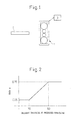
- the processing unit 3 first calculates the deformation resistance k i-1 at an actual pass of the stock 2, that is, the (i-1)-th pass.
- the deformation resistance k i-1 at the (i-1)-th pass is given by a function using at least the material components of the stock and rolling temperature T i-1 of the rolling material as arguments.
- C H is the Hitchcock coefficient.
- H and h are the entry and delivery thicknesses of the pass, while P is the rolling force at the pass.
- the entry thickness H i-1 , delivery thickness h i-1 , and actual force P exp i-1 at the (i-1)-th pass were inputted.
- the processing unit 3 is used to use formulas (5) and (5)' to calculate the calculated value P cal i-1 of the rolling force and the calculated value G cal i-1 of the rolling torque at the (i-1)-th pass.
- P cal Q ⁇ k ⁇ R ⁇ ⁇ H - h ⁇ w
- G cal ⁇ ⁇ H - h R ⁇ ⁇ R ⁇ P cal
- Q is the rolling force function at the pass
- ⁇ is the torque arm coefficient.
- the predicted values of the rolling force and rolling torque at the predicted pass are calculated. This can be found by inputting the i-th pass entry thickness Hi, delivery thickness hi, rolling temperature Ti, etc. into formulas (4) to (5)'.
- the gain ⁇ multiplied with the prediction error rates of the rolling force and rolling torque at an actual pass is found.
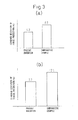
- the gain ⁇ was changed in accordance with the delivery thickness h of the predicted pass (i-th pass).
- ⁇ ⁇ 2.5 ⁇ 10 - 1 h ⁇ 10 1.0 ⁇ 10 - 2 ⁇ h + 1.5 ⁇ 10 - 1 10 ⁇ h ⁇ 60 7.5 ⁇ 10 - 1 60 ⁇ h
- the unit of the delivery thickness at the predicted pass h is mm. Note that, the relationship between the delivery thickness at the predicted pass h and the gain ⁇ based on formula (6) is shown in FIG. 2 as well.
- the gain ⁇ determined by the formula (6) is used with formula (2) to calculate the learning coefficient C F (P) of the rolling force and the learning coefficient C F (G) of the rolling torque at the predicted pass.
- formula (3) is used to calculate the prediction of the rolling force for setting P set and the prediction of the rolling torque for setting G set at the i-th pass.
- the stock 2 is rolled by the i-th pass.
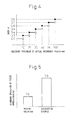
- the results are shown in FIG. 3(a) and FIG. 3(b) .
- the standard deviation ⁇ of rolling force prediction was 8.6% and the standard deviation ⁇ of rolling torque prediction was 12.1%
- the standard deviation ⁇ of rolling force prediction was 4.2% and the standard deviation ⁇ of rolling torque prediction was 7.7%, that is, values greatly reduced from the comparative example. Due to this, in the present example, the precision of the rolling force prediction and rolling torque prediction was improved, so it was possible to precisely set the roll gap, crown control amount, and rolling speed at each rolling pass and therefore the precision of thickness, crown, and flatness of the rolled products could be greatly improved.
- the explanation was given of the example of the case of use of the rolling force and rolling torque for the indicators to be predicted, but the present invention is not limited to prediction of the rolling force and rolling torque.
- it may also be applied to prediction of the rolling power and other various rolling load indicators. That is, the present invention is not limited to the above examples.
- the rolling load indicators may be changed in various ways within a scope not exceeding the gist of the invention.
- the explanation was given as an example of the case of use of the actual result in the immediately preceding rolling pass to improve the precision of the rolling load prediction in the immediately succeeding rolling pass, but, for example, the present invention may also be applied to the case of using not only the actual result in the immediately preceding rolling pass, but also the actual result of an already performed single rolling pass, or two or more rolling passes and/or the case of improving not only the precision of the rolling load prediction at the immediately succeeding rolling pass, but also that of a subsequently performed single rolling pass or, two or more rolling passes.
- the present invention is not limited to the delivery thickness of the stock at the predicted pass, for example, the entry thickness at the predicted pass, the entry thickness or delivery thickness at the actual pass, the delivery thickness at the final pass, or a combination of the same etc. may also be used.
- Example 2 like Example 1, applies the present invention to inter-pass learning of rolling force prediction in reverse type multi-pass rolling by the rolling mill 1 shown in FIG. 1 .
- the gain ⁇ was changed in accordance with the referred to the delivery thickness h at the actual pass.
- ⁇ ⁇ 0.2 h ⁇ 10 0.3 10 ⁇ h ⁇ 15 0.4 15 ⁇ h ⁇ 30 0.5 30 ⁇ h ⁇ 50 0.6 50 ⁇ h ⁇ 75 0.7 75 ⁇ h ⁇ 100 0.8 100 ⁇ h
- the relationship between the delivery thickness h at the actual pass and gain ⁇ based on formula (7) is shown in FIG. 4 as well. Further, at each rolling pass, the learning coefficient at the rolling force prediction at the following rolling passes was updated so as to correct the draft schedule and crown control amount at the subsequent passes. In this way, a hot steel plates were rolled with initial thickness of 40.0 to 200.0 mm, delivery thickness at the final pass of 4.0 to 150.0 mm, a width of 1200 to 4800 mm, and a total number of rolling passes of 4 to 15.
- the standard deviation of rolling force prediction ⁇ was 7.0%, while in the present example, the standard deviation of rolling force prediction ⁇ was 2.8%. Much reduced from the comparative example.
- the precision of the rolling force prediction was improved, so it was possible to precisely set the roll gap and crown control amount at each rolling pass, therefore, as shown in FIG. 6 , delivery thickness tolerance of the stock at the final pass (average of the variation from target value) was 0.149 mm in the comparative example, while was greatly improved to 0.077 mm in the present example.
- the crown tolerance was also improved, so the flatness could be greatly improved and the rate of occurrence of troubles due to poor flatness could be greatly reduced, so, as shown in FIG. 7 , the productivity (amount of rolling products per hour) was 182 tonf/h in the comparative example, while was improved to 191 tonf/h in the present example.
- Example 3 is an example of application of the present art to a tandem rolling process of hot strip with a final stand delivery thickness of 1.0 to 20.0 mm.
- the processing unit 3 also stores the work roll radius R of the stands 4a to 4e of the group of rolling mills 4 and the material components and width w of the stock 2.
- the processing unit 3 first, calculates the material deformation resistance k 1 at the first stand of the stock 2. Next, the processing unit 3 is used to calculate the flattened roll radius R' 1 . Furthermore, the processing unit 3 is used to calculate, by formula (5), the calculated value of the rolling force P cal 1 . Finally, it finds the error rate C P of the rolling force from the actual measured value of the rolling force P exp 1 and the calculated value of the rolling force P cal 1 based on formula (1) and calculates the learning coefficient of rolling force prediction C F at the subsequent rolling passes by formula (2).
- the unit calculates the predicted value of the rolling force at subsequent rolling stands for rolling the stock 2 from the rolling conditions for the rolling stand. This can be found, as shown in Example 1, by inputting the entry thickness H i , delivery thickness h i , and rolling temperature T i (suffix i shows value is for i-th stand, same below), etc. for each stand into formulas (4) to (5).
- the unit of the delivery thickness at the fifth stand h is mm. Note that, the relationship of the delivery thickness at the fifth stand h and the gain ⁇ based on formula (8) is shown in FIG. 9 .
- the gain ⁇ determined at formula (8) was used to correct the predicted value of the rolling force P cal so as to calculate the prediction of the rolling force for setting P set based on formula (3).
- the stock 2 was rolled at the second stand 4b to fifth stand 4e of the group of rolling mills 4.
- the standard deviation of rolling force prediction ⁇ was 3.1%, while in the present example, the standard deviation of rolling force prediction ⁇ was greatly improved to 1.9%.
- the present invention in hot rolling, it is possible to improve the precision of the rolling load prediction more stably than the past. Further, due to this, it is possible to make the thickness, crown, and flatness of the rolled products closer to the desired values, so the effects are also obtained that the yield loss in rolling is suppressed and the productivity is improved. For this reason, the present invention will contribute to the efficient production of ferrous metal materials and will of course have ripple effects not only in the ferrous metal industry of course, but also the automobile industry etc. using a broad range of ferrous metal products.
Landscapes
- Engineering & Computer Science (AREA)
- Mechanical Engineering (AREA)
- Control Of Metal Rolling (AREA)
Applications Claiming Priority (2)
| Application Number | Priority Date | Filing Date | Title |
|---|---|---|---|
| JP2008066712 | 2008-03-14 | ||
| PCT/JP2009/055364 WO2009113719A1 (fr) | 2008-03-14 | 2009-03-12 | Procédé d'apprentissage de prédiction de pression de laminage pour laminage de tôles fortes à chaud |
Publications (3)
| Publication Number | Publication Date |
|---|---|
| EP2145703A1 true EP2145703A1 (fr) | 2010-01-20 |
| EP2145703A4 EP2145703A4 (fr) | 2013-10-02 |
| EP2145703B1 EP2145703B1 (fr) | 2015-01-07 |
Family
ID=41065370
Family Applications (1)
| Application Number | Title | Priority Date | Filing Date |
|---|---|---|---|
| EP09720988.6A Not-in-force EP2145703B1 (fr) | 2008-03-14 | 2009-03-12 | Procédé d'apprentissage de prédiction de pression de laminage pour laminage de tôles fortes à chaud |
Country Status (7)
| Country | Link |
|---|---|
| US (1) | US8185232B2 (fr) |
| EP (1) | EP2145703B1 (fr) |
| JP (1) | JP4452323B2 (fr) |
| KR (1) | KR101149927B1 (fr) |
| CN (1) | CN101678417B (fr) |
| BR (1) | BRPI0903494A2 (fr) |
| WO (1) | WO2009113719A1 (fr) |
Cited By (1)
| Publication number | Priority date | Publication date | Assignee | Title |
|---|---|---|---|---|
| EP3928885A4 (fr) * | 2019-02-21 | 2022-04-06 | JFE Steel Corporation | Procédé de prédiction de charge de laminage, dispositif de prédiction de charge de laminage et procédé de commande de laminage |
Families Citing this family (25)
| Publication number | Priority date | Publication date | Assignee | Title |
|---|---|---|---|---|
| CN101977855B (zh) | 2008-03-21 | 2015-07-29 | 加利福尼亚技术学院 | 通过快速电容器放电形成金属玻璃 |
| US8613816B2 (en) | 2008-03-21 | 2013-12-24 | California Institute Of Technology | Forming of ferromagnetic metallic glass by rapid capacitor discharge |
| US8613814B2 (en) | 2008-03-21 | 2013-12-24 | California Institute Of Technology | Forming of metallic glass by rapid capacitor discharge forging |
| US8499598B2 (en) | 2010-04-08 | 2013-08-06 | California Institute Of Technology | Electromagnetic forming of metallic glasses using a capacitive discharge and magnetic field |
| CN103328675B (zh) * | 2010-12-23 | 2016-01-06 | 加利福尼亚技术学院 | 通过迅速电容器放电的金属玻璃的片材形成 |
| JP5939545B2 (ja) | 2011-02-16 | 2016-06-22 | カリフォルニア インスティチュート オブ テクノロジー | 急速コンデンサ放電による金属ガラスの射出成形 |
| JP5759206B2 (ja) * | 2011-03-01 | 2015-08-05 | 東芝三菱電機産業システム株式会社 | 学習係数制御装置 |
| WO2012127571A1 (fr) * | 2011-03-18 | 2012-09-27 | 株式会社 日立製作所 | Appareil de commande de laminage, procédé de commande de laminage et programme de commande de laminage |
| US9393612B2 (en) | 2012-11-15 | 2016-07-19 | Glassimetal Technology, Inc. | Automated rapid discharge forming of metallic glasses |
| WO2014145747A1 (fr) | 2013-03-15 | 2014-09-18 | Glassimetal Technology, Inc. | Procédés de mise en forme d'articles présentant un côté élevé à partir d'alliages de verre métallique faisant appel à une décharge capacitive rapide et à une charge d'alimentation en verre métallique destinées à être utilisés dans ces procédés |
| US10273568B2 (en) | 2013-09-30 | 2019-04-30 | Glassimetal Technology, Inc. | Cellulosic and synthetic polymeric feedstock barrel for use in rapid discharge forming of metallic glasses |
| CN104630661B (zh) | 2013-10-03 | 2017-04-26 | 格拉斯金属技术股份有限公司 | 用于金属玻璃的快速放电形成的涂覆有绝缘膜的进料桶 |
| US10029304B2 (en) | 2014-06-18 | 2018-07-24 | Glassimetal Technology, Inc. | Rapid discharge heating and forming of metallic glasses using separate heating and forming feedstock chambers |
| US10022779B2 (en) | 2014-07-08 | 2018-07-17 | Glassimetal Technology, Inc. | Mechanically tuned rapid discharge forming of metallic glasses |
| JP6315818B2 (ja) * | 2014-10-07 | 2018-04-25 | 株式会社日立製作所 | タンデム圧延ミルの制御装置および制御方法 |
| BR112017011610B1 (pt) * | 2015-03-10 | 2022-12-13 | Toshiba Mitsubishi-Electric Industrial Systems Corporation | Dispositivo de controle de largura de placa para material a ser laminado |
| US10682694B2 (en) | 2016-01-14 | 2020-06-16 | Glassimetal Technology, Inc. | Feedback-assisted rapid discharge heating and forming of metallic glasses |
| US10632529B2 (en) | 2016-09-06 | 2020-04-28 | Glassimetal Technology, Inc. | Durable electrodes for rapid discharge heating and forming of metallic glasses |
| JP6670261B2 (ja) * | 2017-02-23 | 2020-03-18 | 株式会社日立製作所 | タンデム圧延ミル制御装置およびタンデム圧延ミル制御方法 |
| KR20190078323A (ko) * | 2017-12-26 | 2019-07-04 | 주식회사 포스코 | 사상 압연기의 부하 배분 설정 장치 |
| CN108346009B (zh) * | 2018-03-21 | 2021-09-03 | 深圳库博能源科技有限公司 | 一种基于用户模型自学习的电力生产配置方法和装置 |
| JP7070796B2 (ja) * | 2019-09-12 | 2022-05-18 | 東芝三菱電機産業システム株式会社 | 絞り発生予測システム |
| CN113426838A (zh) * | 2021-06-29 | 2021-09-24 | 李炳集 | 一种新一代中厚板炉卷轧机二级系统及其应用方法 |
| US12569898B2 (en) * | 2021-12-24 | 2026-03-10 | Tmeic Corporation | Tail end buckling suppression device |
| TWI798047B (zh) * | 2022-04-08 | 2023-04-01 | 中國鋼鐵股份有限公司 | 鋼板軋延力預測方法與軋延系統 |
Family Cites Families (26)
| Publication number | Priority date | Publication date | Assignee | Title |
|---|---|---|---|---|
| US3713313A (en) * | 1971-11-19 | 1973-01-30 | Gen Electric | Computer controlled rolling mill |
| JPS538305B2 (fr) | 1974-02-01 | 1978-03-27 | ||
| JPS58141807A (ja) * | 1982-02-15 | 1983-08-23 | Mitsubishi Electric Corp | 自動板厚制御装置 |
| JPS58163517A (ja) * | 1982-03-25 | 1983-09-28 | Mitsubishi Heavy Ind Ltd | 圧延機の板厚制御方法およびその装置 |
| JPS61235017A (ja) * | 1985-04-10 | 1986-10-20 | Kawasaki Steel Corp | 圧延機のスピンドルトルク予測方法 |
| JPS6240925A (ja) * | 1985-08-16 | 1987-02-21 | Kobe Steel Ltd | 板厚制御方法 |
| JPH0661566B2 (ja) | 1987-11-18 | 1994-08-17 | 株式会社日立製作所 | 圧延機のセットアップ装置 |
| JPH0576917A (ja) * | 1991-09-18 | 1993-03-30 | Nkk Corp | 厚板の板厚制御方法 |
| US6377864B1 (en) * | 1994-06-16 | 2002-04-23 | Finn-Power International, Inc. | System and method of flexibly sorting and unloading finished parts during part manufacturing process |
| JPH0852506A (ja) * | 1994-08-11 | 1996-02-27 | Yaskawa Electric Corp | スキンパスミルの張力制御方法及び装置 |
| DE19505694C1 (de) * | 1995-02-20 | 1996-07-04 | Siemens Ag | Einrichtung zur Dickenregelung von Walzgut |
| JP3607029B2 (ja) * | 1997-01-16 | 2005-01-05 | 東芝三菱電機産業システム株式会社 | 圧延機の制御方法及び制御装置 |
| JP3237559B2 (ja) * | 1997-02-07 | 2001-12-10 | 住友金属工業株式会社 | 熱間連続圧延機の板厚制御方法 |
| JP3467677B2 (ja) | 1997-03-25 | 2003-11-17 | Jfeスチール株式会社 | 圧延機における圧延荷重の学習制御方法 |
| JP3495909B2 (ja) * | 1998-03-30 | 2004-02-09 | 株式会社東芝 | 圧延ロールのプロフィール制御装置 |
| FR2783444B1 (fr) * | 1998-09-21 | 2000-12-15 | Kvaerner Metals Clecim | Procede de laminage d'un produit metallique |
| JP2000126809A (ja) | 1998-10-27 | 2000-05-09 | Kobe Steel Ltd | 圧延機のセットアップ装置 |
| JP2005527378A (ja) * | 2002-03-15 | 2005-09-15 | シーメンス アクチエンゲゼルシヤフト | プロフィルおよび平坦度の操作要素に対する目標値のためのコンピュータ支援決定方法 |
| CN1267215C (zh) * | 2002-11-20 | 2006-08-02 | Posco株式会社 | 带钢热精轧中的故障诊断设备和方法 |
| DE10300374B4 (de) * | 2003-01-06 | 2010-12-23 | Windmöller & Hölscher Kg | Verfahren und Vorrichtung zur Regelung der Dicke extrudierter Folie |
| US7050875B2 (en) * | 2003-07-01 | 2006-05-23 | General Electric Company | System and method for detecting an anomalous condition |
| WO2006008808A1 (fr) * | 2004-07-20 | 2006-01-26 | Toshiba Mitsubishi-Electric Industrial Systems Corporation | Procede pour regler/controler un coin dans un laminage de materiau en plaque |
| JP2006095592A (ja) * | 2004-09-30 | 2006-04-13 | Jfe Steel Kk | 調質圧延機における伸び率制御方法 |
| JP4437753B2 (ja) * | 2005-02-18 | 2010-03-24 | 東芝三菱電機産業システム株式会社 | タンデム圧延機の板厚制御方法 |
| JP4988171B2 (ja) * | 2005-06-23 | 2012-08-01 | 株式会社日立製作所 | 圧延機の制御装置 |
| CN100474313C (zh) * | 2005-10-31 | 2009-04-01 | 宝山钢铁股份有限公司 | 一种粗轧带钢的宽度优化设定方法 |
-
2009
- 2009-03-12 EP EP09720988.6A patent/EP2145703B1/fr not_active Not-in-force
- 2009-03-12 KR KR1020097024046A patent/KR101149927B1/ko not_active Expired - Fee Related
- 2009-03-12 BR BRPI0903494A patent/BRPI0903494A2/pt not_active Application Discontinuation
- 2009-03-12 CN CN2009800003774A patent/CN101678417B/zh not_active Expired - Fee Related
- 2009-03-12 US US12/451,037 patent/US8185232B2/en not_active Expired - Fee Related
- 2009-03-12 WO PCT/JP2009/055364 patent/WO2009113719A1/fr not_active Ceased
- 2009-03-12 JP JP2009531654A patent/JP4452323B2/ja not_active Expired - Fee Related
Cited By (2)
| Publication number | Priority date | Publication date | Assignee | Title |
|---|---|---|---|---|
| EP3928885A4 (fr) * | 2019-02-21 | 2022-04-06 | JFE Steel Corporation | Procédé de prédiction de charge de laminage, dispositif de prédiction de charge de laminage et procédé de commande de laminage |
| US12145184B2 (en) | 2019-02-21 | 2024-11-19 | Jfe Steel Corporation | Rolling load prediction method, rolling load prediction device, and rolling control method |
Also Published As
| Publication number | Publication date |
|---|---|
| JPWO2009113719A1 (ja) | 2011-07-21 |
| US8185232B2 (en) | 2012-05-22 |
| US20100121471A1 (en) | 2010-05-13 |
| JP4452323B2 (ja) | 2010-04-21 |
| CN101678417B (zh) | 2013-11-20 |
| CN101678417A (zh) | 2010-03-24 |
| KR101149927B1 (ko) | 2012-06-08 |
| WO2009113719A1 (fr) | 2009-09-17 |
| EP2145703B1 (fr) | 2015-01-07 |
| EP2145703A4 (fr) | 2013-10-02 |
| BRPI0903494A2 (pt) | 2015-09-22 |
| KR20090130410A (ko) | 2009-12-23 |
Similar Documents
| Publication | Publication Date | Title |
|---|---|---|
| EP2145703B1 (fr) | Procédé d'apprentissage de prédiction de pression de laminage pour laminage de tôles fortes à chaud | |
| CN104942019B (zh) | 一种带钢冷轧过程宽度自动控制方法 | |
| US8676371B2 (en) | Rolling of a strip in a rolling train using the last stand of the rolling train as a tension reducer | |
| CN1243047A (zh) | 基于板形板厚协调规律的板带轧制过程互联控制方法 | |
| JP2002126813A (ja) | 板圧延における圧下レベリング設定方法 | |
| JP2009022985A (ja) | 冷間圧延における形状制御方法 | |
| JP4671544B2 (ja) | 冷間タンデム圧延における板幅制御方法 | |
| JP6232193B2 (ja) | 冷間圧延における形状制御方法、及び形状制御方法 | |
| JP4330134B2 (ja) | 冷間圧延における形状制御方法 | |
| RU2288792C1 (ru) | Способ холодной прокатки углеродистой полосовой стали | |
| Shalaevskiy et al. | Algorithm and design methodology for energy-efficient sheet products production technology | |
| WO2022214527A1 (fr) | Appareil pour la surveillance continue d'un matériau métallique dans un procédé de laminage et procédé associé pour la surveillance continue d'un matériau métallique dans un procédé de laminage | |
| JP2019055415A (ja) | 板クラウン制御方法、板クラウン制御装置、及び鋼板の製造方法 | |
| JP2003290807A (ja) | 冷間タンデム圧延における板幅制御方法 | |
| JP4813014B2 (ja) | 冷間タンデム圧延機の形状制御方法 | |
| JP2002028708A (ja) | 鋼板、厚板の製造法および厚板の製造装置 | |
| JP7685721B2 (ja) | 熱間可逆板圧延における板ウェッジの制御と設定方法 | |
| JP4102267B2 (ja) | 冷間タンデム圧延における板幅制御方法 | |
| JP6252609B2 (ja) | 冷間圧延機の張力制御方法及び冷延鋼板の製造方法 | |
| JP2968645B2 (ja) | 熱間圧延における板幅制御方法 | |
| JP2005296985A (ja) | 板圧延における板クラウンおよび形状制御方法 | |
| JP7103329B2 (ja) | 圧延機の制御方法および制御装置 | |
| Kozhevnikov | The Development and Application of Methodologies for the Design of Technological Modes of Cold Rolling | |
| JP2005319492A (ja) | 冷間圧延における形状制御方法 | |
| JP4140316B2 (ja) | 金属板の製造方法 |
Legal Events
| Date | Code | Title | Description |
|---|---|---|---|
| PUAI | Public reference made under article 153(3) epc to a published international application that has entered the european phase |
Free format text: ORIGINAL CODE: 0009012 |
|
| 17P | Request for examination filed |
Effective date: 20091103 |
|
| AK | Designated contracting states |
Kind code of ref document: A1 Designated state(s): AT BE BG CH CY CZ DE DK EE ES FI FR GB GR HR HU IE IS IT LI LT LU LV MC MK MT NL NO PL PT RO SE SI SK TR |
|
| AX | Request for extension of the european patent |
Extension state: AL BA RS |
|
| DAX | Request for extension of the european patent (deleted) | ||
| RAP1 | Party data changed (applicant data changed or rights of an application transferred) |
Owner name: NIPPON STEEL & SUMITOMO METAL CORPORATION |
|
| A4 | Supplementary search report drawn up and despatched |
Effective date: 20130830 |
|
| RIC1 | Information provided on ipc code assigned before grant |
Ipc: B21B 37/00 20060101AFI20130826BHEP |
|
| GRAP | Despatch of communication of intention to grant a patent |
Free format text: ORIGINAL CODE: EPIDOSNIGR1 |
|
| INTG | Intention to grant announced |
Effective date: 20140618 |
|
| GRAS | Grant fee paid |
Free format text: ORIGINAL CODE: EPIDOSNIGR3 |
|
| RIN1 | Information on inventor provided before grant (corrected) |
Inventor name: IGARASHI, KAZUTSUGU Inventor name: HIGO, TSUYOSHI Inventor name: FUKUOKA, YASUSHI Inventor name: MIZOGUCHI, YOSUKE |
|
| GRAA | (expected) grant |
Free format text: ORIGINAL CODE: 0009210 |
|
| AK | Designated contracting states |
Kind code of ref document: B1 Designated state(s): AT BE BG CH CY CZ DE DK EE ES FI FR GB GR HR HU IE IS IT LI LT LU LV MC MK MT NL NO PL PT RO SE SI SK TR |
|
| REG | Reference to a national code |
Ref country code: GB Ref legal event code: FG4D |
|
| REG | Reference to a national code |
Ref country code: CH Ref legal event code: EP |
|
| REG | Reference to a national code |
Ref country code: IE Ref legal event code: FG4D |
|
| REG | Reference to a national code |
Ref country code: AT Ref legal event code: REF Ref document number: 705333 Country of ref document: AT Kind code of ref document: T Effective date: 20150215 |
|
| REG | Reference to a national code |
Ref country code: DE Ref legal event code: R096 Ref document number: 602009028811 Country of ref document: DE Effective date: 20150219 |
|
| REG | Reference to a national code |
Ref country code: NL Ref legal event code: VDEP Effective date: 20150107 |
|
| REG | Reference to a national code |
Ref country code: AT Ref legal event code: MK05 Ref document number: 705333 Country of ref document: AT Kind code of ref document: T Effective date: 20150107 |
|
| REG | Reference to a national code |
Ref country code: LT Ref legal event code: MG4D |
|
| PG25 | Lapsed in a contracting state [announced via postgrant information from national office to epo] |
Ref country code: NO Free format text: LAPSE BECAUSE OF FAILURE TO SUBMIT A TRANSLATION OF THE DESCRIPTION OR TO PAY THE FEE WITHIN THE PRESCRIBED TIME-LIMIT Effective date: 20150407 Ref country code: FI Free format text: LAPSE BECAUSE OF FAILURE TO SUBMIT A TRANSLATION OF THE DESCRIPTION OR TO PAY THE FEE WITHIN THE PRESCRIBED TIME-LIMIT Effective date: 20150107 Ref country code: HR Free format text: LAPSE BECAUSE OF FAILURE TO SUBMIT A TRANSLATION OF THE DESCRIPTION OR TO PAY THE FEE WITHIN THE PRESCRIBED TIME-LIMIT Effective date: 20150107 Ref country code: SE Free format text: LAPSE BECAUSE OF FAILURE TO SUBMIT A TRANSLATION OF THE DESCRIPTION OR TO PAY THE FEE WITHIN THE PRESCRIBED TIME-LIMIT Effective date: 20150107 Ref country code: BG Free format text: LAPSE BECAUSE OF FAILURE TO SUBMIT A TRANSLATION OF THE DESCRIPTION OR TO PAY THE FEE WITHIN THE PRESCRIBED TIME-LIMIT Effective date: 20150407 Ref country code: LT Free format text: LAPSE BECAUSE OF FAILURE TO SUBMIT A TRANSLATION OF THE DESCRIPTION OR TO PAY THE FEE WITHIN THE PRESCRIBED TIME-LIMIT Effective date: 20150107 Ref country code: ES Free format text: LAPSE BECAUSE OF FAILURE TO SUBMIT A TRANSLATION OF THE DESCRIPTION OR TO PAY THE FEE WITHIN THE PRESCRIBED TIME-LIMIT Effective date: 20150107 |
|
| PG25 | Lapsed in a contracting state [announced via postgrant information from national office to epo] |
Ref country code: LV Free format text: LAPSE BECAUSE OF FAILURE TO SUBMIT A TRANSLATION OF THE DESCRIPTION OR TO PAY THE FEE WITHIN THE PRESCRIBED TIME-LIMIT Effective date: 20150107 Ref country code: AT Free format text: LAPSE BECAUSE OF FAILURE TO SUBMIT A TRANSLATION OF THE DESCRIPTION OR TO PAY THE FEE WITHIN THE PRESCRIBED TIME-LIMIT Effective date: 20150107 Ref country code: PL Free format text: LAPSE BECAUSE OF FAILURE TO SUBMIT A TRANSLATION OF THE DESCRIPTION OR TO PAY THE FEE WITHIN THE PRESCRIBED TIME-LIMIT Effective date: 20150107 Ref country code: GR Free format text: LAPSE BECAUSE OF FAILURE TO SUBMIT A TRANSLATION OF THE DESCRIPTION OR TO PAY THE FEE WITHIN THE PRESCRIBED TIME-LIMIT Effective date: 20150408 Ref country code: IS Free format text: LAPSE BECAUSE OF FAILURE TO SUBMIT A TRANSLATION OF THE DESCRIPTION OR TO PAY THE FEE WITHIN THE PRESCRIBED TIME-LIMIT Effective date: 20150507 Ref country code: NL Free format text: LAPSE BECAUSE OF FAILURE TO SUBMIT A TRANSLATION OF THE DESCRIPTION OR TO PAY THE FEE WITHIN THE PRESCRIBED TIME-LIMIT Effective date: 20150107 |
|
| REG | Reference to a national code |
Ref country code: DE Ref legal event code: R097 Ref document number: 602009028811 Country of ref document: DE |
|
| PG25 | Lapsed in a contracting state [announced via postgrant information from national office to epo] |
Ref country code: RO Free format text: LAPSE BECAUSE OF FAILURE TO SUBMIT A TRANSLATION OF THE DESCRIPTION OR TO PAY THE FEE WITHIN THE PRESCRIBED TIME-LIMIT Effective date: 20150107 Ref country code: EE Free format text: LAPSE BECAUSE OF FAILURE TO SUBMIT A TRANSLATION OF THE DESCRIPTION OR TO PAY THE FEE WITHIN THE PRESCRIBED TIME-LIMIT Effective date: 20150107 Ref country code: DK Free format text: LAPSE BECAUSE OF FAILURE TO SUBMIT A TRANSLATION OF THE DESCRIPTION OR TO PAY THE FEE WITHIN THE PRESCRIBED TIME-LIMIT Effective date: 20150107 Ref country code: SK Free format text: LAPSE BECAUSE OF FAILURE TO SUBMIT A TRANSLATION OF THE DESCRIPTION OR TO PAY THE FEE WITHIN THE PRESCRIBED TIME-LIMIT Effective date: 20150107 Ref country code: LU Free format text: LAPSE BECAUSE OF FAILURE TO SUBMIT A TRANSLATION OF THE DESCRIPTION OR TO PAY THE FEE WITHIN THE PRESCRIBED TIME-LIMIT Effective date: 20150312 Ref country code: MC Free format text: LAPSE BECAUSE OF FAILURE TO SUBMIT A TRANSLATION OF THE DESCRIPTION OR TO PAY THE FEE WITHIN THE PRESCRIBED TIME-LIMIT Effective date: 20150107 Ref country code: CZ Free format text: LAPSE BECAUSE OF FAILURE TO SUBMIT A TRANSLATION OF THE DESCRIPTION OR TO PAY THE FEE WITHIN THE PRESCRIBED TIME-LIMIT Effective date: 20150107 |
|
| REG | Reference to a national code |
Ref country code: CH Ref legal event code: PL |
|
| PLBE | No opposition filed within time limit |
Free format text: ORIGINAL CODE: 0009261 |
|
| STAA | Information on the status of an ep patent application or granted ep patent |
Free format text: STATUS: NO OPPOSITION FILED WITHIN TIME LIMIT |
|
| 26N | No opposition filed |
Effective date: 20151008 |
|
| PG25 | Lapsed in a contracting state [announced via postgrant information from national office to epo] |
Ref country code: IT Free format text: LAPSE BECAUSE OF FAILURE TO SUBMIT A TRANSLATION OF THE DESCRIPTION OR TO PAY THE FEE WITHIN THE PRESCRIBED TIME-LIMIT Effective date: 20150107 |
|
| REG | Reference to a national code |
Ref country code: IE Ref legal event code: MM4A |
|
| PG25 | Lapsed in a contracting state [announced via postgrant information from national office to epo] |
Ref country code: LI Free format text: LAPSE BECAUSE OF NON-PAYMENT OF DUE FEES Effective date: 20150331 Ref country code: CH Free format text: LAPSE BECAUSE OF NON-PAYMENT OF DUE FEES Effective date: 20150331 Ref country code: IE Free format text: LAPSE BECAUSE OF NON-PAYMENT OF DUE FEES Effective date: 20150312 |
|
| REG | Reference to a national code |
Ref country code: FR Ref legal event code: PLFP Year of fee payment: 8 |
|
| PG25 | Lapsed in a contracting state [announced via postgrant information from national office to epo] |
Ref country code: SI Free format text: LAPSE BECAUSE OF FAILURE TO SUBMIT A TRANSLATION OF THE DESCRIPTION OR TO PAY THE FEE WITHIN THE PRESCRIBED TIME-LIMIT Effective date: 20150107 |
|
| PG25 | Lapsed in a contracting state [announced via postgrant information from national office to epo] |
Ref country code: BE Free format text: LAPSE BECAUSE OF FAILURE TO SUBMIT A TRANSLATION OF THE DESCRIPTION OR TO PAY THE FEE WITHIN THE PRESCRIBED TIME-LIMIT Effective date: 20150107 |
|
| PG25 | Lapsed in a contracting state [announced via postgrant information from national office to epo] |
Ref country code: MT Free format text: LAPSE BECAUSE OF FAILURE TO SUBMIT A TRANSLATION OF THE DESCRIPTION OR TO PAY THE FEE WITHIN THE PRESCRIBED TIME-LIMIT Effective date: 20150107 |
|
| REG | Reference to a national code |
Ref country code: FR Ref legal event code: PLFP Year of fee payment: 9 |
|
| PG25 | Lapsed in a contracting state [announced via postgrant information from national office to epo] |
Ref country code: HU Free format text: LAPSE BECAUSE OF FAILURE TO SUBMIT A TRANSLATION OF THE DESCRIPTION OR TO PAY THE FEE WITHIN THE PRESCRIBED TIME-LIMIT; INVALID AB INITIO Effective date: 20090312 |
|
| PG25 | Lapsed in a contracting state [announced via postgrant information from national office to epo] |
Ref country code: CY Free format text: LAPSE BECAUSE OF FAILURE TO SUBMIT A TRANSLATION OF THE DESCRIPTION OR TO PAY THE FEE WITHIN THE PRESCRIBED TIME-LIMIT Effective date: 20150107 |
|
| PG25 | Lapsed in a contracting state [announced via postgrant information from national office to epo] |
Ref country code: PT Free format text: LAPSE BECAUSE OF FAILURE TO SUBMIT A TRANSLATION OF THE DESCRIPTION OR TO PAY THE FEE WITHIN THE PRESCRIBED TIME-LIMIT Effective date: 20150507 |
|
| PG25 | Lapsed in a contracting state [announced via postgrant information from national office to epo] |
Ref country code: TR Free format text: LAPSE BECAUSE OF FAILURE TO SUBMIT A TRANSLATION OF THE DESCRIPTION OR TO PAY THE FEE WITHIN THE PRESCRIBED TIME-LIMIT Effective date: 20150107 |
|
| REG | Reference to a national code |
Ref country code: FR Ref legal event code: PLFP Year of fee payment: 10 |
|
| PG25 | Lapsed in a contracting state [announced via postgrant information from national office to epo] |
Ref country code: MK Free format text: LAPSE BECAUSE OF FAILURE TO SUBMIT A TRANSLATION OF THE DESCRIPTION OR TO PAY THE FEE WITHIN THE PRESCRIBED TIME-LIMIT Effective date: 20150107 |
|
| REG | Reference to a national code |
Ref country code: DE Ref legal event code: R082 Ref document number: 602009028811 Country of ref document: DE Representative=s name: VOSSIUS & PARTNER PATENTANWAELTE RECHTSANWAELT, DE Ref country code: DE Ref legal event code: R081 Ref document number: 602009028811 Country of ref document: DE Owner name: NIPPON STEEL CORPORATION, JP Free format text: FORMER OWNER: NIPPON STEEL & SUMITOMO METAL CORP., TOKYO, JP |
|
| PGFP | Annual fee paid to national office [announced via postgrant information from national office to epo] |
Ref country code: GB Payment date: 20200304 Year of fee payment: 12 Ref country code: DE Payment date: 20200225 Year of fee payment: 12 |
|
| PGFP | Annual fee paid to national office [announced via postgrant information from national office to epo] |
Ref country code: FR Payment date: 20200214 Year of fee payment: 12 |
|
| REG | Reference to a national code |
Ref country code: DE Ref legal event code: R119 Ref document number: 602009028811 Country of ref document: DE |
|
| GBPC | Gb: european patent ceased through non-payment of renewal fee |
Effective date: 20210312 |
|
| PG25 | Lapsed in a contracting state [announced via postgrant information from national office to epo] |
Ref country code: FR Free format text: LAPSE BECAUSE OF NON-PAYMENT OF DUE FEES Effective date: 20210331 Ref country code: GB Free format text: LAPSE BECAUSE OF NON-PAYMENT OF DUE FEES Effective date: 20210312 Ref country code: DE Free format text: LAPSE BECAUSE OF NON-PAYMENT OF DUE FEES Effective date: 20211001 |