EP2149594A1 - Production d'essence selon un nouveau procédé mélangeant des découpes de matériaux de pétrole - Google Patents
Production d'essence selon un nouveau procédé mélangeant des découpes de matériaux de pétrole Download PDFInfo
- Publication number
- EP2149594A1 EP2149594A1 EP09251755A EP09251755A EP2149594A1 EP 2149594 A1 EP2149594 A1 EP 2149594A1 EP 09251755 A EP09251755 A EP 09251755A EP 09251755 A EP09251755 A EP 09251755A EP 2149594 A1 EP2149594 A1 EP 2149594A1
- Authority
- EP
- European Patent Office
- Prior art keywords
- gasoline
- reformate
- volume
- heart cut
- cut
- Prior art date
- Legal status (The legal status is an assumption and is not a legal conclusion. Google has not performed a legal analysis and makes no representation as to the accuracy of the status listed.)
- Withdrawn
Links
Images


Classifications
-
- C—CHEMISTRY; METALLURGY
- C10—PETROLEUM, GAS OR COKE INDUSTRIES; TECHNICAL GASES CONTAINING CARBON MONOXIDE; FUELS; LUBRICANTS; PEAT
- C10G—CRACKING HYDROCARBON OILS; PRODUCTION OF LIQUID HYDROCARBON MIXTURES, e.g. BY DESTRUCTIVE HYDROGENATION, OLIGOMERISATION, POLYMERISATION; RECOVERY OF HYDROCARBON OILS FROM OIL-SHALE, OIL-SAND, OR GASES; REFINING MIXTURES MAINLY CONSISTING OF HYDROCARBONS; REFORMING OF NAPHTHA; MINERAL WAXES
- C10G69/00—Treatment of hydrocarbon oils by at least one hydrotreatment process and at least one other conversion process
- C10G69/02—Treatment of hydrocarbon oils by at least one hydrotreatment process and at least one other conversion process plural serial stages only
- C10G69/08—Treatment of hydrocarbon oils by at least one hydrotreatment process and at least one other conversion process plural serial stages only including at least one step of reforming naphtha
-
- C—CHEMISTRY; METALLURGY
- C10—PETROLEUM, GAS OR COKE INDUSTRIES; TECHNICAL GASES CONTAINING CARBON MONOXIDE; FUELS; LUBRICANTS; PEAT
- C10G—CRACKING HYDROCARBON OILS; PRODUCTION OF LIQUID HYDROCARBON MIXTURES, e.g. BY DESTRUCTIVE HYDROGENATION, OLIGOMERISATION, POLYMERISATION; RECOVERY OF HYDROCARBON OILS FROM OIL-SHALE, OIL-SAND, OR GASES; REFINING MIXTURES MAINLY CONSISTING OF HYDROCARBONS; REFORMING OF NAPHTHA; MINERAL WAXES
- C10G35/00—Reforming naphtha
- C10G35/04—Catalytic reforming
-
- C—CHEMISTRY; METALLURGY
- C10—PETROLEUM, GAS OR COKE INDUSTRIES; TECHNICAL GASES CONTAINING CARBON MONOXIDE; FUELS; LUBRICANTS; PEAT
- C10G—CRACKING HYDROCARBON OILS; PRODUCTION OF LIQUID HYDROCARBON MIXTURES, e.g. BY DESTRUCTIVE HYDROGENATION, OLIGOMERISATION, POLYMERISATION; RECOVERY OF HYDROCARBON OILS FROM OIL-SHALE, OIL-SAND, OR GASES; REFINING MIXTURES MAINLY CONSISTING OF HYDROCARBONS; REFORMING OF NAPHTHA; MINERAL WAXES
- C10G61/00—Treatment of naphtha by at least one reforming process and at least one process of refining in the absence of hydrogen
- C10G61/02—Treatment of naphtha by at least one reforming process and at least one process of refining in the absence of hydrogen plural serial stages only
-
- C—CHEMISTRY; METALLURGY
- C10—PETROLEUM, GAS OR COKE INDUSTRIES; TECHNICAL GASES CONTAINING CARBON MONOXIDE; FUELS; LUBRICANTS; PEAT
- C10L—FUELS NOT OTHERWISE PROVIDED FOR; NATURAL GAS; SYNTHETIC NATURAL GAS OBTAINED BY PROCESSES NOT COVERED BY SUBCLASSES C10G OR C10K; LIQUIFIED PETROLEUM GAS; USE OF ADDITIVES TO FUELS OR FIRES; FIRE-LIGHTERS
- C10L1/00—Liquid carbonaceous fuels
- C10L1/04—Liquid carbonaceous fuels essentially based on blends of hydrocarbons
- C10L1/06—Liquid carbonaceous fuels essentially based on blends of hydrocarbons for spark ignition
Definitions
- This invention relates to the production of a gasoline, in particular from petroleum material cuts obtained from an aromatic petrochemical plant.
- Typical gasoline comprises 30-80 %volume of a petroleum material known as reformate. Reformate is typically produced from a crude oil petroleum refinery process.
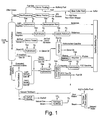
- reformate In a crude oil petroleum refinery process, crude oil as the feed material enters a distillation tower and different products are separated according to their boiling points. As seen in Figure 1 , one of these products is heavy naphtha. Impurities in this heavy naphtha, such as sulphur, mercaptans, nitrogen, metals etc. are removed in a hydrotreater unit and the heavy naphtha then enters a reforming unit. In this unit, the naphtha linear compounds are transformed into branched and ring compounds and, as a result, the octane number of the material increases.
- the output of the reforming unit is known as reformate (hereinafter referred to as "refinery reformate”) and is comprised of varying amounts of paraffins, olefins, napthenes and aromatics.
- This set of standards (“the international ASTM standards") are set out below in Table 1: Table 1: the international ASTM standards for regular and premium gasoline.
- refinery reformate The physical and chemical properties of refinery reformate depend on the reactor conditions and also the physical and chemical properties of the feed material. Sometimes, refinery reformate has the required physical and chemical properties to be used on its own as a gasoline conforming to the international ASTM standards. When refinery reformate does not have the required physical and chemical properties in order to be used on its own as a gasoline according to the international ASTM standards and/or in order to increase the volume of the gasoline, refinery reformate is typically mixed with other materials from the gasoline blending pool (see Fig. 1 ) so as to obtain the chemical and physical properties which conform to the international ASTM standards.
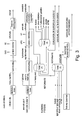
- Aromatic petrochemical plants carry out similar production processes to crude oil pertoleum refineries (see Fig. 2 ) and also produce reformate (hereinafter referred to as "aromatic reformate").
- gas condensate as feed material enters a distillation tower and the light end (C1-C4) and heavy end (C10 + ) products are separated.
- the intermediate fraction, naphtha heart cut (C5-C10 + ) (with boiling point range 80-205 °C), is then fed into a hydrotreating unit to remove impurities and the resulting product is known as "hydrotreated" naphtha heart cut (C5-C10 + ).
- This product then enters a catalytic reforming unit, which is comprised of a number of reactors and catalysts, and the linear compounds are transformed into branched and ring compounds.
- the operating conditions of the catalytic reforming unit depend on the feed material, reactor pressure, space velocity and the type of catalyst, but under normal operating conditions, the temperature is typically in the region of 480-525 °C and the pressure is typically in the region of 3-5 bar. Higher temperatures lead to greater efficiency of the catalytic reforming unit whereas lower temperatures can lead to the undesired formation of large amounts of cokes. Accordingly, a temperature towards the higher end of the range 480-525 °C is preferably selected, preferably above 510 °C.
- the catalytic reforming unit is typically comprised of a number of reactors, each comprising a boiler and each boiler having a corresponding inlet temperature and outlet temperature.
- the control room of the aromatic petrochemical plant typically controls the temperature and pressure of the boilers via a computer.
- the product of the reforming unit is aromatic reformate and, like refinery reformate, it is also comprised of paraffins, olefins, napthenes and aromatics. The relative proportion of these different types of compounds varies depending on the operating conditions of the catalytic reforming unit as well as the input material.
- aromatic reformate has a higher RON (research octane number) than refinery reformate.
- RON search octane number
- aromatic reformate is not suitable for the production of gasoline according to the international ASTM standards. This is due to the large proportion of aromatic compounds contained in aromatic reformate, which is often in the region of 75-85 %volume.
- the linear compounds of the hydrotreated naphtha heart cut (C5-C10 + ) are transformed into branched and ring compounds. This results in an increase in the octane number.
- the typical operating conditions of a catalytic reforming unit of an aromatic petrochemical plant involve a temperature in the region of 480-525 °C, preferably above 510 °C, and a pressure in the region of 3-5 bar.
- the present inventors that by selecting the temperature of the catalytic reforming unit to be below 510 °C, the physical and chemical properties of the resultant reformate can be altered, in particular the %volume of aromatic compounds contained in the resultant reformate can be reduced whilst ensuring at least 80% efficiency of the catalytic reforming unit.
- the present inventors that by adding an amount of hydrotreated naphtha heart cut (C5-C10 + ) to the reformate petroleum material, the %volume of aromatic compounds contained in the resultant reformate is reduced.
- a method of producing a reformate suitable for use in the production of gasoline comprising the steps of: obtaining naphtha heart cut (C5-C10 + ) from the distillation of gas condensate; removing undesired impurities from said naphtha heart cut (C5-C10 + ) by a hydrotreating step to produce hydrotreated naphtha heart cut (C5-C10 + ); and subjecting said hydrotreated naphtha heart cut (C5-C10 + ) to a catalytic reforming step to produce said reformate, wherein the temperature of said catalytic reforming step is selected to be in the range 485-510 °C, and/or wherein an amount of hydrotreated naphtha heart cut (C5-C10 + ) is mixed with said reformate such that said reformate contains up to 45 %volume of said hydrotreated naphtha heart cut (C5-C10 + ), so as to reduce the %volume of aromatics in said
- the reformate is suitable for the production of gasoline which meets the requirements of the international ASTM standards. More preferably, the gasoline meets the requirements of a set of ASTM standards corresponding to a gasoline selected from US Regular gasoline, US Premium gasoline, European Eurosuper gasoline, European Special gasoline and European Superplus gasoline.
- the naphtha heart cut is typically obtained from an aromatic petrochemical plant and the distillation of gas condensate is typically carried out in the distillation tower of an aromatic petrochemical plant.
- Impurities removed from the naphtha heart cut (C5-C10 + ) by hydrotreating include sulphur, mercaptans, nitrogen and metals.
- the temperature of the catalytic reforming step is selected to be in the range 485-510 °C, preferably the temperature should be selected to be in the range 490-505 °C, more preferably, in the range 495-505 °C. Reducing the temperature in this way can reduce the %volume of aromatics in the reformate to as low as 50 %volume.
- the temperature of the catalytic reforming step preferably refers to the temperature of the boiler(s) within the catalytic reactor(s), more preferably the inlet temperature.
- the temperature of the catalytic reforming step is typically controlled by the control room of the aromatic petrochemical plant, typically by the use of a computer.
- the temperature of the catalytic reforming step is selected such that the catalytic reforming unit operates at an efficiency of 80 % or higher.
- hydrotreated naphtha heart cut (C5-C10 + ) is mixed with the reformate
- the amount of hydrotreated naphtha heart cut (C5-C10 + ) added is such that the reformate contains between 5-45 %volume hydrotreated naphtha heart cut (C5-C10 + ), more preferably between 5-25 %volume hydrotreated naphtha heart cut (C5-C10 + ).
- the hydrotreated naphtha heart cut (C5-C10 + ) contains lower amounts of aromatic compounds than the reformate. Therefore, the addition of the hydrotreated naphtha heart cut (C5-C10 + ) reduces the %volume of aromatics in the reformate without the need to reduce the temperature of the catalytic reforming step.
- Hydrotreated naphtha heart cut (C5-C10 + ) has a lower RON than aromatic reformate. Therefore, the addition of hydrotreated naphtha heart cut (C5-C10 + ) to aromatic reformate will reduce the RON of aromatic reformate. However, due to the high RON of aromatic reformate, the addition of hydrotreated naphtha heart cut (C5-C10 + ) does not reduce the RON below a level such that the aromatic reformate cannot be used in the production of gasoline according to the international ASTM standards.
- the amount of said hydrotreated naphtha heart cut (C5-C10 + ) added to said reformate depends on the desired physical and chemical properties of the reformate.
- the hydrotreated naphtha heart cut (C5-C10 + ) added to said reformate is typically obtained from an aromatic petrochemical plant or an oil refinery.
- a method of producing gasoline comprising the steps of: producing a reformate according to the method of the first aspect of the present invention; and blending said reformate with at least one other petroleum material cut to produce gasoline.
- the addition of other petroleum material cuts alters the physical and chemical properties of the resultant gasoline.
- the at least one other petroleum material cut is other petroleum materials in a gasoline blending pool.
- the gasoline meets the requirements of the international ASTM standards. More preferably, the gasoline meets the requirements of a set of ASTM standards corresponding to a gasoline selected from US Regular gasoline, US Premium gasoline, European Eurosuper gasoline, European Special gasoline and European Superplus gasoline.
- the at least one other petroleum material cut is selected from butane (C4), light naphtha (C4-C5), pentane (C5), light straight run gasoline (S.R.G) (C5-C6), heavy components (C7-C10 - ) and hydrotreated naphtha heart cut (C5-C10 + ).
- Butane (C4) is added in order to increase the pressure of the resultant gasoline.
- Light naphtha (C4-C5), pentane (C5) and light S.R.G (C5-C6) are added to increase the pressure, to decrease the initial boiling point and to reduce the %volume of aromatics in the resultant gasoline.
- pentane is deemed to include all geometric isomers of pentane, including normal pentane and isopentane as well as combinations thereof.
- Heavy components C7-C10 -
- Hydrotreated naphtha heart cut C5-C10 +
- C5-C10 + which has a low %volume of aromatics
- These other petroleum material cuts have a lower RON than the reformate, meaning that their addition reduces the RON of the resultant gasoline.
- due to the high RON of the reformate it is still possible to make the RON of the resultant gasoline acceptable under the international ASTM standards.
- the gasoline contains up to 60 %volume of light S.R.G (C5-C6) and/or up to 25 %volume pentane (C5) and/or up to 5 %volume butane (C4) and/or up to 15 %volume light naphtha (C4-C5) and/or up to 5.0 %volume heavy components (C7-C10 - ) and/or up to 45 %volume hydrotreated naphtha heart cut (C5-C10 + ) and/or between 30-98 %volume of the reformate.
- the gasoline contains 5-60 %volume of light S.R.G (C5-C6) and/or 2-5 %volume butane and/or 5-25 %volume hydrotreated naphtha heart cut (C5-C10 + ) and/or 2-3 %volume heavy naphtha and/or 50-90 %volume of the reformate. Even more preferably, the gasoline contains 2-4 %volume butane and/or 10-40 %volume light S.R.G.
- the amount of the other petrochemical material cut added is selected depending on the desired physical and chemical properties of the resultant gasoline.
- additives can be added to the gasoline.
- additives include, but are not restricted to, octane enhancers, metal deactivators, anti-oxidants, anti-knock agents, gum and rust inhibitors, detergents, etc. These are added during and/or after blending to achieve the desired chemical and physical properties of the resultant gasoline.
- the additive is an octane enhancer and more preferably is methyl tertiary butyl ether (MTBE).
- MTBE methyl tertiary butyl ether
- the gasoline contains up to 9 %volume of MTBE. It is not essential to add MTBE to the gasoline.
- RON of a gasoline produced according to the present invention will depend on the composition of the feed material, typical gasolines produced according to the present invention have an RON of approximately 87-99.5. However, if MTBE is added, the RON of a gasoline produced according to the present invention can be increased.
- the gasoline can be mixed with other refinery gasolines in a gasoline blending pool. This has the effect of altering the physical and chemical properties of the gasoline and also increasing the volume of the gasoline.
- the gasoline can be mixed with the other refinery gasolines in order to increase their octane number.
- the at least one other petroleum material cut is selected from butane (C4), direct distillation gasoline, FCC hydrocracked gasoline, isomerate gasoline, alkylate gasoline and MTBE.
- such other petroleum materials are obtained from an oil refinery.
- the gasoline comprises 30-80 %volume of said reformate, 10-40 %volume of FCC hydrocracked gasoline, up to 5 %volume of butane (C4), up to 10 %volume of direct distillation gasoline, up to 8 %volume isomerate gasoline, up to 20 %volume alkylate gasoline and up to 9 %volume MTBE.
- the gasoline comprises up to 4 % volume butane and, still even more preferably, the gasoline comprises 2-4 %volume butane.
- the gasoline is European Eurosuper gasoline or European Superplus gasoline.
- a gasoline produced according to the methods of the first and second aspects.
- Preferred embodiments of the method of the first aspect (1) are as follows:
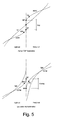
- Fig. 3 contains schematics of the production methods of both refinery reformate and aromatic reformate.
- a schematic of the methods of the present invention are shown. It can be seen that the reformate produced according to the present invention (in tank (1)) can be used to produce gasoline according to the international ASTM standards by blending it with other petroleum material cuts such as butane (C4), light naphtha (C4-C5), light S.R.G (C5-C6) and heavy components (C7-C10 - ) and additives such as MTBE (tank (2)).
- C4 butane
- C5-C5-C5-C6 light S.R.G
- heavy components C7-C10 -
- additives such as MTBE (tank (2)).
- the reformate can be blended with other petroleum material cuts such as butane (C4), direct distillation gasoline, FCC hydrocracked gasoline, isomerate gasoline and alkylate gasoline and additives such as MTBE to produce gasolines such as Eurosuper gasoline or Superplus gasoline (tank (3)).
- C4 butane
- direct distillation gasoline FCC hydrocracked gasoline
- isomerate gasoline isomerate gasoline and alkylate gasoline
- additives such as MTBE
- Tables 2 and 3 list laboratory test results for samples of a typical refinery reformate and a typical aromatic reformate, respectively: Table 2: laboratory test results for a typical refinery reformate.
- Table 4 lists laboratory test results for a sample of reformate produced according to the first aspect of the present invention wherein an amount of hydrotreated naphtha heart cut (C5-C10 + ) is mixed with the reformate: Table 4: laboratory test results for a reformate produced according to the first aspect of the present invention Test Result Test Result Sp.
- hydrotreated naphtha heart cut (C5-C10 + ) results in the physical and chemical properties of the reformate being closer to those of the refinery reformate. In particular, the aromatic content is reduced. Accordingly, the reformate is suitable for use in the production of gasoline according to the international ASTM standards.
- Table 5 lists values corresponding to the production of reformate according to one embodiment of the first aspect of the present invention when the inlet temperature of the catalytic reforming unit is selected to be in the range 485-510 °C and the reactor is operating at 80 % efficiency: Table 5: laboratory test results corresponding to the production of reformate according to the first aspect of the present invention wherein the inlet temperature of the catalytic reforming unit is selected to be in the range 485-510 °C Test Reactor 1 Reactor 2 Reactor 3 Inlet temperature / °C 503 503 503 Outlet temperature / °C 433 470 495 Decrease temperature / °C 70 33 8 Octane number 68 83 92.5 Increase octane number 23 15 9.5 Coke 2 % 3 % 8 % Efficiency of liquid 95 % 88 % 80 % Aromatics / %vol 52 % It can be seen that, when selecting the inlet temperature of each reactor in the catalytic reforming unit to be in the range 485-510 °
- Table 6 lists the compositions for an example of a reformate produced according to the first aspect of the present invention and a gasoline containing this reformate produced according to embodiments of the second aspect of the present invention and their corresponding RONs: Table 6: compositions of an example of a reformate and an example of a gasoline produced according to the methods of the present invention.
- Table 8 lists test results for a typical sample of hydrotreated naphtha heart cut after it has left the hydrotreating unit of an aromatic petrochemical plant: Table 8: laboratory test results for a typical sample of hydrotreated naphtha heart cut (1) and a typical sample of gas condensate feed for comparison (2).
Landscapes
- Chemical & Material Sciences (AREA)
- Oil, Petroleum & Natural Gas (AREA)
- Engineering & Computer Science (AREA)
- Chemical Kinetics & Catalysis (AREA)
- General Chemical & Material Sciences (AREA)
- Organic Chemistry (AREA)
- Production Of Liquid Hydrocarbon Mixture For Refining Petroleum (AREA)
Priority Applications (2)
| Application Number | Priority Date | Filing Date | Title |
|---|---|---|---|
| CA2732393A CA2732393A1 (fr) | 2008-07-28 | 2009-07-28 | Production d'essence utilisant un nouveau procede, melange de fractions de matieres de petrole |
| PCT/GB2009/001831 WO2010012985A1 (fr) | 2008-07-28 | 2009-07-28 | Production d’essence utilisant un nouveau procédé, mélange de fractions de matières de pétrole |
Applications Claiming Priority (1)
| Application Number | Priority Date | Filing Date | Title |
|---|---|---|---|
| IR1387050932 | 2008-07-28 |
Publications (1)
| Publication Number | Publication Date |
|---|---|
| EP2149594A1 true EP2149594A1 (fr) | 2010-02-03 |
Family
ID=83230790
Family Applications (1)
| Application Number | Title | Priority Date | Filing Date |
|---|---|---|---|
| EP09251755A Withdrawn EP2149594A1 (fr) | 2008-07-28 | 2009-07-08 | Production d'essence selon un nouveau procédé mélangeant des découpes de matériaux de pétrole |
Country Status (3)
| Country | Link |
|---|---|
| EP (1) | EP2149594A1 (fr) |
| CA (1) | CA2732393A1 (fr) |
| WO (1) | WO2010012985A1 (fr) |
Cited By (6)
| Publication number | Priority date | Publication date | Assignee | Title |
|---|---|---|---|---|
| RU2572514C1 (ru) * | 2014-12-01 | 2016-01-20 | Общество с ограниченной ответственностью "Газпром добыча Астрахань" (ООО "Газпром добыча Астрахань") | Способ получения автомобильного бензина |
| WO2016054316A1 (fr) * | 2014-10-03 | 2016-04-07 | Saudi Arabian Oil Company | Procédé en deux phases de production de composés aromatiques à partir de condensats de gaz de schiste/gaz naturel |
| WO2016054323A1 (fr) * | 2014-10-03 | 2016-04-07 | Saudi Arabian Oil Company | Procédé de production de composés aromatiques à partir de charges d'alimentation d'hydrocarbures à température d'ébullition large |
| CN119685056A (zh) * | 2023-09-24 | 2025-03-25 | 中国石油化工股份有限公司 | 催化重整装置戊烷馏分生产发泡剂原料的装置及方法 |
| CN119685055A (zh) * | 2023-09-24 | 2025-03-25 | 中国石油化工股份有限公司 | 戊烷馏分生产发泡剂原料的装置和方法 |
| CN119685054A (zh) * | 2023-09-24 | 2025-03-25 | 中国石油化工股份有限公司 | 催化重整装置戊烷馏分生产发泡剂原料的装置和方法 |
Families Citing this family (1)
| Publication number | Priority date | Publication date | Assignee | Title |
|---|---|---|---|---|
| CN104611074B (zh) * | 2015-01-12 | 2016-06-29 | 四川帝标新能源科技有限公司 | 一种新型液体燃料及其制备方法 |
Citations (3)
| Publication number | Priority date | Publication date | Assignee | Title |
|---|---|---|---|---|
| US3172841A (en) * | 1965-03-09 | Process for upgrading natural sas condensates | ||
| GB2386904A (en) * | 2002-01-31 | 2003-10-01 | Chevron Usa Inc | Upgrading and reforming Fischer-Tropsch products using recycled hydrogen |
| US20040218547A1 (en) * | 2003-04-30 | 2004-11-04 | Rhodey William George | Process modification to maximize benzene production |
-
2009
- 2009-07-08 EP EP09251755A patent/EP2149594A1/fr not_active Withdrawn
- 2009-07-28 WO PCT/GB2009/001831 patent/WO2010012985A1/fr not_active Ceased
- 2009-07-28 CA CA2732393A patent/CA2732393A1/fr not_active Abandoned
Patent Citations (3)
| Publication number | Priority date | Publication date | Assignee | Title |
|---|---|---|---|---|
| US3172841A (en) * | 1965-03-09 | Process for upgrading natural sas condensates | ||
| GB2386904A (en) * | 2002-01-31 | 2003-10-01 | Chevron Usa Inc | Upgrading and reforming Fischer-Tropsch products using recycled hydrogen |
| US20040218547A1 (en) * | 2003-04-30 | 2004-11-04 | Rhodey William George | Process modification to maximize benzene production |
Non-Patent Citations (5)
| Title |
|---|
| ALIEV V S ET AL: "High-octane reformed gasolines and the selective adsorption of normal paraffinic hydrocarbons", CHEM TECHNOLOGY FUELS OILS; CHEMISTRY AND TECHNOLOGY OF FUELS AND OILS FEB 1965 NEW YORK, NY, UNITED STATES, no. 2, February 1965 (1965-02-01), pages 97 - 100, XP002557760 * |
| EMEL'YANOV V E ET AL: "Use of natural gasoline as a motor fuel", CHEMISTRY AND TECHNOLOGY OF FUELS AND OILS 1979 NOV-DEC, vol. 15, no. 11-12, November 1979 (1979-11-01), pages 886 - 888, XP002557763 * |
| KULIEV A M ET AL: "UTILIZATION OF GAS CONDENSATE FROM MASTAKH FIELD (YAKUTSK ASSR)", CHEMISTRY AND TECHNOLOGY OF FUELS AND OILS 1981 NOV-DEC, vol. 17, no. 11-12, November 1981 (1981-11-01), pages 603 - 606, XP002557762 * |
| PROKOPYUK S G ET AL: "Experience in hydrotreating naphtha from Karachaganak gas condensate", CHEMISTRY AND TECHNOLOGY OF FUELS AND OILS 1989 JAN, vol. 24, no. 5-6, January 1989 (1989-01-01), pages 239 - 242, XP002557764 * |
| PROKOPYUK S G ET AL: "Experience in processing naphtha from Karachaganak condensate in catalytic reformer", CHEMISTRY AND TECHNOLOGY OF FUELS AND OILS 1989 JAN, vol. 24, no. 5-6, January 1989 (1989-01-01), pages 237 - 239, XP002557761 * |
Cited By (14)
| Publication number | Priority date | Publication date | Assignee | Title |
|---|---|---|---|---|
| JP2017534718A (ja) * | 2014-10-03 | 2017-11-24 | サウジ アラビアン オイル カンパニー | 天然ガス/シェールガスコンデンセートからの芳香族生産のための2ステッププロセス |
| CN107001951B (zh) * | 2014-10-03 | 2021-01-15 | 沙特阿拉伯石油公司 | 由宽沸点温度烃原料生产芳香族化合物的工艺 |
| WO2016054323A1 (fr) * | 2014-10-03 | 2016-04-07 | Saudi Arabian Oil Company | Procédé de production de composés aromatiques à partir de charges d'alimentation d'hydrocarbures à température d'ébullition large |
| US9657238B2 (en) | 2014-10-03 | 2017-05-23 | Saudi Arabian Oil Company | Process for producing aromatics from wide-boiling temperature hydrocarbon feedstocks |
| CN107001951A (zh) * | 2014-10-03 | 2017-08-01 | 沙特阿拉伯石油公司 | 由宽沸点温度烃原料生产芳香族化合物的工艺 |
| CN107109252A (zh) * | 2014-10-03 | 2017-08-29 | 沙特阿拉伯石油公司 | 由天然气/页岩气凝结物生产芳香族化合物的两步工艺 |
| US9957451B2 (en) | 2014-10-03 | 2018-05-01 | Saudi Arabian Oil Company | Two-step process for aromatics production from natural gas/shale gas condensates |
| JP2017534719A (ja) * | 2014-10-03 | 2017-11-24 | サウジ アラビアン オイル カンパニー | 広い沸騰温度の炭化水素原料から芳香族を生成するプロセス |
| WO2016054316A1 (fr) * | 2014-10-03 | 2016-04-07 | Saudi Arabian Oil Company | Procédé en deux phases de production de composés aromatiques à partir de condensats de gaz de schiste/gaz naturel |
| CN107109252B (zh) * | 2014-10-03 | 2021-01-15 | 沙特阿拉伯石油公司 | 由天然气/页岩气凝结物生产芳香族化合物的两步工艺 |
| RU2572514C1 (ru) * | 2014-12-01 | 2016-01-20 | Общество с ограниченной ответственностью "Газпром добыча Астрахань" (ООО "Газпром добыча Астрахань") | Способ получения автомобильного бензина |
| CN119685056A (zh) * | 2023-09-24 | 2025-03-25 | 中国石油化工股份有限公司 | 催化重整装置戊烷馏分生产发泡剂原料的装置及方法 |
| CN119685055A (zh) * | 2023-09-24 | 2025-03-25 | 中国石油化工股份有限公司 | 戊烷馏分生产发泡剂原料的装置和方法 |
| CN119685054A (zh) * | 2023-09-24 | 2025-03-25 | 中国石油化工股份有限公司 | 催化重整装置戊烷馏分生产发泡剂原料的装置和方法 |
Also Published As
| Publication number | Publication date |
|---|---|
| WO2010012985A8 (fr) | 2010-07-29 |
| CA2732393A1 (fr) | 2010-02-04 |
| WO2010012985A1 (fr) | 2010-02-04 |
Similar Documents
| Publication | Publication Date | Title |
|---|---|---|
| US8066867B2 (en) | Combination of mild hydrotreating and hydrocracking for making low sulfur diesel and high octane naphtha | |
| EP2149594A1 (fr) | Production d'essence selon un nouveau procédé mélangeant des découpes de matériaux de pétrole | |
| EP3645673B1 (fr) | Composants combustibles d'huiles désasphaltées hydrotraitées | |
| CN1224679C (zh) | 一种生产低硫汽油的方法 | |
| USH1305H (en) | Reformulated gasolines and methods of producing reformulated gasolines | |
| CA2738502C (fr) | Composition de carburant de distillat a haute energie et son procede de fabrication | |
| US10597594B1 (en) | Low sulfur marine fuel compositions | |
| CA2029426C (fr) | Gazoline et mazouts legers produits a partir d'huile legere pour cycles | |
| AU639963B2 (en) | Production of gasoline and distillate fuels from light cycle oil | |
| EP2716741A1 (fr) | Composition d'huile lourde c et son procédé de fabrication | |
| WO2020112095A1 (fr) | Compositions de combustible marin à faible teneur en soufre | |
| CN105324464A (zh) | 用于制备柴油的方法和设备 | |
| CN101218327A (zh) | 轻油燃料 | |
| CN113166655B (zh) | Fcc石脑油的多级分馏以及芳烃和汽油馏分的后处理和回收 | |
| US10781391B2 (en) | Low sulfur marine fuel compositions | |
| JP5186183B2 (ja) | ガソリン組成物 | |
| US2055455A (en) | Process for manufacturing motor fuel | |
| JP3825878B2 (ja) | 貯蔵安定性の良好なa重油組成物 | |
| US2967816A (en) | Process for decolorizing petroleum resins and products obtained by adding the decolorized resins to fuel oil | |
| JP3825876B2 (ja) | 貯蔵安定性、色相安定性及び通油性の良好なa重油組成物 | |
| RU2258732C1 (ru) | Способ облагораживания бензина каталитического крекинга | |
| EP0529942B1 (fr) | Un procédé pour réduire la pollution atmosphérique | |
| Cooper et al. | Ultra deep desulfurization of diesel: How an understanding of the underlying kinetics can reduce investment costs | |
| US20120101316A1 (en) | Method for the preparation of a fuel composition for use in gasoline engines and blending component | |
| JP4626950B2 (ja) | 環境対応ガソリンおよびその製造方法 |
Legal Events
| Date | Code | Title | Description |
|---|---|---|---|
| PUAI | Public reference made under article 153(3) epc to a published international application that has entered the european phase |
Free format text: ORIGINAL CODE: 0009012 |
|
| AK | Designated contracting states |
Kind code of ref document: A1 Designated state(s): AT BE BG CH CY CZ DE DK EE ES FI FR GB GR HR HU IE IS IT LI LT LU LV MC MK MT NL NO PL PT RO SE SI SK SM TR |
|
| AX | Request for extension of the european patent |
Extension state: AL BA RS |
|
| 17P | Request for examination filed |
Effective date: 20100802 |
|
| 17Q | First examination report despatched |
Effective date: 20101110 |
|
| STAA | Information on the status of an ep patent application or granted ep patent |
Free format text: STATUS: THE APPLICATION IS DEEMED TO BE WITHDRAWN |
|
| 18D | Application deemed to be withdrawn |
Effective date: 20120201 |