EP2150121B1 - Fromage à faible teneur en matière grasse et sans matière grasse ayant des propriétés améliorées - Google Patents
Fromage à faible teneur en matière grasse et sans matière grasse ayant des propriétés améliorées Download PDFInfo
- Publication number
- EP2150121B1 EP2150121B1 EP08745998A EP08745998A EP2150121B1 EP 2150121 B1 EP2150121 B1 EP 2150121B1 EP 08745998 A EP08745998 A EP 08745998A EP 08745998 A EP08745998 A EP 08745998A EP 2150121 B1 EP2150121 B1 EP 2150121B1
- Authority
- EP
- European Patent Office
- Prior art keywords
- cheese
- glycerides
- fat
- nfpc
- base
- Prior art date
- Legal status (The legal status is an assumption and is not a legal conclusion. Google has not performed a legal analysis and makes no representation as to the accuracy of the status listed.)
- Not-in-force
Links
Images




Classifications
-
- A—HUMAN NECESSITIES
- A23—FOODS OR FOODSTUFFS; TREATMENT THEREOF, NOT COVERED BY OTHER CLASSES
- A23C—DAIRY PRODUCTS, e.g. MILK, BUTTER OR CHEESE; MILK OR CHEESE SUBSTITUTES; PREPARATION THEREOF
- A23C19/00—Cheese; Cheese preparations; Making thereof
- A23C19/06—Treating cheese curd after whey separation; Products obtained thereby
- A23C19/09—Other cheese preparations; Mixtures of cheese with other foodstuffs
- A23C19/093—Addition of non-milk fats or non-milk proteins
-
- A—HUMAN NECESSITIES
- A23—FOODS OR FOODSTUFFS; TREATMENT THEREOF, NOT COVERED BY OTHER CLASSES
- A23C—DAIRY PRODUCTS, e.g. MILK, BUTTER OR CHEESE; MILK OR CHEESE SUBSTITUTES; PREPARATION THEREOF
- A23C19/00—Cheese; Cheese preparations; Making thereof
- A23C19/06—Treating cheese curd after whey separation; Products obtained thereby
- A23C19/068—Particular types of cheese
- A23C19/08—Process cheese preparations; Making thereof, e.g. melting, emulsifying, sterilizing
- A23C19/082—Adding substances to the curd before or during melting; Melting salts
Definitions
- the present invention relates generally to the field of cheese manufacturing. More particularly, the present invention provides novel compositions and methods for preparing processed cheese with low fat or nonfat content and with improved color, texture, stickiness, and baking properties.
- Monoglycerides and diglycerides hold a GRAS status and are therefore g enerally r ecognized a s s afe for inclusion in food products.
- MG and DG are added to bakery products to act as dough conditioners and strengtheners, crumb softeners, and also to increase shelf life.
- MG and DG have commonly been included in cheese spreads and ice cream, to impart a smoother and more uniform consistency.
- U.S. Patent No. 5,891,495 discloses the use of an oil-water emulsion of a diglyceride mixture, which mixture can also contain some monoglycerides, as an emulsion suitable as cream alternative for ice cream applications.
- emulsifiers to processed cheese can bring about de-emulsification in the system, resulting in the formation of large pools of free oil during cheese cooking. Trace amounts ( ⁇ 0.2%) of emulsifiers have sometimes been added to some types of cheese products.
- Emulsifying salts or melting salts such as sodium phosphates or citrates, are commonly used in process cheese and these salts disrupt caseins to help facilitate caseins acting as emulsifiers. These emulsifying salts are not true emulsifiers themselves.
- MG and DG are preferentially absorbed onto the interface over higher molecular weight surfactants, which in the case of milk is protein. This effect can be seen during ice cream production where MG and DG compete with proteins at the fat/water and the air/water interfaces.
- Methods for making processed cheese include acidifying a reduced-fat milk source to obtain a cheese base comprising particles, and adding glycerides to the cheese base, to obtain processed cheese.
- the methods may include acidifying a reduced-fat milk source to a pH of about 5.4 to 5.8 to obtain a cheese base comprising particles; and adding glycerides to the cheese base, the glycerides being about 0.4% to about 8% (w/w), glyceride weight to cheese base weight, to obtain processed cheese.
- the methods may include heating the cheese base to between about 60°C and about 85°C prior to adding glycerides.
- the methods may include heating the cheese base to between about 60°C and about 85°C during adding glycerides.
- the methods may include heating the cheese base from about 60°C to about 85°C after adding glycerides. The heating may be conducted for between about 2 min to about 12 min.
- the methods may include the step of reducing the size of the particles of the cheese base prior to heating.
- the methods may include the step of adding water to the cheese base during heating.
- the methods may include adding about 4% (w/w) glycerides to the cheese base, glyceride weight to cheese base weight.
- the glycerides used in the practice of the methods may include monoglycerides and diglycerides.
- the glycerides may include about 40% to about 80% of monoglycerides and about 20% to about 60% of diglycerides.
- the glycerides include about 60% monoglycerides and about 40% diglycerides.
- the glycerides may be sequentially added to the cheese base.
- the cheese base may be substantially free of whey.
- the methods may include the step of pasteurizing the cheese base prior to acidifying the reduced-fat milk source.
- the methods may include warming the reduced-fat milk source to between about 33°C and 40°C prior to acidifying.
- the methods may include warming of the reduced-fat milk source to between about 33°C and about 40°C during the acidifying.
- the reduced-fat milk source is acidified to a pH of about 5.6.
- the acidifying may include adding citric acid.
- Methods of processed cheese manufacture include the steps of acidifying a reduced-fat milk source to a pH of between about 5.4 and about 5.8 to obtain a cheese base comprising particles, and adding about 0.4% to about 8% (w/w) glycerides to the cheese base to obtain processed cheese.
- the glycerides may comprise about 40% to about 80% of monoglycerides and about 20% to about 60% of diglycerides.
- Cheese product which contains less than about 0.7 wt. % sodium and between about 54 wt. % and about 64 wt. % moisture.
- the cheese product is obtained by acidifying a reduced-fat milk source to a pH of between about 5.4 and about 5.8, to obtain a cheese base comprising particles, and adding between about 0.4% to about 8% glycerides to the cheese base, glycerides weight per weight of the cheese base, to obtain the cheese product.
- the cheese product may be processed cheese.
- Figure 1 is a graph showing acid-base buffering curves of non-fat cheese base ( ⁇ ), and the non-fat processed cheese (NFPC) containing 0% (V), 0.1% (
- Figure 2 is a graph illustrating the tangent delta for the non-fat cheese base ( ⁇ ), and the NFPC containing 0% ( ⁇ ), 0.1% (
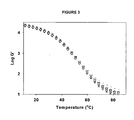
- Figure 3 is a graph illustrating the storage modulus for the non-fat cheese base ( ⁇ ), and the NFPC containing 0% ( ⁇ ), 0.1% (
- Figure 4 is a graph illustrating the viscosity as a function of temperature for the NFPC manufactured containing 0% (V), 0.1% (
- Figure 5 is a graph illustrating force as a function of time for the non-fat cheese base ( ⁇ ), and the NFPC containing 0% ( ⁇ ), 0.1% (
- Figure 6 shows images of transmission electron micrographs for the NFPC made with: (a) 0.1% glyceride, (b) 1% glyceride, (c) 2% glyceride and (d) 4% glyceride.
- Figure 7 shows comparative images of: (A) commercial fat-free processed Mozzarella cheese; (B) cheese of the present invention made with the addition of 0.5% glyceride blend (w/w); (C) cheese of the present invention made with the addition of 2% glyceride blend (w/w).
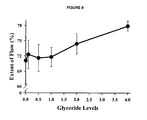
- Figure 8 is a graph illustrating the impact of various concentrations of glycerides on flow of process cheese.
- the present invention is particularly well-suited for use in manufacturing low-fat and fat-free cheeses with improved color, texture and baking properties.
- the present invention relates to processed cheeses with low fat content (i.e., fat-free and low-fat cheeses) and to methods of preparing same.
- the present invention is not limited to processed cheese, and is also well-suited for improving the texture of a variety of cheeses, such as heated curd cheeses including string cheese, Mozzarella, Provolone, and other cheeses.
- Low-fat cheese refers to cheese that contains less than 6 g of fat per 100 g of cheese (i.e., less than 6% fat).
- “Fat-free” cheese also called “non-fat” cheese refers to cheese that contains less than 0.5 g fat per one serving of 28 g (i.e., less than 1.78% fat).
- reference to “non-fat processed cheese” or “NFPC” is also meant to include both fat-free processed cheese and low-fat processed cheese, i.e. all processed cheese with less than 6 g of fat per 100 g of cheese (i.e., less than 6% fat).
- reference to “reduced-fat milk” is meant to include low-fat milk, non-fat milk and skim milk.
- the present invention provides fat-free processed cheese with lower sodium content than other process cheeses since no sodium based emulsifying salts are used in the manufacture of process cheese according to the present invention.
- sodium is usually added in the form of some type of sodium salt.
- the present invention provides fat-free processed cheese with desirable textural attributes, and an improved baking ability and methods to produce that cheese.
- Many of the problems associated with the quality of low-fat and fat-free cheeses can be improved using the methods and compositions of the present invention. At least some of these problems can be overcome by altering the protein interactions in the fat-free cheese base through the addition of an oil/water emulsifier, in the form of glyceride blend, according to the methods of the present invention.
- the present invention is particularly well suited for processed cheese.
- Process cheese is a food product made from a source such as regular cheese and other unfermented dairy ingredients, and optionally may include one or more of emulsifiers, extra salt, and food colorings. Many flavors, colors, and textures of processed cheese exist. Examples of processed cheese include American cheese, Velveeta, and Laughing Cow. It is believed that the improvements in color, texture, stickiness and bake attributes are suited for all types or forms of process cheese including blocks, slice-on-slice, individually-wrapped-slices, and spreads.
- compositions and methods of the present invention will be particularly suited for the manufacture of low-fat and/or fat-free processed cheese for use in food chains, institutional settings, such as primary education institutions, and in general anywhere where the dietary and health requirements limit the types of foods that can be served.
- the term "cheese” may be any kind of cheese and it includes, but is not limited to, natural cheese, cheese analogues, and processed cheese.
- the present invention is directed to methods and compositions for manufacturing low-fat and fat-free (non-fat) processed cheese.
- the cheese may be obtained using suitable processes known in the art, such as enzymatic coagulation of the cheese milk with rennet, or by acidic coagulation of the cheese milk with food grade acid or acid produced by lactic acid bacteria growth.
- the manufacture of natural cheese generally includes four basic steps: coagulating, draining, salting, and ripening.
- Processed cheese manufacture generally incorporates extra steps, including grinding/grating, blending, and melting.
- the method steps outlined herein can thus take the form of the same steps with variations during each step, the same steps with a variation in their order, special applications, or different ripening practices.
- embodiments of the methods of the present invention can be varied according to methods known in the art.
- the milk source (starting material for processed cheese) may be, for example, natural cheese, whole milk or skim milk, homogenized or non-homogenized, filled (as with vegetable oil, such as cottonseed or corn oil) milk, or the like.
- various types of reduced-fat milk including but not limited to low-fat milk, non-fat milk, or skim milk, may be used as milk source, i.e. starting material.
- the milk source may optionally be refrigerated or cooled to about 4°C before acidification as described below.
- stirred curd cheese base is manufactured by direct acidification of milk.
- the cheese base is acidified to between about pH 5.4 to 5.8 with continuous agitation.
- the cheese base is acidified to about pH 5.6.
- Acidification may be performed according to methods known in the art, for example using citric acid as the acidifying acid.
- the acidifying acid may be lactic acid.
- a variety of calcium chelating acids may be used for acidification.
- Various organic and inorganic acids may be used for this purpose to the extent that they are permissible in food products including, for example, acetic, fumaric, malic, citric, phosphoric acid, and the like.
- the cheese base may be warmed to a temperature of about 35°C to about 40°C for a period of time.
- the cheese base may be warmed to a temperature of about 37°C for a period of about 20 minutes. This step may be used to drive out some of the moisture from the cheese base. Rennet coagulant may be added to coagulate the curd.
- no starter culture is used.
- the use of starter culture is optional.
- the use of starter culture can be one way to provide acidification of the cheese base.
- Calcium chelating agents for example citrate salts, can also be used to remove some calcium crosslinking material.
- the cheese base e.g. in the form of coagulated curd
- cooking or “heating” refers to the processing step of heating the cheese base, or the cheese base with desired additives, emulsifiers, glycerides, glyceride blends, etc.
- Cooking can be accompanied by mixing, which helps disrupt the cheese matrix and disperse the caseins. Different cooking temperatures can be used. For example, cooking can be performed at a temperature of about 60°C to about 85°C. In one example, the cooking temperature is about 70°C. Cooking can be performed for varying periods of time; this also depends on the type of cooker and rate of curd heating.
- heating at about 60°C to about 85°C is carried out for a period of about 2 minutes to about 10 minutes. In another example, cooking is carried out at about 70°C for a period of about 4 minutes.
- the processed cheese may be stirred.
- the processed cheese may be then poured into molds, it may be cooled, and it may be sliced if desired.
- the processed cheese may also be applied to chill rolls or other devices or equipment used to produce process cheese slices that are known to the industry. Both wet and dry cookers may be used for heating the curd/cheese.
- the manufactured cheese can be cooled, sliced, and packaged or packaged, cooled and later sliced.
- molten cheese can be poured into 9 kg Wilson-style hoops and stored at 4°C for 7 days before being used for consumption.
- the processed cheese of the present invention contains emulsifiers.
- An "emulsifier” is a substance which stabilizes an emulsion.
- the emulsifiers used in the manufacture of the cheese of the present invention are glycerides.
- Glycerides are esters formed from glycerol and fatty acids. Glycerol has three hydroxyl functional groups that can be esterified with one, two or three fatty acids to form monoglycerides, diglycerides, and triglycerides.
- a "monoglyceride” (MG) is a glyceride consisting of one fatty acid chain covalently bonded to a glycerol molecule through an ester linkage.
- a “diglyceride” (DG) is a glyceride consisting of two fatty acid chains covalently bonded to a glycerol molecule through ester linkages.
- the commercial source of mono- and diglycerides may be animal (e.g., cow- or hog-derived) or vegetable, and they may be synthetically made as well.
- Mono- and diglycerides are food additives that are found in bakery products, beverages, ice cream, chewing gum, shortening, whipped toppings, margarine, and confections.
- the present invention provides for the addition of glycerides to the cheese base.
- the glycerides are provided in the form of a glyceride blend.
- the term "glyceride blend" refers to a composition that includes a mix of glycerides.
- the glyceride blend may include any combination of glycerides.
- the glyceride blend may include any combinations of monoglycerides (MG), diglycerides (DG), and triglycerides (TG).
- the glyceride added to the cheese base may include combinations of monoglycerides and diglycerides present in different relative proportions.
- HLB hydrophilic-lipophilic balance
- stabilizers such as polysaccharide food gums may be added to the glycerides.
- Vegetable oils and animal fats can be used as glyceride sources, as these contain mostly triglycerides, which can be broken down by natural enzymes (e.g. lipases) into mono- and diglycerides and free fatty acids.
- the order of addition of the glycerides is optional, if several different glyceride types are individually added.
- different glycerides may be added at different times, so that they are mixed with each other.
- different glycerides may be added simultaneously, so that they are mixed with each other.
- the monoglycerides and diglycerides can be added individually, sequentially, or they can be blended together as in commercial mono/diglyceride blends, and then added as glyceride blend during the manufacturing of the processed cheese of this invention.
- a mono-/diglyceride blend can be added to the non-fat cheese base during non-fat processed cheese (NFPC) manufacture in a Blentech twin-screw cooker along with water to maintain final moisture content of about 59%.
- NFPC non-fat processed cheese
- Many other types of cookers for example, continuous cookers
- the relative amounts of glycerides in the glyceride blend can vary. In different embodiments, a variety of MG:DG ratios in the glyceride blend can be used.
- the glyceride blend includes about 60% of MG and about 40% of DG (i.e., 60:40 of MG:DG).
- the glyceride blend may include monoglycerides, diglycerides, and triglycerides. The amount of each of the monoglycerides, diglycerides, and triglycerides in the glyceride blend may vary.
- the glyceride blend may include monoglycerides and triglycerides.
- the glyceride blend may include diglycerides and triglycerides.
- Mono-diglycerides blends e.g. glyceride blends produced from an esterification between triglyceride and glycerol, are commercially available.
- glyceride blends in variations depending on the concentration of mono-diglyceride, typically ranging between 40% and 60%, are commercially available from Danisco (Copenhagen, Denmark), under the names of GRINDSTED ® MONO-DI HP 60 and CREMODAN ® Super.
- the addition of glycerides and their incorporation into processed cheese according to this invention has very positive effects on low-fat and fat-free processed cheese during baking.
- the novel cheese compositions described herein exhibit desirable attributes, including whiteness in color when both heated and cooled, decrease in, or absence of, stickiness, minimal skinning on the melted cheese surface, and minimal browning or scorching.
- the novel cheese compositions described herein have improved one or more desirable attributes such as texture, stickiness, color, and/or baking properties.
- the concentration of glyceride in the low-fat and non-fat processed cheese has a direct impact on the chewiness and hardness of the cheeses when baked. Using methods known in the art, these sensory attributes can be easily regulated to suit customer preferences for the desired degree of chewiness and/or hardness/softness, and other desired organoleptic properties in the baked low-fat and non-fat processed cheese.
- the process of manufacturing processed cheese may include various mixing, stirring, and/or agitating steps. These steps can be performed at any desirable point in time, and may help dispersion of the cheese, when mixing the cheese base and /or the processed cheese with any additives, e.g. with glycerides. For example, agitation can be beneficially maintained throughout the preparation of the processed cheese.
- food additives such as various condiments, spices, table salt, coloring, sodium phosphate, calcium chloride, calcium phosphate, milk solids, flavorings (including cheese slurries), fruits, vegetables, meats, stabilizers, condiments, preservatives, vitamins, minerals, and the like, can be added depending upon the desired final attributes of the processed cheese product.
- the methods of the present invention may include the step of pasteurizing the cheese base.
- one or more enzymes e.g., coagulating enzymes, lipases, or enzyme modified cheese may be used.
- fermenting bacteria may be used.
- Low levels ( ⁇ 6g/100g curd) of a milk fat source may also be added to the milk or to curd to improve bake performance if a low-fat cheese is being manufactured.
- Water may be added during the process of manufacturing processed cheese. Water may be added at any point in time during the manufacture. Water may be added at multiple times. For example, water may be added before cooking; water may be added during cooking. In one example, water may be added both before cooking and during cooking. Water may also be used to adjust the relative moisture content in the processed cheese to a desired value.
- the methods and compositions of the present invention provide for the manufacture of processed cheese that can be used in slice-on-slice applications, where the slices of process cheese are stacked on top of each other without a plastic wrapping.
- One attribute of the processed cheese produced according to the present invention is that the cheese is relatively non-sticky, i.e., its low degree of surface stickiness allows for relatively easy removal of individual slices from a stack. As well, this cheese does not exhibit excessive stickiness to the cheese manufacturing equipment.
- the produced process cheese retains some fibrous texture which is also a desirable attribute.
- the methods of the present invention obviate the need for addition of lecithin or other compounds that decrease cheese stickiness, although, if desired, lecithin can still be used in some situations.
- the processed cheese of the present invention may be presented in a variety of shapes and forms, including individual portions, individual slices, individually wrapped slices, rectangular blocks, cylinders, tubes, and the like.
- the processed cheese made according to the present invention is substantially free of emulsifying salts.
- substantially free of emulsifying salts is meant that no sodium- or potassium-based emulsifying salts are added during the manufacture of the processed cheese of the present invention.
- salts such as citrates, phosphates, sodium and potassium salts, and some low amounts of emulsifying salts may be present in the processed cheese due to these salts that were derived from salts that were already present in the milk source used for making the cheese base.
- Most of the citrates, sodium and potassium ions are soluble and the majority of these salts should be lost in cheese whey.
- the cheese base used to make cheese according to the present invention is substantially free of whey.
- substantially free of whey is meant that the cheese base only contains the whey that was originally present in the cheese milk source used for curd manufacture and no added whey proteins were added to the milk or during curd manufacture or subsequent processing.
- the processed cheese may have a sodium level of less than about 700 mg/100 g (0.7%) whereas typical processed cheese has higher sodium levels of more than 1500 mg/100g due to the addition of sodium-based emulsifying salts.
- the curd-whey mixture was then stirred as the temperature in the vat was increased from 33°C to 37°C over a 20 min period. Once the desired cheese base warming temperature (37°C) was reached, the whey was completely drained from the vat. The curd was then dry salted at a rate of 1022 g/454 kg milk before being filled into 9 kg Wilson style hoops and pressed for 60 min at 275.8 kPa. Two 9 kg blocks of cheese were obtained from each vat. Cheese bases were manufactured at the desired pH value at least three times.
- the mix speed was then increased to 100 rpm and direct steam (about 82.7 kPa) was applied to the system for 100 s or until the temperature of the molten cheese reached about 60°C. Indirect steam (about 193 kPa) was then used to further increase the temperature of the mix to 70°C. Once this temperature was reached the heat was turned off and the processed cheese was held at 70°C for 4 min. Vacuum pressure (about 1.4 kPa) was applied following the holding time for a total of 15 s to help remove air bubbles, and the mixer was switched off after 10 s of vacuum. The molten cheese was then poured into 9 kg Wilson style hoops, and stored at 4°C. Analysis was carried out on the NFPC following 7 days of storage. Non-fat processed cheese making was performed in triplicate.
- Both the cheese base and the NFPC were analyzed for moisture, according to IDF, 1982, Determination of Total Solids of Cheese and Processed Cheese, 4A, International Dairy Federation, Brussels, Belgium .
- the pH values of both the cheese base and the NFPC were analyzed by direct insertion of the probe into the cheese samples, using a pH meter 420A, Orion Research, Beverly, MA.
- the cheese base and the NFPC were analyzed for amount of protein using the Kjeldahl method, as described in IDF, 1986, Determination of Nitrogen Content (Kjeldahl Method) and Calculation of Crude Protein Content, 20A, International Dairy Federation, Brussels, Belgium .
- a cylindrical sample (30 mm diameter, 7 mm height) was taken from the NFPC, placed in a sealed plastic bag and stored overnight at 4°C.
- the extent of flow (EOF) i.e., cheese height as a % of initial cheese height when cheese was heated to 60°C in an oven set at 72°C, was measured using the UW-Melt Profiler that was described by Muthukumarappan et al., 1999, J. Dairy Sci. 82: 2280-2286 .
- the vane measuring system was lowered into the cup and the sample was first heated from 25°C to 50°C in 12.5 min and held at 50°C for 15 s. At this point the rotation of the vane measuring system began at a shear rate of 0-501/s. The sample was further heated from 50°C to 70°C in 10 min at a shear rate of 1 1/s and held at this temperature and shear rate for 4 min. The sample was cooled from 70°C to 45°C in 12.5 min still maintaining the shear rate as before. The change in the viscosity of the sample was determined during both the heating and cooling cycles of the test.
- Propylene oxide (PO) was used as a transition solvent 2 x 7 minutes at RT. Fully dehydrated samples were infiltrated in increasing concentrations of PolyBed 812 (Polysciences Inc., Warrington, PA) and propylene oxide mixtures, in the order shown in Table 1. Table 1. Summary of infiltration of samples during embedding PolyBed 812 PO Time Temperature 25% 75% ON RT 33% 66% ON RT 50% 50% ON RT 75% 25% ON RT 85% 15% ON RT 90% 10% ON RT 100% 0% ON RT 100% 0% 4 x 45 min 60°C
- Embedding took place in fresh PolyBed 812 for 48 hours at 60°C. Fully polymerized embedded samples were sectioned on a Leica EM UC6 ultramicrotome at 80 nm. The sections were collected on Pioloform (Ted Pella, Inc., Redding, CA) coated 2x1 oval slot grids and bare 300 mesh Cu thin-bar grids (EMS, Hatfield, PA), and post-stained in uranyl acetate and lead citrate. The sectioned samples were viewed at 80 kV on a Philips CM120 or JEOL100CX microscope, both equipped with MegaView III camera (Olympus Soft Imaging System, Lakewood, CO).
- the fat levels recorded would classify the cheeses in question as non-fat and at higher glyceride levels the cheese would be classified as low-fat.
- the concentration of sodium found in the cheese base was low and depended on the choice of the cheesemaker for amounts to be added during salting of curd base, and seeing as no sodium salts were added during NFPC manufacture, the sodium content remained low, typically around 700 mg/100 g (0.7%) w/w, whereas typical processed cheese has higher sodium levels of >1500 mg/100 g (1.5%) w/w due to the addition of sodium-based emulsifying salts. Table 2.
- Citric acid was the acidulant used to preacidify the cheesemilk to the target cheese base pH of 5.6. Citric acid was chosen as the acidulant due to its ability to chelate calcium (Ca) from the colloidal calcium phosphate (CCP) crosslinks in the cheese matrix, resulting in the solubilization of CCP and a reduction in cheese hardness.
- citric acid When citric acid is used as an acidulant, it yields softer cheeses than when phosphoric, acetic, hydrochloric, or malic acids are used ( Keller et al., 1974, J. Dairy Sci. 57: 174-179 ).
- the acid-base buffering curves for the non-fat cheese base and the NFPC containing increasing levels of glyceride can be found in Figure 1 .
- titration was performed from initial curd pH to pH 3.0 with 0.5 N HCl, and titration from pH 3.0 to pH 9.0 with 0.5 N NaOH. Data points are means of three replicates.
- dB/dpH is a buffering index, which illustrates the resistance to buffering.
- dB is the volume (ml) of acid or base added, multiplied by the normality of the acid or base added
- dpH is the volume of sample (ml), multiplied by the pH change produced
- the peak present at about pH 4.8 which is caused by the solubilization of CCP in the system does not appear to be affected by the addition of glyceride to the NFPC.
- a split in the peak at about pH 6.0 found during the back titration with 0.5 N NaOH can be clearly seen.
- This type of peak has been identified as the formation of insoluble Ca phosphate ( Lucey and Fox, 1993, J. Dairy Sci. 76: 1714-1724 ).
- the split found in this peak may be due to the small amounts of citrate remaining in the cheese system following whey drainage competing with the phosphate present to complex with the soluble Ca in the serum phase of the cheese.
- the split in the peak occurs at pH 6.4 and therefore may also be partly as a result of citric acid remaining in the cheese buffering at this pH as citric acid has a pKa of about 6.4.
- the pH 5.6 non-fat cheese base was translucent in color, a common problem associated with non-fat and low-fat cheeses.
- the translucent straw-like color found in non/low fat cheeses might occur due to changes in light scattering caused by the very low fat levels in the cheese system ( Kosikowski and Mistry, 1997, Cheese and Fermented Milk Foods, Vol. 1, Origins and Principles, Westport, CT ).
- the translucency of the pH 5.6 base could also be attributed to the formation of a matrix that is fine-stranded which allowed light to pass through the cheese matrix.
- the viscosity recorded as a function of temperature for the NFPC can be seen in Figure 4 .
- Data points are means of 5 replicates.
- Samples containing increasing concentrations of glycerides were mixed using a vane apparatus while being heated from 25-70°C following which the samples were cooled from 70-45°C.
- the viscosity of the cheese was recorded during both the heating and the cooling cycles. This experiment was designed to simulate the heating step in a processed cheese cooker and the subsequent cooling of the processed cheese following cooking.
- the fat content of processed cheese is not essential to changes taking place in viscosity, such as creaming ( Lee et al., 2003, Lebensm.-Wiss. U.-Technol. 36: 339-345 ). Therefore changes can be attributed to rearrangement taking place in the protein network.
- viscosity is a measure of the resistance of a fluid to deform under stress ( Rao, 1999, Rheology of Fluid and Semisolid Foods - Principles and Applications, Aspen Publishers, Gaithersburg, MD ), it can be deduced that a decrease in viscosity in this instance signifies a decrease in resistance in the cheese system and a reduction in the elastic properties present.
- concentration of the glyceride was increased in the NFPC, there was a decrease in the viscosity of the samples at 50°C indicating a softer, more meltable structure in those NFPC containing higher levels of glyceride.
- Increased glyceride levels in the NFPC resulted in an increase in the level of competition between the glyceride and the proteins present to bind to the hydrophilic/hydrophobic sites on other proteins in the cheese matrix.
- This competing effect could have brought about a type of casein dispersion in the system during the heating cycle resulting in a softer, less viscous structure.
- the viscosity begins to increase for all levels of glyceride additions, signifying a reorganization of the structure to a firmer NFPC.
- the increase in viscosity was greater for the NFPC containing glycerides than for the NFPC with no glyceride additions, indicating that during cooling a difference in the reorganization of the structures occurred.
- the micrographs in Figure 6 show that the NFPC containing glycerides have a highly connected structure with several types of interactions taking place (casein-casein, casein-glyceride, and glyceride-glyceride). The connected nature of the structures could explain the increase in viscosity seen for the NFPC with added glyceride.
- the % extent of flow and the softening temperatures for the pH 5.6 cheese base and the NFPC can be seen in Table 4. All the NFPC were found to have improved flow and a decreased softening temperature (started to flow at lower temperatures) when compared with the pH 5.6 cheese base.
- the increased flow in the NFPC with no added glyceride can be attributed to the increased moisture content (Table 3) in the cheese ( Pereira et al., 2001, J. Text. Studies 32: 349-373 ). No significant difference was found in the % extent of flow values recorded for the NFPC containing ⁇ 1% glyceride. However, at levels having >1% addition of glycerides, an increase in NFPC meltability was observed.
- Figure 2 also shows data illustrating the tangent delta for the non-fat cheese base and the non-fat processed cheese.
- the data points in Figure 2 are means of 5 replicates.
- the results exemplified in Figure 2 and Table 4 agree with those reported for viscosity measurements where increased glyceride levels resulted in a decrease in NFPC viscosity.
- these results follow the opposite trend to that observed during rheological experiments where, at high temperatures, maximum TD was reduced for NFPC containing >1% glyceride addition ( Figure 2 ). This effect was attributed to an increase in the number and strength of hydrophobic interactions, the occurrence of protein dense regions in the cheese matrix, or the reduction in casein mobility due to their association with glycerides.
- the hardness, adhesiveness, and chewiness values for the pH 5.6 cheese base and the NFPC as determined by texture profile analysis (TPA) are shown in Table 5.
- TPA texture profile analysis
- the results generated for the uniaxial compression of the pH 5.6 cheese base and the NFPC can be seen in Figure 5 .
- the force measured indicates the amount of kilograms (kg) used to compress the cheese samples. Samples were compressed once to 20% of their original height. Data points are means of 5 replicates.
- all NFPC required less force during compression than the pH 5.6 cheese base indicating that the NFPC were softer.
- the NFPC with no added glyceride was the softest and also showed the presence of an inflection point in its compression curve. In studies carried out on Cheddar cheese samples, the appearance of an inflection point indicates that the cheese structure is beginning to fail.
- the glycerides are water-soluble and were most likely washed from the protein matrix during sample preparation leaving gaps in the protein matrix such as those seen in Figure 6(d) .
- the appearance of needle-like imprints in micrographs of processed cheese samples has been previously observed ( Caric et al., 1985, Food Microst. 4: 297-312 ).
- the glycerides appear to have interacted in several ways in the cheese. Most commonly, the glycerides are found evenly distributed throughout the protein matrix as the glycerides bind to the hydrophilic or hydrophobic regions on the caseins. In some cases, the glycerides were also found to interact with one another resulting in areas of the cheese containing large quantities of glyceride, as shown in Figure 6(g) . Another interesting observation can be seen in Figure 6(f) . The light grey areas represent some of the fat present in the system.
- the NFPC were not sticky when both heated and cooled.
- High moisture, directly acidified non-fat cheeses have in the past been very "soupy” during heating, indicating excessive melting of the cheeses. This "soupiness” also meant that good stretch could not be obtained.
- the NFPC being investigated here had extremely good stretchability, an attribute which has in the past been associated with mozzarella or pizza-type cheeses.
- the addition of >1% glyceride to the NFPC resulted in a decrease in the force to stretch and hardness of the heated NFPC indicating a softer structure in these cheeses.
- glyceride addition could be used to tailor-make a low-fat or fat-free processed cheese with certain desired attributes, such as increased or decreased chewiness/hardness.
- Non-fat processed cheeses with added glycerides were a creamy white color when both heated and cooled and higher levels of glyceride addition were also shown to greatly reduce skinning in the heated NFPC. From these results, it is clear that the addition of glycerides to the NFPC largely increased the applicability of these cheeses for use in baked food products. Analysis of the slice properties indicated that at glyceride levels of between 2% and 4% slices with low stickiness, good firmness and not very obvious brittleness were obtained.
- citric acid was added in several aliquots until the target pH 5.6 of the milk had been reached and maintained for approximately 30 min.
- calcium chloride at a ratio of 0.01 % of the weight of the milk was added to improve the strength of the rennet coagulum.
- the milk was then heated to about 33.3°C at which point rennet was added to clot the milk. When the coagulum was sufficiently firm, it was cut using 1 ⁇ 2-inch (12.7 mm) knives.
- the curd-whey mixture was then stirred as the temperature in the vat was increased from about 33.3°C to about 36.7°C over a 20 min period.
- LPC with EM were softer than control at 40% CL but harder than control (except for DATEM and CTAB) at 80% CL.
- LPC made with DATEM and CTAB had similar properties except that DATEM exhibited fracture during compression while CTAB cheese was sticky.
- LPC with DM, MD, and CAE were generally similar and had higher DOF than control. The only major difference between these cheeses was that MD had similar G' values at 8°C to control whereas DM and CAE had higher G' values.
- the addition of all types of EM produced cheeses with lower maximum LT and higher G' values at 85°C relative to control cheese.
- Figure 8 is a graph illustrating the changes in extent of flow (measured with the UW-Meltprofiler) of process cheese with different amount of glycerides added.
- the % extent of flow was calculated as 100 x (initial cheese height - cheese height at 60°C)/ initial cheese height.
- the relative extent of flow increased with the amount of glycerides that was added to IN the cheese base.
Landscapes
- Life Sciences & Earth Sciences (AREA)
- Chemical & Material Sciences (AREA)
- Engineering & Computer Science (AREA)
- Food Science & Technology (AREA)
- Polymers & Plastics (AREA)
- Dairy Products (AREA)
Claims (15)
- Procédé de fabrication de fromage fondu, comprenant:a) acidifier une source de lait à teneur réduite en matières grasses à un pH compris entre 5,4 et 5,8 pour obtenir une base de fromage comprenant des particules; etb) ajouter entre 0,4% en poids à 8% en poids de glycérides à la base de fromage pour obtenir le fromage fondu, où les glycérides comprennent entre 40% à 80% de monoglycérides relativement à la quantité de glycérides, et entre 20% à 60% de diglycérides relativement à la quantité de glycérides.
- Procédé selon la revendication 1, dans lequel la source de lait à teneur réduite en matières grasses est acidifiée à un pH de 5,6.
- Procédé selon la revendication 1, comprenant l'addition de 4% en poids de glycérides à la base de fromage.
- Procédé selon la revendication 1, comprenant en outre l'étape consistant à chauffer la base de fromage à entre 60°C et 85°C avant, durant ou après l'ajout des glycérides.
- Procédé selon la revendication 4, comprenant en outre l'étape consistant à réduire la taille des particules de la base de fromage avant l'échauffement ou l'addition d'eau à la base de fromage durant l'échauffement.
- Procédé selon la revendication 1, dans lequel les glycérides comprennent 60% de monoglycérides et 40% de diglycérides.
- Procédé selon la revendication 1, dans lequel les glycérides sont ajoutés séquentiellement à la base de fromage.
- Procédé selon la revendication 1, dans lequel le fromage fondu est sensiblement exempt de sels émulsifiants ou sensiblement exempt de lactosérum.
- Procédé selon la revendication 1, comprenant en outre l'étape consistant à pasteuriser la base de fromage avant l'acidification de la source de lait à teneur réduite en matières grasses.
- Procédé selon la revendication 1, comprenant en outre l'étape consistant à échauffer la source de lait à teneur réduite en matières grasses à entre 33°C et 40°C avant ou durant l'acidification.
- Procédé selon la revendication 1, dans lequel l'acidification comprend l'ajout de l'acide citrique.
- Procédé selon la revendication 1, dans lequel le fromage fondu a une teneur en humidité relative de 54% à 64% ou bien a une teneur en sodium inférieure à 0,7% en poids par poids de fromage fondu.
- Fromage fondu fabriqué selon le procédé de la revendication 1.
- Produit de fromage contenant moins que 0,7% en poids de sodium et entre 54% en poids et 64% en poids d'humidité, qui peut être obtenu par l'acidification d'une source de lait à teneur réduite en matières grasses à un pH entre 5,4 et 5,8, pour obtenir une base de fromage comprenant des particules, et en ajoutant entre 0,4% en poids à 8% en poids de glycérides à la base de fromage pour obtenir le produit de fromage, où les glycérides comprennent entre 40% à 80% de monoglycérides relativement à la quantité de glycérides, et entre 20% à 60% de diglycérides relativement à la quantité de glycérides.
- Produit de fromage de la revendication 14, qui est un fromage fondu ou qui est un fromage blanc chauffé.
Applications Claiming Priority (2)
| Application Number | Priority Date | Filing Date | Title |
|---|---|---|---|
| US92515707P | 2007-04-17 | 2007-04-17 | |
| PCT/US2008/060501 WO2008131016A1 (fr) | 2007-04-17 | 2008-04-16 | Fromage à faible teneur en matière grasse et sans matière grasse ayant des propriétés améliorées |
Publications (2)
| Publication Number | Publication Date |
|---|---|
| EP2150121A1 EP2150121A1 (fr) | 2010-02-10 |
| EP2150121B1 true EP2150121B1 (fr) | 2012-01-25 |
Family
ID=39523321
Family Applications (1)
| Application Number | Title | Priority Date | Filing Date |
|---|---|---|---|
| EP08745998A Not-in-force EP2150121B1 (fr) | 2007-04-17 | 2008-04-16 | Fromage à faible teneur en matière grasse et sans matière grasse ayant des propriétés améliorées |
Country Status (8)
| Country | Link |
|---|---|
| US (1) | US8623435B2 (fr) |
| EP (1) | EP2150121B1 (fr) |
| AT (1) | ATE542427T1 (fr) |
| AU (1) | AU2008242999B2 (fr) |
| CA (1) | CA2683565C (fr) |
| DK (1) | DK2150121T3 (fr) |
| NZ (1) | NZ580232A (fr) |
| WO (1) | WO2008131016A1 (fr) |
Families Citing this family (10)
| Publication number | Priority date | Publication date | Assignee | Title |
|---|---|---|---|---|
| US9232808B2 (en) * | 2007-06-29 | 2016-01-12 | Kraft Foods Group Brands Llc | Processed cheese without emulsifying salts |
| NL2002361C2 (en) | 2008-12-22 | 2010-06-23 | Friesland Brands Bv | Method for improving the texture of natural cheese. |
| US20100330233A1 (en) * | 2009-06-30 | 2010-12-30 | Kraft Food Global Barnds Llc | Low fat processed cheese slice-on-slice and block |
| US20110151054A1 (en) * | 2009-12-23 | 2011-06-23 | John Kieran Brody | Reduced Sodium Natural Cheese And Method Of Manufacturing |
| EP2544549B1 (fr) * | 2010-03-12 | 2015-09-02 | Arla Foods Amba | Produit réticulé à base de lait |
| DE102010045965A1 (de) * | 2010-09-22 | 2012-03-22 | Hochland Se | Verfahren zur Herstellung eines Lebensmittels mit geschlossener Oberfläche |
| US20140255584A1 (en) | 2013-03-07 | 2014-09-11 | Kraft Foods Group Brands Llc | Emulsifying Salt-Free Cheese And Method Of Making Thereof Having A Blend Of Sheared And Non-Sheared Fat |
| WO2017111621A1 (fr) * | 2015-12-24 | 2017-06-29 | Fonterra Co-Operative Group Limited | Produit laitier et procédés |
| US11510417B2 (en) * | 2016-03-30 | 2022-11-29 | Societe Des Produits Nestle S.A. | Physically stable liquefied blue cheese composition and process for making it |
| FR3063874B1 (fr) * | 2017-03-15 | 2019-04-19 | Fromageries Bel | Procede de fabrication d'un fil de fromage |
Family Cites Families (9)
| Publication number | Priority date | Publication date | Assignee | Title |
|---|---|---|---|---|
| IT1083702B (it) | 1977-03-02 | 1985-05-25 | Nestle Sa | Formaggio fuso sterilizzato |
| US4459313A (en) | 1980-12-02 | 1984-07-10 | A. M. Swanson & Associates, Inc. | Method for making a process cheese analog |
| US5225220A (en) | 1990-05-11 | 1993-07-06 | Alpine Lace Brands, Inc. | Process for preparing low fat cheese products |
| US5079024A (en) | 1990-09-25 | 1992-01-07 | Kraft General Foods, Inc. | Method of manufacture of a non-fat cream cheese product |
| JP2620989B2 (ja) * | 1990-11-23 | 1997-06-18 | ユニリーバー・ナームローゼ・ベンノートシャープ | 食品における中間相の使用 |
| US5374443A (en) | 1993-03-31 | 1994-12-20 | Kraft General Foods, Inc. | Method for manufacture of a low-fat cheese |
| EP0758199B1 (fr) | 1994-04-29 | 1998-09-16 | Loders Croklaan B.V. | Graisses d'enrobage pour glaces |
| US6113953A (en) * | 1996-08-19 | 2000-09-05 | Utah State University | Manufacture of lower-fat and fat-free pizza cheese |
| FR2922082B1 (fr) | 2007-10-11 | 2012-12-07 | Bel Fromageries | Utilisation de mon/diglycerides esterifies par un acide organique pour augmenter la fermete de fromages fondus |
-
2008
- 2008-04-16 CA CA2683565A patent/CA2683565C/fr active Active
- 2008-04-16 US US12/104,142 patent/US8623435B2/en not_active Expired - Fee Related
- 2008-04-16 AT AT08745998T patent/ATE542427T1/de active
- 2008-04-16 WO PCT/US2008/060501 patent/WO2008131016A1/fr not_active Ceased
- 2008-04-16 DK DK08745998.8T patent/DK2150121T3/da active
- 2008-04-16 AU AU2008242999A patent/AU2008242999B2/en not_active Ceased
- 2008-04-16 NZ NZ580232A patent/NZ580232A/xx not_active IP Right Cessation
- 2008-04-16 EP EP08745998A patent/EP2150121B1/fr not_active Not-in-force
Also Published As
| Publication number | Publication date |
|---|---|
| EP2150121A1 (fr) | 2010-02-10 |
| AU2008242999B2 (en) | 2013-06-27 |
| WO2008131016A8 (fr) | 2011-05-05 |
| NZ580232A (en) | 2012-11-30 |
| US8623435B2 (en) | 2014-01-07 |
| ATE542427T1 (de) | 2012-02-15 |
| WO2008131016A1 (fr) | 2008-10-30 |
| CA2683565A1 (fr) | 2008-10-30 |
| DK2150121T3 (da) | 2012-04-10 |
| CA2683565C (fr) | 2012-12-11 |
| US20090068311A1 (en) | 2009-03-12 |
| AU2008242999A1 (en) | 2008-10-30 |
Similar Documents
| Publication | Publication Date | Title |
|---|---|---|
| EP2150121B1 (fr) | Fromage à faible teneur en matière grasse et sans matière grasse ayant des propriétés améliorées | |
| Guinee | Protein in cheese and cheese products: Structure-function relationships | |
| US8399040B2 (en) | Dairy product compositions using highly refined cellulosic fiber ingredients | |
| CA1250180A (fr) | Simili-fromage | |
| US11839223B2 (en) | Cheese compositions and related methods | |
| JP6828137B2 (ja) | 熱安定性のフレッシュチーズ | |
| JP2023551338A (ja) | 非乳製品ゲルの製造方法 | |
| WO2008054232A1 (fr) | Produit laitier et procédé | |
| CN104869837B (zh) | 乳酪制品及其生产方法 | |
| CA2413632C (fr) | Production de produits fromagers non normalises | |
| JP7497594B2 (ja) | チーズ様食品 | |
| CA2533208A1 (fr) | Processus ameliore pour fromage de type mozzarella | |
| JPWO2009048093A1 (ja) | プロセスチーズ類及びその製造方法 | |
| US7815957B2 (en) | Cheese compositions and related methods | |
| WO2007049981A1 (fr) | Produit laitier et procede | |
| JP5335195B2 (ja) | チーズ及びその製造法 | |
| JP7497593B2 (ja) | チーズ様食品用アセチル化澱粉およびチーズ様食品 | |
| EP1392124B1 (fr) | Procede de fabrication de fromages et fromages ainsi obtenus | |
| JP5594480B2 (ja) | 低脂肪プロセスチーズおよびその製造方法 | |
| JP7605448B2 (ja) | チーズ様食品 | |
| CA2542534C (fr) | Compositions de fromage et methodes connexes | |
| JPH07274820A (ja) | バター含有加工チーズ及びその製造方法 | |
| JP2025177841A (ja) | 油脂組成物 |
Legal Events
| Date | Code | Title | Description |
|---|---|---|---|
| PUAI | Public reference made under article 153(3) epc to a published international application that has entered the european phase |
Free format text: ORIGINAL CODE: 0009012 |
|
| 17P | Request for examination filed |
Effective date: 20091117 |
|
| AK | Designated contracting states |
Kind code of ref document: A1 Designated state(s): AT BE BG CH CY CZ DE DK EE ES FI FR GB GR HR HU IE IS IT LI LT LU LV MC MT NL NO PL PT RO SE SI SK TR |
|
| AX | Request for extension of the european patent |
Extension state: AL BA MK RS |
|
| DAX | Request for extension of the european patent (deleted) | ||
| 17Q | First examination report despatched |
Effective date: 20101215 |
|
| GRAP | Despatch of communication of intention to grant a patent |
Free format text: ORIGINAL CODE: EPIDOSNIGR1 |
|
| GRAS | Grant fee paid |
Free format text: ORIGINAL CODE: EPIDOSNIGR3 |
|
| GRAA | (expected) grant |
Free format text: ORIGINAL CODE: 0009210 |
|
| AK | Designated contracting states |
Kind code of ref document: B1 Designated state(s): AT BE BG CH CY CZ DE DK EE ES FI FR GB GR HR HU IE IS IT LI LT LU LV MC MT NL NO PL PT RO SE SI SK TR |
|
| REG | Reference to a national code |
Ref country code: GB Ref legal event code: FG4D |
|
| REG | Reference to a national code |
Ref country code: CH Ref legal event code: EP |
|
| REG | Reference to a national code |
Ref country code: AT Ref legal event code: REF Ref document number: 542427 Country of ref document: AT Kind code of ref document: T Effective date: 20120215 |
|
| REG | Reference to a national code |
Ref country code: IE Ref legal event code: FG4D |
|
| REG | Reference to a national code |
Ref country code: DE Ref legal event code: R096 Ref document number: 602008012898 Country of ref document: DE Effective date: 20120322 |
|
| REG | Reference to a national code |
Ref country code: DK Ref legal event code: T3 |
|
| REG | Reference to a national code |
Ref country code: NL Ref legal event code: VDEP Effective date: 20120125 |
|
| LTIE | Lt: invalidation of european patent or patent extension |
Effective date: 20120125 |
|
| PG25 | Lapsed in a contracting state [announced via postgrant information from national office to epo] |
Ref country code: HR Free format text: LAPSE BECAUSE OF FAILURE TO SUBMIT A TRANSLATION OF THE DESCRIPTION OR TO PAY THE FEE WITHIN THE PRESCRIBED TIME-LIMIT Effective date: 20120125 Ref country code: IS Free format text: LAPSE BECAUSE OF FAILURE TO SUBMIT A TRANSLATION OF THE DESCRIPTION OR TO PAY THE FEE WITHIN THE PRESCRIBED TIME-LIMIT Effective date: 20120525 Ref country code: BE Free format text: LAPSE BECAUSE OF FAILURE TO SUBMIT A TRANSLATION OF THE DESCRIPTION OR TO PAY THE FEE WITHIN THE PRESCRIBED TIME-LIMIT Effective date: 20120125 Ref country code: LT Free format text: LAPSE BECAUSE OF FAILURE TO SUBMIT A TRANSLATION OF THE DESCRIPTION OR TO PAY THE FEE WITHIN THE PRESCRIBED TIME-LIMIT Effective date: 20120125 Ref country code: BG Free format text: LAPSE BECAUSE OF FAILURE TO SUBMIT A TRANSLATION OF THE DESCRIPTION OR TO PAY THE FEE WITHIN THE PRESCRIBED TIME-LIMIT Effective date: 20120425 Ref country code: NO Free format text: LAPSE BECAUSE OF FAILURE TO SUBMIT A TRANSLATION OF THE DESCRIPTION OR TO PAY THE FEE WITHIN THE PRESCRIBED TIME-LIMIT Effective date: 20120425 Ref country code: NL Free format text: LAPSE BECAUSE OF FAILURE TO SUBMIT A TRANSLATION OF THE DESCRIPTION OR TO PAY THE FEE WITHIN THE PRESCRIBED TIME-LIMIT Effective date: 20120125 |
|
| PG25 | Lapsed in a contracting state [announced via postgrant information from national office to epo] |
Ref country code: PT Free format text: LAPSE BECAUSE OF FAILURE TO SUBMIT A TRANSLATION OF THE DESCRIPTION OR TO PAY THE FEE WITHIN THE PRESCRIBED TIME-LIMIT Effective date: 20120525 Ref country code: PL Free format text: LAPSE BECAUSE OF FAILURE TO SUBMIT A TRANSLATION OF THE DESCRIPTION OR TO PAY THE FEE WITHIN THE PRESCRIBED TIME-LIMIT Effective date: 20120125 Ref country code: LV Free format text: LAPSE BECAUSE OF FAILURE TO SUBMIT A TRANSLATION OF THE DESCRIPTION OR TO PAY THE FEE WITHIN THE PRESCRIBED TIME-LIMIT Effective date: 20120125 Ref country code: FI Free format text: LAPSE BECAUSE OF FAILURE TO SUBMIT A TRANSLATION OF THE DESCRIPTION OR TO PAY THE FEE WITHIN THE PRESCRIBED TIME-LIMIT Effective date: 20120125 Ref country code: GR Free format text: LAPSE BECAUSE OF FAILURE TO SUBMIT A TRANSLATION OF THE DESCRIPTION OR TO PAY THE FEE WITHIN THE PRESCRIBED TIME-LIMIT Effective date: 20120426 |
|
| REG | Reference to a national code |
Ref country code: AT Ref legal event code: MK05 Ref document number: 542427 Country of ref document: AT Kind code of ref document: T Effective date: 20120125 |
|
| PG25 | Lapsed in a contracting state [announced via postgrant information from national office to epo] |
Ref country code: CY Free format text: LAPSE BECAUSE OF FAILURE TO SUBMIT A TRANSLATION OF THE DESCRIPTION OR TO PAY THE FEE WITHIN THE PRESCRIBED TIME-LIMIT Effective date: 20120125 |
|
| PG25 | Lapsed in a contracting state [announced via postgrant information from national office to epo] |
Ref country code: CZ Free format text: LAPSE BECAUSE OF FAILURE TO SUBMIT A TRANSLATION OF THE DESCRIPTION OR TO PAY THE FEE WITHIN THE PRESCRIBED TIME-LIMIT Effective date: 20120125 Ref country code: SE Free format text: LAPSE BECAUSE OF FAILURE TO SUBMIT A TRANSLATION OF THE DESCRIPTION OR TO PAY THE FEE WITHIN THE PRESCRIBED TIME-LIMIT Effective date: 20120125 Ref country code: EE Free format text: LAPSE BECAUSE OF FAILURE TO SUBMIT A TRANSLATION OF THE DESCRIPTION OR TO PAY THE FEE WITHIN THE PRESCRIBED TIME-LIMIT Effective date: 20120125 Ref country code: RO Free format text: LAPSE BECAUSE OF FAILURE TO SUBMIT A TRANSLATION OF THE DESCRIPTION OR TO PAY THE FEE WITHIN THE PRESCRIBED TIME-LIMIT Effective date: 20120125 Ref country code: SI Free format text: LAPSE BECAUSE OF FAILURE TO SUBMIT A TRANSLATION OF THE DESCRIPTION OR TO PAY THE FEE WITHIN THE PRESCRIBED TIME-LIMIT Effective date: 20120125 |
|
| PG25 | Lapsed in a contracting state [announced via postgrant information from national office to epo] |
Ref country code: SK Free format text: LAPSE BECAUSE OF FAILURE TO SUBMIT A TRANSLATION OF THE DESCRIPTION OR TO PAY THE FEE WITHIN THE PRESCRIBED TIME-LIMIT Effective date: 20120125 Ref country code: IT Free format text: LAPSE BECAUSE OF FAILURE TO SUBMIT A TRANSLATION OF THE DESCRIPTION OR TO PAY THE FEE WITHIN THE PRESCRIBED TIME-LIMIT Effective date: 20120125 Ref country code: MC Free format text: LAPSE BECAUSE OF NON-PAYMENT OF DUE FEES Effective date: 20120430 |
|
| PLBE | No opposition filed within time limit |
Free format text: ORIGINAL CODE: 0009261 |
|
| REG | Reference to a national code |
Ref country code: CH Ref legal event code: PL |
|
| STAA | Information on the status of an ep patent application or granted ep patent |
Free format text: STATUS: NO OPPOSITION FILED WITHIN TIME LIMIT |
|
| 26N | No opposition filed |
Effective date: 20121026 |
|
| REG | Reference to a national code |
Ref country code: IE Ref legal event code: MM4A |
|
| REG | Reference to a national code |
Ref country code: FR Ref legal event code: ST Effective date: 20121228 |
|
| PG25 | Lapsed in a contracting state [announced via postgrant information from national office to epo] |
Ref country code: IE Free format text: LAPSE BECAUSE OF NON-PAYMENT OF DUE FEES Effective date: 20120416 Ref country code: CH Free format text: LAPSE BECAUSE OF NON-PAYMENT OF DUE FEES Effective date: 20120430 Ref country code: LI Free format text: LAPSE BECAUSE OF NON-PAYMENT OF DUE FEES Effective date: 20120430 Ref country code: AT Free format text: LAPSE BECAUSE OF FAILURE TO SUBMIT A TRANSLATION OF THE DESCRIPTION OR TO PAY THE FEE WITHIN THE PRESCRIBED TIME-LIMIT Effective date: 20120125 |
|
| REG | Reference to a national code |
Ref country code: DE Ref legal event code: R097 Ref document number: 602008012898 Country of ref document: DE Effective date: 20121026 |
|
| PG25 | Lapsed in a contracting state [announced via postgrant information from national office to epo] |
Ref country code: FR Free format text: LAPSE BECAUSE OF NON-PAYMENT OF DUE FEES Effective date: 20120430 |
|
| PG25 | Lapsed in a contracting state [announced via postgrant information from national office to epo] |
Ref country code: ES Free format text: LAPSE BECAUSE OF FAILURE TO SUBMIT A TRANSLATION OF THE DESCRIPTION OR TO PAY THE FEE WITHIN THE PRESCRIBED TIME-LIMIT Effective date: 20120506 |
|
| PG25 | Lapsed in a contracting state [announced via postgrant information from national office to epo] |
Ref country code: MT Free format text: LAPSE BECAUSE OF FAILURE TO SUBMIT A TRANSLATION OF THE DESCRIPTION OR TO PAY THE FEE WITHIN THE PRESCRIBED TIME-LIMIT Effective date: 20120125 |
|
| PG25 | Lapsed in a contracting state [announced via postgrant information from national office to epo] |
Ref country code: TR Free format text: LAPSE BECAUSE OF FAILURE TO SUBMIT A TRANSLATION OF THE DESCRIPTION OR TO PAY THE FEE WITHIN THE PRESCRIBED TIME-LIMIT Effective date: 20120125 |
|
| PG25 | Lapsed in a contracting state [announced via postgrant information from national office to epo] |
Ref country code: LU Free format text: LAPSE BECAUSE OF NON-PAYMENT OF DUE FEES Effective date: 20120416 |
|
| PG25 | Lapsed in a contracting state [announced via postgrant information from national office to epo] |
Ref country code: HU Free format text: LAPSE BECAUSE OF FAILURE TO SUBMIT A TRANSLATION OF THE DESCRIPTION OR TO PAY THE FEE WITHIN THE PRESCRIBED TIME-LIMIT Effective date: 20080416 |
|
| P01 | Opt-out of the competence of the unified patent court (upc) registered |
Effective date: 20230425 |
|
| PGFP | Annual fee paid to national office [announced via postgrant information from national office to epo] |
Ref country code: GB Payment date: 20240229 Year of fee payment: 17 |
|
| PGFP | Annual fee paid to national office [announced via postgrant information from national office to epo] |
Ref country code: DE Payment date: 20240306 Year of fee payment: 17 |
|
| PGFP | Annual fee paid to national office [announced via postgrant information from national office to epo] |
Ref country code: DK Payment date: 20240411 Year of fee payment: 17 |
|
| REG | Reference to a national code |
Ref country code: DE Ref legal event code: R119 Ref document number: 602008012898 Country of ref document: DE |
|
| REG | Reference to a national code |
Ref country code: DK Ref legal event code: EBP Effective date: 20250430 |
|
| GBPC | Gb: european patent ceased through non-payment of renewal fee |
Effective date: 20250416 |
|
| PG25 | Lapsed in a contracting state [announced via postgrant information from national office to epo] |
Ref country code: DE Free format text: LAPSE BECAUSE OF NON-PAYMENT OF DUE FEES Effective date: 20251104 |
|
| PG25 | Lapsed in a contracting state [announced via postgrant information from national office to epo] |
Ref country code: GB Free format text: LAPSE BECAUSE OF NON-PAYMENT OF DUE FEES Effective date: 20250416 |
|
| PG25 | Lapsed in a contracting state [announced via postgrant information from national office to epo] |
Ref country code: DK Free format text: LAPSE BECAUSE OF NON-PAYMENT OF DUE FEES Effective date: 20250430 |