EP2152045A2 - Verfahren und Vorrichtung zur Handhabung der Aufwärtsstreckenberechtigung - Google Patents
Verfahren und Vorrichtung zur Handhabung der Aufwärtsstreckenberechtigung Download PDFInfo
- Publication number
- EP2152045A2 EP2152045A2 EP09010243A EP09010243A EP2152045A2 EP 2152045 A2 EP2152045 A2 EP 2152045A2 EP 09010243 A EP09010243 A EP 09010243A EP 09010243 A EP09010243 A EP 09010243A EP 2152045 A2 EP2152045 A2 EP 2152045A2
- Authority
- EP
- European Patent Office
- Prior art keywords
- uplink grant
- temporary
- rnti
- message
- contention resolution
- Prior art date
- Legal status (The legal status is an assumption and is not a legal conclusion. Google has not performed a legal analysis and makes no representation as to the accuracy of the status listed.)
- Granted
Links
Images



Classifications
-
- H—ELECTRICITY
- H04—ELECTRIC COMMUNICATION TECHNIQUE
- H04W—WIRELESS COMMUNICATION NETWORKS
- H04W74/00—Wireless channel access
- H04W74/08—Non-scheduled access, e.g. ALOHA
- H04W74/0866—Non-scheduled access, e.g. ALOHA using a dedicated channel for access
-
- H—ELECTRICITY
- H04—ELECTRIC COMMUNICATION TECHNIQUE
- H04L—TRANSMISSION OF DIGITAL INFORMATION, e.g. TELEGRAPHIC COMMUNICATION
- H04L1/00—Arrangements for detecting or preventing errors in the information received
- H04L1/12—Arrangements for detecting or preventing errors in the information received by using return channel
- H04L1/16—Arrangements for detecting or preventing errors in the information received by using return channel in which the return channel carries supervisory signals, e.g. repetition request signals
- H04L1/18—Automatic repetition systems, e.g. Van Duuren systems
- H04L1/1812—Hybrid protocols; Hybrid automatic repeat request [HARQ]
-
- H—ELECTRICITY
- H04—ELECTRIC COMMUNICATION TECHNIQUE
- H04L—TRANSMISSION OF DIGITAL INFORMATION, e.g. TELEGRAPHIC COMMUNICATION
- H04L5/00—Arrangements affording multiple use of the transmission path
- H04L5/003—Arrangements for allocating sub-channels of the transmission path
- H04L5/0053—Allocation of signalling, i.e. of overhead other than pilot signals
- H04L5/0055—Physical resource allocation for ACK/NACK
-
- H—ELECTRICITY
- H04—ELECTRIC COMMUNICATION TECHNIQUE
- H04W—WIRELESS COMMUNICATION NETWORKS
- H04W72/00—Local resource management
- H04W72/20—Control channels or signalling for resource management
- H04W72/21—Control channels or signalling for resource management in the uplink direction of a wireless link, i.e. towards the network
-
- H—ELECTRICITY
- H04—ELECTRIC COMMUNICATION TECHNIQUE
- H04W—WIRELESS COMMUNICATION NETWORKS
- H04W72/00—Local resource management
- H04W72/20—Control channels or signalling for resource management
- H04W72/23—Control channels or signalling for resource management in the downlink direction of a wireless link, i.e. towards a terminal
-
- H—ELECTRICITY
- H04—ELECTRIC COMMUNICATION TECHNIQUE
- H04W—WIRELESS COMMUNICATION NETWORKS
- H04W74/00—Wireless channel access
- H04W74/002—Transmission of channel access control information
- H04W74/006—Transmission of channel access control information in the downlink, i.e. towards the terminal
-
- H—ELECTRICITY
- H04—ELECTRIC COMMUNICATION TECHNIQUE
- H04W—WIRELESS COMMUNICATION NETWORKS
- H04W74/00—Wireless channel access
- H04W74/08—Non-scheduled access, e.g. ALOHA
- H04W74/0833—Random access procedures, e.g. with 4-step access
- H04W74/0841—Random access procedures, e.g. with 4-step access with collision treatment
-
- H—ELECTRICITY
- H04—ELECTRIC COMMUNICATION TECHNIQUE
- H04L—TRANSMISSION OF DIGITAL INFORMATION, e.g. TELEGRAPHIC COMMUNICATION
- H04L1/00—Arrangements for detecting or preventing errors in the information received
- H04L1/12—Arrangements for detecting or preventing errors in the information received by using return channel
- H04L1/16—Arrangements for detecting or preventing errors in the information received by using return channel in which the return channel carries supervisory signals, e.g. repetition request signals
- H04L1/18—Automatic repetition systems, e.g. Van Duuren systems
- H04L1/1867—Arrangements specially adapted for the transmitter end
- H04L1/188—Time-out mechanisms
-
- H—ELECTRICITY
- H04—ELECTRIC COMMUNICATION TECHNIQUE
- H04L—TRANSMISSION OF DIGITAL INFORMATION, e.g. TELEGRAPHIC COMMUNICATION
- H04L1/00—Arrangements for detecting or preventing errors in the information received
- H04L1/12—Arrangements for detecting or preventing errors in the information received by using return channel
- H04L1/16—Arrangements for detecting or preventing errors in the information received by using return channel in which the return channel carries supervisory signals, e.g. repetition request signals
- H04L1/18—Automatic repetition systems, e.g. Van Duuren systems
- H04L1/1867—Arrangements specially adapted for the transmitter end
- H04L1/1887—Scheduling and prioritising arrangements
-
- H—ELECTRICITY
- H04—ELECTRIC COMMUNICATION TECHNIQUE
- H04W—WIRELESS COMMUNICATION NETWORKS
- H04W24/00—Supervisory, monitoring or testing arrangements
-
- H—ELECTRICITY
- H04—ELECTRIC COMMUNICATION TECHNIQUE
- H04W—WIRELESS COMMUNICATION NETWORKS
- H04W72/00—Local resource management
- H04W72/04—Wireless resource allocation
-
- H—ELECTRICITY
- H04—ELECTRIC COMMUNICATION TECHNIQUE
- H04W—WIRELESS COMMUNICATION NETWORKS
- H04W8/00—Network data management
- H04W8/26—Network addressing or numbering for mobility support
Definitions
- the present invention relates to a method and apparatus for handling an uplink grant, and more particularly, to a method and apparatus for handling an uplink grant received on a physical downlink control channel (PDCCH) in a user equipment (UE) of a wireless communication system, so as to avoid misusing the uplink grant for transmission.
- PDCCH physical downlink control channel
- UE user equipment
- LTE system Long Term Evolution wireless communication system
- MAC Medium Access Control
- RLC Radio Link Control
- a user equipment when a user equipment (UE) wants to access radio network resources, it needs to connect to nearby base stations for timing and frequency synchronization, and starts to receive system information broadcasted by the network.
- the UE sends an access request on a Random Access Channel (RACH) based on the received system information and parameters.
- RACH Random Access Channel
- RACH Random Access Channel
- the random access procedure can be divided into two types: Contention-based, e.g. the way the UE uses to perform initial access, and Non Contention-based, e.g. the random access procedure initiated by handover with a dedicate preamble provided by a base station.
- the contention-based random access procedure consists of exchange of four messages: Message 1, Message 2, Message 3 and Message 4. From a standpoint of the UE, Message 1 and Message 3 are for uplink while Message 2 and Message 4 are for downlink.
- Message 1 transmits a Random Access Preamble, randomly selected by the UE from a selected group of Random Access Preambles, to the network for requesting an uplink grant.
- Several UEs may use the same Random Access Preamble at the same time.
- Message 2 also called a Random Access Response message, carrying an uplink grant and a Temporary Cell Radio Network Temporary Identifier (Temporary C-RNTI) is then transmitted from the network to the UEs those sent the Random Access Preamble.
- Temporary C-RNTI Temporary Cell Radio Network Temporary Identifier
- the UEs using the same Random Access Preamble in Message 1 would receive the same uplink grant and Temporary C-RNTI from Message 2 and use the same uplink grant to transmit Message 3, so as to cause contention between the UEs.
- the content carried by Message 3 mainly includes uplink data and a User Equipment Identity (UE ID).
- Message 4 also called a Contention Resolution message, is then used for the network to resolve the contention between the UEs.
- the way in which Message 4 is dealt with by the UE is based on the UE ID type carried in Message 3.
- the UE ID carried in Message 3 can be divided into two types: Cell Radio Network Temporary Identifier (C-RNTI) MAC control element and Common Control Channel Service Data Unit (CCCH SDU).
- C-RNTI Cell Radio Network Temporary Identifier
- CCCH SDU Common Control Channel Service Data Unit
- the C-RNTI MAC control element is a MAC control element generated by MAC layer, while the CCCH SDU is generated by Radio Resource Control (RRC) layer, for performing RRC Connection Request or RRC Connection Reestablishment Request.
- RRC Radio Resource Control
- the UE When Message 3 including a C-RNTI MAC control element is transmitted, the UE shall start a Contention Resolution Timer and monitor whether there is a Message 4, an uplink grant received on a Physical Downlink Control Channel (PDCCH) addressed to the C-RNTI of the UE. But if the random access procedure is triggered by downlink data arrival, the PDCCH transmission addressed to the C-RNTI does not necessarily contain an uplink grant. If the UE receives a Message 4, the UE considers its Contention Resolution successful and considers itself as a contention winner; otherwise, if the UE cannot receive a Message 4 until expiry of the Contention Resolution Timer, the UE considers its Contention Resolution not successful and considers itself as a contention loser.
- PDCCH Physical Downlink Control Channel
- the UE when Message 3 including a CCCH SDU is transmitted, the UE also starts the Contention Resolution Timer but uses the Temporary C-RNTI received from Message 2 to monitor PDCCH for reception of Message 4. However, the UEs using the same Random Access preamble receive the same Message 2, and obtain the same uplink grant and Temporary C-RNTI. Therefore, when the network sends a Message 4 addressed to the Temporary C-RNTI, the UEs obtaining the same Temporary C-RNTI would all receive this Message 4. In this case, the UE further compares a UE Contention Resolution Identity MAC control element decoded from the received Message 4 with the CCCH SDU carried in Message 3.
- the UE Contention Resolution Identity MAC control element matches the CCCH SDU transmitted in Message 3, the UE considers its Contention Resolution successful and considers itself as a contention winner; otherwise, the UE considers its Contention Resolution not successful and considers itself as a contention loser. In addition, if the UE cannot receive a PDCCH transmission addressed to the Temporary C-RNTI until expiry of the Contention Resolution Timer, the UE also considers its Contention Resolution not successful and considers itself as a contention loser.
- FIG.1 illustrates a contention resolution operation of the prior art.
- the UE A sends a Message 3 including CCCH SDU to the network at a timing point S. Meanwhile, the UE A starts a Contention Resolution Timer, and monitors PDCCH addressed to a Temporary C-RNTI received from Message 2. Afterwards, the UE receives a Message 4 at a time point T and determines itself as a contention winner after decoding this Message 4. At this time, the UE A stops the Contention Resolution Timer, and uses the Temporary C-RNTI as its C-RNTI.
- the UE A sends an HARQ acknowledgement message ACK to the network, and the network allocates an uplink grant to the C-RNTI of the UE A (at a timing point U) for allowing the UE A performing uplink transmission at a timing point V.
- the UE B sends a Message 3 including C-RNTI MAC control element to the network at a timing point S. Meanwhile, the UE B starts its Contention Resolution Timer, and monitors PDCCH addressed to its C-RNTI and monitors PDCCH addressed to the Temporary C-RNTI received from Message 2.
- the purpose to monitor PDCCH addressed to the Temporary C-RNTI is to receive an uplink grant for Message 3 adaptive retransmission.
- the network uses the Temporary C-RNTI to allocate uplink grants to the UE B for retransmission of the Message 3.
- the UE A has already been a contention winner at the timing point T.
- the UE B may not know that it has already become a contention loser until expiry of its Contention Resolution Timer.
- the UE B may still use the same Temporary C-RNTI as the UE A to monitor PDCCH, such that the UE B may receive the uplink grant allocated to the UE A at the timing point U and misuse the uplink grant for uplink transmission at the timing point V.
- uplink transmission of the contention winner i.e. the UE A
- the UE A cannot be successfully performed, causing waste of radio resources.
- UE ID carried by Message 3 is CCCH SDU
- misuse of the uplink grant may also occur.
- FIG.1 Assume that contention occurs between the UE A and the UE C, and the UE C transmits a Message 3 including CCCH SDU to the network at a time point S. At the same time, the UE C starts its Contention Resolution Timer, and monitors PDCCH addressed to the Temporary C-RNTI received from Message 2. Generally, when the UE C receives a Message 4 at a timing point T and finds the UE ID decoded from the Message 4 does not match CCCH SDU transmitted in Message 3, the UE C determines itself as a contention loser.
- the UE C may not know itself as a contention loser and still use the same Temporary C-RNTI as the UE A to monitor PDCCH. In this situation, the UE C would receive the uplink grant allocated to the UE A at the time point U, and misuse the uplink grant for uplink transmission at the timing point V, resulting in that uplink transmission of the contention winner (i.e. the UE A) cannot be successfully performed.
- the UE determines itself as a contention winner after the Message 4 is successfully decoded, the UE would use the Temporary C-RNTI received from the Message 2 as its C-RNTI.
- the other UEs may not know itself has become a contention loser due to some reasons and still use the Temporary C-RNTI identical to the C-RNTI of the contention winner to monitor PDCCH, causing the uplink grant allocated to the contention winner is misused by the contention loser.
- the UL transmissions by the winner and losers are collided, which is the problem to be solved in the present invention.
- PDCCH physical downlink control channel
- a method for handling an uplink grant received on a physical downlink control channel (PDCCH) in a user equipment (UE) of a wireless communication system includes steps of setting a Temporary Cell Radio Network Temporary Identifier (Temporary C-RNTI) of the UE to a value assigned in a Random Access Response message; monitoring a Contention Resolution message; receiving an uplink grant on PDCCH addressed to the Temporary C-RNTI; and not using the uplink grant to transmit data when the uplink grant corresponds to a Hybrid Automatic Repeat Request (HARQ) Process different from an HARQ Process used for transmission of a Medium Access Control (MAC) Protocol Data Unit (PDU) in a Message 3 buffer.
- HARQ Hybrid Automatic Repeat Request
- a communications device for handling an uplink grant received on a physical downlink control channel (PDCCH) in a user equipment (UE) of a wireless communication system.
- the communications device includes a processor for executing a program, and a memory, coupled to the processor, for storing the program.
- the program includes steps of setting a Temporary Cell Radio Network Temporary Identifier (Temporary C-RNTI) of the UE to a value assigned in a Random Access Response message; monitoring a Contention Resolution message; receiving an uplink grant on PDCCH addressed to the Temporary C-RNTI; and not using the uplink grant to transmit data when the uplink grant corresponds to a Hybrid Automatic Repeat Request (HARQ) Process different from an HARQ Process used for transmission of a Medium Access Control (MAC) Protocol Data Unit (PDU) in a Message 3 buffer.
- Temporary C-RNTI Temporary Cell Radio Network Temporary Identifier
- HARQ Hybrid Automatic Repeat Request
- a method for handling an uplink grant received on a physical downlink control channel (PDCCH) in a user equipment (UE) of a wireless communication system includes steps of setting a Temporary Cell Radio Network Temporary Identifier (Temporary C-RNTI) of the UE to a value assigned in a Random Access Response message; monitoring a Contention Resolution message; receiving a second uplink grant on PDCCH addressed to the Temporary C-RNTI; and not using the second uplink grant to transmit data when a Transport Block (TB) size indicated by the second uplink grant is different from that indicated by a first uplink grant provided in the Random Access Response message for the UE.
- TB Transport Block
- a communications device for handling an uplink grant received on a physical downlink control channel (PDCCH) in a user equipment (UE) of a wireless communication system.
- the communications device includes a processor for executing a program, and a memory, coupled to the processor, for storing the program.
- the program includes steps of setting a Temporary Cell Radio Network Temporary Identifier (Temporary C-RNTI) of the UE to a value assigned in a Random Access Response message; monitoring a Contention Resolution message; receiving a second uplink grant on PDCCH addressed to the Temporary C-RNTI; and not using the second uplink grant to transmit data when a Transport Block (TB) size indicated by the second uplink grant is different from that indicated by a first uplink grant provided in the Random Access Response message for the UE.
- Temporary C-RNTI Temporary Cell Radio Network Temporary Identifier
- a method for setting a Cell Radio Network Temporary Identifier (C-RNTI) of a user equipment (UE) of a wireless communication system includes steps of setting a Temporary Cell Radio Network Temporary Identifier (Temporary C-RNTI) of the UE to a value assigned in a Random Access Response message; transmitting a Common Control Channel (CCCH) Service Data Unit (SDU) in a Message 3; receiving a contention resolution message, the contention resolution message comprising a UE Contention Resolution Identity MAC control element matching the CCCH SDU transmitted in the Message 3; and setting a C-RNTI of the UE to a specific value different from the Temporary C-RNTI of the UE.
- CCCH Common Control Channel
- SDU Service Data Unit
- a communications device for setting a Cell Radio Network Temporary Identifier (C-RNTI) of a user equipment (UE) of a wireless communication system.
- the communications device includes a processor for executing a program, and a memory, coupled to the processor, for storing the program.
- C-RNTI Cell Radio Network Temporary Identifier
- the program includes steps of setting a Temporary Cell Radio Network Temporary Identifier (Temporary C-RNTI) of the UE to a value assigned in a Random Access Response message; transmitting a Common Control Channel (CCCH) Service Data Unit (SDU) in a Message 3; receiving a contention resolution message, the contention resolution message comprising a UE Contention Resolution Identity MAC control element matching the CCCH SDU transmitted in the Message 3; and setting a C-RNTI of the UE to a specific value different from the Temporary C-RNTI of the UE.
- Temporary C-RNTI Temporary Cell Radio Network Temporary Identifier
- CCCH Common Control Channel
- SDU Service Data Unit
- FIG 1 it is a schematic diagram showing the heat dissipating module according to a first embodiment of the invention.
- FIG.2 illustrates a schematic diagram of a wireless communications system 1000.
- the wireless communications system 1000 is preferred to be a Long Term Evolution (LTE) system, and is briefly composed of a network and a plurality of user equipments (UEs).
- LTE Long Term Evolution
- UEs user equipments
- the network and the UEs are simply utilized for illustrating the structure of the wireless communications system 1000.
- the network may comprise a plurality of base stations (Node Bs), radio network controllers and so on according to actual demands, and the UEs can be devices such as mobile phones, computer systems, etc.
- FIG.3 is a functional block diagram of a communications device 100 in a wireless communications system.
- the communications device 100 can be utilized for realizing the UEs in FIG.2 , and the wireless communications system is preferably the LTE system.
- FIG.3 only shows an input device 102, an output device 104, a control circuit 106, a central processing unit (CPU) 108, a memory 110, a program 112, and a transceiver 114 of the communications device 100.
- the control circuit 106 executes the program 112 in the memory 110 through the CPU 108, thereby controlling an operation of the communications device 100.
- the communications device 100 can receive signals input by a user through the input device 102, such as a keyboard, and can output images and sounds through the output device 104, such as a monitor or speakers.
- the transceiver 114 is used to receive and transmit wireless signals, delivering received signals to the control circuit 106, and outputting signals generated by the control circuit 106 wirelessly. From a perspective of a communications protocol framework, the transceiver 114 can be seen as a portion of Layer 1, and the control circuit 106 can be utilized to realize functions of Layer 2 and Layer 3.
- FIG.4 is a schematic diagram of the program 112 shown in FIG.3 .
- the program 112 includes an application layer 200, a Layer 3 202, and a Layer 2 206, and is coupled to a Layer 1 218.
- the Layer 3 202 includes a Radio Resource Control (RRC) entity, and is used for performing resource control.
- the Layer 2 206 includes a Radio Link Control (RLC) entity and a Medium access control (MAC) entity, and is used for performing link control.
- the Layer 1 218 is used for performing physical connection.
- a user equipment uses a Temporary Cell Radio Network Temporary Identifier (Temporary C-RNTI) identical to a C-RNTI of a contention winner to monitor a physical downlink control channel (PDCCH) before the UE knows itself as a contention loser, such that the uplink grant allocated to the contention winner may be misused by the losers.
- the embodiment of the present invention provides an uplink grant handling program 220 in the program 112 for preventing the contention losers from misusing the uplink grant allocated to the contention winner.
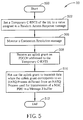
- FIG.5 illustrates a schematic diagram of a process 50 according to an embodiment of the present invention.
- the process 50 is utilized for handling an uplink grant received on a PDCCH in a UE of a wireless communication system and can be compiled into the uplink grant handling program 220.
- the process 50 includes the following steps:
- the UE first sets its Temporary C-RNTI to the value assigned in the received Random Access Response message. Then, the UE monitors the Contention Resolution message.
- the UE receives an uplink grant on PDCCH addressed to the Temporary C-RNTI
- the UE identifies whether the HARQ process corresponding to the uplink grant is identical to the HARQ Process used for transmission of the MAC PDU in the Message 3 buffer.
- the UE shall not use the received uplink grant for data transmission. Please note that the said data transmission can be a new transmission or a retransmission.
- the UE When the HARQ process corresponding to the received uplink grant is different from the HARQ Process used for transmission of the MAC PDU in the Message 3 buffer, it means that the UE is a contention loser, and thus the UE shall consider its Contention Resolution as not successful, and stop a Contention Resolution Timer of the UE to terminate contention of the random access procedure. Meanwhile, the UE shall discard the Temporary C-RNTI received form the Message 2 (i.e. the Random Access Response message) to prevent the Temporary C-RNTI from being used to monitor PDCCH, such that the uplink grant allocated to the contention winner can be avoided being misused.
- the Temporary C-RNTI received form the Message 2 (i.e. the Random Access Response message) to prevent the Temporary C-RNTI from being used to monitor PDCCH, such that the uplink grant allocated to the contention winner can be avoided being misused.
- the UE according to the embodiment of the present invention compares the HARQ process corresponding to the uplink grant with that used for transmission of the MAC PDU in the Message 3 buffer to determine whether the UE is a contention loser, and is thereby able to prevent the uplink grant allocated to the contention winner from being misused.
- the contention winner can successfully perform its uplink transmissions, and network resources can be used more efficiently.
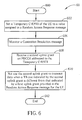
- FIG.6 illustrates a schematic diagram of a process 60 according to another embodiment of the present invention.
- the process 60 is utilized for handling an uplink grant received on a PDCCH in a UE of a wireless communication system and can also be compiled into the uplink grant handling program 220.
- the process 60 includes the following steps:
- the UE first sets its Temporary C-RNTI to the value assigned in the received Random Access Response message. Then, the UE monitors the Contention Resolution message.
- the UE receives the second uplink grant on PDCCH addressed to the Temporary C-RNTI
- the UE identifies whether the TB size indicated by the second uplink grant is identical to that indicated by the first uplink grant provided in the Random Access Response message for the UE.
- the UE shall not use the second uplink grant for data transmission. Note that the said data transmission can be a new transmission or a retransmission.
- the UE when the TB size indicated by the second uplink grant is different from that indicated by the first uplink grant, it means that the second uplink grant is not allocated to the UE for uplink transmission and the UE shall be a contention loser.
- the UE shall consider its Contention Resolution as not successful, and stop a Contention Resolution Timer of the UE to terminate contention of the random access procedure.
- the UE shall discard the Temporary C-RNTI received from the Message 2 (i.e. the Random Access Response message) to prevent the Temporary C-RNTI from being used to monitor PDCCH, such that the uplink grant allocated to the contention winner can be avoided being misused.
- the UE according to the embodiment of the present invention compares the TB size indicated by the second uplink grant with that indicated by the first uplink grant provided in the Random Access Response message for the UE to determine whether the UE is a contention loser, and is thereby able to prevent the uplink grant allocated to the contention winner from being misused.
- the contention winner can successfully perform its uplink transmissions, and network resources can be used more efficiently.
- FIG.7 illustrates a schematic diagram of a process 70 according to another embodiment of the present invention.
- the process 70 is utilized for setting a Cell Radio Network Temporary Identifier (C-RNTI) of a UE of a wireless communication system and can also be compiled into the uplink grant handling program 220.
- C-RNTI Cell Radio Network Temporary Identifier
- the process 70 includes the following steps:
- the UE first sets its Temporary C-RNTI to the value assigned in the Random Access Response message. Then, the UE transmits a CCCH SDU in the Message 3.
- the UE receives the contention resolution message, and the contention resolution message includes a UE Contention Resolution Identity MAC control element matching the CCCH SDU transmitted in the Message 3, the embodiment of the present invention sets the C-RNTI of the UE to a specific value different from the Temporary C-RNTI of the UE.
- the embodiment of the present invention sets the C-RNTI of the contention winner to a specific value different from the Temporary C-RNTI, in order to avoid using the same UE ID as contention losers, such that the uplink grant allocated to the contention winner can be avoided being misused.
- the said specific value can be derived from the Temporary C-RNTI of the UE according to a pre-defined rule (e.g. an offset operation or a complement operation), or that the specific value can be set to a pre-configured value (e.g. a value provided in the Random Access Response message).
- the embodiment of the present invention sets the C-RNTI of the contention winner to a value different from the Temporary C-RNTI received from the Message 2 to ensure the C-RNTI of the contention winner is different from the Temporary C-RNTI possessed by the Contention losers. Such that even the Temporary C-RNTI are still used by the contention losers for monitoring PDCCH, the uplink grant allocated to the contention winner can be prevented from being received by the contention losers.
- the UE before the UE knows itself as a contention loser, the UE would still uses the Temporary C-RNTI received from the Message 2 to monitor PDCCH, such that the UE may misuse the uplink grant allocated to the contention winner for transmission and thereby cause collision with the contention winner.
- the embodiment of the present invention provides three solutions herein: one is to compare the HARQ process corresponding to the received uplink grant with that used for transmission of the MAC PDU in the Message 3 buffer to determine whether the UE is a contention loser; the other is to compare the TB size indicated by the received uplink grant with that provided in the Random Access Response message for the UE to determine whether the UE is a contention loser; another is to set the C-RNTI of the contention winner to a value different form the Temporary C-RNTI received from the Message 2 after the UE is determined as a contention winner. Consequently, the contention losers can be prevented from misusing the uplink grant allocated to the contention winner, and uplink transmission of the contention winner can be performed successfully.
- the embodiment of the present invention provides a method for handling an uplink grant received on PDCCH to avoid misuse of the uplink grant and enhance the network resource using efficiency.
Landscapes
- Engineering & Computer Science (AREA)
- Signal Processing (AREA)
- Computer Networks & Wireless Communication (AREA)
- Mobile Radio Communication Systems (AREA)
Applications Claiming Priority (1)
| Application Number | Priority Date | Filing Date | Title |
|---|---|---|---|
| US8680908P | 2008-08-07 | 2008-08-07 |
Publications (3)
| Publication Number | Publication Date |
|---|---|
| EP2152045A2 true EP2152045A2 (de) | 2010-02-10 |
| EP2152045A3 EP2152045A3 (de) | 2010-04-07 |
| EP2152045B1 EP2152045B1 (de) | 2016-10-12 |
Family
ID=41277511
Family Applications (1)
| Application Number | Title | Priority Date | Filing Date |
|---|---|---|---|
| EP09010243.5A Active EP2152045B1 (de) | 2008-08-07 | 2009-08-07 | Verfahren und Vorrichtung zur Handhabung der Aufwärtsstreckenberechtigung |
Country Status (6)
| Country | Link |
|---|---|
| US (2) | US8199730B2 (de) |
| EP (1) | EP2152045B1 (de) |
| JP (1) | JP4926216B2 (de) |
| KR (1) | KR101041550B1 (de) |
| CN (1) | CN101646163B (de) |
| TW (1) | TWI414199B (de) |
Cited By (3)
| Publication number | Priority date | Publication date | Assignee | Title |
|---|---|---|---|---|
| CN104871628A (zh) * | 2013-12-17 | 2015-08-26 | 华为技术有限公司 | 上行数据传输的确认装置、设备和方法 |
| JP2018088708A (ja) * | 2018-02-14 | 2018-06-07 | 華為技術有限公司Huawei Technologies Co.,Ltd. | アップリンクデータ伝送確認装置、デバイスおよび方法 |
| US11997718B2 (en) | 2018-09-21 | 2024-05-28 | Nokia Technologies Oy | Random access procedure |
Families Citing this family (53)
| Publication number | Priority date | Publication date | Assignee | Title |
|---|---|---|---|---|
| ES2799299T3 (es) | 2005-10-31 | 2020-12-16 | Evolved Wireless Llc | Método de transmisión y recepción de información de acceso radioeléctrico en un sistema de comunicaciones móviles inalámbrico |
| TWI378690B (en) | 2005-11-28 | 2012-12-01 | Lg Electronics Inc | Method and apparatus for generatin and transmitting code sequence in a wireless communication system |
| TWI726632B (zh) | 2006-06-09 | 2021-05-01 | 美商進化無線責任有限公司 | 行動通訊系統中傳送資料之方法和裝置 |
| US8665857B2 (en) * | 2007-12-18 | 2014-03-04 | Qualcomm Incorporated | Method and apparatus for sending and receiving random access response in a wireless communication system |
| JP5129863B2 (ja) | 2008-02-25 | 2013-01-30 | エルジー エレクトロニクス インコーポレイティド | 無線通信システムにおけるランダムアクセス実行方法 |
| KR100968020B1 (ko) | 2008-06-18 | 2010-07-08 | 엘지전자 주식회사 | 랜덤 액세스 절차를 수행하는 방법 및 그 단말 |
| GB2461780B (en) | 2008-06-18 | 2011-01-05 | Lg Electronics Inc | Method for detecting failures of random access procedures |
| US11272449B2 (en) | 2008-06-18 | 2022-03-08 | Optis Cellular Technology, Llc | Method and mobile terminal for performing random access |
| GB2461158B (en) | 2008-06-18 | 2011-03-02 | Lg Electronics Inc | Method for performing random access procedures and terminal therof |
| GB2461159B (en) | 2008-06-18 | 2012-01-04 | Lg Electronics Inc | Method for transmitting Mac PDUs |
| US9094202B2 (en) * | 2008-08-08 | 2015-07-28 | Qualcomm Incorporated | Utilizing HARQ for uplink grants received in wireless communications |
| KR100939722B1 (ko) | 2008-08-11 | 2010-02-01 | 엘지전자 주식회사 | 데이터 전송 방법 및 이를 위한 사용자 기기 |
| US8780816B2 (en) * | 2008-08-12 | 2014-07-15 | Qualcomm Incorporated | Handling uplink grant in random access response |
| US20100074204A1 (en) * | 2008-09-16 | 2010-03-25 | Qualcomm Incorporated | Uplink hybrid automatic repeat request operation during random access |
| JP5312285B2 (ja) * | 2008-10-22 | 2013-10-09 | 創新音▲速▼股▲ふん▼有限公司 | Ul−sch伝送を処理する方法及び通信装置 |
| US20110255407A1 (en) * | 2008-10-30 | 2011-10-20 | Ntt Docomo, Inc. | Radio base station and mobile communication method |
| EP2363971A3 (de) * | 2008-11-06 | 2011-09-28 | HTC Corporation | Verfahren und Vorrichtung zur Verbesserung der Aufwärtsstreckenübertragung der Übertragungszeitintervallbündelung in einem drahtlosen Kommunikationssystem |
| KR100949972B1 (ko) | 2009-01-02 | 2010-03-29 | 엘지전자 주식회사 | 단말의 임의접속 수행 기법 |
| KR101122095B1 (ko) * | 2009-01-05 | 2012-03-19 | 엘지전자 주식회사 | 불필요한 재전송 방지를 위한 임의접속 기법 및 이를 위한 단말 |
| KR20100090632A (ko) * | 2009-02-06 | 2010-08-16 | 엘지전자 주식회사 | Ndi를 이용한 임의접속 수행 방법 및 이를 위한 단말 장치 |
| KR101607336B1 (ko) | 2009-06-07 | 2016-03-30 | 엘지전자 주식회사 | 무선 통신 시스템에서 rb 설정 방법 및 장치 |
| TW201101910A (en) * | 2009-06-17 | 2011-01-01 | Htc Corp | Method for avoiding false random access procedure completion in a wireless communication system and related communication device |
| KR101370726B1 (ko) * | 2009-08-12 | 2014-03-06 | 인터디지탈 패튼 홀딩스, 인크 | 경쟁 기반 업링크 데이터 전송을 위한 방법 및 장치 |
| CN102088433B (zh) * | 2009-12-08 | 2015-01-28 | 中兴通讯股份有限公司 | 多载波系统中分量载波激活去激活的优化方法和系统 |
| KR101570542B1 (ko) * | 2009-12-10 | 2015-11-19 | 삼성전자주식회사 | 이동 통신 시스템에서 경쟁 기반 액세스를 수행하는 방법 및 장치 |
| US8902817B2 (en) * | 2009-12-15 | 2014-12-02 | Nokia Corporation | Method, mobile station, base station and computer program product to control the activation of a wireless carrier |
| US20110170515A1 (en) * | 2010-01-12 | 2011-07-14 | Electronics And Telecommunications Research Institute | Resource allocation apparatus in ip uplink |
| KR101646282B1 (ko) * | 2010-03-29 | 2016-08-08 | 엘지전자 주식회사 | 무선 통신 시스템에서 머신형 통신 장치의 데이터 전송 방법 및 장치 |
| CN102083224B (zh) * | 2010-04-06 | 2013-06-12 | 电信科学技术研究院 | 一种基于竞争的上行数据传输方法及装置 |
| WO2011126351A2 (ko) * | 2010-04-09 | 2011-10-13 | 엘지전자 주식회사 | 경쟁 기반의 상향링크 채널 신호 송수신 방법 |
| US8665810B2 (en) * | 2010-06-04 | 2014-03-04 | Htc Corporation | Method of performing uplink transmission and related communication device |
| CN102291826B (zh) | 2010-06-18 | 2014-01-08 | 华为技术有限公司 | 基于竞争的上行传输方法、配置方法和相关设备 |
| US9148204B2 (en) * | 2010-06-21 | 2015-09-29 | Qualcomm Incorporated | Physical resource block (PRB) bundling for open loop beamforming |
| US20120028672A1 (en) * | 2010-07-30 | 2012-02-02 | Tao Chen | Apparatus and Method for Transmitter Power Control for Device-to-Device Communications in a Communication System |
| US9414345B2 (en) * | 2010-09-27 | 2016-08-09 | Telefonaktiebolaget Lm Ericsson (Publ) | Method and an arrangement for sharing of a first cell radio network temporary identifier |
| CN105898848B (zh) * | 2010-09-30 | 2019-08-06 | 索尼公司 | 电子设备、通信方法以及用户设备 |
| CN101980576B (zh) * | 2010-10-19 | 2013-08-28 | 华为技术有限公司 | 随机接入处理方法和用户设备 |
| EP2469916B1 (de) * | 2010-12-21 | 2015-10-28 | Innovative Sonic Corporation | Verfahren und Vorrichtung zur Protokoll-Berichterstattung in einem drahtlosen Kommunikationssystem um Drive-Tests zu minimieren |
| CN102647768B (zh) * | 2011-02-18 | 2014-06-18 | 电信科学技术研究院 | 基于lte-lan的报文转发方法及装置 |
| US9369980B2 (en) * | 2011-07-19 | 2016-06-14 | Industrial Technology Research Institute | Method of handling random access response |
| US9178664B2 (en) * | 2012-01-12 | 2015-11-03 | Blackberry Limited | Method and system for handling of a transport block size change in an adaptive retransmit order |
| CN103220077A (zh) | 2012-01-21 | 2013-07-24 | 华为技术有限公司 | 数据发送和接收方法、基站和用户设备 |
| KR102397351B1 (ko) * | 2016-06-15 | 2022-05-13 | 콘비다 와이어리스, 엘엘씨 | 차세대 네트워크들에서의 랜덤 액세스 절차들 |
| US10506640B2 (en) * | 2016-12-21 | 2019-12-10 | Htc Corporation | Device and method of handling system information |
| US20180234839A1 (en) * | 2017-02-13 | 2018-08-16 | Futurewei Technologies, Inc. | System and Method for User Equipment Identification and Communications |
| CN107223361B (zh) * | 2017-05-05 | 2021-09-28 | 北京小米移动软件有限公司 | 控制随机接入网络的方法、用户设备及基站 |
| US20190289638A1 (en) * | 2018-03-13 | 2019-09-19 | Asustek Computer Inc. | Method and apparatus for handling transmission during a random access procedure in a wireless communication system |
| EP3954173A4 (de) * | 2019-04-11 | 2023-01-04 | QUALCOMM Incorporated | Direktzugriffsverfahren |
| EP4039027B1 (de) | 2019-10-03 | 2025-02-26 | Qualcomm Incorporated | Leistungsregelung für rückkopplungssignal hybrider automatischer wiederholungsanfragen bei zufallszugriff |
| CN116456481A (zh) * | 2019-10-29 | 2023-07-18 | 维沃移动通信有限公司 | 上行传输的方法、上行传输指示的方法和设备 |
| CN115399041B (zh) | 2019-12-31 | 2025-09-16 | 欧芬诺有限责任公司 | 侧链路缓冲区状态报告 |
| CN114258149B (zh) | 2020-09-24 | 2024-02-02 | 上海华为技术有限公司 | 一种接入方法以及相关设备 |
| CN115190533B (zh) * | 2021-04-06 | 2026-04-07 | 维沃移动通信有限公司 | 传输处理方法、装置及通信设备 |
Family Cites Families (12)
| Publication number | Priority date | Publication date | Assignee | Title |
|---|---|---|---|---|
| GB9914926D0 (en) * | 1999-06-26 | 1999-08-25 | Koninkl Philips Electronics Nv | Radio communication system |
| CN1257647C (zh) * | 2003-04-29 | 2006-05-24 | 电子科技大学 | 一种用于catv网络支持优先级的冲突解决方法 |
| EP2110961B9 (de) * | 2005-04-01 | 2012-01-04 | Panasonic Corporation | Happy-Bit-Einstellung in einem Mobilkommunikationssystem |
| ES2335417T3 (es) * | 2005-07-25 | 2010-03-26 | Panasonic Corporation | Restriccion del proceso harq y transmision de datos de control no programados a traves de canales del enlace ascendente. |
| KR101216751B1 (ko) * | 2006-02-07 | 2012-12-28 | 엘지전자 주식회사 | 이동 통신 시스템에서 식별자를 이용한 충돌 회피 방법 |
| EP3048849B1 (de) * | 2006-03-07 | 2017-06-21 | Panasonic Corporation | Overhead-reduktion der uplink-steuerungssignalisierung in einem mobilkommunikationssystem |
| CN101611585B (zh) | 2006-10-02 | 2014-03-26 | Lg电子株式会社 | 多载波系统中重传数据的方法 |
| US8374150B2 (en) | 2006-10-03 | 2013-02-12 | Qualcomm Incorporated | Re-synchronization of temporary UE IDs in a wireless communication system |
| CN101904198A (zh) * | 2007-12-21 | 2010-12-01 | 爱立信电话股份有限公司 | 移动电信网络中的方法和布置 |
| EP2263341B1 (de) * | 2008-04-14 | 2018-09-19 | Amazon Technologies, Inc. | Verfahren und vorrichtung zur durchürung von direktzugriffsprozeduren |
| WO2010002130A2 (en) * | 2008-07-03 | 2010-01-07 | Lg Electronics Inc. | Method for processing ndi in random access procedure and a method for transmitting and receiving a signal using the same |
| CN101364944B (zh) * | 2008-09-05 | 2010-12-29 | 西安电子科技大学 | 用于无线分布式网络的协同媒体接入控制方法 |
-
2009
- 2009-08-06 TW TW098126523A patent/TWI414199B/zh active
- 2009-08-06 CN CN2009101657306A patent/CN101646163B/zh active Active
- 2009-08-06 US US12/536,501 patent/US8199730B2/en active Active
- 2009-08-06 JP JP2009183635A patent/JP4926216B2/ja active Active
- 2009-08-07 KR KR1020090072797A patent/KR101041550B1/ko active Active
- 2009-08-07 EP EP09010243.5A patent/EP2152045B1/de active Active
-
2012
- 2012-01-12 US US13/349,011 patent/US8428027B2/en active Active
Non-Patent Citations (1)
| Title |
|---|
| "3GPP DRAFT; R2-070363, 3RD GENERATION PARTNERSHIP PROJECT (3GPP), MOBILE COMPETENCE CENTRE", 24 January 2007, article "E-UTRAN Random Access procedure C-RNTI assignment and HARQ on message 4" |
Cited By (11)
| Publication number | Priority date | Publication date | Assignee | Title |
|---|---|---|---|---|
| CN104871628A (zh) * | 2013-12-17 | 2015-08-26 | 华为技术有限公司 | 上行数据传输的确认装置、设备和方法 |
| EP3079429A4 (de) * | 2013-12-17 | 2016-12-21 | Huawei Tech Co Ltd | Vorrichtung, einrichtung und verfahren zur uplink-datenübertragungsbestimmung |
| KR101875823B1 (ko) * | 2013-12-17 | 2018-07-06 | 후아웨이 테크놀러지 컴퍼니 리미티드 | 업링크 데이터 전송 확인 장치, 기기 및 방법 |
| EP3471486A1 (de) * | 2013-12-17 | 2019-04-17 | Huawei Technologies Co., Ltd. | Vorrichtung, einrichtung und verfahren zur uplink-datenübertragungsbestätigung |
| CN110621076A (zh) * | 2013-12-17 | 2019-12-27 | 华为技术有限公司 | 上行数据传输的确认装置、设备和方法 |
| CN110621077A (zh) * | 2013-12-17 | 2019-12-27 | 华为技术有限公司 | 上行数据传输的确认装置、设备和方法 |
| CN110691417A (zh) * | 2013-12-17 | 2020-01-14 | 华为技术有限公司 | 上行数据传输的确认装置、设备和方法 |
| CN110621076B (zh) * | 2013-12-17 | 2022-02-01 | 华为技术有限公司 | 上行数据传输的确认装置、设备和方法 |
| US11381343B2 (en) | 2013-12-17 | 2022-07-05 | Huawei Technologies Co., Ltd. | Uplink data transmission confirmation apparatus, device, and method |
| JP2018088708A (ja) * | 2018-02-14 | 2018-06-07 | 華為技術有限公司Huawei Technologies Co.,Ltd. | アップリンクデータ伝送確認装置、デバイスおよび方法 |
| US11997718B2 (en) | 2018-09-21 | 2024-05-28 | Nokia Technologies Oy | Random access procedure |
Also Published As
| Publication number | Publication date |
|---|---|
| US20100034162A1 (en) | 2010-02-11 |
| TW201008340A (en) | 2010-02-16 |
| CN101646163B (zh) | 2011-12-21 |
| TWI414199B (zh) | 2013-11-01 |
| EP2152045B1 (de) | 2016-10-12 |
| US8199730B2 (en) | 2012-06-12 |
| KR20100019383A (ko) | 2010-02-18 |
| EP2152045A3 (de) | 2010-04-07 |
| JP4926216B2 (ja) | 2012-05-09 |
| US20120113926A1 (en) | 2012-05-10 |
| CN101646163A (zh) | 2010-02-10 |
| US8428027B2 (en) | 2013-04-23 |
| KR101041550B1 (ko) | 2011-06-15 |
| JP2010041729A (ja) | 2010-02-18 |
Similar Documents
| Publication | Publication Date | Title |
|---|---|---|
| US8428027B2 (en) | Method and apparatus for handling uplink grant | |
| US8411626B2 (en) | Method and apparatus for handling UL-SCH transmission | |
| EP2101531B1 (de) | Verfahren und Vorrichtung zur Abwicklung eines konkurrenzbasierten Direktzugriffsvorgangs | |
| TWI517742B (zh) | 處理隨機存取回應之方法 | |
| US20090215459A1 (en) | Method and Apparatus for Improving Random Access Procedure for Handover | |
| CN101695196B (zh) | 一种提高竞争模式下随机接入成功率的方法、系统和装置 | |
| EP2369891B1 (de) | Verfahren, das in einer Basisstation benutzt wird, und zugehörige Basisstation, zur Optimierung der wahlfreien Zugriffsverfahren | |
| EP1973366A2 (de) | Verfahren und Vorrichtung zur Steuerung eines Zufallszugangsverfahrens in einem drahtlosen Kommunikationssystem | |
| US20100322172A1 (en) | Method for avoiding false random access procedure completion in a wireless communication system and related communication device | |
| JP2008263600A (ja) | 無線通信システムにおいてランダムアクセスプロセスを処理する方法及び装置 | |
| EP2264936A2 (de) | Verfahren zum Vermeiden der Vervollständigung eines Falschdirektzugriffverfahrens in einem drahtlosen Kommunikationssystem | |
| EP2063680A2 (de) | Erhöhung der Neuinitiierungsleistung eines Funkressourcen-Steuerverfahrens (RRC) in einem drahtlosen Kommunikationssystem | |
| KR101719072B1 (ko) | 이동통신시스템에서의 스케줄링 요청(Scheduling Request)을 효율적으로 전송하는 방법 | |
| CN113261374A (zh) | 由多个用户设备同时接入通信信道 |
Legal Events
| Date | Code | Title | Description |
|---|---|---|---|
| PUAI | Public reference made under article 153(3) epc to a published international application that has entered the european phase |
Free format text: ORIGINAL CODE: 0009012 |
|
| 17P | Request for examination filed |
Effective date: 20090807 |
|
| AK | Designated contracting states |
Kind code of ref document: A2 Designated state(s): AT BE BG CH CY CZ DE DK EE ES FI FR GB GR HR HU IE IS IT LI LT LU LV MC MK MT NL NO PL PT RO SE SI SK SM TR |
|
| AX | Request for extension of the european patent |
Extension state: AL BA RS |
|
| PUAL | Search report despatched |
Free format text: ORIGINAL CODE: 0009013 |
|
| AK | Designated contracting states |
Kind code of ref document: A3 Designated state(s): AT BE BG CH CY CZ DE DK EE ES FI FR GB GR HR HU IE IS IT LI LT LU LV MC MK MT NL NO PL PT RO SE SI SK SM TR |
|
| AX | Request for extension of the european patent |
Extension state: AL BA RS |
|
| RAP1 | Party data changed (applicant data changed or rights of an application transferred) |
Owner name: INNOVATIVE SONIC LIMITED |
|
| 17Q | First examination report despatched |
Effective date: 20150528 |
|
| GRAP | Despatch of communication of intention to grant a patent |
Free format text: ORIGINAL CODE: EPIDOSNIGR1 |
|
| RIC1 | Information provided on ipc code assigned before grant |
Ipc: H04W 24/00 20090101ALN20160205BHEP Ipc: H04W 8/26 20090101ALN20160205BHEP Ipc: H04L 1/18 20060101ALI20160205BHEP Ipc: H04W 72/04 20090101ALN20160205BHEP Ipc: H04W 74/08 20090101AFI20160205BHEP |
|
| INTG | Intention to grant announced |
Effective date: 20160226 |
|
| RIC1 | Information provided on ipc code assigned before grant |
Ipc: H04W 74/08 20090101AFI20160215BHEP Ipc: H04L 1/18 20060101ALI20160215BHEP Ipc: H04W 8/26 20090101ALN20160215BHEP Ipc: H04W 24/00 20090101ALN20160215BHEP Ipc: H04W 72/04 20090101ALN20160215BHEP |
|
| GRAS | Grant fee paid |
Free format text: ORIGINAL CODE: EPIDOSNIGR3 |
|
| GRAA | (expected) grant |
Free format text: ORIGINAL CODE: 0009210 |
|
| AK | Designated contracting states |
Kind code of ref document: B1 Designated state(s): AT BE BG CH CY CZ DE DK EE ES FI FR GB GR HR HU IE IS IT LI LT LU LV MC MK MT NL NO PL PT RO SE SI SK SM TR |
|
| REG | Reference to a national code |
Ref country code: GB Ref legal event code: FG4D |
|
| REG | Reference to a national code |
Ref country code: CH Ref legal event code: EP |
|
| REG | Reference to a national code |
Ref country code: AT Ref legal event code: REF Ref document number: 837475 Country of ref document: AT Kind code of ref document: T Effective date: 20161015 |
|
| REG | Reference to a national code |
Ref country code: IE Ref legal event code: FG4D |
|
| REG | Reference to a national code |
Ref country code: DE Ref legal event code: R096 Ref document number: 602009041637 Country of ref document: DE |
|
| REG | Reference to a national code |
Ref country code: LT Ref legal event code: MG4D |
|
| REG | Reference to a national code |
Ref country code: NL Ref legal event code: MP Effective date: 20161012 |
|
| PG25 | Lapsed in a contracting state [announced via postgrant information from national office to epo] |
Ref country code: LV Free format text: LAPSE BECAUSE OF FAILURE TO SUBMIT A TRANSLATION OF THE DESCRIPTION OR TO PAY THE FEE WITHIN THE PRESCRIBED TIME-LIMIT Effective date: 20161012 |
|
| REG | Reference to a national code |
Ref country code: AT Ref legal event code: MK05 Ref document number: 837475 Country of ref document: AT Kind code of ref document: T Effective date: 20161012 |
|
| PG25 | Lapsed in a contracting state [announced via postgrant information from national office to epo] |
Ref country code: GR Free format text: LAPSE BECAUSE OF FAILURE TO SUBMIT A TRANSLATION OF THE DESCRIPTION OR TO PAY THE FEE WITHIN THE PRESCRIBED TIME-LIMIT Effective date: 20170113 Ref country code: NO Free format text: LAPSE BECAUSE OF FAILURE TO SUBMIT A TRANSLATION OF THE DESCRIPTION OR TO PAY THE FEE WITHIN THE PRESCRIBED TIME-LIMIT Effective date: 20170112 Ref country code: SE Free format text: LAPSE BECAUSE OF FAILURE TO SUBMIT A TRANSLATION OF THE DESCRIPTION OR TO PAY THE FEE WITHIN THE PRESCRIBED TIME-LIMIT Effective date: 20161012 Ref country code: LT Free format text: LAPSE BECAUSE OF FAILURE TO SUBMIT A TRANSLATION OF THE DESCRIPTION OR TO PAY THE FEE WITHIN THE PRESCRIBED TIME-LIMIT Effective date: 20161012 |
|
| PG25 | Lapsed in a contracting state [announced via postgrant information from national office to epo] |
Ref country code: AT Free format text: LAPSE BECAUSE OF FAILURE TO SUBMIT A TRANSLATION OF THE DESCRIPTION OR TO PAY THE FEE WITHIN THE PRESCRIBED TIME-LIMIT Effective date: 20161012 Ref country code: HR Free format text: LAPSE BECAUSE OF FAILURE TO SUBMIT A TRANSLATION OF THE DESCRIPTION OR TO PAY THE FEE WITHIN THE PRESCRIBED TIME-LIMIT Effective date: 20161012 Ref country code: PL Free format text: LAPSE BECAUSE OF FAILURE TO SUBMIT A TRANSLATION OF THE DESCRIPTION OR TO PAY THE FEE WITHIN THE PRESCRIBED TIME-LIMIT Effective date: 20161012 Ref country code: PT Free format text: LAPSE BECAUSE OF FAILURE TO SUBMIT A TRANSLATION OF THE DESCRIPTION OR TO PAY THE FEE WITHIN THE PRESCRIBED TIME-LIMIT Effective date: 20170213 Ref country code: FI Free format text: LAPSE BECAUSE OF FAILURE TO SUBMIT A TRANSLATION OF THE DESCRIPTION OR TO PAY THE FEE WITHIN THE PRESCRIBED TIME-LIMIT Effective date: 20161012 Ref country code: BE Free format text: LAPSE BECAUSE OF FAILURE TO SUBMIT A TRANSLATION OF THE DESCRIPTION OR TO PAY THE FEE WITHIN THE PRESCRIBED TIME-LIMIT Effective date: 20161012 Ref country code: NL Free format text: LAPSE BECAUSE OF FAILURE TO SUBMIT A TRANSLATION OF THE DESCRIPTION OR TO PAY THE FEE WITHIN THE PRESCRIBED TIME-LIMIT Effective date: 20161012 Ref country code: ES Free format text: LAPSE BECAUSE OF FAILURE TO SUBMIT A TRANSLATION OF THE DESCRIPTION OR TO PAY THE FEE WITHIN THE PRESCRIBED TIME-LIMIT Effective date: 20161012 Ref country code: IS Free format text: LAPSE BECAUSE OF FAILURE TO SUBMIT A TRANSLATION OF THE DESCRIPTION OR TO PAY THE FEE WITHIN THE PRESCRIBED TIME-LIMIT Effective date: 20170212 |
|
| REG | Reference to a national code |
Ref country code: DE Ref legal event code: R097 Ref document number: 602009041637 Country of ref document: DE |
|
| PG25 | Lapsed in a contracting state [announced via postgrant information from national office to epo] |
Ref country code: DK Free format text: LAPSE BECAUSE OF FAILURE TO SUBMIT A TRANSLATION OF THE DESCRIPTION OR TO PAY THE FEE WITHIN THE PRESCRIBED TIME-LIMIT Effective date: 20161012 Ref country code: EE Free format text: LAPSE BECAUSE OF FAILURE TO SUBMIT A TRANSLATION OF THE DESCRIPTION OR TO PAY THE FEE WITHIN THE PRESCRIBED TIME-LIMIT Effective date: 20161012 Ref country code: RO Free format text: LAPSE BECAUSE OF FAILURE TO SUBMIT A TRANSLATION OF THE DESCRIPTION OR TO PAY THE FEE WITHIN THE PRESCRIBED TIME-LIMIT Effective date: 20161012 Ref country code: CZ Free format text: LAPSE BECAUSE OF FAILURE TO SUBMIT A TRANSLATION OF THE DESCRIPTION OR TO PAY THE FEE WITHIN THE PRESCRIBED TIME-LIMIT Effective date: 20161012 Ref country code: SK Free format text: LAPSE BECAUSE OF FAILURE TO SUBMIT A TRANSLATION OF THE DESCRIPTION OR TO PAY THE FEE WITHIN THE PRESCRIBED TIME-LIMIT Effective date: 20161012 |
|
| PLBE | No opposition filed within time limit |
Free format text: ORIGINAL CODE: 0009261 |
|
| STAA | Information on the status of an ep patent application or granted ep patent |
Free format text: STATUS: NO OPPOSITION FILED WITHIN TIME LIMIT |
|
| PG25 | Lapsed in a contracting state [announced via postgrant information from national office to epo] |
Ref country code: IT Free format text: LAPSE BECAUSE OF FAILURE TO SUBMIT A TRANSLATION OF THE DESCRIPTION OR TO PAY THE FEE WITHIN THE PRESCRIBED TIME-LIMIT Effective date: 20161012 Ref country code: SM Free format text: LAPSE BECAUSE OF FAILURE TO SUBMIT A TRANSLATION OF THE DESCRIPTION OR TO PAY THE FEE WITHIN THE PRESCRIBED TIME-LIMIT Effective date: 20161012 Ref country code: BG Free format text: LAPSE BECAUSE OF FAILURE TO SUBMIT A TRANSLATION OF THE DESCRIPTION OR TO PAY THE FEE WITHIN THE PRESCRIBED TIME-LIMIT Effective date: 20170112 |
|
| REG | Reference to a national code |
Ref country code: FR Ref legal event code: PLFP Year of fee payment: 9 |
|
| 26N | No opposition filed |
Effective date: 20170713 |
|
| PG25 | Lapsed in a contracting state [announced via postgrant information from national office to epo] |
Ref country code: SI Free format text: LAPSE BECAUSE OF FAILURE TO SUBMIT A TRANSLATION OF THE DESCRIPTION OR TO PAY THE FEE WITHIN THE PRESCRIBED TIME-LIMIT Effective date: 20161012 |
|
| REG | Reference to a national code |
Ref country code: CH Ref legal event code: PL |
|
| PG25 | Lapsed in a contracting state [announced via postgrant information from national office to epo] |
Ref country code: MC Free format text: LAPSE BECAUSE OF FAILURE TO SUBMIT A TRANSLATION OF THE DESCRIPTION OR TO PAY THE FEE WITHIN THE PRESCRIBED TIME-LIMIT Effective date: 20161012 |
|
| PG25 | Lapsed in a contracting state [announced via postgrant information from national office to epo] |
Ref country code: CH Free format text: LAPSE BECAUSE OF NON-PAYMENT OF DUE FEES Effective date: 20170831 Ref country code: LI Free format text: LAPSE BECAUSE OF NON-PAYMENT OF DUE FEES Effective date: 20170831 |
|
| REG | Reference to a national code |
Ref country code: IE Ref legal event code: MM4A |
|
| PG25 | Lapsed in a contracting state [announced via postgrant information from national office to epo] |
Ref country code: LU Free format text: LAPSE BECAUSE OF NON-PAYMENT OF DUE FEES Effective date: 20170807 |
|
| PG25 | Lapsed in a contracting state [announced via postgrant information from national office to epo] |
Ref country code: IE Free format text: LAPSE BECAUSE OF NON-PAYMENT OF DUE FEES Effective date: 20170807 |
|
| REG | Reference to a national code |
Ref country code: FR Ref legal event code: PLFP Year of fee payment: 10 |
|
| PG25 | Lapsed in a contracting state [announced via postgrant information from national office to epo] |
Ref country code: MT Free format text: LAPSE BECAUSE OF NON-PAYMENT OF DUE FEES Effective date: 20170807 |
|
| PG25 | Lapsed in a contracting state [announced via postgrant information from national office to epo] |
Ref country code: HU Free format text: LAPSE BECAUSE OF FAILURE TO SUBMIT A TRANSLATION OF THE DESCRIPTION OR TO PAY THE FEE WITHIN THE PRESCRIBED TIME-LIMIT; INVALID AB INITIO Effective date: 20090807 |
|
| PG25 | Lapsed in a contracting state [announced via postgrant information from national office to epo] |
Ref country code: CY Free format text: LAPSE BECAUSE OF NON-PAYMENT OF DUE FEES Effective date: 20161012 |
|
| PG25 | Lapsed in a contracting state [announced via postgrant information from national office to epo] |
Ref country code: MK Free format text: LAPSE BECAUSE OF FAILURE TO SUBMIT A TRANSLATION OF THE DESCRIPTION OR TO PAY THE FEE WITHIN THE PRESCRIBED TIME-LIMIT Effective date: 20161012 |
|
| PG25 | Lapsed in a contracting state [announced via postgrant information from national office to epo] |
Ref country code: TR Free format text: LAPSE BECAUSE OF FAILURE TO SUBMIT A TRANSLATION OF THE DESCRIPTION OR TO PAY THE FEE WITHIN THE PRESCRIBED TIME-LIMIT Effective date: 20161012 |
|
| P01 | Opt-out of the competence of the unified patent court (upc) registered |
Effective date: 20230508 |
|
| PGFP | Annual fee paid to national office [announced via postgrant information from national office to epo] |
Ref country code: DE Payment date: 20250710 Year of fee payment: 17 |
|
| PGFP | Annual fee paid to national office [announced via postgrant information from national office to epo] |
Ref country code: GB Payment date: 20250710 Year of fee payment: 17 |
|
| PGFP | Annual fee paid to national office [announced via postgrant information from national office to epo] |
Ref country code: FR Payment date: 20250710 Year of fee payment: 17 |