EP2153733B1 - Verfahren zur Garung und Kühlung von Lebensmittel und Anlage - Google Patents
Verfahren zur Garung und Kühlung von Lebensmittel und Anlage Download PDFInfo
- Publication number
- EP2153733B1 EP2153733B1 EP09165997A EP09165997A EP2153733B1 EP 2153733 B1 EP2153733 B1 EP 2153733B1 EP 09165997 A EP09165997 A EP 09165997A EP 09165997 A EP09165997 A EP 09165997A EP 2153733 B1 EP2153733 B1 EP 2153733B1
- Authority
- EP
- European Patent Office
- Prior art keywords
- tank
- water
- temperature
- reservoir
- intermediate temperature
- Prior art date
- Legal status (The legal status is an assumption and is not a legal conclusion. Google has not performed a legal analysis and makes no representation as to the accuracy of the status listed.)
- Active
Links
Images
Classifications
-
- A—HUMAN NECESSITIES
- A47—FURNITURE; DOMESTIC ARTICLES OR APPLIANCES; COFFEE MILLS; SPICE MILLS; SUCTION CLEANERS IN GENERAL
- A47J—KITCHEN EQUIPMENT; COFFEE MILLS; SPICE MILLS; APPARATUS FOR MAKING BEVERAGES
- A47J27/00—Cooking-vessels
- A47J27/20—Ham-boilers
-
- A—HUMAN NECESSITIES
- A23—FOODS OR FOODSTUFFS; TREATMENT THEREOF, NOT COVERED BY OTHER CLASSES
- A23B—PRESERVATION OF FOODS, FOODSTUFFS OR NON-ALCOHOLIC BEVERAGES; CHEMICAL RIPENING OF FRUIT OR VEGETABLES
- A23B2/00—Preservation of foods or foodstuffs, in general
- A23B2/30—Preservation of foods or foodstuffs, in general by heating materials in packages which are not progressively transported through the apparatus
-
- A—HUMAN NECESSITIES
- A23—FOODS OR FOODSTUFFS; TREATMENT THEREOF, NOT COVERED BY OTHER CLASSES
- A23B—PRESERVATION OF FOODS, FOODSTUFFS OR NON-ALCOHOLIC BEVERAGES; CHEMICAL RIPENING OF FRUIT OR VEGETABLES
- A23B4/00—Preservation of meat, sausages, fish or fish products
- A23B4/26—Apparatus for preserving using liquids ; Processes therefor
- A23B4/30—Apparatus for preserving using liquids ; Processes therefor by spraying of liquids
-
- A—HUMAN NECESSITIES
- A23—FOODS OR FOODSTUFFS; TREATMENT THEREOF, NOT COVERED BY OTHER CLASSES
- A23B—PRESERVATION OF FOODS, FOODSTUFFS OR NON-ALCOHOLIC BEVERAGES; CHEMICAL RIPENING OF FRUIT OR VEGETABLES
- A23B7/00—Preservation of fruit or vegetables; Chemical ripening of fruit or vegetables
- A23B7/005—Preserving by heating
-
- A—HUMAN NECESSITIES
- A23—FOODS OR FOODSTUFFS; TREATMENT THEREOF, NOT COVERED BY OTHER CLASSES
- A23B—PRESERVATION OF FOODS, FOODSTUFFS OR NON-ALCOHOLIC BEVERAGES; CHEMICAL RIPENING OF FRUIT OR VEGETABLES
- A23B7/00—Preservation of fruit or vegetables; Chemical ripening of fruit or vegetables
- A23B7/04—Freezing; Subsequent thawing; Cooling
-
- A—HUMAN NECESSITIES
- A23—FOODS OR FOODSTUFFS; TREATMENT THEREOF, NOT COVERED BY OTHER CLASSES
- A23L—FOODS, FOODSTUFFS OR NON-ALCOHOLIC BEVERAGES, NOT OTHERWISE PROVIDED FOR; PREPARATION OR TREATMENT THEREOF
- A23L5/00—Preparation or treatment of foods or foodstuffs, in general; Food or foodstuffs obtained thereby; Materials therefor
- A23L5/10—General methods of cooking foods, e.g. by roasting or frying
- A23L5/13—General methods of cooking foods, e.g. by roasting or frying using water or steam
-
- A—HUMAN NECESSITIES
- A47—FURNITURE; DOMESTIC ARTICLES OR APPLIANCES; COFFEE MILLS; SPICE MILLS; SUCTION CLEANERS IN GENERAL
- A47J—KITCHEN EQUIPMENT; COFFEE MILLS; SPICE MILLS; APPARATUS FOR MAKING BEVERAGES
- A47J27/00—Cooking-vessels
- A47J27/14—Cooking-vessels for use in hotels, restaurants, or canteens
- A47J27/18—Cooking-vessels for use in hotels, restaurants, or canteens heated by water-bath, e.g. pasta-cookers
-
- Y—GENERAL TAGGING OF NEW TECHNOLOGICAL DEVELOPMENTS; GENERAL TAGGING OF CROSS-SECTIONAL TECHNOLOGIES SPANNING OVER SEVERAL SECTIONS OF THE IPC; TECHNICAL SUBJECTS COVERED BY FORMER USPC CROSS-REFERENCE ART COLLECTIONS [XRACs] AND DIGESTS
- Y02—TECHNOLOGIES OR APPLICATIONS FOR MITIGATION OR ADAPTATION AGAINST CLIMATE CHANGE
- Y02A—TECHNOLOGIES FOR ADAPTATION TO CLIMATE CHANGE
- Y02A40/00—Adaptation technologies in agriculture, forestry, livestock or agroalimentary production
- Y02A40/90—Adaptation technologies in agriculture, forestry, livestock or agroalimentary production in food processing or handling, e.g. food conservation
Definitions
- the present invention relates to a method for cooking and cooling food products. It finds application in the field of industrial processing of food products, type cooked meats and, in particular, the type bars or pieces of ham.
- the invention also relates to a cooking and cooling installation for the implementation of such a cooking process.
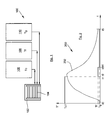
- the Fig. 1 represents a cooking and cooling plant 100 of the state of the art.
- the cooking and cooling installation 100 comprises a tank 102 inside which are arranged molds 104 containing meat bars to be cooked.
- the cooking and cooling installation 100 also comprises a hot water tank 106, a cold water tank 108 and a brine or chilled water tank 110.
- molds means any device that can support food products. It can be shelves, grids, stackable baskets, molding units, etc.
- the hot water is at a temperature Tc, which is generally of the order of 85 ° C.
- Cold water is at a temperature Tf, which is generally of the order of 5 ° C.
- the choice between the brine and the chilled water depends on the procedure implemented in the cooking and cooling installation 100.
- the brine and the chilled water are at a temperature of Tg, which is generally of the order of 0 ° C for water and -8 ° C for brine.
- the tank 102 and the tanks 106, 108 and 110 are interconnected by a network of pipes, valves and pumps which makes it possible to fill the tank 102 with water coming from one of these tanks 106, 108 or 110 and empty it of this water which is repressed in its original tank 106, 108 or 110.
- the Fig. 2 represents a graph 200 representative of the temperature (T) of the water or brine in the tank 102 and of the meat bar in its core as a function of time (t).
- the temperature of the water in the tank is represented by horizontal lines and the temperature at the heart of the meat bar is represented by the curve 202.
- the temperature Tc1 of the hot water in the tank 102 is different from the temperature Tc of the hot water in the tank 106 because of the absorption of a portion of the energy by the meat bars and the molds 104.
- the temperature Tc1 is preferably lower than the temperature Tc but remains higher than the temperature Tf.
- the temperature reached by the heart of the meat bar is at most equal to Tc1, in practice the temperature reached by the heart of the meat bar is less than the temperature Tc1.
- Tc the temperature Tc1 of the water in the tank 102
- the temperature of the core is of the order 66 ° C.
- the temperature regulation is effected by circulating water between the tank 102 and the hot water tank 106, where a temperature holding device regulates the temperature of the hot water at the temperature Tc. The hot water is emptied from the tank 102 by discharging the water back to its original tank 106.
- the temperature reached by the heart of the meat bar is at least equal to Tf, in practice the temperature Tf is never reached by the heart of the bar of meat.
- the temperature is regulated by circulating water between the tank 102 and the cold water tank 108, where a temperature holding device regulates the temperature of the cold water at the temperature Tf.
- the cold water is emptied at the temperature Tf of the tank 102 by discharging the water back to its original tank 108.
- the temperature reached by the heart of the meat bar is at least equal to Tg.
- the temperature regulation is carried out by circulation of water or brine between the tank 102 and, respectively, the chilled water tank or the brine tank 110, where a temperature holding device regulates the temperature of the chilled water or brine at the temperature Tg.
- the draining of the water ice or the brine of the tank 102 is effected by return of the chilled water or brine to the original tank 110.
- Such a cooking and cooling process consumes the energy absorbed by the products.
- energy is absorbed to cook the products food and heat the molds during the cooking phase and energy is absorbed to cool food products and molds during the cooling phase.
- An object of the present invention is to provide a cooking process that does not have the drawbacks of the prior art, and which, in particular, makes it possible to optimize the energy balance of the installation and to significantly reduce energy consumption.
- the first stage of circulation on the intermediate temperature tank for said tank is carried out synchronously with the second stage of circulation on the intermediate temperature tank for one of the other tanks, and the second stage of circulation on the intermediate temperature tank for said tank is implemented in a manner synchronized with the first stage of put into circulation on the intermediate temperature tank for one of the other tanks.
- the steps of introducing water at intermediate temperature into the tank are carried out by sprinkling.
- the cooking and cooling installation comprises at least one other tank intended to contain molds containing the said food products and, for each other tank, a second set of valves and pumps controlling the filling of the said other tank with water. water from one of the tanks, the circulation of water between said other tank and its original tank and the discharge of this water by discharge in its original tank.
- the cooking and cooling installation comprises a cold water tank comprising a device for maintaining the temperature of the water at a temperature Tf between the temperatures Tg and Tr.
- the piping connecting the intermediate temperature water tank and the tank opens, in said tank, above the molds via a spray boom.
- the tank comprises a ventilation system.
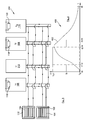
- the Fig. 3 represents a cooking and cooling system 300 according to the invention.
- the cooking and cooling plant 300 comprises, as for the installation of the state of the art, a tank 102 inside which molds 104 containing food products, such as for example meat bars to be fired are provided, a hot water tank 106 comprising a device 116 for maintaining the temperature of the water at a temperature Tc, a cold water tank 108 comprising a device 118 for maintaining the temperature of the water at a temperature Tf and a brine or chilled water tank 110 comprising a device 120 for maintaining the temperature of the water or brine at a temperature Tg.
- the cooking and cooling installation 300 also comprises a reservoir of water or brine at a temperature Tg.
- the vessel 102 is preferably closed to prevent energy losses.
- the hot water is at a temperature Tc, which is generally of the order of 85 ° C.
- Cold water is at a temperature Tf, which is generally of the order of 5 ° C.
- the brine and chilled water are at a temperature of Tg, which is generally of the order of 0 ° C for water and -8 ° C for brine.
- the intermediate temperature water is at a temperature Tr, which is of the order of 40 ° C.
- the tank 102 and the tanks 106, 108, 110 and 212 are interconnected by a pipe network connecting the tank 102 and the tanks 106, 108, 110 and 212 and a set of valves and pumps for controlling the opening or the closure of each pipe and therefore the filling of the tank 102 with water from one of these tanks 106, 108, 110 or 212, the circulation of water between the tank 102 and its original tank 106, 108, 110 or 212, and the discharge of this water by repression in its original tank 106, 108, 110 or 212.
- the arrows indicate the direction of movement of the water in the pipes.
- the valves and pumps are not shown but the skilled person knows how to implement such elements so as to allow the circulation of water.
- the device 116 for maintaining the temperature of the water at the temperature Tc is, for example, of the heating device type.
- the device 118 for maintaining the temperature of the water at the temperature Tf and the device 120 for maintaining the temperature of the water or brine at the temperature Tg are, for example, of the exchanger type.
- the cold water tank 108 is not used.
- the Fig. 4 represents a graph 400 representative of the temperature (T) of the water or brine in the tank 102 and of the meat bar in its core as a function of time t.
- the temperature of the water in the tank 102 is represented by thick continuous lines and the temperature at the heart of the meat bar is represented by the curve 402.
- the temperature Tc1 of the hot water in the tank 102 is less than the temperature Tc of the hot water in the reservoir 106 but remains higher than the temperature Tr.
- the temperature Tc1 is of the order of 70 ° C for a temperature Tc of the order of 85 ° C.
- each regulation step is implemented only when the temperature of the water in the tank 102 deviates from the reference temperature Tc1, Tg.
- Tc1 the reference temperature
- Tg the reference temperature
- maintaining the temperature at the Tc1 value is implemented when the temperature of the water in the tank 102 is too low with respect to Tc1.
- the hot water is then circulated. If the temperature inside the tank 102 is greater than or equal to the temperature Tc1, no circulation is used.
- the first step of introducing the intermediate temperature water Tr is carried out at a time t0.
- the first stage of circulation of the intermediate temperature water Tr is carried out between the instant t0 and a time t1.
- the first step of draining the intermediate temperature water Tr is performed between the instant t1 and an instant t2.
- the step of filling the tank 102 with hot water is performed at time t2.
- the temperature control step Tc1 is performed at time t2 and instant t3.
- the step of emptying the hot water is carried out between time t3 and a time t4.
- the second step of introducing the intermediate temperature water Tr is carried out at time t4.
- the second stage of circulation of the intermediate-temperature water Tr is effected between the instant t4 and an instant t5.
- the second step of draining the water at an intermediate temperature Tr is effected between the instant t5 and a time t6.
- the step of filling the tank 102 with ice water or brine is performed at time t6.
- the regulation step at the temperature Tg is performed at time t6 and instant t9.
- the step of emptying the chilled water or brine is performed at time t9.
- Each regulation step at a given temperature in the tank 102 causes an energy consumption necessary for the operation of the temperature holding device 116, 118, 120 concerned to maintain the temperature considered in the reservoir 106, 108, 110 considered.
- the regulation steps are understood as steps in which the core temperature of the meat bars increases or decreases or is constant depending on the desired control mode.
- the intermediate temperature water tank 212 has no temperature holding device, it is the use of the same tank and the same water during the first stage of circulation on the tank 212 at temperature intermediate Tr and the second stage of circulation on the tank 212 at intermediate temperature Tr which allows energy saving. Indeed, during the first stage of circulation, the water has its temperature which decreases due to the heating of food products. This drop in water temperature in the intermediate temperature water tank 212 is compensated by an increase in the water temperature during the second circulation stage. Indeed, during the second stage of circulation, the water has its temperature which increases due to the cooling of food products and mussels.
- the energy absorbed by the food products and molds during the first circulation stage, and the energy dissipated by the food products and molds during the second circulation stage, does not occur. in the energy balance of the process.
- the energy dissipated during the second circulation stage on the tank 212 at intermediate temperature Tr heats the water which heats the food products and molds during the first circulation stage on the tank 212 at intermediate temperature Tr, and conversely, the energy absorbed during the first circulation stage on the tank 212 at intermediate temperature Tr causes a cooling of the water which cools the food products during the second circulation stage on the tank 212 at intermediate temperature. Tr.
- Energy saving on a complete cycle of the cooking process and cooling is of the order of 38% when each circulation stage lasts approximately 1 hour.
- the installation 300 comprises at least one other tank 112 in which is implemented the same cooking and cooling method according to the invention.
- Said other tanks 112 are also intended to contain molds 104 containing the food products and the installation 300 also comprises, for each other tank 112 a second set of valves and pumps controlling the filling of said other tank 112 with water from one of the tanks 106, 108, 110 or 212, the circulation of the water between said other tank 112 and its original tank 106, 108, 110 or 212 and the discharge of this water by repression in its original tank 106, 108, 110 or 212.
- Said other tanks 112 are connected to the same pipe network as the tank 102.
- the first stage of circulation on the tank 212 at intermediate temperature Tr for the tank 102 is implemented in a manner synchronized with the second stage of circulation on the tank 212 at temperature Intermediate Tr for one of the other tanks 112, the second circulation stage on the tank 212 at intermediate temperature Tr for the tank 102 is implemented in a manner synchronized with the first circulation step on the tank 212 to intermediate temperature Tr for one of the other tanks 112.
- the method according to the invention does not require a temperature regulation step by a temperature holding device of the heat exchanger type.
- the first circulation stage for the tank 102 is synchronized with the second circulation stage, if they take place simultaneously or if they are slightly offset relative to each other without significantly disturbing the heat exchange.
- the intermediate-temperature water introduction steps in the tank 102 constitute fillings which are carried out by flow through the pipework connecting the tank 212 and the tank 102.
- the steps of introducing water at intermediate temperature in the tank 102 are carried out by sprinkling the molds 104 and meat bars.
- the piping connecting the intermediate temperature water tank 212 and the tank 102 opens, in said tank 102, above the molds 104 via a spray or misting boom.
- a ventilation system can be set up in the tank 102. This ventilation system optimizes the calorie dispersion by exploiting the energy associated with the vaporization of the water.
Landscapes
- Engineering & Computer Science (AREA)
- Life Sciences & Earth Sciences (AREA)
- Food Science & Technology (AREA)
- Chemical & Material Sciences (AREA)
- Polymers & Plastics (AREA)
- Zoology (AREA)
- Wood Science & Technology (AREA)
- Chemical Kinetics & Catalysis (AREA)
- General Chemical & Material Sciences (AREA)
- Health & Medical Sciences (AREA)
- Nutrition Science (AREA)
- Freezing, Cooling And Drying Of Foods (AREA)
- General Preparation And Processing Of Foods (AREA)
- Devices That Are Associated With Refrigeration Equipment (AREA)
- Commercial Cooking Devices (AREA)
Claims (9)
- Verfahren zum Garen und Abkühlen von Lebensmittelprodukten in einem Tank (102), aufweisend die aufeinander folgenden Schritte:- einen Schritt des Einführens von die Lebensmittelprodukte beinhaltenden Formen (104) in den Tank (102),- einen ersten Schritt des Zuführens von Wasser einer mittleren Temperatur Tr aus einem Behälter für Wasser mittlerer Temperatur (212) in den Tank (102),- einen ersten Schritt, des Umwälzens des zugeführten Wassers mittlerer Temperatur zwischen dem Tank (102) und dem Behälter für Wasser mittlerer Temperatur (212),- einen ersten Schritt des Entleerens des Tanks (102) durch Abführen des Wassers mittlerer Temperatur in den Behälter für Wasser mittlerer Temperatur (212),- einen Schritt des Füllens des Tanks (102) aus einem Heißwasserbehälter (106) mit heißem Wasser mit einer Temperatur TC, die höher ist als die mittlere Temperatur Tr, aus einem Behälter für heißes Wasser- einen Schritt der Regulierung der Temperatur des Wassers im Inneren des Tanks (102) auf eine Temperatur Tc1, indem das zugeführte heiße Wasser zwischen dem Tank (102) und dem Behälter für heißes Wasser (106) umgewälzt versetzt wird und des heiße, umgewälzte Wasser im Behälter für heißes Wasser (106) erhitzt wird,- einen Schritt des Entleerens des Tanks (102) durch Abführen des heißen Wassers in den Behälter für heißes Wasser (106),- einen zweiten Schritt des Zuführens von Wasser mit mittlerer Temperatur Tr aus dem Behälter für Wasser mittlerer Temperatur (212) in den Tank (102),- einen zweiten Schritt, des Umwälzens des zugeführten Wassers mittlerer Temperatur zwischen dem Tank (102) und dem Behälter für Wasser mittlerer Temperatur (212),- einen zweiten Schritt des Entleerens des Tanks (102) durch Abführen des Wassers mittlerer Temperatur in den Behälter für Wasser mittlerer Temperatur (212),- einen Schritt des Füllens des Tanks (102) mit Eiswasser oder Sole mit einer Temperatur Tg, die kleiner ist als die mittlere Temperatur Tr, aus einem Behälter für Eiswasser oder Sole (110)- einen Schritt des Regulierens der Temperatur des Wassers im Inneren des Tanks (102) auf die Temperatur Tg, indem das zugeführte Eiswasser oder die zugeführte Sole zwischen dem Tank (102) und dem Behälter für Eiswasser bzw. Sole (110) umgewälzt wird und das Eiswasser oder die umgewälzte Sole im Behälter für Eiswasser bzw. Sole (110) gekühlt wird,- einen Schritt des Entleerens des Tanks (102) durch Abführen des Eiswassers bzw. der Sole in den Behälter für Eiswasser bzw. Sole (110), und- einen Schritt der Entnahme der Formen aus dem Tank (102), aus dem das Wasser oder die Sole entleert wurde.
- Verfahren zum Garen und Abkühlen gemäß Anspruch 1,
dadurch gekennzeichnet, dass,
falls mindestens ein weiterer Tank (112) existiert, in dem dasselbe Verfahren zum Garen und Abkühlen angewandt wird, der erste Schritt des Umwälzens über den Behälter für Wasser mittlerer Temperatur (212) für den ersten Tank (102) synchron Schritt des Umwälzens über den Behälter für Wasser mittlerer Temperatur (212) für einen der weiteren Tanks (112) durchgeführt wird, und der zweite Schritt des Umwälzens über den Behälter für Wasser mittlerer Temperatur (212) für den ersten Tank (102) synchron mit dem ersten Schritt des Umwälzens über den Behälter für Wasser mittlerer Temperatur (212) für einen der weiteren Tanks (112) durchgeführt wird. - Verfahren zum Garen und Abkühlen gemäß einem der Ansprüche 1 oder 2,
dadurch gekennzeichnet, dass
das Verfahren zwischen dem zweiten Schritt des Entleerens des Wassers mit mittlerer Temperatur und dem Schritt des Füllens mit Eiswasser oder mit Sole aufweist:- einen Schritt des Füllens des Tanks (102) mit kaltem Wasser mit einer Temperatur Tf, die zwischen den Temperaturen Tg und Tr liegt, aus einem Behälter für kaltes Wasser (108)- einen Schritt des Regulierens der Temperatur des Wassers im Inneren des Tanks (102) auf die Temperatur Tf, indem das zugeführte kalte Wasser zwischen dem Tank (102) und dem Kaltwasserbehälter (108) in Zirkulation versetzt wird und das kalte Wasser, folglich in Zirkulation versetzt, im Behälter für kaltes Wasser (108) gekühlt wird, und- einen Schritt zum Entleeren des Tanks (102) durch Abführen des kalten Wassers in den Kaltwasserbehälter (108). - Verfahren zum Garen und Abkühlen gemäß einem der Ansprüche 1-3,
dadurch gekennzeichnet, dass
die Schritte des Zuführens von Wasser mittlerer Temperatur in den Tank (102) durch Besprengung erfolgen. - Vorrichtung zum Garen und Abkühlen (300) für Lebensmittelprodukte, aufweisend:- einen Tank (102), ausgelegt zum Aufnehmen von Formen (104), in denen sich Lebensmittelprodukte befinden;- einen Behälter für Wasser einer mittleren Temperatur (212) Tr,- einen Behälter für heißes Wasser (106), mit einer Vorrichtung (116) zum Aufrechterhalten der Wassertemperatur auf einer Temperatur Tc, die höher als die Temperatur Tr ist,- einen Eiswasser- oder Solebehälter (110), mit einer Vorrichtung (120) zum Aufrechterhalten der Wasser- oder Soletemperaturen auf einer Temperatur Tg, die niedriger als die Temperatur Tr ist,- ein Rohrnetz, das den Tank (102) mit den Behältern (106, 110, 212) verbindet und einen Satz an Ventilen und Pumpen, die die Befüllung des Tanks (102) mit Wasser aus einem der Behälter (106, 110, 212), das Umwälzen des Wassers zwischen dem Tank (102) und seinem Ursprungsbehälter (106, 110, 212) sowie das Entleeren des Wassers durch Abführen in seinen Ursprungsbehälter (106, 110, 212) steuert.
- Vorrichtung zum Garen und Abkühlen (300) gemäß Anspruch 5,
dadurch gekennzeichnet, dass
die Vorrichtung mindestens einen weiteren Tank (112) aufweist, der zur Aufnahme von Formen (104) ausgelegt ist, in denen sich die Lebensmittelprodukte befinden und, für jeden weiteren Tank (112) einen zweiten Satz an Ventilen und Pumpen, die die Befüllung des jeweiligen weiteren Tanks (112) mit Wasser aus einem der Behälter (106, 110, 212), die das Umwälzen des Wassers zwischen dem jeweiligen weiteren Tank (112) und seinem Ursprungsbehälter (106, 110, 212), sowie die Entleerung des Wassers durch Abführen in seinen Ursprungsbehälter (106, 110, 212) steuert. - Vorrichtung zum Garen und Abkühlen (300) gemäß einem der Ansprüche 5 oder 6,
dadurch gekennzeichnet, dass
die Vorrichtung einen Behälter für kaltes Wasser (108) aufweist, mit einer Vorrichtung (118) zum Aufrechterhalten der Wassertemperatur auf einer Temperatur Tf, die zwischen den Temperaturen Tg und Tr liegt. - Vorrichtung zum Garen und Abkühlen (300) gemäß einem der Ansprüche 5-7,
dadurch gekennzeichnet, dass
das Rohrnetz, das den Behälter für Wasser mit mittlerer Temperatur (212) und den Tank (102) verbindet, im Tank (102) über den Formen (104) in eine Sprinklervorrichtung mündet. - Vorrichtung zum Garen und Abkühlen (300) gemäß Anspruch 8,
dadurch gekennzeichnet, dass
der Tank (102) ein Belüftungssystem aufweist.
Applications Claiming Priority (1)
| Application Number | Priority Date | Filing Date | Title |
|---|---|---|---|
| FR0855013A FR2934121B1 (fr) | 2008-07-23 | 2008-07-23 | Procede de cuisson et de refroidissement de produits alimentaires, et installation pour la mise en oeuvre dudit procede |
Publications (2)
| Publication Number | Publication Date |
|---|---|
| EP2153733A1 EP2153733A1 (de) | 2010-02-17 |
| EP2153733B1 true EP2153733B1 (de) | 2011-01-05 |
Family
ID=40279415
Family Applications (1)
| Application Number | Title | Priority Date | Filing Date |
|---|---|---|---|
| EP09165997A Active EP2153733B1 (de) | 2008-07-23 | 2009-07-21 | Verfahren zur Garung und Kühlung von Lebensmittel und Anlage |
Country Status (6)
| Country | Link |
|---|---|
| US (2) | US20100021605A1 (de) |
| EP (1) | EP2153733B1 (de) |
| AT (1) | ATE493894T1 (de) |
| DE (1) | DE602009000529D1 (de) |
| ES (1) | ES2359127T3 (de) |
| FR (1) | FR2934121B1 (de) |
Families Citing this family (7)
| Publication number | Priority date | Publication date | Assignee | Title |
|---|---|---|---|---|
| EP3373743A4 (de) * | 2015-11-11 | 2019-07-17 | Home Tech Innovation, Inc. | Vorrichtung und verfahren zur mindestens halbautonomen aufbewahrung von mahlzeiten und garen mittels flüssigkeitsimmersion |
| US10440979B2 (en) * | 2015-11-11 | 2019-10-15 | Home Tech Innovation, Inc. | Apparatus and methods for at least semi-autonomous meal storage and cooking via fluid immersion |
| WO2017143148A2 (en) * | 2016-02-18 | 2017-08-24 | Home Tech Innovation, Inc. | Modular food cartridges for use in a cooking device |
| CN111372470A (zh) * | 2017-09-15 | 2020-07-03 | 家庭技术创新股份有限公司 | 用于至少半自动化地贮存和烹饪膳食的设备和方法 |
| CN111150297A (zh) * | 2020-01-18 | 2020-05-15 | 深圳市瑞泰易生活科技有限公司 | 一种自动加盐烹饪机及其加盐方法 |
| KR102272050B1 (ko) * | 2020-12-24 | 2021-07-01 | 변종수 | 슬러리 아이스를 이용한 저온 숙성 장치 및 방법 |
| JP2024117452A (ja) * | 2023-02-17 | 2024-08-29 | 三浦工業株式会社 | 処理装置及び処理方法 |
Family Cites Families (8)
| Publication number | Priority date | Publication date | Assignee | Title |
|---|---|---|---|---|
| US3796144A (en) * | 1972-05-17 | 1974-03-12 | R Foldenauer | Apparatus for cooking and chilling meat in molds |
| US4137723A (en) * | 1977-09-07 | 1979-02-06 | Lewis Tyree Jr | Direct contact CO2 cooling |
| FR2509140A1 (fr) * | 1981-07-08 | 1983-01-14 | Armor Inox Sa | Procede et installation de cuisson, decongelation ou refroidissement de produits alimentaires et notamment de jambons |
| FR2628962B1 (fr) * | 1988-03-23 | 1990-11-23 | Armor Inox Sa | Installation de cuisson |
| US5280748A (en) * | 1992-02-24 | 1994-01-25 | W. R. Grace & Co.-Conn. | Cook/chill tank |
| ES2197816B1 (es) * | 2002-05-20 | 2005-03-16 | Metalquimia, S.A. | Instalacion para la coccion de alimentos. |
| EP1747729B1 (de) * | 2004-05-13 | 2013-11-27 | Metalquimia, S.A. | System und verfahren zur immersionsgarung/kühlung von nahrungsmitteln in diffuser zwangskonfektion |
| FR2880783B1 (fr) * | 2005-01-17 | 2007-03-09 | Armor Inox Sa | Systeme de cuisson puis de refroidissement de produits alimentaires par immersion dans un fluide caloporteur |
-
2008
- 2008-07-23 FR FR0855013A patent/FR2934121B1/fr active Active
-
2009
- 2009-07-21 EP EP09165997A patent/EP2153733B1/de active Active
- 2009-07-21 DE DE602009000529T patent/DE602009000529D1/de active Active
- 2009-07-21 AT AT09165997T patent/ATE493894T1/de not_active IP Right Cessation
- 2009-07-21 ES ES09165997T patent/ES2359127T3/es active Active
- 2009-07-21 US US12/460,556 patent/US20100021605A1/en not_active Abandoned
-
2013
- 2013-01-18 US US13/745,395 patent/US20130129892A1/en not_active Abandoned
Also Published As
| Publication number | Publication date |
|---|---|
| FR2934121B1 (fr) | 2010-09-10 |
| ATE493894T1 (de) | 2011-01-15 |
| ES2359127T3 (es) | 2011-05-18 |
| EP2153733A1 (de) | 2010-02-17 |
| US20100021605A1 (en) | 2010-01-28 |
| DE602009000529D1 (de) | 2011-02-17 |
| FR2934121A1 (fr) | 2010-01-29 |
| US20130129892A1 (en) | 2013-05-23 |
Similar Documents
| Publication | Publication Date | Title |
|---|---|---|
| EP2153733B1 (de) | Verfahren zur Garung und Kühlung von Lebensmittel und Anlage | |
| CA2365327C (fr) | Dispositif de four et procede de commande d'un four | |
| EP0730719B1 (de) | Kältetauscher, verfahren zu seiner regelung und eine kälteanlage mit einem solchen kältetauscher | |
| EP3166421B1 (de) | Anlage zum auftauen oder temperieren eingefrorener lebensmittel | |
| FR2715211A1 (fr) | Procédé d'exploitation d'un système de réfrigération et système de réfrigération fonctionnant selon ce procédé. | |
| FR2715213A1 (fr) | Procédé et appareil d'exploitation d'un système de réfrigération, caractérisés par une régulation de la pression maximale de fonctionnement. | |
| FR2715212A1 (fr) | Procédé et appareil d'exploitation d'un système de réfrigération, caractérisés par une régulation du liquide de refroidissement du moteur. | |
| EP0251944A1 (de) | Verfahren zur Regelung der Temperatur bei der Weinherstellung und Vorrichtung zur Durchführung des Verfahrens | |
| EP0070228A2 (de) | Verfahren zum Kochen von Schinken | |
| CA2063672C (fr) | Installation de cuisson d'aliments a la vapeur | |
| FR2894014A1 (fr) | Unite solaire de production frigorifique pour installation de climatisation et procede de controle correspondant | |
| EP1610082A1 (de) | Vorrichtung zur Temperaturregelung eines zu behandelnden Fluids | |
| EP0176462B1 (de) | Verfahren zum Kochen von Nahrungsmitteln, wie Schinken und Vorrichtung zur Durchführung des Verfahrens | |
| FR2579501A1 (fr) | Procede et dispositif pour le brasage de pieces en aluminium | |
| FR2911672A1 (fr) | Systeme de refrigeration d'un ensemble de lyophilisation | |
| FR2625891A1 (fr) | Procede et installation de cuisson d'aliments a la vapeur | |
| EP0546931A1 (de) | Gefriertrocknungsanlage | |
| EP2511628A2 (de) | Heizanlage für Einkaufszentrum | |
| BE1001943A6 (fr) | Installation de pasteurisation de lait. | |
| FR2873188A1 (fr) | Dispositif de cuisson a temperature controlee d'un aliment ou preparation alimentaire | |
| FR2552863A1 (fr) | Dispositif echangeur de chaleur pour le degivrage automatique de la chambre froide normale de refrigerateurs a compresseur a double chambre froide | |
| EP3501865B1 (de) | Managementverfahren für den betrieb eines kühltransportwagens mit indirekter einspritzung für wärmeempfindliche produkte | |
| FR2473274A1 (fr) | Procede et dispositif pour la conservation de produits alimentaires, tels que des aliments cuits, des mets prepares, etc | |
| FR2549206A1 (fr) | Dispositif et moyens de controle d'installations de conditionnement de locaux | |
| NL1005176C1 (nl) | Werkwijze en inrichting voor het afkoelen van een in een houder opgeslagen substantie. |
Legal Events
| Date | Code | Title | Description |
|---|---|---|---|
| PUAI | Public reference made under article 153(3) epc to a published international application that has entered the european phase |
Free format text: ORIGINAL CODE: 0009012 |
|
| AK | Designated contracting states |
Kind code of ref document: A1 Designated state(s): AT BE BG CH CY CZ DE DK EE ES FI FR GB GR HR HU IE IS IT LI LT LU LV MC MK MT NL NO PL PT RO SE SI SK SM TR |
|
| 17P | Request for examination filed |
Effective date: 20100417 |
|
| GRAP | Despatch of communication of intention to grant a patent |
Free format text: ORIGINAL CODE: EPIDOSNIGR1 |
|
| RIC1 | Information provided on ipc code assigned before grant |
Ipc: A23B 4/30 20060101ALI20100723BHEP Ipc: A23L 3/10 20060101ALI20100723BHEP Ipc: A47J 27/20 20060101ALI20100723BHEP Ipc: A23L 1/01 20060101AFI20100723BHEP |
|
| GRAS | Grant fee paid |
Free format text: ORIGINAL CODE: EPIDOSNIGR3 |
|
| GRAA | (expected) grant |
Free format text: ORIGINAL CODE: 0009210 |
|
| AK | Designated contracting states |
Kind code of ref document: B1 Designated state(s): AT BE BG CH CY CZ DE DK EE ES FI FR GB GR HR HU IE IS IT LI LT LU LV MC MK MT NL NO PL PT RO SE SI SK SM TR |
|
| REG | Reference to a national code |
Ref country code: GB Ref legal event code: FG4D Free format text: NOT ENGLISH |
|
| REG | Reference to a national code |
Ref country code: CH Ref legal event code: EP |
|
| REG | Reference to a national code |
Ref country code: IE Ref legal event code: FG4D Free format text: LANGUAGE OF EP DOCUMENT: FRENCH |
|
| REF | Corresponds to: |
Ref document number: 602009000529 Country of ref document: DE Date of ref document: 20110217 Kind code of ref document: P |
|
| REG | Reference to a national code |
Ref country code: DE Ref legal event code: R096 Ref document number: 602009000529 Country of ref document: DE Effective date: 20110217 |
|
| REG | Reference to a national code |
Ref country code: NL Ref legal event code: VDEP Effective date: 20110105 Ref country code: ES Ref legal event code: FG2A Ref document number: 2359127 Country of ref document: ES Kind code of ref document: T3 Effective date: 20110506 |
|
| PG25 | Lapsed in a contracting state [announced via postgrant information from national office to epo] |
Ref country code: SI Free format text: LAPSE BECAUSE OF FAILURE TO SUBMIT A TRANSLATION OF THE DESCRIPTION OR TO PAY THE FEE WITHIN THE PRESCRIBED TIME-LIMIT Effective date: 20110105 |
|
| LTIE | Lt: invalidation of european patent or patent extension |
Effective date: 20110105 |
|
| PG25 | Lapsed in a contracting state [announced via postgrant information from national office to epo] |
Ref country code: SE Free format text: LAPSE BECAUSE OF FAILURE TO SUBMIT A TRANSLATION OF THE DESCRIPTION OR TO PAY THE FEE WITHIN THE PRESCRIBED TIME-LIMIT Effective date: 20110105 Ref country code: HR Free format text: LAPSE BECAUSE OF FAILURE TO SUBMIT A TRANSLATION OF THE DESCRIPTION OR TO PAY THE FEE WITHIN THE PRESCRIBED TIME-LIMIT Effective date: 20110105 Ref country code: GR Free format text: LAPSE BECAUSE OF FAILURE TO SUBMIT A TRANSLATION OF THE DESCRIPTION OR TO PAY THE FEE WITHIN THE PRESCRIBED TIME-LIMIT Effective date: 20110406 Ref country code: LV Free format text: LAPSE BECAUSE OF FAILURE TO SUBMIT A TRANSLATION OF THE DESCRIPTION OR TO PAY THE FEE WITHIN THE PRESCRIBED TIME-LIMIT Effective date: 20110105 Ref country code: IS Free format text: LAPSE BECAUSE OF FAILURE TO SUBMIT A TRANSLATION OF THE DESCRIPTION OR TO PAY THE FEE WITHIN THE PRESCRIBED TIME-LIMIT Effective date: 20110505 Ref country code: PT Free format text: LAPSE BECAUSE OF FAILURE TO SUBMIT A TRANSLATION OF THE DESCRIPTION OR TO PAY THE FEE WITHIN THE PRESCRIBED TIME-LIMIT Effective date: 20110505 Ref country code: NO Free format text: LAPSE BECAUSE OF FAILURE TO SUBMIT A TRANSLATION OF THE DESCRIPTION OR TO PAY THE FEE WITHIN THE PRESCRIBED TIME-LIMIT Effective date: 20110405 Ref country code: LT Free format text: LAPSE BECAUSE OF FAILURE TO SUBMIT A TRANSLATION OF THE DESCRIPTION OR TO PAY THE FEE WITHIN THE PRESCRIBED TIME-LIMIT Effective date: 20110105 |
|
| REG | Reference to a national code |
Ref country code: IE Ref legal event code: FD4D |
|
| PG25 | Lapsed in a contracting state [announced via postgrant information from national office to epo] |
Ref country code: PL Free format text: LAPSE BECAUSE OF FAILURE TO SUBMIT A TRANSLATION OF THE DESCRIPTION OR TO PAY THE FEE WITHIN THE PRESCRIBED TIME-LIMIT Effective date: 20110105 Ref country code: CY Free format text: LAPSE BECAUSE OF FAILURE TO SUBMIT A TRANSLATION OF THE DESCRIPTION OR TO PAY THE FEE WITHIN THE PRESCRIBED TIME-LIMIT Effective date: 20110105 Ref country code: NL Free format text: LAPSE BECAUSE OF FAILURE TO SUBMIT A TRANSLATION OF THE DESCRIPTION OR TO PAY THE FEE WITHIN THE PRESCRIBED TIME-LIMIT Effective date: 20110105 Ref country code: FI Free format text: LAPSE BECAUSE OF FAILURE TO SUBMIT A TRANSLATION OF THE DESCRIPTION OR TO PAY THE FEE WITHIN THE PRESCRIBED TIME-LIMIT Effective date: 20110105 Ref country code: BG Free format text: LAPSE BECAUSE OF FAILURE TO SUBMIT A TRANSLATION OF THE DESCRIPTION OR TO PAY THE FEE WITHIN THE PRESCRIBED TIME-LIMIT Effective date: 20110405 Ref country code: AT Free format text: LAPSE BECAUSE OF FAILURE TO SUBMIT A TRANSLATION OF THE DESCRIPTION OR TO PAY THE FEE WITHIN THE PRESCRIBED TIME-LIMIT Effective date: 20110105 |
|
| PG25 | Lapsed in a contracting state [announced via postgrant information from national office to epo] |
Ref country code: EE Free format text: LAPSE BECAUSE OF FAILURE TO SUBMIT A TRANSLATION OF THE DESCRIPTION OR TO PAY THE FEE WITHIN THE PRESCRIBED TIME-LIMIT Effective date: 20110105 Ref country code: IE Free format text: LAPSE BECAUSE OF FAILURE TO SUBMIT A TRANSLATION OF THE DESCRIPTION OR TO PAY THE FEE WITHIN THE PRESCRIBED TIME-LIMIT Effective date: 20110105 Ref country code: DK Free format text: LAPSE BECAUSE OF FAILURE TO SUBMIT A TRANSLATION OF THE DESCRIPTION OR TO PAY THE FEE WITHIN THE PRESCRIBED TIME-LIMIT Effective date: 20110105 |
|
| PLBE | No opposition filed within time limit |
Free format text: ORIGINAL CODE: 0009261 |
|
| STAA | Information on the status of an ep patent application or granted ep patent |
Free format text: STATUS: NO OPPOSITION FILED WITHIN TIME LIMIT |
|
| PG25 | Lapsed in a contracting state [announced via postgrant information from national office to epo] |
Ref country code: CZ Free format text: LAPSE BECAUSE OF FAILURE TO SUBMIT A TRANSLATION OF THE DESCRIPTION OR TO PAY THE FEE WITHIN THE PRESCRIBED TIME-LIMIT Effective date: 20110105 Ref country code: SK Free format text: LAPSE BECAUSE OF FAILURE TO SUBMIT A TRANSLATION OF THE DESCRIPTION OR TO PAY THE FEE WITHIN THE PRESCRIBED TIME-LIMIT Effective date: 20110105 Ref country code: RO Free format text: LAPSE BECAUSE OF FAILURE TO SUBMIT A TRANSLATION OF THE DESCRIPTION OR TO PAY THE FEE WITHIN THE PRESCRIBED TIME-LIMIT Effective date: 20110105 |
|
| 26N | No opposition filed |
Effective date: 20111006 |
|
| PG25 | Lapsed in a contracting state [announced via postgrant information from national office to epo] |
Ref country code: MT Free format text: LAPSE BECAUSE OF FAILURE TO SUBMIT A TRANSLATION OF THE DESCRIPTION OR TO PAY THE FEE WITHIN THE PRESCRIBED TIME-LIMIT Effective date: 20110105 Ref country code: IT Free format text: LAPSE BECAUSE OF FAILURE TO SUBMIT A TRANSLATION OF THE DESCRIPTION OR TO PAY THE FEE WITHIN THE PRESCRIBED TIME-LIMIT Effective date: 20110105 |
|
| REG | Reference to a national code |
Ref country code: DE Ref legal event code: R097 Ref document number: 602009000529 Country of ref document: DE Effective date: 20111006 |
|
| PG25 | Lapsed in a contracting state [announced via postgrant information from national office to epo] |
Ref country code: MC Free format text: LAPSE BECAUSE OF NON-PAYMENT OF DUE FEES Effective date: 20110731 |
|
| PG25 | Lapsed in a contracting state [announced via postgrant information from national office to epo] |
Ref country code: MK Free format text: LAPSE BECAUSE OF FAILURE TO SUBMIT A TRANSLATION OF THE DESCRIPTION OR TO PAY THE FEE WITHIN THE PRESCRIBED TIME-LIMIT Effective date: 20110105 |
|
| PG25 | Lapsed in a contracting state [announced via postgrant information from national office to epo] |
Ref country code: SM Free format text: LAPSE BECAUSE OF FAILURE TO SUBMIT A TRANSLATION OF THE DESCRIPTION OR TO PAY THE FEE WITHIN THE PRESCRIBED TIME-LIMIT Effective date: 20110105 |
|
| PG25 | Lapsed in a contracting state [announced via postgrant information from national office to epo] |
Ref country code: LU Free format text: LAPSE BECAUSE OF NON-PAYMENT OF DUE FEES Effective date: 20110721 |
|
| PG25 | Lapsed in a contracting state [announced via postgrant information from national office to epo] |
Ref country code: TR Free format text: LAPSE BECAUSE OF FAILURE TO SUBMIT A TRANSLATION OF THE DESCRIPTION OR TO PAY THE FEE WITHIN THE PRESCRIBED TIME-LIMIT Effective date: 20110105 |
|
| PG25 | Lapsed in a contracting state [announced via postgrant information from national office to epo] |
Ref country code: HU Free format text: LAPSE BECAUSE OF FAILURE TO SUBMIT A TRANSLATION OF THE DESCRIPTION OR TO PAY THE FEE WITHIN THE PRESCRIBED TIME-LIMIT Effective date: 20110105 |
|
| REG | Reference to a national code |
Ref country code: CH Ref legal event code: PL |
|
| GBPC | Gb: european patent ceased through non-payment of renewal fee |
Effective date: 20130721 |
|
| PG25 | Lapsed in a contracting state [announced via postgrant information from national office to epo] |
Ref country code: GB Free format text: LAPSE BECAUSE OF NON-PAYMENT OF DUE FEES Effective date: 20130721 Ref country code: CH Free format text: LAPSE BECAUSE OF NON-PAYMENT OF DUE FEES Effective date: 20130731 Ref country code: LI Free format text: LAPSE BECAUSE OF NON-PAYMENT OF DUE FEES Effective date: 20130731 |
|
| REG | Reference to a national code |
Ref country code: DE Ref legal event code: R082 Ref document number: 602009000529 Country of ref document: DE Representative=s name: PATENTANWAELTE WEICKMANN & WEICKMANN, DE Ref country code: DE Ref legal event code: R082 Ref document number: 602009000529 Country of ref document: DE Representative=s name: WEICKMANN & WEICKMANN PATENTANWAELTE - RECHTSA, DE Ref country code: DE Ref legal event code: R082 Ref document number: 602009000529 Country of ref document: DE Representative=s name: WEICKMANN & WEICKMANN PATENT- UND RECHTSANWAEL, DE |
|
| REG | Reference to a national code |
Ref country code: DE Ref legal event code: R079 Ref document number: 602009000529 Country of ref document: DE Free format text: PREVIOUS MAIN CLASS: A23L0001010000 Ipc: A23L0005100000 |
|
| REG | Reference to a national code |
Ref country code: FR Ref legal event code: PLFP Year of fee payment: 8 |
|
| REG | Reference to a national code |
Ref country code: FR Ref legal event code: PLFP Year of fee payment: 9 |
|
| REG | Reference to a national code |
Ref country code: FR Ref legal event code: PLFP Year of fee payment: 10 |
|
| PGFP | Annual fee paid to national office [announced via postgrant information from national office to epo] |
Ref country code: ES Payment date: 20250826 Year of fee payment: 17 |
|
| PGFP | Annual fee paid to national office [announced via postgrant information from national office to epo] |
Ref country code: DE Payment date: 20250722 Year of fee payment: 17 |
|
| PGFP | Annual fee paid to national office [announced via postgrant information from national office to epo] |
Ref country code: BE Payment date: 20250721 Year of fee payment: 17 |
|
| PGFP | Annual fee paid to national office [announced via postgrant information from national office to epo] |
Ref country code: FR Payment date: 20250721 Year of fee payment: 17 |