EP2155203B1 - Azaindazol-verbindungen und anwendungsverfahren - Google Patents
Azaindazol-verbindungen und anwendungsverfahren Download PDFInfo
- Publication number
- EP2155203B1 EP2155203B1 EP08756066.0A EP08756066A EP2155203B1 EP 2155203 B1 EP2155203 B1 EP 2155203B1 EP 08756066 A EP08756066 A EP 08756066A EP 2155203 B1 EP2155203 B1 EP 2155203B1
- Authority
- EP
- European Patent Office
- Prior art keywords
- nhr
- group
- chloro
- pyrazolo
- nhc
- Prior art date
- Legal status (The legal status is an assumption and is not a legal conclusion. Google has not performed a legal analysis and makes no representation as to the accuracy of the status listed.)
- Active
Links
- 0 *[n](c1ncccc11)nc1C#N Chemical compound *[n](c1ncccc11)nc1C#N 0.000 description 5
- JFJRVIUVODVKJU-UHFFFAOYSA-N COc(cc(cc1)N(CC2)CCN2C(CCl)=O)c1Cl Chemical compound COc(cc(cc1)N(CC2)CCN2C(CCl)=O)c1Cl JFJRVIUVODVKJU-UHFFFAOYSA-N 0.000 description 2
- YMAVACUOLRGMRE-UHFFFAOYSA-N COc(cc(cc1)N2CCNCC2)c1Cl Chemical compound COc(cc(cc1)N2CCNCC2)c1Cl YMAVACUOLRGMRE-UHFFFAOYSA-N 0.000 description 2
- GHFUMJBXGVOOHY-UHFFFAOYSA-N COc1cc(N(CC2)CCN2C(C[n]2nc(/C(/N)=N/O)c3cccnc23)=O)ccc1Cl Chemical compound COc1cc(N(CC2)CCN2C(C[n]2nc(/C(/N)=N/O)c3cccnc23)=O)ccc1Cl GHFUMJBXGVOOHY-UHFFFAOYSA-N 0.000 description 2
- TYXAGVKIICJXGF-UHFFFAOYSA-N Ic1n[nH]c2ncccc12 Chemical compound Ic1n[nH]c2ncccc12 TYXAGVKIICJXGF-UHFFFAOYSA-N 0.000 description 2
- BCALDKXBXSNSBC-UHFFFAOYSA-N CC(C)(C)OC(N(CC1)CCN1c(cc1)cc(OC)c1Cl)=O Chemical compound CC(C)(C)OC(N(CC1)CCN1c(cc1)cc(OC)c1Cl)=O BCALDKXBXSNSBC-UHFFFAOYSA-N 0.000 description 1
- VIEQWMCXIQHLBB-UHFFFAOYSA-O CC(CNc(cc(c(Cl)c1)OC)c1F)NC(C[NH2+]c1ncccc1C(c1ncc[o]1)=N)=O Chemical compound CC(CNc(cc(c(Cl)c1)OC)c1F)NC(C[NH2+]c1ncccc1C(c1ncc[o]1)=N)=O VIEQWMCXIQHLBB-UHFFFAOYSA-O 0.000 description 1
- WPGYOKMQAPMFNN-UHFFFAOYSA-N CC(Nc1nc([n](CC(NCCNc(cc2OC)ccc2Cl)=O)nc2)c2cc1)=O Chemical compound CC(Nc1nc([n](CC(NCCNc(cc2OC)ccc2Cl)=O)nc2)c2cc1)=O WPGYOKMQAPMFNN-UHFFFAOYSA-N 0.000 description 1
- OFQCPSKMJOYDEJ-UHFFFAOYSA-O CC(c1c([NH2+]CC(N(CC2)CCN2c(cc2OC)ccc2Cl)=O)ncc([N+]([O-])=O)c1)=N Chemical compound CC(c1c([NH2+]CC(N(CC2)CCN2c(cc2OC)ccc2Cl)=O)ncc([N+]([O-])=O)c1)=N OFQCPSKMJOYDEJ-UHFFFAOYSA-O 0.000 description 1
- CCTPFFBSDJSZME-UHFFFAOYSA-N CC(c1cc([N+]([O-])=O)cnc1N)=N Chemical compound CC(c1cc([N+]([O-])=O)cnc1N)=N CCTPFFBSDJSZME-UHFFFAOYSA-N 0.000 description 1
- YOWBPUFKQMGRFV-UHFFFAOYSA-N CCC(NCC(O)=O)=N Chemical compound CCC(NCC(O)=O)=N YOWBPUFKQMGRFV-UHFFFAOYSA-N 0.000 description 1
- DTLPRPAHRVYVMI-UHFFFAOYSA-N CCOC(C[n]1nc(CBr)c2c1nccc2)=O Chemical compound CCOC(C[n]1nc(CBr)c2c1nccc2)=O DTLPRPAHRVYVMI-UHFFFAOYSA-N 0.000 description 1
- MZKOXBVWWMQVLD-UHFFFAOYSA-N CCOC(C[n]1nc(CS(O)(=O)=O)c2cccnc12)=O Chemical compound CCOC(C[n]1nc(CS(O)(=O)=O)c2cccnc12)=O MZKOXBVWWMQVLD-UHFFFAOYSA-N 0.000 description 1
- FPHHVBAMQGZNRX-UHFFFAOYSA-O COc(cc(cc1)N(CC2)CCN2C(C[NH2+]c2ncccc2C(C#N)=N)=O)c1Cl Chemical compound COc(cc(cc1)N(CC2)CCN2C(C[NH2+]c2ncccc2C(C#N)=N)=O)c1Cl FPHHVBAMQGZNRX-UHFFFAOYSA-O 0.000 description 1
- FVZWCEYYUKVWND-UHFFFAOYSA-N COc(cc(cc1)N(CC2)CCN2C(C[n](c2c3cccn2)nc3-c2ccccn2)=O)c1Cl Chemical compound COc(cc(cc1)N(CC2)CCN2C(C[n](c2c3cccn2)nc3-c2ccccn2)=O)c1Cl FVZWCEYYUKVWND-UHFFFAOYSA-N 0.000 description 1
- ZIMLRKWQDLVPEK-UHFFFAOYSA-N COc(cc(cc1)N(CC2)CCN2C(C[n](c2c3cccn2)nc3-c2ncc[nH]2)=O)c1Cl Chemical compound COc(cc(cc1)N(CC2)CCN2C(C[n](c2c3cccn2)nc3-c2ncc[nH]2)=O)c1Cl ZIMLRKWQDLVPEK-UHFFFAOYSA-N 0.000 description 1
- HCCOTLJMYCXDJP-UHFFFAOYSA-N COc(cc(cc1)N(CC2)CCN2C(C[n](c2c3cccn2)nc3C#N)=O)c1Cl Chemical compound COc(cc(cc1)N(CC2)CCN2C(C[n](c2c3cccn2)nc3C#N)=O)c1Cl HCCOTLJMYCXDJP-UHFFFAOYSA-N 0.000 description 1
- HIELFSADKLOGFP-UHFFFAOYSA-N COc(cc(cc1)N(CC2)CCN2C(C[n](c2c3cccn2)nc3I)=O)c1Cl Chemical compound COc(cc(cc1)N(CC2)CCN2C(C[n](c2c3cccn2)nc3I)=O)c1Cl HIELFSADKLOGFP-UHFFFAOYSA-N 0.000 description 1
- LDIGSGRAPITGAM-UHFFFAOYSA-N COc(cc(cc1)N(CC2)CCN2C(C[n]2nc(C(N)=N)c3c2nccc3)=O)c1Cl Chemical compound COc(cc(cc1)N(CC2)CCN2C(C[n]2nc(C(N)=N)c3c2nccc3)=O)c1Cl LDIGSGRAPITGAM-UHFFFAOYSA-N 0.000 description 1
- LANUGTNNBFDXAY-UHFFFAOYSA-N COc(cc(cc1)N(CC2)CCN2C(C[n]2ncc(cc3)c2nc3N)=O)c1Cl Chemical compound COc(cc(cc1)N(CC2)CCN2C(C[n]2ncc(cc3)c2nc3N)=O)c1Cl LANUGTNNBFDXAY-UHFFFAOYSA-N 0.000 description 1
- RVHZOBAUQPSUBH-UHFFFAOYSA-N COc1cc(N(CC2)CCN2C(C[n]2nc(CS(O)(=O)=O)c3cccnc23)=O)ccc1Cl Chemical compound COc1cc(N(CC2)CCN2C(C[n]2nc(CS(O)(=O)=O)c3cccnc23)=O)ccc1Cl RVHZOBAUQPSUBH-UHFFFAOYSA-N 0.000 description 1
- BFTXRBSUMGRWSY-UHFFFAOYSA-N COc1cc(NCCNC(CCl)=O)ccc1Cl Chemical compound COc1cc(NCCNC(CCl)=O)ccc1Cl BFTXRBSUMGRWSY-UHFFFAOYSA-N 0.000 description 1
- BDNURJTXMJWTNP-VIFPVBQESA-N C[C@@H](CN(CC1)c(c(F)c2)cc(OC)c2Cl)N1C(CCl)=O Chemical compound C[C@@H](CN(CC1)c(c(F)c2)cc(OC)c2Cl)N1C(CCl)=O BDNURJTXMJWTNP-VIFPVBQESA-N 0.000 description 1
- YNIJJLKYZVEUCY-LBPRGKRZSA-N C[C@@H](CN(CC1)c(cc(c(Cl)c2)OC)c2F)N1C(C[n](c1c2cccn1)nc2I)=O Chemical compound C[C@@H](CN(CC1)c(cc(c(Cl)c2)OC)c2F)N1C(C[n](c1c2cccn1)nc2I)=O YNIJJLKYZVEUCY-LBPRGKRZSA-N 0.000 description 1
- SEFJUAJCOVLMPE-OAHLLOKOSA-N C[C@H](CN(CC1)C(C[n](c2ncccc22)nc2-c2ncc[nH]2)=O)N1c(cc1)cc(OC)c1Cl Chemical compound C[C@H](CN(CC1)C(C[n](c2ncccc22)nc2-c2ncc[nH]2)=O)N1c(cc1)cc(OC)c1Cl SEFJUAJCOVLMPE-OAHLLOKOSA-N 0.000 description 1
- RQQFFAIYKATMHR-UHFFFAOYSA-N Cc(c1c2)n[n](CC(N(CC3)CCN3c(cc3OC)ccc3Cl)=O)c1ncc2N Chemical compound Cc(c1c2)n[n](CC(N(CC3)CCN3c(cc3OC)ccc3Cl)=O)c1ncc2N RQQFFAIYKATMHR-UHFFFAOYSA-N 0.000 description 1
- MGZSZLQTGCWWIU-UHFFFAOYSA-N Cc(cc1)nc(NCC(N(CC2)CCN2c(cc2[O](C)C)ccc2Cl)=O)c1C(N)=N Chemical compound Cc(cc1)nc(NCC(N(CC2)CCN2c(cc2[O](C)C)ccc2Cl)=O)c1C(N)=N MGZSZLQTGCWWIU-UHFFFAOYSA-N 0.000 description 1
- YSBNBAYNISAUIT-UHFFFAOYSA-N Cc(nc1Cl)ccc1C#N Chemical compound Cc(nc1Cl)ccc1C#N YSBNBAYNISAUIT-UHFFFAOYSA-N 0.000 description 1
- ICQJGRLWSLEFFW-UHFFFAOYSA-N Cc1ccc(c(N)n[nH]2)c2n1 Chemical compound Cc1ccc(c(N)n[nH]2)c2n1 ICQJGRLWSLEFFW-UHFFFAOYSA-N 0.000 description 1
- STHBHEYNLYNJAM-UHFFFAOYSA-N Cc1n[nH]c2ncccc12 Chemical compound Cc1n[nH]c2ncccc12 STHBHEYNLYNJAM-UHFFFAOYSA-N 0.000 description 1
- NBQAALDJXSWCPK-UHFFFAOYSA-N O=C(C[n](c1c2cccn1)nc2-c1ncc[nH]1)N(CC1)CCN1c(cc1)cc(C(F)(F)F)c1Cl Chemical compound O=C(C[n](c1c2cccn1)nc2-c1ncc[nH]1)N(CC1)CCN1c(cc1)cc(C(F)(F)F)c1Cl NBQAALDJXSWCPK-UHFFFAOYSA-N 0.000 description 1
- ZXVBSMMOEYAJLQ-UHFFFAOYSA-N O=C(C[n](c1ncccc11)nc1-c1ncc[nH]1)N(CC1)CCN1c(c(F)c1)cc(OCCF)c1Cl Chemical compound O=C(C[n](c1ncccc11)nc1-c1ncc[nH]1)N(CC1)CCN1c(c(F)c1)cc(OCCF)c1Cl ZXVBSMMOEYAJLQ-UHFFFAOYSA-N 0.000 description 1
- MNHJMQKHAMNXSY-UHFFFAOYSA-N O=C(C[n](c1ncccc11)nc1-c1ncc[nH]1)N(CC1)CCN1c(cc1)cc(OC(F)(F)F)c1Cl Chemical compound O=C(C[n](c1ncccc11)nc1-c1ncc[nH]1)N(CC1)CCN1c(cc1)cc(OC(F)(F)F)c1Cl MNHJMQKHAMNXSY-UHFFFAOYSA-N 0.000 description 1
- INXAQTGUMZSHQY-UHFFFAOYSA-N O=Cc1n[nH]c2c1cccn2 Chemical compound O=Cc1n[nH]c2c1cccn2 INXAQTGUMZSHQY-UHFFFAOYSA-N 0.000 description 1
- SQDHRGOORALEHW-UHFFFAOYSA-N c1cc(-c2n[nH]c3ncccc23)ncc1 Chemical compound c1cc(-c2n[nH]c3ncccc23)ncc1 SQDHRGOORALEHW-UHFFFAOYSA-N 0.000 description 1
Classifications
-
- A—HUMAN NECESSITIES
- A61—MEDICAL OR VETERINARY SCIENCE; HYGIENE
- A61K—PREPARATIONS FOR MEDICAL, DENTAL OR TOILETRY PURPOSES
- A61K31/00—Medicinal preparations containing organic active ingredients
- A61K31/33—Heterocyclic compounds
- A61K31/395—Heterocyclic compounds having nitrogen as a ring hetero atom, e.g. guanethidine or rifamycins
- A61K31/495—Heterocyclic compounds having nitrogen as a ring hetero atom, e.g. guanethidine or rifamycins having six-membered rings with two or more nitrogen atoms as the only ring heteroatoms, e.g. piperazine or tetrazines
- A61K31/496—Non-condensed piperazines containing further heterocyclic rings, e.g. rifampin, thiothixene or sparfloxacin
-
- A—HUMAN NECESSITIES
- A61—MEDICAL OR VETERINARY SCIENCE; HYGIENE
- A61K—PREPARATIONS FOR MEDICAL, DENTAL OR TOILETRY PURPOSES
- A61K31/00—Medicinal preparations containing organic active ingredients
- A61K31/33—Heterocyclic compounds
- A61K31/395—Heterocyclic compounds having nitrogen as a ring hetero atom, e.g. guanethidine or rifamycins
- A61K31/535—Heterocyclic compounds having nitrogen as a ring hetero atom, e.g. guanethidine or rifamycins having six-membered rings with at least one nitrogen and one oxygen as the ring hetero atoms, e.g. 1,2-oxazines
- A61K31/5375—1,4-Oxazines, e.g. morpholine
- A61K31/5377—1,4-Oxazines, e.g. morpholine not condensed and containing further heterocyclic rings, e.g. timolol
-
- A—HUMAN NECESSITIES
- A61—MEDICAL OR VETERINARY SCIENCE; HYGIENE
- A61K—PREPARATIONS FOR MEDICAL, DENTAL OR TOILETRY PURPOSES
- A61K45/00—Medicinal preparations containing active ingredients not provided for in groups A61K31/00 - A61K41/00
- A61K45/06—Mixtures of active ingredients without chemical characterisation, e.g. antiphlogistics and cardiaca
-
- A—HUMAN NECESSITIES
- A61—MEDICAL OR VETERINARY SCIENCE; HYGIENE
- A61P—SPECIFIC THERAPEUTIC ACTIVITY OF CHEMICAL COMPOUNDS OR MEDICINAL PREPARATIONS
- A61P1/00—Drugs for disorders of the alimentary tract or the digestive system
-
- A—HUMAN NECESSITIES
- A61—MEDICAL OR VETERINARY SCIENCE; HYGIENE
- A61P—SPECIFIC THERAPEUTIC ACTIVITY OF CHEMICAL COMPOUNDS OR MEDICINAL PREPARATIONS
- A61P17/00—Drugs for dermatological disorders
-
- A—HUMAN NECESSITIES
- A61—MEDICAL OR VETERINARY SCIENCE; HYGIENE
- A61P—SPECIFIC THERAPEUTIC ACTIVITY OF CHEMICAL COMPOUNDS OR MEDICINAL PREPARATIONS
- A61P19/00—Drugs for skeletal disorders
- A61P19/02—Drugs for skeletal disorders for joint disorders, e.g. arthritis, arthrosis
-
- A—HUMAN NECESSITIES
- A61—MEDICAL OR VETERINARY SCIENCE; HYGIENE
- A61P—SPECIFIC THERAPEUTIC ACTIVITY OF CHEMICAL COMPOUNDS OR MEDICINAL PREPARATIONS
- A61P25/00—Drugs for disorders of the nervous system
-
- A—HUMAN NECESSITIES
- A61—MEDICAL OR VETERINARY SCIENCE; HYGIENE
- A61P—SPECIFIC THERAPEUTIC ACTIVITY OF CHEMICAL COMPOUNDS OR MEDICINAL PREPARATIONS
- A61P25/00—Drugs for disorders of the nervous system
- A61P25/14—Drugs for disorders of the nervous system for treating abnormal movements, e.g. chorea, dyskinesia
- A61P25/16—Anti-Parkinson drugs
-
- A—HUMAN NECESSITIES
- A61—MEDICAL OR VETERINARY SCIENCE; HYGIENE
- A61P—SPECIFIC THERAPEUTIC ACTIVITY OF CHEMICAL COMPOUNDS OR MEDICINAL PREPARATIONS
- A61P25/00—Drugs for disorders of the nervous system
- A61P25/28—Drugs for disorders of the nervous system for treating neurodegenerative disorders of the central nervous system, e.g. nootropic agents, cognition enhancers, drugs for treating Alzheimer's disease or other forms of dementia
-
- A—HUMAN NECESSITIES
- A61—MEDICAL OR VETERINARY SCIENCE; HYGIENE
- A61P—SPECIFIC THERAPEUTIC ACTIVITY OF CHEMICAL COMPOUNDS OR MEDICINAL PREPARATIONS
- A61P29/00—Non-central analgesic, antipyretic or antiinflammatory agents, e.g. antirheumatic agents; Non-steroidal antiinflammatory drugs [NSAID]
-
- A—HUMAN NECESSITIES
- A61—MEDICAL OR VETERINARY SCIENCE; HYGIENE
- A61P—SPECIFIC THERAPEUTIC ACTIVITY OF CHEMICAL COMPOUNDS OR MEDICINAL PREPARATIONS
- A61P37/00—Drugs for immunological or allergic disorders
- A61P37/08—Antiallergic agents
-
- A—HUMAN NECESSITIES
- A61—MEDICAL OR VETERINARY SCIENCE; HYGIENE
- A61P—SPECIFIC THERAPEUTIC ACTIVITY OF CHEMICAL COMPOUNDS OR MEDICINAL PREPARATIONS
- A61P43/00—Drugs for specific purposes, not provided for in groups A61P1/00-A61P41/00
-
- C—CHEMISTRY; METALLURGY
- C07—ORGANIC CHEMISTRY
- C07D—HETEROCYCLIC COMPOUNDS
- C07D471/00—Heterocyclic compounds containing nitrogen atoms as the only ring hetero atoms in the condensed system, at least one ring being a six-membered ring with one nitrogen atom, not provided for by groups C07D451/00 - C07D463/00
- C07D471/02—Heterocyclic compounds containing nitrogen atoms as the only ring hetero atoms in the condensed system, at least one ring being a six-membered ring with one nitrogen atom, not provided for by groups C07D451/00 - C07D463/00 in which the condensed system contains two hetero rings
- C07D471/04—Ortho-condensed systems
-
- C—CHEMISTRY; METALLURGY
- C07—ORGANIC CHEMISTRY
- C07D—HETEROCYCLIC COMPOUNDS
- C07D487/00—Heterocyclic compounds containing nitrogen atoms as the only ring hetero atoms in the condensed system, not provided for by groups C07D451/00 - C07D477/00
- C07D487/02—Heterocyclic compounds containing nitrogen atoms as the only ring hetero atoms in the condensed system, not provided for by groups C07D451/00 - C07D477/00 in which the condensed system contains two hetero rings
- C07D487/04—Ortho-condensed systems
Definitions
- the present invention provides compounds, pharmaceutical compositions containing one or more of those compounds or their pharmaceutically acceptable salts, which are effective in inhibiting the binding of various chemokines, such as MIP-1 ⁇ , leukotactin, MPIF-1 and RANTES, to the CCR1 receptor.
- various chemokines such as MIP-1 ⁇ , leukotactin, MPIF-1 and RANTES
- the compounds and compositions have utility in treating inflammatory and immune disorder conditions and diseases.
- the immune system which comprises leukocytes (white blood cells (WBCs): T and B lymphocytes, monocytes, macrophages granulocytes, NK cell, mast cells, dendritic cell, and immune derived cells (for example, osteoclasts)), lymphoid tissues and lymphoid vessels, is the body's defense system.
- WBCs white blood cells
- monocytes monocytes
- macrophages granulocytes granulocytes
- NK cell NK cell
- mast cells dendritic cell
- immune derived cells for example, osteoclasts
- Chemokines act as molecular beacons for the recruitment and activation of immune cells, such as lymphocytes, monocytes and granulocytes, identifying sites where pathogens exist.
- chemokine signaling can develop and has been attributed to triggering or sustaining inflammatory disorders, such as rheumatoid arthritis, multiple sclerosis and others.
- rheumatoid arthritis unregulated chemokine accumulation in bone joints attracts and activates infiltrating macrophages and T-cells.
- the activities of these cells induce synovial cell proliferation that leads, at least in part, to inflammation and eventual bone and cartilage loss (see, DeVries, M.E., et al., Semin Immunol 11(2):95-104 (1999 )).
- chemokine-mediated monocyte/macrophage and T cell recruitment to the central nervous system A hallmark of some demyelinating diseases such as multiple sclerosis is the chemokine-mediated monocyte/macrophage and T cell recruitment to the central nervous system (see, Kennedy, et al., J. Clin. Immunol. 19(5):273-279 (1999 )). Chemokine recruitment of destructive WBCs to transplants has been implicated in their subsequent rejection. See, DeVries, M.E., et al., ibid. Because chemokines play pivotal roles in inflammation and lymphocyte development, the ability to specifically manipulate their activity has enormous impact on ameliorating and halting diseases that currently have no satisfactory treatment. In addition, transplant rejection may be minimized without the generalized and complicating effects of costly immunosuppressive pharmaceuticals.
- Chemokines a group of greater than 40 small peptides (7-10 kD), ligate receptors expressed primarily on WBCs or immune derived cells, and signal through G-protein-coupled signaling cascades to mediate their chemoattractant and chemostimulant functions.
- Receptors may bind more than one ligand; for example, the receptor CCR1 ligates RANTES ( r egulated on a ctivation n ormal T cell ex pressed), MIP-1 ⁇ ( m acrophage i nflammatory protein), MPIF-1/CK ⁇ 8, and Leukotactin chemokines (among others with lesser affinities).
- RANTES r egulated on a ctivation n ormal T cell ex pressed
- MIP-1 ⁇ m acrophage i nflammatory protein
- MPIF-1/CK ⁇ 8 Leukotactin chemokines
- Chemokine activity can be controlled through the modulation of their corresponding receptors, treating related inflammatory and immunological diseases and enabling organ and tissue transplants.
- the receptor CCR1 and its chemokine ligands represent significant therapeutic targets (see Saeki, et al., Current Pharmaceutical Design 9:1201-1208 (2003 )) since they have been implicated in rheumatoid arthritis, transplant rejection (see, DeVries, M.E., et al., ibid .), and multiple sclerosis (see, Fischer, et al., J Neuroimmunol. 110(1-2):195-208 (2000 ); Izikson, et al., J. Exp. Med.
- WO 2007/002293 relates to compounds that act as potent antagonists of the CCR1 receptor and have an in vivo anti-inflammatory activity.
- the present invention provides compounds having a formula selected from the group consisting of: or a pharmaceutically acceptable salt, hydrate or N-oxide thereof.
- the subscript m is an integer of from 0 to 4.
- R 1 is a substituent independently selected from the group consisting of C 1-8 alkyl, C 1-8 haloalkyl, C 3-6 cycloalkyl, -CO 2 R a , -S(O) 3 R a , -X 1 CO 2 R a , -X 1 SO 2 R a , -X 1 S(O) 3 R a , -X 1 OR a , -COR a , -CONR a R b , -X 1 NR a R b , -X 1 NR a COR b , -X 1 CONR a R b , X 1 S(O) 2 NR a R b , X 1 S(O) 2 R a , -OR a , -NR a R b , -NR a COR b , -CONR a R b , -NR a R b , -NR a COR
- X 2 is C 1-4 alkylene and each R c and R d is independently selected from hydrogen, C 1-8 alkyl, C 1-8 haloalkyl, and C 3-6 cycloalkyl.
- R c and R d when attached to the same nitrogen atom can be combined with the nitrogen atom to form a five or six-membered ring having from 0 to 2 additional heteroatoms as ring members.
- R e is independently selected from the group consisting of C 1-8 alkyl, C 1-8 haloalkyl, C 3-6 cycloalkyl, C 2-8 alkenyl, C 2-8 alkynyl, aryl and heteroaryl, and each of R c , R d and R e is optionally further substituted with from one to three members selected from the group consisting of -OH, -OR n , -OC(O)NHR n , -OC(O)N(R n ) 2 , -SH, -SR n , -S(O)R n , -S(O) 2 R n , -SO 2 NH 2 , -S(O) 2 NHR n , -S(O) 2 N(R n ) 2 , -NHS(O) 2 R n , -NR n S(O) 2 R n , -C(O)NH 2 , -C(O)
- R 3a in formulae Ia and Ib is an imidazol-2-yl group, optionally substituted with from one to three substitutents selected from the group consisting of halogen, -OR f , -NR f R g , -R h , -SR f , -CN, -NO 2 , -CO 2 R f , -CONR f R g , -C(O)R f , -NR g C(O)R f , -S(O)R h ,-S(O) 2 R h , -NR f S(O) 2 R h , -S(O) 2 NR f R g , -X 3 OR f , -X 3 NR f R g , -X 3 NR f S(O) 2 R h and -X 3 S(O) 2 NR f R g .
- Each of ring vertices a, b, c and d in formulae Ia and Ib is independently selected from N and C(R 4a ), and from one to two of said ring vertices is N.
- Y is a five to ten-membered aryl, heteroaryl or heterocycloalkyl ring, optionally substituted with from one to three substitutents selected from the group consisting of halogen, -OR f , -NR f R g , -R h , -SR f , -CN, -NO 2 , -CO 2 R f , -CONR f R g , -C(O)R f , -NR g C(O)R f , -S(O)R h , -S(O) 2 R h , -NR f S(O) 2 R h , -S(O) 2 NR f R g , -X 3 OR f ,-X 3 NR f R g , -X 3 NR f S(O) 2 R h and -X 3 S(O) 2 NR f R g , and wherein
- the present invention further provides pharmaceutical compositions containing one or more of these compounds, as well as these compounds for use in therapeutic methods, primarily to treat diseases associated with CCR1 signaling activity.
- alkyl by itself or as part of another substituent, means, unless otherwise stated, a straight or branched chain hydrocarbon radical, having the number of carbon atoms designated (i.e. C 1-8 means one to eight carbons).
- alkyl groups include methyl, ethyl, n-propyl, isopropyl, n-butyl, t-butyl, isobutyl, sec-butyl, n-pentyl, n-hexyl, n-heptyl, n-octyl, and the like.
- alkenyl refers to an unsaturated alkyl group having one or more double bonds.
- alkynyl refers to an unsaturated alkyl group having one or more triple bonds.
- unsaturated alkyl groups include vinyl, 2-propenyl, crotyl, 2-isopentenyl, 2-(butadienyl), 2,4-pentadienyl, 3-(1,4-pentadienyl), ethynyl, 1- and 3-propynyl, 3-butynyl, and the higher homologs and isomers.
- cycloalkyl refers to hydrocarbon rings having the indicated number of ring atoms (e.g., C 3-6 cycloalkyl) and being fully saturated or having no more than one double bond between ring vertices.
- Cycloalkyl is also meant to refer to bicyclic and polycyclic hydrocarbon rings such as, for example, bicyclo[2.2.1]heptane, bicyclo[2.2.2]octane, etc.
- heterocycloalkyl refers to a cycloalkyl group that contain from one to five heteroatoms selected from N, O, and S, wherein the nitrogen and sulfur atoms are optionally oxidized, and the nitrogen atom(s) are optionally quaternized.
- the heterocycloalkyl may be a monocyclic, a bicyclic or a polycylic ring system.
- heterocycloalkyl groups include pyrrolidine, piperidinyl, imidazolidine, pyrazolidine, butyrolactam, valerolactam, imidazolidinone, hydantoin, dioxolane, phthalimide, piperidine, 1,4-dioxane, morpholine, thiomorpholine, thiomorpholine-S-oxide, thiomorpholine-S,S-oxide, piperazine, pyran, pyridone, 3-pyrroline, thiopyran, pyrone, tetrahydrofuran, tetrahydrothiophene, quinuclidine, and the like.
- a heterocycloalkyl group can be attached to the remainder of the molecule through a ring carbon or a heteroatom.
- alkylene by itself or as part of another substituent means a divalent radical derived from an alkane, as exemplified by -CH 2 CH 2 CH 2 CH 2 -.
- an alkyl (or alkylene) group will have from 1 to 24 carbon atoms, with those groups having 10 or fewer carbon atoms being preferred in the present invention.
- a “lower alkyl” or “lower alkylene” is a shorter chain alkyl or alkylene group, generally having four or fewer carbon atoms.
- alkenylene and “alkynylene” refer to the unsaturated forms of "alkylene” having double or triple bonds, respectively.
- alkoxy alkylamino and “alkylthio” (or thioalkoxy) are used in their conventional sense, and refer to those alkyl groups attached to the remainder of the molecule via an oxygen atom, an amino group, or a sulfur atom, respectively. Additionally, for dialkylamino groups, the alkyl portions can be the same or different and can also be combined to form a 3-7 membered ring with the nitrogen atom to which each is attached. Accordingly, a group represented as -NR a R b is meant to include piperidinyl, pyrrolidinyl, morpholinyl, azetidinyl and the like.
- halo or halogen
- substituents mean, unless otherwise stated, a fluorine, chlorine, bromine, or iodine atom.
- terms such as “haloalkyl,” are meant to include monohaloalkyl and polyhaloalkyl.
- C 1 - 4 haloalkyl is mean to include trifluoromethyl, 2,2,2-trifluoroethyl, 4-chlorobutyl, 3-bromopropyl, and the like.
- aryl means, unless otherwise stated, a polyunsaturated, typically aromatic, hydrocarbon group which can be a single ring or multiple rings (up to three rings) which are fused together or linked covalently.
- heteroaryl refers to aryl groups (or rings) that contain from one to five heteroatoms selected from N, O, and S, wherein the nitrogen and sulfur atoms are optionally oxidized, and the nitrogen atom(s) are optionally quaternized.
- a heteroaryl group can be attached to the remainder of the molecule through a heteroatom.
- Non-limiting examples of aryl groups include phenyl, naphthyl and biphenyl, while non-limiting examples of heteroaryl groups include pyridyl, pyridazinyl, pyrazinyl, pyrimindinyl, triazinyl, quinolinyl, quinoxalinyl, quinazolinyl, cinnolinyl, phthalaziniyl, benzotriazinyl, purinyl, benzimidazolyl, benzopyrazolyl, benzotriazolyl, benzisoxazolyl, isobenzofuryl, isoindolyl, indolizinyl, benzotriazinyl, thienopyridinyl, thienopyrimidinyl, pyrazolopyrimidinyl, imidazopyridines, benzothiaxolyl, benzofuranyl, benzothienyl, indolyl, quinoly
- aryl when used in combination with other terms (e.g., aryloxy, arylthioxy, arylalkyl) includes both aryl and heteroaryl rings as defined above.
- arylalkyl is meant to include those radicals in which an aryl group is attached to an alkyl group (e.g., benzyl, phenethyl, pyridylmethyl and the like).
- alkyl in some embodiments, will include both substituted and unsubstituted forms of the indicated radical. Preferred substituents for each type of radical are provided below.
- aryl and heteroaryl will refer to substituted or unsubstituted versions as provided below, while the term “alkyl” and related aliphatic radicals is meant to refer to unsubstituted version, unless indicated to be substituted.
- R', R" and R'" each independently refer to hydrogen, unsubstituted C 1-8 alkyl, unsubstituted heteroalkyl, unsubstituted aryl, aryl substituted with 1-3 halogens, unsubstituted C 1-8 alkyl, C 1-8 alkoxy or C 1-8 thioalkoxy groups, or unsubstituted aryl-C 1 - 4 alkyl groups.
- R' and R" are attached to the same nitrogen atom, they can be combined with the nitrogen atom to form a 3-, 4-, 5-, 6-, or 7-membered ring.
- -NR'R is meant to include 1-pyrrolidinyl and 4-morpholinyl.
- Two of the substituents on adjacent atoms of the aryl or heteroaryl ring may optionally be replaced with a substituent of the formula -T-C(O)-(CH 2 ) q -U-, wherein T and U are independently -NH-, -O-, -CH 2 - or a single bond, and q is an integer of from 0 to 2.
- two of the substituents on adjacent atoms of the aryl or heteroaryl ring may optionally be replaced with a substituent of the formula -A-(CH 2 ) r -B-, wherein A and B are independently -CH 2 -, -O-, -NH-, -S-, -S(O)-, -S(O) 2 -, -S(O) 2 NR'- or a single bond, and r is an integer of from 1 to 3.
- One of the single bonds of the new ring so formed may optionally be replaced with a double bond.
- two of the substituents on adjacent atoms of the aryl or heteroaryl ring may optionally be replaced with a substituent of the formula -(CH 2 ) s -X-(CH 2 ) t -, where s and t are independently integers of from 0 to 3, and X is -O-, -NR'-, -S-,-S(O)-, -S(O) 2 -, or -S(O) 2 NR'-.
- the substituent R' in -NR'- and -S(O) 2 NR'- is selected from hydrogen or unsubstituted C 1 - 6 alkyl.
- heteroatom is meant to include oxygen (O), nitrogen (N), sulfur (S) and silicon (Si).
- salts are meant to include salts of the active compounds which are prepared with relatively nontoxic acids or bases, depending on the particular substituents found on the compounds described herein.
- base addition salts can be obtained by contacting the neutral form of such compounds with a sufficient amount of the desired base, either neat or in a suitable inert solvent.
- salts derived from pharmaceutically-acceptable inorganic bases include aluminum, ammonium, calcium, copper, ferric, ferrous, lithium, magnesium, manganic, manganous, potassium, sodium, zinc and the like.
- Salts derived from pharmaceutically-acceptable organic bases include salts of primary, secondary and tertiary amines, including substituted amines, cyclic amines, naturally-occuring amines and the like, such as arginine, betaine, caffeine, choline, N,N'-dibenzylethylenediamine, diethylamine, 2-diethylaminoethanol, 2-dimethylaminoethanol, ethanolamine, ethylenediamine, N-ethylmorpholine, N-ethylpiperidine, glucamine, glucosamine, histidine, hydrabamine, isopropylamine, lysine, methylglucamine, morpholine, piperazine, piperadine, polyamine resins, procaine, purines, theobromine, triethylamine, trimethylamine, tripropylamine, tromethamine and the like.
- arginine betaine
- caffeine choline
- acid addition salts can be obtained by contacting the neutral form of such compounds with a sufficient amount of the desired acid, either neat or in a suitable inert solvent.
- pharmaceutically acceptable acid addition salts include those derived from inorganic acids like hydrochloric, hydrobromic, nitric, carbonic, monohydrogencarbonic, phosphoric, monohydrogenphosphoric, dihydrogenphosphoric, sulfuric, monohydrogensulfuric, hydriodic, or phosphorous acids and the like, as well as the salts derived from relatively nontoxic organic acids like acetic, propionic, isobutyric, malonic, benzoic, succinic, suberic, fumaric, mandelic, phthalic, benzenesulfonic, p-tolylsulfonic, citric, tartaric, methanesulfonic, and the like.
- salts of amino acids such as arginate and the like, and salts of organic acids like glucuronic or galactunoric acids and the like (see, for example, Berge, S.M., et al, "Pharmaceutical Salts", Journal of Pharmaceutical Science, 1977, 66, 1-19 ).
- Certain specific compounds of the present invention contain both basic and acidic functionalities that allow the compounds to be converted into either base or acid addition salts.
- the neutral forms of the compounds may be regenerated by contacting the salt with a base or acid and isolating the parent compound in the conventional manner.
- the parent form of the compound differs from the various salt forms in certain physical properties, such as solubility in polar solvents, but otherwise the salts are equivalent to the parent form of the compound for the purposes of the present invention.
- the present invention provides compounds which are in a prodrug form.
- Prodrugs of the compounds described herein are those compounds that readily undergo chemical changes under physiological conditions to provide the compounds of the present invention.
- prodrugs can be converted to the compounds of the present invention by chemical or biochemical methods in an ex vivo environment. For example, prodrugs can be slowly converted to the compounds of the present invention when placed in a transdermal patch reservoir with a suitable enzyme or chemical reagent.
- Certain compounds of the present invention can exist in unsolvated forms as well as solvated forms, including hydrated forms. In general, the solvated forms are equivalent to unsolvated forms and are intended to be encompassed within the scope of the present invention. Certain compounds of the present invention may exist in multiple crystalline or amorphous forms. In general, all physical forms are equivalent for the uses contemplated by the present invention and are intended to be within the scope of the present invention.
- Certain compounds of the present invention possess asymmetric carbon atoms (optical centers) or double bonds; the racemates, diastereomers, geometric isomers, regioisomers and individual isomers (e.g., separate enantiomers) are all intended to be encompassed within the scope of the present invention.
- the compounds of the present invention may also contain unnatural proportions of atomic isotopes at one or more of the atoms that constitute such compounds.
- the compounds may be radiolabeled with radioactive isotopes, such as for example tritium ( 3 H), iodine-125 ( 125 I) or carbon-14 ( 14 C). All isotopic variations of the compounds of the present invention, whether radioactive or not, are intended to be encompassed within the scope of the present invention.
- the present invention derives from the discovery that compounds of formula Ia or Ib (as well as the subgeneric formulae Ia 1-4 and Ib 1-4 ) act as potent antagonists of the CCR1 receptor.
- the compounds have in vivo anti-inflammatory activity. Accordingly, the compounds provided herein are useful in pharmaceutical compositions, methods for the treatment of CCR1-mediated diseases, and as controls in assays for the identification of competitive CCR1 antagonists.
- the present invention provides compounds having a formula selected from the group consisting of: or a pharmaceutically acceptable salt, hydrate or N-oxide thereof.
- the subscript m is an integer of from 0 to 4.
- the subscript m in formulae Ia and Ib is an integer of from 0 to 2.
- R 1 in formulae Ia and Ib is a substituent independently selected from the group consisting of C 1-8 alkyl, C 1-8 haloalkyl, C 3-6 cycloalkyl, -CO 2 R a , -S(O) 3 R a , -X 1 CO 2 R a , -X 1 SO 2 R a , -X 1 S(O) 3 R a , -X 1 OR a , -COR a , -CONR a R b , -X 1 NR a R b , -X 1 NR a COR b , -X 1 CONR a R b , X 1 S(O) 2 NR a R b , X 1 S(O) 2 R a , -OR a , -NR a R b , -NR a COR b , -CONR a R b , -NR a R b ,
- each R a and R b substituent is independently selected from the group consisting of hydrogen, C 1-8 alkyl, C 1-8 haloalkyl and C 3-6 cycloalkyl, or optionally R a and R b when attached to the same nitrogen atom are combined to form a 3- to 7-membered ring having from 0-2 additional heteroatoms as ring members; and wherein the aliphatic portions of each of said R 1 substituents is optionally substituted with from one to three members selected from the group consisting of -OH, -OR m , -OC(O)NHR m , -OC(O)N(R m ) 2 , -SH, -SR m , -S(O)R m , -S(O) 2 R m , -SO 2 NH 2 , -S(O) 2 NHR m , -S(O) 2 N(R m ) 2
- R 1 in formulae Ia and Ib is a substituent independently selected from the group consisting of C 1-8 alkyl, C 1-8 haloalkyl, C 3-6 cycloalkyl, -CO 2 R a , -X 1 CO 2 R a , -X 1 SO 2 R a and -X 1 OR a , wherein the aliphatic portions of each of said R 1 substituents is optionally substituted with from one to three members selected from the group consisting of-OH, -OR m , -OC(O)NHR m , -OC(O)N(R m )2, -SH, -SR m , -S(O)R m , -S(O) 2 R m , -SO 2 NH 2 , -S(O) 2 NHR m , -S(O) 2 N(R m ) 2 , -NHS(O) 2 R m , -NR m
- R 1 in formulae Ia and Ib is a substituent independently selected from the group consisting of C 1-8 alkyl, C 1-8 haloalkyl and C 3-6 cycloalkyl, wherein the aliphatic portions of each of said R 1 substituents is optionally substituted with from one to three members selected from the group consisting of -OH, -OR m , -OC(O)NHR m , -OC(O)N(R m ) 2 , -SH, -SR m , -S(O)R m , -S(O) 2 R m , -SO 2 NH 2 , -S(O) 2 NHR m , -S(O) 2 N(R m ) 2 , -NHS(O) 2 R m , -NR m S(O) 2 R m , -C(O)NH 2 , -C(O)NHR m , -C(O)N
- R 1 in formulae Ia and Ib if present, is selected from the group consisting of -CO 2 H or C 1-4 alkyl, optionally substituted with -OH, -OR m , -S(O) 2 R m , -CO 2 H and -CO 2 R m .
- R 1 is methyl; and m is 0-2.
- R 2a substitutent in formulae Ia and Ib is selected from the group consisting of hydrogen, F, Cl, Br, I, -CO 2 R c , -CONR c R d , -CN, a 5- to 6-membered heteroaryl, -X 2 NR c R d , -C(NOR c )R d .
- R 2a is hydrogen.
- the R 2a substituent is selected from the group consisting of hydrogen, F, Cl, Br and I.
- R 2c and R 2d in formulae Ia and Ib are each substituents independently selected from the group consisting of halogen, -OR c , -SR c , -OC(O)R c , -NR c R d , -R e , -CN, -NO 2 , -CO 2 R c , -C(O)R c , -NR d C(O)R c , -NR d C(O) 2 R e , -S(O) 2 R e , -S(O) 2 NR c R d , -X 2 OR c , -O-X 2 OR c , -X 2 NR c R d , -O-X 2 NR c R d and -NR d -X 2 CO 2 R c .
- R 2c and R 2d are each independently selected from the group consisting of hydrogen
- X 2 is C 1-4 alkylene and each R c and R d is independently selected from hydrogen, C 1-8 alkyl, C 1-8 haloalkyl, and C 3-6 cycloalkyl.
- R c and R d when attached to the same nitrogen atom can be combined with the nitrogen atom to form a five or six-membered ring having from 0 to 2 additional heteroatoms as ring members.
- R e is independently selected from the group consisting of C 1-8 alkyl, C 1-8 haloalkyl, C 3-6 cycloalkyl, C 2-8 alkenyl, C 2-8 alkynyl, aryl and heteroaryl, and each of R c , R d and R e is optionally further substituted with from one to three members selected from the group consisting of -OH, -OR n , -OC(O)NHR n , -OC(O)N(R n ) 2 , -SH, -SR n , -S(O)R n , -S(O) 2 R n , -SO 2 NH 2 , -S(O) 2 NHR n , -S(O) 2 N(R n ) 2 , -NHS(O) 2 R n , -NR n S(O) 2 R n , -C(O)NH 2 , -C(O)
- the subscript m is 0 or 1; and the symbol R 2a is hydrogen. In another embodiment, the subscript m is 0-1; and R 2a is F or Cl.
- R 2c in formulae Ia and Ib is selected from the group consisting of halogen, -CN, -NO 2 , -CO 2 R c , -COR c , -S(O)2R e .
- the symbol R 2c is selected from the group consisting of F, Cl, Br, CN, NO 2 , -CO 2 CH 3 , -C(O)CH 3 and -S(O) 2 CH 3 .
- R 2d in formulae Ia and Ib is selected from the group consisting of -SR c , -O-X 2 -OR c , -X 2 -OR c , -OC(O)R c , -NR c R d , -R e and -OR c .
- R 2d is selected from the group consisting of -SMe, -OCH 2 OMe, -CH 2 OMe, -CH 2 OEt, methyl, ethyl, methoxy and ethoxy.
- each of the ring vertices a, b, c and d is independently selected from N and C(R 4a ), and from one to two of said ring vertices is N.
- the fused six membered ring having vertices a, b, c and d is a fused pyridine ring or a fused pyrimidine ring.
- the fused six membered ring having vertices a, b, c and d is a fused pyrazine ring.
- the fused six membered ring having vertices a, b, c and d is a fused pyridazine ring.
- Y is a five to ten-membered aryl, heteroaryl or heterocycloalkyl ring, optionally substituted with from one to three substitutents selected from the group consisting of halogen, -OR f , -NR f R g , -R h , -SR f , -CN, -NO 2 , -CO 2 R f , -CONR f R g , -C(O)R f , -NR g C(O)R f , -S(O)R h , -S(O) 2 R h , -NR f S(O) 2 R h , -S(O) 2 NR f R g , -X 3 OR f ,-X 3 NR f R g , -X 3 NR f S(O) 2 R h and -X 3 S(O) 2 NR f R g , and wherein
- the symbol R 4a is independently selected from the group consisting of hydrogen, halogen, -OR f , -OC(O)R f ,-NR f R g , -SR f , -R h , -CN, -NO 2 , -CO 2 R f , -CONR f R g , -C(O)R f , -OC(O)NR f R g , -NR g C(O)R f ,-NR g C(O) 2 R h , -NR f -C(O)NR f R g , -S(O)R h , -S(O) 2 R h , -NR f S(O) 2 R h , -S(O) 2 NR f R g , -NR f S(O) 2 NR f R g , -NR f S(O) 2 NR f R g
- Y is a five or six-membered aryl, a five or six membered heteroaryl, or a three to eight membered heterocycloalkyl ring, optionally substituted with from one to three substitutents selected from the group consisting of halogen, -OR f , -NR f R g , -R h , -SR f , -CN, -NO 2 , -CO 2 R f , -CONR f R g , -C(O)R f , -NR g C(O)R f , -S(O)R h , -S(O) 2 R h , -NR f S(O) 2 R h and -S(O) 2 NR f R g .
- X 3 is independently C 1-4 alkylene.
- the symbols R f and R g are independently selected from hydrogen, C 1-8 alkyl, C 1-8 haloalkyl and C 3-6 cycloalkyl, and each R h is independently selected from the group consisting of C 1-8 alkyl, C 1-8 haloalkyl and C 3-6 cycloalkyl.
- aliphatic portions of X 3 , R f , R g and R h is optionally further substituted with from one to three members selected from the group consisting of -OH, -OR o , -OC(O)NHR o , -OC(O)N(R o ) 2 , -SH, -SR o , -S(O)R o , -S(O) 2 R o , -SO 2 NH 2 , -S(O) 2 NHR o , -S(O) 2 N(R o ) 2 , -NHS(O) 2 R o , -NR o S(O) 2 R o , -C(O)NH 2 , -C(O)NHR o , -C(O)N(R o ) 2 , -C(O)R o , -NHC(O)R o , -NR o C(O)R
- R 4a of formulae Ia and Ib is a member independently selected from the group consisting of hydrogen, halogen, -OR f , - NR f R g , -R h , -CN, and -Y, wherein Y is a five to six-membered aryl ring, a five to six-membered heteroaryl ring, or a three to eight-membered heterocycloalkyl ring selected from the group consisting of homopiperidinyl, morpholinyl, thiomorpholinyl, pyrrolidinyl, piperidinyl, azetidinyl, pyranyl, tetrahydrofuranyl, piperazinyl, phenyl, pyridyl, pyrimidinyl, oxadiazolyl, oxazolyl and thiazolyl, optionally substituted with from one to three substitutents selected from the group consisting of hydrogen, halogen,
- the R 4a groups in formulae Ia and Ib is selected from the group consisting of -Y and -X 3 -Y, wherein Y is selected from the group consisting of homopiperidinyl, morpholinyl, thiomorpholinyl, pyrrolidinyl, piperidinyl, azetidinyl, pyranyl, tetrahydrofuranyl, piperazinyl, phenyl, thienyl, furanyl, pyridyl, pyrimidinyl, pyrazinyl, pyrrolyl, pyridizinyl, pyrazolyl, imidazolyl, thiazolyl, oxazolyl, isoxazolyl, isothiazolyl, triazolyl, tetrazolyl and oxadiazolyl, which is optionally substituted with from one to three substituents independently selected from the group consisting of halogen,
- the symbol Y is selected from the group consisting of imidazolyl, phenyl, pyridyl, oxazolyl, pyrimidinyl, oxadiazolyl, and thiazolyl, each of which is optionally substituted with from one to three substituents independently selected from the group consisting of halogen, -OR f , -NR f R g , -COR f , -CO 2 R f , -CONR f R g , -NO 2 , -R h and -CN, wherein R f and R g are each independently selected from the group consisting of H, C 1-8 alkyl, C 3-6 cycloalkyl and C 1-8 haloalkyl, and each R h is independently selected from the group consisting of C 1-8 alkyl, C 3-6 cycloalkyl and C 1-8 haloalkyl.
- the symbol Y is selected from the group consisting of phenyl, pyridyl, oxazolyl, pyrimidinyl, oxadiazolyl, and thiazolyl, each of which is optionally substituted with from one to three substituents independently selected from the group consisting of halogen, -OR f , -NR f R g , -COR f , -CO 2 R f , -CONR f R g , -NO 2 , -R h and -CN, wherein R f and R g are each independently selected from the group consisting of H, C 1-8 alkyl, C 3-6 cycloalkyl and C 1-8 haloalkyl, and each R h is independently selected from the group consisting of C 1-8 alkyl, C 3-6 cycloalkyl and C 1-8 haloalkyl.
- the R 4a substituent in formulae Ia and Ib is selected from the group consisting of hydrogen, halogen, C 1-4 alkyl and C 1-4 haloalkyl, wherein the aliphatic portions are optionally substituted with from one to three members selected from the group consisting of -OH, -OR o , -OC(O)NHR o , -OC(O)N(R o ) 2 , -SH, -SR o , -S(O)R o , -S(O) 2 R o , -SO 2 NH 2 , -S(O) 2 NHR o , -S(O) 2 N(R o ) 2 , -NHS(O) 2 R o , -NR o S(O) 2 R o , -C(O)NH 2 , -C(O)NHR o , -C(O)N(R o ) 2 ,
- m is 0 or 1;
- R 2a is preferably hydrogen; and additionally in other instances, R 2c is preferably selected from the group consisting of F, Cl, Br, CN, NO 2 , -CO 2 CH 3 , -C(O)CH 3 and -S(O) 2 CH 3 .
- R 4a substituent in formulae Ia and Ib is halogen, C 1-4 alkyl or C 1-4 haloalkyl.
- R 3a moiety on the pyrazole ring in formulae Ia and Ib is imidazolyl.
- R 4a is a member independently selected from the group consisting of hydrogen, halogen, -OR f , -NR f R g , -C(O)R f , -C(O)OR f , -S(O)R f , -S(O) 2 R f , -S(O) 3 R f , -S(O) 3 R h , -X 3 C(O) 2 R f , X 3 S(O) 3 R f , -S(O) 2 NR f R g , -X 3 S(O) 2 NR f R g , -R h , -CN, X 3 NR f R g , NR g C(O)R f , X 3 N 3 and Y.
- Y is a five to six-membered aryl, a five or six-membered heteroaryl ring or a three to eight-membered heterocycloalkyl ring selected from the group consisting of homopiperidinyl, morpholinyl, thiomorpholinyl, pyrrolidinyl, piperidinyl, azetidinyl, pyranyl, tetrahydrofuranyl, piperazinzyl, phenyl, pyridyl, oxazolyl, pyrimidinyl, oxadiazolyl, imidazolyl, pyrazolyl, triazolyl and thiazolyl, optionally substituted with from one to three substitutents selected from the group consisting of halogen, -OR f , -NR f R g , -R h , -CN.
- Each R f and R g is independently selected from hydrogen, C 1-6 alkyl, C 1-6 haloalkyl and C 3-6 cycloalkyl
- each R h is independently selected from the group consisting of C 1-6 alkyl, C 1-6 haloalkyl and C 3-6 cycloalkyl, wherein the aliphatic portions of R f , R g and R h are optionally further substituted with from one to three members selected from the group consisting of -OH, -OR o , -OC(O)NHR o , -OC(O)N(R o ) 2 , -SH, -SR o , -S(O)R o , -S(O) 2 R o , -SO 2 NH 2 , -S(O) 2 NHR o , -S(O) 2 N(R o ) 2 , -NHS(O) 2 R o , -NR o S(
- R 4a is a member independently selected from the group consisting of hydrogen, halogen, -OR f , -NR f R g , -C(O)R f , -C(O)OR f , -S(O)R f , -S(O) 2 R f , -S(O) 2 NR f R g , -R h , -CN, X 3 NR f R g , NR g C(O)R f , X 3 N 3 and -Y, wherein Y is a five to six-membered aryl, a five or six-membered heteroaryl ring or a three to eight-membered heterocycloalkyl ring selected from the group consisting of homopiperidinyl, morpholinyl, thiomorpholinyl, pyrrolidinyl, piperidin
- the symbol R 3a moiety on the pyrazole ring is imidazol-2-yl; and optionally the symbol R 1 , when present, is selected from the group consisting of -CO 2 H or C 1-4 alkyl, optionally substituted with -OH, -OR m , -S(O) 2 R m , -CO 2 H and -CO 2 R m .
- R 1 when present, is hydrogen or C 1-6 alkyl.
- m is an integer from 0-2.
- R 2a is hydrogen, halogen or -CN
- R 2c is selected from the group consisting of F, Cl, Br, CN, NO 2 , -CO 2 CH 3 , -C(O)CH 3 and -S(O) 2 CH 3
- R 2d is selected from the group consisting of -SR c , -O-X 2 -OR c , -X 2 -OR c , -R e and -OR c
- R 3a substituents is selected from the group consisting of halogen, C 1-4 alkyl and C 1-4 haloalkyl, wherein the aliphatic portions of R 3a are optionally substituted with from one to three members selected from the group consisting of -OH, -OR o , -OC(O)NHR o , -OC(O)N(R o )
- the present invention provides compounds having formula Ia and Ib wherein the subscript m is an integer of from 0 to 4.
- the symbol R 1 is a substituent independently selected from the group consisting of C 1-8 alkyl, C 1-8 haloalkyl, C 3-6 cycloalkyl, -CO 2 R a , -X 1 CO 2 R a , -X 1 SO 2 R a and -X 1 OR a , -COR a , -CONR a R b , -X 1 NR a R b , -X 1 NR a COR b , -X 1 CONR a R b , X 1 S(O) 2 NR a R b and X 1 S(O) 2 R a , wherein X 1 is C 1-4 alkylene and each R a and R b is independently selected from the group consisting of hydrogen, C 1-8 alkyl, C 1-8 haloalkyl and C
- X 2 is C 1-4 alkylene and each R c and R d is independently selected from hydrogen, C 1-8 alkyl, C 1-8 haloalkyl, and C 3-6 cycloalkyl.
- R c and R d when attached to the same nitrogen atom can be combined with the nitrogen atom to form a five or six-membered ring having from 0 to 2 additional heteroatoms as ring members.
- R e is independently selected from the group consisting of C 1-8 alkyl, C 1-8 haloalkyl, C 3-6 cycloalkyl, C 2-8 alkenyl, C 2-8 alkynyl, aryl and heteroaryl, and each of R c , R d and R e is optionally further substituted with from one to three members selected from the group consisting of -OH, -OR n , -OC(O)NHR n , -OC(O)N(R n ) 2 , -SH, -SR n , -S(O)R n , -S(O) 2 R n , -SO 2 NH 2 , -S(O) 2 NHR n , -S(O)2N(R n ) 2 , -NHS(O)2R n , -NR n S(O) 2 R n , -C(O)NH 2 , -C(O)
- Each of ring vertices a, b, c and d in formulae Ia and Ib is independently selected from N and C(R 4a ), and from one to two of said ring vertices is N.
- Y is a five to ten-membered aryl, heteroaryl or heterocycloalkyl ring, optionally substituted with from one to three substitutents selected from the group consisting of halogen, -OR f , -NR f R g , -R h , -SR f , -CN, -NO 2 , -CO 2 R f , -CONR f R g , -C(O)R f , -NR g C(O)R f , -S(O)R h , -S(O) 2 R h ,-NR f S(O) 2 R h , -S(O) 2 NR f R g , -X 3 OR f , -X 3 NR f R g , -X 3 NR f S(O) 2 R h and -X 3 S(O) 2 NR f R g , and wherein
- R 1 is independently selected from the group consisting of C 1-8 alkyl, C 1-8 haloalkyl, C 3-6 cycloalkyl, -CO 2 R a , -X 1 CO 2 R a , -X 1 SO 2 R a , -X 1 OR a , -COR a , -CONR a R b , -X 1 NR a R b , -X 1 NR a COR b , -X 1 CONR a R b , X 1 S(O) 2 NR a R b and X 1 S(O) 2 R a , wherein X 1 is C 1-4 alkylene and each R a and R b is independently selected from the group consisting of hydrogen, C 1-8 alkyl, C 1-8 haloalkyl and C 3-6 cycloalkyl.
- each of said R 1 substituents is optionally substituted with from one to three members selected from the group consisting of -OH, -OR m , -OC(O)NHR m , -OC(O)N(R m ) 2 , -SH, -SR m , -S(O)R m , -S(O) 2 R m , -SO 2 NH 2 , -S(O) 2 NHR m , -S(O) 2 N(R m ) 2 , -NHS(O) 2 R m , -NR m S(O) 2 R m , -C(O)NH 2 , -C(O)NHR m , -C(O)N(R m ) 2 , -C(O)R m , -NHC(O)R m , -NR m C(O)R m , -NHC(O)R m ,
- Each R n is independently an unsubstituted C 1-6 alkyl; and wherein V is independently selected from the group consisting of -R c , -CN, -CO 2 R e and -NO 2 .
- Each of ring vertices a, b, c and d in formulae Ia and Ib is independently selected from N and C(R 4a ), and from one to two of said ring vertices is N.
- Y is a five to ten-membered aryl, heteroaryl or heterocycloalkyl ring, optionally substituted with from one to three substitutents selected from the group consisting of halogen, -OR f , -NR f R g , -R h , -SR f , -CN, -NO 2 , -CO 2 R f , -CONR f R g , -C(O)R f , -NR g C(O)R f , -S(O)R h , -S(O) 2 R h ,-NR f S(O) 2 R h , -S(O) 2 NR f R g , -X 3 OR f , -X 3 NR f R g , -X 3 NR f S(O) 2 R h and -X 3 S(O) 2 NR f R g , and wherein
- each R 1 is a substituent independently selected from the group consisting of C 1-8 alkyl, C 1-8 haloalkyl, C3-6 cycloalkyl, -CO 2 R a , -X 1 CO 2 R a , -X 1 SO 2 R a and -X 1 OR a , wherein the aliphatic portions of each of said R 1 substituents is optionally substituted with from one to three members selected from the group consisting of -OH, -OR m , -OC(O)NHR m , -OC(O)N(R m ) 2 , -SH, -SR m , -S(O)R m , -S(O) 2 R m , -SO 2 NH 2 , -S(O) 2 NHR m , -S(O) 2 N(R m ) 2 , -NHS(O) 2 R
- R 2c and R 2d substituents are each independently selected from the group consisting of halogen, -OR c , -SR c , -R e , -CN, -NO 2 , -CO 2 R c , -C(O)R c , -NR d C(O)R c , -NR d C(O) 2 R e ,-S(O) 2 R e , -S(O) 2 NR c R d , -X 2 OR c , -O-X 2 OR c , -X 2 NR c R d , -O-X 2 NR c R d and -NR d -X 2 CO 2 R c .
- Each R 4a substituent is independently selected from the group consisting of hydrogen, halogen, -OR f , -OC(O)R f , -NR f R g , -SR f , -R h , -CN, -NO 2 , -CO 2 R f , -CONR f R g , -C(O)R f , -OC(O)NR f R g , -NR g C(O)R f , -NR g C(O) 2 R h , -NR f -C(O)NR f R g , -S(O)R h , -S(O) 2 R h ,-NR f S(O) 2 R h , -S(O) 2 NR f R g , -NR f S(O) 2 NR f R g , -NR f S(O) 2 NR f R
- the compounds of the invention having formula Ib is represented by formulae Ib 1 and Ib 2 : or a pharmaceutically acceptable salt, hydrate or N-oxide thereof.
- R 2c and R 2d are each a member independently selected from the group consisting of halogen, C 1-4 alkoxy, C 1-4 alkyl and C 1-4 haloalkyl;
- R 3a on the pyrazole ring is an imidazolyl group optionally substituted with C 1-4 alkyl; and the ring vertex a is nitrogen and the ring vertices b, c, and d are each C(H).
- R 2c is selected from the group consisting of fluoro, chloro, bromo and iodo; and R 2d is selected from the group consisting of methoxy, ethoxy, trifluoromethoxy, methyl, ethyl, trifluoromethyl and 2-fluoroethoxy.
- the compounds of the invention having formula Ib is represented by formulae Ib 3 and Ib 4 : or a pharmaceutically acceptable salt, hydrate and an N-oxide thereof.
- R 2a , R 2c and R 2d are each a member independently selected from the group consisting of hydrogen, halogen, C 1-4 alkoxy, C 1-4 alkyl and C 1-4 haloalkyl;
- R 3a on the pyrazole ring is an imidazolyl group optionally substituted with C 1-4 alkyl; and the ring vertex a is nitrogen and the ring vertices b, c, and d are each C(H).
- R 2a and R 2c in are each independently selected from the group consisting of fluoro, chloro, bromo and iodo; and R 2d is selected from the group consisting of methoxy, ethoxy, trifluoromethoxy, methyl, ethyl, trifluoromethyl and 2-fluoroethoxy.
- a family of specific compound of particular interest having formulae Ia and Ib consists of compounds, pharmaceutically acceptable salts, hydrates or N-oxides thereof, as set forth in Table 1.
- Table 1 68. 1-[4-(4-Chloro-3-methoxy-phenyl)-piperazin-1-yl]-2-[3-(1H-imidazol-2-yl)-pyrazolo[3,4-b]pyridin-1-yl]-ethanone 69.
- Another family of specific compounds of particular interest having formulae Ia and Ib consists of compounds, pharmaceutically acceptable salts, hydrates or N-oxides thereof as set forth in Table 2.
- Schemes 1A - 1M illustrate a variety of methods for the preparation of a variety of azaindazole-type derivatives.
- X is halogen
- Nu is nucleophilic group
- the symbol N within an aryl ring indicate the replacement of one to two carbon(s) of said aryl ring vertex (vertices) with nitrogen atom(s)
- L is a ligand
- non-interferring substituents are provided as -R, -R', -R", and -R"'.
- Scheme 1A shows the synthesis of azaindazole derivatives from halo-pyridine-carbaldehyde or ketone.
- Scheme 1B shows the synthesis of azaindazole derivatives from halo-cyanopyridines.
- Scheme 1C shows the synthesis of azaindazole derivatives from amino-methylpyridine.
- Scheme 1D shows the reaction of azaindazole derivatives with an ⁇ -haloacetate or ⁇ -haloacetamide.
- Scheme 1E shows the reaction of azaindazole derivatives with an electrophilic halogen source (X+).
- Scheme 1F shows a metal-assisted coupling reaction of a halo-azaindazole derivative.
- Scheme 1G shows a metal-assisted amination reaction of a halo-azaindazole derivative.
- Scheme 1H shows the amination of an azaindazole derivative.
- Scheme 1I shows the functionalization of an azaindazole derivative.
- Scheme IJ shows the synthesis of a pyrazolopyrazine derivative.
- Scheme IK shows the synthesis of a pyrazolopyrimidine derivative.
- Scheme IL shows the synthesis of a pyrazolopyrimidine derivative.
- Scheme 1M shows the synthesis of N-oxide derivatives of the invention.
- Scheme 1N shows the synthesis of 3-imidazolyl-azaindazoles derivatives.
- Scheme 1N illustrates the synthesis of 3-imidazolyl substituted pyrazolo[3,4-b]pyridines wherein R represents a non-interferring substituent, such as, for example, a protecting group, a carboxy ester or the remainder of the compound of formula Ib.
- R represents a non-interferring substituent, such as, for example, a protecting group, a carboxy ester or the remainder of the compound of formula Ib.
- the reaction of NH 2 OH with 3-cyano pyrazolo[3,4-b]pyridine provides a hydroxylamidine compound, which upon reduction using hydrogen gas and a catalyst (e.g., Pd/C or Pd(OH) 2 produces an the amidine product. Cyclization of the amindine by treatment with chloroacetaldehyde will produce the imidazole product.
- a catalyst e.g., Pd/C or Pd(OH) 2
- Scheme 1O shows the synthesis of 3-imidazolyl-azaindazoles derivatives.
- Scheme 1O illustrates the synthesis of 3-imidazolyl substituted pyrazolo[3,4-b]pyridines.
- R' represents a non-interferring substituent, such as, for example, a protecting group, a carboxy ester, or the remainder of the compound of formula Ib.
- the reaction of 3-cyano-pyrazolo[3,4-b]pyridine with ethylene diamine produces the cyclized imidazoline product, which upon oxidation produces the imidazole.
- Scheme 1P shows the synthesis of 3-imidazolyl-azaindazoles derivatives. 3-imidazolyl-azaindazoles shown in Scheme 1P can be produced in kilogram scale using the outlined synthetic route.
- Scheme 1P illustrates the synthesis of 3-imidazolyl substituted pyrazolo[3,4-b]pyridines, wherein R' represents a non-interferring substituent, such as, for example, a protecting group, or a carboxy ester, or the remainder of the compound of formula I (see also the Examples).
- R' represents a non-interferring substituent, such as, for example, a protecting group, or a carboxy ester, or the remainder of the compound of formula I (see also the Examples).
- a 3-iodo-pyrazolo[3,4-b]pyridine intermediate can be converted to a 3-formyl-pyrazolo[3,4-b]pyridine intermediate, which upon treatment with glyoxal, is cyclized to form 3-imidazolyl-pyrazolo[3,4]pyridine product.
- compositions for modulating CCR1 activity in humans and animals will typically contain a pharmaceutical carrier or diluent.
- composition as used herein is intended to encompass a product comprising the specified ingredients in the specified amounts, as well as any product which results, directly or indirectly, from combination of the specified ingredients in the specified amounts.
- pharmaceutically acceptable it is meant the carrier, diluent or excipient must be compatible with the other ingredients of the formulation and not deleterious to the recipient thereof.
- compositions for the administration of the compounds of this invention may conveniently be presented in unit dosage form and may be prepared by any of the methods well known in the art of pharmacy and drug delivery. All methods include the step of bringing the active ingredient into association with the carrier which constitutes one or more accessory ingredients.
- the pharmaceutical compositions are prepared by uniformly and intimately bringing the active ingredient into association with a liquid carrier or a finely divided solid carrier or both, and then, if necessary, shaping the product into the desired formulation.
- the active object compound is included in an amount sufficient to produce the desired effect upon the process or condition of diseases.
- compositions containing the active ingredient may be in a form suitable for oral use, for example, as tablets, troches, lozenges, aqueous or oily suspensions, dispersible powders or granules, emulsions and self emulsifications as described in U.S. Patent Application 2002-0012680 , hard or soft capsules, syrups, elixirs, solutions, buccal patch, oral gel, chewing gum, chewable tablets, effervescent powder and effervescent tablets.
- compositions intended for oral use may be prepared according to any method known to the art for the manufacture of pharmaceutical compositions and such compositions may contain one or more agents selected from the group consisting of sweetening agents, flavoring agents, coloring agents, antioxidants and preserving agents in order to provide pharmaceutically elegant and palatable preparations.
- Tablets contain the active ingredient in admixture with non-toxic pharmaceutically acceptable excipients which are suitable for the manufacture of tablets.
- excipients may be for example, inert diluents, such as cellulose, silicon dioxide, aluminum oxide, calcium carbonate, sodium carbonate, glucose, mannitol, sorbitol, lactose, calcium phosphate or sodium phosphate; granulating and disintegrating agents, for example, corn starch, or alginic acid; binding agents, for example PVP, cellulose, PEG, starch, gelatin or acacia, and lubricating agents, for example magnesium stearate, stearic acid or talc.
- the tablets may be uncoated or they may be coated, enterically or otherwise, by known techniques to delay disintegration and absorption in the gastrointestinal tract and thereby provide a sustained action over a longer period.
- a time delay material such as glyceryl monostearate or glyceryl distearate may be employed. They may also be coated by the techniques described in the U.S. Pat. Nos. 4,256,108 ; 4,166,452 ; and 4,265,874 to form osmotic therapeutic tablets for control release.
- Formulations for oral use may also be presented as hard gelatin capsules wherein the active ingredient is mixed with an inert solid diluent, for example, calcium carbonate, calcium phosphate or kaolin, or as soft gelatin capsules wherein the active ingredient is mixed with water or an oil medium, for example peanut oil, liquid paraffin, or olive oil.
- emulsions can be prepared with a non-water miscible ingredient such as oils and stabilized with surfactants such as mono-diglycerides, PEG esters and the like.
- Aqueous suspensions contain the active materials in admixture with excipients suitable for the manufacture of aqueous suspensions.
- excipients are suspending agents, for example sodium carboxymethylcellulose, methylcellulose, hydroxypropylmethylcellulose, sodium alginate, polyvinyl-pyrrolidone, gum tragacanth and gum acacia; dispersing or wetting agents may be a naturally-occurring phosphatide, for example lecithin, or condensation products of an alkylene oxide with fatty acids, for example polyoxyethylene stearate, or condensation products of ethylene oxide with long chain aliphatic alcohols, for example heptadecaethyleneoxycetanol, or condensation products of ethylene oxide with partial esters derived from fatty acids and a hexitol such as polyoxyethylene sorbitol monooleate, or condensation products of ethylene oxide with partial esters derived from fatty acids and hexitol anhydrides, for example polyethylene sorbitan monoole
- the aqueous suspensions may also contain one or more preservatives, for example ethyl, or n-propyl, p-hydroxybenzoate, one or more coloring agents, one or more flavoring agents, and one or more sweetening agents, such as sucrose or saccharin.
- preservatives for example ethyl, or n-propyl, p-hydroxybenzoate
- coloring agents for example ethyl, or n-propyl, p-hydroxybenzoate
- coloring agents for example ethyl, or n-propyl, p-hydroxybenzoate
- flavoring agents for example ethyl, or n-propyl, p-hydroxybenzoate
- sweetening agents such as sucrose or saccharin.
- Oily suspensions may be formulated by suspending the active ingredient in a vegetable oil, for example arachis oil, olive oil, sesame oil or coconut oil, or in a mineral oil such as liquid paraffin.
- the oily suspensions may contain a thickening agent, for example beeswax, hard paraffin or cetyl alcohol. Sweetening agents such as those set forth above, and flavoring agents may be added to provide a palatable oral preparation. These compositions may be preserved by the addition of an anti-oxidant such as ascorbic acid.
- Dispersible powders and granules suitable for preparation of an aqueous suspension by the addition of water provide the active ingredient in admixture with a dispersing or wetting agent, suspending agent and one or more preservatives.
- a dispersing or wetting agent e.g., glycerol, glycerol, glycerol, glycerol, glycerol, glycerol, glycerin, glycerin, glycerin, glycerin, glycerin, sorbitol, sorbitol, sorbitol, sorbitol, sorbitol, sorbitol, sorbitol, sorbitol, sorbitol, sorbitol, glycerol, glycerol, glycerol, glycerol, glycerol, glycerol, glycerol, glycerol, glycerol
- the pharmaceutical compositions of the invention may also be in the form of oil-in-water emulsions.
- the oily phase may be a vegetable oil, for example olive oil or arachis oil, or a mineral oil, for example liquid paraffin or mixtures of these.
- Suitable emulsifying agents may be naturally-occurring gums, for example gum acacia or gum tragacanth, naturally-occurring phosphatides, for example soy bean, lecithin, and esters or partial esters derived from fatty acids and hexitol anhydrides, for example sorbitan monooleate, and condensation products of the said partial esters with ethylene oxide, for example polyoxyethylene sorbitan monooleate.
- the emulsions may also contain sweetening and flavoring agents.
- Syrups and elixirs may be formulated with sweetening agents, for example glycerol, propylene glycol, sorbitol or sucrose. Such formulations may also contain a demulcent, a preservative and flavoring and coloring agents.
- Oral solutions can be prepared in combination with, for example, cyclodextrin, PEG and surfactants.
- the pharmaceutical compositions may be in the form of a sterile injectable aqueous or oleagenous suspension.
- This suspension may be formulated according to the known art using those suitable dispersing or wetting agents and suspending agents which have been mentioned above.
- the sterile injectable preparation may also be a sterile injectable solution or suspension in a non-toxic parenterally-acceptable diluent or solvent, for example as a solution in 1,3-butane diol.
- the acceptable vehicles and solvents that may be employed are water, Ringer's solution and isotonic sodium chloride solution.
- sterile, fixed oils are conventionally employed as a solvent or suspending medium.
- any bland fixed oil may be employed including synthetic mono- or diglycerides.
- fatty acids such as oleic acid find use in the preparation of injectables.
- the compounds of the present invention may also be administered in the form of suppositories for rectal administration of the drug.
- These compositions can be prepared by mixing the drug with a suitable non-irritating excipient which is solid at ordinary temperatures but liquid at the rectal temperature and will therefore melt in the rectum to release the drug.
- a suitable non-irritating excipient which is solid at ordinary temperatures but liquid at the rectal temperature and will therefore melt in the rectum to release the drug.
- Such materials include cocoa butter and polyethylene glycols.
- the compounds can be administered via ocular delivery by means of solutions or ointments.
- transdermal delivery of the subject compounds can be accomplished by means of iontophoretic patches and the like.
- creams, ointments, jellies, solutions or suspensions, etc., containing the compounds of the present invention are employed.
- topical application is also meant to include the use of mouth washes and gargles.
- the inhibitory agent of this invention may be deposited within a medical device, such as a stent, for delivery to the treatment site for treatment of a portion of the body.
- Stents have been used as delivery vehicles for therapeutic agents (i.e., drugs).
- Intravascular stents are generally permanently implanted in coronary or peripheral vessels.
- Stent designs include those of U.S. Pat. Nos. 4,733,655 (Palmaz ), 4,800,882 (Gianturco ), or 4,886,062 (Wiktor ).
- Such designs include both metal and polymeric stents, as well as self-expanding and balloon-expandable stents.
- Stents may also used to deliver a drug at the site of contact with the vasculature, as disclosed in U.S. Pat. No. 5,102,417 (Palmaz ) and in International Patent Application Nos.
- WO 91/12779 Medtronic, Inc.
- WO 90/13332 Cedars-Sanai Medical Center
- U.S. Pat. Nos. 5,419,760 Narciso, Jr.
- U.S. Pat. No. 5,429,634 Narciso, Jr.
- Stents have also been used to deliver viruses to the wall of a lumen for gene delivery, as disclosed in U.S. patent application Ser. No. 08/746,404, filed Nov. 8, 1996 (Donovan et al. ).
- deposited means that the inhibitory agent is coated, adsorbed, placed, or otherwise incorporated into the device by methods known in the art.
- the inhibitory agent may be embedded and released from within ("matrix type") or surrounded by and released through (“reservoir type") polymer materials that coat or span the medical device.
- the inhibitory agent may be entrapped within the polymer materials or coupled to the polymer materials using one or more the techniques for generating such materials known in the art.
- the inhibitory agent may be linked to the surface of the medical device without the need for a coating by means of detachable bonds and release with time, can be removed by active mechanical or chemical processes, or are in a permanently immobilized form that presents the inhibitory agent at the implantation site.
- the inhibitory agent may be incorporated with polymer compositions during the formation of biocompatible coatings for medical devices, such as stents.
- the coatings produced from these components are typically homogeneous and are useful for coating a number of devices designed for implantation.
- the polymer may be either a biostable or a bioabsorbable polymer depending on the desired rate of release or the desired degree of polymer stability, but a bioabsorbable polymer is preferred for this embodiment since, unlike a biostable polymer, it will not be present long after implantation to cause any adverse, chronic local response.
- Bioabsorbable polymers that could be used include, but are not limited to, poly(L-lactic acid), polycaprolactone, polyglycolide (PGA), poly(lactide-co-glycolide) (PLLA/PGA), poly(hydroxybutyrate), poly(hydroxybutyrate-co-valerate), polydioxanone, polyorthoester, polyanhydride, poly(glycolic acid), poly(D-lactic acid), poly(L-lactic acid), poly(D,L-lactic acid), poly(D,L-lactide) (PLA), poly (L-lactide) (PLLA), poly(glycolic acid-co-trimethylene carbonate) (PGA/PTMC), polyethylene oxide (PEO), polydioxanone (PDS), polyphosphoester, polyphosphoester urethane, poly(amino acids), cyanoacrylates, poly(trimethylene carbonate), poly(iminocarbonate), copoly(ether-esters) (e.g.,
- biostable polymers with a relatively low chronic tissue response such as polyurethanes, silicones, and polyesters could be used and other polymers could also be used if they can be dissolved and cured or polymerized on the medical device such as polyolefins, polyisobutylene and ethylene-alphaolefin copolymers; acrylic polymers and copolymers, vinyl halide polymers and copolymers, such as polyvinyl chloride; polyvinylpyrrolidone; polyvinyl ethers, such as polyvinyl methyl ether; polyvinylidene halides, such as polyvinylidene fluoride and polyvinylidene chloride; polyacrylonitrile, polyvinyl ketones; polyvinyl aromatics, such as polystyrene, polyvinyl esters, such as polyvinyl acetate; copolymers of vinyl monomers with each other and olefins, such as ethylene-methyl methacrylate copo
- Polymers and semipermeable polymer matrices may be formed into shaped articles, such as valves, stents, tubing, prostheses and the like.
- the inhibitory agent of the invention is coupled to a polymer or semipermeable polymer matrix that is formed as a stent or stent-graft device.
- polymers are applied to the surface of an implantable device by spin coating, dipping or spraying. Additional methods known in the art can also be utilized for this purpose. Methods of spraying include traditional methods as well as microdeposition techniques with an inkjet type of dispenser. Additionally, a polymer can be deposited on an implantable device using photo-patterning to place the polymer on only specific portions of the device. This coating of the device provides a uniform layer around the device which allows for improved diffusion of various analytes through the device coating.
- the inhibitory agent is formulated for release from the polymer coating into the environment in which the medical device is placed.
- the inhibitory agent is released in a controlled manner over an extended time frame (e.g., months) using at least one of several well-known techniques involving polymer carriers or layers to control elution. Some of these techniques were previously described in U.S. Patent Application 20040243225A1 .
- the reagents and reaction conditions of the polymer compositions can be manipulated so that the release of the inhibitory agent from the polymer coating can be controlled.
- the diffusion coefficient of the one or more polymer coatings can be modulated to control the release of the inhibitory agent from the polymer coating.
- the diffusion coefficient of the one or more polymer coatings can be controlled to modulate the ability of an analyte that is present in the environment in which the medical device is placed (e.g.
- Yet another embodiment of the invention includes a device having a plurality of polymer coatings, each having a plurality of diffusion coefficients. In such embodiments of the invention, the release of the inhibitory agent from the polymer coating can be modulated by the plurality of polymer coatings.
- the release of the inhibitory agent from the polymer coating is controlled by modulating one or more of the properties of the polymer composition, such as the presence of one or more endogenous or exogenous compounds, or alternatively, the pH of the polymer composition.
- the properties of the polymer composition such as the presence of one or more endogenous or exogenous compounds, or alternatively, the pH of the polymer composition.
- certain polymer compositions can be designed to release a inhibitory agent in response to a decrease in the pH of the polymer composition.
- certain polymer compositions can be designed to release the inhibitory agent in response to the presence of hydrogen peroxide.
- the present invention provides a compound of the invention for use in methods of treating CCR1-mediated conditions or diseases by administering to a subject having such a disease or condition, a therapeutically effective amount of a compound of formula I above.
- the "subject” is defined herein to include animals such as mammals, including, but not limited to, primates (e.g., humans), cows, sheep, goats, horses, dogs, cats, rabbits, rats, mice and the like.
- CCR1 provides a target for interfering with or promoting specific aspects of immune cell functions, or more generally, with functions associated with CCR1 expression on a wide range of cell types in a mammal, such as a human.
- Compounds that inhibit CCR1 are particularly useful for modulating monocyte, macrophage, lymphocyte, granulocyte, NK cell, mast cells, dendritic cell, neutrophils, and certain immune derived cell (for example, osteoclasts) function for therapeutic purposes.
- the present invention is directed to compounds which are useful in the prevention and/or treatment of a wide variety of inflammatory and immunoregulatory disorders and diseases (see Saeki, et al., Current Pharmaceutical Design 9:1201-1208 (2003 )).
- an instant compound that inhibits one or more functions of CCR1 may be administered to inhibit (i.e., reduce or prevent) inflammation or cellular infiltration associated with an immune disorder.
- one or more inflammatory processes such as leukocyte emigration or infiltration, chemotaxis, exocytosis (e.g., of enzymes, histamine) or inflammatory mediator release, can be inhibited.
- monocyte infiltration to an inflammatory site e.g., an affected joint in arthritis, or into the CNS in MS
- an inflammatory site e.g., an affected joint in arthritis, or into the CNS in MS
- an instant compound that promotes one or more functions of CCR1 is administered to stimulate (induce or enhance) an inflammatory response, such as leukocyte emigration, chemotaxis, exocytosis (e.g., of enzymes, histamine) or inflammatory mediator release, resulting in the beneficial stimulation of inflammatory processes.
- an inflammatory response such as leukocyte emigration, chemotaxis, exocytosis (e.g., of enzymes, histamine) or inflammatory mediator release, resulting in the beneficial stimulation of inflammatory processes.
- monocytes can be recruited to combat bacterial infections.
- the disease or condition is one in which the actions of immune cells such monocyte, macrophage, lymphocyte, granulocyte, NK cell, mast cell, dendritic cell, or certain immune derived cell (for example, osteoclasts) are to be inhibited or promoted, in order to modulate the inflammatory or autoimmune response.
- immune cells such monocyte, macrophage, lymphocyte, granulocyte, NK cell, mast cell, dendritic cell, or certain immune derived cell (for example, osteoclasts) are to be inhibited or promoted, in order to modulate the inflammatory or autoimmune response.
- diseases or conditions including chronic diseases, of humans or other species can treated with modulators of CCR1 function.
- diseases or conditions include: (1) allergic diseases such as systemic anaphylaxis or hypersensitivity responses, drug allergies, insect sting allergies and food allergies, (2) inflammatory bowel diseases, such as Crohn's disease, ulcerative colitis, ileitis and enteritis, (3) vaginitis, (4) psoriasis and inflammatory dermatoses such as dermatitis, eczema, atopic dermatitis, allergic contact dermatitis, urticaria and pruritus, (5) vasculitis, (6) spondyloarthropathies, (7) scleroderma, (8) asthma and respiratory allergic diseases such as allergic asthma, allergic rhinitis, hypersensitivity lung diseases and the like, (9) autoimmune diseases, such as fibromyalagia, scleroderma, ankylosing spondylitis, juvenile RA, Still's disease, poly
- diseases or conditions can be treated with modulators of CCR1 function.
- diseases to be treated with modulators of CCR1 function include cancers, cardiovascular diseases, diseases in which angiogenesis or neovascularization play a role (neoplastic diseases, retinopathy and macular degeneration), infectious diseases (viral infections, e.g., HIV infection, and bacterial infections) and immunosuppressive diseases such as organ transplant conditions and skin transplant conditions.
- organ transplant conditions is meant to include bone marrow transplant conditions and solid organ (e.g., kidney, liver, lung, heart, pancreas or combination thereof) transplant conditions.
- the compounds of the present invention are accordingly useful in the prevention and treatment of a wide variety of inflammatory and immunoregulatory disorders and diseases.
- the compounds of the present invention may be administered by oral, parenteral (e.g., intramuscular, intraperitoneal, intravenous, ICV, intracisternal injection or infusion, subcutaneous injection, or implant), by implantation (e.g., as when the compound is coupled to a stent device), by inhalation spray, nasal, vaginal, rectal, sublingual, or topical routes of administration and may be formulated, alone or together, in suitable dosage unit formulations containing conventional non-toxic pharmaceutically acceptable carriers, adjuvants and vehicles appropriate for each route of administration.
- parenteral e.g., intramuscular, intraperitoneal, intravenous, ICV, intracisternal injection or infusion, subcutaneous injection, or implant
- implantation e.g., as when the compound is coupled to a stent device
- inhalation spray e.g., nasal, vaginal, rectal, sublingual, or topical routes of administration and may be formulated, alone or together, in suitable dosage unit formulations
- an appropriate dosage level will generally be about 0.001 to 100 mg per kg patient body weight per day which can be administered in single or multiple doses.
- the dosage level will be about 0.01 to about 25 mg/kg per day; more preferably about 0.05 to about 10 mg/kg per day.
- a suitable dosage level may be about 0.01 to 25 mg/kg per day, about 0.05 to 10 mg/kg per day, or about 0.1 to 5 mg/kg per day. Within this range the dosage may be 0.005 to 0.05, 0.05 to 0.5 or 0.5 to 5.0 mg/kg per day.
- compositions are preferably provided in the form of tablets containing 1.0 to 1000 milligrams of the active ingredient, particularly 1.0, 5.0, 10.0, 15.0, 20.0, 25.0, 50.0, 75.0, 100.0, 150.0, 200.0, 250.0, 300.0, 400.0, 500.0, 600.0, 750.0, 800.0, 900.0, and 1000.0 milligrams of the active ingredient for the symptomatic adjustment of the dosage to the patient to be treated.
- the compounds may be administered on a regimen of 1 to 4 times per day, preferably once or twice per day.
- the specific dose level and frequency of dosage for any particular patient may be varied and will depend upon a variety of factors including the activity of the specific compound employed, the metabolic stability and length of action of that compound, the age, body weight, hereditary characteristics, general health, sex and diet of the subject, as well as the mode and time of administration, rate of excretion, drug combination, and the severity of the particular condition for the subject undergoing therapy.
- the compounds and compositions of the present invention can be combined with other compounds and compositions having related utilities to prevent and treat the condition or disease of interest, such as inflammatory or autoimmune disorders, conditions and diseases, including inflammatory bowel disease, rheumatoid arthritis, osteoarthritis, psoriatic arthritis, polyarticular arthritis, multiple sclerosis, allergic diseases, psoriasis, atopic dermatitis and asthma, and those pathologies noted above.
- inflammatory or autoimmune disorders including inflammatory bowel disease, rheumatoid arthritis, osteoarthritis, psoriatic arthritis, polyarticular arthritis, multiple sclerosis, allergic diseases, psoriasis, atopic dermatitis and asthma, and those pathologies noted above.
- the present compounds and compositions may be used in conjunction with an anti-inflammatory or analgesic agent such as an opiate agonist, a lipoxygenase inhibitor, such as an inhibitor of 5-lipoxygenase, a cyclooxygenase inhibitor, such as a cyclooxygenase-2 inhibitor, an interleukin inhibitor, such as an interleukin-1 inhibitor, an NMDA antagonist, an inhibitor of nitric oxide or an inhibitor of the synthesis of nitric oxide, a non steroidal anti-inflammatory agent, or a cytokine-suppressing anti-inflammatory agent, for example with a compound such as acetaminophen, aspirin, codeine, fentanyl, ibuprofen, indomethacin, ketorolac, morphine, naproxen, phenacetin, piroxicam, a steroidal analgesic,
- an anti-inflammatory or analgesic agent such as an opiate agonist, a
- the instant compounds and compositions may be administered with an analgesic listed above; a potentiator such as caffeine, an H2 antagonist (e.g., ranitidine), simethicone, aluminum or magnesium hydroxide; a decongestant such as phenylephrine, phenylpropanolamine, pseudoephedrine, oxymetazoline, ephinephrine, naphazoline, xylometazoline, propylhexedrine, or levo desoxy ephedrine; an antitussive such as codeine, hydrocodone, caramiphen, carbetapentane, or dextromethorphan; a diuretic; and a sedating or non sedating antihistamine.
- a potentiator such as caffeine, an H2 antagonist (e.g., ranitidine), simethicone, aluminum or magnesium hydroxide
- a decongestant such as phenylephrine, phenylprop
- compounds and compositions of the present invention may be for use in combination with other drugs that are used in the treatment, prevention, suppression or amelioration of the diseases or conditions for which compounds and compositions of the present invention are useful.
- Such other drugs may be administered, by a route and in an amount commonly used therefor, contemporaneously or sequentially with a compound or composition of the present invention.
- a pharmaceutical composition containing such other drugs in addition to the compound or composition of the present invention is preferred.
- the pharmaceutical compositions of the present invention include those that also contain one or more other active ingredients or therapeutic agents, in addition to a compound or composition of the present invention.
- Examples of other therapeutic agents that may be combined with a compound or composition of the present invention, either administered separately or in the same pharmaceutical compositions, include, but are not limited to: (a) VLA-4 antagonists, (b) corticosteroids, such as beclomethasone, methylprednisolone, betamethasone, prednisone, prenisolone, dexamethasone, fluticasone, hydrocortisone, budesonide, triamcinolone, salmeterol, salmeterol, salbutamol, formeterol; (c) immunosuppressants such as cyclosporine (cyclosporine A, Sandimmune®, Neoral®), tacrolimus (FK-506, Prograf®), rapamycin (sirolimus, Rapamune®) and other FK-506 type immunosuppressants, and mycophenolate, e.g., mycophenolate mofetil (CellCept®); (d) antihistamines (H1-h
- the weight ratio of the compound of the present invention to the second active ingredient may be varied and will depend upon the effective dose of each ingredient. Generally, an effective dose of each will be used. Thus, for example, when a compound of the present invention is combined with an NSAID the weight ratio of the compound of the present invention to the NSAID will generally range from about 1000:1 to about 1:1000, preferably about 200:1 to about 1:200. Combinations of a compound of the present invention and other active ingredients will generally also be within the aforementioned range, but in each case, an effective dose of each active ingredient should be used.
- Reagents and solvents used below can be obtained from commercial sources such as Aldrich Chemical Co. (Milwaukee, Wisconsin, USA).
- 1 H-NMR spectra were recorded on a Varian Mercury 400 MHz NMR spectrometer. Significant peaks are provided relative to TMS and are tabulated in the order: multiplicity (s, singlet; d, doublet; t, triplet; q, quartet; m, multiplet) and number of protons.
- Mass spectrometry results are reported as the ratio of mass over charge, followed by the relative abundance of each ion (in parenthesis).
- Electrospray ionization (ESI) mass spectrometry analysis was conducted on a Hewlett-Packard MSD electrospray mass spectrometer using the HP1 100 HPLC for sample delivery. Normally the analyte was dissolved in methanol at 0.1 mg/mL and 1 microlitre was infused with the delivery solvent into the mass spectrometer, which scanned from 100 to 1500 daltons.
- ESI Electrospray ionization
- All compounds could be analyzed in the positive ESI mode, using acetonitrile / water with 1% formic acid as the delivery solvent.
- the compounds provided below could also be analyzed in the negative ESI mode, using 2 mM NH 4 OAc in acetonitrile / water as delivery system.
- arylpiperazine and heteroaromatic subunit precursors were obtained from commercial sources. These commercial sources include Aldrich Chemical Co., Acros Organics, Ryan Scientific Incorporated, Oakwood Products Incorporated, Lancaster Chemicals, Sigma Chemical Co., Lancaster Chemical Co., TCI-America, Alfa Aesar, Davos Chemicals, and GFS Chemicals. Certain relevant arylpiperazine compounds can be commercially obtained. Others could be prepared as described in U.S.
- the resultant mixture was heated at 80 °C for 2 hours, cooled to room temperature, and diluted with ethyl acetate (200 mL). The mixture was washed with saturated sodium bicarbonate solution(50 mL), water (50 mL) and brine (50 mL). The organic layer was dried over sodium sulfate and concentrated in vacuo to provide a crude residue. The residue was purified by flash chromatography (silica, 15% ethyl acetate/hexane to 50% ethyl acetate/hexane) to give 1-pyrazolo[3,4-c]pyridin-1-yl-ethanone (20.2 mg) which was used without further purification.
- the resultant mixture was diluted with ethyl acetate (300 mL), and washed with water (3 x 150 mL) and brine (100 mL). The organic layer was dried (Na 2 SO 4 ) and concentrated in vacuo to provide a crude residue.
- reaction mixture was then heated to reflux for 48 hr, cooled to room temperature and diluted with ethyl acetate (150 mL). The reaction mixture was washed with water (20 mL), brine (20 mL), dried over sodium sulfate, and concentrated in vacuo to provide the crude product.
- the resultant mixture was purified by preparative HPLC to provide 2-(3-Aminopyrazolo[3,4- b ]pyridin-1-yl)-1-[4-(4-chloro-2-fluoro-5-methoxyphenyl)-2-methylpiperazin-1-yl]ethanone as a yellow powder.
- LCMS(ES) M+H 420.4 R f 2.17 min (Agilent Zorbax SB-C18, 2.1x50 mm, 5 ⁇ , 35 °C, 1ml/min flow rate, a
- the resultant mixture was stirred at rt for 30 min.
- the reaction solution was concentrated in vacuo, and the crude residue was diluted with 150 mL of dichloromethane, washed with 25 mL of water, brine, and dried over sodium sulfate.
- the resultant mixture was for 30 minutes at -40 °C followed by dropwise addition of an ammonium chloride aqueous (aq) solution at low temperature.
- the reaction solution was warmed to rt, diluted with 200 mL of EtOAc, washed with 50 mL of water, brine, dried over sodium sulfate, filtered and concentrated in vacuo.
- the resultant mixture was heated in a sealed tube at 80 °C for 48 h.
- the reaction solution was cooled to rt, diluted with 30 mL of NH 4 Cl sat. aq. solution, and extracted with 300 mL of EtOAc.
- the organic layer was separated, washed with brine, dried over sodium sulfate, filtered and concentrated in vacuo.
- reaction solution was concentrated in vacuo, and dissolved in ethyl acetate, washed with brine, and concentrated to provide 1- ⁇ 2-[4-(4-Chloro-2-fluoro-5-methoxy-phenyl)-2-methyl-piperazin-1-yl]-2-oxo-ethyl ⁇ -N-hydroxy-1H-pyrazolo[3,4-b]pyridine-3-carboxamidine (1.2 g).
- reaction mixture was concentrated in vacuo to provide a crude residue which was purified by flash chromatography to provide 1-[(S)-4-(4-Chloro-2-fluoro-5-methoxy-phenyl)-2-methyl-piperazin-1-yl]-2-(3-[1,2,4]oxadiazol-3-yl-pyrazolo[3,4-b]pyridin-1-yl)-ethanone (0.7 g).
- Step1 A mixture of 3-iodo-7-azaindazole (25.50 g) and K 2 CO 3 (41.4 g) in DMF (200 mL) was heated to 85 °C and t-butyl chloroacetate (14.3 mL) was slowly added. The mixture was stirred at this temperature for 1 hour (h), cooled to room temperature followed by the addition of water (300 mL). Filtration of the reaction mixture provided (3-iodo-pyrazolo[3,4-b]pyridin-1-yl)-acetic acid tert-butyl ester.
- Step 2 A 250 mL flask was charged with (3-iodo-pyrazolo[3,4-b]pyridin-1-yl)-acetic acid tert-butyl ester (15.0 g), PdCl 2 (dppf) (3.0 g), Zn(CN) 2 (4.96 g), DMF (200 mL) and H 2 O (14 mL).
- the flask containing the resultant suspension was degassed and backfilled with nitrogen gas repeatedly for 5 minutes, followed by addition of Pd 2 (dba) 3 (3.85 g) to the reaction mixture.
- the reaction mixture was heated under N 2 at 90 °C for 16 h, cooled to room temperature, diluted with H 2 O (800 mL) and filtered.
- the collected solid was washed with toluene (10 mL) to provide (3-cyano-pyrazolo[3,4-b]pyridin-1-yl)-acetic acid tert-butyl ester as
- Step 3 A mixture of (3-cyano-pyrazolo[3,4-b]pyridin-1-yl)-acetic acid tert-butyl ester, hydroxylamine hydrochloride (8.28 g) and Et 3 N (22.6 mL) in EtOH (120 mL) was heated over night under N 2 at 65 °C. The mixture was cooled to room temperature, filtered and the collected solid was washed with H 2 O (100 mL) and Et 2 O (50 mL X 2) to afforded [3-(N-hydroxycarbamimidoyl)-pyrazolo[3,4-b]pyridin-1-yl]-acetic acid tert-butyl ester.
- Step 4 [3-(N-Hydroxycarbamimidoyl)-pyrazolo[3,4-b]pyridin-1-yl]-acetic acid tert-butyl ester (6.17 g) in a 100 mL vial was charged with AcOH (45 mL) and Ac 2 O (4.3 mL). The resultant mixture was stirred at room temperature for 1 h at this time the initial suspension became a clear solution. To this solution was added Pd/C (10%, 900 mg) and stirred under 1 atm H 2 balloon, and resultant mixture was stirred over night at room temperature.
- Step 5 (3-Amidino-pyrazolo[3,4-b]pyridin-1-yl)-acetic acid tert-butyl ester obtained above in a 100 mL vial was charged with chloroacetylaldehyde (5.72 mL), dioxane (50 mL) and K 2 CO 3 (12.42 g). The resultant mixture was stirred at 80 °C for 4h and more chloroacetylaldehyde (5.72 mL) and K 2 CO 3 (12.42 g) were added.
- Step 6 2-(3-(1H-imidazol-2-yl)-1H-pyrazolo[3,4-b]pyridin-1-yl)acetic acid tert-butyl ester (977 mg) was dissolved in trifluoroacetic acid (TFA) (10 mL) and stirred at room temperature for 1 hr. The mixture was evaporated in vacuo to provide 2-(3-(1H-imidazol-2-yl)-1H-pyrazolo[3,4-b]pyridin-1-yl)acetic acid as a brown oil, which was used without further purification.
- TFA trifluoroacetic acid
- Step 7 (Protocol A- the HBTU coupling procedure) A solution of [3-(1H-imidazol-2-yl)-pyrazolo[3,4-b]pyridin-1-yl]acetic acid (0.30 M, 0.40 mL, 0.12 mmol) was transferred to a vial.
- This compound was prepared by Protocol A. To a vial containing 1-(3-(2-fluoroethoxy)-4-chlorophenyl)piperazine dihydrochloride (70 mg, 0.21 mmol) was added 2-(3-(1H-imidazol-2-yl)-1H-pyrazolo[3,4-b]pyridin-1-yl)acetic acid (51 mg, 0.21 mmol), HBTU (83 mg, 0.22 mmol), DMF (0.7 mL), and DIPEA (0.20 mL, 1.2 mmol). The reaction mixture was maintained at 20°C for 24 h.
- This compound was prepared by Protocol A. To a vial containing (S) -1-(3-(2-fluoroethoxy)-4-chlorophenyl)-3-methylpiperazine dihydrochloride (80 mg, 0.23 mmol) was added 2-(3-(1H-imidazol-2-yl)-1H-pyrazolo[3,4-b]pyridin-1-yl)acetic acid (51 mg, 0.21 mmol), HBTU (81 mg, 0.21 mmol), DMF (0.7 mL), and DIPEA (0.2 mL, 1.2 mmol). The reaction mixture was maintained at 30 °C for 24 h.
- This compound was prepared by Protocol A.
- a vial was charged with 2-(3-(1H-imidazol-2-yl)-1H-pyrazolo[3,4-b]pyridin-1-yl)acetic acid (55 mg, 0.226 mmol), HBTU (125 mg, 0.33 mmol), 1-(4-Chloro-3-methyl-phenyl)-piperazine dihydrochloride (142 mg, 0.50 mmol), anhydrous DMF (2.0 mL), and DIPEA (0.5 mL).
- the vial was capped, heated to 45 °C, and stirred overnight.
- This compound was prepared by Protocol A.
- a vial was charged with 2-(3-(1H-imidazol-2-yl)-1H-pyrazolo[3,4-b]pyridin-1-yl)acetic acid (55 mg, 0.226 mmol), HBTU (125 mg, 0.33 mmol), 1-(4-Chloro-3-trifluoromethyl-phenyl)-piperazine dihydrochloride (170 mg, 0.50 mmol), anhydrous DMF (2.0 mL), and DIPEA (0.5 mL). The vial was capped, heated to 45 °C, and stirred overnight.
- This compound was prepared by Protocol A.
- a vial was charged with 2-(3-(1H-imidazol-2-yl)-1H-pyrazolo[3,4-b]pyridin-1-yl)acetic acid (55 mg, 0.226 mmol), HBTU (125 mg, 0.33 mmol), 1-(4-Chloro-3-trifluoromethoxy-phenyl)-piperazine dihydrochloride (177 mg, 0.50 mmol), anhydrous DMF (2.0 mL), and DIPEA (0.4 mL). The vial was capped, heated to 45 °C, and stirred overnight.
- Step 1 Tert -butyl 4-(4-chloro-3-methoxyphenyl)piperazine-1-carboxylate
- Boc-piperazine 252.4g, 1 equiv was added in one portion.
- Sodium tert -butoxide (183.0g, 1.4 equiv) was added in one portion.
- the flask was evacuated and back-filled with nitrogen. The mixture was then heated to an internal temperature of 60°C. A heterogeneous light-orange slurry was obtained. After 1h, the mixture becomes a homogeneous brown solution. After an additional 15 h, the mixture was cooled to room temperature.
- EtOAc 2.0L was added to the stirring mixture. The solid was filtered. The filtrate was washed with EtOAc (100 mL). The combined filtrate was washed with 10% aq. K 2 CO 3 solution (1 ⁇ 1L), water (1 ⁇ 1L), and dried over MgSO 4 . The solvent was removed in vacuo to afford the product as an orange solid (410.3g, 93% yield).
- the flask was then cooled to -5 °C with an ice/NaCl bath and moderate stirring and o-tolylmagnesium chloride (1 M solution in THF, 880 mL, 1.1 equiv) was added dropwise to keep the internal temperature between -5 °C to -3 °C (after ⁇ 820 mL of o-tolylmagnesium chloride solution was added, the temperature no longer rose).
- the whole addition process took 2 hr and 25 min. At the end of the addition, the mixture was a homogeneous dark brown solution.
- isopropylmagnesium chloride solution (2 M in THF, 480 mL, 1.2 equiv) was added dropwise to keep internal temperature ⁇ 4 °C. After 25 min and about 200 mL isopropylmagnesium chloride solution was added, brown precipitate started to form. After a total of 380 mL of isopropylmagnesium chloride solution was added, the mixture became homogeneous again. The whole addition process was done in 45 min. After another 1 hr 25 min, a small amount of sample was taken out and quenched with D 2 O. LCMS analysis of this sample indicated the complete Iodo-Mg exchange.
- the mixture was re-cooled to 0 °C with an ice/NaCl bath and quenched by slow addition of a mixture of saturated NH 4 Cl solution (750 mL)/ concentrated HCl solution (250 mL) to keep the internal temperature at ⁇ 35 °C. After the addition was complete, stirring was allowed to continue for 1 hr and a yellow precipitate appeared. The mixture was filtered and the solid was washed with THF (100 mL). The collected filtrate was transferred to a separation funnel and the pH of the aqueous layer was adjusted to between 5 and 6 with the addition of NaHCO 3 (around 5 g). The THF layer was separated and washed with sat. NaCl solution (2 ⁇ 100 mL).
- Step 4 1-[4-(4-Chloro-5-ethoxy-2-fluorophenyl)piperazin-1-yl]-2-[3-formyl-pyrazolo[3,4-b]pyridin-1-yl]ethanone
- Step 5 1-[4-(4-Chloro-5-ethoxy-2-fluorophenyl)piperazin-1-yl]-2-[3-(1H-imidazol-2-yl)-pyrazolo[3,4-b]pyridin-1-yl]ethanone *
- Step 7 2-(3-1H-imidazol-2-yl)-1H-pyrazolo[3,4-b]pyridin-1-yl)-1-(4-(4-chloro-3-methoxyphenyl)piperazin-1-yl)ethanone hydrochloride salt *
- Step 1 Synthesis of 1- ⁇ 2-[4-(4-Chloro-3-methoxy-phenyl)-piperazin-1-yl]-2-oxo-ethyl ⁇ -1H-pyrazolo[3,4- b ]pyridine-3-carbonitrile
- reaction mixture was heated under N 2 at 90 °C for 2 h (monitor by TLC and LC-MS). After cooling to room temperature, diluted with EtOAc (1500 ml), filtered to remove the precipitate and washed with H 2 O (1000 X2 ml), saturated EDTA.4Na (800 ml X 2), brine and dried over Na 2 SO 4 . After evaporation of the solvent, ether (150 mL) was added and stirred for 2 h. The resulting solid was filtered to give the desired product 30 g (93%) as light yellow powder.
- Step 2 Synthesis of 1-(4-(4-chloro-3-methoxyphenyl)piperazin-1-yl)-2-(3-(4,5-dihydro-1H-imidazol-2-yl)-1H-pyrazolo[3,4-b]pyridin-1-yl)ethanone *
- Step 3 2-(3-1H-imidazol-2-yl)-1H-pyrazolo[3,4-b]pyridin-1-yl)-1-(4-(4-chloro-3-methoxyphenyl)piperazin-1-yl)ethanone *
- each compound was dosed to four naive male Sprague-Dawley rats.
- Two animals received a single dose of a compound (formulated in 31.6% of propylene glycol / 31.6% of N,N -dimethyl acetamide / 36.8% of EtOH) intravenously (i.v.) at 1 mg/kg
- two animals received an oral dose (p.o.) of the compound (formulated in 1% HPMC in water) at 50 mg/kg.
- Blood samples were collected at predetermined time points (up to 24 hours) after each dosing and the corresponding plasma concentrations of compound were analyzed using an LC-MS/MS method.
- Plasma concentration-time curves were constructed and the corresponding pharmacokinetic parameters were derived using non-compartmental analysis.
- Cmax maximum plasma concentration
- AUC area-under-the-curve
- F oral bioavailability
- This example illustrates the evaluation of the biological activity associated with compounds of interest (candidate compounds) of the invention.
- THP-1 cells were obtained from ATCC (TIB-202) and cultured as a suspension in RPMI-1640 medium supplemented with 2 mM L-glutamine, 1.5 g/L sodium bicarbonate, 4.5 g/L glucose, 10 mM HEPES, 1 mM sodium pyruvate, 0.05% 2-mercaptoethanol and 10% FBS. Cells were grown under 5% CO 2 /95% air, 100% humidity at 37°C and subcultured twice weekly at 1:5 (cells were cultured at a density range of 2 x 10 5 to 2 x 10 6 cells/mL) and harvested at 1 x 10 6 cells/mL. THP-1 cells express CCR1 and can be used in CCR1 binding and functional assays.
- Monocytes were isolated from human buffy coats using the Miltenyi bead isolation system (Miltenyi, Auburn, CA). Briefly, following a Ficoll gradient separation to isolate peripheral blood mononuclear cells, cells were washed with PBS and the red blood cells lysed using standard procedures. Remaining cells were labeled with anti-CD 14 antibodies coupled to magnetic beads (Miltenyi Biotech, Auburn, CA). Labeled cells were passed through AutoMACS (Miltenyi, Auburn, CA) and positive fraction collected. Monocytes express CCR1 and can be used in CCR1 binding and functional assays.
- Miltenyi bead isolation system Miltenyi, Auburn, CA.
- CCR1 expressing cells were centrifuged and resuspended in assay buffer (20 mM HEPES pH 7.1, 140 mM NaCl, 1 mM CaCl 2 , 5 mM MgCl 2 , and with 0.2% bovine serum albumin) to a concentration of 5 x 10 6 cells/mL for THP-1 cells and 5 x 10 5 for monocytes.
- Binding assays were set up as follows. 0.1 mL of cells (5 x 10 5 THP-1 cells/well or 5 x 10 4 monocytes) was added to the assay plates containing the compounds, giving a final concentration of ⁇ 2-10 ⁇ M each compound for screening (or part of a dose response for compound IC 50 determinations).
- IC 50 values are those concentrations required to reduce the binding of labeled MIP-1 ⁇ to the receptor by 50%.. (For further descriptions of ligand binding and other functional assays, see Dairaghi, et al., J. Biol. Chem. 274:21569-21574 (1999 ), Penfold, et al., Proc. Natl. Acad. Sci. USA. 96:9839-9844 (1999 ), and Dairaghi, et al,. J. Biol. Chem. 272:28206-28209 (1997 )).
- THP-1 or monocytes were incubated with 3 ⁇ M of INDO-1AM dye (Molecular Probes; Eugene, OR) in cell media for 45 minutes at room temperature and washed with phosphate buffered saline (PBS). After INDO-1AM loading, the cells were resuspended in flux buffer (Hank's balanced salt solution (HBSS) and 1% FBS). Calcium mobilization was measured using a Photon Technology International spectrophotometer (Photon Technology International; New Jersey) with excitation at 350 nm and dual simultaneous recording of fluorescence emission at 400 nm and 490 nm. Relative intracellular calcium levels were expressed as the 400 nm/490 nm emission ratio.
- INDO-1AM dye Molecular Probes; Eugene, OR
- chemokine ligands may be used over a range from 1 to 100 nM. The emission ratio was plotted over time (typically 2-3 minutes).
- Candidate ligand blocking compounds up to 10 ⁇ M were added at 10 seconds, followed by chemokines at 60 seconds (i.e., MIP-1 ⁇ ; R&D Systems; Minneapolis, MN) and control chemokine (i.e., SDF-1 ⁇ ; R&D Systems; Minneapolis, MN) at 150 seconds.
- Chemotaxis assays were performed using 5 m pore polycarbonate, polyvinylpyrrolidone-coated filters in 96-well chemotaxis chambers (Neuroprobe; Gaithersburg, MD) using chemotaxis buffer (Hank's balanced salt solution (HBSS) and 1% FBS).
- CCR1 chemokine ligands i.e., MIP-1 ⁇ , CCL15/Leukotactin; R&D Systems; Minneapolis, MN
- Other chemokines i.e., SDF-1 ⁇ ; R&D Systems; Minneapolis, MN are used as specificity controls.
- the lower chamber was loaded with 29 ⁇ l of chemokine (i.e., 0.1 nM CCL15/Leukotactin) and varying amounts of compound; the top chamber contained 100,000 THP-1 or monocyte cells in 20 ⁇ l.
- the chambers were incubated 1-2 hours at 37°C, and the number of cells in the lower chamber quantified either by direct cell counts in five high powered fields per well or by the CyQuant assay (Molecular Probes), a fluorescent dye method that measures nucleic acid content and microscopic observation.
- radioactive ligand i.e, MIP-1 ⁇ or CCL15/Leukotactin binding to cells expressing CCR1 on the cell surface (for example, THP-1 cells or isolated human monocytes).
- ligand i.e, MIP-1 ⁇ or CCL15/Leukotactin binding to cells expressing CCR1 on the cell surface
- THP-1 cells or isolated human monocytes for example, THP-1 cells or isolated human monocytes
- inhibitory activity was titered over a 1 x 10 -10 to 1 x 10 -4 M range of compound concentrations. In the assay, the amount of compound was varied; while cell number and ligand concentration were held constant.
- CCR1 is a seven transmembrane, G-protein linked receptor.
- a hallmark of signaling cascades induced by the ligation of some such receptors is the pulse-like release of calcium ions from intracellular stores.
- Calcium mobilization assays were performed to determine if the candidate CCR1 inhibitory compounds were able to also block aspects of CCR1 signaling.
- Candidate compounds able to inhibit ligand binding and signaling with an enhanced specificity over other chemokine and non-chemokine receptors were desired.
- CCR1 chemokine ligands i.e., MIP-1 ⁇ , MPIF-1, Leukotactin, etc.
- CCR1 chemokine ligands i.e., MIP-1 ⁇ , MPIF-1, Leukotactin, etc.
- THP-1 cells or monocytes were loaded with INDO-1/AM and assayed for calcium release in response to CCR1 chemokine ligand (i.e., MIP-1 ⁇ ) addition.
- non-CCRl ligands, specifically bradykinin was added, which also signals via a seven transmembrane receptor. Without compound, a pulse of fluorescent signal will be seen upon MIP-1 ⁇ addition.
- chemokines One of the primary functions of chemokines is their ability to mediate the migration of chemokine receptor-expressing cells, such as white blood cells.
- chemokine receptor-expressing cells such as white blood cells.
- a chemotaxis assay was employed. THP-1 myelomonocytic leukemia cells, which resemble monocytes, as wells as freshly isolated monocytes, were used as targets for chemoattraction by CCR1 chemokine ligands (i.e., MIP-1 ⁇ , CCL15/leukotactin).
- IC 50 values are those compound concentrations required to inhibit the number of cells responding to a CCR1 agonist by 50%.
- LPS bacterial membrane component lipopolysaccharide
- a rabbit LPS study is conducted essentially as described in Podolin, et al. ibid.
- vehicle only phosphate buffered saline with 1% DMSO
- Beneficial effects of treatment were determined by histopathologic evaluation of synovial inflammation. Inflammation scores are used for the histopathologic evaluation: 1 - minimal, 2 - mild, 3 - moderate, 4 - moderate-marked.
- Rat collagen arthritis is an experimental model of polyarthritis that has been widely used for preclinical testing of numerous anti-arthritic agents (see Trentham, et al., J. Exp. Med. 146(3):857-868 (1977 ), Bendele, et al., Toxicologic Pathol. 27:134-142 (1999 ), Bendele, et al., Arthritis Rheum. 42:498-506 (1999 )).
- the hallmarks of this model are reliable onset and progression of robust, easily measurable polyarticular inflammation, marked cartilage destruction in association with pannus formation and mild to moderate bone resorption and periosteal bone proliferation.
- Female Lewis rats (approximately 0.2 kilograms) are anesthetized with isoflurane and injected with Freund's Incomplete Adjuvant containing 2 mg/mL bovine type II collagen at the base of the tail and two sites on the back on days 0 and 6 of this 17 day study.
- a candidate compound is dosed daily in a sub-cutaneous manner from day 0 till day 17 at a efficacious dose. Caliper measurements of the ankle joint diameter were taken, and reducing joint swelling is taken as a measure of efficacy.
Landscapes
- Health & Medical Sciences (AREA)
- Chemical & Material Sciences (AREA)
- Organic Chemistry (AREA)
- Life Sciences & Earth Sciences (AREA)
- Veterinary Medicine (AREA)
- Public Health (AREA)
- General Health & Medical Sciences (AREA)
- Medicinal Chemistry (AREA)
- Animal Behavior & Ethology (AREA)
- Pharmacology & Pharmacy (AREA)
- Engineering & Computer Science (AREA)
- Bioinformatics & Cheminformatics (AREA)
- General Chemical & Material Sciences (AREA)
- Nuclear Medicine, Radiotherapy & Molecular Imaging (AREA)
- Chemical Kinetics & Catalysis (AREA)
- Epidemiology (AREA)
- Biomedical Technology (AREA)
- Neurology (AREA)
- Neurosurgery (AREA)
- Immunology (AREA)
- Rheumatology (AREA)
- Psychiatry (AREA)
- Psychology (AREA)
- Pain & Pain Management (AREA)
- Hospice & Palliative Care (AREA)
- Orthopedic Medicine & Surgery (AREA)
- Physical Education & Sports Medicine (AREA)
- Dermatology (AREA)
- Pulmonology (AREA)
- Pharmaceuticals Containing Other Organic And Inorganic Compounds (AREA)
Claims (15)
- Verbindung mit einer Formel, die ausgewählt ist aus der Gruppe bestehend aus:
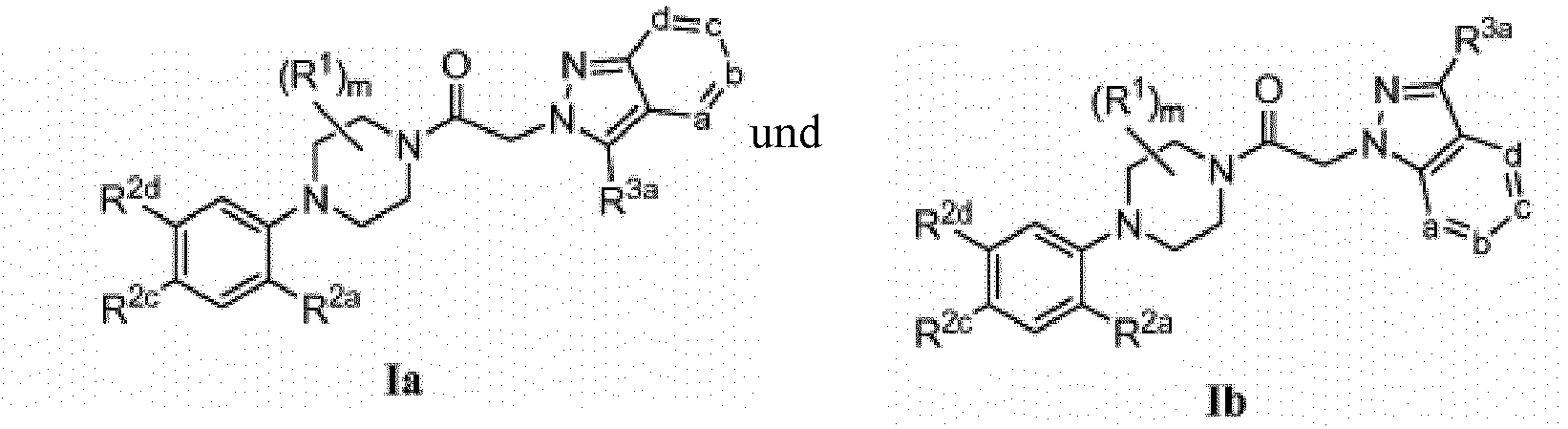 R1 jeweils unabhängig ausgewählt ist aus der Gruppe bestehend aus C1-8-Alkyl, C1-8-Haloalkyl, C3-6-Cycloalkyl, -CO2Ra, -S(O)3Ra, -X1CO2Ra, -X1SO2Ra, -X1S(O)3Ra, -X1ORa,-CORa, -CONRaRb, -X1NRaRb, -X1NRaCORb, -X1CONRaRb, -X1S(O)2NRaRb, -X1S(O)2Ra,-ORa, -NRaRb, -NRaCORb, -CONRaRb, -NRaS(O)2Rb, -S(O)2NRaRb, -S(O)2Ra, -X1CORa,-X1CONRaRb und -X1NRaS(O)2Rb, wobei X1 C1-4-Alkylen ist und jedes Ra und Rb jeweils unabhängig ausgewählt ist aus der Gruppe bestehend aus Wasserstoff, C1-8-Alkyl, C1-8-Haloalkyl und C3-6-Cycloalkyl oder wahlweise Ra und Rb, wenn sie an dasselbe Stickstoffatom gebunden sind, kombiniert sind, um einen 3- bis 7-gliedrigen Ring zu bilden, der 0-2 zusätzliche Heteroatome als Ringglieder aufweist; und wobei die aliphatischen Anteile jedes der R1-Substituenten wahlweise substituiert sind durch ein bis drei Glieder, die ausgewählt sind aus der Gruppe bestehend aus -OH, -ORm, -OC(O)NHRm, -OC(O)N(Rm)2,-SH, -SRm, -S(O)Rm, -S(O)2Rm, -SO2NH2, -S(O)2NHRm, -S(O)2N(Rm)2, -NHS(O)2Rm,-NRmS(O)2Rm, -C(O)NH2, -C(O)NHRm, -C(O)N(Rm)2, -C(O)Rm, -NHC(O)Rm, -NRmC(O)Rm, -NHC(O)NH2, -NRmC(O)NH2, NRmC(O)NHRm, -NHC(=NH)NH2, -NHC(=NRm)NH2,-NRmC(=NRm)N(Rm)2, -NRmC(=NRm)NH(Rm), -NHC(=NRm)NH(Rm), -NHC(=NRm)N(Rm)2, -NHC(=NH)N(Rm)2, -NHC(=NH)NH(Rm), -C(=NH)NH2, -C(=NRm)NH2, -C(=NRm)N(Rm)2, -C(=NRm)NH(Rm),- NHC(O)NHRm, -NRmC(O)N(Rm)2, -NHC(O)N(Rm)2, -CO2H, -CO2Rm,-NHCO2Rm, -N-RmCO2Rm, -CN, -NO2, -NH2, -NHRm, -N(Rm)2, -NRmS(O)NH2 und-NRmS(O)2NHRm, wobei jedes Rm jeweils unabhängig ein unsubstituiertes C1-6-Alkyl ist;das tiefgestellte m eine Ganzzahl von 0 bis 4 ist;R2a, R2c und R2d jeweils unabhängig ausgewählt sind aus der Gruppe bestehend aus Wasserstoff, Halogen, Cyano, Aryl, Heteroaryl, -NO2, -CO2Rc, -CONRcRd, -C(O)Rc,-S(O)Re, -S(O)2Re, -S(O)3Rc, -Re, -C(NORc)Rd, -C(NRcV)=NV, -N(V)C(Rc)=NV,-X2C(NORc)Rd, -X2C(NRcV)=NV, -X2N(V)C(Rc)=NV, -X2NRcRd, -X2SRc, -X2CN, -X2NO2,-X2CO2Rc, -X2CONRcRd, -X2C(O)Rc, -X2OC(O)NRcRd, -X2NRdC(O)Rc, -X2NRdC(O)2Re,-X2NRcC(O)NRcRd, -X2NH-C(NH2)=NH, -X2NReC(NH2)=NH, -X2NH-C(NH2)=NRe,-X2NH-C(NHRe)=NH, -X2S(O)Re, -X2S(O)2Re, -X2NRcS(O)2Re, -X2S(O)2NRcRd, -X2N3,-ORc, -SRc, -NRdC(O)Rc, -NRdC(O)2Re, -X2S(O)3Rc, -S(O)2NRcRd, -O-X2ORc, -X2NRcRd, -O-X2NRcRd, -NRd-X2CO2Rc, -NRc-C(O)NRcRd, -NH-C(NH2)=NH, -NReC(NH2)=NH, -NH-C(NH2)=NRe, -NH-C(NHRe)=NH, -NReC(NHRe)=NH, -NReC(NH2)=NRe, -NH-C(NHRe)=NRe, -NH-C(NReRe)=NH, -NRcS(O)2Re, -NRcC(S)NRcRd, -X2NRc(S)NRcRd,-X2OC(O)Rc, -O-X2CONRcRd, -OC(O)Rc, -NRcRd -NRd-X2ORc und -NRd-X2NRcRd, wobeiinnerhalb von jedem von R2a, R2c und R2d X C1-4-Alkylen ist und jedes Rc und Rd jeweils unabhängig ausgewählt ist aus Wasserstoff, C1-8-Alkyl, C1-8-Haloalkyl, C3-6-Cycloalkyl, oder Rc und Rd, wenn sie an dasselbe Stickstoffatom gebunden sind, mit dem Stickstoffatom kombiniert sein können, um einen fünf- oder sechsgliedrigen Ring zu bilden, der 0-2 zusätzliche Heteroatome als Ringglieder aufweist; und jedes Re jeweils unabhängig ausgewählt ist aus der Gruppe bestehend aus C1-8-Alkyl, C1-8-Haloalkyl, C3-6-Cycloalkyl, C2-8-Alkenyl, C2-8-Alkynyl, Aryl und Heteroaryl, und jedes von Rc, Rd und Re wahlweise weiter substituiert ist durch ein bis drei Glieder, die ausgewählt sind aus der Gruppe bestehend aus-OH, -ORn, -OC(O)NHRn, -OC(O)N(Rn)2, -SH, -SRn, -S(O)Rn, -S(O)2Rn, -SO2NH2,-S(O)2NHRn, -S(O)2N(Rn)2, -NHS(O)2Rn, -NRnS(O)2Rn, -C(O)NH2, -C(O)NHRn,-C(O)N(Rn)2, -C(O)Rn, -NHC(O)Rn, NRn(O)Rn, -NHC(O)NH2, -NRnC(O)NH2,-NRnC(O)NHRn, -NHC(O)NHRn, -NRnC(O)N(Rn)2, -NHC(O)N(Rn)2, -CO2H, -CO2Rn,-NHCO2Rn, -NRnCO2Rn, -CN, -NO2, -NH2, -NHRn, -N(Rn)2, -NRnS(O)NH2 und-NRnS(O)2NHRn, wobei jedes Rn jeweils unabhängig ein unsubstituiertes C1-6-Alkyl ist; und wobei V jeweils unabhängig ausgewählt ist aus der Gruppe bestehend aus -Rc, -CN, -CO2Re und -NO2;jeder der Ringeckpunkte a, b, c und d in Formel Ia und Ib jeweils unabhängig ausgewählt ist aus N und C(R4a) und einer bis zwei der Ringeckpunkte N ist; undR3a eine Imidazol-2-yl-Gruppe ist, die wahlweise substituiert ist durch einen bis drei Substituenten, die ausgewählt sind aus der Gruppe bestehend aus Halogen, -ORf, -NRfRg,-Rh, -SRf, -CN, -NO2, -CO2Rf, -CONRfRg, -C(O)Rf, -NRgC(O)Rf, -S(O)Rh, -S(O)2Rh,-NRfS(O)2Rh, -S(O)2NRfRg, -X3ORf, -X3NRfRg, -X3NRfS(O)2Rh und -X3S(O)2NRfRg;R4a jeweils unabhängig ausgewählt ist aus der Gruppe bestehend aus Wasserstoff, Halogen, -ORf, -OC(O)Rf, -NRfRg, -SRf, -Rh, -CN, -NO2, -CO2Rf, -CONRfRg, -C(O)Rf,-OC(O)NRfRg, -NRgC(O)Rf, -NRgC(O)2Rh, -NRf-C(O)NRfRg, -NH-C(NH2)=NH,-NRhC(NH2)=NH, -NH-C(NH2)=NRh, -NH-C(NHRh)=NH, -C(=NRf)NRgRh, -S(O)3Rf, - S(O)Rh, -S(O)2Rh, -S(O)3Rh, -NRfS(O)2Rh, -S(O)2NRfRg, -NRfS(O)2Rh, -NRfS(O)2NRfRg,-N3, -C(C=NORf)NRfRg, -X3SO3Rf, -X3C(=NRf)NRgRh, -X3ORf, -X3OC(O)Rf, -X3NRfRg,-X3SRf, -X3CN, -X3NO2, -X3CO2Rf, -X3CONRfRg, -X3C(O)Rf, X3OC(O)NRfRg,-X3NRgC(O)Rf, -X3NRgC(O)2Rh, -X3NRfC(O)NRfRg, -X3NH-C(NH2)=NH,-X3NRhC(NH2)=NH, -X3NH-C(NH2)=NRh, -X3NH-C(NHRh)=NH, -X3S(O)Rh, -X3S(O)2Rh,-X3NRfS(O)2Rh, -X3S(O)2NRfRg, -Y, -X3Y, -X3N3, -C(O)NRfS(O)Rh, -P=O(ORf)(ORg),-X3C(O)NRfS(O)2Rh, -X3C(O)NRfS(O)Rh und -X3P=O(ORf)(ORg),
wobei Y ein fünf- bis zehngliedriger Aryl-, Heteroaryl- oder Heterocycloalkylring ist, der wahlweise substituiert ist durch einen bis drei Substituenten, die ausgewählt sind aus der Gruppe bestehend aus Halogen, -ORf, -NRfRg, -Rh, -SRf, -CN, -NO2, -CO2Rf, -CONRfRg,-C(O)Rf, -NRgC(O)Rf, -S(O)Rh, -S(O)2Rh, -NRfS(O)2Rh, -S(O)2NRfRg, -X3ORf, -X3NRfRg,-X3NRfS(O)2Rh und -X3S(O)2NRfRg; undwobei jedes X3 jeweils unabhängig ausgewählt ist aus der Gruppe bestehend aus C1-4-Alkylen, C2-4-Alkenylen und C2-4-Alkynylen und jedes Rf und Rg jeweils unabhängig ausgewählt ist aus Wasserstoff, C1-8-Alkyl, C1-8-Haloalkyl, C3-6-Cycloalkyl, C2-8-Alkenyl, C2-8-Alkynyl, Aryl, Heteroaryl, Aryl-C1-4-Alkyl und Aryloxy-C1-4-Alkyl, oder wenn sie an dasselbe Stickstoffatom gebunden sind, mit dem Stickstoffatom kombiniert sein können, um einen fünf- oder sechsgliedrigen Ring zu bilden, der 0-2 zusätzliche Heteroatome als Ringglieder aufweist, und jedes Rh jeweils unabhängig ausgewählt ist aus der Gruppe bestehend aus C1-8-Alkyl, C1-8-Haloalkyl, C3-6-Cycloalkyl, C2-8-Alkenyl, C2-8-Alkynyl, Aryl, Heteroaryl, Aryl-C1-4-Alkyl und Aryloxy-C1-4-Alkyl, wobei die aliphatischen Anteile von X3, Rf, Rg und Rh wahlweise weiter substituiert sind durch ein bis drei Glieder, die ausgewählt sind aus der Gruppe bestehend aus -OH, -OR∘, OC(O)NHR∘, -OC(O)N(R∘)2, -SH, -SR∘,-S(O)R∘, -S(O)2R∘, -SO2NH2, -S(O)2NHR∘, S(O)2N(R∘)2, -NHS(O)2R∘, -NR∘S(O)2R∘,-C(O)NH2, -C(O)NHR∘, -C(O)N(R∘)2, -C(O)R∘, -NHC(O)R∘, -NR∘C(O)R∘, -NHC(O)NH2,-NR∘C(O)NH2, -NR∘C(O)NHR∘, -NHC(O)NHR∘, -NR∘C(O)N(R∘)2, -NHC(O)N(R∘)2,-CO2H, -CO2R∘, -NHCO2R∘, -NR∘CO2R∘, -CN, -NO2, -NH2, -NHR∘, -N(R∘)2, -NR∘S(O)NH2 und -NR∘S(O)2NHR∘, wobei R∘ unsubstituiertes C1-6-Alkyl ist. - Verbindung nach Anspruch 1, wobei(a)(i) R1 jeweils unabhängig ausgewählt ist aus der Gruppe bestehend aus C1-8-Alkyl, C1-8-Haloalkyl, C3-6-Cycloalkyl, -CO2Ra, -X1CO2Ra, -X1SO2Ra, -X1ORa, -CORa,-CONRaRb, -X1NRaRb, -X1NRaCORb, -X1CONRaRb, -X1S(O)2NRaRb und -X1S(O)2Ra, wobei X1 C1-4-Alkylen ist und jedes Ra und Rb jeweils unabhängig ausgewählt ist aus der Gruppe bestehend aus Wasserstoff, C1-8-Alkyl, C1-8-Haloalkyl und C3-6-Cycloalkyl und wobei die aliphatischen Anteile jedes der R1-Substituenten wahlweise weiter substituiert sind durch ein bis drei Glieder, die ausgewählt sind aus der Gruppe bestehend aus -OH, -ORm,-OC(O)NHRm, -OC(O)N(Rm)2, -SH, -SRm, -S(O)Rm, -S(O)2Rm, -SO2NH2, -S(O)2NHRm,-S(O)2N(Rm)2, -NHS(O)2Rm, NRmS(O)2Rm, -C(O)NH2, -C(O)NHRm, -C(O)N(Rm)2, -C(O)Rm, -NHC(O)Rm, -NRmC(O)Rm, -NHC(O)NH2, -NRC(O)NH2, -NRmC(O)NHRm,-NHC(O)NHRm, -NRmC(O)N(Rm)2, -NHC(O)N(Rm)2, -CO2H, -CO2Rm, -NHCO2Rm,-NRmCO2Rm, -CN, -NO2, -NH2, -NHRm, -N(Rm)2, -NRmS(O)NH2 und -NRmS(O)2NHRm, wobei jedes Rm jeweils unabhängig ein unsubstituiertes C1-6-Alkyl ist;
R2a, R2c und R2d jeweils unabhängig ausgewählt sind aus der Gruppe bestehend aus Wasserstoff, Halogen, Cyano, Aryl, Heteroaryl, -NO2, -CO2Rc, -CONRcRd, -C(O)Rc,-S(O)Re, -S(O)2Re, -Re, -C(NORc)Rd, -C(NRcV)=NV, -N(V)C(Rc)=NV, -X2C(NORc)Rd,-X2C(NRcV)=NV, -X2N(V)C(Rc)=NV, -X2NRcRd, -X2SRc-X2CN, -X2NO2, -X2CO2Rc,-X2CONRcRd, -X2C(O)Rc, X2OC(O)NRcRd, -X2NRdC(O)Rc, -X2NRdC(O)2Re,-X2NRcC(O)NRcRd, -X2NH-C(NH2)=NH, -X2NReC(NH2)=NH, -X2NH-C(NH2)=NRe,-X2NH-C(NHRe)=NH, -X2S(O)Re, -X2S(O)2Re, -X2NRcS(O)2Re, -X2S(O)2NRcRd, -X2N3,-ORc, -SRc, Re, -NRdC(O)Rc, -NRdC(O)2Re, S(O)2Re -S(O)2NRcRd, -X2ORc, -O-X2ORc-X2NRcRd, -O-X2NRcRd und -NRd-X2CO2Rc;
wobei innerhalb von jedem von R2a, R2c und R2d X2 C1-4-Alkylen ist und jedes Rc und Rd jeweils unabhängig ausgewählt ist aus Wasserstoff, C1-8-Alkyl, C1-8-Haloalkyl, C3-6-Cycloalkyl, oder wahlweise Rc und Rd, wenn sie an dasselbe Stickstoffatom gebunden sind, mit dem Stickstoffatom kombiniert sein können, um einen fünf- oder sechsgliedrigen Ring zu bilden, der 0-2 zusätzliche Heteroatome als Ringglieder aufweist; und jedes Re jeweils unabhängig ausgewählt ist aus der Gruppe bestehend aus C1-8-Alkyl, C1-8-Haloalkyl, C3-6-Cycloalkyl, C2-8-Alkenyl, C2-8-Alkynyl, Aryl und Heteroaryl, und jedes von Rc, Rd und Re wahlweise weiter substituiert ist durch ein bis drei Glieder, die ausgewählt sind aus der Gruppe bestehend aus -OH, -ORn, -OC(O)NHRn, -OC(O)N(Rn)2, -SH, -SRn, -S(O)Rn,-S(O)2Rn, -SO2NH2, -S(O)2NHRn, -S(O)2N(Rn)2, -NHS(O)2Rn, -NRnS(O)2Rn, -C(O)NH2,-C(O)NHRn, -C(O)N(Rn)2, -C(O)Rn, -NHC(O)Rn, -NRnC(O)Rn, -NHC(O)NH2,-NRnC(O)NH2, -NRnC(O)NHRn, -NHC(O)NHRn, -NRnC(O)N(Rn)2, -NHC(O)N(Rn)2, -CO2H, -CO2Rn, -NHCO2Rn, -NRnCO2Rn, -CN, -NO2, -NH2, -NHRn, -N(Rn)2, -NRnS(O)NH2 und-NRnS(O)2NHRn, wobei jedes Rn jeweils unabhängig ein unsubstituiertes C1-6-Alkyl ist; und wobei V jeweils unabhängig ausgewählt ist aus der Gruppe bestehend aus -Rc, -CN, -CO2Re und -NO2;
jeder der Ringeckpunkte a, b, c und d in Formel Ia und Ib jeweils unabhängig ausgewählt ist aus N und C(R4a) und einer bis zwei der Ringeckpunkte N ist;
R3a wahlweise substituiert ist durch einen bis drei Substituenten, die ausgewählt sind aus der Gruppe bestehend aus Halogen, -ORf, -NRfRg, -Rh, -SRf, -CN, -NO2, -CO2Rf,-CONRfRg, -C(O)Rf, -NRgC(O)Rf, -S(O)Rh, -S(O)2Rh, -NRfS(O)2Rh, -S(O)2NRfRg, -X3ORf,-X3NRfRg, -X3NRfS(O)2Rh und -X3S(O)2NRfRg;
R4a jeweils unabhängig ausgewählt ist aus der Gruppe bestehend aus Wasserstoff, Halogen, -ORf, -OC(O)Rf, -NRfRg, -SRf, -Rh, -CN, -NO2, -CO2Rf, -CONRfRg, -C(O)Rf,-OC(O)NRfRg, -NRgC(O)Rf, -NRgC(O)2Rh, -NRf-C(O)NRfRg, -NH-C(NH2)=NH,-NRhC(NH2)=NH, -NH-C(NH2)=NRh, -NH-C(NHRh)=NH, -S(O)Rh, -S(O)2Rh, NRfS(O)2Rh,-S(O)2NRfRg, -NRfS(O)2Rh, -NRfS(O)2NRfRg, -N3, -X3ORf, -X3OC(O)Rf, -X3NRfRg, -X3SRf,-X3CN, -X3NO2, -X3CO2Rf, -X3CONRfRg, -X3C(O)Rf, -X3OC(O)NRfRg, -X3NRgC(O)Rf,-X3NRgC(O)2Rh, -X3NRf-C(O)NRfRg, -X3NH-C(NH2)=NH, -X3NRhC(NH2)=NH, -X3NH-C(NH2)=NRh, -X3NH-C(NHRh)=NH, -X3S(O)Rh, -X3S(O)2Rh, -X3NRfS(O)2Rh,-X3S(O)2NRfRg, -Y, -X3Y und -X3N3, wobei Y ein fünf- bis zehngliedriger Aryl-, Heteroaryl-oder Heterocycloalkylring ist, der wahlweise substituiert ist durch einen bis drei Substituenten, die ausgewählt sind aus der Gruppe bestehend aus Halogen, -ORf, -NRfRg,-Rh, -SRf, -CN, -NO2, -CO2Rf, -CONRfRg, -C(O)Rf, -NRgC(O)Rf, -S(O)Rh, -S(O)2Rh,-NRfS(O)2Rh, -S(O)2NRfRg, -X3ORf, -X3NRfRg, -X3NRfS(O)2Rh und X3S(O)2NRfRg; und
wobei jedes X3 jeweils unabhängig ausgewählt ist aus der Gruppe bestehend aus C1-4-Alkylen, C2-4-Alkenylen und C2-4-Alkynylen und jedes Rf und Rg jeweils unabhängig ausgewählt ist aus Wasserstoff, C1-8-Alkyl, C1-8-Haloalkyl, C3-6-Cycloalkyl, C2-8-Alkenyl, C2-8-Alkynyl, Aryl, Heteroaryl, Aryl-C1-4-Alkyl und Aryloxy-C1-4-Alkyl, oder wenn sie an dasselbe Stickstoffatom gebunden sind, mit dem Stickstoffatom kombiniert sein können, um einen fünf- oder sechsgliedrigen Ring zu bilden, der 0-2 zusätzliche Heteroatome als Ringglieder aufweist, und jedes Rh jeweils unabhängig ausgewählt ist aus der Gruppe bestehend aus C1-8-Alkyl, C1-8-Haloalkyl, C3-6-Cycloalkyl, C2-8-Alkenyl, C2-8-Alkynyl, Aryl, Heteroaryl, Aryl-C1-4-Alkyl und Aryloxy-C1-4-Alkyl, wobei die aliphatischen Anteile von X3, Rf, Rg und Rh wahlweise weiter substituiert sind durch ein bis drei Glieder, die ausgewählt sind aus der Gruppe bestehend aus -OH, -OR∘, OC(O)NHR∘, -OC(O)N(R∘)2, -SH, -SR∘,-S(O)R∘, -S(O)2R∘, -SO2NH2, -S(O)2NHR∘, -S(O)2N(R∘)2, -NHS(O)2R∘, -NR∘S(O)2R∘,-C(O)NH2, -C(O)NHR∘, -C(O)N(R∘)2, -C(O)R∘, -NHC(O)R∘, -NR∘C(O)R∘, -NHC(O)NH2,-NR∘C(O)NH2, -NR∘C(O)NHR∘, -NHC(O)NHR∘, -NR∘C(O)N(R∘)2, -NHC(O)N(R∘)2,-CO2H, -CO2R∘, -NHCO2R∘, -NR∘CO2R∘, -CN, -NO2, -NH2, -NHR°, -N(R∘)2, -NR∘S(O)NH2 und -NR∘S(O)2NHR∘, wobei R∘ unsubstituiertes C1-6-Alkyl ist; und/oder(ii) in Formel Ib R2a H ist, R2c Chlor ist, R2d Methoxy ist, m 0 ist, a N ist, c CH oder N ist und b und d CH sind; oder(b) jedes R1 ein Substituent ist, der jeweils unabhängig ausgewählt ist aus der Gruppe bestehend aus C1-8-Alkyl, C1-8-Haloalkyl, C3-6-Cycloalkyl, -CO2Ra, -X1CO2Ra, -X1SO2Ra,-X1S(O)3Ra und -X1ORa, wobei die aliphatischen Anteile jedes der R1-Substituenten wahlweise substituiert sind durch ein bis drei Glieder, die ausgewählt sind aus der Gruppe bestehend aus -OH, -ORm, -OC(O)NHRm, -OC(O)N(Rm)2, -SH, -SRm, -S(O)Rm, -S(O)2Rm,-SO2NH2, -S(O)2NHRm, -S(O)2N(Rm)2, -NHS(O)2Rm, -NRmS(O)2Rm, -C(O)NH2, -C(O)NHRm, -C(O)N(Rm)2, -C(O)Rm, -NHC(O)Rm, -NRC(O)Rm, -NHC(O)NH2, -NRmC(O)NH2,-NRmC(O)NHRm, -NRmC(O)N(Rm)2, -NHC(O)N(Rm)2, -CO2H, -CO2Rm, -NHCO2Rm,-NRmCO2Rm, -CN, -NO2, -NH2, -NHRm, -N(Rm)2, -NRmS(O)NH2 und -NRmS(O)2NHRm, wobei jedes Rm jeweils unabhängig ein unsubstituiertes C1-6-Alkyl ist;
R2a ein Substituent ist, der ausgewählt ist aus der Gruppe bestehend aus Wasserstoff, Halogen, Cyano, Aryl, Heteroaryl, -NO2, -CO2Rc, -CONRcRd, -C(O)Rc, -S(O)Re, -S(O)2Re,-S(O)3Rc, -Re, -C(NORc)Rd, -C(NRcV)=NV, -N(V)C(Rc)=NV, -X2C(NORc)Rd,-X2C(NRcV)=NV, -X2N(V)C(Rc)=NV, -X2NRcRd, -X2SRc, -X2CN, -X2NO2, -X2CO2Rc,-X2CONRcRd, -X2C(O)Rc, -X2OC(O)NRcRd, -X2NRdC(O)Rc, -X2NRdC(O)2Re,-X2NRcC(O)NRcRd, -X2NH-C(NH2)=NH, -X2NReC(NH2)=NH, -X2NH-C(NH2)=NRe,-X2NH-C(NHRe)=NH, -X2S(O)Re, -X2S(O)2Re, -X2S(O)3Rc, -S(O)2NRcRd, -X2S(O)2NRcRd,-X2NRcS(O)2Re, -X2S(O)2NRcRd und -X2N3;
R2c und R2d jeweils Substituenten sind, die jeweils unabhängig ausgewählt sind aus der Gruppe bestehend aus Halogen, -ORc, -SRc, -OC(O)Rc, NRcRd, -Re, -CN, -NO2, -CO2Rc, C(O)Rc, -NRC(O)Rc, -NRdC(O)2Re, -S(O)2Re, -S(O)2NRcRd, -X2ORc, -O-X2ORc, -X2NRcRd, -O-X2NRcRd und -NRd-X2CO2Rc;
R3a wahlweise substituiert ist durch einen bis drei Substituenten, die ausgewählt sind aus der Gruppe bestehend aus Halogen, -ORf, -NRfRg, -Rh, -SRf, -CN, -NO2, -CO2Rf,-CONRfRg, -C(O)Rf, -NRgC(O)Rf, -S(O)Rh, -S(O)2Rh, -NRfS(O)2Rh und -S(O)2NRfRg;
jeder R4a-Substituent jeweils unabhängig ausgewählt ist aus der Gruppe bestehend aus Wasserstoff, Halogen, -ORf, -OC(O)Rf, -NRfRg, -SRf, -Rh, -CN, -NO2, -CO2Rf, -CONRfRg,-C(O)Rf, -OC(O)NRfRg, -NRgC(O)Rf, -NRgC(O)2Rh, -NRf-C(O)NRfRg, -S(O)Rh, -S(O)2Rh,-NRfS(O)2Rh, -S(O)2NRfRg, -NRfS(O)2NRfRg, -X3ORf, -X3NRfRg, -X3SRf, -X3S(O)2Rh,-X3S(O)3Rf, -X3S(O)2NRfRg, -X3CN, -C(C=NORf)NRfRg, -X3SO3Rf, --X3CO2Rf,-X3CONRfRg, -X3C(O)Rf, -X3NRgC(O)Rf, -X3NRgC(O)2Rh, -Y, -X3Y und -X3N3, wobei Y ausgewählt ist aus einer Gruppe bestehend aus einem fünf- oder sechsgliedrigen Arylring, einem fünf- oder sechsgliedrigen Heteroarylring und einem drei- bis achtgliedrigem Heterocycloalkylring, wobei die Y-Gruppe wahlweise substituiert ist durch ein bis drei Substituenten, die ausgewählt sind aus der Gruppe bestehend aus Halogen, -ORf, -NRfRg,-Rh, -SRf, -CN, -NO2, -CO2Rf, -CONRfRg, -C(O)Rf, -NRgC(O)Rf, -S(O)Rh, -S(O)2Rh,-NRfS(O)2Rh und -S(O)2NRfRg; und
wobei jedes X3 jeweils unabhängig C1-4-Alkylen ist und jedes Rf und Rg jeweils unabhängig ausgewählt ist aus Wasserstoff, C1-8-Alkyl, C1-8-Haloalkyl und C3-6-Cycloalkyl und jedes Rh jeweils unabhängig ausgewählt ist aus der Gruppe bestehend aus C1-8-Alkyl, C1-8-Haloalkyl und C3-6-Cycloalkyl, wobei die aliphatischen Anteile von X3, Rf, Rg und Rh wahlweise weiter substituiert sind durch ein bis drei Glieder, die ausgewählt sind aus der Gruppe bestehend aus -OH, -OR∘, OC(O)NHR∘, -OC(O)N(R∘)2, -SH, -SR∘, -S(O)R∘,-S(O)2R∘, -SO2NH2, -S(O)2NHR∘, -S(O)2N(R∘)2, -NHS(O)2R∘, -NR∘S(O)2R∘, -C(O)NH2,-C(O)NHR∘, -C(O)N(R∘)2, -C(O)R∘, -NHC(O)R∘, -NR∘C(O)R∘, -NHC(O)NH2,-NR∘C(O)NH2, -NR∘C(O)NHR∘, -NHC(O)NHR∘, -NR∘C(O)N(R∘)2, NHC(O)N(R∘)2, -CO2H, -CO2R∘, -NHCO2R∘, -NR∘CO2R∘, -CN, -NO2, -NH2, -NHR∘, -N(R∘)2, -NR∘S(O)NH2 und-NR∘S(O)2NHR∘, wobei jedes R∘ jeweils unabhängig ein unsubstituiertes C1-6-Alkyl ist. - Verbindung nach Anspruch 1, wobei(a) der fusionierte sechsgliedrige Ring, der Eckpunkte a, b, c und d aufweist, Folgendes ist:(i) ein fusioniertes Pyridin, ein fusionierter Pyrimidinring oder ein N-Oxid davon; oder(ii) ein fusionierter Pyrazinring oder ein N-Oxid davon; oder(iii) ein fusionierter Pyridazinring oder ein N-Oxid davon; und/oder(b) jedes R4a ein Glied ist, das jeweils unabhängig ausgewählt ist aus der Gruppe bestehend aus Wasserstoff, Halogen -ORf, -NRfRg, -C(O)Rf, -C(O)ORf, -S(O)Rf, -S(O)2Rf,-S(O)3Rf, -S(O)3Rh, -X3C(O)2Rf, -X3S(O)3Rf, -S(O)2NRfRg, -X3S(O)2NRfRg, -Rh, -CN,-X3NRfRg, -NRgC(O)Rf, -X3N3 und Y, wobei Y ein fünf- bis sechsgliedriges Aryl, ein fünf- oder sechsgliedriger Heteroarylring oder ein drei- bis achtgliedriger Heterocycloalkylring ist, der ausgewählt ist aus der Gruppe bestehend aus Homopiperidinyl, Morpholinyl, Thiomorpholinyl, Pyrrolidinyl, Piperidinyl, Azetidinyl, Pyranyl, Tetrahydrofuranyl, Piperazinzyl, Phenyl, Pyridyl, Oxazolyl, Pyrimidinyl, Oxadiazolyl, Imidazolyl, Pyrazolyl, Triazolyl und Thiazolyl, wahlweise substituiert durch ein bis drei Substituenten, die ausgewählt sind aus der Gruppe bestehend aus Halogen, -ORf, -NRfRg, -Rh, -CN, wobei jedes Rf und Rg jeweils unabhängig ausgewählt ist aus Wasserstoff, C1-6-Alkyl, C1-6-Haloalkyl und C3-6-Cycloalkyl und jedes Rh jeweils unabhängig ausgewählt ist aus der Gruppe bestehend aus C1-6-Alkyl, C1-6-Haloalkyl, C3-6-Cycloalkyl, wobei die aliphatischen Anteile von Rf, Rg und Rh wahlweise weiter substituiert sind durch ein bis drei Glieder, die ausgewählt sind aus der Gruppe bestehend aus -OH, -OR∘, OC(O)NHR∘, -OC(O)N(R∘)2, -SH, -SR∘, -S(O)R∘,-S(O)2R∘, -SO2NH2, -S(O)2NHR∘, -S(O)2N(R∘)2, -NHS(O)2R∘, -NR∘S(O)2R∘, -C(O)NH2,-C(O)NHR∘, C(O)N(R∘)2, -C(O)R∘, -NHC(O)R∘, -NR∘C(O)R∘, -NHC(O)NH2,-NR∘C(O)NH2, -NR∘C(O)NHR∘, -NHC(O)NHR∘, -NR∘C(O)N(R∘)2, -NHC(O)N(R∘)2,-CO2H, -CO2R∘, -NHCO2R∘, -NR∘CO2R∘, -CN, -NO2, -NH2, -NHR∘, -N(R∘)2, -NR∘S(O)NH2 und -NR∘S(O)2NHR∘, wobei R∘ unsubstituiertes C1-6-Alkyl ist; und/oder(c) m 0-2 oder 0-1 ist.
- Verbindung nach Anspruch 1, wobei(a) eine der R4a-Gruppen ausgewählt ist aus der Gruppe bestehend aus -Y und -X3-Y, wobei Y ausgewählt wird aus der Gruppe bestehend aus Homopiperidinyl, Morpholinyl, Thiomorpholinyl, Pyrrolidinyl, Piperidinyl, Azetidinyl, Pyranyl, Tetrahydrofuranyl, Piperazinyl, Phenyl, Thienyl, Furanyl, Pyridyl, Pyrimidinyl, Pyrazinyl, Pyrrolyl, Pyridizinyl, Pyrazolyl, Imidazolyl, Thiazolyl, Oxazolyl, Isoxazolyl, Isothiazolyl, Triazolyl, Tetrazolyl und Oxadiazolyl, das wahlweise substituiert ist durch einen bis drei Substituenten, die jeweils unabhängig ausgewählt sind aus der Gruppe bestehend aus Halogen, -ORf, -NRfRg, -CORf,-CO2Rf, -CONRfRg, -NO2, -Rh und -CN, wobei Rf und Rg jeweils unabhängig ausgewählt sind aus der Gruppe bestehend aus H, C1-8-Alkyl, C3-6-Cycloalkyl und C1-8-Haloalkyl, und jedes Rh jeweils unabhängig ausgewählt ist aus der Gruppe bestehend aus C1-8-Alkyl, C3-6-Cycloalkyl und C1-8-Haloalkyl;
wobei wahlweise Y ausgewählt ist aus der Gruppe bestehend aus Phenyl, Pyridyl, Oxazolyl, Pyrimidinyl, Oxadiazolyl und Thiazolyl, von denen jedes wahlweise substituiert ist durch einen bis drei Substituenten, die jeweils unabhängig ausgewählt sind aus der Gruppe bestehend aus Halogen, -ORf, -NRfRg, -CORf, -CO2Rf, -CONRfRg, -NO2, -Rh und -CN, wobei Rf und Rg jeweils unabhängig ausgewählt sind aus der Gruppe bestehend aus H, C1-8-Alkyl, C3-6-Cycloalkyl und C1-8-Haloalkyl, und jedes Rh jeweils unabhängig ausgewählt ist aus der Gruppe bestehend aus C1-8-Alkyl, C3-6-Cycloalkyl und C1-8-Haloalkyl; oder(b)(i) m 0 oder 1 ist; und R2a Wasserstoff ist; und/oder(ii) mindestens einer von den R4a-Substituenten ausgewählt ist aus der Gruppe bestehend aus Halogen, C1-4-Alkyl und C1-4-Haloalkyl, wobei die aliphatischen Anteile wahlweise substituiert sind durch ein bis drei Glieder, die ausgewählt sind aus der Gruppe bestehend aus -OH, -ORo,- OC(O)NHRo, -OC(O)N(Ro)2, -SH, -SRo, -S(O)Ro, -S(O)2Ro,-SO2NH2, -S(O)2NHRo, S(O)2N(Ro)2, -NHS(O)2Ro, -NRoS(O)2Ro, -C(O)NH2, -C(O)NHRo,-C(O)N(Ro)2, -C(O)Ro, -NHC(O)Ro, -NRoC(O)Ro, -NHC(O)NH2, -NRoC(O)NH2,-NRoC(O)NHRo, -NHC(O)NHRo, -NRoC(O)N(Ro)2, -NHC(O)N(Ro)2, -CO2H, -CO2Ro,-NHCO2Ro, -NRoCO2Ro, -CN, -NO2, -NH2, -NHRo, -N(Ro)2, -NRoS(O)NH2 und-NRoS(O)2NHRo, wobei jedes Ro jeweils unabhängig ein unsubstituiertes C1-6-Alkyl ist;wobei wahlweise R2c ausgewählt ist aus der Gruppe bestehend aus F, Cl, Br, CN, NO2, -CO2CH3, -C(O)CH3 und -S(O)2CH3 und ferner wahlweise R2d ausgewählt ist aus der Gruppe bestehend aus -SRc, -O-X2-ORc, -X2-ORc, -OC(O)Rc, -NRcRd, -Re und -ORc; oder(c) R2a ausgewählt ist aus der Gruppe bestehend aus Wasserstoff, F, Cl, Br und I; oder(d) R1, wenn vorhanden, ausgewählt ist aus der Gruppe bestehend aus -CO2H oder C1-4-Alkyl, wahlweise substituiert durch -OH,-S(O)2Rm, -CO2H und -CO2Rm; oder(e) R2c ausgewählt ist aus der Gruppe bestehend aus F, Cl, Br, CN, NO2, -CO2CH3,-C(O)CH3 und -S(O)2CH3; und/oder R2d ausgewählt ist aus der Gruppe bestehend aus -SRc,-O-X2-ORc , -X2-ORc , -OC(O)Rc, -NRcRd -Re und -ORc, oder(f) R2c und R2d jeweils unabhängig ausgewählt sind aus der Gruppe bestehend aus Wasserstoff, Halogen, F, Cl, Br, I und ORc. - Verbindung nach Anspruch 1 oder Anspruch 3 mit einer Formel, die ausgewählt ist aus der Gruppe bestehend aus:
 oder pharmazeutisch akzeptables Salz, Hydrat oder N-Oxid davon, wobei R2c und R2d jeweils ein Glied sind, das jeweils unabhängig ausgewählt ist aus der Gruppe bestehend aus Halogen, C1-4-Alkoxy, C1-4-Alkyl und C1-4-Haloalkyl; R3a Imidazolyl ist, das wahlweise substituiert ist durch C1-4-Alkyl; wobei der Ringeckpunkt a Stickstoff ist und die Ringeckpunkte b, c und d jeweils C(H) sind;wobei wahlweise R2c ausgewählt ist aus der Gruppe bestehend aus Fluor, Chlor, Brom und Iod; und R2d ausgewählt ist aus der Gruppe bestehend aus Methoxy, Ethoxy, Trifluormethoxy, Methyl, Ethyl, Trifluormethyl und 2-Fluorethoxy.
 - Verbindung nach Anspruch 1 oder Anspruch 3 mit einer Formel, die ausgewählt ist aus der Gruppe bestehend aus:
 oder pharmazeutisch akzeptables Salz, Hydrat oder N-Oxid davon; wobei R2a, R2c und R2d jeweils ein Glied sind, das jeweils unabhängig ausgewählt ist aus der Gruppe bestehend aus Wasserstoff, Halogen, C1-4-Alkoxy, C1-4-Alkyl und C1-4-Haloalkyl; R3a Imidazolyl ist, das wahlweise substituiert ist durch C1-4-Alkyl; und der Ringeckpunkt a Stickstoff ist und die Ringeckpunkte b, c und d jeweils C(H) sind;wobei wahlweise R2a und R2c jeweils unabhängig ausgewählt sind aus der Gruppe bestehend aus Fluor, Chlor, Brom und Iod; und R2d ausgewählt ist aus der Gruppe bestehend aus Methoxy, Ethoxy, Trifluormethoxy, Methyl, Ethyl, Trifluormethyl und 2-Fluorethoxy.
 - Verbindung nach Anspruch 1, wobei(a) R2a ausgewählt ist aus der Gruppe bestehend aus Wasserstoff, F, Cl, Br, und I; oder(b) R2c und R2d jeweils unabhängig ausgewählt sind aus der Gruppe bestehend aus Wasserstoff, Halogen, F, Cl, Br, I und ORc.
- Verbindung nach Anspruch 1, wobei die Verbindung ausgewählt ist aus:1-[4-(4-Chlor-3-ethoxyphenyl)-piperazin-1-yl]-2-[3(1H-imidazol-2-yl)-pyrazolo[3,4-b] pyridin-1-yl]-ethanon;1-{4-(4-Chlor-3-(2-fluorethoxy)-phenyl]-piperazin-1-yl}-2-[3-(1H-imidazol-2-yl)-pyrazolo[3,4-b]pyridin-1-yl]-ethanon;1-[4-(4-Chlor-3-methoxyphenyl)-2-methylpiperazin-1-yl]-2-[3-(1H-imidazol-2-yl)-pyrazolo[3,4-b]pyridin-1-yl]-ethanon;1-[4-(4-Chlor-3-methoxyphenyl)-3-methylpiperazin-1-yl]-2-[3-(1H-imidazol-2-yl)-pyrazolo[3,4-b]pyridin-1-yl]-ethanon;1-[4-(4-Chlor-3-trifluormethylphenyl)-piperazin-1-yl]-2-[3-(1H-imidazol-2-yl)-pyrazolo[3,4-b]pyridin-1-yl]-ethanon;1-[4-(4-Chlor-3-methoxyphenyl)-piperazin-1-yl]-2-[3-(1-methyl-1H-imidazol-2-yl)-pyrazolo[3,4-b]pyridin-1-yl]-ethanon;1-[4-(4-Chlor-2-fluor-5-methoxyphenyl)-piperazin-1-yl]-2-[3-(1H-imidazol-2-yl)-pyrazolo[3,4-b]pyridin-1-yl]-ethanon;1-{4-[4-Chlor-3-(2-fluorethoxy)-phenyl]-2-methylpiperazin-1-yl}-2-[3-(1H-imidazol-2-yl)-pyrazolo[3,4-b]pyridin-1-yl]-ethanon;1-[4-(4-Chlor-5-ethoxy-2-fluorphenyl)-piperazin-1-yl]-2-[3-(1H-imidazol-2-yl)-pyrazolo[3,4-b]pyridin-1-yl]-ethanon,1-[4-(4-Chlor-3-trifluormethoxyphenyl)-piperazin-1-yl]-2-[3-(1H-imidazol-2-yl)-pyrazolo[3,4-b]pyridin-1-yl]-ethanon;1-[4-(4-Chlor-2-fluor-5-methoxyphenyl)-2-methylpiperazin-1-yl]-2-[3-(1H-imidazol-2-yl)-pyrazolo[3,4-b]pyridin-1-yl]-ethanon;1-[4-(4-Chlor-3-ethoxyphenyl)-2-methylpiperazin-1-yl]-2-[3-(1H-imidazol-2-yl)-pyrazolo[3,4-b]pyridin-1-yl]-ethanon;1-{4-[4-Chlor-2-fluor-5-(2-fluorethoxy)-phenyl]-piperazin-1-yl}-2-[3-(1H-imidazol-2-yl)-pyrazolo[3,4-b]pyridin-1-yl]-ethanon;1-[4-(4-Chlor-3-methylphenyl)-piperazin-1-yl]-2-[3-(1H-imidazol-2-yl)-pyrazolo[3,4-b]pyridin-1-yl]-ethanon;1-[4-(4-Chlor-2-fluor-5-methoxyphenyl)-2-methylpiperazin-1-yl]-2-[3-(1H-imidazol-2-yl)-pyrazolo[3,4-b]pyridin-1-yl]-ethanon;2-[4-Amino-3-(1H-imidazol-2-yl)-pyrazolo[3,4-d]pyrimidin-1-yl]-1-[4-(4-chlor-3-methoxyphenyl)-piperazin-1-yl]-ethanon;2-[5-Chlor-3-(1H-imidazol-2-yl)-indazol-1-yl]-1-[4-(4-chlor-3-methoxyphenyl)-piperazin-1-yl]-ethanon;2-[6-Chlor-3-(1H-imidazol-2-yl)-indazol-1-yl]-1-[4-(4-chlor-3-methoxyphenyl)-piperazin-1-yl]-ethanon; undpharmazeutisch akzeptables Salz oder N-Oxid davon.
- Verbindung nach Anspruch 8, die 2-[4-Amino-3-(1H-imidazol-2-yl)-pyrazolo[3,4-d]pyrimidin-1-yl]-1-[4-(4-chlor-3-methoxyphenyl)-piperazin-1-yl]-ethanon ist, oder pharmazeutisch akzeptables Salz oder N-Oxid davon.
- Verbindung nach Anspruch 1, wobei die Verbindung ausgewählt ist aus:1-[(S)-4-(4-Chlor-3-methoxyphenyl)-2-methylpiperazin-1-yl]-2-[3-(1H-imidazol-2-yl)-pyrazolo[3,4-b]pyridin-1-yl]ethanon;1-[(S)-4-(4-Chlor-2-fluor-5-methoxyphenyl)-2-methylpiperazin-1-yl]-2-[3-(1H-imidazol-2-yl)pyrazolo[3,4-b]pyridin-1-yl]ethanon;1-[(R)-4-(4-Chlor-3-methoxyphenyl)-3-methylpiperazin-1-yl]-2-[3-(1H-imidazol-2-yl)-pyrazolo[3,4-b]pyridin-1-yl]ethanon;1-[(S)-4-(4-Chlor-3-methoxyphenyl)-3-methylpiperazin-1-yl]-2-[3-(1H-imidazol-2-yl)-pyrazolo[3,4-b]pyridin-1-yl]ethanon;1-[(R)-4-(4-Chlor-3-methoxyphenyl)-2-methylpiperazin-1-yl]-2-[3-(1H-imidazol-2-yl)-pyrazolo[3,4-b]pyridin-1-yl]ethanon;2-(3-(1H-imidazol-2-yl)-1H-pyrazolo[3,4-b]pyridin-1-yl)-1-((S)-4-(4-chlor-3-ethoxyphenyl)-2-methylpiperazin-1-yl)ethanon; und2-(3-(1H-imidazol-2-yl)-1H-pyrazolo[3,4-b]pyridin-1-yl)-1-((S)-4-(3-(2-fluorethoxy)-4-chlorphenyl)-2-methylpiperazin-1-yl)ethanon.
- Pharmazeutische Zusammensetzung, umfassend einen pharmazeutisch akzeptablen Hilfsstoff oder Trägerstoff und eine Verbindung nach einem vorhergehenden Anspruch;
wobei wahlweise die Zusammensetzung als ein Stent oder eine Stentgraft-Vorrichtung gebildet ist. - Verbindung nach einem der Ansprüche 1 bis 10 zur Verwendung in einem Verfahren zur Behandlung von CCR1-vermittelten Krankheiten oder Erkrankungen; wobei wahlweise:(a) die CCR1-vermittelte Krankheit oder Erkrankung eine entzündliche Erkrankung ist; oder(b) die CCR1-vermittelte Krankheit oder Erkrankung eine immunregulatorische Störung ist; oder(c) die CCR1-vermittelte Krankheit oder Erkrankung ausgewählt ist aus der Gruppe bestehend aus rheumatoider Arthritis, multipler Sklerose, Transplantatabstoßung, Restenose, Dermatitis, Ekzem, Urtikaria, Vaskulitis, entzündlicher Darmerkrankung, Nahrungsmittelallergie, Asthma, Alzheimer-Krankheit, Parkinson-Krankheit, Psoriasis, Lupus erythematodes, Osteoarthritis, Schlaganfall, Restenose und Enzephalomyelitis; oder(d) der Verabreichungsweg oral, parenteral, rektal, transdermal, sublingual, nasal oder topisch ist; oder(e) die Verbindung in Kombination mit einem Entzündungshemmer, einem Analgetikum, einem antiproliferativen Wirkstoff, einem Stoffwechselhemmer, einem Leukozytenmigrationshemmer oder einem Immunmodulator verabreicht wird.
- Verwendung einer Verbindung, wie in einem der Ansprüche 1 bis 10 definiert, zur Herstellung eines Medikaments zur Verwendung in einem Verfahren zur Behandlung von CCR1-vermittelten Krankheiten oder Erkrankungen; wobei wahlweise:(a) die CCR1-vermittelte Krankheit oder Erkrankung eine entzündliche Erkrankung ist; oder(b) die CCR1-vermittelte Krankheit oder Erkrankung eine immunregulatorische Störung ist; oder(c) die CCR1-vermittelte Krankheit oder Erkrankung ausgewählt ist aus der Gruppe bestehend aus rheumatoider Arthritis, multipler Sklerose, Transplantatabstoßung, Restenose, Dermatitis, Ekzem, Urtikaria, Vaskulitis, entzündlicher Darmerkrankung, Nahrungsmittelallergie, Asthma, Alzheimer-Krankheit, Parkinson-Krankheit, Psoriasis, Lupus erythematodes, Osteoarthritis, Schlaganfall, Restenose und Enzephalomyelitis; oder(d) der Verabreichungsweg oral, parenteral, rektal, transdermal, sublingual, nasal oder topisch ist.
- Verfahren zur Herstellung einer Verbindung nach Anspruch 5, wobei das Verfahren umfasst:(a) in Kontakt bringen einer Verbindung, die ausgewählt ist aus der Gruppe bestehend aus
 (i) das Imidazol-bildende Reagenz ausgewählt ist aus der Gruppe bestehend aus Glyoxal oder einem Glyoxal-Äquivalent; oder(ii) das Imidazol-bildende Reagenz Glyoxal ist und das in Kontakt bringen in der Gegenwart von Ammoniumacetat erfolgt; oder(b) in Kontakt bringen einer Verbindung, die ausgewählt ist aus der Gruppe bestehend auswobei wahlweise das Oxidieren mit einem Reagenz ausgeführt wird, das ausgewählt ist aus der Gruppe bestehend aus KMnO4, MnO2, PhI(OAc)2, Swern-Reagenzien und Dess-Martin-Periodinan.
- Verfahren zur Herstellung einer Verbindung nach Anspruch 6, wobei das Verfahren umfasst:(a) in Kontakt bringen einer Verbindung, die ausgewählt ist aus der Gruppe bestehend aus
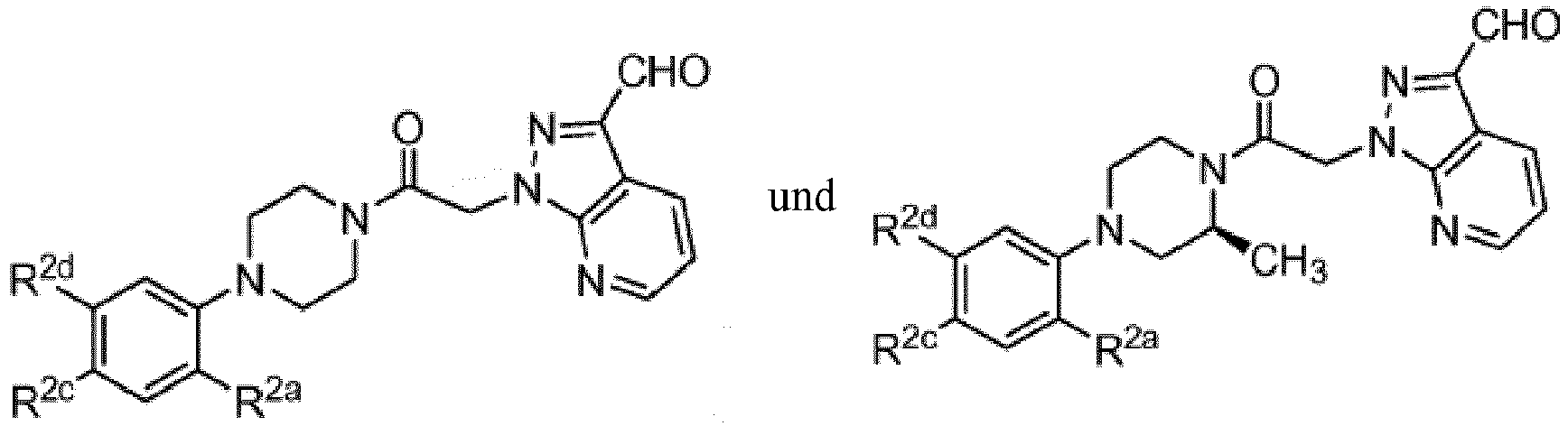 (i) das Imidazol-bildende Reagenz ausgewählt ist aus der Gruppe bestehend aus Glyoxal oder einem Glyoxal-Äquivalent; oder(ii) das Imidazol-bildende Reagenz Glyoxal ist und das in Kontakt bringen in der Gegenwart von Ammoniumacetat erfolgt; oder(b) in Kontakt bringen einer Verbindung, die ausgewählt ist aus der Gruppe bestehend auswobei wahlweise das Oxidieren mit einem Reagenz ausgeführt wird, das ausgewählt ist aus der Gruppe bestehend aus KMnO4, MnO2, PhI(OAc)2, Swern-Reagenzien und Dess-Martin-Periodinan.
Applications Claiming Priority (2)
| Application Number | Priority Date | Filing Date | Title |
|---|---|---|---|
| US11/752,201 US7777035B2 (en) | 2005-06-22 | 2007-05-22 | Azaindazole compounds and methods of use |
| PCT/US2008/064394 WO2008147822A1 (en) | 2007-05-22 | 2008-05-21 | Azaindazole compounds and methods of use |
Publications (3)
| Publication Number | Publication Date |
|---|---|
| EP2155203A1 EP2155203A1 (de) | 2010-02-24 |
| EP2155203A4 EP2155203A4 (de) | 2011-05-04 |
| EP2155203B1 true EP2155203B1 (de) | 2018-10-17 |
Family
ID=40076726
Family Applications (1)
| Application Number | Title | Priority Date | Filing Date |
|---|---|---|---|
| EP08756066.0A Active EP2155203B1 (de) | 2007-05-22 | 2008-05-21 | Azaindazol-verbindungen und anwendungsverfahren |
Country Status (6)
| Country | Link |
|---|---|
| US (5) | US7777035B2 (de) |
| EP (1) | EP2155203B1 (de) |
| AU (1) | AU2008256869A1 (de) |
| CA (1) | CA2687766C (de) |
| ES (1) | ES2704302T3 (de) |
| WO (1) | WO2008147822A1 (de) |
Families Citing this family (16)
| Publication number | Priority date | Publication date | Assignee | Title |
|---|---|---|---|---|
| US7777035B2 (en) * | 2005-06-22 | 2010-08-17 | Chemocentryx, Inc. | Azaindazole compounds and methods of use |
| NZ581405A (en) * | 2007-05-22 | 2011-06-30 | Chemocentryx Inc | 3-(Imidazolyl)-pyrazolo[3,4-b]pyridines and their use in treating CCR1-mediated disorders |
| MX2011002636A (es) | 2008-09-11 | 2011-04-05 | Chemocentryx Inc | 4-amino-3-(imidazoil)-pirazolo[3,4-d]pirimidinas. |
| WO2010051561A1 (en) | 2008-11-03 | 2010-05-06 | Chemocentryx, Inc. | Compounds for the treatment of osteoporosis and cancers |
| SG176885A1 (en) * | 2009-08-03 | 2012-01-30 | Acraf | Process for the preparation of 1-benzyl-3-hydr0xymethyl-1h-indaz0le and its derivatives and required magnesium intermediates |
| AU2013326867B2 (en) | 2012-10-05 | 2018-03-08 | Rigel Pharmaceuticals, Inc. | GDF-8 inhibitors |
| AU2013355054B2 (en) * | 2012-12-07 | 2017-08-24 | Chemocentryx, Inc. | Diazole lactams |
| SG11201600504TA (en) | 2013-07-22 | 2016-02-26 | Actelion Pharmaceuticals Ltd | 1-(piperazin-1-yl)-2-([1,2,4]triazol-1-yl)-ethanone derivatives |
| TWI667233B (zh) | 2013-12-19 | 2019-08-01 | 德商拜耳製藥公司 | 新穎吲唑羧醯胺,其製備方法、含彼等之醫藥製劑及其製造醫藥之用途 |
| AR103399A1 (es) | 2015-01-15 | 2017-05-10 | Actelion Pharmaceuticals Ltd | Derivados de (r)-2-metil-piperazina como moduladores del receptor cxcr3 |
| TWI693221B (zh) | 2015-01-15 | 2020-05-11 | 瑞士商愛杜西亞製藥有限公司 | 作為cxcr3受體調節劑之羥烷基六氫吡衍生物 |
| IL261998B2 (en) * | 2016-04-07 | 2023-03-01 | Chemocentryx Inc | Reducing your burden by giving ccr1 antagonists in combination with pd-1 inhibitors or pd-l1 inhibitors |
| US12448374B2 (en) | 2018-06-07 | 2025-10-21 | Disarm Therapeutics, Inc. | Inhibitors of SARM1 |
| CN113164508B (zh) | 2018-12-19 | 2025-07-08 | 达萨玛治疗公司 | 与神经保护剂组合的sarm1抑制剂 |
| WO2021039961A1 (ja) * | 2019-08-30 | 2021-03-04 | 大日本住友製薬株式会社 | 縮環ピラゾール誘導体 |
| CN111620868B (zh) * | 2020-05-28 | 2021-08-31 | 爱斯特(成都)生物制药股份有限公司 | 一种1H-吡唑并[3,4-b]吡啶-3-甲醛的制备方法 |
Family Cites Families (37)
| Publication number | Priority date | Publication date | Assignee | Title |
|---|---|---|---|---|
| US3551428A (en) | 1956-02-10 | 1970-12-29 | Ciba Geigy Corp | New 1- (or 2-) substituted 4-mercapto-pyrazolo(3,4-d)pyrimidines |
| CH398626A (de) | 1960-05-11 | 1966-03-15 | Ciba Geigy | Verfahren zur Herstellung neuer Pyrazolopyrimidine |
| NL296101A (de) * | 1961-04-01 | 1900-01-01 | ||
| US3720674A (en) | 1970-09-02 | 1973-03-13 | Squibb & Sons Inc | 4-amino-1h-pyrazolo(3,4-d)pyrimidine derivatives |
| GB1333471A (en) * | 1971-01-27 | 1973-10-10 | Labaz | Imidazoline derivatives and process for preparing the same |
| US4166452A (en) | 1976-05-03 | 1979-09-04 | Generales Constantine D J Jr | Apparatus for testing human responses to stimuli |
| US4256108A (en) | 1977-04-07 | 1981-03-17 | Alza Corporation | Microporous-semipermeable laminated osmotic system |
| US4238497A (en) * | 1977-10-26 | 1980-12-09 | Burroughs Wellcome Co. | Imidazoline derivatives, salts thereof and their use as pesticides |
| AU518569B2 (en) * | 1979-08-07 | 1981-10-08 | Farmos-Yhtyma Oy | 4-benzyl- and 4-benzoyl imidazole derivatives |
| US4265874A (en) | 1980-04-25 | 1981-05-05 | Alza Corporation | Method of delivering drug with aid of effervescent activity generated in environment of use |
| LU86084A1 (fr) | 1985-09-20 | 1987-04-02 | Faco Sa | Apparei de massage electrique |
| US5102417A (en) | 1985-11-07 | 1992-04-07 | Expandable Grafts Partnership | Expandable intraluminal graft, and method and apparatus for implanting an expandable intraluminal graft |
| US4800882A (en) | 1987-03-13 | 1989-01-31 | Cook Incorporated | Endovascular stent and delivery system |
| DE3712735A1 (de) | 1987-04-15 | 1988-11-10 | Boehringer Mannheim Gmbh | Neue pyrazolo(3,4-d)pyrimidine, verfahren zu ihrer herstellung und verwendung als arzneimittel |
| US4886062A (en) | 1987-10-19 | 1989-12-12 | Medtronic, Inc. | Intravascular radially expandable stent and method of implant |
| US4927942A (en) * | 1988-12-15 | 1990-05-22 | Texaco Chemical Co. | Method for the preparation of imidazoles |
| WO1990013332A1 (en) | 1989-05-11 | 1990-11-15 | Cedars-Sinai Medical Center | Stent with sustained drug delivery |
| WO1991012779A1 (en) | 1990-02-28 | 1991-09-05 | Medtronic, Inc. | Intralumenal drug eluting prosthesis |
| US5419760A (en) | 1993-01-08 | 1995-05-30 | Pdt Systems, Inc. | Medicament dispensing stent for prevention of restenosis of a blood vessel |
| US5429634A (en) | 1993-09-09 | 1995-07-04 | Pdt Systems | Biogenic implant for drug delivery and method |
| US6774278B1 (en) | 1995-06-07 | 2004-08-10 | Cook Incorporated | Coated implantable medical device |
| US6294192B1 (en) | 1999-02-26 | 2001-09-25 | Lipocine, Inc. | Triglyceride-free compositions and methods for improved delivery of hydrophobic therapeutic agents |
| AU2001281255B2 (en) | 2000-08-14 | 2006-07-20 | Ortho-Mcneil Pharmaceutical, Inc. | Substituted pyrazoles |
| CZ2004519A3 (cs) | 2001-10-22 | 2004-12-15 | Pfizer Products Inc. | Deriváty piperazinu s účinky antagonisty receptoru CCR1 |
| US7589199B2 (en) * | 2002-06-12 | 2009-09-15 | Chemocentryx, Inc. | Substituted piperazines |
| US7842693B2 (en) * | 2002-06-12 | 2010-11-30 | Chemocentryx, Inc. | Substituted piperazines |
| MXPA04012393A (es) * | 2002-06-12 | 2005-06-17 | Chemocentryx | Derivados de piperazina 1-aril-4-substituidos para utilizar como antagonistas ccr1 para tratamiento de inflamacion y desordenes inmunes. |
| US20050256130A1 (en) * | 2002-06-12 | 2005-11-17 | Chemocentryx, Inc. | Substituted piperazines |
| US6770729B2 (en) | 2002-09-30 | 2004-08-03 | Medtronic Minimed, Inc. | Polymer compositions containing bioactive agents and methods for their use |
| GB0224917D0 (en) | 2002-10-25 | 2002-12-04 | Novartis Ag | Organic compounds |
| US7435831B2 (en) | 2004-03-03 | 2008-10-14 | Chemocentryx, Inc. | Bicyclic and bridged nitrogen heterocycles |
| CN1950082B (zh) * | 2004-03-03 | 2013-02-06 | 凯莫森特里克斯股份有限公司 | 双环和桥连的含氮杂环化物 |
| ZA200800309B (en) * | 2005-06-22 | 2009-10-28 | Chemocentryx Inc | Azaindazole compounds and methods of use |
| US7777035B2 (en) * | 2005-06-22 | 2010-08-17 | Chemocentryx, Inc. | Azaindazole compounds and methods of use |
| US20090252779A1 (en) * | 2006-06-22 | 2009-10-08 | Chemocentryx, Inc. | Azaindazole compounds and methods of use |
| NZ581405A (en) * | 2007-05-22 | 2011-06-30 | Chemocentryx Inc | 3-(Imidazolyl)-pyrazolo[3,4-b]pyridines and their use in treating CCR1-mediated disorders |
| MX2011002636A (es) | 2008-09-11 | 2011-04-05 | Chemocentryx Inc | 4-amino-3-(imidazoil)-pirazolo[3,4-d]pirimidinas. |
-
2007
- 2007-05-22 US US11/752,201 patent/US7777035B2/en active Active
-
2008
- 2008-05-21 AU AU2008256869A patent/AU2008256869A1/en not_active Abandoned
- 2008-05-21 EP EP08756066.0A patent/EP2155203B1/de active Active
- 2008-05-21 CA CA2687766A patent/CA2687766C/en active Active
- 2008-05-21 WO PCT/US2008/064394 patent/WO2008147822A1/en not_active Ceased
- 2008-05-21 ES ES08756066T patent/ES2704302T3/es active Active
-
2010
- 2010-07-01 US US12/829,312 patent/US8383630B2/en active Active
-
2013
- 2013-02-22 US US13/774,938 patent/US9296740B2/en active Active
-
2016
- 2016-02-23 US US15/050,691 patent/US20160296517A1/en not_active Abandoned
-
2017
- 2017-11-21 US US15/820,008 patent/US20180250293A1/en not_active Abandoned
Non-Patent Citations (1)
| Title |
|---|
| None * |
Also Published As
| Publication number | Publication date |
|---|---|
| EP2155203A4 (de) | 2011-05-04 |
| US20130338157A1 (en) | 2013-12-19 |
| US20110098308A1 (en) | 2011-04-28 |
| ES2704302T3 (es) | 2019-03-15 |
| CA2687766A1 (en) | 2008-12-04 |
| US8383630B2 (en) | 2013-02-26 |
| CA2687766C (en) | 2016-06-28 |
| AU2008256869A1 (en) | 2008-12-04 |
| US9296740B2 (en) | 2016-03-29 |
| US20160296517A1 (en) | 2016-10-13 |
| US20180250293A1 (en) | 2018-09-06 |
| US7777035B2 (en) | 2010-08-17 |
| EP2155203A1 (de) | 2010-02-24 |
| WO2008147822A1 (en) | 2008-12-04 |
| US20080058341A1 (en) | 2008-03-06 |
Similar Documents
| Publication | Publication Date | Title |
|---|---|---|
| EP1906965B1 (de) | Azaindazol-verbindungen und anwendungsverfahren | |
| US7777035B2 (en) | Azaindazole compounds and methods of use | |
| EP2155712B1 (de) | 3-(imidazolyl)pyrazolo[3,4-b]pyridine | |
| DK2323663T3 (en) | 4-amino-3- (imidazolyl) pyrazolo [3,4-d] pyrimidines | |
| EP2352501B1 (de) | Verbindung zur verwendung in der behandlung von osteoporose | |
| US20090252779A1 (en) | Azaindazole compounds and methods of use | |
| HK1141458A (en) | Azaindazole compounds and methods of use | |
| HK1141458B (en) | Azaindazole compounds and methods of use | |
| HK1141524B (en) | 3-(imidazolyl)-pyrazolo[3,4-b]pyridines | |
| HK1157652B (en) | 4-amino-3-(imidazolyl)-pyrazolo[3,4-d]pyrimidines |
Legal Events
| Date | Code | Title | Description |
|---|---|---|---|
| PUAI | Public reference made under article 153(3) epc to a published international application that has entered the european phase |
Free format text: ORIGINAL CODE: 0009012 |
|
| 17P | Request for examination filed |
Effective date: 20091209 |
|
| AK | Designated contracting states |
Kind code of ref document: A1 Designated state(s): AT BE BG CH CY CZ DE DK EE ES FI FR GB GR HR HU IE IS IT LI LT LU LV MC MT NL NO PL PT RO SE SI SK TR |
|
| AX | Request for extension of the european patent |
Extension state: AL BA MK RS |
|
| RIN1 | Information on inventor provided before grant (corrected) |
Inventor name: PENNELL, ANDREW, M., K. Inventor name: GLEASON, MARK, M. Inventor name: CHEN, WEI Inventor name: LI, YANDONG Inventor name: ZENG, YIBIN Inventor name: GREENMAN, KEVIN, LLOYD Inventor name: LELETI, MANMOHAN, R. Inventor name: LI, LIANFA Inventor name: WRIGHT, JOHN, KIM, J. Inventor name: XU, YUAN Inventor name: ZHANG, PENGLIE |
|
| RIN1 | Information on inventor provided before grant (corrected) |
Inventor name: PENNELL, ANDREW, M., K. Inventor name: LI, LIANFA Inventor name: XU, YUAN Inventor name: GLEASON, MARK, M. Inventor name: LELETI, MANMOHAN, R. Inventor name: GREENMAN, KEVIN, LLOYD Inventor name: ZHANG, PENGLIE Inventor name: LI, YANDONG Inventor name: WRIGHT, JOHN, KIM, J. Inventor name: CHEN, WEI Inventor name: ZENG, YIBIN |
|
| REG | Reference to a national code |
Ref country code: HK Ref legal event code: DE Ref document number: 1141458 Country of ref document: HK |
|
| A4 | Supplementary search report drawn up and despatched |
Effective date: 20110404 |
|
| STAA | Information on the status of an ep patent application or granted ep patent |
Free format text: STATUS: EXAMINATION IS IN PROGRESS |
|
| 17Q | First examination report despatched |
Effective date: 20161222 |
|
| GRAP | Despatch of communication of intention to grant a patent |
Free format text: ORIGINAL CODE: EPIDOSNIGR1 |
|
| STAA | Information on the status of an ep patent application or granted ep patent |
Free format text: STATUS: GRANT OF PATENT IS INTENDED |
|
| INTG | Intention to grant announced |
Effective date: 20180503 |
|
| GRAS | Grant fee paid |
Free format text: ORIGINAL CODE: EPIDOSNIGR3 |
|
| GRAA | (expected) grant |
Free format text: ORIGINAL CODE: 0009210 |
|
| STAA | Information on the status of an ep patent application or granted ep patent |
Free format text: STATUS: THE PATENT HAS BEEN GRANTED |
|
| AK | Designated contracting states |
Kind code of ref document: B1 Designated state(s): AT BE BG CH CY CZ DE DK EE ES FI FR GB GR HR HU IE IS IT LI LT LU LV MC MT NL NO PL PT RO SE SI SK TR |
|
| AX | Request for extension of the european patent |
Extension state: AL BA MK RS |
|
| REG | Reference to a national code |
Ref country code: GB Ref legal event code: FG4D |
|
| REG | Reference to a national code |
Ref country code: CH Ref legal event code: EP |
|
| REG | Reference to a national code |
Ref country code: IE Ref legal event code: FG4D |
|
| REG | Reference to a national code |
Ref country code: DE Ref legal event code: R096 Ref document number: 602008057460 Country of ref document: DE Ref country code: AT Ref legal event code: REF Ref document number: 1053186 Country of ref document: AT Kind code of ref document: T Effective date: 20181115 |
|
| REG | Reference to a national code |
Ref country code: CH Ref legal event code: NV Representative=s name: VENI GMBH, CH |
|
| REG | Reference to a national code |
Ref country code: NL Ref legal event code: FP |
|
| REG | Reference to a national code |
Ref country code: SE Ref legal event code: TRGR |
|
| REG | Reference to a national code |
Ref country code: LT Ref legal event code: MG4D |
|
| REG | Reference to a national code |
Ref country code: ES Ref legal event code: FG2A Ref document number: 2704302 Country of ref document: ES Kind code of ref document: T3 Effective date: 20190315 Ref country code: AT Ref legal event code: MK05 Ref document number: 1053186 Country of ref document: AT Kind code of ref document: T Effective date: 20181017 |
|
| PG25 | Lapsed in a contracting state [announced via postgrant information from national office to epo] |
Ref country code: IS Free format text: LAPSE BECAUSE OF FAILURE TO SUBMIT A TRANSLATION OF THE DESCRIPTION OR TO PAY THE FEE WITHIN THE PRESCRIBED TIME-LIMIT Effective date: 20190217 Ref country code: FI Free format text: LAPSE BECAUSE OF FAILURE TO SUBMIT A TRANSLATION OF THE DESCRIPTION OR TO PAY THE FEE WITHIN THE PRESCRIBED TIME-LIMIT Effective date: 20181017 Ref country code: BG Free format text: LAPSE BECAUSE OF FAILURE TO SUBMIT A TRANSLATION OF THE DESCRIPTION OR TO PAY THE FEE WITHIN THE PRESCRIBED TIME-LIMIT Effective date: 20190117 Ref country code: LT Free format text: LAPSE BECAUSE OF FAILURE TO SUBMIT A TRANSLATION OF THE DESCRIPTION OR TO PAY THE FEE WITHIN THE PRESCRIBED TIME-LIMIT Effective date: 20181017 Ref country code: NO Free format text: LAPSE BECAUSE OF FAILURE TO SUBMIT A TRANSLATION OF THE DESCRIPTION OR TO PAY THE FEE WITHIN THE PRESCRIBED TIME-LIMIT Effective date: 20190117 Ref country code: AT Free format text: LAPSE BECAUSE OF FAILURE TO SUBMIT A TRANSLATION OF THE DESCRIPTION OR TO PAY THE FEE WITHIN THE PRESCRIBED TIME-LIMIT Effective date: 20181017 Ref country code: PL Free format text: LAPSE BECAUSE OF FAILURE TO SUBMIT A TRANSLATION OF THE DESCRIPTION OR TO PAY THE FEE WITHIN THE PRESCRIBED TIME-LIMIT Effective date: 20181017 Ref country code: HR Free format text: LAPSE BECAUSE OF FAILURE TO SUBMIT A TRANSLATION OF THE DESCRIPTION OR TO PAY THE FEE WITHIN THE PRESCRIBED TIME-LIMIT Effective date: 20181017 Ref country code: LV Free format text: LAPSE BECAUSE OF FAILURE TO SUBMIT A TRANSLATION OF THE DESCRIPTION OR TO PAY THE FEE WITHIN THE PRESCRIBED TIME-LIMIT Effective date: 20181017 |
|
| PG25 | Lapsed in a contracting state [announced via postgrant information from national office to epo] |
Ref country code: GR Free format text: LAPSE BECAUSE OF FAILURE TO SUBMIT A TRANSLATION OF THE DESCRIPTION OR TO PAY THE FEE WITHIN THE PRESCRIBED TIME-LIMIT Effective date: 20190118 Ref country code: PT Free format text: LAPSE BECAUSE OF FAILURE TO SUBMIT A TRANSLATION OF THE DESCRIPTION OR TO PAY THE FEE WITHIN THE PRESCRIBED TIME-LIMIT Effective date: 20190217 |
|
| REG | Reference to a national code |
Ref country code: DE Ref legal event code: R097 Ref document number: 602008057460 Country of ref document: DE |
|
| PG25 | Lapsed in a contracting state [announced via postgrant information from national office to epo] |
Ref country code: DK Free format text: LAPSE BECAUSE OF FAILURE TO SUBMIT A TRANSLATION OF THE DESCRIPTION OR TO PAY THE FEE WITHIN THE PRESCRIBED TIME-LIMIT Effective date: 20181017 Ref country code: CZ Free format text: LAPSE BECAUSE OF FAILURE TO SUBMIT A TRANSLATION OF THE DESCRIPTION OR TO PAY THE FEE WITHIN THE PRESCRIBED TIME-LIMIT Effective date: 20181017 |
|
| PLBE | No opposition filed within time limit |
Free format text: ORIGINAL CODE: 0009261 |
|
| STAA | Information on the status of an ep patent application or granted ep patent |
Free format text: STATUS: NO OPPOSITION FILED WITHIN TIME LIMIT |
|
| PG25 | Lapsed in a contracting state [announced via postgrant information from national office to epo] |
Ref country code: EE Free format text: LAPSE BECAUSE OF FAILURE TO SUBMIT A TRANSLATION OF THE DESCRIPTION OR TO PAY THE FEE WITHIN THE PRESCRIBED TIME-LIMIT Effective date: 20181017 Ref country code: RO Free format text: LAPSE BECAUSE OF FAILURE TO SUBMIT A TRANSLATION OF THE DESCRIPTION OR TO PAY THE FEE WITHIN THE PRESCRIBED TIME-LIMIT Effective date: 20181017 Ref country code: SK Free format text: LAPSE BECAUSE OF FAILURE TO SUBMIT A TRANSLATION OF THE DESCRIPTION OR TO PAY THE FEE WITHIN THE PRESCRIBED TIME-LIMIT Effective date: 20181017 |
|
| 26N | No opposition filed |
Effective date: 20190718 |
|
| PG25 | Lapsed in a contracting state [announced via postgrant information from national office to epo] |
Ref country code: SI Free format text: LAPSE BECAUSE OF FAILURE TO SUBMIT A TRANSLATION OF THE DESCRIPTION OR TO PAY THE FEE WITHIN THE PRESCRIBED TIME-LIMIT Effective date: 20181017 |
|
| PG25 | Lapsed in a contracting state [announced via postgrant information from national office to epo] |
Ref country code: MC Free format text: LAPSE BECAUSE OF FAILURE TO SUBMIT A TRANSLATION OF THE DESCRIPTION OR TO PAY THE FEE WITHIN THE PRESCRIBED TIME-LIMIT Effective date: 20181017 |
|
| REG | Reference to a national code |
Ref country code: BE Ref legal event code: MM Effective date: 20190531 |
|
| PG25 | Lapsed in a contracting state [announced via postgrant information from national office to epo] |
Ref country code: LU Free format text: LAPSE BECAUSE OF NON-PAYMENT OF DUE FEES Effective date: 20190521 |
|
| PG25 | Lapsed in a contracting state [announced via postgrant information from national office to epo] |
Ref country code: TR Free format text: LAPSE BECAUSE OF FAILURE TO SUBMIT A TRANSLATION OF THE DESCRIPTION OR TO PAY THE FEE WITHIN THE PRESCRIBED TIME-LIMIT Effective date: 20181017 |
|
| PG25 | Lapsed in a contracting state [announced via postgrant information from national office to epo] |
Ref country code: BE Free format text: LAPSE BECAUSE OF NON-PAYMENT OF DUE FEES Effective date: 20190531 |
|
| PG25 | Lapsed in a contracting state [announced via postgrant information from national office to epo] |
Ref country code: CY Free format text: LAPSE BECAUSE OF FAILURE TO SUBMIT A TRANSLATION OF THE DESCRIPTION OR TO PAY THE FEE WITHIN THE PRESCRIBED TIME-LIMIT Effective date: 20181017 |
|
| PG25 | Lapsed in a contracting state [announced via postgrant information from national office to epo] |
Ref country code: MT Free format text: LAPSE BECAUSE OF FAILURE TO SUBMIT A TRANSLATION OF THE DESCRIPTION OR TO PAY THE FEE WITHIN THE PRESCRIBED TIME-LIMIT Effective date: 20181017 Ref country code: HU Free format text: LAPSE BECAUSE OF FAILURE TO SUBMIT A TRANSLATION OF THE DESCRIPTION OR TO PAY THE FEE WITHIN THE PRESCRIBED TIME-LIMIT; INVALID AB INITIO Effective date: 20080521 |
|
| P01 | Opt-out of the competence of the unified patent court (upc) registered |
Effective date: 20230419 |
|
| PGFP | Annual fee paid to national office [announced via postgrant information from national office to epo] |
Ref country code: NL Payment date: 20250423 Year of fee payment: 18 |
|
| PGFP | Annual fee paid to national office [announced via postgrant information from national office to epo] |
Ref country code: DE Payment date: 20250423 Year of fee payment: 18 |
|
| PGFP | Annual fee paid to national office [announced via postgrant information from national office to epo] |
Ref country code: GB Payment date: 20250423 Year of fee payment: 18 Ref country code: ES Payment date: 20250602 Year of fee payment: 18 |
|
| PGFP | Annual fee paid to national office [announced via postgrant information from national office to epo] |
Ref country code: IT Payment date: 20250423 Year of fee payment: 18 |
|
| PGFP | Annual fee paid to national office [announced via postgrant information from national office to epo] |
Ref country code: FR Payment date: 20250424 Year of fee payment: 18 |
|
| PGFP | Annual fee paid to national office [announced via postgrant information from national office to epo] |
Ref country code: CH Payment date: 20250601 Year of fee payment: 18 |
|
| PGFP | Annual fee paid to national office [announced via postgrant information from national office to epo] |
Ref country code: IE Payment date: 20250424 Year of fee payment: 18 |
|
| PGFP | Annual fee paid to national office [announced via postgrant information from national office to epo] |
Ref country code: SE Payment date: 20250423 Year of fee payment: 18 |