EP2155779B1 - A process of aqueous protein extraction from brassicaceae oilseeds - Google Patents
A process of aqueous protein extraction from brassicaceae oilseeds Download PDFInfo
- Publication number
- EP2155779B1 EP2155779B1 EP08757191A EP08757191A EP2155779B1 EP 2155779 B1 EP2155779 B1 EP 2155779B1 EP 08757191 A EP08757191 A EP 08757191A EP 08757191 A EP08757191 A EP 08757191A EP 2155779 B1 EP2155779 B1 EP 2155779B1
- Authority
- EP
- European Patent Office
- Prior art keywords
- protein
- cruciferin
- rich
- napin
- meal
- Prior art date
- Legal status (The legal status is an assumption and is not a legal conclusion. Google has not performed a legal analysis and makes no representation as to the accuracy of the status listed.)
- Not-in-force
Links
Images






Classifications
-
- A—HUMAN NECESSITIES
- A23—FOODS OR FOODSTUFFS; TREATMENT THEREOF, NOT COVERED BY OTHER CLASSES
- A23J—PROTEIN COMPOSITIONS FOR FOODSTUFFS; WORKING-UP PROTEINS FOR FOODSTUFFS; PHOSPHATIDE COMPOSITIONS FOR FOODSTUFFS
- A23J1/00—Obtaining protein compositions for foodstuffs; Bulk opening of eggs and separation of yolks from whites
- A23J1/14—Obtaining protein compositions for foodstuffs; Bulk opening of eggs and separation of yolks from whites from leguminous or other vegetable seeds; from press-cake or oil-bearing seeds
-
- A—HUMAN NECESSITIES
- A23—FOODS OR FOODSTUFFS; TREATMENT THEREOF, NOT COVERED BY OTHER CLASSES
- A23L—FOODS, FOODSTUFFS OR NON-ALCOHOLIC BEVERAGES, NOT OTHERWISE PROVIDED FOR; PREPARATION OR TREATMENT THEREOF
- A23L33/00—Modifying nutritive qualities of foods; Dietetic products; Preparation or treatment thereof
- A23L33/10—Modifying nutritive qualities of foods; Dietetic products; Preparation or treatment thereof using additives
- A23L33/17—Amino acids, peptides or proteins
- A23L33/185—Vegetable proteins
Definitions
- the present invention relates to a process of aqueous protein extraction from Brassicaceae oilseeds.
- the 11S proteins of Brassicaceae oil seeds have Mr of 300-360 kDa and are composed of six subunits (hexameric) that are arranged as two trimers (Delseny and Raynal, 1999) which are believed to be held together by hydrogen-bonded salt bridges (Adachi et al. 2003).
- Each subunit of this hexameric assembly is composed of acidic or ⁇ ( ⁇ 30 kDa) and basic or ⁇ ( ⁇ 20 kDa) polypeptides that are linked with one disulfide bond (Delgalarrondo, 1986).
- the 2S proteins of Brassicaceae oil seeds has M r of 15-18 kDa and is composed of a heavy/large (10-12 kDa) and a light/small (4-6 kDa) polypeptide that are linked by four disulfide bonds (two inter- and two intra chain) (Gehrig and Biemann, 1996; Rask et al. 1998).
- the 11 S and 2S proteins are different in molecular structure, amino acid composition, and physico-chemical and biological properties and are thus able to provide different functionalities in practical applications.
- the amount of 11S and 2S proteins of Brassicaceae species may vary. According to Crouch and Wales (1981) cruciferin constitutes about 60% of B. napus seed protein at maturity. Recently, Malabat and group (2003) reported that among the European B. napus cultivars, the double zero (low in glucosinolates and erucic acid) varieties have higher cruciferin content (32-53% of the total proteins) than glucosinolate or erucic acid low or both contents high varieties.
- Brassicaceae protein-rich meal represents a good source for recovery of plant proteins, however the allergenic potential of 2S proteins of S . alba (Sin a 1) and B. juncea (Bra j 1) is well recognized and molecular forms have been identified (Monsalve et al. 2001).
- the European Union has listed mustard and products as ingredients containing allergenic substances (EU Directive 2003/89/EC).
- the major 2S protein of B. napus , Bra n 1 shares 94% sequence similarity with Sin a 1 and Bra j 1 (Monsalve et al. 1997). Long term exposure to rapeseed meal may result in development of napin allergy in humans and napin is considered an occupational allergen (Monslave et al. 1997). Separation of 2S proteins from 11S proteins is required to produce an allergen-free protein product from Brassicaceae oilseeds. Furthermore, since 2S proteins and 11S proteins are structurally and biochemically different, once separated they can be utilized and formulated for different applications.
- the Micellation process fractionates canola ( B. napus mainly) proteins by solubilising proteins at high salt concentrations at or above neutral pH. Then a fraction of solubilised protein is recovered as hydrophobically-associated protein micelles by lowering the ionic strength in combination with bringing the pH down to mild acidic (pH 5.2-6.8) (Murray et al. 1980). Some of the proteins that remained soluble upon micelle formation can be recovered from the liquid fractions. According to Logie and Milanova (2004) the protein micelle contains primarily 7S proteins with low amounts of 12S and 2S. The liquid fraction contains primarily 2S proteins but is contaminated with 12S and 7S proteins. In legumes 7S proteins represent a distinct class of proteins which is different from 11S proteins.
- the legume 7S proteins have trimeric quaternary structure arrangement and no possibility of disulfide bond occurrence (Casey, 1999).
- 7S protein is considered as a new protein derived from the process. It can be assumed that the conditions provided in the process may cause dissociation of hexameric 11S protein assembly into protein molecular masses that have a sedimentation coefficient of 7S, rather than true 7S proteins. However, the sedimentation coefficients of proteins are not reported for this process.
- the forces that keep the two trimers of the hexamer together are predominantly H-bonded salt bridges (Adachi et al. 2003) that could be disrupted due to the salting in, salting out, pH changes, temperature increase, etc.
- micellation process employed in this micellation process.
- Recent work by Gosnell et al. (2007) improved this micellation process by using a water extraction to obtain soluble proteins and then removing 7S and 12S protein by thermal treatment, pH change or ionic strength change. The remaining soluble fraction was further processed to obtain an extract consisting predominantly of 2S proteins.
- the products of the above mentioned processes contain mixtures of 11S and 2S proteins.
- Napins and cruciferin proteins have different potential applications, due to their differences in molecular size, physico-chemical and biological properties and products containing different ratios of these two proteins may not perform these applications as well as a product containing pure or substantially pure 2S or 11S protein.
- a method of isolating a protein extract with little or no 2S protein is required if the protein is to be used for food or other human use.
- the present invention relates to a process of aqueous protein extraction from Brassicaceae oilseeds.
- a process (method A) of aqueous protein extraction from Brassicaceae oilseed meal to obtain a napin-rich protein extract, a cruciferin-rich protein extract, and a low-protein residue comprising the steps of:
- the present invention pertains to the process described above wherein the cruciferin-rich protein extract is substantially free of napin protein.
- the cruciferein-rich protein extract may contain no napin protein.
- the present invention pertains to the process described above (method A) wherein the pH of the aqueous extraction of Brassicaceae oilseed meal is from about 3 to about 5 and may be from about 3 to about 4.5 or any pH therebetween.
- Aqueous extraction of Brassicaceae oilseed meal may be carried out in the presence of a salt, such as but not limited to sodium chloride (NaCl) at a concentration of from about 0.25 to about 2.0 w/v.
- NaCl sodium chloride
- the resulting soluble napin-rich protein extract may be desalted to remove salt from the extract. Desalting may be carried out by filtration, such as but not limited to ultrafiltration/diafiltration.
- the napin-rich protein extract may comprise from about 50 to about 95% protein.
- the present invention pertains to the process described above (method A) further comprising drying the napin-rich protein extract.
- the present invention pertains to the process described above (method A) wherein the aqueous extraction of the cruciferin-rich residue is carried out at neutral or alkali pH.
- the pH may be from about 7.0 to about 13.0, and may be from about 8.0 to about 10.0 or any pH therebetween.
- the soluble cruciferin-rich protein extract may be purified by filtration, such as but not limited to ultrafiltration/diafiltration.
- the cruciferin-rich protein extract may comprise from about 60 to about 95% protein.
- the present invention pertains to the process described above (method A) further comprising drying the cruciferin-rich protein extract.
- the present invention pertains to the process described above (method A) further comprising drying the low-protein residue.
- the low-protein residue may comprise from about 1 to about 40% protein.
- the present invention pertains to the process described above (method A) wherein the napin-rich protein extract, the cruciferin-rich protein extract and the low-protein residue comprise from about 50 to about 95% of total Brassicaceae oilseed meal protein.
- the present invention pertains to the process described above (method A) wherein in the step of performing aqueous extraction of the Brassicaceae oilseed meal, the Brassicaceae oilseed meal is mixed with a solvent at a meal-to-solvent ratio of from about 1:10 to about 1:90
- the meal-to-solvent ratio may be from about 1:15 to about 1:60 or any ratio therebetween.
- the solvent may be alcohol, such as but not limited to ethanol or isopropanol.
- the solvent may be water, optionally with a salt (such as sodium chloride) dissolved therein.
- the concentration of the salt may be from about 0.25 to about 2.0% w/v.
- the present invention pertains to the process described above (method A) wherein the aqueous extraction of the Brassicaceae oilseed meal is carried out for about 25 to about 360 minutes.
- the extraction may be carried out for about 60 to about 150 minutes.
- the aqueous extraction of the Brassicaceae oilseed meal may be carried out at a temperature of from about 18°C to about 50°C and may be carried out at a temperature of from about 20°C to about 30°C.
- the present invention pertains to the process described above (method A) wherein in the step of performing aqueous extraction of the cruciferin-rich residue, the cruciferin-rich residue is mixed with a solvent at a residue-to-solvent ratio of from about 1:10 to about 1:90.
- the residue-to-solvent ratio may be from about 1:15 to about 1:60 or any ratio therebetween.
- the solvent may be alcohol, such as but not limited to ethanol or isopropanol.
- the solvent may be an aqueous alkali solution.
- the aqueous alkali solution may comprise NaOH with a concentration of from about 0.025 to 0.2M NaOH, and may be from about 0.05 to about 0.1M NaOH.
- the present invention pertains to the process described above (method A) wherein the aqueous extraction of the cruciferin-rich residue is carried out for about 25 to about 360 minutes.
- the extraction may be carried out for about 60 to about 150 minutes.
- the aqueous extraction of the cruciferin-rich residue may be carried out at a temperature of from about 18°C to about 50°C and may be carried out at a temperature of from about 20°C to about 30°C.
- the present invention pertains to the process described above (method A) further comprising dehulling and defatting Brassicaceae oil seeds to obtain Brassicaceae oilseed meal prior to the step of performing aqueous extraction of Brassicaceae oilseed meal.
- the Brassicaceae oilseed meal may be commercial canola meal, yellow mustard flour, or the like.
- the commercial canola meal may be defatted prior to the step of performing aqueous extraction of Brassicaceae oilseed meal.
- method B of aqueous protein extraction of Brassicaceae oil seeds to obtain a napin-rich protein extract, a cruciferin-rich protein extract, and a low-protein residue, the process comprising the steps of:
- the aqueous extraction in the above process can be carried out a pH range from 7.0 to about 13.0.
- the present invention also includes a method to produce an aqueous protein extract from Brassicaceae oilseed meal comprising, performing aqueous extraction of the Brassicaceae oilseed meal at a pH of from about 2.5 to about 5.0 to obtain a soluble napin-rich protein extract and a cruciferin-rich residue, and performing an aqueous extraction of the cruciferin-rich residue to obtain a soluble cruciferin-rich protein extract and a low-protein residue, thereby obtaining the napin-rich protein extract, the cruciferin-rich protein extract, and the low-protein residue.
- one or more than one of the napin-rich protein extract, the cruciferin-rich protein extract, and the low-protein residue may be retained.
- the cruciferin-rich protein extract may be retained and used as a food additive.
- cruciferin-rich protein extract obtained from aqueous protein extraction which is substantially napin free.
- the protein extract may contain no napin.
- the cruciferin-rich protein extract may comprise from about 60 to about 95% protein.
- organic acids such as citric and alkali salt of citric acid at a pH from about 2.5 to about 5 can also be used to solubilize napin from the seed cellular matrix.
- the present invention also provides a process (method C) of aqueous protein extraction from Brassicaceae oil seed meal to obtain a napin-rich protein extract, a cruciferin-rich protein extract, and a sugar rich fraction comprising:
- the present invention further pertains to the process described above, (method C) wherein in the step of performing a second aqueous extraction, the temperature of the second aqueous extraction is from 40 to 60°C.
- the cruciferin-rich protein extract may be substantially free of napin protein.
- the present invention also provides the process described above, (method C), wherein the pH of the first aqueous extraction is from about 3 to about 4.5.
- the first aqueous extraction may be carried out in the presence of a salt.
- the napin-rich protein extract may comprise from about 50 to about 95% protein, and the cruciferin-rich protein extract may comprise from about 60 to about 95% protein and is substantially free of napin protein.
- the use of one or more cell wall degrading enzymes specific to depolymerise cell wall polysaccharides can be used to reduce non-protein constituents of the residue produced during extraction.
- This enzyme treatment may be followed by one or more washing steps to remove depolymerised soluble polysaccharides and concentrated cruciferins in the residue.
- the enzyme depolymerizing process is easy to control and does not produce dark colour in the protein-rich end product. Products obtained from this process can be used in either food or non-food applications.
- a napin-free, cruciferin-rich protein product comprising 11S protein from 60 to 100% protein content, and from 0 to about 10% napin (2S) protein content, of the cruciferin-rich protein product, the napin-free, cruciferin-rich protein product obtained from a Brassicaceae oil seed.
- napins (2S) of Brassicaceae oilseeds can be selectively solubilized between pH 2.5 and 5. Under these conditions, the other major storage protein cruciferin remains substantially insoluble.
- the pH of the extraction medium is lowered using an acid, for example but not limited to a mineral acid such, for example, HCl, organic acids for example, citric acid, or a combination thereof.
- the solubility of napin under such low pH conditions can be enhanced by adding a chloride of alkali metal (e.g. NaCl) to the medium to ensure remaining meal residue is substantially depleted of napin.
- a chloride of alkali metal e.g. NaCl
- the results described hrein also deomnstrate that the protein fractions have comparable essential amino acid profiles as the FAO/WHO essential amino acid requirement pattern for adults.
- the fractions are rich in sulfur-containing amino acids.
- the napin fraction especially, have higher levels of cysteine. This could be advantageous for napins that are non-allergenic such as from B. napus.
- the fractionation process descriebd herein provides protein fractions that may be used in function-based food ingredient development.
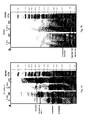
- Figure 1 shows electrophoretic profiles of proteins obtained from B. napus and S . alba.
- Figure 1A shows a SDS-PAGE separation of purified cruciferin obtained from B. napus and S. alba meals by chromatographic separation and purification (Bérot et al. 2005). Lane R: reducing conditions; Lane NR: non-reducing conditions; Lane MWM: molecular weight markers.
- Figure 1B shows a SDS-PAGE separation of purified napin obtained from B. napus and S. alba meals by chromatographic separation and purification (Bérot et al. 2005). Lane R: reducing conditions; Lane NR: non-reducing conditions; Lane MWM: molecular weight markers.
- Figure 2 shows a western blot with napin polyclonal antibodies.
- Lane 1 S . alba purified napin
- Lane 2 partially purified S . alba seed extract
- Lane 3 B. napus seed extract
- Lane 4 S. alba seed extract.
- Figure 3 shows solubility behaviour of proteins of B. napus and S. alba dehulled and defatted meal as a function of pH.
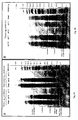
- Figure 4 shows electrophoretic profiles of proteins obtained from B. napus and S. alba.
- Figure 4A shows a SDS-PAGE separation of S . alba meal and of soluble proteins of S . alba meal at pH 3 and pH 9 under reducing and non-reducing conditions.
- Figure 4B shows a SDS-PAGE separation of B. napus meal and of soluble proteins of B. napus meal at pH 1, pH 4, pH 7 and pH 10 under reducing conditions.
- MWM molecular weight markers.
- Figure 5 shows total protein content of protein extracts at pH 4.5 as a function of meal-to-solvent ratio and temperature of extraction. Polypeptide profiles are provided to show dissolution of napin and non-napin proteins.
- Figure 6 shows electrophoretic profiles of proteins obtained from S . alba.
- Figure 6A shows a SDS-PAGE separation of soluble protein extracts of S . alba meal using aqueous extraction at pH 3 with no additive and further aqueous extraction at pH 12.5 of the residue.
- NR non-reducing conditions
- R reducing conditions.
- 1 st , 2 nd , 3 rd denotes the number of repeated extractions performed.
- Figure 6B shows a SDS-PAGE separation under non-reducing conditions of soluble protein extracts of S. alba meal using aqueous extraction at pH 4.5 with 30% isopropanol (IPA), 80% ethanol or no additive and further aqueous extraction at pH 9 of the residue.
- IPA isopropanol
- Lane 1 30% IPA, pH 4.5 soluble protein extract
- Lane 2 soluble protein extract of pH 9 extract of pH 4.5, 30% IPA residue
- Lane 3 80% ethanol, pH 4.5 soluble protein extract
- Lane 4 soluble protein extract of pH 9 extract of pH 4.5, 80% ethanol residue
- Lane 5 soluble protein extract of pH 9 extract of pH 4.5 no additive residue.
- Figure 6C shows a SDS-PAGE separation of soluble protein extracts of S . alba meal using aqueous extraction at pH 3 with 0.0% NaCl, 0.25% NaCl, 0.5% NaCl, 0.75% NaCl and 2.0% NaCl (Lane 1) and further aqueous extraction at pH 12.5 of the residue (Lane 2).
- Lane NR non-reducing conditions
- lane R reducing conditions.
- Figure 7 shows electrophoretic profiles of proteins obtained from B. napus and S. alba.
- Figure 7A shows a SDS-PAGE separation of dried napin-rich protein powder (Product I), dried cruciferin-rich protein powder (Product II) and dried protein-deficient residue (Product III) obtained from S . alba meal. Lane R: reducing conditions; lane NR: non-reducing conditions; and MWM: molecular weight markers.
- Figure 7B shows a SDS-PAGE separation of dried napin-rich protein isolate (Product I), dried cruciferin-rich protein isolate (Product II) and dried protein-deficient residue (Product III) obtained from B. napus meal. Lane R: reducing conditions; lane NR: non-reducing conditions; and MWM: molecular weight markers.
- Figure 8 shows a western blot of dried napin-rich protein isolate (Product I), dried cruciferin-rich protein isolate (Product II) and dried protein-deficient residue (Product III) obtained from S . alba and B. napus meals.
- Lane 1 B. napus meal
- Lane 2 B. napus Product II
- Lane 3 B. napus Product I
- Lane 4 B. napus Product III
- Lane 5 S. alba meal
- Lane 6 S. alba Product I
- Lane 7 S. alba Product II
- Lane 8 S. alba Product III.
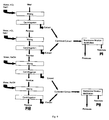
- Figure 9 shows a schematic representation of an embodiment of the aqueous protein extraction process of the present invention.
- PI napin-rich protein extract
- PII Product II
- cruciferin-rich protein extract cruciferin-rich protein extract (napin-free)
- PIII Product III: fibre-rich residue.
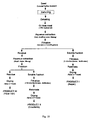
- Figure 10 shows a schematic representation of process steps of a further embodiment of the process of the present invention.
- Product I napin-rich protein extract
- Product II cruciferin-rich protein extract (napin-free)
- Product III fibre-rich residue.
- Figure 11 shows electrophoretic polypeptide profiles of meal proteins and purified cruciferin and napin extracetd from S . alba or B. napus seed.
- Figures 11A shows meal proteins separated under reducing (A) and non-reducing (B) conditions.
- Figures 11B shows cruciferin profile under reducing (A) and non-reducing (B) conditions.
- Figure 11C shows napin profile under reducing (A) and non-reducing (B) conditions.
- Right (unlabelled) lanes molecular weight markers.
- Figure 12 shows electrophoretic profiles of Sinapis alba meal extract and remaining residue, obtaining using citrate/Na at ph 5.1, pH 4.1 and pH 3.1.
- Figure 1 shows a schematic representation of process steps (Process 1, Process 11 and Process III) of a further embodiment of the process of the present invention.
- Product IA (PIA): napin-rich protein extract
- Product IIA (PIIA): cruciferin-rich protein extract
- Product IIIA (PIIIA): fibre-rich residue
- Product IV (PIV): napin-free meal
- Product V (PV): cruciferin concentrate
- Product VI (PVI) sugar rich product.
- a step may not be needed, recommended for yellow mustard
- b HCL or citric acid
- c NaCl or Na citrate
- d HCl
- e cell wall degrading enzymes.
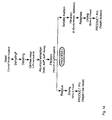
- Figure 14 shows a schematic of options for Process 1.
- Product IA napin-rich protein extract
- Product IV PAV
- a step may not be needed, recommended for yellow mustard
- b HCL or citric acid
- c NaCl or Na citrate.
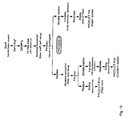
- Figure 15 shows a schematic of options for Process II.
- Product IA (PIA): napin-rich protein extract
- Product IIA (PIIA): cruciferin-rich protein extract
- Product IIIA (PIIIA): fibre-rich residue.
- a step may not be needed, recommended for yellow mustard
- b HCL or citric acid
- c NaCl or Na citrate.
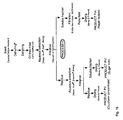
- Figure 16 shows a schematic of options for Process III.
- Product IA napin-rich protein extract
- Product V PV
- Product VI PVI
- a step may not be needed, recommended for yellow mustard
- b HCL or citric acid
- c NaCl or Na citrate
- d HCl
- e cell wall degrading enzymes.
- the present invention relates to a process of aqueous protein extraction from Brassicaceae oil seeds.
- An embodiment of the present invention provides a process of aqueous protein extraction from Brassicaceae oil seed meal to obtain a napin-rich protein extract, a cruciferin-rich protein extract that is napin-free, and a low-protein residue.
- the process may comprise the steps of:
- the cruciferin-rich protein extract may be substantially free of napin protein and may contain no napin protein at all.
- the allergenic potential of napin proteins of S . alba ( Sin a 1) and B. juncea ( Bra j 1) is well recognized and the European Uni on has listed mustard and products as ingredients containing allergenic substances. Allergenicity of napin proteins of all Brassicaceae oilseed species has not been widely studied, however the napin fraction of B. napus is considered as an occupational allergen.
- the cruciferin-rich protein extract may therefore advantageously be used for human consumption without the risk of allergenic reaction caused by the presence of napin.
- the aqueous extraction process of the present invention produces a fibre-rich product (product III; Figure 10 ), a napin-rich product (product I; Figure 10 ) and a cruciferin-rich protein extract (product II, Figure 10 ) that is substantially napin-free, and the process may have advantages over known aqueous extraction processes that result in napin contaminated products.
- a cruciferin-rich protein extract obtained from aqueous protein extraction which is substantially napin free.
- the protein extract may contain no napin.
- the cruciferin-rich protein extract may comprise a high yield of protein, for example from about 60 to about 95% protein or any amount therebetween, such as from about 75 to about 90% protein, or 62, 64, 66, 68, 70, 72, 74, 76, 78, 80, 82, 84, 86, 88, 90, 92 and 94% protein, or any amount of protein therebetween.
- the present invention therefore advantageously provides an aqueous extraction process of Brassicaceae oilseed meal that results in a high yield of cruciferin-rich protein that may be substantially free of napin protein.
- the amount of the protein may be determined using PAGE, or by western analysis using an appropriate antibody to detect the desired protein.
- the amount of napin in the cruciferin-rich protein extract is from about 0 to about 5% protein content, or any amount therebetween, for example 0 -2% protein content, or any amount therebetween, 0-1% protein content, or any amount therebetween, 0 - 0.5% protein content, or any amount therebetween, or 0, 0.001, 0.002, 0.004, 0.006, 0.008, 0.01, 0.02, 0.04, 0.06, 0.08, 0.1, 0.2, 0.3, 0.4, 0.5, 0.6, 0.7, 0.8, 0.9, 1.0, 1.2, 1.4, 1.6, 1.8, 2.0, 2.2, 2.4, 2.6, 2.8, 3.
- nucle-rich protein extract it is meant that the predominant protein in the extract is napin (2S), and comprises from about 60 to about 100% of the protein content or any amount therebetween, from about 80-100% of the protein content or any amount therebetween, from about 90-100%of the protein content or any amount therebetween, or 60, 62, 64, 66, 68, 70, 72, 74, 76, 78, 80, 82, 84, 86, 88, 90, 92, 94, 96, 98, 100% of the protein content or any amount therebetween.
- cruciferin-rich protein extract and "cruciferin-rich residue” it is meant that the predominant protein in the extract or residue is cruciferin (11S), and comprises from about 60 to about 100% of the protein content or any amount therebetween, from about 70-90% of the protein content or any amount therebetween, from about 75-85%of the protein content or any amount therebetween, or 60, 62, 64, 66, 68, 70, 72, 74, 75, 76, 78, 80, 82, 84, 85, 86, 88, 90, 92, 94, 96, 98, 100% of the protein content or any amount therebetween.
- the cruciferin-rich protein extract is substantially free of napin and may be termed a napin-free cruciferin-rich protein extract.
- the process of the present invention includes the step of aqueous extraction of Brassicaceae oilseed meal using an acid pH aqueous solution which generally separates the meal proteins into soluble napin proteins that remain in the aqueous protein extract and less soluble cruciferin proteins which are mainly retained in the residue (e.g. see Figures 12A and 12B ).
- the napin-rich protein extract and cruciferin-rich residue may be separated by centrifugation.
- Aqueous extraction of the Brassicaceae oilseed meal is carried out at an acid pH of from about 2.5 to about 5.0, or any pH therebetween, such as pH 2.6, 2.7, 2.8, 2.9, 3.0, 3.1, 3.2, 3.3, 3.4, 3.5, 3.6, 3.7 3.8, 3.9, 4.0, 4.1, 4.2, 4.3, 4.4, 4.5, 4.6, 4.7, 4.8 and 4.9, or any pH therebetween, and may be carried out at a pH of about 3 to about 4.5.
- Any suitable acid may be used to adjust the pH of the extract in the extraction step, for example, HCl, phosphoric acid, sulfuric acid, an organic acid for example a C4, C5 or C6 organic acid for example citric acid, malic acid, oxaloacetic acid, oxoglutaric acid and the like, or a combination thereof.
- Preferred acids include HCL and citric acid, or a combination thereof
- the Brassicaceae oilseed meal may be mixed with a solvent, at a meal-to-solvent ratio of from about 1:10 to about 1:90, or any ratio therebetween, for example 1:15, 1:20, 1:25, 1:30, 1:35, 1:40, 1:45, 1:50, 1:55, 1:60, 1:65, 1:70, 1:75, 1:80 and 1:85, or any ratio therebetween.
- the meal-to-solvent ratio may be from about 1:15 to about 1:60.
- the solvent may be alcohol, such as but not limited to ethanol or isopropanol.
- the solvent may be water or another aqueous solvent, with a salt (such as sodium chloride or the like) dissolved therein.
- the salt may be dissolved in the aqueous solvent at a concentration of from about 0.25 to about 2.0 w/v, or any amount therebetween, such as 0.3, 0.4, 0.5, 0.6, 0.7, 0.8, 0.9, 1.0, 1.1, 1.2, 1.3, 1.4, 1.5, 1.6, 1.7, 1.8 and 1.9 w/v or any concentration therebetween.
- the soluble napin-rich protein extract produced as a result of aqueous extraction in the presence of a salt may be desalted to remove salt from the extract. Desalting may be carried out by filtration, such as but not limited to ultrafiltration/diafiltration.
- Aqueous extraction of the Brassicaceae oilseed meal may be carried out for about 25 to about 360 minutes, or any time therebetween, such as 30, 40, 50, 60, 70, 80, 90, 100, 110, 120, 130, 140, 150, 160, 170, 180, 190, 200, 210, 220, 240, 250, 260, 280, 300, 310, 320, 330, 340 and 350 minutes or any time therebetween.
- the extraction may be carried out for about 60 to about 150 minutes.
- Aqueous extraction of the Brassicaceae oilseed meal may be carried out at a temperature of from about 18°C to about 50°C, or any temperature inbetween, for example but not limited to 20, 22, 24, 26, 28, 30, 32, 34, 36, 38, 40, 42, 46 and 48°C, or any temperature therebetween, and may be carried out at a temperature of from about 20°C to about 30°C.
- the process may further comprise drying the napin-rich protein extract, for example, but not limited to, freeze or spray drying the napin-rich protein extract to produce a napin-rich protein powder.
- the napin-rich protein extract may comprise a high yield of protein, such as from about 50 to about 95% protein or any amount therebetween, such as 52, 54, 56, 58, 60, 62, 64, 66, 68, 70, 72, 74, 76, 78, 80, 82, 84, 86, 88, 90, 92 and 94% protein, or any amount therebetween, and may comprises from about 75 to about 90% protein.
- the cruciferin-rich residue may be subjected to aqueous extraction to solubilize the cruciferin proteins in the residue (see Figures 10 and 13 ).
- the soluble cruciferin proteins are retained in the aqueous protein extract leaving a residue which is low in protein and typically rich in fiber, product III, Figure 10 , or product PIIIA, Figures 13 and 15 .
- the cruciferin-rich protein extract and low-protein residue may be separated by centrifugation or other suitable method, for example filtrataion.
- the process for obtaining the cruciferin-rich protein extract may be carried out using an aqueous extraction at alkaline pH (Process II of Figures 13 and 15 ), or as described further below, the cruciferin-rich protein extract, for example product PV, may be obtained using an aqueous extraction under acidic conditions in the presence of a cell wall degrading enzyme (see Figures 13 and 16 Process III).
- the aqueous extraction of the cruciferin-rich residue may be carried out at neutral or alkali pH.
- the pH of the extraction may be from about 7.0 to about 13.0, or any pH therebetween, such as pH 7.2, 7.4, 7.6, 7.8, 8.0, 8.2, 8.4, 8.6, 8.8, 9.0, 9.2, 9.4, 9.6, 9.8, 10.0, 10.2, 10.4, 10.6, 10.8, 11.0, 11.2, 11.4, 11.6, 11.8, 12.0, 12.2, 12.4, 12.6, 12.8, and 13.0 or any pH therebetween.
- the pH of the aqueous extraction of the cruciferin-rich residue may be from about pH 8.0 to about pH 10.0.
- the cruciferin-rich residue may be mixed with a solvent, at a meal-to-solvent ratio of from about 1:10 to about 1:90, or any ratio therebetween, for example 1:15, 1:20, 1:25, 1:30, 1:35, 1:40, 1:45, 1:50, 1:55, 1:60, 1:65, 1:70, 1:75, 1:80 and 1:85, or any ratio therebetween.
- the meal-to-solvent ratio may be from about 1:15 to about 1:60.
- the solvent may be alcohol, such as but not limited to ethanol or isopropanol. Alternatively, the solvent may be an aqueous alkali solution.
- the aqueous alkali solution may comprise NaOH at a concentration of from about 0.02 to 0.2M NaOH, or any amount therebetween, such as 0.04, 0.06, 0.08, 0.10, 0.12, 0.14, 0.16 and 0.18M NaOH, and may be from about 0.05 to about 0.1M NaOH.
- Aqueous extraction of the cruciferin-rich residue may be carried out for about 25 to about 360 minutes, or any time therebetween, such as 30, 40, 50, 60, 70, 80, 90, 100, 110, 120, 130, 140, 150, 160, 170, 180, 190, 200, 210, 220, 240, 250, 260, 280, 300, 310, 320, 330, 340 and 350 minutes or any time therebetween.
- the extraction may be carried out for about 60 to about 150 minutes.
- Aqueous extraction of the cruciferin-rich residue may be carried out at a temperature of from about 18°C to about 50°C, or any temperature inbetween, for example but not limited to 20, 22, 24, 26, 28, 30, 32, 34, 36, 38, 40, 42, 46 and 48°C, or any temperature therebetween, and may be carried out at a temperature of from about 20°C to about 30°C.
- the soluble cruciferin-rich protein extract may be purified by filtration, such as but not limited to ultrafiltration/diafiltration.
- the purified filtrate may be dried, for example, but not limited to, freeze drying or spray drying, to produce a cruciferin-rich protein powder.
- the cruciferin-rich protein extract may comprise a high yield of protein, for example from about 60 to about 95% protein, or any amount therebetween, such as 62, 64, 66, 68, 70, 72, 74, 76, 78, 80, 82, 84, 86, 88, 90, 92 and 94% protein, or any amount of protein therebetween.
- the cruciferin-rich protein extraction may comprise from about 75 to about 90% protein.
- the low-protein residue may also be dried, for example, but not limited to spray or freeze drying.
- the low-protein residue may comprise from about 1 to about 40% protein, or any amount therebetween, for example, 2, 4, 6, 8, 10, 12, 14, 16, 18, 20, 22, 24, 26, 28, 30, 32, 34, 36 and 38% protein, or any amount therebetween.
- the low-protein residue may be rich in fibre.
- the napin-rich protein extract, the cruciferin-rich protein extract and the fiber residue may comprise from about 50 to about 95% of total Brassicaceae oilseed meal protein, or any amount therebetween, such as 52, 54, 56, 58, 60, 62, 64, 66, 68, 70, 72, 74, 78, 80, 82, 84, 86, 88, 90, 92 and 94% of the total Brassicaceae oilseed meal protein.
- the remaining meal residue which is depleted in napin mainly contains cruciferin and is a suitable substrate to obtain napin-free cruciferin.
- the optimum conditions to recover cruciferins from cruciferin-rich residue were investigated. It was found that cruciferins in the cruciferin-rich residue can be extracted at basic pH or alkaline conditions, as shown in Figures 6A-6C and Table 2; an extraction pH of 9.0 was very effective in solubilising cruciferin from the meal.
- the process has several advantages as follows.
- the process employs simple and regularly used unit operations in processing plants, uses minimal chemical input (acid, alkali and NaCl) and provides a minimum of three usable products in which two are high in protein.
- Unit operations required in the protein extraction process are simple agitation, centrifugation, filtering, membrane separation, and drying.
- the process does not produce environmentally hazardous waste or by-products.
- the protein rich products contain polypeptides primarily originating from one group of proteins, either cruciferin (11S) or napin (2S).
- the cruciferin-rich fraction has 79 to 82% protein and is the comparatively larger material fraction. This product may be substantially free of napin and will be soluble at neutral to alkali pHs.
- the napin-rich fraction contains -90% protein and is highly soluble at low pHs and thus possesses a unique property which most commercial plant protein isolates do not have.
- the protein-low fraction may be high in fibre. During the extraction process most of the low molecular weight components have been removed from this fraction. This fibre-rich fraction may be utilized for its own application. The process steps when continued in sequence provide three distinctly different protein containing products; napin-rich (89 to 93% protein), cruciferin-rich (79 to 82% protein) and protein-low (4 to 33%) products.
- a napin-free, cruciferin-rich protein product comprising 11S protein from 60 to 100% protein content, and from 0 to about 10% napin (2S) protein content, of the cruciferin-rich protein product, the napin-free, cruciferin-rich protein product obtained from a Brassicaceae oilseed.
- Example 7 shows napin and cruciferin separation from commercial canola meal using the protein extraction process.
- the protein content of the commercial canola meal was low compared to laboratory prepared B. napus meal.
- Commercial meal contains seed coats (hulls), which may have contributed to this low value. Therefore, it may be desired to remove the hull of the seed prior to extraction as described herein.
- Brassicaceae oil seeds may be separated into hulls and cotyledons (meat) by dehulling, for example, but not limited to a process of cracking the seeds in a stone mill.
- the hulls can be further processed, for example to obtain mucilage (e.,g. when using yellow mustard) which is a food-grade hydrocolloid.
- the cotyledons may be defatted to produce defatted meal.
- This dehulled and defatted meal may be used as the starting product for the aqueous extraction.
- Dehulled and defatted meal has the advantage that there is less interference from polysaccharides for protein extraction and recovery.
- Another source that can be used as a starting material for the extraction processes described herein, to produce a cruciferin-rich product (and a napin-rich product and a napin-free meal) includes yellow mustard ( Sinapus alaba ) flour.
- aqueous protein extraction of Brassicaceae oilseeds to obtain a napin-rich protein extract, a cruciferin-rich protein extract, and a low-protein residue, the process comprising the steps of:
- the protein fractionation process developed using laboratory prepared Sinapis alba and Brassica napus meal can be applied to commercial canola meal. Because of the process conditions that the protein has been subjected to during the oil recovery process less amount of protein was partitioned as napin and cruciferin in this process (Example 7).
- the cruciferin-rich residue is subjected to aqueous extraction to solubilize the cruciferin proteins in the residue (see Figures 10 and 13 ).
- the process for obtaining the cruciferin-rich protein extract may be carried out using an aqueous extraction at alkaline pH (Process II of Figures 13 and 15 ), or as described below, the cruciferin-rich protein extract, for example product PV, may be obtained using an aqueous extraction under acidic conditions in the presence of a cell wall degrading enzyme (see Figures 13 and 16 ; Process III) as described in Examples 9 and 10.
- Cruciferin may also be recovered from the cellular matrix using enzymes that degrade the cell wall.
- cell wall polysaccharides may become partially solubilized under alkaline conditions and consequently concentrated with proteins as a retentate of the membrane separation step.
- Pretreatment of canola seed flakes with polysaccharide degrading enzymes of Aspergillus niger has been shown to reduce oil extraction time and enhanced oil yield ( Sosulski et al., 1988, J. American Oil Chemists' Society. 65: 357-361 ).
- Pretreatment of buckwheat bran with cellulase, pectinase and hemicullases improved alkali soluble nitrogen content ( Grossman et al. (1980, J. Food Biochemistry 4: 181-188 . Ansharullah et al., (1997, J. Science Food and Agriculture.
- VISCOZYME and CELLUCAST used VISCOZYME and CELLUCAST to pre-treat rice bran and as a result the solubility of proteins in the bran was enhanced.
- use of cell wall polysaccharide degrading enzymes has not been employed to concentrate proteins in oilseed cotyledons.
- napin-free meal residue from an initial aqueous extraction at low pH which may include the presence of a mineral salt as previously described, undergoes a second low pH extraction (Process III) from about pH 3 to 4.5, or any pH therebetween, for example pH 3.0, 3.2, 3.4, 3.6, 3.8, 4.0, 4.2, 4.4, 4.5, or any pH therebetween, in the presence of cell wall degrading enzymes at a temperatures from about 35 to about 60°C, or any temperature therebetween, for example 40-50°C, or any temperature therebetween, or 35, 36, 38, 40, 42, 44, 46, 48, 50, 52, 54, 56, 58, 60°C, or any temperature therebetween.
- Non limiting examples of cell wall degrading enzymes include a mixture of cellulases, hemicellulases and xylanses, and may include additional enzymes for example, arabinase, beta-glucosidase, carbohydrase galactanase, glucanase, mannose, carrageenase, agarase, ⁇ -amylase, dextrinase, pullulanase, glucoamylase, pectinase, and a combination thereof.
- An example of a suitable enzyme mixture that is commercially available is VISCOZYME. Under these conditions, cruciferin remains insoluble, cell wall polysaccharides are depolymerized and become soluble.
- the soluble components of the extraction are removed using methods described above (for example filtration) and can be discarded or concentrated, for example by drying, to obtain sugars and oligosaccharides.
- Remaining residue (after adjusting pH to 7.0) is dried to produce cruciferin-rich protein product (PV) of about 60 to about 85% protein content, or any amount therebetween, for example 65-70% protein content, or any amount therebetween, for example 60, 62, 64, 66, 68, 70, 72, 74, 76, 78, 80, 82, 84, 85% protein content or any amount therebetween.
- PV cruciferin-rich protein product
- the cruciferin-rich residue may be further washed with ethanol for example at 70%, (v/v) to solubilize additional depolymerized polysaccharides and increase protein content to about 75-90% or any amount therebetween, for example 80-90% or any amount therebetween, for example a protein content of 75, 76, 78, 80, 82, 84, 86, 88, 90%, or any amount therebetween.
- the present invention also provides a process of aqueous protein extraction from Brassicaceae oilseed meal to obtain a napin-rich protein extract, a cruciferin-rich protein extract, and optionally, a sugar rich fraction.
- the process comprises the steps of:
- the process described above may also involve in the step of performing a second aqueous extraction, a temperature from about 40 to about 60°C.
- Sinapis alba (mustard seeds) (AC Pennant and Andante) from breeding trials of Saskatoon Research Centre and Brassica napus (canola seeds) from Cargill, Canada (Variety unknown) were used.
- First seeds were screened through #10, #12, #14, and #16 sieves (Tyler, Mentor, OH) to segregate into sizes.
- the segregated seeds were then frozen to -70°C and cracked in a stone mill (Morehouse Cowles, Chino, CA).
- the seed cracking space of the mill was adjusted according to the seed size thus seed segregation as first step helped to minimize un-cracked seeds. Use of frozen seeds minimized the amount of fine particles and oil leakage during cracking.
- Defatting of cotyledons was performed in two stages, first through a laboratory screw press (6 mm disc, motor setting at 8) and then with hexane extraction of pressed meal using a laboratory soxhlet extraction unit.
- Dehulled and defatted meal was air dried and ground with a coffee grinder to pass through #40 (425 ⁇ m, Tyler, Mentor, OH) mesh screen and stored in airtight containers at 4°C until use.
- the meal so obtained has ⁇ 3% residual oil content on dry weight basis.
- Protein content of seed meals, protein extracts and protein fractions are Protein content of seed meals, protein extracts and protein fractions:
- Total nitrogen content of the meals was determined by combustion N analysis and/or Kjeldahl N analysis (AOCS, 1990) and then converted to protein content using 6.25 as the conversion factor.
- AOCS Kjeldahl N analysis
- soluble protein content was determined using Modified Lowry procedure as described by Lindeboom and Wanasundara (2007) essentially using a micro-titer plate reader.
- the first step of protein separation was to remove phenolics and other small molecules from the extract using size exclusion chromatography (SEC; Sephadex G-25, mobile phase 50 mM Tris-HCl pH 8.5, 1M NaCl).
- SEC size exclusion chromatography
- An ⁇ KTA Explorer system (Amersham Pharmacia, Uppsala, Sweden) was used for all the chromatographic separation and the protein was monitored as UV absorbance at 280 nm. Protein fraction collected from SEC was dialyzed against distilled water and freeze dried before further separation.
- Cation exchange chromatography (CEC; Resource S, mobile phase A: 50 mM Tris-HCl pH 8.5, 5mM EDTA, 0.3% NaHSO 3 , B; 50 mM Tris-HCl pH 8.5 containing 1M NaCl) was employed to obtain crude fractions of cruciferin and napin.
- the first protein fraction that eluted from the CEC was cruciferin and further purification of this fraction was obtained by SEC (Sephacryl S-300, Mobile phase 50 mM Tris-HCl pH 8.5 containing 1M NaCl).
- the napin fraction that was eluted from the CEC at high NaCl concentration (> 60%) was further cleaned using hydrophobic interaction chromatography (HIC; Phenyl Sepharose 6, mobile phase buffer A; 50 mM Tris-HCl pH 8.5, B; 50 mM Tris-HCl pH 8.5 containing 0.85M Na 2 SO 4 ) Both cruciferin and napin fractions were dialyzed and freeze dried. The cruciferin and napin so obtained was utilized as reference standards in electrophoresis separation and for napin-antibody preparation.
- HIC hydrophobic interaction chromatography
- Seed meals, protein extracts, purified proteins and protein fractions were prepared according to Laemmli procedure (Laemmli, 1970) for SDS-PAGE separation. When non-reducing conditions were required ⁇ -mercaptoethanol ( ⁇ -ME) was not included in the sample buffer. Gradient mini gels (resolving 8-25% T and 2% C, stacking zone 4.5% T and 3% C, 43 ⁇ 50 ⁇ 0.45 mm, polyacrylamide gels cast on GelBond® plastic backing, buffer 0.112M acetate, 0.112M Tris, pH 6.4) were used to separate proteins on a PhastSystem equipped with separation and development capabilities (Amersham Pharmacia, Uppsala, Sweden).
- the molecular weight standard (Sigma wide range molecular weight markers) consisted of the following proteins; rabbit muscle myosin (205 kDa), E.
- coli ⁇ -glucosidase (116 kDa) rabbit muscle phosphorylase-b (97 kDa), rabbit muscle fructose-6-phosphate (84 kDa), bovine serum albumin (66 kDa) bovine liver glutamic dehydrogenase (55 kDa), chicken egg ovalbumin.(45 kDa), rabbit muscle glyceraldehydes-3-phosphate (36 kDa), bovine erythrocytes carbonic anhydrase (29 kDa), bovine pancrease trypsinogen (24 kDa), soybean trypsin inhibitor (20 kDa), bovine milk ⁇ -lactalbumin (14.2 kDa) and bovine lung aprotinin (6.5 kDa).
- Electrophoresis conditions were 250 V, 10 mA throughout at 15°C, and 20 min running time.
- Running buffer contained 0.2M Tricine, 0.2M Tris and 0.55% (w/v) SDS and was at pH 8.1.
- the proteins were fixed and stained using PhastGel blue R (Coomasie R-350) and developed to obtain suitable background colour.
- the gels were scanned and the acquired images were analyzed by the Image Master® (version 3.0, Pharmacia Biotech) software.
- Purified napin was administered to rabbits using approved animal care protocols of University of Saskatchewan. Napin-antibody containing blood was processed to obtain serum enriched with napin antibodies, which was further purified to obtain napin-polyclonal antibodies. Presence of napin in the protein extracts and fractions were further confirmed using these antibodies and western blotting technique.
- Example 1 Separation, purification and electrophoresis based peptide profiling of cruciferin and napin from B. napus and S . alba.
- Seed meals of B. napus and S . alba were utilized to extract, separate and purify cruciferin and napin according to the chromatographic separation method of Bérot et al. (2005) with minor modifications as described above.
- Purified dry proteins were reconstituted in super-Q water to have known concentration of protein and separated by SDS-PAGE.
- Napin polyclonal antibodies prepared using the method disclosed above were purified and used to recognize napins in protein extracts by western blotting technique.
- Electrophoresis separation of purified cruciferin and napin is provided in Figures 1A and 1B .
- cruciferins of both species were separated into polypeptide bands that are distributed within molecular mass range of 69 to 18 kDa under non-reducing conditions.
- Cruciferins of Brassicaceae are expressed by multigene families (Breen and Crouch, 1992; Sjodahl et al. 1991) thus several isoforms and variants of cruciferin subunits are expected.
- protein databases UniProt, Swiss-Prot
- description of 5 different B. napus cruciferins are available. They are; cruciferin, cruciferin CRU4, cruciferin CRU1, cruciferin CRU2 and cruciferin BnCl, encoded by CRUA (syn.
- CRU2/3), CRU4, CRU1, BnC2 and BnC1 genes are actually the polypeptides that form the subunit (protomer) of the 11S globulin.
- unprocessed cruciferin procruciferin
- the two intensely stained bands between 60 to 45 kDa may represent the disulfide bonded ⁇ - ⁇ (acidic-basic) polypeptides or subunits. Presence of free ⁇ and/or ⁇ polypeptides is common in Brassicaceae plants (Inquello et al . 1993).
- the stained bands between 35 to 20 kDa present in non-reducing gels may be from such free polypeptides.
- Napins are also codified by multigenic families and give rise to multiple napin isoforms in the seed (Monslave et al. 1991; Murén et al. 1996. Disulfide bond cleavage resulted in two clearly distinguished polypeptide bands having 10.2 kDa and 8.6 to 8.4 kDa ( Figure 1 ).
- Napin is composed of heavy (long) and light (short) polypeptide chains (one each) that are S-S bonded (2 inter- and 2 intra-chain) (Gehrig and Biemann, 1996).
- a series of B. napus and S. alba seed meal dispersions (50 ml of 0.25%, w/v) in super-Q water were prepared at different pH values in the range of pH 1.0 to 12.0.
- the pH of these slurries was adjusted using HCl or NaOH (0.1 M, 1M or 6M as appropriate) while stirring continuously at room temperature (22°C).
- Extraction of soluble protein was accomplished by stirring the dispersion on a magnetic stirrer at room temperature for 30 minutes and maintaining the pH at the desired value.
- the extraction step was terminated by separating insoluble materials by centrifugation (10,000xg, 15 min, 20°C). The supernatant was filtered to remove floating particles using a Whatman #1 filter paper under vacuum.
- the soluble protein content of the extract was determined using Modified Lowry assay as disclosed above. Soluble protein at each pH was calculated as a percentage fraction of total meal protein (% N x 6.25) and plotted against extraction pH. Polypeptide profiles of the extracts were obtained by SDS-PAGE under reducing and non-reducing conditions.
- Seed proteins of both B. napus and S . alba followed a "U" shape curve ( Figure 3 ) for the content of soluble proteins when plotted against pH of the extraction medium which is typical for most dicot seed storage proteins. It is noticeable that minimum solubility for both these seed types occurred between pH 3 and 5. At this minimum solubility pH a considerable fraction of proteins were soluble; ⁇ 20% of B . napus and -40% of S . alba total meal proteins. Soluble protein content reached above 70% in extreme acidic and basic pHs.
- S. alba meal was used for this study.
- Experiments were designed to include meal-to-solvent ratio (1:20 to 1:89.5, w:v), extraction time (0.32 to 6.2 h) and temperature of extraction (15.9°C to 46.1°C) as independent variables.
- the responses or dependant variables were total soluble proteins extracted.
- Experiments were carried out as combinations of a Central Composite Rotatable Design and data was analysed using Response Surface Methodology (SAS, Statistical Analysis System, Release 8.2).
- SAS Response Surface Methodology
- Meal extraction and separation of soluble protein containing liquid fraction were carried out at pH 4.5 as described in Example 2.
- Total protein content of the extracts was determined using modified Lowry assay. Only selected extractions based on total protein content were subjected to polypeptide profiling by SDS-PAGE.
- the meal was first dispersed with super-Q water (1:80, w:v) and pH was adjusted to 3.0. Then NaCl was added to bring the whole slurry to a desired NaCl concentration (0.25 to 2.0%, w/v). Extraction was continued for 2h at 22°C, while mixing. Solubilised proteins were recovered as supernatant from centrifugation and further cleaned by filtration as described in previous sections. NaCl in the extracts was removed using a desalting column (HiPrep 26/10) on ⁇ KTA chromatography system. Remaining meal after low pH extraction was further extracted at high pH (pH 12.5).
- Polypeptide profiling of extracts was carried out to detect extractable napin and cruciferin.
- S. alba meal was studied for all experiment points and B. napus meal used in validating experiments.
- An optimization study was designed by using 0.75% (w/v) NaCl extraction at pH 3.0 and 22°C to determine the best meal-to-solvent ratio (experimental range 1:9.7 to 1: 90.3, w:v) and extraction time (experimental range 28.5 to 136.5 min). In all these experiments, the amount of total protein extracted and polypeptide profiles of extract and remaining meal was analysed.
- Table 1 provides a summary of results obtained for this study.
- An increase in ethanol or isopropanol (IPA) concentration in the extraction medium improved protein extraction. However that increase was not selective for napins.
- IPA level mostly napin was recovered in the extract which was pronounced in low pH extraction but without improving the protein recovery yield.
- IPA isopropanol
- Figures 6A-6C shows polypeptide profiles of pH 9 and pH 12.5 extracts of remaining residue after low-pH extraction without any alcohols or salt ( Figure 6A ) compared with alcohol containing extraction ( Figure 6B ) and salt containing extraction ( Figure 6C ). Partial recovery of napin in low pH extraction without any additive (alcohol or salt) was evident as pH 9 extract recovered remaining napin. Although 80% (v/v) ethanol and 30% (v/v) IPA was able to recover more napin at pH 4.5 the polypeptide profiles of pH 9 extract showed only marginal recovery of cruciferin remaining in meal residue. This may be an indication that remaining proteins may be less soluble at pH 9.0 after the alcohol wash at low pH.
- Meal obtained from low pH extraction (1:22, w:v, 22°C, 120 min, pH 4.5 or 3.0, NaCl 0.0-2.0%) was further extracted with water at pH 9.0 or pH 10.0, 0.05 M NaOH or 0.10M NaOH (meal to solvent ratio 1:80 w:v, 22°C, 120 min) to solubilise remaining proteins. Extractions were carried out similar to low pH extraction and recovery of soluble materials also followed similar steps. The remaining meal residue (after both low and high pH extraction) was saved. Total protein content and polypeptide profiles of the extracts obtained were determined as mentioned above.
- Cruciferins in the napin depleted meal can be extracted at basic pH or alkaline conditions, as shown in Figures 6A-6C and Table 2.
- An extraction pH of 9.0 or pH 12.5 was effective in solubilising cruciferin from the meal.
- Use of 0.1M NaOH for cruciferin extraction did not provide any additional protein recovery compared to 0.05M NaOH (Table 2).
- Example 6 Development of a combined process to recover napin and cruciferin separately from B. napus and S. alba meal
- Figure 9 is a schematic diagram of the steps of the protein extraction process performed in this Example.
- Figure 10 shows the key steps for the complete process starting from seeds.
- Dispersions of meal in distilled water (1:22, w:v) were prepared by mixing with super-Q water at room temperature. The pH of the dispersion was adjusted to 3.0 using 6 M HCl. NaCl crystals were added and the NaCl concentration of the slurry was adjusted to 0.75% (w/v). Extraction was performed for 120 min at 22°C. The pH was maintained throughout the extraction by adding acid or base if necessary. Following extraction, the slurry was centrifuged at (10,000 ⁇ g ) for 20 min at room temperature. The supernatant was filtered through a Whatman #1 filter paper under vacuum and saved. The residue obtained from centrifugation was extracted one more time under the same conditions and the supernatants recovered were combined and saved.
- Desalting of low pH and alkali extracts was performed by ultrafiltration/diafiltration using Pellicon 2 Tangential Flow Filtration system equipped with a peristaltic pump (Ultra Tech).
- the low pH extract was processed through a 5 kDa MWCO membrane (PLCCC-Regenerated cellulose minifilter, Millipore) and a diafiltration volume of 6H extract volume was used. Membrane filtration was continued until the chloride ion concentration of permeate becomes ⁇ 100 ppm as measured using a chloride ion selective electrode.
- the retentate contained high concentration of napin and was freeze dried to obtain a dry powder.
- the alkali extract was processed through a 100 kDa membrane (Biomax polyether sulfone minifilter, Millipore) with a diafiltration volume of 6xextract volume.
- the retentate contained high concentration of cruciferin and was freeze dried to obtain a dry powder. The residue left after acid and alkali extraction was also freeze dried.
- the content of protein in the extracts was determined by Kjeldahl nitrogen analysis described above. Polypeptide profiles of the acid and alkali extracts and the residue were determined by SDS-PAGE separation. All the protein fractions obtained from the process were evaluated for presence of napin with B . napus and S . alba napin-antibodies using western blotting technique.
- Table 3 shows the material balance for dry matter in this combined process for both seed species.
- the three major products resulting from this process are as follow:
- Table 4 indicates the protein material balance for both seed species using this process.
- the three products (I, II and III) recovered nearly 68 to 71 % of total meal proteins.
- About 7.3 to 12.8% of meal protein was isolated in permeates that are high in salt, acid and alkali and other small molecular weight molecules such as pigments and phenolics. According to protein material balance about 78 to 80% of meal protein from both seed species was captured in the process.
- Example 6 showed that the combined extraction process can recover napin and cruciferin from laboratory prepared B. napus and S . alba meals.
- Canola typically comprises mainly B. napus and is a major source of oilseed.
- the commercial canola seed crushing industry uses a prepressing operation combined with solvent (hexane) extraction to recover oil.
- the oil is extracted leaving meal as a seed residue containing the seed storage proteins.
- the primary use of canola meal is in animal feed as a protein source.
- Commercial canola meal is an abundant source for napin and cruciferin recovery.
- Prepressed and solvent extracted commercial canola meal was obtained from the canola crushing facility in Saskatchewan that belongs to Bunge FoodsTM. The contents of moisture, oil and crude protein were analysed as described in previous experiments. Washing with hexane (1:5, w/v for 20 min stirring at ambient temperature) and subsequent removal of hexane by filtering under vauum (using GF/A and Whatman #1 filters) was carried out to remove residual oil from the meal. Protein extraction was carried out using the process described in Experiment 6. The content of protein in the freeze dried materials was determined by Kjeldahl nitrogen analysis.
- the protein content of the commercial canola meal was low compared to laboratory prepared B.napus meal (Table 3).
- Commercial meal contains seed coats (hulls), which may have contributed to this low value.
- Table 3 shows the material balance for dry matter for commercial meal that was fractionated using the developed process. Hexane washing was done to remove residual oils (defatting) to see whether oil removal will enhance the protein recovery.
- the major products that come out of commercial canola meal from this process are napin-rich (Product I; 53.0 to 58.8% protein content), cruciferin-rich (Product II; 63.7 to 71.3% protein content) and protein-deficient (Product III; 30.3 to 33.0% protein content) fractions.
- Product PIV a napin-free meal, obtained by drying the residue recovered the low pH, aqueous extraction step
- Products 1, II and III were able capture 72.8 to 75.5% of canola meal dry matter.
- Table 4 provides protein material balance for the process for the defatted or non-defatted commercial canola meal.
- the three products (I, II and III) obtained from commercial meal recovered nearly 78 to 80% of total meal proteins.
- About 6.5 to 7.0% of meal protein from the commercial canola meal was partitioned into permeates (permeate I and II) that are high in salt, acid and alkali and other small molecular weight components such as pigments and phenolics. According to protein material balance about 86% of protein was captured in the process.
- Extracts and residues were obtained as described above (Example 6) and were analyzed using SDS-PAGE separation to obtain polypeptide profiles. Purified napins and cruciferins were used as standards.
- Meal slurries (1:20, w:v) were prepared using citrate buffers at different pHs and stirred for 120 min at ambient temperature. Soluble components were recovered by centrifugation of meal slurries. Residue remaining after centrifugation was suspended in fresh buffer (1:20 w:v) and re-extracted for another 120 min under same conditions. The supernatants resulting from the two extractions were combined and analysed for protein content and polypeptide profile. Meal residues remaining from the extractions were also analyzed.
- Proteins of S . alba and B. napus were soluble in citric acid/Na citrate.
- the pH of the extraction was maintained at 4 opposed to pH 3.
- Table 5 shows the change of soluble protein content in the extracts due to the presence of citrate and Na ions at different concentrations. This shows that presence of these ions can improve solubility of napins at pH 4.0. There is no statistically significant difference between the concentration of citrate/Na ions and the amount of proteins recovered from meals. However, pH of the medium is effective in solubilizing more proteins (Table 5).
- Table 5 Protein content of the extracts prepared form S . alba defatted meal using citric acid/citrate solutions at pH 4.0.
- Polypeptide profiles show that at 0.2 M and pH 5.1 cruciferins were solubilized and contribute to the higher protein content in the extract. If it is desired to keep cruciferin insoluble and selectively solubilize napin, then the pH should be kept at 4.0 or below for selective solubilisation of napin.
- citric acid may be used to reduce pH
- sodium citrate may be used to enhance the ionic strength for selective solubilisation of napin while keeping most of the cruciferin in insoluble form in the seed cellular matrix.
- results from Example 7 showed that the residue left after acid wash with NaCl or Na citrate contains primarily cruciferin of the seed storage proteins.
- the napin-free residue contains cruciferin and cell wall polysaccharides and other insoluble components at pH 4.0. Cell wall polysaccharides contain a major fraction of non-protein components of this residue.
- removing other non-protein components that are not soluble at pH 4 by depolymerising cell wall polysaccharides to increase the protein content of the napin-free meal was examined.
- Seed storage proteins of crucifers are stored in specialized compartments that are protein storage vacuoles (PSV).
- PSV protein storage vacuoles
- the PSVs are embedded in the cotyledons cells.
- the disintegration process that is used in seed meal preparation creates a mixture of broken cell walls, PSVs and other cellular components.
- the composition of plant cell wall is complex.
- Polysaccharides make up ⁇ 90% of the plant cell wall and are composed of cellulose (linear polymer of ⁇ -1,4-inked D-glucose residues), hemicellulose (heterogenous polymer of ⁇ -xylan chains substituted by L-arabinose, D-glactose, acetyl, feruloyl, p-coumaroyl and glucuronic acid residues) and pectins (heteropolymers of ⁇ -1,4-linked D-glactouronic acid residues interrupted by rhamnose residues.
- Racemized amino acids may be produced when alkali conditions are employed to solubilise proteins ( Feeney, 1980, Overview on the chemical deteriorative changes of proteins and their consequences. In Chemical deterioration of proteins. Eds. J.R. Whitaker and M. Fujimaki. American Chemical Society. Washington DC. pp 3-55 ). Such modifications in amino acid residues lead to unavailability of essential amino acids e.g. formation of lysinoalanine as cross-links lower digestibility and biological value of proteins. Therefore, alternatives to alkali solubilisation of proteins was examined.
- Polypeptide profiles of the extracts were obtained by SDS-PAGE under reducing and non-reducing conditions.
- Viscozyme® from Novozyme; arabinase, cellulase, hemicellulase and xylanase activities), ⁇ -xylanase (xylan degrading activity only, from Megazyme), ⁇ -glucosidase (degrades beta glucosidase links only, from Megazyme) and a carbohydrase blend (cellulase, galactanase, glucanase, mannase, pectinase, and xylanase) were tested for their ability to reduce cell wall polysaccharides in the napin-free meal residue. An alcohol (20 and 70%, v/v ethanol) washing step was included after incubation to test the enhancement of the depolymerized polysaccharide removal from the remaining residue.
- Table 2 compares protein content of remaining residue after incubation for 1.0, 2.5 and 5.0 h with and without Viscozyme at 45°C.
- Table 6 Enrichment of proteins in the napin-free S . alba meal residue due to Viscozyme treatment a .
- Viscozyme L ® possesses catalyzing activities of polysaccharide degrading and is produced by Aspegillus niger.
- This multi-component enzyme contains arabinase, cellulase, hemicellulase and xylanase activities which is advantageous to cleave the linkages within polysaccharide matrix including plant cell walls.
- Table 7. Effect of different polysaccharide degrading enzymes on enriching protein content of napin-free meal residue of S . alba.
- polysaccharide degrading enzymes especially that provide catalytic activities towards the cell wall, for example, the Brassicaceae cotyledon cell wall polysaccharides can improve protein content of the napin-free meal residue. Reduction of dry weight due to enzyme treatment may be due to the loss of cell wall polysaccharides after hydrolysing. It is preferred that the enzyme has an optimum activity between pH 3 and 4 so that cruciferin may be maintained in an insoluble state during the hydrolysis. Use of 70% (v/v) ethanol enhances the solubilisation of degraded polysaccharides thus enrich protein content in the residue.
- Example 10 Combined process to recover napin and cruciferin separately from B . napus and S . alba meal
- Dispersions of 10 g of meal in distilled water (1:22, w:v) were prepared by mixing with 0.1 M citric acid/Na citrate buffer (pH 4.0) at room temperature. After 120 min of extraction the slurry was centrifuged at (10,000 ⁇ g) for 20 min at room temperature. The supernatant was filtered through a Whatman #1 filter paper under vacuum and saved. The residue obtained from centrifugation was extracted one more time under same conditions and the supernatants recovered were combined and saved. After repeated (2 times) extractions at pH 4 the remaining residue was dispersed in super Q water (1:10, w:v). The pH of the slurry was between 4.0 and 4.1, no adjustments were carried out.
- the slurry was placed in a water bath and temperature was equilibrated to 45°C. Viscozyme (12.24 units/g original meal) was added to the slurry and the same steps as low pH extraction were followed. Remaining meal residue after this extraction was saved.
- the content of protein in the extracts was determined by nitrogen analysis. Polypeptide profiles of the extracts were determined by SDS-PAGE separation. Dietary fibre content was determined according to the standard total dietary fibre assay procedure (AOAC method 991.43, AACC method 32-07) with a Megazyme assay kit (Megazyme International Ireland Ltd., Wicklow Ireland).
- Cruciferin recovery with cell wall degrading enzyme had fewer steps compared to our previous submission. No membrane separation step is needed to obtain cruciferin-rich fraction by this process. Cruciferin fraction had lighter colour compared to the product obtained by alkali solubilizaion and membrane separation.
- Use of enzymes to depolymerise cell wall polysaccharides has the advantage of controllability of the reactions and the side reactions are avoided compared to using chemicals for the same task.
- Table 5 shows the material balance for dry matter in this combined process for both seed species.
- Table 9 Dry matter mass balance and product protein content of the process using Citric acid/Na Citrate and Viscozyme.
- a Seed Input meal dry matter g
- Out put dry matter g
- Total dry matter recovery % Recovery as Products PIA, PV & PVI (% of meal dry matter)
- Product P1A Permeate I Residue
- PIA is a napin-rich product having 83 to 90% protein content
- PV is a cruciferin-rich product having 62% to 81 % protein content.
- a protein-deficient fraction having 4.6 to 33% protein content is also produced.
- a polysaccharide degraded products containing fraction (Product VI (PVI)) also contains high protein content (31 to 39%) which may mainly contain cruciferin.
- Table 11 Analysis of dietary fibre contents of the products are provided in Table 11. The values show that in fact the total dietary fibre content of the remaining residue is lower than the starting meal. Table 11. Dietary fibre values for Sinapis alba meal and products. Sample Insoluble fibre, % Soluble fibre, % Total dietary fibre, % Meal 11.72 3.08 14.80 HCl/NaCl a extraction After pH 3 extraction 20.02 1.15 21.17 pH 3 extraction + Viscozyme b treatment 9.64 1.79 11.42 Citric acid/Na Citrate c extraction After pH 4 extraction 18.95 1.14 20.09 pH 4 extraction + Viscozyme b treatment 11.14 1.36 12.50 a 0.75% (w/v) NaCl, pH 3.0, 22°C, 2 h, b 12.24 U/g, pH 4.0, 45°C, 2.5 h, water wash only c 0.1 M citrate solution
- the protein fractions have comparable essential amino acid profiles as the FAO/WHO essential amino acid requirement pattern for adults.
- the fractions are rich in sulfur-containing amino acids.
- the napin fraction especially, have higher levels of cysteine. This could be advantageous for napins that are non-allergenic such as from B. napus. Proteins containing high levels of Cysteine are involved in alleviating insulin resistance (central to onset of metabolic syndrome) by affecting the glutathione redox status.
- Figure 13 shows a combined Brassicaceae oilseed meal protein fractionation process showing three options; Process I. Process II and Process III.
- Figures 14 , 15 and 16 show each of these processes separately.
- the process employs simple and regularly used unit operations in processing plants, uses chemical input that are of food grade (NCl, NaCl, citric acid, sodium citrate).
- Use of enzymes in the process allows easy control and most importantly prevents destruction of essential amino acids and unwanted cross linking.
- the processes described here provide Brassicaceae protein fractions that are separated into Napin and cruciferin. Further purification and protein enrichment of these fractions can be through membrane filtration, alkali solubilization or by using suitable enzymes that catalyze hydrolysis of cell wall polysaccharides.
- Protein fractions so obtained have different amino acid compositions based on the predominant protein in the fraction. Therefore the control of quality and functionality of the protein fraction is easy and are predictable and their control in applications for example commercial applications, is easy.
- Protein fractions rich in napin or cruciferin have a value as plant protein sources in both nutritional and technological applications.
- the products of the described process are unique and different in composition than the products of other Brassica protein processing methods available. Currently available methods produce mixtures of seed storage proteins and thus differ in quality.
- Adachi M., Kanamori, J., Masuda, T. Yagasaki, K. Kitamura, K. Mikami, B., Utsumi, S. Crystal structure of soybean 11S globulin: Glycinin A3B4 homohexamer. Proceedings of National Academy of Science USA. 2003, 100 (12), 7395-7400 .
Landscapes
- Life Sciences & Earth Sciences (AREA)
- Chemical & Material Sciences (AREA)
- Polymers & Plastics (AREA)
- Engineering & Computer Science (AREA)
- Food Science & Technology (AREA)
- Proteomics, Peptides & Aminoacids (AREA)
- Biochemistry (AREA)
- Mycology (AREA)
- Health & Medical Sciences (AREA)
- Nutrition Science (AREA)
- Coloring Foods And Improving Nutritive Qualities (AREA)
- Fodder In General (AREA)
- Peptides Or Proteins (AREA)
- Medicines Containing Plant Substances (AREA)
Applications Claiming Priority (2)
| Application Number | Priority Date | Filing Date | Title |
|---|---|---|---|
| US93265407P | 2007-06-01 | 2007-06-01 | |
| PCT/CA2008/001055 WO2008144939A1 (en) | 2007-06-01 | 2008-05-30 | A process of aqueous protein extraction from brassicaceae oilseeds |
Publications (3)
| Publication Number | Publication Date |
|---|---|
| EP2155779A1 EP2155779A1 (en) | 2010-02-24 |
| EP2155779A4 EP2155779A4 (en) | 2011-08-24 |
| EP2155779B1 true EP2155779B1 (en) | 2012-11-07 |
Family
ID=40074533
Family Applications (1)
| Application Number | Title | Priority Date | Filing Date |
|---|---|---|---|
| EP08757191A Not-in-force EP2155779B1 (en) | 2007-06-01 | 2008-05-30 | A process of aqueous protein extraction from brassicaceae oilseeds |
Country Status (5)
| Country | Link |
|---|---|
| US (1) | US8557963B2 (da) |
| EP (1) | EP2155779B1 (da) |
| CA (1) | CA2688464C (da) |
| DK (1) | DK2155779T3 (da) |
| WO (1) | WO2008144939A1 (da) |
Families Citing this family (28)
| Publication number | Priority date | Publication date | Assignee | Title |
|---|---|---|---|---|
| EP2155779B1 (en) | 2007-06-01 | 2012-11-07 | Her Majesty the Queen in Right of Canada, as represented by the Minister of Agriculture and Agri-Food | A process of aqueous protein extraction from brassicaceae oilseeds |
| US8623445B2 (en) * | 2008-05-16 | 2014-01-07 | Bio-Extraction Inc. | Protein concentrates and isolates, and processes for the production thereof |
| US8821955B2 (en) * | 2008-05-16 | 2014-09-02 | Siebte Pmi Verwaltungs Gmbh | Protein concentrates and isolates, and processes for the production thereof |
| ES2543782T3 (es) * | 2008-05-16 | 2015-08-21 | Siebte Pmi Verwaltungs Gmbh | Concentrados y aislados de proteínas de semillas oleaginosas y procedimientos para la producción de los mismos |
| CA2725751C (en) | 2008-06-12 | 2016-12-20 | Eduard Tearo | Isolation of protein products from defatted meal |
| JP2013505004A (ja) * | 2009-09-17 | 2013-02-14 | バーコン ニュートラサイエンス (エムビー) コーポレイション | 上澄み液由来のキャノーラタンパク質生成物 |
| RS64511B1 (sr) | 2011-03-01 | 2023-09-29 | Univ Copenhagen | Postupak za pripravljanje proizvoda iz biljnog materijala |
| PL2704587T3 (pl) | 2011-05-03 | 2018-02-28 | Københavns Universitet | Sposób wytwarzania produktów z roślin uprawnych krzyżowych |
| GB201109706D0 (en) * | 2011-06-09 | 2011-07-27 | Erapoil As | Method |
| DE102011105909A1 (de) | 2011-06-28 | 2013-01-03 | Süd-Chemie AG | Prozess zur Herstellung eines Rapsproteinisolats |
| FR2990132B1 (fr) * | 2012-05-04 | 2014-06-06 | Cocagne & Cie | Extrait proteique de graine d'isatis tinctoria et compositions cosmetiques, dermatologiques ou pharmaceutiques le comprenant |
| US20150233797A1 (en) | 2012-08-28 | 2015-08-20 | Florida State University Research Foundation | Simplified extraction methods for the rapid determination of species content of adipose tissue based on the detection of tni in immunoassays |
| US9314044B2 (en) * | 2013-02-28 | 2016-04-19 | FitLife Brands, Inc. | Method for extracting protein from kaniwa and protein products thereof |
| DE102014005466A1 (de) * | 2014-04-12 | 2015-10-15 | Klaus Düring | Verfahren zur Gewinnung von Napin und Cruciferin oder einem Gemisch davon aus Raps |
| WO2018007508A1 (en) * | 2016-07-07 | 2018-01-11 | Dsm Ip Assets B.V. | Emulsion comprising rapeseed protein isolate |
| KR20190061015A (ko) * | 2016-09-30 | 2019-06-04 | 인스티투토 수페리어 드 아그로노미아 | 치료적 단백질 |
| EP3384922A1 (en) * | 2017-04-03 | 2018-10-10 | Targedys | Brassicaceae protein extract and uses thereof |
| EP3494797A1 (en) * | 2017-12-05 | 2019-06-12 | Avril | Protein isolates and process for the production thereof |
| CN111386046B (zh) | 2017-11-15 | 2024-06-07 | 四月公司 | 蛋白质分离物及其产生方法 |
| EP3530122A1 (en) * | 2018-02-23 | 2019-08-28 | Avril | A dry oilseed meal protein fraction |
| CN108740279A (zh) * | 2018-06-25 | 2018-11-06 | 菏泽盛世天下网络科技有限公司 | 一种牡丹籽多肽的制备方法 |
| BR112021010337A2 (pt) * | 2018-12-03 | 2021-08-24 | Newleaf Symbiotics, Inc. | Métodos para identificar uma cepa de methylobacterium, para produzir um ingrediente de alimento ou um ingrediente de ração e um alimento ou uma ração, para aprimorar o rendimento de óleo de semente e de proteína de semente de um lote de sementes, para prover um lote de sementes, e, planta ou parte de planta |
| US12245594B2 (en) | 2018-12-03 | 2025-03-11 | Newleaf Symbiotics, Inc. | Methods for obtaining and using plants and plant parts with increased nutrient, oil, and/or protein content |
| EP3893649A4 (en) | 2018-12-03 | 2022-10-26 | Newleaf Symbiotics, Inc. | METHYLOBACTERIUM COMPOSITIONS TO IMPROVE CORN YIELD |
| CN112048012A (zh) * | 2020-09-17 | 2020-12-08 | 南京财经大学 | 一种菜籽napin蛋白的制备方法 |
| PL4079161T3 (pl) * | 2021-06-14 | 2024-03-18 | Dsm Ip Assets B.V. | Mączka rzepakowa |
| WO2025008469A1 (en) * | 2023-07-05 | 2025-01-09 | Dsm Ip Assets B.V. | Augmenting protein content of rapeseed protein meal |
| US20250081986A1 (en) * | 2023-08-11 | 2025-03-13 | Louis Dreyfus Company Plant Proteins LLC | Canola Protein Concentrate and Process for Production |
Family Cites Families (13)
| Publication number | Priority date | Publication date | Assignee | Title |
|---|---|---|---|---|
| US2331619A (en) * | 1934-05-19 | 1943-10-12 | Reynolds Res Corp | Process for extraction of vegetable proteins |
| CA1099576A (en) * | 1978-03-23 | 1981-04-21 | Chester D. Myers | Improved process for isolation of proteins |
| US4889921A (en) * | 1987-04-29 | 1989-12-26 | The University Of Toronto Innovations Foundation | Production of rapeseed protein materials |
| US5844086A (en) | 1996-01-31 | 1998-12-01 | Stilts Corporation | Oil seed protein extraction |
| US5994622A (en) * | 1996-08-20 | 1999-11-30 | The Regents Of The University Of California | Methods for improving seeds |
| AU2001259983B2 (en) * | 2000-05-15 | 2006-02-09 | University Of Saskatchewan | Fractionation and processing of oilseed meal |
| EP1397052B1 (en) * | 2001-05-29 | 2012-09-12 | Levente Laszlo Diosady | Production of high-quality protein isolates from defatted meals of brassica seeds |
| SE524075C2 (sv) * | 2001-10-04 | 2004-06-22 | Bjurenvall Ingemar | Förfarande för fraktionering av oljefröpresskakor och mjöl |
| CA2363451C (en) * | 2001-11-20 | 2005-05-10 | Mcn Bioproducts Inc. | Oilseed processing |
| WO2003088760A1 (en) * | 2002-04-15 | 2003-10-30 | Burcon Nutrascience (Mb) Corp. | Canola protein isolate compositions |
| MXPA06008222A (es) * | 2004-01-20 | 2007-01-26 | Burcon Nutrascience Mb Corp | Aislado novedoso de proteina canola. |
| BRPI0612565A2 (pt) | 2005-07-01 | 2010-11-23 | Burcon Nutrascience | método para produção de um isolado de proteìna de canola consistido predominantemente de proteìna de canola 2s |
| EP2155779B1 (en) | 2007-06-01 | 2012-11-07 | Her Majesty the Queen in Right of Canada, as represented by the Minister of Agriculture and Agri-Food | A process of aqueous protein extraction from brassicaceae oilseeds |
-
2008
- 2008-05-30 EP EP08757191A patent/EP2155779B1/en not_active Not-in-force
- 2008-05-30 CA CA2688464A patent/CA2688464C/en not_active Expired - Fee Related
- 2008-05-30 WO PCT/CA2008/001055 patent/WO2008144939A1/en not_active Ceased
- 2008-05-30 US US12/451,804 patent/US8557963B2/en not_active Expired - Fee Related
- 2008-05-30 DK DK08757191.5T patent/DK2155779T3/da active
Also Published As
| Publication number | Publication date |
|---|---|
| CA2688464A1 (en) | 2008-12-04 |
| US20100249378A1 (en) | 2010-09-30 |
| WO2008144939A1 (en) | 2008-12-04 |
| US8557963B2 (en) | 2013-10-15 |
| DK2155779T3 (da) | 2013-02-18 |
| CA2688464C (en) | 2016-04-12 |
| EP2155779A1 (en) | 2010-02-24 |
| EP2155779A4 (en) | 2011-08-24 |
Similar Documents
| Publication | Publication Date | Title |
|---|---|---|
| EP2155779B1 (en) | A process of aqueous protein extraction from brassicaceae oilseeds | |
| EP1363504B1 (en) | Process for the fractionation of cereal brans | |
| Shih et al. | Preparation and characterization of rice protein isolates | |
| Tan et al. | Canola proteins for human consumption: extraction, profile, and functional properties | |
| Mondor et al. | Processing technologies to produce plant protein concentrates and isolates | |
| US7709033B2 (en) | Process for the fractionation of cereal brans | |
| O'Kane et al. | Characterization of pea vicilin. 1. Denoting convicilin as the α-subunit of the Pisum vicilin family | |
| Wang et al. | Functionality of barley proteins extracted and fractionated by alkaline and alcohol methods | |
| Rommi et al. | Effect of enzyme-aided cell wall disintegration on protein extractability from intact and dehulled rapeseed (Brassica rapa L. and Brassica napus L.) press cakes | |
| EP1706001B1 (en) | Soluble dietary fibre from oat and barley grains, method for producing a fraction rich in b-glucan and use of the fraction in foods, pharmaceuticals and cosmetics | |
| EP2285824B1 (en) | Production of protein isolates | |
| JP4039550B2 (ja) | 穀類由来の生理活性物質およびその調製方法 | |
| JP2005503816A (ja) | 油料種子プレスケーキおよびミールの分別方法 | |
| Shukla et al. | Solvent extraction of zein from dry‐milled corn | |
| CN102098926A (zh) | 一种从玉米胚芽中提取食用蛋白质的方法 | |
| CN103857801A (zh) | 酵母及酵母提取物残渣的有效利用 | |
| CN104379593B (zh) | 粘蛋白和胶原蛋白的分级提取方法 | |
| Rodrigues et al. | Increasing the Protein Content of Rapeseed Meal by Enzymatic Hydrolysis of Carbohydrates. | |
| WO2023017033A1 (en) | Protein recovery from proteinaceous plant material | |
| CN1974602B (zh) | 从燕麦中提取燕麦淀粉、燕麦蛋白粉的生产技术 | |
| Phongthai et al. | Preparation of rice bran protein isolates using three-phase partitioning and its properties | |
| CN109287840A (zh) | 一种破碎鸭蛋蛋黄和蛋清分离回收工艺 | |
| Kim et al. | Enzyme-assisted protein extraction from alfalfa leaves | |
| WO2021090163A1 (en) | Integrated process for extraction of polypeptides, mucilage, and fibre from biomass | |
| RU2857701C1 (ru) | Способ получения изолята белка из бобов маш |
Legal Events
| Date | Code | Title | Description |
|---|---|---|---|
| PUAI | Public reference made under article 153(3) epc to a published international application that has entered the european phase |
Free format text: ORIGINAL CODE: 0009012 |
|
| 17P | Request for examination filed |
Effective date: 20091216 |
|
| AK | Designated contracting states |
Kind code of ref document: A1 Designated state(s): AT BE BG CH CY CZ DE DK EE ES FI FR GB GR HR HU IE IS IT LI LT LU LV MC MT NL NO PL PT RO SE SI SK TR |
|
| AX | Request for extension of the european patent |
Extension state: AL BA MK RS |
|
| DAX | Request for extension of the european patent (deleted) | ||
| A4 | Supplementary search report drawn up and despatched |
Effective date: 20110727 |
|
| RIC1 | Information provided on ipc code assigned before grant |
Ipc: C07K 14/415 20060101AFI20110721BHEP Ipc: A23L 1/305 20060101ALI20110721BHEP Ipc: C07K 1/14 20060101ALI20110721BHEP Ipc: A23J 1/14 20060101ALI20110721BHEP |
|
| GRAP | Despatch of communication of intention to grant a patent |
Free format text: ORIGINAL CODE: EPIDOSNIGR1 |
|
| GRAS | Grant fee paid |
Free format text: ORIGINAL CODE: EPIDOSNIGR3 |
|
| GRAA | (expected) grant |
Free format text: ORIGINAL CODE: 0009210 |
|
| RAP1 | Party data changed (applicant data changed or rights of an application transferred) |
Owner name: HER MAJESTY THE QUEEN IN RIGHT OF CANADA, AS REPRE |
|
| AK | Designated contracting states |
Kind code of ref document: B1 Designated state(s): AT BE BG CH CY CZ DE DK EE ES FI FR GB GR HR HU IE IS IT LI LT LU LV MC MT NL NO PL PT RO SE SI SK TR |
|
| REG | Reference to a national code |
Ref country code: GB Ref legal event code: FG4D |
|
| REG | Reference to a national code |
Ref country code: AT Ref legal event code: REF Ref document number: 582965 Country of ref document: AT Kind code of ref document: T Effective date: 20121115 Ref country code: CH Ref legal event code: EP |
|
| REG | Reference to a national code |
Ref country code: IE Ref legal event code: FG4D |
|
| REG | Reference to a national code |
Ref country code: DE Ref legal event code: R096 Ref document number: 602008019960 Country of ref document: DE Effective date: 20130103 |
|
| REG | Reference to a national code |
Ref country code: DK Ref legal event code: T3 |
|
| REG | Reference to a national code |
Ref country code: NL Ref legal event code: T3 |
|
| REG | Reference to a national code |
Ref country code: AT Ref legal event code: MK05 Ref document number: 582965 Country of ref document: AT Kind code of ref document: T Effective date: 20121107 |
|
| REG | Reference to a national code |
Ref country code: LT Ref legal event code: MG4D |
|
| PG25 | Lapsed in a contracting state [announced via postgrant information from national office to epo] |
Ref country code: HR Free format text: LAPSE BECAUSE OF FAILURE TO SUBMIT A TRANSLATION OF THE DESCRIPTION OR TO PAY THE FEE WITHIN THE PRESCRIBED TIME-LIMIT Effective date: 20121107 Ref country code: LT Free format text: LAPSE BECAUSE OF FAILURE TO SUBMIT A TRANSLATION OF THE DESCRIPTION OR TO PAY THE FEE WITHIN THE PRESCRIBED TIME-LIMIT Effective date: 20121107 Ref country code: SE Free format text: LAPSE BECAUSE OF FAILURE TO SUBMIT A TRANSLATION OF THE DESCRIPTION OR TO PAY THE FEE WITHIN THE PRESCRIBED TIME-LIMIT Effective date: 20121107 Ref country code: ES Free format text: LAPSE BECAUSE OF FAILURE TO SUBMIT A TRANSLATION OF THE DESCRIPTION OR TO PAY THE FEE WITHIN THE PRESCRIBED TIME-LIMIT Effective date: 20130218 Ref country code: FI Free format text: LAPSE BECAUSE OF FAILURE TO SUBMIT A TRANSLATION OF THE DESCRIPTION OR TO PAY THE FEE WITHIN THE PRESCRIBED TIME-LIMIT Effective date: 20121107 Ref country code: NO Free format text: LAPSE BECAUSE OF FAILURE TO SUBMIT A TRANSLATION OF THE DESCRIPTION OR TO PAY THE FEE WITHIN THE PRESCRIBED TIME-LIMIT Effective date: 20130207 Ref country code: IS Free format text: LAPSE BECAUSE OF FAILURE TO SUBMIT A TRANSLATION OF THE DESCRIPTION OR TO PAY THE FEE WITHIN THE PRESCRIBED TIME-LIMIT Effective date: 20130307 |
|
| PG25 | Lapsed in a contracting state [announced via postgrant information from national office to epo] |
Ref country code: BE Free format text: LAPSE BECAUSE OF FAILURE TO SUBMIT A TRANSLATION OF THE DESCRIPTION OR TO PAY THE FEE WITHIN THE PRESCRIBED TIME-LIMIT Effective date: 20121107 Ref country code: PT Free format text: LAPSE BECAUSE OF FAILURE TO SUBMIT A TRANSLATION OF THE DESCRIPTION OR TO PAY THE FEE WITHIN THE PRESCRIBED TIME-LIMIT Effective date: 20130307 Ref country code: SI Free format text: LAPSE BECAUSE OF FAILURE TO SUBMIT A TRANSLATION OF THE DESCRIPTION OR TO PAY THE FEE WITHIN THE PRESCRIBED TIME-LIMIT Effective date: 20121107 Ref country code: GR Free format text: LAPSE BECAUSE OF FAILURE TO SUBMIT A TRANSLATION OF THE DESCRIPTION OR TO PAY THE FEE WITHIN THE PRESCRIBED TIME-LIMIT Effective date: 20130208 Ref country code: LV Free format text: LAPSE BECAUSE OF FAILURE TO SUBMIT A TRANSLATION OF THE DESCRIPTION OR TO PAY THE FEE WITHIN THE PRESCRIBED TIME-LIMIT Effective date: 20121107 Ref country code: PL Free format text: LAPSE BECAUSE OF FAILURE TO SUBMIT A TRANSLATION OF THE DESCRIPTION OR TO PAY THE FEE WITHIN THE PRESCRIBED TIME-LIMIT Effective date: 20121107 |
|
| PG25 | Lapsed in a contracting state [announced via postgrant information from national office to epo] |
Ref country code: AT Free format text: LAPSE BECAUSE OF FAILURE TO SUBMIT A TRANSLATION OF THE DESCRIPTION OR TO PAY THE FEE WITHIN THE PRESCRIBED TIME-LIMIT Effective date: 20121107 |
|
| PG25 | Lapsed in a contracting state [announced via postgrant information from national office to epo] |
Ref country code: EE Free format text: LAPSE BECAUSE OF FAILURE TO SUBMIT A TRANSLATION OF THE DESCRIPTION OR TO PAY THE FEE WITHIN THE PRESCRIBED TIME-LIMIT Effective date: 20121107 Ref country code: BG Free format text: LAPSE BECAUSE OF FAILURE TO SUBMIT A TRANSLATION OF THE DESCRIPTION OR TO PAY THE FEE WITHIN THE PRESCRIBED TIME-LIMIT Effective date: 20130207 Ref country code: SK Free format text: LAPSE BECAUSE OF FAILURE TO SUBMIT A TRANSLATION OF THE DESCRIPTION OR TO PAY THE FEE WITHIN THE PRESCRIBED TIME-LIMIT Effective date: 20121107 Ref country code: CZ Free format text: LAPSE BECAUSE OF FAILURE TO SUBMIT A TRANSLATION OF THE DESCRIPTION OR TO PAY THE FEE WITHIN THE PRESCRIBED TIME-LIMIT Effective date: 20121107 |
|
| PG25 | Lapsed in a contracting state [announced via postgrant information from national office to epo] |
Ref country code: RO Free format text: LAPSE BECAUSE OF FAILURE TO SUBMIT A TRANSLATION OF THE DESCRIPTION OR TO PAY THE FEE WITHIN THE PRESCRIBED TIME-LIMIT Effective date: 20121107 Ref country code: IT Free format text: LAPSE BECAUSE OF FAILURE TO SUBMIT A TRANSLATION OF THE DESCRIPTION OR TO PAY THE FEE WITHIN THE PRESCRIBED TIME-LIMIT Effective date: 20121107 |
|
| PLBE | No opposition filed within time limit |
Free format text: ORIGINAL CODE: 0009261 |
|
| STAA | Information on the status of an ep patent application or granted ep patent |
Free format text: STATUS: NO OPPOSITION FILED WITHIN TIME LIMIT |
|
| 26N | No opposition filed |
Effective date: 20130808 |
|
| PG25 | Lapsed in a contracting state [announced via postgrant information from national office to epo] |
Ref country code: CY Free format text: LAPSE BECAUSE OF FAILURE TO SUBMIT A TRANSLATION OF THE DESCRIPTION OR TO PAY THE FEE WITHIN THE PRESCRIBED TIME-LIMIT Effective date: 20121107 |
|
| REG | Reference to a national code |
Ref country code: DE Ref legal event code: R097 Ref document number: 602008019960 Country of ref document: DE Effective date: 20130808 |
|
| PG25 | Lapsed in a contracting state [announced via postgrant information from national office to epo] |
Ref country code: MC Free format text: LAPSE BECAUSE OF FAILURE TO SUBMIT A TRANSLATION OF THE DESCRIPTION OR TO PAY THE FEE WITHIN THE PRESCRIBED TIME-LIMIT Effective date: 20121107 |
|
| REG | Reference to a national code |
Ref country code: CH Ref legal event code: PL |
|
| PG25 | Lapsed in a contracting state [announced via postgrant information from national office to epo] |
Ref country code: LI Free format text: LAPSE BECAUSE OF NON-PAYMENT OF DUE FEES Effective date: 20130531 Ref country code: CH Free format text: LAPSE BECAUSE OF NON-PAYMENT OF DUE FEES Effective date: 20130531 |
|
| REG | Reference to a national code |
Ref country code: IE Ref legal event code: MM4A |
|
| PG25 | Lapsed in a contracting state [announced via postgrant information from national office to epo] |
Ref country code: IE Free format text: LAPSE BECAUSE OF NON-PAYMENT OF DUE FEES Effective date: 20130530 |
|
| PG25 | Lapsed in a contracting state [announced via postgrant information from national office to epo] |
Ref country code: MT Free format text: LAPSE BECAUSE OF FAILURE TO SUBMIT A TRANSLATION OF THE DESCRIPTION OR TO PAY THE FEE WITHIN THE PRESCRIBED TIME-LIMIT Effective date: 20121107 |
|
| REG | Reference to a national code |
Ref country code: FR Ref legal event code: PLFP Year of fee payment: 8 |
|
| PG25 | Lapsed in a contracting state [announced via postgrant information from national office to epo] |
Ref country code: TR Free format text: LAPSE BECAUSE OF FAILURE TO SUBMIT A TRANSLATION OF THE DESCRIPTION OR TO PAY THE FEE WITHIN THE PRESCRIBED TIME-LIMIT Effective date: 20121107 |
|
| PG25 | Lapsed in a contracting state [announced via postgrant information from national office to epo] |
Ref country code: HU Free format text: LAPSE BECAUSE OF FAILURE TO SUBMIT A TRANSLATION OF THE DESCRIPTION OR TO PAY THE FEE WITHIN THE PRESCRIBED TIME-LIMIT; INVALID AB INITIO Effective date: 20080530 Ref country code: LU Free format text: LAPSE BECAUSE OF NON-PAYMENT OF DUE FEES Effective date: 20130530 |
|
| REG | Reference to a national code |
Ref country code: FR Ref legal event code: PLFP Year of fee payment: 9 |
|
| REG | Reference to a national code |
Ref country code: FR Ref legal event code: PLFP Year of fee payment: 10 |
|
| REG | Reference to a national code |
Ref country code: FR Ref legal event code: PLFP Year of fee payment: 11 |
|
| PGFP | Annual fee paid to national office [announced via postgrant information from national office to epo] |
Ref country code: FR Payment date: 20190305 Year of fee payment: 12 Ref country code: GB Payment date: 20190305 Year of fee payment: 12 |
|
| PGFP | Annual fee paid to national office [announced via postgrant information from national office to epo] |
Ref country code: NL Payment date: 20190305 Year of fee payment: 12 |
|
| PGFP | Annual fee paid to national office [announced via postgrant information from national office to epo] |
Ref country code: DK Payment date: 20190502 Year of fee payment: 12 Ref country code: DE Payment date: 20190322 Year of fee payment: 12 |
|
| REG | Reference to a national code |
Ref country code: DE Ref legal event code: R119 Ref document number: 602008019960 Country of ref document: DE |
|
| REG | Reference to a national code |
Ref country code: DK Ref legal event code: EBP Effective date: 20200531 |
|
| REG | Reference to a national code |
Ref country code: NL Ref legal event code: MM Effective date: 20200601 |
|
| PG25 | Lapsed in a contracting state [announced via postgrant information from national office to epo] |
Ref country code: NL Free format text: LAPSE BECAUSE OF NON-PAYMENT OF DUE FEES Effective date: 20200601 |
|
| GBPC | Gb: european patent ceased through non-payment of renewal fee |
Effective date: 20200530 |
|
| PG25 | Lapsed in a contracting state [announced via postgrant information from national office to epo] |
Ref country code: FR Free format text: LAPSE BECAUSE OF NON-PAYMENT OF DUE FEES Effective date: 20200531 Ref country code: GB Free format text: LAPSE BECAUSE OF NON-PAYMENT OF DUE FEES Effective date: 20200530 Ref country code: DK Free format text: LAPSE BECAUSE OF NON-PAYMENT OF DUE FEES Effective date: 20200531 |
|
| PG25 | Lapsed in a contracting state [announced via postgrant information from national office to epo] |
Ref country code: DE Free format text: LAPSE BECAUSE OF NON-PAYMENT OF DUE FEES Effective date: 20201201 |