EP2178509B1 - Nukleinsäure-lipopolymer-zusammensetzungen - Google Patents
Nukleinsäure-lipopolymer-zusammensetzungen Download PDFInfo
- Publication number
- EP2178509B1 EP2178509B1 EP08797258.4A EP08797258A EP2178509B1 EP 2178509 B1 EP2178509 B1 EP 2178509B1 EP 08797258 A EP08797258 A EP 08797258A EP 2178509 B1 EP2178509 B1 EP 2178509B1
- Authority
- EP
- European Patent Office
- Prior art keywords
- nucleic acid
- composition
- cholesterol
- pei
- cationic
- Prior art date
- Legal status (The legal status is an assumption and is not a legal conclusion. Google has not performed a legal analysis and makes no representation as to the accuracy of the status listed.)
- Active
Links
Images


Classifications
-
- A—HUMAN NECESSITIES
- A61—MEDICAL OR VETERINARY SCIENCE; HYGIENE
- A61K—PREPARATIONS FOR MEDICAL, DENTAL OR TOILETRY PURPOSES
- A61K9/00—Medicinal preparations characterised by special physical form
- A61K9/0012—Galenical forms characterised by the site of application
- A61K9/0019—Injectable compositions; Intramuscular, intravenous, arterial, subcutaneous administration; Compositions to be administered through the skin in an invasive manner
-
- A—HUMAN NECESSITIES
- A61—MEDICAL OR VETERINARY SCIENCE; HYGIENE
- A61K—PREPARATIONS FOR MEDICAL, DENTAL OR TOILETRY PURPOSES
- A61K31/00—Medicinal preparations containing organic active ingredients
- A61K31/70—Carbohydrates; Sugars; Derivatives thereof
-
- A—HUMAN NECESSITIES
- A61—MEDICAL OR VETERINARY SCIENCE; HYGIENE
- A61K—PREPARATIONS FOR MEDICAL, DENTAL OR TOILETRY PURPOSES
- A61K38/00—Medicinal preparations containing peptides
- A61K38/16—Peptides having more than 20 amino acids; Gastrins; Somatostatins; Melanotropins; Derivatives thereof
- A61K38/17—Peptides having more than 20 amino acids; Gastrins; Somatostatins; Melanotropins; Derivatives thereof from animals; from humans
- A61K38/19—Cytokines; Lymphokines; Interferons
- A61K38/20—Interleukins [IL]
- A61K38/208—IL-12
-
- A—HUMAN NECESSITIES
- A61—MEDICAL OR VETERINARY SCIENCE; HYGIENE
- A61K—PREPARATIONS FOR MEDICAL, DENTAL OR TOILETRY PURPOSES
- A61K47/00—Medicinal preparations characterised by the non-active ingredients used, e.g. carriers or inert additives; Targeting or modifying agents chemically bound to the active ingredient
- A61K47/06—Organic compounds, e.g. natural or synthetic hydrocarbons, polyolefins, mineral oil, petrolatum or ozokerite
- A61K47/26—Carbohydrates, e.g. sugar alcohols, amino sugars, nucleic acids, mono-, di- or oligo-saccharides; Derivatives thereof, e.g. polysorbates, sorbitan fatty acid esters or glycyrrhizin
-
- A—HUMAN NECESSITIES
- A61—MEDICAL OR VETERINARY SCIENCE; HYGIENE
- A61K—PREPARATIONS FOR MEDICAL, DENTAL OR TOILETRY PURPOSES
- A61K47/00—Medicinal preparations characterised by the non-active ingredients used, e.g. carriers or inert additives; Targeting or modifying agents chemically bound to the active ingredient
- A61K47/30—Macromolecular organic or inorganic compounds, e.g. inorganic polyphosphates
- A61K47/36—Polysaccharides; Derivatives thereof, e.g. gums, starch, alginate, dextrin, hyaluronic acid, chitosan, inulin, agar or pectin
-
- A—HUMAN NECESSITIES
- A61—MEDICAL OR VETERINARY SCIENCE; HYGIENE
- A61K—PREPARATIONS FOR MEDICAL, DENTAL OR TOILETRY PURPOSES
- A61K47/00—Medicinal preparations characterised by the non-active ingredients used, e.g. carriers or inert additives; Targeting or modifying agents chemically bound to the active ingredient
- A61K47/30—Macromolecular organic or inorganic compounds, e.g. inorganic polyphosphates
- A61K47/36—Polysaccharides; Derivatives thereof, e.g. gums, starch, alginate, dextrin, hyaluronic acid, chitosan, inulin, agar or pectin
- A61K47/38—Cellulose; Derivatives thereof
-
- A—HUMAN NECESSITIES
- A61—MEDICAL OR VETERINARY SCIENCE; HYGIENE
- A61K—PREPARATIONS FOR MEDICAL, DENTAL OR TOILETRY PURPOSES
- A61K47/00—Medicinal preparations characterised by the non-active ingredients used, e.g. carriers or inert additives; Targeting or modifying agents chemically bound to the active ingredient
- A61K47/50—Medicinal preparations characterised by the non-active ingredients used, e.g. carriers or inert additives; Targeting or modifying agents chemically bound to the active ingredient the non-active ingredient being chemically bound to the active ingredient, e.g. polymer-drug conjugates
- A61K47/51—Medicinal preparations characterised by the non-active ingredients used, e.g. carriers or inert additives; Targeting or modifying agents chemically bound to the active ingredient the non-active ingredient being chemically bound to the active ingredient, e.g. polymer-drug conjugates the non-active ingredient being a modifying agent
- A61K47/54—Medicinal preparations characterised by the non-active ingredients used, e.g. carriers or inert additives; Targeting or modifying agents chemically bound to the active ingredient the non-active ingredient being chemically bound to the active ingredient, e.g. polymer-drug conjugates the non-active ingredient being a modifying agent the modifying agent being an organic compound
- A61K47/554—Medicinal preparations characterised by the non-active ingredients used, e.g. carriers or inert additives; Targeting or modifying agents chemically bound to the active ingredient the non-active ingredient being chemically bound to the active ingredient, e.g. polymer-drug conjugates the non-active ingredient being a modifying agent the modifying agent being an organic compound the modifying agent being a steroid plant sterol, glycyrrhetic acid, enoxolone or bile acid
-
- A—HUMAN NECESSITIES
- A61—MEDICAL OR VETERINARY SCIENCE; HYGIENE
- A61K—PREPARATIONS FOR MEDICAL, DENTAL OR TOILETRY PURPOSES
- A61K47/00—Medicinal preparations characterised by the non-active ingredients used, e.g. carriers or inert additives; Targeting or modifying agents chemically bound to the active ingredient
- A61K47/50—Medicinal preparations characterised by the non-active ingredients used, e.g. carriers or inert additives; Targeting or modifying agents chemically bound to the active ingredient the non-active ingredient being chemically bound to the active ingredient, e.g. polymer-drug conjugates
- A61K47/51—Medicinal preparations characterised by the non-active ingredients used, e.g. carriers or inert additives; Targeting or modifying agents chemically bound to the active ingredient the non-active ingredient being chemically bound to the active ingredient, e.g. polymer-drug conjugates the non-active ingredient being a modifying agent
- A61K47/56—Medicinal preparations characterised by the non-active ingredients used, e.g. carriers or inert additives; Targeting or modifying agents chemically bound to the active ingredient the non-active ingredient being chemically bound to the active ingredient, e.g. polymer-drug conjugates the non-active ingredient being a modifying agent the modifying agent being an organic macromolecular compound, e.g. an oligomeric, polymeric or dendrimeric molecule
- A61K47/59—Medicinal preparations characterised by the non-active ingredients used, e.g. carriers or inert additives; Targeting or modifying agents chemically bound to the active ingredient the non-active ingredient being chemically bound to the active ingredient, e.g. polymer-drug conjugates the non-active ingredient being a modifying agent the modifying agent being an organic macromolecular compound, e.g. an oligomeric, polymeric or dendrimeric molecule obtained otherwise than by reactions only involving carbon-to-carbon unsaturated bonds, e.g. polyureas or polyurethanes
-
- A—HUMAN NECESSITIES
- A61—MEDICAL OR VETERINARY SCIENCE; HYGIENE
- A61K—PREPARATIONS FOR MEDICAL, DENTAL OR TOILETRY PURPOSES
- A61K47/00—Medicinal preparations characterised by the non-active ingredients used, e.g. carriers or inert additives; Targeting or modifying agents chemically bound to the active ingredient
- A61K47/50—Medicinal preparations characterised by the non-active ingredients used, e.g. carriers or inert additives; Targeting or modifying agents chemically bound to the active ingredient the non-active ingredient being chemically bound to the active ingredient, e.g. polymer-drug conjugates
- A61K47/51—Medicinal preparations characterised by the non-active ingredients used, e.g. carriers or inert additives; Targeting or modifying agents chemically bound to the active ingredient the non-active ingredient being chemically bound to the active ingredient, e.g. polymer-drug conjugates the non-active ingredient being a modifying agent
- A61K47/56—Medicinal preparations characterised by the non-active ingredients used, e.g. carriers or inert additives; Targeting or modifying agents chemically bound to the active ingredient the non-active ingredient being chemically bound to the active ingredient, e.g. polymer-drug conjugates the non-active ingredient being a modifying agent the modifying agent being an organic macromolecular compound, e.g. an oligomeric, polymeric or dendrimeric molecule
- A61K47/59—Medicinal preparations characterised by the non-active ingredients used, e.g. carriers or inert additives; Targeting or modifying agents chemically bound to the active ingredient the non-active ingredient being chemically bound to the active ingredient, e.g. polymer-drug conjugates the non-active ingredient being a modifying agent the modifying agent being an organic macromolecular compound, e.g. an oligomeric, polymeric or dendrimeric molecule obtained otherwise than by reactions only involving carbon-to-carbon unsaturated bonds, e.g. polyureas or polyurethanes
- A61K47/60—Medicinal preparations characterised by the non-active ingredients used, e.g. carriers or inert additives; Targeting or modifying agents chemically bound to the active ingredient the non-active ingredient being chemically bound to the active ingredient, e.g. polymer-drug conjugates the non-active ingredient being a modifying agent the modifying agent being an organic macromolecular compound, e.g. an oligomeric, polymeric or dendrimeric molecule obtained otherwise than by reactions only involving carbon-to-carbon unsaturated bonds, e.g. polyureas or polyurethanes the organic macromolecular compound being a polyoxyalkylene oligomer, polymer or dendrimer, e.g. PEG, PPG, PEO or polyglycerol
-
- A—HUMAN NECESSITIES
- A61—MEDICAL OR VETERINARY SCIENCE; HYGIENE
- A61K—PREPARATIONS FOR MEDICAL, DENTAL OR TOILETRY PURPOSES
- A61K47/00—Medicinal preparations characterised by the non-active ingredients used, e.g. carriers or inert additives; Targeting or modifying agents chemically bound to the active ingredient
- A61K47/50—Medicinal preparations characterised by the non-active ingredients used, e.g. carriers or inert additives; Targeting or modifying agents chemically bound to the active ingredient the non-active ingredient being chemically bound to the active ingredient, e.g. polymer-drug conjugates
- A61K47/51—Medicinal preparations characterised by the non-active ingredients used, e.g. carriers or inert additives; Targeting or modifying agents chemically bound to the active ingredient the non-active ingredient being chemically bound to the active ingredient, e.g. polymer-drug conjugates the non-active ingredient being a modifying agent
- A61K47/62—Medicinal preparations characterised by the non-active ingredients used, e.g. carriers or inert additives; Targeting or modifying agents chemically bound to the active ingredient the non-active ingredient being chemically bound to the active ingredient, e.g. polymer-drug conjugates the non-active ingredient being a modifying agent the modifying agent being a protein, peptide or polyamino acid
- A61K47/64—Drug-peptide, drug-protein or drug-polyamino acid conjugates, i.e. the modifying agent being a peptide, protein or polyamino acid which is covalently bonded or complexed to a therapeutically active agent
- A61K47/645—Polycationic or polyanionic oligopeptides, polypeptides or polyamino acids, e.g. polylysine, polyarginine, polyglutamic acid or peptide TAT
- A61K47/6455—Polycationic oligopeptides, polypeptides or polyamino acids, e.g. for complexing nucleic acids
-
- A—HUMAN NECESSITIES
- A61—MEDICAL OR VETERINARY SCIENCE; HYGIENE
- A61K—PREPARATIONS FOR MEDICAL, DENTAL OR TOILETRY PURPOSES
- A61K48/00—Medicinal preparations containing genetic material which is inserted into cells of the living body to treat genetic diseases; Gene therapy
- A61K48/0008—Medicinal preparations containing genetic material which is inserted into cells of the living body to treat genetic diseases; Gene therapy characterised by an aspect of the 'non-active' part of the composition delivered, e.g. wherein such 'non-active' part is not delivered simultaneously with the 'active' part of the composition
- A61K48/0025—Medicinal preparations containing genetic material which is inserted into cells of the living body to treat genetic diseases; Gene therapy characterised by an aspect of the 'non-active' part of the composition delivered, e.g. wherein such 'non-active' part is not delivered simultaneously with the 'active' part of the composition wherein the non-active part clearly interacts with the delivered nucleic acid
- A61K48/0041—Medicinal preparations containing genetic material which is inserted into cells of the living body to treat genetic diseases; Gene therapy characterised by an aspect of the 'non-active' part of the composition delivered, e.g. wherein such 'non-active' part is not delivered simultaneously with the 'active' part of the composition wherein the non-active part clearly interacts with the delivered nucleic acid the non-active part being polymeric
-
- A—HUMAN NECESSITIES
- A61—MEDICAL OR VETERINARY SCIENCE; HYGIENE
- A61K—PREPARATIONS FOR MEDICAL, DENTAL OR TOILETRY PURPOSES
- A61K48/00—Medicinal preparations containing genetic material which is inserted into cells of the living body to treat genetic diseases; Gene therapy
- A61K48/0075—Medicinal preparations containing genetic material which is inserted into cells of the living body to treat genetic diseases; Gene therapy characterised by an aspect of the delivery route, e.g. oral, subcutaneous
-
- A—HUMAN NECESSITIES
- A61—MEDICAL OR VETERINARY SCIENCE; HYGIENE
- A61K—PREPARATIONS FOR MEDICAL, DENTAL OR TOILETRY PURPOSES
- A61K9/00—Medicinal preparations characterised by special physical form
- A61K9/10—Dispersions; Emulsions
- A61K9/127—Synthetic bilayered vehicles, e.g. liposomes or liposomes with cholesterol as the only non-phosphatidyl surfactant
- A61K9/1271—Non-conventional liposomes, e.g. PEGylated liposomes or liposomes coated or grafted with polymers
- A61K9/1272—Non-conventional liposomes, e.g. PEGylated liposomes or liposomes coated or grafted with polymers comprising non-phosphatidyl surfactants as bilayer-forming substances, e.g. cationic lipids or non-phosphatidyl liposomes coated or grafted with polymers
-
- A—HUMAN NECESSITIES
- A61—MEDICAL OR VETERINARY SCIENCE; HYGIENE
- A61K—PREPARATIONS FOR MEDICAL, DENTAL OR TOILETRY PURPOSES
- A61K9/00—Medicinal preparations characterised by special physical form
- A61K9/14—Particulate form, e.g. powders, Processes for size reducing of pure drugs or the resulting products, Pure drug nanoparticles
- A61K9/19—Particulate form, e.g. powders, Processes for size reducing of pure drugs or the resulting products, Pure drug nanoparticles lyophilised, i.e. freeze-dried, solutions or dispersions
-
- A—HUMAN NECESSITIES
- A61—MEDICAL OR VETERINARY SCIENCE; HYGIENE
- A61P—SPECIFIC THERAPEUTIC ACTIVITY OF CHEMICAL COMPOUNDS OR MEDICINAL PREPARATIONS
- A61P43/00—Drugs for specific purposes, not provided for in groups A61P1/00-A61P41/00
-
- C—CHEMISTRY; METALLURGY
- C12—BIOCHEMISTRY; BEER; SPIRITS; WINE; VINEGAR; MICROBIOLOGY; ENZYMOLOGY; MUTATION OR GENETIC ENGINEERING
- C12N—MICROORGANISMS OR ENZYMES; COMPOSITIONS THEREOF; PROPAGATING, PRESERVING, OR MAINTAINING MICROORGANISMS; MUTATION OR GENETIC ENGINEERING; CULTURE MEDIA
- C12N15/00—Mutation or genetic engineering; DNA or RNA concerning genetic engineering, vectors, e.g. plasmids, or their isolation, preparation or purification; Use of hosts therefor
- C12N15/09—Recombinant DNA-technology
- C12N15/11—DNA or RNA fragments; Modified forms thereof; Non-coding nucleic acids having a biological activity
- C12N15/111—General methods applicable to biologically active non-coding nucleic acids
-
- C—CHEMISTRY; METALLURGY
- C12—BIOCHEMISTRY; BEER; SPIRITS; WINE; VINEGAR; MICROBIOLOGY; ENZYMOLOGY; MUTATION OR GENETIC ENGINEERING
- C12N—MICROORGANISMS OR ENZYMES; COMPOSITIONS THEREOF; PROPAGATING, PRESERVING, OR MAINTAINING MICROORGANISMS; MUTATION OR GENETIC ENGINEERING; CULTURE MEDIA
- C12N15/00—Mutation or genetic engineering; DNA or RNA concerning genetic engineering, vectors, e.g. plasmids, or their isolation, preparation or purification; Use of hosts therefor
- C12N15/09—Recombinant DNA-technology
- C12N15/11—DNA or RNA fragments; Modified forms thereof; Non-coding nucleic acids having a biological activity
- C12N15/113—Non-coding nucleic acids modulating the expression of genes, e.g. antisense oligonucleotides; Antisense DNA or RNA; Triplex- forming oligonucleotides; Catalytic nucleic acids, e.g. ribozymes; Nucleic acids used in co-suppression or gene silencing
-
- C—CHEMISTRY; METALLURGY
- C12—BIOCHEMISTRY; BEER; SPIRITS; WINE; VINEGAR; MICROBIOLOGY; ENZYMOLOGY; MUTATION OR GENETIC ENGINEERING
- C12N—MICROORGANISMS OR ENZYMES; COMPOSITIONS THEREOF; PROPAGATING, PRESERVING, OR MAINTAINING MICROORGANISMS; MUTATION OR GENETIC ENGINEERING; CULTURE MEDIA
- C12N15/00—Mutation or genetic engineering; DNA or RNA concerning genetic engineering, vectors, e.g. plasmids, or their isolation, preparation or purification; Use of hosts therefor
- C12N15/09—Recombinant DNA-technology
- C12N15/87—Introduction of foreign genetic material using processes not otherwise provided for, e.g. co-transformation
- C12N15/88—Introduction of foreign genetic material using processes not otherwise provided for, e.g. co-transformation using microencapsulation, e.g. using amphiphile liposome vesicle
-
- C—CHEMISTRY; METALLURGY
- C12—BIOCHEMISTRY; BEER; SPIRITS; WINE; VINEGAR; MICROBIOLOGY; ENZYMOLOGY; MUTATION OR GENETIC ENGINEERING
- C12N—MICROORGANISMS OR ENZYMES; COMPOSITIONS THEREOF; PROPAGATING, PRESERVING, OR MAINTAINING MICROORGANISMS; MUTATION OR GENETIC ENGINEERING; CULTURE MEDIA
- C12N5/00—Undifferentiated human, animal or plant cells, e.g. cell lines; Tissues; Cultivation or maintenance thereof; Culture media therefor
-
- A—HUMAN NECESSITIES
- A61—MEDICAL OR VETERINARY SCIENCE; HYGIENE
- A61K—PREPARATIONS FOR MEDICAL, DENTAL OR TOILETRY PURPOSES
- A61K38/00—Medicinal preparations containing peptides
-
- C—CHEMISTRY; METALLURGY
- C12—BIOCHEMISTRY; BEER; SPIRITS; WINE; VINEGAR; MICROBIOLOGY; ENZYMOLOGY; MUTATION OR GENETIC ENGINEERING
- C12N—MICROORGANISMS OR ENZYMES; COMPOSITIONS THEREOF; PROPAGATING, PRESERVING, OR MAINTAINING MICROORGANISMS; MUTATION OR GENETIC ENGINEERING; CULTURE MEDIA
- C12N2310/00—Structure or type of the nucleic acid
- C12N2310/10—Type of nucleic acid
- C12N2310/14—Type of nucleic acid interfering nucleic acids [NA]
-
- C—CHEMISTRY; METALLURGY
- C12—BIOCHEMISTRY; BEER; SPIRITS; WINE; VINEGAR; MICROBIOLOGY; ENZYMOLOGY; MUTATION OR GENETIC ENGINEERING
- C12N—MICROORGANISMS OR ENZYMES; COMPOSITIONS THEREOF; PROPAGATING, PRESERVING, OR MAINTAINING MICROORGANISMS; MUTATION OR GENETIC ENGINEERING; CULTURE MEDIA
- C12N2320/00—Applications; Uses
- C12N2320/30—Special therapeutic applications
- C12N2320/32—Special delivery means, e.g. tissue-specific
-
- C—CHEMISTRY; METALLURGY
- C12—BIOCHEMISTRY; BEER; SPIRITS; WINE; VINEGAR; MICROBIOLOGY; ENZYMOLOGY; MUTATION OR GENETIC ENGINEERING
- C12N—MICROORGANISMS OR ENZYMES; COMPOSITIONS THEREOF; PROPAGATING, PRESERVING, OR MAINTAINING MICROORGANISMS; MUTATION OR GENETIC ENGINEERING; CULTURE MEDIA
- C12N2510/00—Genetically modified cells
Definitions
- the invention relates to concentrated and stable formulations comprising nucleic acid and lipopolymer and to compositions, methods of preparation, and applications thereof. Accordingly, this invention involves the fields of molecular biology and biochemistry.
- Synthetic gene delivery vectors have considerable advantage over viral vectors due to better safety compliance, simple chemistry, and cost-effective manufacturing.
- due to low transfection efficiency of the synthetic vectors as compared to that of the viral vectors most of the development in synthetic gene delivery systems has focused on improving delivery efficiency. Consequently, little attention has been given to the pharmaceutical development of synthetic delivery systems, although problems have been identified in formulation stability, scale up, and dosing flexibility.
- Pharmaceuticals containing DNA that self-assembles into nanoparticles often exhibit poor stability, particularly when the formulation is an aqueous suspension. In such formulations, DNA with synthetic vectors will typically aggregate over time, especially at concentrations required for optimal dosing in a clinical setting.
- This physical instability is one of the underlying reasons for loss of transfection activity. Manifestation of particle rupture or fusion due to high curvature of the lipid bilayer or physical dissociation of lipid from DNA have also been postulated as potential underlying reasons for poor stability and aggregation of cationic lipid based gene delivery complexes. Chemical modification such as oxidative hydrolysis of the delivery vectors may also contribute to particle instability.
- Freeze-drying is a useful method for improving long-term stability of a number of drug pharmaceuticals.
- this process is not normally suitable for drying DNA complexes with synthetic vectors as it tends to alter their physicochemical properties and results in aggregation and loss of transfection upon reconstitution.
- lyophilization provides some improvement in formulation shelf life, the conditions required to produce lyophilized DNA products allow for only limited pharmaceutical applications. Even with the most effective lyoprotectant sugars, a very high sugar/DNA molar ratio (typically greater than 1000:1) is required for stability. As a result, the lyophilized product often must be diluted by a very large factor to obtain an isotonic formulation, which results in a drop in the final DNA concentration to the pre-lyophilized DNA concentration. For many cationic carriers the final DNA concentration may typically be about 0.1 - 0.2 mg/ml, and often below 0.1 mg/ml. Although low concentration formulations are sufficient for in vitro studies, their clinical application may be limited due to high volume requirement for optimal dosing.
- a 1 mg dose of DNA may need to be diluted in 5-10 ml to maintain isotonicity, which is too large a volume for local in vivo administration.
- This pharmaceutical limitation, prohibitive of flexible dosing, is one of the principal contributors to suboptimal efficacy of synthetic gene delivery systems in human clinical trials and and warrants the need for more concentrated DNA formulations that are stable and biologically active.
- WO02/22174 EXPRESSION GENETICS INC describes biodegradable, cationic lipopolymer comprising branched polyethyleneimine (PEI), a cholesterol derived lipid anchor, and a biodegradable linker which covalently links the branched PEI and cholesterol derived lipid anchor.
- the cationic lipopolymers are used in delivery of nucleic acid to various organs or tissues after local or systemic administration.
- Polyethylene glycol (PEG) is mentioned for use as a linker for conjugating targeting ligands to amine groups of the PEI.
- WO2005/060934 EXPRESSION GENETICS INC describes a biodegradable cationic lipopolymer comprising a polyethyleneimine (PEI), a lipid, and a biocompatible hydrophilic polymer.
- PEI polyethyleneimine
- the lipid and biocompatible hydrophilic polymer are directly linked to the PEI backbone.
- the lipid is linked to the PEI backbone through the biocompatible hydrophilic polymer.
- These hydrophilic lipopolymers can be used to deliver nucleic acids to various organs and tissues after local or systemic administration.
- compositions that demonstrate unexpected stability at high nucleic acid concentration and that increase the efficiency and dosing flexibility of nucleic acid transfection.
- the compositions described herein can efficiently be lyophilized and reconstituted to various nucleic acid concentrations, including high nucleic acid concentrations, without losing biological activity or aggregation of nucleic acid.
- the invention provides compositions, preferably pharmaceutical compositions, comprising a mixture of a cationic lipopolymer and at least about 0.5 mg/ml of a nucleic acid, where the mixture is suspended in an aqueous solution.
- the cationic lipopolymer comprises a polyethyleneimine (PEI) backbone having cholesterol and polyethylene glycol groups independently covalently attached thereto.
- PEI polyethyleneimine
- the molar ratio of cholesterol to polyethyleneime backbone is within a range of from about 0.1 to about 10
- the molar ratio of polyethylene glycol to cationic polymer backbone is within a range of from about 0.1 to about 10.
- the composition includes a filler excipient.
- the mixture of nucleic acid and lipopolymer forms a complex.
- the composition comprises condensed nucleic acid. The amount of nucleic acid that is condensed will generally depend on the compositional makeup of the nucleic acid and the conditions under which composition is prepared. Optional or preferred composition
- the invention also provides a methods of making a pharmaceutical composition as set forth in claim 12.
- the invention further provides a composition as set forth in claim 13 which is a dry pharmaceutical composition of any of claims 1 to 11.
- a lyophilized composition preferably a lyophilized pharmaceutical composition, of the invention comprises a mixture of a filler excipient, a nucleic acid condensed, and a cationic lipopolymer.
- the cationic lipopolymer includes a cationic polymer backbone having cholesterol and polyethylene glycol covalently attached thereto, and wherein the molar ratio of cholesterol to cationic polymer backbone is within a range of from about 0.1 to about 10, and the molar ratio of polyethylene glycol to cationic polymer backbone is within a range of from about 0.1 to about 10.
- the invention additionally provides compositions for use in the treatment of diseases and/or disorders by e.g., transfecting various cells and tissues, as set forth in claim 14 and claim 15.
- condensed nucleic acid and “partially condensed nucleic acid” are used to refer to a nucleic acid that has been contacted with a cationic lipopolymer of the invention. In certain aspects, the condensed nucleic acid remains in contact with the cationic lipopolymer. Condensed nucleic acids typically occupy a significantly smaller volume than non-condensed nucleic acids. It is recognized, however, that the amount of condensed nucleic acid may vary with local environment (e.g., lipid as opposed to aqueous environment).
- the condensed nucleic acids are those in nanoparticles of nucleic acid and cationic lipopolymer having a size of from about 50 nm to about 300 nm, more preferably from about 50-200, and even more preferably from about 50-150 nm.
- Partially condensed nucleic acid refers to a nucleic acid that has been contacted with a cationic lipopolymer of the invention wherein the nucleic acid is less than fully condensed, yet still occupy a significantly smaller volume than non-condensed nucleic acid.
- complex means nucleic acid that is associated with lipopolymer, preferably, cationic lipopolymer.
- a complex that includes condensed nucleic acid and cationic lipopolymer will typically exist as particles, preferably as nanoparticle.
- transfecting and “transfection” refer to the transportation of nucleic acids from the environment external to a cell to the internal cellular environment, with particular reference to the cytoplasm and/or cell nucleus.
- nucleic acids may be delivered to cells either after being encapsulated within or adhering to one or more cationic polymer/nucleic acid complexes or being entrained therewith.
- Particular transfecting instances deliver a nucleic acid to a cell nucleus.
- subject refers to a mammal that may benefit from the administration of a drug composition or method of this invention.
- subjects include humans, and may also include other animals such as horses, pigs, cattle, dogs, cats, rabbits, and aquatic mammals.
- composition refers to a mixture of two or more compounds, elements, or molecules. In some aspects the term “composition” may be used to refer to a mixture of a nucleic acid and a delivery system.
- N:P ratio refers to the molar ratio of amine nitrogens in the functionalized cationic lipopolymer and the phosphate groups in the nucleic acid.
- biochemical properties refers to various properties such as, without limitation, particle size and surface charge of nucleic acid complexes with a cationic polymer, pH and osmolarity of the particle solution, etc.
- administering refers to the manner in which a composition is presented to a subject. Administration can be accomplished by various art-known routes such as oral, parenteral, transdermal, inhalation, implantation, etc. Thus, an oral administration can be achieved by swallowing, chewing, sucking of an oral dosage form comprising the composition. Parenteral administration can be achieved by injecting a composition intravenously, intra-arterially, intramuscularly, intraarticularly, intrathecally, intraperitoneally, subcutaneously, etc.
- transdermal administration can be accomplished by applying, pasting, rolling, attaching, pouring, pressing, rubbing, etc., of a transdermal composition onto a skin surface.
- administration may include delivering a composition to a subject such that the composition circulates systemically and binds to a target cell to be taken up by endocytosis.
- nucleic acid refers to DNA and RNA, as well as synthetic congeners thereof.
- Non-limiting examples of nucleic acids may include plasmid DNA encoding protein or inhibitory RNA producing nucleotide sequences, synthetic sequences of single or double strands, missense, antisense, nonsense, as well as on and off and rate regulatory nucleotides that control protein, peptide, and nucleic acid production. Additionally, nucleic acids may also include, without limitation, genomic DNA, cDNA, siRNA, shRNA, mRNA, tRNA, rRNA, hybrid sequences or synthetic or semi-synthetic sequences, and of natural or artificial origin.
- a nucleotide sequence may also include those encoding for synthesis or inhibition of a therapeutic protein.
- therapeutic proteins may include anti-cancer agents, growth factors, hypoglycemic agents, anti-angiogenic agents, bacterial antigens, viral antigens, tumor antigens or metabolic enzymes.
- anti-cancer agents may include interleukin-2, interleukin-4, interleukin-7, interleukin-12, interleukin-15, interferon- ⁇ , interferon- ⁇ , interferon- ⁇ , colony stimulating factor, granulocyte-macrophage stimulating factor, anti-angiogenic agents, tumor suppressor genes, thymidine kinase, eNOS, iNOS, p53, p16, TNF- ⁇ , Fas-ligand, mutated oncogenes, tumor antigens, viral antigens or bacterial antigens.
- plasmid DNA may encode for an shRNA molecule designed to inhibit protein(s) involved in the growth or maintenance of tumor cells or other hyperproliferative cells.
- a plasmid DNA may simultaneously encode for a therapeutic protein and one or more shRNA.
- a nucleic acid may also be a mixture of plasmid DNA and synthetic RNA, including sense RNA, antisense RNA, ribozymes, etc.
- the nucleic acid can be variable in size, ranging from oligonucleotides to chromosomes. These nucleic acids may be of human, animal, vegetable, bacterial, viral, or synthetic origin. They may be obtained by any technique known to a person skilled in the art.
- a concentrated composition refers to a composition whose dilution has been reduced.
- a “concentrated” composition comprises condensed DNA, preferably in an isotonic solution.
- a concentrated composition comprises at least about 0.5 mg/ml of condensed DNA suspended in an isotonic solution.
- polymeric backbone is used to refer to a collection of polymeric backbone molecules having a weight average molecular weight within the designated range.
- a molecule such as cholesterol is described as being covalently attached thereto within a range of molar ratios, it should be understood that such a ratio represents an average number of cholesterol molecules attached to the collection of polymeric backbone molecules. For example, if cholesterol is described as being covalently attached to a polymeric backbone at a molar ratio of 0.5, then, on average, one half of the polymeric backbone molecules will have cholesterol attached.
- cholesterol is described as being covalently attached to a polymeric backbone at a molar ratio of 1.0, then, on average, one cholesterol molecule will be attached to each of the polymeric backbone molecules.
- some polymeric backbone molecules may have no cholesterol molecules attached, while other polymeric backbone molecules may have multiple cholesterol molecules attached, and that it is the average number of attached cholesterol molecules from which the ratio is derived.
- the same reasoning applies to the molar ratio of polyethylene glycol to the polymeric backbone.
- peptide may be used to refer to a natural or synthetic molecule comprising two or more amino acids linked by the carboxyl group of one amino acid to the alpha amino group of another.
- a peptide of the invention is not limited by length, and thus “peptide” can include polypeptides and proteins.
- covalent and “covalently” refer to chemical bonds whereby electrons are shared between pairs of atoms.
- nucleic acid compositions e.g. 0.15 mg/ml
- nucleic acid compositions may be highly concentrated without affecting the physico-chemical or biological properties of the nucleic acid or nucleic acid compositions.
- nucleic acid compositions may be concentrated by 33-fold or more without affecting these properties.
- a pharmaceutical composition including at least about 0.5 mg/ml of a nucleic acid, where the nucleic acid is complexed with a cationic lipopolymer and the complex is suspended in an aqueous solution.
- the complex suspended in the aqueous comprises partially or fully condensed nucleic acid molecules.
- the cationic lipopolymer comprises a polyethyleneimine (PEI) backbone having cholesterol and polyethylene glycol groups (i.e., molecules) covalently attached thereto.
- PEI polyethyleneimine
- the molar ratio of cholesterol molecules to PEI backbone is within a range of from about 0.1 to about 10, and the molar ratio of polyethylene glycol molecules to PEI is within a range of from about 0.1 to about 10.
- the composition further comprises a filler excipient.
- the molar ratio of polyethylene glycol molecules to PEI backbone in the cationic lipopolymer is within a range of from about 1 to about 10.
- the molar ratio of polyethylene glycol molecules to PEI backbone in the cationic lipopolymer is within a range of from about 1 to about 5.
- the molar ratio of cholesterol molecules to PEI backbone in the cationic lipopolymer is within a range of from about 0.3 to about 5. In yet a further aspect, the molar ratio of cholesterol molecules to PEI backbone in the cationic lipopolymer is within a range of from about 0.4 to about 1.5.
- the resulting composition is suitable for delivery of the nucleic acid to a target cell to elicit, inhibit, or modify a biological response depending on the function of the nucleic acid.
- the cholesterol and polyethylene glycol molecules may be independently and directly covalently attached to the PEI backbone.
- the cholesterol and polyethylene glycol molecules are each covalently attached indirectly to the PEI backbone.
- the cholesterol molecule may be coupled, directly or indirectly via a linker or spacer, to the polyethylene glycol molecule, which is in turn covalently attached to the PEI backbone.
- the cholesterol molecule may be directly attached to PEI backbone while the polyethylene glycol molecule is indirectly attached to the lipopolymer via a linker or spacer.
- a particular linker between the polyethylene glycol and the PEI backbone is an alkylene group carrying a terminal carboxy group, preferably a straight chain alkylene group of from 1 to 20 carbon atoms, and more preferably from about 2 to about 4 carbon atoms.
- the terminal carboxy group on the linker when attached to an amino group of the PEI backbone forms an amide bond between the cationic lipopolymer and the polyethylene glycol.
- a starting polyethylene glycol suitable for reacting with the PEI backbone molecule is a polyethylene glycol carrying a linker molecule that is terminated by an activatng group, e.g., an N-hydroxysuccinimidyl ester.
- an activatng group e.g., an N-hydroxysuccinimidyl ester.
- One example of such a polyethylene glycol is methoxypolyethyleneglycol-propionic acid N-hydroxysuccinimidyl ester.
- An example of a portion of a cationic lipopolymer structure resulting from the reaction between a polyethyleneimine, cholesteryl chloroformate (stereochemistry omitted), and methoxypolyethyleneglycol-propionic acid N-hydroxysuccinimidyl ester is the following structure.
- the graphic convention reflects the approximate distribution of primary, secondary and tertiary aminogroups in polyethylenimine and, for the purposes of clarity here, assumes a nonexisting regularity of polyethylenimine chain.
- n is typically about 8 to about 20, more particularly about 10 to about 15, and even more particularly about 12;
- x is typically about 2 to about 3, more particularly about 2.5;
- y is typically about 6 to about 10, more particularly about 7 to about 9, and even more particularly 7.5;
- z typically is about 0.4 to about 0.8, more particularly about 0.5 to about 0.7, and even more particularly about 0.6.
- nucleic acids that have previously been condensed using a secondary condensing system may be further condensed using the techniques presented herein to achieve greater stability of nucleic acid at high concentrations.
- the nucleic acid prior to condensation according to aspects of the invention, the nucleic acid may be in a partially condensed or a non-condensed form.
- the secondary condensing system may include any condensing material or technique known to one of ordinary skill in the art, including, but not limited to, cationic lipids, cationic peptides, cyclodextrins, cationized gelatin, dendrimers, chitosan, and combinations thereof.
- nucleic acid may be achieved for the composition according to aspects of the invention.
- all the nucleic acids or a substantial portion of the nucleic acids in the composition are condensed by forming complexes with the cationic polymer.
- about 30% by weight of the nucleic acids in the composition are condensed.
- about 50% by weight of the nucleic acid in the composition is condensed.
- about 70% by weight of the the nucleic acid in the composition is condensed.
- 90% by weight of the nucleic acid is condensed.
- the concentration of nucleic acid in the composition will vary depending on the materials used in the composition, the methods of concentration, and the intended use of the nucleic acid. In one aspect, however, the concentration of the nucleic acid is at least about 0.5 mg/ml. In another aspect, the concentration of the nucleic acid is at least about 1 mg/ml. In yet another aspect, the concentration of the nucleic acid is at least about 3 mg/ml. In a further aspect, the concentration of the nucleic acid may be at least about 5 mg/ml. In yet a further aspect, the concentration of the nucleic acid may be at least about 10 mg/ml. In another aspect, the concentration of the nucleic acid may be at least about 20 mg/ml. In yet another aspect, the concentration of the nucleic acid may be from about 10 mg/ml to about 40 mg/ml.
- the composition may be electrophoresed to determine the degree to which nucleic acids in the composition have formed complexes with the cationic polymer added to the composition.
- the electrostatic attraction of the negatively charged nucleic acid to the positively charged cationic lipopolymer inhibits the nucleic acid from moving through an agarose gel. Accordingly, following electrophoresis, nucleic acids that are condensed by complexing with the cationic polymer remain immobile in the gel, while non-condensed nucleic acids, nucleic acids not associated with the cationic polymer, will have traveled a distance relative to the strength of the electrical current in the gel.
- nucleic acid condensation can be determined by particle sizes within the composition. Particle size can be measured by dynamic light scattering. Typically, condensed nucleic acids will have a smaller particle size than non-condensed nucleic acids. Preferred condensed nucleic acids are those in nanoparticles of nucleic acid and cationic lipopolymer having a size of from about 50 nm to about 300 nm, more preferably from about 50-200, and even more preferably from about 50-150 nm.
- nucleic acid may be utilized in the compositions and methods according to aspects of the invention, including those examples described above. As such, the nucleic acids described herein should not be seen as limiting.
- the nucleic acid may include a plasmid encoding for a protein, polypeptide, or peptide. Numerous peptides are well known that would prove beneficial when formulated as pharmaceutical compositions according to aspects of the invention.
- Non-limiting examples of a few of such peptides may include interleukin-2, interleukin-4, interleukin-7, interleukin-12, interleukin-15, interferon- ⁇ , interferon- ⁇ , interferon- ⁇ , colony stimulating factor, granulocyte-macrophage colony stimulating factor, angiogenic agents, clotting factors, hypoglycemic agents, apoptosis factors, anti-angiogenic agents, thymidine kinase, p53, IP10, p16, TNF- ⁇ , Fas-ligand, tumor antigens, neuropeptides, viral antigens, bacterial antigens, and combinations thereof.
- the nucleic acid may be a plasmid encoding for interleukin-12. In another aspect, the nucleic acid may be a plasmid encoding for an inhibitory ribonucleic acid. In yet another aspect, the nucleic acid may be a synthetic short interfering ribonucleic acid. In a further aspect, the nucleic acid is an anti-sense molecule designed to inhibit expression of a therapeutic peptide.
- the cationic lipopolymer comprises a polyethylenimine backbone having cholesterol and polyethylene glycol covalently attached thereto.
- the cationic polymer backbone may further comprise any cationic polymer known to one of ordinary skill in the art that may be used to condense and concentrate a nucleic acid according to the various aspects of the invention.
- the cationic lipopolymer comprising polyethylenimine may further comprise poly(trimethylenimine), poly(tetramethylenimine), polypropylenimine, aminoglycoside-polyamine, dideoxy-diamino-b-cyclodextrin, spermine, spermidine, poly(2-dimethylamino)ethyl methacrylate, poly(lysine), poly(histidine), poly(arginine), cationized gelatin, dendrimers, chitosan, and combinations thereof.
- the lipopolymer consists of polyethylenimine (PEI) covalently linked independently to cholesterol and polyethylene glycol.
- PEI polyethylenimine
- the average PEG:PEI:Cholesterol molar ratio in the cationic lipopolymer is about 2-3:1:0.25-1, and preferably about 2.25-2.75:1:0.4-0.8, and more preferably about 2.5:1:0.6.
- such a lipopolymer has a molecular weight (as the free base) of about from about 3-4kD, preferably from about 3.25-3.75 kD, and more preferably about 3.54 kD; the corresponding hydrochloric acid salt has a molecular weight of from about 4-5 kD, preferably about 4.5 kD.
- the molecular weight of a PEI backbone may vary, depending on numerous factors including the properties of the nucleic acid, the intended use of the composition, etc. In one aspect, however, the PEI backbone may have a molecular weight of from about 100 to about 500,000 Daltons. Furthermore, the molecular weight of the other various components of the cationic lipopolymer may also vary. In one aspect, for example, polyethylene glycol may have a molecular weight of from about 50 to about 20,000 Daltons.
- the molar ratio between the amine nitrogen in the functionalized cationic lipopolymer and the phosphate in the nucleic acid may affect the degree to which the nucleic acid may be condensed and/or concentrated.
- the optimal N:P ratio may vary somewhat depending on the chemical characteristics of the nucleic acid, in one aspect the ratio of amine nitrogen in the cationic polymer backbone to phosphate in the nucleic acid is from about 0.1:1 to about 100:1. In another aspect, the ratio of amine nitrogen in the cationic polymer backbone to phosphate in the nucleic acid is from about 3:1 to about 20:1.
- the ratio of amine nitrogen in the cationic polymer backbone to phosphate in the nucleic acid is from about 6:1 to about 15:1. In other aspects, the ratio of amine nitrogen to phosphate in the nucleic acid is from about 3:1 to about 100:1, or about 5:1 to about 100:1, or about 7:1 to about 100:1. In a still another aspect, the ratio is from about 10:1 to about 100:1, or more preferably 10:1 to about 20:1. In one specific aspect, the ratio of amine nitrogen in the cationic polymer backbone to phosphate in the nucleic acid is about 11:1.
- the filler excipient may provide a variety of beneficial properties to the formulation, such as cryoprotection during lyophilization and reconstitution, binding, isotonic balance, stabilization, etc. It should be understood that the filler material may vary between compositions, and the particular filler used should not be seen as limiting. In one aspect, for example, the filler excipient may include various sugars, sugar alcohols, starches, celluloses, and combinations thereof.
- the filler excipient may include lactose, sucrose, trehalose, dextrose, galactose, mannitol, maltitol, maltose, sorbitol, xylitol, mannose, glucose, fructose, polyvinyl pyrrolidone, glycine, maltodextrin, hydroxymethyl starch, gelatin, sorbitol, ficol, sodium chloride, calcium phosphate, calcium carbonate, polyethylene glycol, and combinations thereof.
- the filler excipient may include lactose, sucrose, trehalose, dextrose, galactose, mannitol, maltitol, maltose, sorbitol, xylitol, mannose, glucose, fructose, polyvinyl pyrrolidone, glycine, maltodextrin, and combinations thereof.
- the filler excipient may include sucrose.
- the filler excipient may include lactose.
- the concentration of the filler excipient in the composition may be from about 0.01% to about 5%, more particularly about 0.1% to about 3.0%, and even more particularly from about 0.1% to about 0.3%.
- the cationic lipopolymer may include a targeting moiety covalently attached to either the cationic lipopolymer or to the polyethylene glycol molecule. Such a targeting moiety may allow the cationic lipopolymer to circulate systemically in a subject to locate and specifically target a certain cell type or tissue.
- targeting moieties may include transferrin, asialoglycoprotein, antibodies, antibody fragments, low density lipoproteins, cell receptors, growth factor receptors, cytokine receptors, folate, transferrin, insulin, asialoorosomucoid, mannose-6-phosphate, mannose, interleukins, GM-CSF, G-CSF, M-CSF, stem cell factors, erythropoietin, epidermal growth factor (EGF), insulin, asialoorosomucoid, mannose-6-phosphate, mannose, Lewis X and sialyl Lewis X , N-acetyllactosamine, folate, galactose, lactose, and thrombomodulin, fusogenic agents such as polymixin B and hemaglutinin HA2, lysosomotrophic agents, nucleus localization signals (NLS) such as T-antigen, and combinations thereof.
- transferrin insulin, asialoorosomuco
- a lyophilized pharmaceutical composition may include a lyophilized mixture of a filler excipient and at least 0.5 mg/ml nucleic acid condensed with a cationic lipopolymer, where the cationic lipopolymer comprises a PEI backbone having cholesterol and polyethylene glycol covalently attached thereto, and wherein the molar ratio of cholesterol to PEI backbone is within a range of from about 0.1 to about 10, and the molar ratio of polyethylene glycol to cationic polymer backbone is within a range of from about 0.1 to about 10.
- the lyophilized pharmaceutical composition may be in a variety of forms, ranging from dry powders to partially reconstituted mixtures.
- the invention also includes methods of making various pharmaceutical compositions containing condensed nucleic acids.
- a method of making a pharmaceutical composition having a condensed nucleic acid concentrated in an isotonic solution to at least 0.5 mg/ml is provided.
- Such a method may include mixing a nucleic acid and a cationic lipopolymer in a filler excipient, where the cationic lipopolymer comprises a PEI backbone having cholesterol and polyethylene glycol covalently attached thereto, and wherein the molar ratio of cholesterol to cationic polymer backbone is within a range of from about 0.1 to about 10, and the molar ratio of polyethylene glycol to cationic polymer backbone is within a range of from about 0.1 to about 10.
- the mixture may be lyophilized to a powder to concentrate the nucleic acid mixture and later reconstituted with a diluent to form a solution including at least about 0.5 mg/ml condensed nucleic acid in an isotonic solution.
- the composition may be obtained by mixing a nucleic acid solution with a cationic lipopolymer solution in the presence of a disaccharide sugar followed by lyophilization and reconstitution in an isotonic solution.
- This process is scalable, producing a few milligrams (bench scale) to several thousand milligrams (GMP scale) of the highly concentrated nucleic acid formulations with prolonged shelf life.
- the cationic lipopolymer has a cationic polymer backbone to which polyethylene glycol and cholesterol are attached by covalent linkages.
- the stoichiometry between polyethylene glycol and polyethylenimine and between cholesterol and polyethylenimine is in the range of 0.5-10 and 0.1-10, respectively.
- the chemical composition of the cationic polymer may be important to obtaining highly concentrated stable nucleic acid formulations. Cationic polymers that do not exhibit cholesterol and PEG attachment do not tend to produce stable highly concentrated formulations, as is shown in the Examples below.
- compositions according to aspects of the invention can also be combined with other condensed complexes of nucleic acid to achieve greater stability of the complexes at high nucleic acid concentrations.
- various amounts of PEG-PEI-Cholesterol can be added to enhance the stability of other nucleic acid delivery systems that are generally unstable at high nucleic acid concentrations.
- the synthetic delivery systems include a nucleic acid and cationic carrier which may be prepared by various techniques available in the art.
- a number of cationic carriers for nucleic acids are known: for example, polyethylenimine, poly(trimethylenimine), poly(tetramethylenimine), polypropylenimine, aminoglycoside-polyamine, dideoxy-diamino-b-cyclodextrin, spermine, spermidine, poly(2-dimethylamino)ethyl methacrylate, poly(lysine), poly(histidine), poly(arginine), cationized gelatin, dendrimers, chitosan, cationic lipids such as 1,2-Dioleoyl-3-Trimethylammonium-Propane(DOTAP), N-[1-(2,3-dioleoyloxy)propyl]-N,N,N-trimethylammonium chloride (DOTMA), 1-[2-(oleoyl)
- a method of transfecting a mammalian cell may include contacting the mammalian cell with a composition as described herein, and incubating the mammalian cell under conditions to allow the composition to enter the cell and elicit biological activity of the nucleic acid.
- a targeted tissue may be transfected by delivering the composition into a warm blooded organism or subject. Such delivery may be by a form of administration such as intratumoral, intraperitoneal, intravenous, intra-arterial, intratracheal, intrahepaticportal, oral, intracranial, intramuscular, intraarticular and combinations thereof.
- Such targeted tissue may include any tissue or subset of tissue that would benefit from transfection.
- tissue may include ovary, uterus, stomach, colon, rectum, bone, blood, intestine, pancreas, breast, head, neck, lungs, spleen, liver, kidney, brain, thyroid, prostate, urinary bladder, thyroid, skin, abdominal cavity, thoracic cavity, and combinations thereof.
- PEI branched polyethyleneimine
- the mixture of cholesteryl chloroformate and MPEG-SPA in chloroform is slowly added to PEI solution over 5-10 minutes at room temperature.
- the solution is stirred for an additional 4 hrs at room temperature.
- the remaining sticky material is dissolved in 20 ml of ethyl acetate with stirring.
- the product is precipitated from the solvent by slowly adding 20 ml of n-Hexane; the liquid is decanted from the product.
- the product is washed two times with a 20 ml mixture of ethyl acetate/n-Hexane (1/1; v/v).
- After decanting the liquid the material is dried by purging nitrogen gas for 10-15 minutes.
- the material is dissolved in 10 ml of 0.05 N HCl to prepare the salt form of the amine groups.
- the aqueous solution is filtered through 0.2 ⁇ m filter paper.
- the final product is obtained by lyophilization.
- the molar ratio of this example preparation is 3.0 moles of MPEG-SPA and 1.28 moles of cholesterol conjugated to one mole of PEI molecules.
- BPEI branched PEI
- 200mL of dry chloroform Twenty grams (11.1 mmol) of branched PEI (BPEI) and 200mL of dry chloroform are mixed together to dissolve the BPEI. Following dissolution, a solution containing 4 g of cholesteryl chloroformate and 18.7 g (26 mmol) of activated methoxypolyethyleneglycol (MPEG-SPA methoxypolyethyleneglycol-propionic acid N -hydroxysuccinimidyl ester, MPEG MW 550, ester MW 719) in 200 mL of dry chloroform is added dropwise to the reaction mixture with stirring over 20-30 min followed by a 3-4 hour incubation period. The mixture is then placed under vacuum to concentrate the solution and remove the residual chloroform.
- MPEG-SPA methoxypolyethyleneglycol-propionic acid N -hydroxysuccinimidyl ester MPEG MW 550, ester MW 719
- Polymer DNA complexes are generated first by preparing PPC and DNA at the appropriate concentrations in 10% lactose. Stock solutions of cationic polymer (5 mg/ml) and DNA (3 mg/ml) in water for injection are diluted in a lactose solution ranging from 0.3-3%: these are required to achieve a final 10% lactose concentration upon reconstitution. The DNA is then added dropwise with stirring to the PPC solution and incubated for 15 min at room temperature to form the complexes.
- One hundred eighty milligrams of branched PEI 1800 (0.1mM) is dissolved in 4 ml of chloroformate and stirred for 30 minutes at room temperature. Seventy milligrams of cholesteryl chloroformate (0.14mM) and 48mg PEG 330 (0.14 mM) are dissolved in 1 ml of chloroformate, and slowly added to the PEI solution over 3-10 minutes using a syringe. The mixture is stirred for 4 hrs at room temperature. After addition of 10 ml of ethyl acetate for precipitation, the solution is incubated overnight at -20°C, and then the liquid is decanted from the flask.
- the remaining material is washed 2 times with a 5 ml mixture of ethyl acetate/n-Hexane (1/1; v/v).
- the remaining material is dried by nitrogen purge for 10-15 minutes, dissolved in 10 ml of 0.05N HCl for 20 minutes, and then the solution is filtered through a 0.2 ⁇ m syringe filter.
- the aqueous solution is lyophilized by freeze drying to remove water from the polymers.
- the molar ratio of this preparation is 0.85 moles of PEG and 0.9 moles of cholesterol conjugated to one mole of PEI molecules.
- the solution is precipitated in 50 ml of ethyl ether to remove free cholesterol, the liquid is decanted from the flask, and the remaining material is washed two times with 20 ml of ethyl ether. After drying with pure nitrogen, the material is dissolved in a mixture of 10 ml of 2.0 N HCl and 2ml of trifluoroacetic acid. The solution is dialyzed against deionized water using a MWCO 15000 dialysis tube for 48 hrs with changing of fresh water every 12 hrs. The solution is lyophilized to remove water.
- the molar ratio of this preparation is 12.0 moles of PEG and 5.0 moles of cholesterol conjugated to one mole of PEI molecules.
- PEI poly(ethylene glycol)
- MW: 1200 Daltons MW: 1200 Daltons
- TAA triethylamine
- 1.2 g of cholesteryl chloroformate solution is slowly added to the PEI solution and the mixture is stirred overnight on ice.
- the resulting product is precipitated by adding ethyl etherfollowed by centrifugation and subsequent washing with additional ethyl ether and acetone.
- Water-insoluble lipopolymer is dissolved in chloroform to give a final concentration of 0.08 g/mL. Following synthesis and purification, the water-insoluble lipopolymer is characterized using MALDI-TOFF MS and 1 H NMR.
- the NMR measurement of water insoluble lipopolymer1200 shows the amount of cholesterol conjugated to the PEI is about 40%.
- MALDI-TOF mass spectrometric analysis of the water-insoluble lipopolymer shows its molecular weight to be approximately 1600.
- PEI Three grams of PEI (MW: 1800 Daltons) is stirred for 30 minutes on ice in a mixture of 10 ml of anhydrous ethylene chloride and 100 ⁇ l of triethylamine.
- One gram of cholesteryl chloroformate is dissolved in 5 ml of anhydrous ice-cold methylene chloride and then slowly added over 30 minutes to the PEI solution.
- the mixture is stirred for 12 hours on ice and the resulting product is dried in a rotary evaporator.
- the powder is dissolved in 50 ml of 0.1 N HCl.
- the aqueous solution is extracted three times with 100 mL of methylene chloride, and then filtered through a glass microfiber filter.
- the product is concentrated by solvent evaporation, precipitated with a large excess of acetone, and dried under vacuum.
- the product is analyzed using MALDI-TOF mass spectrophotometry and 10 1 H NMR.
- the NMR results of water soluble lipopolymer 1800 show the amount of cholesterol conjugated to PEI is about 47%.
- MALDI-TOFF mass spectrometric analysis of PEACE shows its molecular weight to be approximately 2200. This suggests that the majority of PEACE 1800 is of a 1/1 molar ratio of cholesterol and PEI, although some were either not conjugated or are conjugated at a molar ratio of 2/1 (cholesterol/PEI).
- PEI 1800 Fifty milligrams PEI 1800 is dissolved in 2 mL of anhydrous methylene chloride on ice. Then, 200 ⁇ L of benzyl chloroformate is slowly added to the reaction mixture and the solution is stirred for four hours on ice. Following stirring, 10 mL of methylene chloride is added and the solution is extracted with 15 mL of saturated NH 4 Cl. Water is removed from the methylene chloride phase using magnesium sulfate. The solution volume is reduced under vacuum and the product, CBZ protected PEI is precipitated with ethyl ether.
- NH 2 -PEG-COOH 3400 Five hundred milligrams of NH 2 -PEG-COOH 3400 (0.15 mM) was dissolved in 5 ml of anhydrous chloroform at room temperature for 30 minutes. A solution of 676 mg of cholesterol chloroformate (1.5 mM) in 1 ml of anhydrous chloroform is slowly added to the PEG solution and then stirred for an additional 4 hrs at room temperature. The mixture is precipitated in 500 ml of ethyl ether on ice for 1 hr, and then washed three times with ethyl ether to remove the non-conjugated cholesterol. After drying with nitrogen purge, the powder is dissolved in 5 ml of 0.05N HCl for acidifying the carboxyl groups on the PEG.
- the material is dried by freeze drier.
- PEI 1800 0.056 mM
- 50 mg of DCC 50 mg
- NHS 50 mg
- NHS 50 mg
- 5 ml of chloroform 5 ml
- the mixture is stirred for 20 min, and then a solution of 380 mg of chol-PEG-COOH in 1 ml of chloroform is slowly added to the PEI solution.
- the organic solvent was removed with a rotary evaporator.
- the remaining material was dissolved in 10 ml of deionized water and purified by FPLC.
- This example illustrates preparation of highly concentrated formulations of fully condensed nucleic acid at bench-scale production.
- the nucleic acid used is a plasmid DNA encoding for IL-12 or luciferase gene, and the polymer comprised a polyethylenimine (PEI) backbone covalently linked to polyethylene glycol (PEG) and cholesterol (Chol) (PEG-PEI-Chol or PPC).
- PEG-PEI-Chol or PPC polyethylenimine
- the molar ratio between PEG and PEI and between cholesterol and PEI is 0.5-10 and 0.1-10, respectively.
- the DNA and PPC solutions are separately prepared at 5 mg/ml in water for injection and subsequently diluted to 0.15 mg/ml (DNA) and 0.554 mg/ml (PPC) at 3% lactose.
- the DNA in lactose solution is added to the PPC in lactose solution using a micropipette to a nitrogen to phosphate ratio (N:P ratio) of 11:1, and the formulation is incubated for 15 minutes at room temperature to allow the complexes to form.
- the PPC/DNA complexes in 3% lactose are lyophilized using a FREEZONE freeze dry System from LABCONCO Corp. Kansas City, MO. 500 ⁇ l of prepared formulation is added to 2 ml borosilicate glass vials which were then lyophilized using a freeze drying program consisting of the following segments:
- the resultant lyophilized powder is reconstituted with water for injection to various concentrations ranging from 0.1 mg/ml to 20 mg/ml DNA.
- a typical batch of small-scale preparation amounted to 100-200 mg of fully formulated DNA.
- a nucleic acid/cationic lipopolymer formulation is prepared essentially according to the procedure outlined above in Example 1 using a cationic lipopolymer and IL-12 nucleic acid at an N:P ratio of 11:1.
- the cationic lipopolymer has a PEG:PEI:Cholesterol molar ratio of about 2.5:1:0.6, and a molecular weight (as the free base) of about 3.54 kD.
- the resulting formulation containing lactose is lyophilized and can be reconstituted to nucleic acid concentrations of at least about 0.5 mg/ml without agglomeration of the nucleic acid or loss of significant transfection activity.
- This example illustrates a preparation of highly concentrated formulations of condensed nucleic acid, as is shown in FIG. 1 .
- This protocol has produced over 6000 mg of fully formulated DNA (as compared to 100-200 mg DNA produced from the small-scale preparation described in Example 1) and can be expanded to even higher production amounts.
- the scaled-up method involved mixing of the bulk DNA and polymer solutions with a peristaltic pump achieving an online mixing scenario to form the complexes followed by freeze-drying cycles compatible for large load. Briefly, the DNA and PPC solutions are prepared at 0.3 mg/ml and 1.1 mg/ml in 3% lactose, respectively.
- the two components are combined at a constant flow rate using a peristaltic pump (WATSON MARLOW, SCI 400) with a 0.89 mm internal diameter of silicon tubing (WATSON MARLOW, Z982-0088) at a flow rate of 225 ⁇ 25 ml/min.
- the two mixtures are joined by a polypropylene T-connector at the end of each tube.
- Mixing polymer and DNA solutions resulted in instant formation of nanoparticles.
- Forty milliliters of the formulated complexes are placed in 100 ml glass vials and lyophilized using a freeze-drying program consisting of the following segments:
- the resultant lyophilized powder is reconstituted with water for injection to various concentrations ranging from 0.1 mg/ml to 20 mg/ml DNA.
- a typical batch of this scale amounts to 6000 mg of fully formulated DNA.
- Highly concentrated formulations of plasmid DNA with cationic lipopolymer, PPC are prepared as described in Examples 1 and 2.
- an aliquot of the liquid formulation is analyzed using 90PlusBI-MAS Particle Sizer from BROOKHAVEN INSTRUMENTS Corp., Holtsville, N.Y. Specifically, 50 ⁇ l of formulation is added to 950 ⁇ l of milli-Q water in polystyrene cuvets for analysis.
- Fig. 2 illustrates the particle size of DNA/PPC complexes in pre-lyophilized or non-concentrated formulations (0.15 mg/ml DNA) and after reconstitution at higher concentrations ranging from 0.5 mg/ml to 10 mg/ml with IL-12 plasmid ( Fig. 2A ) or luciferase plasmid ( Fig. 2B ). Reconstitution at higher concentrations does not significantly influence the particle size, which suggests that the complexes are stable.
- PPC polymer to condense plasmid DNA is evaluated in this example.
- Highly concentrated formulations of plasmid DNA with cationic lipopolymer, PPC are prepared as described in Examples 1 and 2.
- the nucleic acid/polymer complexes are electrophoresed using 1% agarose gel.
- the electrostatic attraction of negatively charged plasmid DNA to the positively charged PPC polymer prevents the DNA from traveling through the agarose gel.
- all of the DNA present in the highly concentrated formulations is condensed.
- Transfection activity of highly concentrated formulations of DNA and PPC complexes is determined in vitro. Direct comparison is made to that of a non-concentrated formulation.
- Transfection complexes containing luciferase or IL-12 plasmid are prepared by methods described in Examples 1 and 2, and reconstituted at DNA concentrations ranging from 0.15 mg/ml to 10 mg/ml.
- Cos-1 cells (1.5x10 5 cell/well) are seeded into 12-well tissue culture plates in 10% fetal bovine serum (FBS). Each well is incubated for 6 hours with 4 ⁇ g of complexed DNA in absence of FBS in a total volume of 500 ⁇ l of Dulbecco/Vogt Modified Eagle's Minimal Essential Medium (DMEM).
- DMEM Dulbecco/Vogt Modified Eagle's Minimal Essential Medium
- IL-12 cell culture medium
- luciferase cell lysate
- TENT buffer 50 mM Tris-Cl [pH8.0] 2 Mm EDTA, 150 mM NaCl, 1% Triton X-100
- Luciferase activity in the cell lysate is measured as relative light units (RLU) using an Orion Microplate Luminometer (BERTHOLD DETECTION SYSTEMS, Oak Ridge, TN). The final values of luciferase are reported in terms of RLU/ mg total protein. The total protein level is determined using a BCA protein assay kit (PIERCE BIOTECHNOLOGY, Inc., Rockford, IL). The levels of IL-12 and luciferase expression from highly concentrated formulations of IL-12 and luciferase plasmid/PPC complexes are shown in Fig. 4A and Fig. 4B , respectively. The data shows transfection activity of nucleic acid complexes in highly concentrated form is preserved.
- IL-12 plasmid with cationic polymer, PPC Direct administration of IL-12 plasmid with cationic polymer, PPC, in normal brain tissue is examined to determine if highly concentrated formulation of nucleic acid and cationic lipopolymer is biologically active in vivo.
- Immunohistochemcial staining for IL-12 is performed on slices of brains from animals euthanized 14 days or 1 month after treatment. Brain parenchyma of animals treated with PPC alone did not show any IL-12 staining ( Figure 5A ). In contrast, brain parenchyma of mice injected with pmIL-12/PPC intracranially stained positive for IL-12 ( Figure 5B ). This experiment demonstrates biological activity of nucleic acid complexes with a cationic polymer is preserved during the concentration process.
- the cytokine remains present for at least a month after injection. Moreover, the presence of this cytokine in the brains of animals that remained alive until euthanized suggests that the actual expression of IL-12 does not cause lethal toxicity in brain.
- the anticancer efficacy of highly concentrated formulations of fully complexed nucleic acid expressing IL-12 gene is examined in a mouse glioma model.
- Tumors are implanted in the cerebral cortex of mice by intracranial injection of 1 x 10 5 GL261 glioma cells together with the co-injection of 3 ⁇ l of IL-12/PPC complexes from highly concentrated formulation of 5 mg/ml IL-12 plasmid DNA.
- the animals are monitored for any sign of neurotoxicity and autopsied, when possible, to confirm that death is due to the intracranialtumour. Survival is plotted using a Kaplan-Meier survival analysis.
- a single intracranial injection of pmIL-12/PPC complexes administered at 15 ⁇ g plasmid dose is well tolerated as no significant adverse effects are observed.
- a single injection of pmIL-12/PPC complexes at 15 ⁇ g plasmid dose produced a significant enhancement in animal survival ( Fig. 6 ).
- the biological activity of highly concentrated formulation of fully condensed nucleic acid expressing IL-12 gene is examined in a patients with recurrent ovarian cancer.
- Four weekly intraperitoneal administrations of highly concentrated isotonic formulations of IL-12 plasmid and PPC in women with recurrent ovarian cancer produced significant levels of IFN- ⁇ , a surrogate marker of IL-12, in peritoneal fluid of treated patients.
- the IFN- ⁇ levels vary from 20 to 275 pg/ml peritoneal fluid.
- DNA complexes prepared with free PEI (PEI1800, PEI15000, PEI 25000) or PEI-Cholesterol, PEI-PEG or cationic lipid DOTAP did not produce stable complexes as these complexes aggregated and lost transfection activity after lyophilization and reconstitution to 0.5 mg/ml or 5 mg/ml.
- the destabilizing effects are more prominent at 5 mg/ml than at 0.5 mg/ml.
- DNA complexes prepared with PEG-PEI-cholesterol (PPC) maintain their physico-chemical and transfection properties during lyophilization and reconstitution at high DNA concentrations ( Fig. 7 & 8 ).
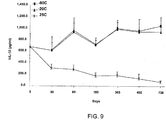
- lyophilized IL-12/PPC complexes are prepared under cGMP with the method outlined in Example 2 and stored at -80°C, -20°C, 4°C, and 25°C (60% RH) for stability evaluation.
- vials are removed from storage and 2.4 mL of WFI is added.
- DNA concentration, osmolality, particle size and biological activity measured.
- the DNA concentration, pH, osmolality and particle size of the IL-12/PPC complexes are maintained during the two-year storage at the indicated temperatures.
- the gene transfer activity of pIL-12/PPC is quantified in COS-1 cells as described in Example 6.
- the COS-1 cells are transfected with the biological material at 4 ⁇ g DNA.
- the levels of IL-12 in cell culture media are quantified 48 hours after the transfection with a commercially available ELISA kit.
- the bioactivity results from the two-year stability study are illustrated in Figure 9 .
- the activity is 151 ⁇ 130 pg/mL and the rest of the data fluctuates within this standard deviation, except for 25°C where there is a consistent decline over time.
- a drop in transfection activity is observed at 360 days but due to insufficient samples no follow up time points are available to reach a conclusive assessment.
- lyophilized IL-12 plasmid DNA/PPC complexes are prepared according to the method described in Example 2, and reconstituted in water for injection to 0.5 mg/ml.
- the reconstituted material is stored at 4 °C. Samples are removed on day 60 and 90 and analyzed for particle size, osmolality, and gene expression.
- the lyophilized product stored in sealed vials at -80 °C is analyzed simultaneously for comparison.
- the reconstituted EGEN-001 is stable at 4 °C for at least 90 days after reconstitution with WFI.
- PEG-PEI-Cholesterol is added to existing, synthetic nucleic acid delivery systems to enhance the stability of nucleic acid formulations that are generally unstable at high nucleic acid concentrations.
- PEG-PEI-Cholesterol is added to DNA formulations prepared with linear polyethylenimine 25 kDa (LPEI25kD).
- DNA formulations at 0.15 mg/ml concentration can be prepared with LPEI25kD at 10:1 (N:P ratio) in presence of 3% lactose.
- PEG-PEI-Cholesterol lipopolymer may then be added to LPE125kD/DNA complex at various PPC ratios to formulated DNA.
- PPC/DNA (N:P ratios) can be (0:1), (1:1), (5:1), (7.5:1), (11:1), (15:1), and (20:1).
- 500 ⁇ l of each formulation can be added to 2 ml of borosilicate glass vials and then lyophilized in a freeze dry system.
- the freeze drying program consists of the following segments:
- the lyophilized formulations may be reconstituted with water for injection to 0.5 mg/ml or other suitable concentration.
Landscapes
- Health & Medical Sciences (AREA)
- Life Sciences & Earth Sciences (AREA)
- Chemical & Material Sciences (AREA)
- Engineering & Computer Science (AREA)
- General Health & Medical Sciences (AREA)
- Genetics & Genomics (AREA)
- Public Health (AREA)
- Medicinal Chemistry (AREA)
- Animal Behavior & Ethology (AREA)
- Pharmacology & Pharmacy (AREA)
- Bioinformatics & Cheminformatics (AREA)
- Veterinary Medicine (AREA)
- Epidemiology (AREA)
- Molecular Biology (AREA)
- Biomedical Technology (AREA)
- Biotechnology (AREA)
- Zoology (AREA)
- Organic Chemistry (AREA)
- Wood Science & Technology (AREA)
- Biochemistry (AREA)
- General Engineering & Computer Science (AREA)
- Biophysics (AREA)
- Microbiology (AREA)
- Plant Pathology (AREA)
- Proteomics, Peptides & Aminoacids (AREA)
- Physics & Mathematics (AREA)
- Inorganic Chemistry (AREA)
- General Chemical & Material Sciences (AREA)
- Chemical Kinetics & Catalysis (AREA)
- Oil, Petroleum & Natural Gas (AREA)
- Immunology (AREA)
- Gastroenterology & Hepatology (AREA)
- Dispersion Chemistry (AREA)
- Dermatology (AREA)
- Botany (AREA)
- Cell Biology (AREA)
- Nuclear Medicine, Radiotherapy & Molecular Imaging (AREA)
- Medicinal Preparation (AREA)
- Medicines That Contain Protein Lipid Enzymes And Other Medicines (AREA)
- Pharmaceuticals Containing Other Organic And Inorganic Compounds (AREA)
Claims (15)
- Zusammensetzung, die folgendes umfasst:(a) ein Gemisch aus einem kationischen Lipopolymer und wenigstens 0,5 mg/ml einer in einer wässrigen Lösung suspendierten Nukleinsäure, wobei
das kationische Lipopolymer eine Polyethylenimin(PEI)-Hauptkette umfasst, die kovalent unabhängig gebunden ist an Cholesterin und Polyethylenglykolgruppen, und wobei das Molverhältnis von Cholesterin zu der Polyethylenimin-Hauptkette zwischen 0,1 und 10 liegt, und wobei das Molverhältnis von Polyethylenglykol zu der Polyethylenimin-Hauptkette zwischen 0,1 und 10 liegt; und(b) einen Füllerhilfsstoff. - Zusammensetzung nach Anspruch 1, wobei die Zusammensetzung kondensierte Nukleinsäure umfasst.
- Zusammensetzung nach Anspruch 1 oder Anspruch 2, wobei das Molverhältnis von Aminstickstoff in der Polyethylenimin-Hauptkette zu Phosphat in der Nukleinsäure zwischen 0,1 : 1 und 100 : 1 liegt.
- Zusammensetzung nach einem der Ansprüche 1 bis 3, wo ei die Nukleinsäure ein Plasmid ist, das für ein Peptid codiert, das ausgewählt ist aus der Gruppe bestehend aus Interleukin-2, Interleukin-4, Interleukin-7, Interleukin-12, Interleukin-15, Interferon-α, Interferon-β, Interferon-γ, Kolonie-stimulierender Faktor, Granulozyten-Monozyten-Kolonie-stimulierender Faktor, angionen Substanzen, Gerinnungsfaktoren, hypoglykämischen Substanzen, Apoptosefaktoren, Anti-angiogenen Substanzen, Thymidinkinase, p53, IP10, p16, TNF-α, Fas-Ligand, Tumorantigenen, Neuropeptiden, viralen Antigenen, bakteriellen Antigenen und Kombinationen davon.
- Zusammensetzung nach einem der vorstehenden Ansprüche, wobei ein Molverhältnis von Polyethylenglykol zu der Polyethylenimin-Hauptkette in dem kationischen Lipopolymer im Bereich von 1 bis 10 liegt.
- Zusammensetzung nach einem der vorstehenden Ansprüche, wobei der FüllerHilfsstoff ausgewählt ist aus der Gruppe bestehend aus Zucker, Zuckeralkoholen, Stärken, Zellulosen und Kombinationen davon.
- Zusammensetzung nach einem der vorstehenden Ansprüche, wobei die Nukleinsäure ein für Interleukin-12-Gen codierendes Plasmid ist.
- Zusammensetzung nach einem der vorstehenden Ansprüche, wobei wenigstens ein Teil der Nukleinsäuren einen Komplex bildet und kondensiert ist mit dem in dem wässrigen Medium suspendierten kationischen Lipopolymer.
- Zusammensetzung nach einem der vorstehenden Ansprüche, wobei das PEG:PEI:Cholesterin-Molverhältnis in dem kationischen Lipopolymer im Bereich von 2-3:10,25-1 liegt.
- Zusammensetzung nach einem der vorstehenden Ansprüche, wobei wenigstens 30 Gew.-% der Nukleinsäure kondensiert sind.
- Zusammensetzung nach einem der vorstehenden Ansprüche, wobei das Verhältnis von Aminstickstoff in der Polyethylenimin-Hauptkette zu Phosphat in der Nukleinsäure zwischen 11:1 und 20:1 liegt.
- Verfahren zur Herstellung einer pharmazeutischen Zusammensetzung, die wenigstens 0,5 mg/ml Nukleinsäure, suspendiert in einer isotonischen Lösung umfasst, wobei das Verfahren folgendes umfasst:Kombinieren einer Nukleinsäure, eines kationischen Lipopolymers und eines Füller-Hilfsstoffs in einem wässrigen Medium, wobei das kationische Lipopolymer Polyethylenimin umfasst, das unabhängig kovalent gebunden ist an Cholesterin und Polyethylenglykolgruppen, und wobei das Molverhältnis von Cholesterin zu der Polyethylenimin-Hauptkette zwischen 0,1 und 10 liegt, und wobei das Molverhältnis von Polyethylenglykol zu der Polyethylenimin-Hauptkette zwischen 0,1 und 10 liegt;Lyophilisieren des Gemischs zu einem Pulver; undWiederherstellen des Pulvers mit einem Verdünner, um eine Lösung zu bilden, die wenigstens 0,5 mg/ml kondensierte Nukleinsäure in einer isotonischen Lösung umfasst.
- Zusammensetzung nach einem der Ansprüche 1 bis 11, wobei die Zusammensetzung eine trockene pharmazeutische Zusammensetzung ist.
- Zusammensetzung nach einem der Ansprüche 1 bis 11 oder 13 zur Verwendung in der Behandlung von Erkrankungen und/oder Krankheitszuständen, wobei zum Beispiel verschiedene Zellen oder Gewebe transfiziert sind.
- Zusammensetzung zur Verwendung nach Anspruch 14, wobei die Zusammensetzung in einen warmblütigen Organismus verabreicht wird, und wobei sich die Zelle in einem Gewebe befindet, das ausgewählt ist aus der Gruppe bestehend aus Eierstock, Uterus, Bauch, Kolon, Rektum, Knochen, Blut, Darm, Bauchspeicheldrüse, Brust, Kopf, Lungen, Milz, Leber, Niere, Gehirn, Schilddrüse, Prostata, Harnblase, Haut, Bauchhöhle, Brusthöhle und Kombinationen davon.
Applications Claiming Priority (2)
| Application Number | Priority Date | Filing Date | Title |
|---|---|---|---|
| US11/890,805 US20090042825A1 (en) | 2007-08-06 | 2007-08-06 | Composition, method of preparation & application of concentrated formulations of condensed nucleic acids with a cationic lipopolymer |
| PCT/US2008/072306 WO2009021017A2 (en) | 2007-08-06 | 2008-08-06 | Nucleic acid-lipopolymer compositions |
Publications (2)
| Publication Number | Publication Date |
|---|---|
| EP2178509A2 EP2178509A2 (de) | 2010-04-28 |
| EP2178509B1 true EP2178509B1 (de) | 2017-04-26 |
Family
ID=40219440
Family Applications (1)
| Application Number | Title | Priority Date | Filing Date |
|---|---|---|---|
| EP08797258.4A Active EP2178509B1 (de) | 2007-08-06 | 2008-08-06 | Nukleinsäure-lipopolymer-zusammensetzungen |
Country Status (6)
| Country | Link |
|---|---|
| US (2) | US20090042825A1 (de) |
| EP (1) | EP2178509B1 (de) |
| JP (2) | JP2010535800A (de) |
| CA (1) | CA2695901C (de) |
| ES (1) | ES2625685T3 (de) |
| WO (1) | WO2009021017A2 (de) |
Families Citing this family (86)
| Publication number | Priority date | Publication date | Assignee | Title |
|---|---|---|---|---|
| US9144546B2 (en) | 2007-08-06 | 2015-09-29 | Clsn Laboratories, Inc. | Nucleic acid-lipopolymer compositions |
| CA2787260A1 (en) * | 2010-01-18 | 2011-07-21 | Zhi-Min Yuan | Methods and compositions for nanoparticle-mediated cancer cell-targeted delivery |
| EP2380920A1 (de) | 2010-04-22 | 2011-10-26 | QGel SA | Hydrogelvorstufenformulierung und Herstellungsverfahren dafür |
| EP2386647A1 (de) * | 2010-05-10 | 2011-11-16 | Qiagen GmbH | Verfahren zur Transfektion einer eurkaryotischen Zelle |
| CN101880397B (zh) * | 2010-07-02 | 2012-06-27 | 中国科学院长春应用化学研究所 | 一种交联聚合物及其制备方法 |
| WO2012019168A2 (en) | 2010-08-06 | 2012-02-09 | Moderna Therapeutics, Inc. | Engineered nucleic acids and methods of use thereof |
| EP2625189B1 (de) | 2010-10-01 | 2018-06-27 | ModernaTX, Inc. | Manipulierte nukleinsäuren und anwendungsverfahren dafür |
| AU2012236099A1 (en) | 2011-03-31 | 2013-10-03 | Moderna Therapeutics, Inc. | Delivery and formulation of engineered nucleic acids |
| US9464124B2 (en) | 2011-09-12 | 2016-10-11 | Moderna Therapeutics, Inc. | Engineered nucleic acids and methods of use thereof |
| DE19216461T1 (de) | 2011-10-03 | 2021-10-07 | Modernatx, Inc. | Modifizierte nukleoside, nukleotide und nukleinsäuren und verwendungen davon |
| CA3018046A1 (en) | 2011-12-16 | 2013-06-20 | Moderna Therapeutics, Inc. | Modified nucleoside, nucleotide, and nucleic acid compositions |
| US9386657B2 (en) | 2012-03-15 | 2016-07-05 | Universal Display Corporation | Organic Electroluminescent materials and devices |
| US8916697B2 (en) * | 2012-03-30 | 2014-12-23 | Purdue Research Foundation | Nucleic acid complexes |
| WO2013151665A2 (en) | 2012-04-02 | 2013-10-10 | modeRNA Therapeutics | Modified polynucleotides for the production of proteins associated with human disease |
| CN104411338A (zh) | 2012-04-02 | 2015-03-11 | 现代治疗公司 | 用于产生与人类疾病相关的生物制剂和蛋白质的修饰多核苷酸 |
| US9283287B2 (en) | 2012-04-02 | 2016-03-15 | Moderna Therapeutics, Inc. | Modified polynucleotides for the production of nuclear proteins |
| US9572897B2 (en) | 2012-04-02 | 2017-02-21 | Modernatx, Inc. | Modified polynucleotides for the production of cytoplasmic and cytoskeletal proteins |
| US9254311B2 (en) | 2012-04-02 | 2016-02-09 | Moderna Therapeutics, Inc. | Modified polynucleotides for the production of proteins |
| US9540329B2 (en) | 2012-07-19 | 2017-01-10 | Universal Display Corporation | Organic electroluminescent materials and devices |
| ES2919864T3 (es) | 2012-10-05 | 2022-07-28 | Biontech Delivery Tech Gmbh | Derivados de poliamina hidroxilada como reactivos de transfección |
| CN112370532B (zh) | 2012-10-08 | 2024-11-01 | 生物技术传送科技有限责任公司 | 作为转染试剂的羧化多胺衍生物 |
| US8946697B1 (en) | 2012-11-09 | 2015-02-03 | Universal Display Corporation | Iridium complexes with aza-benzo fused ligands |
| PL2922554T3 (pl) | 2012-11-26 | 2022-06-20 | Modernatx, Inc. | Na zmodyfikowany na końcach |
| US8912018B2 (en) | 2012-12-17 | 2014-12-16 | Universal Display Corporation | Manufacturing flexible organic electronic devices |
| AU2013374345A1 (en) | 2013-01-17 | 2015-08-06 | Moderna Therapeutics, Inc. | Signal-sensor polynucleotides for the alteration of cellular phenotypes |
| US10400163B2 (en) | 2013-02-08 | 2019-09-03 | Universal Display Corporation | Organic electroluminescent materials and devices |
| EP2968391A1 (de) | 2013-03-13 | 2016-01-20 | Moderna Therapeutics, Inc. | Langlebige polynukleotidmoleküle |
| WO2014152211A1 (en) | 2013-03-14 | 2014-09-25 | Moderna Therapeutics, Inc. | Formulation and delivery of modified nucleoside, nucleotide, and nucleic acid compositions |
| US8980864B2 (en) | 2013-03-15 | 2015-03-17 | Moderna Therapeutics, Inc. | Compositions and methods of altering cholesterol levels |
| CA2917348A1 (en) | 2013-07-11 | 2015-01-15 | Moderna Therapeutics, Inc. | Compositions comprising synthetic polynucleotides encoding crispr related proteins and synthetic sgrnas and methods of use |
| EP3041934A1 (de) | 2013-09-03 | 2016-07-13 | Moderna Therapeutics, Inc. | Chimäre polynukleotide |
| WO2015034925A1 (en) | 2013-09-03 | 2015-03-12 | Moderna Therapeutics, Inc. | Circular polynucleotides |
| WO2015048744A2 (en) | 2013-09-30 | 2015-04-02 | Moderna Therapeutics, Inc. | Polynucleotides encoding immune modulating polypeptides |
| EP3052521A1 (de) | 2013-10-03 | 2016-08-10 | Moderna Therapeutics, Inc. | Polynukleotide zur codierung von low-density-lipoprotein-rezeptor |
| JP2017500865A (ja) | 2013-12-19 | 2017-01-12 | ノバルティス アーゲー | レプチンmRNAの組成物および製剤 |
| EP2960252A1 (de) * | 2014-06-26 | 2015-12-30 | Institut Pasteur | Phospholipase zur Behandlung von Immunosuppression |
| PL4023249T3 (pl) | 2014-04-23 | 2025-03-10 | Modernatx, Inc. | Szczepionki z kwasem nukleinowym |
| US10457699B2 (en) | 2014-05-02 | 2019-10-29 | Universal Display Corporation | Organic electroluminescent materials and devices |
| WO2015183954A1 (en) | 2014-05-27 | 2015-12-03 | Universal Display Corporation | High resolution low power consumption oled display with extended lifetime |
| EP2960059B1 (de) | 2014-06-25 | 2018-10-24 | Universal Display Corporation | Systeme und verfahren zur modulation des durchflusses während der dampfstrahlabscheidung von organischen materialien |
| US10626400B2 (en) | 2014-07-04 | 2020-04-21 | Biontech Ag | Stabilised formulations of RNA |
| US10115930B2 (en) | 2014-07-08 | 2018-10-30 | Universal Display Corporation | Combined internal and external extraction layers for enhanced light outcoupling for organic light emitting device |
| US10297762B2 (en) | 2014-07-09 | 2019-05-21 | Universal Display Corporation | Organic electroluminescent materials and devices |
| US20170204152A1 (en) | 2014-07-16 | 2017-07-20 | Moderna Therapeutics, Inc. | Chimeric polynucleotides |
| EP3171895A1 (de) | 2014-07-23 | 2017-05-31 | Modernatx, Inc. | Modifizierte polynukleotide zur herstellung von intrabodys |
| US10135007B2 (en) | 2014-09-29 | 2018-11-20 | Universal Display Corporation | Organic electroluminescent materials and devices |
| US9397302B2 (en) | 2014-10-08 | 2016-07-19 | Universal Display Corporation | Organic electroluminescent materials and devices |
| US9843024B2 (en) | 2014-12-03 | 2017-12-12 | Universal Display Corporation | Methods for fabricating OLEDs |
| EP3034539A1 (de) * | 2014-12-19 | 2016-06-22 | Ethris GmbH | Zusammensetzungen zur Einführung von Nukleinsäure in Zellen |
| US10636978B2 (en) | 2014-12-30 | 2020-04-28 | Universal Display Corporation | Organic electroluminescent materials and devices |
| KR102354019B1 (ko) | 2015-03-06 | 2022-01-21 | 유니버셜 디스플레이 코포레이션 | 고효율 oled 소자를 위한 신규 기판 및 공정 |
| SG11201708760PA (en) * | 2015-05-05 | 2017-11-29 | Yissum Res Dev Co Of Hebrew Univ Jerusalem Ltd | Nucleic acid-cationic polymer compositions and methods of making and using the same |
| US11564893B2 (en) | 2015-08-17 | 2023-01-31 | Modernatx, Inc. | Methods for preparing particles and related compositions |
| JP6948313B6 (ja) | 2015-09-17 | 2022-01-14 | モデルナティエックス インコーポレイテッド | 治療剤の細胞内送達のための化合物および組成物 |
| PL3386484T3 (pl) | 2015-12-10 | 2022-07-25 | Modernatx, Inc. | Kompozycje i sposoby dostarczania środków terapeutycznych |
| LT3394030T (lt) | 2015-12-22 | 2022-04-11 | Modernatx, Inc. | Junginiai ir kompozicijos terapinei medžiagai teikti intraceliuliniu būdu |
| EP3510161A4 (de) | 2016-08-23 | 2020-04-22 | Akouos, Inc. | Zusammensetzungen und verfahren zur behandlung von nicht altersbedingten hörschäden bei einer person |
| US11583504B2 (en) | 2016-11-08 | 2023-02-21 | Modernatx, Inc. | Stabilized formulations of lipid nanoparticles |
| EP4186888B1 (de) | 2017-03-15 | 2025-11-26 | ModernaTX, Inc. | Verbindung und zusammensetzungen zur intrazellulären verabreichung von therapeutischen wirkstoffen |
| WO2018170322A1 (en) | 2017-03-15 | 2018-09-20 | Modernatx, Inc. | Crystal forms of amino lipids |
| CA3055653A1 (en) | 2017-03-15 | 2018-09-20 | Modernatx, Inc. | Lipid nanoparticle formulation |
| WO2018232120A1 (en) | 2017-06-14 | 2018-12-20 | Modernatx, Inc. | Compounds and compositions for intracellular delivery of agents |
| MA49421A (fr) | 2017-06-15 | 2020-04-22 | Modernatx Inc | Formulations d'arn |
| EP3675817A1 (de) | 2017-08-31 | 2020-07-08 | Modernatx, Inc. | Verfahren zur herstellung von lipidnanopartikeln |
| US20200208152A1 (en) | 2017-09-08 | 2020-07-02 | Mina Therapeutics Limited | Stabilized sarna compositions and methods of use |
| KR102056144B1 (ko) | 2018-03-08 | 2019-12-16 | 주식회사 파마리서치프로덕트 | Dna 단편 혼합물이 고농도로 함유된 유동성을 갖는 액제 조성물 및 이의 제조방법 |
| EP3775211B1 (de) | 2018-04-12 | 2023-04-05 | MiNA Therapeutics Limited | Sirt1-sarna kompositionen und methoden zu deren verwendung |
| WO2020061367A1 (en) | 2018-09-19 | 2020-03-26 | Modernatx, Inc. | Compounds and compositions for intracellular delivery of therapeutic agents |
| CA3113025A1 (en) | 2018-09-19 | 2020-03-26 | Modernatx, Inc. | Peg lipids and uses thereof |
| WO2020061295A1 (en) | 2018-09-19 | 2020-03-26 | Modernatx, Inc. | High-purity peg lipids and uses thereof |
| WO2020061457A1 (en) | 2018-09-20 | 2020-03-26 | Modernatx, Inc. | Preparation of lipid nanoparticles and methods of administration thereof |
| KR20210151822A (ko) * | 2019-03-14 | 2021-12-14 | 엔진 인코포레이티드 | 키토산-핵산 나노입자의 가역성 코팅 및 이의 사용 방법 |
| EP3953473A1 (de) | 2019-04-12 | 2022-02-16 | MiNA Therapeutics Limited | Sirt1-sarna-zusammensetzungen und verfahren zur verwendung |
| AU2020350759A1 (en) | 2019-09-19 | 2022-03-31 | Modernatx, Inc. | Branched tail lipid compounds and compositions for intracellular delivery of therapeutic agents |
| CA3155015A1 (en) | 2019-09-19 | 2021-03-25 | Modernatx, Inc. | Carbonate containing lipid compounds and compositions for intracellular delivery of therapeutic agents |
| KR20220157944A (ko) | 2020-02-21 | 2022-11-29 | 아카우오스, 인크. | 인간 대상체에서 비-연령-연관 청각 장애를 치료하기 위한 조성물 및 방법 |
| EP4175676A4 (de) * | 2020-07-06 | 2024-08-28 | Vivtex Corporation | Mucopenetrierende formulierungen |
| GB2603454A (en) | 2020-12-09 | 2022-08-10 | Ucl Business Ltd | Novel therapeutics for the treatment of neurodegenerative disorders |
| US11524023B2 (en) | 2021-02-19 | 2022-12-13 | Modernatx, Inc. | Lipid nanoparticle compositions and methods of formulating the same |
| TW202305133A (zh) | 2021-03-26 | 2023-02-01 | 英商米納治療有限公司 | Tmem173 sarna組合物及其使用方法 |
| WO2023099884A1 (en) | 2021-12-01 | 2023-06-08 | Mina Therapeutics Limited | Pax6 sarna compositions and methods of use |
| GB202117758D0 (en) | 2021-12-09 | 2022-01-26 | Ucl Business Ltd | Therapeutics for the treatment of neurodegenerative disorders |
| WO2023170435A1 (en) | 2022-03-07 | 2023-09-14 | Mina Therapeutics Limited | Il10 sarna compositions and methods of use |
| WO2024125597A1 (en) | 2022-12-14 | 2024-06-20 | Providence Therapeutics Holdings Inc. | Compositions and methods for infectious diseases |
| WO2024134199A1 (en) | 2022-12-22 | 2024-06-27 | Mina Therapeutics Limited | Chemically modified sarna compositions and methods of use |
| WO2026027887A2 (en) | 2024-08-02 | 2026-02-05 | Mina Therapeutics Limited | Hbg1/2-sarna compositions and methods of use |
Family Cites Families (8)
| Publication number | Priority date | Publication date | Assignee | Title |
|---|---|---|---|---|
| JP3347381B2 (ja) * | 1993-01-27 | 2002-11-20 | 協和醗酵工業株式会社 | ペットフード |
| AU4690596A (en) * | 1994-12-30 | 1996-07-24 | Chiron Viagene, Inc. | Nucleic acid condensing agents with reduced immunogenicity |
| US6410046B1 (en) * | 1996-11-19 | 2002-06-25 | Intrabrain International Nv | Administering pharmaceuticals to the mammalian central nervous system |
| CA2395636A1 (en) * | 1999-12-30 | 2001-07-12 | Novartis Ag | Novel colloid synthetic vectors for gene therapy |
| JP4751556B2 (ja) * | 2000-02-28 | 2011-08-17 | ジーンシーグス, インコーポレイテッド | ナノカプセルカプセル化システムおよび方法 |
| US6696038B1 (en) * | 2000-09-14 | 2004-02-24 | Expression Genetics, Inc. | Cationic lipopolymer as biocompatible gene delivery agent |
| US20040142474A1 (en) * | 2000-09-14 | 2004-07-22 | Expression Genetics, Inc. | Novel cationic lipopolymer as a biocompatible gene delivery agent |
| CN1479632A (zh) * | 2000-10-09 | 2004-03-03 | 用于将核酸导入细胞的复合物 |
-
2007
- 2007-08-06 US US11/890,805 patent/US20090042825A1/en active Pending
-
2008
- 2008-08-06 WO PCT/US2008/072306 patent/WO2009021017A2/en not_active Ceased
- 2008-08-06 CA CA2695901A patent/CA2695901C/en active Active
- 2008-08-06 EP EP08797258.4A patent/EP2178509B1/de active Active
- 2008-08-06 US US12/186,945 patent/US20090042829A1/en not_active Abandoned
- 2008-08-06 ES ES08797258.4T patent/ES2625685T3/es active Active
- 2008-08-06 JP JP2010520274A patent/JP2010535800A/ja active Pending
-
2014
- 2014-10-17 JP JP2014212452A patent/JP6027592B2/ja active Active
Also Published As
| Publication number | Publication date |
|---|---|
| CA2695901C (en) | 2017-03-07 |
| JP6027592B2 (ja) | 2016-11-16 |
| WO2009021017A3 (en) | 2009-04-30 |
| JP2015028075A (ja) | 2015-02-12 |
| US20090042825A1 (en) | 2009-02-12 |
| CA2695901A1 (en) | 2009-02-12 |
| WO2009021017A2 (en) | 2009-02-12 |
| JP2010535800A (ja) | 2010-11-25 |
| ES2625685T3 (es) | 2017-07-20 |
| US20090042829A1 (en) | 2009-02-12 |
| EP2178509A2 (de) | 2010-04-28 |
Similar Documents
| Publication | Publication Date | Title |
|---|---|---|
| EP2178509B1 (de) | Nukleinsäure-lipopolymer-zusammensetzungen | |
| US9827331B2 (en) | Nucleic acid-lipopolymer compositions | |
| JP7645601B2 (ja) | 薬物送達キャリア及びそれを用いた医薬製剤 | |
| del Pozo-Rodríguez et al. | Short-and long-term stability study of lyophilized solid lipid nanoparticles for gene therapy | |
| EP1509203B1 (de) | Zuführung nukleinsäureähnlicher verbindungen | |
| CN104428005B (zh) | 用于反义寡核苷酸递送的脂质纳米颗粒组合物 | |
| US20100004315A1 (en) | Biodegradable Cross-Linked Branched Poly(Alkylene Imines) | |
| JP2007521247A (ja) | 生体適合性−遺伝子送達剤としての新規カチオン性リポポリマー | |
| US20090130761A1 (en) | Freeze-Dried Product for Introducing Nucleic Acid, Oligonucleic Acid or Derivative Thereof | |
| JP2021130671A (ja) | 核酸−カチオン性ポリマー組成物、並びにその作製方法及び使用方法 | |
| JP5382682B2 (ja) | 薬物送達複合体 | |
| CN114848831A (zh) | 包裹型纳米制剂及其载体的制备方法和应用 | |
| CN101820864A (zh) | 核酸-脂聚合物组合物 | |
| US7052875B1 (en) | Stable gene preparations | |
| JPWO1999061063A1 (ja) | 安定な遺伝子製剤 | |
| EP4658324A1 (de) | Verfahren zur herstellung von dna-formulierungen mit lipopolymer-abgabesystemen | |
| HK1242982A1 (en) | Nucleic acid-lipopolymer compositions | |
| Ogris | Gene delivery using polyethylenimine and copolymers | |
| Mohammed Saeid | Physiochemical stability and mass spectrometric analysis of gemini surfactant-based lipoplexes | |
| Verbaan et al. | Poly (2-(dimethylamino) ethyl methacrylate)-based polymers for the delivery of genes in vitro and in vivo |
Legal Events
| Date | Code | Title | Description |
|---|---|---|---|
| PUAI | Public reference made under article 153(3) epc to a published international application that has entered the european phase |
Free format text: ORIGINAL CODE: 0009012 |
|
| 17P | Request for examination filed |
Effective date: 20100215 |
|
| AK | Designated contracting states |
Kind code of ref document: A2 Designated state(s): AT BE BG CH CY CZ DE DK EE ES FI FR GB GR HR HU IE IS IT LI LT LU LV MC MT NL NO PL PT RO SE SI SK TR |
|
| AX | Request for extension of the european patent |
Extension state: AL BA MK RS |
|
| 17Q | First examination report despatched |
Effective date: 20120113 |
|
| GRAP | Despatch of communication of intention to grant a patent |
Free format text: ORIGINAL CODE: EPIDOSNIGR1 |
|
| INTG | Intention to grant announced |
Effective date: 20160502 |
|
| GRAS | Grant fee paid |
Free format text: ORIGINAL CODE: EPIDOSNIGR3 |
|
| GRAA | (expected) grant |
Free format text: ORIGINAL CODE: 0009210 |
|
| RAP1 | Party data changed (applicant data changed or rights of an application transferred) |
Owner name: CLSN LABORATORIES, INC. |
|
| AK | Designated contracting states |
Kind code of ref document: B1 Designated state(s): AT BE BG CH CY CZ DE DK EE ES FI FR GB GR HR HU IE IS IT LI LT LU LV MC MT NL NO PL PT RO SE SI SK TR |
|
| AX | Request for extension of the european patent |
Extension state: AL BA MK RS |
|
| REG | Reference to a national code |
Ref country code: GB Ref legal event code: FG4D |
|
| REG | Reference to a national code |
Ref country code: CH Ref legal event code: EP |
|
| REG | Reference to a national code |
Ref country code: AT Ref legal event code: REF Ref document number: 887265 Country of ref document: AT Kind code of ref document: T Effective date: 20170515 |
|
| REG | Reference to a national code |
Ref country code: NL Ref legal event code: FP Ref country code: IE Ref legal event code: FG4D |
|
| REG | Reference to a national code |
Ref country code: DE Ref legal event code: R096 Ref document number: 602008049967 Country of ref document: DE |
|
| REG | Reference to a national code |
Ref country code: FR Ref legal event code: PLFP Year of fee payment: 10 |
|
| REG | Reference to a national code |
Ref country code: ES Ref legal event code: FG2A Ref document number: 2625685 Country of ref document: ES Kind code of ref document: T3 Effective date: 20170720 |
|
| REG | Reference to a national code |
Ref country code: LT Ref legal event code: MG4D |
|
| REG | Reference to a national code |
Ref country code: AT Ref legal event code: MK05 Ref document number: 887265 Country of ref document: AT Kind code of ref document: T Effective date: 20170426 |
|
| PG25 | Lapsed in a contracting state [announced via postgrant information from national office to epo] |
Ref country code: NO Free format text: LAPSE BECAUSE OF FAILURE TO SUBMIT A TRANSLATION OF THE DESCRIPTION OR TO PAY THE FEE WITHIN THE PRESCRIBED TIME-LIMIT Effective date: 20170726 Ref country code: GR Free format text: LAPSE BECAUSE OF FAILURE TO SUBMIT A TRANSLATION OF THE DESCRIPTION OR TO PAY THE FEE WITHIN THE PRESCRIBED TIME-LIMIT Effective date: 20170727 Ref country code: HR Free format text: LAPSE BECAUSE OF FAILURE TO SUBMIT A TRANSLATION OF THE DESCRIPTION OR TO PAY THE FEE WITHIN THE PRESCRIBED TIME-LIMIT Effective date: 20170426 Ref country code: FI Free format text: LAPSE BECAUSE OF FAILURE TO SUBMIT A TRANSLATION OF THE DESCRIPTION OR TO PAY THE FEE WITHIN THE PRESCRIBED TIME-LIMIT Effective date: 20170426 Ref country code: AT Free format text: LAPSE BECAUSE OF FAILURE TO SUBMIT A TRANSLATION OF THE DESCRIPTION OR TO PAY THE FEE WITHIN THE PRESCRIBED TIME-LIMIT Effective date: 20170426 Ref country code: LT Free format text: LAPSE BECAUSE OF FAILURE TO SUBMIT A TRANSLATION OF THE DESCRIPTION OR TO PAY THE FEE WITHIN THE PRESCRIBED TIME-LIMIT Effective date: 20170426 |
|
| PG25 | Lapsed in a contracting state [announced via postgrant information from national office to epo] |
Ref country code: PL Free format text: LAPSE BECAUSE OF FAILURE TO SUBMIT A TRANSLATION OF THE DESCRIPTION OR TO PAY THE FEE WITHIN THE PRESCRIBED TIME-LIMIT Effective date: 20170426 Ref country code: SE Free format text: LAPSE BECAUSE OF FAILURE TO SUBMIT A TRANSLATION OF THE DESCRIPTION OR TO PAY THE FEE WITHIN THE PRESCRIBED TIME-LIMIT Effective date: 20170426 Ref country code: LV Free format text: LAPSE BECAUSE OF FAILURE TO SUBMIT A TRANSLATION OF THE DESCRIPTION OR TO PAY THE FEE WITHIN THE PRESCRIBED TIME-LIMIT Effective date: 20170426 Ref country code: BG Free format text: LAPSE BECAUSE OF FAILURE TO SUBMIT A TRANSLATION OF THE DESCRIPTION OR TO PAY THE FEE WITHIN THE PRESCRIBED TIME-LIMIT Effective date: 20170726 Ref country code: IS Free format text: LAPSE BECAUSE OF FAILURE TO SUBMIT A TRANSLATION OF THE DESCRIPTION OR TO PAY THE FEE WITHIN THE PRESCRIBED TIME-LIMIT Effective date: 20170826 |
|
| REG | Reference to a national code |
Ref country code: DE Ref legal event code: R097 Ref document number: 602008049967 Country of ref document: DE |
|
| PG25 | Lapsed in a contracting state [announced via postgrant information from national office to epo] |
Ref country code: DK Free format text: LAPSE BECAUSE OF FAILURE TO SUBMIT A TRANSLATION OF THE DESCRIPTION OR TO PAY THE FEE WITHIN THE PRESCRIBED TIME-LIMIT Effective date: 20170426 Ref country code: SK Free format text: LAPSE BECAUSE OF FAILURE TO SUBMIT A TRANSLATION OF THE DESCRIPTION OR TO PAY THE FEE WITHIN THE PRESCRIBED TIME-LIMIT Effective date: 20170426 Ref country code: RO Free format text: LAPSE BECAUSE OF FAILURE TO SUBMIT A TRANSLATION OF THE DESCRIPTION OR TO PAY THE FEE WITHIN THE PRESCRIBED TIME-LIMIT Effective date: 20170426 Ref country code: EE Free format text: LAPSE BECAUSE OF FAILURE TO SUBMIT A TRANSLATION OF THE DESCRIPTION OR TO PAY THE FEE WITHIN THE PRESCRIBED TIME-LIMIT Effective date: 20170426 Ref country code: CZ Free format text: LAPSE BECAUSE OF FAILURE TO SUBMIT A TRANSLATION OF THE DESCRIPTION OR TO PAY THE FEE WITHIN THE PRESCRIBED TIME-LIMIT Effective date: 20170426 |
|
| PLBE | No opposition filed within time limit |
Free format text: ORIGINAL CODE: 0009261 |
|
| STAA | Information on the status of an ep patent application or granted ep patent |
Free format text: STATUS: NO OPPOSITION FILED WITHIN TIME LIMIT |
|
| REG | Reference to a national code |
Ref country code: CH Ref legal event code: PL |
|
| PG25 | Lapsed in a contracting state [announced via postgrant information from national office to epo] |
Ref country code: MC Free format text: LAPSE BECAUSE OF FAILURE TO SUBMIT A TRANSLATION OF THE DESCRIPTION OR TO PAY THE FEE WITHIN THE PRESCRIBED TIME-LIMIT Effective date: 20170426 |
|
| 26N | No opposition filed |
Effective date: 20180129 |
|
| PG25 | Lapsed in a contracting state [announced via postgrant information from national office to epo] |
Ref country code: LI Free format text: LAPSE BECAUSE OF NON-PAYMENT OF DUE FEES Effective date: 20170831 Ref country code: CH Free format text: LAPSE BECAUSE OF NON-PAYMENT OF DUE FEES Effective date: 20170831 |
|
| PG25 | Lapsed in a contracting state [announced via postgrant information from national office to epo] |
Ref country code: SI Free format text: LAPSE BECAUSE OF FAILURE TO SUBMIT A TRANSLATION OF THE DESCRIPTION OR TO PAY THE FEE WITHIN THE PRESCRIBED TIME-LIMIT Effective date: 20170426 |
|
| REG | Reference to a national code |
Ref country code: BE Ref legal event code: MM Effective date: 20170831 |
|
| PG25 | Lapsed in a contracting state [announced via postgrant information from national office to epo] |
Ref country code: LU Free format text: LAPSE BECAUSE OF NON-PAYMENT OF DUE FEES Effective date: 20170806 |
|
| REG | Reference to a national code |
Ref country code: FR Ref legal event code: PLFP Year of fee payment: 11 |
|
| PG25 | Lapsed in a contracting state [announced via postgrant information from national office to epo] |
Ref country code: BE Free format text: LAPSE BECAUSE OF NON-PAYMENT OF DUE FEES Effective date: 20170831 |
|
| PG25 | Lapsed in a contracting state [announced via postgrant information from national office to epo] |
Ref country code: MT Free format text: LAPSE BECAUSE OF NON-PAYMENT OF DUE FEES Effective date: 20170806 |
|
| PG25 | Lapsed in a contracting state [announced via postgrant information from national office to epo] |
Ref country code: HU Free format text: LAPSE BECAUSE OF FAILURE TO SUBMIT A TRANSLATION OF THE DESCRIPTION OR TO PAY THE FEE WITHIN THE PRESCRIBED TIME-LIMIT; INVALID AB INITIO Effective date: 20080806 |
|
| PG25 | Lapsed in a contracting state [announced via postgrant information from national office to epo] |
Ref country code: CY Free format text: LAPSE BECAUSE OF NON-PAYMENT OF DUE FEES Effective date: 20170426 |
|
| PG25 | Lapsed in a contracting state [announced via postgrant information from national office to epo] |
Ref country code: TR Free format text: LAPSE BECAUSE OF FAILURE TO SUBMIT A TRANSLATION OF THE DESCRIPTION OR TO PAY THE FEE WITHIN THE PRESCRIBED TIME-LIMIT Effective date: 20170426 |
|
| PG25 | Lapsed in a contracting state [announced via postgrant information from national office to epo] |
Ref country code: PT Free format text: LAPSE BECAUSE OF FAILURE TO SUBMIT A TRANSLATION OF THE DESCRIPTION OR TO PAY THE FEE WITHIN THE PRESCRIBED TIME-LIMIT Effective date: 20170426 |
|
| P01 | Opt-out of the competence of the unified patent court (upc) registered |
Effective date: 20230803 |
|
| PGFP | Annual fee paid to national office [announced via postgrant information from national office to epo] |
Ref country code: GB Payment date: 20250612 Year of fee payment: 18 |
|
| PGFP | Annual fee paid to national office [announced via postgrant information from national office to epo] |
Ref country code: NL Payment date: 20250613 Year of fee payment: 18 |
|
| PGFP | Annual fee paid to national office [announced via postgrant information from national office to epo] |
Ref country code: FR Payment date: 20250610 Year of fee payment: 18 |
|
| PGFP | Annual fee paid to national office [announced via postgrant information from national office to epo] |
Ref country code: IE Payment date: 20250610 Year of fee payment: 18 |
|
| PGFP | Annual fee paid to national office [announced via postgrant information from national office to epo] |
Ref country code: ES Payment date: 20250902 Year of fee payment: 18 |
|
| PGFP | Annual fee paid to national office [announced via postgrant information from national office to epo] |
Ref country code: DE Payment date: 20250611 Year of fee payment: 18 |
|
| PGFP | Annual fee paid to national office [announced via postgrant information from national office to epo] |
Ref country code: IT Payment date: 20250722 Year of fee payment: 18 |