EP2187553A1 - Dispositif utilisateur et procédé de vérification - Google Patents
Dispositif utilisateur et procédé de vérification Download PDFInfo
- Publication number
- EP2187553A1 EP2187553A1 EP08836565A EP08836565A EP2187553A1 EP 2187553 A1 EP2187553 A1 EP 2187553A1 EP 08836565 A EP08836565 A EP 08836565A EP 08836565 A EP08836565 A EP 08836565A EP 2187553 A1 EP2187553 A1 EP 2187553A1
- Authority
- EP
- European Patent Office
- Prior art keywords
- cell
- sch
- sequence
- cell search
- unit
- Prior art date
- Legal status (The legal status is an assumption and is not a legal conclusion. Google has not performed a legal analysis and makes no representation as to the accuracy of the status listed.)
- Ceased
Links
Images







Classifications
-
- H—ELECTRICITY
- H04—ELECTRIC COMMUNICATION TECHNIQUE
- H04J—MULTIPLEX COMMUNICATION
- H04J11/00—Orthogonal multiplex systems, e.g. using WALSH codes
- H04J11/0069—Cell search, i.e. determining cell identity [cell-ID]
-
- H—ELECTRICITY
- H04—ELECTRIC COMMUNICATION TECHNIQUE
- H04J—MULTIPLEX COMMUNICATION
- H04J11/00—Orthogonal multiplex systems, e.g. using WALSH codes
- H04J11/0069—Cell search, i.e. determining cell identity [cell-ID]
- H04J11/0073—Acquisition of primary synchronisation channel, e.g. detection of cell-ID within cell-ID group
-
- H—ELECTRICITY
- H04—ELECTRIC COMMUNICATION TECHNIQUE
- H04J—MULTIPLEX COMMUNICATION
- H04J11/00—Orthogonal multiplex systems, e.g. using WALSH codes
- H04J11/0069—Cell search, i.e. determining cell identity [cell-ID]
- H04J11/0076—Acquisition of secondary synchronisation channel, e.g. detection of cell-ID group
-
- H—ELECTRICITY
- H04—ELECTRIC COMMUNICATION TECHNIQUE
- H04W—WIRELESS COMMUNICATION NETWORKS
- H04W28/00—Network traffic management; Network resource management
- H04W28/02—Traffic management, e.g. flow control or congestion control
- H04W28/04—Error control
-
- H—ELECTRICITY
- H04—ELECTRIC COMMUNICATION TECHNIQUE
- H04W—WIRELESS COMMUNICATION NETWORKS
- H04W48/00—Access restriction; Network selection; Access point selection
- H04W48/16—Discovering, processing access restriction or access information
Definitions
- the present invention generally relates to a radio communication system employing orthogonal frequency division multiplexing (OFDM) for downlink. More particularly, the present invention relates to user equipment and a verification method.
- OFDM orthogonal frequency division multiplexing
- LTE Long Term Evolution
- SC-FDMA single-carrier frequency division multiple access
- a frequency band is divided into multiple narrow frequency bands (subcarriers) and data are transmitted on the subcarriers.
- the subcarriers are densely arranged along the frequency axis such that they partly overlap each other but do not interfere with each other. This method enables high-speed transmission and improves frequency efficiency.
- SC-FDMA a frequency band is divided into multiple frequency bands and the frequency bands are allocated to different terminals for transmission in order to reduce interference between the terminals. Also, SC-FDMA reduces variation of the transmission power and therefore makes it possible to reduce power consumption of terminals and to achieve wide coverage.
- CP cyclic prefixes
- a long CP is used in a cell with a large cell radius or to transmit a multimedia broadcast multicast service (MBMS) signal
- MBMS multimedia broadcast multicast service
- the short CP is used in a cell with a small cell radius.
- the long CP is used, the number of OFDM symbols in a slot becomes six; and when the short CP is used, the number of OFDM symbols in a slot becomes seven.
- a cell search method is generally determined based on time necessary for a cell search and the processing load of the mobile station in performing the cell search. In other words, it is necessary to determine a cell search method so as to reduce the time necessary for a cell search and to reduce the processing load of the mobile station in performing the cell search.
- a primary SCH P-SCH
- S-SCH secondary SCH
- one sequence is used for the P-SCH and plural sequences are used for the S-SCH, and the P-SCH and the S-SCH are transmitted once in 5 ms (see, for example, R1-062990, "Outcome of cell search drafting session").
- the P-SCH is used to identify a downlink reception timing from a cell
- the S-SCH transmitted in the same slot is used to determine a reception frame timing and to obtain cell-specific information such as a cell ID or a cell group (group ID).
- group ID cell group ID
- a channel estimate obtained based on the P-SCH may generally be used.
- the cell ID of a detected cell is determined from cell IDs belonging to the group ID of the cell. For example, a cell ID may be determined based on the signal pattern of a pilot signal. As another example, a cell ID may be determined based on demodulation and decoding results of the P-SCH and the S-SCH. Meanwhile, when cell IDs are not grouped, the cell ID of a cell may be provided as an information item in the S-SCH. In this case, the mobile station may obtain the cell ID by just demodulating and decoding the S-SCH.
- the transmission characteristics of S-SCHs may be degraded because the S-SCHs transmitted from multiple cells using different sequences are demodulated and decoded based on channel estimates obtained based on P--SCHs transmitted from the cells using the same sequence.
- the transmission characteristics may include the time necessary for a cell search.
- the above problem may not occur because the reception timings of P-SCH sequences transmitted from the cells are different from each other.
- the time necessary for a cell search i.e., the transmission characteristics in a cell search
- the processing load of the mobile station in a cell search are inversely related to each other. Therefore, it is preferable to be able to select whether to attach importance to the transmission characteristics in a cell search or to the processing load of the mobile station in a cell search by setting parameters or by changing operational methods.
- the synchronization channel is a downlink signal used for a cell search.
- a hierarchical SCH structure is to be employed for the synchronization channel (see, for example, 3GPP TS 36.211 V1.0.0 (2007-03)).
- the synchronization channel is composed of two subchannels: a primary synchronization channel (primary SCH) and a secondary synchronization channel (secondary SCH).
- the secondary synchronization channel is used to report cell---specific information such as a cell ID group, a radio frame timing, and the number of transmitting antennas.
- the user equipment obtains the cell-specific information from a secondary synchronization channel sequence.
- a neighboring cell search is performed when handover takes place and cell-specific information (neighboring cell information) of neighboring cells is reported to the user equipment before the neighboring cell search is performed.
- cell-specific information neighboring cell information
- whether to report neighboring cell information has not been decided yet.
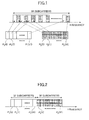
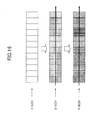
- FIG. 1 shows an example of this method where an orthogonal sequence 1 (P 1 (0), P 1 (1), ⁇ , P 1 (31)) and an orthogonal sequence 2 (P 2 (0), P 2 (1), ⁇ , P 2 (31)) are mapped alternately to subcarriers.
- P 1 (0), P 1 (1), ⁇ , P 1 (31) an orthogonal sequence 1
- P 2 (0), P 2 (1), ⁇ , P 2 (31) are mapped alternately to subcarriers.
- multiple, for example, three Zadcff-Chu sequences are to be used for the P-SCH and binary sequences obtained by combining two short codes are to be used for the S-SCH.
- S-SCH sequences may increase the peak-to-average power ratio, particularly, in an 1.25 MHz system.
- the P-SCH and the S-SCH are transmitted in the same 1 ms subframe, and a subframe including the P-SCH and the S-SCH occurs every 5 ms. In other words, the synchronization channel is transmitted every 5 ms.
- the user equipment receives P-SCHs that differ from sector to sector and thereby obtains a channel estimate in the serving cell. Then, the user equipment performs channel compensation on S-SCHs that differ from cell to cell based on the obtained channel estimate and thereby demodulates the S-SCHs to perform a cell search.
- "cell” may indicate a group of "sectors”. Also, "cell” and “sector” may be used synonymously when there is no risk of confusion.
- the mobile station receives the signals from the cells at the same time.
- a mobile station located near a boundary between sectors belonging to the same base station receives different P-SCHs from the sectors and can therefore distinguish the sectors from each other.
- S-SCHs transmitted from the sectors are the same and therefore the mobile station receives the S--SCHs from the sectors as a combined signal.
- the detection accuracy of the S--SCHs may be reduced. Assuming that the same S-SCH is transmitted every 5 ms from multiple cells, such interference occurs every 5 ms and the detection accuracy of the S-SCH at the mobile station may be reduced.
- the mobile station performs a verification process after detecting cell-specific information such as a cell ID and a radio frame timing.
- the mobile station determines whether detection results are correct. If the verification process is not properly performed, it may lead to a detection failure or a false detection.
- One object of the present invention is to provide user equipment and a verification method that make it possible to reduce occurrences of detection failures and false detections in a cell search.
- An aspect of the present invention provides a user equipment performing a cell search and detecting cell-specific information including a cell ID.
- the user equipment includes a receiving unit configured to receive a synchronization channel; a cell search unit configured to extract a primary synchronization channel and a secondary synchronization channel from the received synchronization channel to perform the cell search; and a verification unit configured to verify a detection result of the cell search based on a verification start condition.
- Another aspect of the present invention provides a verification method for a user equipment performing a cell search and detecting cell-specific information including a cell ID.
- the verification method includes the steps of receiving a synchronization channel; extracting a primary synchronization channel and a secondary synchronization channel from the received synchronization channel to perform the cell search; and verifying a detection result of the cell search based on a verification start condition.
- An aspect of the present invention provides user equipment and a verification method that make it possible to reduce occurrences of detection failures and false detections in a cell search.
- a radio communication system 1000 including mobile stations and base stations according to an embodiment of the present invention is described below with reference to FIG. 3 .
- the radio communication system 1000 is based on, for example, Evolved UTRA and UTRAN (also called Long Term Evolution or Super 3G).
- the radio communication system 1000 includes base stations (eNode B: eNB) 200 m (200 1 , 200 2 , 200 3 , ..., 200 m , where m is an integer greater than 0) and mobile stations (user equipment) 100 n (100 1 , 100 2 , 100 3 , ..., 100 n , where n is an integer greater than 0) that communicate with the base stations 200 m .
- the base stations 200 m are connected to an upper node such as an access gateway 300 and the access gateway 300 is connected to a core network 400.
- Each of the mobile stations 100 n is in one of cells 50 k (50 1 , 50 2 , ..., 50 k , where k is an integer greater than 0) and communicates with the corresponding one of the base stations 200 m according to Evolved ULTRA and UTRAN.
- the base stations 200 m transmit synchronization signals.
- Each of the mobile stations 100 n is located in one of the cells 50 k (50 1 , 50 2 , ..., 50 k , where k is an integer greater than 0).
- the mobile station 100 n When the mobile station 100 n is, for example, turned on or in the intermittent reception mode during communications, the mobile station 100 n performs a cell search based on the synchronization signals to find a cell that provides good radio communication quality for the mobile station 100 n .
- the mobile station 100 n detects a symbol timing and a frame timing and detects cell-specific control information such as a cell ID (a scrambling code that is unique to a cell and generated from the cell ID) or a group of cell IDs (hereafter called a cell ID group) based on a synchronization signal.
- cell-specific control information such as a cell ID (a scrambling code that is unique to a cell and generated from the cell ID) or a group of cell IDs (hereafter called a cell ID group) based on a synchronization signal.
- a cell search may be performed when the mobile station 100 n is in communications as well as when the mobile station 100 n is not in communications. For example, the mobile station 100 n performs a cell search during communications to find a cell using the same frequency or to find a cell using a different frequency. The mobile station 100 n also performs a cell search when it is not in communications, for example, when the user equipment 100 n has just been turned on or is in the standby mode.
- the base stations 200 m (200 1 , 200 2 , 200 3 , ..., 200 m ) have the same configuration and functions and are therefore called the base station 200, the base station 200 m , or the base stations 200 m in the descriptions below unless otherwise mentioned.
- the mobile stations 100 n (100 1 , 100 2 , 100 3 , ..., 100 n ) have the same configuration and functions and are therefore called the mobile station 100, the mobile station 100 n , or the mobile stations 100 n in the descriptions below unless otherwise mentioned.
- the cells 50 k (50 1 , 50 2 , 50 3 , ..., 50 k ) have the same configuration and functions and are therefore called the cell 50, the cell 50 k , or the cells 50 k in the descriptions below unless otherwise mentioned.
- orthogonal frequency division multiple access is used as the downlink radio access method and single-carrier frequency division multiple access (SC-FDMA) is used as the uplink radio access method.
- OFDMA orthogonal frequency division multiple access
- SC-FDMA single-carrier frequency division multiple access
- OFDMA orthogonal frequency division multiple access
- a frequency band is divided into narrow frequency bands (subcarriers) and data are transmitted on the subcarriers.
- SC-FDMA a frequency band is divided into multiple frequency bands and the frequency bands are allocated to different terminals for transmission in order to reduce interference between the terminals.
- a physical downlink shared channel (PDSCH) shared by the mobile stations 100 n and an LTE downlink control channel are used-
- the LTE downlink control channel is used to report information on mobile stations to be mapped to the physical downlink shared channel, transport format information for the physical downlink shared channel, information on mobile stations to be mapped to a physical uplink shared channel, transport format information for the physical uplink shared channel, and acknowledgement information for the physical uplink shared channel; and the physical downlink shared channel is used to transmit user data.
- the base stations 200 m transmit synchronization signals used by the mobile stations 100 n to perform cell searches.
- a physical uplink shared channel (PUSCH) shared by the mobile stations 100 n and an LTE uplink control channel are used.
- PUSCH physical uplink shared channel
- the LTE uplink control channel is used to report downlink channel quality indicators (CQI) used for scheduling and adaptive modulation and coding (AMC) of the physical downlink shared channel and to report acknowledgement information (HARQ ACK information) for the physical downlink shared channel.
- CQI downlink channel quality indicators
- AMC adaptive modulation and coding
- HARQ ACK information acknowledgement information
- the physical uplink shared channel is used to transmit user data.
- one radio frame is 10 ms and includes 10 subframes. Also, as shown in FIG. 5 , one subframe includes two slots, and each slot includes seven OFDM symbols when short CPs are used (upper part of FIG. 5 ) or six OFDM symbols when long CPs are used (lower part of FIG. 5 ).
- the base station 200 m of this embodiment includes a transceiver antenna 202, an amplifier 204, a transceiver unit 206, a baseband signal processing unit 208, a call processing unit 210, and a transmission path interface 212.
- Downlink packet data to be transmitted from the base station 200 m to the mobile station 100 n are sent from an upper node such as the access gateway 300 to the base station 200 m and input via the transmission path interface 212 to the baseband signal processing unit 208.
- the baseband signal processing unit 208 performs, for the packet data, RLC layer transmission processing such as segmentation/concatenation and a transmission process in radio link control (RLC) retransmission control; a transmission process in MAC retransmission control (e.g., hybrid automatic repeat request (HARQ)); scheduling; selection of transport formats; channel coding; and inverse fast Fourier transform (IFFY) processing.
- RLC radio link control
- MAC retransmission control
- IFFY inverse fast Fourier transform
- the baseband signal processing unit 208 sends the processed packet data to the transceiver unit 206. Also, as described later, the baseband signal processing unit 208 generates a synchronization signal. The generated synchronization signal is multiplexed with the packet data and sent to the transceiver unit 206.
- the transceiver unit 206 performs frequency conversion to convert a baseband signal output from the baseband signal processing unit 208 into a radio frequency signal.
- the radio frequency signal is amplified by the amplifier 204 and transmitted from the transceiver antenna 202.
- the baseband signal includes the packet data and the synchronization signal described above.
- the radio frequency signal is received by the transceiver antenna 202, is amplified by the amplifier 204, and is frequency-converted by the transceiver unit 206 into a baseband signal. Then, the transceiver unit 206 inputs the baseband signal to the baseband signal processing unit 208.
- the baseband signal processing unit 208 performs FFT processing, error correction decoding, a reception process in MAC retransmission control, and RLC layer reception processing on the input baseband signal and transmits the baseband signal via the transmission path interface 212 to the access gateway 300.
- the call processing unit 210 performs status management and resource allocation for the base station 200 m .
- Embodiments of the present invention mainly relate to downlink. Therefore, only components related to downlink processing are shown in TIG. 7 and components related to uplink processing are omitted.
- the baseband signal processing unit 208 includes an RLC processing unit 208 1 , a medium access control (MAC) processing unit 208 2 , an encoding unit 208 3 , a data modulation unit 208 4 , a multiplexing unit 208 5 , a serial-parallel converting unit 208 6 , multipliers 208 7 , multipliers 208 8 , a scrambling code generating unit 208 9 , an amplitude adjusting unit 208 10 , a combining unit 208 11 , an IFFT (LOFT) unit 208 12 , a CP adding unit 208 13 , and a synchronization signal generating unit 209.
- RLC processing unit 208 1 includes an RLC processing unit 208 1 , a medium access control (MAC) processing unit 208 2 , an encoding unit 208 3 , a data modulation unit 208 4 , a multiplexing unit 208 5 , a serial-parallel converting unit 208 6 , multipliers 208
- the RLC processing unit 208 1 performs RLC layer transmission processing such as segmentation/concatenation and a transmission process in RLC retransmission control on a transmission data sequence of downlink packet data received from the transmission path interface 212.
- the MAC processing unit 208 2 performs MAC layer transmission processing such as a transmission process in hybrid automatic repeat request (HARQ), scheduling, selection of transport formats, and allocation of frequency resources on the transmission data sequence of the downlink packet data.
- HARQ hybrid automatic repeat request
- the encoding unit 208 3 encodes the transmission data sequence and the data modulation unit 208 4 data-modulates the encoded transmission data sequence.
- the multiplexing unit 208 5 multiplexes the data-modulated transmission data sequence with a pilot symbol.
- the serial-parallel converting unit 208 6 performs serial-parallel conversion on the transmission data sequence multiplexed with the pilot symbol to obtain a symbol sequence including N information symbols arranged along the frequency axis.
- the pilot symbol is, for example, a downlink reference signal (DL-RS).
- the multipliers 208 7 (the number of which is N) multiply the corresponding N information symbols arranged along the frequency axis by a scrambling code, which is output from the scrambling code generating unit 208 9 , in the frequency direction.
- the multipliers 208 8 (the number of which is N) multiply the N information symbols multiplied by the scrambling code by an amplitude adjusting sequence value output from the amplitude adjusting unit 208 10 and output the multiplied information symbols to the combining unit 208 11 ,
- the combining unit 208 11 multiplexes the symbol sequence having a sequence length N and multiplied by the scrambling code and the amplitude adjusting sequence value with the synchronization signal generated by the synchronization signal generating unit 209 in one or more of N subcarriers
- subframes and slots used to transmit the synchronization signal are determined by a synchronization signal control unit 209 1 .
- the combining unit 208 11 combines the synchronization signal generated by the synchronization signal generating unit 209 with another signal (a symbol sequence obtained by multiplying downlink packet data by a scrambling code and an amplitude adjusting sequence value). Meanwhile, in subframes and slots where no synchronization signal is transmitted, the synchronization signal generated by the synchronization signal generating unit 209 is not multiplexed.
- the symbol sequence having a sequence length N and obtained by multiplying the downlink packet data by the scrambling code and the amplitude adjusting sequence value is input to the inverse Fourier transform unit 208 12 .
- the subcarriers where the synchronization signal is multiplexed are located, for example, in a frequency band including the center of the entire frequency band.
- the subcarriers where the synchronization signal is multiplexed have a bandwidth of, for example, 1.25 MHz.
- the inverse Fourier transform unit (IFFT) 208 12 converts the N symbols into an orthogonal multi-carrier signal.
- the CP adding unit 208 13 inserts a CP into the multi-carrier signal at every Fourier transform time.
- CP lengths There are two types of CPs with different lengths (CP lengths) : a long CP and a short CP. One of the long CP and the short CP is selected for each cell.
- the synchronization signal includes a first synchronization signal (hereafter called a primary synchronization channel: P-SCH) and a second synchronization signal (hereafter called a secondary synchronization channel: S-SCH).
- the synchronization signal generating unit 209 includes a synchronization signal control unit 209 1 , a synchronization signal generator 209 2 , a data modulation unit 209 3 , a serial-parallel converting unit 209 4 , multipliers 209 5 , and an amplitude adjusting unit 209 6 .
- the synchronization signal generator 209 2 includes a P-SCH generating unit 252, an S-SCH generating unit 254, a multiplier 256, a scrambling sequence generating unit 258, and a multiplexing unit 260.
- the synchronization signal control unit 209 1 is connected to the P-SCH generating unit 252, the S-SCH generating unit 254, the scrambling sequence generating unit 258, and the multiplexing unit 260 of the synchronization signal generator 209 2 .
- the synchronization signal control unit 209 1 determines a sequence (sequence number) used for the P-SCH, a sequence (sequence number) used for the S-SCAR and subframes and slots (or subframe numbers and slot numbers) used to transmit the P-SCH and the S-SCH based on the cell ID or the cell ID group of a cell where the base station 200 m provides communications based on Evolved UTRA and UTRAN.
- the mobile station may be configured to identify a cell based on a signal pattern of a pilot signal, i.e., a reference signal, after identifying a cell ID group. In this case, the correspondence between signal patterns of the reference signal and cell IDs may be predefined.
- the mobile station may be configured to identify a cell based on demodulation and decoding results of the P-SCH and the S-SCH.
- the correspondence between P-SCH sequence numbers and cell ID information may be predefined. Different P-SCH sequences are selected, for example, for respective sectors. When, for example, a cell includes three sectors, a different P-SCH sequence is selected for each of the sectors from a set of three different sequences.
- the synchronization signal control unit 209 1 reports the sequence number of the P-SCH to the P-SCH generating unit 252 and reports the sequence number of the S-SCH to the S-SCH generating unit 254.
- the synchronization signal control unit 209 1 also reports numbers indicating the subframes and the slots (subframe numbers and slot numbers) used to transmit the P-SCH and the S-SCH as synchronization signal transmission timing information to the multiplexing unit 260.
- subframes and slots used to transmit the P-SCH and the S-SCH are defined as shown in FIG. 8 .
- one of multiple (e.g., three) P-SCH sequences is selected and the synchronization signal is transmitted in subframe #1 and subframe #6.
- the P-SCH is mapped to the last OFDM symbol in each slot. This in turn enables the mobile station to demodulate the P-SCH regardless of whether the long CP or the short CP is used. This is because the timing of the sixth OFDM symbol that is the last OFDM symbol in a slot where the long CP is used matches the timing of the seventh OFDM symbol that is the last OFDM symbol in a slot where the short CP is used.
- the timings of the first and last symbols in a slot where the long CP is used are the same as those in a slot where the short CP is used.
- the correspondence between P-SCH sequence numbers and cell ID information may be predefined in the radio communication system 1000. With the correspondence between P-SCH sequence numbers and cell ID information predefined in the radio communication system 1000, the synchronization signal control unit 209 1 of the base station 200 m can determine a P-SCH sequence number based on the cell ID of a cell where the base station 200 m provides communications based on Evolved UTRA and UTRAN.
- a communication area provided by the base station 200 m is divided into two or more subareas called sectors.
- the cell ID or the cell ID group may be used to identify an area including all of the sectors or to identify individual sectors.
- a combination of synchronization signal sequences and subframes and slots (subframe numbers and slot numbers) used to transmit the synchronization signal is defined for each base station 200 m .
- a combination of synchronization signal sequences and subframes and slots used to transmit the synchronization signal is defined for each sector of the base station 200 m .
- any one of the following sequences may be used: a constant amplitude zero autocorrelation (CAZAC) sequence such as a Zadoff-Chu sequence (see, for example, C. Chu, "Polyphase codes with good periodic correlation properties," IEEE Trans. Inform. Theory, vol. 11-18, pp. 531-532, July 1972 ); a Frank sequence (see, for example, R. L. Frank and S. A. Zadoff, "Phase shift pulse codes with good periodic correlation properties," IRE Trans. Inform. Theory, vol. IT-8, pp. 381-382, 1962 ); a Modulated Frank sequence (see, for example, R. L. Frank and S. A.
- CAZAC constant amplitude zero autocorrelation
- Zadoff "Phase shift pulse codes with good periodic correlation properties," IRE Trans. Inform. Theory, vol. IT-8, pp. 381-382, 1962 ); a Golay Complementary sequence (see, for example, M. J. E. Golay, "Complementary Series,” IRE Trans. Inform. Theory, vol. 7, pp. 82-87, April 1961 ); a Double Repetitive Golay complementary sequence (see, for example, 3GPP, R1-062487, Hierarchical SCH signals suitable for both (FDD and TDD) modes of E-UTRA); and a pseudo noise (PN) sequence.
- PN pseudo noise
- any one of the following sequences may be used: a two-layered S-SCH sequence obtained by multiplying an orthogonal or non-orthogonal sequence by a non-orthogonal or orthogonal scrambling sequence (see, for example, 3GPP, R1-070146, S-SCH Sequence Design); an S-SCH sequence composed of multiple orthogonal or non-orthogonal sequences arranged alternately in the frequency domain; an S-SCH sequence obtained by multiplying multiple orthogonal or neon-orthogonal sequences by a non-orthogonal or orthogonal scrambling sequence; an S-SCH sequence composed of multiple orthogonal or non-orthogonal sequences arranged in consecutive subcarriers; and an S-SCH sequence composed of multiple orthogonal or non-orthogonal sequences arranged in consecutive subcarriers and multiplied by a non-orthogonal or orthogonal scrambling sequence.
- orthogonal sequences include a Malsh-Hadamard sequence, a phase-rotated orthogonal sequence, and an orthogonal M-sequence.
- non-orthogonal sequences include a CAZAC sequence such as a GCL sequence; a Golay sequence; a Golay complementary sequence; an M-sequence (see, for example, 3GPP, R1-072093, Details on SSC Sequence Design); and a PN sequence.
- the synchronization signal generator 209 2 may include cell-specific information in the S-SCH in a layered manner.
- the cell-specific information includes at least one of a cell. ID groups, a radio frame timing, and the number of transmitting antennas.
- the radio communication system 1000 may be configured to report to the mobile station a part of layered information as prior information (e.g., neighboring cell information) for a cell search.
- the prior information may include a cell ID group, a part of the cell ID group, a radio frame timing, the number of transmitting antennas, or any combination of them. The prior information makes it possible to reduce the number of sequences that the mobile station has to detect when performing a cell search.
- a cell ID group may be represented by a combination of two or more sequences.
- FIG. 9A shows an example where a cell ID group is represented by a combination of two short codes with a sequence length of 31.
- first short code on the vertical axis indicates sequence indexes of a first one of two short codes used for the S-SCH sequence; and "second short code” on the horizontal axis indicates sequence indexes of a second one of the two short codes.
- 31 sequence indexes are assigned to each of the first short code and the second short code.
- the number of sequence indexes assigned to each of the first short code and the second short code may be limited as needed.
- a sequence index of the first short code used at (frame) timing #1 is selected from a first numerical range (0-13); and a sequence index of the second short code used at timing #1 is selected from a second numerical range (23-30). Meanwhile, a sequence index of the first short code used at timing #2 that is 5 ms after timing #1 is selected from the second numerical range (23-30); and a sequence index of the second short code used at timing #2 is selected from the first numerical range (0-13).
- Selecting sequence indexes to be used at timings #1 and #2 from different numerical ranges makes it possible to reduce the number of candidates of the first and second short codes to be searched for and thereby makes it possible to reduce the time necessary for the search. Also with this method, as soon as a sequence index of the first short code is detected, it is possible to determine that the sequence index is used at timing #1.
- FIG. 9B is a drawing illustrating another method of determining the S-SCH sequence.
- sequence indexes of the first and second short codes are selected from the same numerical range (0-30).
- a sequence index of the first short code is indicated by "m”
- a sequence index of the second short code is indicated by "n”.
- a combination of sequence indexes m and n is selected to satisfy m-n ⁇ or n-m ⁇ .
- m and n are integers between 0 and 30, and ⁇ is an integer less than or equal to 29.
- sequence indexes are selected from a numerical range wider than that in the method shown in FIG. 9A . Accordingly, this method increases the flexibility in selecting a combination of codes used for the secondary synchronization channel and is therefore preferable in terms of preventing collision of codes.
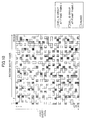
- FIG. 10 is a drawing illustrating another method of determining the S-SCH sequence. Also in this method, sequence indexes of the first and second short codes are selected from the same numerical range (0-30). However, no simple rule as shown in FIGs- 9A and 9B is employed in thins method. In this method, sequence indexes of the first and second short codes are combined in various manners such that a same combination is not generated.
- the P-SCH sequence generated by the P-SCH generating unit 252 is input to the multiplexing unit 260 and the S-SCH sequence generated by the S-SCH generating unit 254 is input to the multiplier 256.
- the synchronization signal control unit 209 1 inputs information indicating a scrambling sequence to the scrambling sequence generating unit 258.
- the synchronization signal control unit 209 1 inputs information indicating a scrambling code common to all cells to the scrambling sequence generating unit 258.
- the scrambling sequence generating unit 258 Based on the information indicating a scrambling sequence input from the synchronization signal control unit 209 1 , the scrambling sequence generating unit 258 generates the scrambling sequence and inputs the generated scrambling sequence to the multiplier 256.
- the multiplier 256 multiplies the S-SCH by the scrambling sequence and inputs the multiplied S-SCH to the multiplexing unit 260.
- the length of the scrambling sequence may be determined depending on whether two short codes are scrambled (or spread) together or separately. Multiple scrambling sequences may be used to report, for example, system information for the S-SCH sequence such as a frame timing, a cell ID group, or the number of transmitting antennas. This makes it possible to reduce the peak-to-average power ratio (PAPR) of the S-SCH sequence, particularly in a 1.25 MHz system.
- PAPR peak-to-average power ratio
- the synchronization signal control unit 209 1 is preferably configured to select a scrambling sequence unique to a cell and to input information indicating the selected scrambling sequence to the scrambling sequence generating unit 258.
- scrambling sequences or scrambling codes for the S-SCH may be associated with respective cells or respective base stations.
- the scrambling sequence generating unit 258 Based on the information indicating a scrambling sequence input from the synchronization signal control unit 209 1 , the scrambling sequence generating unit 258 generates the scrambling sequence and inputs the generated scrambling sequence to the multiplier 256.
- the scrambling sequence generating unit 258 may be configured to generate a scrambling sequence associated with the P-SCH sequence number, i.e., unique to the P-SCH sequence.
- the scrambling sequence generating unit 258 may be configured to generate a scrambling sequence unique to the sequence number of one of two short codes (see, for example, 3GPP, R1-072661, Scrambling Method for Two S-SCH Short Code).
- the multiplier 256 multiplies the S-SCH sequence by the scrambling sequence input from the scrambling sequence generating unit 258 and inputs the multiplied S-SCH sequence to the multiplexing unit 260.
- the length of the scrambling sequence may be determined depending on whether two short codes are scrambled together or separately.
- the scrambling sequence may be common to all cells, unique to each cell, unique to the P-SCH sequence, or unique to the sequence number of one of the two short codes. Also, multiple scrambling sequences may be used.
- the multiplier 256 may be configured to multiply one of the two short codes by a scrambling sequence common to all cells and to multiply the other one of the two short codes by a scrambling sequence unique to the P-SCH sequence.
- the multiplier 256 may be configured to multiply a first one of the two short codes by a scrambling sequence unique to the P-SCH sequence and to multiply a second one of the two short codes by a scrambling sequence unique to the sequence number of the first one of the two short codes.
- Multiple scrambling sequences may be used to report, for example, system information for the S-SCH sequence such as a frame timing, a cell ID group, or the number of transmitting antennas.
- the multiplexing unit 260 multiplexes the P-SCH sequence and the S-SCH sequence multiplied by the scrambling sequence and inputs the multiplexed synchronization signal sequence to the data modulation unit 209 3 .
- the data modulation unit 209 3 data-modulates the synchronization signal sequence generated by the synchronization signal generator 209 2 .
- the serial-parallel converting unit 209 4 performs serial-parallel conversion on the data-modulated synchronization signal sequence to obtain a symbol sequence including N SCH symbols arranged along the frequency axis.
- the multipliers 209 5 multiply the N SCH symbols by an amplitude adjusting sequence value input from the amplitude adjusting unit 209 6 and output the multiplier symbols to the combining unit 208 11 .
- the mobile station 100 n includes a basic waveform correlation unit 102, a synchronization signal replica generating unit 104, a timing detection unit 106, a base station cell number detection unit 108, an S-SCH correlation unit 110, an S-SCH detection unit 112, and a verification unit 114.
- a broadcast channel (BCH) is input to the verification unit 114.
- a multi-carrier signal received via an antenna is input to the basic waveform correlation unit 102.
- the synchronization signal replica generating unit 104 generates a synchronization signal replica with a predetermined basic waveform and inputs the generated synchronization signal replica to the basic waveform correlation unit 102.
- the synchronization signal replica generating unit 104 generates a synchronization signal replica including three different sequences and inputs the generated synchronization signal replica to the basic waveform correlation unit 102.
- the basic waveform correlation unit 102 under the control of a control unit, detects correlation between the received multi-carrier signal and the synchronization signal replica including three different sequences input from the synchronization signal replica generating unit 104. Then, the basic waveform correlation unit 102 outputs a correlation value between the received multi-carrier signal and the synchronization signal replica to the timing detection unit 106.
- the timing detection unit 106 detects a P-SCH timing and a P-SCH sequence number based on the correlation value input from the basic waveform correlation unit 102, and inputs the P-SCH timing and the P-SCH sequence number to the base station cell number detection unit 108.
- the base station cell number detection unit 108 detects the cell number of a cell where the mobile station 100 n is located based on the P-SCH sequence number input from the timing detection unit 106. Then, the base station cell number detection unit 108 inputs the detected cell number together with an S-SCH sequence multiplied by a scrambling sequence to the S-SCH correlation unit 110.
- the S-SCH correlation unit 110 determines the correlation between a cell ID group and the S-SCH sequence multiplied by the scrambling sequence input from the base station cell number detection unit 108. Cells of the same base station belong to the same cell ID group. When an orthogonal S-SCH sequence is multiplied by a scrambling sequence unique to the P-SCH, it is possible to determine the cell number of a cell of the base station by detecting the P-SCH sequence.
- the S-SCH correlation unit 110 determines the correlation between a cell ID group and the S-SCH sequence multiplied by the scrambling sequence in the frequency axis direction.
- the mobile station 100 n After detecting the P-SCH sequence and the S-SCH sequence, the mobile station 100 n detects a cell ID group. After detecting the cell ID group, the mobile station 100 n receives broadcast information such as a primary broadcast channel using a scrambling code associated with a cell ID. The received broadcast channel is input to the verification unit 114.
- the verification unit 114 performs a cyclic redundancy check (CRC) on the input broadcast channel to detect an error and determines whether the cell search has been successful based on the error detection result. If the verification unit 114 determines that the cell search has been successful, the mobile station 100 n continues communications. If the verification unit 114 determines that the cell search has failed, the mobile station 100 n may repeat the cell search process from a first step or a second step.
- the first step of the cell search process indicates a step, performed by the basic waveform correlation unit 102, of detecting the correlation between the received multi-carrier signal and the synchronization signal replica including three different sequences which is input from the synchronization signal replica generating unit 104.
- the second step of the cell search process indicates a step, performed by the S-SCH correlation unit 110, of determining the correlation between the cell ID group and the S-SCH sequence multiplied by the scrambling sequence input from the base station cell number detection unit 108.
- a cell search is performed based on the P-SCH and the S-SCH included in a downlink signal. More specifically, a cell search is performed based on a P-SCH sequence and an S-SCH sequence defined in the radio communication system 1000 described above.
- the mobile station 100 n detects the P-SCH sequence and the S-SCH sequence and thereby detects a cell ID or a cell ID group. After detecting the cell ID, the mobile station 100 n receives broadcast information such as a primary broadcast channel using a scrambling code associated with the cell ID, and terminates the cell search process.
- P-SCH sequences and synchronization signal transmission patterns defined in the radio communication system 1000 are described above in relation to the base station 200 m and therefore their descriptions are omitted here.
- the timing detection unit 106 detects a synchronization channel timing and a P-SCH sequence number.
- the S-SCH detection unit 112 can detect cell-specific information by, for example, descrambling the S-SCH sequence multiplied by the scrambling sequence and detecting an information item in the S-SCH.
- the S-SCH generating unit 254 selects plural synchronization signal sequences. For example, the S-SCH generating unit 254 selects, for each of radio frame timings #1 and #2, a sequence (first layer cell 10 group indicator #1) having a sequence length of 32 and including 16 short codes and a sequence (second layer cell ID group indicator #2) having a sequence length of 32 and including 16 short codes.
- the S-SCH generating unit 254 may be configured to also generate prior information to be reported to the mobile station in advance.
- the S-SCH generating unit 254 may be configured to generate prior information indicating a first layer cell ID group constituting a part of cell ID group identification information and to transmit the generated prior information.
- the S-SCH generating unit 254 generates a secondary synchronization channel based on the selected synchronization signal sequences. For example, the S-SCH generating unit 254 generates a secondary synchronization channel indicating a first layer cell ID group constituting a part of cell 10 group identification information and a second layer cell ID group constituting another part of the cell ID group identification information.
- the synchronization signal control unit 209 1 inputs information indicating a scrambling sequence to the scrambling sequence generating unit 258. For example, the synchronization signal control unit 209 1 inputs information indicating a scrambling code common to all cells to the scrambling sequence generating unit 258.
- the synchronization signal control unit 209 1 may be configured to input information indicating multiple scrambling codes to the scrambling sequence generating unit 258.
- the secondary synchronization channel is input to the multiplier 256, multiplied at the multiplier 256 by the scrambling sequence generated by the scrambling sequence generating unit 258, and transmitted to the mobile station.
- the mobile station detects cell-specific information based on the prior information and the secondary synchronization channel.
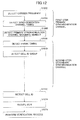
- the mobile station detects the correlation between a primary synchronization channel sequence and a received signal and thereby determines the carrier frequency and the timing of the primary synchronization channel (S1202, S1204). For example, the mobile station detects the correlation between a received multi-carrier signal and a synchronization signal replica including three different sequences, and thereby detects a primary synchronization channel sequence number (step S1206).
- the mobile station descrambles the secondary synchronization channel multiplied by the scrambling sequence.
- the mobile station detects a radio frame timing based on a cell-specific secondary synchronization channel sequence used for the secondary synchronization channel (S1208).
- a cell-specific secondary synchronization channel sequence used for the secondary synchronization channel S1208.
- plural (e.g., two) synchronization channels are arranged in each radio frame. Therefore, the frame timing is determined after the timings of the synchronization channels are determined.
- the mobile station also detects a cell ID group based on the cell-specific secondary synchronization channel sequence (S1210).
- the prior information may instead include a radio frame timing or the number of transmitting antennas.
- the base station may be configured to report the number of transmitting antennas via the secondary synchronization channel to the mobile station, and the mobile station may be configured to detect the number of transmitting antennas (the number of antennas in multiple input multiple output (MIMO)) in the second step. For example, the mobile station detects the number of transmitting antennas used by the base station to transmit a broadcast channel.
- MIMO multiple input multiple output
- the mobile station detects a cell ID based on the cell ID group detected in the second step and the primary synchronization channel sequence number detected in the first step (S1212).
- the mobile station After detecting the cell ID, the mobile station receives broadcast information such as a primary broadcast channel using a scrambling code associated with the cell ID (S1214).
- the mobile station performs a cyclic redundancy check (CRC) on the received broadcast channel to detect an error and determines whether the cell search has been successful based on the error detection result (S1216). If the cell search has been successful, the mobile station continues communications. If the cell search has failed, the mobile station may repeat the cell search process from the first step or the second step.
- CRC cyclic redundancy check
- this embodiment makes it possible to reduce occurrences of detection failures and false detections in a cell search.
- the mobile station 100 n of this embodiment is different from the mobile station 100 n described with reference to FIG. 11 in that the verification unit 114 does not receive the broadcast channel.
- the verification unit 114 of this embodiment determines whether the cell search has been successful based on correlation values input from the S-SCH detection unit 112. For example, the verification unit 114, based on correlation values of detected S-SCHs, obtains the ratio (evaluation value) of the highest correlation value to an average of correlation values other than the highest correlation value. If the evaluation value is greater than or equal to a predetermined threshold, the verification unit 114 determines that the cell search has been successful; and if the evaluation value is less than the threshold, the verification unit 114 determines that the cell search has failed.
- the threshold is determined based on a correlation value in a case where a cell ID group indicating a group of cell IDs matches plural secondary synchronization channel sequences determined based on radio frame timings and a correlation value in a case where the cell ID group does not match the secondary synchronization channel sequences. If the cell search has been successful, the mobile station continues communications. If the cell search has failed, the mobile station may repeat the cell search process from the first step or the second step.
- the verification unit 114 obtains, based on correlation values of detected S-SCHs, the ratio(s) (evaluation value(s)) of the highest correlation value to upper (or lower) correlation values, i.e., a certain number of correlation values from the top (or bottom) excluding the highest correlation value. If the evaluation value(s) is greater than or equal to a predetermined threshold, the verification unit 114 determines that the cell search has been successful; and if the evaluation value(s) is less than the threshold, the verification unit 114 determines that the cell search has failed. Also in this case, the range of S-SCHs to be verified is the same as described above.
- the verification unit 114 may be configured to obtain, based on correlation values of detected S-SCHs, the ratio (evaluation value) of the highest correlation value to an average of upper (lower) correlation values, i.e., an average of a certain number of correlation values from the top (or bottom) excluding the highest correlation value. If the evaluation value is greater than or equal to a predetermined threshold, the verification unit 114 determines that the cell search has been successful; and if the evaluation value is less than the threshold, the verification unit 114 determines that the cell search has failed. Also in this case, the range of S-SCHs to be verified is the same as described above.
- the verification unit 114 may be configured to obtain, based on correlation values of detected S-SCHs, the ratio(s) (evaluation value(s)) of the highest correlation value to correlation values other than upper (or lower) correlation values, i.e., correlation values other than a certain number of correlation values from the top (or bottom) and excluding the highest correlation value. If the evaluation value(s) is greater than or equal to a predetermined threshold, the verification unit 114 determines that the cell search has been successful; and if the evaluation value(s) is less than the threshold, the verification unit 114 determines that the cell search has failed. Also in this case, the range of S-SCHs to be verified is the same as described above.
- the verification unit 114 may be configured to obtain, based on correlation values of detected S-SCHs, the ratio (evaluation value) of the highest correlation value to an average of correlation values other than upper (or lower) correlation values, i.e., an average of correlation values other than a certain number of correlation values from the top (or bottom) and excluding the highest correlation value. If the evaluation value is greater than or equal to a predetermined threshold, the verification unit 114 determines that the cell search has been successful; and if the evaluation value is less than the threshold, the verification unit 114 determines that the cell search has failed. Also in this case, the range of S-SCHs to be verified is the same as described above.
- the verification unit 114 may be configured to obtain the ratio (evaluation value) of the highest correlation value to correlation values (or an average of the correlation values) that are selected based, for example, on neighboring cell information. If the evaluation value is greater than or equal to a predetermined threshold, the verification unit 114 determines that the cell search has been successful; and if the evaluation value is less than the threshold, the verification unit 114 determines that the cell search has failed.
- the cell search method and the verification method of this embodiment are different from those of FIG. 12 in that the reception of a broadcast channel (BCH) in step S1214 is not performed.
- BCH broadcast channel
- step S1216 of this embodiment whether the cell search has been successful is determined based on detection results of S-SCHs as described above. For example, the ratio (evaluation value) of the highest correlation value to an average of correlation values other than the highest correlation value is obtained. If the evaluation value is greater than or equal to a predetermined threshold, it is determined that the cell search has been successful; and if the evaluation value is less than the threshold, it is determined that the cell search has failed. If the cell search has been successful, communications are continued. If the cell search has failed, the cell search process is repeated from the first step or the second step.
- this embodiment makes it possible to reduce occurrences of detection failures and false detections in a cell search.
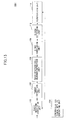
- a mobile station (user equipment) 100 n according to a third embodiment of the present invention is described with reference to FIG. 13 .
- the mobile station 100 n of this embodiment is different from the mobile station 100 n described with reference to FIG. 11 in the configuration of the verification unit 114.
- the verification unit 114 of the mobile station 100 n of this embodiment includes a reference signal (RS) error detection unit 116 and a reference signal (RS) replica generating unit 118.
- RS reference signal
- RS reference signal replica generating unit 118.
- a received reference signal is input to the RS error detection unit 116.
- the mobile station 100 n After detecting a cell ID, the mobile station 100 n receives the reference signal (pilot signal) based on the detected cell ID.
- the RS replica generating unit 118 generates a reference signal replica corresponding to the cell ID detected by the S-SCH detection unit 112. Here, it is assumed that signal patterns of the reference signal are associated with cell IDs.
- the RS error detection unit 116 obtains a cross-correlation between the input reference signal and the reference signal replica input from the RS replica generating unit 118, and determines whether the cell search has been successful based on the obtained cross-correlation. For example, the RS error detection unit 116 determines that the cell search has been successful if an error rate obtained from the cross-correlation is less than or equal to a predetermined threshold and determines that the cell search has failed if the error rate is greater than the threshold. If the cell search has been successful, the mobile station continues communications. If the cell search has failed, the mobile station may repeat the cell search process from the first step or the second step.
- the cell search method and the verification method of this embodiment are different from those of FIG. 12 in that the step of receiving a broadcast channel (S1214) is replaced with a step of detecting an error in a reference signal (S1414).
- the mobile station 100 n receives a reference signal (pilot signal) based on a cell ID detected in step S1412. Also, the mobile station 100 n generates a reference signal replica corresponding to the cell ID detected in step S1412.
- the mobile station 100 n obtains the cross-correlation between the received reference signal and the generated reference signal replica and thereby detects an error in the received reference signal (S1414).
- the mobile station 100 n determines whether the cell search has been successful based on the error detection result in step S1414 (S1416). For example, the mobile station 100 n determines that the cell search has been successful if an error rate obtained from the cross-correlation is less than or equal to a predetermined threshold and determines that the cell search has failed if the error rate is greater than the threshold.
- the mobile station continues communications. If the cell search has failed, the mobile station may repeat the cell search process from the first step or the second step.
- this embodiment makes it possible to reduce occurrences of detection failures and false detections in a cell search.
- a mobile station (user equipment) 100 n according to a fourth embodiment of the present invention is described with reference to FIG. 15 .
- the mobile station 100 n of this embodiment is different from the mobile station 100 n described with reference to FIG. 11 in that the verification unit 114 receives an output signal from the basis waveform correlation unit 102 instead of a broadcast channel.
- the verification unit 114 of this embodiment determines whether the cell search has been successful based on a correlation value input from the basic waveform correlation unit 102. For example, the verification unit 114 obtains, based on correlation detection results of three P-SCH sequences, the ratio(s) (evaluation value(s)) of the highest correlation value to correlation values other than the highest correlation value. If the evaluation value(s) is greater than or equal to a predetermined threshold, the verification unit 114 determines that the cell search has been successful; and if the evaluation value(s) is less than the threshold, the verification unit 114 determines that the cell search has failed. If the cell search has been successful, the mobile station continues communications. If the cell search has failed, the mobile station may repeat the cell search process from the first step or the second step.
- a mobile station 100 n according to a fifth embodiment of the present invention is described.
- the mobile station 100 n of this embodiment is different from the mobile station 100 n of the above embodiments in that the verification unit 114 receives a search condition signal.
- the search condition signal includes at least one of cell search information, base station operation information, cell search step information, number-of-cell-search-tries information, received SINR information, the maximum Doppler frequency, delay spread information, and neighboring cell list information.
- the cell search information includes information indicating an initial cell search or a neighboring cell search.
- the base station operation information includes information vindicating whether base stations are synchronized (inter-base-station synchronous system) or not synchronized (inter-base-station asynchronous system).
- the verification unit 114 starts a verification process based on the receive search condition signal.
- the verification unit 114 may be configured to select and perform one of the verification processes described above based on the received search condition signal. In this case, the verification unit 114 can perform at least two of the verification processes described above. Alternatively, the verification unit 114 may be configured to perform all of the verification processes described above.
- a radio communication system including a base station and a mobile station according to a sixth embodiment of the present invention is described.
- the configurations of the radio communication system, the base station, and the mobile station of this embodiment are substantially the same as those described with reference to FIGs. 3 , 6 , 7 , 11 , 13 , and 15 .
- the synchronization signal control unit 209 1 generates information indicating a scrambling sequence unique to a P-SCH sequence (P-SCH specific scrambling sequence) based on the P-SCH sequences number and inputs the information to the scrambling sequence generating unit 258. Based on the information indicating a scrambling sequence input from the synchronization signal control unit 209 1 , the scrambling sequence generating unit 258 generates the scrambling sequence and inputs the generated scrambling sequence to the multiplier 256. The multiplier 256 multiplies the S-SCH sequence by the P-SCH specific scrambling sequence and inputs the multiplied S-SCH sequence to the multiplexing unit 260.
- P-SCH sequence numbers and scrambling sequence numbers are explicitly associated with each other in advance.
- this embodiment is different from the first through fifth embodiments in that P-SCH sequence numbers and scrambling sequence numbers are explicitly associated with each other. Since different P-SCH sequences are selected for respective sectors, the S-SCH is multiplied by different scrambling sequences. When, for example, a cell includes three sectors, the P-SCH sequence for each of the sectors is selected from a set of three different sequences. Accordingly, the scrambling sequence used to multiply the S-SCH sequence is selected from a set of three different scrambling sequences.
- the timing detection unit 106 of the mobile station 100 detects a P-SCH timing and a P-SCH sequence number based on a correlation value obtained by the basic waveform correlation unit 102. After the P-SCH sequence number is detected, the S-SCH sequence multiplied by the P-SCH specific scrambling sequence is descrambled. Then, the S-SCH detection unit 112 detects an S-SCH based on the detected P-SCH timing and using the P-SCH as a reference signal.
- a primary synchronization channel sequence number is detected in step S1206 or S1406 described above. Based on the primary synchronization channel sequence number, the P-SCH specific scrambling sequence used to multiply the S-SCH is determined. Then, the S-SCH multiplied by the P-SCH specific scrambling sequence is descrambled. After that, step S1203 or S1408 is performed.
- this method makes it possible to randomize the interference from the neighboring cell and thereby to improve the detection accuracy of the S-SCH. This in turn makes it possible to reduce the time necessary for a cell search and to improve the time characteristic of the cell search.
- the above method makes it possible to perform channel estimation taking into account the channel conditions of each cell and thereby to improve the accuracy of channel estimation. Improved accuracy in channel estimation, in turn, makes it possible to improve the detection accuracy of the S-SCH.
- the S-SCH sequence is multiplied by a P-SCH specific scrambling sequence.
- the correspondence between P-SCH sequences and scrambling sequences is predefined and known to the mobile station.
- the mobile station detects a P-SCH sequence number in addition to an SCH symbol timing. Since the P-SCH sequence number is associated one-to-one with a scrambling sequence (number) used to multiply the S-SCH, compared with the first embodiment, the mobile station can more quickly determine the scrambling sequence number based on the detected P-SCH sequence number.
- this embodiment eliminates the need to detect multiple (e.g., three) scrambling sequence numbers used for the S-SCH. In other words, this embodiment makes it possible to use three scrambling sequences for S-SCHs without increasing the computational load in detecting an S-SCH sequence.
- this embodiment makes it possible to use 510 scrambling sequences for primary broadcast channels (P-BCH) without increasing the computational load in detecting a P-BCH.
- P-SCH primary broadcast channels
- the above advantages of this embodiment are described with reference to FIG. 16 .
- the P-SCH is associated with one of three scrambling sequences (P-SCH specific scrambling sequences) and is not scrambled.
- the S-SCH is scrambled, for example, by one of three P-SCH specific scrambling sequences (or codes).
- the P-BCH is scrambled, for example, by one of 510 cell-specific scrambling sequences (or codes).
- the S-SCH sequence includes orthogonal sequences, for example, two short codes, and is used to report one of 170 cell ID groups.
- this method makes it possible to perform channel estimation taking into account the channel, conditions of each cell and thereby to improve the accuracy of channel estimation. Also, improved accuracy in channel estimation makes it possible to improve the accuracy in demodulating the P-BCH.
- FIG. 17 is a drawing used to explain the differences between the related art, the first through sixth embodiments, and a seventh embodiment described below.
- primary synchronization channels (P-SCH) P 1 , P 2 , and P 3 are transmitted from corresponding sectors 1, 2, and 3.
- P-SCHs are transmitted from the sectors to enable the user equipment to identify the serving sector and to obtain a channel estimate in the serving sector.
- the embodiments of the present invention are substantially the same as the related art.
- the information representing the secondary synchronization channel SE i is multiplied by a scrambling code SC i that differs from sector to sector.
- SC i a scrambling code that differs from sector to sector.
- different primary synchronization channels P i and different scrambling codes SC i are provided for the respective sectors, and the correspondence between the primary synchronization channels P i and the scrambling codes SC i are predefined and known to the user equipment. This configuration allows the user equipment to quickly demodulate the S-SCH after detecting the P-SCH.
- the present invention it is necessary to prepare some codes (SE i ) that are multiplied by scrambling codes. However, it is not essential for the present invention to use two types of codes (SC i and SE i ) .
- different generating polynomials Q 1 (X), Q 2 (X), and Q 3 (X) are associated with primary synchronization channels P 1 , P 2 , and P 3 assigned to different sectors.
- the generating polynomial Q i (X) for example, generates a code (or a sequence) like X 5 +X 2 +1.
- the generating polynomial Q i (X) may be designed to generate any appropriate sequence.
- the generating polynomial Q i (X) is preferably designed to generate a linear feedback shift register (LFSR) sequence, and more preferably defined to generate an M sequence.
- LFSR linear feedback shift register
- the generating polynomial Q 1 (X) corresponding to the primary synchronization channel P 1 of sector 1 generates an M sequence with a code length of 31.
- the S-SCH of sector 1 is generated by combining multiple sets of one of 31 codes that can be generated by the generating polynomial Q 1 (X).
- the S-SCH of sector 2 is generated by combining multiple sets of one of 31 codes that can be generated by the generating polynomial Q 2 (X); and the S-SCH of sector 3 is generated by combining multiple sets of one of 31 codes that can be generated by the generating polynomial Q 3 (X).
- the user equipment identifies the serving sector by detecting the P-SCH and identifies the generating polynomial (e.g., Q 1 (X)) used in the serving sector based on a correspondence as shown in the lower right of FIG. 17 . Then, the user equipment compares a received signal with 31 codes that can be generated by the generating polynomial Q 1 (X) and thereby determines one of the 31 codes used for the S-SCH.
- P-SCHs (P i ) correspond one-to-one to generating polynomials (Q i (X))
- the user equipment does not have to consider codes generated by generating polynomials used in sectors other than the identified serving sector. In other words, the user equipment has to consider only the codes that can be generated by a generating polynomial corresponding to the detected P-SCH.
- only one generating polynomial is associated with each sector. However, a combination of generating polynomials may be associated with each sector.
- FIG. 18 is a partial block diagram of a base station according to the seventh embodiment.
- a synchronization signal control unit 209 1 and a synchronization signal generator 209 2 of this embodiment are shown in FIG. 18 .
- the synchronization signal generator 209 2 shown in FIG. 18 does not include the scrambling sequence generating unit 258 and the multiplier 256 because no scrambling code is used in the seventh embodiment.
- the S-SCH generating unit 254 may be configured to multiply the S-SCH by the scrambling code.
- the S-SCH generating unit 254 may be configured to multiply the second short code by a scrambling code associated with the sequence number of the first short code (see, for example, 3GPP, R1-072661, Scrambling Method for Two S-SCH Short Code).
- the correspondence between P-SCHs and generating polynomials Q i (X) is managed by the synchronization signal control unit 209 1 .
- the S-SCH generating unit 254 generates a secondary synchronization channel (S-SCH) according to a request from the synchronization signal control unit 209 1 and inputs the generated S-SCH to the multiplexing unit 260.
- S-SCH secondary synchronization channel
- the S-SCH generating unit 254 generates an S-SCH using a generating polynomial Q i (X) specified by the synchronization signal control unit 209 1 and inputs the generated S-SCH to the multiplexing unit 260. Then, a synchronization channel including the S-SCH is sent to the data modulation unit 209 3 and is transmitted as a radio signal after going through the processing described above.
- Evolved UTRA and UTRAN also called Long Term Evolution or Super 3G
- a mobile station, a base station, and a synchronization channel transmission method according to the present invention may also be applied to any system employing orthogonal frequency division multiplexing (OFDM) for downlink.
- OFDM orthogonal frequency division multiplexing
Landscapes
- Engineering & Computer Science (AREA)
- Computer Networks & Wireless Communication (AREA)
- Signal Processing (AREA)
- Databases & Information Systems (AREA)
- Computer Security & Cryptography (AREA)
- Mobile Radio Communication Systems (AREA)
Applications Claiming Priority (2)
| Application Number | Priority Date | Filing Date | Title |
|---|---|---|---|
| JP2007258106A JP5106970B2 (ja) | 2007-10-01 | 2007-10-01 | ユーザ装置及びベリフィケーション方法 |
| PCT/JP2008/067510 WO2009044683A1 (fr) | 2007-10-01 | 2008-09-26 | Dispositif utilisateur et procédé de vérification |
Publications (2)
| Publication Number | Publication Date |
|---|---|
| EP2187553A1 true EP2187553A1 (fr) | 2010-05-19 |
| EP2187553A4 EP2187553A4 (fr) | 2010-09-22 |
Family
ID=40526112
Family Applications (1)
| Application Number | Title | Priority Date | Filing Date |
|---|---|---|---|
| EP08836565A Ceased EP2187553A4 (fr) | 2007-10-01 | 2008-09-26 | Dispositif utilisateur et procédé de vérification |
Country Status (6)
| Country | Link |
|---|---|
| US (1) | US20100291925A1 (fr) |
| EP (1) | EP2187553A4 (fr) |
| JP (1) | JP5106970B2 (fr) |
| KR (1) | KR20100083789A (fr) |
| CN (1) | CN101878608A (fr) |
| WO (1) | WO2009044683A1 (fr) |
Cited By (5)
| Publication number | Priority date | Publication date | Assignee | Title |
|---|---|---|---|---|
| WO2013137806A1 (fr) * | 2012-03-15 | 2013-09-19 | Telefonaktiebolaget L M Ericsson (Publ) | Vérification dans un système de communication sans fil |
| EP2684306A4 (fr) * | 2011-03-10 | 2015-01-07 | Ericsson Telefon Ab L M | Procédure de recherche de cellules pour réseaux hétérogènes |
| CN105103470A (zh) * | 2013-02-22 | 2015-11-25 | 三星电子株式会社 | 用于设备到设备通信的网络协助的多小区设备发现协议 |
| US9936373B2 (en) | 2013-09-25 | 2018-04-03 | Zte Wistron Telecom Ab | Discovery signals in heterogeneous wireless networks |
| US10499258B2 (en) | 2013-05-08 | 2019-12-03 | Zte Wistron Telecom Ab | Using a geometry indicator in HetNet deployments |
Families Citing this family (22)
| Publication number | Priority date | Publication date | Assignee | Title |
|---|---|---|---|---|
| US20100111217A1 (en) * | 2002-12-30 | 2010-05-06 | Fuente Vicente D | Method and system for reducing phase difference and doppler effects in detection and communication systems |
| KR101365561B1 (ko) * | 2006-10-02 | 2014-02-21 | 엘지전자 주식회사 | 효율적인 동기 채널 전송 방법 및 이를 위한 전송 전력할당 방법 |
| JP5459946B2 (ja) * | 2007-09-28 | 2014-04-02 | 株式会社日立製作所 | 車両用直流電源装置 |
| JP5348013B2 (ja) * | 2009-05-26 | 2013-11-20 | ソニー株式会社 | 無線通信装置、推定サーバ、無線通信方法および推定方法 |
| CN101938813B (zh) * | 2009-06-30 | 2013-02-27 | 中兴通讯股份有限公司 | 联合辅同步信号检测与帧定时同步的方法 |
| US8619673B2 (en) * | 2009-07-08 | 2013-12-31 | Mediatek Inc. | Preamble partition and cell identification procedure in wireless communication systems |
| US8265028B2 (en) * | 2009-08-13 | 2012-09-11 | Alcatel Lucent | Distributed allocation of physical cell identifiers |
| US20120207076A1 (en) * | 2009-10-13 | 2012-08-16 | Pantech Co., Ltd. | Method for transmission of cell-specific information of base station in coordinated multi-point transmission/reception system |
| JP5845340B2 (ja) | 2011-05-20 | 2016-01-20 | アップル インコーポレイテッド | ハイブリッドネットワーク動作における優先度に基づくタスクスケジューリングのための装置及び方法 |
| EP2710849A1 (fr) * | 2011-05-20 | 2014-03-26 | Apple Inc. | Appareil et procédés permettant d'optimiser des opérations planifiées dans des environnements de réseau hybrides |
| WO2012166100A1 (fr) * | 2011-05-27 | 2012-12-06 | Halliburton Energy Services, Inc. | Applications de communication en fond de trou |
| US9778389B2 (en) | 2011-05-27 | 2017-10-03 | Halliburton Energy Services, Inc. | Communication applications |
| US9066257B2 (en) * | 2012-04-12 | 2015-06-23 | Intel Mobile Communications GmbH | Correlation based cell search and measurement for LTE and LTE-A |
| US11496948B2 (en) | 2012-10-19 | 2022-11-08 | Samsung Electronics Co., Ltd. | System and method for ad-hoc/network assisted device discovery protocol for device to device communications |
| EP2954650A1 (fr) * | 2013-02-05 | 2015-12-16 | Interdigital Patent Holdings, Inc. | Multiplexage à répartition en fréquence orthogonale à forme d'impulsion |
| GB2577819B (en) * | 2013-07-22 | 2020-11-04 | Zte Wistron Telecom Ab | Cell synchronization and synchronization cell indication |
| JP6502473B2 (ja) * | 2014-08-11 | 2019-04-17 | エルジー エレクトロニクス インコーポレイティド | 無線通信システムにおける同期信号送信方法。 |
| US9967807B2 (en) * | 2014-12-11 | 2018-05-08 | Intel IP Corporation | Method of processing received digitized signals and mobile radio communication terminal device |
| KR20170020001A (ko) * | 2015-08-13 | 2017-02-22 | 삼성전자주식회사 | 통신 시스템에서 신호 송수신 장치 및 방법 |
| US10973078B2 (en) * | 2015-09-25 | 2021-04-06 | Apple Inc. | Supporting semi-persistent scheduling for varied transmission time intervals |
| JP6556950B2 (ja) | 2015-10-30 | 2019-08-07 | 華為技術有限公司Huawei Technologies Co.,Ltd. | 信号送信装置、信号受信装置、シンボルタイミング同期方法、及びシステム |
| KR102416552B1 (ko) * | 2017-09-29 | 2022-07-04 | 주식회사 케이엠더블유 | 시분할 이중화 방식을 사용하는 분산 안테나 시스템의 tdd 서브-시스템 |
Family Cites Families (14)
| Publication number | Priority date | Publication date | Assignee | Title |
|---|---|---|---|---|
| JP2002223179A (ja) * | 2001-01-25 | 2002-08-09 | Matsushita Electric Ind Co Ltd | 通信端末装置および同期捕捉方法 |
| US7826493B2 (en) * | 2001-08-27 | 2010-11-02 | Broadcom Corp. | Frequency offset correction circuit for WCDMA |
| US7817596B2 (en) * | 2001-09-06 | 2010-10-19 | Qualcomm Incorporated | Verification methods and apparatus for improving acquisition searches of asynchronous cells |
| WO2003032509A1 (fr) * | 2001-10-10 | 2003-04-17 | Samsung Electronics Co., Ltd | Technique de recherche de cellule en cas de mode de reception discontinue dans un systeme de communication mobile |
| JP3814519B2 (ja) * | 2001-11-14 | 2006-08-30 | 松下電器産業株式会社 | Cdma同期判定装置 |
| US7110376B2 (en) * | 2002-04-10 | 2006-09-19 | Telefonaktiebolaget Lm Ericsson (Publ) | Method and apparatus for improved cell detection |
| JP4914352B2 (ja) * | 2005-03-30 | 2012-04-11 | パナソニック株式会社 | 通信端末装置及び基地局装置 |
| JP4684071B2 (ja) * | 2005-05-20 | 2011-05-18 | 株式会社エヌ・ティ・ティ・ドコモ | セルサーチ制御方法および該方法を用いた移動機 |
| JP2007019799A (ja) * | 2005-07-07 | 2007-01-25 | Matsushita Electric Ind Co Ltd | 基地局装置、移動局装置およびフレーム送信方法 |
| TWI462510B (zh) * | 2005-12-21 | 2014-11-21 | Interdigital Tech Corp | 基於ofdma演進utra下鏈同步頻道 |
| EP1983652B1 (fr) * | 2006-01-11 | 2014-11-19 | NEC Corporation | Dispositif de reception cdma et son procede de detection sfn |
| KR100827064B1 (ko) * | 2006-01-18 | 2008-05-02 | 삼성전자주식회사 | Ofdm 기반 셀룰러 무선통신시스템의 동기 신호 송신 방법 및 장치 |
| JP2007258106A (ja) | 2006-03-24 | 2007-10-04 | Fdk Corp | 放電管点灯用インバータ回路 |
| JP5106969B2 (ja) * | 2007-10-01 | 2012-12-26 | 株式会社エヌ・ティ・ティ・ドコモ | ユーザ装置及びセルサーチ方法 |
-
2007
- 2007-10-01 JP JP2007258106A patent/JP5106970B2/ja active Active
-
2008
- 2008-09-26 WO PCT/JP2008/067510 patent/WO2009044683A1/fr not_active Ceased
- 2008-09-26 US US12/680,707 patent/US20100291925A1/en not_active Abandoned
- 2008-09-26 CN CN2008801182813A patent/CN101878608A/zh active Pending
- 2008-09-26 KR KR20107008208A patent/KR20100083789A/ko not_active Withdrawn
- 2008-09-26 EP EP08836565A patent/EP2187553A4/fr not_active Ceased
Cited By (8)
| Publication number | Priority date | Publication date | Assignee | Title |
|---|---|---|---|---|
| EP2684306A4 (fr) * | 2011-03-10 | 2015-01-07 | Ericsson Telefon Ab L M | Procédure de recherche de cellules pour réseaux hétérogènes |
| WO2013137806A1 (fr) * | 2012-03-15 | 2013-09-19 | Telefonaktiebolaget L M Ericsson (Publ) | Vérification dans un système de communication sans fil |
| US9924389B2 (en) | 2012-03-15 | 2018-03-20 | Telefonaktiebolaget Lm Ericsson (Publ) | Verification in a wireless communication system |
| CN105103470A (zh) * | 2013-02-22 | 2015-11-25 | 三星电子株式会社 | 用于设备到设备通信的网络协助的多小区设备发现协议 |
| US9955408B2 (en) | 2013-02-22 | 2018-04-24 | Samsung Electronics Co., Ltd. | Network-assisted multi-cell device discovery protocol for device-to-device communications |
| CN105103470B (zh) * | 2013-02-22 | 2019-10-22 | 三星电子株式会社 | 用于设备到设备通信的多小区设备发现的方法和装置 |
| US10499258B2 (en) | 2013-05-08 | 2019-12-03 | Zte Wistron Telecom Ab | Using a geometry indicator in HetNet deployments |
| US9936373B2 (en) | 2013-09-25 | 2018-04-03 | Zte Wistron Telecom Ab | Discovery signals in heterogeneous wireless networks |
Also Published As
| Publication number | Publication date |
|---|---|
| JP5106970B2 (ja) | 2012-12-26 |
| WO2009044683A1 (fr) | 2009-04-09 |
| KR20100083789A (ko) | 2010-07-22 |
| EP2187553A4 (fr) | 2010-09-22 |
| JP2009089186A (ja) | 2009-04-23 |
| US20100291925A1 (en) | 2010-11-18 |
| CN101878608A (zh) | 2010-11-03 |
Similar Documents
| Publication | Publication Date | Title |
|---|---|---|
| US8184573B2 (en) | Base station, mobile station, and synchronization channel transmission method | |
| US20100291925A1 (en) | User equipment and verification method | |
| US8149686B2 (en) | Base station apparatus, mobile station apparatus and synchronization channel transmission method | |
| US8027244B2 (en) | Base station apparatus, mobile station apparatus, and method of transmitting synchronization channels | |
| US8488528B2 (en) | User equipment and cell search method | |
| US8400975B2 (en) | User apparatus and cell search method | |
| US8526555B2 (en) | User apparatus and cell search method | |
| JP5150754B2 (ja) | 基地局装置及び同期チャネル送信方法 | |
| JP5161191B2 (ja) | ユーザ装置及び受信方法 |
Legal Events
| Date | Code | Title | Description |
|---|---|---|---|
| PUAI | Public reference made under article 153(3) epc to a published international application that has entered the european phase |
Free format text: ORIGINAL CODE: 0009012 |
|
| 17P | Request for examination filed |
Effective date: 20100330 |
|
| AK | Designated contracting states |
Kind code of ref document: A1 Designated state(s): AT BE BG CH CY CZ DE DK EE ES FI FR GB GR HR HU IE IS IT LI LT LU LV MC MT NL NO PL PT RO SE SI SK TR |
|
| AX | Request for extension of the european patent |
Extension state: AL BA MK RS |
|
| A4 | Supplementary search report drawn up and despatched |
Effective date: 20100825 |
|
| DAX | Request for extension of the european patent (deleted) | ||
| 17Q | First examination report despatched |
Effective date: 20120816 |
|
| REG | Reference to a national code |
Ref country code: DE Ref legal event code: R003 |
|
| STAA | Information on the status of an ep patent application or granted ep patent |
Free format text: STATUS: THE APPLICATION HAS BEEN REFUSED |
|
| 18R | Application refused |
Effective date: 20140425 |