EP2187645A2 - Procédé et appareil permettant le codage et de décodage au moyen de la précision binaire - Google Patents
Procédé et appareil permettant le codage et de décodage au moyen de la précision binaire Download PDFInfo
- Publication number
- EP2187645A2 EP2187645A2 EP10152392A EP10152392A EP2187645A2 EP 2187645 A2 EP2187645 A2 EP 2187645A2 EP 10152392 A EP10152392 A EP 10152392A EP 10152392 A EP10152392 A EP 10152392A EP 2187645 A2 EP2187645 A2 EP 2187645A2
- Authority
- EP
- European Patent Office
- Prior art keywords
- bit
- bit precision
- precision
- adaptive
- adaptive bit
- Prior art date
- Legal status (The legal status is an assumption and is not a legal conclusion. Google has not performed a legal analysis and makes no representation as to the accuracy of the status listed.)
- Pending
Links
- 238000000034 method Methods 0.000 title claims abstract description 57
- 230000003044 adaptive effect Effects 0.000 claims description 188
- 239000000284 extract Substances 0.000 claims description 38
- 230000006835 compression Effects 0.000 abstract description 22
- 238000007906 compression Methods 0.000 abstract description 22
- 238000010586 diagram Methods 0.000 description 4
- KFYRPLNVJVHZGT-UHFFFAOYSA-N Amitriptyline hydrochloride Chemical compound Cl.C1CC2=CC=CC=C2C(=CCCN(C)C)C2=CC=CC=C21 KFYRPLNVJVHZGT-UHFFFAOYSA-N 0.000 description 2
- 238000005516 engineering process Methods 0.000 description 2
- 230000014509 gene expression Effects 0.000 description 2
- 238000007792 addition Methods 0.000 description 1
- 230000005540 biological transmission Effects 0.000 description 1
- 238000012986 modification Methods 0.000 description 1
- 230000004048 modification Effects 0.000 description 1
Images





Classifications
-
- H—ELECTRICITY
- H04—ELECTRIC COMMUNICATION TECHNIQUE
- H04N—PICTORIAL COMMUNICATION, e.g. TELEVISION
- H04N19/00—Methods or arrangements for coding, decoding, compressing or decompressing digital video signals
- H04N19/50—Methods or arrangements for coding, decoding, compressing or decompressing digital video signals using predictive coding
- H04N19/503—Methods or arrangements for coding, decoding, compressing or decompressing digital video signals using predictive coding involving temporal prediction
- H04N19/51—Motion estimation or motion compensation
- H04N19/513—Processing of motion vectors
- H04N19/517—Processing of motion vectors by encoding
-
- H—ELECTRICITY
- H04—ELECTRIC COMMUNICATION TECHNIQUE
- H04N—PICTORIAL COMMUNICATION, e.g. TELEVISION
- H04N19/00—Methods or arrangements for coding, decoding, compressing or decompressing digital video signals
- H04N19/10—Methods or arrangements for coding, decoding, compressing or decompressing digital video signals using adaptive coding
- H04N19/102—Methods or arrangements for coding, decoding, compressing or decompressing digital video signals using adaptive coding characterised by the element, parameter or selection affected or controlled by the adaptive coding
-
- H—ELECTRICITY
- H04—ELECTRIC COMMUNICATION TECHNIQUE
- H04N—PICTORIAL COMMUNICATION, e.g. TELEVISION
- H04N19/00—Methods or arrangements for coding, decoding, compressing or decompressing digital video signals
- H04N19/10—Methods or arrangements for coding, decoding, compressing or decompressing digital video signals using adaptive coding
- H04N19/102—Methods or arrangements for coding, decoding, compressing or decompressing digital video signals using adaptive coding characterised by the element, parameter or selection affected or controlled by the adaptive coding
- H04N19/13—Adaptive entropy coding, e.g. adaptive variable length coding [AVLC] or context adaptive binary arithmetic coding [CABAC]
-
- H—ELECTRICITY
- H04—ELECTRIC COMMUNICATION TECHNIQUE
- H04N—PICTORIAL COMMUNICATION, e.g. TELEVISION
- H04N19/00—Methods or arrangements for coding, decoding, compressing or decompressing digital video signals
- H04N19/10—Methods or arrangements for coding, decoding, compressing or decompressing digital video signals using adaptive coding
- H04N19/169—Methods or arrangements for coding, decoding, compressing or decompressing digital video signals using adaptive coding characterised by the coding unit, i.e. the structural portion or semantic portion of the video signal being the object or the subject of the adaptive coding
- H04N19/17—Methods or arrangements for coding, decoding, compressing or decompressing digital video signals using adaptive coding characterised by the coding unit, i.e. the structural portion or semantic portion of the video signal being the object or the subject of the adaptive coding the unit being an image region, e.g. an object
- H04N19/176—Methods or arrangements for coding, decoding, compressing or decompressing digital video signals using adaptive coding characterised by the coding unit, i.e. the structural portion or semantic portion of the video signal being the object or the subject of the adaptive coding the unit being an image region, e.g. an object the region being a block, e.g. a macroblock
-
- H—ELECTRICITY
- H04—ELECTRIC COMMUNICATION TECHNIQUE
- H04N—PICTORIAL COMMUNICATION, e.g. TELEVISION
- H04N19/00—Methods or arrangements for coding, decoding, compressing or decompressing digital video signals
- H04N19/10—Methods or arrangements for coding, decoding, compressing or decompressing digital video signals using adaptive coding
- H04N19/169—Methods or arrangements for coding, decoding, compressing or decompressing digital video signals using adaptive coding characterised by the coding unit, i.e. the structural portion or semantic portion of the video signal being the object or the subject of the adaptive coding
- H04N19/182—Methods or arrangements for coding, decoding, compressing or decompressing digital video signals using adaptive coding characterised by the coding unit, i.e. the structural portion or semantic portion of the video signal being the object or the subject of the adaptive coding the unit being a pixel
-
- H—ELECTRICITY
- H04—ELECTRIC COMMUNICATION TECHNIQUE
- H04N—PICTORIAL COMMUNICATION, e.g. TELEVISION
- H04N19/00—Methods or arrangements for coding, decoding, compressing or decompressing digital video signals
- H04N19/10—Methods or arrangements for coding, decoding, compressing or decompressing digital video signals using adaptive coding
- H04N19/169—Methods or arrangements for coding, decoding, compressing or decompressing digital video signals using adaptive coding characterised by the coding unit, i.e. the structural portion or semantic portion of the video signal being the object or the subject of the adaptive coding
- H04N19/184—Methods or arrangements for coding, decoding, compressing or decompressing digital video signals using adaptive coding characterised by the coding unit, i.e. the structural portion or semantic portion of the video signal being the object or the subject of the adaptive coding the unit being bits, e.g. of the compressed video stream
-
- H—ELECTRICITY
- H04—ELECTRIC COMMUNICATION TECHNIQUE
- H04N—PICTORIAL COMMUNICATION, e.g. TELEVISION
- H04N19/00—Methods or arrangements for coding, decoding, compressing or decompressing digital video signals
- H04N19/20—Methods or arrangements for coding, decoding, compressing or decompressing digital video signals using video object coding
-
- H—ELECTRICITY
- H04—ELECTRIC COMMUNICATION TECHNIQUE
- H04N—PICTORIAL COMMUNICATION, e.g. TELEVISION
- H04N19/00—Methods or arrangements for coding, decoding, compressing or decompressing digital video signals
- H04N19/46—Embedding additional information in the video signal during the compression process
-
- H—ELECTRICITY
- H04—ELECTRIC COMMUNICATION TECHNIQUE
- H04N—PICTORIAL COMMUNICATION, e.g. TELEVISION
- H04N19/00—Methods or arrangements for coding, decoding, compressing or decompressing digital video signals
- H04N19/60—Methods or arrangements for coding, decoding, compressing or decompressing digital video signals using transform coding
- H04N19/61—Methods or arrangements for coding, decoding, compressing or decompressing digital video signals using transform coding in combination with predictive coding
Definitions
- the present invention relates to an apparatus for coding and decoding (hereinafter, referred to as coding/decoding), more specifically to a coding/decoding method and apparatus for improving compression efficiency of video data.
- a video is compressed by undergoing an entropy coding, which transforms a bit string indicating a symbol of data to another form.
- the entropy coding is classified into a Huffman coding and an arithmetic coding.
- the Huffman coding is popularly used in many video compression codecs because of its efficient compression and proper decoding complexity.
- the arithmetic coding has relatively high compression efficiency. Accordingly, the arithmetic coding is used in the fields which require the high compression efficiency.
- An entropy coding method using a bit precision has been recently suggested to lower the decoding complexity.
- the entropy coding method has low compression efficiency because of additionally inserting one bit precision into a bitstream per VOP or macroblock.
- the present invention provides a coding/decoding method and apparatus using a bit precision that can improve compression efficiency by selecting an adequate predictor without a generated additional bit.
- the present invention also provides a coding/decoding method and apparatus using a bit precision that can lower a decoding complexity and shorten a decoding time by using the bit precision.
- the present invention provides a coding/decoding method and apparatus using a bit precision that can encode/decode video data by using an prediction bit precision computed based on an adjacent macroblock, to thereby improve compression efficiency.
- the present invention provides a coding/decoding method and apparatus using a bit precision that can encode/decode video data by using a bit precision corresponding to symbols of an adjacent macroblock, to thereby improve compression efficiency and lower decoding complexity.
- the present invention provides a coding/decoding method and apparatus using a bit precision that can encode/decode video data by using a bit precision selected by a plurality of methods, to thereby improve compression efficiency.
- the present invention provides a coding/decoding method and apparatus using a bit precision that can encode/decode video data by differently computing a bit precision per each field, to thereby improve compression efficiency.
- An aspect of the present invention features an apparatus capable of encoding video data by using a bit precision.
- an encoding apparatus can include an adaptive bit precision computing unit, configured to compute an adaptive bit precision and an adaptive bit string per symbol; a bit precision computing unit, configured to compute a bit precision per predetermined field; and an encoding unit, configured to encode an input datum by using any one of the adaptive bit precision and the bit precision according to a type of a target field.
- Another aspect of the present invention features an apparatus capable of decoding video data by using a bit precision.
- an encoding apparatus can include an adaptive bit precision computing unit, configured to compute an adaptive bit precision and an adaptive bit string of a symbol; and an encoding unit, configured to compute a bit precision per field and to insert the adaptive bit string and any one of the bit precision and the adaptive bit precision, according to whether the bit precision is identical to the adaptive bit precision, into a bitstream.
- the encoding unit can further insert a bit indicating whether the adaptive bit precision is identical to the adaptive bit string into the bitstream.
- the present invention can select an adequate predictor without a generated additional bit to improve compression efficiency by providing a coding/decoding method and device using a bit precision
- the present invention can also lower a decoding complexity and shorten a decoding time by using the bit precision.
- the present invention can encode/decode video data by using a prediction bit precision computed based on an adjacent macroblock, to thereby improve compression efficiency.
- the present invention can encode/decode video data by using a bit precision corresponding to symbols of an adjacent macroblock, to thereby improve compression efficiency and lower decoding complexity.
- the present invention can encode/decode video data by using a bit precision selected by a plurality of methods, to thereby improve compression efficiency.
- the present invention can encode/decode video data by differently computing a bit precision per each field, to thereby improve compression efficiency.
- the encoding method in accordance with an embodiment of the present invention determines a bit precision for each symbol of input data.
- the symbol refers to a word unit, which forms the input data.
- the bit precision indicates a length of a unit bitstream for encoding each symbol by using a bit or a binary code. For example, if the bit precision is n, an inputted symbol is represented and encoded in the binary code by using the unit bitstreams in the quantities of n.
- the inputted symbols are ⁇ 2, 1, 0, 4, 5 3 ⁇ and the bit-precision value is 2.
- Values 0 through 3 can be represented by using two bits. If the symbol value is larger than 3, it is impossible to represent the symbol value by using 2 bits. Accordingly, the symbol value that is larger than 3 is represented by additionally assigning two bits.
- the symbol values "2", “1", and ⁇ 0' are binarized as “10,” “01” and “00.”
- the symbol value "4" is larger than "3" that is the maximum value capable of being represented by using 2 bits, it is impossible that the symbol value "4" is represented by using 2 bits only.
- the symbol value "4" is represented by allowing the "3” that is the maximum value capable of being represented by using 2 bits to be represented as “11” and the remainder, "1.” to be represented as "01” by using another 2 bits.
- the symbol “4" is represented as "1101” by adding another 2 bits to the first 2 bits.
- the symbol value "5" is represented as "1110” by using the maximum value "3” with 2 bits and the remainder "2'' with another 2 bits.
- the symbol value "3” is represented by additionally using another 2 bits for the remainder "0” as "1100” in order to distinguish what is represented for 3 and more from what is represented for 3.
- bit-precision Value 1 Bit Bit-precision Value 2 Bit Bit-precision Value 3 Bit Bit-precision Value 4 Bit Bit-precision Value 5 Bit 0 0 00 000 0000 00000 1 01 01 001 0001 00001 2 001 10 010 0010 00010 3 0001 1100 011 0011 00011 4 00001 1101 100 0100 00100 5 000001 1110 101 0101 00101 6 0000001 111100 110 0110 00110 7 00000001 111101 111000 0111 00111 8 000000001 111110 111001 1000 01000 9 0000000001 11111100 111010 1001 01001
- encoding strings of symbols corresponding to bit precision values are different from each other. Accordingly, it is required to determine which bit precision of various types of bit precisions is used to encode input data before the encoding operation is performed. An encoding compression rate of the input data is also varied depending on the determined bit precision.
- the symbols to be encoded are encoded by using all bit precisions. Then, the bit precision having the best compression rate is finally selected for the bit precision to be encoded.
- bit precision 3 is finally selected as the bit precision of the pertinent macroblock.
- an additional bit precision (hereinafter, referred to as an "adaptive bit precision”) can be computed corresponding to each symbol in addition to the bit precision.
- the adaptive bit precision refers to the length of a unit bit string for encoding each symbol.
- the adaptive bit precision will be briefly described for the convenience of understanding and description.
- Each symbol can be represented in the adaptive bit precision and an adaptive bit string before being inserted into the bitstream.
- the below table 2 shows the adaptive bit precision and the adaptive bit string of each symbol.
- [Table 2] Symbol Adaptive bit precision Adaptive bit string 0 0 - 1 1 - 2 2 - 3 3 00 4 3 01 5 3 10 6 3 11 7 4 000 8 4 001
- the length of each adaptive bit string is determined as a value obtained by subtracting "1" from the adaptive bit precision. For example, if the adaptive bit precision is "3," the length of the pertinent adaptive bit string as "2" (i.e. 2 bits). At this time, if the adaptive bit precision has the values of 0 through 2, the symbol is represented in the adaptive bit precision only without the adaptive bit string. Since the length of each adaptive bit string is a value obtained by subtracting "1" from the adaptive bit precision, the adaptive bit strings can represent the symbols in the quantities of the n th power of 2. Here, n is obtained by subtracting "1" from the adaptive bit precision. For example, the adaptive bit precision, 3, can represent 4 symbols, and the adaptive bit precision, 4, can represent 8 symbols.
- FIG. 1 is a block diagram showing an encoding apparatus using a bit precision in accordance with an embodiment of the present invention.
- the encoding apparatus 100 using a bit precision includes an input unit 110, an adaptive bit precision computing unit 120, a bit precision extracting unit 130 and an encoding unit 140.
- the input unit 110 receives input data from the outside and extracts and outputs symbols to be encoded. At this time, the input unit 110 can output the extracted symbols along with distinguishment information that distinguishes the symbols in units of VOP and macroblock (i.e. block having a predetermined size.
- the input unit 110 also extracts field information from the input data to output the extracted field information.
- the field information indicates the kind (i.e. type) of fields of the input data.
- the input unit 110 outputs the field information, the distinguishment information and the symbol to the bit precision extracting unit 130 and the encoding unit 140.
- the input data can include at least one of a macroblock type & coded block pattern for chrominance (mcbpc) field, a coded block pattern for luminance (cbpy) field, motion vector (mv-x and mv-y) fields and DCT (DCT-luma and DCT-chroma) fields.
- mcbpc macroblock type & coded block pattern for chrominance
- cbpy coded block pattern for luminance
- motion vector mv-x and mv-y
- DCT DCT-luma and DCT-chroma
- the encoding/decoding operation according to the MPEG-4 standard will be described. Accordingly, the fields of the input data will be described based on the mcbpc, cbpy, the motion vector and DCT fields. However, if the encoding/decoding targets are different fields such as AVC and RV9, although the names of the fields of the input data are different, this can be applied to the present invention.
- the adaptive bit precision computing unit 120 computes an adaptive bit precision and an adaptive bit string of a certain block according to a requesting signal of the encoding unit 140 and outputs them to the encoding unit 140. Since the method of the adaptive bit precision and the adaptive bit string has been described by using the table 2, the pertinent detailed description will be omitted.
- the adaptive bit precision computing unit 120 can extract the adaptive bit precision and the adaptive bit string of the certain block pre-stored corresponding to the pertinent symbol and outputs them to encoding unit 140.
- an adaptive bit precision and an adaptive bit string corresponding to each symbol can be pre-stored in the encoding unit 140 according to the embodying method of the encoding unit.
- the adaptive bit precision computing unit 120 can be omitted in the encoding unit 100.
- the bit precision computing unit 130 distinguishes the inputted symbols in units of VOP (or macroblock) and computes the bit precision to output it to the encoding unit.
- the detailed operation of the bit precision is the same as described above.
- the encoding unit 140 encodes the symbols by using the adaptive bit precision and the bit precision inputted from the adaptive bit precision computing unit 120 and/or the bit precision computing unit 130.
- the encoding unit 140 also differently each symbol according to the field information inputted through the input unit 110. In other words, the encoding unit 140 can select one of a plurality of decoding operations according to the inputted field information and decodes the symbols. This will be described below in detail with reference to FIG. 2 through FIG. 6 .
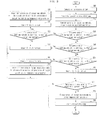
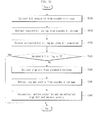
- FIG. 2 is a flow chart showing how an encoding is performed per each field by using a bit precision and an adaptive bit precision in accordance with an embodiment of the present invention.
- the operations to be described below are performed by each inner element of the encoding apparatus 100, the inner elements are collectively referred to as the encoding apparatus 100 for the convenience of understanding and description.
- the encoding apparatus 100 extracts field information from input data.
- the field information indicates the kind (i.e. type) of fields of the input data.
- the encoding apparatus 100 inserts the extracted field information into a bitstream according to the encoding method of the present invention.
- the encoding apparatus 100 can inserts the field information into a head of the bitstream.
- the encoding apparatus 100 checks whether a field (hereinafter, referred to as a "target field" for the convenience of understanding and description) to be currently decoded is a DCT field by using the extracted field information.
- a field hereinafter, referred to as a "target field” for the convenience of understanding and description
- the encoding apparatus 100 computes an adaptive bit precision and a bit precision and encodes a symbol of the target field by using the adaptive bit precision and the bit precision. This will be described below in detail with reference to FIG. 3 .
- another field which is not the DCT field, can be a mcbpc, cbpy or motion vector field.
- the encoding apparatus 100 computes an adaptive bit precision corresponding to a symbol of the DCT symbol and encodes the symbol of the target symbol by using the computed adaptive bit precision. This will be described below in detail with reference to FIG. 4 .
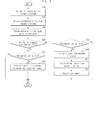
- FIG. 3 is a flow chart showing how an encoding is performed by using a bit precision and an adaptive bit precision in accordance with an embodiment of the present invention.
- the method of encoding input data by using an adaptive bit precision and a bit precision when a target field is not a DCT field will be described in detail.
- a flow chart showing a detailed description related to an embodiment of the step represented by 225 of FIG. 2 is performed by each inner element of the encoding apparatus 100, the inner elements are collectively referred to as the encoding apparatus 100 for the convenience of understanding and description.
- the encoding apparatus 100 computes a bit precision of a VOP in a step represented by 305.
- the bit precision is computed by using an index of a Huffman table of each field.
- the encoding apparatus 100 can compute a bit precision by using possibility information of a VLC table of the MPEG standard.
- the Huffman table which is used in a Huffman encoding method, lists bit strings to be encoded according to the frequency of symbols to be encoded. Since the Huffman table is evident to any person of ordinary skill in the art, the pertinent detailed description will be omitted.
- the decoding apparatus 100 determines the computed bit precision as a temporary bit precision and inserts the temporary bit precision into a bit stream.
- the temporary bit precision is another term which refers to an adaptive bit precision. Accordingly, the temporary bit precision must be analyzed or understood as the adaptive bit precision in the description related to the present invention.
- the temporary bit precision is defined as a variable that stores a bit precision.
- the temporary bit precision is used for the encoding in the following operations.
- the encoding apparatus computes symbols of a target macroblock, an upper macroblock and a left macroblock, respectively.
- the target macroblock refers to the macroblock that is currently being encoded.
- the upper macroblock refers to the next macroblock to the upper side of the target macroblock, and the lower macroblock refers to the next block to the left side of the target macroblock.
- the encoding apparatus compares bit precisions of the left macroblock and the upper macroblock and checks whether the bit precision of the left macroblock is identical to that of the upper macroblock.
- bit precision of a macroblock and the bit precision of a symbol of a macroblock have the same meaning.
- the encoding apparatus 100 checks whether a bit precision of the left macroblock is identical to that of the target macroblock.
- the encoding apparatus 100 inserts a first bit value (e.g. "1") into a bitstream.
- the encoding apparatus 100 determines the bit precision of the target macroblock as a temporary bit precision. In the step represented by 335, the encoding apparatus 100 insets the bit precision of the target macroblock into the bitstream.
- the encoding apparatus 100 inserts a second bit value (e.g. "0") into the bitstream.
- the encoding apparatus 100 checks whether the bit precision of the left macroblock is identical to that of the target macroblock.
- the encoding apparatus 100 performs the step represented by 340.
- the encoding apparatus 100 checks whether a bit precision of the upper macroblock is identical to that of the target macroblock.
- the encoding apparatus 100 inserts a third bit value (e.g. "11") into the bitstream.
- the encoding apparatus 100 determines the bit precision of the target macroblock as the temporary bit precision. The encoding apparatus 100 also inserts the bit precision of the target macroblock into the bitstream.
- the encoding apparatus 100 inserts a fourth bit value (e.g.10") into the bit stream.
- the encoding apparatus 100 checks whether a value of the temporary bit precision is equal to or larger than a threshold value (e.g. "3").
- the encoding apparatus 100 encodes a symbol of the target macroblock by using the temporary bit precision.
- the encoding apparatus 100 can consider the temporary bit precision as an adaptive bit precision and compute an adaptive bit string corresponding to the temporary bit precision in order to encode the pertinent symbol by using the adaptive bit string.
- the encoding apparatus 100 inserts the decoded bit string (i.e. the adaptive bit string) into the bitstream.
- the encoding apparatus 100 ends the encoding operation of the target macroblock.
- the encoding apparatus 100 can repeatedly perform the steps represented by 315 through 380 until all symbols of a pertinent frame or VOP are encoded.
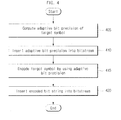
- FIG. 4 is a flow chart showing an operation of encoding a symbol of a DCT field by using an adaptive bit precision in accordance with an embodiment of the present invention. Below described is a flow chart showing a detailed description related to an embodiment of the step represented by 230 of FIG. 2 . Although the operations to be described below are performed by each inner element of the encoding apparatus 100, the inner elements are collectively referred to as the encoding apparatus 100 for the convenience of understanding and description.
- the encoding apparatus 100 computes an adaptive bit precision of a target symbol.
- the target symbol refers to the symbol that is currently being encoded among the symbols of a DCT field.
- the encoding apparatus 100 inserts the adaptive bit precision into a bitstream to correspond to the target symbol.
- the encoding apparatus 100 In a step represented by 415, the encoding apparatus 100 generates an adaptive bit string by encoding the target symbol by use of the adaptive bit precision.
- the encoding apparatus 100 inserts the generated adaptive bit string (i.e. the encoded target symbol) into the bitstream.
- the encoding apparatus 100 can repeatedly perform the steps represented by 410 through 420 until all symbols of a pertinent frame or VOP are encoded.
- FIG. 5 is a flow chart showing how an encoding is performed per each field by using a bit precision and an adaptive bit precision in accordance with another embodiment of the present invention.
- the operations to be described below are performed by each inner element of the encoding apparatus 100, the inner elements are collectively referred to as the encoding apparatus 100 for the convenience of understanding and description.
- the encoding apparatus 100 inserts field information into a bitstream.
- the encoding apparatus 100 can extract the field information form input data before inserting the field information into a header of the bitstream. Accordingly, the field information can be extracted and used in the below operation of decoding each symbol.
- the encoding apparatus 100 recognizes which one of DCT, motion vector and other fields is the field (hereinafter, referred to as a "target field" for the convenience of understanding and description) that is currently being encoded by using the extracted field information.
- the field information can refer to the information indicating the kind (i.e. type) of the pertinent field.
- the encoding apparatus 100 computes an adaptive bit precision and a bit precision corresponding to the target field.
- the encoding apparatus 100 can also encode symbols of the target field by using the computed adaptive bit precision and bit precision. Since the operation of encoding the symbols of the target field by using the adaptive bit precision and bit precision is identical to that of encoding the symbol of the target macroblock in FIG. 4 , the overlapped description will be omitted.
- the encoding apparatus 100 computes a bit precision of a symbol of the target field and decodes the symbol of the target field by using the computed bit precision. This is will be described below in more detail with reference to FIG. 6 through FIG. 8 .
- the encoding apparatus 100 computes an adaptive bit precision of the symbol of the target field.
- the encoding apparatus 100 also encodes the symbol of the target field by using the computed adaptive bit precision. Since this is the same as described with reference to FIG. 4 , the overlapped description will be omitted.
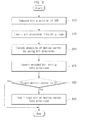
- FIG. 6 is a flow chart showing an operation of encoding a field of a motion vector by using a bit precision in accordance with an embodiment of the present invention. This is a flow chart showing a detailed description related to an embodiment of the step represented by 540 of FIG. 5 .
- the operations to be described below are performed by each inner element of the encoding apparatus 100, the inner elements are collectively referred to as the encoding apparatus 100 for the convenience of understanding and description.
- the encoding apparatus 100 computes a bit precision of a target VOP of an X-axis motion vector (hereinafter, referred to as "MV-X" for the convenience of understanding and description) field or a Y-axis axis motion vector (hereinafter, referred to as "MV-X" for the convenience of understanding and description) field.
- MV-X X-axis motion vector
- MV-X Y-axis axis motion vector
- the encoding apparatus 100 inserts the computed bit precision into a bitstream.
- the encoding apparatus 100 encodes a absolute value of a motion vector (hereinafter, referred to as a "target motion vector") that is currently being encoded by using the computed bit precision.
- a target motion vector a motion vector that is currently being encoded by using the computed bit precision.
- the encoding apparatus 100 insets the encoded absolute value into the bitstream.
- the encoding apparatus 100 checks whether the target motion vector is "0."
- the encoding apparatus 100 ends the encoding of the target motion vector.
- the encoding apparatus 100 if the target motion vector is not "0," the encoding apparatus 100 a bit value of a sign bit of the target motion vector into the bitstream.
- the encoding apparatus 1 OOcan repeatedly perform the steps represented by 610 through 635 until all symbols of a pertinent frame or VOP are encoded.
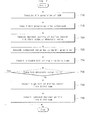
- FIG. 7 is a flow chart showing an operation of encoding a field of a motion vector by using a bit precision in accordance with another embodiment of the present invention. This is a flow chart showing a detailed description related to another embodiment of the step represented by 540 of FIG. 5 .
- the operations to be described below are performed by each inner element of the encoding apparatus 100, the inner elements are collectively referred to as the encoding apparatus 100 for the convenience of understanding and description.
- the encoding apparatus 100 computes a bit precision of a target VOP of a motion vector (e.g. MV-X or MV-Y) field.
- the bit precision is computed by using an index of the Huffman table of each field or a value excluding a sign (i.e. motion vector) of VOP and decimal points.
- the encoding apparatus 100 inserts the computed bit precision into a bitstream.
- the encoding apparatus 100 computes an absolute value by removing decimal points of the target symbol (i.e. the target motion vector).
- the encoding apparatus 100 encodes the computed absolute value by using the computed bit precision.
- the encoding apparatus 100 inserts the encoded absolute value into the bitstream.
- a step represented by 735 the encoding apparatus 100 checks whether the computed absolute value is 0.
- the encoding apparatus 100 ends the encoding of the symbol.
- the encoding apparatus 100 inserts the sign bit of the target symbol into the bitstream.
- the sign bit refers to the bit value indicating a sign of the target symbol. For example, if the target symbol is positive, the sign bit has the value of 0, and if the target symbol is negative, the sign bit has the value of 1.
- the encoding apparatus 100 inserts a value of domical places removed corresponding to the target symbol (i.e. the target motion vector) into the bitstream.
- the encoding apparatus 100 can repeatedly perform the steps represented by 710 through 745 until all symbols of a pertinent frame or VOP are encoded.
- FIG. 8 is a flow chart showing an operation of encoding a field of a motion vector by using a bit precision in accordance with another embodiment of the present invention. This is a flow chart showing a detailed description related to another embodiment of the step represented by 540 of FIG. 5 .
- the operations to be described below are performed by each inner element of the encoding apparatus 100, the inner elements are collectively referred to as the encoding apparatus 100 for the convenience of understanding and description.
- the encoding apparatus 100 computes a bit precision of a target VOP of a motion vector (e.g. MV-X or MV-Y) field.
- the bit precision is computed by using an index of the Huffman table of each field or a value excluding a sign (i.e. motion vector) of VOP and decimal points.
- the encoding apparatus 100 inserts the computed bit precision into a bitstream.
- the encoding apparatus 100 computes an absolute value of the target motion vector and then checks whether the absolute value of the target motion vector is equal to or smaller than a threshold value (e.g. "3").
- a threshold value e.g. "3"
- the encoding apparatus 100 encodes the absolute value of the target motion vector by using the computed bit precision.
- the encoding apparatus 100 inserts the decoded bit string (i.e. the encoded absolute value) into the bitstream.
- the encoding apparatus 100 checks whether the absolute value of the target motion vector is "0."
- the encoding apparatus 100 recognizes that the target motion vector includes no sign and no decimal points and ends the encoding of the target motion vector.
- the encoding apparatus 100 inserts a sign bit of the target motion vector into the bitstream.
- the sign bit refers to the bit value indicating a sign of the target motion vector.
- the encoding apparatus 100 removes decimal points of the target motion vector and then re-computes the absolute value without a sign and decimal points.
- the encoding apparatus 100 encodes the computed absolute value by using the bit precision.
- the encoding apparatus 100 inserts the encoded bit string (i.e. the absolute value computed by removing the decimal plates) into the bitstream.
- the encoding apparatus 100 checks whether the absolute value computed corresponding to the target motion vector is "0.”
- the encoding apparatus 100 recognizes that the target motion vector includes no sign and no decimal points and ends the encoding of the target motion vector
- the encoding apparatus 100 inserts the sign bit of the target motion vector into the bitstream.
- the encoding apparatus 100 inserts a value of domical places of the target motion vector into the bitstream.
- the encoding apparatus 100 can repeatedly perform the steps represented by 810 through 870 until all symbols of a pertinent frame or VOP are encoded.
- FIG. 9 is a block diagram showing a decoding apparatus using a bit precision in accordance with an embodiment of the present invention.
- the decoding apparatus 900 using a bit precision includes input unit 910, an adaptive bit precision computing unit 920, a bit precision extracting unit 930 and a decoding unit 940.
- the input unit 910 receives an encoded bitstream and extracts field information and data encoded per each field in a predetermined form in order to output them to the bit precision extracting unit 930 and the decoding unit 940.
- the adaptive bit precision computing unit 920 computes an adaptive bit precision and an adaptive bit string corresponding to a certain field according to a request signal. Then, the adaptive bit precision computing unit 920 computes a symbol corresponding to the computed adaptive bit precision and adaptive bit string and outputs them to the decoding unit 940. Since the method of computing the adaptive bit precision and the adaptive bit string has been described above by using the following table 2, the overlapped description will be omitted. Of course, the adaptive bit precision computing unit 920 can extract an adaptive bit precision from the bitstream.
- the adaptive bit precision computing unit 920 can extract the adaptive bit precision, the adaptive bit string and the symbol and output them to the decoding unit 940.
- the adaptive bit precision computing unit 920 can be omitted in the decoding apparatus 900.
- the adaptive bit precision computing unit 930 extracts a bit precision from the received encoded bitstream and outputs the extracted bit precision to decoding unit 940.
- the adaptive bit precision computing unit 930 also computes a bit precision by using the received encoded bitstream.
- bit precision of an upper macroblock and a bit precision of a left macroblock which are most adjacent to a target macroblock are computed through the received encoded bitstream. Since the method of computing a bit precision has described above by using the table 1, the pertinent description will be omitted.
- the decoding unit 940 decodes an encoded bitstream inputted from the input unit 910 by using the adaptive bit precision and the bit precision.
- the decoding unit 940 can decode a bitstream that is differently encoded according to field information inputted from the input unit 910. This will be described below in detail with reference to the related drawings.
- FIG. 10 is a flow chart showing how a decoding is performed per each field by using a bit precision and an adaptive bit precision in accordance with an embodiment of the present invention.
- FIG. 10 is a flow chart showing how a decoding is performed per each field by using a bit precision and an adaptive bit precision in accordance with an embodiment of the present invention.
- the method of decoding a bitstream encoded according to the encoding method of FIG. 2 is performed by each inner element of the decoding apparatus 900, the inner elements are collectively referred to as the decoding apparatus 900 for the convenience of understanding and description.
- the decoding apparatus 900 extracts field information from an inputted encoded bitstream.
- the decoding apparatus 900 checks whether a field (hereinafter, referred to as a "target field" for the convenience of understanding and description) to be decoded is a DCT field.
- a field hereinafter, referred to as a "target field” for the convenience of understanding and description
- DCT field other fields except for the DCT field are referred to as other fields.
- Other fields can include a mcbpc, cbpy or motion vector field.
- the decoding apparatus 900 performs the decoding operation corresponding to the target field by using a adaptive bit precision and a prediction bit. This will be described below in detail with reference to the related drawings.
- the decoding apparatus 900 decodes a bitstream encoded corresponding to the target field as a symbol by using the adaptive bit precision.
- FIG. 11 is a flow chart showing how a decoding is performed by using a bit precision and an adaptive bit precision in accordance with an embodiment of the present invention. This is a flow chart showing a detailed description related to an embodiment of the step represented by 1020 of FIG. 10 .
- FIG. 11 is a flow chart showing the method of encoding the bitstream by the already-mentioned method in FIG. 3 .
- the operations to be described below are performed by each inner element of the decoding apparatus 900, the inner elements are collectively referred to as the decoding apparatus 900 for the convenience of understanding and description.
- the decoding apparatus 900 extracts a bit precision corresponding to a VOP from an inputted encoded bitstream.
- the decoding apparatus 900 computes a bit precision of an upper macroblock and a bit precision of a left macroblock.
- the decoding apparatus 900 checks whether the computed bit precision of the left macroblock is identical to the computed bit precision of the upper macroblock.
- the decoding apparatus 900 extracts 1 bit from the encoded bitstream.
- the decoding apparatus 900 checks whether the extracted 1 bit has a fifth bit value (e.g. "1").
- the decoding apparatus 900 extracts the bit precision from the encoded bitstream and determines the computed bit precision as a temporary bit precision.
- the temporary bit precision is another term which refers to an adaptive bit precision. Accordingly, the temporary bit precision must be analyzed or understood as the adaptive bit precision.
- the decoding apparatus 900 determines the computed bit precision of the upper macroblock as the temporary bit precision
- the decoding apparatus 900 extracts 1 bit from the encoded bitstream.
- the decoding apparatus 900 checks whether the extracted 1 bit has a sixth bit value (e.g. "0").
- the decoding apparatus 900 determines the bit precision of the left macroblock as the temporary bit precision.
- the decoding apparatus 900 extracts 1 bit from the encoded bitstream.
- the decoding apparatus 900 checks whether the extracted 1 bit has a seventh bit value (e.g. "0").
- the decoding apparatus 900 extracts a bit precision from the encoded bitstream and determines the extracted bit precision as the temporary bit precision.
- the decoding apparatus 900 determines the bit precision of the upper macroblock as the temporary bit precision.
- the decoding apparatus 900 checks whether a value of the temporary bit precision is equal to or larger than a threshold value (e.g. "3").
- the decoding apparatus 900 decodes a symbol of the target macroblock by using the temporary bit precision.
- the decoding apparatus 900 can compute an adaptive bit string corresponding to the same adaptive bit precision as the temporary bit precision.
- the decoding apparatus 900 can also decode the pertinent bit string as the symbol corresponding to the computed adaptive bit string.
- the decoding apparatus 900 ends the decoding operation of the pertinent macroblock.
- the decoding apparatus 900 can repeatedly perform the steps represented by 1110 through 1180 until all symbols of a pertinent frame or VOP are decoded.
- the decoding operation in accordance with an embodiment of the present invention is to decode a bitstream, a mcbpc, cbpy, MV-x, or MV-y field being encoded in the adequate form for the decoding as the bitstream.
- the symbol of the DCT field can improve its compression efficiency through an additional encoding operation. Accordingly, it is also required to decode the symbol of the DCT field. Below described is the encoding operation the symbol of the DCT field.
- FIG. 12 is a flow chart showing an operation of decoding a symbol of a DCT field by using an adaptive bit precision in accordance with an embodiment of the present invention. This is a flow chart showing a detailed description related to an embodiment of the step represented by 1025 of FIG. 10 .
- FIG. 12 is a flow chart showing the method of encoding the bitstream by the already-mentioned method in FIG. 4 .
- the operations to be described below are performed by each inner element of the decoding apparatus 900, the inner elements are collectively referred to as the decoding apparatus 900 for the convenience of understanding and description.
- the decoding apparatus 900 extracts an adaptive bit precision from an inputted encoded bitstream.
- the decoding apparatus 900 extracts an encoded bit string (i.e. adaptive bit string) from the encoded bitstream.
- an encoded bit string i.e. adaptive bit string
- the decoding apparatus 900 decodes the adaptive bit string by using the adaptive bit precision.
- the decoding apparatus 900 can repeatedly perform the steps represented by 1210 through 1220 until all symbols of a pertinent frame or VOP are decoded.
- FIG. 13 is a flow chart showing how a decoding is performed per each field by using a bit precision and an adaptive bit precision in accordance with another embodiment of the present invention.
- the operations to be described below are performed by each inner element of the decoding apparatus 900, the inner elements are collectively referred to as the decoding apparatus 900 for the convenience of understanding and description.
- the decoding apparatus 900 extracts field information from an inputted encoded bitstream.
- the field information indicates the kind (i.e. type) of fields of the input data.
- the decoding apparatus 900 recognizes which one of DCT, motion vector and other fields is the field (hereinafter, referred to as a "target field" for the convenience of understanding and description) that is currently being decoded by using the extracted field information.
- Other fields include the remainders except for the motion vector field and the DCT field.
- other fields can include mcbpc and cbpy fields.
- the decoding apparatus 900 extracts an adaptive bit precision and a bit precision from the encoded bitstream. Then, the decoding apparatus 900 extracts and decodes an encoded string corresponding to the target field by using the pertinent adaptive bit precision and bit precision. Since this decoding operation is the same as described above with reference to FIG. 11 , the overlapped description will be omitted.
- the decoding apparatus 900 extracts a bit precision corresponding to the target field and decodes a bit string corresponding to the target field by using the extracted bit precision.
- the decoding apparatus 900 extracts an adaptive bit precision corresponding to the target field and decodes an encoded bit string corresponding to the target field by using the extracted adaptive bit precision. Since the operation of decoding encoded data as a symbol of the DCT field by using the adaptive bit precision is the same as the decoding operation described with reference to FIG. 12 , the pertinent detailed description will be omitted.
- FIG. 14 is a flow chart showing an operation of decoding encoded data as a symbol of a motion vector field by using a bit precision in accordance with an embodiment of the present invention. This is a flow chart showing a detailed description related to an embodiment of the step represented by 1325 of FIG. 13 .
- FIG. 14 is a flow chart showing the method of encoding the bitstream by the already-mentioned method in FIG. 6 .
- the operations to be described below are performed by each inner element of the decoding apparatus 900, the inner elements are collectively referred to as the decoding apparatus 900 for the convenience of understanding and description.
- the decoding apparatus 900 extracts a bit precision from an inputted encoded bitstream.
- the decoding apparatus 900 extracts an encoded bit string corresponding to the extracted bit precision from the encoded bitstream.
- the decoding apparatus 900 decodes the extracted bit string by using the extracted bit precision.
- the decoded bit string can be a symbol (i.e. an absolute value of a motion vector).
- the decoding apparatus 900 checks whether the decoded bit string is "0."
- the decoding apparatus 900 ends the decoding operation of the pertinent bit string.
- the decoding apparatus 900 extracts a sign bit from the encoded bitstream and decodes a final symbol (i.e. a motion vector) by attaching the sign bit to the decoded string.
- the decoding apparatus 900 can repeatedly perform the steps represented by 1410 through 1430 until all symbols of a pertinent frame or VOP are decoded.
- FIG. 15 is a flow chart showing an operation of decoding an encoded bitstream by using bit precision in accordance with another embodiment of the present invention. This is a flow chart showing a detailed description related to another embodiment of the step represented by 1325 of FIG. 13 .
- FIG. 15 is a flow chart showing the method of encoding the bitstream by the already-mentioned method in FIG. 7 .
- the operations to be described below are performed by each inner element of the decoding apparatus 900, the inner elements are collectively referred to as the decoding apparatus 900 for the convenience of understanding and description.
- the decoding apparatus 900 extracts a bit precision from an encoded bitstream.
- the decoding apparatus 900 extracts an encoded bit string from the encoded bitstream.
- the decoding apparatus 900 decodes the bit string extracted by using the extracted bit precision.
- the decoded bit string can refer to an absolute value of the motion vector removed with decimal points.
- the decoding apparatus 900 checks whether the decoded bit string is "0"
- the decoding apparatus 900 ends the decoding operation by determining the decoded bit string as a symbol (i.e. motion vector). For example, if the decoded bit string is "0,” the decoding apparatus 900 can recognize that the motion vector does not include a sign and the decimal points and end the decoding operation by outputting the decoded bit string as the symbol (i.e. motion vector).
- the decoding apparatus 900 extracts a sign bit from the encoded bitstream.
- the decoding apparatus 900 extracts a bit string below the decimal points from the encoded bit string.
- the decoding apparatus 900 reconstructs the symbol (i.e. motion vector) by adding the bit string below the decimal points to the decoded bit string and adding a sign corresponding to the sign bit.
- the decoding apparatus 900 can repeatedly perform the steps represented by 1510 through 1540 until all symbols of a pertinent frame or VOP are decoded.
- FIG. 16 is a flow chart showing an operation of decoding an encoded bitstream by using bit precision in accordance with another embodiment of the present invention. This is a flow chart showing a detailed description related to another embodiment of the step represented by 1325 of FIG. 13 .
- FIG. 16 is a flow chart showing the method of encoding the bitstream by the already-mentioned method in FIG. 8 .
- the operations to be described below are performed by each inner element of the decoding apparatus 900, the inner elements are collectively referred to as the decoding apparatus 900 for the convenience of understanding and description.
- the decoding apparatus 900 extracts a bit precision from an encoded bitstream.
- the decoding apparatus 900 extracts an encoded bit string from the encoded bitstream.
- the decoding apparatus 900 decodes the bit string extracted by using the extracted bit precision.
- the decoded bit string can refer to an absolute value of the motion vector removed with decimal points.
- the decoding apparatus 900 checks whether the value of the decoded bit string is equal to or smaller than "3."
- the decoding apparatus 900 checks whether the decoded bit string has the value of "0.”
- the decoding apparatus 900 determines that the decoded bit string is the motion vector including no sign and no decimal point and ends the decoding operation of the decoded bit string by outputting the decoded bit string as the symbol (i.e. motion vector).
- the decoding apparatus 900 extracts a sign bit from the encoded bitstream. Then, the decoding apparatus 900 reconstructs the symbol (i.e. motion vector) by adding the extracted sign bit to the decoded bit string.
- the decoding apparatus 900 checks whether the decoded bit string has the value of "0.”
- the decoding apparatus 900 reconstructs the decoded bit string as the symbol (i.e. motion vector) and ends the decoding operation of the decoded bit string.
- the decoding apparatus 900 extracts a sign bit from the encoded bitstream.
- the decoding apparatus 900 extracts a bit string below the decimal points from the encoded bit string.
- the decoding apparatus 900 reconstructs the symbol (i.e. motion vector) by adding the bit string below the decimal points to the decoded bit string and adding a sign corresponding to the extracted sign bit.
- the decoding apparatus 900 can repeatedly perform the steps represented by 1610 through 1655 until all symbols of a pertinent frame or VOP are decoded.
- the present invention can be applied to a video codec.
Landscapes
- Engineering & Computer Science (AREA)
- Multimedia (AREA)
- Signal Processing (AREA)
- Compression Or Coding Systems Of Tv Signals (AREA)
- Compression, Expansion, Code Conversion, And Decoders (AREA)
Applications Claiming Priority (5)
| Application Number | Priority Date | Filing Date | Title |
|---|---|---|---|
| KR1020070071779A KR100916535B1 (ko) | 2007-07-18 | 2007-07-18 | 결정 비트 부호화/복호화 장치, 방법 및 그에 따른프로그램이 기록된 기록매체 |
| KR1020080015213A KR100960008B1 (ko) | 2008-02-20 | 2008-02-20 | 결정 적응 비트를 이용한 부호화/복호화 방법 및 장치 |
| KR1020080024643A KR100944542B1 (ko) | 2008-03-17 | 2008-03-17 | 예측 결정 비트를 이용한 부호화/복호화 방법 및 장치 |
| KR1020080037856A KR100988010B1 (ko) | 2008-04-23 | 2008-04-23 | 결정 비트를 이용한 부호화/복호화 방법 및 장치 |
| EP08778887A EP2172028A4 (fr) | 2007-07-18 | 2008-07-18 | Procédé et appareil permettant le codage et de décodage au moyen de la précision binaire |
Related Parent Applications (1)
| Application Number | Title | Priority Date | Filing Date |
|---|---|---|---|
| EP08778887.3 Division | 2008-07-18 |
Publications (2)
| Publication Number | Publication Date |
|---|---|
| EP2187645A2 true EP2187645A2 (fr) | 2010-05-19 |
| EP2187645A3 EP2187645A3 (fr) | 2012-10-24 |
Family
ID=40260227
Family Applications (4)
| Application Number | Title | Priority Date | Filing Date |
|---|---|---|---|
| EP10152387A Withdrawn EP2187643A3 (fr) | 2007-07-18 | 2008-07-18 | Codage entropique avec adaptation de la précision binaire |
| EP10152392A Pending EP2187645A3 (fr) | 2007-07-18 | 2008-07-18 | Codage entropique avec adaptation de la précision binaire |
| EP08778887A Withdrawn EP2172028A4 (fr) | 2007-07-18 | 2008-07-18 | Procédé et appareil permettant le codage et de décodage au moyen de la précision binaire |
| EP10152390A Pending EP2187644A3 (fr) | 2007-07-18 | 2008-07-18 | Codage entropique avec adaptation de la précision binaire |
Family Applications Before (1)
| Application Number | Title | Priority Date | Filing Date |
|---|---|---|---|
| EP10152387A Withdrawn EP2187643A3 (fr) | 2007-07-18 | 2008-07-18 | Codage entropique avec adaptation de la précision binaire |
Family Applications After (2)
| Application Number | Title | Priority Date | Filing Date |
|---|---|---|---|
| EP08778887A Withdrawn EP2172028A4 (fr) | 2007-07-18 | 2008-07-18 | Procédé et appareil permettant le codage et de décodage au moyen de la précision binaire |
| EP10152390A Pending EP2187644A3 (fr) | 2007-07-18 | 2008-07-18 | Codage entropique avec adaptation de la précision binaire |
Country Status (3)
| Country | Link |
|---|---|
| US (4) | US8411745B2 (fr) |
| EP (4) | EP2187643A3 (fr) |
| WO (1) | WO2009011558A2 (fr) |
Families Citing this family (3)
| Publication number | Priority date | Publication date | Assignee | Title |
|---|---|---|---|---|
| ATE487441T1 (de) | 2007-06-01 | 2010-11-15 | Allergan Inc | Gerät zur erzeugung des zugspannungsinduzierten wachstums von biologischem gewebe |
| WO2012044104A2 (fr) * | 2010-09-30 | 2012-04-05 | 삼성전자 주식회사 | Procédé de codage vidéo pour coder des symboles de structure hiérarchique et dispositif correspondant, et procédé de décodage vidéo pour décoder des symboles de structure hiérarchique et dispositif correspondant |
| US8885704B2 (en) * | 2010-10-01 | 2014-11-11 | Qualcomm Incorporated | Coding prediction modes in video coding |
Family Cites Families (21)
| Publication number | Priority date | Publication date | Assignee | Title |
|---|---|---|---|---|
| US4369463A (en) | 1981-06-04 | 1983-01-18 | International Business Machines Corporation | Gray scale image data compression with code words a function of image history |
| US4947447A (en) * | 1986-04-24 | 1990-08-07 | Hitachi, Ltd. | Method for data coding |
| CA2110264C (fr) | 1991-06-04 | 2002-05-28 | Chong U. Lee | Methode et systeme adaptatifs de compression a selection de la taille des blocs |
| US5227789A (en) * | 1991-09-30 | 1993-07-13 | Eastman Kodak Company | Modified huffman encode/decode system with simplified decoding for imaging systems |
| US5781238A (en) * | 1995-07-28 | 1998-07-14 | Sony Corporation | Information signal encoding apparatus, encoding method thereof, information signal decoding method, and information signal record medium thereof |
| JP2000511366A (ja) * | 1995-10-25 | 2000-08-29 | サーノフ コーポレイション | 4分割ツリーベースの可変ブロックサイズ動き推定装置および方法 |
| US5963673A (en) | 1995-12-20 | 1999-10-05 | Sanyo Electric Co., Ltd. | Method and apparatus for adaptively selecting a coding mode for video encoding |
| US6137839A (en) * | 1996-05-09 | 2000-10-24 | Texas Instruments Incorporated | Variable scaling of 16-bit fixed point fast fourier forward and inverse transforms to improve precision for implementation of discrete multitone for asymmetric digital subscriber loops |
| KR100457231B1 (ko) | 1997-03-20 | 2005-08-09 | 주식회사 팬택앤큐리텔 | 영상신호의모양부호화시이동보상예측결정장치및방법 |
| WO1999056472A1 (fr) * | 1998-04-24 | 1999-11-04 | Rockwell Science Center, Llc | Codeur video n bits et procede d'extension d'un codeur video mpeg 8 bits |
| CA2261833A1 (fr) * | 1999-02-15 | 2000-08-15 | Xue Dong Yang | Methode et systeme de codage d'images par region avec lecture dynamique en continu de blocs de codes |
| KR100335057B1 (ko) | 2000-03-08 | 2002-05-02 | 구자홍 | 동영상 수신 장치 |
| TW515192B (en) * | 2000-06-06 | 2002-12-21 | Noa Kk Off | Compression method of motion picture image data and system there for |
| US20030208488A1 (en) * | 2000-09-20 | 2003-11-06 | North Dakota State University | System and method for organizing, compressing and structuring data for data mining readiness |
| US6650762B2 (en) * | 2001-05-31 | 2003-11-18 | Southern Methodist University | Types-based, lossy data embedding |
| US7483581B2 (en) * | 2001-07-02 | 2009-01-27 | Qualcomm Incorporated | Apparatus and method for encoding digital image data in a lossless manner |
| US7388995B2 (en) * | 2003-05-21 | 2008-06-17 | Silicon Integrated Systems Corp. | Quantization matrix adjusting method for avoiding underflow of data |
| US20060291565A1 (en) | 2005-06-22 | 2006-12-28 | Chen Eddie Y | System and method for performing video block prediction |
| KR100636370B1 (ko) * | 2005-06-29 | 2006-10-19 | 한국전자통신연구원 | 결정 비트를 이용한 부호화 장치 및 그 방법과 그에 따른복호화 장치 및 그 방법 |
| JP4540585B2 (ja) * | 2005-10-20 | 2010-09-08 | パナソニック株式会社 | 符号化装置及び復号化装置 |
| KR100858245B1 (ko) * | 2006-11-17 | 2008-09-12 | 주식회사 휴맥스 | 결정 비트를 이용한 부호화/복호화 장치 및 그에 따른프로그램이 기록된 매체 |
-
2008
- 2008-07-18 EP EP10152387A patent/EP2187643A3/fr not_active Withdrawn
- 2008-07-18 EP EP10152392A patent/EP2187645A3/fr active Pending
- 2008-07-18 US US12/669,770 patent/US8411745B2/en not_active Expired - Fee Related
- 2008-07-18 EP EP08778887A patent/EP2172028A4/fr not_active Withdrawn
- 2008-07-18 WO PCT/KR2008/004232 patent/WO2009011558A2/fr not_active Ceased
- 2008-07-18 EP EP10152390A patent/EP2187644A3/fr active Pending
-
2010
- 2010-01-26 US US12/694,245 patent/US8675734B2/en not_active Expired - Fee Related
- 2010-01-26 US US12/694,248 patent/US8009067B2/en not_active Expired - Fee Related
- 2010-01-26 US US12/694,242 patent/US8009066B2/en not_active Expired - Fee Related
Non-Patent Citations (1)
| Title |
|---|
| None |
Also Published As
| Publication number | Publication date |
|---|---|
| WO2009011558A2 (fr) | 2009-01-22 |
| US20100127903A1 (en) | 2010-05-27 |
| EP2187645A3 (fr) | 2012-10-24 |
| EP2187643A2 (fr) | 2010-05-19 |
| US8009067B2 (en) | 2011-08-30 |
| EP2187643A3 (fr) | 2012-10-24 |
| EP2187644A3 (fr) | 2012-10-24 |
| EP2187644A2 (fr) | 2010-05-19 |
| EP2172028A2 (fr) | 2010-04-07 |
| WO2009011558A3 (fr) | 2009-03-19 |
| US8675734B2 (en) | 2014-03-18 |
| EP2172028A4 (fr) | 2012-10-24 |
| US20100158115A1 (en) | 2010-06-24 |
| US8411745B2 (en) | 2013-04-02 |
| US20100128781A1 (en) | 2010-05-27 |
| US20100123608A1 (en) | 2010-05-20 |
| US8009066B2 (en) | 2011-08-30 |
Similar Documents
| Publication | Publication Date | Title |
|---|---|---|
| US7564384B2 (en) | Binarizing method and device thereof | |
| US8401321B2 (en) | Method and apparatus for context adaptive binary arithmetic coding and decoding | |
| US7079057B2 (en) | Context-based adaptive binary arithmetic coding method and apparatus | |
| US7664176B2 (en) | Method and system for entropy decoding for scalable video bit stream | |
| EP3624451A1 (fr) | Procédé et appareil de codage de mode de prédiction intra | |
| KR100694098B1 (ko) | 산술 복호 방법 및 그 장치 | |
| US20070183506A1 (en) | Variable-length decoding apparatus and decoding method | |
| KR20180040514A (ko) | 부호화 장치, 복호화 장치 및 그 부호화 방법 및 복호화 방법 | |
| US7158684B2 (en) | Entropy coding scheme for video coding | |
| US20070126853A1 (en) | Variable length codes for scalable video coding | |
| CN107046645A (zh) | 图像编解码方法及装置 | |
| US8009067B2 (en) | Method and apparatus for coding and decoding using bit-precision | |
| US8385405B2 (en) | Recorded medium having program for coding and decoding using bit-precision, and apparatus thereof | |
| US10958901B2 (en) | Methods and devices for coding and decoding a data stream representing at least one image | |
| CN101242534A (zh) | 视频编码设备及方法 | |
| KR100960008B1 (ko) | 결정 적응 비트를 이용한 부호화/복호화 방법 및 장치 | |
| KR100944542B1 (ko) | 예측 결정 비트를 이용한 부호화/복호화 방법 및 장치 | |
| US20200162763A1 (en) | Sub-block based entropy coding for image coding | |
| KR100988010B1 (ko) | 결정 비트를 이용한 부호화/복호화 방법 및 장치 | |
| EP3149948B1 (fr) | Accélération d'un codage arithmétique binaire adapté au contexte (codage cabac) dans des codeurs-décodeurs vidéo | |
| KR100195715B1 (ko) | 가변 길이 복호기 | |
| Malu | H264/AVC Video Stream Parser For Baseline Profile |
Legal Events
| Date | Code | Title | Description |
|---|---|---|---|
| PUAI | Public reference made under article 153(3) epc to a published international application that has entered the european phase |
Free format text: ORIGINAL CODE: 0009012 |
|
| AC | Divisional application: reference to earlier application |
Ref document number: 2172028 Country of ref document: EP Kind code of ref document: P |
|
| AK | Designated contracting states |
Kind code of ref document: A2 Designated state(s): AT BE BG CH CY CZ DE DK EE ES FI FR GB GR HR HU IE IS IT LI LT LU LV MC MT NL NO PL PT RO SE SI SK TR |
|
| AX | Request for extension of the european patent |
Extension state: AL BA MK RS |
|
| RTI1 | Title (correction) |
Free format text: ADAPTIVE BIT-PRECISION ENTROPY CODING |
|
| PUAL | Search report despatched |
Free format text: ORIGINAL CODE: 0009013 |
|
| AK | Designated contracting states |
Kind code of ref document: A3 Designated state(s): AT BE BG CH CY CZ DE DK EE ES FI FR GB GR HR HU IE IS IT LI LT LU LV MC MT NL NO PL PT RO SE SI SK TR |
|
| AX | Request for extension of the european patent |
Extension state: AL BA MK RS |
|
| RIC1 | Information provided on ipc code assigned before grant |
Ipc: H03M 7/30 20060101ALI20120920BHEP Ipc: H04N 7/26 20060101AFI20120920BHEP Ipc: H04N 7/50 20060101ALI20120920BHEP |
|
| 17P | Request for examination filed |
Effective date: 20130424 |
|
| 17Q | First examination report despatched |
Effective date: 20130930 |
|
| RAP1 | Party data changed (applicant data changed or rights of an application transferred) |
Owner name: HUMAX HOLDINGS CO., LTD. |
|
| RAP1 | Party data changed (applicant data changed or rights of an application transferred) |
Owner name: HUMAX CO., LTD. |
|
| 18D | Application deemed to be withdrawn |
Effective date: 20161110 |
|
| D18D | Application deemed to be withdrawn (deleted) | ||
| STAA | Information on the status of an ep patent application or granted ep patent |
Free format text: STATUS: THE APPLICATION IS DEEMED TO BE WITHDRAWN |
|
| R18D | Application deemed to be withdrawn (corrected) |
Effective date: 20161110 |