EP2193168B1 - Wärmebeständige polycarbonate, herstellungsverfahren dafür und daraus geformte artikel - Google Patents
Wärmebeständige polycarbonate, herstellungsverfahren dafür und daraus geformte artikel Download PDFInfo
- Publication number
- EP2193168B1 EP2193168B1 EP08835598A EP08835598A EP2193168B1 EP 2193168 B1 EP2193168 B1 EP 2193168B1 EP 08835598 A EP08835598 A EP 08835598A EP 08835598 A EP08835598 A EP 08835598A EP 2193168 B1 EP2193168 B1 EP 2193168B1
- Authority
- EP
- European Patent Office
- Prior art keywords
- polycarbonate
- bis
- structural unit
- polymer blend
- mol
- Prior art date
- Legal status (The legal status is an assumption and is not a legal conclusion. Google has not performed a legal analysis and makes no representation as to the accuracy of the status listed.)
- Active
Links
- ISWSIDIOOBJBQZ-UHFFFAOYSA-N Oc1ccccc1 Chemical compound Oc1ccccc1 ISWSIDIOOBJBQZ-UHFFFAOYSA-N 0.000 description 1
Images

Classifications
-
- C—CHEMISTRY; METALLURGY
- C08—ORGANIC MACROMOLECULAR COMPOUNDS; THEIR PREPARATION OR CHEMICAL WORKING-UP; COMPOSITIONS BASED THEREON
- C08L—COMPOSITIONS OF MACROMOLECULAR COMPOUNDS
- C08L69/00—Compositions of polycarbonates; Compositions of derivatives of polycarbonates
-
- C—CHEMISTRY; METALLURGY
- C08—ORGANIC MACROMOLECULAR COMPOUNDS; THEIR PREPARATION OR CHEMICAL WORKING-UP; COMPOSITIONS BASED THEREON
- C08K—Use of inorganic or non-macromolecular organic substances as compounding ingredients
- C08K3/00—Use of inorganic substances as compounding ingredients
- C08K3/32—Phosphorus-containing compounds
- C08K2003/329—Phosphorus containing acids
-
- C—CHEMISTRY; METALLURGY
- C08—ORGANIC MACROMOLECULAR COMPOUNDS; THEIR PREPARATION OR CHEMICAL WORKING-UP; COMPOSITIONS BASED THEREON
- C08K—Use of inorganic or non-macromolecular organic substances as compounding ingredients
- C08K5/00—Use of organic ingredients
- C08K5/36—Sulfur-, selenium-, or tellurium-containing compounds
- C08K5/41—Compounds containing sulfur bound to oxygen
- C08K5/42—Sulfonic acids; Derivatives thereof
-
- C—CHEMISTRY; METALLURGY
- C08—ORGANIC MACROMOLECULAR COMPOUNDS; THEIR PREPARATION OR CHEMICAL WORKING-UP; COMPOSITIONS BASED THEREON
- C08L—COMPOSITIONS OF MACROMOLECULAR COMPOUNDS
- C08L2205/00—Polymer mixtures characterised by other features
- C08L2205/02—Polymer mixtures characterised by other features containing two or more polymers of the same C08L -group
-
- C—CHEMISTRY; METALLURGY
- C08—ORGANIC MACROMOLECULAR COMPOUNDS; THEIR PREPARATION OR CHEMICAL WORKING-UP; COMPOSITIONS BASED THEREON
- C08L—COMPOSITIONS OF MACROMOLECULAR COMPOUNDS
- C08L63/00—Compositions of epoxy resins; Compositions of derivatives of epoxy resins
Definitions
- This disclosure relates to polymer blends, and in particular to high heat polymer blends, methods of manufacture, and uses thereof.
- Polycarbonate is a high-performance plastic with an excellent balance of toughness, strength, optical properties, and heat resistance.
- many new applications have high requirements on thermal properties.
- applications such as commercial and automotive lighting and headlamp reflectors may require heat capability up to and above 200°C as well as high transparency.
- Some known high heat polycarbonate resins can provide higher glass transition temperatures. But issues with transparency, discoloring, toughness, impact strength, or stress cracking often prevented success.
- EP 1582549 A1 discloses polymer blends comprising a first polycarbonate containing structural units derived from 2-aryl-3,3-bis(4-hydroxyaryl)phthalimidine and further dihydroxy aromatic compounds, and a second polymer which optionally may be also a polycarbonate.
- US2007/010619 A1 relates to a polymer article and blend including a polymer low yellowness index comprising structural units derived from a 2-hydroxycarbyl-3,3-bis(4-hydroxyaryl)phthalimidine.
- US2007/123686 A1 discloses polymeric blends comprising a first high Tg polycarbonate containing structural units derived from 2-aryl-3,3-bis(4-hydroxyaryl)phthalimidine and further dihydroxy aromatic compounds, and a second polymer which optionally may be an epoxy resin.
- the present invention relates to a polymer blend comprising:
- the present invention further relates to a method of making a polymer blend comprising:
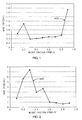
- Figure 1 is a plot of haze versus weight fraction for a blend of a lower Mw (Mw 23,100 g/mol) polycarbonate having 35 mol% structural units derived from 2-phenyl-3,3-bis(4-hydroxyphenyl)phthalimidine and a bisphenol A polycarbonate homopolymer (Mw 29,900 g/mol);
- Figure 2 is a plot of haze versus weight fraction for a blend of a higher Mw (Mw 29,200 g/mol) polycarbonate having 35 mol% structural units derived from 2-phenyl-3,3-bis(4-hydroxyphenyl)phthalimidine and a bisphenol A polycarbonate homopolymer (Mw 29,900 g/mol);
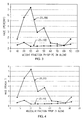
- Figure 3 is an overlaid plot of Figures 1 and 2 ;
- Figure 4 is an overlaid plot of haze versus total mole fraction of 2-phenyl-3,3-bis(4-hydroxyphenyl)phthalimidine for a blend of a lower Mw (Mw 23,100 g/mol) polycarbonate and a higher Mw (Mw 29,200 g/mol) polycarbonate each having 35 mol% structural units derived from 2-phenyl-3,3-bis(4-hydroxyphenyl)phthalimidine, and a bisphenol A polycarbonate homopolymer (Mw 29,900 g/mol); and
- Figure 5 is a plot of glass transition temperature (Tg) versus mole percent of structural units derived from 2-phenyl-3,3-bis(4-hydroxyphenyl)phthalimidine (PPPBP), for blends of 33 mol% PPPBP-PC copolycarbonates. (Mw 23,592 g/mol) with bisphenol A homopolycarbonate (Mw 20,992 g/mol).
- Tg glass transition temperature
- PPPBP 2-phenyl-3,3-bis(4-hydroxyphenyl)phthalimidine
- a polymer blend comprising a first polycarbonate comprising between 25 and 35 mol% of a first structural unit derived from a 2-aryl-3,3-bis(4-hydroxyaryl)phthalimidine and a second structural unit derived from a dihydroxy aromatic compound wherein the second structural unit is not identical to the first structural unit, and a second polycarbonate comprising a structural unit derived from a dihydroxy aromatic compound, wherein the polymer blend has a glass transition temperature of 155 to 200°C; and wherein a test article having a thickness of 3.2 mm and molded from the blend has a haze of less than or equal to 2.6% measured in accordance with ASTM D1003-00.
- a method of making a polymer blend comprises blending a first polycarbonate comprising between 25 and 35 mol% of a first structural unit derived from a 2-aryl-3,3-bis(4-hydroxyaryl)phthalimidine and a second structural unit derived from a dihydroxy aromatic compound wherein the second structural unit is not identical to the first structural unit, with a second polycarbonate comprising a structural unit derived from a dihydroxy aromatic compound, to form a blending mixture; and extruding the blending mixture; wherein the polymer blend prepared by the method has a glass transition temperature of 155 to 200°C; and wherein a test article having a thickness of 3.2 mm and molded from the polymer blend prepared by the method has a haze of less than or equal to 2.6% measured in accordance with ASTM D1003-00.
- the polymer blend of the present invention as disclosed above comprises a first polycarbonate comprising structural units derived from 2-aryl-3,3-bis(4-hydroxyaryl)phthalimidine and bisphenol A, and a second polycarbonate comprising structural units derived from bisphenol A; wherein the polymer blend has a glass transition temperature of 155 to 200°C; and wherein a test article having a thickness of 3.2 mm and molded from the polymer blend has a haze of less than or equal to 2.6% measured in accordance with ASTM D1003-00.
- the polymer blend comprises a first polycarbonate consisting essentially of structural units derived from 2-aryl-3,3-bis(4-hydroxyaryl)phthalimidine and bisphenol A, and a second polycarbonate consisting essentially of structural units derived from a dihydroxy aromatic compound; wherein the polymer blend has a glass transition temperature of 155 to 200°C; and wherein a test article having a thickness of 3.2 mm and molded from the blend has a haze of less than or equal to 2.6% measured in accordance with ASTM D1003-00.
- the polymer blend comprises 10 to 90 wt% of a first polycarbonate comprising structural units derived from 2-aryl-3,3-bis(4-hydroxyaryl)phthlimidine, and 90 to 10 wt% of a second polycarbonate comprising structural units derived from bisphenol A; wherein the weight percentages are based on the total weight of the first polycarbonate and the second polycarbonate; wherein the polymer blend has a glass transition temperature of 155 to 200°C; and wherein a test article having a thickness of 3.2 mm and molded from the blend has a haze of less than or equal to 2.6% measured in accordance with ASTM D1003-00.
- the polymer blend disclosed above comprises a first polycarbonate comprising a first structural unit derived from 2-aryl-3,3,-bis(4-hydroxyaryl)phthalimidine and a second structural unit derived from bisphenol-A, and a second polycarbonate comprising a third structural unit derived from bisphenol-A, wherein the polymer blend has a glass transition temperature of 160°C to 190°C, wherein a test article having a thickness of 3.2 mm and molded from the blend has a haze of less than or equal to 2.6% as measured in accordance with ASTM D1003-00.
- the polymer blend of the present invention comprises a first polycarbonate comprising a first structural unit derived from 2-phenyl-3,3,-bis(4-hydroxyphenyl)phthalimidine and a second structural unit derived from bisphenol-A, and a second polycarbonate comprising a structural unit derived from bisphenol-A, wherein the polymer blend has a glass transition temperature of 160°C to 190°C, wherein a test article having a thickness of 3.2 mm and molded from the blend has a haze of less than or equal to 2.6% as measured in accordance with ASTM D1003-00.
- the polymer blend comprises 10 to 90 wt% of a first polycarbonate consisting essentially of structural units derived from 2-aryl-3,3-bis(4-hydroxyaryl)phthalimidine and bisphenol A, and 90 to 10 wt% of a second polycarbonate comprising structural units derived from bisphenol A; wherein the weight percentages are based on the total weight of the first polycarbonate and the second polycarbonate; wherein the polymer blend has a glass transition temperature of 155 to 200°C; and wherein a test article having a thickness of 3.2 mm and molded from the polymer blend has a haze of less than or equal to 2.6% measured in accordance with ASTM D1003-00.
- a polymer blend comprising between 25 and 35 mol% of a first polycarbonate comprising structural units derived from 2-aryl-3,3-bis(4-hydroxyaryl)phthalimidine and units derived from a dihydroxy aromatic compound, and a second polycarbonate comprising structural units derived from a dihydroxy aromatic compound has desirable glass transition temperature and low haze value.
- the polymer blend can be used in a wide variety of applications, including automotive headlamp lens.
- Polycarbonates disclosed herein have repeating structural carbonate units of the formula (1): wherein at least 60 percent of the total number of R 1 groups contains aromatic organic groups and the balance thereof are aliphatic, alicyclic, or aromatic groups.
- Polycarbonate as used herein includes polymers homopolycarbonates and copolycarbonates (copolymers comprising different R 1 moieties in the polycarbonate).
- each R 1 group is a divalent aromatic group, derived from a dihydroxy aromatic compound of the formula (3): HO-A 1 -Y 1 -A 2 -OH (3) wherein each of A 1 and A 2 is a monocyclic divalent arylene group, and Y 1 is a single bond or a bridging group having one or two atoms that separate A 1 from A 2 . In an exemplary embodiment, one atom separates A 1 from A 2 . In another embodiment, when each of A 1 and A 2 is phenylene, Y 1 is para to each of the hydroxyl groups on the phenylenes.
- Illustrative non-limiting examples of groups of this type are -O-, -S-, - S(O)-, -S(O) 2 -, -C(O)-, methylene, cyclohexyl-methylene, 2-[2.2.1]-bicycloheptylidene, ethylidene, isopropylidene, neopentylidene, cyclohexylidene, cyclopentadecylidene, cyclododecylidene, and adamantylidene.
- the bridging group Y 1 can be a hydrocarbon group or a saturated hydrocarbon group such as methylene, cyclohexylidene, or isopropylidene.
- dihydroxy aromatic compounds of formula (3) are bisphenol compounds of general formula (4): wherein R a and R b each represent a halogen atom or a monovalent hydrocarbon group and can be the same or different; p and q are each independently integers of 0 to 4; and X a represents a single bond or one of the groups of formulas (5) or (6): wherein R c and R d are each independently hydrogen, C 1-12 alkyl, C 1-12 cycloalkyl, C 7-12 arylalkyl, C 1-12 heteroalkyl, or cyclic C 7-12 heteroarylalkyl, and R e is a divalent C 1-12 hydrocarbon group.
- R c and R d are each the same hydrogen or C 1-4 alkyl group, specifically the same C 1-3 alkyl group, even more specifically, methyl.
- R c and R d taken together represent a C 3-20 cyclic alkylene group or a heteroatom-containing C 3-20 cyclic alkylene group comprising carbon atoms and heteroatoms with a valency of two or greater.
- These groups can be in the form of a single saturated or unsaturated ring, or a fused polycyclic ring system wherein the fused rings are saturated, unsaturated, or aromatic.
- a specific heteroatom-containing cyclic alkylene group comprises at least one heteroatom with a valency of 2 or greater, and at least two carbon atoms.
- heteroatoms in the heteroatom-containing cyclic alkylene group include -O-, -S-, and -N(Z)-, where Z is a substituent group selected from hydrogen, hydroxy, C 1-12 alkyl, C 1-12 alkoxy, or C 1-12 acyl.
- X a is a substituted C 3-18 cycloalkylidene of the formula (7): wherein each R r , R p , R q , and R t is independently hydrogen, halogen, oxygen, or C 1-12 organic group; I is a direct bond, a carbon, a divalent oxygen, sulfur, or -N(Z)-wherein Z is hydrogen, halogen, hydroxy, C 1-12 alkyl, C 1-12 alkoxy, or C 1-12 acyl; h is 0 to 2, j is 1 or 2, i is an integer of 0 or 1, and k is an integer of 0 to 3, with the proviso that at least two of R r , R p , R q , and R t taken together are a fused cycloaliphatic, aromatic, or heteroaromatic ring.
- the ring as shown in formula (7) will have an unsaturated carbon-carbon linkage where the ring is fused.
- the ring as shown in formula (7) contains 4 carbon atoms
- the ring as shown contains 5 carbon atoms
- the ring contains 6 carbon atoms.
- two adjacent groups (for example, R q and R t taken together) form an aromatic group
- R q and R t taken together form one aromatic group
- R r and R p taken together form a second aromatic group.
- bisphenols containing substituted or unsubstituted cyclohexane units are provided, including for example bisphenols of formula (8): wherein R a' and R b' are each independently C 1-12 alkyl, R g is C 1-12 alkyl or halogen, r and s are each independently 0 to 4, and t is 0 to 10. It will be understood that hydrogen fills each valency when r is 0, s is 0, and t is 0. In a specific embodiment, where r and/or s is 1 or greater, at least one of each of R a' and R b' are disposed meta to the cyclohexylidene bridging group.
- R a' , R b' , and R g may, when comprising an appropriate number of carbon atoms, be straight chain, cyclic, bicyclic, branched, saturated, or unsaturated.
- R a' , R b' , and R g are each C 1-4 alkyl, specifically methyl.
- R a' , R b' , and R g is a C 1-3 alkyl, specifically methyl, r and s are 0 or 1, and t is 0 to 5, specifically 0 to 3.
- Such cyclohexane-containing bisphenols for example the reaction product of two moles of a phenol with one mole of a hydrogenated isophorone, are useful for making polycarbonate polymers with high glass transition temperatures and high heat distortion temperatures.
- an exemplary cyclohexyl bisphenol containing polycarbonate is derived from two equivalents of phenol and an equivalent of an isophorone, such as 3,3,5-trimethylcyclohexanone, or a combination comprising at least one of the foregoing with other bisphenol polycarbonates.
- Such cyclohexyl-based bisphenols derived from isophorone are supplied by Bayer Co. under the APEC ® trade name.
- R h is independently a halogen atom, a C 1-10 hydrocarbyl such as a C 1-10 alkyl group, a halogen substituted C 1-10 hydrocarbyl such as a halogen-substituted C 1-10 alkyl group, and n is 0 to 4.
- the halogen is usually bromine.
- dihydroxy compounds include the following: 4,4'-dihydroxybiphenyl, 1,6-dihydroxynaphthalene, 2,6-dihydroxynaphthalene, bis(4-hydroxyphenyl)methane, bis(4-hydroxyphenyl)diphenylmethane, bis(4-hydroxyphenyl)-1-naphthylmethane, 1,2-bis(4-hydroxyphenyl)ethane, 1,1-bis(4-hydroxyphenyl)-1-phenylethane, 2-(4-hydroxyphenyl)-2-(3-hydroxyphenyl)propane, bis(4-hydroxyphenyl)phenylmethane, 2,2-bis(4-hydroxy-3-bromophenyl)propane, 1,1-bis (hydroxyphenyl)cyclopentane, 1,1-bis(4-hydroxyphenyl)cyclohexane, 1,1-bis(4-hydroxyphenyl)isobutene, 1,1-bis
- dihydroxy aromatic compounds that can be represented by formula (3) include 2-aryl-3,3-bis(4-hydroxyaryl)phthalimidine, 1,1-bis(4-hydroxyphenyl) methane, 1,1.-bis(4-hydi-oxyphenyl) ethane, 2,2-bis(4-hydroxyphenyl) propane (hereinafter "bisphenol A” or "BPA”), 2,2-bis(4-hydroxyphenyl) butane, 2,2-bis(4-hydroxyphenyl) octane, 1,1-bis(4-hydroxyphenyl) propane, 1,1-bis(4-hydroxyphenyl) n-butane, 2,2-bis(4-hydroxy-1-methylphenyl) propane, 1,1-bis(4-hydroxy-t-butylphenyl) propane, 3,3-bis(4-hydroxyphenyl) phthalimidine, and 1,1-bis(4-hydroxy-3-methylphenyl)cyclohexane (DMBPC).
- BPA 2,2-bisphenol A
- the polymer blend disclosed herein comprises a first polycarbonate and a second polycarbonate.
- the first polycarbonate comprises between 25 and 35 mol% of a first structural units derived from dihydroxy aromatic compound having the formula (10): wherein R 3 is selected from a group consisting of a hydrogen and a hydrocarbyl group, and R 2 is selected from the group consisting of a hydrogen, a C 1-25 hydrocarbyl group, and a halogen.
- the bisphenols of formula (10) are referred to herein as 2-aryl-3,3-bis (4-hydroxyaryl)phthalimidines.
- the 2-aryl-3,3-bis(4-hydroxyaryl)phthalimidines are particularly useful as co-monomers for preparing the first polycarbonate.
- hydrocarbyl means a monovalent moiety formed by removing a hydrogen atom from a hydrocarbon.
- hydrocarbyls include alkyl groups having 1 to 25 carbon atoms, such as methyl, ethyl, propyl, butyl, pentyl, hexyl, heptyl, octyl, nonyl, undecyl, decyl, dodecyl, octadecyl, nonadecyl, eicosyl, heneicosyl, docosyl, tricosyl, and the isomeric forms thereof; aryl groups having 6 to 25 carbon atoms, such as ring-substituted and ring-unsubstituted forms of phenyl, tolyl, xylyl, naphthyl, biphenyl, tetraphenyl, and the like; aralkyl groups having 7 to 25 carbon atoms, such as ring-substituted and ring-unsubstituted forms of benzyl, phenethyl, phenpropy
- the term "aryl” as used herein refers to various forms of aryl groups that have been described hereinabove for the "hydrocarbyl” group.
- the first polycarbonate comprises between 25 and 35 mol% of a first structural unit derived from 2-aryl-3,3-bis(4-hydroxyaryl)phthalimidine and a second structural unit derived from a dihydroxy aromatic compound, where the second structural unit is not identical to the first structural unit.
- the first polycarbonate consists essentially of a first structural unit derived from 2-aryl-3,3-bis(4-hydroxyaryl)phthalimidine and a second structural unit derived from a dihydroxy aromatic compound, where the second structural unit is not identical to the first structural unit.
- the 2-aryl-3,3-bis(4-hydroxyaryl)phthalimidine of the first structural unit is 2-phenyl-3,3-bis(4-hydroxyphenyl)phthalimidine (para, para-PPPBP or "PPPBP").
- the dihydroxy aromatic compound of the second structural unit is bisphenol A (BPA).
- the dihydroxy aromatic compounds of the second structural unit in the first polycarbonate, and the structural unit of the second polycarbonate are derived from bisphenol A.
- the first polycarbonate is a linear copolymer.
- the first polycarbonate has 25 to 35 mol%, of structural units derived from a 2-aryl-3,3-bis(4-hydroxyaryl)phthalimidine. It will be understood that where a mole percentage of structural units is specified for the first polycarbonate, the mole percentage is based on the total number of moles of the first and second structural units present in the first polycarbonate.
- the 2-aryl-3,3-bis(4-hydroxyaryl)phthalimidines of formula (10) can generally be prepared by reaction of an aromatic amine (also referred to herein as "aryl amine"), for example, an aniline, of formula (11): wherein R 3 is as defined above; with a phenolphthalein of formula (12): wherein R 2 is as previously defined.
- An acid catalyst is generally used to facilitate formation of the phthalimidine product. Suitable acid catalysts that can be used include amine salts of mineral acids including, for example, hydrochloric acid, sulfuric acid, or nitric acid, but are not limited thereto.
- Suitable amines include primary, secondary, and tertiary amines having any combination of aliphatic and aromatic groups bonded to the amine nitrogen.
- Suitable exemplary amine salt catalysts include primary, secondary, and tertiary amine hydrochlorides. Hydrochloride salts of the primary aromatic amines of formula (11) are especially suitable since the amines of formula (11) also serve as the starting material for preparing the phthalimidines of formula (10).
- the catalyst is introduced as a pre-formed salt into the reactor.
- the catalyst is generated in the reactor by first charging the amine of formula (11) into the reactor, and then adding about 1/3 to about 1 part by weight of an appropriate mineral acid to phenolphthalein.
- about 0.1 parts to about 0.3 parts by weight of hydrogen chloride gas is introduced into a reactor charged with the aryl amine to form an appropriate amount of the aryl amine hydrochloride catalyst. More hydrochloric acid or more hydrogen chloride gas can also used, but is generally not required.
- a solvent can optionally be employed to form the aryl amine hydrochloride.
- the solvent can then be removed (if necessary), and the aryl amine of formula (11) can be added, followed by addition of phenolphthalein (12).
- the reaction of phenolphthalein (12) with the aryl amine (11) proceeds by a condensation reaction to form the desired phthalimidine product (10).
- An excess of the aryl amine over the phenolphthalein may be used to keep the reaction proceeding in the forward direction.
- a higher reaction temperature with or without removal of water by-product also facilitates product formation.
- the 2-aryl-3-(4-hydroxyaryl)-3-(4-aminoxyaryl)phthalimidine is 2-phenyl-3,3-bis(4-hydroxyphenyl) phthalimidine
- the by-product is 2-phenyl-3-(4-amino-phenyl)-3-(4-hydroxyphenyl)phthalimidine (or "a,p-PPPBP").
- the temperature of the reaction mixture is controlled and the rate of removal of water as well.
- the temperature of the reaction mixture and rate of water removal is controlled such that the 2-aryl-3,3-bis(4-hydroxyaryl)phthalimidine product used as a co-monomer for preparing the first polycarbonate is, in an embodiment, at least 97.5 percent pure, specifically at least 98 percent pure, and more specifically at least 99 percent pure, where purity is generally measured as a percentage of the total response area of quantitative method such as liquid chromatography or gas chromatography.
- the 2-aryl-3,3-bis(4-hydroxymyl)phthalimidine is substantially free of impurity.
- substantially free means that the amount of 2-aryl-3-(4-hydroxyaryl)-3-(4-aminoxyaryl)phthalimidine by-product present in the feed is less than or equal to 1,000 parts per million (ppm), specifically 500 ppm, more specifically 100 ppm, and still more specifically 50 ppm based on the total weight of the 2-aryl-3,3-bis(4-hydroxyaryl) phthalimidine product.
- ppm parts per million
- the second polycarbonate also comprises structural units of formula (3) that are derived from a dihydroxy aromatic compound.
- the dihydroxy aromatic compound from which the structural units in the second polycarbonate are derived can thus be the same as or different from the dihydroxy aromatic compound from which the second structural unit of the first polycarbonate is derived.
- the dihydroxy aromatic compounds of the first and second polycarbonates are not identical to the 2-aryl-3,3-bis(4-hydroxyaryl)phthalimidine from which the first structural unit of the first polycarbonate is derived.
- the dihydroxy aromatic compounds of the first and second polycarbonates are the same or different.
- the second polycarbonate consists essentially of a structural unit derived from a dihydroxy aromatic compound where the dihydroxy aromatic compounds of the first and second polycarbonates are the same or different.
- the dihydroxy aromatic compound in the second polycarbonate is bisphenol A (BPA).
- BPA bisphenol A
- the second polycarbonate is a linear polymer.
- the first and the second polycarbonates can be manufactured by processes such as interfacial polymerization and melt polymerization.
- reaction conditions for interfacial polymerization can vary, an exemplary process generally involves dissolving or dispersing a dihydric phenol reactant in aqueous caustic soda or potash, adding the resulting mixture to a water-immiscible solvent medium, and contacting the reactants with a carbonate precursor in the presence of a catalyst such as, for example, triethylamine or a phase transfer catalyst, under controlled pH conditions, for example, 8 to 11.
- a catalyst such as, for example, triethylamine or a phase transfer catalyst
- the most commonly used water immiscible solvents include methylene chloride, 1,2-dichloroethane, chlorobenzene, toluene, and the like.
- Exemplary carbonate precursors include, for example, a carbonyl halide such as carbonyl bromide or carbonyl chloride, or a haloformate such as a bishaloformates of a dihydric phenol (for example, the bischloroformates of bisphenol A, hydroquinone, or the like) or a glycol (for example, the bishaloformate of ethylene glycol, neopentyl glycol, polyethylene glycol, or the like). Combinations comprising at least one of the foregoing types of carbonate precursors can also be used.
- an interfacial polymerization reaction to form carbonate linkages uses phosgene as a carbonate precursor, and is referred to as a phosgenation reaction.
- phase transfer catalysts that can be used are catalysts of the formula (R 3 ) 4 Q + X, wherein each R 3 is the same or different, and is a C 1-10 alkyl group; Q is a nitrogen or phosphorus atom; and X is a halogen atom or a C 1-8 alkoxy group or C 6-18 aryloxy group.
- Exemplary phase transfer catalysts include, for example, [CH 3 (CH 2 ) 3 ] 4 NX, [CH 3 (CH 2 ) 3 ] 4 PX, [CH 3 (CH 2 ) 5 ] 4 NX, [CH 3 (CH 2 ) 6 ] 4 NX, [CH 3 (CH 2 ) 4 ] 4 NX, CH 3 [CH 3 (CH 2 ) 3 ] 3 NX, and CH 3 [CH 3 (CH 2 ) 2 ] b NX, wherein X is Cl - , Br - , a C 1-8 alkoxy group or a C 6-18 aryloxy group.
- An effective amount of a phase transfer catalyst can be 0.1 to 10 wt% based on the weight of the dihydroxy compound in the polymerization reaction mixture.
- the reaction is a phosgenation reaction.
- the effective amount of phase transfer catalyst is 0.5 to 2 wt% based on the weight of the dihydroxy compound in the reaction mixture.
- melt processes can be used to make the first and the second polycarbonates.
- a polycarbonate in a melt polymerization process, can be prepared by co-reacting, in a molten state, a dihydroxy compound and a diaryl carbonate ester, such as diphenyl carbonate, in the presence of a transesterification catalyst in a BANBURY ® mixer, single screw extruder, twin screw extruder, or the like to form a uniform dispersion. Volatile monohydric phenol is removed from the molten reactants by distillation and the polycarbonate polymer is isolated as a molten residue.
- a specifically useful melt process for making polycarbonates uses a diaryl carbonate ester having electron-withdrawing substituents on the aryls.
- Examples of specifically useful diaryl carbonate esters with electron withdrawing substituents include bis(4-nitrophenyl)carbonate, bis(2-chlorophenyl)carbonate, bis(4-chlorophenyl)carbonate, bis(methyl salicyl)carbonate, bis(4-methylcarboxylphenyl)carbonate, bis(2-acetylphenyl) carboxylate, bis(4-acetylphenyl) carboxylate, or a combination comprising at least one of the foregoing.
- Useful transesterification catalysts for use in melt polymerization process can include phase transfer catalysts of formula (R 3 ) 4 Q + X described above, wherein each R 3 , Q, and X are as defined above.
- Exemplary transesterification catalysts include tetrabutylammonium hydroxide, methyltributylammonium hydroxide, tetrabutylammonium acetate, tetrabutylphosphonium hydroxide, tetrabutylphosphonium acetate, tetrabutylphosphonium phenolate, or a combination comprising at least one of the foregoing.
- Branched polycarbonate blocks can be prepared by adding a branching agent during polymerization.
- branching agents include polyfunctional organic compounds containing at least three functional groups selected from hydroxyl, carboxyl, carboxylic anhydride, haloformyl, and mixtures of the foregoing functional groups.
- trimellitic acid trimellitic anhydride
- trimellitic trichloride tris-p-hydroxy phenyl ethane (THPE)
- isatin-bis-phenol tris-phenol TC (1,3,5-tris((p-hydroxyphenyl)isopropyl)benzene)
- tris-phenol PA (4(4(1,1-bis(p-hydroxyphenyl)-ethyl) alpha, alpha-dimethyl benzyl)phenol), 4-chloroformyl phthalic anhydride, trimesic acid, and benzophenone tetracarboxylic acid.
- the branching agents can be added at a level of 0.05 to 2.0 wt%, based on the total weight of the polymer blend. Mixtures comprising linear polycarbonates and branched polycarbonates can be used.
- the first polycarbonate and the second polycarbonate can have a weight averaged molecular weight (Mw) of greater than or equal to 5,000 g/mol.
- the first and second polycarbonates can also have a Mw of less than or equal to 100,000 g/mol where Mw is as measured by gel permeation chromatography (GPC), using a crosslinked styrene-divinylbenzene column and calibrated to polycarbonate or polystyrene references.
- GPC samples are prepared at a concentration of about 1 mg/ml, and are eluted at a flow rate of about 1.5 ml/min.
- the first polycarbonate has a Mw of less than or equal to 35,000 g/mol, specifically less than or equal to 32,000 g/mol, more specifically less than or equal to 30,000 g/mol, and still more specifically less than or equal to 29,000 g/mol. Also in an embodiment, the first polycarbonate has a Mw of greater than or equal to 20,000 g/mol, specifically greater than or equal to 22,000 g/mol, more specifically greater than or equal to 25,000 g/mol, and still more specifically greater than or equal to 26,000 g/mol.
- the second polycarbonate has a Mw of less than or equal to 35,000 g/mol, specifically less than or equal to 30,000 g/mol, more specifically less than or equal to 29,000 g/mol, or still more specifically less than or equal to 25,000 g/mol. Also in an embodiment, the second polycarbonate has a Mw of greater than or equal to 12,000 g/mol, specifically greater than or equal to 15,000 g/mol, more specifically greater than or equal to 18,000 g/mol, and still more specifically greater than or equal to 20,000 g/mol.
- the high and low Mw endpoints for the first polycarbonate, and the high and low Mw endpoints for the second polycarbonate are independently combinable to provide a range for the first and second polycarbonates respectively, inclusive of the endpoints.
- the first polycarbonate and the second polycarbonate can be melt blended to form a polymer blend which is valuable for producing articles having excellent transparency or desirable heat stability.
- the polymer blend can comprise one or more suitable additives in addition to the first and the second polycarbonates, with the proviso that the additives are selected so as to not significantly adversely affect the desired properties such as transparency and/or heat stability of the polymer blend.
- Such additives can be mixed at a suitable time during the mixing of the components for forming the polymer blend.
- Including such additives can also reduce the hydrolytic stability (i.e., increases the amount of hydrolysis) of such polycarbonate-based compositions as measured by the amount of reduction in weight averaged molecular weight (Mw) on exposure to combined heat and moisture conditions of, for example, 80°C and 80% relative humidity (80/80 conditions) or 90°C and 95% relative humidity (90/95 conditions) for time periods of greater than or equal to 1 week.
- Mw weight averaged molecular weight
- 80/80 conditions 80°C and 80% relative humidity
- the combination of these additives in the polycarbonate, polycarbonate blend, or thermoplastic composition comprising these can reduce the overall reduction in Mw as measured for the polycarbonate component(s) measured from powder to molded part in samples that contain only acid stabilizers, or only epoxy additives.
- the addition of epoxy in combination with the acid reduces the color shift, defined herein as the change in yellowness index (YI) per day (dYI/day) during long-term heat aging versus the samples that contained only acid.
- the addition of the epoxy does not diminish the improvement in color stability on molding that was brought by the acid addition.
- the use of the combination of epoxy additive and acid additive also provides an improvement in melt stability for the above polycarbonate copolymer, blend of polycarbonates, or thermoplastic composition.
- a single glass transition temperature of less than or equal to 225°C, specifically less than or equal to 215°C, can also desirably be obtained for a blend of polycarbonates each comprising carbonate units derived from 2-aryl-3,3,-bis(4-hydroxyaryl)phthalimidine, when in combination with the epoxy additive and the acid additive.
- the polycarbonates in such a blend can each have the same monomer set, but in different proportions.
- Any Arrhenius acid i.e., protic acid
- Any acid with a pKa of less than or equal to about 5 can be used.
- Use of a stronger acid i.e., an acid having a pKa (measured in water) of less or equal to about 2, specifically about 2 to about -1, over a weaker acid, i.e., having a pKa (measured in water) of greater than about 2, specifically greater than about 2 to about 4.5, has a stronger effect on both molding and heat aging.
- a stronger acid having a pKa of less than 2 is used; in other embodiments, a weaker acid having a pKa of greater than 2 is used. In some embodiments, an acid having a pKa of less than 4.5 is used.
- Epoxy compounds useful as additives include epoxy modified acrylic oligomers or polymers (such as a styrene-acrylate-epoxy polymer, prepared from for example a combination of: a substituted or unsubstituted styrene such as styrene or 4-methylstyrene; an acrylate or methacrylate ester of a C 1-22 alkyl alcohol such as methyl acrylate, methyl methacrylate, ethyl acrylate, butyl acrylate, or the like; and an epoxy-functionalized acrylate such as glycidyl acrylate, glycidyl methacrylate, 2-(3,4-epoxycyclohexyl)ethyl acrylate, 2-(3,4-epoxycyclohexyl)ethyl methacrylate, or the like), or an epoxy carboxylate oligomer based on cycloaliphatic epoxides (such as, for example, 3,
- Epoxy additives can be used in amounts of up to 1 wt%, specifically 0.001 to 1 wt%, more specifically 0.001 to 0.5 wt%, based on the total weight of the polymer blend.
- the epoxy additive can be included in an amount of 0.001 to 0.3 wt%, specifically 0.01 to 0.3 wt%, and more specifically 0.1 to 0.3 wt%, based on the total weight of the polymer blend.
- Use of greater amounts (greater than 1.0 wt% under mild-molding conditions, i.e., at temperatures of less than or equal to about 300°C; and 0.3 wt% under more aggressive molding conditions, i.e., greater than or equal to about 300°C) of epoxy compound will cause more splay, i.e., mold lines which fan outward from the point of injection into the mold, and observable to the unaided eye in molded articles comprising the thermoplastic composition.
- Acid stabilizers can include, in an embodiment, phosphoric acid, phosphorous acid, C 6-30 aryl, C 7-30 aralkyl or C 1-30 phosphonic acids, sulfurous acids, C 6-30 aryl, C 7-30 aralkyl or C 1-30 alkyl sulfonic acids, ammonium salts of sulfuric acids, halogenated carboxylic acids such as, for example, trifluoroacetic acid, trichloroacetic acid, and the like.
- a useful weaker acid is phosphorous acid
- a useful stronger acid is p-toluenesulfonic acid.
- the weaker acid can be used in an amount of up to 50 ppm, specifically 0.001 to 50 ppm, more specifically 0.01 to 40 ppm, more specifically 0.1 to 40 ppm, and still more specifically 1 to 30 ppm, by weight based on the total weight of the polymer blend.
- Use of greater amounts of weaker acid does not improve molding but can significantly adversely affect heat aging of the thermoplastic composition.
- the stronger acid can be used in an amount of up to 50 ppm, specifically 0.001 to 50 ppm, more specifically 0.01 to 40 ppm, more specifically 0.1 to 30 ppm, more specifically 0.1 to 20 ppm, and still more specifically 1 to 15 ppm, by weight based on the total weight of the polymer blend.
- Use of greater amounts of stronger acid does not improve molding but can significantly adversely affect heat aging of the thermoplastic composition.
- a molded article comprising the thermoplastic composition exhibits a reduction in weight averaged molecular weight (Mw) for the component polycarbonates of less than or equal to 12%, specifically less than or equal to 10%, and still more specifically less than or equal to 8.5%, on exposure to combined heat and moisture conditions of 80°C and 80% relative humidity (referred to as 80/80 conditions) for about 1 week.
- Mw weight averaged molecular weight
- a molded article comprising the thermoplastic composition exhibits a reduction in weight averaged molecular weight (Mw) for the component polycarbonates of less than to 36%, specifically less than or equal to 30%, more specifically less than or equal to 25%, and still more specifically less than or equal to 24%, on exposure to combined heat and moisture conditions of 90°C and 95% relative humidity (90/95 conditions) for greater about 1 week.
- Mw weight averaged molecular weight
- the increase in yellowness of a thermoplastic composition after heat aging may be determined by measuring the yellowness index (YI) of a molded article prepared from the thermoplastic composition, and comparing to the YI of the article before exposure.
- the YI of the thermoplastic composition can be measured using transmittance and/or reflective spectroscopic methods depending upon the combination of transparency, color, and surface finish appearance of the article molded from the thermoplastic composition.
- a molded article prepared from the thermoplastic composition is either transparent or translucent; is colorless, white, or off-white; and is glossy, semi-glossy, or non-glossy
- ASTM D1925-70 is an ASTM D1925-70.
- the YI may be determined using reflectance measurement according to ASTM E313-73.
- the thermoplastic composition from which the article for testing is molded can contain additives typically included with polycarbonates, such as mold release agents and antioxidants. Typically the total amount of these additives is less than or equal to 1.0 percent by weight of the total weight of components present in thermoplastic composition. Additives such as mold release agents, stabilizers, and antioxidant may be used without affecting the properties tested for in the thermoplastic composition.
- a molded article having a thickness of 3.2 millimeters and consisting of the polymer blend, acid additive, and epoxy additive has a yellowness index (YI) of less than or equal to 10, specifically less than or equal to 7, more specifically less than or equal to 5 measured according to either ASTM D1925-70 or E313-73.
- YI yellowness index
- the increase in YI is calculated by subtracting the yellowness index value of a non-heat aged sample from that of a heat aged sample of the same composition.
- a molded article having a thickness of 3.2 mm and prepared from the polymer blend, acid additive, and epoxy additive has, after heat aging and when measured according to ASTM D1925-70, an increase in yellowness index (dYI) per day of less than or equal to 0.5, specifically less than or equal to 0.45, more specifically less than or equal to 0.43, and still more specifically less than or equal to 0.4, when compared to an identical but non-heat treated molded article.
- thermoplastic composition The color capability and stability of the thermoplastic composition can be determined spectrophotometrically against a standard composition comprising the same color composition in the same concentration, and classified according to the CIELAB color measurement method detailed by CIE (Commission Internationale de l'Eclairage).
- CIE Commission Internationale de l'Eclairage
- the value a represents the difference between green (-a) and red (+a), and b represents the difference between yellow (+b) and blue (-b).
- the value of each parameter represents the magnitude of the difference in color.
- the net deviation for color capability is given by the overall deviation value E, which is the Euclidean distance between two points in a three dimensional space.
- the separation between points a and b, and the net deviation from the standard color is given by the overall deviation value ⁇ E ab .
- the polymer blend can comprise an antistatic agent to improve or adjust the antistatic properties of the blend, provided that the inclusion of the antistatic agent does not significantly adversely affect other desired properties of the polymer blend.
- antistatic agent refers to monomeric, oligomeric, or polymeric materials that can be processed into polymer resins and/or sprayed onto materials or articles to improve conductive properties and overall physical performance.
- monomeric antistatic agents include glycerol monostearate, glycerol distearate, glycerol tristearate, ethoxylated amines, primary, secondary and tertiary amines, ethoxylated alcohols, alkyl sulfates, alkylarylsulfates, alkylphosphates, alkylaminesulfates, alkyl sulfonate salts such as sodium stearyl sulfonate, sodium dodecylbenzenesulfonate or the like, quaternary ammonium salts, quaternary ammonium resins, imidazoline derivatives, sorbitan esters, ethanolamides, betaines, or the like, or combinations comprising at least one of the foregoing monomeric antistatic agents.
- Exemplary polymeric antistatic agents include certain polyesteramides polyether-polyamide (polyetheramide) block copolymers, polyetheresteramide block copolymers, polyetheresters, or polyurethanes, each containing polyalkylene glycol moieties polyalkylene oxide units such as polyethylene glycol, polypropylene glycol, polytetramethylene glycol, and the like.
- polyetheramide polyether-polyamide
- polyetheresters polyetheresters
- polyurethanes each containing polyalkylene glycol moieties polyalkylene oxide units such as polyethylene glycol, polypropylene glycol, polytetramethylene glycol, and the like.
- Such polymeric antistatic agents are commercially available, for example PELESTAT ® 6321 (Sanyo) or PEBAX ® MH1657 (Atofina), IRGASTAT ® P18 and P22 (Ciba-Geigy).
- polymeric materials that can be used as antistatic agents are inherently conducting polymers such as polyaniline (commercially available as PANIPOL ® EB from Panipol), polypyrrole and polythiophene (commercially available from Bayer), which retain some of their intrinsic conductivity after melt processing at elevated temperatures.
- carbon fibers, carbon nanofibers, carbon nanotubes, carbon black, or a combination comprising at least one of the foregoing can be used in a polymeric resin containing chemical antistatic agents to render the composition electrostatically dissipative.
- Antistatic agents, where used, can be present in amounts of 0.0001 to 1 wt%, based on 100 wt% of the polymer blend.
- the polymer blend can comprise a flame retardant.
- Useful flame retardant additives include, for example, flame retardant salts such as alkali metal salts of perfluorinated C 1-16 alkyl sulfonates such as potassium perfluorobutane sulfonate (Rimar salt), potassium perfluoroctane sulfonate, tetraethylammonium perfluorohexane sulfonate, potassium diphenylsulfone sulfonate (KSS), and the like; and salts formed by reacting for example an alkali metal or alkaline earth metal (for example lithium, sodium, potassium, magnesium, calcium and barium salts) and an inorganic acid complex salt, for example, an oxo-anion, such as alkali metal and alkaline-earth metal salts of carbonic acid, such as Na 2 CO 3 , K 2 CO 3 , MgCO 3 , CaCO 3 , and BaCO 3 or flu
- Useful flame retardant additives also include organic compounds that include phosphorus, bromine, and/or chlorine.
- Non-brominated and non-chlorinated phosphorus-containing flame retardants can be used in certain applications for regulatory reasons, for example organic phosphates and organic compounds containing phosphorus-nitrogen bonds.
- Exemplary aromatic phosphates include, phenyl bis(dodecyl) phosphate, phenyl bis(neopentyl) phosphate, phenyl bis(3,5,5'-trimethylhexyl) phosphate, ethyl diphenyl phosphate, 2-ethylhexyl di(p-tolyl) phosphate, bis(2-ethylhexyl) p-tolyl phosphate, tritolyl phosphate, bis(2-ethylhexyl) phenyl phosphate, tri(nonylphenyl) phosphate, bis(dodecyl) p-tolyl phosphate, dibutyl phenyl phosphate, 2-chloroethyl diphenyl phosphate, p-tolyl bis(2,5,5'-trimethylhexyl) phosphate, 2-ethylhexyl diphenyl phosphate, or the like
- Di- or poly-functional aromatic phosphorus-containing compounds are also useful, for example, compounds of the formulas below: wherein each G 1 is independently a hydrocarbon having 1 to 30 carbon atoms; each G 2 is independently a hydrocarbon or hydrocarbonoxy having 1 to 30 carbon atoms; each X is independently a bromine or chlorine; m is 0 to 4, and n is 1 to 30.
- Exemplary di- or polyfunctional aromatic phosphorus-containing compounds include resorcinol tetraphenyl diphosphate (RDP), the bis(diphenyl) phosphate of hydroquinone and the bis(diphenyl) phosphate of bisphenol A, respectively, their oligomeric and polymeric counterparts, and the like.
- Exemplary flame retardant additives containing phosphorus-nitrogen bonds include phosphonitrilic chloride, phosphorus ester amides, phosphoric acid amides, phosphonic acid amides, phosphinic acid amides, tris(aziridinyl) phosphine oxide.
- the foregoing flame retardant additives can be present in amounts of 0.01 to 10 wt%, more specifically 0.02 to 5 wt%, or even more specifically 0.02 to 1 wt%, based on the total weight the polymer blend.
- Colorants such as pigment and/or dye additives can also be present.
- Useful pigments can include, for example, inorganic pigments such as metal oxides and mixed metal oxides such as zinc oxide, titanium dioxides, iron oxides, or the like; sulfides such as zinc sulfides, or the like; aluminates; sodium sulfo-silicates sulfates, chromates, or the like; carbon blacks; zinc ferrites; ultramarine blue; organic pigments such as azos, di-azos, quinacridones, perylenes, naphthalene tetracarboxylic acids, flavanthrones, isoindolinones, tetrachloroisoindolinones, anthraquinones, enthrones, dioxazines, phthalocyanines, and azo lakes; Pigment Red 101, Pigment Red 122, Pigment Red 149, Pigment Red 177, Pigment Red 179, Pigment Red
- Exemplary dyes are generally organic materials and can include, for example, coumarin dyes such as coumarin 460 (blue), coumarin 6 (green), nile red or the like; lanthanide complexes; hydrocarbon and substituted hydrocarbon dyes; polycyclic aromatic hydrocarbon dyes; scintillation dyes such as oxazole or oxadiazole dyes; aryl- or heteroaryl-substituted poly (C 1-8 ) olefin dyes; carbocyanine dyes; indanthrone dyes; phthalocyanine dyes; oxazine dyes; carbostyryl dyes; napthalenetetracarboxylic acid dyes; porphyrin dyes; bis(styryl)biphenyl dyes; acridine dyes; anthraquinone dyes; cyanine dyes; methine dyes; arylmethane dyes; azo dyes; indigoid dyes,
- the thermoplastic composition can contain additives typically included with polycarbonates, wherein the presence of these additives in an amount effective to perform the intended function does not significantly adversely affect the desired properties of the thermoplastic composition.
- the polymer blend may include fillers or reinforcing agents. Possible fillers or reinforcing agents include, for example, silicates and silica powders such as aluminum silicate (mullite), synthetic calcium silicate, zirconium silicate, fused silica, crystalline silica graphite, natural silica sand, or the like; boron powders such as boron-nitride powder, boron-silicate powders, or the like; oxides such as TiO 2 , aluminum oxide, magnesium oxide, or the like; calcium sulfate (as its anhydride, dihydrate or trihydrate); calcium carbonates such as chalk, limestone, marble, synthetic precipitated calcium carbonates, or the like; talc, including fibrous, modular, needle shaped, lamellar talc, or the like; wo
- the fillers and reinforcing agents can be coated with a layer of metallic material to facilitate conductivity, or surface treated with silanes to improve adhesion and dispersion with the polycarbonate polymeric matrix.
- the reinforcing fillers can be provided in the form of monofilament or multifilament fibers and can be used individually or in combination with other types of fiber, through, for example, co-weaving or core/sheath, side-by-side, orange-type or matrix and fibril constructions, or by other methods known to one skilled in the art of fiber manufacture.
- Exemplary co-woven structures include, for example, glass fiber-carbon fiber, carbon fiber-aromatic polyimide (aramid) fiber, and aromatic polyimide fiberglass fiber or the like.
- Fibrous fillers can be supplied in the form of, for example, roving, woven fibrous reinforcements, such as 0-90 degree fabrics or the like; nonwoven fibrous reinforcements such as continuous strand mat, chopped strand mat, tissues, papers and felts or the like; or three-dimensional reinforcements such as braids. Fillers, where included, can be used in amounts of up to 10 wt%, more specifically, 0.1 to 5 wt%, based on the total weight of the polymer blend.
- the polymer blend can include antioxidant additives (antioxidants).
- antioxidant additives include, for example, organophosphites such as tris(nonyl phenyl)phosphite, tris(2,4-di-t-butylphenyl)phosphite ("IRGAFOS ® 168" or "I-168"), bis(2,4-di-t-butylphenyl)pentaeiythritol diphosphite, distearyl pentaerythritol diphosphite or the like; alkylated monophenols or polyphenols; alkylated reaction products of polyphenols with dienes, such as tetrakis[methylene(3,5-di-tert-butyl-4-hydroxyhydrocinnamate)] methane ("IRGANOX ® 1076”), or the like; butylated reaction products of para-cresol or dicyclopentadiene; alkylated hydroquinones;
- the polymer blend can also include heat stabilizers.
- heat stabilizer additives include, for example, organophosphites such as triphenyl phosphite, tris-(2,6-dimethylphenyl)phosphite, tris-(mixed mono-and dinonylphenyl)phosphite or the like; phosphonates such as dimethylbenzene phosphonate or the like, phosphates such as trimethyl phosphate, or the like, or combinations comprising at least one of the foregoing heat stabilizers.
- Heat stabilizers can be used in amounts of 0.0001 to 1 wt%, based on the total weight of the polymer blend.
- Light stabilizers and/or ultraviolet light (UV) absorbers can also be used.
- Exemplary light stabilizer additives include, for example, benzotriazoles such as 2-(2-hydroxy-5-methylphenyl)benzotriazole, 2-(2-hydroxy-5-tert-octylphenyl)-benzotriazole and 2-hydroxy-4-n-octoxy benzophenone, or the like, or combinations comprising at least one of the foregoing light stabilizers.
- Light stabilizers can be used in amounts of 0.0001 to 1 wt%, more specifically, 0.01 to 0.5 wt%, based on the total weight of the polymer blend.
- UV absorbers include for example, hydroxybenzophenones; hydroxybenzotriazoles; hydroxybenzotriazines; cyanoacrylates; oxanilides; benzoxazinones; 2- (2H-benzotriazol-2-yl)-4-(1,1,3,3-tetramethylbutyl)-phenol (CYASORB ® "UV 5411"); 2-(2H-benzotriazol-2-yl)-4-(tert-butyl)-6-(sec-butyl)phenol (“TINUVIN ® 350"), 2-hydroxy-4-n-octyloxybenzophenone (CYASORB ® 531); 2-[4,6-bis(2,4-dimethylphenyl)-1,3,5-triazin-2-yl]- 5-(octyloxy)-phenol (CYASORB ® 1164); 2,2'-(1,4- phenylene)bis(4H-3,1-benzoxazin-4-one) (CYAS
- Plasticizers, lubricants, and/or mold release agents can also be used.
- materials which include, for example, phthalic acid esters such as dioctyl-4,5-epoxy-hexahydrophthalate; tris-(octoxycarbonylethyl)isocyanurate; tristearin; di- or polyfunctional aromatic phosphates such as resorcinol tetraphenyl diphosphate (RDP), the bis(diphenyl) phosphate of hydroquinone and the bis(diphenyl) phosphate of bisphenol-A; poly-alpha-olefins; epoxidized soybean oil; silicones, including silicone oils; esters, for example, fatty acid esters such as alkyl stearyl esters, e.g., methyl stearate, stearyl stearate, pentaerythritol tetrastearate (PETS), and the like; combinations of methyl
- Anti-drip agents can also be used in the polymer blend, for example a fibril forming or non-fibril forming fluoropolymer such as polytetrafluoroethylene (PTFE).
- the anti-drip agent can be encapsulated by a rigid copolymer as described above, for example styrene-acrylonitrile copolymer (SAN).
- SAN styrene-acrylonitrile copolymer
- TSAN styrene-acrylonitrile copolymer
- Encapsulated fluoropolymers can be made by polymerizing the encapsulating polymer in the presence of the fluoropolymer, for example an aqueous dispersion.
- TSAN can provide significant advantages over PTFE, in that TSAN can be more readily dispersed in the composition.
- An exemplary TSAN can comprise 50 wt% PTFE and 50 wt% SAN, based on the total weight of the encapsulated fluoropolymer.
- the SAN can comprise, for example, 75 wt% styrene and 25 wt% acrylonitrile based on the total weight of the copolymer.
- the fluoropolymer can be pre-blended in some manner with a second polymer, such as for, example, an aromatic polycarbonate or SAN to form an agglomerated material for use as an anti-drip agent. Either method can be used to produce an encapsulated fluoropolymer.
- Antidrip agents can be used in amounts of 0.1 to 5 wt%, based on the total weight of the polymer blend.
- Radiation stabilizers can also be present, specifically gamma-radiation stabilizers.
- exemplary gamma-radiation stabilizers include alkylene polyols such as ethylene glycol, propylene glycol, 1,3-propanediol, 1,2-butanediol, 1,4-butanediol, meso-2,3-butanediol, 1,2-pentanediol, 2,3-pentanediol, 1,4-pentanediol, 1,4-hexandiol, and the like; cycloalkylene polyols such as 1.,2-cyclopentanediol, 1,2-cyclohexanediol, and the like; branched alkylenepolyols such as 2,3-dimethyl-2,3-butanediol (pinacol), and the like, as well as alkoxy-substituted cyclic or acyclic
- Unsaturated alkenols are also useful, examples of which include 4-methyl-4-penten-2-ol, 3-methyl-pentene-3-ol, 2-methyl-4-penten-2-ol, 2,4-dimethyl-4-pene-2-ol, and 9 to decen-1-ol, as well as tertiary alcohols that have at least one hydroxy substituted tertiary carbon, for example 2-methyl-2,4-pentanediol (hexylene glycol), 2-phenyl-2-butanol, 3-hydroxy-3-methyl-2-butanone, 2-phenyl-2-butanol, and the like, and cyclic tertiary alcohols such as 1-hydroxy-1-methyl-cyclohexane.
- 2-methyl-2,4-pentanediol hexylene glycol
- 2-phenyl-2-butanol 3-hydroxy-3-methyl-2-butanone
- 2-phenyl-2-butanol and the like
- hydroxymethyl aromatic compounds that have hydroxy substitution on a saturated carbon attached to an unsaturated carbon in an aromatic ring can also be used.
- the hydroxy-substituted saturated carbon can be a methylol group (-CH 2 OH) or it can be a member of a more complex hydrocarbon group such as -CR 4 HOH or -CR 2 4 OH wherein R 4 is a complex or a simple hydrocarbon.
- Specific hydroxy methyl aromatic compounds include benzhydrol, 1,3-benzenedimethanol, benzyl alcohol, 4-benzyloxy benzyl alcohol and benzyl benzyl alcohol.
- 2-Methyl-2,4-pentanediol, polyethylene glycol, and polypropylene glycol are often used for gamma-radiation stabilization.
- Gamma-radiation stabilizing compounds are typically used in amounts of 0.1 to 10 wt%, based on the total weight of the polymer blend.
- Polymer blends disclosed herein can be manufactured by various methods.
- the first polycarbonate, the second polycarbonate, and other optional components are first blended in a HENSCHEL-Mixer ® high speed mixer to form a blending mixture.
- Other low shear processes including but not limited to hand mixing, can also accomplish this blending.
- the blending mixture is then fed into the throat of a single or twin screw extruder via a hopper.
- at least one of the components can be incorporated into the composition by feeding directly into the extruder at the throat and/or downstream through a sidestuffer.
- Additives can also be compounded into a masterbatch with a desired polymeric resin and fed into the extruder.
- the extruder is generally operated at a temperature higher than that necessary to cause the composition to flow.
- the extrudate is immediately quenched in a water bath and pelletized.
- the pellets, so prepared, when cutting the extrudate can be one-fourth inch long or less as desired. Such pellets can be used for subsequent molding, shaping, or forming.
- Extrusion conditions for example twin screw vs. single screw extruder, can have an effect on the properties of the blends.
- the molecular weights of the first and/or the second polycarbonates can also have an impact on the properties of the blends.
- the first polycarbonate and the second polycarbonate can be melt blended at different weight ratios to form a polymer blend having desirable properties such as excellent transparency and high heat stability.
- 10 to 90 wt%, or more specifically 50 to 90 wt%, or even more specifically 70 to 90 wt% of the first polycarbonate can be melt blended with 90 to 10 wt%, more specifically 50 to 10 wt%, or even more specifically 30 to 10 wt% of the second polycarbonate, respectively, wherein the weight percentages of each of the first and the second polycarbonates are based on the total weight of the first polycarbonate and the second polycarbonate.
- 70 to 90 wt% of the first polycarbonate is melt blended with 10 to 30 wt% of the second polycarbonate, wherein the first polycarbonate has 25 to 35 mol% of structural units derived from 2-aryl-3,3-bis(4-hydroxyaryl)phthalimidine based on the total moles of structural units in the first polycarbonate, and wherein the first polycarbonate has a MW of less than 29,000 g/mol.
- 10 to 90 wt% of the first polycarbonate is melt blended with 90 to 10 wt% of the second polycarbonate, wherein the first polycarbonate has 25 to 35 mol% of structural units derived from 2-aryl-3,3-bis(4-hydroxyaryl)phthalimidine based on the total moles of structural units in the first polycarbonate, and wherein the first polycarbonate has a Mw of less than 25,000 g/mol.
- thermoplastic composition also comprises a second polycarbonate not identical to the first, where the second polycarbonate can have the same monomer set but in different proportions of monomer, or where the second polycarbonate can be a different polymer, i.e., can be a homopolymer such as bisphenol A homopolycarbonates.
- the copolycarbonate i.e., the first polycarbonate as described above
- polycarbonate polymer blends e.g., the blends of first and second polycarbonates described above
- the polymer blend can have desirable properties.
- the polymer blend can have a single high glass transition temperature (Tg).
- Tg glass transition temperature
- a high single Tg indicates high heat stability of the copolycarbonate or miscible blend.
- the copolycarbonate or polycarbonate blends have a single glass transition temperature of greater than or equal to 155°C, specifically greater than or equal to 160°C, more specifically greater than or equal to 165°C, and still more specifically greater than or equal to 170°C.
- the polycarbonate or polycarbonate blends can have a single glass transition of less than or equal to about 225°C, specifically less than or equal to about 220°C, more specifically less than or equal to about 215°C, more specifically less than or equal to 213°C, more specifically less than or equal to 200°C, more specifically less than or equal to 195°C, still more specifically less than or equal to 190°C, and still yet more specifically less than or equal to 187°C, provided the component polymers in the polymer blend do not exhibit any significant decomposition at these temperatures such that the other desirable properties of the polymer blend are significantly adversely affected.
- a blend of polycarbonates each comprising structural units (e.g., a carbonate unit) derived from a 2-aryl-3,3-bis(4-hydroxyaryl)phthalimidine has a Tg of less than or equal to about 225°C. It will be understood that the highest and lowest Tg endpoints hereinabove are independently combinable to form a range inclusive of the endpoints. Polymer blends having such desirable properties can exhibit a shear-thinning behavior during melt processing. That is, the polymer blends have the ability to flow under an applied shear. Therefore, standard melt processing equipment used for BPA polycarbonates can advantageously be used for producing articles.
- the polymer blend can have excellent transparency.
- the polymer blends have low haze, which indicates the miscibility of the first and the second polycarbonates in the blend.
- the presence of edge haze on a molded part is an excellent way of detecting more subtle immiscibility of the two component polycarbonate polymers in the polymer blends.
- the appearance of parts can be significantly affected by edge haze.
- a test article having a thickness of 3.2 mm and molded from the polymer blend has a haze of less than or equal to 2.6%, more specifically less than or equal to 2.5%, still more specifically less than or equal to 2.0% as measured in accordance with ASTM D1003-00.
- the polymer blend has a haze of less than or equal to 1.0%, and still more specifically less than or equal to 0.5%, as measured in accordance with ASTM D1003-00.
- a test article molded from the polymer blend is free of edge haze, as determined by viewing with the unaided eye from a viewing distance of 0.1 to 0.5 meters under natural light.
- a test article having a thickness of 3.2 millimeters (mm) and molded from the polymer blend can have a percent light transmission (%T) of greater than or equal to 80%, specifically greater than or equal to about 85%, and more specifically greater than or equal to 87%, as measured according to ASTM D1003-00.
- %T percent light transmission
- the polymer blends can have low yellowness index (YI).
- YI yellowness index
- a test article having a thickness of 3.2 mm and molded for the polymer blends have a yellowness index of less than 10, more specifically less than or equal to 6, and more specifically less than or equal to 2, as measured in accordance with ASTM D1925-70.
- these polymer blends are useful for producing articles having a number of useful properties, including a low residual color.
- the polymer blends can have low loss of molecular weight during extrusion.
- Molecular weight loss specifically weight averaged molecular weight, lost during extrusion at high temperature, for example at 270 to 380°C, is a good indication of high heat stability. The lower the molecular weight loss, the more stable the polymer blend at high temperature.
- the loss in weight average molecular weight (Mw) for the polymer blend expressed as a percentage of the polymer blend measured before extrusion and after extrusion is less than or equal to 3%, specifically less than or equal to 2%, more specifically less than or equal to 1%, and still more specifically less than or equal to 0.9%, based on the Mw of the polymer blend before extrusion.
- Shaped, formed, or molded articles comprising the polymer blends are also provided.
- the polymer blends can be molded into useful shaped articles by a variety of means such as injection molding, extrusion, rotational molding, blow molding and thermoforming to form articles such as, for example, an automotive headlamp inner lens, an automotive headlamp outer lens, an automotive fog lamp lens, an automotive bezel, a medical device, a display device, electrical connectors, under the hood automotive parts, a lens for streetlamp lighting, and projector lens.
- suitable display devices include a laptop computer screen, a liquid crystal display screen, and an organic light-emitting diode display screen.
- molecular weights were measured by gel permeation chromatography (GPC) using crosslinked styrene-divinylbenzene column, at a sample concentration of about 1 mg/ml, and eluted using methylene chloride or toluene.
- GPC gel permeation chromatography
- all molecular weights described herein are weight average molecular weights (Mw) calibrated to polycarbonate standards. The difference in weight averaged molecular weight is determined from a comparison of the weight averaged molecular weights of a sample and control.
- Heat stability was measured by the difference in weight averaged molecular weight (Mw) before extrusion (i.e., "powder"), after extrusion (i.e., "pellet”), and after molding (i.e., "part"), and expressed as percent loss in Mw as calculated according to equation (1), where Mw is determined using GPC as described hereinabove. Where done, the percent changes in molecular weight (Mw) are expressed as powder to pellet, pellet to part, and powder to part.
- Mw weight averaged molecular weight
- Glass transition temperatures of the polymer blends were measured by differential scanning calorimetry (DSC) by heating the polycarbonates at a scan rate of 10°C to 20°C per minute under nitrogen. Haze values for the polymer blends were measured on 3.2 mm molded plaques in accordance with ASTM D1003-00. Edge haze was determined by viewing a test article molded from the polymer blend, using the unaided eye from a viewing distance of 0.1 to 0.5 meters under natural light conditions. Yellowness Index (YI) for laboratory scale samples was determined using a HunterLab Color System at an illuminant observer of C/2°, in accordance with ASTM D1925-70 on 3.2 millimeter thick molded plaques.
- YI Yellowness Index
- Color stability measurement was performed using a ColorEyeTM 7000A spectrophotometer manufactured by GretagMacbeth, at an illuminant observer of C/2°.
- the CIE (L, a, b) values were determined on 3.2 mm color chips under reflectance mode according to ASTM 6290, and calibrated using a high gloss polycarbonate standard at a white pigment (TiO 2 ) loading of 5 wt%.
- the color capability was determined from the absorbance spectral data according to the CIELAB color measurement method detailed by CIE (Commission Internationale de l'Eclairage). The values of L, a, and b are reported for the Example tested.
- Melt volume rate was determined at 330°C using a 2.16-kilogram weight, over 6 or 4 minutes, in accordance with ASTM D1238 or ISO 1133 respectively.
- Heat deformation temperature was determined on one-eighth inch (3.12 mm) bars according to the method of ASTM D648 or ISO 75.
- VICAT softening temperature is determined according to ASTM D 1525 or ISO 306.
- MAI ductility is determined according to ASTM D3763 or ISO 6603. Shear viscosity is determined according to ISO 11443.
- Notched Izod Impact strength (NI) and percent ductility were determined on one-eighth inch (3.12 mm) bars per ASTM D256, D4812, or ISO 180 at temperatures of 23°°C unless otherwise indicated, and is reported in units of Joules per meter. Charpy impact is measured according to ISO 179.
- Elastic modulus and Tensile strength were determined according to ASTM D638 at 50 mm/min, and are reported in megapascals (MPa). Flexural modulus was determined according to ASTM D790 or ISO 178, and is reported in megapascals (MPa). Chord modulus is measured at 50 mm/min according to ISO 527.
- Dynatup impact testing was determined according to ASTM D3763, and is reported in units of Joules. Hardness was determined according to ASTM D785, and is reported in megapascals (MPa). Density was measured according to ISO 1183, and specific gravity was measured according to ASTM D 792.
- Single screw extrusion conditions as used herein where specified are as follows: the components were flood fed to a Sterling SSK extruder operating at a maximum of 150 rpm, with a temperature profile of 288 to 316°C (316°C as measured on the die). Strands of the hot melt were passed through a water cooling bath and pelletized.
- the conditions of extrusion are as follows: Compounder Type Single Screw Extruder Barrel Size (length) 1073 mm Screw Design (length, diameter, L/D ratio) 1073 mm, 45 mm, 24:1 Die Standard 5 hole die Zone 1 temp 287°C Zone 2 temp 300°C Zone 3 temp 310°C Die temp 316°C Screw speed 150 rpm
- Twin screw extrusion conditions as used herein where specified are as follows. Twin screw compounding was performed using a Werner and Pfleiderer ZSK-25 co-rotating twin screw extruder, with a length to diameter (L/D) ratio of about 24:1 or 33:1 (vacuum port located near die face). The twin-screw extruder had enough distributive and dispersive mixing elements to produce good mixing of the polymer compositions, when operating according to one of the following sets of conditions.
- the polymer blends were subsequently molded according to ISO 294 on a Husky or BOY injection-molding machine. Polymer blends were compounded and molded at a temperature of 370 or 360°C, although it will be recognized by one skilled in the art that the method is not be limited to these temperatures.
- Table 1 is a listing of the polymer components used in the blending experiments below: Table 1.
- Mw molecular weight
- CPC-1, Mw about 23K
- the properties observed for these blends included the miscibility of the component polymers as qualified by general appearance ("clear”, “slight haze”, “opaque”) and haze as determined on 3.2.mm molded plaques according to ASTM D1003-00, and the heat stability of the blend reported by the percent loss in Mw after extrusion for the composition.
- Table 2 shows blend proportions and properties for CPC-1 and HPC-2.
- CPC-1 and HPC-2 were melt blended at different weight percentages based on the total weight of CPC-1 and HPC-2 for compositions prepared by the single screw extrusion method, as shown in Table 1.
- Table 2 The visual appearances of the polymer blends, the haze values of the blends, and the molecular weight changes before and after extrusions are summarized in Table 2.
- Table 2 Example CPC-1 in blend, wt% HPC-2 in blend, wt% PPPBP in Blend, Mol% Blend Appearance Haze Mw Before Extrusion Mw After Extrusion Mw Change, Post-extrusion (%) Ex. 1 90 10 31 Clear 1.72 23688 23450 1 Ex.
- Examples 10-14 (Exs. 10-14) and Comparative Examples 1-4 (CExs. 1-4) illustrate the effect of the molecular weight (Mw) of the first polycarbonate (CPC-2) and the second polycarbonate (HPC-2) on the miscibility of CPC-2 and HPC-2 and the heat stability of the blend for compositions prepared by the single screw extrusion method.
- Mw molecular weight of the first polycarbonate
- HPC-2 second polycarbonate
- CPC-2 was a copolycarbonate consisting essentially of structural units derived from PPPBP and bisphenol A and having 34.9 mol% of PPPBP.
- the Mw of CPC-2 was about 29,200 g/mol.
- HPC-2 was the same as that used in Ex. 1.
- the Mw of HPC-2 was about 29,900 g/mol.
- CPC-2 and HPC-2 were melt blended at different weight percentages based on the total weight of CPC-2 and HPC-2 as shown in Table 3.
- Table 3 The visual appearances of the polymer blends, the haze values of the blends, and the molecular weight changes before and after extrusions are summarized in Table 3. Table 3.
- CPC-2 and HPC-2 were miscible only at certain particular weight ratios. Specifically, CPC-2 and HPC-2 were miscible in the range of 90 wt% of CPC-2 and 10 wt% of HPC-2 to 60 wt% of CPC-2 and 40 wt% of HPC-2 (Exs. 10 to 1.3). In addition, CPC-2 and HPC-2 were miscible at a weight ratio of 10 wt% of CPC-2 and 90 wt% of HPC-2.
- CPC-2 and HPC-2 were not miscible in the range of 50 wt% of CPC-2 and 50 wt% of HPC-2 to 20 wt% of CPC-2 and 80 wt% of HPC-2, as indicated by hazy appearances and high haze values (CExs. 1-4). Nevertheless, the molecular weight losses after extrusion at for CExs. 1-4 were less than or equal to 3%, indicating high heat stability for these blends at or below this temperature.
- the profile of haze value vs. weight ratio (wt% of CPC-2) is shown in Figure 2 .
- the profiles of haze value vs. weight ratio (wt% of PPPBP/BPA copolymer) for Exs. 1 to 9 (low Mw CPC-1) and Exs. 10 to 14 and CExs. 1-4 (high Mw CPC-2) are shown in Figure 3 (overlapping figure of Figures 1 and 2 ).
- the profiles of haze value vs. PPPBP mol% in blend for Exs. 1 to 9 (low Mw CPC-2) and Exs. 10 to 14 and CExs. 1-4 (high Mw CPC-2) are shown in Figure 4 .
- Example 15 and Comparative Examples 5-6 illustrate the effect of the Mw and PPPBP level in PPPBP/BPA copolymer on miscibility with BPA homopolymer for compositions prepared by the twin screw extrusion method.
- CPC-3 was a copolycarbonate having 27 mol% PPPBP of structural units derived from PPPBP and the balance bisphenol A.
- the Mw of CPC-3 was about 34,635 g/mol.
- HPC-2 was a homopolycarbonate having 100 mol% of structural units derived from BPA.
- the Mw of HPC-2 was about 29,900 g/mol.
- CPC-3 and HPC-2 were melt blended at different weight percentages based on the total weight of CPC-3 and HPC-2 as shown in Table 4.
- Table 4 The visual appearances of the polymer blends, the haze values of the blends, glass transition temperature (Tg), and the molecular weight changes before and after extrusion are summarized in Table 4. Table 4.
- Example 16 (Ex. 15) and CExs. 7-9 illustrate the effect of the Mw and the PPPBP level in the PPPBP/BPA copolymer on miscibility of compositions prepared by the twin screw extrusion method.
- CPC-4 was a copolycarbonate consisting essentially of structural units derived from PPPBP and bisphenol A and having 45 mol% of PPPBP.
- the Mw of CPC-4 was about 26,773 g/mol.
- HPC-2 was a homopolycarbonate consisting essentially of structural units derived from bisphenol A and having 100 mol% of BPA.
- the Mw of HPC-2 was about 29,900 g/mol.
- CPC-4 and HPC-2 were melt blended at different weight percentages based on the total weight of CPC-4 and HPC-2 as shown in Table 5.
- compositions prepared using twin-screw extrusion are detailed in Table 6, below. Table 6.
- the highest Tg is obtained in the non-blended composition (Ex. 18).
- the Tg increases with increasing % PPPBP in the composition as seen in the lowest Tgs of 181.5°C to 182.3°C (Exs. 19-21) with 77 wt% PPPBP polymer loading; intermediate Tgs of 184.4°C to 185.3°C (Exs. 22-24) with 82 wt% PPPBP-BPA; and higher Tgs of 186.7°C to 187.1°C (Exs. 25-27) with 87 wt%.
- Average yellowness index (YI) also increases with increasing PPPBP-BPA loading (3.6-4.1 for Exs. 19-21; 3.7-4.8 for Exs. 22-24; and 5.0-5.6 for Exs. 25-27).
- Examples 28-33 were prepared by single screw extrusion (316°C on the die; molded at 332°C) using the compositions detailed in Table 7, below. The corresponding molecular weight data for the compositions is also provided in Table 7. Table 7. Ex. 28 Ex. 29 Ex. 30 Ex. 31 Ex. 32 Ex.
- Examples 34 and 35 were prepared using unblended polymer (Ex. 34) having 33 wt% PPPBP-BPA and an 80/20 w/w blend of this polymer with BPA-PC (Ex. 35). The data were determined using blends prepared by single screw extrusion as described above. The results are provided in Table 8. Table 8 Test Code Units Ex.
- Examples 36 to 48 were prepared to determine the effect on color stability of PPPBP-BPA copolymer blends with acid additives and epoxy compounds.
- the compositions were prepared by dry blending with all the additives in a tumbler/mixer.
- the acid was added as a dilute solution in water (1.0 wt% acid in water) and it was sprayed on limited amount of the polymer powder (about 0.23 kg), which was then mixed with the rest of the materials in the mixer.
- CEx 9 and CEx. 10 which contain only acid, have relatively high Mw loss powder to part relative to Examples 42-46; adding an epoxy additive to a composition similar to CEx 9 (such as Ex 43) or to CEx 10 (such as Ex 45), however, can be seen to counteract this Mw loss effect.
- Examples 47-50 all have estimated haze levels below 3% (shown as ⁇ 1.5, measured at 3.2 mm thickness, ASTM-D1003-00), and have a single Tg indicating complete miscibility.
- Comparative Example 15 has a haze of 2.14% but nonetheless a DSC trace indicating two Tg values corresponding to immiscible domains of bisphenol-A homopolymer.
- Comparative Examples 11-14 all have both high haze and two distinct Tg's by DSC corresponding to the high Tg PPPBP-PC copolymer (Tg >180°C) and a Tg of less than 160°C corresponding to the BPA-PC homopolymer.
- the demarcation of miscible to immiscible occurs at a PPPBP level of about 36 mol% PPPBP-PC, with transparency achieved for blends having less than 36 mol% of PPPBP-PC.
- Blends of 33 mol% PPPBP-PC copolymer (CPC-1) and BPA-PC homopolymer (HPC-6) were prepared, and the glass transition temperature determined, to note the relationship of PPPBP level and Tg, whether linear or non-linear.
- the data were determined using blends prepared by single screw extrusion as described above. The compositions and data are provided in Table 12, below. Table 12.
- Example CPC-6 PPPBP copolymer (33 mole %), wt % Hi Flow PC, wt % Tg, °C Average Mw (g/mol) Ex. 51 99.6 0.0 196.2 23,592 Ex. 52 79.6 20.0 183.6 22,936 Ex. 53 59.6 40.0 172 22,634 Ex. 54 39.6 60.0 162.5 22,422 Ex. 55 19.6 80.0 149.1 21,711 CEx. 16 0.0 99.6 141 20,992
- any position not substituted by any indicated group is understood to have its valency filled by a bond as indicated, or a hydrogen atom.
- a dash (“-") that is not between two letters or symbols is used to indicate a point of attachment for a substituent.
- -CHO is attached through carbon of the carbonyl group.
- the term “combination” is inclusive of blends, mixtures, alloys, reaction products, and the like.
- alkyl refers to a straight or branched chain monovalent hydrocarbon group
- alkylene refers to a straight or branched chain divalent hydrocarbon group
- alkylidene refers to a straight or branched chain divalent hydrocarbon group, with both valences on a single common carbon atom
- cycloalkyl refers to a non-aromatic monovalent monocyclic or multicyclic hydrocarbon group having at least three carbon atoms
- cycloalkylene refers to a non-aromatic divalent monocyclic or multicyclic hydrocarbon group having at least three carbon atoms
- aryl refers to an aromatic monovalent group containing only carbon in the aromatic ring or rings
- arylene refers to an aromatic divalent group containing only carbon in the aromatic ring or rings
- alkylaryl refers to an aryl group that has been substituted with an alkyl group as defined above, with 4-methylphenyl being an exemplary alkylaryl group; "
- an "organic group” as used herein means a saturated or unsaturated (including aromatic) hydrocarbon having a total of the indicated number of carbon atoms and that can be unsubstituted or unsubstituted with one or more of halogen, nitrogen, sulfur, or oxygen, provided that such substituents do not significantly adversely affect the desired properties of the composition, for example transparency, heat resistance, or the like.
- the moiety optionally contains one or more exemplary substituents including C 1-12 alkyl, C 1-12 alkenyl, C 1-12 alkynyl, C 3-12 cycloalkyl, C 6-18 aryl, C 7-12 alkylaryl, C 7-18 arylalkyl, -NO 2 , SH, -CN, OH, halogen, C 1-12 alkoxy, C 1-12 aryloxy, C 1-12 acyl, C 1-12 alkoxy carbonyl, and C 1-12 amide groups.
Landscapes
- Chemical & Material Sciences (AREA)
- Health & Medical Sciences (AREA)
- Chemical Kinetics & Catalysis (AREA)
- Medicinal Chemistry (AREA)
- Polymers & Plastics (AREA)
- Organic Chemistry (AREA)
- Compositions Of Macromolecular Compounds (AREA)
- Polyesters Or Polycarbonates (AREA)
Claims (15)
- Eine Polymermischung, die Folgendes umfasst:ein erstes Polycarbonat, das zwischen 25 und 35 Molprozent einer ersten Struktureinheit umfasst, die von einem 2-Aryl-3,3-bis(4-hydroxyaryl)phthalimidin abgeleitet ist, und einer zweiten Struktureinheit, die von einer aromatischen Dihydroxyverbindung abgeleitet ist, und die zweite Struktureinheit ist nicht identisch mit der ersten Struktureinheit, undein zweites Polycarbonat, das eine Struktureinheit umfasst, abgeleitet von einer aromatischen Dihydroxyverbindung,worin die Polymermischung eine Glasübergangstemperatur von 155 bis 200°C hat undworin ein Testartikel mit einer Dicke von 3,2 mm, der aus der Mischung geformt ist, eine Trübung von weniger als oder gleich 2,6%, gemessen nach ASTM D1003-00, hat.
- Die Polymermischung gemäß Anspruch 1, worin das erste Polycarbonat ein Gewichtsmittel-Molekulargewicht von weniger als 32.000 g/mol hat und das zweite Polycarbonat ein Gewichtsmittel-Molekulargewicht von weniger als oder gleich 35.000 g/mol hat, gemessen nach Gelpermeationschromatographie, kalibriert auf Polycarbonat-Standards.
- Die Polymermischung gemäß Anspruch 1, worin das erste Polycarbonat ein Gewichtsmittel-Molekulargewicht von weniger als oder gleich 35.000 g/mol hat.
- Die Polymermischung gemäß Anspruch 1, worin das erste Polycarbonat in der Mischung in einer Menge von 10 bis 90 Gewichtsprozent vorhanden ist, basierend auf dem Gesamtgewicht des ersten Polycarbonats und des zweiten Polycarbonats.
- Die Polymermischung gemäß Anspruch 1, worin das 2-Aryl-3,3-bis(4-hydroxyaryl)phthalimidin 2-Phenyl-3,3-bis(4-hydroxyphenyl)phthalimidin (PPPBP) ist und die aromatischen Dihydroxyverbindungen der zweiten Struktureinheit im ersten Polycarbonat und der Struktureinheit des zweiten Polycarbonats von Bisphenol A abgeleitet sind.
- Eine thermoplastische Zusammensetzung, die die Polymermischung gemäß Anspruch 1 und einen Säurezusatz, Epoxidzusatz oder eine Kombination umfasst, die mindestens einen der oben genannten Zusatzstoffe umfasst.
- Die thermoplastische Zusammensetzung gemäß Anspruch 6, worin der Säurezusatz einen pKa von weniger als oder gleich 4,5 hat.
- Die thermoplastische Zusammensetzung gemäß Anspruch 6, worin der Säurezusatz in einer Menge von bis zu 50 ppm nach Gewicht, basierend auf dem Gewicht der Polymermischung, vorhanden ist.
- Die thermoplastische Zusammensetzung gemäß Anspruch 6, worin der Säurezusatz p-Toluensulfonsäure oder Phosphonsäure ist.
- Die thermoplastische Zusammensetzung gemäß Anspruch 6, worin der Epoxidzusatz ein Styren-Acrylat-Epoxidpolymer oder ein Epoxidcarboxylatoligomer oder -polymer oder eine Kombination aus einem Styren-Acrylat-Epoxidpolymer oder einem Epoxidcarboxylatoligomer oder -polymer ist.
- Die thermoplastische Zusammensetzung gemäß Anspruch 6, worin der Epoxidzusatz in einer Menge von 0,001 bis 1,0 Gewichtsprozent, basierend auf dem Gewicht der Polymermischung, vorhanden ist.
- Die thermoplastische Zusammensetzung gemäß Anspruch 6, worin ein geformter Gegenstand, der eine Dicke von 3,2 Millimetern hat und aus der Polymermischung, dem Säurezusatz und Epoxidzusatz besteht, einen Gelbheitsindex (yellowness index, YI) von weniger als oder gleich 10, gemessen nach ASTM D1925-70, hat.
- Die thermoplastische Zusammensetzung gemäß Anspruch 6, worin ein geformter Gegenstand mit einer Dicke von 3,2 Millimetern, der die thermoplastische Zusammensetzung umfasst, bei Aussetzen gegenüber einer Kombination aus Wärme- und Feuchtigkeitsbedingungen von 80°C und 80% relativer Feuchtigkeit über 1 Woche eine Reduktion des Gewichtsmittel-Molekulargewichts (Mw) für die Komponenten-Polycarbonate von weniger als oder gleich 12% aufweist.
- Ein Verfahren zur Herstellung einer Polymermischung, das Folgendes umfasst:Mischen eines ersten Polycarbonats, das zwischen 25 und 35 Molprozent einer ersten Struktureinheit, abgeleitet von einem 2-Aryl-3,3-bis(4-hydroxyaryl)phthalimidin, und einer zweiten Struktureinheit, abgeleitet von einer aromatischen Dihydroxyverbindung, umfasst, wobei die zweite Struktureinheit nicht identisch mit der ersten Struktureinheit ist, miteinem zweiten Polycarbonat, das eine dritte Struktureinheit umfasst, abgeleitet von einer aromatischen Dihydroxyverbindung, die nicht identisch mit der ersten Struktureinheit ist,um eine Blending-Mischung zu bilden, undExtrusion der Blending-Mischung,worin die Polymermischung, die durch das Verfahren hergestellt wird, eine Glasübergangstemperatur von 155 bis 200°C hat, undworin ein Testartikel mit einer Dicke von 3,2 mm, der aus der mit dem Verfahren hergestellten Polymermischung geformt ist, eine Trübung von weniger als oder gleich 2,6%, gemessen nach ASTM D1003-00, hat.
- Das Verfahren gemäß Anspruch 14, worin der Unterschied im Gewichtsmittel-Molekulargewicht für die Polymermischung, gemessen vor der Extrusion und nach der Extrusion, weniger als oder gleich 1% ist, gemessen nach Gelpermeationschromatographie, kalibriert auf Polycarbonat-Standards.
Applications Claiming Priority (2)
| Application Number | Priority Date | Filing Date | Title |
|---|---|---|---|
| US11/864,176 US9062196B2 (en) | 2007-09-28 | 2007-09-28 | High heat polycarbonates, methods of making, and articles formed therefrom |
| PCT/US2008/077367 WO2009045791A1 (en) | 2007-09-28 | 2008-09-23 | High heat polycarbonates, methods of making, and articles formed therefrom |
Publications (2)
| Publication Number | Publication Date |
|---|---|
| EP2193168A1 EP2193168A1 (de) | 2010-06-09 |
| EP2193168B1 true EP2193168B1 (de) | 2013-01-09 |
Family
ID=40193652
Family Applications (1)
| Application Number | Title | Priority Date | Filing Date |
|---|---|---|---|
| EP08835598A Active EP2193168B1 (de) | 2007-09-28 | 2008-09-23 | Wärmebeständige polycarbonate, herstellungsverfahren dafür und daraus geformte artikel |
Country Status (4)
| Country | Link |
|---|---|
| US (1) | US9062196B2 (de) |
| EP (1) | EP2193168B1 (de) |
| CN (1) | CN101878269B (de) |
| WO (1) | WO2009045791A1 (de) |
Families Citing this family (47)
| Publication number | Priority date | Publication date | Assignee | Title |
|---|---|---|---|---|
| US20080161507A1 (en) * | 2006-12-28 | 2008-07-03 | Shreyas Chakravarti | Polyester-polycarbonate blends |
| WO2009063757A1 (ja) * | 2007-11-14 | 2009-05-22 | Konica Minolta Holdings, Inc. | 有機エレクトロルミネッセンス素子材料、有機エレクトロルミネッセンス素子、有機エレクトロルミネッセンス素子の製造方法、表示装置及び照明装置 |
| US7935777B2 (en) * | 2008-06-23 | 2011-05-03 | Sabic Innovative Plastics Ip B.V. | Polycarbonate compositions |
| US8064140B2 (en) | 2008-12-31 | 2011-11-22 | Sabic Innovative Plastics Ip B.V. | Transparent articles prepared from thermoplastic compositions having low birefringence |
| JP5859449B2 (ja) * | 2010-10-13 | 2016-02-10 | 三菱瓦斯化学株式会社 | Tn液晶表示装置の前面板 |
| KR101863351B1 (ko) | 2011-05-12 | 2018-05-31 | 사빅 글로벌 테크놀러지스 비.브이. | 커패시터용 비정질 폴리카보네이트 필름, 이의 제조 방법, 및 이로부터 제조된 물품 |
| WO2013049967A1 (en) * | 2011-10-08 | 2013-04-11 | Sabic Innovative Plastics Ip B.V. | Plastic flame housing and method of making the same |
| CN103917598A (zh) * | 2011-11-08 | 2014-07-09 | 沙特基础创新塑料Ip私人有限责任公司 | 针对阻燃应用提供延展性高热选择的高热聚碳酸酯和硅氧烷共聚碳酸酯共混物 |
| US20130224462A1 (en) * | 2012-02-29 | 2013-08-29 | Sabic Innovative Plastics Ip B.V. | Thermoplastic compositions having low smoke, methods of their manufacture, and uses thereof |
| EP2850129A1 (de) | 2012-05-16 | 2015-03-25 | SABIC Innovative Plastics IP B.V. | Zusammensetzungen und artikel mit verzweigtem polycarbonat |
| US9546269B2 (en) * | 2012-08-21 | 2017-01-17 | Sabic Global Technologies B.V. | Transparent plastic article |
| WO2014031731A1 (en) * | 2012-08-21 | 2014-02-27 | Sabic Innovative Plastics Ip B.V. | Method of making a transparent plastic article |
| US9255200B2 (en) * | 2012-08-31 | 2016-02-09 | Sabic Global Technologies B.V. | Heat resistance in polycarbonate compositions |
| US20140063831A1 (en) * | 2012-08-31 | 2014-03-06 | Sabic Innovative Plastics Ip B.V. | Methods of making and articles comprising a yellowing resistant polycarbonate composition |
| WO2014186548A1 (en) | 2013-05-16 | 2014-11-20 | Sabic Innovative Plastics Ip B.V. | Branched polycarbonate compositions having conversion material chemistry and articles thereof |
| JP6257774B2 (ja) * | 2013-08-28 | 2018-01-10 | サビック グローバル テクノロジーズ ベスローテン フェンノートシャップ | コンデンサのためのポリカーボネートフィルム、製造方法、およびこれから製造された物品 |
| US20170022360A1 (en) * | 2014-04-15 | 2017-01-26 | Sabic Global Technologies B.V. | High heat polycarbonate compositions |
| WO2015160963A1 (en) | 2014-04-15 | 2015-10-22 | Sabic Global Technologies B.V. | High heat polycarbonate compositions |
| EP3131970A1 (de) * | 2014-04-15 | 2017-02-22 | SABIC Global Technologies B.V. | Hochhitzebeständige polycarbonatzusammensetzungen |
| WO2015160965A1 (en) * | 2014-04-15 | 2015-10-22 | Sabic Global Technologies B.V. | High heat polycarbonate compositions |
| KR102245467B1 (ko) * | 2014-05-16 | 2021-04-27 | 닛뽄 가야쿠 가부시키가이샤 | (메타)아크릴레이트 화합물 및 그것을 함유하는 활성 에너지선 경화형 수지 조성물 그리고 그의 경화물 |
| WO2017005677A1 (de) * | 2015-07-06 | 2017-01-12 | Covestro Deutschland Ag | Galvanisiertes bauteil mit hoher wärmeformbeständigkeit |
| US11155695B2 (en) | 2015-12-16 | 2021-10-26 | Sabic Global Technologies B.V. | Abusively molded article including UV-stable polycarbonate |
| EP3455286B8 (de) | 2016-05-12 | 2021-03-10 | SHPP Global Technologies B.V. | Kondensatorfolien mit hoher temperaturleistung, verfahren zur herstellung und artikel daraus |
| CN109196048B (zh) * | 2016-05-27 | 2021-09-21 | 高新特殊工程塑料全球技术有限公司 | 具有增强的光学性质的共聚碳酸酯组合物、由其形成的制品和制造方法 |
| WO2017203497A1 (en) * | 2016-05-27 | 2017-11-30 | Sabic Global Technologies B.V. | Copolycarbonate lenses, methods of manufacture, and applications thereof |
| KR102386787B1 (ko) * | 2016-06-17 | 2022-04-14 | 사빅 글로벌 테크놀러지스 비.브이. | 안정한 폴리카보네이트 조성물 |
| US10787568B2 (en) * | 2016-07-25 | 2020-09-29 | Sabic Global Technologies B.V. | Polycarbonate compositions having enhanced optical properties, articles formed therefrom, and methods of manufacture |
| WO2018118006A1 (en) | 2016-12-19 | 2018-06-28 | Sabic Global Technologies B.V. | Method for the manufacture of poly(aliphatic ester-carbonate) compositions and articles thereof |
| WO2018130886A1 (en) * | 2017-01-11 | 2018-07-19 | Sabic Global Technologies B.V. | Laser direct structure compositions with high heat stability and broader color space |
| KR102522984B1 (ko) * | 2017-06-16 | 2023-04-18 | 사빅 글로벌 테크놀러지스 비.브이. | 폴리카르보네이트에서 안정화제로서의 설폰산의 용도 |
| WO2019018345A1 (en) * | 2017-07-20 | 2019-01-24 | Eastman Chemical Company | POLYMER COMPOSITIONS COMPRISING CRYSTALLINE POLYMERS AND A STABILIZER COMPOSITION |
| EP3655476B1 (de) | 2017-07-20 | 2026-03-18 | Eastman Chemical Company | Polymerzusammensetzungen mit verbesserten eigenschaften von thermischer stabilität, farbe und/oder fliessvermögen |
| CN111417668B (zh) * | 2017-11-01 | 2022-06-28 | 高新特殊工程塑料全球技术有限公司 | 苯并[c]吡咯酮共聚碳酸酯光学制品,由其形成的制品及其制造方法 |
| EP3530700B1 (de) | 2018-02-21 | 2022-05-11 | SHPP Global Technologies B.V. | Polycarbonat-copolymer-mischungen, daraus geformte artikel und verfahren zur herstellung |
| EP3572469A1 (de) * | 2018-05-25 | 2019-11-27 | Covestro Deutschland AG | Polycarbonatzusammensetzung mit perlglanzpigment und/oder interferenzpigment |
| US10487077B1 (en) | 2018-06-14 | 2019-11-26 | Sabic Global Technologies B.V. | Bis(benzoxazinyl)phthalimidine and associated curable composition and composite |
| WO2020068164A1 (en) * | 2018-09-26 | 2020-04-02 | Sabic Global Technologies B.V. | Polycarbonate composition and associated article and method of additive manufacturing |
| EP3647368B1 (de) * | 2018-10-29 | 2021-12-01 | SHPP Global Technologies B.V. | Witterungsbeständige transparente polycarbonatcopolymerzusammensetzung mit hoher wärmestabilität |
| EP3887450B1 (de) * | 2018-11-30 | 2024-09-25 | SHPP Global Technologies B.V. | Schwefelstabilisierte thermoplastische zusammensetzungen, verfahren zur herstellung und daraus geformte artikel |
| EP3660074B1 (de) | 2018-11-30 | 2021-05-26 | SHPP Global Technologies B.V. | Schwefelstabilisierte copolycarbonate und daraus hergestellte artikel |
| CN113226757B (zh) * | 2018-12-03 | 2023-10-24 | 科思创知识产权两合公司 | 层结构形式的具有高维卡软化温度的塑料膜 |
| CN109796736B (zh) * | 2018-12-25 | 2021-05-18 | 金发科技股份有限公司 | 一种聚碳酸酯组合物及其制备方法和应用 |
| CN109679304B (zh) * | 2018-12-28 | 2021-04-06 | 深圳市中塑新材料有限公司 | 一种pbt/pct复合材料及其制备方法和用途 |
| EP3911703A1 (de) | 2019-01-18 | 2021-11-24 | Eastman Chemical Company | Polymerzusammensetzungen mit verbesserter witterungsbeständigkeit |
| CN111087785B (zh) * | 2019-12-16 | 2022-05-31 | 金发科技股份有限公司 | 一种透明阻燃聚碳酸酯复合材料及其制备方法 |
| WO2025029661A1 (en) * | 2023-07-28 | 2025-02-06 | Avient Corporation | Polycarbonate compositions and articles formed therefrom |
Family Cites Families (14)
| Publication number | Priority date | Publication date | Assignee | Title |
|---|---|---|---|---|
| US5387629A (en) * | 1992-07-28 | 1995-02-07 | The Center For Innovative Technology | Phosphorus containing poly(arylene ether)s useful as oxygen plasma resistant films and in nonlinear optical applications |
| US5344910A (en) * | 1993-03-23 | 1994-09-06 | General Electric Company | Heat-resistant polycarbonate resins containing 2-alkyl-3,3-bis(p-hydroxyphenyl)phthalimide |
| DE69415594T2 (de) * | 1993-07-09 | 1999-08-12 | General Electric Co., Schenectady, N.Y. | Siloxanpolyestercarbonatblockterpolymerzusammensetzungen und wärmebeständiges Polycarbonat |
| JPH11106630A (ja) * | 1997-09-30 | 1999-04-20 | Ge Plastics Japan Ltd | 芳香族ポリカーボネート樹脂組成物 |
| DE10325437A1 (de) * | 2003-06-05 | 2004-12-23 | Bayer Materialscience Ag | Polycarbonat-Formkörper mit geringer Staubanziehung |
| US7226973B2 (en) * | 2003-12-31 | 2007-06-05 | General Electric Company | Polycarbonate polyester molding composition |
| US7365124B2 (en) * | 2004-03-31 | 2008-04-29 | General Electric Company | Flame retardant resin blends based on polymers derived from 2-hydrocarbyl-3,3-bis(4-hydroxyaryl)phthalimidine monomers |
| US7277230B2 (en) * | 2004-03-31 | 2007-10-02 | General Electric Company | Methods for producing and purifying 2-hydrocarbyl-3,3-bis(4-hydroxyaryl)phthalimidine monomers and polycarbonates derived therefrom |
| US7135577B2 (en) * | 2004-06-28 | 2006-11-14 | General Electric Company | Methods for producing and purifying 2-hydrocarbyl-3,3-bis(4-hydroxyaryl)phthalimidine monomers and polycarbonates derived therefrom |
| US7408016B2 (en) * | 2005-07-07 | 2008-08-05 | Sabic Innovative Plastics Ip B.V. | Methods for producing and purifying 2-hydrocarbyl-3,3-bis(4-hydroxyaryl)phthalimidine monomers and polycarbonates derived therefrom |
| US7358321B2 (en) * | 2005-11-29 | 2008-04-15 | General Electric Company | High glass transition temperature copolycarbonates, methods of manufacture, and uses thereof |
| US7354986B2 (en) * | 2005-11-30 | 2008-04-08 | General Electric Company | High glass transition temperature copolycarbonates, methods of manufacture, and uses thereof |
| US7491788B1 (en) * | 2006-05-19 | 2009-02-17 | Sabic Innovative Plastics Ip B.V. | High heat polycarbonate compositions, methods for the preparation thereof, and articles derived therefrom |
| US7686997B2 (en) * | 2006-11-22 | 2010-03-30 | Sabic Innovative Plastics Ip B.V. | Thermoplastic composition, method of manufacture thereof, and articles derived therefrom |
-
2007
- 2007-09-28 US US11/864,176 patent/US9062196B2/en active Active
-
2008
- 2008-09-23 CN CN2008801181350A patent/CN101878269B/zh active Active
- 2008-09-23 EP EP08835598A patent/EP2193168B1/de active Active
- 2008-09-23 WO PCT/US2008/077367 patent/WO2009045791A1/en not_active Ceased
Also Published As
| Publication number | Publication date |
|---|---|
| CN101878269B (zh) | 2012-06-27 |
| CN101878269A (zh) | 2010-11-03 |
| US9062196B2 (en) | 2015-06-23 |
| WO2009045791A1 (en) | 2009-04-09 |
| EP2193168A1 (de) | 2010-06-09 |
| US20090088504A1 (en) | 2009-04-02 |
Similar Documents
| Publication | Publication Date | Title |
|---|---|---|
| EP2193168B1 (de) | Wärmebeständige polycarbonate, herstellungsverfahren dafür und daraus geformte artikel | |
| US7709562B2 (en) | Thermoplastic compositions, methods of making, and articles formed therefrom | |
| US9290618B2 (en) | Polycarbonate compositions having enhanced optical properties, methods of making and articles comprising the polycarbonate compositions | |
| US9546244B2 (en) | Cross-linked polycarbonate resin with improved chemical and flame resistance | |
| US9896581B2 (en) | Compositions and articles of manufacture containing branched polycarbonate | |
| EP2066728B1 (de) | Thermoplastische zusammensetzungen, herstellungsverfahren dafür und daraus geformte artikel | |
| EP2892868B1 (de) | Indanebisphenols, davon abgeleitete polymere sowie anwendungsverfahren dafür | |
| EP2739678B1 (de) | Mit glas gefüllte copolymerprodukte für dünnwandige artikel mit hohem oberflächenglanz | |
| EP2152808B1 (de) | Neutrale statische polycarbonate, herstellungsverfahren und gegenstände daraus | |
| US9580595B2 (en) | Compositions and articles of manufacture containing branched polycarbonate | |
| US20080081892A1 (en) | Thermoplastic compositions, methods of making, and articles formed therefrom |
Legal Events
| Date | Code | Title | Description |
|---|---|---|---|
| PUAI | Public reference made under article 153(3) epc to a published international application that has entered the european phase |
Free format text: ORIGINAL CODE: 0009012 |
|
| 17P | Request for examination filed |
Effective date: 20100325 |
|
| AK | Designated contracting states |
Kind code of ref document: A1 Designated state(s): AT BE BG CH CY CZ DE DK EE ES FI FR GB GR HR HU IE IS IT LI LT LU LV MC MT NL NO PL PT RO SE SI SK TR |
|
| AX | Request for extension of the european patent |
Extension state: AL BA MK RS |
|
| 17Q | First examination report despatched |
Effective date: 20101203 |
|
| DAX | Request for extension of the european patent (deleted) | ||
| GRAP | Despatch of communication of intention to grant a patent |
Free format text: ORIGINAL CODE: EPIDOSNIGR1 |
|
| GRAS | Grant fee paid |
Free format text: ORIGINAL CODE: EPIDOSNIGR3 |
|
| GRAA | (expected) grant |
Free format text: ORIGINAL CODE: 0009210 |
|
| AK | Designated contracting states |
Kind code of ref document: B1 Designated state(s): AT BE BG CH CY CZ DE DK EE ES FI FR GB GR HR HU IE IS IT LI LT LU LV MC MT NL NO PL PT RO SE SI SK TR |
|
| REG | Reference to a national code |
Ref country code: GB Ref legal event code: FG4D |
|
| REG | Reference to a national code |
Ref country code: CH Ref legal event code: EP Ref country code: AT Ref legal event code: REF Ref document number: 592752 Country of ref document: AT Kind code of ref document: T Effective date: 20130115 |
|
| REG | Reference to a national code |
Ref country code: IE Ref legal event code: FG4D |
|
| REG | Reference to a national code |
Ref country code: DE Ref legal event code: R096 Ref document number: 602008021604 Country of ref document: DE Effective date: 20130307 |
|
| PG25 | Lapsed in a contracting state [announced via postgrant information from national office to epo] |
Ref country code: SI Free format text: LAPSE BECAUSE OF FAILURE TO SUBMIT A TRANSLATION OF THE DESCRIPTION OR TO PAY THE FEE WITHIN THE PRESCRIBED TIME-LIMIT Effective date: 20130109 |
|
| REG | Reference to a national code |
Ref country code: NL Ref legal event code: VDEP Effective date: 20130109 |
|
| REG | Reference to a national code |
Ref country code: AT Ref legal event code: MK05 Ref document number: 592752 Country of ref document: AT Kind code of ref document: T Effective date: 20130109 |
|
| REG | Reference to a national code |
Ref country code: LT Ref legal event code: MG4D |
|
| PG25 | Lapsed in a contracting state [announced via postgrant information from national office to epo] |
Ref country code: LT Free format text: LAPSE BECAUSE OF FAILURE TO SUBMIT A TRANSLATION OF THE DESCRIPTION OR TO PAY THE FEE WITHIN THE PRESCRIBED TIME-LIMIT Effective date: 20130109 Ref country code: BG Free format text: LAPSE BECAUSE OF FAILURE TO SUBMIT A TRANSLATION OF THE DESCRIPTION OR TO PAY THE FEE WITHIN THE PRESCRIBED TIME-LIMIT Effective date: 20130409 Ref country code: BE Free format text: LAPSE BECAUSE OF FAILURE TO SUBMIT A TRANSLATION OF THE DESCRIPTION OR TO PAY THE FEE WITHIN THE PRESCRIBED TIME-LIMIT Effective date: 20130109 Ref country code: AT Free format text: LAPSE BECAUSE OF FAILURE TO SUBMIT A TRANSLATION OF THE DESCRIPTION OR TO PAY THE FEE WITHIN THE PRESCRIBED TIME-LIMIT Effective date: 20130109 Ref country code: NO Free format text: LAPSE BECAUSE OF FAILURE TO SUBMIT A TRANSLATION OF THE DESCRIPTION OR TO PAY THE FEE WITHIN THE PRESCRIBED TIME-LIMIT Effective date: 20130409 Ref country code: SE Free format text: LAPSE BECAUSE OF FAILURE TO SUBMIT A TRANSLATION OF THE DESCRIPTION OR TO PAY THE FEE WITHIN THE PRESCRIBED TIME-LIMIT Effective date: 20130109 Ref country code: ES Free format text: LAPSE BECAUSE OF FAILURE TO SUBMIT A TRANSLATION OF THE DESCRIPTION OR TO PAY THE FEE WITHIN THE PRESCRIBED TIME-LIMIT Effective date: 20130420 Ref country code: IS Free format text: LAPSE BECAUSE OF FAILURE TO SUBMIT A TRANSLATION OF THE DESCRIPTION OR TO PAY THE FEE WITHIN THE PRESCRIBED TIME-LIMIT Effective date: 20130509 |
|
| PG25 | Lapsed in a contracting state [announced via postgrant information from national office to epo] |
Ref country code: PT Free format text: LAPSE BECAUSE OF FAILURE TO SUBMIT A TRANSLATION OF THE DESCRIPTION OR TO PAY THE FEE WITHIN THE PRESCRIBED TIME-LIMIT Effective date: 20130509 Ref country code: PL Free format text: LAPSE BECAUSE OF FAILURE TO SUBMIT A TRANSLATION OF THE DESCRIPTION OR TO PAY THE FEE WITHIN THE PRESCRIBED TIME-LIMIT Effective date: 20130109 Ref country code: NL Free format text: LAPSE BECAUSE OF FAILURE TO SUBMIT A TRANSLATION OF THE DESCRIPTION OR TO PAY THE FEE WITHIN THE PRESCRIBED TIME-LIMIT Effective date: 20130109 Ref country code: FI Free format text: LAPSE BECAUSE OF FAILURE TO SUBMIT A TRANSLATION OF THE DESCRIPTION OR TO PAY THE FEE WITHIN THE PRESCRIBED TIME-LIMIT Effective date: 20130109 Ref country code: GR Free format text: LAPSE BECAUSE OF FAILURE TO SUBMIT A TRANSLATION OF THE DESCRIPTION OR TO PAY THE FEE WITHIN THE PRESCRIBED TIME-LIMIT Effective date: 20130410 Ref country code: LV Free format text: LAPSE BECAUSE OF FAILURE TO SUBMIT A TRANSLATION OF THE DESCRIPTION OR TO PAY THE FEE WITHIN THE PRESCRIBED TIME-LIMIT Effective date: 20130109 |
|
| PG25 | Lapsed in a contracting state [announced via postgrant information from national office to epo] |
Ref country code: HR Free format text: LAPSE BECAUSE OF FAILURE TO SUBMIT A TRANSLATION OF THE DESCRIPTION OR TO PAY THE FEE WITHIN THE PRESCRIBED TIME-LIMIT Effective date: 20130109 |
|
| PG25 | Lapsed in a contracting state [announced via postgrant information from national office to epo] |
Ref country code: DK Free format text: LAPSE BECAUSE OF FAILURE TO SUBMIT A TRANSLATION OF THE DESCRIPTION OR TO PAY THE FEE WITHIN THE PRESCRIBED TIME-LIMIT Effective date: 20130109 Ref country code: SK Free format text: LAPSE BECAUSE OF FAILURE TO SUBMIT A TRANSLATION OF THE DESCRIPTION OR TO PAY THE FEE WITHIN THE PRESCRIBED TIME-LIMIT Effective date: 20130109 Ref country code: CZ Free format text: LAPSE BECAUSE OF FAILURE TO SUBMIT A TRANSLATION OF THE DESCRIPTION OR TO PAY THE FEE WITHIN THE PRESCRIBED TIME-LIMIT Effective date: 20130109 Ref country code: RO Free format text: LAPSE BECAUSE OF FAILURE TO SUBMIT A TRANSLATION OF THE DESCRIPTION OR TO PAY THE FEE WITHIN THE PRESCRIBED TIME-LIMIT Effective date: 20130109 Ref country code: EE Free format text: LAPSE BECAUSE OF FAILURE TO SUBMIT A TRANSLATION OF THE DESCRIPTION OR TO PAY THE FEE WITHIN THE PRESCRIBED TIME-LIMIT Effective date: 20130109 |
|
| PLBE | No opposition filed within time limit |
Free format text: ORIGINAL CODE: 0009261 |
|
| STAA | Information on the status of an ep patent application or granted ep patent |
Free format text: STATUS: NO OPPOSITION FILED WITHIN TIME LIMIT |
|
| PG25 | Lapsed in a contracting state [announced via postgrant information from national office to epo] |
Ref country code: CY Free format text: LAPSE BECAUSE OF FAILURE TO SUBMIT A TRANSLATION OF THE DESCRIPTION OR TO PAY THE FEE WITHIN THE PRESCRIBED TIME-LIMIT Effective date: 20130109 |
|
| 26N | No opposition filed |
Effective date: 20131010 |
|
| PG25 | Lapsed in a contracting state [announced via postgrant information from national office to epo] |
Ref country code: IT Free format text: LAPSE BECAUSE OF FAILURE TO SUBMIT A TRANSLATION OF THE DESCRIPTION OR TO PAY THE FEE WITHIN THE PRESCRIBED TIME-LIMIT Effective date: 20130109 |
|
| REG | Reference to a national code |
Ref country code: DE Ref legal event code: R097 Ref document number: 602008021604 Country of ref document: DE Effective date: 20131010 |
|
| PG25 | Lapsed in a contracting state [announced via postgrant information from national office to epo] |
Ref country code: MC Free format text: LAPSE BECAUSE OF FAILURE TO SUBMIT A TRANSLATION OF THE DESCRIPTION OR TO PAY THE FEE WITHIN THE PRESCRIBED TIME-LIMIT Effective date: 20130109 |
|
| REG | Reference to a national code |
Ref country code: CH Ref legal event code: PL |
|
| REG | Reference to a national code |
Ref country code: IE Ref legal event code: MM4A |
|
| PG25 | Lapsed in a contracting state [announced via postgrant information from national office to epo] |
Ref country code: IE Free format text: LAPSE BECAUSE OF NON-PAYMENT OF DUE FEES Effective date: 20130923 Ref country code: CH Free format text: LAPSE BECAUSE OF NON-PAYMENT OF DUE FEES Effective date: 20130930 Ref country code: LI Free format text: LAPSE BECAUSE OF NON-PAYMENT OF DUE FEES Effective date: 20130930 |
|
| REG | Reference to a national code |
Ref country code: FR Ref legal event code: PLFP Year of fee payment: 8 |
|
| PG25 | Lapsed in a contracting state [announced via postgrant information from national office to epo] |
Ref country code: MT Free format text: LAPSE BECAUSE OF FAILURE TO SUBMIT A TRANSLATION OF THE DESCRIPTION OR TO PAY THE FEE WITHIN THE PRESCRIBED TIME-LIMIT Effective date: 20130109 Ref country code: TR Free format text: LAPSE BECAUSE OF FAILURE TO SUBMIT A TRANSLATION OF THE DESCRIPTION OR TO PAY THE FEE WITHIN THE PRESCRIBED TIME-LIMIT Effective date: 20130109 |
|
| PG25 | Lapsed in a contracting state [announced via postgrant information from national office to epo] |
Ref country code: LU Free format text: LAPSE BECAUSE OF NON-PAYMENT OF DUE FEES Effective date: 20130923 Ref country code: HU Free format text: LAPSE BECAUSE OF FAILURE TO SUBMIT A TRANSLATION OF THE DESCRIPTION OR TO PAY THE FEE WITHIN THE PRESCRIBED TIME-LIMIT; INVALID AB INITIO Effective date: 20080923 |
|
| REG | Reference to a national code |
Ref country code: DE Ref legal event code: R081 Ref document number: 602008021604 Country of ref document: DE Owner name: SHPP GLOBAL TECHNOLOGIES B.V., NL Free format text: FORMER OWNER: SABIC INNOVATIVE PLASTICS IP B.V., BERGEN OP ZOOM, NL Ref country code: DE Ref legal event code: R081 Ref document number: 602008021604 Country of ref document: DE Owner name: SABIC GLOBAL TECHNOLOGIES B.V., NL Free format text: FORMER OWNER: SABIC INNOVATIVE PLASTICS IP B.V., BERGEN OP ZOOM, NL |
|
| REG | Reference to a national code |
Ref country code: FR Ref legal event code: CD Owner name: SABIC INNOVATIVE PLASTICS IP B.V., NL Effective date: 20160224 |
|
| REG | Reference to a national code |
Ref country code: FR Ref legal event code: PLFP Year of fee payment: 9 |
|
| REG | Reference to a national code |
Ref country code: FR Ref legal event code: PLFP Year of fee payment: 10 |
|
| PGFP | Annual fee paid to national office [announced via postgrant information from national office to epo] |
Ref country code: GB Payment date: 20170921 Year of fee payment: 10 |
|
| REG | Reference to a national code |
Ref country code: FR Ref legal event code: PLFP Year of fee payment: 11 |
|
| GBPC | Gb: european patent ceased through non-payment of renewal fee |
Effective date: 20180923 |
|
| PG25 | Lapsed in a contracting state [announced via postgrant information from national office to epo] |
Ref country code: GB Free format text: LAPSE BECAUSE OF NON-PAYMENT OF DUE FEES Effective date: 20180923 |
|
| PGFP | Annual fee paid to national office [announced via postgrant information from national office to epo] |
Ref country code: FR Payment date: 20190815 Year of fee payment: 12 |
|
| REG | Reference to a national code |
Ref country code: DE Ref legal event code: R082 Ref document number: 602008021604 Country of ref document: DE Representative=s name: FARAGO PATENTANWALTS- UND RECHTSANWALTSGESELLS, DE Ref country code: DE Ref legal event code: R081 Ref document number: 602008021604 Country of ref document: DE Owner name: SHPP GLOBAL TECHNOLOGIES B.V., NL Free format text: FORMER OWNER: SABIC GLOBAL TECHNOLOGIES B.V., AMSTERDAM, NL |
|
| PG25 | Lapsed in a contracting state [announced via postgrant information from national office to epo] |
Ref country code: FR Free format text: LAPSE BECAUSE OF NON-PAYMENT OF DUE FEES Effective date: 20200930 |
|
| REG | Reference to a national code |
Ref country code: DE Ref legal event code: R082 Ref document number: 602008021604 Country of ref document: DE Representative=s name: SCHIEBER - FARAGO PATENTANWAELTE, DE Ref country code: DE Ref legal event code: R082 Ref document number: 602008021604 Country of ref document: DE Representative=s name: FARAGO PATENTANWALTSGESELLSCHAFT MBH, DE |
|
| REG | Reference to a national code |
Ref country code: DE Ref legal event code: R082 Ref document number: 602008021604 Country of ref document: DE Representative=s name: SCHIEBER - FARAGO PATENTANWAELTE, DE |
|
| P01 | Opt-out of the competence of the unified patent court (upc) registered |
Effective date: 20230530 |
|
| PGFP | Annual fee paid to national office [announced via postgrant information from national office to epo] |
Ref country code: DE Payment date: 20250929 Year of fee payment: 18 |