EP2193194B1 - Verfahren zur herstellung von 2-methyl-1,2-dihydroxypropan - Google Patents
Verfahren zur herstellung von 2-methyl-1,2-dihydroxypropan Download PDFInfo
- Publication number
- EP2193194B1 EP2193194B1 EP08804178A EP08804178A EP2193194B1 EP 2193194 B1 EP2193194 B1 EP 2193194B1 EP 08804178 A EP08804178 A EP 08804178A EP 08804178 A EP08804178 A EP 08804178A EP 2193194 B1 EP2193194 B1 EP 2193194B1
- Authority
- EP
- European Patent Office
- Prior art keywords
- tert
- methyl
- seq
- tba
- dihydroxypropane
- Prior art date
- Legal status (The legal status is an assumption and is not a legal conclusion. Google has not performed a legal analysis and makes no representation as to the accuracy of the status listed.)
- Not-in-force
Links
- BTVWZWFKMIUSGS-UHFFFAOYSA-N 2-methylpropane-1,2-diol Chemical compound CC(C)(O)CO BTVWZWFKMIUSGS-UHFFFAOYSA-N 0.000 title claims abstract description 35
- 238000004519 manufacturing process Methods 0.000 title claims description 6
- DKGAVHZHDRPRBM-UHFFFAOYSA-N Tert-Butanol Chemical compound CC(C)(C)O DKGAVHZHDRPRBM-UHFFFAOYSA-N 0.000 claims abstract description 150
- 102000004190 Enzymes Human genes 0.000 claims abstract description 60
- 108090000790 Enzymes Proteins 0.000 claims abstract description 60
- 239000000758 substrate Substances 0.000 claims abstract description 47
- BZLVMXJERCGZMT-UHFFFAOYSA-N Methyl tert-butyl ether Chemical compound COC(C)(C)C BZLVMXJERCGZMT-UHFFFAOYSA-N 0.000 claims abstract description 37
- NUMQCACRALPSHD-UHFFFAOYSA-N tert-butyl ethyl ether Chemical compound CCOC(C)(C)C NUMQCACRALPSHD-UHFFFAOYSA-N 0.000 claims abstract description 32
- 230000000694 effects Effects 0.000 claims abstract description 30
- 108010074633 Mixed Function Oxygenases Proteins 0.000 claims abstract description 29
- 102000008109 Mixed Function Oxygenases Human genes 0.000 claims abstract description 29
- 244000005700 microbiome Species 0.000 claims abstract description 26
- 150000001875 compounds Chemical class 0.000 claims abstract description 20
- HVZJRWJGKQPSFL-UHFFFAOYSA-N tert-Amyl methyl ether Chemical compound CCC(C)(C)OC HVZJRWJGKQPSFL-UHFFFAOYSA-N 0.000 claims abstract description 12
- 230000002255 enzymatic effect Effects 0.000 claims abstract description 10
- NHNNIMVRQJIZFW-UHFFFAOYSA-N (2-methylpropan-2-yl)oxymethanol Chemical compound CC(C)(C)OCO NHNNIMVRQJIZFW-UHFFFAOYSA-N 0.000 claims abstract description 6
- 238000000034 method Methods 0.000 claims description 33
- 108090000623 proteins and genes Proteins 0.000 claims description 32
- 238000006243 chemical reaction Methods 0.000 claims description 31
- 102000004169 proteins and genes Human genes 0.000 claims description 20
- MSXVEPNJUHWQHW-UHFFFAOYSA-N 2-methylbutan-2-ol Chemical compound CCC(C)(C)O MSXVEPNJUHWQHW-UHFFFAOYSA-N 0.000 claims description 18
- 229910052799 carbon Inorganic materials 0.000 claims description 12
- 239000000203 mixture Substances 0.000 claims description 11
- 230000009467 reduction Effects 0.000 claims description 10
- OKTJSMMVPCPJKN-UHFFFAOYSA-N Carbon Chemical compound [C] OKTJSMMVPCPJKN-UHFFFAOYSA-N 0.000 claims description 9
- IIVWHGMLFGNMOW-UHFFFAOYSA-N 2-methylpropane Chemical compound C[C](C)C IIVWHGMLFGNMOW-UHFFFAOYSA-N 0.000 claims description 8
- -1 tert-butyl compound Chemical class 0.000 claims description 7
- 239000007640 basal medium Substances 0.000 claims description 5
- 239000000287 crude extract Substances 0.000 claims description 5
- 229930195733 hydrocarbon Natural products 0.000 claims description 5
- 150000002430 hydrocarbons Chemical class 0.000 claims description 5
- 238000002156 mixing Methods 0.000 claims description 5
- 150000007524 organic acids Chemical class 0.000 claims description 5
- 150000003839 salts Chemical class 0.000 claims description 5
- 235000000346 sugar Nutrition 0.000 claims description 5
- 125000003275 alpha amino acid group Chemical group 0.000 claims description 4
- 238000003776 cleavage reaction Methods 0.000 claims description 4
- 239000000284 extract Substances 0.000 claims description 4
- 230000006698 induction Effects 0.000 claims description 4
- 230000004060 metabolic process Effects 0.000 claims description 4
- BDAGIHXWWSANSR-UHFFFAOYSA-N methanoic acid Natural products OC=O BDAGIHXWWSANSR-UHFFFAOYSA-N 0.000 claims description 4
- 239000002773 nucleotide Substances 0.000 claims description 4
- 125000003729 nucleotide group Chemical group 0.000 claims description 4
- 108010088800 phthalate dioxygenase Proteins 0.000 claims description 4
- 230000008929 regeneration Effects 0.000 claims description 4
- 238000011069 regeneration method Methods 0.000 claims description 4
- 230000007017 scission Effects 0.000 claims description 4
- 239000004215 Carbon black (E152) Substances 0.000 claims description 3
- LFQSCWFLJHTTHZ-UHFFFAOYSA-N Ethanol Chemical compound CCO LFQSCWFLJHTTHZ-UHFFFAOYSA-N 0.000 claims description 3
- 241001357511 Ideonella sp. Species 0.000 claims description 3
- 241001303121 Methylibium Species 0.000 claims description 3
- 150000001721 carbon Chemical group 0.000 claims description 3
- RTZKZFJDLAIYFH-UHFFFAOYSA-N ether Substances CCOCC RTZKZFJDLAIYFH-UHFFFAOYSA-N 0.000 claims description 3
- OSWFIVFLDKOXQC-UHFFFAOYSA-N 4-(3-methoxyphenyl)aniline Chemical compound COC1=CC=CC(C=2C=CC(N)=CC=2)=C1 OSWFIVFLDKOXQC-UHFFFAOYSA-N 0.000 claims description 2
- QTBSBXVTEAMEQO-UHFFFAOYSA-M Acetate Chemical compound CC([O-])=O QTBSBXVTEAMEQO-UHFFFAOYSA-M 0.000 claims description 2
- 150000001298 alcohols Chemical class 0.000 claims description 2
- 235000019441 ethanol Nutrition 0.000 claims description 2
- 235000019253 formic acid Nutrition 0.000 claims description 2
- 125000002496 methyl group Chemical group [H]C([H])([H])* 0.000 claims description 2
- 235000005985 organic acids Nutrition 0.000 claims description 2
- 150000008163 sugars Chemical class 0.000 claims description 2
- 241000894006 Bacteria Species 0.000 claims 1
- 108090000854 Oxidoreductases Proteins 0.000 claims 1
- 102000004316 Oxidoreductases Human genes 0.000 claims 1
- OWBTYPJTUOEWEK-UHFFFAOYSA-N butane-2,3-diol Chemical compound CC(O)C(C)O OWBTYPJTUOEWEK-UHFFFAOYSA-N 0.000 claims 1
- 238000002955 isolation Methods 0.000 claims 1
- 230000003647 oxidation Effects 0.000 claims 1
- 238000007254 oxidation reaction Methods 0.000 claims 1
- 239000000047 product Substances 0.000 abstract description 15
- 125000000999 tert-butyl group Chemical group [H]C([H])([H])C(*)(C([H])([H])[H])C([H])([H])[H] 0.000 abstract description 4
- 238000011138 biotechnological process Methods 0.000 abstract description 2
- 238000006911 enzymatic reaction Methods 0.000 abstract description 2
- 239000013067 intermediate product Substances 0.000 abstract 1
- 210000004027 cell Anatomy 0.000 description 18
- DNIAPMSPPWPWGF-UHFFFAOYSA-N Propylene glycol Chemical compound CC(O)CO DNIAPMSPPWPWGF-UHFFFAOYSA-N 0.000 description 12
- 230000008569 process Effects 0.000 description 10
- 239000002609 medium Substances 0.000 description 9
- 239000000725 suspension Substances 0.000 description 9
- 230000015572 biosynthetic process Effects 0.000 description 7
- 235000013772 propylene glycol Nutrition 0.000 description 7
- 230000000813 microbial effect Effects 0.000 description 6
- 229960004063 propylene glycol Drugs 0.000 description 6
- KDYFGRWQOYBRFD-UHFFFAOYSA-L succinate(2-) Chemical compound [O-]C(=O)CCC([O-])=O KDYFGRWQOYBRFD-UHFFFAOYSA-L 0.000 description 6
- 239000004146 Propane-1,2-diol Substances 0.000 description 5
- 239000003054 catalyst Substances 0.000 description 5
- 238000012258 culturing Methods 0.000 description 5
- 239000008363 phosphate buffer Substances 0.000 description 5
- 229920000642 polymer Polymers 0.000 description 5
- 238000011534 incubation Methods 0.000 description 4
- 238000002360 preparation method Methods 0.000 description 4
- 239000000243 solution Substances 0.000 description 4
- 239000000126 substance Substances 0.000 description 4
- 150000001413 amino acids Chemical class 0.000 description 3
- 125000004432 carbon atom Chemical group C* 0.000 description 3
- 230000015556 catabolic process Effects 0.000 description 3
- 238000004113 cell culture Methods 0.000 description 3
- 238000006731 degradation reaction Methods 0.000 description 3
- 239000007788 liquid Substances 0.000 description 3
- 239000011159 matrix material Substances 0.000 description 3
- 150000007523 nucleic acids Chemical class 0.000 description 3
- YBJHBAHKTGYVGT-ZKWXMUAHSA-N (+)-Biotin Chemical compound N1C(=O)N[C@@H]2[C@H](CCCCC(=O)O)SC[C@@H]21 YBJHBAHKTGYVGT-ZKWXMUAHSA-N 0.000 description 2
- FWMNVWWHGCHHJJ-SKKKGAJSSA-N 4-amino-1-[(2r)-6-amino-2-[[(2r)-2-[[(2r)-2-[[(2r)-2-amino-3-phenylpropanoyl]amino]-3-phenylpropanoyl]amino]-4-methylpentanoyl]amino]hexanoyl]piperidine-4-carboxylic acid Chemical compound C([C@H](C(=O)N[C@H](CC(C)C)C(=O)N[C@H](CCCCN)C(=O)N1CCC(N)(CC1)C(O)=O)NC(=O)[C@H](N)CC=1C=CC=CC=1)C1=CC=CC=C1 FWMNVWWHGCHHJJ-SKKKGAJSSA-N 0.000 description 2
- ALYNCZNDIQEVRV-UHFFFAOYSA-N 4-aminobenzoic acid Chemical compound NC1=CC=C(C(O)=O)C=C1 ALYNCZNDIQEVRV-UHFFFAOYSA-N 0.000 description 2
- IJGRMHOSHXDMSA-UHFFFAOYSA-N Atomic nitrogen Chemical compound N#N IJGRMHOSHXDMSA-UHFFFAOYSA-N 0.000 description 2
- 239000002028 Biomass Substances 0.000 description 2
- CURLTUGMZLYLDI-UHFFFAOYSA-N Carbon dioxide Chemical compound O=C=O CURLTUGMZLYLDI-UHFFFAOYSA-N 0.000 description 2
- 101710088194 Dehydrogenase Proteins 0.000 description 2
- 108090000698 Formate Dehydrogenases Proteins 0.000 description 2
- 241001532520 Mycobacterium austroafricanum Species 0.000 description 2
- PVNIIMVLHYAWGP-UHFFFAOYSA-N Niacin Chemical compound OC(=O)C1=CC=CN=C1 PVNIIMVLHYAWGP-UHFFFAOYSA-N 0.000 description 2
- AUNGANRZJHBGPY-SCRDCRAPSA-N Riboflavin Chemical compound OC[C@@H](O)[C@@H](O)[C@@H](O)CN1C=2C=C(C)C(C)=CC=2N=C2C1=NC(=O)NC2=O AUNGANRZJHBGPY-SCRDCRAPSA-N 0.000 description 2
- 241001478284 Variovorax paradoxus Species 0.000 description 2
- QVGXLLKOCUKJST-UHFFFAOYSA-N atomic oxygen Chemical compound [O] QVGXLLKOCUKJST-UHFFFAOYSA-N 0.000 description 2
- 230000001580 bacterial effect Effects 0.000 description 2
- 239000012876 carrier material Substances 0.000 description 2
- 238000010924 continuous production Methods 0.000 description 2
- 239000000796 flavoring agent Substances 0.000 description 2
- 235000019634 flavors Nutrition 0.000 description 2
- OVBPIULPVIDEAO-LBPRGKRZSA-N folic acid Chemical compound C=1N=C2NC(N)=NC(=O)C2=NC=1CNC1=CC=C(C(=O)N[C@@H](CCC(O)=O)C(O)=O)C=C1 OVBPIULPVIDEAO-LBPRGKRZSA-N 0.000 description 2
- 239000007789 gas Substances 0.000 description 2
- 239000000543 intermediate Substances 0.000 description 2
- 230000002503 metabolic effect Effects 0.000 description 2
- 230000004048 modification Effects 0.000 description 2
- 238000012986 modification Methods 0.000 description 2
- 230000035772 mutation Effects 0.000 description 2
- 229930027945 nicotinamide-adenine dinucleotide Natural products 0.000 description 2
- 108020004707 nucleic acids Proteins 0.000 description 2
- 102000039446 nucleic acids Human genes 0.000 description 2
- 239000001301 oxygen Substances 0.000 description 2
- 229910052760 oxygen Inorganic materials 0.000 description 2
- 239000004014 plasticizer Substances 0.000 description 2
- 238000011160 research Methods 0.000 description 2
- 239000002904 solvent Substances 0.000 description 2
- 239000007858 starting material Substances 0.000 description 2
- 239000011550 stock solution Substances 0.000 description 2
- 238000003786 synthesis reaction Methods 0.000 description 2
- 229940088594 vitamin Drugs 0.000 description 2
- 239000011782 vitamin Substances 0.000 description 2
- 235000013343 vitamin Nutrition 0.000 description 2
- 229930003231 vitamin Natural products 0.000 description 2
- 150000003722 vitamin derivatives Chemical class 0.000 description 2
- DNIAPMSPPWPWGF-GSVOUGTGSA-N (R)-(-)-Propylene glycol Chemical compound C[C@@H](O)CO DNIAPMSPPWPWGF-GSVOUGTGSA-N 0.000 description 1
- COMVEZIIQHBEJL-UHFFFAOYSA-N 2-hydroxy-2-sulfopropanoic acid Chemical compound OC(=O)C(O)(C)S(O)(=O)=O COMVEZIIQHBEJL-UHFFFAOYSA-N 0.000 description 1
- FHVDTGUDJYJELY-UHFFFAOYSA-N 6-{[2-carboxy-4,5-dihydroxy-6-(phosphanyloxy)oxan-3-yl]oxy}-4,5-dihydroxy-3-phosphanyloxane-2-carboxylic acid Chemical compound O1C(C(O)=O)C(P)C(O)C(O)C1OC1C(C(O)=O)OC(OP)C(O)C1O FHVDTGUDJYJELY-UHFFFAOYSA-N 0.000 description 1
- HBAQYPYDRFILMT-UHFFFAOYSA-N 8-[3-(1-cyclopropylpyrazol-4-yl)-1H-pyrazolo[4,3-d]pyrimidin-5-yl]-3-methyl-3,8-diazabicyclo[3.2.1]octan-2-one Chemical class C1(CC1)N1N=CC(=C1)C1=NNC2=C1N=C(N=C2)N1C2C(N(CC1CC2)C)=O HBAQYPYDRFILMT-UHFFFAOYSA-N 0.000 description 1
- 241000848220 Aquincola tertiaricarbonis Species 0.000 description 1
- 239000004971 Cross linker Substances 0.000 description 1
- AUNGANRZJHBGPY-UHFFFAOYSA-N D-Lyxoflavin Natural products OCC(O)C(O)C(O)CN1C=2C=C(C)C(C)=CC=2N=C2C1=NC(=O)NC2=O AUNGANRZJHBGPY-UHFFFAOYSA-N 0.000 description 1
- BDAGIHXWWSANSR-UHFFFAOYSA-M Formate Chemical compound [O-]C=O BDAGIHXWWSANSR-UHFFFAOYSA-M 0.000 description 1
- 241000922030 Hydrogenophaga flava Species 0.000 description 1
- RRHGJUQNOFWUDK-UHFFFAOYSA-N Isoprene Chemical compound CC(=C)C=C RRHGJUQNOFWUDK-UHFFFAOYSA-N 0.000 description 1
- 101710090701 L-sulfolactate dehydrogenase Proteins 0.000 description 1
- 241001305626 Methylibium petroleiphilum PM1 Species 0.000 description 1
- OVBPIULPVIDEAO-UHFFFAOYSA-N N-Pteroyl-L-glutaminsaeure Natural products C=1N=C2NC(N)=NC(=O)C2=NC=1CNC1=CC=C(C(=O)NC(CCC(O)=O)C(O)=O)C=C1 OVBPIULPVIDEAO-UHFFFAOYSA-N 0.000 description 1
- 206010029719 Nonspecific reaction Diseases 0.000 description 1
- 239000004372 Polyvinyl alcohol Substances 0.000 description 1
- 241000187563 Rhodococcus ruber Species 0.000 description 1
- VYPSYNLAJGMNEJ-UHFFFAOYSA-N Silicium dioxide Chemical compound O=[Si]=O VYPSYNLAJGMNEJ-UHFFFAOYSA-N 0.000 description 1
- XJLXINKUBYWONI-DQQFMEOOSA-N [[(2r,3r,4r,5r)-5-(6-aminopurin-9-yl)-3-hydroxy-4-phosphonooxyoxolan-2-yl]methoxy-hydroxyphosphoryl] [(2s,3r,4s,5s)-5-(3-carbamoylpyridin-1-ium-1-yl)-3,4-dihydroxyoxolan-2-yl]methyl phosphate Chemical compound NC(=O)C1=CC=C[N+]([C@@H]2[C@H]([C@@H](O)[C@H](COP([O-])(=O)OP(O)(=O)OC[C@@H]3[C@H]([C@@H](OP(O)(O)=O)[C@@H](O3)N3C4=NC=NC(N)=C4N=C3)O)O2)O)=C1 XJLXINKUBYWONI-DQQFMEOOSA-N 0.000 description 1
- 238000009825 accumulation Methods 0.000 description 1
- 239000000654 additive Substances 0.000 description 1
- 229940072056 alginate Drugs 0.000 description 1
- 229920000615 alginic acid Polymers 0.000 description 1
- 235000010443 alginic acid Nutrition 0.000 description 1
- 229920000180 alkyd Polymers 0.000 description 1
- 229960004050 aminobenzoic acid Drugs 0.000 description 1
- 238000013459 approach Methods 0.000 description 1
- 238000010923 batch production Methods 0.000 description 1
- 230000008901 benefit Effects 0.000 description 1
- 238000010352 biotechnological method Methods 0.000 description 1
- 229960002685 biotin Drugs 0.000 description 1
- 235000020958 biotin Nutrition 0.000 description 1
- 239000011616 biotin Substances 0.000 description 1
- LRHPLDYGYMQRHN-UHFFFAOYSA-N butyl alcohol Substances CCCCO LRHPLDYGYMQRHN-UHFFFAOYSA-N 0.000 description 1
- 125000000837 carbohydrate group Chemical group 0.000 description 1
- 239000001569 carbon dioxide Substances 0.000 description 1
- 229910002092 carbon dioxide Inorganic materials 0.000 description 1
- 239000000969 carrier Substances 0.000 description 1
- 238000007444 cell Immobilization Methods 0.000 description 1
- 230000004663 cell proliferation Effects 0.000 description 1
- 239000013043 chemical agent Substances 0.000 description 1
- 239000003153 chemical reaction reagent Substances 0.000 description 1
- 239000012459 cleaning agent Substances 0.000 description 1
- ASARMUCNOOHMLO-WLORSUFZSA-L cobalt(2+);[(2r,3s,4r,5s)-5-(5,6-dimethylbenzimidazol-1-yl)-4-hydroxy-2-(hydroxymethyl)oxolan-3-yl] [(2s)-1-[3-[(1r,2r,3r,4z,7s,9z,12s,13s,14z,17s,18s,19r)-2,13,18-tris(2-amino-2-oxoethyl)-7,12,17-tris(3-amino-3-oxopropyl)-3,5,8,8,13,15,18,19-octamethyl-2 Chemical compound [Co+2].[N-]([C@@H]1[C@H](CC(N)=O)[C@@]2(C)CCC(=O)NC[C@H](C)OP([O-])(=O)O[C@H]3[C@H]([C@H](O[C@@H]3CO)N3C4=CC(C)=C(C)C=C4N=C3)O)\C2=C(C)/C([C@H](C\2(C)C)CCC(N)=O)=N/C/2=C\C([C@H]([C@@]/2(CC(N)=O)C)CCC(N)=O)=N\C\2=C(C)/C2=N[C@]1(C)[C@@](C)(CC(N)=O)[C@@H]2CCC(N)=O ASARMUCNOOHMLO-WLORSUFZSA-L 0.000 description 1
- 108091036078 conserved sequence Proteins 0.000 description 1
- 238000010276 construction Methods 0.000 description 1
- 239000000356 contaminant Substances 0.000 description 1
- 239000002537 cosmetic Substances 0.000 description 1
- 239000006071 cream Substances 0.000 description 1
- 238000012217 deletion Methods 0.000 description 1
- 230000037430 deletion Effects 0.000 description 1
- 230000001419 dependent effect Effects 0.000 description 1
- 239000000645 desinfectant Substances 0.000 description 1
- 239000003599 detergent Substances 0.000 description 1
- 238000011161 development Methods 0.000 description 1
- 230000018109 developmental process Effects 0.000 description 1
- 238000007323 disproportionation reaction Methods 0.000 description 1
- 229940079593 drug Drugs 0.000 description 1
- 239000003814 drug Substances 0.000 description 1
- 239000003995 emulsifying agent Substances 0.000 description 1
- 230000007613 environmental effect Effects 0.000 description 1
- 230000032050 esterification Effects 0.000 description 1
- 238000005886 esterification reaction Methods 0.000 description 1
- 238000006266 etherification reaction Methods 0.000 description 1
- 230000029142 excretion Effects 0.000 description 1
- 238000000605 extraction Methods 0.000 description 1
- 239000011152 fibreglass Substances 0.000 description 1
- 239000012467 final product Substances 0.000 description 1
- 229960000304 folic acid Drugs 0.000 description 1
- 235000019152 folic acid Nutrition 0.000 description 1
- 239000011724 folic acid Substances 0.000 description 1
- 235000013373 food additive Nutrition 0.000 description 1
- 239000002778 food additive Substances 0.000 description 1
- 238000004508 fractional distillation Methods 0.000 description 1
- 125000000524 functional group Chemical group 0.000 description 1
- 239000000499 gel Substances 0.000 description 1
- 238000001502 gel electrophoresis Methods 0.000 description 1
- 235000003869 genetically modified organism Nutrition 0.000 description 1
- 125000002887 hydroxy group Chemical group [H]O* 0.000 description 1
- 230000001900 immune effect Effects 0.000 description 1
- 229910052500 inorganic mineral Inorganic materials 0.000 description 1
- 238000003780 insertion Methods 0.000 description 1
- 230000037431 insertion Effects 0.000 description 1
- 150000002500 ions Chemical class 0.000 description 1
- 150000002632 lipids Chemical class 0.000 description 1
- AGBQKNBQESQNJD-UHFFFAOYSA-M lipoate Chemical compound [O-]C(=O)CCCCC1CCSS1 AGBQKNBQESQNJD-UHFFFAOYSA-M 0.000 description 1
- 235000019136 lipoic acid Nutrition 0.000 description 1
- 230000007246 mechanism Effects 0.000 description 1
- 230000037353 metabolic pathway Effects 0.000 description 1
- 239000011707 mineral Substances 0.000 description 1
- 235000010755 mineral Nutrition 0.000 description 1
- 238000002703 mutagenesis Methods 0.000 description 1
- 231100000350 mutagenesis Toxicity 0.000 description 1
- BOPGDPNILDQYTO-NNYOXOHSSA-N nicotinamide-adenine dinucleotide Chemical compound C1=CCC(C(=O)N)=CN1[C@H]1[C@H](O)[C@H](O)[C@@H](COP(O)(=O)OP(O)(=O)OC[C@@H]2[C@H]([C@@H](O)[C@@H](O2)N2C3=NC=NC(N)=C3N=C2)O)O1 BOPGDPNILDQYTO-NNYOXOHSSA-N 0.000 description 1
- 229960003512 nicotinic acid Drugs 0.000 description 1
- 235000001968 nicotinic acid Nutrition 0.000 description 1
- 239000011664 nicotinic acid Substances 0.000 description 1
- 229910052757 nitrogen Inorganic materials 0.000 description 1
- 235000015097 nutrients Nutrition 0.000 description 1
- TVMXDCGIABBOFY-UHFFFAOYSA-N octane Chemical compound CCCCCCCC TVMXDCGIABBOFY-UHFFFAOYSA-N 0.000 description 1
- 230000009965 odorless effect Effects 0.000 description 1
- 239000002674 ointment Substances 0.000 description 1
- 210000003463 organelle Anatomy 0.000 description 1
- 239000003973 paint Substances 0.000 description 1
- 229940014662 pantothenate Drugs 0.000 description 1
- 239000011713 pantothenic acid Substances 0.000 description 1
- 230000000704 physical effect Effects 0.000 description 1
- 239000004033 plastic Substances 0.000 description 1
- 229920003023 plastic Polymers 0.000 description 1
- 229920002401 polyacrylamide Polymers 0.000 description 1
- 229920001225 polyester resin Polymers 0.000 description 1
- 239000004645 polyester resin Substances 0.000 description 1
- 239000004814 polyurethane Substances 0.000 description 1
- 229920002635 polyurethane Polymers 0.000 description 1
- 229920002451 polyvinyl alcohol Polymers 0.000 description 1
- 239000002243 precursor Substances 0.000 description 1
- 102000004196 processed proteins & peptides Human genes 0.000 description 1
- 108090000765 processed proteins & peptides Proteins 0.000 description 1
- LXNHXLLTXMVWPM-UHFFFAOYSA-N pyridoxine Chemical compound CC1=NC=C(CO)C(CO)=C1O LXNHXLLTXMVWPM-UHFFFAOYSA-N 0.000 description 1
- 235000019171 pyridoxine hydrochloride Nutrition 0.000 description 1
- 239000011764 pyridoxine hydrochloride Substances 0.000 description 1
- 239000002994 raw material Substances 0.000 description 1
- 230000009257 reactivity Effects 0.000 description 1
- 230000006798 recombination Effects 0.000 description 1
- 238000005215 recombination Methods 0.000 description 1
- 238000011084 recovery Methods 0.000 description 1
- 229920005989 resin Polymers 0.000 description 1
- 239000011347 resin Substances 0.000 description 1
- 229960002477 riboflavin Drugs 0.000 description 1
- 235000019192 riboflavin Nutrition 0.000 description 1
- 239000002151 riboflavin Substances 0.000 description 1
- 239000013049 sediment Substances 0.000 description 1
- 238000004062 sedimentation Methods 0.000 description 1
- 238000000926 separation method Methods 0.000 description 1
- 238000001228 spectrum Methods 0.000 description 1
- 238000006467 substitution reaction Methods 0.000 description 1
- 239000006228 supernatant Substances 0.000 description 1
- 238000012360 testing method Methods 0.000 description 1
- 229960003495 thiamine Drugs 0.000 description 1
- DPJRMOMPQZCRJU-UHFFFAOYSA-M thiamine hydrochloride Chemical compound Cl.[Cl-].CC1=C(CCO)SC=[N+]1CC1=CN=C(C)N=C1N DPJRMOMPQZCRJU-UHFFFAOYSA-M 0.000 description 1
- 239000002562 thickening agent Substances 0.000 description 1
- 229960002663 thioctic acid Drugs 0.000 description 1
- 239000011573 trace mineral Substances 0.000 description 1
- 235000013619 trace mineral Nutrition 0.000 description 1
- 230000007306 turnover Effects 0.000 description 1
- 125000000391 vinyl group Chemical group [H]C([*])=C([H])[H] 0.000 description 1
- 229920002554 vinyl polymer Polymers 0.000 description 1
- 229940011671 vitamin b6 Drugs 0.000 description 1
Images


Classifications
-
- C—CHEMISTRY; METALLURGY
- C12—BIOCHEMISTRY; BEER; SPIRITS; WINE; VINEGAR; MICROBIOLOGY; ENZYMOLOGY; MUTATION OR GENETIC ENGINEERING
- C12P—FERMENTATION OR ENZYME-USING PROCESSES TO SYNTHESISE A DESIRED CHEMICAL COMPOUND OR COMPOSITION OR TO SEPARATE OPTICAL ISOMERS FROM A RACEMIC MIXTURE
- C12P7/00—Preparation of oxygen-containing organic compounds
- C12P7/02—Preparation of oxygen-containing organic compounds containing a hydroxy group
- C12P7/04—Preparation of oxygen-containing organic compounds containing a hydroxy group acyclic
- C12P7/18—Preparation of oxygen-containing organic compounds containing a hydroxy group acyclic polyhydric
-
- C—CHEMISTRY; METALLURGY
- C12—BIOCHEMISTRY; BEER; SPIRITS; WINE; VINEGAR; MICROBIOLOGY; ENZYMOLOGY; MUTATION OR GENETIC ENGINEERING
- C12N—MICROORGANISMS OR ENZYMES; COMPOSITIONS THEREOF; PROPAGATING, PRESERVING, OR MAINTAINING MICROORGANISMS; MUTATION OR GENETIC ENGINEERING; CULTURE MEDIA
- C12N9/00—Enzymes; Proenzymes; Compositions thereof; Processes for preparing, activating, inhibiting, separating or purifying enzymes
- C12N9/0004—Oxidoreductases (1.)
- C12N9/0071—Oxidoreductases (1.) acting on paired donors with incorporation of molecular oxygen (1.14)
-
- C—CHEMISTRY; METALLURGY
- C12—BIOCHEMISTRY; BEER; SPIRITS; WINE; VINEGAR; MICROBIOLOGY; ENZYMOLOGY; MUTATION OR GENETIC ENGINEERING
- C12N—MICROORGANISMS OR ENZYMES; COMPOSITIONS THEREOF; PROPAGATING, PRESERVING, OR MAINTAINING MICROORGANISMS; MUTATION OR GENETIC ENGINEERING; CULTURE MEDIA
- C12N9/00—Enzymes; Proenzymes; Compositions thereof; Processes for preparing, activating, inhibiting, separating or purifying enzymes
- C12N9/0004—Oxidoreductases (1.)
- C12N9/0071—Oxidoreductases (1.) acting on paired donors with incorporation of molecular oxygen (1.14)
- C12N9/0073—Oxidoreductases (1.) acting on paired donors with incorporation of molecular oxygen (1.14) with NADH or NADPH as one donor, and incorporation of one atom of oxygen 1.14.13
Definitions
- the invention relates to an enzymatic process for the preparation of 2-methyl-1,2-dihydroxypropane from compounds which have a tert-butyl radical and which are converted to the target product using an enzyme system which has the enzymatic activity of a monooxygenase.
- the invention relates to a biotechnological process for the production of 2-methyl-1,2-dihydroxypropane, wherein microorganisms which possess or produce the desired monooxygenase activity are cultured in an aqueous system and the tert-butyl compounds, such as the tert-butyl Butyl radical in methyl tert-butyl ether (MTBE), ethyl tert-butyl ether (ETBE), tert- amyl methyl ether (TAME), tert- butoxymethanol and / or tert-butyl alcohol (TBA), if appropriate via intermediates to the corresponding target compound.
- tert-butyl alcohol (TBA) is used as the substrate.
- 2-Methyl-1,2-dihydroxypropane (2M12DHP) and derived derived products are of interest to the chemical industry.
- Propane-1,2-diol a technically significant oily, colorless, almost odorless, hygroscopic, viscous liquid.
- the synthesis of 1,2-propanediol can also be carried out by means of microbial activities.
- propane-1,2-diol is in the production of alkyd and polyester resins (plastics and fiberglass in automotive and shipbuilding and constructions, paint raw materials) and as plasticizers for vinyl resins.
- Propane-1,2-diol serves as a starter for the production of polyurethanes, as a crosslinker for polymers and as a reagent for polymer modification.
- Propane-1,2-diol is used in disinfectants, detergents and cleaning agents. The compound is used in cosmetics as a vehicle in various ointments, creams and medicines.
- Propane-1,2-diol (E 1520) has limited approval as a food additive and is approved as an extraction solvent for the production of flavors from natural flavor carriers.
- optically active compounds ( EP1 550 730 A1 ) or are precursors for such.
- the optically active ( R ) - ( -) - and ( S ) - (+) - forms are used as chiral building block in organic syntheses and are test substrates for the development of separation methods for enantiomers.
- esterification and / or etherification of one or both hydroxy groups of propane-1,2-diol it is possible to obtain numerous products which can be used as solvents, plasticizers, thickeners or emulsifiers.
- Methyl tert .butylether (MTBE) and related compounds such as ethyl tert .butylether (ETBE) and tert.-Amyl methyl ether (TAME) have been used for the 80's of the last century as a so-called oxygenates to increase the octane number in gasoline. used.
- the intensive handling of these compounds has led to a burden on the environment. Ways of relieving contaminants are generally seen in the metabolic potential of microorganisms because of its universality and versatility.
- MTBE and related substances, however, prove to be recalcitrant. Consequently, the growth-coupled degradation of MTBE and other oxygenates has been limited to a few bacterial strains despite intensive research.
- AlkB the typical and widely used n-alkane monooxygenase
- TBA Lopez Ferreira et al. Appl. Microbiol. Biotechnol. 2007, 75, 909-919
- AlkB as general n-alkane monooxygenase is known to have a broad substrate spectrum.
- the substrate specificity of AlkB-typical enzymes is variable.
- the growth or conversion rates of strain IFP2012 for TBA are low, the maximum specific growth rate ⁇ max is only 0.039 h -1 . The fact that the conversion rates are so small suggests that this is a nonspecific reaction of the enzyme.
- TBA is available in large quantities, the goal is to make efficient use of it as a starting material.
- the enzyme activities catalyzed by AlkB are too small to ensure processes for the conversion of TBA with sufficiently high productivity.
- the invention was therefore based on the object to search for a TBA-oxidizing enzyme which ensures high conversion rates and to provide a process for the preparation of 2-methyl-1,2-dihydroxypropane, which can use TBA.
- the object is achieved by a process for the enzymatic preparation of 2-methyl-1,2-dihydroxypropane, which is characterized in that at least one compound having a tert-butyl radical in an aqueous reaction solution which comprises and / or produces an enzyme system which has at least one of SEQ ID NO. 1 and SEQ ID NO. 2 and / or its at least 50% homologues and has monooxygenase activity, incubated and then the corresponding converted 2-methyl-1,2-dihydroxypropane wins, wherein the monooxygenase activity having enzyme system an isolated enzyme, an isolated oligomeric enzyme system and / or a microorganism or crude extract thereof which comprises or produces the enzyme system.
- Preferred compounds with tert-butyl radical are methyl tert-butyl ether (MTBE), ethyl tert-butyl ether (ETBE), tert- amyl methyl ether (TAME), tert- amyl alcohol (TAA), tert- butoxymethanol and / or tert-butyl Butyl alcohol (TBA) used.
- MTBE methyl tert-butyl ether
- ETBE ethyl tert-butyl ether
- TAME tert- amyl methyl ether
- TAA tert- amyl alcohol
- TSA tert- butoxymethanol and / or tert-butyl Butyl alcohol
- the enzyme system used according to the invention has monooxygenase activity and has the protein with the sequence SEQ ID no. 1 and the protein with SEQ ID no. 2 and / or one of these proteins in combination with a respective at least 50% homologues and / or corresponding homologues of protein 1 and protein 2, wherein the protein 1 represents a phthalate dioxygenase and has mono-hydroxylase activity and the protein 2 Fe / Possesses S-oxidoreductase activity. It is essential that the homologues have the same properties.
- the method is a biotechnological method, wherein microorganisms are cultured, the one or contain several genes containing one or more enzymes of SEQ ID NO. 1 and 2 and / or at least 50% of which produce homologs with monooxygenase activity or which have these enzymes, causing the conversion to 2-methyl-1,2-dihydroxypropane in aqueous systems.
- microorganisms which encode a protein which, as an oligomeric enzyme composed of two different subunits, has the amino acid sequence shown under SEQ. ID No. 1 and SEQ ID NO. 2 indicated amino acid sequences or their at least 50% homologues.
- TBA is preferably used as substrate directly or as a product of the degradation of one of the other compounds with tert-butyl radical.
- tert-butyl radical preferably methyl tert-butyl ether (MTBE), ethyl tert-butyl ether (ETBE), tert- amyl methyl ether (TAME), tert- amyl alcohol (TAA), or tert- butoxymethanol, in which case a Methyl group of TBA for conversion into 2-methyl-1,2-dihydroxypropane is oxidized.
- microorganisms are bacterial strain HCM-10 (DSM 18028), Ideonella sp. L108 (DSM 18260) or methylibium sp. R8 (DSM 19669). With these strains, suitable biological systems were preferably found. Strain HCM-10 was deposited under the Budapest Treaty on the Deposit of Microorganisms for the Purpose of Patent Procedure at the German Collection of Microorganisms and Cell Cultures GmbH, Braunschweig, DE under No. DSM 18028 on 03.03.2006; Strain Ideonella sp.
- L108 was deposited with the German strain collection for microorganisms and cell cultures in Braunschweig, DE under the number DSM 18260 on 28.04.2006, and strain Methylibium sp. R8 was deposited with the German strain collection for microorganisms and cell cultures in Braunschweig, DE under the number DSM 19669 on 04.09.2007.
- the further course of the incubation of the enzyme which remains as an entire cell, as a cell extract or as an enriched or purified enzyme system, is controlled so that the reaction of the substrate, in the specific case of TBA, is incomplete in the sense that the desired target substrate, the 2M12DHP, is enriched in the incubation liquid and can be recovered in a suitable manner.
- the reaction of the substrate in the specific case of TBA, is incomplete in the sense that the desired target substrate, the 2M12DHP, is enriched in the incubation liquid and can be recovered in a suitable manner.
- the protein YP_001023561 designated as sulfolactate dehydrogenase [L-sulfolactate dehydrogenase (EC: 1.1.1.)], which is 100% identical to a PM1-annotated protein, may be mentioned.
- the incubation approach may contain other activity components.
- consideration must be given to the regeneration capacity for reduction equivalents consumed for monooxygenase function which must be regenerated by suitable systems and sources.
- the preferred strains are a source of a suitable enzyme system for the conversion of TBA to 2M12DHP.
- the reaction conditions are of course chosen so that the microorganisms are capable of optimal conversion of TBA to 2-methyl-1,2-dihydroxypropane.
- strain DSM 18028 or DSM 18260 preferably exhibit activities in the pH range from 5.0 to 9.0, preferably between 5.5 and 8.5.
- the temperature range for the activity of these strains is preferably between 5 ° C and 40 ° C, more preferably between 22 ° C and 37 ° C and most preferably at 30 ° C.
- the enzyme system in the natural micro-environment, ie within the cell a higher stability and effectiveness than the isolated enzyme.
- cell proliferation and thus an increase in enzyme concentration may be possible under suitable conditions.
- the enzymatic conversion by means of microorganisms may be a significant advantage in terms of reliability, automation and simplicity as well as quality and yield of the final product of the process.
- the enzyme system in purified, enriched and / or isolated form into the reaction solution, the enzymes being e.g. of natural origin.
- the enzymes may also be recombinantly produced enzymes from a genetically modified organism.
- the enzymes are used in the novel process according to the invention as catalysts both in the form of intact microbial cells and in the form of permeabilized microbial cells. Other uses exist in the form of components (one or more) of microbial cell extracts, but also in partially purified or purified form. Optionally, other enzymes, e.g. a formate dehydrogenase used according to the invention.
- the enzymatic catalysts may be immobilized or attached to a dissolved or undissolved carrier material.
- certain cell compartments or parts thereof are separated from each other or combined, that is, carbohydrate structures, lipids or proteins and / or peptides and nucleic acids capable of positively or negatively affecting the unit having monooxygenase activity can be combined or be separated.
- the microorganisms e.g. prepared crude extracts, which are optionally centrifuged in order to carry out an inventive reaction with the sediment or the supernatant can.
- the invention includes transformed systems having a or a similar monooxygenase activity as the strains HCM-10, L108 or R8 or those of other origin. This may include mutants, genetically modified as well as isolated modifications of the microorganisms, eg organisms that due to the introduction of a Monooxygenase-encoding nucleotide sequence have the desired monooxygenase activity.
- the strains used according to the invention preferably produce the proteins having the sequences SEQ ID NO: 1 and / or SEQ ID NO: 2 or comprise the nucleic acid sequences SEQ ID NO: 3 and / or SEQ ID NO: 4.
- the Proteins can also be used in enriched, isolated or synthetically produced form.
- the enzyme catalysts in particular microorganisms, crude extracts, parts thereof and / or the enriched or isolated enzymes are immobilized. Immobilization places enzymes, cell organelles and cells in an insoluble and reaction-space limited state. For example, they can be immobilized in a polymer matrix (eg alginate, polyvinyl alcohol or polyacrylamide gels). Immobilization may also be carried out on dissolved or undissolved carrier materials (eg celite) to facilitate catalyst recovery and use. Methods for cell immobilization in a polymer matrix or on a dissolved or undissolved carrier are known to the person skilled in the art and have already been described in detail. The enzyme activities can also be isolated from the microbial cells.
- a polymer matrix eg alginate, polyvinyl alcohol or polyacrylamide gels
- Immobilization may also be carried out on dissolved or undissolved carrier materials (eg celite) to facilitate catalyst recovery and use.
- TBA into 2-methyl-1,2-dihydroxypropane is preferably carried out in the context of a continuous process which can be carried out in a reactor through which microbial growth and thus product formation takes place.
- a continuous process may also be understood to mean any system of growing cells and catalyzing enzymes, to which nutrient solution is added on the one hand and from which, on the other hand, culture solution, including enzymatically formed target product, is withdrawn.
- the method can also be carried out as a semicontinuous or batch process.
- TBA is used as the sole carbon substrate in a basal medium for cultivation.
- the substrates bearing a tert-butyl radical are referred to as conversion substrates, and further substrates which are optionally used serve as growth substrates or as auxiliary substrates.
- the cultivation of the microorganisms can be carried out in the presence of other additives.
- the cultivation is carried out, for example, in the presence of a sugar, an organic acid, an alcohol or a hydrocarbon as sole carbon and energy source in a basal medium or in the presence of a mixture of different substrates consisting of sugars, organic acids, alcohols and / or hydrocarbons in variable composition.
- the process may be carried out in such a way that, after culturing on a sugar, an organic acid, an alcohol or a hydrocarbon as sole carbon and energy source or a mixture of these substances in a basal medium to induce the monooxygenase used according to the invention, the tert- butyl compound, preferably TBA or another compound bearing a tertiary C atom or a mixture of such compounds is added, after induction the reaction of the tertiary C atom bearing compound, mainly TBA, in 2-methyl-1,2-dihydroxypropane he follows.
- the tert- butyl compound preferably TBA or another compound bearing a tertiary C atom or a mixture of such compounds
- the substrates bearing a tertiary carbon atom or such substrate mixtures are preferably cultured simultaneously with the one or more other substrates or substrate mixtures.
- the cultivation is carried out batchwise, semicontinuously or continuously.
- the mixing ratio between the growth substrate and the conversion substrate is varied.
- a defined mixing ratio between the growth substrate and the conversion substrate is set, which ensures high productivity for the formation of 2-methyl-1,2-dihydroxypropane.
- the mixing ratio depends on the degree of reduction of the growth substrate and the efficiency of energy conversion, ie also the release of reduction equivalents [H 2 ] in the metabolism, where [H 2 ] is preferably NADH + H + and / or NADPH + H + .
- the efficiency and the mixing ratio derived therefrom is therefore given and used per C-atom as [H 2 ] per C-mol and is calculated from the well-known metabolic pathways for the individual growth substrates ( Babel and Müller 1985; J.
- the ratio of [H 2 ] per C to one molecule of the Conversion substrate between 1 to 1 to 1 to 0.01, more preferably between 1 to 0.5 to 1 to 0.1.
- ETBE is used as the starting substrate.
- cleavage of the ether bond acetate is released, resulting from its further metabolization reduction equivalents, which can be used as cosubstrate for the TBA monooxygenase and lead to the implementation of TBA in 2-methyl-1,2-dihydroxypropane.
- the method is carried out with stationary cultures (non-regrowing cells) without growth substrates.
- an auxiliary substrate may optionally be added, formic acid or salts thereof being preferably added for the regeneration of reduction equivalents.
- auxiliary substrates For the utilization of the auxiliary substrates, if appropriate, corresponding genes are cloned which are expressed and lead to the conversion of these substrates via the corresponding enzymes.
- strain DSM18028 or DSM 18260 has no substantial formate dehydrogenase activity; if this substrate is to be used, the gene can be readily cloned. Formate is therefore to be preferred, since after conversion only CO 2 is formed, which does not affect product purity.
- the 2-methyl-1,2-dihydroxypropane precipitated into the medium is suitably recovered, e.g. via fractional distillation.
- the process may be carried out aerobically, preferably using whole cells, or else micro-aerobic, e.g. under nitrogen, preferably when extracts or purified enzymes are used, in which case the oxygen supply is controlled in terms of a substrate supply.
- the enzyme system used according to the invention preferably represents a heterodimeric protein which has the sequence shown in SEQ ID NO. 1 and SEQ ID NO. 2 and thus has an excellent enzyme activity. It has been shown that enzymes / enzyme systems with at least 50% sequence homology also have an excellent desired enzyme activity.
- the proteins used can be isolated from natural sources preferably DSM 18028, DSM 18260 or DSM 19669, or they can be synthesized by known methods.
- Homology means a sequence identity of at least 40%, in particular an identity of at least 60%, preferably more than 80% and particularly preferably more than 90%, 95%, 97% or 99% at the nucleic acid level.
- the encoded enzymes have a sequence identity to the indicated amino acid sequences of at least 50%, preferably of at least 60% or 80%, more preferably of at least 95%, most preferably at least 97% or 99% at the amino acid level.
- the deviations can be caused by deletion, substitution, insertion or recombination. These may be naturally occurring variations, for example sequences from other organisms, or mutations, which mutations may occur naturally or by directed mutagenesis (UV rays, X-rays, chemical agents or others). Furthermore, the variants may be synthetically produced sequences.
- variants have certain common characteristics, e.g. Enzyme activity, active enzyme concentration, subunits, functional groups, conserved sequences or sequence motifs, immunological reactivity, conformation and / or physical properties, such as gel electrophoresis, chromatographic behavior, solubility, sedimentation coefficients, pH optimum, temperature optimum, spectroscopic Properties, stability and / or others.
- SEQ ID NO: 1 shows the phthalate dioxygenase with hydroxylase activity with 470 amino acids (large subunit of the enzyme system with the enzymatic activity of a monooxygenase) from DSM 18028.
- SEQ ID NO: 2 shows the sequence comprising 337 amino acids with Fe / S-oxidoreductase activity (small subunit of the enzyme system with the enzymatic activity of a monooxygenase) from DSM 18028.
- SEQ ID NO: 3 shows 1413 bp of the coding nucleotide sequence for the phthalate dioxygenase from DSM 18028.
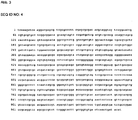
- SEQ ID NO: 4 shows 1014 bp of the coding nucleotide sequence for the Fe / S-oxidoreductase from DSM 18028.
- the strain DSM 18028 was cultured on mineral salt medium (MSM) in the presence of a vitamin mixture.
- the medium contained (in mg / l): NH 4 Cl, 350; KH 2 PO 4 , 340; K 2 HPO 4 , 485; CaCl 2 * 6 H 2 O, 27; MgSO 4 .7H 2 O, 71.2, and 1 ml / l trace salt stock solution.
- the trace salt stock solution contained (in g / l): FeSO 4 .7H 2 O, 4.98; Cu-SO 4 * 5H 2 O, 0.785; CoCl 2 , 5; MnSO 4 * 4H 2 O, 0.81; ZnSO 4 .7H 2 O, 0.44; Na 2 MoO 4 * 2 H 2 O, 0.25.
- the concentration of vitamin in the medium was (in ⁇ g / l): biotin, 20; Folic acid, 20; Pyridoxine HCl, 100; Thiamine HCl, 50; Riboflavin, 50; Nicotinic acid, 50; DL-Ca-pantothenate, 50; p-aminobenzoic acid, 50; Lipoic acid, 50, and cobalamin, 50.
- the growth substrate used was succinate at a concentration of 3 g / l.
- the cultivation was continuous or discontinuous. In the case of continuous cultivation, tert -butyl alcohol (TBA) was additionally fed in a concentration of 0.2 g / l.
- the culture was immediately further used or added to the culture following growth on succinate to induce the monooxygenase activity TBA at a concentration of 0.2 g / l and the culture was incubated for a further 5 h.
- the strain DSM 18028 was pre-cultured on a medium as indicated in Example 1, but in the presence of 760 mg / l NH 4 Cl. After culturing, the suspension was prepared for subsequent product formation phase as indicated above in phosphate buffer.
- TSA tert -butyl alcohol
- the strain DSM 18028 was precultivated on a medium as indicated in Example 2. After culturing, the suspension was prepared for subsequent product formation phase as indicated above in phosphate buffer.
- This suspension was added methyl tert-butyl ether (MTBE) in a concentration of 10 mM and 1 g / l succinate and the mixture was incubated in a gas-tight vessel at 30 ° C under the conditions given in Example 1. After 24 h, 2.4 mM 2-methyl-1,2-dihydroxypropane were formed under these conditions.
- MTBE methyl tert-butyl ether
- the strain DSM 18028 was precultivated on a medium as indicated in Example 2. After culturing, the suspension was prepared for subsequent product formation phase as indicated above in phosphate buffer.
- Ethyl tert-butyl ether (ETBE) in a concentration of 10 mM and 1 g / l succinate was added to this suspension and the batch was incubated in a gas-tight vessel at 30 ° C. under the conditions given in Example 1. After 24 hours, 2.7 mM 2-methyl-1,2-dihydroxypropane were formed under these conditions.
- the strain DSM 19669 was pre-cultured on a medium as indicated in Example 2. After culturing, the suspension was prepared for subsequent product formation phase as indicated above in phosphate buffer.
- This suspension was added tert -butyl alcohol (TBA) in a concentration of 10 mM and 1 g / l succinate and the mixture was incubated in a gas-tight vessel at 30 ° C under the conditions given in Example 1. After 24 hours, 4.1 mM 2-methyl-1,2-dihydroxypropane was formed under these conditions.
- TSA tert -butyl alcohol
Landscapes
- Chemical & Material Sciences (AREA)
- Life Sciences & Earth Sciences (AREA)
- Organic Chemistry (AREA)
- Health & Medical Sciences (AREA)
- Engineering & Computer Science (AREA)
- Zoology (AREA)
- Wood Science & Technology (AREA)
- Genetics & Genomics (AREA)
- Bioinformatics & Cheminformatics (AREA)
- General Health & Medical Sciences (AREA)
- Microbiology (AREA)
- Biochemistry (AREA)
- Biotechnology (AREA)
- General Engineering & Computer Science (AREA)
- Medicinal Chemistry (AREA)
- Molecular Biology (AREA)
- Biomedical Technology (AREA)
- General Chemical & Material Sciences (AREA)
- Chemical Kinetics & Catalysis (AREA)
- Micro-Organisms Or Cultivation Processes Thereof (AREA)
- Enzymes And Modification Thereof (AREA)
- Preparation Of Compounds By Using Micro-Organisms (AREA)
- Organic Low-Molecular-Weight Compounds And Preparation Thereof (AREA)
Description
- Die Erfindung betrifft ein enzymatisches Verfahren zur Herstellung von 2-Methyl-1,2-dihydroxypropan aus Verbindungen, die einen tert-Butylrest aufweisen und die unter Verwendung eines Enzymsystems, das die enzymatische Aktivität einer Monooxygenase besitzt, zum Zielprodukt umgewandelt werden. Vorzugsweise betrifft die Erfindung einen biotechnologischen Prozess zur Produktion von 2-Methyl-1,2-dihydroxypropan, wobei Mikroorganismen, die die gewünschte Monooxygenase-Aktivität besitzen oder produzieren, in einem wässrigen System kultiviert werden und die tert-Butylverbindungen, wie z.B. den tert-Butylrest in Methyl-tert-butylether (MTBE), Ethyl-tert-butylether (ETBE), tert-Amyl-methylether (TAME), tert-Butoxymethanol und/oder tert-Butylalkohol (TBA) ggf. über Zwischenprodukte zur entsprechenden Zielverbindung umwandeln. Vorzugsweise wird tert-Butylalkohol (TBA) als Substrat verwendet.
- 2-Methyl-1,2-dihydroxypropan (2M12DHP), und daraus abgeleitete Folgeprodukte sind von Interesse für die chemische Industrie. So ist z.B. Propan-1,2-diol eine technisch bedeutende ölige, farblose, fast geruchlose, hygroskopische, viskose Flüssigkeit. Die Synthese von 1,2-Propandiol kann auch mittels mikrobieller Aktivitäten erfolgen. Die Hauptanwendung von Propan-1,2-diol liegt in der Herstellung von Alkyd- und Polyesterharzen (Kunststoffe und Faserglas im Automobil- und Schiffbau und in Konstruktionen, Lackrohstoffe) und als Weichmacher für Vinylharze. Es dient als Starter zur Herstellung von Polyurethanen, als Vernetzer für Polymere und als Reagenz zur Polymermodifikation. Propan-1,2-diol wird in Desinfektionsmitteln, Detergenzien und Reinigungsmitteln genutzt. Die Verbindung wird in Kosmetika als Trägersubstanz in verschiedenen Salben, Cremes und Arzneimitteln genutzt. Propan-1,2-diol (E 1520) ist begrenzt zugelassen als Lebensmittelzusatzstoff und ist zugelassen als Extraktionslösemittel für die Herstellung von Aromen aus natürlichen Aromaträgern.
- 2-Methyl-1,2-dihydroxypropan (2M12DHP) und daraus abgeleitete Folgeprodukte führen auch zu optisch aktiven Verbindungen (
EP1 550 730 A1 ) oder sind Vorstufen für solche. Die optisch aktiven (R)-( -)- und (S)-(+)-Formen finden als chiraler Baustein in organischen Synthesen Verwendung und sind Testsubstrate für die Entwickung von Trennmethoden für Enantiomere. Durch Veresterung und/oder Veretherung einer oder beider Hydroxy-Gruppen von Propan-1,2-diol lassen sich zahlreiche als Lösemittel, Weichmacher, Verdickungsmittel oder Emulgatoren verwendbare Produkte gewinnen. Methyl-tert.butylether (MTBE) und verwandte Verbindungen wie Ethyl-tert.butylether (ETBE) und tert.-Amyl-methylether (TAME) werden seit den 80-iger Jahren des vorigen Jahrhunderts als sog. Oxygenate zur Erhöhung der Oktanzahl in Kraftstoffen eingesetzt. Der intensive Umgang mit diesen Verbindungen hat zu einer Belastung der Umwelt geführt. Möglichkeiten für eine Entlastung von Kontaminationen werden wegen seiner Universalität und Versatilität im Allgemeinen im metabolischen Potenzial von Mikroorganismen gesehen. MTBE und verwandte Substanzen erweisen sich allerdings als rekalzitrant. Folgerichtig ist der wachstumsgekoppelte Abbau von MTBE und anderen Oxygenaten trotz intensiver Suche auf wenige Bakterienstämme beschränkt geblieben. Diese sind im Wesentlichen Methylibium petroleiphilum PM1, Methylibium sp. R8, Hydrogenophaga flava ENV735, Mycobacterium austroafricanum IFP2012 und IFP2015und Variovorax paradoxus CL-8. Es gibt im Weiteren einige weniger intensive untersuchte Stämme, die metabolische Aktivitäten gegen MTBE zeigen - Der Stoffwechsel von MTBE ist allerdings nur teilweise aufgeklärt. Der Abbau beginnt prinzipiell mit einer Spaltung der Etherbindung, dafür kommt ein Monooxygenase-Mechanismus in Frage. Für Rhodococcus ruber IFP2001 bzw. Aquincola tertiaricarbonis L108 wird dieser Schritt durch ein P450-abhängiges Enzym katalysiert, codiert durch die Gene ethABCD. Das aus der Spaltung resultierende tert-Butoxymethanol führt über chemische Dismutation oder eine entspr. Dehydrogenase zu tert-Butylalcohol (TBA). Dieses Intermediat findet man häufig in MTBE abbauenden Kulturen, d.h., dass der Schritt in der weiteren Metabolisierung dieser Verbindung unter diesen Umständen geschwindigkeitsbestimmend ist.
- Kürzlich konnte in Mycobacterium austroafricanum IFP2012 gezeigt werden, dass AlkB, die typische und weit verbreitet n-Alkan Monooxygenase in Gegenwart von TBA indiziert wird (Lopez Ferreira et al. Appl. Microbiol. Biotechnol. 2007, 75, 909-919). AlkB als allgemeine n-Alkan Monooxygenase verfügt bekanntlich über ein weites Substratspektrum. Die Substratspezifität von AlkB-typischen Enzymen ist allerdings variabel. Die Wachstums- bzw. Umsatzraten von Stamm IFP2012 für TBA sind allerdings gering, die maximale spezifische Wachstumsrate µmax liegt bei nur 0.039 h-1. Die Tatsache, dass die Umsatzraten so klein sind, spricht dafür, dass es sich um eine unspezifische Reaktion des Enzyms handelt. Für einen anderen grampositiven Stamm konnte ein µmax auf TBA von 0.032 h-1 ermittelt werden, zu den beteiligten Enzymen gibt es keine Angaben. Für Variovorax paradoxus CL-8 werden ähnlich kleine Raten von µmax = 0.042 h-1 erhalten (Zaitsev et al. 2007, Appl. Microbiol. Biotechnol. 74:1092). Auch hier ist das den initialen Schritt katalysierende Enzym unbekannt. Für andere Stämme gibt es bezüglich des beteiligten Enzyms keine und betreffs der realisierten Substratumsätze wenige weitere verwertbare Angaben.
- Da TBA in großen Mengen verfügbar ist, besteht das Ziel darin, es als Ausgangssubstanz effizient zu nutzen. Die über AlkB katalysierten Enzymaktivitäten (wie in Stamm IFP2012 gezeigt) sind allerdings zu klein, um Prozesse zur Konversion von TBA mit hinreichend hoher Produktivität zu gewährleisten.
- Der Erfindung lag deshalb die Aufgabe zugrunde, nach einem TBA-oxidierenden Enzym zu suchen, das hohe Umsatzraten gewährleistet sowie ein Verfahren zur Herstellung von 2-Methyl-1,2-dihydroxypropan bereitzustellen, das TBA nutzen kann.
- Die Aufgabe wird durch ein Verfahren zur enzymatischen Herstellung von 2-Methyl-1,2-dihydroxypropan gelöst, das dadurch gekennzeichnet ist, dass man mindestens eine Verbindung mit einem tert-Butylrest in einer wässrigen Reaktionslösung, die ein Enzymsystem aufweist und/oder dieses produziert, das mindestens eine der SEQ ID No. 1 und SEQ ID No. 2 und/oder deren zu mindestens 50% Homologen umfasst und Monooxygenase-Aktivität besitzt, inkubiert und anschließend das entsprechend umgewandelte 2-Methyl-1,2-dihydroxypropan gewinnt, wobei das die Monooxygenase-Aktivität aufweisende Enzymsystem ein isoliertes Enzym, ein isoliertes oligomeres Enzymsystem und/oder ein Mikroorganismus oder ein Rohextrakt davon ist, der das Enzymsystem aufweist bzw. produziert.
- Als Verbindungen mit tert-Butylrest werden bevorzugt Methyl-tert-butylether (MTBE), Ethyl-tert-butylether (ETBE), tert-Amyl-methylether (TAME), tert-Amylalkohol (TAA), tert-Butoxymethanol und/oder tert-Butylalkohol (TBA) verwendet.
- Das erfindungsgemäß eingesetzte Enzymsystem besitzt Monooxygenase-Aktivität und weist das Protein mit der Sequenz SEQ ID No. 1 und das Protein mit der SEQ ID No. 2 auf und/oder eines dieser Proteine in Kombination mit einem jeweiligen zu mindestens 50% Homologen und/oder entsprechende Homologe von Protein 1 und Protein 2, wobei das Protein 1 eine Phthalatdioxygenase darstellt und Mono-Hydroxylase-Aktivität besitzt und das Protein 2 Fe/S-Oxidoreduktase-Aktivität besitzt. Wesentlich ist, dass die Homologen die gleichen Eigenschaften besitzen.
- In einer bevorzugten Ausführungsvariante der Erfindung ist das Verfahren ein biotechnologisches Verfahren, wobei Mikroorganismen kultiviert werden, die ein oder mehrere Gene enthalten, die ein oder mehrere Enzyme der SEQ ID No. 1 und 2 und/oder deren zu mindestens 50% Homologen mit Monooxygenase-Aktivität produzieren oder die diese Enzyme aufweisen, wobei sie in wässrigen Systemen die Umwandlung in 2-Methyl-1,2-dihydroxypropan bewirken.
- Insbesondere werden Mikroorganismen eingesetzt, die ein Protein codieren, das als oligomeres Enzym zusammengesetzt aus zwei verschiedenen Untereinheiten die unter SEQ. ID Nr. 1 und SEQ ID Nr. 2 angegebenen Aminosäuresequenzen oder deren zu mindestens 50% Homologen aufweisen.
- Bevorzugt wird TBA als Substrat eingesetzt direkt oder als Produkt des Abbaus einer der anderen Verbindung mit tert-Butylrest. Dabei handelt es sich vorzugsweise um Methyl-tert-butylether (MTBE), Ethyl-tert-butylether (ETBE), tert-Amyl-methylether (TAME), tert-Amylalkohol (TAA), oder tert-Butoxymethanol, wobei dann in Folge eine Methylgruppe von TBA zur Umwandlung in 2-Methyl-1,2-dihydroxypropan oxidiert wird.
- Bevorzugt eingesetzte Mikroorganismen sind Bakterienstamm HCM-10 (DSM 18028), Ideonella sp. L108 (DSM 18260) oder Methylibium sp. R8 (DSM 19669). Mit diesen Stämmen wurden bevorzugt geeignete biologische Systeme gefunden. Stamm HCM-10 wurde gemäß Budapester Vertrag über die Hinterlegung von Mikroorganismen für die Zwecke von Patentverfahren bei der Deutschen Sammlung von Mikroorganismen und Zellkulturen GmbH, Braunschweig, DE unter der Nr. DSM 18028 am 03.03.2006 hinterlegt; Stamm Ideonella sp. L108 wurde am 28.04.2006 bei der Deutschen Stammsammlung für Mikroorganismen und Zellkulturen in Braunschweig, DE unter der Nummer DSM 18260 hinterlegt, und Stamm Methylibium sp. R8 wurde am 04.09.2007 bei der Deutschen Stammsammlung für Mikroorganismen und Zellkulturen in Braunschweig, DE unter der Nummer DSM 19669 hinterlegt.
- Es wurde überraschend gefunden, dass, wenn insbesondere die genannten Stämme mit einem identischen bzw. ähnlichen Enzym auf TBA oder einem anderen Substrat mit tertiärem Kohlenstoffatom wie z.B. MTBE oder ETBE inbubiert werden, es zu einer Ausscheidung von 2M12DHP aus der Zelle und der Akkumulation im Medium kommt. Die Anwesenheit der oben genannten Substrate führt zur Induktion einer so genannten "TBA-Monooxygenase" für den Fall, dass das betreffende Gen nicht konstitutiv exprimiert wird. Das trifft z.B. für Stamm L108 zu. Der weitere Verlauf der Inkubation des Enzyms, das nach wie vor als ganze Zelle, als Zellextrakt oder als angereichertes oder gereinigtes Enzymsystem vorliegen kann, so gesteuert wird, dass die Umsetzung des Substrates, im speziellen Fall von TBA unvollständig in dem Sinne ist, dass das gewünschte Zielsubstrat, das 2M12DHP, in der Inkubationsflüssigkeit anreichert wird und in geeigneter Weise gewonnen werden kann. Zur Erreichung dieses Ziel bzw. zur Steigerung der Ausbeute können auch Enzyme gehemmt oder ausgeschaltet werden, die 2M12DHP weiter umsetzen können. Beispielsweise sei das als Sulfolactat-Dehydrogenase [L-sulfolactate dehydrogenase (EC:1.1.1.-)] ausgewiesene Protein YP_001023561 (Mpe_B0558), das zu 100% identisch zu einem PM1 annotierten Protein ist, genannt.
- Der Inkubationsansatz kann weitere Aktivitätskomponenten enthalten. Insbesondere ist bei Einsatz von subzellulären Systemen die Regenerationskapazität für Reduktionsäquivalente zu berücksichtigen, die für die Monooxygenase-Funktion verbraucht werden und über geeignete Systeme und aus geeigneten Quellen regeneriert werden müssen.
- Die bevorzugt genannten Stämme sind demzufolge eine Quelle für ein geeignetes Enzymsystem zur Konversion von TBA in 2M12DHP. Z.B. der Stamm DSM 18028 wächst mit Raten von µmax = 0.1 h-1 auf TBA. Diese Rate führt über die Ausbeute auf TBA von ca. 35 g/mol zu TBA Umsatzraten, die sich auf bis zu 210 mmol/h*g Biomasse belaufen.
- Die Reaktionsbedingungen (pH-Wert, Ionenkonzentration, Sauerstoff/ Kohlendioxidbedarf, Spurenelemente, Temperaturen und ähnliches) werden dabei selbstverständlich so gewählt, dass die Mikroorganismen zu einer optimalen Umsetzung von TBA zu 2-Methyl-1,2-dihydroxypropan befähigt sind. Stamm DSM 18028 oder DSM 18260 zeigen z.B. vorzugsweise Aktivitäten im pH-Bereich von 5,0 bis 9,0, bevorzugt zwischen 5,5 und 8,5. Der Temperaturbereich für die Aktivität dieser Stämme liegt bevorzugt zwischen 5°C und 40°C, besonders bevorzugt zwischen 22°C und 37°C und ganz besonders bevorzugt bei 30°C. Unter diesen Verfahrensbedingungen kann das Enzymsystem im natürlichen Mikro-Milieu, also innerhalb der Zelle, eine höhere Stabilität und Effektivität aufweisen als das isolierte Enzym. Darüber hinaus kann unter geeigneten Bedingungen eine Zellvermehrung und somit eine Erhöhung der EnzymKonzentration möglich sein. Somit bedeutet die enzymatische Umsetzung mittels Mikroorganismen ggf. einen bedeutenden Vorteil, was Zuverlässigkeit, Automatisierung und Einfachheit sowie Qualität und Ausbeute des Endproduktes des Verfahrens angeht.
- Für die erfindungsgemäße enzymatische Umsetzung ist es auch möglich, das Enzymsystem in gereinigter, angereicherter und/oder isolierter Form in die Reaktionslösung einzubringen, wobei die Enzyme z.B. natürlichen Ursprungs sein können. Selbstverständlich können die Enzyme auch rekombinant hergestellte Enzyme aus einem gentechnisch veränderten Organismus sein.
- Die Enzyme werden im erfindungsgemäßen Verfahren im Sinne der Erfindung als Katalysatoren sowohl in Form von intakten mikrobiellen Zellen als auch in Form von permeabilisierten mikrobiellen Zellen eingesetzt. Weitere Einsatzmöglichkeiten bestehen in Form von Komponenten (eine oder mehrere) aus mikrobiellen Zellextrakten, aber auch in partiell gereinigter oder gereinigter Form. Gegebenenfalls werden weitere Enzyme, z.B. eine Formiat-Dehydrogenase erfindungsgemäß eingesetzt. Die enzymatischen Katalysatoren können immobilisiert sein oder an ein gelöstes oder ungelöstes Trägermaterial angeheftet sein.
- In einer bevorzugten Ausführungsvariante werden bestimmte Zellkompartimente oder Teile davon voneinander getrennt oder vereinigt, das heißt, Kohlenhydratstrukturen, Lipide oder Proteine und/oder Peptide sowie Nukleinsäuren, die in der Lage sind, die Monooxygenase-Aktivität aufweisende Einheit positiv oder negativ zu beeinflussen, können kombiniert oder getrennt werden. Um eine solche Beeinflussung bewusst zu nutzen, werden aus den Mikroorganismen z.B. fachgemäß Rohextrakte hergestellt, welche ggf. zentrifugiert werden um eine erfindungsgemäße Umsetzung mit dem Sediment oder dem Überstand durchführen zu können.
- Unter Verwendung dieser bevorzugten biologischen Systeme konnte eine besonders gute Ausbeute an 2-Methyl-1,2-propandiol erzielt werden. Jedoch ist die enzymatische Umsetzung durch Mikroorganismen keinesfalls auf diesen Stamm beschränkt. Sämtliche Organismen, die in der Lage sind, TBA in 2-Methyl-1,2-propandiol umzuwandeln, können erfindungsgemäß eingesetzt werden.
- Dabei kann es sich um Mikroorganismen handeln, die zum einen über das gleiche Gen bzw. Genprodukt verfügen oder zum anderen ein analoges Gen besitzen, welches zu Genprodukten mit ähnlicher oder analoger Aktivität führt. Ebenso schließt die Erfindung transformierte Systeme, die eine oder eine ähnliche Monooxygenase-Aktivität wie die Stämme HCM-10, L108 oder R8 oder die anderer Herkunft besitzen, mit ein. Dazu können Mutanten, gentechnisch geänderte sowie isolierte Abwandlungen der Mikroorganismen zählen, z.B. Organismen, die aufgrund des Einführens einer Monooxygenase-codierenden Nukleotidsequenz die gewünschte Monooxygenase-Aktivität aufweisen.
- Die erfindungsgemäß verwendeten Stämme produzieren bevorzugt die Proteine mit den Sequenzen SEQ ID NO: 1 und/oder SEQ ID NO: 2 bzw. umfassen die Nukleinsäuresequenzen SEQ ID NO: 3 und/oder SEQ ID NO: 4. Im Sinne der Erfindung können die genannten Proteine auch in angereicherter, isolierter oder synthetisch hergestellter Form eingesetzt werden.
- In einer weiteren bevorzugten Ausführungsvariante der Erfindung werden die Enzym-Katalysatoren, insbesondere Mikroorganismen, Rohextrakte, Teile davon und/oder die angereicherten oder isolierten Enzyme immobilisiert eingesetzt. Durch die Immobilisierung werden Enzyme, Zellorganellen und Zellen in einen unlöslichen und reaktionsraumbegrenzten Zustand versetzt. So können sie z.B. in einer Polymer-Matrix immobilisiert werden (z. B. Alginat-, Polyvinylalkohol- oder Polyacrylamid-Gele). Eine Immobilisierung kann auch auf gelösten oder ungelösten Trägermaterialien (z. B. Celit) zur Erleichterung der Katalysator-Wiedergewinnung und -benutzung erfolgen. Methoden zur Zell-Immobilisierung in einer Polymer-Matrix oder auf einem gelösten oder ungelösten Träger sind dem Fachmann bekannt und bereits ausführlich beschrieben worden. Die Enzymaktivitäten können ebenfalls aus den mikrobiellen Zellen isoliert werden. Diese können dann direkt als Katalysator oder in einer Polymer-Matrix oder auf einem gelösten oder ungelösten Träger immobilisiert eingesetzt werden. Die dazu nötigen Methoden sind dem Fachmann bekannt und beschrieben z.B. in Methods in Biotechnology, Bd. 1: Immobilization of enzymes and cells, Herausgeber: G. F. Bickerstaff, Humana Press, Totowa, New Jersey, 1997.
- Die Umwandlung von TBA in 2-Methyl-1,2-dihydroxypropan erfolgt bevorzugt im Rahmen eines kontinuierlichen Verfahrens, welches in einem durchströmten Reaktor durchgeführt werden kann, in dem mikrobielles Wachstum und somit die Produktbildung stattfindet. Unter einem kontinuierlichen Verfahren kann jedoch auch jedes System wachsender Zellen und katalysierender Enzyme verstanden werden, dem einerseits Nährlösung zugeführt wird und aus dem andererseits Kulturlösung, einschließlich enzymatisch gebildeten Zielprodukts abgezogen wird. Erfindungsgemäß kann das Verfahren auch als semikontinuierliches oder Batch-Verfahren durchgeführt werden.
- In einer ganz besonderen Ausführung der Erfindung wird zur Kultivierung TBA als einziges Kohlenstoffsubstrat in einem Basalmedium eingesetzt.
- In Rahmen der Erfindung werden die einen tert-Butylrest tragenden Substrate als Konversionssubstrat bezeichnet, weitere Substrate, die gegebenenfalls zum Einsatz kommen, dienen als Wachstumssubstrate oder als auxiliare Substrate.
- So kann die Kultivierung der Mikroorganismen in Gegenwart von weiteren Zusatzstoffen erfolgen. Die Kultivierung erfolgt z.B. in Gegenwart von einem Zucker, einer organischen Säure, einem Alkohol oder einem Kohlenwasserstoff als einziger Kohlenstoff- und Energiequelle in einem Basalmedium oder auch in Gegenwart eines Gemisches von unterschiedlichen Substraten, bestehend aus Zuckern, organischen Säuren, Alkoholen und/oder Kohlenwasserstoffen in variabler Zusammensetzung. Dabei kann das Verfahren so durchgeführt werden, dass nach Kultivierung auf einem Zucker, einer organische Säure, einem Alkohol oder einem Kohlenwasserstoff als einziger Kohlenstoff- und Energiequelle oder einem Gemisch von diesen Substanzen in einem Basalmedium zur Induktion der erfindungsgemäß verwendeten Monooxygenase die tert-Butylverbindung, vorzugsweise TBA oder eine andere, ein tertiäres C-Atom tragende Verbindung oder ein Gemisch von solchen Verbindungen zugesetzt wird, wobei nach der Induktion die Umsetzung der ein tertiäres C-Atom tragenden Verbindung, vornehmlich TBA, in 2-Methyl-1,2-dihydroxypropan erfolgt.
- In einer weiteren Ausführungsvariante der Erfindung werden die ein tertiäres Kohlenstoff-Atom tragenden Substrate oder derartige Substratgemische vorzugsweise simultan mit dem oder den anderen weiteren Substraten oder Substratgemischen kultiviert.
- Die Kultivierung erfolgt diskontinuierlich, semikontinuierlich oder kontinuierlich. Bevorzugt wird das Mischungsverhältnis zwischen Wachstumssubstrat und Konversionssubstrat variiert. Bevorzugt wird ein definiertes Mischungsverhältnis zwischen Wachstumssubstrat und Konversionssubstrat eingestellt, welches eine hohe Produktivität für die Bildung von 2-Methyl-1,2-dihydroxypropan gewährleistet. Das Mischungsverhältnis ist abhängig von Reduktionsgrad des Wachstumssubstrates und der Effizienz der E-nergiewandlung, d.h. auch der Freisetzung von Reduktionsäquivalenten [H2] im Stoffwechsel, wobei [H2] bevorzugt NADH + H+ und/oder NADPH + H+ darstellen. Die Effizienz und das daraus abgeleitete Mischungsverhältnis wird deshalb pro C-Atom als [H2]pro C-mol angegeben und eingesetzt und errechnet sich aus den allgemein bekannten Stoffwechselwegen für die einzelnen Wachstumssubstrate (Babel und Müller 1985; J. Gen Microbiol 131:39), wobei pro C-mol mindestens 1 Reduktionsäquivalent freigesetzt wird. Bevorzugt liegt das Verhältnis für [H2]pro C zu einem Molekül des Konversionssubstrates zwischen 1 zu 1 bis 1 zu 0,01, besonders bevorzugt zwischen 1 zu 0,5 bis 1 zu 0,1.
- In einer Ausführungsvariante wird ETBE als Ausgangssubstrat eingesetzt. Durch Spaltung der Etherbindung wird Acetat freigesetzt, aus dessen weiterer Metabolisierung Reduktionsäquivalente hervorgehen, die als Cosubstrat für die TBA Monooxygenase genutzt werden können und zur Umsetzung von TBA in 2-Methyl-1,2-dihydroxypropan führen.
- In einer weiteren Ausführungsvariante wird das Verfahren mit stationären Kulturen (nicht nachwachsenden Zellen) ohne Wachstumssubstrate durchgeführt. Zur Regenerierung von Reduktionsäquivalenten kann gegebenenfalls ein auxiliares Substrat zugesetzt werden, wobei vorzugsweise zur Regenerierung von Reduktionsäquivalenten Ameisensäure oder deren Salze zugesetzt werden.
- Zur Verwertung der auxiliaren Substrate werden gegebenenfalls entsprechende Gene kloniert, die exprimiert werden und zum Umsatz dieser Substrate über die entsprechenden Enzyme führen. So besitzt z.B. Stamm DSM18028 oder DSM 18260 keine wesentliche Formiat Dehydrogenase Aktivität, soll dieses Substrat eingesetzt werden, kann das Gen problemlos kloniert werden. Formiat ist deshalb zu bevorzugen, da nach der Konversion nur CO2 entsteht, welches eine Produktreinheit nicht beeinträchtigt.
- Das ins Medium ausgeschiedene 2-Methyl-1,2-dihydroxypropan wird in geeigneter Weise gewonnen, z.B. über fraktionierte Destillation.
- Das Verfahren kann aerob, vorzugsweise beim Einsatz ganzer Zellen, durchgeführt werden oder auch micro-aerob, z.B. unter Stickstoffbegasung, vorzugsweise wenn Extrakte oder gereinigte Enzyme verwendet werden, wobei in diesem Falle die Sauerstoffbereitstellung im Sinne einer Substratzufuhr gesteuert wird.
- Es hat sich gezeigt, dass das erfindungsgemäß eingesetzte Enzymsystem bevorzugt ein heterodimeres Protein darstellt, welches die unter SEQ ID No. 1 und SEQ ID Nr. 2 beschriebenen Untereinheiten umfasst bzw. daraus besteht und so eine hervorragende Enzymaktivität besitzt. Es hat sich gezeigt, dass Enzyme/Enzymsysteme mit mindestens 50% Sequenzhomologie eine ebenfalls hervorragende gewünschte Enzymaktivität besitzen. Die verwendeten Proteine können aus natürlichen Quellen isoliert werden, vorzugsweise aus DSM 18028, DSM 18260 oder DSM 19669 oder sie können nach bekannten Verfahren synthetisiert werden.
- Homologie bedeutet dabei eine Sequenzidentität von mindestens 40%, insbesondere eine Identität von mindestens 60%, vorzugsweise über 80% und besonders bevorzugt über 90%, 95%, 97% oder 99% auf Nukleinsäureebene. Dabei weisen die codierten Enzyme eine Sequenzidentität zu den angegebenen Aminosäuresequenzen von mindestens 50%, vorzugsweise von mindestens 60% bzw. 80%, besonders bevorzugt von mindestens 95%, ganz besonders bevorzugt mindestens 97% oder 99% auf Aminosäureebene auf. Die Abweichungen können dabei durch Deletion, Substitution, Insertion oder Rekombination entstanden sein. Es kann sich dabei um natürlich auftretende Variationen handeln, beispielsweise um Sequenzen aus anderen Organismen, oder um Mutationen, wobei diese Mutationen auf natürliche Weise auftreten können oder durch gezielte Mutagenese (UV-Strahlen, Röntgenstrahlen, chemische Mittel oder weitere). Ferner kann es sich bei den Varianten um synthetisch hergestellte Sequenzen handeln. Diese Varianten weisen bestimmte gemeinsame Charakteristika auf, wie z.B. Enzymaktivität, aktive Enzymkonzentration, Untereinheiten, funktionelle Gruppen, konservierte Sequenzen bzw. Sequenzmotive, immunologische Reaktivität, Konformation und/oder physikalische Eigenschaften, wie das Laufverhalten in Gelelektrophorese, chromatographisches Verhalten, Löslichkeit, Sedimentationskoeffizienten, pH-Wert-Optimum, Temperatur-Optimum, spektroskopische Eigenschaften, Stabilität und/oder andere.
- SEQ ID NO: 1 zeigt die Phthalatdioxygenase mit Hydroxylase-Aktivität mit 470 Aminosäuren (große Untereinheit des Enzymsystem mit der enzymatischen Aktivität einer Monooxygenase) aus DSM 18028.
- SEQ ID NO: 2 zeigt die 337 AS umfassende Sequenz mit Fe/S-Oxidoreduktase-Aktivität (kleine Untereinheit des Enzymsystem mit der enzymatischen Aktivität einer Monooxygenase) aus DSM 18028.
- SEQ ID NO: 3 zeigt 1413 bp der codierenden Nukleotidsequenz für die Phthalatdioxygenase aus DSM 18028.
- SEQ ID NO: 4 zeigt 1014 bp der codierenden Nukleotidsequenz für die Fe/S-Oxidoreduktase aus DSM 18028.
- Der Stamm DSM 18028 wurde auf Mineralsalzmedium (MSM) in Gegenwart einer Vitaminmischung kultiviert. Das Medium enthielt (in mg/l): NH4Cl, 350; KH2PO4, 340; K2HPO4, 485; CaCl2 * 6 H2O, 27; MgSO4 * 7 H2O, 71.2, und 1 ml/l Spurensalz-Stammlösung. Die Spurensalz-Stammlösung enthielt (in g/l): FeSO4 * 7 H2O, 4.98; Cu-SO4 * 5 H2O, 0.785; CoCl2, 5; MnSO4 * 4 H2O, 0.81; ZnSO4 * 7 H2O, 0.44; Na2MoO4 * 2 H2O, 0.25. Die Konzentration der Vitamin im Medium betrug (in µg/l): Biotin, 20; Folsäure, 20; Pyridoxin-HCl, 100; Thiamin-HCl, 50; Riboflavin, 50; Nikotinsäure, 50; DL-Ca-Pantothenat, 50; p-Aminobenzoesäure, 50; Liponsäure, 50, und Cobalamin, 50. Als Wachstumssubstrat diente Succinat in einer Konzentration von 3 g/l. Die Kultivierung erfolgte kontinuierlich oder diskontinuierlich. Bei kontinuierlicher Kultivierung wurde zusätzlich tert.-Butylalkohol (TBA) in einer Konzentration von 0,2 g/l zugeführt. Bei diskontinuierlicher Kultivierung wurde die Kultur unmittelbar weiter verwendet bzw. der Kultur im Anschluss an das Wachstum auf Succinat zur Induktion der Monooxygenase-Aktivität TBA in einer Konzentration von 0,2 g/l zugesetzt und die Kultur für weitere 5 h inkubiert.
- Nach kontinuierlicher bzw. diskontinuierlicher Kultivierung wurden die Zellen abgetrennt, gewaschen und mit Phosphatpuffer (50 mM, pH 7,0) auf eine Biomassekonzentration von 0,5 g/l eingestellt. Dieser Suspension wurde tert.-Butylalkohol (TBA) in einer Konzentration von 10 mM zugesetzt und der Ansatz in einem gasdicht verschlossenen Gefäß bei 30°C inkubiert. Das Verhältnis von Flüssig- zu Gasvolumen lag bei 4 zu 1. Als Ausgangsgas diente Raumluft. Nach 24 h wurden unter diesen Bedingungen und unter Einsatz diskontinuierlich kultivierter Zellen 5,2 mM 2-Methyl-1,2-dihydroxypropan gebildet, bei Einsatz kontinuierlich kultivierter und induzierter Zellen wurden nach 24 h Inkubationszeit 5,5 mM 2-Methyl-1,2-dihydroxypropan erhalten, bei Einsatz nicht-induzierter Zellen lag die Konzentration an 2-Methyl-1,2-dihydroxypropan nach 24 h bei 3,9 mM.
- Der Stamm DSM 18028 wurde auf einem Medium wie in Beispiel 1 angegeben vorkultiviert, allerdings in Gegenwart von 760 mg/l NH4Cl. Nach der Kultivierung wurde die Suspension für eine nachfolgende Produktbildungsphase wie oben angeführt in Phosphatpuffer entsprechend aufbereitet.
- Dieser Suspension wurde tert.-Butylalkohol (TBA) in einer Konzentration von 10 mM sowie 1 g/l Succinat zugesetzt und der Ansatz in einem gasdicht verschlossenen Gefäß bei 30°C unter den in Beispiel 1 angegebenen Bedingungen inkubiert. Nach 24 h wurden unter diesen Bedingungen 6,1 mM 2-Methyl-1,2-dihydroxypropan gebildet.
- Der Stamm DSM 18028 wurde auf einem Medium wie in Beispiel 2 angegeben vorkultiviert. Nach der Kultivierung wurde die Suspension für eine nachfolgende Produktbildungsphase wie oben angeführt in Phosphatpuffer entsprechend aufbereitet.
- Dieser Suspension wurde Methyl-tert.-Butylether (MTBE) in einer Konzentration von 10 mM sowie 1 g/l Succinat zugesetzt und der Ansatz in einem gasdicht verschlossenen Gefäß bei 30°C unter den in Beispiel 1 angegebenen Bedingungen inkubiert. Nach 24 h wurden unter diesen Bedingungen 2,4 mM 2-Methyl-1,2-dihydroxypropan gebildet.
- Der Stamm DSM 18028 wurde auf einem Medium wie in Beispiel 2 angegeben vorkultiviert. Nach der Kultivierung wurde die Suspension für eine nachfolgende Produktbildungsphase wie oben angeführt in Phosphatpuffer entsprechend aufbereitet.
- Dieser Suspension wurde Ethyl-tert.-Butylether (ETBE) in einer Konzentration von 10 mM sowie 1 g/l Succinat zugesetzt und der Ansatz in einem gasdicht verschlossenen Gefäß bei 30°C unter den in Beispiel 1 angegebenen Bedingungen inkubiert. Nach 24 h wurden unter diesen Bedingungen 2,7 mM 2-Methyl-1,2-dihydroxypropan gebildet.
- Der Stamm DSM 19669 wurde auf einem Medium wie in Beispiel 2 angegeben vorkultiviert. Nach der Kultivierung wurde die Suspension für eine nachfolgende Produktbildungsphase wie oben angeführt in Phosphatpuffer entsprechend aufbereitet.
- Dieser Suspension wurde tert.-Butylalkohol (TBA) in einer Konzentration von 10 mM sowie 1 g/l Succinat zugesetzt und der Ansatz in einem gasdicht verschlossenen Gefäß bei 30°C unter den in Beispiel 1 angegebenen Bedingungen inkubiert. Nach 24 h wurden unter diesen Bedingungen 4,1 mM 2-Methyl-1,2-dihydroxypropan gebildet.
-
- <110> Helmhotz-Zentrum für Umweltforschung GmbH - UFZ
- <120> Verfahren zur Herstellung von
2-Methyl-1,2-dihydroxypropan - <130> P508807PC
- <140> Neuanmeldung
<141> 2008-09-12 - <150>
DE 10 2007 045 093.3
<151> 2007-09-17 - <160> 4
- <170> PatentIn Ver. 2.1
- <210> 1
<211> 470
<212> PRT
<213> HCM-10 - <400> 1


- <210> 2
<211> 337
<212> PRT
<213> HCM-10 - <400> 2


- <210> 3
<211> 1413
<212> DNA
<213> HCM-10 - <400> 3

- <210> 4
<211> 1014
<212> DNA
<213> HCM-10 - <400> 4

Claims (15)
- Verfahren zur enzymatischen Herstellung von 2-Methyl-1,2-dihydroxypropan dadurch gekennzeichnet, dass man mindestens eine Verbindung mit einem tert-Butylrest in einer wässrigen Reaktionslösung, die ein Enzymsystem aufweist und/oder dieses produziert, das mindestens eine der SEQ ID No. 1 und SEQ ID No. 2 und/oder deren zu mindestens 50% Homologen umfasst und Monooxygenase-Aktivität besitzt, inkubiert und anschließend das entsprechend umgewandelte 2-Methyl-1,2-dihydroxypropan gewinnt, wobei das die Monooxygenase-Aktivität aufweisende Enzymsystem ein isoliertes Enzym, ein isoliertes oligomeres Enzymsystem und/oder ein Mikroorganismus oder ein Rohextrakt davon ist, der das Enzymsystem aufweist bzw. produziert.
- Verfahren nach Anspruch 1, dadurch gekennzeichnet, dass als Verbindungen mit tert-Butylrest Methyl-tert-butylether (MTBE), Ethyl-tert-butylether (ETBE), tert-Amyl-methylether (TAME), tert-Amylalkohol (TAA), tert-Butoxymethanol und/oder tert-Butylalkohol (TBA) verwendet werden.
- Verfahren nach Anspruch 1 oder 2, dadurch gekennzeichnet, dass das Enzymsystem mit Monooxygenase-Aktivität das Protein mit der Sequenz SEQ ID No. 1 und das Protein mit der SEQ ID No. 2 aufweist, und/oder in Kombination mit ihren jeweiligen zu mindestens 50% Homologen, wobei das Protein SEQ ID No. 1 eine Phthalatdioxygenase darstellt und MonoHydroxylase-Aktivität aufweist und das Protein mit SEQ ID No. 2 Fe/S-Oxidoreduktase-Aktivität besitzt, und die Homologen die gleichen Eigenschaften besitzen.
- Verfahren nach einem der Ansprüche 1 bis 3, dadurch gekennzeichnet, dass man Mikroorganismen kultiviert, die ein oder mehrere Gene enthalten, die ein oder mehrere Enzyme der SEQ ID No. 1 und 2 und/oder deren zu mindestens 50% Homologen mit Monooxygenase-Aktivität produzieren oder die diese Enzyme aufweisen, wobei sie in wässrigen Systemen die Umwandlung von der Verbindung(en) mit tert-Butylrest in 2-Methyl-1,2-dihydroxypropan bewirken.
- Verfahren nach einem der Ansprüche 1 bis 4, dadurch gekennzeichnet, dass ein Mikroorganismus eingesetzt wird, der ein Protein codiert, das als oligomeres Enzym zusammengesetzt aus zwei verschiedenen Untereinheiten die unter SEQ. ID Nr. 1 und SEQ ID Nr. 2 angegebenen Aminosäuresequenzen aufweist oder der als prokaryotischer Wirt fungiert, in dem das Gen oder die Gene exprimiert werden, die die unter SEQ. ID Nr. 3 und/oder SEQ ID Nr. 4 angegebene Nucleotidsequenz aufweisen.
- Verfahren nach einem der Ansprüche 1 bis 5, dadurch gekennzeichnet, dass TBA als Substrat eingesetzt oder aus einer der anderen Verbindungen von Anspruch 2 gewonnen oder hergestellt wird, wobei eine Methylgruppe von TBA zur Umwandlung in 2-Methyl-1,2-dihydroxypropan oxidiert wird.
- Verfahren nach einem der Ansprüche 1 bis 6, dadurch gekennzeichnet, dass der Mikroorganismus ausgewählt ist aus dem Bakterienstamm HCM-10 (DSM 18028), Ideonella sp. L108 (DSM18260) oder Methylibium sp. R8 (DSM 19669).
- Verfahren nach einem der Ansprüche 1 bis 7, dadurch gekennzeichnet, dass ganze Zellen der Mikroorganismen, unverändert, permeabilisiert oder trägerfixiert eingesetzt werden.
- Verfahren nach einem der Ansprüche 1 bis 8, dadurch gekennzeichnet, dass Zellextrakte und/oder eine Monooxygenase bzw. ein Monoxygenasesystem nach teilweiser oder vollständiger Isolierung aus den Mikroorganismen, ggf. in gereinigter Form, eingesetzt werden, vorzugsweise zellfreie Rohextrakte der Mikroorganismen.
- Verfahren nach einem der Ansprüche 1 bis 9, dadurch gekennzeichnet, dass zur Kultivierung TBA als einzige Kohlenstoff- und Energiequelle in einem Basalmedium eingesetzt wird.
- Verfahren nach einem der Ansprüche 1 bis 10, dadurch gekennzeichnet, dass zur Kultivierung Wachstumssubstrate zugesetzt werden, vorzugsweise ein Zucker, eine organische Säure, ein Alkohol oder ein Kohlenwasserstoff als einzige oder als zusätzliche Kohlenstoff- und Energiequelle in einem Basalmedium oder ein Gemisch von unterschiedlichen Substraten, bestehend aus Zuckern, organischen Säuren, Alkoholen und/oder Kohlenwasserstoffen.
- Verfahren nach einem der Ansprüche 1 bis 11, dadurch gekennzeichnet, dass die Kultivierung auf einem Wachstumssubstrat bzw. -gemisch vor Zugabe der tert-Butylverbindung oder simultan mit dieser zur Induktion der TBA Monooxygenase durchgeführt wird, wobei nach der Induktion die Umsetzung der das tertiäre C-Atom tragenden Verbindung in 2-Methyl-1,2-dihydroxypropan erfolgt.
- Verfahren nach einem der Ansprüche 1 bis 12, dadurch gekennzeichnet, dass das Mischungsverhältnis zwischen Wachstumssubstrat und Substrat mit tert. Butylverbindung variiert wird, wobei vorzugsweise ein Verhältnis von [H2]pro C-mol und einem Molekül des Konversionssubstrates zwischen 1 zu 1 bis 1 zu 0,01, besonders bevorzugt zwischen 1 zu 0,5 bis 1 zu 0,1 eingesetzt wird, wobei [H2]pro C-mol dem pro C-mol des Wachstumssubstrates über dem Stoffwechsel verfügbar gemachten Reduktionsäquivalenten entspricht und der Quotient [H2]pro C-mol mindestens 1 beträgt.
- Verfahren nach einem der Ansprüche 1 bis 12, dadurch gekennzeichnet, dass als Ausgangssubstrat ETBE eingesetzt wird, wobei das nach Spaltung der Etherbrücke freigesetzte Acetat und seine durch weitere Metabolisierung freigesetzten Reduktionsäquivalente zur Oxidation von TBA in Methyl-1,2-dihydroxypropan genutzt werden oder dass die weitere Umsetzung von 2-Methyl-1,2-dihydroxypropan eingeschränkt bzw. unterbunden wird.
- Verfahren nach einem der Ansprüche 1 bis 10, dadurch gekennzeichnet, dass zur Regenerierung von Reduktionsäquivalenten ein auxiliares Substrat zugesetzt wird, vorzugsweise Ameisensäure oder deren Salze.
Applications Claiming Priority (2)
| Application Number | Priority Date | Filing Date | Title |
|---|---|---|---|
| DE102007045093A DE102007045093A1 (de) | 2007-09-17 | 2007-09-17 | Verfahren zur Herstellung von 2-Mehyl-1,2-dihydroxypropan |
| PCT/EP2008/062217 WO2009037217A1 (de) | 2007-09-17 | 2008-09-15 | Verfahren zur herstellung von 2-methyl-1,2-dihydroxypropan |
Publications (2)
| Publication Number | Publication Date |
|---|---|
| EP2193194A1 EP2193194A1 (de) | 2010-06-09 |
| EP2193194B1 true EP2193194B1 (de) | 2011-03-30 |
Family
ID=40120265
Family Applications (1)
| Application Number | Title | Priority Date | Filing Date |
|---|---|---|---|
| EP08804178A Not-in-force EP2193194B1 (de) | 2007-09-17 | 2008-09-15 | Verfahren zur herstellung von 2-methyl-1,2-dihydroxypropan |
Country Status (4)
| Country | Link |
|---|---|
| EP (1) | EP2193194B1 (de) |
| AT (1) | ATE503831T1 (de) |
| DE (2) | DE102007045093A1 (de) |
| WO (1) | WO2009037217A1 (de) |
Family Cites Families (2)
| Publication number | Priority date | Publication date | Assignee | Title |
|---|---|---|---|---|
| ATE371745T1 (de) | 2004-01-05 | 2007-09-15 | Daiso Co Ltd | Verfahren zur mikrobiologischen herstellung von optisch aktiven 3-chlor-2-methyl-1,2-propandiol |
| FR2888580B1 (fr) * | 2005-07-18 | 2012-11-16 | Inst Francais Du Petrole | Polypeptides ayant une activite dans la voie de degradation du mtbe et leurs utilisations |
-
2007
- 2007-09-17 DE DE102007045093A patent/DE102007045093A1/de not_active Ceased
-
2008
- 2008-09-15 EP EP08804178A patent/EP2193194B1/de not_active Not-in-force
- 2008-09-15 AT AT08804178T patent/ATE503831T1/de active
- 2008-09-15 WO PCT/EP2008/062217 patent/WO2009037217A1/de not_active Ceased
- 2008-09-15 DE DE502008003038T patent/DE502008003038D1/de active Active
Also Published As
| Publication number | Publication date |
|---|---|
| DE102007045093A8 (de) | 2009-07-02 |
| DE502008003038D1 (de) | 2011-05-12 |
| EP2193194A1 (de) | 2010-06-09 |
| WO2009037217A1 (de) | 2009-03-26 |
| DE102007045093A1 (de) | 2009-03-19 |
| ATE503831T1 (de) | 2011-04-15 |
Similar Documents
| Publication | Publication Date | Title |
|---|---|---|
| EP1999264B1 (de) | Verfahren zur enzymatischen herstellung von 2-hydroxy-2-methylcarbonsäuren | |
| JP2001503636A (ja) | 1,3―プロパンジオールの組換え生産方法 | |
| EP3274465B1 (de) | Biokatalytische herstellung von l-fucose | |
| EP2357222A1 (de) | Scyllo-inositol-produzierende zelle und verfahren zur scyllo-inositol-produktion anhand dieser zellen | |
| DE69829962T2 (de) | Enantioselektive epoxidhydrolasen und dafür kodierende gene | |
| EP2977444B1 (de) | Rekombinanter mikroorganismus mit erhöhter produktivität von 2,3-butandiol und verfahren zur herstellung von 2,3-butandiol damit | |
| AT503017A4 (de) | Verfahren zur enantioselektiven enzymatischen reduktion von hydroxyketoverbindungen | |
| DE102008029302B4 (de) | Biotechnologische Herstellung von Acrylsäure | |
| DE10129711A1 (de) | Verfahren zur fermentativen Herstellung von Pyruvat | |
| DE10247147A1 (de) | Verfahren sowie Mikroorganismus zur Herstellung von D-Mannitol | |
| EP2089530B1 (de) | Verfahren zur herstellung von (4s)-3,4-dihydroxy-2,6,6-trimethyl-cyclohex-2-enon und derivaten davon unter verwendung der azoarcus phenylethanol dehydrogenase | |
| DE102007059248A1 (de) | Zelle, welche in der Lage ist, CO2 zu fixieren | |
| EP2193194B1 (de) | Verfahren zur herstellung von 2-methyl-1,2-dihydroxypropan | |
| DE102013204728A1 (de) | Mikroorganismenstamm und Verfahren zur fermentativen Herstellung von C4-Verbindungen aus C5-Zuckern | |
| EP0828841A2 (de) | Verfahren zur gewinnung von acyloinen, dafür geeignete pyruvat-decarboxylase sowie deren herstellung und dna-sequenz des für diese kodierenden pdc-gens | |
| EP1313870B1 (de) | Verfahren zur verbesserten herstellung und isolierung von trans-dihydroxy-cyclohexadien-carbonsäuren und/oder deren folgeprodukte sowie ein dazu geeigneter genetisch veränderter organismus | |
| EP2054510A2 (de) | Verfahren zur herstellung von optisch aktiven hydroxyalkylacetaten durch racematspaltung von 4-hydroxy-2-ketonen unter verwendung von baeyer-villiger monooxygenasen | |
| KR101745079B1 (ko) | 아세테이트 첨가를 통한 2,3-부탄다이올 생산 방법 | |
| KR101763820B1 (ko) | 글리세롤의 생성이 억제된 2,3-부탄다이올이 생산방법 | |
| DE102007045092A1 (de) | Enzymsystem mit der Aktivität einer Monooxygenase und Verfahren zur Oxidation von Methylgruppen in aliphatischen Kohlenwasserstoffen | |
| AT527241A2 (de) | Acetogenic fermentation of carbon monoxide gas | |
| DE10220848A1 (de) | Für eine Mannitol-2-Dehydrogenase codierende Nukleotidsequenz sowie Verfahren zur Herstellung von D-Mannitol | |
| EP3056561A1 (de) | Mikroorganismen mit reduzierter Enzymaktivität | |
| EP4317442A1 (de) | Rekombinanter mikroorganismus zur herstellung von 2,3-butandiol mit reduzierter nebenproduktproduktion und verfahren zur herstellung von 2,3-butandiol unter verwendung davon | |
| EP4678755A1 (de) | Verfahren zur herstellung von einer wässerigen lösung enthaltend d-mannitol |
Legal Events
| Date | Code | Title | Description |
|---|---|---|---|
| PUAI | Public reference made under article 153(3) epc to a published international application that has entered the european phase |
Free format text: ORIGINAL CODE: 0009012 |
|
| 17P | Request for examination filed |
Effective date: 20100407 |
|
| AK | Designated contracting states |
Kind code of ref document: A1 Designated state(s): AT BE BG CH CY CZ DE DK EE ES FI FR GB GR HR HU IE IS IT LI LT LU LV MC MT NL NO PL PT RO SE SI SK TR |
|
| AX | Request for extension of the european patent |
Extension state: AL BA MK RS |
|
| GRAP | Despatch of communication of intention to grant a patent |
Free format text: ORIGINAL CODE: EPIDOSNIGR1 |
|
| DAX | Request for extension of the european patent (deleted) | ||
| RIN1 | Information on inventor provided before grant (corrected) |
Inventor name: ROHWERDER, THORE Inventor name: BENNDORF, DIRK Inventor name: BREUER, UTA Inventor name: SCHAEFER, FRANZISKA Inventor name: VON BERGEN, MARTIN Inventor name: MUELLER, ROLAND H. |
|
| GRAS | Grant fee paid |
Free format text: ORIGINAL CODE: EPIDOSNIGR3 |
|
| GRAA | (expected) grant |
Free format text: ORIGINAL CODE: 0009210 |
|
| AK | Designated contracting states |
Kind code of ref document: B1 Designated state(s): AT BE BG CH CY CZ DE DK EE ES FI FR GB GR HR HU IE IS IT LI LT LU LV MC MT NL NO PL PT RO SE SI SK TR |
|
| REG | Reference to a national code |
Ref country code: GB Ref legal event code: FG4D Free format text: NOT ENGLISH |
|
| REG | Reference to a national code |
Ref country code: CH Ref legal event code: EP |
|
| REG | Reference to a national code |
Ref country code: IE Ref legal event code: FG4D |
|
| REF | Corresponds to: |
Ref document number: 502008003038 Country of ref document: DE Date of ref document: 20110512 Kind code of ref document: P |
|
| REG | Reference to a national code |
Ref country code: DE Ref legal event code: R096 Ref document number: 502008003038 Country of ref document: DE Effective date: 20110512 |
|
| REG | Reference to a national code |
Ref country code: NL Ref legal event code: VDEP Effective date: 20110330 |
|
| PG25 | Lapsed in a contracting state [announced via postgrant information from national office to epo] |
Ref country code: HR Free format text: LAPSE BECAUSE OF FAILURE TO SUBMIT A TRANSLATION OF THE DESCRIPTION OR TO PAY THE FEE WITHIN THE PRESCRIBED TIME-LIMIT Effective date: 20110330 Ref country code: LT Free format text: LAPSE BECAUSE OF FAILURE TO SUBMIT A TRANSLATION OF THE DESCRIPTION OR TO PAY THE FEE WITHIN THE PRESCRIBED TIME-LIMIT Effective date: 20110330 Ref country code: LV Free format text: LAPSE BECAUSE OF FAILURE TO SUBMIT A TRANSLATION OF THE DESCRIPTION OR TO PAY THE FEE WITHIN THE PRESCRIBED TIME-LIMIT Effective date: 20110330 Ref country code: SE Free format text: LAPSE BECAUSE OF FAILURE TO SUBMIT A TRANSLATION OF THE DESCRIPTION OR TO PAY THE FEE WITHIN THE PRESCRIBED TIME-LIMIT Effective date: 20110330 Ref country code: GR Free format text: LAPSE BECAUSE OF FAILURE TO SUBMIT A TRANSLATION OF THE DESCRIPTION OR TO PAY THE FEE WITHIN THE PRESCRIBED TIME-LIMIT Effective date: 20110701 |
|
| LTIE | Lt: invalidation of european patent or patent extension |
Effective date: 20110330 |
|
| PG25 | Lapsed in a contracting state [announced via postgrant information from national office to epo] |
Ref country code: CY Free format text: LAPSE BECAUSE OF FAILURE TO SUBMIT A TRANSLATION OF THE DESCRIPTION OR TO PAY THE FEE WITHIN THE PRESCRIBED TIME-LIMIT Effective date: 20110330 Ref country code: SI Free format text: LAPSE BECAUSE OF FAILURE TO SUBMIT A TRANSLATION OF THE DESCRIPTION OR TO PAY THE FEE WITHIN THE PRESCRIBED TIME-LIMIT Effective date: 20110330 Ref country code: NO Free format text: LAPSE BECAUSE OF FAILURE TO SUBMIT A TRANSLATION OF THE DESCRIPTION OR TO PAY THE FEE WITHIN THE PRESCRIBED TIME-LIMIT Effective date: 20110630 Ref country code: FI Free format text: LAPSE BECAUSE OF FAILURE TO SUBMIT A TRANSLATION OF THE DESCRIPTION OR TO PAY THE FEE WITHIN THE PRESCRIBED TIME-LIMIT Effective date: 20110330 |
|
| REG | Reference to a national code |
Ref country code: IE Ref legal event code: FD4D |
|
| PG25 | Lapsed in a contracting state [announced via postgrant information from national office to epo] |
Ref country code: EE Free format text: LAPSE BECAUSE OF FAILURE TO SUBMIT A TRANSLATION OF THE DESCRIPTION OR TO PAY THE FEE WITHIN THE PRESCRIBED TIME-LIMIT Effective date: 20110330 Ref country code: PT Free format text: LAPSE BECAUSE OF FAILURE TO SUBMIT A TRANSLATION OF THE DESCRIPTION OR TO PAY THE FEE WITHIN THE PRESCRIBED TIME-LIMIT Effective date: 20110801 |
|
| PG25 | Lapsed in a contracting state [announced via postgrant information from national office to epo] |
Ref country code: IS Free format text: LAPSE BECAUSE OF FAILURE TO SUBMIT A TRANSLATION OF THE DESCRIPTION OR TO PAY THE FEE WITHIN THE PRESCRIBED TIME-LIMIT Effective date: 20110730 Ref country code: ES Free format text: LAPSE BECAUSE OF FAILURE TO SUBMIT A TRANSLATION OF THE DESCRIPTION OR TO PAY THE FEE WITHIN THE PRESCRIBED TIME-LIMIT Effective date: 20110711 Ref country code: CZ Free format text: LAPSE BECAUSE OF FAILURE TO SUBMIT A TRANSLATION OF THE DESCRIPTION OR TO PAY THE FEE WITHIN THE PRESCRIBED TIME-LIMIT Effective date: 20110330 Ref country code: RO Free format text: LAPSE BECAUSE OF FAILURE TO SUBMIT A TRANSLATION OF THE DESCRIPTION OR TO PAY THE FEE WITHIN THE PRESCRIBED TIME-LIMIT Effective date: 20110330 Ref country code: SK Free format text: LAPSE BECAUSE OF FAILURE TO SUBMIT A TRANSLATION OF THE DESCRIPTION OR TO PAY THE FEE WITHIN THE PRESCRIBED TIME-LIMIT Effective date: 20110330 |
|
| PG25 | Lapsed in a contracting state [announced via postgrant information from national office to epo] |
Ref country code: NL Free format text: LAPSE BECAUSE OF FAILURE TO SUBMIT A TRANSLATION OF THE DESCRIPTION OR TO PAY THE FEE WITHIN THE PRESCRIBED TIME-LIMIT Effective date: 20110330 |
|
| PG25 | Lapsed in a contracting state [announced via postgrant information from national office to epo] |
Ref country code: IE Free format text: LAPSE BECAUSE OF FAILURE TO SUBMIT A TRANSLATION OF THE DESCRIPTION OR TO PAY THE FEE WITHIN THE PRESCRIBED TIME-LIMIT Effective date: 20110330 |
|
| PLBE | No opposition filed within time limit |
Free format text: ORIGINAL CODE: 0009261 |
|
| STAA | Information on the status of an ep patent application or granted ep patent |
Free format text: STATUS: NO OPPOSITION FILED WITHIN TIME LIMIT |
|
| PG25 | Lapsed in a contracting state [announced via postgrant information from national office to epo] |
Ref country code: PL Free format text: LAPSE BECAUSE OF FAILURE TO SUBMIT A TRANSLATION OF THE DESCRIPTION OR TO PAY THE FEE WITHIN THE PRESCRIBED TIME-LIMIT Effective date: 20110330 Ref country code: DK Free format text: LAPSE BECAUSE OF FAILURE TO SUBMIT A TRANSLATION OF THE DESCRIPTION OR TO PAY THE FEE WITHIN THE PRESCRIBED TIME-LIMIT Effective date: 20110330 |
|
| 26N | No opposition filed |
Effective date: 20120102 |
|
| BERE | Be: lapsed |
Owner name: HELMHOLTZ-ZENTRUM FUR UMWELTFORSCHUNG G.M.B.H. - U Effective date: 20110930 |
|
| PG25 | Lapsed in a contracting state [announced via postgrant information from national office to epo] |
Ref country code: MC Free format text: LAPSE BECAUSE OF NON-PAYMENT OF DUE FEES Effective date: 20110930 |
|
| REG | Reference to a national code |
Ref country code: DE Ref legal event code: R097 Ref document number: 502008003038 Country of ref document: DE Effective date: 20120102 |
|
| PG25 | Lapsed in a contracting state [announced via postgrant information from national office to epo] |
Ref country code: IT Free format text: LAPSE BECAUSE OF FAILURE TO SUBMIT A TRANSLATION OF THE DESCRIPTION OR TO PAY THE FEE WITHIN THE PRESCRIBED TIME-LIMIT Effective date: 20110330 |
|
| REG | Reference to a national code |
Ref country code: FR Ref legal event code: ST Effective date: 20120531 |
|
| PG25 | Lapsed in a contracting state [announced via postgrant information from national office to epo] |
Ref country code: BE Free format text: LAPSE BECAUSE OF NON-PAYMENT OF DUE FEES Effective date: 20110930 |
|
| PG25 | Lapsed in a contracting state [announced via postgrant information from national office to epo] |
Ref country code: FR Free format text: LAPSE BECAUSE OF NON-PAYMENT OF DUE FEES Effective date: 20110930 |
|
| PG25 | Lapsed in a contracting state [announced via postgrant information from national office to epo] |
Ref country code: MT Free format text: LAPSE BECAUSE OF FAILURE TO SUBMIT A TRANSLATION OF THE DESCRIPTION OR TO PAY THE FEE WITHIN THE PRESCRIBED TIME-LIMIT Effective date: 20110330 |
|
| REG | Reference to a national code |
Ref country code: CH Ref legal event code: PL |
|
| GBPC | Gb: european patent ceased through non-payment of renewal fee |
Effective date: 20120915 |
|
| PG25 | Lapsed in a contracting state [announced via postgrant information from national office to epo] |
Ref country code: LU Free format text: LAPSE BECAUSE OF NON-PAYMENT OF DUE FEES Effective date: 20110915 |
|
| PG25 | Lapsed in a contracting state [announced via postgrant information from national office to epo] |
Ref country code: BG Free format text: LAPSE BECAUSE OF FAILURE TO SUBMIT A TRANSLATION OF THE DESCRIPTION OR TO PAY THE FEE WITHIN THE PRESCRIBED TIME-LIMIT Effective date: 20110630 |
|
| PG25 | Lapsed in a contracting state [announced via postgrant information from national office to epo] |
Ref country code: CH Free format text: LAPSE BECAUSE OF NON-PAYMENT OF DUE FEES Effective date: 20120930 Ref country code: LI Free format text: LAPSE BECAUSE OF NON-PAYMENT OF DUE FEES Effective date: 20120930 Ref country code: DE Free format text: LAPSE BECAUSE OF NON-PAYMENT OF DUE FEES Effective date: 20130403 Ref country code: GB Free format text: LAPSE BECAUSE OF NON-PAYMENT OF DUE FEES Effective date: 20120915 |
|
| REG | Reference to a national code |
Ref country code: DE Ref legal event code: R119 Ref document number: 502008003038 Country of ref document: DE Effective date: 20130403 |
|
| PG25 | Lapsed in a contracting state [announced via postgrant information from national office to epo] |
Ref country code: TR Free format text: LAPSE BECAUSE OF FAILURE TO SUBMIT A TRANSLATION OF THE DESCRIPTION OR TO PAY THE FEE WITHIN THE PRESCRIBED TIME-LIMIT Effective date: 20110330 |
|
| PG25 | Lapsed in a contracting state [announced via postgrant information from national office to epo] |
Ref country code: HU Free format text: LAPSE BECAUSE OF FAILURE TO SUBMIT A TRANSLATION OF THE DESCRIPTION OR TO PAY THE FEE WITHIN THE PRESCRIBED TIME-LIMIT Effective date: 20110330 |
|
| REG | Reference to a national code |
Ref country code: AT Ref legal event code: MM01 Ref document number: 503831 Country of ref document: AT Kind code of ref document: T Effective date: 20130915 |
|
| PG25 | Lapsed in a contracting state [announced via postgrant information from national office to epo] |
Ref country code: AT Free format text: LAPSE BECAUSE OF NON-PAYMENT OF DUE FEES Effective date: 20130915 |