EP2199382A2 - Kulturmedium mit Hefe- oder Sojabohnenextrakt als Aminosäurenquelle und ohne Proteinkomplexe tierischer Herkunft - Google Patents
Kulturmedium mit Hefe- oder Sojabohnenextrakt als Aminosäurenquelle und ohne Proteinkomplexe tierischer Herkunft Download PDFInfo
- Publication number
- EP2199382A2 EP2199382A2 EP10002348A EP10002348A EP2199382A2 EP 2199382 A2 EP2199382 A2 EP 2199382A2 EP 10002348 A EP10002348 A EP 10002348A EP 10002348 A EP10002348 A EP 10002348A EP 2199382 A2 EP2199382 A2 EP 2199382A2
- Authority
- EP
- European Patent Office
- Prior art keywords
- medium
- pathogenic bacteria
- proteinaceous material
- animal derived
- bacteria
- Prior art date
- Legal status (The legal status is an assumption and is not a legal conclusion. Google has not performed a legal analysis and makes no representation as to the accuracy of the status listed.)
- Withdrawn
Links
Images





Classifications
-
- C—CHEMISTRY; METALLURGY
- C12—BIOCHEMISTRY; BEER; SPIRITS; WINE; VINEGAR; MICROBIOLOGY; ENZYMOLOGY; MUTATION OR GENETIC ENGINEERING
- C12N—MICROORGANISMS OR ENZYMES; COMPOSITIONS THEREOF; PROPAGATING, PRESERVING, OR MAINTAINING MICROORGANISMS; MUTATION OR GENETIC ENGINEERING; CULTURE MEDIA
- C12N1/00—Microorganisms; Compositions thereof; Processes of propagating, maintaining or preserving microorganisms or compositions thereof; Processes of preparing or isolating a composition containing a microorganism; Culture media therefor
- C12N1/20—Bacteria; Culture media therefor
-
- A—HUMAN NECESSITIES
- A61—MEDICAL OR VETERINARY SCIENCE; HYGIENE
- A61P—SPECIFIC THERAPEUTIC ACTIVITY OF CHEMICAL COMPOUNDS OR MEDICINAL PREPARATIONS
- A61P31/00—Antiinfectives, i.e. antibiotics, antiseptics, chemotherapeutics
- A61P31/04—Antibacterial agents
-
- C—CHEMISTRY; METALLURGY
- C12—BIOCHEMISTRY; BEER; SPIRITS; WINE; VINEGAR; MICROBIOLOGY; ENZYMOLOGY; MUTATION OR GENETIC ENGINEERING
- C12N—MICROORGANISMS OR ENZYMES; COMPOSITIONS THEREOF; PROPAGATING, PRESERVING, OR MAINTAINING MICROORGANISMS; MUTATION OR GENETIC ENGINEERING; CULTURE MEDIA
- C12N1/00—Microorganisms; Compositions thereof; Processes of propagating, maintaining or preserving microorganisms or compositions thereof; Processes of preparing or isolating a composition containing a microorganism; Culture media therefor
- C12N1/20—Bacteria; Culture media therefor
- C12N1/205—Bacterial isolates
-
- C—CHEMISTRY; METALLURGY
- C12—BIOCHEMISTRY; BEER; SPIRITS; WINE; VINEGAR; MICROBIOLOGY; ENZYMOLOGY; MUTATION OR GENETIC ENGINEERING
- C12R—INDEXING SCHEME ASSOCIATED WITH SUBCLASSES C12C - C12Q, RELATING TO MICROORGANISMS
- C12R2001/00—Microorganisms ; Processes using microorganisms
- C12R2001/01—Bacteria or Actinomycetales ; using bacteria or Actinomycetales
- C12R2001/21—Haemophilus
Definitions
- the present invention relates to a medium for cultivating pathogenic bacteria.
- the present invention also relates to the use of the medium to cultivate pathogenic bacteria, obtaining immunogenic factors from the bacteria being cultivated and preparing vaccines using the immunogenic factors.
- Bacterial vaccines are produced by cultivating pathogenic bacteria in a medium, isolating immunogenic factors and preparing vaccines based on the isolated immunogenic factors. Such methods are described in Bacterial Vaccines, 1984, Ed. Rene Germanier Academic Press and Bacterial Vaccines in Advances in Biotechnology Processes, Vol. 13, 1990, Ed. A. Mizrahi, Wiley-Liss . In conventional methods, the pathogenic bacteria are cultivated in media containing proteinaceous material of animal origin. These compounds are used in the belief that some growth factors, essential for the growth of pathogenic bacteria, were only present in compounds of animal origin such as blood, brain heart infusion, meat, etc. For instance, C .
- tetani is grown in media containing a heart infusion and an enzymatic digest of casein; C. diphtheriae requires a beef infusion; H. pylori is grown in media containing peptamin and tryptone; and Haemophilus influenzae is grown in media containing proteose peptones.
- World Health Organization report series numbers 800 (1990) and 814 (1991) indicate that to grow Haemophilus influenza, Corynebacterium diphtheriae, clostridium tetani and Bordetella pertussis, media comprising compounds of animal origin are required.
- BSE bovine spongiform encephalopathy
- soya hydrolysate is prepared by culturing soya-flour-containing medium with streptomyces strains.
- the soya hydrolysate is used as a carbon source due to the high percentage of polysaccharides present and contains less than 20% by dry weight protein.
- proteinaceous material of non-animal origin such as proteins from soy beans, cotton seeds, potatoes, etc.
- BSE animal derived contamination
- a further advantage associated with the use of vegetable derived proteinaceous materials is the reduction in cost of producing the materials and the increased consistency in the materials (non-animal derived proteinaceous material is more uniform in its composition than animal derived materials).
- the present invention provides a medium for cultivating pathogenic bacteria to produce an immunogenic factor wherein the medium comprises at least 20% by dry weight of a non-animal derived proteinaceous material, and does not comprise animal derived proteinaceous material.
- Any standard medium for cultivating bacteria may be used as the basis for the medium of the present invention, provided the medium does not contain animal derived proteinaceous material.
- the medium of the present invention comprises a carbon and an energy source, a nitrogen source, essential salts and optionally a selecting agent, such as an antibiotic, for selecting the microorganisms to be cultured.
- a selecting agent such as an antibiotic
- the medium of the present invention may be a solid or liquid medium.
- standard liquid media which may form the basis of the medium of the present invention include Brucella Broth (without tryptone and peptamine), Watson medium (without casamino acids), Mueller Miller medium (without heart infusion and casein hydrolysate), CL medium (without casamino acids) and Franz A medium.
- Standard solid media can be prepared from any of the liquid media by the addition of a solidifying agent such as agar.
- cultivating means the maintenance of, and preferably the growth of, bacteria. Bacterial growth is herein defined as an increase in bacterial biomass.
- pathogenic bacteria means any bacteria which is involved in the pathogenesis of a disease.
- Preferred pathogenic bacteria include Helicobacter pylori, Haemophilus influenzae, Corynebacterium diphtheriae and Neisseria meningitidis, Bordetella pertussis and Clostridium tetani.
- immunogenic factor means any factor which is capable of stimulating the immune system of a human or animal.
- immunogenic factors include antigenic proteins and especially virulence factors and fragments thereof.
- Virulence factors are defined as being associated with the virulence of a bacteria and includes such factors as the vaculating cytotoxin VacA produced by Helicobacter pylori.
- Other virulent factors are described by Rappuoli, R. et al., European Journal of Gastroenterology and Hepatology of Helicobacterpylori infection. Proceedings of an interdisciplinary meeting (Genova, June 18-19, 1993) J.J. Misiewicz, Ed. (CS Current Science), pp S76-S78 (incorporated herein by reference).
- the immunogenic factor may be genetically detoxified or treated by a toxoiding process.
- Methods for genetically detoxifying and toxoiding immunogenic factors are well known to those skilled in the art and include those described by Rappuoli, R., Vaccine, 12, 579-581, (1994 ) (herein incorporated by reference).
- proteinaceous material means proteins and protein degradation products including free amino acids.
- the proteinaceous material is a protein hydrolysate.
- Non-animal derived proteinaceous materials as used herein means proteinaceous materials derived from non-mammalian sources, such as vegetables, birds, fish, yeasts, funghi, algae and microorganisms. More preferably, non-animal proteinaceous materials mean proteinaceous material derived from vegetables, yeasts, algae and microorganisms. Most preferably, non-animal derived proteinaceous materials means proteinaceous materials derived from vegetables such as protein compositions derived from soy beans, cotton seeds, potatoes, etc.
- Preferred non-animal derived proteinaceous materials include yeast extracts such as HY YEST (Quest) and soy bean derived protein compositions such as Hysoy (Quest), Amisoy (Quest), N-Z soy (Quest) and Soytone (Difco).
- yeast extracts can be prepared by standard procedures well known to those skilled in the art. Furthermore, yeast extracts are commercially available from numerous sources including Sigma and Quest.
- Soy bean derived protein compositions can be prepared by enzymatic digestion of soy bean meal or soy isolate using standard enzymes such as papain.
- N-Z soy is a soluble protein composition made by the enzymatic digestion of a soy isolate
- Hysoy is a papaic digest of soy bean meal.
- Soy bean derived protein compositions can also be obtained by acid hydrolysis of a soy isolate.
- Amisoy is a source of amino acids and peptides produced by acid hydrolysis of a soy isolate.
- non-animal derived proteinaceous materials can be obtained by either enzymatic digestion or by acid hydrolysis of a protein containing material of a non-mammalian source.
- the non-animal derived proteinaceous material in the medium of the present invention may comprise two or more different non-animal derived proteinaceous materials, such as a mixture of soy bean derived protein compositions such as Hysoy, Amisoy, N-Z soy and Soytone.
- Animal derived proteinaceous materials include protein compositions such as fetal calf serum (FCS), bovine serum albumin (BSA), proteose peptones, casamino acids, tryptone, peptamin and casein hydrolyzates.
- FCS fetal calf serum
- BSA bovine serum albumin
- the medium of the present invention comprises at least 20% by dry weight of a non-animal derived proteinaceous material, more preferably, at least 30% by dry weight of a non-animal derived proteinaceous material and most preferably at least 50 % by dry weight of a non-animal derived proteinaceous material.
- the cultivation of pathogenic bacteria using the medium of the present invention results in increased growth of the bacteria and an increased yield of immunogenic factors compared to cultivation of the pathogenic bacteria in a medium containing animal derived proteinaceous material.
- the present invention further provides a process for making a medium for cultivating pathogenic bacteria to produce an immunogenic factor comprising adding sufficient non-animal derived proteinaceous material to a standard medium for cultivating bacteria, which does not comprise animal derived proteinaceous material, so that the medium for cultivating pathogenic bacteria comprises at least 20% by dry weight of the non-animal derived proteinaceous material, and does not comprise animal derived proteinaceous material.
- Standard liquid media examples include Brucella Broth (without tryptone and peptamine) Watson medium (without casamino acids), Mueller Miller medium (without heart infusion and casein hydrolysate), CL medium (without casamino acids) and Franz A medium.
- Standard solid media can be prepared from any of the liquid media by the addition of a solidifying agent such as agar.
- the present invention further provides a culture comprising the medium of any of the previous claims and pathogenic bacteria.
- Preferred pathogenic bacteria include Helicobacter pylori, Haemophilus influenzae, Corynebacterium diphtheriae and Neisseria meningitidis, Bordetella pertussis and Clostridium tetani. Most preferably, the pathogenic bacterium is Helicobacter pylori.
- the present invention also provides a process for preparing an immunogenic factor of a pathogenic bacteria comprising the steps of cultivating the bacteria in the medium of the present invention and optionally purifying the immunogenic factor from the medium.
- the pathogenic bacteria are cultured in the medium of the present invention for at least 6 hours, more preferably at least 36 hours, and most preferably at least 72 hours under suitable conditions for the production of the immunogenic factor.
- Suitable culture conditions for the production of the immunogenic factor will vary depending on the bacteria being cultured. However, one skilled in the art can easily determine the culture conditions required for the production of the immunogenic factor by following standard protocols, such as those described in the series Methods in Microbiology, Academic Press Inc. , (incorporated herein by reference) and, if necessary, by performing a number of standard experiments to determine suitable culture conditions.
- the immunogenic factor can be isolated from the bacterial culture using a number of standard techniques including those described by Manetti, R. et al., Infect. Immun., 63, 4476-4480, (1995 ), incorporated herein by reference.
- the present invention also provides a process for the production of a vaccine comprising preparing an immunogenic factor of a pathogenic bacteria comprising the steps of cultivating the bacteria in the medium of the present invention, optionally purifying the immunogenic factor from the medium and bringing said factor, optionally toxoided, into association with a pharmaceutically acceptable carrier.
- Suitable methods for producing a vaccine are described by Rappuoli, R., New and improved vaccines against Diphtheria and Tetanus. (1990), 251-268, New Generation of Vaccines, Ed. G.C. Woodrow, M.M Levine, Marcel Dekker Inc. New York . (Incorporated herein by reference).
- the vaccines prepared by the process of the present invention will require the addition of adjuvants when they are used. Suitable adjuvants are described in Gupta, R K. et al., Vaccine, 13, 1263-1276, (1995 ).
- the vaccines prepared by the process of the present invention can be used to vaccinate an individual against a bacterial infection.
- Preferred bacterial infections which can be vaccinated against include type B gastritis, bacterial meningitidis, diphtheria, tetanus and whooping cough.
- the vaccines prepared by the process of the present invention may be provided as a pharmaceutical composition comprising the vaccine of the present invention in admixture with a pharmaceutically acceptable carrier and adjuvants as mentioned above.
- the vaccines prepared by the process of the present invention can be administered by oral or parenteral route, including intravenous, intramuscular, intraperitoneal, subcuaneous, transdermal, airway (aerosol), rectal and topical administration.
- the compounds of the invention will generally be provided in the form of tablets or capsules or as an aqueous solution or suspension.
- Tablets for oral use may include the active ingredients (the vaccine component) mixed with pharmaceutically acceptable excipients such as inert diluents, disintegrating agents, binding agents, lubricating agents, sweetening agents, flavouring agents, colouring agents and preservatives.
- suitable inert diluents include sodium and calcium carbonate, sodium and calcium phosphate, and lactose, while corn starch and alginic acid are suitable disintegrating agents.
- Binding agents may include starch and other well known agents, while the lubricating agent, if present, will generally be magnesium stearate, stearic acid or talc.
- the tablets may be coated with a material such as glyceryl monostearate or glyceryl distearate, to delay absorption in the gastrointestinal tract.
- Capsules for oral use include hard capsules on which the active ingredient is mixed with a solid diluent, and soft capsules wherein the active ingredient is mixed with water or an oil such as peanut oil, liquid paraffin or olive oil.
- the compounds of the invention will generally be provided in sterile aqueous solutions or suspensions, buffered to an appropriate pH and isotonicity.
- Suitable aqueous vehicles include Ringer's solution and isotonic sodium chloride.
- Aqueous suspensions according to the invention may include suspending agents such as cellulose derivatives, sodium alginate, polyvinyl-pyrrolidone and gum tragacanth, and a wetting agent such as lecithin.
- Suitable preservatives for aqueous suspensions include ethyl and n-propyl p-hydroxybenzoate.
- the vaccines prepared by the process of the present invention may also be presented as liposome formulations.
- Helicobacter pylori is a curved gram-negative microaerobic bacterium isolated about 10 years ago and is associated with type B gastritis in humans. This bacterium colonizes the human gastric mucosa and establishes a chronic infection that may result in gastric and duodenal ulcers ( Blaser, M.J., (1990), J.Infect.Dis., 161, 629-633 ) and can be a risk factor for the development of gastric carcinoma ( Parsonnet, J. et al., (1991), New Engl. J. Med., 325, 1127-1131 ).
- Vacuoles have also been observed in the gastric epithelia of patients with chronic gastritis ( Tricottet, V. et al., (1986), Ultrastruct. Pathol., 10, 113-117 ). This protein has been shown to cause ulceration in mice ( Telford, J.L.
- the purified cytotoxin is a protein of 87-94 kD that can be purified in very small amounts from bacterial culture supernatant.
- the Helicobacter pylori CCUG 17874 (type strain, Culture Collection, University of Goteborg) was used.
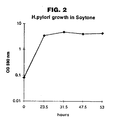
- Brucella Broth (tryptone 10 g l -1 , peptamin 10 g l -1 , dextrose 1 g l -1 , yeast extract 2 g l -1 , sodium chloride 5 g l -1 and sodium bisulfite 0.1 g l -1 ) (BB)(Difco) supplemented with 2 g l -1 of (2,6 di-0-methyl)-b-cyclodextrin (CD) (Teijin Lim. Tokyo, Japan) and 20 mg/L of streptomycin was used as liquid medium for comparison purpose. Hysoy or Soytone were used at a concentration of 10 g/L instead of tryptone and peptamin present in BB.
- Frozen aliquots for inocula were prepared from flask cultures of 2 X 10 8 CFU ml -1 diluted 1:2 with a solution composed of glycerol 40%, fetal calf serum (FCS) (HyClone, Logan, Utah) 20% and 0.4% CD.
- FCS fetal calf serum
- the suspension obtained was distributed in 3 ml vials and stored at -80 ° C and used as starting frozen vials for comparison with new frozen vials prepared substituting FCS with Soytone 20%.
- culture samples were centrifuged (Biofuge A, Heareus) at 8,300 x g per 10 min.
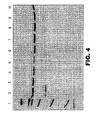
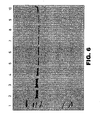
- the supernatants were precipitated with trichloroacetic acid and subjected to 9% SDS-Page using a BioRad Mini Protean II apparatus. Proteins were transferred to nitrocellulose filters (Schleicher & Schuell) and then incubated overnight with polyclonal antisera raised against the VacA protein ( Telford, J.L. et al., (1994), J. Exp. Med., 179, 1653-1658 ). After incubation for 2 hours with a horseradish-peroxidase conjugated secondary antibody (Sigma), the immunoreactive bands were visualized by 4-chloro-naphtol staining.
- Brucella Broth is a complex medium composed of tryptone 10 g l -1 , peptamin 10 g l -1 , dextrose 1 g l -1 , yeast extract 2 g l -1 , sodium chloride 5 g l -1 and sodium bisulfite 0.1 g l -1 .
- This medium has been described in many articles as capable of supporting the growth of H. pylori only when supplemented with blood derivatives ( Cover, T.L. and Blaser, M.J. (1992), J. Biol. Chem., 267, 10570-10575 ; Shahamat, M. et al., (1991), J. Clin.
- Haemophilus influenzae are small, non motile, gram negative bacteria that are the major cause of bacterial meningitidis in children. These microorganisms are primarily invasive rather than toxigenic. They are inhabitants of the respiratory tract (commensal as well pathogenic) and they have antiphagocytic polysaccharides capsules.
- This solution was ultrafiltered through a 30 kD TFF apparatus.
- the yeast extract used was HY YEST available from Quest.
- the solution was ultrafiltered through a 10 kD TFF apparatus.
- the hemin used is preferably chemically synthesised. Chemically synthesised hemin is commercially available from Fluka.
- the appropriate amount of the shake flask was transferred into one 2 L litre unbaffeled shake flask containing 0.5 L of pre-warmed "Hib complete medium".
- the shake flask was placed in an (1 inch throw) incubator-shaker at 35 +/- 1° C at 200 rpm for 9 hours then the content was transferred into a sterile inoculation and the inoculate then transferred to the fermenter.
- the cultures were growing at 35 °C and 2 psi back pressure.
- the pH was controlled to 7.3 with 3 N NaOH.
- the initial agitation rate was set at minimum of 150 rpm, and bottom aeration at 10 L/minute.
- DOT was maintained at 35% by rpm control in a range 150-400 , then supplementing with oxygen if necessary.
- Antifoam was added manually to control foaming. Residual concentration of glucose was detected and when it was around 2 g/L, 0.2 litres of glucose solution were added.
- the growth curves obtained with Soytone and with Proteose peptone are compared in Figure 7 .
- the yield of Hib PS was 600 mg/L and 150 mg/L in the media containing Soytone and Proteose peptone respectively.
- the use of the culture media containing the vegetable derived proteinaceous material leads to an increased yield of polysaccharides, such as Hib PS, compared to the use of a culture medium containing animal derived proteinaceous material.
- C. diphtheriae are gram positive, rod like microorganisms, which arrange themselves in palisades.
- C. diphtheriae lysogenization by a bacteriophage causes the synthesis of a potent toxin whose expression is regulated by iron concentration.
- Component Amount g/L Purified water 800 ml Yeast Extract 20 g/L Casamino Acids 10 g/L Purified water QS to 1 L
- This solution was ultrafiltered through a 10 kD TFF apparatus and the permeate added to the deferration vessel.
- Component Amount Purified water 800 ml Yeast Extract 20 g/L Soytone 10 g/L Purified water QS to 1 L
- This solution was ultrafiltered through a 10 kD TFF apparatus and the permeate added to the deferration vessel.
- This solution was ultrafiltered through a 10 kD TFF apparatus and the permeate added to the deferration vessel.
- the solutions are mixed individually for 10 minutes. After dissolution, 20 mL of Solution A and 10 mL of Solution B are mixed and filtered through a 0.2 micron filter. The solution is stored at 4 °C covered from light.
- filtered media (A.1 or A.1.A or A.1.B) are loaded into the flasks. Sterilize the flasks for 25 minutes at 121 °C.
- the shake flasks were placed in an (1 inch throw) incubator-shaker at 35 +/- 1°C at 100 rpm for 5 hours. After 5 hours, the agitation is increased to 250 rpm for 43 hours.
- the process has two distinct phases: 1) Exponential growth), and 2) Production phase.
- Exponential growth The transition from the two phases is gradual and is marked by reductions in cell growth rate and oxygen demand.
- Neisseria meningitidis are non motile gram negative cocci, most often growing in pairs but occasionally in tetrads or clusters. They have antiphagocytic polysaccharides capsules which is the basis for serogroups.
- the medium can be called "Franz Complete medium".
- This solution is sterilized by autoclaving at 121 °C for 30 minutes.
- This solution is ultrafiltered through a 10 kD TFF apparatus.
- the retentate is discarded after the requisite permeate has been collected, and the permeate is added to the vessel containing the supplement.
- the antifoam used is Dow Corning 1510. It is sterilized by autoclaving at 121 °C for 30 minutes
- a 500 millilitre flask is inoculated with 1.0 mL of a working stock vial.
- the shake flask contains 150 mL of complete "Franz medium”.
- the inoculated shake flasks is placed in an (1 inch throw) incubator-shaker at 35 +/- 1 °C at 150 rpm. After 10 hours, the flask is aseptically sampled.
- the optical density should be between 1.3 - 3.3 (at 590 nm) if so, the four 2 L shake flasks are each inoculated with the appropriate volume from the 150 mL shake flask.
- Each 2 L shake flask contains 0.2 L of pre-warmed "Franz Complete medium”.
- the shake flasks are placed in an (1 inch throw) incubator-shaker at 35 +/- 1 °C at 200 rpm. After 10 hours, the contents of each shake flask are transferred into the sterile inoculation can and inoculate the fermenter.
- the cultures were growing at 35 °C and 14x10 3 N/m 2 (2 psi) back pressure.
- the pH was controlled to 7.3 with 3 N NaOH.
- the initial agitation rate was set at minimum of 150 rpm, and bottom aeration at 10 L/minute.
- DOT was maintained at 35% by rpm control in a range 150-400, then supplementing with oxygen if necessary.
- Antifoam was added manually to control foaming. Residual concentration of glucose was detected and when it was around 2 g/L, 0.2 litres of glucose solution were added.
- the growth curves obtained with Amisoy and with Casamino acids are compared in Figure 8 .
- the yield in MenC PS was 307 mg/L and 345 mg/L in the media containing Amisoy and Casamino acids respectively.
- the growth curves and PS production are quite similar using the two media.
- Clostridium tetani is a slender bacillus measuring 2 ⁇ m in length and 0.3-0.5 ⁇ m in width. It often exists in the form of a rather long filament-like cell. When spores are formed, the bacillus assumes the characteristic drumstick appearance. It is a mobile organism, gram positive, but its gram stain can become variable or even negative in aging cultures. Clostridium tetani is a strict anaerobe and produces two exotoxins. One of these, the tetano spasmin, is a neurotoxin responsible for the whole clinical picture of the disease.
- the production media were prepared as modification of the Mueller-Miller medium described in the WHO/VSQ/GEN/94 (1990).
- beef heart infusion and casein solution are used, in the modified media reported below, expressed in g/L, Hysoy and Soytone were used instead of beef heart infusion and casein solution:
- Component Amount g/L Glucose - H 2 O 12.1 NaCl 2.5 Na 2 HPO 4 -12H 2 O 2.5 KH 2 PO 4 0.15 MgSO 4 -7H 2 O 0.15
- a second series of tubes were inoculated by 1.5 ml of the first tubes and incubated in the same conditions reported above for 24 hrs. 7 ml of these cultures were used to inoculate 100 ml tubes containing 75 ml of the same medium. These tubes were incubated in the same conditions reported above for 24 hrs.
- Bordetella pertussis is a gram negative coccobacillus about 0.5 ⁇ m in diameter and 0.5 to 2 ⁇ m in length. Its nutritional requirements are simple, and it does not utilize sugars. It is extremely sensitive to fatty acids and survives poorly without protective factors.
- Bordetella pertussis 9K/129G Pizza, M., et al. (1989) Science, 246, 497-500 ).
- the shake flasks were placed in an (1" throw) incubator-shaker at 35 +/- 1°C at 100 RPM for 12 hours. After 12 hours, the agitation was increased to 250 RPM for another 16 hours.
Landscapes
- Health & Medical Sciences (AREA)
- Life Sciences & Earth Sciences (AREA)
- Chemical & Material Sciences (AREA)
- Engineering & Computer Science (AREA)
- Organic Chemistry (AREA)
- Genetics & Genomics (AREA)
- Biotechnology (AREA)
- Zoology (AREA)
- Bioinformatics & Cheminformatics (AREA)
- Wood Science & Technology (AREA)
- General Health & Medical Sciences (AREA)
- Medicinal Chemistry (AREA)
- Microbiology (AREA)
- Biomedical Technology (AREA)
- Virology (AREA)
- Biochemistry (AREA)
- General Engineering & Computer Science (AREA)
- Tropical Medicine & Parasitology (AREA)
- General Chemical & Material Sciences (AREA)
- Public Health (AREA)
- Chemical Kinetics & Catalysis (AREA)
- Communicable Diseases (AREA)
- Nuclear Medicine, Radiotherapy & Molecular Imaging (AREA)
- Pharmacology & Pharmacy (AREA)
- Animal Behavior & Ethology (AREA)
- Oncology (AREA)
- Veterinary Medicine (AREA)
- Preparation Of Compounds By Using Micro-Organisms (AREA)
- Micro-Organisms Or Cultivation Processes Thereof (AREA)
- Medicines Containing Antibodies Or Antigens For Use As Internal Diagnostic Agents (AREA)
- Peptides Or Proteins (AREA)
- Medicines Containing Material From Animals Or Micro-Organisms (AREA)
Applications Claiming Priority (4)
| Application Number | Priority Date | Filing Date | Title |
|---|---|---|---|
| GBGB9710981.3A GB9710981D0 (en) | 1997-05-28 | 1997-05-28 | Culture medium |
| GBGB9806802.6A GB9806802D0 (en) | 1998-03-30 | 1998-03-30 | Culture medium |
| EP07075660A EP1849860B1 (de) | 1997-05-28 | 1998-05-28 | Verfahren zur Herstellung eines immunogenen Faktors von Corynebacterium diphtheriae unter Verwendung eines Kulturmediums mit Hefeextrakt als Aminosäurenquelle und ohne Proteinkomplexe tierischer Herkunft |
| EP98923023A EP0983342B1 (de) | 1997-05-28 | 1998-05-28 | Kulturmedium mit sojabohnenextrakt als aminosäuren-quelle und ohne proteinkomplexe tierischen ursprungs |
Related Parent Applications (2)
| Application Number | Title | Priority Date | Filing Date |
|---|---|---|---|
| EP98923023.0 Division | 1998-05-28 | ||
| EP07075660.6 Division | 2007-08-03 |
Publications (2)
| Publication Number | Publication Date |
|---|---|
| EP2199382A2 true EP2199382A2 (de) | 2010-06-23 |
| EP2199382A3 EP2199382A3 (de) | 2010-09-22 |
Family
ID=26311607
Family Applications (4)
| Application Number | Title | Priority Date | Filing Date |
|---|---|---|---|
| EP98923023A Expired - Lifetime EP0983342B1 (de) | 1997-05-28 | 1998-05-28 | Kulturmedium mit sojabohnenextrakt als aminosäuren-quelle und ohne proteinkomplexe tierischen ursprungs |
| EP10002348A Withdrawn EP2199382A3 (de) | 1997-05-28 | 1998-05-28 | Kulturmedium mit Hefe- oder Sojabohnenextrakt als Aminosäurenquelle und ohne Proteinkomplexe tierischer Herkunft |
| EP10176826.5A Expired - Lifetime EP2267113B1 (de) | 1997-05-28 | 1998-05-28 | Kulturmedium für Neisseria meningitidis mit Sojabohnenextrakt als Aminosäurenquelle und ohne Proteinkomplexe tierischer Herkunft |
| EP07075660A Expired - Lifetime EP1849860B1 (de) | 1997-05-28 | 1998-05-28 | Verfahren zur Herstellung eines immunogenen Faktors von Corynebacterium diphtheriae unter Verwendung eines Kulturmediums mit Hefeextrakt als Aminosäurenquelle und ohne Proteinkomplexe tierischer Herkunft |
Family Applications Before (1)
| Application Number | Title | Priority Date | Filing Date |
|---|---|---|---|
| EP98923023A Expired - Lifetime EP0983342B1 (de) | 1997-05-28 | 1998-05-28 | Kulturmedium mit sojabohnenextrakt als aminosäuren-quelle und ohne proteinkomplexe tierischen ursprungs |
Family Applications After (2)
| Application Number | Title | Priority Date | Filing Date |
|---|---|---|---|
| EP10176826.5A Expired - Lifetime EP2267113B1 (de) | 1997-05-28 | 1998-05-28 | Kulturmedium für Neisseria meningitidis mit Sojabohnenextrakt als Aminosäurenquelle und ohne Proteinkomplexe tierischer Herkunft |
| EP07075660A Expired - Lifetime EP1849860B1 (de) | 1997-05-28 | 1998-05-28 | Verfahren zur Herstellung eines immunogenen Faktors von Corynebacterium diphtheriae unter Verwendung eines Kulturmediums mit Hefeextrakt als Aminosäurenquelle und ohne Proteinkomplexe tierischer Herkunft |
Country Status (10)
| Country | Link |
|---|---|
| EP (4) | EP0983342B1 (de) |
| JP (3) | JP4173560B2 (de) |
| AT (2) | ATE488574T1 (de) |
| AU (1) | AU7545298A (de) |
| CY (2) | CY1107812T1 (de) |
| DE (2) | DE69842010D1 (de) |
| DK (1) | DK0983342T3 (de) |
| ES (1) | ES2293681T3 (de) |
| PT (2) | PT1849860E (de) |
| WO (1) | WO1998054296A1 (de) |
Families Citing this family (37)
| Publication number | Priority date | Publication date | Assignee | Title |
|---|---|---|---|---|
| US6475725B1 (en) | 1997-06-20 | 2002-11-05 | Baxter Aktiengesellschaft | Recombinant cell clones having increased stability and methods of making and using the same |
| AT409379B (de) | 1999-06-02 | 2002-07-25 | Baxter Ag | Medium zur protein- und serumfreien kultivierung von zellen |
| US6558926B1 (en) * | 1999-07-16 | 2003-05-06 | Massachusetts Institute Of Technology | Method for production of tetanus toxin using media substantially free of animal products |
| EP1074612A1 (de) * | 1999-08-04 | 2001-02-07 | Pasteur Merieux Serums Et Vaccins | Verwendung von Pflanzenpeptonen zur Herstellung von DNS Impfstoffe |
| CA2435681C (en) | 2001-01-23 | 2011-06-21 | Aventis Pasteur | Multivalent meningococcal polysaccharide-protein conjugate vaccine |
| GB0115176D0 (en) | 2001-06-20 | 2001-08-15 | Chiron Spa | Capular polysaccharide solubilisation and combination vaccines |
| WO2004033623A2 (en) * | 2002-05-16 | 2004-04-22 | Aventis Pasteur, Inc. | Animal component free meningococcal polysaccharide fermentation and seedbank development |
| DK1520008T3 (da) | 2002-07-09 | 2012-10-15 | Baxter Int | Medium frit for dyreprotein til dyrkning af celler |
| US20040037869A1 (en) * | 2002-08-16 | 2004-02-26 | Douglas Cleverly | Non-animal product containing veterinary formulations |
| US7148041B2 (en) * | 2003-09-25 | 2006-12-12 | Allergan, Inc. | Animal product free media and processes for obtaining a botulinum toxin |
| US7452697B2 (en) | 2003-09-25 | 2008-11-18 | Allergan, Inc. | Chromatographic method and system for purifying a botulinum toxin |
| US7160699B2 (en) | 2003-09-25 | 2007-01-09 | Allergan, Inc. | Media for clostridium bacterium and processes for obtaining a clostridial toxin |
| CA2546838A1 (en) * | 2003-12-03 | 2005-06-16 | Sanofi Pasteur Limited | Cryo-protective agents for microorganisms |
| EP1692269A4 (de) * | 2003-12-12 | 2007-09-26 | Sanofi Pasteur Ltd | Produktion von diphtherietoxin |
| GB0408978D0 (en) * | 2004-04-22 | 2004-05-26 | Chiron Srl | Meningococcal fermentation for preparing conjugate vaccines |
| WO2006042542A2 (en) * | 2004-10-19 | 2006-04-27 | Statens Serum Institut | Production of tetanus, diphtheria, and pertussis toxins and toxoids using fermentation media containing no components of animal or soy origin |
| US20060094104A1 (en) | 2004-10-29 | 2006-05-04 | Leopold Grillberger | Animal protein-free media for cultivation of cells |
| CN1930186A (zh) * | 2005-03-03 | 2007-03-14 | 阿勒根公司 | 为获得梭菌毒素的梭菌细菌培养基及方法 |
| NL1029059C2 (nl) * | 2005-05-17 | 2006-11-20 | Noord Nl Oliemolen Holding B V | Peptidenpreparaat voor het groeien en/of kweken van micro-organismen en/of cellen. |
| KR101393718B1 (ko) * | 2005-10-11 | 2014-05-13 | 프로바이오티컬 에스.피.에이. | 비알레르기성 프로바이오틱 박테리아 배양물의 제조 방법 및 관련 용도 |
| ES2474573T3 (es) | 2006-01-04 | 2014-07-09 | Baxter International Inc | Medio de cultivo celular sin oligop�ptidos |
| DE602007000193D1 (de) * | 2006-07-07 | 2008-12-04 | Alpro Nv | Verfahren zur herstellung eines milchprodukt-analogs |
| AU2008222865B2 (en) | 2007-03-05 | 2013-01-31 | Om Pharma | Bacterial extract for respiratory disorders and proces for its preparation |
| FR2918671B1 (fr) | 2007-07-10 | 2010-10-15 | Sanofi Pasteur | Milieu de culture d'haemophilus influenzae type b. |
| US8129139B2 (en) | 2009-07-13 | 2012-03-06 | Allergan, Inc. | Process for obtaining botulinum neurotoxin |
| EP2275527A1 (de) * | 2009-07-17 | 2011-01-19 | ActoGeniX NV | Kulturmedium zur Fermentation von Bakterien welches frei von tierischen Bestandteilen ist |
| EP2592137A1 (de) * | 2011-11-11 | 2013-05-15 | Novartis AG | Fermentierungsmedium ohne Bestandteile tierischen Ursprungs zur Herstellung von Diphtherie-Impfstoffen zur menschlichen Impfung |
| DE102011122891B4 (de) | 2011-11-11 | 2014-12-24 | Novartis Ag | Fermentationsmedium, das frei von tierischen Bestandteilen ist, zur Herstellung von Diphtherie-Toxoiden zur Verwendung bei der Impfung von Menschen |
| DE102011118371B4 (de) | 2011-11-11 | 2014-02-13 | Novartis Ag | Zur Impfung von Menschen geeignete Zusammensetzung, die ein Diphtherie-Toxoid umfasst, sowie Verfahren zu deren Herstellung |
| GB2495341B (en) * | 2011-11-11 | 2013-09-18 | Novartis Ag | Fermentation methods and their products |
| BR102012013110A2 (pt) | 2012-05-31 | 2014-05-27 | Cristalia Prod Quimicos Farm | Meio de cultura para bactérias do gênero clostridium livre de componentes de origem animal e processo para produção de sobrenadante contendo uma ou mais proteases com atividade colagenolítica e gelatinolítica |
| CN104263678A (zh) * | 2014-09-02 | 2015-01-07 | 成都欧林生物科技股份有限公司 | 一种白喉杆菌培养基及应用其制备白喉类毒素的方法 |
| EP3783010A1 (de) | 2015-05-06 | 2021-02-24 | Wageningen Universiteit | Verfahren zur kultivierung von akkermansia |
| IL259404B2 (en) * | 2015-11-17 | 2025-08-01 | Pfizer | Media and fermentation methods for producing polysaccharides in bacterial cell culture |
| BR112019022093A2 (pt) | 2017-04-22 | 2020-05-05 | Biological E Limited | método aprimorado para a produção em alto nível de crm |
| BR112021013241A2 (pt) * | 2019-01-04 | 2021-09-14 | Boehringer Ingelheim Animal Health USA Inc. | Cepas atenuadas de bordetella bronchiseptica, vacinas orais contendo as cepas atenuadas e métodos de preparação e uso das mesmas |
| CN112646747B (zh) * | 2021-01-08 | 2024-03-15 | 苏州聚微生物科技有限公司 | 破伤风梭状芽孢杆菌培养基 |
Citations (1)
| Publication number | Priority date | Publication date | Assignee | Title |
|---|---|---|---|---|
| DD294502A5 (de) | 1990-05-15 | 1991-10-02 | Dessau Tornau Impfstoffwerk | Verfahren zur herstellung eines sojahydrolysats fuer mikrobiologische zwecke |
Family Cites Families (9)
| Publication number | Priority date | Publication date | Assignee | Title |
|---|---|---|---|---|
| US4695624A (en) * | 1984-05-10 | 1987-09-22 | Merck & Co., Inc. | Covalently-modified polyanionic bacterial polysaccharides, stable covalent conjugates of such polysaccharides and immunogenic proteins with bigeneric spacers, and methods of preparing such polysaccharides and conjugates and of confirming covalency |
| GB8924438D0 (en) * | 1989-10-31 | 1989-12-20 | Hoffmann La Roche | Vaccine composition |
| IT1251751B (it) * | 1991-10-31 | 1995-05-23 | Sclavo Ricerca S R L | Metodo per la coltura di microrganismi dei generi helicobacter, campylobacter e arcobacter, utilizzando terreni di coltura contenenti ciclodestrine o metil-cellulosa o loro miscele |
| DE4220889A1 (de) * | 1992-06-25 | 1994-02-24 | Mueller Karl & Co Kg | Reaktivierungsmischung für Starterkulturen zur Rohwurstherstellung |
| US5314822A (en) * | 1992-10-15 | 1994-05-24 | Merck & Co., Inc. | Method of clonal growth of Streptococcus pneumoniae |
| DK0624376T3 (da) * | 1993-05-13 | 2000-07-24 | American Cyanamid Co | Fremstilling og anvendelse af LOS-udtømte ydre membranproteiner af gram-negative cocci |
| US5494808A (en) * | 1994-09-15 | 1996-02-27 | Merck & Co., Inc. | Defined medium OMPC fermentation process |
| GB9422096D0 (en) * | 1994-11-02 | 1994-12-21 | Biocine Spa | Combined meningitis vaccine |
| GB9422331D0 (en) * | 1994-11-04 | 1994-12-21 | Biocine Spa | H. pylori fermentation process |
-
1998
- 1998-05-28 PT PT07075660T patent/PT1849860E/pt unknown
- 1998-05-28 AT AT07075660T patent/ATE488574T1/de active
- 1998-05-28 WO PCT/IB1998/000938 patent/WO1998054296A1/en not_active Ceased
- 1998-05-28 EP EP98923023A patent/EP0983342B1/de not_active Expired - Lifetime
- 1998-05-28 PT PT98923023T patent/PT983342E/pt unknown
- 1998-05-28 DK DK98923023T patent/DK0983342T3/da active
- 1998-05-28 EP EP10002348A patent/EP2199382A3/de not_active Withdrawn
- 1998-05-28 AU AU75452/98A patent/AU7545298A/en not_active Abandoned
- 1998-05-28 ES ES98923023T patent/ES2293681T3/es not_active Expired - Lifetime
- 1998-05-28 EP EP10176826.5A patent/EP2267113B1/de not_active Expired - Lifetime
- 1998-05-28 EP EP07075660A patent/EP1849860B1/de not_active Expired - Lifetime
- 1998-05-28 DE DE69842010T patent/DE69842010D1/de not_active Expired - Lifetime
- 1998-05-28 DE DE69838383T patent/DE69838383T2/de not_active Expired - Lifetime
- 1998-05-28 JP JP50042499A patent/JP4173560B2/ja not_active Expired - Fee Related
- 1998-05-28 AT AT98923023T patent/ATE372376T1/de active
-
2007
- 2007-11-26 CY CY20071101507T patent/CY1107812T1/el unknown
-
2008
- 2008-04-09 JP JP2008101788A patent/JP2008200047A/ja not_active Withdrawn
-
2011
- 2011-02-09 CY CY20111100146T patent/CY1111178T1/el unknown
- 2011-08-18 JP JP2011179095A patent/JP2012005495A/ja not_active Withdrawn
Patent Citations (1)
| Publication number | Priority date | Publication date | Assignee | Title |
|---|---|---|---|---|
| DD294502A5 (de) | 1990-05-15 | 1991-10-02 | Dessau Tornau Impfstoffwerk | Verfahren zur herstellung eines sojahydrolysats fuer mikrobiologische zwecke |
Non-Patent Citations (22)
| Title |
|---|
| "Bacterial Vaccines in Advances in Biotechnology Processes", vol. 13, 1990, WILEY-LISS |
| "Bacterial Vaccines", 1984, ACADEMIC PRESS |
| "Methods in Microbiology", ACADEMIC PRESS INC. |
| BLASER, M.J., J.INFECT.DIS., vol. 161, 1990, pages 629 - 633 |
| BUCK, G.E.; SMITH, J.S., J. CLIN. MICROBIOL., vol. 25, 1987, pages 597 - 599 |
| COVER, T.L.; BLASER, M.J., J. BIOL. CHEM., vol. 267, 1992, pages 10570 - 10575 |
| GUPTA, R. K. ET AL., VACCINE, 1995, pages 111263 - 1276 |
| IMAIZUMI, A. ET AL., INFECTION AND IMMUNITY, vol. 41, no. 3, 1983, pages 1138 - 1143 |
| LEUNK, R.D., REV. INFECT. DIS., vol. 13, no. 8, 1991, pages S683 - S689 |
| MANETTI, R. ET AL., INFECT. IMMUN., vol. 63, 1995, pages 4476 - 4480 |
| MORGAN, D.R ET AL., J. CLIN. MICROBIOL., vol. 25, 1987, pages 2123 - 2125 |
| NENCIONI, L. ET AL., INFECT. IMMUN., vol. 58, 1990, pages 1306 - I315 |
| OLIVIERI, R. ET AL., J. CLIN. MICROBIOL., vol. 31, 1993, pages 160 - 162 |
| PARSONNET, J. ET AL., NEW ENGL. J. MED., vol. 325, 1991, pages 1127 - 1131 |
| PIZZA, M. ET AL., SCIENCE, vol. 246, 1989, pages 497 - 500 |
| RAPPUOLI, R. ET AL.: "Proceedings of an interdisciplinary meeting", 18 June 1993, CS CURRENT SCIENCE, article "European Journal of Gastroenterology and Hepatology of Helicobacterpylori infection", pages: S76 - S78 |
| RAPPUOLI, R., VACCINE, vol. 12, 1994, pages 579 - 581 |
| RAPPUOLI, R.: "New Generation of Vaccines", 1990, MARCEL DEKKER INC., article "New and improved vaccines against Diphtheria and Tetanus.", pages: 251 - 268 |
| SHAHAMAT, M. ET AL., J. CLIN. MICROBIOL., vol. 29, 1991, pages 2835 - 2837 |
| TELFORD, J.L. ET AL., J. EXP. MED., vol. 179, 1994, pages 1653 - 1658 |
| TRICOTTET, V. ET AL., ULTRASTRUCT. PATHOL., vol. 10, 1986, pages 113 - 117 |
| WEEKE, B., SCAND. J. IMMUNOL., vol. 2, 1973, pages 37 - 46 |
Also Published As
| Publication number | Publication date |
|---|---|
| EP0983342A1 (de) | 2000-03-08 |
| JP2008200047A (ja) | 2008-09-04 |
| PT1849860E (pt) | 2011-02-23 |
| DE69838383D1 (de) | 2007-10-18 |
| PT983342E (pt) | 2007-12-13 |
| EP0983342B1 (de) | 2007-09-05 |
| EP1849860A2 (de) | 2007-10-31 |
| DE69842010D1 (de) | 2010-12-30 |
| EP1849860A3 (de) | 2008-04-02 |
| JP4173560B2 (ja) | 2008-10-29 |
| CY1107812T1 (el) | 2013-06-19 |
| CY1111178T1 (el) | 2015-06-11 |
| DE69838383T2 (de) | 2008-06-05 |
| EP2267113B1 (de) | 2013-07-17 |
| JP2012005495A (ja) | 2012-01-12 |
| ES2293681T3 (es) | 2008-03-16 |
| WO1998054296A1 (en) | 1998-12-03 |
| ATE488574T1 (de) | 2010-12-15 |
| DK0983342T3 (da) | 2008-01-07 |
| JP2002501387A (ja) | 2002-01-15 |
| EP2199382A3 (de) | 2010-09-22 |
| ATE372376T1 (de) | 2007-09-15 |
| EP2267113A1 (de) | 2010-12-29 |
| AU7545298A (en) | 1998-12-30 |
| EP1849860B1 (de) | 2010-11-17 |
Similar Documents
| Publication | Publication Date | Title |
|---|---|---|
| EP1849860B1 (de) | Verfahren zur Herstellung eines immunogenen Faktors von Corynebacterium diphtheriae unter Verwendung eines Kulturmediums mit Hefeextrakt als Aminosäurenquelle und ohne Proteinkomplexe tierischer Herkunft | |
| US20080274515A1 (en) | Animal component free meningococcal polysaccharide fermentation and seedbank development | |
| Garrigues et al. | Insights into Clostridium tetani: From genome to bioreactors | |
| US6558926B1 (en) | Method for production of tetanus toxin using media substantially free of animal products | |
| JP4917087B2 (ja) | ジフテリア毒素生産のための発酵方法 | |
| US20040235139A1 (en) | Clostridium difficile culture and toxin production methods | |
| Gonçalves et al. | Optimization of medium and cultivation conditions for capsular polysaccharide production by Streptococcus pneumoniae serotype 23F | |
| US9284526B2 (en) | Culture medium with yeast or soy bean extract as amino acid source and no protein complexes of animal origin | |
| JP2018007676A (ja) | 発酵方法 | |
| Cowman et al. | Influence of incubation atmosphere on growth and amino acid requirements of Streptococcus mutans | |
| ES2353856T3 (es) | Procedimiento para la preparación de un factor inmunogeno de corynebacterium diphteriae usando un medio de cultivo con extracto de levadura como fuente de aminoacidos y sin complejos proteicos de origen animal. | |
| JPH11103855A (ja) | 液体発酵によるビスパン菌の生産方法 | |
| EP1074612A1 (de) | Verwendung von Pflanzenpeptonen zur Herstellung von DNS Impfstoffe | |
| JP4505620B2 (ja) | イコサペンタエン酸を産生する微生物及びイコサペンタエン酸の製造方法 | |
| WO2004033623A2 (en) | Animal component free meningococcal polysaccharide fermentation and seedbank development | |
| CA2138178A1 (en) | Control of ph during bordetella growth | |
| KR20010039187A (ko) | 디프테리아 톡신 및 톡소이드의 제조방법 |
Legal Events
| Date | Code | Title | Description |
|---|---|---|---|
| PUAI | Public reference made under article 153(3) epc to a published international application that has entered the european phase |
Free format text: ORIGINAL CODE: 0009012 |
|
| AC | Divisional application: reference to earlier application |
Ref document number: 0983342 Country of ref document: EP Kind code of ref document: P Ref document number: 1849860 Country of ref document: EP Kind code of ref document: P |
|
| AK | Designated contracting states |
Kind code of ref document: A2 Designated state(s): AT BE CH CY DE DK ES FI FR GB GR IE IT LI LU MC NL PT SE |
|
| PUAL | Search report despatched |
Free format text: ORIGINAL CODE: 0009013 |
|
| AK | Designated contracting states |
Kind code of ref document: A3 Designated state(s): AT BE CH CY DE DK ES FI FR GB GR IE IT LI LU MC NL PT SE |
|
| RAP1 | Party data changed (applicant data changed or rights of an application transferred) |
Owner name: NOVARTIS AG |
|
| STAA | Information on the status of an ep patent application or granted ep patent |
Free format text: STATUS: THE APPLICATION IS DEEMED TO BE WITHDRAWN |
|
| 18D | Application deemed to be withdrawn |
Effective date: 20110323 |