EP2200262A2 - Blocage et découverte automatiques dans une communication distribuée - Google Patents
Blocage et découverte automatiques dans une communication distribuée Download PDFInfo
- Publication number
- EP2200262A2 EP2200262A2 EP10003444A EP10003444A EP2200262A2 EP 2200262 A2 EP2200262 A2 EP 2200262A2 EP 10003444 A EP10003444 A EP 10003444A EP 10003444 A EP10003444 A EP 10003444A EP 2200262 A2 EP2200262 A2 EP 2200262A2
- Authority
- EP
- European Patent Office
- Prior art keywords
- media server
- network
- message
- signal gateway
- voice messaging
- Prior art date
- Legal status (The legal status is an assumption and is not a legal conclusion. Google has not performed a legal analysis and makes no representation as to the accuracy of the status listed.)
- Withdrawn
Links
- 238000004891 communication Methods 0.000 title claims description 27
- 238000010586 diagram Methods 0.000 description 4
- 230000004044 response Effects 0.000 description 4
- 238000000034 method Methods 0.000 description 3
- 230000008569 process Effects 0.000 description 3
- 230000007257 malfunction Effects 0.000 description 2
- 238000007726 management method Methods 0.000 description 2
- 238000012986 modification Methods 0.000 description 2
- 230000004048 modification Effects 0.000 description 2
- 230000000737 periodic effect Effects 0.000 description 2
- 230000011664 signaling Effects 0.000 description 2
- 230000000903 blocking effect Effects 0.000 description 1
- 230000015556 catabolic process Effects 0.000 description 1
- 230000001413 cellular effect Effects 0.000 description 1
- 238000012423 maintenance Methods 0.000 description 1
- 238000013024 troubleshooting Methods 0.000 description 1
Images

Classifications
-
- H—ELECTRICITY
- H04—ELECTRIC COMMUNICATION TECHNIQUE
- H04M—TELEPHONIC COMMUNICATION
- H04M3/00—Automatic or semi-automatic exchanges
- H04M3/42—Systems providing special services or facilities to subscribers
- H04M3/50—Centralised arrangements for answering calls; Centralised arrangements for recording messages for absent or busy subscribers ; Centralised arrangements for recording messages
- H04M3/53—Centralised arrangements for recording incoming messages, i.e. mailbox systems
- H04M3/533—Voice mail systems
-
- H—ELECTRICITY
- H04—ELECTRIC COMMUNICATION TECHNIQUE
- H04M—TELEPHONIC COMMUNICATION
- H04M3/00—Automatic or semi-automatic exchanges
- H04M3/22—Arrangements for supervision, monitoring or testing
- H04M3/24—Arrangements for supervision, monitoring or testing with provision for checking the normal operation
-
- H—ELECTRICITY
- H04—ELECTRIC COMMUNICATION TECHNIQUE
- H04M—TELEPHONIC COMMUNICATION
- H04M7/00—Arrangements for interconnection between switching centres
- H04M7/06—Arrangements for interconnection between switching centres using auxiliary connections for control or supervision, e.g. where the auxiliary connection is a signalling system number 7 link
-
- H—ELECTRICITY
- H04—ELECTRIC COMMUNICATION TECHNIQUE
- H04M—TELEPHONIC COMMUNICATION
- H04M3/00—Automatic or semi-automatic exchanges
- H04M3/08—Indicating faults in circuits or apparatus
- H04M3/10—Providing fault- or trouble-signals
-
- H—ELECTRICITY
- H04—ELECTRIC COMMUNICATION TECHNIQUE
- H04M—TELEPHONIC COMMUNICATION
- H04M3/00—Automatic or semi-automatic exchanges
- H04M3/08—Indicating faults in circuits or apparatus
- H04M3/12—Marking faulty circuits "busy"; Enabling equipment to disengage itself from faulty circuits ; Using redundant circuits; Response of a circuit, apparatus or system to an error
-
- H—ELECTRICITY
- H04—ELECTRIC COMMUNICATION TECHNIQUE
- H04M—TELEPHONIC COMMUNICATION
- H04M7/00—Arrangements for interconnection between switching centres
- H04M7/0012—Details of application programming interfaces [API] for telephone networks; Arrangements which combine a telephonic communication equipment and a computer, i.e. computer telephony integration [CPI] arrangements
-
- H—ELECTRICITY
- H04—ELECTRIC COMMUNICATION TECHNIQUE
- H04M—TELEPHONIC COMMUNICATION
- H04M7/00—Arrangements for interconnection between switching centres
- H04M7/06—Arrangements for interconnection between switching centres using auxiliary connections for control or supervision, e.g. where the auxiliary connection is a signalling system number 7 link
- H04M7/066—Arrangements for interconnection between switching centres using auxiliary connections for control or supervision, e.g. where the auxiliary connection is a signalling system number 7 link where the auxiliary connection is via an Internet Protocol network
Definitions
- the present invention is generally related to a voice messaging system and more particularly, is related to a voice messaging system with geographically dispersible elements that provides Auto Block and Auto Discovery capabilities.
- voicemail has expanded and established itself as a key element in the successful operations of most businesses.
- the typical voicemail system is composed of elements that must communicate with each other and thus, must be co-located. This can be a great disadvantage for companies that have geographically dispersed offices. Establishing a separate system at each office can be a costly endeavor as duplicative hardware is purchased and maintained at each site. Furthermore, the logistics for inter-office voicemail access can be complex.
- a distributed voicemail system that allows various elements of the distributed voicemail system to be geographically distributed and shared while operating as a seamlessly integrated system. With a distributed architecture however, new challenges arise. Since elements within the voicemail system are no longer co-located, provisioning and maintenance of equipment become a challenge as elements may be, and frequently are, separated by long distances.
- Voice messages may be lost if calls coming from a telephone network such as a public switched telephone network (PSTN) or cellular network, among others, are not properly processed due to unknown equipment failure.
- a typical voicemail system includes a server that terminates communication links such as multiple T1 links from a telephone network.
- the server is normally in two-way communication with the telephone network, and the server is normally configured to provide an alert when one of the communication links with the telephone network fails such that communications can be rerouted through other operable communication links.
- the server itself then there is no alert to re-route incoming calls.
- voicemail systems must be easily scalable in order to meet dynamic capacity requirements while not resulting in down time for provisioning. Therefore, there is also a need for inserting new elements into the system on the fly.
- Some embodiments of this invention provide a distributed voicemail system having Auto Block and Auto Discovery capabilities.
- at least one media server of the distributed voicemail system is communicatively linked to a telephone network (or multiple telephone networks).
- the media server has at least one component that terminates links to the telephone network(s).
- An element of the distributed voicemail system is adapted to monitor at least the media server, and responsive to determining that the media server has failed, a failure signal or message is provided to the telephone network, thereby notifying the telephone network that the media server has failed. Responsive to the failure signal, the telephone network reroutes voice channels terminated by the failed media server, thereby avoiding dropped calls.
- some embodiments of this invention provide a distributed voicemail system having Auto Discovery capabilities. When new elements such as media servers are inserted and operational within the distributed voicemail system, they are detected, thereby making their resources immediately available without the need to shut down the system and provision the new element.
- an element of the distributed voicemail system such as a signal gateway (SG) conducts a discovery process to find out if the failure is due to the SG or another element in the distributed voicemail system. This serves to isolate the problem and aids in the troubleshooting process.
- elements of the distributed voicemail system such as the SG can communicate with other elements of the distributed voicemail system over a network such as an IP network to issue status or health-check commands and thus determine if an element is working properly.
- the SG Prior to removing a particular element from the system, the SG will try multiple times to communicate with the element and in some embodiments, attempt to resolve any problems that may be causing the element to malfunction (e.g. issue a system reset command).
- Figure 1 is a block diagram illustrating an exemplary embodiment of a distributed voice messaging system in communication with a telephone network.
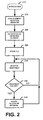
- Figure 2 is an exemplary flow diagram for performing auto block
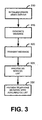
- Figure 3 is an exemplary flow diagram for performing auto discovery.
- a distributed voicemail system has the capacity to "auto block", which effectively removes malfunctioning equipment from the system in an automated fashion.
- Figure 1 is a diagram illustrating selected elements of a distributed voicemail system 100.
- the distributed voicemail system 100 includes a system management unit (SMU) 105, media servers (MSs) 110(A) and 110(B), and a signal gateway (SG) 115.
- SMU 105, the MSs 110(A) and 110(B), and the SG 115 are in communication with each other over a network 117.
- the network 117 is a computer network or the like, and typically, communications over the network 117 are performed in accordance with well known protocols such as, but not limited to, Internet Protocol (IP).
- IP Internet Protocol
- the SMU 105 monitors the network 117 and provides upper level management of elements of the distributed voice mail system 100.
- the SMU 105 provisions voice mail accounts for users of the distributed voice mail system 100.
- messages for a voice mail account are stored in a central data and message storage server (not shown).
- the SMU 105 receives element-initiation and element-update messages.
- the SMU 105 uses element-initiation messages to determine, among other things, the elements of the voice mail system 100 and to determine, among other things, the capabilities and functions of the elements.
- the changed element sends an element-update message.
- the SMU 105 uses the element-update message to determine, among other things, the updated capabilities and functions of the changed element.
- changes to an element include a component failure of the element and/or replacement of a failed component of the element and/or the addition of a component (or components) to the element and/or the removal of a component (or components) from the element.
- the SMU 105 provides the SG 115 with information regarding the MSs 110(A) and 110(B).
- the MSs 110(A) and 110(B) include components such as link-termination components 120.
- the link-termination components 120 provide termination points for communication links 125 coming from a telephone network (TN) 130 such as, but not limited to, a Public Switched Telephone Network (PSTN).
- TN telephone network
- PSTN Public Switched Telephone Network
- the communication links 125 will be described as T1 link, but that description is intended as a non-limiting description, and those skilled in the art are aware of alternative communication links such as, but not limited to, T1C, T2, T3, T4, PRI, or other similar telecommunication links.
- Each T1 link 125 contains 24 carrier identification codes (CICs), which are associated with corresponding voice channels over which calls are conducted.
- CICs carrier identification codes
- the MS 110 When an MS 110 is first initialized, the MS 110 sends the SMU an element-initialization message, which includes a list of CICs that the MS 110 is terminating, and the SMU 105 provides the SG 115 with the CIC list. In addition, the MS 110 establishes a client connection with the SG 115. Among other things, the SG 115 operates to make individual elements in a Distributed IP Architecture appear as a single entity.
- SIGTRAN Signaling transport
- IETF Internet Engineering Task Force
- SS7 Signaling System 7
- Communication between the SG 115 and the TN 130 is accomplished over a second network 137.
- the second network 137 is described as employing SS7 interfaces 140(A) and 140(B), which are included in the telephone network 130 and SG 115, respectively.
- the SG 115 monitors the operation of the MS 110 using an "intelligent heartbeat", which is generated by the MS 110.
- the "intelligent heartbeat” is comprised of normal communications and a "heartbeat” message.
- the MS 110 communicates with the SG 115, and the SG 115 uses the normal communications to verify that the MS 110 is operating.
- MS 110 is also configured to send a "heartbeat" message to the SG 115 when it has not sent a communication to the SG 115 within a predetermined period of time.
- the SG 115 monitors the MS 110 to verify that the MS 110 is operating correctly.
- the SG 115 will "ping" the MS 110, i.e., the SG 115 will send a command to the MS 110 to solicit a response. If a response is not received, then the SG 115 concludes that the MS 110 is not functioning properly. In some embodiments, the SG 115 pings the MS 110 a predetermined number of times, and if the SG 115 does not receive a response, then the SG 115 determines that the MS 110 is not functional. Thus, the intelligent heartbeat is used to monitor for any equipment failures.
- the SG 115 monitors the MS 110 via a conventional heartbeat generated by the MS 110.
- the MS 110 generates a "heartbeat" message or signal which the MS 110 transmits to the SG 115 over the network 117, and the SG 115 uses the message to determine that the SG 115 is functioning.
- the MS 110 transmits a message on a periodic or quasi-periodic basis. For example, a message might transmitted every second or so or at shorter intervals or longer intervals.
- the SG 115 is adapted to "ping" the MS 110. Responsive to receiving a "ping" message from the SG 115, the MS 110 responds with an answer message. Upon receiving the answer message, the SG 115 determines that the MS 110 is functioning. In an exemplary embodiment, the SG 115 pings the MS 110 every second or so or at shorter intervals or longer intervals.
- FIG. 2 is a flowchart illustrating an exemplary embodiment of the distributed voicemail system 100 performing Auto Block.
- the system is initialized.
- the MS 110 sends an element-initiation message, i.e ., a notification of its presence and a list of all CICs which are terminated by that MS 110.
- the notification of its presence and the CIC list are sent to the SMU 105.
- step 220 the SMU 105 then notifies the SG 115 that a particular MS 110 has been detected and forwards the CIC list to the SG 115, and in step 225, the SG 115 stores the CIC list for particular MS 110 in a table.
- the SG 115 After storing the CIC list for a particular MS 110, the SG 115 begins to monitor the "heartbeat" of the particular MS 110 in step 230. In step 235, the SG 115 determines whether there is a "heartbeat" failure. In the event that the "heartbeat" has not failed, the SG 115 continues to monitor the "heartbeat.” On the other hand, in the event of a heartbeat failure, in step 240, the SG 115 notifies the telephone network 130 to block all calls over the CICs terminated by the MS whose heartbeat has stopped. In one embodiment, this is accomplished by the SG 115 sending an SS7 BLOCK message to the telephone network 130 to stop routing calls through the effected CICs.
- this aspect of the present invention detects malfunctioning equipment in the voicemail system 100, alerts the telephone network 130 to cease using the CICs that are associated with that equipment, thereby effectively eliminating malfunctioning equipment from the voicemail system so that the telephone network 110 can deliver calls reliably.
- each MS 110 generates a "heartbeat," and the SG 115 monitors the heartbeats of each of the MSs 110(A) and 110(B).
- the heartbeat for a particular MS 110 may simply consist of a periodic or quasi-periodic "STATUS OK" message generated by the particular MS 110.
- the SG 115 employs a combination of normal communications from the particular MS 110 to the SG 115 and a "heartbeat" message from the particular MS 110, wherein the "heartbeat" message is generated by the particular MS 110 on an as-needed basis.
- the MS 110 will generate a "heartbeat" message.
- the SG 115 periodically or quasi-periodically "pings" the particular MS 110 and uses response messages to determine the status of the particular MS 110.
- This aspect of the present invention advantageously allows elements, such as Media Servers 110(A) and/or 110(B), to be plugged into the distributed voicemail system 100 or removed from the distributed voicemail system 100 on the fly. This results in seamless and flexible scalability in order to meet higher capacity demands.
- the inserted element is initialized and/or updated.
- the inserted media server is provided with a CIC list as part of its initialization.
- Media Servers include at least one input interface through which information such as CIC lists can be provided.
- Link-termination components 120 can be added to replace malfunctioning link-termination components and/or to increase the capabilities of the Media Server 110.
- the newly inserted (or changed) element generates a message.
- the message includes an element-identifier and for the case of a media server a CIC list.
- the CIC list can be a complete list of all CICs terminated at the Media Server or a partial list that includes CICs that are now operable.
- the message is transmitted over the network 117. Typically, the message is transmitted to the SMU 105.
- the SG 115 is provided with the CIC list.
- the CIC list is provided to the SG 115 by the SMU 105 responsive to the SMU receiving the CIC list from the changed/updated/newly added Media Server 110.
- the CIC list can be transmitted to the SG 115 by changed/updated/newly added Media Servers 110.
- the SG 115 forwards this information to the telephone network 130 and the resources of the newly inserted/changed/updated Media Server are then available for use.
- the new element is then included as part of the network of elements which are monitored and maintained on a regular basis. Similar to the initialization process within the Auto Block function, the SG 115 informs the telephone network 130 that CICs are available by issuing a standard SS7 command that identifies a CIC or a range of CICs that are available for use by the telephone network 130.
Landscapes
- Engineering & Computer Science (AREA)
- Signal Processing (AREA)
- Telephonic Communication Services (AREA)
- Data Exchanges In Wide-Area Networks (AREA)
- Mobile Radio Communication Systems (AREA)
- Computer And Data Communications (AREA)
Applications Claiming Priority (3)
| Application Number | Priority Date | Filing Date | Title |
|---|---|---|---|
| US58407004P | 2004-06-30 | 2004-06-30 | |
| US11/170,459 US7308083B2 (en) | 2004-06-30 | 2005-06-29 | Message durability and retrieval in a geographically distributed voice messaging system |
| EP05767261A EP1766948B1 (fr) | 2004-06-30 | 2005-06-30 | Blocage automatique et découverte automatique dans un système de communication distribué |
Related Parent Applications (1)
| Application Number | Title | Priority Date | Filing Date |
|---|---|---|---|
| EP05767261.0 Division | 2005-06-30 |
Publications (2)
| Publication Number | Publication Date |
|---|---|
| EP2200262A2 true EP2200262A2 (fr) | 2010-06-23 |
| EP2200262A3 EP2200262A3 (fr) | 2012-10-03 |
Family
ID=35783338
Family Applications (2)
| Application Number | Title | Priority Date | Filing Date |
|---|---|---|---|
| EP10003444A Withdrawn EP2200262A3 (fr) | 2004-06-30 | 2005-06-30 | Blocage automatique et découverte automatique dans un système de communication distribué |
| EP05767261A Expired - Lifetime EP1766948B1 (fr) | 2004-06-30 | 2005-06-30 | Blocage automatique et découverte automatique dans un système de communication distribué |
Family Applications After (1)
| Application Number | Title | Priority Date | Filing Date |
|---|---|---|---|
| EP05767261A Expired - Lifetime EP1766948B1 (fr) | 2004-06-30 | 2005-06-30 | Blocage automatique et découverte automatique dans un système de communication distribué |
Country Status (7)
| Country | Link |
|---|---|
| EP (2) | EP2200262A3 (fr) |
| JP (1) | JP2008505552A (fr) |
| AT (1) | ATE471031T1 (fr) |
| CA (1) | CA2571115A1 (fr) |
| DE (1) | DE602005021787D1 (fr) |
| PL (1) | PL1766948T3 (fr) |
| WO (1) | WO2006004857A2 (fr) |
Families Citing this family (1)
| Publication number | Priority date | Publication date | Assignee | Title |
|---|---|---|---|---|
| JP5947149B2 (ja) * | 2012-08-16 | 2016-07-06 | 株式会社Nttドコモ | 呼救済システム及び呼救済方法 |
Family Cites Families (8)
| Publication number | Priority date | Publication date | Assignee | Title |
|---|---|---|---|---|
| GB2312593A (en) * | 1996-04-26 | 1997-10-29 | Ibm | Voice mail with remote voice processing |
| US6072857A (en) * | 1996-12-19 | 2000-06-06 | Bellsouth Intellectual Property Management Corporation | Methods and system for monitoring the operational status of a network component in an advanced intelligent network |
| AU9584298A (en) * | 1997-09-26 | 1999-07-12 | Alcatel Usa Sourcing, L.P. | Interface components for a telecommunications switching platform |
| WO2000024216A2 (fr) * | 1998-10-22 | 2000-04-27 | Telefonaktiebolaget Lm Ericsson (Publ) | Redondance dynamique des memoires de positions d'utilisateurs permanents (hlr) dans un reseau de telecommunications radio |
| US6333931B1 (en) * | 1998-12-28 | 2001-12-25 | Cisco Technology, Inc. | Method and apparatus for interconnecting a circuit-switched telephony network and a packet-switched data network, and applications thereof |
| US6577712B2 (en) * | 2000-04-07 | 2003-06-10 | Telefonaktiebolaget Lm Ericsson (Publ) | Distributed voice mail system |
| JP3747740B2 (ja) * | 2000-05-22 | 2006-02-22 | 株式会社日立製作所 | インタネットゲートウェイシステムでの迂回制御方法 |
| JP2002290551A (ja) * | 2001-03-28 | 2002-10-04 | Nec Corp | ゲートウェイシステム及びそれに用いる障害処理方法 |
-
2005
- 2005-06-30 EP EP10003444A patent/EP2200262A3/fr not_active Withdrawn
- 2005-06-30 PL PL05767261T patent/PL1766948T3/pl unknown
- 2005-06-30 JP JP2007519404A patent/JP2008505552A/ja active Pending
- 2005-06-30 WO PCT/US2005/023152 patent/WO2006004857A2/fr not_active Ceased
- 2005-06-30 DE DE602005021787T patent/DE602005021787D1/de not_active Expired - Lifetime
- 2005-06-30 EP EP05767261A patent/EP1766948B1/fr not_active Expired - Lifetime
- 2005-06-30 CA CA002571115A patent/CA2571115A1/fr not_active Abandoned
- 2005-06-30 AT AT05767261T patent/ATE471031T1/de not_active IP Right Cessation
Non-Patent Citations (1)
| Title |
|---|
| None |
Also Published As
| Publication number | Publication date |
|---|---|
| WO2006004857A2 (fr) | 2006-01-12 |
| EP2200262A3 (fr) | 2012-10-03 |
| DE602005021787D1 (de) | 2010-07-22 |
| WO2006004857A3 (fr) | 2006-10-26 |
| EP1766948A4 (fr) | 2007-07-11 |
| PL1766948T3 (pl) | 2011-04-29 |
| ATE471031T1 (de) | 2010-06-15 |
| EP1766948B1 (fr) | 2010-06-09 |
| CA2571115A1 (fr) | 2006-01-12 |
| EP1766948A2 (fr) | 2007-03-28 |
| JP2008505552A (ja) | 2008-02-21 |
Similar Documents
| Publication | Publication Date | Title |
|---|---|---|
| CN101155073B (zh) | 计算机系统及切换到后备系统的方法 | |
| US10911295B2 (en) | Server apparatus, cluster system, cluster control method and program | |
| US6327260B1 (en) | Controlled routing to a plurality of signaling interfaces at a single telephonic switch | |
| JPH05502347A (ja) | パケット網における自動的な障害回復 | |
| CN103081406B (zh) | 用于应请求通过提供商网络来恢复连接的方法和设备 | |
| JP7064132B2 (ja) | 障害監視システム及び障害監視方法 | |
| US7970109B2 (en) | Auto block and auto discovery in a distributed communication system | |
| US6535991B1 (en) | Method and apparatus for providing reliable communications in an intelligent network | |
| KR100794428B1 (ko) | 넘버.세븐 신호 링크셋 내의 이종 데이터 링크 수용 및운용 방법 | |
| EP1766948B1 (fr) | Blocage automatique et découverte automatique dans un système de communication distribué | |
| US6498779B1 (en) | Multiple endpoint paths | |
| CN113824595B (zh) | 链路切换控制方法、装置和网关设备 | |
| CN112583622A (zh) | 故障事件信息的上报方法及系统 | |
| CN101155226A (zh) | Ip电话系统及电话交换装置 | |
| JP2008530925A (ja) | ネットワークユニットの障害の通信ネットワークを介した信号伝送方式 | |
| US6956856B2 (en) | System and method for managing a plurality of calls | |
| JPH04252533A (ja) | 障害通知方式 | |
| US6614901B1 (en) | Method and system for a scaleable virtual switch | |
| KR101146836B1 (ko) | 매니저 고장시 관리 네트워크를 운영하기 위한 방법 및설비들 | |
| KR100233245B1 (ko) | 고속무선호출 시스템에서의 이중화 제어방법 | |
| JP2013021564A (ja) | ゲートウェイ装置 | |
| KR20000021396A (ko) | 금융 전산 네트웍의 지점 장애 관리 방법. | |
| KR20000042943A (ko) | 시스템 고장을 실시간으로 관리자에게 통보하는 방법 |
Legal Events
| Date | Code | Title | Description |
|---|---|---|---|
| PUAI | Public reference made under article 153(3) epc to a published international application that has entered the european phase |
Free format text: ORIGINAL CODE: 0009012 |
|
| 17P | Request for examination filed |
Effective date: 20100422 |
|
| AC | Divisional application: reference to earlier application |
Ref document number: 1766948 Country of ref document: EP Kind code of ref document: P |
|
| AK | Designated contracting states |
Kind code of ref document: A2 Designated state(s): AT BE BG CH CY CZ DE DK EE ES FI FR GB GR HU IE IS IT LI LT LU MC NL PL PT RO SE SI SK TR |
|
| AX | Request for extension of the european patent |
Extension state: AL BA HR LV MK YU |
|
| PUAL | Search report despatched |
Free format text: ORIGINAL CODE: 0009013 |
|
| AK | Designated contracting states |
Kind code of ref document: A3 Designated state(s): AT BE BG CH CY CZ DE DK EE ES FI FR GB GR HU IE IS IT LI LT LU MC NL PL PT RO SE SI SK TR |
|
| AX | Request for extension of the european patent |
Extension state: AL BA HR LV MK YU |
|
| RIC1 | Information provided on ipc code assigned before grant |
Ipc: H04L 12/24 20060101AFI20120824BHEP Ipc: H04M 7/00 20060101ALN20120824BHEP Ipc: H04M 3/533 20060101ALI20120824BHEP Ipc: H04M 3/24 20060101ALI20120824BHEP |
|
| STAA | Information on the status of an ep patent application or granted ep patent |
Free format text: STATUS: THE APPLICATION IS DEEMED TO BE WITHDRAWN |
|
| 18D | Application deemed to be withdrawn |
Effective date: 20121231 |