EP2202934A1 - Procédé de commande d'appel de session multimédia et serveur d'application - Google Patents
Procédé de commande d'appel de session multimédia et serveur d'application Download PDFInfo
- Publication number
- EP2202934A1 EP2202934A1 EP08846806A EP08846806A EP2202934A1 EP 2202934 A1 EP2202934 A1 EP 2202934A1 EP 08846806 A EP08846806 A EP 08846806A EP 08846806 A EP08846806 A EP 08846806A EP 2202934 A1 EP2202934 A1 EP 2202934A1
- Authority
- EP
- European Patent Office
- Prior art keywords
- party
- message
- call leg
- call
- session
- Prior art date
- Legal status (The legal status is an assumption and is not a legal conclusion. Google has not performed a legal analysis and makes no representation as to the accuracy of the status listed.)
- Granted
Links
- 238000000034 method Methods 0.000 title claims abstract description 111
- 238000012546 transfer Methods 0.000 claims description 48
- 230000008569 process Effects 0.000 claims description 24
- 238000012545 processing Methods 0.000 claims description 9
- 230000004044 response Effects 0.000 claims description 2
- 230000011664 signaling Effects 0.000 description 41
- 238000004873 anchoring Methods 0.000 description 29
- 238000005516 engineering process Methods 0.000 description 6
- 230000005540 biological transmission Effects 0.000 description 3
- 238000006243 chemical reaction Methods 0.000 description 3
- 238000011161 development Methods 0.000 description 3
- 230000006870 function Effects 0.000 description 3
- 102000018059 CS domains Human genes 0.000 description 2
- 108050007176 CS domains Proteins 0.000 description 2
- 238000004891 communication Methods 0.000 description 2
- 230000007246 mechanism Effects 0.000 description 2
- 230000004048 modification Effects 0.000 description 2
- 238000012986 modification Methods 0.000 description 2
- 230000007547 defect Effects 0.000 description 1
- 230000004069 differentiation Effects 0.000 description 1
- 230000006872 improvement Effects 0.000 description 1
- 230000000977 initiatory effect Effects 0.000 description 1
- 230000003993 interaction Effects 0.000 description 1
- 238000004904 shortening Methods 0.000 description 1
Images






Classifications
-
- H—ELECTRICITY
- H04—ELECTRIC COMMUNICATION TECHNIQUE
- H04L—TRANSMISSION OF DIGITAL INFORMATION, e.g. TELEGRAPHIC COMMUNICATION
- H04L65/00—Network arrangements, protocols or services for supporting real-time applications in data packet communication
- H04L65/1066—Session management
- H04L65/1083—In-session procedures
- H04L65/1094—Inter-user-equipment sessions transfer or sharing
-
- H—ELECTRICITY
- H04—ELECTRIC COMMUNICATION TECHNIQUE
- H04L—TRANSMISSION OF DIGITAL INFORMATION, e.g. TELEGRAPHIC COMMUNICATION
- H04L65/00—Network arrangements, protocols or services for supporting real-time applications in data packet communication
- H04L65/1066—Session management
- H04L65/1083—In-session procedures
- H04L65/1093—In-session procedures by adding participants; by removing participants
-
- H—ELECTRICITY
- H04—ELECTRIC COMMUNICATION TECHNIQUE
- H04L—TRANSMISSION OF DIGITAL INFORMATION, e.g. TELEGRAPHIC COMMUNICATION
- H04L65/00—Network arrangements, protocols or services for supporting real-time applications in data packet communication
- H04L65/10—Architectures or entities
- H04L65/1063—Application servers providing network services
-
- H—ELECTRICITY
- H04—ELECTRIC COMMUNICATION TECHNIQUE
- H04L—TRANSMISSION OF DIGITAL INFORMATION, e.g. TELEGRAPHIC COMMUNICATION
- H04L65/00—Network arrangements, protocols or services for supporting real-time applications in data packet communication
- H04L65/1066—Session management
- H04L65/1069—Session establishment or de-establishment
-
- H—ELECTRICITY
- H04—ELECTRIC COMMUNICATION TECHNIQUE
- H04L—TRANSMISSION OF DIGITAL INFORMATION, e.g. TELEGRAPHIC COMMUNICATION
- H04L65/00—Network arrangements, protocols or services for supporting real-time applications in data packet communication
- H04L65/1066—Session management
- H04L65/1083—In-session procedures
- H04L65/1095—Inter-network session transfer or sharing
-
- H—ELECTRICITY
- H04—ELECTRIC COMMUNICATION TECHNIQUE
- H04L—TRANSMISSION OF DIGITAL INFORMATION, e.g. TELEGRAPHIC COMMUNICATION
- H04L65/00—Network arrangements, protocols or services for supporting real-time applications in data packet communication
- H04L65/40—Support for services or applications
- H04L65/403—Arrangements for multi-party communication, e.g. for conferences
Definitions
- the present invention relates to multimedia communication technologies, and in particular, to a multimedia session call control method and an Application Server (AS).
- AS Application Server
- multimedia session call transfer enables transfer of a user session and transfer of media streams between User Equipments (UEs), as described below with the Explicit Call Transfer (ECT) service as an example.
- UEs User Equipments
- ECT Explicit Call Transfer
- the ECT service falls into two types: interrogating ECT and blind ECT:
- the detailed process of the blind ECT includes these steps: UE-1 performs a multimedia session with UE-2; UE-1 sends the address of UE-3 to UE-2; UE-2 establishes a conversion with UE-3, and UE-1 quits.
- PS Packet Switched
- IMS IP Multimedia Subsystem
- the current multimedia session technology enables one user to operate multiple UEs simultaneously and perform a multimedia session with the peer.
- Multiple UEs operated by the user may be integrated, for example, into a dual-mode UE.
- a user may use multiple UEs to talk with the peer through call transfer performed in the following way:
- both the Serving Call Session Control Function (S-CSCF) and the Multimedia Session Continuity (MMSC) AS are in the home network of UE-1.
- S-CSCF and the MMSC AS in the home networks of UE-2, UE-3, and UE-4 are omitted.
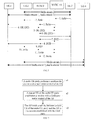
- Step 1 UE-3 initiates an ECT request.
- the ECT request is a Refer, namely, call transfer, message and carries the address of UE-4. This message is transmitted through the S-CSCF of UE-1 to the MMSC AS of UE-1.
- the MMSC technology enables a multimedia session to be continuous between different access networks or different UEs.
- the core of the MMSC technology is the
- MMSC AS All calls and sessions of a user need to pass through the MMSC AS of the IMS domain.
- the MMSC AS acts as a Back-to-Back User Agent (B2BUA) to prepare for the subsequent multimedia session continuity. This process is known as "anchoring in IMS". All calls initiated by an MMSC user from different access networks or different UEs need to be routed to the MMSC AS to undergo the anchoring process, and then sent to the called party. Likewise, all calls or sessions directed to the MMSC user need to be routed to the MMSC AS for anchoring.
- B2BUA Back-to-Back User Agent
- Step 2 The MMSC AS sends the Refer message to UE-2.
- Step 3 The MMSC AS sends the Refer message to UE-1.
- the MMSC AS is a B2BUA. According to the anchoring information existent at the time of establishing the call, the MMSC AS splits the Refer message into two Refer messages, which are sent to UE-2 and UE-1 respectively through step 2 and step 3.
- the B2BUA is defined as two user agents that are connected back to back.
- UE-1 sends an Invite, namely, a call request, message to UE-2 on the peer side.
- the AS terminates the Invite message, generates a new Invite message and sends it to UE-2 on the peer side.
- the AS acts as a B2BUA.
- the connection between UE-1 and the AS is dialog-1
- the connection between the AS and UE-2 is dialog-2.
- the AS binds dialog-1 and dialog-2 together.
- the dialog processing mechanism maintains the sequence and the transmission path of the messages between the two UAs.
- a dialog is a peer-to-peer relation between two UAs.
- Steps 4-5 UE-1 and UE-2 return a 202 OK message respectively.
- Step 6 According to the anchoring information, the MMSC AS integrates the two 202 OK messages and sends them to UE-3.
- Step 7 After receiving the OK message, UE-3 sends a BYE message to release the session.
- Steps 8-9 According to the anchoring information, the MMSC AS sends the BYE message to UE-1 and UE-2 respectively. After step 9, the signaling and media connections between UE-1, UE-2, and UE-3 are cut off.
- Steps 10-11 UE-1 and UE-2 send an Invite message to UE-4 respectively.
- Step 12 The MMSC AS anchors and correlates the two Invite messages, and sends the Invite message to UE-4.
- a multimedia session call control method is provided in various embodiments of the present invention to simplify the call transfer process, to shorten the call transfer time and to improve efficiency.
- a multimedia session call control method provided in one embodiment of the present invention includes: performing, by a multi-UE party, a multimedia session with a peer under control of an AS; establishing, by a master UE of the multi-UE party, a session with a third party under control of the AS; and binding, by the AS, a call leg between a slave UE of the multi-UE party and the AS to the session established with the third party.
- a multimedia session call control method provided in another embodiment of the present invention includes: performing, by a multi-UE party, a multimedia session with a peer under control of an AS; establishing, by the AS, a call leg with a third party in place of the multi-UE party; and binding, by the AS, the call leg already established with each UE of the multi-UE party to the call leg established with the third party, and establishing a session connection between each UE of the multi-UE party and the third party.
- a multimedia session call control method provided in still another embodiment of the present invention includes: performing, by a multi-UE party, a multimedia session with a second party under control of an AS; performing, by the multi-UE party, a multimedia session with a third party under control of the AS; sending, by a master UE of the multi-UE party, a Refer message to the second party, where the Refer message requires the second party to establish a session with the third party, carries an identifier (ID) of a call leg between the master UE and the AS, and is routed to the AS; modifying, by the AS, the ID of the call leg in the Refer message to an ID of the call leg between the AS and the third party, and sending the Refer message to the second party; sending, by the second party, an Invite message to the third party, where the Invite message carries the ID of the call leg between the AS and the third party; accepting, by the third party, the invitation, and establishing a session with the second party; and releasing, by the third party, the session of the call leg indicated by
- An AS provided in one embodiment of the present invention includes: a session control unit, configured to control a multi-UE party to perform a multimedia session with a peer; a call establishment unit, configured to control a master UE of the multi-UE party to establish a session with a third party; and a call binding unit, configured to bind a call leg between a slave UE of the multi-UE party and the peer to the session established with the third party.
- An AS provided in an embodiment of the present invention includes: a session control unit, configured to control a multi-UE party to perform a multimedia session with a peer; a call establishment unit, configured to establish a call leg with a third party in place of the multi-UE party; and a call binding unit, configured to: bind a call leg already established with each UE of the multi-UE party to the call leg established with the third party, and establish a session connection between each UE of the multi-UE party and the third party.
- a multimedia session call control method is provided in various embodiments of the present invention to simplify the call transfer process, to shorten the call transfer time and to improve efficiency.
- the multimedia session call control method under the present invention is detailed below.
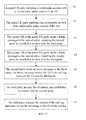
- a multimedia session call control method is provided. As shown in FIG. 2 , the method includes the following steps:
- the master UE may be differentiated from the slave UE in many ways. For example, at the time of subscription, a UE is specified as a master UE and other UEs are specified as slave UEs; or, at the time of establishing the multimedia session, the UE that joins the session first is the master UE, and the UEs that join the session later are slave UEs; or, the AS may select a random PS access terminal as a master UE.
- the UE control capabilities may be allocated in multiple modes, which do not constitute limitations to the present invention.
- the master UE in the present invention is generally a PS UE.
- the Media Gateway Control Function (MGCF) for signaling conversion between the Circuit Switched (CS) domain and the PS domain is unable to convert certain control signaling. Therefore, the CS UE is currently not suitable for acting as a master UE. With the improvement of the MGCF in the future, it is practicable to use the CS UE as a master UE.
- the major concern is that the AS can differentiate the master UE from the slave UE in multiple modes according to preset rules. The specific differentiation modes do not constitute limitations to the present invention.
- the session established between the master UE and the third party may be initiated by the master UE or the third party.
- the third party may be a UE, or an access network that covers the UE, or a server, for example, a conference center.
- the process of establishing a session between the AS and the third party may include the following steps:
- the AS receives the 200 OK message, and a call leg is established between the AS and the third party.
- the AS sends a 200 OK message to the third party, and a call leg is established between the AS and the master UE.
- the AS acts as a B2BUA to maintain the signaling connection with the master UE and the third party, and bind the call leg between the AS and the master UE to the call leg between the master UE and the third party.
- “Bind” refers to maintaining the trigger relation of the signaling sent by both parties. For example, if receiving an Invite message from the master UE that invites the third party to join a session, the AS generates a new Invite message and sends it to the third party; if receiving a 200 OK message returned by the third party, the AS sends the 200 OK message to the master UE.
- the process is known as "anchoring".
- the third party may be a UE, or an access network that covers the UE, or a server such as a conference center.
- the AS binds the call leg between the slave UE of the multi-UE party and the AS to the session established with the third party.
- the AS binds the call leg trigger relation between the slave UE of the multi-UE party and the AS to the call leg between the AS and the third party.
- the multi-UE party and the third party can update the media information of the peer reciprocally through the bound call leg, negotiate the media information between the master UE and the third party, and establish a connection of the media streams at the media layer.
- the UEs of the multi-UE party include PS UEs and CS UEs.
- the PS UE is the master UE because the CS UE is unable to receive the Refer message from the AS.
- the process of updating the PS UE media information is implemented through the MGCF, as detailed below:
- the CS UE of the multi-UE party After completion of the negotiation, the CS UE of the multi-UE party establishes a media connection with the third party according to the negotiated media information.
- the call transfer may be initiated by the peer. That is, before step a2, the AS receives a Refer message from the peer, and sends the Refer message to the multi-UE party, where the Refer message carries the address of the third party of the call transfer.
- the multi-UE party may be notified of call transfer initiated by the peer through a Refer message or a Notify message.
- the major concern herein is the content carried in the message, and the specific message name and the message format do not constitute any limitation to the present invention.
- the multi-UE party may establish a session with the third party according to the third-party address obtained from the Refer message.
- the AS may send the Refer message to the multi-UE party in this way: Through the PS call leg between the AS and the multi-UE party, the Refer message is sent to the master UE of the multi-UE party.
- the Refer message is split into two Refer messages, which are sent to the PS UE and the CS UE of the multi-UE party respectively.
- the Refer message sent to the CS UE in the prior art fails to reach the destination. After this Refer message arrives at the MGCF, the MGCF is unable to interpret it, and hence reports error information to the AS. By comparison.
- the call transfer message is sent to the master UE of the multi-UE party directly, where the master UE is a PS UE.
- this embodiment simplifies the signaling, removes the redundant signaling flow, and makes the technical solution under the present invention simpler and more appropriate.
- the method further includes:
- the embodiments of the present invention simplify the signaling flow of call transfer, shorten the call transfer time, and improve the system processing efficiency.
- a master UE of the multi-UE party establishes a session with a third party under control of the AS.
- the AS binds a call leg between a slave UE of the multi-UE party and the peer to the session established with the third party.
- the storage medium may be a Read-Only Memory (ROM), a magnetic disk, or a compact disk.
- ROM Read-Only Memory
- the first scenario is:
- step a2 Before step a2:
- the peer interacts with the conference center to establish a conference.
- the peer sends a Refer message to the conference center, where the Refer message carries the address of the multi-UE party and the ID of the call leg between the AS and the peer.
- Step a2 includes:
- the conference center sends an Invite message to the AS, where the Invite message carries the address of the multi-UE party and the ID of the call leg.
- the AS modifies the ID of the call leg in the Invite message to the ID of the call leg between the AS and the master UE of the multi-UE party, and sends the modified Invite message to the master UE;
- the master UE accepts the invitation, and returns an OK message to the AS, and the AS returns the OK message to the conference center.
- step a2 After step a2:
- the master UE releases the call leg indicated by the received call leg ID.
- the second scenario is specific to the conference initiated by the multi-UE party.
- step a3 After step a3:
- the master UE of the multi-UE party sends a Refer message to the conference center.
- the Refer message carries the address of the peer and the ID of the call leg between the master UE and the AS, and is routed to the AS.
- the AS modifies the ID of the call leg in the Refer message to the ID of the call leg between the AS and the peer, and sends the Refer message to the conference center.
- the conference center sends an Invite message to the peer, where the Invite message carries the ID of the call leg between the AS and the peer.
- the peer returns an OK message to accept the invitation.
- the peer releases the session of the call leg indicated by the ID of the call leg between the AS and the peer.
- a conference is established through interaction between the peer and the conference center, and the conference center invites the multi-UE party to the conference. Therefore, after the multi-UE party and the peer join the conference, the multi-UE party may talk with the peer through the conference. Disconnecting the call between the multi-UE party and the peer may release more resources and reduce the network load.
- the AS modifies the call leg ID, and disconnects the call between the multi-UE party and the peer after the multi-UE party and the peer join the conference.
- the master UE of the multi-UE party establishes a session with the third party under control of the AS in the following way:
- the AS modifies the ID of the call leg in the Invite message to the ID of the call leg between the AS and the master UE of the multi-UE party, and sends the modified Invite message to the master UE.
- the master UE accepts the invitation, and returns an OK message to the AS, and the AS returns the OK message to the third party.
- the master UE of the multi-UE party After the master UE of the multi-UE party establishes a session with the third party under control of the AS, the master UE releases the session of the call leg indicated by the received call leg ID, namely, releases the session between the master UE and the peer.
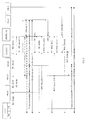
- a multimedia session call control method is provided in this embodiment.
- the signaling flow of the method is shown in FIG. 3 .
- the method in the second embodiment applied in a specific scenario is detailed below:
- UE-1 initiates an Invite message to UE-2 through an Establishment message in the CS network of a Universal Mobile Telecommunications System (UMTS). This message arrives at the visited Mobile Switching Center (vMSC) first.
- UMTS Universal Mobile Telecommunications System
- the vMSC converts the message into an Initial Address Message (IAM), and sends it to the MGCF.
- IAM Initial Address Message
- the MGCF converts the CS signaling into a Session Initiation Protocol (SIP) Invite message, and sends the message to the S-CSCF of UE-1.
- SIP Session Initiation Protocol
- the S-CSCF of UE-1 sends the message to the MMSC AS of UE-1 for anchoring.
- UE-1 initiates an Invite message to UE-2 through the PS network of the UMTS.
- the Invite message arrives at the S-CSCF of UE-1 first, and the S-CSCF sends the message to the MMSC AS for anchoring.
- Steps B1-B4 and step B5 may occur simultaneously, and are not sequence-sensitive.
- the MMSC AS integrates the PS calls and the CS calls of UE-1, and then sends the calls to UE-2 on the peer side.
- Steps 1-6 complete the process of call establishment between UE-1 and UE-2.
- the dotted line indicates the dialog relation; dialog 1 and dialog 2 are anchored at the MMSC AS; the dialog between the MMSC AS and UE-2 is dialog 3; and the solid line indicates the media stream transmission state after the session is established.
- UE-2 sends a Refer message to UE-1.
- the address of the Refer-To header of the message is the SIP Uniform Resource Identifier (URI) of UE-3, and the Refer message arrives at the MMSC AS first.
- URI Uniform Resource Identifier
- UE-2 transfers the multimedia session between UE-2 and UE-1 to UE-3. That is, an ECT supplementary service is implemented.
- the ECT is implemented through a SIP Refer message.
- the MMSC AS After receiving the Refer message, the MMSC AS splits the media, and sends the Refer message to UE-1 through the leg in the PS domain.
- UE-1 returns a 202 OK message from the PS leg.
- the MMSC AS According to the anchoring information, the MMSC AS generates a new 202 OK message and sends it to UE-2.
- UE-2 After receiving the OK message, UE-2 sends a BYE message to UE-1.
- the BYE message arrives at the MMSC AS first.
- the MMSC AS splits the BYE message, and sends the BYE message to the PS leg of UE-1.
- UE-1 initiates an Invite message to UE-3 from the PS leg.
- the Invite message arrives at the MMSC AS through the S-CSCF.
- the MMSC AS After receiving the Invite message, the MMSC AS generates new anchoring information. Under control of the MMSC AS, the old CS signaling leg is added to the new anchoring information, and the PS media information of UE-1 and the media information of the Media Gateway (MGW) are integrated and then sent to UE-3.
- MGW Media Gateway
- UE-3 returns a 200 OK message.
- This message carries media information, namely, IP address and port number, of UE-3.
- the MMSC AS sends the 200 OK message to UE-1.
- the MMSC AS sends a re-Invite/Update message to the MGCF.
- This message carries UE-3 media information and instructs the MGW to establish a media connection with UE-3.
- the PS part may be separated from the CS part of UE-1 to form two UEs, which does not affect the implementation of the method in this embodiment.
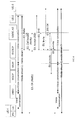
- a multimedia session call control method is provided in this embodiment.
- the signaling flow of the method is shown in FIG. 4 .
- the method in the third embodiment applied in a specific scenario is detailed below:
- UE-1 initiates an Invite message to UE-3.
- the Invite message arrives at the MMSC AS for anchoring.
- the Invite message carries three types of media: voice, video, and text.
- the MMSC AS generates a new Invite message and sends it to UE-2.
- UE-1 decides to transfer the second channel of media to UE-2.
- UE-2 initiates an Invite message to the AS.
- the Session Description Protocol (SDP) media line information of the Invite message is "video”.
- the MMSC AS anchors the Invite message, and adds the Invite message to the multimedia session between UE-1 and UE-3.
- SDP Session Description Protocol
- the MMSC AS sends an Update message to UE-3, instructing UE-3 to connect the second channel of media to UE-2.
- Steps 1-4 implement multimedia connections between UE-1, UE-2, and UE-3.
- the dotted line indicates the dialog relation; dialog 1 and dialog 2 are anchored at the MMSC AS; and the dialog between the MMSC AS and UE-3 is dialog 3.
- UE-1 is a master UE
- UE-2 is a slave UE
- UE-3 transfers the multimedia session between UE-3 and UE-1 as well as the multimedia session between UE-3 and UE-2 to UE-4. That is, an ECT supplementary service is implemented.
- the ECT is implemented through a SIP Refer message.
- UE-3 sends a Refer message.
- the address of the Refer-To header of the message is the SIP URI of UE-4, and the Refer message arrives at the MMSC AS first.
- the MMSC AS After receiving the Refer message, the MMSC AS splits the media, and sends the Refer message only to UE-1.
- the MMSC AS According to the anchoring information, the MMSC AS generates a new 202 OK message and sends it to UE-3.
- UE-3 After receiving the OK message, UE-3 sends a BYE message.
- the BYE message arrives at the MMSC AS first.
- the MMSC AS splits the BYE message, and sends the BYE message to UE-1.
- UE-1 sends a new Invite message to UE-4. This message arrives at the MMSC AS through the S-CSCF.
- the MMSC AS After receiving the Invite message, the MMSC AS generates new anchoring information. Under control of the MMSC AS, the signaling of UE-2 is added to the new anchoring information, and the media information of UE-1 and the media information of UE-2 are integrated and then sent to UE-4.
- UE-4 returns a 200 OK message.
- This message carries media information, namely, IP address and port number, of UE-4.
- the MMSC AS sends a 200 OK message to UE-1 according to the anchoring information. This message carries media information of UE-4.
- the MMSC AS sends a re-Invite/Update message to UE-2.
- This message carries UE-4 media information and instructs UE-2 to connect to UE-4.
- the third embodiment differs from the second embodiment in that the two UEs of the multi-UE party in the third embodiment are PS UEs.
- the third party may be a conference center, and that the multi-UE party may interact with the conference center to create a conference or join a conference.
- a multimedia session call control method is provided. As shown in FIG. 5 , the method includes the following steps:
- the multi-UE party performs a multimedia session with the peer under control of the AS.
- the multi-UE party may be composed of PS UEs and CS UEs, or composed of PS UEs only.
- a multi-UE party may include one or more UEs.
- the AS establishes a call leg with a third party in place of the multi-UE party.
- the call leg established between the AS and the third party is initiated by the AS or the third party.
- the third party may be a UE, or an access network that covers the UE, or a server such as a conference center.
- the AS binds the call leg already established with each UE of the multi-UE party to the call leg established with the third party, and establishes a session connection between each UE of the multi-UE party and the third party.
- the method may include the following steps: The AS receives the Refer message from the peer, where the Refer message carries the address of the third party of the call transfer; the AS sends the Refer message to the multi-UE party; if receiving an OK message returned from the multi-UE party, the AS sends the OK message to the peer; the peer receives the OK message and releases the call leg between the peer and the AS.
- the fourth embodiment differs from the first embodiment in that: In the multimedia session established between the multi-UE party and the third party, all of the existing call legs are reused, thus simplifying the signaling flow of call transfer, shortening the call transfer time, and improving the system processing efficiency.
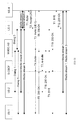
- a multimedia session call control method is provided.
- the signaling flow is shown in FIG. 6 .
- This embodiment supposes that the multimedia session between the local UE-1 and the peer UE-2 is established successfully; the session involves three types of media streams: voice, video, and text.
- the multi-UE party UE-1 uses a dual-mode UE capable of accessing the CS network and the PS network simultaneously.
- the voice streams are transmitted in the CS network of the UMTS, and the remaining two types of media streams are transmitted in the PS network of the UMTS.
- the S-CSCF and the AS are network devices that serve UE-1.
- FIG. 6 does not illustrate the S-CSCF or the AS corresponding to UE-2 and UE-3.
- the process of establishing a call between UE-1 and UE-2 is the same as steps 1-6 in the second embodiment. It is understandable that the specific process of establishing a call between UE-1 and UE-2 may be implemented in many ways based on the prior art, and does not constitute any limitation to the present invention.
- UE-2 transfers the multimedia session between UE-2 and UE-1 to UE-3. That is, an ECT supplementary service is implemented.
- the ECT is implemented through a SIP Refer message.
- UE-2 sends a Refer message to UE-1.
- the address of the Refer-To header of the message is the SIP URI of UE-3, and the Refer message arrives at the MMSC AS first.
- the MMSC AS sends a notification message (for example, Notify, or Info) to UE-1.
- a notification message for example, Notify, or Info
- This message notifies UE-1 that the peer is expected to perform an ECT supplementary service.
- the peer If accepting the supplementary service, the peer returns an OK message. If the peer refuses the supplementary service, the conversation between UE-1 and UE-2 goes on, without subsequent steps.
- the MMSC AS sends a 202 OK message to UE-2 in place of UE-1.
- UE-2 After receiving the OK message, UE-2 sends a BYE message to UE-1, thus cutting off the signaling and multimedia connection with UE-1.
- the MMSC AS sends an Invite message to a third-party UE-3 in place of UE-1.
- the third-party UE-3 returns a 200 OK message.
- This message carries media information, namely, IP address and port number, of UE-3.
- the MMSC AS sends a re-Invite/Update message to the MGCF.
- This message carries UE-3 media information and instructs the MGW to establish a media connection with UE-3.
- the MMSC AS sends a re-Invite/Update message to the PS leg of UE-1.
- This message carries UE-3 media information and instructs UE-1 to establish a media connection with UE-3.
- a multimedia session call control method is provided.
- the signaling flow of the method is shown in FIG. 7 .
- the method in the sixth embodiment of the present invention applied in a specific scenario is detailed below.
- the multi-UE party is composed of two PS UEs. It is understandable that the multi-UE party may be composed of more UEs. The number of UEs of the multiple-UE party does not constitute any limitation to the present invention.
- the process of establishing a call between UE-1 and UE-2 is the same as steps 1-4 in the third embodiment. It is understandable that the specific process of establishing a call between UE-1 and UE-2 may be implemented in many ways based on the prior art, and does not constitute any limitation to the present invention.
- UE-3 transfers the multimedia session between UE-3 and UE-1 and the multimedia session between UE-3 and UE-2 to UE-4. That is, an ECT supplementary service is implemented.
- the ECT is implemented through a SIP Refer message.
- UE-3 sends a Refer message.
- the address of the Refer-To header of the message is the SIP URI of UE-4;
- the Replace header of the message is the dialog ID of the dialog between UE-3 and UE-4; and the Refer message arrives at the MMSC AS first.
- the MMSC AS sends a notification message (for example, Notify, or Info) to UE-1. This message notifies UE-1 that the peer is expected to perform an ECT supplementary service.
- a notification message for example, Notify, or Info
- step F3 If accepting the supplementary service, the peer returns an OK message, and proceeds to step F4. If refusing the supplementary service, the peer goes on with the existing multimedia session, without performing the subsequent steps.
- the MMSC AS returns a 202 OK message in place of UE-1 and UE-2.
- the MMSC AS initiates an Invite message to UE-4 in place of UE-1 and UE-2.
- This message carries media information, namely, IP address and port number, of UE-1 and UE-2.
- UE-4 returns a 200 OK message.
- This message carries media information, namely, IP address and port number, of UE-4.
- the MMSC AS sends a re-Invite/Update message to UE-1 and UE-2 respectively according to the anchoring information. This message carries UE-4 media information.
- UE-4 After establishing a call with UE-1 and UE-2 successfully, UE-4 sends a BYE message to UE-3.
- a multimedia session call control method is provided.
- the signaling flow of the method is shown in FIG. 8 .
- the multi-UE party is UE-1; UE-1 is a dual-mode UE; the PS part of the UE may access the PS domain, and the CS part may access the CS domain. It is understandable that the multi-UE party may be a conference center.
- This embodiment supposes that a multimedia session is already established between the multi-UE party (UE-1) and the peer (UE-2).
- This session involves two types of media streams: voice, and video.
- voice streams are transmitted in the CS network
- video streams are transmitted in the PS network.
- the S-CSCF and the AS are network devices that serve UE-1.
- FIG. 8 does not illustrate the S-CSCF or the AS corresponding to UE-2.
- the process of establishing a call between UE-1 and UE-2 in this embodiment is the same as steps A1-A6 in the second embodiment.
- UE-2 sends an Invite message to the conference center of the conference server.
- the destination address of the Invite message is a URI of the conference server.
- the conference server generates a new focus for the newly created conference, allocates a conference URI (Conf URI) for the new conference, and adds the Conf URI to a 200 OK message, which is then returned to UE-2.
- conference URI Conf URI
- UE-2 sends a Refer message to the conference center.
- the address of the Refer-To header of the message is the SIP URI of UE-1
- the Replace header of the message is the ID of the call leg between UE-2 and the MMSC AS.
- the Replace header is the dialog ID of dialog 3.
- the conference center sends an Invite message to UE-1.
- the Replace header of the Invite message is the dialog ID of dialog 3 between UE-2 and the MMSC AS.
- the Contact header of the message is the URI of the conference center, and carries an isfocus parameter.
- the isfocus parameter indicates that the URI carried in this message is the URI of the conference center.
- the MMSC AS After receiving the Invite message from the third party (MGCF), the MMSC AS generates new anchoring information and exercises control to add the old CS signaling leg to the new anchoring information.
- the MMSC AS splits the media, and sends an Invite message to the PS leg of UE-1.
- the MMSC AS modifies the Replace header of the Invite message in step 4 to the dialog ID of dialog 2 between the PS domain of UE-1 and the MMSC AS, and adds the Replace header to the Invite message, which is then sent to UE-1.
- the MMSC AS sends a re-Invite message to the CS leg of UE-1. This message carries the media information of the conference center.
- the MMSC AS returns a 200 OK message to the conference center.
- the message carries the integrated PS media information of UE-1 and the media information of the MGW.
- G8 UE-1 sends a BYE message to UE-2.
- the MMSC AS sends a BYE message to UE-2 to release the session between UE-1 and UE-2.
- a multimedia session call control method is provided.
- the signaling flow of the method is shown in FIG. 9 .
- the multi-UE party is UE-1; UE-1 is a dual-mode UE; the PS part of the UE may access the PS domain, and the CS part may access the CS domain. It is understandable that the multi-UE party may be a conference center.
- This embodiment supposes that a multimedia session is already established between the multi-UE party (UE-1) and the peer (UE-2).
- This session involves two types of media streams: voice, and video.
- voice streams are transmitted in the CS network
- video streams are transmitted in the PS network.
- the S-CSCF and the AS are network devices that serve UE-1.
- FIG. 9 does not illustrate the S-CSCF or the AS corresponding to UE-2.
- the process of establishing a call between UE-1 and UE-2 in this embodiment is the same as steps A1-A6 in the second embodiment.
- UE-2 sends an Invite message to the conference center of the conference server.
- the destination address of the Invite message is a URI of the conference server.
- the conference server generates a new focus for the newly created conference, allocates a Conf URI for the new conference, and adds the Conf URI to a 200 OK message, which is then returned to UE-2.
- UE-2 sends a Refer message to the conference center.
- the address of the Refer-To header of the message is the SIP URI of UE-1
- the Replace header of the message is the dialog ID of the dialog between the MMSC AS and UE-2.
- the conference center sends an Invite message to UE-1.
- the Replace header of the Invite message is the dialog ID of the dialog between UE-2 and the MMSC AS.
- the Contact header of the message is the URI of the conference center, and carries an isfocus parameter.
- the isfocus parameter indicates that the URI carried in this message is the URI of the conference center.
- the MMSC AS sends a notification message (for example, Notify, or Info) to UE-1. This message notifies UE-1 that the third party is expected to perform a conference call.
- a notification message for example, Notify, or Info
- the peer If accepting the conference call, the peer returns an OK message. If refusing the conference call, the peer goes on with the existing multimedia session, without performing the subsequent steps.
- the MMSC AS splits the media according to the anchoring information, and sends a re-Invite message to the PS leg of UE-1. This message carries the media information of the conference center.
- the MMSC AS sends a re-Invite message to the CS leg of UE-1. This message carries the media information of the conference center.
- the MMSC AS returns a 200 OK message to the conference center.
- the message carries the PS media information of UE-1 and the media information of the MGW.
- the MMSC AS sends a BYE message to UE-2 in place of UE-1.
- a multimedia session call control method is provided.
- the signaling flow is shown in FIG. 10 .
- the multi-UE party is composed of two PS UEs: UE-1 and UE-2.
- This embodiment supposes that a multimedia session is already established between UE-1 and UE-2.
- This session involves two types of media streams: voice, and video.
- the voice streams are transmitted in the CS network, and the video streams are transmitted in the PS network.
- the S-CSCF and the AS are network devices that serve UE-1.
- FIG. 10 does not illustrate the S-CSCF or the AS corresponding to UE-2 and UE-3.
- the process of establishing a call between UE-1 and UE-2 in this embodiment is the same as steps C1-C4 in the third embodiment.
- UE-1 sends an Invite message to the conference center of the conference server.
- the destination address of the Invite message is a URI of the conference server.
- the MMSC AS generates new anchoring information for the message. Under control of the MMSC AS, the signaling of UE-2 is added to the new anchoring information, and the media information of UE-1 and the media information of UE-2 are integrated and then sent to the third party.
- the conference server generates a new focus for the newly created conference, allocates a Conf URI for the new conference, and adds the Conf URI to a 200 OK message, which is then returned.
- the 200 OK message carries media information of the conference center.
- the MMSC AS sends the 200 OK message to UE-1.
- the MMSC AS sends an Update message to UE-2, and sends the media information of the MREFP to UE-2.
- UE-1 sends a Refer message to the conference center.
- the address of the Refer-To header of the message is the SIP URI of UE-3
- the Replace header of the message is the dialog ID of dialog 2 between UE-1 and the MMSC AS.
- the MMSC AS generates a new Refer message, modifies the dialog ID of the dialog between UE-1 and the MMSC AS in the Replace header to the dialog ID of dialog 3 between the MMSC AS and UE-3, and sends the new Refer message to the conference center.
- the conference center sends a new Invite message to UE-3.
- the Replace header of the Invite message is the dialog ID of dialog 3 between UE-3 and the MMSC AS.
- the Contact header of the message is the URI of the conference center, and carries an isfocus parameter.
- the message carries media information of the conference center.
- UE-3 returns a 200 OK message. This message carries media information of UE-3.
- step 9 the link between UE-3 and the conference center is established successfully.
- the MMSC AS sends a BYE message to UE-1.
- a call control method is provided.
- the signaling flow is shown in FIG. 11 .
- This embodiment supposes that UE-1 and UE-2 are two UEs of the multi-UE party; UE-1 and UE-2 are connected to UE-3 in a session; and UE-3 is connected to UE-4 in a session.
- the S-CSCF and the AS are network devices that serve UE-1.
- FIG. 11 does not illustrate the S-CSCF or the AS corresponding to UE-2 and UE-3.
- UE-3 sends a Refer message to UE-4.
- the address of the Refer-To header of the message is the SIP URI of UE-1
- the Replace header of the message is the dialog ID of dialog 3 between UE-3 and the MMSC AS.
- UE-4 returns an OK message to UE-3.
- UE-4 sends an Invite message to UE-1.
- the Replace header of the Invite message is the dialog ID of dialog 3 between UE-2 and the MMSC AS.
- the MMSC AS exercises control to bind the existing signaling leg between UE-2 and the MMSC AS to the signaling leg established in this step.
- the MMSC AS splits the media, and sends an Invite message to UE-1.
- the MMSC AS modifies the Replace header of the Invite message in step 3 to the dialog ID of dialog 2 between UE-1 and the MMSC AS, and adds the Replace header to the Invite message, which is then sent to UE-1.
- the MMSC AS returns an OK message to UE-4.
- the MMSC AS sends a re-Invite message to UE-2. This message carries the media information of UE-4.
- UE-1 sends a BYE message to UE-3.
- T11-T12. UE-3 is disconnected from UE-4.
- a multimedia session call control method is provided. As shown in FIG. 12 , the method includes:
- the AS differentiates the master UE from the slave UE of the multi-UE party.
- the ID of the call leg between the AS and the second party is modified to the ID of the master UE. Therefore, the multi-UE party can identify the session that needs to be released after the call transfer, and the ECT service supports multiple UEs and is applicable in a wider scope.
- the signaling flow includes:
- step M5 the link between UE-4 and UE-3 is established successfully.
- UE-4 sends a BYE message to the MMSC AS to cut off the connection between UE-4 and UE-1, and the connection between UE-4 and UE-2.
- the MMSC AS splits the message, and sends a BYE message to UE-1 and UE-2 respectively.
- UE-1 sends a BYE message to UE-4.
- the MMSC AS splits the message in step 9, and sends a BYE message to UE-4 and UE-2 respectively to cut off the connection between UE-1 and UE-4, and the connection between UE-2 and UE-4.
- the AS 1300 includes: a session control unit 1310, configured to control the multi-UE party to perform a multimedia session with the peer; a call establishment unit 1320, configured to control the master UE of the multi-UE party to establish a session with a third party; a call binding unit 1330, configured to bind the call leg between the slave UE of the multi-UE party and the peer to the session established with the third party; a Refer message processing unit 1340, configured to receive a Refer message from the peer, and send the Refer message to the multi-UE party, the Refer message carrying the address of the third party of the call transfer; and a call leg releasing unit 1350, configured to receive the call transfer acknowledgement from the multi-UE party, and therefore, release the call leg between the AS and the peer; and release the call leg between the AS and the master UE of the multi-UE party.
- a session control unit 1310 configured to control the multi-UE party to perform a multimedia session with the peer
- a call establishment unit 1320 configured to control the master UE of the multi
- the AS 1400 includes: a session control unit 1410, configured to control the multi-UE party to perform a multimedia session with the peer; a call establishment unit 1420, configured to establish a call leg with a third party in place of the multi-UE party; a call binding unit 1430, configured to bind the call leg already established with each UE of the multi-UE party to the call leg established with the third party, and establish a session connection between each UE of the multi-UE party and the third party; a Refer message processing unit 1440, configured to receive a Refer message from the peer, and notify the multi-UE party that the peer requests call transfer, the Refer message carrying the address of the third party of the call transfer; and a call leg releasing unit 1450, configured to release the call leg between the AS and the peer after receiving an OK message from the multi-UE party in response to the notification.
- a session control unit 1410 configured to control the multi-UE party to perform a multimedia session with the peer
- a call establishment unit 1420 configured to establish a call leg with a third
- the embodiments of the present invention simplify the signaling flow of call transfer, shorten the call transfer time, improve the system processing efficiency, and enhance the user experience.
- the call transfer message is sent to the master UE of the multi-UE party directly, where the master UE is a PS UE.
- this embodiment simplifies the signaling, removes the redundant signaling flow, and makes the technical solution under the present invention simpler and more appropriate.
Landscapes
- Engineering & Computer Science (AREA)
- Multimedia (AREA)
- Computer Networks & Wireless Communication (AREA)
- Signal Processing (AREA)
- Business, Economics & Management (AREA)
- General Business, Economics & Management (AREA)
- Telephonic Communication Services (AREA)
- Mobile Radio Communication Systems (AREA)
Applications Claiming Priority (2)
| Application Number | Priority Date | Filing Date | Title |
|---|---|---|---|
| CN2007101657839A CN101431737B (zh) | 2007-11-05 | 2007-11-05 | 多媒体会话呼叫控制的方法及应用服务器 |
| PCT/CN2008/072924 WO2009059559A1 (fr) | 2007-11-05 | 2008-11-04 | Procédé de commande d'appel de session multimédia et serveur d'application |
Publications (3)
| Publication Number | Publication Date |
|---|---|
| EP2202934A1 true EP2202934A1 (fr) | 2010-06-30 |
| EP2202934A4 EP2202934A4 (fr) | 2011-12-07 |
| EP2202934B1 EP2202934B1 (fr) | 2014-05-07 |
Family
ID=40625385
Family Applications (1)
| Application Number | Title | Priority Date | Filing Date |
|---|---|---|---|
| EP08846806.1A Not-in-force EP2202934B1 (fr) | 2007-11-05 | 2008-11-04 | Procédé de commande d'appel de session multimédia et serveur d'application |
Country Status (6)
| Country | Link |
|---|---|
| US (2) | US9031057B2 (fr) |
| EP (1) | EP2202934B1 (fr) |
| JP (1) | JP5118204B2 (fr) |
| KR (1) | KR101141125B1 (fr) |
| CN (1) | CN101431737B (fr) |
| WO (1) | WO2009059559A1 (fr) |
Cited By (6)
| Publication number | Priority date | Publication date | Assignee | Title |
|---|---|---|---|---|
| EP2911417A1 (fr) * | 2014-02-22 | 2015-08-26 | Samsung Electronics Co., Ltd | Procédé permettant de communiquer avec un dispositif voisin, dispositif électronique et support de stockage |
| WO2015139610A1 (fr) * | 2014-03-20 | 2015-09-24 | 华为技术有限公司 | Procede, dispositif et systeme de videoconference |
| CN105099987A (zh) * | 2014-04-24 | 2015-11-25 | 华为技术有限公司 | 终端的业务接入方法、装置及系统 |
| EP3113411A4 (fr) * | 2014-02-28 | 2017-05-31 | ZTE Corporation | Procédé de communication multi-terminaux, dispositif et support d'informations informatique |
| EP2606626B1 (fr) * | 2010-08-17 | 2019-04-03 | Orange | Traitement de transfert de communication en mode sip |
| EP4513851A1 (fr) * | 2023-08-23 | 2025-02-26 | Shanghai X-Ring Technology Co., Ltd. | Procédé de transfert aveugle, appareil de communication, support d'informations et puce |
Families Citing this family (26)
| Publication number | Priority date | Publication date | Assignee | Title |
|---|---|---|---|---|
| US8542802B2 (en) | 2007-02-15 | 2013-09-24 | Global Tel*Link Corporation | System and method for three-way call detection |
| CN101431737B (zh) | 2007-11-05 | 2012-07-04 | 华为技术有限公司 | 多媒体会话呼叫控制的方法及应用服务器 |
| US9225838B2 (en) | 2009-02-12 | 2015-12-29 | Value-Added Communications, Inc. | System and method for detecting three-way call circumvention attempts |
| CN101883342B (zh) * | 2009-05-05 | 2014-12-10 | 华为终端有限公司 | 会话转移方法、装置和系统 |
| CN101567797B (zh) * | 2009-05-20 | 2013-02-27 | 中兴通讯股份有限公司 | 一种实现转移类业务的方法及系统 |
| CN101990181A (zh) * | 2009-08-07 | 2011-03-23 | 华为终端有限公司 | 会话信息的传输方法和装置 |
| CN101662472B (zh) * | 2009-09-16 | 2012-10-03 | 中兴通讯股份有限公司 | 机顶盒基于sip协议实现呼叫转移的方法及系统 |
| CN102075494B (zh) * | 2009-11-20 | 2014-02-26 | 华为终端有限公司 | 一种联合会话建立方法和设备 |
| CN101827322B (zh) * | 2010-03-02 | 2013-02-13 | 华为终端有限公司 | 一种业务控制方法和装置 |
| CN102299908B (zh) * | 2010-06-24 | 2014-11-05 | 中兴通讯股份有限公司 | 用户间媒体切换的实现方法及系统 |
| US9602634B2 (en) * | 2012-02-15 | 2017-03-21 | Avaya Inc. | Global session identifier |
| CN103298047B (zh) * | 2012-02-28 | 2015-11-25 | 鼎桥通信技术有限公司 | 一种将多个用户关联在同一小区的方法及网络设备 |
| CN102647615B (zh) * | 2012-03-15 | 2015-06-10 | 北京视博云科技有限公司 | 一种多媒体应用数据提供方法、装置及系统 |
| US10110682B2 (en) * | 2012-03-23 | 2018-10-23 | Avaya Inc. | Supporting intermediate back to back user agents between user agents and a conference focus |
| US9544099B2 (en) * | 2012-07-02 | 2017-01-10 | Intel Corporation | User equipment, evolved node B, and method for multicast device-to-device communications |
| US8700019B2 (en) * | 2012-08-27 | 2014-04-15 | Avaya Inc. | Method and apparatus for dynamic device pairing |
| JP2014103614A (ja) * | 2012-11-22 | 2014-06-05 | Hitachi Ltd | 通信システム |
| US9148489B2 (en) | 2013-03-11 | 2015-09-29 | Qualcomm Incorporated | Exchanging a contact profile between client devices during a communication session |
| US9622275B2 (en) * | 2013-03-15 | 2017-04-11 | Qualcomm Incorporated | System and method for allowing multiple devices to communicate in a network |
| CN105530452A (zh) * | 2014-10-24 | 2016-04-27 | 三亚中兴软件有限责任公司 | 会议终端呼叫转移的处理方法及装置 |
| CN106034128B (zh) * | 2015-03-18 | 2019-07-23 | 阿尔卡特朗讯 | 一种用于释放sip会话中的媒体的方法与设备 |
| US10469538B2 (en) * | 2016-03-31 | 2019-11-05 | Avaya Inc. | Call preservation for multiple legs of a call when a primary session manager fails |
| US10193931B2 (en) | 2016-03-31 | 2019-01-29 | Avaya Inc. | Session initiation protocol call preservation based on a network failure |
| CN109156022B (zh) | 2016-06-22 | 2022-08-09 | 英特尔公司 | 用于全双工调度的通信设备和方法 |
| US9614974B1 (en) * | 2016-11-23 | 2017-04-04 | Global Tel*Link Corp. | Utilizing sip messages to determine the status of a remote terminal in VoIP communication systems |
| US9930088B1 (en) | 2017-06-22 | 2018-03-27 | Global Tel*Link Corporation | Utilizing VoIP codec negotiation during a controlled environment call |
Family Cites Families (30)
| Publication number | Priority date | Publication date | Assignee | Title |
|---|---|---|---|---|
| JPH1032652A (ja) * | 1996-07-12 | 1998-02-03 | Ricoh Co Ltd | マルチメディア通信システム |
| US7684317B2 (en) * | 2001-06-14 | 2010-03-23 | Nortel Networks Limited | Protecting a network from unauthorized access |
| US20030059015A1 (en) * | 2001-09-21 | 2003-03-27 | Mello Eber | Call server allowing calls with multiple participants and multiple services independently of the number of participants |
| JP3767562B2 (ja) * | 2002-06-21 | 2006-04-19 | 住友化学株式会社 | ε−カプロラクタムの製造方法 |
| US20040001512A1 (en) * | 2002-06-28 | 2004-01-01 | International Business Machines Corporation | Method and apparatus for peer to peer bandwidth sharing |
| US7602704B2 (en) * | 2002-08-20 | 2009-10-13 | Cisco Technology, Inc. | System and method for providing fault tolerant IP services |
| AU2003211232A1 (en) * | 2003-02-19 | 2004-09-09 | Communications Research Laboratory, Independent Administrative Institution | Communication node, signaling network, communication network system, and communication method thereof |
| US7898990B2 (en) * | 2003-03-25 | 2011-03-01 | Spyder Navigations L.L.C. | Method, system and gateway device for enabling interworking between IP and CS networks |
| WO2004107721A2 (fr) * | 2003-05-29 | 2004-12-09 | Nimcat Networks Inc. | Systemes de mise en garde d'appel par indicatif et de prise d'appel mis en garde par indicatif, procedes et dispositifs de reseau associes |
| GB0329707D0 (en) * | 2003-12-22 | 2004-01-28 | Nokia Corp | Activation of services in a communication system |
| EP1578152A1 (fr) | 2004-03-17 | 2005-09-21 | France Telecom | Procédé, serveur et système de gestion d'une session "push-to-talk" |
| WO2006010953A2 (fr) | 2004-07-30 | 2006-02-02 | Andrew Richardson | Noeud de reseau local |
| US20060083244A1 (en) | 2004-10-15 | 2006-04-20 | Balakumar Jagadesan | Method for sessions including multiple resources |
| EP1829303B1 (fr) * | 2004-12-17 | 2010-04-21 | Nxp B.V. | Systeme de communication comprenant un appareil portatif maitre et un appareil portatif esclave |
| CN100544388C (zh) * | 2005-07-01 | 2009-09-23 | 华为技术有限公司 | 一种控制业务多次前转套打的方法 |
| CN100433751C (zh) * | 2005-12-03 | 2008-11-12 | 华为技术有限公司 | 一种第三方控制业务的实现方法和应用服务器 |
| EP1959608A4 (fr) * | 2005-12-03 | 2009-04-22 | Huawei Tech Co Ltd | Procede, serveur d'application et systeme pour la mise en oeuvre de service de controle de tiers |
| US9060047B2 (en) * | 2005-12-21 | 2015-06-16 | Genband Us Llc | Media stream management |
| CN101026616B (zh) | 2006-02-18 | 2013-01-09 | 华为技术有限公司 | 基于ip多媒体子系统的交互式媒体会话建立方法 |
| US7701971B2 (en) | 2006-02-27 | 2010-04-20 | Cisco Technology, Inc. | System and method for providing a compatibility feature in a session initiation protocol (SIP) environment |
| US8719342B2 (en) * | 2006-04-25 | 2014-05-06 | Core Wireless Licensing, S.a.r.l. | Third-party session modification |
| WO2008009089A1 (fr) * | 2006-07-21 | 2008-01-24 | Bce Inc | procédé, système et appareil pour une AUTHENTIFIcation de participant dans un environnement d'appel à plusieurs intervenants |
| TWI430242B (zh) * | 2006-08-01 | 2014-03-11 | Samsung Display Co Ltd | 顯示器裝置及驅動顯示器裝置的方法 |
| US20080141343A1 (en) * | 2006-08-16 | 2008-06-12 | Matsushita Electric Industrial Co., Ltd. | Method, system and apparatus for access control |
| US20090323656A1 (en) | 2006-10-04 | 2009-12-31 | Nortel Networks Limited | Circuit-switched and multimedia subsystem voice continuity |
| CN101192851A (zh) * | 2006-11-28 | 2008-06-04 | 华为技术有限公司 | 防止彩铃串音的方法、系统和应用服务器 |
| US20080304451A1 (en) * | 2007-06-05 | 2008-12-11 | Lucent Technologies, Inc. | Method to allow hand-off of a cdma mobile from ims femtocell to circuit msc |
| US20090067408A1 (en) * | 2007-09-12 | 2009-03-12 | Nokia Corporation | Centralized call log and method thereof |
| US8103299B2 (en) * | 2007-09-25 | 2012-01-24 | Qualcomm Incorporated | Uni-directional traffic channel assignment for a receive-only group call in a mobile communication system |
| CN101431737B (zh) | 2007-11-05 | 2012-07-04 | 华为技术有限公司 | 多媒体会话呼叫控制的方法及应用服务器 |
-
2007
- 2007-11-05 CN CN2007101657839A patent/CN101431737B/zh active Active
-
2008
- 2008-11-04 WO PCT/CN2008/072924 patent/WO2009059559A1/fr not_active Ceased
- 2008-11-04 EP EP08846806.1A patent/EP2202934B1/fr not_active Not-in-force
- 2008-11-04 JP JP2010531404A patent/JP5118204B2/ja not_active Expired - Fee Related
- 2008-11-04 KR KR1020107010950A patent/KR101141125B1/ko not_active Expired - Fee Related
-
2010
- 2010-05-03 US US12/772,515 patent/US9031057B2/en active Active
-
2015
- 2015-05-11 US US14/708,818 patent/US10469545B2/en active Active
Non-Patent Citations (3)
| Title |
|---|
| "3rd Generation Partnership Project; Technical Specification Group Services and Architecture; Feasibility Study on Multimedia Session Continuity; Stage 2; (Release 8)", 3GPP STANDARD; 3GPP TR 23.893, 3RD GENERATION PARTNERSHIP PROJECT (3GPP), MOBILE COMPETENCE CENTRE ; 650, ROUTE DES LUCIOLES ; F-06921 SOPHIA-ANTIPOLIS CEDEX ; FRANCE, no. V0.3.0, 1 October 2007 (2007-10-01), pages 1-33, XP050361615, * |
| ELLEUCH W ET AL: "Enabling Session Mobility in Full Mesh Conferencing Model", WIRELESS AND MOBILE COMPUTING, NETWORKING AND COMMUNICATIONS, 2007. WIMOB 2007. THIRD IEEE INTERNATIONAL CONFERENCE ON, IEEE, PISCATAWAY, NJ, USA, 8 October 2007 (2007-10-08), page 49, XP031338332, * |
| See also references of WO2009059559A1 * |
Cited By (7)
| Publication number | Priority date | Publication date | Assignee | Title |
|---|---|---|---|---|
| EP2606626B1 (fr) * | 2010-08-17 | 2019-04-03 | Orange | Traitement de transfert de communication en mode sip |
| EP2911417A1 (fr) * | 2014-02-22 | 2015-08-26 | Samsung Electronics Co., Ltd | Procédé permettant de communiquer avec un dispositif voisin, dispositif électronique et support de stockage |
| US9860359B2 (en) | 2014-02-22 | 2018-01-02 | Samsung Electronics Co., Ltd. | Method for communicating with neighbor device, electronic device, and storage medium |
| EP3113411A4 (fr) * | 2014-02-28 | 2017-05-31 | ZTE Corporation | Procédé de communication multi-terminaux, dispositif et support d'informations informatique |
| WO2015139610A1 (fr) * | 2014-03-20 | 2015-09-24 | 华为技术有限公司 | Procede, dispositif et systeme de videoconference |
| CN105099987A (zh) * | 2014-04-24 | 2015-11-25 | 华为技术有限公司 | 终端的业务接入方法、装置及系统 |
| EP4513851A1 (fr) * | 2023-08-23 | 2025-02-26 | Shanghai X-Ring Technology Co., Ltd. | Procédé de transfert aveugle, appareil de communication, support d'informations et puce |
Also Published As
| Publication number | Publication date |
|---|---|
| KR101141125B1 (ko) | 2012-05-02 |
| WO2009059559A1 (fr) | 2009-05-14 |
| CN101431737A (zh) | 2009-05-13 |
| US20150244746A1 (en) | 2015-08-27 |
| US20100215037A1 (en) | 2010-08-26 |
| EP2202934A4 (fr) | 2011-12-07 |
| US9031057B2 (en) | 2015-05-12 |
| US10469545B2 (en) | 2019-11-05 |
| KR20100076036A (ko) | 2010-07-05 |
| EP2202934B1 (fr) | 2014-05-07 |
| JP5118204B2 (ja) | 2013-01-16 |
| CN101431737B (zh) | 2012-07-04 |
| JP2011502411A (ja) | 2011-01-20 |
Similar Documents
| Publication | Publication Date | Title |
|---|---|---|
| US9031057B2 (en) | Multimedia session call control method and application server | |
| US8402154B2 (en) | Method, application server and user equipment for transferring media streams of multimedia session | |
| RU2431236C2 (ru) | Непрерывность сеанса в сетях связи | |
| US8588211B2 (en) | Method for changing session media, method for establishing a call, and equipment thereof | |
| CN100544464C (zh) | 一种实现ims业务互通的方法和系统 | |
| US8855104B2 (en) | Method for switching the session control path of IP multimedia core network subsystem centralized service | |
| US8825875B2 (en) | Session establishment in a communication network | |
| US20110268110A1 (en) | Providing Packet-Based Multimedia Services via a Circuit Breaker | |
| US10681100B2 (en) | Method, user equipment and application server for adding media stream of multimedia session | |
| US20080285487A1 (en) | Method and system for providing full duplex services over multiple simplex media paths and sessions | |
| US8411597B2 (en) | Method, system and apparatus for setting up multimedia call | |
| CN101227728B (zh) | 一种多媒体会话连续性业务的会话合并方法 | |
| WO2008110110A1 (fr) | Procédé et système de fourniture de service de sous-système multimédia ip | |
| WO2009121310A1 (fr) | Procédé, système, et dispositif, permettant de sélectionner une passerelle | |
| EP1619838A1 (fr) | Elément et architecture de réseau Push to watch | |
| EP1959608A1 (fr) | Procede, serveur d'application et systeme pour la mise en oeuvre de service de controle de tiers | |
| CN101848194B (zh) | 媒体转移方法和系统、服务器及用户设备 | |
| WO2008141087A1 (fr) | Procédé et système pour fournir des services en duplex intégral sur plusieurs parcours et sessions de supports en simplex | |
| HK1158423A1 (zh) | 在多分量通信会话中传递会话连续性信息 | |
| JP2017216584A (ja) | 要求先端末のオプション機能の非使用を整合する網間制御方法、sipサーバ及びプログラム |
Legal Events
| Date | Code | Title | Description |
|---|---|---|---|
| PUAI | Public reference made under article 153(3) epc to a published international application that has entered the european phase |
Free format text: ORIGINAL CODE: 0009012 |
|
| 17P | Request for examination filed |
Effective date: 20100505 |
|
| AK | Designated contracting states |
Kind code of ref document: A1 Designated state(s): AT BE BG CH CY CZ DE DK EE ES FI FR GB GR HR HU IE IS IT LI LT LU LV MC MT NL NO PL PT RO SE SI SK TR |
|
| AX | Request for extension of the european patent |
Extension state: AL BA MK RS |
|
| DAX | Request for extension of the european patent (deleted) | ||
| A4 | Supplementary search report drawn up and despatched |
Effective date: 20111109 |
|
| RIC1 | Information provided on ipc code assigned before grant |
Ipc: H04L 29/06 20060101AFI20111103BHEP |
|
| GRAP | Despatch of communication of intention to grant a patent |
Free format text: ORIGINAL CODE: EPIDOSNIGR1 |
|
| INTG | Intention to grant announced |
Effective date: 20131202 |
|
| GRAS | Grant fee paid |
Free format text: ORIGINAL CODE: EPIDOSNIGR3 |
|
| GRAA | (expected) grant |
Free format text: ORIGINAL CODE: 0009210 |
|
| AK | Designated contracting states |
Kind code of ref document: B1 Designated state(s): AT BE BG CH CY CZ DE DK EE ES FI FR GB GR HR HU IE IS IT LI LT LU LV MC MT NL NO PL PT RO SE SI SK TR |
|
| REG | Reference to a national code |
Ref country code: GB Ref legal event code: FG4D |
|
| REG | Reference to a national code |
Ref country code: AT Ref legal event code: REF Ref document number: 667418 Country of ref document: AT Kind code of ref document: T Effective date: 20140515 |
|
| REG | Reference to a national code |
Ref country code: IE Ref legal event code: FG4D |
|
| REG | Reference to a national code |
Ref country code: DE Ref legal event code: R096 Ref document number: 602008032166 Country of ref document: DE Effective date: 20140618 |
|
| REG | Reference to a national code |
Ref country code: NL Ref legal event code: T3 |
|
| REG | Reference to a national code |
Ref country code: AT Ref legal event code: MK05 Ref document number: 667418 Country of ref document: AT Kind code of ref document: T Effective date: 20140507 |
|
| REG | Reference to a national code |
Ref country code: LT Ref legal event code: MG4D |
|
| PG25 | Lapsed in a contracting state [announced via postgrant information from national office to epo] |
Ref country code: FI Free format text: LAPSE BECAUSE OF FAILURE TO SUBMIT A TRANSLATION OF THE DESCRIPTION OR TO PAY THE FEE WITHIN THE PRESCRIBED TIME-LIMIT Effective date: 20140507 Ref country code: CY Free format text: LAPSE BECAUSE OF FAILURE TO SUBMIT A TRANSLATION OF THE DESCRIPTION OR TO PAY THE FEE WITHIN THE PRESCRIBED TIME-LIMIT Effective date: 20140507 Ref country code: NO Free format text: LAPSE BECAUSE OF FAILURE TO SUBMIT A TRANSLATION OF THE DESCRIPTION OR TO PAY THE FEE WITHIN THE PRESCRIBED TIME-LIMIT Effective date: 20140807 Ref country code: GR Free format text: LAPSE BECAUSE OF FAILURE TO SUBMIT A TRANSLATION OF THE DESCRIPTION OR TO PAY THE FEE WITHIN THE PRESCRIBED TIME-LIMIT Effective date: 20140808 Ref country code: LT Free format text: LAPSE BECAUSE OF FAILURE TO SUBMIT A TRANSLATION OF THE DESCRIPTION OR TO PAY THE FEE WITHIN THE PRESCRIBED TIME-LIMIT Effective date: 20140507 Ref country code: IS Free format text: LAPSE BECAUSE OF FAILURE TO SUBMIT A TRANSLATION OF THE DESCRIPTION OR TO PAY THE FEE WITHIN THE PRESCRIBED TIME-LIMIT Effective date: 20140907 |
|
| PG25 | Lapsed in a contracting state [announced via postgrant information from national office to epo] |
Ref country code: AT Free format text: LAPSE BECAUSE OF FAILURE TO SUBMIT A TRANSLATION OF THE DESCRIPTION OR TO PAY THE FEE WITHIN THE PRESCRIBED TIME-LIMIT Effective date: 20140507 Ref country code: HR Free format text: LAPSE BECAUSE OF FAILURE TO SUBMIT A TRANSLATION OF THE DESCRIPTION OR TO PAY THE FEE WITHIN THE PRESCRIBED TIME-LIMIT Effective date: 20140507 Ref country code: ES Free format text: LAPSE BECAUSE OF FAILURE TO SUBMIT A TRANSLATION OF THE DESCRIPTION OR TO PAY THE FEE WITHIN THE PRESCRIBED TIME-LIMIT Effective date: 20140507 Ref country code: LV Free format text: LAPSE BECAUSE OF FAILURE TO SUBMIT A TRANSLATION OF THE DESCRIPTION OR TO PAY THE FEE WITHIN THE PRESCRIBED TIME-LIMIT Effective date: 20140507 Ref country code: PL Free format text: LAPSE BECAUSE OF FAILURE TO SUBMIT A TRANSLATION OF THE DESCRIPTION OR TO PAY THE FEE WITHIN THE PRESCRIBED TIME-LIMIT Effective date: 20140507 Ref country code: SE Free format text: LAPSE BECAUSE OF FAILURE TO SUBMIT A TRANSLATION OF THE DESCRIPTION OR TO PAY THE FEE WITHIN THE PRESCRIBED TIME-LIMIT Effective date: 20140507 |
|
| PG25 | Lapsed in a contracting state [announced via postgrant information from national office to epo] |
Ref country code: PT Free format text: LAPSE BECAUSE OF FAILURE TO SUBMIT A TRANSLATION OF THE DESCRIPTION OR TO PAY THE FEE WITHIN THE PRESCRIBED TIME-LIMIT Effective date: 20140908 |
|
| PG25 | Lapsed in a contracting state [announced via postgrant information from national office to epo] |
Ref country code: BE Free format text: LAPSE BECAUSE OF FAILURE TO SUBMIT A TRANSLATION OF THE DESCRIPTION OR TO PAY THE FEE WITHIN THE PRESCRIBED TIME-LIMIT Effective date: 20140507 Ref country code: CZ Free format text: LAPSE BECAUSE OF FAILURE TO SUBMIT A TRANSLATION OF THE DESCRIPTION OR TO PAY THE FEE WITHIN THE PRESCRIBED TIME-LIMIT Effective date: 20140507 Ref country code: SK Free format text: LAPSE BECAUSE OF FAILURE TO SUBMIT A TRANSLATION OF THE DESCRIPTION OR TO PAY THE FEE WITHIN THE PRESCRIBED TIME-LIMIT Effective date: 20140507 Ref country code: DK Free format text: LAPSE BECAUSE OF FAILURE TO SUBMIT A TRANSLATION OF THE DESCRIPTION OR TO PAY THE FEE WITHIN THE PRESCRIBED TIME-LIMIT Effective date: 20140507 Ref country code: RO Free format text: LAPSE BECAUSE OF FAILURE TO SUBMIT A TRANSLATION OF THE DESCRIPTION OR TO PAY THE FEE WITHIN THE PRESCRIBED TIME-LIMIT Effective date: 20140507 Ref country code: EE Free format text: LAPSE BECAUSE OF FAILURE TO SUBMIT A TRANSLATION OF THE DESCRIPTION OR TO PAY THE FEE WITHIN THE PRESCRIBED TIME-LIMIT Effective date: 20140507 |
|
| REG | Reference to a national code |
Ref country code: DE Ref legal event code: R026 Ref document number: 602008032166 Country of ref document: DE |
|
| PLBI | Opposition filed |
Free format text: ORIGINAL CODE: 0009260 |
|
| PLAX | Notice of opposition and request to file observation + time limit sent |
Free format text: ORIGINAL CODE: EPIDOSNOBS2 |
|
| 26 | Opposition filed |
Opponent name: JAMES POOLE LIMITED Effective date: 20150206 |
|
| PLAF | Information modified related to communication of a notice of opposition and request to file observations + time limit |
Free format text: ORIGINAL CODE: EPIDOSCOBS2 |
|
| REG | Reference to a national code |
Ref country code: DE Ref legal event code: R026 Ref document number: 602008032166 Country of ref document: DE Effective date: 20150206 |
|
| PG25 | Lapsed in a contracting state [announced via postgrant information from national office to epo] |
Ref country code: IT Free format text: LAPSE BECAUSE OF FAILURE TO SUBMIT A TRANSLATION OF THE DESCRIPTION OR TO PAY THE FEE WITHIN THE PRESCRIBED TIME-LIMIT Effective date: 20140507 |
|
| PG25 | Lapsed in a contracting state [announced via postgrant information from national office to epo] |
Ref country code: LU Free format text: LAPSE BECAUSE OF FAILURE TO SUBMIT A TRANSLATION OF THE DESCRIPTION OR TO PAY THE FEE WITHIN THE PRESCRIBED TIME-LIMIT Effective date: 20141104 Ref country code: MC Free format text: LAPSE BECAUSE OF FAILURE TO SUBMIT A TRANSLATION OF THE DESCRIPTION OR TO PAY THE FEE WITHIN THE PRESCRIBED TIME-LIMIT Effective date: 20140507 |
|
| REG | Reference to a national code |
Ref country code: CH Ref legal event code: PL |
|
| PG25 | Lapsed in a contracting state [announced via postgrant information from national office to epo] |
Ref country code: CH Free format text: LAPSE BECAUSE OF NON-PAYMENT OF DUE FEES Effective date: 20141130 Ref country code: SI Free format text: LAPSE BECAUSE OF FAILURE TO SUBMIT A TRANSLATION OF THE DESCRIPTION OR TO PAY THE FEE WITHIN THE PRESCRIBED TIME-LIMIT Effective date: 20140507 Ref country code: LI Free format text: LAPSE BECAUSE OF NON-PAYMENT OF DUE FEES Effective date: 20141130 |
|
| PLBB | Reply of patent proprietor to notice(s) of opposition received |
Free format text: ORIGINAL CODE: EPIDOSNOBS3 |
|
| REG | Reference to a national code |
Ref country code: IE Ref legal event code: MM4A |
|
| REG | Reference to a national code |
Ref country code: FR Ref legal event code: PLFP Year of fee payment: 8 |
|
| PG25 | Lapsed in a contracting state [announced via postgrant information from national office to epo] |
Ref country code: IE Free format text: LAPSE BECAUSE OF NON-PAYMENT OF DUE FEES Effective date: 20141104 |
|
| PG25 | Lapsed in a contracting state [announced via postgrant information from national office to epo] |
Ref country code: BG Free format text: LAPSE BECAUSE OF FAILURE TO SUBMIT A TRANSLATION OF THE DESCRIPTION OR TO PAY THE FEE WITHIN THE PRESCRIBED TIME-LIMIT Effective date: 20140507 |
|
| RDAF | Communication despatched that patent is revoked |
Free format text: ORIGINAL CODE: EPIDOSNREV1 |
|
| APBM | Appeal reference recorded |
Free format text: ORIGINAL CODE: EPIDOSNREFNO |
|
| APBP | Date of receipt of notice of appeal recorded |
Free format text: ORIGINAL CODE: EPIDOSNNOA2O |
|
| APAH | Appeal reference modified |
Free format text: ORIGINAL CODE: EPIDOSCREFNO |
|
| PG25 | Lapsed in a contracting state [announced via postgrant information from national office to epo] |
Ref country code: MT Free format text: LAPSE BECAUSE OF FAILURE TO SUBMIT A TRANSLATION OF THE DESCRIPTION OR TO PAY THE FEE WITHIN THE PRESCRIBED TIME-LIMIT Effective date: 20140507 Ref country code: TR Free format text: LAPSE BECAUSE OF FAILURE TO SUBMIT A TRANSLATION OF THE DESCRIPTION OR TO PAY THE FEE WITHIN THE PRESCRIBED TIME-LIMIT Effective date: 20140507 Ref country code: HU Free format text: LAPSE BECAUSE OF FAILURE TO SUBMIT A TRANSLATION OF THE DESCRIPTION OR TO PAY THE FEE WITHIN THE PRESCRIBED TIME-LIMIT; INVALID AB INITIO Effective date: 20081104 |
|
| APBQ | Date of receipt of statement of grounds of appeal recorded |
Free format text: ORIGINAL CODE: EPIDOSNNOA3O |
|
| REG | Reference to a national code |
Ref country code: FR Ref legal event code: PLFP Year of fee payment: 9 |
|
| REG | Reference to a national code |
Ref country code: FR Ref legal event code: PLFP Year of fee payment: 10 |
|
| PGFP | Annual fee paid to national office [announced via postgrant information from national office to epo] |
Ref country code: FR Payment date: 20171012 Year of fee payment: 10 Ref country code: DE Payment date: 20171031 Year of fee payment: 10 |
|
| PGFP | Annual fee paid to national office [announced via postgrant information from national office to epo] |
Ref country code: NL Payment date: 20171016 Year of fee payment: 10 Ref country code: GB Payment date: 20171101 Year of fee payment: 10 |
|
| REG | Reference to a national code |
Ref country code: DE Ref legal event code: R119 Ref document number: 602008032166 Country of ref document: DE |
|
| REG | Reference to a national code |
Ref country code: NL Ref legal event code: MM Effective date: 20181201 |
|
| GBPC | Gb: european patent ceased through non-payment of renewal fee |
Effective date: 20181104 |
|
| PG25 | Lapsed in a contracting state [announced via postgrant information from national office to epo] |
Ref country code: NL Free format text: LAPSE BECAUSE OF NON-PAYMENT OF DUE FEES Effective date: 20181201 |
|
| PG25 | Lapsed in a contracting state [announced via postgrant information from national office to epo] |
Ref country code: FR Free format text: LAPSE BECAUSE OF NON-PAYMENT OF DUE FEES Effective date: 20181130 Ref country code: DE Free format text: LAPSE BECAUSE OF NON-PAYMENT OF DUE FEES Effective date: 20190601 |
|
| PG25 | Lapsed in a contracting state [announced via postgrant information from national office to epo] |
Ref country code: GB Free format text: LAPSE BECAUSE OF NON-PAYMENT OF DUE FEES Effective date: 20181104 |
|
| APBY | Invitation to file observations in appeal sent |
Free format text: ORIGINAL CODE: EPIDOSNOBA2O |
|
| APBU | Appeal procedure closed |
Free format text: ORIGINAL CODE: EPIDOSNNOA9O |
|
| PLBD | Termination of opposition procedure: decision despatched |
Free format text: ORIGINAL CODE: EPIDOSNOPC1 |
|
| REG | Reference to a national code |
Ref country code: DE Ref legal event code: R100 Ref document number: 602008032166 Country of ref document: DE |
|
| PLBM | Termination of opposition procedure: date of legal effect published |
Free format text: ORIGINAL CODE: 0009276 |
|
| STAA | Information on the status of an ep patent application or granted ep patent |
Free format text: STATUS: OPPOSITION PROCEDURE CLOSED |
|
| 27C | Opposition proceedings terminated |
Effective date: 20200919 |
|
| P01 | Opt-out of the competence of the unified patent court (upc) registered |
Effective date: 20230527 |