EP2202995A1 - Contrôle d'un appel dans un réseau de télécommunications - Google Patents
Contrôle d'un appel dans un réseau de télécommunications Download PDFInfo
- Publication number
- EP2202995A1 EP2202995A1 EP08172727A EP08172727A EP2202995A1 EP 2202995 A1 EP2202995 A1 EP 2202995A1 EP 08172727 A EP08172727 A EP 08172727A EP 08172727 A EP08172727 A EP 08172727A EP 2202995 A1 EP2202995 A1 EP 2202995A1
- Authority
- EP
- European Patent Office
- Prior art keywords
- service
- call
- invocation
- message
- entity
- Prior art date
- Legal status (The legal status is an assumption and is not a legal conclusion. Google has not performed a legal analysis and makes no representation as to the accuracy of the status listed.)
- Withdrawn
Links
- 238000000034 method Methods 0.000 claims abstract description 77
- 238000012545 processing Methods 0.000 claims description 40
- 238000012546 transfer Methods 0.000 claims description 18
- 238000001514 detection method Methods 0.000 claims description 14
- 230000008569 process Effects 0.000 claims description 14
- 238000012216 screening Methods 0.000 claims description 13
- 238000004590 computer program Methods 0.000 claims description 12
- 230000005540 biological transmission Effects 0.000 claims description 10
- 230000000977 initiatory effect Effects 0.000 claims description 8
- 238000012986 modification Methods 0.000 claims description 7
- 230000004048 modification Effects 0.000 claims description 7
- 238000012544 monitoring process Methods 0.000 claims description 6
- 238000010586 diagram Methods 0.000 description 11
- 230000004044 response Effects 0.000 description 6
- 230000006870 function Effects 0.000 description 5
- 238000004458 analytical method Methods 0.000 description 3
- 230000011664 signaling Effects 0.000 description 3
- 230000009471 action Effects 0.000 description 2
- 238000011161 development Methods 0.000 description 1
- 230000003993 interaction Effects 0.000 description 1
- 238000010295 mobile communication Methods 0.000 description 1
- 238000000926 separation method Methods 0.000 description 1
- 238000013519 translation Methods 0.000 description 1
Images



Classifications
-
- H—ELECTRICITY
- H04—ELECTRIC COMMUNICATION TECHNIQUE
- H04Q—SELECTING
- H04Q3/00—Selecting arrangements
- H04Q3/0016—Arrangements providing connection between exchanges
- H04Q3/0029—Provisions for intelligent networking
- H04Q3/0041—Provisions for intelligent networking involving techniques for avoiding interaction of call service features
-
- H—ELECTRICITY
- H04—ELECTRIC COMMUNICATION TECHNIQUE
- H04M—TELEPHONIC COMMUNICATION
- H04M3/00—Automatic or semi-automatic exchanges
- H04M3/42—Systems providing special services or facilities to subscribers
- H04M3/42136—Administration or customisation of services
- H04M3/4217—Managing service interactions
-
- H—ELECTRICITY
- H04—ELECTRIC COMMUNICATION TECHNIQUE
- H04M—TELEPHONIC COMMUNICATION
- H04M2207/00—Type of exchange or network, i.e. telephonic medium, in which the telephonic communication takes place
- H04M2207/12—Type of exchange or network, i.e. telephonic medium, in which the telephonic communication takes place intelligent networks
Definitions
- the present invention relates to controlling a call in a telecommunications network.
- a first kind of service is constituted by the so-called network based services. Examples of such services are multi party call, call forwarding, explicit call transfer. These services are controlled by a switching node, such as a Mobile Services Switching Center (MSC).
- MSC Mobile Services Switching Center
- a network based service can be provided and executed by the MSC but also by a Home Location Register (HLR).
- HLR Home Location Register
- Intelligent Network services that are executed and controlled by an Intelligent Network (IN).
- IN Intelligent Network
- service intelligence or service logic is separated from switching functions. This separation basically enables network operators to develop and deploy services and features independently of vendors, allowing more flexibility in service development, simplified rollout, reduced costs and greater autonomy.
- IN protocols are the Intelligent Network Application Protocol (INAP), the Advanced IN (AIN), and the Customized Applications for Mobile network Enhanced Logic (CAMEL).
- INAP Intelligent Network Application Protocol
- AIN Advanced IN
- CAMEL Customized Applications for Mobile network Enhanced Logic
- INAP was developed for fixed line networks and is the primary protocol used for fixed line IN outside of North America.
- AIN is a variant of IN developed for North America.
- CAMEL is a Global System for Mobile communications (GSM) Phase 2+ and Universal Mobile Telecommunications System (UMTS) network feature specified in 3GPP TS 22.078.
- GSM Global System for Mobile communications
- UMTS Universal Mobile Telecommunications System
- CAMEL is based on core INAP with modifications to take into account, amongst others, subscriber mobility. In particular, CAMEL enables the use of operator-specific services by a subscriber even when roaming outside the subscriber's Home Public Land Mobile Network (PLMN).
- PLMN Public Land Mobile Network
- a CAMEL-based Intelligent Network comprises as main entities a service switching entity for switching tasks, also referred to as SSF (Service Switching Function) or gsmSSF (GSM Service Switching Function) and a service control entity comprising the service intelligence or logic also referred to as SCF (Service Control Function) or gsmSCF (GSM Service Control Function).
- SSF Service Switching Function
- gsmSSF GSM Service Switching Function
- SCF Service Control Function
- GSM Service Control Function GSM Service Control Function
- a network based service is executed under control of switching nodes, whereas IN services are executed under the control of a service control entity and are invoked for certain calls only. Because of the two levels of control that are also separate from each other, inconsistencies may occur when an IN service is invoked for a call that may be in addition subject to a network based service. For example, a call may be forwarded by a switching node to an alternative destination, that according to the service logic of an IN service is on a barred list, resulting in inconsistent or undesirable service behavior.
- the invocation and behavior of both services in the same call may lead to unwanted service interaction.
- a method for controlling a call in a telecommunications network comprises a service control entity, a service switching entity and a switching node.
- the call is subject to a first service invoked for a first call party and provided by the service control entity, and to a second service invoked for a second call party and provided by the switching node.
- the service control entity receives a message comprising an indication of an invocation of the second service from the service switching entity, selects a procedure for handling the invocation of the second service based on a knowledge about the second service and a knowledge about the first service, and sends an instruction to the service switching entity according to the procedure for handling the invocation of the second service.
- the service switching entity detects an invocation of the second service, sends a message comprising an indication of the invocation of the second service to the service control entity, receives an instruction from the service control entity according to a procedure for handling the invocation of the second service, and executes the instruction.
- the embodiments of the invention enable the service control entity to control a call that is subject to a second service invoked for a second call party, whereby the service control entity is providing a first service invoked for a first call party.
- the service control entity receives from the service switching entity an indication that the second service is invoked for the second call party. Based on knowledge about the second service and about the first service and according to its internal service logic using a procedure for handling the invocation of the second service together with the capability to send out a corresponding instruction, the service control entity is fully empowered to control the call.
- the service control entity may determine how to continue the call that is subject to a second service invoked at a switching node of the network, or may decide that the call is to be discontinued, or that a notification sent to the first call party about the invocation of the second service is to be modified.
- the instruction to the service switching entity effecting that the service switching entity continues the call according to the instruction extends the control of the call to further entities of the network like switching nodes. Therefore, inconsistencies in the handling of a call subject to a first service invoked for a first call party and provided by the service control entity caused by an invocation of a second service provided by a switching node and invoked for a second call party can be avoided.
- a service control entity comprises a receiving unit for receiving messages, a transmitting unit for transmitting messages, a processing unit for controlling further units and for processing messages and information.
- the receiving unit is adapted to receive a message comprising an indication of an invocation of the second service from the service switching entity.
- the processing unit is adapted to process the indication of the invocation of the second service.
- the processing unit is further adapted to select a procedure for handling the invocation of the second service based on a knowledge about the second service and a knowledge about the first service.
- the processing unit is adapted to initiate the transmission to the service switching entity via the transmitting unit of an instruction according to the procedure for handling the invocation of the second service.
- a service switching entity comprises a receiving unit for receiving messages, a transmitting unit for transmitting messages, a processing unit for controlling further units and for processing messages and information.
- the processing unit is adapted to initiate a procedure to detect an invocation of the second service. Further the processing unit is adapted to initiate the transmission of a message comprising an indication of the invocation of the second service to a service control entity via the transmission unit.
- the receiving unit is adapted to receive an instruction from the service control entity according to a procedure for handling the invocation of the second service.
- the processing unit is adapted to process and execute the instruction.
- the invention furthermore concerns a computer program loadable into a processing unit of a service control entity and a computer program loadable into a processing unit of a service switching entity to perform any of the steps of the aforementioned methods when operated at the respective device.
- the computer program can be stored on a computer readable medium.
- the computer-readable medium can be a permanent or rewritable memory within the service control entity or the service switching entity or located externally.
- the computer program can be also transferred to the service control entity for example via a cable or a wireless link as a sequence of signals.
- Fig. 1 depicts an arrangement in a telecommunications network in an exemplary embodiment.
- the telecommunications network comprises a first call party CP201, a switching node MSC202 serving the first call party CP201, a service switching entity SSF203 and a service control entity SCP204. Furthermore, a switching node GMSC205, is depicted and a service node HLR206, both serving a second call party CP207. The switching node GMSC205 and the service node HLR206 are responsible for executing network based services invoked for the second call party CP207.
- Intelligent Networks services are executed by and under the control of the service control entity SCP204.
- the service control entity SCP204 is able to communicate with the service switching entity SSF203 using an Intelligent Network protocol such as CAMEL or INAP.
- the service switching SSF203 may be located at the switching node MSC202. Alternatively, the service switching entity SSF203 may be implemented as a separate node.
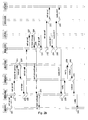
- Fig. 2a depicts a sequence diagram showing messages exchanged in a telecommunications network in a first exemplary embodiment.
- the sequence diagram provides exemplary messages that are exchanged between the nodes shown under Fig. 1 .
- Shown in Fig. 2a are a first call party CP201, a switching node MSC202 serving the first call party CP201, a service switching entity SSF203, a service control entity SCP204, a switching node GMSC205, a service node HLR206, a second call party CP207 and a third call party CP208 (not depicted in Fig. 1 ).
- the first call party CP201 sets up a call towards the second call party CP207. Furthermore, the first call party CP201 has a subscription to an originating Intelligent Networks service, e.g. a Virtual Private Network service that is executed by the service control entity SCP204. Hence, the VPN service is invoked for each call that is originated by the first call party CP201, i.e. control of the call is transferred from the switching node MSC202 to the service control entity SCP204. Further according to this embodiment a second service is invoked for the second call party CP207 during the call establishment. In this example the network based service call forwarding unconditional (CFU) is invoked, forwarding all incoming calls originally destined for the second call party CP207 to the third call party CP208.
- CFU network based service call forwarding unconditional
- step 201 the first call party CP201 sends a request to the switching node MSC202 to set up a call to the second call party CP207.
- the request may be sent in a Direct transfer application part (DTAP) Setup message.
- DTAP Direct transfer application part
- step 202 the switching node MSC202 sends the request to the service switching entity SSF203, e.g. by sending an Initial Addressing Message (IAM) in case of call control protocol Integrated Services Digital Network (ISDN) User Part (ISUP).
- IAM Initial Addressing Message
- ISDN Integrated Services Digital Network
- ISUP User Part
- the service switching entity SSF203 may create an instance of a Basic Call State Model (BCSM) comprising an event detection point related to the invocation of a network based service by the second call party CP207. Then the service switching entity SSF203 invokes the IN service for the first call party CP201 by sending an initial message to the service control entity SCP204, for example an Initial Detection Point (IDP) message according to the INAP or CAMEL protocol.
- the initial message comprises among others an indication of the calling party, i.e. the first call party CP201, an indication of the called party, i.e. the second call party CP207, and an indication of the service to be invoked for the first call party CP201.
- the service control entity SCP204 executes the indicated IN service, which is in this example a VPN service.
- a VPN service may for example comprise service logic for performing a number translation of the dialed number, a screening of the dialed number or an adapted charging of the call.
- the service control entity SCP204 sends an instruction to the service switching entity SSF203 based on the service logic of the VPN service.
- the instruction further comprises a request to monitor for the invocation of a call forwarding service by the second call party CP207.
- the instruction may be sent in a CAMEL Request Report BCSM (Basic Call State Model) message comprising an indication that the service switching entity SSF203 shall initiate a process for detecting an invocation of call forwarding by the second call party CP207.
- BCSM Basic Call State Model
- the instruction comprises a request to monitor for the invocation of any of a group of network based services by the second call party CP207.
- the service switching entity SSF203 following the instruction from the service control entity SCP204, arms the event detection point in the BCSM for detecting the event that call forwarding is invoked subsequently in the call establishment. This allows the service switching entity SSF203 to be notified when call forwarding is invoked by a succeeding switching node and to report that event to the service control entity SCP204.
- step 205 the service switching entity SSF203 informs the switching node MSC202 in a message, e.g. a call set up message, to continue the call set up process.
- a message e.g. a call set up message
- step 206 the switching node MSC202 continues the call set up to the second call party CP207 by sending a message, again for example a call set up message, to a gateway switching node GMSC205.
- step 207 the gateway switching node GMSC205 interrogates a home location register HLR206.
- step 208 the home location register HLR206 sends a message to inform the gateway switching node GMSC205 that the second call party CP207 has activated call forwarding unconditional towards the third call party CP208.
- the message comprises an indication of the call forwarding number, i.e. a destination number of the third call party CP208.
- step 209 the gateway switching node GMSC205 performs the actual call forwarding service by sending a message, e.g. a call setup message to the third call party CP208.
- a message e.g. a call setup message
- the third call party CP208 is also served by the gateway switching node GMSC205.
- the third call party answers the call, it may send an answer message (not depicted in Fig. 2a ) towards the gateway switching node GMSC205.
- the gateway switching node GMSC205 sends a message to the switching node MSC202 comprising an indication of the invocation of the call forwarding service for the second call party CP207.
- the message may comprise an indication of the call forwarding number.
- the message may be an Address complete message ACM or a Call Progress message (CPG) in the case of call control protocol ISUP as well as in the case of call control protocol Bearer Independent Call Control (BICC).
- ACM Address complete message
- CPG Call Progress message
- BICC call control protocol Bearer Independent Call Control
- step 211 the switching node MSC202 sends the message comprising the indication of the invocation of the call forwarding service to the service switching entity SSF203.
- the service switching entity SSF203 analyses the message comprising the indication of the invocation of the call forwarding service and optionally the indication of the call forwarding number. It determines that the message constitutes an event related to the event detection point for the call forwarding service that has been armed in response to the request received from the service control point SCP204 in step 204. Then the service switching entity SSF203 sends a message to the service control entity SCP204 comprising an indication of the invocation of the call forwarding service by the second call party CP207.
- the message may be a CAMEL Event Report Basic Call State Model (BCSM) message.
- the message may comprise one or more dedicated information elements for the indication of the invocation of the call forwarding service and for the indication of the call forwarding number.
- the service control entity SCP204 receives the indication of the invocation of the call forwarding service and is now informed of the invocation of a second service for the second call party CP207. This information enables the service control entity SCP204 to take control of the call that is subject to a second service invoked for the second call party CP207.
- the service control entity SCP204 comprises service logic for analyzing the received information and for determining how to respond to it, and it selects a procedure for handling the invocation accordingly. In the following, three examples are given of procedures to be selected and the subsequent steps performed by the nodes involved, i.e. the service control entity SCP204, the service switching entity SSF203 and the switching node MSC202.
- the service control entity SCP204 may store in a call log an indication that the second call party CP207 has invoked call forwarding and additionally store the indication of the call forwarding number.
- the service control entity SCP204 sends an instruction to the service switching entity SSF203 to continue the call establishment, for example it may send a CAMEL Continue message.
- the service switching entity SSF203 sends in step 214 an appropriate message, corresponding to the instruction contained in the message received in step 213, to the switching node MSC202 in order to allow the call establishment to continue.
- the service switching entity SSF203 may send a Continue message.
- step 215 the switching node MSC202 sends a message to the first call party CP201 comprising a notification that the call to the second call party CP207 has been forwarded to the third call party CP208.
- the message may be an appropriate DTAP message and may comprise an indication of the call forwarding number of the third call party CP208.
- the service control entity SCP204 may decide to disallow the call establishment, for example if after screening the call forwarding number according to a call screening list of the first service it decides that the first call party CP201 is not allowed to be connected to the call forwarding number.
- the service control entity SCP204 sends an instruction accordingly, for example a CAMEL Release Call message.
- the service switching entity SSF203 sends an appropriate message, such as a Release message, to the switching node MSC202 in order to discontinue the call.
- the switching node MSC202 sends in step 215 a message to the first call party CP201 comprising an indication that the call establishment has been discontinued.
- the service control entity SCP204 may decide to continue the call establishment but to modify the notification towards the first call party CP201. For example it may decide that no notification is to be sent at all, or that the type of message which carries the notification is to be changed, e.g. from ISUP/DTAP signalling to Unstructured Supplementary Service Data (USSD).
- the service control entity SCP204 sends an instruction to the service switching entity SSF203 indicating the requested modification, for example a CAMEL Continue With Argument (CWA) message.
- CWA CAMEL Continue With Argument
- the service switching entity SSF203 sends an appropriate message, such as a Call progress message, to the switching node MSC202 in order to modify the notification to the first call party CP201 accordingly.
- the switching node MSC202 sends a modified notification to the first call party CP201 in accordance with the instruction from the service control entity SCP201, e.g. by sending a Progress message.
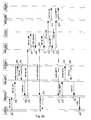
- Fig. 2b provides a similar arrangement of nodes in a telecommunications network to the arrangement of Fig. 2a .
- Depicted are a first call party CP201, a switching node MSC202 serving the first call party CP201, a service switching entity SSF203, a service control entity SCP204, a second call party CP207, a switching node MSC205 serving the second call party CP207, a third call party CP208 and a switching node MSC206 serving the third call party CP208 (not depicted in Fig. 2a ).
- the service node HLR206 in Fig. 2a is not shown in Fig. 2b .
- the first call party CP201 sets up a call towards the second call party CP207 and has a subscription to an originating Intelligent Networks service that is executed by the service control entity SCP204.
- a second service is invoked for the second call party CP207 during the call.
- the network based service explicit call transfer (ECT) is invoked.
- the ECT service allows the second call party CP207 to put the ongoing call with the first call party CP201 on hold and to set up a second call to the third call party CP208.
- the second call party CP207 may then connect the first call party CP201 to the third call party CP208 and release its own connection with the network.
- the steps 221 to 226 of Fig. 2b are similar to steps 201 to 206 of Fig. 2a .
- the first call party CP201 sends a request to the switching node MSC202 to set up a call to the second call party CP207.
- the message may be a DTAP Setup message.
- the switching node MSC202 sends the request to the service switching entity SSF203, e.g. in an ISUP IAM message.
- the service switching entity SSF203 may create an instance of a Basic Call State Model (BCSM) comprising an event detection point related to the invocation of a network based service by the second call party CP207.
- BCSM Basic Call State Model
- the service switching entity SSF203 invokes the IN service for the first call party CP201 by sending an initial message to the service control entity SCP204, for example a CAMEL IDP message.
- the initial message comprises among others an indication of the calling party, i.e. the first call party CP201, an indication of the called party, i.e. the second call party CP207, and an indication of the service to be invoked for the first call party CP201.
- the service control entity SCP204 sends an instruction to the service switching entity SSF203 based on the service logic of the IN service.
- the instruction further comprises a request to monitor for the invocation of an ECT service by the second call party CP207.
- the instruction may be sent in a CAMEL Request Report BCSM (Basic Call State Model) message comprising an indication that the service switching entity SSF203 shall initiate a process for detecting an invocation of an explicit call transfer by the second call party CP207.
- BCSM Basic Call State Model
- the instruction comprises a request to monitor for the invocation of any of a group of network based services by the second call party CP207.
- the service switching entity SSF203 following the instruction from the service control entity SCP204, arms the event detection point in the BCSM for detecting the event that the ECT service is invoked subsequently in the call. This allows the service switching entity SSF203 to be notified when the ECT service is invoked by a succeeding switching node and to report that event to the service control entity SCP204.
- step 225 the service switching entity SSF203 informs the switching node MSC202 in a message, e.g. a call set up message, to continue the call set up process.
- a message e.g. a call set up message
- step 226 the switching node MSC202 continues the call set up to the second call party CP207 by sending a message, again for example a call set up message, to the switching node MSC205.
- step 227 the switching node MSC205 sends a message, e.g. a call set up message, to the second call party CP207.
- a message e.g. a call set up message
- the second call party CP207 may send a message, such as an ISUP Answer message or a DTAP Connect message, to the switching node MSC205, not depicted.
- step 228 the second call party CP207 sends a request to the switching node MSC205 to put the call with the first call party CP201 on hold.
- the switching node MSC205 holds the call and sends in step 229 a message comprising an on hold notification to the switching node MSC202 that is serving the first call party CP201.
- the switching node MSC202 sends the message comprising the on hold notification to the first call party CP201 in step 230.
- the second call party CP207 sends a request to the switching node MSC205 to set up a call to the third call party CP208, e.g. by sending a call set up message.
- the switching node MSC205 sends the request to the switching node MSC206 serving the third call party CP208, via a gateway switching node and a home location register serving (not depicted).
- the switching node MSC206 sends a message to the third call party CP208, e.g. by sending a DTAP Setup message.
- the third call party CP208 sends an answer message upon answering the call, not depicted in Fig. 2b . As a result there is an active call between the second call party CP207 and the third call party CP208.
- the second call party CP207 sends a message to the switching node MSC205 to invoke the ECT service, i.e. to establish a connection between the first call party CP201 and the third call party CP208.
- the message may be an ISUP Facility (FAC) message or a DTAP Facility message.
- the second call party CP207 may invoke the ECT service prior to having an active call with the third call party CP208, i.e. during the alerting phase of the third call party CP208.
- the switching node MSC205 executes the ECT service and connects the first call party CP201 and the third call party CP208.
- the switching node MSC205 sends a message comprising an indication of the invocation of the ECT service towards the switching node MSC206, which sends the message to the third call party CP208 in step 236.
- the message may be an ISUP or BICC Facility (FAC) message if the third call party CP208 has an active call with the second call party CP207 at the time of the invocation of the ECT service.
- the message may be an ISUP or BICC Call progress (CPG) message if the third call party CP208 is in alerting phase at the time of the invocation of the ECT service.
- FAC ISUP or BICC Facility
- CPG ISUP or BICC Call progress
- the switching node MSC205 sends a message comprising the indication of the invocation of the ECT service towards the switching node MSC202.
- the message may again be an ISUP or BICC Facility message or an ISUP or BICC Call Progress message.
- the message may comprise an indication of the transfer number, i.e. the subscriber number of the third call party CP208.
- the switching node MSC205 now releases the connection with the second call party, e.g. by sending a disconnect message to the second call party CP207, which sends a release message in return to the switching node MSC205, which finally sends a release complete message to the second call party CP207, not depicted in Fig. 2b .
- the switching node MSC202 sends the message to the service switching entity SSF203.
- the service switching entity SSF203 analyses the message comprising the indication of the invocation of the ECT service and optionally the indication of the transfer number. It determines that the message constitutes an event related to the event detection point for the ECT service that has been armed in response to the request received from the service control point SCP204 in step 224. Then the service switching entity SSF203 sends a message to the service control entity SCP204 comprising an indication of the invocation of the ECT service by the second call party CP207.
- the message may be a CAMEL Event Report Basic Call State Model (BCSM) message.
- the message may comprise one or more dedicated information elements for the indication of the invocation of the ECT service and for the indication of the transfer number.
- the service control entity SCP204 receives the indication of the invocation of the ECT service and is now informed of the invocation of a second service by the second call party CP207. This information enables the service control entity SCP204 to take control of the call that is subject to a second service invoked by the second call party CP207.
- the service control entity SCP204 comprises service logic for analyzing the received information and for determining how to respond to it, and it selects a procedure for handling the invocation accordingly. Similar to the embodiment described with reference to Fig. 2a , three exemplary procedures are described in the following.
- the service control entity SCP204 may store in a call log an indication that the second call party CP207 has invoked the ECT service and additionally store the indication of the transfer number.
- the service control entity SCP204 sends an instruction to the service switching entity SSF203 to continue the call or call establishment, for example it may send a CAMEL Continue message.
- the service switching entity SSF203 sends in step 241 an appropriate message, corresponding to the instruction contained in the message received in step 240, to the switching node MSC202 serving the first call party CP201 in order to allow the call to continue.
- the service switching entity SSF203 may for example send a Continue message.
- the switching node MSC202 sends a message to the first call party CP201 comprising a notification that the second call party CP207 has transferred the call to the third call party CP208.
- the message may be an appropriate DTAP message, and may comprise an indication of the transfer number, i.e. the subscriber number of the third call party CP208.
- the service control entity SCP204 may decide to disallow the call establishment, for example if after screening the transfer number according to a call screening list of the first service it decides that the first call party CP201 is not allowed to be connected to the transfer number.
- the service control entity SCP204 sends an instruction accordingly, for example a CAMEL Release Call message.
- the service switching entity SSF203 sends an appropriate message, such as a Release message, to the switching node MSC202 in order to discontinue the call.
- the switching node MSC202 sends in step 242 a message to the first call party CP201 comprising an indication that the call or call establishment has been discontinued.
- the service control entity SCP204 may decide to continue the call but to modify the notification towards the first call party CP201. For example it may decide that no notification is to be sent at all, or that the type of message which carries the notification is to be changed, e.g. from ISUP/DTAP signalling to Unstructured Supplementary Service Data (USSD).
- the service control entity SCP204 sends an instruction to the service switching entity SSF203 indicating the requested modification, for example a CAMEL Continue With Argument (CWA) message.
- CWA CAMEL Continue With Argument
- the service switching entity SSF203 sends an appropriate message, such as a Call progress message, to the switching node MSC202 in order to modify the notification to the first call party CP201 accordingly.
- the switching node MSC202 sends a modified notification to the first call party CP201 in accordance with the instruction from the service control entity SCP204, e.g. by sending a Progress message.
- Fig. 2c provides a similar arrangement of nodes in a telecommunications network to the arrangement of Fig. 2b .
- Depicted are a first call party CP201, a switching node MSC202 serving the first call party, a service switching entity SSF203, a service control entity SCP204, a second call party CP207, a switching node MSC205 serving the second call party CP207, a third call party CP208 and a switching node MSC206 serving the third call party CP208.
- the first call party CP201 sets up a call towards the second call party CP207 and has a subscription to an originating Intelligent Networks service that is executed by the service control entity SCP204.
- the network based service that is invoked by the second call party CP207 in this example is the service multi party call (MPTY).
- MPTY service multi party call
- the MPTY service enables the second call party CP207 to add the third call party CP208 to the ongoing call with the first call party CP201, effecting a call between three parties.
- the first call party CP201 sends a request to the switching node MSC202 to set up a call to the second call party CP207.
- the message may be a DTAP Setup message.
- the switching node MSC202 sends the request to the service switching entity SSF203, e.g. in an ISUP IAM message.
- the service switching entity SSF203 may create an instance of a Basic Call State Model (BCSM) comprising an event detection point related to the invocation of a network based service by the second call party CP207.
- BCSM Basic Call State Model
- the service switching entity SSF203 invokes the IN service for the first call party CP201 by sending an initial message to the service control entity SCP204, for example a CAMEL IDP message.
- the initial message comprises among others an indication of the calling party, i.e. the first call party CP201, an indication of the called party, i.e. the second call party CP207, and an indication of the service to be invoked for the first call party CP201.
- the service control entity SCP204 sends an instruction to the service switching entity SSF203 based on the service logic of the IN service.
- the instruction further comprises a request to monitor for the invocation of an MPTY service by the second call party CP207.
- the instruction may be sent in a CAMEL Request Report BCSM (Basic Call State Model) message comprising an indication that the service switching entity SSF203 shall initiate a process for detecting an invocation of a multi party service by the second call party CP207.
- BCSM Basic Call State Model
- the instruction comprises a request to monitor for the invocation of any of a group of network based services by the second call party CP207.
- the service switching entity SSF203 following the instruction from the service control entity SCP204, arms the event detection point in the BCSM for detecting the event that the MPTY service is invoked subsequently in the call. This allows the service switching entity SSF203 to be notified when the MPTY service is invoked by a succeeding switching node and to report that event to the service control entity SCP204.
- step 265 the service switching entity SSF203 informs the switching node MSC202 in a message, e.g. a call set up message, to continue the call set up process.
- a message e.g. a call set up message
- step 266 the switching node MSC202 continues the call set up to the second call party CP207 by sending a message, again for example a call set up message, to the switching node MSC205 serving the second call party CP207.
- step 267 the switching node MSC205 sends a message, e.g. a call set up message, to the second call party CP207.
- a message e.g. a call set up message
- the second call party CP207 may send a message, such as an ISUP answer message or DTAP Connect message, to the switching node MSC205, not depicted.
- step 268 the second call party CP207 sends a request to the switching node MSC205 to put the call with the first call party CP201 on hold.
- the switching node MSC205 holds the call and sends in step 269 a message comprising an on hold notification to the switching node MSC202 that is serving the first call party CP201.
- the switching node MSC202 sends the message comprising the on hold notification to the first call party CP201 in step 270.
- the second call party CP207 sends a request to the switching node MSC205 to set up a call to the third call party CP208, e.g. by sending a call set up message.
- the switching node MSC205 sends the request to the switching node MSC206 serving the third call party CP208, via a gateway switching node and a home location register serving (not depicted).
- the switching node MSC206 sends a message to the third call party CP208, e.g. by sending a DTAP Setup message.
- the third call party CP208 sends an answer message upon answering the call, not depicted in Fig. 2c . As a result there is an active call between the second call party CP207 and the third call party CP208.
- the second call party CP207 sends a message to the switching node MSC205 to invoke MPTY, i.e. to add the first call party CP201 to the call with the third call party CP208, thereby establishing a call between three parties.
- the message may be an ISUP Facility (FAC) message or a DTAP Facility message.
- the switching node MSC205 connects the first call party CP201 to the call between the second call party CP207 and the third call party CP208.
- the switching node MSC205 sends a message comprising an indication of the invocation of MPTY towards the switching node MSC206, which sends the message to the third call party CP208 in step 276.
- the message may be an ISUP or BICC Call Progress message (CPG) or a DTAP Progress message
- the message may comprise an indication of the additional party number, i.e. the subscriber number of the first call party CP201.
- the switching node MSC205 sends a message comprising the indication of the invocation of MPTY towards the switching node MSC202.
- the message may again be an ISUP or BICC Facility message or an ISUP or BICC Call Progress message.
- the message may comprise an indication of the additional party number, i.e. the subscriber number of the third call party CP208.
- the switching node MSC202 sends the message to the service switching entity SSF203.
- the service switching entity SSF203 analyses the message comprising the indication of the invocation of the MPTY service and optionally the indication of the additional party number. It determines that the message constitutes an event related to the event detection point for the MPTY service that has been armed by SSF203 in response to the request received from the service control point SCP204 in step 264. Then the service switching entity SSF203 sends a message to the service control entity SCP204 comprising an indication of the invocation of the MPTY service by the second call party CP207.
- the message may be a CAMEL Event Report Basic Call State Model (BCSM) message.
- the message may comprise one or more dedicated information elements for the indication of the invocation of the MPTY service and for the indication of the additional party number.
- the service control entity SCP204 receives the indication of the invocation of the MPTY service and is now informed of the invocation of a second service by the second call party CP207. This information enables the service control entity SCP204 to take control of the call that is subject to a second service invoked by the second call party CP207.
- the service control entity SCP204 comprises service logic for analyzing the received information and for determining how to respond to it, and it selects a procedure for handling the invocation accordingly. Similar to the embodiments described with reference to Fig. 2a and 2b , three exemplary procedures are described in the following.
- the service control entity SCP204 may store in a call log an indication that the second call party CP207 has invoked MPTY and additionally store the indication of the additional party number.
- the service control entity SCP204 sends an instruction to the service switching entity SSF203 to continue the call, for example it may send a CAMEL Continue message.
- the service switching entity SSF203 sends in step 281 an appropriate message, corresponding to the instruction contained in the message received in step 280, to the switching node MSC202 serving the first call party CP201 in order to allow the call to continue.
- the service switching entity SSF203 may send a Continue message, for example.
- the switching node MSC202 sends a message to the first call party CP201 comprising a notification that the second call party CP207 has set up a multi party call.
- the message may be an appropriate DTAP message, such as a DTAP Facility (FAC), and may comprise an indication of the additional party number, i.e. the subscriber number of the third call party CP208.
- FAC DTAP Facility
- the service control entity SCP204 may decide to disallow the call establishment, for example if after screening the additional party number according to a call screening list of the first service it decides that the first call party CP201 is not allowed to be connected to the third call party CP208.
- the service control entity SCP204 sends an instruction accordingly, for example a CAMEL Release Call message.
- the service switching entity SSF203 sends an appropriate message to the switching node MSC202 in order to discontinue the call.
- the switching node MSC202 sends in step 282 a message to the first call party CP201 comprising an indication that the call establishment has been released.
- the service control entity SCP204 may decide to continue the call but to modify the notification towards the first call party CP201. For example it may decide that no notification is to be sent at all, or that the type of message which carries the notification is to be changed, e.g. from ISUP/DTAP signalling to Unstructured Supplementary Service Data (USSD).
- the service control entity SCP204 sends an instruction to the service switching entity SSF203 indicating the requested modification, for example a CAMEL Continue With Argument (CWA) message.
- CWA CAMEL Continue With Argument
- the service switching entity SSF203 sends an appropriate message to the switching node MSC202 in order to modify the notification to the first call party CP201 accordingly.
- the switching node MSC202 sends a modified notification to the first call party CP201 in accordance with the instruction from the service control entity SCP201, e.g. by sending a Progress message.
- the call party that is initiating the call i.e. the first call party CP201
- the call party that is being called i.e. the second call party CP207
- the invention is also applicable to call scenario's where the first call party CP201 invokes the network based service and the second call party CP207 invokes the IN service.
- the third call party CP208 invokes a network based service in any of the embodiments described with reference to Fig. 2a , 2b and 2c .
- the embodiment of Fig. 2a may be extended such that the third call party CP208 has a call forwarding service to a fourth call party.
- the service switching entity SSF203 now does not only receive an indication of the invocation of the call forwarding service for the second call party CP207, but also an indication of the invocation of the call forwarding service for the third call party CP208.
- the third call party CP208 may during the call with the first call party CP201 invoke the ECT service to a fourth call party, leading to the scenario where the service switching entity SSF203 receives two indications of the invocation of a second service; a first indication in relation to the invocation of the call forwarding service for the second call party CP207 and a second indication in relation the invocation of the ECT service by the third call party CP208.
- Each of the multiple indications of an invocation of a network based service by any party is sent to the service control entity SCP204 provided that the corresponding event had been armed in the SSF203 for this call, enabling the service control entity SCP204 to be informed of such invocation and to take control of the call.
- Fig. 3 depicts exemplary steps performed by the service control entity of Fig. 2a , 2b and 2c according to an embodiment of the invention.
- a first step 301 the service control entity receives a message comprising an indication of an invocation of the second service from the service switching entity.
- a second step 302 the service control entity selects a procedure for handling the invocation of the second service based on a knowledge about the second service and a knowledge about the first service.
- a third step 303 the service control entity sends an instruction to the service switching entity according to the procedure for handling the invocation of the second service.
- the method may end here or may continue with any of the steps described herein.
- the service control entity may further send a request for monitoring the invocation of the second service to the service switching entity. This allows the service control entity to indicate to the service switching entity for which second service it is desirable to receive an indication of the invocation.
- the message received from the service switching entity further comprises the knowledge about the second service.
- the knowledge allows the service control entity to take into account details about the invocation of the second service when deciding how to continue the call.
- the knowledge about the first service comprises a call screening list.
- the call screening list comprises numbers that the first call party is not allowed to be connected to. It enables the service control entity to screen any of the indicated numbers comprised in the knowledge about the second service. For example, the indication of the call forwarding number of the second service may be compared to the numbers on the call screening list of the first service. If there is a match the service control entity may decide not to allow the call to continue.
- Fig. 4 depicts exemplary steps performed by the service switching entity of Fig. 2a , 2b and 2c according to an embodiment of the invention.
- a first step 401 the service switching entity detects an invocation of the second service.
- a second step 402 the service switching entity sends a message comprising an indication of the invocation of the second service to the service control entity.
- a third step 403 the service switching entity receives an instruction from the service control entity according to a procedure for handling the invocation of the second service.
- a fourth step 404 the service switching entity executes the instruction.
- the method may end here or may continue with any of the steps described herein.
- the service switching entity further receives a request for monitoring the invocation of the network based service from the service control entity.
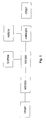
- Fig. 5 depicts an embodiment of the service control entity SCP204 of Fig. 3 comprising a receiving unit RU5 for receiving messages, a transmitting unit TU4 for transmitting messages, a processing unit PU5 for controlling further units and for processing messages and information, and preferably a storage unit SU5 for storing and/or obtaining of stored information.
- the receiving unit RU5 is adapted to receive a message comprising an indication of an invocation of the second service from the service switching entity.
- the processing unit PU5 is adapted to process the indication of the invocation of the second service.
- the processing unit PU5 is further adapted to select a procedure for handling the invocation of the second service based on a knowledge about the second service and a knowledge about the first service Furthermore the processing unit PU5 is adapted to initiate the transmission to the service switching entity via the transmitting unit of an instruction according to the procedure for handling the invocation of the second service.
- processing unit PU5 may be adapted to initiate the transmission via the transmitting unit of a request for monitoring the invocation of the second service to the service switching entity.
- the receiving unit RU5 is adapted to receive a message from the service switching entity comprising the knowledge about the second service and the processing unit PU5 is adapted to extract and process the knowledge about the second service.
- processing unit PU5 is adapted to select a procedure procedure comprising one of:
- the knowledge about the first service comprises a call screening list. This allows the service control entity to screen any of the indicated numbers comprised in the knowledge about the second service according to the call screening list defined for the first service.
- Fig. 6 depicts an embodiment of the service switching entity SSF203 of Fig. 4 comprising a receiving unit RU6 for receiving messages, a transmitting unit TU6 for transmitting messages, a processing unit PU6 for controlling further units and for processing messages and information, and preferably a storage unit SU6 for storing and/or obtaining of stored information.
- the processing unit PU6 is adapted to initiate a procedure to detect an invocation of the second service.
- the processing unit PU6 is adapted to initiate the transmission of a message comprising an indication of the invocation of the second service to a service control entity via the transmitting unit TU6.
- the receiving unit RU6 is adapted to receive an instruction from the service control entity according to a procedure for handling the invocation of the second service.
- the processing unit PU6 is adapted to process and execute the instruction.
- the receiving unit RU6 may be adapted to receive a request for monitoring the invocation of the network based service from the service control entity and the processing unit PU6 may be adapted to extract and process the request.
Landscapes
- Engineering & Computer Science (AREA)
- Computer Networks & Wireless Communication (AREA)
- Signal Processing (AREA)
- Telephonic Communication Services (AREA)
- Mobile Radio Communication Systems (AREA)
Priority Applications (2)
| Application Number | Priority Date | Filing Date | Title |
|---|---|---|---|
| EP08172727A EP2202995A1 (fr) | 2008-12-23 | 2008-12-23 | Contrôle d'un appel dans un réseau de télécommunications |
| US12/645,897 US20100215168A1 (en) | 2008-12-23 | 2009-12-23 | Controlling a Call in a Telecommunications Network |
Applications Claiming Priority (1)
| Application Number | Priority Date | Filing Date | Title |
|---|---|---|---|
| EP08172727A EP2202995A1 (fr) | 2008-12-23 | 2008-12-23 | Contrôle d'un appel dans un réseau de télécommunications |
Publications (1)
| Publication Number | Publication Date |
|---|---|
| EP2202995A1 true EP2202995A1 (fr) | 2010-06-30 |
Family
ID=40627524
Family Applications (1)
| Application Number | Title | Priority Date | Filing Date |
|---|---|---|---|
| EP08172727A Withdrawn EP2202995A1 (fr) | 2008-12-23 | 2008-12-23 | Contrôle d'un appel dans un réseau de télécommunications |
Country Status (2)
| Country | Link |
|---|---|
| US (1) | US20100215168A1 (fr) |
| EP (1) | EP2202995A1 (fr) |
Cited By (1)
| Publication number | Priority date | Publication date | Assignee | Title |
|---|---|---|---|---|
| CN102572742A (zh) * | 2010-12-08 | 2012-07-11 | 中兴通讯股份有限公司 | 呼叫处理方法、系统和智能网平台 |
Families Citing this family (1)
| Publication number | Priority date | Publication date | Assignee | Title |
|---|---|---|---|---|
| US8483665B2 (en) * | 2011-03-31 | 2013-07-09 | Matthew R. Kissinger | Mobile device featuring sensor responsive re-notifications |
Citations (2)
| Publication number | Priority date | Publication date | Assignee | Title |
|---|---|---|---|---|
| US20020168061A1 (en) * | 2001-02-16 | 2002-11-14 | Gregory Bruening | Implementing feature interactions between an AIN-based service and a switch-based forwarding service |
| WO2009030273A1 (fr) * | 2007-09-05 | 2009-03-12 | Telefonaktiebolaget Lm Ericsson (Publ) | Interaction entre des services de réseau et des services de réseau intelligents pour réguler le réacheminement d'un appel |
Family Cites Families (2)
| Publication number | Priority date | Publication date | Assignee | Title |
|---|---|---|---|---|
| US6665388B2 (en) * | 2000-12-20 | 2003-12-16 | Bellsouth Intellectual Property Corporation | System and method for monitoring incoming communications to a telecommunications device |
| US20060104429A1 (en) * | 2004-11-12 | 2006-05-18 | Wim Wouterse | Method and apparatus for selective call completion handling of user equipment |
-
2008
- 2008-12-23 EP EP08172727A patent/EP2202995A1/fr not_active Withdrawn
-
2009
- 2009-12-23 US US12/645,897 patent/US20100215168A1/en not_active Abandoned
Patent Citations (2)
| Publication number | Priority date | Publication date | Assignee | Title |
|---|---|---|---|---|
| US20020168061A1 (en) * | 2001-02-16 | 2002-11-14 | Gregory Bruening | Implementing feature interactions between an AIN-based service and a switch-based forwarding service |
| WO2009030273A1 (fr) * | 2007-09-05 | 2009-03-12 | Telefonaktiebolaget Lm Ericsson (Publ) | Interaction entre des services de réseau et des services de réseau intelligents pour réguler le réacheminement d'un appel |
Non-Patent Citations (3)
| Title |
|---|
| "Digital cellular telecommunications system (Phase 2+); Universal Mobile Telecommunications System (UMTS); Completion of Calls to Busy Subscriber (CCBS); Service description; Stage 1 (3GPP TS 22.093 version 7.0.0 Release 7)", ETSI TS 122 093 V7.0.0, June 2007 (2007-06-01), XP014037661 * |
| "Interaction between the Intelligent Network application CS4 protocol and the Bearer Independent Call Control protocol; Q.1922.4 (12/02)", ITU-T STANDARD IN FORCE (I), INTERNATIONAL TELECOMMUNICATION UNION, GENEVA, CH, no. Q.1922.4 (12/02), 29 December 2002 (2002-12-29), XP017402648 * |
| HOMAYOON S ET AL: "METHODS OF ADDRESSING THE INTERACTIONS OF INTELLIGENT NETWORK SERVICES WITH EMBEDDED SWITCH SERVICES", IEEE COMMUNICATIONS MAGAZINE, IEEE SERVICE CENTER, PISCATAWAY, US, vol. 26, no. 12, December 1988 (1988-12-01), pages 42 - 46,70, XP001053631, ISSN: 0163-6804 * |
Cited By (2)
| Publication number | Priority date | Publication date | Assignee | Title |
|---|---|---|---|---|
| CN102572742A (zh) * | 2010-12-08 | 2012-07-11 | 中兴通讯股份有限公司 | 呼叫处理方法、系统和智能网平台 |
| CN102572742B (zh) * | 2010-12-08 | 2015-10-21 | 中兴通讯股份有限公司 | 呼叫处理方法、系统和智能网平台 |
Also Published As
| Publication number | Publication date |
|---|---|
| US20100215168A1 (en) | 2010-08-26 |
Similar Documents
| Publication | Publication Date | Title |
|---|---|---|
| US8346232B2 (en) | Interaction between network services and intelligent network services for controlling rerouting of a call | |
| EP1969862B1 (fr) | Services de reseau intelligent | |
| EP2027678B1 (fr) | Changement de service et reprise de service dans des réseaux intelligents | |
| US7212621B1 (en) | Feature interactions | |
| CN101379836B (zh) | 服务控制实体 | |
| EP2202995A1 (fr) | Contrôle d'un appel dans un réseau de télécommunications | |
| US9258758B2 (en) | Method and apparatus for providing long distance service for roaming mobile telephones | |
| EP2235959B1 (fr) | Contrôle de l'établissement d'un appel | |
| EP0876041A2 (fr) | Schéma de remplacement de chemin amélioré | |
| EP1383346A1 (fr) | Dispositif, méthode et système de commande de service et centre de commutation pour commander l'interfonctionnement de la signalisation ISUP | |
| RU2455787C2 (ru) | Управление завершением вызова | |
| US8078169B2 (en) | Methods and devices for set-up of a call in an intelligent network | |
| EP1876843A1 (fr) | Procede permettant a un utilisateur intelligent de continuer a parler en cas d'anomalie | |
| RU2675784C1 (ru) | Система и способ контролируемого разъединения вызова по окончании максимального времени разговора для направления вызывающего абонента на дополнительные виды обслуживания по протоколам интеллектуального управления вызовами (CAP/ISUP) и установления сеанса (SIP) | |
| CN101578888B (zh) | 调用智能网络中的服务 | |
| EP2171995A1 (fr) | Procédés et dispositifs pour commander un transfert d'appel explicite | |
| US20100260330A1 (en) | Sending of connected line information for a follow-on call in an intelligent network | |
| US20070071219A1 (en) | Method for improving control capability of service control point during a call | |
| BRPI0807169A2 (pt) | Método, sistema e dispositivo de ligação de chamadas | |
| US20100278323A1 (en) | Method for controlling a multi party call and a service control entity and a service switching entity for performing the method | |
| WO2009043362A1 (fr) | Exécution de logique de service dans un point de transfert de signal | |
| WO2015082958A1 (fr) | Système et procédé pour accroître le taux d'aboutissement des appels |
Legal Events
| Date | Code | Title | Description |
|---|---|---|---|
| PUAI | Public reference made under article 153(3) epc to a published international application that has entered the european phase |
Free format text: ORIGINAL CODE: 0009012 |
|
| AK | Designated contracting states |
Kind code of ref document: A1 Designated state(s): AT BE BG CH CY CZ DE DK EE ES FI FR GB GR HR HU IE IS IT LI LT LU LV MC MT NL NO PL PT RO SE SI SK TR |
|
| AX | Request for extension of the european patent |
Extension state: AL BA MK RS |
|
| AKY | No designation fees paid | ||
| 17P | Request for examination filed |
Effective date: 20110103 |
|
| RBV | Designated contracting states (corrected) |
Designated state(s): AT BE BG CH CY CZ DE DK EE ES FI FR GB GR HR HU IE IS IT LI LT LU LV MC MT NL NO PL PT RO SE SI SK TR |
|
| 17Q | First examination report despatched |
Effective date: 20110517 |
|
| STAA | Information on the status of an ep patent application or granted ep patent |
Free format text: STATUS: THE APPLICATION IS DEEMED TO BE WITHDRAWN |
|
| 18D | Application deemed to be withdrawn |
Effective date: 20110928 |