EP2203464B1 - Massenspektrometrische verfahren zur identifizierung eines analyten einer biologischen probe, die von einem stressor betroffen ist - Google Patents
Massenspektrometrische verfahren zur identifizierung eines analyten einer biologischen probe, die von einem stressor betroffen ist Download PDFInfo
- Publication number
- EP2203464B1 EP2203464B1 EP08797301.2A EP08797301A EP2203464B1 EP 2203464 B1 EP2203464 B1 EP 2203464B1 EP 08797301 A EP08797301 A EP 08797301A EP 2203464 B1 EP2203464 B1 EP 2203464B1
- Authority
- EP
- European Patent Office
- Prior art keywords
- sample
- analyte
- samples
- ratio
- nutrient
- Prior art date
- Legal status (The legal status is an assumption and is not a legal conclusion. Google has not performed a legal analysis and makes no representation as to the accuracy of the status listed.)
- Active
Links
Images



Classifications
-
- G—PHYSICS
- G01—MEASURING; TESTING
- G01N—INVESTIGATING OR ANALYSING MATERIALS BY DETERMINING THEIR CHEMICAL OR PHYSICAL PROPERTIES
- G01N33/00—Investigating or analysing materials by specific methods not covered by groups G01N1/00 - G01N31/00
- G01N33/48—Biological material, e.g. blood, urine; Haemocytometers
- G01N33/50—Chemical analysis of biological material, e.g. blood, urine; Testing involving biospecific ligand binding methods; Immunological testing
- G01N33/5005—Chemical analysis of biological material, e.g. blood, urine; Testing involving biospecific ligand binding methods; Immunological testing involving human or animal cells
- G01N33/5008—Chemical analysis of biological material, e.g. blood, urine; Testing involving biospecific ligand binding methods; Immunological testing involving human or animal cells for testing or evaluating the effect of chemical or biological compounds, e.g. drugs, cosmetics
- G01N33/502—Chemical analysis of biological material, e.g. blood, urine; Testing involving biospecific ligand binding methods; Immunological testing involving human or animal cells for testing or evaluating the effect of chemical or biological compounds, e.g. drugs, cosmetics for testing non-proliferative effects
- G01N33/5038—Chemical analysis of biological material, e.g. blood, urine; Testing involving biospecific ligand binding methods; Immunological testing involving human or animal cells for testing or evaluating the effect of chemical or biological compounds, e.g. drugs, cosmetics for testing non-proliferative effects involving detection of metabolites per se
-
- G—PHYSICS
- G01—MEASURING; TESTING
- G01N—INVESTIGATING OR ANALYSING MATERIALS BY DETERMINING THEIR CHEMICAL OR PHYSICAL PROPERTIES
- G01N33/00—Investigating or analysing materials by specific methods not covered by groups G01N1/00 - G01N31/00
- G01N33/48—Biological material, e.g. blood, urine; Haemocytometers
- G01N33/50—Chemical analysis of biological material, e.g. blood, urine; Testing involving biospecific ligand binding methods; Immunological testing
- G01N33/68—Chemical analysis of biological material, e.g. blood, urine; Testing involving biospecific ligand binding methods; Immunological testing involving proteins, peptides or amino acids
- G01N33/6803—General methods of protein analysis not limited to specific proteins or families of proteins
- G01N33/6848—Methods of protein analysis involving mass spectrometry
-
- Y—GENERAL TAGGING OF NEW TECHNOLOGICAL DEVELOPMENTS; GENERAL TAGGING OF CROSS-SECTIONAL TECHNOLOGIES SPANNING OVER SEVERAL SECTIONS OF THE IPC; TECHNICAL SUBJECTS COVERED BY FORMER USPC CROSS-REFERENCE ART COLLECTIONS [XRACs] AND DIGESTS
- Y10—TECHNICAL SUBJECTS COVERED BY FORMER USPC
- Y10T—TECHNICAL SUBJECTS COVERED BY FORMER US CLASSIFICATION
- Y10T436/00—Chemistry: analytical and immunological testing
- Y10T436/10—Composition for standardization, calibration, simulation, stabilization, preparation or preservation; processes of use in preparation for chemical testing
- Y10T436/105831—Protein or peptide standard or control [e.g., hemoglobin, etc.]
-
- Y—GENERAL TAGGING OF NEW TECHNOLOGICAL DEVELOPMENTS; GENERAL TAGGING OF CROSS-SECTIONAL TECHNOLOGIES SPANNING OVER SEVERAL SECTIONS OF THE IPC; TECHNICAL SUBJECTS COVERED BY FORMER USPC CROSS-REFERENCE ART COLLECTIONS [XRACs] AND DIGESTS
- Y10—TECHNICAL SUBJECTS COVERED BY FORMER USPC
- Y10T—TECHNICAL SUBJECTS COVERED BY FORMER US CLASSIFICATION
- Y10T436/00—Chemistry: analytical and immunological testing
- Y10T436/10—Composition for standardization, calibration, simulation, stabilization, preparation or preservation; processes of use in preparation for chemical testing
- Y10T436/109163—Inorganic standards or controls
-
- Y—GENERAL TAGGING OF NEW TECHNOLOGICAL DEVELOPMENTS; GENERAL TAGGING OF CROSS-SECTIONAL TECHNOLOGIES SPANNING OVER SEVERAL SECTIONS OF THE IPC; TECHNICAL SUBJECTS COVERED BY FORMER USPC CROSS-REFERENCE ART COLLECTIONS [XRACs] AND DIGESTS
- Y10—TECHNICAL SUBJECTS COVERED BY FORMER USPC
- Y10T—TECHNICAL SUBJECTS COVERED BY FORMER US CLASSIFICATION
- Y10T436/00—Chemistry: analytical and immunological testing
- Y10T436/13—Tracers or tags
Definitions
- the present application relates to the creation and use of isotopic patterns in mass spectral analyses. These patterns can be introduced through either biological or non-biological methods, or combinations of both. More specifically, the isotopic patterns can be used in biological systems to determine the biochemical response of a living organism to a physical, physiological, chemical, or externally induced stressor.
- US patent 6,849,396 discloses a method for conducting metabolic analysis comprising determining metabolic flux values for a plurality of target analytes by monitoring relative isotope abundance of a stable isotope in a substrate labelled with the stable isotope and/or one or more target metabolites formed through metabolism of the labelled substrate.
- US patent 7,045,296 discloses a process for analysing protein samples using gel electrophoresis and mass spectroscopy.
- US patent application publication 2007/0123791 A1 discloses a method for distinguishing whether an animal is experiencing a bacterial infection or a viral infection comprising monitoring breath taken from the animal and measuring the relative amount of a first breath stable isotope to a second breath stable isotope therein over time.
- US patent 5,912,178 discloses a method for determining the presence of a catabolic state in an organism or a collection of organisms comprising measuring changes in isotopic ratios in biological materials obtained from them.
- stable isotopes In contrast to the use of radioactive isotopes, the use of stable isotopes is generally regarded as safe and free of regulation. Although in general, a study typically uses a single isotope incorporated into a specific location in order to achieve a precision in understanding the metabolic fate of a molecule, another embodiment of the use of stable isotopes utilizes wholly-labeled molecules (>99% of an atom is replaced with an isotopic equivalent), or universally-labeled (the isotope is universally distributed within the target molecule at less than saturation levels). There are many known studies in which more than one isotope is incorporated into a target molecule, and all of the isotopic fragments are examined for their differential fates. In all cases, these methods are targeted analyses; i.e., they seek the incorporation of a specific labeled atom into other specific molecules.
- the present invention contemplates a method for identifying an analyte of a biological sample that is affected by a stressor. That method comprises the steps of providing a composite biological organism sample that is comprised of two admixed samples of biological organisms that are a control sample and an experimental sample.
- the control sample organisms had been grown in a first nutrient medium containing predetermined amounts of first and second isotopes of a first atom within a nutrient
- the experimental sample was grown in a second nutrient medium identical to the first nutrient medium except that it contains different predetermined amounts of the first and second isotopes of that first atom within the nutrient compared to said first nutrient medium.
- the first and second isotopes are other than hydrogen ('H) or denterium (D).
- the experimental sample is cultured with a stressing regimen containing a stressing agent for a time period sufficient for the sample to grow and the control sample is cultured for the same period of time with a regimen identical to the stressing regimen except that it lacks the stressing agent.
- the stressing agent may be chemical, genetic, environmental, or any element or combination of elements that induce physiological alteration.
- the composite biological organism sample is mass spectroscopically analyzed for analyte peaks. The ratio of first stable isotope to second stable isotope for each analyzed analyte peak is determined. The composite biological organism sample median stable isotopic ratio is determined.
- the ratio of first stable isotope to second stable isotope for each analyzed analyte peak is compared with the composite biological sample median stable isotopic ratio, and an analyte whose stable isotopic ratio statistically significantly deviates from the composite biological sample median stable isotopic ratio is an analyte affected by the stressing agent.
- Another aspect of this invention contemplates another method for identifying an analyte of a biological sample that is affected by a stressor. That method comprises the steps of providing two biological samples, a first sample that is a control sample and the second sample that is an experimental sample.
- the control sample is conditioned in a first composition containing predetermined amounts of first and second stable isotopes of a first atom within a nutrient
- the experimental sample is conditioned in a second composition that is identical except that it contains different predetermined amounts of those first and second stable isotopes of that first atom within that nutrient.
- the first and second isotopes are other than 'H or D.
- the word "conditioned" is used herein to mean grown for a few cycles in the absence of stressor compound.
- the experimental sample is grown in the second nutrient medium with a stressing regimen containing a stressing agent. That stressing regimen is maintained for a time period sufficient for the experimental sample to grow.
- the control sample is grown in the first nutrient medium with a regimen identical to the stressing regimen used for the experimental sample except that it lacks the stressing agent. The regimen is maintained for a time period sufficient for the control sample to grow.
- the two samples are admixed, preferably in identical amounts, to form a composite biological sample.
- the composite biological sample so formed is mass spectroscopically analyzed for analyte peaks.
- the ratio of first isotope to second isotope is determined for the analyzed analyte peaks.
- a median isotopic ratio is determined for the composite biological sample.
- the ratio of first isotope to second isotope for each analyzed analyte peak is compared with the composite biological sample median isotopic ratio.
- An analyte whose isotopic ratio statistically significantly deviates from the composite biological sample median isotopic ratio is an analyte affected by the stressing agent.
- the present invention has several benefits and advantages.
- a spectral signal can a) originate from the control culture, or b) experimental culture, or c) be an artifact acquired during sample preparation, or d) originate from the externally applied drug or response inducer, or standard.
- a spectral signal can a) originate from the control culture, or b) experimental culture, or c) be an artifact acquired during sample preparation, or d) originate from the externally applied drug or response inducer, or standard.
- One advantage of the invention is that experimental variation that is experimentally introduced; i.e., "noise”, is statistically nullified and/or greatly minimized.
- Another benefit of the invention is that at the liquid chromatography-mass spectral interface, there is a loss of signal due to "ion suppression". Ion suppression occurs whenever there is more compound than charge availability. In this situation, some compounds become charged at the expense of other compounds. The variability of ionization efficiency is such that some molecules cannot be accurately quantified. The present method almost fully removes the problem of ion suppression because a compound's ability to ionize is a function of its structure and is not significantly altered by its isotopic distribution.
- the metabolic capacity of a living system is used to explore the impact of a stressor on that system by comparing its biochemical response to that of an untreated control, directly and within a single sample.
- the method uses a specific experimental design and universally distributed isotopic incorporations to establish baseline responses for each system in a normal (or "control"), and one or more experimental (treated, or otherwise "stressed") system(s).
- a stressor can be any thing that causes or could cause a change in a living organism.
- exemplary stressors include a drug, hormone, temperature, ionizing and non-ionizing radiation and the like.
- drug is meant to include an externally (exogenously) supplied chemical substance that upon absorption into a cell, alters the function of the cell in some manner.
- a compound such as an exogenously supplied vitamin, mineral, toxin, antagonist, or agonist can be deemed to be a "drug”.
- Dietary minerals are the chemical elements required by living organisms, other than the four elements carbon, hydrogen, nitrogen, and oxygen that are present in common organic molecules. Dietary minerals are often classified as “macromineral” or “microminerals” (or “trace minerals”) and are usually required in greater or lesser amounts by an organism.
- Hormones are defined as being internally (endogenously) supplied materials that alter the function of a cell in some manner.
- a hormone that is supplied to a cell from a source external to the cell is still considered a hormone herein.
- control sample organisms are grown in a first nutrient medium containing predetermined amounts of first and second stable isotopes of a first atom within a nutrient.
- the experimental sample organisms are grown in a second nutrient medium identical to the first nutrient medium except that it contains different predetermined amounts, compared to said first nutrient medium, of the first and second stable isotopes of that first atom within the nutrient.
- the isotopic ratios in this example specifically include a dilution of five to ten percent of one carbon isotope in another; i.e., one sample is grown on a carbon source (nutrient in a medium) that can be 95% carbon-12 ( 12 C) and 5% carbon-13 ( 13 C), hereinafter called “C-12 medium”, and in such a situation the other sample is grown in mirrored medium that contains a nutrient that contains 95% carbon-13 and 5% carbon-12 in a medium, hereinafter called "C-13 medium”.
- the biological system takes up the nutrient in the medium and grows upon it in such a way as to transform itself so that all of its parts are distinctively identifiable as to their origin. Further information can sometimes be obtained by incorporating a second set of two isotopes of a second atom present at two different predetermined isotopic ratios into the nutrient compositions.
- predetermined first and second stable isotope amounts are preferably present in "inverted ratios" of each other such as those discussed immediately above in which the number of the numerator of the first ratio is the number of the denominator of the second ratio, and the number of the denominator of the first ratio is the number of the numerator of the second ratio.
- a first ratio would be 95/5 12 C/ 13 C in the C-12 medium
- the second, inverted ratio would be 5/95 12 C/ 13 C in the C-13 medium. It is to be understood that a contemplated set of preferred ratios need not be 95/5 and 5/95 and that those numbers are just used for convenience. It is preferred that neither isotopic ratio is the naturally occurring ratio.
- Experimental variance or "noise” is a fact of any experimental design. Because experimental variance or noise is so prevalent, experiments are often required to be performed with a large number of replicates in order to be assured that the true signal may be discriminated from artifactual (or statistical) noise. In the current "Design of Experiments” literature the sample population size needed to achieve a given power is specifically calculated from the amount of expected variance in the sample set. Therefore, any reduction in sample variance (or “noise”) reduces the number of samples required to determine a given effect.
- the sources of variance are the result of 1) uncontrollable differences in the sample (for instance: sourcing, growth, development, handling, processing, etc.), 2) uncontrolled differences in the analytical process (for instance: materials, handling, processing, timing, etc.), or 3) errors introduced during the informatic analysis (for instance: randomness errors, algorithm errors, hardware errors, etc.).
- This invention reduces these sources of variance by:
- the samples are uniformly and universally labeled with appropriate isotopes.
- An element in which there are two stable isotopes that are not significantly distinguished by enzymes or living systems can be used.
- Carbon specifically, 12 C and 13 C
- Carbon is used for purposes of illustration herein because of its universal applicability; however, additional examples include the isotopes of nitrogen ( 14 N and 15 N), oxygen ( 16 O, 17 O, or 18 O), sulfur ( 32 S, 33 S, 34 S, or 36 S), chlorine ( 35 Cl and 37 Cl) magnesium ( 24 Mg, 25 Mg and 26 Mg), silicon ( 27 Si, 28 Si and 29 Si), calcium ( 40 Ca, 42 Ca, 43 Ca , and 44 Ca) and bromine ( 79 Br and 81 Br).
- isotopes that exhibit minimal biological isotope effect is of import.
- the use of the isotopes of hydrogen (D or tritium (T), which is radioactive and thus not favored) would not be suitable because they frequently cause an observable effect on metabolism due to the fact that the deuterium isotope has a mass that is twice that of hydrogen, and thus, is known to cause a reduction in the kinetics of some enzyme mechanisms but not in others.
- D or tritium (T) tritium
- the discussion that follows considers carbon as an illustrative element for incorporation and use in an assay. However, there are examples where other elemental combinations can provide less broad but specific insights.
- the composite sample contains molecules from both the "control” (that are made up of a substantial majority; i.e., 90% to 95%, of 12 C) and the “experimental” (that are made up of a substantial majority; i.e., 90% to 95%, of 13 C).
- control that are made up of a substantial majority; i.e., 90% to 95%, of 12 C
- experimental that are made up of a substantial majority; i.e., 90% to 95%, of 13 C.
- Deviating significantly from the 90% to 95% ratio taught by this method reduces the potential for interpretation.
- isotopic ratios 1) the natural abundance of 12 C is approximately 98.9%, whereas the natural abundance of 13 C is approximately 1.1%, 2) nearly pure (i.e. approaching 100%) of each, or 3) controlled isotopic ratio mixtures.
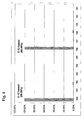
- every compound will be a collection or mixture of isotopomers that vary in mass due the presence of 13 C impurity in the 12 C background (see Fig. 3 ).
- the distribution of these isotopomers as seen in the mass spectrometer will include a number of peaks derived from ions (also called “daughter”) that are shifted up to higher mass from the peak (also called “parent”) of the majority ion.
- This invention improves upon this situation by specifically using material that is devised to assure that the minority peaks are present in sufficient quantity that they will generally be seen (see Fig. 5 ).
- the source of every compound can be identified because, relative to the majority peak, the minority peak will be larger in mass (and therefore derived from 12 C based cells), or the minority peak will have a smaller mass (and therefore be derived from the 13 C based cells).
- it is optimal to increase the percentage of the "impurity”; i.e., 12 C in 13 C or visa versa in carefully controlled amounts significantly above their natural abundance (see Tables 1A and 1B, below). Table 1A C-12 Mol.
- a C12-based molecule of mass 180 with 95% C-12 and 5% C-13 will have an M+1 (@ 181 amu) that is 31.95% of the height of the parent peak at 180 amu. It will furthermore have a M+2 that is 5.5% of the parent peak.
- the remaining values illustrate lesser and greater dilutions of C-12 with C-13. Table 1B C-13 Mol.
- Table 1B shows the mass profile; i.e., the isotopic distribution, for a C-13 based compound with a molecular compound of mass 186 (C 6 H 12 O 6 ) that has been diluted with various percentages of C12.
- a C13-based molecule of mass 186 with 95% C-13 and 5% C-12 will have an M-1 (@ 185 amu) that is 31.55% of the height of the parent peak at 186 amu. It will furthermore have a M-2 that is 4.15% of the parent peak. Note that this molecule will have very small M+1, etc. peaks due to isotopic contributions from other atomic species, i.e. oxygen, hydrogen, nitrogen, etc.
- the compounds that are contributed to the composite from the 13 C sample can be distinguished because they will have daughters that are at M-1 (trailing the parent), whereas those peaks from the 12 C samples will have their daughters at M+1 (leading the parent). Using this rule one can easily distinguish the source of any peak as to control or experimental.
- the components of the composite sample are themselves typically separated prior to introduction into the mass spectrometer. That separation can be carried out using gas chromatography, high pressure liquid chromatography (HPLC), size exclusion chromatography, electrophoresis and the like. Various separation techniques can also be combined.
- Illustrative equipment that can be used to carry out a contemplated method include the following.
- Agilent 6520 Accurate-Mass Q-TOF LC/MS, Agilent 5975 Series MSD, Thermo-Fisher LTQ, Thermo-Fisher ORBITRAP ® , Waters MICROMASS ® GCT PremierTM, and Waters LCT PremierTM.
- Separation systems can be part of the MS (as in GC) or separate, and illustratively include: Waters ACQUITY UPLC ® , Agilent Rapid Resolution, and Thermo Surveyor Plus systems.
- Ion suppression is a phenomenon that occurs during the mass spectroscopic ionization processes when the efficiency of ionization is subjected to variability due to characteristics of the compounds that are present.
- the number of molecules that could be ionized is in excess of the amount of charge available.
- the molecules that become ionized most efficiently are those that can acquire the charge most strongly, and the remaining molecules become ionized with much lower efficiency.
- the above method easily supersedes current methods in which individual samples representing the different populations, but not isotopically defined, are used.
- the benefits of this method include:
- a contemplated method relies on establishing a set of relationships within a single sample that is to be analyzed. Because of the predictable form these relationships take, the entire method can be reduced to a set of algorithms that can be coded in software. This software performs these functions in an automated manner, and produces a data set that details 1) analyte compounds found in the sample, 2) the 12 C/ 13 C ratios for those analyte compounds, 3) the relevance of the compound to the response profile, 4) non-biological artifacts, and 5) derivatives of exogenously applied compounds.
- a composite sample is provided and is subjected to a separation phase, such as a GC, HPLC or other chromatographic separation.
- a separation phase such as a GC, HPLC or other chromatographic separation.
- the effluent of the separation is then analyzed by mass spectroscopy.
- the patterns are buried in the raw mass spectrometer data set as a series of scans with each scan representing a sequential time segment.
- the algorithm used to seek the patterns can take many forms; however, in one instance
- a contemplated method is general in its applicability and is illustrated by the following specific examples.
- the experimental design is set up in order to determine the effect of a drug on bacterial cultures as a function of time.
- the appropriate control is a contemporaneous culture.
- An actively growing culture of a Escherichia coli (bacteria) is subjected to one or more wash/rinse cycle(s) using an isotonic but non-nutritional (IN) buffer (via centrifugation).
- the resulting pellet of cells is re-suspended in the same IN buffer and apportioned to create 24 samples that they have an equal or approximately equal number of bacterial cells.
- the IN buffer is removed from these 24 samples.
- Two identical media are prepared, in one (herein called “C13 medium”) the sole carbon source is isotopically enriched 13 C-glucose (as discussed above), and in the other (herein called “C12 medium”) the sole carbon sources is isotopically enriched 12 C-glucose (as discussed above).
- the cells are dispensed into a vessel suitable for growth and in which the only medium available is either the C12 or C13 medium in which the cells were last washed.
- C12 samples are deemed to receive the control and the C13 samples receive the stressor, although in practice this can be reversed. The important point is that the samples be handled so that for each C13 sample there is an equivalent C12 sample.
- Both sets of samples are grown until they reach exponential growth and have undergone several cellular divisions. After the appropriate growth period the 12 C13 samples receive treatment with a stressor such as an antibacterial drug, whereas the C12 samples receive an identical placebo or control treatment.
- the cells/organisms are harvested and the samples are matched up.
- the C13 (stressor treated) and the C12 (control or placebo treated) matched samples are combined during the harvest process to create a single composite sample.
- three composites can be created at time 0, 1, 4, and 24 hours, respectively.
- a detailed analysis (metabolomic, proteomic, transcriptomic, or analysis for any other carbon-based class of compounds) is performed on the composite samples.
- the relative C12/C13 ratios of the analytes of each sample are determined.
- the statistical variance of the ratios sample is determined.
- An analyte compound that has a C12/C13 ratio that is a significant deviation (two or more standard deviations) from the average ratio is indicative of a point at which the biochemistry was altered. For example, if the average ratio for the analytes is 1 (1:1 C12/C13 ratio), but some analytes have ratios of 10 (10:1) or 0.1 (1:10) then the analytes that are outliers to the general population, e.g., those with ratios of 10 and 0.1, are those most strongly effected by the stressor and indicate a point of biochemical alteration.
- the experimental design is set up in order to determine the effect of a drug on mammalian cell cultures as a function of time.
- the appropriate control is a contemporaneous culture.
- An actively growing culture of human hepatocytes is subjected to one or more wash/rinse cycle(s) using an isotonic but non-nutritional (IN) buffer (via centrifugation).
- the resulting pellet of cells is re-suspended in the same IN buffer and apportioned in such a way as to create 24 samples that they have an equal or approximately equal number of bacterial cells.
- the IN buffer is removed from these 24 samples.
- C13 medium Two identical media are prepared, in one (herein called “C13 medium”) the sole carbon source is isotopically enriched 13 C-glucose (as discussed above), and in the other (herein called “C12 medium”) the sole carbon sources is isotopically enriched 12 C-glucose (as discussed above).
- C13 medium is Williams Medium E, a fully defined medium capable of supporting growth for extended periods of time or any other medium that can be isotopically defined.
- the cells are dispensed into a vessel suitable for growth and in which the only growth nutrient-containing medium available is either the C12 or C13 medium in which the cells were last washed.
- C12 samples are deemed to receive the control and the C13 samples receive the stressor, although in practice this can be reversed.
- the important point is that the samples be handled so that there is an equivalent C12 sample for each C13 sample from which a data point is desired.
- Both sets of samples are permitted to grow (metabolize in situ if not dividing) until they have attained a desired isotopic replacement. In the case of a dividing cell it can have undergone several cellular divisions. After the appropriate growth period, the 12 C13 samples receive treatment with a stressor such as a drug (atorvastatin calcium), drug candidate, or another compound for which the biochemical response is sought, whereas the other C12 samples receive an identical placebo or control treatment.
- a stressor such as a drug (atorvastatin calcium), drug candidate, or another compound for which the biochemical response is sought
- the cells are harvested and the samples are matched up.
- the C13 (stressor treated) and the C12 (control or placebo treated) matched samples are combined during the harvest process to create a single composite sample.
- three composites may be created at time 0, 1, 4, and 24 hours, respectively.
- a detailed analysis (metabolomic, proteomic, transcriptomic, or analysis for any other carbon-based class of compounds) is performed on the composite samples.
- the relative C12/C13 ratios of the analytes of each sample (of known or unknown identity) are determined.
- the statistical variance of the ratios sample is determined.
- An analyte compound that has a C12/C13 ratio that is a significant deviation (two or more standard deviations) from the average ratio indicates a point at which the biochemistry was altered, as discussed previously. For example, if the average ratio for the analytes is 1 (1:1 C12/C13 ratio), but some analytes have ratios of 10 (10:1) or 0.1 (1:10) then the analytes that are outliers to the general population, e.g., those with ratios of 10 and 0.1, are those most strongly effected by the stressor and indicate a point of biochemical alteration.
- the point of comparison is time zero.
- the experimental design is set up in order to determine the effect of aging on cell cultures.
- the appropriate control is an aliquot of the time zero culture, which here is one hour after the application of fresh medium.
- An actively growing culture of a mammalian primary cell line is subjected to one or more wash/rinse cycle(s) using an isotonic but non-nutritional (IN) buffer (via centrifugation).
- the resulting pellet of cells is re-suspended in the same IN buffer and apportioned in such a way as to create 24 samples that they have an equal or approximately equal number of cells.
- the IN buffer is removed from these 24 samples.
- C12 medium the sole carbon source is isotopically enriched (as defined in the above), 12 C-glucose, and an appropriate collection of equally enriched 12 C-amino acids and other nutrients.
- C13 medium the sole carbon sources are similarly isotopically enriched but with 13 C compounds.
- the cells are dispensed into a vessel suitable for growth and in which the only nutrient-containing medium available is either the C12 or C13 medium in which the cells were last washed.
- C12 samples are the control cultures and the C13 samples are the samples which are permitted to age, although in practice this can be reversed.
- the important point is that the samples be handled so that there is an equivalent C12 sample for each C13 sample from which a data point is desired.
- Both sets of samples are permitted to grow until such time that they have diluted all pre-existing or native carbon with medium-supplied carbon isotopes. If the cells are dividing they should undergo several cellular divisions.
- a detailed analysis (metabolomic, proteomic, transcriptomic, or analysis for any other carbon-based class of compounds) is performed on the composite samples.
- the relative C12/C13 ratios of analytes per sample (of known or unknown identity) are determined.
- the statistical variance of the ratios sample is determined.
- any analyte compound that has a ratio that is a significant deviation (two standard deviations or more) from the average ratio will indicate a point where the biochemistry was altered. For instance, if the average ratio for the all of the analytes is 1 (1:1 C12/C13 ratio), but some analytes have ratios of 10 (10:1) or 0.1 (1:10) then the analytes that are outliers to the general population are those most strongly effected by the stressor.
- the experimental point of comparison is time zero in a whole organism.
- the experimental design is set up in order to determine the effect of aging on an animal, for illustration here the nematode, Caenorhabditis elegans.
- the appropriate control is an aliquot of the time zero organism, which in this instance is one hour after the application of second round of fresh media.
- the stressor and stress regimen here is aging and growth of the organism during aging.
- An actively growing culture of a C. elegans and its feedstock of is subjected to one or more wash/rinse cycle(s) using an isotonic but non-nutritional (IN) buffer (via centrifugation).
- the resulting pellet of nematodes is re-suspended in the same IN buffer and apportioned in such a way as to create 2 samples, each of which has an equal or approximately equal number of nematodes.
- the IN buffer is removed from these 2 samples.
- C12 medium the sole carbon source is isotopically enriched 12 C-glucose (upon which the bacterial feedstock of the nematode grow), and in the other (herein called “C13 medium”) the sole carbon sources is isotopically highly enriched 13 C-glucose.
- the nematodes are dispensed into a vessel suitable for growth and in which the only nutrient-containing medium available is either the C12 or C13 medium in which the cells were last washed.
- C12 samples C12 medium for growth
- C13 samples C13 medium for growth
- the C13 sample should have its medium removed and replaced with fresh C13 medium and the nematodes separated for age. Only the youngest stage is permitted to proceed.
- the C12 sample is similarly treated and also be given fresh medium.
- the C12 culture is aliquotted to 24 equal portions and nematodes in each aliquot harvested and frozen (as the controls).
- a detailed analysis (metabolomic, proteomic, transcriptomic, or analysis for any other carbon-based class of compounds) is performed on the composite samples.
- the relative C12/C13 ratios of analytes per sample (of known or unknown identity) are determined.
- the statistical variance of the ratios sample is determined.
- any analyte compound that has a ratio that is a significant deviation (two or more standard deviations) from the average ratio will indicate a point where the biochemistry was altered. For instance, if the average ratio for the all of the analytes is 1 (1:1 C12/C13 ratio), but some analytes have ratios of 10 (10:1) or 0.1 (1:10) then the analytes that are outliers to the general population are those most strongly effected by the stressor.
- the experimental point of comparison here is a wild type organism.
- the experimental design is set up to determine the effect of genetic manipulation upon the mustard, Arabidopsis thaliana .
- appropriate control is an aliquot of the genetically unmodified, or wild-type plant, which may be prepared separately from the experimental samples, but which needs to be from a single homogeneous control.
- the genetically modified plants are preferably derived from a common and consistent wild type background. For this illustration, it is presumed that there are one or more such genetically modified plants (arbitrarily, 5) genetically distinct clones, all of which were derived from the same wild type stock. All of these genetically modified plants are stored as fresh viable seed at the start of the study.
- a large collection of wild type seeds are grown under controlled conditions in an atmosphere of isotopically enriched 13 C-carbon dioxide (CO 2 ) as defined above. These plants are harvested in a manner appropriate to the experimental design, illustratively at maturity. Sufficient control sample can be prepared at one time for more than one study; i.e., all of the control plants should be combined into a single homogeneous sample.
- CO 2 isotopically enriched 13 C-carbon dioxide
- the plants are harvested by direct immersion into liquid nitrogen and subsequently stored at -80° C.
- the frozen plants are powdered while in the frozen state.
- the genetically modified (GMO) seed is grown in a manner similar to that above, but these plants are grown under identical conditions except that their carbon source is carbon dioxide having an inverted 12 C/ 13 C ratio. These GMO plants are harvested according to the protocol used above, and powdered as before. In the case of the GMO samples, each sample is harvested and treated individually. Equal aliquots of the control powder are added to equal aliquots of the GMO experimental powders to form the composite samples.
- a detailed analysis (metabolomic, proteomic, transcriptomic, or analysis for any other carbon-based class of compounds) is performed on the composite samples.
- the relative C12/C13 ratios of analytes per sample (of known or unknown identity) are determined.
- the statistical variance of the ratios sample is determined.
- any analyte compound that has a ratio that is a significant deviation (two or more standard deviations) from the average ratio will indicate a point where the biochemistry was altered. For instance, if the average ratio for the all of the analytes is 1 (1:1 C12/C13 ratio), but some analytes have ratios of 10 (10:1) or 0.1 (1:10) then the analytes that are outliers to the general population are those most strongly effected by the stressor.
- the experimental design is set up to determine the effect of physiological stress (induced by fasting for 24 hours) on an animal, for illustration here the rat, Rattus norvegiensus.
- physiological stress induced by fasting for 24 hours
- the appropriate control is a composite sample of rat plasma and the experimental sample is a composite sample of rat plasma from rats that have undergone the experimental, stressing treatment, which in this example will be starvation for 24 hours.
- control population is the C-13 animal as the control need not be contemporaneous and can be a standard control that is available prior to the actual running of the experiment. Because the test system has animals, the experiment has more noise due to the greater variance inherent in the source material. The use of sample compositing partially offsets this problem as it averages the inherent biological variability, thus rendering the samples more representative of the norm. This results in a simplified experimental design, although it requires more complex prior preparation.
- a group of rats (“the experimental population") of a defined strain are placed on a defined isotopically enriched C-12 diet from birth. Meanwhile another group of rats (“the control population”), of the same strain (although possibly at a different point in time) are grown on the C-13 equivalent diet. Both groups of animals are grown under identical environmental conditions.
- the experimental animals are subjected to the experimental condition, for illustration here fasting for 24 hours beginning at the time that the light-cycle starts. Therefore the experimental samples, plasma samples, are taken. at the beginning of the light cycle on the following day.
- All of the samples from the experimental group are similarly collected.
- a composite experimental sample is created by mixing equal aliquots of plasma from all experimental animals.
- the control samples are similarly collected and composited from animals that have been feed a C-13 equivalent diet.
- a detailed analysis (metabolomic, proteomic, transcriptomic, or analysis for any other carbon-based class of compounds) is performed on the composite samples.
- the relative C12/C13 ratios of analytes per sample (of known or unknown identity) are determined.
- the statistical variance of the ratios sample is determined.
- any analyte compound which has a ratio that is a significant deviation (two or more standard deviations) from the average ratio will indicate a point where the biochemistry was altered. For instance, if the average ratio for the all of the analytes is 1 (1:1 C12/C13 ratio), but some analytes have ratios of 10 (10:1) or 0.1 (1:10) then the analytes that are outliers to the general population are those most strongly effected by the stressor.
Landscapes
- Health & Medical Sciences (AREA)
- Life Sciences & Earth Sciences (AREA)
- Engineering & Computer Science (AREA)
- Molecular Biology (AREA)
- Biomedical Technology (AREA)
- Immunology (AREA)
- Chemical & Material Sciences (AREA)
- Urology & Nephrology (AREA)
- Physics & Mathematics (AREA)
- Hematology (AREA)
- Bioinformatics & Cheminformatics (AREA)
- Pathology (AREA)
- General Health & Medical Sciences (AREA)
- Microbiology (AREA)
- Cell Biology (AREA)
- Food Science & Technology (AREA)
- Medicinal Chemistry (AREA)
- Biotechnology (AREA)
- Analytical Chemistry (AREA)
- Biochemistry (AREA)
- Bioinformatics & Computational Biology (AREA)
- General Physics & Mathematics (AREA)
- Tropical Medicine & Parasitology (AREA)
- Toxicology (AREA)
- Spectroscopy & Molecular Physics (AREA)
- Biophysics (AREA)
- Proteomics, Peptides & Aminoacids (AREA)
- Other Investigation Or Analysis Of Materials By Electrical Means (AREA)
Claims (13)
- Verfahren zur Identifizierung eines Analyten einer biologischen Probe, die durch einen Stressor beeinflusst wird, das folgende Schritte umfasst:(a) Bereitstellen einer Mischprobe biologischer Organismen, die aus zwei gemischten Proben biologischer Organismen, bei denen es sich um eine Kontrollprobe und eine Experimentalprobe handelt, besteht, wobei die Kontrollprobenorganismen in einem ersten Nährmedium, das vorbestimmte Mengen eines ersten und eines zweiten stabilen Isotops eines ersten Atoms in einem Nährstoff enthält, angezogen wurden und die Experimentalprobe in einem zweiten Nährmedium, das mit dem ersten Nährmedium identisch ist, außer dass es andere vorbestimmte Mengen eines ersten und eines zweiten stabilen Isotops des ersten Atoms in den Nährstoff im Vergleich zu dem ersten Nährmedium enthält, angezogen wurden, wobei sich bei dem ersten und zweiten stabilen Isotop nicht um Wasserstoff (1H) oder Deuterium (D) handelt, wobei die Experimentalprobe mit einem Stressplan, die ein Stressmittel enthält, über einen zum Wachsen der Probe ausreichenden Zeitraum kultiviert wird und die Kontrollprobe über denselben Zeitraum mit einem Plan, der mit dem Stressplan identisch ist, außer dass das Stressmittel fehlt, kultiviert wird;(b) massenspektroskopische Analyse der Mischprobe biologischer Organismen auf Analyt-Peaks;(c) Bestimmung des Verhältnisses von erstem stabilem Isotop zu zweitem stabilem Isotop für jeden analysierten Analyt-Peak;(d) Bestimmung des mittleren Verhältnisses der stabilen Isotope der biologischen Mischprobe; und(e) Vergleich des Verhältnisses von erstem stabilem Isotop zu zweitem stabilem Isotop für jeden analysierten Analyt-Peak mit dem mittleren Verhältnis der stabilen Isotope der biologischen Mischprobe, wobei ein Analyt, dessen Isotopenverhältnis statistisch signifikant von dem mittleren Verhältnis der stabilen Isotope der biologischen Mischprobe abweicht, ein durch das Stressmittel beeinflusster Analyt ist.
- Verfahren nach Anspruch 1, bei dem das erste und zweite Nährmedium ferner vorbestimmte Mengen eines ersten und eines zweiten Isotop eines zweiten Atoms in einem Nährstoff enthalten.
- Verfahren nach Anspruch 1 oder 2, bei dem es sich bei der Probe biologischer Organismen um eine Zellkultur handelt.
- Verfahren nach Anspruch 3, bei dem die Zellkultur aus Pflanzenzellen besteht.
- Verfahren nach Anspruch 4, bei dem es sich bei den Pflanzenzellen um Algenzellen handelt.
- Verfahren nach Anspruch 4, wobei es sich bei den Pflanzenzellen um Zellen höherer Pflanzen handelt.
- Verfahren nach Anspruch 3, bei dem die Zellkultur aus Hefezellen besteht.
- Verfahren nach Anspruch 3, bei dem die Zellkultur aus Tierzellen besteht.
- Verfahren nach einem der vorhergehenden Ansprüche, bei dem der Nährstoff aus der Gruppe bestehend aus einem Saccharid, einer Aminosäure und einem Salz ausgewählt wird.
- Verfahren nach einem der vorhergehenden Ansprüche, bei dem man das erste und das zweite stabile Isotop aus der Gruppe bestehend aus 12C und 13C; 16O, 17O und 18O; 14N und 15N; 32S, 33S, 34S und 35S 35Cl und 37Cl; 24Mg, 25Mg und 26Mg; 27Si, 28Si und 29Si; 40Ca, 42Ca, 43Ca und 44Ca und 79Br und 81Br auswählt.
- Verfahren nach einem der vorhergehenden Ansprüche, bei dem die gemischten Proben in Schritt (a) in gleichen Mengen gemischt werden.
- Verfahren nach einem der vorhergehenden Ansprüche, bei dem das Verhältnis von erstem Isotop zu zweitem Isotop nicht über alle Analyt-Peaks analysiert wird.
- Verfahren nach einem der vorhergehenden Ansprüche, bei dem die Analyt-Peaks, für die die biologische Mischprobe analysiert wird, aus der Gruppe bestehend aus Metaboliten, Sacchariden, Polypeptiden, Glykopeptiden, Polynucleotiden und Mischungen davon ausgewählt werden.
Priority Applications (1)
| Application Number | Priority Date | Filing Date | Title |
|---|---|---|---|
| EP13174052.4A EP2647996B1 (de) | 2007-08-06 | 2008-08-06 | Isotopisch Nährmedium für Massenspektrometrische Verfahren zum nachweis von analyt einer biologischen Probe, die von einem Stressor beeinträchtigt wird |
Applications Claiming Priority (4)
| Application Number | Priority Date | Filing Date | Title |
|---|---|---|---|
| US95425307P | 2007-08-06 | 2007-08-06 | |
| US97692307P | 2007-10-02 | 2007-10-02 | |
| US12/186,381 US7820963B2 (en) | 2007-08-06 | 2008-08-05 | Method for generation and use of isotopic patterns in mass spectral data of simple organisms |
| PCT/US2008/072358 WO2009021056A1 (en) | 2007-08-06 | 2008-08-06 | Method for generation and use of isotopic patterns in mass spectral data of simple organisms |
Related Child Applications (2)
| Application Number | Title | Priority Date | Filing Date |
|---|---|---|---|
| EP13174052.4A Division EP2647996B1 (de) | 2007-08-06 | 2008-08-06 | Isotopisch Nährmedium für Massenspektrometrische Verfahren zum nachweis von analyt einer biologischen Probe, die von einem Stressor beeinträchtigt wird |
| EP13174052.4 Division-Into | 2013-06-27 |
Publications (3)
| Publication Number | Publication Date |
|---|---|
| EP2203464A1 EP2203464A1 (de) | 2010-07-07 |
| EP2203464A4 EP2203464A4 (de) | 2010-09-22 |
| EP2203464B1 true EP2203464B1 (de) | 2013-12-25 |
Family
ID=40341714
Family Applications (2)
| Application Number | Title | Priority Date | Filing Date |
|---|---|---|---|
| EP13174052.4A Active EP2647996B1 (de) | 2007-08-06 | 2008-08-06 | Isotopisch Nährmedium für Massenspektrometrische Verfahren zum nachweis von analyt einer biologischen Probe, die von einem Stressor beeinträchtigt wird |
| EP08797301.2A Active EP2203464B1 (de) | 2007-08-06 | 2008-08-06 | Massenspektrometrische verfahren zur identifizierung eines analyten einer biologischen probe, die von einem stressor betroffen ist |
Family Applications Before (1)
| Application Number | Title | Priority Date | Filing Date |
|---|---|---|---|
| EP13174052.4A Active EP2647996B1 (de) | 2007-08-06 | 2008-08-06 | Isotopisch Nährmedium für Massenspektrometrische Verfahren zum nachweis von analyt einer biologischen Probe, die von einem Stressor beeinträchtigt wird |
Country Status (7)
| Country | Link |
|---|---|
| US (2) | US7820963B2 (de) |
| EP (2) | EP2647996B1 (de) |
| AU (1) | AU2008283904B2 (de) |
| CA (1) | CA2702845C (de) |
| DK (1) | DK2203464T3 (de) |
| ES (1) | ES2453109T3 (de) |
| WO (1) | WO2009021056A1 (de) |
Families Citing this family (9)
| Publication number | Priority date | Publication date | Assignee | Title |
|---|---|---|---|---|
| US8536520B2 (en) * | 2007-08-06 | 2013-09-17 | Iroa Technologies Llc | Method for generation and use of isotopic patterns in mass spectral data of simple organisms |
| US7820963B2 (en) * | 2007-08-06 | 2010-10-26 | Metabolic Alayses, Inc. | Method for generation and use of isotopic patterns in mass spectral data of simple organisms |
| US7820964B2 (en) * | 2007-08-06 | 2010-10-26 | Metabolic Analyses, Inc | Method for generation and use of stable isotope patterns in mass spectral data |
| US8969251B2 (en) * | 2007-10-02 | 2015-03-03 | Methabolic Analyses, Inc. | Generation and use of isotopic patterns in mass spectral phenotypic comparison of organisms |
| WO2013098609A1 (en) * | 2011-12-30 | 2013-07-04 | Dh Technologies Development Pte. Ltd. | Systems and methods for sequencing peptides by mass spectrometry |
| WO2016168391A1 (en) | 2015-04-14 | 2016-10-20 | Waters Technologies Corporation | Structural elucidation of isotopically labeled analytes |
| CA3053196A1 (en) * | 2017-02-24 | 2018-08-30 | Iroa Technologies, Llc | Iroa metabolomics workflow for improved accuracy, identification and quantitation |
| CN112771375B (zh) * | 2018-06-22 | 2024-05-10 | 伊罗亚科技有限公司 | 校正离子源效率低下的方法使得样品间归一化成为可能 |
| US12463026B2 (en) * | 2020-08-07 | 2025-11-04 | Shimadzu Corporation | Machine difference correction method for mass spectrometry apparatus |
Family Cites Families (25)
| Publication number | Priority date | Publication date | Assignee | Title |
|---|---|---|---|---|
| US5087815A (en) * | 1989-11-08 | 1992-02-11 | Schultz J Albert | High resolution mass spectrometry of recoiled ions for isotopic and trace elemental analysis |
| ATE249829T1 (de) * | 1990-03-16 | 2003-10-15 | Us Secretary United States Dep | Verwendung von nitroxiden und oxazolidinen zum schutz ionisierender strahlung und oxidativem stress |
| US5912178A (en) * | 1994-02-16 | 1999-06-15 | Wisconsin Alumni Research Foundation | Passive measurement of isotopes to monitor health |
| WO1998036095A1 (en) * | 1997-02-14 | 1998-08-20 | George Washington University | An assay for the measurement of dna synthesis rates |
| US6790673B1 (en) | 1998-01-29 | 2004-09-14 | Duquesne University Of The Holy Ghost | Speciated isotope dilution mass spectrometry of reactive species and related methods |
| US6764817B1 (en) * | 1999-04-20 | 2004-07-20 | Target Discovery, Inc. | Methods for conducting metabolic analyses |
| US6391649B1 (en) * | 1999-05-04 | 2002-05-21 | The Rockefeller University | Method for the comparative quantitative analysis of proteins and other biological material by isotopic labeling and mass spectroscopy |
| US7368710B2 (en) * | 2000-02-09 | 2008-05-06 | Xceleron Limited | Sample preparation method |
| US20040209251A1 (en) | 2000-10-19 | 2004-10-21 | Schneider Luke V | Methods for determining protein and peptide terminal sequences |
| US7045296B2 (en) * | 2001-05-08 | 2006-05-16 | Applera Corporation | Process for analyzing protein samples |
| JP3615182B2 (ja) * | 2001-11-26 | 2005-01-26 | 株式会社東芝 | 光近接効果補正方法及び光近接効果補正システム |
| AU2003262824B2 (en) * | 2002-08-22 | 2007-08-23 | Applied Biosystems Inc. | Method for characterizing biomolecules utilizing a result driven strategy |
| CA2521034A1 (en) | 2003-04-02 | 2004-10-21 | Merck & Co., Inc. | Mass spectrometry data analysis techniques |
| JP2007503001A (ja) | 2003-05-15 | 2007-02-15 | エレクトロフォレティクス リミテッド | 質量分析法 |
| WO2005005616A2 (en) * | 2003-07-11 | 2005-01-20 | Egorova-Zachernyuk Tatiana A | Compositions and methods for stable isotope labelling of biological compounds |
| JP4348452B2 (ja) | 2003-12-16 | 2009-10-21 | 独立行政法人産業技術総合研究所 | 酸化ストレスマーカー及びその測定法 |
| WO2006096704A2 (en) * | 2005-03-07 | 2006-09-14 | Invitrogen Corporation | Isotopically-labeled proteome standards |
| US7465276B2 (en) * | 2005-11-30 | 2008-12-16 | Wisconsin Alumni Research Foundation | Identification of disease characteristics using isotope ratios in breath |
| WO2007078835A2 (en) * | 2005-12-15 | 2007-07-12 | George Mason University | Biomarker isolation and use thereof to characterize physiological state |
| US7653496B2 (en) | 2006-02-02 | 2010-01-26 | Agilent Technologies, Inc. | Feature selection in mass spectral data |
| US7820964B2 (en) | 2007-08-06 | 2010-10-26 | Metabolic Analyses, Inc | Method for generation and use of stable isotope patterns in mass spectral data |
| US7820963B2 (en) | 2007-08-06 | 2010-10-26 | Metabolic Alayses, Inc. | Method for generation and use of isotopic patterns in mass spectral data of simple organisms |
| US8536520B2 (en) * | 2007-08-06 | 2013-09-17 | Iroa Technologies Llc | Method for generation and use of isotopic patterns in mass spectral data of simple organisms |
| EP2205342B1 (de) | 2007-10-02 | 2014-01-22 | IROA Technologies LLC | Erzeugung und verwendung von isotopenmustern beim massenspektrometrischen phänotypenvergleich von organismen |
| US8969251B2 (en) * | 2007-10-02 | 2015-03-03 | Methabolic Analyses, Inc. | Generation and use of isotopic patterns in mass spectral phenotypic comparison of organisms |
-
2008
- 2008-08-05 US US12/186,381 patent/US7820963B2/en active Active
- 2008-08-06 DK DK08797301.2T patent/DK2203464T3/da active
- 2008-08-06 ES ES08797301.2T patent/ES2453109T3/es active Active
- 2008-08-06 WO PCT/US2008/072358 patent/WO2009021056A1/en not_active Ceased
- 2008-08-06 EP EP13174052.4A patent/EP2647996B1/de active Active
- 2008-08-06 EP EP08797301.2A patent/EP2203464B1/de active Active
- 2008-08-06 CA CA2702845A patent/CA2702845C/en active Active
- 2008-08-06 AU AU2008283904A patent/AU2008283904B2/en active Active
-
2010
- 2010-10-25 US US12/911,538 patent/US8168945B2/en active Active
Also Published As
| Publication number | Publication date |
|---|---|
| AU2008283904B2 (en) | 2013-10-24 |
| US20110084204A1 (en) | 2011-04-14 |
| US20090039246A1 (en) | 2009-02-12 |
| AU2008283904A1 (en) | 2009-02-12 |
| ES2453109T3 (es) | 2014-04-04 |
| DK2203464T3 (da) | 2014-02-03 |
| EP2203464A4 (de) | 2010-09-22 |
| EP2203464A1 (de) | 2010-07-07 |
| US8168945B2 (en) | 2012-05-01 |
| WO2009021056A1 (en) | 2009-02-12 |
| EP2647996A1 (de) | 2013-10-09 |
| CA2702845C (en) | 2015-09-22 |
| CA2702845A1 (en) | 2009-02-12 |
| EP2647996B1 (de) | 2015-06-03 |
| US7820963B2 (en) | 2010-10-26 |
Similar Documents
| Publication | Publication Date | Title |
|---|---|---|
| US8168945B2 (en) | Method for generation and use of isotopic patterns in mass spectral data of simple organisms | |
| US7349809B2 (en) | Method of non-targeted complex sample analysis | |
| Huttlin et al. | Comparison of full versus partial metabolic labeling for quantitative proteomics analysis in Arabidopsis thaliana | |
| EP2205342B1 (de) | Erzeugung und verwendung von isotopenmustern beim massenspektrometrischen phänotypenvergleich von organismen | |
| Yu et al. | A novel tandem mass spectrometry method for first-line screening of mainly beta-thalassemia from dried blood spots | |
| US8969251B2 (en) | Generation and use of isotopic patterns in mass spectral phenotypic comparison of organisms | |
| US8536520B2 (en) | Method for generation and use of isotopic patterns in mass spectral data of simple organisms | |
| Dyason et al. | Determination of species‐specific components in the venom of Parabuthus scorpions from southern Africa using matrix‐assisted laser desorption time‐of‐flight mass spectrometry | |
| Zhou et al. | Discovery top-down proteomics in symbiotic soybean root nodules | |
| CN106706820B (zh) | 一种通用的大规模代谢组学数据的校正方法 | |
| AU2013204684B2 (en) | Method for generation and use of isotopic patterns in mass spectral data of simple organisms | |
| Camacho | Quantification of amino acids in Aquilegia nectar by high performance liquid chromatography–tandem mass spectrometry | |
| Lancaster | Development of Mass Spectrometry-Based Methods for the Analysis of Complex Biological Mixtures | |
| CA2381685A1 (en) | Method of non-targeted complex sample analysis | |
| HK1141601A (en) | Method of non-targeted complex sample analysis |
Legal Events
| Date | Code | Title | Description |
|---|---|---|---|
| PUAI | Public reference made under article 153(3) epc to a published international application that has entered the european phase |
Free format text: ORIGINAL CODE: 0009012 |
|
| 17P | Request for examination filed |
Effective date: 20100330 |
|
| AK | Designated contracting states |
Kind code of ref document: A1 Designated state(s): AT BE BG CH CY CZ DE DK EE ES FI FR GB GR HR HU IE IS IT LI LT LU LV MC MT NL NO PL PT RO SE SI SK TR |
|
| AX | Request for extension of the european patent |
Extension state: AL BA MK RS |
|
| A4 | Supplementary search report drawn up and despatched |
Effective date: 20100825 |
|
| RIC1 | Information provided on ipc code assigned before grant |
Ipc: G01N 33/68 20060101ALI20100819BHEP Ipc: G01N 31/00 20060101ALI20100819BHEP Ipc: G01N 33/58 20060101AFI20100819BHEP |
|
| DAX | Request for extension of the european patent (deleted) | ||
| 17Q | First examination report despatched |
Effective date: 20110617 |
|
| REG | Reference to a national code |
Ref country code: DE Ref legal event code: R079 Ref document number: 602008029548 Country of ref document: DE Free format text: PREVIOUS MAIN CLASS: G01N0033580000 Ipc: A01H0001040000 |
|
| RIC1 | Information provided on ipc code assigned before grant |
Ipc: G01N 33/50 20060101ALI20120510BHEP Ipc: A01H 1/04 20060101AFI20120510BHEP Ipc: G01N 33/68 20060101ALI20120510BHEP |
|
| GRAP | Despatch of communication of intention to grant a patent |
Free format text: ORIGINAL CODE: EPIDOSNIGR1 |
|
| INTG | Intention to grant announced |
Effective date: 20130710 |
|
| RAP1 | Party data changed (applicant data changed or rights of an application transferred) |
Owner name: IROA TECHNOLOGIES LLC |
|
| GRAS | Grant fee paid |
Free format text: ORIGINAL CODE: EPIDOSNIGR3 |
|
| GRAA | (expected) grant |
Free format text: ORIGINAL CODE: 0009210 |
|
| AK | Designated contracting states |
Kind code of ref document: B1 Designated state(s): AT BE BG CH CY CZ DE DK EE ES FI FR GB GR HR HU IE IS IT LI LT LU LV MC MT NL NO PL PT RO SE SI SK TR |
|
| REG | Reference to a national code |
Ref country code: GB Ref legal event code: FG4D |
|
| REG | Reference to a national code |
Ref country code: CH Ref legal event code: EP |
|
| REG | Reference to a national code |
Ref country code: AT Ref legal event code: REF Ref document number: 646082 Country of ref document: AT Kind code of ref document: T Effective date: 20140115 |
|
| REG | Reference to a national code |
Ref country code: IE Ref legal event code: FG4D |
|
| REG | Reference to a national code |
Ref country code: CH Ref legal event code: NV Representative=s name: E. BLUM AND CO. AG PATENT- UND MARKENANWAELTE , CH |
|
| REG | Reference to a national code |
Ref country code: DK Ref legal event code: T3 Effective date: 20140130 |
|
| REG | Reference to a national code |
Ref country code: DE Ref legal event code: R096 Ref document number: 602008029548 Country of ref document: DE Effective date: 20140213 |
|
| REG | Reference to a national code |
Ref country code: SE Ref legal event code: TRGR |
|
| REG | Reference to a national code |
Ref country code: NL Ref legal event code: T3 |
|
| REG | Reference to a national code |
Ref country code: ES Ref legal event code: FG2A Ref document number: 2453109 Country of ref document: ES Kind code of ref document: T3 Effective date: 20140404 |
|
| PG25 | Lapsed in a contracting state [announced via postgrant information from national office to epo] |
Ref country code: NO Free format text: LAPSE BECAUSE OF FAILURE TO SUBMIT A TRANSLATION OF THE DESCRIPTION OR TO PAY THE FEE WITHIN THE PRESCRIBED TIME-LIMIT Effective date: 20140325 Ref country code: LT Free format text: LAPSE BECAUSE OF FAILURE TO SUBMIT A TRANSLATION OF THE DESCRIPTION OR TO PAY THE FEE WITHIN THE PRESCRIBED TIME-LIMIT Effective date: 20131225 Ref country code: HR Free format text: LAPSE BECAUSE OF FAILURE TO SUBMIT A TRANSLATION OF THE DESCRIPTION OR TO PAY THE FEE WITHIN THE PRESCRIBED TIME-LIMIT Effective date: 20131225 Ref country code: FI Free format text: LAPSE BECAUSE OF FAILURE TO SUBMIT A TRANSLATION OF THE DESCRIPTION OR TO PAY THE FEE WITHIN THE PRESCRIBED TIME-LIMIT Effective date: 20131225 |
|
| REG | Reference to a national code |
Ref country code: LT Ref legal event code: MG4D |
|
| PG25 | Lapsed in a contracting state [announced via postgrant information from national office to epo] |
Ref country code: LV Free format text: LAPSE BECAUSE OF FAILURE TO SUBMIT A TRANSLATION OF THE DESCRIPTION OR TO PAY THE FEE WITHIN THE PRESCRIBED TIME-LIMIT Effective date: 20131225 |
|
| PG25 | Lapsed in a contracting state [announced via postgrant information from national office to epo] |
Ref country code: IS Free format text: LAPSE BECAUSE OF FAILURE TO SUBMIT A TRANSLATION OF THE DESCRIPTION OR TO PAY THE FEE WITHIN THE PRESCRIBED TIME-LIMIT Effective date: 20140425 Ref country code: EE Free format text: LAPSE BECAUSE OF FAILURE TO SUBMIT A TRANSLATION OF THE DESCRIPTION OR TO PAY THE FEE WITHIN THE PRESCRIBED TIME-LIMIT Effective date: 20131225 |
|
| PG25 | Lapsed in a contracting state [announced via postgrant information from national office to epo] |
Ref country code: PL Free format text: LAPSE BECAUSE OF FAILURE TO SUBMIT A TRANSLATION OF THE DESCRIPTION OR TO PAY THE FEE WITHIN THE PRESCRIBED TIME-LIMIT Effective date: 20131225 Ref country code: RO Free format text: LAPSE BECAUSE OF FAILURE TO SUBMIT A TRANSLATION OF THE DESCRIPTION OR TO PAY THE FEE WITHIN THE PRESCRIBED TIME-LIMIT Effective date: 20131225 Ref country code: CZ Free format text: LAPSE BECAUSE OF FAILURE TO SUBMIT A TRANSLATION OF THE DESCRIPTION OR TO PAY THE FEE WITHIN THE PRESCRIBED TIME-LIMIT Effective date: 20131225 Ref country code: PT Free format text: LAPSE BECAUSE OF FAILURE TO SUBMIT A TRANSLATION OF THE DESCRIPTION OR TO PAY THE FEE WITHIN THE PRESCRIBED TIME-LIMIT Effective date: 20140428 Ref country code: CY Free format text: LAPSE BECAUSE OF FAILURE TO SUBMIT A TRANSLATION OF THE DESCRIPTION OR TO PAY THE FEE WITHIN THE PRESCRIBED TIME-LIMIT Effective date: 20131225 Ref country code: SK Free format text: LAPSE BECAUSE OF FAILURE TO SUBMIT A TRANSLATION OF THE DESCRIPTION OR TO PAY THE FEE WITHIN THE PRESCRIBED TIME-LIMIT Effective date: 20131225 |
|
| REG | Reference to a national code |
Ref country code: DE Ref legal event code: R097 Ref document number: 602008029548 Country of ref document: DE |
|
| PGFP | Annual fee paid to national office [announced via postgrant information from national office to epo] |
Ref country code: DK Payment date: 20140812 Year of fee payment: 7 |
|
| PLBE | No opposition filed within time limit |
Free format text: ORIGINAL CODE: 0009261 |
|
| STAA | Information on the status of an ep patent application or granted ep patent |
Free format text: STATUS: NO OPPOSITION FILED WITHIN TIME LIMIT |
|
| PGFP | Annual fee paid to national office [announced via postgrant information from national office to epo] |
Ref country code: ES Payment date: 20140711 Year of fee payment: 7 Ref country code: SE Payment date: 20140826 Year of fee payment: 7 |
|
| 26N | No opposition filed |
Effective date: 20140926 |
|
| PGFP | Annual fee paid to national office [announced via postgrant information from national office to epo] |
Ref country code: IT Payment date: 20140807 Year of fee payment: 7 |
|
| REG | Reference to a national code |
Ref country code: DE Ref legal event code: R097 Ref document number: 602008029548 Country of ref document: DE Effective date: 20140926 |
|
| PGFP | Annual fee paid to national office [announced via postgrant information from national office to epo] |
Ref country code: BE Payment date: 20140812 Year of fee payment: 7 |
|
| PG25 | Lapsed in a contracting state [announced via postgrant information from national office to epo] |
Ref country code: MC Free format text: LAPSE BECAUSE OF FAILURE TO SUBMIT A TRANSLATION OF THE DESCRIPTION OR TO PAY THE FEE WITHIN THE PRESCRIBED TIME-LIMIT Effective date: 20131225 Ref country code: LU Free format text: LAPSE BECAUSE OF FAILURE TO SUBMIT A TRANSLATION OF THE DESCRIPTION OR TO PAY THE FEE WITHIN THE PRESCRIBED TIME-LIMIT Effective date: 20140806 |
|
| PG25 | Lapsed in a contracting state [announced via postgrant information from national office to epo] |
Ref country code: SI Free format text: LAPSE BECAUSE OF FAILURE TO SUBMIT A TRANSLATION OF THE DESCRIPTION OR TO PAY THE FEE WITHIN THE PRESCRIBED TIME-LIMIT Effective date: 20131225 |
|
| REG | Reference to a national code |
Ref country code: DK Ref legal event code: EBP Effective date: 20150831 |
|
| REG | Reference to a national code |
Ref country code: SE Ref legal event code: EUG |
|
| REG | Reference to a national code |
Ref country code: AT Ref legal event code: MM01 Ref document number: 646082 Country of ref document: AT Kind code of ref document: T Effective date: 20150806 |
|
| PG25 | Lapsed in a contracting state [announced via postgrant information from national office to epo] |
Ref country code: IT Free format text: LAPSE BECAUSE OF NON-PAYMENT OF DUE FEES Effective date: 20150806 |
|
| PG25 | Lapsed in a contracting state [announced via postgrant information from national office to epo] |
Ref country code: BG Free format text: LAPSE BECAUSE OF FAILURE TO SUBMIT A TRANSLATION OF THE DESCRIPTION OR TO PAY THE FEE WITHIN THE PRESCRIBED TIME-LIMIT Effective date: 20131225 Ref country code: SE Free format text: LAPSE BECAUSE OF NON-PAYMENT OF DUE FEES Effective date: 20150807 Ref country code: AT Free format text: LAPSE BECAUSE OF NON-PAYMENT OF DUE FEES Effective date: 20150806 |
|
| PG25 | Lapsed in a contracting state [announced via postgrant information from national office to epo] |
Ref country code: GR Free format text: LAPSE BECAUSE OF FAILURE TO SUBMIT A TRANSLATION OF THE DESCRIPTION OR TO PAY THE FEE WITHIN THE PRESCRIBED TIME-LIMIT Effective date: 20140326 Ref country code: MT Free format text: LAPSE BECAUSE OF FAILURE TO SUBMIT A TRANSLATION OF THE DESCRIPTION OR TO PAY THE FEE WITHIN THE PRESCRIBED TIME-LIMIT Effective date: 20131225 |
|
| REG | Reference to a national code |
Ref country code: FR Ref legal event code: PLFP Year of fee payment: 9 |
|
| PG25 | Lapsed in a contracting state [announced via postgrant information from national office to epo] |
Ref country code: TR Free format text: LAPSE BECAUSE OF FAILURE TO SUBMIT A TRANSLATION OF THE DESCRIPTION OR TO PAY THE FEE WITHIN THE PRESCRIBED TIME-LIMIT Effective date: 20131225 Ref country code: HU Free format text: LAPSE BECAUSE OF FAILURE TO SUBMIT A TRANSLATION OF THE DESCRIPTION OR TO PAY THE FEE WITHIN THE PRESCRIBED TIME-LIMIT; INVALID AB INITIO Effective date: 20080806 |
|
| PG25 | Lapsed in a contracting state [announced via postgrant information from national office to epo] |
Ref country code: DK Free format text: LAPSE BECAUSE OF NON-PAYMENT OF DUE FEES Effective date: 20150831 |
|
| REG | Reference to a national code |
Ref country code: ES Ref legal event code: FD2A Effective date: 20170405 |
|
| PG25 | Lapsed in a contracting state [announced via postgrant information from national office to epo] |
Ref country code: ES Free format text: LAPSE BECAUSE OF NON-PAYMENT OF DUE FEES Effective date: 20150807 |
|
| REG | Reference to a national code |
Ref country code: FR Ref legal event code: PLFP Year of fee payment: 10 |
|
| PG25 | Lapsed in a contracting state [announced via postgrant information from national office to epo] |
Ref country code: BE Free format text: LAPSE BECAUSE OF NON-PAYMENT OF DUE FEES Effective date: 20150831 |
|
| REG | Reference to a national code |
Ref country code: AT Ref legal event code: NFJG Ref document number: 646082 Country of ref document: AT Kind code of ref document: T Effective date: 20170728 |
|
| REG | Reference to a national code |
Ref country code: FR Ref legal event code: PLFP Year of fee payment: 11 |
|
| PGFP | Annual fee paid to national office [announced via postgrant information from national office to epo] |
Ref country code: NL Payment date: 20250721 Year of fee payment: 18 |
|
| PGFP | Annual fee paid to national office [announced via postgrant information from national office to epo] |
Ref country code: DE Payment date: 20250718 Year of fee payment: 18 |
|
| PGFP | Annual fee paid to national office [announced via postgrant information from national office to epo] |
Ref country code: GB Payment date: 20250801 Year of fee payment: 18 |
|
| PGFP | Annual fee paid to national office [announced via postgrant information from national office to epo] |
Ref country code: AT Payment date: 20250718 Year of fee payment: 18 Ref country code: FR Payment date: 20250717 Year of fee payment: 18 |
|
| PGFP | Annual fee paid to national office [announced via postgrant information from national office to epo] |
Ref country code: CH Payment date: 20250901 Year of fee payment: 18 |
|
| PGFP | Annual fee paid to national office [announced via postgrant information from national office to epo] |
Ref country code: IE Payment date: 20250718 Year of fee payment: 18 |