EP2204455A1 - Méthode diagnostique pour l'Inhibiteur de la Fibrinolyse activé par la Thrombine (TAFI) - Google Patents
Méthode diagnostique pour l'Inhibiteur de la Fibrinolyse activé par la Thrombine (TAFI) Download PDFInfo
- Publication number
- EP2204455A1 EP2204455A1 EP10159611A EP10159611A EP2204455A1 EP 2204455 A1 EP2204455 A1 EP 2204455A1 EP 10159611 A EP10159611 A EP 10159611A EP 10159611 A EP10159611 A EP 10159611A EP 2204455 A1 EP2204455 A1 EP 2204455A1
- Authority
- EP
- European Patent Office
- Prior art keywords
- tafia
- tafiai
- tafi
- ptci
- assay
- Prior art date
- Legal status (The legal status is an assumption and is not a legal conclusion. Google has not performed a legal analysis and makes no representation as to the accuracy of the status listed.)
- Ceased
Links
Images



Classifications
-
- C—CHEMISTRY; METALLURGY
- C12—BIOCHEMISTRY; BEER; SPIRITS; WINE; VINEGAR; MICROBIOLOGY; ENZYMOLOGY; MUTATION OR GENETIC ENGINEERING
- C12Q—MEASURING OR TESTING PROCESSES INVOLVING ENZYMES, NUCLEIC ACIDS OR MICROORGANISMS; COMPOSITIONS OR TEST PAPERS THEREFOR; PROCESSES OF PREPARING SUCH COMPOSITIONS; CONDITION-RESPONSIVE CONTROL IN MICROBIOLOGICAL OR ENZYMOLOGICAL PROCESSES
- C12Q1/00—Measuring or testing processes involving enzymes, nucleic acids or microorganisms; Compositions therefor; Processes of preparing such compositions
- C12Q1/34—Measuring or testing processes involving enzymes, nucleic acids or microorganisms; Compositions therefor; Processes of preparing such compositions involving hydrolase
- C12Q1/37—Measuring or testing processes involving enzymes, nucleic acids or microorganisms; Compositions therefor; Processes of preparing such compositions involving hydrolase involving peptidase or proteinase
-
- C—CHEMISTRY; METALLURGY
- C12—BIOCHEMISTRY; BEER; SPIRITS; WINE; VINEGAR; MICROBIOLOGY; ENZYMOLOGY; MUTATION OR GENETIC ENGINEERING
- C12Q—MEASURING OR TESTING PROCESSES INVOLVING ENZYMES, NUCLEIC ACIDS OR MICROORGANISMS; COMPOSITIONS OR TEST PAPERS THEREFOR; PROCESSES OF PREPARING SUCH COMPOSITIONS; CONDITION-RESPONSIVE CONTROL IN MICROBIOLOGICAL OR ENZYMOLOGICAL PROCESSES
- C12Q1/00—Measuring or testing processes involving enzymes, nucleic acids or microorganisms; Compositions therefor; Processes of preparing such compositions
- C12Q1/56—Measuring or testing processes involving enzymes, nucleic acids or microorganisms; Compositions therefor; Processes of preparing such compositions involving blood clotting factors, e.g. involving thrombin, thromboplastin, fibrinogen
-
- G—PHYSICS
- G01—MEASURING; TESTING
- G01N—INVESTIGATING OR ANALYSING MATERIALS BY DETERMINING THEIR CHEMICAL OR PHYSICAL PROPERTIES
- G01N33/00—Investigating or analysing materials by specific methods not covered by groups G01N1/00 - G01N31/00
- G01N33/48—Biological material, e.g. blood, urine; Haemocytometers
- G01N33/50—Chemical analysis of biological material, e.g. blood, urine; Testing involving biospecific ligand binding methods; Immunological testing
- G01N33/53—Immunoassay; Biospecific binding assay; Materials therefor
- G01N33/575—Immunoassay; Biospecific binding assay; Materials therefor for cancer
- G01N33/57505—Immunoassay; Biospecific binding assay; Materials therefor for cancer of the blood, e.g. leukaemia
-
- G—PHYSICS
- G01—MEASURING; TESTING
- G01N—INVESTIGATING OR ANALYSING MATERIALS BY DETERMINING THEIR CHEMICAL OR PHYSICAL PROPERTIES
- G01N33/00—Investigating or analysing materials by specific methods not covered by groups G01N1/00 - G01N31/00
- G01N33/48—Biological material, e.g. blood, urine; Haemocytometers
- G01N33/50—Chemical analysis of biological material, e.g. blood, urine; Testing involving biospecific ligand binding methods; Immunological testing
- G01N33/53—Immunoassay; Biospecific binding assay; Materials therefor
- G01N33/575—Immunoassay; Biospecific binding assay; Materials therefor for cancer
- G01N33/57515—Immunoassay; Biospecific binding assay; Materials therefor for cancer of the breast
-
- G—PHYSICS
- G01—MEASURING; TESTING
- G01N—INVESTIGATING OR ANALYSING MATERIALS BY DETERMINING THEIR CHEMICAL OR PHYSICAL PROPERTIES
- G01N33/00—Investigating or analysing materials by specific methods not covered by groups G01N1/00 - G01N31/00
- G01N33/48—Biological material, e.g. blood, urine; Haemocytometers
- G01N33/50—Chemical analysis of biological material, e.g. blood, urine; Testing involving biospecific ligand binding methods; Immunological testing
- G01N33/68—Chemical analysis of biological material, e.g. blood, urine; Testing involving biospecific ligand binding methods; Immunological testing involving proteins, peptides or amino acids
- G01N33/6893—Chemical analysis of biological material, e.g. blood, urine; Testing involving biospecific ligand binding methods; Immunological testing involving proteins, peptides or amino acids related to diseases not provided for elsewhere
-
- G—PHYSICS
- G01—MEASURING; TESTING
- G01N—INVESTIGATING OR ANALYSING MATERIALS BY DETERMINING THEIR CHEMICAL OR PHYSICAL PROPERTIES
- G01N33/00—Investigating or analysing materials by specific methods not covered by groups G01N1/00 - G01N31/00
- G01N33/48—Biological material, e.g. blood, urine; Haemocytometers
- G01N33/50—Chemical analysis of biological material, e.g. blood, urine; Testing involving biospecific ligand binding methods; Immunological testing
- G01N33/86—Chemical analysis of biological material, e.g. blood, urine; Testing involving biospecific ligand binding methods; Immunological testing involving blood coagulating time or factors, or their receptors
-
- G—PHYSICS
- G01—MEASURING; TESTING
- G01N—INVESTIGATING OR ANALYSING MATERIALS BY DETERMINING THEIR CHEMICAL OR PHYSICAL PROPERTIES
- G01N2333/00—Assays involving biological materials from specific organisms or of a specific nature
- G01N2333/81—Protease inhibitors
-
- G—PHYSICS
- G01—MEASURING; TESTING
- G01N—INVESTIGATING OR ANALYSING MATERIALS BY DETERMINING THEIR CHEMICAL OR PHYSICAL PROPERTIES
- G01N2800/00—Detection or diagnosis of diseases
- G01N2800/08—Hepato-biliairy disorders other than hepatitis
- G01N2800/085—Liver diseases, e.g. portal hypertension, fibrosis, cirrhosis, bilirubin
-
- G—PHYSICS
- G01—MEASURING; TESTING
- G01N—INVESTIGATING OR ANALYSING MATERIALS BY DETERMINING THEIR CHEMICAL OR PHYSICAL PROPERTIES
- G01N2800/00—Detection or diagnosis of diseases
- G01N2800/22—Haematology
- G01N2800/224—Haemostasis or coagulation
-
- G—PHYSICS
- G01—MEASURING; TESTING
- G01N—INVESTIGATING OR ANALYSING MATERIALS BY DETERMINING THEIR CHEMICAL OR PHYSICAL PROPERTIES
- G01N2800/00—Detection or diagnosis of diseases
- G01N2800/22—Haematology
- G01N2800/226—Thrombotic disorders, i.e. thrombo-embolism irrespective of location/organ involved, e.g. renal vein thrombosis, venous thrombosis
-
- G—PHYSICS
- G01—MEASURING; TESTING
- G01N—INVESTIGATING OR ANALYSING MATERIALS BY DETERMINING THEIR CHEMICAL OR PHYSICAL PROPERTIES
- G01N2800/00—Detection or diagnosis of diseases
- G01N2800/32—Cardiovascular disorders
Definitions
- the invention relates to a diagnostic assay for selectively measuring levels of the 35kD form of thrombin-activatable fibrinolysis inhibitor (TAFIa or TAFIai), or a derivative or variant thereof, but not the TAFI proenzyme (TAFI) or N-terminal activation peptide of TAFI.
- TAFIa or TAFIai thrombin-activatable fibrinolysis inhibitor
- TAFI TAFI proenzyme
- N-terminal activation peptide of TAFI N-terminal activation peptide
- a proper balance between the activities of coagulation and fibrinolytic cascades is needed both to protect an organism from excessive blood loss upon injury and to maintain blood flow within the vascular system.
- the two opposing coagulation and fibrinolytic cascades are recognized to comprise a series of zymogen to enzyme conversions which terminate in the two respective proteolytic enzymes, thrombin and plasmin. These enzymes catalyze the formation and removal of fibrin within the circulatory system. Imbalances are characterized by either bleeding or thrombotic tendencies which may result in heart attacks or strokes in the organism.
- TAFI Thrombin activatable fibrinolytic inhibitor
- TAFI present in plasma is a proenzyme form which is most efficiently activated by proteolytic cleavage at Arg-92 with a thrombin-thrombomodulin complex.
- the proenzyme form of TAFI may also be activated by proteolytic cleavage by other proteolytic enzymes including, but not limited to, thrombin or plasmin.
- TAFIa carboxypeptidase-like activity
- PCPB plasma carboxypeptidase B
- PCPU plasma carboxypeptidase U
- the inactivated TAFIa enzyme is referred to as TAFIai (35 kD).
- TAFIai 35 kD
- the spontaneous temperature-dependent inactivation of TAFIa to TAFIai is believed to be the major mechanism by which TAFIa activity is modulated during fibrinolysis.
- TAFIa tissue plasminogen activator
- t-PA tissue plasminogen activator
- the fibrinolytic system is activated primarily by t-PA which is provided by damaged cells in the blood vessel wall.
- t-PA converts circulating plasminogen to the active protease plasmin and can produce either slow enhancement of fibrinolysis or, when combined with fibrin, rapid enhancement of fibrinolysis.
- PAIs plasminogen activator inhibitors
- Thrombomodulin is a component of the blood vessel wall which binds thrombin and changes its specificity from fibrinogen to protein C, resulting in a molecule possessing anticoagulant, rather than procoagulant, activity.
- the thrombin-thrombomodulin complex catalyzes cleavage of protein C to activated protein C, which results in down-regulation of the coagulation cascade by proteolytically inactivating the essential co-factors, Factor Va and VIIIa. In this manner, the body regulates coagulation cascade.
- the mechanism of TAFI inhibition of fibrinolysis can be schematically described as depicted in FIG 1 .
- TAFIa and TAFIai indicate an ongoing fibrinolytic process. Therefore, the presence of TAFIa and TAFIai in plasma is a marker of the fibrinolytic process. Alterations of TAFI levels have been identified in a number of pathological conditions including vascular and heart diseases, liver disease, hemophilia, cancer, leukemia and stroke. Therefore, accurate quantitation of TAFI, TAFIa and TAFIai levels in plasma provides information in the understanding and diagnosis of many diseases in which fibrinolysis plays a role.
- ELISAs enzyme linked immunosorbent assay
- TAFI ELISA enzyme linked immunosorbent assay
- An ELISA has been reported which only measures the 60 kD TAFI proenzyme ( Stromquist et al. Thromb. Hemost. 85:12-17 (2001 )).
- a chromogenic assay based upon a functional assay is commercially available which only measures the 60 kD proenzyme form of TAFI (Actichrome 874 by American Diagnostica, Inc.).
- the 60 kD proenzyme form of TAFI shares common antigenic epitopes with TAFIa and TAFIai. There have not been any antibodies described which have are specific for TAFIa and TAFIai but not the 60 kD proenzyme form of TAFI. Accordingly, an ELISA that specifically measures TAFIa and TAFIai in the presence of the 60 kD proenzyme form of TAFI has not been developed.
- Diagnostic assays selective for TAFIa and TAFIai in the presence of the 60 kD proenzyme form of TAFI would be useful for identifying and monitoring changes in the fibrinolytic process. Such changes are indicative of diseases where the fibrinolytic process is involved, such as vascular and heart diseases, liver disease, hemophilia, cancer, leukemia and stroke. Accordingly, there is a need in the art for effective assays selective for TAFIa and TAFIai levels in the presence of the 60 kD proenzyme form of TAFI.
- the present invention is based in part on the discovery that potato carboxypeptidase inhibitor (PTCI) binds to both TAFIa and TAFIai but not to the 60 kD proenzyme form of TAFI nor to the N-terminal activation peptide of TAFI.
- PTCI potato carboxypeptidase inhibitor
- the invention is directed to an assay useful for measuring TAFIa or TAFIai (or a derivative or variant thereof) levels comprising detecting a complex comprised of a specific binding moiety (such as, but not limited to, PTCI) for TAFIa or TAFIai and the TAFIa or TAFIai protein (or a derivative or variant thereof).
- the assay is useful for specifically measuring TAFIa or TAFIai levels (i.e ., detecting the TAFIa and/or TAFIai forms of TAFI but not detecting the 60 kD pro-enzyme form or the N-terminal activation peptide of TAFI) in a sample also containing (or potentially containing) the 60 kD proenzyme form of TAFI and/or the N-termina1 activation peptide of TAFI where the binding moiety is PTCI.
- the TAFIa / PTCI complex or the TAFIai / PTCI complex is detected with an anti-TAFI antibody.
- the present invention is directed to an enzyme linked immunosorbent (ELISA)-like assay useful for measuring TAFIa or TAFIai (or a derivative or variant thereof) protein (antigen) levels in solutions which may or may not contain the 60 kD proenzyme form of TAFI or the N-termina1 activation peptide of TAFI.
- ELISA enzyme linked immunosorbent
- the assay is useful for diagnostic purposes related to the measurement of TAFIa and TAFIai levels.
- the present invention is also directed to a method of assaying biological solutions including, but not limited to, blood, plasma, urine, serum, semen and cerebral or spinal fluid for TAFIa or TAFIai (or a derivative or variant thereof) levels.
- the assay can be used to diagnose a patient as having a particular disease or disorder related to altered levels of TAFIa or TAFIai or altered levels of TAFIa or TAFIai activity or to monitor a patient that has been previously diagnosed with such a disease or disorder.
- the assay can be further used to monitor a patient receiving treatment for a particular disease or disorder related to altered TAFIa or TAFIai levels or activity and/or to monitor a patient receiving treatment that alters TAFIa or TAFIai levels or activity.
- the treatment is anti-coagulant therapy.
- the treatment is pro-coagulant therapy.
- the treatment is anti-fibrinolytic or pro-fibrinolytic.
- the patient has or is susceptible to having a hemorrhagic disease or disorder.
- the hemorrhagic disease or disorder is associated with a hyperfibrinolytic state.
- the hyperfibrinolytic state is hemophilia A or hemophilia B.
- the patient has or is susceptible (i.e., has a predisposition caused by genetic or environmental factors or by virtue of having a certain disease, disorder or condition associated therewith, or from undergoing or having undergone therapy that can result therein) to having bleeding side-effects associated with the administration of tissue plasminogen activator (t-PA), or an analog thereof, aspirin (particularly an overdose of aspirin) and/or other anti-coagulants.
- tissue plasminogen activator t-PA
- aspirin particularly an overdose of aspirin
- the patient has or is susceptible to having a thrombotic disease or disorder.
- the patient has or is susceptible to having cancer.
- the patient has or is susceptible to having a liver disease.
- the patient will be undergoing, is undergoing or has undergone surgery.
- the surgery is an organ transplant.
- the surgery is cardiovascular.
- the invention is directed to a kit comprising the components of the TAFIa/TAFIai assay (i.e., PTCI, TAFIa/TAFIai standard, agent capable of binding to TAFIa / PTCI complex or TAFIai / PTCI complex, a substrate of said agent, buffer, quenching reagent).
- TAFIa/TAFIai assay i.e., PTCI, TAFIa/TAFIai standard, agent capable of binding to TAFIa / PTCI complex or TAFIai / PTCI complex
- a substrate of said agent i.e., buffer, quenching reagent
- analog refers to a polypeptide that possesses a similar or identical function as a particular protein (e.g., TAFI, TAFIa or TAFIai), or a fragment thereof, but does not necessarily comprise a similar or identical amino acid sequence or structure of that protein complex or a fragment thereof.
- a polypeptide that has a similar amino acid sequence refers to a polypeptide that satisfies at least one of the following: (a) a polypeptide having an amino acid sequence that is at least 30%, at least 35%, at least 40%, at least 45%, at least 50%, at least 55%, at least 60%, at least 65%, at least 70%, at least 75%, at least 80%, at least 85%, at least 90%, at least 95% or at least 99% identical to the amino acid sequence of the protein or protein complex or a fragment thereof as described herein ( e.g ., human or murine TAFI, TAFIa or TAFIai); (b) a polypeptide encoded by a nucleotide sequence that hybridizes under stringent conditions to a nucleotide sequence encoding a protein or protein complex of the invention, or fragment thereof, as described herein of at least 20 amino acid residues, at least 25 amino acid residues, at least 40 amino acid residues, at least 50 amino acid residues,
- a polypeptide with similar structure to a protein or protein complex of the invention or a fragment thereof as described herein refers to a polypeptide that has a similar secondary, tertiary or quaternary structure of said protein or protein complex or a fragment thereof as described herein.
- the structure of a polypeptide can be determined by methods known to those skilled in the art, including but not limited to, X-ray crystallography, nuclear magnetic resonance, and crystallographic electron microscopy.
- binding moiety refers to a chemical or biological substance capable of specifically binding to or specifically being bound by TAFIa or TAFIai (i.e., a nonspecific protein or other moiety does not significantly compete for binding with a specific moiety).
- chemical or biological substances include, but are not limited to, low molecular weight inhibitors of TAFIa or TAFIai, peptides, small proteins, plasminogen and PTCI.
- derivative refers to a polypeptide that comprises an amino acid sequence of a protein (e.g ., TAFI, TAFIa or TAFIai) or protein complex of the invention or a fragment thereof as described herein that has been altered by the introduction of amino acid residue substitutions, deletions or additions.
- derivative also refers to a protein or protein complex of the invention or a fragment thereof that has been modified, i.e ., by the covalent attachment of any type of molecule to the polypeptide.
- a protein or protein complex or a fragment thereof may be modified, e.g., by glycosylation, acetylation, pegylation, phosphorylation, amidation, derivatization by known protecting/blocking groups, proteolytic cleavage, linkage to a cellular ligand or other protein, etc.
- a derivative of a protein or protein complex or a fragment thereof may be modified by chemical modifications using techniques known to those of skill in the art, including, but not limited to specific chemical cleavage, acetylation, formylation, or metabolic synthesis of tunicamycin.
- a derivative of a protein or protein complex or a fragment thereof may contain one or more non-classical amino acids.
- a polypeptide derivative possesses a similar or identical function as a protein or protein complex or a fragment thereof described herein.
- TAFIa / PTCI complex means a complex formed between either TAFIa and PTCI or TAFIai and PTCI.
- modulation of fibrinolysis means the inhibition, reduction, enhancement or activation of the fibrinolytic cascade which may have an anti-coagulant or procoagulant effect.
- TWIa inhibitor or “inhibitors of TAFIa” means any molecule that blocks, reduces or retards the cleavage of fibrin or other substrates by TAFIa.
- prophylactic agent means an agent capable of preventing or reducing the risks, incidence or recurrence of a disease or disorder in a patient.
- the prophylactic agent is one which is capable of preventing a hemorrhagic or thrombotic disorder.
- therapeutic agent means an agent capable of modifying, controlling, delaying or reversing a disease or disorder or ameliorating the symptoms of a disease or disorder in a patient.
- the therapeutic agent is one which is capable of modifying, controlling, delaying, reversing or ameliorating the symptoms of a hemorrhagic or thrombotic disorder.
- subject and patient refer to a mammal such as a non-primate (e.g ., cows, pigs, horses, cats, dogs, mice, rats etc.) or a primate (e.g ., monkeys and humans).
- a mammal such as a non-primate (e.g ., cows, pigs, horses, cats, dogs, mice, rats etc.) or a primate (e.g ., monkeys and humans).
- a mammal e.g ., a human.
- prevent refers to the prevention of the recurrence, spread or onset of the hemorrhagic or thrombotic disease or disorder, or symptoms associated with the disease or disorder, in a patient by the administration of a prophylactic or therapeutic agent.
- treat refers to the, modification, control, reversal or amelioration of the symptoms of a hemorrhagic or thrombotic disease or disorder. In certain embodiments, such terms refer to the minimizing or delay of the hemorrhagic or thrombotic disease or disorder.
- the phrase "in combination” refers to the use of more than one prophylactic and/or therapeutic agents to treat, prevent or manage a hemorrhagic or thrombotic disease or disorder.
- the prophylactic or therapeutic agents of the combination therapies of the present invention can be administered concomitantly or sequentially.
- the prophylactic or therapeutic agents of the combination therapies of the present invention also can be cyclically administered. Cycling therapy involves the administration of a first agent for a period of time, followed by the administration of a second agent for a period of time and repeating this sequential administration, i.e., the cycle, in order to reduce the development of resistance to one of the therapies, to avoid or reduce the side effects to one of the therapies, and/or to improve the efficacy of the treatment.
- a patient is administered one or more prophylactic or therapeutic agents to "manage” a disease or disorder, or symptoms associated with the disease or disorder, so as to prevent the progression or worsening of the disease or disorder.
- t-PA refers to native t-PA and recombinant t-PA as well as homologs, derivatives and polymorphisms of t-PA that retain the catalytic activity of native t-PA.
- phrases "specifically binds TAFIa or TAFIai” or “binds specifically TAFIa or TAFIai” as used to describe to a chemically or biological moiety mean that the chemical or biological moiety binds or is bound by no more than 10 %, more preferably no more than 5%, more preferably no more than 2%, more preferably no more than 1%, more preferably no more than 0.5%, more preferably no more than 0.1%, more preferably no more than 0.01% and most preferably no more than an undetectable amount in the particular assay being used, of the 60 kD proenzyme form of TAFI or the N-terminal activation peptide of TAFI.
- the phrase "specifically measuring the level of TAFIa or TAFIai” means detecting the amount of TAFIa or TAFIai in a sample without detecting a significant amount (e.g ., no more than 10 %, more preferably no more than 5%, more preferably no more than 2%, more preferably no more than 1%, more preferably no more than 0.5%, more preferably no more than 0.1%, more preferably no more than 0.01% of the amount present in the sample) of 60 kD proenzyme form of TAFI or the N-terminal activation peptide of TAFI.
- a significant amount e.g ., no more than 10 %, more preferably no more than 5%, more preferably no more than 2%, more preferably no more than 1%, more preferably no more than 0.5%, more preferably no more than 0.1%, more preferably no more than 0.01% of the amount present in the sample
- stabilized TAFIa means TAFIa that has a half-life of at least one hour at room temperature, more preferably of at least two hours, more preferably of at least four hours, more preferably of at least eight hours, more preferably of at least twelve hours, more preferably of at least twenty-four hours and most preferably of at least forty-eight hours, all at room temperature.
- the present invention is directed to an assay useful for measuring TAFIa or TAFIai (or a derivative or variant thereof) levels in a sample, which may or may not contain the 60 kD proenzyme form of TAFI or the N-terminal activation peptide of TAFI, to detect TAFIa and TAFIai but not the 60 kD proenzyme form of TAFI or the N-terminal activation peptide of TAFI.
- the present invention is based in part on the discovery that potato carboxypeptidase inhibitor (PTCI) is capable of binding to TAFIai as well as TAFIa but not to the 60 kD proenzyme form of TAFI nor to the N-terminal activation peptide of TAFI.
- PTCI potato carboxypeptidase inhibitor
- the assay is useful for diagnostic purposes related to the specific measurement of TAFIa and TAFIai (or a derivative or variant thereof) levels, but not levels of the 60 kD pro-enzyme form or the N-terminal activation peptide of TAFI, in a sample which may or may not contain the 60 kD proenzyme form of TAFI or the N-terminal activation peptide of TAFI.
- the assay measures the level of TAFIa and TAFIai in a solution.
- the assay is used to measure the level of TAFIa and TAFIai in a biological solution (e.g. , blood, plasma, urine, serum, semen and cerebral or spinal fluid).
- a biological solution e.g. , blood, plasma, urine, serum, semen and cerebral or spinal fluid.
- the assay may also be used to quantify TAFIa and TAFIai levels in tissue samples as well as purified enzymatic systems and cell culture fluids.
- the invention is directed to any assay using a binding moiety which specifically binds TAFIa and/or TAFIai, but not the 60 kD proenzyme form of TAFI or the N-terminal activation peptide of TAFI, and wherein the TAFIa / binding moiety complex or TAFIai / binding moiety complex is then detected.
- the binding moiety is a low molecular weight inhibitor.
- the binding moiety is a small protein.
- the binding moiety is plasminogen.
- the binding moiety is a TAFIa or TAFIai specific antibody.
- the binding moiety is PTCI or a derivative or analog thereof.
- Binding moiety is detectably labeled (e.g ., a colorimetric, fluorescent, chemiluminescent, enzyme, radioactive or magnetic label), or by a reagent that binds the complex, said reagent being detectably labeled.
- detectably labeled e.g ., a colorimetric, fluorescent, chemiluminescent, enzyme, radioactive or magnetic label
- the assay is an antibody-based immunoassay, wherein proteins interact with TAFIa or TAFIai or a TAFIa or TAFIai / binding moiety complex.
- Immunoassays for detecting antigen are well known in the art, and involve the formation of antigen-antibody complexes.
- the antigen may be added in liquid form, as is performed on immunodiffusion plates, or immobilized on a surface, as is performed using an enzyme-linked immunosorbent assay ("ELISA") in the popular 96-well format.
- ELISA enzyme-linked immunosorbent assay
- the antibody-antigen complex can be detected as a precipitation line.
- a radioactive isotope is used to detect the presence of the antigen.
- an enzyme immunoassay a detectable marker produced by enzymatic activity (upon a chromogenic, fluorogenic or radioactive substrate, for example) is used to detect the presence of the antigen ( Engvall and Perlmann, 1972, "Enzyme-linked immunosorbent assay, Elisa. 3. Quantitation of specific antibodies by enzyme-labeled anti-immunoglobulin in antigen-coated tubes" J. Immunol. 109:129-35 ).
- the antibody used in the immunoassay specifically binds to TAFIa or TAFIai and binds no more than 10 %, more preferably no more than 5%, more preferably no more than 2%, more preferably no more than 1%, more preferably no more than 0.5%, more preferably no more than 0.1%, more preferably no more than 0.01% and most preferably no more than an undetectable amount ( i.e ., undetectable in the particular assay method) of the 60 kD proenzyme form of TAFI or the N-terminal activation peptide of TAFI.
- an immunoassay is used to detect a TAFIa or TAFIai / binding moiety complex.
- an antibody that recognizes TAFIa or TAFIai (and may also recognize the 60 kD proenzyme form of TAFI when the complex has been isolated from the sample) is used.
- Sandwich assays commonly use an ELISA readout and involve the use of at least two antibodies.
- a sample potentially containing the antigen of interest is contacted with a first antibody on a solid support.
- a second, enzyme-conjugated antibody is contacted with the antigen bound to the first antibody.
- a substrate e.g ., colorimetric, fluorescent, chemiluminescent, enzyme, radioactive or magnetic
- a detectable marker indicates presence of the antigen in the sample, and the amount of detectable marker produced or the rate of production of a detectable marker can be used to determine the quantity of the antigen.
- the antibody or other binding moiety on the solid support binds specifically to TAFIa or TAFIai.
- the second antibody does not necessarily need to bind specifically to TAFIa or TAFIai because a washing step will remove any unbound protein prior to the addition of the second antibody.
- a non-antibody moiety that specifically binds to or is specifically bound by TAFIa or TAFIai is immobilized on a solid support.
- the assay comprises PTCI that is immobilized on a solid support.
- the assay comprises a low molecular weight inhibitor, a small protein or plasminogen immobilized on a solid support.
- the solid support is a microtiter plate or microwell strip.
- a standard ELISA plate reader can be used to analyze the results of the assay and to quantitate the amount of TAFIa or TAFIai present in the sample.
- the solid support used in the assay is a bead or microparticle.
- an antibody or other moiety that specifically binds to or is specifically bound by TAFIa or TAFIai is immobilized on the bead or microparticle.
- the bead or microparticle is in a suspension ( e.g ., for use in flow cytometry or a cytometric assay).
- the interaction between TAFIa or TAFIai and the antibody or other moiety that specifically binds to or is specifically bound by TAFIa or TAFIai is then detected, or the beads with TAFIa or TAFIai bound are quantitated.
- the bead or microparticle can be polystyrene, acrylic, magnetic, dyed, carboxylate modified or streptavidin modified.
- the solid support is a biochip or microarray.
- the antibody or other moiety that specifically binds to or is specifically bound by TAFIa or TAFIai is immobilized on a biochip or microarray and the binding of TAFIa or TAFIai is subsequently detected.
- the assay comprises using PTCI to detect TAFIa or TAFIai in a gel or TAFIa or TAFIai that has been resolved by electrophoresis (e.g ., Western blot analysis, PAGE or SDS-PAGE).
- electrophoresis e.g ., Western blot analysis, PAGE or SDS-PAGE.
- the assay comprises PTCI that is free in solution.
- the assay comprises PTCI that is free in solution to detect TAFIa or TAFIai that is immobilized on a solid support.
- the TAFIa or TAFIai can be immobilized on a 96-well plate such as in an ELISA assay, on a bead or microparticle, or on a biochip as in the assay formats discussed above.
- the assay comprises the use of an agent capable of binding to or being bound by a TAFIa or TAFIai / PTCI complex. It is not necessary that this agent be specific for TAFIa or TAFIai if a washing step has been performed after the formation of the TAFIa or TAFIai /PTCI complex. However, if the protocol of the particular assay being used allows for other forms of TAFI (e.g ., the 60 kD proenzyme form) to be present, it is preferred that the agent be specific for TAFIa or TAFIai / PTCI complex.
- this agent is any moiety that binds to or is bound by a TAFIa / PTCI complex or binds to or is bound by a TAFIai / PTCI complex.
- the agent binds to the TAFIa or TAFIai region of the TAFIa or TAFIai / PTCI complex.
- the agent binds to a PTCI region of the TAFIa or TAFIai / PTCI complex, but preferably does not bind to free PTCI, unless free PTCI has been removed prior to addition of the moiety that binds to the TAFIa / PTCI complex or TAFIai / PTCI complex.
- the agent binds to both the TAFIa or TAFIai region and the PTCI region of the TAFIa or TAFIai / PTCI complex.
- the agent is an antibody that binds to TAFIa and/or TAFIai.
- the agent e.g., antibody
- the agent is labeled so that its presence is detectable (e.g ., such as a colorimetric, fluorescent, chemiluminescent, enzyme, radioactive or magnetic label).
- the anti-TAFIa or anti-TAFIai antibody is conjugated to an enzyme, to another antibody or any other detectable moiety (e.g ., a detectable label or probe, such as one that is colorimetric, fluorescent, chemiluminescent, radioactive or magnetic).
- a detectable label or probe such as one that is colorimetric, fluorescent, chemiluminescent, radioactive or magnetic.
- the anti-TAFIa or anti-TAFIai antibody is conjugated to horse-radish peroxidase (HRP).
- HRP horse-radish peroxidase
- the anti-TAFIa or anti-TAFIai antibody is conjugated to alkaline phosphatase.
- the assay comprises the use of a substrate for detectable label attached to the agent capable of binding to or being bound by the TAFIa or TAFIai / PTCI complex.
- the substrate is chromogenic, fluorescent, chemiluminescent or radioactive.
- the substrate is 3,3',5,5'-tetramethylbenzidine (TMB).
- the substrate is 3,3'-diaminobenzidine (DAB).
- the substrate is 4-chloro-1-naphthol.
- the substrate is o-phenylene- diamine (OPD).
- the substrate is 3-amino-9-ethylcarbazole (AEC).
- the substrate is fluorescent (e.g ., Amplex Red).
- the assay has a lower limit of detection of 0.1 ⁇ g/mL, preferably 0.02 ⁇ g/mL, more preferably 0.002 ⁇ g/mL and most preferably 0.001 ⁇ g/mL of TAFIa or TAFIai.
- the present invention is directed to an enzyme linked immunosorbent (ELISA)-like assay useful in measuring TAFIa and TAFIai (or a derivative or variant thereof) levels in solutions which may or may not contain the 60 kD proenzyme form of TAFI or the N-terminal activation peptide of TAFI.
- the assay is useful for diagnostic purposes related to the measurement of TAFIa and TAFIai (or a derivative or variant thereof) levels in a solution which may or may not contain the 60 kD proenzyme form of TAFI or the N-terminal activation peptide of TAFI.
- the ELISA-like assay according to the present invention is an assay that utilizes a moiety capable of specifically binding to or being specifically bound by TAFIa and/or TAFIai.
- the moiety capable of specifically binding to or being specifically bound by TAFIa and/or TAFIai is a low molecular weight inhibitor, a small protein, plasminogen or a TAFIa or TAFIai specific antibody ( i.e ., binds to TAFIa or TAFIai but does not specifically bind to the 60 kD proenzyme form of TAFI or the N-terminal activation peptide of TAFI).
- the moiety capable of specifically binding to or being specifically bound by TAFIa and/or TAFIai is the TAFI inhibitor PTCI.
- PTCI is used as an immobilized binding agent to which TAFIa and/or TAFIai specifically bind in a sample.
- the assay comprises coating a solid support (e.g ., a microtiter plate, a microwell strip, a bead or a microparticle) with PTCI followed by exposure of the PTCI coated solid support to a sample to determine TAFIa or TAFIai levels in the sample. Only TAFIa and TAFIai will bind to the immobilized PTCI and be detected in the sample. Preferably, there is a washing step at this point of the assay protocol to remove unbound forms of TAFI.
- a solid support e.g ., a microtiter plate, a microwell strip, a bead or a microparticle
- the PTCI coated solid support is subsequently exposed to an agent capable of binding to or being bound by TAFIa or TAFIai (e.g., an anti-TAFIa or anti-TAFIai antibody, preferably conjugated to a detectable label, such as, for example horse-radish peroxidase (HRP)), but is not necessarily TAFIa or TAFIai specific ( i.e., can bind the 60 kD proenzyme form of TAFI, such as Imuclone TAFI 873 by American Diagnostica, Inc.).
- a substrate preferably of HRP, e.g ., tetramethylbenzidine (TMB) is added to detect the presence of the anti-TAFIa or anti-TAFIai agent.
- the assay comprises coating a solid support (e.g ., a microtiter plate, a microwell strip, a bead or a microparticle) with PTCI followed by exposure of the PTCI coated solid support to a sample to determine TAFIa or TAFIai levels in the sample. Only TAFIa and TAFIai will bind to the immobilized PTCI and be detected in the sample. Preferably, there is a washing step at this point of the assay protocol to remove unbound forms of TAFI. The PTCI coated solid support is subsequently exposed to an agent capable of binding to or being bound by TAFIa or TAFIai (e.g.
- an anti-TAFIa or anti-TAFIai antibody in one embodiment a monoclonal antibody, in another embodiment a human monoclonal antibody, in yet another embodiment AHTAFI-5024 or AHTAFI-5026), but is not necessarily TAFIa or TAFIai specific ( i.e ., can bind the 60 kD proenzyme form of TAFI, such as Imuclone TAFI 873 by American Diagnostica, Inc.).
- This step is preferably followed by a washing step and then the addition of a second antibody having a detectable label, such as an anti-mouse-HRP labeled conjugate (e.g. , donkey anti-mouse-IgG-HRP conjugate).
- a substrate preferably of HRP, e.g ., tetramethylbenzidine (TMB) is added to detect the presence of the anti-TAFIa or anti-TAFIai agent.
- TMB substrate results in the production of a chromogenic product (blue) which turns yellow upon quenching of the reaction with sulfuric acid.
- the absorbance of the solution is measured at 450 nm and is directly proportional to the amount of TAFIa/TAFIai present in the solution.
- the ELISA-like assay measures the level of TAFIa and TAFIai in a solution.
- the assay is used to measure the level of TAFIa and TAFIai in a biological solution (e.g ., blood, plasma, urine, serum, semen, sputum and cerebral or spinal fluid).
- the assay may also be used to quantify TAFIa and TAFIai levels in tissue samples as well as purified enzymatic systems and cell culture fluids.
- the assay comprises the TAFI inhibitor PTCI; a TAFIa standard; anti-human TAFI-HRP immunoconjugate; a chromogenic substrate of HRP, such as OPD or TMB; an appropriate buffer, e.g ., 200 mM Tris-HCl, pH 7.4 buffer; and a quenching reagent, e.g., 0.45M H 2 SO 4 .
- the assay comprises the TAFI inhibitor PTCI; a TAFIa standard; an anti-human TAFI monoclonal antibody (e.g ., AHTAFI-5024 or AHTAFI-5026, commercially available from Haematological Technologies, Essex Junction, CT); donkey anti-mouse-IgG-HRP labelled conjugate (commercially available from Jackson Laboratories, Jackson, ME); a chromogenic substrate of HRP, such as OPD or TMB; an appropriate buffer, e.g., 200 mM Tris-HCl, pH 7.4 buffer; and a quenching reagent, e.g ., 0.45M H Z SO 4 .
- an anti-human TAFI monoclonal antibody e.g ., AHTAFI-5024 or AHTAFI-5026, commercially available from Haematological Technologies, Essex Junction, CT
- donkey anti-mouse-IgG-HRP labelled conjugate commercially available from Jackson Laboratories, Jackson, ME
- the anti-human TAFI monoclonal antibody is present in a concentration ranging from about 0.25 ⁇ g/mL to about 1.0 ⁇ g/mL.
- the donkey anti-mouse-IgG-HRP labeled conjugate is used at about a 1:1000 to about a 1:5000 dilution in an appropriate buffer (e.g ., 200 mM Tris-HCl, pH 7.4 buffer).
- the assay according to the present invention utilizes small volumes of solution (about 25 ⁇ L) in total reaction volumes of about 250 ⁇ L, which makes reading the assay ideal for use with conventional 96-well microtest plate readers.
- the assay according to the present invention can also be easily adapted to larger volumes (about 1 mL) of solution for reading in standard-sized cuvettes in conventional bench-top spectrophotometers.
- the assay according to the present invention can be easily adapted to smaller volumes (less than 25 ⁇ L) for reading in high-throughput screening applications.
- the assay according to the present invention is fairly rapid, with the total assay time being between 30 and 60 minutes.
- the present invention is also directed to a method of assaying biological solutions such as, but not limited to, blood, plasma, urine, serum, semen and cerebral or spinal fluid of a patient specifically for TAFIa or TAFIai (or derivatives or variants thereof) levels.
- the assay can be used to diagnose a particular disease or disorder or to monitor a subject that has been previously diagnosed with a particular disease or disorder.
- the assay can be further used to monitor a subject receiving treatment for a particular disease or disorder.
- the disease or disorder is any such disease or disorder associated with hyperfibrinolysis.
- the disease or disorder is caused by hyperfibrinolysis.
- hyperfibrinolysis is caused by the disease or disorder.
- the result of the diagnostic assay can interpreted by comparison to controls or in relation to a parameter established through statistical analysis of previous assay results.
- the quantity of TAFIa / TAFIai in a sample from a subject is compared to that from a subject(s) known not to have a particular disease or disorder ( see e.g., Example 6.4).
- the level (or range) of TAFIa / TAFIai in sample which is indicative of the presence or absence of a particular disease has been determined through statistical analysis of an adequate population of subjects. The determination of such a parameter can be accomplished by one of skill in the art using well known methods.
- the hemorrhagic disease or disorder includes, but is not limited to, hemophilia A, hemophilia B, autoimmune haemolytic anaemia, collagen diseases, von Willebrand disease (VWD), Henoch-Schonlein purpura, acute-generalized widespread bleeding, primary hyperfibrinolysis, hepatosplenic schistosomiasis, Factor deficiencies and hemostasis.
- the thrombotic disease or disorder includes, but is not limited to, heart attack, stroke, thromboembolic disease, acute myocardial infarction (AMI), deep vein thrombosis, acute ischemic stroke, massive pulmonary embolism, disseminated intravascular coagulation (DIC), anti-phospholipid syndrome, familial thrombophilia, thrombotic thrombocytopenic purpura sepsis, arthritis, fulminant hepatitis and thrombosis.
- AMI acute myocardial infarction
- DIC disseminated intravascular coagulation
- anti-phospholipid syndrome familial thrombophilia
- thrombotic thrombocytopenic purpura sepsis arthritis
- fulminant hepatitis and thrombosis fulminant hepatitis and thrombosis.
- the hemorrhagic and thrombotic diseases and disorders occur, in part, because the normal balance between the coagulation and fibrinolytic cascades has been affected, altered or shifted.
- the methods of the present invention allow the shift of balance of the cascades to be detected, thus allowing for diagnosis or monitoring of treatment for hemorrhagic or thrombotic diseases or disorders.
- the hemorrhagic disease or disorder is a bleeding side-effect associated with the administration of tissue plasminogen activator (t-PA), urokinase plasminogen activator(u-PA), streptokinase, staphylokinase, plasminogen or analogs thereof, heparin, low molecular weight heparin, aspirin ( e.g ., overdose) or any other anti-coagulant (e.g ., overdose).
- the bleeding side-effects include, but are not limited to, hemorrhagic transformation (HT).
- the disease or disorder is liver disease or acute or chronic cirrhosis.
- the disease or disorder is cancer, including but not limited to, breast cancer or leukemia.
- a surgical procedure is associated with the disease or disorder.
- the surgical procedure is cardiovascular such as bypass surgery or aortic graft.
- the surgical procedure is organ transplant.
- the organ transplant is liver transplant or heart transplant.
- the administration of TAFIa or stabilized TAFIa (or a derivative or variant thereof), an inhibitor of TAFIa, an activator of TAFIa or pharmaceutical composition thereof is associated with the disease or disorder.
- the invention provides methods for quantifying levels of TAFIa and TAFIai (or derivatives or variants thereof) in a subject.
- the subject is preferably a mammal such as a non-primate (e.g ., cows, pigs, horses, cats, dogs, mice, rats, etc.) or a primate (e.g ., monkeys, such as cynomolgous monkeys, and humans).
- a non-primate e.g ., cows, pigs, horses, cats, dogs, mice, rats, etc.
- a primate e.g ., monkeys, such as cynomolgous monkeys, and humans.
- the subject is a human.
- the subject has or is susceptible to having a hemorrhagic and/or thrombotic disorder, or any other disease or disorder associated with aberrant levels of TAFIa or TAFIai, or a disease or disorder which can be treated, prevented or managed by modulation ( e.g ., increasing or decreasing) of TAFI, TAFIa or TAFIai activity.
- a hemorrhagic and/or thrombotic disorder or any other disease or disorder associated with aberrant levels of TAFIa or TAFIai, or a disease or disorder which can be treated, prevented or managed by modulation ( e.g ., increasing or decreasing) of TAFI, TAFIa or TAFIai activity.
- the subject has or is susceptible to having a disease or disorder associated with a hyperfibrinolysis.
- the disease or disorder is caused by hyperfibrinolysis.
- hyperfibrinolysis is caused by the disease or disorder.
- the invention also encompasses methods for quantifying levels of TAFIa and TAFIai (or derivatives or variants thereof) in a subject that is receiving or has received any treatment useful for the prevention or hemorrhagic and/or thrombotic diseases or disorders.
- the hemorrhagic and/or thrombotic disease or disorder includes, but is not limited to, hemophilia A, hemophilia B, autoimmune haemolytic anaemia, collagen diseases, von Willebrand disease (VWD), Henoch-Schonlein purpura, acute-generalized widespread bleeding, primary hyperfibrinolysis, hepatosplenic schistosomiasis, Factor deficiencies, hemostasis, heart attack, stroke, thromboembolic disease, acute myocardial infarction (AMI), deep vein thrombosis, acute ischemic stroke, massive pulmonary embolism, disseminated intravascular coagulation (DIC), anti-phospholipid syndrome, familial thrombophilia, thrombotic thrombocytopenic purpura sepsis, arthritis, fulminant hepatitis and thrombosis, liver disease, acute or chronic liver cirrhosis, autoimmune haemolytic anaemia or any disease
- the subject has or is susceptible to having hemophilia A or hemophilia B.
- the subject has or is susceptible to having cancer, including but not limited to, breast cancer or leukemia.
- the subject will be undergoing, is undergoing or has recently undergone a surgical procedure.
- the surgical procedure is cardiovascular such as bypass surgery or aortic graft.
- the surgical procedure is organ transplant.
- the organ transplant is liver transplant or heart transplant.
- the assay can also be used to determine the levels of TAFIa or TAFIai (or derivatives or variants thereof) in a subject receiving conventional or experimental therapies that are used to prevent, treat or manage hemorrhagic and/or thrombotic diseases or disorders.
- the invention provides methods for quantifying levels of TAFIa or TAFIai in a subject currently undergoing alternative treatment for a hemorrhagic or thrombotic disease or disorder.
- the invention provides methods for quantifying levels of TAFIa or TAFIai in a subject who has previously undergone treatment for a hemorrhagic or thrombotic disease or disorder.
- the invention provides methods for quantifying levels of TAFIa or TAFIai in a subject who has never undergone treatment for a hemorrhagic or thrombotic disease or disorder.
- the treatment for the hemorrhagic disease or disorder is pro-coagulant therapy.
- the pro-coagulant therapy is the administration of amino caproic acid, Factor VII, Factor VIII, Factor IX, Factor VIIa, Factor IXa, activated protein C, thrombin, fibrinogen or cryofractionalized plasma.
- the treatment for the thrombotic disorder is anti-coagulant therapy.
- the anti-coagulant therapy is plasminogen activator (t-PA), urokinase plasminogen activator(u-PA) or an analog thereof streptokinase, staphylokinase, plasminogen or analogs thereof, heparin, low molecular weight heparin or aspirin.
- the subject has been administered stabilized TAFIa (see U.S. Pat. App. No.: 10/116,095, filed April 4, 2002 , incorporated herein by reference), an inhibitor of TAFIa, or pharmaceutical composition thereof.
- the stabilized TAFIa, inhibitor of TAFIa, or pharmaceutical composition thereof was administered concurrently with one or more therapeutic or prophylactic agents in the same pharmaceutical composition.
- the stabilized TAFIa, inhibitor of TAFIa, or pharmaceutical composition thereof was administered concurrently with one or more other therapeutic or prophylactic agents in separate pharmaceutical compositions.
- the other therapeutic or prophylactic agent is useful for the treatment, prevention or management of a hemorrhagic and/or thrombotic disorder.
- the therapeutic or prophylactic agent is not useful for the treatment, prevention or management of a hemorrhagic and/or thrombotic disorder.
- the therapeutic or prophylactic agent includes, but is not limited to, t-PA, heparin, aspirin, Factor VII, Factor VIII, Factor IX, amino caproic acid, activated protein C, thrombin, fibrinogen, cryofractionalized plasma, actothrombin, low molecular weight heparin, hirudin, plasminogen, streptokinase, staphylokinase, urokinase or hirulong.
- the invention provides an assay for specifically measuring TAFIa and/or TAFIai in a pack or kit comprising one or more containers filled with PTCI.
- the pack or kit further comprises one or more containers filled with PTCI immobilized on a solid support.
- the PTCI is free in a solution.
- the PTCI is in powder form.
- the PTCI is a lyophilized powder.
- the PTCI is in a pro-PTCI form which is subsequently converted to active PTCI upon solvation ( e.g ., ester(s) of PTCI).
- the pack or kit further comprises an agent that binds to the TAFIa / PTCI or TAFIai / PTCI complex and a means for detecting the bound agent. Further optionally associated with such container(s) can be instructions for use.
- the kit comprises microwell strips containing immobilized PTCI.
- the kit comprises a microtiter plate coated with immobilized PTCI.
- the kit comprises beads coated with immobilized PTCI.
- the kit comprises a TAFIa or TAFIai standard, an agent that binds to or is bound by the TAFIa or TAFIai / PTCI complex, a buffer solution, a substrate of the agent that binds to or is bound by the TAFIa or TAFIai / PTCI complex and a quenching agent.
- the agent that binds to or is bound by the TAFIa or TAFIai / PTCI complex is anti-TAFIa or anti-TAFIai antibody conjugated to horseradish peroxidase (HRP).
- HRP horseradish peroxidase
- the substrate of the agent that binds to or is bound by TAFIa or TAFIai is TMB. In another embodiment, the substrate of the agent that binds to or is bound by TAFIa or TAFIai is OPD.
- the invention further provides a pack or kit containing one or more buffers, substrates or developers, in one or more containers.
- Optionally associated with such container(s) can be a notice in the form prescribed by a governmental agency regulating the manufacture, use or sale of pharmaceuticals or biological products, which notice reflects approval by the agency of manufacture, use or sale for human administration.
- the invention is directed to a kit comprising the components of the TAFIa/TAFIai ELISA assay.
- the kit comprises microwell strips pre-coated with PTCI; a stabilized TAFIa standard; anti-human TAFI-HRP immunoconjugate; a chromogenic substrate of HRP, such as O-phenylene diamine (OPD) or TMB; an appropriate buffer, e.g., 200 mM Tris-HCl, pH 7.4 buffer; and a quenching reagent, e.g ., 0.45M H 2 SO 4 .
- OPD O-phenylene diamine
- a 2 ⁇ g/mL solution of PTCI is prepared by dissolving 1 mg of PTCI in 500 mL of 3-(N-morpholino)propanesulfonic acid (MOPs) buffer. 100 mL of the 2 ⁇ g/mL solution of PTCI is added to each well of the microtiter plate (e.g ., an Immulon 4 (High Binding) 96-well microtiter plate) and incubated at 4°C overnight in a moist chamber.
- MOPs 3-(N-morpholino)propanesulfonic acid
- the plate is then emptied and washed once with PBS/1% Tween buffer and 100 mL of blocking solution (e.g., SuperBloc, Pierce Chemicals, IN) is added to each well of the microtiter plate followed by incubation at room temperature for 20 minutes.
- the plates are then emptied, washed 2X with PBS/1% Tween buffer and air-dried.
- TAFIa/ai standard is prepared by adding TAFI, thrombin and thrombomodulin in buffer. The mixture is incubated at 37°C for one hour. The TAFIa/ai can be stored frozen or lyophilized.
- HRP horseradish peroxidase
- the assay for TAFIa, TAFIai, or a derivative or variant thereof can be performed either directly or indirectly.
- plasma is diluted 1:25 with 0.5% BSA/PBS/Tween buffer for use in the assay.
- Diluted test plasma is added to PTCI coated microwells (prepared as described above in section 6.1.1) and incubated at 37°C for two hours.
- the plate is emptied and washed with PBS/Tween buffer.
- 100 mL of 1 mg/mL anti-human TAFI-HRP immunoconjugate (prepared as described above in section 6.1.2) is added to each well and incubated at 37°C for one hour.
- the plate is emptied and washed 2X with PBS/Tween buffer.
- plasma is diluted 1:25 with 0.5% BSA/PBS/Tween buffer for use in the assay.
- Diluted test plasma is added to PTCI coated microwells (prepared as described above in section 6.1.1) and incubated at 37°C for two hours.
- the plate is emptied and washed with PBS/Tween buffer.
- 100 ⁇ .L of 0.25-1.0 ⁇ g/mL anti-human TAFI monoclonal antibody (such as AHTAFI-5024 or AHTAFI-5026, commercially available from Haematological Technologies, Essex Junction, VT) is added to each well and incubated at 37°C for one hour.
- the plate is emptied and washed 2X with PBS/Tween buffer.
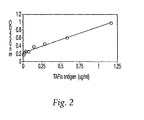
- the TAFIa/ai standard (prepared as described above in section 6.1.2) is serially diluted (1:2) starting at 1.25 ⁇ g/mL and applied to a PTCI-coated microtiter plate.
- the ELISA-like assay is then performed as described above in section 6.1.4. There is a linear correlation between color development and TAFIa/ai antigen (see FIG. 2 ).
- TAFIa was prepared by incubation of TAFI with thrombin/thrombomodulin.
- TAFIai was prepared as described above in section 6.1.2. Solutions containing TAFI, TAFIa and TAFIai (0.001 - 1 ⁇ g/mL) were tested in the ELISA-like assay as described above in section 6.1.4. The results as shown in FIG. 3 illustrate that the ELISA-like assay specifically measures TAFIa and TAFIai but not TAFI.
- the two PNP samples were determined to have 7-10 ⁇ g/mL TAFIa/TAFIai whereas the hemophilia plasma ranged from 3-17 ⁇ g/mL TAFIa/ai antigen.
- TAFIa/TAFIai levels were elevated above PNP levels in 12/20 hemophilia plasma samples.
- TAFIa/TAFIai antigen represents about 25% of the total TAFI present in PNP
- TAFIa/TAFIai antigen represents greater than 50% of the total TAFI present in hemophilia serum.
- the percentage of total TAFI contributed to by TAFIa/TAFIai antigen was significantly greater than in the PNP samples. This indicates that the percentage of total TAFI that is contributed to by TAFIa/TAFIai antigen may be a useful marker for diagnosis and/or monitoring of hemophilia.
Landscapes
- Health & Medical Sciences (AREA)
- Life Sciences & Earth Sciences (AREA)
- Engineering & Computer Science (AREA)
- Chemical & Material Sciences (AREA)
- Immunology (AREA)
- Molecular Biology (AREA)
- Hematology (AREA)
- Biomedical Technology (AREA)
- Urology & Nephrology (AREA)
- Biochemistry (AREA)
- General Health & Medical Sciences (AREA)
- Organic Chemistry (AREA)
- Microbiology (AREA)
- Physics & Mathematics (AREA)
- Analytical Chemistry (AREA)
- Biotechnology (AREA)
- Proteomics, Peptides & Aminoacids (AREA)
- Medicinal Chemistry (AREA)
- General Physics & Mathematics (AREA)
- Pathology (AREA)
- Zoology (AREA)
- Food Science & Technology (AREA)
- Cell Biology (AREA)
- Wood Science & Technology (AREA)
- Biophysics (AREA)
- Bioinformatics & Cheminformatics (AREA)
- General Engineering & Computer Science (AREA)
- Genetics & Genomics (AREA)
- Neurosurgery (AREA)
- Measuring Or Testing Involving Enzymes Or Micro-Organisms (AREA)
- Medicines That Contain Protein Lipid Enzymes And Other Medicines (AREA)
- Peptides Or Proteins (AREA)
Applications Claiming Priority (2)
| Application Number | Priority Date | Filing Date | Title |
|---|---|---|---|
| US40675602P | 2002-08-29 | 2002-08-29 | |
| EP03791928A EP1539991B1 (fr) | 2002-08-29 | 2003-08-29 | Methode diagnostique pour l'inhibiteur de la fibrinolyse active par la thrombine (tafi) |
Related Parent Applications (1)
| Application Number | Title | Priority Date | Filing Date |
|---|---|---|---|
| EP03791928.9 Division | 2003-08-29 |
Publications (1)
| Publication Number | Publication Date |
|---|---|
| EP2204455A1 true EP2204455A1 (fr) | 2010-07-07 |
Family
ID=31978352
Family Applications (2)
| Application Number | Title | Priority Date | Filing Date |
|---|---|---|---|
| EP10159611A Ceased EP2204455A1 (fr) | 2002-08-29 | 2003-08-29 | Méthode diagnostique pour l'Inhibiteur de la Fibrinolyse activé par la Thrombine (TAFI) |
| EP03791928A Expired - Lifetime EP1539991B1 (fr) | 2002-08-29 | 2003-08-29 | Methode diagnostique pour l'inhibiteur de la fibrinolyse active par la thrombine (tafi) |
Family Applications After (1)
| Application Number | Title | Priority Date | Filing Date |
|---|---|---|---|
| EP03791928A Expired - Lifetime EP1539991B1 (fr) | 2002-08-29 | 2003-08-29 | Methode diagnostique pour l'inhibiteur de la fibrinolyse active par la thrombine (tafi) |
Country Status (7)
| Country | Link |
|---|---|
| US (1) | US7470519B2 (fr) |
| EP (2) | EP2204455A1 (fr) |
| AT (1) | ATE464393T1 (fr) |
| AU (1) | AU2003262969A1 (fr) |
| DE (1) | DE60332129D1 (fr) |
| ES (1) | ES2344641T3 (fr) |
| WO (1) | WO2004020976A2 (fr) |
Families Citing this family (5)
| Publication number | Priority date | Publication date | Assignee | Title |
|---|---|---|---|---|
| CN102103142B (zh) * | 2010-12-30 | 2013-08-14 | 辽宁迈迪生物科技有限公司 | Tafi含量的体外检测方法 |
| CN102183635A (zh) * | 2010-12-30 | 2011-09-14 | 辽宁迈迪生物科技有限公司 | Tafi含量的体外检测试剂盒 |
| GB2504499A (en) * | 2012-07-31 | 2014-02-05 | Baxter Healthcare Sa | Selective measurement of active human protease coagulation factors |
| CN103760352B (zh) * | 2014-01-26 | 2015-09-30 | 辽宁迈迪生物科技有限公司 | 一种用于tafi含量体外检测的试剂盒及其体外检测方法 |
| CN107629117B (zh) * | 2017-09-26 | 2020-10-30 | 辽宁迈迪生物科技股份有限公司 | 用于结合TAFIa/ai的蛋白质及其应用和用于检测TAFIa/ai含量的试剂盒 |
Citations (2)
| Publication number | Priority date | Publication date | Assignee | Title |
|---|---|---|---|---|
| US5206161A (en) | 1991-02-01 | 1993-04-27 | Genentech, Inc. | Human plasma carboxypeptidase B |
| US11609502B2 (en) | 2019-03-04 | 2023-03-21 | Tokyo Electron Limited | Substrate inspection apparatus, substrate processing apparatus, substrate inspection method, and computer-readable recording medium |
Family Cites Families (6)
| Publication number | Priority date | Publication date | Assignee | Title |
|---|---|---|---|---|
| US5972990A (en) | 1992-04-10 | 1999-10-26 | Brigham And Women's Hospital, Inc. | Methods for reducing risk of repeat myocardial infarction and increasing survival in heart attack victims |
| US5993815A (en) * | 1996-11-08 | 1999-11-30 | University Of Vermont | Methods and compositions for inhibiting the activation of thrombin-activatable fibrinolysis inhibitor (TAFI) |
| US5985562A (en) | 1997-06-03 | 1999-11-16 | Schering Aktiengesellschaft | Method of detecting thrombotic disease risk associated with plasma carboxypeptidase B polymorphisms |
| KR100523112B1 (ko) | 1997-10-17 | 2005-10-19 | 유로진 리미티드 | 레닌-안지오텐신계 억제제의 사용 |
| EP1383885A4 (fr) * | 2001-04-04 | 2005-11-30 | American Diagnostica Inc | Procede de preparation de l'inhibiteur de la fibrinolyse activable par la thrombine (tafi) stabilise et methodes d'utilisation de celui-ci |
| FR2826962B1 (fr) * | 2001-07-06 | 2003-10-31 | Stago Diagnostica | Nouveaux substrats chromogenes et leur utilisation pour le dosage de l'activite de carboxypeptidases |
-
2003
- 2003-08-29 EP EP10159611A patent/EP2204455A1/fr not_active Ceased
- 2003-08-29 ES ES03791928T patent/ES2344641T3/es not_active Expired - Lifetime
- 2003-08-29 EP EP03791928A patent/EP1539991B1/fr not_active Expired - Lifetime
- 2003-08-29 AU AU2003262969A patent/AU2003262969A1/en not_active Abandoned
- 2003-08-29 US US10/526,167 patent/US7470519B2/en not_active Expired - Lifetime
- 2003-08-29 AT AT03791928T patent/ATE464393T1/de not_active IP Right Cessation
- 2003-08-29 DE DE60332129T patent/DE60332129D1/de not_active Expired - Lifetime
- 2003-08-29 WO PCT/US2003/027061 patent/WO2004020976A2/fr not_active Ceased
Patent Citations (2)
| Publication number | Priority date | Publication date | Assignee | Title |
|---|---|---|---|---|
| US5206161A (en) | 1991-02-01 | 1993-04-27 | Genentech, Inc. | Human plasma carboxypeptidase B |
| US11609502B2 (en) | 2019-03-04 | 2023-03-21 | Tokyo Electron Limited | Substrate inspection apparatus, substrate processing apparatus, substrate inspection method, and computer-readable recording medium |
Non-Patent Citations (10)
| Title |
|---|
| COLUCCI M ET AL: "DEFICIENCY OF THROMBIN ACTIVATABLE FIBRINOLYSIS INHIBITOR IN CIRRHOSIS IS ASSOCIATED WITH INCREASED PLASMA FIBRINOLYSIS", HEPATOLOGY, WILLIAMS AND WILKINS, BALTIMORE, MD, US LNKD- DOI:10.1053/JHEP.2003.50277, vol. 38, no. 1, 1 July 2003 (2003-07-01), pages 230 - 237, XP008053521, ISSN: 0270-9139 * |
| ENGVALL; PERLMANN: "Enzyme-linked immunosorbent assay, Elisa. 3. Quantitation of specific antibodies by enzyme-labeled anti-immunoglobulin in antigen-coated tubes", J. IMMUNOL., vol. 109, 1972, pages 129 - 35 |
| HENDRIKS ET AL., BIOCHIM. BIOPHYS. ACTA, vol. 1034, 1990, pages 86 |
| KAMBEGAWA, NIPPON RINSHO, vol. 53, 1995, pages 2160 - 7 |
| MEIJERS JOOST C M ET AL: "Reduced activity of TAFI (thrombin-activatable fibrinolysis inhibitor) in acute promyelocytic leukaemia", BRITISH JOURNAL OF HAEMATOLOGY, vol. 108, no. 3, March 2000 (2000-03-01), pages 518 - 523, XP002582699, ISSN: 0007-1048 * |
| NESHEIM ET AL., JBIOL. CHEM., vol. 270, 1995, pages 14477 |
| STROMQUIST, THROMB. HENIOST., vol. 85, 2001, pages 12 - 17 |
| TAYLOR ET AL., THROMB. RES., vol. 37, 1985, pages 639 |
| THIEL VAN D H ET AL: "LOW LEVELS OF THROMBIN ACTIVATABLE FIBRINOLYSIS INHIBITOR (TAFI) IN PATIENTS WITH CHRONIC LIVER DISEASE", THROMBOSIS AND HAEMOSTASIS, SCHATTAUER GMBH, DE; US, vol. 85, no. 4, 1 April 2001 (2001-04-01), pages 667 - 670, XP009030915, ISSN: 0340-6245 * |
| WANG ET AL., J. BIOL. CHEM., vol. 269, 1994, pages 15937 |
Also Published As
| Publication number | Publication date |
|---|---|
| EP1539991A2 (fr) | 2005-06-15 |
| ATE464393T1 (de) | 2010-04-15 |
| DE60332129D1 (de) | 2010-05-27 |
| US7470519B2 (en) | 2008-12-30 |
| WO2004020976A2 (fr) | 2004-03-11 |
| AU2003262969A8 (en) | 2004-03-19 |
| US20060183172A1 (en) | 2006-08-17 |
| AU2003262969A1 (en) | 2004-03-19 |
| EP1539991B1 (fr) | 2010-04-14 |
| EP1539991A4 (fr) | 2006-05-17 |
| ES2344641T3 (es) | 2010-09-02 |
| WO2004020976A3 (fr) | 2004-08-12 |
Similar Documents
| Publication | Publication Date | Title |
|---|---|---|
| Amiral et al. | Application of enzyme immunoassays to coagulation testing. | |
| US5789261A (en) | Solid phase immunoassay | |
| US20120070855A1 (en) | Method for in vitro assay of soluble fibrin by generating specific degradation products | |
| CN103238072B (zh) | 用于凝血酶检测的免疫测定法 | |
| US20090176246A1 (en) | ASSAY FOR MEASURING FACTOR VIIa-ANTITHROMBIN COMPLEXES | |
| US20090004679A1 (en) | Method for determining plasminogen activator inhibitor | |
| EP1539991B1 (fr) | Methode diagnostique pour l'inhibiteur de la fibrinolyse active par la thrombine (tafi) | |
| Laffan et al. | 17 Investigation of a thrombotic tendency | |
| Mirshahi et al. | A latex immunoassay of fibrin/fibrinogen degradation products in plasma using a monoclonal antibody | |
| EP1962091B1 (fr) | Procédés et kits pour détecter et mesurer les complexes ADAMTS13/FX1 | |
| JPH0767396B2 (ja) | 線溶系測定法 | |
| US20090075298A1 (en) | Method of analyzing enzyme | |
| US20160047811A1 (en) | Methods for assessing the risk of cardiovascular disease | |
| AU2002327192A1 (en) | Assay for measuring factor VIIa-antithrombin complexes | |
| US20120115171A1 (en) | Method For Diagnosing Thrombophilia | |
| Samama et al. | Laboratory Diagnosis Of Acquired Thrombophilic States: Detection of Markers of Activation of Primary Hemostasis and of Blood Coagulation | |
| EP2015075A1 (fr) | Procédé de prédiction de la vraisemblance d'un événement coronaire important indésirable (MACE) chez un patient avec des syndromes coronaires aigus | |
| JP2003107088A (ja) | 播種性血管内凝固症候群及びその発症前段階を検出する方法 | |
| Schwarz et al. | Qualitative detection of the Marburg I alloenzyme of factor VII-activating protease by an immunoassay and its comparison to PCR testing. | |
| Declerck | Immunological methods to study the fibrinolytic system |
Legal Events
| Date | Code | Title | Description |
|---|---|---|---|
| PUAI | Public reference made under article 153(3) epc to a published international application that has entered the european phase |
Free format text: ORIGINAL CODE: 0009012 |
|
| 17P | Request for examination filed |
Effective date: 20100412 |
|
| AC | Divisional application: reference to earlier application |
Ref document number: 1539991 Country of ref document: EP Kind code of ref document: P |
|
| AK | Designated contracting states |
Kind code of ref document: A1 Designated state(s): AT BE BG CH CY CZ DE DK EE ES FI FR GB GR HU IE IT LI LU MC NL PT RO SE SI SK TR |
|
| RAP1 | Party data changed (applicant data changed or rights of an application transferred) |
Owner name: AMERICAN DIAGNOSTICA, INC. |
|
| 17Q | First examination report despatched |
Effective date: 20100826 |
|
| STAA | Information on the status of an ep patent application or granted ep patent |
Free format text: STATUS: THE APPLICATION HAS BEEN REFUSED |
|
| 18R | Application refused |
Effective date: 20111104 |